Argentina

Ferrán Torres, the Catholic forward who won the World Cup for Spain #Catholic Ferrán Torres is the Catholic forward who secured a 1–0 victory for Spain over Messiʼs Argentina in the 2026 FIFA World Cup final, played on Sunday, July 19, in New Jersey.“The goal is the least important thing; right now, all I want is to grab that trophy and squeeze it as hard as I can, because I believe it represents the dream of the 47 million people we were representing on the pitch today — because I think we deserved it and we gave it our all,” said Ferrán Torres after the final.Torres, who plays for Barcelona in Spain, also said that the goal brought him a sense of relief, given the heavy criticism he had faced during the World Cup. “Thank God, He always gives me the strength to keep going, and in the end — as I always say — God grants things to those who deserve them most,” the forward emphasized.Days before the final, a video was released in which Torres spoke about the importance of God in his life. “I have a cross and an image of the Virgin Mary; ultimately, I think having such strong faith gives me great support — it is something very important to me,” remarked the Spanish forward, who was named the final’s Superior Player of the Match.TweetTorres stands out for his Catholic faith within the Spanish national team, alongside coach Luis de la Fuente — who, at the press conference prior to the semifinal match where they defeated France 2–0, stated that he prays “every day, but not because I am at a World Cup or in order to get a result.”“I give thanks every day — every day I wake up and find myself well, I look at myself and say: ‘Another day I can enjoy life.’ I give thanks for those little things. I pray—because I do pray every day — not to ask for more help,” the Spanish head coach explained at the time.This story was first published by ACI Prensa, the Spanish-language sister service of EWTN News. It has been translated and adapted by EWTN News English.

Ferrán Torres, the Catholic forward who won the World Cup for Spain #Catholic Ferrán Torres is the Catholic forward who secured a 1–0 victory for Spain over Messiʼs Argentina in the 2026 FIFA World Cup final, played on Sunday, July 19, in New Jersey.“The goal is the least important thing; right now, all I want is to grab that trophy and squeeze it as hard as I can, because I believe it represents the dream of the 47 million people we were representing on the pitch today — because I think we deserved it and we gave it our all,” said Ferrán Torres after the final.Torres, who plays for Barcelona in Spain, also said that the goal brought him a sense of relief, given the heavy criticism he had faced during the World Cup. “Thank God, He always gives me the strength to keep going, and in the end — as I always say — God grants things to those who deserve them most,” the forward emphasized.Days before the final, a video was released in which Torres spoke about the importance of God in his life. “I have a cross and an image of the Virgin Mary; ultimately, I think having such strong faith gives me great support — it is something very important to me,” remarked the Spanish forward, who was named the final’s Superior Player of the Match.TweetTorres stands out for his Catholic faith within the Spanish national team, alongside coach Luis de la Fuente — who, at the press conference prior to the semifinal match where they defeated France 2–0, stated that he prays “every day, but not because I am at a World Cup or in order to get a result.”“I give thanks every day — every day I wake up and find myself well, I look at myself and say: ‘Another day I can enjoy life.’ I give thanks for those little things. I pray—because I do pray every day — not to ask for more help,” the Spanish head coach explained at the time.This story was first published by ACI Prensa, the Spanish-language sister service of EWTN News. It has been translated and adapted by EWTN News English.

Torres stands out for his Catholic faith within the Spanish national team, alongside coach Luis de la Fuente.

Read More
Sicar: The retreat transforming the lives of young people in Latin America #Catholic The Sicar retreat (“Sychar” in the English Bible) has given rise to one of the most notable youth evangelization experiences in Latin America. It came about through a process of discernment by a Mexican religious in her own search for God, a dynamic movement that today reaches thousands of young people.With over 30 years of consecrated life, Mother María Elena Martínez has dedicated her life to the spiritual formation of young people and adults through “Mary, Mother of Love,” a private association of the faithful she founded in Mexico in 2015.The community is centered on retreats making a spiritual impact, such as Emmaus, which is held in parishes and correctional facilities, and Sicar, which is aimed specifically at young adults.
 
 Mother María Elena Martínez. | Credit: Photo courtesy of Mother María Elena Martínez
 
 Her life, marked from childhood by a quest for God, would ultimately become bound up in an initiative that is active today in several Latin American countries, including Mexico, Guatemala, Paraguay, Argentina, and Peru.“I remember as a little girl I had a great thirst for God,” she shared in an interview with ACI Prensa, the Spanish-language sister service of EWTN News.That initial calling deepened over time. At age 11, she recalled, a desire to please Jesus arose within her. “A desire for purity … I wanted to live a life of virginity,” she noted, explaining that she prayed insistently to the Virgin Mary, asking for that consecration.
 
 Mother María Elena Martínez in front of an oasis. | Credit: Photo courtesy of Mother María Elena Martínez
 
 However, her path was neither immediate nor direct. “Religious life wasn’t something that particularly appealed to me,” she admitted. In her youth, she went through various experiences ranging from completing a degree in translating to exploring broader spiritual concerns, which eventually led her to try out consecrated life with the Missionaries of Charity.Some time later, she tried cloistered contemplative life. “I wanted something more interior, deeper,” she confessed.A concern arises: ‘What about the young people?’The Sicar retreat did not originate as a planned initiative but rather as a pastoral response that only gradually took shape. According to Mother María Elena, for years many people approached her with the same concern: “What about the young people?” “Do something for the young people,” they would tell her.
 
 Sicar team members in Mexico. | Credit: Photo courtesy of Mother María Elena Martínez
 
 The Gospel account of the Samaritan woman began to take center stage in her prayer and discernment. Jesus’ dialogue at the well of Sychar — “If you knew the gift of God” (cf. Jn 4:1-42) — served as the starting point for helping young people discover Christ. “The passage about the Samaritan woman was so rich, so rich, that I could draw so much from it,” she explained.The decisive step came in 2016, when the first Sicar retreat was held. Mother María Elena remembered it as the beginning of something small and simple yet deeply meaningful. Young people with prior experience in movements like Emmaus were the first to participate.
 
 Sicar Mexico. | Credit: Photo courtesy of Mother María Elena Martínez
 
 Sicar began to expand. After establishing itself in cities such as Mexico City, Tehuacán, and Tecamachalco (in the state of Puebla), as well as San Luis de la Paz (Guanajuato state), Veracruz, Mérida (Yucatán state), and Cuernavaca (Morelos state), the initiative began to cross borders beyond Mexico. The first retreat in Guatemala took place in 2017; Buenos Aires in 2018; Paraguay in 2022; and in Peru in 2023.“It has been growing in many places, rescuing so many young people,” Mother María Elena said with gratitude.In Mexico, 38 Sicar retreats have been held with an average of 50 participants each, amounting to nearly 2,000 young people. In Peru, where the initiative arrived in 2023, seven retreats have already taken place with around 70 participants each, reaching approximately 490 people.
 
 Sicar Mexico. | Credit: Photo courtesy of Mother María Elena Martínez
 
 Ottmar Ricalde, a Sicar volunteer in Mexico, noted that “Sicar means and has meant so much over these past 10 years.” “I could write and speak about all the stories, all the laughter, and all the tears, but the most important thing of all is the love of God that has been a gift to me,” he stated.“My life was always focused on pleasing others, but when I met God and realized how much he loves me, I began wanting to please him,” he said.In Paraguay, Sicar coordinator Fátima Correa highlighted that the experience “was a time of growth and renewal. It allowed us to view our history with fresh eyes.”
 
 Sicar Paraguay 2026 team members. | Credit: Sicar Paraguay
 
 “It was a retreat organized by young people for young people, where every testimony reflected realities many of us could relate to,” she added.A couple from Argentina who participated in the retreat and are now married say that Sicar marked a turning point in their lives. “We arrived as boyfriend and girlfriend and returned with completely transformed hearts … today, we feel that one of the greatest fruits was our marriage.”A growing community in PeruSicar arrived in Peru in 2023 and has since established a growing community.Geraldine Spihlman, director of Sicar in Peru, explained that the initiative arose after a need was identified within youth ministry. “When young people reached the age of 24 or 25, they no longer had a place to continue their journey of faith,” she noted.Following contact with Mother María Elena, it was decided to launch the initiative in Lima, which holds two retreats a year: in May and November.Spihlman highlighted that the most visible fruit is the community: “Many young people have discovered that it’s hard to go it alone but that everything is easier in community. It is a community where you can see how they love one another.”Instagram post‘God’s mercy knows no bounds’One of the most common fruits of these retreats is a shift in how one views others.In personal encounters, transformation occurs not only for those receiving the retreat but also for those who put it on. “God’s mercy knows no bounds,” Mother María Elena stated. “You look at people with eyes of mercy. You no longer judge the person; instead, you see them as a child of God,” she explained.Eros Acevedo, another team member, said the retreat “was an encounter with God that changed everything … I arrived bearing wounds, and his presence touched them. I left renewed.”
 
 Sicar Peru team members, May 2026. | Credit: Sicar Peru
 
 Rafael Mansilla, 27, said Sicar taught him to persevere in the faith. “Faith is not a flame that goes out but a steady flame,” he said.Dina Dávila shared that the retreat was the instrument God used to call her. “The love I have experienced in the community is overwhelming,” she added.‘A living Jesus’Through the retreats, Mother María Elena explained, people are invited to encounter “a living Jesus.” “God continues to act; he continues to perform miracles every day,” she affirmed. She said she lives one day at a time. “Each day I tell the Lord, ‘For one more day, I say yes to you.’”
 
 Participants in a Sicar retreat in Mexico. | Credit: Sicar Mexico
 
 The Sicar retreat, born of a contemplative reading of the Gospel, continues to spread wherever young people seek meaning, healing, and an experience of mature faith.Today, the young “Samaritans” who have lived this experience carry with them the words that marked their encounter with God: “Whoever drinks of the water that I will give him shall never thirst” (Jn 4:14).This story was first published by ACI Prensa, the Spanish-language sister service of EWTN News. It has been translated and adapted by EWTN News English.

Sicar: The retreat transforming the lives of young people in Latin America #Catholic The Sicar retreat (“Sychar” in the English Bible) has given rise to one of the most notable youth evangelization experiences in Latin America. It came about through a process of discernment by a Mexican religious in her own search for God, a dynamic movement that today reaches thousands of young people.With over 30 years of consecrated life, Mother María Elena Martínez has dedicated her life to the spiritual formation of young people and adults through “Mary, Mother of Love,” a private association of the faithful she founded in Mexico in 2015.The community is centered on retreats making a spiritual impact, such as Emmaus, which is held in parishes and correctional facilities, and Sicar, which is aimed specifically at young adults. Mother María Elena Martínez. | Credit: Photo courtesy of Mother María Elena Martínez Her life, marked from childhood by a quest for God, would ultimately become bound up in an initiative that is active today in several Latin American countries, including Mexico, Guatemala, Paraguay, Argentina, and Peru.“I remember as a little girl I had a great thirst for God,” she shared in an interview with ACI Prensa, the Spanish-language sister service of EWTN News.That initial calling deepened over time. At age 11, she recalled, a desire to please Jesus arose within her. “A desire for purity … I wanted to live a life of virginity,” she noted, explaining that she prayed insistently to the Virgin Mary, asking for that consecration. Mother María Elena Martínez in front of an oasis. | Credit: Photo courtesy of Mother María Elena Martínez However, her path was neither immediate nor direct. “Religious life wasn’t something that particularly appealed to me,” she admitted. In her youth, she went through various experiences ranging from completing a degree in translating to exploring broader spiritual concerns, which eventually led her to try out consecrated life with the Missionaries of Charity.Some time later, she tried cloistered contemplative life. “I wanted something more interior, deeper,” she confessed.A concern arises: ‘What about the young people?’The Sicar retreat did not originate as a planned initiative but rather as a pastoral response that only gradually took shape. According to Mother María Elena, for years many people approached her with the same concern: “What about the young people?” “Do something for the young people,” they would tell her. Sicar team members in Mexico. | Credit: Photo courtesy of Mother María Elena Martínez The Gospel account of the Samaritan woman began to take center stage in her prayer and discernment. Jesus’ dialogue at the well of Sychar — “If you knew the gift of God” (cf. Jn 4:1-42) — served as the starting point for helping young people discover Christ. “The passage about the Samaritan woman was so rich, so rich, that I could draw so much from it,” she explained.The decisive step came in 2016, when the first Sicar retreat was held. Mother María Elena remembered it as the beginning of something small and simple yet deeply meaningful. Young people with prior experience in movements like Emmaus were the first to participate. Sicar Mexico. | Credit: Photo courtesy of Mother María Elena Martínez Sicar began to expand. After establishing itself in cities such as Mexico City, Tehuacán, and Tecamachalco (in the state of Puebla), as well as San Luis de la Paz (Guanajuato state), Veracruz, Mérida (Yucatán state), and Cuernavaca (Morelos state), the initiative began to cross borders beyond Mexico. The first retreat in Guatemala took place in 2017; Buenos Aires in 2018; Paraguay in 2022; and in Peru in 2023.“It has been growing in many places, rescuing so many young people,” Mother María Elena said with gratitude.In Mexico, 38 Sicar retreats have been held with an average of 50 participants each, amounting to nearly 2,000 young people. In Peru, where the initiative arrived in 2023, seven retreats have already taken place with around 70 participants each, reaching approximately 490 people. Sicar Mexico. | Credit: Photo courtesy of Mother María Elena Martínez Ottmar Ricalde, a Sicar volunteer in Mexico, noted that “Sicar means and has meant so much over these past 10 years.” “I could write and speak about all the stories, all the laughter, and all the tears, but the most important thing of all is the love of God that has been a gift to me,” he stated.“My life was always focused on pleasing others, but when I met God and realized how much he loves me, I began wanting to please him,” he said.In Paraguay, Sicar coordinator Fátima Correa highlighted that the experience “was a time of growth and renewal. It allowed us to view our history with fresh eyes.” Sicar Paraguay 2026 team members. | Credit: Sicar Paraguay “It was a retreat organized by young people for young people, where every testimony reflected realities many of us could relate to,” she added.A couple from Argentina who participated in the retreat and are now married say that Sicar marked a turning point in their lives. “We arrived as boyfriend and girlfriend and returned with completely transformed hearts … today, we feel that one of the greatest fruits was our marriage.”A growing community in PeruSicar arrived in Peru in 2023 and has since established a growing community.Geraldine Spihlman, director of Sicar in Peru, explained that the initiative arose after a need was identified within youth ministry. “When young people reached the age of 24 or 25, they no longer had a place to continue their journey of faith,” she noted.Following contact with Mother María Elena, it was decided to launch the initiative in Lima, which holds two retreats a year: in May and November.Spihlman highlighted that the most visible fruit is the community: “Many young people have discovered that it’s hard to go it alone but that everything is easier in community. It is a community where you can see how they love one another.”Instagram post‘God’s mercy knows no bounds’One of the most common fruits of these retreats is a shift in how one views others.In personal encounters, transformation occurs not only for those receiving the retreat but also for those who put it on. “God’s mercy knows no bounds,” Mother María Elena stated. “You look at people with eyes of mercy. You no longer judge the person; instead, you see them as a child of God,” she explained.Eros Acevedo, another team member, said the retreat “was an encounter with God that changed everything … I arrived bearing wounds, and his presence touched them. I left renewed.” Sicar Peru team members, May 2026. | Credit: Sicar Peru Rafael Mansilla, 27, said Sicar taught him to persevere in the faith. “Faith is not a flame that goes out but a steady flame,” he said.Dina Dávila shared that the retreat was the instrument God used to call her. “The love I have experienced in the community is overwhelming,” she added.‘A living Jesus’Through the retreats, Mother María Elena explained, people are invited to encounter “a living Jesus.” “God continues to act; he continues to perform miracles every day,” she affirmed. She said she lives one day at a time. “Each day I tell the Lord, ‘For one more day, I say yes to you.’” Participants in a Sicar retreat in Mexico. | Credit: Sicar Mexico The Sicar retreat, born of a contemplative reading of the Gospel, continues to spread wherever young people seek meaning, healing, and an experience of mature faith.Today, the young “Samaritans” who have lived this experience carry with them the words that marked their encounter with God: “Whoever drinks of the water that I will give him shall never thirst” (Jn 4:14).This story was first published by ACI Prensa, the Spanish-language sister service of EWTN News. It has been translated and adapted by EWTN News English.

Through her own spiritual journey seeking God, Mother María Elena Martínez founded a community and a retreat movement that is touching the lives of thousands of young people in Latin America.

Read More
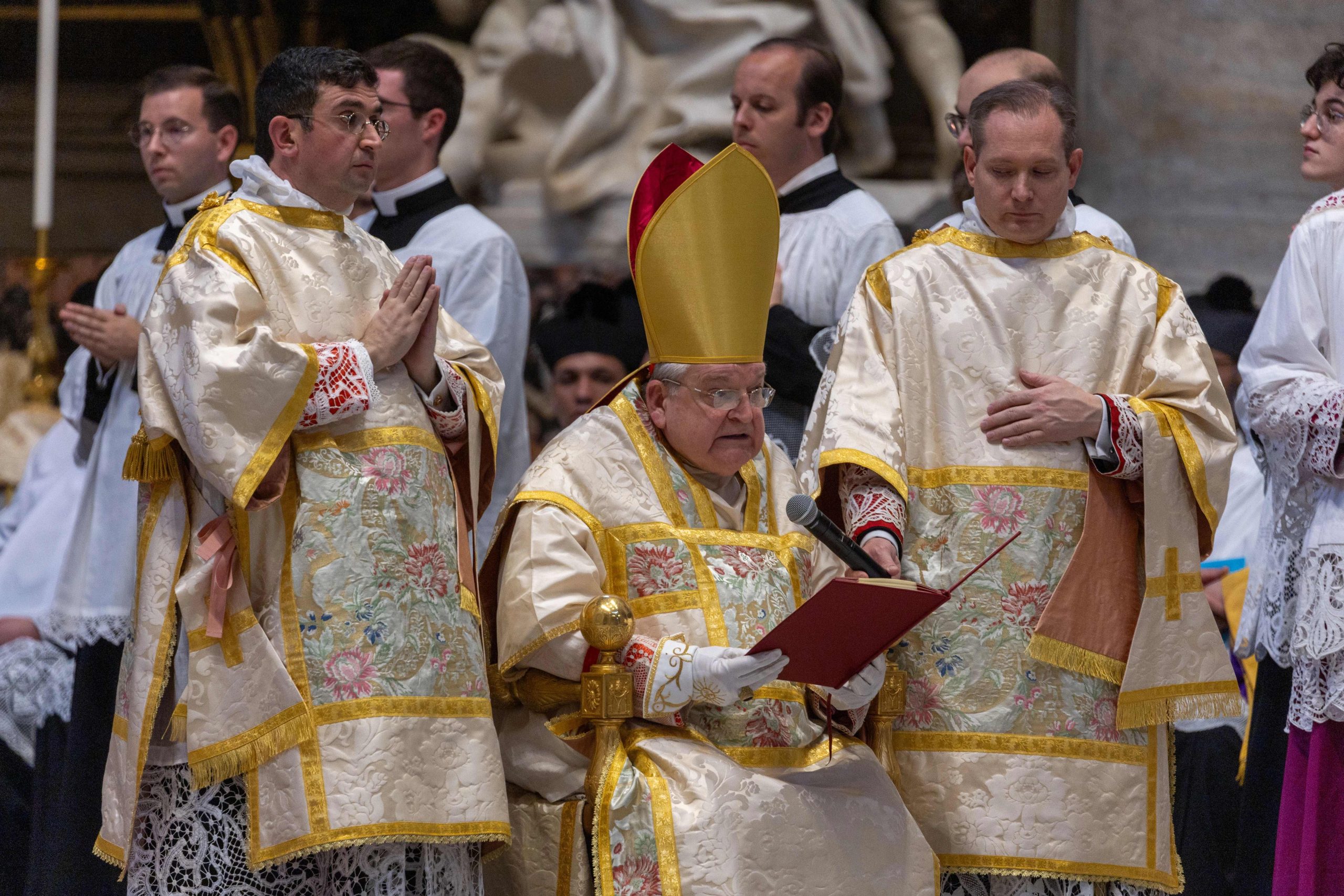
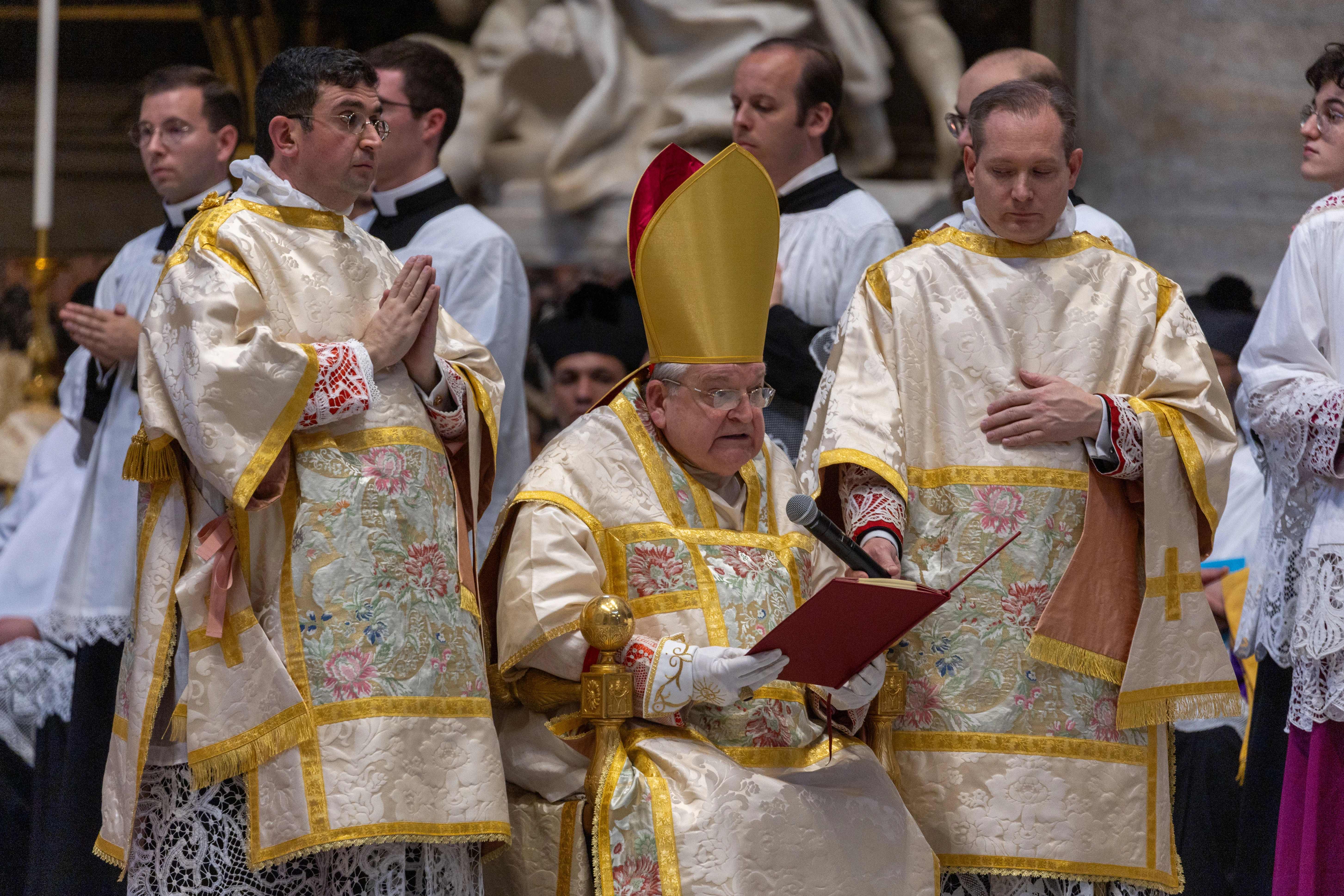
Argentinians join in prayer for earthquake-shattered Venezuelans #Catholic With thousands dead, injured, and missing in the wake of last week’s devastating earthquakes in Venezuela, Argentinians gathered in prayer for the Venezuelan people on June 28 at the basilica and national shrine of Our Lady of Luján. There, the archbishop of Mercedes-Luján, Jorge Eduardo Scheinig, offered Mass for the Venezuelan people.“Let us think of those who have died and their families,” Scheinig said in his homily. “In a single minute, so many people were left with nothing, absolutely nothing,” he noted.“Let us pray for the rescue workers and for all those who are working [on the ground]. Let us stand in solidarity with them through prayer,” said Scheinig, who proceeded to lead a moment of silence to pray to God and the Virgin for the people of Venezuela.The archbishop dedicated the rest of his homily to examining priorities, those things that “carry more weight than others” and “have the power to bring order to our lives.”“If you have the right priorities, you are at peace. But if you choose your priorities poorly, it causes confusion and anguish for you; it doesn’t help you live well. So, from time to time, we need to have the courage to reexamine our priorities,” he noted.In this regard, he said that “Jesus helps us order our priorities,” and elaborated: “What is Jesus’ priority? God. What comes first for Jesus? God. And what does he advise us? Put God first, and you won’t regret it,” he explained.He therefore urged people to ask themselves: “What place does God hold? What place does Mass hold?” he continued. “If you put God’s love first, if you love God in your life — that love is so good, so pure, and so radiant that it brings order to your entire life and helps you understand your whole life. Because God takes nothing away from you; he fills your life with love,” he pointed out. “Putting God first means taking a stand, taking a risk, and filling your heart with love; that helps you love everyone and everything in a different way, to love better,” he emphasized.Referring to the situation in Venezuela, Scheinig reflected: “Just look at how strange the world is. Today, television shows harrowing scenes. I was watching the news and saw a little boy crying — he had been left all alone after the earthquake, and it breaks your heart. Yet, a short while later, we’re watching the Argentina [World Cup] match.”“And notice, too, that we see scenes of war, of migrants who have nothing and live in a small tent. That’s the world. It happens to us in a family as well: You might be celebrating the 15th birthday of one of your children and then a close relative dies or someone comes down with an illness. That’s life. Life is that strange mix of very beautiful things and deeply painful things,” he noted.“But when your heart has priorities, you don’t get confused. And so, yes, we can cheer for the national team, but my priority isn’t soccer; my priority is life, it’s what happens to other people. I don’t let the things of life desensitize me,” he cautioned.That is why, “if God is your priority, you are able to not get desensitized to pain. You have your life on track. You can watch the World Cup, but you realize that it isn’t the priority. Your life is in order. You know where you stand, what you want, and what you don’t want,” he continued.In that context, he added, the need arises to stand with Venezuelans in prayer: “God, strengthen so many people whose lives changed in an instant.”“We also feel moved to show solidarity, to give money and goods, and to share what we have with those in need because your heart is rightly ordered; it is with God.”“Life presents us with complex, difficult moments in the world,” Scheinig acknowledged, while expressing the hope that “God holds first place on our list of priorities, so that we may remain good people.”This story was first published by ACI Prensa, the Spanish-language sister service of EWTN News. It has been translated and adapted by EWTN News English.

Argentinians join in prayer for earthquake-shattered Venezuelans #Catholic With thousands dead, injured, and missing in the wake of last week’s devastating earthquakes in Venezuela, Argentinians gathered in prayer for the Venezuelan people on June 28 at the basilica and national shrine of Our Lady of Luján. There, the archbishop of Mercedes-Luján, Jorge Eduardo Scheinig, offered Mass for the Venezuelan people.“Let us think of those who have died and their families,” Scheinig said in his homily. “In a single minute, so many people were left with nothing, absolutely nothing,” he noted.“Let us pray for the rescue workers and for all those who are working [on the ground]. Let us stand in solidarity with them through prayer,” said Scheinig, who proceeded to lead a moment of silence to pray to God and the Virgin for the people of Venezuela.The archbishop dedicated the rest of his homily to examining priorities, those things that “carry more weight than others” and “have the power to bring order to our lives.”“If you have the right priorities, you are at peace. But if you choose your priorities poorly, it causes confusion and anguish for you; it doesn’t help you live well. So, from time to time, we need to have the courage to reexamine our priorities,” he noted.In this regard, he said that “Jesus helps us order our priorities,” and elaborated: “What is Jesus’ priority? God. What comes first for Jesus? God. And what does he advise us? Put God first, and you won’t regret it,” he explained.He therefore urged people to ask themselves: “What place does God hold? What place does Mass hold?” he continued. “If you put God’s love first, if you love God in your life — that love is so good, so pure, and so radiant that it brings order to your entire life and helps you understand your whole life. Because God takes nothing away from you; he fills your life with love,” he pointed out. “Putting God first means taking a stand, taking a risk, and filling your heart with love; that helps you love everyone and everything in a different way, to love better,” he emphasized.Referring to the situation in Venezuela, Scheinig reflected: “Just look at how strange the world is. Today, television shows harrowing scenes. I was watching the news and saw a little boy crying — he had been left all alone after the earthquake, and it breaks your heart. Yet, a short while later, we’re watching the Argentina [World Cup] match.”“And notice, too, that we see scenes of war, of migrants who have nothing and live in a small tent. That’s the world. It happens to us in a family as well: You might be celebrating the 15th birthday of one of your children and then a close relative dies or someone comes down with an illness. That’s life. Life is that strange mix of very beautiful things and deeply painful things,” he noted.“But when your heart has priorities, you don’t get confused. And so, yes, we can cheer for the national team, but my priority isn’t soccer; my priority is life, it’s what happens to other people. I don’t let the things of life desensitize me,” he cautioned.That is why, “if God is your priority, you are able to not get desensitized to pain. You have your life on track. You can watch the World Cup, but you realize that it isn’t the priority. Your life is in order. You know where you stand, what you want, and what you don’t want,” he continued.In that context, he added, the need arises to stand with Venezuelans in prayer: “God, strengthen so many people whose lives changed in an instant.”“We also feel moved to show solidarity, to give money and goods, and to share what we have with those in need because your heart is rightly ordered; it is with God.”“Life presents us with complex, difficult moments in the world,” Scheinig acknowledged, while expressing the hope that “God holds first place on our list of priorities, so that we may remain good people.”This story was first published by ACI Prensa, the Spanish-language sister service of EWTN News. It has been translated and adapted by EWTN News English.

In his homily during a Mass offered for the earthquake’s victims, Archbishop Jorge Scheinig urged the faithful to reexamine their priorities in life, realizing one can lose everything in an instant.

Read More