Ban

UK bishops welcome child safety but cautious on social media ban for under 16 #Catholic Catholic bishops across the United Kingdom say they need to see more legislative detail before supporting government proposals to ban social media for youth under 16. On June 15, Secretary of State for Science, Innovation, and Technology Liz Kendall announced to the House of Commons that the government "will ban social media companies providing their services to under 16s.”Kendall said that the UK would be following the same model as Australia, which was the first country in the world to ban social media for youth under 16. The UK ban is due to come into effect early next year.In an email response to EWTN News on June 17 regarding whether bishops of England and Wales support the proposed ban, a spokeswoman for the Catholic Bishops' Conference for England and Wales said: “Until the government publishes further details it’s hard to give a yes or no answer.” But Bishop John Arnold, the lead bishop for communications for the conference, “is very keen to ensure that the safety and protection of the dignity of young people online is a central concern for all,” the statement said.In a separate email to EWTN News, Bishop Arnold wrote that the “safety of children and young people in the digital world is paramount. Young people face many pressures today, which are often exacerbated by unrealistic and harmful material which they have accessed online.”“When it comes to the responsible and appropriate use of technology, the protection of children and young people is a shared responsibility among parents, schools, government and society,” he said.“I urge all people to work together to protect and place the dignity of the human person, especially children, the young and vulnerable, at the center of technological and legislative developments,” the bishop said.The Bishops’ Conference of Scotland, meanwhile, said it would “prefer not to comment directly on the specific policy issue, but rather give a considered response to the noble principles behind online safety measures.” “The bishops support the introduction of any new measures which increase online safety for children and young people,” the conference said."We have a responsibility to ensure that children and young people are protected from harmful and age-inappropriate content, and from online environments that can negatively affect their wellbeing, relationships and healthy development,” the statement continued.The UK governmentʼs proposal includes banning youth usage of platforms like Instagram, YouTube, TikTok, Snapchat, Facebook, and X. They do not intend for messaging services like WhatsApp and Signal to be included in the ban.Livestreamers and strangers being able to contact children will also be restricted for those under‑16 on other online services like gaming.“Who should take responsibility?”Edwin Fawcett, a Catholic psychotherapist based in England and Wales, is also unsure about the benefits and drawbacks of the proposal.“At this point the toll taken on mental and emotional health by social media, especially for developing brains, is virtually undisputed. Who should take responsibility for young peopleʼs formation and education?” he told EWTN News. “The Churchʼs wise answer: parents. Yet in a busy, driven and fragmented society the tsunami of digital hyper-reality is almost impossible to avoid or withstand,” he said.Fawcett argued that there is “a pandemic of relational wounds and deficits in the real world” which “has set the stage for widespread mental health issues, which are being activated and worsened by addictive online behavior — behavior chosen in an attempt to anesthetize the same wounds.”He continued: “Whether the ban is designed to support the rights and responsibilities of the family is hard to say. But letʼs pray that a deep renewal of family life, communities and culture will begin filling the void which social media has falsely promised to do — a void which may now be exposed by the incoming ban.”Lucy Marsh, a spokeswoman for the Family Education Trust — a secular research body which supports traditional family values — said that the ban has not been sufficiently “thought through.”“Children should not have unsupervised access to social media, but the government’s rushed plan to ban under-16s from using certain platforms is the wrong way to go about it,” she told EWTN News.“Rather than educating parents on how to restrict their child’s access to the internet and raising awareness about why young children should not have smartphones, the government is trying to introduce digital ID via the back door. This means using facial recognition and biometrics which involve giving even more information to tech companies. In the name of protecting children, those children will be under even more surveillance.”The government “should focus on ensuring tech companies make phones for children which cannot access social media apps, including WhatsApp, which is used by predatory adults to share pornography and groom children,” she said.

UK bishops welcome child safety but cautious on social media ban for under 16 #Catholic Catholic bishops across the United Kingdom say they need to see more legislative detail before supporting government proposals to ban social media for youth under 16. On June 15, Secretary of State for Science, Innovation, and Technology Liz Kendall announced to the House of Commons that the government "will ban social media companies providing their services to under 16s.”Kendall said that the UK would be following the same model as Australia, which was the first country in the world to ban social media for youth under 16. The UK ban is due to come into effect early next year.In an email response to EWTN News on June 17 regarding whether bishops of England and Wales support the proposed ban, a spokeswoman for the Catholic Bishops' Conference for England and Wales said: “Until the government publishes further details it’s hard to give a yes or no answer.” But Bishop John Arnold, the lead bishop for communications for the conference, “is very keen to ensure that the safety and protection of the dignity of young people online is a central concern for all,” the statement said.In a separate email to EWTN News, Bishop Arnold wrote that the “safety of children and young people in the digital world is paramount. Young people face many pressures today, which are often exacerbated by unrealistic and harmful material which they have accessed online.”“When it comes to the responsible and appropriate use of technology, the protection of children and young people is a shared responsibility among parents, schools, government and society,” he said.“I urge all people to work together to protect and place the dignity of the human person, especially children, the young and vulnerable, at the center of technological and legislative developments,” the bishop said.The Bishops’ Conference of Scotland, meanwhile, said it would “prefer not to comment directly on the specific policy issue, but rather give a considered response to the noble principles behind online safety measures.” “The bishops support the introduction of any new measures which increase online safety for children and young people,” the conference said."We have a responsibility to ensure that children and young people are protected from harmful and age-inappropriate content, and from online environments that can negatively affect their wellbeing, relationships and healthy development,” the statement continued.The UK governmentʼs proposal includes banning youth usage of platforms like Instagram, YouTube, TikTok, Snapchat, Facebook, and X. They do not intend for messaging services like WhatsApp and Signal to be included in the ban.Livestreamers and strangers being able to contact children will also be restricted for those under‑16 on other online services like gaming.“Who should take responsibility?”Edwin Fawcett, a Catholic psychotherapist based in England and Wales, is also unsure about the benefits and drawbacks of the proposal.“At this point the toll taken on mental and emotional health by social media, especially for developing brains, is virtually undisputed. Who should take responsibility for young peopleʼs formation and education?” he told EWTN News. “The Churchʼs wise answer: parents. Yet in a busy, driven and fragmented society the tsunami of digital hyper-reality is almost impossible to avoid or withstand,” he said.Fawcett argued that there is “a pandemic of relational wounds and deficits in the real world” which “has set the stage for widespread mental health issues, which are being activated and worsened by addictive online behavior — behavior chosen in an attempt to anesthetize the same wounds.”He continued: “Whether the ban is designed to support the rights and responsibilities of the family is hard to say. But letʼs pray that a deep renewal of family life, communities and culture will begin filling the void which social media has falsely promised to do — a void which may now be exposed by the incoming ban.”Lucy Marsh, a spokeswoman for the Family Education Trust — a secular research body which supports traditional family values — said that the ban has not been sufficiently “thought through.”“Children should not have unsupervised access to social media, but the government’s rushed plan to ban under-16s from using certain platforms is the wrong way to go about it,” she told EWTN News.“Rather than educating parents on how to restrict their child’s access to the internet and raising awareness about why young children should not have smartphones, the government is trying to introduce digital ID via the back door. This means using facial recognition and biometrics which involve giving even more information to tech companies. In the name of protecting children, those children will be under even more surveillance.”The government “should focus on ensuring tech companies make phones for children which cannot access social media apps, including WhatsApp, which is used by predatory adults to share pornography and groom children,” she said.

Bishops across the UK and other Catholic leaders say they want more information before endorsing a proposal to ban social media for youth under 16.

Read More
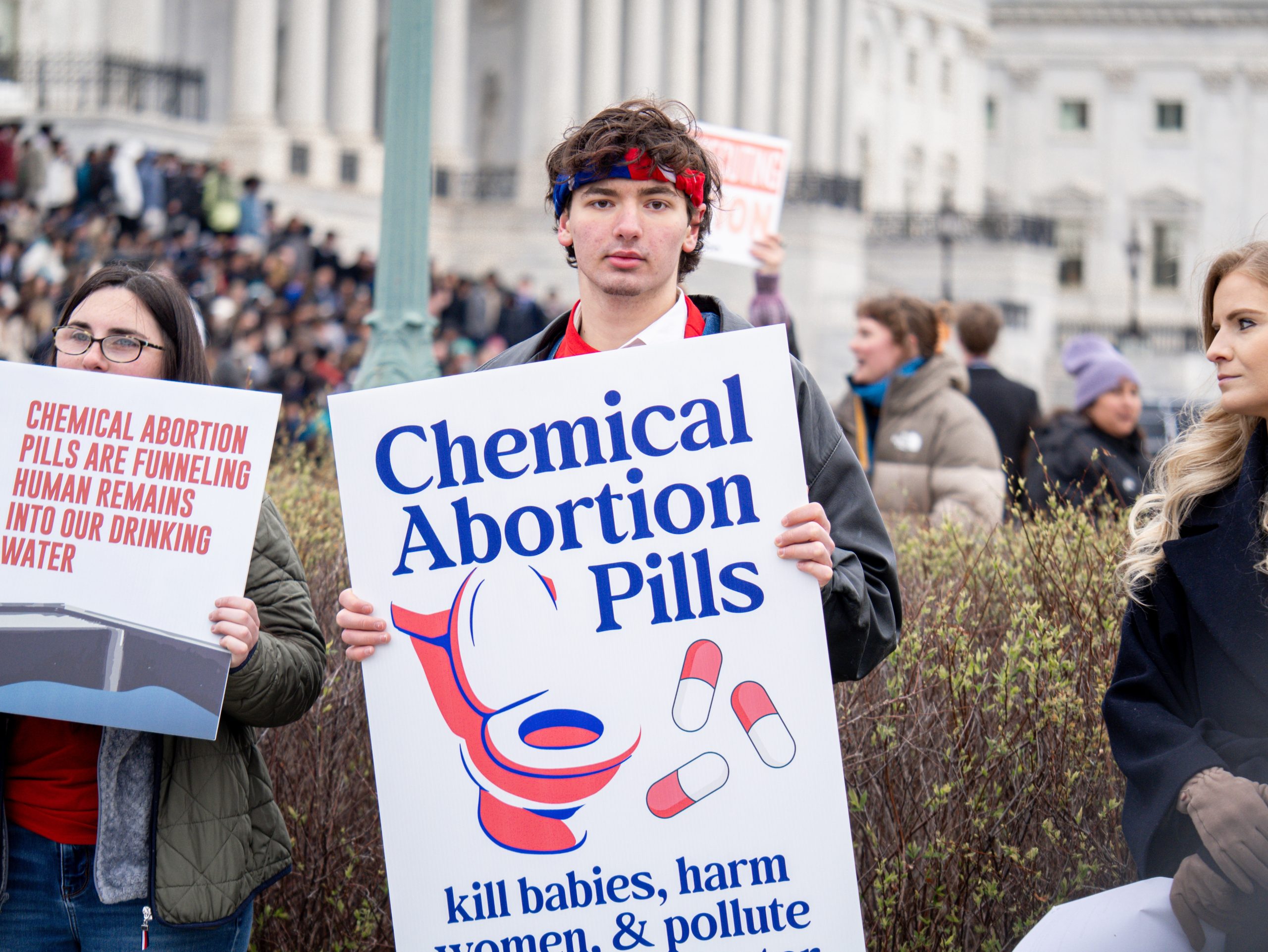
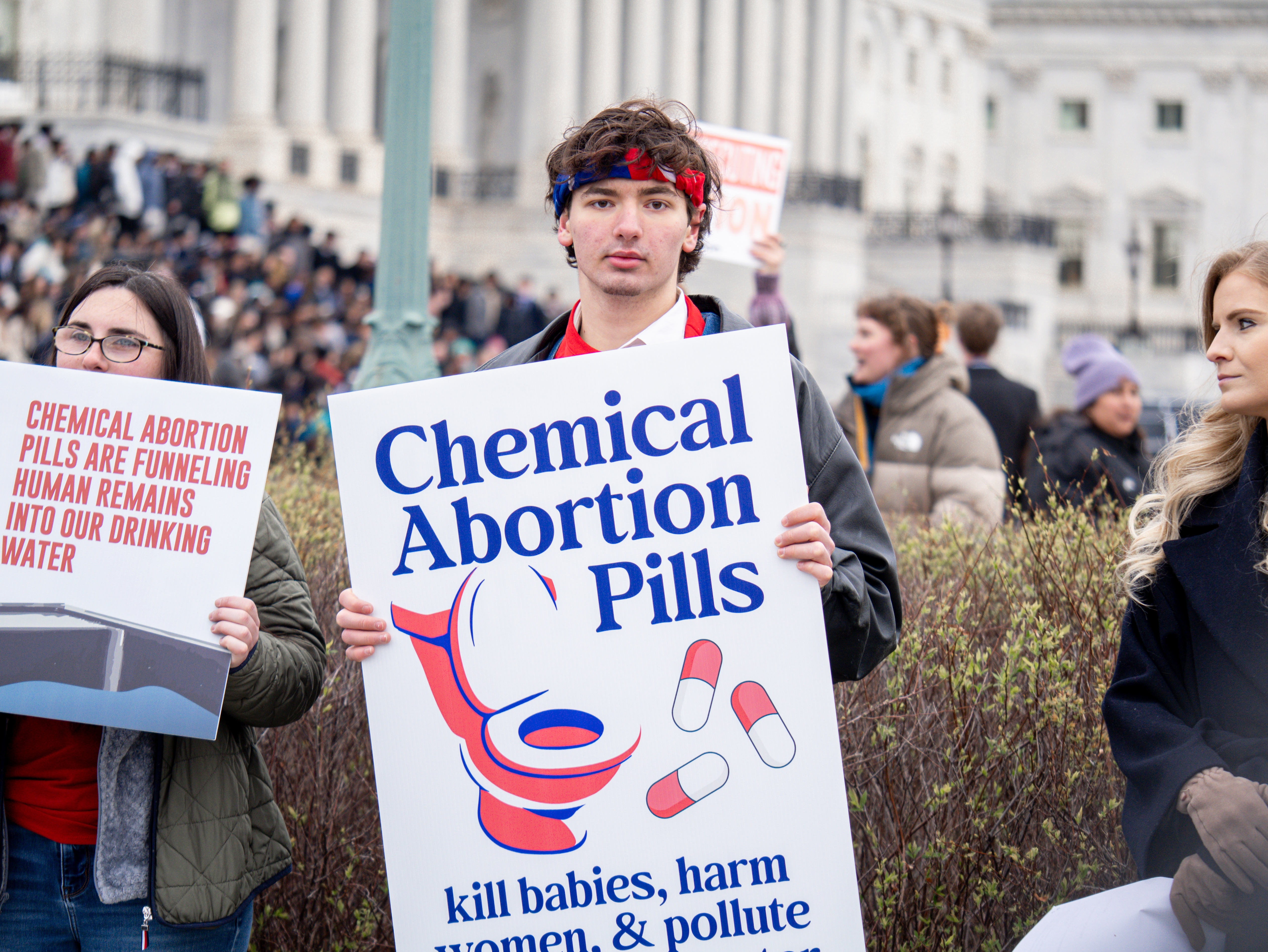
Catholics weigh in as Supreme Court faces deadline on telemedicine abortion ruling #Catholic The U.S. Supreme Court’s stay on the 5th Circuit’s ruling restricting access to telemedicine abortions is set to expire May 11, a deadline that could bring an extension, allow the restrictions to take effect, or prompt the justices to take up the case in full.Michael New, assistant professor of social research at The Catholic University of America’s Busch School of Business, told “EWTN News Nightly” on May 8: “The Supreme Court may extend the stay if they need more time to deliberate; they may simply uphold the 5th Circuit Courtʼs decision that bans tele-abortion, and the ban will go into effect; or they may want to do a full hearing [and] conduct oral arguments.”The Supreme Court on May 4 temporarily blocked a lower court order requiring in‑person dispensing of mifepristone after two manufacturers asked the justices to intervene, prompting Justice Samuel Alito to issue an administrative stay that restores mail‑order access until May 11 at 5 p.m. ET while the court weighs the request.Although Alito instructed the Food and Drug Administration (FDA) and the state of Louisiana to respond by 5 p.m. ET on May 7, the Justice Department failed to do so.New described the development as “odd,” saying the failure by the Justice Department, which represents the FDA, to meet the filing deadline could be that “they don’t want to defend the FDA’s position any longer” or that it may signal a policy change.“Sometimes when people think theyʼre going to lose a case, they change public policy because theyʼd rather change policy than, you know, lose a court case,” New said. “Itʼs really hard to say at this point.”Ultimately, New said the Supreme Court should “absolutely” reinstate in-person requirements to obtain abortion pills, saying: “Thereʼs some real serious public health issues at play here.”Judicial Crisis Network President Carrie Severino gave context for the latest developments in a May 7 interview on EWTN’s “The World Over with Raymond Arroyo,” noting that the FDAʼs ongoing approval of nationwide mail-order abortion effectively circumvents Louisiana law protecting unborn human life. “The court should decide hopefully by the 11th, because thatʼs when the stay expires,” she said. “If they donʼt make any decision, then the 5th Circuit ruling goes back into effect and the FDA will have to disallow mailing of these pills, at least during the pendency of litigation,” said Severino, who is also a former Supreme Court clerk.U.S. Secretary of Health and Human Services Robert F. Kennedy Jr. ordered the FDA to carry out a review of the abortion drug in May 2025, which is still ongoing.Ultimately, Severino said, the Supreme Court will not be ruling on “what the FDA needs to do at the end of the day” but on whether abortion drugs will be allowed to be mailed into Louisiana or not.“Eventually, you know, then itʼs going to go back and the district court and the 5th Circuit are going to have to reconsider it,” she said. “It could well return to the Supreme Court ultimately, but thatʼs going to be a ways down the litigation.”The U.S. Conference of Catholic Bishops (USCCB) has spoken out against the dangers of mail-order abortion drugs for women and urged the FDA to restore in-person visits to screen for life-threatening conditions such as ectopic pregnancies as well as abuse and human trafficking.

Catholics weigh in as Supreme Court faces deadline on telemedicine abortion ruling #Catholic The U.S. Supreme Court’s stay on the 5th Circuit’s ruling restricting access to telemedicine abortions is set to expire May 11, a deadline that could bring an extension, allow the restrictions to take effect, or prompt the justices to take up the case in full.Michael New, assistant professor of social research at The Catholic University of America’s Busch School of Business, told “EWTN News Nightly” on May 8: “The Supreme Court may extend the stay if they need more time to deliberate; they may simply uphold the 5th Circuit Courtʼs decision that bans tele-abortion, and the ban will go into effect; or they may want to do a full hearing [and] conduct oral arguments.”The Supreme Court on May 4 temporarily blocked a lower court order requiring in‑person dispensing of mifepristone after two manufacturers asked the justices to intervene, prompting Justice Samuel Alito to issue an administrative stay that restores mail‑order access until May 11 at 5 p.m. ET while the court weighs the request.Although Alito instructed the Food and Drug Administration (FDA) and the state of Louisiana to respond by 5 p.m. ET on May 7, the Justice Department failed to do so.New described the development as “odd,” saying the failure by the Justice Department, which represents the FDA, to meet the filing deadline could be that “they don’t want to defend the FDA’s position any longer” or that it may signal a policy change.“Sometimes when people think theyʼre going to lose a case, they change public policy because theyʼd rather change policy than, you know, lose a court case,” New said. “Itʼs really hard to say at this point.”Ultimately, New said the Supreme Court should “absolutely” reinstate in-person requirements to obtain abortion pills, saying: “Thereʼs some real serious public health issues at play here.”Judicial Crisis Network President Carrie Severino gave context for the latest developments in a May 7 interview on EWTN’s “The World Over with Raymond Arroyo,” noting that the FDAʼs ongoing approval of nationwide mail-order abortion effectively circumvents Louisiana law protecting unborn human life. “The court should decide hopefully by the 11th, because thatʼs when the stay expires,” she said. “If they donʼt make any decision, then the 5th Circuit ruling goes back into effect and the FDA will have to disallow mailing of these pills, at least during the pendency of litigation,” said Severino, who is also a former Supreme Court clerk.U.S. Secretary of Health and Human Services Robert F. Kennedy Jr. ordered the FDA to carry out a review of the abortion drug in May 2025, which is still ongoing.Ultimately, Severino said, the Supreme Court will not be ruling on “what the FDA needs to do at the end of the day” but on whether abortion drugs will be allowed to be mailed into Louisiana or not.“Eventually, you know, then itʼs going to go back and the district court and the 5th Circuit are going to have to reconsider it,” she said. “It could well return to the Supreme Court ultimately, but thatʼs going to be a ways down the litigation.”The U.S. Conference of Catholic Bishops (USCCB) has spoken out against the dangers of mail-order abortion drugs for women and urged the FDA to restore in-person visits to screen for life-threatening conditions such as ectopic pregnancies as well as abuse and human trafficking.

U.S. Secretary of Health and Human Services Robert F. Kennedy Jr. ordered a review of the abortion drug mifipristone in May 2025, which is ongoing.

Read More