child

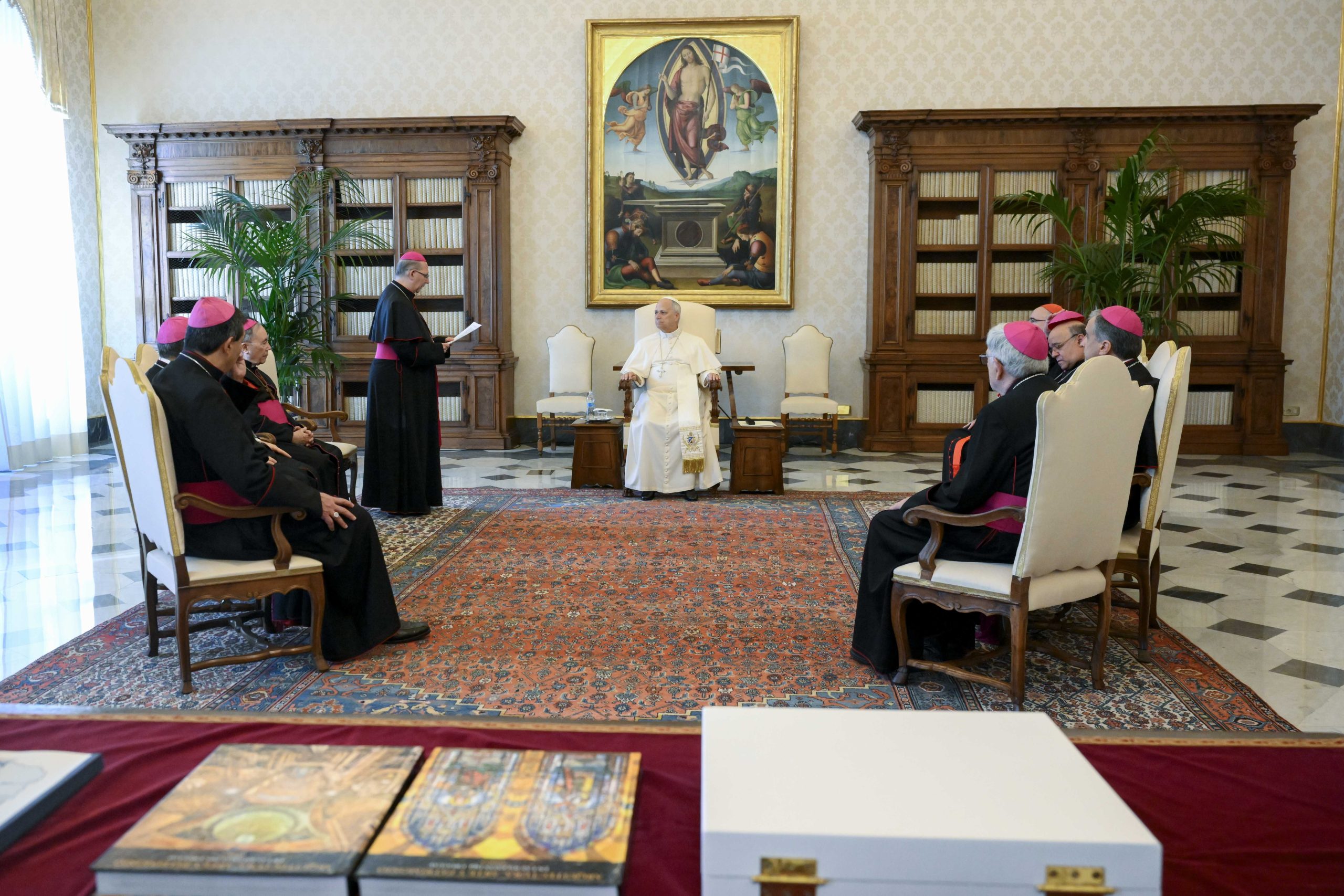
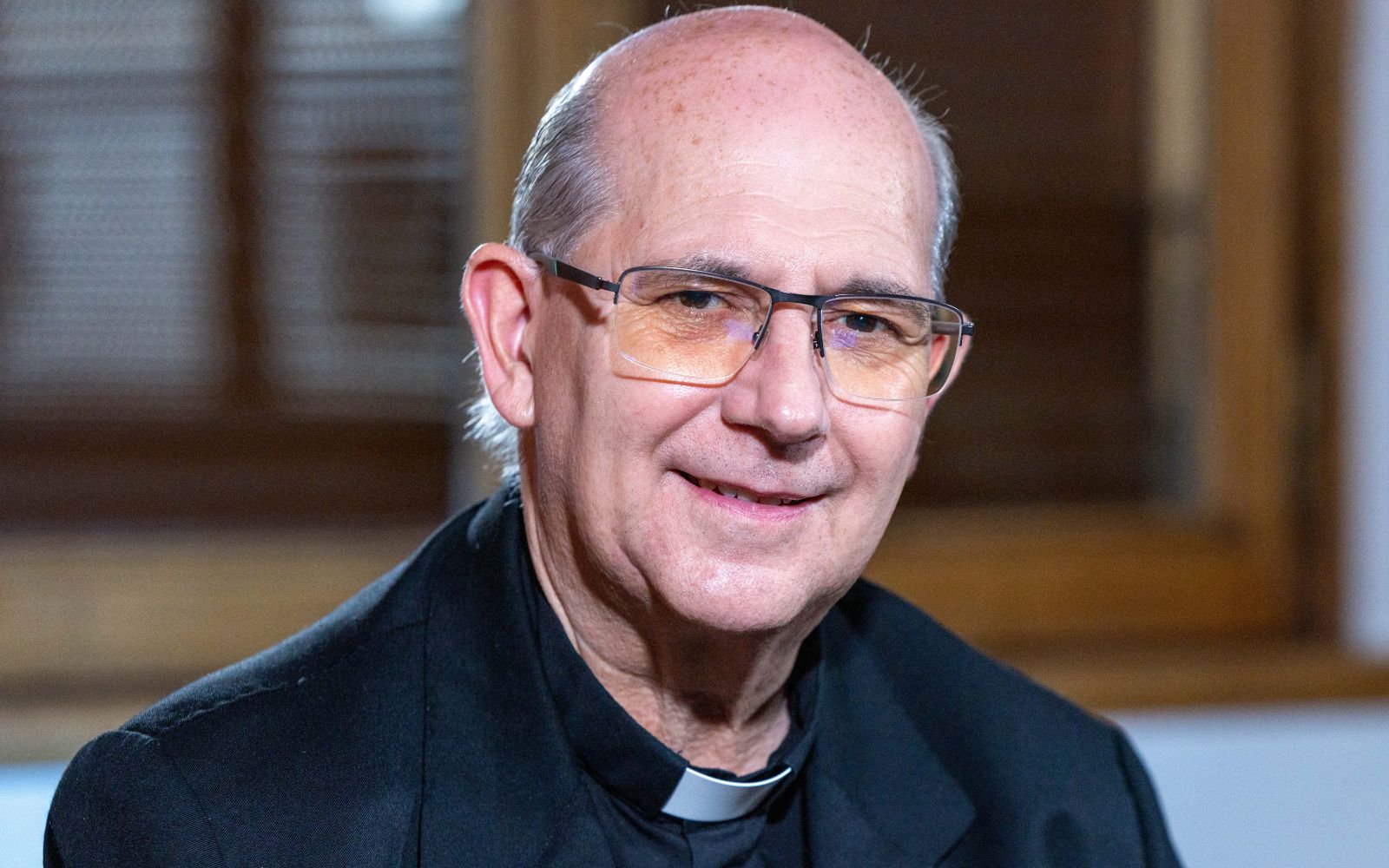
Vatican prepares Pope Leo XIV summit on marriage crisis #Catholic Pope Leo XIV is aware that among the vocations to which men and women are called by God, marriage is one of the “noblest and highest.”He said as much last October, on the 10th anniversary of the canonization of Sts. Louis and Zélie Martin, the parents of St. Thérèse of the Child Jesus. Now, the pope has set in motion a process to address both marital crises and the growing fear among young people of getting married and forming a family.Leo XIV has called the presidents of the world’s bishops’ conferences to Rome this October to seek a response to an issue he considers crucial not only for the Church but also for society.In preparation for the high-level meeting, the Vatican organized a study day Tuesday titled “The Sacrament of Marriage, Faith, and Munus Docendi” at the Casina Pio IV.The initiative, hosted by the Dicastery for the Laity, the Family, and Life, brought together about 75 participants by invitation, including representatives of various dicasteries of the Roman Curia as well as rectors, lecturers, and others involved in the formation of future pastors.According to the dicastery, the study day was devoted to the formation of priests in accompanying “young people, engaged couples, and married couples in faith.”How can the Church form pastors capable of accompanying young people, engaged couples, and spouses so that they live Christian marriage as an authentic experience of faith in a cultural context marked by secularization? Several speakers addressed that question, including Father Andrea Bozzolo, rector of the Pontifical Salesian University.Speaking with ACI Prensa, the Spanish-language sister service of EWTN News, the Italian priest — who has taught theology of marriage at the Pontifical John Paul II Institute for Studies on Marriage and Family — emphasized the urgent need to form priests who are prepared to accompany young people and help them live Christian marriage as a true event of faith rather than as a mere “formality or social rite.”According to Bozzolo, in large sectors of contemporary society, marriage is no longer perceived as a decisive moment in the formation of a family.“For many couples, marriage today seems to be a less decisive step in the emergence of the family covenant,” he said.In that context, he added, cohabitation before marriage has become widespread as a kind of trial stage. For many young people, the strength of that relationship, tested in daily life, “has become the condition for eventually considering access to marriage,” he said.Bozzolo explained that this mentality fuels the now widespread phenomenon of couples living together before going to the altar.Unlike in past decades, when de facto unions were presented as an ideological alternative to marriage, today “they are often understood as a preparatory path,” he said.In what he described as a “liquid society,” cohabitation frequently functions as a first family experience, open to being consolidated over time into a more stable relationship.“Cohabitation in most cases does not seek to exclude the marriage covenant but rather to verify its viability,” he said, noting that the increase in separations also reflects this way of understanding the bond.Not blaming, but not trivializingIn response to this reality, Bozzolo said the Church should “not blame” young people who ask to marry after living together, but it also should not “trivialize” premarital cohabitation, because “it is not the correct way” to arrive at the altar.He also called on the Church to break with stereotypes that present love as if it were “a simple feeling.”“Love has ontological value — and not merely psychological value — and that is why marriage is a privileged vehicle for the biblical revelation of the face of God,” he said.Bozzolo insisted on the need for priestly formation that helps future priests rediscover the decisive value of marriage as a public and sacramental act.“The public and religious expression of consent,” he said, is no longer usually perceived today as something that substantially affects the stability of the bond — a reality he described as “a pastoral challenge of the first order.”Marriage is not a simple social procedureFor that reason, he said, it is essential for the Church to prepare priests who can accompany young people along a journey of faith that presents Christian marriage not as a “simple social procedure.”The goal, Bozzolo explained, is to help priests accompany married couples so that they learn to “recognize the presence and action of God in the concrete history of their bond.”Such accompaniment, he said, requires a “formative approach” capable of bringing together biblical wisdom, theological understanding, an awareness of contemporary cultural trends, and attentive listening to the real experiences of families.One current problem among couples, he said, is the tendency to absolutize the relationship and place expectations on the spousal bond that the other person cannot sustain alone.“We cannot place the entire responsibility for our happiness on our spouse, because he or she will disappoint us. For that, we have Jesus, the true messiah,” Bozzolo said.Only from a well-grounded faith, he emphasized, is it possible to live marriage in a healthy, realistic way that is open to gratuitousness, without making the other person the ultimate source of meaning.For that reason, and in direct relation to the formation of future priests, Bozzolo highlighted the need to create formation paths in seminaries that integrate these dimensions and prepare pastors for authentic marriage ministry, rooted in life and not reduced to theoretical frameworks.The last time a pope called together all the presidents of the world’s bishops’ conferences was in February 2019, when Pope Francis gathered them to address the wound of sexual abuse in the Church. That meeting marked a shift in the global perception of the problem and made it possible to outline a long-term strategy.This story was first published by ACI Prensa, the Spanish-language sister service of EWTN News. It has been translated and adapted by EWTN News English.

Vatican prepares Pope Leo XIV summit on marriage crisis #Catholic Pope Leo XIV is aware that among the vocations to which men and women are called by God, marriage is one of the “noblest and highest.”He said as much last October, on the 10th anniversary of the canonization of Sts. Louis and Zélie Martin, the parents of St. Thérèse of the Child Jesus. Now, the pope has set in motion a process to address both marital crises and the growing fear among young people of getting married and forming a family.Leo XIV has called the presidents of the world’s bishops’ conferences to Rome this October to seek a response to an issue he considers crucial not only for the Church but also for society.In preparation for the high-level meeting, the Vatican organized a study day Tuesday titled “The Sacrament of Marriage, Faith, and Munus Docendi” at the Casina Pio IV.The initiative, hosted by the Dicastery for the Laity, the Family, and Life, brought together about 75 participants by invitation, including representatives of various dicasteries of the Roman Curia as well as rectors, lecturers, and others involved in the formation of future pastors.According to the dicastery, the study day was devoted to the formation of priests in accompanying “young people, engaged couples, and married couples in faith.”How can the Church form pastors capable of accompanying young people, engaged couples, and spouses so that they live Christian marriage as an authentic experience of faith in a cultural context marked by secularization? Several speakers addressed that question, including Father Andrea Bozzolo, rector of the Pontifical Salesian University.Speaking with ACI Prensa, the Spanish-language sister service of EWTN News, the Italian priest — who has taught theology of marriage at the Pontifical John Paul II Institute for Studies on Marriage and Family — emphasized the urgent need to form priests who are prepared to accompany young people and help them live Christian marriage as a true event of faith rather than as a mere “formality or social rite.”According to Bozzolo, in large sectors of contemporary society, marriage is no longer perceived as a decisive moment in the formation of a family.“For many couples, marriage today seems to be a less decisive step in the emergence of the family covenant,” he said.In that context, he added, cohabitation before marriage has become widespread as a kind of trial stage. For many young people, the strength of that relationship, tested in daily life, “has become the condition for eventually considering access to marriage,” he said.Bozzolo explained that this mentality fuels the now widespread phenomenon of couples living together before going to the altar.Unlike in past decades, when de facto unions were presented as an ideological alternative to marriage, today “they are often understood as a preparatory path,” he said.In what he described as a “liquid society,” cohabitation frequently functions as a first family experience, open to being consolidated over time into a more stable relationship.“Cohabitation in most cases does not seek to exclude the marriage covenant but rather to verify its viability,” he said, noting that the increase in separations also reflects this way of understanding the bond.Not blaming, but not trivializingIn response to this reality, Bozzolo said the Church should “not blame” young people who ask to marry after living together, but it also should not “trivialize” premarital cohabitation, because “it is not the correct way” to arrive at the altar.He also called on the Church to break with stereotypes that present love as if it were “a simple feeling.”“Love has ontological value — and not merely psychological value — and that is why marriage is a privileged vehicle for the biblical revelation of the face of God,” he said.Bozzolo insisted on the need for priestly formation that helps future priests rediscover the decisive value of marriage as a public and sacramental act.“The public and religious expression of consent,” he said, is no longer usually perceived today as something that substantially affects the stability of the bond — a reality he described as “a pastoral challenge of the first order.”Marriage is not a simple social procedureFor that reason, he said, it is essential for the Church to prepare priests who can accompany young people along a journey of faith that presents Christian marriage not as a “simple social procedure.”The goal, Bozzolo explained, is to help priests accompany married couples so that they learn to “recognize the presence and action of God in the concrete history of their bond.”Such accompaniment, he said, requires a “formative approach” capable of bringing together biblical wisdom, theological understanding, an awareness of contemporary cultural trends, and attentive listening to the real experiences of families.One current problem among couples, he said, is the tendency to absolutize the relationship and place expectations on the spousal bond that the other person cannot sustain alone.“We cannot place the entire responsibility for our happiness on our spouse, because he or she will disappoint us. For that, we have Jesus, the true messiah,” Bozzolo said.Only from a well-grounded faith, he emphasized, is it possible to live marriage in a healthy, realistic way that is open to gratuitousness, without making the other person the ultimate source of meaning.For that reason, and in direct relation to the formation of future priests, Bozzolo highlighted the need to create formation paths in seminaries that integrate these dimensions and prepare pastors for authentic marriage ministry, rooted in life and not reduced to theoretical frameworks.The last time a pope called together all the presidents of the world’s bishops’ conferences was in February 2019, when Pope Francis gathered them to address the wound of sexual abuse in the Church. That meeting marked a shift in the global perception of the problem and made it possible to outline a long-term strategy.This story was first published by ACI Prensa, the Spanish-language sister service of EWTN News. It has been translated and adapted by EWTN News English.

The October meeting in Rome will bring together presidents of bishops’ conferences from around the world to seek a response to what the pope considers a crucial issue for the Church and society.

Read More
New York City street renamed for religious sister’s decades of service #Catholic A New York City street acquired a new name this past weekend honoring a Catholic sister’s decades of dedication to the East Harlem community.On Saturday, April 25, more than 100 people gathered to celebrate the newly named street — Sister Susanne Lachapelle Way — named for the life and legacy of Lachapelle and her contributions as a registered nurse, advocate, and Little Sister of the Assumption (LSA).“With a heart rooted in justice, she dedicated herself to serving the vulnerable through home visits, healthcare, and tireless advocacy, both locally and globally,” Rosario Jimenez, director for LSA Family in Mission, told EWTN News.The event and street naming flowed from Lachapelleʼs work with Little Sisters of the Assumption Family Health Service, a community-based nonprofit based in East Harlem. Founded by the Little Sisters, the organization offers numerous programs to help vulnerable families and children meet their basic needs.
 
 Crowd celebrates the unveiling of the Sister Susanne Lachapelle Way street sign in East Harlem, New York, on April 25, 2026. | Credit: Photo courtesy of Alysa Jette and Grace Ayres-Doyle
 
 The group has been in the city for almost 70 years and Lachapelle “really helped to set the trajectory for the organization,” Ray Lopez, chief program officer of LSA Family Health Service, told EWTN News.She was “a foundational visionary staff person and a leader who really, to this day, has a very profound impact on many of us who are on the staff and worked shoulder to shoulder with her, learning from her,” he said.“Since her passing, weʼve all … redoubled our efforts to find a way to keep LSAʼs original mission and vision going in this current environment,” Lopez said. “We really wanted to find ways to keep her name out there and the legacy going.”The street is on the southeast corner of East 115th Street and First Avenue. "Itʼs almost the exact midpoint of where Sister Susanne Lachapelle lived in the Little Sisters of the Assumption brownstone and where the LSA Family Health Service … center is located,” Lopez said.“She walked there every day for at least two decades,” he said. “We thought it was the appropriate place.”Sister Susanne and the Little Sisters: ‘Unsung heroes’Lachapelle entered the LSA order in 1962 and took the religious name Sister Susanne Mary of the Sacred Heart. She made her final vows in 1971.
 
 Sister Susanne Lachapelle. | Credit: Photo courtesy of LSA Family in Mission
 
 In her 60 years of religious life, she served in numerous areas and worked with many ministries. But for 45 years she made the community of East Harlem her home, helping to spearhead the LSA Family Health Service’s programs.As a nurse, Lachapelle conducted home visits, which “was a foundational program of LSA Family Health Service,” Lopez said. “All of the programs grew out of those interactions, those early interactions of nurses going into the homes to treat the sick and poor and really seeing conditions firsthand, sitting with families at their kitchen table, hearing their stories.”“Sister Susanne and the rest of the leadership created other programs to really provide wraparound services for families,” he said. "The Little Sisters set up a food pantry and a thrift store just to make sure that people had the very basics.”“From there, the services were about connecting people with public benefits, providing support around education, education enrichment, education navigation. A lot of … programs focused on maternal child health and early childhood development.”Along with her support for health and families, Lachapelle also had a passion for protecting the environment through her commitment to Pope Francis' Laudato Si', a call to protect our common home.
 
 Sister Susanne Lachapelle. | Credit: Photo courtesy of LSA Family in Mission
 
 Lachapelle decided to initiate “an environmental health component to the work that the Little Sisters were doing,” Lynn Tiede, a volunteer for LSA Health Service who worked with Lachapelle, told EWTN News.“She worked with the families and saw problems like asthma and other debilitating health things, she realized that … itʼs mold, itʼs the air quality, itʼs these other things that are really at the root of these health problems.”“Everybody was just so inspired … to see her traipsing into rough, rough buildings and just without any hesitation,” Tiede said. “If you went into a home and people were dealing with asthma, you … send in the environmental health team and then they try to work to get the building management to actually address those things.”With the success of her work, she even collaborated with the human rights group and nongovernmental organization Vivat International, where she helped bring voices and environmental issues to the United Nations, but she always remained “very, very humble,” Tiede said.Due to her humility “there were a few people who were against [the street-naming] when we proposed it, because they thought she would hate it — because she was so humble,” Tiede said.
 
 Sister Susanne Lachapelle Way in East Harlem, New York. | Credit: Photo courtesy of LSA Family in Mission
 
 Ultimately they chose to honor Lachapelle and the Little Sisters because they are “unsung heroes — these quiet heroes,” Tiede said.The process to get the street renamed began in 2024 and it was found to be an easier process than expected, as the city council was eager to acknowledge Lachapelle and the Little Sisters.Sister Susanne’s lasting impactAt the street naming celebration organizers “were expecting around 80 participants, but I think it was maybe 150 or a little bit more,” Jimenez said. “There were community members, families that she served, youth that she served, … volunteers, and of course, our board members and benefactors.”It honored her “simplicity and the way that she used to be a leader,” which was “was grounded in integrity, purpose, love,” Jimenez said. “Having a street named after her will honor all of that.”Reflecting on the event, Lopez said: “[It] feels like a dream because so many people came that worked with her in the past.”Despite having to move the event inside to avoid the cold and rain, the crowd of people stayed to celebrate. It “was crowded with people, and our center lobby was filled completely,” Lopez said. “It was just a very festive atmosphere.”He added: “It was really moving to have so many people there from so long ago that still feel it in their hearts, [how] the work here in East Harlem impacted their careers, impacted their lives, and that itʼs still a very significant thing for them,” he said.

New York City street renamed for religious sister’s decades of service #Catholic A New York City street acquired a new name this past weekend honoring a Catholic sister’s decades of dedication to the East Harlem community.On Saturday, April 25, more than 100 people gathered to celebrate the newly named street — Sister Susanne Lachapelle Way — named for the life and legacy of Lachapelle and her contributions as a registered nurse, advocate, and Little Sister of the Assumption (LSA).“With a heart rooted in justice, she dedicated herself to serving the vulnerable through home visits, healthcare, and tireless advocacy, both locally and globally,” Rosario Jimenez, director for LSA Family in Mission, told EWTN News.The event and street naming flowed from Lachapelleʼs work with Little Sisters of the Assumption Family Health Service, a community-based nonprofit based in East Harlem. Founded by the Little Sisters, the organization offers numerous programs to help vulnerable families and children meet their basic needs. Crowd celebrates the unveiling of the Sister Susanne Lachapelle Way street sign in East Harlem, New York, on April 25, 2026. | Credit: Photo courtesy of Alysa Jette and Grace Ayres-Doyle The group has been in the city for almost 70 years and Lachapelle “really helped to set the trajectory for the organization,” Ray Lopez, chief program officer of LSA Family Health Service, told EWTN News.She was “a foundational visionary staff person and a leader who really, to this day, has a very profound impact on many of us who are on the staff and worked shoulder to shoulder with her, learning from her,” he said.“Since her passing, weʼve all … redoubled our efforts to find a way to keep LSAʼs original mission and vision going in this current environment,” Lopez said. “We really wanted to find ways to keep her name out there and the legacy going.”The street is on the southeast corner of East 115th Street and First Avenue. "Itʼs almost the exact midpoint of where Sister Susanne Lachapelle lived in the Little Sisters of the Assumption brownstone and where the LSA Family Health Service … center is located,” Lopez said.“She walked there every day for at least two decades,” he said. “We thought it was the appropriate place.”Sister Susanne and the Little Sisters: ‘Unsung heroes’Lachapelle entered the LSA order in 1962 and took the religious name Sister Susanne Mary of the Sacred Heart. She made her final vows in 1971. Sister Susanne Lachapelle. | Credit: Photo courtesy of LSA Family in Mission In her 60 years of religious life, she served in numerous areas and worked with many ministries. But for 45 years she made the community of East Harlem her home, helping to spearhead the LSA Family Health Service’s programs.As a nurse, Lachapelle conducted home visits, which “was a foundational program of LSA Family Health Service,” Lopez said. “All of the programs grew out of those interactions, those early interactions of nurses going into the homes to treat the sick and poor and really seeing conditions firsthand, sitting with families at their kitchen table, hearing their stories.”“Sister Susanne and the rest of the leadership created other programs to really provide wraparound services for families,” he said. "The Little Sisters set up a food pantry and a thrift store just to make sure that people had the very basics.”“From there, the services were about connecting people with public benefits, providing support around education, education enrichment, education navigation. A lot of … programs focused on maternal child health and early childhood development.”Along with her support for health and families, Lachapelle also had a passion for protecting the environment through her commitment to Pope Francis' Laudato Si', a call to protect our common home. Sister Susanne Lachapelle. | Credit: Photo courtesy of LSA Family in Mission Lachapelle decided to initiate “an environmental health component to the work that the Little Sisters were doing,” Lynn Tiede, a volunteer for LSA Health Service who worked with Lachapelle, told EWTN News.“She worked with the families and saw problems like asthma and other debilitating health things, she realized that … itʼs mold, itʼs the air quality, itʼs these other things that are really at the root of these health problems.”“Everybody was just so inspired … to see her traipsing into rough, rough buildings and just without any hesitation,” Tiede said. “If you went into a home and people were dealing with asthma, you … send in the environmental health team and then they try to work to get the building management to actually address those things.”With the success of her work, she even collaborated with the human rights group and nongovernmental organization Vivat International, where she helped bring voices and environmental issues to the United Nations, but she always remained “very, very humble,” Tiede said.Due to her humility “there were a few people who were against [the street-naming] when we proposed it, because they thought she would hate it — because she was so humble,” Tiede said. Sister Susanne Lachapelle Way in East Harlem, New York. | Credit: Photo courtesy of LSA Family in Mission Ultimately they chose to honor Lachapelle and the Little Sisters because they are “unsung heroes — these quiet heroes,” Tiede said.The process to get the street renamed began in 2024 and it was found to be an easier process than expected, as the city council was eager to acknowledge Lachapelle and the Little Sisters.Sister Susanne’s lasting impactAt the street naming celebration organizers “were expecting around 80 participants, but I think it was maybe 150 or a little bit more,” Jimenez said. “There were community members, families that she served, youth that she served, … volunteers, and of course, our board members and benefactors.”It honored her “simplicity and the way that she used to be a leader,” which was “was grounded in integrity, purpose, love,” Jimenez said. “Having a street named after her will honor all of that.”Reflecting on the event, Lopez said: “[It] feels like a dream because so many people came that worked with her in the past.”Despite having to move the event inside to avoid the cold and rain, the crowd of people stayed to celebrate. It “was crowded with people, and our center lobby was filled completely,” Lopez said. “It was just a very festive atmosphere.”He added: “It was really moving to have so many people there from so long ago that still feel it in their hearts, [how] the work here in East Harlem impacted their careers, impacted their lives, and that itʼs still a very significant thing for them,” he said.

For 45 years, Sister Susanne Lachapelle made the community of East Harlem her home, helping to spearhead the LSA Family Health Service’s programs to help the most vulnerable.

Read More
Maryland Supreme Court: State cannot reveal names of individuals who allegedly hid Church abuse #Catholic Prosecutors in Maryland may not reveal the names of individuals who allegedly hid or failed to report Church abuse, the state Supreme Court said April 27. As part of its investigation into alleged abuse in the Archdiocese of Baltimore, the state attorney generalʼs office had sought to make public the details of a grand jury report, including the identities of individuals who have not been charged with a crime but who allegedly failed to stop abuse from occurring. A lower court granted the attorney generalʼs request to publish the information, with an appellate court partly upholding that decision. Yet in its April 27 ruling, the Maryland Supreme Court reversed those decisions, holding that the attorney generalʼs office did not “meet [the] burden” of justifying the release of the identities. “Many grand jury investigations obtain damaging information and allegations about uncharged individuals that the public might benefit from learning,” the high court acknowledged. But “one of the primary purposes of grand jury secrecy is to protect uncharged persons from public disgrace in the absence of a criminal charge and a forum in which to seek vindication,” it said. “A court may not order disclosure of secret grand jury material, over the objection of an uncharged individual, for the purpose of holding that person accountable in the court of public opinion,” the justices said. The court noted that the attorney generalʼs office had argued that the “intensity of public interest” in the case could justify revealing the identities.Yet “the interests promoted by grand jury secrecy do not increase or decrease based on how much the public wants to learn the information contained in grand jury materials,” the court said.The decision comes amid ongoing court proceedings in the Archdiocese of Baltimore, which filed for bankruptcy in September 2023 ahead of a wave of sex abuse claims filed against it under the Maryland Child Victims Act. Earlier this month, the archdiocesan insurer Hartford Insurance Group proposed contributing $100 million to a settlement for abuse victims. The archdiocese in 2024 sued multiple insurers over what it claimed was a failure to pay abuse claims for which the insurers were contractually obligated.In 2024 Archbishop William Lori attended two court-ordered “listening sessions” with alleged victims of sexual abuse, with the prelate describing himself as "deeply moved by their very powerful testimony.”

Maryland Supreme Court: State cannot reveal names of individuals who allegedly hid Church abuse #Catholic Prosecutors in Maryland may not reveal the names of individuals who allegedly hid or failed to report Church abuse, the state Supreme Court said April 27. As part of its investigation into alleged abuse in the Archdiocese of Baltimore, the state attorney generalʼs office had sought to make public the details of a grand jury report, including the identities of individuals who have not been charged with a crime but who allegedly failed to stop abuse from occurring. A lower court granted the attorney generalʼs request to publish the information, with an appellate court partly upholding that decision. Yet in its April 27 ruling, the Maryland Supreme Court reversed those decisions, holding that the attorney generalʼs office did not “meet [the] burden” of justifying the release of the identities. “Many grand jury investigations obtain damaging information and allegations about uncharged individuals that the public might benefit from learning,” the high court acknowledged. But “one of the primary purposes of grand jury secrecy is to protect uncharged persons from public disgrace in the absence of a criminal charge and a forum in which to seek vindication,” it said. “A court may not order disclosure of secret grand jury material, over the objection of an uncharged individual, for the purpose of holding that person accountable in the court of public opinion,” the justices said. The court noted that the attorney generalʼs office had argued that the “intensity of public interest” in the case could justify revealing the identities.Yet “the interests promoted by grand jury secrecy do not increase or decrease based on how much the public wants to learn the information contained in grand jury materials,” the court said.The decision comes amid ongoing court proceedings in the Archdiocese of Baltimore, which filed for bankruptcy in September 2023 ahead of a wave of sex abuse claims filed against it under the Maryland Child Victims Act. Earlier this month, the archdiocesan insurer Hartford Insurance Group proposed contributing $100 million to a settlement for abuse victims. The archdiocese in 2024 sued multiple insurers over what it claimed was a failure to pay abuse claims for which the insurers were contractually obligated.In 2024 Archbishop William Lori attended two court-ordered “listening sessions” with alleged victims of sexual abuse, with the prelate describing himself as "deeply moved by their very powerful testimony.”

“Uncharged individuals” may not be exposed to the “court of public opinion” in grand jury documents, the state high court ruled.

Read More
Kicked out of Mass as a mischievous child, Pope Leo will ordain him Sunday #Catholic The Diocese of Rome shared the testimonies of eight seminarians who, on April 26, Good Shepherd Sunday, will be ordained priests by Pope Leo XIV. Among them is Christian Sguazzino, who as a child was once kicked out of Mass by a priest because he was causing "chaos.”Sguazzino, together with Deacon Danilo Defant and Sister Ester Maddalena Iapenna, will share their testimonies on Friday, April 24, at St. John Lateran Basilica, the cathedral church of Rome, during the prayer vigil for vocations.Sguazzino discovered his vocation at St. John of the Cross Parish. “When I was a child — after having made my first Communion — I would go play soccer and then attend Mass every day, always bringing a friend along,” the future priest recounted.“At that time, there wasn’t even a proper church building; instead, services were held in tents. My friends and I, naturally, caused a bit of chaos. So, one day the assistant pastor kicked us out and told us we would be excommunicated!” he shared with a smile.Recalling that time of mischief, Sguazzino said that “even then — despite everything — I felt the joy of being in church; I loved looking at the altar and the tabernacle.” Along his journey, he emphasized, it was crucial to meet “so many priests who were happy to be priests. Their witness was fundamental.”An uncle who was a priest always supported himYordan Camilo Medina is Colombian and has an uncle who is a priest. As a child, he recounted, “I used to accompany him to take Communion to the mountain communities, and the joy of the faithful upon receiving the body of Christ was incredible.”“Now he, too, is in Rome, and I have followed him here on my path of priestly formation. He has always supported me,” he added.He dreamed of becoming a friarGiovanni Emanuele Nunziante is 32 years old. He was born in Rome but spent part of his childhood in England. “If I had to tell you how my vocation began, my earliest memory dates back to when I was a child,“ he said. ”I didn’t yet fully understand what it meant to be a priest, but I dreamed of being close to the Lord and toyed with the idea of ​​becoming a friar. Then, it all faded into oblivion!”The call returned with force in 2016, during the Fourth Sunday of Easter. “Upon hearing the Gospel of the Good Shepherd, that desire to be close to the Lord in a special way returned … I realized that my deepest desire was to offer my life just as Jesus did — the Good Shepherd,” he said.The influence of the Neocatechumenal WayAntonino Ordine, 27, related that his vocation was born within the faith formation program known as the Neocatechumenal Way: “I was born and raised in a very practicing family, and this led me to appreciate the beauty of the work the Church carries out on a daily basis. I was fortunate enough to meet priests and missionary families especially during a mission in Sweden who were fundamental to my discernment.”He had wanted to become a doctor and after having served on missions in Latin America, the Middle East, and India, he realized that God was calling him to give himself completely out of love for him.He was born in Africa into a non-Catholic familyJos Emanuel Nleme Sabate was born in Cameroon. “My father was Protestant and we often prayed at home,” he said. “When I was 11 years old, I entered the minor seminary of my home diocese because it had a reputation as an excellent school. It was there that I learned about Catholicism.”“I was baptized at the age of 12 and I believe it was during that rite, which was unfamiliar to me at the time, that I decided to become a priest,” he shared. He is now studying sign language and helping people with disabilities.He was a pianist of international stature“I come from a Catholic family,” Daniele Riscica related, “and I have always participated in parish activities; however, I studied at the Frosinone Conservatory and completed my piano studies in classical music. From there, I continued my career as a concert pianist.”Regarded as a rising star of the international piano scene by the age of 24, he said, “I had already achieved many goals in life, yet I was not satisfied. I felt that God was calling me to something more. So I tried entering the seminary — almost as a test … and there I felt happy.”He is grateful for his parents' faithGiorgio Larosa is 30 years old and said that his “vocation was born out of attending the parish, thanks to the faith my parents instilled in me.” His parents' example, as well as “the example of other Christians, laypeople and priests, was also very powerful. In their stories, I saw the power of the Gospel,” he recounted.He left his job and entered the seminaryGuglielmo Lapenna is 35 years old and worked in a liquor factory before beginning his formation for the priesthood.“During World Youth Day 2016 in Kraków, I decided to leave my job and enter the seminary,” he shared, adding: “And the Lord has reaffirmed my vocation every day.”This story was first published by ACI Prensa, the Spanish-language sister service of EWTN News. It has been translated and adapted by EWTN News English.

Kicked out of Mass as a mischievous child, Pope Leo will ordain him Sunday #Catholic The Diocese of Rome shared the testimonies of eight seminarians who, on April 26, Good Shepherd Sunday, will be ordained priests by Pope Leo XIV. Among them is Christian Sguazzino, who as a child was once kicked out of Mass by a priest because he was causing "chaos.”Sguazzino, together with Deacon Danilo Defant and Sister Ester Maddalena Iapenna, will share their testimonies on Friday, April 24, at St. John Lateran Basilica, the cathedral church of Rome, during the prayer vigil for vocations.Sguazzino discovered his vocation at St. John of the Cross Parish. “When I was a child — after having made my first Communion — I would go play soccer and then attend Mass every day, always bringing a friend along,” the future priest recounted.“At that time, there wasn’t even a proper church building; instead, services were held in tents. My friends and I, naturally, caused a bit of chaos. So, one day the assistant pastor kicked us out and told us we would be excommunicated!” he shared with a smile.Recalling that time of mischief, Sguazzino said that “even then — despite everything — I felt the joy of being in church; I loved looking at the altar and the tabernacle.” Along his journey, he emphasized, it was crucial to meet “so many priests who were happy to be priests. Their witness was fundamental.”An uncle who was a priest always supported himYordan Camilo Medina is Colombian and has an uncle who is a priest. As a child, he recounted, “I used to accompany him to take Communion to the mountain communities, and the joy of the faithful upon receiving the body of Christ was incredible.”“Now he, too, is in Rome, and I have followed him here on my path of priestly formation. He has always supported me,” he added.He dreamed of becoming a friarGiovanni Emanuele Nunziante is 32 years old. He was born in Rome but spent part of his childhood in England. “If I had to tell you how my vocation began, my earliest memory dates back to when I was a child,“ he said. ”I didn’t yet fully understand what it meant to be a priest, but I dreamed of being close to the Lord and toyed with the idea of ​​becoming a friar. Then, it all faded into oblivion!”The call returned with force in 2016, during the Fourth Sunday of Easter. “Upon hearing the Gospel of the Good Shepherd, that desire to be close to the Lord in a special way returned … I realized that my deepest desire was to offer my life just as Jesus did — the Good Shepherd,” he said.The influence of the Neocatechumenal WayAntonino Ordine, 27, related that his vocation was born within the faith formation program known as the Neocatechumenal Way: “I was born and raised in a very practicing family, and this led me to appreciate the beauty of the work the Church carries out on a daily basis. I was fortunate enough to meet priests and missionary families especially during a mission in Sweden who were fundamental to my discernment.”He had wanted to become a doctor and after having served on missions in Latin America, the Middle East, and India, he realized that God was calling him to give himself completely out of love for him.He was born in Africa into a non-Catholic familyJos Emanuel Nleme Sabate was born in Cameroon. “My father was Protestant and we often prayed at home,” he said. “When I was 11 years old, I entered the minor seminary of my home diocese because it had a reputation as an excellent school. It was there that I learned about Catholicism.”“I was baptized at the age of 12 and I believe it was during that rite, which was unfamiliar to me at the time, that I decided to become a priest,” he shared. He is now studying sign language and helping people with disabilities.He was a pianist of international stature“I come from a Catholic family,” Daniele Riscica related, “and I have always participated in parish activities; however, I studied at the Frosinone Conservatory and completed my piano studies in classical music. From there, I continued my career as a concert pianist.”Regarded as a rising star of the international piano scene by the age of 24, he said, “I had already achieved many goals in life, yet I was not satisfied. I felt that God was calling me to something more. So I tried entering the seminary — almost as a test … and there I felt happy.”He is grateful for his parents' faithGiorgio Larosa is 30 years old and said that his “vocation was born out of attending the parish, thanks to the faith my parents instilled in me.” His parents' example, as well as “the example of other Christians, laypeople and priests, was also very powerful. In their stories, I saw the power of the Gospel,” he recounted.He left his job and entered the seminaryGuglielmo Lapenna is 35 years old and worked in a liquor factory before beginning his formation for the priesthood.“During World Youth Day 2016 in Kraków, I decided to leave my job and enter the seminary,” he shared, adding: “And the Lord has reaffirmed my vocation every day.”This story was first published by ACI Prensa, the Spanish-language sister service of EWTN News. It has been translated and adapted by EWTN News English.

Seminarians shared their personal stories of hearing and responding to God’s call to the priesthood.

Read More
1 in 6 face infertility; Catholic author urges faith-filled support #Catholic During this yearʼs National Infertility Awareness Week (NIAW), Leigh Fitzpatrick Snead, who personally carries the cross of infertility, spoke about the difficult topic with the hope of making others experiencing it feel less alone.NIAW runs from April 19–25, bringing attention to the high numbers of people — now 1 in 6 globally — who experience infertility at some point in their lives, according to the World Health Organization.Snead, a fellow at The Catholic Association, tackles the topic in her book “Infertile But Fruitful: Finding Fulfillment When You Canʼt Conceive.” Through her story and the stories of other women, she wrote the book to be “the voice of a friend who has been where you are now and made it through in one piece.”Snead said the book was “a chance for me to add to the growing conversation and awareness about infertility, especially among Catholics for whom in vitro fertilization (IVF) (the standard ‘cure’ for infertility) is not an option.” In an interview with EWTN News, Snead shared her perspective and offered encouragement and advice for couples navigating the grief of infertility.EWTN News: What might people not know about infertility?Leigh Snead: For sure, how many people are suffering from it. For good reasons, this is a particularly private cross — it involves the most intimate parts of your marriage, for one. But marriage is public, and people can easily see if you do or donʼt have children, or, in most cases, whether or not youʼre expecting.There is a lot of hard stuff experienced in silence and even shame. It might be hard to understand if you havenʼt been through it, but it can feel almost humiliating when you canʼt conceive and so you tend to slap on a smile and pretend nothing is wrong.Itʼs too bad when we give in to this temptation to isolate ourselves from others who really only want to help. Yes, their concern can feel like even more pressure on top of what you may already be feeling internally, but you should open yourself up to their prayers. In the same way, pray for married couples and couples you think might be carrying the cross of infertility, even before they ask you.What do you wish you knew when you began navigating infertility, and what would you tell couples who are going through it now?I wish I hadnʼt overlooked and underestimated the relief and comfort I could have received by being more open about my physical and emotional struggles when facing infertility. The more I kept it a secret, the more shameful it all felt, which led to isolation and even more secrecy and shame.Privacy is one thing, but purposefully forgoing the love and prayers of those who only care for you out of shame over something you have little to no control over — nothing good can come of that.What steps can couples who are going through infertility take?Seek good medical care that aligns with your values. Learn and develop a good understanding of what the Church teaches, especially about the prohibition of IVF. Understand the “why” — not just the fact that itʼs “not allowed.” Communicate with each other and make time to enjoy your marriage even though youʼre struggling.Bear this burden together. Find parish support groups or a group online. Pray together and choose a saint to accompany you. Youʼre probably going to feel and think some dark things, so frequent confession, spiritual direction, and counseling is a good idea.What does the Catholic Church offer couples who struggle with this? What do you think the Church can do to further help them?The teachings on marriage, sexuality, and procreation the Church gives us are such a gift, but we need to be reminded of them regularly. Iʼd like to see more priests and seminarians become fluent in the language of Catholic infertility. I think making a discussion about the possibility of infertility should be included in marriage prep courses.The Catholic infertility ministry Springs in the Desert is a great resource not only for those carrying the cross of infertility but for those, like priests, hoping to support them.What advice do you have for couples who are being pushed to try IVF and other methods that do not align with Church teaching?Seek medical care from a doctor who respects or, even better, shares your views on marriage, sexuality, procreation, and human dignity. This is true for whatever type of medical care you may be seeking and is not limited to fertility care. If you feel mistreated by your physician, just walk out. There is another doctor out there who will provide you with the care you deserve.You and your husband eventually became parents though adoption. What would you want people to know about adoption?I think itʼs important to keep in mind that infertility and adoption are not to be lumped together, and I try to not conflate the two in my work. Thatʼs not always easy for me because I have four beautiful sons through the great gift of adoption.Not everyone with a diagnosis of infertility will be called to adopt a child. There are so many ways to be fruitful! We shouldnʼt limit our idea of a fruitful marriage to the raising of children, and no one should feel obliged to adopt because theyʼre unable to conceive. And if they donʼt hear that call to adopt it does not mean that they didnʼt “really” want a child, or that they arenʼt suffering.In a similar fashion, adoption fulfilled my call to motherhood but the arrival of my sons did not “cure” my infertility, nor did it take away the scars infertility can leave behind. Itʼs one of those messy parts of life where you feel all the feelings at once.

1 in 6 face infertility; Catholic author urges faith-filled support #Catholic During this yearʼs National Infertility Awareness Week (NIAW), Leigh Fitzpatrick Snead, who personally carries the cross of infertility, spoke about the difficult topic with the hope of making others experiencing it feel less alone.NIAW runs from April 19–25, bringing attention to the high numbers of people — now 1 in 6 globally — who experience infertility at some point in their lives, according to the World Health Organization.Snead, a fellow at The Catholic Association, tackles the topic in her book “Infertile But Fruitful: Finding Fulfillment When You Canʼt Conceive.” Through her story and the stories of other women, she wrote the book to be “the voice of a friend who has been where you are now and made it through in one piece.”Snead said the book was “a chance for me to add to the growing conversation and awareness about infertility, especially among Catholics for whom in vitro fertilization (IVF) (the standard ‘cure’ for infertility) is not an option.” In an interview with EWTN News, Snead shared her perspective and offered encouragement and advice for couples navigating the grief of infertility.EWTN News: What might people not know about infertility?Leigh Snead: For sure, how many people are suffering from it. For good reasons, this is a particularly private cross — it involves the most intimate parts of your marriage, for one. But marriage is public, and people can easily see if you do or donʼt have children, or, in most cases, whether or not youʼre expecting.There is a lot of hard stuff experienced in silence and even shame. It might be hard to understand if you havenʼt been through it, but it can feel almost humiliating when you canʼt conceive and so you tend to slap on a smile and pretend nothing is wrong.Itʼs too bad when we give in to this temptation to isolate ourselves from others who really only want to help. Yes, their concern can feel like even more pressure on top of what you may already be feeling internally, but you should open yourself up to their prayers. In the same way, pray for married couples and couples you think might be carrying the cross of infertility, even before they ask you.What do you wish you knew when you began navigating infertility, and what would you tell couples who are going through it now?I wish I hadnʼt overlooked and underestimated the relief and comfort I could have received by being more open about my physical and emotional struggles when facing infertility. The more I kept it a secret, the more shameful it all felt, which led to isolation and even more secrecy and shame.Privacy is one thing, but purposefully forgoing the love and prayers of those who only care for you out of shame over something you have little to no control over — nothing good can come of that.What steps can couples who are going through infertility take?Seek good medical care that aligns with your values. Learn and develop a good understanding of what the Church teaches, especially about the prohibition of IVF. Understand the “why” — not just the fact that itʼs “not allowed.” Communicate with each other and make time to enjoy your marriage even though youʼre struggling.Bear this burden together. Find parish support groups or a group online. Pray together and choose a saint to accompany you. Youʼre probably going to feel and think some dark things, so frequent confession, spiritual direction, and counseling is a good idea.What does the Catholic Church offer couples who struggle with this? What do you think the Church can do to further help them?The teachings on marriage, sexuality, and procreation the Church gives us are such a gift, but we need to be reminded of them regularly. Iʼd like to see more priests and seminarians become fluent in the language of Catholic infertility. I think making a discussion about the possibility of infertility should be included in marriage prep courses.The Catholic infertility ministry Springs in the Desert is a great resource not only for those carrying the cross of infertility but for those, like priests, hoping to support them.What advice do you have for couples who are being pushed to try IVF and other methods that do not align with Church teaching?Seek medical care from a doctor who respects or, even better, shares your views on marriage, sexuality, procreation, and human dignity. This is true for whatever type of medical care you may be seeking and is not limited to fertility care. If you feel mistreated by your physician, just walk out. There is another doctor out there who will provide you with the care you deserve.You and your husband eventually became parents though adoption. What would you want people to know about adoption?I think itʼs important to keep in mind that infertility and adoption are not to be lumped together, and I try to not conflate the two in my work. Thatʼs not always easy for me because I have four beautiful sons through the great gift of adoption.Not everyone with a diagnosis of infertility will be called to adopt a child. There are so many ways to be fruitful! We shouldnʼt limit our idea of a fruitful marriage to the raising of children, and no one should feel obliged to adopt because theyʼre unable to conceive. And if they donʼt hear that call to adopt it does not mean that they didnʼt “really” want a child, or that they arenʼt suffering.In a similar fashion, adoption fulfilled my call to motherhood but the arrival of my sons did not “cure” my infertility, nor did it take away the scars infertility can leave behind. Itʼs one of those messy parts of life where you feel all the feelings at once.

During National Infertility Awareness Week, author Leigh Fitzpatrick Snead shared encouragement and advice for Catholic couples navigating infertility.

Read More
More adults quit Catholic Church than enter it in most countries Pew surveyed #Catholic A Pew Research Center study found that more adults leave the Catholic Church than enter it in most countries, but Catholics still make up the majority of the population in a number of countries analyzed.The research released April 23 found that Christianity has experienced some of the largest losses of followers due to religious switching, when people identify with a different religion in adulthood than they were raised in as a child, compared with other faith groups around the world.The U.S. data in the report, “Catholicism Has Lost People to Religious Switching in Many Countries, While Protestantism Has Gained in Some,” comes from the Center’s 2023-24 U.S. Religious Landscape Study (RLS). The international data comes from surveys conducted by Pew in spring 2024.
 
 Percent of adults in each country survey who reported they were raised Catholic. | Credit: Photo courtesy of Pew Research Center
 
 The global data that analyzed 24 countries was from Pew’s international surveys conducted via telephone or face-to-face interviews. Pew has conducted more than 800,000 interviews in over 110 countries. The margin of sampling error is based on individual countries’ research.Religious switching impact on CatholicismReligious switching has affected Catholicism and Protestantism, two of the largest Christian subgroups, in differing ways. Catholicism has lost more people than it has gained in almost all the countries surveyed, whereas Protestantism has seen a net gain from religious switching.Despite losses from religious switching, Catholics still make up the majority of the population in eight of the 24 nations Pew surveyed, including Poland (92%), the Philippines (80%), Italy (69%), Mexico (67%), Peru (67%), Hungary (63%), Colombia (60%), and Argentina (58%).In 12 of the 24 surveyed countries, most of the population was raised Catholic and many adults still identify with the faith today. For example, 96% of Polish adults were raised Catholics. Of the group, 92% still identify with the religion, with 4% reporting they have left Catholicism.Hungary also experienced a slight loss with 57% of the population identifying as lifelong Catholics and only 2% reporting that they left the Church.But overall, more people left Catholicism than joined it in 21 of the countries. People who leave Catholicism tend to join Protestantism or disaffiliate from religion altogether, the report said.Disaffiliation was found to be especially common in parts of Europe and Latin America, including Chile, where 19% of all adults who are former Catholics identify as atheist, agnostic, or “nothing in particular.”In comparison, in Kenya, Brazil, Ghana, Nigeria, and the Philippines, former Catholics are more likely to have joined Protestantism than to have become religious “nones,” the report said.Other adults have left the Church, with former Catholics making up 10% or more of the total population in 15 countries.In Italy, 22% of adults said they were raised Catholic but no longer identify as such, and an additional 1% were not raised Catholic but entered the Church. The nationʼs Catholic population experienced a net loss of 21% due to religious switching.In the United States, 30% of adults surveyed reported they were raised Catholic and only 17% remain Catholic. An additional 2% who were not raised Catholic reported they entered the Church, for a total of 19% of U.S. adults who are Catholic.Impact on other religionsSimilar to Catholics, former Protestants also make up a large share of the population in many countries. In nine of the 24 countries analyzed, the group was found to make up 10% or more of the population.In several countries, more people have joined Protestantism than have left it, with the religion having a net gain from switching in almost as many places as it has seen a net loss. Adults who leave Protestantism tend to become religiously unaffiliated, the report said.Most of the countries where Protestantism has had net gains are in Latin America, including in Brazil where 15% have joined Protestantism and 6% have left. Most Brazilians who reported switching into Protestantism were former Catholics.

More adults quit Catholic Church than enter it in most countries Pew surveyed #Catholic A Pew Research Center study found that more adults leave the Catholic Church than enter it in most countries, but Catholics still make up the majority of the population in a number of countries analyzed.The research released April 23 found that Christianity has experienced some of the largest losses of followers due to religious switching, when people identify with a different religion in adulthood than they were raised in as a child, compared with other faith groups around the world.The U.S. data in the report, “Catholicism Has Lost People to Religious Switching in Many Countries, While Protestantism Has Gained in Some,” comes from the Center’s 2023-24 U.S. Religious Landscape Study (RLS). The international data comes from surveys conducted by Pew in spring 2024. Percent of adults in each country survey who reported they were raised Catholic. | Credit: Photo courtesy of Pew Research Center The global data that analyzed 24 countries was from Pew’s international surveys conducted via telephone or face-to-face interviews. Pew has conducted more than 800,000 interviews in over 110 countries. The margin of sampling error is based on individual countries’ research.Religious switching impact on CatholicismReligious switching has affected Catholicism and Protestantism, two of the largest Christian subgroups, in differing ways. Catholicism has lost more people than it has gained in almost all the countries surveyed, whereas Protestantism has seen a net gain from religious switching.Despite losses from religious switching, Catholics still make up the majority of the population in eight of the 24 nations Pew surveyed, including Poland (92%), the Philippines (80%), Italy (69%), Mexico (67%), Peru (67%), Hungary (63%), Colombia (60%), and Argentina (58%).In 12 of the 24 surveyed countries, most of the population was raised Catholic and many adults still identify with the faith today. For example, 96% of Polish adults were raised Catholics. Of the group, 92% still identify with the religion, with 4% reporting they have left Catholicism.Hungary also experienced a slight loss with 57% of the population identifying as lifelong Catholics and only 2% reporting that they left the Church.But overall, more people left Catholicism than joined it in 21 of the countries. People who leave Catholicism tend to join Protestantism or disaffiliate from religion altogether, the report said.Disaffiliation was found to be especially common in parts of Europe and Latin America, including Chile, where 19% of all adults who are former Catholics identify as atheist, agnostic, or “nothing in particular.”In comparison, in Kenya, Brazil, Ghana, Nigeria, and the Philippines, former Catholics are more likely to have joined Protestantism than to have become religious “nones,” the report said.Other adults have left the Church, with former Catholics making up 10% or more of the total population in 15 countries.In Italy, 22% of adults said they were raised Catholic but no longer identify as such, and an additional 1% were not raised Catholic but entered the Church. The nationʼs Catholic population experienced a net loss of 21% due to religious switching.In the United States, 30% of adults surveyed reported they were raised Catholic and only 17% remain Catholic. An additional 2% who were not raised Catholic reported they entered the Church, for a total of 19% of U.S. adults who are Catholic.Impact on other religionsSimilar to Catholics, former Protestants also make up a large share of the population in many countries. In nine of the 24 countries analyzed, the group was found to make up 10% or more of the population.In several countries, more people have joined Protestantism than have left it, with the religion having a net gain from switching in almost as many places as it has seen a net loss. Adults who leave Protestantism tend to become religiously unaffiliated, the report said.Most of the countries where Protestantism has had net gains are in Latin America, including in Brazil where 15% have joined Protestantism and 6% have left. Most Brazilians who reported switching into Protestantism were former Catholics.

Despite losses from religious switching, Catholics still make up the majority of the population in a number of countries Pew Research Center analyzed across the globe.

Read More
California man awarded  million in Diocese of Oakland clergy abuse suit #Catholic A California man has been awarded a massive  million payout in a civil suit regarding allegations against a former priest from the Diocese of Oakland. A jury in Alameda County Superior Court on April 22 awarded the eight-figure settlement to an unidentified John Doe amid ongoing bankruptcy proceedings brought by the Oakland Diocese. The law firm Jeff Anderson and Associations said in a press release that the settlement was “the first case to reach a jury verdict under the California Child Victims Act.” The law, passed in 2019, opened a three-year window for alleged abuse victims to file claims outside of the standard statute of limitations. The allegations brought by the John Doe in Oakland concerned Father Stephen Kiesle, a priest who has faced multiple abuse allegations dating from the 1970s. The victim said Kiesle abused him during that decade.Kiesle pleaded no contest in 1978 to lewd conduct involving two boys, for which he received probation, while in the early 2000s he was sentenced to six years in prison after pleading no contest on charges of molesting a girl near Sacramento. Kiesle was charged in 2022 with vehicular manslaughter and drunk driving after a crash that killed a man in Rossmoor, California. He pleaded no contest to those charges in 2023 and was sentenced to more than six years in state prison. The Diocese of Oakland says on its list of credibly accused priests that Kiesle was removed from ministry in 1978 and laicized in 1987. In November 2024 the Oakland Diocese said it would pay up to 0 million as part of a major abuse settlement. The diocese filed for bankruptcy in May 2023. The bankruptcy filing put nearly all abuse lawsuits against the diocese on hold, though several were allowed to proceed to trial, including the John Doe suit settled on April 22.

California man awarded $16 million in Diocese of Oakland clergy abuse suit #Catholic A California man has been awarded a massive $16 million payout in a civil suit regarding allegations against a former priest from the Diocese of Oakland. A jury in Alameda County Superior Court on April 22 awarded the eight-figure settlement to an unidentified John Doe amid ongoing bankruptcy proceedings brought by the Oakland Diocese. The law firm Jeff Anderson and Associations said in a press release that the settlement was “the first case to reach a jury verdict under the California Child Victims Act.” The law, passed in 2019, opened a three-year window for alleged abuse victims to file claims outside of the standard statute of limitations. The allegations brought by the John Doe in Oakland concerned Father Stephen Kiesle, a priest who has faced multiple abuse allegations dating from the 1970s. The victim said Kiesle abused him during that decade.Kiesle pleaded no contest in 1978 to lewd conduct involving two boys, for which he received probation, while in the early 2000s he was sentenced to six years in prison after pleading no contest on charges of molesting a girl near Sacramento. Kiesle was charged in 2022 with vehicular manslaughter and drunk driving after a crash that killed a man in Rossmoor, California. He pleaded no contest to those charges in 2023 and was sentenced to more than six years in state prison. The Diocese of Oakland says on its list of credibly accused priests that Kiesle was removed from ministry in 1978 and laicized in 1987. In November 2024 the Oakland Diocese said it would pay up to $200 million as part of a major abuse settlement. The diocese filed for bankruptcy in May 2023. The bankruptcy filing put nearly all abuse lawsuits against the diocese on hold, though several were allowed to proceed to trial, including the John Doe suit settled on April 22.

The suit concerned allegations against former priest Stephen Kiesle, who has faced dozens of lawsuits regarding alleged child abuse.

Read More
March for Life in Warsaw commemorates 1,060 years of Christianity in Poland #Catholic Thousands of people gathered in Poland’s capital on April 19 for the National March for Life, a large public demonstration organized under the slogan “Faith and Fidelity 1966–2026,” commemorating the 1,060th anniversary of the Christianization of Poland. The event combined religious observance, civic participation, and pro-life advocacy, drawing families, clergy, activists, and public figures to central Warsaw. The day began with Mass celebrated in two of the cityʼs major churches. 
 
 Mass is celebrated at the Archcathedral Basilica of the Martyrdom of St. John the Baptist in Warsaw, Poland, on April 19, 2026. | Credit: Tomasz Daniluk/Ordo Iuris
 
 In the Archcathedral Basilica of St. John the Baptist, Bishop Piotr Jarecki presided over the liturgy, while Bishop Tomasz Sztajerwald celebrated Mass at the Cathedral of St. Michael the Archangel and St. Florian in Warsaw-Praga.Participants later gathered at Castle Square, where the march officially began. Organizers described the event as a public expression of support for life and family, rooted in Poland’s Christian tradition. Metropolitan Archbishop Adrian Galbas of Warsaw encouraged participation ahead of the event, framing it as a testimony to human dignity. “We want to testify that we are lovers of life. Bring your family along! Life triumphs over every death,” he declared.
 
 Church leaders join Poland’s President Karol Nawrocki and other dignitaries at the March for Life in Warsaw on April 19, 2026. | Credit: Tomasz Daniluk/Ordo lures
 
 March through Warsaw highlights pro-life messageThe procession moved through central Warsaw streets under the historic slogan marking Poland’s Christian heritage. As participants approached the Presidential Palace, Polish President Karol Nawrocki spoke, linking the march to broader social concerns.“I support initiatives that serve Poland, and this initiative certainly serves Poland,” he said. “It is also a response to the deep demographic crisis. Today, the answer to many Polish problems lies precisely in Polish families, in our identity, in remembering where we come from and where we are going.”Organizers said the march was intended not only as a demonstration of pro-life conviction but also as a broader reflection on national identity and social cohesion.A prominent symbol carried during the march was a copy of the icon of Our Lady of Częstochowa, which has been traveling internationally for 14 years as part of the From Ocean to Ocean pilgrimage in defense of life. The icon has traveled more than 220,000 kilometers (almost 137,000 miles) and visited 32 countries across five continents.
 
 Participants carry an icon of Our Lady of Częstochowa. | Credit: Tomasz Daniluk/Ordo Iuris
 
 Shifting abortion attitudes among younger PolesThe National March for Life is organized by the St. Benedict Foundation alongside dozens of pro-life groups from across Poland and takes place under the honorary patronage of the Polish Episcopal Conference.Patrycja Michońska-Dynek, director of the Press Center of the Archdiocese of Warsaw, told EWTN News that there are shifting public attitudes toward abortion in Poland, including growing societal acceptance and increased calls for liberalization, attributing these changes to secularization, cultural pressures, and differing interpretations of freedom.Michońska-Dynek also observed that while pro-life values remain important in Polish society, younger generations often approach the issue with more nuanced perspectives, particularly in complex or exceptional situations. Fostering a “culture of life” must include practical support for families, such as assistance for single mothers and couples in crisis, Michońska-Dynek said.
 
 Lidia, a participant at the National March for Life. | Credit: Tomasz Daniluk/Ordo Iuris
 
 Not a single-issue agendaLidia Sankowska-Grabczuk, one of the organizers of the National March for Life, told EWTN News that the pro-life movement in Poland extends beyond a single-issue focus on abortion.“In a nutshell, the pro-life movement is [often] the anti-abortion movement. In our view… it’s a bit different. We don’t reduce it to a single-issue agenda,” she said, warning that such a narrow framing “strips it of its true meaning.” While protecting unborn life remains central, she described it as part of a broader vision rooted in what she called “the public voice of Polish Christianity.”She outlined three core pillars underpinning the movement. The first is “respect for life,” encompassing not only the unborn but also solidarity with the elderly, families, and those in need. The second is the family as society’s foundation, grounded in the traditional understanding of marriage and its role in Poland’s social stability. The third pillar is “a state serving the common good,” reflecting a view of politics as service and a call for greater social solidarity.
 
 March for Life in Warsaw commemorates 1,060 years of Christianity in Poland. | Credit: Tomasz Daniluk/Ordo Iuris
 
 Sankowska-Grabczuk also discussed the importance of Poland’s historical and Christian identity in shaping the movement. She noted that recent marches have intentionally marked major national milestones, including the 1,000th anniversary of Poland’s first royal coronation in 2025.These commemorations, she said, highlight how the movement sees its mission as inseparable from Poland’s historical development, where Christianity has long informed both national identity and social values.Pro-life voices and public participationAmong international participants was Tonio Borg, president of the European Federation One of Us. He urged participants to remain steadfast in their convictions despite criticism or public pressure. “Do not be afraid of being slandered and ridiculed because you seek to protect life from the moment of conception,” he said, encouraging continued public engagement and advocacy. He also called on supporters to make their voices heard in the public sphere, stressing the importance of influencing lawmakers and demonstrating that “the unborn child is one of us.”
 
 Paula, a participant at the National March for Life in Poland. | Credit: Tomasz Daniluk/Ordo Iuris
 
 Marcin Perłowski, director of the Centre for Life and Family, said participants gathered at the march out of a shared conviction that “human life begins at conception” and must be defended. He stated that the National March for Life serves as a public demonstration of that belief, describing it as a stand “against all those who raise a hand against unborn children.”Pro-life activist Emilia Mędrzecka told EWTN News that her position is grounded in a belief in universal human dignity. “Children in the womb are as human as we are… they are more dependent and need time to grow,” she said while adding that the march reflected a strong presence of families, young people, and older generations united in support of life.
 
 Polish president Karol Nawrocki walks among participants at the National March for Life in Poland. | Credit: Tomasz Daniluk/Ordo Iuris
 
 While official attendance figures have not been released, estimates provided to EWTN News suggested more than 10,000 people participated, with organizers placing peak attendance between 25,000 and 30,000.

March for Life in Warsaw commemorates 1,060 years of Christianity in Poland #Catholic Thousands of people gathered in Poland’s capital on April 19 for the National March for Life, a large public demonstration organized under the slogan “Faith and Fidelity 1966–2026,” commemorating the 1,060th anniversary of the Christianization of Poland. The event combined religious observance, civic participation, and pro-life advocacy, drawing families, clergy, activists, and public figures to central Warsaw. The day began with Mass celebrated in two of the cityʼs major churches. Mass is celebrated at the Archcathedral Basilica of the Martyrdom of St. John the Baptist in Warsaw, Poland, on April 19, 2026. | Credit: Tomasz Daniluk/Ordo Iuris In the Archcathedral Basilica of St. John the Baptist, Bishop Piotr Jarecki presided over the liturgy, while Bishop Tomasz Sztajerwald celebrated Mass at the Cathedral of St. Michael the Archangel and St. Florian in Warsaw-Praga.Participants later gathered at Castle Square, where the march officially began. Organizers described the event as a public expression of support for life and family, rooted in Poland’s Christian tradition. Metropolitan Archbishop Adrian Galbas of Warsaw encouraged participation ahead of the event, framing it as a testimony to human dignity. “We want to testify that we are lovers of life. Bring your family along! Life triumphs over every death,” he declared. Church leaders join Poland’s President Karol Nawrocki and other dignitaries at the March for Life in Warsaw on April 19, 2026. | Credit: Tomasz Daniluk/Ordo lures March through Warsaw highlights pro-life messageThe procession moved through central Warsaw streets under the historic slogan marking Poland’s Christian heritage. As participants approached the Presidential Palace, Polish President Karol Nawrocki spoke, linking the march to broader social concerns.“I support initiatives that serve Poland, and this initiative certainly serves Poland,” he said. “It is also a response to the deep demographic crisis. Today, the answer to many Polish problems lies precisely in Polish families, in our identity, in remembering where we come from and where we are going.”Organizers said the march was intended not only as a demonstration of pro-life conviction but also as a broader reflection on national identity and social cohesion.A prominent symbol carried during the march was a copy of the icon of Our Lady of Częstochowa, which has been traveling internationally for 14 years as part of the From Ocean to Ocean pilgrimage in defense of life. The icon has traveled more than 220,000 kilometers (almost 137,000 miles) and visited 32 countries across five continents. Participants carry an icon of Our Lady of Częstochowa. | Credit: Tomasz Daniluk/Ordo Iuris Shifting abortion attitudes among younger PolesThe National March for Life is organized by the St. Benedict Foundation alongside dozens of pro-life groups from across Poland and takes place under the honorary patronage of the Polish Episcopal Conference.Patrycja Michońska-Dynek, director of the Press Center of the Archdiocese of Warsaw, told EWTN News that there are shifting public attitudes toward abortion in Poland, including growing societal acceptance and increased calls for liberalization, attributing these changes to secularization, cultural pressures, and differing interpretations of freedom.Michońska-Dynek also observed that while pro-life values remain important in Polish society, younger generations often approach the issue with more nuanced perspectives, particularly in complex or exceptional situations. Fostering a “culture of life” must include practical support for families, such as assistance for single mothers and couples in crisis, Michońska-Dynek said. Lidia, a participant at the National March for Life. | Credit: Tomasz Daniluk/Ordo Iuris Not a single-issue agendaLidia Sankowska-Grabczuk, one of the organizers of the National March for Life, told EWTN News that the pro-life movement in Poland extends beyond a single-issue focus on abortion.“In a nutshell, the pro-life movement is [often] the anti-abortion movement. In our view… it’s a bit different. We don’t reduce it to a single-issue agenda,” she said, warning that such a narrow framing “strips it of its true meaning.” While protecting unborn life remains central, she described it as part of a broader vision rooted in what she called “the public voice of Polish Christianity.”She outlined three core pillars underpinning the movement. The first is “respect for life,” encompassing not only the unborn but also solidarity with the elderly, families, and those in need. The second is the family as society’s foundation, grounded in the traditional understanding of marriage and its role in Poland’s social stability. The third pillar is “a state serving the common good,” reflecting a view of politics as service and a call for greater social solidarity. March for Life in Warsaw commemorates 1,060 years of Christianity in Poland. | Credit: Tomasz Daniluk/Ordo Iuris Sankowska-Grabczuk also discussed the importance of Poland’s historical and Christian identity in shaping the movement. She noted that recent marches have intentionally marked major national milestones, including the 1,000th anniversary of Poland’s first royal coronation in 2025.These commemorations, she said, highlight how the movement sees its mission as inseparable from Poland’s historical development, where Christianity has long informed both national identity and social values.Pro-life voices and public participationAmong international participants was Tonio Borg, president of the European Federation One of Us. He urged participants to remain steadfast in their convictions despite criticism or public pressure. “Do not be afraid of being slandered and ridiculed because you seek to protect life from the moment of conception,” he said, encouraging continued public engagement and advocacy. He also called on supporters to make their voices heard in the public sphere, stressing the importance of influencing lawmakers and demonstrating that “the unborn child is one of us.” Paula, a participant at the National March for Life in Poland. | Credit: Tomasz Daniluk/Ordo Iuris Marcin Perłowski, director of the Centre for Life and Family, said participants gathered at the march out of a shared conviction that “human life begins at conception” and must be defended. He stated that the National March for Life serves as a public demonstration of that belief, describing it as a stand “against all those who raise a hand against unborn children.”Pro-life activist Emilia Mędrzecka told EWTN News that her position is grounded in a belief in universal human dignity. “Children in the womb are as human as we are… they are more dependent and need time to grow,” she said while adding that the march reflected a strong presence of families, young people, and older generations united in support of life. Polish president Karol Nawrocki walks among participants at the National March for Life in Poland. | Credit: Tomasz Daniluk/Ordo Iuris While official attendance figures have not been released, estimates provided to EWTN News suggested more than 10,000 people participated, with organizers placing peak attendance between 25,000 and 30,000.

Recent marches in Poland have intentionally marked major national milestones, including the 1,000th anniversary of Poland’s first royal coronation in 2025.

Read More
National Infertility Awareness Week: 4 Catholic ministries walking with couples #Catholic According to the World Health Organization, about 1 in 6 people globally experience infertility in their lifetime. In the United States, 1 in 8 couples deal with infertility.This year, National Infertility Awareness Week (NIAW) runs from April 19–25. Established in 1989 by RESOLVE: The National Infertility Association, NIAW is an annual initiative held each April that raises public awareness, promotes policy change — especially regarding insurance coverage — and fosters open conversations to support those struggling to build their families.RESOLVE: The National Infertility Association was founded in 1974 as a nonprofit dedicated to supporting individuals and couples facing infertility through education, advocacy, and community support.The Catholic Church offers couples struggling with infertility a wide range of resources that aim to address the root of the issue in a holistic manner and in a way that aligns with Church teaching.Here are four Catholic ministries that work with couples carrying the cross of infertility:Springs in the DesertSprings in the Desert is a Catholic infertility ministry founded in 2019 by Kimberly Henkel and Ann Koshute after they recognized how isolating infertility can be and how little pastoral support existed within the Church. The ministry exists to accompany women and couples spiritually and emotionally, helping them encounter God’s love and discover a broader understanding of fruitfulness beyond biological parenthood. Rooted deeply in Catholic teaching on marriage, human dignity, and reproductive ethics, it also works to educate clergy and lay leaders about the unique grief and needs associated with infertility.The ministry offers a wide range of resources, including retreats, small groups, blog reflections, a podcast, and virtual and in-person events designed to foster community and healing.For this year’s National Infertility Awareness Week, Springs in the Desert has partnered with Ascension to launch two free spiritual resources designed specifically for couples experiencing this hardship. They are a 15-part “Scripture and Saints” audio series featuring biblical figures such as Sarah and Abraham, Ruth and Naomi, Hannah and Elkanah, St. Joseph, Elizabeth and Zechariah, the woman with the hemorrhage, and St. Paul who connect the listener to the lived experience of infertility, and a novena inviting couples to pray with titles of Our Lady such as Our Lady of Sorrows and Queen of Families in order to invoke the Blessed Mother during times of grief and loss.Both resources will be available beginning April 19 in the Ascension app.The Fruitful HollowThe Fruitful Hollow is an online Catholic infertility ministry founded in 2021 by Lauren Allen after her own experience of infertility inspired her to create a space rooted in Church teaching and authentic support. The ministry focuses on helping women and couples live out their vocation with purpose during infertility, emphasizing that fruitfulness is not limited to having children but can be lived out in many spiritual and relational ways. It aims to address the lack of conversation and resources within Catholic circles and to guide people toward holiness in the midst of suffering.
 
 Lauren Allen, the founder of the Catholic infertility ministry the Fruitful Hollow, with her husband. | Credit: Photo courtesy of Lauren Allen
 
 The ministry provides weekly blog reflections, a mentorship program titled “Sisters of Hannah,” and a wide range of downloadable resources that address grief, medical decisions, marriage, and spiritual growth. It also offers tools for prayer, education on ethical fertility treatments, and even a memorial space for those who have experienced loss.Lily of the ValleyLily of the Valley is a Catholic lay ministry founded in 2022 to support families facing infertility, pregnancy loss, and difficult prenatal or postnatal diagnoses. Rooted in Catholic teaching and devotion — especially to St. Gianna Molla — the ministry’s mission is to accompany those carrying the cross of early-life suffering with prayer, compassion, and spiritual solidarity.The ministry’s work focuses on providing both spiritual and community-based support, particularly through tangible and relational resources. One of its most distinctive offerings is personalized prayer care packages, which include sacramentals, prayer cards, and handwritten notes designed to bring comfort and encourage prayer during difficult times.In addition, Lily of the Valley offers online support groups, curated spiritual resources, and opportunities for prayer accompaniment, helping women and families feel less alone and more supported within a faith-filled community as they navigate infertility and related struggles.Elizabeth MinistryA parish-based Catholic outreach founded in 1991 in Wisconsin, Elizabeth Ministry is designed to support women and families during critical reproductive and family life experiences, including infertility, miscarriage, pregnancy, and adoption. The ministry is inspired by the Visitation of Mary to Elizabeth, emphasizing accompaniment, presence, and shared faith. Its mission is to affirm the dignity of life and provide emotional, spiritual, and practical care to women navigating difficult or unexpected journeys.The ministry operates primarily through local parish chapters, offering one-on-one mentoring, meal support, prayer networks, and companionship for women experiencing infertility or loss. It also provides training materials, spiritual reflections, and structured programs to help parishes build supportive communities.Elizabeth Ministry’s work is especially valuable for women seeking in-person, relational support within their local Catholic community rather than solely online resources.Several parishes and dioceses have their own programs for couples struggling with infertility. For example, the Archdiocese of Denver and the Diocese of Des Moines, Iowa, have a program called Behold Your Child, which offers spiritual and emotional support for those experiencing infertility and hosts memorial Masses for those who have lost a child due to miscarriage, stillbirth, or infant loss.

National Infertility Awareness Week: 4 Catholic ministries walking with couples #Catholic According to the World Health Organization, about 1 in 6 people globally experience infertility in their lifetime. In the United States, 1 in 8 couples deal with infertility.This year, National Infertility Awareness Week (NIAW) runs from April 19–25. Established in 1989 by RESOLVE: The National Infertility Association, NIAW is an annual initiative held each April that raises public awareness, promotes policy change — especially regarding insurance coverage — and fosters open conversations to support those struggling to build their families.RESOLVE: The National Infertility Association was founded in 1974 as a nonprofit dedicated to supporting individuals and couples facing infertility through education, advocacy, and community support.The Catholic Church offers couples struggling with infertility a wide range of resources that aim to address the root of the issue in a holistic manner and in a way that aligns with Church teaching.Here are four Catholic ministries that work with couples carrying the cross of infertility:Springs in the DesertSprings in the Desert is a Catholic infertility ministry founded in 2019 by Kimberly Henkel and Ann Koshute after they recognized how isolating infertility can be and how little pastoral support existed within the Church. The ministry exists to accompany women and couples spiritually and emotionally, helping them encounter God’s love and discover a broader understanding of fruitfulness beyond biological parenthood. Rooted deeply in Catholic teaching on marriage, human dignity, and reproductive ethics, it also works to educate clergy and lay leaders about the unique grief and needs associated with infertility.The ministry offers a wide range of resources, including retreats, small groups, blog reflections, a podcast, and virtual and in-person events designed to foster community and healing.For this year’s National Infertility Awareness Week, Springs in the Desert has partnered with Ascension to launch two free spiritual resources designed specifically for couples experiencing this hardship. They are a 15-part “Scripture and Saints” audio series featuring biblical figures such as Sarah and Abraham, Ruth and Naomi, Hannah and Elkanah, St. Joseph, Elizabeth and Zechariah, the woman with the hemorrhage, and St. Paul who connect the listener to the lived experience of infertility, and a novena inviting couples to pray with titles of Our Lady such as Our Lady of Sorrows and Queen of Families in order to invoke the Blessed Mother during times of grief and loss.Both resources will be available beginning April 19 in the Ascension app.The Fruitful HollowThe Fruitful Hollow is an online Catholic infertility ministry founded in 2021 by Lauren Allen after her own experience of infertility inspired her to create a space rooted in Church teaching and authentic support. The ministry focuses on helping women and couples live out their vocation with purpose during infertility, emphasizing that fruitfulness is not limited to having children but can be lived out in many spiritual and relational ways. It aims to address the lack of conversation and resources within Catholic circles and to guide people toward holiness in the midst of suffering. Lauren Allen, the founder of the Catholic infertility ministry the Fruitful Hollow, with her husband. | Credit: Photo courtesy of Lauren Allen The ministry provides weekly blog reflections, a mentorship program titled “Sisters of Hannah,” and a wide range of downloadable resources that address grief, medical decisions, marriage, and spiritual growth. It also offers tools for prayer, education on ethical fertility treatments, and even a memorial space for those who have experienced loss.Lily of the ValleyLily of the Valley is a Catholic lay ministry founded in 2022 to support families facing infertility, pregnancy loss, and difficult prenatal or postnatal diagnoses. Rooted in Catholic teaching and devotion — especially to St. Gianna Molla — the ministry’s mission is to accompany those carrying the cross of early-life suffering with prayer, compassion, and spiritual solidarity.The ministry’s work focuses on providing both spiritual and community-based support, particularly through tangible and relational resources. One of its most distinctive offerings is personalized prayer care packages, which include sacramentals, prayer cards, and handwritten notes designed to bring comfort and encourage prayer during difficult times.In addition, Lily of the Valley offers online support groups, curated spiritual resources, and opportunities for prayer accompaniment, helping women and families feel less alone and more supported within a faith-filled community as they navigate infertility and related struggles.Elizabeth MinistryA parish-based Catholic outreach founded in 1991 in Wisconsin, Elizabeth Ministry is designed to support women and families during critical reproductive and family life experiences, including infertility, miscarriage, pregnancy, and adoption. The ministry is inspired by the Visitation of Mary to Elizabeth, emphasizing accompaniment, presence, and shared faith. Its mission is to affirm the dignity of life and provide emotional, spiritual, and practical care to women navigating difficult or unexpected journeys.The ministry operates primarily through local parish chapters, offering one-on-one mentoring, meal support, prayer networks, and companionship for women experiencing infertility or loss. It also provides training materials, spiritual reflections, and structured programs to help parishes build supportive communities.Elizabeth Ministry’s work is especially valuable for women seeking in-person, relational support within their local Catholic community rather than solely online resources.Several parishes and dioceses have their own programs for couples struggling with infertility. For example, the Archdiocese of Denver and the Diocese of Des Moines, Iowa, have a program called Behold Your Child, which offers spiritual and emotional support for those experiencing infertility and hosts memorial Masses for those who have lost a child due to miscarriage, stillbirth, or infant loss.

In honor of National Infertility Awareness Week, here are four Catholic ministries helping couples carry the cross of infertility.

Read More
Minnesota bishop: Singer Gracie Abrams helps young people confront ‘gaping wounds in their hearts’ #Catholic Hereʼs a roundup of the latest Catholic education news in the U.S.Minnesota bishop cites Gracie Abrams in speech on educators’ role in healing woundsBishop Andrew Cozzens of Crookston shared a video performance of pop singer Gracie Abrams during his keynote speech at the National Catholic Educational Association convention.While discussing the role of educators in helping young people to heal from their wounds, Cozzens played a video of Abrams performing her song “Camden."“The poetry that she sings about expresses the depth of pain that she carries in her heart, and whatʼs even more clear is that it resonates with tens of thousands of people in the stadium all her same age,” Cozzens said during his April 7 keynote, according to UCA News. "Many people in the stadium also feel like singing.”In the song, an extended reflection on insecurity and personal struggles, Abrams sings, in part, “All of me, a wound to close / But I leave the whole thing open / I just wanted you to know / I was never good at coping.”“This is the height of popular culture,” he said. “This is what our young people are singing about, the gaping wounds in their hearts." Catholic educators must invite young people to encounter Christ in their wounds, rather than seeking value from social media, artificial intelligence, popular culture, or politics, he said.The National Catholic Educational Association convention took place April 7-9. Other highlights at the event included a live butter sculpture of Pope Leo XIV, and “Puppy Love” sessions sponsored by Safe Hands Rescue and Healing Hearts Rescue, according to the event schedule.Chicago Archdiocese says public school system abruptly cut off funding for students with disabilitiesMore than 800 students with disabilities attending Chicago Catholic schools will be affected after the city’s public school system suddenly suspended funding to social services before the end of the school year.The Chicago Archdiocese said in an April 10 statement that Chicago Public Schools (CPS) targeted only Catholic schools in terminating services for individuals with special needs under the Individuals with Disabilities Education Act (IDEA). The statement noted students with learning differences will lose access to math, reading, and writing tutoring, which will create “severe hardship for hundreds of students” who were relying on the services through the end of the year.“We are not aware of any other non-public school system or individual school, religious or secular, whose IDEA services have been terminated,” the archdiocese said. “It is not clear why Catholic schools are being treated differently, but Catholic school students have the right to be treated equally under the law.”Chicago Archbishop Cardinal Blase Cupich said the archdiocese "cannot allow this shocking and possibly discriminatory action by CPS to stand, not only given its affront to Catholics, but even more so since this injustice would disenfranchise the students we serve.” The archdiocese said efforts to reach CPS Superintendent Macquline King “have not yielded a response.”The archdiocese said the Chicago school system had verbally confirmed funding for the services would continue through the end of the school year “as recently as March 25" before informing the archdiocese during Holy Week that the services would be suspended. “While federal funding for these services was provided to CPS for the full school year, we were informed that the last day of services would be [April 10],” the archdiocese said.Georgia archdiocese launches virtual Catholic high schoolThe Archdiocese of Atlanta is starting a fully online Catholic high school program this fall in partnership with Catholic Education Services.The launch of Sacred Heart Virtual Academy comes amid increased demand among homeschooling families, according to an April 8 report from the Georgia Bulletin. Curriculum will be provided by Catholic Education Services, whose mission “is to partner with Catholic school leaders and provide services that extend the reach and impact of your school’s mission through a faith-centered, rigorously academic education with a flexible learning platform,” according to its website.“We knew that we were not filling the needs of a group of kids that were in our parishes,” Kim Shields, the archdiocesan associate superintendent of schools, said in the report. “This allows a child that doesn’t want to go to a brick-and-mortar school to have that opportunity.” The school will serve grades 9-12, according to its website, and is open to students outside of the archdiocese.“My hope is that it serves what we’re about — to provide programs for students to help them develop in all areas of their life,” Shields said. “The premise is that everything is centered around the mission of the Catholic Church.”

Minnesota bishop: Singer Gracie Abrams helps young people confront ‘gaping wounds in their hearts’ #Catholic Hereʼs a roundup of the latest Catholic education news in the U.S.Minnesota bishop cites Gracie Abrams in speech on educators’ role in healing woundsBishop Andrew Cozzens of Crookston shared a video performance of pop singer Gracie Abrams during his keynote speech at the National Catholic Educational Association convention.While discussing the role of educators in helping young people to heal from their wounds, Cozzens played a video of Abrams performing her song “Camden."“The poetry that she sings about expresses the depth of pain that she carries in her heart, and whatʼs even more clear is that it resonates with tens of thousands of people in the stadium all her same age,” Cozzens said during his April 7 keynote, according to UCA News. "Many people in the stadium also feel like singing.”In the song, an extended reflection on insecurity and personal struggles, Abrams sings, in part, “All of me, a wound to close / But I leave the whole thing open / I just wanted you to know / I was never good at coping.”“This is the height of popular culture,” he said. “This is what our young people are singing about, the gaping wounds in their hearts." Catholic educators must invite young people to encounter Christ in their wounds, rather than seeking value from social media, artificial intelligence, popular culture, or politics, he said.The National Catholic Educational Association convention took place April 7-9. Other highlights at the event included a live butter sculpture of Pope Leo XIV, and “Puppy Love” sessions sponsored by Safe Hands Rescue and Healing Hearts Rescue, according to the event schedule.Chicago Archdiocese says public school system abruptly cut off funding for students with disabilitiesMore than 800 students with disabilities attending Chicago Catholic schools will be affected after the city’s public school system suddenly suspended funding to social services before the end of the school year.The Chicago Archdiocese said in an April 10 statement that Chicago Public Schools (CPS) targeted only Catholic schools in terminating services for individuals with special needs under the Individuals with Disabilities Education Act (IDEA). The statement noted students with learning differences will lose access to math, reading, and writing tutoring, which will create “severe hardship for hundreds of students” who were relying on the services through the end of the year.“We are not aware of any other non-public school system or individual school, religious or secular, whose IDEA services have been terminated,” the archdiocese said. “It is not clear why Catholic schools are being treated differently, but Catholic school students have the right to be treated equally under the law.”Chicago Archbishop Cardinal Blase Cupich said the archdiocese "cannot allow this shocking and possibly discriminatory action by CPS to stand, not only given its affront to Catholics, but even more so since this injustice would disenfranchise the students we serve.” The archdiocese said efforts to reach CPS Superintendent Macquline King “have not yielded a response.”The archdiocese said the Chicago school system had verbally confirmed funding for the services would continue through the end of the school year “as recently as March 25" before informing the archdiocese during Holy Week that the services would be suspended. “While federal funding for these services was provided to CPS for the full school year, we were informed that the last day of services would be [April 10],” the archdiocese said.Georgia archdiocese launches virtual Catholic high schoolThe Archdiocese of Atlanta is starting a fully online Catholic high school program this fall in partnership with Catholic Education Services.The launch of Sacred Heart Virtual Academy comes amid increased demand among homeschooling families, according to an April 8 report from the Georgia Bulletin. Curriculum will be provided by Catholic Education Services, whose mission “is to partner with Catholic school leaders and provide services that extend the reach and impact of your school’s mission through a faith-centered, rigorously academic education with a flexible learning platform,” according to its website.“We knew that we were not filling the needs of a group of kids that were in our parishes,” Kim Shields, the archdiocesan associate superintendent of schools, said in the report. “This allows a child that doesn’t want to go to a brick-and-mortar school to have that opportunity.” The school will serve grades 9-12, according to its website, and is open to students outside of the archdiocese.“My hope is that it serves what we’re about — to provide programs for students to help them develop in all areas of their life,” Shields said. “The premise is that everything is centered around the mission of the Catholic Church.”

A roundup of the latest Catholic education news in the U.S.

Read More
Why Pakistan’s bishops doubt government will act on minor’s forced marriage #Catholic LAHORE, Pakistan — The head of the Catholic Church in Pakistan has expressed a guarded response to government committees formed to review a recent ruling by the country’s top constitutional court that upheld the marriage and conversion of a Christian minor.Federal Minister for Information and Broadcasting Attaullah Tarar announced on Easter Sunday, April 5, that the government had constituted a committee to examine the March 25 judgment of the Federal Constitutional Court validating the marriage of 13-year-old Maria Shahbaz to 30-year-old Shaheryar Ahmad.
 
 A protest for Maria Shahbaz outside Hyderabad Press Club, organized by the Catholic Bishops’ National Commission for Justice and Peace, on April 4, 2026, in Pakistan. | Credit: Bishop Samson Shukardin
 
 Bishop Samson Shukardin of Hyderabad, president of the Pakistan Catholic Bishops’ Conference (PCBC), voiced skepticism about the initiative.“These issues often subside by the time such committees make their reports public. The process is deliberately delayed so that people forget,” he told EWTN News.“This is fundamentally a religious freedom issue. Consent is often coerced from minors. We await a genuine response from the government. Many Muslim clerics support us but have avoided joining public protests,” he added.A father’s accountAccording to Maria’s father, Shehbaz Masih, his daughter was abducted, forcibly converted to Islam, and married without consent.A certificate issued by the National Database and Registration Authority (NADRA) submitted by the family states that Maria was 13 at the time of the marriage — below the legal minimum age of 18. The family has since taken refuge in a shelter and was unavailable for comment.The case dates back to July 2025, when Masih, a resident of Lahore, reported that his daughter had been abducted by a Muslim man after stepping out to a nearby shop.Dismissing a petition filed by the father seeking custody, the court ruled that the marriage was valid under “Muhammadan law” and that the husband held lawful guardianship.Protests and backlashThe judgment triggered widespread reaction on social media, along with protests, press conferences, and conventions across the country. At least three Catholic bishops, along with the PCBC, issued statements urging authorities to review the ruling.The backlash prompted government engagement with the concerns of the country’s Christian minority, estimated at 1.37% (3.28 million people).Addressing an interfaith Easter gathering in Lahore, Tarar assured Christian leaders of his support, saying the committee’s recommendations would be submitted to the Ministry of Law and Justice within a week.
 
 Archbishop Azad Marshall, moderator/president bishop of the Church of Pakistan, a united Protestant denomination, meets with ecumenical leaders and Christian politicians following an April 6, 2026, consultation on the Maria Shahbaz case at Waris Road, Lahore. | Credit: Church of Pakistan
 
 Legal dimensionsMeanwhile, Punjab Minister for Minorities Affairs Ramesh Singh Arora said his department was forming a parallel committee to examine the legal dimensions of the case.Mary James Gill, a Christian lawyer, former lawmaker, and executive director of the Center for Law and Justice who serves on the committee, welcomed the move as a “genuine concern to find a way forward.”“It is highly encouraging that a state representative personally took up the issue. However, we are still in a consultative process,” she told EWTN News, noting shortcomings in both the lower courts and within the affected community.“The petition was filed under Section 491 of the Criminal Procedure Code, which pertains to habeas corpus, and not to determining the exact age of the girl — a question that remains disputed,” Gill said.“Regrettably, no such verification was carried out in the lower courts. In cases where documentation is ambiguous, magistrates and sessions judges tend to rely on in-person statements, consent, and their own observations.”She noted that the Christian Marriage Act of 1872 governs the solemnization of marriages involving one or more Christians.“Similarly, the personal laws of both Christianity and Islam in Pakistan remain silent on the age of conversion. Church leaders need to revisit and update these frameworks. At the same time, parents must place greater emphasis on the ideological and moral formation of their children,” she added.In an April 6 letter to the law ministry, Anthony Naveed, deputy speaker of the Sindh Assembly, urged the federal government to address “serious legal gaps” exposed by the ruling and called for uniform amendments aligning provincial laws with Balochistan’s legislation, which explicitly invalidates child marriages.A pattern of abuseFor decades, rights advocates have called for stronger legal and administrative measures to prevent the abduction and forced religious conversion of girls from minority communities.At least 515 cases of abduction and forced conversion of minority girls and women were reported between 2021 and 2025, according to the Center for Social Justice. Hindu girls accounted for 69% (353 cases), followed by Christian girls at 31% (160 cases). Most victims were under 18, with cases concentrated in Sindh and Punjab.Shukardin said courts in the Muslim-majority country are not consistently applying laws prohibiting marriage under 18.“The Church is not in favor of marriages involving conversion under such circumstances. We demand safety for our daughters and will continue to raise our voice for underage brides of any religion,” he said.

Why Pakistan’s bishops doubt government will act on minor’s forced marriage #Catholic LAHORE, Pakistan — The head of the Catholic Church in Pakistan has expressed a guarded response to government committees formed to review a recent ruling by the country’s top constitutional court that upheld the marriage and conversion of a Christian minor.Federal Minister for Information and Broadcasting Attaullah Tarar announced on Easter Sunday, April 5, that the government had constituted a committee to examine the March 25 judgment of the Federal Constitutional Court validating the marriage of 13-year-old Maria Shahbaz to 30-year-old Shaheryar Ahmad. A protest for Maria Shahbaz outside Hyderabad Press Club, organized by the Catholic Bishops’ National Commission for Justice and Peace, on April 4, 2026, in Pakistan. | Credit: Bishop Samson Shukardin Bishop Samson Shukardin of Hyderabad, president of the Pakistan Catholic Bishops’ Conference (PCBC), voiced skepticism about the initiative.“These issues often subside by the time such committees make their reports public. The process is deliberately delayed so that people forget,” he told EWTN News.“This is fundamentally a religious freedom issue. Consent is often coerced from minors. We await a genuine response from the government. Many Muslim clerics support us but have avoided joining public protests,” he added.A father’s accountAccording to Maria’s father, Shehbaz Masih, his daughter was abducted, forcibly converted to Islam, and married without consent.A certificate issued by the National Database and Registration Authority (NADRA) submitted by the family states that Maria was 13 at the time of the marriage — below the legal minimum age of 18. The family has since taken refuge in a shelter and was unavailable for comment.The case dates back to July 2025, when Masih, a resident of Lahore, reported that his daughter had been abducted by a Muslim man after stepping out to a nearby shop.Dismissing a petition filed by the father seeking custody, the court ruled that the marriage was valid under “Muhammadan law” and that the husband held lawful guardianship.Protests and backlashThe judgment triggered widespread reaction on social media, along with protests, press conferences, and conventions across the country. At least three Catholic bishops, along with the PCBC, issued statements urging authorities to review the ruling.The backlash prompted government engagement with the concerns of the country’s Christian minority, estimated at 1.37% (3.28 million people).Addressing an interfaith Easter gathering in Lahore, Tarar assured Christian leaders of his support, saying the committee’s recommendations would be submitted to the Ministry of Law and Justice within a week. Archbishop Azad Marshall, moderator/president bishop of the Church of Pakistan, a united Protestant denomination, meets with ecumenical leaders and Christian politicians following an April 6, 2026, consultation on the Maria Shahbaz case at Waris Road, Lahore. | Credit: Church of Pakistan Legal dimensionsMeanwhile, Punjab Minister for Minorities Affairs Ramesh Singh Arora said his department was forming a parallel committee to examine the legal dimensions of the case.Mary James Gill, a Christian lawyer, former lawmaker, and executive director of the Center for Law and Justice who serves on the committee, welcomed the move as a “genuine concern to find a way forward.”“It is highly encouraging that a state representative personally took up the issue. However, we are still in a consultative process,” she told EWTN News, noting shortcomings in both the lower courts and within the affected community.“The petition was filed under Section 491 of the Criminal Procedure Code, which pertains to habeas corpus, and not to determining the exact age of the girl — a question that remains disputed,” Gill said.“Regrettably, no such verification was carried out in the lower courts. In cases where documentation is ambiguous, magistrates and sessions judges tend to rely on in-person statements, consent, and their own observations.”She noted that the Christian Marriage Act of 1872 governs the solemnization of marriages involving one or more Christians.“Similarly, the personal laws of both Christianity and Islam in Pakistan remain silent on the age of conversion. Church leaders need to revisit and update these frameworks. At the same time, parents must place greater emphasis on the ideological and moral formation of their children,” she added.In an April 6 letter to the law ministry, Anthony Naveed, deputy speaker of the Sindh Assembly, urged the federal government to address “serious legal gaps” exposed by the ruling and called for uniform amendments aligning provincial laws with Balochistan’s legislation, which explicitly invalidates child marriages.A pattern of abuseFor decades, rights advocates have called for stronger legal and administrative measures to prevent the abduction and forced religious conversion of girls from minority communities.At least 515 cases of abduction and forced conversion of minority girls and women were reported between 2021 and 2025, according to the Center for Social Justice. Hindu girls accounted for 69% (353 cases), followed by Christian girls at 31% (160 cases). Most victims were under 18, with cases concentrated in Sindh and Punjab.Shukardin said courts in the Muslim-majority country are not consistently applying laws prohibiting marriage under 18.“The Church is not in favor of marriages involving conversion under such circumstances. We demand safety for our daughters and will continue to raise our voice for underage brides of any religion,” he said.

Bishop Samson Shukardin said government committees are often delayed so people forget, as protests continue over the marriage of 13-year-old Maria Shahbaz.

Read More
JD Vance announces book exploring his conversion to Catholicism #Catholic Vice President JD Vance announced his book, “Communion: Finding My Way Back to Faith,” will be released June 16.“I’ve been writing this book for a long time, and I’m honored to finally be able to share the full story with you all,” Vance wrote in a post to X. “‘Communion’ is about my personal journey and how I found my way back to faith.”The book will be published by HarperCollins Publishers, which also published Vance’s 2016 bestselling book “Hillbilly Elegy: A Memoir of a Family and Culture in Crisis.” Since its release, “Hillbilly Elegy” has sold over 5 million copies worldwide.“The story of how I regained my faith, of course, only happened because I had lost it to begin with,” Vance wrote in a HarperCollins press release. “The interesting question that hangs over this book, and over my mind, is why I ever strayed from the path. Why the Christian faith of my youth failed to properly take root.”“I’m glad I found my way back to the Church. I learned much along the way. But if you believe as I do, you know I’ve been fortunate and touched by God’s grace,” he said.The book explores Vance’s conversion to the Catholic faith and what it means to be a Christian across all of the seasons of his life, including as a child, a young man, a husband, a father, and a leader.“To summarize this book: I’m a Christian, and I became a Christian because I believe that Jesus Christ’s teachings are true,” Vance said. “But I didn’t always think that, and by sharing my journey I might be helpful to others — Catholic, Protestant, or otherwise — who are seeking reconciliation with God.”Jonathan Burnham, president and publisher of the Harper Group, said the book “will speak to so many searching for faith, connection, and meaning in their lives.” He added: Vance’s “deeply heartfelt story of doubt and regained belief resonates far beyond politics, offering a moving reflection on the questions that define this moment in American public life.”

JD Vance announces book exploring his conversion to Catholicism #Catholic Vice President JD Vance announced his book, “Communion: Finding My Way Back to Faith,” will be released June 16.“I’ve been writing this book for a long time, and I’m honored to finally be able to share the full story with you all,” Vance wrote in a post to X. “‘Communion’ is about my personal journey and how I found my way back to faith.”The book will be published by HarperCollins Publishers, which also published Vance’s 2016 bestselling book “Hillbilly Elegy: A Memoir of a Family and Culture in Crisis.” Since its release, “Hillbilly Elegy” has sold over 5 million copies worldwide.“The story of how I regained my faith, of course, only happened because I had lost it to begin with,” Vance wrote in a HarperCollins press release. “The interesting question that hangs over this book, and over my mind, is why I ever strayed from the path. Why the Christian faith of my youth failed to properly take root.”“I’m glad I found my way back to the Church. I learned much along the way. But if you believe as I do, you know I’ve been fortunate and touched by God’s grace,” he said.The book explores Vance’s conversion to the Catholic faith and what it means to be a Christian across all of the seasons of his life, including as a child, a young man, a husband, a father, and a leader.“To summarize this book: I’m a Christian, and I became a Christian because I believe that Jesus Christ’s teachings are true,” Vance said. “But I didn’t always think that, and by sharing my journey I might be helpful to others — Catholic, Protestant, or otherwise — who are seeking reconciliation with God.”Jonathan Burnham, president and publisher of the Harper Group, said the book “will speak to so many searching for faith, connection, and meaning in their lives.” He added: Vance’s “deeply heartfelt story of doubt and regained belief resonates far beyond politics, offering a moving reflection on the questions that define this moment in American public life.”

“I’m glad I found my way back to the Church. I learned much along the way. But if you believe as I do, you know I’ve been fortunate and touched by God’s grace,” Vance said.

Read More
Picture of the day


Saint Joseph depicted holding a staff with lily blossoms and the Christ Child on a stained-glass window in the Saint Antony church in Urtijëi. Today is St. Joseph’s feast day in Western Christianity.
 #ImageOfTheDay
Picture of the day
Saint Joseph depicted holding a staff with lily blossoms and the Christ Child on a stained-glass window in the Saint Antony church in Urtijëi. Today is St. Joseph’s feast day in Western Christianity.
Read More
California grandmother aims for 10,000 signatures on petition against second-trimester abortions #Catholic Mary Waldorf didn’t know anything about organizing petitions, but when a hospital worker and fellow parishioner told her that staff were forced to participate in second-trimester abortions, she felt called to do something.Enloe Medical Center in Chico, California, about 80 miles north of Sacramento, is the primary hospital in the area.“It’s the only hospital in a huge county. We all have to use it,” Waldorf told “EWTN Pro-Life Weekly.”Waldorf still remembers how she felt the day she found out about the abortions being performed there.“I spent the rest of the day just bawling because I know what a second-trimester abortion is,” she said.“Everybody was shocked,” she added.Waldorf went with a small group to peacefully protest in front of the hospital, holding signs. Hospital staff approached, asking why they were there.“They didn’t even know” about the later-term abortions being performed at the facility, Waldorf said.Waldorf claimed that local media will not cover the controversy. She said she has sent several letters to the editor of local papers but described the situation as a “media blackout.”A pediatrician at the hospital told her the hospital administration might reconsider if there was enough concern. “Why she told me, God only knows,” Waldorf said. “But I thought, well, if that’s the case, then what if we do a petition?”“I’m just somebody who goes to church, has grandkids, goes to work — I don’t know how to do [a petition],” she told “EWTN Pro-Life Weekly.” “I am not a media [figure]. But when God gives you an opportunity, you got to go for it.”The petition had about 800 signatures as of March 27. Waldorf is aiming for 10,000 — 10% of the size of the town.Waldorf said staff members have told her that the hospital allegedly has refused to allow some medical workers to opt out of assisting with abortion procedures.“They were told that the pre-op and the post-op nurses and personnel could not opt out,” Waldorf said.Waldorf runs a local chapter of 40 Days for Life, a nationwide effort aimed at praying for women seeking abortions and for their children, usually in front of abortion clinics during Lent. She says she wants women to have “true choice.”“If the mindset of people is about death, they don’t consider the child — and you have to consider both,” Waldorf said. “They’re not counseling these women. What about giving them true choice?”“The dignity of the human person is so paramount,” Waldorf added. “And I think that that is what’s being lost here completely.”

California grandmother aims for 10,000 signatures on petition against second-trimester abortions #Catholic Mary Waldorf didn’t know anything about organizing petitions, but when a hospital worker and fellow parishioner told her that staff were forced to participate in second-trimester abortions, she felt called to do something.Enloe Medical Center in Chico, California, about 80 miles north of Sacramento, is the primary hospital in the area.“It’s the only hospital in a huge county. We all have to use it,” Waldorf told “EWTN Pro-Life Weekly.”Waldorf still remembers how she felt the day she found out about the abortions being performed there.“I spent the rest of the day just bawling because I know what a second-trimester abortion is,” she said.“Everybody was shocked,” she added.Waldorf went with a small group to peacefully protest in front of the hospital, holding signs. Hospital staff approached, asking why they were there.“They didn’t even know” about the later-term abortions being performed at the facility, Waldorf said.Waldorf claimed that local media will not cover the controversy. She said she has sent several letters to the editor of local papers but described the situation as a “media blackout.”A pediatrician at the hospital told her the hospital administration might reconsider if there was enough concern. “Why she told me, God only knows,” Waldorf said. “But I thought, well, if that’s the case, then what if we do a petition?”“I’m just somebody who goes to church, has grandkids, goes to work — I don’t know how to do [a petition],” she told “EWTN Pro-Life Weekly.” “I am not a media [figure]. But when God gives you an opportunity, you got to go for it.”The petition had about 800 signatures as of March 27. Waldorf is aiming for 10,000 — 10% of the size of the town.Waldorf said staff members have told her that the hospital allegedly has refused to allow some medical workers to opt out of assisting with abortion procedures.“They were told that the pre-op and the post-op nurses and personnel could not opt out,” Waldorf said.Waldorf runs a local chapter of 40 Days for Life, a nationwide effort aimed at praying for women seeking abortions and for their children, usually in front of abortion clinics during Lent. She says she wants women to have “true choice.”“If the mindset of people is about death, they don’t consider the child — and you have to consider both,” Waldorf said. “They’re not counseling these women. What about giving them true choice?”“The dignity of the human person is so paramount,” Waldorf added. “And I think that that is what’s being lost here completely.”

Mary Waldorf is rallying her town to petition against second-trimester abortions offered by Enloe Medical Center.

Read More
Catholic bishops in Africa release final report addressing pastoral challenge of polygamy #Catholic NAIROBI, Kenya — Catholic bishops in Africa have released a final report addressing the pastoral challenge of polygamy across Africa. The 25-page document responds directly to the mandate that the multiyear XVI Ordinary General Assembly of the Synod of Bishops, the Synod on Synodality, gave to members of the Symposium of Episcopal Conferences of Africa and Madagascar (SECAM) “to promote theological and pastoral discernment on the issue of polygamy.”Compiled by a SECAM commission made up of selected theologians and professionals from relevant ecclesiastical disciplines, the report presents a structured reflection on the phenomenon through what it describes as a process of “quadruple listening”: attentive engagement with African cultural realities, sacred Scripture, Church teaching on Christian marriage, and pastoral practices already operative within ecclesial communities across the continent.Polygamy within the context of the African familyThe report begins by situating polygamy within the broader cultural and religious context of the African family. According to the SECAM commission: “The African family is built on the covenant: an alliance between human groups, an alliance with ancestors, and an alliance with God.”Within this worldview, the birth of children is central. The commission members explained that “at the heart of this family, the child represents an inestimable treasure, a divine blessing. He perpetuates the name of the lineage while helping to consolidate the present life.”It is within this framework that members of the SECAM commission situated polygamy, defined as “a marital regime in which an individual is linked at the same time to several spouses.” They clarified that although the term technically includes both polyandry and polygyny, the latter — a man married to multiple women — remains by far the most common form in Africa.Historically, the practice emerged from specific social needs. In early agrarian and nomadic societies, large families provided economic stability and security, they noted, recalling: “Polygamous marriages were practiced not only for the sake of large families, but also for reasons of solidarity, alliances, and political objectives.”Marriage in traditional African societies also carried communal and spiritual dimensions that made divorce rare, they further noted, recalling that marriage ceremonies involved not only the spouses but entire families and even calling upon ancestors, reflecting a deeply communal understanding of family life.
 
 SECAM president Cardinal Fridolin Ambongo (left) and secretary-general Father Rafael Simbine Junior (right). | Credit: ACI Africa
 
 Biblical discernmentTurning to Scripture, the SECAM commission members noted that the Bible itself reflects diverse marital practices. In the Old Testament world, “forms of marriage varied, from polygamy to monogamy,” and several biblical figures lived in polygamous unions.Nevertheless, the commission members stressed in the report that monogamy gradually emerged as the biblical ideal. They pointed to the Book of Tobit as a text that strongly “exalts monogamy,” describing families that are “strictly monogamous” and characterized by fidelity and religious devotion.The commission members interpreted this development as part of what they call a “divine pedagogy.” According to their report, God allowed polygamy historically but ultimately revealed the ideal of monogamous marriage through Christ.“In his Son, he shows that polygamy is not the ideal couple desired by God,” they said, emphasizing Jesus’ teaching that marriage is a union between “one man and one woman.”This biblical reflection also addressed one of the most common cultural motivations for polygamy — infertility. The commission insisted that biological impediments to fertility do not justify polygamy.They explained that biblical tradition broadens the understanding of motherhood and fatherhood beyond biological reproduction. True fruitfulness, the commission members wrote, can consist in fidelity to God and virtuous life rather than biological offspring alone.Ethical questions raised by polygamyThe report on the pastoral challenges of polygamy raised ethical questions about whether the core meaning of Christian marriage can be reconciled with polygamous unions. The commission highlighted the Christian understanding of marriage as a total mutual gift between two persons.“If marriage translates into ‘the gift of oneself to another,’ one might wonder how a man or woman can experience this ‘gift of self’ by giving themselves to several wives or husbands at the same time,” they observed.Commission members also raised questions about emotional and psychological dimensions, asking whether shared marital relationships risk undermining authentic communion between spouses.The Christian understanding of marriage, they noted, is further illuminated by the apostle Paul’s comparison of marriage with the relationship between Christ and the Church — a singular and exclusive covenant of love.Pastoral challenges: Baptism and sacramental lifeThe commission acknowledged that polygamy has long posed pastoral challenges for the Church in Africa, especially when individuals living in polygamous unions seek baptism or integration into Catholic communities.Historically, missionaries often approached the issue by requiring monogamy as a condition for baptism, they recalled, adding that “monogamous marriage was therefore a requirement for being or becoming a Christian.”Today, however, pastoral practice has evolved in many African dioceses, they said, identifying several pastoral approaches currently used within local churches.One approach requires a man seeking full sacramental participation to choose one spouse while continuing to provide for the other women and their children.Another response is the “permanent catechumenate,” in which a polygamous individual participates in catechetical formation and community life without receiving baptism or the other sacraments due to the continuing marital situation.A third practice involves baptizing the first wife when she has been placed in a polygamous relationship without her consent. In such cases, she may be fully integrated into the Christian community while remaining within her family environment.Position on baptism for polygamistsOne of the clearest conclusions of the SECAM commission concerned the sacrament of baptism. The commission argued that baptizing someone who intends to remain in a polygamous union risks undermining the theological meaning of baptism itself.“Baptizing a polygamist who will continue to remain so would give every appearance of legitimizing this irregularity and could distort or even devalue baptism of its substance,” they stated.For this reason, the commission recommended that baptism should normally follow a clear commitment to monogamous marriage.According to their report, polygamous catechumens should undergo thorough preparation and be ready to “accept the Gospel message, adhere to the Christian ideal, and commit to monogamous marriage before receiving baptism.”Implications for Catholics living in polygamous familiesAt the pastoral level, the members of the commission stressed accompaniment rather than exclusion. The Church, the report says, must practice “a pastoral approach of proximity, listening, and accompaniment.”This approach acknowledges that many polygamous families cannot easily dissolve existing marital bonds. In such cases, pastoral accompaniment may maintain the family structure while gradually introducing the Christian vision of marriage.The commission noted that some members of polygamous families — particularly the first wife and children — may meet the conditions for full sacramental participation, while others may live their faith “in a penitent manner and in the hope of full integration into the community of Jesus’ disciples.”Ultimately, the commission members framed the issue as part of a broader process of inculturation. The challenge for the Church in Africa, they concluded, is to present the Gospel within cultural realities while remaining faithful to the Christian understanding of marriage.This story was first published by ACI Africa, the sister service of EWTN News in Africa, and has been adapted by EWTN News.

Catholic bishops in Africa release final report addressing pastoral challenge of polygamy #Catholic NAIROBI, Kenya — Catholic bishops in Africa have released a final report addressing the pastoral challenge of polygamy across Africa. The 25-page document responds directly to the mandate that the multiyear XVI Ordinary General Assembly of the Synod of Bishops, the Synod on Synodality, gave to members of the Symposium of Episcopal Conferences of Africa and Madagascar (SECAM) “to promote theological and pastoral discernment on the issue of polygamy.”Compiled by a SECAM commission made up of selected theologians and professionals from relevant ecclesiastical disciplines, the report presents a structured reflection on the phenomenon through what it describes as a process of “quadruple listening”: attentive engagement with African cultural realities, sacred Scripture, Church teaching on Christian marriage, and pastoral practices already operative within ecclesial communities across the continent.Polygamy within the context of the African familyThe report begins by situating polygamy within the broader cultural and religious context of the African family. According to the SECAM commission: “The African family is built on the covenant: an alliance between human groups, an alliance with ancestors, and an alliance with God.”Within this worldview, the birth of children is central. The commission members explained that “at the heart of this family, the child represents an inestimable treasure, a divine blessing. He perpetuates the name of the lineage while helping to consolidate the present life.”It is within this framework that members of the SECAM commission situated polygamy, defined as “a marital regime in which an individual is linked at the same time to several spouses.” They clarified that although the term technically includes both polyandry and polygyny, the latter — a man married to multiple women — remains by far the most common form in Africa.Historically, the practice emerged from specific social needs. In early agrarian and nomadic societies, large families provided economic stability and security, they noted, recalling: “Polygamous marriages were practiced not only for the sake of large families, but also for reasons of solidarity, alliances, and political objectives.”Marriage in traditional African societies also carried communal and spiritual dimensions that made divorce rare, they further noted, recalling that marriage ceremonies involved not only the spouses but entire families and even calling upon ancestors, reflecting a deeply communal understanding of family life. SECAM president Cardinal Fridolin Ambongo (left) and secretary-general Father Rafael Simbine Junior (right). | Credit: ACI Africa Biblical discernmentTurning to Scripture, the SECAM commission members noted that the Bible itself reflects diverse marital practices. In the Old Testament world, “forms of marriage varied, from polygamy to monogamy,” and several biblical figures lived in polygamous unions.Nevertheless, the commission members stressed in the report that monogamy gradually emerged as the biblical ideal. They pointed to the Book of Tobit as a text that strongly “exalts monogamy,” describing families that are “strictly monogamous” and characterized by fidelity and religious devotion.The commission members interpreted this development as part of what they call a “divine pedagogy.” According to their report, God allowed polygamy historically but ultimately revealed the ideal of monogamous marriage through Christ.“In his Son, he shows that polygamy is not the ideal couple desired by God,” they said, emphasizing Jesus’ teaching that marriage is a union between “one man and one woman.”This biblical reflection also addressed one of the most common cultural motivations for polygamy — infertility. The commission insisted that biological impediments to fertility do not justify polygamy.They explained that biblical tradition broadens the understanding of motherhood and fatherhood beyond biological reproduction. True fruitfulness, the commission members wrote, can consist in fidelity to God and virtuous life rather than biological offspring alone.Ethical questions raised by polygamyThe report on the pastoral challenges of polygamy raised ethical questions about whether the core meaning of Christian marriage can be reconciled with polygamous unions. The commission highlighted the Christian understanding of marriage as a total mutual gift between two persons.“If marriage translates into ‘the gift of oneself to another,’ one might wonder how a man or woman can experience this ‘gift of self’ by giving themselves to several wives or husbands at the same time,” they observed.Commission members also raised questions about emotional and psychological dimensions, asking whether shared marital relationships risk undermining authentic communion between spouses.The Christian understanding of marriage, they noted, is further illuminated by the apostle Paul’s comparison of marriage with the relationship between Christ and the Church — a singular and exclusive covenant of love.Pastoral challenges: Baptism and sacramental lifeThe commission acknowledged that polygamy has long posed pastoral challenges for the Church in Africa, especially when individuals living in polygamous unions seek baptism or integration into Catholic communities.Historically, missionaries often approached the issue by requiring monogamy as a condition for baptism, they recalled, adding that “monogamous marriage was therefore a requirement for being or becoming a Christian.”Today, however, pastoral practice has evolved in many African dioceses, they said, identifying several pastoral approaches currently used within local churches.One approach requires a man seeking full sacramental participation to choose one spouse while continuing to provide for the other women and their children.Another response is the “permanent catechumenate,” in which a polygamous individual participates in catechetical formation and community life without receiving baptism or the other sacraments due to the continuing marital situation.A third practice involves baptizing the first wife when she has been placed in a polygamous relationship without her consent. In such cases, she may be fully integrated into the Christian community while remaining within her family environment.Position on baptism for polygamistsOne of the clearest conclusions of the SECAM commission concerned the sacrament of baptism. The commission argued that baptizing someone who intends to remain in a polygamous union risks undermining the theological meaning of baptism itself.“Baptizing a polygamist who will continue to remain so would give every appearance of legitimizing this irregularity and could distort or even devalue baptism of its substance,” they stated.For this reason, the commission recommended that baptism should normally follow a clear commitment to monogamous marriage.According to their report, polygamous catechumens should undergo thorough preparation and be ready to “accept the Gospel message, adhere to the Christian ideal, and commit to monogamous marriage before receiving baptism.”Implications for Catholics living in polygamous familiesAt the pastoral level, the members of the commission stressed accompaniment rather than exclusion. The Church, the report says, must practice “a pastoral approach of proximity, listening, and accompaniment.”This approach acknowledges that many polygamous families cannot easily dissolve existing marital bonds. In such cases, pastoral accompaniment may maintain the family structure while gradually introducing the Christian vision of marriage.The commission noted that some members of polygamous families — particularly the first wife and children — may meet the conditions for full sacramental participation, while others may live their faith “in a penitent manner and in the hope of full integration into the community of Jesus’ disciples.”Ultimately, the commission members framed the issue as part of a broader process of inculturation. The challenge for the Church in Africa, they concluded, is to present the Gospel within cultural realities while remaining faithful to the Christian understanding of marriage.This story was first published by ACI Africa, the sister service of EWTN News in Africa, and has been adapted by EWTN News.

SECAM has issued a 25-page final report addressing the pastoral challenge of polygamy across Africa, a direct response to a mandate given at the Synod on Synodality.

Read More
106-year-old nun continues serving in the cloister and sharing the Gospel on YouTube #Catholic Sister Anna Maria of the Sacred Heart, an Italian nun, turned 106 on March 14 at her monastery near Milan, where she continues to serve her sick sisters and share reflections on the Gospel on YouTube.Still lucid “in thought and word,” and with 36 years of life in cloister, the nun belongs to the Adorers of the Blessed Sacrament, the Italian newspaper Il Giorno reported. Despite her advanced age, she continues to participate daily in Eucharistic adoration even during the night and assists in the monastery’s infirmary, caring for elderly or ailing nuns.Her birthday celebration took place with a Mass of Thanksgiving and a gathering with family members, experienced through the grilles of the cloister where Sister Anna Maria remains dedicated to prayer.“I do this like so many other things, out of love for Jesus who continually asks me to love my neighbor,” the religious, whose name before entering the convent was Anna Perfumo, said in a video shared by her community.“The years are many, but … with patience, God’s will shall be fulfilled. Pray for me, and I will always remember you on earth and in heaven,” she added.According to Il Giorno, the nun’s life was marked by hardships from the very beginning. At 4 months old, she contracted bronchopneumonia — a condition that was practically fatal in 1920 — and at age 4 she came down with scurvy, a disease that was incurable at that time. “The doctor told my mother: ‘I won’t be coming back tomorrow, because the child will be dead.’ Yet I was miraculously healed,” she said.Before entering the monastery, she worked for years as a governess and schoolteacher in addition to caring for elderly and infirm priests. Nevertheless, she always harbored in her heart the desire to consecrate herself to God in the contemplative life.That longing was finally realized at the age of 70, following the death of her mother. After several attempts, she was admitted to the Adorers’ monastery in Genoa, from where she would be transferred years later to Seregno, where she currently lives.In a video, Sister Anna Maria expressed her gratitude for the expressions of affection she had received and spoke about her late vocation: “It’s true; I had to wait quite a long time before fulfilling God’s will. But when it is God who desires something, it will always come to pass. That’s why one must have great confidence, great faith, great hope, and great patience.”In her message, she also shared a reflection on the passage of time and on faithfulness: “My grandfather used to tell us that it’s faithfulness that keeps us young and that it’s necessary to keep our eyes and souls open to what is beautiful, good, and true; in this way, one will experience a serene old age. Love keeps the heart young.”Finally, she extended a greeting for the Easter season: “Life is Christ — the Way, the Truth, and the Life. May the Lord grant you peace and joy… and also peace among peoples, for the sake of fraternity among nations.”The Perpetual Adorers of the Blessed Sacrament are a contemplative, cloistered order of women whose life is centered on the continuous adoration of Jesus Christ in the Eucharist. Their mission is to intercede for the Church and the world from the silence of the monastery, offering their lives as a constant prayer.The congregation was founded in 1807 in Rome by Blessed Maria Magdalena of the Incarnation (Caterina Sordini) with the charism of Eucharistic adoration.This story was first published by ACI Prensa, the Spanish-language sister service of EWTN News. It has been translated and adapted by EWTN News English.

106-year-old nun continues serving in the cloister and sharing the Gospel on YouTube #Catholic Sister Anna Maria of the Sacred Heart, an Italian nun, turned 106 on March 14 at her monastery near Milan, where she continues to serve her sick sisters and share reflections on the Gospel on YouTube.Still lucid “in thought and word,” and with 36 years of life in cloister, the nun belongs to the Adorers of the Blessed Sacrament, the Italian newspaper Il Giorno reported. Despite her advanced age, she continues to participate daily in Eucharistic adoration even during the night and assists in the monastery’s infirmary, caring for elderly or ailing nuns.Her birthday celebration took place with a Mass of Thanksgiving and a gathering with family members, experienced through the grilles of the cloister where Sister Anna Maria remains dedicated to prayer.“I do this like so many other things, out of love for Jesus who continually asks me to love my neighbor,” the religious, whose name before entering the convent was Anna Perfumo, said in a video shared by her community.“The years are many, but … with patience, God’s will shall be fulfilled. Pray for me, and I will always remember you on earth and in heaven,” she added.According to Il Giorno, the nun’s life was marked by hardships from the very beginning. At 4 months old, she contracted bronchopneumonia — a condition that was practically fatal in 1920 — and at age 4 she came down with scurvy, a disease that was incurable at that time. “The doctor told my mother: ‘I won’t be coming back tomorrow, because the child will be dead.’ Yet I was miraculously healed,” she said.Before entering the monastery, she worked for years as a governess and schoolteacher in addition to caring for elderly and infirm priests. Nevertheless, she always harbored in her heart the desire to consecrate herself to God in the contemplative life.That longing was finally realized at the age of 70, following the death of her mother. After several attempts, she was admitted to the Adorers’ monastery in Genoa, from where she would be transferred years later to Seregno, where she currently lives.In a video, Sister Anna Maria expressed her gratitude for the expressions of affection she had received and spoke about her late vocation: “It’s true; I had to wait quite a long time before fulfilling God’s will. But when it is God who desires something, it will always come to pass. That’s why one must have great confidence, great faith, great hope, and great patience.”In her message, she also shared a reflection on the passage of time and on faithfulness: “My grandfather used to tell us that it’s faithfulness that keeps us young and that it’s necessary to keep our eyes and souls open to what is beautiful, good, and true; in this way, one will experience a serene old age. Love keeps the heart young.”Finally, she extended a greeting for the Easter season: “Life is Christ — the Way, the Truth, and the Life. May the Lord grant you peace and joy… and also peace among peoples, for the sake of fraternity among nations.”The Perpetual Adorers of the Blessed Sacrament are a contemplative, cloistered order of women whose life is centered on the continuous adoration of Jesus Christ in the Eucharist. Their mission is to intercede for the Church and the world from the silence of the monastery, offering their lives as a constant prayer.The congregation was founded in 1807 in Rome by Blessed Maria Magdalena of the Incarnation (Caterina Sordini) with the charism of Eucharistic adoration.This story was first published by ACI Prensa, the Spanish-language sister service of EWTN News. It has been translated and adapted by EWTN News English.

Sister Anna Maria shares about her late-in-life vocation, some wisdom on living a long life, and how her advanced age has not stopped the elderly nun from keeping active.

Read More
Holy See calls on UN to eradicate surrogacy ‘in all its forms’ #Catholic The Holy See has reaffirmed its position against surrogacy in a statement to the United Nations, urging the complete eradication of the practice and calling for the protection of women and children from exploitation.Archbishop Gabriele Caccia, apostolic nuncio and permanent observer of the Holy See to the U.N., highlighted the urgency and sensitivity of the issue, lamenting that “technology and practice have run laps around the law and ethics.”Although he acknowledged that many view surrogacy “as a compassionate solution for those wishing to be parents,” he urged the adoption of measures that respect the dignity and rights of women and children.Women choose it due to financial needCaccia lamented that because of financial need, many women agree to carry a child in their womb and subsequently hand the child over to others for money. This situation could be remedied through the development of “social protection, education, and economic opportunities,” he said.The statement asked whether the surrogacy industry could survive if poverty were eradicated. It warned that the demand for this practice “already exceeds the supply” and that many women who do not wish to participate may find themselves pressured or even coerced into doing so by family members.The text also addressed the rights of children, who are reduced to an item to be ordered “within an industrial and dehumanized logic.” The statement from the Holy See also denounced the commodification of babies and the fact that many are considered “a defective product” when they have a disability.This attitude “runs contrary to a just society in which children can grow and flourish. Children, in fact, possess rights and interests that must be respected, beginning with “a moral right to be created in an act of love,” as well as the right “to know their parents and to be cared for by them,” according to the statement.Although the Holy See acknowledged the “very real and understandable desire to have children,” it maintained that these issues cannot simply be resolved through the regulation of surrogacy. The Permanent Mission of the Holy See to the U.N. commended the decision of the Hague Conference on Private International Law not to proceed with the drafting of a convention on legal parentage in cases of surrogacy.Caccia also recalled the words of Pope Leo XIV, who affirmed that, by transforming gestation into a negotiable service, one “violates the dignity both of the child, who is reduced to a ‘product,’ and of the mother, exploiting her body and the generative process, and distorting the original relational calling of the family.”The Holy See urged that new steps be taken “toward ending this practice in all its forms and at all levels,” with the aim of protecting women and children “from exploitation and violence.”This story was first published by ACI Prensa, the Spanish-language sister service of EWTN News. It has been translated and adapted by EWTN News English.

Holy See calls on UN to eradicate surrogacy ‘in all its forms’ #Catholic The Holy See has reaffirmed its position against surrogacy in a statement to the United Nations, urging the complete eradication of the practice and calling for the protection of women and children from exploitation.Archbishop Gabriele Caccia, apostolic nuncio and permanent observer of the Holy See to the U.N., highlighted the urgency and sensitivity of the issue, lamenting that “technology and practice have run laps around the law and ethics.”Although he acknowledged that many view surrogacy “as a compassionate solution for those wishing to be parents,” he urged the adoption of measures that respect the dignity and rights of women and children.Women choose it due to financial needCaccia lamented that because of financial need, many women agree to carry a child in their womb and subsequently hand the child over to others for money. This situation could be remedied through the development of “social protection, education, and economic opportunities,” he said.The statement asked whether the surrogacy industry could survive if poverty were eradicated. It warned that the demand for this practice “already exceeds the supply” and that many women who do not wish to participate may find themselves pressured or even coerced into doing so by family members.The text also addressed the rights of children, who are reduced to an item to be ordered “within an industrial and dehumanized logic.” The statement from the Holy See also denounced the commodification of babies and the fact that many are considered “a defective product” when they have a disability.This attitude “runs contrary to a just society in which children can grow and flourish. Children, in fact, possess rights and interests that must be respected, beginning with “a moral right to be created in an act of love,” as well as the right “to know their parents and to be cared for by them,” according to the statement.Although the Holy See acknowledged the “very real and understandable desire to have children,” it maintained that these issues cannot simply be resolved through the regulation of surrogacy. The Permanent Mission of the Holy See to the U.N. commended the decision of the Hague Conference on Private International Law not to proceed with the drafting of a convention on legal parentage in cases of surrogacy.Caccia also recalled the words of Pope Leo XIV, who affirmed that, by transforming gestation into a negotiable service, one “violates the dignity both of the child, who is reduced to a ‘product,’ and of the mother, exploiting her body and the generative process, and distorting the original relational calling of the family.”The Holy See urged that new steps be taken “toward ending this practice in all its forms and at all levels,” with the aim of protecting women and children “from exploitation and violence.”This story was first published by ACI Prensa, the Spanish-language sister service of EWTN News. It has been translated and adapted by EWTN News English.

Archbishop Gabriele Caccia, the Holy See’s permanent observer to the United Nations, laid out the economic reasons surrogacy exists, the harm it does, and why it is wrong.

Read More
Rohingya refugees learn about Lent as Caritas Bangladesh bridges faiths in camps #Catholic COX’S BAZAR, Bangladesh — As more than 1 million Rohingya Muslim refugees in Bangladesh observe the final days of Ramadan, the Catholic charity Caritas Bangladesh is building bridges between the two faiths by sharing the meaning of Lent with refugees and host communities in the sprawling camps of Cox’s Bazar.“We at Caritas Bangladesh are building a bridge between the two religions by highlighting the significance of Lent for our Christians with the Rohingya refugees and the host community so that they can understand the meaning of Lent,” said Liton Luis Gomes, project director of Caritas Bangladesh’s Emergency Response Program.“We have been sharing with the Rohingya refugees the significance of our fasting, which is to eat less and distribute it to the poor, to listen to people, or to serve those who really deserve it,” Gomes told EWTN News.Caritas is sharing the theme of its 2026 Lenten campaign — “Prayer, Listening, and Fasting: A Holy Call of Inner Transformation” — with the Rohingya and host communities, Gomes said.The pope and the RohingyaPope Francis met a group of Rohingya refugees during his apostolic visit to Bangladesh on Dec. 1, 2017. The refugees traveled to Dhaka from Cox’s Bazar to meet the pope during an interreligious gathering at the archbishop’s residence.“The presence of God today is also called Rohingya,” Francis told the gathering in remarks that marked the first time during his visit to Myanmar and Bangladesh that he publicly used the word “Rohingya” to describe the persecuted Muslim minority.
 
 Pope urges ‘full rights’ be given to persecuted Rohingya minority
 
 Most of the Rohingya in the Cox’s Bazar camps arrived from Myanmar since August 2017, when the military began conducting clearance operations after a series of rebel attacks in Myanmar’s Rakhine state. The Rohingya are Muslims who have long faced discrimination in Buddhist-majority Myanmar, including being denied citizenship since 1982. The military coup in Myanmar, formerly Burma, in February 2021 further heightened their vulnerability.The population density of the camps is staggering — roughly 103,600 people per square mile, more than 40 times the average population density of Bangladesh as a whole. Refugees live in side-by-side plastic and bamboo shelters, each just a little larger than 100 square feet, some holding a dozen residents.‘We are not in a festive mood’Eid al-Fitr, one of Islam’s most important religious celebrations, is expected to begin later this week, but refugees say they are not able to celebrate.Abdur Rahim, 55, a Rohingya father of five, told EWTN News that food in the camps is not sufficient but that refugees are “still surviving, thanks to the Bangladesh government and the Almighty.”“We have no money to buy new clothes for my child and grandchild for this festival. Eid is joyful to Muslims, but we are not in a festive mood, because if we can go to our motherland Myanmar, we will be happy,” Rahim said.Rahim said the Caritas initiative had given him a new understanding of the season of fasting.“I didn’t know that Ramadan is not just about not eating. Now, through Caritas, I’ve learned that Ramadan is about helping people and reducing your expenses,” Rahim said.Between 2017 and 2023, Caritas provided  million in emergency efforts for Rohingya and host community members in Cox’s Bazar, according to Caritas Internationalis. During that period the charity assisted nearly 1.7 million individuals with shelter support, protection, disaster risk reduction, education, and water, sanitation, and hygiene services.Caritas Bangladesh is the social action arm of the Catholic Bishops’ Conference of Bangladesh.

Rohingya refugees learn about Lent as Caritas Bangladesh bridges faiths in camps #Catholic COX’S BAZAR, Bangladesh — As more than 1 million Rohingya Muslim refugees in Bangladesh observe the final days of Ramadan, the Catholic charity Caritas Bangladesh is building bridges between the two faiths by sharing the meaning of Lent with refugees and host communities in the sprawling camps of Cox’s Bazar.“We at Caritas Bangladesh are building a bridge between the two religions by highlighting the significance of Lent for our Christians with the Rohingya refugees and the host community so that they can understand the meaning of Lent,” said Liton Luis Gomes, project director of Caritas Bangladesh’s Emergency Response Program.“We have been sharing with the Rohingya refugees the significance of our fasting, which is to eat less and distribute it to the poor, to listen to people, or to serve those who really deserve it,” Gomes told EWTN News.Caritas is sharing the theme of its 2026 Lenten campaign — “Prayer, Listening, and Fasting: A Holy Call of Inner Transformation” — with the Rohingya and host communities, Gomes said.The pope and the RohingyaPope Francis met a group of Rohingya refugees during his apostolic visit to Bangladesh on Dec. 1, 2017. The refugees traveled to Dhaka from Cox’s Bazar to meet the pope during an interreligious gathering at the archbishop’s residence.“The presence of God today is also called Rohingya,” Francis told the gathering in remarks that marked the first time during his visit to Myanmar and Bangladesh that he publicly used the word “Rohingya” to describe the persecuted Muslim minority. Pope urges ‘full rights’ be given to persecuted Rohingya minority Most of the Rohingya in the Cox’s Bazar camps arrived from Myanmar since August 2017, when the military began conducting clearance operations after a series of rebel attacks in Myanmar’s Rakhine state. The Rohingya are Muslims who have long faced discrimination in Buddhist-majority Myanmar, including being denied citizenship since 1982. The military coup in Myanmar, formerly Burma, in February 2021 further heightened their vulnerability.The population density of the camps is staggering — roughly 103,600 people per square mile, more than 40 times the average population density of Bangladesh as a whole. Refugees live in side-by-side plastic and bamboo shelters, each just a little larger than 100 square feet, some holding a dozen residents.‘We are not in a festive mood’Eid al-Fitr, one of Islam’s most important religious celebrations, is expected to begin later this week, but refugees say they are not able to celebrate.Abdur Rahim, 55, a Rohingya father of five, told EWTN News that food in the camps is not sufficient but that refugees are “still surviving, thanks to the Bangladesh government and the Almighty.”“We have no money to buy new clothes for my child and grandchild for this festival. Eid is joyful to Muslims, but we are not in a festive mood, because if we can go to our motherland Myanmar, we will be happy,” Rahim said.Rahim said the Caritas initiative had given him a new understanding of the season of fasting.“I didn’t know that Ramadan is not just about not eating. Now, through Caritas, I’ve learned that Ramadan is about helping people and reducing your expenses,” Rahim said.Between 2017 and 2023, Caritas provided $45 million in emergency efforts for Rohingya and host community members in Cox’s Bazar, according to Caritas Internationalis. During that period the charity assisted nearly 1.7 million individuals with shelter support, protection, disaster risk reduction, education, and water, sanitation, and hygiene services.Caritas Bangladesh is the social action arm of the Catholic Bishops’ Conference of Bangladesh.

As Ramadan draws to a close in the camps of Cox’s Bazar, Caritas Bangladesh is sharing the meaning of Lent with more than 1 million Rohingya Muslim refugees.

Read More