military

More than 50 children celebrate first Communion amid ongoing missile attacks in southern Lebanon #Catholic Amid a rocket attack launched by Hezbollah on residential homes in the village of Rmeish in southern Lebanon, more than 50 children celebrated their first Communion in a testament to faith, resilience, and hope in the midst of war.In comments to local media, Rmeish Municipality Head Hanna Al-Amil said a missile fell between inhabited homes on Sunday morning and “narrowly avoided causing a major disaster.”Al-Amil stressed that the village contains no military forces, armed groups, or weapons, emphasizing that residents “simply want to live safely on their land, away from confrontation and escalation.”The people of Rmeish remain attached to their land and continue their lives “despite difficult circumstances,” he said, calling for the protection of civilians and for the village and its residents not to be placed at risk. The incident is not an isolated one. It comes amid a series of missile launches affecting Christian villages in the south, increasing fears among local residents. On Friday, several Hezbollah rockets fired toward Israeli forces operating in the town of Dibbin landed in residential and civilian areas of Marjayoun, causing significant property damage. According to local reports, one rocket struck the Greek Orthodox Church of St. George, damaging parts of the church, while another landed within the grounds of the Sacred Hearts Secondary School, leaving extensive destruction to the building and its surroundings.Speaking to ACI MENA, the Arabic-language sister service of EWTN News, Rizkallah Alam, a resident of Rmeish whose daughter received her first Communion, said villagers have effectively been living in a state of war since Oct. 8, 2023. “We have been living the reality of war since then,” he said, adding that the village has not experienced a genuine ceasefire at any point. “The children and their parents live in constant anxiety. We asked to postpone the first Communion to another time, but our parish priest refused and insisted that it take place.”Alam described the daily reality facing children in the village, saying they live without a sense of security or psychological stability. “My children pray and sing hymns all the time, and they live according to the news cycle. Some days schools are open, and other days they are not. Today the situation has become even worse because of the siege.”He said the restrictions affecting the village have impacted even the most basic aspects of daily life. “Everything has become unavailable. We wait for the aid convoy and hope it will be allowed to reach the village.”In previous years, families would hold large celebrations for first Communion. This year, however, circumstances forced them to scale back their plans. “This year the celebration was limited to family homes, with no large festivities,” he said. “The number of children was also lower than in previous years because families are scattered. Some are in Beirut, while others have left the country.”Alam described the immense uncertainty facing both parents and children. “The situation is extremely difficult. We cannot even plan for tomorrow,” he said. “As we speak, rockets have fallen in Rmeish again, one person has been injured, and a car has caught fire.”Between missiles and first Communion, Rmeish embodies one of southern Lebanonʼs most painful paradoxes: a village that wants to live, families determined to remain, and children learning faith in a time of fear. This story was first published by ACI MENA, the Arabic-language sister service of EWTN News, and has been translated for and adapted by EWTN News English.

More than 50 children celebrate first Communion amid ongoing missile attacks in southern Lebanon #Catholic Amid a rocket attack launched by Hezbollah on residential homes in the village of Rmeish in southern Lebanon, more than 50 children celebrated their first Communion in a testament to faith, resilience, and hope in the midst of war.In comments to local media, Rmeish Municipality Head Hanna Al-Amil said a missile fell between inhabited homes on Sunday morning and “narrowly avoided causing a major disaster.”Al-Amil stressed that the village contains no military forces, armed groups, or weapons, emphasizing that residents “simply want to live safely on their land, away from confrontation and escalation.”The people of Rmeish remain attached to their land and continue their lives “despite difficult circumstances,” he said, calling for the protection of civilians and for the village and its residents not to be placed at risk. The incident is not an isolated one. It comes amid a series of missile launches affecting Christian villages in the south, increasing fears among local residents. On Friday, several Hezbollah rockets fired toward Israeli forces operating in the town of Dibbin landed in residential and civilian areas of Marjayoun, causing significant property damage. According to local reports, one rocket struck the Greek Orthodox Church of St. George, damaging parts of the church, while another landed within the grounds of the Sacred Hearts Secondary School, leaving extensive destruction to the building and its surroundings.Speaking to ACI MENA, the Arabic-language sister service of EWTN News, Rizkallah Alam, a resident of Rmeish whose daughter received her first Communion, said villagers have effectively been living in a state of war since Oct. 8, 2023. “We have been living the reality of war since then,” he said, adding that the village has not experienced a genuine ceasefire at any point. “The children and their parents live in constant anxiety. We asked to postpone the first Communion to another time, but our parish priest refused and insisted that it take place.”Alam described the daily reality facing children in the village, saying they live without a sense of security or psychological stability. “My children pray and sing hymns all the time, and they live according to the news cycle. Some days schools are open, and other days they are not. Today the situation has become even worse because of the siege.”He said the restrictions affecting the village have impacted even the most basic aspects of daily life. “Everything has become unavailable. We wait for the aid convoy and hope it will be allowed to reach the village.”In previous years, families would hold large celebrations for first Communion. This year, however, circumstances forced them to scale back their plans. “This year the celebration was limited to family homes, with no large festivities,” he said. “The number of children was also lower than in previous years because families are scattered. Some are in Beirut, while others have left the country.”Alam described the immense uncertainty facing both parents and children. “The situation is extremely difficult. We cannot even plan for tomorrow,” he said. “As we speak, rockets have fallen in Rmeish again, one person has been injured, and a car has caught fire.”Between missiles and first Communion, Rmeish embodies one of southern Lebanonʼs most painful paradoxes: a village that wants to live, families determined to remain, and children learning faith in a time of fear. This story was first published by ACI MENA, the Arabic-language sister service of EWTN News, and has been translated for and adapted by EWTN News English.

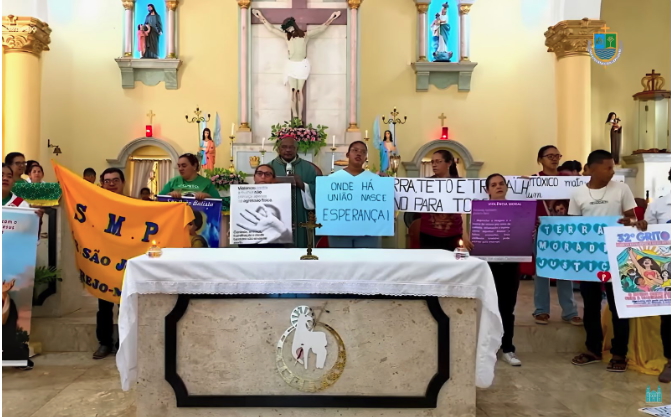
A resident of Rmeish whose daughter received her first Communion said villagers there have effectively been living in a state of war since Oct. 8, 2023.

Read More
Former Russian Orthodox ‘foreign minister’ freed after Czech drug probe #Catholic Czech police arrested Metropolitan Hilarion, a prominent clergyman of the Russian Orthodox Church, on suspicion of drug possession during a vehicle stop on May 24. Officers acted “on anonymous information” about the alleged “transportation of narcotics and psychotropic substances.”A few grams of an unidentified substance were found in the vehicle, though the discovery “does not answer the central question: how the items ended up in the vehicle,” Hilarion said, denying “any involvement in the illegal possession or transportation of prohibited substances.”He was released May 26 after protests from the Russian Ministry of Foreign Affairs, which called the detention a “deliberate, orchestrated provocation” and summoned a Czech diplomat in Moscow. The Russian Orthodox Church likewise defended him, saying the incident “looks like a classic farce” since drug smuggling is often used by “unscrupulous police officers around the world.”No charges have been brought, and Hilarion is free without restrictions while the investigation continues, according to a statement on his Telegram account. His team also called the arrest “a provocation,” claiming he had received anonymous death threats demanding he leave the country.Who is Hilarion?Metropolitan Hilarion, whose secular name is Grigory Alfeyev, headed the Moscow Patriarchateʼs Department for External Church Relations from 2009 to 2022, a role often described as the Russian Orthodox Churchʼs “foreign minister.” He was widely regarded as a close ally of Patriarch Kirill and a possible successor.In June 2022, he was removed from the post and appointed to the Budapest diocese, a move widely interpreted as a demotion. During Pope Francis' apostolic trip to Budapest in April 2023, the two held a private meeting at the apostolic nunciature.In July 2024, Hilarion was accused of sexual harassment by George Suzuki, a former personal attendant. Hilarion denied the allegations. The Holy Synod of the Russian Orthodox Church subsequently declared “the inconsistency of the nature of his relations with his immediate environment and his life with the image of a monk and clergyman” and removed him from the Budapest diocese on Dec. 27, 2024. He has since been serving at the Church of Sts. Peter and Paul in Karlovy Vary, a spa town in western Czech Republic.Rising tensions over the Russian Orthodox Church in Czech RepublicSergei Chapnin, a Russian church affairs scholar at Fordham University and former employee of the Moscow Patriarchate, offered two possible explanations for the incident. First, Hilarion may serve “as a high-level courier” who “moves sensitive documents and other items around Western Europe” since “Russian diplomats are closely monitored and constrained in their movements.” Second, Hilarion was operating “inside a very rough political and ecclesiastical game … over assets and influence” involving local Orthodox communities.The Church of Sts. Peter and Paul was recently registered under the Russian Orthodox Church in Hungary to prevent Czech authorities from freezing Russian assets. Patriarch Kirill, the churchʼs head, is personally listed on the Czech national sanctions list for his support of Russiaʼs invasion of Ukraine.Concerns about the churchʼs role in Czech Republic have been escalating. The Czech security agencyʼs annual report said the Russian Orthodox Churchʼs local representatives are loyal to the Moscow leadership and their “support for the Russian official line is evident.”A study titled “Security Risks of the Orthodox Church,” published by the Czech Academy of Sciences in 2025, called for systematic monitoring of the Russian Orthodox Church in the country. The authors recommended investigating “activities with regard to the danger of money laundering, purposeful export of funds and property, smuggling of goods and people, passing information to the enemy, for example the Russian side, [and] influencing the opinions of Czech society through social networks.”The study also noted that the Church of Sts. Peter and Paul in Karlovy Vary allegedly hosted meetings involving Russian military intelligence (GRU) officials.In a related case, a Prague court recently convicted former Orthodox abbess Taťána Hanhur for the unauthorized transfer of a monastery and property worth 73 million Czech crowns (approximately $3.2 million). The property had belonged to the autocephalous Orthodox Church of the Czech Lands and Slovakia.

Former Russian Orthodox ‘foreign minister’ freed after Czech drug probe #Catholic Czech police arrested Metropolitan Hilarion, a prominent clergyman of the Russian Orthodox Church, on suspicion of drug possession during a vehicle stop on May 24. Officers acted “on anonymous information” about the alleged “transportation of narcotics and psychotropic substances.”A few grams of an unidentified substance were found in the vehicle, though the discovery “does not answer the central question: how the items ended up in the vehicle,” Hilarion said, denying “any involvement in the illegal possession or transportation of prohibited substances.”He was released May 26 after protests from the Russian Ministry of Foreign Affairs, which called the detention a “deliberate, orchestrated provocation” and summoned a Czech diplomat in Moscow. The Russian Orthodox Church likewise defended him, saying the incident “looks like a classic farce” since drug smuggling is often used by “unscrupulous police officers around the world.”No charges have been brought, and Hilarion is free without restrictions while the investigation continues, according to a statement on his Telegram account. His team also called the arrest “a provocation,” claiming he had received anonymous death threats demanding he leave the country.Who is Hilarion?Metropolitan Hilarion, whose secular name is Grigory Alfeyev, headed the Moscow Patriarchateʼs Department for External Church Relations from 2009 to 2022, a role often described as the Russian Orthodox Churchʼs “foreign minister.” He was widely regarded as a close ally of Patriarch Kirill and a possible successor.In June 2022, he was removed from the post and appointed to the Budapest diocese, a move widely interpreted as a demotion. During Pope Francis' apostolic trip to Budapest in April 2023, the two held a private meeting at the apostolic nunciature.In July 2024, Hilarion was accused of sexual harassment by George Suzuki, a former personal attendant. Hilarion denied the allegations. The Holy Synod of the Russian Orthodox Church subsequently declared “the inconsistency of the nature of his relations with his immediate environment and his life with the image of a monk and clergyman” and removed him from the Budapest diocese on Dec. 27, 2024. He has since been serving at the Church of Sts. Peter and Paul in Karlovy Vary, a spa town in western Czech Republic.Rising tensions over the Russian Orthodox Church in Czech RepublicSergei Chapnin, a Russian church affairs scholar at Fordham University and former employee of the Moscow Patriarchate, offered two possible explanations for the incident. First, Hilarion may serve “as a high-level courier” who “moves sensitive documents and other items around Western Europe” since “Russian diplomats are closely monitored and constrained in their movements.” Second, Hilarion was operating “inside a very rough political and ecclesiastical game … over assets and influence” involving local Orthodox communities.The Church of Sts. Peter and Paul was recently registered under the Russian Orthodox Church in Hungary to prevent Czech authorities from freezing Russian assets. Patriarch Kirill, the churchʼs head, is personally listed on the Czech national sanctions list for his support of Russiaʼs invasion of Ukraine.Concerns about the churchʼs role in Czech Republic have been escalating. The Czech security agencyʼs annual report said the Russian Orthodox Churchʼs local representatives are loyal to the Moscow leadership and their “support for the Russian official line is evident.”A study titled “Security Risks of the Orthodox Church,” published by the Czech Academy of Sciences in 2025, called for systematic monitoring of the Russian Orthodox Church in the country. The authors recommended investigating “activities with regard to the danger of money laundering, purposeful export of funds and property, smuggling of goods and people, passing information to the enemy, for example the Russian side, [and] influencing the opinions of Czech society through social networks.”The study also noted that the Church of Sts. Peter and Paul in Karlovy Vary allegedly hosted meetings involving Russian military intelligence (GRU) officials.In a related case, a Prague court recently convicted former Orthodox abbess Taťána Hanhur for the unauthorized transfer of a monastery and property worth 73 million Czech crowns (approximately $3.2 million). The property had belonged to the autocephalous Orthodox Church of the Czech Lands and Slovakia.

Metropolitan Hilarion, once tipped as successor to Patriarch Kirill, was released without charges after Czech police found an unidentified substance in his vehicle.

Read More
Pope Leo unveils his encyclical: AI has ‘even greater consequences’ than Industrial Revolution #Catholic VATICAN CITY — Pope Leo XIV on Monday personally attended the presentation of his first encyclical, Magnifica Humanitas, in an uncustomary gesture. Upon his arrival at the event, held in the Vaticanʼs Synod Hall, he was greeted with sustained applause from an audience made up of members of the Roman Curia, representatives of academia, and the diplomatic corps.Among the speakers was Canadian Christopher Olah, co-founder of Anthropic, one of the leading artificial intelligence (AI) companies. The firm has recently had tensions with the administration of U.S. President Donald Trump after prohibiting the U.S. Department of Defense from using its software for military purposes.Some observers had raised concerns about including a representative of a major tech company like Anthropic in an event of this kind. The Holy Father himself dispelled any hesitation by thanking Olah for his presence: “What a great sign of hope it is that with our differences we can listen to one another,” he said in his remarks.“This interchange clearly bespeaks the gravity of the moment, as well as confidence that together we can discern the major questions of our time, and so the future of humanity,” he added.In his remarks prior to the pope’s address, Olah echoed the same idea: "That is why, if we want this technology to go well, it is enormously important that there be people outside those incentives — people who care about things going well and insist on safety, who are paying close attention, who are willing to say hard things, who are willing to be our earnest, thoughtful, critics. It is through dialogue and mutual effort, through the push and pull, that humanity will achieve great things. That is what I see in Magnifica Humanitas, and it is why I am grateful to His Holiness and the Church for taking up this work of discernment.”
 
 Christopher Olah, co-founder of AI company Anthropic, says he is grateful to Pope Leo XIV and the Church for “taking up this work of discernment” on artificial intelligence, during his address at the presentation of the encyclical Magnifica Humanitas on May 25, 2026, in the Synod Hall of the Vatican. | Credit: Daniel Ibáñez/EWTN News/Vatican Pool
 
 Olah, who is not a believer, also issued a call to various sectors — religious communities, civil society, academics, and governments — to follow the pope’s example with this document: “to take this seriously, to look closely, and to push events in a better direction. We need informed critics who will tell the labs when we are failing. We need moral voices that the incentives cannot bend.”It is no coincidence that Leo XIV signed his first encyclical on May 15, the same date on which his predecessor Leo XIII promulgated Rerum Novarum (“On New Things”) in 1891 in response to the dehumanization brought about by the Industrial Revolution. As the pope explained, the world today faces a transformation of perhaps even greater scope.“Today we find ourselves facing a transformation of similar magnitude, with perhaps even greater consequences. Artificial intelligence already touches many areas of our lives and affects decisions that shape human coexistence,” he said.The pope expressed particular concern about the impact of new technologies on the conduct of war, which, he warned, is changing dramatically.“Like the earlier Leo, I feel entrusted to look upon another huge transformation with eyes of faith, with lucidity of reason, with openness to mystery, and with cries of the poor and the earth resounding in my heart,” he said.The Holy Father also described the method behind the drafting of this magisterial document, which began in July 2025 at the papal residence in Castel Gandolfo. In it, he seeks to reaffirm what makes us human in a society shaped by technology.He emphasized that Magnifica Humanitas was born from listening: “I have listened to scientists and engineers who work with sincere enthusiasm on technologies capable of alleviating immense suffering, to political leaders and public officials who have perseveringly sought just rules, to parents and teachers who are deeply concerned for the future of younger generations,” he said, without naming individuals.At the same time, he acknowledged hearing “Other very troubling voices have also reached me about increasingly autonomous weapons systems practically beyond any human reach to govern them effectively.”“I hear very troubling accounts of algorithms that can block access to healthcare, employment, and security on the basis of data tainted by prejudice and injustice. And Iʼve heard the silence of those who have no voice when decisions are made — decisions likely to generate new forms of exclusion and suffering,” he lamented.In line with the document — which states that artificial intelligence is not morally neutral — the pope called for AI to be “disarmed.”“The word is strong, I know, but deliberately chosen because this moment needs words capable of attracting attention, awakening consciences, and indicating paths forward for humanity,” he warned.“The Church has long been working for nuclear disarmament, aware that every great technical power can affect peopleʼs lives, and so must be accompanied by adequate moral discernment and public control. Nuclear disarmament remains a service to peace and the dignity of the human family,” he added.Also speaking at the presentation were three cardinals of the Roman Curia: Secretary of State Pietro Parolin; Cardinal Víctor Manuel Fernández, prefect of the Dicastery for the Doctrine of the Faith; and Cardinal Michael Czerny, SJ, prefect of the Dicastery for Promoting Integral Human Development.Two theologians also took the floor: Anna Rowlands, a specialist in Catholic social teaching and migration ethics at Durham University, and Leocadie Lushombo, an expert in political theology and Catholic social thought at the Jesuit School of Theology of Santa Clara University in California.This story was originally published by ACI Prensa, EWTN News' Spanish-language news service. It has been translated and adapted by EWTN News English.

Pope Leo unveils his encyclical: AI has ‘even greater consequences’ than Industrial Revolution #Catholic VATICAN CITY — Pope Leo XIV on Monday personally attended the presentation of his first encyclical, Magnifica Humanitas, in an uncustomary gesture. Upon his arrival at the event, held in the Vaticanʼs Synod Hall, he was greeted with sustained applause from an audience made up of members of the Roman Curia, representatives of academia, and the diplomatic corps.Among the speakers was Canadian Christopher Olah, co-founder of Anthropic, one of the leading artificial intelligence (AI) companies. The firm has recently had tensions with the administration of U.S. President Donald Trump after prohibiting the U.S. Department of Defense from using its software for military purposes.Some observers had raised concerns about including a representative of a major tech company like Anthropic in an event of this kind. The Holy Father himself dispelled any hesitation by thanking Olah for his presence: “What a great sign of hope it is that with our differences we can listen to one another,” he said in his remarks.“This interchange clearly bespeaks the gravity of the moment, as well as confidence that together we can discern the major questions of our time, and so the future of humanity,” he added.In his remarks prior to the pope’s address, Olah echoed the same idea: "That is why, if we want this technology to go well, it is enormously important that there be people outside those incentives — people who care about things going well and insist on safety, who are paying close attention, who are willing to say hard things, who are willing to be our earnest, thoughtful, critics. It is through dialogue and mutual effort, through the push and pull, that humanity will achieve great things. That is what I see in Magnifica Humanitas, and it is why I am grateful to His Holiness and the Church for taking up this work of discernment.” Christopher Olah, co-founder of AI company Anthropic, says he is grateful to Pope Leo XIV and the Church for “taking up this work of discernment” on artificial intelligence, during his address at the presentation of the encyclical Magnifica Humanitas on May 25, 2026, in the Synod Hall of the Vatican. | Credit: Daniel Ibáñez/EWTN News/Vatican Pool Olah, who is not a believer, also issued a call to various sectors — religious communities, civil society, academics, and governments — to follow the pope’s example with this document: “to take this seriously, to look closely, and to push events in a better direction. We need informed critics who will tell the labs when we are failing. We need moral voices that the incentives cannot bend.”It is no coincidence that Leo XIV signed his first encyclical on May 15, the same date on which his predecessor Leo XIII promulgated Rerum Novarum (“On New Things”) in 1891 in response to the dehumanization brought about by the Industrial Revolution. As the pope explained, the world today faces a transformation of perhaps even greater scope.“Today we find ourselves facing a transformation of similar magnitude, with perhaps even greater consequences. Artificial intelligence already touches many areas of our lives and affects decisions that shape human coexistence,” he said.The pope expressed particular concern about the impact of new technologies on the conduct of war, which, he warned, is changing dramatically.“Like the earlier Leo, I feel entrusted to look upon another huge transformation with eyes of faith, with lucidity of reason, with openness to mystery, and with cries of the poor and the earth resounding in my heart,” he said.The Holy Father also described the method behind the drafting of this magisterial document, which began in July 2025 at the papal residence in Castel Gandolfo. In it, he seeks to reaffirm what makes us human in a society shaped by technology.He emphasized that Magnifica Humanitas was born from listening: “I have listened to scientists and engineers who work with sincere enthusiasm on technologies capable of alleviating immense suffering, to political leaders and public officials who have perseveringly sought just rules, to parents and teachers who are deeply concerned for the future of younger generations,” he said, without naming individuals.At the same time, he acknowledged hearing “Other very troubling voices have also reached me about increasingly autonomous weapons systems practically beyond any human reach to govern them effectively.”“I hear very troubling accounts of algorithms that can block access to healthcare, employment, and security on the basis of data tainted by prejudice and injustice. And Iʼve heard the silence of those who have no voice when decisions are made — decisions likely to generate new forms of exclusion and suffering,” he lamented.In line with the document — which states that artificial intelligence is not morally neutral — the pope called for AI to be “disarmed.”“The word is strong, I know, but deliberately chosen because this moment needs words capable of attracting attention, awakening consciences, and indicating paths forward for humanity,” he warned.“The Church has long been working for nuclear disarmament, aware that every great technical power can affect peopleʼs lives, and so must be accompanied by adequate moral discernment and public control. Nuclear disarmament remains a service to peace and the dignity of the human family,” he added.Also speaking at the presentation were three cardinals of the Roman Curia: Secretary of State Pietro Parolin; Cardinal Víctor Manuel Fernández, prefect of the Dicastery for the Doctrine of the Faith; and Cardinal Michael Czerny, SJ, prefect of the Dicastery for Promoting Integral Human Development.Two theologians also took the floor: Anna Rowlands, a specialist in Catholic social teaching and migration ethics at Durham University, and Leocadie Lushombo, an expert in political theology and Catholic social thought at the Jesuit School of Theology of Santa Clara University in California.This story was originally published by ACI Prensa, EWTN News' Spanish-language news service. It has been translated and adapted by EWTN News English.

The pope thanked Anthropic co-founder Christopher Olah for his presence at the presentation: “What a great sign of hope it is that with our differences we can listen to one another.”

Read More
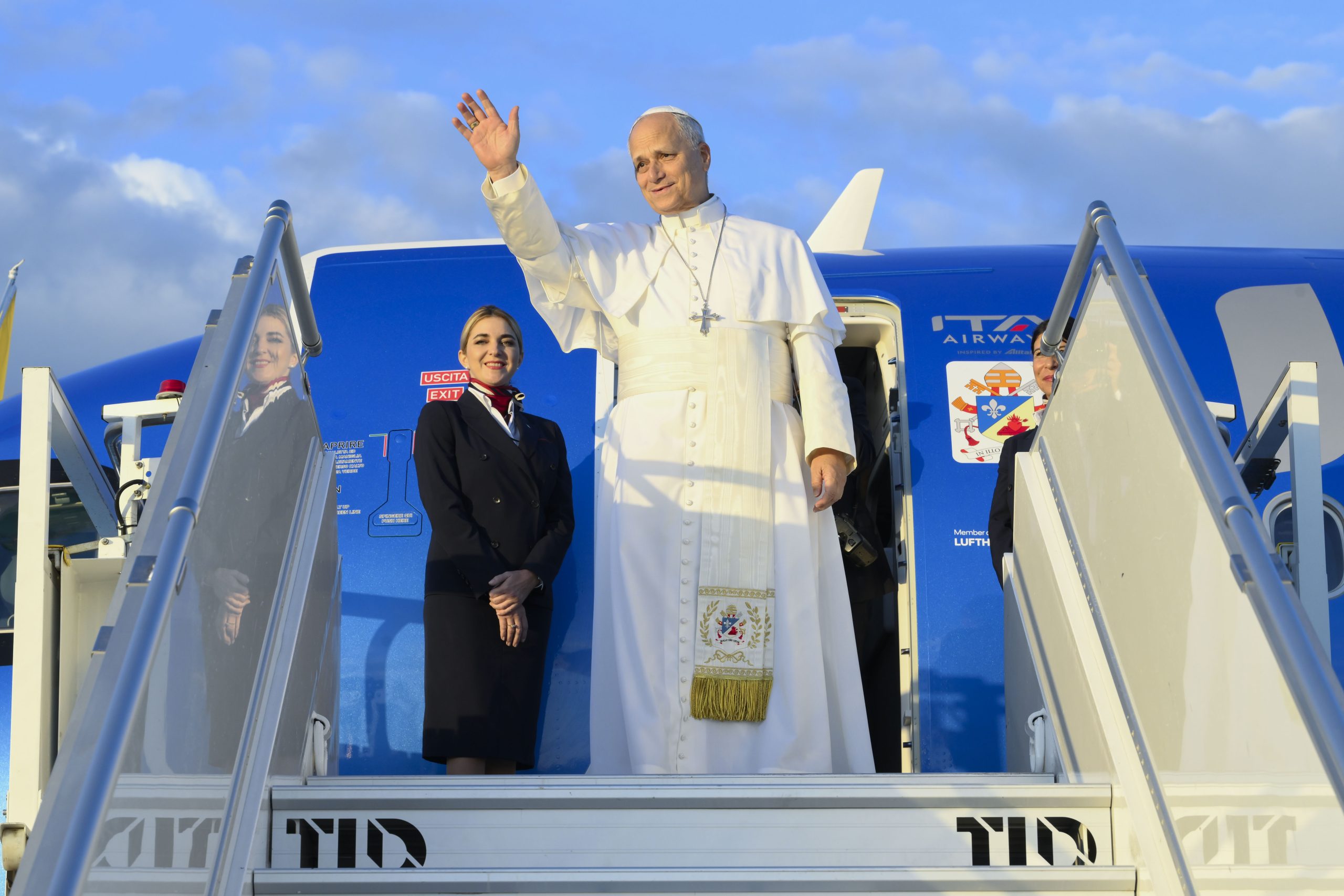
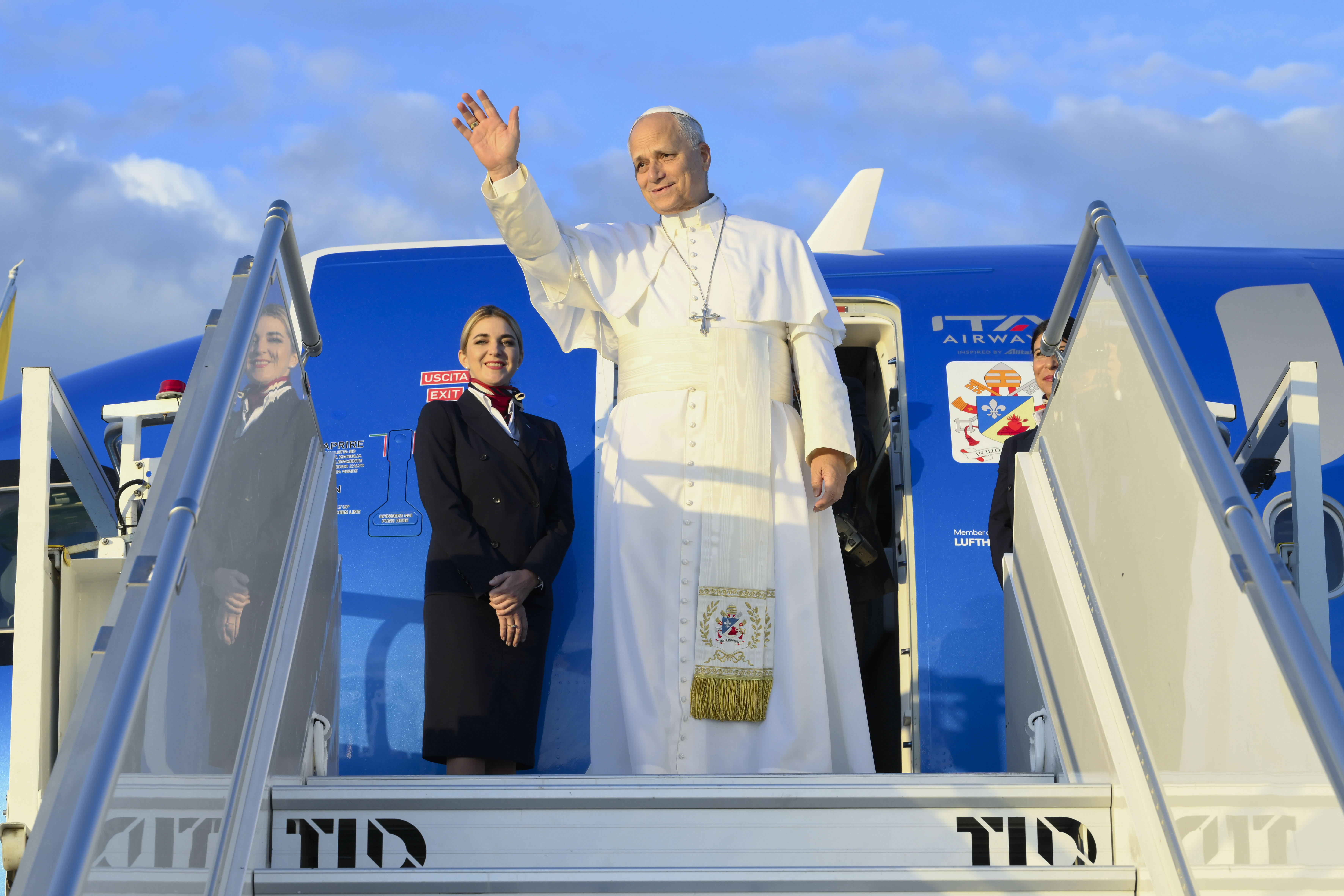
Pope Leo XIV responds to letter from victims of Minab girls’ school strike in Iran #Catholic Pope Leo XIV echoed his calls for dialogue and peace between the United States and Iran while expressing grief over the deaths of innocent children killed in a military attack that struck a girls’ elementary school in Minab, Iran.The Holy Father offered these comments April 23 after he received a letter from parents of girls who died in the strike. More than 150 people were killed in the Feb. 28 strike, which the Defense Department says it is investigating.“I have just seen a letter from families of children who were killed on the first day of the attack,” Leo said while speaking to journalists on a flight back to Rome after visiting four countries in Africa, according to the Vatican-run Vatican News.“They speak about how they have lost their children, who died in that event,” he said. “The issue is not whether there is regime change or not; the issue is how to promote the values we believe in without the death of so many innocent people.”Leo called the situation in Iran “complex” amid the ongoing ceasefire, stating that “one day Iran says yes and the United States says no, and vice versa.” The pope warned: “We do not know where things are heading.”“This chaotic, critical situation for the global economy has been created, but there is also an entire population in Iran of innocent people suffering because of this war,” he said. “So, on regime change, yes or no: It is not even clear what regime currently exists after the first days of attacks by Israel and the United States on Iran.”“Rather, I would encourage the continuation of dialogue for peace, that all sides make every effort to promote peace, remove the threat of war, and respect international law,” he said. “It is very important that innocent people are protected, as has not happened in several places.”The letter from the parents of the victims was published in full by a reporter for Press TV, which is operated by the Iranian government. The letter is written in Farsi.According to a partial English translation on Press TV, the parents said the pontiff’s consistent advocacy for peace “offered a healing touch to our broken hearts.”“Today, instead of feeling the warmth of our children’s embrace, we are left to hold onto their charred bags and bloody journals,” the letter said, according to the translation.“Our children will never return home to build a brighter future, but it is the prayer of us grieving parents that your message to ‘lay down the weapons’ be heard, at a time when the United States and the Israeli regime fuel the flames of these atrocities with their excessive demands,” it added.When asked for comment, the Defense Department pointed EWTN News to comments made by Secretary of Defense Pete Hegseth on April 24 when asked about the pope’s comment on Iran.“We know what our mission is,” he said. “We know what authority we have. Weʼre very clear about that. We follow the orders of the president.”“Weʼve got lawyers all over the place, looking at what weʼre doing and why weʼre doing it, and giving us every authority necessary under the Constitution and under our laws to execute it,” he added. “So we feel very confident across the spectrum about what weʼre doing and why weʼre doing it, and the legal justification that weʼre following in order to do it.”A Defense Department official told EWTN News that the strike on the school in Minab “is currently under investigation” and “more details will be provided [when] they become available.” The Pentagon has not claimed responsibility for the strike.

Pope Leo XIV responds to letter from victims of Minab girls’ school strike in Iran #Catholic Pope Leo XIV echoed his calls for dialogue and peace between the United States and Iran while expressing grief over the deaths of innocent children killed in a military attack that struck a girls’ elementary school in Minab, Iran.The Holy Father offered these comments April 23 after he received a letter from parents of girls who died in the strike. More than 150 people were killed in the Feb. 28 strike, which the Defense Department says it is investigating.“I have just seen a letter from families of children who were killed on the first day of the attack,” Leo said while speaking to journalists on a flight back to Rome after visiting four countries in Africa, according to the Vatican-run Vatican News.“They speak about how they have lost their children, who died in that event,” he said. “The issue is not whether there is regime change or not; the issue is how to promote the values we believe in without the death of so many innocent people.”Leo called the situation in Iran “complex” amid the ongoing ceasefire, stating that “one day Iran says yes and the United States says no, and vice versa.” The pope warned: “We do not know where things are heading.”“This chaotic, critical situation for the global economy has been created, but there is also an entire population in Iran of innocent people suffering because of this war,” he said. “So, on regime change, yes or no: It is not even clear what regime currently exists after the first days of attacks by Israel and the United States on Iran.”“Rather, I would encourage the continuation of dialogue for peace, that all sides make every effort to promote peace, remove the threat of war, and respect international law,” he said. “It is very important that innocent people are protected, as has not happened in several places.”The letter from the parents of the victims was published in full by a reporter for Press TV, which is operated by the Iranian government. The letter is written in Farsi.According to a partial English translation on Press TV, the parents said the pontiff’s consistent advocacy for peace “offered a healing touch to our broken hearts.”“Today, instead of feeling the warmth of our children’s embrace, we are left to hold onto their charred bags and bloody journals,” the letter said, according to the translation.“Our children will never return home to build a brighter future, but it is the prayer of us grieving parents that your message to ‘lay down the weapons’ be heard, at a time when the United States and the Israeli regime fuel the flames of these atrocities with their excessive demands,” it added.When asked for comment, the Defense Department pointed EWTN News to comments made by Secretary of Defense Pete Hegseth on April 24 when asked about the pope’s comment on Iran.“We know what our mission is,” he said. “We know what authority we have. Weʼre very clear about that. We follow the orders of the president.”“Weʼve got lawyers all over the place, looking at what weʼre doing and why weʼre doing it, and giving us every authority necessary under the Constitution and under our laws to execute it,” he added. “So we feel very confident across the spectrum about what weʼre doing and why weʼre doing it, and the legal justification that weʼre following in order to do it.”A Defense Department official told EWTN News that the strike on the school in Minab “is currently under investigation” and “more details will be provided [when] they become available.” The Pentagon has not claimed responsibility for the strike.

“The issue is not whether there is regime change or not; the issue is how to promote the values we believe in without the death of so many innocent people,” Pope Leo XIV said.

Read More
Picture of the day


A cavalryman of the French Republican Guard during the Bastille Day military parade. This regiment is responsible for special security duties in Paris (including guarding important public buildings) and for providing guards of honour at official ceremonies.
 #ImageOfTheDay
Picture of the day
A cavalryman of the French Republican Guard during the Bastille Day military parade. This regiment is responsible for special security duties in Paris (including guarding important public buildings) and for providing guards of honour at official ceremonies.
Read More