Office

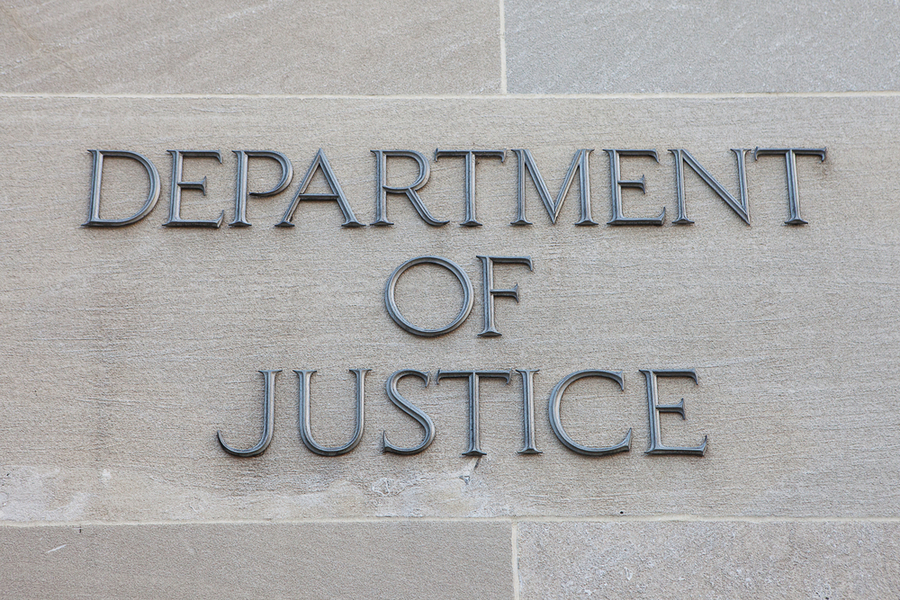
Maryland Supreme Court: State cannot reveal names of individuals who allegedly hid Church abuse #Catholic Prosecutors in Maryland may not reveal the names of individuals who allegedly hid or failed to report Church abuse, the state Supreme Court said April 27. As part of its investigation into alleged abuse in the Archdiocese of Baltimore, the state attorney generalʼs office had sought to make public the details of a grand jury report, including the identities of individuals who have not been charged with a crime but who allegedly failed to stop abuse from occurring. A lower court granted the attorney generalʼs request to publish the information, with an appellate court partly upholding that decision. Yet in its April 27 ruling, the Maryland Supreme Court reversed those decisions, holding that the attorney generalʼs office did not “meet [the] burden” of justifying the release of the identities. “Many grand jury investigations obtain damaging information and allegations about uncharged individuals that the public might benefit from learning,” the high court acknowledged. But “one of the primary purposes of grand jury secrecy is to protect uncharged persons from public disgrace in the absence of a criminal charge and a forum in which to seek vindication,” it said. “A court may not order disclosure of secret grand jury material, over the objection of an uncharged individual, for the purpose of holding that person accountable in the court of public opinion,” the justices said. The court noted that the attorney generalʼs office had argued that the “intensity of public interest” in the case could justify revealing the identities.Yet “the interests promoted by grand jury secrecy do not increase or decrease based on how much the public wants to learn the information contained in grand jury materials,” the court said.The decision comes amid ongoing court proceedings in the Archdiocese of Baltimore, which filed for bankruptcy in September 2023 ahead of a wave of sex abuse claims filed against it under the Maryland Child Victims Act. Earlier this month, the archdiocesan insurer Hartford Insurance Group proposed contributing $100 million to a settlement for abuse victims. The archdiocese in 2024 sued multiple insurers over what it claimed was a failure to pay abuse claims for which the insurers were contractually obligated.In 2024 Archbishop William Lori attended two court-ordered “listening sessions” with alleged victims of sexual abuse, with the prelate describing himself as "deeply moved by their very powerful testimony.”

Maryland Supreme Court: State cannot reveal names of individuals who allegedly hid Church abuse #Catholic Prosecutors in Maryland may not reveal the names of individuals who allegedly hid or failed to report Church abuse, the state Supreme Court said April 27. As part of its investigation into alleged abuse in the Archdiocese of Baltimore, the state attorney generalʼs office had sought to make public the details of a grand jury report, including the identities of individuals who have not been charged with a crime but who allegedly failed to stop abuse from occurring. A lower court granted the attorney generalʼs request to publish the information, with an appellate court partly upholding that decision. Yet in its April 27 ruling, the Maryland Supreme Court reversed those decisions, holding that the attorney generalʼs office did not “meet [the] burden” of justifying the release of the identities. “Many grand jury investigations obtain damaging information and allegations about uncharged individuals that the public might benefit from learning,” the high court acknowledged. But “one of the primary purposes of grand jury secrecy is to protect uncharged persons from public disgrace in the absence of a criminal charge and a forum in which to seek vindication,” it said. “A court may not order disclosure of secret grand jury material, over the objection of an uncharged individual, for the purpose of holding that person accountable in the court of public opinion,” the justices said. The court noted that the attorney generalʼs office had argued that the “intensity of public interest” in the case could justify revealing the identities.Yet “the interests promoted by grand jury secrecy do not increase or decrease based on how much the public wants to learn the information contained in grand jury materials,” the court said.The decision comes amid ongoing court proceedings in the Archdiocese of Baltimore, which filed for bankruptcy in September 2023 ahead of a wave of sex abuse claims filed against it under the Maryland Child Victims Act. Earlier this month, the archdiocesan insurer Hartford Insurance Group proposed contributing $100 million to a settlement for abuse victims. The archdiocese in 2024 sued multiple insurers over what it claimed was a failure to pay abuse claims for which the insurers were contractually obligated.In 2024 Archbishop William Lori attended two court-ordered “listening sessions” with alleged victims of sexual abuse, with the prelate describing himself as "deeply moved by their very powerful testimony.”

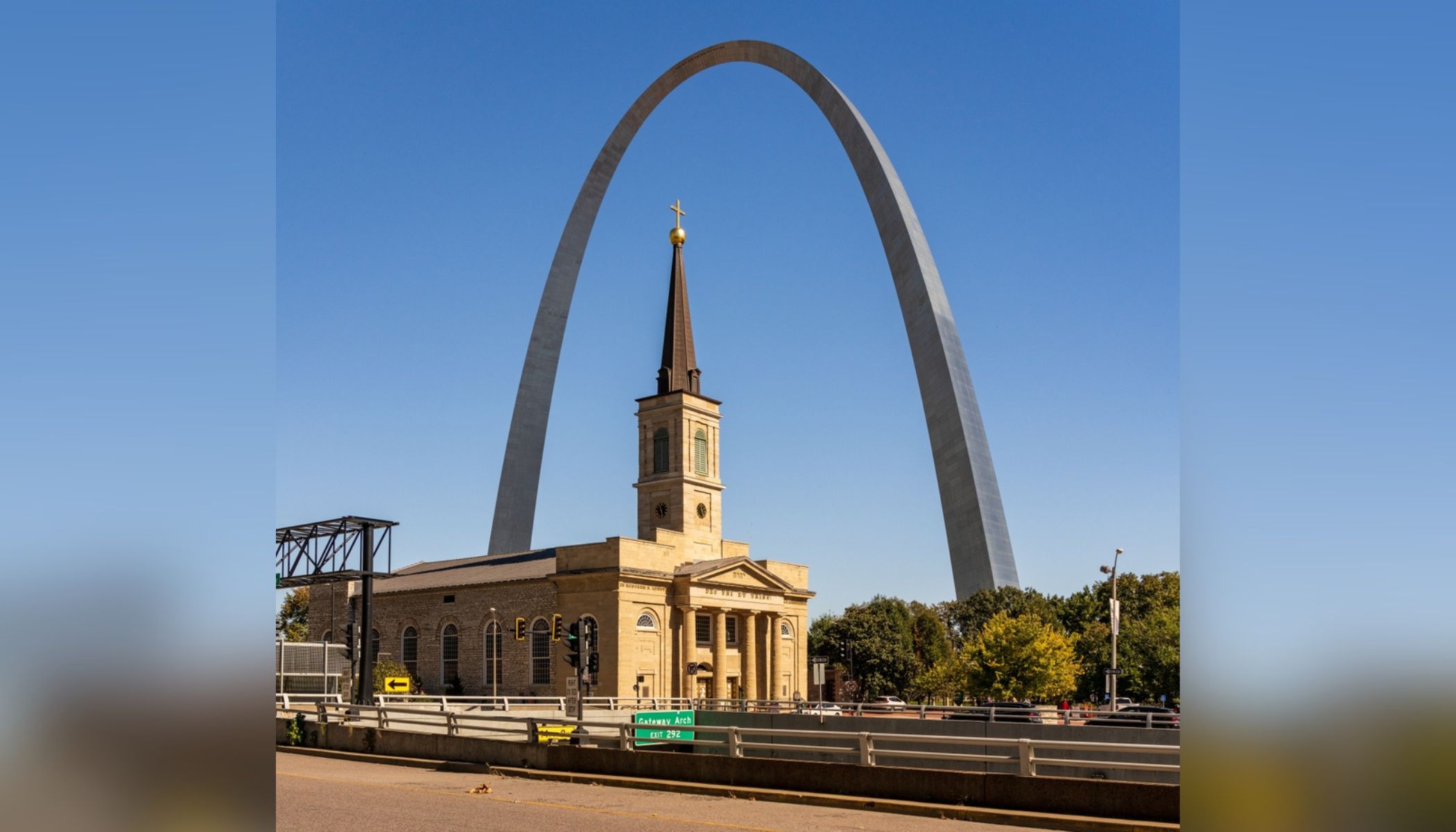
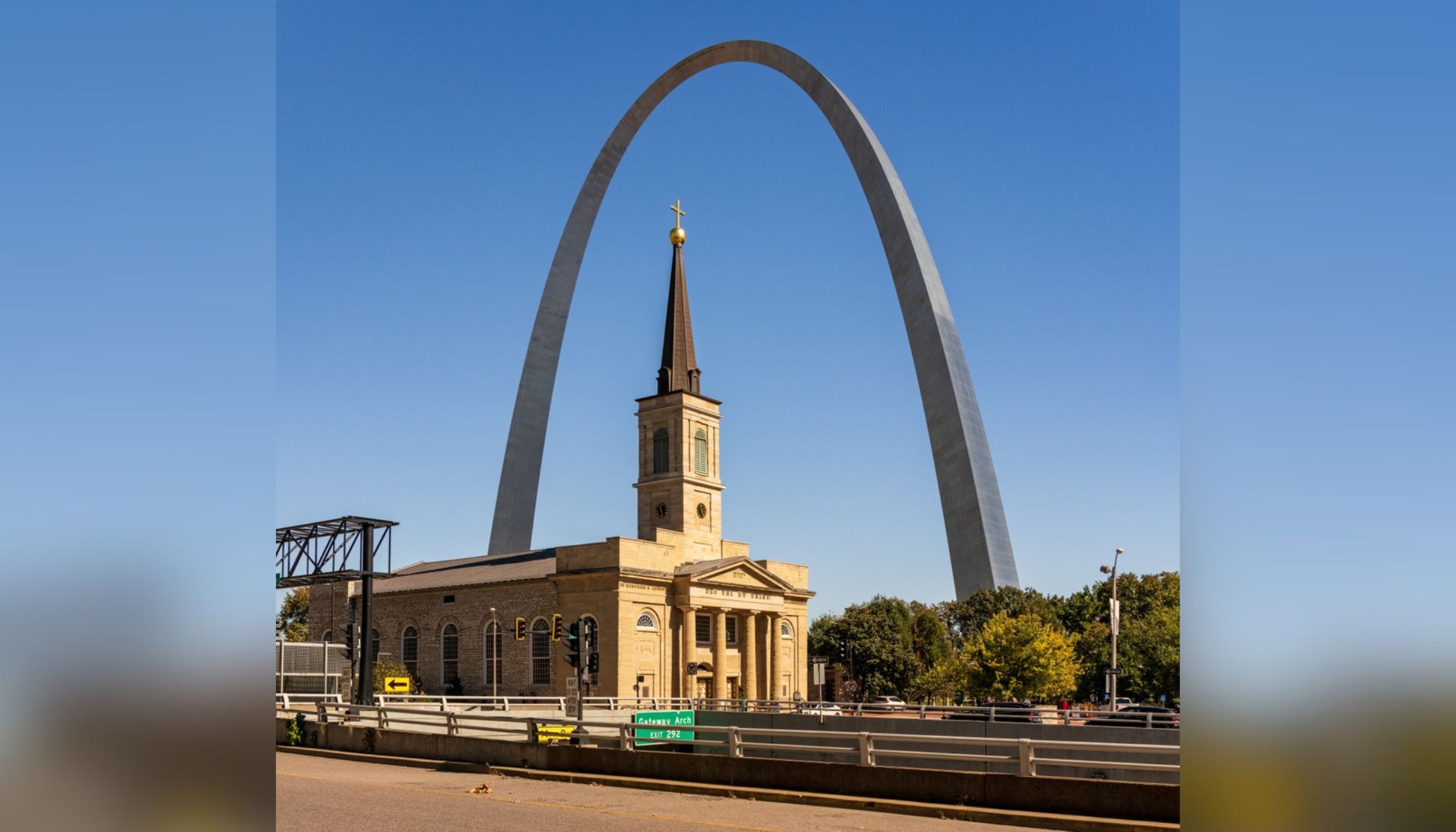
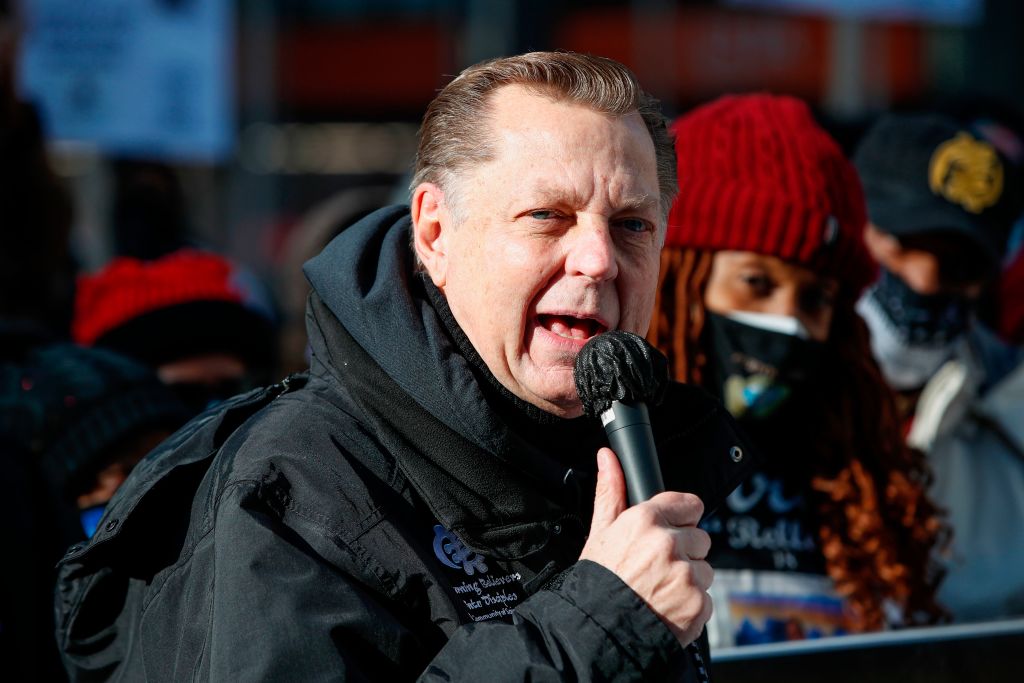
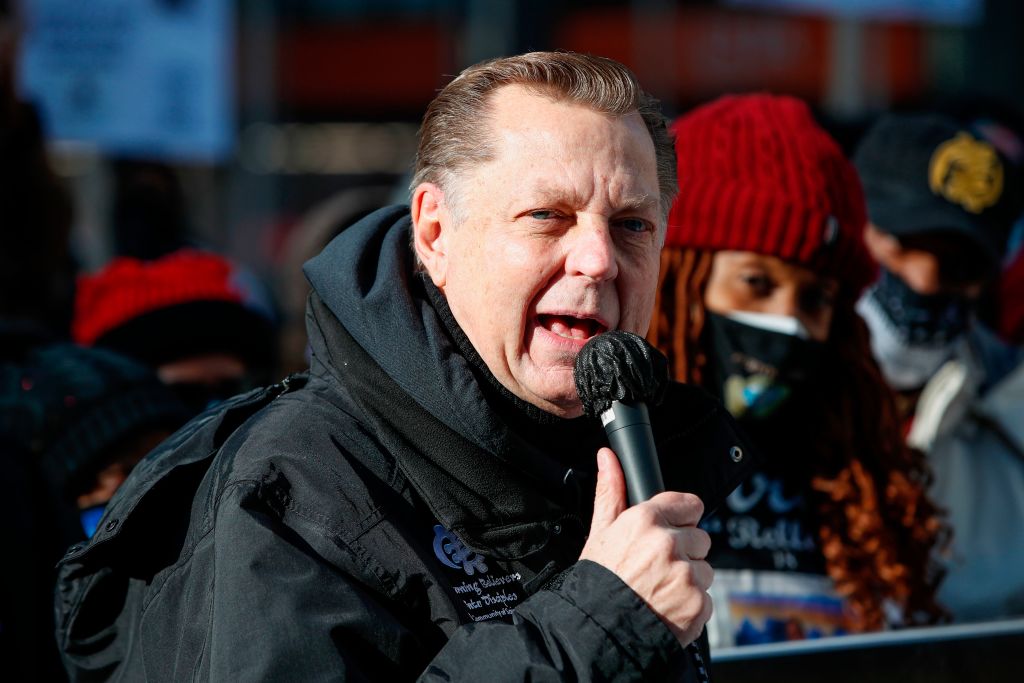
“Uncharged individuals” may not be exposed to the “court of public opinion” in grand jury documents, the state high court ruled.

Read More
Pope Leo XIV appoints new bishop of London, Ontario #Catholic Pope Leo XIV has appointed Daniel J. Miehm as the new bishop of the Diocese of London, Ontario, Canada. Until now, the prelate served as the bishop of Peterborough, Ontario.The prelate succeeds Bishop Peter Fabbro in leading the Diocese of London. Fabbro’s resignation was accepted upon reaching the age of 75, the mandatory retirement age for bishops.After expressing his gratitude for the trust placed in him by the Holy Father for the new role, Miehm stated: “In this Easter season, as the Church celebrates the resurrection of Christ, we are invited to deep faith, trust in God, and hope in the promise of new life. It is in such a spirit that I embrace this new chapter in my continued service to the Church.”“I ask your prayers for me, for all those I have served in Peterborough and for those whom I will meet and serve in my episcopal ministry in the Diocese of London,” the prelate added in a statement from the Diocese of London.Fabbro, who served at the helm of the London Diocese for 24 years, said that Miehm “is a strong, compassionate leader with outstanding pastoral instincts and the wisdom to guide our diocese into the future. Under his episcopal leadership, the Diocese of London will be in very capable hands.”Miehm will be installed as the new bishop of London on June 29, the solemnity of Sts. Peter and Paul, at St. Peter’s Cathedral Basilica in London.Who is the new bishop of London?Miehm was born on Aug. 27, 1960, in Kitchener, Ontario. He studied philosophy at St. Jeromeʼs University in Waterloo, Ontario, and theology at St. Augustineʼs Seminary in Toronto. He earned a licentiate in canon law from the Pontifical University of St. Thomas in Rome, according to the Vatican Press Office.He was ordained a priest on May 6, 1989, for the Diocese of Hamilton, Ontario.He has held the following positions, among others: vicar of the Cathedral of Christ the King; defender of the bond at the ecclesiastical tribunal of Hamilton; pastor of Our Lady of Lourdes in Hamilton (1998–2004) and of St. Ann in Ancaster (2004–2012); and pastor of St. Benedict in Milton, as well as spiritual assistant to the St. Thomas More Lawyers' Guild (2012).He was appointed auxiliary bishop of Hamilton on Feb. 20, 2013, receiving episcopal consecration on May 7 of that year. On March 10, 2017, he was appointed bishop of Peterborough, where he served until now.This story was first published by ACI Prensa, the Spanish-language sister service of EWTN News. It has been translated and adapted by EWTN News English.

Pope Leo XIV appoints new bishop of London, Ontario #Catholic Pope Leo XIV has appointed Daniel J. Miehm as the new bishop of the Diocese of London, Ontario, Canada. Until now, the prelate served as the bishop of Peterborough, Ontario.The prelate succeeds Bishop Peter Fabbro in leading the Diocese of London. Fabbro’s resignation was accepted upon reaching the age of 75, the mandatory retirement age for bishops.After expressing his gratitude for the trust placed in him by the Holy Father for the new role, Miehm stated: “In this Easter season, as the Church celebrates the resurrection of Christ, we are invited to deep faith, trust in God, and hope in the promise of new life. It is in such a spirit that I embrace this new chapter in my continued service to the Church.”“I ask your prayers for me, for all those I have served in Peterborough and for those whom I will meet and serve in my episcopal ministry in the Diocese of London,” the prelate added in a statement from the Diocese of London.Fabbro, who served at the helm of the London Diocese for 24 years, said that Miehm “is a strong, compassionate leader with outstanding pastoral instincts and the wisdom to guide our diocese into the future. Under his episcopal leadership, the Diocese of London will be in very capable hands.”Miehm will be installed as the new bishop of London on June 29, the solemnity of Sts. Peter and Paul, at St. Peter’s Cathedral Basilica in London.Who is the new bishop of London?Miehm was born on Aug. 27, 1960, in Kitchener, Ontario. He studied philosophy at St. Jeromeʼs University in Waterloo, Ontario, and theology at St. Augustineʼs Seminary in Toronto. He earned a licentiate in canon law from the Pontifical University of St. Thomas in Rome, according to the Vatican Press Office.He was ordained a priest on May 6, 1989, for the Diocese of Hamilton, Ontario.He has held the following positions, among others: vicar of the Cathedral of Christ the King; defender of the bond at the ecclesiastical tribunal of Hamilton; pastor of Our Lady of Lourdes in Hamilton (1998–2004) and of St. Ann in Ancaster (2004–2012); and pastor of St. Benedict in Milton, as well as spiritual assistant to the St. Thomas More Lawyers' Guild (2012).He was appointed auxiliary bishop of Hamilton on Feb. 20, 2013, receiving episcopal consecration on May 7 of that year. On March 10, 2017, he was appointed bishop of Peterborough, where he served until now.This story was first published by ACI Prensa, the Spanish-language sister service of EWTN News. It has been translated and adapted by EWTN News English.

With the retirement of Bishop Peter Fabbro, Bishop Daniel J. Miehm of the Diocese of Peterborough has been appointed the new bishop of London, Ontario, Canada. He will be installed on June 29.

Read More
Christ is not ‘a guru or a good luck charm,’ pope says at Mass in Angola #Catholic SAURIMO, Angola — Pope Leo XIV warned at Mass in Saurimo, Angola, on Monday of making God into an idol that is sought only when advantageous — “when genuine faith is replaced with superstitious practices.”“There are erroneous motives for seeking Christ, particularly when he is considered to be a guru or a good luck charm,” the pope said on April 20, referring to how the crowds in the Gospel reading reacted after Jesus performed the miracle of the loaves and the fishes.“They were not seeking a teacher whom they love but a leader to applaud for their own advantage,” he said.Joyful faith in Saurimo
 
 Pope Leo XIV celebrates Mass in Saurimo, Angola, on April 20, 2026. | Credit: Vatican Media
 
 From the start of his arrival in Sub-Saharan Africa — first in Cameroon and then in Angola — Pope Leo has been welcomed by the warmth of the faithful. In Saurimo, a city in northeastern Angola, the atmosphere greeting the pope on Monday was marked by joyful faith. Everyone welcomed the successor of Peter with songs, dances, and applause.Despite the intense heat, upon reaching the esplanade before Mass, Leo XIV greeted the roughly 60,000 faithful of all ages — who had come from across the region and neighboring dioceses — by making a circuit in the popemobile.“This is the first time a pope has gone beyond Angola’s coastal belt and come — using Pope Francis’ language — to the peripheries,“ the director of the communications office of the Archdiocese of Saurimo said. ”This is a region rich in diamonds, but there is also great poverty, and he comes here to show our reality. For us, having the Holy Father in our region is a great joy.”“This is a unique and unforgettable moment in my life and in the lives of the many pilgrims here today,” Filomena Vunda, who works in the pastoral secretariat of the Archdiocese of Malanje, told ACI Africa, the sister service of EWTN News in Africa, at the Mass.Vunda encouraged non-Catholics in Angola to “keep in mind our African word ‘Ubuntu’: The happiness of others depends on me; my happiness depends solely on the happiness of others.”Ubuntu is an African philosophy about human interconnectedness. It can be translated as “I am because we are.”‘Disciples of Christ’In his homily at Mass, concelebrated by Angolan bishops, Pope Leo said: “In every part of the world, the Church lives as a people who walk as disciples of Christ, our brother and redeemer.”"He, the Risen One, illumines for us the path to the Father and with the strength of the Spirit he sanctifies us so that we may transform our way of life in conformity with his love," the pope said. "This is the good news, the Gospel that courses through our veins like blood, sustaining us on the journey. A journey that has brought me here with you today!”
 
 Pope Leo XIV celebrates Mass in Saurimo, Angola, on April 20, 2026. | Credit: Vatican Media
 
 Commenting on the Gospel of the day, Leo reflected: “Indeed, when the Son of God became man, he performed striking miracles in order to manifest the will of the Father: He made light shine in the darkness by giving sight to the blind, he gave a voice to the oppressed by loosening the tongues of the mute, he slaked our thirst for justice by multiplying bread for the poor and weak. Anyone who heard about these works set out in search of Jesus. At the same time, the Lord looks into our heart and asks us whether we seek him out of gratitude or for our own self-interest, with calculation or with love.”“The Lord himself says,” the pope continued, “‘you are looking for me, not because you saw signs, but because you ate your fill of the loaves’ (Jn 6:26). His words reveal the designs of those who do not want to encounter a person but want to consume things. The crowd sees Jesus as means to an end, a provider of services. If he had not given them something to eat, his actions and teachings would not have interested them.”“This happens,” Leo XIV explained, “when genuine faith is replaced with superstitious practices, in which God becomes an idol that is sought only when it is advantageous to us and only for as long as it is. Even the most beautiful gifts of the Lord, which are always for the care of his people, become a pretext, a prize or a bargaining chip, and are misinterpreted by those who receive them.”“How different is Jesus’ attitude toward us,” the pontiff continued. “Yet, he does not reject this insincere search, but encourages its conversion ... Christ calls us to freedom: He does not want servants or clients, rather he seeks brothers and sisters to whom he can totally dedicate himself.”“Therefore,” Leo XIV said, “the admonition that the Lord directs to the crowd is transformed into an invitation: ‘Do not work for the food that perishes, but for the food that endures for eternal life’ (Jn 6:27)."“His gift sheds light on our current situation,” the pope went on. “We can see today how the hope of many people is frustrated by violence, exploited by the powerful, and defrauded by the rich. Consequently, when injustice corrupts hearts, the bread of all becomes the possession of a few."“In the face of these evils, Christ hears the cry of the people and renews our history by lifting us up from every fall, comforting us in every suffering, and encouraging us in our mission," he said. 
 
 Crowds of people brave the heat and sun to attend Mass with Pope Leo XIV in Saurimo, Angola, on April 20, 2026. | Credit: Raúl Kangombe Sapiti/ACI Africa
 
 “All this,” the pope exhorted, “means that, in light of our discipleship, the ecclesial journey is a ‘synod of resurrection and hope,’ as St. John Paul II affirmed in his apostolic exhortation Ecclesia in Africa. Let us proceed in this wise direction! Christ himself guides and strengthens our journey, a journey that we want to learn to live more and more as it should be, that is, in a synodal manner.”The pope concluded by recalling the importance of the martyrs and saints, whose witness “encourages us and pushes us onto a path of hope, reconciliation, and peace, along which the gift of God becomes the responsibility of the head of the household, in the Christian community, in civil society.”"The vitality of the vocations that you experience [in Angola]," he said, "is a sign that you are responding to the Lord’s gift, which is always abundant for those who welcome it with pure hearts.”ACI Africa reporter Raúl Kangombe Sapiti contributed to this report.This story was first published by ACI Stampa, the Italian-language sister service of EWTN News. It has been translated and adapted by EWTN News English.

Christ is not ‘a guru or a good luck charm,’ pope says at Mass in Angola #Catholic SAURIMO, Angola — Pope Leo XIV warned at Mass in Saurimo, Angola, on Monday of making God into an idol that is sought only when advantageous — “when genuine faith is replaced with superstitious practices.”“There are erroneous motives for seeking Christ, particularly when he is considered to be a guru or a good luck charm,” the pope said on April 20, referring to how the crowds in the Gospel reading reacted after Jesus performed the miracle of the loaves and the fishes.“They were not seeking a teacher whom they love but a leader to applaud for their own advantage,” he said.Joyful faith in Saurimo Pope Leo XIV celebrates Mass in Saurimo, Angola, on April 20, 2026. | Credit: Vatican Media From the start of his arrival in Sub-Saharan Africa — first in Cameroon and then in Angola — Pope Leo has been welcomed by the warmth of the faithful. In Saurimo, a city in northeastern Angola, the atmosphere greeting the pope on Monday was marked by joyful faith. Everyone welcomed the successor of Peter with songs, dances, and applause.Despite the intense heat, upon reaching the esplanade before Mass, Leo XIV greeted the roughly 60,000 faithful of all ages — who had come from across the region and neighboring dioceses — by making a circuit in the popemobile.“This is the first time a pope has gone beyond Angola’s coastal belt and come — using Pope Francis’ language — to the peripheries,“ the director of the communications office of the Archdiocese of Saurimo said. ”This is a region rich in diamonds, but there is also great poverty, and he comes here to show our reality. For us, having the Holy Father in our region is a great joy.”“This is a unique and unforgettable moment in my life and in the lives of the many pilgrims here today,” Filomena Vunda, who works in the pastoral secretariat of the Archdiocese of Malanje, told ACI Africa, the sister service of EWTN News in Africa, at the Mass.Vunda encouraged non-Catholics in Angola to “keep in mind our African word ‘Ubuntu’: The happiness of others depends on me; my happiness depends solely on the happiness of others.”Ubuntu is an African philosophy about human interconnectedness. It can be translated as “I am because we are.”‘Disciples of Christ’In his homily at Mass, concelebrated by Angolan bishops, Pope Leo said: “In every part of the world, the Church lives as a people who walk as disciples of Christ, our brother and redeemer.”"He, the Risen One, illumines for us the path to the Father and with the strength of the Spirit he sanctifies us so that we may transform our way of life in conformity with his love," the pope said. "This is the good news, the Gospel that courses through our veins like blood, sustaining us on the journey. A journey that has brought me here with you today!” Pope Leo XIV celebrates Mass in Saurimo, Angola, on April 20, 2026. | Credit: Vatican Media Commenting on the Gospel of the day, Leo reflected: “Indeed, when the Son of God became man, he performed striking miracles in order to manifest the will of the Father: He made light shine in the darkness by giving sight to the blind, he gave a voice to the oppressed by loosening the tongues of the mute, he slaked our thirst for justice by multiplying bread for the poor and weak. Anyone who heard about these works set out in search of Jesus. At the same time, the Lord looks into our heart and asks us whether we seek him out of gratitude or for our own self-interest, with calculation or with love.”“The Lord himself says,” the pope continued, “‘you are looking for me, not because you saw signs, but because you ate your fill of the loaves’ (Jn 6:26). His words reveal the designs of those who do not want to encounter a person but want to consume things. The crowd sees Jesus as means to an end, a provider of services. If he had not given them something to eat, his actions and teachings would not have interested them.”“This happens,” Leo XIV explained, “when genuine faith is replaced with superstitious practices, in which God becomes an idol that is sought only when it is advantageous to us and only for as long as it is. Even the most beautiful gifts of the Lord, which are always for the care of his people, become a pretext, a prize or a bargaining chip, and are misinterpreted by those who receive them.”“How different is Jesus’ attitude toward us,” the pontiff continued. “Yet, he does not reject this insincere search, but encourages its conversion … Christ calls us to freedom: He does not want servants or clients, rather he seeks brothers and sisters to whom he can totally dedicate himself.”“Therefore,” Leo XIV said, “the admonition that the Lord directs to the crowd is transformed into an invitation: ‘Do not work for the food that perishes, but for the food that endures for eternal life’ (Jn 6:27)."“His gift sheds light on our current situation,” the pope went on. “We can see today how the hope of many people is frustrated by violence, exploited by the powerful, and defrauded by the rich. Consequently, when injustice corrupts hearts, the bread of all becomes the possession of a few."“In the face of these evils, Christ hears the cry of the people and renews our history by lifting us up from every fall, comforting us in every suffering, and encouraging us in our mission," he said. Crowds of people brave the heat and sun to attend Mass with Pope Leo XIV in Saurimo, Angola, on April 20, 2026. | Credit: Raúl Kangombe Sapiti/ACI Africa “All this,” the pope exhorted, “means that, in light of our discipleship, the ecclesial journey is a ‘synod of resurrection and hope,’ as St. John Paul II affirmed in his apostolic exhortation Ecclesia in Africa. Let us proceed in this wise direction! Christ himself guides and strengthens our journey, a journey that we want to learn to live more and more as it should be, that is, in a synodal manner.”The pope concluded by recalling the importance of the martyrs and saints, whose witness “encourages us and pushes us onto a path of hope, reconciliation, and peace, along which the gift of God becomes the responsibility of the head of the household, in the Christian community, in civil society.”"The vitality of the vocations that you experience [in Angola]," he said, "is a sign that you are responding to the Lord’s gift, which is always abundant for those who welcome it with pure hearts.”ACI Africa reporter Raúl Kangombe Sapiti contributed to this report.This story was first published by ACI Stampa, the Italian-language sister service of EWTN News. It has been translated and adapted by EWTN News English.

After praying at the Cathedral of Our Lady of the Assumption in Saurimo, Pope Leo XIV proceeded to the site of the Mass, attended by an estimated 60,000 people.

Read More
Adult conversions soar in dioceses across U.S. #Catholic Many U.S. dioceses are expecting heavy increases in people joining the Catholic Church at Easter 2026, including some with record highs, a survey by the National Catholic Register, the sister partner of EWTN News, found.“Something’s happening,” said John Helsey, director of communications for the Archdiocese of Oklahoma City, which is expecting a 57% increase in unbaptized people becoming Catholics at Easter — from 635 in 2025 to nearly 1,000 in 2026.In most places, this year’s increases aren’t a one-off but follow significant increases in recent years.One example is the Archdiocese of Newark, New Jersey, which had record highs attending liturgies several weeks ago that were meant to welcome would-be converts who have been preparing to enter the Church in recent months and to formalize their status.Newark is expecting a 30% jump in converts in 2026 (at 1,701) over 2025 (at 1,305). The 2026 figure is 60% higher than the 1,064 converts in 2019, the year before the COVID-19 pandemic.In the Archdiocese of Mobile, Alabama, the number of converts in 2025 (447) was the highest since at least 2014, and the number in 2026 (603) is 35% higher than in 2025.The Register recently contacted all 175 Latin-rite territorial dioceses in the United States, seeking numbers of people planning to join the Catholic Church at Easter 2026.Seventy-one, or 40% of U.S. dioceses, responded. In some cases, the Register used published sources to supplement the data it used in its analysis. In all cases, the Register attempted to make apples-to-apples comparisons, with the caveat that 2026 numbers aren’t set yet.Just five of the 71 dioceses expected a drop in converts this year, most of them slight. The remaining 66 are expecting increases — in many cases, significant ones.This year’s expected increases in converts in the United States include regions where the Church has been growing rapidly in recent decades, such as Florida, where the Diocese of St. Petersburg is expecting an 84% jump, and Texas, where the Diocese of Austin is expecting a 53% jump.But it also includes highly secularized New England, where the Archdiocese of Boston has 55% more catechumens (unbaptized) this year than last year. The Diocese of Manchester, New Hampshire, reported a 54% increase (including already-baptized and unbaptized); the Diocese of Providence has 76% more converts; and the Diocese of Norwich, Connecticut, is recording a 112% spike.In Pennsylvania, the dioceses of Harrisburg (77%) and Altoona-Johnstown (84%) are seeing big increases. Across the country, the Diocese of Pueblo, Colorado, is expecting a 105% increase.In the Archdiocese of Philadelphia, which is expecting a 60% increase in converts in 2026 over last year, a priest who oversees conversion programs said people seeking to join the Catholic Church tend to come to Mass and have an active prayer life before they ever attend formal sessions with catechists and that they tend to accept Church teachings earlier in the process than their predecessors did.“I have noticed over the last several years that there is a greater commitment to conversion, a greater commitment to the Church, when they arrive,” said Father Dennis Gill, director of the Office for Divine Worship for the Archdiocese of Philadelphia and rector of the Cathedral Basilica of Sts. Peter and Paul.Other factorsAs for why it’s happening, diocesan officials offered various theories.Immigration, particularly from the surge during the Biden administration, is a factor in some places. Some suggest the election in May 2025 of Pope Leo XIV, the first American pope, who describes Church teachings with a native accent unfiltered by translation, might also be a draw for some non-Catholics. Some diocesan officials shared a new emphasis on outreach to non-Catholics.Bishop Frank Dewane, who leads the Diocese of Venice, Florida, which is expecting a 94% increase in converts, noted that some places outside the United States are also seeing big increases this year, including England and France.He told the Register the Church is enjoying what he called “a golden age of Catholic resources,” including podcasts and other online sources that get information about the Church to people who would ordinarily never set foot in it and yet come to find Catholicism unexpectedly attractive.“Our modern culture has not borne good fruits, and I think people see that. They recognize that. They know that,” Dewane said.But ultimately, he and other Church officials the Register spoke with attributed the bountiful harvest to God.“It’s the Holy Spirit,” Dewane emphasized. “Yes, we follow promptings, also. But I think it’s the work of the Holy Spirit right now in society and in the Church.”This story was first published by the National Catholic Register, the sister partner of EWTN News, and has been adapted by EWTN News.

Adult conversions soar in dioceses across U.S. #Catholic Many U.S. dioceses are expecting heavy increases in people joining the Catholic Church at Easter 2026, including some with record highs, a survey by the National Catholic Register, the sister partner of EWTN News, found.“Something’s happening,” said John Helsey, director of communications for the Archdiocese of Oklahoma City, which is expecting a 57% increase in unbaptized people becoming Catholics at Easter — from 635 in 2025 to nearly 1,000 in 2026.In most places, this year’s increases aren’t a one-off but follow significant increases in recent years.One example is the Archdiocese of Newark, New Jersey, which had record highs attending liturgies several weeks ago that were meant to welcome would-be converts who have been preparing to enter the Church in recent months and to formalize their status.Newark is expecting a 30% jump in converts in 2026 (at 1,701) over 2025 (at 1,305). The 2026 figure is 60% higher than the 1,064 converts in 2019, the year before the COVID-19 pandemic.In the Archdiocese of Mobile, Alabama, the number of converts in 2025 (447) was the highest since at least 2014, and the number in 2026 (603) is 35% higher than in 2025.The Register recently contacted all 175 Latin-rite territorial dioceses in the United States, seeking numbers of people planning to join the Catholic Church at Easter 2026.Seventy-one, or 40% of U.S. dioceses, responded. In some cases, the Register used published sources to supplement the data it used in its analysis. In all cases, the Register attempted to make apples-to-apples comparisons, with the caveat that 2026 numbers aren’t set yet.Just five of the 71 dioceses expected a drop in converts this year, most of them slight. The remaining 66 are expecting increases — in many cases, significant ones.This year’s expected increases in converts in the United States include regions where the Church has been growing rapidly in recent decades, such as Florida, where the Diocese of St. Petersburg is expecting an 84% jump, and Texas, where the Diocese of Austin is expecting a 53% jump.But it also includes highly secularized New England, where the Archdiocese of Boston has 55% more catechumens (unbaptized) this year than last year. The Diocese of Manchester, New Hampshire, reported a 54% increase (including already-baptized and unbaptized); the Diocese of Providence has 76% more converts; and the Diocese of Norwich, Connecticut, is recording a 112% spike.In Pennsylvania, the dioceses of Harrisburg (77%) and Altoona-Johnstown (84%) are seeing big increases. Across the country, the Diocese of Pueblo, Colorado, is expecting a 105% increase.In the Archdiocese of Philadelphia, which is expecting a 60% increase in converts in 2026 over last year, a priest who oversees conversion programs said people seeking to join the Catholic Church tend to come to Mass and have an active prayer life before they ever attend formal sessions with catechists and that they tend to accept Church teachings earlier in the process than their predecessors did.“I have noticed over the last several years that there is a greater commitment to conversion, a greater commitment to the Church, when they arrive,” said Father Dennis Gill, director of the Office for Divine Worship for the Archdiocese of Philadelphia and rector of the Cathedral Basilica of Sts. Peter and Paul.Other factorsAs for why it’s happening, diocesan officials offered various theories.Immigration, particularly from the surge during the Biden administration, is a factor in some places. Some suggest the election in May 2025 of Pope Leo XIV, the first American pope, who describes Church teachings with a native accent unfiltered by translation, might also be a draw for some non-Catholics. Some diocesan officials shared a new emphasis on outreach to non-Catholics.Bishop Frank Dewane, who leads the Diocese of Venice, Florida, which is expecting a 94% increase in converts, noted that some places outside the United States are also seeing big increases this year, including England and France.He told the Register the Church is enjoying what he called “a golden age of Catholic resources,” including podcasts and other online sources that get information about the Church to people who would ordinarily never set foot in it and yet come to find Catholicism unexpectedly attractive.“Our modern culture has not borne good fruits, and I think people see that. They recognize that. They know that,” Dewane said.But ultimately, he and other Church officials the Register spoke with attributed the bountiful harvest to God.“It’s the Holy Spirit,” Dewane emphasized. “Yes, we follow promptings, also. But I think it’s the work of the Holy Spirit right now in society and in the Church.”This story was first published by the National Catholic Register, the sister partner of EWTN News, and has been adapted by EWTN News.

The National Catholic Register contacted all 175 Latin-rite territorial dioceses in the United States, seeking numbers of people planning to join the Catholic Church at Easter 2026.

Read More
Vatican bank names new president #Catholic The Institute for the Works of Religion (IOR), often referred to as the Vatican bank, has announced that Luxembourg banker François Pauly will succeed Jean-Baptiste Douville de Franssu as president of its Board of Superintendence.According to a March 25 press release, Pauly “has been elected as the next president of the Board of Superintendence” and will formally take office following the board meeting scheduled for April 28, when the institute’s 2025 financial statements are approved.De Franssu, who has led the IOR since July 9, 2014, will remain in office until that date, concluding a tenure marked by significant internal reform and efforts to rebuild the institution’s international credibility.The need for reform stemmed from years of scrutiny over the Vatican bank’s management, transparency, and anti-money-laundering controls. In the past, the institute faced damaged credibility amid concerns about oversight and compliance, prompting a long push to strengthen governance, tighten internal procedures, and bring its operations into line with international financial standards.The transition “follows a carefully managed succession process conducted over the past 12 months in close collaboration between the Board of Superintendence and the Commission of Cardinals, ensuring continuity in the governance of the Institute,” the IOR said.Pauly, a Luxembourg national, has served on the board since 2024. His appointment was approved Jan. 28 by the Commission of Cardinals following a proposal by the board in December 2025, in accordance with the institute’s statutes.He brings decades of experience in the financial sector, having begun his banking career in the late 1980s. He previously served as deputy chief executive officer of Dexia Crediop in Italy and later as CEO and chairman of Banque Internationale à Luxembourg from 2011 to 2016. He also served on the board of the Vatican Pension Fund from 2017 to 2021.Currently, Pauly is chairman of La Luxembourgeoise Group and a member of the Commission for Economic Affairs of the Archdiocese of Luxembourg, while also serving on the boards of several financial firms across Europe.In a statement, de Franssu reflected on his tenure, saying the institute had undergone “a profound structural transformation” that restored credibility and strengthened financial performance.“This process has enabled the institute to achieve strong international credibility and to deliver solid financial results,” he said, noting that reforms improved governance, transparency, and compliance with international anti-money laundering standards.Cardinal Giuseppe Petrocchi, president of the IOR’s Commission of Cardinals, expressed “deep gratitude” for de Franssu’s service and praised his “essential contribution” to the institute’s renewal.He also welcomed Pauly’s appointment, highlighting his “extensive professional experience” as key to consolidating recent progress and strengthening the institute’s ties with the global financial sector.“We hope that, under his leadership, the Board of Superintendence continues to effectively support the mission of the IOR in service of the universal Church,” Petrocchi said.The Commission of Cardinals will now appoint a new member of the Board of Superintendence to replace de Franssu, subject to regulatory approval.This story was first published by ACI Prensa, the Spanish-language sister service of EWTN News. It has been translated and adapted by EWTN News English.

Vatican bank names new president #Catholic The Institute for the Works of Religion (IOR), often referred to as the Vatican bank, has announced that Luxembourg banker François Pauly will succeed Jean-Baptiste Douville de Franssu as president of its Board of Superintendence.According to a March 25 press release, Pauly “has been elected as the next president of the Board of Superintendence” and will formally take office following the board meeting scheduled for April 28, when the institute’s 2025 financial statements are approved.De Franssu, who has led the IOR since July 9, 2014, will remain in office until that date, concluding a tenure marked by significant internal reform and efforts to rebuild the institution’s international credibility.The need for reform stemmed from years of scrutiny over the Vatican bank’s management, transparency, and anti-money-laundering controls. In the past, the institute faced damaged credibility amid concerns about oversight and compliance, prompting a long push to strengthen governance, tighten internal procedures, and bring its operations into line with international financial standards.The transition “follows a carefully managed succession process conducted over the past 12 months in close collaboration between the Board of Superintendence and the Commission of Cardinals, ensuring continuity in the governance of the Institute,” the IOR said.Pauly, a Luxembourg national, has served on the board since 2024. His appointment was approved Jan. 28 by the Commission of Cardinals following a proposal by the board in December 2025, in accordance with the institute’s statutes.He brings decades of experience in the financial sector, having begun his banking career in the late 1980s. He previously served as deputy chief executive officer of Dexia Crediop in Italy and later as CEO and chairman of Banque Internationale à Luxembourg from 2011 to 2016. He also served on the board of the Vatican Pension Fund from 2017 to 2021.Currently, Pauly is chairman of La Luxembourgeoise Group and a member of the Commission for Economic Affairs of the Archdiocese of Luxembourg, while also serving on the boards of several financial firms across Europe.In a statement, de Franssu reflected on his tenure, saying the institute had undergone “a profound structural transformation” that restored credibility and strengthened financial performance.“This process has enabled the institute to achieve strong international credibility and to deliver solid financial results,” he said, noting that reforms improved governance, transparency, and compliance with international anti-money laundering standards.Cardinal Giuseppe Petrocchi, president of the IOR’s Commission of Cardinals, expressed “deep gratitude” for de Franssu’s service and praised his “essential contribution” to the institute’s renewal.He also welcomed Pauly’s appointment, highlighting his “extensive professional experience” as key to consolidating recent progress and strengthening the institute’s ties with the global financial sector.“We hope that, under his leadership, the Board of Superintendence continues to effectively support the mission of the IOR in service of the universal Church,” Petrocchi said.The Commission of Cardinals will now appoint a new member of the Board of Superintendence to replace de Franssu, subject to regulatory approval.This story was first published by ACI Prensa, the Spanish-language sister service of EWTN News. It has been translated and adapted by EWTN News English.

François Pauly will succeed Jean-Baptiste de Franssu at helm of Institute for the Works of Religion.

Read More
At a time of conflict, Pope Leo sends a bridge-builder to the United States #Catholic Archbishop Gabriele Caccia, the recently appointed apostolic nuncio to the United States, takes up his new role at a time of heightened tension between the Vatican and the White House over issues including immigration to the U.S. and war in the Middle East.Former collaborators say Caccia’s personal qualities and wide diplomatic experience — including in Lebanon and the Philippines — make him well suited for this crucial assignment.The 68-year-old diplomat recently served as the permanent observer of the Holy See Mission to the United Nations in New York after Pope Francis appointed him there in 2019. His new job is important as a liaison between the Vatican and the U.S., where recent federal policies have faced growing resistance from Church leaders.Pope Leo’s new man on a high-stakes missionA veteran diplomat, Caccia will serve as Pope Leo XIV’s chief representative to the Trump administration. Like his predecessor, Cardinal Christophe Pierre, he assumes office amid ongoing tension between the administration and the Church, especially on immigration enforcement and foreign policy.In a public statement in November 2025, U.S. bishops strongly opposed the administration’s treatment of migrants during mass deportations. Pope Leo expressed support for the statement and denounced the treatment of migrants as “extremely disrespectful, and with instances of violence.”The U.S. bishops have also voiced concern over recent foreign policy moves, including interventions in the Middle East. In January of this year, three U.S. cardinals — Blase Cupich, Joseph Tobin, and Robert McElroy — jointly condemned the administration’s foreign policy in a public statement. In recent addresses, Pope Leo has also called for a ceasefire in the Middle East, deploring on March 15 a “widespread climate of hatred and fear.”Monsignor Roger Landry, who served at the Holy See Mission from 2015 to 2022 and now heads the Pontifical Mission Societies, expressed confidence in the nuncio’s ability to communicate the Holy See’s concerns effectively to the U.S. government while supporting the bishops.“He will represent Pope Leo very well to the U.S. government and the U.S. Church, be a great listener and effective relayer of what’s happening in the United States to Pope Leo, and be a steady source of counsel and support to U.S. bishops,” he told EWTN News.Dálida Morales, who interned at the mission and now works at the Ministry of Industry and Commerce in the Dominican Republic, conveyed hope for the archbishop’s potential to build international dialogue.“He is genuinely a bridge-builder for peace. At a time when dialogue, moral clarity, and principled leadership are urgently needed in the United States, his appointment there is both timely and hopeful,” she said.A diplomat forged in complex geopoliticsHaving worked in the diplomatic service of the Holy See since 1991, Caccia previously served in challenging posts before his appointment to the U.N. He served as apostolic nuncio to Lebanon and the Philippines, two countries with sensitive political climates.His service in Lebanon occurred during the outbreak of the Syrian Civil War in 2011. There, he helped coordinate the Church’s humanitarian response to support over 1.5 million Syrian refugees in Lebanon. His service also included helping maintain peace in a country constitutionally divided among Maronite Christians, Muslims, and Druze.He served in the Philippines at the height of President Rodrigo Duterte’s highly aggressive and controversial anti-narcotics campaign, which resulted in thousands of extrajudicial killings. As the nuncio, he helped to support the bishops, who were vocal critics against the government, while maintaining the country’s diplomatic relations with the Holy See.During his time at the U.N., he promoted the Vatican’s diplomatic stance. Father Mark Knestout, who served with Caccia as a former attaché for the Holy See Mission, noted the importance of his diplomatic experience in his new role.“He was in Lebanon for eight years, which is a complex situation because you have multiple denominations of Catholics there, alongside the situation with Muslims,” he told EWTN News. “So I see him being personable and striving to get to know everyone in the United States as best he can.”An inclusive leader and sports loverFormer staff of Caccia also shared with EWTN News some personal anecdotes from their time serving with him in New York. Vitória Volpato, a former intern at the mission who serves at the Prefecture of São Paulo in Brazil, noted with gratitude the archbishop’s insights on leadership.“He said something that stayed with me: ‘I do not choose the people I work with, but I work with the people I have.’ That made me reflect on what a good leader must be, something the archbishop clearly is,” she said.Ashley Campbell, who interned at the mission and now works at the Religious Freedom Institute, reflected on his love of sports. “I remember once walking with him back to the Holy See Mission building from the U.N., and we talked about how we both grew up playing sports and how amazing it would be if Vatican City could send athletes to the Olympics.”Fidelity to the Holy FatherOne trait consistently praised by those who have worked with the archbishop is his fidelity to the Holy Father. Knestout described the archbishop as a “true Churchman who wants to represent the desires and the intentions of the Holy Father.”Morales added: “Every Wednesday, he would ask us about the Holy Father’s general audience. In this way, he reminded us that one of the most meaningful ways to remain united to the Church is by listening to the voice of the pope. It is a habit I continue to keep today thanks to him.”

At a time of conflict, Pope Leo sends a bridge-builder to the United States #Catholic Archbishop Gabriele Caccia, the recently appointed apostolic nuncio to the United States, takes up his new role at a time of heightened tension between the Vatican and the White House over issues including immigration to the U.S. and war in the Middle East.Former collaborators say Caccia’s personal qualities and wide diplomatic experience — including in Lebanon and the Philippines — make him well suited for this crucial assignment.The 68-year-old diplomat recently served as the permanent observer of the Holy See Mission to the United Nations in New York after Pope Francis appointed him there in 2019. His new job is important as a liaison between the Vatican and the U.S., where recent federal policies have faced growing resistance from Church leaders.Pope Leo’s new man on a high-stakes missionA veteran diplomat, Caccia will serve as Pope Leo XIV’s chief representative to the Trump administration. Like his predecessor, Cardinal Christophe Pierre, he assumes office amid ongoing tension between the administration and the Church, especially on immigration enforcement and foreign policy.In a public statement in November 2025, U.S. bishops strongly opposed the administration’s treatment of migrants during mass deportations. Pope Leo expressed support for the statement and denounced the treatment of migrants as “extremely disrespectful, and with instances of violence.”The U.S. bishops have also voiced concern over recent foreign policy moves, including interventions in the Middle East. In January of this year, three U.S. cardinals — Blase Cupich, Joseph Tobin, and Robert McElroy — jointly condemned the administration’s foreign policy in a public statement. In recent addresses, Pope Leo has also called for a ceasefire in the Middle East, deploring on March 15 a “widespread climate of hatred and fear.”Monsignor Roger Landry, who served at the Holy See Mission from 2015 to 2022 and now heads the Pontifical Mission Societies, expressed confidence in the nuncio’s ability to communicate the Holy See’s concerns effectively to the U.S. government while supporting the bishops.“He will represent Pope Leo very well to the U.S. government and the U.S. Church, be a great listener and effective relayer of what’s happening in the United States to Pope Leo, and be a steady source of counsel and support to U.S. bishops,” he told EWTN News.Dálida Morales, who interned at the mission and now works at the Ministry of Industry and Commerce in the Dominican Republic, conveyed hope for the archbishop’s potential to build international dialogue.“He is genuinely a bridge-builder for peace. At a time when dialogue, moral clarity, and principled leadership are urgently needed in the United States, his appointment there is both timely and hopeful,” she said.A diplomat forged in complex geopoliticsHaving worked in the diplomatic service of the Holy See since 1991, Caccia previously served in challenging posts before his appointment to the U.N. He served as apostolic nuncio to Lebanon and the Philippines, two countries with sensitive political climates.His service in Lebanon occurred during the outbreak of the Syrian Civil War in 2011. There, he helped coordinate the Church’s humanitarian response to support over 1.5 million Syrian refugees in Lebanon. His service also included helping maintain peace in a country constitutionally divided among Maronite Christians, Muslims, and Druze.He served in the Philippines at the height of President Rodrigo Duterte’s highly aggressive and controversial anti-narcotics campaign, which resulted in thousands of extrajudicial killings. As the nuncio, he helped to support the bishops, who were vocal critics against the government, while maintaining the country’s diplomatic relations with the Holy See.During his time at the U.N., he promoted the Vatican’s diplomatic stance. Father Mark Knestout, who served with Caccia as a former attaché for the Holy See Mission, noted the importance of his diplomatic experience in his new role.“He was in Lebanon for eight years, which is a complex situation because you have multiple denominations of Catholics there, alongside the situation with Muslims,” he told EWTN News. “So I see him being personable and striving to get to know everyone in the United States as best he can.”An inclusive leader and sports loverFormer staff of Caccia also shared with EWTN News some personal anecdotes from their time serving with him in New York. Vitória Volpato, a former intern at the mission who serves at the Prefecture of São Paulo in Brazil, noted with gratitude the archbishop’s insights on leadership.“He said something that stayed with me: ‘I do not choose the people I work with, but I work with the people I have.’ That made me reflect on what a good leader must be, something the archbishop clearly is,” she said.Ashley Campbell, who interned at the mission and now works at the Religious Freedom Institute, reflected on his love of sports. “I remember once walking with him back to the Holy See Mission building from the U.N., and we talked about how we both grew up playing sports and how amazing it would be if Vatican City could send athletes to the Olympics.”Fidelity to the Holy FatherOne trait consistently praised by those who have worked with the archbishop is his fidelity to the Holy Father. Knestout described the archbishop as a “true Churchman who wants to represent the desires and the intentions of the Holy Father.”Morales added: “Every Wednesday, he would ask us about the Holy Father’s general audience. In this way, he reminded us that one of the most meaningful ways to remain united to the Church is by listening to the voice of the pope. It is a habit I continue to keep today thanks to him.”

Archbishop Gabriele Caccia, the new papal envoy to Washington, has been shaped by a diplomatic career in geopolitical hot spots.

Read More
Attack on one faith wounds all, Detroit archbishop says after synagogue attack #Catholic Archbishop Edward J. Weisenburger of Detroit offered prayers and “profound sorrow” for the Jewish community after an attack on Temple Israel Synagogue in West Bloomfield, Michigan.“We stand in solidarity with our Jewish brothers and sisters, holding in prayer all those affected by this act of violence, especially those who are wounded, grieving, or shaken, including the congregation, first responders, and the greater community,” Weisenburger said in a statement.On March 12, an attacker drove a vehicle into Temple Israel in West Bloomfield, near Detroit, and opened fire.“An attack on one faith community wounds us all,” Weisenburger said. “As details continue to emerge, we remain united with our partners in faith, particularly our Jewish friends and neighbors.”“Together, we pray for an end to violence and for deeper peace in our world. May God’s abundant love and mercy guide us toward compassion, justice, and peace,” he said.Synagogue attackJennifer Runyan, special agent in charge of the FBI’s Detroit field office, said in a statement the FBI “forensically confirmed the assailant responsible” was 41-year-old Ayman Mohamad Ghazali of Dearborn Heights, Michigan. He “has no previous criminal history and registered weapons. He also has never been the subject of an FBI investigation.”In a timeline released by Runyan, the FBI reported Ghazali drove his vehicle into the synagogue building, injuring a security officer in the process. Ghazali then began firing a gun, starting a gunfight between him and security guards, the FBI said.Ghazali’s vehicle’s engine compartment caught fire and at some point during the gunfire, Ghazali suffered “a self-inflicted gunshot wound,” Runyan said.In the bed of his truck, law enforcement found “a large quantity of commercial grade fireworks and several jugs filled with a flammable liquid we believe to be gasoline, some of which was consumed in the fire,” she said.The FBI confirmed the suspect is deceased, but “thankfully, the brave officers and security personnel who protected the Temple … are recovering, and we continue to pray for their speedy healing,” Runyan said.

Attack on one faith wounds all, Detroit archbishop says after synagogue attack #Catholic Archbishop Edward J. Weisenburger of Detroit offered prayers and “profound sorrow” for the Jewish community after an attack on Temple Israel Synagogue in West Bloomfield, Michigan.“We stand in solidarity with our Jewish brothers and sisters, holding in prayer all those affected by this act of violence, especially those who are wounded, grieving, or shaken, including the congregation, first responders, and the greater community,” Weisenburger said in a statement.On March 12, an attacker drove a vehicle into Temple Israel in West Bloomfield, near Detroit, and opened fire.“An attack on one faith community wounds us all,” Weisenburger said. “As details continue to emerge, we remain united with our partners in faith, particularly our Jewish friends and neighbors.”“Together, we pray for an end to violence and for deeper peace in our world. May God’s abundant love and mercy guide us toward compassion, justice, and peace,” he said.Synagogue attackJennifer Runyan, special agent in charge of the FBI’s Detroit field office, said in a statement the FBI “forensically confirmed the assailant responsible” was 41-year-old Ayman Mohamad Ghazali of Dearborn Heights, Michigan. He “has no previous criminal history and registered weapons. He also has never been the subject of an FBI investigation.”In a timeline released by Runyan, the FBI reported Ghazali drove his vehicle into the synagogue building, injuring a security officer in the process. Ghazali then began firing a gun, starting a gunfight between him and security guards, the FBI said.Ghazali’s vehicle’s engine compartment caught fire and at some point during the gunfire, Ghazali suffered “a self-inflicted gunshot wound,” Runyan said.In the bed of his truck, law enforcement found “a large quantity of commercial grade fireworks and several jugs filled with a flammable liquid we believe to be gasoline, some of which was consumed in the fire,” she said.The FBI confirmed the suspect is deceased, but “thankfully, the brave officers and security personnel who protected the Temple … are recovering, and we continue to pray for their speedy healing,” Runyan said.

Michigan Catholics “stand in solidarity” with Jewish community after attack on a synagogue.

Read More
Pope Leo XIV to move into papal apartment of Apostolic Palace #Catholic Pope Leo XIV on March 14 took possession of the traditional papal apartment within the Apostolic Palace, moving into the quarters traditionally reserved for his predecessors. The move was announced on March 14 by the Holy See Press Office, more than ten months after Leoʼs election.The Holy Father had been staying at an apartment at the Palace of the Holy Office but will now reside in what has long served as the home of the reigning pontiff. The custom was discontinued in March of 2013 by Pope Francis, who chose to reside at Casa Santa Marta from the beginning of his pontificate.Pope Leo XIV has also reinstated the papal tradition of staying at the summer residence of Castel Gandolfo. In the summer of 2025 the pope stayed at Villa Barberini; subsequently, he decided to travel to Castel Gandolfo almost every week, staying from Monday evening until Tuesday evening.The papal apartment has undergone a lengthy and meticulous restoration, having remained unoccupied since the conclusion of Pope Benedict XVI’s pontificate on February 28, 2013. The previous renovation dated back to the spring of 2005, following the death of Pope John Paul II and prior to Benedict XVI taking up residence in the quarters.In addition to the bedrooms, the apartment comprises a private study for the pope — from the window of which he appears every Sunday to recite the Angelus — as well as a dining room and a private chapel, where pontiffs have traditionally celebrated Mass at the start of each day.Residing alongside Pope Leo XIV in the papal apartment within the Apostolic Palace will likely be his two secretaries, the Peruvian Monsignor Edgard Iván Rimaycuna Inga and the Italian Father Marco Billeri.This story was first published by ACI Stampa, the Italian-language sister service of EWTN News. It has been translated and adapted by EWTN News English.

Pope Leo XIV to move into papal apartment of Apostolic Palace #Catholic Pope Leo XIV on March 14 took possession of the traditional papal apartment within the Apostolic Palace, moving into the quarters traditionally reserved for his predecessors. The move was announced on March 14 by the Holy See Press Office, more than ten months after Leoʼs election.The Holy Father had been staying at an apartment at the Palace of the Holy Office but will now reside in what has long served as the home of the reigning pontiff. The custom was discontinued in March of 2013 by Pope Francis, who chose to reside at Casa Santa Marta from the beginning of his pontificate.Pope Leo XIV has also reinstated the papal tradition of staying at the summer residence of Castel Gandolfo. In the summer of 2025 the pope stayed at Villa Barberini; subsequently, he decided to travel to Castel Gandolfo almost every week, staying from Monday evening until Tuesday evening.The papal apartment has undergone a lengthy and meticulous restoration, having remained unoccupied since the conclusion of Pope Benedict XVI’s pontificate on February 28, 2013. The previous renovation dated back to the spring of 2005, following the death of Pope John Paul II and prior to Benedict XVI taking up residence in the quarters.In addition to the bedrooms, the apartment comprises a private study for the pope — from the window of which he appears every Sunday to recite the Angelus — as well as a dining room and a private chapel, where pontiffs have traditionally celebrated Mass at the start of each day.Residing alongside Pope Leo XIV in the papal apartment within the Apostolic Palace will likely be his two secretaries, the Peruvian Monsignor Edgard Iván Rimaycuna Inga and the Italian Father Marco Billeri.This story was first published by ACI Stampa, the Italian-language sister service of EWTN News. It has been translated and adapted by EWTN News English.

The move was announced on March 14 by the Holy See Press Office, more than ten months after Leo’s election.

Read More