Secretary

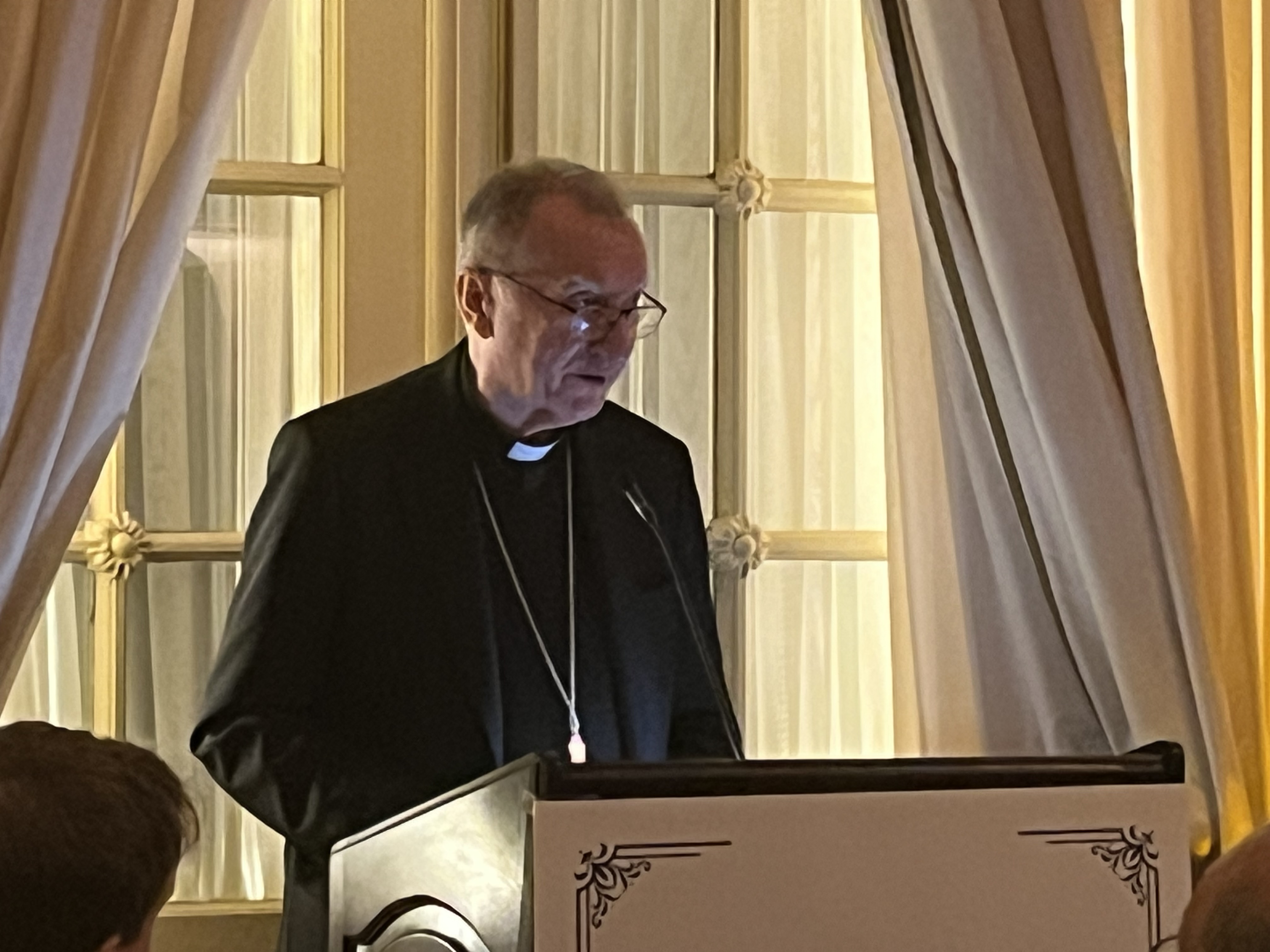
U.S. Embassy to the Vatican: Nigerian Christians are being targeted #Catholic ROME — It is “intolerable” that Christians are being targeted for persecution in Nigeria, said U.S. Ambassador to the Holy See Brian Burch during an event in Rome on Friday.The group Solidarity with the Persecuted Church (SPC) and the Embassy of the United States to the Holy See organized the April 17 conference at the embassy on threats to religious freedom in Nigeria.Burch spoke to EWTN News on the sidelines about the stance of the U.S. on religious violence in Nigeria. He described the current situation as a “conflict between radical Islamic groups and Christians because of their faith.”“The United States is the greatest friend of religious liberty,” Burch said. “The purpose of this event is to call attention to the plight of Christians who are being targeted and killed in Nigeria. Unfortunately, there are extremist Islamic groups that have been targeting Christians specifically in their churches and their homes, and the scale and size of the persecution of Christians there is intolerable.”Asked about the denial by some Nigerian government officials that Christians specifically are being targeted, Burch insisted that the current violence against Christians is alarming, citing U.S. President Donald Trump, who designated Nigeria as a country of particular concern in 2025.“The president has said that Christians face an existential crisis in Nigeria, and thanks to his leadership, he is now acting to bring an end to this. We have called on the Nigerian government to take necessary steps to protect Christians, and the United States government is now working in partnership with the Nigerian government to assist them in doing just that,” he said.Steven Wagner, president of SPC, underscored the importance of Nigeria for Christianity in Africa and the need for the Holy See to be involved in raising awareness.“As Nigeria goes, so goes Africa. More Christians are martyred for their faith in Nigeria than in any other country on earth. There is a huge crisis of internally displaced persons. We are calling on the Vatican to increase public awareness of the problem and to continue to encourage the government of Nigeria to make progress in protecting its people,” Wagner said.Burch responds to Trump’s comments on the popeIn his opening remarks at the conference, Burch commented for the first time on the recent tensions between Trump and Pope Leo XIV. He emphasized their difference in approach to armed conflicts and their shared goal of eliminating evil.“In recent days, President Trump and Pope Leo have exchanged, shall we say, sharp words. We must not pretend there is no disagreement. But both men are driven by an unshakable belief in protecting the innocent. One leads with the sword and shield of American power, the other with the cross of sacrificial love. But both are saying in their own languages, ‘Evil must not triumph and innocence must not be abandoned,’” Burch said.Papal trip in AfricaThe pontiff is currently on his first apostolic journey to Africa — visiting Algeria, Cameroon, Angola, and Equatorial Guinea.Archbishop Fortunatus Nwachukwu, secretary of the Dicastery for Evangelization and a presenter at the conference, described the trip as a moment of profound unity for all Africans.“This is Africa, and much of the divisions, according to countries in Africa, are artificial divisions that were imposed on the continent,” Nwachukwu told EWTN News. “Africans quite often feel united even beyond the boundaries. So the popeʼs message to these churches and these populations will also be a message to the population in Nigeria and to the Church in Nigeria.”Many of the issues the pope is addressing on his trip “are shared in common in Nigeria,” Burch added. The Holy See and the United States “certainly share this deep, fundamental commitment to religious liberty.”

U.S. Embassy to the Vatican: Nigerian Christians are being targeted #Catholic ROME — It is “intolerable” that Christians are being targeted for persecution in Nigeria, said U.S. Ambassador to the Holy See Brian Burch during an event in Rome on Friday.The group Solidarity with the Persecuted Church (SPC) and the Embassy of the United States to the Holy See organized the April 17 conference at the embassy on threats to religious freedom in Nigeria.Burch spoke to EWTN News on the sidelines about the stance of the U.S. on religious violence in Nigeria. He described the current situation as a “conflict between radical Islamic groups and Christians because of their faith.”“The United States is the greatest friend of religious liberty,” Burch said. “The purpose of this event is to call attention to the plight of Christians who are being targeted and killed in Nigeria. Unfortunately, there are extremist Islamic groups that have been targeting Christians specifically in their churches and their homes, and the scale and size of the persecution of Christians there is intolerable.”Asked about the denial by some Nigerian government officials that Christians specifically are being targeted, Burch insisted that the current violence against Christians is alarming, citing U.S. President Donald Trump, who designated Nigeria as a country of particular concern in 2025.“The president has said that Christians face an existential crisis in Nigeria, and thanks to his leadership, he is now acting to bring an end to this. We have called on the Nigerian government to take necessary steps to protect Christians, and the United States government is now working in partnership with the Nigerian government to assist them in doing just that,” he said.Steven Wagner, president of SPC, underscored the importance of Nigeria for Christianity in Africa and the need for the Holy See to be involved in raising awareness.“As Nigeria goes, so goes Africa. More Christians are martyred for their faith in Nigeria than in any other country on earth. There is a huge crisis of internally displaced persons. We are calling on the Vatican to increase public awareness of the problem and to continue to encourage the government of Nigeria to make progress in protecting its people,” Wagner said.Burch responds to Trump’s comments on the popeIn his opening remarks at the conference, Burch commented for the first time on the recent tensions between Trump and Pope Leo XIV. He emphasized their difference in approach to armed conflicts and their shared goal of eliminating evil.“In recent days, President Trump and Pope Leo have exchanged, shall we say, sharp words. We must not pretend there is no disagreement. But both men are driven by an unshakable belief in protecting the innocent. One leads with the sword and shield of American power, the other with the cross of sacrificial love. But both are saying in their own languages, ‘Evil must not triumph and innocence must not be abandoned,’” Burch said.Papal trip in AfricaThe pontiff is currently on his first apostolic journey to Africa — visiting Algeria, Cameroon, Angola, and Equatorial Guinea.Archbishop Fortunatus Nwachukwu, secretary of the Dicastery for Evangelization and a presenter at the conference, described the trip as a moment of profound unity for all Africans.“This is Africa, and much of the divisions, according to countries in Africa, are artificial divisions that were imposed on the continent,” Nwachukwu told EWTN News. “Africans quite often feel united even beyond the boundaries. So the popeʼs message to these churches and these populations will also be a message to the population in Nigeria and to the Church in Nigeria.”Many of the issues the pope is addressing on his trip “are shared in common in Nigeria,” Burch added. The Holy See and the United States “certainly share this deep, fundamental commitment to religious liberty.”

Ambassador Brian Burch described the situation in Nigeria as a “conflict between radical Islamic groups and Christians because of their faith.”

Read More
Trump’s comments on Pope Leo called ‘disrespectful’ as Americans react #Catholic Catholic bishops and U.S. elected officials have publicly criticized the president’s statements about Pope Leo XIV.President Donald Trump called Leo “weak on crime and terrible for foreign policy” in a lengthy social media post April 12 that drew response from the United States Conference of Catholic Bishops (USCCB) and elected officials.Bishop Robert Barron of the Diocese of Winona-Rochester, Minnesota, called Trump’s attack on Pope Leo XIV “disrespectful." Barron, who serves on Trump’s Religious Liberty Commission, said in a post on X that Trump’s comments “were entirely inappropriate and disrespectful” and “I think the president owes the pope an apology.”“[Trump’s comments] don’t contribute at all to a constructive conversation,” he said. “It is the pope’s prerogative to articulate Catholic doctrine and the principles that govern the moral life. In regard to the concrete application of those principles, people of goodwill can and do disagree.”Barron encouraged Catholic Trump officials to arrange a meeting with Vatican officials “so that a real dialogue can take place,” saying “this is far preferable to the statements on social media.”Bishop Michael Burbidge of Arlington, Virginia, said in a social media post: “Along with Archbishop [Paul] Coakley, president of the USCCB, and my brother bishops, I was disheartened by recent comments from President Trump concerning Pope Leo XIV and the Church. I pray that civility and respect are fully restored as together, with God’s grace, we work for peace and harmony among all people. May we also be united in our prayer for the end of war and violence so that Christ’s peace reigns throughout the world and in our hearts.”Palm Beach, Florida, Bishop Manuel de Jesús Rodríguez posted on X: “The @DiocesePB stands firm with our Holy Father, @Pontifex, and strongly rejects the disrespectful and violent attacks that Donald J. Trump has directed against the Holy Father.”Buffalo, New York, Bishop Michael Fisher posted on X: “This is not about politics but the very cause of humanity.”The Catholic Association's Ashley McGuire said in a statement: “The Catholic Church does not in any way fit into American political boxes. It will always prioritize the protection of innocent life in all its stages as well as the cause of the poor and marginalized. Insulting the pope, and all Catholics by extension, with the hope of making the Church bend to American political agendas, is discouraging and counterproductive.” McGuire added: “We pray that President Trump apologizes to Pope Leo.”U.S. officials' reaction beginsRepublican Vice President JD Vance, who is Catholic, has not yet commented on the matter, nor has Secretary of State Marco Rubio, also a Catholic.Sen. Mark Kelly, D-Arizona, who is Catholic, posted on X that “I find it abhorrent that the president of the United States would publicly attack the successor of St. Peter.”U.S. House Minority Leader Hakeem Jeffries said on X that Trump “shamefully attacked” the pope. Few Republican elected officials have spoken out.TweetDemocratic California Gov. Gavin Newsom posted on X: “Hey @GOP, you good with your guy directly attacking the pope now?”Rep. Lukas Schubert, a Republican Montana state lawmaker, disputed the presidentʼs statement that the pope is a “liberal person.”“Pope Leo is significantly further to the right than President Trump on abortion, gay marriage, and family values. Also he is more America First on the Iran War,” Schubert said.AI imageTrump also posted an AI-created image on Truth Social that appeared to portray himself as Jesus Christ, healing the sick, which led several Catholics to accuse the president of blasphemy.Edward Feser, a Catholic philosopher and professor at Pasadena City College, posted on X that Trump’s comments illustrate “how utter enslavement to the sin of pride makes a man unsuitable for the presidency.”“For all their faults, previous presidents had the visceral understanding of proper boundaries not to attack the vicar of Christ even when they disagreed with him,” he said.Feser quoted Daniel 11:36-37 in response to Trump’s AI image of himself as Christ, which reads: “And the king shall do according to his will; he shall exalt himself and magnify himself above every god, and shall speak astonishing things against the God of gods … He shall not give heed to any other god, for he shall magnify himself above all.”In reaction to the AI photo, Matt Fradd, the host of “Pints With Aquinas,“ urged Catholics to “offer a rosary today for Donald Trump and all blasphemers. … Seriously. Do it. I will too.”TweetRep. Shontel Brown, D-Ohio, did not directly reference Trumpʼs remarks about the pope but criticized the AI-created image on X: “There aren’t enough words to denounce how wrong this is.”The comments came after Leo criticized the Iran war and Trump’s rhetoric about targeting the entire civilization of Iran. Leo said in response to the post: “I have no fear neither of the Trump administration nor of speaking out loudly about the message of the Gospel.”Marjorie Taylor Greene, a former Republican congresswoman who was a strong ally of Trump before splitting with him on the Iran war and his handling of the Jeffrey Epstein files, posted on X that Trump “attacked the pope because the pope is rightly against Trump’s war in Iran and then he posted this picture of himself as if he is replacing Jesus.”“This comes after last week’s post of his evil tirade on Easter and then threatening to kill an entire civilization,” she said. “I completely denounce this and I’m praying against it!!!”‘Fuels division’Father Robert Sirico, the founder of the Acton Institute, said in a statement that Leo “has both the right and the duty to speak prophetically on matters of war and peace, the dignity of the human person, and the moral limits of force — even when his words discomfort political leaders.”He said Trump’s post does not “strengthen America’s moral standing but “merely fuels division.”Sirico also added that Catholics can disagree with popes on prudential judgments, such as foreign policy or crime, which he said are not infallible: “The Church herself teaches that such applications of principle admit of legitimate debate.”This story was updated at 11:50 a.m. ET on April 13, 2026, with comments from Buffalo, New York, Bishop Michael Fisher and The Catholic Associationʼs Ashley McGuire.

Trump’s comments on Pope Leo called ‘disrespectful’ as Americans react #Catholic Catholic bishops and U.S. elected officials have publicly criticized the president’s statements about Pope Leo XIV.President Donald Trump called Leo “weak on crime and terrible for foreign policy” in a lengthy social media post April 12 that drew response from the United States Conference of Catholic Bishops (USCCB) and elected officials.Bishop Robert Barron of the Diocese of Winona-Rochester, Minnesota, called Trump’s attack on Pope Leo XIV “disrespectful." Barron, who serves on Trump’s Religious Liberty Commission, said in a post on X that Trump’s comments “were entirely inappropriate and disrespectful” and “I think the president owes the pope an apology.”“[Trump’s comments] don’t contribute at all to a constructive conversation,” he said. “It is the pope’s prerogative to articulate Catholic doctrine and the principles that govern the moral life. In regard to the concrete application of those principles, people of goodwill can and do disagree.”Barron encouraged Catholic Trump officials to arrange a meeting with Vatican officials “so that a real dialogue can take place,” saying “this is far preferable to the statements on social media.”Bishop Michael Burbidge of Arlington, Virginia, said in a social media post: “Along with Archbishop [Paul] Coakley, president of the USCCB, and my brother bishops, I was disheartened by recent comments from President Trump concerning Pope Leo XIV and the Church. I pray that civility and respect are fully restored as together, with God’s grace, we work for peace and harmony among all people. May we also be united in our prayer for the end of war and violence so that Christ’s peace reigns throughout the world and in our hearts.”Palm Beach, Florida, Bishop Manuel de Jesús Rodríguez posted on X: “The @DiocesePB stands firm with our Holy Father, @Pontifex, and strongly rejects the disrespectful and violent attacks that Donald J. Trump has directed against the Holy Father.”Buffalo, New York, Bishop Michael Fisher posted on X: “This is not about politics but the very cause of humanity.”The Catholic Association's Ashley McGuire said in a statement: “The Catholic Church does not in any way fit into American political boxes. It will always prioritize the protection of innocent life in all its stages as well as the cause of the poor and marginalized. Insulting the pope, and all Catholics by extension, with the hope of making the Church bend to American political agendas, is discouraging and counterproductive.” McGuire added: “We pray that President Trump apologizes to Pope Leo.”U.S. officials' reaction beginsRepublican Vice President JD Vance, who is Catholic, has not yet commented on the matter, nor has Secretary of State Marco Rubio, also a Catholic.Sen. Mark Kelly, D-Arizona, who is Catholic, posted on X that “I find it abhorrent that the president of the United States would publicly attack the successor of St. Peter.”U.S. House Minority Leader Hakeem Jeffries said on X that Trump “shamefully attacked” the pope. Few Republican elected officials have spoken out.TweetDemocratic California Gov. Gavin Newsom posted on X: “Hey @GOP, you good with your guy directly attacking the pope now?”Rep. Lukas Schubert, a Republican Montana state lawmaker, disputed the presidentʼs statement that the pope is a “liberal person.”“Pope Leo is significantly further to the right than President Trump on abortion, gay marriage, and family values. Also he is more America First on the Iran War,” Schubert said.AI imageTrump also posted an AI-created image on Truth Social that appeared to portray himself as Jesus Christ, healing the sick, which led several Catholics to accuse the president of blasphemy.Edward Feser, a Catholic philosopher and professor at Pasadena City College, posted on X that Trump’s comments illustrate “how utter enslavement to the sin of pride makes a man unsuitable for the presidency.”“For all their faults, previous presidents had the visceral understanding of proper boundaries not to attack the vicar of Christ even when they disagreed with him,” he said.Feser quoted Daniel 11:36-37 in response to Trump’s AI image of himself as Christ, which reads: “And the king shall do according to his will; he shall exalt himself and magnify himself above every god, and shall speak astonishing things against the God of gods … He shall not give heed to any other god, for he shall magnify himself above all.”In reaction to the AI photo, Matt Fradd, the host of “Pints With Aquinas,“ urged Catholics to “offer a rosary today for Donald Trump and all blasphemers. … Seriously. Do it. I will too.”TweetRep. Shontel Brown, D-Ohio, did not directly reference Trumpʼs remarks about the pope but criticized the AI-created image on X: “There aren’t enough words to denounce how wrong this is.”The comments came after Leo criticized the Iran war and Trump’s rhetoric about targeting the entire civilization of Iran. Leo said in response to the post: “I have no fear neither of the Trump administration nor of speaking out loudly about the message of the Gospel.”Marjorie Taylor Greene, a former Republican congresswoman who was a strong ally of Trump before splitting with him on the Iran war and his handling of the Jeffrey Epstein files, posted on X that Trump “attacked the pope because the pope is rightly against Trump’s war in Iran and then he posted this picture of himself as if he is replacing Jesus.”“This comes after last week’s post of his evil tirade on Easter and then threatening to kill an entire civilization,” she said. “I completely denounce this and I’m praying against it!!!”‘Fuels division’Father Robert Sirico, the founder of the Acton Institute, said in a statement that Leo “has both the right and the duty to speak prophetically on matters of war and peace, the dignity of the human person, and the moral limits of force — even when his words discomfort political leaders.”He said Trump’s post does not “strengthen America’s moral standing but “merely fuels division.”Sirico also added that Catholics can disagree with popes on prudential judgments, such as foreign policy or crime, which he said are not infallible: “The Church herself teaches that such applications of principle admit of legitimate debate.”This story was updated at 11:50 a.m. ET on April 13, 2026, with comments from Buffalo, New York, Bishop Michael Fisher and The Catholic Associationʼs Ashley McGuire.

President Donald Trump called Leo “weak on crime and terrible for foreign policy” in a lengthy social media post April 12 that drew response from U.S. bishops and elected officials.

Read More
Pope Leo names Father Andrea Ciucci chancellor of Pontifical Academy for Life #Catholic Pope Leo XIV on Friday appointed Father Andrea Ciucci chancellor of the Pontifical Academy for Life. The Italian priest has served as the academyʼs secretariat coordinator since 2016.Originally from Milan, the 59-year-old Ciucci has a doctorate in the philosophy of religion from the Pontifical University of Sant’Anselmo in Rome. After serving as a parish vicar in Milan, he worked at the former Pontifical Council for the Family from 2012–2016.He is also the general secretary of the RenAIssance Foundation, a Vatican institution that promotes an ethical perspective on artificial intelligence.Ciucci is a professor at the Pontifical Theological Institute John Paul II in Rome and he is a public speaker and writer on the topic of new technologies and their influence on young people and families.Last month, the president of the Pontifical Academy for Life, Renzo Pegoraro, received the title of “bishop” from Pope Leo for his role.Pegoraro was chancellor of the academy from 2011 until his appointment as president in May 2025.According to the academyʼs statutes, the chancellor “may represent the Pontifical Academy for Life on behalf of the president and collaborates with him in the direction and administration of the academy’s activities.”The Pontifical Academy for Life was founded in February 1994 by St. John Paul II. It is one of several academic and cultural institutions at the Vatican that bring together experts in their fields to discuss issues of relevance to the Church and the world.

Pope Leo names Father Andrea Ciucci chancellor of Pontifical Academy for Life #Catholic Pope Leo XIV on Friday appointed Father Andrea Ciucci chancellor of the Pontifical Academy for Life. The Italian priest has served as the academyʼs secretariat coordinator since 2016.Originally from Milan, the 59-year-old Ciucci has a doctorate in the philosophy of religion from the Pontifical University of Sant’Anselmo in Rome. After serving as a parish vicar in Milan, he worked at the former Pontifical Council for the Family from 2012–2016.He is also the general secretary of the RenAIssance Foundation, a Vatican institution that promotes an ethical perspective on artificial intelligence.Ciucci is a professor at the Pontifical Theological Institute John Paul II in Rome and he is a public speaker and writer on the topic of new technologies and their influence on young people and families.Last month, the president of the Pontifical Academy for Life, Renzo Pegoraro, received the title of “bishop” from Pope Leo for his role.Pegoraro was chancellor of the academy from 2011 until his appointment as president in May 2025.According to the academyʼs statutes, the chancellor “may represent the Pontifical Academy for Life on behalf of the president and collaborates with him in the direction and administration of the academy’s activities.”The Pontifical Academy for Life was founded in February 1994 by St. John Paul II. It is one of several academic and cultural institutions at the Vatican that bring together experts in their fields to discuss issues of relevance to the Church and the world.

The Italian priest has served as the academy’s secretariat coordinator since 2016.

Read More
Vatican urges Catholics not to leave Pope Leo XIV alone in opposing war #Catholic VATICAN CITY — Vatican Secretary of State Cardinal Pietro Parolin warned that the “logic of the strongest” risks prevailing on the international stage and called on Christians to become “voices of peace” who do not leave Pope Leo XIV standing alone in his opposition to war.In an interview with Dialoghi, a cultural magazine linked to Italian Catholic Action, Parolin said the voice of the pope is “prophetic” but risks becoming “a voice crying in the wilderness if it is not supported and helped concretely.”His remarks also offer a key to understanding the peace prayer vigil Leo XIV has called for April 11 in St. Peter’s Basilica.Parolin recalled the 2003 Iraq war, when St. John Paul II pleaded for the conflict to be avoided but “was left alone.” He therefore stressed the need to support the current pontiff’s appeal for a peace that is “unarmed and disarming” and to reject “the false propaganda of rearmament.”“There is a need for more voices of peace, more voices against the madness of the rush toward rearmament, more voices raised in favor of our poorest brothers and sisters, more voices and more proposals — I am thinking, for example, of the world of Catholic universities — for new economic models inspired by justice and care for the weakest instead of the idolatry of money,” Parolin said.The cardinal described an alarming international climate in which military action appears to impose itself too easily.“I am struck by how much determination — I was about to say ease — with which the military option is presented as decisive, almost inevitable,” he said.According to the Vatican secretary of state, this trend has left diplomacy practically “mute,” unable to activate alternative tools, while awareness of the tragedy of war and the value of shared rules is being lost.Parolin said the root of the problem is a “multi-polarism inspired by the primacy of power,” in which states place greater trust in force than in international law. That, he said, has produced “double standards,” visible in the differing reactions to attacks on civilians in Ukraine and the destruction in Gaza.“Many governments,” Parolin said, “have expressed indignation over attacks against Ukrainian civilians by Russian missiles and drones, imposing sanctions on the aggressors.”“I do not think the same has happened with the tragedy of the destruction of Gaza,” he added.For the cardinal, this is a case of “double standards” tied to the “primacy of power” — the dominance of one’s own country over others — with international law invoked “only when convenient” and ignored in many other cases.“It seems there has been a lack of awareness of the value of peace, awareness of the tragic reality of war, awareness of the importance of shared rules and of respecting them,” he said.Parolin also lamented the weakening of the global diplomatic architecture and said it is “utopian” to think peace can be guaranteed “by weapons and by balances imposed by the strongest rather than by international agreements.”“We cannot surrender to the logic of the strongest,” the cardinal insisted, because that logic “bends international law to its own interests” and weakens multilateral institutions.In that context, he also expressed regret that Europe has been unable to speak with one voice. He said it is necessary “to rekindle in peoples the sense of European belonging and, in leadership, the awareness of the need for common actions without ever failing the principles that are at the foundation of the European Union itself.”Regarding the United Nations, Parolin said the Holy See “continues to believe in its importance,” considering international organizations essential for restraining the logic of the strongest. At the same time, he acknowledged that the use of the veto has limited the U.N.’s ability to act.“We cannot move from the force of law to the law of force,” he warned.Parolin also highlighted the role believers can play, including defending life and human dignity, protecting religious freedom, promoting reforms to the economic and financial system in line with the Church’s social doctrine, and caring for creation.Finally, the cardinal addressed the cultural impact of new technologies, saying hyper-connectivity and the spread of fake news help fuel fear and build new walls.“As Christians, we must oppose this drift with our daily lives,” he concluded.This story was first published by ACI Prensa, the Spanish-language sister service of EWTN News. It has been translated and adapted by EWTN News English.

Vatican urges Catholics not to leave Pope Leo XIV alone in opposing war #Catholic VATICAN CITY — Vatican Secretary of State Cardinal Pietro Parolin warned that the “logic of the strongest” risks prevailing on the international stage and called on Christians to become “voices of peace” who do not leave Pope Leo XIV standing alone in his opposition to war.In an interview with Dialoghi, a cultural magazine linked to Italian Catholic Action, Parolin said the voice of the pope is “prophetic” but risks becoming “a voice crying in the wilderness if it is not supported and helped concretely.”His remarks also offer a key to understanding the peace prayer vigil Leo XIV has called for April 11 in St. Peter’s Basilica.Parolin recalled the 2003 Iraq war, when St. John Paul II pleaded for the conflict to be avoided but “was left alone.” He therefore stressed the need to support the current pontiff’s appeal for a peace that is “unarmed and disarming” and to reject “the false propaganda of rearmament.”“There is a need for more voices of peace, more voices against the madness of the rush toward rearmament, more voices raised in favor of our poorest brothers and sisters, more voices and more proposals — I am thinking, for example, of the world of Catholic universities — for new economic models inspired by justice and care for the weakest instead of the idolatry of money,” Parolin said.The cardinal described an alarming international climate in which military action appears to impose itself too easily.“I am struck by how much determination — I was about to say ease — with which the military option is presented as decisive, almost inevitable,” he said.According to the Vatican secretary of state, this trend has left diplomacy practically “mute,” unable to activate alternative tools, while awareness of the tragedy of war and the value of shared rules is being lost.Parolin said the root of the problem is a “multi-polarism inspired by the primacy of power,” in which states place greater trust in force than in international law. That, he said, has produced “double standards,” visible in the differing reactions to attacks on civilians in Ukraine and the destruction in Gaza.“Many governments,” Parolin said, “have expressed indignation over attacks against Ukrainian civilians by Russian missiles and drones, imposing sanctions on the aggressors.”“I do not think the same has happened with the tragedy of the destruction of Gaza,” he added.For the cardinal, this is a case of “double standards” tied to the “primacy of power” — the dominance of one’s own country over others — with international law invoked “only when convenient” and ignored in many other cases.“It seems there has been a lack of awareness of the value of peace, awareness of the tragic reality of war, awareness of the importance of shared rules and of respecting them,” he said.Parolin also lamented the weakening of the global diplomatic architecture and said it is “utopian” to think peace can be guaranteed “by weapons and by balances imposed by the strongest rather than by international agreements.”“We cannot surrender to the logic of the strongest,” the cardinal insisted, because that logic “bends international law to its own interests” and weakens multilateral institutions.In that context, he also expressed regret that Europe has been unable to speak with one voice. He said it is necessary “to rekindle in peoples the sense of European belonging and, in leadership, the awareness of the need for common actions without ever failing the principles that are at the foundation of the European Union itself.”Regarding the United Nations, Parolin said the Holy See “continues to believe in its importance,” considering international organizations essential for restraining the logic of the strongest. At the same time, he acknowledged that the use of the veto has limited the U.N.’s ability to act.“We cannot move from the force of law to the law of force,” he warned.Parolin also highlighted the role believers can play, including defending life and human dignity, protecting religious freedom, promoting reforms to the economic and financial system in line with the Church’s social doctrine, and caring for creation.Finally, the cardinal addressed the cultural impact of new technologies, saying hyper-connectivity and the spread of fake news help fuel fear and build new walls.“As Christians, we must oppose this drift with our daily lives,” he concluded.This story was first published by ACI Prensa, the Spanish-language sister service of EWTN News. It has been translated and adapted by EWTN News English.

The Vatican Secretary of State said the pope’s appeals for peace need concrete support.

Read More
Official delegation announced for Pope Leo XIV’s upcoming visit to Equatorial Guinea #Catholic EBEBIYÍN, Equatorial Guinea — Preparations for the planned apostolic visit of Pope Leo XIV to Equatorial Guinea have gained momentum, with Church authorities unveiling details of the high-level delegation expected to accompany the Holy Father during his visit scheduled for April 21–23.The announcement was made by Father Cristino Ela Engonga, secretary-general of the Episcopal Conference of Equatorial Guinea (CEGE) and general coordinator of the Church commission for the papal visit, during a strategic meeting that was held on March 28 at the bishop’s house in Bata Diocese.The meeting brought together members of various subcommissions from the dioceses of Bata, Ebibeyín, Evinayong, and Mongomo to assess ongoing preparations and receive updates from the Holy See regarding the historic visit, which will mark Pope Leo XIV’s first trip to Africa.According to Engonga, nearly 50 Vatican officials are expected to accompany the pontiff, including five cardinals. Among them is Cardinal Robert Sarah, prefect emeritus of the Dicastery for Divine Worship and the Discipline of the Sacraments.The pope is expected to visit key cities, including Malabo, Mongomo, and Bata, accompanied by senior Vatican officials such as Secretary of State Cardinal Pietro Parolin and Cardinal Luis Antonio Tagle, pro-prefect of the Dicastery for Evangelization.Other prominent members of the papal entourage include Cardinal George Jacob Koovakad, prefect of the Dicastery for Interreligious Dialogue, and Cardinal Peter Kodwo Appiah Turkson, chancellor of the Pontifical Academy of Social Sciences.They will be joined by 42 additional Vatican officials, including Monsignor José Nahúm Jairo Salas, who is responsible for coordinating papal international travels, as well as leading Vatican communicators such as Paolo Ruffini and Matteo Bruni.Beyond the papal entourage, the meeting also highlighted the participation of special guests, including Cardinal Fridolin Ambongo, president of the Symposium of Episcopal Conferences of Africa and Madagascar (SECAM), as well as Archbishop Luis Javier Argüello García, president of the Spanish Episcopal Conference (CEE).Engonga further said that more than 40 Catholic bishops from six central African countries have expressed their intention to attend the event.During the meeting, participants also received a report from the masters of ceremonies of CEGE, Fathers Julio Enrique Meheme and Diosdado Márquez Sabadell, who recently traveled to Rome to prepare the liturgical celebrations the pope will preside over.The Holy Father is expected to arrive in Malabo on Tuesday, April 21, the final leg of his four-nation African trip. Following the official welcome ceremony, he will meet the president of Equatorial Guinea and address political leaders, civil society representatives, and the diplomatic corps.In the afternoon, the pope will engage with academics and artists during a meeting with representatives of the world of culture at the León XIV Campus of the National University. A pastoral visit to patients and staff at the Jean Pierre Olie Psychiatric Hospital is also scheduled for this day.On Wednesday, April 22, the pope will travel to Mongomo to celebrate Mass at the Basilica of the Immaculate Conception before visiting the Pope Francis Technology School.Later in the day, the Holy Father will continue to Bata, where he is scheduled to visit a prison; pray at a memorial dedicated to victims of the March 7, 2021, explosion; and meet young people and families at Bata Stadium.The apostolic journey to Africa is to conclude on Thursday, April 23, with a final Mass celebrated by the pope at Malabo Stadium.Following the farewell ceremony at Malabo International Airport, the Holy Father will depart for Rome, arriving later that evening at Rome’s Fiumicino International Airport.This story was first published by ACI Africa, the sister service of EWTN News in Africa, and has been adapted by EWTN News.

Official delegation announced for Pope Leo XIV’s upcoming visit to Equatorial Guinea #Catholic EBEBIYÍN, Equatorial Guinea — Preparations for the planned apostolic visit of Pope Leo XIV to Equatorial Guinea have gained momentum, with Church authorities unveiling details of the high-level delegation expected to accompany the Holy Father during his visit scheduled for April 21–23.The announcement was made by Father Cristino Ela Engonga, secretary-general of the Episcopal Conference of Equatorial Guinea (CEGE) and general coordinator of the Church commission for the papal visit, during a strategic meeting that was held on March 28 at the bishop’s house in Bata Diocese.The meeting brought together members of various subcommissions from the dioceses of Bata, Ebibeyín, Evinayong, and Mongomo to assess ongoing preparations and receive updates from the Holy See regarding the historic visit, which will mark Pope Leo XIV’s first trip to Africa.According to Engonga, nearly 50 Vatican officials are expected to accompany the pontiff, including five cardinals. Among them is Cardinal Robert Sarah, prefect emeritus of the Dicastery for Divine Worship and the Discipline of the Sacraments.The pope is expected to visit key cities, including Malabo, Mongomo, and Bata, accompanied by senior Vatican officials such as Secretary of State Cardinal Pietro Parolin and Cardinal Luis Antonio Tagle, pro-prefect of the Dicastery for Evangelization.Other prominent members of the papal entourage include Cardinal George Jacob Koovakad, prefect of the Dicastery for Interreligious Dialogue, and Cardinal Peter Kodwo Appiah Turkson, chancellor of the Pontifical Academy of Social Sciences.They will be joined by 42 additional Vatican officials, including Monsignor José Nahúm Jairo Salas, who is responsible for coordinating papal international travels, as well as leading Vatican communicators such as Paolo Ruffini and Matteo Bruni.Beyond the papal entourage, the meeting also highlighted the participation of special guests, including Cardinal Fridolin Ambongo, president of the Symposium of Episcopal Conferences of Africa and Madagascar (SECAM), as well as Archbishop Luis Javier Argüello García, president of the Spanish Episcopal Conference (CEE).Engonga further said that more than 40 Catholic bishops from six central African countries have expressed their intention to attend the event.During the meeting, participants also received a report from the masters of ceremonies of CEGE, Fathers Julio Enrique Meheme and Diosdado Márquez Sabadell, who recently traveled to Rome to prepare the liturgical celebrations the pope will preside over.The Holy Father is expected to arrive in Malabo on Tuesday, April 21, the final leg of his four-nation African trip. Following the official welcome ceremony, he will meet the president of Equatorial Guinea and address political leaders, civil society representatives, and the diplomatic corps.In the afternoon, the pope will engage with academics and artists during a meeting with representatives of the world of culture at the León XIV Campus of the National University. A pastoral visit to patients and staff at the Jean Pierre Olie Psychiatric Hospital is also scheduled for this day.On Wednesday, April 22, the pope will travel to Mongomo to celebrate Mass at the Basilica of the Immaculate Conception before visiting the Pope Francis Technology School.Later in the day, the Holy Father will continue to Bata, where he is scheduled to visit a prison; pray at a memorial dedicated to victims of the March 7, 2021, explosion; and meet young people and families at Bata Stadium.The apostolic journey to Africa is to conclude on Thursday, April 23, with a final Mass celebrated by the pope at Malabo Stadium.Following the farewell ceremony at Malabo International Airport, the Holy Father will depart for Rome, arriving later that evening at Rome’s Fiumicino International Airport.This story was first published by ACI Africa, the sister service of EWTN News in Africa, and has been adapted by EWTN News.

Church authorities unveiled details of the official delegation expected to accompany the Holy Father during his visit scheduled for April 21–23.

Read More
Bangladesh Christians form human chain demanding Easter public holiday #Catholic DHAKA, Bangladesh — Christians in Bangladesh formed a human chain and rally in the capital March 31 demanding that the government declare Easter Sunday a public holiday.The Bangladesh Christian Association organized the demonstration in front of the National Press Club in Dhaka, calling on Prime Minister Tarique Rahman to add Easter to the government’s official holiday calendar.Easter Sunday falls on April 5 this year. Bangladesh’s roughly 600,000 Christians — less than 1% of the country’s approximately 170 million people — currently receive only one public holiday for a Christian feast: Christmas Day.Catholic bishops support the demandThe Catholic Church in Bangladesh has also voiced support for the campaign.Archbishop Bejoy N. D’Cruze, OMI, of Dhaka, president of the Catholic Bishops’ Conference of Bangladesh, expressed his solidarity with the demand for a holiday on Easter in an interview with EWTN News on March 30.“Since we do not have a government holiday on Easter Sunday, we cannot all celebrate this day together. Many cannot go to the villages, and we cannot all observe the religious customs that are in place before Easter,” D’Cruze told EWTN News.“I also demand from the government to declare a public holiday on Easter so that we Christians can celebrate the resurrection of Jesus Christ together in family, social, and religious ways,” the archbishop added.‘A heavy heart’Bangladesh Christian Association President Nirmal Rozario said the demand for the holiday is long-standing.“We have come here with a heavy heart and are standing in front of the Press Club. Easter Sunday is very important to us after Christmas. Jesus is the only person in the history of the world who has risen after death. We are demanding a public holiday on this important and significant day, Easter Sunday,” Rozario said.He added that the Christian community “has made considerable contributions to the formation of Bangladesh” in the areas of education, health services, and development, and questioned why the government has not granted the holiday.Rozario called on Rahman to add Easter Sunday to the government holiday calendar beginning next year and to grant a holiday for this year through an executive order.Unequal holiday allocationsMuslims, who make up roughly 91% of the population according to the 2022 census, receive multiple public holidays for their major religious celebrations, including several days for Eid al-Fitr and Eid al-Adha. Hindus, who constitute about 8% of the population, have two days off for their main religious festival, Durga Puja.Christians, however, have only one public holiday — Christmas Day.Manju Maria Palma, secretary of The Christian Cooperative Credit Union Ltd. in Dhaka, a 48,000-member organization, was present at the human chain.“Christ was resurrected on this day. This day is very important. If this public holiday is given, not only the Christian community will benefit but also our brothers and sisters of other religions will understand the significance of this day,” Palma said.Lawmaker expresses hopeEWTN News contacted at least three members of Parliament, including Abdul Aziz, a member of Parliament from the Natore-4 constituency, which includes a historic Christian settlement.Aziz told EWTN News: “Since we respect all religious ceremonies, including Christian activities, and since Christians have expressed their demands, our government will definitely consider the matter.”He also expressed hope that the government will soon discuss the issue of a holiday on Easter Sunday.

Bangladesh Christians form human chain demanding Easter public holiday #Catholic DHAKA, Bangladesh — Christians in Bangladesh formed a human chain and rally in the capital March 31 demanding that the government declare Easter Sunday a public holiday.The Bangladesh Christian Association organized the demonstration in front of the National Press Club in Dhaka, calling on Prime Minister Tarique Rahman to add Easter to the government’s official holiday calendar.Easter Sunday falls on April 5 this year. Bangladesh’s roughly 600,000 Christians — less than 1% of the country’s approximately 170 million people — currently receive only one public holiday for a Christian feast: Christmas Day.Catholic bishops support the demandThe Catholic Church in Bangladesh has also voiced support for the campaign.Archbishop Bejoy N. D’Cruze, OMI, of Dhaka, president of the Catholic Bishops’ Conference of Bangladesh, expressed his solidarity with the demand for a holiday on Easter in an interview with EWTN News on March 30.“Since we do not have a government holiday on Easter Sunday, we cannot all celebrate this day together. Many cannot go to the villages, and we cannot all observe the religious customs that are in place before Easter,” D’Cruze told EWTN News.“I also demand from the government to declare a public holiday on Easter so that we Christians can celebrate the resurrection of Jesus Christ together in family, social, and religious ways,” the archbishop added.‘A heavy heart’Bangladesh Christian Association President Nirmal Rozario said the demand for the holiday is long-standing.“We have come here with a heavy heart and are standing in front of the Press Club. Easter Sunday is very important to us after Christmas. Jesus is the only person in the history of the world who has risen after death. We are demanding a public holiday on this important and significant day, Easter Sunday,” Rozario said.He added that the Christian community “has made considerable contributions to the formation of Bangladesh” in the areas of education, health services, and development, and questioned why the government has not granted the holiday.Rozario called on Rahman to add Easter Sunday to the government holiday calendar beginning next year and to grant a holiday for this year through an executive order.Unequal holiday allocationsMuslims, who make up roughly 91% of the population according to the 2022 census, receive multiple public holidays for their major religious celebrations, including several days for Eid al-Fitr and Eid al-Adha. Hindus, who constitute about 8% of the population, have two days off for their main religious festival, Durga Puja.Christians, however, have only one public holiday — Christmas Day.Manju Maria Palma, secretary of The Christian Cooperative Credit Union Ltd. in Dhaka, a 48,000-member organization, was present at the human chain.“Christ was resurrected on this day. This day is very important. If this public holiday is given, not only the Christian community will benefit but also our brothers and sisters of other religions will understand the significance of this day,” Palma said.Lawmaker expresses hopeEWTN News contacted at least three members of Parliament, including Abdul Aziz, a member of Parliament from the Natore-4 constituency, which includes a historic Christian settlement.Aziz told EWTN News: “Since we respect all religious ceremonies, including Christian activities, and since Christians have expressed their demands, our government will definitely consider the matter.”He also expressed hope that the government will soon discuss the issue of a holiday on Easter Sunday.

Christian leaders and Catholic clergy in the Muslim-majority South Asian nation are urging Prime Minister Tarique Rahman to add Easter Sunday to the government holiday calendar.

Read More
Vatican official warns of ‘Christianophobia’ in Muslim world and secular West #Catholic Archbishop Fortunatus Nwachukwu is alarmed about rising hostility toward Christians, both in parts of the Islamic world and in Europe’s increasingly post‑Christian culture.Nwachukwu, who serves as secretary of the Section of First Evangelization at the Vatican’s Dicastery for Evangelization, told EWTN News that any serious conversation about peace and coexistence must begin with clear condemnation of anti‑Christian violence, particularly from Muslim leaders in places where Christians lack full religious freedom.The Nigerian prelate also warned of a growing cultural aversion to Christianity in the West, where Christian expression is often treated with suspicion even as societies insist on defending the religious symbols of others.Pope Leo XIV is scheduled to visit four countries in Africa, including the Muslim-majority Algeria, on his first apostolic journey to the continent April 13–23.A diplomat urges Muslims to confront anti‑Christian violenceDrawing on decades of diplomatic service in Ghana, Paraguay, Algeria, and Switzerland, Nwachukwu described the anti‑Christian discrimination he witnessed firsthand — experiences he believes continue to be overlooked.“I do not criticize Islam; I criticize the way some people practice their Islam,” he said. “People just shout about Islamophobia, but its main cause is not to be sought in the West. It is to be sought in the way some Muslims practice their religion. We are calling our Muslim friends to condemn the wrong use of their religion as a religion of violence.”He recalled that during his service in Algeria, Christians were openly labeled “enemies of Islam.” In one incident, a shopkeeper refused to serve him because he was wearing a Roman collar.“Christians still do not have full liberty to practice their religion,” he said.A West increasingly uncomfortable with its Christian rootsBut Nwachukwu also directed sharp criticism toward Europe, where he sees a growing reluctance to defend Christianity even as Western societies emphasize religious tolerance.“Everybody denounces Islamophobia, but nobody denounces Christianophobia,” he said. “We are in a post‑Christian Europe and a post‑Christian West.”He noted that Christian symbols face discrimination not applied to other religions: “You enter a hall and see a symbol of Buddhism — nobody touches it. You see a Muslim in a hijab — nobody says to remove it. But you see a cross, and they say, ‘Remove it.’ Why?”This, he argued, reflects a cultural embarrassment about Europe’s Christian heritage:“It is like feeling guilty for having a mother who is ugly and then forgetting that she also has rights. The Christianity that gave them their education, culture, and society — they now feel uncomfortable with it.”Reverse missionaries and a hopeful response to Europe’s secular driftNwachukwu said this situation makes the growing presence of African and Asian missionaries in Europe all the more significant, as a hopeful sign that the global Church can help rekindle the continent’s Christian identity.“The West often forgets that we are the result of sacrifices made by their own brothers and sisters who became missionaries,” he said. “But the sheaves — the children of those missionaries — are now returning.”Nwachukwu described this movement as a gift that can strengthen Western Christianity in places where secularism has taken deep root.“We want to see the mother Churches in Europe accept and be proud of their missionary children from the global south.”Encouragement for persecuted ChristiansTo Christians facing persecution — whether under hostile regimes, extremist movements, or secular cultural pressures — Nwachukwu offered a message of strength: “If you are encountering persecution, it means that the message you have is important. If your message were not important, people wouldn’t even think of you. So, the message is: Do not feel you are alone. Know what you are worth.”

Vatican official warns of ‘Christianophobia’ in Muslim world and secular West #Catholic Archbishop Fortunatus Nwachukwu is alarmed about rising hostility toward Christians, both in parts of the Islamic world and in Europe’s increasingly post‑Christian culture.Nwachukwu, who serves as secretary of the Section of First Evangelization at the Vatican’s Dicastery for Evangelization, told EWTN News that any serious conversation about peace and coexistence must begin with clear condemnation of anti‑Christian violence, particularly from Muslim leaders in places where Christians lack full religious freedom.The Nigerian prelate also warned of a growing cultural aversion to Christianity in the West, where Christian expression is often treated with suspicion even as societies insist on defending the religious symbols of others.Pope Leo XIV is scheduled to visit four countries in Africa, including the Muslim-majority Algeria, on his first apostolic journey to the continent April 13–23.A diplomat urges Muslims to confront anti‑Christian violenceDrawing on decades of diplomatic service in Ghana, Paraguay, Algeria, and Switzerland, Nwachukwu described the anti‑Christian discrimination he witnessed firsthand — experiences he believes continue to be overlooked.“I do not criticize Islam; I criticize the way some people practice their Islam,” he said. “People just shout about Islamophobia, but its main cause is not to be sought in the West. It is to be sought in the way some Muslims practice their religion. We are calling our Muslim friends to condemn the wrong use of their religion as a religion of violence.”He recalled that during his service in Algeria, Christians were openly labeled “enemies of Islam.” In one incident, a shopkeeper refused to serve him because he was wearing a Roman collar.“Christians still do not have full liberty to practice their religion,” he said.A West increasingly uncomfortable with its Christian rootsBut Nwachukwu also directed sharp criticism toward Europe, where he sees a growing reluctance to defend Christianity even as Western societies emphasize religious tolerance.“Everybody denounces Islamophobia, but nobody denounces Christianophobia,” he said. “We are in a post‑Christian Europe and a post‑Christian West.”He noted that Christian symbols face discrimination not applied to other religions: “You enter a hall and see a symbol of Buddhism — nobody touches it. You see a Muslim in a hijab — nobody says to remove it. But you see a cross, and they say, ‘Remove it.’ Why?”This, he argued, reflects a cultural embarrassment about Europe’s Christian heritage:“It is like feeling guilty for having a mother who is ugly and then forgetting that she also has rights. The Christianity that gave them their education, culture, and society — they now feel uncomfortable with it.”Reverse missionaries and a hopeful response to Europe’s secular driftNwachukwu said this situation makes the growing presence of African and Asian missionaries in Europe all the more significant, as a hopeful sign that the global Church can help rekindle the continent’s Christian identity.“The West often forgets that we are the result of sacrifices made by their own brothers and sisters who became missionaries,” he said. “But the sheaves — the children of those missionaries — are now returning.”Nwachukwu described this movement as a gift that can strengthen Western Christianity in places where secularism has taken deep root.“We want to see the mother Churches in Europe accept and be proud of their missionary children from the global south.”Encouragement for persecuted ChristiansTo Christians facing persecution — whether under hostile regimes, extremist movements, or secular cultural pressures — Nwachukwu offered a message of strength: “If you are encountering persecution, it means that the message you have is important. If your message were not important, people wouldn’t even think of you. So, the message is: Do not feel you are alone. Know what you are worth.”

A Nigerian archbishop said African missionaries can evangelize a Europe uneasy with its Christian past.

Read More
Catholic bishops in Africa release final report addressing pastoral challenge of polygamy #Catholic NAIROBI, Kenya — Catholic bishops in Africa have released a final report addressing the pastoral challenge of polygamy across Africa. The 25-page document responds directly to the mandate that the multiyear XVI Ordinary General Assembly of the Synod of Bishops, the Synod on Synodality, gave to members of the Symposium of Episcopal Conferences of Africa and Madagascar (SECAM) “to promote theological and pastoral discernment on the issue of polygamy.”Compiled by a SECAM commission made up of selected theologians and professionals from relevant ecclesiastical disciplines, the report presents a structured reflection on the phenomenon through what it describes as a process of “quadruple listening”: attentive engagement with African cultural realities, sacred Scripture, Church teaching on Christian marriage, and pastoral practices already operative within ecclesial communities across the continent.Polygamy within the context of the African familyThe report begins by situating polygamy within the broader cultural and religious context of the African family. According to the SECAM commission: “The African family is built on the covenant: an alliance between human groups, an alliance with ancestors, and an alliance with God.”Within this worldview, the birth of children is central. The commission members explained that “at the heart of this family, the child represents an inestimable treasure, a divine blessing. He perpetuates the name of the lineage while helping to consolidate the present life.”It is within this framework that members of the SECAM commission situated polygamy, defined as “a marital regime in which an individual is linked at the same time to several spouses.” They clarified that although the term technically includes both polyandry and polygyny, the latter — a man married to multiple women — remains by far the most common form in Africa.Historically, the practice emerged from specific social needs. In early agrarian and nomadic societies, large families provided economic stability and security, they noted, recalling: “Polygamous marriages were practiced not only for the sake of large families, but also for reasons of solidarity, alliances, and political objectives.”Marriage in traditional African societies also carried communal and spiritual dimensions that made divorce rare, they further noted, recalling that marriage ceremonies involved not only the spouses but entire families and even calling upon ancestors, reflecting a deeply communal understanding of family life.
 
 SECAM president Cardinal Fridolin Ambongo (left) and secretary-general Father Rafael Simbine Junior (right). | Credit: ACI Africa
 
 Biblical discernmentTurning to Scripture, the SECAM commission members noted that the Bible itself reflects diverse marital practices. In the Old Testament world, “forms of marriage varied, from polygamy to monogamy,” and several biblical figures lived in polygamous unions.Nevertheless, the commission members stressed in the report that monogamy gradually emerged as the biblical ideal. They pointed to the Book of Tobit as a text that strongly “exalts monogamy,” describing families that are “strictly monogamous” and characterized by fidelity and religious devotion.The commission members interpreted this development as part of what they call a “divine pedagogy.” According to their report, God allowed polygamy historically but ultimately revealed the ideal of monogamous marriage through Christ.“In his Son, he shows that polygamy is not the ideal couple desired by God,” they said, emphasizing Jesus’ teaching that marriage is a union between “one man and one woman.”This biblical reflection also addressed one of the most common cultural motivations for polygamy — infertility. The commission insisted that biological impediments to fertility do not justify polygamy.They explained that biblical tradition broadens the understanding of motherhood and fatherhood beyond biological reproduction. True fruitfulness, the commission members wrote, can consist in fidelity to God and virtuous life rather than biological offspring alone.Ethical questions raised by polygamyThe report on the pastoral challenges of polygamy raised ethical questions about whether the core meaning of Christian marriage can be reconciled with polygamous unions. The commission highlighted the Christian understanding of marriage as a total mutual gift between two persons.“If marriage translates into ‘the gift of oneself to another,’ one might wonder how a man or woman can experience this ‘gift of self’ by giving themselves to several wives or husbands at the same time,” they observed.Commission members also raised questions about emotional and psychological dimensions, asking whether shared marital relationships risk undermining authentic communion between spouses.The Christian understanding of marriage, they noted, is further illuminated by the apostle Paul’s comparison of marriage with the relationship between Christ and the Church — a singular and exclusive covenant of love.Pastoral challenges: Baptism and sacramental lifeThe commission acknowledged that polygamy has long posed pastoral challenges for the Church in Africa, especially when individuals living in polygamous unions seek baptism or integration into Catholic communities.Historically, missionaries often approached the issue by requiring monogamy as a condition for baptism, they recalled, adding that “monogamous marriage was therefore a requirement for being or becoming a Christian.”Today, however, pastoral practice has evolved in many African dioceses, they said, identifying several pastoral approaches currently used within local churches.One approach requires a man seeking full sacramental participation to choose one spouse while continuing to provide for the other women and their children.Another response is the “permanent catechumenate,” in which a polygamous individual participates in catechetical formation and community life without receiving baptism or the other sacraments due to the continuing marital situation.A third practice involves baptizing the first wife when she has been placed in a polygamous relationship without her consent. In such cases, she may be fully integrated into the Christian community while remaining within her family environment.Position on baptism for polygamistsOne of the clearest conclusions of the SECAM commission concerned the sacrament of baptism. The commission argued that baptizing someone who intends to remain in a polygamous union risks undermining the theological meaning of baptism itself.“Baptizing a polygamist who will continue to remain so would give every appearance of legitimizing this irregularity and could distort or even devalue baptism of its substance,” they stated.For this reason, the commission recommended that baptism should normally follow a clear commitment to monogamous marriage.According to their report, polygamous catechumens should undergo thorough preparation and be ready to “accept the Gospel message, adhere to the Christian ideal, and commit to monogamous marriage before receiving baptism.”Implications for Catholics living in polygamous familiesAt the pastoral level, the members of the commission stressed accompaniment rather than exclusion. The Church, the report says, must practice “a pastoral approach of proximity, listening, and accompaniment.”This approach acknowledges that many polygamous families cannot easily dissolve existing marital bonds. In such cases, pastoral accompaniment may maintain the family structure while gradually introducing the Christian vision of marriage.The commission noted that some members of polygamous families — particularly the first wife and children — may meet the conditions for full sacramental participation, while others may live their faith “in a penitent manner and in the hope of full integration into the community of Jesus’ disciples.”Ultimately, the commission members framed the issue as part of a broader process of inculturation. The challenge for the Church in Africa, they concluded, is to present the Gospel within cultural realities while remaining faithful to the Christian understanding of marriage.This story was first published by ACI Africa, the sister service of EWTN News in Africa, and has been adapted by EWTN News.

Catholic bishops in Africa release final report addressing pastoral challenge of polygamy #Catholic NAIROBI, Kenya — Catholic bishops in Africa have released a final report addressing the pastoral challenge of polygamy across Africa. The 25-page document responds directly to the mandate that the multiyear XVI Ordinary General Assembly of the Synod of Bishops, the Synod on Synodality, gave to members of the Symposium of Episcopal Conferences of Africa and Madagascar (SECAM) “to promote theological and pastoral discernment on the issue of polygamy.”Compiled by a SECAM commission made up of selected theologians and professionals from relevant ecclesiastical disciplines, the report presents a structured reflection on the phenomenon through what it describes as a process of “quadruple listening”: attentive engagement with African cultural realities, sacred Scripture, Church teaching on Christian marriage, and pastoral practices already operative within ecclesial communities across the continent.Polygamy within the context of the African familyThe report begins by situating polygamy within the broader cultural and religious context of the African family. According to the SECAM commission: “The African family is built on the covenant: an alliance between human groups, an alliance with ancestors, and an alliance with God.”Within this worldview, the birth of children is central. The commission members explained that “at the heart of this family, the child represents an inestimable treasure, a divine blessing. He perpetuates the name of the lineage while helping to consolidate the present life.”It is within this framework that members of the SECAM commission situated polygamy, defined as “a marital regime in which an individual is linked at the same time to several spouses.” They clarified that although the term technically includes both polyandry and polygyny, the latter — a man married to multiple women — remains by far the most common form in Africa.Historically, the practice emerged from specific social needs. In early agrarian and nomadic societies, large families provided economic stability and security, they noted, recalling: “Polygamous marriages were practiced not only for the sake of large families, but also for reasons of solidarity, alliances, and political objectives.”Marriage in traditional African societies also carried communal and spiritual dimensions that made divorce rare, they further noted, recalling that marriage ceremonies involved not only the spouses but entire families and even calling upon ancestors, reflecting a deeply communal understanding of family life. SECAM president Cardinal Fridolin Ambongo (left) and secretary-general Father Rafael Simbine Junior (right). | Credit: ACI Africa Biblical discernmentTurning to Scripture, the SECAM commission members noted that the Bible itself reflects diverse marital practices. In the Old Testament world, “forms of marriage varied, from polygamy to monogamy,” and several biblical figures lived in polygamous unions.Nevertheless, the commission members stressed in the report that monogamy gradually emerged as the biblical ideal. They pointed to the Book of Tobit as a text that strongly “exalts monogamy,” describing families that are “strictly monogamous” and characterized by fidelity and religious devotion.The commission members interpreted this development as part of what they call a “divine pedagogy.” According to their report, God allowed polygamy historically but ultimately revealed the ideal of monogamous marriage through Christ.“In his Son, he shows that polygamy is not the ideal couple desired by God,” they said, emphasizing Jesus’ teaching that marriage is a union between “one man and one woman.”This biblical reflection also addressed one of the most common cultural motivations for polygamy — infertility. The commission insisted that biological impediments to fertility do not justify polygamy.They explained that biblical tradition broadens the understanding of motherhood and fatherhood beyond biological reproduction. True fruitfulness, the commission members wrote, can consist in fidelity to God and virtuous life rather than biological offspring alone.Ethical questions raised by polygamyThe report on the pastoral challenges of polygamy raised ethical questions about whether the core meaning of Christian marriage can be reconciled with polygamous unions. The commission highlighted the Christian understanding of marriage as a total mutual gift between two persons.“If marriage translates into ‘the gift of oneself to another,’ one might wonder how a man or woman can experience this ‘gift of self’ by giving themselves to several wives or husbands at the same time,” they observed.Commission members also raised questions about emotional and psychological dimensions, asking whether shared marital relationships risk undermining authentic communion between spouses.The Christian understanding of marriage, they noted, is further illuminated by the apostle Paul’s comparison of marriage with the relationship between Christ and the Church — a singular and exclusive covenant of love.Pastoral challenges: Baptism and sacramental lifeThe commission acknowledged that polygamy has long posed pastoral challenges for the Church in Africa, especially when individuals living in polygamous unions seek baptism or integration into Catholic communities.Historically, missionaries often approached the issue by requiring monogamy as a condition for baptism, they recalled, adding that “monogamous marriage was therefore a requirement for being or becoming a Christian.”Today, however, pastoral practice has evolved in many African dioceses, they said, identifying several pastoral approaches currently used within local churches.One approach requires a man seeking full sacramental participation to choose one spouse while continuing to provide for the other women and their children.Another response is the “permanent catechumenate,” in which a polygamous individual participates in catechetical formation and community life without receiving baptism or the other sacraments due to the continuing marital situation.A third practice involves baptizing the first wife when she has been placed in a polygamous relationship without her consent. In such cases, she may be fully integrated into the Christian community while remaining within her family environment.Position on baptism for polygamistsOne of the clearest conclusions of the SECAM commission concerned the sacrament of baptism. The commission argued that baptizing someone who intends to remain in a polygamous union risks undermining the theological meaning of baptism itself.“Baptizing a polygamist who will continue to remain so would give every appearance of legitimizing this irregularity and could distort or even devalue baptism of its substance,” they stated.For this reason, the commission recommended that baptism should normally follow a clear commitment to monogamous marriage.According to their report, polygamous catechumens should undergo thorough preparation and be ready to “accept the Gospel message, adhere to the Christian ideal, and commit to monogamous marriage before receiving baptism.”Implications for Catholics living in polygamous familiesAt the pastoral level, the members of the commission stressed accompaniment rather than exclusion. The Church, the report says, must practice “a pastoral approach of proximity, listening, and accompaniment.”This approach acknowledges that many polygamous families cannot easily dissolve existing marital bonds. In such cases, pastoral accompaniment may maintain the family structure while gradually introducing the Christian vision of marriage.The commission noted that some members of polygamous families — particularly the first wife and children — may meet the conditions for full sacramental participation, while others may live their faith “in a penitent manner and in the hope of full integration into the community of Jesus’ disciples.”Ultimately, the commission members framed the issue as part of a broader process of inculturation. The challenge for the Church in Africa, they concluded, is to present the Gospel within cultural realities while remaining faithful to the Christian understanding of marriage.This story was first published by ACI Africa, the sister service of EWTN News in Africa, and has been adapted by EWTN News.

SECAM has issued a 25-page final report addressing the pastoral challenge of polygamy across Africa, a direct response to a mandate given at the Synod on Synodality.

Read More
Collection for the Holy Land: Christians need concrete hope, not just consoling words #Catholic Cardinal Claudio Gugerotti, prefect of the Dicastery for the Eastern Churches, called upon the faithful worldwide to participate in the Good Friday collection aimed at assisting Christian communities in the Holy Land.The Good Friday collection is one of the primary sources of support for the Custody of the Holy Land — the Franciscan institution that for centuries has safeguarded the sites connected to the life of Jesus Christ and accompanied the Christian communities living in the region.The prefect called upon the faithful around the world to respond with a concrete gesture of solidarity. “I wish to propose a small gesture to you: to offer a little of our money to help our brothers and sisters who find themselves in extreme peril to live one more day, to find hope, and to find the possibility of starting anew.”“How many times have I personally visited those Christian minorities who wake up every morning facing the danger of no longer having a place to exist!” Gugerotti wrote in the March 18 letter, which was also signed by the dicastery’s secretary, Archbishop Michel Jalakh.“Help us to offer them concrete hope, not merely words of consolation — for we who visit them will leave, while they remain with their fears, even with the terror that, precisely because they are Christians, they may be eliminated,” the cardinal stated. The cardinal explained that the Good Friday donations hold a twofold significance: on the one hand, providing material aid to those living amid war and poverty, and on the other, challenging the conscience of the faithful.“It is also vital for us, because without sacrifice, without a real change in our way of living, we risk remaining inert before a world in flames — and thus complicit in its destruction,” he said. Gugerotti noted that many Christians in the Holy Land have lost their means of livelihood, especially those who depended on religious tourism, which historically sustained a large portion of the local economy. The conflict that began on Oct. 7, 2023, when Hamas attacked Israel, triggered a sharp decline in religious tourism.“A great many Christians in the Holy Land have lost everything, even the work that came from serving pilgrims,” he pointed out.In early 2025, Israel’s Ministry of Tourism characterized the year as a turning point, with 1.3 million international arrivals. However, 2026 has once again proven to be a highly problematic year for pilgrimages primarily due to the military escalation by the United States and Israel against Iran, which has thrown the entire region into crisis.The drastic reduction in pilgrimages and the current climate of insecurity have  exacerbated the situation. “Now, out of fear, almost everyone tends to avoid venturing into those lands,” he said.What is done with the money collected?In 2023 — the most recent year for which official data are available — the Holy Land collection raised 6,571,893 euros (.5 million). The Custody of the Holy Land typically receives 65% of the proceeds, while the remaining 35% goes to the Dicastery for the Eastern Churches, which uses it for the formation of priests and for subsidies to the various dioceses and eparchies in Palestine, Israel, Jordan, Lebanon, Syria, Turkey, and Iraq.Of the money it receives, the Custody of the Holy Land normally invests 20% in the upkeep of the sites where Jesus Christ walked, while the remainder goes to Christian families, who, in 1948, constituted 20% of the local population but now make up less than 1.4%.In the Gaza Strip, it collaborates with the Latin parish and the Atfa-Luna association to provide psycho-social support “to some 1,000 children and 300 adults,” as well as to distribute emergency kits and aid to families of people with disabilities.In Lebanon, the Church responded to the 2024 crisis (the fighting between Israel and Hezbollah) by providing “hot meals for some 500 beneficiaries every day” and ensuring “drinking water for about 250 people daily.” The Custody of the Holy Land also manages hundreds of housing units at nominal rents to prevent emigration.“It has been said that peace has been achieved; however, even though the media speak of it much less today than before, the shooting continues, people continue to die, lands remain disputed, and Christians continue to emigrate to save their lives,” the cardinal noted.According to the 2023 data released by the Dicastery for the Eastern Churches, 2,376,167 euros (.7 million) was donated to seminaries, houses of religious formation, and cultural institutions. The Franciscan Custody allocated more than 2 million euros (.3 million) to the education of young people in the Holy Land in 2023, funding scholarships at various universities in the region. Nearly 1 million euros (.15 million) were allocated to the Pontifical Oriental Institute, which now encompasses, at Pope Francis’ direction, the Pontifical Gregorian University.A portion was also invested in Bethlehem University, one of the prestigious foundations that underwrites the academic studies of 3,300 young people, both Muslim and Christian, with the aim of educating them to build a future of peace in the Holy Land.A concrete gesture: Giving is a ‘strong sign of faith’In his message, the cardinal invited bishops and pastoral leaders to raise awareness among the faithful regarding the importance of sustaining the Christian presence in the places where Christianity was born.“Let us ensure that our people approach the collection with the awareness that giving is a strong sign of faith,” he wrote. “A Holy Land without believers is a lost land, for the living memory of salvation is lost,” he added.“Pope Leo XIV never ceases to bring to our minds and hearts this commitment to be one, so that there may be peace — not a provisional truce, not perpetual hatred, not an immense expenditure on armaments, but a contribution to our common rebirth,” the cardinal wrote.The prelate concluded his letter by acknowledging that the collection would be merely “a drop in the ocean” but that “the ocean, as a result of losing its drops, is turning into a desert.”In addition to supporting the Franciscan mission in the Holy Land to safeguard the holy places, sustain local Christian communities, and foster peace in the region where Jesus lived, the cardinal said Christians can actively contribute by offering prayers to support this work and inspire new vocations, or by undertaking a pilgrimage to discover the roots of Christianity.This story was first published by ACI Prensa, the Spanish-language sister service of EWTN News. It has been translated and adapted by EWTN News English.

Collection for the Holy Land: Christians need concrete hope, not just consoling words #Catholic Cardinal Claudio Gugerotti, prefect of the Dicastery for the Eastern Churches, called upon the faithful worldwide to participate in the Good Friday collection aimed at assisting Christian communities in the Holy Land.The Good Friday collection is one of the primary sources of support for the Custody of the Holy Land — the Franciscan institution that for centuries has safeguarded the sites connected to the life of Jesus Christ and accompanied the Christian communities living in the region.The prefect called upon the faithful around the world to respond with a concrete gesture of solidarity. “I wish to propose a small gesture to you: to offer a little of our money to help our brothers and sisters who find themselves in extreme peril to live one more day, to find hope, and to find the possibility of starting anew.”“How many times have I personally visited those Christian minorities who wake up every morning facing the danger of no longer having a place to exist!” Gugerotti wrote in the March 18 letter, which was also signed by the dicastery’s secretary, Archbishop Michel Jalakh.“Help us to offer them concrete hope, not merely words of consolation — for we who visit them will leave, while they remain with their fears, even with the terror that, precisely because they are Christians, they may be eliminated,” the cardinal stated. The cardinal explained that the Good Friday donations hold a twofold significance: on the one hand, providing material aid to those living amid war and poverty, and on the other, challenging the conscience of the faithful.“It is also vital for us, because without sacrifice, without a real change in our way of living, we risk remaining inert before a world in flames — and thus complicit in its destruction,” he said. Gugerotti noted that many Christians in the Holy Land have lost their means of livelihood, especially those who depended on religious tourism, which historically sustained a large portion of the local economy. The conflict that began on Oct. 7, 2023, when Hamas attacked Israel, triggered a sharp decline in religious tourism.“A great many Christians in the Holy Land have lost everything, even the work that came from serving pilgrims,” he pointed out.In early 2025, Israel’s Ministry of Tourism characterized the year as a turning point, with 1.3 million international arrivals. However, 2026 has once again proven to be a highly problematic year for pilgrimages primarily due to the military escalation by the United States and Israel against Iran, which has thrown the entire region into crisis.The drastic reduction in pilgrimages and the current climate of insecurity have  exacerbated the situation. “Now, out of fear, almost everyone tends to avoid venturing into those lands,” he said.What is done with the money collected?In 2023 — the most recent year for which official data are available — the Holy Land collection raised 6,571,893 euros ($7.5 million). The Custody of the Holy Land typically receives 65% of the proceeds, while the remaining 35% goes to the Dicastery for the Eastern Churches, which uses it for the formation of priests and for subsidies to the various dioceses and eparchies in Palestine, Israel, Jordan, Lebanon, Syria, Turkey, and Iraq.Of the money it receives, the Custody of the Holy Land normally invests 20% in the upkeep of the sites where Jesus Christ walked, while the remainder goes to Christian families, who, in 1948, constituted 20% of the local population but now make up less than 1.4%.In the Gaza Strip, it collaborates with the Latin parish and the Atfa-Luna association to provide psycho-social support “to some 1,000 children and 300 adults,” as well as to distribute emergency kits and aid to families of people with disabilities.In Lebanon, the Church responded to the 2024 crisis (the fighting between Israel and Hezbollah) by providing “hot meals for some 500 beneficiaries every day” and ensuring “drinking water for about 250 people daily.” The Custody of the Holy Land also manages hundreds of housing units at nominal rents to prevent emigration.“It has been said that peace has been achieved; however, even though the media speak of it much less today than before, the shooting continues, people continue to die, lands remain disputed, and Christians continue to emigrate to save their lives,” the cardinal noted.According to the 2023 data released by the Dicastery for the Eastern Churches, 2,376,167 euros ($2.7 million) was donated to seminaries, houses of religious formation, and cultural institutions. The Franciscan Custody allocated more than 2 million euros ($2.3 million) to the education of young people in the Holy Land in 2023, funding scholarships at various universities in the region. Nearly 1 million euros ($1.15 million) were allocated to the Pontifical Oriental Institute, which now encompasses, at Pope Francis’ direction, the Pontifical Gregorian University.A portion was also invested in Bethlehem University, one of the prestigious foundations that underwrites the academic studies of 3,300 young people, both Muslim and Christian, with the aim of educating them to build a future of peace in the Holy Land.A concrete gesture: Giving is a ‘strong sign of faith’In his message, the cardinal invited bishops and pastoral leaders to raise awareness among the faithful regarding the importance of sustaining the Christian presence in the places where Christianity was born.“Let us ensure that our people approach the collection with the awareness that giving is a strong sign of faith,” he wrote. “A Holy Land without believers is a lost land, for the living memory of salvation is lost,” he added.“Pope Leo XIV never ceases to bring to our minds and hearts this commitment to be one, so that there may be peace — not a provisional truce, not perpetual hatred, not an immense expenditure on armaments, but a contribution to our common rebirth,” the cardinal wrote.The prelate concluded his letter by acknowledging that the collection would be merely “a drop in the ocean” but that “the ocean, as a result of losing its drops, is turning into a desert.”In addition to supporting the Franciscan mission in the Holy Land to safeguard the holy places, sustain local Christian communities, and foster peace in the region where Jesus lived, the cardinal said Christians can actively contribute by offering prayers to support this work and inspire new vocations, or by undertaking a pilgrimage to discover the roots of Christianity.This story was first published by ACI Prensa, the Spanish-language sister service of EWTN News. It has been translated and adapted by EWTN News English.

Now more than ever, the Christian minority in the Holy Land needs the support it receives through the annual Good Friday collection as ongoing violence in the Middle East has curtailed pilgrimages.

Read More
‘They want to evict us’: Why Indigenous Catholics fight forest project in Bangladesh #Catholic MADHUPUR, Bangladesh — Indigenous Catholic and tribal leaders in central Bangladesh are warning the government that a stronger protest movement will follow if it does not withdraw a contested forest development project before the end of the Muslim fasting month of Ramadan this week.The Garo and Koch Indigenous peoples say a government plan to dig an artificial lake and build an eco-park in the Madhupur forest — about 94 miles north of the capital, Dhaka — is a pretext for evicting them from ancestral lands they have occupied for generations.“What the government is doing in the name of development is not development. It is a clear plan to evict the Garo and Koch Indigenous from this forest area,” said Toni Chiran, a Catholic from Corpus Christi Church in Jalchatra and president of the Bangladesh Indigenous Youth Forum.
 
 A speaker addresses Indigenous Garo people at a protest rally in Madhupur, Bangladesh, on March 6, 2026. | Credit: Stephan Uttom Rozario
 
 Chiran spoke at a protest rally on March 6 in Madhupur’s Tangail district, where hundreds of Indigenous students and community members gathered to oppose the project. He said that if the artificial lake and eco-park are built, Indigenous people will lose their agricultural land and the natural forest will be destroyed, leaving the Garo and other Indigenous peoples with no means to sustain their way of life.Bangladesh is home to approximately 400,000 Catholics in a population of nearly 178 million, and more than half of the country’s Catholics come from Indigenous communities.Church voices supportFather Simon Hacha, the vicar general of the Diocese of Mymensingh, which covers the area, said the Church cannot support the government’s plans.“If this project is implemented, the Indigenous people’s cropland will be destroyed and they will face eviction. We think that is what the government wants,” Hacha told EWTN News.“We want to tell the government to back off from such shameful steps. The Catholic Church has always been for justice and has been giving moral support to the Indigenous movement,” he added.Decades-long disputeThe Bangladesh government first proposed an artificial lake and eco-park in the Madhupur forest in 2000. In 2004, at least one Garo man was killed by police gunfire during a protest, and many others were injured. The government subsequently halted the project.In 2026, authorities revived the plan and have already begun excavating the designated area. Indigenous leaders say the project amounts to a long-term strategy to force tribal communities from the region.Janoki Chisim, secretary of the Garo Indigenous Student Union, told EWTN News that the project would be an injustice not only to the forest but also to the people who depend on it.“Let the forest survive in its original form and glory. The Garo and Koch Indigenous people have lived in this forest since time immemorial,” Chisim said.
 
 An excavator digs inside the Madhupur forest in Bangladesh on March 6, 2026, as part of a government project to expand an artificial lake that Indigenous communities say threatens their ancestral land. | Credit: Stephan Uttom Rozario
 
 According to tribal elders, tigers, bears, deer, wild boars, and wild cats once roamed freely in the forest, and hundreds of bird species thrived alongside them. Forest dwellers traditionally collected wild potatoes and medicinal plants from the forest vines. That way of life, residents say, is slowly disappearing.After the Tenancy Act of 1950, the Forest Department encroached on tribal forestland. Successive government projects have steadily eroded the forest’s biodiversity. Remaining forest is being cleared for lakes, entertainment centers, hotels, and resorts, and the local Garo and Koch Indigenous people are being displaced, community leaders say.“If the customary land rights of the tribals are not ensured, a strong movement will be launched in the coming days,” Chisim told EWTN News.Forest officials respondForest officials say the lake is being expanded to 1,165 feet. An existing 665-foot-long lake, dug five decades ago, has silted up, causing a severe water shortage in the forest during the dry season.When rivers and canals dry up, monkeys, hanuman langurs, deer, and other wildlife venture into populated areas in search of water and are sometimes attacked, officials said.“Deer, peacocks, and tortoises in the breeding center also face water shortage. The expansion of this lake is necessary to protect the life of wildlife,” Mosharraf Hossain, a forest official, told EWTN News.Hossain added that no one has customary land rights in the reserved forest and that lakes are not being dug on Garo land. Forest department officials say some youths are spreading unnecessary confusion at the behest of a vested interest group.

‘They want to evict us’: Why Indigenous Catholics fight forest project in Bangladesh #Catholic MADHUPUR, Bangladesh — Indigenous Catholic and tribal leaders in central Bangladesh are warning the government that a stronger protest movement will follow if it does not withdraw a contested forest development project before the end of the Muslim fasting month of Ramadan this week.The Garo and Koch Indigenous peoples say a government plan to dig an artificial lake and build an eco-park in the Madhupur forest — about 94 miles north of the capital, Dhaka — is a pretext for evicting them from ancestral lands they have occupied for generations.“What the government is doing in the name of development is not development. It is a clear plan to evict the Garo and Koch Indigenous from this forest area,” said Toni Chiran, a Catholic from Corpus Christi Church in Jalchatra and president of the Bangladesh Indigenous Youth Forum. A speaker addresses Indigenous Garo people at a protest rally in Madhupur, Bangladesh, on March 6, 2026. | Credit: Stephan Uttom Rozario Chiran spoke at a protest rally on March 6 in Madhupur’s Tangail district, where hundreds of Indigenous students and community members gathered to oppose the project. He said that if the artificial lake and eco-park are built, Indigenous people will lose their agricultural land and the natural forest will be destroyed, leaving the Garo and other Indigenous peoples with no means to sustain their way of life.Bangladesh is home to approximately 400,000 Catholics in a population of nearly 178 million, and more than half of the country’s Catholics come from Indigenous communities.Church voices supportFather Simon Hacha, the vicar general of the Diocese of Mymensingh, which covers the area, said the Church cannot support the government’s plans.“If this project is implemented, the Indigenous people’s cropland will be destroyed and they will face eviction. We think that is what the government wants,” Hacha told EWTN News.“We want to tell the government to back off from such shameful steps. The Catholic Church has always been for justice and has been giving moral support to the Indigenous movement,” he added.Decades-long disputeThe Bangladesh government first proposed an artificial lake and eco-park in the Madhupur forest in 2000. In 2004, at least one Garo man was killed by police gunfire during a protest, and many others were injured. The government subsequently halted the project.In 2026, authorities revived the plan and have already begun excavating the designated area. Indigenous leaders say the project amounts to a long-term strategy to force tribal communities from the region.Janoki Chisim, secretary of the Garo Indigenous Student Union, told EWTN News that the project would be an injustice not only to the forest but also to the people who depend on it.“Let the forest survive in its original form and glory. The Garo and Koch Indigenous people have lived in this forest since time immemorial,” Chisim said. An excavator digs inside the Madhupur forest in Bangladesh on March 6, 2026, as part of a government project to expand an artificial lake that Indigenous communities say threatens their ancestral land. | Credit: Stephan Uttom Rozario According to tribal elders, tigers, bears, deer, wild boars, and wild cats once roamed freely in the forest, and hundreds of bird species thrived alongside them. Forest dwellers traditionally collected wild potatoes and medicinal plants from the forest vines. That way of life, residents say, is slowly disappearing.After the Tenancy Act of 1950, the Forest Department encroached on tribal forestland. Successive government projects have steadily eroded the forest’s biodiversity. Remaining forest is being cleared for lakes, entertainment centers, hotels, and resorts, and the local Garo and Koch Indigenous people are being displaced, community leaders say.“If the customary land rights of the tribals are not ensured, a strong movement will be launched in the coming days,” Chisim told EWTN News.Forest officials respondForest officials say the lake is being expanded to 1,165 feet. An existing 665-foot-long lake, dug five decades ago, has silted up, causing a severe water shortage in the forest during the dry season.When rivers and canals dry up, monkeys, hanuman langurs, deer, and other wildlife venture into populated areas in search of water and are sometimes attacked, officials said.“Deer, peacocks, and tortoises in the breeding center also face water shortage. The expansion of this lake is necessary to protect the life of wildlife,” Mosharraf Hossain, a forest official, told EWTN News.Hossain added that no one has customary land rights in the reserved forest and that lakes are not being dug on Garo land. Forest department officials say some youths are spreading unnecessary confusion at the behest of a vested interest group.

Catholic Indigenous leaders in Bangladesh say they will escalate protests if the government does not halt a forest development project they call a pretext for eviction.

Read More