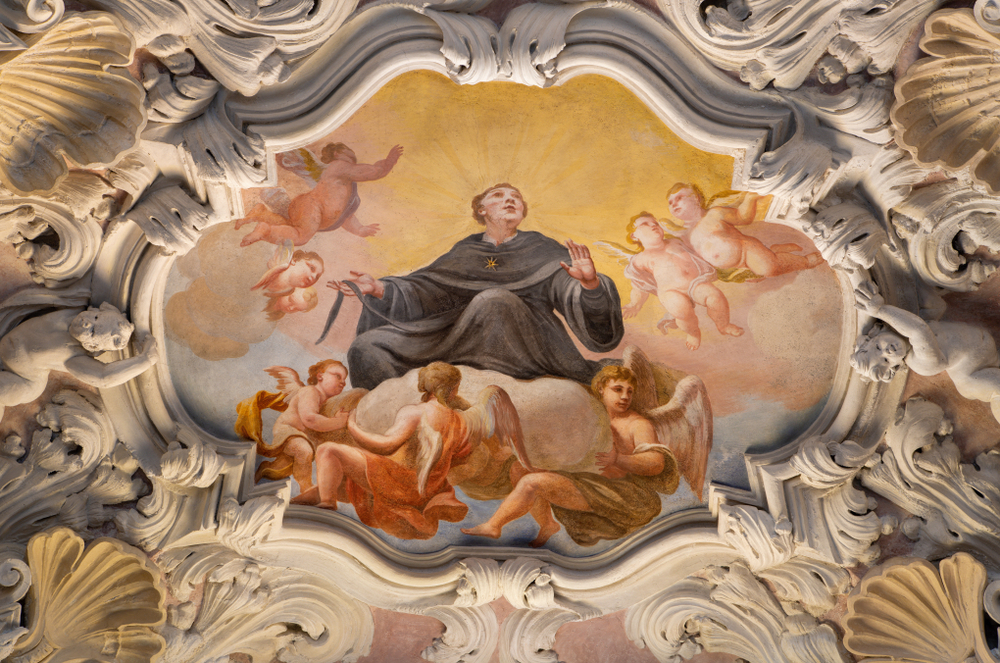
Born on April 20, 1923, Mother Angelica would be turning 103 years old this year. There is nothing she liked better than to share about faith in Jesus Christ.


Born on April 20, 1923, Mother Angelica would be turning 103 years old this year. There is nothing she liked better than to share about faith in Jesus Christ.


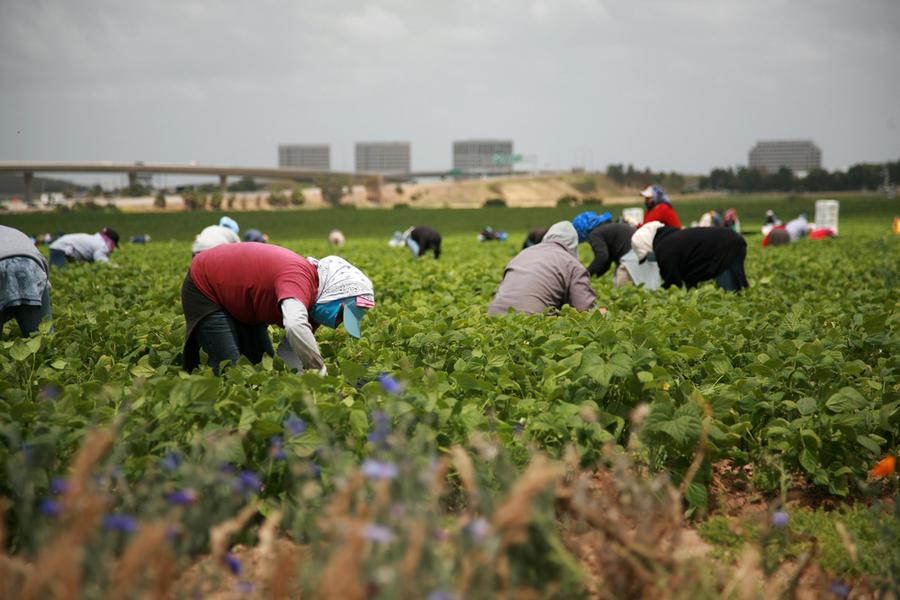
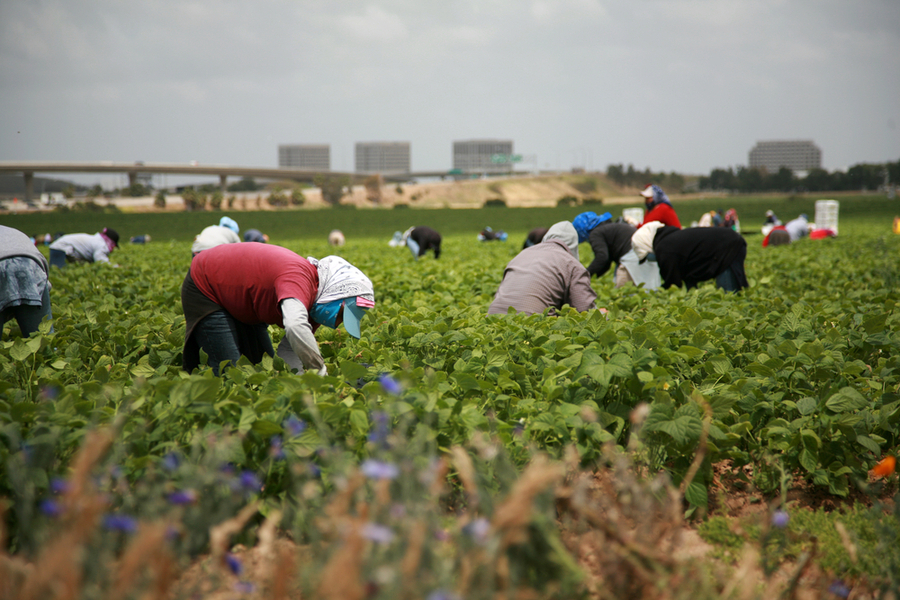
In honor of National Infertility Awareness Week, here are four Catholic ministries helping couples carry the cross of infertility.

![EWTN News explains: Why does the pope visit mosques on papal trips? #Catholic For more than a quarter-century, popes have periodically visited Islamic mosques as part of official voyages and papal visits. The tradition began with Pope John Paul II, who in 2001 became the first pope in history known to have entered a mosque when he visited the Great Mosque of Damascus in the capital of Syria. The subsequent Popes Benedict XVI, Francis, and Leo XIV have all paid visits to mosques to hold ecumenical dialogues and host diplomatic meetings. Yet the practice is not without some controversy. Indeed, Leo XIVʼs visit to the Great Mosque of Algiers on April 13 drew some backlash on social media by critics incredulous over the leader of the Catholic Church visiting a major Islamic holy site. (This was Leoʼs second visit to a mosque; he also visited the famed “Blue Mosque” in Istanbul in late 2025.)
Pope Leo XIV stands with Rector Mohamed Mamoun Al Qasimi at the Great Mosque in Algiers, Monday, April 13, 2026. | Credit: Vatican Media
So why do popes make visits to mosques, courting controversy and criticism for making a point to go to holy sites of another religion? ‘We can live together in peace’Pope Leo XIV himself addressed criticism directed toward him on April 15 on board the papal plane after leaving Algiers bound for Cameroon. “I think the visit to the mosque was significant [and showed] that although we have different beliefs, we have different ways of worshipping, we have different ways of living, we can [still] live together in peace,” the Holy Father said. “I think that to promote that kind of image is something which the world needs to hear today,” he said, arguing that such visits show that “together we can continue to offer in our witness as we continue on this apostolic voyage.”Gabriel Said Reynolds, a theology professor at the University of Notre Dame who has written multiple works on the Quran and its relationship to Christianity, told EWTN News that interpreting papal visits to mosques should include an understanding of “the Churchʼs vision of God in the world.” “What is God’s relationship to the world? That’s been important to all of the recent popes,” he said.Reynolds pointed out that an Islamic mosque is “fundamentally different from a church.” “A Catholic church is a sort of temple in which God is present in the tabernacle — body, blood, soul, and divinity,” he said. “It’s a sacred space in the deepest sense of the word.”“What Muslims would say of a mosque is fundamentally different,” he said. “A mosque is for communal prayer, but the communal prayer that takes place in a mosque is no different than the ritual prayer that’s more often done at home.” He likened a mosque to a “gathering place” with just a few features that set it apart as a distinct site — such as a pulpit for occasional sermons and an alcove that denotes the direction of Mecca to which Muslims orient themselves during prayer. Reynolds said popes visit mosques in no small part as a “pastoral concern” for Christians living in majority-Muslim countries, such as Algeria. “Algerian society is thoroughly Islamic,” he said. “It’s not generally marked by notions of rights and responsibilities and citizenship in the same way the U.S. is. Cultivating positive relationships with Muslim leaders is absolutely essential for Christians.”Reynolds said the Churchʼs view about human dignity has “fundamental implications with its relationship toward non-Christians.” He pointed out, for instance, that the pope “could show up at an atheist convention and meet the people there and have dialogue with them.”“John 3:16 says God loves the world,” he said. “It’s not that God loves believers and doesn’t love the unbelievers. All people are children of God, according to Catholic teaching.”The declaration Nostra Aetate, meanwhile — issued by the Second Vatican Council in 1965 to address Catholicismʼs relationship with non-Christians — affirmed that the Church “regards [Muslims] with esteem.”The document points out that although Muslims “do not acknowledge Jesus as God,” they still “adore the one God” and “revere [Jesus] as a prophet” while giving honor to the Virgin Mother as well. The Second Vatican Council acknowledged that “in the course of centuries not a few quarrels and hostilities have arisen” between Christians and Muslims, but the document “urge[d] all to forget the past and to work sincerely for mutual understanding.”It further called on religious adherents to “preserve as well as to promote together for the benefit of all mankind social justice and moral welfare, as well as peace and freedom.”](https://unitedyam.com/wp-content/uploads/2026/04/ewtn-news-explains-why-does-the-pope-visit-mosques-on-papal-trips-catholic-for-more-than-a-quarter-century-popes-have-periodically-visited-islamic-mosques-as-part-of-official-voyages-and-papal-vis-scaled.jpg)
Why do popes make visits to Islamic mosques, courting controversy and criticism by taking part in events at holy sites of another religion?

![Knights of Columbus affirms ‘solidarity’ with Pope Leo XIV as Trump escalates criticism #Catholic The Knights of Columbus issued a statement that affirms the Catholic fraternal organization’s solidarity with Pope Leo XIV as President Donald Trump criticized the Holy Father a second time on Truth Social.“The Knights of Columbus has always stood in solidarity with the Holy Father, recognizing in him a spiritual father who calls the world not to division but to unity, not to conflict but to peace,” Supreme Knight Patrick Kelly said in the statement.“In this moment, we reaffirm that commitment with clarity and conviction,” he said.Trump escalated his criticism of the Holy Father late Tuesday evening in a second post on Truth Social, which criticized the pontiff’s staunch opposition to war.Whether one agrees or disagrees with Leo’s policy views, Kelly said, “the Holy Father’s prophetic voice deserves to be heard with respect and engaged seriously.”“Pope Leo XIV has consistently called for peace, dialogue, and restraint in a world marked by war and suffering,” he said. “The Holy Father’s words are not political talking points — they are reflections of the Gospel itself.”Kelly noted that many Catholics and others “have been deeply disappointed by the disparaging comments directed at Pope Leo XIV” by Trump, and that Leo “is not a politician — he is the vicar of Christ, entrusted with proclaiming the Gospel and shepherding souls.”In his statement, Kelly acknowledged that faithful Catholics can hold differing views on foreign policy and that Catholics should engage in the public square. He said nations can safeguard security “in accordance with the demands of justice and the pursuit of peace.”“The Church does not ask Catholics to withdraw from civic life but to engage with and elevate it — bringing to our civic dialogue the light of truth, respect for the dignity of every human person, and a steadfast concern for the common good," he said.Kelly also encouraged prayers for the pope, the president, and other politicians.“As Knights, we are called to be men of unity, as followers of Christ and patriotic citizens,” he said. “I encourage all Knights of Columbus to pray for the Holy Father, to pray for civic leaders, and to pray for peace and those working to achieve it.”“And let us recommit ourselves to charity in our public discourse,” he added. “May we be known not for echoing the divisions of our time, but for healing them. In a moment of tension, the path forward is not louder conflict but deeper fidelity — to truth, to charity, and to the Gospel.”Trump goes after Leo againTrumpʼs social media post said: “Will someone please tell Pope Leo that Iran has killed at least 42,000 innocent, completely unarmed, protesters in the last two months, and that for Iran to have a nuclear bomb is absolutely unacceptable."During the protests, Leo did call for peace, saying in January that “ongoing tensions [in Iran and Syria] continue to claim many lives.”“I hope and pray that dialogue and peace may be patiently nurtured in pursuit of the common good of the whole of society,” he said at the time.Leo has also strongly opposed nuclear weapons, saying in June 2025: “The further proliferation of nuclear weapons in the Middle East, as well as this escalation of violence, imperils the fragile stability remaining in the region.”While Trump cited numbers exceeding 40,000 people, estimates about the number of people killed in anti-regime protests and unrest in Iran varies a lot, ranging from several thousand to more than 30,000. Most protesters were unarmed, but Iran’s government claims some were armed and killed about 500 security personnel. Trump said the United States tried to arm the protesters, but those guns did not get to the right people.Vance, bishops offer more commentsCatholic bishops and leaders have responded to Trump’s attack on Pope Leo, and elected officials also have made statements.Archbishop Alexander Sample of Portland, Oregon, said he is deeply concerned and troubled by Trump’s social media rhetoric, especially during Holy Week and Easter, which he says falls short of the moral standard expected of both the presidency and a professed Christian. The archbishop criticized Trump’s attacks on Pope Leo, saying the pope’s calls for peace and dialogue arise from his pastoral mission, not political ideology.Sample said the Church’s role is to proclaim peace, human dignity, and the Gospel, citing Jesus’ teaching: “Blessed are the peacemakers.”The Ancient Order of Hibernians condemned attacks and mockery directed at Pope Leo XIV and the papacy, affirming that respect for the Holy Father is essential to Catholic faith.Vice President JD Vance, a convert to Catholicism, said at a Turning Point USA event that Pope Leo XIV should “be careful when he talks about matters of theology.”“One of the issues here is that if youʼre going to opine on matters of theology, youʼve got to be careful,” he said. “Youʼve got to make sure itʼs anchored in the truth.”Republican U.S. House Speaker Mike Johnson of Louisiana said: “Any religious leader can say anything they want, but obviously, if you wade into political waters, I think you should expect some political response.”Pope Leo XIV has responded to Trump’s public criticism by saying he has “no fear of the Trump administration” and will continue to speak out boldly with the message of the Gospel. Knights of Columbus affirms ‘solidarity’ with Pope Leo XIV as Trump escalates criticism #Catholic The Knights of Columbus issued a statement that affirms the Catholic fraternal organization’s solidarity with Pope Leo XIV as President Donald Trump criticized the Holy Father a second time on Truth Social.“The Knights of Columbus has always stood in solidarity with the Holy Father, recognizing in him a spiritual father who calls the world not to division but to unity, not to conflict but to peace,” Supreme Knight Patrick Kelly said in the statement.“In this moment, we reaffirm that commitment with clarity and conviction,” he said.Trump escalated his criticism of the Holy Father late Tuesday evening in a second post on Truth Social, which criticized the pontiff’s staunch opposition to war.Whether one agrees or disagrees with Leo’s policy views, Kelly said, “the Holy Father’s prophetic voice deserves to be heard with respect and engaged seriously.”“Pope Leo XIV has consistently called for peace, dialogue, and restraint in a world marked by war and suffering,” he said. “The Holy Father’s words are not political talking points — they are reflections of the Gospel itself.”Kelly noted that many Catholics and others “have been deeply disappointed by the disparaging comments directed at Pope Leo XIV” by Trump, and that Leo “is not a politician — he is the vicar of Christ, entrusted with proclaiming the Gospel and shepherding souls.”In his statement, Kelly acknowledged that faithful Catholics can hold differing views on foreign policy and that Catholics should engage in the public square. He said nations can safeguard security “in accordance with the demands of justice and the pursuit of peace.”“The Church does not ask Catholics to withdraw from civic life but to engage with and elevate it — bringing to our civic dialogue the light of truth, respect for the dignity of every human person, and a steadfast concern for the common good," he said.Kelly also encouraged prayers for the pope, the president, and other politicians.“As Knights, we are called to be men of unity, as followers of Christ and patriotic citizens,” he said. “I encourage all Knights of Columbus to pray for the Holy Father, to pray for civic leaders, and to pray for peace and those working to achieve it.”“And let us recommit ourselves to charity in our public discourse,” he added. “May we be known not for echoing the divisions of our time, but for healing them. In a moment of tension, the path forward is not louder conflict but deeper fidelity — to truth, to charity, and to the Gospel.”Trump goes after Leo againTrumpʼs social media post said: “Will someone please tell Pope Leo that Iran has killed at least 42,000 innocent, completely unarmed, protesters in the last two months, and that for Iran to have a nuclear bomb is absolutely unacceptable."During the protests, Leo did call for peace, saying in January that “ongoing tensions [in Iran and Syria] continue to claim many lives.”“I hope and pray that dialogue and peace may be patiently nurtured in pursuit of the common good of the whole of society,” he said at the time.Leo has also strongly opposed nuclear weapons, saying in June 2025: “The further proliferation of nuclear weapons in the Middle East, as well as this escalation of violence, imperils the fragile stability remaining in the region.”While Trump cited numbers exceeding 40,000 people, estimates about the number of people killed in anti-regime protests and unrest in Iran varies a lot, ranging from several thousand to more than 30,000. Most protesters were unarmed, but Iran’s government claims some were armed and killed about 500 security personnel. Trump said the United States tried to arm the protesters, but those guns did not get to the right people.Vance, bishops offer more commentsCatholic bishops and leaders have responded to Trump’s attack on Pope Leo, and elected officials also have made statements.Archbishop Alexander Sample of Portland, Oregon, said he is deeply concerned and troubled by Trump’s social media rhetoric, especially during Holy Week and Easter, which he says falls short of the moral standard expected of both the presidency and a professed Christian. The archbishop criticized Trump’s attacks on Pope Leo, saying the pope’s calls for peace and dialogue arise from his pastoral mission, not political ideology.Sample said the Church’s role is to proclaim peace, human dignity, and the Gospel, citing Jesus’ teaching: “Blessed are the peacemakers.”The Ancient Order of Hibernians condemned attacks and mockery directed at Pope Leo XIV and the papacy, affirming that respect for the Holy Father is essential to Catholic faith.Vice President JD Vance, a convert to Catholicism, said at a Turning Point USA event that Pope Leo XIV should “be careful when he talks about matters of theology.”“One of the issues here is that if youʼre going to opine on matters of theology, youʼve got to be careful,” he said. “Youʼve got to make sure itʼs anchored in the truth.”Republican U.S. House Speaker Mike Johnson of Louisiana said: “Any religious leader can say anything they want, but obviously, if you wade into political waters, I think you should expect some political response.”Pope Leo XIV has responded to Trump’s public criticism by saying he has “no fear of the Trump administration” and will continue to speak out boldly with the message of the Gospel.](https://unitedyam.com/wp-content/uploads/2026/04/knights-of-columbus-affirms-solidarity-with-pope-leo-xiv-as-trump-escalates-criticism-catholic-the-knights-of-columbus-issued-a-statement-that-affirms-the-catholic-fraternal-organiz.jpg)
Supreme Knight Patrick Kelly is asking Catholics to pray for the pope and the president, as President Trump again criticized Leo’s comments about the Iran war.


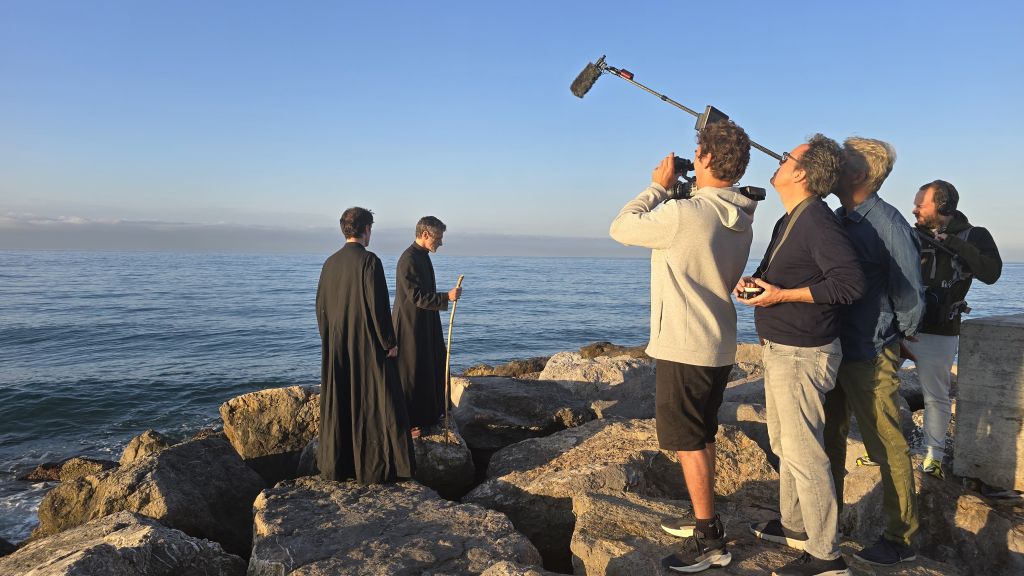
Reflecting on the visit to Algeria, the pope described it as “a wonderful opportunity to continue building bridges and promoting dialogue.”


The pontiff called for a world order that does not exclude the vulnerable and urged leaders to serve the common good.


A married couple that leads the Teams of Our Lady, founded by newly-declared Venerable Father Henri Caffarel, explains how this lay apostolate helps couples grow together in holiness.


Bishop Brendan Cahill noted the importance of ecumenical approaches to “one of the most pressing issues of our time.”


SECAM has issued a 25-page final report addressing the pastoral challenge of polygamy across Africa, a direct response to a mandate given at the Synod on Synodality.

![Ireland sees modest revival in faith, especially among youth and young adults #Catholic An increase in spirituality and religious practice among young adults in Ireland aged 18 to 30 and confirmation that Ireland is in the “middle range” of religious countries in Europe are among the trends identified in a new report published by the Irish Catholic bishops titled “Turning the Tide.”Archbishop Eamon Martin of Armagh, primate of all Ireland, told EWTN News: “There has been a lot of talk recently about the so-called quiet revival in religious practice in recent years. The [report] looks at some of the research studies that have been carried out north and south of the island of Ireland into religious practice, religious awareness and spirituality, and interest in religion, and asks a question by comparing this with European social studies: Is there actually any uptake [in] religious practice and awareness and interest in Ireland?”Drawing on research from the European Social Survey, the Iona Institute’s two recent surveys conducted by Amárach Research, and a variety of relevant academic studies, the report seeks to provide an integrated, relevant, and current look at religious practice in Ireland.“The report very interestingly points to some type of uptick, as they call it, particularly among young people around the ages of 16 to 30 and the fact that they are taking a new interest in religion and in spirituality.”Encouraged by the positive trends emerging across different studies, Martin sounded a note of caution, highlighting the challenges that these findings pose for the Catholic Church in Ireland.“I don’t think we should get ourselves too enthusiastic thinking this is a complete reversal of the very obvious decline and religious practice over the last 10 or 20 years,” he said. “However, it is saying something on the turning tide.”The archbishop pointed to the implications for the Irish Church: “It’s asking us to reflect on this phenomenon in the light of research, and for instance what does this mean for us as Church, as parishes, as dioceses? How are we responding to this growing body of young people who want to know more more about God, about church, and about religion?”The report, co-authored by Stephen Bullivant, professor of theology and the sociology of religion at St. Mary’s University, Twickenham, and Emily Nelson, a doctoral student of sociology at Queen’s University Belfast, examined the overall religious profile of the island of Ireland, including areas of convergence and divergence between Northern Ireland and the Republic of Ireland.The authors drew together research studies on patterns in belief, practice, and religious identification between generations, with particular attention to differences within young adult cohorts. The work also provided insight on dimensions of religiosity, religious transmission, and attitudes toward Church teaching and institutions among both men and women.Ireland remains among the more religious countries in Europe, on measures of religious affiliation, religious service attendance, and frequency of prayer. Among western European countries, it is one of few outliers with a relatively high level of overall religiosity. It also ranks toward the higher end of (especially western) European countries on measures of weekly Mass attendance and daily prayer.While key measures of Irish religiosity have declined significantly since the European Social Survey began in 2002-2003, the most recent round in 2023-2024 shows a strong uptick in religious affiliation and religious practice.This effect is most strongly evident among those aged 16–29 years, across both Catholics and Protestants.Northern Ireland is both the most religious region of the United Kingdom, by a large margin, and the most religious part of the island of Ireland, in terms of both affiliation and religious practice.Although women in the Republic of Ireland are equally as likely as men to be religious, they continue to play an influential role in transmitting faith, even as they express higher levels of moral dissent and institutional dissatisfaction. The report revealed that 74% of Irish Catholic women were found to believe that the Church did not treat them with “a lot of respect.”According to the report, 51% of Irish adults — and 27% of Irish young adults —pray at least once a week, and 31% say they attend Mass at least once a week, placing them fourth overall, alongside Italy (32%) but well behind Poland (49%) and Slovakia (46%).There is a significant drop-off among young adults, whose reported religious practice is roughly half that of older adults. Irish 16- to 29-year-olds rank sixth overall compared with other countries, at 17%, though that is at least double the rates of the same age group in Switzerland, Germany, and Belgium, at 5%, and in Austria with less than 1%.The Irish report also pointed to a 2023 Barna study that found in certain respects, Irish teens are more religious than their global peers. Just over 3 in 5 (62%) Irish teens identify as Christian with nearly a third identify as atheist, agnostic, or of no faith.On average, 18- to 24-year-olds in the Republic of Ireland aren’t particularly positive about both Christianity and the Catholic Church in Ireland, but they are more positive than those in the 25–34 age range, and fewer have a negative attitude toward priests and nuns.In 2023, EWTN News’ Colm Flynn traveled to Ireland with the question “Is Ireland still Catholic?” He explored the various reasons for the decline of the faith in Ireland and the challenges the Church faces there today. In the three years since, and after many emails and messages pointing to signs of a “quiet revival” of faith in Ireland, Flynn recently returned to the country to explore those signs of renewal. In his report, he refers to the “Turning the Tide” report: Ireland sees modest revival in faith, especially among youth and young adults #Catholic An increase in spirituality and religious practice among young adults in Ireland aged 18 to 30 and confirmation that Ireland is in the “middle range” of religious countries in Europe are among the trends identified in a new report published by the Irish Catholic bishops titled “Turning the Tide.”Archbishop Eamon Martin of Armagh, primate of all Ireland, told EWTN News: “There has been a lot of talk recently about the so-called quiet revival in religious practice in recent years. The [report] looks at some of the research studies that have been carried out north and south of the island of Ireland into religious practice, religious awareness and spirituality, and interest in religion, and asks a question by comparing this with European social studies: Is there actually any uptake [in] religious practice and awareness and interest in Ireland?”Drawing on research from the European Social Survey, the Iona Institute’s two recent surveys conducted by Amárach Research, and a variety of relevant academic studies, the report seeks to provide an integrated, relevant, and current look at religious practice in Ireland.“The report very interestingly points to some type of uptick, as they call it, particularly among young people around the ages of 16 to 30 and the fact that they are taking a new interest in religion and in spirituality.”Encouraged by the positive trends emerging across different studies, Martin sounded a note of caution, highlighting the challenges that these findings pose for the Catholic Church in Ireland.“I don’t think we should get ourselves too enthusiastic thinking this is a complete reversal of the very obvious decline and religious practice over the last 10 or 20 years,” he said. “However, it is saying something on the turning tide.”The archbishop pointed to the implications for the Irish Church: “It’s asking us to reflect on this phenomenon in the light of research, and for instance what does this mean for us as Church, as parishes, as dioceses? How are we responding to this growing body of young people who want to know more more about God, about church, and about religion?”The report, co-authored by Stephen Bullivant, professor of theology and the sociology of religion at St. Mary’s University, Twickenham, and Emily Nelson, a doctoral student of sociology at Queen’s University Belfast, examined the overall religious profile of the island of Ireland, including areas of convergence and divergence between Northern Ireland and the Republic of Ireland.The authors drew together research studies on patterns in belief, practice, and religious identification between generations, with particular attention to differences within young adult cohorts. The work also provided insight on dimensions of religiosity, religious transmission, and attitudes toward Church teaching and institutions among both men and women.Ireland remains among the more religious countries in Europe, on measures of religious affiliation, religious service attendance, and frequency of prayer. Among western European countries, it is one of few outliers with a relatively high level of overall religiosity. It also ranks toward the higher end of (especially western) European countries on measures of weekly Mass attendance and daily prayer.While key measures of Irish religiosity have declined significantly since the European Social Survey began in 2002-2003, the most recent round in 2023-2024 shows a strong uptick in religious affiliation and religious practice.This effect is most strongly evident among those aged 16–29 years, across both Catholics and Protestants.Northern Ireland is both the most religious region of the United Kingdom, by a large margin, and the most religious part of the island of Ireland, in terms of both affiliation and religious practice.Although women in the Republic of Ireland are equally as likely as men to be religious, they continue to play an influential role in transmitting faith, even as they express higher levels of moral dissent and institutional dissatisfaction. The report revealed that 74% of Irish Catholic women were found to believe that the Church did not treat them with “a lot of respect.”According to the report, 51% of Irish adults — and 27% of Irish young adults —pray at least once a week, and 31% say they attend Mass at least once a week, placing them fourth overall, alongside Italy (32%) but well behind Poland (49%) and Slovakia (46%).There is a significant drop-off among young adults, whose reported religious practice is roughly half that of older adults. Irish 16- to 29-year-olds rank sixth overall compared with other countries, at 17%, though that is at least double the rates of the same age group in Switzerland, Germany, and Belgium, at 5%, and in Austria with less than 1%.The Irish report also pointed to a 2023 Barna study that found in certain respects, Irish teens are more religious than their global peers. Just over 3 in 5 (62%) Irish teens identify as Christian with nearly a third identify as atheist, agnostic, or of no faith.On average, 18- to 24-year-olds in the Republic of Ireland aren’t particularly positive about both Christianity and the Catholic Church in Ireland, but they are more positive than those in the 25–34 age range, and fewer have a negative attitude toward priests and nuns.In 2023, EWTN News’ Colm Flynn traveled to Ireland with the question “Is Ireland still Catholic?” He explored the various reasons for the decline of the faith in Ireland and the challenges the Church faces there today. In the three years since, and after many emails and messages pointing to signs of a “quiet revival” of faith in Ireland, Flynn recently returned to the country to explore those signs of renewal. In his report, he refers to the “Turning the Tide” report:](https://unitedyam.com/wp-content/uploads/2026/03/ireland-sees-modest-revival-in-faith-especially-among-youth-and-young-adults-catholic-an-increase-in-spirituality-and-religious-practice-among-young-adults-in-ireland-aged-18-to-30-and-confirmation-scaled.jpg)
A new report examining surveys and research on the practice of the Catholic faith in Ireland shows an uptick in religious practice and spirituality among younger people.

![‘God wants to cover us in robes of grace,’ Catholic fashion writer says #Catholic According to Catholic author Mary Harper, the way we dress can be a way to express faith, human dignity, and personal identity.Harper, author of “The Liturgical Style Guide,” in which she explores how faith should influence how we dress, noted that the Bible shows the symbolic importance of clothing: “It’s actually pretty amazing how, throughout both the Old Testament and the New … clothing is mentioned over 100 times... The majority of times, it’s meant to be a sign of God’s mercy and providence.”This symbolism appears from the very beginning of the Bible, she said in a recent interview posted by the Archdiocese of Miami.
Mary Harper, author of “The Liturgical Style Guide,” explores how faith can influence even everyday dress. | Credit: Archdiocese of Miami
After original sin, Adam and Eve tried to cover themselves by sewing together fig leaves, which Harper called “flimsy.”“What does God do? He literally slaughters an animal, the first sacrifice in Scripture. He covers them in leather garments because he wants them to have something that’s worthy, something that’s good, something that’s actually going to protect them and be lasting,” she explained.According to Harper, this biblical image helps us understand human dignity. “God wants to cover us in robes of grace,” she said, also recalling the parable of the prodigal son, when the father “puts a robe on him and a ring on him, as a reminder of his goodness and his dignity and his identity.”That’s why even something as ordinary as getting dressed every day can have a spiritual dimension. “Even through something that we do every day — getting dressed for the day — the Lord is speaking his providence over you. He desires to lavish you in grace. Even getting dressed in the morning is a way to remember putting on Christ, putting on your baptismal garment again, remembering who you are and who you’re called to be in Christ,” she pointed out.Harper grew up Catholic in New Orleans. She earned her master’s and bachelor’s degrees in theology from Ave Maria University and is the founder of LiturgicalStyle.com, a project dedicated to reflecting on the theological significance of clothing based on the Bible, the stories of the saints, and the liturgical calendar.She also writes for litanynyc.com a Catholic made-to-measure clothing company that seeks to apply the Church’s social teaching in its production process.Clothing as a form of Christian witness“Whether I intend it or not, my clothing is going to communicate something. You wear a school uniform, it tells you what school you go to; priests put on vestments that tell you about the liturgical season. Well, there’s great power in that,” she said.From that perspective, she added, clothing can become a form of Christian witness. “I have the capacity to communicate the Gospel through my very garments, through intentionality, creativity, and beauty.”The author also cautioned that the Christian view of modesty avoids two extremes: absolute individualism and fear of the body.“One extreme is, I can wear whatever I want, I don’t care what anyone else thinks about it. At the same time, we don’t want to get to the point of, ‘I don’t know how to dress myself well, and I’m so scared of doing the wrong thing … [and] nothing can show because my body is bad,’” she explained.“The Church has never said that,” Harper added, noting that Christian teaching on the goodness of the human body is developed in depth in St. John Paul II’s theology of the body.More than strict rules, she argued, the key lies in discerning: “What is it that I want to communicate through what I’m wearing?” Harper also explained that modesty involves considering the context and the activity.“It is my responsibility to wear something that makes sense for the activity at hand, for the environment that I’m in, and that allows me to be fully present. That’s a service to everyone around me and to myself,” she stated, citing as an example the impracticality of wearing flip flops to hike in the Rocky Mountains.Drawing inspiration from the saintsHarper also proposed a creative idea for living out one’s faith in everyday life: finding inspiration in the saints when choosing what to wear.This does not mean, she clarified, that we imitate them literally. “I’m not telling you to go around wearing a Carmelite habit,” she joked.Rather, she suggested small symbolic gestures: “If you have Western boots, you can say you’re wearing them in honor of St. Teresa of the Andes,” who loved horseback riding. Or “when you wear jeans, you can think of her, because she just loved to be this great adventurer and going into the mountains” and “I’m going to ask her to pray for me."Creativity and freedom in the Christian lifeFor Harper, the relationship between faith and clothing should not become a source of scrupulosity or pressure.“Sometimes we can get so caught up saying, ‘If I’m a ‘real Catholic,’ then I’m going to dress in this particular way.’ I think it’s really easy to get kind of scrupulous when it comes to clothing,” she reflected.Instead, she recommended bringing the matter to prayer and discernment with trusted individuals. “If you have any concern about, ‘Am I dressing in a way that is good?’, talk to someone who knows your heart,” she advised.Finally, Harper encouraged living out Christian creativity in these everyday details as well: “The Holy Spirit is creative."“When you get dressed for the day, if you just say, ‘Come, Holy Spirit,’ he’s going to show up. It’s going to be awesome and joyful, and it’ll be more fun.”This story was first published by ACI Prensa, the Spanish-language sister service of EWTN News. It has been translated and adapted by EWTN News English.](https://unitedyam.com/wp-content/uploads/2026/03/god-wants-to-cover-us-in-robes-of-grace-catholic-fashion-writer-says-catholic-according-to-catholic-author-mary-harper-the-way-we-dress-can-be-a-way-to-express-faith-human-dignit.webp)
Mary Harper explains the positive dimension of choosing what to wear and what it can express, urging Catholics to invite the Holy Spirit into their fashion choices.


Luis Nava, a high school freshman in Lake Orion, Michigan, felt inspired to help peers find their voice and live their Catholic faith.


On the International Day of Mathematics, Pope Leo XIV sent a message inviting reflection on the role good mathematics can play in today’s world.