
<div class="mw-content-ltr mw-parser-output" lang="en" dir="ltr"><table class="toccolours floatright" style="width:300px;text-align:center">
<tbody><tr>
<th lang="en">Picture of the day
</th></tr>
<tr>
<td class="toccolours" style="padding:0"><span><a href="Pez_unicornio_de_nariz_corta_(Naso_brevirostris),_mar_Rojo,_Egipto,_2023-04-15,_DD_61.jpg" class="mw-file-description"><img src="http://unitedyam.com/wp-content/uploads/2025/12/picture-of-the-dayshort-nosed-unicornfish-naso-brevirostris-red-sea-egypt-this-species-has-a-maximum-published-total-length-of-60-centimetres-24-in-it-occurs-in-the-indian-and-weste.jpg" width="300" height="200" class="mw-file-element" data-file-width="5254" data-file-height="3503"></a></span>
</td></tr>
<tr>
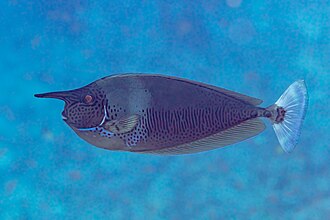
<td><div lang="en" dir="ltr" class="description en">Short-nosed unicornfish (<i>Naso brevirostris</i>), Red Sea, Egypt. This species has a maximum published total length of 60 centimetres (24 in). It occurs in the Indian and western Pacific Oceans. Adults feed mainly on gelatinous zooplankton, while juveniles mainly feed on benthic algae. The switch from grazing to preying on gelatinous zooplankton coincides with the development of the bony protuberance.</div>
</td></tr></tbody></table></div>
#Image, #Art
| Picture of the day |
|---|
,_mar_Rojo,_Egipto,_2023-04-15,_DD_61.jpg)
|
|
Short-nosed unicornfish (Naso brevirostris), Red Sea, Egypt. This species has a maximum published total length of 60 centimetres (24 in). It occurs in the Indian and western Pacific Oceans. Adults feed mainly on gelatinous zooplankton, while juveniles mainly feed on benthic algae. The switch from grazing to preying on gelatinous zooplankton coincides with the development of the bony protuberance.
|
Source: https://commons.wikimedia.org/wiki/Special:FeedItem/potd/20251216000000/en

| Picture of the day |
|---|
|
|
|
Short-nosed unicornfish (Naso brevirostris), Red Sea, Egypt. This species has a maximum published total length of 60 centimetres (24 in). It occurs in the Indian and western Pacific Oceans. Adults feed mainly on gelatinous zooplankton, while juveniles mainly feed on benthic algae. The switch from grazing to preying on gelatinous zooplankton coincides with the development of the bony protuberance.
|