Image

Picture of the day
Key Monastery in the northern Indian state of Himachal Pradesh. It is located at an elevation of 4,166 m (13,668 ft) on a hill rising above the Spiti valley, where it is the largest monastery and houses hundreds of monks. It is said to have been founded in the 11th century and belongs to the Gelugpa school of Indo-Tibetan Buddhism. This view shows the monastery in winter, overlooking the snow-covered Spiti river valley with the Himalayas in the background.
Read More
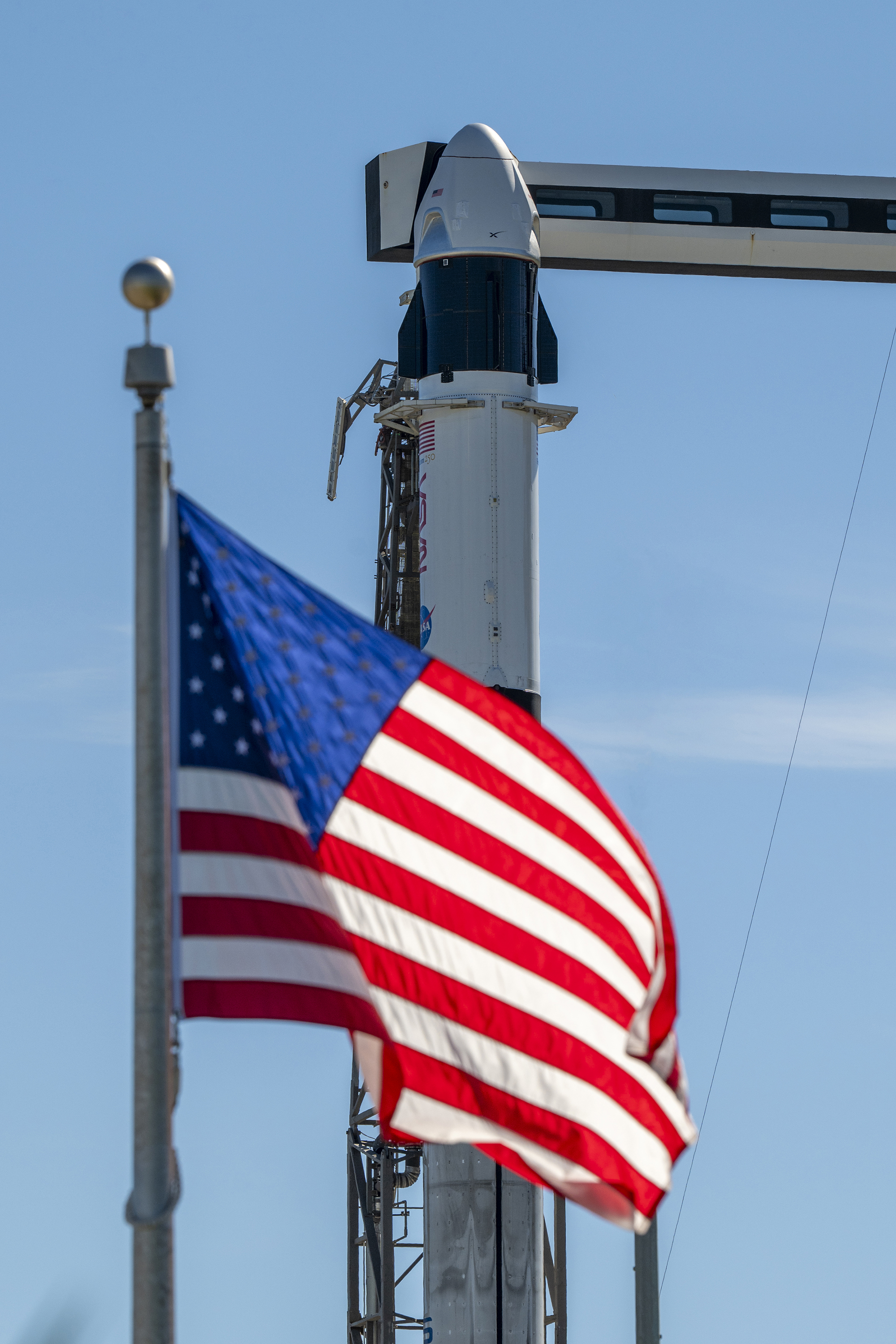
NASA’s Chandra Finds Young Stars Dim Quickly – Scientists have found that young stellar cousins of our Sun are calming down and dimming more quickly in their X-ray output than previously thought, according to a study using NASA’s Chandra X-ray Observatory.

Scientists have found that young stellar cousins of our Sun are calming down and dimming more quickly in their X-ray output than previously thought, according to a study using NASA’s Chandra X-ray Observatory.

Read More
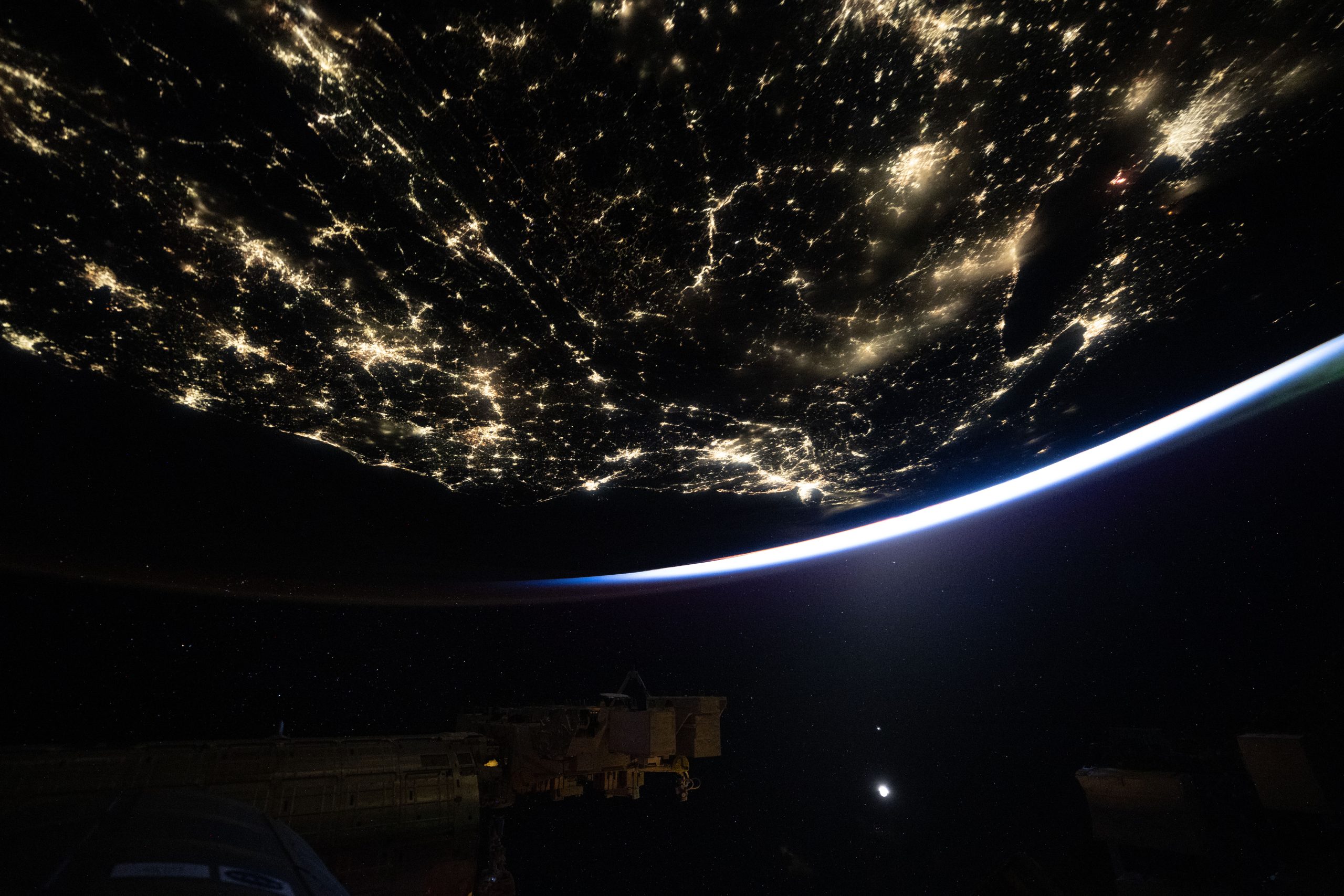
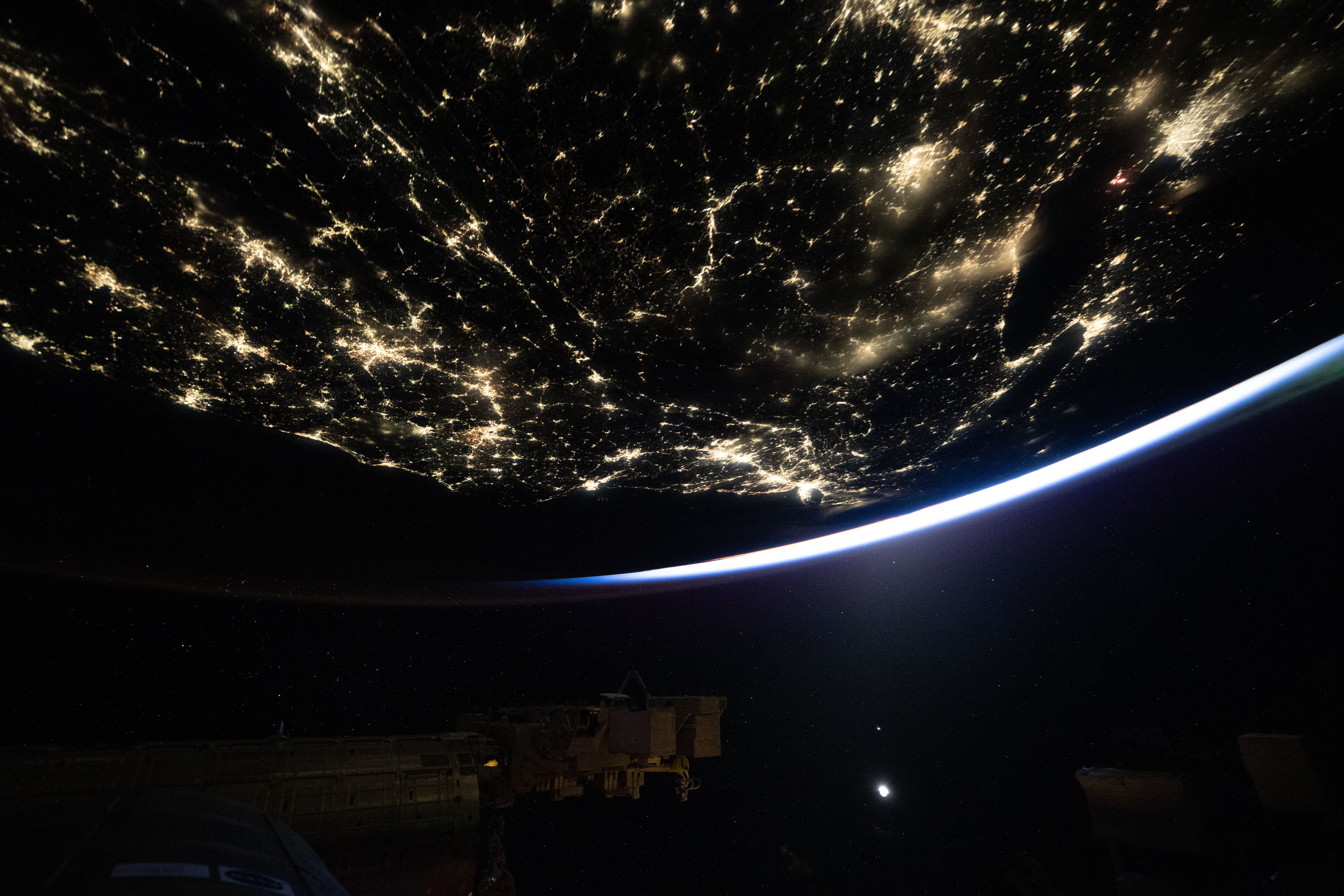
Night and (Earth) Day – This image, released in celebration of Earth Day, shows the terminator – the line between night and day – on Earth. The Artemis II astronauts captured this view on April 2, 2026, during their journey to the Moon.

This image, released in celebration of Earth Day, shows the terminator – the line between night and day – on Earth. The Artemis II astronauts captured this view on April 2, 2026, during their journey to the Moon.

Read More
Pope Leo XIV: Universities must seek truth and form the whole person #Catholic MALABO, Equatorial Guinea — Pope Leo XIV on Tuesday said the inauguration of a new university campus in Equatorial Guinea is “an act of trust in human beings,” praising investment in the education of young people during the final stop of his Africa trip.Speaking at the opening of the Pope Leo XIV University Campus in Basupú, part of the National University of Equatorial Guinea (UNGE), the pontiff said the new institution represents more than new buildings.“This inauguration is an act of trust in human beings, an affirmation of the fact that it is worth the effort to continue wagering on the formation of new generations and on the task, so demanding and yet so noble, of seeking the truth and putting knowledge at the service of the common good,” Leo said.The new campus, in the northern part of Bioko Island, is the country’s largest academic facility. The government chose to dedicate it to the pope in conjunction with his visit. Founded in 1995, the National University of Equatorial Guinea was established to help form national leaders and align academic and professional training with the country’s development needs.Leo was welcomed by Rector Filiberto Ntutumu Nguema Nchama and the archbishop of Malabo, Archbishop Juan Nsue Edjang May. A bust of the pope was unveiled before he met with students and professors gathered in the square outside the main entrance.Students appealed to the pope for encouragement in becoming “a generation characterized by discipline, respect, responsibility, and commitment to the common good,” one aimed not only at personal success but also at contributing to the development of Equatorial Guinea.Faculty members, for their part, pledged themselves to academic excellence, innovation, and the integral formation of students. University officials also stressed that science and technology are powerful tools whose value depends on how they are used and that Christian moral tradition offers essential guidance in that task.In his address, Leo turned to an image deeply resonant in Equatorial Guinea: the ceiba, the country’s national tree.“For the people of Equatorial Guinea, the ceiba, the national tree, has a great symbolic meaning,” he said. “A tree puts forth deep roots and ascends slowly with patience and strength to the heights, embodying in itself a fruitfulness that does not exist for itself.”The pope said the tree offers “a parable of that which a university is called to be”: an institution rooted in serious study, living memory, and the persevering search for truth.Leo then drew on biblical imagery to reflect on the relationship between faith, reason, and knowledge. Referring to the tree of the knowledge of good and evil in Genesis, he said the biblical account is not a rejection of human intelligence.“It should be emphasized that this story is not about a condemnation of knowledge as such, as if faith was afraid of intelligence or looked with suspicion upon the desire for knowledge,” he said.Instead, he warned against knowledge detached from truth and goodness and reduced to self-interest or domination.“The problem, therefore, does not rest with knowledge but in its deviation towards an intelligence that no longer seeks to correspond to reality but rather to twist it for its own purposes,” he said.Leo said Christian tradition points to another tree — the cross — as the redemption, not the negation, of human intelligence.“Christian tradition contemplates another tree, that of the cross, not as a denial of human intelligence but as a sign of its redemption,” he said.“At the cross, human beings are invited to allow their desire for knowledge to be healed: to rediscover that truth is not fabricated, not manipulated nor possessed like a trophy but welcomed, sought with humility, and served with responsibility.”For that reason, he said, Christ is not an escape from intellectual effort.“From a Christian perspective, Christ does not appear as a religious escape in the face of intellectual endeavors, as if faith began where reason ended,” Leo said. “On the contrary, in him the profound harmony between truth, reason, and freedom are manifested.”The pope said the Church’s concern in education is that young people be formed integrally, “rather than giving the mere appearance of success.”He added that the university should be judged less by its size or number of graduates than by the quality of the people it forms for society.“Here on this campus, the ceiba of Equatorial Guinea is called to bear fruits of progress rooted in solidarity and of a knowledge that ennobles and develops the human being in an integral way,” he said. “It is called to offer the fruits of intelligence and uprightness, of competence and wisdom, of excellence and service.”“If generations of men and women are profoundly shaped in this place by truth and are capable of transforming their own existence into a gift for others, then the ceiba will remain an eloquent symbol rooted in the best things of this land, elevated by wisdom and abounding in fruits that pay tribute to Equatorial Guinea and enrich the entire human family.”Before the university event, the pope also made a brief visit to St. Elizabeth of Hungary Cathedral in Malabo, built in 1897.This story was first published by ACI Stampa, the Italian-language sister service of EWTN News. It has been translated and adapted by EWTN News English.

Pope Leo XIV: Universities must seek truth and form the whole person #Catholic MALABO, Equatorial Guinea — Pope Leo XIV on Tuesday said the inauguration of a new university campus in Equatorial Guinea is “an act of trust in human beings,” praising investment in the education of young people during the final stop of his Africa trip.Speaking at the opening of the Pope Leo XIV University Campus in Basupú, part of the National University of Equatorial Guinea (UNGE), the pontiff said the new institution represents more than new buildings.“This inauguration is an act of trust in human beings, an affirmation of the fact that it is worth the effort to continue wagering on the formation of new generations and on the task, so demanding and yet so noble, of seeking the truth and putting knowledge at the service of the common good,” Leo said.The new campus, in the northern part of Bioko Island, is the country’s largest academic facility. The government chose to dedicate it to the pope in conjunction with his visit. Founded in 1995, the National University of Equatorial Guinea was established to help form national leaders and align academic and professional training with the country’s development needs.Leo was welcomed by Rector Filiberto Ntutumu Nguema Nchama and the archbishop of Malabo, Archbishop Juan Nsue Edjang May. A bust of the pope was unveiled before he met with students and professors gathered in the square outside the main entrance.Students appealed to the pope for encouragement in becoming “a generation characterized by discipline, respect, responsibility, and commitment to the common good,” one aimed not only at personal success but also at contributing to the development of Equatorial Guinea.Faculty members, for their part, pledged themselves to academic excellence, innovation, and the integral formation of students. University officials also stressed that science and technology are powerful tools whose value depends on how they are used and that Christian moral tradition offers essential guidance in that task.In his address, Leo turned to an image deeply resonant in Equatorial Guinea: the ceiba, the country’s national tree.“For the people of Equatorial Guinea, the ceiba, the national tree, has a great symbolic meaning,” he said. “A tree puts forth deep roots and ascends slowly with patience and strength to the heights, embodying in itself a fruitfulness that does not exist for itself.”The pope said the tree offers “a parable of that which a university is called to be”: an institution rooted in serious study, living memory, and the persevering search for truth.Leo then drew on biblical imagery to reflect on the relationship between faith, reason, and knowledge. Referring to the tree of the knowledge of good and evil in Genesis, he said the biblical account is not a rejection of human intelligence.“It should be emphasized that this story is not about a condemnation of knowledge as such, as if faith was afraid of intelligence or looked with suspicion upon the desire for knowledge,” he said.Instead, he warned against knowledge detached from truth and goodness and reduced to self-interest or domination.“The problem, therefore, does not rest with knowledge but in its deviation towards an intelligence that no longer seeks to correspond to reality but rather to twist it for its own purposes,” he said.Leo said Christian tradition points to another tree — the cross — as the redemption, not the negation, of human intelligence.“Christian tradition contemplates another tree, that of the cross, not as a denial of human intelligence but as a sign of its redemption,” he said.“At the cross, human beings are invited to allow their desire for knowledge to be healed: to rediscover that truth is not fabricated, not manipulated nor possessed like a trophy but welcomed, sought with humility, and served with responsibility.”For that reason, he said, Christ is not an escape from intellectual effort.“From a Christian perspective, Christ does not appear as a religious escape in the face of intellectual endeavors, as if faith began where reason ended,” Leo said. “On the contrary, in him the profound harmony between truth, reason, and freedom are manifested.”The pope said the Church’s concern in education is that young people be formed integrally, “rather than giving the mere appearance of success.”He added that the university should be judged less by its size or number of graduates than by the quality of the people it forms for society.“Here on this campus, the ceiba of Equatorial Guinea is called to bear fruits of progress rooted in solidarity and of a knowledge that ennobles and develops the human being in an integral way,” he said. “It is called to offer the fruits of intelligence and uprightness, of competence and wisdom, of excellence and service.”“If generations of men and women are profoundly shaped in this place by truth and are capable of transforming their own existence into a gift for others, then the ceiba will remain an eloquent symbol rooted in the best things of this land, elevated by wisdom and abounding in fruits that pay tribute to Equatorial Guinea and enrich the entire human family.”Before the university event, the pope also made a brief visit to St. Elizabeth of Hungary Cathedral in Malabo, built in 1897.This story was first published by ACI Stampa, the Italian-language sister service of EWTN News. It has been translated and adapted by EWTN News English.

At the inauguration of a new campus named in his honor in Equatorial Guinea, the pope urged the education of young people in truth, responsibility, and service to the common good.

Read More
NASA’s SPHEREx Observatory Maps Interstellar Ice in Milky Way – An observation made by NASA’s SPHEREx mission reveals vast frozen complexes in the Cygnus X star-forming region of the Milky Way galaxy. The chemical signature of water ice is shown as bright blue structures, while polycyclic aromatic hydrocarbons are in orange.

An observation made by NASA’s SPHEREx mission reveals vast frozen complexes in the Cygnus X star-forming region of the Milky Way galaxy. The chemical signature of water ice is shown as bright blue structures, while polycyclic aromatic hydrocarbons are in orange.

Read More
EWTN News explains: Why does the pope visit mosques on papal trips? #Catholic For more than a quarter-century, popes have periodically visited Islamic mosques as part of official voyages and papal visits. The tradition began with Pope John Paul II, who in 2001 became the first pope in history known to have entered a mosque when he visited the Great Mosque of Damascus in the capital of Syria. The subsequent Popes Benedict XVI, Francis, and Leo XIV have all paid visits to mosques to hold ecumenical dialogues and host diplomatic meetings. Yet the practice is not without some controversy. Indeed, Leo XIVʼs visit to the Great Mosque of Algiers on April 13 drew some backlash on social media by critics incredulous over the leader of the Catholic Church visiting a major Islamic holy site. (This was Leoʼs second visit to a mosque; he also visited the famed “Blue Mosque” in Istanbul in late 2025.) 
 
 Pope Leo XIV stands with Rector Mohamed Mamoun Al Qasimi at the Great Mosque in Algiers, Monday, April 13, 2026. | Credit: Vatican Media
 
 So why do popes make visits to mosques, courting controversy and criticism for making a point to go to holy sites of another religion? ‘We can live together in peace’Pope Leo XIV himself addressed criticism directed toward him on April 15 on board the papal plane after leaving Algiers bound for Cameroon. “I think the visit to the mosque was significant [and showed] that although we have different beliefs, we have different ways of worshipping, we have different ways of living, we can [still] live together in peace,” the Holy Father said.  “I think that to promote that kind of image is something which the world needs to hear today,” he said, arguing that such visits show that “together we can continue to offer in our witness as we continue on this apostolic voyage.”Gabriel Said Reynolds, a theology professor at the University of Notre Dame who has written multiple works on the Quran and its relationship to Christianity, told EWTN News that interpreting papal visits to mosques should include an understanding of “the Churchʼs vision of God in the world.” “What is God’s relationship to the world? That’s been important to all of the recent popes,” he said.Reynolds pointed out that an Islamic mosque is “fundamentally different from a church.” “A Catholic church is a sort of temple in which God is present in the tabernacle — body, blood, soul, and divinity,” he said. “It’s a sacred space in the deepest sense of the word.”“What Muslims would say of a mosque is fundamentally different,” he said. “A mosque is for communal prayer, but the communal prayer that takes place in a mosque is no different than the ritual prayer that’s more often done at home.” He likened a mosque to a “gathering place” with just a few features that set it apart as a distinct site — such as a pulpit for occasional sermons and an alcove that denotes the direction of Mecca to which Muslims orient themselves during prayer. Reynolds said popes visit mosques in no small part as a “pastoral concern” for Christians living in majority-Muslim countries, such as Algeria. “Algerian society is thoroughly Islamic,” he said. “It’s not generally marked by notions of rights and responsibilities and citizenship in the same way the U.S. is. Cultivating positive relationships with Muslim leaders is absolutely essential for Christians.”Reynolds said the Churchʼs view about human dignity has “fundamental implications with its relationship toward non-Christians.” He pointed out, for instance, that the pope “could show up at an atheist convention and meet the people there and have dialogue with them.”“John 3:16 says God loves the world,” he said. “It’s not that God loves believers and doesn’t love the unbelievers. All people are children of God, according to Catholic teaching.”The declaration Nostra Aetate, meanwhile — issued by the Second Vatican Council in 1965 to address Catholicismʼs relationship with non-Christians — affirmed that the Church “regards [Muslims] with esteem.”The document points out that although Muslims “do not acknowledge Jesus as God,” they still “adore the one God” and “revere [Jesus] as a prophet” while giving honor to the Virgin Mother as well. The Second Vatican Council acknowledged that “in the course of centuries not a few quarrels and hostilities have arisen” between Christians and Muslims, but the document “urge[d] all to forget the past and to work sincerely for mutual understanding.”It further called on religious adherents to “preserve as well as to promote together for the benefit of all mankind social justice and moral welfare, as well as peace and freedom.”

EWTN News explains: Why does the pope visit mosques on papal trips? #Catholic For more than a quarter-century, popes have periodically visited Islamic mosques as part of official voyages and papal visits. The tradition began with Pope John Paul II, who in 2001 became the first pope in history known to have entered a mosque when he visited the Great Mosque of Damascus in the capital of Syria. The subsequent Popes Benedict XVI, Francis, and Leo XIV have all paid visits to mosques to hold ecumenical dialogues and host diplomatic meetings. Yet the practice is not without some controversy. Indeed, Leo XIVʼs visit to the Great Mosque of Algiers on April 13 drew some backlash on social media by critics incredulous over the leader of the Catholic Church visiting a major Islamic holy site. (This was Leoʼs second visit to a mosque; he also visited the famed “Blue Mosque” in Istanbul in late 2025.) Pope Leo XIV stands with Rector Mohamed Mamoun Al Qasimi at the Great Mosque in Algiers, Monday, April 13, 2026. | Credit: Vatican Media So why do popes make visits to mosques, courting controversy and criticism for making a point to go to holy sites of another religion? ‘We can live together in peace’Pope Leo XIV himself addressed criticism directed toward him on April 15 on board the papal plane after leaving Algiers bound for Cameroon. “I think the visit to the mosque was significant [and showed] that although we have different beliefs, we have different ways of worshipping, we have different ways of living, we can [still] live together in peace,” the Holy Father said.  “I think that to promote that kind of image is something which the world needs to hear today,” he said, arguing that such visits show that “together we can continue to offer in our witness as we continue on this apostolic voyage.”Gabriel Said Reynolds, a theology professor at the University of Notre Dame who has written multiple works on the Quran and its relationship to Christianity, told EWTN News that interpreting papal visits to mosques should include an understanding of “the Churchʼs vision of God in the world.” “What is God’s relationship to the world? That’s been important to all of the recent popes,” he said.Reynolds pointed out that an Islamic mosque is “fundamentally different from a church.” “A Catholic church is a sort of temple in which God is present in the tabernacle — body, blood, soul, and divinity,” he said. “It’s a sacred space in the deepest sense of the word.”“What Muslims would say of a mosque is fundamentally different,” he said. “A mosque is for communal prayer, but the communal prayer that takes place in a mosque is no different than the ritual prayer that’s more often done at home.” He likened a mosque to a “gathering place” with just a few features that set it apart as a distinct site — such as a pulpit for occasional sermons and an alcove that denotes the direction of Mecca to which Muslims orient themselves during prayer. Reynolds said popes visit mosques in no small part as a “pastoral concern” for Christians living in majority-Muslim countries, such as Algeria. “Algerian society is thoroughly Islamic,” he said. “It’s not generally marked by notions of rights and responsibilities and citizenship in the same way the U.S. is. Cultivating positive relationships with Muslim leaders is absolutely essential for Christians.”Reynolds said the Churchʼs view about human dignity has “fundamental implications with its relationship toward non-Christians.” He pointed out, for instance, that the pope “could show up at an atheist convention and meet the people there and have dialogue with them.”“John 3:16 says God loves the world,” he said. “It’s not that God loves believers and doesn’t love the unbelievers. All people are children of God, according to Catholic teaching.”The declaration Nostra Aetate, meanwhile — issued by the Second Vatican Council in 1965 to address Catholicismʼs relationship with non-Christians — affirmed that the Church “regards [Muslims] with esteem.”The document points out that although Muslims “do not acknowledge Jesus as God,” they still “adore the one God” and “revere [Jesus] as a prophet” while giving honor to the Virgin Mother as well. The Second Vatican Council acknowledged that “in the course of centuries not a few quarrels and hostilities have arisen” between Christians and Muslims, but the document “urge[d] all to forget the past and to work sincerely for mutual understanding.”It further called on religious adherents to “preserve as well as to promote together for the benefit of all mankind social justice and moral welfare, as well as peace and freedom.”

Why do popes make visits to Islamic mosques, courting controversy and criticism by taking part in events at holy sites of another religion?

Read More
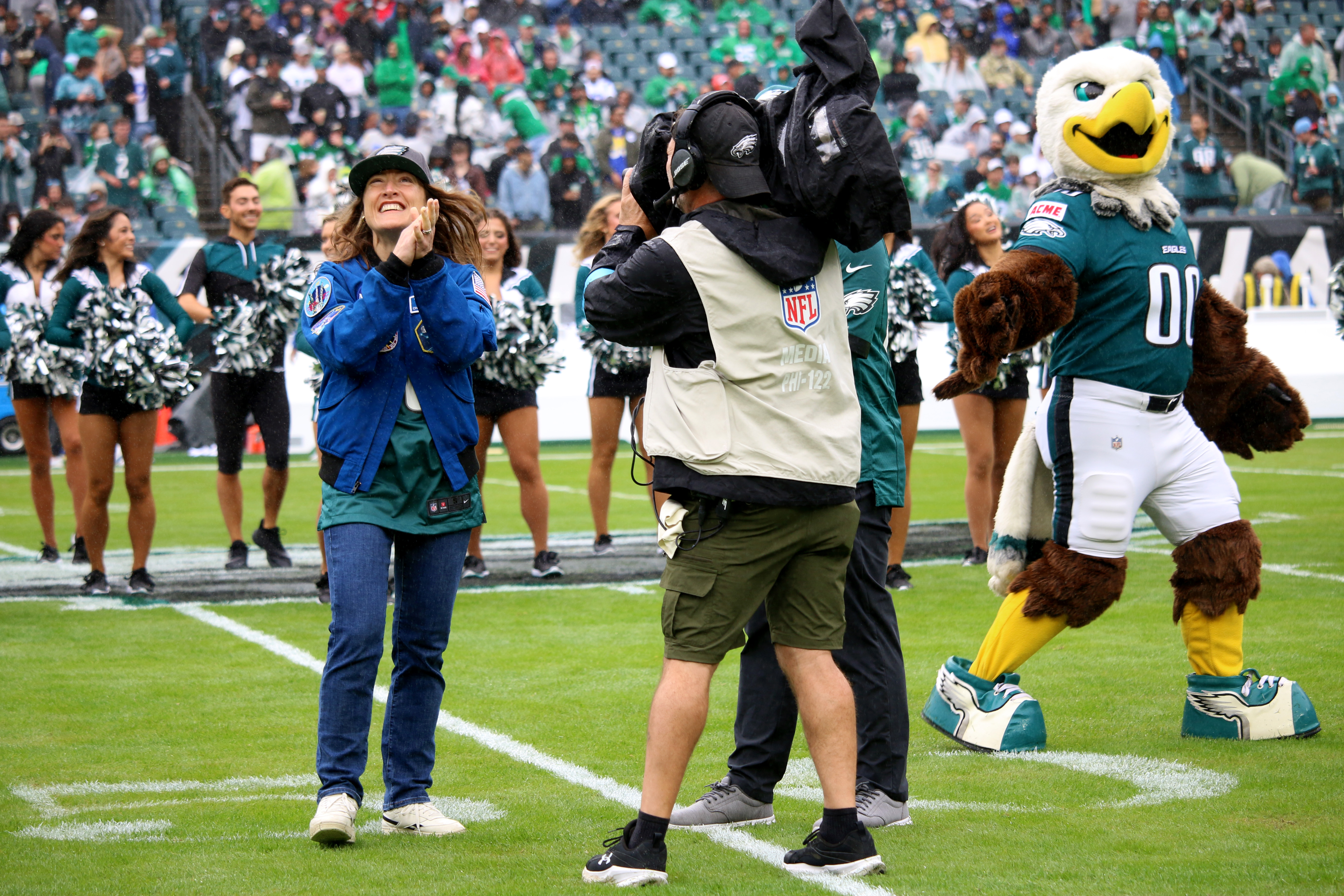
Artemis II Crew Returns to Houston – NASA’s Artemis II crew shared brief remarks with friends, family, and colleagues after they landed at Ellington Airport near NASA’s Johnson Space Center in Houston on Saturday, April 11, 2026, after a nearly 10-day journey around the Moon and back to Earth.

NASA’s Artemis II crew shared brief remarks with friends, family, and colleagues after they landed at Ellington Airport near NASA’s Johnson Space Center in Houston on Saturday, April 11, 2026, after a nearly 10-day journey around the Moon and back to Earth.

Read More
Pope Leo XIV arrives in Cameroon for second leg of Africa trip #Catholic YAOUNDE, Cameroon — Pope Leo XIV arrived Wednesday in Yaoundé, the capital of Cameroon, after a five-hour flight. While meeting with journalists aboard the papal plane, he delivered a brief address, thanking the Algerian authorities and reflecting on the first leg of the journey.Leo, speaking in English, expressed his “gratitude to all the authorities in Algeria, who made this visit possible. As youʼve seen, theyʼve even granted us the full honor of an escort as we fly over Algerian airspace.”This, the pope said, is “a sign of the goodness, of the generosity, of the respect that the Algerian people and the Algerian government have wished to show to the Holy See, to myself. And so I want to say a word of thanks to them, as well as a word of thanks to the very small but very significant presence of the Catholic Church in Algeria.”The pontiff then reflected on the journey.“We had, as you know,” he said, “some very special visits both in the Basilica Notre Dame dʼAfrique as well as in Annaba yesterday, in the Basilica of St. Augustine on the hill overlooking both the modern city of Annaba and the ruins of the ancient Roman city of Ippona. And that in itself, I would say, is also symbolically significant, because St. Augustine, who was bishop, as you know, of Hippo for more than 30 years, actually is a figure which is very much from the past and speaks to us of tradition, speaks to us of the life, the Church, as the Church grew in the early centuries.”Continuing to speak about St. Augustine, Leo said that he is “a very important figure today as his writings, his teaching, his spirituality, his invitation to search for God and to search for truth is something that is very much needed today — a message that is very real for all of us today, as believers in Jesus Christ, but for all people. And as youʼve seen, even the people of Algeria, the vast majority of whom are not Christian, they very much honor and respect the memory of St. Augustine as one of the great sons of their land.""So it was a special blessing for me personally to return once again to Annaba yesterday," he said, "but also to offer to the Church and the world a vision that St. Augustine offers us in terms of the search for God and the struggle to build community, to seek for unity among all peoples and respect for all peoples in spite of the differences.”The pope concluded: “In two days in Algeria I think weʼve really had a wonderful opportunity to, if you will, continue to build bridges, to promote dialogue. I think the visit to the mosque was significant and to say that it showed that although we have different beliefs, we have different ways of worshipping, we have different ways of living, we can live together in peace. And so I think that promoting that kind of image is something which the world needs to hear today, and that together we can continue to offer in our witness through as we continue on this apostolic voyage.”Pope Leo XIV is the third pope to visit Cameroon.Leo will first meet with 92-year-old President Biya, elected to an eighth term and in power for 40 years. After his address to the diplomatic corps — a standard stop at the beginning of every trip — the pope will visit the Ngul Zamba orphanage, a historic point of reference for the care and education of orphaned children and minors in situations of serious social vulnerability.In addition to Yaoundé, Leo XIV will also visit the city of Bamenda, around 230 miles from the capital, at the center of the Anglophone crisis — a complex situation in which English-speaking separatists have also called for the formation of their own state.The pope will also visit Douala, Cameroon’s economic capital, thus touching all the major realities of the country before departing for Angola on April 18.

Pope Leo XIV arrives in Cameroon for second leg of Africa trip #Catholic YAOUNDE, Cameroon — Pope Leo XIV arrived Wednesday in Yaoundé, the capital of Cameroon, after a five-hour flight. While meeting with journalists aboard the papal plane, he delivered a brief address, thanking the Algerian authorities and reflecting on the first leg of the journey.Leo, speaking in English, expressed his “gratitude to all the authorities in Algeria, who made this visit possible. As youʼve seen, theyʼve even granted us the full honor of an escort as we fly over Algerian airspace.”This, the pope said, is “a sign of the goodness, of the generosity, of the respect that the Algerian people and the Algerian government have wished to show to the Holy See, to myself. And so I want to say a word of thanks to them, as well as a word of thanks to the very small but very significant presence of the Catholic Church in Algeria.”The pontiff then reflected on the journey.“We had, as you know,” he said, “some very special visits both in the Basilica Notre Dame dʼAfrique as well as in Annaba yesterday, in the Basilica of St. Augustine on the hill overlooking both the modern city of Annaba and the ruins of the ancient Roman city of Ippona. And that in itself, I would say, is also symbolically significant, because St. Augustine, who was bishop, as you know, of Hippo for more than 30 years, actually is a figure which is very much from the past and speaks to us of tradition, speaks to us of the life, the Church, as the Church grew in the early centuries.”Continuing to speak about St. Augustine, Leo said that he is “a very important figure today as his writings, his teaching, his spirituality, his invitation to search for God and to search for truth is something that is very much needed today — a message that is very real for all of us today, as believers in Jesus Christ, but for all people. And as youʼve seen, even the people of Algeria, the vast majority of whom are not Christian, they very much honor and respect the memory of St. Augustine as one of the great sons of their land.""So it was a special blessing for me personally to return once again to Annaba yesterday," he said, "but also to offer to the Church and the world a vision that St. Augustine offers us in terms of the search for God and the struggle to build community, to seek for unity among all peoples and respect for all peoples in spite of the differences.”The pope concluded: “In two days in Algeria I think weʼve really had a wonderful opportunity to, if you will, continue to build bridges, to promote dialogue. I think the visit to the mosque was significant and to say that it showed that although we have different beliefs, we have different ways of worshipping, we have different ways of living, we can live together in peace. And so I think that promoting that kind of image is something which the world needs to hear today, and that together we can continue to offer in our witness through as we continue on this apostolic voyage.”Pope Leo XIV is the third pope to visit Cameroon.Leo will first meet with 92-year-old President Biya, elected to an eighth term and in power for 40 years. After his address to the diplomatic corps — a standard stop at the beginning of every trip — the pope will visit the Ngul Zamba orphanage, a historic point of reference for the care and education of orphaned children and minors in situations of serious social vulnerability.In addition to Yaoundé, Leo XIV will also visit the city of Bamenda, around 230 miles from the capital, at the center of the Anglophone crisis — a complex situation in which English-speaking separatists have also called for the formation of their own state.The pope will also visit Douala, Cameroon’s economic capital, thus touching all the major realities of the country before departing for Angola on April 18.

Reflecting on the visit to Algeria, the pope described it as “a wonderful opportunity to continue building bridges and promoting dialogue.”

Read More

NASA astronauts Reid Wiseman, commander; left, Christina Koch, mission specialist; CSA (Canadian Space Agency) astronaut Jeremy Hansen, mission specialist; and NASA astronaut Victor Glover, Artemis II pilot, right, pose for a group photo after viewing the Orion spacecraft in the well deck of USS John P. Murtha, Saturday, April 11, 2026, in the Pacific Ocean off the coast of California. The quartet splashed down Friday, April 10 at 5:07 p.m. PDT (8:07p.m. EDT).

Read More
Trump’s comments on Pope Leo called ‘disrespectful’ as Americans react #Catholic Catholic bishops and U.S. elected officials have publicly criticized the president’s statements about Pope Leo XIV.President Donald Trump called Leo “weak on crime and terrible for foreign policy” in a lengthy social media post April 12 that drew response from the United States Conference of Catholic Bishops (USCCB) and elected officials.Bishop Robert Barron of the Diocese of Winona-Rochester, Minnesota, called Trump’s attack on Pope Leo XIV “disrespectful." Barron, who serves on Trump’s Religious Liberty Commission, said in a post on X that Trump’s comments “were entirely inappropriate and disrespectful” and “I think the president owes the pope an apology.”“[Trump’s comments] don’t contribute at all to a constructive conversation,” he said. “It is the pope’s prerogative to articulate Catholic doctrine and the principles that govern the moral life. In regard to the concrete application of those principles, people of goodwill can and do disagree.”Barron encouraged Catholic Trump officials to arrange a meeting with Vatican officials “so that a real dialogue can take place,” saying “this is far preferable to the statements on social media.”Bishop Michael Burbidge of Arlington, Virginia, said in a social media post: “Along with Archbishop [Paul] Coakley, president of the USCCB, and my brother bishops, I was disheartened by recent comments from President Trump concerning Pope Leo XIV and the Church. I pray that civility and respect are fully restored as together, with God’s grace, we work for peace and harmony among all people. May we also be united in our prayer for the end of war and violence so that Christ’s peace reigns throughout the world and in our hearts.”Palm Beach, Florida, Bishop Manuel de Jesús Rodríguez posted on X: “The @DiocesePB stands firm with our Holy Father, @Pontifex, and strongly rejects the disrespectful and violent attacks that Donald J. Trump has directed against the Holy Father.”Buffalo, New York, Bishop Michael Fisher posted on X: “This is not about politics but the very cause of humanity.”The Catholic Association's Ashley McGuire said in a statement: “The Catholic Church does not in any way fit into American political boxes. It will always prioritize the protection of innocent life in all its stages as well as the cause of the poor and marginalized. Insulting the pope, and all Catholics by extension, with the hope of making the Church bend to American political agendas, is discouraging and counterproductive.” McGuire added: “We pray that President Trump apologizes to Pope Leo.”U.S. officials' reaction beginsRepublican Vice President JD Vance, who is Catholic, has not yet commented on the matter, nor has Secretary of State Marco Rubio, also a Catholic.Sen. Mark Kelly, D-Arizona, who is Catholic, posted on X that “I find it abhorrent that the president of the United States would publicly attack the successor of St. Peter.”U.S. House Minority Leader Hakeem Jeffries said on X that Trump “shamefully attacked” the pope. Few Republican elected officials have spoken out.TweetDemocratic California Gov. Gavin Newsom posted on X: “Hey @GOP, you good with your guy directly attacking the pope now?”Rep. Lukas Schubert, a Republican Montana state lawmaker, disputed the presidentʼs statement that the pope is a “liberal person.”“Pope Leo is significantly further to the right than President Trump on abortion, gay marriage, and family values. Also he is more America First on the Iran War,” Schubert said.AI imageTrump also posted an AI-created image on Truth Social that appeared to portray himself as Jesus Christ, healing the sick, which led several Catholics to accuse the president of blasphemy.Edward Feser, a Catholic philosopher and professor at Pasadena City College, posted on X that Trump’s comments illustrate “how utter enslavement to the sin of pride makes a man unsuitable for the presidency.”“For all their faults, previous presidents had the visceral understanding of proper boundaries not to attack the vicar of Christ even when they disagreed with him,” he said.Feser quoted Daniel 11:36-37 in response to Trump’s AI image of himself as Christ, which reads: “And the king shall do according to his will; he shall exalt himself and magnify himself above every god, and shall speak astonishing things against the God of gods … He shall not give heed to any other god, for he shall magnify himself above all.”In reaction to the AI photo, Matt Fradd, the host of “Pints With Aquinas,“ urged Catholics to “offer a rosary today for Donald Trump and all blasphemers. … Seriously. Do it. I will too.”TweetRep. Shontel Brown, D-Ohio, did not directly reference Trumpʼs remarks about the pope but criticized the AI-created image on X: “There aren’t enough words to denounce how wrong this is.”The comments came after Leo criticized the Iran war and Trump’s rhetoric about targeting the entire civilization of Iran. Leo said in response to the post: “I have no fear neither of the Trump administration nor of speaking out loudly about the message of the Gospel.”Marjorie Taylor Greene, a former Republican congresswoman who was a strong ally of Trump before splitting with him on the Iran war and his handling of the Jeffrey Epstein files, posted on X that Trump “attacked the pope because the pope is rightly against Trump’s war in Iran and then he posted this picture of himself as if he is replacing Jesus.”“This comes after last week’s post of his evil tirade on Easter and then threatening to kill an entire civilization,” she said. “I completely denounce this and I’m praying against it!!!”‘Fuels division’Father Robert Sirico, the founder of the Acton Institute, said in a statement that Leo “has both the right and the duty to speak prophetically on matters of war and peace, the dignity of the human person, and the moral limits of force — even when his words discomfort political leaders.”He said Trump’s post does not “strengthen America’s moral standing but “merely fuels division.”Sirico also added that Catholics can disagree with popes on prudential judgments, such as foreign policy or crime, which he said are not infallible: “The Church herself teaches that such applications of principle admit of legitimate debate.”This story was updated at 11:50 a.m. ET on April 13, 2026, with comments from Buffalo, New York, Bishop Michael Fisher and The Catholic Associationʼs Ashley McGuire.

Trump’s comments on Pope Leo called ‘disrespectful’ as Americans react #Catholic Catholic bishops and U.S. elected officials have publicly criticized the president’s statements about Pope Leo XIV.President Donald Trump called Leo “weak on crime and terrible for foreign policy” in a lengthy social media post April 12 that drew response from the United States Conference of Catholic Bishops (USCCB) and elected officials.Bishop Robert Barron of the Diocese of Winona-Rochester, Minnesota, called Trump’s attack on Pope Leo XIV “disrespectful." Barron, who serves on Trump’s Religious Liberty Commission, said in a post on X that Trump’s comments “were entirely inappropriate and disrespectful” and “I think the president owes the pope an apology.”“[Trump’s comments] don’t contribute at all to a constructive conversation,” he said. “It is the pope’s prerogative to articulate Catholic doctrine and the principles that govern the moral life. In regard to the concrete application of those principles, people of goodwill can and do disagree.”Barron encouraged Catholic Trump officials to arrange a meeting with Vatican officials “so that a real dialogue can take place,” saying “this is far preferable to the statements on social media.”Bishop Michael Burbidge of Arlington, Virginia, said in a social media post: “Along with Archbishop [Paul] Coakley, president of the USCCB, and my brother bishops, I was disheartened by recent comments from President Trump concerning Pope Leo XIV and the Church. I pray that civility and respect are fully restored as together, with God’s grace, we work for peace and harmony among all people. May we also be united in our prayer for the end of war and violence so that Christ’s peace reigns throughout the world and in our hearts.”Palm Beach, Florida, Bishop Manuel de Jesús Rodríguez posted on X: “The @DiocesePB stands firm with our Holy Father, @Pontifex, and strongly rejects the disrespectful and violent attacks that Donald J. Trump has directed against the Holy Father.”Buffalo, New York, Bishop Michael Fisher posted on X: “This is not about politics but the very cause of humanity.”The Catholic Association's Ashley McGuire said in a statement: “The Catholic Church does not in any way fit into American political boxes. It will always prioritize the protection of innocent life in all its stages as well as the cause of the poor and marginalized. Insulting the pope, and all Catholics by extension, with the hope of making the Church bend to American political agendas, is discouraging and counterproductive.” McGuire added: “We pray that President Trump apologizes to Pope Leo.”U.S. officials' reaction beginsRepublican Vice President JD Vance, who is Catholic, has not yet commented on the matter, nor has Secretary of State Marco Rubio, also a Catholic.Sen. Mark Kelly, D-Arizona, who is Catholic, posted on X that “I find it abhorrent that the president of the United States would publicly attack the successor of St. Peter.”U.S. House Minority Leader Hakeem Jeffries said on X that Trump “shamefully attacked” the pope. Few Republican elected officials have spoken out.TweetDemocratic California Gov. Gavin Newsom posted on X: “Hey @GOP, you good with your guy directly attacking the pope now?”Rep. Lukas Schubert, a Republican Montana state lawmaker, disputed the presidentʼs statement that the pope is a “liberal person.”“Pope Leo is significantly further to the right than President Trump on abortion, gay marriage, and family values. Also he is more America First on the Iran War,” Schubert said.AI imageTrump also posted an AI-created image on Truth Social that appeared to portray himself as Jesus Christ, healing the sick, which led several Catholics to accuse the president of blasphemy.Edward Feser, a Catholic philosopher and professor at Pasadena City College, posted on X that Trump’s comments illustrate “how utter enslavement to the sin of pride makes a man unsuitable for the presidency.”“For all their faults, previous presidents had the visceral understanding of proper boundaries not to attack the vicar of Christ even when they disagreed with him,” he said.Feser quoted Daniel 11:36-37 in response to Trump’s AI image of himself as Christ, which reads: “And the king shall do according to his will; he shall exalt himself and magnify himself above every god, and shall speak astonishing things against the God of gods … He shall not give heed to any other god, for he shall magnify himself above all.”In reaction to the AI photo, Matt Fradd, the host of “Pints With Aquinas,“ urged Catholics to “offer a rosary today for Donald Trump and all blasphemers. … Seriously. Do it. I will too.”TweetRep. Shontel Brown, D-Ohio, did not directly reference Trumpʼs remarks about the pope but criticized the AI-created image on X: “There aren’t enough words to denounce how wrong this is.”The comments came after Leo criticized the Iran war and Trump’s rhetoric about targeting the entire civilization of Iran. Leo said in response to the post: “I have no fear neither of the Trump administration nor of speaking out loudly about the message of the Gospel.”Marjorie Taylor Greene, a former Republican congresswoman who was a strong ally of Trump before splitting with him on the Iran war and his handling of the Jeffrey Epstein files, posted on X that Trump “attacked the pope because the pope is rightly against Trump’s war in Iran and then he posted this picture of himself as if he is replacing Jesus.”“This comes after last week’s post of his evil tirade on Easter and then threatening to kill an entire civilization,” she said. “I completely denounce this and I’m praying against it!!!”‘Fuels division’Father Robert Sirico, the founder of the Acton Institute, said in a statement that Leo “has both the right and the duty to speak prophetically on matters of war and peace, the dignity of the human person, and the moral limits of force — even when his words discomfort political leaders.”He said Trump’s post does not “strengthen America’s moral standing but “merely fuels division.”Sirico also added that Catholics can disagree with popes on prudential judgments, such as foreign policy or crime, which he said are not infallible: “The Church herself teaches that such applications of principle admit of legitimate debate.”This story was updated at 11:50 a.m. ET on April 13, 2026, with comments from Buffalo, New York, Bishop Michael Fisher and The Catholic Associationʼs Ashley McGuire.

President Donald Trump called Leo “weak on crime and terrible for foreign policy” in a lengthy social media post April 12 that drew response from U.S. bishops and elected officials.

Read More
Pope Leo XIV in Algeria: ‘I am here among you as a pilgrim of peace’ #Catholic ALGIERS, Algeria — Pope Leo XIV on Monday presented himself to Algeria’s diplomatic corps and civil society as “a pilgrim of peace,” urging a more just international order, warning against exclusion and inequality, and praising those who refuse to be “blinded by power or wealth.”Peace remained the central theme of the pope’s first day in Algeria, following his earlier stop at the Martyrs’ Memorial, where he delivered an appeal for peace and reconciliation.Speaking in French at the Djamaa el Djazair Conference Center, Leo recalled his previous visits to Algeria in 2001 and 2013 to Annaba, the ancient see of St. Augustine, whose spiritual legacy has long shaped the Augustinian order to which the pope belongs.“I am here among you as a pilgrim of peace, eager to meet the noble Algerian people,” the pope said. “We are brothers and sisters, for we have the same Father in heaven.”Leo said the “profound religious sense of the Algerian people” fosters “a culture of encounter and reconciliation,” adding that his visit also seeks to be a sign of that spirit.“In a world full of conflicts and misunderstandings, let us meet and strive for mutual understanding, recognizing that we are one family!” he said. “Today, the simplicity of this awareness is the key to opening many doors that are closed.”Addressing an audience of about 1,400 people from civil society and the diplomatic corps, the pope praised the resilience of the Algerian people, saying they had never been defeated by their trials because of their spirit of solidarity, hospitality, and community.“They are the truly strong ones, to whom the future belongs: those who do not allow themselves to be blinded by power or wealth, and those who refuse to sacrifice the dignity of their fellow citizens for the sake of personal or collective gain,” he said.Leo also highlighted the Algerian understanding of hospitality and almsgiving, reflected in the word “sadaka,” which he noted can also mean justice.“The one who accumulates wealth and remains indifferent to others is unjust,” the pope said, calling this vision of justice both “simple and radical” because it recognizes the image of God in others. “Indeed, a religion without mercy and a society without solidarity are a scandal in God’s eyes.”At the same time, he warned that many societies that consider themselves advanced are falling ever deeper into inequality and exclusion, while “people and organizations that dominate others destroy the world.” He said Africa knows this reality well and suggested that Algeria’s historical experience gives it a critical perspective on global power balances.“If you are able to engage in dialogue regarding the concerns of all and show solidarity with the sufferings of so many countries near and far, then you will be able to contribute to both envisioning and bringing about greater justice among peoples,” Leo said.He added that this task is especially urgent “in the face of continuous violations of international law and neocolonial tendencies.”Drawing on the teaching of Benedict XVI and Pope Francis, Leo called on Algeria’s authorities not to fear a broader social participation by those on the margins.“I therefore urge those of you who hold positions of authority in this country not to fear this outlook but to promote a vibrant, dynamic, and free civil society, in which young people in particular are recognized as capable of helping to broaden the horizon of hope for all,” he said.“The true strength of a nation lies in the cooperation of everyone in pursuing the common good,” he continued. “Authorities are called not to dominate but to serve the people and foster their development.”The pope also pointed to Algeria’s unique role as “a bridge between North and South, and between East and West,” describing the Mediterranean and the Sahara as geographical and spiritual crossroads rich with human and cultural meaning.“Woe to us if we turn them into graveyards where hope also dies!” he said. “Let us multiply oases of peace; let us denounce and remove the causes of despair; and let us oppose those who profit from the misfortune of others!”“For illicit are the gains of those who exploit human life, whose dignity is inviolable,” he added.Leo then broadened his reflection to the place of religion in modern society, noting that Algeria, like much of the world, experiences tensions between religious sensibility and modern life. He warned against both fundamentalism and secularization when they distort the true sense of God and human dignity.“Religious symbols and words can become, on the one hand, blasphemous languages of violence and oppression, or on the other, empty signs in the immense marketplace of consumption that does not satisfy us,” he said.Still, the pope insisted that such polarization should not lead to despair.“We must educate people in critical thinking and freedom, in listening and dialogue, and in the trust that leads us to recognize in those who are different fellow travelers and not threats,” he said. “We must work toward the healing of memory and reconciliation among former adversaries.”In his introduction, Algerian President Abdelmadjid Tebboune called Leo’s presence the first visit of a pope to Algeria and said it gave the occasion “a unique resonance.” He invoked both St. Augustine and Emir Abdelkader as enduring models at a time of accelerating change and weakening moral values.Tebboune also praised the pope’s moral authority and his support for social justice while reaffirming Algeria’s commitment to working with the Holy Father to promote dialogue, coexistence, and cooperation over division and conflict.This story was first published by ACI Stampa, the Italian-language sister service of EWTN News. It has been translated and adapted by EWTN News English.

Pope Leo XIV in Algeria: ‘I am here among you as a pilgrim of peace’ #Catholic ALGIERS, Algeria — Pope Leo XIV on Monday presented himself to Algeria’s diplomatic corps and civil society as “a pilgrim of peace,” urging a more just international order, warning against exclusion and inequality, and praising those who refuse to be “blinded by power or wealth.”Peace remained the central theme of the pope’s first day in Algeria, following his earlier stop at the Martyrs’ Memorial, where he delivered an appeal for peace and reconciliation.Speaking in French at the Djamaa el Djazair Conference Center, Leo recalled his previous visits to Algeria in 2001 and 2013 to Annaba, the ancient see of St. Augustine, whose spiritual legacy has long shaped the Augustinian order to which the pope belongs.“I am here among you as a pilgrim of peace, eager to meet the noble Algerian people,” the pope said. “We are brothers and sisters, for we have the same Father in heaven.”Leo said the “profound religious sense of the Algerian people” fosters “a culture of encounter and reconciliation,” adding that his visit also seeks to be a sign of that spirit.“In a world full of conflicts and misunderstandings, let us meet and strive for mutual understanding, recognizing that we are one family!” he said. “Today, the simplicity of this awareness is the key to opening many doors that are closed.”Addressing an audience of about 1,400 people from civil society and the diplomatic corps, the pope praised the resilience of the Algerian people, saying they had never been defeated by their trials because of their spirit of solidarity, hospitality, and community.“They are the truly strong ones, to whom the future belongs: those who do not allow themselves to be blinded by power or wealth, and those who refuse to sacrifice the dignity of their fellow citizens for the sake of personal or collective gain,” he said.Leo also highlighted the Algerian understanding of hospitality and almsgiving, reflected in the word “sadaka,” which he noted can also mean justice.“The one who accumulates wealth and remains indifferent to others is unjust,” the pope said, calling this vision of justice both “simple and radical” because it recognizes the image of God in others. “Indeed, a religion without mercy and a society without solidarity are a scandal in God’s eyes.”At the same time, he warned that many societies that consider themselves advanced are falling ever deeper into inequality and exclusion, while “people and organizations that dominate others destroy the world.” He said Africa knows this reality well and suggested that Algeria’s historical experience gives it a critical perspective on global power balances.“If you are able to engage in dialogue regarding the concerns of all and show solidarity with the sufferings of so many countries near and far, then you will be able to contribute to both envisioning and bringing about greater justice among peoples,” Leo said.He added that this task is especially urgent “in the face of continuous violations of international law and neocolonial tendencies.”Drawing on the teaching of Benedict XVI and Pope Francis, Leo called on Algeria’s authorities not to fear a broader social participation by those on the margins.“I therefore urge those of you who hold positions of authority in this country not to fear this outlook but to promote a vibrant, dynamic, and free civil society, in which young people in particular are recognized as capable of helping to broaden the horizon of hope for all,” he said.“The true strength of a nation lies in the cooperation of everyone in pursuing the common good,” he continued. “Authorities are called not to dominate but to serve the people and foster their development.”The pope also pointed to Algeria’s unique role as “a bridge between North and South, and between East and West,” describing the Mediterranean and the Sahara as geographical and spiritual crossroads rich with human and cultural meaning.“Woe to us if we turn them into graveyards where hope also dies!” he said. “Let us multiply oases of peace; let us denounce and remove the causes of despair; and let us oppose those who profit from the misfortune of others!”“For illicit are the gains of those who exploit human life, whose dignity is inviolable,” he added.Leo then broadened his reflection to the place of religion in modern society, noting that Algeria, like much of the world, experiences tensions between religious sensibility and modern life. He warned against both fundamentalism and secularization when they distort the true sense of God and human dignity.“Religious symbols and words can become, on the one hand, blasphemous languages of violence and oppression, or on the other, empty signs in the immense marketplace of consumption that does not satisfy us,” he said.Still, the pope insisted that such polarization should not lead to despair.“We must educate people in critical thinking and freedom, in listening and dialogue, and in the trust that leads us to recognize in those who are different fellow travelers and not threats,” he said. “We must work toward the healing of memory and reconciliation among former adversaries.”In his introduction, Algerian President Abdelmadjid Tebboune called Leo’s presence the first visit of a pope to Algeria and said it gave the occasion “a unique resonance.” He invoked both St. Augustine and Emir Abdelkader as enduring models at a time of accelerating change and weakening moral values.Tebboune also praised the pope’s moral authority and his support for social justice while reaffirming Algeria’s commitment to working with the Holy Father to promote dialogue, coexistence, and cooperation over division and conflict.This story was first published by ACI Stampa, the Italian-language sister service of EWTN News. It has been translated and adapted by EWTN News English.

The pontiff called for a world order that does not exclude the vulnerable and urged leaders to serve the common good.

Read More
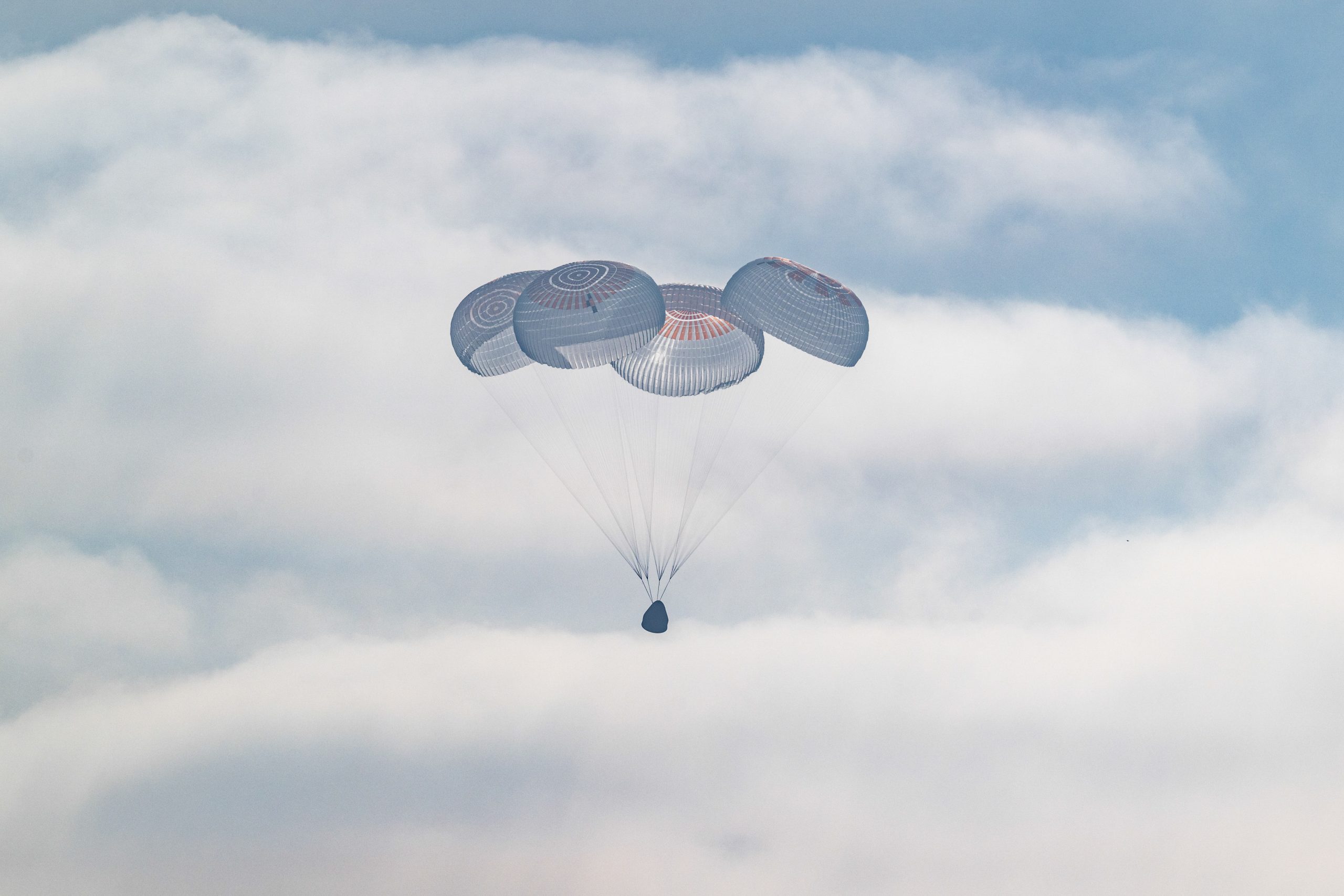
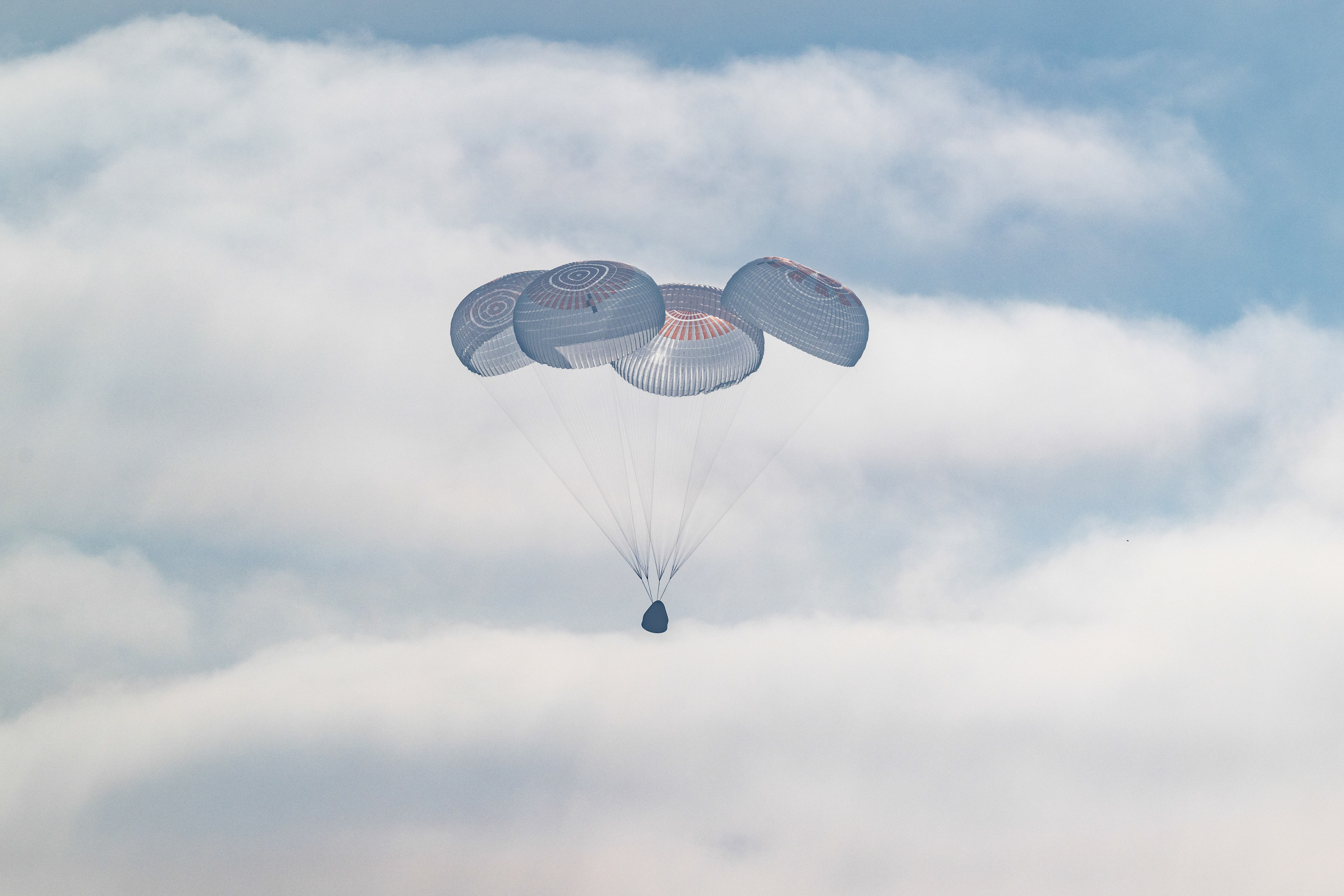
Artemis II Recovery – NASA’s Orion spacecraft with Artemis II crewmembers NASA astronauts Reid Wiseman, commander; Victor Glover, pilot; Christina Koch, mission specialist; and CSA (Canadian Space Agency) astronaut Jeremy Hansen, mission specialist aboard is seen under parachutes as it lands in the Pacific Ocean off the coast of California, Friday, April 10, 2026. NASA’s Artemis II mission took Wiseman, Glover, Koch, and Hansen on a 10-day journey around the Moon and back to Earth. Following a splashdown at 7:07 p.m. EDT, NASA, U.S. Navy, and U.S. Air Force teams are working to bring the crewmembers and Orion spacecraft aboard USS John P. Murtha.

NASA’s Orion spacecraft with Artemis II crewmembers NASA astronauts Reid Wiseman, commander; Victor Glover, pilot; Christina Koch, mission specialist; and CSA (Canadian Space Agency) astronaut Jeremy Hansen, mission specialist aboard is seen under parachutes as it lands in the Pacific Ocean off the coast of California, Friday, April 10, 2026. NASA’s Artemis II mission took Wiseman, Glover, Koch, and Hansen on a 10-day journey around the Moon and back to Earth. Following a splashdown at 7:07 p.m. EDT, NASA, U.S. Navy, and U.S. Air Force teams are working to bring the crewmembers and Orion spacecraft aboard USS John P. Murtha.

Read More
Picture of the day


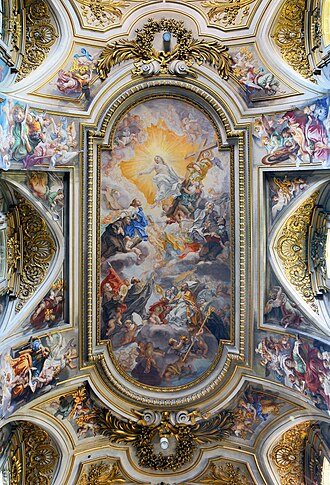
Basilica of Santa Francesca, Rome, Italy. A church at the site was known by the tenth century. It was named Santa Maria Nova (“New St Mary”), to distinguish it from the other church inside the Roman forum devoted to St Mary, Santa Maria Antiqua (“Ancient St Mary”), which had fallen into ruin by then. The relics from the ancient church were moved to this church under Pope Leo. Santa Maria Nuova was enlarged in the second half of the tenth century, and then rebuilt by Pope Honorius III in the thirteenth century, adding the campanile and the apse, as well as being decorated with a mosaic Maestà, a depiction of the Madonna enthroned accompanied by saints (as seen in the picture). Since 1352 the church has been in the care of the Olivetans. In the 16th century, the church was rededicated to Frances of Rome (Francesca Buzzi), who was canonized in 1608 and whose relics are in the crypt. The interior of the church has undergone many refurbishments.
 #ImageOfTheDay
Picture of the day
Basilica of Santa Francesca, Rome, Italy. A church at the site was known by the tenth century. It was named Santa Maria Nova (“New St Mary”), to distinguish it from the other church inside the Roman forum devoted to St Mary, Santa Maria Antiqua (“Ancient St Mary”), which had fallen into ruin by then. The relics from the ancient church were moved to this church under Pope Leo. Santa Maria Nuova was enlarged in the second half of the tenth century, and then rebuilt by Pope Honorius III in the thirteenth century, adding the campanile and the apse, as well as being decorated with a mosaic Maestà, a depiction of the Madonna enthroned accompanied by saints (as seen in the picture). Since 1352 the church has been in the care of the Olivetans. In the 16th century, the church was rededicated to Frances of Rome (Francesca Buzzi), who was canonized in 1608 and whose relics are in the crypt. The interior of the church has undergone many refurbishments.
Read More
Pope Leo XIV: Sport must be a ‘space for encounter’ #Catholic VATICAN CITY — Pope Leo XIV on Thursday praised athletes from the Milan-Cortina 2026 Olympic and Paralympic Games, saying sport “can and must truly become a space for encounter” in a world marked by “polarization, rivalry, and conflicts that escalate into devastating wars.”Speaking in the Clementine Hall at the Vatican on April 9, the Holy Father welcomed the athletes “with joy” shortly after the conclusion of the Winter Games and thanked them for their witness.“Thank you for what you have shown,” the pope said. “Truly, sport, when lived authentically, is not merely a performance: It is a form of language, a narrative made up of gestures, of effort, of anticipation, of falls, and of new beginnings.”Leo XIV said the games revealed not only athletic achievement but also “stories of sacrifice, of discipline, of tenacity.”“In particular, in Paralympic competitions we have seen how a limitation can become a source of revelation: not something that holds a person back but something that can be transformed, even transfigured into newfound qualities,” he said. “You athletes have become life stories that inspire a great number of people.”The pope also emphasized the communal dimension of athletic success, saying: “No one wins alone.”“Your team spirit reminds us that no one wins alone, because behind every victory there are many people involved — from family to teams — as well as many days of training, pressure, and solitude,” he said.Quoting Psalm 18, he added: “It is often precisely in these moments that God reveals himself, as the psalmist sings: ‘Thou didst give a wide place for my steps under me, and my feet did not slip.’”Leo XIV said sport helps mature the human person by fostering discipline, humility, and right relationships.“Sport contributes to the maturing of our character, requires a steadfast spirituality, and is a fruitful form of education,” he said. “By training the mind, along with the limbs, sport is authentic when it remains humane — that is, when it remains faithful to its first vocation: to be a school of life and talent.”“A school in which one learns that true success is measured by the quality of relationships: not by the amount of prizes but by mutual respect, by shared joy in the game,” he continued.Referring to his Feb. 6 apostolic letter “Life in Abundance,” written for the occasion of the Olympics and Paralympics, the pope said the Gospel’s vision of abundant life points to harmony between the physical and interior dimensions of the person.Turning to the present global situation, Leo XIV said the athletes’ witness carries special importance.“At the present time, so marked by polarization, rivalry, and conflicts that escalate into devastating wars, your commitment takes on an even greater value: Sport can and must truly become a space for encounter!” he said. “Not a show of strength but an exercise in relationship.”Recalling the value of the Olympic truce, he thanked the athletes for making visible “this possibility of peace as a prophecy that is by no means rhetorical: breaking the logic of violence to promote that of encounter.”The pope also warned against distortions in sport, including doping, commercialism, and the reduction of athletes to mere spectacle.“We are well aware that sport also brings with it certain temptations: that of performance at any cost, which can lead to doping; that of profit, which transforms the game into a market and the athlete into a star; that of spectacle, which reduces the athlete to an image or a number,” he said. “Against these excesses, your witness is essential.”Leo XIV concluded by thanking the athletes for showing “an honest and beautiful way of inhabiting the world” and urged them to keep the human person at the center of sport in all its forms.Following the audience, several of the athletes spoke to journalists about their experience of the audience and competing in the Winter Games, including speed skater Francesca Lollobrigida, who won two gold medals at Milan-Cortina this year.
 
 Francesca Lollobrigida responds to journalists after a papal audience at the Apostolic Palace in Vatican City on April 9, 2026. | Credit: Ishmael Adibuah/EWTN News
 
 “My goal was just to show that in my sport; I was able to combine, you know, being a mother and a top athlete,“ Lollobrigida told EWTN News. ”Iʼm just doing this for the other women, you know, that maybe at some points during their career they want to stop to focus on the family and then to come back.”Nikko Landeros, an American-born Catholic who lost both his legs in 2007, represented Italy in ice hockey at the latest Paralympic games. He described to EWTN News the role of Catholicism in his athletic journey.“At home, I started pretty much Catholic. You know, I went to Catholic school in the U.S. Weʼve been going to church now… not as much as I should, but, you know, I still pray every day, and Iʼm thankful to be here. You know, if it werenʼt for God, I wouldnʼt be alive. So, you know, Iʼm super thankful,” Landeros said.This story was first published by ACI Stampa, the Italian-language sister service of EWTN News. It has been translated and adapted by EWTN News English.

Pope Leo XIV: Sport must be a ‘space for encounter’ #Catholic VATICAN CITY — Pope Leo XIV on Thursday praised athletes from the Milan-Cortina 2026 Olympic and Paralympic Games, saying sport “can and must truly become a space for encounter” in a world marked by “polarization, rivalry, and conflicts that escalate into devastating wars.”Speaking in the Clementine Hall at the Vatican on April 9, the Holy Father welcomed the athletes “with joy” shortly after the conclusion of the Winter Games and thanked them for their witness.“Thank you for what you have shown,” the pope said. “Truly, sport, when lived authentically, is not merely a performance: It is a form of language, a narrative made up of gestures, of effort, of anticipation, of falls, and of new beginnings.”Leo XIV said the games revealed not only athletic achievement but also “stories of sacrifice, of discipline, of tenacity.”“In particular, in Paralympic competitions we have seen how a limitation can become a source of revelation: not something that holds a person back but something that can be transformed, even transfigured into newfound qualities,” he said. “You athletes have become life stories that inspire a great number of people.”The pope also emphasized the communal dimension of athletic success, saying: “No one wins alone.”“Your team spirit reminds us that no one wins alone, because behind every victory there are many people involved — from family to teams — as well as many days of training, pressure, and solitude,” he said.Quoting Psalm 18, he added: “It is often precisely in these moments that God reveals himself, as the psalmist sings: ‘Thou didst give a wide place for my steps under me, and my feet did not slip.’”Leo XIV said sport helps mature the human person by fostering discipline, humility, and right relationships.“Sport contributes to the maturing of our character, requires a steadfast spirituality, and is a fruitful form of education,” he said. “By training the mind, along with the limbs, sport is authentic when it remains humane — that is, when it remains faithful to its first vocation: to be a school of life and talent.”“A school in which one learns that true success is measured by the quality of relationships: not by the amount of prizes but by mutual respect, by shared joy in the game,” he continued.Referring to his Feb. 6 apostolic letter “Life in Abundance,” written for the occasion of the Olympics and Paralympics, the pope said the Gospel’s vision of abundant life points to harmony between the physical and interior dimensions of the person.Turning to the present global situation, Leo XIV said the athletes’ witness carries special importance.“At the present time, so marked by polarization, rivalry, and conflicts that escalate into devastating wars, your commitment takes on an even greater value: Sport can and must truly become a space for encounter!” he said. “Not a show of strength but an exercise in relationship.”Recalling the value of the Olympic truce, he thanked the athletes for making visible “this possibility of peace as a prophecy that is by no means rhetorical: breaking the logic of violence to promote that of encounter.”The pope also warned against distortions in sport, including doping, commercialism, and the reduction of athletes to mere spectacle.“We are well aware that sport also brings with it certain temptations: that of performance at any cost, which can lead to doping; that of profit, which transforms the game into a market and the athlete into a star; that of spectacle, which reduces the athlete to an image or a number,” he said. “Against these excesses, your witness is essential.”Leo XIV concluded by thanking the athletes for showing “an honest and beautiful way of inhabiting the world” and urged them to keep the human person at the center of sport in all its forms.Following the audience, several of the athletes spoke to journalists about their experience of the audience and competing in the Winter Games, including speed skater Francesca Lollobrigida, who won two gold medals at Milan-Cortina this year. Francesca Lollobrigida responds to journalists after a papal audience at the Apostolic Palace in Vatican City on April 9, 2026. | Credit: Ishmael Adibuah/EWTN News “My goal was just to show that in my sport; I was able to combine, you know, being a mother and a top athlete,“ Lollobrigida told EWTN News. ”Iʼm just doing this for the other women, you know, that maybe at some points during their career they want to stop to focus on the family and then to come back.”Nikko Landeros, an American-born Catholic who lost both his legs in 2007, represented Italy in ice hockey at the latest Paralympic games. He described to EWTN News the role of Catholicism in his athletic journey.“At home, I started pretty much Catholic. You know, I went to Catholic school in the U.S. Weʼve been going to church now… not as much as I should, but, you know, I still pray every day, and Iʼm thankful to be here. You know, if it werenʼt for God, I wouldnʼt be alive. So, you know, Iʼm super thankful,” Landeros said.This story was first published by ACI Stampa, the Italian-language sister service of EWTN News. It has been translated and adapted by EWTN News English.

The pontiff addressed athletes from the Milan-Cortina 2026 Olympic and Paralympic Games.

Read More
Picture of the day
Sand dunes of the Thar Desert in the Indian state of Rajasthan. On this day in 1949, the state was formed after a merger of several Rajput princely states into the Indian Union following India’s independence from British colonial rule.
Read More
French priest Henri Caffarel, founder of Teams of Our Lady, declared venerable by Pope Leo XIV #Catholic Father Henri Caffarel, a French priest whose apostolate centered on accompanying and guiding married couples on the path to holiness, is one step closer to being canonized.On March 23, Pope Leo XIV recognized the heroic virtues of the newly declared venerable, who maintained that couples are made for happiness and that marriage is a path toward it.With this deep conviction, and conscious of the challenges faced by couples, Caffarel, who was born in Lyon, France, in 1903, founded the movement for marital spirituality known as “Teams of Our Lady” in Paris in 1939.The beginning of a living legacySpaniards Alberto Pérez Bueno and Mercedes Gómez-Ferrer Lozano, the couple in charge of the Teams of Our Lady internationally, have been married for 35 years and have three children. In an interview with ACI Prensa, the Spanish-language sister service of EWTN News, they said the ministry started “with four couples who approached Father Caffarel to ask him how they could live out their faith as a couple.”“He didn’t have an answer at that moment, so he proposed that they embark on a journey of discovery together rooted in the sacrament of holy orders and the sacrament of matrimony. And that‘s how it all began,” Alberto explained.Following World War II, the movement, which is primarily lay-led, grew rapidly; today, it is present in 92 countries and is comprised of more than 15,000 teams.
 
 Father Henri Caffarel. | Credit: Photo courtesy of Alberto Pérez Bueno
 
 Marital communication and prayerMercedes emphasized that from the very beginning, Caffarel saw the need to foster the essentials of marital communication and prayer, convinced that by sharing their problems with one another, many couples could avoid estrangement that sometimes occurs in marriage.The priest, Alberto recalled, said that “the sacrament of matrimony is an image of God” and “probably the most perfect one there is.” The priest said married couples are called to holiness through a life of “work, personal growth, love, patience, and building a life together.”“It‘s not an overnight process but rather a journey undertaken over the course of a lifetime. Father Caffarel invited couples to embark on this path and to attain holiness through their work and their life together,” Alberto emphasized.Mercedes said the priest thought of marriage as a sign “that reflects the love of God” because the relationship of communion that exists between spouses is analogous to the relationship existing among the three Divine Persons: Christ, the Father, and the Holy Spirit.In the priest’s view, the image of marriage allowed for a clearer expression of the idea of ​​a God who is love “and who communicates and expands within his own nature.” From this perspective, “holiness ceases to be understood as a matter of individual effort or moral perfection and is situated instead within the dynamic of love that transforms and animates life,” Mercedes explained.A continuous path of spiritual growthThe organization of the Teams of Our Lady is based on a specific methodology “that goes beyond monthly meetings,” encompassing prayer, dialogue, and personal commitment. Each team consists of five or six married couples, fostering “listening to the word, personal prayer, prayer as a couple and family prayer, and a profound dialogue in the presence of the Lord that we also have every month,” Mercedes explained.Ultimately, it is a matter of “having a rule of life, a set of elements through which you strive to improve your Christian life,” she said. There is also a yearly retreat and a specific study theme each month.Alberto emphasized that the Teams of Our Lady are, in a sense, “precursors of the synodality” promoted by Pope Francis. “It’s a movement that is very nonclerical — though, it must be said, the accompaniment of married couples by priests is essential.”He also noted that “married couples place their time, their skills, their charisms, and their gifts at the service of others in order to build community.” Mercedes, who had the opportunity to meet the now-venerable, recalled that in 1973 he stepped aside after founding the teams, convinced that “if it was a work of the Holy Spirit and possessed a charism for the Church, there was no need for him to stay on.”Leaving the ministry in the laity’s hands, he retired to a house of prayer on the outskirts of Paris, where he began his other “great work”: teaching people how to pray. Mercedes noted that “one of the things he desired most was to teach people how to draw closer to Christ and to serve as an intermediary so that every person could have a personal encounter with God.”
 
 Alberto Pérez Bueno and Mercedes Gómez-Ferrer Lozano, international organizers of Teams of Our Lady. | Credit: Photo courtesy of Alberto Pérez Bueno
 
 The challenges facing married couples todayAlberto and Mercedes explained how married couples today confront new challenges stemming from the pace of life, particularly the “massive entry of women into the workforce,” which has brought different challenges, such as “finding time to be together and talk.”They highlighted Caffarel’s enduring counsel: “Seek out these moments; don’t let them slip away,” for life “sweeps us along like a fast-moving river.They also highlighted the movement’s impact in countries such as Lithuania, with a past marked by communist repression, or in African nations where the teams foster equality, participation, and changes such as abandoning polygamy. This is also true in Europe, where the Teams of Our Lady help strengthen families within increasingly secularized societies.Both highlight the universal impact of the movement: Couples from diverse cultures agree on the benefits received, particularly the “opportunity to pray together” and the realization of “how difficult it would have been without the presence of Christ in their married life.” Ultimately, this is a way of life that responds to a profound desire: Even as sacramental marriages decline, “there is no diminishing of people’s desire to live as a couple.”Mercedes also warned of a growing way of dealing with problems: “At the slightest setback, people are right off tempted to give up,” and the couple is not taught how to “persevere and forgive.” Added to this is “a great fear of commitment” and a tendency to avoid lasting bonds or communities despite the fact that, deep down, people “want to be happy and want to stay together.”For this reason, she emphasized the importance of mutual support and community life: “It‘s fundamental to allow oneself to be helped,” since in her view navigating married life in isolation “is extremely complex.”The teams offer precisely the necessary tools and support: a setting where married couples share their problems and solutions. Drawing upon their own experiences, they particularly encourage young couples to embark on this path of holiness.Both expressed their joy that Caffarel has been declared venerable, a long-awaited recognition following nearly 20 years of going through the beatification process, which continues, awaiting a miracle wrought through his intercession.This story was first published by ACI Prensa, the Spanish-language sister service of EWTN News. It has been translated and adapted by EWTN News English.

French priest Henri Caffarel, founder of Teams of Our Lady, declared venerable by Pope Leo XIV #Catholic Father Henri Caffarel, a French priest whose apostolate centered on accompanying and guiding married couples on the path to holiness, is one step closer to being canonized.On March 23, Pope Leo XIV recognized the heroic virtues of the newly declared venerable, who maintained that couples are made for happiness and that marriage is a path toward it.With this deep conviction, and conscious of the challenges faced by couples, Caffarel, who was born in Lyon, France, in 1903, founded the movement for marital spirituality known as “Teams of Our Lady” in Paris in 1939.The beginning of a living legacySpaniards Alberto Pérez Bueno and Mercedes Gómez-Ferrer Lozano, the couple in charge of the Teams of Our Lady internationally, have been married for 35 years and have three children. In an interview with ACI Prensa, the Spanish-language sister service of EWTN News, they said the ministry started “with four couples who approached Father Caffarel to ask him how they could live out their faith as a couple.”“He didn’t have an answer at that moment, so he proposed that they embark on a journey of discovery together rooted in the sacrament of holy orders and the sacrament of matrimony. And that‘s how it all began,” Alberto explained.Following World War II, the movement, which is primarily lay-led, grew rapidly; today, it is present in 92 countries and is comprised of more than 15,000 teams. Father Henri Caffarel. | Credit: Photo courtesy of Alberto Pérez Bueno Marital communication and prayerMercedes emphasized that from the very beginning, Caffarel saw the need to foster the essentials of marital communication and prayer, convinced that by sharing their problems with one another, many couples could avoid estrangement that sometimes occurs in marriage.The priest, Alberto recalled, said that “the sacrament of matrimony is an image of God” and “probably the most perfect one there is.” The priest said married couples are called to holiness through a life of “work, personal growth, love, patience, and building a life together.”“It‘s not an overnight process but rather a journey undertaken over the course of a lifetime. Father Caffarel invited couples to embark on this path and to attain holiness through their work and their life together,” Alberto emphasized.Mercedes said the priest thought of marriage as a sign “that reflects the love of God” because the relationship of communion that exists between spouses is analogous to the relationship existing among the three Divine Persons: Christ, the Father, and the Holy Spirit.In the priest’s view, the image of marriage allowed for a clearer expression of the idea of ​​a God who is love “and who communicates and expands within his own nature.” From this perspective, “holiness ceases to be understood as a matter of individual effort or moral perfection and is situated instead within the dynamic of love that transforms and animates life,” Mercedes explained.A continuous path of spiritual growthThe organization of the Teams of Our Lady is based on a specific methodology “that goes beyond monthly meetings,” encompassing prayer, dialogue, and personal commitment. Each team consists of five or six married couples, fostering “listening to the word, personal prayer, prayer as a couple and family prayer, and a profound dialogue in the presence of the Lord that we also have every month,” Mercedes explained.Ultimately, it is a matter of “having a rule of life, a set of elements through which you strive to improve your Christian life,” she said. There is also a yearly retreat and a specific study theme each month.Alberto emphasized that the Teams of Our Lady are, in a sense, “precursors of the synodality” promoted by Pope Francis. “It’s a movement that is very nonclerical — though, it must be said, the accompaniment of married couples by priests is essential.”He also noted that “married couples place their time, their skills, their charisms, and their gifts at the service of others in order to build community.” Mercedes, who had the opportunity to meet the now-venerable, recalled that in 1973 he stepped aside after founding the teams, convinced that “if it was a work of the Holy Spirit and possessed a charism for the Church, there was no need for him to stay on.”Leaving the ministry in the laity’s hands, he retired to a house of prayer on the outskirts of Paris, where he began his other “great work”: teaching people how to pray. Mercedes noted that “one of the things he desired most was to teach people how to draw closer to Christ and to serve as an intermediary so that every person could have a personal encounter with God.” Alberto Pérez Bueno and Mercedes Gómez-Ferrer Lozano, international organizers of Teams of Our Lady. | Credit: Photo courtesy of Alberto Pérez Bueno The challenges facing married couples todayAlberto and Mercedes explained how married couples today confront new challenges stemming from the pace of life, particularly the “massive entry of women into the workforce,” which has brought different challenges, such as “finding time to be together and talk.”They highlighted Caffarel’s enduring counsel: “Seek out these moments; don’t let them slip away,” for life “sweeps us along like a fast-moving river.They also highlighted the movement’s impact in countries such as Lithuania, with a past marked by communist repression, or in African nations where the teams foster equality, participation, and changes such as abandoning polygamy. This is also true in Europe, where the Teams of Our Lady help strengthen families within increasingly secularized societies.Both highlight the universal impact of the movement: Couples from diverse cultures agree on the benefits received, particularly the “opportunity to pray together” and the realization of “how difficult it would have been without the presence of Christ in their married life.” Ultimately, this is a way of life that responds to a profound desire: Even as sacramental marriages decline, “there is no diminishing of people’s desire to live as a couple.”Mercedes also warned of a growing way of dealing with problems: “At the slightest setback, people are right off tempted to give up,” and the couple is not taught how to “persevere and forgive.” Added to this is “a great fear of commitment” and a tendency to avoid lasting bonds or communities despite the fact that, deep down, people “want to be happy and want to stay together.”For this reason, she emphasized the importance of mutual support and community life: “It‘s fundamental to allow oneself to be helped,” since in her view navigating married life in isolation “is extremely complex.”The teams offer precisely the necessary tools and support: a setting where married couples share their problems and solutions. Drawing upon their own experiences, they particularly encourage young couples to embark on this path of holiness.Both expressed their joy that Caffarel has been declared venerable, a long-awaited recognition following nearly 20 years of going through the beatification process, which continues, awaiting a miracle wrought through his intercession.This story was first published by ACI Prensa, the Spanish-language sister service of EWTN News. It has been translated and adapted by EWTN News English.

A married couple that leads the Teams of Our Lady, founded by newly-declared Venerable Father Henri Caffarel, explains how this lay apostolate helps couples grow together in holiness.

Read More

NASA astronaut Christina Koch is illuminated by a screen inside the darkened Orion spacecraft on the third day of the agency’s Artemis II mission. To the right of the image’s center, CSA (Canadian Space Agency) astronaut Jeremy Hansen is seen in profile peering out of one of Orion’s windows. Lights are turned off to avoid glare on the windows.

Read More
Picture of the day


Villages of Hullathy Gram Panchayat in a steep arid valley in the north face of the Nilgiri Mountains. Villagers have created a vibrant agrarian economy, largely vegetables and tea, using terraces and irrigation. Tamil Nadu, India.
 #ImageOfTheDay
Picture of the day
Villages of Hullathy Gram Panchayat in a steep arid valley in the north face of the Nilgiri Mountains. Villagers have created a vibrant agrarian economy, largely vegetables and tea, using terraces and irrigation. Tamil Nadu, India.
Read More

NASA’s Space Launch System rocket carrying the Orion spacecraft with NASA astronauts Reid Wiseman, commander; Victor Glover, pilot; Christina Koch, mission specialist; and CSA (Canadian Space Agency) astronaut Jeremy Hansen, mission specialist onboard launches on the Artemis II mission, Wednesday, April 1, 2026, from Launch Complex 39B at NASA’s Kennedy Space Center in Florida.

Read More
Pope Leo XIV: ‘Kneel down as brothers and sisters alongside the oppressed’ #Catholic Pope Leo XIV on Holy Thursday returned the Mass of the Lord’s Supper to the Basilica of St. John Lateran, reviving a papal practice last observed there in 2012 under Benedict XVI.Departing from Pope Francis’ custom of celebrating the liturgy in prisons or migrant centers, Leo celebrated the rite in the cathedral of Rome and washed the feet of 12 priests of the Diocese of Rome.In his homily, the pope framed the liturgy as the solemn entrance into the Easter Triduum and said Christ’s love, shown in both the Eucharist and the washing of the feet, reveals the justice of God in a world wounded by evil.“This evening’s solemn liturgy marks our entry into the holy Triduum of the Lord’s passion, death, and resurrection,” Leo said. “We cross this threshold not as mere spectators, nor out of habit, but as those personally invited by Jesus himself as guests at the Supper in which bread and wine become for us the sacrament of salvation.”“His love becomes both gesture and nourishment for all, revealing the justice of God,” the pope said. “In this world, and particularly in those places where evil abounds, Jesus loves definitively — forever, and with his whole being.”Reflecting on the washing of the feet, Leo said the gesture is not simply a moral lesson but a revelation of God’s own way of loving.“What the Lord shows us — taking the water, the basin, and the towel — is far more than a moral example,” he said. “He entrusts to us his very way of life. The washing of the feet is a gesture that encapsulates the revelation of God.”The pope also cited Benedict XVI, recalling that Christians must repeatedly learn that God’s greatness is unlike worldly greatness. “We too must ‘learn repeatedly that God’s greatness is different from our idea of greatness… because we systematically desire a God of success and not of the Passion,’” Leo said.He warned that human beings are tempted to seek a God who grants success, victory, or usefulness like wealth and power rather than recognizing the divine power revealed in humble service.“Yet we fail to perceive that God does indeed serve us through the gratuitous and humble gesture of washing feet,” Leo said. “This is the true omnipotence of God.”The pope said Jesus’ action purifies both humanity’s false image of God and its false image of man.“For we tend to consider ourselves powerful when we dominate, victorious when we destroy our equals, great when we are feared,” he said. “In contrast, as true God and true man, Christ offers us the example of self-giving, service, and love.”Leo stressed that Christ gave this example not in a moment of acclaim but “on the night he was betrayed, in the darkness of incomprehension and violence.”“In this way, it becomes clear that the Lord’s love precedes our own goodness or purity; he loves us first, and in that love, he forgives and restores us,” the pope said.Quoting St. John’s Gospel, Leo urged Christians to live out mutual service in imitation of Christ: “He does not ask us to repay him but to share his gift among ourselves: ‘You also ought to wash one another’s feet.’”The pope also referred to Pope Francis’ 2013 Holy Thursday homily, noting that Christian service cannot be reduced to abstraction or empty obligation but must spring from charity.Allowing oneself to be served by the Lord, Leo said, is a precondition for serving others. “By washing our bodies, Jesus purifies our souls,” he said. “In him, God has given us an example — not of how to dominate, but of how to liberate; not of how to destroy life, but of how to give it.”In one of the homily’s strongest appeals, the pope turned to the suffering of those crushed by violence and oppression.“As humanity is brought to its knees by so many acts of brutality, let us too kneel down as brothers and sisters alongside the oppressed,” he said.Leo said the liturgy of Holy Thursday draws together the institution of the Eucharist and holy orders, revealing “the perfect self-gift of Jesus, the High Priest and living, eternal Eucharist.”Addressing priests directly, he said: “Beloved brothers in the priesthood, we are called to serve the people of God with our whole lives.”He concluded by inviting Catholics to spend time in Eucharistic adoration and to ask for the grace to imitate Christ’s love.“Holy Thursday is therefore a day of fervent gratitude and authentic fraternity,” the pope said. “May this evening’s Eucharistic adoration, in every parish and community, be a time to contemplate Jesus’ gesture, kneeling as he did, and to ask for the strength to imitate his service with the same love.”This story was first published by ACI Stampa, the Italian-language sister service of EWTN News. It has been translated and adapted by EWTN News English.

Pope Leo XIV: ‘Kneel down as brothers and sisters alongside the oppressed’ #Catholic Pope Leo XIV on Holy Thursday returned the Mass of the Lord’s Supper to the Basilica of St. John Lateran, reviving a papal practice last observed there in 2012 under Benedict XVI.Departing from Pope Francis’ custom of celebrating the liturgy in prisons or migrant centers, Leo celebrated the rite in the cathedral of Rome and washed the feet of 12 priests of the Diocese of Rome.In his homily, the pope framed the liturgy as the solemn entrance into the Easter Triduum and said Christ’s love, shown in both the Eucharist and the washing of the feet, reveals the justice of God in a world wounded by evil.“This evening’s solemn liturgy marks our entry into the holy Triduum of the Lord’s passion, death, and resurrection,” Leo said. “We cross this threshold not as mere spectators, nor out of habit, but as those personally invited by Jesus himself as guests at the Supper in which bread and wine become for us the sacrament of salvation.”“His love becomes both gesture and nourishment for all, revealing the justice of God,” the pope said. “In this world, and particularly in those places where evil abounds, Jesus loves definitively — forever, and with his whole being.”Reflecting on the washing of the feet, Leo said the gesture is not simply a moral lesson but a revelation of God’s own way of loving.“What the Lord shows us — taking the water, the basin, and the towel — is far more than a moral example,” he said. “He entrusts to us his very way of life. The washing of the feet is a gesture that encapsulates the revelation of God.”The pope also cited Benedict XVI, recalling that Christians must repeatedly learn that God’s greatness is unlike worldly greatness. “We too must ‘learn repeatedly that God’s greatness is different from our idea of greatness… because we systematically desire a God of success and not of the Passion,’” Leo said.He warned that human beings are tempted to seek a God who grants success, victory, or usefulness like wealth and power rather than recognizing the divine power revealed in humble service.“Yet we fail to perceive that God does indeed serve us through the gratuitous and humble gesture of washing feet,” Leo said. “This is the true omnipotence of God.”The pope said Jesus’ action purifies both humanity’s false image of God and its false image of man.“For we tend to consider ourselves powerful when we dominate, victorious when we destroy our equals, great when we are feared,” he said. “In contrast, as true God and true man, Christ offers us the example of self-giving, service, and love.”Leo stressed that Christ gave this example not in a moment of acclaim but “on the night he was betrayed, in the darkness of incomprehension and violence.”“In this way, it becomes clear that the Lord’s love precedes our own goodness or purity; he loves us first, and in that love, he forgives and restores us,” the pope said.Quoting St. John’s Gospel, Leo urged Christians to live out mutual service in imitation of Christ: “He does not ask us to repay him but to share his gift among ourselves: ‘You also ought to wash one another’s feet.’”The pope also referred to Pope Francis’ 2013 Holy Thursday homily, noting that Christian service cannot be reduced to abstraction or empty obligation but must spring from charity.Allowing oneself to be served by the Lord, Leo said, is a precondition for serving others. “By washing our bodies, Jesus purifies our souls,” he said. “In him, God has given us an example — not of how to dominate, but of how to liberate; not of how to destroy life, but of how to give it.”In one of the homily’s strongest appeals, the pope turned to the suffering of those crushed by violence and oppression.“As humanity is brought to its knees by so many acts of brutality, let us too kneel down as brothers and sisters alongside the oppressed,” he said.Leo said the liturgy of Holy Thursday draws together the institution of the Eucharist and holy orders, revealing “the perfect self-gift of Jesus, the High Priest and living, eternal Eucharist.”Addressing priests directly, he said: “Beloved brothers in the priesthood, we are called to serve the people of God with our whole lives.”He concluded by inviting Catholics to spend time in Eucharistic adoration and to ask for the grace to imitate Christ’s love.“Holy Thursday is therefore a day of fervent gratitude and authentic fraternity,” the pope said. “May this evening’s Eucharistic adoration, in every parish and community, be a time to contemplate Jesus’ gesture, kneeling as he did, and to ask for the strength to imitate his service with the same love.”This story was first published by ACI Stampa, the Italian-language sister service of EWTN News. It has been translated and adapted by EWTN News English.

On Holy Thursday, the pontiff urged Catholics to imitate Christ’s service in a world marked by brutality.

Read More
Picture of the day
A previously unpublished illustration intended for the Saturday Evening Post’s 1943 New Year’s edition. It was never used due to publisher demands that the illustrator, J.C. Leyendecker, create a more optimistic and patriotic cover that was sensitive to the families of American soldiers. It was publicly shown for the first time in 2020 as part of an auction.
Read More
Picture of the day


Royal angelfish (Pygoplites diacanthus), Ras Muhammad National Park, Red Sea, Egypt. The body of the royal angelfish is moderately elongate, is very compressed and can reach a length of up to 25 centimetres (9.8 in) It’s widely distributed throughout the Indo-Pacific and can be found in the Red Sea and Indian Ocean around East Africa and the Maldives, stretching to the Tuamoto Islands, New Caledonia, and Great Barrier Reef. The royal angelfish occurs at depths ranging from 0 to 80m (0 to 262 ft), in coral rich areas of lagoons, reefs, and are also often found in the vicinity of caves. It is a carnivorous species that feeds on sponges and tunicates located throughout reefs and underwater caves. They are a non-migratory species that can be found solitary, in pairs, or groups.
 #ImageOfTheDay
Picture of the day
Royal angelfish (Pygoplites diacanthus), Ras Muhammad National Park, Red Sea, Egypt. The body of the royal angelfish is moderately elongate, is very compressed and can reach a length of up to 25 centimetres (9.8 in) It’s widely distributed throughout the Indo-Pacific and can be found in the Red Sea and Indian Ocean around East Africa and the Maldives, stretching to the Tuamoto Islands, New Caledonia, and Great Barrier Reef. The royal angelfish occurs at depths ranging from 0 to 80m (0 to 262 ft), in coral rich areas of lagoons, reefs, and are also often found in the vicinity of caves. It is a carnivorous species that feeds on sponges and tunicates located throughout reefs and underwater caves. They are a non-migratory species that can be found solitary, in pairs, or groups.
Read More
Sendoff for Artemis II Crew – From left to right, NASA astronauts Andre Douglas, Victor Glover, and Christina Koch, CSA (Canadian Space Agency) astronauts Jenni Gibbons, NASA astronaut Reid Wiseman, and CSA astronaut Jeremy Hansen pose for a photo before the Artemis II crew proceed to a media event on March 27, 2026.

From left to right, NASA astronauts Andre Douglas, Victor Glover, and Christina Koch, CSA (Canadian Space Agency) astronauts Jenni Gibbons, NASA astronaut Reid Wiseman, and CSA astronaut Jeremy Hansen pose for a photo before the Artemis II crew proceed to a media event on March 27, 2026.

Read More