![Vice President Vance to EWTN: ‘We are God’s ambassadors on Earth’ #Catholic Vice President JD Vance on Oct. 22 told Raymond Arroyo on EWTN News’ “The World Over with Raymond Arroyo” that God calls Christians to be “humble in the face [of] uncertainty” and that Christians walking in faith often “take two steps toward Jesus and one step back” before arriving at Christ. Vance spoke with Arroyo in a wide-ranging interview that included politics, immigration, economics, and faith. The vice president has been especially forthcoming about his own faith journey, one which began in Appalachian Protestant churches and eventually led him to the Catholic Church. He attended Christian churches while growing up but was drawn to what in June he described as the “beautiful ancient Church” of Catholicism. Speaking with Arroyo, Vance described a religious experience in which he was driving on mountain roads back from his grandmother’s funeral and nearly drove off the road. “And just like right at that point where Iʼm like, all right, Iʼm about to go over the side of the mountain, the car just comes to a completely restful stop,” he said. “Like God put his hand on that car and made it stop.”The experience “gnawed at me,” Vance said, describing the event as “a door opening.” “[W]e are ultimately Godʼs ambassadors here on Earth,” he said, describing what he said is the “powerful” witness of Christians “doing good things.” Arroyo and Vance discussed several other topics in the interview, including the ongoing civil unrest and rioting in France. “I donʼt think you can talk about whatʼs happening in France without acknowledging the role of migration,” Vance said. “Because in the neighborhoods where you see the most significant violence, the most significant outburst, the burning of these beautiful historical buildings — you often have neighborhoods with extremely high immigrant populations.”Western societies “want to be welcoming to people,” the vice president said. But “when we allow someone into our country, are they culturally compatible? Are they willing to assimilate into Western values and Western society?”Asked about Church leadership on immigration issues, Vance — who has publicly disagreed with the U.S. bishops on some aspects of the immigration debate — said he would “never accuse the Church of being naive.” The Church “will say two things that I fundamentally believe in and agree with, but I think 90% of people agree with, which is: One, you must be welcoming towards a stranger. On the other hand, nations are allowed to control their borders.” As Vance sees it, the Church leadership in the U.S. has “missed an opportunity” to strike a balance on immigration in an age of high migration. He noted that the airplane is “less than 100 years old” and that rapid large-scale immigration is “a very new phenomenon.” “I do think the Church has to figure out what should the immigration policy of an advanced economy be in a world of mass transit,” he said. He noted that Christians are called “to be fundamentally hopeful [of] the future.” He disputed arguments that France is on the verge of “civilizational death,” describing it instead as “civilizational risk.” “[I] think that if France returns to its Christian roots, it can be welcoming to the stranger. It can also protect its borders and in a way that preserves its civilization,” he said.](https://unitedyam.com/wp-content/uploads/2026/10/vice-president-vance-to-ewtn-we-are-gods-ambassadors-on-earth-catholic-vice-president-jd-vance-on-oct-22-told-raymond-arroyo-on-ewtn-news-the-world-over.png "Vice President Vance to EWTN: ‘We are God’s ambassadors on Earth’ #Catholic Vice President JD Vance on Oct. 22 told Raymond Arroyo on EWTN News’ “The World Over with Raymond Arroyo” that God calls Christians to be “humble in the face [of] uncertainty” and that Christians walking in faith often “take two steps toward Jesus and one step back” before arriving at Christ. Vance spoke with Arroyo in a wide-ranging interview that included politics, immigration, economics, and faith. The vice president has been especially forthcoming about his own faith journey, one which began in Appalachian Protestant churches and eventually led him to the Catholic Church. He attended Christian churches while growing up but was drawn to what in June he described as the “beautiful ancient Church” of Catholicism. Speaking with Arroyo, Vance described a religious experience in which he was driving on mountain roads back from his grandmother’s funeral and nearly drove off the road. “And just like right at that point where Iʼm like, all right, Iʼm about to go over the side of the mountain, the car just comes to a completely restful stop,” he said. “Like God put his hand on that car and made it stop.”The experience “gnawed at me,” Vance said, describing the event as “a door opening.” “[W]e are ultimately Godʼs ambassadors here on Earth,” he said, describing what he said is the “powerful” witness of Christians “doing good things.” Arroyo and Vance discussed several other topics in the interview, including the ongoing civil unrest and rioting in France. “I donʼt think you can talk about whatʼs happening in France without acknowledging the role of migration,” Vance said. “Because in the neighborhoods where you see the most significant violence, the most significant outburst, the burning of these beautiful historical buildings — you often have neighborhoods with extremely high immigrant populations.”Western societies “want to be welcoming to people,” the vice president said. But “when we allow someone into our country, are they culturally compatible? Are they willing to assimilate into Western values and Western society?”Asked about Church leadership on immigration issues, Vance — who has publicly disagreed with the U.S. bishops on some aspects of the immigration debate — said he would “never accuse the Church of being naive.” The Church “will say two things that I fundamentally believe in and agree with, but I think 90% of people agree with, which is: One, you must be welcoming towards a stranger. On the other hand, nations are allowed to control their borders.” As Vance sees it, the Church leadership in the U.S. has “missed an opportunity” to strike a balance on immigration in an age of high migration. He noted that the airplane is “less than 100 years old” and that rapid large-scale immigration is “a very new phenomenon.” “I do think the Church has to figure out what should the immigration policy of an advanced economy be in a world of mass transit,” he said. He noted that Christians are called “to be fundamentally hopeful [of] the future.” He disputed arguments that France is on the verge of “civilizational death,” describing it instead as “civilizational risk.” “[I] think that if France returns to its Christian roots, it can be welcoming to the stranger. It can also protect its borders and in a way that preserves its civilization,” he said.")

JD Vance spoke with EWTN News anchor Raymond Arroyo in a wide-ranging interview that included politics, immigration, economics, and faith.
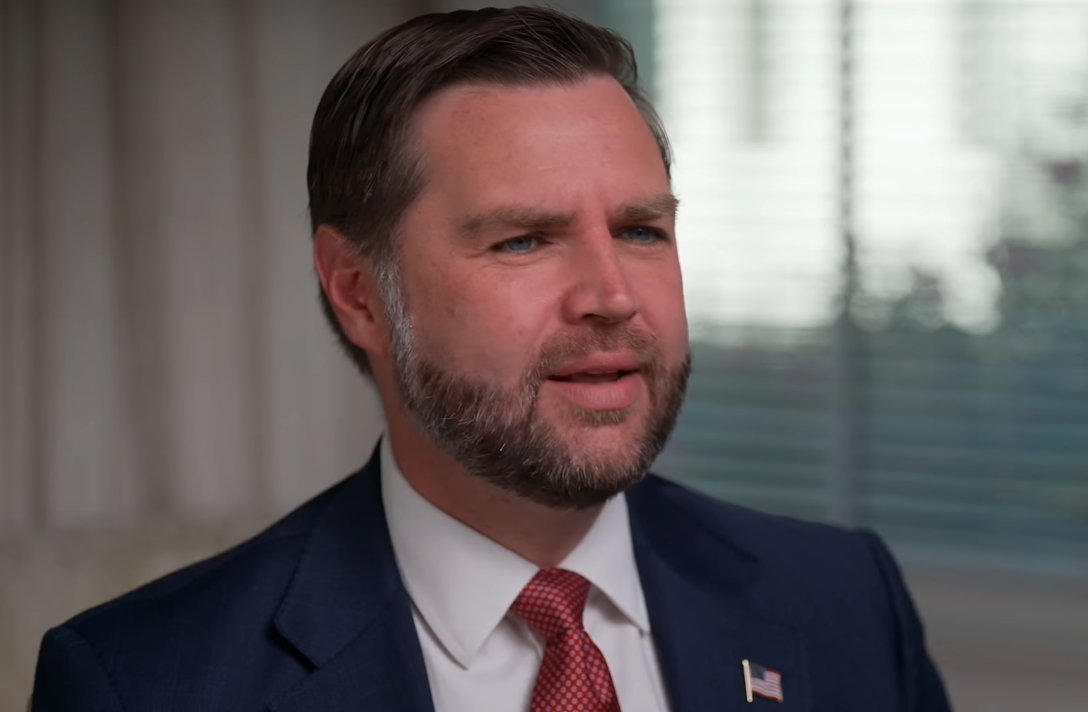
JD Vance spoke with EWTN News anchor Raymond Arroyo in a wide-ranging interview that included politics, immigration, economics, and faith.
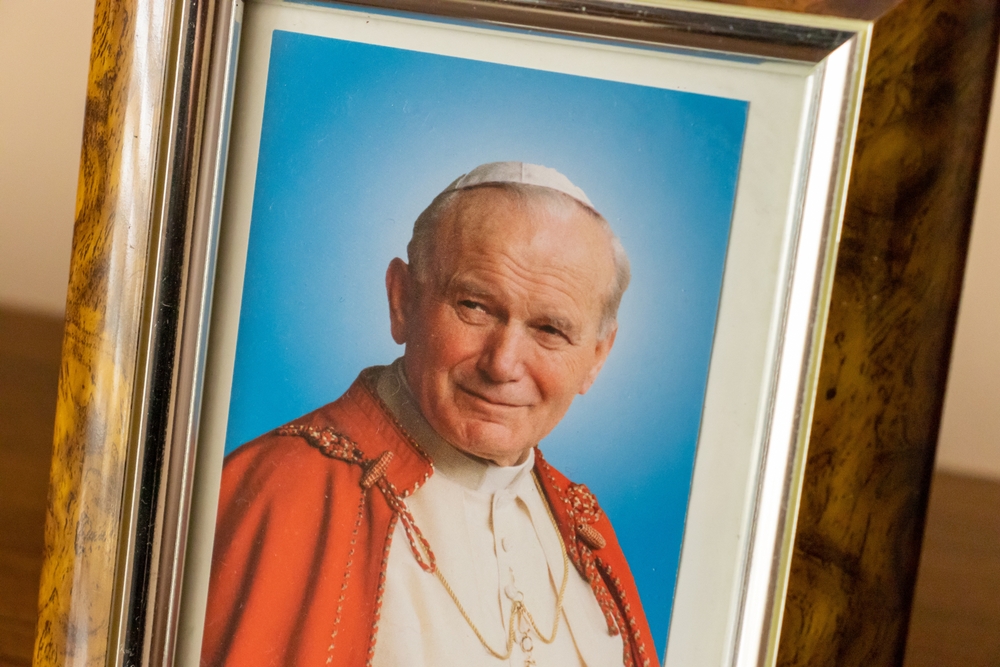
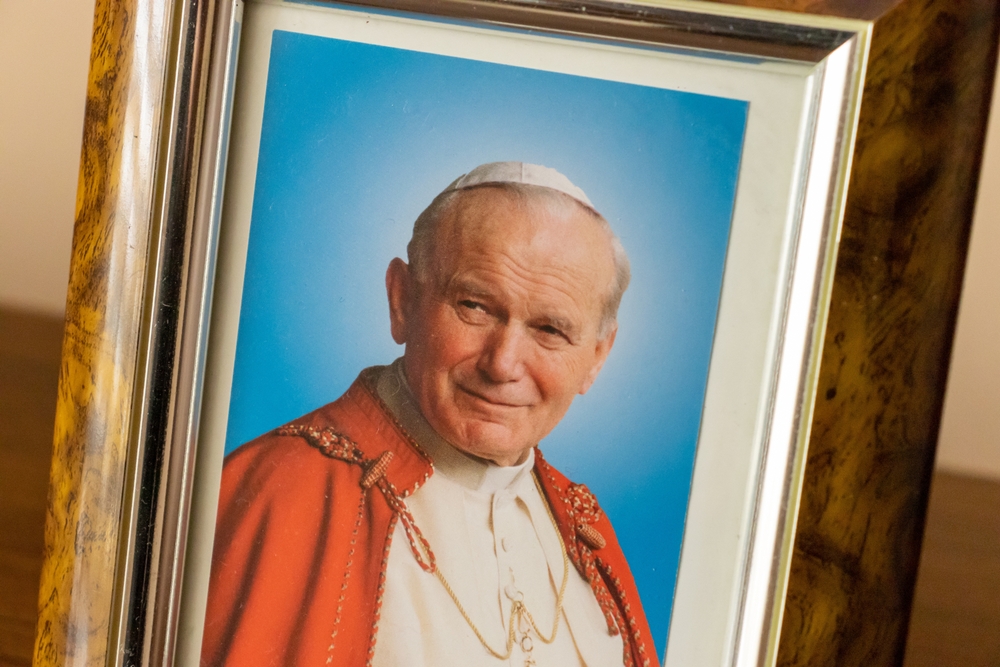
St. John Paul II was the second-longest-serving pope in modern history with 27 years of pontificate and the first non-Italian pontiff to be elected since Pope Adrian VI in 1523.
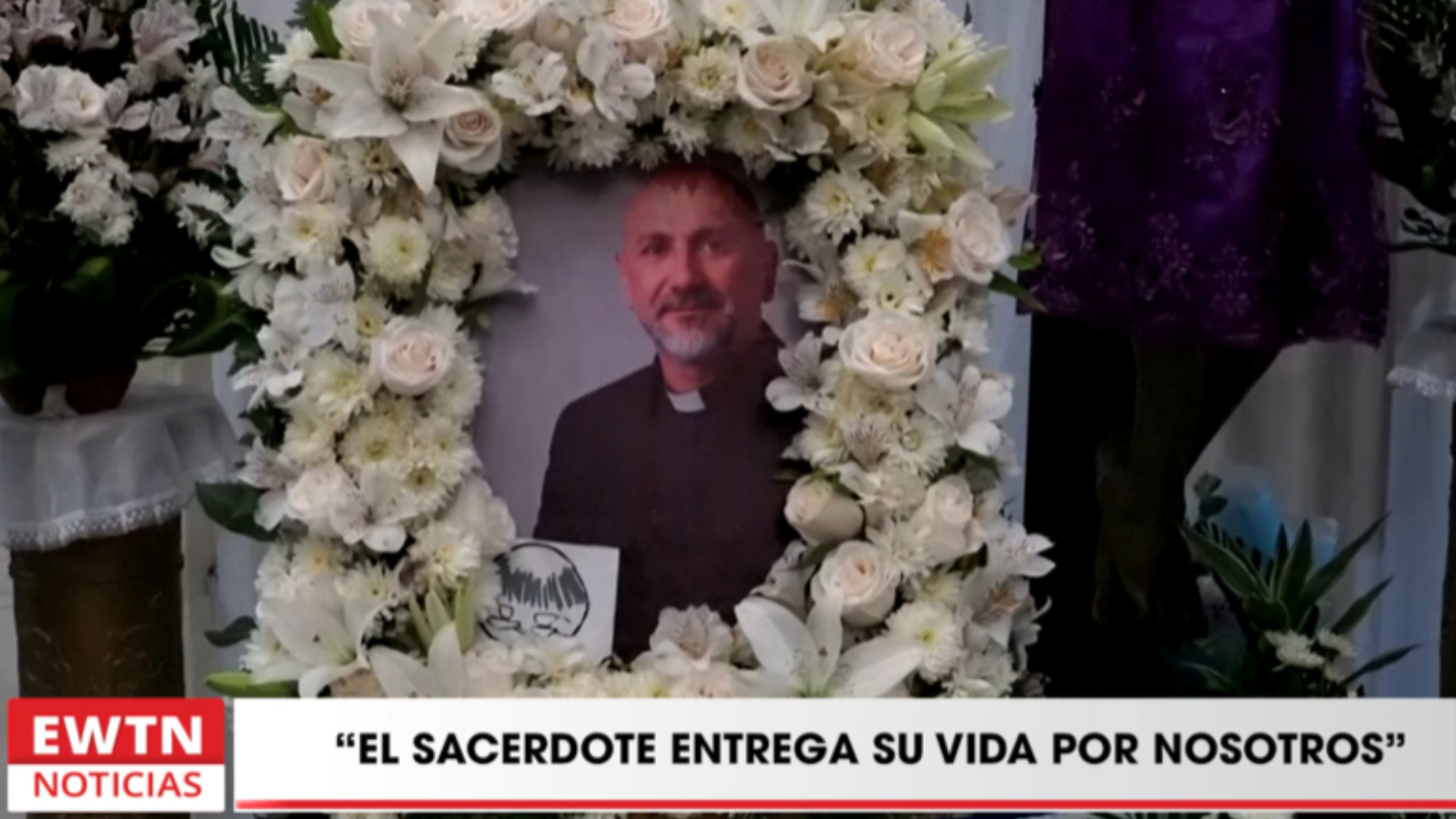
![Falling cross that killed priest a punishment from God? A priest reflects #Catholic The death of Father Patricio Alfredo Sánchez Molinari on Saturday, Oct. 17, which occurred when a cross fell on him while he was celebrating Mass in Guayaquil, Ecuador, has left Catholics in shock.In response to comments on social media questioning whether the incident was a punishment from God, Father Juan Carlos Vásconez, a priest and rector of St. Josemaría Escrivá Church in Guayaquil, pointed to a passage from the Gospel to explain why it should not be interpreted in that way.In comments to EWTN News Español, the Spanish-language sister service of EWTN News, Vásconez spoke about the collapse of the tower of Siloam, which resulted in the deaths of 18 people (cf. Luke 13:4-5). He explained that Jesus made it clear that the victims were no more sinful than the other inhabitants of Jerusalem. Rather than assigning them blame, the Lord called everyone to repentance.“In the face of death, there is a message of equality. Life is fragile, and we will all go through that moment,” he said.The priest recalled that Sánchez was very well loved in Guayaquil and noted his piety. In February, he had led a retreat that was attended by other priests.A cross falls during MassFor Vásconez, the circumstances surrounding the Redemptorist priest’s death also invite reflection on the Christian faith.“The Mass is the sacrifice of Christ on Calvary, and it is the greatest thing we Christians have here on earth,” he noted.Vásconez shared in the grief caused by Sánchez’s passing, affirming that even in the midst of a tragedy, the faithful can find strength in God. He also asked for prayers for the Redemptorists and for the community of Our Lady of Perpetual Help Parish, which has lost its parish priest.“I would say that this will serve as a seed, inspiring [more men] to also want to dedicate themselves,” he added, referring to the possibility that the priest’s witness might encourage new vocations.Reviewing safety in churchesVásconez also called for an inspection of objects installed within churches to prevent accidents. He emphasized the need to ensure that crosses and religious images are securely fastened and that items attached to walls and ceilings are also checked.He mentioned that he recently learned of another incident in which a piece of marble detached from a wall. Consequently, he explained that at the church where he serves, they will inspect the ceiling lights to ensure they are securely anchored.“These are safety matters which incidents like this serve as a reminder to pay attention to such things,” he noted.The priest asked for prayers for the parishioners of Our Lady of Perpetual Help and for the Redemptorist family following the death of Sánchez.This story was first published by EWTN News Español, the Spanish-language sister service of EWTN News. It has been translated and adapted by EWTN News English.](https://unitedyam.com/wp-content/uploads/2026/10/falling-cross-that-killed-priest-a-punishment-from-god-a-priest-reflects-catholic-the-death-of-father-patricio-alfredo-sanchez-molinari-on-saturday-oct-17-which-occurred-when-a-cross-fell-on-him-scaled.jpg "Falling cross that killed priest a punishment from God? A priest reflects #Catholic The death of Father Patricio Alfredo Sánchez Molinari on Saturday, Oct. 17, which occurred when a cross fell on him while he was celebrating Mass in Guayaquil, Ecuador, has left Catholics in shock.In response to comments on social media questioning whether the incident was a punishment from God, Father Juan Carlos Vásconez, a priest and rector of St. Josemaría Escrivá Church in Guayaquil, pointed to a passage from the Gospel to explain why it should not be interpreted in that way.In comments to EWTN News Español, the Spanish-language sister service of EWTN News, Vásconez spoke about the collapse of the tower of Siloam, which resulted in the deaths of 18 people (cf. Luke 13:4-5). He explained that Jesus made it clear that the victims were no more sinful than the other inhabitants of Jerusalem. Rather than assigning them blame, the Lord called everyone to repentance.“In the face of death, there is a message of equality. Life is fragile, and we will all go through that moment,” he said.The priest recalled that Sánchez was very well loved in Guayaquil and noted his piety. In February, he had led a retreat that was attended by other priests.A cross falls during MassFor Vásconez, the circumstances surrounding the Redemptorist priest’s death also invite reflection on the Christian faith.“The Mass is the sacrifice of Christ on Calvary, and it is the greatest thing we Christians have here on earth,” he noted.Vásconez shared in the grief caused by Sánchez’s passing, affirming that even in the midst of a tragedy, the faithful can find strength in God. He also asked for prayers for the Redemptorists and for the community of Our Lady of Perpetual Help Parish, which has lost its parish priest.“I would say that this will serve as a seed, inspiring [more men] to also want to dedicate themselves,” he added, referring to the possibility that the priest’s witness might encourage new vocations.Reviewing safety in churchesVásconez also called for an inspection of objects installed within churches to prevent accidents. He emphasized the need to ensure that crosses and religious images are securely fastened and that items attached to walls and ceilings are also checked.He mentioned that he recently learned of another incident in which a piece of marble detached from a wall. Consequently, he explained that at the church where he serves, they will inspect the ceiling lights to ensure they are securely anchored.“These are safety matters which incidents like this serve as a reminder to pay attention to such things,” he noted.The priest asked for prayers for the parishioners of Our Lady of Perpetual Help and for the Redemptorist family following the death of Sánchez.This story was first published by EWTN News Español, the Spanish-language sister service of EWTN News. It has been translated and adapted by EWTN News English.")
Father Juan Vásconez said the death of Father Patricio Sánchez resulting from a large cross falling in him should not be interpreted as a punishment but as a call to repent, as we will all die.
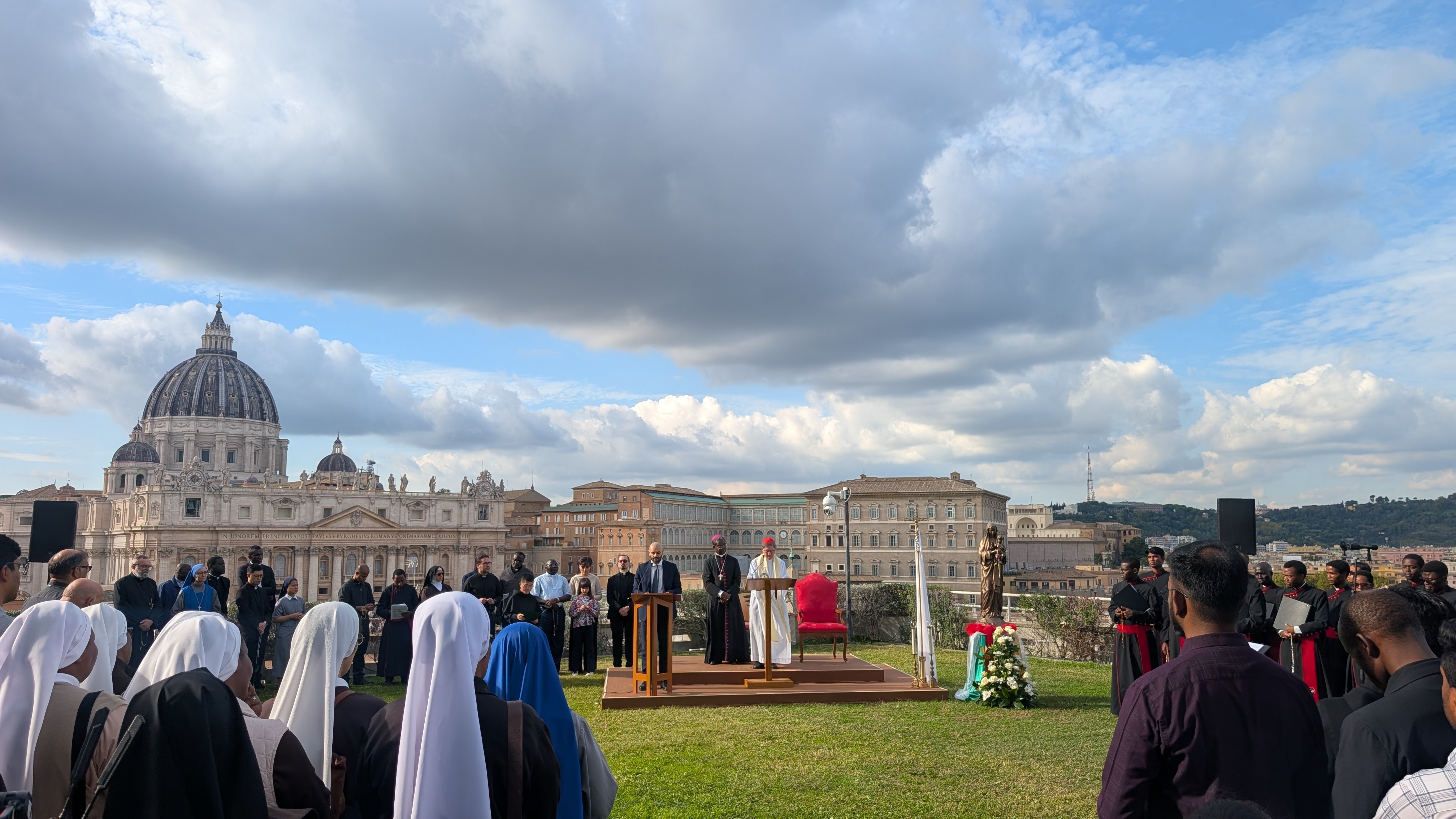
![International rosary in Rome held in advance of 100th World Mission Sunday #Catholic An international rosary in Rome united clergy, religious, and lay faithful to mark the 100th anniversary of World Mission Sunday.The rosary was held on the grounds of the Pontifical Urban University on Oct. 17, the eve of this year’s World Mission Sunday on Oct. 18. Led by Cardinal Luis Antonio Tagle, dean of the College of Cardinals and Grand Chancellor of the university, the rosary was recited in 13 languages across five mysteries representing Africa, Asia, the Americas, Europe, and Oceania.The occasion also marked the 75th anniversary of the rosary’s establishment by Blessed Fulton J. Sheen, who was U.S. national director of the Pontifical Mission Societies from 1950 to 1966.Sister Mary Teresa Baron, recently appointed president of the Pontifical Mission Societies, was not present during the rosary.Several participants in the rosary explained how the faithful can support the Church’s missionaries beyond financial contributions.Archbishop Fortunatus Nwachukwu, who serves as a secretary at the Dicastery for Evangelization, urged a focus on the Word of God.“I am always a bit wary about monetizing mission,” Nwachukwu said to EWTN News. “So, I do not want to begin with money; I want to begin with the Word, because mission is all about bringing the Word of the Lord to the ends of the earth.”
Archbishop Fortunatus Nwachukwu, secretary of the Section of First Evangelization at the Dicastery for Evangelization, participated in an international rosary at the Pontifical Urban University in Rome on Oct. 17, 2026, to mark the 100th anniversary of World Mission Sunday. | Credit: Ishmael Adibuah/EWTN News
At the same time, Nwachukwu indicated that supporting missionaries also means providing “the means to bring the Gospel to various places.” That support, he said, involves money.“[Today] is also an occasion to tell people: please, be generous to missionaries,” Nwachukwu said.Msgr. Thomas George Schluep, who also serves at the Dicastery for Evangelization, cited Pope Leo XIV’s message for World Mission Sunday as a reminder that unity in Christ precedes material support“Pope Leo, in his message for this 100th Anniversary of World Mission Sunday, reminds us that we first must be one in Christ,” Schluep told EWTN News. “Our baptism calls us to be missionaries: to share that love with our families, our friends, our coworkers.”Memories of missionaries, Pope Leo’s return from the hospitalParticipants also shared personal anecdotes about missionaries and their impact on their faith journey.Schluep shared his memory of Father Gerard Hammond, an American Maryknoll missionary priest known for his decades of humanitarian work in North and South Korea.“I met him in Korea, where he had been serving since 1960 when he was ordained and sent on mission. He was celebrated by thousands of people in South Korea for bringing the faith to them over the course of 65 years,” Schluep said.“In North Korea he could not speak of Christ, but his “apostolate of presence” and love for those suffering from tuberculosis was itself evangelization. He taught me a lot about the importance of being present to people, exactly where they are at in their lives, no matter the personal cost.”Around the time the rosary was taking place, Pope Leo XIV returned to the Vatican after being hospitalized for surgery Oct. 13 at Rome’s Gemelli Hospital. Nwachukwu expressed happiness at his return and hoped that “the Lord will keep him quite long among us”.“We are all praying for him. We love the Pope, and we love what he is doing.”The contributions of AmericansSchluep, an American from Pittsburgh, Pennsylvania, also noted the significant contributions of Americans, such as Blessed Fulton Sheen, to missionary work through the Pontifical Mission Societies.“The American contribution to the missions historically has been enormous,” Schluep noted. “It was a great joy to see Fulton Sheen beatified, who did so much to evangelize the United States, but also who traveled personally to so many missions around the world and did so much to raise funds for those missions.”
Cardinal Tagle stands before the image of Blessed Fulton Sheen during the beatification Mass in St. Louis on Sept. 24, 2026. | Credit: Jeffrey Bruno
Schluep said he hoped the example of Pope Leo XIV, the first U.S.-born pope, would encourage renewed American support. “The fact that the Holy Father understands American culture and missionary life in Peru can help him in his particular guidance for us, but now he is the Pope of the entire world, and he calls us to think also of the entire world and not just our country, our families, and especially ourselves,” Schluep said.](https://unitedyam.com/wp-content/uploads/2026/10/international-rosary-in-rome-held-in-advance-of-100th-world-mission-sunday-catholic-an-international-rosary-in-rome-united-clergy-religious-and-lay-faithful-to-mark-the-100th-anniversary-of-world-m-scaled.jpg "International rosary in Rome held in advance of 100th World Mission Sunday #Catholic An international rosary in Rome united clergy, religious, and lay faithful to mark the 100th anniversary of World Mission Sunday.The rosary was held on the grounds of the Pontifical Urban University on Oct. 17, the eve of this year’s World Mission Sunday on Oct. 18. Led by Cardinal Luis Antonio Tagle, dean of the College of Cardinals and Grand Chancellor of the university, the rosary was recited in 13 languages across five mysteries representing Africa, Asia, the Americas, Europe, and Oceania.The occasion also marked the 75th anniversary of the rosary’s establishment by Blessed Fulton J. Sheen, who was U.S. national director of the Pontifical Mission Societies from 1950 to 1966.Sister Mary Teresa Baron, recently appointed president of the Pontifical Mission Societies, was not present during the rosary.Several participants in the rosary explained how the faithful can support the Church’s missionaries beyond financial contributions.Archbishop Fortunatus Nwachukwu, who serves as a secretary at the Dicastery for Evangelization, urged a focus on the Word of God.“I am always a bit wary about monetizing mission,” Nwachukwu said to EWTN News. “So, I do not want to begin with money; I want to begin with the Word, because mission is all about bringing the Word of the Lord to the ends of the earth.”
Archbishop Fortunatus Nwachukwu, secretary of the Section of First Evangelization at the Dicastery for Evangelization, participated in an international rosary at the Pontifical Urban University in Rome on Oct. 17, 2026, to mark the 100th anniversary of World Mission Sunday. | Credit: Ishmael Adibuah/EWTN News
At the same time, Nwachukwu indicated that supporting missionaries also means providing “the means to bring the Gospel to various places.” That support, he said, involves money.“[Today] is also an occasion to tell people: please, be generous to missionaries,” Nwachukwu said.Msgr. Thomas George Schluep, who also serves at the Dicastery for Evangelization, cited Pope Leo XIV’s message for World Mission Sunday as a reminder that unity in Christ precedes material support“Pope Leo, in his message for this 100th Anniversary of World Mission Sunday, reminds us that we first must be one in Christ,” Schluep told EWTN News. “Our baptism calls us to be missionaries: to share that love with our families, our friends, our coworkers.”Memories of missionaries, Pope Leo’s return from the hospitalParticipants also shared personal anecdotes about missionaries and their impact on their faith journey.Schluep shared his memory of Father Gerard Hammond, an American Maryknoll missionary priest known for his decades of humanitarian work in North and South Korea.“I met him in Korea, where he had been serving since 1960 when he was ordained and sent on mission. He was celebrated by thousands of people in South Korea for bringing the faith to them over the course of 65 years,” Schluep said.“In North Korea he could not speak of Christ, but his “apostolate of presence” and love for those suffering from tuberculosis was itself evangelization. He taught me a lot about the importance of being present to people, exactly where they are at in their lives, no matter the personal cost.”Around the time the rosary was taking place, Pope Leo XIV returned to the Vatican after being hospitalized for surgery Oct. 13 at Rome’s Gemelli Hospital. Nwachukwu expressed happiness at his return and hoped that “the Lord will keep him quite long among us”.“We are all praying for him. We love the Pope, and we love what he is doing.”The contributions of AmericansSchluep, an American from Pittsburgh, Pennsylvania, also noted the significant contributions of Americans, such as Blessed Fulton Sheen, to missionary work through the Pontifical Mission Societies.“The American contribution to the missions historically has been enormous,” Schluep noted. “It was a great joy to see Fulton Sheen beatified, who did so much to evangelize the United States, but also who traveled personally to so many missions around the world and did so much to raise funds for those missions.”
Cardinal Tagle stands before the image of Blessed Fulton Sheen during the beatification Mass in St. Louis on Sept. 24, 2026. | Credit: Jeffrey Bruno
Schluep said he hoped the example of Pope Leo XIV, the first U.S.-born pope, would encourage renewed American support. “The fact that the Holy Father understands American culture and missionary life in Peru can help him in his particular guidance for us, but now he is the Pope of the entire world, and he calls us to think also of the entire world and not just our country, our families, and especially ourselves,” Schluep said.")
The rosary, recited in 13 languages, also marked the 75th anniversary of the World Mission Rosary by Blessed Fulton Sheen.
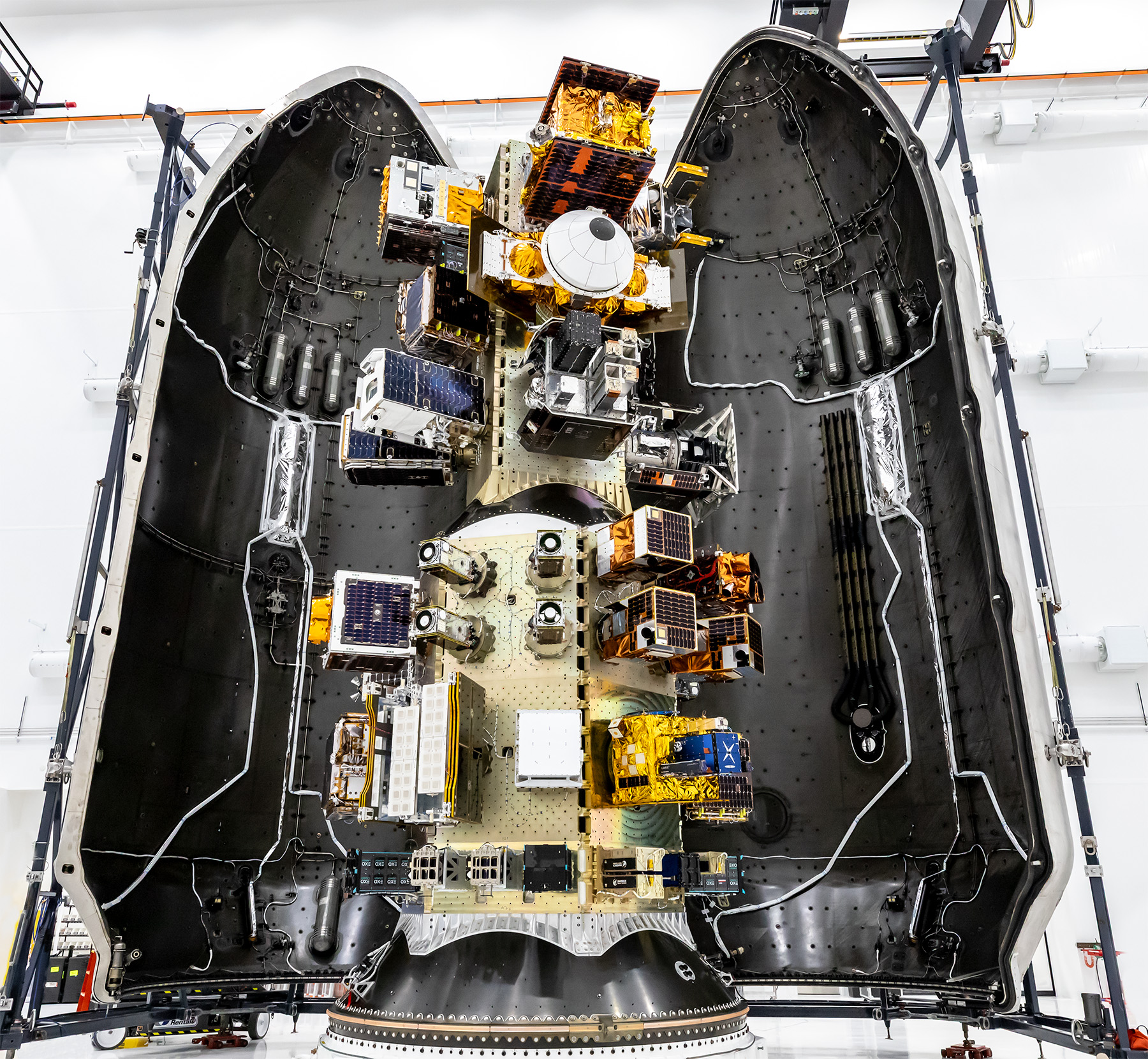
Three NASA-supported small spacecraft, shown along with many commercial payloads, before being encapsulated in a SpaceX Falcon 9. The rocket launched the payloads into low-Earth orbit at 11:32 a.m. PDT Thursday, Oct. 1, 2026, as part of the company’s Transporter-18 mission from Space Launch Complex 4 East at Vandenberg Space Force Base in California.
Read More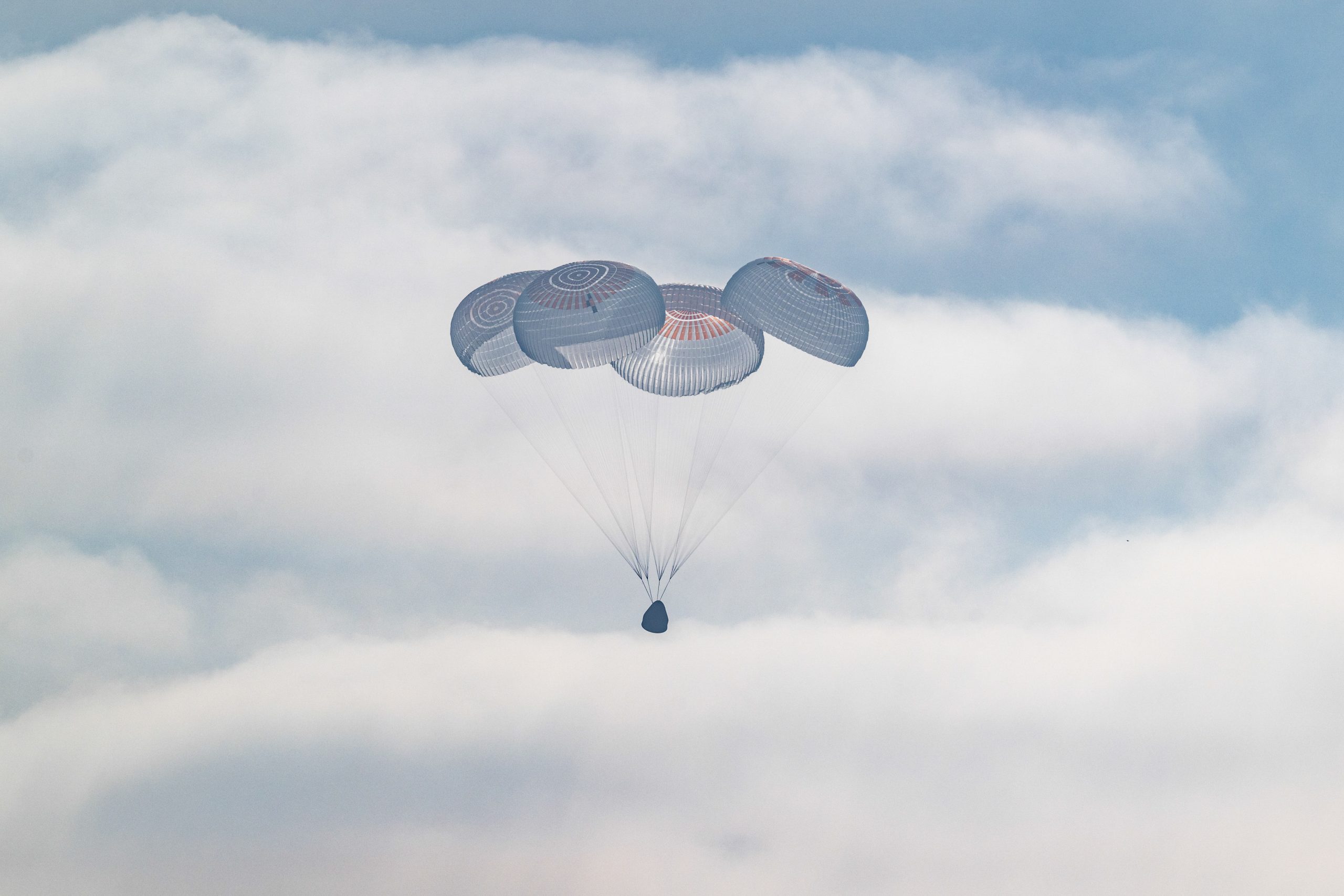
The SpaceX Crew Dragon Freedom spacecraft is seen as it lands with NASA astronauts Jessica Meir and Jack Hathaway, ESA (European Space Agency) astronaut Sophie Adenot, and Roscosmos cosmonaut Andrey Fedyaev aboard in the Pacific Ocean off the coast of Los Angeles, Calif., Thursday, Oct. 8, 2026.
Read More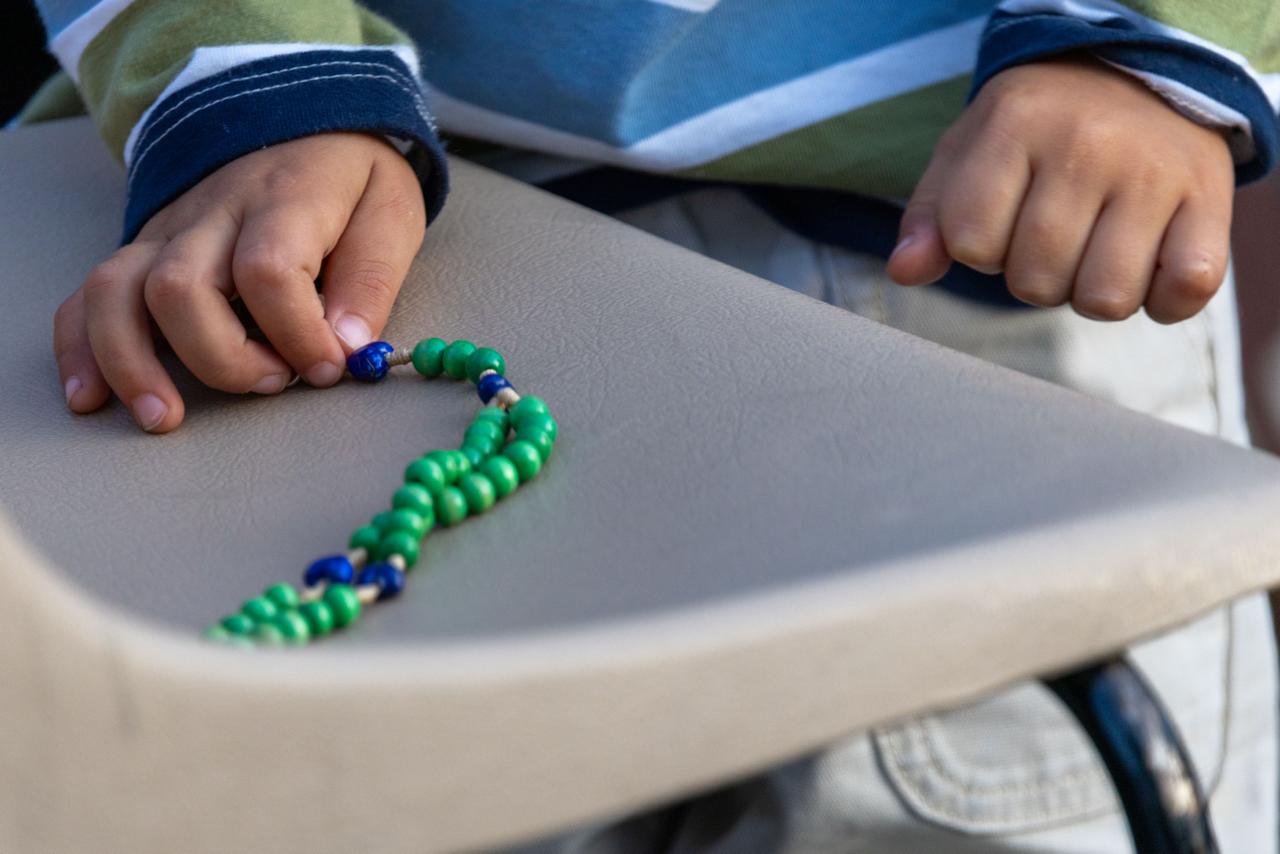
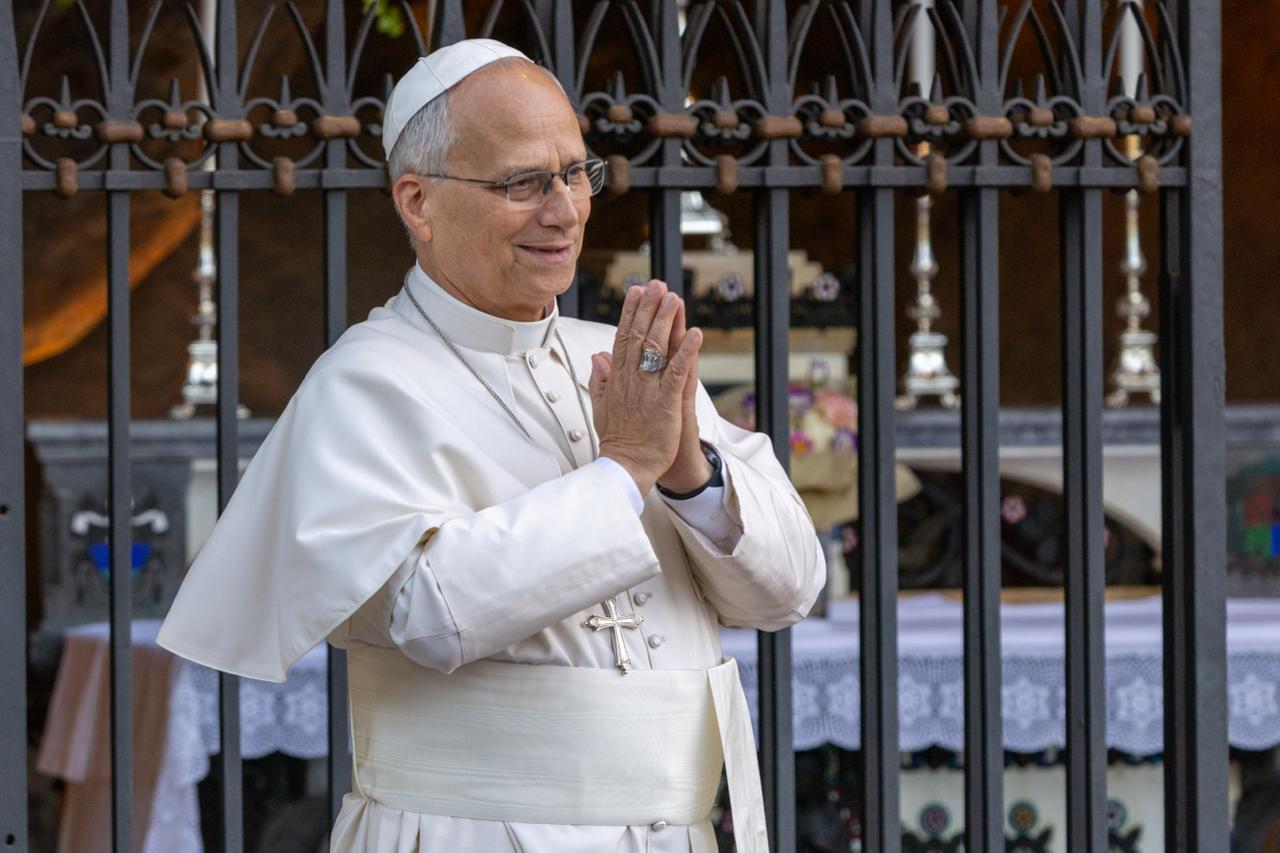
“Let us repeat together: ‘I love you, Jesus. I love you, Mary,’” the pontiff said in his remarks before the rosary in the Vatican Gardens.
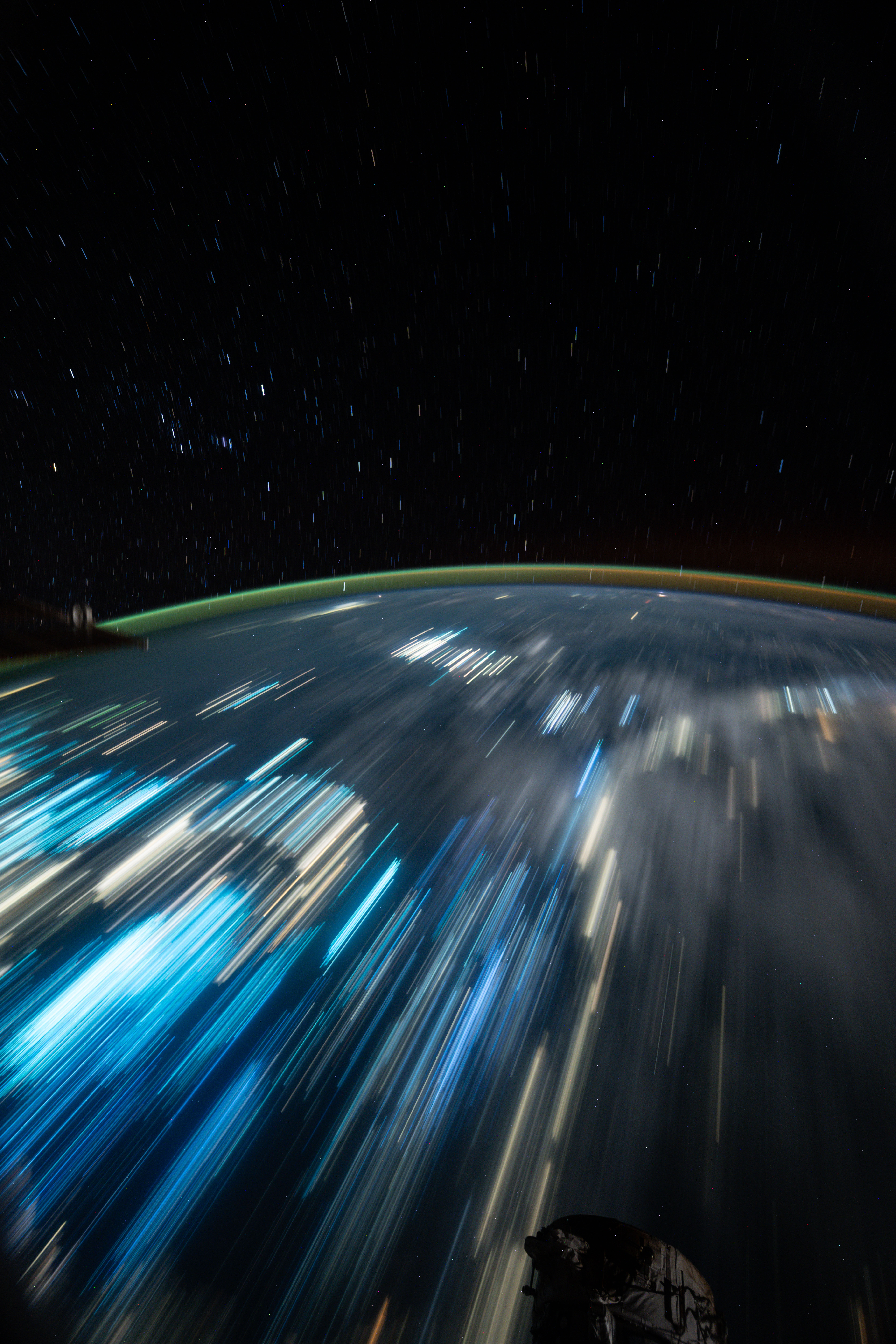
This long-duration image shows star trails above Earth and the blue lights of fishing boats and the yellow lights of Indonesian cities stretching below the International Space Station as it orbited 258 miles above the Banda Sea.
Read More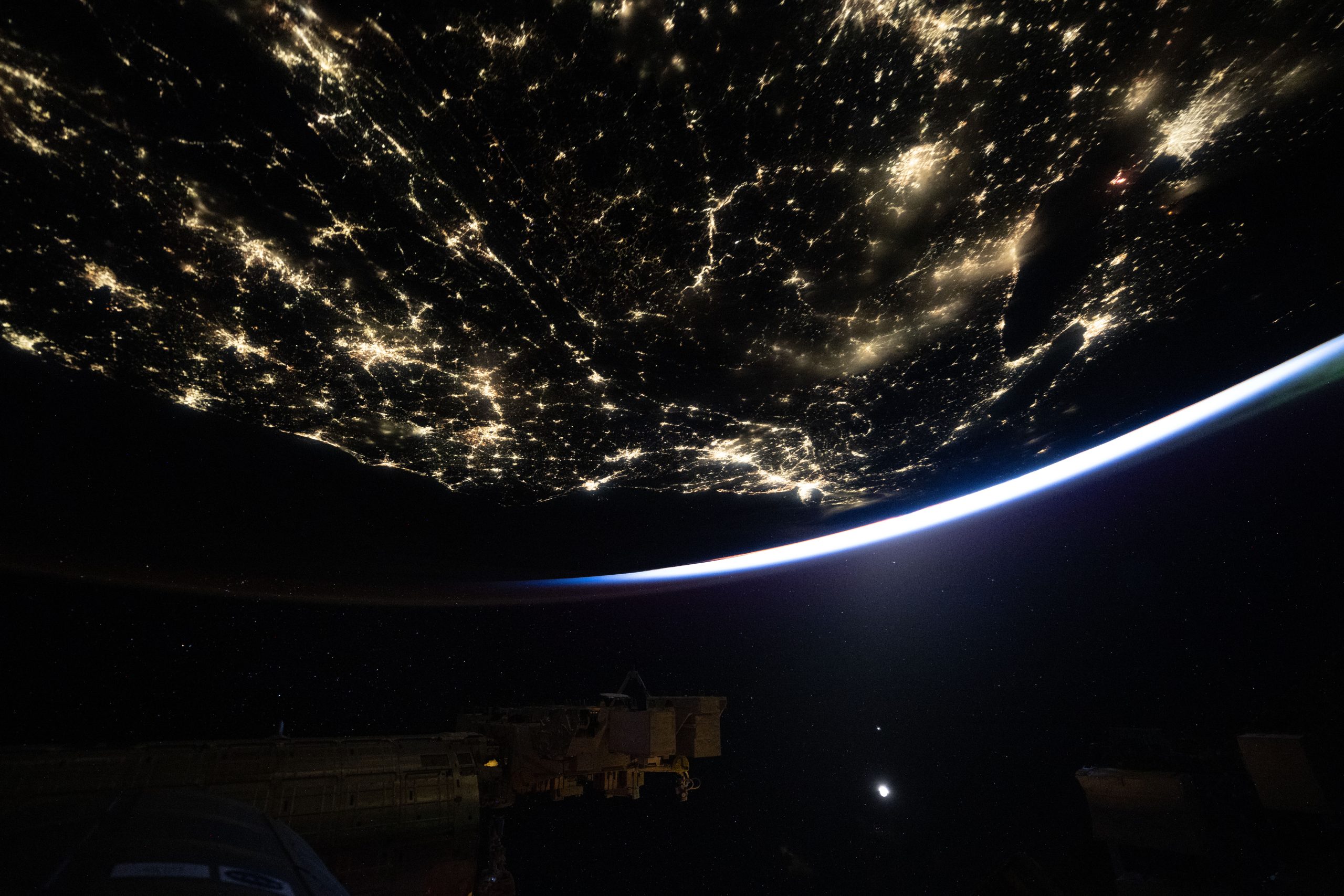
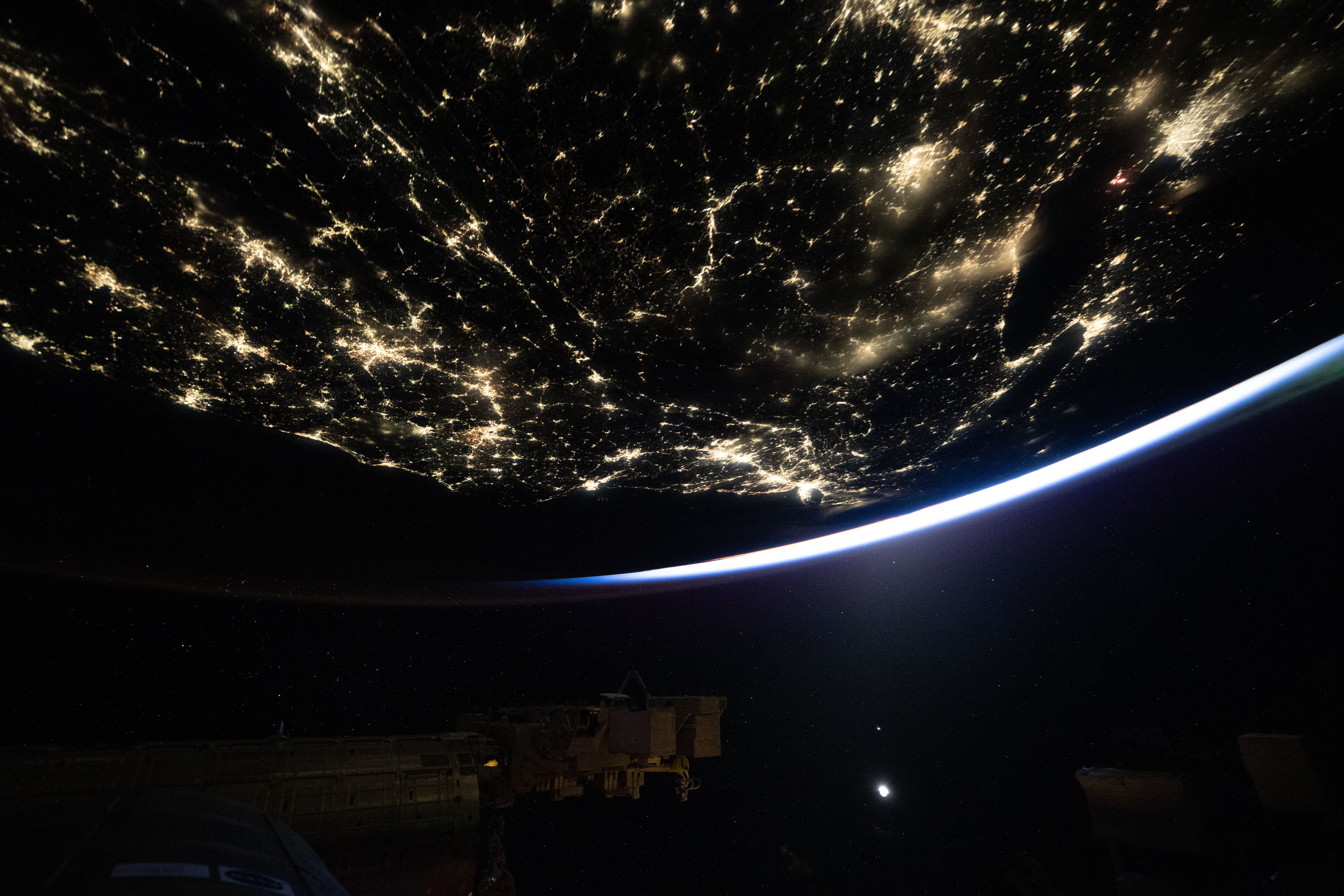
This nighttime view of the United States, dotted with city lights looking toward New York City (center), was taken at approximately 3:40 a.m. local time from the International Space Station as it orbited 259 miles above Earth.
Read More![Catholic professor calls families to reclaim the home in a technological age #Catholic John Cuddeback, a professor of philosophy at Christendom College, says families today don’t often know how to achieve what they desire in their homes and family life. As a remedy, drawing from both ancient and modern thinkers, he has released "The Intentional Household: Living as if People Matter,” a book that outlines eight pillars for reclaiming the home as a place of human flourishing. “Families today are struggling to achieve what they so badly want: to have the kind of relationships we’re made for, beginning in the home, especially between spouses and between parents and children,” Cuddeback said. “They know they want something different, something better, but they feel hamstrung. In a culture that works against them in many ways, they are frustrated because they lack clear vision and examples to pattern themselves after.”
“The Intentional Household: Living as if People Matter” by Christendom College professor John Cuddeback. | Credit: Ken Oliver-Méndez/EWTN News
Cuddeback, who teaches a course on family and household and is also the author of “True Friendship,” spoke to EWTN News about how he hopes his book conveys that “[a]nyone can choose to be intentional about their household and make real progress with dramatic fruits in the lives of those we love most.” EWTN News: What do you see as the biggest challenge to building and maintaining an intentional home?Cuddebach: It all begins with priorities. As a society we have turned away from the intense focus that our household requires — and this is evident in how we struggle in marriage, raising children, and relating to the elderly. Even many traditionally-minded folks struggle to realize and enact the demanding, even while ordinary, aspects of God’s plan for our homes.Aristotle says that a society tends to produce the kind of people it honors. We do not honor those who prioritize home life — either women or men. This means that many of the structures, practices, and assumptions of our age are at odds with the real good of home life. This is especially evident in our obsession with the latest technologies.This book is a call to all of us to do something radically different and profoundly better — while always recognizing we must be people of our time and place. It calls us to discover that looking first to what our children and our elderly really need is the high road to deeper fulfillment for all of us.How has Pope Leo XIV’s encyclical Magnifica Humanitas influenced your thought on how technology should be incorporated in the home?Pope Leo makes clear that we have come to a crisis point. The time is now to be honest, serious, and persistent in examining our use of technology in view of real human flourishing. This must start in the home. No one else is going to do this for us.But as the pope makes clear, right practice must flow from an understanding of who we are and what we’re made for. “The Intentional Household” offers the rich and positive view of daily life in the home that grounds such an examination. It gives the “yes” that strengthens the “nos” we need to say. It gives direction for rising to the challenges of our age, including how to channel technology to true human flourishing.Approaching homelife intentionally — especially attending to the ordinary in good work and true leisure as essential to our relationships — we can take real steps to become those biblical good stewards so honored by the Lord.How does this apply to those across all walks of life, including single people, married couples without children, those who are divorced or separated?The principles of a vibrant home life are both perennial and flexible. Wherever we find ourselves we can discover how the plan that God wrote into human nature is much better than we have realized.Brokenness and suffering today are widespread. God’s plan encompasses these realities. By the grace of God, anyone who is humble and willing to take an intentional approach can affect real, and indeed dramatic change by applying the book’s eight principles. We can all take real steps to make our homes a place of vibrant life, with deep belonging, connection, and presence.One of the thinkers you cite in your book is Wendell Berry. In light of his recent passing can you speak to his influence on your life and thinking?Wendell Berry saw clearly how the loss of activities of work and leisure in the home has led to our experience of disconnection and isolation. Home should be a place of deep connection: between us and loved ones and neighbors, between soul and body, between us and the earth.One of Berry’s pivotal insights is the key role of a certain kind of work in the home. Berry has pointed out that the work of traditional home arts is much more important than we have realized. He argues that as the breakdown of home life came especially through the loss of good work, the renewal will likewise come through a rediscovery of work that connects us to one another as it connects us to our bodies and to the earth, and ultimately to God.Wendell Berry was a prophet of the extraordinary beauty and importance of the ordinary. Making our home an intentional household means rediscovering the power of ordinary things, such as mealtimes with the whole household, shared work in the kitchen and other home arts, and “porch time” and other such leisure times. Attention to these things can transform our marriage, parenting, and other key relationships.](https://unitedyam.com/wp-content/uploads/2026/09/catholic-professor-calls-families-to-reclaim-the-home-in-a-technological-age-catholic-john-cuddeback-a-professor-of-philosophy-at-christendom-college-says-families-today-dont-often-know-ho.jpg "Catholic professor calls families to reclaim the home in a technological age #Catholic John Cuddeback, a professor of philosophy at Christendom College, says families today don’t often know how to achieve what they desire in their homes and family life. As a remedy, drawing from both ancient and modern thinkers, he has released \"The Intentional Household: Living as if People Matter,” a book that outlines eight pillars for reclaiming the home as a place of human flourishing. “Families today are struggling to achieve what they so badly want: to have the kind of relationships we’re made for, beginning in the home, especially between spouses and between parents and children,” Cuddeback said. “They know they want something different, something better, but they feel hamstrung. In a culture that works against them in many ways, they are frustrated because they lack clear vision and examples to pattern themselves after.”
“The Intentional Household: Living as if People Matter” by Christendom College professor John Cuddeback. | Credit: Ken Oliver-Méndez/EWTN News
Cuddeback, who teaches a course on family and household and is also the author of “True Friendship,” spoke to EWTN News about how he hopes his book conveys that “[a]nyone can choose to be intentional about their household and make real progress with dramatic fruits in the lives of those we love most.” EWTN News: What do you see as the biggest challenge to building and maintaining an intentional home?Cuddebach: It all begins with priorities. As a society we have turned away from the intense focus that our household requires — and this is evident in how we struggle in marriage, raising children, and relating to the elderly. Even many traditionally-minded folks struggle to realize and enact the demanding, even while ordinary, aspects of God’s plan for our homes.Aristotle says that a society tends to produce the kind of people it honors. We do not honor those who prioritize home life — either women or men. This means that many of the structures, practices, and assumptions of our age are at odds with the real good of home life. This is especially evident in our obsession with the latest technologies.This book is a call to all of us to do something radically different and profoundly better — while always recognizing we must be people of our time and place. It calls us to discover that looking first to what our children and our elderly really need is the high road to deeper fulfillment for all of us.How has Pope Leo XIV’s encyclical Magnifica Humanitas influenced your thought on how technology should be incorporated in the home?Pope Leo makes clear that we have come to a crisis point. The time is now to be honest, serious, and persistent in examining our use of technology in view of real human flourishing. This must start in the home. No one else is going to do this for us.But as the pope makes clear, right practice must flow from an understanding of who we are and what we’re made for. “The Intentional Household” offers the rich and positive view of daily life in the home that grounds such an examination. It gives the “yes” that strengthens the “nos” we need to say. It gives direction for rising to the challenges of our age, including how to channel technology to true human flourishing.Approaching homelife intentionally — especially attending to the ordinary in good work and true leisure as essential to our relationships — we can take real steps to become those biblical good stewards so honored by the Lord.How does this apply to those across all walks of life, including single people, married couples without children, those who are divorced or separated?The principles of a vibrant home life are both perennial and flexible. Wherever we find ourselves we can discover how the plan that God wrote into human nature is much better than we have realized.Brokenness and suffering today are widespread. God’s plan encompasses these realities. By the grace of God, anyone who is humble and willing to take an intentional approach can affect real, and indeed dramatic change by applying the book’s eight principles. We can all take real steps to make our homes a place of vibrant life, with deep belonging, connection, and presence.One of the thinkers you cite in your book is Wendell Berry. In light of his recent passing can you speak to his influence on your life and thinking?Wendell Berry saw clearly how the loss of activities of work and leisure in the home has led to our experience of disconnection and isolation. Home should be a place of deep connection: between us and loved ones and neighbors, between soul and body, between us and the earth.One of Berry’s pivotal insights is the key role of a certain kind of work in the home. Berry has pointed out that the work of traditional home arts is much more important than we have realized. He argues that as the breakdown of home life came especially through the loss of good work, the renewal will likewise come through a rediscovery of work that connects us to one another as it connects us to our bodies and to the earth, and ultimately to God.Wendell Berry was a prophet of the extraordinary beauty and importance of the ordinary. Making our home an intentional household means rediscovering the power of ordinary things, such as mealtimes with the whole household, shared work in the kitchen and other home arts, and “porch time” and other such leisure times. Attention to these things can transform our marriage, parenting, and other key relationships.")
Christendom College professor John Cuddeback spoke to EWTN News about his new book “The Intentional Household: Living as if People Matter,” and treating our homes as places of human flourishing.
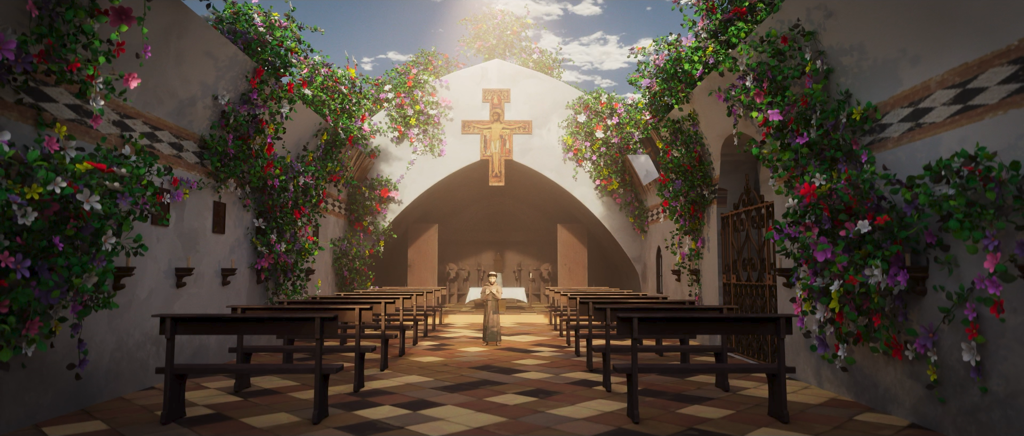
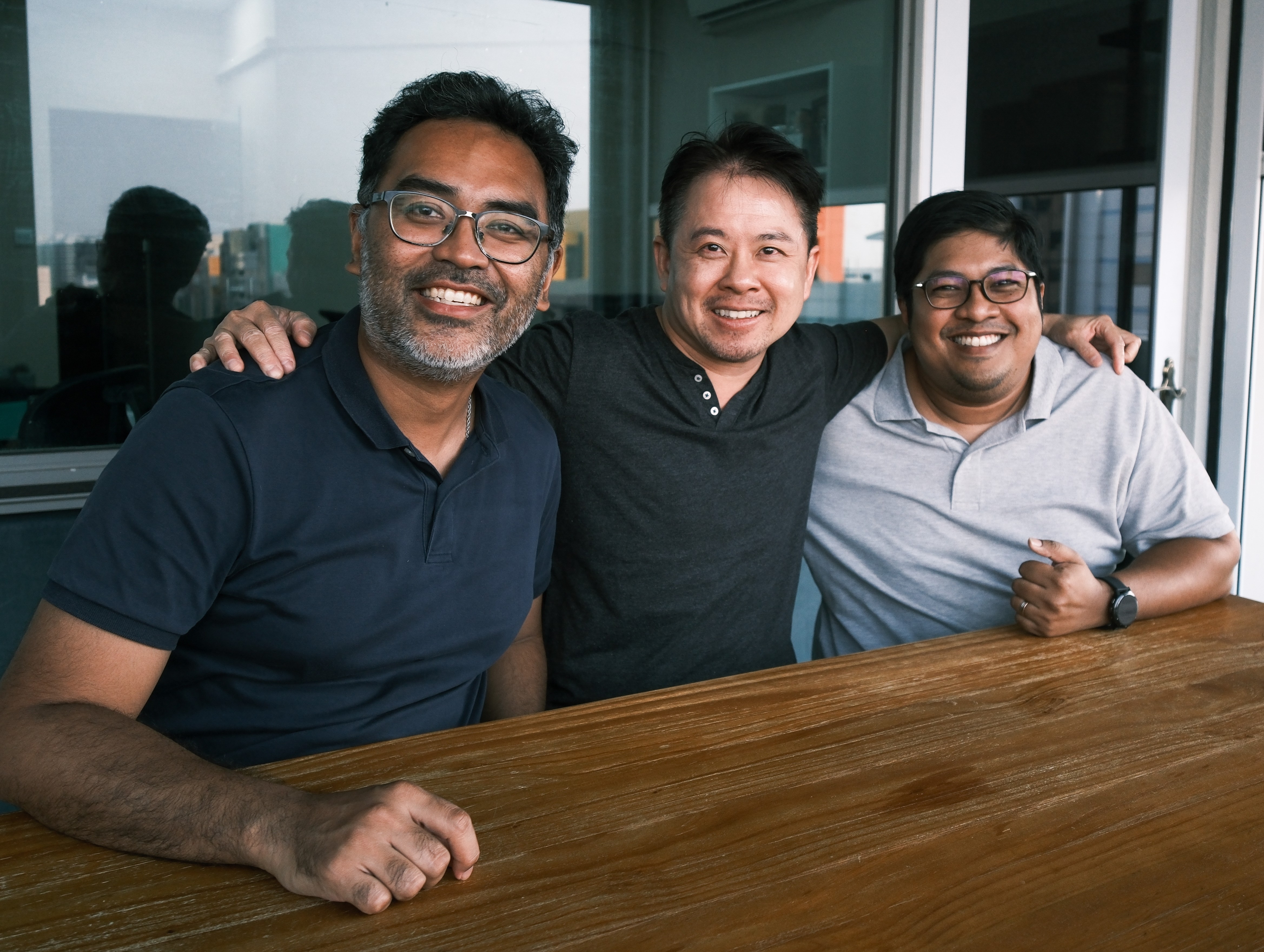
Director Benjamin Tanaka, executive producer Gabriel Patrick, and composer Ethan Hsu call the project “The Francis Chronicles.”
![Apostolic nuncio calls for ‘moral voice’ in AI development #Catholic Archbishop Gabriele Giordano Caccia, apostolic nuncio to the United States, discussed the need for a “moral voice” in artificial intelligence (AI) development during a panel discussion hosted by Georgetown University on Sept. 9.The panel, titled “AI, Catholic Social Teaching, and Pope Leoʼs Invitation to Dialogue with the World,” examined Pope Leo XIV’s encyclical Magnifica Humanitas and its call for a shared human effort to develop technology that serves the common good rather than harms it.Speakers noted that the Holy Father’s encyclical stopped short of prescribing specific policy ideas for addressing the moral and ethical concerns, but the nuncio said “there is the perception that we need a moral voice” on the subject.“A moral voice is what?” he said. “Not everything which is possible to be done should be done. Not everything that technology offers should be taken. This is a moral choice.”Caccia stressed that decisions affecting human lives should not be handed over to AI, citing distinctions between AI algorithms and the human conscience, as the Holy Father discussed in Magnifica Humanitas.Leo drew a distinction between artificial intelligence and human intelligence in the encyclical, focusing on how each approaches moral questions. The pope wrote that he rejected ideas of “artificial moral agents” and the notion that a machine can “distinguish between right and wrong with greater consistency than a human being.”“Moral judgment cannot be reduced to calculation, for it involves conscience, personal responsibility and the recognition of the other as a person,” Leo wrote. “Therefore, it is not permissible to entrust lethal or otherwise irreversible decisions to artificial systems.”Caccia said during the panel discussion that, as a society, “we have to keep the value of the human relationship.”“The problem is that [if] life and death is decided by a machine, not by the human being, who is accountable?” he said. “So these are very important, important questions. But I am confident, as I said, that together we can face this situation and find a way.”The nuncio said he has similar concerns about the use of AI in other types of decision-making that impacts humans.“I hear very troubling accounts of algorithms that can block access to healthcare, employment, and security on the basis of data tainted by prejudice and injustice,” he said. “And Iʼve heard the silence of those who have no voice. When decisions are made, decisions [are] likely to generate new forms of exclusion and suffering.”Quoting the encyclical, Caccia affirmed the pope’s call that AI “needs to be disarmed.”
Archbishop Gabriele Caccia, the Holy See’s permanent observer to the United Nations in New York, speaks on Aug. 29, 2025, the International Day Against Nuclear Tests. | Credit: Holy See Mission to the United Nations
“The word is strong, I know, but deliberately chosen because this moment needs words capable of attracting attention, awakening consciences, and indicating paths forward for humanity,” he said. “This is more or less a framework in which we can go on with the conversation.”Speaking to EWTN News after the panel, Caccia said the pope’s call to address moral concerns of AI is not just a call to Church leadership but to every Catholic.“There is, of course, the voice of the bishops,” he said. “But there is also the voice of Catholic people who are in the business or are engineers who are in the economy, who are in the field. So itʼs not just for those who have pastoral responsibility, but for the bigger community.”Pope’s impact on AI discussionSeveral panelists discussed the importance of Magnifica Humanitas in providing a type of moral guidance on AI development that focuses on the common good of humanity.Jasmine Sun, a journalist who writes about AI and Silicon Valley, said she “was actually surprised by how much folks I knew in Silicon Valley, in the AI industry did pay attention to Magnifica Humanitas.”“It was a lot more engagement, I think, than I expected,” she said. “And once again, I think itʼs because there is this sense that the profit motive that has driven Silicon Valley, that continues to drive Silicon Valley, is not enough.”Molly Kinder, CEO of the Breakwater Initiative, said the Church provides “wisdom and moral leadership” and believes its broad focus on humanity is why people listened.“Iʼm struck that in the opening pages of the Bible, there is a discussion of Adam and Eve being put on Earth to till the land as our fundamental reason for existing,” she said. “And it feels to me sometimes when Iʼm in Silicon Valley … they almost talk about almost a new Garden of Eden that AI is going to bring about, that maybe our purpose is not to work, or maybe itʼs leisure or a check and a hobby.”Caccia too said he was “positively surprised” by the reaction to the encyclical, saying “it seems that there was a need to do something about this.”“It didnʼt pretend to have the answers,” he said, “but he put questions, common questions that we have to tackle together to decide where we want to go.”](https://unitedyam.com/wp-content/uploads/2026/09/apostolic-nuncio-calls-for-moral-voice-in-ai-development-catholic-archbishop-gabriele-giordano-caccia-apostolic-nuncio-to-the-united-states-discussed-the-need-for-a-moral.jpg "Apostolic nuncio calls for ‘moral voice’ in AI development #Catholic Archbishop Gabriele Giordano Caccia, apostolic nuncio to the United States, discussed the need for a “moral voice” in artificial intelligence (AI) development during a panel discussion hosted by Georgetown University on Sept. 9.The panel, titled “AI, Catholic Social Teaching, and Pope Leoʼs Invitation to Dialogue with the World,” examined Pope Leo XIV’s encyclical Magnifica Humanitas and its call for a shared human effort to develop technology that serves the common good rather than harms it.Speakers noted that the Holy Father’s encyclical stopped short of prescribing specific policy ideas for addressing the moral and ethical concerns, but the nuncio said “there is the perception that we need a moral voice” on the subject.“A moral voice is what?” he said. “Not everything which is possible to be done should be done. Not everything that technology offers should be taken. This is a moral choice.”Caccia stressed that decisions affecting human lives should not be handed over to AI, citing distinctions between AI algorithms and the human conscience, as the Holy Father discussed in Magnifica Humanitas.Leo drew a distinction between artificial intelligence and human intelligence in the encyclical, focusing on how each approaches moral questions. The pope wrote that he rejected ideas of “artificial moral agents” and the notion that a machine can “distinguish between right and wrong with greater consistency than a human being.”“Moral judgment cannot be reduced to calculation, for it involves conscience, personal responsibility and the recognition of the other as a person,” Leo wrote. “Therefore, it is not permissible to entrust lethal or otherwise irreversible decisions to artificial systems.”Caccia said during the panel discussion that, as a society, “we have to keep the value of the human relationship.”“The problem is that [if] life and death is decided by a machine, not by the human being, who is accountable?” he said. “So these are very important, important questions. But I am confident, as I said, that together we can face this situation and find a way.”The nuncio said he has similar concerns about the use of AI in other types of decision-making that impacts humans.“I hear very troubling accounts of algorithms that can block access to healthcare, employment, and security on the basis of data tainted by prejudice and injustice,” he said. “And Iʼve heard the silence of those who have no voice. When decisions are made, decisions [are] likely to generate new forms of exclusion and suffering.”Quoting the encyclical, Caccia affirmed the pope’s call that AI “needs to be disarmed.”
Archbishop Gabriele Caccia, the Holy See’s permanent observer to the United Nations in New York, speaks on Aug. 29, 2025, the International Day Against Nuclear Tests. | Credit: Holy See Mission to the United Nations
“The word is strong, I know, but deliberately chosen because this moment needs words capable of attracting attention, awakening consciences, and indicating paths forward for humanity,” he said. “This is more or less a framework in which we can go on with the conversation.”Speaking to EWTN News after the panel, Caccia said the pope’s call to address moral concerns of AI is not just a call to Church leadership but to every Catholic.“There is, of course, the voice of the bishops,” he said. “But there is also the voice of Catholic people who are in the business or are engineers who are in the economy, who are in the field. So itʼs not just for those who have pastoral responsibility, but for the bigger community.”Pope’s impact on AI discussionSeveral panelists discussed the importance of Magnifica Humanitas in providing a type of moral guidance on AI development that focuses on the common good of humanity.Jasmine Sun, a journalist who writes about AI and Silicon Valley, said she “was actually surprised by how much folks I knew in Silicon Valley, in the AI industry did pay attention to Magnifica Humanitas.”“It was a lot more engagement, I think, than I expected,” she said. “And once again, I think itʼs because there is this sense that the profit motive that has driven Silicon Valley, that continues to drive Silicon Valley, is not enough.”Molly Kinder, CEO of the Breakwater Initiative, said the Church provides “wisdom and moral leadership” and believes its broad focus on humanity is why people listened.“Iʼm struck that in the opening pages of the Bible, there is a discussion of Adam and Eve being put on Earth to till the land as our fundamental reason for existing,” she said. “And it feels to me sometimes when Iʼm in Silicon Valley … they almost talk about almost a new Garden of Eden that AI is going to bring about, that maybe our purpose is not to work, or maybe itʼs leisure or a check and a hobby.”Caccia too said he was “positively surprised” by the reaction to the encyclical, saying “it seems that there was a need to do something about this.”“It didnʼt pretend to have the answers,” he said, “but he put questions, common questions that we have to tackle together to decide where we want to go.”")
Speakers at a Georgetown University event said Magnifica Humanitas offers moral guidance without policy steps, and the nuncio noted rising concern that debates over AI need a moral voice.


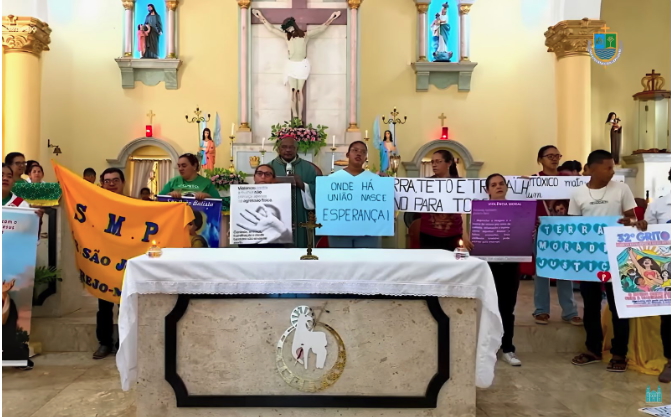
This past Sept. 7, the “Creed of the Ecclesial Base Communities” was included as part of a Mass marking Brazil’s annual “Cry of the Excluded” event.
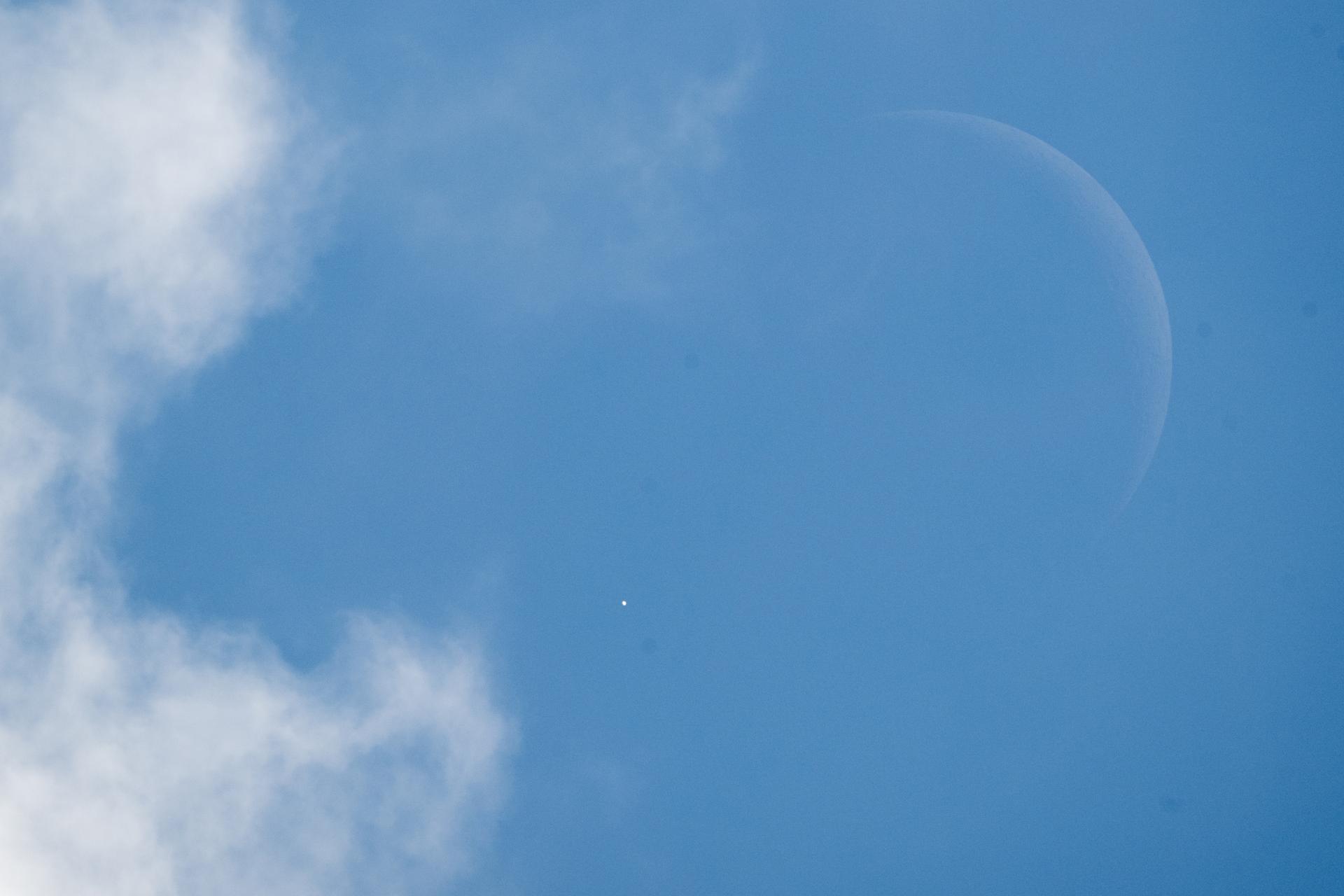
On Wednesday, June 17, skywatchers across the United States—and parts of Canada—enjoyed a rare event: a daytime lunar occultation of Venus. A lunar occultation occurs when the Moon moves directly in front of another celestial object from our viewpoint on Earth, briefly hiding it from sight.
Read More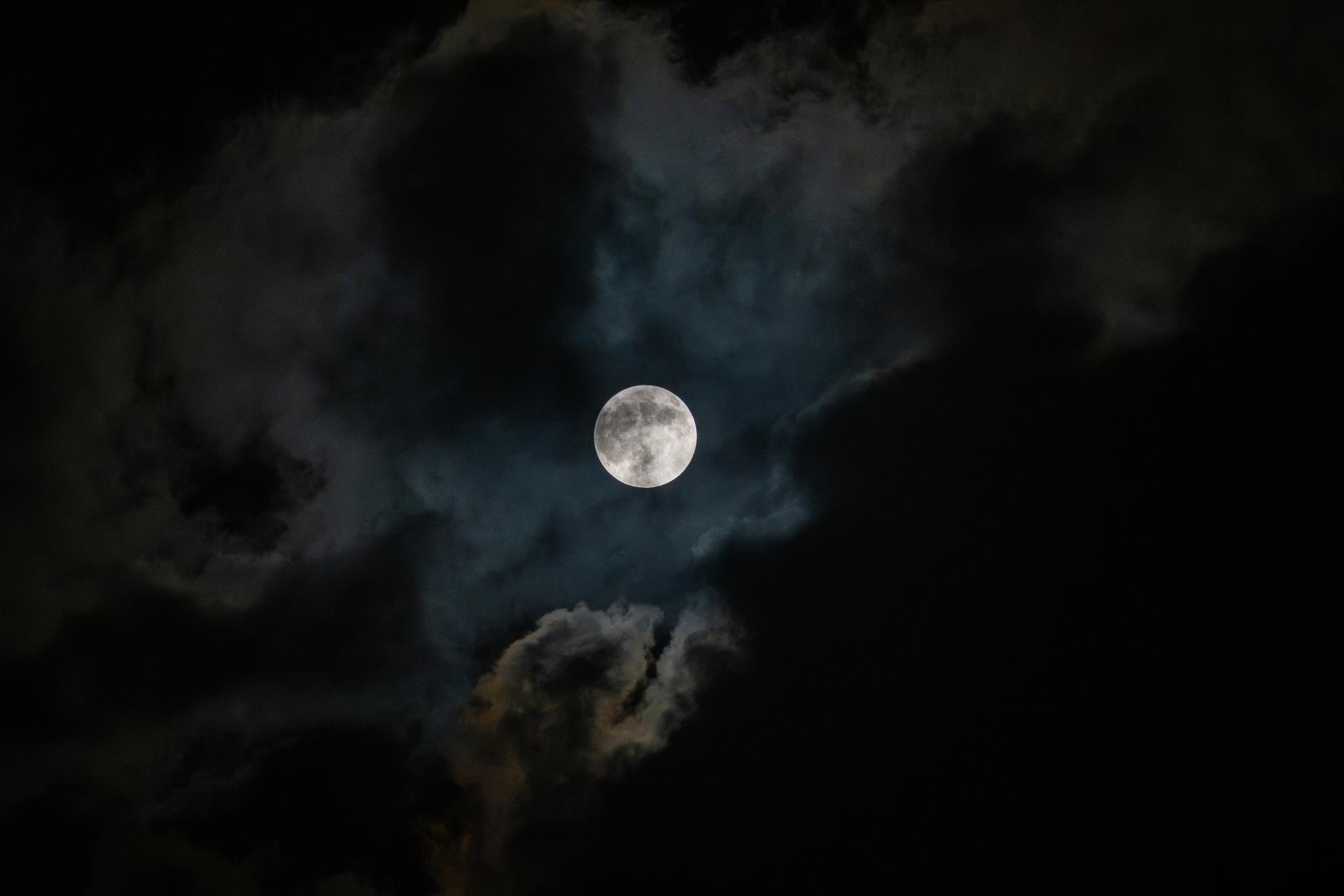
A lunar eclipse is visible over southern Louisiana. The lunar eclipse was visible throughout much of North and South America and part of Europe and Africa between Aug. 27-28. The Full Moon slipped through Earth’s shadow on Aug. 27, continuing into Aug. 28 for some parts of the world, resulting in the lunar eclipse. At maximum eclipse, the Moon takes on a dramatic dark, ruddy or coppery tint along the covered edge. New Orleans is home to NASA’s Michoud Assembly Facility, where stages for NASA’s SLS (Space Launch System) rocket and structures for Orion spacecraft are produced for the Artemis missions.
Read More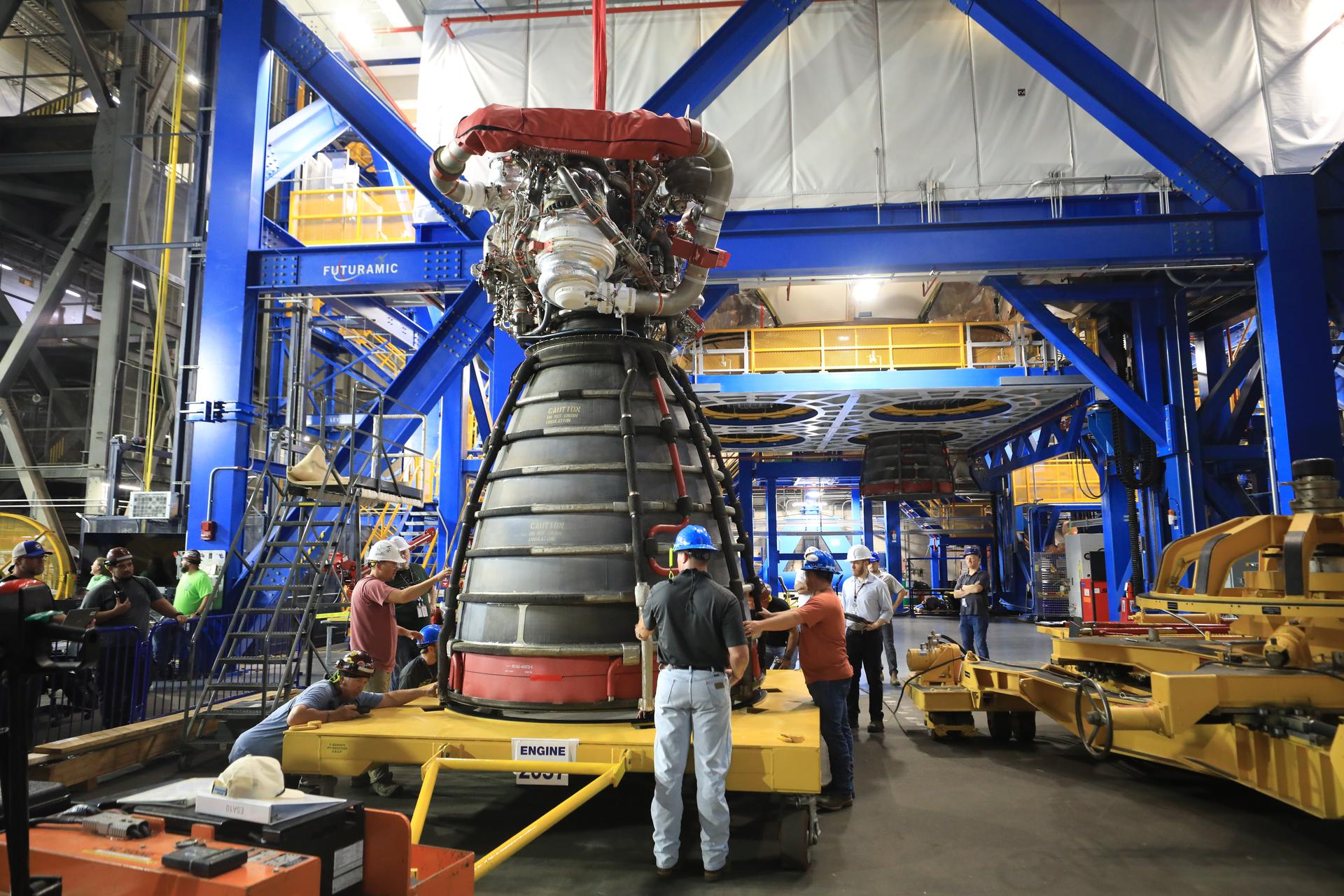
Technicians prepare to transfer the #2 RS-25 SLS (Space Launch System) rocket engine (front) to the work stand with the #3 engine (back) for integration with the Artemis III core stage rocket on Tuesday, Aug. 25, 2026, inside the Vehicle Assembly Building at NASA’s Kennedy Space Center in Florida. During Artemis III, the four RS‑25 engines will launch the Orion spacecraft and its crew of four into low Earth orbit, generating more than two million pounds of thrust at liftoff.
Read More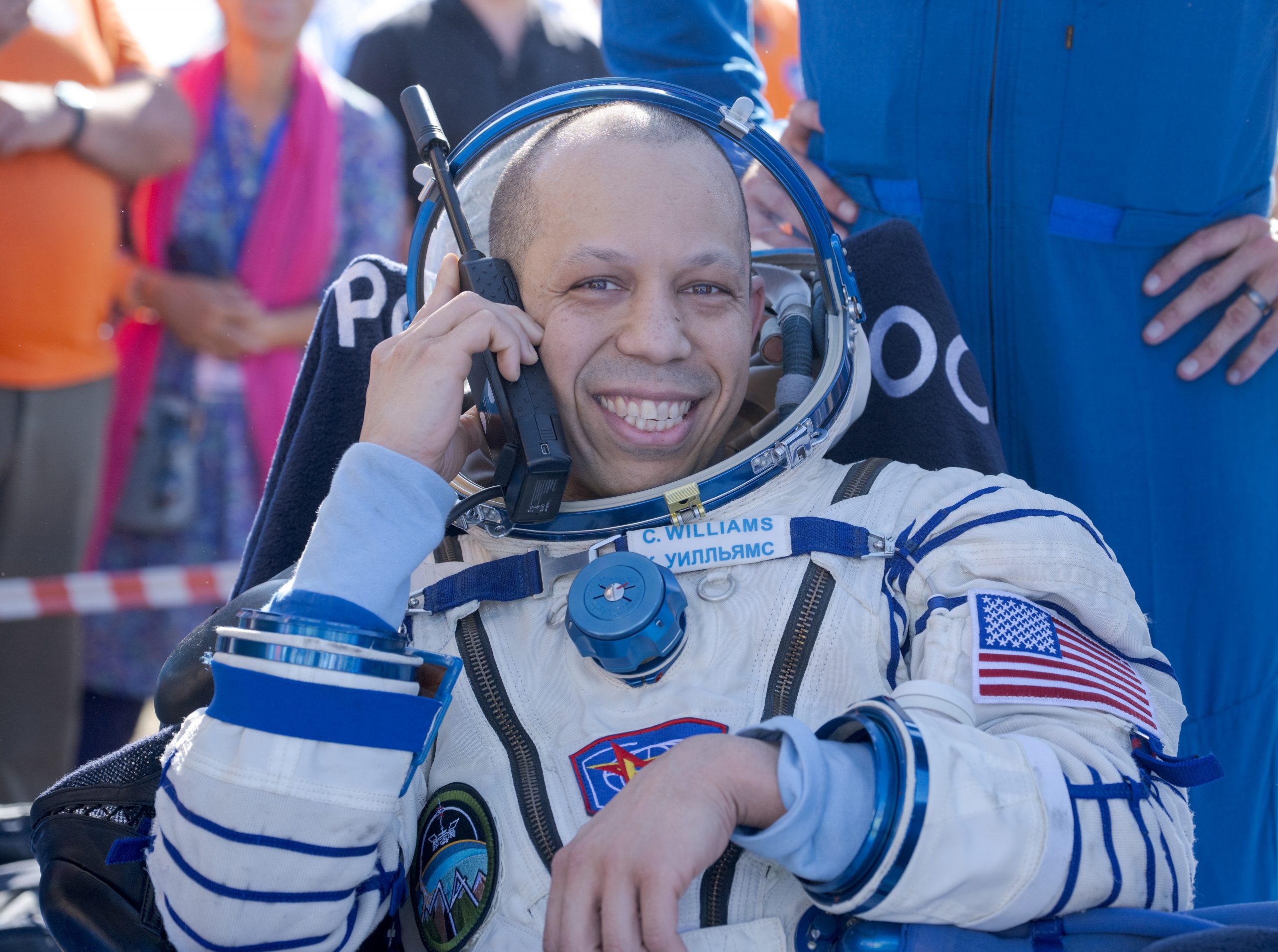
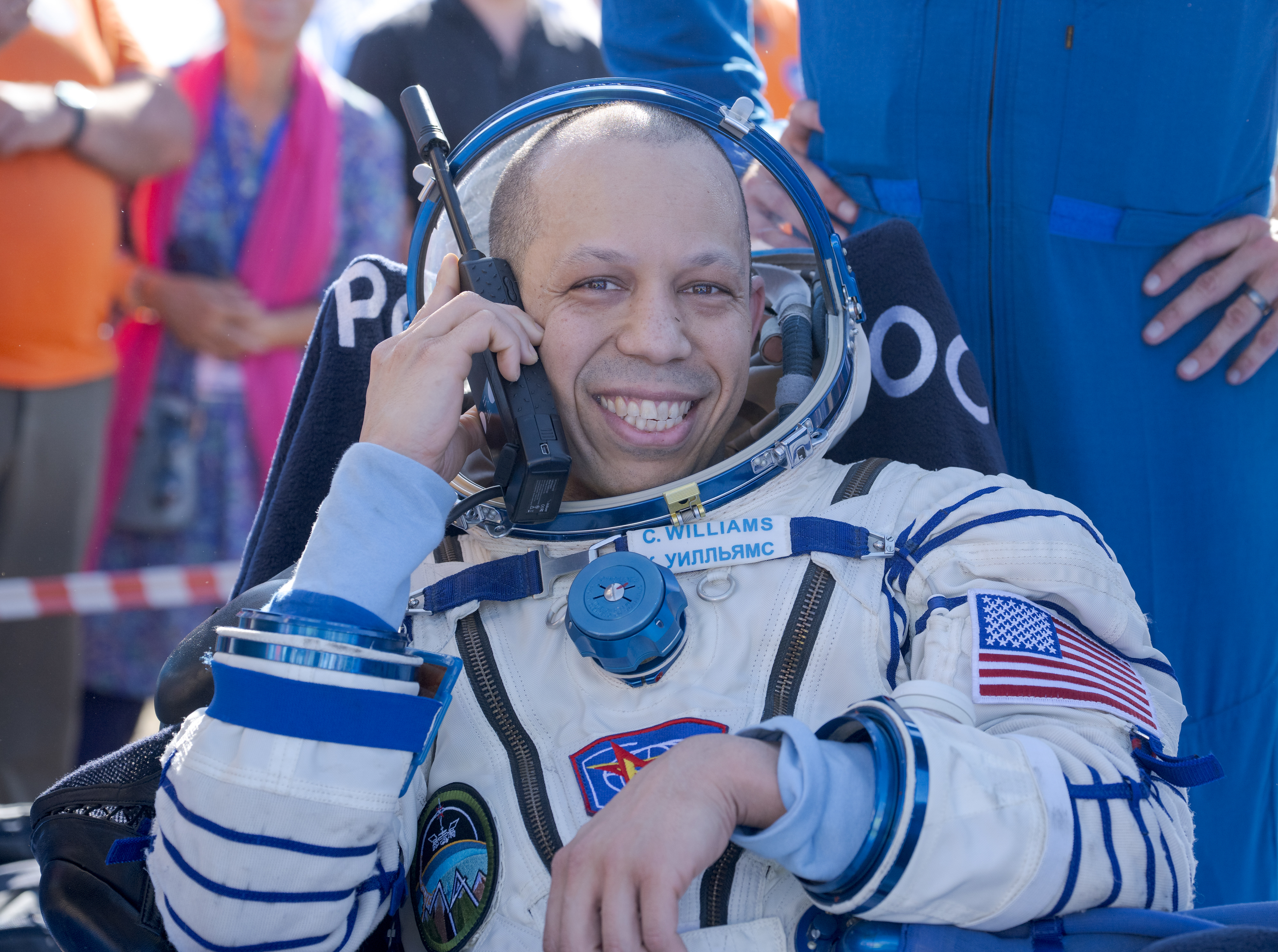
NASA astronaut Chris Williams is seen outside the Soyuz MS-28 spacecraft after he landed with Expedition 74 Roscosmos cosmonauts Sergey Kud-Sverchkov, and Sergei Mikaev in a remote area near the town of Zhezkazgan, Kazakhstan on Sunday, July 26, 2026. The trio returned to Earth after logging 241 days in space as a members of Expeditions 73 and 74 aboard the International Space Station.
Read More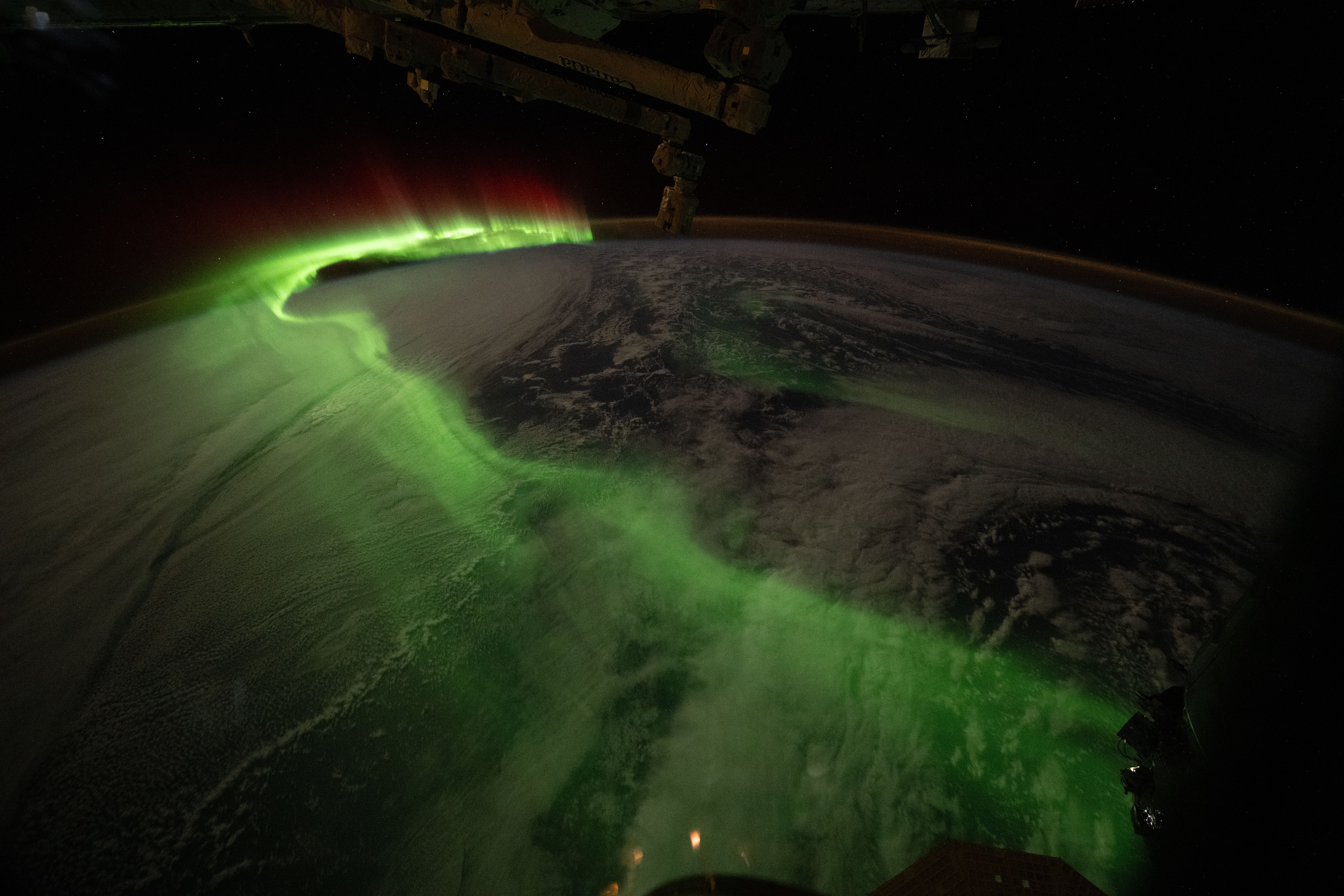
The aurora australis arcs over Earth during an active solar event in this photograph taken at approximately 11:32 p.m. local time from the International Space Station as it orbited 271 miles above the Indian Ocean southwest of Perth, Australia on June 5.
Read More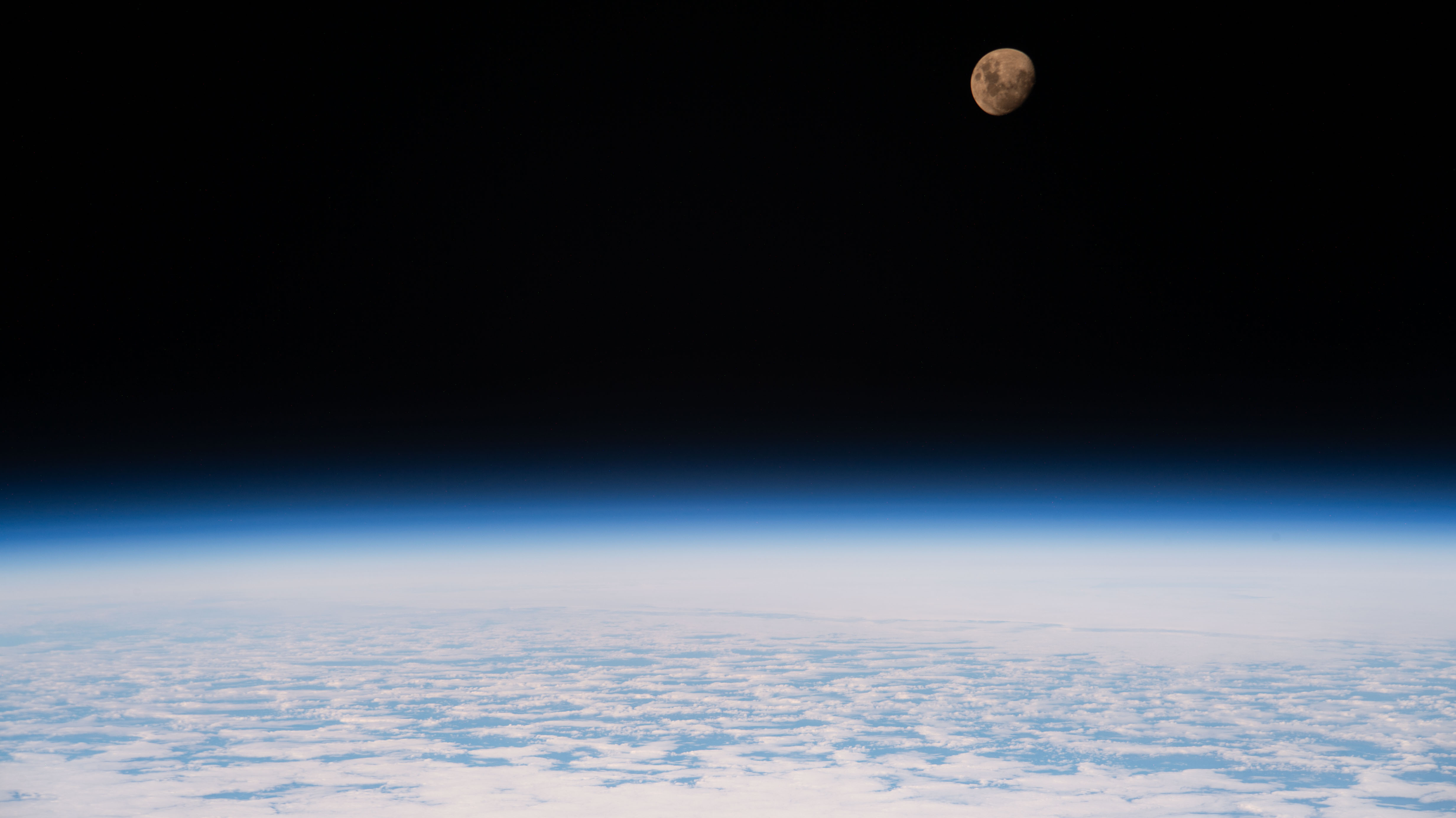
The waxing gibbous Moon is pictured above Earth from the International Space Station as it orbited 264 miles above a partly cloudy Indian Ocean southeast of Madagascar.
Read More
A bright orange sunburst illuminates Earth’s atmosphere during an orbital sunrise in this photograph from the International Space Station as it orbited 264 miles above the Caucasus Mountains.
Read More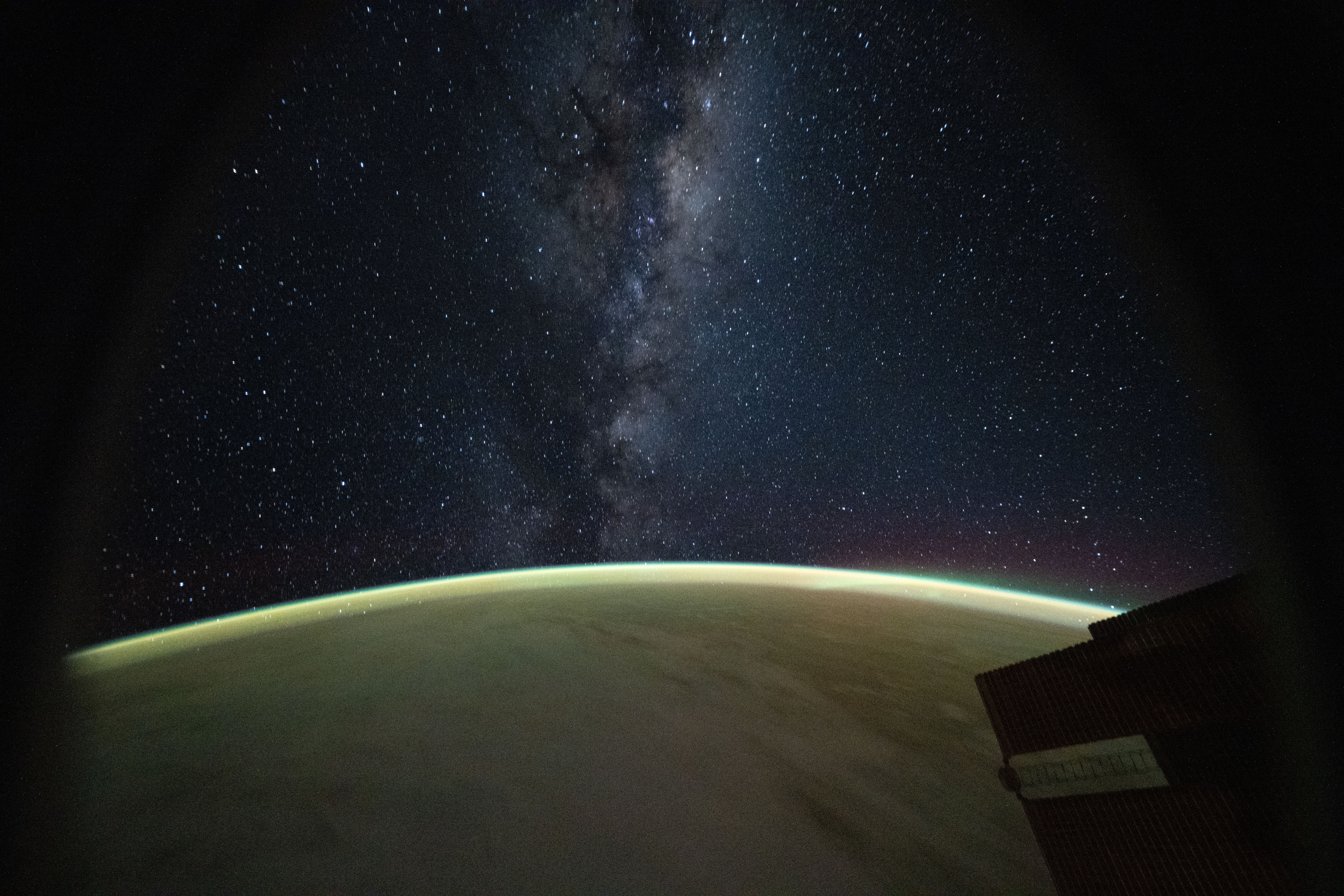
This celestial image captured from a window on a SpaceX Dragon spacecraft docked to the International Space Station highlights the Milky Way rising above Earth’s atmospheric glow.
Read More
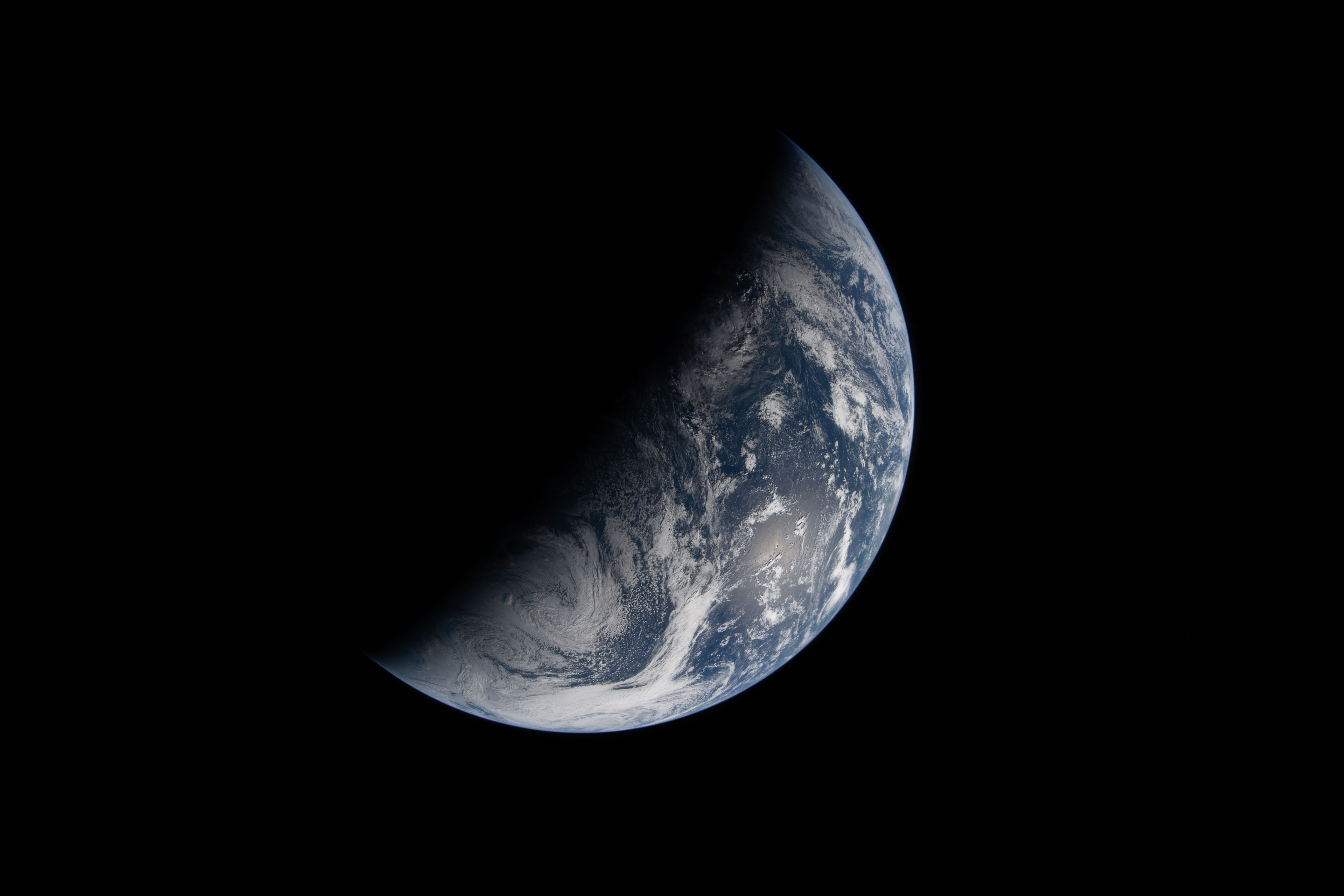
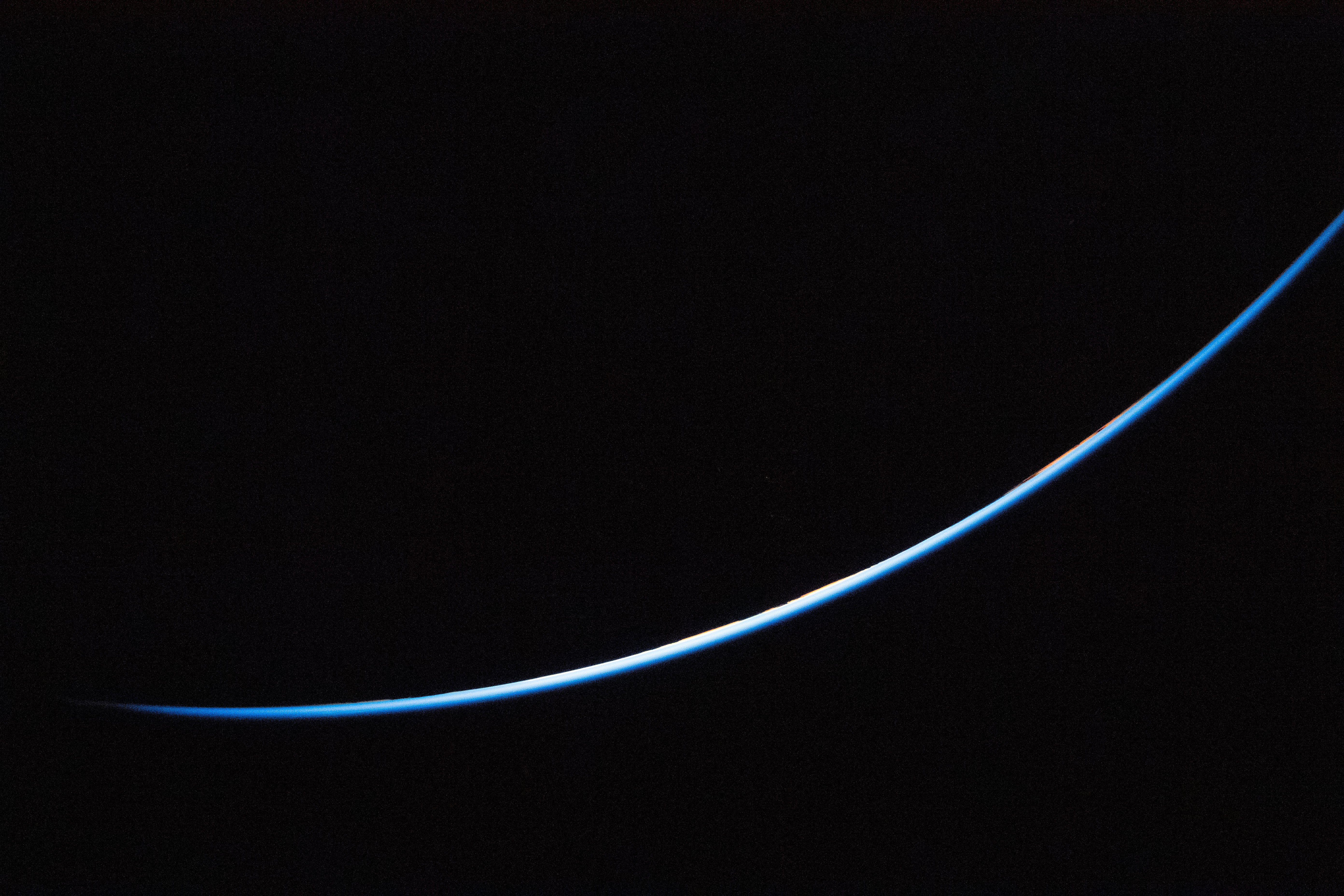
This image, released in celebration of Earth Day, shows the terminator – the line between night and day – on Earth. The Artemis II astronauts captured this view on April 2, 2026, during their journey to the Moon.
Read More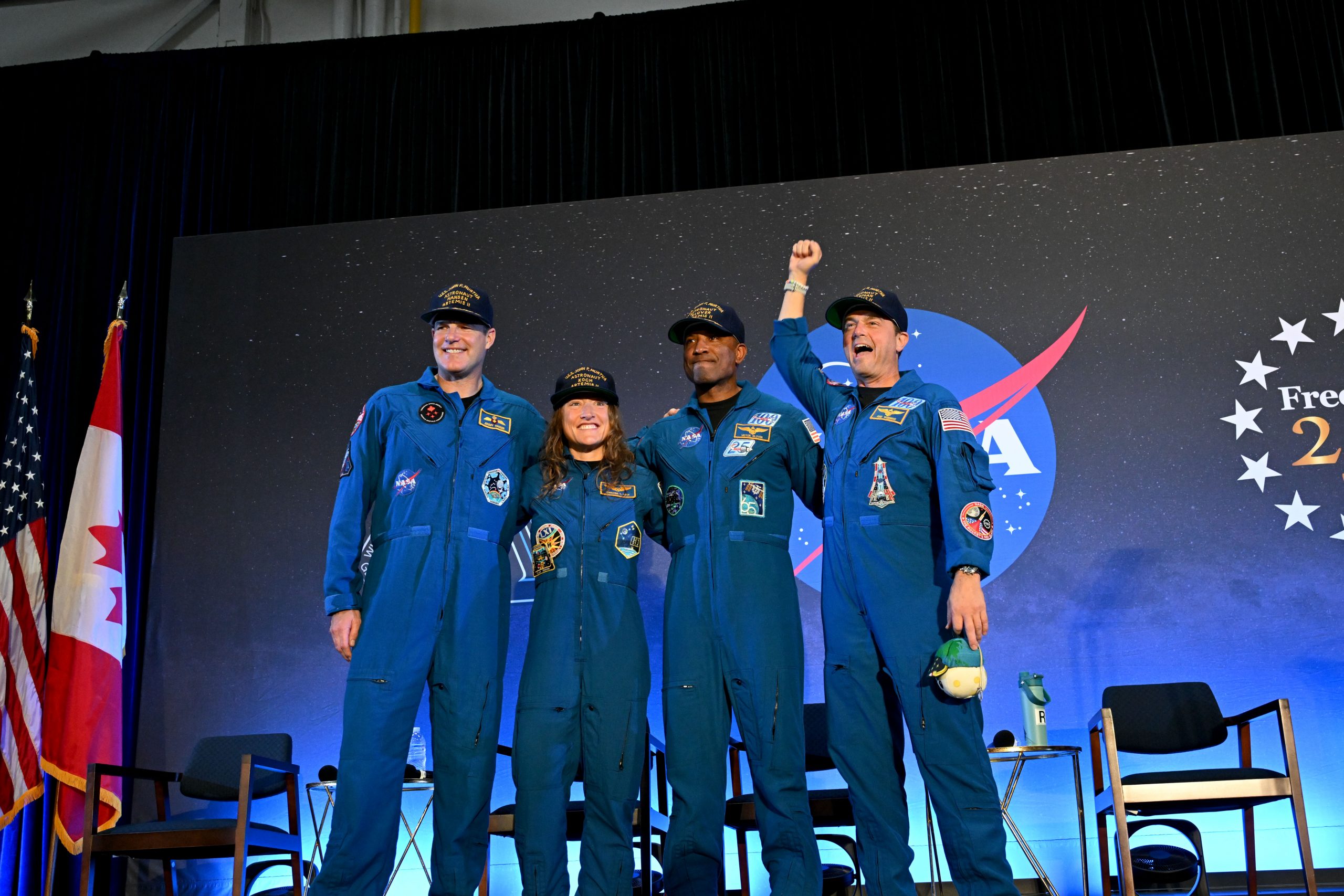
NASA’s Artemis II crew shared brief remarks with friends, family, and colleagues after they landed at Ellington Airport near NASA’s Johnson Space Center in Houston on Saturday, April 11, 2026, after a nearly 10-day journey around the Moon and back to Earth.
Read More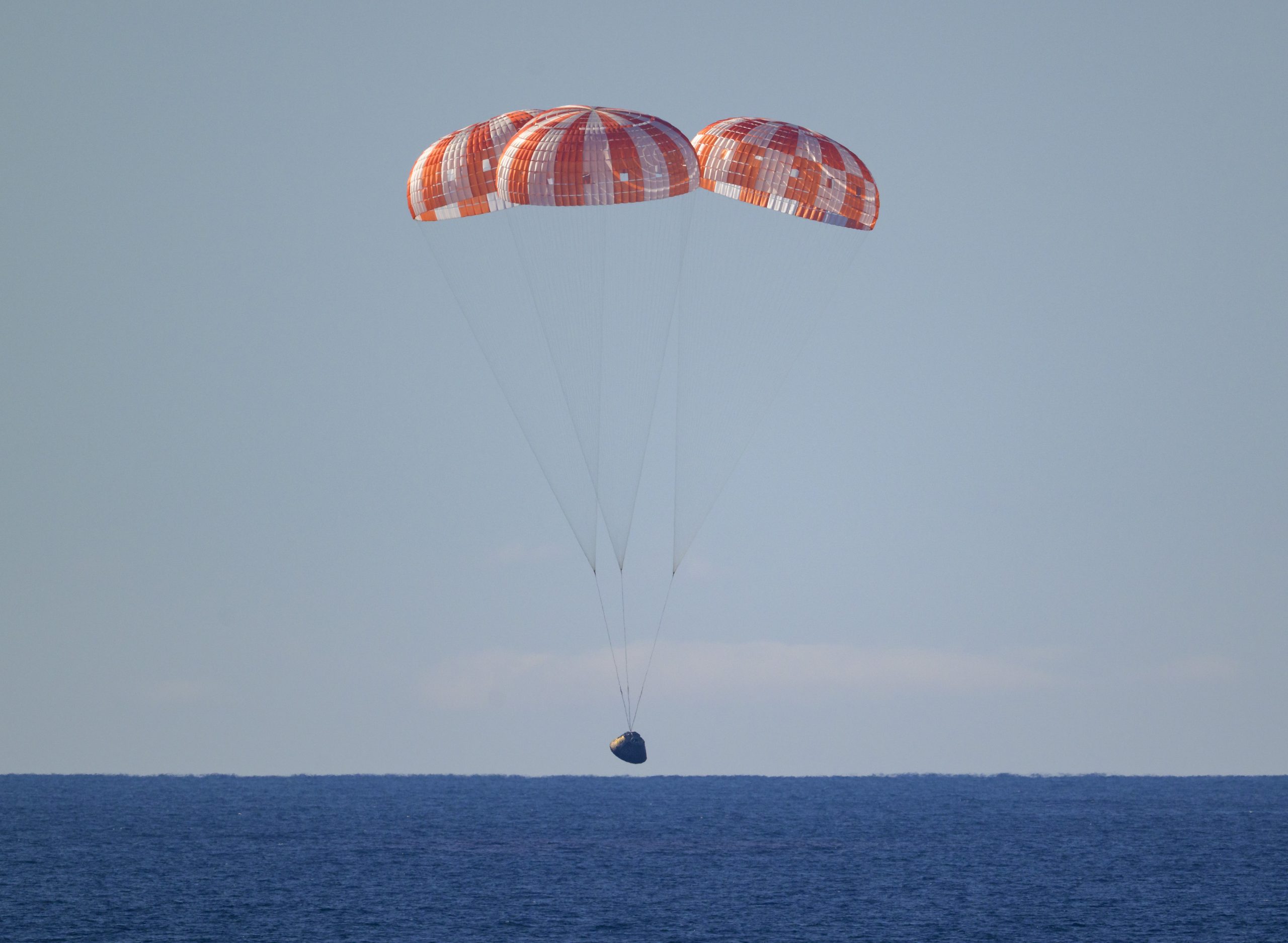
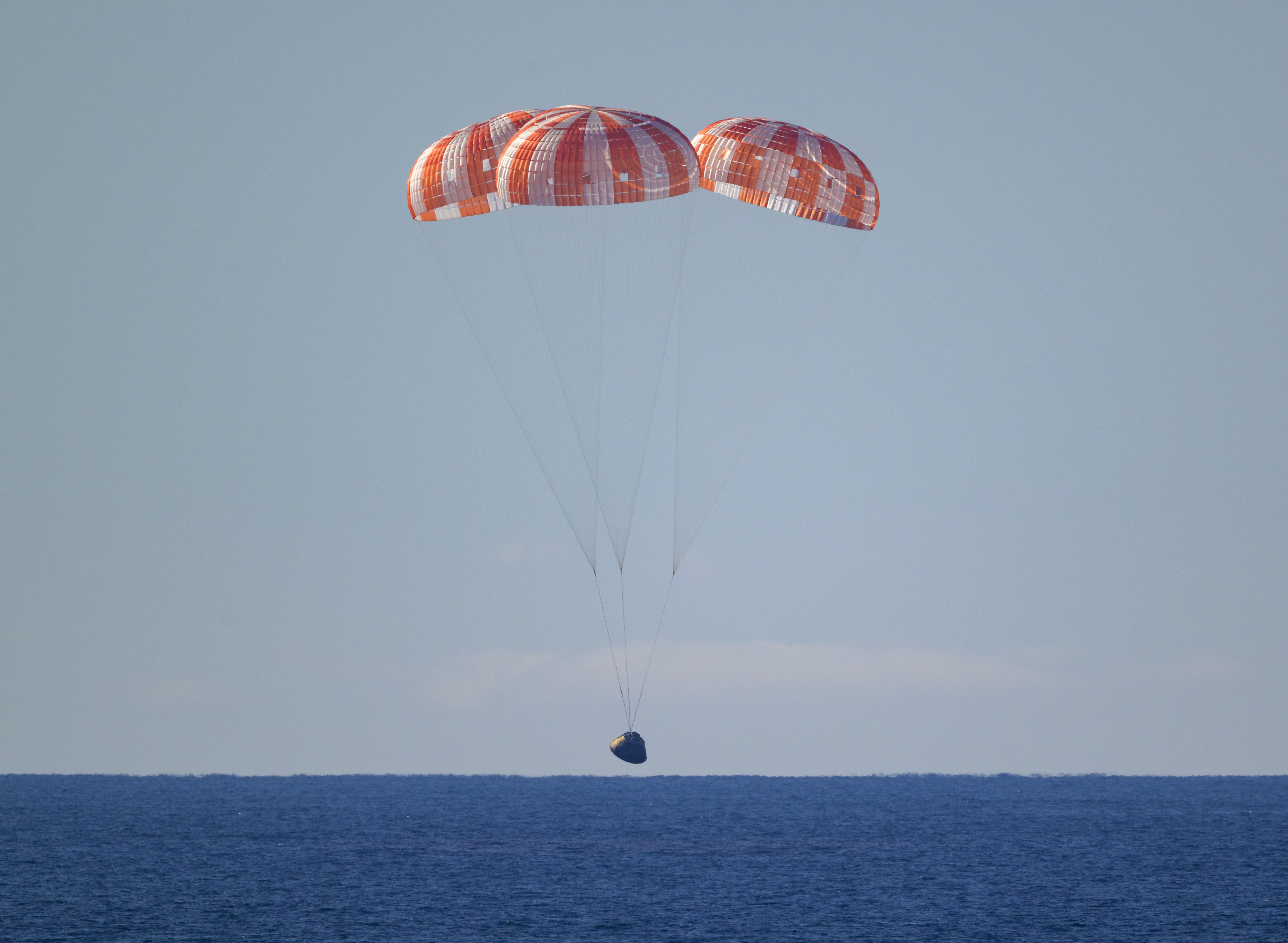
NASA’s Orion spacecraft with Artemis II crewmembers NASA astronauts Reid Wiseman, commander; Victor Glover, pilot; Christina Koch, mission specialist; and CSA (Canadian Space Agency) astronaut Jeremy Hansen, mission specialist aboard is seen under parachutes as it lands in the Pacific Ocean off the coast of California, Friday, April 10, 2026. NASA’s Artemis II mission took Wiseman, Glover, Koch, and Hansen on a 10-day journey around the Moon and back to Earth. Following a splashdown at 7:07 p.m. EDT, NASA, U.S. Navy, and U.S. Air Force teams are working to bring the crewmembers and Orion spacecraft aboard USS John P. Murtha.
Read More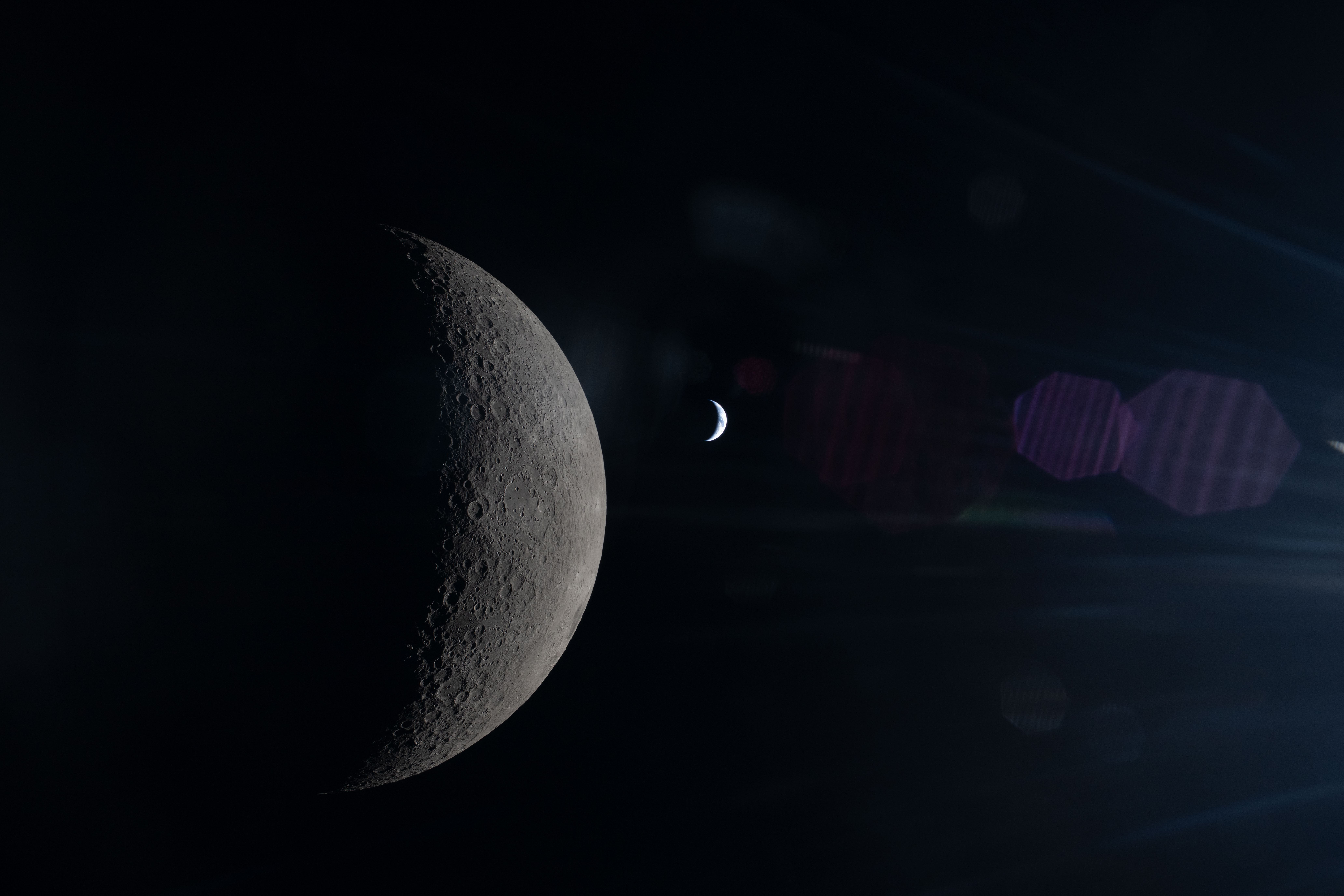
Seen during the Artemis II mission, the Moon and Earth align in the same frame, each partially illuminated by the Sun.
Read More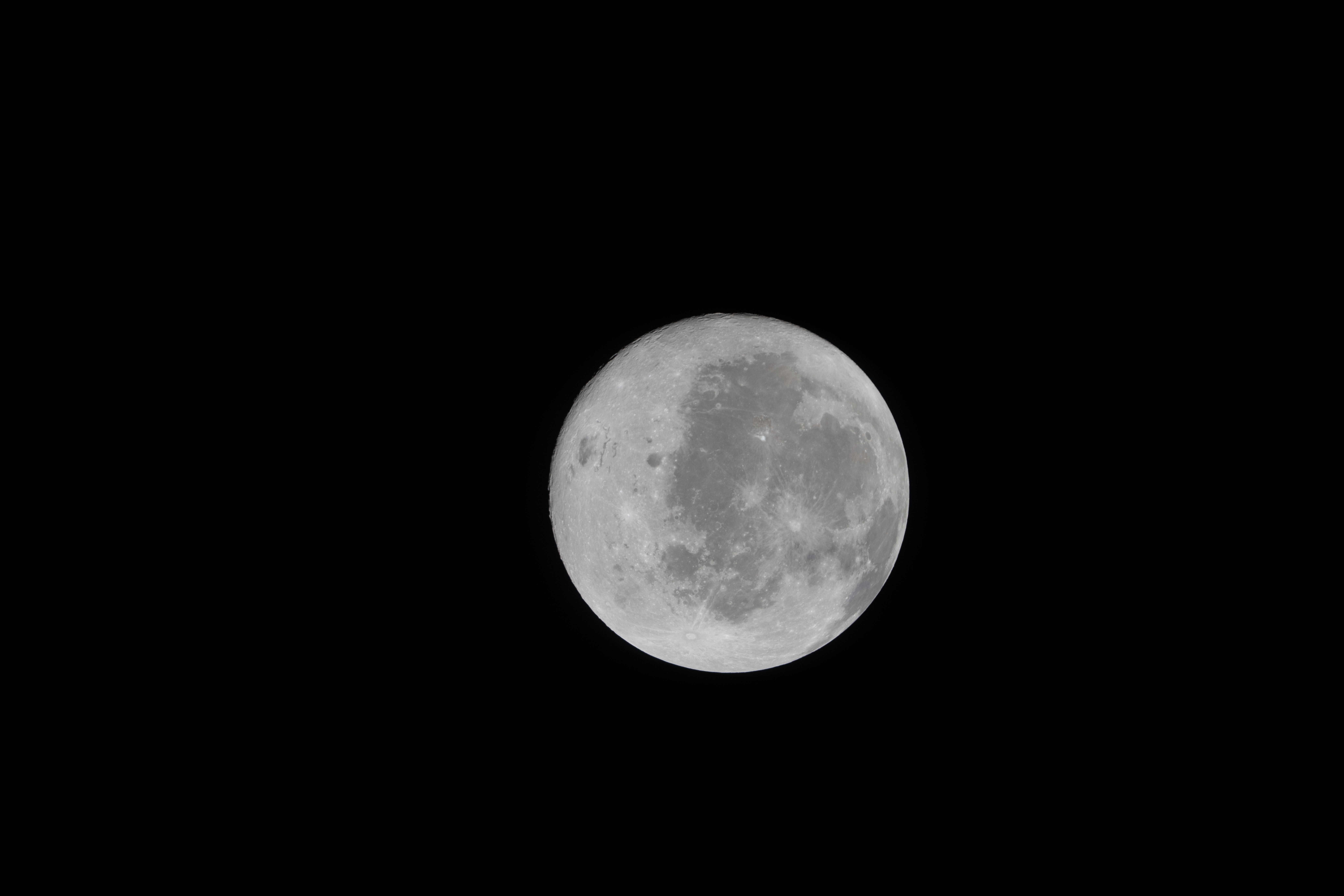
A view of the near side of the Moon, the side we always see from Earth, as seen from the Orion spacecraft.
Read More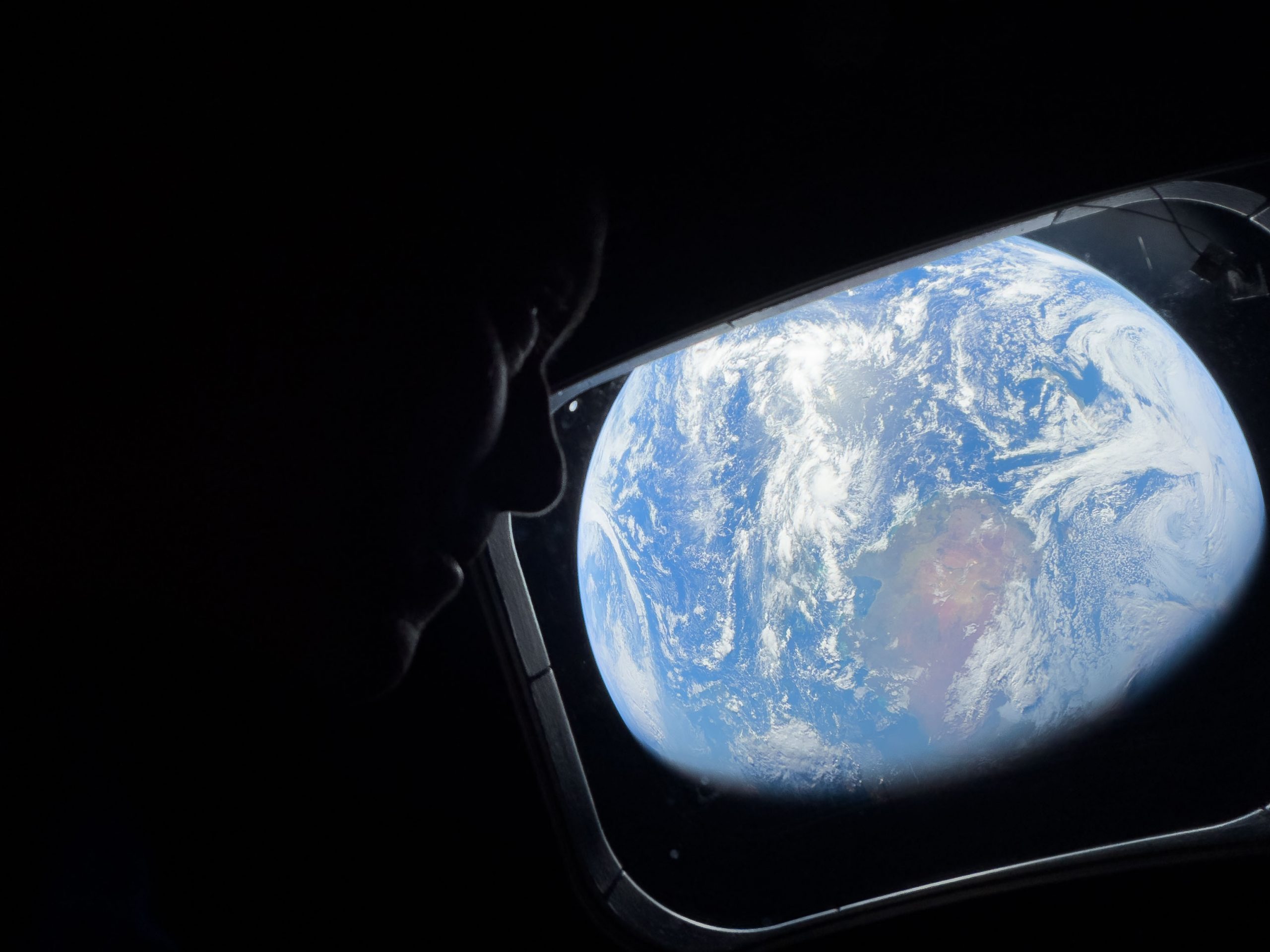
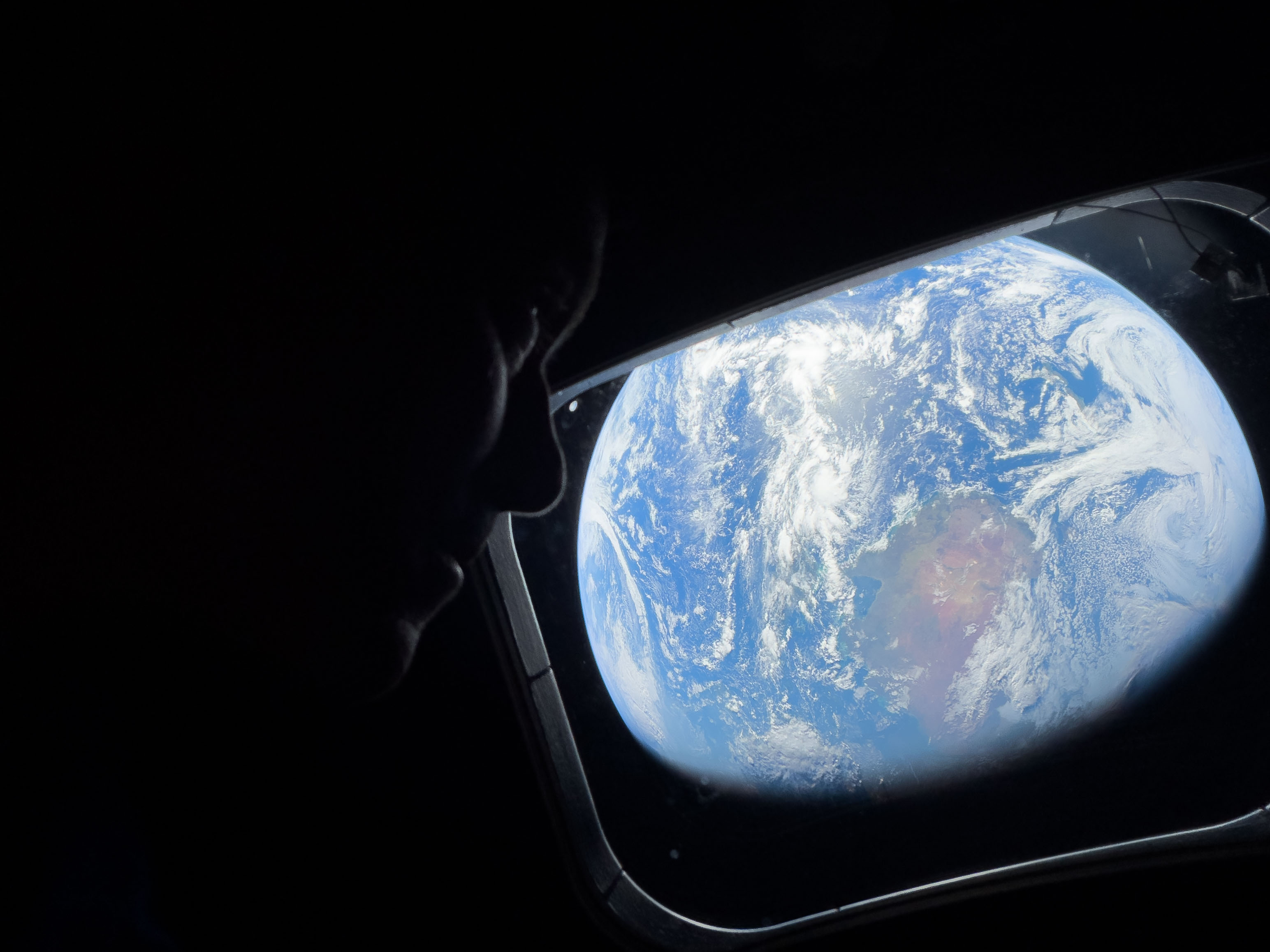
NASA astronaut and Artemis II Commander Reid Wiseman peers out of one of the Orion spacecraft’s main cabin windows on April 4, 2026, looking back at Earth, as the crew travels towards the Moon.
Read More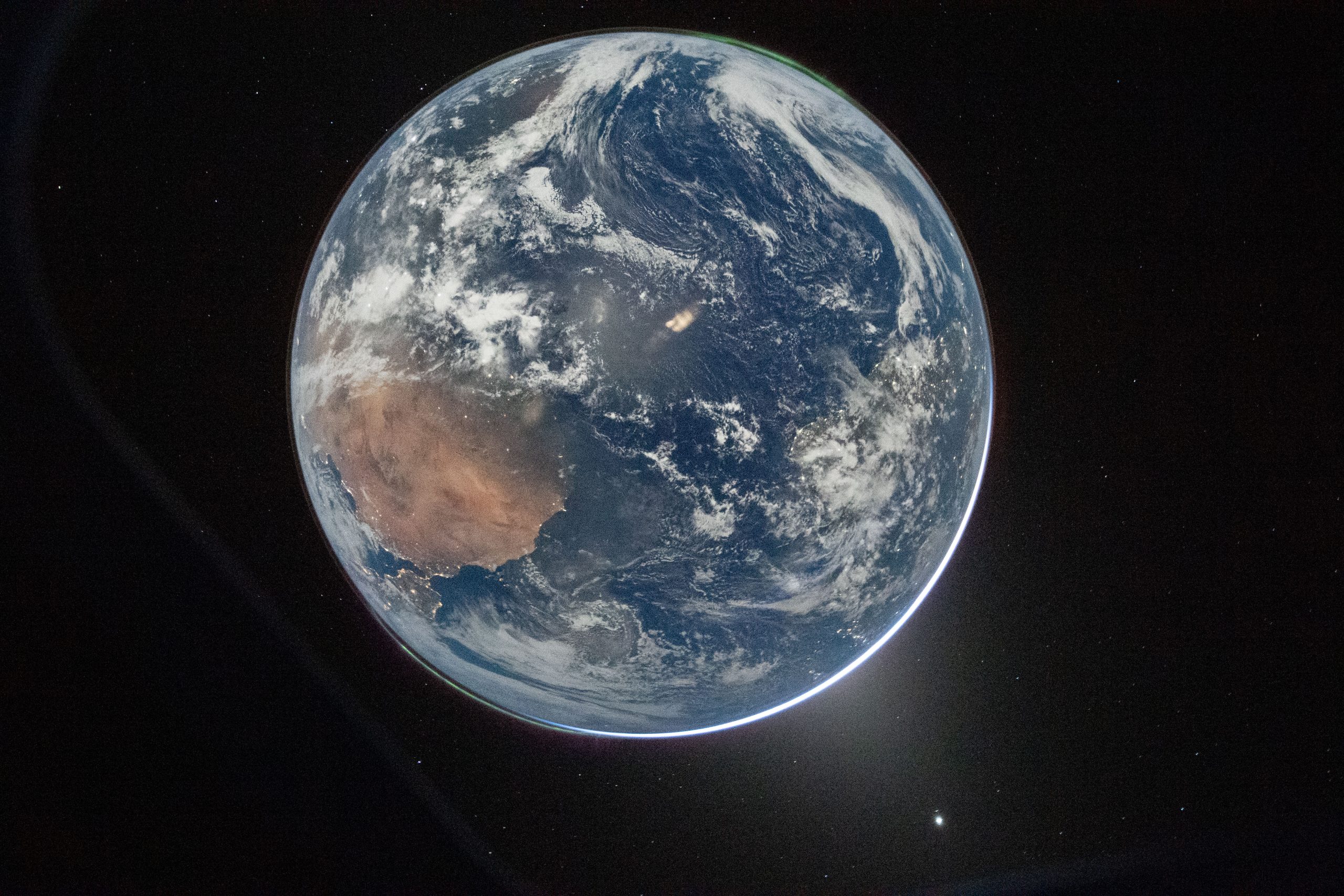
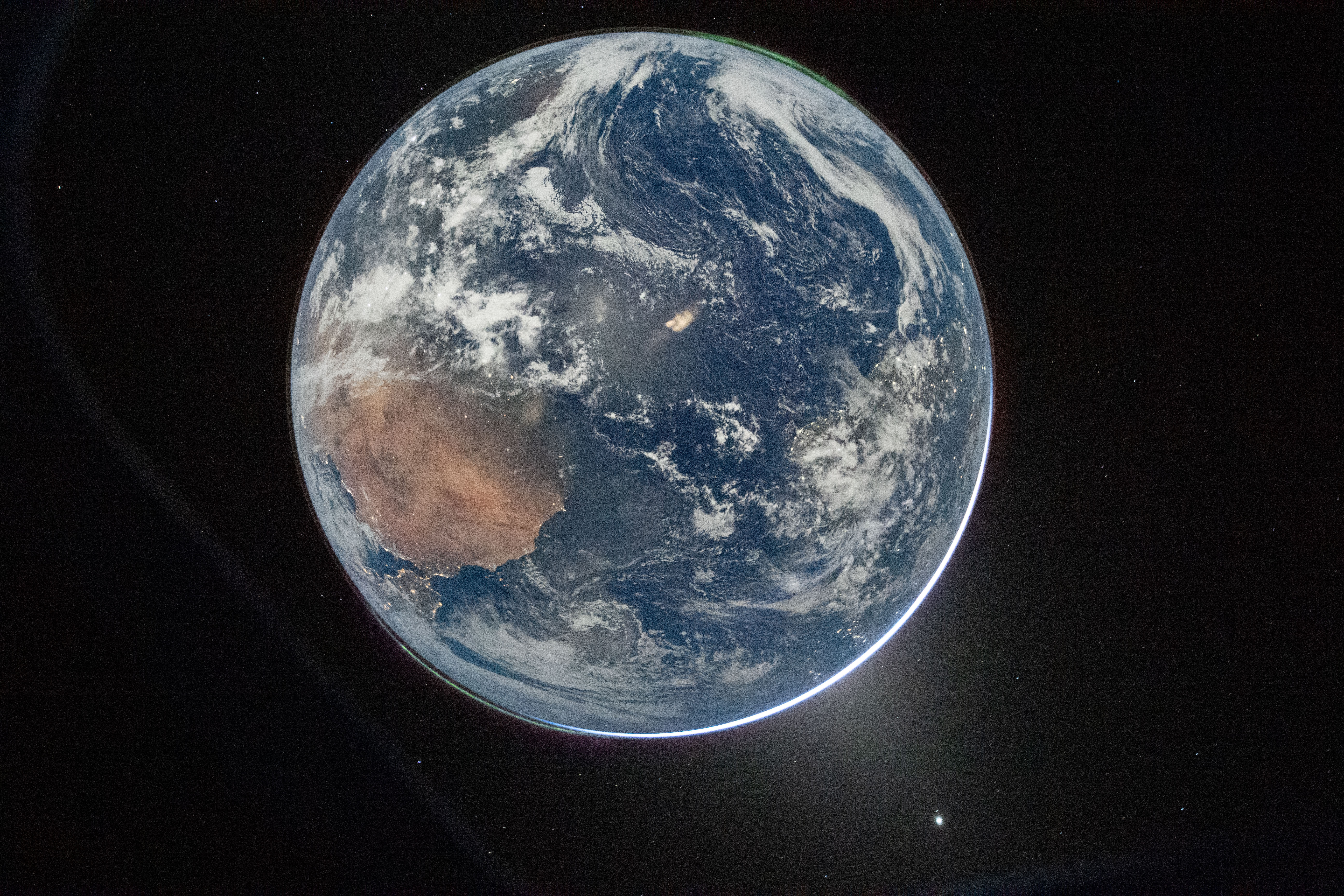
NASA astronaut and Artemis II Commander Reid Wiseman took this picture of Earth from the Orion spacecraft’s window on April 2, 2026, after completing the translunar injection burn.
Read More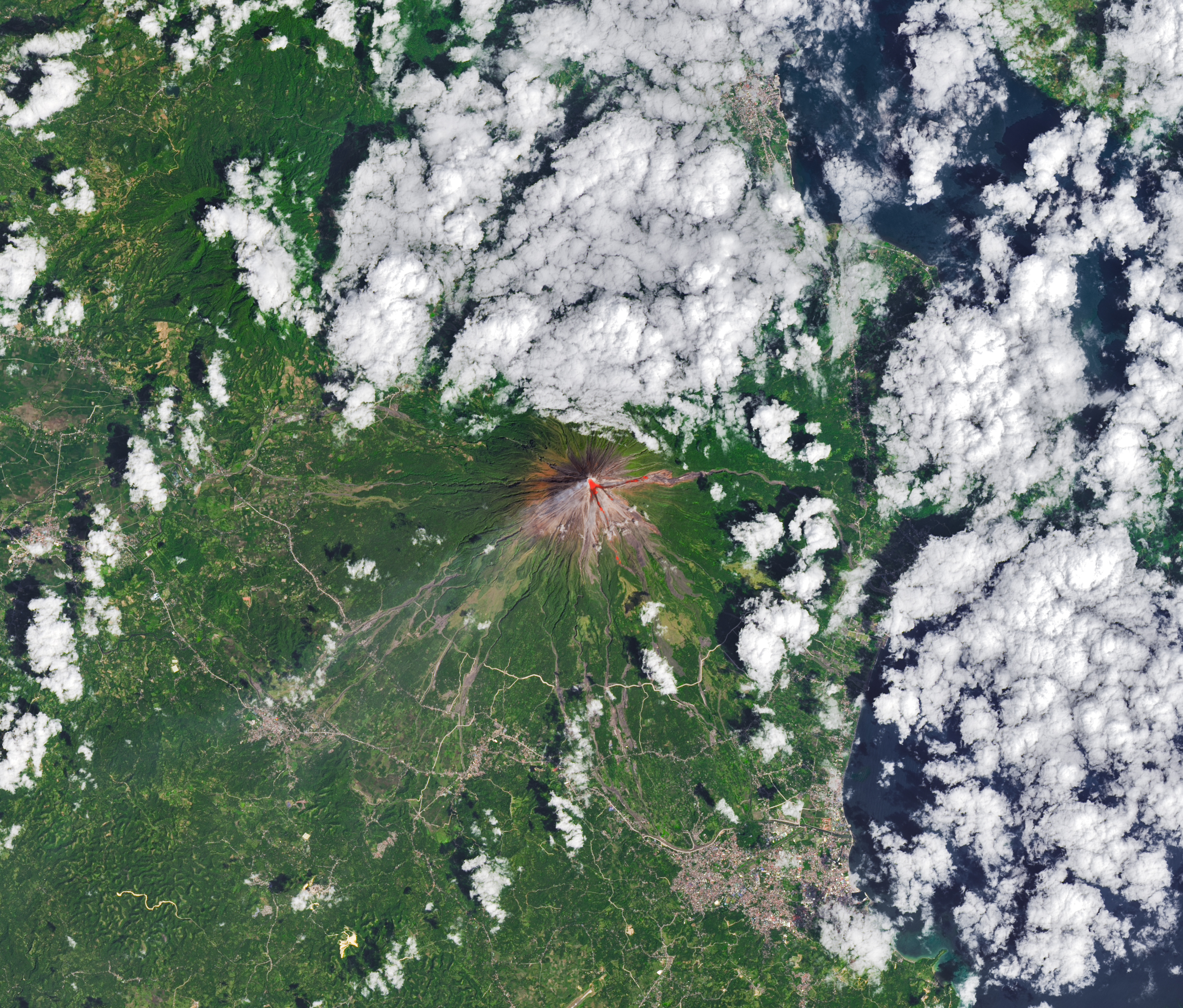
At any given moment, about 20 volcanoes on Earth are actively erupting. Often among them is Mayon—the most active volcano in the Philippines.
Read More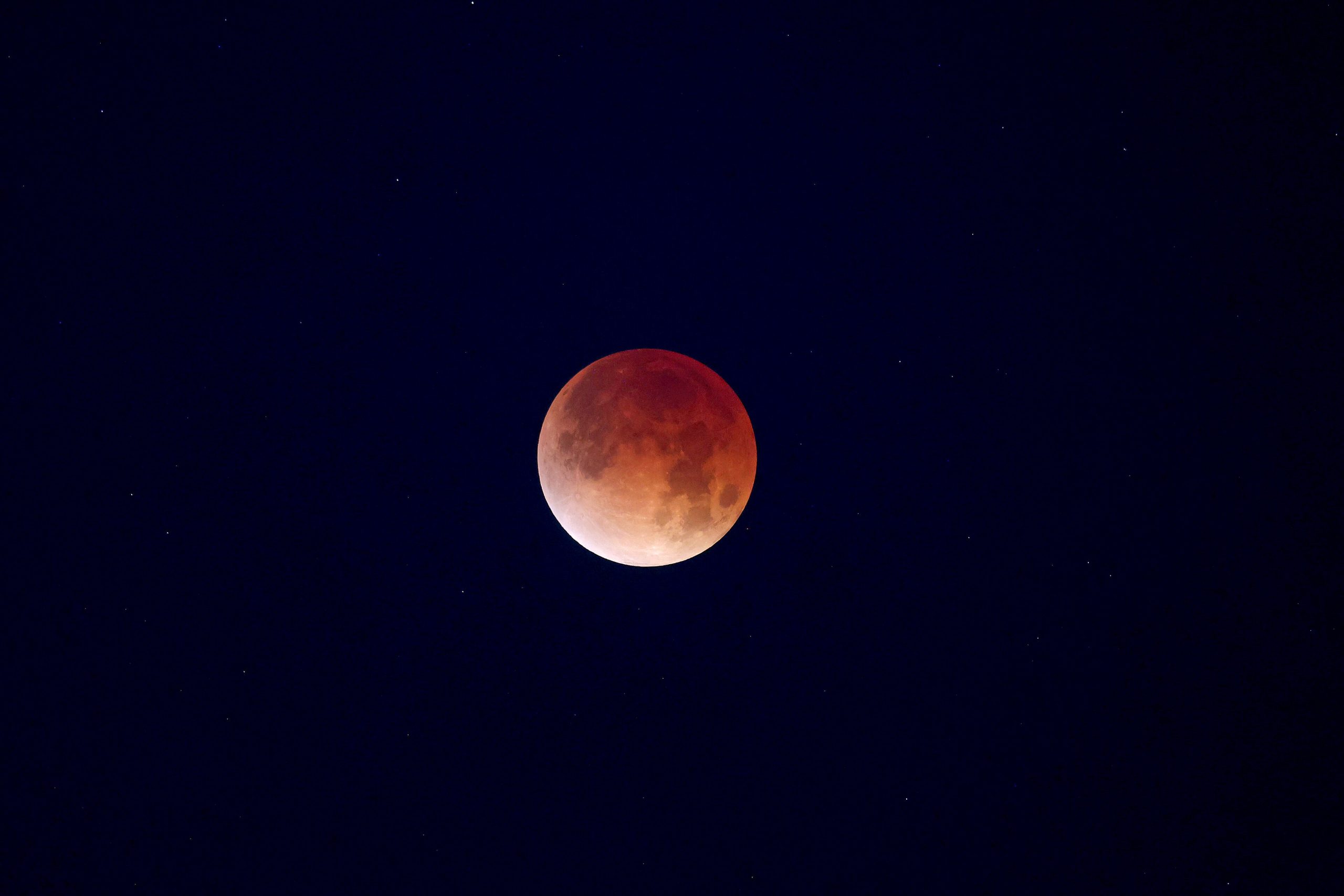
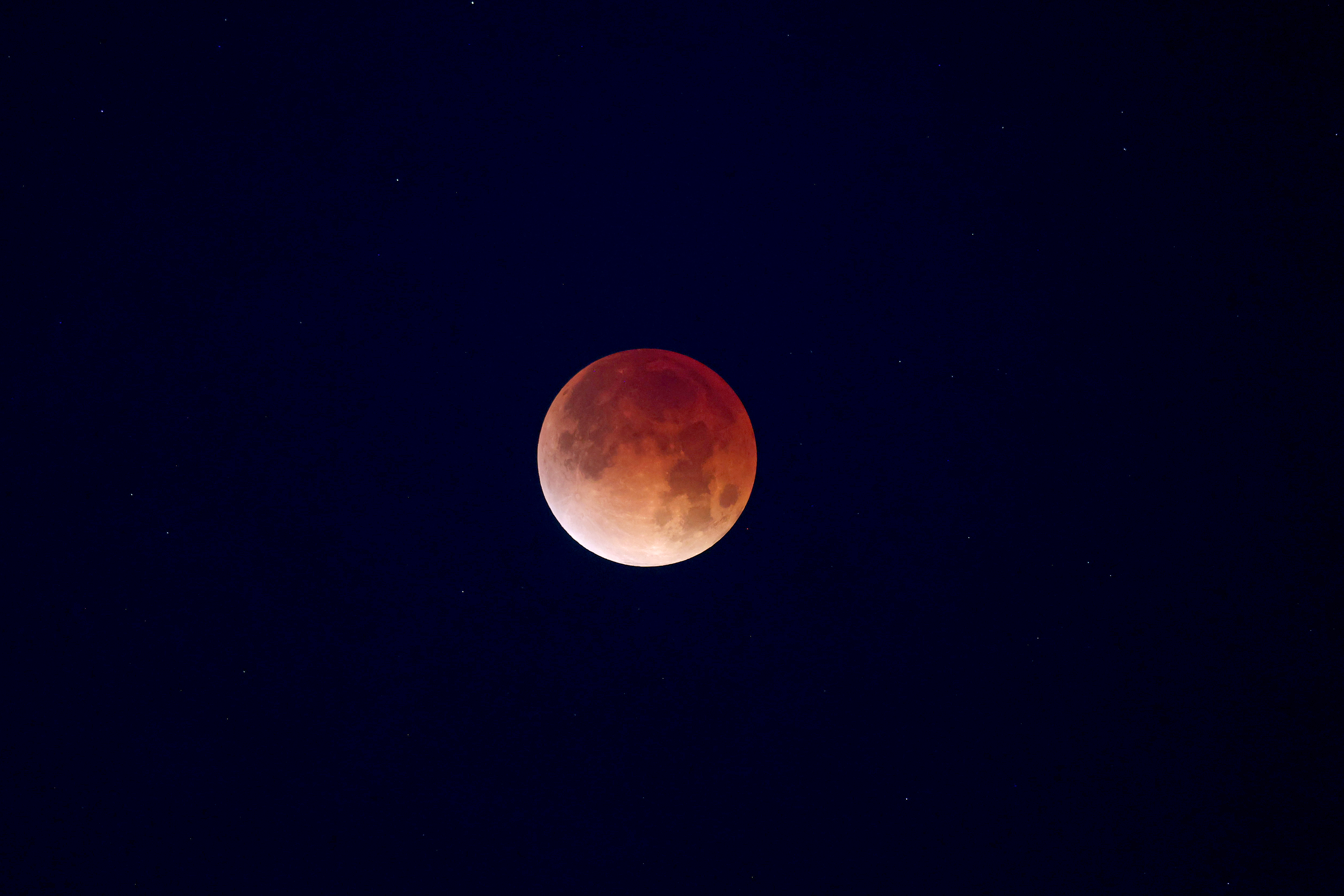
A total lunar eclipse rises over New Orleans, home of NASA’s Michoud Assembly Facility, in the early morning hours of Tuesday, March 3. A lunar eclipse occurs when Earth passes directly between the Sun and Moon, casting a huge shadow across the Moon’s surface. The Moon appears dark red or orange as the Sun’s light filters through Earth’s atmosphere.
Read More
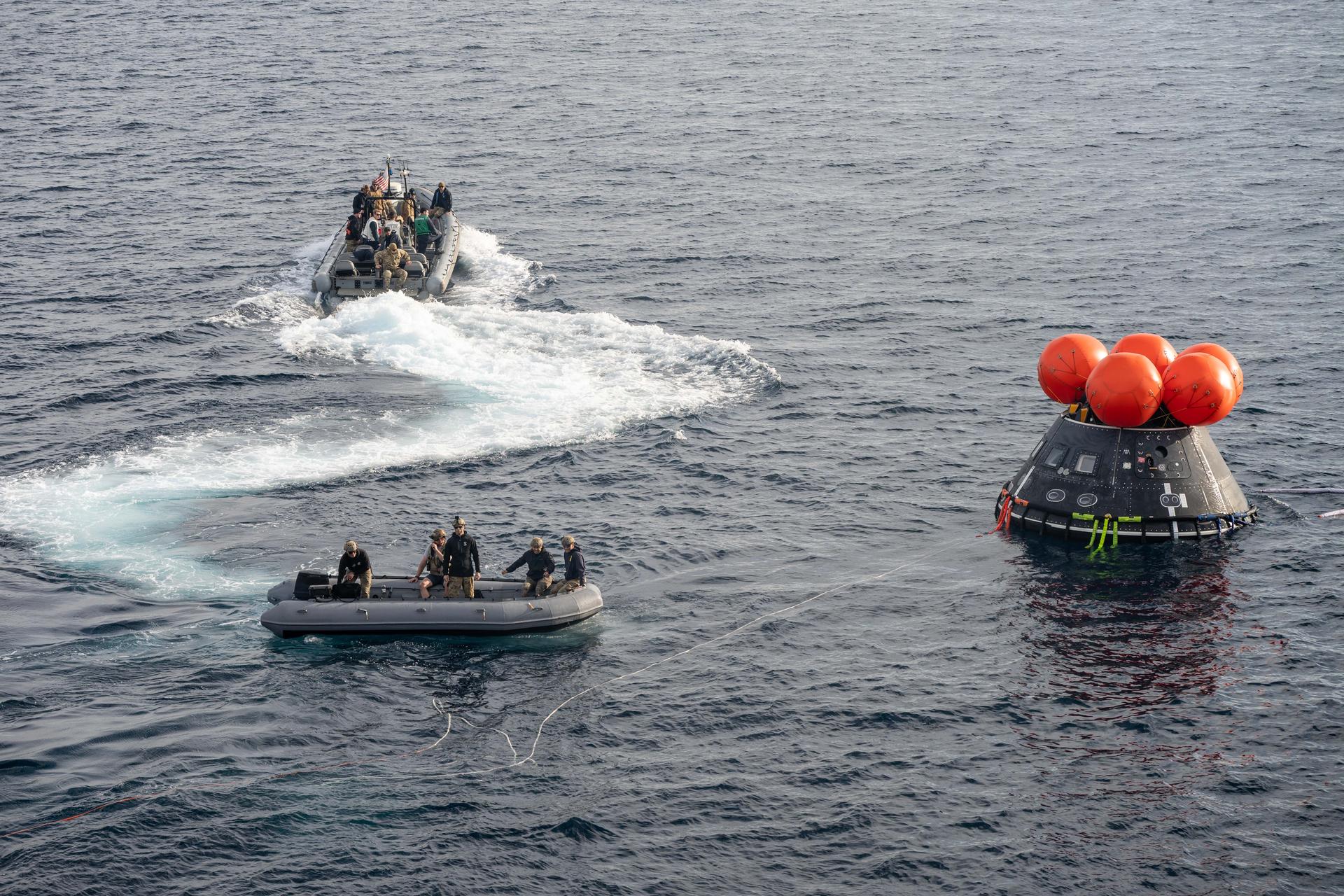
Off the coast of California, NASA’s Artemis Landing and Recovery team and the Department of War that will work together to retrieve the Artemis II crew and Orion spacecraft following their return to Earth and splashdown in the Pacific Ocean are performing a final simulation of their activities, called a just-in-time training, at sea on Tuesday, Jan. 27, 2026. During the training, teams use the Crew Module Test Article, a full-scale mockup of the Orion spacecraft, to simulate as close as possible the conditions they can expect to encounter during splashdown of the Artemis II mission.
Read More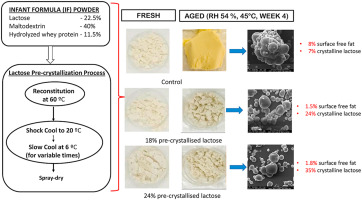

This image of lysozyme crystals grown aboard the International Space Station was taken after the crystals returned to Earth in April 2024. Lysozyme is a protein found in bodily fluids like tears, saliva, and milk. It is used as a control compound to demonstrate well-formed crystals.
Read More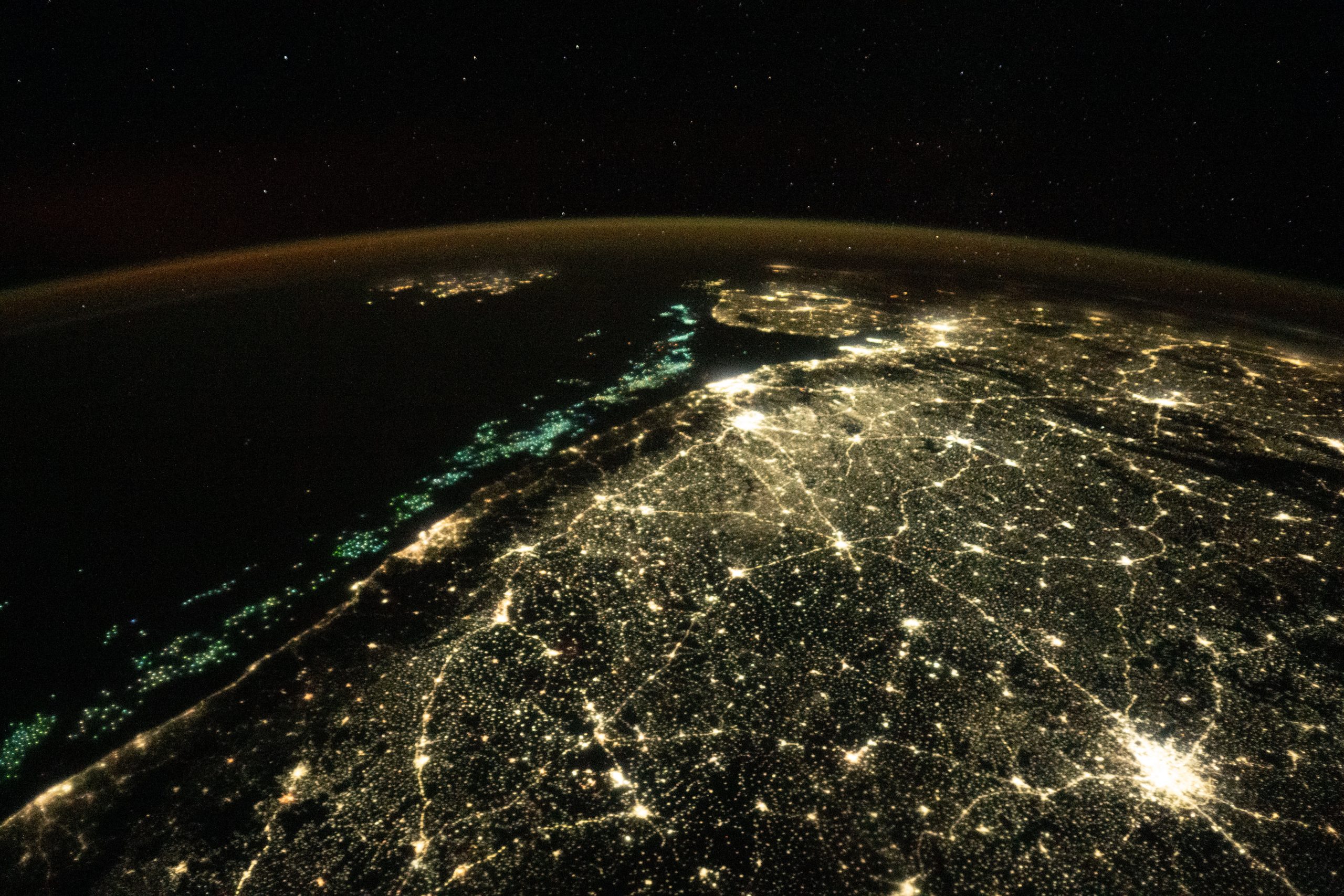
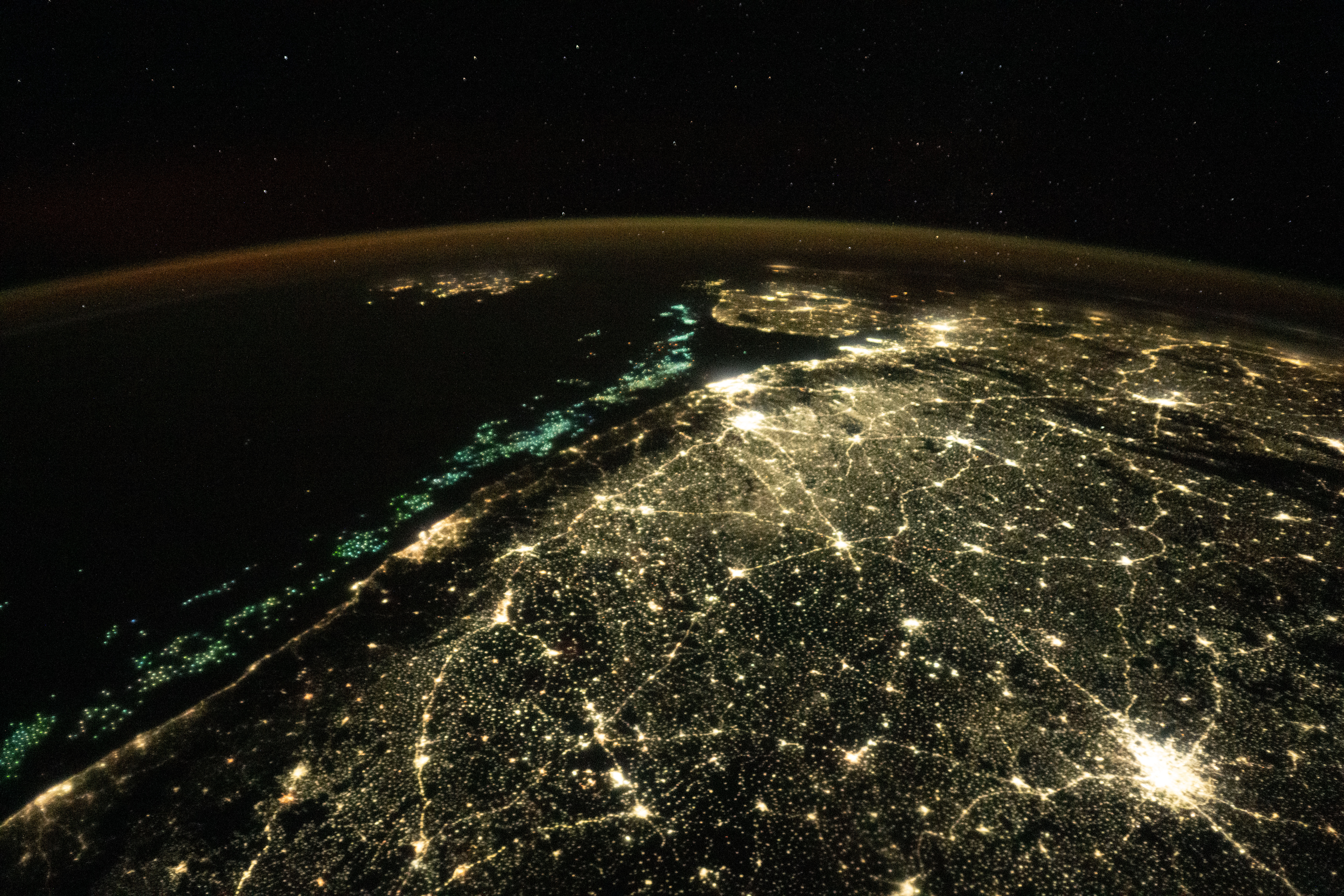
Fishing boats illuminate the Arabian Sea along India’s west coast with green lights designed to attract squid, shrimp, sardines, and mackerel in this nighttime photograph from the International Space Station, orbiting 259 miles above Earth. At lower right, the city lights of Hyderabad—renowned for its historic diamond and pearl trade—stretch westward toward the Mumbai Metropolitan Region, home to over 26 million people and the heart of Bollywood.
Read More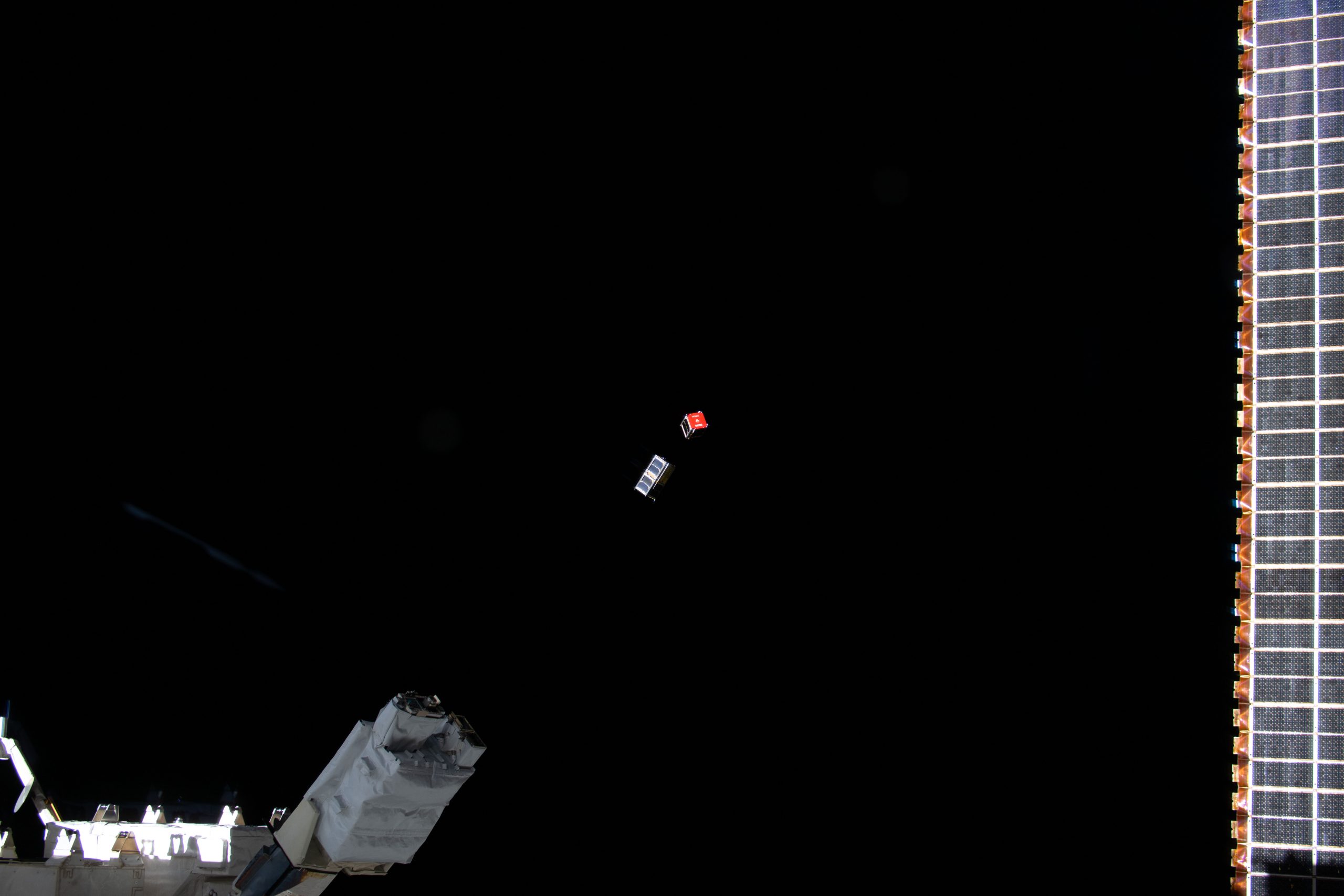

A pair of CubeSats designed by college students from around the world is deployed into Earth orbit from a small satellite orbital deployer on the outside of the International Space Station’s Kibo laboratory module. Students from Mexico, Italy, Thailand, Malaysia, and Japan designed the shoe-boxed sized satellites for a series of Earth observations and technology demonstrations.
Read More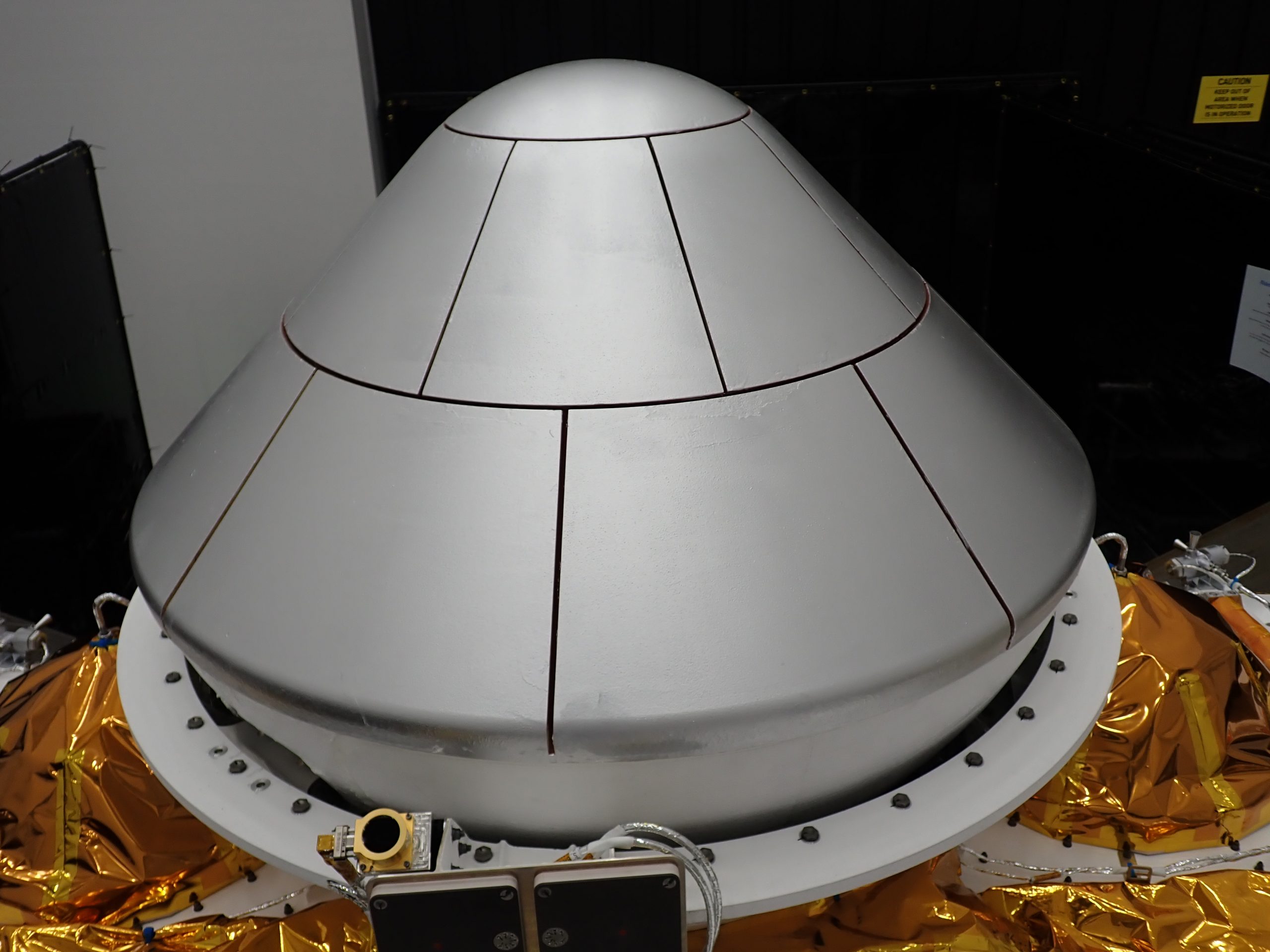
The Varda Space Industries W-5 capsule returned to Earth in Koonibba in South Australia on Jan. 29, 2026, with the protection of a heat shield made of C-PICA, a cutting-edge material licensed from NASA and manufactured by Varda. The capsule’s successful return marks the first time a capsule protected entirely by Varda-made C-PICA has come back to Earth.
Read More
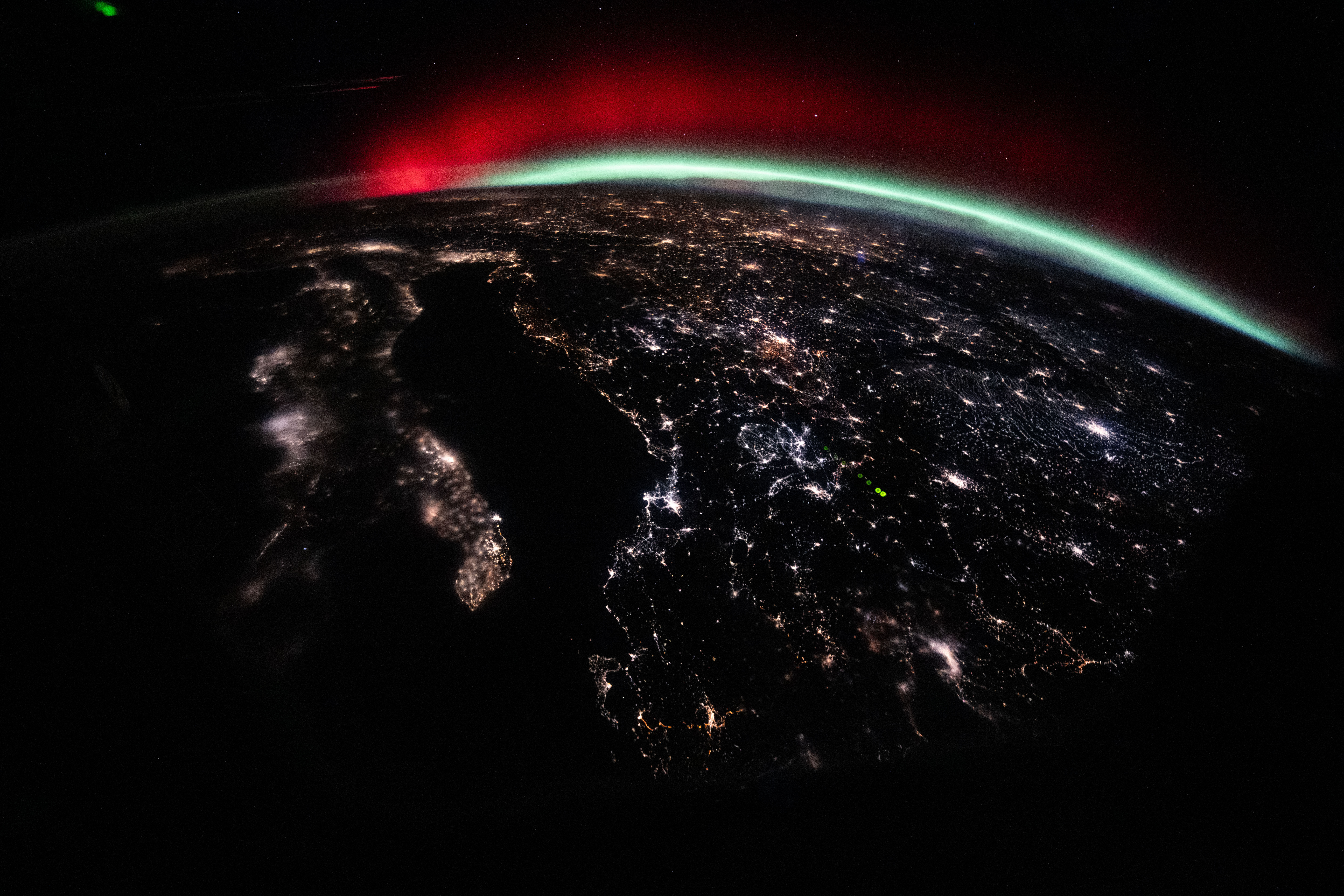
A green and red aurora streams across Earth’s horizon above the city lights of Europe in this Jan. 19, 2026, photograph, which looks north across Italy toward Germany. The International Space Station was orbiting 262 miles above the Mediterranean Sea at approximately 10:02 p.m. local time when the image was captured.
Read More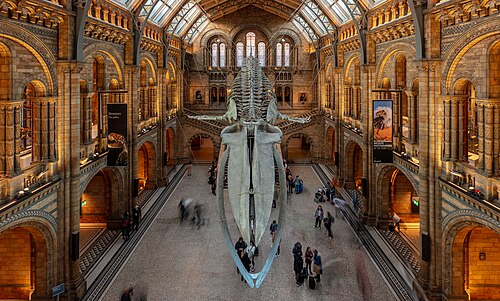
| Picture of the day |
|---|

|
|
Blue whale skeleton at the Central Hall of the Natural History Museum, London, England. ‘Hope’, nickname of the blue whale skeleton, is 25.2 metres (83 ft) long and is suspended from the ceiling since July 14th 2017. Blue whales are the largest creature ever to have lived in the Earth. In the 1800s there was an estimated amount of 250,000 blue whales across the world’s oceans. After decades of commercial hunting the species was to the brink of extinction, with only around 400 surviving in 1966. That year the world took action in London and decided to legally protect blue whales from commercial hunting. Since then the population of blue whales has steadily grown to its current level of around 20,000.
|

| Picture of the day |
|---|

|
|
Earth bumblebee on a cosmea flower in a garden in Bamberg, Upper Franconia, Bavaria, Germany. Focus stack of 28 pictures.
|
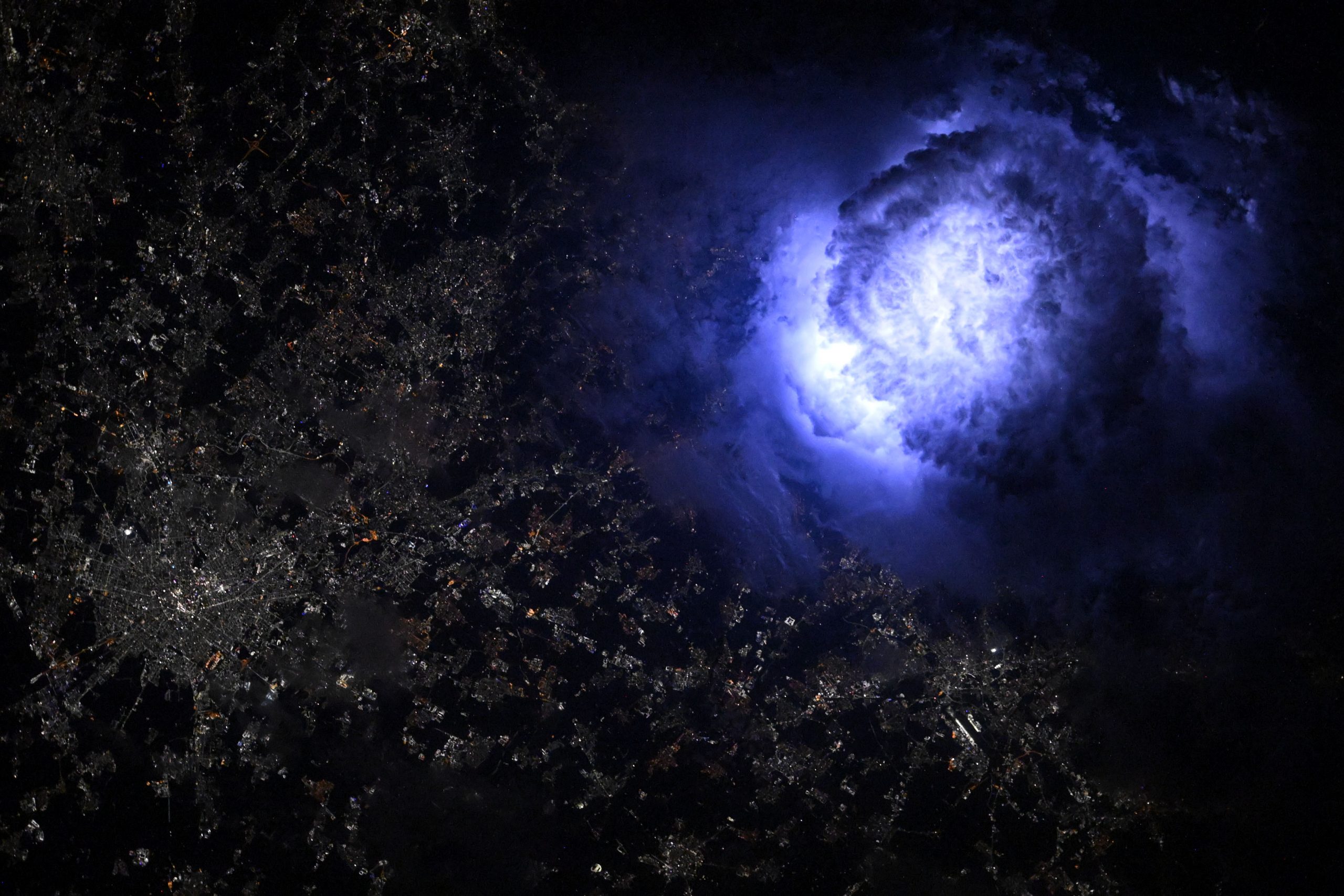
NASA astronaut Nichole Ayers captured this image of lightning while orbiting aboard the International Space Station more than 250 miles above Milan, Italy.
Read More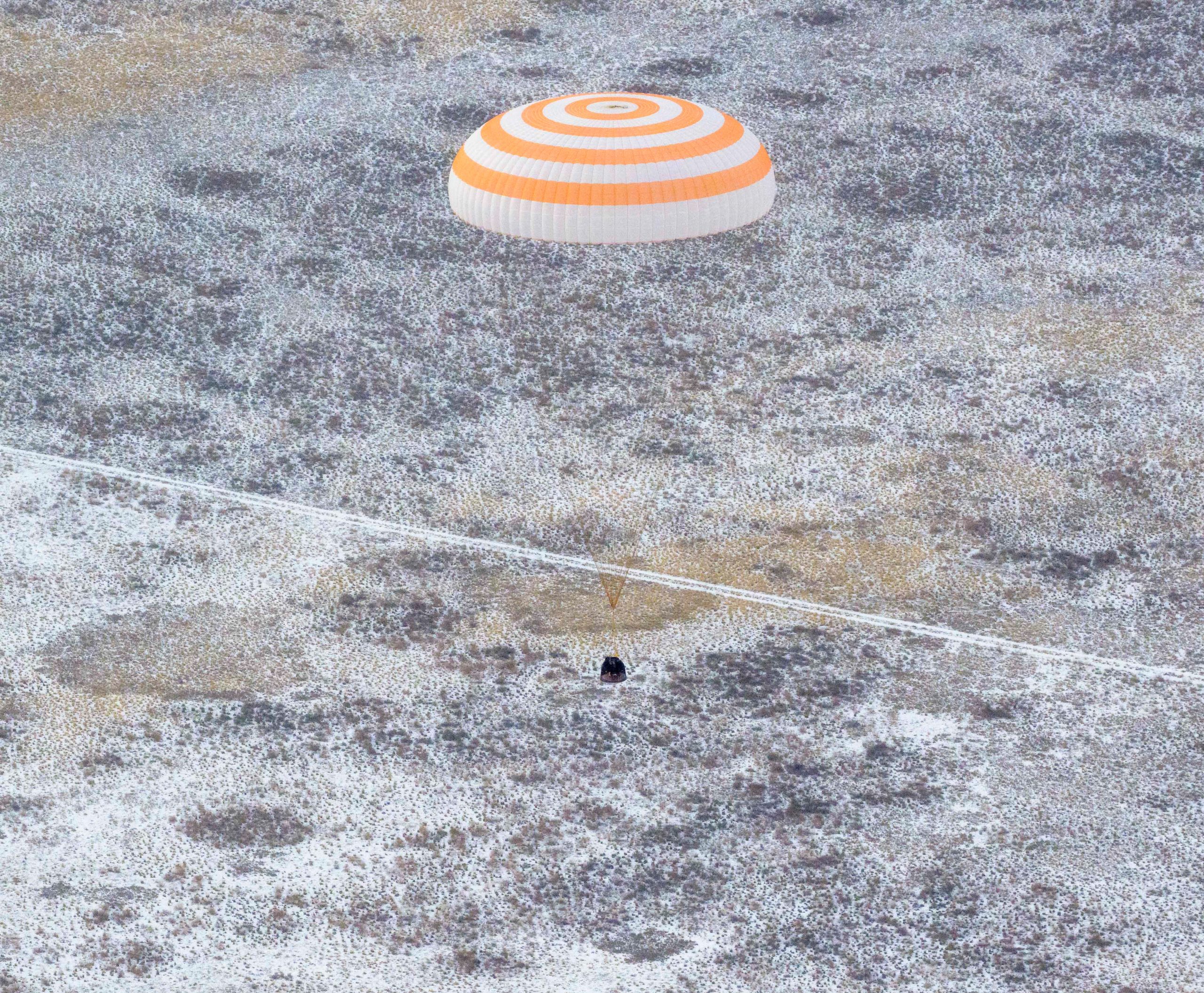
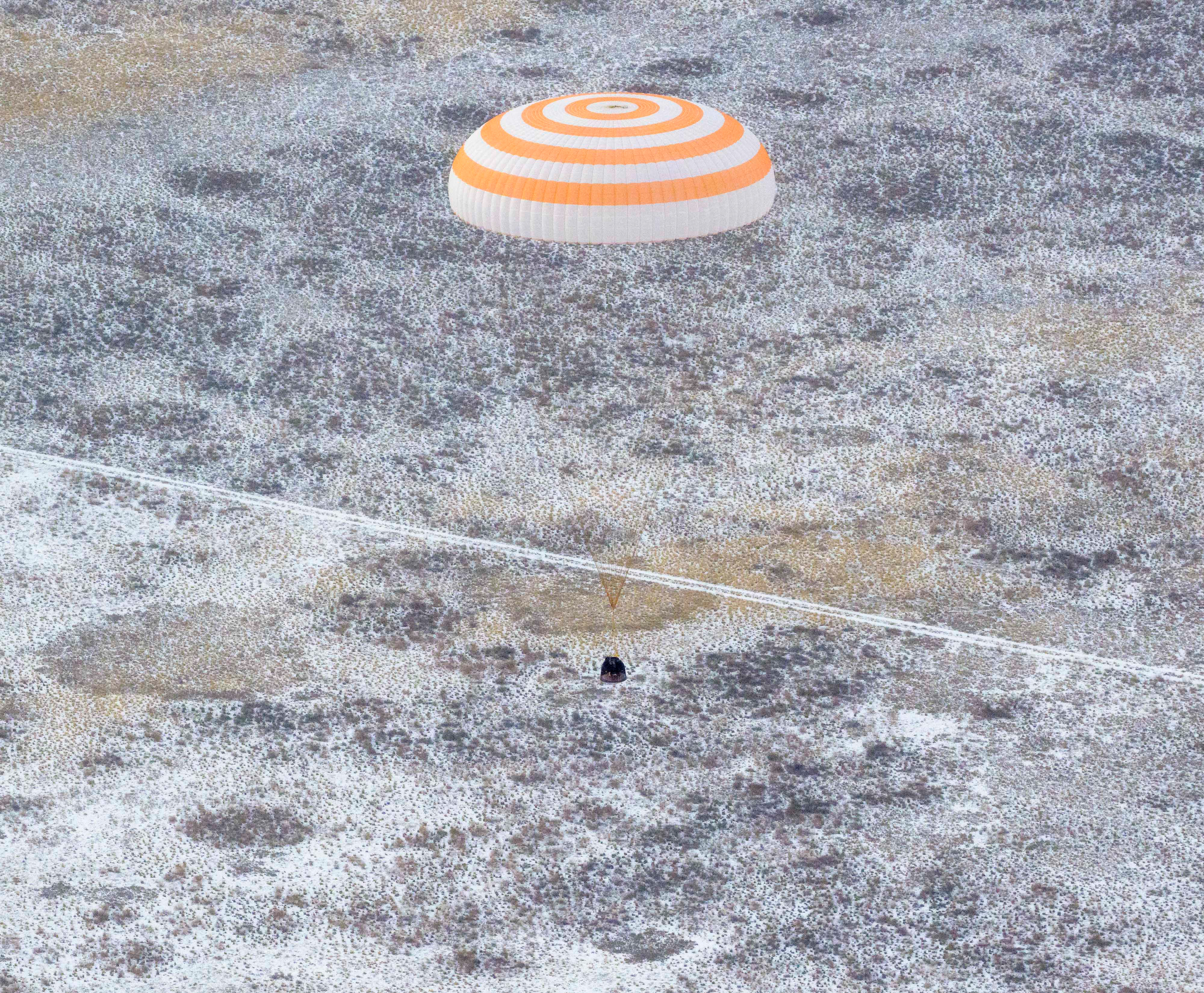
The Soyuz MS-27 spacecraft is seen as it lands in a remote area near the town of Zhezkazgan, Kazakhstan with Expedition 73 NASA astronaut Jonny Kim, and Roscosmos cosmonauts Sergey Ryzhikov and Alexey Zubritsky aboard, Tuesday, Dec. 9, 2025.
Read More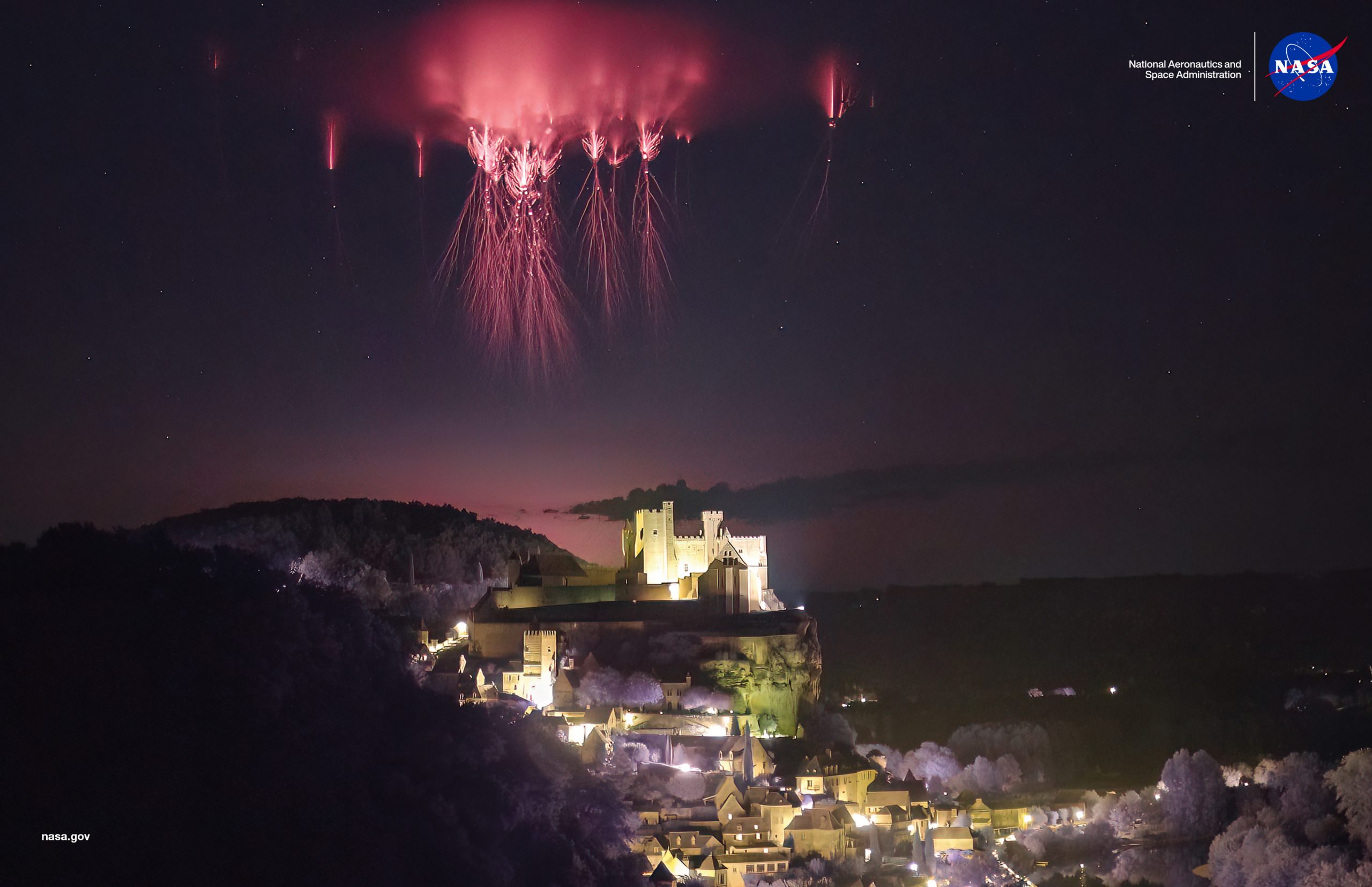
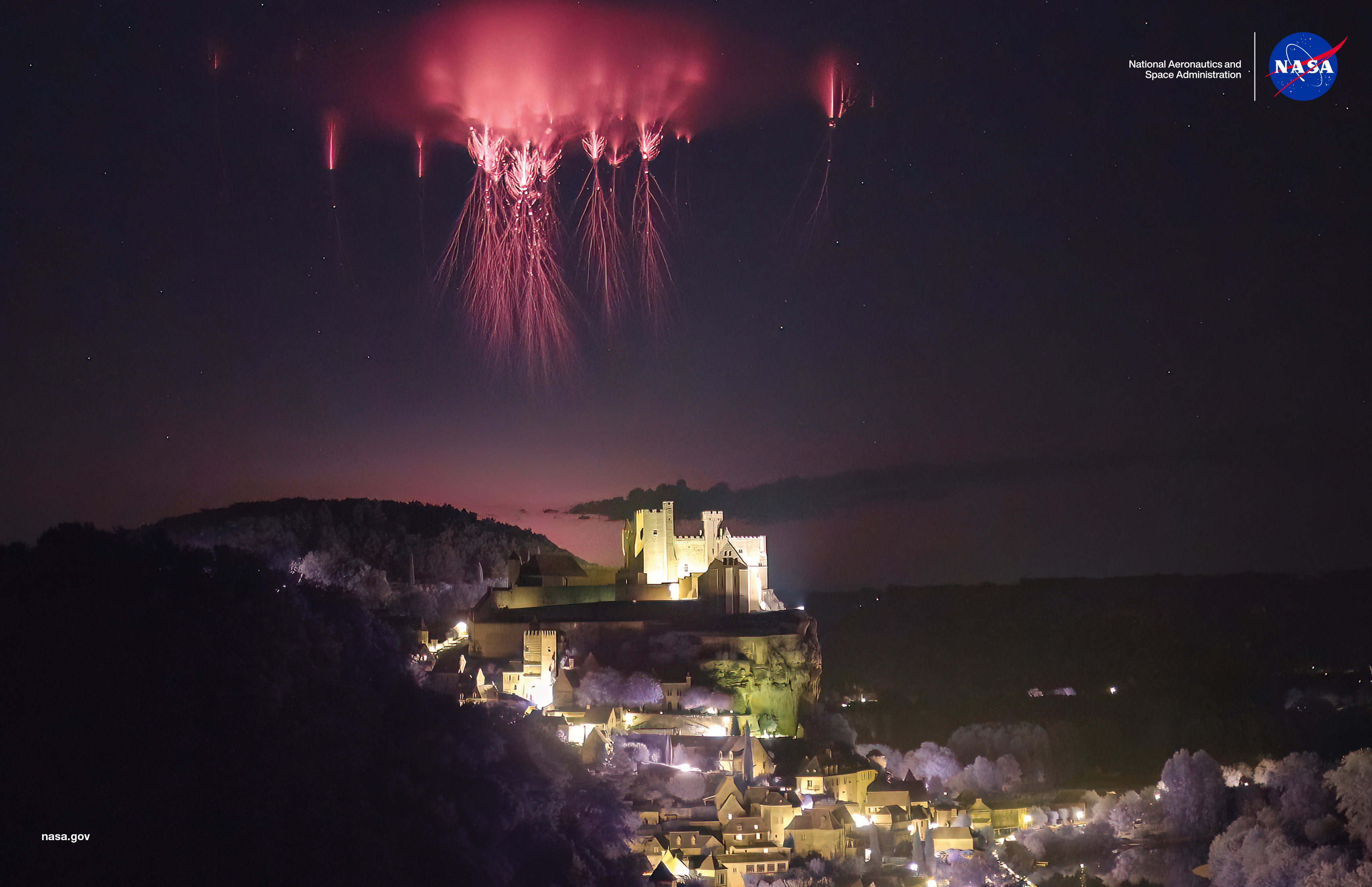
A flash of lightning, and then—something else. High above a storm, a crimson figure blinks in and out of existence. If you see it, you are a lucky witness of a sprite, one of the least-understood electrical phenomena in Earth’s upper atmosphere.
Read More

The waxing gibbous Moon rises above Earth’s blue atmosphere in this photograph taken from the International Space Station as it orbited 263 miles above a cloudy Atlantic Ocean off the coast of Quebec, Canada.
Read More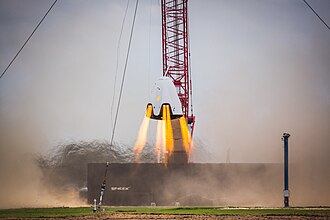
| Picture of the day |
|---|
.jpg)
|
|
A full-size test article of the SpaceX Crew Dragon named DragonFly fires its eight SuperDraco engines in a development test of its ability to land with the accuracy of a helicopter using only the thrusters. The company conducted two tethered tests vehicle attached to a crane so engineers could refine the landing software and systems on the spacecraft. SpaceX envisions returning people to Earth from space on the power of thrust instead of beneath parachutes. SpaceX, in partnership with NASA’s Commercial Crew Program, is developing the Crew Dragon and Falcon 9 integrated system to take astronauts to launch astronauts to the International Space Station from the United States.
|
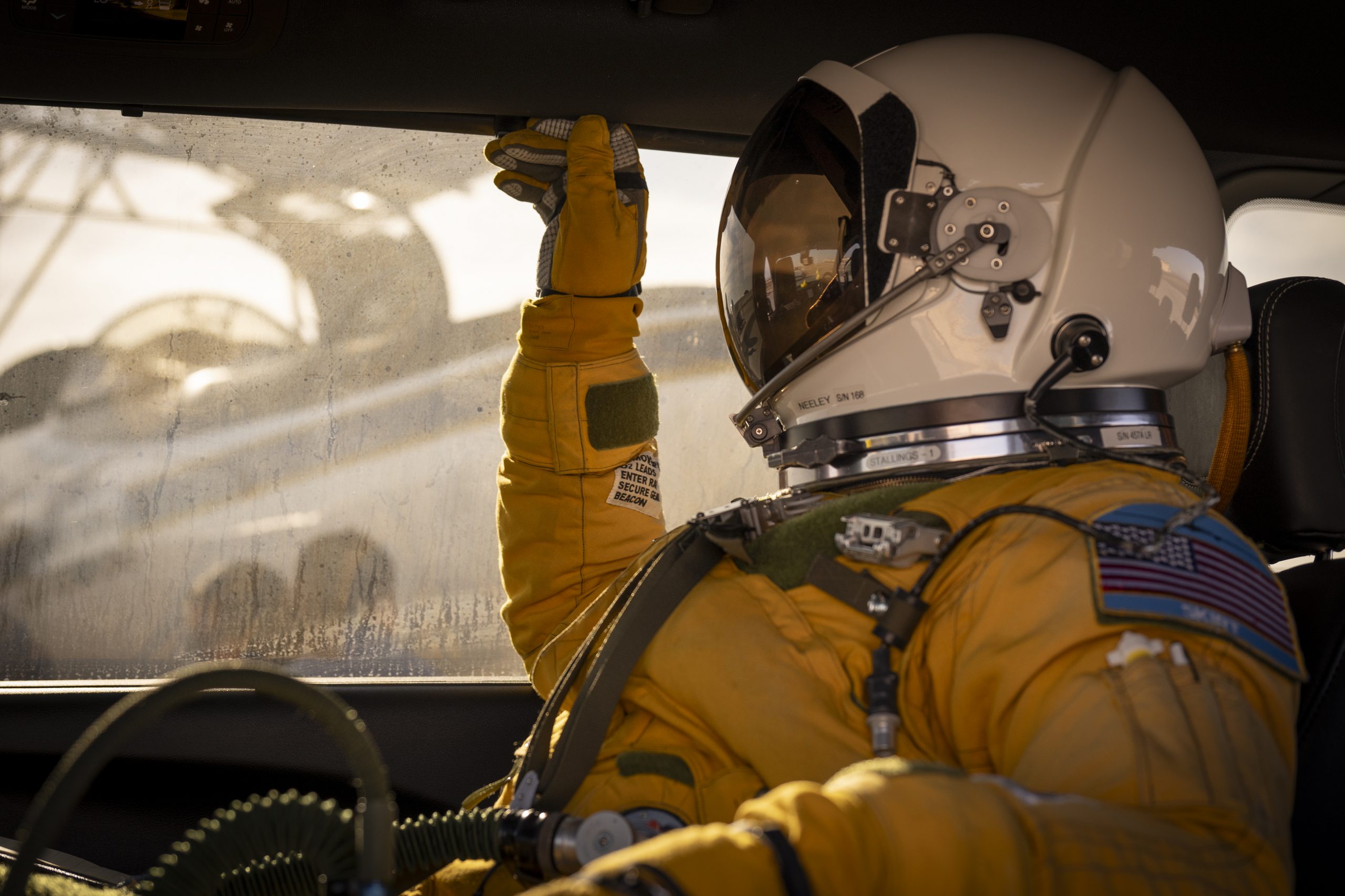
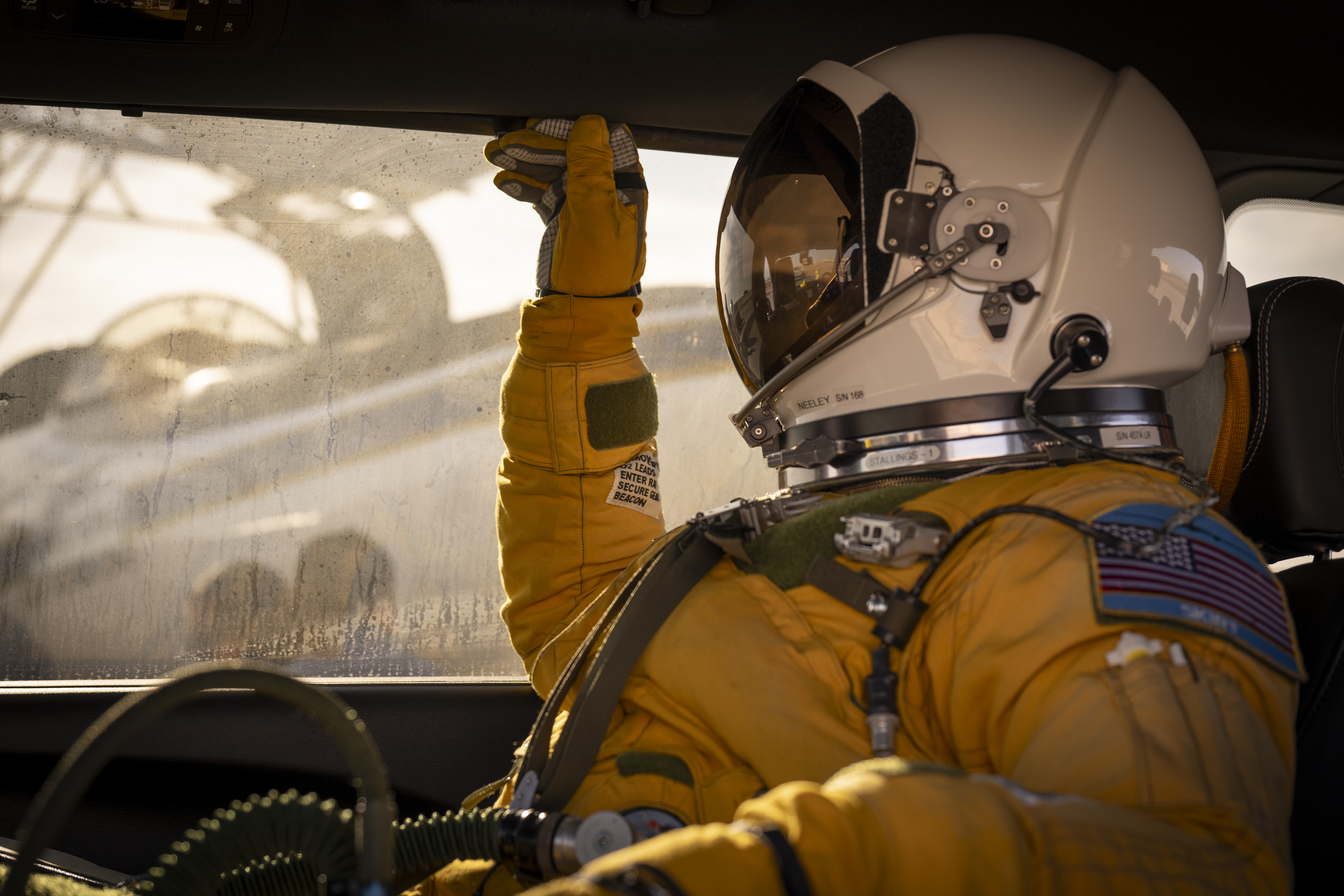
NASA ER-2 pilot Kirt Stallings waits inside the transport vehicle at Edwards, California, on Thursday, Aug. 21, 2025, moments before boarding NASA’s Armstrong Flight Research Center’s ER-2 aircraft for a high-altitude mission supporting the Geological Earth Mapping Experiment (GEMx). Through the vehicle window, the aircraft can be seen being readied for flight.
Read More
_02.jpg)