Media

Here are the patron saints of World Youth Day Seoul 2027 #Catholic The Local Organizing Committee for World Youth Day Seoul 2027 has officially announced the patron saints who will spiritually accompany the next major international gathering of young Catholics, which will take place in the South Korean capital Aug. 3–8, 2027.According to a statement from organizers, the five patron saints of WYD Seoul 2027 are St. John Paul II, founder of World Youth Day; St. Andrew Kim Taegon and his companion martyrs; St. Frances Xavier Cabrini; St. Josephine Bakhita; and St. Carlo Acutis.St. John Paul II (1920–2005) is remembered for centering much of his pastoral teaching on young people, the family, and the defense of the dignity of human life. St. Andrew Kim Taegon (1821–1846), the first Korean Catholic priest, together with his companion martyrs, represents a powerful witness of faith and courage, sealed by martyrdom at a young age.St. Frances Xavier Cabrini (1850–1917) was a tireless missionary, known especially for her work on behalf of migrants and the poor. St. Josephine Bakhita (1869–1947), a former slave who became a religious sister, is a witness of hope, freedom, and faith transformed through suffering. St. Carlo Acutis (1991–2006), meanwhile, embodies the witness of holiness in the digital age and remains a model of evangelization for young people today.As is customary for each World Youth Day, the patron saints are presented as models and guides of faith for young people through the witness of their lives and spirituality. For WYD Seoul 2027, the choices were made in light of the event’s major spiritual themes: truth, love, and peace.The selection process began at the end of 2024 and included a nationwide survey of young people, youth ministry leaders, and formators. Following that consultation, the Local Organizing Committee reviewed the candidates and made the final selection.After the announcement, a group of young volunteers spent two months studying the lives and spirituality of the five patron saints. Through prayer, dialogue, and shared reflection, they prepared a special prayer and a representative symbol for each saint to express the particular witness they offer to new generations.Cardinal Kevin Farrell, prefect of the Dicastery for the Laity, the Family, and Life, emphasized the importance of the selection, saying the patron saints “play a fundamental role in the preparation of each World Youth Day.” He said these models of holiness invite young people to reflect on God’s call and encourage them to respond with generosity and courage in following Christ.“May the witness of these patron saints inspire young people throughout the world, especially in contexts marked by difficulty and persecution,” Farrell said.Archbishop Peter Soon-taick Chung of Seoul, president of the Local Organizing Committee, noted that the chosen saints represent different continents and generations.“Each one of them offers a concrete path for living the faith amid the realities that young people face today,” Chung said, expressing his hope that participants will form a deep spiritual bond with the saints during the journey of preparation for WYD.The Local Organizing Committee will continue presenting the lives and spirituality of the patron saints through the official WYD Seoul 2027 website and social media channels, while also developing new content and formation programs.Along with the announcement, the committee also launched an interactive section titled “Meet Your Patron Saint!” Inspired by personality tests and digital quizzes, the feature asks young people a series of questions to help them discover which of the five saints most closely resembles their own personality. The goal is to help young people encounter the saints not only as historical figures but also as companions who can illuminate the questions and hopes of today.This story was first published by ACI Prensa, the Spanish-language sister service of EWTN News. It has been translated and adapted by EWTN News English.

Here are the patron saints of World Youth Day Seoul 2027 #Catholic The Local Organizing Committee for World Youth Day Seoul 2027 has officially announced the patron saints who will spiritually accompany the next major international gathering of young Catholics, which will take place in the South Korean capital Aug. 3–8, 2027.According to a statement from organizers, the five patron saints of WYD Seoul 2027 are St. John Paul II, founder of World Youth Day; St. Andrew Kim Taegon and his companion martyrs; St. Frances Xavier Cabrini; St. Josephine Bakhita; and St. Carlo Acutis.St. John Paul II (1920–2005) is remembered for centering much of his pastoral teaching on young people, the family, and the defense of the dignity of human life. St. Andrew Kim Taegon (1821–1846), the first Korean Catholic priest, together with his companion martyrs, represents a powerful witness of faith and courage, sealed by martyrdom at a young age.St. Frances Xavier Cabrini (1850–1917) was a tireless missionary, known especially for her work on behalf of migrants and the poor. St. Josephine Bakhita (1869–1947), a former slave who became a religious sister, is a witness of hope, freedom, and faith transformed through suffering. St. Carlo Acutis (1991–2006), meanwhile, embodies the witness of holiness in the digital age and remains a model of evangelization for young people today.As is customary for each World Youth Day, the patron saints are presented as models and guides of faith for young people through the witness of their lives and spirituality. For WYD Seoul 2027, the choices were made in light of the event’s major spiritual themes: truth, love, and peace.The selection process began at the end of 2024 and included a nationwide survey of young people, youth ministry leaders, and formators. Following that consultation, the Local Organizing Committee reviewed the candidates and made the final selection.After the announcement, a group of young volunteers spent two months studying the lives and spirituality of the five patron saints. Through prayer, dialogue, and shared reflection, they prepared a special prayer and a representative symbol for each saint to express the particular witness they offer to new generations.Cardinal Kevin Farrell, prefect of the Dicastery for the Laity, the Family, and Life, emphasized the importance of the selection, saying the patron saints “play a fundamental role in the preparation of each World Youth Day.” He said these models of holiness invite young people to reflect on God’s call and encourage them to respond with generosity and courage in following Christ.“May the witness of these patron saints inspire young people throughout the world, especially in contexts marked by difficulty and persecution,” Farrell said.Archbishop Peter Soon-taick Chung of Seoul, president of the Local Organizing Committee, noted that the chosen saints represent different continents and generations.“Each one of them offers a concrete path for living the faith amid the realities that young people face today,” Chung said, expressing his hope that participants will form a deep spiritual bond with the saints during the journey of preparation for WYD.The Local Organizing Committee will continue presenting the lives and spirituality of the patron saints through the official WYD Seoul 2027 website and social media channels, while also developing new content and formation programs.Along with the announcement, the committee also launched an interactive section titled “Meet Your Patron Saint!” Inspired by personality tests and digital quizzes, the feature asks young people a series of questions to help them discover which of the five saints most closely resembles their own personality. The goal is to help young people encounter the saints not only as historical figures but also as companions who can illuminate the questions and hopes of today.This story was first published by ACI Prensa, the Spanish-language sister service of EWTN News. It has been translated and adapted by EWTN News English.

The five saints chosen for the international youth gathering reflect the event’s spiritual themes of truth, love, and peace.

Read More
Christ is not ‘a guru or a good luck charm,’ pope says at Mass in Angola #Catholic SAURIMO, Angola — Pope Leo XIV warned at Mass in Saurimo, Angola, on Monday of making God into an idol that is sought only when advantageous — “when genuine faith is replaced with superstitious practices.”“There are erroneous motives for seeking Christ, particularly when he is considered to be a guru or a good luck charm,” the pope said on April 20, referring to how the crowds in the Gospel reading reacted after Jesus performed the miracle of the loaves and the fishes.“They were not seeking a teacher whom they love but a leader to applaud for their own advantage,” he said.Joyful faith in Saurimo
 
 Pope Leo XIV celebrates Mass in Saurimo, Angola, on April 20, 2026. | Credit: Vatican Media
 
 From the start of his arrival in Sub-Saharan Africa — first in Cameroon and then in Angola — Pope Leo has been welcomed by the warmth of the faithful. In Saurimo, a city in northeastern Angola, the atmosphere greeting the pope on Monday was marked by joyful faith. Everyone welcomed the successor of Peter with songs, dances, and applause.Despite the intense heat, upon reaching the esplanade before Mass, Leo XIV greeted the roughly 60,000 faithful of all ages — who had come from across the region and neighboring dioceses — by making a circuit in the popemobile.“This is the first time a pope has gone beyond Angola’s coastal belt and come — using Pope Francis’ language — to the peripheries,“ the director of the communications office of the Archdiocese of Saurimo said. ”This is a region rich in diamonds, but there is also great poverty, and he comes here to show our reality. For us, having the Holy Father in our region is a great joy.”“This is a unique and unforgettable moment in my life and in the lives of the many pilgrims here today,” Filomena Vunda, who works in the pastoral secretariat of the Archdiocese of Malanje, told ACI Africa, the sister service of EWTN News in Africa, at the Mass.Vunda encouraged non-Catholics in Angola to “keep in mind our African word ‘Ubuntu’: The happiness of others depends on me; my happiness depends solely on the happiness of others.”Ubuntu is an African philosophy about human interconnectedness. It can be translated as “I am because we are.”‘Disciples of Christ’In his homily at Mass, concelebrated by Angolan bishops, Pope Leo said: “In every part of the world, the Church lives as a people who walk as disciples of Christ, our brother and redeemer.”"He, the Risen One, illumines for us the path to the Father and with the strength of the Spirit he sanctifies us so that we may transform our way of life in conformity with his love," the pope said. "This is the good news, the Gospel that courses through our veins like blood, sustaining us on the journey. A journey that has brought me here with you today!”
 
 Pope Leo XIV celebrates Mass in Saurimo, Angola, on April 20, 2026. | Credit: Vatican Media
 
 Commenting on the Gospel of the day, Leo reflected: “Indeed, when the Son of God became man, he performed striking miracles in order to manifest the will of the Father: He made light shine in the darkness by giving sight to the blind, he gave a voice to the oppressed by loosening the tongues of the mute, he slaked our thirst for justice by multiplying bread for the poor and weak. Anyone who heard about these works set out in search of Jesus. At the same time, the Lord looks into our heart and asks us whether we seek him out of gratitude or for our own self-interest, with calculation or with love.”“The Lord himself says,” the pope continued, “‘you are looking for me, not because you saw signs, but because you ate your fill of the loaves’ (Jn 6:26). His words reveal the designs of those who do not want to encounter a person but want to consume things. The crowd sees Jesus as means to an end, a provider of services. If he had not given them something to eat, his actions and teachings would not have interested them.”“This happens,” Leo XIV explained, “when genuine faith is replaced with superstitious practices, in which God becomes an idol that is sought only when it is advantageous to us and only for as long as it is. Even the most beautiful gifts of the Lord, which are always for the care of his people, become a pretext, a prize or a bargaining chip, and are misinterpreted by those who receive them.”“How different is Jesus’ attitude toward us,” the pontiff continued. “Yet, he does not reject this insincere search, but encourages its conversion ... Christ calls us to freedom: He does not want servants or clients, rather he seeks brothers and sisters to whom he can totally dedicate himself.”“Therefore,” Leo XIV said, “the admonition that the Lord directs to the crowd is transformed into an invitation: ‘Do not work for the food that perishes, but for the food that endures for eternal life’ (Jn 6:27)."“His gift sheds light on our current situation,” the pope went on. “We can see today how the hope of many people is frustrated by violence, exploited by the powerful, and defrauded by the rich. Consequently, when injustice corrupts hearts, the bread of all becomes the possession of a few."“In the face of these evils, Christ hears the cry of the people and renews our history by lifting us up from every fall, comforting us in every suffering, and encouraging us in our mission," he said. 
 
 Crowds of people brave the heat and sun to attend Mass with Pope Leo XIV in Saurimo, Angola, on April 20, 2026. | Credit: Raúl Kangombe Sapiti/ACI Africa
 
 “All this,” the pope exhorted, “means that, in light of our discipleship, the ecclesial journey is a ‘synod of resurrection and hope,’ as St. John Paul II affirmed in his apostolic exhortation Ecclesia in Africa. Let us proceed in this wise direction! Christ himself guides and strengthens our journey, a journey that we want to learn to live more and more as it should be, that is, in a synodal manner.”The pope concluded by recalling the importance of the martyrs and saints, whose witness “encourages us and pushes us onto a path of hope, reconciliation, and peace, along which the gift of God becomes the responsibility of the head of the household, in the Christian community, in civil society.”"The vitality of the vocations that you experience [in Angola]," he said, "is a sign that you are responding to the Lord’s gift, which is always abundant for those who welcome it with pure hearts.”ACI Africa reporter Raúl Kangombe Sapiti contributed to this report.This story was first published by ACI Stampa, the Italian-language sister service of EWTN News. It has been translated and adapted by EWTN News English.

Christ is not ‘a guru or a good luck charm,’ pope says at Mass in Angola #Catholic SAURIMO, Angola — Pope Leo XIV warned at Mass in Saurimo, Angola, on Monday of making God into an idol that is sought only when advantageous — “when genuine faith is replaced with superstitious practices.”“There are erroneous motives for seeking Christ, particularly when he is considered to be a guru or a good luck charm,” the pope said on April 20, referring to how the crowds in the Gospel reading reacted after Jesus performed the miracle of the loaves and the fishes.“They were not seeking a teacher whom they love but a leader to applaud for their own advantage,” he said.Joyful faith in Saurimo Pope Leo XIV celebrates Mass in Saurimo, Angola, on April 20, 2026. | Credit: Vatican Media From the start of his arrival in Sub-Saharan Africa — first in Cameroon and then in Angola — Pope Leo has been welcomed by the warmth of the faithful. In Saurimo, a city in northeastern Angola, the atmosphere greeting the pope on Monday was marked by joyful faith. Everyone welcomed the successor of Peter with songs, dances, and applause.Despite the intense heat, upon reaching the esplanade before Mass, Leo XIV greeted the roughly 60,000 faithful of all ages — who had come from across the region and neighboring dioceses — by making a circuit in the popemobile.“This is the first time a pope has gone beyond Angola’s coastal belt and come — using Pope Francis’ language — to the peripheries,“ the director of the communications office of the Archdiocese of Saurimo said. ”This is a region rich in diamonds, but there is also great poverty, and he comes here to show our reality. For us, having the Holy Father in our region is a great joy.”“This is a unique and unforgettable moment in my life and in the lives of the many pilgrims here today,” Filomena Vunda, who works in the pastoral secretariat of the Archdiocese of Malanje, told ACI Africa, the sister service of EWTN News in Africa, at the Mass.Vunda encouraged non-Catholics in Angola to “keep in mind our African word ‘Ubuntu’: The happiness of others depends on me; my happiness depends solely on the happiness of others.”Ubuntu is an African philosophy about human interconnectedness. It can be translated as “I am because we are.”‘Disciples of Christ’In his homily at Mass, concelebrated by Angolan bishops, Pope Leo said: “In every part of the world, the Church lives as a people who walk as disciples of Christ, our brother and redeemer.”"He, the Risen One, illumines for us the path to the Father and with the strength of the Spirit he sanctifies us so that we may transform our way of life in conformity with his love," the pope said. "This is the good news, the Gospel that courses through our veins like blood, sustaining us on the journey. A journey that has brought me here with you today!” Pope Leo XIV celebrates Mass in Saurimo, Angola, on April 20, 2026. | Credit: Vatican Media Commenting on the Gospel of the day, Leo reflected: “Indeed, when the Son of God became man, he performed striking miracles in order to manifest the will of the Father: He made light shine in the darkness by giving sight to the blind, he gave a voice to the oppressed by loosening the tongues of the mute, he slaked our thirst for justice by multiplying bread for the poor and weak. Anyone who heard about these works set out in search of Jesus. At the same time, the Lord looks into our heart and asks us whether we seek him out of gratitude or for our own self-interest, with calculation or with love.”“The Lord himself says,” the pope continued, “‘you are looking for me, not because you saw signs, but because you ate your fill of the loaves’ (Jn 6:26). His words reveal the designs of those who do not want to encounter a person but want to consume things. The crowd sees Jesus as means to an end, a provider of services. If he had not given them something to eat, his actions and teachings would not have interested them.”“This happens,” Leo XIV explained, “when genuine faith is replaced with superstitious practices, in which God becomes an idol that is sought only when it is advantageous to us and only for as long as it is. Even the most beautiful gifts of the Lord, which are always for the care of his people, become a pretext, a prize or a bargaining chip, and are misinterpreted by those who receive them.”“How different is Jesus’ attitude toward us,” the pontiff continued. “Yet, he does not reject this insincere search, but encourages its conversion … Christ calls us to freedom: He does not want servants or clients, rather he seeks brothers and sisters to whom he can totally dedicate himself.”“Therefore,” Leo XIV said, “the admonition that the Lord directs to the crowd is transformed into an invitation: ‘Do not work for the food that perishes, but for the food that endures for eternal life’ (Jn 6:27)."“His gift sheds light on our current situation,” the pope went on. “We can see today how the hope of many people is frustrated by violence, exploited by the powerful, and defrauded by the rich. Consequently, when injustice corrupts hearts, the bread of all becomes the possession of a few."“In the face of these evils, Christ hears the cry of the people and renews our history by lifting us up from every fall, comforting us in every suffering, and encouraging us in our mission," he said. Crowds of people brave the heat and sun to attend Mass with Pope Leo XIV in Saurimo, Angola, on April 20, 2026. | Credit: Raúl Kangombe Sapiti/ACI Africa “All this,” the pope exhorted, “means that, in light of our discipleship, the ecclesial journey is a ‘synod of resurrection and hope,’ as St. John Paul II affirmed in his apostolic exhortation Ecclesia in Africa. Let us proceed in this wise direction! Christ himself guides and strengthens our journey, a journey that we want to learn to live more and more as it should be, that is, in a synodal manner.”The pope concluded by recalling the importance of the martyrs and saints, whose witness “encourages us and pushes us onto a path of hope, reconciliation, and peace, along which the gift of God becomes the responsibility of the head of the household, in the Christian community, in civil society.”"The vitality of the vocations that you experience [in Angola]," he said, "is a sign that you are responding to the Lord’s gift, which is always abundant for those who welcome it with pure hearts.”ACI Africa reporter Raúl Kangombe Sapiti contributed to this report.This story was first published by ACI Stampa, the Italian-language sister service of EWTN News. It has been translated and adapted by EWTN News English.

After praying at the Cathedral of Our Lady of the Assumption in Saurimo, Pope Leo XIV proceeded to the site of the Mass, attended by an estimated 60,000 people.

Read More
Beloved Catholic kids book series ‘Chime Travelers’ becomes animated TV show #Catholic The beloved children’s book series “Chime Travelers” has now made an exciting leap from page to screen with its development into an animated TV series, bringing its imaginative world to life in a whole new way. Known for its blend of adventure, time travel, and meaningful life lessons, the Catholic series has captivated young readers with its charming characters and heartfelt storytelling for over 10 years.“Chime Travelers,” written by Catholic author Lisa Hendey, follows twins Patrick and Katie as they travel to different places and time periods — all thanks to some magical church bells — to learn valuable life lessons from the saints.Developed by Family Theater Productions and Herald Entertainment, the new animated series depicts the same stories from the book series and includes episodes on St. Patrick, St. Francis of Assisi, St. Clare of Assisi, St. Kateri Tekakwitha, and the Holy Family.In an interview with EWTN News, Hendey said she’s “absolutely thrilled with the outcome” of the animated series.She shared that she had been in conversations with Family Theater Productions — a Catholic production studio in Hollywood — since 2017 about adapting the books for television.“They really saw at an early point the potential for the books to become a very dynamic [series], something even bigger than what they were as books, and itʼs been a long path enough to get to where we are now,” Hendey said.
 
 Katie meets St. Kateri Tekakwitha in an episode of “Chime Travelers.” | Credit: Family Theater Productions
 
 Father David Guffey, executive producer of “Chime Travelers” and the national director of Family Theater Productions, told EWTN News that he believed this series needed to be made because there aren’t many options in terms of Catholic media for children.“If you look at all the media thatʼs out there, thereʼs not much for Catholic children,” he said. “Thereʼs a lot for Catholic teens. Thereʼs a lot for Catholic adults. Thereʼs not a lot of Catholic childrenʼs programming. And we decided just to take a risk on this animated series so that thereʼd be another option for parents that wanted something solid to show their children.”While the book series only included five stories, the animated series will have more saint stories made into episodes for future seasons. For these additional stories, Hendey is serving as a consultant.“Iʼm so delighted that they continue to involve my voice and to give me the chance to say, ‘Well, I donʼt think my character would say that, or have we tried this, or have we thought about this?’ But the new stories are — theyʼre so exciting because theyʼre brand-new. I didnʼt write books about them,” she said. “And now the question will be, do we adapt books from those or what happens next?”Guffey, who is also a biblical consultant on the hit series “The Chosen," said he believes the rise in popularity in faith-based movies and shows being created has “been a long time in coming.”“For a long time, executives in Hollywood didnʼt believe that Christians were an audience,” he explained. “They didnʼt believe there was a faith-based audience and so they were very reluctant to fund or distribute projects. Weʼve had some big signs that there is an audience. Christians have proved themselves.”He highlighted “The Passion of the Christ” as the faith-based movie that opened the doors for other faith-based films to be created and “The Chosen” for doing the same for faith-based television series.“Christians and Catholics are showing they will seek out the kind of content that suits their families and their faith. And thatʼs going to change Hollywood — the business side of Hollywood especially,” Guffey added.The Catholic priest also emphasized the importance of creating faith-based media specifically for children.“With an adult show, adults will watch it once and theyʼre done. But with childrenʼs shows, if theyʼre of any quality at all, children will watch them over and over and over again. So, these shows and these stories really form young people in a really significant way,” he said.Hendey added that she’s grateful “we have now programming thatʼs not only faithful — because we always wanted to be faithful and we always wanted to really speak to the truth and the beauty and the goodness of our Church — but also thatʼs fun, thatʼs compelling, that kids want to watch over and over again.”As for her hopes for the series, Hendey said: “I hope that the kids who watch this, in particular, understand the agency that they have in their own lives to learn valuable lessons from the community of saints and to be a force for good in our world. We need them. We need their hearts and their purity and the love that they have, and so I hope they feel emboldened to realize that they really can make change in their world and in our world.”Guffey added: “When youʼre a kid, you think the problem youʼre going through, youʼre the only one that ever had it and you think you can be a very lonely place. I hope the series shows that first of all, Katie and Patrick go through some of the things they go through at school or at home, but also that the saints and the people whoʼve gone before us have gone through the same thing. And we can draw on the wisdom and the experience of others to gracefully move through the problems, the troubles that we encounter in our lives today.”“The lives of the saints are the lives of the Gospel in action. And I think itʼs important that children see how faith is put into practice,” Guffey shared. “And when we tell the stories of the saints, we are really telling the story of people who put their faith into practice in the good times and in the more difficult times.”“Chime Travelers” can be watched on Formed and on Hallow.

Beloved Catholic kids book series ‘Chime Travelers’ becomes animated TV show #Catholic The beloved children’s book series “Chime Travelers” has now made an exciting leap from page to screen with its development into an animated TV series, bringing its imaginative world to life in a whole new way. Known for its blend of adventure, time travel, and meaningful life lessons, the Catholic series has captivated young readers with its charming characters and heartfelt storytelling for over 10 years.“Chime Travelers,” written by Catholic author Lisa Hendey, follows twins Patrick and Katie as they travel to different places and time periods — all thanks to some magical church bells — to learn valuable life lessons from the saints.Developed by Family Theater Productions and Herald Entertainment, the new animated series depicts the same stories from the book series and includes episodes on St. Patrick, St. Francis of Assisi, St. Clare of Assisi, St. Kateri Tekakwitha, and the Holy Family.In an interview with EWTN News, Hendey said she’s “absolutely thrilled with the outcome” of the animated series.She shared that she had been in conversations with Family Theater Productions — a Catholic production studio in Hollywood — since 2017 about adapting the books for television.“They really saw at an early point the potential for the books to become a very dynamic [series], something even bigger than what they were as books, and itʼs been a long path enough to get to where we are now,” Hendey said. Katie meets St. Kateri Tekakwitha in an episode of “Chime Travelers.” | Credit: Family Theater Productions Father David Guffey, executive producer of “Chime Travelers” and the national director of Family Theater Productions, told EWTN News that he believed this series needed to be made because there aren’t many options in terms of Catholic media for children.“If you look at all the media thatʼs out there, thereʼs not much for Catholic children,” he said. “Thereʼs a lot for Catholic teens. Thereʼs a lot for Catholic adults. Thereʼs not a lot of Catholic childrenʼs programming. And we decided just to take a risk on this animated series so that thereʼd be another option for parents that wanted something solid to show their children.”While the book series only included five stories, the animated series will have more saint stories made into episodes for future seasons. For these additional stories, Hendey is serving as a consultant.“Iʼm so delighted that they continue to involve my voice and to give me the chance to say, ‘Well, I donʼt think my character would say that, or have we tried this, or have we thought about this?’ But the new stories are — theyʼre so exciting because theyʼre brand-new. I didnʼt write books about them,” she said. “And now the question will be, do we adapt books from those or what happens next?”Guffey, who is also a biblical consultant on the hit series “The Chosen," said he believes the rise in popularity in faith-based movies and shows being created has “been a long time in coming.”“For a long time, executives in Hollywood didnʼt believe that Christians were an audience,” he explained. “They didnʼt believe there was a faith-based audience and so they were very reluctant to fund or distribute projects. Weʼve had some big signs that there is an audience. Christians have proved themselves.”He highlighted “The Passion of the Christ” as the faith-based movie that opened the doors for other faith-based films to be created and “The Chosen” for doing the same for faith-based television series.“Christians and Catholics are showing they will seek out the kind of content that suits their families and their faith. And thatʼs going to change Hollywood — the business side of Hollywood especially,” Guffey added.The Catholic priest also emphasized the importance of creating faith-based media specifically for children.“With an adult show, adults will watch it once and theyʼre done. But with childrenʼs shows, if theyʼre of any quality at all, children will watch them over and over and over again. So, these shows and these stories really form young people in a really significant way,” he said.Hendey added that she’s grateful “we have now programming thatʼs not only faithful — because we always wanted to be faithful and we always wanted to really speak to the truth and the beauty and the goodness of our Church — but also thatʼs fun, thatʼs compelling, that kids want to watch over and over again.”As for her hopes for the series, Hendey said: “I hope that the kids who watch this, in particular, understand the agency that they have in their own lives to learn valuable lessons from the community of saints and to be a force for good in our world. We need them. We need their hearts and their purity and the love that they have, and so I hope they feel emboldened to realize that they really can make change in their world and in our world.”Guffey added: “When youʼre a kid, you think the problem youʼre going through, youʼre the only one that ever had it and you think you can be a very lonely place. I hope the series shows that first of all, Katie and Patrick go through some of the things they go through at school or at home, but also that the saints and the people whoʼve gone before us have gone through the same thing. And we can draw on the wisdom and the experience of others to gracefully move through the problems, the troubles that we encounter in our lives today.”“The lives of the saints are the lives of the Gospel in action. And I think itʼs important that children see how faith is put into practice,” Guffey shared. “And when we tell the stories of the saints, we are really telling the story of people who put their faith into practice in the good times and in the more difficult times.”“Chime Travelers” can be watched on Formed and on Hallow.

The new animated series depicts the same stories from the books, including episodes on St. Patrick, St. Francis of Assisi, St. Clare of Assisi, St. Kateri Tekakwitha, and the Holy Family.

Read More
EWTN News explains: Why does the pope visit mosques on papal trips? #Catholic For more than a quarter-century, popes have periodically visited Islamic mosques as part of official voyages and papal visits. The tradition began with Pope John Paul II, who in 2001 became the first pope in history known to have entered a mosque when he visited the Great Mosque of Damascus in the capital of Syria. The subsequent Popes Benedict XVI, Francis, and Leo XIV have all paid visits to mosques to hold ecumenical dialogues and host diplomatic meetings. Yet the practice is not without some controversy. Indeed, Leo XIVʼs visit to the Great Mosque of Algiers on April 13 drew some backlash on social media by critics incredulous over the leader of the Catholic Church visiting a major Islamic holy site. (This was Leoʼs second visit to a mosque; he also visited the famed “Blue Mosque” in Istanbul in late 2025.) 
 
 Pope Leo XIV stands with Rector Mohamed Mamoun Al Qasimi at the Great Mosque in Algiers, Monday, April 13, 2026. | Credit: Vatican Media
 
 So why do popes make visits to mosques, courting controversy and criticism for making a point to go to holy sites of another religion? ‘We can live together in peace’Pope Leo XIV himself addressed criticism directed toward him on April 15 on board the papal plane after leaving Algiers bound for Cameroon. “I think the visit to the mosque was significant [and showed] that although we have different beliefs, we have different ways of worshipping, we have different ways of living, we can [still] live together in peace,” the Holy Father said.  “I think that to promote that kind of image is something which the world needs to hear today,” he said, arguing that such visits show that “together we can continue to offer in our witness as we continue on this apostolic voyage.”Gabriel Said Reynolds, a theology professor at the University of Notre Dame who has written multiple works on the Quran and its relationship to Christianity, told EWTN News that interpreting papal visits to mosques should include an understanding of “the Churchʼs vision of God in the world.” “What is God’s relationship to the world? That’s been important to all of the recent popes,” he said.Reynolds pointed out that an Islamic mosque is “fundamentally different from a church.” “A Catholic church is a sort of temple in which God is present in the tabernacle — body, blood, soul, and divinity,” he said. “It’s a sacred space in the deepest sense of the word.”“What Muslims would say of a mosque is fundamentally different,” he said. “A mosque is for communal prayer, but the communal prayer that takes place in a mosque is no different than the ritual prayer that’s more often done at home.” He likened a mosque to a “gathering place” with just a few features that set it apart as a distinct site — such as a pulpit for occasional sermons and an alcove that denotes the direction of Mecca to which Muslims orient themselves during prayer. Reynolds said popes visit mosques in no small part as a “pastoral concern” for Christians living in majority-Muslim countries, such as Algeria. “Algerian society is thoroughly Islamic,” he said. “It’s not generally marked by notions of rights and responsibilities and citizenship in the same way the U.S. is. Cultivating positive relationships with Muslim leaders is absolutely essential for Christians.”Reynolds said the Churchʼs view about human dignity has “fundamental implications with its relationship toward non-Christians.” He pointed out, for instance, that the pope “could show up at an atheist convention and meet the people there and have dialogue with them.”“John 3:16 says God loves the world,” he said. “It’s not that God loves believers and doesn’t love the unbelievers. All people are children of God, according to Catholic teaching.”The declaration Nostra Aetate, meanwhile — issued by the Second Vatican Council in 1965 to address Catholicismʼs relationship with non-Christians — affirmed that the Church “regards [Muslims] with esteem.”The document points out that although Muslims “do not acknowledge Jesus as God,” they still “adore the one God” and “revere [Jesus] as a prophet” while giving honor to the Virgin Mother as well. The Second Vatican Council acknowledged that “in the course of centuries not a few quarrels and hostilities have arisen” between Christians and Muslims, but the document “urge[d] all to forget the past and to work sincerely for mutual understanding.”It further called on religious adherents to “preserve as well as to promote together for the benefit of all mankind social justice and moral welfare, as well as peace and freedom.”

EWTN News explains: Why does the pope visit mosques on papal trips? #Catholic For more than a quarter-century, popes have periodically visited Islamic mosques as part of official voyages and papal visits. The tradition began with Pope John Paul II, who in 2001 became the first pope in history known to have entered a mosque when he visited the Great Mosque of Damascus in the capital of Syria. The subsequent Popes Benedict XVI, Francis, and Leo XIV have all paid visits to mosques to hold ecumenical dialogues and host diplomatic meetings. Yet the practice is not without some controversy. Indeed, Leo XIVʼs visit to the Great Mosque of Algiers on April 13 drew some backlash on social media by critics incredulous over the leader of the Catholic Church visiting a major Islamic holy site. (This was Leoʼs second visit to a mosque; he also visited the famed “Blue Mosque” in Istanbul in late 2025.) Pope Leo XIV stands with Rector Mohamed Mamoun Al Qasimi at the Great Mosque in Algiers, Monday, April 13, 2026. | Credit: Vatican Media So why do popes make visits to mosques, courting controversy and criticism for making a point to go to holy sites of another religion? ‘We can live together in peace’Pope Leo XIV himself addressed criticism directed toward him on April 15 on board the papal plane after leaving Algiers bound for Cameroon. “I think the visit to the mosque was significant [and showed] that although we have different beliefs, we have different ways of worshipping, we have different ways of living, we can [still] live together in peace,” the Holy Father said.  “I think that to promote that kind of image is something which the world needs to hear today,” he said, arguing that such visits show that “together we can continue to offer in our witness as we continue on this apostolic voyage.”Gabriel Said Reynolds, a theology professor at the University of Notre Dame who has written multiple works on the Quran and its relationship to Christianity, told EWTN News that interpreting papal visits to mosques should include an understanding of “the Churchʼs vision of God in the world.” “What is God’s relationship to the world? That’s been important to all of the recent popes,” he said.Reynolds pointed out that an Islamic mosque is “fundamentally different from a church.” “A Catholic church is a sort of temple in which God is present in the tabernacle — body, blood, soul, and divinity,” he said. “It’s a sacred space in the deepest sense of the word.”“What Muslims would say of a mosque is fundamentally different,” he said. “A mosque is for communal prayer, but the communal prayer that takes place in a mosque is no different than the ritual prayer that’s more often done at home.” He likened a mosque to a “gathering place” with just a few features that set it apart as a distinct site — such as a pulpit for occasional sermons and an alcove that denotes the direction of Mecca to which Muslims orient themselves during prayer. Reynolds said popes visit mosques in no small part as a “pastoral concern” for Christians living in majority-Muslim countries, such as Algeria. “Algerian society is thoroughly Islamic,” he said. “It’s not generally marked by notions of rights and responsibilities and citizenship in the same way the U.S. is. Cultivating positive relationships with Muslim leaders is absolutely essential for Christians.”Reynolds said the Churchʼs view about human dignity has “fundamental implications with its relationship toward non-Christians.” He pointed out, for instance, that the pope “could show up at an atheist convention and meet the people there and have dialogue with them.”“John 3:16 says God loves the world,” he said. “It’s not that God loves believers and doesn’t love the unbelievers. All people are children of God, according to Catholic teaching.”The declaration Nostra Aetate, meanwhile — issued by the Second Vatican Council in 1965 to address Catholicismʼs relationship with non-Christians — affirmed that the Church “regards [Muslims] with esteem.”The document points out that although Muslims “do not acknowledge Jesus as God,” they still “adore the one God” and “revere [Jesus] as a prophet” while giving honor to the Virgin Mother as well. The Second Vatican Council acknowledged that “in the course of centuries not a few quarrels and hostilities have arisen” between Christians and Muslims, but the document “urge[d] all to forget the past and to work sincerely for mutual understanding.”It further called on religious adherents to “preserve as well as to promote together for the benefit of all mankind social justice and moral welfare, as well as peace and freedom.”

Why do popes make visits to Islamic mosques, courting controversy and criticism by taking part in events at holy sites of another religion?

Read More
Police reveal bomb threat at Chicago-area home of Pope Leo XIV’s brother #Catholic The brother of Pope Leo XIV was reportedly the victim of a hoax bomb threat in a suburb outside of Chicago, according to police and media reports. The New Lenox, Illinois, Police Department said in a Facebook post on April 15 that it had responded to a “reported bomb threat at a private residence” in the Chicago suburb about 40 miles outside of the city center. The statement did not identify the home as belonging to Leoʼs brother John Prevost, but local media reports said the target of the threat was Prevostʼs home. Public records indicate that Prevost lives on the street to which police responded. Police evacuated nearby homes during their investigation and called in explosive-detection K9 units. “After careful examination, investigators determined that the threat was unsubstantiated and that no explosive devices or hazardous materials were present,” New Lenox police said. The police noted that no injuries were reported but that the false bomb threat was “a serious offense and may result in criminal charges.”New Lenox Police Chief Micah Nuesse told EWTN News via email on April 16 that the matter was an “active and ongoing investigation” and that the police department had “no new updates to share” about the crime or any suspects. The hoax threat came just several days after President Donald Trump praised Pope Leo XIVʼs other brother, Louis, in a rambling Truth Social post in which he derided Pope Leo XIV as “weak on crime” and “terrible for foreign policy” after Leo repeatedly criticized the ongoing U.S.-led war in Iran. “I like [Leoʼs] brother Louis much better than I like him, because Louis is all MAGA. He gets it, and Leo doesn’t!” Trump said. Louis Prevost currently lives in Florida. On April 11 at a Vatican peace vigil, the pope criticized the “madness of war” and urged world leaders: “Stop! Itʼs time for peace!” On March 29, meanwhile, he said that God “does not listen to the prayers of those who wage war.”In Trumpʼs Truth Social post, he suggested that Leo — the first American-born pontiff — was only elected to the papacy as part of a diplomatic strategy to “deal with” Trump himself, due to Leoʼs U.S. background. “If I wasn’t in the White House, Leo wouldn’t be in the Vatican,” Trump claimed in the post. Responding to a question about Trumpʼs post on April 13, Leo told media that “people who read it will be able to draw their own conclusions.” "I am not a politician, and I have no intention of entering into a debate with him,” the pope said, adding that he had "no fear neither of the Trump administration nor of speaking out loudly about the message of the Gospel."

Police reveal bomb threat at Chicago-area home of Pope Leo XIV’s brother #Catholic The brother of Pope Leo XIV was reportedly the victim of a hoax bomb threat in a suburb outside of Chicago, according to police and media reports. The New Lenox, Illinois, Police Department said in a Facebook post on April 15 that it had responded to a “reported bomb threat at a private residence” in the Chicago suburb about 40 miles outside of the city center. The statement did not identify the home as belonging to Leoʼs brother John Prevost, but local media reports said the target of the threat was Prevostʼs home. Public records indicate that Prevost lives on the street to which police responded. Police evacuated nearby homes during their investigation and called in explosive-detection K9 units. “After careful examination, investigators determined that the threat was unsubstantiated and that no explosive devices or hazardous materials were present,” New Lenox police said. The police noted that no injuries were reported but that the false bomb threat was “a serious offense and may result in criminal charges.”New Lenox Police Chief Micah Nuesse told EWTN News via email on April 16 that the matter was an “active and ongoing investigation” and that the police department had “no new updates to share” about the crime or any suspects. The hoax threat came just several days after President Donald Trump praised Pope Leo XIVʼs other brother, Louis, in a rambling Truth Social post in which he derided Pope Leo XIV as “weak on crime” and “terrible for foreign policy” after Leo repeatedly criticized the ongoing U.S.-led war in Iran. “I like [Leoʼs] brother Louis much better than I like him, because Louis is all MAGA. He gets it, and Leo doesn’t!” Trump said. Louis Prevost currently lives in Florida. On April 11 at a Vatican peace vigil, the pope criticized the “madness of war” and urged world leaders: “Stop! Itʼs time for peace!” On March 29, meanwhile, he said that God “does not listen to the prayers of those who wage war.”In Trumpʼs Truth Social post, he suggested that Leo — the first American-born pontiff — was only elected to the papacy as part of a diplomatic strategy to “deal with” Trump himself, due to Leoʼs U.S. background. “If I wasn’t in the White House, Leo wouldn’t be in the Vatican,” Trump claimed in the post. Responding to a question about Trumpʼs post on April 13, Leo told media that “people who read it will be able to draw their own conclusions.” "I am not a politician, and I have no intention of entering into a debate with him,” the pope said, adding that he had "no fear neither of the Trump administration nor of speaking out loudly about the message of the Gospel."

The bomb threat was determined to be “unsubstantiated,” according to law enforcement.

Read More
Knights of Columbus affirms ‘solidarity’ with Pope Leo XIV as Trump escalates criticism #Catholic The Knights of Columbus issued a statement that affirms the Catholic fraternal organization’s solidarity with Pope Leo XIV as President Donald Trump criticized the Holy Father a second time on Truth Social.“The Knights of Columbus has always stood in solidarity with the Holy Father, recognizing in him a spiritual father who calls the world not to division but to unity, not to conflict but to peace,” Supreme Knight Patrick Kelly said in the statement.“In this moment, we reaffirm that commitment with clarity and conviction,” he said.Trump escalated his criticism of the Holy Father late Tuesday evening in a second post on Truth Social, which criticized the pontiff’s staunch opposition to war.Whether one agrees or disagrees with Leo’s policy views, Kelly said, “the Holy Father’s prophetic voice deserves to be heard with respect and engaged seriously.”“Pope Leo XIV has consistently called for peace, dialogue, and restraint in a world marked by war and suffering,” he said. “The Holy Father’s words are not political talking points — they are reflections of the Gospel itself.”Kelly noted that many Catholics and others “have been deeply disappointed by the disparaging comments directed at Pope Leo XIV” by Trump, and that Leo “is not a politician — he is the vicar of Christ, entrusted with proclaiming the Gospel and shepherding souls.”In his statement, Kelly acknowledged that faithful Catholics can hold differing views on foreign policy and that Catholics should engage in the public square. He said nations can safeguard security “in accordance with the demands of justice and the pursuit of peace.”“The Church does not ask Catholics to withdraw from civic life but to engage with and elevate it — bringing to our civic dialogue the light of truth, respect for the dignity of every human person, and a steadfast concern for the common good," he said.Kelly also encouraged prayers for the pope, the president, and other politicians.“As Knights, we are called to be men of unity, as followers of Christ and patriotic citizens,” he said. “I encourage all Knights of Columbus to pray for the Holy Father, to pray for civic leaders, and to pray for peace and those working to achieve it.”“And let us recommit ourselves to charity in our public discourse,” he added. “May we be known not for echoing the divisions of our time, but for healing them. In a moment of tension, the path forward is not louder conflict but deeper fidelity — to truth, to charity, and to the Gospel.”Trump goes after Leo againTrumpʼs social media post said: “Will someone please tell Pope Leo that Iran has killed at least 42,000 innocent, completely unarmed, protesters in the last two months, and that for Iran to have a nuclear bomb is absolutely unacceptable."During the protests, Leo did call for peace, saying in January that “ongoing tensions [in Iran and Syria] continue to claim many lives.”“I hope and pray that dialogue and peace may be patiently nurtured in pursuit of the common good of the whole of society,” he said at the time.Leo has also strongly opposed nuclear weapons, saying in June 2025: “The further proliferation of nuclear weapons in the Middle East, as well as this escalation of violence, imperils the fragile stability remaining in the region.”While Trump cited numbers exceeding 40,000 people, estimates about the number of people killed in anti-regime protests and unrest in Iran varies a lot, ranging from several thousand to more than 30,000. Most protesters were unarmed, but Iran’s government claims some were armed and killed about 500 security personnel. Trump said the United States tried to arm the protesters, but those guns did not get to the right people.Vance, bishops offer more commentsCatholic bishops and leaders have responded to Trump’s attack on Pope Leo, and elected officials also have made statements.Archbishop Alexander Sample of Portland, Oregon, said he is deeply concerned and troubled by Trump’s social media rhetoric, especially during Holy Week and Easter, which he says falls short of the moral standard expected of both the presidency and a professed Christian. The archbishop criticized Trump’s attacks on Pope Leo, saying the pope’s calls for peace and dialogue arise from his pastoral mission, not political ideology.Sample said the Church’s role is to proclaim peace, human dignity, and the Gospel, citing Jesus’ teaching: “Blessed are the peacemakers.”The Ancient Order of Hibernians condemned attacks and mockery directed at Pope Leo XIV and the papacy, affirming that respect for the Holy Father is essential to Catholic faith.Vice President JD Vance, a convert to Catholicism, said at a Turning Point USA event that Pope Leo XIV should “be careful when he talks about matters of theology.”“One of the issues here is that if youʼre going to opine on matters of theology, youʼve got to be careful,” he said. “Youʼve got to make sure itʼs anchored in the truth.”Republican U.S. House Speaker Mike Johnson of Louisiana said: “Any religious leader can say anything they want, but obviously, if you wade into political waters, I think you should expect some political response.”Pope Leo XIV has responded to Trump’s public criticism by saying he has “no fear of the Trump administration” and will continue to speak out boldly with the message of the Gospel.

Knights of Columbus affirms ‘solidarity’ with Pope Leo XIV as Trump escalates criticism #Catholic The Knights of Columbus issued a statement that affirms the Catholic fraternal organization’s solidarity with Pope Leo XIV as President Donald Trump criticized the Holy Father a second time on Truth Social.“The Knights of Columbus has always stood in solidarity with the Holy Father, recognizing in him a spiritual father who calls the world not to division but to unity, not to conflict but to peace,” Supreme Knight Patrick Kelly said in the statement.“In this moment, we reaffirm that commitment with clarity and conviction,” he said.Trump escalated his criticism of the Holy Father late Tuesday evening in a second post on Truth Social, which criticized the pontiff’s staunch opposition to war.Whether one agrees or disagrees with Leo’s policy views, Kelly said, “the Holy Father’s prophetic voice deserves to be heard with respect and engaged seriously.”“Pope Leo XIV has consistently called for peace, dialogue, and restraint in a world marked by war and suffering,” he said. “The Holy Father’s words are not political talking points — they are reflections of the Gospel itself.”Kelly noted that many Catholics and others “have been deeply disappointed by the disparaging comments directed at Pope Leo XIV” by Trump, and that Leo “is not a politician — he is the vicar of Christ, entrusted with proclaiming the Gospel and shepherding souls.”In his statement, Kelly acknowledged that faithful Catholics can hold differing views on foreign policy and that Catholics should engage in the public square. He said nations can safeguard security “in accordance with the demands of justice and the pursuit of peace.”“The Church does not ask Catholics to withdraw from civic life but to engage with and elevate it — bringing to our civic dialogue the light of truth, respect for the dignity of every human person, and a steadfast concern for the common good," he said.Kelly also encouraged prayers for the pope, the president, and other politicians.“As Knights, we are called to be men of unity, as followers of Christ and patriotic citizens,” he said. “I encourage all Knights of Columbus to pray for the Holy Father, to pray for civic leaders, and to pray for peace and those working to achieve it.”“And let us recommit ourselves to charity in our public discourse,” he added. “May we be known not for echoing the divisions of our time, but for healing them. In a moment of tension, the path forward is not louder conflict but deeper fidelity — to truth, to charity, and to the Gospel.”Trump goes after Leo againTrumpʼs social media post said: “Will someone please tell Pope Leo that Iran has killed at least 42,000 innocent, completely unarmed, protesters in the last two months, and that for Iran to have a nuclear bomb is absolutely unacceptable."During the protests, Leo did call for peace, saying in January that “ongoing tensions [in Iran and Syria] continue to claim many lives.”“I hope and pray that dialogue and peace may be patiently nurtured in pursuit of the common good of the whole of society,” he said at the time.Leo has also strongly opposed nuclear weapons, saying in June 2025: “The further proliferation of nuclear weapons in the Middle East, as well as this escalation of violence, imperils the fragile stability remaining in the region.”While Trump cited numbers exceeding 40,000 people, estimates about the number of people killed in anti-regime protests and unrest in Iran varies a lot, ranging from several thousand to more than 30,000. Most protesters were unarmed, but Iran’s government claims some were armed and killed about 500 security personnel. Trump said the United States tried to arm the protesters, but those guns did not get to the right people.Vance, bishops offer more commentsCatholic bishops and leaders have responded to Trump’s attack on Pope Leo, and elected officials also have made statements.Archbishop Alexander Sample of Portland, Oregon, said he is deeply concerned and troubled by Trump’s social media rhetoric, especially during Holy Week and Easter, which he says falls short of the moral standard expected of both the presidency and a professed Christian. The archbishop criticized Trump’s attacks on Pope Leo, saying the pope’s calls for peace and dialogue arise from his pastoral mission, not political ideology.Sample said the Church’s role is to proclaim peace, human dignity, and the Gospel, citing Jesus’ teaching: “Blessed are the peacemakers.”The Ancient Order of Hibernians condemned attacks and mockery directed at Pope Leo XIV and the papacy, affirming that respect for the Holy Father is essential to Catholic faith.Vice President JD Vance, a convert to Catholicism, said at a Turning Point USA event that Pope Leo XIV should “be careful when he talks about matters of theology.”“One of the issues here is that if youʼre going to opine on matters of theology, youʼve got to be careful,” he said. “Youʼve got to make sure itʼs anchored in the truth.”Republican U.S. House Speaker Mike Johnson of Louisiana said: “Any religious leader can say anything they want, but obviously, if you wade into political waters, I think you should expect some political response.”Pope Leo XIV has responded to Trump’s public criticism by saying he has “no fear of the Trump administration” and will continue to speak out boldly with the message of the Gospel.

Supreme Knight Patrick Kelly is asking Catholics to pray for the pope and the president, as President Trump again criticized Leo’s comments about the Iran war.

Read More
Trump’s comments on Pope Leo called ‘disrespectful’ as Americans react #Catholic Catholic bishops and U.S. elected officials have publicly criticized the president’s statements about Pope Leo XIV.President Donald Trump called Leo “weak on crime and terrible for foreign policy” in a lengthy social media post April 12 that drew response from the United States Conference of Catholic Bishops (USCCB) and elected officials.Bishop Robert Barron of the Diocese of Winona-Rochester, Minnesota, called Trump’s attack on Pope Leo XIV “disrespectful." Barron, who serves on Trump’s Religious Liberty Commission, said in a post on X that Trump’s comments “were entirely inappropriate and disrespectful” and “I think the president owes the pope an apology.”“[Trump’s comments] don’t contribute at all to a constructive conversation,” he said. “It is the pope’s prerogative to articulate Catholic doctrine and the principles that govern the moral life. In regard to the concrete application of those principles, people of goodwill can and do disagree.”Barron encouraged Catholic Trump officials to arrange a meeting with Vatican officials “so that a real dialogue can take place,” saying “this is far preferable to the statements on social media.”Bishop Michael Burbidge of Arlington, Virginia, said in a social media post: “Along with Archbishop [Paul] Coakley, president of the USCCB, and my brother bishops, I was disheartened by recent comments from President Trump concerning Pope Leo XIV and the Church. I pray that civility and respect are fully restored as together, with God’s grace, we work for peace and harmony among all people. May we also be united in our prayer for the end of war and violence so that Christ’s peace reigns throughout the world and in our hearts.”Palm Beach, Florida, Bishop Manuel de Jesús Rodríguez posted on X: “The @DiocesePB stands firm with our Holy Father, @Pontifex, and strongly rejects the disrespectful and violent attacks that Donald J. Trump has directed against the Holy Father.”Buffalo, New York, Bishop Michael Fisher posted on X: “This is not about politics but the very cause of humanity.”The Catholic Association's Ashley McGuire said in a statement: “The Catholic Church does not in any way fit into American political boxes. It will always prioritize the protection of innocent life in all its stages as well as the cause of the poor and marginalized. Insulting the pope, and all Catholics by extension, with the hope of making the Church bend to American political agendas, is discouraging and counterproductive.” McGuire added: “We pray that President Trump apologizes to Pope Leo.”U.S. officials' reaction beginsRepublican Vice President JD Vance, who is Catholic, has not yet commented on the matter, nor has Secretary of State Marco Rubio, also a Catholic.Sen. Mark Kelly, D-Arizona, who is Catholic, posted on X that “I find it abhorrent that the president of the United States would publicly attack the successor of St. Peter.”U.S. House Minority Leader Hakeem Jeffries said on X that Trump “shamefully attacked” the pope. Few Republican elected officials have spoken out.TweetDemocratic California Gov. Gavin Newsom posted on X: “Hey @GOP, you good with your guy directly attacking the pope now?”Rep. Lukas Schubert, a Republican Montana state lawmaker, disputed the presidentʼs statement that the pope is a “liberal person.”“Pope Leo is significantly further to the right than President Trump on abortion, gay marriage, and family values. Also he is more America First on the Iran War,” Schubert said.AI imageTrump also posted an AI-created image on Truth Social that appeared to portray himself as Jesus Christ, healing the sick, which led several Catholics to accuse the president of blasphemy.Edward Feser, a Catholic philosopher and professor at Pasadena City College, posted on X that Trump’s comments illustrate “how utter enslavement to the sin of pride makes a man unsuitable for the presidency.”“For all their faults, previous presidents had the visceral understanding of proper boundaries not to attack the vicar of Christ even when they disagreed with him,” he said.Feser quoted Daniel 11:36-37 in response to Trump’s AI image of himself as Christ, which reads: “And the king shall do according to his will; he shall exalt himself and magnify himself above every god, and shall speak astonishing things against the God of gods … He shall not give heed to any other god, for he shall magnify himself above all.”In reaction to the AI photo, Matt Fradd, the host of “Pints With Aquinas,“ urged Catholics to “offer a rosary today for Donald Trump and all blasphemers. … Seriously. Do it. I will too.”TweetRep. Shontel Brown, D-Ohio, did not directly reference Trumpʼs remarks about the pope but criticized the AI-created image on X: “There aren’t enough words to denounce how wrong this is.”The comments came after Leo criticized the Iran war and Trump’s rhetoric about targeting the entire civilization of Iran. Leo said in response to the post: “I have no fear neither of the Trump administration nor of speaking out loudly about the message of the Gospel.”Marjorie Taylor Greene, a former Republican congresswoman who was a strong ally of Trump before splitting with him on the Iran war and his handling of the Jeffrey Epstein files, posted on X that Trump “attacked the pope because the pope is rightly against Trump’s war in Iran and then he posted this picture of himself as if he is replacing Jesus.”“This comes after last week’s post of his evil tirade on Easter and then threatening to kill an entire civilization,” she said. “I completely denounce this and I’m praying against it!!!”‘Fuels division’Father Robert Sirico, the founder of the Acton Institute, said in a statement that Leo “has both the right and the duty to speak prophetically on matters of war and peace, the dignity of the human person, and the moral limits of force — even when his words discomfort political leaders.”He said Trump’s post does not “strengthen America’s moral standing but “merely fuels division.”Sirico also added that Catholics can disagree with popes on prudential judgments, such as foreign policy or crime, which he said are not infallible: “The Church herself teaches that such applications of principle admit of legitimate debate.”This story was updated at 11:50 a.m. ET on April 13, 2026, with comments from Buffalo, New York, Bishop Michael Fisher and The Catholic Associationʼs Ashley McGuire.

Trump’s comments on Pope Leo called ‘disrespectful’ as Americans react #Catholic Catholic bishops and U.S. elected officials have publicly criticized the president’s statements about Pope Leo XIV.President Donald Trump called Leo “weak on crime and terrible for foreign policy” in a lengthy social media post April 12 that drew response from the United States Conference of Catholic Bishops (USCCB) and elected officials.Bishop Robert Barron of the Diocese of Winona-Rochester, Minnesota, called Trump’s attack on Pope Leo XIV “disrespectful." Barron, who serves on Trump’s Religious Liberty Commission, said in a post on X that Trump’s comments “were entirely inappropriate and disrespectful” and “I think the president owes the pope an apology.”“[Trump’s comments] don’t contribute at all to a constructive conversation,” he said. “It is the pope’s prerogative to articulate Catholic doctrine and the principles that govern the moral life. In regard to the concrete application of those principles, people of goodwill can and do disagree.”Barron encouraged Catholic Trump officials to arrange a meeting with Vatican officials “so that a real dialogue can take place,” saying “this is far preferable to the statements on social media.”Bishop Michael Burbidge of Arlington, Virginia, said in a social media post: “Along with Archbishop [Paul] Coakley, president of the USCCB, and my brother bishops, I was disheartened by recent comments from President Trump concerning Pope Leo XIV and the Church. I pray that civility and respect are fully restored as together, with God’s grace, we work for peace and harmony among all people. May we also be united in our prayer for the end of war and violence so that Christ’s peace reigns throughout the world and in our hearts.”Palm Beach, Florida, Bishop Manuel de Jesús Rodríguez posted on X: “The @DiocesePB stands firm with our Holy Father, @Pontifex, and strongly rejects the disrespectful and violent attacks that Donald J. Trump has directed against the Holy Father.”Buffalo, New York, Bishop Michael Fisher posted on X: “This is not about politics but the very cause of humanity.”The Catholic Association's Ashley McGuire said in a statement: “The Catholic Church does not in any way fit into American political boxes. It will always prioritize the protection of innocent life in all its stages as well as the cause of the poor and marginalized. Insulting the pope, and all Catholics by extension, with the hope of making the Church bend to American political agendas, is discouraging and counterproductive.” McGuire added: “We pray that President Trump apologizes to Pope Leo.”U.S. officials' reaction beginsRepublican Vice President JD Vance, who is Catholic, has not yet commented on the matter, nor has Secretary of State Marco Rubio, also a Catholic.Sen. Mark Kelly, D-Arizona, who is Catholic, posted on X that “I find it abhorrent that the president of the United States would publicly attack the successor of St. Peter.”U.S. House Minority Leader Hakeem Jeffries said on X that Trump “shamefully attacked” the pope. Few Republican elected officials have spoken out.TweetDemocratic California Gov. Gavin Newsom posted on X: “Hey @GOP, you good with your guy directly attacking the pope now?”Rep. Lukas Schubert, a Republican Montana state lawmaker, disputed the presidentʼs statement that the pope is a “liberal person.”“Pope Leo is significantly further to the right than President Trump on abortion, gay marriage, and family values. Also he is more America First on the Iran War,” Schubert said.AI imageTrump also posted an AI-created image on Truth Social that appeared to portray himself as Jesus Christ, healing the sick, which led several Catholics to accuse the president of blasphemy.Edward Feser, a Catholic philosopher and professor at Pasadena City College, posted on X that Trump’s comments illustrate “how utter enslavement to the sin of pride makes a man unsuitable for the presidency.”“For all their faults, previous presidents had the visceral understanding of proper boundaries not to attack the vicar of Christ even when they disagreed with him,” he said.Feser quoted Daniel 11:36-37 in response to Trump’s AI image of himself as Christ, which reads: “And the king shall do according to his will; he shall exalt himself and magnify himself above every god, and shall speak astonishing things against the God of gods … He shall not give heed to any other god, for he shall magnify himself above all.”In reaction to the AI photo, Matt Fradd, the host of “Pints With Aquinas,“ urged Catholics to “offer a rosary today for Donald Trump and all blasphemers. … Seriously. Do it. I will too.”TweetRep. Shontel Brown, D-Ohio, did not directly reference Trumpʼs remarks about the pope but criticized the AI-created image on X: “There aren’t enough words to denounce how wrong this is.”The comments came after Leo criticized the Iran war and Trump’s rhetoric about targeting the entire civilization of Iran. Leo said in response to the post: “I have no fear neither of the Trump administration nor of speaking out loudly about the message of the Gospel.”Marjorie Taylor Greene, a former Republican congresswoman who was a strong ally of Trump before splitting with him on the Iran war and his handling of the Jeffrey Epstein files, posted on X that Trump “attacked the pope because the pope is rightly against Trump’s war in Iran and then he posted this picture of himself as if he is replacing Jesus.”“This comes after last week’s post of his evil tirade on Easter and then threatening to kill an entire civilization,” she said. “I completely denounce this and I’m praying against it!!!”‘Fuels division’Father Robert Sirico, the founder of the Acton Institute, said in a statement that Leo “has both the right and the duty to speak prophetically on matters of war and peace, the dignity of the human person, and the moral limits of force — even when his words discomfort political leaders.”He said Trump’s post does not “strengthen America’s moral standing but “merely fuels division.”Sirico also added that Catholics can disagree with popes on prudential judgments, such as foreign policy or crime, which he said are not infallible: “The Church herself teaches that such applications of principle admit of legitimate debate.”This story was updated at 11:50 a.m. ET on April 13, 2026, with comments from Buffalo, New York, Bishop Michael Fisher and The Catholic Associationʼs Ashley McGuire.

President Donald Trump called Leo “weak on crime and terrible for foreign policy” in a lengthy social media post April 12 that drew response from U.S. bishops and elected officials.

Read More
Minnesota bishop: Singer Gracie Abrams helps young people confront ‘gaping wounds in their hearts’ #Catholic Hereʼs a roundup of the latest Catholic education news in the U.S.Minnesota bishop cites Gracie Abrams in speech on educators’ role in healing woundsBishop Andrew Cozzens of Crookston shared a video performance of pop singer Gracie Abrams during his keynote speech at the National Catholic Educational Association convention.While discussing the role of educators in helping young people to heal from their wounds, Cozzens played a video of Abrams performing her song “Camden."“The poetry that she sings about expresses the depth of pain that she carries in her heart, and whatʼs even more clear is that it resonates with tens of thousands of people in the stadium all her same age,” Cozzens said during his April 7 keynote, according to UCA News. "Many people in the stadium also feel like singing.”In the song, an extended reflection on insecurity and personal struggles, Abrams sings, in part, “All of me, a wound to close / But I leave the whole thing open / I just wanted you to know / I was never good at coping.”“This is the height of popular culture,” he said. “This is what our young people are singing about, the gaping wounds in their hearts." Catholic educators must invite young people to encounter Christ in their wounds, rather than seeking value from social media, artificial intelligence, popular culture, or politics, he said.The National Catholic Educational Association convention took place April 7-9. Other highlights at the event included a live butter sculpture of Pope Leo XIV, and “Puppy Love” sessions sponsored by Safe Hands Rescue and Healing Hearts Rescue, according to the event schedule.Chicago Archdiocese says public school system abruptly cut off funding for students with disabilitiesMore than 800 students with disabilities attending Chicago Catholic schools will be affected after the city’s public school system suddenly suspended funding to social services before the end of the school year.The Chicago Archdiocese said in an April 10 statement that Chicago Public Schools (CPS) targeted only Catholic schools in terminating services for individuals with special needs under the Individuals with Disabilities Education Act (IDEA). The statement noted students with learning differences will lose access to math, reading, and writing tutoring, which will create “severe hardship for hundreds of students” who were relying on the services through the end of the year.“We are not aware of any other non-public school system or individual school, religious or secular, whose IDEA services have been terminated,” the archdiocese said. “It is not clear why Catholic schools are being treated differently, but Catholic school students have the right to be treated equally under the law.”Chicago Archbishop Cardinal Blase Cupich said the archdiocese "cannot allow this shocking and possibly discriminatory action by CPS to stand, not only given its affront to Catholics, but even more so since this injustice would disenfranchise the students we serve.” The archdiocese said efforts to reach CPS Superintendent Macquline King “have not yielded a response.”The archdiocese said the Chicago school system had verbally confirmed funding for the services would continue through the end of the school year “as recently as March 25" before informing the archdiocese during Holy Week that the services would be suspended. “While federal funding for these services was provided to CPS for the full school year, we were informed that the last day of services would be [April 10],” the archdiocese said.Georgia archdiocese launches virtual Catholic high schoolThe Archdiocese of Atlanta is starting a fully online Catholic high school program this fall in partnership with Catholic Education Services.The launch of Sacred Heart Virtual Academy comes amid increased demand among homeschooling families, according to an April 8 report from the Georgia Bulletin. Curriculum will be provided by Catholic Education Services, whose mission “is to partner with Catholic school leaders and provide services that extend the reach and impact of your school’s mission through a faith-centered, rigorously academic education with a flexible learning platform,” according to its website.“We knew that we were not filling the needs of a group of kids that were in our parishes,” Kim Shields, the archdiocesan associate superintendent of schools, said in the report. “This allows a child that doesn’t want to go to a brick-and-mortar school to have that opportunity.” The school will serve grades 9-12, according to its website, and is open to students outside of the archdiocese.“My hope is that it serves what we’re about — to provide programs for students to help them develop in all areas of their life,” Shields said. “The premise is that everything is centered around the mission of the Catholic Church.”

Minnesota bishop: Singer Gracie Abrams helps young people confront ‘gaping wounds in their hearts’ #Catholic Hereʼs a roundup of the latest Catholic education news in the U.S.Minnesota bishop cites Gracie Abrams in speech on educators’ role in healing woundsBishop Andrew Cozzens of Crookston shared a video performance of pop singer Gracie Abrams during his keynote speech at the National Catholic Educational Association convention.While discussing the role of educators in helping young people to heal from their wounds, Cozzens played a video of Abrams performing her song “Camden."“The poetry that she sings about expresses the depth of pain that she carries in her heart, and whatʼs even more clear is that it resonates with tens of thousands of people in the stadium all her same age,” Cozzens said during his April 7 keynote, according to UCA News. "Many people in the stadium also feel like singing.”In the song, an extended reflection on insecurity and personal struggles, Abrams sings, in part, “All of me, a wound to close / But I leave the whole thing open / I just wanted you to know / I was never good at coping.”“This is the height of popular culture,” he said. “This is what our young people are singing about, the gaping wounds in their hearts." Catholic educators must invite young people to encounter Christ in their wounds, rather than seeking value from social media, artificial intelligence, popular culture, or politics, he said.The National Catholic Educational Association convention took place April 7-9. Other highlights at the event included a live butter sculpture of Pope Leo XIV, and “Puppy Love” sessions sponsored by Safe Hands Rescue and Healing Hearts Rescue, according to the event schedule.Chicago Archdiocese says public school system abruptly cut off funding for students with disabilitiesMore than 800 students with disabilities attending Chicago Catholic schools will be affected after the city’s public school system suddenly suspended funding to social services before the end of the school year.The Chicago Archdiocese said in an April 10 statement that Chicago Public Schools (CPS) targeted only Catholic schools in terminating services for individuals with special needs under the Individuals with Disabilities Education Act (IDEA). The statement noted students with learning differences will lose access to math, reading, and writing tutoring, which will create “severe hardship for hundreds of students” who were relying on the services through the end of the year.“We are not aware of any other non-public school system or individual school, religious or secular, whose IDEA services have been terminated,” the archdiocese said. “It is not clear why Catholic schools are being treated differently, but Catholic school students have the right to be treated equally under the law.”Chicago Archbishop Cardinal Blase Cupich said the archdiocese "cannot allow this shocking and possibly discriminatory action by CPS to stand, not only given its affront to Catholics, but even more so since this injustice would disenfranchise the students we serve.” The archdiocese said efforts to reach CPS Superintendent Macquline King “have not yielded a response.”The archdiocese said the Chicago school system had verbally confirmed funding for the services would continue through the end of the school year “as recently as March 25" before informing the archdiocese during Holy Week that the services would be suspended. “While federal funding for these services was provided to CPS for the full school year, we were informed that the last day of services would be [April 10],” the archdiocese said.Georgia archdiocese launches virtual Catholic high schoolThe Archdiocese of Atlanta is starting a fully online Catholic high school program this fall in partnership with Catholic Education Services.The launch of Sacred Heart Virtual Academy comes amid increased demand among homeschooling families, according to an April 8 report from the Georgia Bulletin. Curriculum will be provided by Catholic Education Services, whose mission “is to partner with Catholic school leaders and provide services that extend the reach and impact of your school’s mission through a faith-centered, rigorously academic education with a flexible learning platform,” according to its website.“We knew that we were not filling the needs of a group of kids that were in our parishes,” Kim Shields, the archdiocesan associate superintendent of schools, said in the report. “This allows a child that doesn’t want to go to a brick-and-mortar school to have that opportunity.” The school will serve grades 9-12, according to its website, and is open to students outside of the archdiocese.“My hope is that it serves what we’re about — to provide programs for students to help them develop in all areas of their life,” Shields said. “The premise is that everything is centered around the mission of the Catholic Church.”

A roundup of the latest Catholic education news in the U.S.

Read More
Why Pakistan’s bishops doubt government will act on minor’s forced marriage #Catholic LAHORE, Pakistan — The head of the Catholic Church in Pakistan has expressed a guarded response to government committees formed to review a recent ruling by the country’s top constitutional court that upheld the marriage and conversion of a Christian minor.Federal Minister for Information and Broadcasting Attaullah Tarar announced on Easter Sunday, April 5, that the government had constituted a committee to examine the March 25 judgment of the Federal Constitutional Court validating the marriage of 13-year-old Maria Shahbaz to 30-year-old Shaheryar Ahmad.
 
 A protest for Maria Shahbaz outside Hyderabad Press Club, organized by the Catholic Bishops’ National Commission for Justice and Peace, on April 4, 2026, in Pakistan. | Credit: Bishop Samson Shukardin
 
 Bishop Samson Shukardin of Hyderabad, president of the Pakistan Catholic Bishops’ Conference (PCBC), voiced skepticism about the initiative.“These issues often subside by the time such committees make their reports public. The process is deliberately delayed so that people forget,” he told EWTN News.“This is fundamentally a religious freedom issue. Consent is often coerced from minors. We await a genuine response from the government. Many Muslim clerics support us but have avoided joining public protests,” he added.A father’s accountAccording to Maria’s father, Shehbaz Masih, his daughter was abducted, forcibly converted to Islam, and married without consent.A certificate issued by the National Database and Registration Authority (NADRA) submitted by the family states that Maria was 13 at the time of the marriage — below the legal minimum age of 18. The family has since taken refuge in a shelter and was unavailable for comment.The case dates back to July 2025, when Masih, a resident of Lahore, reported that his daughter had been abducted by a Muslim man after stepping out to a nearby shop.Dismissing a petition filed by the father seeking custody, the court ruled that the marriage was valid under “Muhammadan law” and that the husband held lawful guardianship.Protests and backlashThe judgment triggered widespread reaction on social media, along with protests, press conferences, and conventions across the country. At least three Catholic bishops, along with the PCBC, issued statements urging authorities to review the ruling.The backlash prompted government engagement with the concerns of the country’s Christian minority, estimated at 1.37% (3.28 million people).Addressing an interfaith Easter gathering in Lahore, Tarar assured Christian leaders of his support, saying the committee’s recommendations would be submitted to the Ministry of Law and Justice within a week.
 
 Archbishop Azad Marshall, moderator/president bishop of the Church of Pakistan, a united Protestant denomination, meets with ecumenical leaders and Christian politicians following an April 6, 2026, consultation on the Maria Shahbaz case at Waris Road, Lahore. | Credit: Church of Pakistan
 
 Legal dimensionsMeanwhile, Punjab Minister for Minorities Affairs Ramesh Singh Arora said his department was forming a parallel committee to examine the legal dimensions of the case.Mary James Gill, a Christian lawyer, former lawmaker, and executive director of the Center for Law and Justice who serves on the committee, welcomed the move as a “genuine concern to find a way forward.”“It is highly encouraging that a state representative personally took up the issue. However, we are still in a consultative process,” she told EWTN News, noting shortcomings in both the lower courts and within the affected community.“The petition was filed under Section 491 of the Criminal Procedure Code, which pertains to habeas corpus, and not to determining the exact age of the girl — a question that remains disputed,” Gill said.“Regrettably, no such verification was carried out in the lower courts. In cases where documentation is ambiguous, magistrates and sessions judges tend to rely on in-person statements, consent, and their own observations.”She noted that the Christian Marriage Act of 1872 governs the solemnization of marriages involving one or more Christians.“Similarly, the personal laws of both Christianity and Islam in Pakistan remain silent on the age of conversion. Church leaders need to revisit and update these frameworks. At the same time, parents must place greater emphasis on the ideological and moral formation of their children,” she added.In an April 6 letter to the law ministry, Anthony Naveed, deputy speaker of the Sindh Assembly, urged the federal government to address “serious legal gaps” exposed by the ruling and called for uniform amendments aligning provincial laws with Balochistan’s legislation, which explicitly invalidates child marriages.A pattern of abuseFor decades, rights advocates have called for stronger legal and administrative measures to prevent the abduction and forced religious conversion of girls from minority communities.At least 515 cases of abduction and forced conversion of minority girls and women were reported between 2021 and 2025, according to the Center for Social Justice. Hindu girls accounted for 69% (353 cases), followed by Christian girls at 31% (160 cases). Most victims were under 18, with cases concentrated in Sindh and Punjab.Shukardin said courts in the Muslim-majority country are not consistently applying laws prohibiting marriage under 18.“The Church is not in favor of marriages involving conversion under such circumstances. We demand safety for our daughters and will continue to raise our voice for underage brides of any religion,” he said.

Why Pakistan’s bishops doubt government will act on minor’s forced marriage #Catholic LAHORE, Pakistan — The head of the Catholic Church in Pakistan has expressed a guarded response to government committees formed to review a recent ruling by the country’s top constitutional court that upheld the marriage and conversion of a Christian minor.Federal Minister for Information and Broadcasting Attaullah Tarar announced on Easter Sunday, April 5, that the government had constituted a committee to examine the March 25 judgment of the Federal Constitutional Court validating the marriage of 13-year-old Maria Shahbaz to 30-year-old Shaheryar Ahmad. A protest for Maria Shahbaz outside Hyderabad Press Club, organized by the Catholic Bishops’ National Commission for Justice and Peace, on April 4, 2026, in Pakistan. | Credit: Bishop Samson Shukardin Bishop Samson Shukardin of Hyderabad, president of the Pakistan Catholic Bishops’ Conference (PCBC), voiced skepticism about the initiative.“These issues often subside by the time such committees make their reports public. The process is deliberately delayed so that people forget,” he told EWTN News.“This is fundamentally a religious freedom issue. Consent is often coerced from minors. We await a genuine response from the government. Many Muslim clerics support us but have avoided joining public protests,” he added.A father’s accountAccording to Maria’s father, Shehbaz Masih, his daughter was abducted, forcibly converted to Islam, and married without consent.A certificate issued by the National Database and Registration Authority (NADRA) submitted by the family states that Maria was 13 at the time of the marriage — below the legal minimum age of 18. The family has since taken refuge in a shelter and was unavailable for comment.The case dates back to July 2025, when Masih, a resident of Lahore, reported that his daughter had been abducted by a Muslim man after stepping out to a nearby shop.Dismissing a petition filed by the father seeking custody, the court ruled that the marriage was valid under “Muhammadan law” and that the husband held lawful guardianship.Protests and backlashThe judgment triggered widespread reaction on social media, along with protests, press conferences, and conventions across the country. At least three Catholic bishops, along with the PCBC, issued statements urging authorities to review the ruling.The backlash prompted government engagement with the concerns of the country’s Christian minority, estimated at 1.37% (3.28 million people).Addressing an interfaith Easter gathering in Lahore, Tarar assured Christian leaders of his support, saying the committee’s recommendations would be submitted to the Ministry of Law and Justice within a week. Archbishop Azad Marshall, moderator/president bishop of the Church of Pakistan, a united Protestant denomination, meets with ecumenical leaders and Christian politicians following an April 6, 2026, consultation on the Maria Shahbaz case at Waris Road, Lahore. | Credit: Church of Pakistan Legal dimensionsMeanwhile, Punjab Minister for Minorities Affairs Ramesh Singh Arora said his department was forming a parallel committee to examine the legal dimensions of the case.Mary James Gill, a Christian lawyer, former lawmaker, and executive director of the Center for Law and Justice who serves on the committee, welcomed the move as a “genuine concern to find a way forward.”“It is highly encouraging that a state representative personally took up the issue. However, we are still in a consultative process,” she told EWTN News, noting shortcomings in both the lower courts and within the affected community.“The petition was filed under Section 491 of the Criminal Procedure Code, which pertains to habeas corpus, and not to determining the exact age of the girl — a question that remains disputed,” Gill said.“Regrettably, no such verification was carried out in the lower courts. In cases where documentation is ambiguous, magistrates and sessions judges tend to rely on in-person statements, consent, and their own observations.”She noted that the Christian Marriage Act of 1872 governs the solemnization of marriages involving one or more Christians.“Similarly, the personal laws of both Christianity and Islam in Pakistan remain silent on the age of conversion. Church leaders need to revisit and update these frameworks. At the same time, parents must place greater emphasis on the ideological and moral formation of their children,” she added.In an April 6 letter to the law ministry, Anthony Naveed, deputy speaker of the Sindh Assembly, urged the federal government to address “serious legal gaps” exposed by the ruling and called for uniform amendments aligning provincial laws with Balochistan’s legislation, which explicitly invalidates child marriages.A pattern of abuseFor decades, rights advocates have called for stronger legal and administrative measures to prevent the abduction and forced religious conversion of girls from minority communities.At least 515 cases of abduction and forced conversion of minority girls and women were reported between 2021 and 2025, according to the Center for Social Justice. Hindu girls accounted for 69% (353 cases), followed by Christian girls at 31% (160 cases). Most victims were under 18, with cases concentrated in Sindh and Punjab.Shukardin said courts in the Muslim-majority country are not consistently applying laws prohibiting marriage under 18.“The Church is not in favor of marriages involving conversion under such circumstances. We demand safety for our daughters and will continue to raise our voice for underage brides of any religion,” he said.

Bishop Samson Shukardin said government committees are often delayed so people forget, as protests continue over the marriage of 13-year-old Maria Shahbaz.

Read More
Sendoff for Artemis II Crew – From left to right, NASA astronauts Andre Douglas, Victor Glover, and Christina Koch, CSA (Canadian Space Agency) astronauts Jenni Gibbons, NASA astronaut Reid Wiseman, and CSA astronaut Jeremy Hansen pose for a photo before the Artemis II crew proceed to a media event on March 27, 2026.

From left to right, NASA astronauts Andre Douglas, Victor Glover, and Christina Koch, CSA (Canadian Space Agency) astronauts Jenni Gibbons, NASA astronaut Reid Wiseman, and CSA astronaut Jeremy Hansen pose for a photo before the Artemis II crew proceed to a media event on March 27, 2026.

Read More
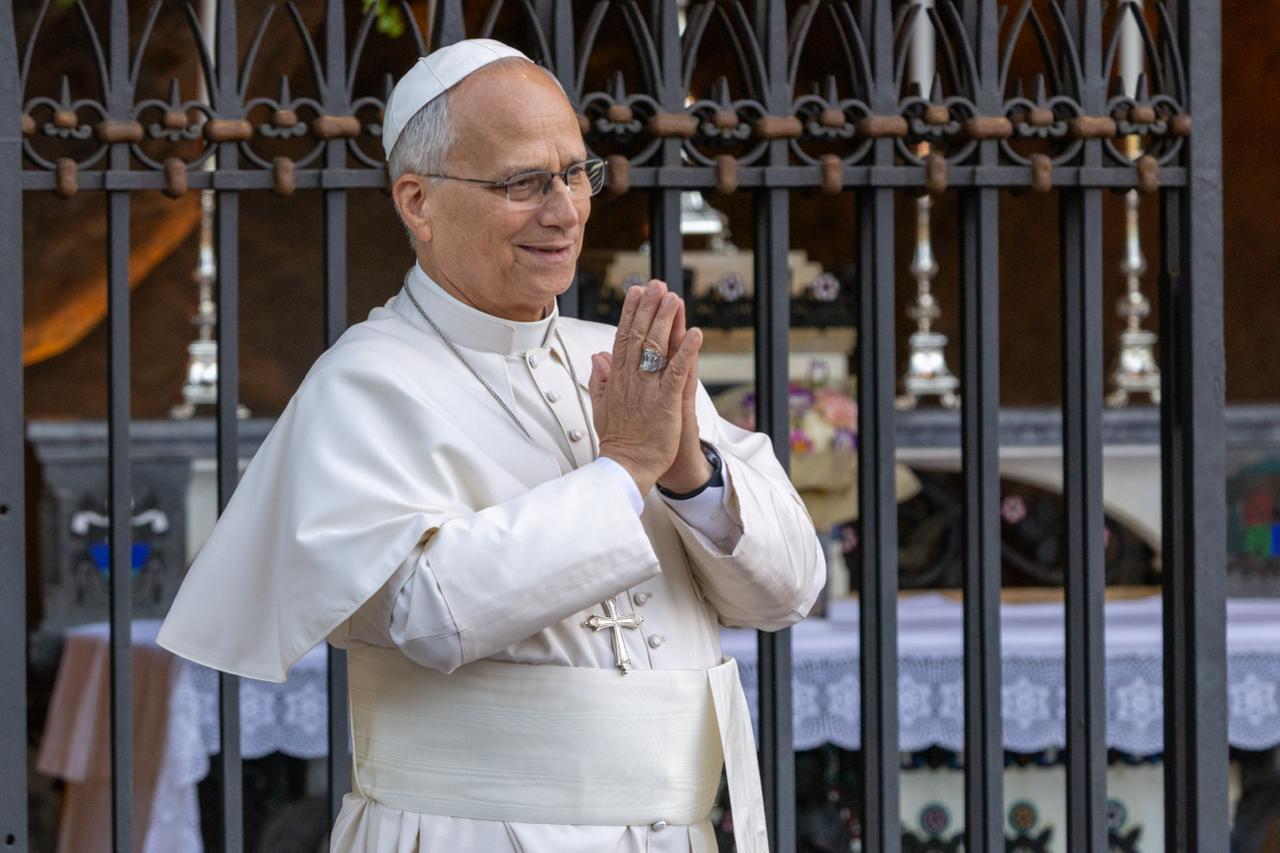
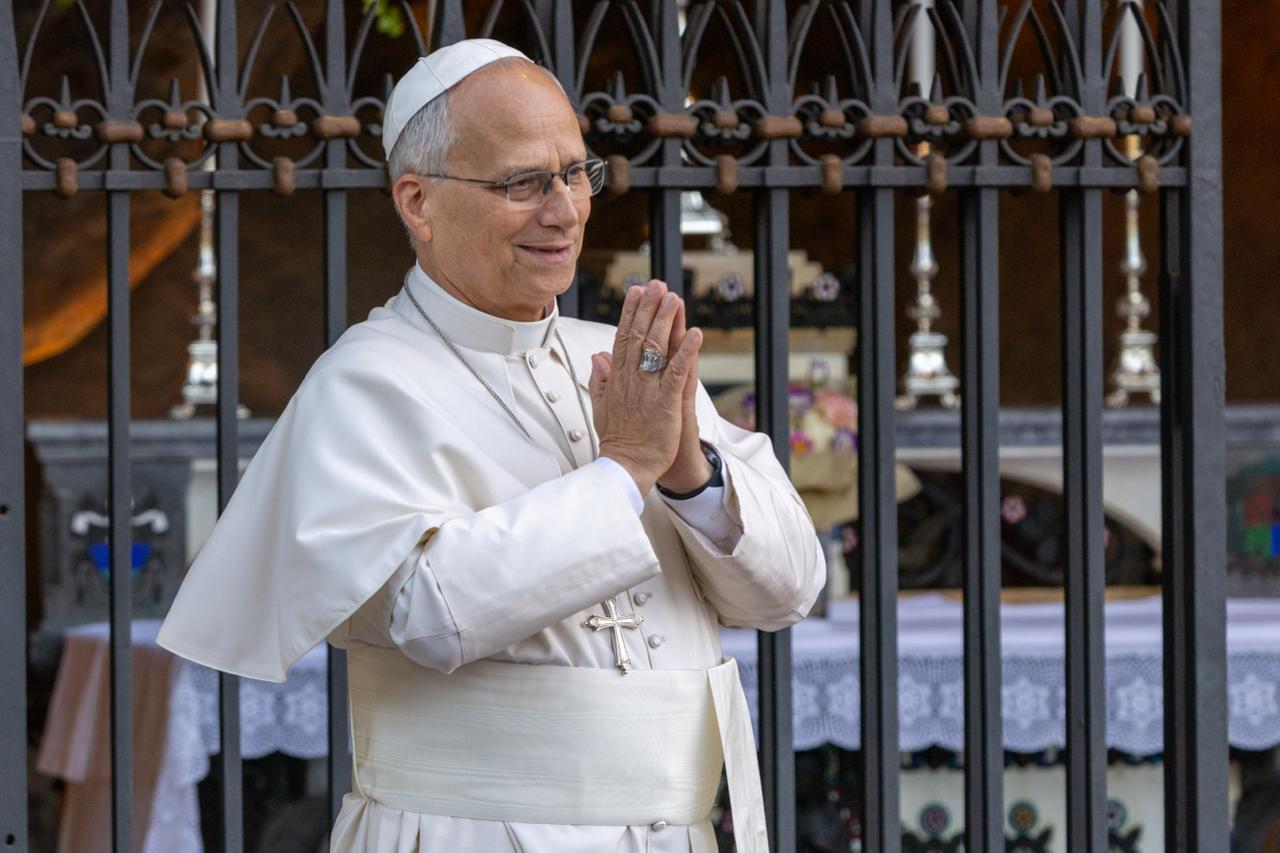
Israeli police block cardinal, custos from entering Church of the Holy Sepulchre #Catholic In an incident described as unprecedented, Israeli police prevented Cardinal Pierbattista Pizzaballa, Latin Patriarch of Jerusalem, along with Father Francesco Patton, Custos of the Holy Land and the official responsible for the Church of the Holy Sepulchre, from entering the church as they made their way to celebrate Palm Sunday Mass.According to a joint statement issued March 29 by the Latin Patriarchate of Jerusalem and the Custody of the Holy Land, police stopped the two church leaders on their way as they were proceeding privately “without any ceremonial or liturgical manifestations,” and forced them to turn back.The statement noted that, for the first time in centuries, this action prevented church leaders from celebrating Palm Sunday Mass at the Church of the Holy Sepulchre. It described the incident as a “serious and dangerous precedent,” adding that it “disregards the sentiments of millions of believers around the world whose eyes turn to Jerusalem during this week."Isaac Herzog, president of Israel, said in a statement on social media that he called Pizzaballa the Patton to express sorrow over the incident. “I clarified that the incident stemmed from security concerns due to the continuous threat of missile attacks from the Iranian terror regime against the civilian population in Israel, following previous incidents in which Iranian missiles fell in the area of the Old City of Jerusalem in recent days,” Herzog wrote. “I reaffirmed the State of Israelʼs unwavering commitment to freedom of religion for all faiths and to upholding the status quo at the holy sites of Jerusalem.”Mike Huckabee, U.S. ambassador to Israel, expressed gratitude for Herzogʼs “conciliatory” and “gracious” statement in a post on social media.TweetThe March 29 statement by the Latin Patriarchate of Jerusalem and the Custody of the Holy Land emphasized that church leaders had acted with full responsibility, noting that since the beginning of the war they had complied with all imposed restrictions, including canceling public gatherings and limiting attendance, while relying instead on broadcast celebrations reaching hundreds of millions of faithful worldwide during the Easter season. It further stressed that preventing the patriarch and the custos of the Holy Land—who represent the highest ecclesiastical authorities responsible for the Catholic Church and the holy sites—from entering the church constitutes a measure that is “clearly unreasonable and disproportionate.”The decision, the statement added, was “hasty and based on flawed grounds,” “tainted by inappropriate considerations,” and represents “a serious departure from the fundamental principles of reasonableness, freedom of worship, and respect for the status quo.” In conclusion, the two church leaders expressed their “deep regret” to Christians in the Holy Land and around the world after “prayer on one of the holiest days of the Christian calendar was prevented in this manner.” Celebrations under restrictionsOn the security front, Jerusalem and the wider Holy Land continue to experience heightened tensions amid the ongoing regional conflict, which has directly affected daily life and the practice of religious rites. According to media reports, preparations for religious celebrations such as Easter and Holy Saturday have been accompanied by strict security measures, with some traditional events canceled due to security threats and reports of rockets landing near religious sites in the Holy City. Authorities have imposed limits on gatherings and restricted access to certain holy places.Pizzaballa has repeatedly highlighted the deep suffering of Christians in the region amid the ongoing conflict, calling for prayer and support for Christian communities facing increasing challenges due to war and insecurity. In previous statements, he emphasized the importance of providing spiritual and moral support to Christians in the Holy Land, underscoring the need for them to remain in their homeland and affirming that the Church continues its mission and services despite ongoing risks.Reports from religious and community sources have also pointed to a rise in attacks against Christians and Christian properties in the West Bank and Jerusalem, including acts of violence by settlers. These developments, according to various reports, reflect the deteriorating security conditions for Palestinian Christian communities amid ongoing settlement expansion, increasing the risk of displacement and further diminishing their historic presence in the Holy Land.This story was updated at 1 p.m. ET on March 29, 2026, to include comments from Isaac Herzog, president of Israel, and Mike Huckabee, U.S. ambassador to Israel.

Israeli police block cardinal, custos from entering Church of the Holy Sepulchre #Catholic In an incident described as unprecedented, Israeli police prevented Cardinal Pierbattista Pizzaballa, Latin Patriarch of Jerusalem, along with Father Francesco Patton, Custos of the Holy Land and the official responsible for the Church of the Holy Sepulchre, from entering the church as they made their way to celebrate Palm Sunday Mass.According to a joint statement issued March 29 by the Latin Patriarchate of Jerusalem and the Custody of the Holy Land, police stopped the two church leaders on their way as they were proceeding privately “without any ceremonial or liturgical manifestations,” and forced them to turn back.The statement noted that, for the first time in centuries, this action prevented church leaders from celebrating Palm Sunday Mass at the Church of the Holy Sepulchre. It described the incident as a “serious and dangerous precedent,” adding that it “disregards the sentiments of millions of believers around the world whose eyes turn to Jerusalem during this week."Isaac Herzog, president of Israel, said in a statement on social media that he called Pizzaballa the Patton to express sorrow over the incident. “I clarified that the incident stemmed from security concerns due to the continuous threat of missile attacks from the Iranian terror regime against the civilian population in Israel, following previous incidents in which Iranian missiles fell in the area of the Old City of Jerusalem in recent days,” Herzog wrote. “I reaffirmed the State of Israelʼs unwavering commitment to freedom of religion for all faiths and to upholding the status quo at the holy sites of Jerusalem.”Mike Huckabee, U.S. ambassador to Israel, expressed gratitude for Herzogʼs “conciliatory” and “gracious” statement in a post on social media.TweetThe March 29 statement by the Latin Patriarchate of Jerusalem and the Custody of the Holy Land emphasized that church leaders had acted with full responsibility, noting that since the beginning of the war they had complied with all imposed restrictions, including canceling public gatherings and limiting attendance, while relying instead on broadcast celebrations reaching hundreds of millions of faithful worldwide during the Easter season. It further stressed that preventing the patriarch and the custos of the Holy Land—who represent the highest ecclesiastical authorities responsible for the Catholic Church and the holy sites—from entering the church constitutes a measure that is “clearly unreasonable and disproportionate.”The decision, the statement added, was “hasty and based on flawed grounds,” “tainted by inappropriate considerations,” and represents “a serious departure from the fundamental principles of reasonableness, freedom of worship, and respect for the status quo.” In conclusion, the two church leaders expressed their “deep regret” to Christians in the Holy Land and around the world after “prayer on one of the holiest days of the Christian calendar was prevented in this manner.” Celebrations under restrictionsOn the security front, Jerusalem and the wider Holy Land continue to experience heightened tensions amid the ongoing regional conflict, which has directly affected daily life and the practice of religious rites. According to media reports, preparations for religious celebrations such as Easter and Holy Saturday have been accompanied by strict security measures, with some traditional events canceled due to security threats and reports of rockets landing near religious sites in the Holy City. Authorities have imposed limits on gatherings and restricted access to certain holy places.Pizzaballa has repeatedly highlighted the deep suffering of Christians in the region amid the ongoing conflict, calling for prayer and support for Christian communities facing increasing challenges due to war and insecurity. In previous statements, he emphasized the importance of providing spiritual and moral support to Christians in the Holy Land, underscoring the need for them to remain in their homeland and affirming that the Church continues its mission and services despite ongoing risks.Reports from religious and community sources have also pointed to a rise in attacks against Christians and Christian properties in the West Bank and Jerusalem, including acts of violence by settlers. These developments, according to various reports, reflect the deteriorating security conditions for Palestinian Christian communities amid ongoing settlement expansion, increasing the risk of displacement and further diminishing their historic presence in the Holy Land.This story was updated at 1 p.m. ET on March 29, 2026, to include comments from Isaac Herzog, president of Israel, and Mike Huckabee, U.S. ambassador to Israel.

Police stopped the two church leaders on their way as they were proceeding privately “without any ceremonial or liturgical manifestations,” and forced them to turn back.

Read More
PHOTOS: Pope Leo XIV’s one-day trip to Monaco #Catholic Pope Leo XIV concluded his one-day trip to Monaco on March 28, wrapping up a whirlwind visit that included meeting with the countryʼs royalty and holding Mass in Louis II Stadium. The Holy Father became the first pope to visit the European micro-state in nearly 500 years. He appealed to the wealthy nation to spread the Gospel and become vessels of Godʼs love and generosity. 
 
 Pope Leo XIV flies into Monaco aboard the papal helicopter, Saturday, March 28, 2026. | Credit: Vatican Media


 Pope Leo XIV meets Prince Albert II and Princess Charlene in Monaco, Saturday, March 28, 2026 | Credit: Vatican Media


 Pope Leo XIV shakes the hand of Princess Gabriella, Countess of Carladès, in Monaco, Saturday, March 28, 2026 | Credit: Vatican Media


 Pope Leo XIV greets crowds in Monte Carlo in Monaco, Saturday, March 28, 2026 | Credit: Vatican Media


 Pope Leo XIV prays at the Cathedral of the Immaculate Conception in Monaco, Saturday, March 28, 2026 | Credit: Vatican Media


 Pope Leo XIV greets crowds in Monaco on Saturday, March 28, 2026 | Credit: Vatican Media


 Pope Leo XIV greets a baby on the streets of Monaco, Saturday, March 28, 2026 | Credit: Vatican Media


 Pope Leo XIV views dancers during public festivities in Monaco, Saturday, March 28, 2026 | Credit: Vatican Media


 Pope Leo XIV processes during Mass at Louis II Stadium in Monaco, Saturday, March 28, 2026 | Credit: Vatican Media


 Pope Leo XIV elevates the chalice during Mass at Louis II Stadium in Monaco, Saturday, March 28, 2026 | Credit: Vatican Media


 Pope Leo XIV waves from aboard his helicopter upon departure from Monaco Heliport in Monte Carlo, Monaco, on Saturday, March 28, 2026. | Credit: Valery HACHE / AFP via Getty Images)

PHOTOS: Pope Leo XIV’s one-day trip to Monaco #Catholic Pope Leo XIV concluded his one-day trip to Monaco on March 28, wrapping up a whirlwind visit that included meeting with the countryʼs royalty and holding Mass in Louis II Stadium. The Holy Father became the first pope to visit the European micro-state in nearly 500 years. He appealed to the wealthy nation to spread the Gospel and become vessels of Godʼs love and generosity. Pope Leo XIV flies into Monaco aboard the papal helicopter, Saturday, March 28, 2026. | Credit: Vatican Media Pope Leo XIV meets Prince Albert II and Princess Charlene in Monaco, Saturday, March 28, 2026 | Credit: Vatican Media Pope Leo XIV shakes the hand of Princess Gabriella, Countess of Carladès, in Monaco, Saturday, March 28, 2026 | Credit: Vatican Media Pope Leo XIV greets crowds in Monte Carlo in Monaco, Saturday, March 28, 2026 | Credit: Vatican Media Pope Leo XIV prays at the Cathedral of the Immaculate Conception in Monaco, Saturday, March 28, 2026 | Credit: Vatican Media Pope Leo XIV greets crowds in Monaco on Saturday, March 28, 2026 | Credit: Vatican Media Pope Leo XIV greets a baby on the streets of Monaco, Saturday, March 28, 2026 | Credit: Vatican Media Pope Leo XIV views dancers during public festivities in Monaco, Saturday, March 28, 2026 | Credit: Vatican Media Pope Leo XIV processes during Mass at Louis II Stadium in Monaco, Saturday, March 28, 2026 | Credit: Vatican Media Pope Leo XIV elevates the chalice during Mass at Louis II Stadium in Monaco, Saturday, March 28, 2026 | Credit: Vatican Media Pope Leo XIV waves from aboard his helicopter upon departure from Monaco Heliport in Monte Carlo, Monaco, on Saturday, March 28, 2026. | Credit: Valery HACHE / AFP via Getty Images)

The Holy Father met with the country’s royalty, addressed Catholic youth, and celebrated Mass at Louis II Stadium.

Read More
California grandmother aims for 10,000 signatures on petition against second-trimester abortions #Catholic Mary Waldorf didn’t know anything about organizing petitions, but when a hospital worker and fellow parishioner told her that staff were forced to participate in second-trimester abortions, she felt called to do something.Enloe Medical Center in Chico, California, about 80 miles north of Sacramento, is the primary hospital in the area.“It’s the only hospital in a huge county. We all have to use it,” Waldorf told “EWTN Pro-Life Weekly.”Waldorf still remembers how she felt the day she found out about the abortions being performed there.“I spent the rest of the day just bawling because I know what a second-trimester abortion is,” she said.“Everybody was shocked,” she added.Waldorf went with a small group to peacefully protest in front of the hospital, holding signs. Hospital staff approached, asking why they were there.“They didn’t even know” about the later-term abortions being performed at the facility, Waldorf said.Waldorf claimed that local media will not cover the controversy. She said she has sent several letters to the editor of local papers but described the situation as a “media blackout.”A pediatrician at the hospital told her the hospital administration might reconsider if there was enough concern. “Why she told me, God only knows,” Waldorf said. “But I thought, well, if that’s the case, then what if we do a petition?”“I’m just somebody who goes to church, has grandkids, goes to work — I don’t know how to do [a petition],” she told “EWTN Pro-Life Weekly.” “I am not a media [figure]. But when God gives you an opportunity, you got to go for it.”The petition had about 800 signatures as of March 27. Waldorf is aiming for 10,000 — 10% of the size of the town.Waldorf said staff members have told her that the hospital allegedly has refused to allow some medical workers to opt out of assisting with abortion procedures.“They were told that the pre-op and the post-op nurses and personnel could not opt out,” Waldorf said.Waldorf runs a local chapter of 40 Days for Life, a nationwide effort aimed at praying for women seeking abortions and for their children, usually in front of abortion clinics during Lent. She says she wants women to have “true choice.”“If the mindset of people is about death, they don’t consider the child — and you have to consider both,” Waldorf said. “They’re not counseling these women. What about giving them true choice?”“The dignity of the human person is so paramount,” Waldorf added. “And I think that that is what’s being lost here completely.”

California grandmother aims for 10,000 signatures on petition against second-trimester abortions #Catholic Mary Waldorf didn’t know anything about organizing petitions, but when a hospital worker and fellow parishioner told her that staff were forced to participate in second-trimester abortions, she felt called to do something.Enloe Medical Center in Chico, California, about 80 miles north of Sacramento, is the primary hospital in the area.“It’s the only hospital in a huge county. We all have to use it,” Waldorf told “EWTN Pro-Life Weekly.”Waldorf still remembers how she felt the day she found out about the abortions being performed there.“I spent the rest of the day just bawling because I know what a second-trimester abortion is,” she said.“Everybody was shocked,” she added.Waldorf went with a small group to peacefully protest in front of the hospital, holding signs. Hospital staff approached, asking why they were there.“They didn’t even know” about the later-term abortions being performed at the facility, Waldorf said.Waldorf claimed that local media will not cover the controversy. She said she has sent several letters to the editor of local papers but described the situation as a “media blackout.”A pediatrician at the hospital told her the hospital administration might reconsider if there was enough concern. “Why she told me, God only knows,” Waldorf said. “But I thought, well, if that’s the case, then what if we do a petition?”“I’m just somebody who goes to church, has grandkids, goes to work — I don’t know how to do [a petition],” she told “EWTN Pro-Life Weekly.” “I am not a media [figure]. But when God gives you an opportunity, you got to go for it.”The petition had about 800 signatures as of March 27. Waldorf is aiming for 10,000 — 10% of the size of the town.Waldorf said staff members have told her that the hospital allegedly has refused to allow some medical workers to opt out of assisting with abortion procedures.“They were told that the pre-op and the post-op nurses and personnel could not opt out,” Waldorf said.Waldorf runs a local chapter of 40 Days for Life, a nationwide effort aimed at praying for women seeking abortions and for their children, usually in front of abortion clinics during Lent. She says she wants women to have “true choice.”“If the mindset of people is about death, they don’t consider the child — and you have to consider both,” Waldorf said. “They’re not counseling these women. What about giving them true choice?”“The dignity of the human person is so paramount,” Waldorf added. “And I think that that is what’s being lost here completely.”

Mary Waldorf is rallying her town to petition against second-trimester abortions offered by Enloe Medical Center.

Read More
King Felipe VI of Spain installed as protocanon of the Basilica of St. Mary Major #Catholic VATICAN CITY — King Felipe VI of Spain on Friday was installed as protocanon of the Basilica of St. Mary Major in a solemn ceremony that underscores the historic link of the Spanish monarchy with the oldest Marian church in the West.“Protocanon” is an honorary title reserved exclusively for the Spanish head of state, recognizing the monarch as a collaborator of the pope without bestowing executive functions or decision-making power. The investiture March 20 renewed a relationship that dates back centuries and that last took place with Juan Carlos I of Spain in 1977.The king arrived at the Marian basilica, one of four papal basilicas in Rome, after a 50-minute audience with Pope Leo XIV at the Apostolic Palace in the Vatican. The meeting served as a prelude to the pontiff’s upcoming apostolic journey to Spain, scheduled for June 6–12.Upon their arrival at the basilica, the king and his wife, Queen Letizia, were received at the Bronze Gate by the Spanish canon of the chapter, Monsignor José Jaime Brosel, and the archpriest of the basilica, Cardinal Rolandas Makrickas.The king and queen viewed a statue of Philip IV of Spain, ancestor of the current monarch, a work designed by Gian Lorenzo Bernini and one of the pieces of evidence that show the centuries-old historical and spiritual relationship between Spain and the oldest Marian temple in the West.During the ceremony, Makrickas stressed that “authentic tradition is not stagnation but the living transmission of a gift that transcends time” and recalled that the basilica is entrusted with prayer for Spain and its head of state.Parts of the bull Hispaniarum Fidelitas were also read at the ceremony. Pope Pius XII signed the important document, which renewed and confirmed the historic ties of devotion and protection between the Spanish nation and the Basilica of St. Mary Major, in Rome on Aug. 5, 1953.In a short speech, King Felipe VI reaffirmed his commitment to the historic Roman basilica and appealed for “clarity of deed and word, of heart and conscience” in the current context. He also invited people to overcome selfishness and indifference in order to become “a small beacon of concord, generosity, and dedication to the common good.”Spain’s connection to the Basilica of St. Mary MajorFew know that the Basilica of St. Mary Major has close ties to the Spanish crown. Proof of this lies in the statue of Philip IV — an ancestor of the current king — which stands in the atrium.The work was inaugurated in 1692 during the tenure of the Spanish ambassador, the Duke of Medinaceli.The duke “was one of the main benefactors of St. Mary Major,” Brosel, a canon of the basilica and rector of the Spanish National Church of Santiago and Monserrat in Rome, told EWTN News ahead of the March 20 event.“In fact, it was in 1647 that Pope Innocent X formally established the Spanish Charitable Foundation in this basilica. Furthermore, the pope established an annual income in exchange for certain privileges for the Spanish monarchy,” Brosel explained.From that moment onward, the kings of Spain have held the title of “honorary protocanon.” This was a gesture of support for the pope during the Counter-Reformation but also a guarantee to safeguard the influence of the Spanish monarchy within the Holy See.The last time a Spanish head of state took possession as protocanon of the basilica was the father of the current king, Juan Carlos I, on Feb. 10, 1977.Brosel emphasized that Spain’s bond with the basilica “is born from the heart of Spain and its deep Marian devotion, where Spaniards feel St. Mary Major is their home.”
 
 King Felipe VI and Queen Letizia of Spain meet Pope Leo XIV at the Vatican on March 20, 2026. | Credit: Vatican Media
 
 Papal audienceThe investiture ceremony for the king took place following a visit to the Vatican and private audience with Pope Leo XIV.Leo’s upcoming trip to Spain — which is expected to include stops in Madrid, Barcelona, and the Canary Islands — will be the first papal journey to Spain in 15 years.Benedict XVI was the last pope to visit the country, traveling to Madrid for World Youth Day in 2011. At that time, Felipe VI was still a prince and the king was his father, Juan Carlos I.Queen Letizia at Friday’s papal audience wore white, a privilege reserved for Catholic queens, although without a mantilla or hair comb.The private conversation and exchange of gifts with Pope Leo was followed by talks with Cardinal Pietro Parolin and Archbishop Paul Gallagher in the Secretariat of State.This story was first published as three articles by ACI Prensa, the Spanish-language sister agency of EWTN News. It was translated and adapted by EWTN News English.

King Felipe VI of Spain installed as protocanon of the Basilica of St. Mary Major #Catholic VATICAN CITY — King Felipe VI of Spain on Friday was installed as protocanon of the Basilica of St. Mary Major in a solemn ceremony that underscores the historic link of the Spanish monarchy with the oldest Marian church in the West.“Protocanon” is an honorary title reserved exclusively for the Spanish head of state, recognizing the monarch as a collaborator of the pope without bestowing executive functions or decision-making power. The investiture March 20 renewed a relationship that dates back centuries and that last took place with Juan Carlos I of Spain in 1977.The king arrived at the Marian basilica, one of four papal basilicas in Rome, after a 50-minute audience with Pope Leo XIV at the Apostolic Palace in the Vatican. The meeting served as a prelude to the pontiff’s upcoming apostolic journey to Spain, scheduled for June 6–12.Upon their arrival at the basilica, the king and his wife, Queen Letizia, were received at the Bronze Gate by the Spanish canon of the chapter, Monsignor José Jaime Brosel, and the archpriest of the basilica, Cardinal Rolandas Makrickas.The king and queen viewed a statue of Philip IV of Spain, ancestor of the current monarch, a work designed by Gian Lorenzo Bernini and one of the pieces of evidence that show the centuries-old historical and spiritual relationship between Spain and the oldest Marian temple in the West.During the ceremony, Makrickas stressed that “authentic tradition is not stagnation but the living transmission of a gift that transcends time” and recalled that the basilica is entrusted with prayer for Spain and its head of state.Parts of the bull Hispaniarum Fidelitas were also read at the ceremony. Pope Pius XII signed the important document, which renewed and confirmed the historic ties of devotion and protection between the Spanish nation and the Basilica of St. Mary Major, in Rome on Aug. 5, 1953.In a short speech, King Felipe VI reaffirmed his commitment to the historic Roman basilica and appealed for “clarity of deed and word, of heart and conscience” in the current context. He also invited people to overcome selfishness and indifference in order to become “a small beacon of concord, generosity, and dedication to the common good.”Spain’s connection to the Basilica of St. Mary MajorFew know that the Basilica of St. Mary Major has close ties to the Spanish crown. Proof of this lies in the statue of Philip IV — an ancestor of the current king — which stands in the atrium.The work was inaugurated in 1692 during the tenure of the Spanish ambassador, the Duke of Medinaceli.The duke “was one of the main benefactors of St. Mary Major,” Brosel, a canon of the basilica and rector of the Spanish National Church of Santiago and Monserrat in Rome, told EWTN News ahead of the March 20 event.“In fact, it was in 1647 that Pope Innocent X formally established the Spanish Charitable Foundation in this basilica. Furthermore, the pope established an annual income in exchange for certain privileges for the Spanish monarchy,” Brosel explained.From that moment onward, the kings of Spain have held the title of “honorary protocanon.” This was a gesture of support for the pope during the Counter-Reformation but also a guarantee to safeguard the influence of the Spanish monarchy within the Holy See.The last time a Spanish head of state took possession as protocanon of the basilica was the father of the current king, Juan Carlos I, on Feb. 10, 1977.Brosel emphasized that Spain’s bond with the basilica “is born from the heart of Spain and its deep Marian devotion, where Spaniards feel St. Mary Major is their home.” King Felipe VI and Queen Letizia of Spain meet Pope Leo XIV at the Vatican on March 20, 2026. | Credit: Vatican Media Papal audienceThe investiture ceremony for the king took place following a visit to the Vatican and private audience with Pope Leo XIV.Leo’s upcoming trip to Spain — which is expected to include stops in Madrid, Barcelona, and the Canary Islands — will be the first papal journey to Spain in 15 years.Benedict XVI was the last pope to visit the country, traveling to Madrid for World Youth Day in 2011. At that time, Felipe VI was still a prince and the king was his father, Juan Carlos I.Queen Letizia at Friday’s papal audience wore white, a privilege reserved for Catholic queens, although without a mantilla or hair comb.The private conversation and exchange of gifts with Pope Leo was followed by talks with Cardinal Pietro Parolin and Archbishop Paul Gallagher in the Secretariat of State.This story was first published as three articles by ACI Prensa, the Spanish-language sister agency of EWTN News. It was translated and adapted by EWTN News English.

“Protocanon” is an honorary title reserved exclusively for the Spanish head of state, recognizing the monarch as a collaborator of the pope.

Read More
Collection for the Holy Land: Christians need concrete hope, not just consoling words #Catholic Cardinal Claudio Gugerotti, prefect of the Dicastery for the Eastern Churches, called upon the faithful worldwide to participate in the Good Friday collection aimed at assisting Christian communities in the Holy Land.The Good Friday collection is one of the primary sources of support for the Custody of the Holy Land — the Franciscan institution that for centuries has safeguarded the sites connected to the life of Jesus Christ and accompanied the Christian communities living in the region.The prefect called upon the faithful around the world to respond with a concrete gesture of solidarity. “I wish to propose a small gesture to you: to offer a little of our money to help our brothers and sisters who find themselves in extreme peril to live one more day, to find hope, and to find the possibility of starting anew.”“How many times have I personally visited those Christian minorities who wake up every morning facing the danger of no longer having a place to exist!” Gugerotti wrote in the March 18 letter, which was also signed by the dicastery’s secretary, Archbishop Michel Jalakh.“Help us to offer them concrete hope, not merely words of consolation — for we who visit them will leave, while they remain with their fears, even with the terror that, precisely because they are Christians, they may be eliminated,” the cardinal stated. The cardinal explained that the Good Friday donations hold a twofold significance: on the one hand, providing material aid to those living amid war and poverty, and on the other, challenging the conscience of the faithful.“It is also vital for us, because without sacrifice, without a real change in our way of living, we risk remaining inert before a world in flames — and thus complicit in its destruction,” he said. Gugerotti noted that many Christians in the Holy Land have lost their means of livelihood, especially those who depended on religious tourism, which historically sustained a large portion of the local economy. The conflict that began on Oct. 7, 2023, when Hamas attacked Israel, triggered a sharp decline in religious tourism.“A great many Christians in the Holy Land have lost everything, even the work that came from serving pilgrims,” he pointed out.In early 2025, Israel’s Ministry of Tourism characterized the year as a turning point, with 1.3 million international arrivals. However, 2026 has once again proven to be a highly problematic year for pilgrimages primarily due to the military escalation by the United States and Israel against Iran, which has thrown the entire region into crisis.The drastic reduction in pilgrimages and the current climate of insecurity have  exacerbated the situation. “Now, out of fear, almost everyone tends to avoid venturing into those lands,” he said.What is done with the money collected?In 2023 — the most recent year for which official data are available — the Holy Land collection raised 6,571,893 euros (.5 million). The Custody of the Holy Land typically receives 65% of the proceeds, while the remaining 35% goes to the Dicastery for the Eastern Churches, which uses it for the formation of priests and for subsidies to the various dioceses and eparchies in Palestine, Israel, Jordan, Lebanon, Syria, Turkey, and Iraq.Of the money it receives, the Custody of the Holy Land normally invests 20% in the upkeep of the sites where Jesus Christ walked, while the remainder goes to Christian families, who, in 1948, constituted 20% of the local population but now make up less than 1.4%.In the Gaza Strip, it collaborates with the Latin parish and the Atfa-Luna association to provide psycho-social support “to some 1,000 children and 300 adults,” as well as to distribute emergency kits and aid to families of people with disabilities.In Lebanon, the Church responded to the 2024 crisis (the fighting between Israel and Hezbollah) by providing “hot meals for some 500 beneficiaries every day” and ensuring “drinking water for about 250 people daily.” The Custody of the Holy Land also manages hundreds of housing units at nominal rents to prevent emigration.“It has been said that peace has been achieved; however, even though the media speak of it much less today than before, the shooting continues, people continue to die, lands remain disputed, and Christians continue to emigrate to save their lives,” the cardinal noted.According to the 2023 data released by the Dicastery for the Eastern Churches, 2,376,167 euros (.7 million) was donated to seminaries, houses of religious formation, and cultural institutions. The Franciscan Custody allocated more than 2 million euros (.3 million) to the education of young people in the Holy Land in 2023, funding scholarships at various universities in the region. Nearly 1 million euros (.15 million) were allocated to the Pontifical Oriental Institute, which now encompasses, at Pope Francis’ direction, the Pontifical Gregorian University.A portion was also invested in Bethlehem University, one of the prestigious foundations that underwrites the academic studies of 3,300 young people, both Muslim and Christian, with the aim of educating them to build a future of peace in the Holy Land.A concrete gesture: Giving is a ‘strong sign of faith’In his message, the cardinal invited bishops and pastoral leaders to raise awareness among the faithful regarding the importance of sustaining the Christian presence in the places where Christianity was born.“Let us ensure that our people approach the collection with the awareness that giving is a strong sign of faith,” he wrote. “A Holy Land without believers is a lost land, for the living memory of salvation is lost,” he added.“Pope Leo XIV never ceases to bring to our minds and hearts this commitment to be one, so that there may be peace — not a provisional truce, not perpetual hatred, not an immense expenditure on armaments, but a contribution to our common rebirth,” the cardinal wrote.The prelate concluded his letter by acknowledging that the collection would be merely “a drop in the ocean” but that “the ocean, as a result of losing its drops, is turning into a desert.”In addition to supporting the Franciscan mission in the Holy Land to safeguard the holy places, sustain local Christian communities, and foster peace in the region where Jesus lived, the cardinal said Christians can actively contribute by offering prayers to support this work and inspire new vocations, or by undertaking a pilgrimage to discover the roots of Christianity.This story was first published by ACI Prensa, the Spanish-language sister service of EWTN News. It has been translated and adapted by EWTN News English.

Collection for the Holy Land: Christians need concrete hope, not just consoling words #Catholic Cardinal Claudio Gugerotti, prefect of the Dicastery for the Eastern Churches, called upon the faithful worldwide to participate in the Good Friday collection aimed at assisting Christian communities in the Holy Land.The Good Friday collection is one of the primary sources of support for the Custody of the Holy Land — the Franciscan institution that for centuries has safeguarded the sites connected to the life of Jesus Christ and accompanied the Christian communities living in the region.The prefect called upon the faithful around the world to respond with a concrete gesture of solidarity. “I wish to propose a small gesture to you: to offer a little of our money to help our brothers and sisters who find themselves in extreme peril to live one more day, to find hope, and to find the possibility of starting anew.”“How many times have I personally visited those Christian minorities who wake up every morning facing the danger of no longer having a place to exist!” Gugerotti wrote in the March 18 letter, which was also signed by the dicastery’s secretary, Archbishop Michel Jalakh.“Help us to offer them concrete hope, not merely words of consolation — for we who visit them will leave, while they remain with their fears, even with the terror that, precisely because they are Christians, they may be eliminated,” the cardinal stated. The cardinal explained that the Good Friday donations hold a twofold significance: on the one hand, providing material aid to those living amid war and poverty, and on the other, challenging the conscience of the faithful.“It is also vital for us, because without sacrifice, without a real change in our way of living, we risk remaining inert before a world in flames — and thus complicit in its destruction,” he said. Gugerotti noted that many Christians in the Holy Land have lost their means of livelihood, especially those who depended on religious tourism, which historically sustained a large portion of the local economy. The conflict that began on Oct. 7, 2023, when Hamas attacked Israel, triggered a sharp decline in religious tourism.“A great many Christians in the Holy Land have lost everything, even the work that came from serving pilgrims,” he pointed out.In early 2025, Israel’s Ministry of Tourism characterized the year as a turning point, with 1.3 million international arrivals. However, 2026 has once again proven to be a highly problematic year for pilgrimages primarily due to the military escalation by the United States and Israel against Iran, which has thrown the entire region into crisis.The drastic reduction in pilgrimages and the current climate of insecurity have  exacerbated the situation. “Now, out of fear, almost everyone tends to avoid venturing into those lands,” he said.What is done with the money collected?In 2023 — the most recent year for which official data are available — the Holy Land collection raised 6,571,893 euros ($7.5 million). The Custody of the Holy Land typically receives 65% of the proceeds, while the remaining 35% goes to the Dicastery for the Eastern Churches, which uses it for the formation of priests and for subsidies to the various dioceses and eparchies in Palestine, Israel, Jordan, Lebanon, Syria, Turkey, and Iraq.Of the money it receives, the Custody of the Holy Land normally invests 20% in the upkeep of the sites where Jesus Christ walked, while the remainder goes to Christian families, who, in 1948, constituted 20% of the local population but now make up less than 1.4%.In the Gaza Strip, it collaborates with the Latin parish and the Atfa-Luna association to provide psycho-social support “to some 1,000 children and 300 adults,” as well as to distribute emergency kits and aid to families of people with disabilities.In Lebanon, the Church responded to the 2024 crisis (the fighting between Israel and Hezbollah) by providing “hot meals for some 500 beneficiaries every day” and ensuring “drinking water for about 250 people daily.” The Custody of the Holy Land also manages hundreds of housing units at nominal rents to prevent emigration.“It has been said that peace has been achieved; however, even though the media speak of it much less today than before, the shooting continues, people continue to die, lands remain disputed, and Christians continue to emigrate to save their lives,” the cardinal noted.According to the 2023 data released by the Dicastery for the Eastern Churches, 2,376,167 euros ($2.7 million) was donated to seminaries, houses of religious formation, and cultural institutions. The Franciscan Custody allocated more than 2 million euros ($2.3 million) to the education of young people in the Holy Land in 2023, funding scholarships at various universities in the region. Nearly 1 million euros ($1.15 million) were allocated to the Pontifical Oriental Institute, which now encompasses, at Pope Francis’ direction, the Pontifical Gregorian University.A portion was also invested in Bethlehem University, one of the prestigious foundations that underwrites the academic studies of 3,300 young people, both Muslim and Christian, with the aim of educating them to build a future of peace in the Holy Land.A concrete gesture: Giving is a ‘strong sign of faith’In his message, the cardinal invited bishops and pastoral leaders to raise awareness among the faithful regarding the importance of sustaining the Christian presence in the places where Christianity was born.“Let us ensure that our people approach the collection with the awareness that giving is a strong sign of faith,” he wrote. “A Holy Land without believers is a lost land, for the living memory of salvation is lost,” he added.“Pope Leo XIV never ceases to bring to our minds and hearts this commitment to be one, so that there may be peace — not a provisional truce, not perpetual hatred, not an immense expenditure on armaments, but a contribution to our common rebirth,” the cardinal wrote.The prelate concluded his letter by acknowledging that the collection would be merely “a drop in the ocean” but that “the ocean, as a result of losing its drops, is turning into a desert.”In addition to supporting the Franciscan mission in the Holy Land to safeguard the holy places, sustain local Christian communities, and foster peace in the region where Jesus lived, the cardinal said Christians can actively contribute by offering prayers to support this work and inspire new vocations, or by undertaking a pilgrimage to discover the roots of Christianity.This story was first published by ACI Prensa, the Spanish-language sister service of EWTN News. It has been translated and adapted by EWTN News English.

Now more than ever, the Christian minority in the Holy Land needs the support it receives through the annual Good Friday collection as ongoing violence in the Middle East has curtailed pilgrimages.

Read More
Speakers at 2026 Catholic graduations to include Ron DeSantis, Cardinal Dolan #Catholic Prominent U.S. Catholic leaders will headline commencement ceremonies at multiple Newman Guide-listed schools this spring, offering words of wisdom and faith to graduates around the country. Clergy, political leaders, and media figures will all take part in graduation events from Florida to Texas to Ohio and beyond. Ave Maria UniversityFlorida Gov. Ron DeSantis will be the commencement speaker at Ave Maria University, a spokesperson for the university told EWTN News.The Florida governor and former presidential candidate, who is a Catholic, will speak at the university’s May 9 graduation ceremony.Benedictine CollegePeter Cancro, the founder and chairman of the popular sandwich chain Jersey Mike’s, will deliver the 2026 commencement address at Benedictine College in Atchison, Kansas.Cancro will address graduates during the college’s commencement exercises on May 16 and will be presented with an honorary doctor of humane letters degree, according to a March 3 press release. Cancro is renowned for his charitable contributions to faith-based organizations, including a  million gift to Ave Maria School of Law.University of DallasCardinal Timothy Dolan, archbishop emeritus of New York, will deliver the commencement address at the University of Dallas this year.The university will present Dolan with an honorary doctor of humane letters degree during the May 16 ceremony, according to a press release. “Cardinal Dolan is one of the Church’s most joyful and widely respected shepherds, and we are honored to welcome him to the University of Dallas,” University of Dallas President Jonathan Sanford said.The Catholic University of AmericaUniversity of Mary President Monsignor James Shea will return to his alma mater, The Catholic University of America in Washington, D.C., to deliver the commencement address for the class of 2026.In a March 3 statement, university President Peter Kilpatrick described Shea as a “teacher, evangelist, interpreter of culture, and preacher,” one who is “deeply committed to the education and formation of young people.” “His ability to engage the larger culture with clarity, Christian hope, and great wit is a much-needed antidote to so many of the challenges we face today and an example I pray our students will take with them into their future vocations,” Kilpatrick said. The school’s graduation ceremony will take place May 16.Wyoming Catholic CollegeCatholicVote President and CEO Kelsey Reinhardt will give the commencement address for Wyoming Catholic College.“As two Wyoming natives, frequently traveling on behalf of our apostolates, our paths cross somewhat regularly,” said Wyoming Catholic College President Kyle Washut in a Feb. 23 press release.“I have had the privilege of visiting with Kelsey a number of times over the past year, and I have been impressed by her clarity on the moral challenges confronting America today and by her generosity and gentleness toward those who do not agree with her own clear-eyed analysis of those challenges.”Reinhardt’s commencement address will take place on May 18.Franciscan University of Steubenville The founders of the Napa Institute, Tim Busch and Father Robert J. Spitzer, SJ, will deliver commencement speeches for Franciscan University of Steubenville in Ohio.Busch, co-founder of the Napa Institute and founder of the Busch Firm, will deliver the commencement address for graduates of Franciscan University’s business and science programs, while Spitzer will give the commencement speech for humanities and social sciences graduates during the May 9 ceremonies, according to a March 10 university press release. The Latin patriarch of Jerusalem, Cardinal Pierbattista Pizzaballa, OFM, will also celebrate the baccalaureate Mass.Christendom CollegeAnne Carroll, founder of Seton School and Seton Home Study, will deliver the commencement address at Christendom College in Front Royal, Virginia.Carroll, who is the wife of the late Christendom College Founder Warren Carroll, will give the commencement address on May 15, the college announced in a March 12 release. The college will also honor Carroll “for her outstanding contributions to the Catholic faith, culture, and public life.”Walsh UniversityEWTN “Real Life Catholic” host Chris Stefanick will serve as commencement speaker for Walsh University, a Catholic university in Ohio.The university will also present Stefanick with an honorary doctorate of applied theology at the May 2 commencement ceremonies. “Commencement is more than a celebration of achievement. It is a commissioning,” President Tim Collins said in a Feb. 25 press release. “The leaders we honor on this day remind us that a life well lived is measured not only by accomplishment, but by impact — by how we place our talents at the service of faith, community, and the greater good. That is our hope for every Walsh University graduate. We pray they carry a deep sense of purpose, lead with integrity, and embrace the calling that gives their lives and work lasting meaning throughout every stage of life.”

Speakers at 2026 Catholic graduations to include Ron DeSantis, Cardinal Dolan #Catholic Prominent U.S. Catholic leaders will headline commencement ceremonies at multiple Newman Guide-listed schools this spring, offering words of wisdom and faith to graduates around the country. Clergy, political leaders, and media figures will all take part in graduation events from Florida to Texas to Ohio and beyond. Ave Maria UniversityFlorida Gov. Ron DeSantis will be the commencement speaker at Ave Maria University, a spokesperson for the university told EWTN News.The Florida governor and former presidential candidate, who is a Catholic, will speak at the university’s May 9 graduation ceremony.Benedictine CollegePeter Cancro, the founder and chairman of the popular sandwich chain Jersey Mike’s, will deliver the 2026 commencement address at Benedictine College in Atchison, Kansas.Cancro will address graduates during the college’s commencement exercises on May 16 and will be presented with an honorary doctor of humane letters degree, according to a March 3 press release. Cancro is renowned for his charitable contributions to faith-based organizations, including a $5 million gift to Ave Maria School of Law.University of DallasCardinal Timothy Dolan, archbishop emeritus of New York, will deliver the commencement address at the University of Dallas this year.The university will present Dolan with an honorary doctor of humane letters degree during the May 16 ceremony, according to a press release. “Cardinal Dolan is one of the Church’s most joyful and widely respected shepherds, and we are honored to welcome him to the University of Dallas,” University of Dallas President Jonathan Sanford said.The Catholic University of AmericaUniversity of Mary President Monsignor James Shea will return to his alma mater, The Catholic University of America in Washington, D.C., to deliver the commencement address for the class of 2026.In a March 3 statement, university President Peter Kilpatrick described Shea as a “teacher, evangelist, interpreter of culture, and preacher,” one who is “deeply committed to the education and formation of young people.” “His ability to engage the larger culture with clarity, Christian hope, and great wit is a much-needed antidote to so many of the challenges we face today and an example I pray our students will take with them into their future vocations,” Kilpatrick said. The school’s graduation ceremony will take place May 16.Wyoming Catholic CollegeCatholicVote President and CEO Kelsey Reinhardt will give the commencement address for Wyoming Catholic College.“As two Wyoming natives, frequently traveling on behalf of our apostolates, our paths cross somewhat regularly,” said Wyoming Catholic College President Kyle Washut in a Feb. 23 press release.“I have had the privilege of visiting with Kelsey a number of times over the past year, and I have been impressed by her clarity on the moral challenges confronting America today and by her generosity and gentleness toward those who do not agree with her own clear-eyed analysis of those challenges.”Reinhardt’s commencement address will take place on May 18.Franciscan University of Steubenville The founders of the Napa Institute, Tim Busch and Father Robert J. Spitzer, SJ, will deliver commencement speeches for Franciscan University of Steubenville in Ohio.Busch, co-founder of the Napa Institute and founder of the Busch Firm, will deliver the commencement address for graduates of Franciscan University’s business and science programs, while Spitzer will give the commencement speech for humanities and social sciences graduates during the May 9 ceremonies, according to a March 10 university press release. The Latin patriarch of Jerusalem, Cardinal Pierbattista Pizzaballa, OFM, will also celebrate the baccalaureate Mass.Christendom CollegeAnne Carroll, founder of Seton School and Seton Home Study, will deliver the commencement address at Christendom College in Front Royal, Virginia.Carroll, who is the wife of the late Christendom College Founder Warren Carroll, will give the commencement address on May 15, the college announced in a March 12 release. The college will also honor Carroll “for her outstanding contributions to the Catholic faith, culture, and public life.”Walsh UniversityEWTN “Real Life Catholic” host Chris Stefanick will serve as commencement speaker for Walsh University, a Catholic university in Ohio.The university will also present Stefanick with an honorary doctorate of applied theology at the May 2 commencement ceremonies. “Commencement is more than a celebration of achievement. It is a commissioning,” President Tim Collins said in a Feb. 25 press release. “The leaders we honor on this day remind us that a life well lived is measured not only by accomplishment, but by impact — by how we place our talents at the service of faith, community, and the greater good. That is our hope for every Walsh University graduate. We pray they carry a deep sense of purpose, lead with integrity, and embrace the calling that gives their lives and work lasting meaning throughout every stage of life.”

Multiple Catholic leaders are slated to be commencement speakers at Newman Guide Schools in 2026.

Read More