10

Pope Leo XIV tells new priests: ‘You are a channel, not a filter’ #Catholic VATICAN CITY, April 26, 2026 — Pope Leo XIV ordained 10 new priests in St. Peter’s Basilica on Sunday, urging them to keep the doors of the Church open and to remember that their mission is to welcome, not to exclude.“Today more than ever, especially when statistics seem to indicate a divide between people and the Church, keep the door open! Let people in, and be prepared to go out,” the pope said in his homily for the Mass on the Fourth Sunday of Easter, also known as Good Shepherd Sunday.“This is another secret for your life: you are a channel, not a filter,” he told the ordinands.Eight of the new priests were ordained for the Diocese of Rome, of which the pope is bishop: Guglielmo Lapenna, Giorgio Larosa, Jos Emanuele Nleme Sabate, Giovanni Emanuele Nunziante Salazar, Antonino Ordine, Yordan Camilo Ramos Medina, Daniele Riscica, and Cristian Sguazzino.The pope also ordained Armando Roa Núñez, born in Mexico and incardinated in the Diocese of Miao in India, and Selwyn Pinto Loyce, born in Saudi Arabia and incardinated in the Institute of Christ the Redeemer, Idente Missionaries.Reflecting on the Gospel in which Jesus says, “I am the gate,” Leo told the new priests to see themselves as servants of a suffering humanity that awaits abundant life.“Never hide this holy door. Do not block it; do not be an obstacle to those who wish to enter,” he said. Quoting Jesus’ rebuke in Luke’s Gospel, he added: “You did not enter yourselves, and you hindered those who were entering.”The pope said priestly ministry should be marked by communion and openness. “You belong to everyone and are for everyone!” he said. “Let this be the fundamental purpose of your mission: to keep the threshold open and direct others to it, without using too many words.”Leo also urged the ordinands not to reduce Christian life to parish structures or ecclesial groups.“The Church’s doors are open, but not to cut us off from life: life does not end in a parish, in an association, in a movement, in a group,” he said. “Whoever is saved can ‘go out and find pasture.’”“Dear brothers, go out and discover culture, people and life!” the pope continued. “Marvel at the things that God makes grow without our having sown them.”The pope also spoke about celibacy, comparing it to the love of spouses.“Certainly, like the love of spouses, the love that inspires celibacy for the Kingdom of God must also be guarded and constantly renewed, for every true affection matures and becomes fruitful over time,” he said.He told the new priests that the deeper their bond with Christ, “the more radical” their belonging to humanity becomes, adding that they are called to be “not only good priests but also honest, helpful citizens, builders of peace and social friendship.”The pope warned against fear and the search for scapegoats, saying that the need for security today can make people aggressive and cause communities to close in on themselves.“May your security not lie in the role you hold, but in the life, death and resurrection of Jesus as well as in your participation, along with your people, in the story of salvation,” he said.The communities to which the priests will be sent, he said, are already places where the risen Christ is present.“These communities will also help you to become saints!” Leo said. “For your part, help them to walk together, following Jesus, the Good Shepherd, so that they may become places — gardens — of life that rise anew and share themselves with others.”He added: “Facilitating encounters, helping to bring together those who would otherwise never meet, and conciliating division is one and the same as celebrating the Eucharist and Reconciliation. Coming together always means planting the Church anew.”Later on Sunday, before leading the Regina Caeli from the window of the Apostolic Palace, Pope Leo returned to the image of Jesus as the Good Shepherd and the gate of the sheepfold.“Jesus does not come as a thief to take away our life and our freedom, but to lead us along the paths of righteousness,” he said. “He does not come to ensnare or deceive our conscience, but to illuminate it with the light of his wisdom. He does not come to taint our earthly joys, but to open them to a fuller and more lasting happiness.”“Those who entrust themselves to him have nothing to fear,” the pope said, “for he does not deprive us of life, but comes to give it to us in abundance.”Leo urged the faithful to be vigilant about who or what enters “the gate” of their hearts.“‘Thieves’ can take many forms,” he said, citing those who “suppress our freedom or fail to respect our dignity,” as well as “beliefs and biases,” “mistaken ideas,” and “superficial and consumeristic lifestyles” that leave people empty inside.He also pointed to those who harm humanity by “pillaging the earth’s resources, waging blood-thirsty wars, or fueling evil in any form,” saying they “do nothing but rob each of us of the possibility of a future marked by peace and serenity.”The pope invited the faithful to examine their consciences: “Who do we want to guide us in life? Which ‘thieves’ have tried to break into our fold? Have they succeeded, or have we managed to ward them off?”After the Regina Caeli, Leo recalled the 40th anniversary of the Chernobyl nuclear disaster, calling it a warning about the risks of powerful technologies.“Let us entrust those who died and all who still suffer from the aftermath of the disaster to God’s mercy,” he said. “I hope that discernment and responsibility will always prevail at every level of decision-making so that all use of atomic energy may be placed at the service of life and peace.”The pope also offered a special greeting to the relatives and friends of the new priests of the Diocese of Rome.“Please continue to accompany these young ministers of the Gospel with your prayers,” he said.This story was first published in two parts by ACI Prensa, EWTN News’ Spanish-language news partner. It has been translated and adapted by EWTN News English.

Pope Leo XIV tells new priests: ‘You are a channel, not a filter’ #Catholic VATICAN CITY, April 26, 2026 — Pope Leo XIV ordained 10 new priests in St. Peter’s Basilica on Sunday, urging them to keep the doors of the Church open and to remember that their mission is to welcome, not to exclude.“Today more than ever, especially when statistics seem to indicate a divide between people and the Church, keep the door open! Let people in, and be prepared to go out,” the pope said in his homily for the Mass on the Fourth Sunday of Easter, also known as Good Shepherd Sunday.“This is another secret for your life: you are a channel, not a filter,” he told the ordinands.Eight of the new priests were ordained for the Diocese of Rome, of which the pope is bishop: Guglielmo Lapenna, Giorgio Larosa, Jos Emanuele Nleme Sabate, Giovanni Emanuele Nunziante Salazar, Antonino Ordine, Yordan Camilo Ramos Medina, Daniele Riscica, and Cristian Sguazzino.The pope also ordained Armando Roa Núñez, born in Mexico and incardinated in the Diocese of Miao in India, and Selwyn Pinto Loyce, born in Saudi Arabia and incardinated in the Institute of Christ the Redeemer, Idente Missionaries.Reflecting on the Gospel in which Jesus says, “I am the gate,” Leo told the new priests to see themselves as servants of a suffering humanity that awaits abundant life.“Never hide this holy door. Do not block it; do not be an obstacle to those who wish to enter,” he said. Quoting Jesus’ rebuke in Luke’s Gospel, he added: “You did not enter yourselves, and you hindered those who were entering.”The pope said priestly ministry should be marked by communion and openness. “You belong to everyone and are for everyone!” he said. “Let this be the fundamental purpose of your mission: to keep the threshold open and direct others to it, without using too many words.”Leo also urged the ordinands not to reduce Christian life to parish structures or ecclesial groups.“The Church’s doors are open, but not to cut us off from life: life does not end in a parish, in an association, in a movement, in a group,” he said. “Whoever is saved can ‘go out and find pasture.’”“Dear brothers, go out and discover culture, people and life!” the pope continued. “Marvel at the things that God makes grow without our having sown them.”The pope also spoke about celibacy, comparing it to the love of spouses.“Certainly, like the love of spouses, the love that inspires celibacy for the Kingdom of God must also be guarded and constantly renewed, for every true affection matures and becomes fruitful over time,” he said.He told the new priests that the deeper their bond with Christ, “the more radical” their belonging to humanity becomes, adding that they are called to be “not only good priests but also honest, helpful citizens, builders of peace and social friendship.”The pope warned against fear and the search for scapegoats, saying that the need for security today can make people aggressive and cause communities to close in on themselves.“May your security not lie in the role you hold, but in the life, death and resurrection of Jesus as well as in your participation, along with your people, in the story of salvation,” he said.The communities to which the priests will be sent, he said, are already places where the risen Christ is present.“These communities will also help you to become saints!” Leo said. “For your part, help them to walk together, following Jesus, the Good Shepherd, so that they may become places — gardens — of life that rise anew and share themselves with others.”He added: “Facilitating encounters, helping to bring together those who would otherwise never meet, and conciliating division is one and the same as celebrating the Eucharist and Reconciliation. Coming together always means planting the Church anew.”Later on Sunday, before leading the Regina Caeli from the window of the Apostolic Palace, Pope Leo returned to the image of Jesus as the Good Shepherd and the gate of the sheepfold.“Jesus does not come as a thief to take away our life and our freedom, but to lead us along the paths of righteousness,” he said. “He does not come to ensnare or deceive our conscience, but to illuminate it with the light of his wisdom. He does not come to taint our earthly joys, but to open them to a fuller and more lasting happiness.”“Those who entrust themselves to him have nothing to fear,” the pope said, “for he does not deprive us of life, but comes to give it to us in abundance.”Leo urged the faithful to be vigilant about who or what enters “the gate” of their hearts.“‘Thieves’ can take many forms,” he said, citing those who “suppress our freedom or fail to respect our dignity,” as well as “beliefs and biases,” “mistaken ideas,” and “superficial and consumeristic lifestyles” that leave people empty inside.He also pointed to those who harm humanity by “pillaging the earth’s resources, waging blood-thirsty wars, or fueling evil in any form,” saying they “do nothing but rob each of us of the possibility of a future marked by peace and serenity.”The pope invited the faithful to examine their consciences: “Who do we want to guide us in life? Which ‘thieves’ have tried to break into our fold? Have they succeeded, or have we managed to ward them off?”After the Regina Caeli, Leo recalled the 40th anniversary of the Chernobyl nuclear disaster, calling it a warning about the risks of powerful technologies.“Let us entrust those who died and all who still suffer from the aftermath of the disaster to God’s mercy,” he said. “I hope that discernment and responsibility will always prevail at every level of decision-making so that all use of atomic energy may be placed at the service of life and peace.”The pope also offered a special greeting to the relatives and friends of the new priests of the Diocese of Rome.“Please continue to accompany these young ministers of the Gospel with your prayers,” he said.This story was first published in two parts by ACI Prensa, EWTN News’ Spanish-language news partner. It has been translated and adapted by EWTN News English.

The pope ordained 10 men to the priesthood on Good Shepherd Sunday and later warned at the Regina Caeli against the “thieves” that rob people of freedom, dignity, and peace.

Read More
Israeli, Polish foreign ministers spar on X about destroyed Jesus statue #Catholic Israeli Foreign Minister Gideon Sa’ar and his Polish counterpart, Radosław Sikorski, sparred on X over an incident involving an Israel Defense Forces (IDF) soldier who was caught on video destroying a statue of Jesus in southern Lebanon.The online confrontation began after Sikorski responded to Sa’ar’s post apologizing for the destruction of the statue, which he called “grave and disgraceful.” Sikorski wrote that the IDF soldier “should be punished” and that “IDF soldiers themselves admit to war crimes. They killed not only civilian Palestinians but even their own hostages.” Sa’ar condemned the response, describing the IDF as “a professional and ethical army” adding: “One should be cautious about making irresponsible statements that can ultimately lead to dangerous consequences.”Catholic Church in South Korea surpasses major population milestoneSouth Korea’s Catholic population has surpassed 6 million people for the first time, according to statistics released by the Catholic Bishops’ Conference of Korea.The numbers released on Tuesday indicated that while the total population of Catholics in the country did not change from the previous year at 11.4%, the total number of Catholics rose by 9,178 from the year prior to 6,006,832, according to a Seoul Economic Daily Report Thursday.Jesus mosaic created by refugee fleeing Nazis to be preserved A mosaic of Jesus created by a refugee of Nazi persecution will be preserved, along with the historic Catholic church it is housed in, according to The Tablet.The mural depicting Jesus on the cross created by Jewish Hungarian emigre artist George Mayer-Marton in 1955 will remain at Holy Rosary Church in Manchester, England, after the Oldham Mural & Cultural Heritage Trust launched a plan to turn the church into an arts and culture center.Report alleges violations during Syria cost-of-living protestA report on the April 17 protest in Damascus, Syria, says a peaceful civic demonstration calling for better living conditions, anti-corruption measures, justice, and accountability was met by intimidation, incitement, and multiple violations, ACI MENA, the Arabic-language sister service of EWTN News, reported Sunday.The “Justice for All” report said five people were injured, journalists were targeted in attacks, and a car attempted to drive into the protest, where between 900 and 1,200 Syrians staged a sit-in in Yusuf al-Azma Square. The report also noted verbal threats against the protesters, who remained peaceful and carried only the Syrian flag, while some opponents used inflammatory slogans, filmed demonstrators, and challenged them over their political history. It urged independent investigations, prosecution of those responsible for incitement and abuse, stronger protections for journalists, and better safeguards for the right to peaceful assembly.Beloved Italian missionary in Indonesia dies after five decades of ministryFather Natalino Belingheri, the last surviving member of the first group of Italian missionaries assigned to Indonesia’s North Kalimantan province, has died.“Thousands” of Indigenous Dayak in North Kalimantan attended Belingheri’s funeral, according to a Licas News report on Monday. Belingheri, who was known locally by his Dayak name, “Wan Abung,” died April 10. He had been serving in remote areas across the northern province of Indonesia since 1977 and played a significant part in the establishment of the Diocese of Tanjung Selor in 2001, according to the report.Catholic Nobel laureate urges Church not to ignore political prisoners in BelarusAles Bialiatski, a Catholic and Nobel laureate, is calling on Church leaders to intervene on behalf of political prisoners in Belarus in the wake of recent crackdowns on religious freedom.“Western Church leaders and Vatican diplomats should be helping more against current restrictions,” Bialiatski told OSV News Thursday. Bialiatski’s remarks come after the March 16 arrest of Father Anatoly Parakhnevich, a Catholic priest in the Archdiocese of Minsk-Mohilev, by KGB agents and the closure of his church. Bialiatski has been detained multiple times, including in 2021 amid government crackdowns on nationwide protests following President Alexander Lukashenko’s contested election. “I know from my own experience how good it is to be free, with time to recover and rebuild oneself — and if I get to meet the pope, Iʼll inform him of our Churchʼs needs,” Bialiatski said.Thailand Catholics mourn seminarians killed in car accidentA funeral for four teenaged boys, including two seminarians, in Thailand drew hundreds of attendees, according to a report from Licas News on Monday.“With their character and faith, they were the hope of their families and of the Thabom community, who longed to see them become priests,” said Father Nicholas Sarawut Sahaikaen, rector of the Prince of Peace Seminary in Udon Thani, in his eulogy for the two seminarians. He noted that one of the boys had also applied to seminary but was unable to attend due to family circumstances.

Israeli, Polish foreign ministers spar on X about destroyed Jesus statue #Catholic Israeli Foreign Minister Gideon Sa’ar and his Polish counterpart, Radosław Sikorski, sparred on X over an incident involving an Israel Defense Forces (IDF) soldier who was caught on video destroying a statue of Jesus in southern Lebanon.The online confrontation began after Sikorski responded to Sa’ar’s post apologizing for the destruction of the statue, which he called “grave and disgraceful.” Sikorski wrote that the IDF soldier “should be punished” and that “IDF soldiers themselves admit to war crimes. They killed not only civilian Palestinians but even their own hostages.” Sa’ar condemned the response, describing the IDF as “a professional and ethical army” adding: “One should be cautious about making irresponsible statements that can ultimately lead to dangerous consequences.”Catholic Church in South Korea surpasses major population milestoneSouth Korea’s Catholic population has surpassed 6 million people for the first time, according to statistics released by the Catholic Bishops’ Conference of Korea.The numbers released on Tuesday indicated that while the total population of Catholics in the country did not change from the previous year at 11.4%, the total number of Catholics rose by 9,178 from the year prior to 6,006,832, according to a Seoul Economic Daily Report Thursday.Jesus mosaic created by refugee fleeing Nazis to be preserved A mosaic of Jesus created by a refugee of Nazi persecution will be preserved, along with the historic Catholic church it is housed in, according to The Tablet.The mural depicting Jesus on the cross created by Jewish Hungarian emigre artist George Mayer-Marton in 1955 will remain at Holy Rosary Church in Manchester, England, after the Oldham Mural & Cultural Heritage Trust launched a plan to turn the church into an arts and culture center.Report alleges violations during Syria cost-of-living protestA report on the April 17 protest in Damascus, Syria, says a peaceful civic demonstration calling for better living conditions, anti-corruption measures, justice, and accountability was met by intimidation, incitement, and multiple violations, ACI MENA, the Arabic-language sister service of EWTN News, reported Sunday.The “Justice for All” report said five people were injured, journalists were targeted in attacks, and a car attempted to drive into the protest, where between 900 and 1,200 Syrians staged a sit-in in Yusuf al-Azma Square. The report also noted verbal threats against the protesters, who remained peaceful and carried only the Syrian flag, while some opponents used inflammatory slogans, filmed demonstrators, and challenged them over their political history. It urged independent investigations, prosecution of those responsible for incitement and abuse, stronger protections for journalists, and better safeguards for the right to peaceful assembly.Beloved Italian missionary in Indonesia dies after five decades of ministryFather Natalino Belingheri, the last surviving member of the first group of Italian missionaries assigned to Indonesia’s North Kalimantan province, has died.“Thousands” of Indigenous Dayak in North Kalimantan attended Belingheri’s funeral, according to a Licas News report on Monday. Belingheri, who was known locally by his Dayak name, “Wan Abung,” died April 10. He had been serving in remote areas across the northern province of Indonesia since 1977 and played a significant part in the establishment of the Diocese of Tanjung Selor in 2001, according to the report.Catholic Nobel laureate urges Church not to ignore political prisoners in BelarusAles Bialiatski, a Catholic and Nobel laureate, is calling on Church leaders to intervene on behalf of political prisoners in Belarus in the wake of recent crackdowns on religious freedom.“Western Church leaders and Vatican diplomats should be helping more against current restrictions,” Bialiatski told OSV News Thursday. Bialiatski’s remarks come after the March 16 arrest of Father Anatoly Parakhnevich, a Catholic priest in the Archdiocese of Minsk-Mohilev, by KGB agents and the closure of his church. Bialiatski has been detained multiple times, including in 2021 amid government crackdowns on nationwide protests following President Alexander Lukashenko’s contested election. “I know from my own experience how good it is to be free, with time to recover and rebuild oneself — and if I get to meet the pope, Iʼll inform him of our Churchʼs needs,” Bialiatski said.Thailand Catholics mourn seminarians killed in car accidentA funeral for four teenaged boys, including two seminarians, in Thailand drew hundreds of attendees, according to a report from Licas News on Monday.“With their character and faith, they were the hope of their families and of the Thabom community, who longed to see them become priests,” said Father Nicholas Sarawut Sahaikaen, rector of the Prince of Peace Seminary in Udon Thani, in his eulogy for the two seminarians. He noted that one of the boys had also applied to seminary but was unable to attend due to family circumstances.

Israel and Poland’s foreign ministers argue on X, a mosaic of Jesus by a survivor of Nazism will be saved, South Korea’s Catholic population grows, and more in this week’s world news roundup.

Read More
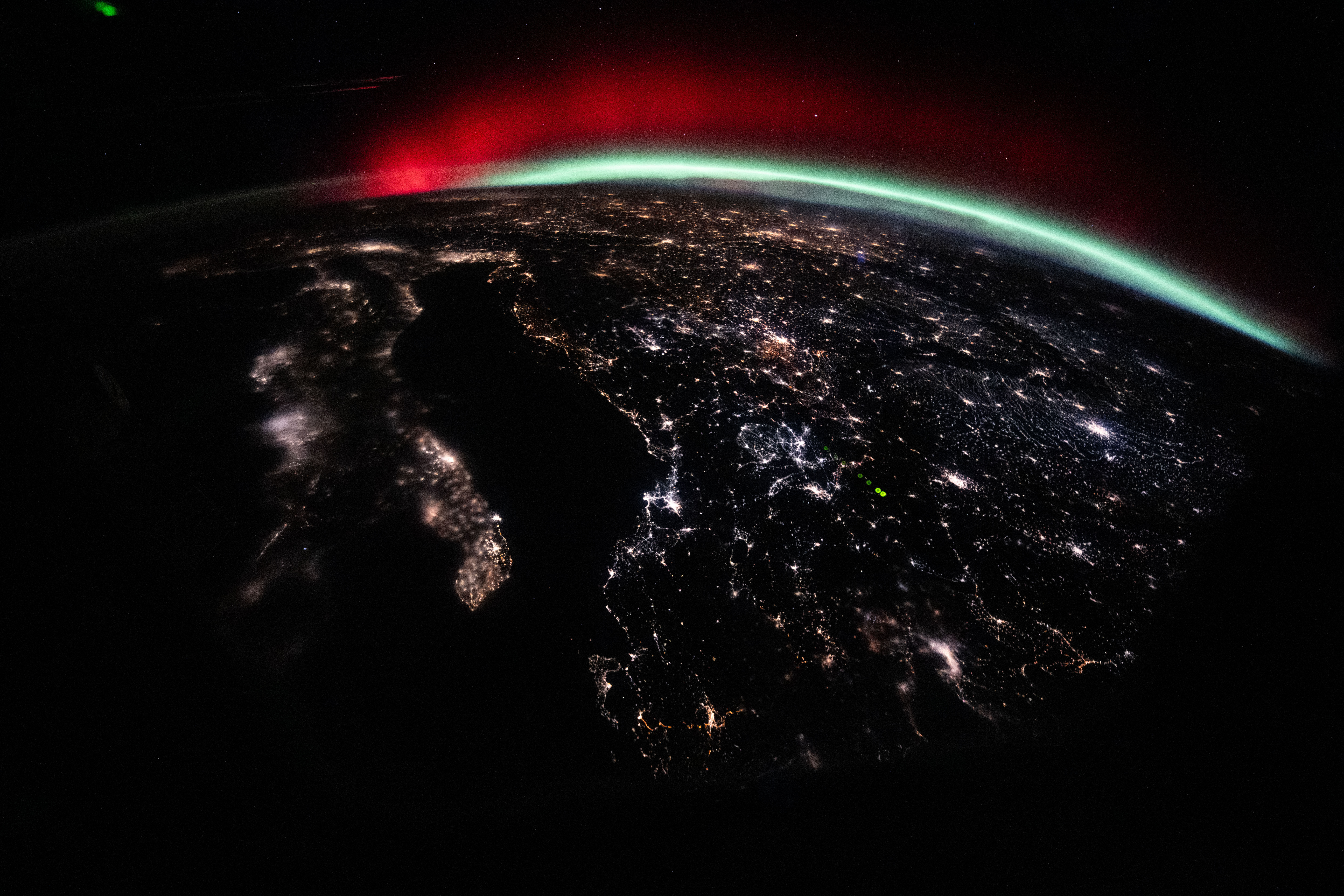
Picture of the day
Blue shark (Prionace glauca), Faial-Pico Channel, Azores Islands, Portugal. The blue shark is a species of requiem shark, in the family Carcharhinidae, that inhabits deep waters (images taken though between 5 and 10 meter below water) averaging around 3.1 m (10 ft) and preferring cooler waters. They can live up to 20 years, can move very quickly and feed primarily on small fish and squid, although they can take larger prey.
Read More
More adults quit Catholic Church than enter it in most countries Pew surveyed #Catholic A Pew Research Center study found that more adults leave the Catholic Church than enter it in most countries, but Catholics still make up the majority of the population in a number of countries analyzed.The research released April 23 found that Christianity has experienced some of the largest losses of followers due to religious switching, when people identify with a different religion in adulthood than they were raised in as a child, compared with other faith groups around the world.The U.S. data in the report, “Catholicism Has Lost People to Religious Switching in Many Countries, While Protestantism Has Gained in Some,” comes from the Center’s 2023-24 U.S. Religious Landscape Study (RLS). The international data comes from surveys conducted by Pew in spring 2024.
 
 Percent of adults in each country survey who reported they were raised Catholic. | Credit: Photo courtesy of Pew Research Center
 
 The global data that analyzed 24 countries was from Pew’s international surveys conducted via telephone or face-to-face interviews. Pew has conducted more than 800,000 interviews in over 110 countries. The margin of sampling error is based on individual countries’ research.Religious switching impact on CatholicismReligious switching has affected Catholicism and Protestantism, two of the largest Christian subgroups, in differing ways. Catholicism has lost more people than it has gained in almost all the countries surveyed, whereas Protestantism has seen a net gain from religious switching.Despite losses from religious switching, Catholics still make up the majority of the population in eight of the 24 nations Pew surveyed, including Poland (92%), the Philippines (80%), Italy (69%), Mexico (67%), Peru (67%), Hungary (63%), Colombia (60%), and Argentina (58%).In 12 of the 24 surveyed countries, most of the population was raised Catholic and many adults still identify with the faith today. For example, 96% of Polish adults were raised Catholics. Of the group, 92% still identify with the religion, with 4% reporting they have left Catholicism.Hungary also experienced a slight loss with 57% of the population identifying as lifelong Catholics and only 2% reporting that they left the Church.But overall, more people left Catholicism than joined it in 21 of the countries. People who leave Catholicism tend to join Protestantism or disaffiliate from religion altogether, the report said.Disaffiliation was found to be especially common in parts of Europe and Latin America, including Chile, where 19% of all adults who are former Catholics identify as atheist, agnostic, or “nothing in particular.”In comparison, in Kenya, Brazil, Ghana, Nigeria, and the Philippines, former Catholics are more likely to have joined Protestantism than to have become religious “nones,” the report said.Other adults have left the Church, with former Catholics making up 10% or more of the total population in 15 countries.In Italy, 22% of adults said they were raised Catholic but no longer identify as such, and an additional 1% were not raised Catholic but entered the Church. The nationʼs Catholic population experienced a net loss of 21% due to religious switching.In the United States, 30% of adults surveyed reported they were raised Catholic and only 17% remain Catholic. An additional 2% who were not raised Catholic reported they entered the Church, for a total of 19% of U.S. adults who are Catholic.Impact on other religionsSimilar to Catholics, former Protestants also make up a large share of the population in many countries. In nine of the 24 countries analyzed, the group was found to make up 10% or more of the population.In several countries, more people have joined Protestantism than have left it, with the religion having a net gain from switching in almost as many places as it has seen a net loss. Adults who leave Protestantism tend to become religiously unaffiliated, the report said.Most of the countries where Protestantism has had net gains are in Latin America, including in Brazil where 15% have joined Protestantism and 6% have left. Most Brazilians who reported switching into Protestantism were former Catholics.

More adults quit Catholic Church than enter it in most countries Pew surveyed #Catholic A Pew Research Center study found that more adults leave the Catholic Church than enter it in most countries, but Catholics still make up the majority of the population in a number of countries analyzed.The research released April 23 found that Christianity has experienced some of the largest losses of followers due to religious switching, when people identify with a different religion in adulthood than they were raised in as a child, compared with other faith groups around the world.The U.S. data in the report, “Catholicism Has Lost People to Religious Switching in Many Countries, While Protestantism Has Gained in Some,” comes from the Center’s 2023-24 U.S. Religious Landscape Study (RLS). The international data comes from surveys conducted by Pew in spring 2024. Percent of adults in each country survey who reported they were raised Catholic. | Credit: Photo courtesy of Pew Research Center The global data that analyzed 24 countries was from Pew’s international surveys conducted via telephone or face-to-face interviews. Pew has conducted more than 800,000 interviews in over 110 countries. The margin of sampling error is based on individual countries’ research.Religious switching impact on CatholicismReligious switching has affected Catholicism and Protestantism, two of the largest Christian subgroups, in differing ways. Catholicism has lost more people than it has gained in almost all the countries surveyed, whereas Protestantism has seen a net gain from religious switching.Despite losses from religious switching, Catholics still make up the majority of the population in eight of the 24 nations Pew surveyed, including Poland (92%), the Philippines (80%), Italy (69%), Mexico (67%), Peru (67%), Hungary (63%), Colombia (60%), and Argentina (58%).In 12 of the 24 surveyed countries, most of the population was raised Catholic and many adults still identify with the faith today. For example, 96% of Polish adults were raised Catholics. Of the group, 92% still identify with the religion, with 4% reporting they have left Catholicism.Hungary also experienced a slight loss with 57% of the population identifying as lifelong Catholics and only 2% reporting that they left the Church.But overall, more people left Catholicism than joined it in 21 of the countries. People who leave Catholicism tend to join Protestantism or disaffiliate from religion altogether, the report said.Disaffiliation was found to be especially common in parts of Europe and Latin America, including Chile, where 19% of all adults who are former Catholics identify as atheist, agnostic, or “nothing in particular.”In comparison, in Kenya, Brazil, Ghana, Nigeria, and the Philippines, former Catholics are more likely to have joined Protestantism than to have become religious “nones,” the report said.Other adults have left the Church, with former Catholics making up 10% or more of the total population in 15 countries.In Italy, 22% of adults said they were raised Catholic but no longer identify as such, and an additional 1% were not raised Catholic but entered the Church. The nationʼs Catholic population experienced a net loss of 21% due to religious switching.In the United States, 30% of adults surveyed reported they were raised Catholic and only 17% remain Catholic. An additional 2% who were not raised Catholic reported they entered the Church, for a total of 19% of U.S. adults who are Catholic.Impact on other religionsSimilar to Catholics, former Protestants also make up a large share of the population in many countries. In nine of the 24 countries analyzed, the group was found to make up 10% or more of the population.In several countries, more people have joined Protestantism than have left it, with the religion having a net gain from switching in almost as many places as it has seen a net loss. Adults who leave Protestantism tend to become religiously unaffiliated, the report said.Most of the countries where Protestantism has had net gains are in Latin America, including in Brazil where 15% have joined Protestantism and 6% have left. Most Brazilians who reported switching into Protestantism were former Catholics.

Despite losses from religious switching, Catholics still make up the majority of the population in a number of countries Pew Research Center analyzed across the globe.

Read More
Pope Leo XIV appoints new bishop of London, Ontario #Catholic Pope Leo XIV has appointed Daniel J. Miehm as the new bishop of the Diocese of London, Ontario, Canada. Until now, the prelate served as the bishop of Peterborough, Ontario.The prelate succeeds Bishop Peter Fabbro in leading the Diocese of London. Fabbro’s resignation was accepted upon reaching the age of 75, the mandatory retirement age for bishops.After expressing his gratitude for the trust placed in him by the Holy Father for the new role, Miehm stated: “In this Easter season, as the Church celebrates the resurrection of Christ, we are invited to deep faith, trust in God, and hope in the promise of new life. It is in such a spirit that I embrace this new chapter in my continued service to the Church.”“I ask your prayers for me, for all those I have served in Peterborough and for those whom I will meet and serve in my episcopal ministry in the Diocese of London,” the prelate added in a statement from the Diocese of London.Fabbro, who served at the helm of the London Diocese for 24 years, said that Miehm “is a strong, compassionate leader with outstanding pastoral instincts and the wisdom to guide our diocese into the future. Under his episcopal leadership, the Diocese of London will be in very capable hands.”Miehm will be installed as the new bishop of London on June 29, the solemnity of Sts. Peter and Paul, at St. Peter’s Cathedral Basilica in London.Who is the new bishop of London?Miehm was born on Aug. 27, 1960, in Kitchener, Ontario. He studied philosophy at St. Jeromeʼs University in Waterloo, Ontario, and theology at St. Augustineʼs Seminary in Toronto. He earned a licentiate in canon law from the Pontifical University of St. Thomas in Rome, according to the Vatican Press Office.He was ordained a priest on May 6, 1989, for the Diocese of Hamilton, Ontario.He has held the following positions, among others: vicar of the Cathedral of Christ the King; defender of the bond at the ecclesiastical tribunal of Hamilton; pastor of Our Lady of Lourdes in Hamilton (1998–2004) and of St. Ann in Ancaster (2004–2012); and pastor of St. Benedict in Milton, as well as spiritual assistant to the St. Thomas More Lawyers' Guild (2012).He was appointed auxiliary bishop of Hamilton on Feb. 20, 2013, receiving episcopal consecration on May 7 of that year. On March 10, 2017, he was appointed bishop of Peterborough, where he served until now.This story was first published by ACI Prensa, the Spanish-language sister service of EWTN News. It has been translated and adapted by EWTN News English.

Pope Leo XIV appoints new bishop of London, Ontario #Catholic Pope Leo XIV has appointed Daniel J. Miehm as the new bishop of the Diocese of London, Ontario, Canada. Until now, the prelate served as the bishop of Peterborough, Ontario.The prelate succeeds Bishop Peter Fabbro in leading the Diocese of London. Fabbro’s resignation was accepted upon reaching the age of 75, the mandatory retirement age for bishops.After expressing his gratitude for the trust placed in him by the Holy Father for the new role, Miehm stated: “In this Easter season, as the Church celebrates the resurrection of Christ, we are invited to deep faith, trust in God, and hope in the promise of new life. It is in such a spirit that I embrace this new chapter in my continued service to the Church.”“I ask your prayers for me, for all those I have served in Peterborough and for those whom I will meet and serve in my episcopal ministry in the Diocese of London,” the prelate added in a statement from the Diocese of London.Fabbro, who served at the helm of the London Diocese for 24 years, said that Miehm “is a strong, compassionate leader with outstanding pastoral instincts and the wisdom to guide our diocese into the future. Under his episcopal leadership, the Diocese of London will be in very capable hands.”Miehm will be installed as the new bishop of London on June 29, the solemnity of Sts. Peter and Paul, at St. Peter’s Cathedral Basilica in London.Who is the new bishop of London?Miehm was born on Aug. 27, 1960, in Kitchener, Ontario. He studied philosophy at St. Jeromeʼs University in Waterloo, Ontario, and theology at St. Augustineʼs Seminary in Toronto. He earned a licentiate in canon law from the Pontifical University of St. Thomas in Rome, according to the Vatican Press Office.He was ordained a priest on May 6, 1989, for the Diocese of Hamilton, Ontario.He has held the following positions, among others: vicar of the Cathedral of Christ the King; defender of the bond at the ecclesiastical tribunal of Hamilton; pastor of Our Lady of Lourdes in Hamilton (1998–2004) and of St. Ann in Ancaster (2004–2012); and pastor of St. Benedict in Milton, as well as spiritual assistant to the St. Thomas More Lawyers' Guild (2012).He was appointed auxiliary bishop of Hamilton on Feb. 20, 2013, receiving episcopal consecration on May 7 of that year. On March 10, 2017, he was appointed bishop of Peterborough, where he served until now.This story was first published by ACI Prensa, the Spanish-language sister service of EWTN News. It has been translated and adapted by EWTN News English.

With the retirement of Bishop Peter Fabbro, Bishop Daniel J. Miehm of the Diocese of Peterborough has been appointed the new bishop of London, Ontario, Canada. He will be installed on June 29.

Read More
March for Life in Warsaw commemorates 1,060 years of Christianity in Poland #Catholic Thousands of people gathered in Poland’s capital on April 19 for the National March for Life, a large public demonstration organized under the slogan “Faith and Fidelity 1966–2026,” commemorating the 1,060th anniversary of the Christianization of Poland. The event combined religious observance, civic participation, and pro-life advocacy, drawing families, clergy, activists, and public figures to central Warsaw. The day began with Mass celebrated in two of the cityʼs major churches. 
 
 Mass is celebrated at the Archcathedral Basilica of the Martyrdom of St. John the Baptist in Warsaw, Poland, on April 19, 2026. | Credit: Tomasz Daniluk/Ordo Iuris
 
 In the Archcathedral Basilica of St. John the Baptist, Bishop Piotr Jarecki presided over the liturgy, while Bishop Tomasz Sztajerwald celebrated Mass at the Cathedral of St. Michael the Archangel and St. Florian in Warsaw-Praga.Participants later gathered at Castle Square, where the march officially began. Organizers described the event as a public expression of support for life and family, rooted in Poland’s Christian tradition. Metropolitan Archbishop Adrian Galbas of Warsaw encouraged participation ahead of the event, framing it as a testimony to human dignity. “We want to testify that we are lovers of life. Bring your family along! Life triumphs over every death,” he declared.
 
 Church leaders join Poland’s President Karol Nawrocki and other dignitaries at the March for Life in Warsaw on April 19, 2026. | Credit: Tomasz Daniluk/Ordo lures
 
 March through Warsaw highlights pro-life messageThe procession moved through central Warsaw streets under the historic slogan marking Poland’s Christian heritage. As participants approached the Presidential Palace, Polish President Karol Nawrocki spoke, linking the march to broader social concerns.“I support initiatives that serve Poland, and this initiative certainly serves Poland,” he said. “It is also a response to the deep demographic crisis. Today, the answer to many Polish problems lies precisely in Polish families, in our identity, in remembering where we come from and where we are going.”Organizers said the march was intended not only as a demonstration of pro-life conviction but also as a broader reflection on national identity and social cohesion.A prominent symbol carried during the march was a copy of the icon of Our Lady of Częstochowa, which has been traveling internationally for 14 years as part of the From Ocean to Ocean pilgrimage in defense of life. The icon has traveled more than 220,000 kilometers (almost 137,000 miles) and visited 32 countries across five continents.
 
 Participants carry an icon of Our Lady of Częstochowa. | Credit: Tomasz Daniluk/Ordo Iuris
 
 Shifting abortion attitudes among younger PolesThe National March for Life is organized by the St. Benedict Foundation alongside dozens of pro-life groups from across Poland and takes place under the honorary patronage of the Polish Episcopal Conference.Patrycja Michońska-Dynek, director of the Press Center of the Archdiocese of Warsaw, told EWTN News that there are shifting public attitudes toward abortion in Poland, including growing societal acceptance and increased calls for liberalization, attributing these changes to secularization, cultural pressures, and differing interpretations of freedom.Michońska-Dynek also observed that while pro-life values remain important in Polish society, younger generations often approach the issue with more nuanced perspectives, particularly in complex or exceptional situations. Fostering a “culture of life” must include practical support for families, such as assistance for single mothers and couples in crisis, Michońska-Dynek said.
 
 Lidia, a participant at the National March for Life. | Credit: Tomasz Daniluk/Ordo Iuris
 
 Not a single-issue agendaLidia Sankowska-Grabczuk, one of the organizers of the National March for Life, told EWTN News that the pro-life movement in Poland extends beyond a single-issue focus on abortion.“In a nutshell, the pro-life movement is [often] the anti-abortion movement. In our view… it’s a bit different. We don’t reduce it to a single-issue agenda,” she said, warning that such a narrow framing “strips it of its true meaning.” While protecting unborn life remains central, she described it as part of a broader vision rooted in what she called “the public voice of Polish Christianity.”She outlined three core pillars underpinning the movement. The first is “respect for life,” encompassing not only the unborn but also solidarity with the elderly, families, and those in need. The second is the family as society’s foundation, grounded in the traditional understanding of marriage and its role in Poland’s social stability. The third pillar is “a state serving the common good,” reflecting a view of politics as service and a call for greater social solidarity.
 
 March for Life in Warsaw commemorates 1,060 years of Christianity in Poland. | Credit: Tomasz Daniluk/Ordo Iuris
 
 Sankowska-Grabczuk also discussed the importance of Poland’s historical and Christian identity in shaping the movement. She noted that recent marches have intentionally marked major national milestones, including the 1,000th anniversary of Poland’s first royal coronation in 2025.These commemorations, she said, highlight how the movement sees its mission as inseparable from Poland’s historical development, where Christianity has long informed both national identity and social values.Pro-life voices and public participationAmong international participants was Tonio Borg, president of the European Federation One of Us. He urged participants to remain steadfast in their convictions despite criticism or public pressure. “Do not be afraid of being slandered and ridiculed because you seek to protect life from the moment of conception,” he said, encouraging continued public engagement and advocacy. He also called on supporters to make their voices heard in the public sphere, stressing the importance of influencing lawmakers and demonstrating that “the unborn child is one of us.”
 
 Paula, a participant at the National March for Life in Poland. | Credit: Tomasz Daniluk/Ordo Iuris
 
 Marcin Perłowski, director of the Centre for Life and Family, said participants gathered at the march out of a shared conviction that “human life begins at conception” and must be defended. He stated that the National March for Life serves as a public demonstration of that belief, describing it as a stand “against all those who raise a hand against unborn children.”Pro-life activist Emilia Mędrzecka told EWTN News that her position is grounded in a belief in universal human dignity. “Children in the womb are as human as we are… they are more dependent and need time to grow,” she said while adding that the march reflected a strong presence of families, young people, and older generations united in support of life.
 
 Polish president Karol Nawrocki walks among participants at the National March for Life in Poland. | Credit: Tomasz Daniluk/Ordo Iuris
 
 While official attendance figures have not been released, estimates provided to EWTN News suggested more than 10,000 people participated, with organizers placing peak attendance between 25,000 and 30,000.

March for Life in Warsaw commemorates 1,060 years of Christianity in Poland #Catholic Thousands of people gathered in Poland’s capital on April 19 for the National March for Life, a large public demonstration organized under the slogan “Faith and Fidelity 1966–2026,” commemorating the 1,060th anniversary of the Christianization of Poland. The event combined religious observance, civic participation, and pro-life advocacy, drawing families, clergy, activists, and public figures to central Warsaw. The day began with Mass celebrated in two of the cityʼs major churches. Mass is celebrated at the Archcathedral Basilica of the Martyrdom of St. John the Baptist in Warsaw, Poland, on April 19, 2026. | Credit: Tomasz Daniluk/Ordo Iuris In the Archcathedral Basilica of St. John the Baptist, Bishop Piotr Jarecki presided over the liturgy, while Bishop Tomasz Sztajerwald celebrated Mass at the Cathedral of St. Michael the Archangel and St. Florian in Warsaw-Praga.Participants later gathered at Castle Square, where the march officially began. Organizers described the event as a public expression of support for life and family, rooted in Poland’s Christian tradition. Metropolitan Archbishop Adrian Galbas of Warsaw encouraged participation ahead of the event, framing it as a testimony to human dignity. “We want to testify that we are lovers of life. Bring your family along! Life triumphs over every death,” he declared. Church leaders join Poland’s President Karol Nawrocki and other dignitaries at the March for Life in Warsaw on April 19, 2026. | Credit: Tomasz Daniluk/Ordo lures March through Warsaw highlights pro-life messageThe procession moved through central Warsaw streets under the historic slogan marking Poland’s Christian heritage. As participants approached the Presidential Palace, Polish President Karol Nawrocki spoke, linking the march to broader social concerns.“I support initiatives that serve Poland, and this initiative certainly serves Poland,” he said. “It is also a response to the deep demographic crisis. Today, the answer to many Polish problems lies precisely in Polish families, in our identity, in remembering where we come from and where we are going.”Organizers said the march was intended not only as a demonstration of pro-life conviction but also as a broader reflection on national identity and social cohesion.A prominent symbol carried during the march was a copy of the icon of Our Lady of Częstochowa, which has been traveling internationally for 14 years as part of the From Ocean to Ocean pilgrimage in defense of life. The icon has traveled more than 220,000 kilometers (almost 137,000 miles) and visited 32 countries across five continents. Participants carry an icon of Our Lady of Częstochowa. | Credit: Tomasz Daniluk/Ordo Iuris Shifting abortion attitudes among younger PolesThe National March for Life is organized by the St. Benedict Foundation alongside dozens of pro-life groups from across Poland and takes place under the honorary patronage of the Polish Episcopal Conference.Patrycja Michońska-Dynek, director of the Press Center of the Archdiocese of Warsaw, told EWTN News that there are shifting public attitudes toward abortion in Poland, including growing societal acceptance and increased calls for liberalization, attributing these changes to secularization, cultural pressures, and differing interpretations of freedom.Michońska-Dynek also observed that while pro-life values remain important in Polish society, younger generations often approach the issue with more nuanced perspectives, particularly in complex or exceptional situations. Fostering a “culture of life” must include practical support for families, such as assistance for single mothers and couples in crisis, Michońska-Dynek said. Lidia, a participant at the National March for Life. | Credit: Tomasz Daniluk/Ordo Iuris Not a single-issue agendaLidia Sankowska-Grabczuk, one of the organizers of the National March for Life, told EWTN News that the pro-life movement in Poland extends beyond a single-issue focus on abortion.“In a nutshell, the pro-life movement is [often] the anti-abortion movement. In our view… it’s a bit different. We don’t reduce it to a single-issue agenda,” she said, warning that such a narrow framing “strips it of its true meaning.” While protecting unborn life remains central, she described it as part of a broader vision rooted in what she called “the public voice of Polish Christianity.”She outlined three core pillars underpinning the movement. The first is “respect for life,” encompassing not only the unborn but also solidarity with the elderly, families, and those in need. The second is the family as society’s foundation, grounded in the traditional understanding of marriage and its role in Poland’s social stability. The third pillar is “a state serving the common good,” reflecting a view of politics as service and a call for greater social solidarity. March for Life in Warsaw commemorates 1,060 years of Christianity in Poland. | Credit: Tomasz Daniluk/Ordo Iuris Sankowska-Grabczuk also discussed the importance of Poland’s historical and Christian identity in shaping the movement. She noted that recent marches have intentionally marked major national milestones, including the 1,000th anniversary of Poland’s first royal coronation in 2025.These commemorations, she said, highlight how the movement sees its mission as inseparable from Poland’s historical development, where Christianity has long informed both national identity and social values.Pro-life voices and public participationAmong international participants was Tonio Borg, president of the European Federation One of Us. He urged participants to remain steadfast in their convictions despite criticism or public pressure. “Do not be afraid of being slandered and ridiculed because you seek to protect life from the moment of conception,” he said, encouraging continued public engagement and advocacy. He also called on supporters to make their voices heard in the public sphere, stressing the importance of influencing lawmakers and demonstrating that “the unborn child is one of us.” Paula, a participant at the National March for Life in Poland. | Credit: Tomasz Daniluk/Ordo Iuris Marcin Perłowski, director of the Centre for Life and Family, said participants gathered at the march out of a shared conviction that “human life begins at conception” and must be defended. He stated that the National March for Life serves as a public demonstration of that belief, describing it as a stand “against all those who raise a hand against unborn children.”Pro-life activist Emilia Mędrzecka told EWTN News that her position is grounded in a belief in universal human dignity. “Children in the womb are as human as we are… they are more dependent and need time to grow,” she said while adding that the march reflected a strong presence of families, young people, and older generations united in support of life. Polish president Karol Nawrocki walks among participants at the National March for Life in Poland. | Credit: Tomasz Daniluk/Ordo Iuris While official attendance figures have not been released, estimates provided to EWTN News suggested more than 10,000 people participated, with organizers placing peak attendance between 25,000 and 30,000.

Recent marches in Poland have intentionally marked major national milestones, including the 1,000th anniversary of Poland’s first royal coronation in 2025.

Read More
10 powerful quotes from Mother Angelica about faith and the love of Jesus #Catholic Mother Angelica was a Poor Clare nun and the dynamic foundress of EWTN, whose bold faith and candid teaching style brought millions closer to Christ through her television ministry. Born on April 20, 1923, she would have turned 103 years old this year.In honor of her birthday, here are 10 quotes from Mother Angelica about the love of Jesus and the beauty and challenge of living a life of faith:“Faith is often most alive when everything feels dark. That is when you choose to believe that God is there, even when you cannot see him or feel him. That kind of faith pleases God the most — because it is pure trust.”“Holiness is not for wimps and the cross is not negotiable, sweetheart — it’s a requirement.”“Jesus asks me to go to him when I am overburdened. He did not promise to take away those burdens, for I must carry mine as he carried his.”“Every Christian who strives for holiness of life experiences dryness of soul. It is to most people a heartrending experience. It is a paradox, for the soul becomes confused when it realizes the harder it strives the further away Jesus seems to be.”“The heart of Jesus is compassionate and understanding. It has felt the sting of ingratitude, and when my heart suffers from that same offense, I can turn to him, and he understands my feelings.”“Jesus feels my sorrow greater than I, for his love is infinite, and he suffers in an infinite way.”“Sometimes my worst day — one filled with pain and suffering — in the eyes of God, is my best day if Iʼve born it cheerfully and Iʼve born it with love.”“Faith is what gets you started. Hope is what keeps you going. Love is what brings you to the end.”“Faith is one foot on the ground, one foot in the air, and a queasy feeling in the stomach.”“You see, God expects his people to do the ridiculous so he can do the miraculous.”

10 powerful quotes from Mother Angelica about faith and the love of Jesus #Catholic Mother Angelica was a Poor Clare nun and the dynamic foundress of EWTN, whose bold faith and candid teaching style brought millions closer to Christ through her television ministry. Born on April 20, 1923, she would have turned 103 years old this year.In honor of her birthday, here are 10 quotes from Mother Angelica about the love of Jesus and the beauty and challenge of living a life of faith:“Faith is often most alive when everything feels dark. That is when you choose to believe that God is there, even when you cannot see him or feel him. That kind of faith pleases God the most — because it is pure trust.”“Holiness is not for wimps and the cross is not negotiable, sweetheart — it’s a requirement.”“Jesus asks me to go to him when I am overburdened. He did not promise to take away those burdens, for I must carry mine as he carried his.”“Every Christian who strives for holiness of life experiences dryness of soul. It is to most people a heartrending experience. It is a paradox, for the soul becomes confused when it realizes the harder it strives the further away Jesus seems to be.”“The heart of Jesus is compassionate and understanding. It has felt the sting of ingratitude, and when my heart suffers from that same offense, I can turn to him, and he understands my feelings.”“Jesus feels my sorrow greater than I, for his love is infinite, and he suffers in an infinite way.”“Sometimes my worst day — one filled with pain and suffering — in the eyes of God, is my best day if Iʼve born it cheerfully and Iʼve born it with love.”“Faith is what gets you started. Hope is what keeps you going. Love is what brings you to the end.”“Faith is one foot on the ground, one foot in the air, and a queasy feeling in the stomach.”“You see, God expects his people to do the ridiculous so he can do the miraculous.”

Born on April 20, 1923, Mother Angelica would be turning 103 years old this year. There is nothing she liked better than to share about faith in Jesus Christ.

Read More
Beloved Catholic kids book series ‘Chime Travelers’ becomes animated TV show #Catholic The beloved children’s book series “Chime Travelers” has now made an exciting leap from page to screen with its development into an animated TV series, bringing its imaginative world to life in a whole new way. Known for its blend of adventure, time travel, and meaningful life lessons, the Catholic series has captivated young readers with its charming characters and heartfelt storytelling for over 10 years.“Chime Travelers,” written by Catholic author Lisa Hendey, follows twins Patrick and Katie as they travel to different places and time periods — all thanks to some magical church bells — to learn valuable life lessons from the saints.Developed by Family Theater Productions and Herald Entertainment, the new animated series depicts the same stories from the book series and includes episodes on St. Patrick, St. Francis of Assisi, St. Clare of Assisi, St. Kateri Tekakwitha, and the Holy Family.In an interview with EWTN News, Hendey said she’s “absolutely thrilled with the outcome” of the animated series.She shared that she had been in conversations with Family Theater Productions — a Catholic production studio in Hollywood — since 2017 about adapting the books for television.“They really saw at an early point the potential for the books to become a very dynamic [series], something even bigger than what they were as books, and itʼs been a long path enough to get to where we are now,” Hendey said.
 
 Katie meets St. Kateri Tekakwitha in an episode of “Chime Travelers.” | Credit: Family Theater Productions
 
 Father David Guffey, executive producer of “Chime Travelers” and the national director of Family Theater Productions, told EWTN News that he believed this series needed to be made because there aren’t many options in terms of Catholic media for children.“If you look at all the media thatʼs out there, thereʼs not much for Catholic children,” he said. “Thereʼs a lot for Catholic teens. Thereʼs a lot for Catholic adults. Thereʼs not a lot of Catholic childrenʼs programming. And we decided just to take a risk on this animated series so that thereʼd be another option for parents that wanted something solid to show their children.”While the book series only included five stories, the animated series will have more saint stories made into episodes for future seasons. For these additional stories, Hendey is serving as a consultant.“Iʼm so delighted that they continue to involve my voice and to give me the chance to say, ‘Well, I donʼt think my character would say that, or have we tried this, or have we thought about this?’ But the new stories are — theyʼre so exciting because theyʼre brand-new. I didnʼt write books about them,” she said. “And now the question will be, do we adapt books from those or what happens next?”Guffey, who is also a biblical consultant on the hit series “The Chosen," said he believes the rise in popularity in faith-based movies and shows being created has “been a long time in coming.”“For a long time, executives in Hollywood didnʼt believe that Christians were an audience,” he explained. “They didnʼt believe there was a faith-based audience and so they were very reluctant to fund or distribute projects. Weʼve had some big signs that there is an audience. Christians have proved themselves.”He highlighted “The Passion of the Christ” as the faith-based movie that opened the doors for other faith-based films to be created and “The Chosen” for doing the same for faith-based television series.“Christians and Catholics are showing they will seek out the kind of content that suits their families and their faith. And thatʼs going to change Hollywood — the business side of Hollywood especially,” Guffey added.The Catholic priest also emphasized the importance of creating faith-based media specifically for children.“With an adult show, adults will watch it once and theyʼre done. But with childrenʼs shows, if theyʼre of any quality at all, children will watch them over and over and over again. So, these shows and these stories really form young people in a really significant way,” he said.Hendey added that she’s grateful “we have now programming thatʼs not only faithful — because we always wanted to be faithful and we always wanted to really speak to the truth and the beauty and the goodness of our Church — but also thatʼs fun, thatʼs compelling, that kids want to watch over and over again.”As for her hopes for the series, Hendey said: “I hope that the kids who watch this, in particular, understand the agency that they have in their own lives to learn valuable lessons from the community of saints and to be a force for good in our world. We need them. We need their hearts and their purity and the love that they have, and so I hope they feel emboldened to realize that they really can make change in their world and in our world.”Guffey added: “When youʼre a kid, you think the problem youʼre going through, youʼre the only one that ever had it and you think you can be a very lonely place. I hope the series shows that first of all, Katie and Patrick go through some of the things they go through at school or at home, but also that the saints and the people whoʼve gone before us have gone through the same thing. And we can draw on the wisdom and the experience of others to gracefully move through the problems, the troubles that we encounter in our lives today.”“The lives of the saints are the lives of the Gospel in action. And I think itʼs important that children see how faith is put into practice,” Guffey shared. “And when we tell the stories of the saints, we are really telling the story of people who put their faith into practice in the good times and in the more difficult times.”“Chime Travelers” can be watched on Formed and on Hallow.

Beloved Catholic kids book series ‘Chime Travelers’ becomes animated TV show #Catholic The beloved children’s book series “Chime Travelers” has now made an exciting leap from page to screen with its development into an animated TV series, bringing its imaginative world to life in a whole new way. Known for its blend of adventure, time travel, and meaningful life lessons, the Catholic series has captivated young readers with its charming characters and heartfelt storytelling for over 10 years.“Chime Travelers,” written by Catholic author Lisa Hendey, follows twins Patrick and Katie as they travel to different places and time periods — all thanks to some magical church bells — to learn valuable life lessons from the saints.Developed by Family Theater Productions and Herald Entertainment, the new animated series depicts the same stories from the book series and includes episodes on St. Patrick, St. Francis of Assisi, St. Clare of Assisi, St. Kateri Tekakwitha, and the Holy Family.In an interview with EWTN News, Hendey said she’s “absolutely thrilled with the outcome” of the animated series.She shared that she had been in conversations with Family Theater Productions — a Catholic production studio in Hollywood — since 2017 about adapting the books for television.“They really saw at an early point the potential for the books to become a very dynamic [series], something even bigger than what they were as books, and itʼs been a long path enough to get to where we are now,” Hendey said. Katie meets St. Kateri Tekakwitha in an episode of “Chime Travelers.” | Credit: Family Theater Productions Father David Guffey, executive producer of “Chime Travelers” and the national director of Family Theater Productions, told EWTN News that he believed this series needed to be made because there aren’t many options in terms of Catholic media for children.“If you look at all the media thatʼs out there, thereʼs not much for Catholic children,” he said. “Thereʼs a lot for Catholic teens. Thereʼs a lot for Catholic adults. Thereʼs not a lot of Catholic childrenʼs programming. And we decided just to take a risk on this animated series so that thereʼd be another option for parents that wanted something solid to show their children.”While the book series only included five stories, the animated series will have more saint stories made into episodes for future seasons. For these additional stories, Hendey is serving as a consultant.“Iʼm so delighted that they continue to involve my voice and to give me the chance to say, ‘Well, I donʼt think my character would say that, or have we tried this, or have we thought about this?’ But the new stories are — theyʼre so exciting because theyʼre brand-new. I didnʼt write books about them,” she said. “And now the question will be, do we adapt books from those or what happens next?”Guffey, who is also a biblical consultant on the hit series “The Chosen," said he believes the rise in popularity in faith-based movies and shows being created has “been a long time in coming.”“For a long time, executives in Hollywood didnʼt believe that Christians were an audience,” he explained. “They didnʼt believe there was a faith-based audience and so they were very reluctant to fund or distribute projects. Weʼve had some big signs that there is an audience. Christians have proved themselves.”He highlighted “The Passion of the Christ” as the faith-based movie that opened the doors for other faith-based films to be created and “The Chosen” for doing the same for faith-based television series.“Christians and Catholics are showing they will seek out the kind of content that suits their families and their faith. And thatʼs going to change Hollywood — the business side of Hollywood especially,” Guffey added.The Catholic priest also emphasized the importance of creating faith-based media specifically for children.“With an adult show, adults will watch it once and theyʼre done. But with childrenʼs shows, if theyʼre of any quality at all, children will watch them over and over and over again. So, these shows and these stories really form young people in a really significant way,” he said.Hendey added that she’s grateful “we have now programming thatʼs not only faithful — because we always wanted to be faithful and we always wanted to really speak to the truth and the beauty and the goodness of our Church — but also thatʼs fun, thatʼs compelling, that kids want to watch over and over again.”As for her hopes for the series, Hendey said: “I hope that the kids who watch this, in particular, understand the agency that they have in their own lives to learn valuable lessons from the community of saints and to be a force for good in our world. We need them. We need their hearts and their purity and the love that they have, and so I hope they feel emboldened to realize that they really can make change in their world and in our world.”Guffey added: “When youʼre a kid, you think the problem youʼre going through, youʼre the only one that ever had it and you think you can be a very lonely place. I hope the series shows that first of all, Katie and Patrick go through some of the things they go through at school or at home, but also that the saints and the people whoʼve gone before us have gone through the same thing. And we can draw on the wisdom and the experience of others to gracefully move through the problems, the troubles that we encounter in our lives today.”“The lives of the saints are the lives of the Gospel in action. And I think itʼs important that children see how faith is put into practice,” Guffey shared. “And when we tell the stories of the saints, we are really telling the story of people who put their faith into practice in the good times and in the more difficult times.”“Chime Travelers” can be watched on Formed and on Hallow.

The new animated series depicts the same stories from the books, including episodes on St. Patrick, St. Francis of Assisi, St. Clare of Assisi, St. Kateri Tekakwitha, and the Holy Family.

Read More
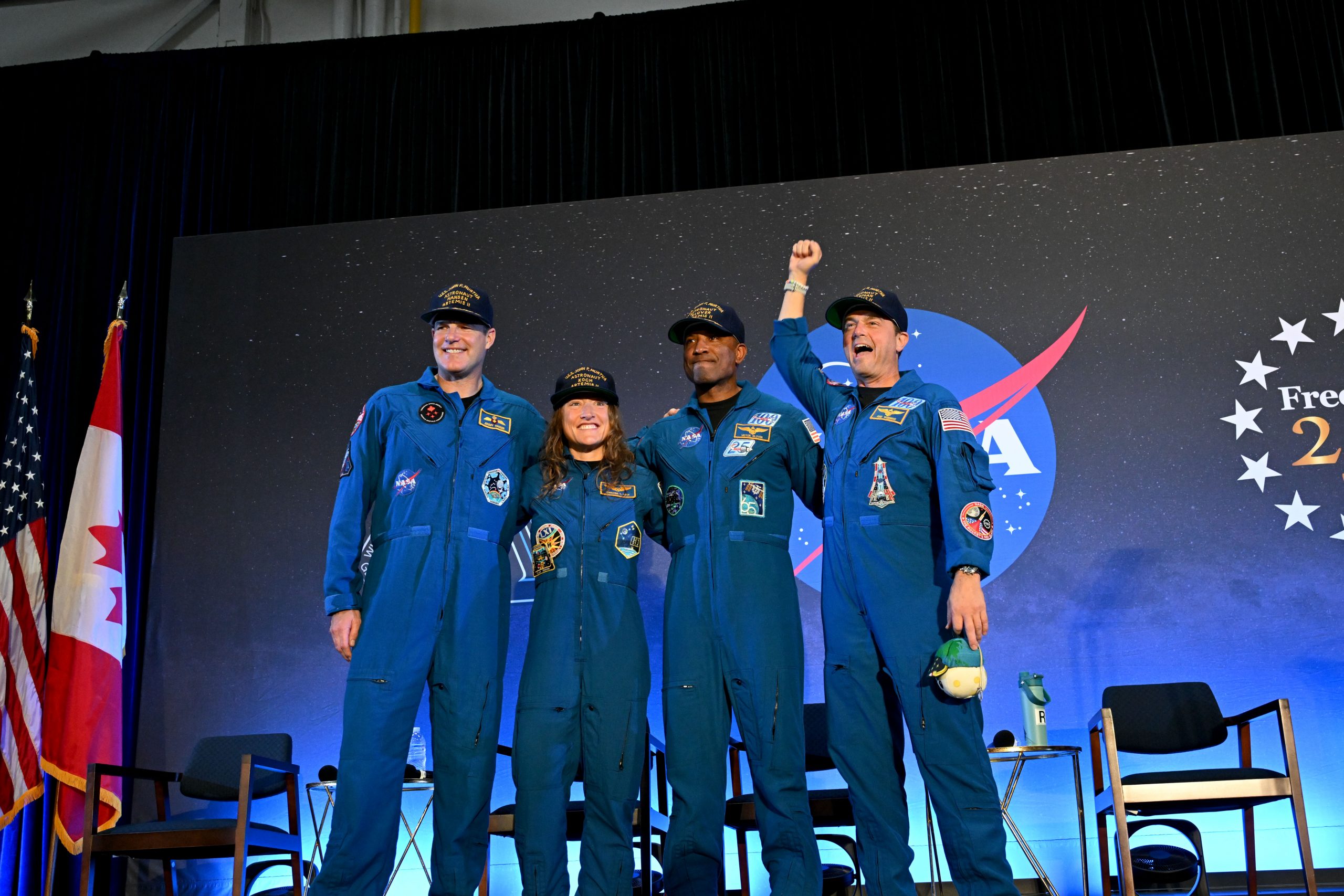
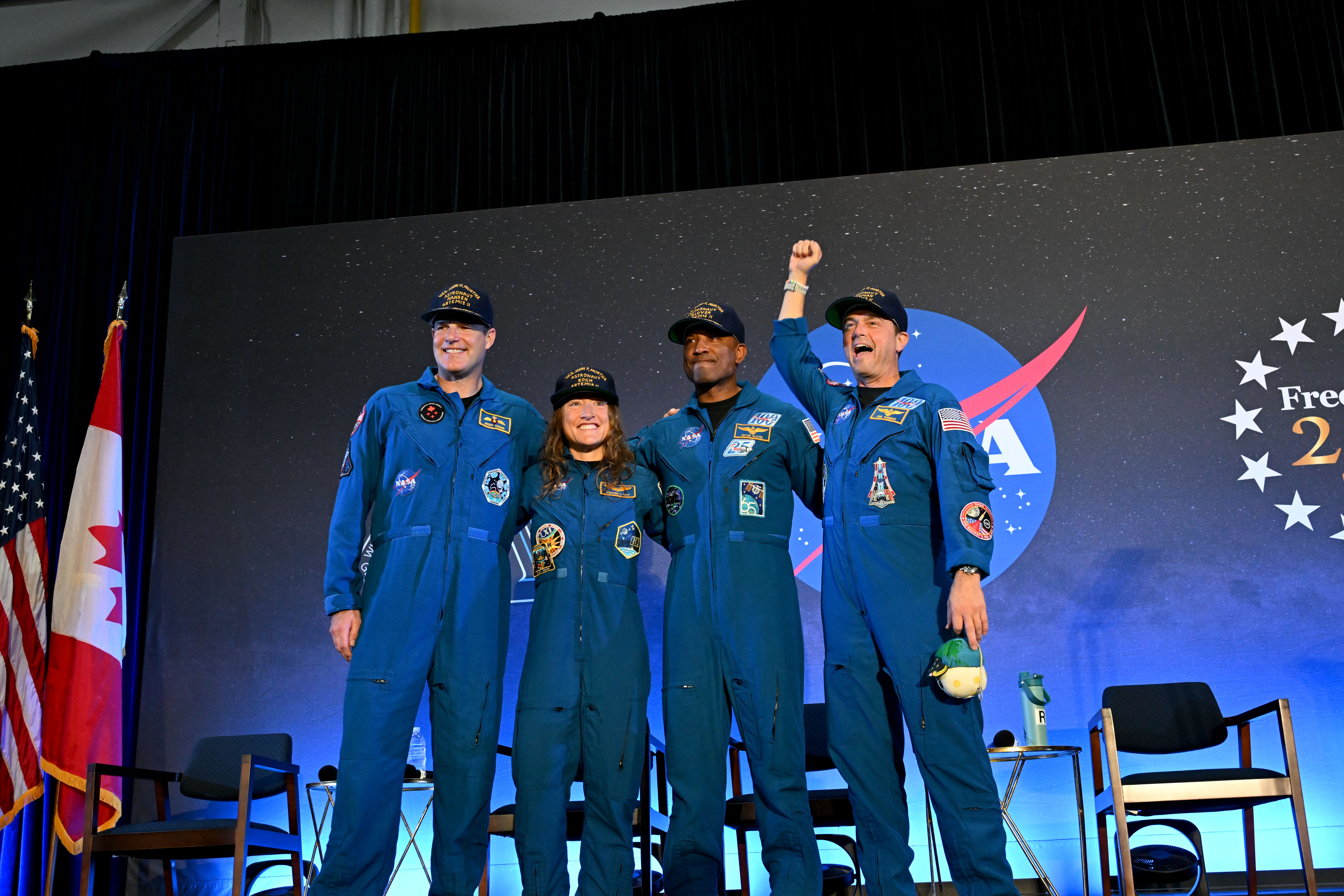
Artemis II Crew Returns to Houston – NASA’s Artemis II crew shared brief remarks with friends, family, and colleagues after they landed at Ellington Airport near NASA’s Johnson Space Center in Houston on Saturday, April 11, 2026, after a nearly 10-day journey around the Moon and back to Earth.

NASA’s Artemis II crew shared brief remarks with friends, family, and colleagues after they landed at Ellington Airport near NASA’s Johnson Space Center in Houston on Saturday, April 11, 2026, after a nearly 10-day journey around the Moon and back to Earth.

Read More
Chicago priest resigns after archdiocese discovers misuse of parish funds #Catholic A priest in Chicago has resigned after the archdiocese found that he misused parish funds for “personal expenses,” Cardinal Blase Cupich told parishioners this month. Cupich told St. John Henry Newman Parish in Evanston that the archdiocese had launched a review of the parishʼs finances on March 30 amid “serious questions” about the parishʼs “fiscal administration.” The prelate said in an April 10 letter to the parish that the review found Father Kenneth Anderson “violated a number of core archdiocesan policies pertaining to the proper exercise of good stewardship of parish resources.” Among the reported violations included “the creation and maintenance of a separate bank account into which he deposited substantial parish funds,” Cupich said. Some of those funds “were used to cover costs unrelated to parish needs including his personal expenses.”Anderson resigned after being presented with the findings of the report, Cupich said. The priest also “accepted [Cupichʼs] instruction that, when the full accounting is complete, he is to make restitution for any funds clearly identified as covering his personal expenses.”The archdiocese did not immediately respond to a request for comment on the total amount of funds reportedly misused at the parish. Cupich in his letter said Father Wayne Watts, the pastor of Sts. Joseph and Francis Xavier Parish in nearby Wilmette, oversaw the administration of St. John Henry Newman Parishʼs finances during the review process. The archbishop further said that he had asked the archdiocesan placement board to recommend a new pastor for the parish by July 1. Retired priest Father Gerald Gunderson will serve as parish administrator until the new pastor is appointed, Cupich said. The parish was formed in 2022 after the merging of Sts. Athanasius and Joan of Arc parishes as part of the archdiocesan Renew My Faith campaign.

Chicago priest resigns after archdiocese discovers misuse of parish funds #Catholic A priest in Chicago has resigned after the archdiocese found that he misused parish funds for “personal expenses,” Cardinal Blase Cupich told parishioners this month. Cupich told St. John Henry Newman Parish in Evanston that the archdiocese had launched a review of the parishʼs finances on March 30 amid “serious questions” about the parishʼs “fiscal administration.” The prelate said in an April 10 letter to the parish that the review found Father Kenneth Anderson “violated a number of core archdiocesan policies pertaining to the proper exercise of good stewardship of parish resources.” Among the reported violations included “the creation and maintenance of a separate bank account into which he deposited substantial parish funds,” Cupich said. Some of those funds “were used to cover costs unrelated to parish needs including his personal expenses.”Anderson resigned after being presented with the findings of the report, Cupich said. The priest also “accepted [Cupichʼs] instruction that, when the full accounting is complete, he is to make restitution for any funds clearly identified as covering his personal expenses.”The archdiocese did not immediately respond to a request for comment on the total amount of funds reportedly misused at the parish. Cupich in his letter said Father Wayne Watts, the pastor of Sts. Joseph and Francis Xavier Parish in nearby Wilmette, oversaw the administration of St. John Henry Newman Parishʼs finances during the review process. The archbishop further said that he had asked the archdiocesan placement board to recommend a new pastor for the parish by July 1. Retired priest Father Gerald Gunderson will serve as parish administrator until the new pastor is appointed, Cupich said. The parish was formed in 2022 after the merging of Sts. Athanasius and Joan of Arc parishes as part of the archdiocesan Renew My Faith campaign.

Father Kenneth Anderson violated “a number of core archdiocesan policies,” Cardinal Blase Cupich told parishioners.

Read More

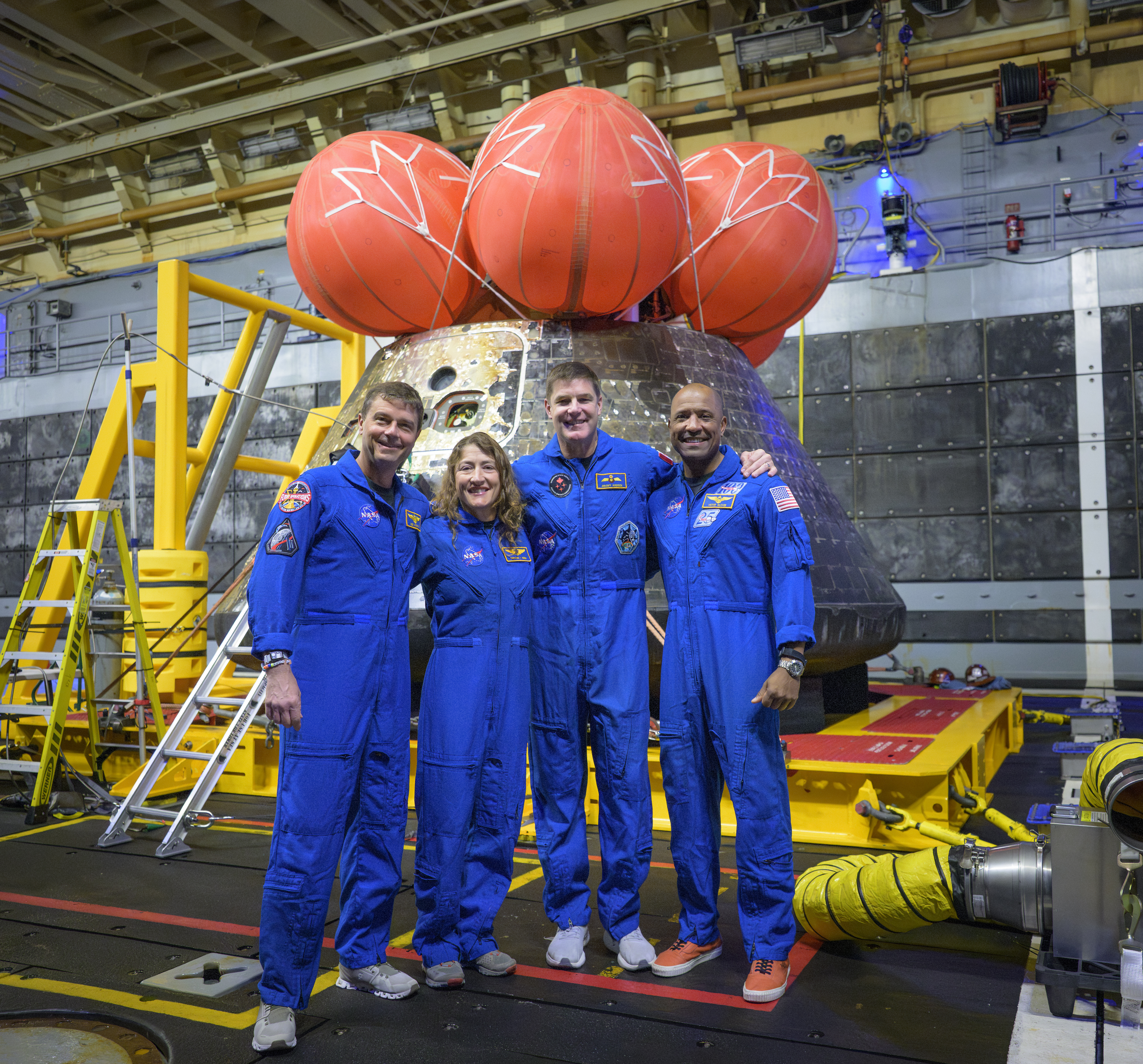
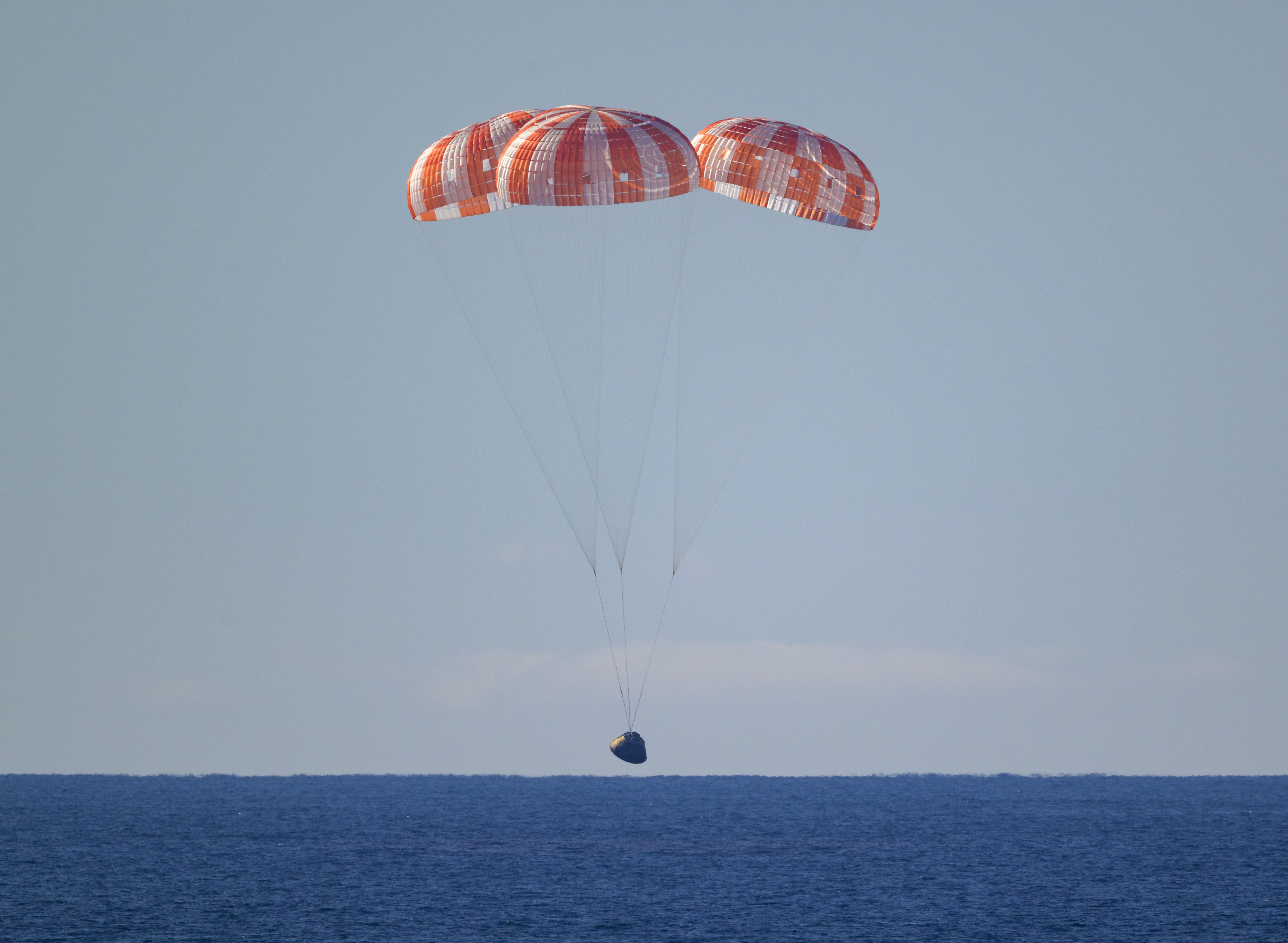
NASA astronauts Reid Wiseman, commander; left, Christina Koch, mission specialist; CSA (Canadian Space Agency) astronaut Jeremy Hansen, mission specialist; and NASA astronaut Victor Glover, Artemis II pilot, right, pose for a group photo after viewing the Orion spacecraft in the well deck of USS John P. Murtha, Saturday, April 11, 2026, in the Pacific Ocean off the coast of California. The quartet splashed down Friday, April 10 at 5:07 p.m. PDT (8:07p.m. EDT).

Read More
Chaldean Church chooses Archbishop Amel Nona as patriarch, succeeding Cardinal Sako #Catholic The Chaldean Synod has elected Archbishop Amel Shamon Nona as the new Patriarch of the Chaldean Catholic Church, succeeding Cardinal Louis Raphael Sako, who submitted his resignation to Pope Leo XIV on March 9 amid a financial and legal scandal concerning a former Chaldean bishop in San Diego.The election took place during the synod’s meetings held in Rome since April 9.This election comes at a critical time for both the Chaldean Church and the wider region, amid ongoing political challenges in Iraq and the Middle East, as well as internal ecclesial issues related to unity and the organization of Church life both locally and in the diaspora.Following the election, the Chaldean bishops issued a statement saying:“After deep spiritual and fraternal deliberations, conducted in a spirit of prayer and ecclesial discernment, and mindful of the apostolic responsibility entrusted to them, the Fathers of the Synod elected the Patriarch of the Chaldean Church according to the established canonical procedures. After completing the required ballots, and in accordance with the will expressed by the Synod, His Excellency Archbishop Amel Shamon Nona was elected Patriarch of the Chaldean Church and chose for himself the name His Beatitude Patriarch Mar Paul III Nona.”The statement continued: “His Beatitude accepted the election in accordance with canonical norms, expressing his reliance on God’s grace and his commitment to exercise his patriarchal ministry with fidelity and responsibility, in full communion with the Fathers of the Synod, in service of the unity of the Chaldean Church and its mission in the homeland and the diaspora.”“The Fathers of the Synod raise their prayers to the Lord Jesus Christ, the Good Shepherd, asking that He grant the elected Patriarch wisdom and strength,“ the statement continued. ”They affirm their confidence that this ministry will contribute to strengthening the faithful in their faith, enhancing their unity, and revitalizing the Church’s mission in bearing witness to the Gospel.”The Synod also called on all members of the Chaldean Church — clergy and faithful alike — to unite around the new Patriarch and support him through prayer and shared responsibility for the good of the Church and the growth of its mission.Archbishop Nona was born in Alqosh in northern Iraq in 1967. He was ordained a priest in 1991 after completing his studies at the Patriarchal Seminary in Baghdad. He later pursued higher studies in Rome, earning a doctorate in theological anthropology from the Pontifical Lateran University.He served in the parishes of Alqosh before being appointed Archbishop of Mosul in 2009, during a period marked by escalating violence against Christians in Iraq.During the events of 2014, he left Mosul along with his faithful following the takeover of the city by the terrorist group ISIS, marking a pivotal moment in the modern history of the Chaldean Church.In 2015, the Holy See appointed him head of the Chaldean Eparchy of St. Thomas the Apostle in Australia and New Zealand, where he continued his pastoral ministry among the Chaldean diaspora.His appointment comes following the resignation of Cardinal Raphael Sako, who announced that he submitted his resignation to Pope Leo XIV of his own free will on the morning of March 9 so he could “dedicate himself quietly to prayer, writing, and simple service.”The timing sparked controversy within the Chaldean community. Pope Leo XIV on March 10 accepted the resignation of Bishop Emanuel Shaleta, a Chaldean Catholic bishop arrested in San Diego in March on charges of embezzling Church funds.Sako had allegedly attempted to support or transfer the embattled bishop to a higher position, leading many to question whether the financial scandal played a role in the patriarch’s decision.This story was first published by ACI MENA, the Arabic-language sister service of EWTN News. It has been translated and adapted by EWTN News English.

Chaldean Church chooses Archbishop Amel Nona as patriarch, succeeding Cardinal Sako #Catholic The Chaldean Synod has elected Archbishop Amel Shamon Nona as the new Patriarch of the Chaldean Catholic Church, succeeding Cardinal Louis Raphael Sako, who submitted his resignation to Pope Leo XIV on March 9 amid a financial and legal scandal concerning a former Chaldean bishop in San Diego.The election took place during the synod’s meetings held in Rome since April 9.This election comes at a critical time for both the Chaldean Church and the wider region, amid ongoing political challenges in Iraq and the Middle East, as well as internal ecclesial issues related to unity and the organization of Church life both locally and in the diaspora.Following the election, the Chaldean bishops issued a statement saying:“After deep spiritual and fraternal deliberations, conducted in a spirit of prayer and ecclesial discernment, and mindful of the apostolic responsibility entrusted to them, the Fathers of the Synod elected the Patriarch of the Chaldean Church according to the established canonical procedures. After completing the required ballots, and in accordance with the will expressed by the Synod, His Excellency Archbishop Amel Shamon Nona was elected Patriarch of the Chaldean Church and chose for himself the name His Beatitude Patriarch Mar Paul III Nona.”The statement continued: “His Beatitude accepted the election in accordance with canonical norms, expressing his reliance on God’s grace and his commitment to exercise his patriarchal ministry with fidelity and responsibility, in full communion with the Fathers of the Synod, in service of the unity of the Chaldean Church and its mission in the homeland and the diaspora.”“The Fathers of the Synod raise their prayers to the Lord Jesus Christ, the Good Shepherd, asking that He grant the elected Patriarch wisdom and strength,“ the statement continued. ”They affirm their confidence that this ministry will contribute to strengthening the faithful in their faith, enhancing their unity, and revitalizing the Church’s mission in bearing witness to the Gospel.”The Synod also called on all members of the Chaldean Church — clergy and faithful alike — to unite around the new Patriarch and support him through prayer and shared responsibility for the good of the Church and the growth of its mission.Archbishop Nona was born in Alqosh in northern Iraq in 1967. He was ordained a priest in 1991 after completing his studies at the Patriarchal Seminary in Baghdad. He later pursued higher studies in Rome, earning a doctorate in theological anthropology from the Pontifical Lateran University.He served in the parishes of Alqosh before being appointed Archbishop of Mosul in 2009, during a period marked by escalating violence against Christians in Iraq.During the events of 2014, he left Mosul along with his faithful following the takeover of the city by the terrorist group ISIS, marking a pivotal moment in the modern history of the Chaldean Church.In 2015, the Holy See appointed him head of the Chaldean Eparchy of St. Thomas the Apostle in Australia and New Zealand, where he continued his pastoral ministry among the Chaldean diaspora.His appointment comes following the resignation of Cardinal Raphael Sako, who announced that he submitted his resignation to Pope Leo XIV of his own free will on the morning of March 9 so he could “dedicate himself quietly to prayer, writing, and simple service.”The timing sparked controversy within the Chaldean community. Pope Leo XIV on March 10 accepted the resignation of Bishop Emanuel Shaleta, a Chaldean Catholic bishop arrested in San Diego in March on charges of embezzling Church funds.Sako had allegedly attempted to support or transfer the embattled bishop to a higher position, leading many to question whether the financial scandal played a role in the patriarch’s decision.This story was first published by ACI MENA, the Arabic-language sister service of EWTN News. It has been translated and adapted by EWTN News English.

His appointment comes following the resignation of Cardinal Raphael Sako, who submitted his resignation to Pope Leo XIV on March 9 amid a legal and financial scandal surrounding a former bishop.

Read More
Artemis II Recovery – NASA’s Orion spacecraft with Artemis II crewmembers NASA astronauts Reid Wiseman, commander; Victor Glover, pilot; Christina Koch, mission specialist; and CSA (Canadian Space Agency) astronaut Jeremy Hansen, mission specialist aboard is seen under parachutes as it lands in the Pacific Ocean off the coast of California, Friday, April 10, 2026. NASA’s Artemis II mission took Wiseman, Glover, Koch, and Hansen on a 10-day journey around the Moon and back to Earth. Following a splashdown at 7:07 p.m. EDT, NASA, U.S. Navy, and U.S. Air Force teams are working to bring the crewmembers and Orion spacecraft aboard USS John P. Murtha.

NASA’s Orion spacecraft with Artemis II crewmembers NASA astronauts Reid Wiseman, commander; Victor Glover, pilot; Christina Koch, mission specialist; and CSA (Canadian Space Agency) astronaut Jeremy Hansen, mission specialist aboard is seen under parachutes as it lands in the Pacific Ocean off the coast of California, Friday, April 10, 2026. NASA’s Artemis II mission took Wiseman, Glover, Koch, and Hansen on a 10-day journey around the Moon and back to Earth. Following a splashdown at 7:07 p.m. EDT, NASA, U.S. Navy, and U.S. Air Force teams are working to bring the crewmembers and Orion spacecraft aboard USS John P. Murtha.

Read More
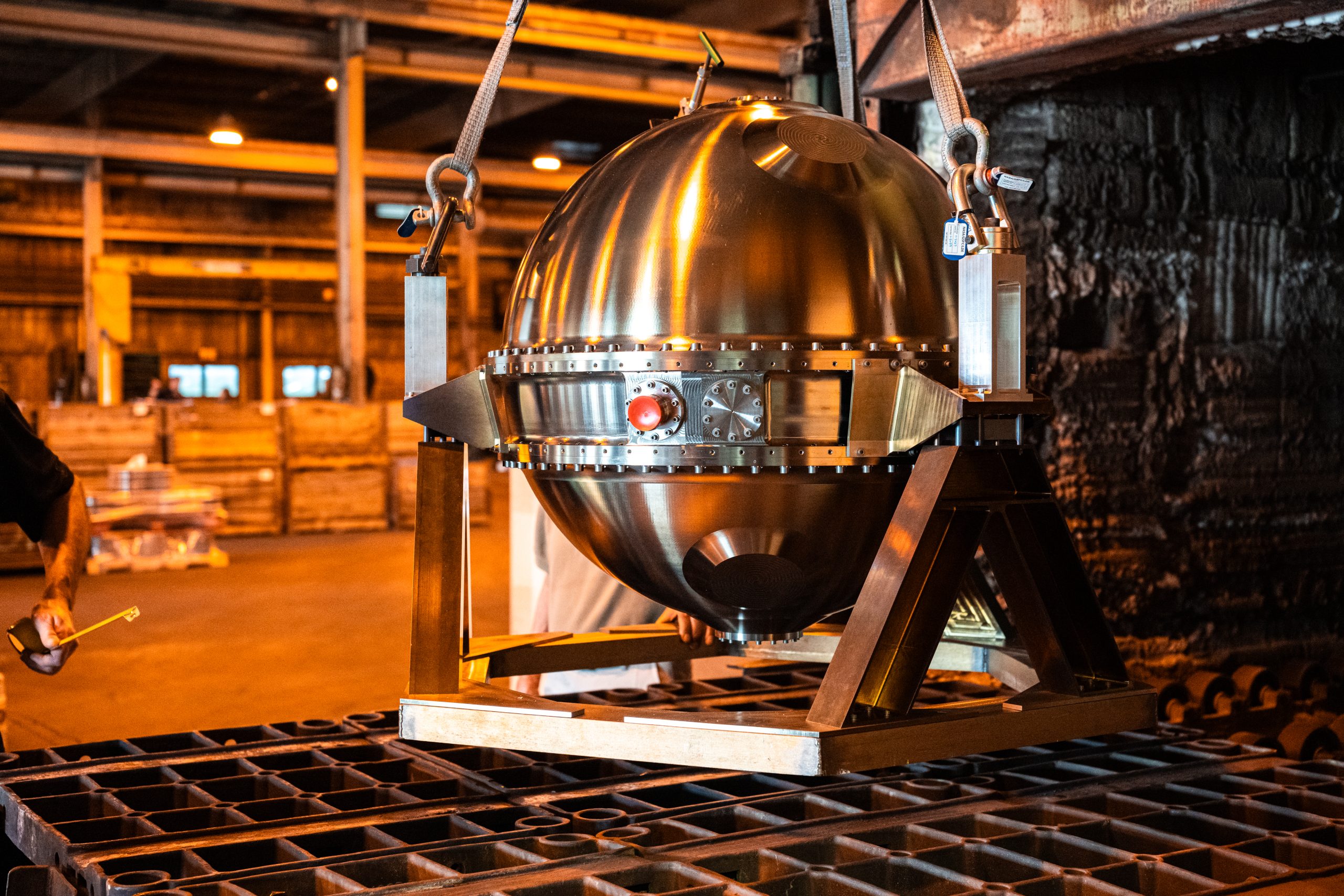
Minnesota bishop: Singer Gracie Abrams helps young people confront ‘gaping wounds in their hearts’ #Catholic Hereʼs a roundup of the latest Catholic education news in the U.S.Minnesota bishop cites Gracie Abrams in speech on educators’ role in healing woundsBishop Andrew Cozzens of Crookston shared a video performance of pop singer Gracie Abrams during his keynote speech at the National Catholic Educational Association convention.While discussing the role of educators in helping young people to heal from their wounds, Cozzens played a video of Abrams performing her song “Camden."“The poetry that she sings about expresses the depth of pain that she carries in her heart, and whatʼs even more clear is that it resonates with tens of thousands of people in the stadium all her same age,” Cozzens said during his April 7 keynote, according to UCA News. "Many people in the stadium also feel like singing.”In the song, an extended reflection on insecurity and personal struggles, Abrams sings, in part, “All of me, a wound to close / But I leave the whole thing open / I just wanted you to know / I was never good at coping.”“This is the height of popular culture,” he said. “This is what our young people are singing about, the gaping wounds in their hearts." Catholic educators must invite young people to encounter Christ in their wounds, rather than seeking value from social media, artificial intelligence, popular culture, or politics, he said.The National Catholic Educational Association convention took place April 7-9. Other highlights at the event included a live butter sculpture of Pope Leo XIV, and “Puppy Love” sessions sponsored by Safe Hands Rescue and Healing Hearts Rescue, according to the event schedule.Chicago Archdiocese says public school system abruptly cut off funding for students with disabilitiesMore than 800 students with disabilities attending Chicago Catholic schools will be affected after the city’s public school system suddenly suspended funding to social services before the end of the school year.The Chicago Archdiocese said in an April 10 statement that Chicago Public Schools (CPS) targeted only Catholic schools in terminating services for individuals with special needs under the Individuals with Disabilities Education Act (IDEA). The statement noted students with learning differences will lose access to math, reading, and writing tutoring, which will create “severe hardship for hundreds of students” who were relying on the services through the end of the year.“We are not aware of any other non-public school system or individual school, religious or secular, whose IDEA services have been terminated,” the archdiocese said. “It is not clear why Catholic schools are being treated differently, but Catholic school students have the right to be treated equally under the law.”Chicago Archbishop Cardinal Blase Cupich said the archdiocese "cannot allow this shocking and possibly discriminatory action by CPS to stand, not only given its affront to Catholics, but even more so since this injustice would disenfranchise the students we serve.” The archdiocese said efforts to reach CPS Superintendent Macquline King “have not yielded a response.”The archdiocese said the Chicago school system had verbally confirmed funding for the services would continue through the end of the school year “as recently as March 25" before informing the archdiocese during Holy Week that the services would be suspended. “While federal funding for these services was provided to CPS for the full school year, we were informed that the last day of services would be [April 10],” the archdiocese said.Georgia archdiocese launches virtual Catholic high schoolThe Archdiocese of Atlanta is starting a fully online Catholic high school program this fall in partnership with Catholic Education Services.The launch of Sacred Heart Virtual Academy comes amid increased demand among homeschooling families, according to an April 8 report from the Georgia Bulletin. Curriculum will be provided by Catholic Education Services, whose mission “is to partner with Catholic school leaders and provide services that extend the reach and impact of your school’s mission through a faith-centered, rigorously academic education with a flexible learning platform,” according to its website.“We knew that we were not filling the needs of a group of kids that were in our parishes,” Kim Shields, the archdiocesan associate superintendent of schools, said in the report. “This allows a child that doesn’t want to go to a brick-and-mortar school to have that opportunity.” The school will serve grades 9-12, according to its website, and is open to students outside of the archdiocese.“My hope is that it serves what we’re about — to provide programs for students to help them develop in all areas of their life,” Shields said. “The premise is that everything is centered around the mission of the Catholic Church.”

Minnesota bishop: Singer Gracie Abrams helps young people confront ‘gaping wounds in their hearts’ #Catholic Hereʼs a roundup of the latest Catholic education news in the U.S.Minnesota bishop cites Gracie Abrams in speech on educators’ role in healing woundsBishop Andrew Cozzens of Crookston shared a video performance of pop singer Gracie Abrams during his keynote speech at the National Catholic Educational Association convention.While discussing the role of educators in helping young people to heal from their wounds, Cozzens played a video of Abrams performing her song “Camden."“The poetry that she sings about expresses the depth of pain that she carries in her heart, and whatʼs even more clear is that it resonates with tens of thousands of people in the stadium all her same age,” Cozzens said during his April 7 keynote, according to UCA News. "Many people in the stadium also feel like singing.”In the song, an extended reflection on insecurity and personal struggles, Abrams sings, in part, “All of me, a wound to close / But I leave the whole thing open / I just wanted you to know / I was never good at coping.”“This is the height of popular culture,” he said. “This is what our young people are singing about, the gaping wounds in their hearts." Catholic educators must invite young people to encounter Christ in their wounds, rather than seeking value from social media, artificial intelligence, popular culture, or politics, he said.The National Catholic Educational Association convention took place April 7-9. Other highlights at the event included a live butter sculpture of Pope Leo XIV, and “Puppy Love” sessions sponsored by Safe Hands Rescue and Healing Hearts Rescue, according to the event schedule.Chicago Archdiocese says public school system abruptly cut off funding for students with disabilitiesMore than 800 students with disabilities attending Chicago Catholic schools will be affected after the city’s public school system suddenly suspended funding to social services before the end of the school year.The Chicago Archdiocese said in an April 10 statement that Chicago Public Schools (CPS) targeted only Catholic schools in terminating services for individuals with special needs under the Individuals with Disabilities Education Act (IDEA). The statement noted students with learning differences will lose access to math, reading, and writing tutoring, which will create “severe hardship for hundreds of students” who were relying on the services through the end of the year.“We are not aware of any other non-public school system or individual school, religious or secular, whose IDEA services have been terminated,” the archdiocese said. “It is not clear why Catholic schools are being treated differently, but Catholic school students have the right to be treated equally under the law.”Chicago Archbishop Cardinal Blase Cupich said the archdiocese "cannot allow this shocking and possibly discriminatory action by CPS to stand, not only given its affront to Catholics, but even more so since this injustice would disenfranchise the students we serve.” The archdiocese said efforts to reach CPS Superintendent Macquline King “have not yielded a response.”The archdiocese said the Chicago school system had verbally confirmed funding for the services would continue through the end of the school year “as recently as March 25" before informing the archdiocese during Holy Week that the services would be suspended. “While federal funding for these services was provided to CPS for the full school year, we were informed that the last day of services would be [April 10],” the archdiocese said.Georgia archdiocese launches virtual Catholic high schoolThe Archdiocese of Atlanta is starting a fully online Catholic high school program this fall in partnership with Catholic Education Services.The launch of Sacred Heart Virtual Academy comes amid increased demand among homeschooling families, according to an April 8 report from the Georgia Bulletin. Curriculum will be provided by Catholic Education Services, whose mission “is to partner with Catholic school leaders and provide services that extend the reach and impact of your school’s mission through a faith-centered, rigorously academic education with a flexible learning platform,” according to its website.“We knew that we were not filling the needs of a group of kids that were in our parishes,” Kim Shields, the archdiocesan associate superintendent of schools, said in the report. “This allows a child that doesn’t want to go to a brick-and-mortar school to have that opportunity.” The school will serve grades 9-12, according to its website, and is open to students outside of the archdiocese.“My hope is that it serves what we’re about — to provide programs for students to help them develop in all areas of their life,” Shields said. “The premise is that everything is centered around the mission of the Catholic Church.”

A roundup of the latest Catholic education news in the U.S.

Read More
Vatican aid convoy in Lebanon caught in crossfire as Church relief effort is forced back #Catholic A Vatican humanitarian convoy carrying the apostolic nuncio to Lebanon, Archbishop Paolo Borgia, was forced to turn back Tuesday, April 7, after becoming trapped in heavy crossfire between Israeli forces and Hezbollah fighters in southern Lebanon.“The fighting between Hezbollah and Israel was intense. We waited a long time three kilometers from the village while hearing gunfire and explosions, but we could not continue and had to suspend the mission,” Monsignor Hugues de Woillemont, general director of l’Oeuvre d’Orient, told ACI Prensa, the Spanish-language sister service of EWTN News.De Woillemont traveled to Lebanon as a representative of the French Catholic aid organization and of the Church in France “to celebrate Easter, to show support and friendship, and also to thank Christians for their witness.”Although the convoy was under the protection of soldiers from the U.N. peacekeeping mission in Lebanon, UNIFIL, he said “security conditions were not sufficient for us to carry out our visit or deliver the aid, which was a great disappointment for the Christians we wanted to visit.”The aid was headed to Debel, a village just over a mile from the southern border with Israel in the Maronite Diocese of Tyre, where nearly 10,000 Christians live in about 20 parishes.Residents there remain under an evacuation order issued by the Israeli army, but many Lebanese Christians have chosen to stay in their homes.“That is why we wanted to bring a truck of humanitarian aid and, above all, to show our friendship and closeness to the Christians there,” De Woillemont said.The region south of the Litani River makes up about 15% of Lebanese territory. Christian communities there are trying to remain in their villages despite the threat of Israeli annexation, and their situation reflects the long-standing vulnerability of Lebanon’s Maronite Christians, who often bear some of the conflict’s heaviest consequences.L’Oeuvre d’Orient has distributed tons of humanitarian aid throughout Lebanon, but De Woillemont said the group, like other humanitarian and religious organizations, is reaching its limits.“The situation is untenable,” he said.The convoy he joined was the seventh sent to villages in southern Lebanon.“We are determined to return as soon as conditions allow,” he said, while praising the courage and resilience of Christians in the land once walked by Christ.On Wednesday, De Woillemont was able to visit three other villages with Maronite Patriarch Cardinal Bechara Boutros al-Rai, where they delivered 30 tons of humanitarian assistance — mainly food and hygiene kits — without incident.“We were able to show our support and admiration for those who remain in their homes,” he said.“For us it was a moment to measure up close the restrictions and dangers they — the living stones — experience every day,” he added after spending another night listening to the sound of detonations.He said that in recent hours, the fall of about 100 Israeli projectiles in just 10 minutes overwhelmed hospitals and makeshift shelters.“Recent Israeli bombings have affected more than 100 cities, causing more than 100 deaths and 800 injuries, including in Beirut. The situation is terrible and requires urgent help,” De Woillemont said, lamenting that the ceasefire with Iran does not apply to Lebanon.Lebanon is also facing a severe humanitarian crisis, with 1.2 million internally displaced persons — about 20% of the country’s population of 5.5 million.This story was first published by ACI Prensa, the Spanish-language sister service of EWTN News. It has been translated and adapted by EWTN News English.

Vatican aid convoy in Lebanon caught in crossfire as Church relief effort is forced back #Catholic A Vatican humanitarian convoy carrying the apostolic nuncio to Lebanon, Archbishop Paolo Borgia, was forced to turn back Tuesday, April 7, after becoming trapped in heavy crossfire between Israeli forces and Hezbollah fighters in southern Lebanon.“The fighting between Hezbollah and Israel was intense. We waited a long time three kilometers from the village while hearing gunfire and explosions, but we could not continue and had to suspend the mission,” Monsignor Hugues de Woillemont, general director of l’Oeuvre d’Orient, told ACI Prensa, the Spanish-language sister service of EWTN News.De Woillemont traveled to Lebanon as a representative of the French Catholic aid organization and of the Church in France “to celebrate Easter, to show support and friendship, and also to thank Christians for their witness.”Although the convoy was under the protection of soldiers from the U.N. peacekeeping mission in Lebanon, UNIFIL, he said “security conditions were not sufficient for us to carry out our visit or deliver the aid, which was a great disappointment for the Christians we wanted to visit.”The aid was headed to Debel, a village just over a mile from the southern border with Israel in the Maronite Diocese of Tyre, where nearly 10,000 Christians live in about 20 parishes.Residents there remain under an evacuation order issued by the Israeli army, but many Lebanese Christians have chosen to stay in their homes.“That is why we wanted to bring a truck of humanitarian aid and, above all, to show our friendship and closeness to the Christians there,” De Woillemont said.The region south of the Litani River makes up about 15% of Lebanese territory. Christian communities there are trying to remain in their villages despite the threat of Israeli annexation, and their situation reflects the long-standing vulnerability of Lebanon’s Maronite Christians, who often bear some of the conflict’s heaviest consequences.L’Oeuvre d’Orient has distributed tons of humanitarian aid throughout Lebanon, but De Woillemont said the group, like other humanitarian and religious organizations, is reaching its limits.“The situation is untenable,” he said.The convoy he joined was the seventh sent to villages in southern Lebanon.“We are determined to return as soon as conditions allow,” he said, while praising the courage and resilience of Christians in the land once walked by Christ.On Wednesday, De Woillemont was able to visit three other villages with Maronite Patriarch Cardinal Bechara Boutros al-Rai, where they delivered 30 tons of humanitarian assistance — mainly food and hygiene kits — without incident.“We were able to show our support and admiration for those who remain in their homes,” he said.“For us it was a moment to measure up close the restrictions and dangers they — the living stones — experience every day,” he added after spending another night listening to the sound of detonations.He said that in recent hours, the fall of about 100 Israeli projectiles in just 10 minutes overwhelmed hospitals and makeshift shelters.“Recent Israeli bombings have affected more than 100 cities, causing more than 100 deaths and 800 injuries, including in Beirut. The situation is terrible and requires urgent help,” De Woillemont said, lamenting that the ceasefire with Iran does not apply to Lebanon.Lebanon is also facing a severe humanitarian crisis, with 1.2 million internally displaced persons — about 20% of the country’s population of 5.5 million.This story was first published by ACI Prensa, the Spanish-language sister service of EWTN News. It has been translated and adapted by EWTN News English.

A French Catholic aid leader said conditions in southern Lebanon have become untenable.

Read More
Government favors natural family planning over contraception in key health funding #Catholic New 2027 guidelines by the U.S. Department of Health and Human Services (HHS) will ban key federal abortion funding while favoring fertility education and natural family planning.The April 3 “2027 Notice of Funding Opportunity” for Title X, the federal family planning grant program, bans funds from being used “in programs where abortion is a method of family planning.”The move came days after the Trump administration released the fifth and final year of grant funding to Planned Parenthood under Title X, a decision that garnered criticism throughout the pro-life movement. The White House cited legal challenges for the controversial decision to continue the funding.“The administration has issued the fifth and final year of Title X grants that were locked in place during the Biden presidency,” the White House told EWTN News in a statement. “The administration faced significant legal challenges in stopping any of these dollars from going out.”Previous Republican administrations, including that of Trump’s first term, also banned abortion funding via Title X. What makes this year’s criteria unique is that it encourages fertility education in place of contraception.The notice highlighted “fertility-awareness-based methods” or “natural family planning,” a method encouraged by the Catholic Church that involves tracking a woman’s biological markers to determine when ovulation occurs.The administration also teased a new pro-family grant that will be announced soon.“HHS will soon be releasing a new Title X funding opportunity for the next five-year funding cycle that prioritizes life and promotes the pro-family agenda,” the White House statement read.The notice also promoted “body literacy” on fertility-related conditions, such as “education on menstrual cycle physiology, hormonal health, male and female fertility awareness, and early indicators of reproductive disorders such as endometriosis, polycystic ovary syndrome (PCOS), thyroid dysfunction, metabolic disorders, and other conditions that often first emerge in adolescence.”An estimated 1 in 10 women have endometriosis; 1 in 8 women develop a thyroid disorder; and roughly 1 in 10 have PCOS — all conditions that can negatively affect fertility and overall health.“For example, endometriosis often goes undiagnosed for years because symptoms such as severe menstrual pain or irregular bleeding are frequently normalized or minimized,” the HHS notice read.“Body literacy counseling helps patients recognize that these experiences are not ‘normal’ features” but instead “potential indicators of an underlying condition, prompting earlier discussion with providers, timely diagnosis, appropriate treatment, and improved long-term reproductive and overall health outcomes,” the notice continued.The 2027 plan is not prioritizing contraception funding; instead the government said that contraception is part of an overreliance on “pharmaceutical and surgical treatments.” The health department noted that fewer women than in previous years are using contraception (54% of reproductive-age women) and that “the most common reason women reported discontinuing use related to dissatisfaction was side effects.” For instance, hormonal contraception can cause depression in some patients, among other negative side effects.“This approach has failed to adequately address the root causes of the nation’s chronic disease burden, resulting in ongoing health challenges that affect fertility, pregnancy outcomes, and long-term health outcomes,” the notice read.HHS said it will focus instead on “underlying behavioral and lifestyle factors of health — such as nutrition, sleep, physical activity, stress management, and environmental factors.”The White House told EWTN News that “the administration remains committed to realigning the Title X program with the president’s pro-life and pro-family agenda going forward.”Michael New, an assistant professor of practice at the Busch School of Business at The Catholic University of America as well as a Charlotte Lozier Institute senior associate scholar, called the decrease in Planned Parenthood funding “a win for the pro-life movement,” though with a caveat.“Cutting funding to Planned Parenthood may not have a large impact on the incidence of abortion in the short term due the increasing prevalence of telehealth abortions,” New said.The professor also noted that “defunding contraception programs and supporting natural family planning is a win for pro-lifers.”“Since the Title X program started in 1970, the federal government has spent hundreds of millions of dollars, if not billions of dollars, into promoting contraception,” New said. “This money has been poorly spent. Many places that distribute contraception also perform abortions, so some of this money indirectly funds abortion.”“Many Catholics do not want their tax dollars spent on programs, such as contraception programs, they find morally objectionable,” New continued. “Even though many Americans support contraceptive use, pro-life Catholics would like the government to stay out of the issue: no funding, no mandates, no distribution. As such, defunding contraception programs has been a longtime policy goal for many pro-life Catholics.”“​​Natural family planning, when done correctly, has a strong track record of success,” New said. “However, it has been marginalized in many secular public health circles. The fact that HHS is promoting natural family planning will give NFP more visibility and credibility.”

Government favors natural family planning over contraception in key health funding #Catholic New 2027 guidelines by the U.S. Department of Health and Human Services (HHS) will ban key federal abortion funding while favoring fertility education and natural family planning.The April 3 “2027 Notice of Funding Opportunity” for Title X, the federal family planning grant program, bans funds from being used “in programs where abortion is a method of family planning.”The move came days after the Trump administration released the fifth and final year of grant funding to Planned Parenthood under Title X, a decision that garnered criticism throughout the pro-life movement. The White House cited legal challenges for the controversial decision to continue the funding.“The administration has issued the fifth and final year of Title X grants that were locked in place during the Biden presidency,” the White House told EWTN News in a statement. “The administration faced significant legal challenges in stopping any of these dollars from going out.”Previous Republican administrations, including that of Trump’s first term, also banned abortion funding via Title X. What makes this year’s criteria unique is that it encourages fertility education in place of contraception.The notice highlighted “fertility-awareness-based methods” or “natural family planning,” a method encouraged by the Catholic Church that involves tracking a woman’s biological markers to determine when ovulation occurs.The administration also teased a new pro-family grant that will be announced soon.“HHS will soon be releasing a new Title X funding opportunity for the next five-year funding cycle that prioritizes life and promotes the pro-family agenda,” the White House statement read.The notice also promoted “body literacy” on fertility-related conditions, such as “education on menstrual cycle physiology, hormonal health, male and female fertility awareness, and early indicators of reproductive disorders such as endometriosis, polycystic ovary syndrome (PCOS), thyroid dysfunction, metabolic disorders, and other conditions that often first emerge in adolescence.”An estimated 1 in 10 women have endometriosis; 1 in 8 women develop a thyroid disorder; and roughly 1 in 10 have PCOS — all conditions that can negatively affect fertility and overall health.“For example, endometriosis often goes undiagnosed for years because symptoms such as severe menstrual pain or irregular bleeding are frequently normalized or minimized,” the HHS notice read.“Body literacy counseling helps patients recognize that these experiences are not ‘normal’ features” but instead “potential indicators of an underlying condition, prompting earlier discussion with providers, timely diagnosis, appropriate treatment, and improved long-term reproductive and overall health outcomes,” the notice continued.The 2027 plan is not prioritizing contraception funding; instead the government said that contraception is part of an overreliance on “pharmaceutical and surgical treatments.” The health department noted that fewer women than in previous years are using contraception (54% of reproductive-age women) and that “the most common reason women reported discontinuing use related to dissatisfaction was side effects.” For instance, hormonal contraception can cause depression in some patients, among other negative side effects.“This approach has failed to adequately address the root causes of the nation’s chronic disease burden, resulting in ongoing health challenges that affect fertility, pregnancy outcomes, and long-term health outcomes,” the notice read.HHS said it will focus instead on “underlying behavioral and lifestyle factors of health — such as nutrition, sleep, physical activity, stress management, and environmental factors.”The White House told EWTN News that “the administration remains committed to realigning the Title X program with the president’s pro-life and pro-family agenda going forward.”Michael New, an assistant professor of practice at the Busch School of Business at The Catholic University of America as well as a Charlotte Lozier Institute senior associate scholar, called the decrease in Planned Parenthood funding “a win for the pro-life movement,” though with a caveat.“Cutting funding to Planned Parenthood may not have a large impact on the incidence of abortion in the short term due the increasing prevalence of telehealth abortions,” New said.The professor also noted that “defunding contraception programs and supporting natural family planning is a win for pro-lifers.”“Since the Title X program started in 1970, the federal government has spent hundreds of millions of dollars, if not billions of dollars, into promoting contraception,” New said. “This money has been poorly spent. Many places that distribute contraception also perform abortions, so some of this money indirectly funds abortion.”“Many Catholics do not want their tax dollars spent on programs, such as contraception programs, they find morally objectionable,” New continued. “Even though many Americans support contraceptive use, pro-life Catholics would like the government to stay out of the issue: no funding, no mandates, no distribution. As such, defunding contraception programs has been a longtime policy goal for many pro-life Catholics.”“​​Natural family planning, when done correctly, has a strong track record of success,” New said. “However, it has been marginalized in many secular public health circles. The fact that HHS is promoting natural family planning will give NFP more visibility and credibility.”

New directives by the U.S. Department of Health and Human Services ban Title X abortion funding while favoring fertility education and “body literacy.”

Read More
Bangladesh gets ninth diocese as Pope Leo XIV appoints first bishop #Catholic DHAKA — Pope Leo XIV has erected a new diocese in northern Bangladesh, naming a veteran seminary rector as its first bishop in what local Catholics are calling an Easter gift to the region’s predominantly Indigenous faithful.The Diocese of Joypurhat was established March 25, carved out of territories belonging to the dioceses of Rajshahi and Dinajpur and made a suffragan of the Archdiocese of Dhaka. The announcement was made by Archbishop Kevin Randall, apostolic nuncio to Bangladesh.Father Paul Gomes, 63, a priest of the Diocese of Rajshahi and rector of the Holy Spirit Major Seminary in Banani, Dhaka, has been appointed the diocese’s first bishop.Gomes was born in the Diocese of Rajshahi on Sept. 3, 1962. He studied philosophy and theology at the Holy Spirit Major Seminary and earned a bachelor of arts degree from Notre Dame College in Dhaka. He later completed a master’s degree and licentiate in dogmatic theology at the University of Santo Tomas in Manila, Philippines. He was ordained a priest on Dec. 29, 1992, and has served in pastoral and academic roles across the Rajshahi Diocese ever since, including as vicar general and rector of the Good Shepherd Cathedral in Rajshahi before returning to seminary leadership.Speaking to Radio Veritas after the announcement, Gomes said he would work to strengthen the faith, education, moral and social values, and overall development of the faithful in the new diocese.“There is no infrastructure here except for the parishes. I have to build a new bishop’s house and other infrastructure, and I hope to complete it with everyone’s cooperation,” Gomes said.‘An Easter gift from Pope Leo XIV’The new Joypurhat Diocese has 10 parishes and two quasi-parishes, serving approximately 23,000 Catholics, the majority of whom belong to Indigenous communities.“I think the new bishop and the diocese are an Easter gift from Pope Leo XIV to us. I hope the new bishop will carry out his pastoral work properly with our laypeople,” said Hilarius Mardy, a father of two.Mardy told EWTN News that lay Catholics would provide every kind of support within their means to the new bishop, but he added that the development of the diocese would require cooperation from Catholics across Bangladesh, not only within the new diocese.Questions over Indigenous representationWith the erection of Joypurhat, Bangladesh now has nine Catholic dioceses. Less than 1% of Bangladesh’s approximately 180 million people are Christian; the country’s roughly 400,000 Catholics include a large proportion from Indigenous communities.However, the appointment has prompted some differences of opinion. A 55-year-old Catholic who asked not to be named said an Indigenous bishop would have encouraged more Indigenous people to enter religious life.“I think the bishop who has been appointed is qualified, but was there no qualified Indigenous priest? If not, then it is a failure of the Church,” the Catholic said.Although Gomes has been formally appointed, his episcopal consecration is scheduled for June 5 in Joypurhat, Chancellor Father Premu T. Rozario of the Diocese of Rajshahi told EWTN News. Since no bishop’s house yet exists, the installation will take place at a local parish church near the city of Joypurhat.

Bangladesh gets ninth diocese as Pope Leo XIV appoints first bishop #Catholic DHAKA — Pope Leo XIV has erected a new diocese in northern Bangladesh, naming a veteran seminary rector as its first bishop in what local Catholics are calling an Easter gift to the region’s predominantly Indigenous faithful.The Diocese of Joypurhat was established March 25, carved out of territories belonging to the dioceses of Rajshahi and Dinajpur and made a suffragan of the Archdiocese of Dhaka. The announcement was made by Archbishop Kevin Randall, apostolic nuncio to Bangladesh.Father Paul Gomes, 63, a priest of the Diocese of Rajshahi and rector of the Holy Spirit Major Seminary in Banani, Dhaka, has been appointed the diocese’s first bishop.Gomes was born in the Diocese of Rajshahi on Sept. 3, 1962. He studied philosophy and theology at the Holy Spirit Major Seminary and earned a bachelor of arts degree from Notre Dame College in Dhaka. He later completed a master’s degree and licentiate in dogmatic theology at the University of Santo Tomas in Manila, Philippines. He was ordained a priest on Dec. 29, 1992, and has served in pastoral and academic roles across the Rajshahi Diocese ever since, including as vicar general and rector of the Good Shepherd Cathedral in Rajshahi before returning to seminary leadership.Speaking to Radio Veritas after the announcement, Gomes said he would work to strengthen the faith, education, moral and social values, and overall development of the faithful in the new diocese.“There is no infrastructure here except for the parishes. I have to build a new bishop’s house and other infrastructure, and I hope to complete it with everyone’s cooperation,” Gomes said.‘An Easter gift from Pope Leo XIV’The new Joypurhat Diocese has 10 parishes and two quasi-parishes, serving approximately 23,000 Catholics, the majority of whom belong to Indigenous communities.“I think the new bishop and the diocese are an Easter gift from Pope Leo XIV to us. I hope the new bishop will carry out his pastoral work properly with our laypeople,” said Hilarius Mardy, a father of two.Mardy told EWTN News that lay Catholics would provide every kind of support within their means to the new bishop, but he added that the development of the diocese would require cooperation from Catholics across Bangladesh, not only within the new diocese.Questions over Indigenous representationWith the erection of Joypurhat, Bangladesh now has nine Catholic dioceses. Less than 1% of Bangladesh’s approximately 180 million people are Christian; the country’s roughly 400,000 Catholics include a large proportion from Indigenous communities.However, the appointment has prompted some differences of opinion. A 55-year-old Catholic who asked not to be named said an Indigenous bishop would have encouraged more Indigenous people to enter religious life.“I think the bishop who has been appointed is qualified, but was there no qualified Indigenous priest? If not, then it is a failure of the Church,” the Catholic said.Although Gomes has been formally appointed, his episcopal consecration is scheduled for June 5 in Joypurhat, Chancellor Father Premu T. Rozario of the Diocese of Rajshahi told EWTN News. Since no bishop’s house yet exists, the installation will take place at a local parish church near the city of Joypurhat.

Pope Leo XIV erected the Diocese of Joypurhat on March 25, appointing Father Paul Gomes as first bishop of a region whose Catholics are largely Indigenous.

Read More
California grandmother aims for 10,000 signatures on petition against second-trimester abortions #Catholic Mary Waldorf didn’t know anything about organizing petitions, but when a hospital worker and fellow parishioner told her that staff were forced to participate in second-trimester abortions, she felt called to do something.Enloe Medical Center in Chico, California, about 80 miles north of Sacramento, is the primary hospital in the area.“It’s the only hospital in a huge county. We all have to use it,” Waldorf told “EWTN Pro-Life Weekly.”Waldorf still remembers how she felt the day she found out about the abortions being performed there.“I spent the rest of the day just bawling because I know what a second-trimester abortion is,” she said.“Everybody was shocked,” she added.Waldorf went with a small group to peacefully protest in front of the hospital, holding signs. Hospital staff approached, asking why they were there.“They didn’t even know” about the later-term abortions being performed at the facility, Waldorf said.Waldorf claimed that local media will not cover the controversy. She said she has sent several letters to the editor of local papers but described the situation as a “media blackout.”A pediatrician at the hospital told her the hospital administration might reconsider if there was enough concern. “Why she told me, God only knows,” Waldorf said. “But I thought, well, if that’s the case, then what if we do a petition?”“I’m just somebody who goes to church, has grandkids, goes to work — I don’t know how to do [a petition],” she told “EWTN Pro-Life Weekly.” “I am not a media [figure]. But when God gives you an opportunity, you got to go for it.”The petition had about 800 signatures as of March 27. Waldorf is aiming for 10,000 — 10% of the size of the town.Waldorf said staff members have told her that the hospital allegedly has refused to allow some medical workers to opt out of assisting with abortion procedures.“They were told that the pre-op and the post-op nurses and personnel could not opt out,” Waldorf said.Waldorf runs a local chapter of 40 Days for Life, a nationwide effort aimed at praying for women seeking abortions and for their children, usually in front of abortion clinics during Lent. She says she wants women to have “true choice.”“If the mindset of people is about death, they don’t consider the child — and you have to consider both,” Waldorf said. “They’re not counseling these women. What about giving them true choice?”“The dignity of the human person is so paramount,” Waldorf added. “And I think that that is what’s being lost here completely.”

California grandmother aims for 10,000 signatures on petition against second-trimester abortions #Catholic Mary Waldorf didn’t know anything about organizing petitions, but when a hospital worker and fellow parishioner told her that staff were forced to participate in second-trimester abortions, she felt called to do something.Enloe Medical Center in Chico, California, about 80 miles north of Sacramento, is the primary hospital in the area.“It’s the only hospital in a huge county. We all have to use it,” Waldorf told “EWTN Pro-Life Weekly.”Waldorf still remembers how she felt the day she found out about the abortions being performed there.“I spent the rest of the day just bawling because I know what a second-trimester abortion is,” she said.“Everybody was shocked,” she added.Waldorf went with a small group to peacefully protest in front of the hospital, holding signs. Hospital staff approached, asking why they were there.“They didn’t even know” about the later-term abortions being performed at the facility, Waldorf said.Waldorf claimed that local media will not cover the controversy. She said she has sent several letters to the editor of local papers but described the situation as a “media blackout.”A pediatrician at the hospital told her the hospital administration might reconsider if there was enough concern. “Why she told me, God only knows,” Waldorf said. “But I thought, well, if that’s the case, then what if we do a petition?”“I’m just somebody who goes to church, has grandkids, goes to work — I don’t know how to do [a petition],” she told “EWTN Pro-Life Weekly.” “I am not a media [figure]. But when God gives you an opportunity, you got to go for it.”The petition had about 800 signatures as of March 27. Waldorf is aiming for 10,000 — 10% of the size of the town.Waldorf said staff members have told her that the hospital allegedly has refused to allow some medical workers to opt out of assisting with abortion procedures.“They were told that the pre-op and the post-op nurses and personnel could not opt out,” Waldorf said.Waldorf runs a local chapter of 40 Days for Life, a nationwide effort aimed at praying for women seeking abortions and for their children, usually in front of abortion clinics during Lent. She says she wants women to have “true choice.”“If the mindset of people is about death, they don’t consider the child — and you have to consider both,” Waldorf said. “They’re not counseling these women. What about giving them true choice?”“The dignity of the human person is so paramount,” Waldorf added. “And I think that that is what’s being lost here completely.”

Mary Waldorf is rallying her town to petition against second-trimester abortions offered by Enloe Medical Center.

Read More
Pakistan Christian prisoners rebuild lives after church bombings #Catholic LAHORE, Pakistan — Every year during Lent, Sunil Masih remembers his elder brother as churches in Youhanabad — Lahore’s largest squatter settlement for poor Christians — mark the anniversary of the 2015 church bombings.The four Catholic brothers were among more than 150 Christians arrested by police days after twin suicide attacks on St. John’s Catholic Church and Christ Church on March 15, 2015, which killed at least 19 people and injured hundreds. The attacks were claimed by Jamaat-ul-Ahrar, an offshoot of Tehreek-e-Taliban Pakistan.The bombings sparked mob violence that mistakenly killed two Muslim men, who were later identified and detained through raids and video evidence.
 
 Sunil Masih stands beside his vegetable cart in front of his family’s former
milk shop in Youhanabad, Lahore, Pakistan, on March 15, 2025. | Credit:
Kamran Chaudhry
 
 Masih, now 28, said the trauma of prison changed him forever.“They hurled abuses at us, beat us with strips cut from vehicle tires, and in jail we were given old dried roti [flat bread],” he told EWTN News. “Water from the greasy toilet taps was served for drinking. Family meetings were allowed only after a month. It was a hellhole on earth.”He and his brother Sadaqat Perwaiz — popularly known as Monty — were released after six months in Central Jail Lahore. One brother, however, remained among 42 Christians and one Muslim charged in the lynching case.Devastation beyond prisonThe protracted court proceedings devastated the family’s four-decade-old milk business, saddled them with mounting debts, and forced the sale of their 680-square-foot home.Their worries deepened after two Christian inmates, Inderyas Masih, 36, and Usman Shaukat, 29, died in custody under suspicious circumstances during the trial. Police claimed tuberculosis and a heart attack, respectively, while families and the British Pakistani Christian Association reported bruises and unexplained injuries.
 
 Pakistani police stand guard outside St. John’s Catholic Church in
Youhanabad, Lahore, on March 15, 2025. Posters of Servant of God Akash Bashir flank the entrance gate on the 10th anniversary of twin suicide bombings that struck the neighborhood. | Credit: Kamran Chaudhry
 
 In January 2020, an anti-terrorism court acquitted the remaining 39 accused after blood money (Diyat) of 25 million rupees ($89,800) was paid to the victims’ families by Pastor Anwar Fazal, a prominent Christian televangelist.Under the Qisas and Diyat Ordinance 1990, introduced during Gen. Ziaul Haq’s Islamization process, courts calculate compensation based on the financial capacity of the convict and the victim’s heirs, with a minimum value linked to 30,630 grams of silver.Monty died of a heart attack in 2022, leaving behind two children aged 10 and 14. His faded poster still hangs in front of the family’s closed milk shop.“He was a stout man, known for his strong community ties and friendly nature in our neighborhood. Prison left him very lean and weakened by an infection that caused his legs to swell beneath the knees and bleed,” Masih said.Today, Sunil Masih sells vegetables from a wooden cart in front of the same shop, now leased to a real estate dealer. He hopes to marry once his new business stabilizes.‘The gift of a hero’On March 15, police guarded churches in Youhanabad, which houses more than 150,000 Christians, as the community observed the 11th bombing anniversary.At St. John’s, parishioners lit candles and placed flowers beneath a banner honoring Akash Bashir, the 20-year-old security volunteer who died preventing a suicide bomber from entering the church during that Sunday Mass.“Salute and gratitude to the martyrs of Youhanabad,” read the banner near the Marian grotto. In January 2022, the Vatican recognized Bashir as a servant of God, making him the first Pakistani Catholic on the path to canonization.
 
 Father Akram Javed (fifth from right), parish priest of St. John’s Catholic Church, lights a memorial candle for Servant of God Akash Bashir at a commemoration in Youhanabad, Lahore, Pakistan, on March 15, 2025. |
Credit: Kamran Chaudhry
 
 Father Akram Javed, parish priest of St. John’s, thanked police for security.“A group of 30 local volunteers carry on Akash’s mission, protecting the church and worshippers. The bombings were a terrible tragedy, but in that darkness, we received the gift of a hero,” he told EWTN News.‘The bombing was a national tragedy’Pentecostal politician Aslam Pervaiz Sahotra, who spent five years in prison, sees the anniversary as a moment of reflection for Pakistan’s 3.3 million Christians, many of whom continue to face discrimination, economic hardship, and lingering trauma.
 
 A man prays outside a church in Youhanabad, Lahore, Pakistan, on March 15, 2025, during commemorations marking the anniversary of the twin suicide bombings. Banners honoring Akash Bashir are visible in the background. | Credit: Kamran Chaudhry
 
 “The bombing was a national tragedy from which the authorities learnt nothing. We continue to suffer losses due to terrorism, with sporadic attacks targeting minority communities and security forces,” said the 65-year-old head of the Massiha Millat Party (Christian Nation Party).He alleged prison authorities tried to manipulate him, introducing Muslim prisoners to persuade him to stay passive.“Despite back pain from four displaced vertebrae, my time in prison strengthened my faith and resolve for activism. The trend of arresting Christians for alleged blasphemy to appease angry crowds will continue unless investigations are conducted on merit,” he added.
 
 Pakistani bishops demand probe into death of Christian farmworker
 
 The United States Commission on International Religious Freedom, in its 2025 annual report, said religious freedom in Pakistan continued to deteriorate, recommending it be designated a “country of particular concern,” citing blasphemy-related prosecutions, mob violence, and forced conversions targeting Christians and other minorities, and a growing climate of fear and impunity.

Pakistan Christian prisoners rebuild lives after church bombings #Catholic LAHORE, Pakistan — Every year during Lent, Sunil Masih remembers his elder brother as churches in Youhanabad — Lahore’s largest squatter settlement for poor Christians — mark the anniversary of the 2015 church bombings.The four Catholic brothers were among more than 150 Christians arrested by police days after twin suicide attacks on St. John’s Catholic Church and Christ Church on March 15, 2015, which killed at least 19 people and injured hundreds. The attacks were claimed by Jamaat-ul-Ahrar, an offshoot of Tehreek-e-Taliban Pakistan.The bombings sparked mob violence that mistakenly killed two Muslim men, who were later identified and detained through raids and video evidence. Sunil Masih stands beside his vegetable cart in front of his family’s former milk shop in Youhanabad, Lahore, Pakistan, on March 15, 2025. | Credit: Kamran Chaudhry Masih, now 28, said the trauma of prison changed him forever.“They hurled abuses at us, beat us with strips cut from vehicle tires, and in jail we were given old dried roti [flat bread],” he told EWTN News. “Water from the greasy toilet taps was served for drinking. Family meetings were allowed only after a month. It was a hellhole on earth.”He and his brother Sadaqat Perwaiz — popularly known as Monty — were released after six months in Central Jail Lahore. One brother, however, remained among 42 Christians and one Muslim charged in the lynching case.Devastation beyond prisonThe protracted court proceedings devastated the family’s four-decade-old milk business, saddled them with mounting debts, and forced the sale of their 680-square-foot home.Their worries deepened after two Christian inmates, Inderyas Masih, 36, and Usman Shaukat, 29, died in custody under suspicious circumstances during the trial. Police claimed tuberculosis and a heart attack, respectively, while families and the British Pakistani Christian Association reported bruises and unexplained injuries. Pakistani police stand guard outside St. John’s Catholic Church in Youhanabad, Lahore, on March 15, 2025. Posters of Servant of God Akash Bashir flank the entrance gate on the 10th anniversary of twin suicide bombings that struck the neighborhood. | Credit: Kamran Chaudhry In January 2020, an anti-terrorism court acquitted the remaining 39 accused after blood money (Diyat) of 25 million rupees ($89,800) was paid to the victims’ families by Pastor Anwar Fazal, a prominent Christian televangelist.Under the Qisas and Diyat Ordinance 1990, introduced during Gen. Ziaul Haq’s Islamization process, courts calculate compensation based on the financial capacity of the convict and the victim’s heirs, with a minimum value linked to 30,630 grams of silver.Monty died of a heart attack in 2022, leaving behind two children aged 10 and 14. His faded poster still hangs in front of the family’s closed milk shop.“He was a stout man, known for his strong community ties and friendly nature in our neighborhood. Prison left him very lean and weakened by an infection that caused his legs to swell beneath the knees and bleed,” Masih said.Today, Sunil Masih sells vegetables from a wooden cart in front of the same shop, now leased to a real estate dealer. He hopes to marry once his new business stabilizes.‘The gift of a hero’On March 15, police guarded churches in Youhanabad, which houses more than 150,000 Christians, as the community observed the 11th bombing anniversary.At St. John’s, parishioners lit candles and placed flowers beneath a banner honoring Akash Bashir, the 20-year-old security volunteer who died preventing a suicide bomber from entering the church during that Sunday Mass.“Salute and gratitude to the martyrs of Youhanabad,” read the banner near the Marian grotto. In January 2022, the Vatican recognized Bashir as a servant of God, making him the first Pakistani Catholic on the path to canonization. Father Akram Javed (fifth from right), parish priest of St. John’s Catholic Church, lights a memorial candle for Servant of God Akash Bashir at a commemoration in Youhanabad, Lahore, Pakistan, on March 15, 2025. | Credit: Kamran Chaudhry Father Akram Javed, parish priest of St. John’s, thanked police for security.“A group of 30 local volunteers carry on Akash’s mission, protecting the church and worshippers. The bombings were a terrible tragedy, but in that darkness, we received the gift of a hero,” he told EWTN News.‘The bombing was a national tragedy’Pentecostal politician Aslam Pervaiz Sahotra, who spent five years in prison, sees the anniversary as a moment of reflection for Pakistan’s 3.3 million Christians, many of whom continue to face discrimination, economic hardship, and lingering trauma. A man prays outside a church in Youhanabad, Lahore, Pakistan, on March 15, 2025, during commemorations marking the anniversary of the twin suicide bombings. Banners honoring Akash Bashir are visible in the background. | Credit: Kamran Chaudhry “The bombing was a national tragedy from which the authorities learnt nothing. We continue to suffer losses due to terrorism, with sporadic attacks targeting minority communities and security forces,” said the 65-year-old head of the Massiha Millat Party (Christian Nation Party).He alleged prison authorities tried to manipulate him, introducing Muslim prisoners to persuade him to stay passive.“Despite back pain from four displaced vertebrae, my time in prison strengthened my faith and resolve for activism. The trend of arresting Christians for alleged blasphemy to appease angry crowds will continue unless investigations are conducted on merit,” he added. Pakistani bishops demand probe into death of Christian farmworker The United States Commission on International Religious Freedom, in its 2025 annual report, said religious freedom in Pakistan continued to deteriorate, recommending it be designated a “country of particular concern,” citing blasphemy-related prosecutions, mob violence, and forced conversions targeting Christians and other minorities, and a growing climate of fear and impunity.

Eleven years after twin suicide bombings struck two Pakistan churches, survivors of mass arrests still bear the scars as a young martyr who died stopping the attack moves toward sainthood.

Read More
Pope Leo XIV reunites with his eighth grade classmates #Catholic On the steps of St. Peter’s Basilica in Rome, Pope Leo XIV met last week with some of his eighth grade classmates from St. Mary of the Assumption lower school in south Chicago, where he grew up.Of the 82 eighth graders with whom he attended St. Mary’s in 1969, 10 greeted him after the general audience on March 18, exchanging laughs, gifts, and warm handshakes.During the meeting, his former classmates gave him a photograph of the class of 1969, which he held up as he posed for another group shot more than 50 years later.Jerome Clemens pointed out the young Robert Prevost standing among his classmates to the L’Osservatore Romano, the Vatican newspaper: “Here he is, our friend, the pope,” showing the back of the photo with Prevost’s old autograph and his new one, which he signed, “Leo XIV.”Another former classmate, Sherry Stone (née Blue), dropped a sign she held that read “God bless you Pope Leo” when the pope approached her.“Sorry! I’m nervous!” she said, laughing, as he shook her hand.Instagram postLast spring, Stone told the Lansing Journal: “When he was in the conclave, I thought, ‘Could it be him? Could Bob be the new pope? No, probably not.’ When I saw that it was him, I was just amazed. I was crying tears of joy.”“He was a super nice guy, but not nerdy,” she said.After finishing eighth grade at St. Mary’s, Prevost attended boarding school at St. Augustine Seminary High School in Michigan, graduating in 1973. He then attended another Augustinian school, Villanova University, where he earned a bachelor’s degree in mathematics in 1977 before entering the Augustinian novitiate that September. He was ordained a priest in 1982, earning a master of divinity degree from the Catholic Theological Union in Chicago that same year. He earned a licentiate in canon law (JCL) in 1984 and completed a doctorate in canon law (JCD) in 1987, both from the Pontifical University of St. Thomas Aquinas in Rome.St. Mary’s church and school on Chicago’s ‘most endangered list’St. Mary of the Assumption Church and School, where a young Prevost served as an altar boy and his mother, Mildred Prevost, worked as a librarian, was at the center of a vibrant Catholic community in the Riverdale neighborhood on Chicago’s South Side in the 1960s.The property, which has been vacant since 2011 and is now privately owned, is located just a few blocks from the pope’s childhood home in Dolton, Illinois, but within Chicago city limits.The neighborhood has seen significant decline since then. Ward Miller of Preservation Chicago told EWTN News that St. Mary’s, which has a hole in the roof of the church building, broken windows, graffiti, and many other issues, was listed on Preservation Chicago’s 2026 “7 Most Endangered List" as of March 4.
 
 Broken windows and graffiti on St. Mary of the Assumption School, where Robert Prevost, now Pope Leo XIV, the first American pope, attended eighth grade in 1969. | Credit: Matthew Kaplan
 
 “We at Preservation Chicago are of the opinion that the church and school buildings of St. Mary’s are in need of immediate attention in order to secure temporary repairs, with a long-term goal of a full restoration of the campus of buildings, before everything is lost to deterioration,” Miller said.The property’s current owner, Joel Hall, said last year he is open to a landmark designation by the city, according to Miller. Preservation Chicago, a nonprofit advocacy organization dedicated to preserving historic sites in Chicago and encouraging landmark designations in the city, presented its case to designate it as such at a meeting in May 2025 of the Commission of Chicago Landmarks.No decision has been made yet regarding the landmark designation, but Preservation Chicago has created an online petition to the city of Chicago to “Save the Pope’s Church!”“This complex should become a visitors site, an oratory or shrine, as this is our first American pope — a world leader, and from Chicago!” Miller told EWTN News.
 
 The interior of the dilapidated St. Mary of the Assumption Church, showing water damage to the floor and graffiti behind where the altar once stood. Pope Leo XIV served as an altar boy there during his childhood. | Credit: Ward Miller/Preservation Chicago
 
 “We would very much like to see a partnership form to save these buildings and tell the story of this world leader,” reads an article on Preservation Chicago’s website. “An initial step in this process would be to consider a Chicago landmark designation of the buildings of this campus, with a plan to methodically restore and repurpose each of the buildings.”
 
 Close-up of St. Mary of the Assumption Church in Riverdale, Chicago, Pope Leo XIV’s childhood parish, which was recently added to Preservation Chicagoʼs “7 Most Endangered” list of historic structures in the city. | Credit: Cristen Brown
 
 Miller told EWTN News he would like to see the property “prepared [in time] for the pope’s return visits to Chicago!”The pope does not yet have plans to visit the United States.

Pope Leo XIV reunites with his eighth grade classmates #Catholic On the steps of St. Peter’s Basilica in Rome, Pope Leo XIV met last week with some of his eighth grade classmates from St. Mary of the Assumption lower school in south Chicago, where he grew up.Of the 82 eighth graders with whom he attended St. Mary’s in 1969, 10 greeted him after the general audience on March 18, exchanging laughs, gifts, and warm handshakes.During the meeting, his former classmates gave him a photograph of the class of 1969, which he held up as he posed for another group shot more than 50 years later.Jerome Clemens pointed out the young Robert Prevost standing among his classmates to the L’Osservatore Romano, the Vatican newspaper: “Here he is, our friend, the pope,” showing the back of the photo with Prevost’s old autograph and his new one, which he signed, “Leo XIV.”Another former classmate, Sherry Stone (née Blue), dropped a sign she held that read “God bless you Pope Leo” when the pope approached her.“Sorry! I’m nervous!” she said, laughing, as he shook her hand.Instagram postLast spring, Stone told the Lansing Journal: “When he was in the conclave, I thought, ‘Could it be him? Could Bob be the new pope? No, probably not.’ When I saw that it was him, I was just amazed. I was crying tears of joy.”“He was a super nice guy, but not nerdy,” she said.After finishing eighth grade at St. Mary’s, Prevost attended boarding school at St. Augustine Seminary High School in Michigan, graduating in 1973. He then attended another Augustinian school, Villanova University, where he earned a bachelor’s degree in mathematics in 1977 before entering the Augustinian novitiate that September. He was ordained a priest in 1982, earning a master of divinity degree from the Catholic Theological Union in Chicago that same year. He earned a licentiate in canon law (JCL) in 1984 and completed a doctorate in canon law (JCD) in 1987, both from the Pontifical University of St. Thomas Aquinas in Rome.St. Mary’s church and school on Chicago’s ‘most endangered list’St. Mary of the Assumption Church and School, where a young Prevost served as an altar boy and his mother, Mildred Prevost, worked as a librarian, was at the center of a vibrant Catholic community in the Riverdale neighborhood on Chicago’s South Side in the 1960s.The property, which has been vacant since 2011 and is now privately owned, is located just a few blocks from the pope’s childhood home in Dolton, Illinois, but within Chicago city limits.The neighborhood has seen significant decline since then. Ward Miller of Preservation Chicago told EWTN News that St. Mary’s, which has a hole in the roof of the church building, broken windows, graffiti, and many other issues, was listed on Preservation Chicago’s 2026 “7 Most Endangered List" as of March 4. Broken windows and graffiti on St. Mary of the Assumption School, where Robert Prevost, now Pope Leo XIV, the first American pope, attended eighth grade in 1969. | Credit: Matthew Kaplan “We at Preservation Chicago are of the opinion that the church and school buildings of St. Mary’s are in need of immediate attention in order to secure temporary repairs, with a long-term goal of a full restoration of the campus of buildings, before everything is lost to deterioration,” Miller said.The property’s current owner, Joel Hall, said last year he is open to a landmark designation by the city, according to Miller. Preservation Chicago, a nonprofit advocacy organization dedicated to preserving historic sites in Chicago and encouraging landmark designations in the city, presented its case to designate it as such at a meeting in May 2025 of the Commission of Chicago Landmarks.No decision has been made yet regarding the landmark designation, but Preservation Chicago has created an online petition to the city of Chicago to “Save the Pope’s Church!”“This complex should become a visitors site, an oratory or shrine, as this is our first American pope — a world leader, and from Chicago!” Miller told EWTN News. The interior of the dilapidated St. Mary of the Assumption Church, showing water damage to the floor and graffiti behind where the altar once stood. Pope Leo XIV served as an altar boy there during his childhood. | Credit: Ward Miller/Preservation Chicago “We would very much like to see a partnership form to save these buildings and tell the story of this world leader,” reads an article on Preservation Chicago’s website. “An initial step in this process would be to consider a Chicago landmark designation of the buildings of this campus, with a plan to methodically restore and repurpose each of the buildings.” Close-up of St. Mary of the Assumption Church in Riverdale, Chicago, Pope Leo XIV’s childhood parish, which was recently added to Preservation Chicagoʼs “7 Most Endangered” list of historic structures in the city. | Credit: Cristen Brown Miller told EWTN News he would like to see the property “prepared [in time] for the pope’s return visits to Chicago!”The pope does not yet have plans to visit the United States.

Pope Leo XIV met with 10 of his eighth grade classmates in St. Peter’s Square at a recent general audience.

Read More
Ireland sees modest revival in faith, especially among youth and young adults #Catholic An increase in spirituality and religious practice among young adults in Ireland aged 18 to 30 and confirmation that Ireland is in the “middle range” of religious countries in Europe are among the trends identified in a new report published by the Irish Catholic bishops titled “Turning the Tide.”Archbishop Eamon Martin of Armagh, primate of all Ireland, told EWTN News: “There has been a lot of talk recently about the so-called quiet revival in religious practice in recent years. The [report] looks at some of the research studies that have been carried out north and south of the island of Ireland into religious practice, religious awareness and spirituality, and interest in religion, and asks a question by comparing this with European social studies: Is there actually any uptake [in] religious practice and awareness and interest in Ireland?”Drawing on research from the European Social Survey, the Iona Institute’s two recent surveys conducted by Amárach Research, and a variety of relevant academic studies, the report seeks to provide an integrated, relevant, and current look at religious practice in Ireland.“The report very interestingly points to some type of uptick, as they call it, particularly among young people around the ages of 16 to 30 and the fact that they are taking a new interest in religion and in spirituality.”Encouraged by the positive trends emerging across different studies, Martin sounded a note of caution, highlighting the challenges that these findings pose for the Catholic Church in Ireland.“I don’t think we should get ourselves too enthusiastic thinking this is a complete reversal of the very obvious decline and religious practice over the last 10 or 20 years,” he said. “However, it is saying something on the turning tide.”The archbishop pointed to the implications for the Irish Church: “It’s asking us to reflect on this phenomenon in the light of research, and for instance what does this mean for us as Church, as parishes, as dioceses? How are we responding to this growing body of young people who want to know more more about God, about church, and about religion?”The report, co-authored by Stephen Bullivant, professor of theology and the sociology of religion at St. Mary’s University, Twickenham, and Emily Nelson, a doctoral student of sociology at Queen’s University Belfast, examined the overall religious profile of the island of Ireland, including areas of convergence and divergence between Northern Ireland and the Republic of Ireland.The authors drew together research studies on patterns in belief, practice, and religious identification between generations, with particular attention to differences within young adult cohorts. The work also provided insight on  dimensions of religiosity, religious transmission, and attitudes toward Church teaching and institutions among both men and women.Ireland remains among the more religious countries in Europe, on measures of religious affiliation, religious service attendance, and frequency of prayer. Among western European countries, it is one of few outliers with a relatively high level of overall religiosity. It also ranks toward the higher end of (especially western) European countries on measures of weekly Mass attendance and daily prayer.While key measures of Irish religiosity have declined significantly since the European Social Survey began in 2002-2003, the most recent round in 2023-2024 shows a strong uptick in religious affiliation and religious practice.This effect is most strongly evident among those aged 16–29 years, across both Catholics and Protestants.Northern Ireland is both the most religious region of the United Kingdom, by a large margin, and the most religious part of the island of Ireland, in terms of both affiliation and religious practice.Although women in the Republic of Ireland are equally as likely as men to be religious, they continue to play an influential role in transmitting faith, even as they express higher levels of moral dissent and institutional dissatisfaction. The report revealed that 74% of Irish Catholic women were found to believe that the Church did not treat them with “a lot of respect.”According to the report, 51% of Irish adults — and 27% of Irish young adults —pray at least once a week, and 31% say they attend Mass at least once a week, placing them fourth overall, alongside Italy (32%) but well behind Poland (49%) and Slovakia (46%).There is a significant drop-off among young adults, whose reported religious practice is roughly half that of older adults. Irish 16- to 29-year-olds rank sixth overall compared with other countries, at 17%, though that is at least double the rates of the same age group in Switzerland, Germany, and Belgium, at 5%, and in Austria with less than 1%.The Irish report also pointed to a 2023 Barna study that found in certain respects, Irish teens are more religious than their global peers. Just over 3 in 5 (62%) Irish teens identify as Christian with nearly a third identify as atheist, agnostic, or of no faith.On average, 18- to 24-year-olds in the Republic of Ireland aren’t particularly positive about both Christianity and the Catholic Church in Ireland, but they are more positive than those in the 25–34 age range, and fewer have a negative attitude toward priests and nuns.In 2023, EWTN News’ Colm Flynn traveled to Ireland with the question “Is Ireland still Catholic?” He explored the various reasons for the decline of the faith in Ireland and the challenges the Church faces there today. In the three years since, and after many emails and messages pointing to signs of a “quiet revival” of faith in Ireland, Flynn recently returned to the country to explore those signs of renewal. In his report, he refers to the “Turning the Tide” report:

Ireland sees modest revival in faith, especially among youth and young adults #Catholic An increase in spirituality and religious practice among young adults in Ireland aged 18 to 30 and confirmation that Ireland is in the “middle range” of religious countries in Europe are among the trends identified in a new report published by the Irish Catholic bishops titled “Turning the Tide.”Archbishop Eamon Martin of Armagh, primate of all Ireland, told EWTN News: “There has been a lot of talk recently about the so-called quiet revival in religious practice in recent years. The [report] looks at some of the research studies that have been carried out north and south of the island of Ireland into religious practice, religious awareness and spirituality, and interest in religion, and asks a question by comparing this with European social studies: Is there actually any uptake [in] religious practice and awareness and interest in Ireland?”Drawing on research from the European Social Survey, the Iona Institute’s two recent surveys conducted by Amárach Research, and a variety of relevant academic studies, the report seeks to provide an integrated, relevant, and current look at religious practice in Ireland.“The report very interestingly points to some type of uptick, as they call it, particularly among young people around the ages of 16 to 30 and the fact that they are taking a new interest in religion and in spirituality.”Encouraged by the positive trends emerging across different studies, Martin sounded a note of caution, highlighting the challenges that these findings pose for the Catholic Church in Ireland.“I don’t think we should get ourselves too enthusiastic thinking this is a complete reversal of the very obvious decline and religious practice over the last 10 or 20 years,” he said. “However, it is saying something on the turning tide.”The archbishop pointed to the implications for the Irish Church: “It’s asking us to reflect on this phenomenon in the light of research, and for instance what does this mean for us as Church, as parishes, as dioceses? How are we responding to this growing body of young people who want to know more more about God, about church, and about religion?”The report, co-authored by Stephen Bullivant, professor of theology and the sociology of religion at St. Mary’s University, Twickenham, and Emily Nelson, a doctoral student of sociology at Queen’s University Belfast, examined the overall religious profile of the island of Ireland, including areas of convergence and divergence between Northern Ireland and the Republic of Ireland.The authors drew together research studies on patterns in belief, practice, and religious identification between generations, with particular attention to differences within young adult cohorts. The work also provided insight on  dimensions of religiosity, religious transmission, and attitudes toward Church teaching and institutions among both men and women.Ireland remains among the more religious countries in Europe, on measures of religious affiliation, religious service attendance, and frequency of prayer. Among western European countries, it is one of few outliers with a relatively high level of overall religiosity. It also ranks toward the higher end of (especially western) European countries on measures of weekly Mass attendance and daily prayer.While key measures of Irish religiosity have declined significantly since the European Social Survey began in 2002-2003, the most recent round in 2023-2024 shows a strong uptick in religious affiliation and religious practice.This effect is most strongly evident among those aged 16–29 years, across both Catholics and Protestants.Northern Ireland is both the most religious region of the United Kingdom, by a large margin, and the most religious part of the island of Ireland, in terms of both affiliation and religious practice.Although women in the Republic of Ireland are equally as likely as men to be religious, they continue to play an influential role in transmitting faith, even as they express higher levels of moral dissent and institutional dissatisfaction. The report revealed that 74% of Irish Catholic women were found to believe that the Church did not treat them with “a lot of respect.”According to the report, 51% of Irish adults — and 27% of Irish young adults —pray at least once a week, and 31% say they attend Mass at least once a week, placing them fourth overall, alongside Italy (32%) but well behind Poland (49%) and Slovakia (46%).There is a significant drop-off among young adults, whose reported religious practice is roughly half that of older adults. Irish 16- to 29-year-olds rank sixth overall compared with other countries, at 17%, though that is at least double the rates of the same age group in Switzerland, Germany, and Belgium, at 5%, and in Austria with less than 1%.The Irish report also pointed to a 2023 Barna study that found in certain respects, Irish teens are more religious than their global peers. Just over 3 in 5 (62%) Irish teens identify as Christian with nearly a third identify as atheist, agnostic, or of no faith.On average, 18- to 24-year-olds in the Republic of Ireland aren’t particularly positive about both Christianity and the Catholic Church in Ireland, but they are more positive than those in the 25–34 age range, and fewer have a negative attitude toward priests and nuns.In 2023, EWTN News’ Colm Flynn traveled to Ireland with the question “Is Ireland still Catholic?” He explored the various reasons for the decline of the faith in Ireland and the challenges the Church faces there today. In the three years since, and after many emails and messages pointing to signs of a “quiet revival” of faith in Ireland, Flynn recently returned to the country to explore those signs of renewal. In his report, he refers to the “Turning the Tide” report:

A new report examining surveys and research on the practice of the Catholic faith in Ireland shows an uptick in religious practice and spirituality among younger people.

Read More
King Felipe VI of Spain installed as protocanon of the Basilica of St. Mary Major #Catholic VATICAN CITY — King Felipe VI of Spain on Friday was installed as protocanon of the Basilica of St. Mary Major in a solemn ceremony that underscores the historic link of the Spanish monarchy with the oldest Marian church in the West.“Protocanon” is an honorary title reserved exclusively for the Spanish head of state, recognizing the monarch as a collaborator of the pope without bestowing executive functions or decision-making power. The investiture March 20 renewed a relationship that dates back centuries and that last took place with Juan Carlos I of Spain in 1977.The king arrived at the Marian basilica, one of four papal basilicas in Rome, after a 50-minute audience with Pope Leo XIV at the Apostolic Palace in the Vatican. The meeting served as a prelude to the pontiff’s upcoming apostolic journey to Spain, scheduled for June 6–12.Upon their arrival at the basilica, the king and his wife, Queen Letizia, were received at the Bronze Gate by the Spanish canon of the chapter, Monsignor José Jaime Brosel, and the archpriest of the basilica, Cardinal Rolandas Makrickas.The king and queen viewed a statue of Philip IV of Spain, ancestor of the current monarch, a work designed by Gian Lorenzo Bernini and one of the pieces of evidence that show the centuries-old historical and spiritual relationship between Spain and the oldest Marian temple in the West.During the ceremony, Makrickas stressed that “authentic tradition is not stagnation but the living transmission of a gift that transcends time” and recalled that the basilica is entrusted with prayer for Spain and its head of state.Parts of the bull Hispaniarum Fidelitas were also read at the ceremony. Pope Pius XII signed the important document, which renewed and confirmed the historic ties of devotion and protection between the Spanish nation and the Basilica of St. Mary Major, in Rome on Aug. 5, 1953.In a short speech, King Felipe VI reaffirmed his commitment to the historic Roman basilica and appealed for “clarity of deed and word, of heart and conscience” in the current context. He also invited people to overcome selfishness and indifference in order to become “a small beacon of concord, generosity, and dedication to the common good.”Spain’s connection to the Basilica of St. Mary MajorFew know that the Basilica of St. Mary Major has close ties to the Spanish crown. Proof of this lies in the statue of Philip IV — an ancestor of the current king — which stands in the atrium.The work was inaugurated in 1692 during the tenure of the Spanish ambassador, the Duke of Medinaceli.The duke “was one of the main benefactors of St. Mary Major,” Brosel, a canon of the basilica and rector of the Spanish National Church of Santiago and Monserrat in Rome, told EWTN News ahead of the March 20 event.“In fact, it was in 1647 that Pope Innocent X formally established the Spanish Charitable Foundation in this basilica. Furthermore, the pope established an annual income in exchange for certain privileges for the Spanish monarchy,” Brosel explained.From that moment onward, the kings of Spain have held the title of “honorary protocanon.” This was a gesture of support for the pope during the Counter-Reformation but also a guarantee to safeguard the influence of the Spanish monarchy within the Holy See.The last time a Spanish head of state took possession as protocanon of the basilica was the father of the current king, Juan Carlos I, on Feb. 10, 1977.Brosel emphasized that Spain’s bond with the basilica “is born from the heart of Spain and its deep Marian devotion, where Spaniards feel St. Mary Major is their home.”
 
 King Felipe VI and Queen Letizia of Spain meet Pope Leo XIV at the Vatican on March 20, 2026. | Credit: Vatican Media
 
 Papal audienceThe investiture ceremony for the king took place following a visit to the Vatican and private audience with Pope Leo XIV.Leo’s upcoming trip to Spain — which is expected to include stops in Madrid, Barcelona, and the Canary Islands — will be the first papal journey to Spain in 15 years.Benedict XVI was the last pope to visit the country, traveling to Madrid for World Youth Day in 2011. At that time, Felipe VI was still a prince and the king was his father, Juan Carlos I.Queen Letizia at Friday’s papal audience wore white, a privilege reserved for Catholic queens, although without a mantilla or hair comb.The private conversation and exchange of gifts with Pope Leo was followed by talks with Cardinal Pietro Parolin and Archbishop Paul Gallagher in the Secretariat of State.This story was first published as three articles by ACI Prensa, the Spanish-language sister agency of EWTN News. It was translated and adapted by EWTN News English.

King Felipe VI of Spain installed as protocanon of the Basilica of St. Mary Major #Catholic VATICAN CITY — King Felipe VI of Spain on Friday was installed as protocanon of the Basilica of St. Mary Major in a solemn ceremony that underscores the historic link of the Spanish monarchy with the oldest Marian church in the West.“Protocanon” is an honorary title reserved exclusively for the Spanish head of state, recognizing the monarch as a collaborator of the pope without bestowing executive functions or decision-making power. The investiture March 20 renewed a relationship that dates back centuries and that last took place with Juan Carlos I of Spain in 1977.The king arrived at the Marian basilica, one of four papal basilicas in Rome, after a 50-minute audience with Pope Leo XIV at the Apostolic Palace in the Vatican. The meeting served as a prelude to the pontiff’s upcoming apostolic journey to Spain, scheduled for June 6–12.Upon their arrival at the basilica, the king and his wife, Queen Letizia, were received at the Bronze Gate by the Spanish canon of the chapter, Monsignor José Jaime Brosel, and the archpriest of the basilica, Cardinal Rolandas Makrickas.The king and queen viewed a statue of Philip IV of Spain, ancestor of the current monarch, a work designed by Gian Lorenzo Bernini and one of the pieces of evidence that show the centuries-old historical and spiritual relationship between Spain and the oldest Marian temple in the West.During the ceremony, Makrickas stressed that “authentic tradition is not stagnation but the living transmission of a gift that transcends time” and recalled that the basilica is entrusted with prayer for Spain and its head of state.Parts of the bull Hispaniarum Fidelitas were also read at the ceremony. Pope Pius XII signed the important document, which renewed and confirmed the historic ties of devotion and protection between the Spanish nation and the Basilica of St. Mary Major, in Rome on Aug. 5, 1953.In a short speech, King Felipe VI reaffirmed his commitment to the historic Roman basilica and appealed for “clarity of deed and word, of heart and conscience” in the current context. He also invited people to overcome selfishness and indifference in order to become “a small beacon of concord, generosity, and dedication to the common good.”Spain’s connection to the Basilica of St. Mary MajorFew know that the Basilica of St. Mary Major has close ties to the Spanish crown. Proof of this lies in the statue of Philip IV — an ancestor of the current king — which stands in the atrium.The work was inaugurated in 1692 during the tenure of the Spanish ambassador, the Duke of Medinaceli.The duke “was one of the main benefactors of St. Mary Major,” Brosel, a canon of the basilica and rector of the Spanish National Church of Santiago and Monserrat in Rome, told EWTN News ahead of the March 20 event.“In fact, it was in 1647 that Pope Innocent X formally established the Spanish Charitable Foundation in this basilica. Furthermore, the pope established an annual income in exchange for certain privileges for the Spanish monarchy,” Brosel explained.From that moment onward, the kings of Spain have held the title of “honorary protocanon.” This was a gesture of support for the pope during the Counter-Reformation but also a guarantee to safeguard the influence of the Spanish monarchy within the Holy See.The last time a Spanish head of state took possession as protocanon of the basilica was the father of the current king, Juan Carlos I, on Feb. 10, 1977.Brosel emphasized that Spain’s bond with the basilica “is born from the heart of Spain and its deep Marian devotion, where Spaniards feel St. Mary Major is their home.” King Felipe VI and Queen Letizia of Spain meet Pope Leo XIV at the Vatican on March 20, 2026. | Credit: Vatican Media Papal audienceThe investiture ceremony for the king took place following a visit to the Vatican and private audience with Pope Leo XIV.Leo’s upcoming trip to Spain — which is expected to include stops in Madrid, Barcelona, and the Canary Islands — will be the first papal journey to Spain in 15 years.Benedict XVI was the last pope to visit the country, traveling to Madrid for World Youth Day in 2011. At that time, Felipe VI was still a prince and the king was his father, Juan Carlos I.Queen Letizia at Friday’s papal audience wore white, a privilege reserved for Catholic queens, although without a mantilla or hair comb.The private conversation and exchange of gifts with Pope Leo was followed by talks with Cardinal Pietro Parolin and Archbishop Paul Gallagher in the Secretariat of State.This story was first published as three articles by ACI Prensa, the Spanish-language sister agency of EWTN News. It was translated and adapted by EWTN News English.

“Protocanon” is an honorary title reserved exclusively for the Spanish head of state, recognizing the monarch as a collaborator of the pope.

Read More
Speakers at 2026 Catholic graduations to include Ron DeSantis, Cardinal Dolan #Catholic Prominent U.S. Catholic leaders will headline commencement ceremonies at multiple Newman Guide-listed schools this spring, offering words of wisdom and faith to graduates around the country. Clergy, political leaders, and media figures will all take part in graduation events from Florida to Texas to Ohio and beyond. Ave Maria UniversityFlorida Gov. Ron DeSantis will be the commencement speaker at Ave Maria University, a spokesperson for the university told EWTN News.The Florida governor and former presidential candidate, who is a Catholic, will speak at the university’s May 9 graduation ceremony.Benedictine CollegePeter Cancro, the founder and chairman of the popular sandwich chain Jersey Mike’s, will deliver the 2026 commencement address at Benedictine College in Atchison, Kansas.Cancro will address graduates during the college’s commencement exercises on May 16 and will be presented with an honorary doctor of humane letters degree, according to a March 3 press release. Cancro is renowned for his charitable contributions to faith-based organizations, including a  million gift to Ave Maria School of Law.University of DallasCardinal Timothy Dolan, archbishop emeritus of New York, will deliver the commencement address at the University of Dallas this year.The university will present Dolan with an honorary doctor of humane letters degree during the May 16 ceremony, according to a press release. “Cardinal Dolan is one of the Church’s most joyful and widely respected shepherds, and we are honored to welcome him to the University of Dallas,” University of Dallas President Jonathan Sanford said.The Catholic University of AmericaUniversity of Mary President Monsignor James Shea will return to his alma mater, The Catholic University of America in Washington, D.C., to deliver the commencement address for the class of 2026.In a March 3 statement, university President Peter Kilpatrick described Shea as a “teacher, evangelist, interpreter of culture, and preacher,” one who is “deeply committed to the education and formation of young people.” “His ability to engage the larger culture with clarity, Christian hope, and great wit is a much-needed antidote to so many of the challenges we face today and an example I pray our students will take with them into their future vocations,” Kilpatrick said. The school’s graduation ceremony will take place May 16.Wyoming Catholic CollegeCatholicVote President and CEO Kelsey Reinhardt will give the commencement address for Wyoming Catholic College.“As two Wyoming natives, frequently traveling on behalf of our apostolates, our paths cross somewhat regularly,” said Wyoming Catholic College President Kyle Washut in a Feb. 23 press release.“I have had the privilege of visiting with Kelsey a number of times over the past year, and I have been impressed by her clarity on the moral challenges confronting America today and by her generosity and gentleness toward those who do not agree with her own clear-eyed analysis of those challenges.”Reinhardt’s commencement address will take place on May 18.Franciscan University of Steubenville The founders of the Napa Institute, Tim Busch and Father Robert J. Spitzer, SJ, will deliver commencement speeches for Franciscan University of Steubenville in Ohio.Busch, co-founder of the Napa Institute and founder of the Busch Firm, will deliver the commencement address for graduates of Franciscan University’s business and science programs, while Spitzer will give the commencement speech for humanities and social sciences graduates during the May 9 ceremonies, according to a March 10 university press release. The Latin patriarch of Jerusalem, Cardinal Pierbattista Pizzaballa, OFM, will also celebrate the baccalaureate Mass.Christendom CollegeAnne Carroll, founder of Seton School and Seton Home Study, will deliver the commencement address at Christendom College in Front Royal, Virginia.Carroll, who is the wife of the late Christendom College Founder Warren Carroll, will give the commencement address on May 15, the college announced in a March 12 release. The college will also honor Carroll “for her outstanding contributions to the Catholic faith, culture, and public life.”Walsh UniversityEWTN “Real Life Catholic” host Chris Stefanick will serve as commencement speaker for Walsh University, a Catholic university in Ohio.The university will also present Stefanick with an honorary doctorate of applied theology at the May 2 commencement ceremonies. “Commencement is more than a celebration of achievement. It is a commissioning,” President Tim Collins said in a Feb. 25 press release. “The leaders we honor on this day remind us that a life well lived is measured not only by accomplishment, but by impact — by how we place our talents at the service of faith, community, and the greater good. That is our hope for every Walsh University graduate. We pray they carry a deep sense of purpose, lead with integrity, and embrace the calling that gives their lives and work lasting meaning throughout every stage of life.”

Speakers at 2026 Catholic graduations to include Ron DeSantis, Cardinal Dolan #Catholic Prominent U.S. Catholic leaders will headline commencement ceremonies at multiple Newman Guide-listed schools this spring, offering words of wisdom and faith to graduates around the country. Clergy, political leaders, and media figures will all take part in graduation events from Florida to Texas to Ohio and beyond. Ave Maria UniversityFlorida Gov. Ron DeSantis will be the commencement speaker at Ave Maria University, a spokesperson for the university told EWTN News.The Florida governor and former presidential candidate, who is a Catholic, will speak at the university’s May 9 graduation ceremony.Benedictine CollegePeter Cancro, the founder and chairman of the popular sandwich chain Jersey Mike’s, will deliver the 2026 commencement address at Benedictine College in Atchison, Kansas.Cancro will address graduates during the college’s commencement exercises on May 16 and will be presented with an honorary doctor of humane letters degree, according to a March 3 press release. Cancro is renowned for his charitable contributions to faith-based organizations, including a $5 million gift to Ave Maria School of Law.University of DallasCardinal Timothy Dolan, archbishop emeritus of New York, will deliver the commencement address at the University of Dallas this year.The university will present Dolan with an honorary doctor of humane letters degree during the May 16 ceremony, according to a press release. “Cardinal Dolan is one of the Church’s most joyful and widely respected shepherds, and we are honored to welcome him to the University of Dallas,” University of Dallas President Jonathan Sanford said.The Catholic University of AmericaUniversity of Mary President Monsignor James Shea will return to his alma mater, The Catholic University of America in Washington, D.C., to deliver the commencement address for the class of 2026.In a March 3 statement, university President Peter Kilpatrick described Shea as a “teacher, evangelist, interpreter of culture, and preacher,” one who is “deeply committed to the education and formation of young people.” “His ability to engage the larger culture with clarity, Christian hope, and great wit is a much-needed antidote to so many of the challenges we face today and an example I pray our students will take with them into their future vocations,” Kilpatrick said. The school’s graduation ceremony will take place May 16.Wyoming Catholic CollegeCatholicVote President and CEO Kelsey Reinhardt will give the commencement address for Wyoming Catholic College.“As two Wyoming natives, frequently traveling on behalf of our apostolates, our paths cross somewhat regularly,” said Wyoming Catholic College President Kyle Washut in a Feb. 23 press release.“I have had the privilege of visiting with Kelsey a number of times over the past year, and I have been impressed by her clarity on the moral challenges confronting America today and by her generosity and gentleness toward those who do not agree with her own clear-eyed analysis of those challenges.”Reinhardt’s commencement address will take place on May 18.Franciscan University of Steubenville The founders of the Napa Institute, Tim Busch and Father Robert J. Spitzer, SJ, will deliver commencement speeches for Franciscan University of Steubenville in Ohio.Busch, co-founder of the Napa Institute and founder of the Busch Firm, will deliver the commencement address for graduates of Franciscan University’s business and science programs, while Spitzer will give the commencement speech for humanities and social sciences graduates during the May 9 ceremonies, according to a March 10 university press release. The Latin patriarch of Jerusalem, Cardinal Pierbattista Pizzaballa, OFM, will also celebrate the baccalaureate Mass.Christendom CollegeAnne Carroll, founder of Seton School and Seton Home Study, will deliver the commencement address at Christendom College in Front Royal, Virginia.Carroll, who is the wife of the late Christendom College Founder Warren Carroll, will give the commencement address on May 15, the college announced in a March 12 release. The college will also honor Carroll “for her outstanding contributions to the Catholic faith, culture, and public life.”Walsh UniversityEWTN “Real Life Catholic” host Chris Stefanick will serve as commencement speaker for Walsh University, a Catholic university in Ohio.The university will also present Stefanick with an honorary doctorate of applied theology at the May 2 commencement ceremonies. “Commencement is more than a celebration of achievement. It is a commissioning,” President Tim Collins said in a Feb. 25 press release. “The leaders we honor on this day remind us that a life well lived is measured not only by accomplishment, but by impact — by how we place our talents at the service of faith, community, and the greater good. That is our hope for every Walsh University graduate. We pray they carry a deep sense of purpose, lead with integrity, and embrace the calling that gives their lives and work lasting meaning throughout every stage of life.”

Multiple Catholic leaders are slated to be commencement speakers at Newman Guide Schools in 2026.

Read More
Cuban government to release 51 prisoners following Vatican talks #Catholic The Cuban government announced that it will release 51 people from prison because of its “smooth” relations with the Vatican — a move that coincides with the upcoming observance of Holy Week.“In the spirit of goodwill, and of the close and smooth relations between the Cuban state and the Vatican — with which communication regarding processes for the review and release of persons deprived of liberty has historically been maintained — the government of Cuba has decided to release, in the coming days, 51 individuals sentenced to deprivation of liberty [prison],” the Cuban Ministry of Foreign Affairs reported in a March 12 statement.The director of the Holy See Press Office, Matteo Bruni, confirmed to ACI Prensa, the Spanish-language sister service of EWTN News, on March 13 that “conversations regarding the release of prisoners have recently taken place.”The statement from the Cuban ministry notes that all these individuals “have served a significant portion of their sentences and have maintained good conduct in prison”; however, it does not indicate whether the group includes political prisoners.The communist regime states that since 2010, it “has granted pardons to 9,905 inmates, while — over the last three years, as part of Cuban practice and pursuant to the provisions of our legislation — another 10,000 individuals sentenced to deprivation of liberty were released based on certain conditions.”This announcement comes amid renewed tensions between Cuba and the United States, which began in January, and the recent meetings that representatives from both countries have held with Vatican officials.On Feb. 20, the U.S. chief of mission in Cuba, Mike Hammer, held a meeting at the Vatican with Archbishop Paul Richard Gallagher, the Holy See’s secretary for relations with states.Vatican Secretary of State Cardinal Pietro Parolin stated on March 9 that the Holy See has taken “the necessary steps” regarding the situation in Cuba, “always with a view to a solution to the existing problems through dialogue.”In January 2025, the Cuban regime also announced the release of 553 prisoners following mediation by Pope Francis and “in the spirit of the Ordinary Jubilee of 2025.”Victoria Cardiel, EWTN News correspondent in Rome, contributed to this report.This story was first published by ACI Prensa, the Spanish-language sister service of EWTN News. It has been translated and adapted by EWTN News English.

Cuban government to release 51 prisoners following Vatican talks #Catholic The Cuban government announced that it will release 51 people from prison because of its “smooth” relations with the Vatican — a move that coincides with the upcoming observance of Holy Week.“In the spirit of goodwill, and of the close and smooth relations between the Cuban state and the Vatican — with which communication regarding processes for the review and release of persons deprived of liberty has historically been maintained — the government of Cuba has decided to release, in the coming days, 51 individuals sentenced to deprivation of liberty [prison],” the Cuban Ministry of Foreign Affairs reported in a March 12 statement.The director of the Holy See Press Office, Matteo Bruni, confirmed to ACI Prensa, the Spanish-language sister service of EWTN News, on March 13 that “conversations regarding the release of prisoners have recently taken place.”The statement from the Cuban ministry notes that all these individuals “have served a significant portion of their sentences and have maintained good conduct in prison”; however, it does not indicate whether the group includes political prisoners.The communist regime states that since 2010, it “has granted pardons to 9,905 inmates, while — over the last three years, as part of Cuban practice and pursuant to the provisions of our legislation — another 10,000 individuals sentenced to deprivation of liberty were released based on certain conditions.”This announcement comes amid renewed tensions between Cuba and the United States, which began in January, and the recent meetings that representatives from both countries have held with Vatican officials.On Feb. 20, the U.S. chief of mission in Cuba, Mike Hammer, held a meeting at the Vatican with Archbishop Paul Richard Gallagher, the Holy See’s secretary for relations with states.Vatican Secretary of State Cardinal Pietro Parolin stated on March 9 that the Holy See has taken “the necessary steps” regarding the situation in Cuba, “always with a view to a solution to the existing problems through dialogue.”In January 2025, the Cuban regime also announced the release of 553 prisoners following mediation by Pope Francis and “in the spirit of the Ordinary Jubilee of 2025.”Victoria Cardiel, EWTN News correspondent in Rome, contributed to this report.This story was first published by ACI Prensa, the Spanish-language sister service of EWTN News. It has been translated and adapted by EWTN News English.

The regime stated the decision was made in a “spirit of goodwill” and because of its good relations with the Holy See, but did not indicate if any of those to be released are political prisoners.

Read More
Red, Green Light Show – A green and red aurora streams across Earth’s horizon above the city lights of Europe in this Jan. 19, 2026, photograph, which looks north across Italy toward Germany. The International Space Station was orbiting 262 miles above the Mediterranean Sea at approximately 10:02 p.m. local time when the image was captured.

A green and red aurora streams across Earth’s horizon above the city lights of Europe in this Jan. 19, 2026, photograph, which looks north across Italy toward Germany. The International Space Station was orbiting 262 miles above the Mediterranean Sea at approximately 10:02 p.m. local time when the image was captured.

Read More
Picture of the day


A shattered ceiling light fixture on a bamboo floor mat. The lamp was a semi flush mounted light fixture with a shallow glass dome of clear glass coated with white glass on the inside. In the fixture are LED light bulbs with E27 Edison screw. The hook in the ceiling suddenly came lose one day and the lamp crashed to the floor in an apartment in Brastad, Lysekil Municipality, Sweden. Photographed in natural light from the window. Focus stacked from 10 photos.
 #ImageOfTheDay
Picture of the day
A shattered ceiling light fixture on a bamboo floor mat. The lamp was a semi flush mounted light fixture with a shallow glass dome of clear glass coated with white glass on the inside. In the fixture are LED light bulbs with E27 Edison screw. The hook in the ceiling suddenly came lose one day and the lamp crashed to the floor in an apartment in Brastad, Lysekil Municipality, Sweden. Photographed in natural light from the window. Focus stacked from 10 photos.
Read More
Artemis II Orion Spacecraft Stacked – NASA’s Artemis II Orion spacecraft with its launch abort system is stacked atop the agency’s SLS (Space Launch System) rocket in High Bay 3 of the Vehicle Assembly Building at NASA’s Kennedy Space Center in Florida on Monday, Oct. 20, 2025. The spacecraft will carry NASA astronauts Reid Wiseman, Victor Glover, Christina Koch, and CSA (Canadian Space Agency) astronaut Jeremy Hansen on a 10-day mission around the Moon and back in early 2026.

NASA’s Artemis II Orion spacecraft with its launch abort system is stacked atop the agency’s SLS (Space Launch System) rocket in High Bay 3 of the Vehicle Assembly Building at NASA’s Kennedy Space Center in Florida on Monday, Oct. 20, 2025. The spacecraft will carry NASA astronauts Reid Wiseman, Victor Glover, Christina Koch, and CSA (Canadian Space Agency) astronaut Jeremy Hansen on a 10-day mission around the Moon and back in early 2026.

Read More
NASA’s SpaceX Crew-10 Splashes Down in Pacific Ocean

Roscosmos cosmonaut Kirill Peskov, left, NASA astronauts Nichole Ayers and Anne McClain, and JAXA (Japan Aerospace Exploration Agency) astronaut Takuya Onishi are seen inside the SpaceX Dragon Endurance spacecraft aboard the SpaceX recovery ship SHANNON shortly after having landed in the Pacific Ocean off the coast of San Diego, Calif., Saturday, Aug. 9, 2025. McClain, Ayers, Onishi, and Peskov returned after 147 days in space as part of Expedition 73 aboard the International Space Station.

Read More
Picture of the day


Redstart (Phoenicurus phoenicurus) male ringed, Għadira Nature Reserve, Malta. Bird ringing is a vital activity that helps protect birds. In Malta, birds are humanely caught in mist nets which are checked every ten minutes. Each bird is ringed and weighed before being released. About 10% are retraps (i.e. they have been ringed before). The programme is carried on by BirdLife Malta.Ringing has shown that birds from at least 48 countries use Malta during migration. Unfortunately, Malta has the densest population of bird hunters in the European Union. The high numbers of wild birds illegally shot in Malta has led to the European Commission taking legal infringement proceedings against the Maltese Government over Article 5 of the Birds Directive.
 #ImageOfTheDay
Picture of the day
Redstart (Phoenicurus phoenicurus) male ringed, Għadira Nature Reserve, Malta. Bird ringing is a vital activity that helps protect birds. In Malta, birds are humanely caught in mist nets which are checked every ten minutes. Each bird is ringed and weighed before being released. About 10% are retraps (i.e. they have been ringed before). The programme is carried on by BirdLife Malta.
Ringing has shown that birds from at least 48 countries use Malta during migration. Unfortunately, Malta has the densest population of bird hunters in the European Union. The high numbers of wild birds illegally shot in Malta has led to the European Commission taking legal infringement proceedings against the Maltese Government over Article 5 of the Birds Directive.
Read More