conference

March for Life in Warsaw commemorates 1,060 years of Christianity in Poland #Catholic Thousands of people gathered in Poland’s capital on April 19 for the National March for Life, a large public demonstration organized under the slogan “Faith and Fidelity 1966–2026,” commemorating the 1,060th anniversary of the Christianization of Poland. The event combined religious observance, civic participation, and pro-life advocacy, drawing families, clergy, activists, and public figures to central Warsaw. The day began with Mass celebrated in two of the cityʼs major churches. 
 
 Mass is celebrated at the Archcathedral Basilica of the Martyrdom of St. John the Baptist in Warsaw, Poland, on April 19, 2026. | Credit: Tomasz Daniluk/Ordo Iuris
 
 In the Archcathedral Basilica of St. John the Baptist, Bishop Piotr Jarecki presided over the liturgy, while Bishop Tomasz Sztajerwald celebrated Mass at the Cathedral of St. Michael the Archangel and St. Florian in Warsaw-Praga.Participants later gathered at Castle Square, where the march officially began. Organizers described the event as a public expression of support for life and family, rooted in Poland’s Christian tradition. Metropolitan Archbishop Adrian Galbas of Warsaw encouraged participation ahead of the event, framing it as a testimony to human dignity. “We want to testify that we are lovers of life. Bring your family along! Life triumphs over every death,” he declared.
 
 Church leaders join Poland’s President Karol Nawrocki and other dignitaries at the March for Life in Warsaw on April 19, 2026. | Credit: Tomasz Daniluk/Ordo lures
 
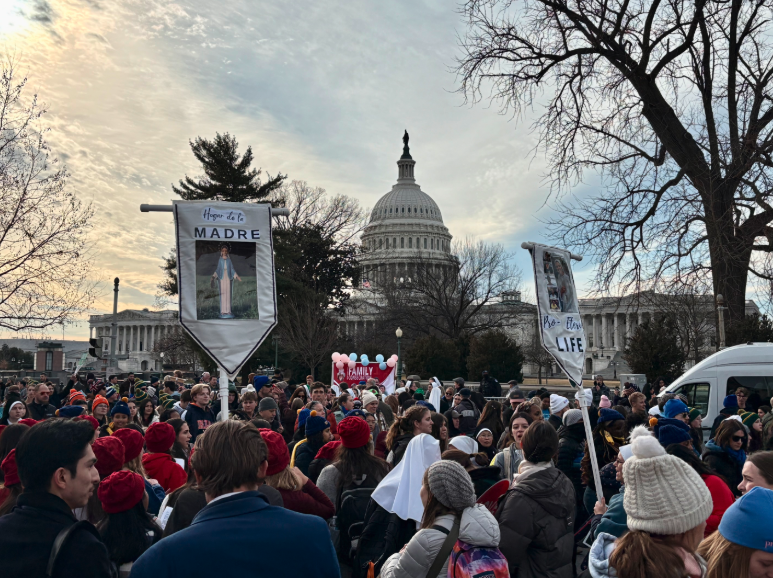
 March through Warsaw highlights pro-life messageThe procession moved through central Warsaw streets under the historic slogan marking Poland’s Christian heritage. As participants approached the Presidential Palace, Polish President Karol Nawrocki spoke, linking the march to broader social concerns.“I support initiatives that serve Poland, and this initiative certainly serves Poland,” he said. “It is also a response to the deep demographic crisis. Today, the answer to many Polish problems lies precisely in Polish families, in our identity, in remembering where we come from and where we are going.”Organizers said the march was intended not only as a demonstration of pro-life conviction but also as a broader reflection on national identity and social cohesion.A prominent symbol carried during the march was a copy of the icon of Our Lady of Częstochowa, which has been traveling internationally for 14 years as part of the From Ocean to Ocean pilgrimage in defense of life. The icon has traveled more than 220,000 kilometers (almost 137,000 miles) and visited 32 countries across five continents.
 
 Participants carry an icon of Our Lady of Częstochowa. | Credit: Tomasz Daniluk/Ordo Iuris
 
 Shifting abortion attitudes among younger PolesThe National March for Life is organized by the St. Benedict Foundation alongside dozens of pro-life groups from across Poland and takes place under the honorary patronage of the Polish Episcopal Conference.Patrycja Michońska-Dynek, director of the Press Center of the Archdiocese of Warsaw, told EWTN News that there are shifting public attitudes toward abortion in Poland, including growing societal acceptance and increased calls for liberalization, attributing these changes to secularization, cultural pressures, and differing interpretations of freedom.Michońska-Dynek also observed that while pro-life values remain important in Polish society, younger generations often approach the issue with more nuanced perspectives, particularly in complex or exceptional situations. Fostering a “culture of life” must include practical support for families, such as assistance for single mothers and couples in crisis, Michońska-Dynek said.
 
 Lidia, a participant at the National March for Life. | Credit: Tomasz Daniluk/Ordo Iuris
 
 Not a single-issue agendaLidia Sankowska-Grabczuk, one of the organizers of the National March for Life, told EWTN News that the pro-life movement in Poland extends beyond a single-issue focus on abortion.“In a nutshell, the pro-life movement is [often] the anti-abortion movement. In our view… it’s a bit different. We don’t reduce it to a single-issue agenda,” she said, warning that such a narrow framing “strips it of its true meaning.” While protecting unborn life remains central, she described it as part of a broader vision rooted in what she called “the public voice of Polish Christianity.”She outlined three core pillars underpinning the movement. The first is “respect for life,” encompassing not only the unborn but also solidarity with the elderly, families, and those in need. The second is the family as society’s foundation, grounded in the traditional understanding of marriage and its role in Poland’s social stability. The third pillar is “a state serving the common good,” reflecting a view of politics as service and a call for greater social solidarity.
 
 March for Life in Warsaw commemorates 1,060 years of Christianity in Poland. | Credit: Tomasz Daniluk/Ordo Iuris
 
 Sankowska-Grabczuk also discussed the importance of Poland’s historical and Christian identity in shaping the movement. She noted that recent marches have intentionally marked major national milestones, including the 1,000th anniversary of Poland’s first royal coronation in 2025.These commemorations, she said, highlight how the movement sees its mission as inseparable from Poland’s historical development, where Christianity has long informed both national identity and social values.Pro-life voices and public participationAmong international participants was Tonio Borg, president of the European Federation One of Us. He urged participants to remain steadfast in their convictions despite criticism or public pressure. “Do not be afraid of being slandered and ridiculed because you seek to protect life from the moment of conception,” he said, encouraging continued public engagement and advocacy. He also called on supporters to make their voices heard in the public sphere, stressing the importance of influencing lawmakers and demonstrating that “the unborn child is one of us.”
 
 Paula, a participant at the National March for Life in Poland. | Credit: Tomasz Daniluk/Ordo Iuris
 
 Marcin Perłowski, director of the Centre for Life and Family, said participants gathered at the march out of a shared conviction that “human life begins at conception” and must be defended. He stated that the National March for Life serves as a public demonstration of that belief, describing it as a stand “against all those who raise a hand against unborn children.”Pro-life activist Emilia Mędrzecka told EWTN News that her position is grounded in a belief in universal human dignity. “Children in the womb are as human as we are… they are more dependent and need time to grow,” she said while adding that the march reflected a strong presence of families, young people, and older generations united in support of life.
 
 Polish president Karol Nawrocki walks among participants at the National March for Life in Poland. | Credit: Tomasz Daniluk/Ordo Iuris
 
 While official attendance figures have not been released, estimates provided to EWTN News suggested more than 10,000 people participated, with organizers placing peak attendance between 25,000 and 30,000.

March for Life in Warsaw commemorates 1,060 years of Christianity in Poland #Catholic Thousands of people gathered in Poland’s capital on April 19 for the National March for Life, a large public demonstration organized under the slogan “Faith and Fidelity 1966–2026,” commemorating the 1,060th anniversary of the Christianization of Poland. The event combined religious observance, civic participation, and pro-life advocacy, drawing families, clergy, activists, and public figures to central Warsaw. The day began with Mass celebrated in two of the cityʼs major churches. Mass is celebrated at the Archcathedral Basilica of the Martyrdom of St. John the Baptist in Warsaw, Poland, on April 19, 2026. | Credit: Tomasz Daniluk/Ordo Iuris In the Archcathedral Basilica of St. John the Baptist, Bishop Piotr Jarecki presided over the liturgy, while Bishop Tomasz Sztajerwald celebrated Mass at the Cathedral of St. Michael the Archangel and St. Florian in Warsaw-Praga.Participants later gathered at Castle Square, where the march officially began. Organizers described the event as a public expression of support for life and family, rooted in Poland’s Christian tradition. Metropolitan Archbishop Adrian Galbas of Warsaw encouraged participation ahead of the event, framing it as a testimony to human dignity. “We want to testify that we are lovers of life. Bring your family along! Life triumphs over every death,” he declared. Church leaders join Poland’s President Karol Nawrocki and other dignitaries at the March for Life in Warsaw on April 19, 2026. | Credit: Tomasz Daniluk/Ordo lures March through Warsaw highlights pro-life messageThe procession moved through central Warsaw streets under the historic slogan marking Poland’s Christian heritage. As participants approached the Presidential Palace, Polish President Karol Nawrocki spoke, linking the march to broader social concerns.“I support initiatives that serve Poland, and this initiative certainly serves Poland,” he said. “It is also a response to the deep demographic crisis. Today, the answer to many Polish problems lies precisely in Polish families, in our identity, in remembering where we come from and where we are going.”Organizers said the march was intended not only as a demonstration of pro-life conviction but also as a broader reflection on national identity and social cohesion.A prominent symbol carried during the march was a copy of the icon of Our Lady of Częstochowa, which has been traveling internationally for 14 years as part of the From Ocean to Ocean pilgrimage in defense of life. The icon has traveled more than 220,000 kilometers (almost 137,000 miles) and visited 32 countries across five continents. Participants carry an icon of Our Lady of Częstochowa. | Credit: Tomasz Daniluk/Ordo Iuris Shifting abortion attitudes among younger PolesThe National March for Life is organized by the St. Benedict Foundation alongside dozens of pro-life groups from across Poland and takes place under the honorary patronage of the Polish Episcopal Conference.Patrycja Michońska-Dynek, director of the Press Center of the Archdiocese of Warsaw, told EWTN News that there are shifting public attitudes toward abortion in Poland, including growing societal acceptance and increased calls for liberalization, attributing these changes to secularization, cultural pressures, and differing interpretations of freedom.Michońska-Dynek also observed that while pro-life values remain important in Polish society, younger generations often approach the issue with more nuanced perspectives, particularly in complex or exceptional situations. Fostering a “culture of life” must include practical support for families, such as assistance for single mothers and couples in crisis, Michońska-Dynek said. Lidia, a participant at the National March for Life. | Credit: Tomasz Daniluk/Ordo Iuris Not a single-issue agendaLidia Sankowska-Grabczuk, one of the organizers of the National March for Life, told EWTN News that the pro-life movement in Poland extends beyond a single-issue focus on abortion.“In a nutshell, the pro-life movement is [often] the anti-abortion movement. In our view… it’s a bit different. We don’t reduce it to a single-issue agenda,” she said, warning that such a narrow framing “strips it of its true meaning.” While protecting unborn life remains central, she described it as part of a broader vision rooted in what she called “the public voice of Polish Christianity.”She outlined three core pillars underpinning the movement. The first is “respect for life,” encompassing not only the unborn but also solidarity with the elderly, families, and those in need. The second is the family as society’s foundation, grounded in the traditional understanding of marriage and its role in Poland’s social stability. The third pillar is “a state serving the common good,” reflecting a view of politics as service and a call for greater social solidarity. March for Life in Warsaw commemorates 1,060 years of Christianity in Poland. | Credit: Tomasz Daniluk/Ordo Iuris Sankowska-Grabczuk also discussed the importance of Poland’s historical and Christian identity in shaping the movement. She noted that recent marches have intentionally marked major national milestones, including the 1,000th anniversary of Poland’s first royal coronation in 2025.These commemorations, she said, highlight how the movement sees its mission as inseparable from Poland’s historical development, where Christianity has long informed both national identity and social values.Pro-life voices and public participationAmong international participants was Tonio Borg, president of the European Federation One of Us. He urged participants to remain steadfast in their convictions despite criticism or public pressure. “Do not be afraid of being slandered and ridiculed because you seek to protect life from the moment of conception,” he said, encouraging continued public engagement and advocacy. He also called on supporters to make their voices heard in the public sphere, stressing the importance of influencing lawmakers and demonstrating that “the unborn child is one of us.” Paula, a participant at the National March for Life in Poland. | Credit: Tomasz Daniluk/Ordo Iuris Marcin Perłowski, director of the Centre for Life and Family, said participants gathered at the march out of a shared conviction that “human life begins at conception” and must be defended. He stated that the National March for Life serves as a public demonstration of that belief, describing it as a stand “against all those who raise a hand against unborn children.”Pro-life activist Emilia Mędrzecka told EWTN News that her position is grounded in a belief in universal human dignity. “Children in the womb are as human as we are… they are more dependent and need time to grow,” she said while adding that the march reflected a strong presence of families, young people, and older generations united in support of life. Polish president Karol Nawrocki walks among participants at the National March for Life in Poland. | Credit: Tomasz Daniluk/Ordo Iuris While official attendance figures have not been released, estimates provided to EWTN News suggested more than 10,000 people participated, with organizers placing peak attendance between 25,000 and 30,000.

Recent marches in Poland have intentionally marked major national milestones, including the 1,000th anniversary of Poland’s first royal coronation in 2025.

Read More
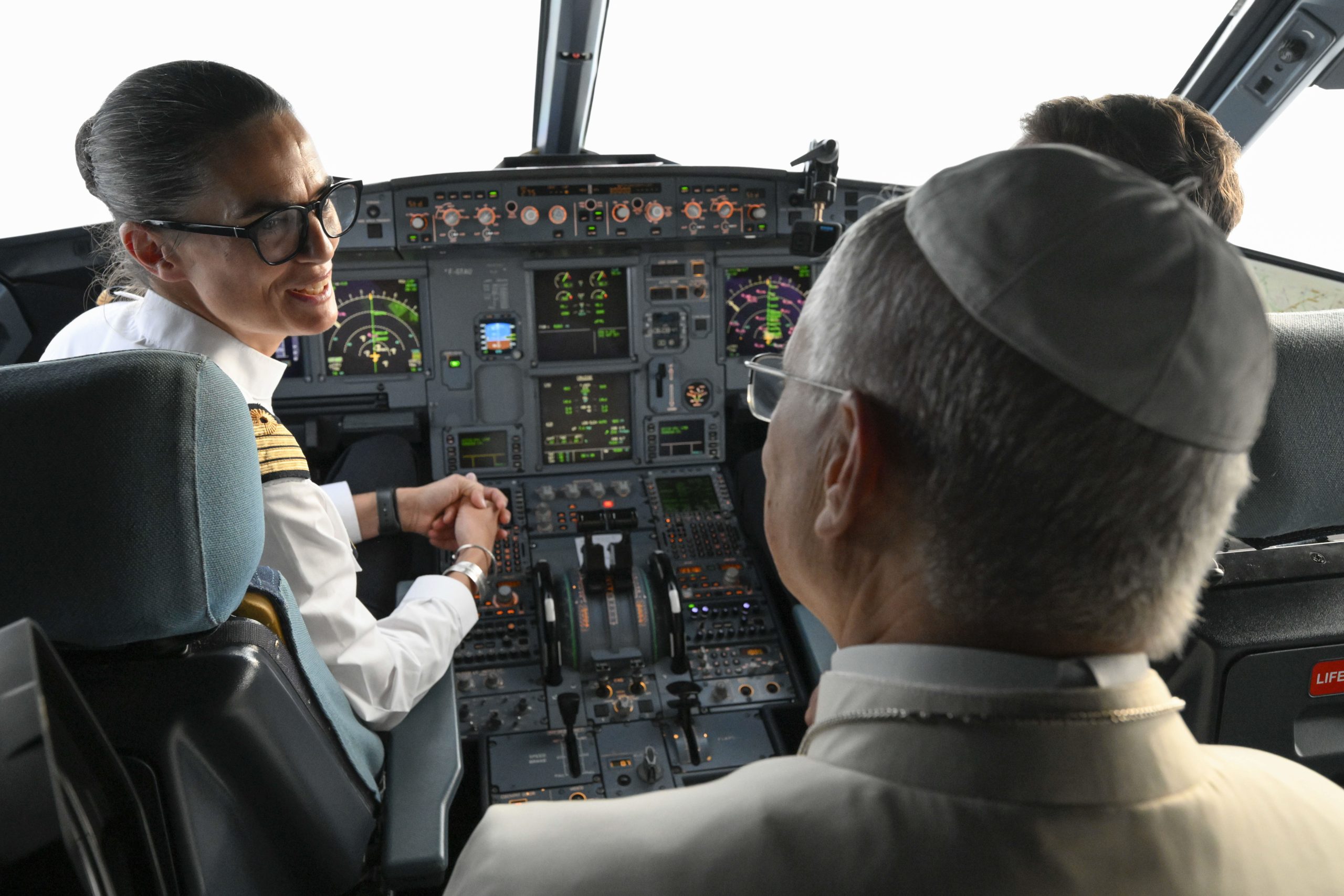
Pope Leo XIV says debate with Trump is ‘not in my interest at all’ #Catholic ABOARD THE PAPAL PLANE — Pope Leo XIV arrived in Angola after a two-and-a-half-hour flight from Cameroon on April 18, using the short journey to reject suggestions that his recent remarks about war were aimed at U.S. President Donald Trump while reflecting on the pastoral focus of his African trip.In a brief in-flight press conference with journalists, the pope addressed the interpretation of some of his recent speeches as a response to criticism from Trump, who had accused him of weakness in foreign policy.“[T]hereʼs been a certain narrative that has not been accurate in all of its aspects, but because of the political situation created when on the first day of the trip, the President of the United States made some comments about myself,” the pope said.“Much of what has been written since then has been more commentary on commentary, trying to interpret what has been said.”He pointed in particular to his address at the April 16 prayer meeting for peace in Cameroon.“Just one little example, the talk that I gave at the prayer meeting for peace a couple days ago was prepared two weeks ago, well before the president ever commented on myself and on the message of peace that I am promoting,” he said.“And yet, as it happens, it was looked at as if I was trying to debate again the president, which is not in my interest at all.”Leo XIV said he intends instead to continue proclaiming the Gospel and promoting peace.“So we go on the journey, we continue proclaiming the Gospel message,” he said.He added that the liturgies during the trip have highlighted what it means to follow Christ, promote fraternity, and seek justice and peace.The pope also said the broader African journey has been shaped by themes that emerged at the start of the trip in Algeria, especially the figure of St. Augustine.“I was personally very pleased, as you know, we began the trip in Algeria with the theme of Saint Augustine, and yesterday at the Catholic University, we had the blessing of that beautiful monument that they had prepared with a map of Africa and Saint Augustine at the center,” he said.“And so in one sense, it expresses part of what this trip is about.”Leo XIV emphasized that his primary purpose in Africa is to accompany Catholics.“And I primarily come to Africa as pastor, as the head of the Catholic Church, to be with, to celebrate with, to encourage and accompany all of the Catholics throughout Africa.”He also referred to a meeting with imams in Cameroon, describing it in general terms as part of the Church’s continuing commitment to interreligious dialogue, understanding, and peace-building.He concluded his main remarks by thanking journalists for their work and expressing hope that God would continue to bless the journey.Responding later to a French journalist, Leo XIV expressed gratitude for the reception he received in Cameroon.“I would just like to thank everyone in Cameroon for the wonderful welcome, the great enthusiasm, the joy of the people,” he said.“It was absolutely fantastic, the experience … how wonderful it is to experience what it means to be a follower of Jesus Christ and to celebrate our faith together.”The pope’s flight took him from Yaoundé to Luanda, crossing over Cameroon, Equatorial Guinea, Gabon, the Democratic Republic of Congo, and Angola. Angola is the third and penultimate stop of his African journey.The Catholic Church has longstanding ties with Angola. Formal relations date back centuries, including the 1608 appointment of Antonio Manuel Nyunda as the first ambassador to Rome from the then-Kingdom of Kongo. More recently, in 2019, the Holy See and Angola signed an agreement recognizing the legal personality of the Catholic Church and defining its property rights.This story was first published by ACI Stampa, the Italian-language sister service of EWTN News. It has been translated and adapted by EWTN News English.

Pope Leo XIV says debate with Trump is ‘not in my interest at all’ #Catholic ABOARD THE PAPAL PLANE — Pope Leo XIV arrived in Angola after a two-and-a-half-hour flight from Cameroon on April 18, using the short journey to reject suggestions that his recent remarks about war were aimed at U.S. President Donald Trump while reflecting on the pastoral focus of his African trip.In a brief in-flight press conference with journalists, the pope addressed the interpretation of some of his recent speeches as a response to criticism from Trump, who had accused him of weakness in foreign policy.“[T]hereʼs been a certain narrative that has not been accurate in all of its aspects, but because of the political situation created when on the first day of the trip, the President of the United States made some comments about myself,” the pope said.“Much of what has been written since then has been more commentary on commentary, trying to interpret what has been said.”He pointed in particular to his address at the April 16 prayer meeting for peace in Cameroon.“Just one little example, the talk that I gave at the prayer meeting for peace a couple days ago was prepared two weeks ago, well before the president ever commented on myself and on the message of peace that I am promoting,” he said.“And yet, as it happens, it was looked at as if I was trying to debate again the president, which is not in my interest at all.”Leo XIV said he intends instead to continue proclaiming the Gospel and promoting peace.“So we go on the journey, we continue proclaiming the Gospel message,” he said.He added that the liturgies during the trip have highlighted what it means to follow Christ, promote fraternity, and seek justice and peace.The pope also said the broader African journey has been shaped by themes that emerged at the start of the trip in Algeria, especially the figure of St. Augustine.“I was personally very pleased, as you know, we began the trip in Algeria with the theme of Saint Augustine, and yesterday at the Catholic University, we had the blessing of that beautiful monument that they had prepared with a map of Africa and Saint Augustine at the center,” he said.“And so in one sense, it expresses part of what this trip is about.”Leo XIV emphasized that his primary purpose in Africa is to accompany Catholics.“And I primarily come to Africa as pastor, as the head of the Catholic Church, to be with, to celebrate with, to encourage and accompany all of the Catholics throughout Africa.”He also referred to a meeting with imams in Cameroon, describing it in general terms as part of the Church’s continuing commitment to interreligious dialogue, understanding, and peace-building.He concluded his main remarks by thanking journalists for their work and expressing hope that God would continue to bless the journey.Responding later to a French journalist, Leo XIV expressed gratitude for the reception he received in Cameroon.“I would just like to thank everyone in Cameroon for the wonderful welcome, the great enthusiasm, the joy of the people,” he said.“It was absolutely fantastic, the experience … how wonderful it is to experience what it means to be a follower of Jesus Christ and to celebrate our faith together.”The pope’s flight took him from Yaoundé to Luanda, crossing over Cameroon, Equatorial Guinea, Gabon, the Democratic Republic of Congo, and Angola. Angola is the third and penultimate stop of his African journey.The Catholic Church has longstanding ties with Angola. Formal relations date back centuries, including the 1608 appointment of Antonio Manuel Nyunda as the first ambassador to Rome from the then-Kingdom of Kongo. More recently, in 2019, the Holy See and Angola signed an agreement recognizing the legal personality of the Catholic Church and defining its property rights.This story was first published by ACI Stampa, the Italian-language sister service of EWTN News. It has been translated and adapted by EWTN News English.

En route from Cameroon to Angola, the pope said his mission in Africa is pastoral and rejected suggestions that his recent remarks were aimed at President Donald Trump.

Read More
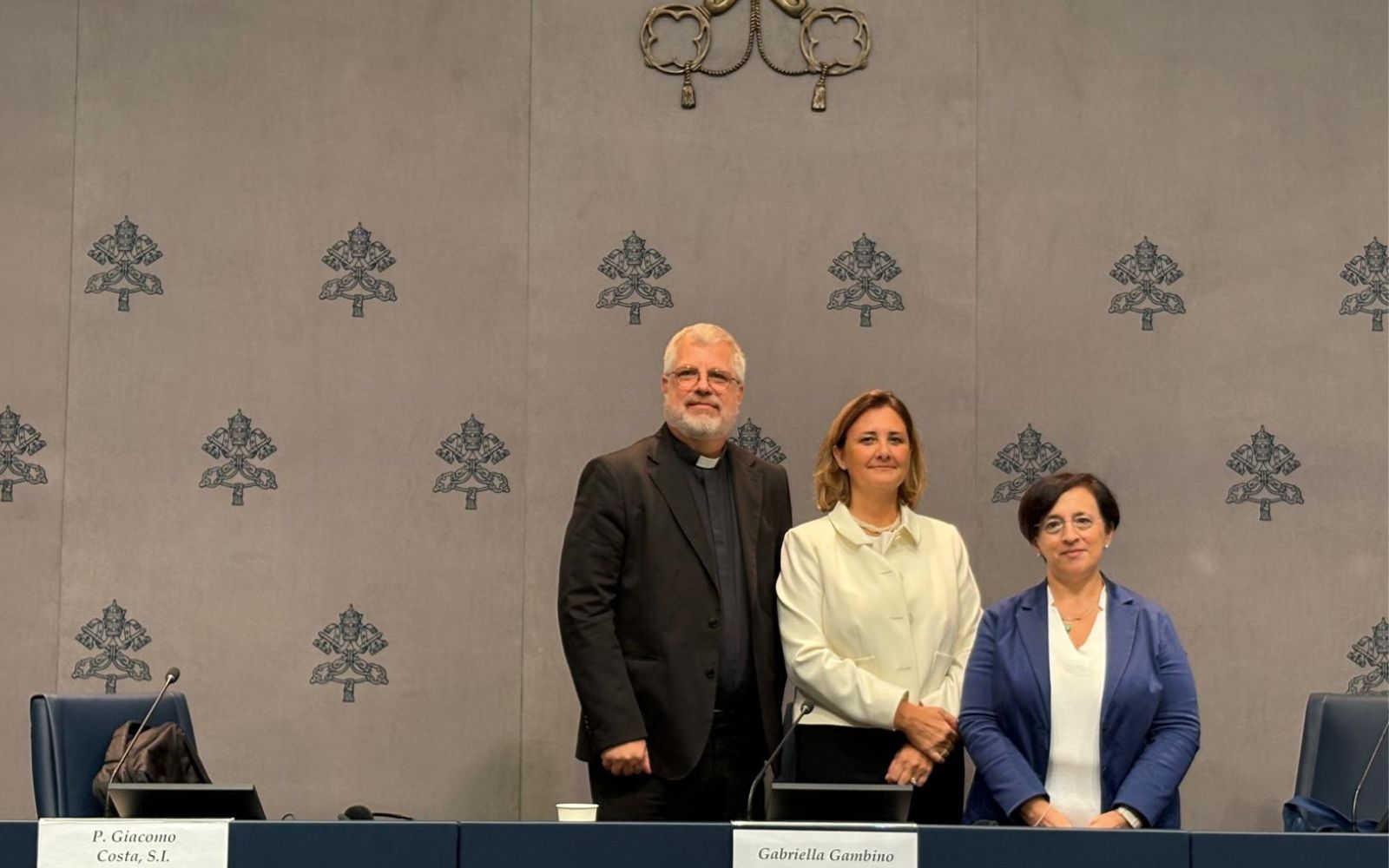
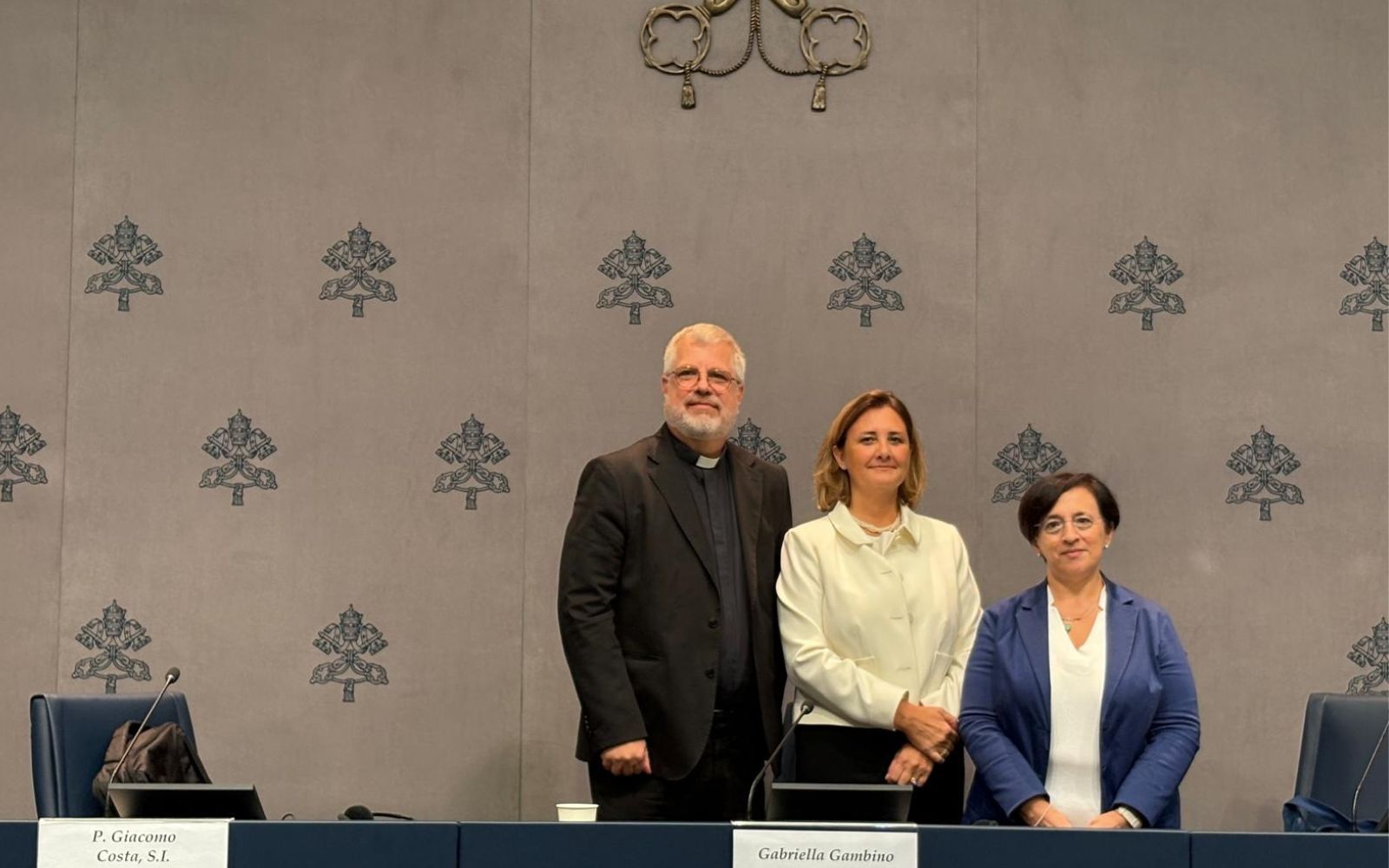
U.S. Embassy to the Vatican: Nigerian Christians are being targeted #Catholic ROME — It is “intolerable” that Christians are being targeted for persecution in Nigeria, said U.S. Ambassador to the Holy See Brian Burch during an event in Rome on Friday.The group Solidarity with the Persecuted Church (SPC) and the Embassy of the United States to the Holy See organized the April 17 conference at the embassy on threats to religious freedom in Nigeria.Burch spoke to EWTN News on the sidelines about the stance of the U.S. on religious violence in Nigeria. He described the current situation as a “conflict between radical Islamic groups and Christians because of their faith.”“The United States is the greatest friend of religious liberty,” Burch said. “The purpose of this event is to call attention to the plight of Christians who are being targeted and killed in Nigeria. Unfortunately, there are extremist Islamic groups that have been targeting Christians specifically in their churches and their homes, and the scale and size of the persecution of Christians there is intolerable.”Asked about the denial by some Nigerian government officials that Christians specifically are being targeted, Burch insisted that the current violence against Christians is alarming, citing U.S. President Donald Trump, who designated Nigeria as a country of particular concern in 2025.“The president has said that Christians face an existential crisis in Nigeria, and thanks to his leadership, he is now acting to bring an end to this. We have called on the Nigerian government to take necessary steps to protect Christians, and the United States government is now working in partnership with the Nigerian government to assist them in doing just that,” he said.Steven Wagner, president of SPC, underscored the importance of Nigeria for Christianity in Africa and the need for the Holy See to be involved in raising awareness.“As Nigeria goes, so goes Africa. More Christians are martyred for their faith in Nigeria than in any other country on earth. There is a huge crisis of internally displaced persons. We are calling on the Vatican to increase public awareness of the problem and to continue to encourage the government of Nigeria to make progress in protecting its people,” Wagner said.Burch responds to Trump’s comments on the popeIn his opening remarks at the conference, Burch commented for the first time on the recent tensions between Trump and Pope Leo XIV. He emphasized their difference in approach to armed conflicts and their shared goal of eliminating evil.“In recent days, President Trump and Pope Leo have exchanged, shall we say, sharp words. We must not pretend there is no disagreement. But both men are driven by an unshakable belief in protecting the innocent. One leads with the sword and shield of American power, the other with the cross of sacrificial love. But both are saying in their own languages, ‘Evil must not triumph and innocence must not be abandoned,’” Burch said.Papal trip in AfricaThe pontiff is currently on his first apostolic journey to Africa — visiting Algeria, Cameroon, Angola, and Equatorial Guinea.Archbishop Fortunatus Nwachukwu, secretary of the Dicastery for Evangelization and a presenter at the conference, described the trip as a moment of profound unity for all Africans.“This is Africa, and much of the divisions, according to countries in Africa, are artificial divisions that were imposed on the continent,” Nwachukwu told EWTN News. “Africans quite often feel united even beyond the boundaries. So the popeʼs message to these churches and these populations will also be a message to the population in Nigeria and to the Church in Nigeria.”Many of the issues the pope is addressing on his trip “are shared in common in Nigeria,” Burch added. The Holy See and the United States “certainly share this deep, fundamental commitment to religious liberty.”

U.S. Embassy to the Vatican: Nigerian Christians are being targeted #Catholic ROME — It is “intolerable” that Christians are being targeted for persecution in Nigeria, said U.S. Ambassador to the Holy See Brian Burch during an event in Rome on Friday.The group Solidarity with the Persecuted Church (SPC) and the Embassy of the United States to the Holy See organized the April 17 conference at the embassy on threats to religious freedom in Nigeria.Burch spoke to EWTN News on the sidelines about the stance of the U.S. on religious violence in Nigeria. He described the current situation as a “conflict between radical Islamic groups and Christians because of their faith.”“The United States is the greatest friend of religious liberty,” Burch said. “The purpose of this event is to call attention to the plight of Christians who are being targeted and killed in Nigeria. Unfortunately, there are extremist Islamic groups that have been targeting Christians specifically in their churches and their homes, and the scale and size of the persecution of Christians there is intolerable.”Asked about the denial by some Nigerian government officials that Christians specifically are being targeted, Burch insisted that the current violence against Christians is alarming, citing U.S. President Donald Trump, who designated Nigeria as a country of particular concern in 2025.“The president has said that Christians face an existential crisis in Nigeria, and thanks to his leadership, he is now acting to bring an end to this. We have called on the Nigerian government to take necessary steps to protect Christians, and the United States government is now working in partnership with the Nigerian government to assist them in doing just that,” he said.Steven Wagner, president of SPC, underscored the importance of Nigeria for Christianity in Africa and the need for the Holy See to be involved in raising awareness.“As Nigeria goes, so goes Africa. More Christians are martyred for their faith in Nigeria than in any other country on earth. There is a huge crisis of internally displaced persons. We are calling on the Vatican to increase public awareness of the problem and to continue to encourage the government of Nigeria to make progress in protecting its people,” Wagner said.Burch responds to Trump’s comments on the popeIn his opening remarks at the conference, Burch commented for the first time on the recent tensions between Trump and Pope Leo XIV. He emphasized their difference in approach to armed conflicts and their shared goal of eliminating evil.“In recent days, President Trump and Pope Leo have exchanged, shall we say, sharp words. We must not pretend there is no disagreement. But both men are driven by an unshakable belief in protecting the innocent. One leads with the sword and shield of American power, the other with the cross of sacrificial love. But both are saying in their own languages, ‘Evil must not triumph and innocence must not be abandoned,’” Burch said.Papal trip in AfricaThe pontiff is currently on his first apostolic journey to Africa — visiting Algeria, Cameroon, Angola, and Equatorial Guinea.Archbishop Fortunatus Nwachukwu, secretary of the Dicastery for Evangelization and a presenter at the conference, described the trip as a moment of profound unity for all Africans.“This is Africa, and much of the divisions, according to countries in Africa, are artificial divisions that were imposed on the continent,” Nwachukwu told EWTN News. “Africans quite often feel united even beyond the boundaries. So the popeʼs message to these churches and these populations will also be a message to the population in Nigeria and to the Church in Nigeria.”Many of the issues the pope is addressing on his trip “are shared in common in Nigeria,” Burch added. The Holy See and the United States “certainly share this deep, fundamental commitment to religious liberty.”

Ambassador Brian Burch described the situation in Nigeria as a “conflict between radical Islamic groups and Christians because of their faith.”

Read More
Trump’s comments on Pope Leo called ‘disrespectful’ as Americans react #Catholic Catholic bishops and U.S. elected officials have publicly criticized the president’s statements about Pope Leo XIV.President Donald Trump called Leo “weak on crime and terrible for foreign policy” in a lengthy social media post April 12 that drew response from the United States Conference of Catholic Bishops (USCCB) and elected officials.Bishop Robert Barron of the Diocese of Winona-Rochester, Minnesota, called Trump’s attack on Pope Leo XIV “disrespectful." Barron, who serves on Trump’s Religious Liberty Commission, said in a post on X that Trump’s comments “were entirely inappropriate and disrespectful” and “I think the president owes the pope an apology.”“[Trump’s comments] don’t contribute at all to a constructive conversation,” he said. “It is the pope’s prerogative to articulate Catholic doctrine and the principles that govern the moral life. In regard to the concrete application of those principles, people of goodwill can and do disagree.”Barron encouraged Catholic Trump officials to arrange a meeting with Vatican officials “so that a real dialogue can take place,” saying “this is far preferable to the statements on social media.”Bishop Michael Burbidge of Arlington, Virginia, said in a social media post: “Along with Archbishop [Paul] Coakley, president of the USCCB, and my brother bishops, I was disheartened by recent comments from President Trump concerning Pope Leo XIV and the Church. I pray that civility and respect are fully restored as together, with God’s grace, we work for peace and harmony among all people. May we also be united in our prayer for the end of war and violence so that Christ’s peace reigns throughout the world and in our hearts.”Palm Beach, Florida, Bishop Manuel de Jesús Rodríguez posted on X: “The @DiocesePB stands firm with our Holy Father, @Pontifex, and strongly rejects the disrespectful and violent attacks that Donald J. Trump has directed against the Holy Father.”Buffalo, New York, Bishop Michael Fisher posted on X: “This is not about politics but the very cause of humanity.”The Catholic Association's Ashley McGuire said in a statement: “The Catholic Church does not in any way fit into American political boxes. It will always prioritize the protection of innocent life in all its stages as well as the cause of the poor and marginalized. Insulting the pope, and all Catholics by extension, with the hope of making the Church bend to American political agendas, is discouraging and counterproductive.” McGuire added: “We pray that President Trump apologizes to Pope Leo.”U.S. officials' reaction beginsRepublican Vice President JD Vance, who is Catholic, has not yet commented on the matter, nor has Secretary of State Marco Rubio, also a Catholic.Sen. Mark Kelly, D-Arizona, who is Catholic, posted on X that “I find it abhorrent that the president of the United States would publicly attack the successor of St. Peter.”U.S. House Minority Leader Hakeem Jeffries said on X that Trump “shamefully attacked” the pope. Few Republican elected officials have spoken out.TweetDemocratic California Gov. Gavin Newsom posted on X: “Hey @GOP, you good with your guy directly attacking the pope now?”Rep. Lukas Schubert, a Republican Montana state lawmaker, disputed the presidentʼs statement that the pope is a “liberal person.”“Pope Leo is significantly further to the right than President Trump on abortion, gay marriage, and family values. Also he is more America First on the Iran War,” Schubert said.AI imageTrump also posted an AI-created image on Truth Social that appeared to portray himself as Jesus Christ, healing the sick, which led several Catholics to accuse the president of blasphemy.Edward Feser, a Catholic philosopher and professor at Pasadena City College, posted on X that Trump’s comments illustrate “how utter enslavement to the sin of pride makes a man unsuitable for the presidency.”“For all their faults, previous presidents had the visceral understanding of proper boundaries not to attack the vicar of Christ even when they disagreed with him,” he said.Feser quoted Daniel 11:36-37 in response to Trump’s AI image of himself as Christ, which reads: “And the king shall do according to his will; he shall exalt himself and magnify himself above every god, and shall speak astonishing things against the God of gods … He shall not give heed to any other god, for he shall magnify himself above all.”In reaction to the AI photo, Matt Fradd, the host of “Pints With Aquinas,“ urged Catholics to “offer a rosary today for Donald Trump and all blasphemers. … Seriously. Do it. I will too.”TweetRep. Shontel Brown, D-Ohio, did not directly reference Trumpʼs remarks about the pope but criticized the AI-created image on X: “There aren’t enough words to denounce how wrong this is.”The comments came after Leo criticized the Iran war and Trump’s rhetoric about targeting the entire civilization of Iran. Leo said in response to the post: “I have no fear neither of the Trump administration nor of speaking out loudly about the message of the Gospel.”Marjorie Taylor Greene, a former Republican congresswoman who was a strong ally of Trump before splitting with him on the Iran war and his handling of the Jeffrey Epstein files, posted on X that Trump “attacked the pope because the pope is rightly against Trump’s war in Iran and then he posted this picture of himself as if he is replacing Jesus.”“This comes after last week’s post of his evil tirade on Easter and then threatening to kill an entire civilization,” she said. “I completely denounce this and I’m praying against it!!!”‘Fuels division’Father Robert Sirico, the founder of the Acton Institute, said in a statement that Leo “has both the right and the duty to speak prophetically on matters of war and peace, the dignity of the human person, and the moral limits of force — even when his words discomfort political leaders.”He said Trump’s post does not “strengthen America’s moral standing but “merely fuels division.”Sirico also added that Catholics can disagree with popes on prudential judgments, such as foreign policy or crime, which he said are not infallible: “The Church herself teaches that such applications of principle admit of legitimate debate.”This story was updated at 11:50 a.m. ET on April 13, 2026, with comments from Buffalo, New York, Bishop Michael Fisher and The Catholic Associationʼs Ashley McGuire.

Trump’s comments on Pope Leo called ‘disrespectful’ as Americans react #Catholic Catholic bishops and U.S. elected officials have publicly criticized the president’s statements about Pope Leo XIV.President Donald Trump called Leo “weak on crime and terrible for foreign policy” in a lengthy social media post April 12 that drew response from the United States Conference of Catholic Bishops (USCCB) and elected officials.Bishop Robert Barron of the Diocese of Winona-Rochester, Minnesota, called Trump’s attack on Pope Leo XIV “disrespectful." Barron, who serves on Trump’s Religious Liberty Commission, said in a post on X that Trump’s comments “were entirely inappropriate and disrespectful” and “I think the president owes the pope an apology.”“[Trump’s comments] don’t contribute at all to a constructive conversation,” he said. “It is the pope’s prerogative to articulate Catholic doctrine and the principles that govern the moral life. In regard to the concrete application of those principles, people of goodwill can and do disagree.”Barron encouraged Catholic Trump officials to arrange a meeting with Vatican officials “so that a real dialogue can take place,” saying “this is far preferable to the statements on social media.”Bishop Michael Burbidge of Arlington, Virginia, said in a social media post: “Along with Archbishop [Paul] Coakley, president of the USCCB, and my brother bishops, I was disheartened by recent comments from President Trump concerning Pope Leo XIV and the Church. I pray that civility and respect are fully restored as together, with God’s grace, we work for peace and harmony among all people. May we also be united in our prayer for the end of war and violence so that Christ’s peace reigns throughout the world and in our hearts.”Palm Beach, Florida, Bishop Manuel de Jesús Rodríguez posted on X: “The @DiocesePB stands firm with our Holy Father, @Pontifex, and strongly rejects the disrespectful and violent attacks that Donald J. Trump has directed against the Holy Father.”Buffalo, New York, Bishop Michael Fisher posted on X: “This is not about politics but the very cause of humanity.”The Catholic Association's Ashley McGuire said in a statement: “The Catholic Church does not in any way fit into American political boxes. It will always prioritize the protection of innocent life in all its stages as well as the cause of the poor and marginalized. Insulting the pope, and all Catholics by extension, with the hope of making the Church bend to American political agendas, is discouraging and counterproductive.” McGuire added: “We pray that President Trump apologizes to Pope Leo.”U.S. officials' reaction beginsRepublican Vice President JD Vance, who is Catholic, has not yet commented on the matter, nor has Secretary of State Marco Rubio, also a Catholic.Sen. Mark Kelly, D-Arizona, who is Catholic, posted on X that “I find it abhorrent that the president of the United States would publicly attack the successor of St. Peter.”U.S. House Minority Leader Hakeem Jeffries said on X that Trump “shamefully attacked” the pope. Few Republican elected officials have spoken out.TweetDemocratic California Gov. Gavin Newsom posted on X: “Hey @GOP, you good with your guy directly attacking the pope now?”Rep. Lukas Schubert, a Republican Montana state lawmaker, disputed the presidentʼs statement that the pope is a “liberal person.”“Pope Leo is significantly further to the right than President Trump on abortion, gay marriage, and family values. Also he is more America First on the Iran War,” Schubert said.AI imageTrump also posted an AI-created image on Truth Social that appeared to portray himself as Jesus Christ, healing the sick, which led several Catholics to accuse the president of blasphemy.Edward Feser, a Catholic philosopher and professor at Pasadena City College, posted on X that Trump’s comments illustrate “how utter enslavement to the sin of pride makes a man unsuitable for the presidency.”“For all their faults, previous presidents had the visceral understanding of proper boundaries not to attack the vicar of Christ even when they disagreed with him,” he said.Feser quoted Daniel 11:36-37 in response to Trump’s AI image of himself as Christ, which reads: “And the king shall do according to his will; he shall exalt himself and magnify himself above every god, and shall speak astonishing things against the God of gods … He shall not give heed to any other god, for he shall magnify himself above all.”In reaction to the AI photo, Matt Fradd, the host of “Pints With Aquinas,“ urged Catholics to “offer a rosary today for Donald Trump and all blasphemers. … Seriously. Do it. I will too.”TweetRep. Shontel Brown, D-Ohio, did not directly reference Trumpʼs remarks about the pope but criticized the AI-created image on X: “There aren’t enough words to denounce how wrong this is.”The comments came after Leo criticized the Iran war and Trump’s rhetoric about targeting the entire civilization of Iran. Leo said in response to the post: “I have no fear neither of the Trump administration nor of speaking out loudly about the message of the Gospel.”Marjorie Taylor Greene, a former Republican congresswoman who was a strong ally of Trump before splitting with him on the Iran war and his handling of the Jeffrey Epstein files, posted on X that Trump “attacked the pope because the pope is rightly against Trump’s war in Iran and then he posted this picture of himself as if he is replacing Jesus.”“This comes after last week’s post of his evil tirade on Easter and then threatening to kill an entire civilization,” she said. “I completely denounce this and I’m praying against it!!!”‘Fuels division’Father Robert Sirico, the founder of the Acton Institute, said in a statement that Leo “has both the right and the duty to speak prophetically on matters of war and peace, the dignity of the human person, and the moral limits of force — even when his words discomfort political leaders.”He said Trump’s post does not “strengthen America’s moral standing but “merely fuels division.”Sirico also added that Catholics can disagree with popes on prudential judgments, such as foreign policy or crime, which he said are not infallible: “The Church herself teaches that such applications of principle admit of legitimate debate.”This story was updated at 11:50 a.m. ET on April 13, 2026, with comments from Buffalo, New York, Bishop Michael Fisher and The Catholic Associationʼs Ashley McGuire.

President Donald Trump called Leo “weak on crime and terrible for foreign policy” in a lengthy social media post April 12 that drew response from U.S. bishops and elected officials.

Read More
Pope Leo XIV in Algeria: ‘I am here among you as a pilgrim of peace’ #Catholic ALGIERS, Algeria — Pope Leo XIV on Monday presented himself to Algeria’s diplomatic corps and civil society as “a pilgrim of peace,” urging a more just international order, warning against exclusion and inequality, and praising those who refuse to be “blinded by power or wealth.”Peace remained the central theme of the pope’s first day in Algeria, following his earlier stop at the Martyrs’ Memorial, where he delivered an appeal for peace and reconciliation.Speaking in French at the Djamaa el Djazair Conference Center, Leo recalled his previous visits to Algeria in 2001 and 2013 to Annaba, the ancient see of St. Augustine, whose spiritual legacy has long shaped the Augustinian order to which the pope belongs.“I am here among you as a pilgrim of peace, eager to meet the noble Algerian people,” the pope said. “We are brothers and sisters, for we have the same Father in heaven.”Leo said the “profound religious sense of the Algerian people” fosters “a culture of encounter and reconciliation,” adding that his visit also seeks to be a sign of that spirit.“In a world full of conflicts and misunderstandings, let us meet and strive for mutual understanding, recognizing that we are one family!” he said. “Today, the simplicity of this awareness is the key to opening many doors that are closed.”Addressing an audience of about 1,400 people from civil society and the diplomatic corps, the pope praised the resilience of the Algerian people, saying they had never been defeated by their trials because of their spirit of solidarity, hospitality, and community.“They are the truly strong ones, to whom the future belongs: those who do not allow themselves to be blinded by power or wealth, and those who refuse to sacrifice the dignity of their fellow citizens for the sake of personal or collective gain,” he said.Leo also highlighted the Algerian understanding of hospitality and almsgiving, reflected in the word “sadaka,” which he noted can also mean justice.“The one who accumulates wealth and remains indifferent to others is unjust,” the pope said, calling this vision of justice both “simple and radical” because it recognizes the image of God in others. “Indeed, a religion without mercy and a society without solidarity are a scandal in God’s eyes.”At the same time, he warned that many societies that consider themselves advanced are falling ever deeper into inequality and exclusion, while “people and organizations that dominate others destroy the world.” He said Africa knows this reality well and suggested that Algeria’s historical experience gives it a critical perspective on global power balances.“If you are able to engage in dialogue regarding the concerns of all and show solidarity with the sufferings of so many countries near and far, then you will be able to contribute to both envisioning and bringing about greater justice among peoples,” Leo said.He added that this task is especially urgent “in the face of continuous violations of international law and neocolonial tendencies.”Drawing on the teaching of Benedict XVI and Pope Francis, Leo called on Algeria’s authorities not to fear a broader social participation by those on the margins.“I therefore urge those of you who hold positions of authority in this country not to fear this outlook but to promote a vibrant, dynamic, and free civil society, in which young people in particular are recognized as capable of helping to broaden the horizon of hope for all,” he said.“The true strength of a nation lies in the cooperation of everyone in pursuing the common good,” he continued. “Authorities are called not to dominate but to serve the people and foster their development.”The pope also pointed to Algeria’s unique role as “a bridge between North and South, and between East and West,” describing the Mediterranean and the Sahara as geographical and spiritual crossroads rich with human and cultural meaning.“Woe to us if we turn them into graveyards where hope also dies!” he said. “Let us multiply oases of peace; let us denounce and remove the causes of despair; and let us oppose those who profit from the misfortune of others!”“For illicit are the gains of those who exploit human life, whose dignity is inviolable,” he added.Leo then broadened his reflection to the place of religion in modern society, noting that Algeria, like much of the world, experiences tensions between religious sensibility and modern life. He warned against both fundamentalism and secularization when they distort the true sense of God and human dignity.“Religious symbols and words can become, on the one hand, blasphemous languages of violence and oppression, or on the other, empty signs in the immense marketplace of consumption that does not satisfy us,” he said.Still, the pope insisted that such polarization should not lead to despair.“We must educate people in critical thinking and freedom, in listening and dialogue, and in the trust that leads us to recognize in those who are different fellow travelers and not threats,” he said. “We must work toward the healing of memory and reconciliation among former adversaries.”In his introduction, Algerian President Abdelmadjid Tebboune called Leo’s presence the first visit of a pope to Algeria and said it gave the occasion “a unique resonance.” He invoked both St. Augustine and Emir Abdelkader as enduring models at a time of accelerating change and weakening moral values.Tebboune also praised the pope’s moral authority and his support for social justice while reaffirming Algeria’s commitment to working with the Holy Father to promote dialogue, coexistence, and cooperation over division and conflict.This story was first published by ACI Stampa, the Italian-language sister service of EWTN News. It has been translated and adapted by EWTN News English.

Pope Leo XIV in Algeria: ‘I am here among you as a pilgrim of peace’ #Catholic ALGIERS, Algeria — Pope Leo XIV on Monday presented himself to Algeria’s diplomatic corps and civil society as “a pilgrim of peace,” urging a more just international order, warning against exclusion and inequality, and praising those who refuse to be “blinded by power or wealth.”Peace remained the central theme of the pope’s first day in Algeria, following his earlier stop at the Martyrs’ Memorial, where he delivered an appeal for peace and reconciliation.Speaking in French at the Djamaa el Djazair Conference Center, Leo recalled his previous visits to Algeria in 2001 and 2013 to Annaba, the ancient see of St. Augustine, whose spiritual legacy has long shaped the Augustinian order to which the pope belongs.“I am here among you as a pilgrim of peace, eager to meet the noble Algerian people,” the pope said. “We are brothers and sisters, for we have the same Father in heaven.”Leo said the “profound religious sense of the Algerian people” fosters “a culture of encounter and reconciliation,” adding that his visit also seeks to be a sign of that spirit.“In a world full of conflicts and misunderstandings, let us meet and strive for mutual understanding, recognizing that we are one family!” he said. “Today, the simplicity of this awareness is the key to opening many doors that are closed.”Addressing an audience of about 1,400 people from civil society and the diplomatic corps, the pope praised the resilience of the Algerian people, saying they had never been defeated by their trials because of their spirit of solidarity, hospitality, and community.“They are the truly strong ones, to whom the future belongs: those who do not allow themselves to be blinded by power or wealth, and those who refuse to sacrifice the dignity of their fellow citizens for the sake of personal or collective gain,” he said.Leo also highlighted the Algerian understanding of hospitality and almsgiving, reflected in the word “sadaka,” which he noted can also mean justice.“The one who accumulates wealth and remains indifferent to others is unjust,” the pope said, calling this vision of justice both “simple and radical” because it recognizes the image of God in others. “Indeed, a religion without mercy and a society without solidarity are a scandal in God’s eyes.”At the same time, he warned that many societies that consider themselves advanced are falling ever deeper into inequality and exclusion, while “people and organizations that dominate others destroy the world.” He said Africa knows this reality well and suggested that Algeria’s historical experience gives it a critical perspective on global power balances.“If you are able to engage in dialogue regarding the concerns of all and show solidarity with the sufferings of so many countries near and far, then you will be able to contribute to both envisioning and bringing about greater justice among peoples,” Leo said.He added that this task is especially urgent “in the face of continuous violations of international law and neocolonial tendencies.”Drawing on the teaching of Benedict XVI and Pope Francis, Leo called on Algeria’s authorities not to fear a broader social participation by those on the margins.“I therefore urge those of you who hold positions of authority in this country not to fear this outlook but to promote a vibrant, dynamic, and free civil society, in which young people in particular are recognized as capable of helping to broaden the horizon of hope for all,” he said.“The true strength of a nation lies in the cooperation of everyone in pursuing the common good,” he continued. “Authorities are called not to dominate but to serve the people and foster their development.”The pope also pointed to Algeria’s unique role as “a bridge between North and South, and between East and West,” describing the Mediterranean and the Sahara as geographical and spiritual crossroads rich with human and cultural meaning.“Woe to us if we turn them into graveyards where hope also dies!” he said. “Let us multiply oases of peace; let us denounce and remove the causes of despair; and let us oppose those who profit from the misfortune of others!”“For illicit are the gains of those who exploit human life, whose dignity is inviolable,” he added.Leo then broadened his reflection to the place of religion in modern society, noting that Algeria, like much of the world, experiences tensions between religious sensibility and modern life. He warned against both fundamentalism and secularization when they distort the true sense of God and human dignity.“Religious symbols and words can become, on the one hand, blasphemous languages of violence and oppression, or on the other, empty signs in the immense marketplace of consumption that does not satisfy us,” he said.Still, the pope insisted that such polarization should not lead to despair.“We must educate people in critical thinking and freedom, in listening and dialogue, and in the trust that leads us to recognize in those who are different fellow travelers and not threats,” he said. “We must work toward the healing of memory and reconciliation among former adversaries.”In his introduction, Algerian President Abdelmadjid Tebboune called Leo’s presence the first visit of a pope to Algeria and said it gave the occasion “a unique resonance.” He invoked both St. Augustine and Emir Abdelkader as enduring models at a time of accelerating change and weakening moral values.Tebboune also praised the pope’s moral authority and his support for social justice while reaffirming Algeria’s commitment to working with the Holy Father to promote dialogue, coexistence, and cooperation over division and conflict.This story was first published by ACI Stampa, the Italian-language sister service of EWTN News. It has been translated and adapted by EWTN News English.

The pontiff called for a world order that does not exclude the vulnerable and urged leaders to serve the common good.

Read More
Why Pakistan’s bishops doubt government will act on minor’s forced marriage #Catholic LAHORE, Pakistan — The head of the Catholic Church in Pakistan has expressed a guarded response to government committees formed to review a recent ruling by the country’s top constitutional court that upheld the marriage and conversion of a Christian minor.Federal Minister for Information and Broadcasting Attaullah Tarar announced on Easter Sunday, April 5, that the government had constituted a committee to examine the March 25 judgment of the Federal Constitutional Court validating the marriage of 13-year-old Maria Shahbaz to 30-year-old Shaheryar Ahmad.
 
 A protest for Maria Shahbaz outside Hyderabad Press Club, organized by the Catholic Bishops’ National Commission for Justice and Peace, on April 4, 2026, in Pakistan. | Credit: Bishop Samson Shukardin
 
 Bishop Samson Shukardin of Hyderabad, president of the Pakistan Catholic Bishops’ Conference (PCBC), voiced skepticism about the initiative.“These issues often subside by the time such committees make their reports public. The process is deliberately delayed so that people forget,” he told EWTN News.“This is fundamentally a religious freedom issue. Consent is often coerced from minors. We await a genuine response from the government. Many Muslim clerics support us but have avoided joining public protests,” he added.A father’s accountAccording to Maria’s father, Shehbaz Masih, his daughter was abducted, forcibly converted to Islam, and married without consent.A certificate issued by the National Database and Registration Authority (NADRA) submitted by the family states that Maria was 13 at the time of the marriage — below the legal minimum age of 18. The family has since taken refuge in a shelter and was unavailable for comment.The case dates back to July 2025, when Masih, a resident of Lahore, reported that his daughter had been abducted by a Muslim man after stepping out to a nearby shop.Dismissing a petition filed by the father seeking custody, the court ruled that the marriage was valid under “Muhammadan law” and that the husband held lawful guardianship.Protests and backlashThe judgment triggered widespread reaction on social media, along with protests, press conferences, and conventions across the country. At least three Catholic bishops, along with the PCBC, issued statements urging authorities to review the ruling.The backlash prompted government engagement with the concerns of the country’s Christian minority, estimated at 1.37% (3.28 million people).Addressing an interfaith Easter gathering in Lahore, Tarar assured Christian leaders of his support, saying the committee’s recommendations would be submitted to the Ministry of Law and Justice within a week.
 
 Archbishop Azad Marshall, moderator/president bishop of the Church of Pakistan, a united Protestant denomination, meets with ecumenical leaders and Christian politicians following an April 6, 2026, consultation on the Maria Shahbaz case at Waris Road, Lahore. | Credit: Church of Pakistan
 
 Legal dimensionsMeanwhile, Punjab Minister for Minorities Affairs Ramesh Singh Arora said his department was forming a parallel committee to examine the legal dimensions of the case.Mary James Gill, a Christian lawyer, former lawmaker, and executive director of the Center for Law and Justice who serves on the committee, welcomed the move as a “genuine concern to find a way forward.”“It is highly encouraging that a state representative personally took up the issue. However, we are still in a consultative process,” she told EWTN News, noting shortcomings in both the lower courts and within the affected community.“The petition was filed under Section 491 of the Criminal Procedure Code, which pertains to habeas corpus, and not to determining the exact age of the girl — a question that remains disputed,” Gill said.“Regrettably, no such verification was carried out in the lower courts. In cases where documentation is ambiguous, magistrates and sessions judges tend to rely on in-person statements, consent, and their own observations.”She noted that the Christian Marriage Act of 1872 governs the solemnization of marriages involving one or more Christians.“Similarly, the personal laws of both Christianity and Islam in Pakistan remain silent on the age of conversion. Church leaders need to revisit and update these frameworks. At the same time, parents must place greater emphasis on the ideological and moral formation of their children,” she added.In an April 6 letter to the law ministry, Anthony Naveed, deputy speaker of the Sindh Assembly, urged the federal government to address “serious legal gaps” exposed by the ruling and called for uniform amendments aligning provincial laws with Balochistan’s legislation, which explicitly invalidates child marriages.A pattern of abuseFor decades, rights advocates have called for stronger legal and administrative measures to prevent the abduction and forced religious conversion of girls from minority communities.At least 515 cases of abduction and forced conversion of minority girls and women were reported between 2021 and 2025, according to the Center for Social Justice. Hindu girls accounted for 69% (353 cases), followed by Christian girls at 31% (160 cases). Most victims were under 18, with cases concentrated in Sindh and Punjab.Shukardin said courts in the Muslim-majority country are not consistently applying laws prohibiting marriage under 18.“The Church is not in favor of marriages involving conversion under such circumstances. We demand safety for our daughters and will continue to raise our voice for underage brides of any religion,” he said.

Why Pakistan’s bishops doubt government will act on minor’s forced marriage #Catholic LAHORE, Pakistan — The head of the Catholic Church in Pakistan has expressed a guarded response to government committees formed to review a recent ruling by the country’s top constitutional court that upheld the marriage and conversion of a Christian minor.Federal Minister for Information and Broadcasting Attaullah Tarar announced on Easter Sunday, April 5, that the government had constituted a committee to examine the March 25 judgment of the Federal Constitutional Court validating the marriage of 13-year-old Maria Shahbaz to 30-year-old Shaheryar Ahmad. A protest for Maria Shahbaz outside Hyderabad Press Club, organized by the Catholic Bishops’ National Commission for Justice and Peace, on April 4, 2026, in Pakistan. | Credit: Bishop Samson Shukardin Bishop Samson Shukardin of Hyderabad, president of the Pakistan Catholic Bishops’ Conference (PCBC), voiced skepticism about the initiative.“These issues often subside by the time such committees make their reports public. The process is deliberately delayed so that people forget,” he told EWTN News.“This is fundamentally a religious freedom issue. Consent is often coerced from minors. We await a genuine response from the government. Many Muslim clerics support us but have avoided joining public protests,” he added.A father’s accountAccording to Maria’s father, Shehbaz Masih, his daughter was abducted, forcibly converted to Islam, and married without consent.A certificate issued by the National Database and Registration Authority (NADRA) submitted by the family states that Maria was 13 at the time of the marriage — below the legal minimum age of 18. The family has since taken refuge in a shelter and was unavailable for comment.The case dates back to July 2025, when Masih, a resident of Lahore, reported that his daughter had been abducted by a Muslim man after stepping out to a nearby shop.Dismissing a petition filed by the father seeking custody, the court ruled that the marriage was valid under “Muhammadan law” and that the husband held lawful guardianship.Protests and backlashThe judgment triggered widespread reaction on social media, along with protests, press conferences, and conventions across the country. At least three Catholic bishops, along with the PCBC, issued statements urging authorities to review the ruling.The backlash prompted government engagement with the concerns of the country’s Christian minority, estimated at 1.37% (3.28 million people).Addressing an interfaith Easter gathering in Lahore, Tarar assured Christian leaders of his support, saying the committee’s recommendations would be submitted to the Ministry of Law and Justice within a week. Archbishop Azad Marshall, moderator/president bishop of the Church of Pakistan, a united Protestant denomination, meets with ecumenical leaders and Christian politicians following an April 6, 2026, consultation on the Maria Shahbaz case at Waris Road, Lahore. | Credit: Church of Pakistan Legal dimensionsMeanwhile, Punjab Minister for Minorities Affairs Ramesh Singh Arora said his department was forming a parallel committee to examine the legal dimensions of the case.Mary James Gill, a Christian lawyer, former lawmaker, and executive director of the Center for Law and Justice who serves on the committee, welcomed the move as a “genuine concern to find a way forward.”“It is highly encouraging that a state representative personally took up the issue. However, we are still in a consultative process,” she told EWTN News, noting shortcomings in both the lower courts and within the affected community.“The petition was filed under Section 491 of the Criminal Procedure Code, which pertains to habeas corpus, and not to determining the exact age of the girl — a question that remains disputed,” Gill said.“Regrettably, no such verification was carried out in the lower courts. In cases where documentation is ambiguous, magistrates and sessions judges tend to rely on in-person statements, consent, and their own observations.”She noted that the Christian Marriage Act of 1872 governs the solemnization of marriages involving one or more Christians.“Similarly, the personal laws of both Christianity and Islam in Pakistan remain silent on the age of conversion. Church leaders need to revisit and update these frameworks. At the same time, parents must place greater emphasis on the ideological and moral formation of their children,” she added.In an April 6 letter to the law ministry, Anthony Naveed, deputy speaker of the Sindh Assembly, urged the federal government to address “serious legal gaps” exposed by the ruling and called for uniform amendments aligning provincial laws with Balochistan’s legislation, which explicitly invalidates child marriages.A pattern of abuseFor decades, rights advocates have called for stronger legal and administrative measures to prevent the abduction and forced religious conversion of girls from minority communities.At least 515 cases of abduction and forced conversion of minority girls and women were reported between 2021 and 2025, according to the Center for Social Justice. Hindu girls accounted for 69% (353 cases), followed by Christian girls at 31% (160 cases). Most victims were under 18, with cases concentrated in Sindh and Punjab.Shukardin said courts in the Muslim-majority country are not consistently applying laws prohibiting marriage under 18.“The Church is not in favor of marriages involving conversion under such circumstances. We demand safety for our daughters and will continue to raise our voice for underage brides of any religion,” he said.

Bishop Samson Shukardin said government committees are often delayed so people forget, as protests continue over the marriage of 13-year-old Maria Shahbaz.

Read More
New record in France: More than 20,000 adults and teens baptized at Easter #Catholic This Easter, France recorded more than 20,000 adult and adolescent baptisms, a 20% increase compared with the previous year. A new report published by the French Bishops’ Conference presents the latest statistical data from Easter 2026, during which approximately 8,200 adolescents and 13,200 adults embraced the Catholic faith.The report indicates that the majority of converts are young adults between the ages of 18 and 25, closely followed by the 26-to-40 age group. Women constitute the largest segment, accounting for approximately 62% of the total.In general, the new catechumens have no prior religious tradition, driven primarily by difficult life experiences, a profound search for meaning, or spiritual encounters that left a lasting mark on their lives, according to the report.The ecclesiastical provinces with the highest number of baptisms were Paris, with 3,184, followed by Marseille with 1,437 and Lyon with 1,200. The report highlights a notable increase in the military diocese, headquartered in the French capital, particularly during the military pilgrimage to Lourdes.The ‘magnitude of the thirst for God’Olivier de Germay, archbishop of Lyon and the official responsible for the catechumenate in the country, reflected on this new reality, one that “never ceases to surprise and challenge us.”Although society has long been aware of the world’s failure to provide answers to “the deep aspirations of the human being,” the French prelate expressed his surprise at the “rapidity and magnitude of the thirst for God manifesting itself today.”This phenomenon opens up a new horizon and presents a “major challenge” for the Church, he said, which must offer appropriate guidance for initiation into the Christian life.For De Germay, the situation also calls upon the “seasoned veterans of the Christian life,” who are invited “to once again become aware of how God can break into [a person’s life] and transform it.”Among some new initiatives to address the increasing numbers, the regional council launched by the eight dioceses of the Île-de-France region stands out. Titled “Catechumens and Neophytes: New Perspectives for the Life of Our Church in Our Dioceses,” the council will run until May 2027. After gathering feedback from Catholics, including the newly baptized, the council aims to develop an appropriate response to the growing number of converts and to establish common guidelines at the provincial level.The provincial council is encouraging the other dioceses outside the Île-de-France region to launch other initiatives focused on specific proposals to increase the participation of the newly baptized in the liturgy.This story was first published by ACI Prensa, the Spanish-language sister service of EWTN News. It has been translated and adapted by EWTN News English.

New record in France: More than 20,000 adults and teens baptized at Easter #Catholic This Easter, France recorded more than 20,000 adult and adolescent baptisms, a 20% increase compared with the previous year. A new report published by the French Bishops’ Conference presents the latest statistical data from Easter 2026, during which approximately 8,200 adolescents and 13,200 adults embraced the Catholic faith.The report indicates that the majority of converts are young adults between the ages of 18 and 25, closely followed by the 26-to-40 age group. Women constitute the largest segment, accounting for approximately 62% of the total.In general, the new catechumens have no prior religious tradition, driven primarily by difficult life experiences, a profound search for meaning, or spiritual encounters that left a lasting mark on their lives, according to the report.The ecclesiastical provinces with the highest number of baptisms were Paris, with 3,184, followed by Marseille with 1,437 and Lyon with 1,200. The report highlights a notable increase in the military diocese, headquartered in the French capital, particularly during the military pilgrimage to Lourdes.The ‘magnitude of the thirst for God’Olivier de Germay, archbishop of Lyon and the official responsible for the catechumenate in the country, reflected on this new reality, one that “never ceases to surprise and challenge us.”Although society has long been aware of the world’s failure to provide answers to “the deep aspirations of the human being,” the French prelate expressed his surprise at the “rapidity and magnitude of the thirst for God manifesting itself today.”This phenomenon opens up a new horizon and presents a “major challenge” for the Church, he said, which must offer appropriate guidance for initiation into the Christian life.For De Germay, the situation also calls upon the “seasoned veterans of the Christian life,” who are invited “to once again become aware of how God can break into [a person’s life] and transform it.”Among some new initiatives to address the increasing numbers, the regional council launched by the eight dioceses of the Île-de-France region stands out. Titled “Catechumens and Neophytes: New Perspectives for the Life of Our Church in Our Dioceses,” the council will run until May 2027. After gathering feedback from Catholics, including the newly baptized, the council aims to develop an appropriate response to the growing number of converts and to establish common guidelines at the provincial level.The provincial council is encouraging the other dioceses outside the Île-de-France region to launch other initiatives focused on specific proposals to increase the participation of the newly baptized in the liturgy.This story was first published by ACI Prensa, the Spanish-language sister service of EWTN News. It has been translated and adapted by EWTN News English.

The surge in baptisms of young persons continues in France in 2026, a 20% increase over the already previous record-high number in 2025. The influx represents a major challenge for the French Church.

Read More
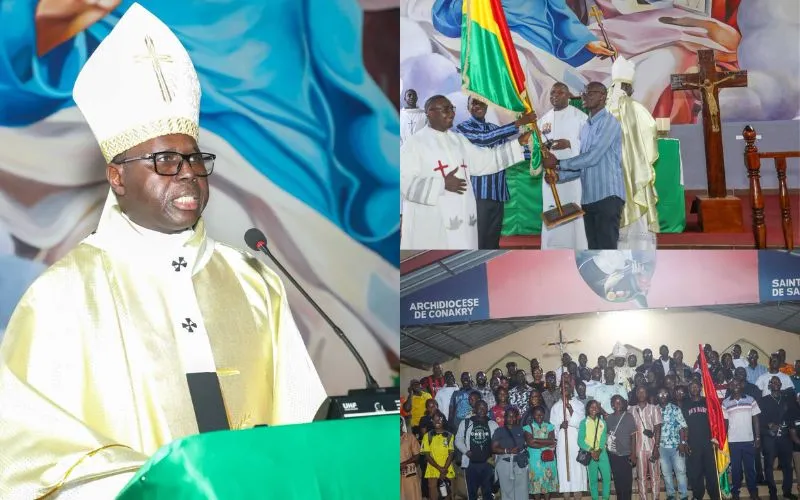
Official delegation announced for Pope Leo XIV’s upcoming visit to Equatorial Guinea #Catholic EBEBIYÍN, Equatorial Guinea — Preparations for the planned apostolic visit of Pope Leo XIV to Equatorial Guinea have gained momentum, with Church authorities unveiling details of the high-level delegation expected to accompany the Holy Father during his visit scheduled for April 21–23.The announcement was made by Father Cristino Ela Engonga, secretary-general of the Episcopal Conference of Equatorial Guinea (CEGE) and general coordinator of the Church commission for the papal visit, during a strategic meeting that was held on March 28 at the bishop’s house in Bata Diocese.The meeting brought together members of various subcommissions from the dioceses of Bata, Ebibeyín, Evinayong, and Mongomo to assess ongoing preparations and receive updates from the Holy See regarding the historic visit, which will mark Pope Leo XIV’s first trip to Africa.According to Engonga, nearly 50 Vatican officials are expected to accompany the pontiff, including five cardinals. Among them is Cardinal Robert Sarah, prefect emeritus of the Dicastery for Divine Worship and the Discipline of the Sacraments.The pope is expected to visit key cities, including Malabo, Mongomo, and Bata, accompanied by senior Vatican officials such as Secretary of State Cardinal Pietro Parolin and Cardinal Luis Antonio Tagle, pro-prefect of the Dicastery for Evangelization.Other prominent members of the papal entourage include Cardinal George Jacob Koovakad, prefect of the Dicastery for Interreligious Dialogue, and Cardinal Peter Kodwo Appiah Turkson, chancellor of the Pontifical Academy of Social Sciences.They will be joined by 42 additional Vatican officials, including Monsignor José Nahúm Jairo Salas, who is responsible for coordinating papal international travels, as well as leading Vatican communicators such as Paolo Ruffini and Matteo Bruni.Beyond the papal entourage, the meeting also highlighted the participation of special guests, including Cardinal Fridolin Ambongo, president of the Symposium of Episcopal Conferences of Africa and Madagascar (SECAM), as well as Archbishop Luis Javier Argüello García, president of the Spanish Episcopal Conference (CEE).Engonga further said that more than 40 Catholic bishops from six central African countries have expressed their intention to attend the event.During the meeting, participants also received a report from the masters of ceremonies of CEGE, Fathers Julio Enrique Meheme and Diosdado Márquez Sabadell, who recently traveled to Rome to prepare the liturgical celebrations the pope will preside over.The Holy Father is expected to arrive in Malabo on Tuesday, April 21, the final leg of his four-nation African trip. Following the official welcome ceremony, he will meet the president of Equatorial Guinea and address political leaders, civil society representatives, and the diplomatic corps.In the afternoon, the pope will engage with academics and artists during a meeting with representatives of the world of culture at the León XIV Campus of the National University. A pastoral visit to patients and staff at the Jean Pierre Olie Psychiatric Hospital is also scheduled for this day.On Wednesday, April 22, the pope will travel to Mongomo to celebrate Mass at the Basilica of the Immaculate Conception before visiting the Pope Francis Technology School.Later in the day, the Holy Father will continue to Bata, where he is scheduled to visit a prison; pray at a memorial dedicated to victims of the March 7, 2021, explosion; and meet young people and families at Bata Stadium.The apostolic journey to Africa is to conclude on Thursday, April 23, with a final Mass celebrated by the pope at Malabo Stadium.Following the farewell ceremony at Malabo International Airport, the Holy Father will depart for Rome, arriving later that evening at Rome’s Fiumicino International Airport.This story was first published by ACI Africa, the sister service of EWTN News in Africa, and has been adapted by EWTN News.

Official delegation announced for Pope Leo XIV’s upcoming visit to Equatorial Guinea #Catholic EBEBIYÍN, Equatorial Guinea — Preparations for the planned apostolic visit of Pope Leo XIV to Equatorial Guinea have gained momentum, with Church authorities unveiling details of the high-level delegation expected to accompany the Holy Father during his visit scheduled for April 21–23.The announcement was made by Father Cristino Ela Engonga, secretary-general of the Episcopal Conference of Equatorial Guinea (CEGE) and general coordinator of the Church commission for the papal visit, during a strategic meeting that was held on March 28 at the bishop’s house in Bata Diocese.The meeting brought together members of various subcommissions from the dioceses of Bata, Ebibeyín, Evinayong, and Mongomo to assess ongoing preparations and receive updates from the Holy See regarding the historic visit, which will mark Pope Leo XIV’s first trip to Africa.According to Engonga, nearly 50 Vatican officials are expected to accompany the pontiff, including five cardinals. Among them is Cardinal Robert Sarah, prefect emeritus of the Dicastery for Divine Worship and the Discipline of the Sacraments.The pope is expected to visit key cities, including Malabo, Mongomo, and Bata, accompanied by senior Vatican officials such as Secretary of State Cardinal Pietro Parolin and Cardinal Luis Antonio Tagle, pro-prefect of the Dicastery for Evangelization.Other prominent members of the papal entourage include Cardinal George Jacob Koovakad, prefect of the Dicastery for Interreligious Dialogue, and Cardinal Peter Kodwo Appiah Turkson, chancellor of the Pontifical Academy of Social Sciences.They will be joined by 42 additional Vatican officials, including Monsignor José Nahúm Jairo Salas, who is responsible for coordinating papal international travels, as well as leading Vatican communicators such as Paolo Ruffini and Matteo Bruni.Beyond the papal entourage, the meeting also highlighted the participation of special guests, including Cardinal Fridolin Ambongo, president of the Symposium of Episcopal Conferences of Africa and Madagascar (SECAM), as well as Archbishop Luis Javier Argüello García, president of the Spanish Episcopal Conference (CEE).Engonga further said that more than 40 Catholic bishops from six central African countries have expressed their intention to attend the event.During the meeting, participants also received a report from the masters of ceremonies of CEGE, Fathers Julio Enrique Meheme and Diosdado Márquez Sabadell, who recently traveled to Rome to prepare the liturgical celebrations the pope will preside over.The Holy Father is expected to arrive in Malabo on Tuesday, April 21, the final leg of his four-nation African trip. Following the official welcome ceremony, he will meet the president of Equatorial Guinea and address political leaders, civil society representatives, and the diplomatic corps.In the afternoon, the pope will engage with academics and artists during a meeting with representatives of the world of culture at the León XIV Campus of the National University. A pastoral visit to patients and staff at the Jean Pierre Olie Psychiatric Hospital is also scheduled for this day.On Wednesday, April 22, the pope will travel to Mongomo to celebrate Mass at the Basilica of the Immaculate Conception before visiting the Pope Francis Technology School.Later in the day, the Holy Father will continue to Bata, where he is scheduled to visit a prison; pray at a memorial dedicated to victims of the March 7, 2021, explosion; and meet young people and families at Bata Stadium.The apostolic journey to Africa is to conclude on Thursday, April 23, with a final Mass celebrated by the pope at Malabo Stadium.Following the farewell ceremony at Malabo International Airport, the Holy Father will depart for Rome, arriving later that evening at Rome’s Fiumicino International Airport.This story was first published by ACI Africa, the sister service of EWTN News in Africa, and has been adapted by EWTN News.

Church authorities unveiled details of the official delegation expected to accompany the Holy Father during his visit scheduled for April 21–23.

Read More
Archbishop Broglio: War should always be ‘a last resort’ #Catholic Archbishop for the Military Services, USA Timothy Broglio said this week that the ongoing U.S.-Iran war doesnʼt seem to be legitimate under a just war theory, with the prelate admitting that while military intelligence may have additional information unknown to the public, it was nevertheless “hard” to see how the war could be justified. The archbishop, who also served as the president of the U.S. Conference of Catholic Bishops from 2022 to 2025, made the remarks during an interview with Ed OʼKeefe on CBS Newsʼs “Face the Nation,” set to air on April 5. OʼKeefe during the interview highlighted Saint Augustineʼs theory of “just war” in which the ancient theologian pointed out that “the causes for which men undertake wars” must be grounded in both peace and necessity. The journalist asked if the Iran war could be justified under that doctrine. “I would think under the just war theory, it is not,” the archbishop said. “Because while there was a threat with nuclear arms, [the war is] compensating for a threat before [the threat itself] is actually realized.”“I would line myself up with Pope Leo, who has been urging for negotiation,” Broglio continued. “I realize also that you could say, well, with whom are you going to negotiate? And that is a problem.” “But in the meantime, lives are being lost, both there and also among troops,” he said. “So it is a concern.”On March 31 Pope Leo XIV appealed for world peace amid multiple conflicts throughout the Middle East, urging the faithful to pray “for the victims of war … that there may truly be a new, renewed peace, which can give new life to all.”Earlier, on Palm Sunday, the Holy Father spoke out more strongly against global conflict, arguing that God “does not listen to the prayers of those who wage war."In his interview on CBS, Broglio pointed to remarks in October of 1965 by then-Pope Paul VI, who in addressing the United Nations decried the “blood of millions” resulting from numerous global conflicts, telling the international body: “Never again war, never again war!” “Now, so many years later, weʼre still in this situation,” Broglio said. “So I think Pope Leo would definitely support saying that, you know, we have to find a situation where men and women can sit down and find avenues of peace.”“I think war is always a last resort,” the archbishop said during the interview. In January, amid overtures by the U.S. to potentially invade Greenland, Broglio in an interview with the BBC expressed concern that soldiers might be “put in a situation where they’re being ordered to do something that is morally questionable.”Speaking to CBS, the prelate acknowledged that a soldier in the military “has to obey [an order] unless itʼs clearly immoral.”“And then he would probably have to speak to his chaplain, to his chain of command,” the archbishop said. “The question might be, would generals or admirals have space to perhaps say, can we look at this a different way?” “But having spoken to some of them too, theyʼre also in the same dilemma,” he said. “So I guess my counsel would be to do as little harm as you can, and to try and preserve innocent lives.”

Archbishop Broglio: War should always be ‘a last resort’ #Catholic Archbishop for the Military Services, USA Timothy Broglio said this week that the ongoing U.S.-Iran war doesnʼt seem to be legitimate under a just war theory, with the prelate admitting that while military intelligence may have additional information unknown to the public, it was nevertheless “hard” to see how the war could be justified. The archbishop, who also served as the president of the U.S. Conference of Catholic Bishops from 2022 to 2025, made the remarks during an interview with Ed OʼKeefe on CBS Newsʼs “Face the Nation,” set to air on April 5. OʼKeefe during the interview highlighted Saint Augustineʼs theory of “just war” in which the ancient theologian pointed out that “the causes for which men undertake wars” must be grounded in both peace and necessity. The journalist asked if the Iran war could be justified under that doctrine. “I would think under the just war theory, it is not,” the archbishop said. “Because while there was a threat with nuclear arms, [the war is] compensating for a threat before [the threat itself] is actually realized.”“I would line myself up with Pope Leo, who has been urging for negotiation,” Broglio continued. “I realize also that you could say, well, with whom are you going to negotiate? And that is a problem.” “But in the meantime, lives are being lost, both there and also among troops,” he said. “So it is a concern.”On March 31 Pope Leo XIV appealed for world peace amid multiple conflicts throughout the Middle East, urging the faithful to pray “for the victims of war … that there may truly be a new, renewed peace, which can give new life to all.”Earlier, on Palm Sunday, the Holy Father spoke out more strongly against global conflict, arguing that God “does not listen to the prayers of those who wage war."In his interview on CBS, Broglio pointed to remarks in October of 1965 by then-Pope Paul VI, who in addressing the United Nations decried the “blood of millions” resulting from numerous global conflicts, telling the international body: “Never again war, never again war!” “Now, so many years later, weʼre still in this situation,” Broglio said. “So I think Pope Leo would definitely support saying that, you know, we have to find a situation where men and women can sit down and find avenues of peace.”“I think war is always a last resort,” the archbishop said during the interview. In January, amid overtures by the U.S. to potentially invade Greenland, Broglio in an interview with the BBC expressed concern that soldiers might be “put in a situation where they’re being ordered to do something that is morally questionable.”Speaking to CBS, the prelate acknowledged that a soldier in the military “has to obey [an order] unless itʼs clearly immoral.”“And then he would probably have to speak to his chaplain, to his chain of command,” the archbishop said. “The question might be, would generals or admirals have space to perhaps say, can we look at this a different way?” “But having spoken to some of them too, theyʼre also in the same dilemma,” he said. “So I guess my counsel would be to do as little harm as you can, and to try and preserve innocent lives.”

The archbishop for the Military Services, USA said it was “hard” to see how the ongoing war with Iran could be justified.

Read More
Hundreds of adults to be baptized in Paris at Easter as part of national surge #Catholic The Catholic revival that Paris has been experiencing over the past five years continues unabated, even amid the city’s long-running status as a symbol of European secularization.On the night of the Easter Vigil, April 4, more than 700 adults across the French capital will be received into the Catholic Church as part of a sudden nationwide surge.Across France, more than 13,000 adults will be baptized this Easter, according to data released by the French Bishops’ Conference — an increase of 28% compared with 2025.The “boom” in adult baptisms in France is a relatively recent phenomenon. It has intensified over the past decade, with a marked acceleration following the COVID-19 pandemic, reaching record levels since 2024.Within this national picture, Paris stands out as a beating heart of such renewal. According to figures provided by the archdiocese, 788 adult catechumens will be baptized in the city during the Easter Vigil, a 17% increase from the previous year.These baptisms will take place across 94 parishes and several communities, mobilizing more than 1,000 accompanying members, mostly laypeople. The age distribution is characterized by a predominance of younger people, with nearly one-third under the age of 25, about half between the ages of 26 and 40, and 1 in 5 over the age of 40, with candidates ranging in age from 18 to 73.Women remain the majority among catechumens, accounting for 58% in Paris, a proportion consistent with national patterns.The list of Parisian parishes with particularly high numbers of catechumens reveals a landscape that cuts across ecclesial sensibilities and social geographies. Parishes where the Traditional Latin Mass is regularly celebrated such as Saint-Roch in the 1st arrondissement or Saint-Eugène Sainte-Cécile (9th) stand alongside parishes in more working-class or mixed neighborhoods, including Notre-Dame de Clignancourt (18th), Notre-Dame de la Gare (13th), or Saint-Ambroise (11th). Many of these communities, often led by young and dynamic clergy, have become vibrant centers of parish life.Robin, a 30-year-old catechumen preparing to be baptized at Saint-Ambroise this Saturday, embodies this trend. Raised in a nonbelieving family with no religious background, he began his spiritual journey through a gradual process of questioning the purpose of life. “In a world where everything moves so fast, where we lose sight of what matters, the Church has done me a world of good,” he told EWTN News. “It has helped me put the ‘why’ back at the center of everything.”His path has been shaped by a growing desire for silence and contemplation as well as a yearning for beauty. “I would go to churches to find a moment of calm, where time would stop,” he explained. “I was looking for a place where you can listen to yourself and reflect on what you want to do with your life.” “What moves me deeply,” he added, “is the beauty that surrounds my church — its architecture, its music… that’s where I feel something powerful.”Like many catechumens, Robin described an experience of welcome that proved decisive. At an early stage in his journey, he met a young parish priest who, despite a busy schedule, took the time to speak with him. “We talked for an hour. It was incredibly reassuring,” he recalled. He was then introduced to a group of parishioners who accompanied him throughout his catechumenate, forming what he describes as a “deep bond of humanity.”This communal dimension appears to be a key factor in the current surge. While the French model of catechumenate has traditionally been more individual, the growing number of candidates is prompting parishes to rethink their approach, often favoring group dynamics that foster a sense of belonging from the outset.Many catechumens come from families with little or no Christian background, reflecting a broader shift from cultural Catholicism toward a more deliberate, conviction-based faith. On a national level, the number of catechumens identifying as having no religious tradition now represent a proportion comparable with those from Christian backgrounds.The scale of the phenomenon is now prompting serious reflection among French Church leaders. In response to the steady increase in adult baptisms, the eight dioceses of the Île-de-France region, together with the Diocese for the Armed Forces, have convened a provincial council set to open on May 31 at Notre-Dame Cathedral.Under the theme “Catechumens and Neophytes: New Perspectives for the Life of Our Church,” the council will seek to discern how local structures and pastoral practices should adapt to this unexpected growth.

Hundreds of adults to be baptized in Paris at Easter as part of national surge #Catholic The Catholic revival that Paris has been experiencing over the past five years continues unabated, even amid the city’s long-running status as a symbol of European secularization.On the night of the Easter Vigil, April 4, more than 700 adults across the French capital will be received into the Catholic Church as part of a sudden nationwide surge.Across France, more than 13,000 adults will be baptized this Easter, according to data released by the French Bishops’ Conference — an increase of 28% compared with 2025.The “boom” in adult baptisms in France is a relatively recent phenomenon. It has intensified over the past decade, with a marked acceleration following the COVID-19 pandemic, reaching record levels since 2024.Within this national picture, Paris stands out as a beating heart of such renewal. According to figures provided by the archdiocese, 788 adult catechumens will be baptized in the city during the Easter Vigil, a 17% increase from the previous year.These baptisms will take place across 94 parishes and several communities, mobilizing more than 1,000 accompanying members, mostly laypeople. The age distribution is characterized by a predominance of younger people, with nearly one-third under the age of 25, about half between the ages of 26 and 40, and 1 in 5 over the age of 40, with candidates ranging in age from 18 to 73.Women remain the majority among catechumens, accounting for 58% in Paris, a proportion consistent with national patterns.The list of Parisian parishes with particularly high numbers of catechumens reveals a landscape that cuts across ecclesial sensibilities and social geographies. Parishes where the Traditional Latin Mass is regularly celebrated such as Saint-Roch in the 1st arrondissement or Saint-Eugène Sainte-Cécile (9th) stand alongside parishes in more working-class or mixed neighborhoods, including Notre-Dame de Clignancourt (18th), Notre-Dame de la Gare (13th), or Saint-Ambroise (11th). Many of these communities, often led by young and dynamic clergy, have become vibrant centers of parish life.Robin, a 30-year-old catechumen preparing to be baptized at Saint-Ambroise this Saturday, embodies this trend. Raised in a nonbelieving family with no religious background, he began his spiritual journey through a gradual process of questioning the purpose of life. “In a world where everything moves so fast, where we lose sight of what matters, the Church has done me a world of good,” he told EWTN News. “It has helped me put the ‘why’ back at the center of everything.”His path has been shaped by a growing desire for silence and contemplation as well as a yearning for beauty. “I would go to churches to find a moment of calm, where time would stop,” he explained. “I was looking for a place where you can listen to yourself and reflect on what you want to do with your life.” “What moves me deeply,” he added, “is the beauty that surrounds my church — its architecture, its music… that’s where I feel something powerful.”Like many catechumens, Robin described an experience of welcome that proved decisive. At an early stage in his journey, he met a young parish priest who, despite a busy schedule, took the time to speak with him. “We talked for an hour. It was incredibly reassuring,” he recalled. He was then introduced to a group of parishioners who accompanied him throughout his catechumenate, forming what he describes as a “deep bond of humanity.”This communal dimension appears to be a key factor in the current surge. While the French model of catechumenate has traditionally been more individual, the growing number of candidates is prompting parishes to rethink their approach, often favoring group dynamics that foster a sense of belonging from the outset.Many catechumens come from families with little or no Christian background, reflecting a broader shift from cultural Catholicism toward a more deliberate, conviction-based faith. On a national level, the number of catechumens identifying as having no religious tradition now represent a proportion comparable with those from Christian backgrounds.The scale of the phenomenon is now prompting serious reflection among French Church leaders. In response to the steady increase in adult baptisms, the eight dioceses of the Île-de-France region, together with the Diocese for the Armed Forces, have convened a provincial council set to open on May 31 at Notre-Dame Cathedral.Under the theme “Catechumens and Neophytes: New Perspectives for the Life of Our Church,” the council will seek to discern how local structures and pastoral practices should adapt to this unexpected growth.

Across France, more than 13,000 adults will be baptized this Easter, according to data released by the French Bishops’ Conference — an increase of 28% compared with 2025. 

Read More
Release date for Season 6 of ‘The Chosen’ announced #Catholic Prime Video and 5&2 Studios announced April 3 that the sixth season of “The Chosen” will be released in the U.S. and internationally exclusively on Prime Video on Nov. 15.Season 6 of “The Chosen” will include six episodes, the first three of which will debut on Nov. 15, followed by the release of a weekly episode through Dec. 6.The season finale will be a stand-alone theatrical release in spring 2027.The highly anticipated sixth season will portray the 24 hours of Good Friday — culminating in Christ’s crucifixion.“Everyone knows the basics of this part of the story, but not everyone knows the ‘why’ of the crucifixion and the extraordinary events of these 24 hours,” Dallas Jenkins, creator, writer, and director of “The Chosen,” said in a press release. “We realized this not only deserved a season of television but a stand-alone full-length theatrical event as well. We wrote and filmed all of it with this in mind.”The show’s star, actor Jonathan Roumie, has spoken about his experience portraying Jesus’ passion and crucifixion.“For the first few months afterwards going to Mass — and even thinking about it now — I just get weepy. I get emotional. It’s hard. It’s left an indelible impression on me — mentally and emotionally sharing even just a percentage, a micron of a percentage, of the Lord’s passion; playing it and reenacting it has left me absolutely humbled and moved,” he told EWTN News at ChosenCon on Feb. 20.The show’s cast spent three weeks filming the crucifixion in Matera, Italy, in June 2025. In a press conference held at the Vatican at the end of that time, Jenkins called the three weeks “the most challenging and difficult we had in filming,” requiring him to surrender everything to Christ.Abe Bueno-Jallad, the actor who portrays Big James, or James the Great, told EWTN News that during filming, he had “never seen the cast so focused.”He added that the actors were “all there for each other … Everybody is carrying such a heavy burden this season as an actor.”“There’s just been incredible stuff happening on set. I’ve come back to set on days that I don’t work just to watch and I’ve seen stuff that gives me goosebumps,” he shared.In 2025, Amazon MGM Studios and 5&2 Studios signed a deal that made Prime Video the exclusive U.S. streaming partner for “The Chosen.” The deal also provides streaming rights to 5&2 Studios’ future projects including “The Chosen in the Wild with Bear Grylls,” “The Chosen Adventures,” and “Joseph of Egypt.”

Release date for Season 6 of ‘The Chosen’ announced #Catholic Prime Video and 5&2 Studios announced April 3 that the sixth season of “The Chosen” will be released in the U.S. and internationally exclusively on Prime Video on Nov. 15.Season 6 of “The Chosen” will include six episodes, the first three of which will debut on Nov. 15, followed by the release of a weekly episode through Dec. 6.The season finale will be a stand-alone theatrical release in spring 2027.The highly anticipated sixth season will portray the 24 hours of Good Friday — culminating in Christ’s crucifixion.“Everyone knows the basics of this part of the story, but not everyone knows the ‘why’ of the crucifixion and the extraordinary events of these 24 hours,” Dallas Jenkins, creator, writer, and director of “The Chosen,” said in a press release. “We realized this not only deserved a season of television but a stand-alone full-length theatrical event as well. We wrote and filmed all of it with this in mind.”The show’s star, actor Jonathan Roumie, has spoken about his experience portraying Jesus’ passion and crucifixion.“For the first few months afterwards going to Mass — and even thinking about it now — I just get weepy. I get emotional. It’s hard. It’s left an indelible impression on me — mentally and emotionally sharing even just a percentage, a micron of a percentage, of the Lord’s passion; playing it and reenacting it has left me absolutely humbled and moved,” he told EWTN News at ChosenCon on Feb. 20.The show’s cast spent three weeks filming the crucifixion in Matera, Italy, in June 2025. In a press conference held at the Vatican at the end of that time, Jenkins called the three weeks “the most challenging and difficult we had in filming,” requiring him to surrender everything to Christ.Abe Bueno-Jallad, the actor who portrays Big James, or James the Great, told EWTN News that during filming, he had “never seen the cast so focused.”He added that the actors were “all there for each other … Everybody is carrying such a heavy burden this season as an actor.”“There’s just been incredible stuff happening on set. I’ve come back to set on days that I don’t work just to watch and I’ve seen stuff that gives me goosebumps,” he shared.In 2025, Amazon MGM Studios and 5&2 Studios signed a deal that made Prime Video the exclusive U.S. streaming partner for “The Chosen.” The deal also provides streaming rights to 5&2 Studios’ future projects including “The Chosen in the Wild with Bear Grylls,” “The Chosen Adventures,” and “Joseph of Egypt.”

The highly anticipated sixth season will portray the 24 hours of Good Friday — culminating in Christ’s crucifixion.

Read More
Quebec secularism law is ‘anti-religious ideology,’ bishops tell Canada Supreme Court #Catholic Canada’s bishops told the Supreme Court of Canada that Quebec’s secularism legislation Bill 21 “denies the divine” going well beyond provincial jurisdiction by imposing an anti-religious ideology on the province.The bishops were among more than 50 intervenors presenting arguments at a landmark Supreme Court of Canada hearing into the constitutionality of Quebec’s 2019 secularism law. The hearing, one of the longest in the court’s history, ran from March 23–26. The court reserved its decision, with a ruling expected later this year.The secularism law, which lower courts have twice upheld, prohibits certain public employees — such as teachers and police officers — from wearing religious symbols while at work.Toronto lawyer Phil Horgan, president and general counsel of the Catholic Civil Rights League (CCRL), argued on behalf of the Canadian Conference of Catholic Bishops (CCCB), summarizing a factum that argued the “purpose and effect” of Quebec’s legislation is to “amend Canada’s federal constitution by imposing an anti-religious, non-neutral ideology, which goes beyond Québec’s jurisdiction.”Such a “drastic” change can only be made by the federal government using its authority over criminal law or its constitutional “peace, order, and good government” powers, according to the bishops’ argument.Quebec preemptively invoked the notwithstanding clause of the Canadian Charter of Rights and Freedoms when it drafted Bill 21 to shield it from judicial review.Federal and provincial governments can invoke the notwithstanding clause of the Constitution to temporarily prevent courts from invalidating legislation as unconstitutional.The timing and impact of the use of Charter Section 33 became a significant issue during the four days of hearings and will likely be central in the court’s analysis, Horgan told The Catholic Register.The appellants challenging Bill 21 include individual teachers directly affected by it as well as advocacy groups including the National Council of Canadian Muslims (NCCM), the Canadian Civil Liberties Association (CCLA), and the Legal Committee of the Coalition Inclusion Québec. They argue Bill 21 is “ultra vires,” beyond the powers of provincial jurisdiction.In a five-minute oral argument, Horgan told the seven justices that “Canada’s existing federal constitution is pluralist and pro-religion.” Although “the doctrine of state neutrality is well established, Canada has never adopted laicity or an absolutist separation of church and state,” he said.Justice Malcolm Rowe questioned Horgan on the point, asking: “Other than the reference to the supremacy of God in the preamble to the Charter, would you direct me to the provision in the Constitution which is pro-religion?”Horgan cited Section 93 of the Constitution Act, 1867, which protects denominational school rights and privileges, and noted federal charity law recognizes religion as a public good.Horgan said he wasn’t concerned by the pushback, noting judges often ask questions “not so much to get the answers from counsel but to help … persuade other members of the bench on some of the merits of the argument.”In its factum, the CCCB said Bill 21 “turns the expression of religious belief, through the wearing of symbols, into something to be punished because such expression now conflicts with the dominant philosophical posture of laïcité.”Just as religious symbols are an illustration of underlying personal faith, “the prohibition of religious symbols manifests an outlook from the provincial government that denies the divine,” the bishops said.Quebec has argued the notwithstanding clause disqualifies courts from weighing in on matters deemed political debates. Isabelle Brunet, a lawyer for the Quebec government, told the justices: “It is not up to a court to answer a question that doesn’t concern the courts.”Quebec received support from the attorneys general of Alberta, Ontario, and Saskatchewan, who maintain the courts should not interfere once the notwithstanding clause is invoked.Alberta and Ontario take a contrary position, arguing there is nothing in the notwithstanding clause that precludes judicial scrutiny of legislation.Guy J. Pratte, a lawyer for the attorney general of Canada, said Section 33 gives legislatures the power to override Charter rights but does not nullify the rights altogether or prevent judges from issuing an opinion if freedoms are violated.‘Imposing an anti-religious, non-neutral ideology’The following excerpts are from the factum submitted to the Supreme Court of Canada by the Canadian bishops:“The purpose and effect of the act is unilaterally to amend Canada’s federal constitution by imposing an anti-religious, non-neutral ideology, which goes beyond Québec’s jurisdiction.”“When a province makes itself laïc, it is adopting a non-neutral stance on religion. The provinces do not have that power.”“Québec is attempting to impose an atheistic posture on religious believers.”“Our constitution is founded on a political theory that sees fundamental rights and freedoms as God-given. To adopt an expressly anti-religious viewpoint, as the act purports to do, is an amendment of our existing federal constitution.”“In the place of a genuinely neutral, pluralist, and pro-religious approach, the act substitutes an anti-religious constitutional settlement where symbols of religion worn by individuals are not permitted.”“Just as religious symbols manifest an underlying personal faith, the prohibition of religious symbols manifests an outlook … that denies the divine.”This story was first published by The B.C. Catholic and is reprinted here with permission.

Quebec secularism law is ‘anti-religious ideology,’ bishops tell Canada Supreme Court #Catholic Canada’s bishops told the Supreme Court of Canada that Quebec’s secularism legislation Bill 21 “denies the divine” going well beyond provincial jurisdiction by imposing an anti-religious ideology on the province.The bishops were among more than 50 intervenors presenting arguments at a landmark Supreme Court of Canada hearing into the constitutionality of Quebec’s 2019 secularism law. The hearing, one of the longest in the court’s history, ran from March 23–26. The court reserved its decision, with a ruling expected later this year.The secularism law, which lower courts have twice upheld, prohibits certain public employees — such as teachers and police officers — from wearing religious symbols while at work.Toronto lawyer Phil Horgan, president and general counsel of the Catholic Civil Rights League (CCRL), argued on behalf of the Canadian Conference of Catholic Bishops (CCCB), summarizing a factum that argued the “purpose and effect” of Quebec’s legislation is to “amend Canada’s federal constitution by imposing an anti-religious, non-neutral ideology, which goes beyond Québec’s jurisdiction.”Such a “drastic” change can only be made by the federal government using its authority over criminal law or its constitutional “peace, order, and good government” powers, according to the bishops’ argument.Quebec preemptively invoked the notwithstanding clause of the Canadian Charter of Rights and Freedoms when it drafted Bill 21 to shield it from judicial review.Federal and provincial governments can invoke the notwithstanding clause of the Constitution to temporarily prevent courts from invalidating legislation as unconstitutional.The timing and impact of the use of Charter Section 33 became a significant issue during the four days of hearings and will likely be central in the court’s analysis, Horgan told The Catholic Register.The appellants challenging Bill 21 include individual teachers directly affected by it as well as advocacy groups including the National Council of Canadian Muslims (NCCM), the Canadian Civil Liberties Association (CCLA), and the Legal Committee of the Coalition Inclusion Québec. They argue Bill 21 is “ultra vires,” beyond the powers of provincial jurisdiction.In a five-minute oral argument, Horgan told the seven justices that “Canada’s existing federal constitution is pluralist and pro-religion.” Although “the doctrine of state neutrality is well established, Canada has never adopted laicity or an absolutist separation of church and state,” he said.Justice Malcolm Rowe questioned Horgan on the point, asking: “Other than the reference to the supremacy of God in the preamble to the Charter, would you direct me to the provision in the Constitution which is pro-religion?”Horgan cited Section 93 of the Constitution Act, 1867, which protects denominational school rights and privileges, and noted federal charity law recognizes religion as a public good.Horgan said he wasn’t concerned by the pushback, noting judges often ask questions “not so much to get the answers from counsel but to help … persuade other members of the bench on some of the merits of the argument.”In its factum, the CCCB said Bill 21 “turns the expression of religious belief, through the wearing of symbols, into something to be punished because such expression now conflicts with the dominant philosophical posture of laïcité.”Just as religious symbols are an illustration of underlying personal faith, “the prohibition of religious symbols manifests an outlook from the provincial government that denies the divine,” the bishops said.Quebec has argued the notwithstanding clause disqualifies courts from weighing in on matters deemed political debates. Isabelle Brunet, a lawyer for the Quebec government, told the justices: “It is not up to a court to answer a question that doesn’t concern the courts.”Quebec received support from the attorneys general of Alberta, Ontario, and Saskatchewan, who maintain the courts should not interfere once the notwithstanding clause is invoked.Alberta and Ontario take a contrary position, arguing there is nothing in the notwithstanding clause that precludes judicial scrutiny of legislation.Guy J. Pratte, a lawyer for the attorney general of Canada, said Section 33 gives legislatures the power to override Charter rights but does not nullify the rights altogether or prevent judges from issuing an opinion if freedoms are violated.‘Imposing an anti-religious, non-neutral ideology’The following excerpts are from the factum submitted to the Supreme Court of Canada by the Canadian bishops:“The purpose and effect of the act is unilaterally to amend Canada’s federal constitution by imposing an anti-religious, non-neutral ideology, which goes beyond Québec’s jurisdiction.”“When a province makes itself laïc, it is adopting a non-neutral stance on religion. The provinces do not have that power.”“Québec is attempting to impose an atheistic posture on religious believers.”“Our constitution is founded on a political theory that sees fundamental rights and freedoms as God-given. To adopt an expressly anti-religious viewpoint, as the act purports to do, is an amendment of our existing federal constitution.”“In the place of a genuinely neutral, pluralist, and pro-religious approach, the act substitutes an anti-religious constitutional settlement where symbols of religion worn by individuals are not permitted.”“Just as religious symbols manifest an underlying personal faith, the prohibition of religious symbols manifests an outlook … that denies the divine.”This story was first published by The B.C. Catholic and is reprinted here with permission.

The Catholic bishops were among more than 50 intervenors presenting arguments at a landmark Supreme Court of Canada hearing into the constitutionality of Quebec’s 2019 secularism law.

Read More
Bangladesh Christians form human chain demanding Easter public holiday #Catholic DHAKA, Bangladesh — Christians in Bangladesh formed a human chain and rally in the capital March 31 demanding that the government declare Easter Sunday a public holiday.The Bangladesh Christian Association organized the demonstration in front of the National Press Club in Dhaka, calling on Prime Minister Tarique Rahman to add Easter to the government’s official holiday calendar.Easter Sunday falls on April 5 this year. Bangladesh’s roughly 600,000 Christians — less than 1% of the country’s approximately 170 million people — currently receive only one public holiday for a Christian feast: Christmas Day.Catholic bishops support the demandThe Catholic Church in Bangladesh has also voiced support for the campaign.Archbishop Bejoy N. D’Cruze, OMI, of Dhaka, president of the Catholic Bishops’ Conference of Bangladesh, expressed his solidarity with the demand for a holiday on Easter in an interview with EWTN News on March 30.“Since we do not have a government holiday on Easter Sunday, we cannot all celebrate this day together. Many cannot go to the villages, and we cannot all observe the religious customs that are in place before Easter,” D’Cruze told EWTN News.“I also demand from the government to declare a public holiday on Easter so that we Christians can celebrate the resurrection of Jesus Christ together in family, social, and religious ways,” the archbishop added.‘A heavy heart’Bangladesh Christian Association President Nirmal Rozario said the demand for the holiday is long-standing.“We have come here with a heavy heart and are standing in front of the Press Club. Easter Sunday is very important to us after Christmas. Jesus is the only person in the history of the world who has risen after death. We are demanding a public holiday on this important and significant day, Easter Sunday,” Rozario said.He added that the Christian community “has made considerable contributions to the formation of Bangladesh” in the areas of education, health services, and development, and questioned why the government has not granted the holiday.Rozario called on Rahman to add Easter Sunday to the government holiday calendar beginning next year and to grant a holiday for this year through an executive order.Unequal holiday allocationsMuslims, who make up roughly 91% of the population according to the 2022 census, receive multiple public holidays for their major religious celebrations, including several days for Eid al-Fitr and Eid al-Adha. Hindus, who constitute about 8% of the population, have two days off for their main religious festival, Durga Puja.Christians, however, have only one public holiday — Christmas Day.Manju Maria Palma, secretary of The Christian Cooperative Credit Union Ltd. in Dhaka, a 48,000-member organization, was present at the human chain.“Christ was resurrected on this day. This day is very important. If this public holiday is given, not only the Christian community will benefit but also our brothers and sisters of other religions will understand the significance of this day,” Palma said.Lawmaker expresses hopeEWTN News contacted at least three members of Parliament, including Abdul Aziz, a member of Parliament from the Natore-4 constituency, which includes a historic Christian settlement.Aziz told EWTN News: “Since we respect all religious ceremonies, including Christian activities, and since Christians have expressed their demands, our government will definitely consider the matter.”He also expressed hope that the government will soon discuss the issue of a holiday on Easter Sunday.

Bangladesh Christians form human chain demanding Easter public holiday #Catholic DHAKA, Bangladesh — Christians in Bangladesh formed a human chain and rally in the capital March 31 demanding that the government declare Easter Sunday a public holiday.The Bangladesh Christian Association organized the demonstration in front of the National Press Club in Dhaka, calling on Prime Minister Tarique Rahman to add Easter to the government’s official holiday calendar.Easter Sunday falls on April 5 this year. Bangladesh’s roughly 600,000 Christians — less than 1% of the country’s approximately 170 million people — currently receive only one public holiday for a Christian feast: Christmas Day.Catholic bishops support the demandThe Catholic Church in Bangladesh has also voiced support for the campaign.Archbishop Bejoy N. D’Cruze, OMI, of Dhaka, president of the Catholic Bishops’ Conference of Bangladesh, expressed his solidarity with the demand for a holiday on Easter in an interview with EWTN News on March 30.“Since we do not have a government holiday on Easter Sunday, we cannot all celebrate this day together. Many cannot go to the villages, and we cannot all observe the religious customs that are in place before Easter,” D’Cruze told EWTN News.“I also demand from the government to declare a public holiday on Easter so that we Christians can celebrate the resurrection of Jesus Christ together in family, social, and religious ways,” the archbishop added.‘A heavy heart’Bangladesh Christian Association President Nirmal Rozario said the demand for the holiday is long-standing.“We have come here with a heavy heart and are standing in front of the Press Club. Easter Sunday is very important to us after Christmas. Jesus is the only person in the history of the world who has risen after death. We are demanding a public holiday on this important and significant day, Easter Sunday,” Rozario said.He added that the Christian community “has made considerable contributions to the formation of Bangladesh” in the areas of education, health services, and development, and questioned why the government has not granted the holiday.Rozario called on Rahman to add Easter Sunday to the government holiday calendar beginning next year and to grant a holiday for this year through an executive order.Unequal holiday allocationsMuslims, who make up roughly 91% of the population according to the 2022 census, receive multiple public holidays for their major religious celebrations, including several days for Eid al-Fitr and Eid al-Adha. Hindus, who constitute about 8% of the population, have two days off for their main religious festival, Durga Puja.Christians, however, have only one public holiday — Christmas Day.Manju Maria Palma, secretary of The Christian Cooperative Credit Union Ltd. in Dhaka, a 48,000-member organization, was present at the human chain.“Christ was resurrected on this day. This day is very important. If this public holiday is given, not only the Christian community will benefit but also our brothers and sisters of other religions will understand the significance of this day,” Palma said.Lawmaker expresses hopeEWTN News contacted at least three members of Parliament, including Abdul Aziz, a member of Parliament from the Natore-4 constituency, which includes a historic Christian settlement.Aziz told EWTN News: “Since we respect all religious ceremonies, including Christian activities, and since Christians have expressed their demands, our government will definitely consider the matter.”He also expressed hope that the government will soon discuss the issue of a holiday on Easter Sunday.

Christian leaders and Catholic clergy in the Muslim-majority South Asian nation are urging Prime Minister Tarique Rahman to add Easter Sunday to the government holiday calendar.

Read More
Bishops’ commission considers social, cultural, and pastoral factors behind polygamy in Africa #Catholic NAIROBI, Kenya — In addition to theological reflections on marriage and the sacraments, the final report addressing the pastoral challenge of polygamy in Africa, which members of the Symposium of Episcopal Conferences of Africa and Madagascar (SECAM) issued on March 24, draws attention to a wide range of social, cultural, and pastoral realities shaping the practice across the continent.While reaffirming the Christian ideal of monogamous marriage, the 25-page report compiled by the SECAM commission — made up of selected theologians and professionals from relevant ecclesiastical disciplines — emphasizes that understanding the persistence of polygamy requires careful analysis of social change, legal frameworks, gender relations, and pastoral strategies within African societies.
 
 SECAM president Cardinal Fridolin Ambongo. | Credit: ACI Africa
 
 The report is a direct response to the mandate that the multiyear XVI Ordinary General Assembly of the Synod of Bishops — known as the Synod on Synodality — gave Catholic bishops in Africa: “to promote theological and pastoral discernment on the issue of polygamy.”Polygamy in a changing African social landscapeIn the report, the SECAM commission members note that polygamy cannot be understood solely through the lens of traditional culture. African societies have undergone profound transformation in recent decades.“The traditional environment has crumbled,” they said, leading to a climate in which many long-standing institutions and values are increasingly questioned. This transformation has also affected the dynamics of marriage and family life. Sociological studies cited in the report identify infertility as one of the principal motivations behind contemporary polygamy, though the report emphasizes that the reasons are complex.Despite modernization and evangelization, it notes that the practice of polygamy has not disappeared. Instead, “it remains alive and well” and, in some contexts, has even regained popularity.One notable development the SECAM commission members highlight in the report is the changing role of women in African societies. They observe that women increasingly occupy key economic roles, particularly within the informal sector.Legal frameworks across AfricaIn the report, commission members also highlight the legal status of polygamy across the continent.They note that roughly 30 African countries have legal frameworks that permit polygamy — either through civil law, customary law, or religious legislation. The list includes countries such as Kenya, Nigeria, Senegal, Tanzania, Morocco, and South Africa.However, the report points out that legal recognition of polygamy does not necessarily indicate broad societal consensus. In many countries, women’s movements have increasingly challenged these laws.“More and more women are speaking out against legislation in favor of polygamy, which is considered unfair and disrespectful of gender equality,” the report says.
 
 Members of the Symposium of Episcopal Conference of Africa and Madagascar (SECAM) meet at the 20th Plenary Assembly held in Kigali, Rwanda, from July 30 to Aug. 4, 2025, under the theme “Christ, Source of Hope, Reconciliation, and Peace.” | Credit: ACI Africa
 
 This tension between cultural tradition, legal frameworks, and evolving social values forms a significant part of the pastoral context in which the Catholic bishops in Africa must address the issue of polygamy, the SECAM commission says in the report.The question of women’s dignityA central theme in the report is the dignity of women within both cultural and ecclesial contexts.Pastoral responses to polygamy must explicitly seek “to enhance the dignity of women,” the report says. The report acknowledges that women sometimes choose polygamous arrangements for practical or cultural reasons — however, it raises theological questions about whether such choices correspond to God’s plan for human relationships.From a biblical perspective, polygamy “does not promote the development of women as intended by God,” according to the report. Therefore, pastoral strategies that help Christian communities reflect critically on cultural assumptions about gender roles and marriage are important.Economic vulnerability and the practice of polygamyThe report also links polygamy to economic vulnerability, particularly among widows.One example the SECAM commission members highlight is the traditional practice of levirate marriage, in which a widow marries a relative of her deceased husband in order to secure protection and support for herself and her children.While acknowledging the social security function of this practice, the report questions whether it can also lead to forms of exploitation and whether such arrangements risk reducing women to objects of exchange within family structures.For this reason, the commission members highlight the importance of pastoral care directed specifically toward widows. Ensuring their “material and moral security” can help prevent situations in which women feel compelled to enter polygamous relationships for survival, the report states.Hidden or ‘veiled’ forms of polygamyAnother issue raised in the report is what the SECAM commission members call “veiled polygamy.”This term refers to situations in which individuals maintain multiple sexual relationships outside formal marriage, resulting in families in which children are born to parents who are not married to one another.Although such situations do not present the same doctrinal challenges as formal polygamy, the commission members say they consider this harmful both to society and to the Church.One difficulty, they note, is that social stigma often falls disproportionately on women raising children outside marriage. The absence of fathers also raises concerns about the well-being of children.In response, the report calls for stronger pastoral formation within Christian communities so that believers can accompany families facing these realities with maturity and responsibility.
 
 Members of the SECAM in 2025 | Credit: ACI Africa
 
 Preparing couples for Christian marriageThe commission members in the report repeatedly emphasize that prevention is as important as pastoral accompaniment.Many cases of polygamy among baptized Christians arise from cultural expectations about fertility. In many African contexts, the inability to bear children can place intense pressure on a marriage, the report notes.Therefore, the report calls for rigorous marriage preparation programs that help couples understand the Christian meaning of marriage. While the desire for children is recognized as a legitimate cultural value, the reports stresses that biological fertility is not essential to the sacramental reality of marriage.Christian marriage, the SECAM commission members state, must be understood primarily as a covenant of love and fidelity rather than simply a means of producing offspring.A broader question of inculturationThroughout the report, commission members frame the issue of polygamy as part of a broader challenge of inculturation — the process of expressing Christian faith within diverse cultural contexts.They acknowledge that the Church’s engagement with African cultures has evolved significantly since the missionary era.While earlier pastoral approaches often treated polygamy primarily as a moral problem to be eliminated, today the Church must combine fidelity to the Gospel with attentive listening to cultural realities.In their concluding reflections, SECAM commission members call for continued dialogue among Catholic bishops in Africa, theologians, and pastoral workers to evaluate existing pastoral models and, where necessary, “propose other paths, with the aim of offering to all the possibility of an encounter with Christ and his Gospel.”In this way, the issue of polygamy is not simply a disciplinary question but part of the broader task of shaping an authentically African expression of Christian family life.This story was first published by ACI Africa, the sister service of EWTN News in Africa, and has been adapted by EWTN News.

Bishops’ commission considers social, cultural, and pastoral factors behind polygamy in Africa #Catholic NAIROBI, Kenya — In addition to theological reflections on marriage and the sacraments, the final report addressing the pastoral challenge of polygamy in Africa, which members of the Symposium of Episcopal Conferences of Africa and Madagascar (SECAM) issued on March 24, draws attention to a wide range of social, cultural, and pastoral realities shaping the practice across the continent.While reaffirming the Christian ideal of monogamous marriage, the 25-page report compiled by the SECAM commission — made up of selected theologians and professionals from relevant ecclesiastical disciplines — emphasizes that understanding the persistence of polygamy requires careful analysis of social change, legal frameworks, gender relations, and pastoral strategies within African societies. SECAM president Cardinal Fridolin Ambongo. | Credit: ACI Africa The report is a direct response to the mandate that the multiyear XVI Ordinary General Assembly of the Synod of Bishops — known as the Synod on Synodality — gave Catholic bishops in Africa: “to promote theological and pastoral discernment on the issue of polygamy.”Polygamy in a changing African social landscapeIn the report, the SECAM commission members note that polygamy cannot be understood solely through the lens of traditional culture. African societies have undergone profound transformation in recent decades.“The traditional environment has crumbled,” they said, leading to a climate in which many long-standing institutions and values are increasingly questioned. This transformation has also affected the dynamics of marriage and family life. Sociological studies cited in the report identify infertility as one of the principal motivations behind contemporary polygamy, though the report emphasizes that the reasons are complex.Despite modernization and evangelization, it notes that the practice of polygamy has not disappeared. Instead, “it remains alive and well” and, in some contexts, has even regained popularity.One notable development the SECAM commission members highlight in the report is the changing role of women in African societies. They observe that women increasingly occupy key economic roles, particularly within the informal sector.Legal frameworks across AfricaIn the report, commission members also highlight the legal status of polygamy across the continent.They note that roughly 30 African countries have legal frameworks that permit polygamy — either through civil law, customary law, or religious legislation. The list includes countries such as Kenya, Nigeria, Senegal, Tanzania, Morocco, and South Africa.However, the report points out that legal recognition of polygamy does not necessarily indicate broad societal consensus. In many countries, women’s movements have increasingly challenged these laws.“More and more women are speaking out against legislation in favor of polygamy, which is considered unfair and disrespectful of gender equality,” the report says. Members of the Symposium of Episcopal Conference of Africa and Madagascar (SECAM) meet at the 20th Plenary Assembly held in Kigali, Rwanda, from July 30 to Aug. 4, 2025, under the theme “Christ, Source of Hope, Reconciliation, and Peace.” | Credit: ACI Africa This tension between cultural tradition, legal frameworks, and evolving social values forms a significant part of the pastoral context in which the Catholic bishops in Africa must address the issue of polygamy, the SECAM commission says in the report.The question of women’s dignityA central theme in the report is the dignity of women within both cultural and ecclesial contexts.Pastoral responses to polygamy must explicitly seek “to enhance the dignity of women,” the report says. The report acknowledges that women sometimes choose polygamous arrangements for practical or cultural reasons — however, it raises theological questions about whether such choices correspond to God’s plan for human relationships.From a biblical perspective, polygamy “does not promote the development of women as intended by God,” according to the report. Therefore, pastoral strategies that help Christian communities reflect critically on cultural assumptions about gender roles and marriage are important.Economic vulnerability and the practice of polygamyThe report also links polygamy to economic vulnerability, particularly among widows.One example the SECAM commission members highlight is the traditional practice of levirate marriage, in which a widow marries a relative of her deceased husband in order to secure protection and support for herself and her children.While acknowledging the social security function of this practice, the report questions whether it can also lead to forms of exploitation and whether such arrangements risk reducing women to objects of exchange within family structures.For this reason, the commission members highlight the importance of pastoral care directed specifically toward widows. Ensuring their “material and moral security” can help prevent situations in which women feel compelled to enter polygamous relationships for survival, the report states.Hidden or ‘veiled’ forms of polygamyAnother issue raised in the report is what the SECAM commission members call “veiled polygamy.”This term refers to situations in which individuals maintain multiple sexual relationships outside formal marriage, resulting in families in which children are born to parents who are not married to one another.Although such situations do not present the same doctrinal challenges as formal polygamy, the commission members say they consider this harmful both to society and to the Church.One difficulty, they note, is that social stigma often falls disproportionately on women raising children outside marriage. The absence of fathers also raises concerns about the well-being of children.In response, the report calls for stronger pastoral formation within Christian communities so that believers can accompany families facing these realities with maturity and responsibility. Members of the SECAM in 2025 | Credit: ACI Africa Preparing couples for Christian marriageThe commission members in the report repeatedly emphasize that prevention is as important as pastoral accompaniment.Many cases of polygamy among baptized Christians arise from cultural expectations about fertility. In many African contexts, the inability to bear children can place intense pressure on a marriage, the report notes.Therefore, the report calls for rigorous marriage preparation programs that help couples understand the Christian meaning of marriage. While the desire for children is recognized as a legitimate cultural value, the reports stresses that biological fertility is not essential to the sacramental reality of marriage.Christian marriage, the SECAM commission members state, must be understood primarily as a covenant of love and fidelity rather than simply a means of producing offspring.A broader question of inculturationThroughout the report, commission members frame the issue of polygamy as part of a broader challenge of inculturation — the process of expressing Christian faith within diverse cultural contexts.They acknowledge that the Church’s engagement with African cultures has evolved significantly since the missionary era.While earlier pastoral approaches often treated polygamy primarily as a moral problem to be eliminated, today the Church must combine fidelity to the Gospel with attentive listening to cultural realities.In their concluding reflections, SECAM commission members call for continued dialogue among Catholic bishops in Africa, theologians, and pastoral workers to evaluate existing pastoral models and, where necessary, “propose other paths, with the aim of offering to all the possibility of an encounter with Christ and his Gospel.”In this way, the issue of polygamy is not simply a disciplinary question but part of the broader task of shaping an authentically African expression of Christian family life.This story was first published by ACI Africa, the sister service of EWTN News in Africa, and has been adapted by EWTN News.

The final report addressing the pastoral challenge of polygamy in Africa draws attention to a wide range of social, cultural, and pastoral realities shaping the practice across the continent.

Read More
U.S. bishops hold ecumenical meeting with evangelicals for joint migration initiative #Catholic The U.S. Conference of Catholic Bishops (USCCB) took part in an ecumenical meeting with the National Association of Evangelicals (NAE) to engage in dialogue and collaborate on pastoral solutions to heightened immigration enforcement.The meeting was held on March 24 to launch the Evangelical-Catholic Dialogue on Immigration (ECDI) — a joint initiative focused on the subject.It builds on previous collaborations, particularly a report on how President Donald Trump’s mass deportation plans could affect Christian families. According to a USCCB news release, Catholic and evangelical leaders continue to grapple with pastoral challenges related to the policy, such as an increase in fear and anxiety among members.“I view the ECDI as a means of growing in Christian unity with our evangelical brothers and sisters, while also furthering our shared goal of bringing the message of the Gospel to bear on one of the most pressing issues of our time,” Bishop Brendan Cahill, chair of the USCCB’s Committee on Migration, said in a statement.Cahill co-chairs the ECDI with the Rev. Walter Kim, president of the NAE. It also includes five other Catholic and five other evangelical members and organizational observers.“Whatever theological differences exist between us, Catholics and evangelicals across our country are navigating many of the same complex realities — political and social — and the issue of immigration is an important example,” Cahill said. “Together, we place our hope in Jesus Christ, and we seek to live out his teaching in relation to this challenging topic.”Cahill cited Pope Leo XIV’s emphasis on dialogue being necessary for “peace, understanding, and fraternity, especially between different faith traditions.” He expressed gratitude for Kim’s leadership and “willingness to collaborate in this way and for the commitment of all those participating.”In November, the USCCB voted 216-5 to oppose “the indiscriminate mass deportation of people.” The bishops have expressed concerns that the Department of Homeland Security rescinded guidelines that had previously limited immigration enforcement at “sensitive locations,” including churches.

U.S. bishops hold ecumenical meeting with evangelicals for joint migration initiative #Catholic The U.S. Conference of Catholic Bishops (USCCB) took part in an ecumenical meeting with the National Association of Evangelicals (NAE) to engage in dialogue and collaborate on pastoral solutions to heightened immigration enforcement.The meeting was held on March 24 to launch the Evangelical-Catholic Dialogue on Immigration (ECDI) — a joint initiative focused on the subject.It builds on previous collaborations, particularly a report on how President Donald Trump’s mass deportation plans could affect Christian families. According to a USCCB news release, Catholic and evangelical leaders continue to grapple with pastoral challenges related to the policy, such as an increase in fear and anxiety among members.“I view the ECDI as a means of growing in Christian unity with our evangelical brothers and sisters, while also furthering our shared goal of bringing the message of the Gospel to bear on one of the most pressing issues of our time,” Bishop Brendan Cahill, chair of the USCCB’s Committee on Migration, said in a statement.Cahill co-chairs the ECDI with the Rev. Walter Kim, president of the NAE. It also includes five other Catholic and five other evangelical members and organizational observers.“Whatever theological differences exist between us, Catholics and evangelicals across our country are navigating many of the same complex realities — political and social — and the issue of immigration is an important example,” Cahill said. “Together, we place our hope in Jesus Christ, and we seek to live out his teaching in relation to this challenging topic.”Cahill cited Pope Leo XIV’s emphasis on dialogue being necessary for “peace, understanding, and fraternity, especially between different faith traditions.” He expressed gratitude for Kim’s leadership and “willingness to collaborate in this way and for the commitment of all those participating.”In November, the USCCB voted 216-5 to oppose “the indiscriminate mass deportation of people.” The bishops have expressed concerns that the Department of Homeland Security rescinded guidelines that had previously limited immigration enforcement at “sensitive locations,” including churches.

Bishop Brendan Cahill noted the importance of ecumenical approaches to “one of the most pressing issues of our time.”

Read More
Holy See calls on UN to eradicate surrogacy ‘in all its forms’ #Catholic The Holy See has reaffirmed its position against surrogacy in a statement to the United Nations, urging the complete eradication of the practice and calling for the protection of women and children from exploitation.Archbishop Gabriele Caccia, apostolic nuncio and permanent observer of the Holy See to the U.N., highlighted the urgency and sensitivity of the issue, lamenting that “technology and practice have run laps around the law and ethics.”Although he acknowledged that many view surrogacy “as a compassionate solution for those wishing to be parents,” he urged the adoption of measures that respect the dignity and rights of women and children.Women choose it due to financial needCaccia lamented that because of financial need, many women agree to carry a child in their womb and subsequently hand the child over to others for money. This situation could be remedied through the development of “social protection, education, and economic opportunities,” he said.The statement asked whether the surrogacy industry could survive if poverty were eradicated. It warned that the demand for this practice “already exceeds the supply” and that many women who do not wish to participate may find themselves pressured or even coerced into doing so by family members.The text also addressed the rights of children, who are reduced to an item to be ordered “within an industrial and dehumanized logic.” The statement from the Holy See also denounced the commodification of babies and the fact that many are considered “a defective product” when they have a disability.This attitude “runs contrary to a just society in which children can grow and flourish. Children, in fact, possess rights and interests that must be respected, beginning with “a moral right to be created in an act of love,” as well as the right “to know their parents and to be cared for by them,” according to the statement.Although the Holy See acknowledged the “very real and understandable desire to have children,” it maintained that these issues cannot simply be resolved through the regulation of surrogacy. The Permanent Mission of the Holy See to the U.N. commended the decision of the Hague Conference on Private International Law not to proceed with the drafting of a convention on legal parentage in cases of surrogacy.Caccia also recalled the words of Pope Leo XIV, who affirmed that, by transforming gestation into a negotiable service, one “violates the dignity both of the child, who is reduced to a ‘product,’ and of the mother, exploiting her body and the generative process, and distorting the original relational calling of the family.”The Holy See urged that new steps be taken “toward ending this practice in all its forms and at all levels,” with the aim of protecting women and children “from exploitation and violence.”This story was first published by ACI Prensa, the Spanish-language sister service of EWTN News. It has been translated and adapted by EWTN News English.

Holy See calls on UN to eradicate surrogacy ‘in all its forms’ #Catholic The Holy See has reaffirmed its position against surrogacy in a statement to the United Nations, urging the complete eradication of the practice and calling for the protection of women and children from exploitation.Archbishop Gabriele Caccia, apostolic nuncio and permanent observer of the Holy See to the U.N., highlighted the urgency and sensitivity of the issue, lamenting that “technology and practice have run laps around the law and ethics.”Although he acknowledged that many view surrogacy “as a compassionate solution for those wishing to be parents,” he urged the adoption of measures that respect the dignity and rights of women and children.Women choose it due to financial needCaccia lamented that because of financial need, many women agree to carry a child in their womb and subsequently hand the child over to others for money. This situation could be remedied through the development of “social protection, education, and economic opportunities,” he said.The statement asked whether the surrogacy industry could survive if poverty were eradicated. It warned that the demand for this practice “already exceeds the supply” and that many women who do not wish to participate may find themselves pressured or even coerced into doing so by family members.The text also addressed the rights of children, who are reduced to an item to be ordered “within an industrial and dehumanized logic.” The statement from the Holy See also denounced the commodification of babies and the fact that many are considered “a defective product” when they have a disability.This attitude “runs contrary to a just society in which children can grow and flourish. Children, in fact, possess rights and interests that must be respected, beginning with “a moral right to be created in an act of love,” as well as the right “to know their parents and to be cared for by them,” according to the statement.Although the Holy See acknowledged the “very real and understandable desire to have children,” it maintained that these issues cannot simply be resolved through the regulation of surrogacy. The Permanent Mission of the Holy See to the U.N. commended the decision of the Hague Conference on Private International Law not to proceed with the drafting of a convention on legal parentage in cases of surrogacy.Caccia also recalled the words of Pope Leo XIV, who affirmed that, by transforming gestation into a negotiable service, one “violates the dignity both of the child, who is reduced to a ‘product,’ and of the mother, exploiting her body and the generative process, and distorting the original relational calling of the family.”The Holy See urged that new steps be taken “toward ending this practice in all its forms and at all levels,” with the aim of protecting women and children “from exploitation and violence.”This story was first published by ACI Prensa, the Spanish-language sister service of EWTN News. It has been translated and adapted by EWTN News English.

Archbishop Gabriele Caccia, the Holy See’s permanent observer to the United Nations, laid out the economic reasons surrogacy exists, the harm it does, and why it is wrong.

Read More
Scottish bishops say ‘prayer moved hearts’ after Scottish Parliament rejects assisted suicide #Catholic In a final vote, members of Scottish Parliament (MSPs) have rejected a bill that would have made assisted suicide legal — a dramatic turn of events that Scotland’s Catholic bishops are attributing to the power of prayer.Reacting to the result immediately after its announcement on March 17, Scotland’s bishops told EWTN News: “Prayer is what moved hearts on this important issue. We are over the moon. Glory be to God that life has triumphed tonight!”Bill sponsor Liam McArthur and his supporters were confident of the Assisted Dying for Terminally Ill Adults (Scotland) Bill becoming law. In the first vote in May 2025, Parliament voted 70 to 56 in favor of the bill progressing to Stage 2. The bill was then amended at Stage 2 before moving to Stage 3 for a decisive vote. in the end, however, MSPs rejected it, voting 69 to 57 against the bill.
 
 Bishop John Keenan, president of the Bishops’ Conference of Scotland, said the vote against the assisted suicide bill would “protect some of Scotland’s most vulnerable individuals from the risk of being pressured into a premature death.” | Credit: Photo courtesy of the Bishops’ Conference of Scotland
 
 After an emotional debate, 12 MSPs changed sides, moving from supporting the Bill at Stage 1 to opposing it. Notable MSPs who swapped sides included Jamie Hepburn (Scottish National Party), Daniel Johnson (Labour), and Brian Whittle (Conservative), who publicly announced their decisions during the debate. This followed other notable announcements in the buildup to the vote by Scottish Conservative leader Russell Findlay and Scottish National Party MSPs Audrey Nicoll and Collette Stevenson, who had initially supported the bill and then shared their decisions to vote against it.Commending MSPs for voting against the legislation, Bishop John Keenan, president of the Bishops’ Conference of Scotland, said after the vote: “I would like to express my gratitude to all MSPs for their serious engagement with this issue and for the thoughtful and considered attention they have given to the bill. I am especially grateful to those who upheld the principle of human dignity and advocated on behalf of the vulnerable.”The Catholic Church teaches that assisted suicide is inherently immoral. In advance of the final vote, Keenan commented that a vote against the bill would “protect some of Scotland’s most vulnerable individuals from the risk of being pressured into a premature death.”“Every human life possesses inherent value,” he said. “Genuine compassion is not expressed through ending a life but through accompanying those who suffer and ensuring they receive the medical, emotional, and spiritual support that recognizes their dignity.”
 
 Alisdair Hungerford-Morgan, chief executive of pro-life charity Right To Life UK, called the result “a great and deeply significant victory for the most vulnerable people in Scotland.” | Credit: Photo courtesy of Right To Life UK
 
 Pro-life groups opposing the bill also highlighted the importance of the vote for the vulnerable. In a message to EWTN News, Alisdair Hungerford-Morgan, chief executive of pro-life charity Right To Life UK, called the result “a great and deeply significant victory for the most vulnerable people in Scotland.”Hungerford-Morgan told EWTN News: “People nearing the end of their lives, no matter what their condition, need love and support, not a pathway to suicide, which is exactly what the Scottish assisted suicide bill would have done."The vote followed an intense and long debate over five sessions, culminating in the final debate and vote on March 17.Hungerford-Morgan said: “If this bill had passed in the Scottish Parliament and gone on to become law, it would have ushered in an irrevocable change that would have put the vulnerable at risk and seen the ending of thousands of lives through assisted suicide in Scotland.”He added: “After two years of debate, and the most intense scrutiny that the question of assisted suicide has ever received in Scotland, Holyrood, which is widely regarded as one of the world’s most socially and politically progressive legislatures, has come to the conclusion that introducing assisted suicide is unsafe and dangerous.”Paul Atkin, pro-life officer at the Archdiocese of St. Andrews and Edinburgh, highlighted “the strength of engagement across our archdiocese” due to the fact that, from the 12 MSPs who changed their votes to opposing the bill, eight represent constituencies within the Archdiocese of St. Andrews and Edinburgh.Atkin told EWTN News: “The defeat of this bill is a welcome result, reflecting the strength of engagement across our archdiocese. From the archbishop’s leadership to parishes who organized hundreds of letters, this was a united effort which made the difference.”Praising the “remarkable contribution” of the archdiocese, Atkin paid tribute to the “polite, persistent engagement from the Catholic community,” which helped “shape outcomes and protect the most vulnerable.”Opponents of the bill called for attention to now move away from assisted suicide toward investment in palliative care. “Our next priority must be to strengthen palliative care by ensuring that it is properly funded and accessible to all who require it,” Keenan said. Echoing this viewpoint, Hungerford-Morgan urged MSPs to “unite to focus on renewed efforts to promote and improve palliative care.”Following the defeat of the bill, Hungerford-Morgan turned his attention to a separate bill currently being debated in the House of Lords in London that would legalize assisted suicide in England and Wales, initiated by Labour MP Kim Leadbeater.Calling on the Leadbeater Bill’s sponsors to “reject assisted suicide,” he said: “This victory will have an impact far beyond Holyrood as the Leadbeater Bill is being debated in the House of Lords. Instead of pushing ahead with this dangerous bill, its sponsors should follow Scotland’s example and reject assisted suicide.”

Scottish bishops say ‘prayer moved hearts’ after Scottish Parliament rejects assisted suicide #Catholic In a final vote, members of Scottish Parliament (MSPs) have rejected a bill that would have made assisted suicide legal — a dramatic turn of events that Scotland’s Catholic bishops are attributing to the power of prayer.Reacting to the result immediately after its announcement on March 17, Scotland’s bishops told EWTN News: “Prayer is what moved hearts on this important issue. We are over the moon. Glory be to God that life has triumphed tonight!”Bill sponsor Liam McArthur and his supporters were confident of the Assisted Dying for Terminally Ill Adults (Scotland) Bill becoming law. In the first vote in May 2025, Parliament voted 70 to 56 in favor of the bill progressing to Stage 2. The bill was then amended at Stage 2 before moving to Stage 3 for a decisive vote. in the end, however, MSPs rejected it, voting 69 to 57 against the bill. Bishop John Keenan, president of the Bishops’ Conference of Scotland, said the vote against the assisted suicide bill would “protect some of Scotland’s most vulnerable individuals from the risk of being pressured into a premature death.” | Credit: Photo courtesy of the Bishops’ Conference of Scotland After an emotional debate, 12 MSPs changed sides, moving from supporting the Bill at Stage 1 to opposing it. Notable MSPs who swapped sides included Jamie Hepburn (Scottish National Party), Daniel Johnson (Labour), and Brian Whittle (Conservative), who publicly announced their decisions during the debate. This followed other notable announcements in the buildup to the vote by Scottish Conservative leader Russell Findlay and Scottish National Party MSPs Audrey Nicoll and Collette Stevenson, who had initially supported the bill and then shared their decisions to vote against it.Commending MSPs for voting against the legislation, Bishop John Keenan, president of the Bishops’ Conference of Scotland, said after the vote: “I would like to express my gratitude to all MSPs for their serious engagement with this issue and for the thoughtful and considered attention they have given to the bill. I am especially grateful to those who upheld the principle of human dignity and advocated on behalf of the vulnerable.”The Catholic Church teaches that assisted suicide is inherently immoral. In advance of the final vote, Keenan commented that a vote against the bill would “protect some of Scotland’s most vulnerable individuals from the risk of being pressured into a premature death.”“Every human life possesses inherent value,” he said. “Genuine compassion is not expressed through ending a life but through accompanying those who suffer and ensuring they receive the medical, emotional, and spiritual support that recognizes their dignity.” Alisdair Hungerford-Morgan, chief executive of pro-life charity Right To Life UK, called the result “a great and deeply significant victory for the most vulnerable people in Scotland.” | Credit: Photo courtesy of Right To Life UK Pro-life groups opposing the bill also highlighted the importance of the vote for the vulnerable. In a message to EWTN News, Alisdair Hungerford-Morgan, chief executive of pro-life charity Right To Life UK, called the result “a great and deeply significant victory for the most vulnerable people in Scotland.”Hungerford-Morgan told EWTN News: “People nearing the end of their lives, no matter what their condition, need love and support, not a pathway to suicide, which is exactly what the Scottish assisted suicide bill would have done."The vote followed an intense and long debate over five sessions, culminating in the final debate and vote on March 17.Hungerford-Morgan said: “If this bill had passed in the Scottish Parliament and gone on to become law, it would have ushered in an irrevocable change that would have put the vulnerable at risk and seen the ending of thousands of lives through assisted suicide in Scotland.”He added: “After two years of debate, and the most intense scrutiny that the question of assisted suicide has ever received in Scotland, Holyrood, which is widely regarded as one of the world’s most socially and politically progressive legislatures, has come to the conclusion that introducing assisted suicide is unsafe and dangerous.”Paul Atkin, pro-life officer at the Archdiocese of St. Andrews and Edinburgh, highlighted “the strength of engagement across our archdiocese” due to the fact that, from the 12 MSPs who changed their votes to opposing the bill, eight represent constituencies within the Archdiocese of St. Andrews and Edinburgh.Atkin told EWTN News: “The defeat of this bill is a welcome result, reflecting the strength of engagement across our archdiocese. From the archbishop’s leadership to parishes who organized hundreds of letters, this was a united effort which made the difference.”Praising the “remarkable contribution” of the archdiocese, Atkin paid tribute to the “polite, persistent engagement from the Catholic community,” which helped “shape outcomes and protect the most vulnerable.”Opponents of the bill called for attention to now move away from assisted suicide toward investment in palliative care. “Our next priority must be to strengthen palliative care by ensuring that it is properly funded and accessible to all who require it,” Keenan said. Echoing this viewpoint, Hungerford-Morgan urged MSPs to “unite to focus on renewed efforts to promote and improve palliative care.”Following the defeat of the bill, Hungerford-Morgan turned his attention to a separate bill currently being debated in the House of Lords in London that would legalize assisted suicide in England and Wales, initiated by Labour MP Kim Leadbeater.Calling on the Leadbeater Bill’s sponsors to “reject assisted suicide,” he said: “This victory will have an impact far beyond Holyrood as the Leadbeater Bill is being debated in the House of Lords. Instead of pushing ahead with this dangerous bill, its sponsors should follow Scotland’s example and reject assisted suicide.”

In a decisive vote, Scottish members of Parliament have rejected the Assisted Dying for Terminally Ill Adults (Scotland) Bill, a victory the bishops in Scotland are praising.

Read More
Rohingya refugees learn about Lent as Caritas Bangladesh bridges faiths in camps #Catholic COX’S BAZAR, Bangladesh — As more than 1 million Rohingya Muslim refugees in Bangladesh observe the final days of Ramadan, the Catholic charity Caritas Bangladesh is building bridges between the two faiths by sharing the meaning of Lent with refugees and host communities in the sprawling camps of Cox’s Bazar.“We at Caritas Bangladesh are building a bridge between the two religions by highlighting the significance of Lent for our Christians with the Rohingya refugees and the host community so that they can understand the meaning of Lent,” said Liton Luis Gomes, project director of Caritas Bangladesh’s Emergency Response Program.“We have been sharing with the Rohingya refugees the significance of our fasting, which is to eat less and distribute it to the poor, to listen to people, or to serve those who really deserve it,” Gomes told EWTN News.Caritas is sharing the theme of its 2026 Lenten campaign — “Prayer, Listening, and Fasting: A Holy Call of Inner Transformation” — with the Rohingya and host communities, Gomes said.The pope and the RohingyaPope Francis met a group of Rohingya refugees during his apostolic visit to Bangladesh on Dec. 1, 2017. The refugees traveled to Dhaka from Cox’s Bazar to meet the pope during an interreligious gathering at the archbishop’s residence.“The presence of God today is also called Rohingya,” Francis told the gathering in remarks that marked the first time during his visit to Myanmar and Bangladesh that he publicly used the word “Rohingya” to describe the persecuted Muslim minority.
 
 Pope urges ‘full rights’ be given to persecuted Rohingya minority
 
 Most of the Rohingya in the Cox’s Bazar camps arrived from Myanmar since August 2017, when the military began conducting clearance operations after a series of rebel attacks in Myanmar’s Rakhine state. The Rohingya are Muslims who have long faced discrimination in Buddhist-majority Myanmar, including being denied citizenship since 1982. The military coup in Myanmar, formerly Burma, in February 2021 further heightened their vulnerability.The population density of the camps is staggering — roughly 103,600 people per square mile, more than 40 times the average population density of Bangladesh as a whole. Refugees live in side-by-side plastic and bamboo shelters, each just a little larger than 100 square feet, some holding a dozen residents.‘We are not in a festive mood’Eid al-Fitr, one of Islam’s most important religious celebrations, is expected to begin later this week, but refugees say they are not able to celebrate.Abdur Rahim, 55, a Rohingya father of five, told EWTN News that food in the camps is not sufficient but that refugees are “still surviving, thanks to the Bangladesh government and the Almighty.”“We have no money to buy new clothes for my child and grandchild for this festival. Eid is joyful to Muslims, but we are not in a festive mood, because if we can go to our motherland Myanmar, we will be happy,” Rahim said.Rahim said the Caritas initiative had given him a new understanding of the season of fasting.“I didn’t know that Ramadan is not just about not eating. Now, through Caritas, I’ve learned that Ramadan is about helping people and reducing your expenses,” Rahim said.Between 2017 and 2023, Caritas provided  million in emergency efforts for Rohingya and host community members in Cox’s Bazar, according to Caritas Internationalis. During that period the charity assisted nearly 1.7 million individuals with shelter support, protection, disaster risk reduction, education, and water, sanitation, and hygiene services.Caritas Bangladesh is the social action arm of the Catholic Bishops’ Conference of Bangladesh.

Rohingya refugees learn about Lent as Caritas Bangladesh bridges faiths in camps #Catholic COX’S BAZAR, Bangladesh — As more than 1 million Rohingya Muslim refugees in Bangladesh observe the final days of Ramadan, the Catholic charity Caritas Bangladesh is building bridges between the two faiths by sharing the meaning of Lent with refugees and host communities in the sprawling camps of Cox’s Bazar.“We at Caritas Bangladesh are building a bridge between the two religions by highlighting the significance of Lent for our Christians with the Rohingya refugees and the host community so that they can understand the meaning of Lent,” said Liton Luis Gomes, project director of Caritas Bangladesh’s Emergency Response Program.“We have been sharing with the Rohingya refugees the significance of our fasting, which is to eat less and distribute it to the poor, to listen to people, or to serve those who really deserve it,” Gomes told EWTN News.Caritas is sharing the theme of its 2026 Lenten campaign — “Prayer, Listening, and Fasting: A Holy Call of Inner Transformation” — with the Rohingya and host communities, Gomes said.The pope and the RohingyaPope Francis met a group of Rohingya refugees during his apostolic visit to Bangladesh on Dec. 1, 2017. The refugees traveled to Dhaka from Cox’s Bazar to meet the pope during an interreligious gathering at the archbishop’s residence.“The presence of God today is also called Rohingya,” Francis told the gathering in remarks that marked the first time during his visit to Myanmar and Bangladesh that he publicly used the word “Rohingya” to describe the persecuted Muslim minority. Pope urges ‘full rights’ be given to persecuted Rohingya minority Most of the Rohingya in the Cox’s Bazar camps arrived from Myanmar since August 2017, when the military began conducting clearance operations after a series of rebel attacks in Myanmar’s Rakhine state. The Rohingya are Muslims who have long faced discrimination in Buddhist-majority Myanmar, including being denied citizenship since 1982. The military coup in Myanmar, formerly Burma, in February 2021 further heightened their vulnerability.The population density of the camps is staggering — roughly 103,600 people per square mile, more than 40 times the average population density of Bangladesh as a whole. Refugees live in side-by-side plastic and bamboo shelters, each just a little larger than 100 square feet, some holding a dozen residents.‘We are not in a festive mood’Eid al-Fitr, one of Islam’s most important religious celebrations, is expected to begin later this week, but refugees say they are not able to celebrate.Abdur Rahim, 55, a Rohingya father of five, told EWTN News that food in the camps is not sufficient but that refugees are “still surviving, thanks to the Bangladesh government and the Almighty.”“We have no money to buy new clothes for my child and grandchild for this festival. Eid is joyful to Muslims, but we are not in a festive mood, because if we can go to our motherland Myanmar, we will be happy,” Rahim said.Rahim said the Caritas initiative had given him a new understanding of the season of fasting.“I didn’t know that Ramadan is not just about not eating. Now, through Caritas, I’ve learned that Ramadan is about helping people and reducing your expenses,” Rahim said.Between 2017 and 2023, Caritas provided $45 million in emergency efforts for Rohingya and host community members in Cox’s Bazar, according to Caritas Internationalis. During that period the charity assisted nearly 1.7 million individuals with shelter support, protection, disaster risk reduction, education, and water, sanitation, and hygiene services.Caritas Bangladesh is the social action arm of the Catholic Bishops’ Conference of Bangladesh.

As Ramadan draws to a close in the camps of Cox’s Bazar, Caritas Bangladesh is sharing the meaning of Lent with more than 1 million Rohingya Muslim refugees.

Read More
Michigan teen starts Catholic online newspaper for other teens #Catholic Luis Nava, a high school freshman at the International Academy in Michigan, takes to heart that he wants to be ready to answer any questions from his peers but also to better understand his Catholic faith. He began an online newspaper called The Catholic Michigander, where he tackles some of those questions and more.Nava is a parishioner at St. Joseph Parish in Lake Orion, Michigan, and spent his first few years attending school there. He recently spoke to students at the Catholic school about a project he started to help spread the Catholic faith among teens and to help young people understand what the faith is all about.“A lot of the times, if I’m facing questions from classmates that don’t have the same beliefs as me, I want to know exactly what I believe and exactly why I believe it,” Nava said.Learning about his faith became more of a quest after Nava attended a pro-life conference in 2024 at his parish. While he was there, Nava picked up a quote from William Wilberforce that he says inspired him to fulfill what he believes is his calling: “Let it not be said that I was silent when they needed me,” he said. The saying is posted above his desk. “I see it every day.”Nava, who plans to study neuroscience, said he has always been passionate about writing and hoped to start a newspaper one day. After the conference, he felt the prompting of the Holy Spirit guiding him, and he got to work on a website.“It all came from a project that I had when I was in middle school,” he said. “I was on the newspaper for my middle school in sixth grade, and then in seventh grade I took over as the editor.”Nava takes ideas for content for the newspaper from his daily experiences and conversations with classmates. He also invites others to write with him.The newspaper contains a wide variety of articles on different topics, from infertility and natural family planning to life issues and the real presence of Christ in the Eucharist. Nava said he writes “if a particular issue sparks my interest.” Father Jim Kean advises Nava on Catholic theology to ensure that all of the content adheres to Catholic teaching.“There was a report that a huge amount of Catholics don’t know that Christ is really present in the Eucharist, so I thought topics like those would be good to address,” Nava said.Each month, Nava writes and edits the copy and posts it to the website, featuring not only his writing but also that of some of his peers.
 
 A middle school student at St. Joseph School in Lake Orion, Michigan, reviews an article in Luis Nava’s online newspaper, The Catholic Michigander. | Credit: Photo courtesy of Luis Nava/Detroit Catholic
 
 “A couple of them are parishioners here at St. Joseph Parish, but they were public school students,” said Doris Fornasiero, principal at St. Joseph School. “I think that’s also a remarkable piece, that he’s reaching and pulling in students from all over the public school, private school, but students who are passionate about their faith.”Nava doesn’t just write about his faith, but he brings it to life, said Lindy Cubba, a middle school religion teacher at St. Joseph.“As teachers and educators, listening to him, it was remarkable because he had captured this passion for faith and yet this way to inspire and nurture beliefs that people already have and bring them into the open,” Cubba said.In addition to his work with the newspaper, Nava is also active in the youth group and as an athlete, where he encourages others to live their lives of faith. Recently he spoke to St. Joseph students about his project.“He’s just an incredibly positive, strong influence in the right way,” Fornasiero said. “He inspired the kids and encouraged them to speak out, that they didn’t have to keep their beliefs and their feelings about their faith to themselves. He was giving them a safe place to voice their beliefs.”Nava said he is grateful to the Holy Spirit, as well as mentors such as Fornasiero and Cubba, and said he wants to encourage other students to be courageous enough to do what they dream.“Well, I try to be a model to imitate, but I mean it’s a work in progress,” he said.“Like with everything, we’re all called to be saints, so I’m trying to walk down that road, as I’m sure everybody is,” Nava said. “I hope this can inspire other people to maybe take action and realize they can do anything. Hopefully, we can get all of the youth of today to really grow in their love for God.”Nava believes his newspaper project and his interest in neuroscience are related.“It’s really perfect, because neuroscience and religion and spirituality go hand in hand so well together,” Nava said. “We need God at the center of our lives if we want to have good mental health. I thought that would integrate very well with the writing and with religion.”With three more years of high school ahead of him, Nava said he hopes he can continue the newspaper for several more years.“I’m not sure how it’s going to evolve,” he said, “but I hope that we can continue to put out articles that teenagers can see and be inspired by.”This story was first published by the Detroit Catholic and is reprinted here with permission.

Michigan teen starts Catholic online newspaper for other teens #Catholic Luis Nava, a high school freshman at the International Academy in Michigan, takes to heart that he wants to be ready to answer any questions from his peers but also to better understand his Catholic faith. He began an online newspaper called The Catholic Michigander, where he tackles some of those questions and more.Nava is a parishioner at St. Joseph Parish in Lake Orion, Michigan, and spent his first few years attending school there. He recently spoke to students at the Catholic school about a project he started to help spread the Catholic faith among teens and to help young people understand what the faith is all about.“A lot of the times, if I’m facing questions from classmates that don’t have the same beliefs as me, I want to know exactly what I believe and exactly why I believe it,” Nava said.Learning about his faith became more of a quest after Nava attended a pro-life conference in 2024 at his parish. While he was there, Nava picked up a quote from William Wilberforce that he says inspired him to fulfill what he believes is his calling: “Let it not be said that I was silent when they needed me,” he said. The saying is posted above his desk. “I see it every day.”Nava, who plans to study neuroscience, said he has always been passionate about writing and hoped to start a newspaper one day. After the conference, he felt the prompting of the Holy Spirit guiding him, and he got to work on a website.“It all came from a project that I had when I was in middle school,” he said. “I was on the newspaper for my middle school in sixth grade, and then in seventh grade I took over as the editor.”Nava takes ideas for content for the newspaper from his daily experiences and conversations with classmates. He also invites others to write with him.The newspaper contains a wide variety of articles on different topics, from infertility and natural family planning to life issues and the real presence of Christ in the Eucharist. Nava said he writes “if a particular issue sparks my interest.” Father Jim Kean advises Nava on Catholic theology to ensure that all of the content adheres to Catholic teaching.“There was a report that a huge amount of Catholics don’t know that Christ is really present in the Eucharist, so I thought topics like those would be good to address,” Nava said.Each month, Nava writes and edits the copy and posts it to the website, featuring not only his writing but also that of some of his peers. A middle school student at St. Joseph School in Lake Orion, Michigan, reviews an article in Luis Nava’s online newspaper, The Catholic Michigander. | Credit: Photo courtesy of Luis Nava/Detroit Catholic “A couple of them are parishioners here at St. Joseph Parish, but they were public school students,” said Doris Fornasiero, principal at St. Joseph School. “I think that’s also a remarkable piece, that he’s reaching and pulling in students from all over the public school, private school, but students who are passionate about their faith.”Nava doesn’t just write about his faith, but he brings it to life, said Lindy Cubba, a middle school religion teacher at St. Joseph.“As teachers and educators, listening to him, it was remarkable because he had captured this passion for faith and yet this way to inspire and nurture beliefs that people already have and bring them into the open,” Cubba said.In addition to his work with the newspaper, Nava is also active in the youth group and as an athlete, where he encourages others to live their lives of faith. Recently he spoke to St. Joseph students about his project.“He’s just an incredibly positive, strong influence in the right way,” Fornasiero said. “He inspired the kids and encouraged them to speak out, that they didn’t have to keep their beliefs and their feelings about their faith to themselves. He was giving them a safe place to voice their beliefs.”Nava said he is grateful to the Holy Spirit, as well as mentors such as Fornasiero and Cubba, and said he wants to encourage other students to be courageous enough to do what they dream.“Well, I try to be a model to imitate, but I mean it’s a work in progress,” he said.“Like with everything, we’re all called to be saints, so I’m trying to walk down that road, as I’m sure everybody is,” Nava said. “I hope this can inspire other people to maybe take action and realize they can do anything. Hopefully, we can get all of the youth of today to really grow in their love for God.”Nava believes his newspaper project and his interest in neuroscience are related.“It’s really perfect, because neuroscience and religion and spirituality go hand in hand so well together,” Nava said. “We need God at the center of our lives if we want to have good mental health. I thought that would integrate very well with the writing and with religion.”With three more years of high school ahead of him, Nava said he hopes he can continue the newspaper for several more years.“I’m not sure how it’s going to evolve,” he said, “but I hope that we can continue to put out articles that teenagers can see and be inspired by.”This story was first published by the Detroit Catholic and is reprinted here with permission.

Luis Nava, a high school freshman in Lake Orion, Michigan, felt inspired to help peers find their voice and live their Catholic faith.

Read More
Georgia appeals court blocks abuse suit against Atlanta Archdiocese, cites statute of limitations #Catholic A dozen alleged abuse victims suffered a defeat at a Georgia appeals court this week when their lawsuit against the Archdiocese of Atlanta was dismissed on the grounds that the alleged abuse did not fall under an extended statute of limitations. The case turned on whether or not the archdiocese had covered up the alleged clergy sexual abuse, which if true could have “tolled” the time limit for filing abuse claims. “Tolling” occurs when a statute of limitations is extended beyond a normal window, allowing alleged victims to file abuse claims years after they normally would have been barred from doing so. In the Atlanta case, a dozen alleged victims had filed numerous suits against the Archdiocese of Atlanta and numerous churches, claiming that Fathers John Edwards and Jorge Cristancho had abused them over multiple decades from the 1960s to the early 2000s. A lower court had dismissed the cases. The Georgia Court of Appeals on March 9 upheld the dismissal, arguing that the statute of limitations for the filings had expired and that the archdiocese had not committed any malfeasance that could have extended the filing window. The plaintiffs “failed to point to any evidence that the [the archdioceseʼs] actions concealed the Plaintiffs’ claims and prevented or hindered them from filing their lawsuits,” the ruling held. The alleged victims failed to prove that they “ever requested information from the [archdiocese] about their knowledge and involvement in the abuse, or that the [archdiocese] refused” to provide it. The three-judge panel acknowledged that it was “certainly mindful of the grievous circumstances involving heinous conduct which led to the filing of these cases.”Edwards and Cristancho are both listed by the archdiocese as “credibly accused” of sexual abuse. Edwards died in 1997; Cristancho was laicized in 2003. Statutes of limitations have been a key component of disputes in the U.S. Church for years, with lawmakers in recent years advocating and often passing bills retroactively extending the window for filing abuse claims. In 2023 Maryland passed the state Child Victims Act, which abolished a 20-year statute of limitations for civil child abuse suits. The Maryland Supreme Court ruled in 2025 that the law did not violate the state constitution.Numerous states such as New York, North Carolina, New Jersey, Colorado and others have enacted similar laws allowing for abuse victims to seek restitution for alleged incidents that occurred in decades past. Such legal arrangements are not limited to the United States. In January the Spanish Bishops’ Conference and the national government agreed to a compensation plan for abuse victims that will allow victims to file for restitution even if the alleged abuse falls outside of the standard statute of limitations.

Georgia appeals court blocks abuse suit against Atlanta Archdiocese, cites statute of limitations #Catholic A dozen alleged abuse victims suffered a defeat at a Georgia appeals court this week when their lawsuit against the Archdiocese of Atlanta was dismissed on the grounds that the alleged abuse did not fall under an extended statute of limitations. The case turned on whether or not the archdiocese had covered up the alleged clergy sexual abuse, which if true could have “tolled” the time limit for filing abuse claims. “Tolling” occurs when a statute of limitations is extended beyond a normal window, allowing alleged victims to file abuse claims years after they normally would have been barred from doing so. In the Atlanta case, a dozen alleged victims had filed numerous suits against the Archdiocese of Atlanta and numerous churches, claiming that Fathers John Edwards and Jorge Cristancho had abused them over multiple decades from the 1960s to the early 2000s. A lower court had dismissed the cases. The Georgia Court of Appeals on March 9 upheld the dismissal, arguing that the statute of limitations for the filings had expired and that the archdiocese had not committed any malfeasance that could have extended the filing window. The plaintiffs “failed to point to any evidence that the [the archdioceseʼs] actions concealed the Plaintiffs’ claims and prevented or hindered them from filing their lawsuits,” the ruling held. The alleged victims failed to prove that they “ever requested information from the [archdiocese] about their knowledge and involvement in the abuse, or that the [archdiocese] refused” to provide it. The three-judge panel acknowledged that it was “certainly mindful of the grievous circumstances involving heinous conduct which led to the filing of these cases.”Edwards and Cristancho are both listed by the archdiocese as “credibly accused” of sexual abuse. Edwards died in 1997; Cristancho was laicized in 2003. Statutes of limitations have been a key component of disputes in the U.S. Church for years, with lawmakers in recent years advocating and often passing bills retroactively extending the window for filing abuse claims. In 2023 Maryland passed the state Child Victims Act, which abolished a 20-year statute of limitations for civil child abuse suits. The Maryland Supreme Court ruled in 2025 that the law did not violate the state constitution.Numerous states such as New York, North Carolina, New Jersey, Colorado and others have enacted similar laws allowing for abuse victims to seek restitution for alleged incidents that occurred in decades past. Such legal arrangements are not limited to the United States. In January the Spanish Bishops’ Conference and the national government agreed to a compensation plan for abuse victims that will allow victims to file for restitution even if the alleged abuse falls outside of the standard statute of limitations.

The statute of limitations could not be extended due to a lack of evidence of fraud by the archdiocese, the court said.

Read More
Pakistani Christians join Muslims for Ramadan meals amid Iran war fallout #Catholic LAHORE, Pakistan — White bedsheets for Muslim worshippers were laid on the grassy lawn outside the Dominican Peace Center in Punjab an hour before the annual interfaith iftar — the fast-breaking meal during Ramadan.The aroma of crispy pakoras (fritters), dried dates, rose-flavored Rooh Afza, and dahi bhallay (lentil dumplings in yogurt) drew guests to the dining tables after they finished reciting their iftar prayers in Lahore, the provincial capital.Dominican Father James Channan, director of the center, has hosted such interfaith gatherings for 25 years in a country where religious tensions have periodically turned violent.
 
 Dominican Father James Channan speaks at a combined International Women’s Day and interfaith iftar program at the Dominican Peace Center in Lahore, Pakistan, on March 8, 2026. | Credit: Kamran Chaudhry
 
 “Table friendships are very important in our context. People attending such forums highlight them on social media, reaching millions,” he told EWTN News at the sidelines of the program, timed with International Women’s Day on March 8.“The combined meals and prayer services have helped curb trends of church attacks that followed U.S. wars in Muslim countries.”Pakistani Christians have faced multiple terrorist attacks since October 2001, after the United States — seen by many Pakistani Muslims as a Christian nation — launched its military campaign in Afghanistan.“It’s a bitter past. Churches and Christian settlements were considered soft targets. The ongoing conflicts are not crusades; they are wars of interest,” Channan said.Interfaith meals continue despite unrestInterfaith gatherings continued this year even as protests against U.S. and Israeli strikes on Iran left 26 dead in Pakistan.Church leaders joined clerics in prayers for peace and shared meals at mosques, church premises, and hotels across six dioceses and one apostolic vicariate, as Middle East air travel disruption and rising fuel prices added regional tension.Many Pakistanis view the United States and Western Europe as Christian nations, and some militant groups target local Christians as linked to these “Christian countries.”Communal tensions have also erupted locally. In May 2024, a mob attacked 74-year-old Christian Nazir Masih over alleged blasphemy in Sargodha. He later died of his injuries. In August 2023, violence in Jaranwala destroyed 26 churches and 80 Christian homes following allegations of Quran desecration.In a Feb. 17 message, Archbishop Joseph Arshad of Rawalpindi-Islamabad invited Christians and Muslims to offer special prayers for peace as Lent and Ramadan coincided this year. He encouraged people of both faiths “to visit one another, exchange greetings with respect, and unite in serving vulnerable segments of society.”Joint events across PakistanIn Multan, over 82 participants attended a Feb. 28 iftar jointly organized by the Catholic Commission for Inter-Religious Dialogue and Ecumenism; Saiban-e-Pakistan, a state peace initiative; and the Centre of Excellence on Countering Violent Extremism.A day earlier in Lahore, Channan and four Catholic priests attended the fast-breaking event at the Badshahi Mosque, the country’s second-largest mosque. He presented a framed photo of Abdul Khabeer Azad, the mosque’s “khateeb” (prayer leader), who met Pope Leo XIV in October 2025 at the “Christian-Muslim Dialogue and Daring Peace” conference in Rome organized by the Community of Sant’Egidio.
 
 Guests share the interfaith iftar meal at the Dominican Peace Center in Lahore on March 8, 2026. | Credit: Kamran Chaudhry
 
 Among 120 guests at the Dominican iftar was Muslim speaker Shehzad Qaiser. The event, held in collaboration with groups including the Seventh-day Adventist Church, highlighted ongoing social challenges.The head of external affairs at Sundas Foundation, which supports patients with blood disorders, agreed that Christians face discrimination in some offices and some Muslims refuse the food prepared by Christians.“It is very important to share our common practices, joys, and sorrows. Religious leaders have the duty to raise awareness. Sadly some mistake local Christians as ‘kafir’ (infidels),” Qaiser said.“During Ramadan, people distribute free meals to everyone without asking their religion. Blood donors don’t discriminate either. This is the real spirit of Ramadan and Lent.”

Pakistani Christians join Muslims for Ramadan meals amid Iran war fallout #Catholic LAHORE, Pakistan — White bedsheets for Muslim worshippers were laid on the grassy lawn outside the Dominican Peace Center in Punjab an hour before the annual interfaith iftar — the fast-breaking meal during Ramadan.The aroma of crispy pakoras (fritters), dried dates, rose-flavored Rooh Afza, and dahi bhallay (lentil dumplings in yogurt) drew guests to the dining tables after they finished reciting their iftar prayers in Lahore, the provincial capital.Dominican Father James Channan, director of the center, has hosted such interfaith gatherings for 25 years in a country where religious tensions have periodically turned violent. Dominican Father James Channan speaks at a combined International Women’s Day and interfaith iftar program at the Dominican Peace Center in Lahore, Pakistan, on March 8, 2026. | Credit: Kamran Chaudhry “Table friendships are very important in our context. People attending such forums highlight them on social media, reaching millions,” he told EWTN News at the sidelines of the program, timed with International Women’s Day on March 8.“The combined meals and prayer services have helped curb trends of church attacks that followed U.S. wars in Muslim countries.”Pakistani Christians have faced multiple terrorist attacks since October 2001, after the United States — seen by many Pakistani Muslims as a Christian nation — launched its military campaign in Afghanistan.“It’s a bitter past. Churches and Christian settlements were considered soft targets. The ongoing conflicts are not crusades; they are wars of interest,” Channan said.Interfaith meals continue despite unrestInterfaith gatherings continued this year even as protests against U.S. and Israeli strikes on Iran left 26 dead in Pakistan.Church leaders joined clerics in prayers for peace and shared meals at mosques, church premises, and hotels across six dioceses and one apostolic vicariate, as Middle East air travel disruption and rising fuel prices added regional tension.Many Pakistanis view the United States and Western Europe as Christian nations, and some militant groups target local Christians as linked to these “Christian countries.”Communal tensions have also erupted locally. In May 2024, a mob attacked 74-year-old Christian Nazir Masih over alleged blasphemy in Sargodha. He later died of his injuries. In August 2023, violence in Jaranwala destroyed 26 churches and 80 Christian homes following allegations of Quran desecration.In a Feb. 17 message, Archbishop Joseph Arshad of Rawalpindi-Islamabad invited Christians and Muslims to offer special prayers for peace as Lent and Ramadan coincided this year. He encouraged people of both faiths “to visit one another, exchange greetings with respect, and unite in serving vulnerable segments of society.”Joint events across PakistanIn Multan, over 82 participants attended a Feb. 28 iftar jointly organized by the Catholic Commission for Inter-Religious Dialogue and Ecumenism; Saiban-e-Pakistan, a state peace initiative; and the Centre of Excellence on Countering Violent Extremism.A day earlier in Lahore, Channan and four Catholic priests attended the fast-breaking event at the Badshahi Mosque, the country’s second-largest mosque. He presented a framed photo of Abdul Khabeer Azad, the mosque’s “khateeb” (prayer leader), who met Pope Leo XIV in October 2025 at the “Christian-Muslim Dialogue and Daring Peace” conference in Rome organized by the Community of Sant’Egidio. Guests share the interfaith iftar meal at the Dominican Peace Center in Lahore on March 8, 2026. | Credit: Kamran Chaudhry Among 120 guests at the Dominican iftar was Muslim speaker Shehzad Qaiser. The event, held in collaboration with groups including the Seventh-day Adventist Church, highlighted ongoing social challenges.The head of external affairs at Sundas Foundation, which supports patients with blood disorders, agreed that Christians face discrimination in some offices and some Muslims refuse the food prepared by Christians.“It is very important to share our common practices, joys, and sorrows. Religious leaders have the duty to raise awareness. Sadly some mistake local Christians as ‘kafir’ (infidels),” Qaiser said.“During Ramadan, people distribute free meals to everyone without asking their religion. Blood donors don’t discriminate either. This is the real spirit of Ramadan and Lent.”

Church leaders and Muslim clerics shared Ramadan fast-breaking meals across six Pakistani dioceses this year as the overlap of Lent and Ramadan inspired joint prayers for peace.

Read More