Rome

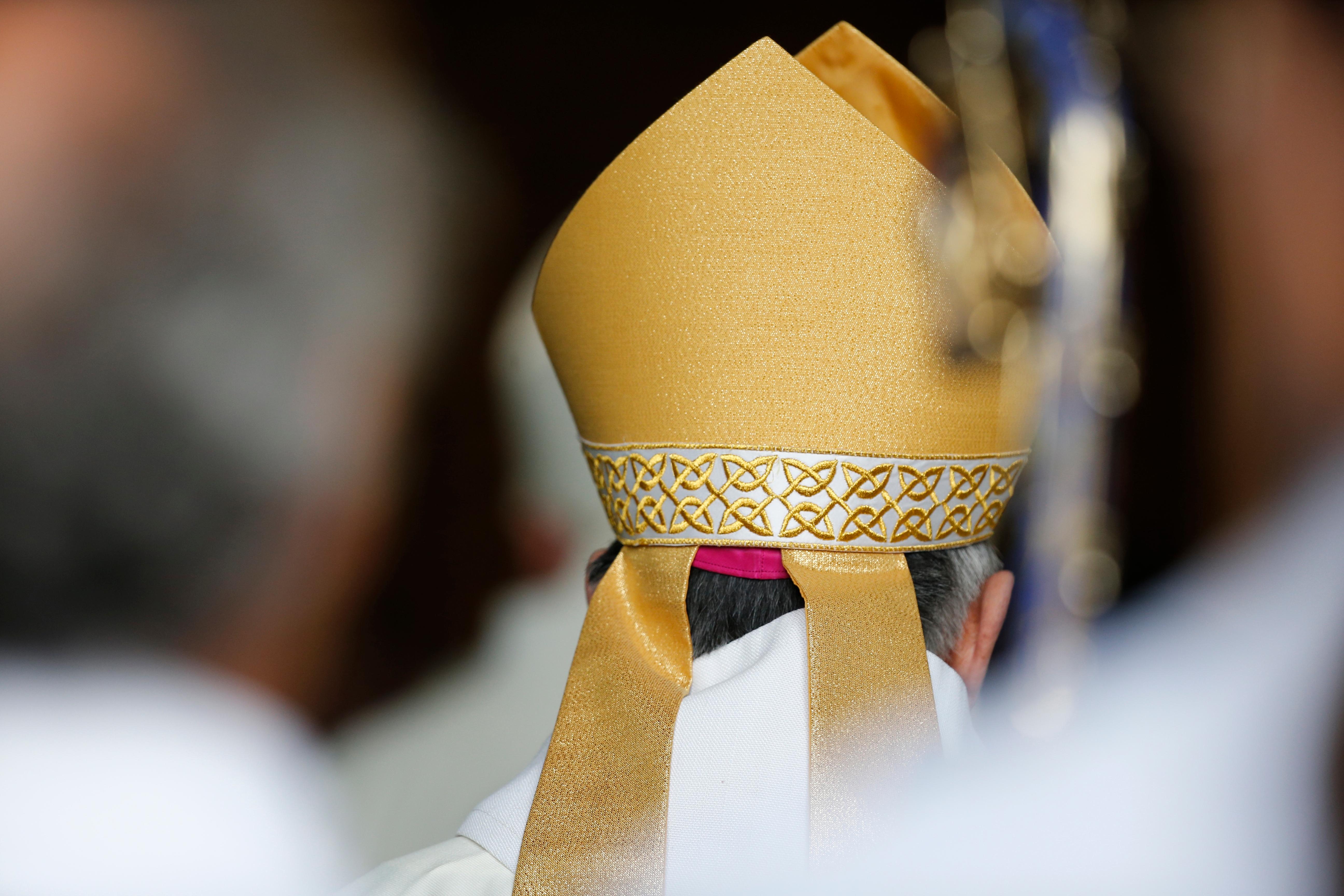
Pope Leo XIV appoints new bishop of London, Ontario #Catholic Pope Leo XIV has appointed Daniel J. Miehm as the new bishop of the Diocese of London, Ontario, Canada. Until now, the prelate served as the bishop of Peterborough, Ontario.The prelate succeeds Bishop Peter Fabbro in leading the Diocese of London. Fabbro’s resignation was accepted upon reaching the age of 75, the mandatory retirement age for bishops.After expressing his gratitude for the trust placed in him by the Holy Father for the new role, Miehm stated: “In this Easter season, as the Church celebrates the resurrection of Christ, we are invited to deep faith, trust in God, and hope in the promise of new life. It is in such a spirit that I embrace this new chapter in my continued service to the Church.”“I ask your prayers for me, for all those I have served in Peterborough and for those whom I will meet and serve in my episcopal ministry in the Diocese of London,” the prelate added in a statement from the Diocese of London.Fabbro, who served at the helm of the London Diocese for 24 years, said that Miehm “is a strong, compassionate leader with outstanding pastoral instincts and the wisdom to guide our diocese into the future. Under his episcopal leadership, the Diocese of London will be in very capable hands.”Miehm will be installed as the new bishop of London on June 29, the solemnity of Sts. Peter and Paul, at St. Peter’s Cathedral Basilica in London.Who is the new bishop of London?Miehm was born on Aug. 27, 1960, in Kitchener, Ontario. He studied philosophy at St. Jeromeʼs University in Waterloo, Ontario, and theology at St. Augustineʼs Seminary in Toronto. He earned a licentiate in canon law from the Pontifical University of St. Thomas in Rome, according to the Vatican Press Office.He was ordained a priest on May 6, 1989, for the Diocese of Hamilton, Ontario.He has held the following positions, among others: vicar of the Cathedral of Christ the King; defender of the bond at the ecclesiastical tribunal of Hamilton; pastor of Our Lady of Lourdes in Hamilton (1998–2004) and of St. Ann in Ancaster (2004–2012); and pastor of St. Benedict in Milton, as well as spiritual assistant to the St. Thomas More Lawyers' Guild (2012).He was appointed auxiliary bishop of Hamilton on Feb. 20, 2013, receiving episcopal consecration on May 7 of that year. On March 10, 2017, he was appointed bishop of Peterborough, where he served until now.This story was first published by ACI Prensa, the Spanish-language sister service of EWTN News. It has been translated and adapted by EWTN News English.

Pope Leo XIV appoints new bishop of London, Ontario #Catholic Pope Leo XIV has appointed Daniel J. Miehm as the new bishop of the Diocese of London, Ontario, Canada. Until now, the prelate served as the bishop of Peterborough, Ontario.The prelate succeeds Bishop Peter Fabbro in leading the Diocese of London. Fabbro’s resignation was accepted upon reaching the age of 75, the mandatory retirement age for bishops.After expressing his gratitude for the trust placed in him by the Holy Father for the new role, Miehm stated: “In this Easter season, as the Church celebrates the resurrection of Christ, we are invited to deep faith, trust in God, and hope in the promise of new life. It is in such a spirit that I embrace this new chapter in my continued service to the Church.”“I ask your prayers for me, for all those I have served in Peterborough and for those whom I will meet and serve in my episcopal ministry in the Diocese of London,” the prelate added in a statement from the Diocese of London.Fabbro, who served at the helm of the London Diocese for 24 years, said that Miehm “is a strong, compassionate leader with outstanding pastoral instincts and the wisdom to guide our diocese into the future. Under his episcopal leadership, the Diocese of London will be in very capable hands.”Miehm will be installed as the new bishop of London on June 29, the solemnity of Sts. Peter and Paul, at St. Peter’s Cathedral Basilica in London.Who is the new bishop of London?Miehm was born on Aug. 27, 1960, in Kitchener, Ontario. He studied philosophy at St. Jeromeʼs University in Waterloo, Ontario, and theology at St. Augustineʼs Seminary in Toronto. He earned a licentiate in canon law from the Pontifical University of St. Thomas in Rome, according to the Vatican Press Office.He was ordained a priest on May 6, 1989, for the Diocese of Hamilton, Ontario.He has held the following positions, among others: vicar of the Cathedral of Christ the King; defender of the bond at the ecclesiastical tribunal of Hamilton; pastor of Our Lady of Lourdes in Hamilton (1998–2004) and of St. Ann in Ancaster (2004–2012); and pastor of St. Benedict in Milton, as well as spiritual assistant to the St. Thomas More Lawyers' Guild (2012).He was appointed auxiliary bishop of Hamilton on Feb. 20, 2013, receiving episcopal consecration on May 7 of that year. On March 10, 2017, he was appointed bishop of Peterborough, where he served until now.This story was first published by ACI Prensa, the Spanish-language sister service of EWTN News. It has been translated and adapted by EWTN News English.

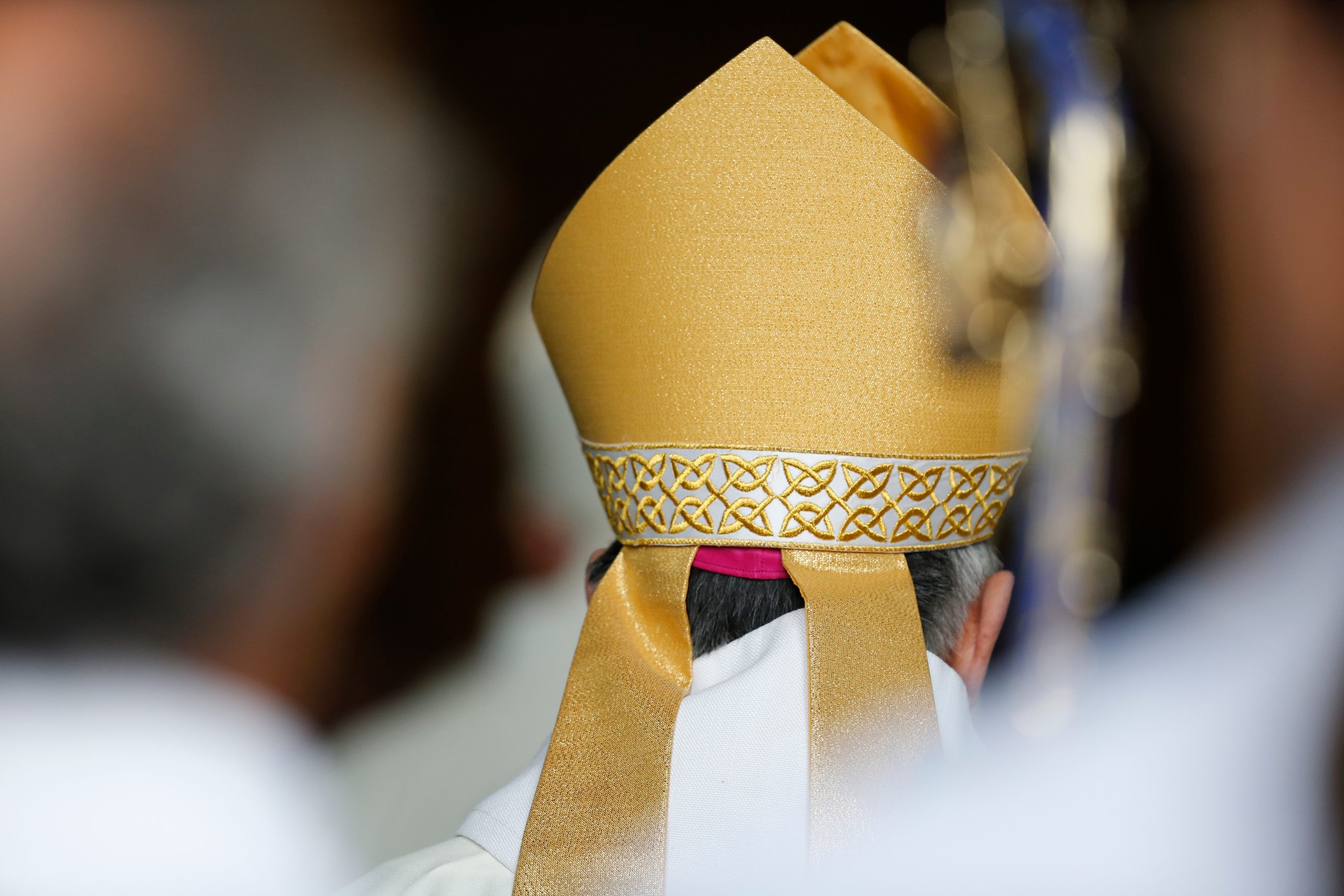
With the retirement of Bishop Peter Fabbro, Bishop Daniel J. Miehm of the Diocese of Peterborough has been appointed the new bishop of London, Ontario, Canada. He will be installed on June 29.

Read More
Cardinals in Rome remember Pope Francis as missionary to all 1 year after death #Catholic Rome remembered Pope Francis' legacy one year after his death with a Mass on Tuesday at the Basilica of St. Mary Major, where the late pontiff is buried.The same day, while en route to Equatorial Guinea to wrap up his trip to Africa, Pope Leo XIV remembered Pope Francis on the first anniversary of his death, highlighting his predecessorʼs “solidarity with the poorest, the most vulnerable, the sick, children, and the elderly.”
 
 Cardinal Rolandas Makrickas, archpriest of the Basilica of St. Mary Major, sprinkles holy water on the tomb of Pope Francis at the aforementioned basilica in Rome on April 21, 2026. | Credit: Daniel Ibanez/EWTN News
 
 Cardinal Giovanni Battista Re, dean of the College of Cardinals, celebrated the Mass with other cardinals and clergy resident in Rome. He read Leoʼs message at the Mass, in which the pope recalled Francis' missionary zeal.“He was also a missionary, proclaiming the Gospel of mercy ‘to everyone, everyone, everyone,’” Leo wrote. “In harmony with his predecessors, he took up the legacy of the Second Vatican Council and urged the Church to be open to mission, a guardian of the world’s hope, passionate about proclaiming that Gospel which is capable of giving every life fulfillment and happiness.”
 
 Cardinal Giovanni Battista Re, dean of the College of Cardinals, preaches at Mass for the first anniversary of the death of Pope Francis at the Basilica of St. Mary Major in Rome on April 21, 2026. | Credit: Daniel Ibanez/EWTN News
 
 Re described Leoʼs message as an invitation to preserve the legacy of Pope Francis, rooted in his “exhortation to build bridges and not walls.”“The heart of this message seems to me a vibrant invitation to preserve the spiritual legacy of the late Pope Francis. A legacy summarized, as we have heard, through several of his key phrases: ‘the joy of the Gospel,’ ‘the mercy of God,’ ‘the smell of the sheep,’” Re said.
 
 A special plaque commemorating the visits of Pope Francis to the Marian icon “Salus Populi Romani” is displayed at the Basilica of St. Mary Major in Rome on April 21, 2026. | Credit: Daniel Ibanez/EWTN News
 
 Before the Mass, a special plaque was blessed and unveiled to commemorate Francis' many visits to the Basilica of St. Mary Major. During his life, Francis frequently visited the basilica to venerate the Marian icon “Salus Populi Romani” and expressed his wish to be buried in the church near the icon.The Mass was also attended by several ambassadors accredited to the Holy See, including Irish Ambassador Frances Collins and U.S. Ambassador Brian Burch.After the Mass, all the cardinals processed to Francis' tomb for the final prayer, delivered by Cardinal Rolandas Makrickas, archpriest of the basilica. Commending the late pontiff to the mercy of God, Makrickas recalled that “hope does not disappoint,” a tribute to the papal bull with which Francis inaugurated the Jubilee Year 2025, which drew over 20 million people to St. Mary Major and his tomb.

Cardinals in Rome remember Pope Francis as missionary to all 1 year after death #Catholic Rome remembered Pope Francis' legacy one year after his death with a Mass on Tuesday at the Basilica of St. Mary Major, where the late pontiff is buried.The same day, while en route to Equatorial Guinea to wrap up his trip to Africa, Pope Leo XIV remembered Pope Francis on the first anniversary of his death, highlighting his predecessorʼs “solidarity with the poorest, the most vulnerable, the sick, children, and the elderly.” Cardinal Rolandas Makrickas, archpriest of the Basilica of St. Mary Major, sprinkles holy water on the tomb of Pope Francis at the aforementioned basilica in Rome on April 21, 2026. | Credit: Daniel Ibanez/EWTN News Cardinal Giovanni Battista Re, dean of the College of Cardinals, celebrated the Mass with other cardinals and clergy resident in Rome. He read Leoʼs message at the Mass, in which the pope recalled Francis' missionary zeal.“He was also a missionary, proclaiming the Gospel of mercy ‘to everyone, everyone, everyone,’” Leo wrote. “In harmony with his predecessors, he took up the legacy of the Second Vatican Council and urged the Church to be open to mission, a guardian of the world’s hope, passionate about proclaiming that Gospel which is capable of giving every life fulfillment and happiness.” Cardinal Giovanni Battista Re, dean of the College of Cardinals, preaches at Mass for the first anniversary of the death of Pope Francis at the Basilica of St. Mary Major in Rome on April 21, 2026. | Credit: Daniel Ibanez/EWTN News Re described Leoʼs message as an invitation to preserve the legacy of Pope Francis, rooted in his “exhortation to build bridges and not walls.”“The heart of this message seems to me a vibrant invitation to preserve the spiritual legacy of the late Pope Francis. A legacy summarized, as we have heard, through several of his key phrases: ‘the joy of the Gospel,’ ‘the mercy of God,’ ‘the smell of the sheep,’” Re said. A special plaque commemorating the visits of Pope Francis to the Marian icon “Salus Populi Romani” is displayed at the Basilica of St. Mary Major in Rome on April 21, 2026. | Credit: Daniel Ibanez/EWTN News Before the Mass, a special plaque was blessed and unveiled to commemorate Francis' many visits to the Basilica of St. Mary Major. During his life, Francis frequently visited the basilica to venerate the Marian icon “Salus Populi Romani” and expressed his wish to be buried in the church near the icon.The Mass was also attended by several ambassadors accredited to the Holy See, including Irish Ambassador Frances Collins and U.S. Ambassador Brian Burch.After the Mass, all the cardinals processed to Francis' tomb for the final prayer, delivered by Cardinal Rolandas Makrickas, archpriest of the basilica. Commending the late pontiff to the mercy of God, Makrickas recalled that “hope does not disappoint,” a tribute to the papal bull with which Francis inaugurated the Jubilee Year 2025, which drew over 20 million people to St. Mary Major and his tomb.

Pope Leo XIV, who is traveling in Africa, sent a message to be read at the Mass commemorating the first anniversary of Pope Francis’ death.

Read More
Pope Leo XIV says debate with Trump is ‘not in my interest at all’ #Catholic ABOARD THE PAPAL PLANE — Pope Leo XIV arrived in Angola after a two-and-a-half-hour flight from Cameroon on April 18, using the short journey to reject suggestions that his recent remarks about war were aimed at U.S. President Donald Trump while reflecting on the pastoral focus of his African trip.In a brief in-flight press conference with journalists, the pope addressed the interpretation of some of his recent speeches as a response to criticism from Trump, who had accused him of weakness in foreign policy.“[T]hereʼs been a certain narrative that has not been accurate in all of its aspects, but because of the political situation created when on the first day of the trip, the President of the United States made some comments about myself,” the pope said.“Much of what has been written since then has been more commentary on commentary, trying to interpret what has been said.”He pointed in particular to his address at the April 16 prayer meeting for peace in Cameroon.“Just one little example, the talk that I gave at the prayer meeting for peace a couple days ago was prepared two weeks ago, well before the president ever commented on myself and on the message of peace that I am promoting,” he said.“And yet, as it happens, it was looked at as if I was trying to debate again the president, which is not in my interest at all.”Leo XIV said he intends instead to continue proclaiming the Gospel and promoting peace.“So we go on the journey, we continue proclaiming the Gospel message,” he said.He added that the liturgies during the trip have highlighted what it means to follow Christ, promote fraternity, and seek justice and peace.The pope also said the broader African journey has been shaped by themes that emerged at the start of the trip in Algeria, especially the figure of St. Augustine.“I was personally very pleased, as you know, we began the trip in Algeria with the theme of Saint Augustine, and yesterday at the Catholic University, we had the blessing of that beautiful monument that they had prepared with a map of Africa and Saint Augustine at the center,” he said.“And so in one sense, it expresses part of what this trip is about.”Leo XIV emphasized that his primary purpose in Africa is to accompany Catholics.“And I primarily come to Africa as pastor, as the head of the Catholic Church, to be with, to celebrate with, to encourage and accompany all of the Catholics throughout Africa.”He also referred to a meeting with imams in Cameroon, describing it in general terms as part of the Church’s continuing commitment to interreligious dialogue, understanding, and peace-building.He concluded his main remarks by thanking journalists for their work and expressing hope that God would continue to bless the journey.Responding later to a French journalist, Leo XIV expressed gratitude for the reception he received in Cameroon.“I would just like to thank everyone in Cameroon for the wonderful welcome, the great enthusiasm, the joy of the people,” he said.“It was absolutely fantastic, the experience … how wonderful it is to experience what it means to be a follower of Jesus Christ and to celebrate our faith together.”The pope’s flight took him from Yaoundé to Luanda, crossing over Cameroon, Equatorial Guinea, Gabon, the Democratic Republic of Congo, and Angola. Angola is the third and penultimate stop of his African journey.The Catholic Church has longstanding ties with Angola. Formal relations date back centuries, including the 1608 appointment of Antonio Manuel Nyunda as the first ambassador to Rome from the then-Kingdom of Kongo. More recently, in 2019, the Holy See and Angola signed an agreement recognizing the legal personality of the Catholic Church and defining its property rights.This story was first published by ACI Stampa, the Italian-language sister service of EWTN News. It has been translated and adapted by EWTN News English.

Pope Leo XIV says debate with Trump is ‘not in my interest at all’ #Catholic ABOARD THE PAPAL PLANE — Pope Leo XIV arrived in Angola after a two-and-a-half-hour flight from Cameroon on April 18, using the short journey to reject suggestions that his recent remarks about war were aimed at U.S. President Donald Trump while reflecting on the pastoral focus of his African trip.In a brief in-flight press conference with journalists, the pope addressed the interpretation of some of his recent speeches as a response to criticism from Trump, who had accused him of weakness in foreign policy.“[T]hereʼs been a certain narrative that has not been accurate in all of its aspects, but because of the political situation created when on the first day of the trip, the President of the United States made some comments about myself,” the pope said.“Much of what has been written since then has been more commentary on commentary, trying to interpret what has been said.”He pointed in particular to his address at the April 16 prayer meeting for peace in Cameroon.“Just one little example, the talk that I gave at the prayer meeting for peace a couple days ago was prepared two weeks ago, well before the president ever commented on myself and on the message of peace that I am promoting,” he said.“And yet, as it happens, it was looked at as if I was trying to debate again the president, which is not in my interest at all.”Leo XIV said he intends instead to continue proclaiming the Gospel and promoting peace.“So we go on the journey, we continue proclaiming the Gospel message,” he said.He added that the liturgies during the trip have highlighted what it means to follow Christ, promote fraternity, and seek justice and peace.The pope also said the broader African journey has been shaped by themes that emerged at the start of the trip in Algeria, especially the figure of St. Augustine.“I was personally very pleased, as you know, we began the trip in Algeria with the theme of Saint Augustine, and yesterday at the Catholic University, we had the blessing of that beautiful monument that they had prepared with a map of Africa and Saint Augustine at the center,” he said.“And so in one sense, it expresses part of what this trip is about.”Leo XIV emphasized that his primary purpose in Africa is to accompany Catholics.“And I primarily come to Africa as pastor, as the head of the Catholic Church, to be with, to celebrate with, to encourage and accompany all of the Catholics throughout Africa.”He also referred to a meeting with imams in Cameroon, describing it in general terms as part of the Church’s continuing commitment to interreligious dialogue, understanding, and peace-building.He concluded his main remarks by thanking journalists for their work and expressing hope that God would continue to bless the journey.Responding later to a French journalist, Leo XIV expressed gratitude for the reception he received in Cameroon.“I would just like to thank everyone in Cameroon for the wonderful welcome, the great enthusiasm, the joy of the people,” he said.“It was absolutely fantastic, the experience … how wonderful it is to experience what it means to be a follower of Jesus Christ and to celebrate our faith together.”The pope’s flight took him from Yaoundé to Luanda, crossing over Cameroon, Equatorial Guinea, Gabon, the Democratic Republic of Congo, and Angola. Angola is the third and penultimate stop of his African journey.The Catholic Church has longstanding ties with Angola. Formal relations date back centuries, including the 1608 appointment of Antonio Manuel Nyunda as the first ambassador to Rome from the then-Kingdom of Kongo. More recently, in 2019, the Holy See and Angola signed an agreement recognizing the legal personality of the Catholic Church and defining its property rights.This story was first published by ACI Stampa, the Italian-language sister service of EWTN News. It has been translated and adapted by EWTN News English.

En route from Cameroon to Angola, the pope said his mission in Africa is pastoral and rejected suggestions that his recent remarks were aimed at President Donald Trump.

Read More
U.S. Embassy to the Vatican: Nigerian Christians are being targeted #Catholic ROME — It is “intolerable” that Christians are being targeted for persecution in Nigeria, said U.S. Ambassador to the Holy See Brian Burch during an event in Rome on Friday.The group Solidarity with the Persecuted Church (SPC) and the Embassy of the United States to the Holy See organized the April 17 conference at the embassy on threats to religious freedom in Nigeria.Burch spoke to EWTN News on the sidelines about the stance of the U.S. on religious violence in Nigeria. He described the current situation as a “conflict between radical Islamic groups and Christians because of their faith.”“The United States is the greatest friend of religious liberty,” Burch said. “The purpose of this event is to call attention to the plight of Christians who are being targeted and killed in Nigeria. Unfortunately, there are extremist Islamic groups that have been targeting Christians specifically in their churches and their homes, and the scale and size of the persecution of Christians there is intolerable.”Asked about the denial by some Nigerian government officials that Christians specifically are being targeted, Burch insisted that the current violence against Christians is alarming, citing U.S. President Donald Trump, who designated Nigeria as a country of particular concern in 2025.“The president has said that Christians face an existential crisis in Nigeria, and thanks to his leadership, he is now acting to bring an end to this. We have called on the Nigerian government to take necessary steps to protect Christians, and the United States government is now working in partnership with the Nigerian government to assist them in doing just that,” he said.Steven Wagner, president of SPC, underscored the importance of Nigeria for Christianity in Africa and the need for the Holy See to be involved in raising awareness.“As Nigeria goes, so goes Africa. More Christians are martyred for their faith in Nigeria than in any other country on earth. There is a huge crisis of internally displaced persons. We are calling on the Vatican to increase public awareness of the problem and to continue to encourage the government of Nigeria to make progress in protecting its people,” Wagner said.Burch responds to Trump’s comments on the popeIn his opening remarks at the conference, Burch commented for the first time on the recent tensions between Trump and Pope Leo XIV. He emphasized their difference in approach to armed conflicts and their shared goal of eliminating evil.“In recent days, President Trump and Pope Leo have exchanged, shall we say, sharp words. We must not pretend there is no disagreement. But both men are driven by an unshakable belief in protecting the innocent. One leads with the sword and shield of American power, the other with the cross of sacrificial love. But both are saying in their own languages, ‘Evil must not triumph and innocence must not be abandoned,’” Burch said.Papal trip in AfricaThe pontiff is currently on his first apostolic journey to Africa — visiting Algeria, Cameroon, Angola, and Equatorial Guinea.Archbishop Fortunatus Nwachukwu, secretary of the Dicastery for Evangelization and a presenter at the conference, described the trip as a moment of profound unity for all Africans.“This is Africa, and much of the divisions, according to countries in Africa, are artificial divisions that were imposed on the continent,” Nwachukwu told EWTN News. “Africans quite often feel united even beyond the boundaries. So the popeʼs message to these churches and these populations will also be a message to the population in Nigeria and to the Church in Nigeria.”Many of the issues the pope is addressing on his trip “are shared in common in Nigeria,” Burch added. The Holy See and the United States “certainly share this deep, fundamental commitment to religious liberty.”

U.S. Embassy to the Vatican: Nigerian Christians are being targeted #Catholic ROME — It is “intolerable” that Christians are being targeted for persecution in Nigeria, said U.S. Ambassador to the Holy See Brian Burch during an event in Rome on Friday.The group Solidarity with the Persecuted Church (SPC) and the Embassy of the United States to the Holy See organized the April 17 conference at the embassy on threats to religious freedom in Nigeria.Burch spoke to EWTN News on the sidelines about the stance of the U.S. on religious violence in Nigeria. He described the current situation as a “conflict between radical Islamic groups and Christians because of their faith.”“The United States is the greatest friend of religious liberty,” Burch said. “The purpose of this event is to call attention to the plight of Christians who are being targeted and killed in Nigeria. Unfortunately, there are extremist Islamic groups that have been targeting Christians specifically in their churches and their homes, and the scale and size of the persecution of Christians there is intolerable.”Asked about the denial by some Nigerian government officials that Christians specifically are being targeted, Burch insisted that the current violence against Christians is alarming, citing U.S. President Donald Trump, who designated Nigeria as a country of particular concern in 2025.“The president has said that Christians face an existential crisis in Nigeria, and thanks to his leadership, he is now acting to bring an end to this. We have called on the Nigerian government to take necessary steps to protect Christians, and the United States government is now working in partnership with the Nigerian government to assist them in doing just that,” he said.Steven Wagner, president of SPC, underscored the importance of Nigeria for Christianity in Africa and the need for the Holy See to be involved in raising awareness.“As Nigeria goes, so goes Africa. More Christians are martyred for their faith in Nigeria than in any other country on earth. There is a huge crisis of internally displaced persons. We are calling on the Vatican to increase public awareness of the problem and to continue to encourage the government of Nigeria to make progress in protecting its people,” Wagner said.Burch responds to Trump’s comments on the popeIn his opening remarks at the conference, Burch commented for the first time on the recent tensions between Trump and Pope Leo XIV. He emphasized their difference in approach to armed conflicts and their shared goal of eliminating evil.“In recent days, President Trump and Pope Leo have exchanged, shall we say, sharp words. We must not pretend there is no disagreement. But both men are driven by an unshakable belief in protecting the innocent. One leads with the sword and shield of American power, the other with the cross of sacrificial love. But both are saying in their own languages, ‘Evil must not triumph and innocence must not be abandoned,’” Burch said.Papal trip in AfricaThe pontiff is currently on his first apostolic journey to Africa — visiting Algeria, Cameroon, Angola, and Equatorial Guinea.Archbishop Fortunatus Nwachukwu, secretary of the Dicastery for Evangelization and a presenter at the conference, described the trip as a moment of profound unity for all Africans.“This is Africa, and much of the divisions, according to countries in Africa, are artificial divisions that were imposed on the continent,” Nwachukwu told EWTN News. “Africans quite often feel united even beyond the boundaries. So the popeʼs message to these churches and these populations will also be a message to the population in Nigeria and to the Church in Nigeria.”Many of the issues the pope is addressing on his trip “are shared in common in Nigeria,” Burch added. The Holy See and the United States “certainly share this deep, fundamental commitment to religious liberty.”

Ambassador Brian Burch described the situation in Nigeria as a “conflict between radical Islamic groups and Christians because of their faith.”

Read More
Chaldean Church chooses Archbishop Amel Nona as patriarch, succeeding Cardinal Sako #Catholic The Chaldean Synod has elected Archbishop Amel Shamon Nona as the new Patriarch of the Chaldean Catholic Church, succeeding Cardinal Louis Raphael Sako, who submitted his resignation to Pope Leo XIV on March 9 amid a financial and legal scandal concerning a former Chaldean bishop in San Diego.The election took place during the synod’s meetings held in Rome since April 9.This election comes at a critical time for both the Chaldean Church and the wider region, amid ongoing political challenges in Iraq and the Middle East, as well as internal ecclesial issues related to unity and the organization of Church life both locally and in the diaspora.Following the election, the Chaldean bishops issued a statement saying:“After deep spiritual and fraternal deliberations, conducted in a spirit of prayer and ecclesial discernment, and mindful of the apostolic responsibility entrusted to them, the Fathers of the Synod elected the Patriarch of the Chaldean Church according to the established canonical procedures. After completing the required ballots, and in accordance with the will expressed by the Synod, His Excellency Archbishop Amel Shamon Nona was elected Patriarch of the Chaldean Church and chose for himself the name His Beatitude Patriarch Mar Paul III Nona.”The statement continued: “His Beatitude accepted the election in accordance with canonical norms, expressing his reliance on God’s grace and his commitment to exercise his patriarchal ministry with fidelity and responsibility, in full communion with the Fathers of the Synod, in service of the unity of the Chaldean Church and its mission in the homeland and the diaspora.”“The Fathers of the Synod raise their prayers to the Lord Jesus Christ, the Good Shepherd, asking that He grant the elected Patriarch wisdom and strength,“ the statement continued. ”They affirm their confidence that this ministry will contribute to strengthening the faithful in their faith, enhancing their unity, and revitalizing the Church’s mission in bearing witness to the Gospel.”The Synod also called on all members of the Chaldean Church — clergy and faithful alike — to unite around the new Patriarch and support him through prayer and shared responsibility for the good of the Church and the growth of its mission.Archbishop Nona was born in Alqosh in northern Iraq in 1967. He was ordained a priest in 1991 after completing his studies at the Patriarchal Seminary in Baghdad. He later pursued higher studies in Rome, earning a doctorate in theological anthropology from the Pontifical Lateran University.He served in the parishes of Alqosh before being appointed Archbishop of Mosul in 2009, during a period marked by escalating violence against Christians in Iraq.During the events of 2014, he left Mosul along with his faithful following the takeover of the city by the terrorist group ISIS, marking a pivotal moment in the modern history of the Chaldean Church.In 2015, the Holy See appointed him head of the Chaldean Eparchy of St. Thomas the Apostle in Australia and New Zealand, where he continued his pastoral ministry among the Chaldean diaspora.His appointment comes following the resignation of Cardinal Raphael Sako, who announced that he submitted his resignation to Pope Leo XIV of his own free will on the morning of March 9 so he could “dedicate himself quietly to prayer, writing, and simple service.”The timing sparked controversy within the Chaldean community. Pope Leo XIV on March 10 accepted the resignation of Bishop Emanuel Shaleta, a Chaldean Catholic bishop arrested in San Diego in March on charges of embezzling Church funds.Sako had allegedly attempted to support or transfer the embattled bishop to a higher position, leading many to question whether the financial scandal played a role in the patriarch’s decision.This story was first published by ACI MENA, the Arabic-language sister service of EWTN News. It has been translated and adapted by EWTN News English.

Chaldean Church chooses Archbishop Amel Nona as patriarch, succeeding Cardinal Sako #Catholic The Chaldean Synod has elected Archbishop Amel Shamon Nona as the new Patriarch of the Chaldean Catholic Church, succeeding Cardinal Louis Raphael Sako, who submitted his resignation to Pope Leo XIV on March 9 amid a financial and legal scandal concerning a former Chaldean bishop in San Diego.The election took place during the synod’s meetings held in Rome since April 9.This election comes at a critical time for both the Chaldean Church and the wider region, amid ongoing political challenges in Iraq and the Middle East, as well as internal ecclesial issues related to unity and the organization of Church life both locally and in the diaspora.Following the election, the Chaldean bishops issued a statement saying:“After deep spiritual and fraternal deliberations, conducted in a spirit of prayer and ecclesial discernment, and mindful of the apostolic responsibility entrusted to them, the Fathers of the Synod elected the Patriarch of the Chaldean Church according to the established canonical procedures. After completing the required ballots, and in accordance with the will expressed by the Synod, His Excellency Archbishop Amel Shamon Nona was elected Patriarch of the Chaldean Church and chose for himself the name His Beatitude Patriarch Mar Paul III Nona.”The statement continued: “His Beatitude accepted the election in accordance with canonical norms, expressing his reliance on God’s grace and his commitment to exercise his patriarchal ministry with fidelity and responsibility, in full communion with the Fathers of the Synod, in service of the unity of the Chaldean Church and its mission in the homeland and the diaspora.”“The Fathers of the Synod raise their prayers to the Lord Jesus Christ, the Good Shepherd, asking that He grant the elected Patriarch wisdom and strength,“ the statement continued. ”They affirm their confidence that this ministry will contribute to strengthening the faithful in their faith, enhancing their unity, and revitalizing the Church’s mission in bearing witness to the Gospel.”The Synod also called on all members of the Chaldean Church — clergy and faithful alike — to unite around the new Patriarch and support him through prayer and shared responsibility for the good of the Church and the growth of its mission.Archbishop Nona was born in Alqosh in northern Iraq in 1967. He was ordained a priest in 1991 after completing his studies at the Patriarchal Seminary in Baghdad. He later pursued higher studies in Rome, earning a doctorate in theological anthropology from the Pontifical Lateran University.He served in the parishes of Alqosh before being appointed Archbishop of Mosul in 2009, during a period marked by escalating violence against Christians in Iraq.During the events of 2014, he left Mosul along with his faithful following the takeover of the city by the terrorist group ISIS, marking a pivotal moment in the modern history of the Chaldean Church.In 2015, the Holy See appointed him head of the Chaldean Eparchy of St. Thomas the Apostle in Australia and New Zealand, where he continued his pastoral ministry among the Chaldean diaspora.His appointment comes following the resignation of Cardinal Raphael Sako, who announced that he submitted his resignation to Pope Leo XIV of his own free will on the morning of March 9 so he could “dedicate himself quietly to prayer, writing, and simple service.”The timing sparked controversy within the Chaldean community. Pope Leo XIV on March 10 accepted the resignation of Bishop Emanuel Shaleta, a Chaldean Catholic bishop arrested in San Diego in March on charges of embezzling Church funds.Sako had allegedly attempted to support or transfer the embattled bishop to a higher position, leading many to question whether the financial scandal played a role in the patriarch’s decision.This story was first published by ACI MENA, the Arabic-language sister service of EWTN News. It has been translated and adapted by EWTN News English.

His appointment comes following the resignation of Cardinal Raphael Sako, who submitted his resignation to Pope Leo XIV on March 9 amid a legal and financial scandal surrounding a former bishop.

Read More
Pope Leo names Father Andrea Ciucci chancellor of Pontifical Academy for Life #Catholic Pope Leo XIV on Friday appointed Father Andrea Ciucci chancellor of the Pontifical Academy for Life. The Italian priest has served as the academyʼs secretariat coordinator since 2016.Originally from Milan, the 59-year-old Ciucci has a doctorate in the philosophy of religion from the Pontifical University of Sant’Anselmo in Rome. After serving as a parish vicar in Milan, he worked at the former Pontifical Council for the Family from 2012–2016.He is also the general secretary of the RenAIssance Foundation, a Vatican institution that promotes an ethical perspective on artificial intelligence.Ciucci is a professor at the Pontifical Theological Institute John Paul II in Rome and he is a public speaker and writer on the topic of new technologies and their influence on young people and families.Last month, the president of the Pontifical Academy for Life, Renzo Pegoraro, received the title of “bishop” from Pope Leo for his role.Pegoraro was chancellor of the academy from 2011 until his appointment as president in May 2025.According to the academyʼs statutes, the chancellor “may represent the Pontifical Academy for Life on behalf of the president and collaborates with him in the direction and administration of the academy’s activities.”The Pontifical Academy for Life was founded in February 1994 by St. John Paul II. It is one of several academic and cultural institutions at the Vatican that bring together experts in their fields to discuss issues of relevance to the Church and the world.

Pope Leo names Father Andrea Ciucci chancellor of Pontifical Academy for Life #Catholic Pope Leo XIV on Friday appointed Father Andrea Ciucci chancellor of the Pontifical Academy for Life. The Italian priest has served as the academyʼs secretariat coordinator since 2016.Originally from Milan, the 59-year-old Ciucci has a doctorate in the philosophy of religion from the Pontifical University of Sant’Anselmo in Rome. After serving as a parish vicar in Milan, he worked at the former Pontifical Council for the Family from 2012–2016.He is also the general secretary of the RenAIssance Foundation, a Vatican institution that promotes an ethical perspective on artificial intelligence.Ciucci is a professor at the Pontifical Theological Institute John Paul II in Rome and he is a public speaker and writer on the topic of new technologies and their influence on young people and families.Last month, the president of the Pontifical Academy for Life, Renzo Pegoraro, received the title of “bishop” from Pope Leo for his role.Pegoraro was chancellor of the academy from 2011 until his appointment as president in May 2025.According to the academyʼs statutes, the chancellor “may represent the Pontifical Academy for Life on behalf of the president and collaborates with him in the direction and administration of the academy’s activities.”The Pontifical Academy for Life was founded in February 1994 by St. John Paul II. It is one of several academic and cultural institutions at the Vatican that bring together experts in their fields to discuss issues of relevance to the Church and the world.

The Italian priest has served as the academy’s secretariat coordinator since 2016.

Read More
Picture of the day


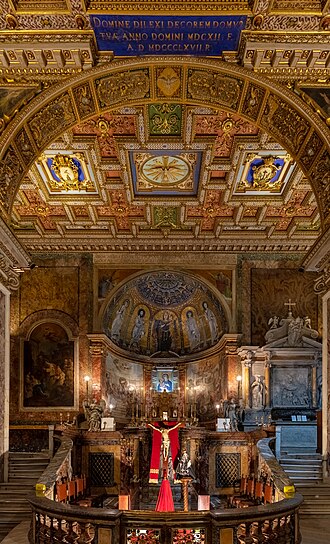
Basilica of Santa Francesca, Rome, Italy. A church at the site was known by the tenth century. It was named Santa Maria Nova (“New St Mary”), to distinguish it from the other church inside the Roman forum devoted to St Mary, Santa Maria Antiqua (“Ancient St Mary”), which had fallen into ruin by then. The relics from the ancient church were moved to this church under Pope Leo. Santa Maria Nuova was enlarged in the second half of the tenth century, and then rebuilt by Pope Honorius III in the thirteenth century, adding the campanile and the apse, as well as being decorated with a mosaic Maestà, a depiction of the Madonna enthroned accompanied by saints (as seen in the picture). Since 1352 the church has been in the care of the Olivetans. In the 16th century, the church was rededicated to Frances of Rome (Francesca Buzzi), who was canonized in 1608 and whose relics are in the crypt. The interior of the church has undergone many refurbishments.
 #ImageOfTheDay
Picture of the day
Basilica of Santa Francesca, Rome, Italy. A church at the site was known by the tenth century. It was named Santa Maria Nova (“New St Mary”), to distinguish it from the other church inside the Roman forum devoted to St Mary, Santa Maria Antiqua (“Ancient St Mary”), which had fallen into ruin by then. The relics from the ancient church were moved to this church under Pope Leo. Santa Maria Nuova was enlarged in the second half of the tenth century, and then rebuilt by Pope Honorius III in the thirteenth century, adding the campanile and the apse, as well as being decorated with a mosaic Maestà, a depiction of the Madonna enthroned accompanied by saints (as seen in the picture). Since 1352 the church has been in the care of the Olivetans. In the 16th century, the church was rededicated to Frances of Rome (Francesca Buzzi), who was canonized in 1608 and whose relics are in the crypt. The interior of the church has undergone many refurbishments.
Read More
Official delegation announced for Pope Leo XIV’s upcoming visit to Equatorial Guinea #Catholic EBEBIYÍN, Equatorial Guinea — Preparations for the planned apostolic visit of Pope Leo XIV to Equatorial Guinea have gained momentum, with Church authorities unveiling details of the high-level delegation expected to accompany the Holy Father during his visit scheduled for April 21–23.The announcement was made by Father Cristino Ela Engonga, secretary-general of the Episcopal Conference of Equatorial Guinea (CEGE) and general coordinator of the Church commission for the papal visit, during a strategic meeting that was held on March 28 at the bishop’s house in Bata Diocese.The meeting brought together members of various subcommissions from the dioceses of Bata, Ebibeyín, Evinayong, and Mongomo to assess ongoing preparations and receive updates from the Holy See regarding the historic visit, which will mark Pope Leo XIV’s first trip to Africa.According to Engonga, nearly 50 Vatican officials are expected to accompany the pontiff, including five cardinals. Among them is Cardinal Robert Sarah, prefect emeritus of the Dicastery for Divine Worship and the Discipline of the Sacraments.The pope is expected to visit key cities, including Malabo, Mongomo, and Bata, accompanied by senior Vatican officials such as Secretary of State Cardinal Pietro Parolin and Cardinal Luis Antonio Tagle, pro-prefect of the Dicastery for Evangelization.Other prominent members of the papal entourage include Cardinal George Jacob Koovakad, prefect of the Dicastery for Interreligious Dialogue, and Cardinal Peter Kodwo Appiah Turkson, chancellor of the Pontifical Academy of Social Sciences.They will be joined by 42 additional Vatican officials, including Monsignor José Nahúm Jairo Salas, who is responsible for coordinating papal international travels, as well as leading Vatican communicators such as Paolo Ruffini and Matteo Bruni.Beyond the papal entourage, the meeting also highlighted the participation of special guests, including Cardinal Fridolin Ambongo, president of the Symposium of Episcopal Conferences of Africa and Madagascar (SECAM), as well as Archbishop Luis Javier Argüello García, president of the Spanish Episcopal Conference (CEE).Engonga further said that more than 40 Catholic bishops from six central African countries have expressed their intention to attend the event.During the meeting, participants also received a report from the masters of ceremonies of CEGE, Fathers Julio Enrique Meheme and Diosdado Márquez Sabadell, who recently traveled to Rome to prepare the liturgical celebrations the pope will preside over.The Holy Father is expected to arrive in Malabo on Tuesday, April 21, the final leg of his four-nation African trip. Following the official welcome ceremony, he will meet the president of Equatorial Guinea and address political leaders, civil society representatives, and the diplomatic corps.In the afternoon, the pope will engage with academics and artists during a meeting with representatives of the world of culture at the León XIV Campus of the National University. A pastoral visit to patients and staff at the Jean Pierre Olie Psychiatric Hospital is also scheduled for this day.On Wednesday, April 22, the pope will travel to Mongomo to celebrate Mass at the Basilica of the Immaculate Conception before visiting the Pope Francis Technology School.Later in the day, the Holy Father will continue to Bata, where he is scheduled to visit a prison; pray at a memorial dedicated to victims of the March 7, 2021, explosion; and meet young people and families at Bata Stadium.The apostolic journey to Africa is to conclude on Thursday, April 23, with a final Mass celebrated by the pope at Malabo Stadium.Following the farewell ceremony at Malabo International Airport, the Holy Father will depart for Rome, arriving later that evening at Rome’s Fiumicino International Airport.This story was first published by ACI Africa, the sister service of EWTN News in Africa, and has been adapted by EWTN News.

Official delegation announced for Pope Leo XIV’s upcoming visit to Equatorial Guinea #Catholic EBEBIYÍN, Equatorial Guinea — Preparations for the planned apostolic visit of Pope Leo XIV to Equatorial Guinea have gained momentum, with Church authorities unveiling details of the high-level delegation expected to accompany the Holy Father during his visit scheduled for April 21–23.The announcement was made by Father Cristino Ela Engonga, secretary-general of the Episcopal Conference of Equatorial Guinea (CEGE) and general coordinator of the Church commission for the papal visit, during a strategic meeting that was held on March 28 at the bishop’s house in Bata Diocese.The meeting brought together members of various subcommissions from the dioceses of Bata, Ebibeyín, Evinayong, and Mongomo to assess ongoing preparations and receive updates from the Holy See regarding the historic visit, which will mark Pope Leo XIV’s first trip to Africa.According to Engonga, nearly 50 Vatican officials are expected to accompany the pontiff, including five cardinals. Among them is Cardinal Robert Sarah, prefect emeritus of the Dicastery for Divine Worship and the Discipline of the Sacraments.The pope is expected to visit key cities, including Malabo, Mongomo, and Bata, accompanied by senior Vatican officials such as Secretary of State Cardinal Pietro Parolin and Cardinal Luis Antonio Tagle, pro-prefect of the Dicastery for Evangelization.Other prominent members of the papal entourage include Cardinal George Jacob Koovakad, prefect of the Dicastery for Interreligious Dialogue, and Cardinal Peter Kodwo Appiah Turkson, chancellor of the Pontifical Academy of Social Sciences.They will be joined by 42 additional Vatican officials, including Monsignor José Nahúm Jairo Salas, who is responsible for coordinating papal international travels, as well as leading Vatican communicators such as Paolo Ruffini and Matteo Bruni.Beyond the papal entourage, the meeting also highlighted the participation of special guests, including Cardinal Fridolin Ambongo, president of the Symposium of Episcopal Conferences of Africa and Madagascar (SECAM), as well as Archbishop Luis Javier Argüello García, president of the Spanish Episcopal Conference (CEE).Engonga further said that more than 40 Catholic bishops from six central African countries have expressed their intention to attend the event.During the meeting, participants also received a report from the masters of ceremonies of CEGE, Fathers Julio Enrique Meheme and Diosdado Márquez Sabadell, who recently traveled to Rome to prepare the liturgical celebrations the pope will preside over.The Holy Father is expected to arrive in Malabo on Tuesday, April 21, the final leg of his four-nation African trip. Following the official welcome ceremony, he will meet the president of Equatorial Guinea and address political leaders, civil society representatives, and the diplomatic corps.In the afternoon, the pope will engage with academics and artists during a meeting with representatives of the world of culture at the León XIV Campus of the National University. A pastoral visit to patients and staff at the Jean Pierre Olie Psychiatric Hospital is also scheduled for this day.On Wednesday, April 22, the pope will travel to Mongomo to celebrate Mass at the Basilica of the Immaculate Conception before visiting the Pope Francis Technology School.Later in the day, the Holy Father will continue to Bata, where he is scheduled to visit a prison; pray at a memorial dedicated to victims of the March 7, 2021, explosion; and meet young people and families at Bata Stadium.The apostolic journey to Africa is to conclude on Thursday, April 23, with a final Mass celebrated by the pope at Malabo Stadium.Following the farewell ceremony at Malabo International Airport, the Holy Father will depart for Rome, arriving later that evening at Rome’s Fiumicino International Airport.This story was first published by ACI Africa, the sister service of EWTN News in Africa, and has been adapted by EWTN News.

Church authorities unveiled details of the official delegation expected to accompany the Holy Father during his visit scheduled for April 21–23.

Read More
Pope Leo XIV: ‘Kneel down as brothers and sisters alongside the oppressed’ #Catholic Pope Leo XIV on Holy Thursday returned the Mass of the Lord’s Supper to the Basilica of St. John Lateran, reviving a papal practice last observed there in 2012 under Benedict XVI.Departing from Pope Francis’ custom of celebrating the liturgy in prisons or migrant centers, Leo celebrated the rite in the cathedral of Rome and washed the feet of 12 priests of the Diocese of Rome.In his homily, the pope framed the liturgy as the solemn entrance into the Easter Triduum and said Christ’s love, shown in both the Eucharist and the washing of the feet, reveals the justice of God in a world wounded by evil.“This evening’s solemn liturgy marks our entry into the holy Triduum of the Lord’s passion, death, and resurrection,” Leo said. “We cross this threshold not as mere spectators, nor out of habit, but as those personally invited by Jesus himself as guests at the Supper in which bread and wine become for us the sacrament of salvation.”“His love becomes both gesture and nourishment for all, revealing the justice of God,” the pope said. “In this world, and particularly in those places where evil abounds, Jesus loves definitively — forever, and with his whole being.”Reflecting on the washing of the feet, Leo said the gesture is not simply a moral lesson but a revelation of God’s own way of loving.“What the Lord shows us — taking the water, the basin, and the towel — is far more than a moral example,” he said. “He entrusts to us his very way of life. The washing of the feet is a gesture that encapsulates the revelation of God.”The pope also cited Benedict XVI, recalling that Christians must repeatedly learn that God’s greatness is unlike worldly greatness. “We too must ‘learn repeatedly that God’s greatness is different from our idea of greatness… because we systematically desire a God of success and not of the Passion,’” Leo said.He warned that human beings are tempted to seek a God who grants success, victory, or usefulness like wealth and power rather than recognizing the divine power revealed in humble service.“Yet we fail to perceive that God does indeed serve us through the gratuitous and humble gesture of washing feet,” Leo said. “This is the true omnipotence of God.”The pope said Jesus’ action purifies both humanity’s false image of God and its false image of man.“For we tend to consider ourselves powerful when we dominate, victorious when we destroy our equals, great when we are feared,” he said. “In contrast, as true God and true man, Christ offers us the example of self-giving, service, and love.”Leo stressed that Christ gave this example not in a moment of acclaim but “on the night he was betrayed, in the darkness of incomprehension and violence.”“In this way, it becomes clear that the Lord’s love precedes our own goodness or purity; he loves us first, and in that love, he forgives and restores us,” the pope said.Quoting St. John’s Gospel, Leo urged Christians to live out mutual service in imitation of Christ: “He does not ask us to repay him but to share his gift among ourselves: ‘You also ought to wash one another’s feet.’”The pope also referred to Pope Francis’ 2013 Holy Thursday homily, noting that Christian service cannot be reduced to abstraction or empty obligation but must spring from charity.Allowing oneself to be served by the Lord, Leo said, is a precondition for serving others. “By washing our bodies, Jesus purifies our souls,” he said. “In him, God has given us an example — not of how to dominate, but of how to liberate; not of how to destroy life, but of how to give it.”In one of the homily’s strongest appeals, the pope turned to the suffering of those crushed by violence and oppression.“As humanity is brought to its knees by so many acts of brutality, let us too kneel down as brothers and sisters alongside the oppressed,” he said.Leo said the liturgy of Holy Thursday draws together the institution of the Eucharist and holy orders, revealing “the perfect self-gift of Jesus, the High Priest and living, eternal Eucharist.”Addressing priests directly, he said: “Beloved brothers in the priesthood, we are called to serve the people of God with our whole lives.”He concluded by inviting Catholics to spend time in Eucharistic adoration and to ask for the grace to imitate Christ’s love.“Holy Thursday is therefore a day of fervent gratitude and authentic fraternity,” the pope said. “May this evening’s Eucharistic adoration, in every parish and community, be a time to contemplate Jesus’ gesture, kneeling as he did, and to ask for the strength to imitate his service with the same love.”This story was first published by ACI Stampa, the Italian-language sister service of EWTN News. It has been translated and adapted by EWTN News English.

Pope Leo XIV: ‘Kneel down as brothers and sisters alongside the oppressed’ #Catholic Pope Leo XIV on Holy Thursday returned the Mass of the Lord’s Supper to the Basilica of St. John Lateran, reviving a papal practice last observed there in 2012 under Benedict XVI.Departing from Pope Francis’ custom of celebrating the liturgy in prisons or migrant centers, Leo celebrated the rite in the cathedral of Rome and washed the feet of 12 priests of the Diocese of Rome.In his homily, the pope framed the liturgy as the solemn entrance into the Easter Triduum and said Christ’s love, shown in both the Eucharist and the washing of the feet, reveals the justice of God in a world wounded by evil.“This evening’s solemn liturgy marks our entry into the holy Triduum of the Lord’s passion, death, and resurrection,” Leo said. “We cross this threshold not as mere spectators, nor out of habit, but as those personally invited by Jesus himself as guests at the Supper in which bread and wine become for us the sacrament of salvation.”“His love becomes both gesture and nourishment for all, revealing the justice of God,” the pope said. “In this world, and particularly in those places where evil abounds, Jesus loves definitively — forever, and with his whole being.”Reflecting on the washing of the feet, Leo said the gesture is not simply a moral lesson but a revelation of God’s own way of loving.“What the Lord shows us — taking the water, the basin, and the towel — is far more than a moral example,” he said. “He entrusts to us his very way of life. The washing of the feet is a gesture that encapsulates the revelation of God.”The pope also cited Benedict XVI, recalling that Christians must repeatedly learn that God’s greatness is unlike worldly greatness. “We too must ‘learn repeatedly that God’s greatness is different from our idea of greatness… because we systematically desire a God of success and not of the Passion,’” Leo said.He warned that human beings are tempted to seek a God who grants success, victory, or usefulness like wealth and power rather than recognizing the divine power revealed in humble service.“Yet we fail to perceive that God does indeed serve us through the gratuitous and humble gesture of washing feet,” Leo said. “This is the true omnipotence of God.”The pope said Jesus’ action purifies both humanity’s false image of God and its false image of man.“For we tend to consider ourselves powerful when we dominate, victorious when we destroy our equals, great when we are feared,” he said. “In contrast, as true God and true man, Christ offers us the example of self-giving, service, and love.”Leo stressed that Christ gave this example not in a moment of acclaim but “on the night he was betrayed, in the darkness of incomprehension and violence.”“In this way, it becomes clear that the Lord’s love precedes our own goodness or purity; he loves us first, and in that love, he forgives and restores us,” the pope said.Quoting St. John’s Gospel, Leo urged Christians to live out mutual service in imitation of Christ: “He does not ask us to repay him but to share his gift among ourselves: ‘You also ought to wash one another’s feet.’”The pope also referred to Pope Francis’ 2013 Holy Thursday homily, noting that Christian service cannot be reduced to abstraction or empty obligation but must spring from charity.Allowing oneself to be served by the Lord, Leo said, is a precondition for serving others. “By washing our bodies, Jesus purifies our souls,” he said. “In him, God has given us an example — not of how to dominate, but of how to liberate; not of how to destroy life, but of how to give it.”In one of the homily’s strongest appeals, the pope turned to the suffering of those crushed by violence and oppression.“As humanity is brought to its knees by so many acts of brutality, let us too kneel down as brothers and sisters alongside the oppressed,” he said.Leo said the liturgy of Holy Thursday draws together the institution of the Eucharist and holy orders, revealing “the perfect self-gift of Jesus, the High Priest and living, eternal Eucharist.”Addressing priests directly, he said: “Beloved brothers in the priesthood, we are called to serve the people of God with our whole lives.”He concluded by inviting Catholics to spend time in Eucharistic adoration and to ask for the grace to imitate Christ’s love.“Holy Thursday is therefore a day of fervent gratitude and authentic fraternity,” the pope said. “May this evening’s Eucharistic adoration, in every parish and community, be a time to contemplate Jesus’ gesture, kneeling as he did, and to ask for the strength to imitate his service with the same love.”This story was first published by ACI Stampa, the Italian-language sister service of EWTN News. It has been translated and adapted by EWTN News English.

On Holy Thursday, the pontiff urged Catholics to imitate Christ’s service in a world marked by brutality.

Read More
Pope Leo XIV reunites with his eighth grade classmates #Catholic On the steps of St. Peter’s Basilica in Rome, Pope Leo XIV met last week with some of his eighth grade classmates from St. Mary of the Assumption lower school in south Chicago, where he grew up.Of the 82 eighth graders with whom he attended St. Mary’s in 1969, 10 greeted him after the general audience on March 18, exchanging laughs, gifts, and warm handshakes.During the meeting, his former classmates gave him a photograph of the class of 1969, which he held up as he posed for another group shot more than 50 years later.Jerome Clemens pointed out the young Robert Prevost standing among his classmates to the L’Osservatore Romano, the Vatican newspaper: “Here he is, our friend, the pope,” showing the back of the photo with Prevost’s old autograph and his new one, which he signed, “Leo XIV.”Another former classmate, Sherry Stone (née Blue), dropped a sign she held that read “God bless you Pope Leo” when the pope approached her.“Sorry! I’m nervous!” she said, laughing, as he shook her hand.Instagram postLast spring, Stone told the Lansing Journal: “When he was in the conclave, I thought, ‘Could it be him? Could Bob be the new pope? No, probably not.’ When I saw that it was him, I was just amazed. I was crying tears of joy.”“He was a super nice guy, but not nerdy,” she said.After finishing eighth grade at St. Mary’s, Prevost attended boarding school at St. Augustine Seminary High School in Michigan, graduating in 1973. He then attended another Augustinian school, Villanova University, where he earned a bachelor’s degree in mathematics in 1977 before entering the Augustinian novitiate that September. He was ordained a priest in 1982, earning a master of divinity degree from the Catholic Theological Union in Chicago that same year. He earned a licentiate in canon law (JCL) in 1984 and completed a doctorate in canon law (JCD) in 1987, both from the Pontifical University of St. Thomas Aquinas in Rome.St. Mary’s church and school on Chicago’s ‘most endangered list’St. Mary of the Assumption Church and School, where a young Prevost served as an altar boy and his mother, Mildred Prevost, worked as a librarian, was at the center of a vibrant Catholic community in the Riverdale neighborhood on Chicago’s South Side in the 1960s.The property, which has been vacant since 2011 and is now privately owned, is located just a few blocks from the pope’s childhood home in Dolton, Illinois, but within Chicago city limits.The neighborhood has seen significant decline since then. Ward Miller of Preservation Chicago told EWTN News that St. Mary’s, which has a hole in the roof of the church building, broken windows, graffiti, and many other issues, was listed on Preservation Chicago’s 2026 “7 Most Endangered List" as of March 4.
 
 Broken windows and graffiti on St. Mary of the Assumption School, where Robert Prevost, now Pope Leo XIV, the first American pope, attended eighth grade in 1969. | Credit: Matthew Kaplan
 
 “We at Preservation Chicago are of the opinion that the church and school buildings of St. Mary’s are in need of immediate attention in order to secure temporary repairs, with a long-term goal of a full restoration of the campus of buildings, before everything is lost to deterioration,” Miller said.The property’s current owner, Joel Hall, said last year he is open to a landmark designation by the city, according to Miller. Preservation Chicago, a nonprofit advocacy organization dedicated to preserving historic sites in Chicago and encouraging landmark designations in the city, presented its case to designate it as such at a meeting in May 2025 of the Commission of Chicago Landmarks.No decision has been made yet regarding the landmark designation, but Preservation Chicago has created an online petition to the city of Chicago to “Save the Pope’s Church!”“This complex should become a visitors site, an oratory or shrine, as this is our first American pope — a world leader, and from Chicago!” Miller told EWTN News.
 
 The interior of the dilapidated St. Mary of the Assumption Church, showing water damage to the floor and graffiti behind where the altar once stood. Pope Leo XIV served as an altar boy there during his childhood. | Credit: Ward Miller/Preservation Chicago
 
 “We would very much like to see a partnership form to save these buildings and tell the story of this world leader,” reads an article on Preservation Chicago’s website. “An initial step in this process would be to consider a Chicago landmark designation of the buildings of this campus, with a plan to methodically restore and repurpose each of the buildings.”
 
 Close-up of St. Mary of the Assumption Church in Riverdale, Chicago, Pope Leo XIV’s childhood parish, which was recently added to Preservation Chicagoʼs “7 Most Endangered” list of historic structures in the city. | Credit: Cristen Brown
 
 Miller told EWTN News he would like to see the property “prepared [in time] for the pope’s return visits to Chicago!”The pope does not yet have plans to visit the United States.

Pope Leo XIV reunites with his eighth grade classmates #Catholic On the steps of St. Peter’s Basilica in Rome, Pope Leo XIV met last week with some of his eighth grade classmates from St. Mary of the Assumption lower school in south Chicago, where he grew up.Of the 82 eighth graders with whom he attended St. Mary’s in 1969, 10 greeted him after the general audience on March 18, exchanging laughs, gifts, and warm handshakes.During the meeting, his former classmates gave him a photograph of the class of 1969, which he held up as he posed for another group shot more than 50 years later.Jerome Clemens pointed out the young Robert Prevost standing among his classmates to the L’Osservatore Romano, the Vatican newspaper: “Here he is, our friend, the pope,” showing the back of the photo with Prevost’s old autograph and his new one, which he signed, “Leo XIV.”Another former classmate, Sherry Stone (née Blue), dropped a sign she held that read “God bless you Pope Leo” when the pope approached her.“Sorry! I’m nervous!” she said, laughing, as he shook her hand.Instagram postLast spring, Stone told the Lansing Journal: “When he was in the conclave, I thought, ‘Could it be him? Could Bob be the new pope? No, probably not.’ When I saw that it was him, I was just amazed. I was crying tears of joy.”“He was a super nice guy, but not nerdy,” she said.After finishing eighth grade at St. Mary’s, Prevost attended boarding school at St. Augustine Seminary High School in Michigan, graduating in 1973. He then attended another Augustinian school, Villanova University, where he earned a bachelor’s degree in mathematics in 1977 before entering the Augustinian novitiate that September. He was ordained a priest in 1982, earning a master of divinity degree from the Catholic Theological Union in Chicago that same year. He earned a licentiate in canon law (JCL) in 1984 and completed a doctorate in canon law (JCD) in 1987, both from the Pontifical University of St. Thomas Aquinas in Rome.St. Mary’s church and school on Chicago’s ‘most endangered list’St. Mary of the Assumption Church and School, where a young Prevost served as an altar boy and his mother, Mildred Prevost, worked as a librarian, was at the center of a vibrant Catholic community in the Riverdale neighborhood on Chicago’s South Side in the 1960s.The property, which has been vacant since 2011 and is now privately owned, is located just a few blocks from the pope’s childhood home in Dolton, Illinois, but within Chicago city limits.The neighborhood has seen significant decline since then. Ward Miller of Preservation Chicago told EWTN News that St. Mary’s, which has a hole in the roof of the church building, broken windows, graffiti, and many other issues, was listed on Preservation Chicago’s 2026 “7 Most Endangered List" as of March 4. Broken windows and graffiti on St. Mary of the Assumption School, where Robert Prevost, now Pope Leo XIV, the first American pope, attended eighth grade in 1969. | Credit: Matthew Kaplan “We at Preservation Chicago are of the opinion that the church and school buildings of St. Mary’s are in need of immediate attention in order to secure temporary repairs, with a long-term goal of a full restoration of the campus of buildings, before everything is lost to deterioration,” Miller said.The property’s current owner, Joel Hall, said last year he is open to a landmark designation by the city, according to Miller. Preservation Chicago, a nonprofit advocacy organization dedicated to preserving historic sites in Chicago and encouraging landmark designations in the city, presented its case to designate it as such at a meeting in May 2025 of the Commission of Chicago Landmarks.No decision has been made yet regarding the landmark designation, but Preservation Chicago has created an online petition to the city of Chicago to “Save the Pope’s Church!”“This complex should become a visitors site, an oratory or shrine, as this is our first American pope — a world leader, and from Chicago!” Miller told EWTN News. The interior of the dilapidated St. Mary of the Assumption Church, showing water damage to the floor and graffiti behind where the altar once stood. Pope Leo XIV served as an altar boy there during his childhood. | Credit: Ward Miller/Preservation Chicago “We would very much like to see a partnership form to save these buildings and tell the story of this world leader,” reads an article on Preservation Chicago’s website. “An initial step in this process would be to consider a Chicago landmark designation of the buildings of this campus, with a plan to methodically restore and repurpose each of the buildings.” Close-up of St. Mary of the Assumption Church in Riverdale, Chicago, Pope Leo XIV’s childhood parish, which was recently added to Preservation Chicagoʼs “7 Most Endangered” list of historic structures in the city. | Credit: Cristen Brown Miller told EWTN News he would like to see the property “prepared [in time] for the pope’s return visits to Chicago!”The pope does not yet have plans to visit the United States.

Pope Leo XIV met with 10 of his eighth grade classmates in St. Peter’s Square at a recent general audience.

Read More
106-year-old nun continues serving in the cloister and sharing the Gospel on YouTube #Catholic Sister Anna Maria of the Sacred Heart, an Italian nun, turned 106 on March 14 at her monastery near Milan, where she continues to serve her sick sisters and share reflections on the Gospel on YouTube.Still lucid “in thought and word,” and with 36 years of life in cloister, the nun belongs to the Adorers of the Blessed Sacrament, the Italian newspaper Il Giorno reported. Despite her advanced age, she continues to participate daily in Eucharistic adoration even during the night and assists in the monastery’s infirmary, caring for elderly or ailing nuns.Her birthday celebration took place with a Mass of Thanksgiving and a gathering with family members, experienced through the grilles of the cloister where Sister Anna Maria remains dedicated to prayer.“I do this like so many other things, out of love for Jesus who continually asks me to love my neighbor,” the religious, whose name before entering the convent was Anna Perfumo, said in a video shared by her community.“The years are many, but … with patience, God’s will shall be fulfilled. Pray for me, and I will always remember you on earth and in heaven,” she added.According to Il Giorno, the nun’s life was marked by hardships from the very beginning. At 4 months old, she contracted bronchopneumonia — a condition that was practically fatal in 1920 — and at age 4 she came down with scurvy, a disease that was incurable at that time. “The doctor told my mother: ‘I won’t be coming back tomorrow, because the child will be dead.’ Yet I was miraculously healed,” she said.Before entering the monastery, she worked for years as a governess and schoolteacher in addition to caring for elderly and infirm priests. Nevertheless, she always harbored in her heart the desire to consecrate herself to God in the contemplative life.That longing was finally realized at the age of 70, following the death of her mother. After several attempts, she was admitted to the Adorers’ monastery in Genoa, from where she would be transferred years later to Seregno, where she currently lives.In a video, Sister Anna Maria expressed her gratitude for the expressions of affection she had received and spoke about her late vocation: “It’s true; I had to wait quite a long time before fulfilling God’s will. But when it is God who desires something, it will always come to pass. That’s why one must have great confidence, great faith, great hope, and great patience.”In her message, she also shared a reflection on the passage of time and on faithfulness: “My grandfather used to tell us that it’s faithfulness that keeps us young and that it’s necessary to keep our eyes and souls open to what is beautiful, good, and true; in this way, one will experience a serene old age. Love keeps the heart young.”Finally, she extended a greeting for the Easter season: “Life is Christ — the Way, the Truth, and the Life. May the Lord grant you peace and joy… and also peace among peoples, for the sake of fraternity among nations.”The Perpetual Adorers of the Blessed Sacrament are a contemplative, cloistered order of women whose life is centered on the continuous adoration of Jesus Christ in the Eucharist. Their mission is to intercede for the Church and the world from the silence of the monastery, offering their lives as a constant prayer.The congregation was founded in 1807 in Rome by Blessed Maria Magdalena of the Incarnation (Caterina Sordini) with the charism of Eucharistic adoration.This story was first published by ACI Prensa, the Spanish-language sister service of EWTN News. It has been translated and adapted by EWTN News English.

106-year-old nun continues serving in the cloister and sharing the Gospel on YouTube #Catholic Sister Anna Maria of the Sacred Heart, an Italian nun, turned 106 on March 14 at her monastery near Milan, where she continues to serve her sick sisters and share reflections on the Gospel on YouTube.Still lucid “in thought and word,” and with 36 years of life in cloister, the nun belongs to the Adorers of the Blessed Sacrament, the Italian newspaper Il Giorno reported. Despite her advanced age, she continues to participate daily in Eucharistic adoration even during the night and assists in the monastery’s infirmary, caring for elderly or ailing nuns.Her birthday celebration took place with a Mass of Thanksgiving and a gathering with family members, experienced through the grilles of the cloister where Sister Anna Maria remains dedicated to prayer.“I do this like so many other things, out of love for Jesus who continually asks me to love my neighbor,” the religious, whose name before entering the convent was Anna Perfumo, said in a video shared by her community.“The years are many, but … with patience, God’s will shall be fulfilled. Pray for me, and I will always remember you on earth and in heaven,” she added.According to Il Giorno, the nun’s life was marked by hardships from the very beginning. At 4 months old, she contracted bronchopneumonia — a condition that was practically fatal in 1920 — and at age 4 she came down with scurvy, a disease that was incurable at that time. “The doctor told my mother: ‘I won’t be coming back tomorrow, because the child will be dead.’ Yet I was miraculously healed,” she said.Before entering the monastery, she worked for years as a governess and schoolteacher in addition to caring for elderly and infirm priests. Nevertheless, she always harbored in her heart the desire to consecrate herself to God in the contemplative life.That longing was finally realized at the age of 70, following the death of her mother. After several attempts, she was admitted to the Adorers’ monastery in Genoa, from where she would be transferred years later to Seregno, where she currently lives.In a video, Sister Anna Maria expressed her gratitude for the expressions of affection she had received and spoke about her late vocation: “It’s true; I had to wait quite a long time before fulfilling God’s will. But when it is God who desires something, it will always come to pass. That’s why one must have great confidence, great faith, great hope, and great patience.”In her message, she also shared a reflection on the passage of time and on faithfulness: “My grandfather used to tell us that it’s faithfulness that keeps us young and that it’s necessary to keep our eyes and souls open to what is beautiful, good, and true; in this way, one will experience a serene old age. Love keeps the heart young.”Finally, she extended a greeting for the Easter season: “Life is Christ — the Way, the Truth, and the Life. May the Lord grant you peace and joy… and also peace among peoples, for the sake of fraternity among nations.”The Perpetual Adorers of the Blessed Sacrament are a contemplative, cloistered order of women whose life is centered on the continuous adoration of Jesus Christ in the Eucharist. Their mission is to intercede for the Church and the world from the silence of the monastery, offering their lives as a constant prayer.The congregation was founded in 1807 in Rome by Blessed Maria Magdalena of the Incarnation (Caterina Sordini) with the charism of Eucharistic adoration.This story was first published by ACI Prensa, the Spanish-language sister service of EWTN News. It has been translated and adapted by EWTN News English.

Sister Anna Maria shares about her late-in-life vocation, some wisdom on living a long life, and how her advanced age has not stopped the elderly nun from keeping active.

Read More
King Felipe VI of Spain installed as protocanon of the Basilica of St. Mary Major #Catholic VATICAN CITY — King Felipe VI of Spain on Friday was installed as protocanon of the Basilica of St. Mary Major in a solemn ceremony that underscores the historic link of the Spanish monarchy with the oldest Marian church in the West.“Protocanon” is an honorary title reserved exclusively for the Spanish head of state, recognizing the monarch as a collaborator of the pope without bestowing executive functions or decision-making power. The investiture March 20 renewed a relationship that dates back centuries and that last took place with Juan Carlos I of Spain in 1977.The king arrived at the Marian basilica, one of four papal basilicas in Rome, after a 50-minute audience with Pope Leo XIV at the Apostolic Palace in the Vatican. The meeting served as a prelude to the pontiff’s upcoming apostolic journey to Spain, scheduled for June 6–12.Upon their arrival at the basilica, the king and his wife, Queen Letizia, were received at the Bronze Gate by the Spanish canon of the chapter, Monsignor José Jaime Brosel, and the archpriest of the basilica, Cardinal Rolandas Makrickas.The king and queen viewed a statue of Philip IV of Spain, ancestor of the current monarch, a work designed by Gian Lorenzo Bernini and one of the pieces of evidence that show the centuries-old historical and spiritual relationship between Spain and the oldest Marian temple in the West.During the ceremony, Makrickas stressed that “authentic tradition is not stagnation but the living transmission of a gift that transcends time” and recalled that the basilica is entrusted with prayer for Spain and its head of state.Parts of the bull Hispaniarum Fidelitas were also read at the ceremony. Pope Pius XII signed the important document, which renewed and confirmed the historic ties of devotion and protection between the Spanish nation and the Basilica of St. Mary Major, in Rome on Aug. 5, 1953.In a short speech, King Felipe VI reaffirmed his commitment to the historic Roman basilica and appealed for “clarity of deed and word, of heart and conscience” in the current context. He also invited people to overcome selfishness and indifference in order to become “a small beacon of concord, generosity, and dedication to the common good.”Spain’s connection to the Basilica of St. Mary MajorFew know that the Basilica of St. Mary Major has close ties to the Spanish crown. Proof of this lies in the statue of Philip IV — an ancestor of the current king — which stands in the atrium.The work was inaugurated in 1692 during the tenure of the Spanish ambassador, the Duke of Medinaceli.The duke “was one of the main benefactors of St. Mary Major,” Brosel, a canon of the basilica and rector of the Spanish National Church of Santiago and Monserrat in Rome, told EWTN News ahead of the March 20 event.“In fact, it was in 1647 that Pope Innocent X formally established the Spanish Charitable Foundation in this basilica. Furthermore, the pope established an annual income in exchange for certain privileges for the Spanish monarchy,” Brosel explained.From that moment onward, the kings of Spain have held the title of “honorary protocanon.” This was a gesture of support for the pope during the Counter-Reformation but also a guarantee to safeguard the influence of the Spanish monarchy within the Holy See.The last time a Spanish head of state took possession as protocanon of the basilica was the father of the current king, Juan Carlos I, on Feb. 10, 1977.Brosel emphasized that Spain’s bond with the basilica “is born from the heart of Spain and its deep Marian devotion, where Spaniards feel St. Mary Major is their home.”
 
 King Felipe VI and Queen Letizia of Spain meet Pope Leo XIV at the Vatican on March 20, 2026. | Credit: Vatican Media
 
 Papal audienceThe investiture ceremony for the king took place following a visit to the Vatican and private audience with Pope Leo XIV.Leo’s upcoming trip to Spain — which is expected to include stops in Madrid, Barcelona, and the Canary Islands — will be the first papal journey to Spain in 15 years.Benedict XVI was the last pope to visit the country, traveling to Madrid for World Youth Day in 2011. At that time, Felipe VI was still a prince and the king was his father, Juan Carlos I.Queen Letizia at Friday’s papal audience wore white, a privilege reserved for Catholic queens, although without a mantilla or hair comb.The private conversation and exchange of gifts with Pope Leo was followed by talks with Cardinal Pietro Parolin and Archbishop Paul Gallagher in the Secretariat of State.This story was first published as three articles by ACI Prensa, the Spanish-language sister agency of EWTN News. It was translated and adapted by EWTN News English.

King Felipe VI of Spain installed as protocanon of the Basilica of St. Mary Major #Catholic VATICAN CITY — King Felipe VI of Spain on Friday was installed as protocanon of the Basilica of St. Mary Major in a solemn ceremony that underscores the historic link of the Spanish monarchy with the oldest Marian church in the West.“Protocanon” is an honorary title reserved exclusively for the Spanish head of state, recognizing the monarch as a collaborator of the pope without bestowing executive functions or decision-making power. The investiture March 20 renewed a relationship that dates back centuries and that last took place with Juan Carlos I of Spain in 1977.The king arrived at the Marian basilica, one of four papal basilicas in Rome, after a 50-minute audience with Pope Leo XIV at the Apostolic Palace in the Vatican. The meeting served as a prelude to the pontiff’s upcoming apostolic journey to Spain, scheduled for June 6–12.Upon their arrival at the basilica, the king and his wife, Queen Letizia, were received at the Bronze Gate by the Spanish canon of the chapter, Monsignor José Jaime Brosel, and the archpriest of the basilica, Cardinal Rolandas Makrickas.The king and queen viewed a statue of Philip IV of Spain, ancestor of the current monarch, a work designed by Gian Lorenzo Bernini and one of the pieces of evidence that show the centuries-old historical and spiritual relationship between Spain and the oldest Marian temple in the West.During the ceremony, Makrickas stressed that “authentic tradition is not stagnation but the living transmission of a gift that transcends time” and recalled that the basilica is entrusted with prayer for Spain and its head of state.Parts of the bull Hispaniarum Fidelitas were also read at the ceremony. Pope Pius XII signed the important document, which renewed and confirmed the historic ties of devotion and protection between the Spanish nation and the Basilica of St. Mary Major, in Rome on Aug. 5, 1953.In a short speech, King Felipe VI reaffirmed his commitment to the historic Roman basilica and appealed for “clarity of deed and word, of heart and conscience” in the current context. He also invited people to overcome selfishness and indifference in order to become “a small beacon of concord, generosity, and dedication to the common good.”Spain’s connection to the Basilica of St. Mary MajorFew know that the Basilica of St. Mary Major has close ties to the Spanish crown. Proof of this lies in the statue of Philip IV — an ancestor of the current king — which stands in the atrium.The work was inaugurated in 1692 during the tenure of the Spanish ambassador, the Duke of Medinaceli.The duke “was one of the main benefactors of St. Mary Major,” Brosel, a canon of the basilica and rector of the Spanish National Church of Santiago and Monserrat in Rome, told EWTN News ahead of the March 20 event.“In fact, it was in 1647 that Pope Innocent X formally established the Spanish Charitable Foundation in this basilica. Furthermore, the pope established an annual income in exchange for certain privileges for the Spanish monarchy,” Brosel explained.From that moment onward, the kings of Spain have held the title of “honorary protocanon.” This was a gesture of support for the pope during the Counter-Reformation but also a guarantee to safeguard the influence of the Spanish monarchy within the Holy See.The last time a Spanish head of state took possession as protocanon of the basilica was the father of the current king, Juan Carlos I, on Feb. 10, 1977.Brosel emphasized that Spain’s bond with the basilica “is born from the heart of Spain and its deep Marian devotion, where Spaniards feel St. Mary Major is their home.” King Felipe VI and Queen Letizia of Spain meet Pope Leo XIV at the Vatican on March 20, 2026. | Credit: Vatican Media Papal audienceThe investiture ceremony for the king took place following a visit to the Vatican and private audience with Pope Leo XIV.Leo’s upcoming trip to Spain — which is expected to include stops in Madrid, Barcelona, and the Canary Islands — will be the first papal journey to Spain in 15 years.Benedict XVI was the last pope to visit the country, traveling to Madrid for World Youth Day in 2011. At that time, Felipe VI was still a prince and the king was his father, Juan Carlos I.Queen Letizia at Friday’s papal audience wore white, a privilege reserved for Catholic queens, although without a mantilla or hair comb.The private conversation and exchange of gifts with Pope Leo was followed by talks with Cardinal Pietro Parolin and Archbishop Paul Gallagher in the Secretariat of State.This story was first published as three articles by ACI Prensa, the Spanish-language sister agency of EWTN News. It was translated and adapted by EWTN News English.

“Protocanon” is an honorary title reserved exclusively for the Spanish head of state, recognizing the monarch as a collaborator of the pope.

Read More
Cuban government to release 51 prisoners following Vatican talks #Catholic The Cuban government announced that it will release 51 people from prison because of its “smooth” relations with the Vatican — a move that coincides with the upcoming observance of Holy Week.“In the spirit of goodwill, and of the close and smooth relations between the Cuban state and the Vatican — with which communication regarding processes for the review and release of persons deprived of liberty has historically been maintained — the government of Cuba has decided to release, in the coming days, 51 individuals sentenced to deprivation of liberty [prison],” the Cuban Ministry of Foreign Affairs reported in a March 12 statement.The director of the Holy See Press Office, Matteo Bruni, confirmed to ACI Prensa, the Spanish-language sister service of EWTN News, on March 13 that “conversations regarding the release of prisoners have recently taken place.”The statement from the Cuban ministry notes that all these individuals “have served a significant portion of their sentences and have maintained good conduct in prison”; however, it does not indicate whether the group includes political prisoners.The communist regime states that since 2010, it “has granted pardons to 9,905 inmates, while — over the last three years, as part of Cuban practice and pursuant to the provisions of our legislation — another 10,000 individuals sentenced to deprivation of liberty were released based on certain conditions.”This announcement comes amid renewed tensions between Cuba and the United States, which began in January, and the recent meetings that representatives from both countries have held with Vatican officials.On Feb. 20, the U.S. chief of mission in Cuba, Mike Hammer, held a meeting at the Vatican with Archbishop Paul Richard Gallagher, the Holy See’s secretary for relations with states.Vatican Secretary of State Cardinal Pietro Parolin stated on March 9 that the Holy See has taken “the necessary steps” regarding the situation in Cuba, “always with a view to a solution to the existing problems through dialogue.”In January 2025, the Cuban regime also announced the release of 553 prisoners following mediation by Pope Francis and “in the spirit of the Ordinary Jubilee of 2025.”Victoria Cardiel, EWTN News correspondent in Rome, contributed to this report.This story was first published by ACI Prensa, the Spanish-language sister service of EWTN News. It has been translated and adapted by EWTN News English.

Cuban government to release 51 prisoners following Vatican talks #Catholic The Cuban government announced that it will release 51 people from prison because of its “smooth” relations with the Vatican — a move that coincides with the upcoming observance of Holy Week.“In the spirit of goodwill, and of the close and smooth relations between the Cuban state and the Vatican — with which communication regarding processes for the review and release of persons deprived of liberty has historically been maintained — the government of Cuba has decided to release, in the coming days, 51 individuals sentenced to deprivation of liberty [prison],” the Cuban Ministry of Foreign Affairs reported in a March 12 statement.The director of the Holy See Press Office, Matteo Bruni, confirmed to ACI Prensa, the Spanish-language sister service of EWTN News, on March 13 that “conversations regarding the release of prisoners have recently taken place.”The statement from the Cuban ministry notes that all these individuals “have served a significant portion of their sentences and have maintained good conduct in prison”; however, it does not indicate whether the group includes political prisoners.The communist regime states that since 2010, it “has granted pardons to 9,905 inmates, while — over the last three years, as part of Cuban practice and pursuant to the provisions of our legislation — another 10,000 individuals sentenced to deprivation of liberty were released based on certain conditions.”This announcement comes amid renewed tensions between Cuba and the United States, which began in January, and the recent meetings that representatives from both countries have held with Vatican officials.On Feb. 20, the U.S. chief of mission in Cuba, Mike Hammer, held a meeting at the Vatican with Archbishop Paul Richard Gallagher, the Holy See’s secretary for relations with states.Vatican Secretary of State Cardinal Pietro Parolin stated on March 9 that the Holy See has taken “the necessary steps” regarding the situation in Cuba, “always with a view to a solution to the existing problems through dialogue.”In January 2025, the Cuban regime also announced the release of 553 prisoners following mediation by Pope Francis and “in the spirit of the Ordinary Jubilee of 2025.”Victoria Cardiel, EWTN News correspondent in Rome, contributed to this report.This story was first published by ACI Prensa, the Spanish-language sister service of EWTN News. It has been translated and adapted by EWTN News English.

The regime stated the decision was made in a “spirit of goodwill” and because of its good relations with the Holy See, but did not indicate if any of those to be released are political prisoners.

Read More
Pope names Spanish Augustinian as papal almoner #Catholic Pope Leo XIV has appointed Spanish Augustinian Archbishop Luis Marín de San Martín as papal almoner and prefect of the Dicastery for the Service of Charity.Cardinal Konrad Krajewski, who has led the office since 2022, will return to his native Poland as the new metropolitan archbishop of Łódź.Marín de San Martín, titular bishop of Suliana, became a more prominent figure in the Vatican during the Synod on Synodality, when Pope Francis named him undersecretary of the Synod of Bishops in 2021.He and Leo XIV, both Augustinians, have known each other for years. In 2008, when the current pontiff was serving as prior general of the Augustinian order, he asked Marín de San Martín to take charge of the order’s archive in Rome, where he has now served for 18 years.Born in Madrid in 1961, Marín de San Martín holds degrees in spiritual theology from the Pontifical Comillas University in Madrid and in dogmatic theology from the Pontifical Gregorian University in Rome. He also earned a doctorate in theology from Comillas with a dissertation on the ecclesiology of St. John XXIII and holds a diploma in archival studies.He served as provincial councilor of the Augustinian Province of Spain from 1999 to 2002 and was pastor of the parish of Santa Ana y la Esperanza in Madrid. Until 2008, he was prior of the Monastery of Santa María de la Vid in Burgos. He has also taught at the San Agustín Theological Center in El Escorial and at the Augustinian Theological Study Center in Valladolid.With extensive experience in lay pastoral ministry, he has served since 2008 as general archivist of the Order of St. Augustine and since 2013 as assistant general to the prior general of the order, as well as president of the Augustinian Spirituality Institute.The Apostolic Almonry, formally renamed the Dicastery for the Service of Charity under Pope Francis’ 2022 reform of the Roman Curia, is the Vatican office responsible for carrying out charitable works for the poor in the name of the Holy Father, especially in Rome and in conflict zones.The papal almoner is also delegated by the pope to grant apostolic blessings through parchment certificates. The office carries the dignity of archbishop and membership in the pontifical family, allowing participation in papal liturgies and official audiences.Krajewski, born in Łódź in 1963, entered the diocesan seminary there in 1982 and earned a theology degree from the John Paul II Catholic University of Lublin before being ordained a priest on June 11, 1988.He later earned a licentiate in liturgy from the Pontifical Liturgical Institute of Sant’Anselmo in Rome and a doctorate in theology with a specialization in liturgy from the Pontifical University of St. Thomas Aquinas, also in Rome. He also worked with the Office for the Liturgical Celebrations of the Supreme Pontiff.Over the years, he served as master of ceremonies to the metropolitan archbishop of Łódź, taught at the diocesan seminary and at Franciscan and Salesian seminaries in the archdiocese, and was a professor at the Warsaw academy.He also served as pontifical master of ceremonies in the Office for the Liturgical Celebrations of the Supreme Pontiff. In 2013, he was named papal almoner and titular archbishop, receiving episcopal ordination on Sept. 17 of that year.Pope Francis made him a cardinal in the June 28, 2018, consistory, assigning him the deaconry of Santa Maria Immacolata all’Esquilino. Since 2022, he has served as prefect of the Dicastery for the Service of Charity.This story was first published by EWTN’s Spanish-language news partner, ACI Prensa. It has been translated and adapted by EWTN News.

Pope names Spanish Augustinian as papal almoner #Catholic Pope Leo XIV has appointed Spanish Augustinian Archbishop Luis Marín de San Martín as papal almoner and prefect of the Dicastery for the Service of Charity.Cardinal Konrad Krajewski, who has led the office since 2022, will return to his native Poland as the new metropolitan archbishop of Łódź.Marín de San Martín, titular bishop of Suliana, became a more prominent figure in the Vatican during the Synod on Synodality, when Pope Francis named him undersecretary of the Synod of Bishops in 2021.He and Leo XIV, both Augustinians, have known each other for years. In 2008, when the current pontiff was serving as prior general of the Augustinian order, he asked Marín de San Martín to take charge of the order’s archive in Rome, where he has now served for 18 years.Born in Madrid in 1961, Marín de San Martín holds degrees in spiritual theology from the Pontifical Comillas University in Madrid and in dogmatic theology from the Pontifical Gregorian University in Rome. He also earned a doctorate in theology from Comillas with a dissertation on the ecclesiology of St. John XXIII and holds a diploma in archival studies.He served as provincial councilor of the Augustinian Province of Spain from 1999 to 2002 and was pastor of the parish of Santa Ana y la Esperanza in Madrid. Until 2008, he was prior of the Monastery of Santa María de la Vid in Burgos. He has also taught at the San Agustín Theological Center in El Escorial and at the Augustinian Theological Study Center in Valladolid.With extensive experience in lay pastoral ministry, he has served since 2008 as general archivist of the Order of St. Augustine and since 2013 as assistant general to the prior general of the order, as well as president of the Augustinian Spirituality Institute.The Apostolic Almonry, formally renamed the Dicastery for the Service of Charity under Pope Francis’ 2022 reform of the Roman Curia, is the Vatican office responsible for carrying out charitable works for the poor in the name of the Holy Father, especially in Rome and in conflict zones.The papal almoner is also delegated by the pope to grant apostolic blessings through parchment certificates. The office carries the dignity of archbishop and membership in the pontifical family, allowing participation in papal liturgies and official audiences.Krajewski, born in Łódź in 1963, entered the diocesan seminary there in 1982 and earned a theology degree from the John Paul II Catholic University of Lublin before being ordained a priest on June 11, 1988.He later earned a licentiate in liturgy from the Pontifical Liturgical Institute of Sant’Anselmo in Rome and a doctorate in theology with a specialization in liturgy from the Pontifical University of St. Thomas Aquinas, also in Rome. He also worked with the Office for the Liturgical Celebrations of the Supreme Pontiff.Over the years, he served as master of ceremonies to the metropolitan archbishop of Łódź, taught at the diocesan seminary and at Franciscan and Salesian seminaries in the archdiocese, and was a professor at the Warsaw academy.He also served as pontifical master of ceremonies in the Office for the Liturgical Celebrations of the Supreme Pontiff. In 2013, he was named papal almoner and titular archbishop, receiving episcopal ordination on Sept. 17 of that year.Pope Francis made him a cardinal in the June 28, 2018, consistory, assigning him the deaconry of Santa Maria Immacolata all’Esquilino. Since 2022, he has served as prefect of the Dicastery for the Service of Charity.This story was first published by EWTN’s Spanish-language news partner, ACI Prensa. It has been translated and adapted by EWTN News.

Archbishop Luis Marín de San Martín will succeed Cardinal Konrad Krajewski, who has been appointed metropolitan archbishop of Łódź, Poland.

Read More
Pakistani Christians join Muslims for Ramadan meals amid Iran war fallout #Catholic LAHORE, Pakistan — White bedsheets for Muslim worshippers were laid on the grassy lawn outside the Dominican Peace Center in Punjab an hour before the annual interfaith iftar — the fast-breaking meal during Ramadan.The aroma of crispy pakoras (fritters), dried dates, rose-flavored Rooh Afza, and dahi bhallay (lentil dumplings in yogurt) drew guests to the dining tables after they finished reciting their iftar prayers in Lahore, the provincial capital.Dominican Father James Channan, director of the center, has hosted such interfaith gatherings for 25 years in a country where religious tensions have periodically turned violent.
 
 Dominican Father James Channan speaks at a combined International Women’s Day and interfaith iftar program at the Dominican Peace Center in Lahore, Pakistan, on March 8, 2026. | Credit: Kamran Chaudhry
 
 “Table friendships are very important in our context. People attending such forums highlight them on social media, reaching millions,” he told EWTN News at the sidelines of the program, timed with International Women’s Day on March 8.“The combined meals and prayer services have helped curb trends of church attacks that followed U.S. wars in Muslim countries.”Pakistani Christians have faced multiple terrorist attacks since October 2001, after the United States — seen by many Pakistani Muslims as a Christian nation — launched its military campaign in Afghanistan.“It’s a bitter past. Churches and Christian settlements were considered soft targets. The ongoing conflicts are not crusades; they are wars of interest,” Channan said.Interfaith meals continue despite unrestInterfaith gatherings continued this year even as protests against U.S. and Israeli strikes on Iran left 26 dead in Pakistan.Church leaders joined clerics in prayers for peace and shared meals at mosques, church premises, and hotels across six dioceses and one apostolic vicariate, as Middle East air travel disruption and rising fuel prices added regional tension.Many Pakistanis view the United States and Western Europe as Christian nations, and some militant groups target local Christians as linked to these “Christian countries.”Communal tensions have also erupted locally. In May 2024, a mob attacked 74-year-old Christian Nazir Masih over alleged blasphemy in Sargodha. He later died of his injuries. In August 2023, violence in Jaranwala destroyed 26 churches and 80 Christian homes following allegations of Quran desecration.In a Feb. 17 message, Archbishop Joseph Arshad of Rawalpindi-Islamabad invited Christians and Muslims to offer special prayers for peace as Lent and Ramadan coincided this year. He encouraged people of both faiths “to visit one another, exchange greetings with respect, and unite in serving vulnerable segments of society.”Joint events across PakistanIn Multan, over 82 participants attended a Feb. 28 iftar jointly organized by the Catholic Commission for Inter-Religious Dialogue and Ecumenism; Saiban-e-Pakistan, a state peace initiative; and the Centre of Excellence on Countering Violent Extremism.A day earlier in Lahore, Channan and four Catholic priests attended the fast-breaking event at the Badshahi Mosque, the country’s second-largest mosque. He presented a framed photo of Abdul Khabeer Azad, the mosque’s “khateeb” (prayer leader), who met Pope Leo XIV in October 2025 at the “Christian-Muslim Dialogue and Daring Peace” conference in Rome organized by the Community of Sant’Egidio.
 
 Guests share the interfaith iftar meal at the Dominican Peace Center in Lahore on March 8, 2026. | Credit: Kamran Chaudhry
 
 Among 120 guests at the Dominican iftar was Muslim speaker Shehzad Qaiser. The event, held in collaboration with groups including the Seventh-day Adventist Church, highlighted ongoing social challenges.The head of external affairs at Sundas Foundation, which supports patients with blood disorders, agreed that Christians face discrimination in some offices and some Muslims refuse the food prepared by Christians.“It is very important to share our common practices, joys, and sorrows. Religious leaders have the duty to raise awareness. Sadly some mistake local Christians as ‘kafir’ (infidels),” Qaiser said.“During Ramadan, people distribute free meals to everyone without asking their religion. Blood donors don’t discriminate either. This is the real spirit of Ramadan and Lent.”

Pakistani Christians join Muslims for Ramadan meals amid Iran war fallout #Catholic LAHORE, Pakistan — White bedsheets for Muslim worshippers were laid on the grassy lawn outside the Dominican Peace Center in Punjab an hour before the annual interfaith iftar — the fast-breaking meal during Ramadan.The aroma of crispy pakoras (fritters), dried dates, rose-flavored Rooh Afza, and dahi bhallay (lentil dumplings in yogurt) drew guests to the dining tables after they finished reciting their iftar prayers in Lahore, the provincial capital.Dominican Father James Channan, director of the center, has hosted such interfaith gatherings for 25 years in a country where religious tensions have periodically turned violent. Dominican Father James Channan speaks at a combined International Women’s Day and interfaith iftar program at the Dominican Peace Center in Lahore, Pakistan, on March 8, 2026. | Credit: Kamran Chaudhry “Table friendships are very important in our context. People attending such forums highlight them on social media, reaching millions,” he told EWTN News at the sidelines of the program, timed with International Women’s Day on March 8.“The combined meals and prayer services have helped curb trends of church attacks that followed U.S. wars in Muslim countries.”Pakistani Christians have faced multiple terrorist attacks since October 2001, after the United States — seen by many Pakistani Muslims as a Christian nation — launched its military campaign in Afghanistan.“It’s a bitter past. Churches and Christian settlements were considered soft targets. The ongoing conflicts are not crusades; they are wars of interest,” Channan said.Interfaith meals continue despite unrestInterfaith gatherings continued this year even as protests against U.S. and Israeli strikes on Iran left 26 dead in Pakistan.Church leaders joined clerics in prayers for peace and shared meals at mosques, church premises, and hotels across six dioceses and one apostolic vicariate, as Middle East air travel disruption and rising fuel prices added regional tension.Many Pakistanis view the United States and Western Europe as Christian nations, and some militant groups target local Christians as linked to these “Christian countries.”Communal tensions have also erupted locally. In May 2024, a mob attacked 74-year-old Christian Nazir Masih over alleged blasphemy in Sargodha. He later died of his injuries. In August 2023, violence in Jaranwala destroyed 26 churches and 80 Christian homes following allegations of Quran desecration.In a Feb. 17 message, Archbishop Joseph Arshad of Rawalpindi-Islamabad invited Christians and Muslims to offer special prayers for peace as Lent and Ramadan coincided this year. He encouraged people of both faiths “to visit one another, exchange greetings with respect, and unite in serving vulnerable segments of society.”Joint events across PakistanIn Multan, over 82 participants attended a Feb. 28 iftar jointly organized by the Catholic Commission for Inter-Religious Dialogue and Ecumenism; Saiban-e-Pakistan, a state peace initiative; and the Centre of Excellence on Countering Violent Extremism.A day earlier in Lahore, Channan and four Catholic priests attended the fast-breaking event at the Badshahi Mosque, the country’s second-largest mosque. He presented a framed photo of Abdul Khabeer Azad, the mosque’s “khateeb” (prayer leader), who met Pope Leo XIV in October 2025 at the “Christian-Muslim Dialogue and Daring Peace” conference in Rome organized by the Community of Sant’Egidio. Guests share the interfaith iftar meal at the Dominican Peace Center in Lahore on March 8, 2026. | Credit: Kamran Chaudhry Among 120 guests at the Dominican iftar was Muslim speaker Shehzad Qaiser. The event, held in collaboration with groups including the Seventh-day Adventist Church, highlighted ongoing social challenges.The head of external affairs at Sundas Foundation, which supports patients with blood disorders, agreed that Christians face discrimination in some offices and some Muslims refuse the food prepared by Christians.“It is very important to share our common practices, joys, and sorrows. Religious leaders have the duty to raise awareness. Sadly some mistake local Christians as ‘kafir’ (infidels),” Qaiser said.“During Ramadan, people distribute free meals to everyone without asking their religion. Blood donors don’t discriminate either. This is the real spirit of Ramadan and Lent.”

Church leaders and Muslim clerics shared Ramadan fast-breaking meals across six Pakistani dioceses this year as the overlap of Lent and Ramadan inspired joint prayers for peace.

Read More
Pope Leo says parishes should reflect a Church that ‘cares for her children’ #Catholic Pope Leo XIV continued his pastoral visits to parishes on the outskirts of Rome Sunday, traveling to the Santa Maria della Presentazione parish in the Torrevecchia neighborhood, where he encouraged Catholics to ensure parish activities reflect a Church that “cares for her children.”The pope arrived at the parish at 4 p.m., when he was welcomed by Cardinal Vicar Baldo Reina and the pastor, Father Paolo Stacchiotti. The warmest welcome, however, came from catechism students, young people, and families from Rome’s 13th municipal district.It has been more than 40 years since a pope last visited Santa Maria della Presentazione parish. The previous papal visit was made by St. John Paul II in 1982.The pastor said the neighborhood faces significant challenges but is also marked by strong community bonds.“This is not an easy neighborhood,” Stacchiotti said. “But the crime reports do not do justice to the good that exists here. This is a united community, full of generous people who do not hold back in helping one another.”The visit marked Leo XIV’s fourth to a Roman parish since mid-February. Parishioners welcomed him with banners, songs, and warm handshakes.“We will give the pope an icon made by consecrated women who have lived in Bastogi for 30 years,” the pastor said. “It is a copy of the Madonna Pellegrina that travels around the neighborhood during the month of May. It is not a precious gift, but it is a symbol of our parish.”Before Mass, the pope stopped on the parish sports field to greet children and families amid banners reading “we give our hearts,” balloons, and a festive atmosphere.During his visit to the parish complex, Leo XIV also met with people with disabilities and the sick. In the parish hall he greeted about 60 people experiencing various forms of vulnerability before celebrating Mass at 5 p.m.In his homily, reflecting on the Gospel account of Jesus and the Samaritan woman, the pope emphasized the connection between God’s closeness and the life of faith.“In this journey, the closeness of God and our life of faith are deeply intertwined: by renewing in each of us the grace of Baptism, the Lord calls us to conversion, even as he purifies our hearts with his love and with the works of charity he invites us to perform,” the pope said.“The thirst for life and love of the Samaritan woman is our thirst: the thirst of the Church and of all humanity, wounded by sin but even more deeply inhabited by the desire for God,” he continued.Leo XIV noted that the Gospel narrative shows the woman’s gradual recognition of Jesus — first as a man, then a prophet, the Messiah, and finally the Savior — and how encountering Christ transforms her into a witness to others.“Standing beside him and enjoying his company, the Samaritan woman becomes in turn a source of truth,” he said. “The new water of God’s gift has begun to spring up in her heart, and she feels immediately driven to return to her village, finally free from shame and eager to make known to everyone her liberator, Jesus.”The pope also addressed the social difficulties facing the parish’s neighborhood.“I know well that your parish community lives in an area with many challenges,” he said. “Situations of marginalization are not lacking, nor material and moral poverty.”“Many are waiting for a home, a job that ensures a dignified life, and safe places where they can meet, play, and build something beautiful together,” he said.Encouraging the faithful to respond to these realities with pastoral charity, the pope pointed to the Eucharist as the heart of Christian community life.“Starting from the Eucharist, the beating heart of every Christian community, I encourage you to ensure that parish activities become a sign of a Church that — like a mother — cares for her children, without condemning them, but rather welcoming them, listening to them, and supporting them in the face of danger,” Leo XIV said.Before the Mass, the pope also spoke informally to young people and children gathered on the sports field, many of whom are preparing for their first Communion.“Jesus will come to your home, into your heart, into your life,” he told them. “We must all be ready to open the door to find Jesus who is waiting for us.”He also encouraged them to pray regularly and to speak to God about their worries and daily difficulties.Finally, the pope spoke to the children about the importance of peace and reconciliation.“Make peace with your friends when there are difficulties or differences of opinion,” he said. “Reject all forms of violence and hatred, things that cause division, and try to be promoters of peace and reconciliation in today’s world.”At the end of the celebration, the pope met with the parish pastoral council and priests before returning to the Vatican.This article was originally published by ACI Stampa, EWTN News’ Italian-language partner agency, and has been translated and adapted by EWTN News.

Pope Leo says parishes should reflect a Church that ‘cares for her children’ #Catholic Pope Leo XIV continued his pastoral visits to parishes on the outskirts of Rome Sunday, traveling to the Santa Maria della Presentazione parish in the Torrevecchia neighborhood, where he encouraged Catholics to ensure parish activities reflect a Church that “cares for her children.”The pope arrived at the parish at 4 p.m., when he was welcomed by Cardinal Vicar Baldo Reina and the pastor, Father Paolo Stacchiotti. The warmest welcome, however, came from catechism students, young people, and families from Rome’s 13th municipal district.It has been more than 40 years since a pope last visited Santa Maria della Presentazione parish. The previous papal visit was made by St. John Paul II in 1982.The pastor said the neighborhood faces significant challenges but is also marked by strong community bonds.“This is not an easy neighborhood,” Stacchiotti said. “But the crime reports do not do justice to the good that exists here. This is a united community, full of generous people who do not hold back in helping one another.”The visit marked Leo XIV’s fourth to a Roman parish since mid-February. Parishioners welcomed him with banners, songs, and warm handshakes.“We will give the pope an icon made by consecrated women who have lived in Bastogi for 30 years,” the pastor said. “It is a copy of the Madonna Pellegrina that travels around the neighborhood during the month of May. It is not a precious gift, but it is a symbol of our parish.”Before Mass, the pope stopped on the parish sports field to greet children and families amid banners reading “we give our hearts,” balloons, and a festive atmosphere.During his visit to the parish complex, Leo XIV also met with people with disabilities and the sick. In the parish hall he greeted about 60 people experiencing various forms of vulnerability before celebrating Mass at 5 p.m.In his homily, reflecting on the Gospel account of Jesus and the Samaritan woman, the pope emphasized the connection between God’s closeness and the life of faith.“In this journey, the closeness of God and our life of faith are deeply intertwined: by renewing in each of us the grace of Baptism, the Lord calls us to conversion, even as he purifies our hearts with his love and with the works of charity he invites us to perform,” the pope said.“The thirst for life and love of the Samaritan woman is our thirst: the thirst of the Church and of all humanity, wounded by sin but even more deeply inhabited by the desire for God,” he continued.Leo XIV noted that the Gospel narrative shows the woman’s gradual recognition of Jesus — first as a man, then a prophet, the Messiah, and finally the Savior — and how encountering Christ transforms her into a witness to others.“Standing beside him and enjoying his company, the Samaritan woman becomes in turn a source of truth,” he said. “The new water of God’s gift has begun to spring up in her heart, and she feels immediately driven to return to her village, finally free from shame and eager to make known to everyone her liberator, Jesus.”The pope also addressed the social difficulties facing the parish’s neighborhood.“I know well that your parish community lives in an area with many challenges,” he said. “Situations of marginalization are not lacking, nor material and moral poverty.”“Many are waiting for a home, a job that ensures a dignified life, and safe places where they can meet, play, and build something beautiful together,” he said.Encouraging the faithful to respond to these realities with pastoral charity, the pope pointed to the Eucharist as the heart of Christian community life.“Starting from the Eucharist, the beating heart of every Christian community, I encourage you to ensure that parish activities become a sign of a Church that — like a mother — cares for her children, without condemning them, but rather welcoming them, listening to them, and supporting them in the face of danger,” Leo XIV said.Before the Mass, the pope also spoke informally to young people and children gathered on the sports field, many of whom are preparing for their first Communion.“Jesus will come to your home, into your heart, into your life,” he told them. “We must all be ready to open the door to find Jesus who is waiting for us.”He also encouraged them to pray regularly and to speak to God about their worries and daily difficulties.Finally, the pope spoke to the children about the importance of peace and reconciliation.“Make peace with your friends when there are difficulties or differences of opinion,” he said. “Reject all forms of violence and hatred, things that cause division, and try to be promoters of peace and reconciliation in today’s world.”At the end of the celebration, the pope met with the parish pastoral council and priests before returning to the Vatican.This article was originally published by ACI Stampa, EWTN News’ Italian-language partner agency, and has been translated and adapted by EWTN News.

The pontiff encouraged a Rome parish facing poverty and social challenges to show its closeness to those wounded and searching for hope.

Read More
Picture of the day


Fall of the Rebel Angels is a fresco by Giacinto Brandi adorning the central vault of Sant’Ambrogio e Carlo al Corso basilica in Rome. It depicts Michael the Archangel’s victory in battle over fallen angels. Today is Michaelmas.
 #ImageOfTheDay
Picture of the day
Fall of the Rebel Angels is a fresco by Giacinto Brandi adorning the central vault of Sant’Ambrogio e Carlo al Corso basilica in Rome. It depicts Michael the Archangel’s victory in battle over fallen angels. Today is Michaelmas.
Read More
Picture of the day


This painting on the ceiling in Santa Maria della Concezione dei Cappuccini, a church on Via Veneto in Rome, depicts the Virgin Mary being assumed body and soul into heaven. Today is the Feast of the Assumption of Mary in much of Western Christianity or the Dormition of the Mother of God in Eastern Christianity.
 #ImageOfTheDay
Picture of the day
This painting on the ceiling in Santa Maria della Concezione dei Cappuccini, a church on Via Veneto in Rome, depicts the Virgin Mary being assumed body and soul into heaven. Today is the Feast of the Assumption of Mary in much of Western Christianity or the Dormition of the Mother of God in Eastern Christianity.
Read More