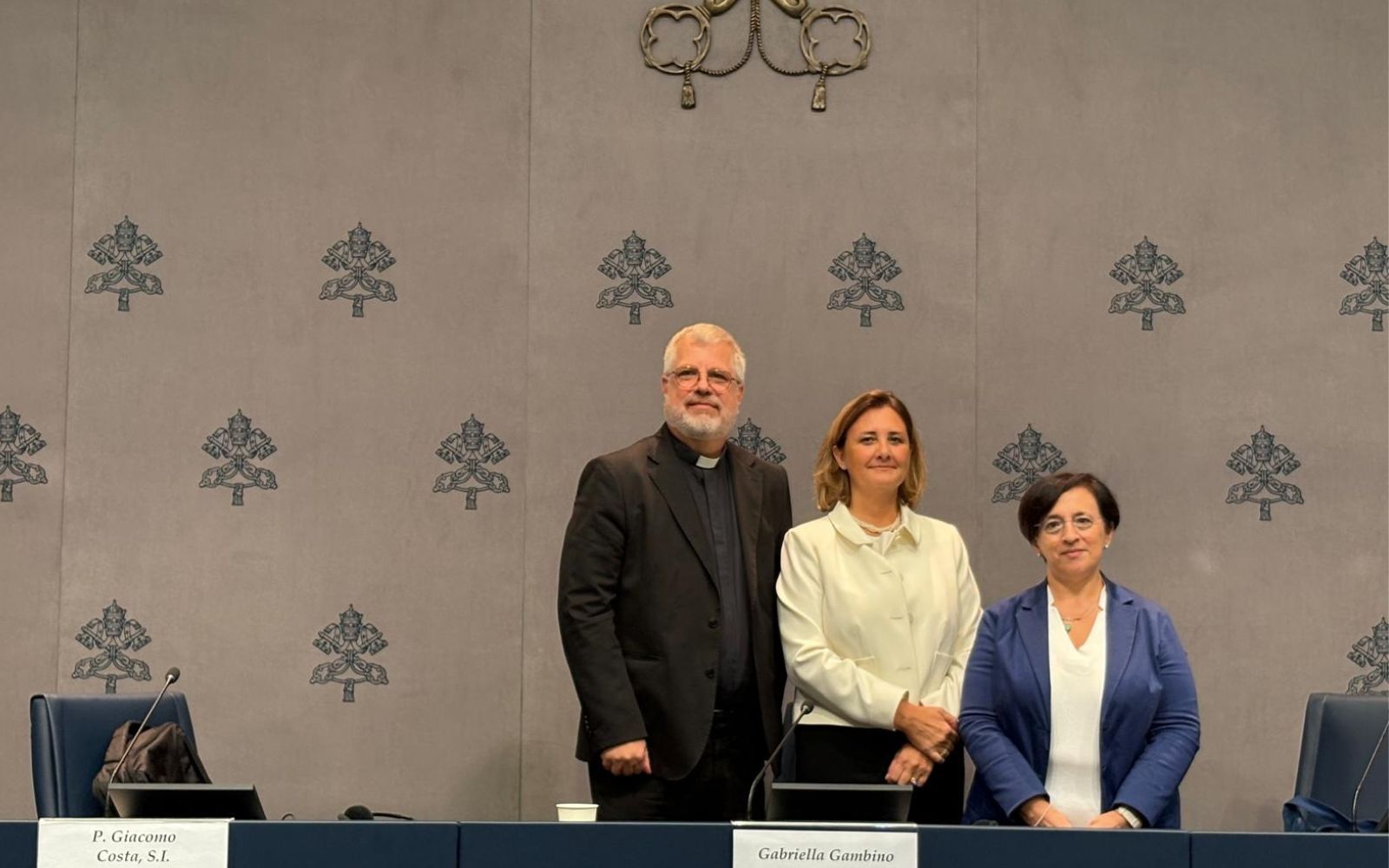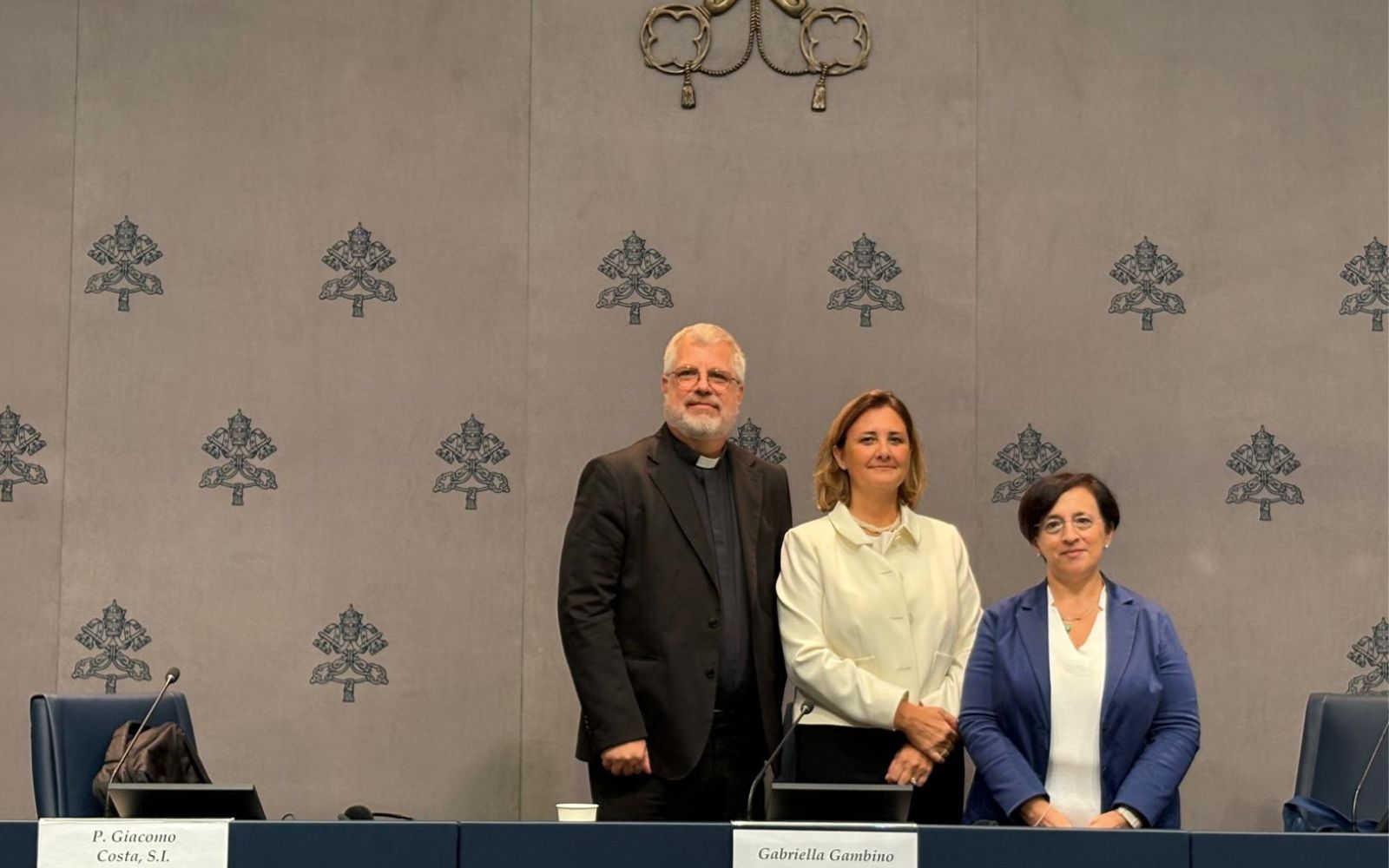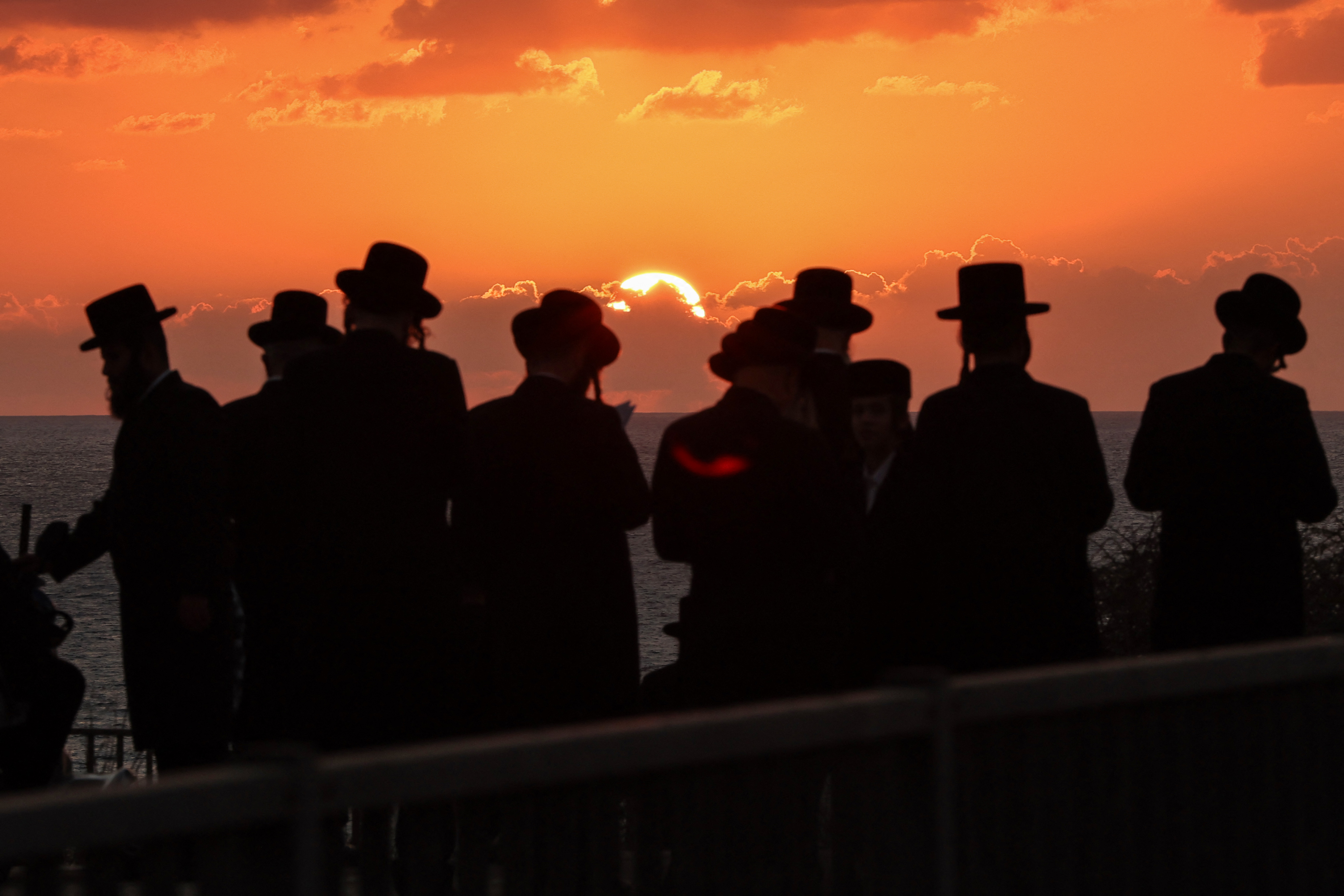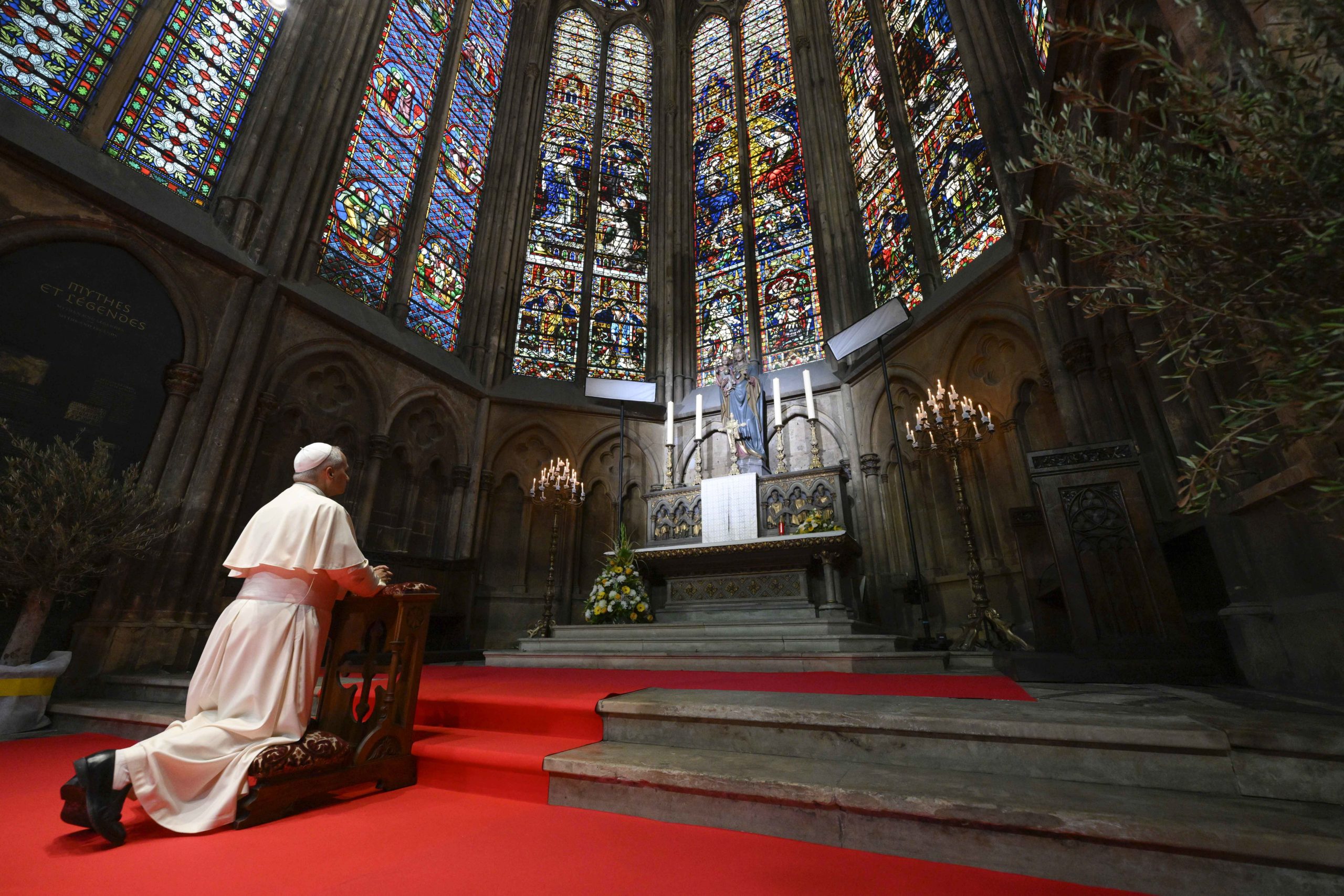
The Vatican’s message for Vesak calls Buddhists and Christians to promote an “unarmed and disarming” peace rooted in truth, compassion, and mutual trust.


The Vatican’s message for Vesak calls Buddhists and Christians to promote an “unarmed and disarming” peace rooted in truth, compassion, and mutual trust.

![After stillbirth loss, mother of 7 returns to school to help others heal #Catholic After experiencing an unimaginable loss, Kelly Helsel felt called to begin a new chapter. Following 17 years as a stay-at-home mother, she returned to school to pursue her dream of becoming a counselor — hoping to offer others the same compassionate support and Catholic guidance that helped bring healing to her own life.In 2023 Helsel’s daughter, Mary Catherine, was stillborn. The experience and grief was ultimately “a huge catalyst to me going back to school,” Helsel told EWTN News.“I think death has an interesting way of snapping your priorities in line,” she said. “And through the death of our daughter, I understood that tomorrow was not promised. And I had been holding this dream very closely for 17 years, just trusting,” she said.“Much of my healing process after the stillbirth of our daughter was helped along by solid Catholic counseling,” she said. “So I just felt a whisper at first, and then I felt like, ‘I can turn around and be this for someone else in need.’ And so I did.”Path back to schoolA native of Arizona, Helsel met her now-husband, Doug, in high school. She then attended Northern Arizona University to receive a bachelorʼs degree in psychology with the hopes of becoming a counselor, but motherhood ultimately became her first priority.“My firstborn … was born during finals week of my bachelorʼs degree,” Helsel said. “I actually had a positive pregnancy test the day before I was scheduled to take the GRE [Graduate Record Examination].”“I just knew that motherhood was the priority and that Godʼs timing would take care of things. So I stayed at home,” she said.Helsel decided to put her plans of working as a counselor on the side and focus on her growing family. She and her husband had seven children over the next 17 years, but after the loss of their sixth child she felt called to switch her plans and return to school. “We just started taking one step in front of the other,” she said. Helsel started by applying to the University of Mary’s master’s program for counseling about six months after her daughter’s passing but was thrown an unexpected “curveball” during the process.“On the feast of the Annunciation, I got in. But then I also had a positive pregnancy test with my daughter, Isabel, on the very same day.”“I remember standing in the bathroom with my husband with my phone in one hand with an acceptance letter, and on the counter was a positive pregnancy test with our seventh baby.”Motherhood provided ‘the skills to be a fantastic student’Despite navigating grief, welcoming a new baby, and continuing to care for the rest of her family, Helsel not only decided to return to school but also opted for a five-semester accelerated program.She graduated on April 25 with a 4.0 GPA and her whole family by her side. It was all possible not in spite of her 17 years as a stay-at-home mom but because of the experience.
Kelly Helsel, her husband Doug Helsel, and their children at her graduation a the University of Mary on April 25, 2026. | Credit: Photo courtesy of Kelly Helsel
“I actually think that motherhood, 17 years of motherhood, gave me the skills to be a fantastic student,” she said. “I learned time management. I learned prioritization. I learned how to ask for help. I learned all kinds of things in the trenches of motherhood that gave me the opportunity to really thrive at UMary.” “I guess the loss of my daughter really showed me that like all things are ‘figure-out-able,’” she said. “When youʼve gone through something like that, it makes you unafraid to do really big things.”“I knew that I could just cannonball into the deep end and we could do this. And my husband was an amazing support throughout the program. But, Isabel was the curveball of all curveballs,” she said.“She was born during Christmas break and I just jumped back in in January. I didnʼt take any time off,” she said. "I would be in a rocking chair breastfeeding her, and my laptop is sitting next to me and Iʼm listening to a lecture.”“I became a pro at using the dictation tool on Microsoft Word” so “I could hold my baby and dictate a paper,” she said. “It was just a really wild time. I learned to be extremely flexible and gentle with myself ... But I just knew God was like, ‘go, go right now.’”“It was super bumpy at some points,“ she said. ”But I chose the University of Mary because I feel like [University of Mary president] Monsignor [James] Shea and the university really put their money where their mouth is in terms of supporting nontraditional students — especially mothers.”“All of my professors were extremely accommodating with extensions if I needed one. A few professors gave me early finals because Isabel was born right at the end of that first semester,” she said. “So the University of Mary was really crucial to my success because everyone was behind me.” Helsel noted that her professors, especially counseling professor Olivia Wedel, and other facility members and students were champions in cheering her “all the way to the finish line.”Waddell “would always remind me that ‘Iʼm surrounded by support,’” Helsel said. “When youʼre super tired and youʼre on your fourth Crock-Pot meal of the week and you donʼt have anymore bandwidth left, I just thought, ‘I am surrounded by support.’”“Jesus is real and his promises are too,” Helsel said. “I just remember really having to trust the Lord in a new way and also having to be very open to my dream not looking exactly like I wanted.”“So yes, I went back to school and I got a masterʼs degree, but it looked absolutely nothing like I thought it was going to, but it was also better, just like he had promised me.”“Your dreams matter to him,“ she said. ”Trust him, and especially Our Lady, with your dreams. Because he wants both. He wants your motherhood and your dreams.”Catholic counseling offers ‘the keys to real human flourishing’Officially a licensed counselor, Helsel is ready to jump in headfirst to help others in need by utilizing the guidance offered by the Catholic Church.“I believe very deeply that the Catholic Church has the keys to real human flourishing,” she said. “So I knew I wanted to become a mental health professional with those guardrails in place, because I benefited so much from Catholic counseling.”“I want to turn back around and help the next woman or couple or … anyone in line that needs to hear the good news, coupled with solid mental health formation. Like St. Thomas Aquinas says, ‘faith and reason.’ We need both.”With her “perinatal mental health training,” Helsel hopes to primarily work in the womenʼs health category “to support other women, pregnant women, postpartum women,” she said. “And obviously I have a love for people who may have lost a child in a particular way.”Helsel is interested in helping those discerning vocations, as her oldest son plans to apply to the priesthood. She is also hoping to support the vocation of marriage as it is “under a particular attack at this time.”To accomplish all of this, Helsel has already started her own private practice called Concordia Counseling.“I chose Concordia because Mary Catherine had a congenital heart condition,” she said. “Concordia means heart to heart or to bring two hearts into harmony. I wanted to honor my baby in heaven and Our Lord with my work. And so I started Concordia Counseling.”“Iʼm just getting it started. I have a caseload of about 10 clients, but Iʼm hoping to accept more,“ Helsel said. ”I know that the work I want to do most of all involves not just mental health but the teachings of the Catholic Church.”“I just think the framework needs to be formed properly, and that is the Catholic understanding of the whole person. And from there we can jump off anywhere,” she said.](https://unitedyam.com/wp-content/uploads/2026/05/after-stillbirth-loss-mother-of-7-returns-to-school-to-help-others-heal-catholic-after-experiencing-an-unimaginable-loss-kelly-helsel-felt-called-to-begin-a-new-chapter-following-17-years-as-a-sta-scaled.jpg)
After navigating loss and grief, Kelly Helsel is officially now a licensed counselor thanks to the guidance given to her by the Catholic Church and her desire to use her experience to help others.


The grants will fund initiatives across the globe including the construction and renovation of Catholic schools, monasteries, orphanages, and medical clinics in numerous countries.


The October meeting in Rome will bring together presidents of bishops’ conferences from around the world to seek a response to what the pope considers a crucial issue for the Church and society.


During National Infertility Awareness Week, author Leigh Fitzpatrick Snead shared encouragement and advice for Catholic couples navigating infertility.

![March for Life in Warsaw commemorates 1,060 years of Christianity in Poland #Catholic Thousands of people gathered in Poland’s capital on April 19 for the National March for Life, a large public demonstration organized under the slogan “Faith and Fidelity 1966–2026,” commemorating the 1,060th anniversary of the Christianization of Poland. The event combined religious observance, civic participation, and pro-life advocacy, drawing families, clergy, activists, and public figures to central Warsaw. The day began with Mass celebrated in two of the cityʼs major churches.
Mass is celebrated at the Archcathedral Basilica of the Martyrdom of St. John the Baptist in Warsaw, Poland, on April 19, 2026. | Credit: Tomasz Daniluk/Ordo Iuris
In the Archcathedral Basilica of St. John the Baptist, Bishop Piotr Jarecki presided over the liturgy, while Bishop Tomasz Sztajerwald celebrated Mass at the Cathedral of St. Michael the Archangel and St. Florian in Warsaw-Praga.Participants later gathered at Castle Square, where the march officially began. Organizers described the event as a public expression of support for life and family, rooted in Poland’s Christian tradition. Metropolitan Archbishop Adrian Galbas of Warsaw encouraged participation ahead of the event, framing it as a testimony to human dignity. “We want to testify that we are lovers of life. Bring your family along! Life triumphs over every death,” he declared.
Church leaders join Poland’s President Karol Nawrocki and other dignitaries at the March for Life in Warsaw on April 19, 2026. | Credit: Tomasz Daniluk/Ordo lures
March through Warsaw highlights pro-life messageThe procession moved through central Warsaw streets under the historic slogan marking Poland’s Christian heritage. As participants approached the Presidential Palace, Polish President Karol Nawrocki spoke, linking the march to broader social concerns.“I support initiatives that serve Poland, and this initiative certainly serves Poland,” he said. “It is also a response to the deep demographic crisis. Today, the answer to many Polish problems lies precisely in Polish families, in our identity, in remembering where we come from and where we are going.”Organizers said the march was intended not only as a demonstration of pro-life conviction but also as a broader reflection on national identity and social cohesion.A prominent symbol carried during the march was a copy of the icon of Our Lady of Częstochowa, which has been traveling internationally for 14 years as part of the From Ocean to Ocean pilgrimage in defense of life. The icon has traveled more than 220,000 kilometers (almost 137,000 miles) and visited 32 countries across five continents.
Participants carry an icon of Our Lady of Częstochowa. | Credit: Tomasz Daniluk/Ordo Iuris
Shifting abortion attitudes among younger PolesThe National March for Life is organized by the St. Benedict Foundation alongside dozens of pro-life groups from across Poland and takes place under the honorary patronage of the Polish Episcopal Conference.Patrycja Michońska-Dynek, director of the Press Center of the Archdiocese of Warsaw, told EWTN News that there are shifting public attitudes toward abortion in Poland, including growing societal acceptance and increased calls for liberalization, attributing these changes to secularization, cultural pressures, and differing interpretations of freedom.Michońska-Dynek also observed that while pro-life values remain important in Polish society, younger generations often approach the issue with more nuanced perspectives, particularly in complex or exceptional situations. Fostering a “culture of life” must include practical support for families, such as assistance for single mothers and couples in crisis, Michońska-Dynek said.
Lidia, a participant at the National March for Life. | Credit: Tomasz Daniluk/Ordo Iuris
Not a single-issue agendaLidia Sankowska-Grabczuk, one of the organizers of the National March for Life, told EWTN News that the pro-life movement in Poland extends beyond a single-issue focus on abortion.“In a nutshell, the pro-life movement is [often] the anti-abortion movement. In our view… it’s a bit different. We don’t reduce it to a single-issue agenda,” she said, warning that such a narrow framing “strips it of its true meaning.” While protecting unborn life remains central, she described it as part of a broader vision rooted in what she called “the public voice of Polish Christianity.”She outlined three core pillars underpinning the movement. The first is “respect for life,” encompassing not only the unborn but also solidarity with the elderly, families, and those in need. The second is the family as society’s foundation, grounded in the traditional understanding of marriage and its role in Poland’s social stability. The third pillar is “a state serving the common good,” reflecting a view of politics as service and a call for greater social solidarity.
March for Life in Warsaw commemorates 1,060 years of Christianity in Poland. | Credit: Tomasz Daniluk/Ordo Iuris
Sankowska-Grabczuk also discussed the importance of Poland’s historical and Christian identity in shaping the movement. She noted that recent marches have intentionally marked major national milestones, including the 1,000th anniversary of Poland’s first royal coronation in 2025.These commemorations, she said, highlight how the movement sees its mission as inseparable from Poland’s historical development, where Christianity has long informed both national identity and social values.Pro-life voices and public participationAmong international participants was Tonio Borg, president of the European Federation One of Us. He urged participants to remain steadfast in their convictions despite criticism or public pressure. “Do not be afraid of being slandered and ridiculed because you seek to protect life from the moment of conception,” he said, encouraging continued public engagement and advocacy. He also called on supporters to make their voices heard in the public sphere, stressing the importance of influencing lawmakers and demonstrating that “the unborn child is one of us.”
Paula, a participant at the National March for Life in Poland. | Credit: Tomasz Daniluk/Ordo Iuris
Marcin Perłowski, director of the Centre for Life and Family, said participants gathered at the march out of a shared conviction that “human life begins at conception” and must be defended. He stated that the National March for Life serves as a public demonstration of that belief, describing it as a stand “against all those who raise a hand against unborn children.”Pro-life activist Emilia Mędrzecka told EWTN News that her position is grounded in a belief in universal human dignity. “Children in the womb are as human as we are… they are more dependent and need time to grow,” she said while adding that the march reflected a strong presence of families, young people, and older generations united in support of life.
Polish president Karol Nawrocki walks among participants at the National March for Life in Poland. | Credit: Tomasz Daniluk/Ordo Iuris
While official attendance figures have not been released, estimates provided to EWTN News suggested more than 10,000 people participated, with organizers placing peak attendance between 25,000 and 30,000.](https://unitedyam.com/wp-content/uploads/2026/04/march-for-life-in-warsaw-commemorates-1060-years-of-christianity-in-poland-catholic-thousands-of-people-gathered-in-polands-capital-on-april-19-for-the-national-march-for-life-a-large-publ-scaled.jpg)
Recent marches in Poland have intentionally marked major national milestones, including the 1,000th anniversary of Poland’s first royal coronation in 2025.


Born on April 20, 1923, Mother Angelica would be turning 103 years old this year. There is nothing she liked better than to share about faith in Jesus Christ.


In honor of National Infertility Awareness Week, here are four Catholic ministries helping couples carry the cross of infertility.

![Pope Leo XIV says debate with Trump is ‘not in my interest at all’ #Catholic ABOARD THE PAPAL PLANE — Pope Leo XIV arrived in Angola after a two-and-a-half-hour flight from Cameroon on April 18, using the short journey to reject suggestions that his recent remarks about war were aimed at U.S. President Donald Trump while reflecting on the pastoral focus of his African trip.In a brief in-flight press conference with journalists, the pope addressed the interpretation of some of his recent speeches as a response to criticism from Trump, who had accused him of weakness in foreign policy.“[T]hereʼs been a certain narrative that has not been accurate in all of its aspects, but because of the political situation created when on the first day of the trip, the President of the United States made some comments about myself,” the pope said.“Much of what has been written since then has been more commentary on commentary, trying to interpret what has been said.”He pointed in particular to his address at the April 16 prayer meeting for peace in Cameroon.“Just one little example, the talk that I gave at the prayer meeting for peace a couple days ago was prepared two weeks ago, well before the president ever commented on myself and on the message of peace that I am promoting,” he said.“And yet, as it happens, it was looked at as if I was trying to debate again the president, which is not in my interest at all.”Leo XIV said he intends instead to continue proclaiming the Gospel and promoting peace.“So we go on the journey, we continue proclaiming the Gospel message,” he said.He added that the liturgies during the trip have highlighted what it means to follow Christ, promote fraternity, and seek justice and peace.The pope also said the broader African journey has been shaped by themes that emerged at the start of the trip in Algeria, especially the figure of St. Augustine.“I was personally very pleased, as you know, we began the trip in Algeria with the theme of Saint Augustine, and yesterday at the Catholic University, we had the blessing of that beautiful monument that they had prepared with a map of Africa and Saint Augustine at the center,” he said.“And so in one sense, it expresses part of what this trip is about.”Leo XIV emphasized that his primary purpose in Africa is to accompany Catholics.“And I primarily come to Africa as pastor, as the head of the Catholic Church, to be with, to celebrate with, to encourage and accompany all of the Catholics throughout Africa.”He also referred to a meeting with imams in Cameroon, describing it in general terms as part of the Church’s continuing commitment to interreligious dialogue, understanding, and peace-building.He concluded his main remarks by thanking journalists for their work and expressing hope that God would continue to bless the journey.Responding later to a French journalist, Leo XIV expressed gratitude for the reception he received in Cameroon.“I would just like to thank everyone in Cameroon for the wonderful welcome, the great enthusiasm, the joy of the people,” he said.“It was absolutely fantastic, the experience … how wonderful it is to experience what it means to be a follower of Jesus Christ and to celebrate our faith together.”The pope’s flight took him from Yaoundé to Luanda, crossing over Cameroon, Equatorial Guinea, Gabon, the Democratic Republic of Congo, and Angola. Angola is the third and penultimate stop of his African journey.The Catholic Church has longstanding ties with Angola. Formal relations date back centuries, including the 1608 appointment of Antonio Manuel Nyunda as the first ambassador to Rome from the then-Kingdom of Kongo. More recently, in 2019, the Holy See and Angola signed an agreement recognizing the legal personality of the Catholic Church and defining its property rights.This story was first published by ACI Stampa, the Italian-language sister service of EWTN News. It has been translated and adapted by EWTN News English. Pope Leo XIV says debate with Trump is ‘not in my interest at all’ #Catholic ABOARD THE PAPAL PLANE — Pope Leo XIV arrived in Angola after a two-and-a-half-hour flight from Cameroon on April 18, using the short journey to reject suggestions that his recent remarks about war were aimed at U.S. President Donald Trump while reflecting on the pastoral focus of his African trip.In a brief in-flight press conference with journalists, the pope addressed the interpretation of some of his recent speeches as a response to criticism from Trump, who had accused him of weakness in foreign policy.“[T]hereʼs been a certain narrative that has not been accurate in all of its aspects, but because of the political situation created when on the first day of the trip, the President of the United States made some comments about myself,” the pope said.“Much of what has been written since then has been more commentary on commentary, trying to interpret what has been said.”He pointed in particular to his address at the April 16 prayer meeting for peace in Cameroon.“Just one little example, the talk that I gave at the prayer meeting for peace a couple days ago was prepared two weeks ago, well before the president ever commented on myself and on the message of peace that I am promoting,” he said.“And yet, as it happens, it was looked at as if I was trying to debate again the president, which is not in my interest at all.”Leo XIV said he intends instead to continue proclaiming the Gospel and promoting peace.“So we go on the journey, we continue proclaiming the Gospel message,” he said.He added that the liturgies during the trip have highlighted what it means to follow Christ, promote fraternity, and seek justice and peace.The pope also said the broader African journey has been shaped by themes that emerged at the start of the trip in Algeria, especially the figure of St. Augustine.“I was personally very pleased, as you know, we began the trip in Algeria with the theme of Saint Augustine, and yesterday at the Catholic University, we had the blessing of that beautiful monument that they had prepared with a map of Africa and Saint Augustine at the center,” he said.“And so in one sense, it expresses part of what this trip is about.”Leo XIV emphasized that his primary purpose in Africa is to accompany Catholics.“And I primarily come to Africa as pastor, as the head of the Catholic Church, to be with, to celebrate with, to encourage and accompany all of the Catholics throughout Africa.”He also referred to a meeting with imams in Cameroon, describing it in general terms as part of the Church’s continuing commitment to interreligious dialogue, understanding, and peace-building.He concluded his main remarks by thanking journalists for their work and expressing hope that God would continue to bless the journey.Responding later to a French journalist, Leo XIV expressed gratitude for the reception he received in Cameroon.“I would just like to thank everyone in Cameroon for the wonderful welcome, the great enthusiasm, the joy of the people,” he said.“It was absolutely fantastic, the experience … how wonderful it is to experience what it means to be a follower of Jesus Christ and to celebrate our faith together.”The pope’s flight took him from Yaoundé to Luanda, crossing over Cameroon, Equatorial Guinea, Gabon, the Democratic Republic of Congo, and Angola. Angola is the third and penultimate stop of his African journey.The Catholic Church has longstanding ties with Angola. Formal relations date back centuries, including the 1608 appointment of Antonio Manuel Nyunda as the first ambassador to Rome from the then-Kingdom of Kongo. More recently, in 2019, the Holy See and Angola signed an agreement recognizing the legal personality of the Catholic Church and defining its property rights.This story was first published by ACI Stampa, the Italian-language sister service of EWTN News. It has been translated and adapted by EWTN News English.](https://unitedyam.com/wp-content/uploads/2026/04/pope-leo-xiv-says-debate-with-trump-is-not-in-my-interest-at-all-catholic-aboard-the-papal-plane-pope-leo-xiv-arrived-in-angola-after-a-two-and-a-half-hour-flight-from-cameroon-o-scaled.jpg)
En route from Cameroon to Angola, the pope said his mission in Africa is pastoral and rejected suggestions that his recent remarks were aimed at President Donald Trump.

![EWTN News explains: Why does the pope visit mosques on papal trips? #Catholic For more than a quarter-century, popes have periodically visited Islamic mosques as part of official voyages and papal visits. The tradition began with Pope John Paul II, who in 2001 became the first pope in history known to have entered a mosque when he visited the Great Mosque of Damascus in the capital of Syria. The subsequent Popes Benedict XVI, Francis, and Leo XIV have all paid visits to mosques to hold ecumenical dialogues and host diplomatic meetings. Yet the practice is not without some controversy. Indeed, Leo XIVʼs visit to the Great Mosque of Algiers on April 13 drew some backlash on social media by critics incredulous over the leader of the Catholic Church visiting a major Islamic holy site. (This was Leoʼs second visit to a mosque; he also visited the famed “Blue Mosque” in Istanbul in late 2025.)
Pope Leo XIV stands with Rector Mohamed Mamoun Al Qasimi at the Great Mosque in Algiers, Monday, April 13, 2026. | Credit: Vatican Media
So why do popes make visits to mosques, courting controversy and criticism for making a point to go to holy sites of another religion? ‘We can live together in peace’Pope Leo XIV himself addressed criticism directed toward him on April 15 on board the papal plane after leaving Algiers bound for Cameroon. “I think the visit to the mosque was significant [and showed] that although we have different beliefs, we have different ways of worshipping, we have different ways of living, we can [still] live together in peace,” the Holy Father said. “I think that to promote that kind of image is something which the world needs to hear today,” he said, arguing that such visits show that “together we can continue to offer in our witness as we continue on this apostolic voyage.”Gabriel Said Reynolds, a theology professor at the University of Notre Dame who has written multiple works on the Quran and its relationship to Christianity, told EWTN News that interpreting papal visits to mosques should include an understanding of “the Churchʼs vision of God in the world.” “What is God’s relationship to the world? That’s been important to all of the recent popes,” he said.Reynolds pointed out that an Islamic mosque is “fundamentally different from a church.” “A Catholic church is a sort of temple in which God is present in the tabernacle — body, blood, soul, and divinity,” he said. “It’s a sacred space in the deepest sense of the word.”“What Muslims would say of a mosque is fundamentally different,” he said. “A mosque is for communal prayer, but the communal prayer that takes place in a mosque is no different than the ritual prayer that’s more often done at home.” He likened a mosque to a “gathering place” with just a few features that set it apart as a distinct site — such as a pulpit for occasional sermons and an alcove that denotes the direction of Mecca to which Muslims orient themselves during prayer. Reynolds said popes visit mosques in no small part as a “pastoral concern” for Christians living in majority-Muslim countries, such as Algeria. “Algerian society is thoroughly Islamic,” he said. “It’s not generally marked by notions of rights and responsibilities and citizenship in the same way the U.S. is. Cultivating positive relationships with Muslim leaders is absolutely essential for Christians.”Reynolds said the Churchʼs view about human dignity has “fundamental implications with its relationship toward non-Christians.” He pointed out, for instance, that the pope “could show up at an atheist convention and meet the people there and have dialogue with them.”“John 3:16 says God loves the world,” he said. “It’s not that God loves believers and doesn’t love the unbelievers. All people are children of God, according to Catholic teaching.”The declaration Nostra Aetate, meanwhile — issued by the Second Vatican Council in 1965 to address Catholicismʼs relationship with non-Christians — affirmed that the Church “regards [Muslims] with esteem.”The document points out that although Muslims “do not acknowledge Jesus as God,” they still “adore the one God” and “revere [Jesus] as a prophet” while giving honor to the Virgin Mother as well. The Second Vatican Council acknowledged that “in the course of centuries not a few quarrels and hostilities have arisen” between Christians and Muslims, but the document “urge[d] all to forget the past and to work sincerely for mutual understanding.”It further called on religious adherents to “preserve as well as to promote together for the benefit of all mankind social justice and moral welfare, as well as peace and freedom.”](https://unitedyam.com/wp-content/uploads/2026/04/ewtn-news-explains-why-does-the-pope-visit-mosques-on-papal-trips-catholic-for-more-than-a-quarter-century-popes-have-periodically-visited-islamic-mosques-as-part-of-official-voyages-and-papal-vis-scaled.jpg)
Why do popes make visits to Islamic mosques, courting controversy and criticism by taking part in events at holy sites of another religion?

![Trump’s comments on Pope Leo called ‘disrespectful’ as Americans react #Catholic Catholic bishops and U.S. elected officials have publicly criticized the president’s statements about Pope Leo XIV.President Donald Trump called Leo “weak on crime and terrible for foreign policy” in a lengthy social media post April 12 that drew response from the United States Conference of Catholic Bishops (USCCB) and elected officials.Bishop Robert Barron of the Diocese of Winona-Rochester, Minnesota, called Trump’s attack on Pope Leo XIV “disrespectful." Barron, who serves on Trump’s Religious Liberty Commission, said in a post on X that Trump’s comments “were entirely inappropriate and disrespectful” and “I think the president owes the pope an apology.”“[Trump’s comments] don’t contribute at all to a constructive conversation,” he said. “It is the pope’s prerogative to articulate Catholic doctrine and the principles that govern the moral life. In regard to the concrete application of those principles, people of goodwill can and do disagree.”Barron encouraged Catholic Trump officials to arrange a meeting with Vatican officials “so that a real dialogue can take place,” saying “this is far preferable to the statements on social media.”Bishop Michael Burbidge of Arlington, Virginia, said in a social media post: “Along with Archbishop [Paul] Coakley, president of the USCCB, and my brother bishops, I was disheartened by recent comments from President Trump concerning Pope Leo XIV and the Church. I pray that civility and respect are fully restored as together, with God’s grace, we work for peace and harmony among all people. May we also be united in our prayer for the end of war and violence so that Christ’s peace reigns throughout the world and in our hearts.”Palm Beach, Florida, Bishop Manuel de Jesús Rodríguez posted on X: “The @DiocesePB stands firm with our Holy Father, @Pontifex, and strongly rejects the disrespectful and violent attacks that Donald J. Trump has directed against the Holy Father.”Buffalo, New York, Bishop Michael Fisher posted on X: “This is not about politics but the very cause of humanity.”The Catholic Association's Ashley McGuire said in a statement: “The Catholic Church does not in any way fit into American political boxes. It will always prioritize the protection of innocent life in all its stages as well as the cause of the poor and marginalized. Insulting the pope, and all Catholics by extension, with the hope of making the Church bend to American political agendas, is discouraging and counterproductive.” McGuire added: “We pray that President Trump apologizes to Pope Leo.”U.S. officials' reaction beginsRepublican Vice President JD Vance, who is Catholic, has not yet commented on the matter, nor has Secretary of State Marco Rubio, also a Catholic.Sen. Mark Kelly, D-Arizona, who is Catholic, posted on X that “I find it abhorrent that the president of the United States would publicly attack the successor of St. Peter.”U.S. House Minority Leader Hakeem Jeffries said on X that Trump “shamefully attacked” the pope. Few Republican elected officials have spoken out.TweetDemocratic California Gov. Gavin Newsom posted on X: “Hey @GOP, you good with your guy directly attacking the pope now?”Rep. Lukas Schubert, a Republican Montana state lawmaker, disputed the presidentʼs statement that the pope is a “liberal person.”“Pope Leo is significantly further to the right than President Trump on abortion, gay marriage, and family values. Also he is more America First on the Iran War,” Schubert said.AI imageTrump also posted an AI-created image on Truth Social that appeared to portray himself as Jesus Christ, healing the sick, which led several Catholics to accuse the president of blasphemy.Edward Feser, a Catholic philosopher and professor at Pasadena City College, posted on X that Trump’s comments illustrate “how utter enslavement to the sin of pride makes a man unsuitable for the presidency.”“For all their faults, previous presidents had the visceral understanding of proper boundaries not to attack the vicar of Christ even when they disagreed with him,” he said.Feser quoted Daniel 11:36-37 in response to Trump’s AI image of himself as Christ, which reads: “And the king shall do according to his will; he shall exalt himself and magnify himself above every god, and shall speak astonishing things against the God of gods … He shall not give heed to any other god, for he shall magnify himself above all.”In reaction to the AI photo, Matt Fradd, the host of “Pints With Aquinas,“ urged Catholics to “offer a rosary today for Donald Trump and all blasphemers. … Seriously. Do it. I will too.”TweetRep. Shontel Brown, D-Ohio, did not directly reference Trumpʼs remarks about the pope but criticized the AI-created image on X: “There aren’t enough words to denounce how wrong this is.”The comments came after Leo criticized the Iran war and Trump’s rhetoric about targeting the entire civilization of Iran. Leo said in response to the post: “I have no fear neither of the Trump administration nor of speaking out loudly about the message of the Gospel.”Marjorie Taylor Greene, a former Republican congresswoman who was a strong ally of Trump before splitting with him on the Iran war and his handling of the Jeffrey Epstein files, posted on X that Trump “attacked the pope because the pope is rightly against Trump’s war in Iran and then he posted this picture of himself as if he is replacing Jesus.”“This comes after last week’s post of his evil tirade on Easter and then threatening to kill an entire civilization,” she said. “I completely denounce this and I’m praying against it!!!”‘Fuels division’Father Robert Sirico, the founder of the Acton Institute, said in a statement that Leo “has both the right and the duty to speak prophetically on matters of war and peace, the dignity of the human person, and the moral limits of force — even when his words discomfort political leaders.”He said Trump’s post does not “strengthen America’s moral standing but “merely fuels division.”Sirico also added that Catholics can disagree with popes on prudential judgments, such as foreign policy or crime, which he said are not infallible: “The Church herself teaches that such applications of principle admit of legitimate debate.”This story was updated at 11:50 a.m. ET on April 13, 2026, with comments from Buffalo, New York, Bishop Michael Fisher and The Catholic Associationʼs Ashley McGuire. Trump’s comments on Pope Leo called ‘disrespectful’ as Americans react #Catholic Catholic bishops and U.S. elected officials have publicly criticized the president’s statements about Pope Leo XIV.President Donald Trump called Leo “weak on crime and terrible for foreign policy” in a lengthy social media post April 12 that drew response from the United States Conference of Catholic Bishops (USCCB) and elected officials.Bishop Robert Barron of the Diocese of Winona-Rochester, Minnesota, called Trump’s attack on Pope Leo XIV “disrespectful." Barron, who serves on Trump’s Religious Liberty Commission, said in a post on X that Trump’s comments “were entirely inappropriate and disrespectful” and “I think the president owes the pope an apology.”“[Trump’s comments] don’t contribute at all to a constructive conversation,” he said. “It is the pope’s prerogative to articulate Catholic doctrine and the principles that govern the moral life. In regard to the concrete application of those principles, people of goodwill can and do disagree.”Barron encouraged Catholic Trump officials to arrange a meeting with Vatican officials “so that a real dialogue can take place,” saying “this is far preferable to the statements on social media.”Bishop Michael Burbidge of Arlington, Virginia, said in a social media post: “Along with Archbishop [Paul] Coakley, president of the USCCB, and my brother bishops, I was disheartened by recent comments from President Trump concerning Pope Leo XIV and the Church. I pray that civility and respect are fully restored as together, with God’s grace, we work for peace and harmony among all people. May we also be united in our prayer for the end of war and violence so that Christ’s peace reigns throughout the world and in our hearts.”Palm Beach, Florida, Bishop Manuel de Jesús Rodríguez posted on X: “The @DiocesePB stands firm with our Holy Father, @Pontifex, and strongly rejects the disrespectful and violent attacks that Donald J. Trump has directed against the Holy Father.”Buffalo, New York, Bishop Michael Fisher posted on X: “This is not about politics but the very cause of humanity.”The Catholic Association's Ashley McGuire said in a statement: “The Catholic Church does not in any way fit into American political boxes. It will always prioritize the protection of innocent life in all its stages as well as the cause of the poor and marginalized. Insulting the pope, and all Catholics by extension, with the hope of making the Church bend to American political agendas, is discouraging and counterproductive.” McGuire added: “We pray that President Trump apologizes to Pope Leo.”U.S. officials' reaction beginsRepublican Vice President JD Vance, who is Catholic, has not yet commented on the matter, nor has Secretary of State Marco Rubio, also a Catholic.Sen. Mark Kelly, D-Arizona, who is Catholic, posted on X that “I find it abhorrent that the president of the United States would publicly attack the successor of St. Peter.”U.S. House Minority Leader Hakeem Jeffries said on X that Trump “shamefully attacked” the pope. Few Republican elected officials have spoken out.TweetDemocratic California Gov. Gavin Newsom posted on X: “Hey @GOP, you good with your guy directly attacking the pope now?”Rep. Lukas Schubert, a Republican Montana state lawmaker, disputed the presidentʼs statement that the pope is a “liberal person.”“Pope Leo is significantly further to the right than President Trump on abortion, gay marriage, and family values. Also he is more America First on the Iran War,” Schubert said.AI imageTrump also posted an AI-created image on Truth Social that appeared to portray himself as Jesus Christ, healing the sick, which led several Catholics to accuse the president of blasphemy.Edward Feser, a Catholic philosopher and professor at Pasadena City College, posted on X that Trump’s comments illustrate “how utter enslavement to the sin of pride makes a man unsuitable for the presidency.”“For all their faults, previous presidents had the visceral understanding of proper boundaries not to attack the vicar of Christ even when they disagreed with him,” he said.Feser quoted Daniel 11:36-37 in response to Trump’s AI image of himself as Christ, which reads: “And the king shall do according to his will; he shall exalt himself and magnify himself above every god, and shall speak astonishing things against the God of gods … He shall not give heed to any other god, for he shall magnify himself above all.”In reaction to the AI photo, Matt Fradd, the host of “Pints With Aquinas,“ urged Catholics to “offer a rosary today for Donald Trump and all blasphemers. … Seriously. Do it. I will too.”TweetRep. Shontel Brown, D-Ohio, did not directly reference Trumpʼs remarks about the pope but criticized the AI-created image on X: “There aren’t enough words to denounce how wrong this is.”The comments came after Leo criticized the Iran war and Trump’s rhetoric about targeting the entire civilization of Iran. Leo said in response to the post: “I have no fear neither of the Trump administration nor of speaking out loudly about the message of the Gospel.”Marjorie Taylor Greene, a former Republican congresswoman who was a strong ally of Trump before splitting with him on the Iran war and his handling of the Jeffrey Epstein files, posted on X that Trump “attacked the pope because the pope is rightly against Trump’s war in Iran and then he posted this picture of himself as if he is replacing Jesus.”“This comes after last week’s post of his evil tirade on Easter and then threatening to kill an entire civilization,” she said. “I completely denounce this and I’m praying against it!!!”‘Fuels division’Father Robert Sirico, the founder of the Acton Institute, said in a statement that Leo “has both the right and the duty to speak prophetically on matters of war and peace, the dignity of the human person, and the moral limits of force — even when his words discomfort political leaders.”He said Trump’s post does not “strengthen America’s moral standing but “merely fuels division.”Sirico also added that Catholics can disagree with popes on prudential judgments, such as foreign policy or crime, which he said are not infallible: “The Church herself teaches that such applications of principle admit of legitimate debate.”This story was updated at 11:50 a.m. ET on April 13, 2026, with comments from Buffalo, New York, Bishop Michael Fisher and The Catholic Associationʼs Ashley McGuire.](https://unitedyam.com/wp-content/uploads/2026/04/trumps-comments-on-pope-leo-called-disrespectful-as-americans-react-catholic-catholic-bishops-and-u-s-elected-officials-have-publicly-criticized-the-presidents-st.jpg)
President Donald Trump called Leo “weak on crime and terrible for foreign policy” in a lengthy social media post April 12 that drew response from U.S. bishops and elected officials.


The pontiff called for a world order that does not exclude the vulnerable and urged leaders to serve the common good.


A seminary was established in Mexico in 1999 to serve the growing Hispanic community in North America, forming future priests who learn Spanish as well as ecclesial and cultural traditions.


The final report addressing the pastoral challenge of polygamy in Africa draws attention to a wide range of social, cultural, and pastoral realities shaping the practice across the continent.


The Andromeda galaxy, also known as Messier 31 (M31), is the closest spiral galaxy to the Milky Way at a distance of about 2.5 million light-years. This new composite image contains data of M31 taken by some of the world’s most powerful telescopes in different kinds of light. This image is released in tribute to the groundbreaking legacy of Dr. Vera Rubin, whose observations transformed our understanding of the universe.
Read More