Feast

Meet Fio: the Catholic alternative to Spotify aiming to bring faith to your playlists #Catholic For many Catholics, faith formation often competes with busy schedules and endless digital distractions. Fio, a Catholic audio streaming platform, hopes to change that by putting faith-filled content at listeners’ fingertips. Dubbed “the Catholic alternative to Spotify,” the platform offers a growing library of podcasts, audiobooks, and music, giving users a way to stay connected to their faith wherever life takes them.Currently, Fio is being used in over 100 countries, is host to over 100,000 hours of Catholic content, and has over 1,000 Catholic creators putting their work onto the platform. Will Hickl, co-founder of Fio, has been in the music industry for 15 years as a musician and founder of the Catholic record label Novum Records. During his career, he realized that secular platforms were not built for faith-based work — it was difficult to stand out, there was no fair compensation, and there was no community around it.With this in mind, Hickl, and co-founder Peter Buonincontro, launched Fio in 2023. The first version of the app hosted podcasts alone. The following year music was added, and the following year — thanks to a generous investor — the platform was able to host audiobooks and grow their collection of content. In an interview with EWTN News, Hickl shared that the platform’s “North Star” is the fact that he cares deeply about the artists and content creators.“We are a platform who, because we care, weʼre paying a penny per stream, which is already three to four times what Spotify pays,” he explained. “We want to offer better exposure and tooling. In fact, we already offer better exposure because a musician doesnʼt have to compete with 10 million other musicians. Thereʼs only maybe like 100, maybe 200 artists on the platform right now…thereʼs greater discoverability.”For creators, he hopes they would know that Fio “is the one that genuinely cares about them more than Apple or Spotify ever will.”
 
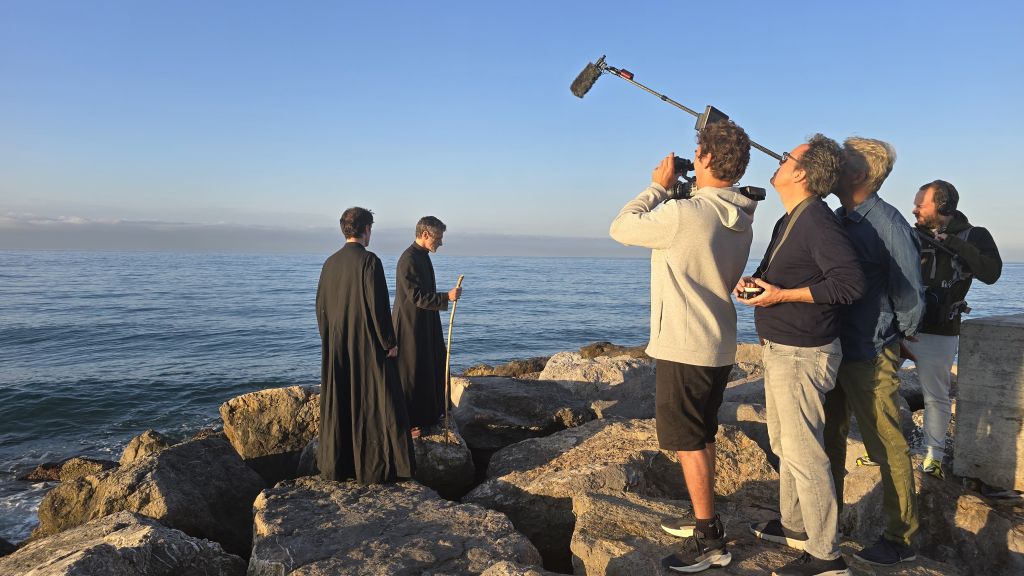
 From left to right: Will Hickl and Peter Buonincontro, founders of Fio. | Credit: Houston Dragna
 
 Currently, Fio offers three subscription levels for listeners — free, premium, and audiobooks +. While users who subscribe to the platform for free will have to listen to advertisements, Hickl pointed out that these ads “are reserved and curated for Catholic businesses, Catholic ministries, and then Catholic artists on the platform.”He also emphasized that these faith-based advertisements can also serve as a “cultural safeguard” so that parents who may be listening with children present don’t have to worry about inappropriate advertisements being played, as is the case with many secular platforms.Hickl explained that Fio aims to serve three different cohorts: Catholic creators, consumers, and businesses.“We are an artist first platform. We want to give you the best exposure, the best economics than any other platform,” he said. “For consumers, we want to give you greater choice, a better experience in terms of what you find, what your kids are exposed to. The third would be Catholic businesses who canʼt target based on religion on Facebook or Google or YouTube or anything like that. So weʼre offering a greater targeting mechanism, greater value in that regard.”For those seeking to have their content on Fio, they must go through a submission and review process. Before their content is accepted, creators must affirm that they are practicing Catholics who accept the teachings of the Church. They must also verify that their work was not primarily created by artificial intelligence. Lastly, each creator goes through a manual review process by the Fio team before their work is allowed to be on the platform.Looking to the future, the team at Fio is working on creating original content for the platform as well as being able to host video podcasts and music videos. Additionally, they are working to give Fio a more “liturgical feel.” For example, if there’s an important saint’s feast day, Fio would make suggestions to listeners of a podcast that talks about the saint or a song inspired by the saint.Hickl hopes that one day more artists will “be more excited about sharing their Fio link than the Spotify link.”He added that he hopes Catholics “would know I can trust this platform, it can and should be a part of my every day, because thereʼs so much treasure to discover.”“Thatʼs something I say a lot, which is that the Church has an immense amount of treasure and we just donʼt know about it. And so I want people to know the treasure is here and Fio is a place where itʼs aggregated,” he said.

Meet Fio: the Catholic alternative to Spotify aiming to bring faith to your playlists #Catholic For many Catholics, faith formation often competes with busy schedules and endless digital distractions. Fio, a Catholic audio streaming platform, hopes to change that by putting faith-filled content at listeners’ fingertips. Dubbed “the Catholic alternative to Spotify,” the platform offers a growing library of podcasts, audiobooks, and music, giving users a way to stay connected to their faith wherever life takes them.Currently, Fio is being used in over 100 countries, is host to over 100,000 hours of Catholic content, and has over 1,000 Catholic creators putting their work onto the platform. Will Hickl, co-founder of Fio, has been in the music industry for 15 years as a musician and founder of the Catholic record label Novum Records. During his career, he realized that secular platforms were not built for faith-based work — it was difficult to stand out, there was no fair compensation, and there was no community around it.With this in mind, Hickl, and co-founder Peter Buonincontro, launched Fio in 2023. The first version of the app hosted podcasts alone. The following year music was added, and the following year — thanks to a generous investor — the platform was able to host audiobooks and grow their collection of content. In an interview with EWTN News, Hickl shared that the platform’s “North Star” is the fact that he cares deeply about the artists and content creators.“We are a platform who, because we care, weʼre paying a penny per stream, which is already three to four times what Spotify pays,” he explained. “We want to offer better exposure and tooling. In fact, we already offer better exposure because a musician doesnʼt have to compete with 10 million other musicians. Thereʼs only maybe like 100, maybe 200 artists on the platform right now…thereʼs greater discoverability.”For creators, he hopes they would know that Fio “is the one that genuinely cares about them more than Apple or Spotify ever will.” From left to right: Will Hickl and Peter Buonincontro, founders of Fio. | Credit: Houston Dragna Currently, Fio offers three subscription levels for listeners — free, premium, and audiobooks +. While users who subscribe to the platform for free will have to listen to advertisements, Hickl pointed out that these ads “are reserved and curated for Catholic businesses, Catholic ministries, and then Catholic artists on the platform.”He also emphasized that these faith-based advertisements can also serve as a “cultural safeguard” so that parents who may be listening with children present don’t have to worry about inappropriate advertisements being played, as is the case with many secular platforms.Hickl explained that Fio aims to serve three different cohorts: Catholic creators, consumers, and businesses.“We are an artist first platform. We want to give you the best exposure, the best economics than any other platform,” he said. “For consumers, we want to give you greater choice, a better experience in terms of what you find, what your kids are exposed to. The third would be Catholic businesses who canʼt target based on religion on Facebook or Google or YouTube or anything like that. So weʼre offering a greater targeting mechanism, greater value in that regard.”For those seeking to have their content on Fio, they must go through a submission and review process. Before their content is accepted, creators must affirm that they are practicing Catholics who accept the teachings of the Church. They must also verify that their work was not primarily created by artificial intelligence. Lastly, each creator goes through a manual review process by the Fio team before their work is allowed to be on the platform.Looking to the future, the team at Fio is working on creating original content for the platform as well as being able to host video podcasts and music videos. Additionally, they are working to give Fio a more “liturgical feel.” For example, if there’s an important saint’s feast day, Fio would make suggestions to listeners of a podcast that talks about the saint or a song inspired by the saint.Hickl hopes that one day more artists will “be more excited about sharing their Fio link than the Spotify link.”He added that he hopes Catholics “would know I can trust this platform, it can and should be a part of my every day, because thereʼs so much treasure to discover.”“Thatʼs something I say a lot, which is that the Church has an immense amount of treasure and we just donʼt know about it. And so I want people to know the treasure is here and Fio is a place where itʼs aggregated,” he said.

Currently, Fio is being used in over 100 countries, is host to over 100,000 hours of Catholic content, and has over 1,000 Catholic creators putting their work on the platform.

Read More
97-year-old cardinal, tortured under communism, climbs Medjugorje’s Apparition Hill #Catholic Cardinal Ernest Simoni, 97, who was tortured by Albaniaʼs communist regime, climbed Apparition Hill in Medjugorje on June 23, the day before the 45th anniversary of the start of the alleged apparitions.Six young people claimed to have seen the Virgin Mary for the first time on June 24, 1981, the feast day of St. John the Baptist, on Mount Podbrdo. Since then, some of those visionaries say they still receive messages from the Mother of God on a daily basis.Following a lengthy investigation, the Dicastery for the Doctrine of the Faith approved a document in 2024 titled The Queen of Peace, which acknowledges the spiritual fruits that have been borne, finds no obstacles in the alleged messages received, and makes no pronouncement regarding the supernatural nature of the phenomena.Assisted by young people from the Cenacolo Community, who carried the cardinal part of the way as he was seated on a litter, the Albanian cardinal traversed a portion of the rocky path on foot, though not without difficulty.
 
 Members of the Cenacolo Community carry Cardinal Simoni in Medjugorje. | Credit: Courtesy of Maria Vision Medjugorje
 
 Along the way, he blessed those present who stopped to greet him. Upon reaching the summit of the mountain, he prayed the rosary beside the statue of the Virgin Mary and blessed the water with which he sprinkled the crowd before returning.The footage of this pilgrimage, provided by María Visión Medjugorje, bears witness to the determination of the cardinal who, as a priest, endured the communist dictatorship of Enver Hoxha, the man who proclaimed Albania to be “the first atheist state in the world."A priest twice sentenced to deathBorn in 1928 in the village of Troshani, the young Simoni underwent formation with the Franciscans from 1938 to 1948, until a bloody religious persecution eliminated the communityʼs superiors and forced him to continue his formation in secret.In 1956, he was ordained a priest at St. Stephenʼs Cathedral in the Archdiocese of Shkodrë-Pult. Seven years later, after celebrating Christmas Eve Mass on Dec. 24, 1963, he was arrested by four agents and informed that he would be executed by hanging, accused of having celebrated a Mass for the repose of the soul of recently assassinated U.S. President John F. Kennedy at the behest of St. Paul VI. According to his own account, an attempt was made to entrap him by placing another prisoner in his cell who began complaining about the Communist Party. News of his preaching about love for oneʼs enemies while in prison reached the dictator, who decided to commute his sentence to 28 years of forced labor. During those years, he continued to celebrate Mass and exercise his priestly ministry clandestinely.In 1973, he was once again sentenced to death, accused of inciting a rebellion. However, exonerating testimony prevented the immediate execution of the sentence, and he remained in prison for another 18 years until his release in 1981.He continued his pastoral work in secret for another nine years, until the fall of the communist regime in 1990. “The Lord has helped me to serve so many people and to reconcile many, driving hatred and the devil away from the hearts of men,” he stated upon concluding his testimony before Pope Francis in October 2016.A month later, Simoni was created a cardinal at the consistory held on Nov. 19, 2016.This story was first published by ACI Prensa, the Spanish-language sister service of EWTN News. It has been translated and adapted by EWTN News English.

97-year-old cardinal, tortured under communism, climbs Medjugorje’s Apparition Hill #Catholic Cardinal Ernest Simoni, 97, who was tortured by Albaniaʼs communist regime, climbed Apparition Hill in Medjugorje on June 23, the day before the 45th anniversary of the start of the alleged apparitions.Six young people claimed to have seen the Virgin Mary for the first time on June 24, 1981, the feast day of St. John the Baptist, on Mount Podbrdo. Since then, some of those visionaries say they still receive messages from the Mother of God on a daily basis.Following a lengthy investigation, the Dicastery for the Doctrine of the Faith approved a document in 2024 titled The Queen of Peace, which acknowledges the spiritual fruits that have been borne, finds no obstacles in the alleged messages received, and makes no pronouncement regarding the supernatural nature of the phenomena.Assisted by young people from the Cenacolo Community, who carried the cardinal part of the way as he was seated on a litter, the Albanian cardinal traversed a portion of the rocky path on foot, though not without difficulty. Members of the Cenacolo Community carry Cardinal Simoni in Medjugorje. | Credit: Courtesy of Maria Vision Medjugorje Along the way, he blessed those present who stopped to greet him. Upon reaching the summit of the mountain, he prayed the rosary beside the statue of the Virgin Mary and blessed the water with which he sprinkled the crowd before returning.The footage of this pilgrimage, provided by María Visión Medjugorje, bears witness to the determination of the cardinal who, as a priest, endured the communist dictatorship of Enver Hoxha, the man who proclaimed Albania to be “the first atheist state in the world."A priest twice sentenced to deathBorn in 1928 in the village of Troshani, the young Simoni underwent formation with the Franciscans from 1938 to 1948, until a bloody religious persecution eliminated the communityʼs superiors and forced him to continue his formation in secret.In 1956, he was ordained a priest at St. Stephenʼs Cathedral in the Archdiocese of Shkodrë-Pult. Seven years later, after celebrating Christmas Eve Mass on Dec. 24, 1963, he was arrested by four agents and informed that he would be executed by hanging, accused of having celebrated a Mass for the repose of the soul of recently assassinated U.S. President John F. Kennedy at the behest of St. Paul VI. According to his own account, an attempt was made to entrap him by placing another prisoner in his cell who began complaining about the Communist Party. News of his preaching about love for oneʼs enemies while in prison reached the dictator, who decided to commute his sentence to 28 years of forced labor. During those years, he continued to celebrate Mass and exercise his priestly ministry clandestinely.In 1973, he was once again sentenced to death, accused of inciting a rebellion. However, exonerating testimony prevented the immediate execution of the sentence, and he remained in prison for another 18 years until his release in 1981.He continued his pastoral work in secret for another nine years, until the fall of the communist regime in 1990. “The Lord has helped me to serve so many people and to reconcile many, driving hatred and the devil away from the hearts of men,” he stated upon concluding his testimony before Pope Francis in October 2016.A month later, Simoni was created a cardinal at the consistory held on Nov. 19, 2016.This story was first published by ACI Prensa, the Spanish-language sister service of EWTN News. It has been translated and adapted by EWTN News English.

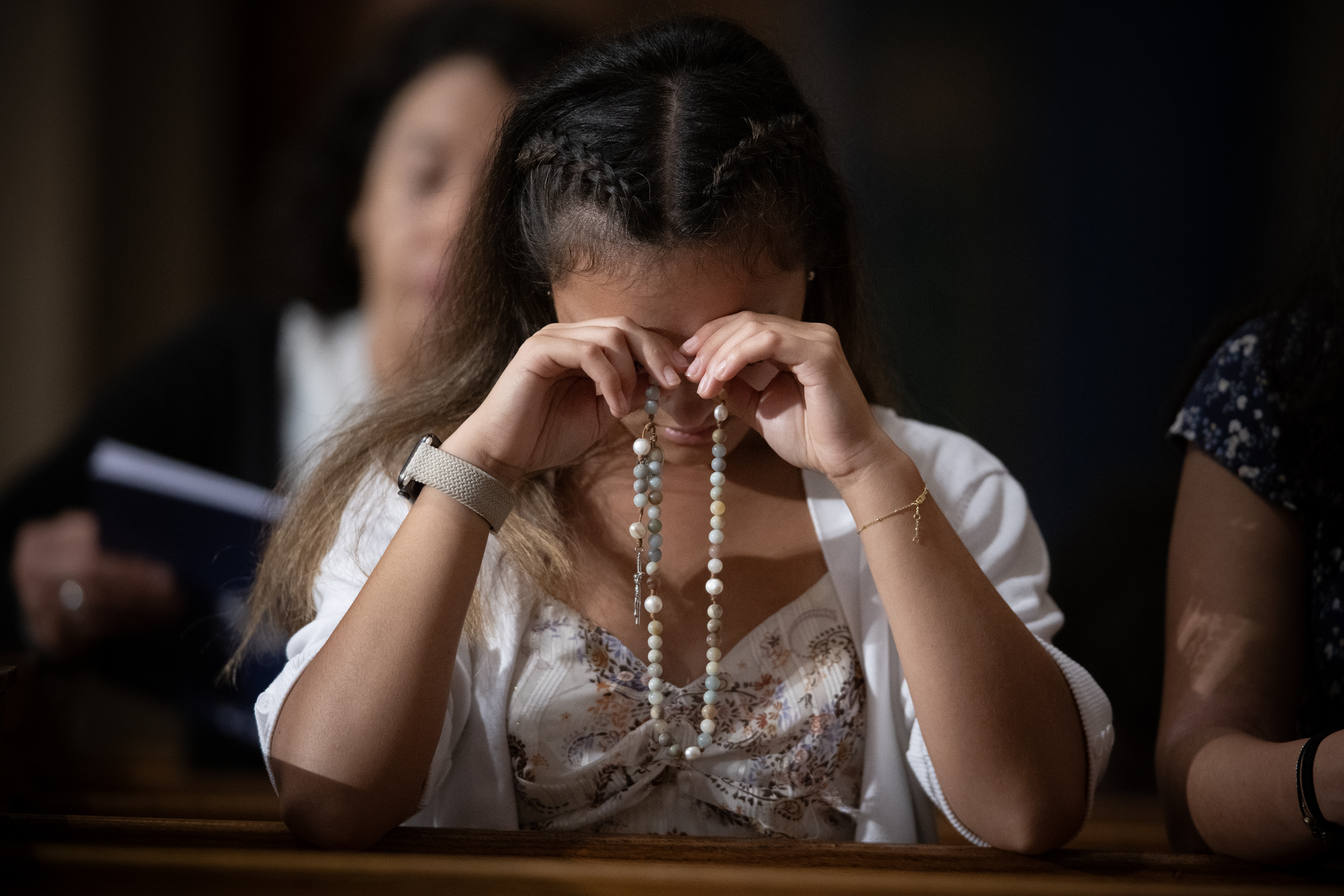
In an act of great devotion, the elderly cardinal reached the top with assistance, prayed the rosary and blessed those present with holy water.

Read More
Everything you need to know about devotion to the Sacred Heart of Jesus #Catholic The solemnity of the Sacred Heart of Jesus falls on the Friday after the Corpus Christi octave, which in 2026 is on June 12. What exactly is the meaning behind this feast day? Below are answers to some common questions.Why do Catholics venerate the Sacred Heart of Jesus?“Devoting ourselves to the Sacred Heart is one of the easiest, fastest, and most pleasant ways to grow in holiness,” Father Ambrose Dobrozsi, a priest of the Archdiocese of Cincinnati, told EWTN News.“Many saints have done many things to grow close to Jesus Christ, but no way is more sure and more pleasing to him than to consecrate ourselves to his Sacred Heart through the Immaculate Heart of his mother,” he added.Where does devotion to the Sacred Heart come from?The story behind the modern iteration of the devotion to the Sacred Heart of Jesus, however, begins on Dec. 27, 1673, at a monastery belonging to the Order of the Visitation of Holy Mary (Visitandines) in eastern France.There, a nun named Sister Margaret Mary Alacoque began experiencing visions of the Sacred Heart. Those visions continued for 18 months.During her visions, Sister Margaret Mary learned ways to venerate the Sacred Heart of Christ.These devotions included the concept of a Holy Hour on Thursdays, the creation of the feast of the Sacred Heart after Corpus Christi, and the reception of the Eucharist on the first Friday of every month.As with many mystics, many people were skeptical of Sister Margaret Mary’s claims of visions. Her confessor, the then-Father Claude La Colombière, SJ, (now St. Claude La Colombière) believed her, and eventually, the mother superior of her community began to believe as well.The first feast of the Sacred Heart was celebrated privately at the monastery in 1686.Sister Margaret Mary died in 1690 and was canonized by Pope Benedict XV on May 13, 1920.Initially, the Vatican was hesitant to declare a feast of the Sacred Heart but did allow the Visitandines to celebrate a Mass special to this day. As the devotion to the Sacred Heart of Jesus spread throughout France, the Vatican granted the feast of the Sacred Heart of Jesus to France in 1765.In 1856, after much lobbying by French bishops on behalf of the feast of the Sacred Heart, Pope Pius IX designated the Friday following the feast of Corpus Christi as the feast of the Sacred Heart for the entire Latin-rite Church.On May 25, 1899, Pope Leo XIII promulgated the encyclical Annum Sacrum, which consecrated the entire world to the Sacred Heart of Jesus. This encyclical was written after a nun, Sister Mary of the Sacred Heart, sent two letters to the pope requesting that he consecrate the world to the Sacred Heart of Jesus.Sister Mary of the Divine Heart wrote the letters, she said, after Jesus made the request to her. Pope Leo XIII called this encyclical and the subsequent consecration the “great act” of his papacy.“Finally, there is one motive which we are unwilling to pass over in silence, personal to ourselves it is true, but still good and weighty, which moves us to undertake this celebration. God, the author of every good, not long ago preserved our life by curing us of a dangerous disease,” Leo XIII wrote.“We now wish, by this increase of the honor paid to the Sacred Heart, that the memory of this great mercy should be brought prominently forward, and our gratitude be publicly acknowledged.”But why consecrate the world — or anyone — to the Sacred Heart of Jesus? What does that mean?Pope Leo XIII described the act of consecration as one that will “establish or draw tighter the bonds which naturally connect public affairs with God,” which was especially needed for the world at the turn of the century.“While many see religion as unnecessary in a world with more and more technology and resources, swearing allegiance and consecrating ourselves to Christ the King in his Sacred Heart shows that humanity still needs and longs for a compassionate and all-powerful God,” Dobrozsi, the Cincinnati priest, told EWTN News.“In a society where some live in decadence and prideful luxury while others are destitute, the burning love of Christ’s Sacred Heart reminds us that the fires of his mercy are also fires of justice. And when the culture, and so many of us, feel hopeless that we could ever change after falling to sins of the flesh, the heart of Our Lord beats with powerful love, eternally declaring that true charity has triumphed over sin and death,” he added.These are the promises the Sacred Heart of Jesus made to St. Margaret Mary Alacoque:1. I will give them all the graces necessary for their state of life.2. I will give peace in their families.3. I will console them in all their troubles.4. I will be their refuge in life and especially in death.5. I will abundantly bless all their undertakings.6. Sinners shall find in my heart the source and infinite ocean of mercy.7. Tepid souls shall become fervent.8. Fervent souls shall rise speedily to great perfection.9. I will bless those places wherein the image of my Sacred Heart shall be exposed and venerated.10. I will give to priests the power to touch the most hardened hearts.11. Persons who propagate this devotion shall have their names eternally written in my heart.12. In the excess of the mercy of my heart, I promise you that my all powerful love will grant to all those who will receive Communion on the first Fridays, for nine consecutive months, the grace of final repentance: They will not die in my displeasure, nor without receiving the sacraments; and my heart will be their secure refuge in that last hour.This story was first published on EWTN News on June 19, 2020, and has been updated.

Everything you need to know about devotion to the Sacred Heart of Jesus #Catholic The solemnity of the Sacred Heart of Jesus falls on the Friday after the Corpus Christi octave, which in 2026 is on June 12. What exactly is the meaning behind this feast day? Below are answers to some common questions.Why do Catholics venerate the Sacred Heart of Jesus?“Devoting ourselves to the Sacred Heart is one of the easiest, fastest, and most pleasant ways to grow in holiness,” Father Ambrose Dobrozsi, a priest of the Archdiocese of Cincinnati, told EWTN News.“Many saints have done many things to grow close to Jesus Christ, but no way is more sure and more pleasing to him than to consecrate ourselves to his Sacred Heart through the Immaculate Heart of his mother,” he added.Where does devotion to the Sacred Heart come from?The story behind the modern iteration of the devotion to the Sacred Heart of Jesus, however, begins on Dec. 27, 1673, at a monastery belonging to the Order of the Visitation of Holy Mary (Visitandines) in eastern France.There, a nun named Sister Margaret Mary Alacoque began experiencing visions of the Sacred Heart. Those visions continued for 18 months.During her visions, Sister Margaret Mary learned ways to venerate the Sacred Heart of Christ.These devotions included the concept of a Holy Hour on Thursdays, the creation of the feast of the Sacred Heart after Corpus Christi, and the reception of the Eucharist on the first Friday of every month.As with many mystics, many people were skeptical of Sister Margaret Mary’s claims of visions. Her confessor, the then-Father Claude La Colombière, SJ, (now St. Claude La Colombière) believed her, and eventually, the mother superior of her community began to believe as well.The first feast of the Sacred Heart was celebrated privately at the monastery in 1686.Sister Margaret Mary died in 1690 and was canonized by Pope Benedict XV on May 13, 1920.Initially, the Vatican was hesitant to declare a feast of the Sacred Heart but did allow the Visitandines to celebrate a Mass special to this day. As the devotion to the Sacred Heart of Jesus spread throughout France, the Vatican granted the feast of the Sacred Heart of Jesus to France in 1765.In 1856, after much lobbying by French bishops on behalf of the feast of the Sacred Heart, Pope Pius IX designated the Friday following the feast of Corpus Christi as the feast of the Sacred Heart for the entire Latin-rite Church.On May 25, 1899, Pope Leo XIII promulgated the encyclical Annum Sacrum, which consecrated the entire world to the Sacred Heart of Jesus. This encyclical was written after a nun, Sister Mary of the Sacred Heart, sent two letters to the pope requesting that he consecrate the world to the Sacred Heart of Jesus.Sister Mary of the Divine Heart wrote the letters, she said, after Jesus made the request to her. Pope Leo XIII called this encyclical and the subsequent consecration the “great act” of his papacy.“Finally, there is one motive which we are unwilling to pass over in silence, personal to ourselves it is true, but still good and weighty, which moves us to undertake this celebration. God, the author of every good, not long ago preserved our life by curing us of a dangerous disease,” Leo XIII wrote.“We now wish, by this increase of the honor paid to the Sacred Heart, that the memory of this great mercy should be brought prominently forward, and our gratitude be publicly acknowledged.”But why consecrate the world — or anyone — to the Sacred Heart of Jesus? What does that mean?Pope Leo XIII described the act of consecration as one that will “establish or draw tighter the bonds which naturally connect public affairs with God,” which was especially needed for the world at the turn of the century.“While many see religion as unnecessary in a world with more and more technology and resources, swearing allegiance and consecrating ourselves to Christ the King in his Sacred Heart shows that humanity still needs and longs for a compassionate and all-powerful God,” Dobrozsi, the Cincinnati priest, told EWTN News.“In a society where some live in decadence and prideful luxury while others are destitute, the burning love of Christ’s Sacred Heart reminds us that the fires of his mercy are also fires of justice. And when the culture, and so many of us, feel hopeless that we could ever change after falling to sins of the flesh, the heart of Our Lord beats with powerful love, eternally declaring that true charity has triumphed over sin and death,” he added.These are the promises the Sacred Heart of Jesus made to St. Margaret Mary Alacoque:1. I will give them all the graces necessary for their state of life.2. I will give peace in their families.3. I will console them in all their troubles.4. I will be their refuge in life and especially in death.5. I will abundantly bless all their undertakings.6. Sinners shall find in my heart the source and infinite ocean of mercy.7. Tepid souls shall become fervent.8. Fervent souls shall rise speedily to great perfection.9. I will bless those places wherein the image of my Sacred Heart shall be exposed and venerated.10. I will give to priests the power to touch the most hardened hearts.11. Persons who propagate this devotion shall have their names eternally written in my heart.12. In the excess of the mercy of my heart, I promise you that my all powerful love will grant to all those who will receive Communion on the first Fridays, for nine consecutive months, the grace of final repentance: They will not die in my displeasure, nor without receiving the sacraments; and my heart will be their secure refuge in that last hour.This story was first published on EWTN News on June 19, 2020, and has been updated.

This year, the solemnity of the Sacred Heart of Jesus is celebrated on June 12.

Read More
Pope Leo XIV in Madrid: Corpus Christi must not become museum of the past #Catholic Madrid, Spain, June 7, 2026 — Pope Leo XIV on Sunday called on Spain to renew its historic Eucharistic faith, warning that the country’s centuries-old religious traditions must not become “a museum of the past to be visited” but remain “a school of faith from which to draw even today.”The pope made the appeal while presiding over Mass, a procession, and Eucharistic blessing for the solemnity of Corpus Christi in Madrid’s Plaza de Cibeles, one of the Spanish capital’s most emblematic sites.“As I begin my visit to Spain, it is with a heart filled with joy that I preside over this celebration on the Solemnity of Corpus Christi,” the pope said in his homily.Corpus Christi has deep roots in Spain and throughout the Catholic world. The feast originated after the efforts of St. Juliana of Cornillon, a Belgian religious sister who promoted a liturgical celebration dedicated to the Blessed Sacrament. Pope Urban IV confirmed the feast for the universal Church in 1264, and within decades it had reached the Iberian Peninsula. King Alfonso X, known as “the Wise,” took part in a Corpus Christi celebration in Toledo in 1280.Over the centuries, the tradition became firmly established in Spain, making the country one of the great centers of Eucharistic devotion. During the period of the Council of Trent, when the real presence of Christ in the Eucharist was contested in parts of Europe, Spanish popular piety continued to exalt it through processions, music, art, and public expressions of faith.In Madrid, Pope Leo said Corpus Christi is “more than just another celebration on the liturgical calendar.”“It is a way of returning to the heart of the faith to renew our love and fidelity to God,” he said.“The solemn processions held on this day have for centuries shaped the piety, art, music, architecture and life of the Spanish people,” the pope continued. “Even today, they still express and manifest the spiritual sentiments of this country through the beauty and elegance of the floral carpets, the altars erected in the streets, the carefully crafted monstrances and stands, the hymns and the liturgical vestments.”The setting itself added a striking backdrop to the celebration. Plaza de Cibeles, crowned by the statue of the Roman goddess in a chariot drawn by lions, is known internationally as the place where Real Madrid celebrates its titles. On Sunday, however, the square’s focus was Christ in the Eucharist.One participant joked that with Pope Leo XIV in Madrid, the Spanish capital had three lions.The pope said the Corpus Christi procession is not “an exhibition, a remnant of folklore or a simple display of beauty.”“It is a profession of faith in the presence of the risen Lord, who is alive and continues to walk among us, who becomes bread to satiate our hunger for life, and visits the recesses of our hearts and history, even those shrouded in darkness,” he said.The procession route, about 600 meters along Calle de Alcalá, one of Madrid’s central thoroughfares, was adorned with 16 floral carpets — eight on each side — made with more than 30,000 carnations. Numerous faithful joined the pope, including many boys and girls who had recently received their first Communion.Pope Leo said the procession reveals that Christ “is not confined to the church, but comes out to meet us.”“Jesus travels the streets, crosses the squares and visits our neighborhoods, dwelling in the settings of our daily lives,” he said. “He is a God who is close to us, who walks with his people, the Lord of history.”The pope also connected Corpus Christi with charity, noting that the Church in Spain has long associated the solemnity with the Day for Charity.“The Christ who processes through the streets in the monstrance is the same one who identifies with the poor, the downtrodden, those who are alone and forsaken,” he said.“It is not merely a matter of bringing out the monstrance,” Pope Leo emphasized, “but of allowing ourselves to be brought out of our selfishness and indifference, of a comfortable, private faith, so as to respond to his invitation to conversion, to change our perspective, and to welcome his presence which transforms us and makes us builders of a new world.”The pope said the historical memory of Spain’s Corpus Christi processions “is not confined to wistful nostalgia.”“Instead, it stands as an invitation in the present moment, in our daily lives, in our relationships, in society, and in the building of the future,” he said.That, he added, is the task facing Spain today and tomorrow: “to ensure that the religiosity which has shaped and defined this country for centuries is not a museum of the past to be visited, but a school of faith from which to draw even today.”The pope described that school of faith as one that “teaches us to kneel before God and before our neighbor, because no one can kneel before the Lord and despise their brother.”It is also, he said, “a school that teaches us of the gratitude of love that becomes a gift, so that it may flow among us and break the chains of all selfishness.”From the Eucharist, he continued, Catholics learn “that God is a real presence and that we too are called to be present in the realities and challenges of society, not shying away, but personally committing ourselves to the building of the common good.”Pope Leo also recalled St. Manuel González García, the Spanish bishop known as “the bishop of the abandoned tabernacle.”“His life reminds us that the Eucharist should be honored not only during great celebrations or on special occasions, but also through the silent fidelity of those who accompany the Lord with a humble and quiet friendship that is nourished day by day,” the pope said.The pope also cited St. John of the Cross, recalling that while imprisoned in harsh conditions in Toledo around the time of Corpus Christi in 1578, the Spanish mystic recognized the hidden presence of the Lord even in darkness.“The Eucharistic Jesus is ‘that eternal spring that is hidden’ — a spring that flows and quenches thirst, yet without blinding, without imposing itself through outward power, without presenting itself in a spectacular way,” the pope said.Pope Leo closed by urging the faithful to return to Christ in the Eucharist with “sincere love.”“Let us open ourselves to the encounter with him, let us allow him to quench the thirst of our hearts, so that we may then go forth into the paths of life and history, bringing to the people this stream of fresh water, a stream of love, peace, justice and joy,” he said.“Let us drink anew from this Eucharistic spring, which does not enclose us in private devotion, but sends us out to refresh our brothers and sisters, our families, the poor, the suffering, and those who have lost hope,” the pope said. “Eucharistic grace transforms us and makes us protagonists of the transformation of history, a sign of hope for those we meet.”“May the Lord Jesus, present in the Eucharist, transform you into bread that is broken, given, and offered,” he concluded, “so that a life of fullness may spring forth for you, for your families, and for your country.”This story was first published by ACI Prensa, the Spanish-language sister service of EWTN News. It has been translated and adapted by EWTN News English.

Pope Leo XIV in Madrid: Corpus Christi must not become museum of the past #Catholic Madrid, Spain, June 7, 2026 — Pope Leo XIV on Sunday called on Spain to renew its historic Eucharistic faith, warning that the country’s centuries-old religious traditions must not become “a museum of the past to be visited” but remain “a school of faith from which to draw even today.”The pope made the appeal while presiding over Mass, a procession, and Eucharistic blessing for the solemnity of Corpus Christi in Madrid’s Plaza de Cibeles, one of the Spanish capital’s most emblematic sites.“As I begin my visit to Spain, it is with a heart filled with joy that I preside over this celebration on the Solemnity of Corpus Christi,” the pope said in his homily.Corpus Christi has deep roots in Spain and throughout the Catholic world. The feast originated after the efforts of St. Juliana of Cornillon, a Belgian religious sister who promoted a liturgical celebration dedicated to the Blessed Sacrament. Pope Urban IV confirmed the feast for the universal Church in 1264, and within decades it had reached the Iberian Peninsula. King Alfonso X, known as “the Wise,” took part in a Corpus Christi celebration in Toledo in 1280.Over the centuries, the tradition became firmly established in Spain, making the country one of the great centers of Eucharistic devotion. During the period of the Council of Trent, when the real presence of Christ in the Eucharist was contested in parts of Europe, Spanish popular piety continued to exalt it through processions, music, art, and public expressions of faith.In Madrid, Pope Leo said Corpus Christi is “more than just another celebration on the liturgical calendar.”“It is a way of returning to the heart of the faith to renew our love and fidelity to God,” he said.“The solemn processions held on this day have for centuries shaped the piety, art, music, architecture and life of the Spanish people,” the pope continued. “Even today, they still express and manifest the spiritual sentiments of this country through the beauty and elegance of the floral carpets, the altars erected in the streets, the carefully crafted monstrances and stands, the hymns and the liturgical vestments.”The setting itself added a striking backdrop to the celebration. Plaza de Cibeles, crowned by the statue of the Roman goddess in a chariot drawn by lions, is known internationally as the place where Real Madrid celebrates its titles. On Sunday, however, the square’s focus was Christ in the Eucharist.One participant joked that with Pope Leo XIV in Madrid, the Spanish capital had three lions.The pope said the Corpus Christi procession is not “an exhibition, a remnant of folklore or a simple display of beauty.”“It is a profession of faith in the presence of the risen Lord, who is alive and continues to walk among us, who becomes bread to satiate our hunger for life, and visits the recesses of our hearts and history, even those shrouded in darkness,” he said.The procession route, about 600 meters along Calle de Alcalá, one of Madrid’s central thoroughfares, was adorned with 16 floral carpets — eight on each side — made with more than 30,000 carnations. Numerous faithful joined the pope, including many boys and girls who had recently received their first Communion.Pope Leo said the procession reveals that Christ “is not confined to the church, but comes out to meet us.”“Jesus travels the streets, crosses the squares and visits our neighborhoods, dwelling in the settings of our daily lives,” he said. “He is a God who is close to us, who walks with his people, the Lord of history.”The pope also connected Corpus Christi with charity, noting that the Church in Spain has long associated the solemnity with the Day for Charity.“The Christ who processes through the streets in the monstrance is the same one who identifies with the poor, the downtrodden, those who are alone and forsaken,” he said.“It is not merely a matter of bringing out the monstrance,” Pope Leo emphasized, “but of allowing ourselves to be brought out of our selfishness and indifference, of a comfortable, private faith, so as to respond to his invitation to conversion, to change our perspective, and to welcome his presence which transforms us and makes us builders of a new world.”The pope said the historical memory of Spain’s Corpus Christi processions “is not confined to wistful nostalgia.”“Instead, it stands as an invitation in the present moment, in our daily lives, in our relationships, in society, and in the building of the future,” he said.That, he added, is the task facing Spain today and tomorrow: “to ensure that the religiosity which has shaped and defined this country for centuries is not a museum of the past to be visited, but a school of faith from which to draw even today.”The pope described that school of faith as one that “teaches us to kneel before God and before our neighbor, because no one can kneel before the Lord and despise their brother.”It is also, he said, “a school that teaches us of the gratitude of love that becomes a gift, so that it may flow among us and break the chains of all selfishness.”From the Eucharist, he continued, Catholics learn “that God is a real presence and that we too are called to be present in the realities and challenges of society, not shying away, but personally committing ourselves to the building of the common good.”Pope Leo also recalled St. Manuel González García, the Spanish bishop known as “the bishop of the abandoned tabernacle.”“His life reminds us that the Eucharist should be honored not only during great celebrations or on special occasions, but also through the silent fidelity of those who accompany the Lord with a humble and quiet friendship that is nourished day by day,” the pope said.The pope also cited St. John of the Cross, recalling that while imprisoned in harsh conditions in Toledo around the time of Corpus Christi in 1578, the Spanish mystic recognized the hidden presence of the Lord even in darkness.“The Eucharistic Jesus is ‘that eternal spring that is hidden’ — a spring that flows and quenches thirst, yet without blinding, without imposing itself through outward power, without presenting itself in a spectacular way,” the pope said.Pope Leo closed by urging the faithful to return to Christ in the Eucharist with “sincere love.”“Let us open ourselves to the encounter with him, let us allow him to quench the thirst of our hearts, so that we may then go forth into the paths of life and history, bringing to the people this stream of fresh water, a stream of love, peace, justice and joy,” he said.“Let us drink anew from this Eucharistic spring, which does not enclose us in private devotion, but sends us out to refresh our brothers and sisters, our families, the poor, the suffering, and those who have lost hope,” the pope said. “Eucharistic grace transforms us and makes us protagonists of the transformation of history, a sign of hope for those we meet.”“May the Lord Jesus, present in the Eucharist, transform you into bread that is broken, given, and offered,” he concluded, “so that a life of fullness may spring forth for you, for your families, and for your country.”This story was first published by ACI Prensa, the Spanish-language sister service of EWTN News. It has been translated and adapted by EWTN News English.

At Mass in Madrid’s Plaza de Cibeles, the pope called Spain’s centuries-old Eucharistic devotion “a school of faith” for the present and future.

Read More
Pope Leo XIV: The Trinity teaches that every creature is made for communion #Catholic Pope Leo XIV said Sunday that the mystery of the Holy Trinity teaches Christians to see every creature as made for communion — and warned that division, polarization, and contempt for differences leave the world spiritually barren.Speaking before the Angelus on May 31, the solemnity of the Most Holy Trinity, the pope reflected on Jesus’ encounter with Nicodemus in the Gospel of John, saying the feast reveals that God’s own life is a communion of love into which humanity is invited.“The Trinity helps us to love everyone and everything: we discover that every creature is made for communion, relationship and encounter,” Pope Leo said from the window of the Apostolic Palace overlooking St. Peter’s Square. “On the other hand, we understand why division, polarization and contempt for diversity bring destruction, sadness and barrenness to the world.”The pope said the Church’s Easter journey, which concluded last week with Pentecost, helps believers contemplate the divine life given to humanity in Christ — a communion of love that draws believers in through the Holy Spirit.The Spirit, he said, “unites the Father and the Son” and “has been poured into our hearts.” In this way, he added, “the Church becomes a sacrament of communion, a place of encounter, love and life where heaven and earth already touch.”Turning to Nicodemus, whom the Gospel describes as an important figure in Israel who came to Jesus at night, Leo said Christ “welcomed him and took his search for answers seriously.”Jesus, the pope said, “surprised Nicodemus by suggesting that it was even possible for an adult to be reborn and led him to realize that the life of God could transform his own life.”Leo noted that Nicodemus later defended Jesus before the Sanhedrin, urging others to listen before condemning him.“He had received the Spirit of communion from God through Christ himself, which opens the heart to new truths and to true renewal,” the pope said. “Whoever does not welcome this Spirit grows old quickly, in sorrow, feeling all alone and without joy in their hearts.”By contrast, Leo said, the solemnity of the Trinity is “a day of celebration.”“God’s feast is also ours,” he said, citing St. Paul’s exhortation to the Corinthians: “Rejoice, strive for perfection, encourage one another, live in peace; and the God of love and peace will be with you.”After leading the Angelus, the pope recalled the prayers for peace raised throughout the Church during May, a month traditionally dedicated to the Virgin Mary.“In this month of May, a united chorus of prayers for peace has resounded throughout the Church,” he said. “Above all, through the prayer of the Holy Rosary — like an unbroken chain — the peoples ravaged by war have been entrusted to the intercession of the Virgin Mary.”“May Divine Wisdom enlighten the consciences of those in authority and guide their decisions toward a sincere search for a just and lasting peace,” he said.Leo also marked Italy’s 25th National Day of Relief, expressing closeness to the sick and those who care for them.“I offer my spiritual closeness to the sick and those who care for them; and I thank and encourage all who promote a culture of solidarity and care,” he said.This story was first published by ACI Stampa, the Italian-language sister service of EWTN News. It has been translated and adapted by EWTN News English.

Pope Leo XIV: The Trinity teaches that every creature is made for communion #Catholic Pope Leo XIV said Sunday that the mystery of the Holy Trinity teaches Christians to see every creature as made for communion — and warned that division, polarization, and contempt for differences leave the world spiritually barren.Speaking before the Angelus on May 31, the solemnity of the Most Holy Trinity, the pope reflected on Jesus’ encounter with Nicodemus in the Gospel of John, saying the feast reveals that God’s own life is a communion of love into which humanity is invited.“The Trinity helps us to love everyone and everything: we discover that every creature is made for communion, relationship and encounter,” Pope Leo said from the window of the Apostolic Palace overlooking St. Peter’s Square. “On the other hand, we understand why division, polarization and contempt for diversity bring destruction, sadness and barrenness to the world.”The pope said the Church’s Easter journey, which concluded last week with Pentecost, helps believers contemplate the divine life given to humanity in Christ — a communion of love that draws believers in through the Holy Spirit.The Spirit, he said, “unites the Father and the Son” and “has been poured into our hearts.” In this way, he added, “the Church becomes a sacrament of communion, a place of encounter, love and life where heaven and earth already touch.”Turning to Nicodemus, whom the Gospel describes as an important figure in Israel who came to Jesus at night, Leo said Christ “welcomed him and took his search for answers seriously.”Jesus, the pope said, “surprised Nicodemus by suggesting that it was even possible for an adult to be reborn and led him to realize that the life of God could transform his own life.”Leo noted that Nicodemus later defended Jesus before the Sanhedrin, urging others to listen before condemning him.“He had received the Spirit of communion from God through Christ himself, which opens the heart to new truths and to true renewal,” the pope said. “Whoever does not welcome this Spirit grows old quickly, in sorrow, feeling all alone and without joy in their hearts.”By contrast, Leo said, the solemnity of the Trinity is “a day of celebration.”“God’s feast is also ours,” he said, citing St. Paul’s exhortation to the Corinthians: “Rejoice, strive for perfection, encourage one another, live in peace; and the God of love and peace will be with you.”After leading the Angelus, the pope recalled the prayers for peace raised throughout the Church during May, a month traditionally dedicated to the Virgin Mary.“In this month of May, a united chorus of prayers for peace has resounded throughout the Church,” he said. “Above all, through the prayer of the Holy Rosary — like an unbroken chain — the peoples ravaged by war have been entrusted to the intercession of the Virgin Mary.”“May Divine Wisdom enlighten the consciences of those in authority and guide their decisions toward a sincere search for a just and lasting peace,” he said.Leo also marked Italy’s 25th National Day of Relief, expressing closeness to the sick and those who care for them.“I offer my spiritual closeness to the sick and those who care for them; and I thank and encourage all who promote a culture of solidarity and care,” he said.This story was first published by ACI Stampa, the Italian-language sister service of EWTN News. It has been translated and adapted by EWTN News English.

At the Sunday Angelus, the pope prayed for “a just and lasting peace” as the Church closed a monthlong Marian appeal for countries ravaged by war.

Read More
Leo XIV at Pentecost: The Spirit overcomes war with the omnipotence of love #Catholic VATICAN CITY — Pope Leo XIV marked Pentecost Sunday with a plea for peace, praying that the Holy Spirit would save the world “from the evil of war” and renew the Church in its mission to transform confusion into communion.Celebrating Mass in St. Peter’s Basilica on May 24, the pope centered his homily on the risen Christ’s appearance to the disciples in the upper room, where Jesus showed them “his hands and his side” and breathed the Holy Spirit upon them.“The Lord reveals his glorious body, specifically his wounds, the marks of the crucifixion,” Pope Leo said. “These signs of the Passion, more eloquent than words, are now transfigured; he who was dead lives forever.”The pope said the same upper room that had been marked by fear and betrayal became, through Christ’s gift of the Spirit, “for the entire Church, the womb of the Resurrection.”“Pentecost is therefore a paschal feast and a feast of the body of Christ, which by grace is all of us,” he said.Leo framed his homily around three aspects of the Holy Spirit: peace, mission, and truth.“First of all, the Spirit of the risen One is the Spirit of peace,” he said. “Indeed, through his paschal mystery, Christ restores peace between God and humanity, and the Holy Spirit pours this peace into our hearts and spreads it throughout the world.”That peace, the pope said, “stems from forgiveness and leads us to forgiveness,” beginning with Christ’s forgiveness of humanity.The pope then described the Holy Spirit as “the Spirit of mission,” citing Christ’s words: “As the Father has sent me, so I send you.”“We are truly co-workers of the Gospel: The whole Church is its protagonist, not merely its guardian,” Leo said. “Through the power of the Spirit, our proclamation is filled with joy and hope, for we — yes, we ourselves — are the newness of the world, the light and the salt of the earth.”The pope warned that some changes “do not bring new life to the world, but make it grow old through error and violence.” By contrast, he said, “the Holy Spirit enlightens minds and instils new vitality in our hearts.”“This is how he transfigures history, opening it to salvation, which is the gift that the Lord offers to everyone,” he said. “The Church’s mission bears witness to this offer, thereby transforming the world’s confusion into communion with God and among ourselves.”Finally, Leo said the Spirit is “the Spirit of truth,” who “always promotes unity in truth” and protects the Church from “partisanship, hypocrisy, and fads that obscure the light of the Gospel.”“The truth that God gives us thus stands as a liberating word for all peoples, a message that transforms every culture from within,” he said.Concluding his homily, the pope offered a prayer for a world wounded by war, poverty, and sin.“Dear friends, with fervent hearts, let us pray today that the Spirit of the risen One may save us from the evil of war, which is overcome not by a superpower, but by the omnipotence of love,” he said. “Let us pray that he free humanity from misery, which is redeemed not by immeasurable wealth, but by an inexhaustible gift. Let us pray that he heal us from the scourge of sin through the salvation proclaimed to all peoples in the name of Jesus.”After the Mass, Pope Leo appeared from his study in the Apostolic Palace to pray the Regina Coeli, returning again to the theme of the Holy Spirit as the one who opens what fear and sin have closed.The pope said the Spirit was poured out abundantly on the newborn Church and is given anew to the faithful today as “light and strength” in every circumstance of life.“The Spirit opens doors,” he said, pointing to the image of Christ opening the doors of the upper room and to the Acts of the Apostles, where the Spirit comes “like a violent wind.”Leo asked: “What doors does the Holy Spirit open?”The first, he said, is “the door of God himself,” opening access to the mystery of God as revealed in Jesus Christ. The Holy Spirit, he said, helps believers encounter God personally in Jesus, recognize him within themselves, and discover the signs of his presence in daily life.The second door is that of the upper room, “that is, of the Church.” Without the fire of the Spirit, the pope said, the Church “remains a prisoner of fear,” timid before the challenges of the world, closed in on itself, and unable to enter into dialogue with changing times.The third door, Leo said, is “the door of our hearts.” The Spirit helps believers overcome resistance, selfishness, mistrust, and prejudice, making them capable of living as children of God and brothers and sisters to one another.“Where the Spirit of the Lord is, fraternity is born among persons, groups, and peoples of the earth,” he said, adding that all are called to speak “the one language of love, which unites and harmonizes differences.”The pope also recalled the day of prayer for the Church in China, observed on the liturgical memorial of the Blessed Virgin Mary, Help of Christians, who is venerated at the Shrine of Our Lady of Sheshan in Shanghai.Leo invited the faithful to join in prayer with Chinese Catholics “as a sign of our affection for them and of their communion with the universal Church and with the successor of Peter.” He prayed that Mary’s intercession would obtain for the Church in China the grace of unity and the strength to witness to the Gospel in daily hardship, becoming a seed of hope and peace.The pope also remembered victims of a recent mining accident in northern China and entrusted to Mary the Christian communities of the Holy Land, Lebanon, and the wider Middle East suffering because of war.This story was first published in two parts by ACI Stampa, the Italian-language sister service of EWTN News. It has been translated and adapted by EWTN News English.

Leo XIV at Pentecost: The Spirit overcomes war with the omnipotence of love #Catholic VATICAN CITY — Pope Leo XIV marked Pentecost Sunday with a plea for peace, praying that the Holy Spirit would save the world “from the evil of war” and renew the Church in its mission to transform confusion into communion.Celebrating Mass in St. Peter’s Basilica on May 24, the pope centered his homily on the risen Christ’s appearance to the disciples in the upper room, where Jesus showed them “his hands and his side” and breathed the Holy Spirit upon them.“The Lord reveals his glorious body, specifically his wounds, the marks of the crucifixion,” Pope Leo said. “These signs of the Passion, more eloquent than words, are now transfigured; he who was dead lives forever.”The pope said the same upper room that had been marked by fear and betrayal became, through Christ’s gift of the Spirit, “for the entire Church, the womb of the Resurrection.”“Pentecost is therefore a paschal feast and a feast of the body of Christ, which by grace is all of us,” he said.Leo framed his homily around three aspects of the Holy Spirit: peace, mission, and truth.“First of all, the Spirit of the risen One is the Spirit of peace,” he said. “Indeed, through his paschal mystery, Christ restores peace between God and humanity, and the Holy Spirit pours this peace into our hearts and spreads it throughout the world.”That peace, the pope said, “stems from forgiveness and leads us to forgiveness,” beginning with Christ’s forgiveness of humanity.The pope then described the Holy Spirit as “the Spirit of mission,” citing Christ’s words: “As the Father has sent me, so I send you.”“We are truly co-workers of the Gospel: The whole Church is its protagonist, not merely its guardian,” Leo said. “Through the power of the Spirit, our proclamation is filled with joy and hope, for we — yes, we ourselves — are the newness of the world, the light and the salt of the earth.”The pope warned that some changes “do not bring new life to the world, but make it grow old through error and violence.” By contrast, he said, “the Holy Spirit enlightens minds and instils new vitality in our hearts.”“This is how he transfigures history, opening it to salvation, which is the gift that the Lord offers to everyone,” he said. “The Church’s mission bears witness to this offer, thereby transforming the world’s confusion into communion with God and among ourselves.”Finally, Leo said the Spirit is “the Spirit of truth,” who “always promotes unity in truth” and protects the Church from “partisanship, hypocrisy, and fads that obscure the light of the Gospel.”“The truth that God gives us thus stands as a liberating word for all peoples, a message that transforms every culture from within,” he said.Concluding his homily, the pope offered a prayer for a world wounded by war, poverty, and sin.“Dear friends, with fervent hearts, let us pray today that the Spirit of the risen One may save us from the evil of war, which is overcome not by a superpower, but by the omnipotence of love,” he said. “Let us pray that he free humanity from misery, which is redeemed not by immeasurable wealth, but by an inexhaustible gift. Let us pray that he heal us from the scourge of sin through the salvation proclaimed to all peoples in the name of Jesus.”After the Mass, Pope Leo appeared from his study in the Apostolic Palace to pray the Regina Coeli, returning again to the theme of the Holy Spirit as the one who opens what fear and sin have closed.The pope said the Spirit was poured out abundantly on the newborn Church and is given anew to the faithful today as “light and strength” in every circumstance of life.“The Spirit opens doors,” he said, pointing to the image of Christ opening the doors of the upper room and to the Acts of the Apostles, where the Spirit comes “like a violent wind.”Leo asked: “What doors does the Holy Spirit open?”The first, he said, is “the door of God himself,” opening access to the mystery of God as revealed in Jesus Christ. The Holy Spirit, he said, helps believers encounter God personally in Jesus, recognize him within themselves, and discover the signs of his presence in daily life.The second door is that of the upper room, “that is, of the Church.” Without the fire of the Spirit, the pope said, the Church “remains a prisoner of fear,” timid before the challenges of the world, closed in on itself, and unable to enter into dialogue with changing times.The third door, Leo said, is “the door of our hearts.” The Spirit helps believers overcome resistance, selfishness, mistrust, and prejudice, making them capable of living as children of God and brothers and sisters to one another.“Where the Spirit of the Lord is, fraternity is born among persons, groups, and peoples of the earth,” he said, adding that all are called to speak “the one language of love, which unites and harmonizes differences.”The pope also recalled the day of prayer for the Church in China, observed on the liturgical memorial of the Blessed Virgin Mary, Help of Christians, who is venerated at the Shrine of Our Lady of Sheshan in Shanghai.Leo invited the faithful to join in prayer with Chinese Catholics “as a sign of our affection for them and of their communion with the universal Church and with the successor of Peter.” He prayed that Mary’s intercession would obtain for the Church in China the grace of unity and the strength to witness to the Gospel in daily hardship, becoming a seed of hope and peace.The pope also remembered victims of a recent mining accident in northern China and entrusted to Mary the Christian communities of the Holy Land, Lebanon, and the wider Middle East suffering because of war.This story was first published in two parts by ACI Stampa, the Italian-language sister service of EWTN News. It has been translated and adapted by EWTN News English.

The pontiff prayed that the Holy Spirit would save humanity from war, misery, and sin.

Read More
Picture of the day


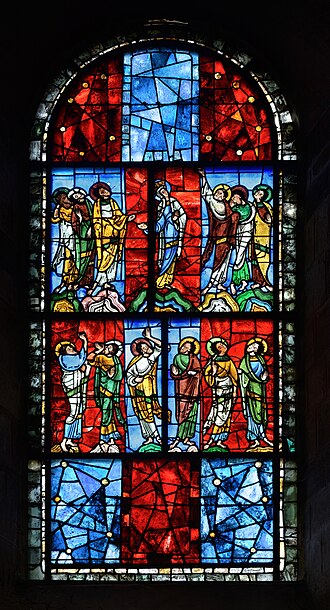
This stained glass window in the Cathedral of Saint Julian of Le Mans (Le Mans, France) depicts the Virgin Mary and the apostles during the Ascension of Jesus. Today is the Feast of the Ascension in Western Christianity.
 #ImageOfTheDay
Picture of the day
This stained glass window in the Cathedral of Saint Julian of Le Mans (Le Mans, France) depicts the Virgin Mary and the apostles during the Ascension of Jesus. Today is the Feast of the Ascension in Western Christianity.
Read More
Picture of the day


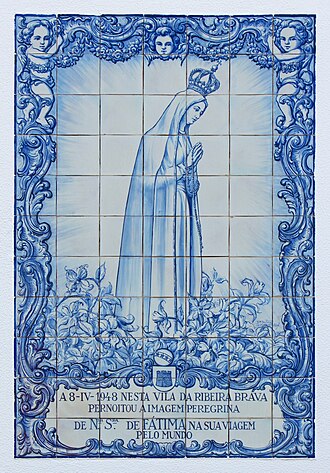
This azulejo from the Igreja de São Bento (Ribeira Brava, Madeira, Portugal) depicts Our Lady of Fátima. Today is the feast of Our Lady of Fátima in the Catholic Church and the 110th anniversary of her first apparition to three shepherd children.
 #ImageOfTheDay
Picture of the day
This azulejo from the Igreja de São Bento (Ribeira Brava, Madeira, Portugal) depicts Our Lady of Fátima. Today is the feast of Our Lady of Fátima in the Catholic Church and the 110th anniversary of her first apparition to three shepherd children.
Read More
Picture of the day


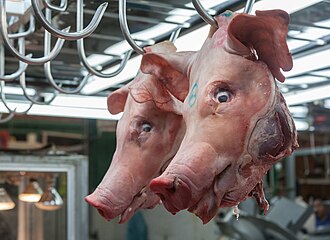
Pig heads in a market. Today is the Feast of Saint Mark. According to legend, ninth century Venetian sailors smuggled Saint Mark’s relics out of Muslim-controlled Alexandria by covering them with pork.
 #ImageOfTheDay
Picture of the day
Pig heads in a market. Today is the Feast of Saint Mark. According to legend, ninth century Venetian sailors smuggled Saint Mark’s relics out of Muslim-controlled Alexandria by covering them with pork.
Read More
Picture of the day


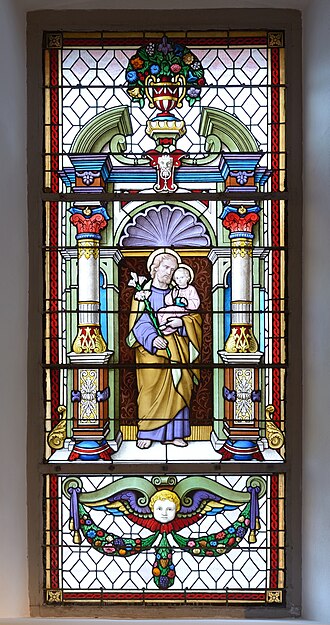
Saint Joseph depicted holding a staff with lily blossoms and the Christ Child on a stained-glass window in the Saint Antony church in Urtijëi. Today is St. Joseph’s feast day in Western Christianity.
 #ImageOfTheDay
Picture of the day
Saint Joseph depicted holding a staff with lily blossoms and the Christ Child on a stained-glass window in the Saint Antony church in Urtijëi. Today is St. Joseph’s feast day in Western Christianity.
Read More
Picture of the day


The ceiling mosaic in the Baptistry of Neon in Ravenna, Italy depicts the Baptism of Jesus. Built around 6th century A.D., the building is a UNESCO World heritage site. Today is the Feast of the Baptism of the Lord in much of Western Christianity.
 #ImageOfTheDay
Picture of the day
The ceiling mosaic in the Baptistry of Neon in Ravenna, Italy depicts the Baptism of Jesus. Built around 6th century A.D., the building is a UNESCO World heritage site. Today is the Feast of the Baptism of the Lord in much of Western Christianity.
Read More
Picture of the day


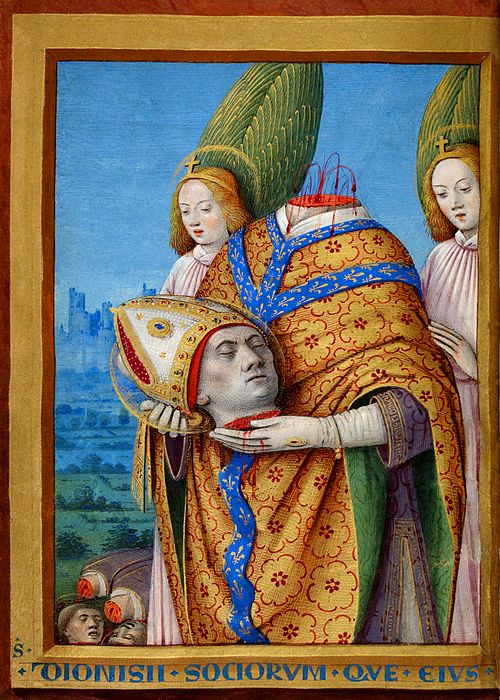
Illuminated manuscript of the Horae ad usum Parisiensem (Book of hours for Parisians), or “Book of Hours of Charles VIII” King of France (1468 – 1498). The folio shows Saint Denis, first bishop and patron of Paris, walking with his head in his hands after his execution. Today is the feast day of Saint Denis.
 #ImageOfTheDay
Picture of the day
Illuminated manuscript of the Horae ad usum Parisiensem (Book of hours for Parisians), or “Book of Hours of Charles VIII” King of France (1468 – 1498). The folio shows Saint Denis, first bishop and patron of Paris, walking with his head in his hands after his execution. Today is the feast day of Saint Denis.
Read More
Picture of the day


Side view of the Basilica of Saint Francis of Assisi from the north-west, showing the imposing structure of the Basilica and monastery located in Assisi, Umbria, Italy. Today (4th October) is the feast day of St. Francis of Assisi, Patron of Ecologists.
 #ImageOfTheDay
Picture of the day
Side view of the Basilica of Saint Francis of Assisi from the north-west, showing the imposing structure of the Basilica and monastery located in Assisi, Umbria, Italy. Today (4th October) is the feast day of St. Francis of Assisi, Patron of Ecologists.
Read More
Picture of the day


An image of Arab twin brothers Saints Cosmas and Damian from the Grandes Heures of Anne of Brittany. As ancient physicians, they are depicted holding tools of their profession. Today is their feast day on the General Roman Calendar.
 #ImageOfTheDay
Picture of the day
An image of Arab twin brothers Saints Cosmas and Damian from the Grandes Heures of Anne of Brittany. As ancient physicians, they are depicted holding tools of their profession. Today is their feast day on the General Roman Calendar.
Read More
Picture of the day


This sculpture representing the Gospel of Matthew appears in St. Genesius Church in Baden-Württemberg. It depicts a tetramorph element standing next the apostle reading a codex. Today is Saint Matthew’s feast day.
 #ImageOfTheDay
Picture of the day
This sculpture representing the Gospel of Matthew appears in St. Genesius Church in Baden-Württemberg. It depicts a tetramorph element standing next the apostle reading a codex. Today is Saint Matthew’s feast day.
Read More
Picture of the day


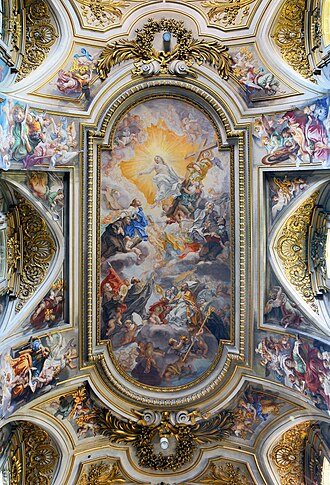
This painting on the ceiling in Santa Maria della Concezione dei Cappuccini, a church on Via Veneto in Rome, depicts the Virgin Mary being assumed body and soul into heaven. Today is the Feast of the Assumption of Mary in much of Western Christianity or the Dormition of the Mother of God in Eastern Christianity.
 #ImageOfTheDay
Picture of the day
This painting on the ceiling in Santa Maria della Concezione dei Cappuccini, a church on Via Veneto in Rome, depicts the Virgin Mary being assumed body and soul into heaven. Today is the Feast of the Assumption of Mary in much of Western Christianity or the Dormition of the Mother of God in Eastern Christianity.
Read More
Picture of the day


Triumph of St. Ignatius of Loyola by Andrea Pozzo, celebrates the work of Ignatius of Loyola and the Society of Jesus in the world by depicting the saint welcomed into paradise by Christ and surrounded by allegorical representations of the four continents. The trompe-l’œil fresco adorns the flat ceiling of the Church of St. Ignatius of Loyola at Campus Martius. Today is Ignatius of Loyola’s feast day.
 #ImageOfTheDay
Picture of the day
Triumph of St. Ignatius of Loyola by Andrea Pozzo, celebrates the work of Ignatius of Loyola and the Society of Jesus in the world by depicting the saint welcomed into paradise by Christ and surrounded by allegorical representations of the four continents. The trompe-l’œil fresco adorns the flat ceiling of the Church of St. Ignatius of Loyola at Campus Martius. Today is Ignatius of Loyola’s feast day.
Read More
Picture of the day


High altar of the subsidiary church St. Peter and Paul in Lavant, East Tyrol, Austria. The center of the triptych depicts Saint Peter and Saint Paul flanking Mary Help of Christians. Today is the Feast of Saints Peter and Paul.
 #ImageOfTheDay
Picture of the day
High altar of the subsidiary church St. Peter and Paul in Lavant, East Tyrol, Austria. The center of the triptych depicts Saint Peter and Saint Paul flanking Mary Help of Christians. Today is the Feast of Saints Peter and Paul.
Read More