justice

Christ is not ‘a guru or a good luck charm,’ pope says at Mass in Angola #Catholic SAURIMO, Angola — Pope Leo XIV warned at Mass in Saurimo, Angola, on Monday of making God into an idol that is sought only when advantageous — “when genuine faith is replaced with superstitious practices.”“There are erroneous motives for seeking Christ, particularly when he is considered to be a guru or a good luck charm,” the pope said on April 20, referring to how the crowds in the Gospel reading reacted after Jesus performed the miracle of the loaves and the fishes.“They were not seeking a teacher whom they love but a leader to applaud for their own advantage,” he said.Joyful faith in Saurimo
 
 Pope Leo XIV celebrates Mass in Saurimo, Angola, on April 20, 2026. | Credit: Vatican Media
 
 From the start of his arrival in Sub-Saharan Africa — first in Cameroon and then in Angola — Pope Leo has been welcomed by the warmth of the faithful. In Saurimo, a city in northeastern Angola, the atmosphere greeting the pope on Monday was marked by joyful faith. Everyone welcomed the successor of Peter with songs, dances, and applause.Despite the intense heat, upon reaching the esplanade before Mass, Leo XIV greeted the roughly 60,000 faithful of all ages — who had come from across the region and neighboring dioceses — by making a circuit in the popemobile.“This is the first time a pope has gone beyond Angola’s coastal belt and come — using Pope Francis’ language — to the peripheries,“ the director of the communications office of the Archdiocese of Saurimo said. ”This is a region rich in diamonds, but there is also great poverty, and he comes here to show our reality. For us, having the Holy Father in our region is a great joy.”“This is a unique and unforgettable moment in my life and in the lives of the many pilgrims here today,” Filomena Vunda, who works in the pastoral secretariat of the Archdiocese of Malanje, told ACI Africa, the sister service of EWTN News in Africa, at the Mass.Vunda encouraged non-Catholics in Angola to “keep in mind our African word ‘Ubuntu’: The happiness of others depends on me; my happiness depends solely on the happiness of others.”Ubuntu is an African philosophy about human interconnectedness. It can be translated as “I am because we are.”‘Disciples of Christ’In his homily at Mass, concelebrated by Angolan bishops, Pope Leo said: “In every part of the world, the Church lives as a people who walk as disciples of Christ, our brother and redeemer.”"He, the Risen One, illumines for us the path to the Father and with the strength of the Spirit he sanctifies us so that we may transform our way of life in conformity with his love," the pope said. "This is the good news, the Gospel that courses through our veins like blood, sustaining us on the journey. A journey that has brought me here with you today!”
 
 Pope Leo XIV celebrates Mass in Saurimo, Angola, on April 20, 2026. | Credit: Vatican Media
 
 Commenting on the Gospel of the day, Leo reflected: “Indeed, when the Son of God became man, he performed striking miracles in order to manifest the will of the Father: He made light shine in the darkness by giving sight to the blind, he gave a voice to the oppressed by loosening the tongues of the mute, he slaked our thirst for justice by multiplying bread for the poor and weak. Anyone who heard about these works set out in search of Jesus. At the same time, the Lord looks into our heart and asks us whether we seek him out of gratitude or for our own self-interest, with calculation or with love.”“The Lord himself says,” the pope continued, “‘you are looking for me, not because you saw signs, but because you ate your fill of the loaves’ (Jn 6:26). His words reveal the designs of those who do not want to encounter a person but want to consume things. The crowd sees Jesus as means to an end, a provider of services. If he had not given them something to eat, his actions and teachings would not have interested them.”“This happens,” Leo XIV explained, “when genuine faith is replaced with superstitious practices, in which God becomes an idol that is sought only when it is advantageous to us and only for as long as it is. Even the most beautiful gifts of the Lord, which are always for the care of his people, become a pretext, a prize or a bargaining chip, and are misinterpreted by those who receive them.”“How different is Jesus’ attitude toward us,” the pontiff continued. “Yet, he does not reject this insincere search, but encourages its conversion ... Christ calls us to freedom: He does not want servants or clients, rather he seeks brothers and sisters to whom he can totally dedicate himself.”“Therefore,” Leo XIV said, “the admonition that the Lord directs to the crowd is transformed into an invitation: ‘Do not work for the food that perishes, but for the food that endures for eternal life’ (Jn 6:27)."“His gift sheds light on our current situation,” the pope went on. “We can see today how the hope of many people is frustrated by violence, exploited by the powerful, and defrauded by the rich. Consequently, when injustice corrupts hearts, the bread of all becomes the possession of a few."“In the face of these evils, Christ hears the cry of the people and renews our history by lifting us up from every fall, comforting us in every suffering, and encouraging us in our mission," he said. 
 
 Crowds of people brave the heat and sun to attend Mass with Pope Leo XIV in Saurimo, Angola, on April 20, 2026. | Credit: Raúl Kangombe Sapiti/ACI Africa
 
 “All this,” the pope exhorted, “means that, in light of our discipleship, the ecclesial journey is a ‘synod of resurrection and hope,’ as St. John Paul II affirmed in his apostolic exhortation Ecclesia in Africa. Let us proceed in this wise direction! Christ himself guides and strengthens our journey, a journey that we want to learn to live more and more as it should be, that is, in a synodal manner.”The pope concluded by recalling the importance of the martyrs and saints, whose witness “encourages us and pushes us onto a path of hope, reconciliation, and peace, along which the gift of God becomes the responsibility of the head of the household, in the Christian community, in civil society.”"The vitality of the vocations that you experience [in Angola]," he said, "is a sign that you are responding to the Lord’s gift, which is always abundant for those who welcome it with pure hearts.”ACI Africa reporter Raúl Kangombe Sapiti contributed to this report.This story was first published by ACI Stampa, the Italian-language sister service of EWTN News. It has been translated and adapted by EWTN News English.

Christ is not ‘a guru or a good luck charm,’ pope says at Mass in Angola #Catholic SAURIMO, Angola — Pope Leo XIV warned at Mass in Saurimo, Angola, on Monday of making God into an idol that is sought only when advantageous — “when genuine faith is replaced with superstitious practices.”“There are erroneous motives for seeking Christ, particularly when he is considered to be a guru or a good luck charm,” the pope said on April 20, referring to how the crowds in the Gospel reading reacted after Jesus performed the miracle of the loaves and the fishes.“They were not seeking a teacher whom they love but a leader to applaud for their own advantage,” he said.Joyful faith in Saurimo Pope Leo XIV celebrates Mass in Saurimo, Angola, on April 20, 2026. | Credit: Vatican Media From the start of his arrival in Sub-Saharan Africa — first in Cameroon and then in Angola — Pope Leo has been welcomed by the warmth of the faithful. In Saurimo, a city in northeastern Angola, the atmosphere greeting the pope on Monday was marked by joyful faith. Everyone welcomed the successor of Peter with songs, dances, and applause.Despite the intense heat, upon reaching the esplanade before Mass, Leo XIV greeted the roughly 60,000 faithful of all ages — who had come from across the region and neighboring dioceses — by making a circuit in the popemobile.“This is the first time a pope has gone beyond Angola’s coastal belt and come — using Pope Francis’ language — to the peripheries,“ the director of the communications office of the Archdiocese of Saurimo said. ”This is a region rich in diamonds, but there is also great poverty, and he comes here to show our reality. For us, having the Holy Father in our region is a great joy.”“This is a unique and unforgettable moment in my life and in the lives of the many pilgrims here today,” Filomena Vunda, who works in the pastoral secretariat of the Archdiocese of Malanje, told ACI Africa, the sister service of EWTN News in Africa, at the Mass.Vunda encouraged non-Catholics in Angola to “keep in mind our African word ‘Ubuntu’: The happiness of others depends on me; my happiness depends solely on the happiness of others.”Ubuntu is an African philosophy about human interconnectedness. It can be translated as “I am because we are.”‘Disciples of Christ’In his homily at Mass, concelebrated by Angolan bishops, Pope Leo said: “In every part of the world, the Church lives as a people who walk as disciples of Christ, our brother and redeemer.”"He, the Risen One, illumines for us the path to the Father and with the strength of the Spirit he sanctifies us so that we may transform our way of life in conformity with his love," the pope said. "This is the good news, the Gospel that courses through our veins like blood, sustaining us on the journey. A journey that has brought me here with you today!” Pope Leo XIV celebrates Mass in Saurimo, Angola, on April 20, 2026. | Credit: Vatican Media Commenting on the Gospel of the day, Leo reflected: “Indeed, when the Son of God became man, he performed striking miracles in order to manifest the will of the Father: He made light shine in the darkness by giving sight to the blind, he gave a voice to the oppressed by loosening the tongues of the mute, he slaked our thirst for justice by multiplying bread for the poor and weak. Anyone who heard about these works set out in search of Jesus. At the same time, the Lord looks into our heart and asks us whether we seek him out of gratitude or for our own self-interest, with calculation or with love.”“The Lord himself says,” the pope continued, “‘you are looking for me, not because you saw signs, but because you ate your fill of the loaves’ (Jn 6:26). His words reveal the designs of those who do not want to encounter a person but want to consume things. The crowd sees Jesus as means to an end, a provider of services. If he had not given them something to eat, his actions and teachings would not have interested them.”“This happens,” Leo XIV explained, “when genuine faith is replaced with superstitious practices, in which God becomes an idol that is sought only when it is advantageous to us and only for as long as it is. Even the most beautiful gifts of the Lord, which are always for the care of his people, become a pretext, a prize or a bargaining chip, and are misinterpreted by those who receive them.”“How different is Jesus’ attitude toward us,” the pontiff continued. “Yet, he does not reject this insincere search, but encourages its conversion … Christ calls us to freedom: He does not want servants or clients, rather he seeks brothers and sisters to whom he can totally dedicate himself.”“Therefore,” Leo XIV said, “the admonition that the Lord directs to the crowd is transformed into an invitation: ‘Do not work for the food that perishes, but for the food that endures for eternal life’ (Jn 6:27)."“His gift sheds light on our current situation,” the pope went on. “We can see today how the hope of many people is frustrated by violence, exploited by the powerful, and defrauded by the rich. Consequently, when injustice corrupts hearts, the bread of all becomes the possession of a few."“In the face of these evils, Christ hears the cry of the people and renews our history by lifting us up from every fall, comforting us in every suffering, and encouraging us in our mission," he said. Crowds of people brave the heat and sun to attend Mass with Pope Leo XIV in Saurimo, Angola, on April 20, 2026. | Credit: Raúl Kangombe Sapiti/ACI Africa “All this,” the pope exhorted, “means that, in light of our discipleship, the ecclesial journey is a ‘synod of resurrection and hope,’ as St. John Paul II affirmed in his apostolic exhortation Ecclesia in Africa. Let us proceed in this wise direction! Christ himself guides and strengthens our journey, a journey that we want to learn to live more and more as it should be, that is, in a synodal manner.”The pope concluded by recalling the importance of the martyrs and saints, whose witness “encourages us and pushes us onto a path of hope, reconciliation, and peace, along which the gift of God becomes the responsibility of the head of the household, in the Christian community, in civil society.”"The vitality of the vocations that you experience [in Angola]," he said, "is a sign that you are responding to the Lord’s gift, which is always abundant for those who welcome it with pure hearts.”ACI Africa reporter Raúl Kangombe Sapiti contributed to this report.This story was first published by ACI Stampa, the Italian-language sister service of EWTN News. It has been translated and adapted by EWTN News English.

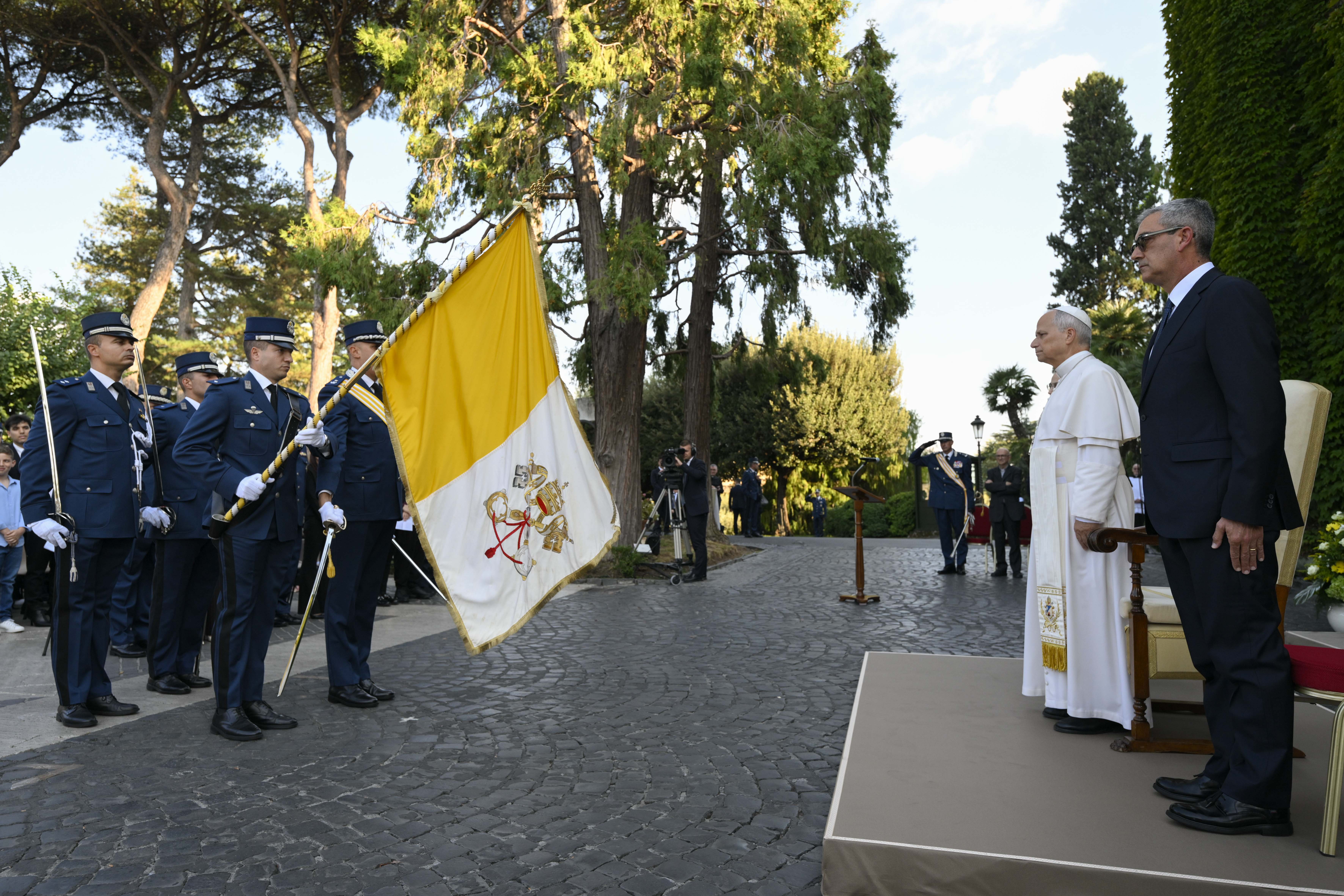
After praying at the Cathedral of Our Lady of the Assumption in Saurimo, Pope Leo XIV proceeded to the site of the Mass, attended by an estimated 60,000 people.

Read More
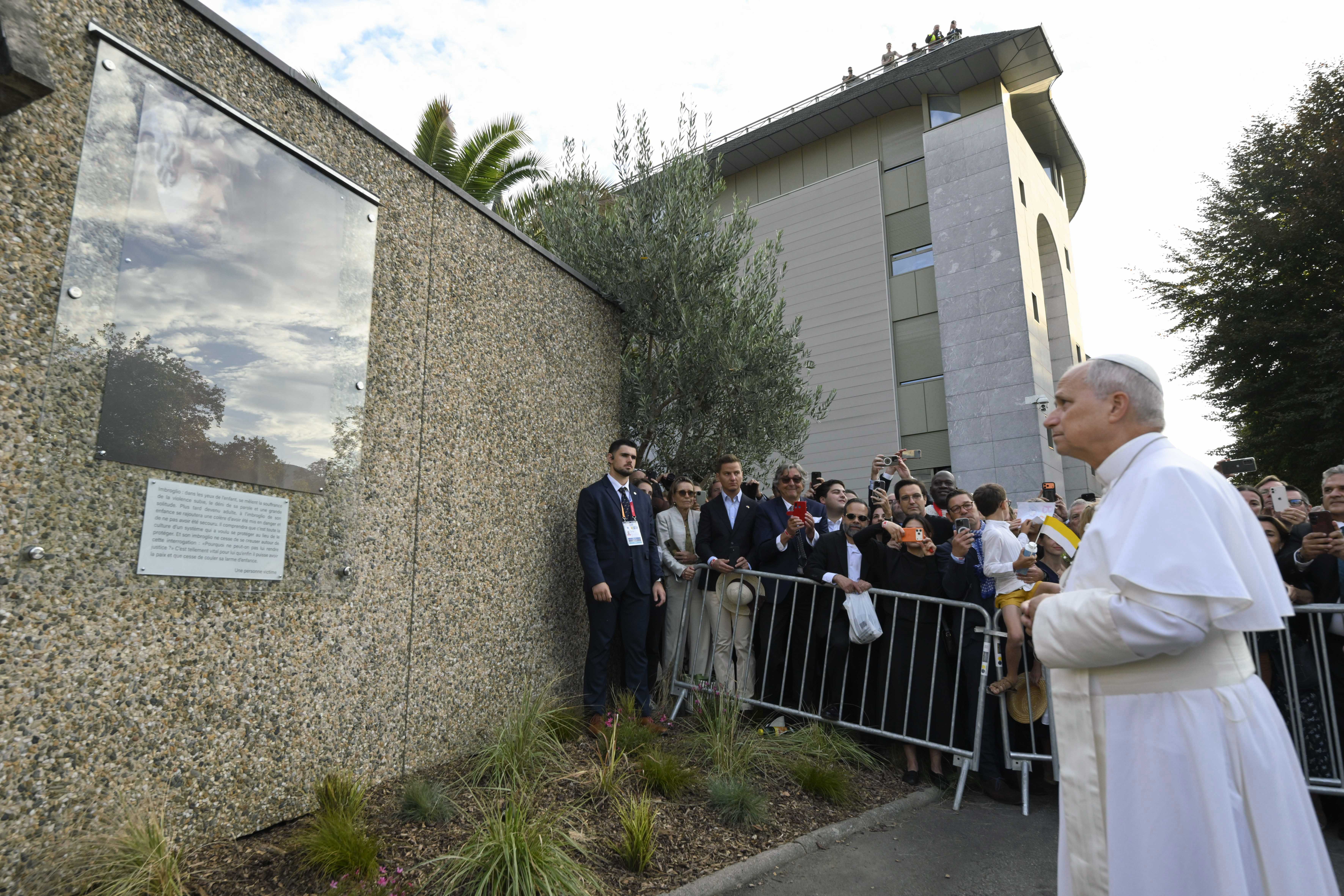
Pope Leo XIV urges Angola to ‘remove the obstacles to integral human development’ #Catholic LUANDA, Angola — Pope Leo XIV on April 18 called on Angola’s leaders and people to “remove the obstacles to integral human development,” urging them to choose the path of the common good, resist exploitative interests, and preserve the hope and joy that, he said, remain among Africa’s greatest treasures.The pope spoke at the presidential palace in Luanda during his meeting with authorities, civil society, and the diplomatic corps, the first public event of the Angola leg of his broader trip to Africa.Arriving in Luanda earlier in the day, Leo traveled by popemobile through jubilant crowds lining the route to the palace. He also held a private meeting with Angolan President João Lourenço before delivering his address.At the outset of his speech, the pope expressed solidarity with those affected by recent flooding in the country.“Before continuing, I would like to offer the assurance of my prayers for the victims of the heavy rains and floods that have struck the province of Benguela, and to express my closeness to the families who have lost their homes,” he said. “I also know that you, the people of Angola, are united in a great chain of solidarity with those affected.”His remarks came against the backdrop of mounting social strains in Angola, including protests last year over fuel price increases, repeated criticism by the country’s bishops over entrenched corruption, and deadly flooding in early April.Leo framed his address around themes that have marked earlier stops on his Africa trip, including peace, reconciliation, the common good, and criticism of those who exploit the continent for personal gain.Speaking in Portuguese, the pope praised the Angolan people for possessing “treasures that cannot be bought or taken away.”“In particular, there dwells within you a joy that not even the most adverse circumstances have been able to extinguish,” he said. This joy, he added, “is no stranger to sorrow, indignation, disappointment and defeat,” yet continues to be reborn in those who have resisted “the seductions of wealth.”The pope sharply criticized patterns of exploitation directed at Africa.“You know well that all too often people have looked — and continue to look — to your lands in order to give, or, more commonly, in order to take,” he said. “It is necessary to break this cycle of interests, which reduces reality, and even life itself, to mere commodities.”Leo described Africa’s joy and hope as “virtues that I would not hesitate to call ‘political,’” because “her young people and her poor continue to dream and to hope.” He said they “are not content with what already exists; they strive to rise above, to prepare themselves for great responsibilities, and to take an active part in shaping their own future.”He also emphasized that authentic social transformation cannot be imposed ideologically.“Indeed, the wisdom of a people cannot be stifled by any ideology, and the longing for the infinite that dwells in the human heart is a principle of social transformation far deeper than any political or cultural program,” he said.The pope said he had come to “listen to and encourage all those who have already chosen the paths of goodness, justice, peace, tolerance and reconciliation,” while also praying “for the conversion of those who choose contrary paths and hinder its harmonious and fraternal development.”Turning to Angola’s natural wealth, Leo warned against what he called a destructive extractive logic.“How much suffering, how many deaths, how many social and environmental disasters are brought about by this logic of extractivism!” he said. At every level, he added, it supports “a model of development that discriminates and excludes, while still presuming to impose itself as the only viable option.”He said Africa “urgently needs to overcome situations and dynamics of conflict and enmity that tear apart the social and political fabric of many countries, fostering poverty and exclusion.”Only encounter allows life to flourish, the pope said, and dialogue must come first, even when disagreements emerge.“Angola can experience great growth if, first of all, those who hold authority in the country believe in the manifold nature of its riches,” he said. “Do not be afraid of disagreement; do not suppress the ideas of the young or the dreams of the elderly; and know how to manage conflicts by transforming them into paths of renewal. Place the common good before every particular interest, never confusing your own part with the whole. History will then vindicate you, even if in the near term some may oppose you.”Leo then returned to the themes of joy and hope, describing them not as merely private sentiments but as forces with public and political consequences.“Despots and tyrants of both body and spirit seek to render souls passive and passions gloomy; they prefer a populace prone to inertia, docile and subservient to power,” he said.Sadness, he argued, leaves people vulnerable to fear, fanaticism, manipulation, and isolation from public life. By contrast, “true joy frees us from such alienation,” he said, calling joy “a gift of the Holy Spirit.”“Joy intensifies life and leads to the creation of community,” the pope said. “Joy knows how to carve paths even in the darkest zones of stagnation and hardship.”He concluded with an appeal for moral and social renewal.“Let us therefore examine our own hearts, dear friends, because without joy there is no renewal; without interiority there is no liberation; without encounter there is no politics; without the other there is no justice.”Leo said the Catholic Church wants to help Angola become “a project of hope” by fostering a just model of coexistence, especially in poor urban neighborhoods and remote rural areas.“Let us remove the obstacles to integral human development, working and hoping together alongside those whom the world has discarded but whom God has chosen,” he said.This story was first published by ACI Stampa, the Italian-language sister service of EWTN News. It has been translated and adapted by EWTN News English.

Pope Leo XIV urges Angola to ‘remove the obstacles to integral human development’ #Catholic LUANDA, Angola — Pope Leo XIV on April 18 called on Angola’s leaders and people to “remove the obstacles to integral human development,” urging them to choose the path of the common good, resist exploitative interests, and preserve the hope and joy that, he said, remain among Africa’s greatest treasures.The pope spoke at the presidential palace in Luanda during his meeting with authorities, civil society, and the diplomatic corps, the first public event of the Angola leg of his broader trip to Africa.Arriving in Luanda earlier in the day, Leo traveled by popemobile through jubilant crowds lining the route to the palace. He also held a private meeting with Angolan President João Lourenço before delivering his address.At the outset of his speech, the pope expressed solidarity with those affected by recent flooding in the country.“Before continuing, I would like to offer the assurance of my prayers for the victims of the heavy rains and floods that have struck the province of Benguela, and to express my closeness to the families who have lost their homes,” he said. “I also know that you, the people of Angola, are united in a great chain of solidarity with those affected.”His remarks came against the backdrop of mounting social strains in Angola, including protests last year over fuel price increases, repeated criticism by the country’s bishops over entrenched corruption, and deadly flooding in early April.Leo framed his address around themes that have marked earlier stops on his Africa trip, including peace, reconciliation, the common good, and criticism of those who exploit the continent for personal gain.Speaking in Portuguese, the pope praised the Angolan people for possessing “treasures that cannot be bought or taken away.”“In particular, there dwells within you a joy that not even the most adverse circumstances have been able to extinguish,” he said. This joy, he added, “is no stranger to sorrow, indignation, disappointment and defeat,” yet continues to be reborn in those who have resisted “the seductions of wealth.”The pope sharply criticized patterns of exploitation directed at Africa.“You know well that all too often people have looked — and continue to look — to your lands in order to give, or, more commonly, in order to take,” he said. “It is necessary to break this cycle of interests, which reduces reality, and even life itself, to mere commodities.”Leo described Africa’s joy and hope as “virtues that I would not hesitate to call ‘political,’” because “her young people and her poor continue to dream and to hope.” He said they “are not content with what already exists; they strive to rise above, to prepare themselves for great responsibilities, and to take an active part in shaping their own future.”He also emphasized that authentic social transformation cannot be imposed ideologically.“Indeed, the wisdom of a people cannot be stifled by any ideology, and the longing for the infinite that dwells in the human heart is a principle of social transformation far deeper than any political or cultural program,” he said.The pope said he had come to “listen to and encourage all those who have already chosen the paths of goodness, justice, peace, tolerance and reconciliation,” while also praying “for the conversion of those who choose contrary paths and hinder its harmonious and fraternal development.”Turning to Angola’s natural wealth, Leo warned against what he called a destructive extractive logic.“How much suffering, how many deaths, how many social and environmental disasters are brought about by this logic of extractivism!” he said. At every level, he added, it supports “a model of development that discriminates and excludes, while still presuming to impose itself as the only viable option.”He said Africa “urgently needs to overcome situations and dynamics of conflict and enmity that tear apart the social and political fabric of many countries, fostering poverty and exclusion.”Only encounter allows life to flourish, the pope said, and dialogue must come first, even when disagreements emerge.“Angola can experience great growth if, first of all, those who hold authority in the country believe in the manifold nature of its riches,” he said. “Do not be afraid of disagreement; do not suppress the ideas of the young or the dreams of the elderly; and know how to manage conflicts by transforming them into paths of renewal. Place the common good before every particular interest, never confusing your own part with the whole. History will then vindicate you, even if in the near term some may oppose you.”Leo then returned to the themes of joy and hope, describing them not as merely private sentiments but as forces with public and political consequences.“Despots and tyrants of both body and spirit seek to render souls passive and passions gloomy; they prefer a populace prone to inertia, docile and subservient to power,” he said.Sadness, he argued, leaves people vulnerable to fear, fanaticism, manipulation, and isolation from public life. By contrast, “true joy frees us from such alienation,” he said, calling joy “a gift of the Holy Spirit.”“Joy intensifies life and leads to the creation of community,” the pope said. “Joy knows how to carve paths even in the darkest zones of stagnation and hardship.”He concluded with an appeal for moral and social renewal.“Let us therefore examine our own hearts, dear friends, because without joy there is no renewal; without interiority there is no liberation; without encounter there is no politics; without the other there is no justice.”Leo said the Catholic Church wants to help Angola become “a project of hope” by fostering a just model of coexistence, especially in poor urban neighborhoods and remote rural areas.“Let us remove the obstacles to integral human development, working and hoping together alongside those whom the world has discarded but whom God has chosen,” he said.This story was first published by ACI Stampa, the Italian-language sister service of EWTN News. It has been translated and adapted by EWTN News English.

The pontiff urged the country to reject exploitative models of development and place the common good above particular interests.

Read More
Pope Leo XIV says debate with Trump is ‘not in my interest at all’ #Catholic ABOARD THE PAPAL PLANE — Pope Leo XIV arrived in Angola after a two-and-a-half-hour flight from Cameroon on April 18, using the short journey to reject suggestions that his recent remarks about war were aimed at U.S. President Donald Trump while reflecting on the pastoral focus of his African trip.In a brief in-flight press conference with journalists, the pope addressed the interpretation of some of his recent speeches as a response to criticism from Trump, who had accused him of weakness in foreign policy.“[T]hereʼs been a certain narrative that has not been accurate in all of its aspects, but because of the political situation created when on the first day of the trip, the President of the United States made some comments about myself,” the pope said.“Much of what has been written since then has been more commentary on commentary, trying to interpret what has been said.”He pointed in particular to his address at the April 16 prayer meeting for peace in Cameroon.“Just one little example, the talk that I gave at the prayer meeting for peace a couple days ago was prepared two weeks ago, well before the president ever commented on myself and on the message of peace that I am promoting,” he said.“And yet, as it happens, it was looked at as if I was trying to debate again the president, which is not in my interest at all.”Leo XIV said he intends instead to continue proclaiming the Gospel and promoting peace.“So we go on the journey, we continue proclaiming the Gospel message,” he said.He added that the liturgies during the trip have highlighted what it means to follow Christ, promote fraternity, and seek justice and peace.The pope also said the broader African journey has been shaped by themes that emerged at the start of the trip in Algeria, especially the figure of St. Augustine.“I was personally very pleased, as you know, we began the trip in Algeria with the theme of Saint Augustine, and yesterday at the Catholic University, we had the blessing of that beautiful monument that they had prepared with a map of Africa and Saint Augustine at the center,” he said.“And so in one sense, it expresses part of what this trip is about.”Leo XIV emphasized that his primary purpose in Africa is to accompany Catholics.“And I primarily come to Africa as pastor, as the head of the Catholic Church, to be with, to celebrate with, to encourage and accompany all of the Catholics throughout Africa.”He also referred to a meeting with imams in Cameroon, describing it in general terms as part of the Church’s continuing commitment to interreligious dialogue, understanding, and peace-building.He concluded his main remarks by thanking journalists for their work and expressing hope that God would continue to bless the journey.Responding later to a French journalist, Leo XIV expressed gratitude for the reception he received in Cameroon.“I would just like to thank everyone in Cameroon for the wonderful welcome, the great enthusiasm, the joy of the people,” he said.“It was absolutely fantastic, the experience … how wonderful it is to experience what it means to be a follower of Jesus Christ and to celebrate our faith together.”The pope’s flight took him from Yaoundé to Luanda, crossing over Cameroon, Equatorial Guinea, Gabon, the Democratic Republic of Congo, and Angola. Angola is the third and penultimate stop of his African journey.The Catholic Church has longstanding ties with Angola. Formal relations date back centuries, including the 1608 appointment of Antonio Manuel Nyunda as the first ambassador to Rome from the then-Kingdom of Kongo. More recently, in 2019, the Holy See and Angola signed an agreement recognizing the legal personality of the Catholic Church and defining its property rights.This story was first published by ACI Stampa, the Italian-language sister service of EWTN News. It has been translated and adapted by EWTN News English.

Pope Leo XIV says debate with Trump is ‘not in my interest at all’ #Catholic ABOARD THE PAPAL PLANE — Pope Leo XIV arrived in Angola after a two-and-a-half-hour flight from Cameroon on April 18, using the short journey to reject suggestions that his recent remarks about war were aimed at U.S. President Donald Trump while reflecting on the pastoral focus of his African trip.In a brief in-flight press conference with journalists, the pope addressed the interpretation of some of his recent speeches as a response to criticism from Trump, who had accused him of weakness in foreign policy.“[T]hereʼs been a certain narrative that has not been accurate in all of its aspects, but because of the political situation created when on the first day of the trip, the President of the United States made some comments about myself,” the pope said.“Much of what has been written since then has been more commentary on commentary, trying to interpret what has been said.”He pointed in particular to his address at the April 16 prayer meeting for peace in Cameroon.“Just one little example, the talk that I gave at the prayer meeting for peace a couple days ago was prepared two weeks ago, well before the president ever commented on myself and on the message of peace that I am promoting,” he said.“And yet, as it happens, it was looked at as if I was trying to debate again the president, which is not in my interest at all.”Leo XIV said he intends instead to continue proclaiming the Gospel and promoting peace.“So we go on the journey, we continue proclaiming the Gospel message,” he said.He added that the liturgies during the trip have highlighted what it means to follow Christ, promote fraternity, and seek justice and peace.The pope also said the broader African journey has been shaped by themes that emerged at the start of the trip in Algeria, especially the figure of St. Augustine.“I was personally very pleased, as you know, we began the trip in Algeria with the theme of Saint Augustine, and yesterday at the Catholic University, we had the blessing of that beautiful monument that they had prepared with a map of Africa and Saint Augustine at the center,” he said.“And so in one sense, it expresses part of what this trip is about.”Leo XIV emphasized that his primary purpose in Africa is to accompany Catholics.“And I primarily come to Africa as pastor, as the head of the Catholic Church, to be with, to celebrate with, to encourage and accompany all of the Catholics throughout Africa.”He also referred to a meeting with imams in Cameroon, describing it in general terms as part of the Church’s continuing commitment to interreligious dialogue, understanding, and peace-building.He concluded his main remarks by thanking journalists for their work and expressing hope that God would continue to bless the journey.Responding later to a French journalist, Leo XIV expressed gratitude for the reception he received in Cameroon.“I would just like to thank everyone in Cameroon for the wonderful welcome, the great enthusiasm, the joy of the people,” he said.“It was absolutely fantastic, the experience … how wonderful it is to experience what it means to be a follower of Jesus Christ and to celebrate our faith together.”The pope’s flight took him from Yaoundé to Luanda, crossing over Cameroon, Equatorial Guinea, Gabon, the Democratic Republic of Congo, and Angola. Angola is the third and penultimate stop of his African journey.The Catholic Church has longstanding ties with Angola. Formal relations date back centuries, including the 1608 appointment of Antonio Manuel Nyunda as the first ambassador to Rome from the then-Kingdom of Kongo. More recently, in 2019, the Holy See and Angola signed an agreement recognizing the legal personality of the Catholic Church and defining its property rights.This story was first published by ACI Stampa, the Italian-language sister service of EWTN News. It has been translated and adapted by EWTN News English.

En route from Cameroon to Angola, the pope said his mission in Africa is pastoral and rejected suggestions that his recent remarks were aimed at President Donald Trump.

Read More
EWTN News explains: Why does the pope visit mosques on papal trips? #Catholic For more than a quarter-century, popes have periodically visited Islamic mosques as part of official voyages and papal visits. The tradition began with Pope John Paul II, who in 2001 became the first pope in history known to have entered a mosque when he visited the Great Mosque of Damascus in the capital of Syria. The subsequent Popes Benedict XVI, Francis, and Leo XIV have all paid visits to mosques to hold ecumenical dialogues and host diplomatic meetings. Yet the practice is not without some controversy. Indeed, Leo XIVʼs visit to the Great Mosque of Algiers on April 13 drew some backlash on social media by critics incredulous over the leader of the Catholic Church visiting a major Islamic holy site. (This was Leoʼs second visit to a mosque; he also visited the famed “Blue Mosque” in Istanbul in late 2025.) 
 
 Pope Leo XIV stands with Rector Mohamed Mamoun Al Qasimi at the Great Mosque in Algiers, Monday, April 13, 2026. | Credit: Vatican Media
 
 So why do popes make visits to mosques, courting controversy and criticism for making a point to go to holy sites of another religion? ‘We can live together in peace’Pope Leo XIV himself addressed criticism directed toward him on April 15 on board the papal plane after leaving Algiers bound for Cameroon. “I think the visit to the mosque was significant [and showed] that although we have different beliefs, we have different ways of worshipping, we have different ways of living, we can [still] live together in peace,” the Holy Father said.  “I think that to promote that kind of image is something which the world needs to hear today,” he said, arguing that such visits show that “together we can continue to offer in our witness as we continue on this apostolic voyage.”Gabriel Said Reynolds, a theology professor at the University of Notre Dame who has written multiple works on the Quran and its relationship to Christianity, told EWTN News that interpreting papal visits to mosques should include an understanding of “the Churchʼs vision of God in the world.” “What is God’s relationship to the world? That’s been important to all of the recent popes,” he said.Reynolds pointed out that an Islamic mosque is “fundamentally different from a church.” “A Catholic church is a sort of temple in which God is present in the tabernacle — body, blood, soul, and divinity,” he said. “It’s a sacred space in the deepest sense of the word.”“What Muslims would say of a mosque is fundamentally different,” he said. “A mosque is for communal prayer, but the communal prayer that takes place in a mosque is no different than the ritual prayer that’s more often done at home.” He likened a mosque to a “gathering place” with just a few features that set it apart as a distinct site — such as a pulpit for occasional sermons and an alcove that denotes the direction of Mecca to which Muslims orient themselves during prayer. Reynolds said popes visit mosques in no small part as a “pastoral concern” for Christians living in majority-Muslim countries, such as Algeria. “Algerian society is thoroughly Islamic,” he said. “It’s not generally marked by notions of rights and responsibilities and citizenship in the same way the U.S. is. Cultivating positive relationships with Muslim leaders is absolutely essential for Christians.”Reynolds said the Churchʼs view about human dignity has “fundamental implications with its relationship toward non-Christians.” He pointed out, for instance, that the pope “could show up at an atheist convention and meet the people there and have dialogue with them.”“John 3:16 says God loves the world,” he said. “It’s not that God loves believers and doesn’t love the unbelievers. All people are children of God, according to Catholic teaching.”The declaration Nostra Aetate, meanwhile — issued by the Second Vatican Council in 1965 to address Catholicismʼs relationship with non-Christians — affirmed that the Church “regards [Muslims] with esteem.”The document points out that although Muslims “do not acknowledge Jesus as God,” they still “adore the one God” and “revere [Jesus] as a prophet” while giving honor to the Virgin Mother as well. The Second Vatican Council acknowledged that “in the course of centuries not a few quarrels and hostilities have arisen” between Christians and Muslims, but the document “urge[d] all to forget the past and to work sincerely for mutual understanding.”It further called on religious adherents to “preserve as well as to promote together for the benefit of all mankind social justice and moral welfare, as well as peace and freedom.”

EWTN News explains: Why does the pope visit mosques on papal trips? #Catholic For more than a quarter-century, popes have periodically visited Islamic mosques as part of official voyages and papal visits. The tradition began with Pope John Paul II, who in 2001 became the first pope in history known to have entered a mosque when he visited the Great Mosque of Damascus in the capital of Syria. The subsequent Popes Benedict XVI, Francis, and Leo XIV have all paid visits to mosques to hold ecumenical dialogues and host diplomatic meetings. Yet the practice is not without some controversy. Indeed, Leo XIVʼs visit to the Great Mosque of Algiers on April 13 drew some backlash on social media by critics incredulous over the leader of the Catholic Church visiting a major Islamic holy site. (This was Leoʼs second visit to a mosque; he also visited the famed “Blue Mosque” in Istanbul in late 2025.) Pope Leo XIV stands with Rector Mohamed Mamoun Al Qasimi at the Great Mosque in Algiers, Monday, April 13, 2026. | Credit: Vatican Media So why do popes make visits to mosques, courting controversy and criticism for making a point to go to holy sites of another religion? ‘We can live together in peace’Pope Leo XIV himself addressed criticism directed toward him on April 15 on board the papal plane after leaving Algiers bound for Cameroon. “I think the visit to the mosque was significant [and showed] that although we have different beliefs, we have different ways of worshipping, we have different ways of living, we can [still] live together in peace,” the Holy Father said.  “I think that to promote that kind of image is something which the world needs to hear today,” he said, arguing that such visits show that “together we can continue to offer in our witness as we continue on this apostolic voyage.”Gabriel Said Reynolds, a theology professor at the University of Notre Dame who has written multiple works on the Quran and its relationship to Christianity, told EWTN News that interpreting papal visits to mosques should include an understanding of “the Churchʼs vision of God in the world.” “What is God’s relationship to the world? That’s been important to all of the recent popes,” he said.Reynolds pointed out that an Islamic mosque is “fundamentally different from a church.” “A Catholic church is a sort of temple in which God is present in the tabernacle — body, blood, soul, and divinity,” he said. “It’s a sacred space in the deepest sense of the word.”“What Muslims would say of a mosque is fundamentally different,” he said. “A mosque is for communal prayer, but the communal prayer that takes place in a mosque is no different than the ritual prayer that’s more often done at home.” He likened a mosque to a “gathering place” with just a few features that set it apart as a distinct site — such as a pulpit for occasional sermons and an alcove that denotes the direction of Mecca to which Muslims orient themselves during prayer. Reynolds said popes visit mosques in no small part as a “pastoral concern” for Christians living in majority-Muslim countries, such as Algeria. “Algerian society is thoroughly Islamic,” he said. “It’s not generally marked by notions of rights and responsibilities and citizenship in the same way the U.S. is. Cultivating positive relationships with Muslim leaders is absolutely essential for Christians.”Reynolds said the Churchʼs view about human dignity has “fundamental implications with its relationship toward non-Christians.” He pointed out, for instance, that the pope “could show up at an atheist convention and meet the people there and have dialogue with them.”“John 3:16 says God loves the world,” he said. “It’s not that God loves believers and doesn’t love the unbelievers. All people are children of God, according to Catholic teaching.”The declaration Nostra Aetate, meanwhile — issued by the Second Vatican Council in 1965 to address Catholicismʼs relationship with non-Christians — affirmed that the Church “regards [Muslims] with esteem.”The document points out that although Muslims “do not acknowledge Jesus as God,” they still “adore the one God” and “revere [Jesus] as a prophet” while giving honor to the Virgin Mother as well. The Second Vatican Council acknowledged that “in the course of centuries not a few quarrels and hostilities have arisen” between Christians and Muslims, but the document “urge[d] all to forget the past and to work sincerely for mutual understanding.”It further called on religious adherents to “preserve as well as to promote together for the benefit of all mankind social justice and moral welfare, as well as peace and freedom.”

Why do popes make visits to Islamic mosques, courting controversy and criticism by taking part in events at holy sites of another religion?

Read More
Knights of Columbus affirms ‘solidarity’ with Pope Leo XIV as Trump escalates criticism #Catholic The Knights of Columbus issued a statement that affirms the Catholic fraternal organization’s solidarity with Pope Leo XIV as President Donald Trump criticized the Holy Father a second time on Truth Social.“The Knights of Columbus has always stood in solidarity with the Holy Father, recognizing in him a spiritual father who calls the world not to division but to unity, not to conflict but to peace,” Supreme Knight Patrick Kelly said in the statement.“In this moment, we reaffirm that commitment with clarity and conviction,” he said.Trump escalated his criticism of the Holy Father late Tuesday evening in a second post on Truth Social, which criticized the pontiff’s staunch opposition to war.Whether one agrees or disagrees with Leo’s policy views, Kelly said, “the Holy Father’s prophetic voice deserves to be heard with respect and engaged seriously.”“Pope Leo XIV has consistently called for peace, dialogue, and restraint in a world marked by war and suffering,” he said. “The Holy Father’s words are not political talking points — they are reflections of the Gospel itself.”Kelly noted that many Catholics and others “have been deeply disappointed by the disparaging comments directed at Pope Leo XIV” by Trump, and that Leo “is not a politician — he is the vicar of Christ, entrusted with proclaiming the Gospel and shepherding souls.”In his statement, Kelly acknowledged that faithful Catholics can hold differing views on foreign policy and that Catholics should engage in the public square. He said nations can safeguard security “in accordance with the demands of justice and the pursuit of peace.”“The Church does not ask Catholics to withdraw from civic life but to engage with and elevate it — bringing to our civic dialogue the light of truth, respect for the dignity of every human person, and a steadfast concern for the common good," he said.Kelly also encouraged prayers for the pope, the president, and other politicians.“As Knights, we are called to be men of unity, as followers of Christ and patriotic citizens,” he said. “I encourage all Knights of Columbus to pray for the Holy Father, to pray for civic leaders, and to pray for peace and those working to achieve it.”“And let us recommit ourselves to charity in our public discourse,” he added. “May we be known not for echoing the divisions of our time, but for healing them. In a moment of tension, the path forward is not louder conflict but deeper fidelity — to truth, to charity, and to the Gospel.”Trump goes after Leo againTrumpʼs social media post said: “Will someone please tell Pope Leo that Iran has killed at least 42,000 innocent, completely unarmed, protesters in the last two months, and that for Iran to have a nuclear bomb is absolutely unacceptable."During the protests, Leo did call for peace, saying in January that “ongoing tensions [in Iran and Syria] continue to claim many lives.”“I hope and pray that dialogue and peace may be patiently nurtured in pursuit of the common good of the whole of society,” he said at the time.Leo has also strongly opposed nuclear weapons, saying in June 2025: “The further proliferation of nuclear weapons in the Middle East, as well as this escalation of violence, imperils the fragile stability remaining in the region.”While Trump cited numbers exceeding 40,000 people, estimates about the number of people killed in anti-regime protests and unrest in Iran varies a lot, ranging from several thousand to more than 30,000. Most protesters were unarmed, but Iran’s government claims some were armed and killed about 500 security personnel. Trump said the United States tried to arm the protesters, but those guns did not get to the right people.Vance, bishops offer more commentsCatholic bishops and leaders have responded to Trump’s attack on Pope Leo, and elected officials also have made statements.Archbishop Alexander Sample of Portland, Oregon, said he is deeply concerned and troubled by Trump’s social media rhetoric, especially during Holy Week and Easter, which he says falls short of the moral standard expected of both the presidency and a professed Christian. The archbishop criticized Trump’s attacks on Pope Leo, saying the pope’s calls for peace and dialogue arise from his pastoral mission, not political ideology.Sample said the Church’s role is to proclaim peace, human dignity, and the Gospel, citing Jesus’ teaching: “Blessed are the peacemakers.”The Ancient Order of Hibernians condemned attacks and mockery directed at Pope Leo XIV and the papacy, affirming that respect for the Holy Father is essential to Catholic faith.Vice President JD Vance, a convert to Catholicism, said at a Turning Point USA event that Pope Leo XIV should “be careful when he talks about matters of theology.”“One of the issues here is that if youʼre going to opine on matters of theology, youʼve got to be careful,” he said. “Youʼve got to make sure itʼs anchored in the truth.”Republican U.S. House Speaker Mike Johnson of Louisiana said: “Any religious leader can say anything they want, but obviously, if you wade into political waters, I think you should expect some political response.”Pope Leo XIV has responded to Trump’s public criticism by saying he has “no fear of the Trump administration” and will continue to speak out boldly with the message of the Gospel.

Knights of Columbus affirms ‘solidarity’ with Pope Leo XIV as Trump escalates criticism #Catholic The Knights of Columbus issued a statement that affirms the Catholic fraternal organization’s solidarity with Pope Leo XIV as President Donald Trump criticized the Holy Father a second time on Truth Social.“The Knights of Columbus has always stood in solidarity with the Holy Father, recognizing in him a spiritual father who calls the world not to division but to unity, not to conflict but to peace,” Supreme Knight Patrick Kelly said in the statement.“In this moment, we reaffirm that commitment with clarity and conviction,” he said.Trump escalated his criticism of the Holy Father late Tuesday evening in a second post on Truth Social, which criticized the pontiff’s staunch opposition to war.Whether one agrees or disagrees with Leo’s policy views, Kelly said, “the Holy Father’s prophetic voice deserves to be heard with respect and engaged seriously.”“Pope Leo XIV has consistently called for peace, dialogue, and restraint in a world marked by war and suffering,” he said. “The Holy Father’s words are not political talking points — they are reflections of the Gospel itself.”Kelly noted that many Catholics and others “have been deeply disappointed by the disparaging comments directed at Pope Leo XIV” by Trump, and that Leo “is not a politician — he is the vicar of Christ, entrusted with proclaiming the Gospel and shepherding souls.”In his statement, Kelly acknowledged that faithful Catholics can hold differing views on foreign policy and that Catholics should engage in the public square. He said nations can safeguard security “in accordance with the demands of justice and the pursuit of peace.”“The Church does not ask Catholics to withdraw from civic life but to engage with and elevate it — bringing to our civic dialogue the light of truth, respect for the dignity of every human person, and a steadfast concern for the common good," he said.Kelly also encouraged prayers for the pope, the president, and other politicians.“As Knights, we are called to be men of unity, as followers of Christ and patriotic citizens,” he said. “I encourage all Knights of Columbus to pray for the Holy Father, to pray for civic leaders, and to pray for peace and those working to achieve it.”“And let us recommit ourselves to charity in our public discourse,” he added. “May we be known not for echoing the divisions of our time, but for healing them. In a moment of tension, the path forward is not louder conflict but deeper fidelity — to truth, to charity, and to the Gospel.”Trump goes after Leo againTrumpʼs social media post said: “Will someone please tell Pope Leo that Iran has killed at least 42,000 innocent, completely unarmed, protesters in the last two months, and that for Iran to have a nuclear bomb is absolutely unacceptable."During the protests, Leo did call for peace, saying in January that “ongoing tensions [in Iran and Syria] continue to claim many lives.”“I hope and pray that dialogue and peace may be patiently nurtured in pursuit of the common good of the whole of society,” he said at the time.Leo has also strongly opposed nuclear weapons, saying in June 2025: “The further proliferation of nuclear weapons in the Middle East, as well as this escalation of violence, imperils the fragile stability remaining in the region.”While Trump cited numbers exceeding 40,000 people, estimates about the number of people killed in anti-regime protests and unrest in Iran varies a lot, ranging from several thousand to more than 30,000. Most protesters were unarmed, but Iran’s government claims some were armed and killed about 500 security personnel. Trump said the United States tried to arm the protesters, but those guns did not get to the right people.Vance, bishops offer more commentsCatholic bishops and leaders have responded to Trump’s attack on Pope Leo, and elected officials also have made statements.Archbishop Alexander Sample of Portland, Oregon, said he is deeply concerned and troubled by Trump’s social media rhetoric, especially during Holy Week and Easter, which he says falls short of the moral standard expected of both the presidency and a professed Christian. The archbishop criticized Trump’s attacks on Pope Leo, saying the pope’s calls for peace and dialogue arise from his pastoral mission, not political ideology.Sample said the Church’s role is to proclaim peace, human dignity, and the Gospel, citing Jesus’ teaching: “Blessed are the peacemakers.”The Ancient Order of Hibernians condemned attacks and mockery directed at Pope Leo XIV and the papacy, affirming that respect for the Holy Father is essential to Catholic faith.Vice President JD Vance, a convert to Catholicism, said at a Turning Point USA event that Pope Leo XIV should “be careful when he talks about matters of theology.”“One of the issues here is that if youʼre going to opine on matters of theology, youʼve got to be careful,” he said. “Youʼve got to make sure itʼs anchored in the truth.”Republican U.S. House Speaker Mike Johnson of Louisiana said: “Any religious leader can say anything they want, but obviously, if you wade into political waters, I think you should expect some political response.”Pope Leo XIV has responded to Trump’s public criticism by saying he has “no fear of the Trump administration” and will continue to speak out boldly with the message of the Gospel.

Supreme Knight Patrick Kelly is asking Catholics to pray for the pope and the president, as President Trump again criticized Leo’s comments about the Iran war.

Read More
Pope Leo XIV in Algeria: ‘I am here among you as a pilgrim of peace’ #Catholic ALGIERS, Algeria — Pope Leo XIV on Monday presented himself to Algeria’s diplomatic corps and civil society as “a pilgrim of peace,” urging a more just international order, warning against exclusion and inequality, and praising those who refuse to be “blinded by power or wealth.”Peace remained the central theme of the pope’s first day in Algeria, following his earlier stop at the Martyrs’ Memorial, where he delivered an appeal for peace and reconciliation.Speaking in French at the Djamaa el Djazair Conference Center, Leo recalled his previous visits to Algeria in 2001 and 2013 to Annaba, the ancient see of St. Augustine, whose spiritual legacy has long shaped the Augustinian order to which the pope belongs.“I am here among you as a pilgrim of peace, eager to meet the noble Algerian people,” the pope said. “We are brothers and sisters, for we have the same Father in heaven.”Leo said the “profound religious sense of the Algerian people” fosters “a culture of encounter and reconciliation,” adding that his visit also seeks to be a sign of that spirit.“In a world full of conflicts and misunderstandings, let us meet and strive for mutual understanding, recognizing that we are one family!” he said. “Today, the simplicity of this awareness is the key to opening many doors that are closed.”Addressing an audience of about 1,400 people from civil society and the diplomatic corps, the pope praised the resilience of the Algerian people, saying they had never been defeated by their trials because of their spirit of solidarity, hospitality, and community.“They are the truly strong ones, to whom the future belongs: those who do not allow themselves to be blinded by power or wealth, and those who refuse to sacrifice the dignity of their fellow citizens for the sake of personal or collective gain,” he said.Leo also highlighted the Algerian understanding of hospitality and almsgiving, reflected in the word “sadaka,” which he noted can also mean justice.“The one who accumulates wealth and remains indifferent to others is unjust,” the pope said, calling this vision of justice both “simple and radical” because it recognizes the image of God in others. “Indeed, a religion without mercy and a society without solidarity are a scandal in God’s eyes.”At the same time, he warned that many societies that consider themselves advanced are falling ever deeper into inequality and exclusion, while “people and organizations that dominate others destroy the world.” He said Africa knows this reality well and suggested that Algeria’s historical experience gives it a critical perspective on global power balances.“If you are able to engage in dialogue regarding the concerns of all and show solidarity with the sufferings of so many countries near and far, then you will be able to contribute to both envisioning and bringing about greater justice among peoples,” Leo said.He added that this task is especially urgent “in the face of continuous violations of international law and neocolonial tendencies.”Drawing on the teaching of Benedict XVI and Pope Francis, Leo called on Algeria’s authorities not to fear a broader social participation by those on the margins.“I therefore urge those of you who hold positions of authority in this country not to fear this outlook but to promote a vibrant, dynamic, and free civil society, in which young people in particular are recognized as capable of helping to broaden the horizon of hope for all,” he said.“The true strength of a nation lies in the cooperation of everyone in pursuing the common good,” he continued. “Authorities are called not to dominate but to serve the people and foster their development.”The pope also pointed to Algeria’s unique role as “a bridge between North and South, and between East and West,” describing the Mediterranean and the Sahara as geographical and spiritual crossroads rich with human and cultural meaning.“Woe to us if we turn them into graveyards where hope also dies!” he said. “Let us multiply oases of peace; let us denounce and remove the causes of despair; and let us oppose those who profit from the misfortune of others!”“For illicit are the gains of those who exploit human life, whose dignity is inviolable,” he added.Leo then broadened his reflection to the place of religion in modern society, noting that Algeria, like much of the world, experiences tensions between religious sensibility and modern life. He warned against both fundamentalism and secularization when they distort the true sense of God and human dignity.“Religious symbols and words can become, on the one hand, blasphemous languages of violence and oppression, or on the other, empty signs in the immense marketplace of consumption that does not satisfy us,” he said.Still, the pope insisted that such polarization should not lead to despair.“We must educate people in critical thinking and freedom, in listening and dialogue, and in the trust that leads us to recognize in those who are different fellow travelers and not threats,” he said. “We must work toward the healing of memory and reconciliation among former adversaries.”In his introduction, Algerian President Abdelmadjid Tebboune called Leo’s presence the first visit of a pope to Algeria and said it gave the occasion “a unique resonance.” He invoked both St. Augustine and Emir Abdelkader as enduring models at a time of accelerating change and weakening moral values.Tebboune also praised the pope’s moral authority and his support for social justice while reaffirming Algeria’s commitment to working with the Holy Father to promote dialogue, coexistence, and cooperation over division and conflict.This story was first published by ACI Stampa, the Italian-language sister service of EWTN News. It has been translated and adapted by EWTN News English.

Pope Leo XIV in Algeria: ‘I am here among you as a pilgrim of peace’ #Catholic ALGIERS, Algeria — Pope Leo XIV on Monday presented himself to Algeria’s diplomatic corps and civil society as “a pilgrim of peace,” urging a more just international order, warning against exclusion and inequality, and praising those who refuse to be “blinded by power or wealth.”Peace remained the central theme of the pope’s first day in Algeria, following his earlier stop at the Martyrs’ Memorial, where he delivered an appeal for peace and reconciliation.Speaking in French at the Djamaa el Djazair Conference Center, Leo recalled his previous visits to Algeria in 2001 and 2013 to Annaba, the ancient see of St. Augustine, whose spiritual legacy has long shaped the Augustinian order to which the pope belongs.“I am here among you as a pilgrim of peace, eager to meet the noble Algerian people,” the pope said. “We are brothers and sisters, for we have the same Father in heaven.”Leo said the “profound religious sense of the Algerian people” fosters “a culture of encounter and reconciliation,” adding that his visit also seeks to be a sign of that spirit.“In a world full of conflicts and misunderstandings, let us meet and strive for mutual understanding, recognizing that we are one family!” he said. “Today, the simplicity of this awareness is the key to opening many doors that are closed.”Addressing an audience of about 1,400 people from civil society and the diplomatic corps, the pope praised the resilience of the Algerian people, saying they had never been defeated by their trials because of their spirit of solidarity, hospitality, and community.“They are the truly strong ones, to whom the future belongs: those who do not allow themselves to be blinded by power or wealth, and those who refuse to sacrifice the dignity of their fellow citizens for the sake of personal or collective gain,” he said.Leo also highlighted the Algerian understanding of hospitality and almsgiving, reflected in the word “sadaka,” which he noted can also mean justice.“The one who accumulates wealth and remains indifferent to others is unjust,” the pope said, calling this vision of justice both “simple and radical” because it recognizes the image of God in others. “Indeed, a religion without mercy and a society without solidarity are a scandal in God’s eyes.”At the same time, he warned that many societies that consider themselves advanced are falling ever deeper into inequality and exclusion, while “people and organizations that dominate others destroy the world.” He said Africa knows this reality well and suggested that Algeria’s historical experience gives it a critical perspective on global power balances.“If you are able to engage in dialogue regarding the concerns of all and show solidarity with the sufferings of so many countries near and far, then you will be able to contribute to both envisioning and bringing about greater justice among peoples,” Leo said.He added that this task is especially urgent “in the face of continuous violations of international law and neocolonial tendencies.”Drawing on the teaching of Benedict XVI and Pope Francis, Leo called on Algeria’s authorities not to fear a broader social participation by those on the margins.“I therefore urge those of you who hold positions of authority in this country not to fear this outlook but to promote a vibrant, dynamic, and free civil society, in which young people in particular are recognized as capable of helping to broaden the horizon of hope for all,” he said.“The true strength of a nation lies in the cooperation of everyone in pursuing the common good,” he continued. “Authorities are called not to dominate but to serve the people and foster their development.”The pope also pointed to Algeria’s unique role as “a bridge between North and South, and between East and West,” describing the Mediterranean and the Sahara as geographical and spiritual crossroads rich with human and cultural meaning.“Woe to us if we turn them into graveyards where hope also dies!” he said. “Let us multiply oases of peace; let us denounce and remove the causes of despair; and let us oppose those who profit from the misfortune of others!”“For illicit are the gains of those who exploit human life, whose dignity is inviolable,” he added.Leo then broadened his reflection to the place of religion in modern society, noting that Algeria, like much of the world, experiences tensions between religious sensibility and modern life. He warned against both fundamentalism and secularization when they distort the true sense of God and human dignity.“Religious symbols and words can become, on the one hand, blasphemous languages of violence and oppression, or on the other, empty signs in the immense marketplace of consumption that does not satisfy us,” he said.Still, the pope insisted that such polarization should not lead to despair.“We must educate people in critical thinking and freedom, in listening and dialogue, and in the trust that leads us to recognize in those who are different fellow travelers and not threats,” he said. “We must work toward the healing of memory and reconciliation among former adversaries.”In his introduction, Algerian President Abdelmadjid Tebboune called Leo’s presence the first visit of a pope to Algeria and said it gave the occasion “a unique resonance.” He invoked both St. Augustine and Emir Abdelkader as enduring models at a time of accelerating change and weakening moral values.Tebboune also praised the pope’s moral authority and his support for social justice while reaffirming Algeria’s commitment to working with the Holy Father to promote dialogue, coexistence, and cooperation over division and conflict.This story was first published by ACI Stampa, the Italian-language sister service of EWTN News. It has been translated and adapted by EWTN News English.

The pontiff called for a world order that does not exclude the vulnerable and urged leaders to serve the common good.

Read More
Federal judge pauses Louisiana telehealth abortion suit pending FDA review #Catholic After the Trump administration appealed, a federal judge put on pause a lawsuit filed by the state of Louisiana that challenges the federal policy of allowing mail-order abortion pills.U.S. District Judge David Joseph in Lafayette, Louisiana, ruled that the challenge be paused pending the U.S. Food and Drug Administration (FDA)’s review of the safety of the drug but noted that the state could continue the challenge after the review was completed.Louisiana Attorney General Liz Murrill filed a lawsuit in late 2025 to challenge the 2023 deregulation of mifepristone, which is used in chemical abortions. The 2023 rule changes, initiated during former president Joe Biden’s administration, allowed the drugs to be delivered through the mail and prescribed without any visits to a doctor.In January of this year, President Donald Trump’s Department of Justice (DOJ) filed a motion with a federal district court to pause the suit, pending a review by the FDA of the chemical abortion drug.Louisiana had filed the lawsuit after residents — including Rosalie Markezich, who is named in the lawsuit — said they were coerced into taking abortion pills that were obtained through the mail. In Markezich’s case, she said her boyfriend forced her to take it.Study: Maternal mortality decreased in states that protect unborn lifeA recent study published by JAMA Network Open found a decrease in maternal mortality in states that protect unborn children from abortions as well as in states with permissive abortion laws.The study considered 22 million births and more than 12,000 pregnancy-related deaths from 2018 to 2023, with 14 states with abortion bans and 37 control jurisdictions.“This cohort study found that abortion bans were not associated with statistically significant overall or state-specific increases in pregnancy-associated mortality,” the study read.In states with strong pro-life laws, on average, maternal mortality rates declined slightly faster than pro-abortion states.Illinois pregnancy centers continue to appeal for conscience rightsA court heard arguments on Friday from Illinois pregnancy centers that are appealing an Illinois district court decision that affirmed a law requiring pregnancy centers to refer women for abortions.The National Institute of Family and Life Advocates and three Illinois pregnancy centers appealed after an April 2025 court ruling found that requiring pregnancy centers to refer pregnant women for an abortion was not a violation of speech and conscience rights.“No one should be forced to express a message that violates their convictions, and compelling people to refer others for abortions does that,” said Alliance Defending Freedom Counsel Erin Hawley. “The U.S. Supreme Court held in NIFLA v. Becerra that forcing people to promote abortion is unconstitutional.”Maryland bill to force hospitals to offer abortions goes to governor’s deskA Maryland bill that would force hospitals to offer abortions, even against their conscience, in some circumstances, heads to the stateʼs governor after the state Legislature passed it this week.The bill would require “a hospital to allow the termination of a pregnancy in certain circumstances” under the federal 1986 Emergency Medical Treatment and Labor Act (EMTALA), which ensures that emergency care is offered regardless of a patient’s ability to pay.The bill would also require a hospital to screen patients for “emergency pregnancy-related medical condition[s]” and to provide “transfer of a patient who has an emergency pregnancy-related medical condition.”“This bill will result in a new government-created loss of valuable highly trained and experienced emergency department physicians, nurses, providers, and staff,” said Dr. James Kelly, representing the Association of American Physicians and Surgeons. “The legislation will increase the already existing severe shortages of qualified medical staff and will decrease access to emergency medical care, and endanger the health and safety of patients seeking emergency medical care.”

Federal judge pauses Louisiana telehealth abortion suit pending FDA review #Catholic After the Trump administration appealed, a federal judge put on pause a lawsuit filed by the state of Louisiana that challenges the federal policy of allowing mail-order abortion pills.U.S. District Judge David Joseph in Lafayette, Louisiana, ruled that the challenge be paused pending the U.S. Food and Drug Administration (FDA)’s review of the safety of the drug but noted that the state could continue the challenge after the review was completed.Louisiana Attorney General Liz Murrill filed a lawsuit in late 2025 to challenge the 2023 deregulation of mifepristone, which is used in chemical abortions. The 2023 rule changes, initiated during former president Joe Biden’s administration, allowed the drugs to be delivered through the mail and prescribed without any visits to a doctor.In January of this year, President Donald Trump’s Department of Justice (DOJ) filed a motion with a federal district court to pause the suit, pending a review by the FDA of the chemical abortion drug.Louisiana had filed the lawsuit after residents — including Rosalie Markezich, who is named in the lawsuit — said they were coerced into taking abortion pills that were obtained through the mail. In Markezich’s case, she said her boyfriend forced her to take it.Study: Maternal mortality decreased in states that protect unborn lifeA recent study published by JAMA Network Open found a decrease in maternal mortality in states that protect unborn children from abortions as well as in states with permissive abortion laws.The study considered 22 million births and more than 12,000 pregnancy-related deaths from 2018 to 2023, with 14 states with abortion bans and 37 control jurisdictions.“This cohort study found that abortion bans were not associated with statistically significant overall or state-specific increases in pregnancy-associated mortality,” the study read.In states with strong pro-life laws, on average, maternal mortality rates declined slightly faster than pro-abortion states.Illinois pregnancy centers continue to appeal for conscience rightsA court heard arguments on Friday from Illinois pregnancy centers that are appealing an Illinois district court decision that affirmed a law requiring pregnancy centers to refer women for abortions.The National Institute of Family and Life Advocates and three Illinois pregnancy centers appealed after an April 2025 court ruling found that requiring pregnancy centers to refer pregnant women for an abortion was not a violation of speech and conscience rights.“No one should be forced to express a message that violates their convictions, and compelling people to refer others for abortions does that,” said Alliance Defending Freedom Counsel Erin Hawley. “The U.S. Supreme Court held in NIFLA v. Becerra that forcing people to promote abortion is unconstitutional.”Maryland bill to force hospitals to offer abortions goes to governor’s deskA Maryland bill that would force hospitals to offer abortions, even against their conscience, in some circumstances, heads to the stateʼs governor after the state Legislature passed it this week.The bill would require “a hospital to allow the termination of a pregnancy in certain circumstances” under the federal 1986 Emergency Medical Treatment and Labor Act (EMTALA), which ensures that emergency care is offered regardless of a patient’s ability to pay.The bill would also require a hospital to screen patients for “emergency pregnancy-related medical condition[s]” and to provide “transfer of a patient who has an emergency pregnancy-related medical condition.”“This bill will result in a new government-created loss of valuable highly trained and experienced emergency department physicians, nurses, providers, and staff,” said Dr. James Kelly, representing the Association of American Physicians and Surgeons. “The legislation will increase the already existing severe shortages of qualified medical staff and will decrease access to emergency medical care, and endanger the health and safety of patients seeking emergency medical care.”

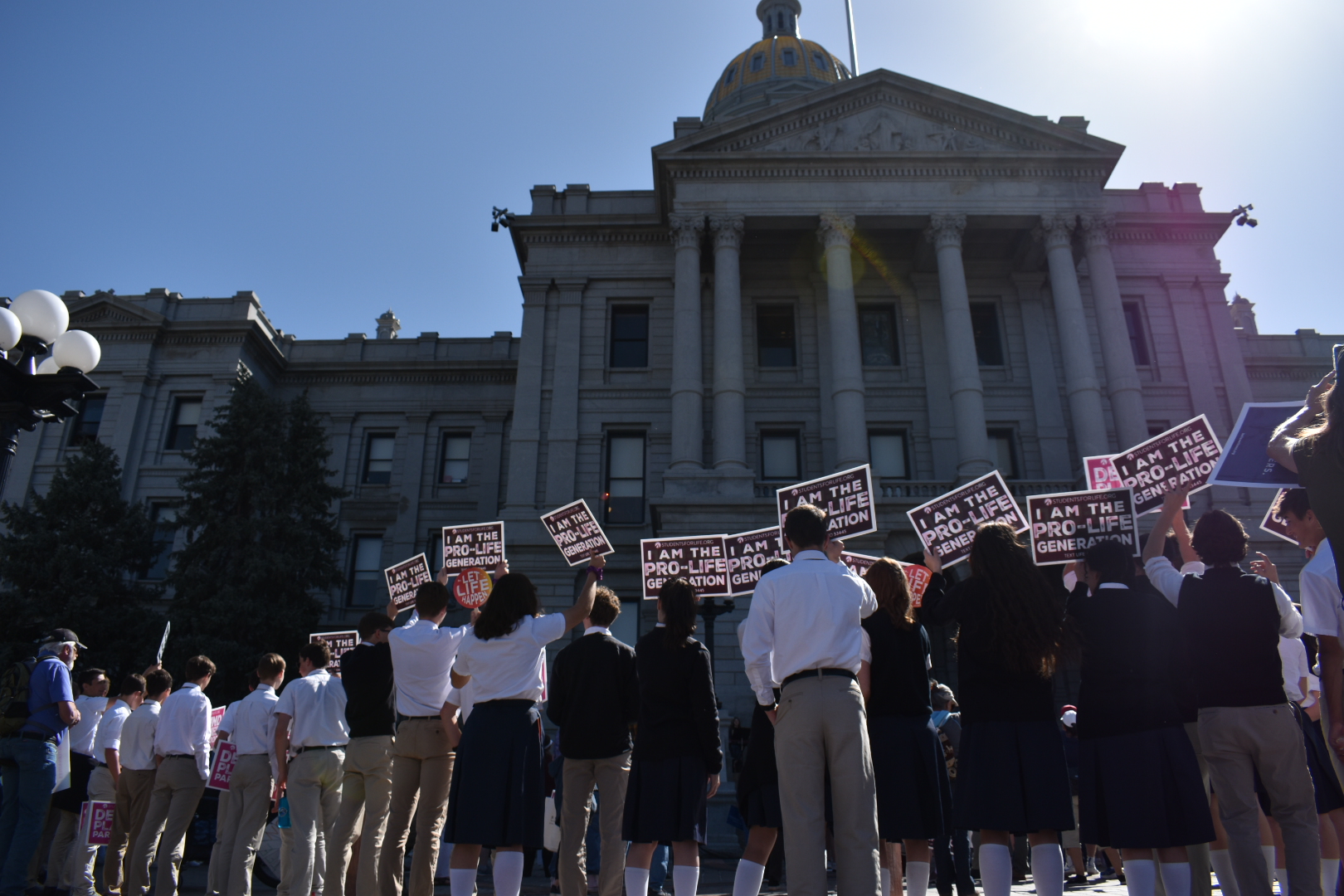
A roundup of recent pro-life and abortion-related news.

Read More
Why Pakistan’s bishops doubt government will act on minor’s forced marriage #Catholic LAHORE, Pakistan — The head of the Catholic Church in Pakistan has expressed a guarded response to government committees formed to review a recent ruling by the country’s top constitutional court that upheld the marriage and conversion of a Christian minor.Federal Minister for Information and Broadcasting Attaullah Tarar announced on Easter Sunday, April 5, that the government had constituted a committee to examine the March 25 judgment of the Federal Constitutional Court validating the marriage of 13-year-old Maria Shahbaz to 30-year-old Shaheryar Ahmad.
 
 A protest for Maria Shahbaz outside Hyderabad Press Club, organized by the Catholic Bishops’ National Commission for Justice and Peace, on April 4, 2026, in Pakistan. | Credit: Bishop Samson Shukardin
 
 Bishop Samson Shukardin of Hyderabad, president of the Pakistan Catholic Bishops’ Conference (PCBC), voiced skepticism about the initiative.“These issues often subside by the time such committees make their reports public. The process is deliberately delayed so that people forget,” he told EWTN News.“This is fundamentally a religious freedom issue. Consent is often coerced from minors. We await a genuine response from the government. Many Muslim clerics support us but have avoided joining public protests,” he added.A father’s accountAccording to Maria’s father, Shehbaz Masih, his daughter was abducted, forcibly converted to Islam, and married without consent.A certificate issued by the National Database and Registration Authority (NADRA) submitted by the family states that Maria was 13 at the time of the marriage — below the legal minimum age of 18. The family has since taken refuge in a shelter and was unavailable for comment.The case dates back to July 2025, when Masih, a resident of Lahore, reported that his daughter had been abducted by a Muslim man after stepping out to a nearby shop.Dismissing a petition filed by the father seeking custody, the court ruled that the marriage was valid under “Muhammadan law” and that the husband held lawful guardianship.Protests and backlashThe judgment triggered widespread reaction on social media, along with protests, press conferences, and conventions across the country. At least three Catholic bishops, along with the PCBC, issued statements urging authorities to review the ruling.The backlash prompted government engagement with the concerns of the country’s Christian minority, estimated at 1.37% (3.28 million people).Addressing an interfaith Easter gathering in Lahore, Tarar assured Christian leaders of his support, saying the committee’s recommendations would be submitted to the Ministry of Law and Justice within a week.
 
 Archbishop Azad Marshall, moderator/president bishop of the Church of Pakistan, a united Protestant denomination, meets with ecumenical leaders and Christian politicians following an April 6, 2026, consultation on the Maria Shahbaz case at Waris Road, Lahore. | Credit: Church of Pakistan
 
 Legal dimensionsMeanwhile, Punjab Minister for Minorities Affairs Ramesh Singh Arora said his department was forming a parallel committee to examine the legal dimensions of the case.Mary James Gill, a Christian lawyer, former lawmaker, and executive director of the Center for Law and Justice who serves on the committee, welcomed the move as a “genuine concern to find a way forward.”“It is highly encouraging that a state representative personally took up the issue. However, we are still in a consultative process,” she told EWTN News, noting shortcomings in both the lower courts and within the affected community.“The petition was filed under Section 491 of the Criminal Procedure Code, which pertains to habeas corpus, and not to determining the exact age of the girl — a question that remains disputed,” Gill said.“Regrettably, no such verification was carried out in the lower courts. In cases where documentation is ambiguous, magistrates and sessions judges tend to rely on in-person statements, consent, and their own observations.”She noted that the Christian Marriage Act of 1872 governs the solemnization of marriages involving one or more Christians.“Similarly, the personal laws of both Christianity and Islam in Pakistan remain silent on the age of conversion. Church leaders need to revisit and update these frameworks. At the same time, parents must place greater emphasis on the ideological and moral formation of their children,” she added.In an April 6 letter to the law ministry, Anthony Naveed, deputy speaker of the Sindh Assembly, urged the federal government to address “serious legal gaps” exposed by the ruling and called for uniform amendments aligning provincial laws with Balochistan’s legislation, which explicitly invalidates child marriages.A pattern of abuseFor decades, rights advocates have called for stronger legal and administrative measures to prevent the abduction and forced religious conversion of girls from minority communities.At least 515 cases of abduction and forced conversion of minority girls and women were reported between 2021 and 2025, according to the Center for Social Justice. Hindu girls accounted for 69% (353 cases), followed by Christian girls at 31% (160 cases). Most victims were under 18, with cases concentrated in Sindh and Punjab.Shukardin said courts in the Muslim-majority country are not consistently applying laws prohibiting marriage under 18.“The Church is not in favor of marriages involving conversion under such circumstances. We demand safety for our daughters and will continue to raise our voice for underage brides of any religion,” he said.

Why Pakistan’s bishops doubt government will act on minor’s forced marriage #Catholic LAHORE, Pakistan — The head of the Catholic Church in Pakistan has expressed a guarded response to government committees formed to review a recent ruling by the country’s top constitutional court that upheld the marriage and conversion of a Christian minor.Federal Minister for Information and Broadcasting Attaullah Tarar announced on Easter Sunday, April 5, that the government had constituted a committee to examine the March 25 judgment of the Federal Constitutional Court validating the marriage of 13-year-old Maria Shahbaz to 30-year-old Shaheryar Ahmad. A protest for Maria Shahbaz outside Hyderabad Press Club, organized by the Catholic Bishops’ National Commission for Justice and Peace, on April 4, 2026, in Pakistan. | Credit: Bishop Samson Shukardin Bishop Samson Shukardin of Hyderabad, president of the Pakistan Catholic Bishops’ Conference (PCBC), voiced skepticism about the initiative.“These issues often subside by the time such committees make their reports public. The process is deliberately delayed so that people forget,” he told EWTN News.“This is fundamentally a religious freedom issue. Consent is often coerced from minors. We await a genuine response from the government. Many Muslim clerics support us but have avoided joining public protests,” he added.A father’s accountAccording to Maria’s father, Shehbaz Masih, his daughter was abducted, forcibly converted to Islam, and married without consent.A certificate issued by the National Database and Registration Authority (NADRA) submitted by the family states that Maria was 13 at the time of the marriage — below the legal minimum age of 18. The family has since taken refuge in a shelter and was unavailable for comment.The case dates back to July 2025, when Masih, a resident of Lahore, reported that his daughter had been abducted by a Muslim man after stepping out to a nearby shop.Dismissing a petition filed by the father seeking custody, the court ruled that the marriage was valid under “Muhammadan law” and that the husband held lawful guardianship.Protests and backlashThe judgment triggered widespread reaction on social media, along with protests, press conferences, and conventions across the country. At least three Catholic bishops, along with the PCBC, issued statements urging authorities to review the ruling.The backlash prompted government engagement with the concerns of the country’s Christian minority, estimated at 1.37% (3.28 million people).Addressing an interfaith Easter gathering in Lahore, Tarar assured Christian leaders of his support, saying the committee’s recommendations would be submitted to the Ministry of Law and Justice within a week. Archbishop Azad Marshall, moderator/president bishop of the Church of Pakistan, a united Protestant denomination, meets with ecumenical leaders and Christian politicians following an April 6, 2026, consultation on the Maria Shahbaz case at Waris Road, Lahore. | Credit: Church of Pakistan Legal dimensionsMeanwhile, Punjab Minister for Minorities Affairs Ramesh Singh Arora said his department was forming a parallel committee to examine the legal dimensions of the case.Mary James Gill, a Christian lawyer, former lawmaker, and executive director of the Center for Law and Justice who serves on the committee, welcomed the move as a “genuine concern to find a way forward.”“It is highly encouraging that a state representative personally took up the issue. However, we are still in a consultative process,” she told EWTN News, noting shortcomings in both the lower courts and within the affected community.“The petition was filed under Section 491 of the Criminal Procedure Code, which pertains to habeas corpus, and not to determining the exact age of the girl — a question that remains disputed,” Gill said.“Regrettably, no such verification was carried out in the lower courts. In cases where documentation is ambiguous, magistrates and sessions judges tend to rely on in-person statements, consent, and their own observations.”She noted that the Christian Marriage Act of 1872 governs the solemnization of marriages involving one or more Christians.“Similarly, the personal laws of both Christianity and Islam in Pakistan remain silent on the age of conversion. Church leaders need to revisit and update these frameworks. At the same time, parents must place greater emphasis on the ideological and moral formation of their children,” she added.In an April 6 letter to the law ministry, Anthony Naveed, deputy speaker of the Sindh Assembly, urged the federal government to address “serious legal gaps” exposed by the ruling and called for uniform amendments aligning provincial laws with Balochistan’s legislation, which explicitly invalidates child marriages.A pattern of abuseFor decades, rights advocates have called for stronger legal and administrative measures to prevent the abduction and forced religious conversion of girls from minority communities.At least 515 cases of abduction and forced conversion of minority girls and women were reported between 2021 and 2025, according to the Center for Social Justice. Hindu girls accounted for 69% (353 cases), followed by Christian girls at 31% (160 cases). Most victims were under 18, with cases concentrated in Sindh and Punjab.Shukardin said courts in the Muslim-majority country are not consistently applying laws prohibiting marriage under 18.“The Church is not in favor of marriages involving conversion under such circumstances. We demand safety for our daughters and will continue to raise our voice for underage brides of any religion,” he said.

Bishop Samson Shukardin said government committees are often delayed so people forget, as protests continue over the marriage of 13-year-old Maria Shahbaz.

Read More
Vatican urges Catholics not to leave Pope Leo XIV alone in opposing war #Catholic VATICAN CITY — Vatican Secretary of State Cardinal Pietro Parolin warned that the “logic of the strongest” risks prevailing on the international stage and called on Christians to become “voices of peace” who do not leave Pope Leo XIV standing alone in his opposition to war.In an interview with Dialoghi, a cultural magazine linked to Italian Catholic Action, Parolin said the voice of the pope is “prophetic” but risks becoming “a voice crying in the wilderness if it is not supported and helped concretely.”His remarks also offer a key to understanding the peace prayer vigil Leo XIV has called for April 11 in St. Peter’s Basilica.Parolin recalled the 2003 Iraq war, when St. John Paul II pleaded for the conflict to be avoided but “was left alone.” He therefore stressed the need to support the current pontiff’s appeal for a peace that is “unarmed and disarming” and to reject “the false propaganda of rearmament.”“There is a need for more voices of peace, more voices against the madness of the rush toward rearmament, more voices raised in favor of our poorest brothers and sisters, more voices and more proposals — I am thinking, for example, of the world of Catholic universities — for new economic models inspired by justice and care for the weakest instead of the idolatry of money,” Parolin said.The cardinal described an alarming international climate in which military action appears to impose itself too easily.“I am struck by how much determination — I was about to say ease — with which the military option is presented as decisive, almost inevitable,” he said.According to the Vatican secretary of state, this trend has left diplomacy practically “mute,” unable to activate alternative tools, while awareness of the tragedy of war and the value of shared rules is being lost.Parolin said the root of the problem is a “multi-polarism inspired by the primacy of power,” in which states place greater trust in force than in international law. That, he said, has produced “double standards,” visible in the differing reactions to attacks on civilians in Ukraine and the destruction in Gaza.“Many governments,” Parolin said, “have expressed indignation over attacks against Ukrainian civilians by Russian missiles and drones, imposing sanctions on the aggressors.”“I do not think the same has happened with the tragedy of the destruction of Gaza,” he added.For the cardinal, this is a case of “double standards” tied to the “primacy of power” — the dominance of one’s own country over others — with international law invoked “only when convenient” and ignored in many other cases.“It seems there has been a lack of awareness of the value of peace, awareness of the tragic reality of war, awareness of the importance of shared rules and of respecting them,” he said.Parolin also lamented the weakening of the global diplomatic architecture and said it is “utopian” to think peace can be guaranteed “by weapons and by balances imposed by the strongest rather than by international agreements.”“We cannot surrender to the logic of the strongest,” the cardinal insisted, because that logic “bends international law to its own interests” and weakens multilateral institutions.In that context, he also expressed regret that Europe has been unable to speak with one voice. He said it is necessary “to rekindle in peoples the sense of European belonging and, in leadership, the awareness of the need for common actions without ever failing the principles that are at the foundation of the European Union itself.”Regarding the United Nations, Parolin said the Holy See “continues to believe in its importance,” considering international organizations essential for restraining the logic of the strongest. At the same time, he acknowledged that the use of the veto has limited the U.N.’s ability to act.“We cannot move from the force of law to the law of force,” he warned.Parolin also highlighted the role believers can play, including defending life and human dignity, protecting religious freedom, promoting reforms to the economic and financial system in line with the Church’s social doctrine, and caring for creation.Finally, the cardinal addressed the cultural impact of new technologies, saying hyper-connectivity and the spread of fake news help fuel fear and build new walls.“As Christians, we must oppose this drift with our daily lives,” he concluded.This story was first published by ACI Prensa, the Spanish-language sister service of EWTN News. It has been translated and adapted by EWTN News English.

Vatican urges Catholics not to leave Pope Leo XIV alone in opposing war #Catholic VATICAN CITY — Vatican Secretary of State Cardinal Pietro Parolin warned that the “logic of the strongest” risks prevailing on the international stage and called on Christians to become “voices of peace” who do not leave Pope Leo XIV standing alone in his opposition to war.In an interview with Dialoghi, a cultural magazine linked to Italian Catholic Action, Parolin said the voice of the pope is “prophetic” but risks becoming “a voice crying in the wilderness if it is not supported and helped concretely.”His remarks also offer a key to understanding the peace prayer vigil Leo XIV has called for April 11 in St. Peter’s Basilica.Parolin recalled the 2003 Iraq war, when St. John Paul II pleaded for the conflict to be avoided but “was left alone.” He therefore stressed the need to support the current pontiff’s appeal for a peace that is “unarmed and disarming” and to reject “the false propaganda of rearmament.”“There is a need for more voices of peace, more voices against the madness of the rush toward rearmament, more voices raised in favor of our poorest brothers and sisters, more voices and more proposals — I am thinking, for example, of the world of Catholic universities — for new economic models inspired by justice and care for the weakest instead of the idolatry of money,” Parolin said.The cardinal described an alarming international climate in which military action appears to impose itself too easily.“I am struck by how much determination — I was about to say ease — with which the military option is presented as decisive, almost inevitable,” he said.According to the Vatican secretary of state, this trend has left diplomacy practically “mute,” unable to activate alternative tools, while awareness of the tragedy of war and the value of shared rules is being lost.Parolin said the root of the problem is a “multi-polarism inspired by the primacy of power,” in which states place greater trust in force than in international law. That, he said, has produced “double standards,” visible in the differing reactions to attacks on civilians in Ukraine and the destruction in Gaza.“Many governments,” Parolin said, “have expressed indignation over attacks against Ukrainian civilians by Russian missiles and drones, imposing sanctions on the aggressors.”“I do not think the same has happened with the tragedy of the destruction of Gaza,” he added.For the cardinal, this is a case of “double standards” tied to the “primacy of power” — the dominance of one’s own country over others — with international law invoked “only when convenient” and ignored in many other cases.“It seems there has been a lack of awareness of the value of peace, awareness of the tragic reality of war, awareness of the importance of shared rules and of respecting them,” he said.Parolin also lamented the weakening of the global diplomatic architecture and said it is “utopian” to think peace can be guaranteed “by weapons and by balances imposed by the strongest rather than by international agreements.”“We cannot surrender to the logic of the strongest,” the cardinal insisted, because that logic “bends international law to its own interests” and weakens multilateral institutions.In that context, he also expressed regret that Europe has been unable to speak with one voice. He said it is necessary “to rekindle in peoples the sense of European belonging and, in leadership, the awareness of the need for common actions without ever failing the principles that are at the foundation of the European Union itself.”Regarding the United Nations, Parolin said the Holy See “continues to believe in its importance,” considering international organizations essential for restraining the logic of the strongest. At the same time, he acknowledged that the use of the veto has limited the U.N.’s ability to act.“We cannot move from the force of law to the law of force,” he warned.Parolin also highlighted the role believers can play, including defending life and human dignity, protecting religious freedom, promoting reforms to the economic and financial system in line with the Church’s social doctrine, and caring for creation.Finally, the cardinal addressed the cultural impact of new technologies, saying hyper-connectivity and the spread of fake news help fuel fear and build new walls.“As Christians, we must oppose this drift with our daily lives,” he concluded.This story was first published by ACI Prensa, the Spanish-language sister service of EWTN News. It has been translated and adapted by EWTN News English.

The Vatican Secretary of State said the pope’s appeals for peace need concrete support.

Read More
Pope Leo XIV: ‘Kneel down as brothers and sisters alongside the oppressed’ #Catholic Pope Leo XIV on Holy Thursday returned the Mass of the Lord’s Supper to the Basilica of St. John Lateran, reviving a papal practice last observed there in 2012 under Benedict XVI.Departing from Pope Francis’ custom of celebrating the liturgy in prisons or migrant centers, Leo celebrated the rite in the cathedral of Rome and washed the feet of 12 priests of the Diocese of Rome.In his homily, the pope framed the liturgy as the solemn entrance into the Easter Triduum and said Christ’s love, shown in both the Eucharist and the washing of the feet, reveals the justice of God in a world wounded by evil.“This evening’s solemn liturgy marks our entry into the holy Triduum of the Lord’s passion, death, and resurrection,” Leo said. “We cross this threshold not as mere spectators, nor out of habit, but as those personally invited by Jesus himself as guests at the Supper in which bread and wine become for us the sacrament of salvation.”“His love becomes both gesture and nourishment for all, revealing the justice of God,” the pope said. “In this world, and particularly in those places where evil abounds, Jesus loves definitively — forever, and with his whole being.”Reflecting on the washing of the feet, Leo said the gesture is not simply a moral lesson but a revelation of God’s own way of loving.“What the Lord shows us — taking the water, the basin, and the towel — is far more than a moral example,” he said. “He entrusts to us his very way of life. The washing of the feet is a gesture that encapsulates the revelation of God.”The pope also cited Benedict XVI, recalling that Christians must repeatedly learn that God’s greatness is unlike worldly greatness. “We too must ‘learn repeatedly that God’s greatness is different from our idea of greatness… because we systematically desire a God of success and not of the Passion,’” Leo said.He warned that human beings are tempted to seek a God who grants success, victory, or usefulness like wealth and power rather than recognizing the divine power revealed in humble service.“Yet we fail to perceive that God does indeed serve us through the gratuitous and humble gesture of washing feet,” Leo said. “This is the true omnipotence of God.”The pope said Jesus’ action purifies both humanity’s false image of God and its false image of man.“For we tend to consider ourselves powerful when we dominate, victorious when we destroy our equals, great when we are feared,” he said. “In contrast, as true God and true man, Christ offers us the example of self-giving, service, and love.”Leo stressed that Christ gave this example not in a moment of acclaim but “on the night he was betrayed, in the darkness of incomprehension and violence.”“In this way, it becomes clear that the Lord’s love precedes our own goodness or purity; he loves us first, and in that love, he forgives and restores us,” the pope said.Quoting St. John’s Gospel, Leo urged Christians to live out mutual service in imitation of Christ: “He does not ask us to repay him but to share his gift among ourselves: ‘You also ought to wash one another’s feet.’”The pope also referred to Pope Francis’ 2013 Holy Thursday homily, noting that Christian service cannot be reduced to abstraction or empty obligation but must spring from charity.Allowing oneself to be served by the Lord, Leo said, is a precondition for serving others. “By washing our bodies, Jesus purifies our souls,” he said. “In him, God has given us an example — not of how to dominate, but of how to liberate; not of how to destroy life, but of how to give it.”In one of the homily’s strongest appeals, the pope turned to the suffering of those crushed by violence and oppression.“As humanity is brought to its knees by so many acts of brutality, let us too kneel down as brothers and sisters alongside the oppressed,” he said.Leo said the liturgy of Holy Thursday draws together the institution of the Eucharist and holy orders, revealing “the perfect self-gift of Jesus, the High Priest and living, eternal Eucharist.”Addressing priests directly, he said: “Beloved brothers in the priesthood, we are called to serve the people of God with our whole lives.”He concluded by inviting Catholics to spend time in Eucharistic adoration and to ask for the grace to imitate Christ’s love.“Holy Thursday is therefore a day of fervent gratitude and authentic fraternity,” the pope said. “May this evening’s Eucharistic adoration, in every parish and community, be a time to contemplate Jesus’ gesture, kneeling as he did, and to ask for the strength to imitate his service with the same love.”This story was first published by ACI Stampa, the Italian-language sister service of EWTN News. It has been translated and adapted by EWTN News English.

Pope Leo XIV: ‘Kneel down as brothers and sisters alongside the oppressed’ #Catholic Pope Leo XIV on Holy Thursday returned the Mass of the Lord’s Supper to the Basilica of St. John Lateran, reviving a papal practice last observed there in 2012 under Benedict XVI.Departing from Pope Francis’ custom of celebrating the liturgy in prisons or migrant centers, Leo celebrated the rite in the cathedral of Rome and washed the feet of 12 priests of the Diocese of Rome.In his homily, the pope framed the liturgy as the solemn entrance into the Easter Triduum and said Christ’s love, shown in both the Eucharist and the washing of the feet, reveals the justice of God in a world wounded by evil.“This evening’s solemn liturgy marks our entry into the holy Triduum of the Lord’s passion, death, and resurrection,” Leo said. “We cross this threshold not as mere spectators, nor out of habit, but as those personally invited by Jesus himself as guests at the Supper in which bread and wine become for us the sacrament of salvation.”“His love becomes both gesture and nourishment for all, revealing the justice of God,” the pope said. “In this world, and particularly in those places where evil abounds, Jesus loves definitively — forever, and with his whole being.”Reflecting on the washing of the feet, Leo said the gesture is not simply a moral lesson but a revelation of God’s own way of loving.“What the Lord shows us — taking the water, the basin, and the towel — is far more than a moral example,” he said. “He entrusts to us his very way of life. The washing of the feet is a gesture that encapsulates the revelation of God.”The pope also cited Benedict XVI, recalling that Christians must repeatedly learn that God’s greatness is unlike worldly greatness. “We too must ‘learn repeatedly that God’s greatness is different from our idea of greatness… because we systematically desire a God of success and not of the Passion,’” Leo said.He warned that human beings are tempted to seek a God who grants success, victory, or usefulness like wealth and power rather than recognizing the divine power revealed in humble service.“Yet we fail to perceive that God does indeed serve us through the gratuitous and humble gesture of washing feet,” Leo said. “This is the true omnipotence of God.”The pope said Jesus’ action purifies both humanity’s false image of God and its false image of man.“For we tend to consider ourselves powerful when we dominate, victorious when we destroy our equals, great when we are feared,” he said. “In contrast, as true God and true man, Christ offers us the example of self-giving, service, and love.”Leo stressed that Christ gave this example not in a moment of acclaim but “on the night he was betrayed, in the darkness of incomprehension and violence.”“In this way, it becomes clear that the Lord’s love precedes our own goodness or purity; he loves us first, and in that love, he forgives and restores us,” the pope said.Quoting St. John’s Gospel, Leo urged Christians to live out mutual service in imitation of Christ: “He does not ask us to repay him but to share his gift among ourselves: ‘You also ought to wash one another’s feet.’”The pope also referred to Pope Francis’ 2013 Holy Thursday homily, noting that Christian service cannot be reduced to abstraction or empty obligation but must spring from charity.Allowing oneself to be served by the Lord, Leo said, is a precondition for serving others. “By washing our bodies, Jesus purifies our souls,” he said. “In him, God has given us an example — not of how to dominate, but of how to liberate; not of how to destroy life, but of how to give it.”In one of the homily’s strongest appeals, the pope turned to the suffering of those crushed by violence and oppression.“As humanity is brought to its knees by so many acts of brutality, let us too kneel down as brothers and sisters alongside the oppressed,” he said.Leo said the liturgy of Holy Thursday draws together the institution of the Eucharist and holy orders, revealing “the perfect self-gift of Jesus, the High Priest and living, eternal Eucharist.”Addressing priests directly, he said: “Beloved brothers in the priesthood, we are called to serve the people of God with our whole lives.”He concluded by inviting Catholics to spend time in Eucharistic adoration and to ask for the grace to imitate Christ’s love.“Holy Thursday is therefore a day of fervent gratitude and authentic fraternity,” the pope said. “May this evening’s Eucharistic adoration, in every parish and community, be a time to contemplate Jesus’ gesture, kneeling as he did, and to ask for the strength to imitate his service with the same love.”This story was first published by ACI Stampa, the Italian-language sister service of EWTN News. It has been translated and adapted by EWTN News English.

On Holy Thursday, the pontiff urged Catholics to imitate Christ’s service in a world marked by brutality.

Read More
Quebec secularism law is ‘anti-religious ideology,’ bishops tell Canada Supreme Court #Catholic Canada’s bishops told the Supreme Court of Canada that Quebec’s secularism legislation Bill 21 “denies the divine” going well beyond provincial jurisdiction by imposing an anti-religious ideology on the province.The bishops were among more than 50 intervenors presenting arguments at a landmark Supreme Court of Canada hearing into the constitutionality of Quebec’s 2019 secularism law. The hearing, one of the longest in the court’s history, ran from March 23–26. The court reserved its decision, with a ruling expected later this year.The secularism law, which lower courts have twice upheld, prohibits certain public employees — such as teachers and police officers — from wearing religious symbols while at work.Toronto lawyer Phil Horgan, president and general counsel of the Catholic Civil Rights League (CCRL), argued on behalf of the Canadian Conference of Catholic Bishops (CCCB), summarizing a factum that argued the “purpose and effect” of Quebec’s legislation is to “amend Canada’s federal constitution by imposing an anti-religious, non-neutral ideology, which goes beyond Québec’s jurisdiction.”Such a “drastic” change can only be made by the federal government using its authority over criminal law or its constitutional “peace, order, and good government” powers, according to the bishops’ argument.Quebec preemptively invoked the notwithstanding clause of the Canadian Charter of Rights and Freedoms when it drafted Bill 21 to shield it from judicial review.Federal and provincial governments can invoke the notwithstanding clause of the Constitution to temporarily prevent courts from invalidating legislation as unconstitutional.The timing and impact of the use of Charter Section 33 became a significant issue during the four days of hearings and will likely be central in the court’s analysis, Horgan told The Catholic Register.The appellants challenging Bill 21 include individual teachers directly affected by it as well as advocacy groups including the National Council of Canadian Muslims (NCCM), the Canadian Civil Liberties Association (CCLA), and the Legal Committee of the Coalition Inclusion Québec. They argue Bill 21 is “ultra vires,” beyond the powers of provincial jurisdiction.In a five-minute oral argument, Horgan told the seven justices that “Canada’s existing federal constitution is pluralist and pro-religion.” Although “the doctrine of state neutrality is well established, Canada has never adopted laicity or an absolutist separation of church and state,” he said.Justice Malcolm Rowe questioned Horgan on the point, asking: “Other than the reference to the supremacy of God in the preamble to the Charter, would you direct me to the provision in the Constitution which is pro-religion?”Horgan cited Section 93 of the Constitution Act, 1867, which protects denominational school rights and privileges, and noted federal charity law recognizes religion as a public good.Horgan said he wasn’t concerned by the pushback, noting judges often ask questions “not so much to get the answers from counsel but to help … persuade other members of the bench on some of the merits of the argument.”In its factum, the CCCB said Bill 21 “turns the expression of religious belief, through the wearing of symbols, into something to be punished because such expression now conflicts with the dominant philosophical posture of laïcité.”Just as religious symbols are an illustration of underlying personal faith, “the prohibition of religious symbols manifests an outlook from the provincial government that denies the divine,” the bishops said.Quebec has argued the notwithstanding clause disqualifies courts from weighing in on matters deemed political debates. Isabelle Brunet, a lawyer for the Quebec government, told the justices: “It is not up to a court to answer a question that doesn’t concern the courts.”Quebec received support from the attorneys general of Alberta, Ontario, and Saskatchewan, who maintain the courts should not interfere once the notwithstanding clause is invoked.Alberta and Ontario take a contrary position, arguing there is nothing in the notwithstanding clause that precludes judicial scrutiny of legislation.Guy J. Pratte, a lawyer for the attorney general of Canada, said Section 33 gives legislatures the power to override Charter rights but does not nullify the rights altogether or prevent judges from issuing an opinion if freedoms are violated.‘Imposing an anti-religious, non-neutral ideology’The following excerpts are from the factum submitted to the Supreme Court of Canada by the Canadian bishops:“The purpose and effect of the act is unilaterally to amend Canada’s federal constitution by imposing an anti-religious, non-neutral ideology, which goes beyond Québec’s jurisdiction.”“When a province makes itself laïc, it is adopting a non-neutral stance on religion. The provinces do not have that power.”“Québec is attempting to impose an atheistic posture on religious believers.”“Our constitution is founded on a political theory that sees fundamental rights and freedoms as God-given. To adopt an expressly anti-religious viewpoint, as the act purports to do, is an amendment of our existing federal constitution.”“In the place of a genuinely neutral, pluralist, and pro-religious approach, the act substitutes an anti-religious constitutional settlement where symbols of religion worn by individuals are not permitted.”“Just as religious symbols manifest an underlying personal faith, the prohibition of religious symbols manifests an outlook … that denies the divine.”This story was first published by The B.C. Catholic and is reprinted here with permission.

Quebec secularism law is ‘anti-religious ideology,’ bishops tell Canada Supreme Court #Catholic Canada’s bishops told the Supreme Court of Canada that Quebec’s secularism legislation Bill 21 “denies the divine” going well beyond provincial jurisdiction by imposing an anti-religious ideology on the province.The bishops were among more than 50 intervenors presenting arguments at a landmark Supreme Court of Canada hearing into the constitutionality of Quebec’s 2019 secularism law. The hearing, one of the longest in the court’s history, ran from March 23–26. The court reserved its decision, with a ruling expected later this year.The secularism law, which lower courts have twice upheld, prohibits certain public employees — such as teachers and police officers — from wearing religious symbols while at work.Toronto lawyer Phil Horgan, president and general counsel of the Catholic Civil Rights League (CCRL), argued on behalf of the Canadian Conference of Catholic Bishops (CCCB), summarizing a factum that argued the “purpose and effect” of Quebec’s legislation is to “amend Canada’s federal constitution by imposing an anti-religious, non-neutral ideology, which goes beyond Québec’s jurisdiction.”Such a “drastic” change can only be made by the federal government using its authority over criminal law or its constitutional “peace, order, and good government” powers, according to the bishops’ argument.Quebec preemptively invoked the notwithstanding clause of the Canadian Charter of Rights and Freedoms when it drafted Bill 21 to shield it from judicial review.Federal and provincial governments can invoke the notwithstanding clause of the Constitution to temporarily prevent courts from invalidating legislation as unconstitutional.The timing and impact of the use of Charter Section 33 became a significant issue during the four days of hearings and will likely be central in the court’s analysis, Horgan told The Catholic Register.The appellants challenging Bill 21 include individual teachers directly affected by it as well as advocacy groups including the National Council of Canadian Muslims (NCCM), the Canadian Civil Liberties Association (CCLA), and the Legal Committee of the Coalition Inclusion Québec. They argue Bill 21 is “ultra vires,” beyond the powers of provincial jurisdiction.In a five-minute oral argument, Horgan told the seven justices that “Canada’s existing federal constitution is pluralist and pro-religion.” Although “the doctrine of state neutrality is well established, Canada has never adopted laicity or an absolutist separation of church and state,” he said.Justice Malcolm Rowe questioned Horgan on the point, asking: “Other than the reference to the supremacy of God in the preamble to the Charter, would you direct me to the provision in the Constitution which is pro-religion?”Horgan cited Section 93 of the Constitution Act, 1867, which protects denominational school rights and privileges, and noted federal charity law recognizes religion as a public good.Horgan said he wasn’t concerned by the pushback, noting judges often ask questions “not so much to get the answers from counsel but to help … persuade other members of the bench on some of the merits of the argument.”In its factum, the CCCB said Bill 21 “turns the expression of religious belief, through the wearing of symbols, into something to be punished because such expression now conflicts with the dominant philosophical posture of laïcité.”Just as religious symbols are an illustration of underlying personal faith, “the prohibition of religious symbols manifests an outlook from the provincial government that denies the divine,” the bishops said.Quebec has argued the notwithstanding clause disqualifies courts from weighing in on matters deemed political debates. Isabelle Brunet, a lawyer for the Quebec government, told the justices: “It is not up to a court to answer a question that doesn’t concern the courts.”Quebec received support from the attorneys general of Alberta, Ontario, and Saskatchewan, who maintain the courts should not interfere once the notwithstanding clause is invoked.Alberta and Ontario take a contrary position, arguing there is nothing in the notwithstanding clause that precludes judicial scrutiny of legislation.Guy J. Pratte, a lawyer for the attorney general of Canada, said Section 33 gives legislatures the power to override Charter rights but does not nullify the rights altogether or prevent judges from issuing an opinion if freedoms are violated.‘Imposing an anti-religious, non-neutral ideology’The following excerpts are from the factum submitted to the Supreme Court of Canada by the Canadian bishops:“The purpose and effect of the act is unilaterally to amend Canada’s federal constitution by imposing an anti-religious, non-neutral ideology, which goes beyond Québec’s jurisdiction.”“When a province makes itself laïc, it is adopting a non-neutral stance on religion. The provinces do not have that power.”“Québec is attempting to impose an atheistic posture on religious believers.”“Our constitution is founded on a political theory that sees fundamental rights and freedoms as God-given. To adopt an expressly anti-religious viewpoint, as the act purports to do, is an amendment of our existing federal constitution.”“In the place of a genuinely neutral, pluralist, and pro-religious approach, the act substitutes an anti-religious constitutional settlement where symbols of religion worn by individuals are not permitted.”“Just as religious symbols manifest an underlying personal faith, the prohibition of religious symbols manifests an outlook … that denies the divine.”This story was first published by The B.C. Catholic and is reprinted here with permission.

The Catholic bishops were among more than 50 intervenors presenting arguments at a landmark Supreme Court of Canada hearing into the constitutionality of Quebec’s 2019 secularism law.

Read More
Pope Leo XIV at Monaco stadium Mass: Wars are ‘the result of the idolatry of power and money’ #Catholic Pope Leo XIV on March 28 condemned all military conflicts, which he argued are the result of the “idolatry of power and money” and which “bloody” Godʼs gift of grace to men.Godʼs grace “illuminates our present, because the wars that bloody it are the result of the idolatry of power and money,” said Leo in the homily he delivered during the Mass at the Louis II Stadium in Monaco.Four months after his first apostolic trip to Turkey and Lebanon, the pontiff ended his lightning visit to the Principality of Monaco with the Mass in the stadium dedicated to Prince Louis II, who reigned between 1922 and 1949.The stadium has a capacity for more than 18,000 spectators, which makes it a prominent place for sporting and entertainment events, in addition to being an ideal place for the papal Mass.Upon his arrival, Leo toured the venue in a golf cart, from which he greeted and blessed the cheering faithful who were waiting for him while waving flags of the Vatican City and of Monaco.The logic of power versus innocenceIn his homily, the pope highlighted the biblical account in which the members of the Sanhedrin decide to kill Jesus. From this passage, he explained that the face of God is revealed alongside those who, moved by power interests, are willing to eliminate the innocent.As he pointed out, Caiphas' verdict is born from a political calculation based on fear: “Forgetting Godʼs promise to his people, they want to kill the innocent, because behind their fear is the attachment to power.”“Isnʼt that what happens today?” the pope asked. “Even today, how many calculations are made in the world to kill innocent people; how many false reasons are used to get them out of the way!”Not getting used to warThe pontiff called for the purification of the “idolatry” that feeds wars and turns men into slaves of other men, while urging the faithful to not get used to violence.“Every truncated life is a wound to the body of Christ. Letʼs not get used to the rumble of weapons or the images of war!” he exclaimed.In this sense, he stressed that peace cannot be reduced to a balance of power: “It is not a mere balance of forces, but the work of purified hearts, of those who see in the other a brother to take care of, not an enemy to bring down.”Mercy, response to evilFaced with the persistence of evil, the pope recalled that Godʼs justice acts as a source of hope and renewal: “The Lord frees from pain by infusing hope, he converts the hardness of the heart by transforming power into service, precisely while manifesting the true name of his omnipotence: mercy.”In this way, he assured that it is “mercy that saves the world” because it takes charge of all human existence, “in each of its weaknesses, from the moment it is conceived in the womb until it ages,” he added.A message on the eve of EasterThe popeʼs visit to Monaco, just eight hours long, was made at the invitation of Albert II of Monaco. It took place on the eve of Holy Week, a context to which the pope referred during his homily. “The Lord changes the history of the world by calling us from idolatry to true faith, from death to life,” he said.In this context, he also evoked the prophet Jeremiah: “In the face of the numerous injustices that destroy the peoples and the war that plagues the nations, the voice of the prophet Jeremiah is constantly raised: I will change their mourning into joy, I will make them happy and I will console them with their affliction” (Jer 31,13).The joy that is born of charityFinally, the pontiff called the faithful to be witnesses of hope, making “many happy with their faith” and sharing a joy that is not acquired as a prize, but is born of charity.“The source of this joy is the love of God: love for the nascent and fragile life, which must always be welcomed and cared for; love for young and old life, which must be encouraged in the trials of each stage; love for healthy and sick life, sometimes alone, always in need of being accompanied with care,” he concluded.At the end of the celebration, the Archbishop of Monaco, Monsignor Dominique-Marie David, thanked Pope Leo XIV for his visit, emphasizing that God is “the source of all good” and that the pontiff, as the successor of Peter, has come to remind the local Church of this.In this sense, he stressed that the pope has encouraged the faithful to face “fearlessly” the current challenges, aware that they have “a treasure capable of sustaining hope, ours and that of the world.”On the eve of Holy Week, David said that the popeʼs visit has served to “confirm the faith of his brothers,” reinforcing the commitment of the Christian community.Pope Leo XIV gave the Archdiocese of Monaco a contemporary sculpture by St. Francis of Assisi. The work represents the Italian saint, one of the most beloved figures of the Christian tradition and universally recognized as a messenger of peace, fraternity and reconciliation.Francis in the sculpture appears dressed in the simple Franciscan habit, a symbol of evangelical poverty and inner freedom, girded by the characteristic cord with three knots.In the sculpture the saint holds a white dove in his left hand, while the right hand opens in a gesture of welcome and donation.This story was first published by ACI Prensa, the Spanish-language sister service of EWTN News. It has been translated and adapted by EWTN News English.

Pope Leo XIV at Monaco stadium Mass: Wars are ‘the result of the idolatry of power and money’ #Catholic Pope Leo XIV on March 28 condemned all military conflicts, which he argued are the result of the “idolatry of power and money” and which “bloody” Godʼs gift of grace to men.Godʼs grace “illuminates our present, because the wars that bloody it are the result of the idolatry of power and money,” said Leo in the homily he delivered during the Mass at the Louis II Stadium in Monaco.Four months after his first apostolic trip to Turkey and Lebanon, the pontiff ended his lightning visit to the Principality of Monaco with the Mass in the stadium dedicated to Prince Louis II, who reigned between 1922 and 1949.The stadium has a capacity for more than 18,000 spectators, which makes it a prominent place for sporting and entertainment events, in addition to being an ideal place for the papal Mass.Upon his arrival, Leo toured the venue in a golf cart, from which he greeted and blessed the cheering faithful who were waiting for him while waving flags of the Vatican City and of Monaco.The logic of power versus innocenceIn his homily, the pope highlighted the biblical account in which the members of the Sanhedrin decide to kill Jesus. From this passage, he explained that the face of God is revealed alongside those who, moved by power interests, are willing to eliminate the innocent.As he pointed out, Caiphas' verdict is born from a political calculation based on fear: “Forgetting Godʼs promise to his people, they want to kill the innocent, because behind their fear is the attachment to power.”“Isnʼt that what happens today?” the pope asked. “Even today, how many calculations are made in the world to kill innocent people; how many false reasons are used to get them out of the way!”Not getting used to warThe pontiff called for the purification of the “idolatry” that feeds wars and turns men into slaves of other men, while urging the faithful to not get used to violence.“Every truncated life is a wound to the body of Christ. Letʼs not get used to the rumble of weapons or the images of war!” he exclaimed.In this sense, he stressed that peace cannot be reduced to a balance of power: “It is not a mere balance of forces, but the work of purified hearts, of those who see in the other a brother to take care of, not an enemy to bring down.”Mercy, response to evilFaced with the persistence of evil, the pope recalled that Godʼs justice acts as a source of hope and renewal: “The Lord frees from pain by infusing hope, he converts the hardness of the heart by transforming power into service, precisely while manifesting the true name of his omnipotence: mercy.”In this way, he assured that it is “mercy that saves the world” because it takes charge of all human existence, “in each of its weaknesses, from the moment it is conceived in the womb until it ages,” he added.A message on the eve of EasterThe popeʼs visit to Monaco, just eight hours long, was made at the invitation of Albert II of Monaco. It took place on the eve of Holy Week, a context to which the pope referred during his homily. “The Lord changes the history of the world by calling us from idolatry to true faith, from death to life,” he said.In this context, he also evoked the prophet Jeremiah: “In the face of the numerous injustices that destroy the peoples and the war that plagues the nations, the voice of the prophet Jeremiah is constantly raised: I will change their mourning into joy, I will make them happy and I will console them with their affliction” (Jer 31,13).The joy that is born of charityFinally, the pontiff called the faithful to be witnesses of hope, making “many happy with their faith” and sharing a joy that is not acquired as a prize, but is born of charity.“The source of this joy is the love of God: love for the nascent and fragile life, which must always be welcomed and cared for; love for young and old life, which must be encouraged in the trials of each stage; love for healthy and sick life, sometimes alone, always in need of being accompanied with care,” he concluded.At the end of the celebration, the Archbishop of Monaco, Monsignor Dominique-Marie David, thanked Pope Leo XIV for his visit, emphasizing that God is “the source of all good” and that the pontiff, as the successor of Peter, has come to remind the local Church of this.In this sense, he stressed that the pope has encouraged the faithful to face “fearlessly” the current challenges, aware that they have “a treasure capable of sustaining hope, ours and that of the world.”On the eve of Holy Week, David said that the popeʼs visit has served to “confirm the faith of his brothers,” reinforcing the commitment of the Christian community.Pope Leo XIV gave the Archdiocese of Monaco a contemporary sculpture by St. Francis of Assisi. The work represents the Italian saint, one of the most beloved figures of the Christian tradition and universally recognized as a messenger of peace, fraternity and reconciliation.Francis in the sculpture appears dressed in the simple Franciscan habit, a symbol of evangelical poverty and inner freedom, girded by the characteristic cord with three knots.In the sculpture the saint holds a white dove in his left hand, while the right hand opens in a gesture of welcome and donation.This story was first published by ACI Prensa, the Spanish-language sister service of EWTN News. It has been translated and adapted by EWTN News English.

The Holy Father during his homily at Monaco’s Louis II Stadium urged the faithful to “not get used to the rumble of weapons or the images of war.”

Read More
‘They want to evict us’: Why Indigenous Catholics fight forest project in Bangladesh #Catholic MADHUPUR, Bangladesh — Indigenous Catholic and tribal leaders in central Bangladesh are warning the government that a stronger protest movement will follow if it does not withdraw a contested forest development project before the end of the Muslim fasting month of Ramadan this week.The Garo and Koch Indigenous peoples say a government plan to dig an artificial lake and build an eco-park in the Madhupur forest — about 94 miles north of the capital, Dhaka — is a pretext for evicting them from ancestral lands they have occupied for generations.“What the government is doing in the name of development is not development. It is a clear plan to evict the Garo and Koch Indigenous from this forest area,” said Toni Chiran, a Catholic from Corpus Christi Church in Jalchatra and president of the Bangladesh Indigenous Youth Forum.
 
 A speaker addresses Indigenous Garo people at a protest rally in Madhupur, Bangladesh, on March 6, 2026. | Credit: Stephan Uttom Rozario
 
 Chiran spoke at a protest rally on March 6 in Madhupur’s Tangail district, where hundreds of Indigenous students and community members gathered to oppose the project. He said that if the artificial lake and eco-park are built, Indigenous people will lose their agricultural land and the natural forest will be destroyed, leaving the Garo and other Indigenous peoples with no means to sustain their way of life.Bangladesh is home to approximately 400,000 Catholics in a population of nearly 178 million, and more than half of the country’s Catholics come from Indigenous communities.Church voices supportFather Simon Hacha, the vicar general of the Diocese of Mymensingh, which covers the area, said the Church cannot support the government’s plans.“If this project is implemented, the Indigenous people’s cropland will be destroyed and they will face eviction. We think that is what the government wants,” Hacha told EWTN News.“We want to tell the government to back off from such shameful steps. The Catholic Church has always been for justice and has been giving moral support to the Indigenous movement,” he added.Decades-long disputeThe Bangladesh government first proposed an artificial lake and eco-park in the Madhupur forest in 2000. In 2004, at least one Garo man was killed by police gunfire during a protest, and many others were injured. The government subsequently halted the project.In 2026, authorities revived the plan and have already begun excavating the designated area. Indigenous leaders say the project amounts to a long-term strategy to force tribal communities from the region.Janoki Chisim, secretary of the Garo Indigenous Student Union, told EWTN News that the project would be an injustice not only to the forest but also to the people who depend on it.“Let the forest survive in its original form and glory. The Garo and Koch Indigenous people have lived in this forest since time immemorial,” Chisim said.
 
 An excavator digs inside the Madhupur forest in Bangladesh on March 6, 2026, as part of a government project to expand an artificial lake that Indigenous communities say threatens their ancestral land. | Credit: Stephan Uttom Rozario
 
 According to tribal elders, tigers, bears, deer, wild boars, and wild cats once roamed freely in the forest, and hundreds of bird species thrived alongside them. Forest dwellers traditionally collected wild potatoes and medicinal plants from the forest vines. That way of life, residents say, is slowly disappearing.After the Tenancy Act of 1950, the Forest Department encroached on tribal forestland. Successive government projects have steadily eroded the forest’s biodiversity. Remaining forest is being cleared for lakes, entertainment centers, hotels, and resorts, and the local Garo and Koch Indigenous people are being displaced, community leaders say.“If the customary land rights of the tribals are not ensured, a strong movement will be launched in the coming days,” Chisim told EWTN News.Forest officials respondForest officials say the lake is being expanded to 1,165 feet. An existing 665-foot-long lake, dug five decades ago, has silted up, causing a severe water shortage in the forest during the dry season.When rivers and canals dry up, monkeys, hanuman langurs, deer, and other wildlife venture into populated areas in search of water and are sometimes attacked, officials said.“Deer, peacocks, and tortoises in the breeding center also face water shortage. The expansion of this lake is necessary to protect the life of wildlife,” Mosharraf Hossain, a forest official, told EWTN News.Hossain added that no one has customary land rights in the reserved forest and that lakes are not being dug on Garo land. Forest department officials say some youths are spreading unnecessary confusion at the behest of a vested interest group.

‘They want to evict us’: Why Indigenous Catholics fight forest project in Bangladesh #Catholic MADHUPUR, Bangladesh — Indigenous Catholic and tribal leaders in central Bangladesh are warning the government that a stronger protest movement will follow if it does not withdraw a contested forest development project before the end of the Muslim fasting month of Ramadan this week.The Garo and Koch Indigenous peoples say a government plan to dig an artificial lake and build an eco-park in the Madhupur forest — about 94 miles north of the capital, Dhaka — is a pretext for evicting them from ancestral lands they have occupied for generations.“What the government is doing in the name of development is not development. It is a clear plan to evict the Garo and Koch Indigenous from this forest area,” said Toni Chiran, a Catholic from Corpus Christi Church in Jalchatra and president of the Bangladesh Indigenous Youth Forum. A speaker addresses Indigenous Garo people at a protest rally in Madhupur, Bangladesh, on March 6, 2026. | Credit: Stephan Uttom Rozario Chiran spoke at a protest rally on March 6 in Madhupur’s Tangail district, where hundreds of Indigenous students and community members gathered to oppose the project. He said that if the artificial lake and eco-park are built, Indigenous people will lose their agricultural land and the natural forest will be destroyed, leaving the Garo and other Indigenous peoples with no means to sustain their way of life.Bangladesh is home to approximately 400,000 Catholics in a population of nearly 178 million, and more than half of the country’s Catholics come from Indigenous communities.Church voices supportFather Simon Hacha, the vicar general of the Diocese of Mymensingh, which covers the area, said the Church cannot support the government’s plans.“If this project is implemented, the Indigenous people’s cropland will be destroyed and they will face eviction. We think that is what the government wants,” Hacha told EWTN News.“We want to tell the government to back off from such shameful steps. The Catholic Church has always been for justice and has been giving moral support to the Indigenous movement,” he added.Decades-long disputeThe Bangladesh government first proposed an artificial lake and eco-park in the Madhupur forest in 2000. In 2004, at least one Garo man was killed by police gunfire during a protest, and many others were injured. The government subsequently halted the project.In 2026, authorities revived the plan and have already begun excavating the designated area. Indigenous leaders say the project amounts to a long-term strategy to force tribal communities from the region.Janoki Chisim, secretary of the Garo Indigenous Student Union, told EWTN News that the project would be an injustice not only to the forest but also to the people who depend on it.“Let the forest survive in its original form and glory. The Garo and Koch Indigenous people have lived in this forest since time immemorial,” Chisim said. An excavator digs inside the Madhupur forest in Bangladesh on March 6, 2026, as part of a government project to expand an artificial lake that Indigenous communities say threatens their ancestral land. | Credit: Stephan Uttom Rozario According to tribal elders, tigers, bears, deer, wild boars, and wild cats once roamed freely in the forest, and hundreds of bird species thrived alongside them. Forest dwellers traditionally collected wild potatoes and medicinal plants from the forest vines. That way of life, residents say, is slowly disappearing.After the Tenancy Act of 1950, the Forest Department encroached on tribal forestland. Successive government projects have steadily eroded the forest’s biodiversity. Remaining forest is being cleared for lakes, entertainment centers, hotels, and resorts, and the local Garo and Koch Indigenous people are being displaced, community leaders say.“If the customary land rights of the tribals are not ensured, a strong movement will be launched in the coming days,” Chisim told EWTN News.Forest officials respondForest officials say the lake is being expanded to 1,165 feet. An existing 665-foot-long lake, dug five decades ago, has silted up, causing a severe water shortage in the forest during the dry season.When rivers and canals dry up, monkeys, hanuman langurs, deer, and other wildlife venture into populated areas in search of water and are sometimes attacked, officials said.“Deer, peacocks, and tortoises in the breeding center also face water shortage. The expansion of this lake is necessary to protect the life of wildlife,” Mosharraf Hossain, a forest official, told EWTN News.Hossain added that no one has customary land rights in the reserved forest and that lakes are not being dug on Garo land. Forest department officials say some youths are spreading unnecessary confusion at the behest of a vested interest group.

Catholic Indigenous leaders in Bangladesh say they will escalate protests if the government does not halt a forest development project they call a pretext for eviction.

Read More
Attack on one faith wounds all, Detroit archbishop says after synagogue attack #Catholic Archbishop Edward J. Weisenburger of Detroit offered prayers and “profound sorrow” for the Jewish community after an attack on Temple Israel Synagogue in West Bloomfield, Michigan.“We stand in solidarity with our Jewish brothers and sisters, holding in prayer all those affected by this act of violence, especially those who are wounded, grieving, or shaken, including the congregation, first responders, and the greater community,” Weisenburger said in a statement.On March 12, an attacker drove a vehicle into Temple Israel in West Bloomfield, near Detroit, and opened fire.“An attack on one faith community wounds us all,” Weisenburger said. “As details continue to emerge, we remain united with our partners in faith, particularly our Jewish friends and neighbors.”“Together, we pray for an end to violence and for deeper peace in our world. May God’s abundant love and mercy guide us toward compassion, justice, and peace,” he said.Synagogue attackJennifer Runyan, special agent in charge of the FBI’s Detroit field office, said in a statement the FBI “forensically confirmed the assailant responsible” was 41-year-old Ayman Mohamad Ghazali of Dearborn Heights, Michigan. He “has no previous criminal history and registered weapons. He also has never been the subject of an FBI investigation.”In a timeline released by Runyan, the FBI reported Ghazali drove his vehicle into the synagogue building, injuring a security officer in the process. Ghazali then began firing a gun, starting a gunfight between him and security guards, the FBI said.Ghazali’s vehicle’s engine compartment caught fire and at some point during the gunfire, Ghazali suffered “a self-inflicted gunshot wound,” Runyan said.In the bed of his truck, law enforcement found “a large quantity of commercial grade fireworks and several jugs filled with a flammable liquid we believe to be gasoline, some of which was consumed in the fire,” she said.The FBI confirmed the suspect is deceased, but “thankfully, the brave officers and security personnel who protected the Temple … are recovering, and we continue to pray for their speedy healing,” Runyan said.

Attack on one faith wounds all, Detroit archbishop says after synagogue attack #Catholic Archbishop Edward J. Weisenburger of Detroit offered prayers and “profound sorrow” for the Jewish community after an attack on Temple Israel Synagogue in West Bloomfield, Michigan.“We stand in solidarity with our Jewish brothers and sisters, holding in prayer all those affected by this act of violence, especially those who are wounded, grieving, or shaken, including the congregation, first responders, and the greater community,” Weisenburger said in a statement.On March 12, an attacker drove a vehicle into Temple Israel in West Bloomfield, near Detroit, and opened fire.“An attack on one faith community wounds us all,” Weisenburger said. “As details continue to emerge, we remain united with our partners in faith, particularly our Jewish friends and neighbors.”“Together, we pray for an end to violence and for deeper peace in our world. May God’s abundant love and mercy guide us toward compassion, justice, and peace,” he said.Synagogue attackJennifer Runyan, special agent in charge of the FBI’s Detroit field office, said in a statement the FBI “forensically confirmed the assailant responsible” was 41-year-old Ayman Mohamad Ghazali of Dearborn Heights, Michigan. He “has no previous criminal history and registered weapons. He also has never been the subject of an FBI investigation.”In a timeline released by Runyan, the FBI reported Ghazali drove his vehicle into the synagogue building, injuring a security officer in the process. Ghazali then began firing a gun, starting a gunfight between him and security guards, the FBI said.Ghazali’s vehicle’s engine compartment caught fire and at some point during the gunfire, Ghazali suffered “a self-inflicted gunshot wound,” Runyan said.In the bed of his truck, law enforcement found “a large quantity of commercial grade fireworks and several jugs filled with a flammable liquid we believe to be gasoline, some of which was consumed in the fire,” she said.The FBI confirmed the suspect is deceased, but “thankfully, the brave officers and security personnel who protected the Temple … are recovering, and we continue to pray for their speedy healing,” Runyan said.

Michigan Catholics “stand in solidarity” with Jewish community after attack on a synagogue.

Read More
Pope Leo says parishes should reflect a Church that ‘cares for her children’ #Catholic Pope Leo XIV continued his pastoral visits to parishes on the outskirts of Rome Sunday, traveling to the Santa Maria della Presentazione parish in the Torrevecchia neighborhood, where he encouraged Catholics to ensure parish activities reflect a Church that “cares for her children.”The pope arrived at the parish at 4 p.m., when he was welcomed by Cardinal Vicar Baldo Reina and the pastor, Father Paolo Stacchiotti. The warmest welcome, however, came from catechism students, young people, and families from Rome’s 13th municipal district.It has been more than 40 years since a pope last visited Santa Maria della Presentazione parish. The previous papal visit was made by St. John Paul II in 1982.The pastor said the neighborhood faces significant challenges but is also marked by strong community bonds.“This is not an easy neighborhood,” Stacchiotti said. “But the crime reports do not do justice to the good that exists here. This is a united community, full of generous people who do not hold back in helping one another.”The visit marked Leo XIV’s fourth to a Roman parish since mid-February. Parishioners welcomed him with banners, songs, and warm handshakes.“We will give the pope an icon made by consecrated women who have lived in Bastogi for 30 years,” the pastor said. “It is a copy of the Madonna Pellegrina that travels around the neighborhood during the month of May. It is not a precious gift, but it is a symbol of our parish.”Before Mass, the pope stopped on the parish sports field to greet children and families amid banners reading “we give our hearts,” balloons, and a festive atmosphere.During his visit to the parish complex, Leo XIV also met with people with disabilities and the sick. In the parish hall he greeted about 60 people experiencing various forms of vulnerability before celebrating Mass at 5 p.m.In his homily, reflecting on the Gospel account of Jesus and the Samaritan woman, the pope emphasized the connection between God’s closeness and the life of faith.“In this journey, the closeness of God and our life of faith are deeply intertwined: by renewing in each of us the grace of Baptism, the Lord calls us to conversion, even as he purifies our hearts with his love and with the works of charity he invites us to perform,” the pope said.“The thirst for life and love of the Samaritan woman is our thirst: the thirst of the Church and of all humanity, wounded by sin but even more deeply inhabited by the desire for God,” he continued.Leo XIV noted that the Gospel narrative shows the woman’s gradual recognition of Jesus — first as a man, then a prophet, the Messiah, and finally the Savior — and how encountering Christ transforms her into a witness to others.“Standing beside him and enjoying his company, the Samaritan woman becomes in turn a source of truth,” he said. “The new water of God’s gift has begun to spring up in her heart, and she feels immediately driven to return to her village, finally free from shame and eager to make known to everyone her liberator, Jesus.”The pope also addressed the social difficulties facing the parish’s neighborhood.“I know well that your parish community lives in an area with many challenges,” he said. “Situations of marginalization are not lacking, nor material and moral poverty.”“Many are waiting for a home, a job that ensures a dignified life, and safe places where they can meet, play, and build something beautiful together,” he said.Encouraging the faithful to respond to these realities with pastoral charity, the pope pointed to the Eucharist as the heart of Christian community life.“Starting from the Eucharist, the beating heart of every Christian community, I encourage you to ensure that parish activities become a sign of a Church that — like a mother — cares for her children, without condemning them, but rather welcoming them, listening to them, and supporting them in the face of danger,” Leo XIV said.Before the Mass, the pope also spoke informally to young people and children gathered on the sports field, many of whom are preparing for their first Communion.“Jesus will come to your home, into your heart, into your life,” he told them. “We must all be ready to open the door to find Jesus who is waiting for us.”He also encouraged them to pray regularly and to speak to God about their worries and daily difficulties.Finally, the pope spoke to the children about the importance of peace and reconciliation.“Make peace with your friends when there are difficulties or differences of opinion,” he said. “Reject all forms of violence and hatred, things that cause division, and try to be promoters of peace and reconciliation in today’s world.”At the end of the celebration, the pope met with the parish pastoral council and priests before returning to the Vatican.This article was originally published by ACI Stampa, EWTN News’ Italian-language partner agency, and has been translated and adapted by EWTN News.

Pope Leo says parishes should reflect a Church that ‘cares for her children’ #Catholic Pope Leo XIV continued his pastoral visits to parishes on the outskirts of Rome Sunday, traveling to the Santa Maria della Presentazione parish in the Torrevecchia neighborhood, where he encouraged Catholics to ensure parish activities reflect a Church that “cares for her children.”The pope arrived at the parish at 4 p.m., when he was welcomed by Cardinal Vicar Baldo Reina and the pastor, Father Paolo Stacchiotti. The warmest welcome, however, came from catechism students, young people, and families from Rome’s 13th municipal district.It has been more than 40 years since a pope last visited Santa Maria della Presentazione parish. The previous papal visit was made by St. John Paul II in 1982.The pastor said the neighborhood faces significant challenges but is also marked by strong community bonds.“This is not an easy neighborhood,” Stacchiotti said. “But the crime reports do not do justice to the good that exists here. This is a united community, full of generous people who do not hold back in helping one another.”The visit marked Leo XIV’s fourth to a Roman parish since mid-February. Parishioners welcomed him with banners, songs, and warm handshakes.“We will give the pope an icon made by consecrated women who have lived in Bastogi for 30 years,” the pastor said. “It is a copy of the Madonna Pellegrina that travels around the neighborhood during the month of May. It is not a precious gift, but it is a symbol of our parish.”Before Mass, the pope stopped on the parish sports field to greet children and families amid banners reading “we give our hearts,” balloons, and a festive atmosphere.During his visit to the parish complex, Leo XIV also met with people with disabilities and the sick. In the parish hall he greeted about 60 people experiencing various forms of vulnerability before celebrating Mass at 5 p.m.In his homily, reflecting on the Gospel account of Jesus and the Samaritan woman, the pope emphasized the connection between God’s closeness and the life of faith.“In this journey, the closeness of God and our life of faith are deeply intertwined: by renewing in each of us the grace of Baptism, the Lord calls us to conversion, even as he purifies our hearts with his love and with the works of charity he invites us to perform,” the pope said.“The thirst for life and love of the Samaritan woman is our thirst: the thirst of the Church and of all humanity, wounded by sin but even more deeply inhabited by the desire for God,” he continued.Leo XIV noted that the Gospel narrative shows the woman’s gradual recognition of Jesus — first as a man, then a prophet, the Messiah, and finally the Savior — and how encountering Christ transforms her into a witness to others.“Standing beside him and enjoying his company, the Samaritan woman becomes in turn a source of truth,” he said. “The new water of God’s gift has begun to spring up in her heart, and she feels immediately driven to return to her village, finally free from shame and eager to make known to everyone her liberator, Jesus.”The pope also addressed the social difficulties facing the parish’s neighborhood.“I know well that your parish community lives in an area with many challenges,” he said. “Situations of marginalization are not lacking, nor material and moral poverty.”“Many are waiting for a home, a job that ensures a dignified life, and safe places where they can meet, play, and build something beautiful together,” he said.Encouraging the faithful to respond to these realities with pastoral charity, the pope pointed to the Eucharist as the heart of Christian community life.“Starting from the Eucharist, the beating heart of every Christian community, I encourage you to ensure that parish activities become a sign of a Church that — like a mother — cares for her children, without condemning them, but rather welcoming them, listening to them, and supporting them in the face of danger,” Leo XIV said.Before the Mass, the pope also spoke informally to young people and children gathered on the sports field, many of whom are preparing for their first Communion.“Jesus will come to your home, into your heart, into your life,” he told them. “We must all be ready to open the door to find Jesus who is waiting for us.”He also encouraged them to pray regularly and to speak to God about their worries and daily difficulties.Finally, the pope spoke to the children about the importance of peace and reconciliation.“Make peace with your friends when there are difficulties or differences of opinion,” he said. “Reject all forms of violence and hatred, things that cause division, and try to be promoters of peace and reconciliation in today’s world.”At the end of the celebration, the pope met with the parish pastoral council and priests before returning to the Vatican.This article was originally published by ACI Stampa, EWTN News’ Italian-language partner agency, and has been translated and adapted by EWTN News.

The pontiff encouraged a Rome parish facing poverty and social challenges to show its closeness to those wounded and searching for hope.

Read More