![March for Life in Warsaw commemorates 1,060 years of Christianity in Poland #Catholic Thousands of people gathered in Poland’s capital on April 19 for the National March for Life, a large public demonstration organized under the slogan “Faith and Fidelity 1966–2026,” commemorating the 1,060th anniversary of the Christianization of Poland. The event combined religious observance, civic participation, and pro-life advocacy, drawing families, clergy, activists, and public figures to central Warsaw. The day began with Mass celebrated in two of the cityʼs major churches.
Mass is celebrated at the Archcathedral Basilica of the Martyrdom of St. John the Baptist in Warsaw, Poland, on April 19, 2026. | Credit: Tomasz Daniluk/Ordo Iuris
In the Archcathedral Basilica of St. John the Baptist, Bishop Piotr Jarecki presided over the liturgy, while Bishop Tomasz Sztajerwald celebrated Mass at the Cathedral of St. Michael the Archangel and St. Florian in Warsaw-Praga.Participants later gathered at Castle Square, where the march officially began. Organizers described the event as a public expression of support for life and family, rooted in Poland’s Christian tradition. Metropolitan Archbishop Adrian Galbas of Warsaw encouraged participation ahead of the event, framing it as a testimony to human dignity. “We want to testify that we are lovers of life. Bring your family along! Life triumphs over every death,” he declared.
Church leaders join Poland’s President Karol Nawrocki and other dignitaries at the March for Life in Warsaw on April 19, 2026. | Credit: Tomasz Daniluk/Ordo lures
March through Warsaw highlights pro-life messageThe procession moved through central Warsaw streets under the historic slogan marking Poland’s Christian heritage. As participants approached the Presidential Palace, Polish President Karol Nawrocki spoke, linking the march to broader social concerns.“I support initiatives that serve Poland, and this initiative certainly serves Poland,” he said. “It is also a response to the deep demographic crisis. Today, the answer to many Polish problems lies precisely in Polish families, in our identity, in remembering where we come from and where we are going.”Organizers said the march was intended not only as a demonstration of pro-life conviction but also as a broader reflection on national identity and social cohesion.A prominent symbol carried during the march was a copy of the icon of Our Lady of Częstochowa, which has been traveling internationally for 14 years as part of the From Ocean to Ocean pilgrimage in defense of life. The icon has traveled more than 220,000 kilometers (almost 137,000 miles) and visited 32 countries across five continents.
Participants carry an icon of Our Lady of Częstochowa. | Credit: Tomasz Daniluk/Ordo Iuris
Shifting abortion attitudes among younger PolesThe National March for Life is organized by the St. Benedict Foundation alongside dozens of pro-life groups from across Poland and takes place under the honorary patronage of the Polish Episcopal Conference.Patrycja Michońska-Dynek, director of the Press Center of the Archdiocese of Warsaw, told EWTN News that there are shifting public attitudes toward abortion in Poland, including growing societal acceptance and increased calls for liberalization, attributing these changes to secularization, cultural pressures, and differing interpretations of freedom.Michońska-Dynek also observed that while pro-life values remain important in Polish society, younger generations often approach the issue with more nuanced perspectives, particularly in complex or exceptional situations. Fostering a “culture of life” must include practical support for families, such as assistance for single mothers and couples in crisis, Michońska-Dynek said.
Lidia, a participant at the National March for Life. | Credit: Tomasz Daniluk/Ordo Iuris
Not a single-issue agendaLidia Sankowska-Grabczuk, one of the organizers of the National March for Life, told EWTN News that the pro-life movement in Poland extends beyond a single-issue focus on abortion.“In a nutshell, the pro-life movement is [often] the anti-abortion movement. In our view… it’s a bit different. We don’t reduce it to a single-issue agenda,” she said, warning that such a narrow framing “strips it of its true meaning.” While protecting unborn life remains central, she described it as part of a broader vision rooted in what she called “the public voice of Polish Christianity.”She outlined three core pillars underpinning the movement. The first is “respect for life,” encompassing not only the unborn but also solidarity with the elderly, families, and those in need. The second is the family as society’s foundation, grounded in the traditional understanding of marriage and its role in Poland’s social stability. The third pillar is “a state serving the common good,” reflecting a view of politics as service and a call for greater social solidarity.
March for Life in Warsaw commemorates 1,060 years of Christianity in Poland. | Credit: Tomasz Daniluk/Ordo Iuris
Sankowska-Grabczuk also discussed the importance of Poland’s historical and Christian identity in shaping the movement. She noted that recent marches have intentionally marked major national milestones, including the 1,000th anniversary of Poland’s first royal coronation in 2025.These commemorations, she said, highlight how the movement sees its mission as inseparable from Poland’s historical development, where Christianity has long informed both national identity and social values.Pro-life voices and public participationAmong international participants was Tonio Borg, president of the European Federation One of Us. He urged participants to remain steadfast in their convictions despite criticism or public pressure. “Do not be afraid of being slandered and ridiculed because you seek to protect life from the moment of conception,” he said, encouraging continued public engagement and advocacy. He also called on supporters to make their voices heard in the public sphere, stressing the importance of influencing lawmakers and demonstrating that “the unborn child is one of us.”
Paula, a participant at the National March for Life in Poland. | Credit: Tomasz Daniluk/Ordo Iuris
Marcin Perłowski, director of the Centre for Life and Family, said participants gathered at the march out of a shared conviction that “human life begins at conception” and must be defended. He stated that the National March for Life serves as a public demonstration of that belief, describing it as a stand “against all those who raise a hand against unborn children.”Pro-life activist Emilia Mędrzecka told EWTN News that her position is grounded in a belief in universal human dignity. “Children in the womb are as human as we are… they are more dependent and need time to grow,” she said while adding that the march reflected a strong presence of families, young people, and older generations united in support of life.
Polish president Karol Nawrocki walks among participants at the National March for Life in Poland. | Credit: Tomasz Daniluk/Ordo Iuris
While official attendance figures have not been released, estimates provided to EWTN News suggested more than 10,000 people participated, with organizers placing peak attendance between 25,000 and 30,000.](https://unitedyam.com/wp-content/uploads/2026/04/march-for-life-in-warsaw-commemorates-1060-years-of-christianity-in-poland-catholic-thousands-of-people-gathered-in-polands-capital-on-april-19-for-the-national-march-for-life-a-large-publ-scaled.jpg)
Recent marches in Poland have intentionally marked major national milestones, including the 1,000th anniversary of Poland’s first royal coronation in 2025.

![March for Life in Warsaw commemorates 1,060 years of Christianity in Poland #Catholic Thousands of people gathered in Poland’s capital on April 19 for the National March for Life, a large public demonstration organized under the slogan “Faith and Fidelity 1966–2026,” commemorating the 1,060th anniversary of the Christianization of Poland. The event combined religious observance, civic participation, and pro-life advocacy, drawing families, clergy, activists, and public figures to central Warsaw. The day began with Mass celebrated in two of the cityʼs major churches.
Mass is celebrated at the Archcathedral Basilica of the Martyrdom of St. John the Baptist in Warsaw, Poland, on April 19, 2026. | Credit: Tomasz Daniluk/Ordo Iuris
In the Archcathedral Basilica of St. John the Baptist, Bishop Piotr Jarecki presided over the liturgy, while Bishop Tomasz Sztajerwald celebrated Mass at the Cathedral of St. Michael the Archangel and St. Florian in Warsaw-Praga.Participants later gathered at Castle Square, where the march officially began. Organizers described the event as a public expression of support for life and family, rooted in Poland’s Christian tradition. Metropolitan Archbishop Adrian Galbas of Warsaw encouraged participation ahead of the event, framing it as a testimony to human dignity. “We want to testify that we are lovers of life. Bring your family along! Life triumphs over every death,” he declared.
Church leaders join Poland’s President Karol Nawrocki and other dignitaries at the March for Life in Warsaw on April 19, 2026. | Credit: Tomasz Daniluk/Ordo lures
March through Warsaw highlights pro-life messageThe procession moved through central Warsaw streets under the historic slogan marking Poland’s Christian heritage. As participants approached the Presidential Palace, Polish President Karol Nawrocki spoke, linking the march to broader social concerns.“I support initiatives that serve Poland, and this initiative certainly serves Poland,” he said. “It is also a response to the deep demographic crisis. Today, the answer to many Polish problems lies precisely in Polish families, in our identity, in remembering where we come from and where we are going.”Organizers said the march was intended not only as a demonstration of pro-life conviction but also as a broader reflection on national identity and social cohesion.A prominent symbol carried during the march was a copy of the icon of Our Lady of Częstochowa, which has been traveling internationally for 14 years as part of the From Ocean to Ocean pilgrimage in defense of life. The icon has traveled more than 220,000 kilometers (almost 137,000 miles) and visited 32 countries across five continents.
Participants carry an icon of Our Lady of Częstochowa. | Credit: Tomasz Daniluk/Ordo Iuris
Shifting abortion attitudes among younger PolesThe National March for Life is organized by the St. Benedict Foundation alongside dozens of pro-life groups from across Poland and takes place under the honorary patronage of the Polish Episcopal Conference.Patrycja Michońska-Dynek, director of the Press Center of the Archdiocese of Warsaw, told EWTN News that there are shifting public attitudes toward abortion in Poland, including growing societal acceptance and increased calls for liberalization, attributing these changes to secularization, cultural pressures, and differing interpretations of freedom.Michońska-Dynek also observed that while pro-life values remain important in Polish society, younger generations often approach the issue with more nuanced perspectives, particularly in complex or exceptional situations. Fostering a “culture of life” must include practical support for families, such as assistance for single mothers and couples in crisis, Michońska-Dynek said.
Lidia, a participant at the National March for Life. | Credit: Tomasz Daniluk/Ordo Iuris
Not a single-issue agendaLidia Sankowska-Grabczuk, one of the organizers of the National March for Life, told EWTN News that the pro-life movement in Poland extends beyond a single-issue focus on abortion.“In a nutshell, the pro-life movement is [often] the anti-abortion movement. In our view… it’s a bit different. We don’t reduce it to a single-issue agenda,” she said, warning that such a narrow framing “strips it of its true meaning.” While protecting unborn life remains central, she described it as part of a broader vision rooted in what she called “the public voice of Polish Christianity.”She outlined three core pillars underpinning the movement. The first is “respect for life,” encompassing not only the unborn but also solidarity with the elderly, families, and those in need. The second is the family as society’s foundation, grounded in the traditional understanding of marriage and its role in Poland’s social stability. The third pillar is “a state serving the common good,” reflecting a view of politics as service and a call for greater social solidarity.
March for Life in Warsaw commemorates 1,060 years of Christianity in Poland. | Credit: Tomasz Daniluk/Ordo Iuris
Sankowska-Grabczuk also discussed the importance of Poland’s historical and Christian identity in shaping the movement. She noted that recent marches have intentionally marked major national milestones, including the 1,000th anniversary of Poland’s first royal coronation in 2025.These commemorations, she said, highlight how the movement sees its mission as inseparable from Poland’s historical development, where Christianity has long informed both national identity and social values.Pro-life voices and public participationAmong international participants was Tonio Borg, president of the European Federation One of Us. He urged participants to remain steadfast in their convictions despite criticism or public pressure. “Do not be afraid of being slandered and ridiculed because you seek to protect life from the moment of conception,” he said, encouraging continued public engagement and advocacy. He also called on supporters to make their voices heard in the public sphere, stressing the importance of influencing lawmakers and demonstrating that “the unborn child is one of us.”
Paula, a participant at the National March for Life in Poland. | Credit: Tomasz Daniluk/Ordo Iuris
Marcin Perłowski, director of the Centre for Life and Family, said participants gathered at the march out of a shared conviction that “human life begins at conception” and must be defended. He stated that the National March for Life serves as a public demonstration of that belief, describing it as a stand “against all those who raise a hand against unborn children.”Pro-life activist Emilia Mędrzecka told EWTN News that her position is grounded in a belief in universal human dignity. “Children in the womb are as human as we are… they are more dependent and need time to grow,” she said while adding that the march reflected a strong presence of families, young people, and older generations united in support of life.
Polish president Karol Nawrocki walks among participants at the National March for Life in Poland. | Credit: Tomasz Daniluk/Ordo Iuris
While official attendance figures have not been released, estimates provided to EWTN News suggested more than 10,000 people participated, with organizers placing peak attendance between 25,000 and 30,000.](https://unitedyam.com/wp-content/uploads/2026/04/march-for-life-in-warsaw-commemorates-1060-years-of-christianity-in-poland-catholic-thousands-of-people-gathered-in-polands-capital-on-april-19-for-the-national-march-for-life-a-large-publ-scaled.jpg)
Recent marches in Poland have intentionally marked major national milestones, including the 1,000th anniversary of Poland’s first royal coronation in 2025.


Ambassador Brian Burch described the situation in Nigeria as a “conflict between radical Islamic groups and Christians because of their faith.”

![EWTN News explains: Why does the pope visit mosques on papal trips? #Catholic For more than a quarter-century, popes have periodically visited Islamic mosques as part of official voyages and papal visits. The tradition began with Pope John Paul II, who in 2001 became the first pope in history known to have entered a mosque when he visited the Great Mosque of Damascus in the capital of Syria. The subsequent Popes Benedict XVI, Francis, and Leo XIV have all paid visits to mosques to hold ecumenical dialogues and host diplomatic meetings. Yet the practice is not without some controversy. Indeed, Leo XIVʼs visit to the Great Mosque of Algiers on April 13 drew some backlash on social media by critics incredulous over the leader of the Catholic Church visiting a major Islamic holy site. (This was Leoʼs second visit to a mosque; he also visited the famed “Blue Mosque” in Istanbul in late 2025.)
Pope Leo XIV stands with Rector Mohamed Mamoun Al Qasimi at the Great Mosque in Algiers, Monday, April 13, 2026. | Credit: Vatican Media
So why do popes make visits to mosques, courting controversy and criticism for making a point to go to holy sites of another religion? ‘We can live together in peace’Pope Leo XIV himself addressed criticism directed toward him on April 15 on board the papal plane after leaving Algiers bound for Cameroon. “I think the visit to the mosque was significant [and showed] that although we have different beliefs, we have different ways of worshipping, we have different ways of living, we can [still] live together in peace,” the Holy Father said. “I think that to promote that kind of image is something which the world needs to hear today,” he said, arguing that such visits show that “together we can continue to offer in our witness as we continue on this apostolic voyage.”Gabriel Said Reynolds, a theology professor at the University of Notre Dame who has written multiple works on the Quran and its relationship to Christianity, told EWTN News that interpreting papal visits to mosques should include an understanding of “the Churchʼs vision of God in the world.” “What is God’s relationship to the world? That’s been important to all of the recent popes,” he said.Reynolds pointed out that an Islamic mosque is “fundamentally different from a church.” “A Catholic church is a sort of temple in which God is present in the tabernacle — body, blood, soul, and divinity,” he said. “It’s a sacred space in the deepest sense of the word.”“What Muslims would say of a mosque is fundamentally different,” he said. “A mosque is for communal prayer, but the communal prayer that takes place in a mosque is no different than the ritual prayer that’s more often done at home.” He likened a mosque to a “gathering place” with just a few features that set it apart as a distinct site — such as a pulpit for occasional sermons and an alcove that denotes the direction of Mecca to which Muslims orient themselves during prayer. Reynolds said popes visit mosques in no small part as a “pastoral concern” for Christians living in majority-Muslim countries, such as Algeria. “Algerian society is thoroughly Islamic,” he said. “It’s not generally marked by notions of rights and responsibilities and citizenship in the same way the U.S. is. Cultivating positive relationships with Muslim leaders is absolutely essential for Christians.”Reynolds said the Churchʼs view about human dignity has “fundamental implications with its relationship toward non-Christians.” He pointed out, for instance, that the pope “could show up at an atheist convention and meet the people there and have dialogue with them.”“John 3:16 says God loves the world,” he said. “It’s not that God loves believers and doesn’t love the unbelievers. All people are children of God, according to Catholic teaching.”The declaration Nostra Aetate, meanwhile — issued by the Second Vatican Council in 1965 to address Catholicismʼs relationship with non-Christians — affirmed that the Church “regards [Muslims] with esteem.”The document points out that although Muslims “do not acknowledge Jesus as God,” they still “adore the one God” and “revere [Jesus] as a prophet” while giving honor to the Virgin Mother as well. The Second Vatican Council acknowledged that “in the course of centuries not a few quarrels and hostilities have arisen” between Christians and Muslims, but the document “urge[d] all to forget the past and to work sincerely for mutual understanding.”It further called on religious adherents to “preserve as well as to promote together for the benefit of all mankind social justice and moral welfare, as well as peace and freedom.”](https://unitedyam.com/wp-content/uploads/2026/04/ewtn-news-explains-why-does-the-pope-visit-mosques-on-papal-trips-catholic-for-more-than-a-quarter-century-popes-have-periodically-visited-islamic-mosques-as-part-of-official-voyages-and-papal-vis-scaled.jpg)
Why do popes make visits to Islamic mosques, courting controversy and criticism by taking part in events at holy sites of another religion?


The exhibition by the Dicastery for Culture and Education features the work of contemporary artists in various fields, inspired by the life and spiritual legacy of St. Hildegard of Bingen.

![Knights of Columbus affirms ‘solidarity’ with Pope Leo XIV as Trump escalates criticism #Catholic The Knights of Columbus issued a statement that affirms the Catholic fraternal organization’s solidarity with Pope Leo XIV as President Donald Trump criticized the Holy Father a second time on Truth Social.“The Knights of Columbus has always stood in solidarity with the Holy Father, recognizing in him a spiritual father who calls the world not to division but to unity, not to conflict but to peace,” Supreme Knight Patrick Kelly said in the statement.“In this moment, we reaffirm that commitment with clarity and conviction,” he said.Trump escalated his criticism of the Holy Father late Tuesday evening in a second post on Truth Social, which criticized the pontiff’s staunch opposition to war.Whether one agrees or disagrees with Leo’s policy views, Kelly said, “the Holy Father’s prophetic voice deserves to be heard with respect and engaged seriously.”“Pope Leo XIV has consistently called for peace, dialogue, and restraint in a world marked by war and suffering,” he said. “The Holy Father’s words are not political talking points — they are reflections of the Gospel itself.”Kelly noted that many Catholics and others “have been deeply disappointed by the disparaging comments directed at Pope Leo XIV” by Trump, and that Leo “is not a politician — he is the vicar of Christ, entrusted with proclaiming the Gospel and shepherding souls.”In his statement, Kelly acknowledged that faithful Catholics can hold differing views on foreign policy and that Catholics should engage in the public square. He said nations can safeguard security “in accordance with the demands of justice and the pursuit of peace.”“The Church does not ask Catholics to withdraw from civic life but to engage with and elevate it — bringing to our civic dialogue the light of truth, respect for the dignity of every human person, and a steadfast concern for the common good," he said.Kelly also encouraged prayers for the pope, the president, and other politicians.“As Knights, we are called to be men of unity, as followers of Christ and patriotic citizens,” he said. “I encourage all Knights of Columbus to pray for the Holy Father, to pray for civic leaders, and to pray for peace and those working to achieve it.”“And let us recommit ourselves to charity in our public discourse,” he added. “May we be known not for echoing the divisions of our time, but for healing them. In a moment of tension, the path forward is not louder conflict but deeper fidelity — to truth, to charity, and to the Gospel.”Trump goes after Leo againTrumpʼs social media post said: “Will someone please tell Pope Leo that Iran has killed at least 42,000 innocent, completely unarmed, protesters in the last two months, and that for Iran to have a nuclear bomb is absolutely unacceptable."During the protests, Leo did call for peace, saying in January that “ongoing tensions [in Iran and Syria] continue to claim many lives.”“I hope and pray that dialogue and peace may be patiently nurtured in pursuit of the common good of the whole of society,” he said at the time.Leo has also strongly opposed nuclear weapons, saying in June 2025: “The further proliferation of nuclear weapons in the Middle East, as well as this escalation of violence, imperils the fragile stability remaining in the region.”While Trump cited numbers exceeding 40,000 people, estimates about the number of people killed in anti-regime protests and unrest in Iran varies a lot, ranging from several thousand to more than 30,000. Most protesters were unarmed, but Iran’s government claims some were armed and killed about 500 security personnel. Trump said the United States tried to arm the protesters, but those guns did not get to the right people.Vance, bishops offer more commentsCatholic bishops and leaders have responded to Trump’s attack on Pope Leo, and elected officials also have made statements.Archbishop Alexander Sample of Portland, Oregon, said he is deeply concerned and troubled by Trump’s social media rhetoric, especially during Holy Week and Easter, which he says falls short of the moral standard expected of both the presidency and a professed Christian. The archbishop criticized Trump’s attacks on Pope Leo, saying the pope’s calls for peace and dialogue arise from his pastoral mission, not political ideology.Sample said the Church’s role is to proclaim peace, human dignity, and the Gospel, citing Jesus’ teaching: “Blessed are the peacemakers.”The Ancient Order of Hibernians condemned attacks and mockery directed at Pope Leo XIV and the papacy, affirming that respect for the Holy Father is essential to Catholic faith.Vice President JD Vance, a convert to Catholicism, said at a Turning Point USA event that Pope Leo XIV should “be careful when he talks about matters of theology.”“One of the issues here is that if youʼre going to opine on matters of theology, youʼve got to be careful,” he said. “Youʼve got to make sure itʼs anchored in the truth.”Republican U.S. House Speaker Mike Johnson of Louisiana said: “Any religious leader can say anything they want, but obviously, if you wade into political waters, I think you should expect some political response.”Pope Leo XIV has responded to Trump’s public criticism by saying he has “no fear of the Trump administration” and will continue to speak out boldly with the message of the Gospel. Knights of Columbus affirms ‘solidarity’ with Pope Leo XIV as Trump escalates criticism #Catholic The Knights of Columbus issued a statement that affirms the Catholic fraternal organization’s solidarity with Pope Leo XIV as President Donald Trump criticized the Holy Father a second time on Truth Social.“The Knights of Columbus has always stood in solidarity with the Holy Father, recognizing in him a spiritual father who calls the world not to division but to unity, not to conflict but to peace,” Supreme Knight Patrick Kelly said in the statement.“In this moment, we reaffirm that commitment with clarity and conviction,” he said.Trump escalated his criticism of the Holy Father late Tuesday evening in a second post on Truth Social, which criticized the pontiff’s staunch opposition to war.Whether one agrees or disagrees with Leo’s policy views, Kelly said, “the Holy Father’s prophetic voice deserves to be heard with respect and engaged seriously.”“Pope Leo XIV has consistently called for peace, dialogue, and restraint in a world marked by war and suffering,” he said. “The Holy Father’s words are not political talking points — they are reflections of the Gospel itself.”Kelly noted that many Catholics and others “have been deeply disappointed by the disparaging comments directed at Pope Leo XIV” by Trump, and that Leo “is not a politician — he is the vicar of Christ, entrusted with proclaiming the Gospel and shepherding souls.”In his statement, Kelly acknowledged that faithful Catholics can hold differing views on foreign policy and that Catholics should engage in the public square. He said nations can safeguard security “in accordance with the demands of justice and the pursuit of peace.”“The Church does not ask Catholics to withdraw from civic life but to engage with and elevate it — bringing to our civic dialogue the light of truth, respect for the dignity of every human person, and a steadfast concern for the common good," he said.Kelly also encouraged prayers for the pope, the president, and other politicians.“As Knights, we are called to be men of unity, as followers of Christ and patriotic citizens,” he said. “I encourage all Knights of Columbus to pray for the Holy Father, to pray for civic leaders, and to pray for peace and those working to achieve it.”“And let us recommit ourselves to charity in our public discourse,” he added. “May we be known not for echoing the divisions of our time, but for healing them. In a moment of tension, the path forward is not louder conflict but deeper fidelity — to truth, to charity, and to the Gospel.”Trump goes after Leo againTrumpʼs social media post said: “Will someone please tell Pope Leo that Iran has killed at least 42,000 innocent, completely unarmed, protesters in the last two months, and that for Iran to have a nuclear bomb is absolutely unacceptable."During the protests, Leo did call for peace, saying in January that “ongoing tensions [in Iran and Syria] continue to claim many lives.”“I hope and pray that dialogue and peace may be patiently nurtured in pursuit of the common good of the whole of society,” he said at the time.Leo has also strongly opposed nuclear weapons, saying in June 2025: “The further proliferation of nuclear weapons in the Middle East, as well as this escalation of violence, imperils the fragile stability remaining in the region.”While Trump cited numbers exceeding 40,000 people, estimates about the number of people killed in anti-regime protests and unrest in Iran varies a lot, ranging from several thousand to more than 30,000. Most protesters were unarmed, but Iran’s government claims some were armed and killed about 500 security personnel. Trump said the United States tried to arm the protesters, but those guns did not get to the right people.Vance, bishops offer more commentsCatholic bishops and leaders have responded to Trump’s attack on Pope Leo, and elected officials also have made statements.Archbishop Alexander Sample of Portland, Oregon, said he is deeply concerned and troubled by Trump’s social media rhetoric, especially during Holy Week and Easter, which he says falls short of the moral standard expected of both the presidency and a professed Christian. The archbishop criticized Trump’s attacks on Pope Leo, saying the pope’s calls for peace and dialogue arise from his pastoral mission, not political ideology.Sample said the Church’s role is to proclaim peace, human dignity, and the Gospel, citing Jesus’ teaching: “Blessed are the peacemakers.”The Ancient Order of Hibernians condemned attacks and mockery directed at Pope Leo XIV and the papacy, affirming that respect for the Holy Father is essential to Catholic faith.Vice President JD Vance, a convert to Catholicism, said at a Turning Point USA event that Pope Leo XIV should “be careful when he talks about matters of theology.”“One of the issues here is that if youʼre going to opine on matters of theology, youʼve got to be careful,” he said. “Youʼve got to make sure itʼs anchored in the truth.”Republican U.S. House Speaker Mike Johnson of Louisiana said: “Any religious leader can say anything they want, but obviously, if you wade into political waters, I think you should expect some political response.”Pope Leo XIV has responded to Trump’s public criticism by saying he has “no fear of the Trump administration” and will continue to speak out boldly with the message of the Gospel.](https://unitedyam.com/wp-content/uploads/2026/04/knights-of-columbus-affirms-solidarity-with-pope-leo-xiv-as-trump-escalates-criticism-catholic-the-knights-of-columbus-issued-a-statement-that-affirms-the-catholic-fraternal-organiz.jpg)
Supreme Knight Patrick Kelly is asking Catholics to pray for the pope and the president, as President Trump again criticized Leo’s comments about the Iran war.

![Federal judge pauses Louisiana telehealth abortion suit pending FDA review #Catholic After the Trump administration appealed, a federal judge put on pause a lawsuit filed by the state of Louisiana that challenges the federal policy of allowing mail-order abortion pills.U.S. District Judge David Joseph in Lafayette, Louisiana, ruled that the challenge be paused pending the U.S. Food and Drug Administration (FDA)’s review of the safety of the drug but noted that the state could continue the challenge after the review was completed.Louisiana Attorney General Liz Murrill filed a lawsuit in late 2025 to challenge the 2023 deregulation of mifepristone, which is used in chemical abortions. The 2023 rule changes, initiated during former president Joe Biden’s administration, allowed the drugs to be delivered through the mail and prescribed without any visits to a doctor.In January of this year, President Donald Trump’s Department of Justice (DOJ) filed a motion with a federal district court to pause the suit, pending a review by the FDA of the chemical abortion drug.Louisiana had filed the lawsuit after residents — including Rosalie Markezich, who is named in the lawsuit — said they were coerced into taking abortion pills that were obtained through the mail. In Markezich’s case, she said her boyfriend forced her to take it.Study: Maternal mortality decreased in states that protect unborn lifeA recent study published by JAMA Network Open found a decrease in maternal mortality in states that protect unborn children from abortions as well as in states with permissive abortion laws.The study considered 22 million births and more than 12,000 pregnancy-related deaths from 2018 to 2023, with 14 states with abortion bans and 37 control jurisdictions.“This cohort study found that abortion bans were not associated with statistically significant overall or state-specific increases in pregnancy-associated mortality,” the study read.In states with strong pro-life laws, on average, maternal mortality rates declined slightly faster than pro-abortion states.Illinois pregnancy centers continue to appeal for conscience rightsA court heard arguments on Friday from Illinois pregnancy centers that are appealing an Illinois district court decision that affirmed a law requiring pregnancy centers to refer women for abortions.The National Institute of Family and Life Advocates and three Illinois pregnancy centers appealed after an April 2025 court ruling found that requiring pregnancy centers to refer pregnant women for an abortion was not a violation of speech and conscience rights.“No one should be forced to express a message that violates their convictions, and compelling people to refer others for abortions does that,” said Alliance Defending Freedom Counsel Erin Hawley. “The U.S. Supreme Court held in NIFLA v. Becerra that forcing people to promote abortion is unconstitutional.”Maryland bill to force hospitals to offer abortions goes to governor’s deskA Maryland bill that would force hospitals to offer abortions, even against their conscience, in some circumstances, heads to the stateʼs governor after the state Legislature passed it this week.The bill would require “a hospital to allow the termination of a pregnancy in certain circumstances” under the federal 1986 Emergency Medical Treatment and Labor Act (EMTALA), which ensures that emergency care is offered regardless of a patient’s ability to pay.The bill would also require a hospital to screen patients for “emergency pregnancy-related medical condition[s]” and to provide “transfer of a patient who has an emergency pregnancy-related medical condition.”“This bill will result in a new government-created loss of valuable highly trained and experienced emergency department physicians, nurses, providers, and staff,” said Dr. James Kelly, representing the Association of American Physicians and Surgeons. “The legislation will increase the already existing severe shortages of qualified medical staff and will decrease access to emergency medical care, and endanger the health and safety of patients seeking emergency medical care.” Federal judge pauses Louisiana telehealth abortion suit pending FDA review #Catholic After the Trump administration appealed, a federal judge put on pause a lawsuit filed by the state of Louisiana that challenges the federal policy of allowing mail-order abortion pills.U.S. District Judge David Joseph in Lafayette, Louisiana, ruled that the challenge be paused pending the U.S. Food and Drug Administration (FDA)’s review of the safety of the drug but noted that the state could continue the challenge after the review was completed.Louisiana Attorney General Liz Murrill filed a lawsuit in late 2025 to challenge the 2023 deregulation of mifepristone, which is used in chemical abortions. The 2023 rule changes, initiated during former president Joe Biden’s administration, allowed the drugs to be delivered through the mail and prescribed without any visits to a doctor.In January of this year, President Donald Trump’s Department of Justice (DOJ) filed a motion with a federal district court to pause the suit, pending a review by the FDA of the chemical abortion drug.Louisiana had filed the lawsuit after residents — including Rosalie Markezich, who is named in the lawsuit — said they were coerced into taking abortion pills that were obtained through the mail. In Markezich’s case, she said her boyfriend forced her to take it.Study: Maternal mortality decreased in states that protect unborn lifeA recent study published by JAMA Network Open found a decrease in maternal mortality in states that protect unborn children from abortions as well as in states with permissive abortion laws.The study considered 22 million births and more than 12,000 pregnancy-related deaths from 2018 to 2023, with 14 states with abortion bans and 37 control jurisdictions.“This cohort study found that abortion bans were not associated with statistically significant overall or state-specific increases in pregnancy-associated mortality,” the study read.In states with strong pro-life laws, on average, maternal mortality rates declined slightly faster than pro-abortion states.Illinois pregnancy centers continue to appeal for conscience rightsA court heard arguments on Friday from Illinois pregnancy centers that are appealing an Illinois district court decision that affirmed a law requiring pregnancy centers to refer women for abortions.The National Institute of Family and Life Advocates and three Illinois pregnancy centers appealed after an April 2025 court ruling found that requiring pregnancy centers to refer pregnant women for an abortion was not a violation of speech and conscience rights.“No one should be forced to express a message that violates their convictions, and compelling people to refer others for abortions does that,” said Alliance Defending Freedom Counsel Erin Hawley. “The U.S. Supreme Court held in NIFLA v. Becerra that forcing people to promote abortion is unconstitutional.”Maryland bill to force hospitals to offer abortions goes to governor’s deskA Maryland bill that would force hospitals to offer abortions, even against their conscience, in some circumstances, heads to the stateʼs governor after the state Legislature passed it this week.The bill would require “a hospital to allow the termination of a pregnancy in certain circumstances” under the federal 1986 Emergency Medical Treatment and Labor Act (EMTALA), which ensures that emergency care is offered regardless of a patient’s ability to pay.The bill would also require a hospital to screen patients for “emergency pregnancy-related medical condition[s]” and to provide “transfer of a patient who has an emergency pregnancy-related medical condition.”“This bill will result in a new government-created loss of valuable highly trained and experienced emergency department physicians, nurses, providers, and staff,” said Dr. James Kelly, representing the Association of American Physicians and Surgeons. “The legislation will increase the already existing severe shortages of qualified medical staff and will decrease access to emergency medical care, and endanger the health and safety of patients seeking emergency medical care.”](https://unitedyam.com/wp-content/uploads/2026/04/federal-judge-pauses-louisiana-telehealth-abortion-suit-pending-fda-review-catholic-after-the-trump-administration-appealed-a-federal-judge-put-on-pause-a-lawsuit-filed-by-the-state-of-louisiana-tha.jpg)


Bishop Samson Shukardin said government committees are often delayed so people forget, as protests continue over the marriage of 13-year-old Maria Shahbaz.

![New record in France: More than 20,000 adults and teens baptized at Easter #Catholic This Easter, France recorded more than 20,000 adult and adolescent baptisms, a 20% increase compared with the previous year. A new report published by the French Bishops’ Conference presents the latest statistical data from Easter 2026, during which approximately 8,200 adolescents and 13,200 adults embraced the Catholic faith.The report indicates that the majority of converts are young adults between the ages of 18 and 25, closely followed by the 26-to-40 age group. Women constitute the largest segment, accounting for approximately 62% of the total.In general, the new catechumens have no prior religious tradition, driven primarily by difficult life experiences, a profound search for meaning, or spiritual encounters that left a lasting mark on their lives, according to the report.The ecclesiastical provinces with the highest number of baptisms were Paris, with 3,184, followed by Marseille with 1,437 and Lyon with 1,200. The report highlights a notable increase in the military diocese, headquartered in the French capital, particularly during the military pilgrimage to Lourdes.The ‘magnitude of the thirst for God’Olivier de Germay, archbishop of Lyon and the official responsible for the catechumenate in the country, reflected on this new reality, one that “never ceases to surprise and challenge us.”Although society has long been aware of the world’s failure to provide answers to “the deep aspirations of the human being,” the French prelate expressed his surprise at the “rapidity and magnitude of the thirst for God manifesting itself today.”This phenomenon opens up a new horizon and presents a “major challenge” for the Church, he said, which must offer appropriate guidance for initiation into the Christian life.For De Germay, the situation also calls upon the “seasoned veterans of the Christian life,” who are invited “to once again become aware of how God can break into [a person’s life] and transform it.”Among some new initiatives to address the increasing numbers, the regional council launched by the eight dioceses of the Île-de-France region stands out. Titled “Catechumens and Neophytes: New Perspectives for the Life of Our Church in Our Dioceses,” the council will run until May 2027. After gathering feedback from Catholics, including the newly baptized, the council aims to develop an appropriate response to the growing number of converts and to establish common guidelines at the provincial level.The provincial council is encouraging the other dioceses outside the Île-de-France region to launch other initiatives focused on specific proposals to increase the participation of the newly baptized in the liturgy.This story was first published by ACI Prensa, the Spanish-language sister service of EWTN News. It has been translated and adapted by EWTN News English. New record in France: More than 20,000 adults and teens baptized at Easter #Catholic This Easter, France recorded more than 20,000 adult and adolescent baptisms, a 20% increase compared with the previous year. A new report published by the French Bishops’ Conference presents the latest statistical data from Easter 2026, during which approximately 8,200 adolescents and 13,200 adults embraced the Catholic faith.The report indicates that the majority of converts are young adults between the ages of 18 and 25, closely followed by the 26-to-40 age group. Women constitute the largest segment, accounting for approximately 62% of the total.In general, the new catechumens have no prior religious tradition, driven primarily by difficult life experiences, a profound search for meaning, or spiritual encounters that left a lasting mark on their lives, according to the report.The ecclesiastical provinces with the highest number of baptisms were Paris, with 3,184, followed by Marseille with 1,437 and Lyon with 1,200. The report highlights a notable increase in the military diocese, headquartered in the French capital, particularly during the military pilgrimage to Lourdes.The ‘magnitude of the thirst for God’Olivier de Germay, archbishop of Lyon and the official responsible for the catechumenate in the country, reflected on this new reality, one that “never ceases to surprise and challenge us.”Although society has long been aware of the world’s failure to provide answers to “the deep aspirations of the human being,” the French prelate expressed his surprise at the “rapidity and magnitude of the thirst for God manifesting itself today.”This phenomenon opens up a new horizon and presents a “major challenge” for the Church, he said, which must offer appropriate guidance for initiation into the Christian life.For De Germay, the situation also calls upon the “seasoned veterans of the Christian life,” who are invited “to once again become aware of how God can break into [a person’s life] and transform it.”Among some new initiatives to address the increasing numbers, the regional council launched by the eight dioceses of the Île-de-France region stands out. Titled “Catechumens and Neophytes: New Perspectives for the Life of Our Church in Our Dioceses,” the council will run until May 2027. After gathering feedback from Catholics, including the newly baptized, the council aims to develop an appropriate response to the growing number of converts and to establish common guidelines at the provincial level.The provincial council is encouraging the other dioceses outside the Île-de-France region to launch other initiatives focused on specific proposals to increase the participation of the newly baptized in the liturgy.This story was first published by ACI Prensa, the Spanish-language sister service of EWTN News. It has been translated and adapted by EWTN News English.](https://unitedyam.com/wp-content/uploads/2026/04/new-record-in-france-more-than-20000-adults-and-teens-baptized-at-easter-catholic-this-easter-france-recorded-more-than-20000-adult-and-adolescent-baptisms-a-20-increase-compared-with-the-previo.webp)
The surge in baptisms of young persons continues in France in 2026, a 20% increase over the already previous record-high number in 2025. The influx represents a major challenge for the French Church.

![Archbishop Broglio: War should always be ‘a last resort’ #Catholic Archbishop for the Military Services, USA Timothy Broglio said this week that the ongoing U.S.-Iran war doesnʼt seem to be legitimate under a just war theory, with the prelate admitting that while military intelligence may have additional information unknown to the public, it was nevertheless “hard” to see how the war could be justified. The archbishop, who also served as the president of the U.S. Conference of Catholic Bishops from 2022 to 2025, made the remarks during an interview with Ed OʼKeefe on CBS Newsʼs “Face the Nation,” set to air on April 5. OʼKeefe during the interview highlighted Saint Augustineʼs theory of “just war” in which the ancient theologian pointed out that “the causes for which men undertake wars” must be grounded in both peace and necessity. The journalist asked if the Iran war could be justified under that doctrine. “I would think under the just war theory, it is not,” the archbishop said. “Because while there was a threat with nuclear arms, [the war is] compensating for a threat before [the threat itself] is actually realized.”“I would line myself up with Pope Leo, who has been urging for negotiation,” Broglio continued. “I realize also that you could say, well, with whom are you going to negotiate? And that is a problem.” “But in the meantime, lives are being lost, both there and also among troops,” he said. “So it is a concern.”On March 31 Pope Leo XIV appealed for world peace amid multiple conflicts throughout the Middle East, urging the faithful to pray “for the victims of war … that there may truly be a new, renewed peace, which can give new life to all.”Earlier, on Palm Sunday, the Holy Father spoke out more strongly against global conflict, arguing that God “does not listen to the prayers of those who wage war."In his interview on CBS, Broglio pointed to remarks in October of 1965 by then-Pope Paul VI, who in addressing the United Nations decried the “blood of millions” resulting from numerous global conflicts, telling the international body: “Never again war, never again war!” “Now, so many years later, weʼre still in this situation,” Broglio said. “So I think Pope Leo would definitely support saying that, you know, we have to find a situation where men and women can sit down and find avenues of peace.”“I think war is always a last resort,” the archbishop said during the interview. In January, amid overtures by the U.S. to potentially invade Greenland, Broglio in an interview with the BBC expressed concern that soldiers might be “put in a situation where they’re being ordered to do something that is morally questionable.”Speaking to CBS, the prelate acknowledged that a soldier in the military “has to obey [an order] unless itʼs clearly immoral.”“And then he would probably have to speak to his chaplain, to his chain of command,” the archbishop said. “The question might be, would generals or admirals have space to perhaps say, can we look at this a different way?” “But having spoken to some of them too, theyʼre also in the same dilemma,” he said. “So I guess my counsel would be to do as little harm as you can, and to try and preserve innocent lives.” Archbishop Broglio: War should always be ‘a last resort’ #Catholic Archbishop for the Military Services, USA Timothy Broglio said this week that the ongoing U.S.-Iran war doesnʼt seem to be legitimate under a just war theory, with the prelate admitting that while military intelligence may have additional information unknown to the public, it was nevertheless “hard” to see how the war could be justified. The archbishop, who also served as the president of the U.S. Conference of Catholic Bishops from 2022 to 2025, made the remarks during an interview with Ed OʼKeefe on CBS Newsʼs “Face the Nation,” set to air on April 5. OʼKeefe during the interview highlighted Saint Augustineʼs theory of “just war” in which the ancient theologian pointed out that “the causes for which men undertake wars” must be grounded in both peace and necessity. The journalist asked if the Iran war could be justified under that doctrine. “I would think under the just war theory, it is not,” the archbishop said. “Because while there was a threat with nuclear arms, [the war is] compensating for a threat before [the threat itself] is actually realized.”“I would line myself up with Pope Leo, who has been urging for negotiation,” Broglio continued. “I realize also that you could say, well, with whom are you going to negotiate? And that is a problem.” “But in the meantime, lives are being lost, both there and also among troops,” he said. “So it is a concern.”On March 31 Pope Leo XIV appealed for world peace amid multiple conflicts throughout the Middle East, urging the faithful to pray “for the victims of war … that there may truly be a new, renewed peace, which can give new life to all.”Earlier, on Palm Sunday, the Holy Father spoke out more strongly against global conflict, arguing that God “does not listen to the prayers of those who wage war."In his interview on CBS, Broglio pointed to remarks in October of 1965 by then-Pope Paul VI, who in addressing the United Nations decried the “blood of millions” resulting from numerous global conflicts, telling the international body: “Never again war, never again war!” “Now, so many years later, weʼre still in this situation,” Broglio said. “So I think Pope Leo would definitely support saying that, you know, we have to find a situation where men and women can sit down and find avenues of peace.”“I think war is always a last resort,” the archbishop said during the interview. In January, amid overtures by the U.S. to potentially invade Greenland, Broglio in an interview with the BBC expressed concern that soldiers might be “put in a situation where they’re being ordered to do something that is morally questionable.”Speaking to CBS, the prelate acknowledged that a soldier in the military “has to obey [an order] unless itʼs clearly immoral.”“And then he would probably have to speak to his chaplain, to his chain of command,” the archbishop said. “The question might be, would generals or admirals have space to perhaps say, can we look at this a different way?” “But having spoken to some of them too, theyʼre also in the same dilemma,” he said. “So I guess my counsel would be to do as little harm as you can, and to try and preserve innocent lives.”](https://unitedyam.com/wp-content/uploads/2026/04/archbishop-broglio-war-should-always-be-a-last-resort-catholic-archbishop-for-the-military-services-usa-timothy-broglio-said-this-week-that-the-ongoing-u-s-iran-war-doesncabct-seem-to-be-leg.jpg)
The archbishop for the Military Services, USA said it was “hard” to see how the ongoing war with Iran could be justified.


Across France, more than 13,000 adults will be baptized this Easter, according to data released by the French Bishops’ Conference — an increase of 28% compared with 2025.


The highly anticipated sixth season will portray the 24 hours of Good Friday — culminating in Christ’s crucifixion.


The National Catholic Register contacted all 175 Latin-rite territorial dioceses in the United States, seeking numbers of people planning to join the Catholic Church at Easter 2026.


The final report addressing the pastoral challenge of polygamy in Africa draws attention to a wide range of social, cultural, and pastoral realities shaping the practice across the continent.

![Religious sisters lose lawsuit against Smith & Wesson alleging ‘facilitation’ of mass shootings #Catholic Several congregations of religious sisters have lost their lawsuit against the iconic American gun manufacturer Smith & Wesson, which claimed the company has “facilitated” mass shootings in the United States. A version of the lawsuit was first filed in December 2023 in Nevada district court by the Adrian Dominican Sisters, the Sisters of Bon Secours USA, the Sisters of St. Francis of Philadelphia, and the Sisters of the Holy Names of Jesus and Mary, U.S.-Ontario Province.The filing alleged that Smith & Wesson is “intent on marketing and selling AR-15 rifles in whatever manner results in the most sales.” The suit claimed the company was pursuing such marketing even if it “is illegal and attracts a dangerous category of buyers [and] facilitates an unrelenting and growing stream of killings.”The sisters had filed the suit as shareholders in the company, claiming that Smith & Wesson’s marketing “causes the company to face an ever-increasing and substantial likelihood of liability that threatens its long-term existence.” The filing specifically targeted the company’s board of directors on behalf of the company and its shareholders in what is known as a “derivative lawsuit.”The sisters in the original lawsuit failed to meet a required $500,000 security bond deadline, leading to the suit’s dismissal. They subsequently refiled in federal court in February 2025. In a March 23 order dismissing the suit, U.S. District Judge Gloria Navarro said the nuns failed to establish standing to bring the action against the board members.The judge said the nuns could amend the lawsuit if they wished, though the court reimposed the $500,000 security bond, ordering that the sisters must post the amount if they wished to continue the suit.Smith & Wesson was founded in 1852. It operates out of Tennessee and Nevada.The company makes and sells a wide array of firearms, including ArmaLite-type rifles, commonly referred to as “AR-15s,” which it has been selling since 2006. Religious sisters lose lawsuit against Smith & Wesson alleging ‘facilitation’ of mass shootings #Catholic Several congregations of religious sisters have lost their lawsuit against the iconic American gun manufacturer Smith & Wesson, which claimed the company has “facilitated” mass shootings in the United States. A version of the lawsuit was first filed in December 2023 in Nevada district court by the Adrian Dominican Sisters, the Sisters of Bon Secours USA, the Sisters of St. Francis of Philadelphia, and the Sisters of the Holy Names of Jesus and Mary, U.S.-Ontario Province.The filing alleged that Smith & Wesson is “intent on marketing and selling AR-15 rifles in whatever manner results in the most sales.” The suit claimed the company was pursuing such marketing even if it “is illegal and attracts a dangerous category of buyers [and] facilitates an unrelenting and growing stream of killings.”The sisters had filed the suit as shareholders in the company, claiming that Smith & Wesson’s marketing “causes the company to face an ever-increasing and substantial likelihood of liability that threatens its long-term existence.” The filing specifically targeted the company’s board of directors on behalf of the company and its shareholders in what is known as a “derivative lawsuit.”The sisters in the original lawsuit failed to meet a required $500,000 security bond deadline, leading to the suit’s dismissal. They subsequently refiled in federal court in February 2025. In a March 23 order dismissing the suit, U.S. District Judge Gloria Navarro said the nuns failed to establish standing to bring the action against the board members.The judge said the nuns could amend the lawsuit if they wished, though the court reimposed the $500,000 security bond, ordering that the sisters must post the amount if they wished to continue the suit.Smith & Wesson was founded in 1852. It operates out of Tennessee and Nevada.The company makes and sells a wide array of firearms, including ArmaLite-type rifles, commonly referred to as “AR-15s,” which it has been selling since 2006.](https://unitedyam.com/wp-content/uploads/2026/03/religious-sisters-lose-lawsuit-against-smith-wesson-alleging-facilitation-of-mass-shootings-catholic-several-congregations-of-religious-sisters-have-lost-their-lawsuit-against-the-scaled.jpg)
Multiple congregations of sisters alleged that the gun manufacturer was partly complicit in “an unrelenting and growing stream of killings.”


François Pauly will succeed Jean-Baptiste de Franssu at helm of Institute for the Works of Religion.

![Pakistan Christian prisoners rebuild lives after church bombings #Catholic LAHORE, Pakistan — Every year during Lent, Sunil Masih remembers his elder brother as churches in Youhanabad — Lahore’s largest squatter settlement for poor Christians — mark the anniversary of the 2015 church bombings.The four Catholic brothers were among more than 150 Christians arrested by police days after twin suicide attacks on St. John’s Catholic Church and Christ Church on March 15, 2015, which killed at least 19 people and injured hundreds. The attacks were claimed by Jamaat-ul-Ahrar, an offshoot of Tehreek-e-Taliban Pakistan.The bombings sparked mob violence that mistakenly killed two Muslim men, who were later identified and detained through raids and video evidence.
Sunil Masih stands beside his vegetable cart in front of his family’s former
milk shop in Youhanabad, Lahore, Pakistan, on March 15, 2025. | Credit:
Kamran Chaudhry
Masih, now 28, said the trauma of prison changed him forever.“They hurled abuses at us, beat us with strips cut from vehicle tires, and in jail we were given old dried roti [flat bread],” he told EWTN News. “Water from the greasy toilet taps was served for drinking. Family meetings were allowed only after a month. It was a hellhole on earth.”He and his brother Sadaqat Perwaiz — popularly known as Monty — were released after six months in Central Jail Lahore. One brother, however, remained among 42 Christians and one Muslim charged in the lynching case.Devastation beyond prisonThe protracted court proceedings devastated the family’s four-decade-old milk business, saddled them with mounting debts, and forced the sale of their 680-square-foot home.Their worries deepened after two Christian inmates, Inderyas Masih, 36, and Usman Shaukat, 29, died in custody under suspicious circumstances during the trial. Police claimed tuberculosis and a heart attack, respectively, while families and the British Pakistani Christian Association reported bruises and unexplained injuries.
Pakistani police stand guard outside St. John’s Catholic Church in
Youhanabad, Lahore, on March 15, 2025. Posters of Servant of God Akash Bashir flank the entrance gate on the 10th anniversary of twin suicide bombings that struck the neighborhood. | Credit: Kamran Chaudhry
In January 2020, an anti-terrorism court acquitted the remaining 39 accused after blood money (Diyat) of 25 million rupees ($89,800) was paid to the victims’ families by Pastor Anwar Fazal, a prominent Christian televangelist.Under the Qisas and Diyat Ordinance 1990, introduced during Gen. Ziaul Haq’s Islamization process, courts calculate compensation based on the financial capacity of the convict and the victim’s heirs, with a minimum value linked to 30,630 grams of silver.Monty died of a heart attack in 2022, leaving behind two children aged 10 and 14. His faded poster still hangs in front of the family’s closed milk shop.“He was a stout man, known for his strong community ties and friendly nature in our neighborhood. Prison left him very lean and weakened by an infection that caused his legs to swell beneath the knees and bleed,” Masih said.Today, Sunil Masih sells vegetables from a wooden cart in front of the same shop, now leased to a real estate dealer. He hopes to marry once his new business stabilizes.‘The gift of a hero’On March 15, police guarded churches in Youhanabad, which houses more than 150,000 Christians, as the community observed the 11th bombing anniversary.At St. John’s, parishioners lit candles and placed flowers beneath a banner honoring Akash Bashir, the 20-year-old security volunteer who died preventing a suicide bomber from entering the church during that Sunday Mass.“Salute and gratitude to the martyrs of Youhanabad,” read the banner near the Marian grotto. In January 2022, the Vatican recognized Bashir as a servant of God, making him the first Pakistani Catholic on the path to canonization.
Father Akram Javed (fifth from right), parish priest of St. John’s Catholic Church, lights a memorial candle for Servant of God Akash Bashir at a commemoration in Youhanabad, Lahore, Pakistan, on March 15, 2025. |
Credit: Kamran Chaudhry
Father Akram Javed, parish priest of St. John’s, thanked police for security.“A group of 30 local volunteers carry on Akash’s mission, protecting the church and worshippers. The bombings were a terrible tragedy, but in that darkness, we received the gift of a hero,” he told EWTN News.‘The bombing was a national tragedy’Pentecostal politician Aslam Pervaiz Sahotra, who spent five years in prison, sees the anniversary as a moment of reflection for Pakistan’s 3.3 million Christians, many of whom continue to face discrimination, economic hardship, and lingering trauma.
A man prays outside a church in Youhanabad, Lahore, Pakistan, on March 15, 2025, during commemorations marking the anniversary of the twin suicide bombings. Banners honoring Akash Bashir are visible in the background. | Credit: Kamran Chaudhry
“The bombing was a national tragedy from which the authorities learnt nothing. We continue to suffer losses due to terrorism, with sporadic attacks targeting minority communities and security forces,” said the 65-year-old head of the Massiha Millat Party (Christian Nation Party).He alleged prison authorities tried to manipulate him, introducing Muslim prisoners to persuade him to stay passive.“Despite back pain from four displaced vertebrae, my time in prison strengthened my faith and resolve for activism. The trend of arresting Christians for alleged blasphemy to appease angry crowds will continue unless investigations are conducted on merit,” he added.
Pakistani bishops demand probe into death of Christian farmworker
The United States Commission on International Religious Freedom, in its 2025 annual report, said religious freedom in Pakistan continued to deteriorate, recommending it be designated a “country of particular concern,” citing blasphemy-related prosecutions, mob violence, and forced conversions targeting Christians and other minorities, and a growing climate of fear and impunity.](https://unitedyam.com/wp-content/uploads/2026/03/pakistan-christian-prisoners-rebuild-lives-after-church-bombings-catholic-lahore-pakistan-every-year-during-lent-sunil-masih-remembers-his-elder-brother-as-churches-in-youhanabad.jpg)
Eleven years after twin suicide bombings struck two Pakistan churches, survivors of mass arrests still bear the scars as a young martyr who died stopping the attack moves toward sainthood.

![Pope Leo XIV reunites with his eighth grade classmates #Catholic On the steps of St. Peter’s Basilica in Rome, Pope Leo XIV met last week with some of his eighth grade classmates from St. Mary of the Assumption lower school in south Chicago, where he grew up.Of the 82 eighth graders with whom he attended St. Mary’s in 1969, 10 greeted him after the general audience on March 18, exchanging laughs, gifts, and warm handshakes.During the meeting, his former classmates gave him a photograph of the class of 1969, which he held up as he posed for another group shot more than 50 years later.Jerome Clemens pointed out the young Robert Prevost standing among his classmates to the L’Osservatore Romano, the Vatican newspaper: “Here he is, our friend, the pope,” showing the back of the photo with Prevost’s old autograph and his new one, which he signed, “Leo XIV.”Another former classmate, Sherry Stone (née Blue), dropped a sign she held that read “God bless you Pope Leo” when the pope approached her.“Sorry! I’m nervous!” she said, laughing, as he shook her hand.Instagram postLast spring, Stone told the Lansing Journal: “When he was in the conclave, I thought, ‘Could it be him? Could Bob be the new pope? No, probably not.’ When I saw that it was him, I was just amazed. I was crying tears of joy.”“He was a super nice guy, but not nerdy,” she said.After finishing eighth grade at St. Mary’s, Prevost attended boarding school at St. Augustine Seminary High School in Michigan, graduating in 1973. He then attended another Augustinian school, Villanova University, where he earned a bachelor’s degree in mathematics in 1977 before entering the Augustinian novitiate that September. He was ordained a priest in 1982, earning a master of divinity degree from the Catholic Theological Union in Chicago that same year. He earned a licentiate in canon law (JCL) in 1984 and completed a doctorate in canon law (JCD) in 1987, both from the Pontifical University of St. Thomas Aquinas in Rome.St. Mary’s church and school on Chicago’s ‘most endangered list’St. Mary of the Assumption Church and School, where a young Prevost served as an altar boy and his mother, Mildred Prevost, worked as a librarian, was at the center of a vibrant Catholic community in the Riverdale neighborhood on Chicago’s South Side in the 1960s.The property, which has been vacant since 2011 and is now privately owned, is located just a few blocks from the pope’s childhood home in Dolton, Illinois, but within Chicago city limits.The neighborhood has seen significant decline since then. Ward Miller of Preservation Chicago told EWTN News that St. Mary’s, which has a hole in the roof of the church building, broken windows, graffiti, and many other issues, was listed on Preservation Chicago’s 2026 “7 Most Endangered List" as of March 4.
Broken windows and graffiti on St. Mary of the Assumption School, where Robert Prevost, now Pope Leo XIV, the first American pope, attended eighth grade in 1969. | Credit: Matthew Kaplan
“We at Preservation Chicago are of the opinion that the church and school buildings of St. Mary’s are in need of immediate attention in order to secure temporary repairs, with a long-term goal of a full restoration of the campus of buildings, before everything is lost to deterioration,” Miller said.The property’s current owner, Joel Hall, said last year he is open to a landmark designation by the city, according to Miller. Preservation Chicago, a nonprofit advocacy organization dedicated to preserving historic sites in Chicago and encouraging landmark designations in the city, presented its case to designate it as such at a meeting in May 2025 of the Commission of Chicago Landmarks.No decision has been made yet regarding the landmark designation, but Preservation Chicago has created an online petition to the city of Chicago to “Save the Pope’s Church!”“This complex should become a visitors site, an oratory or shrine, as this is our first American pope — a world leader, and from Chicago!” Miller told EWTN News.
The interior of the dilapidated St. Mary of the Assumption Church, showing water damage to the floor and graffiti behind where the altar once stood. Pope Leo XIV served as an altar boy there during his childhood. | Credit: Ward Miller/Preservation Chicago
“We would very much like to see a partnership form to save these buildings and tell the story of this world leader,” reads an article on Preservation Chicago’s website. “An initial step in this process would be to consider a Chicago landmark designation of the buildings of this campus, with a plan to methodically restore and repurpose each of the buildings.”
Close-up of St. Mary of the Assumption Church in Riverdale, Chicago, Pope Leo XIV’s childhood parish, which was recently added to Preservation Chicagoʼs “7 Most Endangered” list of historic structures in the city. | Credit: Cristen Brown
Miller told EWTN News he would like to see the property “prepared [in time] for the pope’s return visits to Chicago!”The pope does not yet have plans to visit the United States.](https://unitedyam.com/wp-content/uploads/2026/03/pope-leo-xiv-reunites-with-his-eighth-grade-classmates-catholic-on-the-steps-of-st-peters-basilica-in-rome-pope-leo-xiv-met-last-week-with-some-of-his-eighth-grade-classmates-from-st-mary.jpg)
Pope Leo XIV met with 10 of his eighth grade classmates in St. Peter’s Square at a recent general audience.


Archbishop Ignatius Ayau Kaigama appealed for U.S. assistance in combatting Islamic terrorism.


Now more than ever, the Christian minority in the Holy Land needs the support it receives through the annual Good Friday collection as ongoing violence in the Middle East has curtailed pilgrimages.


In a decisive vote, Scottish members of Parliament have rejected the Assisted Dying for Terminally Ill Adults (Scotland) Bill, a victory the bishops in Scotland are praising.


Archbishop Gabriele Caccia, the new papal envoy to Washington, has been shaped by a diplomatic career in geopolitical hot spots.


The move was announced on March 14 by the Holy See Press Office, more than ten months after Leo’s election.


On the International Day of Mathematics, Pope Leo XIV sent a message inviting reflection on the role good mathematics can play in today’s world.

![Cuban government to release 51 prisoners following Vatican talks #Catholic The Cuban government announced that it will release 51 people from prison because of its “smooth” relations with the Vatican — a move that coincides with the upcoming observance of Holy Week.“In the spirit of goodwill, and of the close and smooth relations between the Cuban state and the Vatican — with which communication regarding processes for the review and release of persons deprived of liberty has historically been maintained — the government of Cuba has decided to release, in the coming days, 51 individuals sentenced to deprivation of liberty [prison],” the Cuban Ministry of Foreign Affairs reported in a March 12 statement.The director of the Holy See Press Office, Matteo Bruni, confirmed to ACI Prensa, the Spanish-language sister service of EWTN News, on March 13 that “conversations regarding the release of prisoners have recently taken place.”The statement from the Cuban ministry notes that all these individuals “have served a significant portion of their sentences and have maintained good conduct in prison”; however, it does not indicate whether the group includes political prisoners.The communist regime states that since 2010, it “has granted pardons to 9,905 inmates, while — over the last three years, as part of Cuban practice and pursuant to the provisions of our legislation — another 10,000 individuals sentenced to deprivation of liberty were released based on certain conditions.”This announcement comes amid renewed tensions between Cuba and the United States, which began in January, and the recent meetings that representatives from both countries have held with Vatican officials.On Feb. 20, the U.S. chief of mission in Cuba, Mike Hammer, held a meeting at the Vatican with Archbishop Paul Richard Gallagher, the Holy See’s secretary for relations with states.Vatican Secretary of State Cardinal Pietro Parolin stated on March 9 that the Holy See has taken “the necessary steps” regarding the situation in Cuba, “always with a view to a solution to the existing problems through dialogue.”In January 2025, the Cuban regime also announced the release of 553 prisoners following mediation by Pope Francis and “in the spirit of the Ordinary Jubilee of 2025.”Victoria Cardiel, EWTN News correspondent in Rome, contributed to this report.This story was first published by ACI Prensa, the Spanish-language sister service of EWTN News. It has been translated and adapted by EWTN News English. Cuban government to release 51 prisoners following Vatican talks #Catholic The Cuban government announced that it will release 51 people from prison because of its “smooth” relations with the Vatican — a move that coincides with the upcoming observance of Holy Week.“In the spirit of goodwill, and of the close and smooth relations between the Cuban state and the Vatican — with which communication regarding processes for the review and release of persons deprived of liberty has historically been maintained — the government of Cuba has decided to release, in the coming days, 51 individuals sentenced to deprivation of liberty [prison],” the Cuban Ministry of Foreign Affairs reported in a March 12 statement.The director of the Holy See Press Office, Matteo Bruni, confirmed to ACI Prensa, the Spanish-language sister service of EWTN News, on March 13 that “conversations regarding the release of prisoners have recently taken place.”The statement from the Cuban ministry notes that all these individuals “have served a significant portion of their sentences and have maintained good conduct in prison”; however, it does not indicate whether the group includes political prisoners.The communist regime states that since 2010, it “has granted pardons to 9,905 inmates, while — over the last three years, as part of Cuban practice and pursuant to the provisions of our legislation — another 10,000 individuals sentenced to deprivation of liberty were released based on certain conditions.”This announcement comes amid renewed tensions between Cuba and the United States, which began in January, and the recent meetings that representatives from both countries have held with Vatican officials.On Feb. 20, the U.S. chief of mission in Cuba, Mike Hammer, held a meeting at the Vatican with Archbishop Paul Richard Gallagher, the Holy See’s secretary for relations with states.Vatican Secretary of State Cardinal Pietro Parolin stated on March 9 that the Holy See has taken “the necessary steps” regarding the situation in Cuba, “always with a view to a solution to the existing problems through dialogue.”In January 2025, the Cuban regime also announced the release of 553 prisoners following mediation by Pope Francis and “in the spirit of the Ordinary Jubilee of 2025.”Victoria Cardiel, EWTN News correspondent in Rome, contributed to this report.This story was first published by ACI Prensa, the Spanish-language sister service of EWTN News. It has been translated and adapted by EWTN News English.](https://unitedyam.com/wp-content/uploads/2026/03/cuban-government-to-release-51-prisoners-following-vatican-talks-catholic-the-cuban-government-announced-that-it-will-release-51-people-from-prison-because-of-its-smooth-relations-w.webp)
The regime stated the decision was made in a “spirit of goodwill” and because of its good relations with the Holy See, but did not indicate if any of those to be released are political prisoners.


Pro-life students are demonstrating against the “Repro Fund,” a program that uses mandatory student fees to finance abortions.

![The religious sisters in Vatican leadership #Catholic VATICAN CITY — Religious sisters and consecrated women are a formidable presence inside Vatican City State and the Roman Curia, with recent years seeing their number and prominence rise.The increasing presence of women in the Vatican has been well documented. According to the Vatican, the percentage of women grew from 19.2% to 23.4% during the first decade of Pope Francis’ pontificate.According to a study done at the end of 2024, there were 1,318 women in a total workforce of around 6,000. There is no publicly available data on how big a share of the female presence is composed of consecrated women and religious sisters.Sister Nathalie Becquart, XMCJ, was one of the first women to be appointed to a major role at the Vatican when she was named undersecretary of the General Secretariat of the Synod of Bishops in 2021. She was also the first woman to vote at a synodal assembly.Becquart told EWTN News that during her five years at the Vatican not only have women been given more key positions, but they are also serving in less visible, though no less important, roles.“At the Vatican now, you have more women as consultors to the different dicasteries or member of the dicasteries, on different commissions,” she said. “We had women in all our commissions as experts, as facilitators, inside the synod.”In August 2025, Pope Leo appointed Sister Iuliana Sarosi, CMD, and Sister Martha Driscoll, OCSO, consultors of the Dicastery for Clergy.
Sister Raffaella Petrini, FSE, president of the Governorate and of the Pontifical Commission for Vatican City State. | Credit: Daniel Ibáñez/EWTN News
Sister Raffaella Petrini of the Franciscan Sisters of the Eucharist is the first woman in the history of the Church to head the Vatican City State.She was appointed president of the Governorate and of the Pontifical Commission for Vatican City State — the equivalent of a kind of governor — in March 2025 after serving as secretary general of the city state for four years.Petrini is also one of the first women to be a member of the Dicastery for Bishops. Pope Francis appointed Petrini, consecrated virgin María Lía Zervino, and Sister Yvonne Reungoat, FMA, members in July 2022.Since 2023, the undersecretary of the Administration of the Patrimony of the Apostolic See (APSA) is also a religious sister: Sister Silvana Piro, FMGB.Serving at the VaticanBecquart described coming to the Vatican to work as “an adventure.”“For me, being appointed at the Vatican has been a little bit like being sent to be a missionary in Papua New Guinea or in Brazil. It’s arriving in a new context, a new experience, learning a new language, new ways of working. A new culture, I would say, a new environment,” the sister said.
Sister Nathalie Becquart, XMCJ, is an undersecretary for the General Secretariat of the Synod of Bishops. | Credit: Daniel Ibañez/EWTN News
Becquart noted that one of the qualities religious sisters in general bring to their service at the Vatican is “a deep connection with real life.” As well, many “have started at the grassroots [ministering to] the people where they are. So we bring also this experience of being with others, especially with the poor and the most marginalized.”Margherita Romanelli, a non-religious sister who recently retired after working for 31 years in the Dicastery for Promoting Integral Human Development, told EWTN News “the recent appointments of women to top positions have greatly helped other women working [in the Vatican] to feel valued and to commit themselves to working for the common good, alongside men.”Romanelli, who is also president of the Women in the Vatican Association (DIVA), said the association was founded in 2016 because some women “felt the need to come together to respond to the needs of their female colleagues and, above all, to gain greater visibility within the Vatican. Their goal is therefore to create a network of friendship and solidarity.”In the Dicastery for Promoting Integral Human Development, where Romanelli worked, economist Sister Alessandra Smerilli, FMA, is the first woman to hold the No. 2 position.Smerilli was named secretary in April 2022 after serving for eight months as interim secretary and, prior to that, almost half a year as undersecretary, starting in March 2021. Before starting in the Roman Curia, Smerilli was also a councilor of the Vatican City State.
Sister Alessandra Smerilli, FMA, secretary of the Vatican Dicastery for Promoting Integral Human Development. | Credit: Daniel Ibáñez/EWTN News
Religious sisters serving religiousIn one department at the Vatican, there has been a revolution of women religious in leadership over the last year.In 2025, first Pope Francis, and then Pope Leo XIV, put two religious sisters in charge of the Dicastery for Institutes of Consecrated Life and Societies of Apostolic Life, starting with Sister Simona Brambilla of the Consolata Missionaries.Appointed prefect in January 2025, Brambilla is the first woman ever named prefect of a dicastery. She leads together with Cardinal Ángel Fernández Artime, SDB, who is pro-prefect of the same dicastery.Brambilla, who served as superior general of the Consolata Missionary Sisters from 2011 to 2023, was secretary of the dicastery for religious and consecrated life since October 2023.The sister, who trained as a nurse before entering religious life, was a missionary in Mozambique in the late 1990s. She then returned to Italy, where, with her advanced degree in psychology, she taught at the Pontifical Gregorian University in its Institute of Psychology. She was head of the institute of Consolata Missionary Sisters from 2011 until May 2023.In May 2025, Pope Leo XIV named Sister Tiziana Merletti, a Franciscan Sister of the Poor, secretary of the same dicastery.Merletti, a former superior general of her order, is an expert in canon law who taught at the Pontifical University Antonianum.With Sister Carmen Ros Nortes, NSC, who has been undersecretary of the same dicastery since 2018, three of the department’s top five positions are filled by religious sisters.](https://unitedyam.com/wp-content/uploads/2026/03/the-religious-sisters-in-vatican-leadership-catholic-vatican-city-religious-sisters-and-consecrated-women-are-a-formidable-presence-inside-vatican-city-state-and-the-roman-curia-with-recen.webp)
The percentage of Vatican employees who are women grew from 19.2% to 23.4% during the first decade of the last pontificate.

![Georgia appeals court blocks abuse suit against Atlanta Archdiocese, cites statute of limitations #Catholic A dozen alleged abuse victims suffered a defeat at a Georgia appeals court this week when their lawsuit against the Archdiocese of Atlanta was dismissed on the grounds that the alleged abuse did not fall under an extended statute of limitations. The case turned on whether or not the archdiocese had covered up the alleged clergy sexual abuse, which if true could have “tolled” the time limit for filing abuse claims. “Tolling” occurs when a statute of limitations is extended beyond a normal window, allowing alleged victims to file abuse claims years after they normally would have been barred from doing so. In the Atlanta case, a dozen alleged victims had filed numerous suits against the Archdiocese of Atlanta and numerous churches, claiming that Fathers John Edwards and Jorge Cristancho had abused them over multiple decades from the 1960s to the early 2000s. A lower court had dismissed the cases. The Georgia Court of Appeals on March 9 upheld the dismissal, arguing that the statute of limitations for the filings had expired and that the archdiocese had not committed any malfeasance that could have extended the filing window. The plaintiffs “failed to point to any evidence that the [the archdioceseʼs] actions concealed the Plaintiffs’ claims and prevented or hindered them from filing their lawsuits,” the ruling held. The alleged victims failed to prove that they “ever requested information from the [archdiocese] about their knowledge and involvement in the abuse, or that the [archdiocese] refused” to provide it. The three-judge panel acknowledged that it was “certainly mindful of the grievous circumstances involving heinous conduct which led to the filing of these cases.”Edwards and Cristancho are both listed by the archdiocese as “credibly accused” of sexual abuse. Edwards died in 1997; Cristancho was laicized in 2003. Statutes of limitations have been a key component of disputes in the U.S. Church for years, with lawmakers in recent years advocating and often passing bills retroactively extending the window for filing abuse claims. In 2023 Maryland passed the state Child Victims Act, which abolished a 20-year statute of limitations for civil child abuse suits. The Maryland Supreme Court ruled in 2025 that the law did not violate the state constitution.Numerous states such as New York, North Carolina, New Jersey, Colorado and others have enacted similar laws allowing for abuse victims to seek restitution for alleged incidents that occurred in decades past. Such legal arrangements are not limited to the United States. In January the Spanish Bishops’ Conference and the national government agreed to a compensation plan for abuse victims that will allow victims to file for restitution even if the alleged abuse falls outside of the standard statute of limitations. Georgia appeals court blocks abuse suit against Atlanta Archdiocese, cites statute of limitations #Catholic A dozen alleged abuse victims suffered a defeat at a Georgia appeals court this week when their lawsuit against the Archdiocese of Atlanta was dismissed on the grounds that the alleged abuse did not fall under an extended statute of limitations. The case turned on whether or not the archdiocese had covered up the alleged clergy sexual abuse, which if true could have “tolled” the time limit for filing abuse claims. “Tolling” occurs when a statute of limitations is extended beyond a normal window, allowing alleged victims to file abuse claims years after they normally would have been barred from doing so. In the Atlanta case, a dozen alleged victims had filed numerous suits against the Archdiocese of Atlanta and numerous churches, claiming that Fathers John Edwards and Jorge Cristancho had abused them over multiple decades from the 1960s to the early 2000s. A lower court had dismissed the cases. The Georgia Court of Appeals on March 9 upheld the dismissal, arguing that the statute of limitations for the filings had expired and that the archdiocese had not committed any malfeasance that could have extended the filing window. The plaintiffs “failed to point to any evidence that the [the archdioceseʼs] actions concealed the Plaintiffs’ claims and prevented or hindered them from filing their lawsuits,” the ruling held. The alleged victims failed to prove that they “ever requested information from the [archdiocese] about their knowledge and involvement in the abuse, or that the [archdiocese] refused” to provide it. The three-judge panel acknowledged that it was “certainly mindful of the grievous circumstances involving heinous conduct which led to the filing of these cases.”Edwards and Cristancho are both listed by the archdiocese as “credibly accused” of sexual abuse. Edwards died in 1997; Cristancho was laicized in 2003. Statutes of limitations have been a key component of disputes in the U.S. Church for years, with lawmakers in recent years advocating and often passing bills retroactively extending the window for filing abuse claims. In 2023 Maryland passed the state Child Victims Act, which abolished a 20-year statute of limitations for civil child abuse suits. The Maryland Supreme Court ruled in 2025 that the law did not violate the state constitution.Numerous states such as New York, North Carolina, New Jersey, Colorado and others have enacted similar laws allowing for abuse victims to seek restitution for alleged incidents that occurred in decades past. Such legal arrangements are not limited to the United States. In January the Spanish Bishops’ Conference and the national government agreed to a compensation plan for abuse victims that will allow victims to file for restitution even if the alleged abuse falls outside of the standard statute of limitations.](https://unitedyam.com/wp-content/uploads/2026/03/georgia-appeals-court-blocks-abuse-suit-against-atlanta-archdiocese-cites-statute-of-limitations-catholic-a-dozen-alleged-abuse-victims-suffered-a-defeat-at-a-georgia-appeals-court-this-week-when-th.jpg)
The statute of limitations could not be extended due to a lack of evidence of fraud by the archdiocese, the court said.


Church leaders and Muslim clerics shared Ramadan fast-breaking meals across six Pakistani dioceses this year as the overlap of Lent and Ramadan inspired joint prayers for peace.


For the first time, an international team of astronomers have mapped the vertical structure of Uranus’s upper atmosphere, uncovering how temperature and charged particles vary with height across the planet.
Read More


Deep Space Station 15 (DSS-15), one of the 112-foot (34-meter) antennas at the Goldstone Deep Space Communications Complex near Barstow, California, looks skyward, with the stars of the Milky Way overhead, in September 2025.
Read More


The New York–Newark–Jersey City Metropolitan Statistical Area, which spans 23 counties across New York, New Jersey, and Connecticut and has a population of about 19.9 million, is pictured at approximately 3:29 a.m. local time Dec. 20, 2025, from the International Space Station as it orbited 262 miles above the Atlantic coast.
Read More
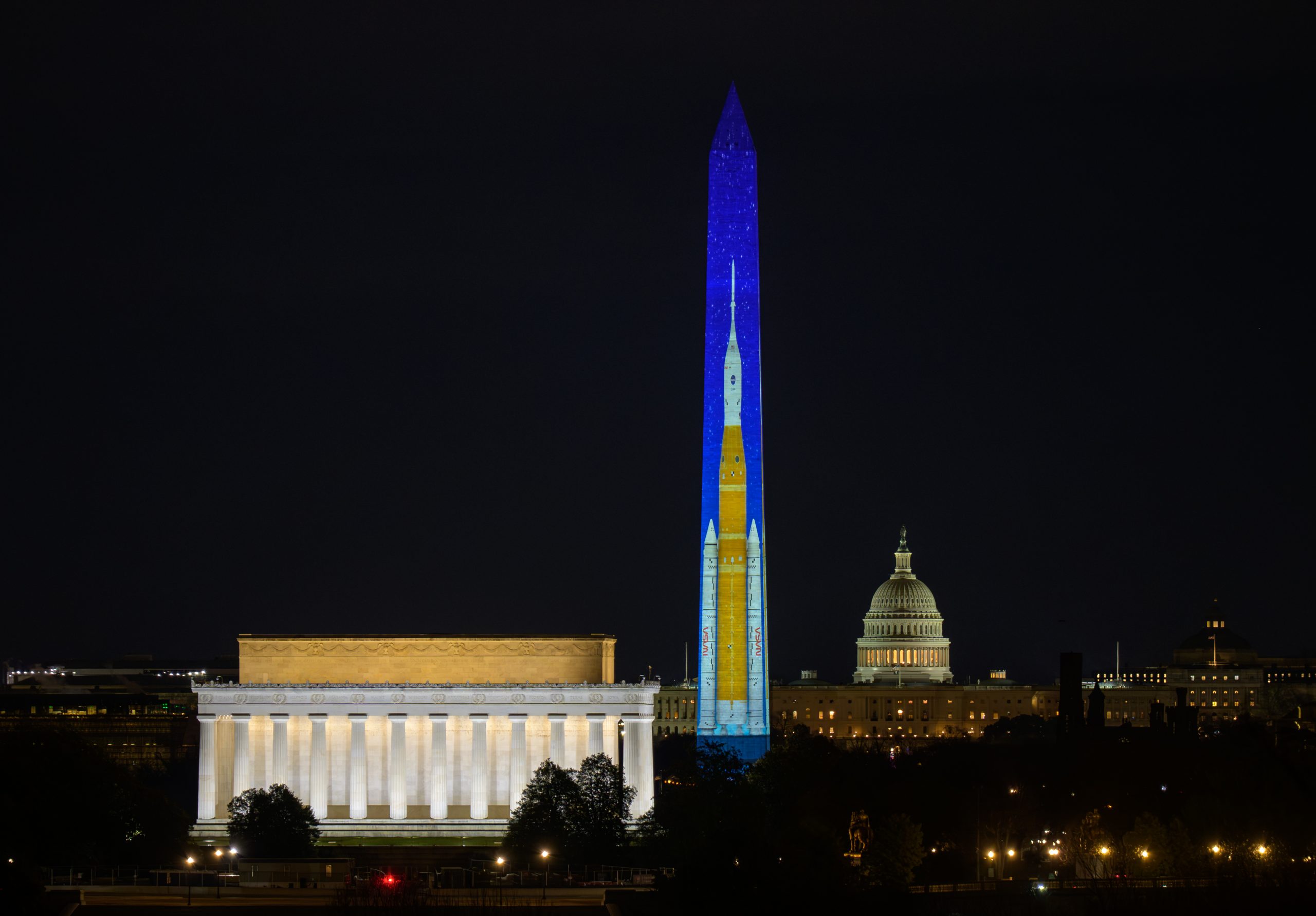
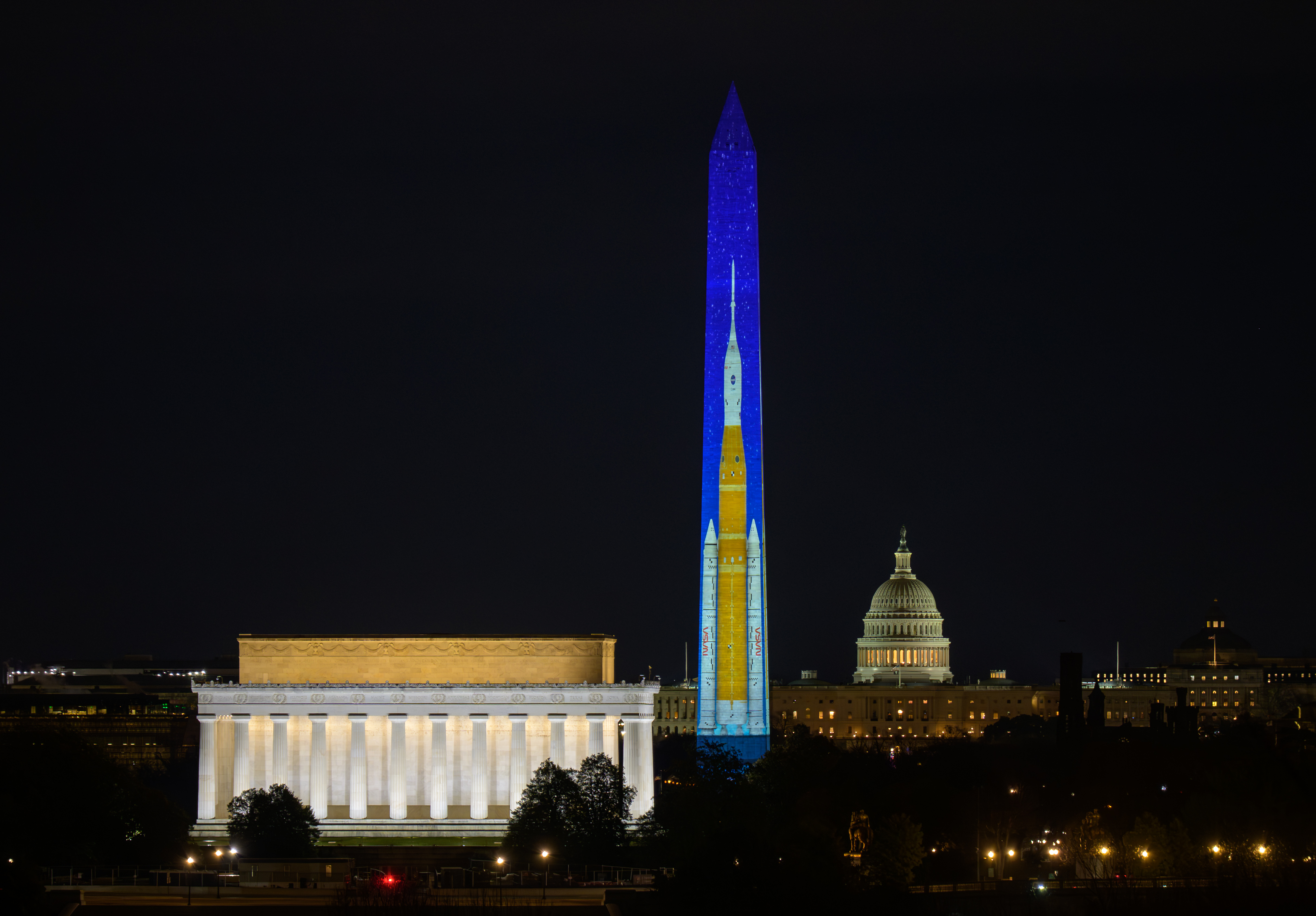
Images depicting NASA’s Space Launch System (SLS) rocket are projected onto the Washington Monument as part of an event to kick off the nation’s 250th birthday year, Wednesday, Dec. 31, 2025, in Washington.
Read More
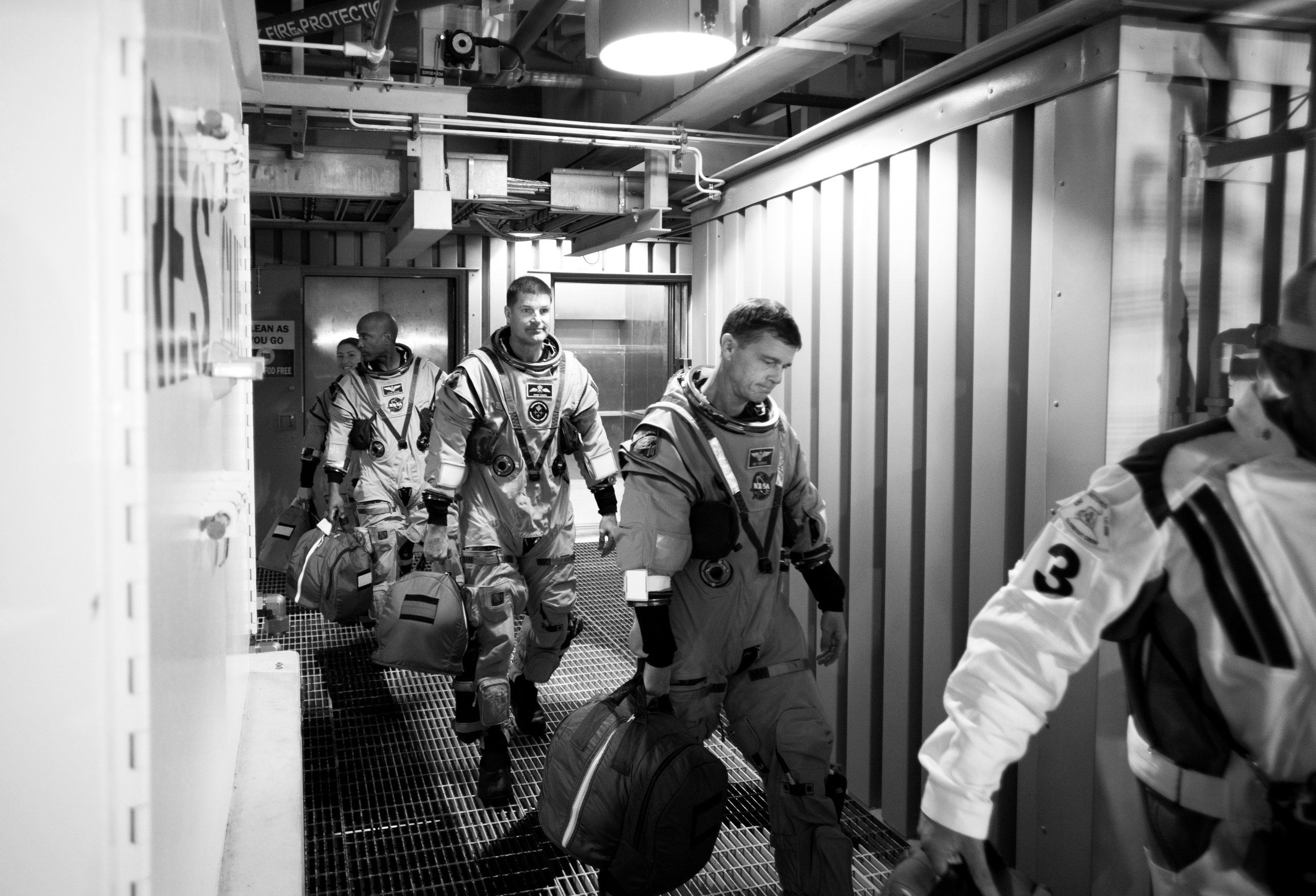
Artemis II crewmembers (left to right) NASA astronauts Christina Koch, mission specialist; and Victor Glover, pilot; CSA (Canadian Space Agency) astronaut Jeremy Hansen, mission specialist; and NASA astronaut Reid Wiseman, commander are led to the crew access arm as they prepare to board their Orion spacecraft atop NASA’s Space Launch System rocket during the Artemis II countdown demonstration test on Dec. 20, 2025.
Read More

NASA’s SPHEREx Observatory has mapped the entire sky in 102 infrared colors, as seen here in this image released on Dec. 18, 2025. This image features a selection of colors emitted primarily by stars (blue, green, and white), hot hydrogen gas (blue), and cosmic dust (red).
Read More


NASA’s Curiosity Mars rover used its black-and-white navigation cameras to capture panoramas at two times of day on Nov. 18, 2025, spanning periods that occurred on both the 4,722nd and 4,723rd Martian days, or sols, of the mission. The panoramas were captured at 4:15 p.m. on Sol 4,722 and 8:20 a.m. on Sol 4,723 (both at local Mars time), then merged together. Color was later added for an artistic interpretation of the scene with blue representing the morning panorama and yellow representing the afternoon one.
Read More


Data from NASA’s James Webb Space Telescope and Chandra X-ray Observatory come together in this eye-catching photo of colliding spiral galaxies released on Dec. 1, 2025.
Read More

NASA engineer Guy Naylor poses for a photograph wearing a custom Santa Claus suit on the 19th level of High Bay 4 inside the Vehicle Assembly Building with NASA’s integrated Moon rocket behind him at the agency’s Kennedy Space Center in Florida on Thursday, Dec. 11, 2025.
Read More


From left to right, CSA (Canadian Space Agency) astronaut Jeremy Hansen and NASA astronauts Christina Koch, Victor Glover, and Reid Wiseman are seen as they depart the Neil A. Armstrong Operations and Checkout Building to board their Orion spacecraft atop NASA’s Space Launch System rocket inside the Vehicle Assembly Building as part of the Artemis II countdown demonstration test, Saturday, Dec. 20, 2025, at NASA’s Kennedy Space Center in Florida.
Read More

Justin Hall, left, controls a subscale aircraft as Justin Link holds the aircraft in place during preliminary engine tests on Friday, Sept. 12, 2025, at NASA’s Armstong Flight Research Center in Edwards, California. Hall is chief pilot at the center’s Dale Reed Subscale Flight Research Laboratory and Link is a pilot for small uncrewed aircraft systems.
Read More


Clockwise from left, JAXA (Japan Aerospace Exploration Agency) astronaut Kimiya Yui and NASA astronauts Jonny Kim, Zena Cardman, and Mike Fincke pose for a playful portrait through a circular opening in a hatch thermal cover aboard the International Space Station on Sept. 18, 2025.
Read More


The Soyuz MS-27 spacecraft is seen as it lands in a remote area near the town of Zhezkazgan, Kazakhstan with Expedition 73 NASA astronaut Jonny Kim, and Roscosmos cosmonauts Sergey Ryzhikov and Alexey Zubritsky aboard, Tuesday, Dec. 9, 2025.
Read MoreA flash of lightning, and then—something else. High above a storm, a crimson figure blinks in and out of existence. If you see it, you are a lucky witness of a sprite, one of the least-understood electrical phenomena in Earth’s upper atmosphere.
Read More

Researchers from NASA’s Jet Propulsion Laboratory in Southern California monitor a research drone in the Dumont Dunes area of the Mojave Desert in September 2025 as part of a test campaign to develop navigation software to guide future rotorcraft on Mars.
Read More


NASA’s Artemis II Orion spacecraft with its launch abort system is stacked atop the agency’s SLS (Space Launch System) rocket in High Bay 3 of the Vehicle Assembly Building at NASA’s Kennedy Space Center in Florida on Monday, Oct. 20, 2025. The spacecraft will carry NASA astronauts Reid Wiseman, Victor Glover, Christina Koch, and CSA (Canadian Space Agency) astronaut Jeremy Hansen on a 10-day mission around the Moon and back in early 2026.
Read More


NASA’s X-59 quiet supersonic research aircraft lifts off for its first flight Tuesday, Oct. 28, 2025, from U.S. Air Force Plant 42 in Palmdale, California. The aircraft’s first flight marks the start of flight testing for NASA’s Quesst mission, the result of years of design, integration, and ground testing and begins a new chapter in NASA’s aeronautics research legacy.
Read More


NGC 1068, a relatively nearby spiral galaxy, appears in this image released on July 23, 2025.
Read More


NASA ER-2 pilot Kirt Stallings waits inside the transport vehicle at Edwards, California, on Thursday, Aug. 21, 2025, moments before boarding NASA’s Armstrong Flight Research Center’s ER-2 aircraft for a high-altitude mission supporting the Geological Earth Mapping Experiment (GEMx). Through the vehicle window, the aircraft can be seen being readied for flight.
Read More


The 57.7-foot-long Canadarm2 robotic arm extends from a data grapple fixture on the International Space Station’s Harmony module in this July 23, 2025, image.
Read More