Jesus

St. Rose Philippine Duchesne: Great missionary of the Midwest #Catholic 
 
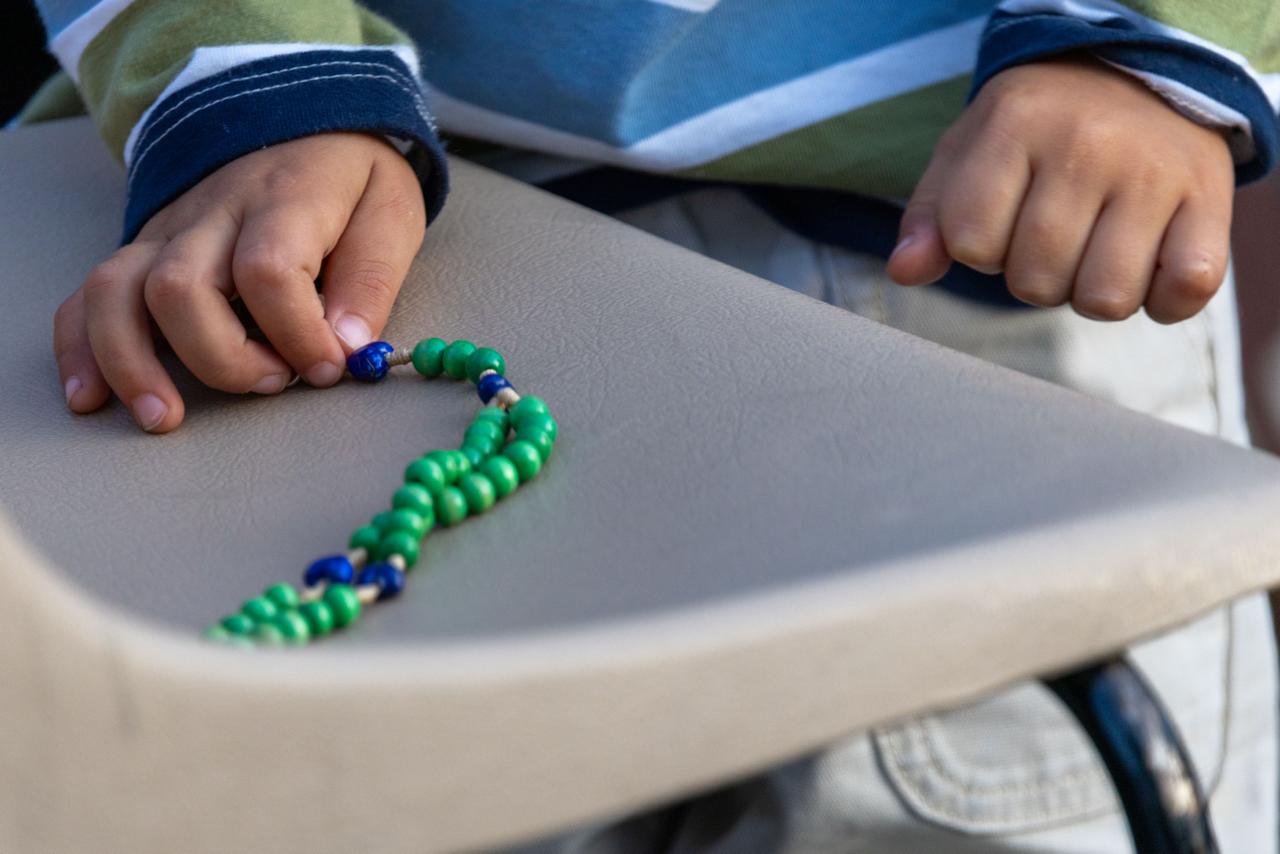
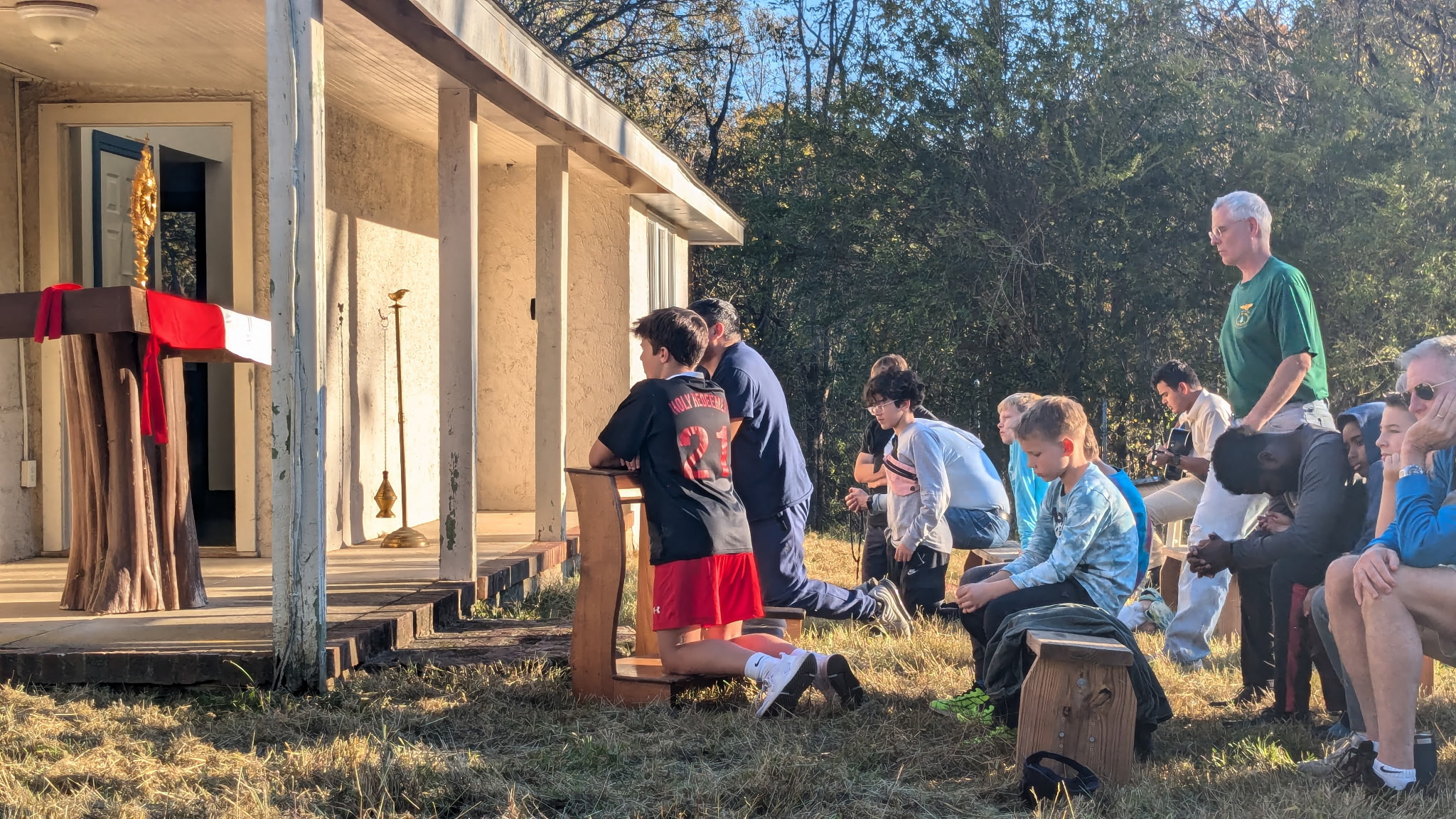
 Children play as procession participants wait to enter the Shrine of St. Rose Philippine Duchesne for adoration. / Credit: Jonah McKeown/CNA

CNA Staff, Nov 18, 2025 / 04:00 am (CNA).
On Nov. 18 the Catholic Church celebrates the feast day of St. Rose Philippine Duchesne, a French religious sister who came to the United States as a missionary in the 1800s. Rose was born on Aug. 29, 1769, in Grenoble, France. On the day of her baptism, she received the names Philip, honoring the apostle, and Rose, honoring St. Rose of Lima. She was educated at the Convent of the Visitation of Ste. Marie d’en Haut and became drawn to contemplative life. At the age of 18, she became a novice at the convent. During the revolution in France, Rose’s community was dispersed and she ended up returning to her family home. After the Concordat of 1801, she tried to rebuild her community’s monastery but was unable to do so. In 1804, Rose heard of a new congregation — the Society of the Sacred Heart of Jesus. She became a novice in the society that same year. Despite her great desire for contemplative life, Rose also felt a calling for missionary work. In a letter she wrote to Mother Madeleine Sophie Barat, the foundress of the society, Rose described an experience she had during adoration: “I spent the entire night in the New World … carrying the Blessed Sacrament to all parts of the land … I had all my sacrifices to offer: a mother, sisters, family, my mountain! When you say to me ‘now I send you,’ I will respond quickly, ‘I go.’”In 1818, Rose was finally sent to do missionary work. Bishop Louis William Valentine DuBourg, the St. Louis area’s first bishop, was looking for a congregation of educators to help him evangelize the children of the diocese. At St. Charles, near St. Louis, Rose founded the first house of the society outside of France.That same year, Rose and four other sisters opened the first free school for Native American children in the United States. By 1828 Rose had founded six schools.The saint once said: “You may dazzle the mind with a thousand brilliant discoveries of natural science; you may open new worlds of knowledge which were never dreamed of before; yet, if you have not developed in the soul of the pupil strong habits of virtue, which will sustain her in the struggle of life, you have not educated her.”Rose always carried a desire to serve Native Americans. In 1841, at the age of 71, she established a school for Potawatomi girls in Sugar Creek, Kansas. She spent a year with the Potawatomi, spending much of her time in prayer because she was unable to help with much of the physical work. They gave her the name “Quah-kah-ka-num-ad,” which means “woman who is always praying.”In 1842, Rose returned to St. Charles and died there on Nov. 18, 1852, at the age of 83. She was declared a saint by Pope John Paul II on July 3, 1988, and is buried at the Shrine of St. Rose Philippine Duchesne in St. Charles, Missouri.This story was first published on Nov. 18, 2024, and has been updated.

St. Rose Philippine Duchesne: Great missionary of the Midwest #Catholic Children play as procession participants wait to enter the Shrine of St. Rose Philippine Duchesne for adoration. / Credit: Jonah McKeown/CNA CNA Staff, Nov 18, 2025 / 04:00 am (CNA). On Nov. 18 the Catholic Church celebrates the feast day of St. Rose Philippine Duchesne, a French religious sister who came to the United States as a missionary in the 1800s. Rose was born on Aug. 29, 1769, in Grenoble, France. On the day of her baptism, she received the names Philip, honoring the apostle, and Rose, honoring St. Rose of Lima. She was educated at the Convent of the Visitation of Ste. Marie d’en Haut and became drawn to contemplative life. At the age of 18, she became a novice at the convent. During the revolution in France, Rose’s community was dispersed and she ended up returning to her family home. After the Concordat of 1801, she tried to rebuild her community’s monastery but was unable to do so. In 1804, Rose heard of a new congregation — the Society of the Sacred Heart of Jesus. She became a novice in the society that same year. Despite her great desire for contemplative life, Rose also felt a calling for missionary work. In a letter she wrote to Mother Madeleine Sophie Barat, the foundress of the society, Rose described an experience she had during adoration: “I spent the entire night in the New World … carrying the Blessed Sacrament to all parts of the land … I had all my sacrifices to offer: a mother, sisters, family, my mountain! When you say to me ‘now I send you,’ I will respond quickly, ‘I go.’”In 1818, Rose was finally sent to do missionary work. Bishop Louis William Valentine DuBourg, the St. Louis area’s first bishop, was looking for a congregation of educators to help him evangelize the children of the diocese. At St. Charles, near St. Louis, Rose founded the first house of the society outside of France.That same year, Rose and four other sisters opened the first free school for Native American children in the United States. By 1828 Rose had founded six schools.The saint once said: “You may dazzle the mind with a thousand brilliant discoveries of natural science; you may open new worlds of knowledge which were never dreamed of before; yet, if you have not developed in the soul of the pupil strong habits of virtue, which will sustain her in the struggle of life, you have not educated her.”Rose always carried a desire to serve Native Americans. In 1841, at the age of 71, she established a school for Potawatomi girls in Sugar Creek, Kansas. She spent a year with the Potawatomi, spending much of her time in prayer because she was unable to help with much of the physical work. They gave her the name “Quah-kah-ka-num-ad,” which means “woman who is always praying.”In 1842, Rose returned to St. Charles and died there on Nov. 18, 1852, at the age of 83. She was declared a saint by Pope John Paul II on July 3, 1988, and is buried at the Shrine of St. Rose Philippine Duchesne in St. Charles, Missouri.This story was first published on Nov. 18, 2024, and has been updated.


Children play as procession participants wait to enter the Shrine of St. Rose Philippine Duchesne for adoration. / Credit: Jonah McKeown/CNA

CNA Staff, Nov 18, 2025 / 04:00 am (CNA).

On Nov. 18 the Catholic Church celebrates the feast day of St. Rose Philippine Duchesne, a French religious sister who came to the United States as a missionary in the 1800s. 

Rose was born on Aug. 29, 1769, in Grenoble, France. On the day of her baptism, she received the names Philip, honoring the apostle, and Rose, honoring St. Rose of Lima. She was educated at the Convent of the Visitation of Ste. Marie d’en Haut and became drawn to contemplative life. At the age of 18, she became a novice at the convent. 

During the revolution in France, Rose’s community was dispersed and she ended up returning to her family home. After the Concordat of 1801, she tried to rebuild her community’s monastery but was unable to do so. 

In 1804, Rose heard of a new congregation — the Society of the Sacred Heart of Jesus. She became a novice in the society that same year. 

Despite her great desire for contemplative life, Rose also felt a calling for missionary work. 

In a letter she wrote to Mother Madeleine Sophie Barat, the foundress of the society, Rose described an experience she had during adoration: “I spent the entire night in the New World … carrying the Blessed Sacrament to all parts of the land … I had all my sacrifices to offer: a mother, sisters, family, my mountain! When you say to me ‘now I send you,’ I will respond quickly, ‘I go.’”

In 1818, Rose was finally sent to do missionary work. Bishop Louis William Valentine DuBourg, the St. Louis area’s first bishop, was looking for a congregation of educators to help him evangelize the children of the diocese. At St. Charles, near St. Louis, Rose founded the first house of the society outside of France.

That same year, Rose and four other sisters opened the first free school for Native American children in the United States. By 1828 Rose had founded six schools.

The saint once said: “You may dazzle the mind with a thousand brilliant discoveries of natural science; you may open new worlds of knowledge which were never dreamed of before; yet, if you have not developed in the soul of the pupil strong habits of virtue, which will sustain her in the struggle of life, you have not educated her.”

Rose always carried a desire to serve Native Americans. In 1841, at the age of 71, she established a school for Potawatomi girls in Sugar Creek, Kansas. She spent a year with the Potawatomi, spending much of her time in prayer because she was unable to help with much of the physical work. They gave her the name “Quah-kah-ka-num-ad,” which means “woman who is always praying.”

In 1842, Rose returned to St. Charles and died there on Nov. 18, 1852, at the age of 83. She was declared a saint by Pope John Paul II on July 3, 1988, and is buried at the Shrine of St. Rose Philippine Duchesne in St. Charles, Missouri.

This story was first published on Nov. 18, 2024, and has been updated.

Read More
Bishops discuss faith formation before National Catholic Youth Conference #Catholic 
 
 Organizers of Pope Leo XIV’s upcoming digital dialogue with young people Nov. 21 at the National Catholic Youth Conference in Indianapolis speak to the media at the site of the United States Catholic Bishops’ Conference Fall Plenary Assembly in Baltimore on Nov. 12, 2025. Left to right: Cardinal Christophe Pierre, papal nuncio to the United States; Montse Alvarado, president and COO of EWTN News; Archbishop Nelson J. Pérez, Archdiocese of Philadelphia; Christina Lamas, executive director of National Federation for Catholic Youth Ministry; and Archbishop Charles Thompson, Archdiocese of Indianapolis. / Credit: Shannon Mullen/National Catholic Register

Baltimore, Maryland, Nov 17, 2025 / 07:00 am (CNA).
Bishops discussed young Catholics’ place in the Church ahead of the National Catholic Youth Conference.At the United States Conference of Catholic Bishops’ (USCCB) Fall Plenary Assembly in Baltimore, bishops spoke about the young generation as many prepare to attend NCYC. The conference will take place Nov. 20–22 in Indianapolis for prayer, community, evangelization, and service among Catholic teenagers.During NCYC, Pope Leo XIV will hold a digital dialogue with teens from across the nation. “When the pope speaks, he speaks to the world, and this will be a wonderful, wonderful moment. This encounter will engage young people in real time,” said Archbishop Nelson Pérez of Philadelphia. At a Nov. 12 press conference at the USCCB fall plenary, Pérez said “there is a deep significance to this encounter.” He added: “It reflects the Holy Father’s desire to connect with young people, with our youth, whom his predecessor … Pope Francis, called ‘the now of God.’”Pérez said during his time as a priest and bishop, he has noticed teenagers “want a place in the Church.” He said: “They want to be seen, heard, and valued, which is so beautiful ... They want to be loved by the Church.”“Even in today’s interconnected world, the Church can seem far away from young people. The Holy Father’s choice to encounter the American youth ... is an expression of his closeness to the youth of the world.”“This moment will mark a powerful opportunity for young people to witness the beauty of the universal Church with our Holy Father and to express their concerns, voices, experience, [and] what’s in their hearts,” Pérez said.Bishop Joseph Espaillat, auxiliary bishop for the Archdiocese of New York, has attended NCYC more than a dozen times. He told CNA “the energy and the vibrancy of the young people” is why he returns each year.“It’s not just the local parish or the local diocese, but it’s the national Church and there’s something powerful when we come together,” Espaillat said.​This year’s event is “the first time ever the Holy Father has a live online interview like this,” at NCYC, Espaillat said. “What I love about it is that the Church in the United States is leading right now. The young people being the focus with our Holy Father is going to be great, and it’s going to produce a lot of positive energy in our Church.”Espaillat encouraged attendees “to be open and allow yourself to be surprised by the Holy Spirit.” He added: “Don’t go in with a preconceived notion. It is a great event in which there are many, many fruits. I’ve seen young people just come to life at the event.”Youth draw closer to the ChurchAs thousands of teenagers plan to gather at the national conference, U.S. bishops further explained why so many young Catholics are looking to the Church. A number of bishops highlighted the Catholic presence on social media is helping to draw them in.Bishop William Byrne of Springfield, Massachusetts, told CNA the exponential growth of young Catholics coming to the Church is “amazing and exciting.” Byrne, who served as chair for the USCCB’s committee on communications, detailed how much its online presence has grown its outreach to the young generation and wider population. “Beginning with the illness of our beloved Pope Francis, through the funeral, and then the transition to Pope Leo, we’ve actually had a 226% growth in our social media on the four platforms we use — TikTok, Instagram, X, and YouTube,” he said.“The amazing thing is, it’s still growing. It means that people are seeing it, sharing it,” Byrne said. He specifically noted it’s the “young people” spreading the message online. “So we see that we are reaching people,” Byrne said. “But our goal is not to get people locked on their phones. Our goal is to get people locked on Jesus Christ and have the impression be Jesus Christ and his bride, the Church.”“This is an exciting time. It’s not without its challenges, but it’s also a wonderful opportunity,” Byrne said. “We’re reaching young people who are curious and hungry. It’s so exciting to see the Church continue to speak to the world, because the Church has never lost her relevance.”The start of the Catholic online presence followed the movement of the new atheists, Bishop Robert Barron of Winona-Rochester, Minnesota, said. He told CNA the movement was made up of “people who were really shaping the culture, saying: ‘There’s no purpose of life. We come from nowhere. We go nowhere. There’s no objective moral value.’”“A lot of people, myself included, began to get on social media with a religious voice,” Barron said. “People who had not heard a religious voice or who were disaffiliated … could find people like me and many others who were actually talking about God and about religion.”“But I think as a whole generation came of age, they realized what a desperately sad and empty message that is,” Barron said. “There’s this hunger in the heart for God, and so that just reasserts itself. I think a lot of younger people who were raised on this very vapid philosophy began to look to religion.”As more young Catholics get involved in youth formation whether in their parishes or at larger gatherings like NCYC, Barron said he encourages them to use the opportunities to “build community and build a sense of family with other believers.”Barron, who is the founder of the Catholic media organization Word on Fire, has gained nearly 3 million YouTube subscribers and millions of other followers across social media platforms. But, he said, “one drawback of social media is that it’s a little private world. It can be a lot of people accessing it, but privately.”“Maybe through social media an individual finds a path to religion, but then to look around a room and see thousands of other people that are on a similar path — that’s a great thing,” Barron said.

Bishops discuss faith formation before National Catholic Youth Conference #Catholic Organizers of Pope Leo XIV’s upcoming digital dialogue with young people Nov. 21 at the National Catholic Youth Conference in Indianapolis speak to the media at the site of the United States Catholic Bishops’ Conference Fall Plenary Assembly in Baltimore on Nov. 12, 2025. Left to right: Cardinal Christophe Pierre, papal nuncio to the United States; Montse Alvarado, president and COO of EWTN News; Archbishop Nelson J. Pérez, Archdiocese of Philadelphia; Christina Lamas, executive director of National Federation for Catholic Youth Ministry; and Archbishop Charles Thompson, Archdiocese of Indianapolis. / Credit: Shannon Mullen/National Catholic Register Baltimore, Maryland, Nov 17, 2025 / 07:00 am (CNA). Bishops discussed young Catholics’ place in the Church ahead of the National Catholic Youth Conference.At the United States Conference of Catholic Bishops’ (USCCB) Fall Plenary Assembly in Baltimore, bishops spoke about the young generation as many prepare to attend NCYC. The conference will take place Nov. 20–22 in Indianapolis for prayer, community, evangelization, and service among Catholic teenagers.During NCYC, Pope Leo XIV will hold a digital dialogue with teens from across the nation. “When the pope speaks, he speaks to the world, and this will be a wonderful, wonderful moment. This encounter will engage young people in real time,” said Archbishop Nelson Pérez of Philadelphia. At a Nov. 12 press conference at the USCCB fall plenary, Pérez said “there is a deep significance to this encounter.” He added: “It reflects the Holy Father’s desire to connect with young people, with our youth, whom his predecessor … Pope Francis, called ‘the now of God.’”Pérez said during his time as a priest and bishop, he has noticed teenagers “want a place in the Church.” He said: “They want to be seen, heard, and valued, which is so beautiful … They want to be loved by the Church.”“Even in today’s interconnected world, the Church can seem far away from young people. The Holy Father’s choice to encounter the American youth … is an expression of his closeness to the youth of the world.”“This moment will mark a powerful opportunity for young people to witness the beauty of the universal Church with our Holy Father and to express their concerns, voices, experience, [and] what’s in their hearts,” Pérez said.Bishop Joseph Espaillat, auxiliary bishop for the Archdiocese of New York, has attended NCYC more than a dozen times. He told CNA “the energy and the vibrancy of the young people” is why he returns each year.“It’s not just the local parish or the local diocese, but it’s the national Church and there’s something powerful when we come together,” Espaillat said.​This year’s event is “the first time ever the Holy Father has a live online interview like this,” at NCYC, Espaillat said. “What I love about it is that the Church in the United States is leading right now. The young people being the focus with our Holy Father is going to be great, and it’s going to produce a lot of positive energy in our Church.”Espaillat encouraged attendees “to be open and allow yourself to be surprised by the Holy Spirit.” He added: “Don’t go in with a preconceived notion. It is a great event in which there are many, many fruits. I’ve seen young people just come to life at the event.”Youth draw closer to the ChurchAs thousands of teenagers plan to gather at the national conference, U.S. bishops further explained why so many young Catholics are looking to the Church. A number of bishops highlighted the Catholic presence on social media is helping to draw them in.Bishop William Byrne of Springfield, Massachusetts, told CNA the exponential growth of young Catholics coming to the Church is “amazing and exciting.” Byrne, who served as chair for the USCCB’s committee on communications, detailed how much its online presence has grown its outreach to the young generation and wider population. “Beginning with the illness of our beloved Pope Francis, through the funeral, and then the transition to Pope Leo, we’ve actually had a 226% growth in our social media on the four platforms we use — TikTok, Instagram, X, and YouTube,” he said.“The amazing thing is, it’s still growing. It means that people are seeing it, sharing it,” Byrne said. He specifically noted it’s the “young people” spreading the message online. “So we see that we are reaching people,” Byrne said. “But our goal is not to get people locked on their phones. Our goal is to get people locked on Jesus Christ and have the impression be Jesus Christ and his bride, the Church.”“This is an exciting time. It’s not without its challenges, but it’s also a wonderful opportunity,” Byrne said. “We’re reaching young people who are curious and hungry. It’s so exciting to see the Church continue to speak to the world, because the Church has never lost her relevance.”The start of the Catholic online presence followed the movement of the new atheists, Bishop Robert Barron of Winona-Rochester, Minnesota, said. He told CNA the movement was made up of “people who were really shaping the culture, saying: ‘There’s no purpose of life. We come from nowhere. We go nowhere. There’s no objective moral value.’”“A lot of people, myself included, began to get on social media with a religious voice,” Barron said. “People who had not heard a religious voice or who were disaffiliated … could find people like me and many others who were actually talking about God and about religion.”“But I think as a whole generation came of age, they realized what a desperately sad and empty message that is,” Barron said. “There’s this hunger in the heart for God, and so that just reasserts itself. I think a lot of younger people who were raised on this very vapid philosophy began to look to religion.”As more young Catholics get involved in youth formation whether in their parishes or at larger gatherings like NCYC, Barron said he encourages them to use the opportunities to “build community and build a sense of family with other believers.”Barron, who is the founder of the Catholic media organization Word on Fire, has gained nearly 3 million YouTube subscribers and millions of other followers across social media platforms. But, he said, “one drawback of social media is that it’s a little private world. It can be a lot of people accessing it, but privately.”“Maybe through social media an individual finds a path to religion, but then to look around a room and see thousands of other people that are on a similar path — that’s a great thing,” Barron said.


Organizers of Pope Leo XIV’s upcoming digital dialogue with young people Nov. 21 at the National Catholic Youth Conference in Indianapolis speak to the media at the site of the United States Catholic Bishops’ Conference Fall Plenary Assembly in Baltimore on Nov. 12, 2025. Left to right: Cardinal Christophe Pierre, papal nuncio to the United States; Montse Alvarado, president and COO of EWTN News; Archbishop Nelson J. Pérez, Archdiocese of Philadelphia; Christina Lamas, executive director of National Federation for Catholic Youth Ministry; and Archbishop Charles Thompson, Archdiocese of Indianapolis. / Credit: Shannon Mullen/National Catholic Register

Baltimore, Maryland, Nov 17, 2025 / 07:00 am (CNA).

Bishops discussed young Catholics’ place in the Church ahead of the National Catholic Youth Conference.

At the United States Conference of Catholic Bishops’ (USCCB) Fall Plenary Assembly in Baltimore, bishops spoke about the young generation as many prepare to attend NCYC. The conference will take place Nov. 20–22 in Indianapolis for prayer, community, evangelization, and service among Catholic teenagers.

During NCYC, Pope Leo XIV will hold a digital dialogue with teens from across the nation. “When the pope speaks, he speaks to the world, and this will be a wonderful, wonderful moment. This encounter will engage young people in real time,” said Archbishop Nelson Pérez of Philadelphia. 

At a Nov. 12 press conference at the USCCB fall plenary, Pérez said “there is a deep significance to this encounter.” He added: “It reflects the Holy Father’s desire to connect with young people, with our youth, whom his predecessor … Pope Francis, called ‘the now of God.’”

Pérez said during his time as a priest and bishop, he has noticed teenagers “want a place in the Church.” He said: “They want to be seen, heard, and valued, which is so beautiful … They want to be loved by the Church.”

“Even in today’s interconnected world, the Church can seem far away from young people. The Holy Father’s choice to encounter the American youth … is an expression of his closeness to the youth of the world.”

“This moment will mark a powerful opportunity for young people to witness the beauty of the universal Church with our Holy Father and to express their concerns, voices, experience, [and] what’s in their hearts,” Pérez said.

Bishop Joseph Espaillat, auxiliary bishop for the Archdiocese of New York, has attended NCYC more than a dozen times. He told CNA “the energy and the vibrancy of the young people” is why he returns each year.

“It’s not just the local parish or the local diocese, but it’s the national Church and there’s something powerful when we come together,” Espaillat said.

​This year’s event is “the first time ever the Holy Father has a live online interview like this,” at NCYC, Espaillat said. “What I love about it is that the Church in the United States is leading right now. The young people being the focus with our Holy Father is going to be great, and it’s going to produce a lot of positive energy in our Church.”

Espaillat encouraged attendees “to be open and allow yourself to be surprised by the Holy Spirit.” He added: “Don’t go in with a preconceived notion. It is a great event in which there are many, many fruits. I’ve seen young people just come to life at the event.”

Youth draw closer to the Church

As thousands of teenagers plan to gather at the national conference, U.S. bishops further explained why so many young Catholics are looking to the Church. A number of bishops highlighted the Catholic presence on social media is helping to draw them in.

Bishop William Byrne of Springfield, Massachusetts, told CNA the exponential growth of young Catholics coming to the Church is “amazing and exciting.” Byrne, who served as chair for the USCCB’s committee on communications, detailed how much its online presence has grown its outreach to the young generation and wider population. 

“Beginning with the illness of our beloved Pope Francis, through the funeral, and then the transition to Pope Leo, we’ve actually had a 226% growth in our social media on the four platforms we use — TikTok, Instagram, X, and YouTube,” he said.

“The amazing thing is, it’s still growing. It means that people are seeing it, sharing it,” Byrne said. He specifically noted it’s the “young people” spreading the message online. 

“So we see that we are reaching people,” Byrne said. “But our goal is not to get people locked on their phones. Our goal is to get people locked on Jesus Christ and have the impression be Jesus Christ and his bride, the Church.”

“This is an exciting time. It’s not without its challenges, but it’s also a wonderful opportunity,” Byrne said. “We’re reaching young people who are curious and hungry. It’s so exciting to see the Church continue to speak to the world, because the Church has never lost her relevance.”

The start of the Catholic online presence followed the movement of the new atheists, Bishop Robert Barron of Winona-Rochester, Minnesota, said. He told CNA the movement was made up of “people who were really shaping the culture, saying: ‘There’s no purpose of life. We come from nowhere. We go nowhere. There’s no objective moral value.’”

“A lot of people, myself included, began to get on social media with a religious voice,” Barron said. “People who had not heard a religious voice or who were disaffiliated … could find people like me and many others who were actually talking about God and about religion.”

“But I think as a whole generation came of age, they realized what a desperately sad and empty message that is,” Barron said. “There’s this hunger in the heart for God, and so that just reasserts itself. I think a lot of younger people who were raised on this very vapid philosophy began to look to religion.”

As more young Catholics get involved in youth formation whether in their parishes or at larger gatherings like NCYC, Barron said he encourages them to use the opportunities to “build community and build a sense of family with other believers.”

Barron, who is the founder of the Catholic media organization Word on Fire, has gained nearly 3 million YouTube subscribers and millions of other followers across social media platforms. But, he said, “one drawback of social media is that it’s a little private world. It can be a lot of people accessing it, but privately.”

“Maybe through social media an individual finds a path to religion, but then to look around a room and see thousands of other people that are on a similar path — that’s a great thing,” Barron said.

Read More
More than half a million people to participate in Aid to the Church in Need ‘Red Week’ #Catholic 
 
 The Austrian Parliament building is lit red as part of the international “Red Week” in honor of persecuted Christians across the globe. / Credit: Aid to the Church in Need

Washington, D.C. Newsroom, Nov 14, 2025 / 06:00 am (CNA).
Here is a roundup of Catholic world news from the past week that you might have missed:More than half a million people to participate in Aid to the Church in Need ‘Red Week’ Over 500,000 people will take part in Aid to the Church in Need International’s Red Week 2025, which will see churches and landmarks around the world illuminated in red to raise awareness of religious persecution internationally.Set to take place Nov. 15–23, the global initiative is expected to see “over 10,000 direct participants for prayers, public events, school gatherings, concerts, and marches,” and to draw in “more than 500,000 participants through media outreach and online platforms,” according to an ACN International press release.More than 100 events are scheduled around the world, including in Australia, Austria, Germany, Portugal, the Netherlands, the United Kingdom, France, Italy, Ireland, Switzerland, Hungary, Canada, Mexico, Colombia, and more.Catholic bishops in Ghana express closeness with stampede victimsCatholic bishops in Ghana have expressed their closeness with victims of a stampede at the El-Wak Stadium in Accra that left six people dead and several others injured during a Ghana Armed Forces recruitment exercise, ACI Africa, CNA’s news partner in Africa, reported Nov. 13. “We unite our hearts with the bereaved families in grief and lift our prayers to Almighty God for the eternal repose of the departed and the swift recovery of all who are injured,” Ghana’s Catholic bishops said in a statement following the Nov. 12 stampede. Citing figures released by the acting minister of defense, Cassiel Ato Forson, the bishops noted that 34 casualties were recorded. Of these, six were reportedly confirmed dead, five were in critical condition, 12 were in fairly critical condition, and others were under observation.Oman opens Catholic pastoral center in MuscatOman has inaugurated a new Catholic pastoral center in Muscat — an important sign of the country’s long-standing respect for religious diversity, according to ACI MENA, CNA’s Arabic-language news partner.Built on land donated in 1977 by the late Sultan Qaboos, the center provides formation programs, catechesis, and housing for clergy.Omani Ambassador Mahmoud al-Hassani said the project reflects the nation’s vision of peaceful coexistence and aligns with the Vatican’s mission of dialogue. The center also strengthens ties between Oman and the Holy See, which formally established diplomatic relations in 2023.International contemplative congregation of sisters celebrates 200 years The Sisters of Our Lady of Charity of the Good Shepherd (RGS) officially concluded the yearlong celebration of their 200th anniversary on Nov. 11. The contemplative order was founded in 1825 by St. Mary Euphrasia Pelletier in Myanmar.“I hope it rekindles in all of us a renewed openness to be shaped and made radiant by grace, so that together, as one congregation, and, as one people of God, we allow the fire of God’s love to warm, illumine, and shine through us into the heart of the world,” said Sister Joan Marie Lopez, RGS congregational leader, on her hope for the bicentenary year, according to Vatican News. Cardinal Luis Antonio Tagle, pro-prefect of the Dicastery for Evangelization, presided over a Mass in Rome for the bicentennial celebration.Christian families return to al-Ghassaniyah, Syria, after 13 yearsAfter more than a decade of displacement, Christian families have begun returning to the village of al-Ghassaniyah in Idlib, Syria, ACI MENA reported Nov. 13. Their return was made possible by a firm government decision to remove foreign extremist groups and by sustained efforts from the Franciscan community. Although many homes are damaged or looted, residents spoke of renewed hope as the Church offered support for the first returning families. The development comes amid wider security shifts in the region and ongoing diplomatic efforts related to extremist fighters.Typhoons, floods devastate Vietnam; Catholic communities respond The Catholic Church is calling for communities to respond after Typhoon Kalmaegi destroyed buildings across the Qui Nhon Diocese, including the house of the bishop and Lang Song Seminary. “The main house of the Congregation of the Lovers of the Holy Cross in Qui Nhon, the Congregation of the Handmaids of Jesus of Mercy, and many parish churches like Qui Nhon Cathedral and other churches throughout the diocese were severely damaged,” Fides News Agency reported. This comes after severe flooding the week prior, which left 13 dead, 34 injured, and 11 missing. Maria Vu Thi Hong Anh, head of Da Nang Cathedral Parish Caritas, said in wake of the flooding: “Seeing the images of this historic flood, I feel very sorry for the residents in the rural areas; they are poor and now their life is much more difficult when losing their properties.”Youth Encounter Triduum in Baghdad encourages holinessThe Catholic Youth Committee in Baghdad held a three-day gathering titled “Think, Discern, Decide,” bringing together young people from several dioceses, according to a Nov. 10 report from ACI MENA.The event focused on the call to holiness, drawing inspiration from biblical teaching and modern Iraqi witnesses of faith such as Father Ragheed Ganni and other martyrs. Workshops, talks, and prayer times encouraged young participants to live holiness through everyday acts of love and commitment.Catholic patriarchs and bishops open 58th session in LebanonLebanon’s Catholic leaders gathered in Bkerke, Lebanon, for the opening of the 58th session of the Council of Catholic Patriarchs and Bishops, ACI MENA reported. The meeting focuses on building a synodal Church that listens and acts with spiritual discernment. Maronite Patriarch Cardinal Bechara Boutros al-Rahi highlighted preparations for Pope Leo XIV’s upcoming visit and called for nationwide prayers and the ringing of church bells upon his arrival. Apostolic Nuncio Paolo Borgia noted that the papal visit will include meetings with all segments of Lebanese society.

More than half a million people to participate in Aid to the Church in Need ‘Red Week’ #Catholic The Austrian Parliament building is lit red as part of the international “Red Week” in honor of persecuted Christians across the globe. / Credit: Aid to the Church in Need Washington, D.C. Newsroom, Nov 14, 2025 / 06:00 am (CNA). Here is a roundup of Catholic world news from the past week that you might have missed:More than half a million people to participate in Aid to the Church in Need ‘Red Week’ Over 500,000 people will take part in Aid to the Church in Need International’s Red Week 2025, which will see churches and landmarks around the world illuminated in red to raise awareness of religious persecution internationally.Set to take place Nov. 15–23, the global initiative is expected to see “over 10,000 direct participants for prayers, public events, school gatherings, concerts, and marches,” and to draw in “more than 500,000 participants through media outreach and online platforms,” according to an ACN International press release.More than 100 events are scheduled around the world, including in Australia, Austria, Germany, Portugal, the Netherlands, the United Kingdom, France, Italy, Ireland, Switzerland, Hungary, Canada, Mexico, Colombia, and more.Catholic bishops in Ghana express closeness with stampede victimsCatholic bishops in Ghana have expressed their closeness with victims of a stampede at the El-Wak Stadium in Accra that left six people dead and several others injured during a Ghana Armed Forces recruitment exercise, ACI Africa, CNA’s news partner in Africa, reported Nov. 13. “We unite our hearts with the bereaved families in grief and lift our prayers to Almighty God for the eternal repose of the departed and the swift recovery of all who are injured,” Ghana’s Catholic bishops said in a statement following the Nov. 12 stampede. Citing figures released by the acting minister of defense, Cassiel Ato Forson, the bishops noted that 34 casualties were recorded. Of these, six were reportedly confirmed dead, five were in critical condition, 12 were in fairly critical condition, and others were under observation.Oman opens Catholic pastoral center in MuscatOman has inaugurated a new Catholic pastoral center in Muscat — an important sign of the country’s long-standing respect for religious diversity, according to ACI MENA, CNA’s Arabic-language news partner.Built on land donated in 1977 by the late Sultan Qaboos, the center provides formation programs, catechesis, and housing for clergy.Omani Ambassador Mahmoud al-Hassani said the project reflects the nation’s vision of peaceful coexistence and aligns with the Vatican’s mission of dialogue. The center also strengthens ties between Oman and the Holy See, which formally established diplomatic relations in 2023.International contemplative congregation of sisters celebrates 200 years The Sisters of Our Lady of Charity of the Good Shepherd (RGS) officially concluded the yearlong celebration of their 200th anniversary on Nov. 11. The contemplative order was founded in 1825 by St. Mary Euphrasia Pelletier in Myanmar.“I hope it rekindles in all of us a renewed openness to be shaped and made radiant by grace, so that together, as one congregation, and, as one people of God, we allow the fire of God’s love to warm, illumine, and shine through us into the heart of the world,” said Sister Joan Marie Lopez, RGS congregational leader, on her hope for the bicentenary year, according to Vatican News. Cardinal Luis Antonio Tagle, pro-prefect of the Dicastery for Evangelization, presided over a Mass in Rome for the bicentennial celebration.Christian families return to al-Ghassaniyah, Syria, after 13 yearsAfter more than a decade of displacement, Christian families have begun returning to the village of al-Ghassaniyah in Idlib, Syria, ACI MENA reported Nov. 13. Their return was made possible by a firm government decision to remove foreign extremist groups and by sustained efforts from the Franciscan community. Although many homes are damaged or looted, residents spoke of renewed hope as the Church offered support for the first returning families. The development comes amid wider security shifts in the region and ongoing diplomatic efforts related to extremist fighters.Typhoons, floods devastate Vietnam; Catholic communities respond The Catholic Church is calling for communities to respond after Typhoon Kalmaegi destroyed buildings across the Qui Nhon Diocese, including the house of the bishop and Lang Song Seminary. “The main house of the Congregation of the Lovers of the Holy Cross in Qui Nhon, the Congregation of the Handmaids of Jesus of Mercy, and many parish churches like Qui Nhon Cathedral and other churches throughout the diocese were severely damaged,” Fides News Agency reported. This comes after severe flooding the week prior, which left 13 dead, 34 injured, and 11 missing. Maria Vu Thi Hong Anh, head of Da Nang Cathedral Parish Caritas, said in wake of the flooding: “Seeing the images of this historic flood, I feel very sorry for the residents in the rural areas; they are poor and now their life is much more difficult when losing their properties.”Youth Encounter Triduum in Baghdad encourages holinessThe Catholic Youth Committee in Baghdad held a three-day gathering titled “Think, Discern, Decide,” bringing together young people from several dioceses, according to a Nov. 10 report from ACI MENA.The event focused on the call to holiness, drawing inspiration from biblical teaching and modern Iraqi witnesses of faith such as Father Ragheed Ganni and other martyrs. Workshops, talks, and prayer times encouraged young participants to live holiness through everyday acts of love and commitment.Catholic patriarchs and bishops open 58th session in LebanonLebanon’s Catholic leaders gathered in Bkerke, Lebanon, for the opening of the 58th session of the Council of Catholic Patriarchs and Bishops, ACI MENA reported. The meeting focuses on building a synodal Church that listens and acts with spiritual discernment. Maronite Patriarch Cardinal Bechara Boutros al-Rahi highlighted preparations for Pope Leo XIV’s upcoming visit and called for nationwide prayers and the ringing of church bells upon his arrival. Apostolic Nuncio Paolo Borgia noted that the papal visit will include meetings with all segments of Lebanese society.


The Austrian Parliament building is lit red as part of the international “Red Week” in honor of persecuted Christians across the globe. / Credit: Aid to the Church in Need

Washington, D.C. Newsroom, Nov 14, 2025 / 06:00 am (CNA).

Here is a roundup of Catholic world news from the past week that you might have missed:

More than half a million people to participate in Aid to the Church in Need ‘Red Week’ 

Over 500,000 people will take part in Aid to the Church in Need International’s Red Week 2025, which will see churches and landmarks around the world illuminated in red to raise awareness of religious persecution internationally.

Set to take place Nov. 15–23, the global initiative is expected to see “over 10,000 direct participants for prayers, public events, school gatherings, concerts, and marches,” and to draw in “more than 500,000 participants through media outreach and online platforms,” according to an ACN International press release.

More than 100 events are scheduled around the world, including in Australia, Austria, Germany, Portugal, the Netherlands, the United Kingdom, France, Italy, Ireland, Switzerland, Hungary, Canada, Mexico, Colombia, and more.

Catholic bishops in Ghana express closeness with stampede victims

Catholic bishops in Ghana have expressed their closeness with victims of a stampede at the El-Wak Stadium in Accra that left six people dead and several others injured during a Ghana Armed Forces recruitment exercise, ACI Africa, CNA’s news partner in Africa, reported Nov. 13

“We unite our hearts with the bereaved families in grief and lift our prayers to Almighty God for the eternal repose of the departed and the swift recovery of all who are injured,” Ghana’s Catholic bishops said in a statement following the Nov. 12 stampede.

Citing figures released by the acting minister of defense, Cassiel Ato Forson, the bishops noted that 34 casualties were recorded. Of these, six were reportedly confirmed dead, five were in critical condition, 12 were in fairly critical condition, and others were under observation.

Oman opens Catholic pastoral center in Muscat

Oman has inaugurated a new Catholic pastoral center in Muscat — an important sign of the country’s long-standing respect for religious diversity, according to ACI MENA, CNA’s Arabic-language news partner.

Built on land donated in 1977 by the late Sultan Qaboos, the center provides formation programs, catechesis, and housing for clergy.

Omani Ambassador Mahmoud al-Hassani said the project reflects the nation’s vision of peaceful coexistence and aligns with the Vatican’s mission of dialogue. The center also strengthens ties between Oman and the Holy See, which formally established diplomatic relations in 2023.

International contemplative congregation of sisters celebrates 200 years 

The Sisters of Our Lady of Charity of the Good Shepherd (RGS) officially concluded the yearlong celebration of their 200th anniversary on Nov. 11. The contemplative order was founded in 1825 by St. Mary Euphrasia Pelletier in Myanmar.

“I hope it rekindles in all of us a renewed openness to be shaped and made radiant by grace, so that together, as one congregation, and, as one people of God, we allow the fire of God’s love to warm, illumine, and shine through us into the heart of the world,” said Sister Joan Marie Lopez, RGS congregational leader, on her hope for the bicentenary year, according to Vatican News.

Cardinal Luis Antonio Tagle, pro-prefect of the Dicastery for Evangelization, presided over a Mass in Rome for the bicentennial celebration.

Christian families return to al-Ghassaniyah, Syria, after 13 years

After more than a decade of displacement, Christian families have begun returning to the village of al-Ghassaniyah in Idlib, Syria, ACI MENA reported Nov. 13

Their return was made possible by a firm government decision to remove foreign extremist groups and by sustained efforts from the Franciscan community. Although many homes are damaged or looted, residents spoke of renewed hope as the Church offered support for the first returning families. The development comes amid wider security shifts in the region and ongoing diplomatic efforts related to extremist fighters.

Typhoons, floods devastate Vietnam; Catholic communities respond 

The Catholic Church is calling for communities to respond after Typhoon Kalmaegi destroyed buildings across the Qui Nhon Diocese, including the house of the bishop and Lang Song Seminary.

“The main house of the Congregation of the Lovers of the Holy Cross in Qui Nhon, the Congregation of the Handmaids of Jesus of Mercy, and many parish churches like Qui Nhon Cathedral and other churches throughout the diocese were severely damaged,” Fides News Agency reported. This comes after severe flooding the week prior, which left 13 dead, 34 injured, and 11 missing.

Maria Vu Thi Hong Anh, head of Da Nang Cathedral Parish Caritas, said in wake of the flooding: “Seeing the images of this historic flood, I feel very sorry for the residents in the rural areas; they are poor and now their life is much more difficult when losing their properties.”

Youth Encounter Triduum in Baghdad encourages holiness

The Catholic Youth Committee in Baghdad held a three-day gathering titled “Think, Discern, Decide,” bringing together young people from several dioceses, according to a Nov. 10 report from ACI MENA.

The event focused on the call to holiness, drawing inspiration from biblical teaching and modern Iraqi witnesses of faith such as Father Ragheed Ganni and other martyrs. Workshops, talks, and prayer times encouraged young participants to live holiness through everyday acts of love and commitment.

Catholic patriarchs and bishops open 58th session in Lebanon

Lebanon’s Catholic leaders gathered in Bkerke, Lebanon, for the opening of the 58th session of the Council of Catholic Patriarchs and Bishops, ACI MENA reported

The meeting focuses on building a synodal Church that listens and acts with spiritual discernment.

Maronite Patriarch Cardinal Bechara Boutros al-Rahi highlighted preparations for Pope Leo XIV’s upcoming visit and called for nationwide prayers and the ringing of church bells upon his arrival. Apostolic Nuncio Paolo Borgia noted that the papal visit will include meetings with all segments of Lebanese society.

Read More
Mother Frances Cabrini: The unsinkable saint who missed the Titanic #Catholic 
 
 A photo of St. Frances Cabrini from 1880, the year she founded her order, is seen against a 1913 painting by Harry J. Jansen, “The Steamship Titanic.” / Credit: National Maritime Museum, Greenwich, England, public domain via Wikimedia Commons

National Catholic Register, Nov 13, 2025 / 04:00 am (CNA).
In April 1912, Mother Frances Cabrini was in Italy with her sisters. Her plans were to visit her foundations in France, Spain, and England before sailing back to the United States in mid-April to continue work in New York City. Her sisters in England were eagerly awaiting this visit from their 62-year-old founder and superior. To help make her journey back to the U.S. more comfortable, they bought her a ticket and booked passage on a new ocean liner, the RMS Titanic.Although an intrepid traveler who would eventually make 24 transatlantic crossings to establish her foundation, hospitals, and orphanages, Mother Cabrini was not a fan of ocean voyages since she had almost drowned as a child.While the sisters in England waited, word got to Mother Cabrini that there was trouble at the Columbus Hospital she had established in New York. It was overflowing and there was urgent business to settle connected to a new expansion. She could not wait. She had to get back to raise desperately needed money to proceed with the project. So she changed her plans and left early, sailing from Naples, disappointing the sisters in England who had booked her passage on the Titanic.The prefix “RMS” in “RMS Titanic” stood for “Royal Mail Ship” because it would also carry mail under contract to the British Royal Mail — an important bit of context for something she wrote in a May 5, 1912, letter to a Sister Gesuina Dotti:“Only two of your letters I have received so far, and if you have sent five, then it must be said that it went down into the depths with the Titanic. If I was going to London, I might have left with it, but Divine Providence, which is constantly watching, did not allow it. God be blessed.”Another close call at seaThis was not Frances Cabrini’s only miss with an iceberg.In 1890, on her second trip to New York, she was among 1,000 passengers on a ship called La Normandie. The seas were very heavy one night and most skipped dinner and stayed in their cabins — except Mother Cabrini and five other souls. She knew of the dangerous situation and back in the cabin remained ready to save her sisters and herself if the call came to go to the lifeboats. She would later report that “the Good Lord … lulled us all to sleep on a great seesaw, rocking us back and forth.”But that was only the beginning. As the storm raged on the next day, she braved going on deck, finding a chair in a relatively safe place, and continued writing a letter. In it, she wrote:“You should see how beautiful the sea is in its great movement, how it swells and foams! It is truly a marvel! … If you were all here with me, daughters, crossing this immense ocean, you would exclaim, ‘Oh how great and wonderful is God in his works!’”Now that is enlightenment from someone who did not like sailing one bit. Maybe because two days earlier she had, as told in an article about her, “compared the tranquility of the sea to the joy experienced by a soul abiding in the peace of God’s grace. No matter what the circumstances, she was able to see the love of Jesus shining through.”That was not all on this trip. Next, around midnight, “we felt a strong jolt and the ship stopped suddenly,” she would write about one such event after another on this journey. She and her sisters dressed and readied to board lifeboats if necessary. The trouble turned out to be something wrong with the engine. At that point “the sea became calm and beautiful” and the ship remained practically motionless until the engine was fixed by the morning and the ship was again able to continue. The breakdown caused an 11-hour delay — a delay that likely saved the ship and passengers from a disaster.Two days later, Mother Cabrini said, “toward 11 we saw ourselves surrounded by icebergs on every part of the horizon … they were about 12 times the size of our ship.” The captain reduced the ship’s speed to weave slowly and carefully through the ice field to avoid colliding with the “immense, jagged fortresses.”A story recorded at her shrine described it this way: “Mother Cabrini noted that though they had complained when the engine broke, the crisis was a great grace. Without that delay, the ship’s encounter with the icebergs would have occurred in the dark, most likely with dire consequences.”‘Supported by my Beloved’Then there was the time the train she was riding from one orphanage to another was shot at outside of Dallas by enemies of the railroad. She remained unruffled and recounted later how one bullet “aimed at my head fell to my side, while it should have pierced my cranium.” When those aboard were aghast about her escape, she told them: “It was the Sacred Heart to whom I had entrusted the journey.”Shortly after this incident, she wrote a letter stating: “Didn’t I write and tell you that I am alive miraculously?”From the Titanic to La Normandie to Dallas, there was no question about divine providence in Mother Cabrini’s life. As she would write: “Supported by my Beloved, none of these adversities can shake me. But if I trust in myself, I will fall.” And: “In whatever difficulty I may encounter I want to trust in the goodness of the Sacred Heart of Jesus, who will never abandon me.”This story was first published by the National Catholic Register, CNA’s sister news partner, and has been adapted by CNA.

Mother Frances Cabrini: The unsinkable saint who missed the Titanic #Catholic A photo of St. Frances Cabrini from 1880, the year she founded her order, is seen against a 1913 painting by Harry J. Jansen, “The Steamship Titanic.” / Credit: National Maritime Museum, Greenwich, England, public domain via Wikimedia Commons National Catholic Register, Nov 13, 2025 / 04:00 am (CNA). In April 1912, Mother Frances Cabrini was in Italy with her sisters. Her plans were to visit her foundations in France, Spain, and England before sailing back to the United States in mid-April to continue work in New York City. Her sisters in England were eagerly awaiting this visit from their 62-year-old founder and superior. To help make her journey back to the U.S. more comfortable, they bought her a ticket and booked passage on a new ocean liner, the RMS Titanic.Although an intrepid traveler who would eventually make 24 transatlantic crossings to establish her foundation, hospitals, and orphanages, Mother Cabrini was not a fan of ocean voyages since she had almost drowned as a child.While the sisters in England waited, word got to Mother Cabrini that there was trouble at the Columbus Hospital she had established in New York. It was overflowing and there was urgent business to settle connected to a new expansion. She could not wait. She had to get back to raise desperately needed money to proceed with the project. So she changed her plans and left early, sailing from Naples, disappointing the sisters in England who had booked her passage on the Titanic.The prefix “RMS” in “RMS Titanic” stood for “Royal Mail Ship” because it would also carry mail under contract to the British Royal Mail — an important bit of context for something she wrote in a May 5, 1912, letter to a Sister Gesuina Dotti:“Only two of your letters I have received so far, and if you have sent five, then it must be said that it went down into the depths with the Titanic. If I was going to London, I might have left with it, but Divine Providence, which is constantly watching, did not allow it. God be blessed.”Another close call at seaThis was not Frances Cabrini’s only miss with an iceberg.In 1890, on her second trip to New York, she was among 1,000 passengers on a ship called La Normandie. The seas were very heavy one night and most skipped dinner and stayed in their cabins — except Mother Cabrini and five other souls. She knew of the dangerous situation and back in the cabin remained ready to save her sisters and herself if the call came to go to the lifeboats. She would later report that “the Good Lord … lulled us all to sleep on a great seesaw, rocking us back and forth.”But that was only the beginning. As the storm raged on the next day, she braved going on deck, finding a chair in a relatively safe place, and continued writing a letter. In it, she wrote:“You should see how beautiful the sea is in its great movement, how it swells and foams! It is truly a marvel! … If you were all here with me, daughters, crossing this immense ocean, you would exclaim, ‘Oh how great and wonderful is God in his works!’”Now that is enlightenment from someone who did not like sailing one bit. Maybe because two days earlier she had, as told in an article about her, “compared the tranquility of the sea to the joy experienced by a soul abiding in the peace of God’s grace. No matter what the circumstances, she was able to see the love of Jesus shining through.”That was not all on this trip. Next, around midnight, “we felt a strong jolt and the ship stopped suddenly,” she would write about one such event after another on this journey. She and her sisters dressed and readied to board lifeboats if necessary. The trouble turned out to be something wrong with the engine. At that point “the sea became calm and beautiful” and the ship remained practically motionless until the engine was fixed by the morning and the ship was again able to continue. The breakdown caused an 11-hour delay — a delay that likely saved the ship and passengers from a disaster.Two days later, Mother Cabrini said, “toward 11 we saw ourselves surrounded by icebergs on every part of the horizon … they were about 12 times the size of our ship.” The captain reduced the ship’s speed to weave slowly and carefully through the ice field to avoid colliding with the “immense, jagged fortresses.”A story recorded at her shrine described it this way: “Mother Cabrini noted that though they had complained when the engine broke, the crisis was a great grace. Without that delay, the ship’s encounter with the icebergs would have occurred in the dark, most likely with dire consequences.”‘Supported by my Beloved’Then there was the time the train she was riding from one orphanage to another was shot at outside of Dallas by enemies of the railroad. She remained unruffled and recounted later how one bullet “aimed at my head fell to my side, while it should have pierced my cranium.” When those aboard were aghast about her escape, she told them: “It was the Sacred Heart to whom I had entrusted the journey.”Shortly after this incident, she wrote a letter stating: “Didn’t I write and tell you that I am alive miraculously?”From the Titanic to La Normandie to Dallas, there was no question about divine providence in Mother Cabrini’s life. As she would write: “Supported by my Beloved, none of these adversities can shake me. But if I trust in myself, I will fall.” And: “In whatever difficulty I may encounter I want to trust in the goodness of the Sacred Heart of Jesus, who will never abandon me.”This story was first published by the National Catholic Register, CNA’s sister news partner, and has been adapted by CNA.


A photo of St. Frances Cabrini from 1880, the year she founded her order, is seen against a 1913 painting by Harry J. Jansen, “The Steamship Titanic.” / Credit: National Maritime Museum, Greenwich, England, public domain via Wikimedia Commons

National Catholic Register, Nov 13, 2025 / 04:00 am (CNA).

In April 1912, Mother Frances Cabrini was in Italy with her sisters. Her plans were to visit her foundations in France, Spain, and England before sailing back to the United States in mid-April to continue work in New York City. Her sisters in England were eagerly awaiting this visit from their 62-year-old founder and superior. To help make her journey back to the U.S. more comfortable, they bought her a ticket and booked passage on a new ocean liner, the RMS Titanic.

Although an intrepid traveler who would eventually make 24 transatlantic crossings to establish her foundation, hospitals, and orphanages, Mother Cabrini was not a fan of ocean voyages since she had almost drowned as a child.

While the sisters in England waited, word got to Mother Cabrini that there was trouble at the Columbus Hospital she had established in New York. It was overflowing and there was urgent business to settle connected to a new expansion. She could not wait. She had to get back to raise desperately needed money to proceed with the project. So she changed her plans and left early, sailing from Naples, disappointing the sisters in England who had booked her passage on the Titanic.

The prefix “RMS” in “RMS Titanic” stood for “Royal Mail Ship” because it would also carry mail under contract to the British Royal Mail — an important bit of context for something she wrote in a May 5, 1912, letter to a Sister Gesuina Dotti:

“Only two of your letters I have received so far, and if you have sent five, then it must be said that it went down into the depths with the Titanic. If I was going to London, I might have left with it, but Divine Providence, which is constantly watching, did not allow it. God be blessed.”

Another close call at sea

This was not Frances Cabrini’s only miss with an iceberg.

In 1890, on her second trip to New York, she was among 1,000 passengers on a ship called La Normandie. The seas were very heavy one night and most skipped dinner and stayed in their cabins — except Mother Cabrini and five other souls. She knew of the dangerous situation and back in the cabin remained ready to save her sisters and herself if the call came to go to the lifeboats. She would later report that “the Good Lord … lulled us all to sleep on a great seesaw, rocking us back and forth.”

But that was only the beginning. As the storm raged on the next day, she braved going on deck, finding a chair in a relatively safe place, and continued writing a letter. In it, she wrote:

“You should see how beautiful the sea is in its great movement, how it swells and foams! It is truly a marvel! … If you were all here with me, daughters, crossing this immense ocean, you would exclaim, ‘Oh how great and wonderful is God in his works!’”

Now that is enlightenment from someone who did not like sailing one bit. Maybe because two days earlier she had, as told in an article about her, “compared the tranquility of the sea to the joy experienced by a soul abiding in the peace of God’s grace. No matter what the circumstances, she was able to see the love of Jesus shining through.”

That was not all on this trip.

Next, around midnight, “we felt a strong jolt and the ship stopped suddenly,” she would write about one such event after another on this journey. She and her sisters dressed and readied to board lifeboats if necessary. The trouble turned out to be something wrong with the engine. At that point “the sea became calm and beautiful” and the ship remained practically motionless until the engine was fixed by the morning and the ship was again able to continue. The breakdown caused an 11-hour delay — a delay that likely saved the ship and passengers from a disaster.

Two days later, Mother Cabrini said, “toward 11 we saw ourselves surrounded by icebergs on every part of the horizon … they were about 12 times the size of our ship.” The captain reduced the ship’s speed to weave slowly and carefully through the ice field to avoid colliding with the “immense, jagged fortresses.”

A story recorded at her shrine described it this way: “Mother Cabrini noted that though they had complained when the engine broke, the crisis was a great grace. Without that delay, the ship’s encounter with the icebergs would have occurred in the dark, most likely with dire consequences.”

‘Supported by my Beloved’

Then there was the time the train she was riding from one orphanage to another was shot at outside of Dallas by enemies of the railroad. She remained unruffled and recounted later how one bullet “aimed at my head fell to my side, while it should have pierced my cranium.” When those aboard were aghast about her escape, she told them: “It was the Sacred Heart to whom I had entrusted the journey.”

Shortly after this incident, she wrote a letter stating: “Didn’t I write and tell you that I am alive miraculously?”

From the Titanic to La Normandie to Dallas, there was no question about divine providence in Mother Cabrini’s life. As she would write: “Supported by my Beloved, none of these adversities can shake me. But if I trust in myself, I will fall.” And: “In whatever difficulty I may encounter I want to trust in the goodness of the Sacred Heart of Jesus, who will never abandon me.”

This story was first published by the National Catholic Register, CNA’s sister news partner, and has been adapted by CNA.

Read More
DHS blasts order for improvements to migrant facility, says it houses ‘worst of the worst’ #Catholic 
 
 Auxiliary Bishop Jose María García-Maldonado attempts to visit detainees at the Broadview, Illinois, immigration facility and was not admitted Nov. 1, 2025. / Credit: Bryan Sebastian, courtesy of Coalition for Spiritual and Public Leadership

Washington, D.C., Nov 7, 2025 / 18:40 pm (CNA).
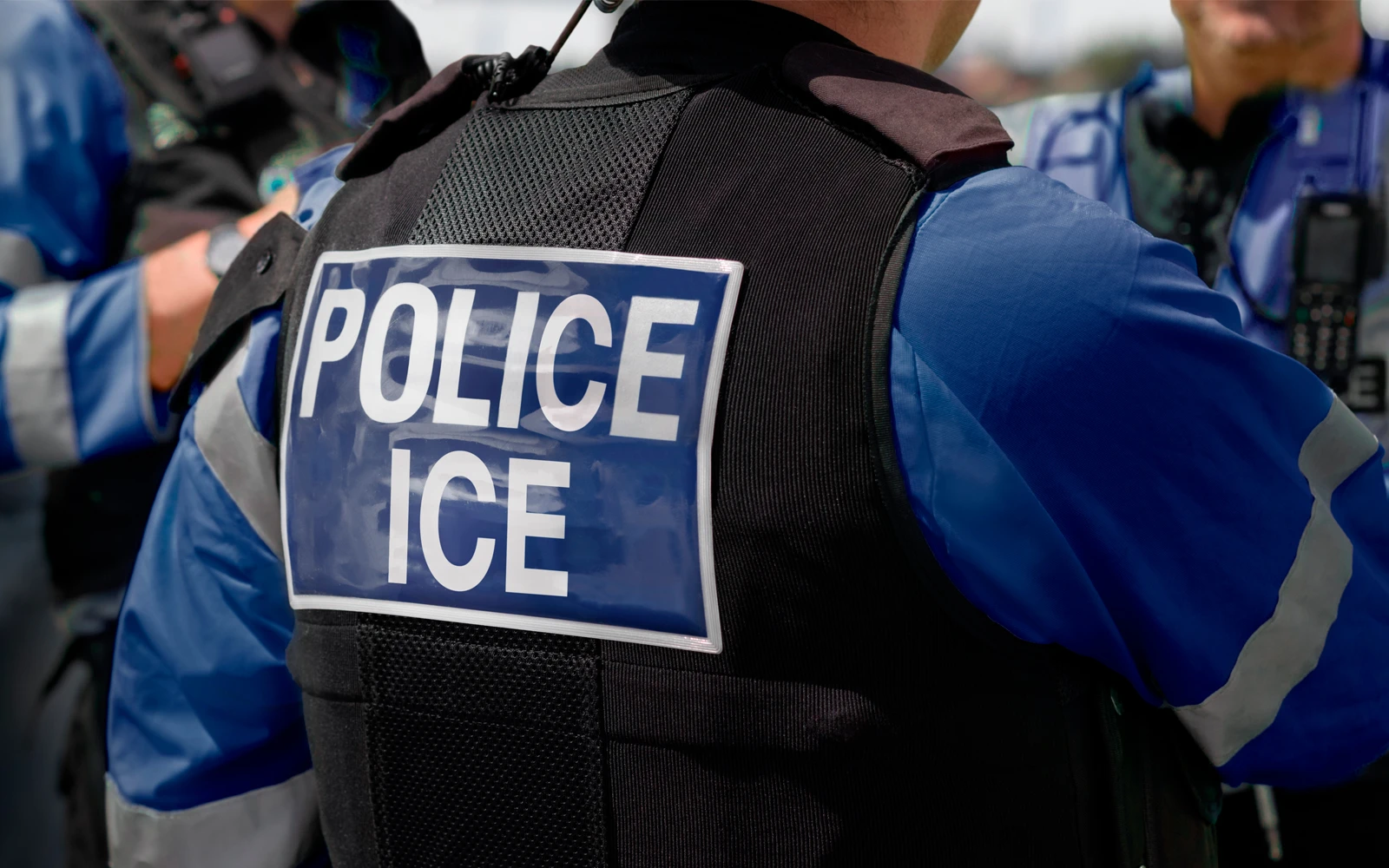
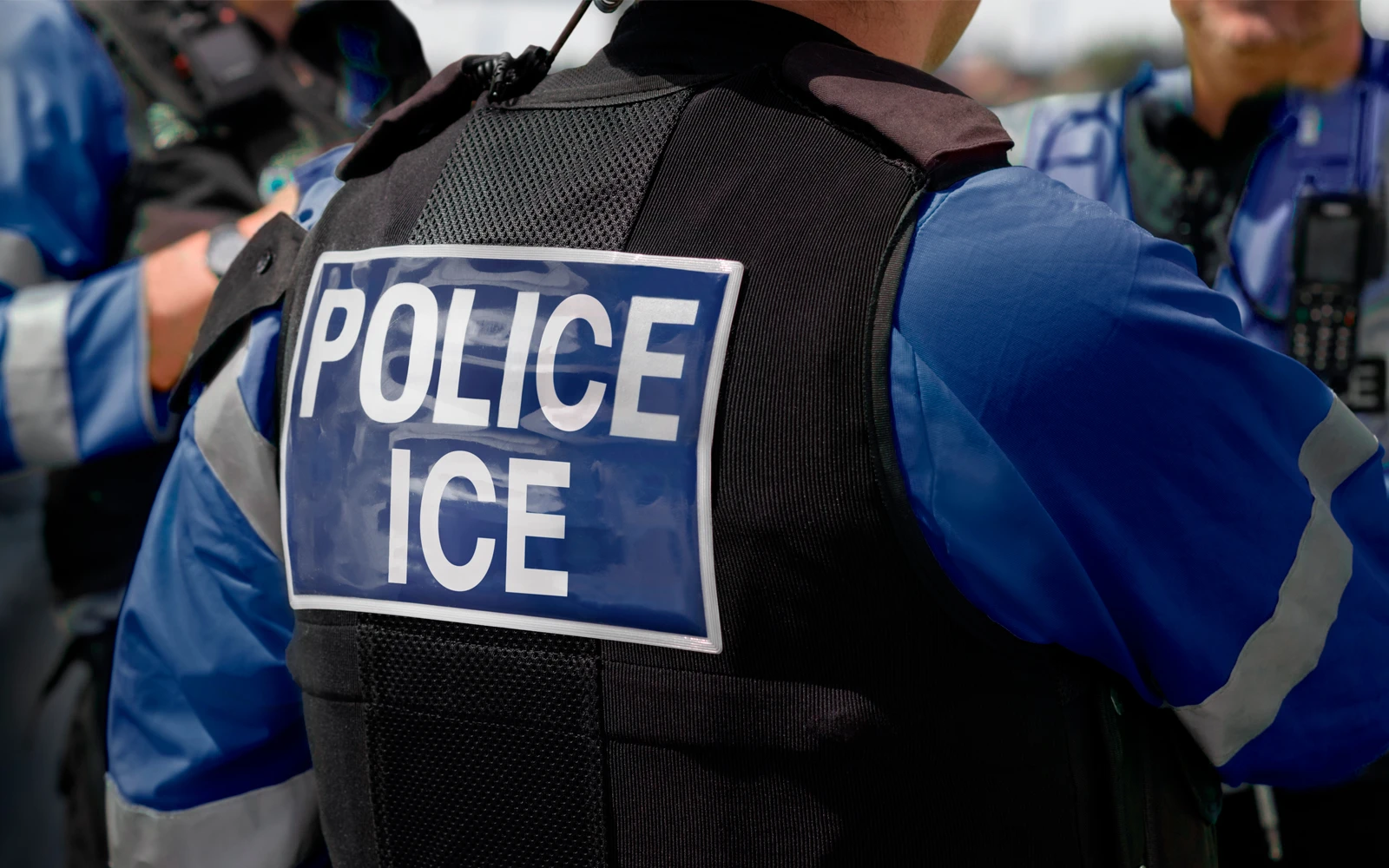
The Trump administration this week denounced a Chicago-based federal judge’s ruling that mandated cleanliness and hygiene standards as well as adequate legal representation at a U.S. Immigration and Customs Enforcement (ICE) facility in Illinois.Government lawyers said Nov. 7 they are in compliance or are in the midst of complying with the judge’s conditions. The detainees’ attorneys, however, say they “are doubtful” the government is “actually in compliance” with some of the conditions, “including as to facility cleaning, the provision of food and water, and the provision of prescription medication.” The detainees’ attorneys asked the court to conduct an inspection with an expert and have the government provide immediate proof of compliance.Administration officials said an “activist judge” issued the temporary restraining order and based it on hoaxes, while religious and civil-rights advocates pressed for detainees’ access to the Eucharist. Access to CommunionA group of 19 spiritual leaders including six priests renewed a request to offer pastoral care and Communion at the Broadview facility in a Nov. 6 letter to ICE and asked to discuss “procedures by which our small delegation of religious ministers can be granted access.” The delegation bringing Communion was denied access Nov. 1.Scene from Nov. 1, 2025, Mass outside the Broadview facility near Chicago where immigration advocates allege federal authorities inhumanely treat detainees. Credit: Bryan Sebastian, courtesy of Coalition for Spiritual and Public LeadershipThe judge’s temporary restraining order followed an Oct. 30 lawsuit in which detainees claimed they were placed in unsanitary conditions, provided inadequate food and water, and unconstitutionally deprived of access to legal representation and spiritual care. The Department of Homeland Security (DHS) said ICE’s Broadview facility houses “criminal illegal aliens” whom it described as “some of the worst of the worst.”“Some of the worst of the worst including pedophiles, gang members, and rapists have been processed through the facility in recent weeks,” Tricia McLaughlin, assistant Homeland Security secretary for public affairs, said in a Nov. 5 statement.The list included Jose Manuel Escobar-Cardona, described by DHS as “a criminal illegal alien” from Honduras who was convicted of multiple charges of lewd or lascivious acts with a minor, assault, driving under the influence of liquor, making a false report, illegal reentry, and making a false report.Also named by DHS was Alfonso Batalla-Garcia, “a criminal illegal alien from Mexico, convicted of sex assault, kidnapping an adult to sexually assault, and homicide.”Other detainees named by DHS included migrants who were said to have been convicted of drug trafficking, kidnapping, first-degree murder, and weapons trafficking. Publicly reported individuals detained by ICE in November also included a day care worker at the Rayito De Sol center, a Chicago preschool where the woman was removed in front of children.Pope Leo XIV on Nov. 4 said: “Many people who’ve lived for years and years and years, never causing problems, have been deeply affected by what’s going on right now.” Leo invited authorities to allow pastoral workers to attend to the needs of detainees.He reminded that “Jesus says very clearly … at the end of the world, we’re going to be asked … how did you receive the foreigner? Did you receive him and welcome him or not? And I think that there’s a deep reflection that needs to be made in terms of what’s happening.”A detainee testified he spent six days at the Broadview ICE facility before Judge Robert Gettleman ordered bedding, three meals a day, free water, hygiene products, papers translated into Spanish, a clock in each hold room, and free phone service for detainees to talk to counsel. Gettleman also ordered DHS to list all detainees on the Locator Online Detainee Locator System of ICE.DHS says facilities such as Broadview are designed to serve only as short-term holding centers, typically for about 12 hours, where individuals are briefly held for processing before being moved to longer-term detention facilities.“Despite hoaxes spread by criminal illegal aliens, the complicit media, and now an activist judge, the ICE Broadview facility does not have subpar conditions,” McLaughlin said. She said detainees receive three meals a day, access to water, and proper medical care.Neither McLaughlin’s statement nor the judge’s order addressed the lawsuit’s claims that Broadview detainees have been unconstitutionally denied access to faith leaders and clergy.McLaughlin wrote on X that “religious organizations have ALWAYS been welcome to provide services to detainees in ICE detention facilities. Religious leaders may request access to facilities through proper channels and have those requests approved.”McLaughlin also responded to questions from CNA, saying dangerous conditions — including belligerent actions and “attacks,” such as the use of tear gas, by protesters — and Broadview’s status as a short-term “field office” have prevented ICE from accommodating requests by religious organizations seeking access to detainees there.“ICE staff has repeatedly informed religious organizations that, due to Broadview’s status as a field office and the ongoing threat to civilians, detainees, and officers, they are not able to accommodate these requests at this time,” McLaughlin told CNA. “Even before the attacks on the Broadview facility, it was not within standard operating procedure for religious services to be provided in a field office, as detainees are continuously brought in, processed, and transferred out.”Chicago faith leaders wrote to ICE Nov. 7: “We understand that in past years ministers were granted access to the Broadview ICE facility for pastoral purposes. We also note public statements by DHS acknowledging detainees’ rights to chaplaincy and religious resources, while noting that requests for entry may require advance approval.”‘Careful review’Bishop Robert E. Barron of the Diocese of Winona-Rochester, Minnesota, who serves on the Department of Justice’s Religious Liberty Commission, said on X that senior officials in the U.S. government “assured” him that detainees in immigration custody will have access to Catholic sacraments and that the situation is “under careful review.”The Catholic Legal Immigration Network (CLINIC) said in a email Nov. 7: “CLINIC is disturbed by these instances in which the human and constitutional right to religious practice is being restricted. We hope the administration follows up on its ‘careful review’ by rectifying this and taking further action.”Pope Leo’s recent exhortation Dilexi Te says: “The Church, like a mother, accompanies those who are walking. Where the world sees threats, she sees children; where walls are built, she builds bridges. She knows that her proclamation of the Gospel is credible only when it is translated into gestures of closeness and welcome. And she knows that in every rejected migrant, it is Christ himself who knocks at the door of the community.”

DHS blasts order for improvements to migrant facility, says it houses ‘worst of the worst’ #Catholic Auxiliary Bishop Jose María García-Maldonado attempts to visit detainees at the Broadview, Illinois, immigration facility and was not admitted Nov. 1, 2025. / Credit: Bryan Sebastian, courtesy of Coalition for Spiritual and Public Leadership Washington, D.C., Nov 7, 2025 / 18:40 pm (CNA). The Trump administration this week denounced a Chicago-based federal judge’s ruling that mandated cleanliness and hygiene standards as well as adequate legal representation at a U.S. Immigration and Customs Enforcement (ICE) facility in Illinois.Government lawyers said Nov. 7 they are in compliance or are in the midst of complying with the judge’s conditions. The detainees’ attorneys, however, say they “are doubtful” the government is “actually in compliance” with some of the conditions, “including as to facility cleaning, the provision of food and water, and the provision of prescription medication.” The detainees’ attorneys asked the court to conduct an inspection with an expert and have the government provide immediate proof of compliance.Administration officials said an “activist judge” issued the temporary restraining order and based it on hoaxes, while religious and civil-rights advocates pressed for detainees’ access to the Eucharist. Access to CommunionA group of 19 spiritual leaders including six priests renewed a request to offer pastoral care and Communion at the Broadview facility in a Nov. 6 letter to ICE and asked to discuss “procedures by which our small delegation of religious ministers can be granted access.” The delegation bringing Communion was denied access Nov. 1.Scene from Nov. 1, 2025, Mass outside the Broadview facility near Chicago where immigration advocates allege federal authorities inhumanely treat detainees. Credit: Bryan Sebastian, courtesy of Coalition for Spiritual and Public LeadershipThe judge’s temporary restraining order followed an Oct. 30 lawsuit in which detainees claimed they were placed in unsanitary conditions, provided inadequate food and water, and unconstitutionally deprived of access to legal representation and spiritual care. The Department of Homeland Security (DHS) said ICE’s Broadview facility houses “criminal illegal aliens” whom it described as “some of the worst of the worst.”“Some of the worst of the worst including pedophiles, gang members, and rapists have been processed through the facility in recent weeks,” Tricia McLaughlin, assistant Homeland Security secretary for public affairs, said in a Nov. 5 statement.The list included Jose Manuel Escobar-Cardona, described by DHS as “a criminal illegal alien” from Honduras who was convicted of multiple charges of lewd or lascivious acts with a minor, assault, driving under the influence of liquor, making a false report, illegal reentry, and making a false report.Also named by DHS was Alfonso Batalla-Garcia, “a criminal illegal alien from Mexico, convicted of sex assault, kidnapping an adult to sexually assault, and homicide.”Other detainees named by DHS included migrants who were said to have been convicted of drug trafficking, kidnapping, first-degree murder, and weapons trafficking. Publicly reported individuals detained by ICE in November also included a day care worker at the Rayito De Sol center, a Chicago preschool where the woman was removed in front of children.Pope Leo XIV on Nov. 4 said: “Many people who’ve lived for years and years and years, never causing problems, have been deeply affected by what’s going on right now.” Leo invited authorities to allow pastoral workers to attend to the needs of detainees.He reminded that “Jesus says very clearly … at the end of the world, we’re going to be asked … how did you receive the foreigner? Did you receive him and welcome him or not? And I think that there’s a deep reflection that needs to be made in terms of what’s happening.”A detainee testified he spent six days at the Broadview ICE facility before Judge Robert Gettleman ordered bedding, three meals a day, free water, hygiene products, papers translated into Spanish, a clock in each hold room, and free phone service for detainees to talk to counsel. Gettleman also ordered DHS to list all detainees on the Locator Online Detainee Locator System of ICE.DHS says facilities such as Broadview are designed to serve only as short-term holding centers, typically for about 12 hours, where individuals are briefly held for processing before being moved to longer-term detention facilities.“Despite hoaxes spread by criminal illegal aliens, the complicit media, and now an activist judge, the ICE Broadview facility does not have subpar conditions,” McLaughlin said. She said detainees receive three meals a day, access to water, and proper medical care.Neither McLaughlin’s statement nor the judge’s order addressed the lawsuit’s claims that Broadview detainees have been unconstitutionally denied access to faith leaders and clergy.McLaughlin wrote on X that “religious organizations have ALWAYS been welcome to provide services to detainees in ICE detention facilities. Religious leaders may request access to facilities through proper channels and have those requests approved.”McLaughlin also responded to questions from CNA, saying dangerous conditions — including belligerent actions and “attacks,” such as the use of tear gas, by protesters — and Broadview’s status as a short-term “field office” have prevented ICE from accommodating requests by religious organizations seeking access to detainees there.“ICE staff has repeatedly informed religious organizations that, due to Broadview’s status as a field office and the ongoing threat to civilians, detainees, and officers, they are not able to accommodate these requests at this time,” McLaughlin told CNA. “Even before the attacks on the Broadview facility, it was not within standard operating procedure for religious services to be provided in a field office, as detainees are continuously brought in, processed, and transferred out.”Chicago faith leaders wrote to ICE Nov. 7: “We understand that in past years ministers were granted access to the Broadview ICE facility for pastoral purposes. We also note public statements by DHS acknowledging detainees’ rights to chaplaincy and religious resources, while noting that requests for entry may require advance approval.”‘Careful review’Bishop Robert E. Barron of the Diocese of Winona-Rochester, Minnesota, who serves on the Department of Justice’s Religious Liberty Commission, said on X that senior officials in the U.S. government “assured” him that detainees in immigration custody will have access to Catholic sacraments and that the situation is “under careful review.”The Catholic Legal Immigration Network (CLINIC) said in a email Nov. 7: “CLINIC is disturbed by these instances in which the human and constitutional right to religious practice is being restricted. We hope the administration follows up on its ‘careful review’ by rectifying this and taking further action.”Pope Leo’s recent exhortation Dilexi Te says: “The Church, like a mother, accompanies those who are walking. Where the world sees threats, she sees children; where walls are built, she builds bridges. She knows that her proclamation of the Gospel is credible only when it is translated into gestures of closeness and welcome. And she knows that in every rejected migrant, it is Christ himself who knocks at the door of the community.”


Auxiliary Bishop Jose María García-Maldonado attempts to visit detainees at the Broadview, Illinois, immigration facility and was not admitted Nov. 1, 2025. / Credit: Bryan Sebastian, courtesy of Coalition for Spiritual and Public Leadership

Washington, D.C., Nov 7, 2025 / 18:40 pm (CNA).

The Trump administration this week denounced a Chicago-based federal judge’s ruling that mandated cleanliness and hygiene standards as well as adequate legal representation at a U.S. Immigration and Customs Enforcement (ICE) facility in Illinois.

Government lawyers said Nov. 7 they are in compliance or are in the midst of complying with the judge’s conditions. The detainees’ attorneys, however, say they “are doubtful” the government is “actually in compliance” with some of the conditions, “including as to facility cleaning, the provision of food and water, and the provision of prescription medication.” 

The detainees’ attorneys asked the court to conduct an inspection with an expert and have the government provide immediate proof of compliance.

Administration officials said an “activist judge” issued the temporary restraining order and based it on hoaxes, while religious and civil-rights advocates pressed for detainees’ access to the Eucharist. 

Access to Communion

A group of 19 spiritual leaders including six priests renewed a request to offer pastoral care and Communion at the Broadview facility in a Nov. 6 letter to ICE and asked to discuss “procedures by which our small delegation of religious ministers can be granted access.” The delegation bringing Communion was denied access Nov. 1.

Scene from Nov. 1, 2025, Mass outside the Broadview facility near Chicago where immigration advocates allege federal authorities inhumanely treat detainees. Credit: Bryan Sebastian, courtesy of Coalition for Spiritual and Public Leadership

The judge’s temporary restraining order followed an Oct. 30 lawsuit in which detainees claimed they were placed in unsanitary conditions, provided inadequate food and water, and unconstitutionally deprived of access to legal representation and spiritual care. The Department of Homeland Security (DHS) said ICE’s Broadview facility houses “criminal illegal aliens” whom it described as “some of the worst of the worst.”

“Some of the worst of the worst including pedophiles, gang members, and rapists have been processed through the facility in recent weeks,” Tricia McLaughlin, assistant Homeland Security secretary for public affairs, said in a Nov. 5 statement.

The list included Jose Manuel Escobar-Cardona, described by DHS as “a criminal illegal alien” from Honduras who was convicted of multiple charges of lewd or lascivious acts with a minor, assault, driving under the influence of liquor, making a false report, illegal reentry, and making a false report.

Also named by DHS was Alfonso Batalla-Garcia, “a criminal illegal alien from Mexico, convicted of sex assault, kidnapping an adult to sexually assault, and homicide.”

Other detainees named by DHS included migrants who were said to have been convicted of drug trafficking, kidnapping, first-degree murder, and weapons trafficking. 

Publicly reported individuals detained by ICE in November also included a day care worker at the Rayito De Sol center, a Chicago preschool where the woman was removed in front of children.

Pope Leo XIV on Nov. 4 said: “Many people who’ve lived for years and years and years, never causing problems, have been deeply affected by what’s going on right now.” Leo invited authorities to allow pastoral workers to attend to the needs of detainees.

He reminded that “Jesus says very clearly … at the end of the world, we’re going to be asked … how did you receive the foreigner? Did you receive him and welcome him or not? And I think that there’s a deep reflection that needs to be made in terms of what’s happening.”

A detainee testified he spent six days at the Broadview ICE facility before Judge Robert Gettleman ordered bedding, three meals a day, free water, hygiene products, papers translated into Spanish, a clock in each hold room, and free phone service for detainees to talk to counsel. Gettleman also ordered DHS to list all detainees on the Locator Online Detainee Locator System of ICE.

DHS says facilities such as Broadview are designed to serve only as short-term holding centers, typically for about 12 hours, where individuals are briefly held for processing before being moved to longer-term detention facilities.

“Despite hoaxes spread by criminal illegal aliens, the complicit media, and now an activist judge, the ICE Broadview facility does not have subpar conditions,” McLaughlin said. She said detainees receive three meals a day, access to water, and proper medical care.

Neither McLaughlin’s statement nor the judge’s order addressed the lawsuit’s claims that Broadview detainees have been unconstitutionally denied access to faith leaders and clergy.

McLaughlin wrote on X that “religious organizations have ALWAYS been welcome to provide services to detainees in ICE detention facilities. Religious leaders may request access to facilities through proper channels and have those requests approved.”

McLaughlin also responded to questions from CNA, saying dangerous conditions — including belligerent actions and “attacks,” such as the use of tear gas, by protesters — and Broadview’s status as a short-term “field office” have prevented ICE from accommodating requests by religious organizations seeking access to detainees there.

“ICE staff has repeatedly informed religious organizations that, due to Broadview’s status as a field office and the ongoing threat to civilians, detainees, and officers, they are not able to accommodate these requests at this time,” McLaughlin told CNA. “Even before the attacks on the Broadview facility, it was not within standard operating procedure for religious services to be provided in a field office, as detainees are continuously brought in, processed, and transferred out.”

Chicago faith leaders wrote to ICE Nov. 7: “We understand that in past years ministers were granted access to the Broadview ICE facility for pastoral purposes. We also note public statements by DHS acknowledging detainees’ rights to chaplaincy and religious resources, while noting that requests for entry may require advance approval.”

‘Careful review’

Bishop Robert E. Barron of the Diocese of Winona-Rochester, Minnesota, who serves on the Department of Justice’s Religious Liberty Commission, said on X that senior officials in the U.S. government “assured” him that detainees in immigration custody will have access to Catholic sacraments and that the situation is “under careful review.”

The Catholic Legal Immigration Network (CLINIC) said in a email Nov. 7: “CLINIC is disturbed by these instances in which the human and constitutional right to religious practice is being restricted. We hope the administration follows up on its ‘careful review’ by rectifying this and taking further action.”

Pope Leo’s recent exhortation Dilexi Te says: “The Church, like a mother, accompanies those who are walking. Where the world sees threats, she sees children; where walls are built, she builds bridges. She knows that her proclamation of the Gospel is credible only when it is translated into gestures of closeness and welcome. And she knows that in every rejected migrant, it is Christ himself who knocks at the door of the community.”

Read More
‘This is our faith in action:’ Catholic groups expand food aid amid SNAP cuts #Catholic 
 
 Volunteers prepare and distribute food to families coming through the drive-through distribution site at the Catholic Charities Diocese of Galveston-Houston Guadalupe Center, a food pantry near central Houston. / Credit: Photo courtesy of Catholic Charities of the Archdiocese of Galveston-Houston

CNA Staff, Nov 7, 2025 / 17:40 pm (CNA).
As federal food benefits have been frozen during the government shutdown, Catholic dioceses and charities around the country are holding emergency food drives and launching fundraising efforts.Supplemental Nutrition Assistance Program (SNAP) benefits will resume once the government passes a bill to fund the federal government — but, more than a month into the shutdown, there is no set end date in sight.  Two federal district judges at the end of October moved to compel the Trump administration to pay for SNAP benefits, but because Congress has not yet authorized funding for federal government operations, the Trump administration asked an appeals court on Friday to block the orders and continue with partial SNAP payments.The pause in SNAP benefits is estimated to affect about 42 million Americans.In St. Louis, food pantries saw an influx of people in need. In response, parishes across the archdiocese are holding emergency food drives for the first two weekends of November. Nearly 300,000 people in the area could “lose access to vital food benefits,” Archbishop Mitchell Rozanski said in a letter to pastors, whom he asked to “respond with love and generosity to this urgent need.” “We are called to be people of faith and action,” Rozanski said. “And so, I ask the good people of our archdiocese to come together to help our neighbors who are in danger of going without their ‘daily food.’”The archdiocese is working with the local Catholic Charities and the Society of St. Vincent de Paul to ensure that food pantries are full. Julie Komanetsky, a spokesperson for the Society of St. Vincent de Paul in St. Louis, said the food drives are “bringing great results for our food pantries.” “This is our faith in action,” she told CNA. “Like the story of the good Samaritan who sees the victim and cares for him, Catholics see that people need to be fed and they are responding. They are answering God’s call to be good Samaritans rather than indifferent bystanders!”   So far, the parish food drives have been “very successful and will help keep our pantries stocked and able to support the need,” Komanetsky said.“Our hope for this effort is to keep all within the boundaries of our archdiocese from going hungry during this difficult time in our country,” she continued. “This is our united Catholic effort to let all people know that we see them, we hear their needs, and we will help.”“Pope Leo tells us: Faith cannot be separated from love for the poor,” she continued. “This effort is a testament of our faith and our love.” St. Louis is not the only archdiocese finding creative solutions to the SNAP crisis. In Connecticut, Hartford Archbishop Christopher Coyne has released 0,000 of emergency funding to food banks. Coyne said the funding is being contributed “in the spirit of Jesus’ command to serve our brothers and sisters in need.”“The Catholic Church provides relief and hope for God’s children,” Coyne said in a statement. “It’s what we have done for over 2,000 years and what we continue to do today.”Volunteers load food into a car at a drive-through distribution site in Houston. Credit: Photo courtesy of Catholic Charities of the Archdiocese of Galveston-HoustonThe Archdiocese of Galveston-Houston Catholic Charities is seeing a similar rise in need. Across its three food pantries Catholic Charities is extending hours and increasing distribution. “Many families across our service area are struggling, worried about missing paychecks or not being able to put food on the table,” Cynthia Nunes Colbert, who heads the Catholic Charities of the Archdiocese of Galveston-Houston, told CNA. The group is also offering emergency rental assistance to federal workers and is reaching out to the wider community for support by encouraging food drives, volunteering, and donations, Catholic Charities told CNA. “Whether it’s through financial donations, food drives, or volunteering, together we can provide hope and stability during these uncertain times,” Colbert said.As part of a nationwide effort, Catholic Charities USA launched a fundraising effort in light of the funding cuts. The funds raised will go directly toward buying and sending food to Catholic Charities groups across the country to support ministries such as food pantries and soup kitchens. For families who rely on food assistance programs, this a “catastrophic moment” said CCUSA President and CEO Kerry Alys Robinson. The government shutdown “has created incredibly serious, real-life consequences for millions of people, from furloughed federal workers to those living in poverty who will now struggle even more to provide for their families,” Robinson said in a recent statement.

‘This is our faith in action:’ Catholic groups expand food aid amid SNAP cuts #Catholic Volunteers prepare and distribute food to families coming through the drive-through distribution site at the Catholic Charities Diocese of Galveston-Houston Guadalupe Center, a food pantry near central Houston. / Credit: Photo courtesy of Catholic Charities of the Archdiocese of Galveston-Houston CNA Staff, Nov 7, 2025 / 17:40 pm (CNA). As federal food benefits have been frozen during the government shutdown, Catholic dioceses and charities around the country are holding emergency food drives and launching fundraising efforts.Supplemental Nutrition Assistance Program (SNAP) benefits will resume once the government passes a bill to fund the federal government — but, more than a month into the shutdown, there is no set end date in sight.  Two federal district judges at the end of October moved to compel the Trump administration to pay for SNAP benefits, but because Congress has not yet authorized funding for federal government operations, the Trump administration asked an appeals court on Friday to block the orders and continue with partial SNAP payments.The pause in SNAP benefits is estimated to affect about 42 million Americans.In St. Louis, food pantries saw an influx of people in need. In response, parishes across the archdiocese are holding emergency food drives for the first two weekends of November. Nearly 300,000 people in the area could “lose access to vital food benefits,” Archbishop Mitchell Rozanski said in a letter to pastors, whom he asked to “respond with love and generosity to this urgent need.” “We are called to be people of faith and action,” Rozanski said. “And so, I ask the good people of our archdiocese to come together to help our neighbors who are in danger of going without their ‘daily food.’”The archdiocese is working with the local Catholic Charities and the Society of St. Vincent de Paul to ensure that food pantries are full. Julie Komanetsky, a spokesperson for the Society of St. Vincent de Paul in St. Louis, said the food drives are “bringing great results for our food pantries.” “This is our faith in action,” she told CNA. “Like the story of the good Samaritan who sees the victim and cares for him, Catholics see that people need to be fed and they are responding. They are answering God’s call to be good Samaritans rather than indifferent bystanders!”   So far, the parish food drives have been “very successful and will help keep our pantries stocked and able to support the need,” Komanetsky said.“Our hope for this effort is to keep all within the boundaries of our archdiocese from going hungry during this difficult time in our country,” she continued. “This is our united Catholic effort to let all people know that we see them, we hear their needs, and we will help.”“Pope Leo tells us: Faith cannot be separated from love for the poor,” she continued. “This effort is a testament of our faith and our love.” St. Louis is not the only archdiocese finding creative solutions to the SNAP crisis. In Connecticut, Hartford Archbishop Christopher Coyne has released $500,000 of emergency funding to food banks. Coyne said the funding is being contributed “in the spirit of Jesus’ command to serve our brothers and sisters in need.”“The Catholic Church provides relief and hope for God’s children,” Coyne said in a statement. “It’s what we have done for over 2,000 years and what we continue to do today.”Volunteers load food into a car at a drive-through distribution site in Houston. Credit: Photo courtesy of Catholic Charities of the Archdiocese of Galveston-HoustonThe Archdiocese of Galveston-Houston Catholic Charities is seeing a similar rise in need. Across its three food pantries Catholic Charities is extending hours and increasing distribution. “Many families across our service area are struggling, worried about missing paychecks or not being able to put food on the table,” Cynthia Nunes Colbert, who heads the Catholic Charities of the Archdiocese of Galveston-Houston, told CNA. The group is also offering emergency rental assistance to federal workers and is reaching out to the wider community for support by encouraging food drives, volunteering, and donations, Catholic Charities told CNA. “Whether it’s through financial donations, food drives, or volunteering, together we can provide hope and stability during these uncertain times,” Colbert said.As part of a nationwide effort, Catholic Charities USA launched a fundraising effort in light of the funding cuts. The funds raised will go directly toward buying and sending food to Catholic Charities groups across the country to support ministries such as food pantries and soup kitchens. For families who rely on food assistance programs, this a “catastrophic moment” said CCUSA President and CEO Kerry Alys Robinson. The government shutdown “has created incredibly serious, real-life consequences for millions of people, from furloughed federal workers to those living in poverty who will now struggle even more to provide for their families,” Robinson said in a recent statement.


Volunteers prepare and distribute food to families coming through the drive-through distribution site at the Catholic Charities Diocese of Galveston-Houston Guadalupe Center, a food pantry near central Houston. / Credit: Photo courtesy of Catholic Charities of the Archdiocese of Galveston-Houston

CNA Staff, Nov 7, 2025 / 17:40 pm (CNA).

As federal food benefits have been frozen during the government shutdown, Catholic dioceses and charities around the country are holding emergency food drives and launching fundraising efforts.

Supplemental Nutrition Assistance Program (SNAP) benefits will resume once the government passes a bill to fund the federal government — but, more than a month into the shutdown, there is no set end date in sight.  

Two federal district judges at the end of October moved to compel the Trump administration to pay for SNAP benefits, but because Congress has not yet authorized funding for federal government operations, the Trump administration asked an appeals court on Friday to block the orders and continue with partial SNAP payments.

The pause in SNAP benefits is estimated to affect about 42 million Americans.

In St. Louis, food pantries saw an influx of people in need. In response, parishes across the archdiocese are holding emergency food drives for the first two weekends of November. 

Nearly 300,000 people in the area could “lose access to vital food benefits,” Archbishop Mitchell Rozanski said in a letter to pastors, whom he asked to “respond with love and generosity to this urgent need.” 

“We are called to be people of faith and action,” Rozanski said. “And so, I ask the good people of our archdiocese to come together to help our neighbors who are in danger of going without their ‘daily food.’”

The archdiocese is working with the local Catholic Charities and the Society of St. Vincent de Paul to ensure that food pantries are full. 

Julie Komanetsky, a spokesperson for the Society of St. Vincent de Paul in St. Louis, said the food drives are “bringing great results for our food pantries.” 

“This is our faith in action,” she told CNA. “Like the story of the good Samaritan who sees the victim and cares for him, Catholics see that people need to be fed and they are responding. They are answering God’s call to be good Samaritans rather than indifferent bystanders!”   

So far, the parish food drives have been “very successful and will help keep our pantries stocked and able to support the need,” Komanetsky said.

“Our hope for this effort is to keep all within the boundaries of our archdiocese from going hungry during this difficult time in our country,” she continued. “This is our united Catholic effort to let all people know that we see them, we hear their needs, and we will help.”

“Pope Leo tells us: Faith cannot be separated from love for the poor,” she continued. “This effort is a testament of our faith and our love.” 

St. Louis is not the only archdiocese finding creative solutions to the SNAP crisis. In Connecticut, Hartford Archbishop Christopher Coyne has released $500,000 of emergency funding to food banks. 

Coyne said the funding is being contributed “in the spirit of Jesus’ command to serve our brothers and sisters in need.”

“The Catholic Church provides relief and hope for God’s children,” Coyne said in a statement. “It’s what we have done for over 2,000 years and what we continue to do today.”

Volunteers load food into a car at a drive-through distribution site in Houston. Credit: Photo courtesy of Catholic Charities of the Archdiocese of Galveston-Houston

The Archdiocese of Galveston-Houston Catholic Charities is seeing a similar rise in need. Across its three food pantries Catholic Charities is extending hours and increasing distribution. 

“Many families across our service area are struggling, worried about missing paychecks or not being able to put food on the table,” Cynthia Nunes Colbert, who heads the Catholic Charities of the Archdiocese of Galveston-Houston, told CNA. 

The group is also offering emergency rental assistance to federal workers and is reaching out to the wider community for support by encouraging food drives, volunteering, and donations, Catholic Charities told CNA. 

“Whether it’s through financial donations, food drives, or volunteering, together we can provide hope and stability during these uncertain times,” Colbert said.

As part of a nationwide effort, Catholic Charities USA launched a fundraising effort in light of the funding cuts. The funds raised will go directly toward buying and sending food to Catholic Charities groups across the country to support ministries such as food pantries and soup kitchens. 

For families who rely on food assistance programs, this a “catastrophic moment” said CCUSA President and CEO Kerry Alys Robinson. 

The government shutdown “has created incredibly serious, real-life consequences for millions of people, from furloughed federal workers to those living in poverty who will now struggle even more to provide for their families,” Robinson said in a recent statement.

Read More
Underground Chinese bishop who said his life ‘consists of speaking about Jesus’ dies at 90 #Catholic 
 
 null / Credit: esfera/Shutterstock

Washington, D.C. Newsroom, Nov 7, 2025 / 15:41 pm (CNA).
An underground Chinese Catholic bishop from the Diocese of Zhengding has died at 90 years old. Bishop Julius Jia Zhiguo, a Catholic bishop in China renowned for his unwavering adherence to the Church despite decades of persecution at the hands of the Chinese government, passed away on Oct. 29.A member of the underground Church, unsanctioned by the Chinese government, Zhiguo was bishop of the Zhengnding Diocese in the Hebei Province. He was known for having a missionary spirit, promoting priestly training, caring for children with disabilities, and maintaining communion with Rome. Born on May 1, 1935, in Wuqiu Village, Jinzhou City, Zhiguo was ordained a priest in 1980 by Bishop Fan Xueyan of Baoding, who later consecrated him as bishop, according to Vatican News’ Chinese-language site.“The big problems started when I was a seminarian,” he told the Italian news outlet La Stampa in 2016. “From 1963 to 1978 I worked as a forced laborer in remote, cold and hostile areas.” In the same interview, he said he had “lost count” of how many times he had been arrested. Latest UCA reports say his last arrest took place in August 2020. “My life,” Zhiguo said when asked about his experience as a pastor in China, “consists of speaking about Jesus. I have nothing else to say or do. My whole life, every single day, is dedicated to telling others about Jesus. Everyone.” 

Underground Chinese bishop who said his life ‘consists of speaking about Jesus’ dies at 90 #Catholic null / Credit: esfera/Shutterstock Washington, D.C. Newsroom, Nov 7, 2025 / 15:41 pm (CNA). An underground Chinese Catholic bishop from the Diocese of Zhengding has died at 90 years old. Bishop Julius Jia Zhiguo, a Catholic bishop in China renowned for his unwavering adherence to the Church despite decades of persecution at the hands of the Chinese government, passed away on Oct. 29.A member of the underground Church, unsanctioned by the Chinese government, Zhiguo was bishop of the Zhengnding Diocese in the Hebei Province. He was known for having a missionary spirit, promoting priestly training, caring for children with disabilities, and maintaining communion with Rome. Born on May 1, 1935, in Wuqiu Village, Jinzhou City, Zhiguo was ordained a priest in 1980 by Bishop Fan Xueyan of Baoding, who later consecrated him as bishop, according to Vatican News’ Chinese-language site.“The big problems started when I was a seminarian,” he told the Italian news outlet La Stampa in 2016. “From 1963 to 1978 I worked as a forced laborer in remote, cold and hostile areas.” In the same interview, he said he had “lost count” of how many times he had been arrested. Latest UCA reports say his last arrest took place in August 2020. “My life,” Zhiguo said when asked about his experience as a pastor in China, “consists of speaking about Jesus. I have nothing else to say or do. My whole life, every single day, is dedicated to telling others about Jesus. Everyone.” 


null / Credit: esfera/Shutterstock

Washington, D.C. Newsroom, Nov 7, 2025 / 15:41 pm (CNA).

An underground Chinese Catholic bishop from the Diocese of Zhengding has died at 90 years old. 

Bishop Julius Jia Zhiguo, a Catholic bishop in China renowned for his unwavering adherence to the Church despite decades of persecution at the hands of the Chinese government, passed away on Oct. 29.

A member of the underground Church, unsanctioned by the Chinese government, Zhiguo was bishop of the Zhengnding Diocese in the Hebei Province. He was known for having a missionary spirit, promoting priestly training, caring for children with disabilities, and maintaining communion with Rome. 

Born on May 1, 1935, in Wuqiu Village, Jinzhou City, Zhiguo was ordained a priest in 1980 by Bishop Fan Xueyan of Baoding, who later consecrated him as bishop, according to Vatican News’ Chinese-language site.

“The big problems started when I was a seminarian,” he told the Italian news outlet La Stampa in 2016. “From 1963 to 1978 I worked as a forced laborer in remote, cold and hostile areas.”

In the same interview, he said he had “lost count” of how many times he had been arrested. Latest UCA reports say his last arrest took place in August 2020. 

“My life,” Zhiguo said when asked about his experience as a pastor in China, “consists of speaking about Jesus. I have nothing else to say or do. My whole life, every single day, is dedicated to telling others about Jesus. Everyone.” 

Read More
Upcoming collection to support more than 21,000 retired religious and priests #Catholic 
 
 null / Credit: Ivonne Wierink/Shutterstock

ACI Prensa Staff, Nov 6, 2025 / 08:00 am (CNA).
Catholics in the United States will have an opportunity to support more than 21,000 retired priests and men and women religious from various orders during the weekend of Dec. 13–14 with the annual collection for the Retirement Fund for Religious.According to a statement from the U.S. Conference of Catholic Bishops (USCCB), this collection, organized by the National Religious Retirement Office (NRRO), “helps provide critical financial assistance to eligible religious institutes caring for their retired members.”For decades, consecrated men and women in the U.S. have served in multiple ministries — schools, hospitals, parishes, and social service organizations — often with little or no compensation. Today their communities face a serious imbalance between the rising costs of elder care and limited resources.In 2024, religious over the age of 70 outnumbered the young by nearly 3 to 1, and only 4% of communities reporting to the NRRO indicated they had sufficient funds for retirement.Since its creation in 1988, the fund has been “a lifeline for our aging religious leaders, but the need remains urgent,” the USCCB pointed out. Last year, the fund raised .1 million, while the annual cost of care exceeded  billion.The average annual cost per person is ,600, and specialized care costs ,000. In contrast, the average Social Security benefit for a religious leader is just ,090, less than half the average benefit for a layperson.In light of this reality, NRRO Director John Knutsen noted that “for decades, the faithful service of these religious has touched countless lives, including my own.”“Through your generosity, we can help ensure they are cared for with the dignity they so rightly deserve, while also living out the values ​​of compassion and solidarity that unite us as disciples of Jesus,” he urged.Knutsen also emphasized the gratitude owed to religious communities for their members: “Supporting our aging religious is a profound opportunity to show gratitude for their lifetime of service, and we hear all throughout the year how deeply thankful they are for that support.”Since 1988, the fundraising campaign has distributed more than  billion to religious institutions across the U.S., sustaining daily care for the elderly, building up retirement funds, and funding educational programs on geriatric care and long-term planning.The USCCB noted that “every gift makes a difference, providing retired religious with the care and dignity they deserve.”This story was first published by ACI Prensa, CNA’s Spanish-language news partner. It has been translated and adapted by CNA.

Upcoming collection to support more than 21,000 retired religious and priests #Catholic null / Credit: Ivonne Wierink/Shutterstock ACI Prensa Staff, Nov 6, 2025 / 08:00 am (CNA). Catholics in the United States will have an opportunity to support more than 21,000 retired priests and men and women religious from various orders during the weekend of Dec. 13–14 with the annual collection for the Retirement Fund for Religious.According to a statement from the U.S. Conference of Catholic Bishops (USCCB), this collection, organized by the National Religious Retirement Office (NRRO), “helps provide critical financial assistance to eligible religious institutes caring for their retired members.”For decades, consecrated men and women in the U.S. have served in multiple ministries — schools, hospitals, parishes, and social service organizations — often with little or no compensation. Today their communities face a serious imbalance between the rising costs of elder care and limited resources.In 2024, religious over the age of 70 outnumbered the young by nearly 3 to 1, and only 4% of communities reporting to the NRRO indicated they had sufficient funds for retirement.Since its creation in 1988, the fund has been “a lifeline for our aging religious leaders, but the need remains urgent,” the USCCB pointed out. Last year, the fund raised $28.1 million, while the annual cost of care exceeded $1 billion.The average annual cost per person is $56,600, and specialized care costs $96,000. In contrast, the average Social Security benefit for a religious leader is just $9,090, less than half the average benefit for a layperson.In light of this reality, NRRO Director John Knutsen noted that “for decades, the faithful service of these religious has touched countless lives, including my own.”“Through your generosity, we can help ensure they are cared for with the dignity they so rightly deserve, while also living out the values ​​of compassion and solidarity that unite us as disciples of Jesus,” he urged.Knutsen also emphasized the gratitude owed to religious communities for their members: “Supporting our aging religious is a profound opportunity to show gratitude for their lifetime of service, and we hear all throughout the year how deeply thankful they are for that support.”Since 1988, the fundraising campaign has distributed more than $1 billion to religious institutions across the U.S., sustaining daily care for the elderly, building up retirement funds, and funding educational programs on geriatric care and long-term planning.The USCCB noted that “every gift makes a difference, providing retired religious with the care and dignity they deserve.”This story was first published by ACI Prensa, CNA’s Spanish-language news partner. It has been translated and adapted by CNA.


null / Credit: Ivonne Wierink/Shutterstock

ACI Prensa Staff, Nov 6, 2025 / 08:00 am (CNA).

Catholics in the United States will have an opportunity to support more than 21,000 retired priests and men and women religious from various orders during the weekend of Dec. 13–14 with the annual collection for the Retirement Fund for Religious.

According to a statement from the U.S. Conference of Catholic Bishops (USCCB), this collection, organized by the National Religious Retirement Office (NRRO), “helps provide critical financial assistance to eligible religious institutes caring for their retired members.”

For decades, consecrated men and women in the U.S. have served in multiple ministries — schools, hospitals, parishes, and social service organizations — often with little or no compensation. Today their communities face a serious imbalance between the rising costs of elder care and limited resources.

In 2024, religious over the age of 70 outnumbered the young by nearly 3 to 1, and only 4% of communities reporting to the NRRO indicated they had sufficient funds for retirement.

Since its creation in 1988, the fund has been “a lifeline for our aging religious leaders, but the need remains urgent,” the USCCB pointed out. Last year, the fund raised $28.1 million, while the annual cost of care exceeded $1 billion.

The average annual cost per person is $56,600, and specialized care costs $96,000. In contrast, the average Social Security benefit for a religious leader is just $9,090, less than half the average benefit for a layperson.

In light of this reality, NRRO Director John Knutsen noted that “for decades, the faithful service of these religious has touched countless lives, including my own.”

“Through your generosity, we can help ensure they are cared for with the dignity they so rightly deserve, while also living out the values ​​of compassion and solidarity that unite us as disciples of Jesus,” he urged.

Knutsen also emphasized the gratitude owed to religious communities for their members: “Supporting our aging religious is a profound opportunity to show gratitude for their lifetime of service, and we hear all throughout the year how deeply thankful they are for that support.”

Since 1988, the fundraising campaign has distributed more than $1 billion to religious institutions across the U.S., sustaining daily care for the elderly, building up retirement funds, and funding educational programs on geriatric care and long-term planning.

The USCCB noted that “every gift makes a difference, providing retired religious with the care and dignity they deserve.”

This story was first published by ACI Prensa, CNA’s Spanish-language news partner. It has been translated and adapted by CNA.

Read More
Preparing for death with the Sister Servants of Mary #Catholic 
 
 The Sister Servants of Mary hold a procession with the statue of Our Lady of the Assumption at Mary Health of the Sick Convalescent Hospital in Newbury Park, California. / Credit: Photo courtesy of the Servants of Mary, Ministers to the Sick

CNA Staff, Nov 2, 2025 / 06:00 am (CNA).
When a 93-year-old Catholic father from New Orleans had a stroke, he knew he was prepared to die.Clinton Jacob attended adoration and Mass daily and was “rarely without a prayer book or rosary in hand,” according to his daughter, Kim DeSopo.“[He] never spoke of death with fear or sadness,” she told CNA. “He would simply say, ‘I’ll be going home.’”But not everyone feels prepared for death.The Servants of Mary, Ministers to the Sick, is a Catholic community of sisters who dedicate their lives to caring for the sick and dying in New Orleans and around the world. As nurses, they are at the bedside of the dying through the long nights, whether their patients are lifelong Catholics or have never thought about religion.The sisters often encounter patients as well as family members who are struggling to accept “an illness or imminent death,” Sister Catherine Bussen, a Servant of Mary, told CNA.“Many times, there is a need for reconciliation within the family, for a return to their faith, for acceptance of their condition, etc.,” Bussen said.As medical professionals, the sisters provide physical treatment, but they also walk with their patients throughout their illnesses, encouraging patients and families “always with the hope of eternal life,” Bussen said. DeSopo, Jacob’s daughter, called the sisters for support. The next day, Bussen arrived at their doorstep, and every night for two weeks, she sat at Jacob’s bedside. Bussen’s presence was “a gift,” DeSopo said. “Sister Catherine brought peace and calm into a time filled with stress and sorrow.”“Her prayers, patience, and care provided comfort not only to my father but also to my mother, who could finally sleep knowing someone trustworthy and compassionate was by his side,” DeSopo said, recalling Bussen’s “selfless dedication” and “unwavering faith.” Bussen was with Jacob when he died on Sept. 26, 2024. She prepared his body, cleaning him and sprinkling him with holy water, and then prayed with his wife and daughter.“I will never forget the care and dignity she gave him, even after his final breath,” DeSopo said.Sister Catherine (left) and Sister Dorian Salvador (right) pray for the soul of Kim DeSopa’s father on Oct. 1, 2024, at St. Clement of Rome Church in Metairie, Louisiana. Credit: Photo courtesy of Kim DeSopa and Sister CatherineMary at the foot of the cross “I was sick and you visited me.”This Scripture verse, Matthew 25:36, summarizes the charism of the Servants of Mary, according to Bussen. When they care for the sick, they care for Christ.The sisters will care for anyone in need, preferably within the sick person’s own home. In those who are suffering, the sisters “discover Jesus carrying his cross,” Bussen explained. “By caring for the sick, we believe that we are caring for Christ himself, who still suffers today in the suffering mystical body of Christ,” she said.Sister Angélica Ramos cares for Mrs. Hura, a resident of Mary Health of the Sick Convalescent Hospital in Newbury Park, California. Credit: Photo courtesy of the Servants of Mary, Ministers to the SickFounded in Madrid, Spain, in the 1800s, the sisters care for the sick and dying in Louisiana, Kansas, and California as well as throughout Central and South America, Spain, France, England, Italy, Cameroon, the Philippines, and Indonesia. They run a hospital for the poor in Bamenda, Cameroon, as well as two missionary houses in Oaxaca, Mexico.The sisters look to Mary as an example as they accompany those who are suffering.“Although we are not able to take away someone’s cross, we are present to them, offering all to the Father, like Mary did at the cross of Jesus, that all suffering may be redemptive and fruitful,” Bussen said.“Every one of us sisters would tell you that it is an absolute privilege to be able to enter into the intimacy of a family’s home, listening to the dying, praying with them, and encouraging them on the final stage of their journey as their soul passes into eternity,” she said.Sister Servants of Mary Fatima Muñoz and Carmela Sanz (front) celebrate a May crowning in Kansas City, Kansas. Credit: Photo courtesy of the Servants of Mary, Ministers to the Sick“Our Catholic Christian faith is a beautiful comfort during these times because it is all about looking forward to the promised life to come, the whole goal of our lives, eternal life,” Bussen said.One woman from New Orleans received news no one wants to hear — she had a terminal illness. Though she was not religious, she knew she needed help and did not know who else to turn to, so she called the Servants of Mary.As they cared for her and helped her deal with her terminal diagnosis, the sisters learned the woman was “completely alone in the world,” said Bussen, who took care of her. Other people from the surrounding Catholic community volunteered to stay with her.During that time, the woman found a home in the Catholic Church and received the sacrament of baptism.Her “anxiety was transformed into peace,” said Bussen, who was with her as she died.“As the end drew near, she had a new faith family,” Bussen said. “She was no longer alone.”Remembering the dead The life of a sister Servant of Mary is “contemplative in action.” The sisters unite “our prayer life with our work — going about what we are doing, in all the business of daily life, in a prayerful spirit,” Bussen said.The sisters have time set aside for prayer and work, “but these two aspects cannot be separated from one another,” she continued. “The grace and light received in prayer flows into our work and ministry, and everything we experience in our ministry is taken to prayer.”The Servants of Mary, Ministers to the Sick care for the sick and the dying. Credit: Photo courtesy of the Servants of Mary, Ministers to the SickThroughout the year, the sisters take special care to remember the dead. In November especially, Bussen said the sisters “remember all our patients who have died with us by placing their names in our chapel and offering Masses for their eternal happiness.”“Even after a patient has passed,” she said, “and they no longer need physical care, our ministry continues by praying for their soul.”

Preparing for death with the Sister Servants of Mary #Catholic The Sister Servants of Mary hold a procession with the statue of Our Lady of the Assumption at Mary Health of the Sick Convalescent Hospital in Newbury Park, California. / Credit: Photo courtesy of the Servants of Mary, Ministers to the Sick CNA Staff, Nov 2, 2025 / 06:00 am (CNA). When a 93-year-old Catholic father from New Orleans had a stroke, he knew he was prepared to die.Clinton Jacob attended adoration and Mass daily and was “rarely without a prayer book or rosary in hand,” according to his daughter, Kim DeSopo.“[He] never spoke of death with fear or sadness,” she told CNA. “He would simply say, ‘I’ll be going home.’”But not everyone feels prepared for death.The Servants of Mary, Ministers to the Sick, is a Catholic community of sisters who dedicate their lives to caring for the sick and dying in New Orleans and around the world. As nurses, they are at the bedside of the dying through the long nights, whether their patients are lifelong Catholics or have never thought about religion.The sisters often encounter patients as well as family members who are struggling to accept “an illness or imminent death,” Sister Catherine Bussen, a Servant of Mary, told CNA.“Many times, there is a need for reconciliation within the family, for a return to their faith, for acceptance of their condition, etc.,” Bussen said.As medical professionals, the sisters provide physical treatment, but they also walk with their patients throughout their illnesses, encouraging patients and families “always with the hope of eternal life,” Bussen said. DeSopo, Jacob’s daughter, called the sisters for support. The next day, Bussen arrived at their doorstep, and every night for two weeks, she sat at Jacob’s bedside. Bussen’s presence was “a gift,” DeSopo said. “Sister Catherine brought peace and calm into a time filled with stress and sorrow.”“Her prayers, patience, and care provided comfort not only to my father but also to my mother, who could finally sleep knowing someone trustworthy and compassionate was by his side,” DeSopo said, recalling Bussen’s “selfless dedication” and “unwavering faith.” Bussen was with Jacob when he died on Sept. 26, 2024. She prepared his body, cleaning him and sprinkling him with holy water, and then prayed with his wife and daughter.“I will never forget the care and dignity she gave him, even after his final breath,” DeSopo said.Sister Catherine (left) and Sister Dorian Salvador (right) pray for the soul of Kim DeSopa’s father on Oct. 1, 2024, at St. Clement of Rome Church in Metairie, Louisiana. Credit: Photo courtesy of Kim DeSopa and Sister CatherineMary at the foot of the cross “I was sick and you visited me.”This Scripture verse, Matthew 25:36, summarizes the charism of the Servants of Mary, according to Bussen. When they care for the sick, they care for Christ.The sisters will care for anyone in need, preferably within the sick person’s own home. In those who are suffering, the sisters “discover Jesus carrying his cross,” Bussen explained. “By caring for the sick, we believe that we are caring for Christ himself, who still suffers today in the suffering mystical body of Christ,” she said.Sister Angélica Ramos cares for Mrs. Hura, a resident of Mary Health of the Sick Convalescent Hospital in Newbury Park, California. Credit: Photo courtesy of the Servants of Mary, Ministers to the SickFounded in Madrid, Spain, in the 1800s, the sisters care for the sick and dying in Louisiana, Kansas, and California as well as throughout Central and South America, Spain, France, England, Italy, Cameroon, the Philippines, and Indonesia. They run a hospital for the poor in Bamenda, Cameroon, as well as two missionary houses in Oaxaca, Mexico.The sisters look to Mary as an example as they accompany those who are suffering.“Although we are not able to take away someone’s cross, we are present to them, offering all to the Father, like Mary did at the cross of Jesus, that all suffering may be redemptive and fruitful,” Bussen said.“Every one of us sisters would tell you that it is an absolute privilege to be able to enter into the intimacy of a family’s home, listening to the dying, praying with them, and encouraging them on the final stage of their journey as their soul passes into eternity,” she said.Sister Servants of Mary Fatima Muñoz and Carmela Sanz (front) celebrate a May crowning in Kansas City, Kansas. Credit: Photo courtesy of the Servants of Mary, Ministers to the Sick“Our Catholic Christian faith is a beautiful comfort during these times because it is all about looking forward to the promised life to come, the whole goal of our lives, eternal life,” Bussen said.One woman from New Orleans received news no one wants to hear — she had a terminal illness. Though she was not religious, she knew she needed help and did not know who else to turn to, so she called the Servants of Mary.As they cared for her and helped her deal with her terminal diagnosis, the sisters learned the woman was “completely alone in the world,” said Bussen, who took care of her. Other people from the surrounding Catholic community volunteered to stay with her.During that time, the woman found a home in the Catholic Church and received the sacrament of baptism.Her “anxiety was transformed into peace,” said Bussen, who was with her as she died.“As the end drew near, she had a new faith family,” Bussen said. “She was no longer alone.”Remembering the dead The life of a sister Servant of Mary is “contemplative in action.” The sisters unite “our prayer life with our work — going about what we are doing, in all the business of daily life, in a prayerful spirit,” Bussen said.The sisters have time set aside for prayer and work, “but these two aspects cannot be separated from one another,” she continued. “The grace and light received in prayer flows into our work and ministry, and everything we experience in our ministry is taken to prayer.”The Servants of Mary, Ministers to the Sick care for the sick and the dying. Credit: Photo courtesy of the Servants of Mary, Ministers to the SickThroughout the year, the sisters take special care to remember the dead. In November especially, Bussen said the sisters “remember all our patients who have died with us by placing their names in our chapel and offering Masses for their eternal happiness.”“Even after a patient has passed,” she said, “and they no longer need physical care, our ministry continues by praying for their soul.”


The Sister Servants of Mary hold a procession with the statue of Our Lady of the Assumption at Mary Health of the Sick Convalescent Hospital in Newbury Park, California. / Credit: Photo courtesy of the Servants of Mary, Ministers to the Sick

CNA Staff, Nov 2, 2025 / 06:00 am (CNA).

When a 93-year-old Catholic father from New Orleans had a stroke, he knew he was prepared to die.

Clinton Jacob attended adoration and Mass daily and was “rarely without a prayer book or rosary in hand,” according to his daughter, Kim DeSopo.

“[He] never spoke of death with fear or sadness,” she told CNA. “He would simply say, ‘I’ll be going home.’”

But not everyone feels prepared for death.

The Servants of Mary, Ministers to the Sick, is a Catholic community of sisters who dedicate their lives to caring for the sick and dying in New Orleans and around the world. As nurses, they are at the bedside of the dying through the long nights, whether their patients are lifelong Catholics or have never thought about religion.

The sisters often encounter patients as well as family members who are struggling to accept “an illness or imminent death,” Sister Catherine Bussen, a Servant of Mary, told CNA.

“Many times, there is a need for reconciliation within the family, for a return to their faith, for acceptance of their condition, etc.,” Bussen said.

As medical professionals, the sisters provide physical treatment, but they also walk with their patients throughout their illnesses, encouraging patients and families “always with the hope of eternal life,” Bussen said. 

DeSopo, Jacob’s daughter, called the sisters for support. The next day, Bussen arrived at their doorstep, and every night for two weeks, she sat at Jacob’s bedside. 

Bussen’s presence was “a gift,” DeSopo said. “Sister Catherine brought peace and calm into a time filled with stress and sorrow.”

“Her prayers, patience, and care provided comfort not only to my father but also to my mother, who could finally sleep knowing someone trustworthy and compassionate was by his side,” DeSopo said, recalling Bussen’s “selfless dedication” and “unwavering faith.” 

Bussen was with Jacob when he died on Sept. 26, 2024. She prepared his body, cleaning him and sprinkling him with holy water, and then prayed with his wife and daughter.

“I will never forget the care and dignity she gave him, even after his final breath,” DeSopo said.

Sister Catherine (left) and Sister Dorian Salvador (right) pray for the soul of Kim DeSopa’s father on Oct. 1, 2024, at St. Clement of Rome Church in Metairie, Louisiana. Credit: Photo courtesy of Kim DeSopa and Sister Catherine

Mary at the foot of the cross 

“I was sick and you visited me.”

This Scripture verse, Matthew 25:36, summarizes the charism of the Servants of Mary, according to Bussen. 

When they care for the sick, they care for Christ.

The sisters will care for anyone in need, preferably within the sick person’s own home. In those who are suffering, the sisters “discover Jesus carrying his cross,” Bussen explained. 

“By caring for the sick, we believe that we are caring for Christ himself, who still suffers today in the suffering mystical body of Christ,” she said.

Sister Angélica Ramos cares for Mrs. Hura, a resident of Mary Health of the Sick Convalescent Hospital in Newbury Park, California. Credit: Photo courtesy of the Servants of Mary, Ministers to the Sick

Founded in Madrid, Spain, in the 1800s, the sisters care for the sick and dying in Louisiana, Kansas, and California as well as throughout Central and South America, Spain, France, England, Italy, Cameroon, the Philippines, and Indonesia. They run a hospital for the poor in Bamenda, Cameroon, as well as two missionary houses in Oaxaca, Mexico.

The sisters look to Mary as an example as they accompany those who are suffering.

“Although we are not able to take away someone’s cross, we are present to them, offering all to the Father, like Mary did at the cross of Jesus, that all suffering may be redemptive and fruitful,” Bussen said.

“Every one of us sisters would tell you that it is an absolute privilege to be able to enter into the intimacy of a family’s home, listening to the dying, praying with them, and encouraging them on the final stage of their journey as their soul passes into eternity,” she said.

Sister Servants of Mary Fatima Muñoz and Carmela Sanz (front) celebrate a May crowning in Kansas City, Kansas. Credit: Photo courtesy of the Servants of Mary, Ministers to the Sick

“Our Catholic Christian faith is a beautiful comfort during these times because it is all about looking forward to the promised life to come, the whole goal of our lives, eternal life,” Bussen said.

One woman from New Orleans received news no one wants to hear — she had a terminal illness. Though she was not religious, she knew she needed help and did not know who else to turn to, so she called the Servants of Mary.

As they cared for her and helped her deal with her terminal diagnosis, the sisters learned the woman was “completely alone in the world,” said Bussen, who took care of her. Other people from the surrounding Catholic community volunteered to stay with her.

During that time, the woman found a home in the Catholic Church and received the sacrament of baptism.

Her “anxiety was transformed into peace,” said Bussen, who was with her as she died.

“As the end drew near, she had a new faith family,” Bussen said. “She was no longer alone.”

Remembering the dead 

The life of a sister Servant of Mary is “contemplative in action.” 

The sisters unite “our prayer life with our work — going about what we are doing, in all the business of daily life, in a prayerful spirit,” Bussen said.

The sisters have time set aside for prayer and work, “but these two aspects cannot be separated from one another,” she continued. “The grace and light received in prayer flows into our work and ministry, and everything we experience in our ministry is taken to prayer.”

The Servants of Mary, Ministers to the Sick care for the sick and the dying. Credit: Photo courtesy of the Servants of Mary, Ministers to the Sick

Throughout the year, the sisters take special care to remember the dead. 

In November especially, Bussen said the sisters “remember all our patients who have died with us by placing their names in our chapel and offering Masses for their eternal happiness.”

“Even after a patient has passed,” she said, “and they no longer need physical care, our ministry continues by praying for their soul.”

Read More
How the ‘baseball priest’ uses the sport to spread the Gospel #Catholic 
 
 Father Burke Masters speaks to Veronica Dudo on "EWTN News Nightly" on Friday, Oct. 24, 2025 / Credit: EWTN News

Washington, D.C. Newsroom, Oct 25, 2025 / 07:00 am (CNA).
Father Burke Masters’ first dream was to be a major league baseball player, but after feeling a call from God to the priesthood he now uses the sport “to speak about Jesus and the Church.”“I played college baseball at Mississippi State University, and then played briefly in the minor leagues,” Masters said. “That was my dream to be a major league baseball player, but that didn’t work out.”“God eventually called me to be a priest,” Masters said in an Oct. 24 interview with “EWTN News Nightly.” He added: “It really wasn’t what I wanted, but it was this persistent and gentle call from the Lord.”“I went to seminary fully thinking I would go … not like it, and then go back to my plans,” Masters said. “Yet when I got to seminary I just felt this overwhelming peace, and that’s one of the fruits of the Holy Spirit.”Masters was ordained in 2002, serving as priest in Illinois. Eventually though, baseball did become a part of his career when he was named the chaplain of the Chicago Cubs in 2013. “God brought baseball back into my life in a way that I never expected,” Masters said. “Since then, people have called me the ‘baseball priest,’ because I love to connect faith with sports.”While Masters’ “full-time job” was as a pastor in the Diocese of Joliet, he attended all the Cubs’ home games. As the “baseball priest,” Masters was chaplain when they won the World Series in 2016.“One of my big messages to the players then and to the players now would be: ‘Just remember your identity, you’re beloved sons of God. Your identity is not in the sport of baseball.’ And what I find that helps players … relax to say: ‘Yes, this is a big game. Millions of people are watching, but in the end, it’s still just a game. And life goes on,’” he said.Connecting faith and sportsIn 2023, Masters published a book, “A Grand Slam for God: A Journey from Baseball Star to Catholic Priest.” He wrote about his childhood outside of Chicago, his success in baseball, his conversion to Catholicism, and his acceptance of his vocation.His story discusses his doubts and personal loss, and how he learned to embrace his identity not as an athlete but as a son of God and spiritual leader. “Baseball taught me a lot of things, among them, discipline, hard work, and how to work with people of a lot of different backgrounds,” Masters said. “I find that to be so helpful in my life as a priest, as a vocation director, as a pastor, that I try to invest a lot of time in my spiritual life.”“Also, baseball has given me a way to … reach people who are not close to God at the moment by bringing stories about baseball and my sports background,” Masters said. “It gives me an opening to speak about Jesus and the Church. It’s just been a great gift.”In homilies, Masters said he will “bring up the sport of baseball.” He added: “I can see some of the people who love the sport perk up and then can bring the Gospel message to them more easily.”Ahead of the 2025 World Series on Oct. 24, Masters shared with EWTN his predictions for the outcome. He said: “If I go off my head, the Dodgers will win, but I love pulling for the underdog. So my heart is going with the Toronto Blue Jays.”

How the ‘baseball priest’ uses the sport to spread the Gospel #Catholic Father Burke Masters speaks to Veronica Dudo on "EWTN News Nightly" on Friday, Oct. 24, 2025 / Credit: EWTN News Washington, D.C. Newsroom, Oct 25, 2025 / 07:00 am (CNA). Father Burke Masters’ first dream was to be a major league baseball player, but after feeling a call from God to the priesthood he now uses the sport “to speak about Jesus and the Church.”“I played college baseball at Mississippi State University, and then played briefly in the minor leagues,” Masters said. “That was my dream to be a major league baseball player, but that didn’t work out.”“God eventually called me to be a priest,” Masters said in an Oct. 24 interview with “EWTN News Nightly.” He added: “It really wasn’t what I wanted, but it was this persistent and gentle call from the Lord.”“I went to seminary fully thinking I would go … not like it, and then go back to my plans,” Masters said. “Yet when I got to seminary I just felt this overwhelming peace, and that’s one of the fruits of the Holy Spirit.”Masters was ordained in 2002, serving as priest in Illinois. Eventually though, baseball did become a part of his career when he was named the chaplain of the Chicago Cubs in 2013. “God brought baseball back into my life in a way that I never expected,” Masters said. “Since then, people have called me the ‘baseball priest,’ because I love to connect faith with sports.”While Masters’ “full-time job” was as a pastor in the Diocese of Joliet, he attended all the Cubs’ home games. As the “baseball priest,” Masters was chaplain when they won the World Series in 2016.“One of my big messages to the players then and to the players now would be: ‘Just remember your identity, you’re beloved sons of God. Your identity is not in the sport of baseball.’ And what I find that helps players … relax to say: ‘Yes, this is a big game. Millions of people are watching, but in the end, it’s still just a game. And life goes on,’” he said.Connecting faith and sportsIn 2023, Masters published a book, “A Grand Slam for God: A Journey from Baseball Star to Catholic Priest.” He wrote about his childhood outside of Chicago, his success in baseball, his conversion to Catholicism, and his acceptance of his vocation.His story discusses his doubts and personal loss, and how he learned to embrace his identity not as an athlete but as a son of God and spiritual leader. “Baseball taught me a lot of things, among them, discipline, hard work, and how to work with people of a lot of different backgrounds,” Masters said. “I find that to be so helpful in my life as a priest, as a vocation director, as a pastor, that I try to invest a lot of time in my spiritual life.”“Also, baseball has given me a way to … reach people who are not close to God at the moment by bringing stories about baseball and my sports background,” Masters said. “It gives me an opening to speak about Jesus and the Church. It’s just been a great gift.”In homilies, Masters said he will “bring up the sport of baseball.” He added: “I can see some of the people who love the sport perk up and then can bring the Gospel message to them more easily.”Ahead of the 2025 World Series on Oct. 24, Masters shared with EWTN his predictions for the outcome. He said: “If I go off my head, the Dodgers will win, but I love pulling for the underdog. So my heart is going with the Toronto Blue Jays.”


Father Burke Masters speaks to Veronica Dudo on "EWTN News Nightly" on Friday, Oct. 24, 2025 / Credit: EWTN News

Washington, D.C. Newsroom, Oct 25, 2025 / 07:00 am (CNA).

Father Burke Masters’ first dream was to be a major league baseball player, but after feeling a call from God to the priesthood he now uses the sport “to speak about Jesus and the Church.”

“I played college baseball at Mississippi State University, and then played briefly in the minor leagues,” Masters said. “That was my dream to be a major league baseball player, but that didn’t work out.”

“God eventually called me to be a priest,” Masters said in an Oct. 24 interview with “EWTN News Nightly.” He added: “It really wasn’t what I wanted, but it was this persistent and gentle call from the Lord.”

“I went to seminary fully thinking I would go … not like it, and then go back to my plans,” Masters said. “Yet when I got to seminary I just felt this overwhelming peace, and that’s one of the fruits of the Holy Spirit.”

Masters was ordained in 2002, serving as priest in Illinois. Eventually though, baseball did become a part of his career when he was named the chaplain of the Chicago Cubs in 2013.

“God brought baseball back into my life in a way that I never expected,” Masters said. “Since then, people have called me the ‘baseball priest,’ because I love to connect faith with sports.”

While Masters’ “full-time job” was as a pastor in the Diocese of Joliet, he attended all the Cubs’ home games. As the “baseball priest,” Masters was chaplain when they won the World Series in 2016.

“One of my big messages to the players then and to the players now would be: ‘Just remember your identity, you’re beloved sons of God. Your identity is not in the sport of baseball.’ And what I find that helps players … relax to say: ‘Yes, this is a big game. Millions of people are watching, but in the end, it’s still just a game. And life goes on,’” he said.

Connecting faith and sports

In 2023, Masters published a book, “A Grand Slam for God: A Journey from Baseball Star to Catholic Priest.” He wrote about his childhood outside of Chicago, his success in baseball, his conversion to Catholicism, and his acceptance of his vocation.

His story discusses his doubts and personal loss, and how he learned to embrace his identity not as an athlete but as a son of God and spiritual leader. 

“Baseball taught me a lot of things, among them, discipline, hard work, and how to work with people of a lot of different backgrounds,” Masters said. “I find that to be so helpful in my life as a priest, as a vocation director, as a pastor, that I try to invest a lot of time in my spiritual life.”

“Also, baseball has given me a way to … reach people who are not close to God at the moment by bringing stories about baseball and my sports background,” Masters said. “It gives me an opening to speak about Jesus and the Church. It’s just been a great gift.”

In homilies, Masters said he will “bring up the sport of baseball.” He added: “I can see some of the people who love the sport perk up and then can bring the Gospel message to them more easily.”

Ahead of the 2025 World Series on Oct. 24, Masters shared with EWTN his predictions for the outcome. He said: “If I go off my head, the Dodgers will win, but I love pulling for the underdog. So my heart is going with the Toronto Blue Jays.”

Read More
Self-care is stewardship, not selfishness, Catholic therapist tells chaplains #Catholic 
 
 Father Adam Muda, a chaplain for the U.S. Army, celebrates Mass on the field with soldiers while in Germany. / Credit: Photo courtesy of Father Adam Muda

CNA Staff, Oct 23, 2025 / 07:00 am (CNA).
During Pastoral Care Week, celebrated Oct. 19–25, a Catholic psychotherapist encouraged a group of Catholic chaplains and ministers to pursue prayer, rest, and self-care in light of burnout — a challenge that often accompanies their unique work.At an Oct. 22 webinar, “Carrying the Cross Without Burnout: Self-Care for Catholic Chaplains,” Adrienne Koller, a Catholic psychotherapist and founder of Strong Self Psychotherapy, encouraged chaplains to make time for spiritual and emotional renewal. The webinar, organized by the National Association of Catholic Chaplains (NACC), a group that educates and supports Catholic chaplains across the country, highlighted the importance of finding rest amid the emotional toll of ministry.“God doesn’t call us to self-erasure,” Koller told the nearly 100 chaplains who attended the webinar. “He calls us to stewardship of our bodies, our minds, and spirits.”Adrienne Koller, a Catholic psychotherapist and founder of Strong Self Psychotherapy, leads an Oct. 22, 2025, webinar organized by the NACC on finding renewal amid burnout. Credit: Screenshot of webinarKoller described self-care as “stewardship” and “caring for the vessel God entrusted to you.”“One of the most powerful mindset shifts I’ve seen in ministry is this: Self-care is not selfishness; it’s stewardship,” Koller said. “You are the vessel God entrusted with the work he gave you, and taking care of that vessel honors him.”“You’re not taking away from your calling. You’re strengthening it,” she said. “Renewal isn’t an indulgence — it’s obedience.” Erica Cohen Moore, executive director of NACC, highlighted the importance of caring for chaplains, both during Pastoral Care Week and throughout the year. “Our chaplains are often called into spaces where few others are willing or able to go,” Cohen Moore told CNA. “They serve people in some of the most marginalized and challenging situations, where grief and suffering can be profound.” Pastoral Care Week “gives opportunities for organizations and institutions of all types to recognize the spiritual caregivers in their midst and the ministry that the caregivers provide,” according to the NACC’s website.Chaplains are often priests, but seminarians, deacons, religious brothers and sisters, and laymen and laywomen can all serve as chaplains, providing professional spiritual and emotional support in a range of areas — often in prisons, hospitals, fire departments, and campuses.  To help prepare and support chaplains, the NACC offers a variety of resources, training, community, and support for chaplains, both Catholic and non-Catholic. What does burnout look like? “Over the years, I’ve walked with countless individuals who appear incredibly strong on the outside yet wrestle with exhaustion, doubt, or the feeling that their work has taken more from them than they have time to replenish,” Koller told attendees. Koller noted that the “emotional weight” of service can lead to burnout.“That emotional weight, it doesn’t mean you’re doing something wrong; it means you’re human,” she said. “But we do take on that emotional weight, and that can lead, if unchecked, to burnout.”  “Burnout doesn’t happen because we’re weak or we’re incapable,” Koller continued. “It happens because we care deeply, we give fully, and sometimes we forget to refill our own cup.”To combat the weight of service, Koller encouraged ministers to pray before and after each difficult meeting or encounter, and to offer the weight of those challenges to the Lord. She also led the group in grounding prayer exercises that incorporate breathing into prayer. Erica Cohen Moore is the executive director of the National Association of Catholic Chaplains. Credit: Photo courtesy of Erica Cohen MooreCohen Moore noted that burnout is a “very real concern” that chaplains face — one that her organization works to combat through the resources they provide.  The association educates chaplains with a program called Clinical Pastoral Education (CPE), which is “a process that equips them to manage burnout and care for themselves and one another,” according to Cohen Moore.The group also offers webinars on topics such as self-care, mental illness and trauma, and mental health, as well as networking groups and in-person gatherings, and publishes a magazine called Works of Hope.The association plans to launch a learning institute early next year to include a course on “sustaining pastoral ministers and helping them avoid burnout,” Cohen Moore said. “Burnout is a very real concern in our field, and we take it seriously as we continue exploring new ways to provide care and connection,” Cohen Moore said. ‘I will give you rest’ When Koller speaks with “those in service, especially chaplains and first responders,” she said that one verse “always comes to mind.” In Matthew 11:28, Jesus says: “Come to me, all you who labor and are burdened, and I will give you rest.”Koller noted that Christ “doesn’t say: ‘Keep pushing, work harder, work harder, deplete yourself, run yourself into the ground.” “No — he says, ‘Come to me,’” she said.“That invitation isn’t to perform,” Koller continued. “It’s to rest, in a way, to surrender the illusion that we have to carry everything alone. That’s where our renewal begins.”

Self-care is stewardship, not selfishness, Catholic therapist tells chaplains #Catholic Father Adam Muda, a chaplain for the U.S. Army, celebrates Mass on the field with soldiers while in Germany. / Credit: Photo courtesy of Father Adam Muda CNA Staff, Oct 23, 2025 / 07:00 am (CNA). During Pastoral Care Week, celebrated Oct. 19–25, a Catholic psychotherapist encouraged a group of Catholic chaplains and ministers to pursue prayer, rest, and self-care in light of burnout — a challenge that often accompanies their unique work.At an Oct. 22 webinar, “Carrying the Cross Without Burnout: Self-Care for Catholic Chaplains,” Adrienne Koller, a Catholic psychotherapist and founder of Strong Self Psychotherapy, encouraged chaplains to make time for spiritual and emotional renewal. The webinar, organized by the National Association of Catholic Chaplains (NACC), a group that educates and supports Catholic chaplains across the country, highlighted the importance of finding rest amid the emotional toll of ministry.“God doesn’t call us to self-erasure,” Koller told the nearly 100 chaplains who attended the webinar. “He calls us to stewardship of our bodies, our minds, and spirits.”Adrienne Koller, a Catholic psychotherapist and founder of Strong Self Psychotherapy, leads an Oct. 22, 2025, webinar organized by the NACC on finding renewal amid burnout. Credit: Screenshot of webinarKoller described self-care as “stewardship” and “caring for the vessel God entrusted to you.”“One of the most powerful mindset shifts I’ve seen in ministry is this: Self-care is not selfishness; it’s stewardship,” Koller said. “You are the vessel God entrusted with the work he gave you, and taking care of that vessel honors him.”“You’re not taking away from your calling. You’re strengthening it,” she said. “Renewal isn’t an indulgence — it’s obedience.” Erica Cohen Moore, executive director of NACC, highlighted the importance of caring for chaplains, both during Pastoral Care Week and throughout the year. “Our chaplains are often called into spaces where few others are willing or able to go,” Cohen Moore told CNA. “They serve people in some of the most marginalized and challenging situations, where grief and suffering can be profound.” Pastoral Care Week “gives opportunities for organizations and institutions of all types to recognize the spiritual caregivers in their midst and the ministry that the caregivers provide,” according to the NACC’s website.Chaplains are often priests, but seminarians, deacons, religious brothers and sisters, and laymen and laywomen can all serve as chaplains, providing professional spiritual and emotional support in a range of areas — often in prisons, hospitals, fire departments, and campuses.  To help prepare and support chaplains, the NACC offers a variety of resources, training, community, and support for chaplains, both Catholic and non-Catholic. What does burnout look like? “Over the years, I’ve walked with countless individuals who appear incredibly strong on the outside yet wrestle with exhaustion, doubt, or the feeling that their work has taken more from them than they have time to replenish,” Koller told attendees. Koller noted that the “emotional weight” of service can lead to burnout.“That emotional weight, it doesn’t mean you’re doing something wrong; it means you’re human,” she said. “But we do take on that emotional weight, and that can lead, if unchecked, to burnout.”  “Burnout doesn’t happen because we’re weak or we’re incapable,” Koller continued. “It happens because we care deeply, we give fully, and sometimes we forget to refill our own cup.”To combat the weight of service, Koller encouraged ministers to pray before and after each difficult meeting or encounter, and to offer the weight of those challenges to the Lord. She also led the group in grounding prayer exercises that incorporate breathing into prayer. Erica Cohen Moore is the executive director of the National Association of Catholic Chaplains. Credit: Photo courtesy of Erica Cohen MooreCohen Moore noted that burnout is a “very real concern” that chaplains face — one that her organization works to combat through the resources they provide.  The association educates chaplains with a program called Clinical Pastoral Education (CPE), which is “a process that equips them to manage burnout and care for themselves and one another,” according to Cohen Moore.The group also offers webinars on topics such as self-care, mental illness and trauma, and mental health, as well as networking groups and in-person gatherings, and publishes a magazine called Works of Hope.The association plans to launch a learning institute early next year to include a course on “sustaining pastoral ministers and helping them avoid burnout,” Cohen Moore said. “Burnout is a very real concern in our field, and we take it seriously as we continue exploring new ways to provide care and connection,” Cohen Moore said. ‘I will give you rest’ When Koller speaks with “those in service, especially chaplains and first responders,” she said that one verse “always comes to mind.” In Matthew 11:28, Jesus says: “Come to me, all you who labor and are burdened, and I will give you rest.”Koller noted that Christ “doesn’t say: ‘Keep pushing, work harder, work harder, deplete yourself, run yourself into the ground.” “No — he says, ‘Come to me,’” she said.“That invitation isn’t to perform,” Koller continued. “It’s to rest, in a way, to surrender the illusion that we have to carry everything alone. That’s where our renewal begins.”


Father Adam Muda, a chaplain for the U.S. Army, celebrates Mass on the field with soldiers while in Germany. / Credit: Photo courtesy of Father Adam Muda

CNA Staff, Oct 23, 2025 / 07:00 am (CNA).

During Pastoral Care Week, celebrated Oct. 19–25, a Catholic psychotherapist encouraged a group of Catholic chaplains and ministers to pursue prayer, rest, and self-care in light of burnout — a challenge that often accompanies their unique work.

At an Oct. 22 webinar, “Carrying the Cross Without Burnout: Self-Care for Catholic Chaplains,” Adrienne Koller, a Catholic psychotherapist and founder of Strong Self Psychotherapy, encouraged chaplains to make time for spiritual and emotional renewal. 

The webinar, organized by the National Association of Catholic Chaplains (NACC), a group that educates and supports Catholic chaplains across the country, highlighted the importance of finding rest amid the emotional toll of ministry.

“God doesn’t call us to self-erasure,” Koller told the nearly 100 chaplains who attended the webinar. “He calls us to stewardship of our bodies, our minds, and spirits.”

Adrienne Koller, a Catholic psychotherapist and founder of Strong Self Psychotherapy, leads an Oct. 22, 2025, webinar organized by the NACC on finding renewal amid burnout. Credit: Screenshot of webinar

Koller described self-care as “stewardship” and “caring for the vessel God entrusted to you.”

“One of the most powerful mindset shifts I’ve seen in ministry is this: Self-care is not selfishness; it’s stewardship,” Koller said. “You are the vessel God entrusted with the work he gave you, and taking care of that vessel honors him.”

“You’re not taking away from your calling. You’re strengthening it,” she said. “Renewal isn’t an indulgence — it’s obedience.” 

Erica Cohen Moore, executive director of NACC, highlighted the importance of caring for chaplains, both during Pastoral Care Week and throughout the year. 

“Our chaplains are often called into spaces where few others are willing or able to go,” Cohen Moore told CNA. “They serve people in some of the most marginalized and challenging situations, where grief and suffering can be profound.” 

Pastoral Care Week “gives opportunities for organizations and institutions of all types to recognize the spiritual caregivers in their midst and the ministry that the caregivers provide,” according to the NACC’s website.

Chaplains are often priests, but seminarians, deacons, religious brothers and sisters, and laymen and laywomen can all serve as chaplains, providing professional spiritual and emotional support in a range of areas — often in prisons, hospitals, fire departments, and campuses.  

To help prepare and support chaplains, the NACC offers a variety of resources, training, community, and support for chaplains, both Catholic and non-Catholic. 

What does burnout look like? 

“Over the years, I’ve walked with countless individuals who appear incredibly strong on the outside yet wrestle with exhaustion, doubt, or the feeling that their work has taken more from them than they have time to replenish,” Koller told attendees. 

Koller noted that the “emotional weight” of service can lead to burnout.

“That emotional weight, it doesn’t mean you’re doing something wrong; it means you’re human,” she said. “But we do take on that emotional weight, and that can lead, if unchecked, to burnout.”  

“Burnout doesn’t happen because we’re weak or we’re incapable,” Koller continued. “It happens because we care deeply, we give fully, and sometimes we forget to refill our own cup.”

To combat the weight of service, Koller encouraged ministers to pray before and after each difficult meeting or encounter, and to offer the weight of those challenges to the Lord. She also led the group in grounding prayer exercises that incorporate breathing into prayer. 

Erica Cohen Moore is the executive director of the National Association of Catholic Chaplains. Credit: Photo courtesy of Erica Cohen Moore

Cohen Moore noted that burnout is a “very real concern” that chaplains face — one that her organization works to combat through the resources they provide.  

The association educates chaplains with a program called Clinical Pastoral Education (CPE), which is “a process that equips them to manage burnout and care for themselves and one another,” according to Cohen Moore.

The group also offers webinars on topics such as self-care, mental illness and trauma, and mental health, as well as networking groups and in-person gatherings, and publishes a magazine called Works of Hope.

The association plans to launch a learning institute early next year to include a course on “sustaining pastoral ministers and helping them avoid burnout,” Cohen Moore said. 

“Burnout is a very real concern in our field, and we take it seriously as we continue exploring new ways to provide care and connection,” Cohen Moore said. 

‘I will give you rest’ 

When Koller speaks with “those in service, especially chaplains and first responders,” she said that one verse “always comes to mind.” 

In Matthew 11:28, Jesus says: “Come to me, all you who labor and are burdened, and I will give you rest.”

Koller noted that Christ “doesn’t say: ‘Keep pushing, work harder, work harder, deplete yourself, run yourself into the ground.” 

“No — he says, ‘Come to me,’” she said.

“That invitation isn’t to perform,” Koller continued. “It’s to rest, in a way, to surrender the illusion that we have to carry everything alone. That’s where our renewal begins.”

Read More
Brooklyn usher murdered in subway remembered as ‘tremendous man of faith’ #Catholic 
 
 Nicola Tanzi. / Credit: Photo courtesy of Deacon Anthony Mammoliti

CNA Staff, Oct 10, 2025 / 15:37 pm (CNA).
A Catholic man who served as an usher at his Brooklyn parish before he was killed in a brutal attack in a city subway is being remembered as a “good soul” with a “tremendous” faith in Christ.Sixty-four-year-old Nicola Tanzi was killed on Oct. 7, when police say 25-year-old David Mazariegos beat him to death in the Jay Street-MetroTech station in Brooklyn. He later died at New York-Presbyterian Brooklyn Methodist Hospital. New York City Police Commissioner Jessica Tisch described the attack as “horrific.” Police were able to apprehend the suspect using photos and a physical description transmitted through their phones, Tisch said. Mazariegos has reportedly been arrested multiple times before. U.S. Transportation Secretary Sean Duffy said on X that state Gov. Kathy Hochul “has blood on her hands” over the death.“Nicola Tanzi’s life was taken by another repeat offender roaming New York’s streets freely,” Duffy wrote. ”New York needs leaders who will back the blue and make America’s transit system safe again.”Victim mourned as a ‘simple, good person’Those who knew Tanzi have mourned his death in the days following his murder. Deacon Anthony Mammoliti told CNA in an interview on Oct. 10 that Tanzi was “probably the most Christ-like parishioner I’ve encountered.” Mammoliti serves at St. Dominic’s Parish in Bensonhurst where Tanzi attended. Tanzi served as an usher there at the Italian Mass for at least 10 years, the deacon said. “He was a man who would give of himself,” Mammoliti said. “In his civilian job, he would often, without hesitation, switch shifts to allow married colleagues to have family time. When I engaged with him in the parish, it was always with a congenial smile.”Tanzi would regularly greet elderly parishioners with a “Buon Giorni!” and “Come Stai!” while holding the door for them, Mammoliti said. The deacon said the parish is in shock over the news. “We’re all in a state of disbelief. The old expression, ‘Bad things happen to good people,’ that’s the first thought that came to mind,” he said. Deacon John Heyer of Sacred Hearts and St. Stephen Catholic Church in the city’s Carroll Gardens neighborhood told CBS News that Tanzi was “definitely a good person. Like, a simple, good person.”“[He was the] type of guy who went to work and came home and was part of different community organizations,” Heyer said. “Especially those related to his family’s heritage and roots in Mola di Bari, Italy.”Mazariegos, the suspect in the killing, reportedly has multiple criminal cases open against him throughout the city. He allegedly admitted to the killing afterward. Mammoliti said Tanzi, a “tremendous man of faith” with a “good soul,” had he survived the assault, would have forgiven his assailant. “He would have done what he normally did, which was to be a good Christian,” he said.“Your first initial reaction [upon hearing the news] is, you know, eye for eye, tooth for tooth,” the deacon admitted. “But we’re called to be people of faith. We’re called to emulate the teachings of the Gospel.” “We would honor Mr. Tanzi if we would live up to what Jesus teaches us, which is to forgive our enemies.”

Brooklyn usher murdered in subway remembered as ‘tremendous man of faith’ #Catholic Nicola Tanzi. / Credit: Photo courtesy of Deacon Anthony Mammoliti CNA Staff, Oct 10, 2025 / 15:37 pm (CNA). A Catholic man who served as an usher at his Brooklyn parish before he was killed in a brutal attack in a city subway is being remembered as a “good soul” with a “tremendous” faith in Christ.Sixty-four-year-old Nicola Tanzi was killed on Oct. 7, when police say 25-year-old David Mazariegos beat him to death in the Jay Street-MetroTech station in Brooklyn. He later died at New York-Presbyterian Brooklyn Methodist Hospital. New York City Police Commissioner Jessica Tisch described the attack as “horrific.” Police were able to apprehend the suspect using photos and a physical description transmitted through their phones, Tisch said. Mazariegos has reportedly been arrested multiple times before. U.S. Transportation Secretary Sean Duffy said on X that state Gov. Kathy Hochul “has blood on her hands” over the death.“Nicola Tanzi’s life was taken by another repeat offender roaming New York’s streets freely,” Duffy wrote. ”New York needs leaders who will back the blue and make America’s transit system safe again.”Victim mourned as a ‘simple, good person’Those who knew Tanzi have mourned his death in the days following his murder. Deacon Anthony Mammoliti told CNA in an interview on Oct. 10 that Tanzi was “probably the most Christ-like parishioner I’ve encountered.” Mammoliti serves at St. Dominic’s Parish in Bensonhurst where Tanzi attended. Tanzi served as an usher there at the Italian Mass for at least 10 years, the deacon said. “He was a man who would give of himself,” Mammoliti said. “In his civilian job, he would often, without hesitation, switch shifts to allow married colleagues to have family time. When I engaged with him in the parish, it was always with a congenial smile.”Tanzi would regularly greet elderly parishioners with a “Buon Giorni!” and “Come Stai!” while holding the door for them, Mammoliti said. The deacon said the parish is in shock over the news. “We’re all in a state of disbelief. The old expression, ‘Bad things happen to good people,’ that’s the first thought that came to mind,” he said. Deacon John Heyer of Sacred Hearts and St. Stephen Catholic Church in the city’s Carroll Gardens neighborhood told CBS News that Tanzi was “definitely a good person. Like, a simple, good person.”“[He was the] type of guy who went to work and came home and was part of different community organizations,” Heyer said. “Especially those related to his family’s heritage and roots in Mola di Bari, Italy.”Mazariegos, the suspect in the killing, reportedly has multiple criminal cases open against him throughout the city. He allegedly admitted to the killing afterward. Mammoliti said Tanzi, a “tremendous man of faith” with a “good soul,” had he survived the assault, would have forgiven his assailant. “He would have done what he normally did, which was to be a good Christian,” he said.“Your first initial reaction [upon hearing the news] is, you know, eye for eye, tooth for tooth,” the deacon admitted. “But we’re called to be people of faith. We’re called to emulate the teachings of the Gospel.” “We would honor Mr. Tanzi if we would live up to what Jesus teaches us, which is to forgive our enemies.”


Nicola Tanzi. / Credit: Photo courtesy of Deacon Anthony Mammoliti

CNA Staff, Oct 10, 2025 / 15:37 pm (CNA).

A Catholic man who served as an usher at his Brooklyn parish before he was killed in a brutal attack in a city subway is being remembered as a “good soul” with a “tremendous” faith in Christ.

Sixty-four-year-old Nicola Tanzi was killed on Oct. 7, when police say 25-year-old David Mazariegos beat him to death in the Jay Street-MetroTech station in Brooklyn. 

He later died at New York-Presbyterian Brooklyn Methodist Hospital. New York City Police Commissioner Jessica Tisch described the attack as “horrific.” Police were able to apprehend the suspect using photos and a physical description transmitted through their phones, Tisch said. 

Mazariegos has reportedly been arrested multiple times before. U.S. Transportation Secretary Sean Duffy said on X that state Gov. Kathy Hochul “has blood on her hands” over the death.

“Nicola Tanzi’s life was taken by another repeat offender roaming New York’s streets freely,” Duffy wrote. ”New York needs leaders who will back the blue and make America’s transit system safe again.”

Victim mourned as a ‘simple, good person’

Those who knew Tanzi have mourned his death in the days following his murder. 

Deacon Anthony Mammoliti told CNA in an interview on Oct. 10 that Tanzi was “probably the most Christ-like parishioner I’ve encountered.” 

Mammoliti serves at St. Dominic’s Parish in Bensonhurst where Tanzi attended. Tanzi served as an usher there at the Italian Mass for at least 10 years, the deacon said. 

“He was a man who would give of himself,” Mammoliti said. “In his civilian job, he would often, without hesitation, switch shifts to allow married colleagues to have family time. When I engaged with him in the parish, it was always with a congenial smile.”

Tanzi would regularly greet elderly parishioners with a “Buon Giorni!” and “Come Stai!” while holding the door for them, Mammoliti said. 

The deacon said the parish is in shock over the news. 

“We’re all in a state of disbelief. The old expression, ‘Bad things happen to good people,’ that’s the first thought that came to mind,” he said. 

Deacon John Heyer of Sacred Hearts and St. Stephen Catholic Church in the city’s Carroll Gardens neighborhood told CBS News that Tanzi was “definitely a good person. Like, a simple, good person.”

“[He was the] type of guy who went to work and came home and was part of different community organizations,” Heyer said. “Especially those related to his family’s heritage and roots in Mola di Bari, Italy.”

Mazariegos, the suspect in the killing, reportedly has multiple criminal cases open against him throughout the city. He allegedly admitted to the killing afterward. 

Mammoliti said Tanzi, a “tremendous man of faith” with a “good soul,” had he survived the assault, would have forgiven his assailant. “He would have done what he normally did, which was to be a good Christian,” he said.

“Your first initial reaction [upon hearing the news] is, you know, eye for eye, tooth for tooth,” the deacon admitted. “But we’re called to be people of faith. We’re called to emulate the teachings of the Gospel.” 

“We would honor Mr. Tanzi if we would live up to what Jesus teaches us, which is to forgive our enemies.”

Read More
Relic that appeared to move on its own ‘not of supernatural origin,’ diocese says #Catholic 
 
 The relic of St. Gemma Galgani rests in the reliquary at the Newman Center at the University of Nebraska-Lincoln, Wednesday, Oct. 8, 2025. / Credit: Corbin Hubbell

CNA Staff, Oct 10, 2025 / 15:07 pm (CNA).
The Diocese of Lincoln, Nebraska, has determined that a moving relic was “not of supernatural origin” after video of the apparent phenomenon spread across social media.The viral video depicted a first-class relic of St. Gemma Galgani appearing to move of its own accord behind a display case.A relic of St. Gemma Galgani has reportedly moved within its sealed reliquary at the University of Nebraska–Lincoln’s Newman Center, drawing Catholics from across the state eager to witness it.Video: Lillian Johnson pic.twitter.com/DngPROJScQ— Sachin Jose (@Sachinettiyil) October 8, 2025 Visitors reportedly came to the Newman Center at the University of Nebraska-Lincoln to see the apparently moving relic. But a diocesan investigation found that the source of the movement was a bent hook. Father Caleb La Rue, the chancellor for the Diocese of Lincoln, investigated whether the moving relic could be of supernatural origin with the help of another priest.  He told CNA that the Church has to look at such things with a “healthy skepticism” to see if there are any “natural” causes of the occurrences. “Not that these things can’t happen — of course, they absolutely can,” he said. “God can work in any myriad of ways.” La Rue found that the hook was bent, causing a similar relic to move in the same way when hung on the same hook. When St. Gemma’s relic was removed from the hook, it ceased moving on its own. La Rue said because of the bend in the hook, the weight of the reliquary was likely “not evenly distributed.” Artifacts are displayed in the reliquary at the Newman Center at the University of Nebraska-Lincoln, Wednesday, Oct. 8, 2025. Credit: Corbin HubbellBut La Rue also noted that miracles do happen and encouraged people to look for the ordinary ways God shows his presence in our lives. “Even if it’s not supernatural, I think there’s something that God wants all of us to take away from this experience because he either willed or permitted it to happen,” La Rue said.What qualifies as a miracle?Church authorities investigate alleged miracles when they receive reports of them. Apparently miraculous phenomena often have to do with the Eucharist, Marian apparitions, and miracles of healing, among others. Michael O’Neill, a miracle expert who developed a miracle-tracking website and hosts the EWTN show “Miracle Hunter,” told CNA that the Church “would not in modern times investigate a moving relic.” “Traditionally, only a few types of miracles are ever investigated, specifically healing miracles, Marian apparitions, Eucharistic miracles, weeping statues or icons, and incorrupt saints,” O’Neill said. “And each has their own investigative process.” La Rue, however, noted that it’s not impossible for a relic to be moving miraculously in this way. “It’s, of course, possible. There’s far more miraculous things that happen every day,” La Rue said. “You don’t want to prematurely begin dampening the fervor. But at the same time, the Church is cautious for a reason because she wants our attention to be on truly miraculous things.”Do miracles still occur? The Church has documented many miracles related to healing, the Eucharist, and Marian apparitions.Healing miracles are especially important in the investigation of potential saints. Would-be-saints need several miraculous healings to be attributed to their intercession before the Church will canonize them.These healing miracles undergo a scrutinous investigation in line with what is called “the Lambertini Criteria,” according to O’Neill. A miracle can be confirmed only if there is no possible scientific explanation for the healing.The Diocese of Lincoln noted in a statement that miracles still do occur, especially the miracle of the Eucharist, where the consecrated bread and wine become Jesus’ body, blood, soul, and divinity. “God surrounds us with miracles every day, with the Lord’s real presence in the Blessed Sacrament being preeminent of all,” the diocese said in a statement shared with CNA on Thursday. La Rue noted that the Newman Center has all-day Eucharistic adoration, where students and staff come to pray in the presence of Jesus Christ. “The entire time this was happening, there was Eucharistic exposition going on,” La Rue said. He noted that the Eucharist “is the ultimate sign of God’s abiding presence with his people and his desire to be a part of our life.” “Even if this wasn’t what some people were hoping it would be, it doesn’t mean that God isn’t still very active in our lives,” La Rue said. “Sometimes we maybe just don’t pay attention to the little ways in which he is.”O’Neill noted that the official norms for addressing miracles were adjusted last year, meaning that the Church doesn’t explicitly declare occurrences to be supernatural, but rather uses the designation “nihil obstat,” meaning “nothing obstructs.” This means that the miracle has “signs” of the Holy Spirit and nothing “critical or risky” has been detected. While nihil obstat is the highest designation a proposed miracle can receive in modern times, the Vatican, according to the recent norms, can also denounce alleged miracles if the Church finds them to be concerning, not of supernatural origin, or even fraudulent. La Rue encouraged those who had hoped for a miracle to “be mindful of the ordinary ways in which God communicates his love and his grace to us throughout the day.”“It doesn’t necessarily need to be something spectacular, but there’s lots of little ways that God is constantly showing us his care for us,” La Rue said. A thriving faith community La Rue, who is in residence at the Newman Center, noted that the vibrant community is growing. “It’s a place where young people are really encountering Our Lord and encountering each other and building strong friendships and lasting friendships founded on shared love of God and wanting to live a full life, a joyful life,” La Rue said. About 70 people entered the Church through the center’s OCIA program last year. “The number of people who came to join the church last year who just literally just showed up — nobody went and found them,” La Rue said. “We certainly have those people, but a lot of them just came on their own.” Sunday Mass, he said, is “standing room only.” “I’ve been able to see just the reality of young people recognizing that the world doesn’t have the answers — that the things of the world aren’t satisfying,” he said. “And they come here to find actual peace and love and freedom in Our Lord.”

Relic that appeared to move on its own ‘not of supernatural origin,’ diocese says #Catholic The relic of St. Gemma Galgani rests in the reliquary at the Newman Center at the University of Nebraska-Lincoln, Wednesday, Oct. 8, 2025. / Credit: Corbin Hubbell CNA Staff, Oct 10, 2025 / 15:07 pm (CNA). The Diocese of Lincoln, Nebraska, has determined that a moving relic was “not of supernatural origin” after video of the apparent phenomenon spread across social media.The viral video depicted a first-class relic of St. Gemma Galgani appearing to move of its own accord behind a display case.A relic of St. Gemma Galgani has reportedly moved within its sealed reliquary at the University of Nebraska–Lincoln’s Newman Center, drawing Catholics from across the state eager to witness it.Video: Lillian Johnson pic.twitter.com/DngPROJScQ— Sachin Jose (@Sachinettiyil) October 8, 2025 Visitors reportedly came to the Newman Center at the University of Nebraska-Lincoln to see the apparently moving relic. But a diocesan investigation found that the source of the movement was a bent hook. Father Caleb La Rue, the chancellor for the Diocese of Lincoln, investigated whether the moving relic could be of supernatural origin with the help of another priest.  He told CNA that the Church has to look at such things with a “healthy skepticism” to see if there are any “natural” causes of the occurrences. “Not that these things can’t happen — of course, they absolutely can,” he said. “God can work in any myriad of ways.” La Rue found that the hook was bent, causing a similar relic to move in the same way when hung on the same hook. When St. Gemma’s relic was removed from the hook, it ceased moving on its own. La Rue said because of the bend in the hook, the weight of the reliquary was likely “not evenly distributed.” Artifacts are displayed in the reliquary at the Newman Center at the University of Nebraska-Lincoln, Wednesday, Oct. 8, 2025. Credit: Corbin HubbellBut La Rue also noted that miracles do happen and encouraged people to look for the ordinary ways God shows his presence in our lives. “Even if it’s not supernatural, I think there’s something that God wants all of us to take away from this experience because he either willed or permitted it to happen,” La Rue said.What qualifies as a miracle?Church authorities investigate alleged miracles when they receive reports of them. Apparently miraculous phenomena often have to do with the Eucharist, Marian apparitions, and miracles of healing, among others. Michael O’Neill, a miracle expert who developed a miracle-tracking website and hosts the EWTN show “Miracle Hunter,” told CNA that the Church “would not in modern times investigate a moving relic.” “Traditionally, only a few types of miracles are ever investigated, specifically healing miracles, Marian apparitions, Eucharistic miracles, weeping statues or icons, and incorrupt saints,” O’Neill said. “And each has their own investigative process.” La Rue, however, noted that it’s not impossible for a relic to be moving miraculously in this way. “It’s, of course, possible. There’s far more miraculous things that happen every day,” La Rue said. “You don’t want to prematurely begin dampening the fervor. But at the same time, the Church is cautious for a reason because she wants our attention to be on truly miraculous things.”Do miracles still occur? The Church has documented many miracles related to healing, the Eucharist, and Marian apparitions.Healing miracles are especially important in the investigation of potential saints. Would-be-saints need several miraculous healings to be attributed to their intercession before the Church will canonize them.These healing miracles undergo a scrutinous investigation in line with what is called “the Lambertini Criteria,” according to O’Neill. A miracle can be confirmed only if there is no possible scientific explanation for the healing.The Diocese of Lincoln noted in a statement that miracles still do occur, especially the miracle of the Eucharist, where the consecrated bread and wine become Jesus’ body, blood, soul, and divinity. “God surrounds us with miracles every day, with the Lord’s real presence in the Blessed Sacrament being preeminent of all,” the diocese said in a statement shared with CNA on Thursday. La Rue noted that the Newman Center has all-day Eucharistic adoration, where students and staff come to pray in the presence of Jesus Christ. “The entire time this was happening, there was Eucharistic exposition going on,” La Rue said. He noted that the Eucharist “is the ultimate sign of God’s abiding presence with his people and his desire to be a part of our life.” “Even if this wasn’t what some people were hoping it would be, it doesn’t mean that God isn’t still very active in our lives,” La Rue said. “Sometimes we maybe just don’t pay attention to the little ways in which he is.”O’Neill noted that the official norms for addressing miracles were adjusted last year, meaning that the Church doesn’t explicitly declare occurrences to be supernatural, but rather uses the designation “nihil obstat,” meaning “nothing obstructs.” This means that the miracle has “signs” of the Holy Spirit and nothing “critical or risky” has been detected. While nihil obstat is the highest designation a proposed miracle can receive in modern times, the Vatican, according to the recent norms, can also denounce alleged miracles if the Church finds them to be concerning, not of supernatural origin, or even fraudulent. La Rue encouraged those who had hoped for a miracle to “be mindful of the ordinary ways in which God communicates his love and his grace to us throughout the day.”“It doesn’t necessarily need to be something spectacular, but there’s lots of little ways that God is constantly showing us his care for us,” La Rue said. A thriving faith community La Rue, who is in residence at the Newman Center, noted that the vibrant community is growing. “It’s a place where young people are really encountering Our Lord and encountering each other and building strong friendships and lasting friendships founded on shared love of God and wanting to live a full life, a joyful life,” La Rue said. About 70 people entered the Church through the center’s OCIA program last year. “The number of people who came to join the church last year who just literally just showed up — nobody went and found them,” La Rue said. “We certainly have those people, but a lot of them just came on their own.” Sunday Mass, he said, is “standing room only.” “I’ve been able to see just the reality of young people recognizing that the world doesn’t have the answers — that the things of the world aren’t satisfying,” he said. “And they come here to find actual peace and love and freedom in Our Lord.”


The relic of St. Gemma Galgani rests in the reliquary at the Newman Center at the University of Nebraska-Lincoln, Wednesday, Oct. 8, 2025. / Credit: Corbin Hubbell

CNA Staff, Oct 10, 2025 / 15:07 pm (CNA).

The Diocese of Lincoln, Nebraska, has determined that a moving relic was “not of supernatural origin” after video of the apparent phenomenon spread across social media.

The viral video depicted a first-class relic of St. Gemma Galgani appearing to move of its own accord behind a display case.

Visitors reportedly came to the Newman Center at the University of Nebraska-Lincoln to see the apparently moving relic. 

But a diocesan investigation found that the source of the movement was a bent hook. 

Father Caleb La Rue, the chancellor for the Diocese of Lincoln, investigated whether the moving relic could be of supernatural origin with the help of another priest.  

He told CNA that the Church has to look at such things with a “healthy skepticism” to see if there are any “natural” causes of the occurrences. 

“Not that these things can’t happen — of course, they absolutely can,” he said. “God can work in any myriad of ways.” 

La Rue found that the hook was bent, causing a similar relic to move in the same way when hung on the same hook. When St. Gemma’s relic was removed from the hook, it ceased moving on its own. La Rue said because of the bend in the hook, the weight of the reliquary was likely “not evenly distributed.” 

Artifacts are displayed in the reliquary at the Newman Center at the University of Nebraska-Lincoln, Wednesday, Oct. 8, 2025. Credit: Corbin Hubbell

But La Rue also noted that miracles do happen and encouraged people to look for the ordinary ways God shows his presence in our lives. 

“Even if it’s not supernatural, I think there’s something that God wants all of us to take away from this experience because he either willed or permitted it to happen,” La Rue said.

What qualifies as a miracle?

Church authorities investigate alleged miracles when they receive reports of them. Apparently miraculous phenomena often have to do with the Eucharist, Marian apparitions, and miracles of healing, among others. 

Michael O’Neill, a miracle expert who developed a miracle-tracking website and hosts the EWTN show “Miracle Hunter,” told CNA that the Church “would not in modern times investigate a moving relic.” 

“Traditionally, only a few types of miracles are ever investigated, specifically healing miracles, Marian apparitions, Eucharistic miracles, weeping statues or icons, and incorrupt saints,” O’Neill said. “And each has their own investigative process.” 

La Rue, however, noted that it’s not impossible for a relic to be moving miraculously in this way. 

“It’s, of course, possible. There’s far more miraculous things that happen every day,” La Rue said. “You don’t want to prematurely begin dampening the fervor. But at the same time, the Church is cautious for a reason because she wants our attention to be on truly miraculous things.”

Do miracles still occur? 

The Church has documented many miracles related to healing, the Eucharist, and Marian apparitions.

Healing miracles are especially important in the investigation of potential saints. Would-be-saints need several miraculous healings to be attributed to their intercession before the Church will canonize them.

These healing miracles undergo a scrutinous investigation in line with what is called “the Lambertini Criteria,” according to O’Neill. A miracle can be confirmed only if there is no possible scientific explanation for the healing.

The Diocese of Lincoln noted in a statement that miracles still do occur, especially the miracle of the Eucharist, where the consecrated bread and wine become Jesus’ body, blood, soul, and divinity. 

“God surrounds us with miracles every day, with the Lord’s real presence in the Blessed Sacrament being preeminent of all,” the diocese said in a statement shared with CNA on Thursday. 

La Rue noted that the Newman Center has all-day Eucharistic adoration, where students and staff come to pray in the presence of Jesus Christ. 

“The entire time this was happening, there was Eucharistic exposition going on,” La Rue said. 

He noted that the Eucharist “is the ultimate sign of God’s abiding presence with his people and his desire to be a part of our life.” 

“Even if this wasn’t what some people were hoping it would be, it doesn’t mean that God isn’t still very active in our lives,” La Rue said. “Sometimes we maybe just don’t pay attention to the little ways in which he is.”

O’Neill noted that the official norms for addressing miracles were adjusted last year, meaning that the Church doesn’t explicitly declare occurrences to be supernatural, but rather uses the designation “nihil obstat,” meaning “nothing obstructs.” 

This means that the miracle has “signs” of the Holy Spirit and nothing “critical or risky” has been detected. 

While nihil obstat is the highest designation a proposed miracle can receive in modern times, the Vatican, according to the recent norms, can also denounce alleged miracles if the Church finds them to be concerning, not of supernatural origin, or even fraudulent. 

La Rue encouraged those who had hoped for a miracle to “be mindful of the ordinary ways in which God communicates his love and his grace to us throughout the day.”

“It doesn’t necessarily need to be something spectacular, but there’s lots of little ways that God is constantly showing us his care for us,” La Rue said. 

A thriving faith community 

La Rue, who is in residence at the Newman Center, noted that the vibrant community is growing. 

“It’s a place where young people are really encountering Our Lord and encountering each other and building strong friendships and lasting friendships founded on shared love of God and wanting to live a full life, a joyful life,” La Rue said. 

About 70 people entered the Church through the center’s OCIA program last year. 

“The number of people who came to join the church last year who just literally just showed up — nobody went and found them,” La Rue said. “We certainly have those people, but a lot of them just came on their own.” 

Sunday Mass, he said, is “standing room only.” 

“I’ve been able to see just the reality of young people recognizing that the world doesn’t have the answers — that the things of the world aren’t satisfying,” he said. “And they come here to find actual peace and love and freedom in Our Lord.”

Read More
7 common myths and facts about the rosary

A woman prays the rosary at the Dominican Rosary Pilgrimage at the National Shrine of the Immaculate Conception in Washington, DC, on Sept. 28, 2024. / Credit: Jeffrey Bruno

Washington, D.C. Newsroom, Oct 7, 2025 / 04:00 am (CNA).

October is designated by the Catholic Church as the Month of the Rosary, and Oct. 7 is the feast of Our Lady of the Rosary.

Here are seven common myths and facts about this devotion to Our Lady:

1. Only Catholics can pray the rosary. 

False. While rosaries are typically associated with Catholics, non-Catholics can certainly pray the rosary — and in fact, many credit it to their conversion. Even some Protestants recognize the rosary as a valid form of prayer.

2. Praying the rosary is idolatry. 

False. Some have objections to the rosary, claiming it idolizes Mary and is overly repetitive. 

Just like any practice, the rosary can be abused — just as someone might idolize a particular pastor or priest, a form of worship, or fasting. But the rosary itself is not a form of idolatry. 

The rosary is not a prayer to Mary — it is a meditation on the life of Christ revealed in five mysteries “with the purposes of drawing the person praying deeper into reflecting on Christ’s joys, sacrifices, sufferings, and the glorious miracles of his life.” 

When we pray the Hail Mary, we are not adoring Mary, we are asking for her intercession — just as we might ask a friend or family member to pray for us. 

Second, any prayer can lose its meaning if we do not intentionally meditate on it. Focusing on the mysteries with purpose and intention is key to the rosary’s transforming power. As one author encourages: “The rosary itself stays the same, but we do not.”

3. You can wear a rosary as a necklace.

It depends. It is typically considered disrespectful and irreverent to wear a rosary around one’s neck as jewelry, even though the Church does not have an explicit declaration against doing so. 

However, Canon 1171 of the Code of Canon Law says that “sacred objects, set aside for divine worship by dedication or blessing, are to be treated with reverence. They are not to be made over to secular or inappropriate use, even though they may belong to private persons.”

It is important to treat the rosary with respect and intention. If you intend to wear the rosary as a piece of jewelry, this would not be respectful and should be avoided. It goes without saying that wearing the rosary as a mockery or gang symbol would be a sin.

But if it is your intention to use the rosary and be mindful of prayer, then it could be permissible. It is not uncommon in some cultures, like in Honduras and El Salvador, to see the rosary respectfully worn around the neck as a sign of devotion.

Rosary rings or bracelets might be a better option if you want to keep your rosary close at hand as a reminder to pray, as they are kept more out of sight and would not be as easily misconstrued to be a piece of jewelry. 

4. The rosary is an extremist symbol.

False. A widely-shared 2022 Atlantic article went viral for accusing the rosary of being an “extremist symbol.” 

“Just as the AR-15 rifle has become a sacred object for Christian nationalists in general, the rosary has acquired a militaristic meaning for radical-traditional (or ‘rad trad’) Catholics,” the article read.

The author also cited the Church’s stance on traditional marriage and the sanctity of life as evidence of “extremism” and claimed that Catholics’ tendency to call the rosary a “weapon in the fight against evil” as dangerous.

As CNA reported in 2022, popes have urged Catholics to pray the rosary since 1571 — often referring to the rosary as a prayer “weapon” and most powerful spiritual tool.

5. The rosary is not biblical.

Untrue! Most of its words come directly from Scripture.

First, the Our Father is prayed. The words of the Our Father are those Christ taught his disciples to pray in Matthew 6:9–13.

The Hail Mary also comes straight from the Bible. The first part, “Hail, full of grace, the Lord is with thee,” comes from Luke 1:28, and the second, “Blessed art thou amongst women and blessed is the fruit of thy womb,” is found in Luke 1:42.

Finally, each of the decades prayed on the rosary symbolizes an event in the lives of Jesus and Mary. The decades are divided into four sets of mysteries: joyful, luminous, sorrowful, and glorious, the majority of which are found in Scripture. 

6. A rosary bead, or pea, can kill you.

Somewhat true. A rosary pea, or abrus seed, is a vine plant native to India and parts of Asia. The seeds of the vine, which are red with black spots, are often used to make beaded jewelry — including rosaries. Rosary pea seeds contain a toxic substance called “abrin,” which is a naturally-occurring poison that can be fatal if ingested. However, it’s unlikely for someone to get abrin poisoning just from holding a rosary made from abrus seeds, as one would have to swallow them.

Today, most rosaries are made from other nontoxic materials, such as olive wood or glass — eliminating this concern.

7. Carrying a rosary can protect you.

True. The rosary has proven to be a miraculous force for protecting those of faith and bestowing upon them extra graces, such as the victory of the Christian forces at the Battle of Lepanto after St. Pius V implored Western Christians to pray the rosary.

Many great saints across history, including Pope John Paul II, Padre Pio, and Lucia of Fátima, have also recognized the rosary as the most powerful weapon in fighting the real spiritual battles we face in the world. 

We know that spiritual warfare is a real and present danger: “For our struggle is not with flesh and blood but with the principalities, with the powers, with the world rulers of this present darkness, with the evil spirits in the heavens” (Eph 6:11–12). 

“The rosary is a powerful weapon to put the demons to flight and to keep oneself from sin … If you desire peace in your hearts, in your homes, and in your country, assemble each evening to recite the rosary. Let not even one day pass without saying it, no matter how burdened you may be with many cares and labors,” Pope Pius XI said. 

This story was first published on Oct. 1, 2022, and has been updated.

Read More
New film tells story of how broken Virgin Mary statue changed the life of a radio host

The broken Virgin Mary statue Kevin Matthews found in a dumpster. / Credit: ODB Films

CNA Staff, Oct 4, 2025 / 08:00 am (CNA).

Kevin Matthews was at the top of his game as one of the most famous on-air radio personalities in Chicago in the 1980s and ’90s. He was partying with professional athletes and celebrities and posting 10 million listeners a week at the peak of his popularity. 

All of that changed when he received a life-altering medical diagnosis. Yet the biggest change in his life happened when he found a broken Virgin Mary statue in the trash. 

Kevin Matthews, former radio personality, speaks at a Catholic parish. His true story is told in the new documentary "Broken Mary: The Kevin Matthews Story." Credit: ODB Films
Kevin Matthews, former radio personality, speaks at a Catholic parish. His true story is told in the new documentary “Broken Mary: The Kevin Matthews Story.” Credit: ODB Films

Broken Mary: The Kevin Matthews Story” is a new documentary recounting Matthews’ true story of fame, brokenness, and finding redemption in Jesus Christ thanks to his devotion to the Blessed Mother. The documentary will be in theaters for one night only on Oct. 7, the feast of Our Lady of the Rosary.

Matthews was born and raised in Pontiac, Michigan, in a Catholic household. As a child he struggled to read and write, though it wasn’t until he was an adult that he discovered he was dyslexic.

In order to prevent himself from getting beaten up by both kids in his neighborhood and his physically abusive father, he used comedy and making others laugh as a shield he could hide behind.

Kevin Matthews, former radio personality, wheels "Broken Mary" into a Catholic parish. Credit: ODB Films
Kevin Matthews, former radio personality, wheels “Broken Mary” into a Catholic parish. Credit: ODB Films

In college Matthews was first introduced to radio through his roommate’s hosting of a show at the student station. In 1987, he began his career with “The Loop” AM 1000 in Chicago. It was here that he rose to fame and became known for his edgy humor, sharp wit, and comedic characters — the most popular being “Jim Shorts.”

Yet after years of mega-success, his life began to unravel when he was diagnosed with multiple sclerosis (MS) in 2008. It became more difficult to be on-air and new radio personalities were on the rise. But it wasn’t until 2011 that he had a life-changing experience.

Matthews told CNA in an interview that while driving on his way home from just having been fired from his job, he “heard the Holy Spirit say, ‘Go and get your wife some flowers.’” He pulled into a flower shop he happened to be passing at the time. 

“I got out of my car and I’m starting to walk towards the door and over by the dumpster, I see a statue of the Virgin Mary,” he recalled. “I walked over to it and there she is on the ground broken in half. She’s looking up at me. Her hands are broken. She’s sunk in the mud, so she’s been there for a while, she’s got garbage on her.” 

“And I’m a zombie Catholic at that point, I’m not religious,” he said, “but I knew at that moment, no one treats our Blessed Mother like that.”

“I just was appalled, but then I heard the voice of Christ say to me, ‘Will you deny me? Will you deny my mother?’ And I was like, ‘What do I do?’”

Matthews entered the store and told the store clerk that he wanted to buy the broken Mary statue out by the dumpster. Though the store clerk said it was not for sale, he recognized Matthews’ voice from the radio and allowed him to take the statue. 

The statue weighed 73 pounds and due to his MS and a recent snowstorm, it took Matthews nearly an hour to get the broken Mary statue from out of the ground and into the back of his car. 

“I remember I turned the heat up and I said, ‘Mary, I will take care of you for the rest of my life,’” Matthews shared.

He called a priest friend and told him about the broken statue. The priest told him about a sculptor who could fix her. Matthews took the broken Mary and was told that she could be completely restored.

“That was the first time I really cried in front of a total stranger and said, ‘Don’t you dare touch her.’ I said, ‘That is me.’ And I said, ‘She’s broken like me. Just keep her broken. Just put her together, keep her hands broken, don’t paint her — she’s broken Mary,” he said.

From then on, Matthews began to go back to Mass, he learned how to pray the rosary, and he completely left his life of luxury to instead take his broken statue of Mary to parishes across the country to share how his life was radically changed by the Blessed Mother. 

Matthews said he hopes the film will show “that we’re all broken, but we’re loved by God and just go to him … I’ve never been happier in my life.”

Read More
Picture of the day


Triumph of St. Ignatius of Loyola by Andrea Pozzo, celebrates the work of Ignatius of Loyola and the Society of Jesus in the world by depicting the saint welcomed into paradise by Christ and surrounded by allegorical representations of the four continents. The trompe-l’œil fresco adorns the flat ceiling of the Church of St. Ignatius of Loyola at Campus Martius. Today is Ignatius of Loyola’s feast day.
 #ImageOfTheDay
Picture of the day
Triumph of St. Ignatius of Loyola by Andrea Pozzo, celebrates the work of Ignatius of Loyola and the Society of Jesus in the world by depicting the saint welcomed into paradise by Christ and surrounded by allegorical representations of the four continents. The trompe-l’œil fresco adorns the flat ceiling of the Church of St. Ignatius of Loyola at Campus Martius. Today is Ignatius of Loyola’s feast day.
Read More
Picture of the day


(purge this page’s cache)


Passion of Jesus; sculpture of Crucifixion of Jesus observing Virgin Mary cradling the dead body of Jesus (known as Pietà). National Gallery of Slovenia. Today is Good Friday.
 #ImageOfTheDay
Picture of the day
(purge this page’s cache)
Passion of Jesus; sculpture of Crucifixion of Jesus observing Virgin Mary cradling the dead body of Jesus (known as Pietà). National Gallery of Slovenia. Today is Good Friday.
Read More
Owe nothing to anyone, except to love one another – Romans 13:8

Owe nothing to anyone, except to love one another; for the one who loves another has fulfilled the law.
The commandments, “You shall not commit adultery; you shall not kill; you shall not steal; you shall not covet,” and whatever other commandment there may be, are summed up in this saying, namely “You shall love your neighbor as yourself.”
Love does no evil to the neighbor; hence, love is the fulfillment of the law.

Read More
Lamb on a throne wearing a crown, puffy clouds in the sky – using Psychedelic Color – In the Style of van Gogh #AIart

A majestic lamb seated on a throne, adorned with a radiant crown, symbolizes a powerful blend of humility and royalty. This image, often associated with Jesus Christ, embodies the concept of innocence and purity exalted to the highest form of honor and authority. The lamb, a traditional symbol of sacrifice and redemption, as Jesus sacrificed Himself for us! contrasts with the grandeur of the throne and crown, highlighting the transformative power of meekness and grace. This portrayal evokes a sense of awe and reverence, inviting contemplation on the profound themes of sacrifice, triumph, and divine kingship of Jesus!
Lamb of God, Lamb, throne, Jesus Christ, Jesus, van Gogh, sacrificed

Read More
Have no anxiety at all, but in everything, by prayer and petition, with thanksgiving, make your requests known to God.

Have no anxiety at all, but in everything, by prayer and petition, with thanksgiving, make your requests known to God.
Let your modesty be known to all men. The Lord is nigh. Be nothing solicitous: but in every thing, by prayer and supplication, with thanksgiving, let your petitions be made known to God. And the peace of God, which surpasseth all understanding, keep your hearts and minds in Christ Jesus

Read More
Then I Saw Another Mighty Angel Coming Down from Heaven

Then I saw another mighty angel coming down from heaven. He was robed in a cloud, with a rainbow above his head; his face was like the sun, and his legs were like fiery pillars. He was holding a little scroll, which lay open in his hand. He planted his right foot on the sea and his left foot on the land, and he gave a loud shout like the roar of a lion. When he shouted, the voices of the seven thunders spoke. And when the seven thunders spoke, I was about to write; but I heard a voice from heaven say, “Seal up what the seven thunders have said and do not write it down.”

Read More
Even though I walk through the valley of the shadow of death, I will fear no evil, for you are with me; your rod and your staff comfort me.

Psalms 23:4
Even though I walk through the valley of the shadow of death, I will fear no evil, for you are with me; your rod and your staff comfort me.
He hath converted my soul. He hath led me on the paths of justice, for his own name’s sake. For though I should walk in the midst of the shadow of death, I will fear no evils, for thou art with me. Thy rod and thy staff, they have comforted me. Thou hast prepared a table before me against them that afflict me. Thou hast anointed my head with oil; and my chalice which inebreateth me, how goodly

Read More
Peace is what I leave with You; it is My own Peace that I give you. I do not give it as the world does. Do not be worried and upset; do not be afraid.

Peace is what I leave with You; it is My own Peace that I give you. I do not give it as the world does. Do not be worried and upset; do not be afraid.

But the Paraclete, the Holy Ghost, whom the Father will send in my name, he will teach you all things and bring all things to your mind, whatsoever I shall have said to you. Peace I leave with you: my peace I give unto you: not as the world giveth, do I give unto you. Let not your heart be troubled: nor let it be afraid. You have heard that I said to you: I go away, and I come unto you. If you loved me you would indeed be glad, because I go to the Father: for the Father is greater than I.…

Read More
In the Style of Impressionism create an image of Mary Magdalene – #AIart

Mary Magdalene is one of the most enigmatic and revered figures in Christian tradition, often portrayed as a devoted follower of Jesus Christ. Her name, derived from the town of Magdala on the western shore of the Sea of Galilee, indicates her origins. She is prominently mentioned in the Gospels as a key supporter of Jesus, one who provided for him out of her own resources. According to the Gospel of Luke, Jesus cleansed her of seven demons, a testament to the transformative power of his ministry in her life. This act of deliverance marked the beginning of her unwavering devotion. She is frequently listed among the women who accompanied Jesus and the twelve disciples, highlighting her significant role in his ministry.

Read More
So that Satan may not tempt you through your lack of self-control – 1 Corinthians 7:1-5

A wife does not have authority over her own body, but rather her husband, and similarly a husband does not have authority over his own body, but rather his wife. Do not deprive each other, except perhaps by mutual consent for a time, to be free for prayer, but then return to one another, so that Satan may not tempt you through your lack of self-control.

Read More
Galatians 5:19-21 – The acts of the flesh are obvious: sexual immorality, impurity and debauchery; idolatry and witchcraft; hatred, discord, jealousy, fits of rage, selfish ambition, dissensions, factions and envy; drunkenness, orgies, and the like…

The acts of the flesh are obvious: sexual immorality, impurity and debauchery; idolatry and witchcraft; hatred, discord, jealousy, fits of rage, selfish ambition, dissensions, factions and envy; drunkenness, orgies, and the like. I warn you, as I did before, that those who live like this will not inherit the kingdom of God.
– Galatians 5:19-21

Read More
The Wedding at Cana

This rendition would maintain the realistic representation of the Eucharist, yet the bread and wine would take on a new dimension. They would shimmer and pulse with radiant colors, embodying the body and blood of Christ in a more abstract and mystical manner. The transformation of water into wine, one of the central miracles depicted, would be portrayed with swirling, dynamic brushstrokes that convey a sense of fluid motion and transcendence. The ordinary elements of the scene, through this vivid color palette and expressive technique, would be elevated to the sacred, emphasizing the miraculous nature of the event.

Read More
#AIArt – Good Shepherd

In the style of John Singer Sargent, “Good Shepherd” becomes an evocative and vibrant portrayal of Jesus as the caring shepherd, brought to life with bold colors and masterful brushwork. Jesus stands at the center of the composition, his figure rendered with Sargent’s characteristic elegance and dynamism. His robe is a striking combination of deep reds and luminous whites, symbolizing both his sacrifice and purity. The folds of the fabric are painted with bold, sweeping strokes that give a sense of movement and life, as if gently swaying in a divine breeze. His face, illuminated with a serene and compassionate expression, radiates warmth and wisdom, his eyes conveying an infinite depth of love and understanding.

Read More
John 20:5-7

Both were running, but the other disciple outran Peter and reached the tomb first. 5 He bent over and looked in at the strips of linen lying there but did not go in. 6 Then Simon Peter came along behind him and went straight into the tomb. He saw the strips of linen lying there, 7 as well as the cloth that had been wrapped around Jesus’ head. The cloth was still lying in its place, separate from the linen.

Read More