story

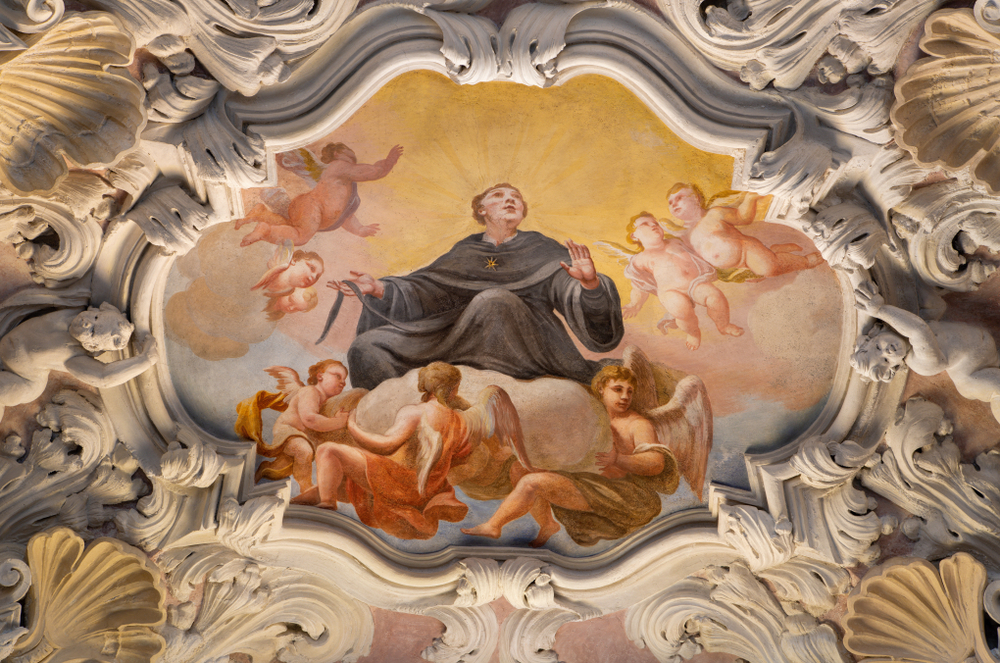
How Catholics can receive a plenary indulgence on Pentecost #Catholic On the solemnity of Pentecost, which this year is celebrated on May 24, Catholics have the opportunity to gain a plenary indulgence.An indulgence can be received by praying or singing the hymn "Veni Creator Spiritus" during the solemnity of Pentecost. The prayer is below.What is a plenary indulgence?The following “General Remarks on Indulgences” from “Gift of the Indulgence” summarizes the usual conditions given in the Churchʼs law (cf. Apostolic Penitentiary, Prot. N. 39/05/I): “This is how an indulgence is defined in the Code of Canon Law (can. 992) and in the Catechism of the Catholic Church (n. 1471): ‘An indulgence is a remission before God of the temporal punishment due to sins whose guilt has already been forgiven, which the faithful Christian who is duly disposed gains under certain prescribed conditions through the action of the Church which, as the minister of redemption, dispenses and applies with authority the treasury of the satisfactions of Christ and the saints.’”Conditions in all casesIn order to obtain the plenary indulgence, in addition to praying or signing the hymn mentioned above, the following conditions must be fulfilled:1. Detachment from all sin, even venial.2. Sacramental confession, holy Communion, and prayer for the intentions of the pope. These three conditions can be fulfilled a few days before or after performing the works to gain the indulgence, but it is appropriate that Communion and the prayer take place on the same day that the work is completed.A single sacramental confession is sufficient for several plenary indulgences, but frequent sacramental confession is encouraged in order to obtain the grace of deeper conversion and purity of heart.Prayer: Veni Creator SpiritusCome, Holy Spirit, Creator blest, and in our souls take up thy rest; come with thy grace and heavenly aid to fill the hearts which thou hast made.O comforter, to thee we cry, O heavenly gift of God Most High, O fount of life and fire of love, and sweet anointing from above.Thou in thy sevenfold gifts are known; thou, finger of Godʼs hand we own; thou, promise of the Father, thou who dost the tongue with power imbue.Kindle our sense from above, and make our hearts oʼerflow with love; with patience firm and virtue high the weakness of our flesh supply.Far from us drive the foe we dread, and grant us thy peace instead; so shall we not, with thee for guide, turn from the path of life aside.Oh, may thy grace on us bestow the Father and the Son to know; and thee, through endless times confessed, of both the eternal Spirit blest.Now to the Father and the Son, who rose from death, be glory given, with thou, O Holy Comforter, henceforth by all in earth and heaven. Amen.This story was first published by ACI Prensa, the Spanish-language sister service of EWTN News, and has been translated and adapted by EWTN News English.

How Catholics can receive a plenary indulgence on Pentecost #Catholic On the solemnity of Pentecost, which this year is celebrated on May 24, Catholics have the opportunity to gain a plenary indulgence.An indulgence can be received by praying or singing the hymn "Veni Creator Spiritus" during the solemnity of Pentecost. The prayer is below.What is a plenary indulgence?The following “General Remarks on Indulgences” from “Gift of the Indulgence” summarizes the usual conditions given in the Churchʼs law (cf. Apostolic Penitentiary, Prot. N. 39/05/I): “This is how an indulgence is defined in the Code of Canon Law (can. 992) and in the Catechism of the Catholic Church (n. 1471): ‘An indulgence is a remission before God of the temporal punishment due to sins whose guilt has already been forgiven, which the faithful Christian who is duly disposed gains under certain prescribed conditions through the action of the Church which, as the minister of redemption, dispenses and applies with authority the treasury of the satisfactions of Christ and the saints.’”Conditions in all casesIn order to obtain the plenary indulgence, in addition to praying or signing the hymn mentioned above, the following conditions must be fulfilled:1. Detachment from all sin, even venial.2. Sacramental confession, holy Communion, and prayer for the intentions of the pope. These three conditions can be fulfilled a few days before or after performing the works to gain the indulgence, but it is appropriate that Communion and the prayer take place on the same day that the work is completed.A single sacramental confession is sufficient for several plenary indulgences, but frequent sacramental confession is encouraged in order to obtain the grace of deeper conversion and purity of heart.Prayer: Veni Creator SpiritusCome, Holy Spirit, Creator blest, and in our souls take up thy rest; come with thy grace and heavenly aid to fill the hearts which thou hast made.O comforter, to thee we cry, O heavenly gift of God Most High, O fount of life and fire of love, and sweet anointing from above.Thou in thy sevenfold gifts are known; thou, finger of Godʼs hand we own; thou, promise of the Father, thou who dost the tongue with power imbue.Kindle our sense from above, and make our hearts oʼerflow with love; with patience firm and virtue high the weakness of our flesh supply.Far from us drive the foe we dread, and grant us thy peace instead; so shall we not, with thee for guide, turn from the path of life aside.Oh, may thy grace on us bestow the Father and the Son to know; and thee, through endless times confessed, of both the eternal Spirit blest.Now to the Father and the Son, who rose from death, be glory given, with thou, O Holy Comforter, henceforth by all in earth and heaven. Amen.This story was first published by ACI Prensa, the Spanish-language sister service of EWTN News, and has been translated and adapted by EWTN News English.

On the solemnity of Pentecost, which this year is celebrated on May 24, Catholics have the opportunity to gain a plenary indulgence.

Read More
Leo XIV laments that after receiving confirmation, many young people ‘disappear from the parish’ #Catholic Pope Leo XIV lamented that after being confirmed, many young people no longer attend church. He asked those awaiting confirmation to “pay special attention” to one of the gifts of the Holy Spirit, perseverance.The pope met on Saturday, May 16, with those awaiting confirmation from the Archdiocese of Genoa, Italy. In an impromptu message, the Holy Father said that “one of the greatest joys of a bishop is celebrating confirmations, because it is truly a gift of the Holy Spirit.”“It is truly beautiful to receive this sacrament, for the fullness of the Holy Spirit gives us this enthusiasm, this strength, this ability to follow Jesus Christ, to always say ‘yes’ to the Lord, to have no fear of following him with courage, and to live out our faith in a world that so often seeks to draw us away from Jesus,” he told them.After recalling the significance of the solemnity of Pentecost — to be celebrated on Sunday, May 24 — the pope lamented a sad reality: “At times, when the bishop administers confirmation, the gift of the Holy Spirit, the children are never seen again! They disappear from the parish.”“Don’t forget what you have experienced during this time, including the joy of coming to Rome to celebrate together, to pray together. And may this joy live on in your hearts as you continue to be faithful disciples of Jesus Christ,” Pope Leo urged.He also invited young people to “persevere in the faith, to return to the parish — there are so many activities, so many opportunities — but above all in the life of faith, because Jesus Christ wants to walk with you, with each one of you, and with all of you in community, which is so important.”“We do not live out our faith alone; we live it together. And forming these relationships of friendship and community is a way of living with perseverance as disciples of Jesus,” he added.Finally, he called upon those to be confirmed to make a promise to the Lord: “that you truly desire to continue being his friends, his disciples, and his missionaries, and that you desire to persevere in the faith. So, I leave you with these words,” he concluded.This story was first published by ACI Prensa, the Spanish-language sister service of EWTN News. It has been translated and adapted by EWTN News English.

Leo XIV laments that after receiving confirmation, many young people ‘disappear from the parish’ #Catholic Pope Leo XIV lamented that after being confirmed, many young people no longer attend church. He asked those awaiting confirmation to “pay special attention” to one of the gifts of the Holy Spirit, perseverance.The pope met on Saturday, May 16, with those awaiting confirmation from the Archdiocese of Genoa, Italy. In an impromptu message, the Holy Father said that “one of the greatest joys of a bishop is celebrating confirmations, because it is truly a gift of the Holy Spirit.”“It is truly beautiful to receive this sacrament, for the fullness of the Holy Spirit gives us this enthusiasm, this strength, this ability to follow Jesus Christ, to always say ‘yes’ to the Lord, to have no fear of following him with courage, and to live out our faith in a world that so often seeks to draw us away from Jesus,” he told them.After recalling the significance of the solemnity of Pentecost — to be celebrated on Sunday, May 24 — the pope lamented a sad reality: “At times, when the bishop administers confirmation, the gift of the Holy Spirit, the children are never seen again! They disappear from the parish.”“Don’t forget what you have experienced during this time, including the joy of coming to Rome to celebrate together, to pray together. And may this joy live on in your hearts as you continue to be faithful disciples of Jesus Christ,” Pope Leo urged.He also invited young people to “persevere in the faith, to return to the parish — there are so many activities, so many opportunities — but above all in the life of faith, because Jesus Christ wants to walk with you, with each one of you, and with all of you in community, which is so important.”“We do not live out our faith alone; we live it together. And forming these relationships of friendship and community is a way of living with perseverance as disciples of Jesus,” he added.Finally, he called upon those to be confirmed to make a promise to the Lord: “that you truly desire to continue being his friends, his disciples, and his missionaries, and that you desire to persevere in the faith. So, I leave you with these words,” he concluded.This story was first published by ACI Prensa, the Spanish-language sister service of EWTN News. It has been translated and adapted by EWTN News English.

Speaking to a group of young people soon to be confirmed, Pope Leo XIV encouraged perseverance in the faith and emphasized that faith is lived in community, not in isolation.

Read More
Pope Leo XIV: AI communication must preserve ‘human voices and faces’ #Catholic VATICAN CITY — Pope Leo XIV on Sunday urged Catholics and communicators to promote forms of communication that respect the truth of the human person in the age of artificial intelligence, while also calling for renewed care for creation and peace as Laudato Si’ Week begins.Speaking after praying the Regina Caeli May 17 from the window of the Apostolic Palace, the pope noted that many countries were marking World Communications Day, whose theme this year, he said, is “Preserving Human Voices and Faces.”“In this era of artificial intelligence, I encourage everyone to commit themselves to promoting forms of communication that always respect the truth of the human person, on which every technological innovation should be focused,” Pope Leo XIV said.The appeal comes as the Vatican is preparing for the pope’s first encyclical, expected to treat extensively the ethical and social questions raised by artificial intelligence through the lens of Catholic social teaching.The pope also marked the start of Laudato Si’ Week, which runs through next Sunday and is dedicated to the care of creation, inspired by Pope Francis’ 2015 encyclical.“In this jubilee year of Saint Francis of Assisi, we recall his message of peace with God, with our brothers and sisters, and with all creatures,” he said. “Sadly, in recent years, due to wars, progress in this direction has been greatly impeded.”Pope Leo encouraged the members of the Laudato Si’ Movement and all those who promote an “integral ecology” to renew their commitment, adding: “Indeed, caring for peace is caring for life!”In his catechesis before the Marian prayer, the pope reflected on the Solemnity of the Ascension of the Lord, celebrated Sunday in many countries.The image of Jesus “lifted up from the earth and ascending toward heaven,” he said, may make the mystery seem like “a distant event from long ago.”“Yet this is not so, for we are united to Jesus as the members of one body united to the head,” Pope Leo said. “By ascending into heaven, then, he draws us with him toward full communion with the Father.”Quoting St. Augustine, the pope said that “the head’s advance is the hope of the members.”Christ’s whole life, he continued, is “a movement of ascent,” through which he embraces the world, redeems humanity from sin, and brings “light, forgiveness and hope where previously there was darkness, injustice and desperation.”“The Ascension, therefore, does not speak to us of a distant promise, but of a living bond, which draws us also toward heavenly glory, already elevating and expanding our horizon in this life and directing our way of thinking, feeling and acting more closely to the measure of God’s heart,” he said.The pope said this path of ascent is found in Christ’s life, example, and teaching, and is also marked out by the Blessed Virgin Mary and the saints.He also recalled Pope Francis’ teaching on the saints “next door” — ordinary fathers, mothers, grandparents, and people of every age and condition who “with joy and commitment, make the effort to live sincerely according to the Gospel.”“With them, with their support and thanks to their prayer, we too can learn to ascend day by day toward heaven,” Pope Leo said.The pope urged Christians, with God’s help, to put into practice all that they have “heard and seen,” so that the divine life received in baptism may grow and “spread the precious fruits of communion and peace in the world.”“May Mary, the Queen of Heaven, who illuminates and guides us in every moment, support us on our path,” he said.At the end of the Regina Caeli, the pope greeted pilgrims from Rome and abroad, including marching bands from Germany, the “Sant’Antonu di u Monti” Confraternity from Ajaccio, students from the University of Montana, young people from Oppido Mamertina, youth leaders from Lorenzaga in the Diocese of Concordia-Pordenone, and confirmation candidates from the Archdiocese of Genoa.This story was first published in two parts by ACI Prensa, the Spanish-language sister service of EWTN News. It has been translated and adapted by EWTN News English.

Pope Leo XIV: AI communication must preserve ‘human voices and faces’ #Catholic VATICAN CITY — Pope Leo XIV on Sunday urged Catholics and communicators to promote forms of communication that respect the truth of the human person in the age of artificial intelligence, while also calling for renewed care for creation and peace as Laudato Si’ Week begins.Speaking after praying the Regina Caeli May 17 from the window of the Apostolic Palace, the pope noted that many countries were marking World Communications Day, whose theme this year, he said, is “Preserving Human Voices and Faces.”“In this era of artificial intelligence, I encourage everyone to commit themselves to promoting forms of communication that always respect the truth of the human person, on which every technological innovation should be focused,” Pope Leo XIV said.The appeal comes as the Vatican is preparing for the pope’s first encyclical, expected to treat extensively the ethical and social questions raised by artificial intelligence through the lens of Catholic social teaching.The pope also marked the start of Laudato Si’ Week, which runs through next Sunday and is dedicated to the care of creation, inspired by Pope Francis’ 2015 encyclical.“In this jubilee year of Saint Francis of Assisi, we recall his message of peace with God, with our brothers and sisters, and with all creatures,” he said. “Sadly, in recent years, due to wars, progress in this direction has been greatly impeded.”Pope Leo encouraged the members of the Laudato Si’ Movement and all those who promote an “integral ecology” to renew their commitment, adding: “Indeed, caring for peace is caring for life!”In his catechesis before the Marian prayer, the pope reflected on the Solemnity of the Ascension of the Lord, celebrated Sunday in many countries.The image of Jesus “lifted up from the earth and ascending toward heaven,” he said, may make the mystery seem like “a distant event from long ago.”“Yet this is not so, for we are united to Jesus as the members of one body united to the head,” Pope Leo said. “By ascending into heaven, then, he draws us with him toward full communion with the Father.”Quoting St. Augustine, the pope said that “the head’s advance is the hope of the members.”Christ’s whole life, he continued, is “a movement of ascent,” through which he embraces the world, redeems humanity from sin, and brings “light, forgiveness and hope where previously there was darkness, injustice and desperation.”“The Ascension, therefore, does not speak to us of a distant promise, but of a living bond, which draws us also toward heavenly glory, already elevating and expanding our horizon in this life and directing our way of thinking, feeling and acting more closely to the measure of God’s heart,” he said.The pope said this path of ascent is found in Christ’s life, example, and teaching, and is also marked out by the Blessed Virgin Mary and the saints.He also recalled Pope Francis’ teaching on the saints “next door” — ordinary fathers, mothers, grandparents, and people of every age and condition who “with joy and commitment, make the effort to live sincerely according to the Gospel.”“With them, with their support and thanks to their prayer, we too can learn to ascend day by day toward heaven,” Pope Leo said.The pope urged Christians, with God’s help, to put into practice all that they have “heard and seen,” so that the divine life received in baptism may grow and “spread the precious fruits of communion and peace in the world.”“May Mary, the Queen of Heaven, who illuminates and guides us in every moment, support us on our path,” he said.At the end of the Regina Caeli, the pope greeted pilgrims from Rome and abroad, including marching bands from Germany, the “Sant’Antonu di u Monti” Confraternity from Ajaccio, students from the University of Montana, young people from Oppido Mamertina, youth leaders from Lorenzaga in the Diocese of Concordia-Pordenone, and confirmation candidates from the Archdiocese of Genoa.This story was first published in two parts by ACI Prensa, the Spanish-language sister service of EWTN News. It has been translated and adapted by EWTN News English.

The pontiff marked World Communications Day by urging technology to remain centered on human dignity.

Read More
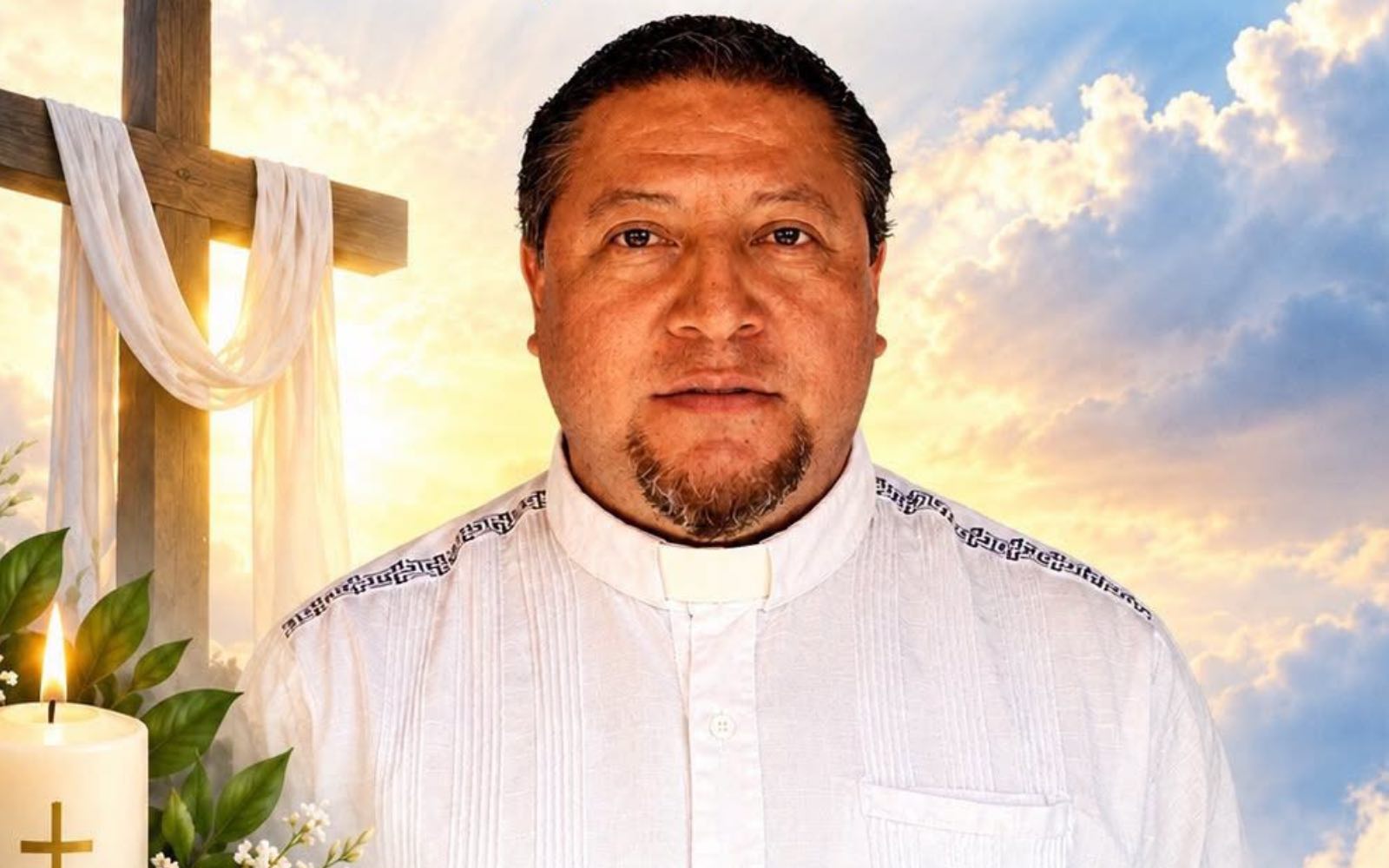
From seminarian in Nicaragua to priest in Miami: ‘I carry my people and my homeland in my heart’ #Catholic As a seminarian, Cristhian David Mendieta Hernández had to flee Nicaragua, persecuted by the very dictatorship that had recently exiled his bishop. The regime of President Daniel Ortega and his wife and vice president, Rosario Murillo, ramped up its persecution of the Catholic Church in 2018.After the dictatorship exiled Silvio Báez, the auxiliary bishop of Managua, from Nicaragua in April 2019, Mendieta, who as a seminarian often accompanied the bishop, was forced to flee the country as well, traveling first to Guatemala and then to Costa Rica. His journey concluded in Miami in January 2022, where, with the assistance of Báez and Father Marco Somarriba, pastor of St. Agatha Parish in Miami, he was able to continue his priestly formation.On May 9 at St. Mary’s Cathedral, he knelt before Archbishop Thomas Wenski and received the priestly ordination that the Nicaraguan dictatorship had attempted to deny him.“I carry my people and my homeland in my heart, and I will offer my first Mass for them,” the newly ordained Nicaraguan priest, who will serve as parochial vicar at St. Thomas the Apostle in Miami, told ACI Prensa, the Spanish-language sister service of EWTN News, on May 10.“This priesthood is a blessing for me, for my family, for the Church, and for the people of Nicaragua,” added Mendieta, who was born in La Concepción township in the Masaya district of Nicaragua. He celebrated his first Mass on May 10 at St. Agatha, accompanied by Báez and other Nicaraguan priests who attended the ordination.“I am grateful to the Archdiocese of Miami for welcoming me and giving me the opportunity to serve the people of God. Here we have a broader perspective that our ministry is for all of God’s people and that our people, especially those from Latin America, share the same aspirations for freedom, peace, and stability,” he emphasized. Father Edwing Román, parochial vicar at St. Agatha, told ACI Prensa that “it’s a source of great joy to have Father Cristhian as another brother in the priesthood. He is a young man of many virtues and a dedicated scholar.”“I admire his piety and humility as well as his ease in forming friendships with the faithful. May God bless him abundantly, and may he be a shepherd modeled after Jesus Christ, the eternal high priest,” Román said.In a video posted by the Archdiocese of Miami on May 6, Mendieta recalled that when he was 6 years old and attending a concert, he announced that he was thinking of becoming a priest, which surprised his family.Years later, while involved in his parishʼs youth ministry, the example of his hardworking parish priest, Father José Antonio, who strove to reach every community, no matter how remote, encouraged him to pursue his vocation and change his plans to become a doctor.The young priest also shared that he enjoys classical music and Frank Sinatra, and that when he is driving, he entertains himself by listening to the British band Queen.Along with Mendieta, the following men were ordained: Adam Cahill, Henry Cárdenas Afanador, Tomasz Kaziel, Arístides Lima, Carlos Luzardo, Saint-Clos Papouloute, Pietro Pironato, and Michele Sega.In his homily, Wenski highlighted the diverse origins of the new priests — Nicaragua, Italy, Poland, Haiti, Venezuela, Colombia, etc. — and noted that “in an increasingly secularized world, where many have lost the sense of the transcendent, the priest is an enigma, a symbol of great contradiction.”"Nowadays, many view religious faith with hostility or at best, with indifference. In such a world, the Church will always appear out of step and irrelevant. Often, such a Church will be viewed if not with contempt and mockery, with total incomprehension. As Jesus said: ‘If the world hates you, know that it hated me first,’” the archbishop said.“Face the challenges of your ministry without anxiety or mediocrity, and do not allow yourselves to be intimidated or influenced by those who make power, wealth, or pleasure the primary criteria of their lives,” he exhorted.After encouraging the new priests to lay down their lives for their faithful, Wenski urged them to be “generous with their time and available to hear the confessions of the faithful.”This story was first published by ACI Prensa, the Spanish-language sister service of EWTN News. It has been translated and adapted by EWTN News English.

From seminarian in Nicaragua to priest in Miami: ‘I carry my people and my homeland in my heart’ #Catholic As a seminarian, Cristhian David Mendieta Hernández had to flee Nicaragua, persecuted by the very dictatorship that had recently exiled his bishop. The regime of President Daniel Ortega and his wife and vice president, Rosario Murillo, ramped up its persecution of the Catholic Church in 2018.After the dictatorship exiled Silvio Báez, the auxiliary bishop of Managua, from Nicaragua in April 2019, Mendieta, who as a seminarian often accompanied the bishop, was forced to flee the country as well, traveling first to Guatemala and then to Costa Rica. His journey concluded in Miami in January 2022, where, with the assistance of Báez and Father Marco Somarriba, pastor of St. Agatha Parish in Miami, he was able to continue his priestly formation.On May 9 at St. Mary’s Cathedral, he knelt before Archbishop Thomas Wenski and received the priestly ordination that the Nicaraguan dictatorship had attempted to deny him.“I carry my people and my homeland in my heart, and I will offer my first Mass for them,” the newly ordained Nicaraguan priest, who will serve as parochial vicar at St. Thomas the Apostle in Miami, told ACI Prensa, the Spanish-language sister service of EWTN News, on May 10.“This priesthood is a blessing for me, for my family, for the Church, and for the people of Nicaragua,” added Mendieta, who was born in La Concepción township in the Masaya district of Nicaragua. He celebrated his first Mass on May 10 at St. Agatha, accompanied by Báez and other Nicaraguan priests who attended the ordination.“I am grateful to the Archdiocese of Miami for welcoming me and giving me the opportunity to serve the people of God. Here we have a broader perspective that our ministry is for all of God’s people and that our people, especially those from Latin America, share the same aspirations for freedom, peace, and stability,” he emphasized. Father Edwing Román, parochial vicar at St. Agatha, told ACI Prensa that “it’s a source of great joy to have Father Cristhian as another brother in the priesthood. He is a young man of many virtues and a dedicated scholar.”“I admire his piety and humility as well as his ease in forming friendships with the faithful. May God bless him abundantly, and may he be a shepherd modeled after Jesus Christ, the eternal high priest,” Román said.In a video posted by the Archdiocese of Miami on May 6, Mendieta recalled that when he was 6 years old and attending a concert, he announced that he was thinking of becoming a priest, which surprised his family.Years later, while involved in his parishʼs youth ministry, the example of his hardworking parish priest, Father José Antonio, who strove to reach every community, no matter how remote, encouraged him to pursue his vocation and change his plans to become a doctor.The young priest also shared that he enjoys classical music and Frank Sinatra, and that when he is driving, he entertains himself by listening to the British band Queen.Along with Mendieta, the following men were ordained: Adam Cahill, Henry Cárdenas Afanador, Tomasz Kaziel, Arístides Lima, Carlos Luzardo, Saint-Clos Papouloute, Pietro Pironato, and Michele Sega.In his homily, Wenski highlighted the diverse origins of the new priests — Nicaragua, Italy, Poland, Haiti, Venezuela, Colombia, etc. — and noted that “in an increasingly secularized world, where many have lost the sense of the transcendent, the priest is an enigma, a symbol of great contradiction.”"Nowadays, many view religious faith with hostility or at best, with indifference. In such a world, the Church will always appear out of step and irrelevant. Often, such a Church will be viewed if not with contempt and mockery, with total incomprehension. As Jesus said: ‘If the world hates you, know that it hated me first,’” the archbishop said.“Face the challenges of your ministry without anxiety or mediocrity, and do not allow yourselves to be intimidated or influenced by those who make power, wealth, or pleasure the primary criteria of their lives,” he exhorted.After encouraging the new priests to lay down their lives for their faithful, Wenski urged them to be “generous with their time and available to hear the confessions of the faithful.”This story was first published by ACI Prensa, the Spanish-language sister service of EWTN News. It has been translated and adapted by EWTN News English.

The Ortega regime’s repression of the Catholic Church could not silence God’s call to Cristhian Mendieta. Having fled Nicaragua as a seminarian, the young man was ordained to the priesthood in Miami.

Read More
Vatican urges religious leaders not to be ‘complicit through silence or fear’ amid division #Catholic The Vatican has called on religious leaders around the world to take an active role in promoting peace and urged them not to become “complicit through silence or fear” in the face of those who fuel division and confrontation.The appeal is contained in the message “Buddhists and Christians for an ‘Unarmed and Disarming’ Peace,” signed by Cardinal George Jacob Koovakad, prefect of the Dicastery for Interreligious Dialogue, and Monsignor Indunil Janakaratne Kodithuwakku Kankanamalage, secretary of the dicastery, for the Buddhist feast of Vesak.In the message, addressed to the Buddhist community and published Monday, May 11, the Vatican said religious leaders “are called to be authentic partners in dialogue and true agents of reconciliation.”The text stressed that a passive attitude is not enough. Together with all believers, it said, “we are invited to become artisans of peace — not passive observers but courageous witnesses capable of fostering encounter, healing wounds, and rebuilding trust.”“As citizens and believers, we share a responsibility to promote peace, challenge injustice, and urge those in positions of authority not to inflame division but to pursue dialogue over confrontation,” the message said. “We must also guard against becoming complicit through silence or fear.”A peace born in the heartThe message, issued for Vesak — which commemorates the birth, enlightenment, and passing of the Buddha — reflected on the meaning of peace, defining it not merely as the absence of war but as “a gift that seeks to dwell within the human heart” and “a quiet yet powerful presence that enlightens and transforms.”The message cited Pope Leo XIV’s words for the 2026 World Day of Peace: “Peace exists; it wants to dwell within us. It has the gentle power to enlighten and expand our understanding; it resists and overcomes violence. Peace is a breath of the eternal: While to evil we cry out ‘Enough,’ to peace we whisper ‘Forever.’”Even when peace appears fragile, the Vatican message said, it “must be protected and nurtured.” It described this peace as “an unarmed and disarming peace that does not rely on force but flows from truth, compassion, and mutual trust.”Facing the world’s shadowsThe Vatican did not ignore the gravity of the current international context, marked by conflicts and growing tensions.“We cannot ignore the shadows weighing upon the world,” the message said. “Wars, violence, rising ethno-religious nationalism, and the manipulation of religion continue to wound our common humanity.”In response, the Vatican emphasized the irreplaceable role of religious traditions, which it said “can offer a vital contribution.”“Goodness is truly disarming,” the message said. “It breaks the cycle of suspicion and opens paths where none seemed possible.”Buddhism and Christianity convergeThe message highlighted the deep harmony between Buddhist and Christian teachings on peace.It recalled the Buddha’s teaching: “Hatred is never appeased by hatred; by non-hatred alone is hatred appeased. This is an eternal law.” It also cited Jesus’ command to “love your enemies and pray for those who persecute you” and his proclamation “Blessed are the peacemakers.”Both traditions, the document said, point toward “a peace that is lived — one that disarms hearts before it disarms hands.”A concrete, daily commitmentThe message concluded with a call to translate these principles into concrete action, noting that peace is “lived daily — in gestures of kindness, in patience, in the refusal of hatred and vengeance, and in the courage to hope.”Far from being a utopia, the Vatican said, “peace is not an illusion or a distant ideal; it is a real possibility already placed within our reach, waiting to be welcomed and shared.”With that spirit, the Vatican expressed hope that Buddhists and Christians may “increasingly become witnesses of this disarming peace — one that heals wounds, restores relationships, and opens new horizons for humanity.”“May your celebration of Vesak be filled with serenity and joy, and may it inspire all of us to walk together on this path,” the message concluded. “We wish you a blessed and fruitful celebration of Vesak!”This story was first published by ACI Prensa, the Spanish-language sister service of EWTN News. It has been translated and adapted by EWTN News English.

Vatican urges religious leaders not to be ‘complicit through silence or fear’ amid division #Catholic The Vatican has called on religious leaders around the world to take an active role in promoting peace and urged them not to become “complicit through silence or fear” in the face of those who fuel division and confrontation.The appeal is contained in the message “Buddhists and Christians for an ‘Unarmed and Disarming’ Peace,” signed by Cardinal George Jacob Koovakad, prefect of the Dicastery for Interreligious Dialogue, and Monsignor Indunil Janakaratne Kodithuwakku Kankanamalage, secretary of the dicastery, for the Buddhist feast of Vesak.In the message, addressed to the Buddhist community and published Monday, May 11, the Vatican said religious leaders “are called to be authentic partners in dialogue and true agents of reconciliation.”The text stressed that a passive attitude is not enough. Together with all believers, it said, “we are invited to become artisans of peace — not passive observers but courageous witnesses capable of fostering encounter, healing wounds, and rebuilding trust.”“As citizens and believers, we share a responsibility to promote peace, challenge injustice, and urge those in positions of authority not to inflame division but to pursue dialogue over confrontation,” the message said. “We must also guard against becoming complicit through silence or fear.”A peace born in the heartThe message, issued for Vesak — which commemorates the birth, enlightenment, and passing of the Buddha — reflected on the meaning of peace, defining it not merely as the absence of war but as “a gift that seeks to dwell within the human heart” and “a quiet yet powerful presence that enlightens and transforms.”The message cited Pope Leo XIV’s words for the 2026 World Day of Peace: “Peace exists; it wants to dwell within us. It has the gentle power to enlighten and expand our understanding; it resists and overcomes violence. Peace is a breath of the eternal: While to evil we cry out ‘Enough,’ to peace we whisper ‘Forever.’”Even when peace appears fragile, the Vatican message said, it “must be protected and nurtured.” It described this peace as “an unarmed and disarming peace that does not rely on force but flows from truth, compassion, and mutual trust.”Facing the world’s shadowsThe Vatican did not ignore the gravity of the current international context, marked by conflicts and growing tensions.“We cannot ignore the shadows weighing upon the world,” the message said. “Wars, violence, rising ethno-religious nationalism, and the manipulation of religion continue to wound our common humanity.”In response, the Vatican emphasized the irreplaceable role of religious traditions, which it said “can offer a vital contribution.”“Goodness is truly disarming,” the message said. “It breaks the cycle of suspicion and opens paths where none seemed possible.”Buddhism and Christianity convergeThe message highlighted the deep harmony between Buddhist and Christian teachings on peace.It recalled the Buddha’s teaching: “Hatred is never appeased by hatred; by non-hatred alone is hatred appeased. This is an eternal law.” It also cited Jesus’ command to “love your enemies and pray for those who persecute you” and his proclamation “Blessed are the peacemakers.”Both traditions, the document said, point toward “a peace that is lived — one that disarms hearts before it disarms hands.”A concrete, daily commitmentThe message concluded with a call to translate these principles into concrete action, noting that peace is “lived daily — in gestures of kindness, in patience, in the refusal of hatred and vengeance, and in the courage to hope.”Far from being a utopia, the Vatican said, “peace is not an illusion or a distant ideal; it is a real possibility already placed within our reach, waiting to be welcomed and shared.”With that spirit, the Vatican expressed hope that Buddhists and Christians may “increasingly become witnesses of this disarming peace — one that heals wounds, restores relationships, and opens new horizons for humanity.”“May your celebration of Vesak be filled with serenity and joy, and may it inspire all of us to walk together on this path,” the message concluded. “We wish you a blessed and fruitful celebration of Vesak!”This story was first published by ACI Prensa, the Spanish-language sister service of EWTN News. It has been translated and adapted by EWTN News English.

The Vatican’s message for Vesak calls Buddhists and Christians to promote an “unarmed and disarming” peace rooted in truth, compassion, and mutual trust.

Read More
Historic parish in Toronto Archdiocese to finally break ground on new church #Catholic After well over a decade of prayer, planning, and perseverance, a historic parish in the Archdiocese of Toronto, St. Patrick’s Parish in Brampton, Ontario,  Canada, will officially break ground on its new church May 24.For many, the project’s next — and most important — step marks a joyous continuation of a dream long held by generations of parishioners and clergy alike.Celebrations will take place on Pentecost Sunday with Mass at the current St. Patrick’s Church, followed by a procession to the new site located at 150 Martin Byrne Dr. for the formal blessing and groundbreaking ceremony. There, Toronto Auxiliary Bishop Ivan Camilleri will preside, joined by parishioners, major donors, local mayors, and councillors. The day will conclude with a festive barbecue, live music, games, and family activities back at St. Patrick’s.Monsignor Owen Keenan, pastor of St. Patrick’s, the archdiocese’s second-oldest parish, said the long-awaited moment is deeply meaningful for all. He spoke to Canadaʼs The Catholic Register about the parish communityʼs vision for a larger church, dating back to the 1980s, with planning truly intensifying in 2015 under the late Father Vito Marziliano. Unfortunately, misfortune befell the project even in its earliest stages.“ First, our architect Renzo Pianon died at 47, and then COVID hit us hard with the drop in attendance and various fundraising challenges before Father Vito left us far too young,” Keenan said. “There were moments of asking what is next? How much more can the community endure?”Still, the community persisted through Marziliano’s Loaves and Fishes Campaign — a project solely dedicated to St. Patrick’s mission of building a new, larger church property to serve a growing local population.
 
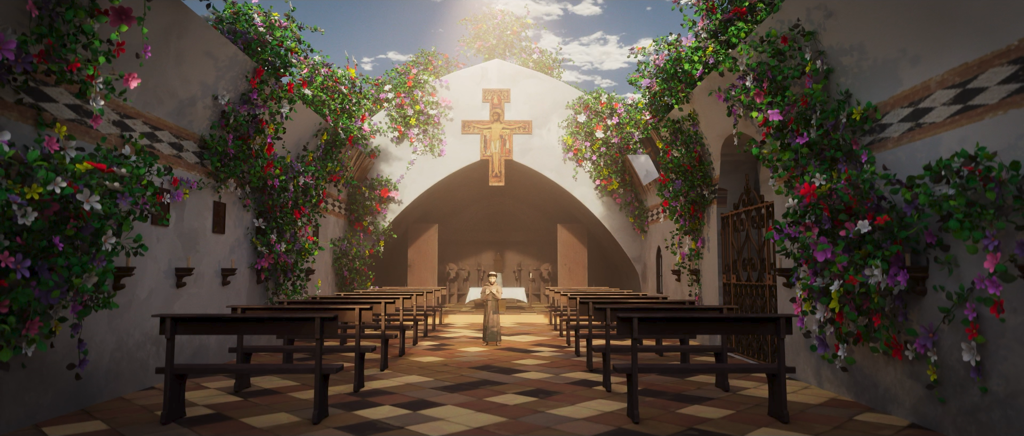
 A rendering of the front of the new St. Patrick’s Parish in Brampton, Ontario, Canada. Construction on the new church is scheduled to begin May 24, 2026. | Credit: Screenshot from St. Patrick promo video
 
 Speaking to The Catholic Register in October 2025, Keenan revealed that the City of Brampton, Region of Peel, and the City of Caledon anticipated an increase of between 50,000 to 60,000 people within the confines of the parish in the next 15 to 20 years. He also shared the growing interest from parishioners — and pledges of  million to be paid upon the start of construction and an additional  million in bequests from an anonymous parishioner and an area business, respectively.While the community has continued to rally behind the cause — including a promising showing and fundraising efforts at last year’s gala in October —Keenan concedes that a sense of restlessness has been creeping in.“ Weʼve managed to maintain and reestablish a good level of fundraising after COVID, but weʼve run out of runway — people are only going to throw money at a question mark for so long. Thus far, we have around 0,000 worth of new donations already, with more expected as we go and as we break ground,” he said.In total, the project has amassed several million dollars for the project.Despite the impressive figures, Keenan reiterated that rising prices have played a role in the project’s delay. Even as the market shows itʼs a good time to build, a 32,000-square-foot project in 2018 was estimated to cost .9 million, but by 2024, a reduced 28,000-square-foot building was estimated to cost as much as .5 million, leading the parish to scale its operation back from wants to needs.Still, the new church itself is set to be Marziliano’s swan song and become something truly unique as his original vision promised.“He was quite an artist, and so the design for the new church will be based on a 19th-century reconstruction of a sixth-century church in the Holy Land, specifically the Church of the Multiplication of the Loaves and Fish in Tabgha, Israel,” Keenan said.The extensive project involves building a bigger version that remains faithful to the original design, complete with a traditional Romanesque style, rounded apse, cruciform shape, and pillars up the aisles.Now, the project that required a true test of the communityʼs resiliency, patience, and faith will reach its most defining moment with May 24’s first dig.Looking back on the multigenerational effort, Keenan is grateful for the patience and steadfast support of parishioners who have sacrificed for this new church over a decade.“ We are all very excited, and I canʼt say enough about the good people of this parish who have been wanting this for so long. There are lots of good people for whom weʼre enormously grateful,” he said.“We want a place for families who are stressed to be able to come together to appeal to the Lord. Letʼs find our identity in Christ, as St. Paul says, and letʼs truly rejoice together.”This story was first published in Canadaʼs The Catholic Register and has been adapted by EWTN News. It is reprinted here with permission.

Historic parish in Toronto Archdiocese to finally break ground on new church #Catholic After well over a decade of prayer, planning, and perseverance, a historic parish in the Archdiocese of Toronto, St. Patrick’s Parish in Brampton, Ontario,  Canada, will officially break ground on its new church May 24.For many, the project’s next — and most important — step marks a joyous continuation of a dream long held by generations of parishioners and clergy alike.Celebrations will take place on Pentecost Sunday with Mass at the current St. Patrick’s Church, followed by a procession to the new site located at 150 Martin Byrne Dr. for the formal blessing and groundbreaking ceremony. There, Toronto Auxiliary Bishop Ivan Camilleri will preside, joined by parishioners, major donors, local mayors, and councillors. The day will conclude with a festive barbecue, live music, games, and family activities back at St. Patrick’s.Monsignor Owen Keenan, pastor of St. Patrick’s, the archdiocese’s second-oldest parish, said the long-awaited moment is deeply meaningful for all. He spoke to Canadaʼs The Catholic Register about the parish communityʼs vision for a larger church, dating back to the 1980s, with planning truly intensifying in 2015 under the late Father Vito Marziliano. Unfortunately, misfortune befell the project even in its earliest stages.“ First, our architect Renzo Pianon died at 47, and then COVID hit us hard with the drop in attendance and various fundraising challenges before Father Vito left us far too young,” Keenan said. “There were moments of asking what is next? How much more can the community endure?”Still, the community persisted through Marziliano’s Loaves and Fishes Campaign — a project solely dedicated to St. Patrick’s mission of building a new, larger church property to serve a growing local population. A rendering of the front of the new St. Patrick’s Parish in Brampton, Ontario, Canada. Construction on the new church is scheduled to begin May 24, 2026. | Credit: Screenshot from St. Patrick promo video Speaking to The Catholic Register in October 2025, Keenan revealed that the City of Brampton, Region of Peel, and the City of Caledon anticipated an increase of between 50,000 to 60,000 people within the confines of the parish in the next 15 to 20 years. He also shared the growing interest from parishioners — and pledges of $1 million to be paid upon the start of construction and an additional $1 million in bequests from an anonymous parishioner and an area business, respectively.While the community has continued to rally behind the cause — including a promising showing and fundraising efforts at last year’s gala in October —Keenan concedes that a sense of restlessness has been creeping in.“ Weʼve managed to maintain and reestablish a good level of fundraising after COVID, but weʼve run out of runway — people are only going to throw money at a question mark for so long. Thus far, we have around $350,000 worth of new donations already, with more expected as we go and as we break ground,” he said.In total, the project has amassed several million dollars for the project.Despite the impressive figures, Keenan reiterated that rising prices have played a role in the project’s delay. Even as the market shows itʼs a good time to build, a 32,000-square-foot project in 2018 was estimated to cost $12.9 million, but by 2024, a reduced 28,000-square-foot building was estimated to cost as much as $26.5 million, leading the parish to scale its operation back from wants to needs.Still, the new church itself is set to be Marziliano’s swan song and become something truly unique as his original vision promised.“He was quite an artist, and so the design for the new church will be based on a 19th-century reconstruction of a sixth-century church in the Holy Land, specifically the Church of the Multiplication of the Loaves and Fish in Tabgha, Israel,” Keenan said.The extensive project involves building a bigger version that remains faithful to the original design, complete with a traditional Romanesque style, rounded apse, cruciform shape, and pillars up the aisles.Now, the project that required a true test of the communityʼs resiliency, patience, and faith will reach its most defining moment with May 24’s first dig.Looking back on the multigenerational effort, Keenan is grateful for the patience and steadfast support of parishioners who have sacrificed for this new church over a decade.“ We are all very excited, and I canʼt say enough about the good people of this parish who have been wanting this for so long. There are lots of good people for whom weʼre enormously grateful,” he said.“We want a place for families who are stressed to be able to come together to appeal to the Lord. Letʼs find our identity in Christ, as St. Paul says, and letʼs truly rejoice together.”This story was first published in Canadaʼs The Catholic Register and has been adapted by EWTN News. It is reprinted here with permission.

St. Patrick’s Parish in Brampton, Ontario, is bursting at the seams. Now, on May 24, it will break ground on its long-awaited new church.

Read More
Pope Leo XIV prays for Sahel victims #Catholic VATICAN CITY — Pope Leo XIV on Sunday prayed for victims of growing violence in the Sahel, thanked the people of the Canary Islands for welcoming a cruise ship carrying people sick with hantavirus, and offered a special blessing for mothers during his Regina Caeli address in St. Peter’s Square.Speaking after the Marian prayer May 10, the pope said he had learned “with deep concern of the reports regarding the growing violence in the Sahel region, particularly in Chad and Mali,” which have recently suffered terrorist attacks.“I offer the assurance of my heartfelt prayers for the victims and my spiritual closeness to all those who are suffering as a result of the tragic events,” he said. “I fervently hope that every form of violence may cease, and I encourage all efforts aimed at fostering peace and development in that beloved land.”The pope also marked the annual “Day of Coptic-Catholic Friendship,” extending “fraternal greetings” to Pope Tawadros II and assuring “the entire beloved Coptic Church” of his “remembrance in prayer.”“It is my hope that our journey of friendship will lead us to perfect unity in Christ, who has called us ‘friends,’” he said.In Spanish, Pope Leo XIV thanked the people of the Canary Islands who, “with the hospitality characteristic of them,” welcomed the Hondius cruise ship and the passengers infected with hantavirus.“I look forward to seeing all of you next month during my visit to the Islands,” he said.The pope also offered a Mother’s Day greeting, asking Mary, “the Mother of Jesus and our own Mother,” to intercede for all mothers.“Let us pray with love and gratitude for every mother, particularly those living in very difficult circumstances,” he said. “Thank you! May God bless you!”Before the Regina Caeli, Pope Leo reflected on the Gospel for the Sixth Sunday of Easter, in which Jesus tells his disciples: “If you love me, you will keep my commandments.”The pope said the words of Jesus free Christians from the misconception “that we are loved because we keep the commandments, as if our righteousness were a prerequisite for God’s love.”“On the contrary, God’s love is the basis for our righteousness,” he said.Jesus’ words, he said, are “an invitation to enter into a relationship, not a blackmail or a suspicious ultimatum.”The Lord commands his followers to love one another as he has loved them, Pope Leo said, because “it is Jesus’ love that begets love within us.”Christ, he said, is “the standard, the measure of true love: the love that is faithful forever, pure and unconditional,” the love that knows no “buts” or “maybes.”“Because God loved us first, we too can love, and when we truly love God, we truly love one another,” he said.The pope said the Lord’s commandments are “a way of life that heal us from false loves” and “a spiritual lifestyle that is a path towards salvation.”Because God loves his people, the pope continued, he “does not leave us alone in life’s trials” but promises the Paraclete, the Advocate, the “Spirit of truth.”The Holy Spirit, he said, is a gift that “the world cannot receive” as long as it persists in evil, “oppressing the poor, excluding the weak and killing the innocent.” But those who respond to Jesus’ love for all “will find in the Holy Spirit an ally who will never fail.”Pope Leo said Christians can always bear witness to “God, who is love,” adding that love is “not an idea of the human mind, but the reality of divine life, through which all things were created out of nothing and redeemed from death.”Jesus, he said, shares with believers his identity as the beloved Son: “I am in my Father, and you in me, and I in you.”This “all-encompassing communion of life,” the pope said, refutes the Accuser, the adversary of the Paraclete, who seeks to set humanity against God and people against one another. Jesus does the opposite, he said, “saving us from evil and uniting us as a people of brothers and sisters in the Church.”This story was first published by ACI Stampa, the Italian-language sister service of EWTN News. It has been translated and adapted by EWTN News English.

Pope Leo XIV prays for Sahel victims #Catholic VATICAN CITY — Pope Leo XIV on Sunday prayed for victims of growing violence in the Sahel, thanked the people of the Canary Islands for welcoming a cruise ship carrying people sick with hantavirus, and offered a special blessing for mothers during his Regina Caeli address in St. Peter’s Square.Speaking after the Marian prayer May 10, the pope said he had learned “with deep concern of the reports regarding the growing violence in the Sahel region, particularly in Chad and Mali,” which have recently suffered terrorist attacks.“I offer the assurance of my heartfelt prayers for the victims and my spiritual closeness to all those who are suffering as a result of the tragic events,” he said. “I fervently hope that every form of violence may cease, and I encourage all efforts aimed at fostering peace and development in that beloved land.”The pope also marked the annual “Day of Coptic-Catholic Friendship,” extending “fraternal greetings” to Pope Tawadros II and assuring “the entire beloved Coptic Church” of his “remembrance in prayer.”“It is my hope that our journey of friendship will lead us to perfect unity in Christ, who has called us ‘friends,’” he said.In Spanish, Pope Leo XIV thanked the people of the Canary Islands who, “with the hospitality characteristic of them,” welcomed the Hondius cruise ship and the passengers infected with hantavirus.“I look forward to seeing all of you next month during my visit to the Islands,” he said.The pope also offered a Mother’s Day greeting, asking Mary, “the Mother of Jesus and our own Mother,” to intercede for all mothers.“Let us pray with love and gratitude for every mother, particularly those living in very difficult circumstances,” he said. “Thank you! May God bless you!”Before the Regina Caeli, Pope Leo reflected on the Gospel for the Sixth Sunday of Easter, in which Jesus tells his disciples: “If you love me, you will keep my commandments.”The pope said the words of Jesus free Christians from the misconception “that we are loved because we keep the commandments, as if our righteousness were a prerequisite for God’s love.”“On the contrary, God’s love is the basis for our righteousness,” he said.Jesus’ words, he said, are “an invitation to enter into a relationship, not a blackmail or a suspicious ultimatum.”The Lord commands his followers to love one another as he has loved them, Pope Leo said, because “it is Jesus’ love that begets love within us.”Christ, he said, is “the standard, the measure of true love: the love that is faithful forever, pure and unconditional,” the love that knows no “buts” or “maybes.”“Because God loved us first, we too can love, and when we truly love God, we truly love one another,” he said.The pope said the Lord’s commandments are “a way of life that heal us from false loves” and “a spiritual lifestyle that is a path towards salvation.”Because God loves his people, the pope continued, he “does not leave us alone in life’s trials” but promises the Paraclete, the Advocate, the “Spirit of truth.”The Holy Spirit, he said, is a gift that “the world cannot receive” as long as it persists in evil, “oppressing the poor, excluding the weak and killing the innocent.” But those who respond to Jesus’ love for all “will find in the Holy Spirit an ally who will never fail.”Pope Leo said Christians can always bear witness to “God, who is love,” adding that love is “not an idea of the human mind, but the reality of divine life, through which all things were created out of nothing and redeemed from death.”Jesus, he said, shares with believers his identity as the beloved Son: “I am in my Father, and you in me, and I in you.”This “all-encompassing communion of life,” the pope said, refutes the Accuser, the adversary of the Paraclete, who seeks to set humanity against God and people against one another. Jesus does the opposite, he said, “saving us from evil and uniting us as a people of brothers and sisters in the Church.”This story was first published by ACI Stampa, the Italian-language sister service of EWTN News. It has been translated and adapted by EWTN News English.

At the Regina Caeli, the pope also thanked the Canary Islands for welcoming a cruise ship with passengers sick with hantavirus.

Read More
Leo XIV makes Marian pilgrimage on 1-year anniversary as pope #Catholic POMPEI, Italy — Pope Leo XIV placed his pontificate under the protection of Mary during a visit to two cities in southern Italy on Friday — the first anniversary of his election to the papacy on May 8, 2025.Leo celebrated Mass for an estimated 20,000 people outside the Shrine of Our Lady of the Rosary of Pompei, whose feast day is May 8, during the day trip to Pompei and Naples.“Exactly one year ago,” the pope said in his homily, amid thunderous applause from the assembled faithful, “when the ministry of successor of Peter was entrusted to me, it was precisely the day of the Supplication to the Virgin, this beautiful day of the Supplication to the Virgin of the Holy Rosary of Pompei! I therefore had to come here, to place my service under the protection of the Holy Virgin.”“Having then chosen the name Leo places me in the footsteps of Leo XIII, who, among his many merits, also developed a rich magisterium on the holy rosary. Added to all of this is the recent canonization of St. Bartolo Longo, apostle of the rosary,” Leo added.Before Mass, the pope — who flew about 150 miles from Rome to Pompei by helicopter early on May 8 — visited the Shrine of Our Lady of Pompei. Despite forecasts of rain, thousands of people filled Bartolo Longo Square from the first light of dawn.At the shrine, the Holy Father met the “Temple of Charity,” an organization that welcomes and assists people coming from situations of hardship.
 
 Pope Leo XIV meets the “Temple of Charity,” an organization that welcomes and assists people coming from situations of hardship, during a pastoral visit to Pompei, Italy, on May 8, 2026. | Credit: Vatican Media
 
 “Good morning, Pompei! Our Mother Mary — our mom — is always with us,” the pope said, informally greeting the faithful who were waiting for Mass. Before the Eucharistic celebration, Leo also greeted the sick and people with disabilities inside the shrine.The pope’s homily at the outdoor Mass focused on the power of the rosary.“The Hail Mary repeated in the holy rosary is an act of love,” he said. “Generations of believers have been shaped and safeguarded by this prayer — simple and popular, yet at the same time capable of mystical heights and a treasure chest of the most essential Christian theology.”He also called the Hail Mary prayer “an invitation to joy.”“It tells Mary, and in her all of us, that upon the ruins of our humanity, tried by sin and therefore always inclined to abuses, oppression, and war, the caress of God has come — the caress of mercy, which in Jesus takes on a human face. Mary thus becomes the mother of mercy.”“When St. John Paul II proclaimed the Year of the Rosary [2002–2003], he wished to place it in a special way under the gaze of the Virgin of Pompei,” Leo XIV continued. “Times have not improved since then. The wars still being fought in so many regions of the world call for renewed commitment, not only economic and political, but also spiritual and religious.”“Peace is born within the heart,” he added. “We cannot resign ourselves to the images of death that the news presents to us every day. St. Bartolo Longo, reflecting on Mary’s faith, called her ‘omnipotent by grace.’ Through her intercession, may an abundant outpouring of mercy come from the God of peace — touching hearts, calming resentments and fratricidal hatred, and enlightening those who bear special responsibilities of governance. No earthly power will save the world, but only the divine power of love.”At the conclusion of Mass, Pope Leo prayed together with the faithful the traditional Supplication to Our Lady of Pompei.The Supplication to the Queen of the Holy Rosary of Pompei was written in 1883 by St. Bartolo Longo. It is solemnly recited twice a year, at noon on May 8 and on the first Sunday of October. The supplication was composed in response to the invitation that Pope Leo XIII addressed to Catholics in his first encyclical on the rosary, Supremi Apostolatus Officio, calling for a spiritual commitment to confront the evils of society.
 
 Pope Leo XIV prays at the Cathedral of the Assumption of Mary in Naples, Italy, on Friday, May 8, 2026. | Credit: Vatican Media
 
 Visit to NaplesAfter lunch in private, Pope Leo took a helicopter about 16 miles northwest to Naples, the capital city of the Campania region of Italy, where he met with priests and religious brothers and sisters in the Naples cathedral.During his visit to the cathedral, Leo stopped in the Chapel of the Treasure of St. Januarius, where the miracle of the liquefaction of the blood of St. Januarius had taken place on May 3. The pope kissed the relic and with it blessed those in the packed cathedral.After some time in adoration of the Blessed Sacrament, the pope addressed the Catholic community: “What I therefore ask of you is this: Listen to one another, walk together, create a symphony of charisms and ministries, and in this way find ways to move from a pastoral ministry of maintenance to a missionary pastoral ministry, capable of engaging with the concrete lives of people.”“In a city marked by inequality, youth unemployment, school dropout rates, and fragile family situations, the proclamation of the Gospel cannot be separated from a concrete and supportive presence that involves everyone — priests, religious, and laypeople alike,” he added.Pope Leo XIV then arrived in the popemobile to Piazza del Plebiscito, the main square of Naples, where authorities estimate about 50,000 people were present.The pope’s address focused on peace and justice: a peace that “begins in the human heart, passes through relationships, takes root in neighborhoods and on the outskirts, and expands to embrace the entire city and the world.” A peace that needs justice “to be authentic” and that “can never be separated from charity.”Leo also spoke about the “Neapolitan paradox:” on the one hand, the significant increase in tourism, which however struggles to correspond to “economic dynamism capable of truly involving the entire social community.” He described a city “marked by a social divide that no longer separates the center from the outskirts but is even evident within every area, with existential peripheries nested even in the heart of the historic center.” Faced with these disparities, Pope Leo XIV recalled the presence of the state as “more necessary than ever, to provide security and confidence to citizens and to take space away from organized crime.”He then encouraged moving forward with the projects of hope taking shape in the city: “Gather your strength, work together, walk united — institutions, Church, and civil society — to connect the city, protect your children from the snares of hardship and evil, and restore to Naples its vocation to be a capital of humanity and hope.”This story was first published in multiple parts by ACI Stampa, the Italian-language sister service of EWTN News. It has been translated and adapted by EWTN News English.

Leo XIV makes Marian pilgrimage on 1-year anniversary as pope #Catholic POMPEI, Italy — Pope Leo XIV placed his pontificate under the protection of Mary during a visit to two cities in southern Italy on Friday — the first anniversary of his election to the papacy on May 8, 2025.Leo celebrated Mass for an estimated 20,000 people outside the Shrine of Our Lady of the Rosary of Pompei, whose feast day is May 8, during the day trip to Pompei and Naples.“Exactly one year ago,” the pope said in his homily, amid thunderous applause from the assembled faithful, “when the ministry of successor of Peter was entrusted to me, it was precisely the day of the Supplication to the Virgin, this beautiful day of the Supplication to the Virgin of the Holy Rosary of Pompei! I therefore had to come here, to place my service under the protection of the Holy Virgin.”“Having then chosen the name Leo places me in the footsteps of Leo XIII, who, among his many merits, also developed a rich magisterium on the holy rosary. Added to all of this is the recent canonization of St. Bartolo Longo, apostle of the rosary,” Leo added.Before Mass, the pope — who flew about 150 miles from Rome to Pompei by helicopter early on May 8 — visited the Shrine of Our Lady of Pompei. Despite forecasts of rain, thousands of people filled Bartolo Longo Square from the first light of dawn.At the shrine, the Holy Father met the “Temple of Charity,” an organization that welcomes and assists people coming from situations of hardship. Pope Leo XIV meets the “Temple of Charity,” an organization that welcomes and assists people coming from situations of hardship, during a pastoral visit to Pompei, Italy, on May 8, 2026. | Credit: Vatican Media “Good morning, Pompei! Our Mother Mary — our mom — is always with us,” the pope said, informally greeting the faithful who were waiting for Mass. Before the Eucharistic celebration, Leo also greeted the sick and people with disabilities inside the shrine.The pope’s homily at the outdoor Mass focused on the power of the rosary.“The Hail Mary repeated in the holy rosary is an act of love,” he said. “Generations of believers have been shaped and safeguarded by this prayer — simple and popular, yet at the same time capable of mystical heights and a treasure chest of the most essential Christian theology.”He also called the Hail Mary prayer “an invitation to joy.”“It tells Mary, and in her all of us, that upon the ruins of our humanity, tried by sin and therefore always inclined to abuses, oppression, and war, the caress of God has come — the caress of mercy, which in Jesus takes on a human face. Mary thus becomes the mother of mercy.”“When St. John Paul II proclaimed the Year of the Rosary [2002–2003], he wished to place it in a special way under the gaze of the Virgin of Pompei,” Leo XIV continued. “Times have not improved since then. The wars still being fought in so many regions of the world call for renewed commitment, not only economic and political, but also spiritual and religious.”“Peace is born within the heart,” he added. “We cannot resign ourselves to the images of death that the news presents to us every day. St. Bartolo Longo, reflecting on Mary’s faith, called her ‘omnipotent by grace.’ Through her intercession, may an abundant outpouring of mercy come from the God of peace — touching hearts, calming resentments and fratricidal hatred, and enlightening those who bear special responsibilities of governance. No earthly power will save the world, but only the divine power of love.”At the conclusion of Mass, Pope Leo prayed together with the faithful the traditional Supplication to Our Lady of Pompei.The Supplication to the Queen of the Holy Rosary of Pompei was written in 1883 by St. Bartolo Longo. It is solemnly recited twice a year, at noon on May 8 and on the first Sunday of October. The supplication was composed in response to the invitation that Pope Leo XIII addressed to Catholics in his first encyclical on the rosary, Supremi Apostolatus Officio, calling for a spiritual commitment to confront the evils of society. Pope Leo XIV prays at the Cathedral of the Assumption of Mary in Naples, Italy, on Friday, May 8, 2026. | Credit: Vatican Media Visit to NaplesAfter lunch in private, Pope Leo took a helicopter about 16 miles northwest to Naples, the capital city of the Campania region of Italy, where he met with priests and religious brothers and sisters in the Naples cathedral.During his visit to the cathedral, Leo stopped in the Chapel of the Treasure of St. Januarius, where the miracle of the liquefaction of the blood of St. Januarius had taken place on May 3. The pope kissed the relic and with it blessed those in the packed cathedral.After some time in adoration of the Blessed Sacrament, the pope addressed the Catholic community: “What I therefore ask of you is this: Listen to one another, walk together, create a symphony of charisms and ministries, and in this way find ways to move from a pastoral ministry of maintenance to a missionary pastoral ministry, capable of engaging with the concrete lives of people.”“In a city marked by inequality, youth unemployment, school dropout rates, and fragile family situations, the proclamation of the Gospel cannot be separated from a concrete and supportive presence that involves everyone — priests, religious, and laypeople alike,” he added.Pope Leo XIV then arrived in the popemobile to Piazza del Plebiscito, the main square of Naples, where authorities estimate about 50,000 people were present.The pope’s address focused on peace and justice: a peace that “begins in the human heart, passes through relationships, takes root in neighborhoods and on the outskirts, and expands to embrace the entire city and the world.” A peace that needs justice “to be authentic” and that “can never be separated from charity.”Leo also spoke about the “Neapolitan paradox:” on the one hand, the significant increase in tourism, which however struggles to correspond to “economic dynamism capable of truly involving the entire social community.” He described a city “marked by a social divide that no longer separates the center from the outskirts but is even evident within every area, with existential peripheries nested even in the heart of the historic center.” Faced with these disparities, Pope Leo XIV recalled the presence of the state as “more necessary than ever, to provide security and confidence to citizens and to take space away from organized crime.”He then encouraged moving forward with the projects of hope taking shape in the city: “Gather your strength, work together, walk united — institutions, Church, and civil society — to connect the city, protect your children from the snares of hardship and evil, and restore to Naples its vocation to be a capital of humanity and hope.”This story was first published in multiple parts by ACI Stampa, the Italian-language sister service of EWTN News. It has been translated and adapted by EWTN News English.

Pope Leo XIV traveled around 150 miles south of Rome to the Italian cities of Pompei and Naples on the first anniversary of his election.

Read More
India’s state elections deliver split verdict for Christian community #Catholic The results of staggered elections in four key Indian states held in April have drawn diverse reactions from the Christian community following the May 4 counting of the votes.While the poll outcomes from the two southern states of Kerala and Tamil Nadu have been soothing for Christians, the results from West Bengal and Assam in eastern and northeastern India have come as frustrating for Christian communities.Kerala: A ‘clear verdict’ against propagandaIn the southern Christian heartland of Kerala, the ruling communist alliance was decimated to 35 seats while the opposition Congress-led alliance won 102 seats in the 140-member assembly of Kerala, a state of 35 million people, 18% of whom are Christian.“The result has shown that the people cannot be misled by propaganda and they have given a clear verdict against it,” Father Thomas Tharayil, deputy secretary of the Kerala Catholic Bishops' Council, told EWTN News on May 6.The remark came against the backdrop of anti-Christian propaganda by the Hindu nationalist Bharatiya Janata Party (BJP), with prominent Christians in the BJP even attacking Church leaders for the Churchʼs protest against the draconian amendment to the Foreign Contribution Regulation Act.Christians in Kerala were relieved after four prominent Christians who had allied with the BJP lost the polls despite making much noise against church leadership: P.C. George, a seven-time Kerala legislator; his son Shone George; federal Minister of State for Minority Affairs George Kurian; and Anoop Antony, son of veteran Congress party leader and former Kerala chief minister A.K. Antony.Half a dozen other Christian candidates the BJP fielded in Christian pockets under its lotus symbol also lost, while the party won just three seats with its Hindu candidates.Tamil Nadu: A ‘genuinely historic’ TVK upsetIn neighboring Tamil Nadu, with a population of 77 million, the new political party TVK (Tamilaga Vettri Kazhagam — Victory Party of Tamil Nadu), founded by Catholic actor Joseph Vijay, stunned the Dravidian parties that had held power for nearly six decades between them.Under Vijayʼs leadership, the TVK he founded in 2024 won 108 of the 234 seats in the state legislature, with the ruling DMK reduced to 73 and the opposition AIADMK left with 53 seats.Describing the TVK victory that stunned even poll forecasts as “genuinely historic,” Father Charles Antony, editor of the Catholic fortnightly New Leader based in Chennai, told EWTN News: “Vijayʼs victory is real, consequential, and disruptive [of the] bipolar politics” in the state, which has more than 5 million Christians.“He visited churches, temples, and mosques alike during the campaign, successfully projecting himself as a leader for all communities. This secular messaging helped his party distance itself from identity-based polarization,” he added.While Vijay is “Catholic,” Antony emphasized that “his Christian identity is incidental to his politics. Attacks from the BJP [on his Christian identity] with ‘minority’ tag against him, paradoxically, may have helped consolidate minority votes.”West Bengal: ‘A terrible result many had feared’The likely outcome in West Bengal — the state bordering Bangladesh — had been the subject of much conjecture even before voting, due to the controversial, hurried action of the Election Commission of India that disenfranchised more than 9 million, or 12%, of its 76 million voters under a Special Intensive Revision of the voter list.The Trinamool Congress, which had ruled the state since 2011 across three consecutive terms, lost the election badly — as many had feared — winning a mere 80 seats while the BJP captured power in the state for the first time, with 205 seats in the 294-seat state assembly.“This is a terrible result many had feared,” Sunil Lucas, former president of Signis India, told EWTN News, while prominent Church leaders declined to comment on the results that bring the Hindu nationalist BJP to power in West Bengal — with Kolkata as its capital — for the first time.“Decoding BJPʼs Bengal sweep: 77 seats won in 2021 retained, 129 wrested from TMC,” Indian Express summed up the results, which were flayed by the ruling party and the opposition parties other than the BJP.On May 5, the national news channel NDTV carried a similar report with graphic details on how the ruling Trinamool Congress party “performed in seats with high voter deletions.” In constituencies where more than 25,000 voters had been disenfranchised, the BJP had won 95 of 147 seats, the report pointed out.Assam: ‘Democracy becomes a failure’In Assam state in the northeast, the BJP improved its tally with allies to 102 of the stateʼs 126 seats, securing a third consecutive term.“When the ruling party with over two-thirds majority has no member of the minorities in the legislature, democracy becomes a failure,” Allen Brooks, a Catholic and spokesperson for the ecumenical Assam Christian Forum, told EWTN News.While none of the 82 BJP winners are from the Muslim community, which accounts for 34% of Assamʼs population, Brooks also lamented that “there is not a single Christian in the Assam Assembly now, though Christians account for 3.7%” of the stateʼs 31 million people.Commenting on the election results, Cardinal Anthony Poola, president of the Catholic Bishops' conference of India, in a May 6 statement said: “The true measure of a vibrant democracy lies not just in the successful conduct of elections but in the steadfast commitment of elected leaders to serve the most vulnerable. We urge the new governments to work hand-in-hand with all institutions to build a more just, inclusive, and equitable India.”This story was updated at 12:29 p.m. ET on May 6, 2026, to include Cardinal Anthony Poolaʼs statement.

India’s state elections deliver split verdict for Christian community #Catholic The results of staggered elections in four key Indian states held in April have drawn diverse reactions from the Christian community following the May 4 counting of the votes.While the poll outcomes from the two southern states of Kerala and Tamil Nadu have been soothing for Christians, the results from West Bengal and Assam in eastern and northeastern India have come as frustrating for Christian communities.Kerala: A ‘clear verdict’ against propagandaIn the southern Christian heartland of Kerala, the ruling communist alliance was decimated to 35 seats while the opposition Congress-led alliance won 102 seats in the 140-member assembly of Kerala, a state of 35 million people, 18% of whom are Christian.“The result has shown that the people cannot be misled by propaganda and they have given a clear verdict against it,” Father Thomas Tharayil, deputy secretary of the Kerala Catholic Bishops' Council, told EWTN News on May 6.The remark came against the backdrop of anti-Christian propaganda by the Hindu nationalist Bharatiya Janata Party (BJP), with prominent Christians in the BJP even attacking Church leaders for the Churchʼs protest against the draconian amendment to the Foreign Contribution Regulation Act.Christians in Kerala were relieved after four prominent Christians who had allied with the BJP lost the polls despite making much noise against church leadership: P.C. George, a seven-time Kerala legislator; his son Shone George; federal Minister of State for Minority Affairs George Kurian; and Anoop Antony, son of veteran Congress party leader and former Kerala chief minister A.K. Antony.Half a dozen other Christian candidates the BJP fielded in Christian pockets under its lotus symbol also lost, while the party won just three seats with its Hindu candidates.Tamil Nadu: A ‘genuinely historic’ TVK upsetIn neighboring Tamil Nadu, with a population of 77 million, the new political party TVK (Tamilaga Vettri Kazhagam — Victory Party of Tamil Nadu), founded by Catholic actor Joseph Vijay, stunned the Dravidian parties that had held power for nearly six decades between them.Under Vijayʼs leadership, the TVK he founded in 2024 won 108 of the 234 seats in the state legislature, with the ruling DMK reduced to 73 and the opposition AIADMK left with 53 seats.Describing the TVK victory that stunned even poll forecasts as “genuinely historic,” Father Charles Antony, editor of the Catholic fortnightly New Leader based in Chennai, told EWTN News: “Vijayʼs victory is real, consequential, and disruptive [of the] bipolar politics” in the state, which has more than 5 million Christians.“He visited churches, temples, and mosques alike during the campaign, successfully projecting himself as a leader for all communities. This secular messaging helped his party distance itself from identity-based polarization,” he added.While Vijay is “Catholic,” Antony emphasized that “his Christian identity is incidental to his politics. Attacks from the BJP [on his Christian identity] with ‘minority’ tag against him, paradoxically, may have helped consolidate minority votes.”West Bengal: ‘A terrible result many had feared’The likely outcome in West Bengal — the state bordering Bangladesh — had been the subject of much conjecture even before voting, due to the controversial, hurried action of the Election Commission of India that disenfranchised more than 9 million, or 12%, of its 76 million voters under a Special Intensive Revision of the voter list.The Trinamool Congress, which had ruled the state since 2011 across three consecutive terms, lost the election badly — as many had feared — winning a mere 80 seats while the BJP captured power in the state for the first time, with 205 seats in the 294-seat state assembly.“This is a terrible result many had feared,” Sunil Lucas, former president of Signis India, told EWTN News, while prominent Church leaders declined to comment on the results that bring the Hindu nationalist BJP to power in West Bengal — with Kolkata as its capital — for the first time.“Decoding BJPʼs Bengal sweep: 77 seats won in 2021 retained, 129 wrested from TMC,” Indian Express summed up the results, which were flayed by the ruling party and the opposition parties other than the BJP.On May 5, the national news channel NDTV carried a similar report with graphic details on how the ruling Trinamool Congress party “performed in seats with high voter deletions.” In constituencies where more than 25,000 voters had been disenfranchised, the BJP had won 95 of 147 seats, the report pointed out.Assam: ‘Democracy becomes a failure’In Assam state in the northeast, the BJP improved its tally with allies to 102 of the stateʼs 126 seats, securing a third consecutive term.“When the ruling party with over two-thirds majority has no member of the minorities in the legislature, democracy becomes a failure,” Allen Brooks, a Catholic and spokesperson for the ecumenical Assam Christian Forum, told EWTN News.While none of the 82 BJP winners are from the Muslim community, which accounts for 34% of Assamʼs population, Brooks also lamented that “there is not a single Christian in the Assam Assembly now, though Christians account for 3.7%” of the stateʼs 31 million people.Commenting on the election results, Cardinal Anthony Poola, president of the Catholic Bishops' conference of India, in a May 6 statement said: “The true measure of a vibrant democracy lies not just in the successful conduct of elections but in the steadfast commitment of elected leaders to serve the most vulnerable. We urge the new governments to work hand-in-hand with all institutions to build a more just, inclusive, and equitable India.”This story was updated at 12:29 p.m. ET on May 6, 2026, to include Cardinal Anthony Poolaʼs statement.

Christian leaders welcomed the Kerala and Tamil Nadu outcomes but voiced alarm at the BJP’s historic sweep of West Bengal and a third-term win in Assam.

Read More
Outrage grows over alleged bulldozing of Catholic monastery and school in Lebanon #Catholic In southern Lebanon, the village of Yaroun has drawn widespread attention after images and video circulated showing the demolition, allegedly by Israeli forces, of a monastery and Catholic school belonging to the Salvatorian Sisters.Yarounʼs mayor, Adib Ajaka, rejected claims by the Israeli army that it did not know the buildings were religious places, and the Council of Melkite Greek Catholic Bishops in Lebanon urged the Lebanese government and the United Nations “to protect the property of civilians and religious institutions, citing in particular the village of Yaroun,” according to the Associated Press.Speaking to ACI MENA, the Arabic-language sister service of EWTN News, Ajaka clarified that some media outlets have been recirculating images of a destroyed church as if they were from the latest incident, but the church itself had already been targeted multiple times since 2024. He stressed that the most recent incident concerns the demolition of the monastery and the school.Responding to the Israeli army’s claim that “there were no indications that it was a religious building,” Ajaqa rejected the statement as unconvincing, noting that the site was clearly identifiable, bearing a cross and a statue of the Virgin Mary. He also pointed out that the church had been targeted previously and that footage from 2024 showed the deliberate destruction of a statue of St. George.
 
 Adib Ajaka, mayor of the village of Yaroun, is pictured with the apostolic nuncio to Lebanon, Archbishop Paolo Borgia. | Credit: Photo courtesy of Adib Ajaka
 
 Ajaka said images published by Israel showing the diocese and a nearby clinic were used to suggest that the monastery had not been destroyed, but in reality they referred to a separate building housing a clinic run by the Order of Malta. He suggested that the presence of the organization’s flag may have contributed to it being spared so far. According to Ajaka, the bulldozing operations took place after the ceasefire came into effect. At first, residents did not grasp the scale of what was happening, as they remained in contact with nearby towns such as Rmeish and Ain Ebel, where no strikes or shelling had been reported from Yaroun. This created the impression that the village had not been directly targeted. It later became clear, however, that what had taken place was not bombardment but the widespread bulldozing of homes.Yaroun is home to about 60 Melkite Catholic families — all of whom fled at the outbreak of the war in 2024. Seventeen families returned during the initial ceasefire period, but many others were unable to do so due to the destruction of their homes. Today, residents remain unable to return, scattered between rented accommodations, monasteries, and relatives’ homes, while some have relocated to nearby Christian villages in the south.Ajaka noted that assistance to residents has so far been limited, emphasizing that the most urgent need is direct financial support to help cover rent. At the same time, he expressed gratitude for the support provided by the Vatican and for the continued efforts of the apostolic nuncio through regular visits and follow-up on the situation of displaced families.
 
 The historic stone presented to Pope Leo XIV during his visit to Lebanon in December 2025. | Credit: Rumi Al-Haber/ACI MENA
 
 He also recalled that during the pope’s visit to Lebanon in December 2025, a historic stone from the village church dating back to 1872, engraved with an image of St. George, was presented to him in the hope of drawing attention to Yaroun and its people.Today, the fate of this stone remains unknown, as the church has been destroyed and residents are unable to return to see what remains. Ajaka stressed that the destroyed homes of the Catholic families there are over a century old and are purely civilian properties.Church vandalism across LebanonThe alleged demolitions in Yaroun come amid recent and varied incidents of church vandalism in Lebanon, with multiple places of worship targeted and their contents deliberately damaged. Among them, the Church of Mar Shalita in Qobeiyat was stormed and vandalized. And in Ajaltoun, the Church of Our Lady was targeted, with intruders stealing items, destroying furniture, and leaving bullets scattered on the floor.Taken together, these incidents reflect a broader climate in which Lebanese Christians increasingly feel under pressure, facing different forms of intimidation and attack from multiple actors.This story was first published by ACI MENA, the Arabic-language sister service of EWTN News, and has been adapted by EWTN News English.

Outrage grows over alleged bulldozing of Catholic monastery and school in Lebanon #Catholic In southern Lebanon, the village of Yaroun has drawn widespread attention after images and video circulated showing the demolition, allegedly by Israeli forces, of a monastery and Catholic school belonging to the Salvatorian Sisters.Yarounʼs mayor, Adib Ajaka, rejected claims by the Israeli army that it did not know the buildings were religious places, and the Council of Melkite Greek Catholic Bishops in Lebanon urged the Lebanese government and the United Nations “to protect the property of civilians and religious institutions, citing in particular the village of Yaroun,” according to the Associated Press.Speaking to ACI MENA, the Arabic-language sister service of EWTN News, Ajaka clarified that some media outlets have been recirculating images of a destroyed church as if they were from the latest incident, but the church itself had already been targeted multiple times since 2024. He stressed that the most recent incident concerns the demolition of the monastery and the school.Responding to the Israeli army’s claim that “there were no indications that it was a religious building,” Ajaqa rejected the statement as unconvincing, noting that the site was clearly identifiable, bearing a cross and a statue of the Virgin Mary. He also pointed out that the church had been targeted previously and that footage from 2024 showed the deliberate destruction of a statue of St. George. Adib Ajaka, mayor of the village of Yaroun, is pictured with the apostolic nuncio to Lebanon, Archbishop Paolo Borgia. | Credit: Photo courtesy of Adib Ajaka Ajaka said images published by Israel showing the diocese and a nearby clinic were used to suggest that the monastery had not been destroyed, but in reality they referred to a separate building housing a clinic run by the Order of Malta. He suggested that the presence of the organization’s flag may have contributed to it being spared so far. According to Ajaka, the bulldozing operations took place after the ceasefire came into effect. At first, residents did not grasp the scale of what was happening, as they remained in contact with nearby towns such as Rmeish and Ain Ebel, where no strikes or shelling had been reported from Yaroun. This created the impression that the village had not been directly targeted. It later became clear, however, that what had taken place was not bombardment but the widespread bulldozing of homes.Yaroun is home to about 60 Melkite Catholic families — all of whom fled at the outbreak of the war in 2024. Seventeen families returned during the initial ceasefire period, but many others were unable to do so due to the destruction of their homes. Today, residents remain unable to return, scattered between rented accommodations, monasteries, and relatives’ homes, while some have relocated to nearby Christian villages in the south.Ajaka noted that assistance to residents has so far been limited, emphasizing that the most urgent need is direct financial support to help cover rent. At the same time, he expressed gratitude for the support provided by the Vatican and for the continued efforts of the apostolic nuncio through regular visits and follow-up on the situation of displaced families. The historic stone presented to Pope Leo XIV during his visit to Lebanon in December 2025. | Credit: Rumi Al-Haber/ACI MENA He also recalled that during the pope’s visit to Lebanon in December 2025, a historic stone from the village church dating back to 1872, engraved with an image of St. George, was presented to him in the hope of drawing attention to Yaroun and its people.Today, the fate of this stone remains unknown, as the church has been destroyed and residents are unable to return to see what remains. Ajaka stressed that the destroyed homes of the Catholic families there are over a century old and are purely civilian properties.Church vandalism across LebanonThe alleged demolitions in Yaroun come amid recent and varied incidents of church vandalism in Lebanon, with multiple places of worship targeted and their contents deliberately damaged. Among them, the Church of Mar Shalita in Qobeiyat was stormed and vandalized. And in Ajaltoun, the Church of Our Lady was targeted, with intruders stealing items, destroying furniture, and leaving bullets scattered on the floor.Taken together, these incidents reflect a broader climate in which Lebanese Christians increasingly feel under pressure, facing different forms of intimidation and attack from multiple actors.This story was first published by ACI MENA, the Arabic-language sister service of EWTN News, and has been adapted by EWTN News English.

The mayor of Yaroun, a village in southern Lebanon, and the Melkite Greek Catholic bishops have reacted to the alleged demolition of a monastery and school by Israeli forces.

Read More
Catholic community in shock after terrorists torch historic church in Mozambique #Catholic MAPUTO, Mozambique — The bishop of Mozambique’s Catholic Diocese of Pemba has expressed sorrow following a terrorist attack that destroyed the historic St. Louis de Montfort Parish in Cabo Delgado province, saying the local community “remains in shock” after the assault.In a message sent to Aid to the Church in Need (ACN) International, a Catholic charity foundation that supports the suffering Church all over the world, on May 1, Bishop António Juliasse Ferreira Sandramo said the parish in Meza, northern Mozambique, was completely burned down during an attack carried out by insurgents on April 30.“The terrorists arrived around 4 p.m. and entered the parish of St. Louis of Montfort, a symbol, since 1946, of the Catholic presence in the region,” the bishop said.He added: “The parish was attacked and completely burned down by the insurgents. The scene was one of terror: Houses and infrastructure destroyed, the historic parish reduced to rubble.”According to Sandramo, civilians were captured during the attack and forced to listen to hate speeches delivered by the assailants.The Cameroonian missionaries serving the parish were not present at the time of the attack and are safe.“The missionaries are safe, but the community remains in shock,” the bishop said.The Catholic Church leader appealed for international solidarity with the victims of violence in Cabo Delgado, where Islamist insurgency has persisted for nearly nine years.“We ask for attention and solidarity with the victims of Meza. For almost nine years now, chapels and churches have been burned in the Diocese of Pemba,” the bishop said.Despite the destruction, he expressed hope and resilience among the Christian faithful.“But the faith of this people of God will never be burned; it is rebuilt daily!” he emphasized.According to ACN, the church building, which dates back to colonial times, was vandalized and reduced to ashes. The attack is the latest in a series of assaults attributed to militants linked to the Islamic State in Mozambique.During a December 2025 visit to Mozambique by Vatican Secretary of State Cardinal Pietro Parolin, Sandramo shared the extent of the devastation caused by the insurgency in Cabo Delgado.“More than 300 Catholics were killed, most by decapitation,” the bishop said at the time, referring to catechists, parish animators, and ordinary faithful.He also reported that since the insurgency began in October 2017, at least 117 churches and chapels had been destroyed in the Pemba Diocese, including 23 in 2025 alone. The destruction of St. Louis de Montfort Parish adds to that toll.Parolin visited Cabo Delgado during his Dec. 5–10 trip to Mozambique, where he met victims and heard testimonies from communities affected by the violence.This story was first published by ACI Africa, the sister service of EWTN News in Africa, and has been adapted by EWTN News.

Catholic community in shock after terrorists torch historic church in Mozambique #Catholic MAPUTO, Mozambique — The bishop of Mozambique’s Catholic Diocese of Pemba has expressed sorrow following a terrorist attack that destroyed the historic St. Louis de Montfort Parish in Cabo Delgado province, saying the local community “remains in shock” after the assault.In a message sent to Aid to the Church in Need (ACN) International, a Catholic charity foundation that supports the suffering Church all over the world, on May 1, Bishop António Juliasse Ferreira Sandramo said the parish in Meza, northern Mozambique, was completely burned down during an attack carried out by insurgents on April 30.“The terrorists arrived around 4 p.m. and entered the parish of St. Louis of Montfort, a symbol, since 1946, of the Catholic presence in the region,” the bishop said.He added: “The parish was attacked and completely burned down by the insurgents. The scene was one of terror: Houses and infrastructure destroyed, the historic parish reduced to rubble.”According to Sandramo, civilians were captured during the attack and forced to listen to hate speeches delivered by the assailants.The Cameroonian missionaries serving the parish were not present at the time of the attack and are safe.“The missionaries are safe, but the community remains in shock,” the bishop said.The Catholic Church leader appealed for international solidarity with the victims of violence in Cabo Delgado, where Islamist insurgency has persisted for nearly nine years.“We ask for attention and solidarity with the victims of Meza. For almost nine years now, chapels and churches have been burned in the Diocese of Pemba,” the bishop said.Despite the destruction, he expressed hope and resilience among the Christian faithful.“But the faith of this people of God will never be burned; it is rebuilt daily!” he emphasized.According to ACN, the church building, which dates back to colonial times, was vandalized and reduced to ashes. The attack is the latest in a series of assaults attributed to militants linked to the Islamic State in Mozambique.During a December 2025 visit to Mozambique by Vatican Secretary of State Cardinal Pietro Parolin, Sandramo shared the extent of the devastation caused by the insurgency in Cabo Delgado.“More than 300 Catholics were killed, most by decapitation,” the bishop said at the time, referring to catechists, parish animators, and ordinary faithful.He also reported that since the insurgency began in October 2017, at least 117 churches and chapels had been destroyed in the Pemba Diocese, including 23 in 2025 alone. The destruction of St. Louis de Montfort Parish adds to that toll.Parolin visited Cabo Delgado during his Dec. 5–10 trip to Mozambique, where he met victims and heard testimonies from communities affected by the violence.This story was first published by ACI Africa, the sister service of EWTN News in Africa, and has been adapted by EWTN News.

The bishop of the Pemba Diocese in northern Mozambique has expressed sadness and solidarity with victims of violence in a region where Islamist insurgency has persisted for nearly nine years.

Read More
Canadian priest offered euthanasia twice while recovering from hip fracture #Catholic A priest from Vancouver, British Columbia, Canada, recovering from a hip fracture at Vancouver General Hospital (VGH) said he was twice offered assisted death by healthcare staff who knew he was a priest and opposed to euthanasia — a practice critics say is growing as medical professionals are increasingly encouraged to initiate such conversations.“There are some things you just don’t talk about to some people,” said Father Larry Holland, who has completed studies in healthcare chaplaincy in addition to serving at numerous parishes in the Archdiocese of Vancouver.He described his reaction when a doctor brought up the option of medical aid in dying (MAID) should his condition deteriorate. “I think I was very shocked,” he said. “It is such a sensitive subject.”Holland, 79, is currently convalescing at VGH after suffering a hip fracture from a fall in his bathroom on Christmas Day. He spoke to The B.C. Catholic about the offers of MAID from two healthcare professionals, despite their knowing he was a Catholic priest.Holland said he wasn’t dying then or now and that the doctor’s mention of MAID left him “kind of silent” for a moment. The doctor then raised the subject again, saying it’s “something they have to discuss with someone who’s been given a terminal diagnosis.”Holland recalled telling the doctor he was morally opposed to euthanasia. The doctor explained that “he just wanted to make sure that, if a [terminal] diagnosis came up or not … I knew of the different services I had access to.”Weeks later, a second offer of MAID came from a nurse who the priest said seemed uncomfortable raising the topic and was likely doing so out of compassion because of the pain he was enduring.“It’s a false compassion, really,” he said.A spokesman for Vancouver Coastal Health, which operates VGH, told The B.C. Catholic in an email that “staff may consider bringing up MAID based on their clinical judgment, provided they possess the necessary knowledge and skills to do so.”Staff are also “responsible for answering questions when patients bring up the topic of MAID,” the spokesman said.The two incidents arise as Canada approaches 100,000 assisted dying deaths.Father Larry Lynn, the archdiocese’s pro-life chaplain, said he was shocked to hear about Holland’s case.“This must surely be among the most appalling examples of Canada’s coercive and insensitive euthanasia regime,” Lynn said in an interview.He said it’s disturbing that a healthcare provider suggests euthanasia with any patient, and particularly when the patient is a consecrated religious known to be morally opposed. “It places the medical practitioner into the role of the devil, tempting a vulnerable person into mortal sin.”He’s equally troubled that Canadian euthanasia providers aren’t ruling out initiating discussions with Roman Catholics about MAID. In a document titled “Bringing up Medical Assistance in Dying (MAID) as a Clinical Care Option,” the Canadian Association of MAID Assessors and Providers recommends against assuming patients oppose MAID because of their faith.The document says: “Healthcare professionals may draw incorrect assumptions about a person’s views on MAID; e.g., they may assume that a patient objects to MAID because she is a Roman Catholic nun, and yet Roman Catholic nuns and others dedicated to a faith-based way of life have requested MAID.” The booklet does not provide a source for the information.An updated version published in March removes the Catholic reference but gives the same advice regarding people of a “faith community” and even those of “strong faith.”Lynn called it “diabolical” to use a nun as an example for overcoming a patient’s moral objections.The booklet reflects a recent trend of encouraging healthcare personnel to initiate MAID discussions with patients. In November 2025, The B.C. Catholic reported on a little-known 2023 Health Canada document urging health authorities and professional bodies to adopt “practice standards” requiring doctors and nurse practitioners to raise MAID with certain patients.The MAID assessors and providers document similarly says physicians and nurse practitioners involved in care planning and consent processes “have a professional obligation to initiate a discussion about MAID if a patient might be eligible for MAID.” However, Health Canada does not have the authority to require provinces or health authorities to adopt such guidelines and The B.C. Catholic found no evidence of any public agency or professional body in British Columbia doing so.Amanda Achtman, creator of the anti-euthanasia project Dying to Meet You and ethics director of Canadian Physicians for Life, said initiating MAID discussions in a medical setting is a form of coercion that attacks patients’ deepest convictions when they’re vulnerable. To “torment” someone who has deeply held beliefs with an offer of MAID is “an attack on their identity,” Achtman said.Holland admitted he was in so much pain that he could “feel the temptation” to accept MAID. “It’s a human reaction. We always look for the easy way out.”Conservative member of Parliament Garnett Genuis has introduced Bill C-260, An Act to Prevent Coercion of Persons Not Seeking Medical Assistance in Dying, which would prohibit federal employees from proactively offering or recommending MAID. The bill resulted from incidents of bureaucrats such as veterans counselors trying to steer vulnerable people toward assisted dying.The Alberta government introduced legislation in March that would restrict regulated health professionals from providing information about MAID to their patients unless the patient brings it up. The Safeguards for Last Resort Termination of Life Act would also restrict the public display of MAID information, such as posters, within healthcare facilities.The bill is worth supporting, said Achtman, who lives in Calgary. “Simply being offered euthanasia already kills the person, because it defeats and deflates their sense of self-worth and value.”The unwanted initiation of MAID discussions in Canada made international headlines in March after Achtman shared the story of an 84-year-old woman, Miriam Lancaster, who went to VGH last year for severe back pain. She said the first doctor she spoke with in the emergency room raised MAID before any diagnostic work had been done. Lancaster’s daughter was present and confirmed the incident, adding her mother eventually responded to rehabilitation and rest.The Catholic chaplain at VGH, Father Ronald Sequeira, said it’s a constant struggle to help suffering patients not lose hope. He said he tries to offer them “some kind of encouragement and comfort,” but many give up.“The moment you lose hope, the devil comes in, in different personalities, and says, ‘Do you want MAID? I don’t want people to suffer.’”Patients often don’t realize that suffering is redemptive, he said. “God makes us more pure, more strong, through the suffering when we offer it up,” Sequeira said. “So we give hope — help them not to lose hope.”Holland said turning down an offer of death opens one to new experiences. Even enduring pain “can encourage growth,” he said. “It can motivate you, it can open up new worlds, new vistas, new opportunities,” including enriched relationships.He said he is sharing his story in the hope it will help others. “I went through it; you can go through it, too.”This story was first published in The B.C. Catholic and is reprinted here with permission and adaptations.

Canadian priest offered euthanasia twice while recovering from hip fracture #Catholic A priest from Vancouver, British Columbia, Canada, recovering from a hip fracture at Vancouver General Hospital (VGH) said he was twice offered assisted death by healthcare staff who knew he was a priest and opposed to euthanasia — a practice critics say is growing as medical professionals are increasingly encouraged to initiate such conversations.“There are some things you just don’t talk about to some people,” said Father Larry Holland, who has completed studies in healthcare chaplaincy in addition to serving at numerous parishes in the Archdiocese of Vancouver.He described his reaction when a doctor brought up the option of medical aid in dying (MAID) should his condition deteriorate. “I think I was very shocked,” he said. “It is such a sensitive subject.”Holland, 79, is currently convalescing at VGH after suffering a hip fracture from a fall in his bathroom on Christmas Day. He spoke to The B.C. Catholic about the offers of MAID from two healthcare professionals, despite their knowing he was a Catholic priest.Holland said he wasn’t dying then or now and that the doctor’s mention of MAID left him “kind of silent” for a moment. The doctor then raised the subject again, saying it’s “something they have to discuss with someone who’s been given a terminal diagnosis.”Holland recalled telling the doctor he was morally opposed to euthanasia. The doctor explained that “he just wanted to make sure that, if a [terminal] diagnosis came up or not … I knew of the different services I had access to.”Weeks later, a second offer of MAID came from a nurse who the priest said seemed uncomfortable raising the topic and was likely doing so out of compassion because of the pain he was enduring.“It’s a false compassion, really,” he said.A spokesman for Vancouver Coastal Health, which operates VGH, told The B.C. Catholic in an email that “staff may consider bringing up MAID based on their clinical judgment, provided they possess the necessary knowledge and skills to do so.”Staff are also “responsible for answering questions when patients bring up the topic of MAID,” the spokesman said.The two incidents arise as Canada approaches 100,000 assisted dying deaths.Father Larry Lynn, the archdiocese’s pro-life chaplain, said he was shocked to hear about Holland’s case.“This must surely be among the most appalling examples of Canada’s coercive and insensitive euthanasia regime,” Lynn said in an interview.He said it’s disturbing that a healthcare provider suggests euthanasia with any patient, and particularly when the patient is a consecrated religious known to be morally opposed. “It places the medical practitioner into the role of the devil, tempting a vulnerable person into mortal sin.”He’s equally troubled that Canadian euthanasia providers aren’t ruling out initiating discussions with Roman Catholics about MAID. In a document titled “Bringing up Medical Assistance in Dying (MAID) as a Clinical Care Option,” the Canadian Association of MAID Assessors and Providers recommends against assuming patients oppose MAID because of their faith.The document says: “Healthcare professionals may draw incorrect assumptions about a person’s views on MAID; e.g., they may assume that a patient objects to MAID because she is a Roman Catholic nun, and yet Roman Catholic nuns and others dedicated to a faith-based way of life have requested MAID.” The booklet does not provide a source for the information.An updated version published in March removes the Catholic reference but gives the same advice regarding people of a “faith community” and even those of “strong faith.”Lynn called it “diabolical” to use a nun as an example for overcoming a patient’s moral objections.The booklet reflects a recent trend of encouraging healthcare personnel to initiate MAID discussions with patients. In November 2025, The B.C. Catholic reported on a little-known 2023 Health Canada document urging health authorities and professional bodies to adopt “practice standards” requiring doctors and nurse practitioners to raise MAID with certain patients.The MAID assessors and providers document similarly says physicians and nurse practitioners involved in care planning and consent processes “have a professional obligation to initiate a discussion about MAID if a patient might be eligible for MAID.” However, Health Canada does not have the authority to require provinces or health authorities to adopt such guidelines and The B.C. Catholic found no evidence of any public agency or professional body in British Columbia doing so.Amanda Achtman, creator of the anti-euthanasia project Dying to Meet You and ethics director of Canadian Physicians for Life, said initiating MAID discussions in a medical setting is a form of coercion that attacks patients’ deepest convictions when they’re vulnerable. To “torment” someone who has deeply held beliefs with an offer of MAID is “an attack on their identity,” Achtman said.Holland admitted he was in so much pain that he could “feel the temptation” to accept MAID. “It’s a human reaction. We always look for the easy way out.”Conservative member of Parliament Garnett Genuis has introduced Bill C-260, An Act to Prevent Coercion of Persons Not Seeking Medical Assistance in Dying, which would prohibit federal employees from proactively offering or recommending MAID. The bill resulted from incidents of bureaucrats such as veterans counselors trying to steer vulnerable people toward assisted dying.The Alberta government introduced legislation in March that would restrict regulated health professionals from providing information about MAID to their patients unless the patient brings it up. The Safeguards for Last Resort Termination of Life Act would also restrict the public display of MAID information, such as posters, within healthcare facilities.The bill is worth supporting, said Achtman, who lives in Calgary. “Simply being offered euthanasia already kills the person, because it defeats and deflates their sense of self-worth and value.”The unwanted initiation of MAID discussions in Canada made international headlines in March after Achtman shared the story of an 84-year-old woman, Miriam Lancaster, who went to VGH last year for severe back pain. She said the first doctor she spoke with in the emergency room raised MAID before any diagnostic work had been done. Lancaster’s daughter was present and confirmed the incident, adding her mother eventually responded to rehabilitation and rest.The Catholic chaplain at VGH, Father Ronald Sequeira, said it’s a constant struggle to help suffering patients not lose hope. He said he tries to offer them “some kind of encouragement and comfort,” but many give up.“The moment you lose hope, the devil comes in, in different personalities, and says, ‘Do you want MAID? I don’t want people to suffer.’”Patients often don’t realize that suffering is redemptive, he said. “God makes us more pure, more strong, through the suffering when we offer it up,” Sequeira said. “So we give hope — help them not to lose hope.”Holland said turning down an offer of death opens one to new experiences. Even enduring pain “can encourage growth,” he said. “It can motivate you, it can open up new worlds, new vistas, new opportunities,” including enriched relationships.He said he is sharing his story in the hope it will help others. “I went through it; you can go through it, too.”This story was first published in The B.C. Catholic and is reprinted here with permission and adaptations.

A Vancouver priest says he was twice offered assisted death by hospital medical staff who knew he was a priest and opposed to euthanasia — a practice critics say is growing.

Read More
The life and legacy of St. Athanasius, champion of the Nicene Creed #Catholic The Catholic Church on May 2 honors St. Athanasius of Alexandria, a fourth-century bishop known as “the father of orthodoxy” for his dedication to the doctrine of Christ’s divinity. Athanasius played a key role at the First Council of Nicaea in A.D. 325 and defended the Nicene Creed throughout his life.Last year marked the 1,700th anniversary of the Council of Nicaea, which was convened during the pontificate of Pope Sylvester I in 325.St. Athanasius was born to Christian parents living in the Egyptian city of Alexandria in 296. His parents took great care to have their son educated, and his talents came to the attention of a local priest who was later canonized — St. Alexander of Alexandria. The priest and future saint tutored Athanasius in theology and eventually appointed him as an assistant.Around the age of 19, Athanasius spent a formative period in the Egyptian desert as a disciple of St. Anthony in his monastic community. Returning to Alexandria, he was ordained a deacon in 319 and resumed his assistance to Alexander, who had become a bishop. The Catholic Church, newly recognized by the Roman Empire, was already encountering a new series of dangers from within.The most serious threat to the fourth-century Church came from a priest named Arius, who taught that Jesus could not have existed eternally as God prior to his historical incarnation as a man. According to Arius, Jesus was the highest of created beings and could be considered “divine” only by analogy. Arians professed a belief in Jesus’ “divinity” but meant only that he was Godʼs greatest creature.Opponents of Arianism brought forth numerous Scriptures that taught Christ’s eternal preexistence and his identity as God. Nonetheless, many Greek-speaking Christians found it intellectually easier to believe in Jesus as a created demigod than to accept the mystery of a Father-Son relationship within the Godhead. By 325, the controversy was dividing the Church and unsettling the Roman Empire.NicaeaIn that year, Athanasius attended the First Ecumenical Council, held at Nicaea to examine and judge Arius’ doctrine in light of apostolic tradition. It reaffirmed the Church’s perennial teaching on Christ’s full deity and established the Nicene Creed as an authoritative statement of faith. The remainder of Athanasius’ life was a constant struggle to uphold the council’s teaching about Christ.Near the end of St. Alexander’s life, he insisted that Athanasius succeed him as the bishop of Alexandria. Athanasius took on the position just as Emperor Constantine, despite having convoked the Council of Nicaea, decided to relax its condemnation of Arius and his supporters. Athanasius continually refused to admit Arius to Communion, however, despite the urgings of the emperor.A number of Arians spent the next several decades attempting to manipulate bishops, emperors, and popes to move against Athanasius — particularly through the use of false accusations. Athanasius was accused of theft, murder, assault, and even of causing a famine by interfering with food shipments.Arius became ill and died in 336, but his heresy continued to live. Under the rule of the three emperors that followed Constantine, and particularly under the rule of the strongly Arian Constantius, Athanasius was driven into exile at least five times for insisting on the Nicene Creed as the Church’s authoritative rule of faith.Athanasius received the support of several popes and spent a portion of his exile in Rome. However, the Emperor Constantius did succeed in coercing one pope, Liberius, into condemning Athanasius by having him kidnapped, threatened with death, and sent away from Rome for two years. The pope eventually managed to return to Rome, where he again proclaimed Athanasius’ orthodoxy.Constantius went so far as to send troops to attack his clergy and congregations. Neither these measures nor direct attempts to assassinate the bishop succeeded in silencing him. However, they frequently made it difficult for him to remain in his diocese. He enjoyed some respite after Constantius’ death in 361 but was later persecuted by Emperor Julian the Apostate, who sought to revive paganism.In 369, Athanasius managed to convene an assembly of 90 bishops in Alexandria for the sake of warning the Church in Africa against the continuing threat of Arianism. He died in 373 and was vindicated by a more comprehensive rejection of Arianism at the Second Ecumenical Council, held in 381 at Constantinople.St. Gregory Nazianzen, who presided over part of that council, described St. Athanasius as “the true pillar of the Church” whose “life and conduct were the rule of bishops and his doctrine the rule of the orthodox faith.”This story was last published on May 2, 2025, and has been updated.

The life and legacy of St. Athanasius, champion of the Nicene Creed #Catholic The Catholic Church on May 2 honors St. Athanasius of Alexandria, a fourth-century bishop known as “the father of orthodoxy” for his dedication to the doctrine of Christ’s divinity. Athanasius played a key role at the First Council of Nicaea in A.D. 325 and defended the Nicene Creed throughout his life.Last year marked the 1,700th anniversary of the Council of Nicaea, which was convened during the pontificate of Pope Sylvester I in 325.St. Athanasius was born to Christian parents living in the Egyptian city of Alexandria in 296. His parents took great care to have their son educated, and his talents came to the attention of a local priest who was later canonized — St. Alexander of Alexandria. The priest and future saint tutored Athanasius in theology and eventually appointed him as an assistant.Around the age of 19, Athanasius spent a formative period in the Egyptian desert as a disciple of St. Anthony in his monastic community. Returning to Alexandria, he was ordained a deacon in 319 and resumed his assistance to Alexander, who had become a bishop. The Catholic Church, newly recognized by the Roman Empire, was already encountering a new series of dangers from within.The most serious threat to the fourth-century Church came from a priest named Arius, who taught that Jesus could not have existed eternally as God prior to his historical incarnation as a man. According to Arius, Jesus was the highest of created beings and could be considered “divine” only by analogy. Arians professed a belief in Jesus’ “divinity” but meant only that he was Godʼs greatest creature.Opponents of Arianism brought forth numerous Scriptures that taught Christ’s eternal preexistence and his identity as God. Nonetheless, many Greek-speaking Christians found it intellectually easier to believe in Jesus as a created demigod than to accept the mystery of a Father-Son relationship within the Godhead. By 325, the controversy was dividing the Church and unsettling the Roman Empire.NicaeaIn that year, Athanasius attended the First Ecumenical Council, held at Nicaea to examine and judge Arius’ doctrine in light of apostolic tradition. It reaffirmed the Church’s perennial teaching on Christ’s full deity and established the Nicene Creed as an authoritative statement of faith. The remainder of Athanasius’ life was a constant struggle to uphold the council’s teaching about Christ.Near the end of St. Alexander’s life, he insisted that Athanasius succeed him as the bishop of Alexandria. Athanasius took on the position just as Emperor Constantine, despite having convoked the Council of Nicaea, decided to relax its condemnation of Arius and his supporters. Athanasius continually refused to admit Arius to Communion, however, despite the urgings of the emperor.A number of Arians spent the next several decades attempting to manipulate bishops, emperors, and popes to move against Athanasius — particularly through the use of false accusations. Athanasius was accused of theft, murder, assault, and even of causing a famine by interfering with food shipments.Arius became ill and died in 336, but his heresy continued to live. Under the rule of the three emperors that followed Constantine, and particularly under the rule of the strongly Arian Constantius, Athanasius was driven into exile at least five times for insisting on the Nicene Creed as the Church’s authoritative rule of faith.Athanasius received the support of several popes and spent a portion of his exile in Rome. However, the Emperor Constantius did succeed in coercing one pope, Liberius, into condemning Athanasius by having him kidnapped, threatened with death, and sent away from Rome for two years. The pope eventually managed to return to Rome, where he again proclaimed Athanasius’ orthodoxy.Constantius went so far as to send troops to attack his clergy and congregations. Neither these measures nor direct attempts to assassinate the bishop succeeded in silencing him. However, they frequently made it difficult for him to remain in his diocese. He enjoyed some respite after Constantius’ death in 361 but was later persecuted by Emperor Julian the Apostate, who sought to revive paganism.In 369, Athanasius managed to convene an assembly of 90 bishops in Alexandria for the sake of warning the Church in Africa against the continuing threat of Arianism. He died in 373 and was vindicated by a more comprehensive rejection of Arianism at the Second Ecumenical Council, held in 381 at Constantinople.St. Gregory Nazianzen, who presided over part of that council, described St. Athanasius as “the true pillar of the Church” whose “life and conduct were the rule of bishops and his doctrine the rule of the orthodox faith.”This story was last published on May 2, 2025, and has been updated.

St. Athanasius, celebrated on May 2, was a fourth-century bishop who is known as “the father of orthodoxy” for his dedication to the doctrine of Christ’s divinity.

Read More
Vatican prepares Pope Leo XIV summit on marriage crisis #Catholic Pope Leo XIV is aware that among the vocations to which men and women are called by God, marriage is one of the “noblest and highest.”He said as much last October, on the 10th anniversary of the canonization of Sts. Louis and Zélie Martin, the parents of St. Thérèse of the Child Jesus. Now, the pope has set in motion a process to address both marital crises and the growing fear among young people of getting married and forming a family.Leo XIV has called the presidents of the world’s bishops’ conferences to Rome this October to seek a response to an issue he considers crucial not only for the Church but also for society.In preparation for the high-level meeting, the Vatican organized a study day Tuesday titled “The Sacrament of Marriage, Faith, and Munus Docendi” at the Casina Pio IV.The initiative, hosted by the Dicastery for the Laity, the Family, and Life, brought together about 75 participants by invitation, including representatives of various dicasteries of the Roman Curia as well as rectors, lecturers, and others involved in the formation of future pastors.According to the dicastery, the study day was devoted to the formation of priests in accompanying “young people, engaged couples, and married couples in faith.”How can the Church form pastors capable of accompanying young people, engaged couples, and spouses so that they live Christian marriage as an authentic experience of faith in a cultural context marked by secularization? Several speakers addressed that question, including Father Andrea Bozzolo, rector of the Pontifical Salesian University.Speaking with ACI Prensa, the Spanish-language sister service of EWTN News, the Italian priest — who has taught theology of marriage at the Pontifical John Paul II Institute for Studies on Marriage and Family — emphasized the urgent need to form priests who are prepared to accompany young people and help them live Christian marriage as a true event of faith rather than as a mere “formality or social rite.”According to Bozzolo, in large sectors of contemporary society, marriage is no longer perceived as a decisive moment in the formation of a family.“For many couples, marriage today seems to be a less decisive step in the emergence of the family covenant,” he said.In that context, he added, cohabitation before marriage has become widespread as a kind of trial stage. For many young people, the strength of that relationship, tested in daily life, “has become the condition for eventually considering access to marriage,” he said.Bozzolo explained that this mentality fuels the now widespread phenomenon of couples living together before going to the altar.Unlike in past decades, when de facto unions were presented as an ideological alternative to marriage, today “they are often understood as a preparatory path,” he said.In what he described as a “liquid society,” cohabitation frequently functions as a first family experience, open to being consolidated over time into a more stable relationship.“Cohabitation in most cases does not seek to exclude the marriage covenant but rather to verify its viability,” he said, noting that the increase in separations also reflects this way of understanding the bond.Not blaming, but not trivializingIn response to this reality, Bozzolo said the Church should “not blame” young people who ask to marry after living together, but it also should not “trivialize” premarital cohabitation, because “it is not the correct way” to arrive at the altar.He also called on the Church to break with stereotypes that present love as if it were “a simple feeling.”“Love has ontological value — and not merely psychological value — and that is why marriage is a privileged vehicle for the biblical revelation of the face of God,” he said.Bozzolo insisted on the need for priestly formation that helps future priests rediscover the decisive value of marriage as a public and sacramental act.“The public and religious expression of consent,” he said, is no longer usually perceived today as something that substantially affects the stability of the bond — a reality he described as “a pastoral challenge of the first order.”Marriage is not a simple social procedureFor that reason, he said, it is essential for the Church to prepare priests who can accompany young people along a journey of faith that presents Christian marriage not as a “simple social procedure.”The goal, Bozzolo explained, is to help priests accompany married couples so that they learn to “recognize the presence and action of God in the concrete history of their bond.”Such accompaniment, he said, requires a “formative approach” capable of bringing together biblical wisdom, theological understanding, an awareness of contemporary cultural trends, and attentive listening to the real experiences of families.One current problem among couples, he said, is the tendency to absolutize the relationship and place expectations on the spousal bond that the other person cannot sustain alone.“We cannot place the entire responsibility for our happiness on our spouse, because he or she will disappoint us. For that, we have Jesus, the true messiah,” Bozzolo said.Only from a well-grounded faith, he emphasized, is it possible to live marriage in a healthy, realistic way that is open to gratuitousness, without making the other person the ultimate source of meaning.For that reason, and in direct relation to the formation of future priests, Bozzolo highlighted the need to create formation paths in seminaries that integrate these dimensions and prepare pastors for authentic marriage ministry, rooted in life and not reduced to theoretical frameworks.The last time a pope called together all the presidents of the world’s bishops’ conferences was in February 2019, when Pope Francis gathered them to address the wound of sexual abuse in the Church. That meeting marked a shift in the global perception of the problem and made it possible to outline a long-term strategy.This story was first published by ACI Prensa, the Spanish-language sister service of EWTN News. It has been translated and adapted by EWTN News English.

Vatican prepares Pope Leo XIV summit on marriage crisis #Catholic Pope Leo XIV is aware that among the vocations to which men and women are called by God, marriage is one of the “noblest and highest.”He said as much last October, on the 10th anniversary of the canonization of Sts. Louis and Zélie Martin, the parents of St. Thérèse of the Child Jesus. Now, the pope has set in motion a process to address both marital crises and the growing fear among young people of getting married and forming a family.Leo XIV has called the presidents of the world’s bishops’ conferences to Rome this October to seek a response to an issue he considers crucial not only for the Church but also for society.In preparation for the high-level meeting, the Vatican organized a study day Tuesday titled “The Sacrament of Marriage, Faith, and Munus Docendi” at the Casina Pio IV.The initiative, hosted by the Dicastery for the Laity, the Family, and Life, brought together about 75 participants by invitation, including representatives of various dicasteries of the Roman Curia as well as rectors, lecturers, and others involved in the formation of future pastors.According to the dicastery, the study day was devoted to the formation of priests in accompanying “young people, engaged couples, and married couples in faith.”How can the Church form pastors capable of accompanying young people, engaged couples, and spouses so that they live Christian marriage as an authentic experience of faith in a cultural context marked by secularization? Several speakers addressed that question, including Father Andrea Bozzolo, rector of the Pontifical Salesian University.Speaking with ACI Prensa, the Spanish-language sister service of EWTN News, the Italian priest — who has taught theology of marriage at the Pontifical John Paul II Institute for Studies on Marriage and Family — emphasized the urgent need to form priests who are prepared to accompany young people and help them live Christian marriage as a true event of faith rather than as a mere “formality or social rite.”According to Bozzolo, in large sectors of contemporary society, marriage is no longer perceived as a decisive moment in the formation of a family.“For many couples, marriage today seems to be a less decisive step in the emergence of the family covenant,” he said.In that context, he added, cohabitation before marriage has become widespread as a kind of trial stage. For many young people, the strength of that relationship, tested in daily life, “has become the condition for eventually considering access to marriage,” he said.Bozzolo explained that this mentality fuels the now widespread phenomenon of couples living together before going to the altar.Unlike in past decades, when de facto unions were presented as an ideological alternative to marriage, today “they are often understood as a preparatory path,” he said.In what he described as a “liquid society,” cohabitation frequently functions as a first family experience, open to being consolidated over time into a more stable relationship.“Cohabitation in most cases does not seek to exclude the marriage covenant but rather to verify its viability,” he said, noting that the increase in separations also reflects this way of understanding the bond.Not blaming, but not trivializingIn response to this reality, Bozzolo said the Church should “not blame” young people who ask to marry after living together, but it also should not “trivialize” premarital cohabitation, because “it is not the correct way” to arrive at the altar.He also called on the Church to break with stereotypes that present love as if it were “a simple feeling.”“Love has ontological value — and not merely psychological value — and that is why marriage is a privileged vehicle for the biblical revelation of the face of God,” he said.Bozzolo insisted on the need for priestly formation that helps future priests rediscover the decisive value of marriage as a public and sacramental act.“The public and religious expression of consent,” he said, is no longer usually perceived today as something that substantially affects the stability of the bond — a reality he described as “a pastoral challenge of the first order.”Marriage is not a simple social procedureFor that reason, he said, it is essential for the Church to prepare priests who can accompany young people along a journey of faith that presents Christian marriage not as a “simple social procedure.”The goal, Bozzolo explained, is to help priests accompany married couples so that they learn to “recognize the presence and action of God in the concrete history of their bond.”Such accompaniment, he said, requires a “formative approach” capable of bringing together biblical wisdom, theological understanding, an awareness of contemporary cultural trends, and attentive listening to the real experiences of families.One current problem among couples, he said, is the tendency to absolutize the relationship and place expectations on the spousal bond that the other person cannot sustain alone.“We cannot place the entire responsibility for our happiness on our spouse, because he or she will disappoint us. For that, we have Jesus, the true messiah,” Bozzolo said.Only from a well-grounded faith, he emphasized, is it possible to live marriage in a healthy, realistic way that is open to gratuitousness, without making the other person the ultimate source of meaning.For that reason, and in direct relation to the formation of future priests, Bozzolo highlighted the need to create formation paths in seminaries that integrate these dimensions and prepare pastors for authentic marriage ministry, rooted in life and not reduced to theoretical frameworks.The last time a pope called together all the presidents of the world’s bishops’ conferences was in February 2019, when Pope Francis gathered them to address the wound of sexual abuse in the Church. That meeting marked a shift in the global perception of the problem and made it possible to outline a long-term strategy.This story was first published by ACI Prensa, the Spanish-language sister service of EWTN News. It has been translated and adapted by EWTN News English.

The October meeting in Rome will bring together presidents of bishops’ conferences from around the world to seek a response to what the pope considers a crucial issue for the Church and society.

Read More
Pope Leo XIV: Vatican diplomats must be bridges and channels of peace #Catholic Pope Leo XIV on Monday outlined the qualities needed in priests who serve as Vatican diplomats, describing their work as a unique ministry that serves not only Catholics but also the entire human family in individual nations and international organizations.The pope made the remarks April 27 during a visit to the Pontifical Ecclesiastical Academy, the Holy See’s school for training diplomats, on the occasion of the 325th anniversary of its founding.Leo recalled that a few years earlier, while serving as prefect of the Dicastery for Bishops, he had visited the academy and reflected on “the essential mission carried out by the alma mater of the pontifical diplomats.”“Today, almost a year after the start of my Petrine ministry, accompanied by the diligent commitment of the Secretariat of State and the pontifical representations,” he said, “I therefore look with deep gratitude upon the history of dedication and service that this joyful anniversary celebrates.”That history, the pope said, rooted in the very Catholicity of the Church, has included an unbroken chain of priests from various parts of the world who have contributed “with their humble efforts to the building of that unity in Christ which, amid the diversity of origins, makes communion a fundamental characteristic of the diplomatic service of the Holy See.”Referring to reforms made to the academy by Pope Francis in March 2025, Leo said the most important reform required of those entering the community is “a constant exercise in conversion, aimed at cultivating ‘closeness, attentive listening, witness, a fraternal approach, and dialogue … combined with humility and meekness.’”The pope said the gathering was an opportunity to outline some characteristics of the pontifical diplomatic priest, who participates in the ministry of the successor of Peter and serves peace, truth, and justice.The Vatican diplomat, he said, “must be, first of all, a messenger of the paschal proclamation ‘Peace be with you!’”“Even when the hopes for dialogue and reconciliation seem to vanish and peace ‘as the world gives it’ is trampled upon and put to the test,” Leo said, “you are called to continue to bring the word of the risen Christ to all. ‘Peace I leave with you; my peace I give to you.’”Before trying to build peace “with our own meager strength,” the pope said, the mission of pontifical diplomats calls them to be bridges and channels for it, “so that the grace that comes from heaven may find its way through the vicissitudes of history.”Leo also said the papal diplomat, working in different cultural settings and international organizations, “is specifically assigned to bear witness to the truth that is Christ.”Such a diplomat, he said, must bring Christ’s message to the forum of nations and become “a sign of his love for that portion of humanity entrusted to his mission as a shepherd, even before that of a diplomat.”The pope also stressed the importance of clear language in diplomacy, citing his January address to the diplomatic corps accredited to the Holy See in which he said it is urgently necessary that “words once again … express distinct and clear realities unequivocally,” because “only in this way can authentic dialogue resume without misunderstandings.”“For this reason, too,” he told the students, “it is important that you bring to the world the Word of Life, who revealed himself not through the affirmation of abstract principles and ideas but by becoming flesh.”Leo reminded the academy’s students that they are preparing for a ministry “which is not limited to safeguarding the good of the Catholic community but extends to the entire human family living in a particular nation or participating in the work of various international organizations.”This, he said, requires them “to be promoters of all forms of justice that help to recognize, rebuild, and protect the image of God imprinted in every person.”“In the defense of human rights — among which the rights to religious freedom and to life are prominent — I therefore urge you to continue to show the way, not toward confrontation and demands but toward the protection of human dignity, the development of peoples and communities, and the promotion of international cooperation,” he said. “These are the only means that allow us to embark on authentic paths of peace.”The pope acknowledged that in a world marked by tensions, where conflict can appear to be the only way to address needs and demands, efforts at dialogue, listening, and reconciliation may seem insufficient, at times even futile.“This must not discourage us!” he said. “Let us continue to invoke with confidence the gift of Christ’s peace, without fear.”He assured the superiors and students that their ministry, at any time and in any place, will be “an instrument for promoting and safeguarding the dignity of every man and woman, created in the image and likeness of God, and for advancing the common good.”This story was first published by ACI Prensa, the Spanish-language sister service of EWTN News. It has been translated and adapted by EWTN News English.

Pope Leo XIV: Vatican diplomats must be bridges and channels of peace #Catholic Pope Leo XIV on Monday outlined the qualities needed in priests who serve as Vatican diplomats, describing their work as a unique ministry that serves not only Catholics but also the entire human family in individual nations and international organizations.The pope made the remarks April 27 during a visit to the Pontifical Ecclesiastical Academy, the Holy See’s school for training diplomats, on the occasion of the 325th anniversary of its founding.Leo recalled that a few years earlier, while serving as prefect of the Dicastery for Bishops, he had visited the academy and reflected on “the essential mission carried out by the alma mater of the pontifical diplomats.”“Today, almost a year after the start of my Petrine ministry, accompanied by the diligent commitment of the Secretariat of State and the pontifical representations,” he said, “I therefore look with deep gratitude upon the history of dedication and service that this joyful anniversary celebrates.”That history, the pope said, rooted in the very Catholicity of the Church, has included an unbroken chain of priests from various parts of the world who have contributed “with their humble efforts to the building of that unity in Christ which, amid the diversity of origins, makes communion a fundamental characteristic of the diplomatic service of the Holy See.”Referring to reforms made to the academy by Pope Francis in March 2025, Leo said the most important reform required of those entering the community is “a constant exercise in conversion, aimed at cultivating ‘closeness, attentive listening, witness, a fraternal approach, and dialogue … combined with humility and meekness.’”The pope said the gathering was an opportunity to outline some characteristics of the pontifical diplomatic priest, who participates in the ministry of the successor of Peter and serves peace, truth, and justice.The Vatican diplomat, he said, “must be, first of all, a messenger of the paschal proclamation ‘Peace be with you!’”“Even when the hopes for dialogue and reconciliation seem to vanish and peace ‘as the world gives it’ is trampled upon and put to the test,” Leo said, “you are called to continue to bring the word of the risen Christ to all. ‘Peace I leave with you; my peace I give to you.’”Before trying to build peace “with our own meager strength,” the pope said, the mission of pontifical diplomats calls them to be bridges and channels for it, “so that the grace that comes from heaven may find its way through the vicissitudes of history.”Leo also said the papal diplomat, working in different cultural settings and international organizations, “is specifically assigned to bear witness to the truth that is Christ.”Such a diplomat, he said, must bring Christ’s message to the forum of nations and become “a sign of his love for that portion of humanity entrusted to his mission as a shepherd, even before that of a diplomat.”The pope also stressed the importance of clear language in diplomacy, citing his January address to the diplomatic corps accredited to the Holy See in which he said it is urgently necessary that “words once again … express distinct and clear realities unequivocally,” because “only in this way can authentic dialogue resume without misunderstandings.”“For this reason, too,” he told the students, “it is important that you bring to the world the Word of Life, who revealed himself not through the affirmation of abstract principles and ideas but by becoming flesh.”Leo reminded the academy’s students that they are preparing for a ministry “which is not limited to safeguarding the good of the Catholic community but extends to the entire human family living in a particular nation or participating in the work of various international organizations.”This, he said, requires them “to be promoters of all forms of justice that help to recognize, rebuild, and protect the image of God imprinted in every person.”“In the defense of human rights — among which the rights to religious freedom and to life are prominent — I therefore urge you to continue to show the way, not toward confrontation and demands but toward the protection of human dignity, the development of peoples and communities, and the promotion of international cooperation,” he said. “These are the only means that allow us to embark on authentic paths of peace.”The pope acknowledged that in a world marked by tensions, where conflict can appear to be the only way to address needs and demands, efforts at dialogue, listening, and reconciliation may seem insufficient, at times even futile.“This must not discourage us!” he said. “Let us continue to invoke with confidence the gift of Christ’s peace, without fear.”He assured the superiors and students that their ministry, at any time and in any place, will be “an instrument for promoting and safeguarding the dignity of every man and woman, created in the image and likeness of God, and for advancing the common good.”This story was first published by ACI Prensa, the Spanish-language sister service of EWTN News. It has been translated and adapted by EWTN News English.

The pontiff said the Holy See’s diplomatic service is a unique ministry rooted in peace, truth, and justice and directed not only to Catholics but also to the entire human family.

Read More
Here are the patron saints of World Youth Day Seoul 2027 #Catholic The Local Organizing Committee for World Youth Day Seoul 2027 has officially announced the patron saints who will spiritually accompany the next major international gathering of young Catholics, which will take place in the South Korean capital Aug. 3–8, 2027.According to a statement from organizers, the five patron saints of WYD Seoul 2027 are St. John Paul II, founder of World Youth Day; St. Andrew Kim Taegon and his companion martyrs; St. Frances Xavier Cabrini; St. Josephine Bakhita; and St. Carlo Acutis.St. John Paul II (1920–2005) is remembered for centering much of his pastoral teaching on young people, the family, and the defense of the dignity of human life. St. Andrew Kim Taegon (1821–1846), the first Korean Catholic priest, together with his companion martyrs, represents a powerful witness of faith and courage, sealed by martyrdom at a young age.St. Frances Xavier Cabrini (1850–1917) was a tireless missionary, known especially for her work on behalf of migrants and the poor. St. Josephine Bakhita (1869–1947), a former slave who became a religious sister, is a witness of hope, freedom, and faith transformed through suffering. St. Carlo Acutis (1991–2006), meanwhile, embodies the witness of holiness in the digital age and remains a model of evangelization for young people today.As is customary for each World Youth Day, the patron saints are presented as models and guides of faith for young people through the witness of their lives and spirituality. For WYD Seoul 2027, the choices were made in light of the event’s major spiritual themes: truth, love, and peace.The selection process began at the end of 2024 and included a nationwide survey of young people, youth ministry leaders, and formators. Following that consultation, the Local Organizing Committee reviewed the candidates and made the final selection.After the announcement, a group of young volunteers spent two months studying the lives and spirituality of the five patron saints. Through prayer, dialogue, and shared reflection, they prepared a special prayer and a representative symbol for each saint to express the particular witness they offer to new generations.Cardinal Kevin Farrell, prefect of the Dicastery for the Laity, the Family, and Life, emphasized the importance of the selection, saying the patron saints “play a fundamental role in the preparation of each World Youth Day.” He said these models of holiness invite young people to reflect on God’s call and encourage them to respond with generosity and courage in following Christ.“May the witness of these patron saints inspire young people throughout the world, especially in contexts marked by difficulty and persecution,” Farrell said.Archbishop Peter Soon-taick Chung of Seoul, president of the Local Organizing Committee, noted that the chosen saints represent different continents and generations.“Each one of them offers a concrete path for living the faith amid the realities that young people face today,” Chung said, expressing his hope that participants will form a deep spiritual bond with the saints during the journey of preparation for WYD.The Local Organizing Committee will continue presenting the lives and spirituality of the patron saints through the official WYD Seoul 2027 website and social media channels, while also developing new content and formation programs.Along with the announcement, the committee also launched an interactive section titled “Meet Your Patron Saint!” Inspired by personality tests and digital quizzes, the feature asks young people a series of questions to help them discover which of the five saints most closely resembles their own personality. The goal is to help young people encounter the saints not only as historical figures but also as companions who can illuminate the questions and hopes of today.This story was first published by ACI Prensa, the Spanish-language sister service of EWTN News. It has been translated and adapted by EWTN News English.

Here are the patron saints of World Youth Day Seoul 2027 #Catholic The Local Organizing Committee for World Youth Day Seoul 2027 has officially announced the patron saints who will spiritually accompany the next major international gathering of young Catholics, which will take place in the South Korean capital Aug. 3–8, 2027.According to a statement from organizers, the five patron saints of WYD Seoul 2027 are St. John Paul II, founder of World Youth Day; St. Andrew Kim Taegon and his companion martyrs; St. Frances Xavier Cabrini; St. Josephine Bakhita; and St. Carlo Acutis.St. John Paul II (1920–2005) is remembered for centering much of his pastoral teaching on young people, the family, and the defense of the dignity of human life. St. Andrew Kim Taegon (1821–1846), the first Korean Catholic priest, together with his companion martyrs, represents a powerful witness of faith and courage, sealed by martyrdom at a young age.St. Frances Xavier Cabrini (1850–1917) was a tireless missionary, known especially for her work on behalf of migrants and the poor. St. Josephine Bakhita (1869–1947), a former slave who became a religious sister, is a witness of hope, freedom, and faith transformed through suffering. St. Carlo Acutis (1991–2006), meanwhile, embodies the witness of holiness in the digital age and remains a model of evangelization for young people today.As is customary for each World Youth Day, the patron saints are presented as models and guides of faith for young people through the witness of their lives and spirituality. For WYD Seoul 2027, the choices were made in light of the event’s major spiritual themes: truth, love, and peace.The selection process began at the end of 2024 and included a nationwide survey of young people, youth ministry leaders, and formators. Following that consultation, the Local Organizing Committee reviewed the candidates and made the final selection.After the announcement, a group of young volunteers spent two months studying the lives and spirituality of the five patron saints. Through prayer, dialogue, and shared reflection, they prepared a special prayer and a representative symbol for each saint to express the particular witness they offer to new generations.Cardinal Kevin Farrell, prefect of the Dicastery for the Laity, the Family, and Life, emphasized the importance of the selection, saying the patron saints “play a fundamental role in the preparation of each World Youth Day.” He said these models of holiness invite young people to reflect on God’s call and encourage them to respond with generosity and courage in following Christ.“May the witness of these patron saints inspire young people throughout the world, especially in contexts marked by difficulty and persecution,” Farrell said.Archbishop Peter Soon-taick Chung of Seoul, president of the Local Organizing Committee, noted that the chosen saints represent different continents and generations.“Each one of them offers a concrete path for living the faith amid the realities that young people face today,” Chung said, expressing his hope that participants will form a deep spiritual bond with the saints during the journey of preparation for WYD.The Local Organizing Committee will continue presenting the lives and spirituality of the patron saints through the official WYD Seoul 2027 website and social media channels, while also developing new content and formation programs.Along with the announcement, the committee also launched an interactive section titled “Meet Your Patron Saint!” Inspired by personality tests and digital quizzes, the feature asks young people a series of questions to help them discover which of the five saints most closely resembles their own personality. The goal is to help young people encounter the saints not only as historical figures but also as companions who can illuminate the questions and hopes of today.This story was first published by ACI Prensa, the Spanish-language sister service of EWTN News. It has been translated and adapted by EWTN News English.

The five saints chosen for the international youth gathering reflect the event’s spiritual themes of truth, love, and peace.

Read More
Pope Leo XIV tells new priests: ‘You are a channel, not a filter’ #Catholic VATICAN CITY, April 26, 2026 — Pope Leo XIV ordained 10 new priests in St. Peter’s Basilica on Sunday, urging them to keep the doors of the Church open and to remember that their mission is to welcome, not to exclude.“Today more than ever, especially when statistics seem to indicate a divide between people and the Church, keep the door open! Let people in, and be prepared to go out,” the pope said in his homily for the Mass on the Fourth Sunday of Easter, also known as Good Shepherd Sunday.“This is another secret for your life: you are a channel, not a filter,” he told the ordinands.Eight of the new priests were ordained for the Diocese of Rome, of which the pope is bishop: Guglielmo Lapenna, Giorgio Larosa, Jos Emanuele Nleme Sabate, Giovanni Emanuele Nunziante Salazar, Antonino Ordine, Yordan Camilo Ramos Medina, Daniele Riscica, and Cristian Sguazzino.The pope also ordained Armando Roa Núñez, born in Mexico and incardinated in the Diocese of Miao in India, and Selwyn Pinto Loyce, born in Saudi Arabia and incardinated in the Institute of Christ the Redeemer, Idente Missionaries.Reflecting on the Gospel in which Jesus says, “I am the gate,” Leo told the new priests to see themselves as servants of a suffering humanity that awaits abundant life.“Never hide this holy door. Do not block it; do not be an obstacle to those who wish to enter,” he said. Quoting Jesus’ rebuke in Luke’s Gospel, he added: “You did not enter yourselves, and you hindered those who were entering.”The pope said priestly ministry should be marked by communion and openness. “You belong to everyone and are for everyone!” he said. “Let this be the fundamental purpose of your mission: to keep the threshold open and direct others to it, without using too many words.”Leo also urged the ordinands not to reduce Christian life to parish structures or ecclesial groups.“The Church’s doors are open, but not to cut us off from life: life does not end in a parish, in an association, in a movement, in a group,” he said. “Whoever is saved can ‘go out and find pasture.’”“Dear brothers, go out and discover culture, people and life!” the pope continued. “Marvel at the things that God makes grow without our having sown them.”The pope also spoke about celibacy, comparing it to the love of spouses.“Certainly, like the love of spouses, the love that inspires celibacy for the Kingdom of God must also be guarded and constantly renewed, for every true affection matures and becomes fruitful over time,” he said.He told the new priests that the deeper their bond with Christ, “the more radical” their belonging to humanity becomes, adding that they are called to be “not only good priests but also honest, helpful citizens, builders of peace and social friendship.”The pope warned against fear and the search for scapegoats, saying that the need for security today can make people aggressive and cause communities to close in on themselves.“May your security not lie in the role you hold, but in the life, death and resurrection of Jesus as well as in your participation, along with your people, in the story of salvation,” he said.The communities to which the priests will be sent, he said, are already places where the risen Christ is present.“These communities will also help you to become saints!” Leo said. “For your part, help them to walk together, following Jesus, the Good Shepherd, so that they may become places — gardens — of life that rise anew and share themselves with others.”He added: “Facilitating encounters, helping to bring together those who would otherwise never meet, and conciliating division is one and the same as celebrating the Eucharist and Reconciliation. Coming together always means planting the Church anew.”Later on Sunday, before leading the Regina Caeli from the window of the Apostolic Palace, Pope Leo returned to the image of Jesus as the Good Shepherd and the gate of the sheepfold.“Jesus does not come as a thief to take away our life and our freedom, but to lead us along the paths of righteousness,” he said. “He does not come to ensnare or deceive our conscience, but to illuminate it with the light of his wisdom. He does not come to taint our earthly joys, but to open them to a fuller and more lasting happiness.”“Those who entrust themselves to him have nothing to fear,” the pope said, “for he does not deprive us of life, but comes to give it to us in abundance.”Leo urged the faithful to be vigilant about who or what enters “the gate” of their hearts.“‘Thieves’ can take many forms,” he said, citing those who “suppress our freedom or fail to respect our dignity,” as well as “beliefs and biases,” “mistaken ideas,” and “superficial and consumeristic lifestyles” that leave people empty inside.He also pointed to those who harm humanity by “pillaging the earth’s resources, waging blood-thirsty wars, or fueling evil in any form,” saying they “do nothing but rob each of us of the possibility of a future marked by peace and serenity.”The pope invited the faithful to examine their consciences: “Who do we want to guide us in life? Which ‘thieves’ have tried to break into our fold? Have they succeeded, or have we managed to ward them off?”After the Regina Caeli, Leo recalled the 40th anniversary of the Chernobyl nuclear disaster, calling it a warning about the risks of powerful technologies.“Let us entrust those who died and all who still suffer from the aftermath of the disaster to God’s mercy,” he said. “I hope that discernment and responsibility will always prevail at every level of decision-making so that all use of atomic energy may be placed at the service of life and peace.”The pope also offered a special greeting to the relatives and friends of the new priests of the Diocese of Rome.“Please continue to accompany these young ministers of the Gospel with your prayers,” he said.This story was first published in two parts by ACI Prensa, EWTN News’ Spanish-language news partner. It has been translated and adapted by EWTN News English.

Pope Leo XIV tells new priests: ‘You are a channel, not a filter’ #Catholic VATICAN CITY, April 26, 2026 — Pope Leo XIV ordained 10 new priests in St. Peter’s Basilica on Sunday, urging them to keep the doors of the Church open and to remember that their mission is to welcome, not to exclude.“Today more than ever, especially when statistics seem to indicate a divide between people and the Church, keep the door open! Let people in, and be prepared to go out,” the pope said in his homily for the Mass on the Fourth Sunday of Easter, also known as Good Shepherd Sunday.“This is another secret for your life: you are a channel, not a filter,” he told the ordinands.Eight of the new priests were ordained for the Diocese of Rome, of which the pope is bishop: Guglielmo Lapenna, Giorgio Larosa, Jos Emanuele Nleme Sabate, Giovanni Emanuele Nunziante Salazar, Antonino Ordine, Yordan Camilo Ramos Medina, Daniele Riscica, and Cristian Sguazzino.The pope also ordained Armando Roa Núñez, born in Mexico and incardinated in the Diocese of Miao in India, and Selwyn Pinto Loyce, born in Saudi Arabia and incardinated in the Institute of Christ the Redeemer, Idente Missionaries.Reflecting on the Gospel in which Jesus says, “I am the gate,” Leo told the new priests to see themselves as servants of a suffering humanity that awaits abundant life.“Never hide this holy door. Do not block it; do not be an obstacle to those who wish to enter,” he said. Quoting Jesus’ rebuke in Luke’s Gospel, he added: “You did not enter yourselves, and you hindered those who were entering.”The pope said priestly ministry should be marked by communion and openness. “You belong to everyone and are for everyone!” he said. “Let this be the fundamental purpose of your mission: to keep the threshold open and direct others to it, without using too many words.”Leo also urged the ordinands not to reduce Christian life to parish structures or ecclesial groups.“The Church’s doors are open, but not to cut us off from life: life does not end in a parish, in an association, in a movement, in a group,” he said. “Whoever is saved can ‘go out and find pasture.’”“Dear brothers, go out and discover culture, people and life!” the pope continued. “Marvel at the things that God makes grow without our having sown them.”The pope also spoke about celibacy, comparing it to the love of spouses.“Certainly, like the love of spouses, the love that inspires celibacy for the Kingdom of God must also be guarded and constantly renewed, for every true affection matures and becomes fruitful over time,” he said.He told the new priests that the deeper their bond with Christ, “the more radical” their belonging to humanity becomes, adding that they are called to be “not only good priests but also honest, helpful citizens, builders of peace and social friendship.”The pope warned against fear and the search for scapegoats, saying that the need for security today can make people aggressive and cause communities to close in on themselves.“May your security not lie in the role you hold, but in the life, death and resurrection of Jesus as well as in your participation, along with your people, in the story of salvation,” he said.The communities to which the priests will be sent, he said, are already places where the risen Christ is present.“These communities will also help you to become saints!” Leo said. “For your part, help them to walk together, following Jesus, the Good Shepherd, so that they may become places — gardens — of life that rise anew and share themselves with others.”He added: “Facilitating encounters, helping to bring together those who would otherwise never meet, and conciliating division is one and the same as celebrating the Eucharist and Reconciliation. Coming together always means planting the Church anew.”Later on Sunday, before leading the Regina Caeli from the window of the Apostolic Palace, Pope Leo returned to the image of Jesus as the Good Shepherd and the gate of the sheepfold.“Jesus does not come as a thief to take away our life and our freedom, but to lead us along the paths of righteousness,” he said. “He does not come to ensnare or deceive our conscience, but to illuminate it with the light of his wisdom. He does not come to taint our earthly joys, but to open them to a fuller and more lasting happiness.”“Those who entrust themselves to him have nothing to fear,” the pope said, “for he does not deprive us of life, but comes to give it to us in abundance.”Leo urged the faithful to be vigilant about who or what enters “the gate” of their hearts.“‘Thieves’ can take many forms,” he said, citing those who “suppress our freedom or fail to respect our dignity,” as well as “beliefs and biases,” “mistaken ideas,” and “superficial and consumeristic lifestyles” that leave people empty inside.He also pointed to those who harm humanity by “pillaging the earth’s resources, waging blood-thirsty wars, or fueling evil in any form,” saying they “do nothing but rob each of us of the possibility of a future marked by peace and serenity.”The pope invited the faithful to examine their consciences: “Who do we want to guide us in life? Which ‘thieves’ have tried to break into our fold? Have they succeeded, or have we managed to ward them off?”After the Regina Caeli, Leo recalled the 40th anniversary of the Chernobyl nuclear disaster, calling it a warning about the risks of powerful technologies.“Let us entrust those who died and all who still suffer from the aftermath of the disaster to God’s mercy,” he said. “I hope that discernment and responsibility will always prevail at every level of decision-making so that all use of atomic energy may be placed at the service of life and peace.”The pope also offered a special greeting to the relatives and friends of the new priests of the Diocese of Rome.“Please continue to accompany these young ministers of the Gospel with your prayers,” he said.This story was first published in two parts by ACI Prensa, EWTN News’ Spanish-language news partner. It has been translated and adapted by EWTN News English.

The pope ordained 10 men to the priesthood on Good Shepherd Sunday and later warned at the Regina Caeli against the “thieves” that rob people of freedom, dignity, and peace.

Read More
Melkite priest finds consecrated host intact after 47 days in damaged church #Catholic Amid widespread destruction and amid the rubble in the southern Lebanese village of Tbenine, what some call a “miracle” in St. George Church offered renewed hope and reminded parishioners that Christ’s presence does not fade, even in war.Melkite Greek Catholic priest Father Marios Khairallah told ACI MENA, the Arabic-language sister service of EWTN News, that he returned to the Lebanese town of Tbenine on April 17 following the ceasefire that had come into effect. Entering the church, surrounded by shattered glass, he found the consecrated bread exactly where he had left it weeks earlier — unchanged despite the absence of people for 47 days. He described the discovery as a confirmation of God’s enduring presence amid suffering.“After 47 days, there is no scientific explanation for why the bread did not spoil,” Khairallah said. “But for us, this is not strange, because we believe this is the body of Christ. This is our faith, it is neither new nor unfamiliar. We believe in God’s presence in the Eucharist.”
 
 A Melkite priest returned to his church damaged in an attack in southern Lebanon to find the Eucharistic bread unchanged after 47 days. | Credit: Photo courtesy of Father Marios Khairallah
 
 He said the story was a “message of hope for the parish,” adding: “It is true that there is destruction in Tbenine. But there is also an encounter with Jesus… Jesus waited for us for 47 days, without human presence.”Khairallah also noted that a statue of the Virgin Mary remained standing amid the devastation, describing her as “the mother who awaits her children.”Khairallah also spoke about the situation of residents, noting that the town is home to around 55 Melkite Catholic families who were forced to leave due to the war. After the ceasefire, some returned temporarily to retrieve clothes and belongings, while most are now staying with relatives, in rented apartments, schools, monasteries, or with friends.The priest pointed out that aid remains almost nonexistent so far, except for assistance that arrived through a papal mission, while some individuals have helped provide medication.
 
 Melkite Greek Catholic priest Father Marios Khairallah told ACI MENA that he found the Eucharistic bread intact after 47 days in the damaged parish. | Credit: Photo courtesy of Father Marios Khairallah
 
 He also praised the role of the apostolic nuncio to Lebanon, Archbishop Paolo Borgia, describing him as “a true shepherd and father who cares for everyone” and noting that “he does what no one else does, visiting us even under shelling.”As for the town itself, he said it suffers from an almost complete lack of basic necessities: no water, no electricity, and no internet, along with harsh cold that worsens the already difficult conditions. He explained that most of Tbenine’s residents are of limited means: retirees, teachers, soldiers, and farmers with no affluent class able to absorb the impact of the crisis. This story was first published by ACI MENA, the Arabic-language sister service of EWTN News, and has been translated and adapted by EWTN News English.

Melkite priest finds consecrated host intact after 47 days in damaged church #Catholic Amid widespread destruction and amid the rubble in the southern Lebanese village of Tbenine, what some call a “miracle” in St. George Church offered renewed hope and reminded parishioners that Christ’s presence does not fade, even in war.Melkite Greek Catholic priest Father Marios Khairallah told ACI MENA, the Arabic-language sister service of EWTN News, that he returned to the Lebanese town of Tbenine on April 17 following the ceasefire that had come into effect. Entering the church, surrounded by shattered glass, he found the consecrated bread exactly where he had left it weeks earlier — unchanged despite the absence of people for 47 days. He described the discovery as a confirmation of God’s enduring presence amid suffering.“After 47 days, there is no scientific explanation for why the bread did not spoil,” Khairallah said. “But for us, this is not strange, because we believe this is the body of Christ. This is our faith, it is neither new nor unfamiliar. We believe in God’s presence in the Eucharist.” A Melkite priest returned to his church damaged in an attack in southern Lebanon to find the Eucharistic bread unchanged after 47 days. | Credit: Photo courtesy of Father Marios Khairallah He said the story was a “message of hope for the parish,” adding: “It is true that there is destruction in Tbenine. But there is also an encounter with Jesus… Jesus waited for us for 47 days, without human presence.”Khairallah also noted that a statue of the Virgin Mary remained standing amid the devastation, describing her as “the mother who awaits her children.”Khairallah also spoke about the situation of residents, noting that the town is home to around 55 Melkite Catholic families who were forced to leave due to the war. After the ceasefire, some returned temporarily to retrieve clothes and belongings, while most are now staying with relatives, in rented apartments, schools, monasteries, or with friends.The priest pointed out that aid remains almost nonexistent so far, except for assistance that arrived through a papal mission, while some individuals have helped provide medication. Melkite Greek Catholic priest Father Marios Khairallah told ACI MENA that he found the Eucharistic bread intact after 47 days in the damaged parish. | Credit: Photo courtesy of Father Marios Khairallah He also praised the role of the apostolic nuncio to Lebanon, Archbishop Paolo Borgia, describing him as “a true shepherd and father who cares for everyone” and noting that “he does what no one else does, visiting us even under shelling.”As for the town itself, he said it suffers from an almost complete lack of basic necessities: no water, no electricity, and no internet, along with harsh cold that worsens the already difficult conditions. He explained that most of Tbenine’s residents are of limited means: retirees, teachers, soldiers, and farmers with no affluent class able to absorb the impact of the crisis. This story was first published by ACI MENA, the Arabic-language sister service of EWTN News, and has been translated and adapted by EWTN News English.

“Jesus was waiting for us,” a priest in southern Lebanon said after returning to his damaged church in the town of Tbenine following the ceasefire on April 17.

Read More
Kicked out of Mass as a mischievous child, Pope Leo will ordain him Sunday #Catholic The Diocese of Rome shared the testimonies of eight seminarians who, on April 26, Good Shepherd Sunday, will be ordained priests by Pope Leo XIV. Among them is Christian Sguazzino, who as a child was once kicked out of Mass by a priest because he was causing "chaos.”Sguazzino, together with Deacon Danilo Defant and Sister Ester Maddalena Iapenna, will share their testimonies on Friday, April 24, at St. John Lateran Basilica, the cathedral church of Rome, during the prayer vigil for vocations.Sguazzino discovered his vocation at St. John of the Cross Parish. “When I was a child — after having made my first Communion — I would go play soccer and then attend Mass every day, always bringing a friend along,” the future priest recounted.“At that time, there wasn’t even a proper church building; instead, services were held in tents. My friends and I, naturally, caused a bit of chaos. So, one day the assistant pastor kicked us out and told us we would be excommunicated!” he shared with a smile.Recalling that time of mischief, Sguazzino said that “even then — despite everything — I felt the joy of being in church; I loved looking at the altar and the tabernacle.” Along his journey, he emphasized, it was crucial to meet “so many priests who were happy to be priests. Their witness was fundamental.”An uncle who was a priest always supported himYordan Camilo Medina is Colombian and has an uncle who is a priest. As a child, he recounted, “I used to accompany him to take Communion to the mountain communities, and the joy of the faithful upon receiving the body of Christ was incredible.”“Now he, too, is in Rome, and I have followed him here on my path of priestly formation. He has always supported me,” he added.He dreamed of becoming a friarGiovanni Emanuele Nunziante is 32 years old. He was born in Rome but spent part of his childhood in England. “If I had to tell you how my vocation began, my earliest memory dates back to when I was a child,“ he said. ”I didn’t yet fully understand what it meant to be a priest, but I dreamed of being close to the Lord and toyed with the idea of ​​becoming a friar. Then, it all faded into oblivion!”The call returned with force in 2016, during the Fourth Sunday of Easter. “Upon hearing the Gospel of the Good Shepherd, that desire to be close to the Lord in a special way returned … I realized that my deepest desire was to offer my life just as Jesus did — the Good Shepherd,” he said.The influence of the Neocatechumenal WayAntonino Ordine, 27, related that his vocation was born within the faith formation program known as the Neocatechumenal Way: “I was born and raised in a very practicing family, and this led me to appreciate the beauty of the work the Church carries out on a daily basis. I was fortunate enough to meet priests and missionary families especially during a mission in Sweden who were fundamental to my discernment.”He had wanted to become a doctor and after having served on missions in Latin America, the Middle East, and India, he realized that God was calling him to give himself completely out of love for him.He was born in Africa into a non-Catholic familyJos Emanuel Nleme Sabate was born in Cameroon. “My father was Protestant and we often prayed at home,” he said. “When I was 11 years old, I entered the minor seminary of my home diocese because it had a reputation as an excellent school. It was there that I learned about Catholicism.”“I was baptized at the age of 12 and I believe it was during that rite, which was unfamiliar to me at the time, that I decided to become a priest,” he shared. He is now studying sign language and helping people with disabilities.He was a pianist of international stature“I come from a Catholic family,” Daniele Riscica related, “and I have always participated in parish activities; however, I studied at the Frosinone Conservatory and completed my piano studies in classical music. From there, I continued my career as a concert pianist.”Regarded as a rising star of the international piano scene by the age of 24, he said, “I had already achieved many goals in life, yet I was not satisfied. I felt that God was calling me to something more. So I tried entering the seminary — almost as a test … and there I felt happy.”He is grateful for his parents' faithGiorgio Larosa is 30 years old and said that his “vocation was born out of attending the parish, thanks to the faith my parents instilled in me.” His parents' example, as well as “the example of other Christians, laypeople and priests, was also very powerful. In their stories, I saw the power of the Gospel,” he recounted.He left his job and entered the seminaryGuglielmo Lapenna is 35 years old and worked in a liquor factory before beginning his formation for the priesthood.“During World Youth Day 2016 in Kraków, I decided to leave my job and enter the seminary,” he shared, adding: “And the Lord has reaffirmed my vocation every day.”This story was first published by ACI Prensa, the Spanish-language sister service of EWTN News. It has been translated and adapted by EWTN News English.

Kicked out of Mass as a mischievous child, Pope Leo will ordain him Sunday #Catholic The Diocese of Rome shared the testimonies of eight seminarians who, on April 26, Good Shepherd Sunday, will be ordained priests by Pope Leo XIV. Among them is Christian Sguazzino, who as a child was once kicked out of Mass by a priest because he was causing "chaos.”Sguazzino, together with Deacon Danilo Defant and Sister Ester Maddalena Iapenna, will share their testimonies on Friday, April 24, at St. John Lateran Basilica, the cathedral church of Rome, during the prayer vigil for vocations.Sguazzino discovered his vocation at St. John of the Cross Parish. “When I was a child — after having made my first Communion — I would go play soccer and then attend Mass every day, always bringing a friend along,” the future priest recounted.“At that time, there wasn’t even a proper church building; instead, services were held in tents. My friends and I, naturally, caused a bit of chaos. So, one day the assistant pastor kicked us out and told us we would be excommunicated!” he shared with a smile.Recalling that time of mischief, Sguazzino said that “even then — despite everything — I felt the joy of being in church; I loved looking at the altar and the tabernacle.” Along his journey, he emphasized, it was crucial to meet “so many priests who were happy to be priests. Their witness was fundamental.”An uncle who was a priest always supported himYordan Camilo Medina is Colombian and has an uncle who is a priest. As a child, he recounted, “I used to accompany him to take Communion to the mountain communities, and the joy of the faithful upon receiving the body of Christ was incredible.”“Now he, too, is in Rome, and I have followed him here on my path of priestly formation. He has always supported me,” he added.He dreamed of becoming a friarGiovanni Emanuele Nunziante is 32 years old. He was born in Rome but spent part of his childhood in England. “If I had to tell you how my vocation began, my earliest memory dates back to when I was a child,“ he said. ”I didn’t yet fully understand what it meant to be a priest, but I dreamed of being close to the Lord and toyed with the idea of ​​becoming a friar. Then, it all faded into oblivion!”The call returned with force in 2016, during the Fourth Sunday of Easter. “Upon hearing the Gospel of the Good Shepherd, that desire to be close to the Lord in a special way returned … I realized that my deepest desire was to offer my life just as Jesus did — the Good Shepherd,” he said.The influence of the Neocatechumenal WayAntonino Ordine, 27, related that his vocation was born within the faith formation program known as the Neocatechumenal Way: “I was born and raised in a very practicing family, and this led me to appreciate the beauty of the work the Church carries out on a daily basis. I was fortunate enough to meet priests and missionary families especially during a mission in Sweden who were fundamental to my discernment.”He had wanted to become a doctor and after having served on missions in Latin America, the Middle East, and India, he realized that God was calling him to give himself completely out of love for him.He was born in Africa into a non-Catholic familyJos Emanuel Nleme Sabate was born in Cameroon. “My father was Protestant and we often prayed at home,” he said. “When I was 11 years old, I entered the minor seminary of my home diocese because it had a reputation as an excellent school. It was there that I learned about Catholicism.”“I was baptized at the age of 12 and I believe it was during that rite, which was unfamiliar to me at the time, that I decided to become a priest,” he shared. He is now studying sign language and helping people with disabilities.He was a pianist of international stature“I come from a Catholic family,” Daniele Riscica related, “and I have always participated in parish activities; however, I studied at the Frosinone Conservatory and completed my piano studies in classical music. From there, I continued my career as a concert pianist.”Regarded as a rising star of the international piano scene by the age of 24, he said, “I had already achieved many goals in life, yet I was not satisfied. I felt that God was calling me to something more. So I tried entering the seminary — almost as a test … and there I felt happy.”He is grateful for his parents' faithGiorgio Larosa is 30 years old and said that his “vocation was born out of attending the parish, thanks to the faith my parents instilled in me.” His parents' example, as well as “the example of other Christians, laypeople and priests, was also very powerful. In their stories, I saw the power of the Gospel,” he recounted.He left his job and entered the seminaryGuglielmo Lapenna is 35 years old and worked in a liquor factory before beginning his formation for the priesthood.“During World Youth Day 2016 in Kraków, I decided to leave my job and enter the seminary,” he shared, adding: “And the Lord has reaffirmed my vocation every day.”This story was first published by ACI Prensa, the Spanish-language sister service of EWTN News. It has been translated and adapted by EWTN News English.

Seminarians shared their personal stories of hearing and responding to God’s call to the priesthood.

Read More
1 in 6 face infertility; Catholic author urges faith-filled support #Catholic During this yearʼs National Infertility Awareness Week (NIAW), Leigh Fitzpatrick Snead, who personally carries the cross of infertility, spoke about the difficult topic with the hope of making others experiencing it feel less alone.NIAW runs from April 19–25, bringing attention to the high numbers of people — now 1 in 6 globally — who experience infertility at some point in their lives, according to the World Health Organization.Snead, a fellow at The Catholic Association, tackles the topic in her book “Infertile But Fruitful: Finding Fulfillment When You Canʼt Conceive.” Through her story and the stories of other women, she wrote the book to be “the voice of a friend who has been where you are now and made it through in one piece.”Snead said the book was “a chance for me to add to the growing conversation and awareness about infertility, especially among Catholics for whom in vitro fertilization (IVF) (the standard ‘cure’ for infertility) is not an option.” In an interview with EWTN News, Snead shared her perspective and offered encouragement and advice for couples navigating the grief of infertility.EWTN News: What might people not know about infertility?Leigh Snead: For sure, how many people are suffering from it. For good reasons, this is a particularly private cross — it involves the most intimate parts of your marriage, for one. But marriage is public, and people can easily see if you do or donʼt have children, or, in most cases, whether or not youʼre expecting.There is a lot of hard stuff experienced in silence and even shame. It might be hard to understand if you havenʼt been through it, but it can feel almost humiliating when you canʼt conceive and so you tend to slap on a smile and pretend nothing is wrong.Itʼs too bad when we give in to this temptation to isolate ourselves from others who really only want to help. Yes, their concern can feel like even more pressure on top of what you may already be feeling internally, but you should open yourself up to their prayers. In the same way, pray for married couples and couples you think might be carrying the cross of infertility, even before they ask you.What do you wish you knew when you began navigating infertility, and what would you tell couples who are going through it now?I wish I hadnʼt overlooked and underestimated the relief and comfort I could have received by being more open about my physical and emotional struggles when facing infertility. The more I kept it a secret, the more shameful it all felt, which led to isolation and even more secrecy and shame.Privacy is one thing, but purposefully forgoing the love and prayers of those who only care for you out of shame over something you have little to no control over — nothing good can come of that.What steps can couples who are going through infertility take?Seek good medical care that aligns with your values. Learn and develop a good understanding of what the Church teaches, especially about the prohibition of IVF. Understand the “why” — not just the fact that itʼs “not allowed.” Communicate with each other and make time to enjoy your marriage even though youʼre struggling.Bear this burden together. Find parish support groups or a group online. Pray together and choose a saint to accompany you. Youʼre probably going to feel and think some dark things, so frequent confession, spiritual direction, and counseling is a good idea.What does the Catholic Church offer couples who struggle with this? What do you think the Church can do to further help them?The teachings on marriage, sexuality, and procreation the Church gives us are such a gift, but we need to be reminded of them regularly. Iʼd like to see more priests and seminarians become fluent in the language of Catholic infertility. I think making a discussion about the possibility of infertility should be included in marriage prep courses.The Catholic infertility ministry Springs in the Desert is a great resource not only for those carrying the cross of infertility but for those, like priests, hoping to support them.What advice do you have for couples who are being pushed to try IVF and other methods that do not align with Church teaching?Seek medical care from a doctor who respects or, even better, shares your views on marriage, sexuality, procreation, and human dignity. This is true for whatever type of medical care you may be seeking and is not limited to fertility care. If you feel mistreated by your physician, just walk out. There is another doctor out there who will provide you with the care you deserve.You and your husband eventually became parents though adoption. What would you want people to know about adoption?I think itʼs important to keep in mind that infertility and adoption are not to be lumped together, and I try to not conflate the two in my work. Thatʼs not always easy for me because I have four beautiful sons through the great gift of adoption.Not everyone with a diagnosis of infertility will be called to adopt a child. There are so many ways to be fruitful! We shouldnʼt limit our idea of a fruitful marriage to the raising of children, and no one should feel obliged to adopt because theyʼre unable to conceive. And if they donʼt hear that call to adopt it does not mean that they didnʼt “really” want a child, or that they arenʼt suffering.In a similar fashion, adoption fulfilled my call to motherhood but the arrival of my sons did not “cure” my infertility, nor did it take away the scars infertility can leave behind. Itʼs one of those messy parts of life where you feel all the feelings at once.

1 in 6 face infertility; Catholic author urges faith-filled support #Catholic During this yearʼs National Infertility Awareness Week (NIAW), Leigh Fitzpatrick Snead, who personally carries the cross of infertility, spoke about the difficult topic with the hope of making others experiencing it feel less alone.NIAW runs from April 19–25, bringing attention to the high numbers of people — now 1 in 6 globally — who experience infertility at some point in their lives, according to the World Health Organization.Snead, a fellow at The Catholic Association, tackles the topic in her book “Infertile But Fruitful: Finding Fulfillment When You Canʼt Conceive.” Through her story and the stories of other women, she wrote the book to be “the voice of a friend who has been where you are now and made it through in one piece.”Snead said the book was “a chance for me to add to the growing conversation and awareness about infertility, especially among Catholics for whom in vitro fertilization (IVF) (the standard ‘cure’ for infertility) is not an option.” In an interview with EWTN News, Snead shared her perspective and offered encouragement and advice for couples navigating the grief of infertility.EWTN News: What might people not know about infertility?Leigh Snead: For sure, how many people are suffering from it. For good reasons, this is a particularly private cross — it involves the most intimate parts of your marriage, for one. But marriage is public, and people can easily see if you do or donʼt have children, or, in most cases, whether or not youʼre expecting.There is a lot of hard stuff experienced in silence and even shame. It might be hard to understand if you havenʼt been through it, but it can feel almost humiliating when you canʼt conceive and so you tend to slap on a smile and pretend nothing is wrong.Itʼs too bad when we give in to this temptation to isolate ourselves from others who really only want to help. Yes, their concern can feel like even more pressure on top of what you may already be feeling internally, but you should open yourself up to their prayers. In the same way, pray for married couples and couples you think might be carrying the cross of infertility, even before they ask you.What do you wish you knew when you began navigating infertility, and what would you tell couples who are going through it now?I wish I hadnʼt overlooked and underestimated the relief and comfort I could have received by being more open about my physical and emotional struggles when facing infertility. The more I kept it a secret, the more shameful it all felt, which led to isolation and even more secrecy and shame.Privacy is one thing, but purposefully forgoing the love and prayers of those who only care for you out of shame over something you have little to no control over — nothing good can come of that.What steps can couples who are going through infertility take?Seek good medical care that aligns with your values. Learn and develop a good understanding of what the Church teaches, especially about the prohibition of IVF. Understand the “why” — not just the fact that itʼs “not allowed.” Communicate with each other and make time to enjoy your marriage even though youʼre struggling.Bear this burden together. Find parish support groups or a group online. Pray together and choose a saint to accompany you. Youʼre probably going to feel and think some dark things, so frequent confession, spiritual direction, and counseling is a good idea.What does the Catholic Church offer couples who struggle with this? What do you think the Church can do to further help them?The teachings on marriage, sexuality, and procreation the Church gives us are such a gift, but we need to be reminded of them regularly. Iʼd like to see more priests and seminarians become fluent in the language of Catholic infertility. I think making a discussion about the possibility of infertility should be included in marriage prep courses.The Catholic infertility ministry Springs in the Desert is a great resource not only for those carrying the cross of infertility but for those, like priests, hoping to support them.What advice do you have for couples who are being pushed to try IVF and other methods that do not align with Church teaching?Seek medical care from a doctor who respects or, even better, shares your views on marriage, sexuality, procreation, and human dignity. This is true for whatever type of medical care you may be seeking and is not limited to fertility care. If you feel mistreated by your physician, just walk out. There is another doctor out there who will provide you with the care you deserve.You and your husband eventually became parents though adoption. What would you want people to know about adoption?I think itʼs important to keep in mind that infertility and adoption are not to be lumped together, and I try to not conflate the two in my work. Thatʼs not always easy for me because I have four beautiful sons through the great gift of adoption.Not everyone with a diagnosis of infertility will be called to adopt a child. There are so many ways to be fruitful! We shouldnʼt limit our idea of a fruitful marriage to the raising of children, and no one should feel obliged to adopt because theyʼre unable to conceive. And if they donʼt hear that call to adopt it does not mean that they didnʼt “really” want a child, or that they arenʼt suffering.In a similar fashion, adoption fulfilled my call to motherhood but the arrival of my sons did not “cure” my infertility, nor did it take away the scars infertility can leave behind. Itʼs one of those messy parts of life where you feel all the feelings at once.

During National Infertility Awareness Week, author Leigh Fitzpatrick Snead shared encouragement and advice for Catholic couples navigating infertility.

Read More
Pope Leo XIV appoints new bishop of London, Ontario #Catholic Pope Leo XIV has appointed Daniel J. Miehm as the new bishop of the Diocese of London, Ontario, Canada. Until now, the prelate served as the bishop of Peterborough, Ontario.The prelate succeeds Bishop Peter Fabbro in leading the Diocese of London. Fabbro’s resignation was accepted upon reaching the age of 75, the mandatory retirement age for bishops.After expressing his gratitude for the trust placed in him by the Holy Father for the new role, Miehm stated: “In this Easter season, as the Church celebrates the resurrection of Christ, we are invited to deep faith, trust in God, and hope in the promise of new life. It is in such a spirit that I embrace this new chapter in my continued service to the Church.”“I ask your prayers for me, for all those I have served in Peterborough and for those whom I will meet and serve in my episcopal ministry in the Diocese of London,” the prelate added in a statement from the Diocese of London.Fabbro, who served at the helm of the London Diocese for 24 years, said that Miehm “is a strong, compassionate leader with outstanding pastoral instincts and the wisdom to guide our diocese into the future. Under his episcopal leadership, the Diocese of London will be in very capable hands.”Miehm will be installed as the new bishop of London on June 29, the solemnity of Sts. Peter and Paul, at St. Peter’s Cathedral Basilica in London.Who is the new bishop of London?Miehm was born on Aug. 27, 1960, in Kitchener, Ontario. He studied philosophy at St. Jeromeʼs University in Waterloo, Ontario, and theology at St. Augustineʼs Seminary in Toronto. He earned a licentiate in canon law from the Pontifical University of St. Thomas in Rome, according to the Vatican Press Office.He was ordained a priest on May 6, 1989, for the Diocese of Hamilton, Ontario.He has held the following positions, among others: vicar of the Cathedral of Christ the King; defender of the bond at the ecclesiastical tribunal of Hamilton; pastor of Our Lady of Lourdes in Hamilton (1998–2004) and of St. Ann in Ancaster (2004–2012); and pastor of St. Benedict in Milton, as well as spiritual assistant to the St. Thomas More Lawyers' Guild (2012).He was appointed auxiliary bishop of Hamilton on Feb. 20, 2013, receiving episcopal consecration on May 7 of that year. On March 10, 2017, he was appointed bishop of Peterborough, where he served until now.This story was first published by ACI Prensa, the Spanish-language sister service of EWTN News. It has been translated and adapted by EWTN News English.

Pope Leo XIV appoints new bishop of London, Ontario #Catholic Pope Leo XIV has appointed Daniel J. Miehm as the new bishop of the Diocese of London, Ontario, Canada. Until now, the prelate served as the bishop of Peterborough, Ontario.The prelate succeeds Bishop Peter Fabbro in leading the Diocese of London. Fabbro’s resignation was accepted upon reaching the age of 75, the mandatory retirement age for bishops.After expressing his gratitude for the trust placed in him by the Holy Father for the new role, Miehm stated: “In this Easter season, as the Church celebrates the resurrection of Christ, we are invited to deep faith, trust in God, and hope in the promise of new life. It is in such a spirit that I embrace this new chapter in my continued service to the Church.”“I ask your prayers for me, for all those I have served in Peterborough and for those whom I will meet and serve in my episcopal ministry in the Diocese of London,” the prelate added in a statement from the Diocese of London.Fabbro, who served at the helm of the London Diocese for 24 years, said that Miehm “is a strong, compassionate leader with outstanding pastoral instincts and the wisdom to guide our diocese into the future. Under his episcopal leadership, the Diocese of London will be in very capable hands.”Miehm will be installed as the new bishop of London on June 29, the solemnity of Sts. Peter and Paul, at St. Peter’s Cathedral Basilica in London.Who is the new bishop of London?Miehm was born on Aug. 27, 1960, in Kitchener, Ontario. He studied philosophy at St. Jeromeʼs University in Waterloo, Ontario, and theology at St. Augustineʼs Seminary in Toronto. He earned a licentiate in canon law from the Pontifical University of St. Thomas in Rome, according to the Vatican Press Office.He was ordained a priest on May 6, 1989, for the Diocese of Hamilton, Ontario.He has held the following positions, among others: vicar of the Cathedral of Christ the King; defender of the bond at the ecclesiastical tribunal of Hamilton; pastor of Our Lady of Lourdes in Hamilton (1998–2004) and of St. Ann in Ancaster (2004–2012); and pastor of St. Benedict in Milton, as well as spiritual assistant to the St. Thomas More Lawyers' Guild (2012).He was appointed auxiliary bishop of Hamilton on Feb. 20, 2013, receiving episcopal consecration on May 7 of that year. On March 10, 2017, he was appointed bishop of Peterborough, where he served until now.This story was first published by ACI Prensa, the Spanish-language sister service of EWTN News. It has been translated and adapted by EWTN News English.

With the retirement of Bishop Peter Fabbro, Bishop Daniel J. Miehm of the Diocese of Peterborough has been appointed the new bishop of London, Ontario, Canada. He will be installed on June 29.

Read More
Pope Leo XIV: Universities must seek truth and form the whole person #Catholic MALABO, Equatorial Guinea — Pope Leo XIV on Tuesday said the inauguration of a new university campus in Equatorial Guinea is “an act of trust in human beings,” praising investment in the education of young people during the final stop of his Africa trip.Speaking at the opening of the Pope Leo XIV University Campus in Basupú, part of the National University of Equatorial Guinea (UNGE), the pontiff said the new institution represents more than new buildings.“This inauguration is an act of trust in human beings, an affirmation of the fact that it is worth the effort to continue wagering on the formation of new generations and on the task, so demanding and yet so noble, of seeking the truth and putting knowledge at the service of the common good,” Leo said.The new campus, in the northern part of Bioko Island, is the country’s largest academic facility. The government chose to dedicate it to the pope in conjunction with his visit. Founded in 1995, the National University of Equatorial Guinea was established to help form national leaders and align academic and professional training with the country’s development needs.Leo was welcomed by Rector Filiberto Ntutumu Nguema Nchama and the archbishop of Malabo, Archbishop Juan Nsue Edjang May. A bust of the pope was unveiled before he met with students and professors gathered in the square outside the main entrance.Students appealed to the pope for encouragement in becoming “a generation characterized by discipline, respect, responsibility, and commitment to the common good,” one aimed not only at personal success but also at contributing to the development of Equatorial Guinea.Faculty members, for their part, pledged themselves to academic excellence, innovation, and the integral formation of students. University officials also stressed that science and technology are powerful tools whose value depends on how they are used and that Christian moral tradition offers essential guidance in that task.In his address, Leo turned to an image deeply resonant in Equatorial Guinea: the ceiba, the country’s national tree.“For the people of Equatorial Guinea, the ceiba, the national tree, has a great symbolic meaning,” he said. “A tree puts forth deep roots and ascends slowly with patience and strength to the heights, embodying in itself a fruitfulness that does not exist for itself.”The pope said the tree offers “a parable of that which a university is called to be”: an institution rooted in serious study, living memory, and the persevering search for truth.Leo then drew on biblical imagery to reflect on the relationship between faith, reason, and knowledge. Referring to the tree of the knowledge of good and evil in Genesis, he said the biblical account is not a rejection of human intelligence.“It should be emphasized that this story is not about a condemnation of knowledge as such, as if faith was afraid of intelligence or looked with suspicion upon the desire for knowledge,” he said.Instead, he warned against knowledge detached from truth and goodness and reduced to self-interest or domination.“The problem, therefore, does not rest with knowledge but in its deviation towards an intelligence that no longer seeks to correspond to reality but rather to twist it for its own purposes,” he said.Leo said Christian tradition points to another tree — the cross — as the redemption, not the negation, of human intelligence.“Christian tradition contemplates another tree, that of the cross, not as a denial of human intelligence but as a sign of its redemption,” he said.“At the cross, human beings are invited to allow their desire for knowledge to be healed: to rediscover that truth is not fabricated, not manipulated nor possessed like a trophy but welcomed, sought with humility, and served with responsibility.”For that reason, he said, Christ is not an escape from intellectual effort.“From a Christian perspective, Christ does not appear as a religious escape in the face of intellectual endeavors, as if faith began where reason ended,” Leo said. “On the contrary, in him the profound harmony between truth, reason, and freedom are manifested.”The pope said the Church’s concern in education is that young people be formed integrally, “rather than giving the mere appearance of success.”He added that the university should be judged less by its size or number of graduates than by the quality of the people it forms for society.“Here on this campus, the ceiba of Equatorial Guinea is called to bear fruits of progress rooted in solidarity and of a knowledge that ennobles and develops the human being in an integral way,” he said. “It is called to offer the fruits of intelligence and uprightness, of competence and wisdom, of excellence and service.”“If generations of men and women are profoundly shaped in this place by truth and are capable of transforming their own existence into a gift for others, then the ceiba will remain an eloquent symbol rooted in the best things of this land, elevated by wisdom and abounding in fruits that pay tribute to Equatorial Guinea and enrich the entire human family.”Before the university event, the pope also made a brief visit to St. Elizabeth of Hungary Cathedral in Malabo, built in 1897.This story was first published by ACI Stampa, the Italian-language sister service of EWTN News. It has been translated and adapted by EWTN News English.

Pope Leo XIV: Universities must seek truth and form the whole person #Catholic MALABO, Equatorial Guinea — Pope Leo XIV on Tuesday said the inauguration of a new university campus in Equatorial Guinea is “an act of trust in human beings,” praising investment in the education of young people during the final stop of his Africa trip.Speaking at the opening of the Pope Leo XIV University Campus in Basupú, part of the National University of Equatorial Guinea (UNGE), the pontiff said the new institution represents more than new buildings.“This inauguration is an act of trust in human beings, an affirmation of the fact that it is worth the effort to continue wagering on the formation of new generations and on the task, so demanding and yet so noble, of seeking the truth and putting knowledge at the service of the common good,” Leo said.The new campus, in the northern part of Bioko Island, is the country’s largest academic facility. The government chose to dedicate it to the pope in conjunction with his visit. Founded in 1995, the National University of Equatorial Guinea was established to help form national leaders and align academic and professional training with the country’s development needs.Leo was welcomed by Rector Filiberto Ntutumu Nguema Nchama and the archbishop of Malabo, Archbishop Juan Nsue Edjang May. A bust of the pope was unveiled before he met with students and professors gathered in the square outside the main entrance.Students appealed to the pope for encouragement in becoming “a generation characterized by discipline, respect, responsibility, and commitment to the common good,” one aimed not only at personal success but also at contributing to the development of Equatorial Guinea.Faculty members, for their part, pledged themselves to academic excellence, innovation, and the integral formation of students. University officials also stressed that science and technology are powerful tools whose value depends on how they are used and that Christian moral tradition offers essential guidance in that task.In his address, Leo turned to an image deeply resonant in Equatorial Guinea: the ceiba, the country’s national tree.“For the people of Equatorial Guinea, the ceiba, the national tree, has a great symbolic meaning,” he said. “A tree puts forth deep roots and ascends slowly with patience and strength to the heights, embodying in itself a fruitfulness that does not exist for itself.”The pope said the tree offers “a parable of that which a university is called to be”: an institution rooted in serious study, living memory, and the persevering search for truth.Leo then drew on biblical imagery to reflect on the relationship between faith, reason, and knowledge. Referring to the tree of the knowledge of good and evil in Genesis, he said the biblical account is not a rejection of human intelligence.“It should be emphasized that this story is not about a condemnation of knowledge as such, as if faith was afraid of intelligence or looked with suspicion upon the desire for knowledge,” he said.Instead, he warned against knowledge detached from truth and goodness and reduced to self-interest or domination.“The problem, therefore, does not rest with knowledge but in its deviation towards an intelligence that no longer seeks to correspond to reality but rather to twist it for its own purposes,” he said.Leo said Christian tradition points to another tree — the cross — as the redemption, not the negation, of human intelligence.“Christian tradition contemplates another tree, that of the cross, not as a denial of human intelligence but as a sign of its redemption,” he said.“At the cross, human beings are invited to allow their desire for knowledge to be healed: to rediscover that truth is not fabricated, not manipulated nor possessed like a trophy but welcomed, sought with humility, and served with responsibility.”For that reason, he said, Christ is not an escape from intellectual effort.“From a Christian perspective, Christ does not appear as a religious escape in the face of intellectual endeavors, as if faith began where reason ended,” Leo said. “On the contrary, in him the profound harmony between truth, reason, and freedom are manifested.”The pope said the Church’s concern in education is that young people be formed integrally, “rather than giving the mere appearance of success.”He added that the university should be judged less by its size or number of graduates than by the quality of the people it forms for society.“Here on this campus, the ceiba of Equatorial Guinea is called to bear fruits of progress rooted in solidarity and of a knowledge that ennobles and develops the human being in an integral way,” he said. “It is called to offer the fruits of intelligence and uprightness, of competence and wisdom, of excellence and service.”“If generations of men and women are profoundly shaped in this place by truth and are capable of transforming their own existence into a gift for others, then the ceiba will remain an eloquent symbol rooted in the best things of this land, elevated by wisdom and abounding in fruits that pay tribute to Equatorial Guinea and enrich the entire human family.”Before the university event, the pope also made a brief visit to St. Elizabeth of Hungary Cathedral in Malabo, built in 1897.This story was first published by ACI Stampa, the Italian-language sister service of EWTN News. It has been translated and adapted by EWTN News English.

At the inauguration of a new campus named in his honor in Equatorial Guinea, the pope urged the education of young people in truth, responsibility, and service to the common good.

Read More
Christ is not ‘a guru or a good luck charm,’ pope says at Mass in Angola #Catholic SAURIMO, Angola — Pope Leo XIV warned at Mass in Saurimo, Angola, on Monday of making God into an idol that is sought only when advantageous — “when genuine faith is replaced with superstitious practices.”“There are erroneous motives for seeking Christ, particularly when he is considered to be a guru or a good luck charm,” the pope said on April 20, referring to how the crowds in the Gospel reading reacted after Jesus performed the miracle of the loaves and the fishes.“They were not seeking a teacher whom they love but a leader to applaud for their own advantage,” he said.Joyful faith in Saurimo
 
 Pope Leo XIV celebrates Mass in Saurimo, Angola, on April 20, 2026. | Credit: Vatican Media
 
 From the start of his arrival in Sub-Saharan Africa — first in Cameroon and then in Angola — Pope Leo has been welcomed by the warmth of the faithful. In Saurimo, a city in northeastern Angola, the atmosphere greeting the pope on Monday was marked by joyful faith. Everyone welcomed the successor of Peter with songs, dances, and applause.Despite the intense heat, upon reaching the esplanade before Mass, Leo XIV greeted the roughly 60,000 faithful of all ages — who had come from across the region and neighboring dioceses — by making a circuit in the popemobile.“This is the first time a pope has gone beyond Angola’s coastal belt and come — using Pope Francis’ language — to the peripheries,“ the director of the communications office of the Archdiocese of Saurimo said. ”This is a region rich in diamonds, but there is also great poverty, and he comes here to show our reality. For us, having the Holy Father in our region is a great joy.”“This is a unique and unforgettable moment in my life and in the lives of the many pilgrims here today,” Filomena Vunda, who works in the pastoral secretariat of the Archdiocese of Malanje, told ACI Africa, the sister service of EWTN News in Africa, at the Mass.Vunda encouraged non-Catholics in Angola to “keep in mind our African word ‘Ubuntu’: The happiness of others depends on me; my happiness depends solely on the happiness of others.”Ubuntu is an African philosophy about human interconnectedness. It can be translated as “I am because we are.”‘Disciples of Christ’In his homily at Mass, concelebrated by Angolan bishops, Pope Leo said: “In every part of the world, the Church lives as a people who walk as disciples of Christ, our brother and redeemer.”"He, the Risen One, illumines for us the path to the Father and with the strength of the Spirit he sanctifies us so that we may transform our way of life in conformity with his love," the pope said. "This is the good news, the Gospel that courses through our veins like blood, sustaining us on the journey. A journey that has brought me here with you today!”
 
 Pope Leo XIV celebrates Mass in Saurimo, Angola, on April 20, 2026. | Credit: Vatican Media
 
 Commenting on the Gospel of the day, Leo reflected: “Indeed, when the Son of God became man, he performed striking miracles in order to manifest the will of the Father: He made light shine in the darkness by giving sight to the blind, he gave a voice to the oppressed by loosening the tongues of the mute, he slaked our thirst for justice by multiplying bread for the poor and weak. Anyone who heard about these works set out in search of Jesus. At the same time, the Lord looks into our heart and asks us whether we seek him out of gratitude or for our own self-interest, with calculation or with love.”“The Lord himself says,” the pope continued, “‘you are looking for me, not because you saw signs, but because you ate your fill of the loaves’ (Jn 6:26). His words reveal the designs of those who do not want to encounter a person but want to consume things. The crowd sees Jesus as means to an end, a provider of services. If he had not given them something to eat, his actions and teachings would not have interested them.”“This happens,” Leo XIV explained, “when genuine faith is replaced with superstitious practices, in which God becomes an idol that is sought only when it is advantageous to us and only for as long as it is. Even the most beautiful gifts of the Lord, which are always for the care of his people, become a pretext, a prize or a bargaining chip, and are misinterpreted by those who receive them.”“How different is Jesus’ attitude toward us,” the pontiff continued. “Yet, he does not reject this insincere search, but encourages its conversion ... Christ calls us to freedom: He does not want servants or clients, rather he seeks brothers and sisters to whom he can totally dedicate himself.”“Therefore,” Leo XIV said, “the admonition that the Lord directs to the crowd is transformed into an invitation: ‘Do not work for the food that perishes, but for the food that endures for eternal life’ (Jn 6:27)."“His gift sheds light on our current situation,” the pope went on. “We can see today how the hope of many people is frustrated by violence, exploited by the powerful, and defrauded by the rich. Consequently, when injustice corrupts hearts, the bread of all becomes the possession of a few."“In the face of these evils, Christ hears the cry of the people and renews our history by lifting us up from every fall, comforting us in every suffering, and encouraging us in our mission," he said. 
 
 Crowds of people brave the heat and sun to attend Mass with Pope Leo XIV in Saurimo, Angola, on April 20, 2026. | Credit: Raúl Kangombe Sapiti/ACI Africa
 
 “All this,” the pope exhorted, “means that, in light of our discipleship, the ecclesial journey is a ‘synod of resurrection and hope,’ as St. John Paul II affirmed in his apostolic exhortation Ecclesia in Africa. Let us proceed in this wise direction! Christ himself guides and strengthens our journey, a journey that we want to learn to live more and more as it should be, that is, in a synodal manner.”The pope concluded by recalling the importance of the martyrs and saints, whose witness “encourages us and pushes us onto a path of hope, reconciliation, and peace, along which the gift of God becomes the responsibility of the head of the household, in the Christian community, in civil society.”"The vitality of the vocations that you experience [in Angola]," he said, "is a sign that you are responding to the Lord’s gift, which is always abundant for those who welcome it with pure hearts.”ACI Africa reporter Raúl Kangombe Sapiti contributed to this report.This story was first published by ACI Stampa, the Italian-language sister service of EWTN News. It has been translated and adapted by EWTN News English.

Christ is not ‘a guru or a good luck charm,’ pope says at Mass in Angola #Catholic SAURIMO, Angola — Pope Leo XIV warned at Mass in Saurimo, Angola, on Monday of making God into an idol that is sought only when advantageous — “when genuine faith is replaced with superstitious practices.”“There are erroneous motives for seeking Christ, particularly when he is considered to be a guru or a good luck charm,” the pope said on April 20, referring to how the crowds in the Gospel reading reacted after Jesus performed the miracle of the loaves and the fishes.“They were not seeking a teacher whom they love but a leader to applaud for their own advantage,” he said.Joyful faith in Saurimo Pope Leo XIV celebrates Mass in Saurimo, Angola, on April 20, 2026. | Credit: Vatican Media From the start of his arrival in Sub-Saharan Africa — first in Cameroon and then in Angola — Pope Leo has been welcomed by the warmth of the faithful. In Saurimo, a city in northeastern Angola, the atmosphere greeting the pope on Monday was marked by joyful faith. Everyone welcomed the successor of Peter with songs, dances, and applause.Despite the intense heat, upon reaching the esplanade before Mass, Leo XIV greeted the roughly 60,000 faithful of all ages — who had come from across the region and neighboring dioceses — by making a circuit in the popemobile.“This is the first time a pope has gone beyond Angola’s coastal belt and come — using Pope Francis’ language — to the peripheries,“ the director of the communications office of the Archdiocese of Saurimo said. ”This is a region rich in diamonds, but there is also great poverty, and he comes here to show our reality. For us, having the Holy Father in our region is a great joy.”“This is a unique and unforgettable moment in my life and in the lives of the many pilgrims here today,” Filomena Vunda, who works in the pastoral secretariat of the Archdiocese of Malanje, told ACI Africa, the sister service of EWTN News in Africa, at the Mass.Vunda encouraged non-Catholics in Angola to “keep in mind our African word ‘Ubuntu’: The happiness of others depends on me; my happiness depends solely on the happiness of others.”Ubuntu is an African philosophy about human interconnectedness. It can be translated as “I am because we are.”‘Disciples of Christ’In his homily at Mass, concelebrated by Angolan bishops, Pope Leo said: “In every part of the world, the Church lives as a people who walk as disciples of Christ, our brother and redeemer.”"He, the Risen One, illumines for us the path to the Father and with the strength of the Spirit he sanctifies us so that we may transform our way of life in conformity with his love," the pope said. "This is the good news, the Gospel that courses through our veins like blood, sustaining us on the journey. A journey that has brought me here with you today!” Pope Leo XIV celebrates Mass in Saurimo, Angola, on April 20, 2026. | Credit: Vatican Media Commenting on the Gospel of the day, Leo reflected: “Indeed, when the Son of God became man, he performed striking miracles in order to manifest the will of the Father: He made light shine in the darkness by giving sight to the blind, he gave a voice to the oppressed by loosening the tongues of the mute, he slaked our thirst for justice by multiplying bread for the poor and weak. Anyone who heard about these works set out in search of Jesus. At the same time, the Lord looks into our heart and asks us whether we seek him out of gratitude or for our own self-interest, with calculation or with love.”“The Lord himself says,” the pope continued, “‘you are looking for me, not because you saw signs, but because you ate your fill of the loaves’ (Jn 6:26). His words reveal the designs of those who do not want to encounter a person but want to consume things. The crowd sees Jesus as means to an end, a provider of services. If he had not given them something to eat, his actions and teachings would not have interested them.”“This happens,” Leo XIV explained, “when genuine faith is replaced with superstitious practices, in which God becomes an idol that is sought only when it is advantageous to us and only for as long as it is. Even the most beautiful gifts of the Lord, which are always for the care of his people, become a pretext, a prize or a bargaining chip, and are misinterpreted by those who receive them.”“How different is Jesus’ attitude toward us,” the pontiff continued. “Yet, he does not reject this insincere search, but encourages its conversion … Christ calls us to freedom: He does not want servants or clients, rather he seeks brothers and sisters to whom he can totally dedicate himself.”“Therefore,” Leo XIV said, “the admonition that the Lord directs to the crowd is transformed into an invitation: ‘Do not work for the food that perishes, but for the food that endures for eternal life’ (Jn 6:27)."“His gift sheds light on our current situation,” the pope went on. “We can see today how the hope of many people is frustrated by violence, exploited by the powerful, and defrauded by the rich. Consequently, when injustice corrupts hearts, the bread of all becomes the possession of a few."“In the face of these evils, Christ hears the cry of the people and renews our history by lifting us up from every fall, comforting us in every suffering, and encouraging us in our mission," he said. Crowds of people brave the heat and sun to attend Mass with Pope Leo XIV in Saurimo, Angola, on April 20, 2026. | Credit: Raúl Kangombe Sapiti/ACI Africa “All this,” the pope exhorted, “means that, in light of our discipleship, the ecclesial journey is a ‘synod of resurrection and hope,’ as St. John Paul II affirmed in his apostolic exhortation Ecclesia in Africa. Let us proceed in this wise direction! Christ himself guides and strengthens our journey, a journey that we want to learn to live more and more as it should be, that is, in a synodal manner.”The pope concluded by recalling the importance of the martyrs and saints, whose witness “encourages us and pushes us onto a path of hope, reconciliation, and peace, along which the gift of God becomes the responsibility of the head of the household, in the Christian community, in civil society.”"The vitality of the vocations that you experience [in Angola]," he said, "is a sign that you are responding to the Lord’s gift, which is always abundant for those who welcome it with pure hearts.”ACI Africa reporter Raúl Kangombe Sapiti contributed to this report.This story was first published by ACI Stampa, the Italian-language sister service of EWTN News. It has been translated and adapted by EWTN News English.

After praying at the Cathedral of Our Lady of the Assumption in Saurimo, Pope Leo XIV proceeded to the site of the Mass, attended by an estimated 60,000 people.

Read More
Beloved Catholic kids book series ‘Chime Travelers’ becomes animated TV show #Catholic The beloved children’s book series “Chime Travelers” has now made an exciting leap from page to screen with its development into an animated TV series, bringing its imaginative world to life in a whole new way. Known for its blend of adventure, time travel, and meaningful life lessons, the Catholic series has captivated young readers with its charming characters and heartfelt storytelling for over 10 years.“Chime Travelers,” written by Catholic author Lisa Hendey, follows twins Patrick and Katie as they travel to different places and time periods — all thanks to some magical church bells — to learn valuable life lessons from the saints.Developed by Family Theater Productions and Herald Entertainment, the new animated series depicts the same stories from the book series and includes episodes on St. Patrick, St. Francis of Assisi, St. Clare of Assisi, St. Kateri Tekakwitha, and the Holy Family.In an interview with EWTN News, Hendey said she’s “absolutely thrilled with the outcome” of the animated series.She shared that she had been in conversations with Family Theater Productions — a Catholic production studio in Hollywood — since 2017 about adapting the books for television.“They really saw at an early point the potential for the books to become a very dynamic [series], something even bigger than what they were as books, and itʼs been a long path enough to get to where we are now,” Hendey said.
 
 Katie meets St. Kateri Tekakwitha in an episode of “Chime Travelers.” | Credit: Family Theater Productions
 
 Father David Guffey, executive producer of “Chime Travelers” and the national director of Family Theater Productions, told EWTN News that he believed this series needed to be made because there aren’t many options in terms of Catholic media for children.“If you look at all the media thatʼs out there, thereʼs not much for Catholic children,” he said. “Thereʼs a lot for Catholic teens. Thereʼs a lot for Catholic adults. Thereʼs not a lot of Catholic childrenʼs programming. And we decided just to take a risk on this animated series so that thereʼd be another option for parents that wanted something solid to show their children.”While the book series only included five stories, the animated series will have more saint stories made into episodes for future seasons. For these additional stories, Hendey is serving as a consultant.“Iʼm so delighted that they continue to involve my voice and to give me the chance to say, ‘Well, I donʼt think my character would say that, or have we tried this, or have we thought about this?’ But the new stories are — theyʼre so exciting because theyʼre brand-new. I didnʼt write books about them,” she said. “And now the question will be, do we adapt books from those or what happens next?”Guffey, who is also a biblical consultant on the hit series “The Chosen," said he believes the rise in popularity in faith-based movies and shows being created has “been a long time in coming.”“For a long time, executives in Hollywood didnʼt believe that Christians were an audience,” he explained. “They didnʼt believe there was a faith-based audience and so they were very reluctant to fund or distribute projects. Weʼve had some big signs that there is an audience. Christians have proved themselves.”He highlighted “The Passion of the Christ” as the faith-based movie that opened the doors for other faith-based films to be created and “The Chosen” for doing the same for faith-based television series.“Christians and Catholics are showing they will seek out the kind of content that suits their families and their faith. And thatʼs going to change Hollywood — the business side of Hollywood especially,” Guffey added.The Catholic priest also emphasized the importance of creating faith-based media specifically for children.“With an adult show, adults will watch it once and theyʼre done. But with childrenʼs shows, if theyʼre of any quality at all, children will watch them over and over and over again. So, these shows and these stories really form young people in a really significant way,” he said.Hendey added that she’s grateful “we have now programming thatʼs not only faithful — because we always wanted to be faithful and we always wanted to really speak to the truth and the beauty and the goodness of our Church — but also thatʼs fun, thatʼs compelling, that kids want to watch over and over again.”As for her hopes for the series, Hendey said: “I hope that the kids who watch this, in particular, understand the agency that they have in their own lives to learn valuable lessons from the community of saints and to be a force for good in our world. We need them. We need their hearts and their purity and the love that they have, and so I hope they feel emboldened to realize that they really can make change in their world and in our world.”Guffey added: “When youʼre a kid, you think the problem youʼre going through, youʼre the only one that ever had it and you think you can be a very lonely place. I hope the series shows that first of all, Katie and Patrick go through some of the things they go through at school or at home, but also that the saints and the people whoʼve gone before us have gone through the same thing. And we can draw on the wisdom and the experience of others to gracefully move through the problems, the troubles that we encounter in our lives today.”“The lives of the saints are the lives of the Gospel in action. And I think itʼs important that children see how faith is put into practice,” Guffey shared. “And when we tell the stories of the saints, we are really telling the story of people who put their faith into practice in the good times and in the more difficult times.”“Chime Travelers” can be watched on Formed and on Hallow.

Beloved Catholic kids book series ‘Chime Travelers’ becomes animated TV show #Catholic The beloved children’s book series “Chime Travelers” has now made an exciting leap from page to screen with its development into an animated TV series, bringing its imaginative world to life in a whole new way. Known for its blend of adventure, time travel, and meaningful life lessons, the Catholic series has captivated young readers with its charming characters and heartfelt storytelling for over 10 years.“Chime Travelers,” written by Catholic author Lisa Hendey, follows twins Patrick and Katie as they travel to different places and time periods — all thanks to some magical church bells — to learn valuable life lessons from the saints.Developed by Family Theater Productions and Herald Entertainment, the new animated series depicts the same stories from the book series and includes episodes on St. Patrick, St. Francis of Assisi, St. Clare of Assisi, St. Kateri Tekakwitha, and the Holy Family.In an interview with EWTN News, Hendey said she’s “absolutely thrilled with the outcome” of the animated series.She shared that she had been in conversations with Family Theater Productions — a Catholic production studio in Hollywood — since 2017 about adapting the books for television.“They really saw at an early point the potential for the books to become a very dynamic [series], something even bigger than what they were as books, and itʼs been a long path enough to get to where we are now,” Hendey said. Katie meets St. Kateri Tekakwitha in an episode of “Chime Travelers.” | Credit: Family Theater Productions Father David Guffey, executive producer of “Chime Travelers” and the national director of Family Theater Productions, told EWTN News that he believed this series needed to be made because there aren’t many options in terms of Catholic media for children.“If you look at all the media thatʼs out there, thereʼs not much for Catholic children,” he said. “Thereʼs a lot for Catholic teens. Thereʼs a lot for Catholic adults. Thereʼs not a lot of Catholic childrenʼs programming. And we decided just to take a risk on this animated series so that thereʼd be another option for parents that wanted something solid to show their children.”While the book series only included five stories, the animated series will have more saint stories made into episodes for future seasons. For these additional stories, Hendey is serving as a consultant.“Iʼm so delighted that they continue to involve my voice and to give me the chance to say, ‘Well, I donʼt think my character would say that, or have we tried this, or have we thought about this?’ But the new stories are — theyʼre so exciting because theyʼre brand-new. I didnʼt write books about them,” she said. “And now the question will be, do we adapt books from those or what happens next?”Guffey, who is also a biblical consultant on the hit series “The Chosen," said he believes the rise in popularity in faith-based movies and shows being created has “been a long time in coming.”“For a long time, executives in Hollywood didnʼt believe that Christians were an audience,” he explained. “They didnʼt believe there was a faith-based audience and so they were very reluctant to fund or distribute projects. Weʼve had some big signs that there is an audience. Christians have proved themselves.”He highlighted “The Passion of the Christ” as the faith-based movie that opened the doors for other faith-based films to be created and “The Chosen” for doing the same for faith-based television series.“Christians and Catholics are showing they will seek out the kind of content that suits their families and their faith. And thatʼs going to change Hollywood — the business side of Hollywood especially,” Guffey added.The Catholic priest also emphasized the importance of creating faith-based media specifically for children.“With an adult show, adults will watch it once and theyʼre done. But with childrenʼs shows, if theyʼre of any quality at all, children will watch them over and over and over again. So, these shows and these stories really form young people in a really significant way,” he said.Hendey added that she’s grateful “we have now programming thatʼs not only faithful — because we always wanted to be faithful and we always wanted to really speak to the truth and the beauty and the goodness of our Church — but also thatʼs fun, thatʼs compelling, that kids want to watch over and over again.”As for her hopes for the series, Hendey said: “I hope that the kids who watch this, in particular, understand the agency that they have in their own lives to learn valuable lessons from the community of saints and to be a force for good in our world. We need them. We need their hearts and their purity and the love that they have, and so I hope they feel emboldened to realize that they really can make change in their world and in our world.”Guffey added: “When youʼre a kid, you think the problem youʼre going through, youʼre the only one that ever had it and you think you can be a very lonely place. I hope the series shows that first of all, Katie and Patrick go through some of the things they go through at school or at home, but also that the saints and the people whoʼve gone before us have gone through the same thing. And we can draw on the wisdom and the experience of others to gracefully move through the problems, the troubles that we encounter in our lives today.”“The lives of the saints are the lives of the Gospel in action. And I think itʼs important that children see how faith is put into practice,” Guffey shared. “And when we tell the stories of the saints, we are really telling the story of people who put their faith into practice in the good times and in the more difficult times.”“Chime Travelers” can be watched on Formed and on Hallow.

The new animated series depicts the same stories from the books, including episodes on St. Patrick, St. Francis of Assisi, St. Clare of Assisi, St. Kateri Tekakwitha, and the Holy Family.

Read More
Pope Leo XIV urges Angola to ‘remove the obstacles to integral human development’ #Catholic LUANDA, Angola — Pope Leo XIV on April 18 called on Angola’s leaders and people to “remove the obstacles to integral human development,” urging them to choose the path of the common good, resist exploitative interests, and preserve the hope and joy that, he said, remain among Africa’s greatest treasures.The pope spoke at the presidential palace in Luanda during his meeting with authorities, civil society, and the diplomatic corps, the first public event of the Angola leg of his broader trip to Africa.Arriving in Luanda earlier in the day, Leo traveled by popemobile through jubilant crowds lining the route to the palace. He also held a private meeting with Angolan President João Lourenço before delivering his address.At the outset of his speech, the pope expressed solidarity with those affected by recent flooding in the country.“Before continuing, I would like to offer the assurance of my prayers for the victims of the heavy rains and floods that have struck the province of Benguela, and to express my closeness to the families who have lost their homes,” he said. “I also know that you, the people of Angola, are united in a great chain of solidarity with those affected.”His remarks came against the backdrop of mounting social strains in Angola, including protests last year over fuel price increases, repeated criticism by the country’s bishops over entrenched corruption, and deadly flooding in early April.Leo framed his address around themes that have marked earlier stops on his Africa trip, including peace, reconciliation, the common good, and criticism of those who exploit the continent for personal gain.Speaking in Portuguese, the pope praised the Angolan people for possessing “treasures that cannot be bought or taken away.”“In particular, there dwells within you a joy that not even the most adverse circumstances have been able to extinguish,” he said. This joy, he added, “is no stranger to sorrow, indignation, disappointment and defeat,” yet continues to be reborn in those who have resisted “the seductions of wealth.”The pope sharply criticized patterns of exploitation directed at Africa.“You know well that all too often people have looked — and continue to look — to your lands in order to give, or, more commonly, in order to take,” he said. “It is necessary to break this cycle of interests, which reduces reality, and even life itself, to mere commodities.”Leo described Africa’s joy and hope as “virtues that I would not hesitate to call ‘political,’” because “her young people and her poor continue to dream and to hope.” He said they “are not content with what already exists; they strive to rise above, to prepare themselves for great responsibilities, and to take an active part in shaping their own future.”He also emphasized that authentic social transformation cannot be imposed ideologically.“Indeed, the wisdom of a people cannot be stifled by any ideology, and the longing for the infinite that dwells in the human heart is a principle of social transformation far deeper than any political or cultural program,” he said.The pope said he had come to “listen to and encourage all those who have already chosen the paths of goodness, justice, peace, tolerance and reconciliation,” while also praying “for the conversion of those who choose contrary paths and hinder its harmonious and fraternal development.”Turning to Angola’s natural wealth, Leo warned against what he called a destructive extractive logic.“How much suffering, how many deaths, how many social and environmental disasters are brought about by this logic of extractivism!” he said. At every level, he added, it supports “a model of development that discriminates and excludes, while still presuming to impose itself as the only viable option.”He said Africa “urgently needs to overcome situations and dynamics of conflict and enmity that tear apart the social and political fabric of many countries, fostering poverty and exclusion.”Only encounter allows life to flourish, the pope said, and dialogue must come first, even when disagreements emerge.“Angola can experience great growth if, first of all, those who hold authority in the country believe in the manifold nature of its riches,” he said. “Do not be afraid of disagreement; do not suppress the ideas of the young or the dreams of the elderly; and know how to manage conflicts by transforming them into paths of renewal. Place the common good before every particular interest, never confusing your own part with the whole. History will then vindicate you, even if in the near term some may oppose you.”Leo then returned to the themes of joy and hope, describing them not as merely private sentiments but as forces with public and political consequences.“Despots and tyrants of both body and spirit seek to render souls passive and passions gloomy; they prefer a populace prone to inertia, docile and subservient to power,” he said.Sadness, he argued, leaves people vulnerable to fear, fanaticism, manipulation, and isolation from public life. By contrast, “true joy frees us from such alienation,” he said, calling joy “a gift of the Holy Spirit.”“Joy intensifies life and leads to the creation of community,” the pope said. “Joy knows how to carve paths even in the darkest zones of stagnation and hardship.”He concluded with an appeal for moral and social renewal.“Let us therefore examine our own hearts, dear friends, because without joy there is no renewal; without interiority there is no liberation; without encounter there is no politics; without the other there is no justice.”Leo said the Catholic Church wants to help Angola become “a project of hope” by fostering a just model of coexistence, especially in poor urban neighborhoods and remote rural areas.“Let us remove the obstacles to integral human development, working and hoping together alongside those whom the world has discarded but whom God has chosen,” he said.This story was first published by ACI Stampa, the Italian-language sister service of EWTN News. It has been translated and adapted by EWTN News English.

Pope Leo XIV urges Angola to ‘remove the obstacles to integral human development’ #Catholic LUANDA, Angola — Pope Leo XIV on April 18 called on Angola’s leaders and people to “remove the obstacles to integral human development,” urging them to choose the path of the common good, resist exploitative interests, and preserve the hope and joy that, he said, remain among Africa’s greatest treasures.The pope spoke at the presidential palace in Luanda during his meeting with authorities, civil society, and the diplomatic corps, the first public event of the Angola leg of his broader trip to Africa.Arriving in Luanda earlier in the day, Leo traveled by popemobile through jubilant crowds lining the route to the palace. He also held a private meeting with Angolan President João Lourenço before delivering his address.At the outset of his speech, the pope expressed solidarity with those affected by recent flooding in the country.“Before continuing, I would like to offer the assurance of my prayers for the victims of the heavy rains and floods that have struck the province of Benguela, and to express my closeness to the families who have lost their homes,” he said. “I also know that you, the people of Angola, are united in a great chain of solidarity with those affected.”His remarks came against the backdrop of mounting social strains in Angola, including protests last year over fuel price increases, repeated criticism by the country’s bishops over entrenched corruption, and deadly flooding in early April.Leo framed his address around themes that have marked earlier stops on his Africa trip, including peace, reconciliation, the common good, and criticism of those who exploit the continent for personal gain.Speaking in Portuguese, the pope praised the Angolan people for possessing “treasures that cannot be bought or taken away.”“In particular, there dwells within you a joy that not even the most adverse circumstances have been able to extinguish,” he said. This joy, he added, “is no stranger to sorrow, indignation, disappointment and defeat,” yet continues to be reborn in those who have resisted “the seductions of wealth.”The pope sharply criticized patterns of exploitation directed at Africa.“You know well that all too often people have looked — and continue to look — to your lands in order to give, or, more commonly, in order to take,” he said. “It is necessary to break this cycle of interests, which reduces reality, and even life itself, to mere commodities.”Leo described Africa’s joy and hope as “virtues that I would not hesitate to call ‘political,’” because “her young people and her poor continue to dream and to hope.” He said they “are not content with what already exists; they strive to rise above, to prepare themselves for great responsibilities, and to take an active part in shaping their own future.”He also emphasized that authentic social transformation cannot be imposed ideologically.“Indeed, the wisdom of a people cannot be stifled by any ideology, and the longing for the infinite that dwells in the human heart is a principle of social transformation far deeper than any political or cultural program,” he said.The pope said he had come to “listen to and encourage all those who have already chosen the paths of goodness, justice, peace, tolerance and reconciliation,” while also praying “for the conversion of those who choose contrary paths and hinder its harmonious and fraternal development.”Turning to Angola’s natural wealth, Leo warned against what he called a destructive extractive logic.“How much suffering, how many deaths, how many social and environmental disasters are brought about by this logic of extractivism!” he said. At every level, he added, it supports “a model of development that discriminates and excludes, while still presuming to impose itself as the only viable option.”He said Africa “urgently needs to overcome situations and dynamics of conflict and enmity that tear apart the social and political fabric of many countries, fostering poverty and exclusion.”Only encounter allows life to flourish, the pope said, and dialogue must come first, even when disagreements emerge.“Angola can experience great growth if, first of all, those who hold authority in the country believe in the manifold nature of its riches,” he said. “Do not be afraid of disagreement; do not suppress the ideas of the young or the dreams of the elderly; and know how to manage conflicts by transforming them into paths of renewal. Place the common good before every particular interest, never confusing your own part with the whole. History will then vindicate you, even if in the near term some may oppose you.”Leo then returned to the themes of joy and hope, describing them not as merely private sentiments but as forces with public and political consequences.“Despots and tyrants of both body and spirit seek to render souls passive and passions gloomy; they prefer a populace prone to inertia, docile and subservient to power,” he said.Sadness, he argued, leaves people vulnerable to fear, fanaticism, manipulation, and isolation from public life. By contrast, “true joy frees us from such alienation,” he said, calling joy “a gift of the Holy Spirit.”“Joy intensifies life and leads to the creation of community,” the pope said. “Joy knows how to carve paths even in the darkest zones of stagnation and hardship.”He concluded with an appeal for moral and social renewal.“Let us therefore examine our own hearts, dear friends, because without joy there is no renewal; without interiority there is no liberation; without encounter there is no politics; without the other there is no justice.”Leo said the Catholic Church wants to help Angola become “a project of hope” by fostering a just model of coexistence, especially in poor urban neighborhoods and remote rural areas.“Let us remove the obstacles to integral human development, working and hoping together alongside those whom the world has discarded but whom God has chosen,” he said.This story was first published by ACI Stampa, the Italian-language sister service of EWTN News. It has been translated and adapted by EWTN News English.

The pontiff urged the country to reject exploitative models of development and place the common good above particular interests.

Read More
Pope Leo XIV says debate with Trump is ‘not in my interest at all’ #Catholic ABOARD THE PAPAL PLANE — Pope Leo XIV arrived in Angola after a two-and-a-half-hour flight from Cameroon on April 18, using the short journey to reject suggestions that his recent remarks about war were aimed at U.S. President Donald Trump while reflecting on the pastoral focus of his African trip.In a brief in-flight press conference with journalists, the pope addressed the interpretation of some of his recent speeches as a response to criticism from Trump, who had accused him of weakness in foreign policy.“[T]hereʼs been a certain narrative that has not been accurate in all of its aspects, but because of the political situation created when on the first day of the trip, the President of the United States made some comments about myself,” the pope said.“Much of what has been written since then has been more commentary on commentary, trying to interpret what has been said.”He pointed in particular to his address at the April 16 prayer meeting for peace in Cameroon.“Just one little example, the talk that I gave at the prayer meeting for peace a couple days ago was prepared two weeks ago, well before the president ever commented on myself and on the message of peace that I am promoting,” he said.“And yet, as it happens, it was looked at as if I was trying to debate again the president, which is not in my interest at all.”Leo XIV said he intends instead to continue proclaiming the Gospel and promoting peace.“So we go on the journey, we continue proclaiming the Gospel message,” he said.He added that the liturgies during the trip have highlighted what it means to follow Christ, promote fraternity, and seek justice and peace.The pope also said the broader African journey has been shaped by themes that emerged at the start of the trip in Algeria, especially the figure of St. Augustine.“I was personally very pleased, as you know, we began the trip in Algeria with the theme of Saint Augustine, and yesterday at the Catholic University, we had the blessing of that beautiful monument that they had prepared with a map of Africa and Saint Augustine at the center,” he said.“And so in one sense, it expresses part of what this trip is about.”Leo XIV emphasized that his primary purpose in Africa is to accompany Catholics.“And I primarily come to Africa as pastor, as the head of the Catholic Church, to be with, to celebrate with, to encourage and accompany all of the Catholics throughout Africa.”He also referred to a meeting with imams in Cameroon, describing it in general terms as part of the Church’s continuing commitment to interreligious dialogue, understanding, and peace-building.He concluded his main remarks by thanking journalists for their work and expressing hope that God would continue to bless the journey.Responding later to a French journalist, Leo XIV expressed gratitude for the reception he received in Cameroon.“I would just like to thank everyone in Cameroon for the wonderful welcome, the great enthusiasm, the joy of the people,” he said.“It was absolutely fantastic, the experience … how wonderful it is to experience what it means to be a follower of Jesus Christ and to celebrate our faith together.”The pope’s flight took him from Yaoundé to Luanda, crossing over Cameroon, Equatorial Guinea, Gabon, the Democratic Republic of Congo, and Angola. Angola is the third and penultimate stop of his African journey.The Catholic Church has longstanding ties with Angola. Formal relations date back centuries, including the 1608 appointment of Antonio Manuel Nyunda as the first ambassador to Rome from the then-Kingdom of Kongo. More recently, in 2019, the Holy See and Angola signed an agreement recognizing the legal personality of the Catholic Church and defining its property rights.This story was first published by ACI Stampa, the Italian-language sister service of EWTN News. It has been translated and adapted by EWTN News English.

Pope Leo XIV says debate with Trump is ‘not in my interest at all’ #Catholic ABOARD THE PAPAL PLANE — Pope Leo XIV arrived in Angola after a two-and-a-half-hour flight from Cameroon on April 18, using the short journey to reject suggestions that his recent remarks about war were aimed at U.S. President Donald Trump while reflecting on the pastoral focus of his African trip.In a brief in-flight press conference with journalists, the pope addressed the interpretation of some of his recent speeches as a response to criticism from Trump, who had accused him of weakness in foreign policy.“[T]hereʼs been a certain narrative that has not been accurate in all of its aspects, but because of the political situation created when on the first day of the trip, the President of the United States made some comments about myself,” the pope said.“Much of what has been written since then has been more commentary on commentary, trying to interpret what has been said.”He pointed in particular to his address at the April 16 prayer meeting for peace in Cameroon.“Just one little example, the talk that I gave at the prayer meeting for peace a couple days ago was prepared two weeks ago, well before the president ever commented on myself and on the message of peace that I am promoting,” he said.“And yet, as it happens, it was looked at as if I was trying to debate again the president, which is not in my interest at all.”Leo XIV said he intends instead to continue proclaiming the Gospel and promoting peace.“So we go on the journey, we continue proclaiming the Gospel message,” he said.He added that the liturgies during the trip have highlighted what it means to follow Christ, promote fraternity, and seek justice and peace.The pope also said the broader African journey has been shaped by themes that emerged at the start of the trip in Algeria, especially the figure of St. Augustine.“I was personally very pleased, as you know, we began the trip in Algeria with the theme of Saint Augustine, and yesterday at the Catholic University, we had the blessing of that beautiful monument that they had prepared with a map of Africa and Saint Augustine at the center,” he said.“And so in one sense, it expresses part of what this trip is about.”Leo XIV emphasized that his primary purpose in Africa is to accompany Catholics.“And I primarily come to Africa as pastor, as the head of the Catholic Church, to be with, to celebrate with, to encourage and accompany all of the Catholics throughout Africa.”He also referred to a meeting with imams in Cameroon, describing it in general terms as part of the Church’s continuing commitment to interreligious dialogue, understanding, and peace-building.He concluded his main remarks by thanking journalists for their work and expressing hope that God would continue to bless the journey.Responding later to a French journalist, Leo XIV expressed gratitude for the reception he received in Cameroon.“I would just like to thank everyone in Cameroon for the wonderful welcome, the great enthusiasm, the joy of the people,” he said.“It was absolutely fantastic, the experience … how wonderful it is to experience what it means to be a follower of Jesus Christ and to celebrate our faith together.”The pope’s flight took him from Yaoundé to Luanda, crossing over Cameroon, Equatorial Guinea, Gabon, the Democratic Republic of Congo, and Angola. Angola is the third and penultimate stop of his African journey.The Catholic Church has longstanding ties with Angola. Formal relations date back centuries, including the 1608 appointment of Antonio Manuel Nyunda as the first ambassador to Rome from the then-Kingdom of Kongo. More recently, in 2019, the Holy See and Angola signed an agreement recognizing the legal personality of the Catholic Church and defining its property rights.This story was first published by ACI Stampa, the Italian-language sister service of EWTN News. It has been translated and adapted by EWTN News English.

En route from Cameroon to Angola, the pope said his mission in Africa is pastoral and rejected suggestions that his recent remarks were aimed at President Donald Trump.

Read More
Punk legend Patti Smith, Mexican architect Tatiana Bilbao to represent Vatican at Venice Biennale #Catholic For the fourth consecutive year, the Holy See will have its own pavilion at the 61st International Art Exhibition of La Biennale di Venezia in Italy.The Dicastery for Culture and Education announced the participation of several influential figures in contemporary art and culture — including American singer Patti Smith and Mexican architect Tatiana Bilbao — in the Holy See Pavilion at the 61st International Art Exhibition of the Venice Biennale, which will be held May 9 through Nov. 22.This edition of the Italian cultural event, titled “In Minor Keys,” is a sensory and meditative experience that seeks to reconnect participants with the emotional and affective roles of art in society.In a press release, the Dicastery for Culture and Education announced the 24 artists who will form part of the Holy See’s selection this year, reflecting the eventʼs concept for 2026, which invites visitors to slow down the pace of life and open up spaces for reflection and silence.This edition is marked by the unexpected death in May 2025 in Basel, Switzerland, of its curator, Koyo Kouoh, a Cameroonian-Swiss artist globally recognized as one of the most powerful voices in the promotion of contemporary African art.Patti Smith is popularly known as the “Godmother of Punk.” Her 1975 debut album “Horses” marked a turning point in New York punk by fusing rock and poetry.The prestigious Mexican architect Tatiana Bilbao, internationally renowned for her humanist and social approach to architecture, will also participate in the project. She designed the pavilion for the 2025 Venice Biennale, a project titled “Opera Aperta” (“Open Work”), which received a special mention from the jury.Inspired by a medieval saintInspired by the life and spiritual legacy of St. Hildegard of Bingen, the Holy See’s pavilion as explained by the Vatican is conceived as a space for contemplation and deep listening. Titled “L’orecchio è l’occhio dell’anima” (“The Ear Is the Eye of the Soul”), the pavilion will be hosted across two historic venues in the city: Cannaregio and Castello.
 
 St. Hildegard of Bingen. | Credit: Haffitt (CC BY-SA 4.0)
 
 It has been curated by Hans Ulrich Obrist and Ben Vickers in collaboration with the Soundwalk Collective and draws upon the life and spiritual legacy of St. Hildegard, a 12th-century Benedictine nun, mystic, composer, and thinker who was proclaimed a saint and doctor of the Church in 2012 by Pope Benedict XVI.The works commissioned from the participating artists are conceived as a “sonic prayer”: an art form that unites music, spoken word, film, and silence, and invites the visitor to an experience of contemplative listening.As explained by the Vatican, the proposal reflects a curatorial vision that conceives of sound as a path to inner knowledge and spiritual experience, reviving a central insight of the thought of Hildegard of Bingen.The project is curated by Cardinal José Tolentino de Mendonça, prefect of the Dicastery for Culture and Education.This story was first published by ACI Prensa, the Spanish-language sister service of EWTN News. It has been translated and adapted by EWTN News English.

Punk legend Patti Smith, Mexican architect Tatiana Bilbao to represent Vatican at Venice Biennale #Catholic For the fourth consecutive year, the Holy See will have its own pavilion at the 61st International Art Exhibition of La Biennale di Venezia in Italy.The Dicastery for Culture and Education announced the participation of several influential figures in contemporary art and culture — including American singer Patti Smith and Mexican architect Tatiana Bilbao — in the Holy See Pavilion at the 61st International Art Exhibition of the Venice Biennale, which will be held May 9 through Nov. 22.This edition of the Italian cultural event, titled “In Minor Keys,” is a sensory and meditative experience that seeks to reconnect participants with the emotional and affective roles of art in society.In a press release, the Dicastery for Culture and Education announced the 24 artists who will form part of the Holy See’s selection this year, reflecting the eventʼs concept for 2026, which invites visitors to slow down the pace of life and open up spaces for reflection and silence.This edition is marked by the unexpected death in May 2025 in Basel, Switzerland, of its curator, Koyo Kouoh, a Cameroonian-Swiss artist globally recognized as one of the most powerful voices in the promotion of contemporary African art.Patti Smith is popularly known as the “Godmother of Punk.” Her 1975 debut album “Horses” marked a turning point in New York punk by fusing rock and poetry.The prestigious Mexican architect Tatiana Bilbao, internationally renowned for her humanist and social approach to architecture, will also participate in the project. She designed the pavilion for the 2025 Venice Biennale, a project titled “Opera Aperta” (“Open Work”), which received a special mention from the jury.Inspired by a medieval saintInspired by the life and spiritual legacy of St. Hildegard of Bingen, the Holy See’s pavilion as explained by the Vatican is conceived as a space for contemplation and deep listening. Titled “L’orecchio è l’occhio dell’anima” (“The Ear Is the Eye of the Soul”), the pavilion will be hosted across two historic venues in the city: Cannaregio and Castello. St. Hildegard of Bingen. | Credit: Haffitt (CC BY-SA 4.0) It has been curated by Hans Ulrich Obrist and Ben Vickers in collaboration with the Soundwalk Collective and draws upon the life and spiritual legacy of St. Hildegard, a 12th-century Benedictine nun, mystic, composer, and thinker who was proclaimed a saint and doctor of the Church in 2012 by Pope Benedict XVI.The works commissioned from the participating artists are conceived as a “sonic prayer”: an art form that unites music, spoken word, film, and silence, and invites the visitor to an experience of contemplative listening.As explained by the Vatican, the proposal reflects a curatorial vision that conceives of sound as a path to inner knowledge and spiritual experience, reviving a central insight of the thought of Hildegard of Bingen.The project is curated by Cardinal José Tolentino de Mendonça, prefect of the Dicastery for Culture and Education.This story was first published by ACI Prensa, the Spanish-language sister service of EWTN News. It has been translated and adapted by EWTN News English.

The exhibition by the Dicastery for Culture and Education features the work of contemporary artists in various fields, inspired by the life and spiritual legacy of St. Hildegard of Bingen.

Read More
Pope Leo XIV in Algeria: Where there is conflict the Church brings reconciliation #Catholic ANNABA, Algeria — Pope Leo XIV concluded his visit to the land of St. Augustine by celebrating Mass at the Basilica of St. Augustine in Annaba, where he said the Church is continually reborn when it brings hope to the despairing, dignity to the poor, and reconciliation where there is conflict.The basilica, dedicated to the bishop of ancient Hippo, was built between 1881 and 1907 at the initiative of Algiers Archbishop Charles-Martial-Allemand Lavigerie and was elevated to the rank of minor basilica on April 24, 1914, by Pope Pius X. Restoration work was completed in 2013, with support that included a personal donation from Pope Benedict XVI.In his homily, the pope reflected on the Gospel account of Jesus’ nighttime encounter with Nicodemus, presenting it as a summons to renewal for the whole Church and especially for Algeria’s Christian community.“Today we listen to the Gospel, the good news for all time, in this basilica in Annaba dedicated to St. Augustine, bishop of the ancient city of Hippo,” the pope said. “Over the centuries, the names of the places that welcome us have changed, but the saints continue to serve as our patrons and faithful witnesses of a connection to the land that comes from heaven.”Leo said Jesus’ words to Nicodemus — “You must be born from above” — are not a burden but an invitation to freedom and new life in God.“Such is the invitation for every man and woman who seeks salvation!” he said. “Jesus’ invitation gives rise to the mission of the whole Church, and consequently to the Christian community in Algeria: to be born again from above, that is, from God. In this perspective, faith overcomes earthly hardships and the Lord’s grace makes the desert blossom.”The pope acknowledged that Christ’s command can sound impossible at first but said it reveals God’s power to renew human life.“On the contrary, the obligation expressed by Jesus is a gift of freedom for us, because it reveals an unexpected possibility: We can be born anew from above thanks to God,” Leo said. “We should do so, then, according to his loving will, which desires to renew humanity by calling us to a communion of life that begins with faith. While Christ invites us to renew our lives completely, he also gives us the strength to do so.”He then asked whether life can truly begin again and answered with hope rooted in the cross and Resurrection.“Yes! The Lord’s response, so full of love, fills our hearts with hope,” the pope said. “No matter how weighed down we are by pain or sin: The crucified One carries all these burdens with us and for us. No matter how discouraged we are by our own weaknesses: It is precisely then that God manifests his strength, the God who has raised Christ from the dead in order to give life to the world.”“Each one of us can experience the freedom of new life that comes from faith in the Redeemer,” he added. “Once again, St. Augustine offers us an example of this: We revere him for his conversion even more than for his wisdom.”Turning to the Acts of the Apostles, Leo said the life of the early Church remains the model for genuine ecclesial reform.“Even today, we must embrace this apostolic rule and put it into practice, meditating on it as an authentic criterion for ecclesial reform: a reform that must begin in the heart, if it is to be genuine, and must encompass everyone if it is to be effective,” he said.The pope said the first Christian community was not founded on a merely human agreement but on communion in Christ.“The early Church, therefore, was not based on a social contract but rather on the harmony of faith, affections, ideas, and life decisions centered on the love of God who became man to save all the peoples of the earth,” he said.That unity, he said, must bear fruit in charity, especially amid poverty and oppression.“Therefore, in the face of poverty and oppression, the guiding principle above all for Christians is charity: Let us do to those around us, as we would have them do to us,” Leo said. “Inspired by this law, inscribed in our hearts by God, the Church is continually reborn, for where there is despair she kindles hope, where there is misery she brings dignity, and where there is conflict she brings reconciliation.”Addressing bishops and priests, the pope said pastors are called above all to bear witness to God without fear or compromise.“The primary task of pastors as ministers of the Gospel is therefore to bear witness to God before the world with one heart and one soul, not permitting our concerns to lead us astray through fear, nor trends to undermine us through compromise,” he said.“Together with you, brothers in the episcopate and the priesthood, let us constantly renew this mission for the sake of those entrusted to us, so that through her service, the whole Church may be a message of new life for those we encounter,” he added.In his closing appeal, Leo addressed Algeria’s Christians directly, praising their fidelity and urging them to continue witnessing to the Gospel in ordinary life.“Dearest Christians of Algeria, you remain a humble and faithful sign of Christ’s love in this land,” he said. “Bear witness to the Gospel through simple gestures, genuine relationships, and a dialogue lived out day by day: In this way, you bring flavor and light to the places where you live.”He also praised their perseverance through hardship and invoked the example of the martyrs and of St. Augustine.“Your history is one of generous hospitality and resilience in times of trial,” the pope said. “Here the martyrs prayed; here St. Augustine loved his flock, fervently seeking the truth and serving Christ with ardent faith. Be heirs to this tradition, bearing witness through fraternal charity to the freedom of those born from above as a hope of salvation for the world.”Several cardinals concelebrated the Mass with the pope, including Cardinal Jean-Paul Vesco, archbishop of Algiers; Cardinal Cristóbal López Romero, archbishop of Rabat; and curial cardinals Pietro Parolin, George Koovakad, Luis Antonio Tagle, Peter Turkson, and Robert Sarah. Also among the concelebrants were Archbishop Paul Gallagher and Father Joseph Farrell, prior general of the Augustinians.Before the Mass, the pope visited the Augustinian community house and later had lunch with his confreres.At the end of the celebration, Bishop Michel Jean-Paul Guillaud of Constantine offered words of thanks to the pope.“Holy Father, your visit to this place, a source of your Augustinian roots, was brief, but it was an encouragement for us,” Guillaud said. “First of all, it strengthened our Christian community in its faith and in its trust in the goodwill and respect of the Algerian people. We could not have welcomed you without the support and active collaboration of the authorities and the joyful hospitality of our Algerian brothers and sisters.”The exchange of gifts followed: The pope received a ceramic work made by an Algerian artist, and he in turn gave a chalice.Leo then offered brief words of thanks of his own.“This journey has been for me a particular gift of God’s providence, a gift that the Lord has wished to make to the whole Church,” the pope said. “And it seems to me that I can sum it up this way: God is love; he is the Father of all men and women. Let us return to God with humility…”He continued: “We acknowledge that the current situation of the world is caught in a negative spiral that ultimately depends on our pride. We need him, we need his mercy, because only in him is the peace of the human heart found, and with him we will all be able to live together.”This story was first published by ACI Stampa, the Italian-language sister service of EWTN News. It has been translated and adapted by EWTN News English.

Pope Leo XIV in Algeria: Where there is conflict the Church brings reconciliation #Catholic ANNABA, Algeria — Pope Leo XIV concluded his visit to the land of St. Augustine by celebrating Mass at the Basilica of St. Augustine in Annaba, where he said the Church is continually reborn when it brings hope to the despairing, dignity to the poor, and reconciliation where there is conflict.The basilica, dedicated to the bishop of ancient Hippo, was built between 1881 and 1907 at the initiative of Algiers Archbishop Charles-Martial-Allemand Lavigerie and was elevated to the rank of minor basilica on April 24, 1914, by Pope Pius X. Restoration work was completed in 2013, with support that included a personal donation from Pope Benedict XVI.In his homily, the pope reflected on the Gospel account of Jesus’ nighttime encounter with Nicodemus, presenting it as a summons to renewal for the whole Church and especially for Algeria’s Christian community.“Today we listen to the Gospel, the good news for all time, in this basilica in Annaba dedicated to St. Augustine, bishop of the ancient city of Hippo,” the pope said. “Over the centuries, the names of the places that welcome us have changed, but the saints continue to serve as our patrons and faithful witnesses of a connection to the land that comes from heaven.”Leo said Jesus’ words to Nicodemus — “You must be born from above” — are not a burden but an invitation to freedom and new life in God.“Such is the invitation for every man and woman who seeks salvation!” he said. “Jesus’ invitation gives rise to the mission of the whole Church, and consequently to the Christian community in Algeria: to be born again from above, that is, from God. In this perspective, faith overcomes earthly hardships and the Lord’s grace makes the desert blossom.”The pope acknowledged that Christ’s command can sound impossible at first but said it reveals God’s power to renew human life.“On the contrary, the obligation expressed by Jesus is a gift of freedom for us, because it reveals an unexpected possibility: We can be born anew from above thanks to God,” Leo said. “We should do so, then, according to his loving will, which desires to renew humanity by calling us to a communion of life that begins with faith. While Christ invites us to renew our lives completely, he also gives us the strength to do so.”He then asked whether life can truly begin again and answered with hope rooted in the cross and Resurrection.“Yes! The Lord’s response, so full of love, fills our hearts with hope,” the pope said. “No matter how weighed down we are by pain or sin: The crucified One carries all these burdens with us and for us. No matter how discouraged we are by our own weaknesses: It is precisely then that God manifests his strength, the God who has raised Christ from the dead in order to give life to the world.”“Each one of us can experience the freedom of new life that comes from faith in the Redeemer,” he added. “Once again, St. Augustine offers us an example of this: We revere him for his conversion even more than for his wisdom.”Turning to the Acts of the Apostles, Leo said the life of the early Church remains the model for genuine ecclesial reform.“Even today, we must embrace this apostolic rule and put it into practice, meditating on it as an authentic criterion for ecclesial reform: a reform that must begin in the heart, if it is to be genuine, and must encompass everyone if it is to be effective,” he said.The pope said the first Christian community was not founded on a merely human agreement but on communion in Christ.“The early Church, therefore, was not based on a social contract but rather on the harmony of faith, affections, ideas, and life decisions centered on the love of God who became man to save all the peoples of the earth,” he said.That unity, he said, must bear fruit in charity, especially amid poverty and oppression.“Therefore, in the face of poverty and oppression, the guiding principle above all for Christians is charity: Let us do to those around us, as we would have them do to us,” Leo said. “Inspired by this law, inscribed in our hearts by God, the Church is continually reborn, for where there is despair she kindles hope, where there is misery she brings dignity, and where there is conflict she brings reconciliation.”Addressing bishops and priests, the pope said pastors are called above all to bear witness to God without fear or compromise.“The primary task of pastors as ministers of the Gospel is therefore to bear witness to God before the world with one heart and one soul, not permitting our concerns to lead us astray through fear, nor trends to undermine us through compromise,” he said.“Together with you, brothers in the episcopate and the priesthood, let us constantly renew this mission for the sake of those entrusted to us, so that through her service, the whole Church may be a message of new life for those we encounter,” he added.In his closing appeal, Leo addressed Algeria’s Christians directly, praising their fidelity and urging them to continue witnessing to the Gospel in ordinary life.“Dearest Christians of Algeria, you remain a humble and faithful sign of Christ’s love in this land,” he said. “Bear witness to the Gospel through simple gestures, genuine relationships, and a dialogue lived out day by day: In this way, you bring flavor and light to the places where you live.”He also praised their perseverance through hardship and invoked the example of the martyrs and of St. Augustine.“Your history is one of generous hospitality and resilience in times of trial,” the pope said. “Here the martyrs prayed; here St. Augustine loved his flock, fervently seeking the truth and serving Christ with ardent faith. Be heirs to this tradition, bearing witness through fraternal charity to the freedom of those born from above as a hope of salvation for the world.”Several cardinals concelebrated the Mass with the pope, including Cardinal Jean-Paul Vesco, archbishop of Algiers; Cardinal Cristóbal López Romero, archbishop of Rabat; and curial cardinals Pietro Parolin, George Koovakad, Luis Antonio Tagle, Peter Turkson, and Robert Sarah. Also among the concelebrants were Archbishop Paul Gallagher and Father Joseph Farrell, prior general of the Augustinians.Before the Mass, the pope visited the Augustinian community house and later had lunch with his confreres.At the end of the celebration, Bishop Michel Jean-Paul Guillaud of Constantine offered words of thanks to the pope.“Holy Father, your visit to this place, a source of your Augustinian roots, was brief, but it was an encouragement for us,” Guillaud said. “First of all, it strengthened our Christian community in its faith and in its trust in the goodwill and respect of the Algerian people. We could not have welcomed you without the support and active collaboration of the authorities and the joyful hospitality of our Algerian brothers and sisters.”The exchange of gifts followed: The pope received a ceramic work made by an Algerian artist, and he in turn gave a chalice.Leo then offered brief words of thanks of his own.“This journey has been for me a particular gift of God’s providence, a gift that the Lord has wished to make to the whole Church,” the pope said. “And it seems to me that I can sum it up this way: God is love; he is the Father of all men and women. Let us return to God with humility…”He continued: “We acknowledge that the current situation of the world is caught in a negative spiral that ultimately depends on our pride. We need him, we need his mercy, because only in him is the peace of the human heart found, and with him we will all be able to live together.”This story was first published by ACI Stampa, the Italian-language sister service of EWTN News. It has been translated and adapted by EWTN News English.

At the Basilica of St. Augustine, the pontiff urged Christians to bear witness through “simple gestures, genuine relationships and a dialogue lived out day by day.”

Read More
Trump’s comments on Pope Leo called ‘disrespectful’ as Americans react #Catholic Catholic bishops and U.S. elected officials have publicly criticized the president’s statements about Pope Leo XIV.President Donald Trump called Leo “weak on crime and terrible for foreign policy” in a lengthy social media post April 12 that drew response from the United States Conference of Catholic Bishops (USCCB) and elected officials.Bishop Robert Barron of the Diocese of Winona-Rochester, Minnesota, called Trump’s attack on Pope Leo XIV “disrespectful." Barron, who serves on Trump’s Religious Liberty Commission, said in a post on X that Trump’s comments “were entirely inappropriate and disrespectful” and “I think the president owes the pope an apology.”“[Trump’s comments] don’t contribute at all to a constructive conversation,” he said. “It is the pope’s prerogative to articulate Catholic doctrine and the principles that govern the moral life. In regard to the concrete application of those principles, people of goodwill can and do disagree.”Barron encouraged Catholic Trump officials to arrange a meeting with Vatican officials “so that a real dialogue can take place,” saying “this is far preferable to the statements on social media.”Bishop Michael Burbidge of Arlington, Virginia, said in a social media post: “Along with Archbishop [Paul] Coakley, president of the USCCB, and my brother bishops, I was disheartened by recent comments from President Trump concerning Pope Leo XIV and the Church. I pray that civility and respect are fully restored as together, with God’s grace, we work for peace and harmony among all people. May we also be united in our prayer for the end of war and violence so that Christ’s peace reigns throughout the world and in our hearts.”Palm Beach, Florida, Bishop Manuel de Jesús Rodríguez posted on X: “The @DiocesePB stands firm with our Holy Father, @Pontifex, and strongly rejects the disrespectful and violent attacks that Donald J. Trump has directed against the Holy Father.”Buffalo, New York, Bishop Michael Fisher posted on X: “This is not about politics but the very cause of humanity.”The Catholic Association's Ashley McGuire said in a statement: “The Catholic Church does not in any way fit into American political boxes. It will always prioritize the protection of innocent life in all its stages as well as the cause of the poor and marginalized. Insulting the pope, and all Catholics by extension, with the hope of making the Church bend to American political agendas, is discouraging and counterproductive.” McGuire added: “We pray that President Trump apologizes to Pope Leo.”U.S. officials' reaction beginsRepublican Vice President JD Vance, who is Catholic, has not yet commented on the matter, nor has Secretary of State Marco Rubio, also a Catholic.Sen. Mark Kelly, D-Arizona, who is Catholic, posted on X that “I find it abhorrent that the president of the United States would publicly attack the successor of St. Peter.”U.S. House Minority Leader Hakeem Jeffries said on X that Trump “shamefully attacked” the pope. Few Republican elected officials have spoken out.TweetDemocratic California Gov. Gavin Newsom posted on X: “Hey @GOP, you good with your guy directly attacking the pope now?”Rep. Lukas Schubert, a Republican Montana state lawmaker, disputed the presidentʼs statement that the pope is a “liberal person.”“Pope Leo is significantly further to the right than President Trump on abortion, gay marriage, and family values. Also he is more America First on the Iran War,” Schubert said.AI imageTrump also posted an AI-created image on Truth Social that appeared to portray himself as Jesus Christ, healing the sick, which led several Catholics to accuse the president of blasphemy.Edward Feser, a Catholic philosopher and professor at Pasadena City College, posted on X that Trump’s comments illustrate “how utter enslavement to the sin of pride makes a man unsuitable for the presidency.”“For all their faults, previous presidents had the visceral understanding of proper boundaries not to attack the vicar of Christ even when they disagreed with him,” he said.Feser quoted Daniel 11:36-37 in response to Trump’s AI image of himself as Christ, which reads: “And the king shall do according to his will; he shall exalt himself and magnify himself above every god, and shall speak astonishing things against the God of gods … He shall not give heed to any other god, for he shall magnify himself above all.”In reaction to the AI photo, Matt Fradd, the host of “Pints With Aquinas,“ urged Catholics to “offer a rosary today for Donald Trump and all blasphemers. … Seriously. Do it. I will too.”TweetRep. Shontel Brown, D-Ohio, did not directly reference Trumpʼs remarks about the pope but criticized the AI-created image on X: “There aren’t enough words to denounce how wrong this is.”The comments came after Leo criticized the Iran war and Trump’s rhetoric about targeting the entire civilization of Iran. Leo said in response to the post: “I have no fear neither of the Trump administration nor of speaking out loudly about the message of the Gospel.”Marjorie Taylor Greene, a former Republican congresswoman who was a strong ally of Trump before splitting with him on the Iran war and his handling of the Jeffrey Epstein files, posted on X that Trump “attacked the pope because the pope is rightly against Trump’s war in Iran and then he posted this picture of himself as if he is replacing Jesus.”“This comes after last week’s post of his evil tirade on Easter and then threatening to kill an entire civilization,” she said. “I completely denounce this and I’m praying against it!!!”‘Fuels division’Father Robert Sirico, the founder of the Acton Institute, said in a statement that Leo “has both the right and the duty to speak prophetically on matters of war and peace, the dignity of the human person, and the moral limits of force — even when his words discomfort political leaders.”He said Trump’s post does not “strengthen America’s moral standing but “merely fuels division.”Sirico also added that Catholics can disagree with popes on prudential judgments, such as foreign policy or crime, which he said are not infallible: “The Church herself teaches that such applications of principle admit of legitimate debate.”This story was updated at 11:50 a.m. ET on April 13, 2026, with comments from Buffalo, New York, Bishop Michael Fisher and The Catholic Associationʼs Ashley McGuire.

Trump’s comments on Pope Leo called ‘disrespectful’ as Americans react #Catholic Catholic bishops and U.S. elected officials have publicly criticized the president’s statements about Pope Leo XIV.President Donald Trump called Leo “weak on crime and terrible for foreign policy” in a lengthy social media post April 12 that drew response from the United States Conference of Catholic Bishops (USCCB) and elected officials.Bishop Robert Barron of the Diocese of Winona-Rochester, Minnesota, called Trump’s attack on Pope Leo XIV “disrespectful." Barron, who serves on Trump’s Religious Liberty Commission, said in a post on X that Trump’s comments “were entirely inappropriate and disrespectful” and “I think the president owes the pope an apology.”“[Trump’s comments] don’t contribute at all to a constructive conversation,” he said. “It is the pope’s prerogative to articulate Catholic doctrine and the principles that govern the moral life. In regard to the concrete application of those principles, people of goodwill can and do disagree.”Barron encouraged Catholic Trump officials to arrange a meeting with Vatican officials “so that a real dialogue can take place,” saying “this is far preferable to the statements on social media.”Bishop Michael Burbidge of Arlington, Virginia, said in a social media post: “Along with Archbishop [Paul] Coakley, president of the USCCB, and my brother bishops, I was disheartened by recent comments from President Trump concerning Pope Leo XIV and the Church. I pray that civility and respect are fully restored as together, with God’s grace, we work for peace and harmony among all people. May we also be united in our prayer for the end of war and violence so that Christ’s peace reigns throughout the world and in our hearts.”Palm Beach, Florida, Bishop Manuel de Jesús Rodríguez posted on X: “The @DiocesePB stands firm with our Holy Father, @Pontifex, and strongly rejects the disrespectful and violent attacks that Donald J. Trump has directed against the Holy Father.”Buffalo, New York, Bishop Michael Fisher posted on X: “This is not about politics but the very cause of humanity.”The Catholic Association's Ashley McGuire said in a statement: “The Catholic Church does not in any way fit into American political boxes. It will always prioritize the protection of innocent life in all its stages as well as the cause of the poor and marginalized. Insulting the pope, and all Catholics by extension, with the hope of making the Church bend to American political agendas, is discouraging and counterproductive.” McGuire added: “We pray that President Trump apologizes to Pope Leo.”U.S. officials' reaction beginsRepublican Vice President JD Vance, who is Catholic, has not yet commented on the matter, nor has Secretary of State Marco Rubio, also a Catholic.Sen. Mark Kelly, D-Arizona, who is Catholic, posted on X that “I find it abhorrent that the president of the United States would publicly attack the successor of St. Peter.”U.S. House Minority Leader Hakeem Jeffries said on X that Trump “shamefully attacked” the pope. Few Republican elected officials have spoken out.TweetDemocratic California Gov. Gavin Newsom posted on X: “Hey @GOP, you good with your guy directly attacking the pope now?”Rep. Lukas Schubert, a Republican Montana state lawmaker, disputed the presidentʼs statement that the pope is a “liberal person.”“Pope Leo is significantly further to the right than President Trump on abortion, gay marriage, and family values. Also he is more America First on the Iran War,” Schubert said.AI imageTrump also posted an AI-created image on Truth Social that appeared to portray himself as Jesus Christ, healing the sick, which led several Catholics to accuse the president of blasphemy.Edward Feser, a Catholic philosopher and professor at Pasadena City College, posted on X that Trump’s comments illustrate “how utter enslavement to the sin of pride makes a man unsuitable for the presidency.”“For all their faults, previous presidents had the visceral understanding of proper boundaries not to attack the vicar of Christ even when they disagreed with him,” he said.Feser quoted Daniel 11:36-37 in response to Trump’s AI image of himself as Christ, which reads: “And the king shall do according to his will; he shall exalt himself and magnify himself above every god, and shall speak astonishing things against the God of gods … He shall not give heed to any other god, for he shall magnify himself above all.”In reaction to the AI photo, Matt Fradd, the host of “Pints With Aquinas,“ urged Catholics to “offer a rosary today for Donald Trump and all blasphemers. … Seriously. Do it. I will too.”TweetRep. Shontel Brown, D-Ohio, did not directly reference Trumpʼs remarks about the pope but criticized the AI-created image on X: “There aren’t enough words to denounce how wrong this is.”The comments came after Leo criticized the Iran war and Trump’s rhetoric about targeting the entire civilization of Iran. Leo said in response to the post: “I have no fear neither of the Trump administration nor of speaking out loudly about the message of the Gospel.”Marjorie Taylor Greene, a former Republican congresswoman who was a strong ally of Trump before splitting with him on the Iran war and his handling of the Jeffrey Epstein files, posted on X that Trump “attacked the pope because the pope is rightly against Trump’s war in Iran and then he posted this picture of himself as if he is replacing Jesus.”“This comes after last week’s post of his evil tirade on Easter and then threatening to kill an entire civilization,” she said. “I completely denounce this and I’m praying against it!!!”‘Fuels division’Father Robert Sirico, the founder of the Acton Institute, said in a statement that Leo “has both the right and the duty to speak prophetically on matters of war and peace, the dignity of the human person, and the moral limits of force — even when his words discomfort political leaders.”He said Trump’s post does not “strengthen America’s moral standing but “merely fuels division.”Sirico also added that Catholics can disagree with popes on prudential judgments, such as foreign policy or crime, which he said are not infallible: “The Church herself teaches that such applications of principle admit of legitimate debate.”This story was updated at 11:50 a.m. ET on April 13, 2026, with comments from Buffalo, New York, Bishop Michael Fisher and The Catholic Associationʼs Ashley McGuire.

President Donald Trump called Leo “weak on crime and terrible for foreign policy” in a lengthy social media post April 12 that drew response from U.S. bishops and elected officials.

Read More
Pope Leo XIV in Algeria: ‘I am here among you as a pilgrim of peace’ #Catholic ALGIERS, Algeria — Pope Leo XIV on Monday presented himself to Algeria’s diplomatic corps and civil society as “a pilgrim of peace,” urging a more just international order, warning against exclusion and inequality, and praising those who refuse to be “blinded by power or wealth.”Peace remained the central theme of the pope’s first day in Algeria, following his earlier stop at the Martyrs’ Memorial, where he delivered an appeal for peace and reconciliation.Speaking in French at the Djamaa el Djazair Conference Center, Leo recalled his previous visits to Algeria in 2001 and 2013 to Annaba, the ancient see of St. Augustine, whose spiritual legacy has long shaped the Augustinian order to which the pope belongs.“I am here among you as a pilgrim of peace, eager to meet the noble Algerian people,” the pope said. “We are brothers and sisters, for we have the same Father in heaven.”Leo said the “profound religious sense of the Algerian people” fosters “a culture of encounter and reconciliation,” adding that his visit also seeks to be a sign of that spirit.“In a world full of conflicts and misunderstandings, let us meet and strive for mutual understanding, recognizing that we are one family!” he said. “Today, the simplicity of this awareness is the key to opening many doors that are closed.”Addressing an audience of about 1,400 people from civil society and the diplomatic corps, the pope praised the resilience of the Algerian people, saying they had never been defeated by their trials because of their spirit of solidarity, hospitality, and community.“They are the truly strong ones, to whom the future belongs: those who do not allow themselves to be blinded by power or wealth, and those who refuse to sacrifice the dignity of their fellow citizens for the sake of personal or collective gain,” he said.Leo also highlighted the Algerian understanding of hospitality and almsgiving, reflected in the word “sadaka,” which he noted can also mean justice.“The one who accumulates wealth and remains indifferent to others is unjust,” the pope said, calling this vision of justice both “simple and radical” because it recognizes the image of God in others. “Indeed, a religion without mercy and a society without solidarity are a scandal in God’s eyes.”At the same time, he warned that many societies that consider themselves advanced are falling ever deeper into inequality and exclusion, while “people and organizations that dominate others destroy the world.” He said Africa knows this reality well and suggested that Algeria’s historical experience gives it a critical perspective on global power balances.“If you are able to engage in dialogue regarding the concerns of all and show solidarity with the sufferings of so many countries near and far, then you will be able to contribute to both envisioning and bringing about greater justice among peoples,” Leo said.He added that this task is especially urgent “in the face of continuous violations of international law and neocolonial tendencies.”Drawing on the teaching of Benedict XVI and Pope Francis, Leo called on Algeria’s authorities not to fear a broader social participation by those on the margins.“I therefore urge those of you who hold positions of authority in this country not to fear this outlook but to promote a vibrant, dynamic, and free civil society, in which young people in particular are recognized as capable of helping to broaden the horizon of hope for all,” he said.“The true strength of a nation lies in the cooperation of everyone in pursuing the common good,” he continued. “Authorities are called not to dominate but to serve the people and foster their development.”The pope also pointed to Algeria’s unique role as “a bridge between North and South, and between East and West,” describing the Mediterranean and the Sahara as geographical and spiritual crossroads rich with human and cultural meaning.“Woe to us if we turn them into graveyards where hope also dies!” he said. “Let us multiply oases of peace; let us denounce and remove the causes of despair; and let us oppose those who profit from the misfortune of others!”“For illicit are the gains of those who exploit human life, whose dignity is inviolable,” he added.Leo then broadened his reflection to the place of religion in modern society, noting that Algeria, like much of the world, experiences tensions between religious sensibility and modern life. He warned against both fundamentalism and secularization when they distort the true sense of God and human dignity.“Religious symbols and words can become, on the one hand, blasphemous languages of violence and oppression, or on the other, empty signs in the immense marketplace of consumption that does not satisfy us,” he said.Still, the pope insisted that such polarization should not lead to despair.“We must educate people in critical thinking and freedom, in listening and dialogue, and in the trust that leads us to recognize in those who are different fellow travelers and not threats,” he said. “We must work toward the healing of memory and reconciliation among former adversaries.”In his introduction, Algerian President Abdelmadjid Tebboune called Leo’s presence the first visit of a pope to Algeria and said it gave the occasion “a unique resonance.” He invoked both St. Augustine and Emir Abdelkader as enduring models at a time of accelerating change and weakening moral values.Tebboune also praised the pope’s moral authority and his support for social justice while reaffirming Algeria’s commitment to working with the Holy Father to promote dialogue, coexistence, and cooperation over division and conflict.This story was first published by ACI Stampa, the Italian-language sister service of EWTN News. It has been translated and adapted by EWTN News English.

Pope Leo XIV in Algeria: ‘I am here among you as a pilgrim of peace’ #Catholic ALGIERS, Algeria — Pope Leo XIV on Monday presented himself to Algeria’s diplomatic corps and civil society as “a pilgrim of peace,” urging a more just international order, warning against exclusion and inequality, and praising those who refuse to be “blinded by power or wealth.”Peace remained the central theme of the pope’s first day in Algeria, following his earlier stop at the Martyrs’ Memorial, where he delivered an appeal for peace and reconciliation.Speaking in French at the Djamaa el Djazair Conference Center, Leo recalled his previous visits to Algeria in 2001 and 2013 to Annaba, the ancient see of St. Augustine, whose spiritual legacy has long shaped the Augustinian order to which the pope belongs.“I am here among you as a pilgrim of peace, eager to meet the noble Algerian people,” the pope said. “We are brothers and sisters, for we have the same Father in heaven.”Leo said the “profound religious sense of the Algerian people” fosters “a culture of encounter and reconciliation,” adding that his visit also seeks to be a sign of that spirit.“In a world full of conflicts and misunderstandings, let us meet and strive for mutual understanding, recognizing that we are one family!” he said. “Today, the simplicity of this awareness is the key to opening many doors that are closed.”Addressing an audience of about 1,400 people from civil society and the diplomatic corps, the pope praised the resilience of the Algerian people, saying they had never been defeated by their trials because of their spirit of solidarity, hospitality, and community.“They are the truly strong ones, to whom the future belongs: those who do not allow themselves to be blinded by power or wealth, and those who refuse to sacrifice the dignity of their fellow citizens for the sake of personal or collective gain,” he said.Leo also highlighted the Algerian understanding of hospitality and almsgiving, reflected in the word “sadaka,” which he noted can also mean justice.“The one who accumulates wealth and remains indifferent to others is unjust,” the pope said, calling this vision of justice both “simple and radical” because it recognizes the image of God in others. “Indeed, a religion without mercy and a society without solidarity are a scandal in God’s eyes.”At the same time, he warned that many societies that consider themselves advanced are falling ever deeper into inequality and exclusion, while “people and organizations that dominate others destroy the world.” He said Africa knows this reality well and suggested that Algeria’s historical experience gives it a critical perspective on global power balances.“If you are able to engage in dialogue regarding the concerns of all and show solidarity with the sufferings of so many countries near and far, then you will be able to contribute to both envisioning and bringing about greater justice among peoples,” Leo said.He added that this task is especially urgent “in the face of continuous violations of international law and neocolonial tendencies.”Drawing on the teaching of Benedict XVI and Pope Francis, Leo called on Algeria’s authorities not to fear a broader social participation by those on the margins.“I therefore urge those of you who hold positions of authority in this country not to fear this outlook but to promote a vibrant, dynamic, and free civil society, in which young people in particular are recognized as capable of helping to broaden the horizon of hope for all,” he said.“The true strength of a nation lies in the cooperation of everyone in pursuing the common good,” he continued. “Authorities are called not to dominate but to serve the people and foster their development.”The pope also pointed to Algeria’s unique role as “a bridge between North and South, and between East and West,” describing the Mediterranean and the Sahara as geographical and spiritual crossroads rich with human and cultural meaning.“Woe to us if we turn them into graveyards where hope also dies!” he said. “Let us multiply oases of peace; let us denounce and remove the causes of despair; and let us oppose those who profit from the misfortune of others!”“For illicit are the gains of those who exploit human life, whose dignity is inviolable,” he added.Leo then broadened his reflection to the place of religion in modern society, noting that Algeria, like much of the world, experiences tensions between religious sensibility and modern life. He warned against both fundamentalism and secularization when they distort the true sense of God and human dignity.“Religious symbols and words can become, on the one hand, blasphemous languages of violence and oppression, or on the other, empty signs in the immense marketplace of consumption that does not satisfy us,” he said.Still, the pope insisted that such polarization should not lead to despair.“We must educate people in critical thinking and freedom, in listening and dialogue, and in the trust that leads us to recognize in those who are different fellow travelers and not threats,” he said. “We must work toward the healing of memory and reconciliation among former adversaries.”In his introduction, Algerian President Abdelmadjid Tebboune called Leo’s presence the first visit of a pope to Algeria and said it gave the occasion “a unique resonance.” He invoked both St. Augustine and Emir Abdelkader as enduring models at a time of accelerating change and weakening moral values.Tebboune also praised the pope’s moral authority and his support for social justice while reaffirming Algeria’s commitment to working with the Holy Father to promote dialogue, coexistence, and cooperation over division and conflict.This story was first published by ACI Stampa, the Italian-language sister service of EWTN News. It has been translated and adapted by EWTN News English.

The pontiff called for a world order that does not exclude the vulnerable and urged leaders to serve the common good.

Read More
Pope Leo XIV: Eucharist is ‘indispensable for Christian life’ #Catholic “The Sunday Eucharist is indispensable for Christian life,” said Pope Leo XIV before reciting the Marian prayer of the Regina Caeli on April 12 in St. Peterʼs Square. Speaking to crowds gathered in the square, the pope noted his upcoming departure for Africa, where “some martyrs of the early African Church, the Martyrs of Abitene, have left us a beautiful testimony in this regard." "Faced with the offer to save their lives on the condition that they renounce celebrating the Eucharist, they replied that they could not live without celebrating the Lord’s Day. It is there that our faith is nourished and grows,” the Holy Father said. “Because it is through the Eucharist that even our hands become ‘hands of the Risen One,’ witnesses of his presence, of his mercy, and of his peace, in the signs of work, of sacrifices, of illness, and of the passing of the years, which are often engraved upon them — just as in the tenderness of a caress, a handshake, or a gesture of charity," he said. In his commentary on the April 12 Gospel for the second Sunday of Easter — dedicated by Pope John Paul II to Divine Mercy — the pope spoke about the faithfulʼs encounter with Jesus: “Where can we find him? How can we recognize him? How can we believe?”“Certainly, it is not always easy to believe. It was not easy for Thomas, and it is not easy for us either. Faith needs to be nourished and supported. For this reason, on the ‘eighth day,’ that is, every Sunday, the Church invites us to do as the first disciples did: to gather together and celebrate the Eucharist as one," he said.The pope concluded: “In a world that is in such great need of peace, this commits us more than ever to be assiduous and faithful in our Eucharistic encounter with the Risen Lord, so that we may depart from it as witnesses of charity and bearers of reconciliation." “May the Virgin Mary help us to do this — she who is blessed because she was the first to believe without seeing,” he said. After the prayer, Pope Leo XIV returned to the theme of peace. Recalling the Easter celebration of the Orthodox Churches, he said: “I accompany those communities with even more intense prayer for all those who suffer because of the war, in particular for the dear people of Ukraine.”“May the light of Christ bring comfort to afflicted hearts and strengthen the hope of peace. May the attention of the international community toward the drama of this war not diminish. I am also more than ever close to the beloved people of Lebanon in these days of sorrow, fear, and invincible hope in God.”“The principle of humanity, inscribed in the conscience of every person and recognized in international law, entails the moral obligation to protect the civilian population from the atrocious effects of war. I appeal to the conflicting parties to cease fire and to urgently seek a peaceful solution," he said. Next Wednesday marks three years since the beginning of the bloody conflict in Sudan. “How much the Sudanese people are suffering — innocent victims of this inhuman tragedy!“ the pope said. ”I renew my heartfelt appeal to the warring parties to silence the weapons and to begin, without preconditions, a sincere dialogue aimed at ending as soon as possible this fratricidal war.”The pope then greeted everyone: “I extend a warm welcome to all of you, Romans and pilgrims, especially to the faithful who have celebrated Divine Mercy Sunday at the Shrine of Santo Spirito in Sassia.”This story was first published by ACI Stampa, the Italian-language sister service of EWTN News. It has been translated and adapted by EWTN News English.

Pope Leo XIV: Eucharist is ‘indispensable for Christian life’ #Catholic “The Sunday Eucharist is indispensable for Christian life,” said Pope Leo XIV before reciting the Marian prayer of the Regina Caeli on April 12 in St. Peterʼs Square. Speaking to crowds gathered in the square, the pope noted his upcoming departure for Africa, where “some martyrs of the early African Church, the Martyrs of Abitene, have left us a beautiful testimony in this regard." "Faced with the offer to save their lives on the condition that they renounce celebrating the Eucharist, they replied that they could not live without celebrating the Lord’s Day. It is there that our faith is nourished and grows,” the Holy Father said. “Because it is through the Eucharist that even our hands become ‘hands of the Risen One,’ witnesses of his presence, of his mercy, and of his peace, in the signs of work, of sacrifices, of illness, and of the passing of the years, which are often engraved upon them — just as in the tenderness of a caress, a handshake, or a gesture of charity," he said. In his commentary on the April 12 Gospel for the second Sunday of Easter — dedicated by Pope John Paul II to Divine Mercy — the pope spoke about the faithfulʼs encounter with Jesus: “Where can we find him? How can we recognize him? How can we believe?”“Certainly, it is not always easy to believe. It was not easy for Thomas, and it is not easy for us either. Faith needs to be nourished and supported. For this reason, on the ‘eighth day,’ that is, every Sunday, the Church invites us to do as the first disciples did: to gather together and celebrate the Eucharist as one," he said.The pope concluded: “In a world that is in such great need of peace, this commits us more than ever to be assiduous and faithful in our Eucharistic encounter with the Risen Lord, so that we may depart from it as witnesses of charity and bearers of reconciliation." “May the Virgin Mary help us to do this — she who is blessed because she was the first to believe without seeing,” he said. After the prayer, Pope Leo XIV returned to the theme of peace. Recalling the Easter celebration of the Orthodox Churches, he said: “I accompany those communities with even more intense prayer for all those who suffer because of the war, in particular for the dear people of Ukraine.”“May the light of Christ bring comfort to afflicted hearts and strengthen the hope of peace. May the attention of the international community toward the drama of this war not diminish. I am also more than ever close to the beloved people of Lebanon in these days of sorrow, fear, and invincible hope in God.”“The principle of humanity, inscribed in the conscience of every person and recognized in international law, entails the moral obligation to protect the civilian population from the atrocious effects of war. I appeal to the conflicting parties to cease fire and to urgently seek a peaceful solution," he said. Next Wednesday marks three years since the beginning of the bloody conflict in Sudan. “How much the Sudanese people are suffering — innocent victims of this inhuman tragedy!“ the pope said. ”I renew my heartfelt appeal to the warring parties to silence the weapons and to begin, without preconditions, a sincere dialogue aimed at ending as soon as possible this fratricidal war.”The pope then greeted everyone: “I extend a warm welcome to all of you, Romans and pilgrims, especially to the faithful who have celebrated Divine Mercy Sunday at the Shrine of Santo Spirito in Sassia.”This story was first published by ACI Stampa, the Italian-language sister service of EWTN News. It has been translated and adapted by EWTN News English.

“It is through the Eucharist that even our hands become ‘hands of the Risen One’,” the pope said.

Read More
Chaldean Church chooses Archbishop Amel Nona as patriarch, succeeding Cardinal Sako #Catholic The Chaldean Synod has elected Archbishop Amel Shamon Nona as the new Patriarch of the Chaldean Catholic Church, succeeding Cardinal Louis Raphael Sako, who submitted his resignation to Pope Leo XIV on March 9 amid a financial and legal scandal concerning a former Chaldean bishop in San Diego.The election took place during the synod’s meetings held in Rome since April 9.This election comes at a critical time for both the Chaldean Church and the wider region, amid ongoing political challenges in Iraq and the Middle East, as well as internal ecclesial issues related to unity and the organization of Church life both locally and in the diaspora.Following the election, the Chaldean bishops issued a statement saying:“After deep spiritual and fraternal deliberations, conducted in a spirit of prayer and ecclesial discernment, and mindful of the apostolic responsibility entrusted to them, the Fathers of the Synod elected the Patriarch of the Chaldean Church according to the established canonical procedures. After completing the required ballots, and in accordance with the will expressed by the Synod, His Excellency Archbishop Amel Shamon Nona was elected Patriarch of the Chaldean Church and chose for himself the name His Beatitude Patriarch Mar Paul III Nona.”The statement continued: “His Beatitude accepted the election in accordance with canonical norms, expressing his reliance on God’s grace and his commitment to exercise his patriarchal ministry with fidelity and responsibility, in full communion with the Fathers of the Synod, in service of the unity of the Chaldean Church and its mission in the homeland and the diaspora.”“The Fathers of the Synod raise their prayers to the Lord Jesus Christ, the Good Shepherd, asking that He grant the elected Patriarch wisdom and strength,“ the statement continued. ”They affirm their confidence that this ministry will contribute to strengthening the faithful in their faith, enhancing their unity, and revitalizing the Church’s mission in bearing witness to the Gospel.”The Synod also called on all members of the Chaldean Church — clergy and faithful alike — to unite around the new Patriarch and support him through prayer and shared responsibility for the good of the Church and the growth of its mission.Archbishop Nona was born in Alqosh in northern Iraq in 1967. He was ordained a priest in 1991 after completing his studies at the Patriarchal Seminary in Baghdad. He later pursued higher studies in Rome, earning a doctorate in theological anthropology from the Pontifical Lateran University.He served in the parishes of Alqosh before being appointed Archbishop of Mosul in 2009, during a period marked by escalating violence against Christians in Iraq.During the events of 2014, he left Mosul along with his faithful following the takeover of the city by the terrorist group ISIS, marking a pivotal moment in the modern history of the Chaldean Church.In 2015, the Holy See appointed him head of the Chaldean Eparchy of St. Thomas the Apostle in Australia and New Zealand, where he continued his pastoral ministry among the Chaldean diaspora.His appointment comes following the resignation of Cardinal Raphael Sako, who announced that he submitted his resignation to Pope Leo XIV of his own free will on the morning of March 9 so he could “dedicate himself quietly to prayer, writing, and simple service.”The timing sparked controversy within the Chaldean community. Pope Leo XIV on March 10 accepted the resignation of Bishop Emanuel Shaleta, a Chaldean Catholic bishop arrested in San Diego in March on charges of embezzling Church funds.Sako had allegedly attempted to support or transfer the embattled bishop to a higher position, leading many to question whether the financial scandal played a role in the patriarch’s decision.This story was first published by ACI MENA, the Arabic-language sister service of EWTN News. It has been translated and adapted by EWTN News English.

Chaldean Church chooses Archbishop Amel Nona as patriarch, succeeding Cardinal Sako #Catholic The Chaldean Synod has elected Archbishop Amel Shamon Nona as the new Patriarch of the Chaldean Catholic Church, succeeding Cardinal Louis Raphael Sako, who submitted his resignation to Pope Leo XIV on March 9 amid a financial and legal scandal concerning a former Chaldean bishop in San Diego.The election took place during the synod’s meetings held in Rome since April 9.This election comes at a critical time for both the Chaldean Church and the wider region, amid ongoing political challenges in Iraq and the Middle East, as well as internal ecclesial issues related to unity and the organization of Church life both locally and in the diaspora.Following the election, the Chaldean bishops issued a statement saying:“After deep spiritual and fraternal deliberations, conducted in a spirit of prayer and ecclesial discernment, and mindful of the apostolic responsibility entrusted to them, the Fathers of the Synod elected the Patriarch of the Chaldean Church according to the established canonical procedures. After completing the required ballots, and in accordance with the will expressed by the Synod, His Excellency Archbishop Amel Shamon Nona was elected Patriarch of the Chaldean Church and chose for himself the name His Beatitude Patriarch Mar Paul III Nona.”The statement continued: “His Beatitude accepted the election in accordance with canonical norms, expressing his reliance on God’s grace and his commitment to exercise his patriarchal ministry with fidelity and responsibility, in full communion with the Fathers of the Synod, in service of the unity of the Chaldean Church and its mission in the homeland and the diaspora.”“The Fathers of the Synod raise their prayers to the Lord Jesus Christ, the Good Shepherd, asking that He grant the elected Patriarch wisdom and strength,“ the statement continued. ”They affirm their confidence that this ministry will contribute to strengthening the faithful in their faith, enhancing their unity, and revitalizing the Church’s mission in bearing witness to the Gospel.”The Synod also called on all members of the Chaldean Church — clergy and faithful alike — to unite around the new Patriarch and support him through prayer and shared responsibility for the good of the Church and the growth of its mission.Archbishop Nona was born in Alqosh in northern Iraq in 1967. He was ordained a priest in 1991 after completing his studies at the Patriarchal Seminary in Baghdad. He later pursued higher studies in Rome, earning a doctorate in theological anthropology from the Pontifical Lateran University.He served in the parishes of Alqosh before being appointed Archbishop of Mosul in 2009, during a period marked by escalating violence against Christians in Iraq.During the events of 2014, he left Mosul along with his faithful following the takeover of the city by the terrorist group ISIS, marking a pivotal moment in the modern history of the Chaldean Church.In 2015, the Holy See appointed him head of the Chaldean Eparchy of St. Thomas the Apostle in Australia and New Zealand, where he continued his pastoral ministry among the Chaldean diaspora.His appointment comes following the resignation of Cardinal Raphael Sako, who announced that he submitted his resignation to Pope Leo XIV of his own free will on the morning of March 9 so he could “dedicate himself quietly to prayer, writing, and simple service.”The timing sparked controversy within the Chaldean community. Pope Leo XIV on March 10 accepted the resignation of Bishop Emanuel Shaleta, a Chaldean Catholic bishop arrested in San Diego in March on charges of embezzling Church funds.Sako had allegedly attempted to support or transfer the embattled bishop to a higher position, leading many to question whether the financial scandal played a role in the patriarch’s decision.This story was first published by ACI MENA, the Arabic-language sister service of EWTN News. It has been translated and adapted by EWTN News English.

His appointment comes following the resignation of Cardinal Raphael Sako, who submitted his resignation to Pope Leo XIV on March 9 amid a legal and financial scandal surrounding a former bishop.

Read More
Vatican aid convoy in Lebanon caught in crossfire as Church relief effort is forced back #Catholic A Vatican humanitarian convoy carrying the apostolic nuncio to Lebanon, Archbishop Paolo Borgia, was forced to turn back Tuesday, April 7, after becoming trapped in heavy crossfire between Israeli forces and Hezbollah fighters in southern Lebanon.“The fighting between Hezbollah and Israel was intense. We waited a long time three kilometers from the village while hearing gunfire and explosions, but we could not continue and had to suspend the mission,” Monsignor Hugues de Woillemont, general director of l’Oeuvre d’Orient, told ACI Prensa, the Spanish-language sister service of EWTN News.De Woillemont traveled to Lebanon as a representative of the French Catholic aid organization and of the Church in France “to celebrate Easter, to show support and friendship, and also to thank Christians for their witness.”Although the convoy was under the protection of soldiers from the U.N. peacekeeping mission in Lebanon, UNIFIL, he said “security conditions were not sufficient for us to carry out our visit or deliver the aid, which was a great disappointment for the Christians we wanted to visit.”The aid was headed to Debel, a village just over a mile from the southern border with Israel in the Maronite Diocese of Tyre, where nearly 10,000 Christians live in about 20 parishes.Residents there remain under an evacuation order issued by the Israeli army, but many Lebanese Christians have chosen to stay in their homes.“That is why we wanted to bring a truck of humanitarian aid and, above all, to show our friendship and closeness to the Christians there,” De Woillemont said.The region south of the Litani River makes up about 15% of Lebanese territory. Christian communities there are trying to remain in their villages despite the threat of Israeli annexation, and their situation reflects the long-standing vulnerability of Lebanon’s Maronite Christians, who often bear some of the conflict’s heaviest consequences.L’Oeuvre d’Orient has distributed tons of humanitarian aid throughout Lebanon, but De Woillemont said the group, like other humanitarian and religious organizations, is reaching its limits.“The situation is untenable,” he said.The convoy he joined was the seventh sent to villages in southern Lebanon.“We are determined to return as soon as conditions allow,” he said, while praising the courage and resilience of Christians in the land once walked by Christ.On Wednesday, De Woillemont was able to visit three other villages with Maronite Patriarch Cardinal Bechara Boutros al-Rai, where they delivered 30 tons of humanitarian assistance — mainly food and hygiene kits — without incident.“We were able to show our support and admiration for those who remain in their homes,” he said.“For us it was a moment to measure up close the restrictions and dangers they — the living stones — experience every day,” he added after spending another night listening to the sound of detonations.He said that in recent hours, the fall of about 100 Israeli projectiles in just 10 minutes overwhelmed hospitals and makeshift shelters.“Recent Israeli bombings have affected more than 100 cities, causing more than 100 deaths and 800 injuries, including in Beirut. The situation is terrible and requires urgent help,” De Woillemont said, lamenting that the ceasefire with Iran does not apply to Lebanon.Lebanon is also facing a severe humanitarian crisis, with 1.2 million internally displaced persons — about 20% of the country’s population of 5.5 million.This story was first published by ACI Prensa, the Spanish-language sister service of EWTN News. It has been translated and adapted by EWTN News English.

Vatican aid convoy in Lebanon caught in crossfire as Church relief effort is forced back #Catholic A Vatican humanitarian convoy carrying the apostolic nuncio to Lebanon, Archbishop Paolo Borgia, was forced to turn back Tuesday, April 7, after becoming trapped in heavy crossfire between Israeli forces and Hezbollah fighters in southern Lebanon.“The fighting between Hezbollah and Israel was intense. We waited a long time three kilometers from the village while hearing gunfire and explosions, but we could not continue and had to suspend the mission,” Monsignor Hugues de Woillemont, general director of l’Oeuvre d’Orient, told ACI Prensa, the Spanish-language sister service of EWTN News.De Woillemont traveled to Lebanon as a representative of the French Catholic aid organization and of the Church in France “to celebrate Easter, to show support and friendship, and also to thank Christians for their witness.”Although the convoy was under the protection of soldiers from the U.N. peacekeeping mission in Lebanon, UNIFIL, he said “security conditions were not sufficient for us to carry out our visit or deliver the aid, which was a great disappointment for the Christians we wanted to visit.”The aid was headed to Debel, a village just over a mile from the southern border with Israel in the Maronite Diocese of Tyre, where nearly 10,000 Christians live in about 20 parishes.Residents there remain under an evacuation order issued by the Israeli army, but many Lebanese Christians have chosen to stay in their homes.“That is why we wanted to bring a truck of humanitarian aid and, above all, to show our friendship and closeness to the Christians there,” De Woillemont said.The region south of the Litani River makes up about 15% of Lebanese territory. Christian communities there are trying to remain in their villages despite the threat of Israeli annexation, and their situation reflects the long-standing vulnerability of Lebanon’s Maronite Christians, who often bear some of the conflict’s heaviest consequences.L’Oeuvre d’Orient has distributed tons of humanitarian aid throughout Lebanon, but De Woillemont said the group, like other humanitarian and religious organizations, is reaching its limits.“The situation is untenable,” he said.The convoy he joined was the seventh sent to villages in southern Lebanon.“We are determined to return as soon as conditions allow,” he said, while praising the courage and resilience of Christians in the land once walked by Christ.On Wednesday, De Woillemont was able to visit three other villages with Maronite Patriarch Cardinal Bechara Boutros al-Rai, where they delivered 30 tons of humanitarian assistance — mainly food and hygiene kits — without incident.“We were able to show our support and admiration for those who remain in their homes,” he said.“For us it was a moment to measure up close the restrictions and dangers they — the living stones — experience every day,” he added after spending another night listening to the sound of detonations.He said that in recent hours, the fall of about 100 Israeli projectiles in just 10 minutes overwhelmed hospitals and makeshift shelters.“Recent Israeli bombings have affected more than 100 cities, causing more than 100 deaths and 800 injuries, including in Beirut. The situation is terrible and requires urgent help,” De Woillemont said, lamenting that the ceasefire with Iran does not apply to Lebanon.Lebanon is also facing a severe humanitarian crisis, with 1.2 million internally displaced persons — about 20% of the country’s population of 5.5 million.This story was first published by ACI Prensa, the Spanish-language sister service of EWTN News. It has been translated and adapted by EWTN News English.

A French Catholic aid leader said conditions in southern Lebanon have become untenable.

Read More
Pope Leo XIV: Sport must be a ‘space for encounter’ #Catholic VATICAN CITY — Pope Leo XIV on Thursday praised athletes from the Milan-Cortina 2026 Olympic and Paralympic Games, saying sport “can and must truly become a space for encounter” in a world marked by “polarization, rivalry, and conflicts that escalate into devastating wars.”Speaking in the Clementine Hall at the Vatican on April 9, the Holy Father welcomed the athletes “with joy” shortly after the conclusion of the Winter Games and thanked them for their witness.“Thank you for what you have shown,” the pope said. “Truly, sport, when lived authentically, is not merely a performance: It is a form of language, a narrative made up of gestures, of effort, of anticipation, of falls, and of new beginnings.”Leo XIV said the games revealed not only athletic achievement but also “stories of sacrifice, of discipline, of tenacity.”“In particular, in Paralympic competitions we have seen how a limitation can become a source of revelation: not something that holds a person back but something that can be transformed, even transfigured into newfound qualities,” he said. “You athletes have become life stories that inspire a great number of people.”The pope also emphasized the communal dimension of athletic success, saying: “No one wins alone.”“Your team spirit reminds us that no one wins alone, because behind every victory there are many people involved — from family to teams — as well as many days of training, pressure, and solitude,” he said.Quoting Psalm 18, he added: “It is often precisely in these moments that God reveals himself, as the psalmist sings: ‘Thou didst give a wide place for my steps under me, and my feet did not slip.’”Leo XIV said sport helps mature the human person by fostering discipline, humility, and right relationships.“Sport contributes to the maturing of our character, requires a steadfast spirituality, and is a fruitful form of education,” he said. “By training the mind, along with the limbs, sport is authentic when it remains humane — that is, when it remains faithful to its first vocation: to be a school of life and talent.”“A school in which one learns that true success is measured by the quality of relationships: not by the amount of prizes but by mutual respect, by shared joy in the game,” he continued.Referring to his Feb. 6 apostolic letter “Life in Abundance,” written for the occasion of the Olympics and Paralympics, the pope said the Gospel’s vision of abundant life points to harmony between the physical and interior dimensions of the person.Turning to the present global situation, Leo XIV said the athletes’ witness carries special importance.“At the present time, so marked by polarization, rivalry, and conflicts that escalate into devastating wars, your commitment takes on an even greater value: Sport can and must truly become a space for encounter!” he said. “Not a show of strength but an exercise in relationship.”Recalling the value of the Olympic truce, he thanked the athletes for making visible “this possibility of peace as a prophecy that is by no means rhetorical: breaking the logic of violence to promote that of encounter.”The pope also warned against distortions in sport, including doping, commercialism, and the reduction of athletes to mere spectacle.“We are well aware that sport also brings with it certain temptations: that of performance at any cost, which can lead to doping; that of profit, which transforms the game into a market and the athlete into a star; that of spectacle, which reduces the athlete to an image or a number,” he said. “Against these excesses, your witness is essential.”Leo XIV concluded by thanking the athletes for showing “an honest and beautiful way of inhabiting the world” and urged them to keep the human person at the center of sport in all its forms.Following the audience, several of the athletes spoke to journalists about their experience of the audience and competing in the Winter Games, including speed skater Francesca Lollobrigida, who won two gold medals at Milan-Cortina this year.
 
 Francesca Lollobrigida responds to journalists after a papal audience at the Apostolic Palace in Vatican City on April 9, 2026. | Credit: Ishmael Adibuah/EWTN News
 
 “My goal was just to show that in my sport; I was able to combine, you know, being a mother and a top athlete,“ Lollobrigida told EWTN News. ”Iʼm just doing this for the other women, you know, that maybe at some points during their career they want to stop to focus on the family and then to come back.”Nikko Landeros, an American-born Catholic who lost both his legs in 2007, represented Italy in ice hockey at the latest Paralympic games. He described to EWTN News the role of Catholicism in his athletic journey.“At home, I started pretty much Catholic. You know, I went to Catholic school in the U.S. Weʼve been going to church now… not as much as I should, but, you know, I still pray every day, and Iʼm thankful to be here. You know, if it werenʼt for God, I wouldnʼt be alive. So, you know, Iʼm super thankful,” Landeros said.This story was first published by ACI Stampa, the Italian-language sister service of EWTN News. It has been translated and adapted by EWTN News English.

Pope Leo XIV: Sport must be a ‘space for encounter’ #Catholic VATICAN CITY — Pope Leo XIV on Thursday praised athletes from the Milan-Cortina 2026 Olympic and Paralympic Games, saying sport “can and must truly become a space for encounter” in a world marked by “polarization, rivalry, and conflicts that escalate into devastating wars.”Speaking in the Clementine Hall at the Vatican on April 9, the Holy Father welcomed the athletes “with joy” shortly after the conclusion of the Winter Games and thanked them for their witness.“Thank you for what you have shown,” the pope said. “Truly, sport, when lived authentically, is not merely a performance: It is a form of language, a narrative made up of gestures, of effort, of anticipation, of falls, and of new beginnings.”Leo XIV said the games revealed not only athletic achievement but also “stories of sacrifice, of discipline, of tenacity.”“In particular, in Paralympic competitions we have seen how a limitation can become a source of revelation: not something that holds a person back but something that can be transformed, even transfigured into newfound qualities,” he said. “You athletes have become life stories that inspire a great number of people.”The pope also emphasized the communal dimension of athletic success, saying: “No one wins alone.”“Your team spirit reminds us that no one wins alone, because behind every victory there are many people involved — from family to teams — as well as many days of training, pressure, and solitude,” he said.Quoting Psalm 18, he added: “It is often precisely in these moments that God reveals himself, as the psalmist sings: ‘Thou didst give a wide place for my steps under me, and my feet did not slip.’”Leo XIV said sport helps mature the human person by fostering discipline, humility, and right relationships.“Sport contributes to the maturing of our character, requires a steadfast spirituality, and is a fruitful form of education,” he said. “By training the mind, along with the limbs, sport is authentic when it remains humane — that is, when it remains faithful to its first vocation: to be a school of life and talent.”“A school in which one learns that true success is measured by the quality of relationships: not by the amount of prizes but by mutual respect, by shared joy in the game,” he continued.Referring to his Feb. 6 apostolic letter “Life in Abundance,” written for the occasion of the Olympics and Paralympics, the pope said the Gospel’s vision of abundant life points to harmony between the physical and interior dimensions of the person.Turning to the present global situation, Leo XIV said the athletes’ witness carries special importance.“At the present time, so marked by polarization, rivalry, and conflicts that escalate into devastating wars, your commitment takes on an even greater value: Sport can and must truly become a space for encounter!” he said. “Not a show of strength but an exercise in relationship.”Recalling the value of the Olympic truce, he thanked the athletes for making visible “this possibility of peace as a prophecy that is by no means rhetorical: breaking the logic of violence to promote that of encounter.”The pope also warned against distortions in sport, including doping, commercialism, and the reduction of athletes to mere spectacle.“We are well aware that sport also brings with it certain temptations: that of performance at any cost, which can lead to doping; that of profit, which transforms the game into a market and the athlete into a star; that of spectacle, which reduces the athlete to an image or a number,” he said. “Against these excesses, your witness is essential.”Leo XIV concluded by thanking the athletes for showing “an honest and beautiful way of inhabiting the world” and urged them to keep the human person at the center of sport in all its forms.Following the audience, several of the athletes spoke to journalists about their experience of the audience and competing in the Winter Games, including speed skater Francesca Lollobrigida, who won two gold medals at Milan-Cortina this year. Francesca Lollobrigida responds to journalists after a papal audience at the Apostolic Palace in Vatican City on April 9, 2026. | Credit: Ishmael Adibuah/EWTN News “My goal was just to show that in my sport; I was able to combine, you know, being a mother and a top athlete,“ Lollobrigida told EWTN News. ”Iʼm just doing this for the other women, you know, that maybe at some points during their career they want to stop to focus on the family and then to come back.”Nikko Landeros, an American-born Catholic who lost both his legs in 2007, represented Italy in ice hockey at the latest Paralympic games. He described to EWTN News the role of Catholicism in his athletic journey.“At home, I started pretty much Catholic. You know, I went to Catholic school in the U.S. Weʼve been going to church now… not as much as I should, but, you know, I still pray every day, and Iʼm thankful to be here. You know, if it werenʼt for God, I wouldnʼt be alive. So, you know, Iʼm super thankful,” Landeros said.This story was first published by ACI Stampa, the Italian-language sister service of EWTN News. It has been translated and adapted by EWTN News English.

The pontiff addressed athletes from the Milan-Cortina 2026 Olympic and Paralympic Games.

Read More
Vatican urges Catholics not to leave Pope Leo XIV alone in opposing war #Catholic VATICAN CITY — Vatican Secretary of State Cardinal Pietro Parolin warned that the “logic of the strongest” risks prevailing on the international stage and called on Christians to become “voices of peace” who do not leave Pope Leo XIV standing alone in his opposition to war.In an interview with Dialoghi, a cultural magazine linked to Italian Catholic Action, Parolin said the voice of the pope is “prophetic” but risks becoming “a voice crying in the wilderness if it is not supported and helped concretely.”His remarks also offer a key to understanding the peace prayer vigil Leo XIV has called for April 11 in St. Peter’s Basilica.Parolin recalled the 2003 Iraq war, when St. John Paul II pleaded for the conflict to be avoided but “was left alone.” He therefore stressed the need to support the current pontiff’s appeal for a peace that is “unarmed and disarming” and to reject “the false propaganda of rearmament.”“There is a need for more voices of peace, more voices against the madness of the rush toward rearmament, more voices raised in favor of our poorest brothers and sisters, more voices and more proposals — I am thinking, for example, of the world of Catholic universities — for new economic models inspired by justice and care for the weakest instead of the idolatry of money,” Parolin said.The cardinal described an alarming international climate in which military action appears to impose itself too easily.“I am struck by how much determination — I was about to say ease — with which the military option is presented as decisive, almost inevitable,” he said.According to the Vatican secretary of state, this trend has left diplomacy practically “mute,” unable to activate alternative tools, while awareness of the tragedy of war and the value of shared rules is being lost.Parolin said the root of the problem is a “multi-polarism inspired by the primacy of power,” in which states place greater trust in force than in international law. That, he said, has produced “double standards,” visible in the differing reactions to attacks on civilians in Ukraine and the destruction in Gaza.“Many governments,” Parolin said, “have expressed indignation over attacks against Ukrainian civilians by Russian missiles and drones, imposing sanctions on the aggressors.”“I do not think the same has happened with the tragedy of the destruction of Gaza,” he added.For the cardinal, this is a case of “double standards” tied to the “primacy of power” — the dominance of one’s own country over others — with international law invoked “only when convenient” and ignored in many other cases.“It seems there has been a lack of awareness of the value of peace, awareness of the tragic reality of war, awareness of the importance of shared rules and of respecting them,” he said.Parolin also lamented the weakening of the global diplomatic architecture and said it is “utopian” to think peace can be guaranteed “by weapons and by balances imposed by the strongest rather than by international agreements.”“We cannot surrender to the logic of the strongest,” the cardinal insisted, because that logic “bends international law to its own interests” and weakens multilateral institutions.In that context, he also expressed regret that Europe has been unable to speak with one voice. He said it is necessary “to rekindle in peoples the sense of European belonging and, in leadership, the awareness of the need for common actions without ever failing the principles that are at the foundation of the European Union itself.”Regarding the United Nations, Parolin said the Holy See “continues to believe in its importance,” considering international organizations essential for restraining the logic of the strongest. At the same time, he acknowledged that the use of the veto has limited the U.N.’s ability to act.“We cannot move from the force of law to the law of force,” he warned.Parolin also highlighted the role believers can play, including defending life and human dignity, protecting religious freedom, promoting reforms to the economic and financial system in line with the Church’s social doctrine, and caring for creation.Finally, the cardinal addressed the cultural impact of new technologies, saying hyper-connectivity and the spread of fake news help fuel fear and build new walls.“As Christians, we must oppose this drift with our daily lives,” he concluded.This story was first published by ACI Prensa, the Spanish-language sister service of EWTN News. It has been translated and adapted by EWTN News English.

Vatican urges Catholics not to leave Pope Leo XIV alone in opposing war #Catholic VATICAN CITY — Vatican Secretary of State Cardinal Pietro Parolin warned that the “logic of the strongest” risks prevailing on the international stage and called on Christians to become “voices of peace” who do not leave Pope Leo XIV standing alone in his opposition to war.In an interview with Dialoghi, a cultural magazine linked to Italian Catholic Action, Parolin said the voice of the pope is “prophetic” but risks becoming “a voice crying in the wilderness if it is not supported and helped concretely.”His remarks also offer a key to understanding the peace prayer vigil Leo XIV has called for April 11 in St. Peter’s Basilica.Parolin recalled the 2003 Iraq war, when St. John Paul II pleaded for the conflict to be avoided but “was left alone.” He therefore stressed the need to support the current pontiff’s appeal for a peace that is “unarmed and disarming” and to reject “the false propaganda of rearmament.”“There is a need for more voices of peace, more voices against the madness of the rush toward rearmament, more voices raised in favor of our poorest brothers and sisters, more voices and more proposals — I am thinking, for example, of the world of Catholic universities — for new economic models inspired by justice and care for the weakest instead of the idolatry of money,” Parolin said.The cardinal described an alarming international climate in which military action appears to impose itself too easily.“I am struck by how much determination — I was about to say ease — with which the military option is presented as decisive, almost inevitable,” he said.According to the Vatican secretary of state, this trend has left diplomacy practically “mute,” unable to activate alternative tools, while awareness of the tragedy of war and the value of shared rules is being lost.Parolin said the root of the problem is a “multi-polarism inspired by the primacy of power,” in which states place greater trust in force than in international law. That, he said, has produced “double standards,” visible in the differing reactions to attacks on civilians in Ukraine and the destruction in Gaza.“Many governments,” Parolin said, “have expressed indignation over attacks against Ukrainian civilians by Russian missiles and drones, imposing sanctions on the aggressors.”“I do not think the same has happened with the tragedy of the destruction of Gaza,” he added.For the cardinal, this is a case of “double standards” tied to the “primacy of power” — the dominance of one’s own country over others — with international law invoked “only when convenient” and ignored in many other cases.“It seems there has been a lack of awareness of the value of peace, awareness of the tragic reality of war, awareness of the importance of shared rules and of respecting them,” he said.Parolin also lamented the weakening of the global diplomatic architecture and said it is “utopian” to think peace can be guaranteed “by weapons and by balances imposed by the strongest rather than by international agreements.”“We cannot surrender to the logic of the strongest,” the cardinal insisted, because that logic “bends international law to its own interests” and weakens multilateral institutions.In that context, he also expressed regret that Europe has been unable to speak with one voice. He said it is necessary “to rekindle in peoples the sense of European belonging and, in leadership, the awareness of the need for common actions without ever failing the principles that are at the foundation of the European Union itself.”Regarding the United Nations, Parolin said the Holy See “continues to believe in its importance,” considering international organizations essential for restraining the logic of the strongest. At the same time, he acknowledged that the use of the veto has limited the U.N.’s ability to act.“We cannot move from the force of law to the law of force,” he warned.Parolin also highlighted the role believers can play, including defending life and human dignity, protecting religious freedom, promoting reforms to the economic and financial system in line with the Church’s social doctrine, and caring for creation.Finally, the cardinal addressed the cultural impact of new technologies, saying hyper-connectivity and the spread of fake news help fuel fear and build new walls.“As Christians, we must oppose this drift with our daily lives,” he concluded.This story was first published by ACI Prensa, the Spanish-language sister service of EWTN News. It has been translated and adapted by EWTN News English.

The Vatican Secretary of State said the pope’s appeals for peace need concrete support.

Read More
“Cosmic Dawn” Screening at Greenbelt Cinema

Attendees line up to enter the theater for a screening of the new NASA+ documentary “Cosmic Dawn: The Untold Story of the James Webb Space Telescope,” Wednesday, June 11, 2025, at the Greenbelt Cinema in Greenbelt, Maryland. Featuring never-before-seen footage, Cosmic Dawn offers an unprecedented glimpse into the assembly, testing, and launch of NASA’s James Webb Space Telescope.

Read More