Catholic

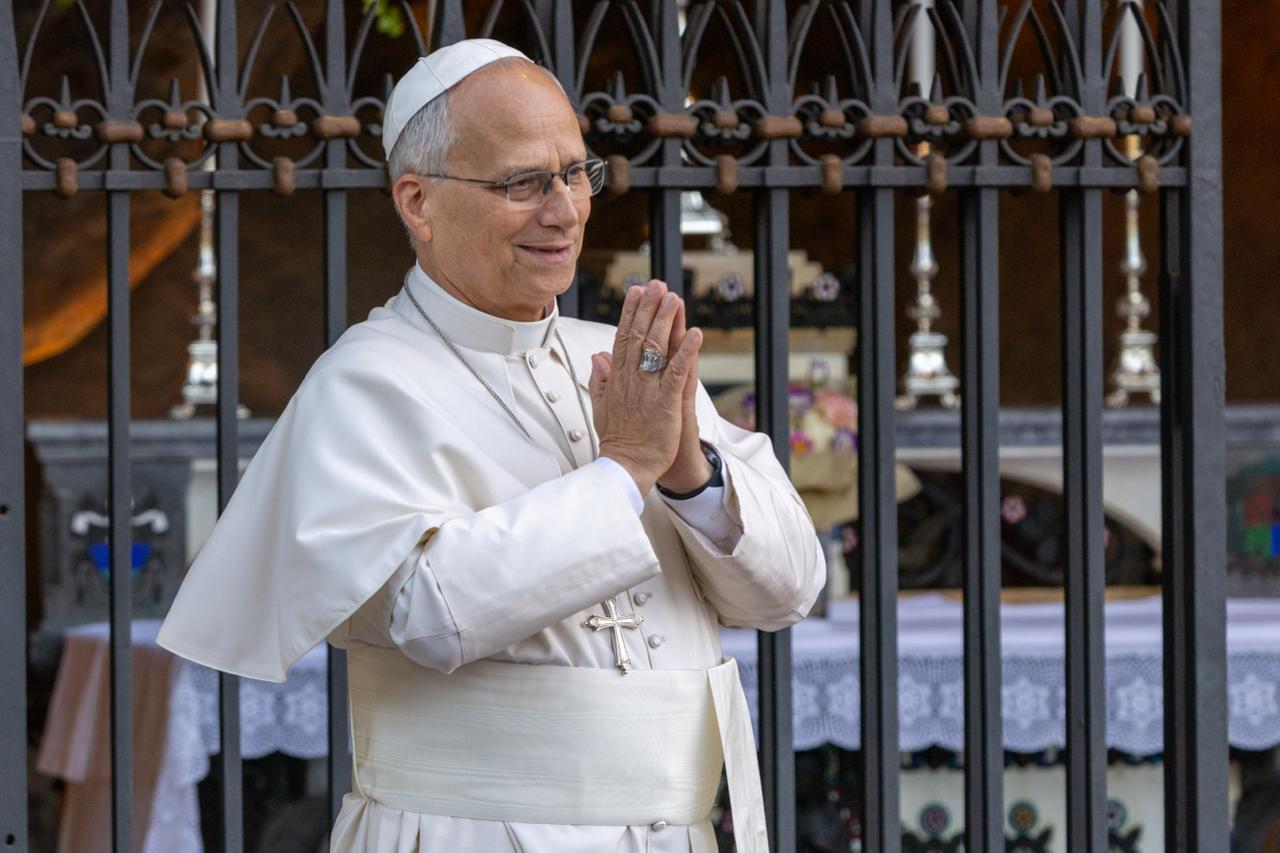
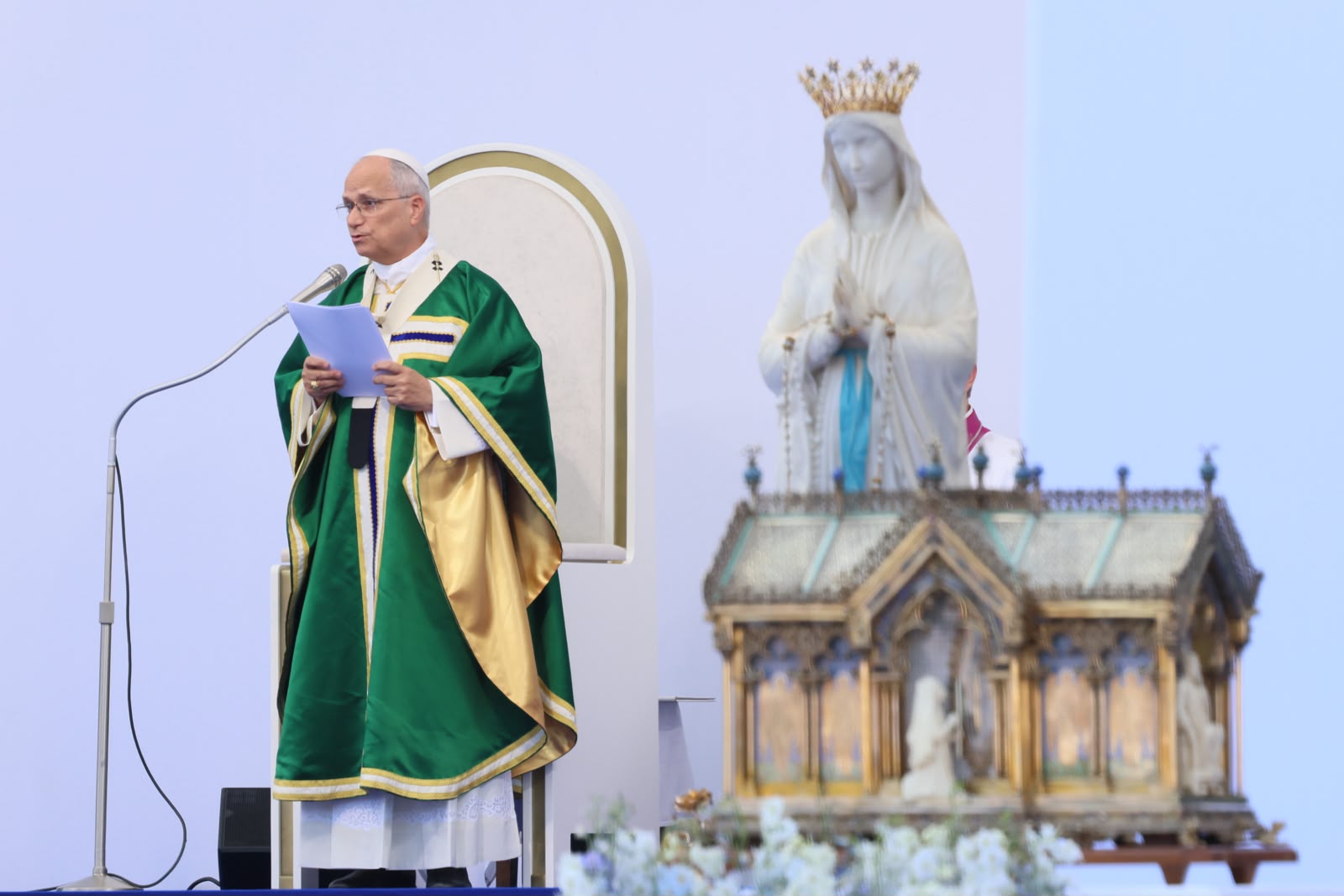
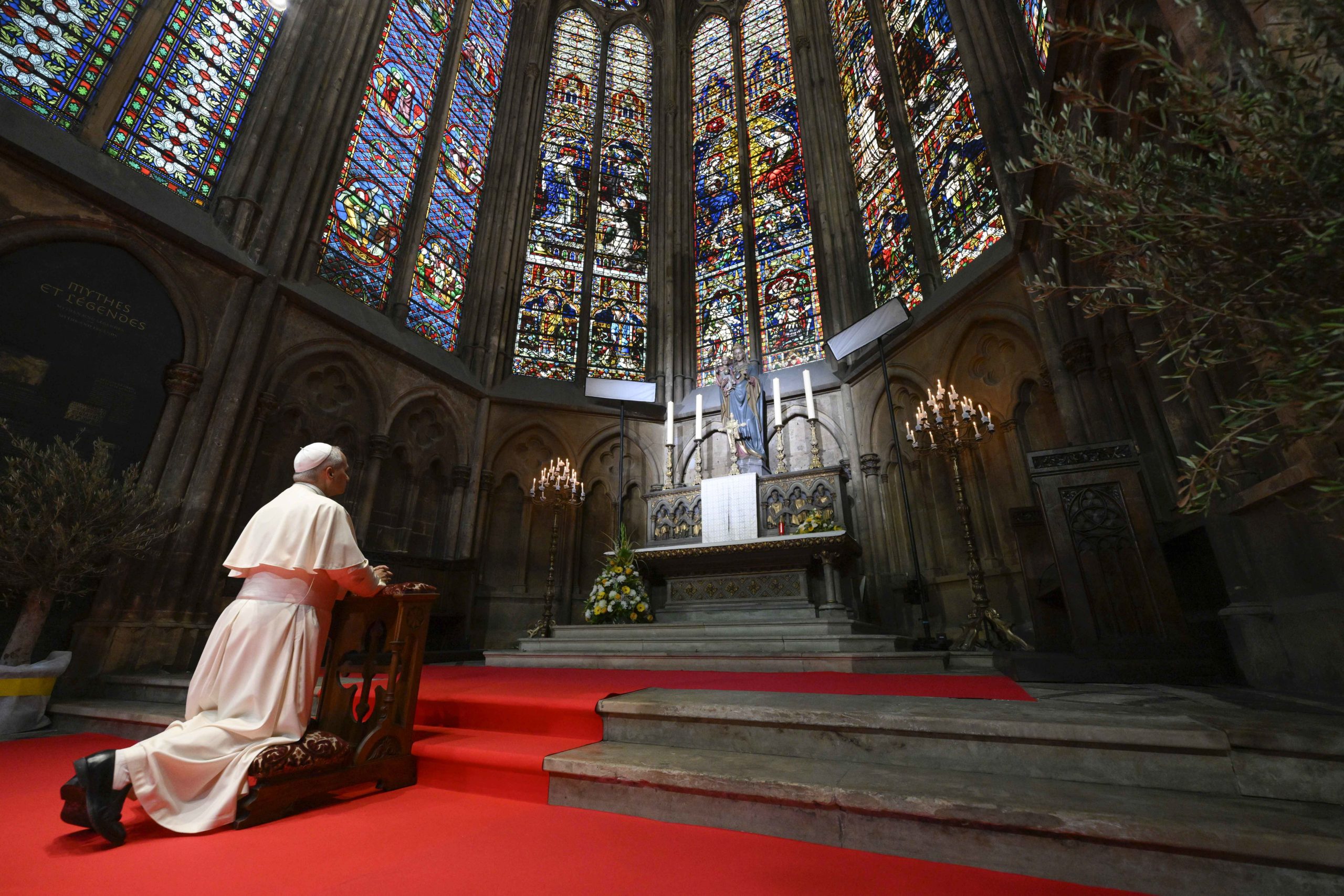
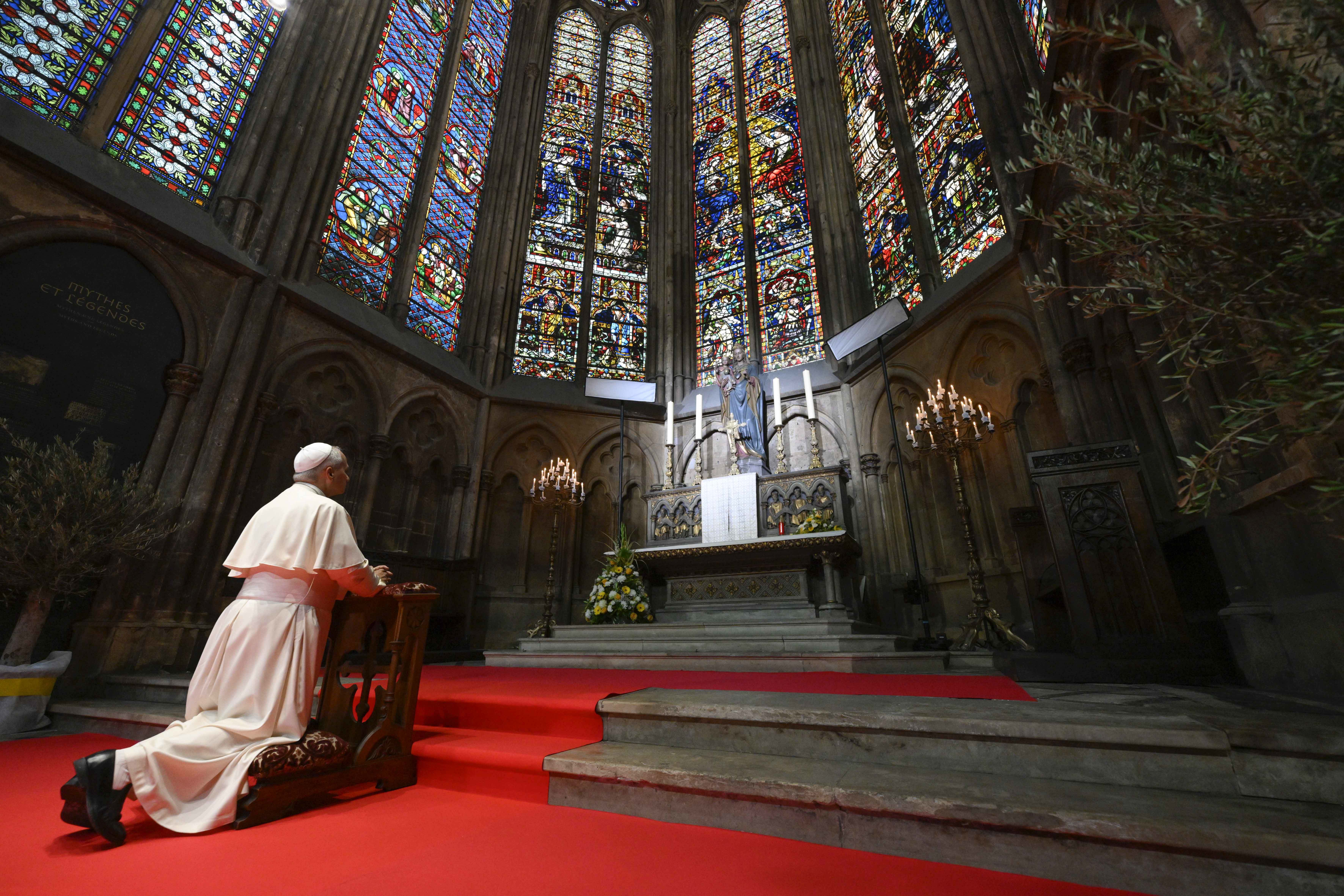
Pope Leo XIV honors Our Lady of Almudena with Golden Rose, reflects on Spain’s Christian heritage #Catholic For more than a thousand years, generations of Catholics in Madrid have turned to Our Lady of Almudena in times of celebration, hardship, and prayer. On June 8, that enduring devotion received one of the Church’s highest marks of recognition when Pope Leo XIV bestowed a Golden Rose upon the historic statue.“As a symbol of the pope’s filial love for the Virgin Mary, I will place a Golden Rose at her feet,” Leo said during a ceremony at Madrid’s Cathedral of Santa María la Real de la Almudena.The papal honor — one of the highest distinctions a pope can bestow upon a Marian image or shrine — recognizes the deep devotion generations of Spanish Catholics have shown to the Blessed Virgin under the title of Almudena.The exact origin of the gifting of a Golden Rose is unknown, although it is considered one of the oldest papal traditions. The earliest reliable record dates to 1096, when Pope Urban II sent one to Fulcone d’Angers. Hidden in the citadel wallAddressing the faithful gathered in the cathedral, Leo reflected on the image’s unique place in Madrid’s history.“For centuries, countless generations of Madrileños have venerated this image of the Blessed Virgin Mary holding her divine Son in her arms and presenting him to us,” the pope said.According to long-standing tradition, the devotion dates to the early centuries of Christianity in Spain. When Muslim forces conquered much of the Iberian Peninsula in A.D. 712, Christians in Madrid reportedly concealed the statue within the city’s defensive walls to protect it from destruction. The image remained hidden for centuries as Christian kingdoms gradually sought to reclaim territories across the peninsula during the Reconquista.The wall that fell In 1083, after King Alfonso VI of Castile recaptured Madrid, Christians searched for the long-lost statue. Tradition holds that after days of prayer, a section of the city wall suddenly collapsed, revealing the image preserved within. Witnesses reported seeing lights near the site, and the statue was discovered largely intact despite centuries of concealment.Recalling the story, Leo noted that “during challenging periods for the Christian community, the statue of the Virgin Mary was hidden in a niche of the citadel wall for protection. It remained concealed for some time, until parts of the wall collapsed and it was miraculously discovered intact.”The title “Almudena” derives from the Arabic word “al-mudayna,” meaning “citadel” or “fortress,” a reference to the location where the image was found.A message for today In his homily, the pope used the collapse of the wall as a spiritual lesson for modern society.“It was thanks to a collapsed wall that the Mother was reunited with her people,” Leo said. “This event is providential, because it points to the path that Jesus, through his most holy mother, invites us to follow.”Leo connected that image to challenges facing the modern world, observing that “there are still many walls that do not protect but rather divide, separate, and isolate.”The ceremony also highlighted the popeʼs connection to Spain, a nation whose Catholic heritage has profoundly shaped the history of the Church. By honoring one of Spain’s most beloved Marian images, the pontiff underscored the enduring importance of popular Marian devotion and the Christian roots that continue to influence Spanish culture.Renewing faith and hope Beyond its historical significance, the story of Our Lady of Almudena continues to resonate with Catholics today. The devotion recalls themes of perseverance, hope, and trust in God’s providence, themes Pope Leo himself highlighted as he encouraged the faithful to remain steadfast in faith, charity, and hope.Calling the devotion a source of hope, Leo described it as “a sign of the Christian roots that characterize you and give you life, but also of the great hope which continues to motivate you to move forward.”He concluded by encouraging Catholics to remain steadfast in faith, charity, and hope, asking that the intercession of Our Lady of Almudena strengthen believers in their love for Christ and help them “form bonds and restore the universal language of communion, fraternal love, and harmony.”

Pope Leo XIV honors Our Lady of Almudena with Golden Rose, reflects on Spain’s Christian heritage #Catholic For more than a thousand years, generations of Catholics in Madrid have turned to Our Lady of Almudena in times of celebration, hardship, and prayer. On June 8, that enduring devotion received one of the Church’s highest marks of recognition when Pope Leo XIV bestowed a Golden Rose upon the historic statue.“As a symbol of the pope’s filial love for the Virgin Mary, I will place a Golden Rose at her feet,” Leo said during a ceremony at Madrid’s Cathedral of Santa María la Real de la Almudena.The papal honor — one of the highest distinctions a pope can bestow upon a Marian image or shrine — recognizes the deep devotion generations of Spanish Catholics have shown to the Blessed Virgin under the title of Almudena.The exact origin of the gifting of a Golden Rose is unknown, although it is considered one of the oldest papal traditions. The earliest reliable record dates to 1096, when Pope Urban II sent one to Fulcone d’Angers. Hidden in the citadel wallAddressing the faithful gathered in the cathedral, Leo reflected on the image’s unique place in Madrid’s history.“For centuries, countless generations of Madrileños have venerated this image of the Blessed Virgin Mary holding her divine Son in her arms and presenting him to us,” the pope said.According to long-standing tradition, the devotion dates to the early centuries of Christianity in Spain. When Muslim forces conquered much of the Iberian Peninsula in A.D. 712, Christians in Madrid reportedly concealed the statue within the city’s defensive walls to protect it from destruction. The image remained hidden for centuries as Christian kingdoms gradually sought to reclaim territories across the peninsula during the Reconquista.The wall that fell In 1083, after King Alfonso VI of Castile recaptured Madrid, Christians searched for the long-lost statue. Tradition holds that after days of prayer, a section of the city wall suddenly collapsed, revealing the image preserved within. Witnesses reported seeing lights near the site, and the statue was discovered largely intact despite centuries of concealment.Recalling the story, Leo noted that “during challenging periods for the Christian community, the statue of the Virgin Mary was hidden in a niche of the citadel wall for protection. It remained concealed for some time, until parts of the wall collapsed and it was miraculously discovered intact.”The title “Almudena” derives from the Arabic word “al-mudayna,” meaning “citadel” or “fortress,” a reference to the location where the image was found.A message for today In his homily, the pope used the collapse of the wall as a spiritual lesson for modern society.“It was thanks to a collapsed wall that the Mother was reunited with her people,” Leo said. “This event is providential, because it points to the path that Jesus, through his most holy mother, invites us to follow.”Leo connected that image to challenges facing the modern world, observing that “there are still many walls that do not protect but rather divide, separate, and isolate.”The ceremony also highlighted the popeʼs connection to Spain, a nation whose Catholic heritage has profoundly shaped the history of the Church. By honoring one of Spain’s most beloved Marian images, the pontiff underscored the enduring importance of popular Marian devotion and the Christian roots that continue to influence Spanish culture.Renewing faith and hope Beyond its historical significance, the story of Our Lady of Almudena continues to resonate with Catholics today. The devotion recalls themes of perseverance, hope, and trust in God’s providence, themes Pope Leo himself highlighted as he encouraged the faithful to remain steadfast in faith, charity, and hope.Calling the devotion a source of hope, Leo described it as “a sign of the Christian roots that characterize you and give you life, but also of the great hope which continues to motivate you to move forward.”He concluded by encouraging Catholics to remain steadfast in faith, charity, and hope, asking that the intercession of Our Lady of Almudena strengthen believers in their love for Christ and help them “form bonds and restore the universal language of communion, fraternal love, and harmony.”

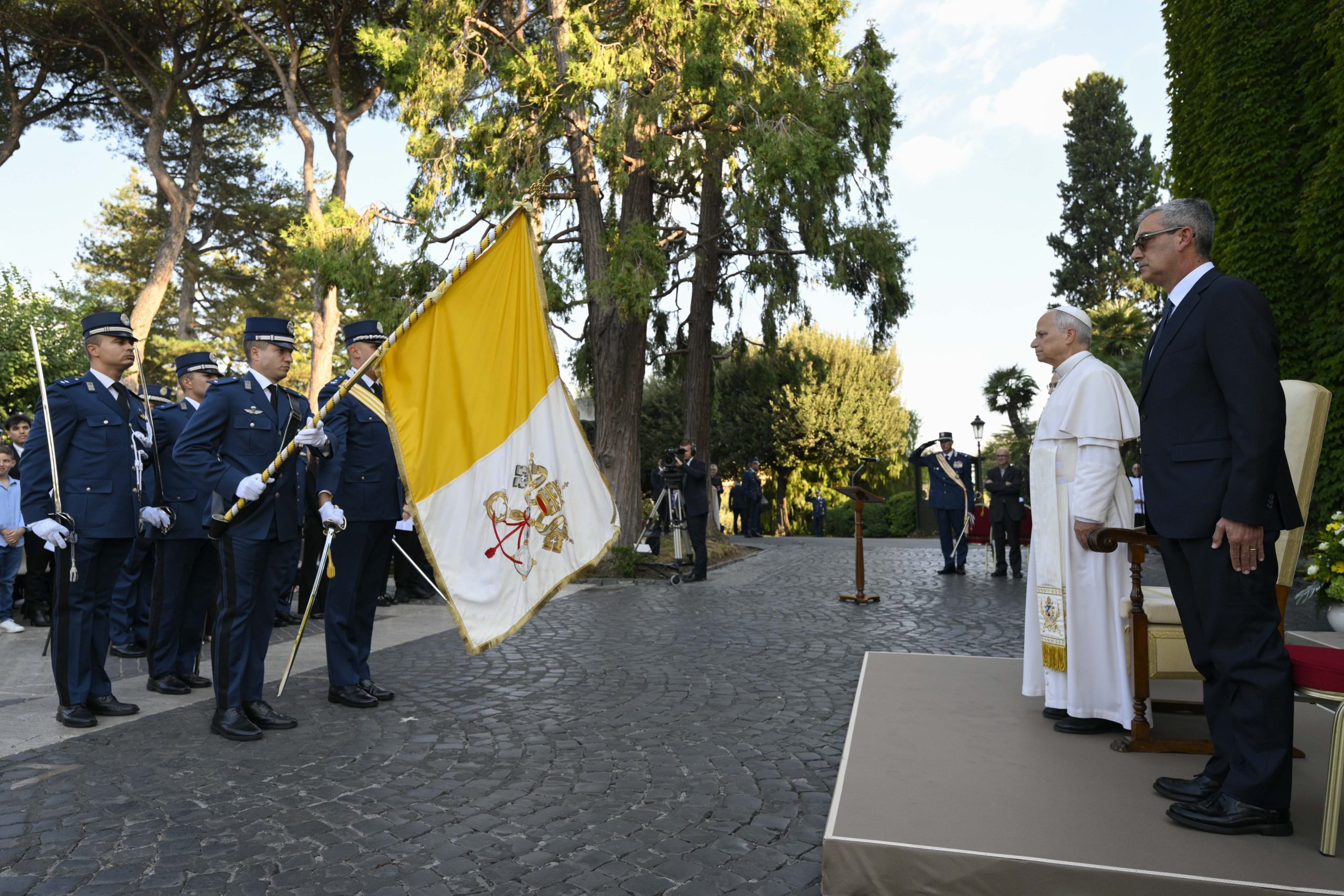
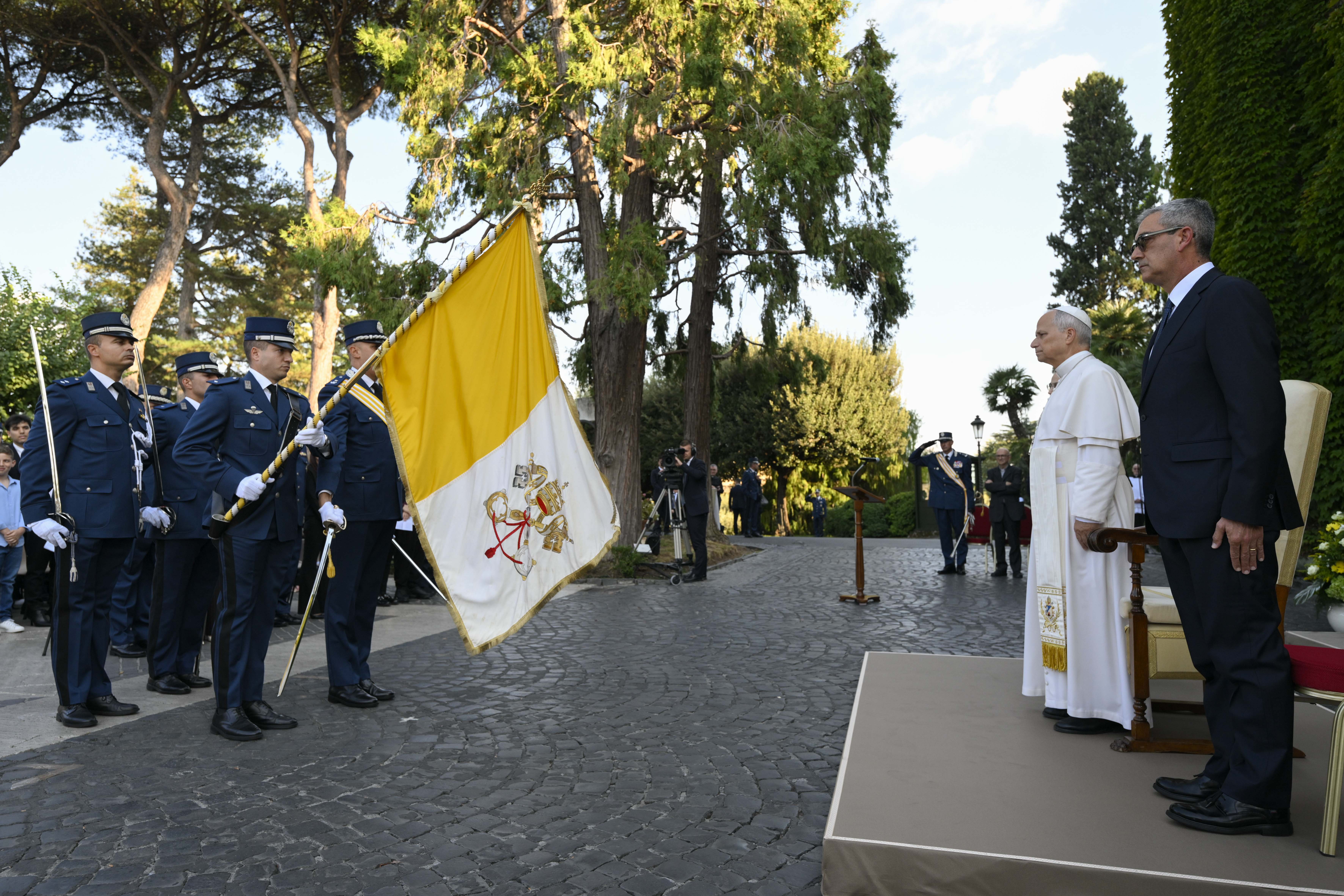
The origin of the gifting of a golden rose is unknown, but it is considered one of the oldest papal traditions dating back to 1096.

Read More
13,000 gather at Knock in Ireland for largest Catholic rally since papal visit #Catholic In the largest gathering of Catholics in Ireland since Pope Francis’ visit in 2018, the annual All Ireland Rosary brought over 13,000 people to Knock Shrine on June 6 in a joint prayer for peace. Speaking to EWTN News after the rally, Archbishop of Armagh and Primate of All Ireland Eamon Martin said: “It was a very special joy for me to preside at the Eucharist in Knock at the rosary rally. I felt a tremendous sense of joy and hope among the people who were gathered there. And it was especially gratifying to see many young people, including the childrenʼs rosary group, who made a very important and beautiful contribution to the day.”The archbishop added: “I really felt that Knock was alive, and it makes me realize that our Blessed Mother continues to speak into the troubled world in which we live, with many new problems and new challenges. From the point of view of Ireland, itʼs very important for us to have a gathering like this, to affirm the very many people who have remained strong and steadfast in their faith and who need this kind of gathering in order to give them encouragement and a strong sense of mission.”Martin said the word “mission” stayed with him after leaving the rally. “Thatʼs a word that I went home with in my head,“ he said. ”There is a wonderful mission involved in the rosary rally. Itʼs about gathering people but also about sending them back into their homes, parishes, and communities, to continue to make the beautiful graces of our Blessed Mother well known, to continue to pray for peace.”
 
 Thousands gather at Knock Shrine in Knock, Ireland, for the All Ireland Rosary Rally on June 6, 2026. | Credit Dáithi Quinn
 
 Turning to the practical ways in which people can make a difference in their local parishes, Martin said: “I personally would invite people to restore the practice of the First Saturday devotions. This would be in fulfillment of our Blessed Motherʼs own wish, but it would also provide a new and further structure for parishes to gather, to pray the rosary, to have adoration, to have the sacrament of reconciliation available.”Martin also expressed hope that other countries might be inspired by the example of the All Ireland Rosary Rally.In his sermon during the Mass at the shrine on the day of the rally, the archbishop encouraged the congregation of thousands to pray often, in union with Mary, for the protection of humanity in this technological age.Echoing the words of Pope Leo XIV in his recent encyclical Magnifica Humanitas, he said: “Artificial Intelligence is already shaping human life in homes, workplaces, and communities; in hospitals, public services, and economies. AI can do remarkable and helpful things. It can even mimic human behavior and voices, but it cannot love, suffer, forgive, pray, or hope as humans can, nor can it be truly ‘wise.’ AI does not have a conscience.”Together with Bishop Donal McKeown and Bishop John Buckley, Martin led the renewal of the consecration of Ireland to the Immaculate Heart of Mary at the culmination of the rosary procession.Speaking to EWTN News, Christine O’Hara, a secondary schoolteacher in Cork, Ireland, said: “The rosary rally was a very blessed and grace-filled day, and thereʼs a number of things that weʼre really hoping people will take away from the event. The first being that people will feel inspired to pray the rosary every day.”O’Hara, who runs a childrenʼs rosary group and two First Saturday communities, added: “Our Lady said in Fátima, pray the rosary every day to obtain peace in the world and an end to the war. Itʼs the desire of Archbishop Eamon Martin that the renewal of the First Saturday devotion would happen in this country. Weʼre really hoping and praying that one of the fruits, and Iʼm sure there will be many fruits from this rosary rally, but weʼre really hoping and praying that people will feel inspired to start the First Saturday devotion in their parish.”OʼHara also said she hopes more people will be inspired to start childrenʼs rosary groups as well as rosary groups for adults in their parishes. The huge crowd also heard from an inspiring panel of international speakers. Bishop Oliver Doeme spoke to the crowds about the power of the rosary in strengthening the faith and courage of the people of his diocese in Nigeria who live in daily fear of murder at the hands of Boko Haram terrorists.Nikki Kingsley shared her remarkable conversion journey from the Muslim faith in her native Pakistan to being received into the Catholic faith. Her moving and inspiring story focused on the power of the rosary and her devotion to Our Lady.Other speakers included Father Chris Alar, the provincial superior of the Marian Fathers of the Immaculate Conception, who talked of the importance of Marian devotion, and Sister Ângela de Fátima, vice postulator for the cause of the three Fátima children.

13,000 gather at Knock in Ireland for largest Catholic rally since papal visit #Catholic In the largest gathering of Catholics in Ireland since Pope Francis’ visit in 2018, the annual All Ireland Rosary brought over 13,000 people to Knock Shrine on June 6 in a joint prayer for peace. Speaking to EWTN News after the rally, Archbishop of Armagh and Primate of All Ireland Eamon Martin said: “It was a very special joy for me to preside at the Eucharist in Knock at the rosary rally. I felt a tremendous sense of joy and hope among the people who were gathered there. And it was especially gratifying to see many young people, including the childrenʼs rosary group, who made a very important and beautiful contribution to the day.”The archbishop added: “I really felt that Knock was alive, and it makes me realize that our Blessed Mother continues to speak into the troubled world in which we live, with many new problems and new challenges. From the point of view of Ireland, itʼs very important for us to have a gathering like this, to affirm the very many people who have remained strong and steadfast in their faith and who need this kind of gathering in order to give them encouragement and a strong sense of mission.”Martin said the word “mission” stayed with him after leaving the rally. “Thatʼs a word that I went home with in my head,“ he said. ”There is a wonderful mission involved in the rosary rally. Itʼs about gathering people but also about sending them back into their homes, parishes, and communities, to continue to make the beautiful graces of our Blessed Mother well known, to continue to pray for peace.” Thousands gather at Knock Shrine in Knock, Ireland, for the All Ireland Rosary Rally on June 6, 2026. | Credit Dáithi Quinn Turning to the practical ways in which people can make a difference in their local parishes, Martin said: “I personally would invite people to restore the practice of the First Saturday devotions. This would be in fulfillment of our Blessed Motherʼs own wish, but it would also provide a new and further structure for parishes to gather, to pray the rosary, to have adoration, to have the sacrament of reconciliation available.”Martin also expressed hope that other countries might be inspired by the example of the All Ireland Rosary Rally.In his sermon during the Mass at the shrine on the day of the rally, the archbishop encouraged the congregation of thousands to pray often, in union with Mary, for the protection of humanity in this technological age.Echoing the words of Pope Leo XIV in his recent encyclical Magnifica Humanitas, he said: “Artificial Intelligence is already shaping human life in homes, workplaces, and communities; in hospitals, public services, and economies. AI can do remarkable and helpful things. It can even mimic human behavior and voices, but it cannot love, suffer, forgive, pray, or hope as humans can, nor can it be truly ‘wise.’ AI does not have a conscience.”Together with Bishop Donal McKeown and Bishop John Buckley, Martin led the renewal of the consecration of Ireland to the Immaculate Heart of Mary at the culmination of the rosary procession.Speaking to EWTN News, Christine O’Hara, a secondary schoolteacher in Cork, Ireland, said: “The rosary rally was a very blessed and grace-filled day, and thereʼs a number of things that weʼre really hoping people will take away from the event. The first being that people will feel inspired to pray the rosary every day.”O’Hara, who runs a childrenʼs rosary group and two First Saturday communities, added: “Our Lady said in Fátima, pray the rosary every day to obtain peace in the world and an end to the war. Itʼs the desire of Archbishop Eamon Martin that the renewal of the First Saturday devotion would happen in this country. Weʼre really hoping and praying that one of the fruits, and Iʼm sure there will be many fruits from this rosary rally, but weʼre really hoping and praying that people will feel inspired to start the First Saturday devotion in their parish.”OʼHara also said she hopes more people will be inspired to start childrenʼs rosary groups as well as rosary groups for adults in their parishes. The huge crowd also heard from an inspiring panel of international speakers. Bishop Oliver Doeme spoke to the crowds about the power of the rosary in strengthening the faith and courage of the people of his diocese in Nigeria who live in daily fear of murder at the hands of Boko Haram terrorists.Nikki Kingsley shared her remarkable conversion journey from the Muslim faith in her native Pakistan to being received into the Catholic faith. Her moving and inspiring story focused on the power of the rosary and her devotion to Our Lady.Other speakers included Father Chris Alar, the provincial superior of the Marian Fathers of the Immaculate Conception, who talked of the importance of Marian devotion, and Sister Ângela de Fátima, vice postulator for the cause of the three Fátima children.

Busloads of people from across Ireland converged on Knock on Saturday for the 41st All Ireland Rosary, with crowds exceeding last year’s attendance.

Read More
Pope Leo XIV in Barcelona calls Catholics to be martyrs of unity #Catholic BARCELONA, Spain — Pope Leo XIV dedicated Tuesday morning to thanking the thousands of volunteers who helped organize his apostolic journey to Spain before heading to Barcelona to touch the ancient traces of the country’s deeply rooted Christian faith.At the Cathedral of the Holy Cross and St. Eulalia, whose construction began at the end of the 13th century on the site of early Christian and Romanesque churches and which became, a century later, one of the most important jewels of European Gothic architecture, the pope prayed Midday Prayer with about 500 faithful.Hundreds more waited outside the cathedral to show their affection, many waving Vatican flags.The crowd erupted with excitement at his arrival. The pontiff was accompanied by Cardinal Juan José Omella, archbishop of Barcelona, who gestured with his hands to indicate to the people waiting outside that the pope had to leave. The plane carrying Leo XIV had landed in the Catalan capital 40 minutes late.During the ceremony, the pope sat in the oldest chair — the cathedra, or bishop’s seat — in the city that is still in use, dating at least to the cathedral’s consecration in 1058, according to recent research.In his homily, Leo XIV called Catholics to be builders of communion.“Dear brothers and sisters: it is in this spirit that we too, in a world torn apart by wars and divisions, in a society that is increasingly fragmented and individualistic, wish to be ‘martyrs’ — that is, witnesses and prophets of unity, of welcome, of harmony and of peace, even at the cost of sacrifice and renunciation,” the pope said.It was the first time during the trip that Leo XIV pronounced several phrases in Catalan, the language proper to Catalonia, co-official with Spanish and the main language of the regional administration.A symbol of Catalan cultural identity, the language to be used by the pontiff during the events scheduled in Barcelona had become the subject of public debate in Catalonia in recent days.The controversy intensified after it emerged that the blessing of the Tower of Jesus Christ at the Sagrada Familia — one of the central moments of the visit — would be conducted mainly in Spanish.In the Congress of Deputies, where the pope delivered an unprecedented address Monday, Junts per Catalunya lawmaker Miriam Nogueras asked him to speak Catalan.“It is important for each of us not to allow anything to destroy the unity in which God has established us and toward whose fullness he leads us day by day,” the pontiff said, alternating Catalan and Spanish in the homily.Leo XIV cited two addresses by his predecessor, Pope Francis, who never visited Spain but often expressed affection for the country.On the occasion of the inauguration of the Tower of the Virgin Mary at the Basilica of the Sagrada Familia on Dec. 8, 2021, Francis sent a message recalling that the Church “is the fruit of an act of love that precedes her and comes from God. Above all, she grows by allowing herself to be loved by him, united, with a humble and grateful heart, because only those who allow themselves to be loved by God can build, together with others, the works of love.”One year later, the Argentine pope told seminarians of the Archdiocese of Barcelona during a pilgrimage to Rome: “Never cease to savor and remember this love of predilection which pours and will pour itself abundantly into your heart.”Leo XIV structured his homily around the image of the Catholic Church as both beloved bride and body, with all believers as members of a single organism.The Spirit, he said, “impels us, as parts of a single living structure, not only to give ourselves unreservedly wherever Providence calls us, but to do so according to God’s designs, in obedience and trust.”Just as in a body, he continued, “so too among us there are members who are stronger and others who are weaker; some are visible, performing functions that are evident to the outside world, while others are hidden, working from within — in some cases without ceasing and carrying out vital functions without anyone taking notice.”The pope said there are many possible images to “illustrate the variety and importance of the roles and missions we find among ourselves,” but the message is always the same.“In the richness of the gifts we have received, we are strong because we are united, and we are united because we are animated by the same Spirit, the Spirit of Christ, who is the Spirit of communion for the salvation of all,” he said.Upon arriving, Leo XIV was received by Omella. After the greeting, the cardinal led him to the Chapel of the Blessed Sacrament for a brief moment of personal prayer.On his way to the altar, the pope passed by the baptismal font, built in 1433. It was in that baptistery that the first six Indigenous people brought from the Americas by Christopher Columbus received the sacrament of entrance into the Church, as a plaque in the chapel recalls.All of this forms part of the cathedral’s history, which inherits a tradition of worship in this part of Barcelona dating back to the fourth century.Leo XIV’s final act inside the cathedral was to descend to the crypt, where the tomb of the Roman martyr St. Eulalia, co-patroness of Barcelona, is located.Before her martyrdom, the young saint was said to have tended geese. For this reason, 13 geese are kept today in the cathedral cloister in her honor, recalling both her 13 tortures and the age at which she died for the Lord.The pontiff also spoke of “so many other martyrs” and called the faithful to respond with “our ‘yes,’ ready if necessary to die to ourselves, to lose ourselves in order to find ourselves again, to renounce the superfluous in order to build upon what is essential and lasts forever.”“This is what the crucified One teaches us,” the pope said. “This is what the Apostle Paul and the examples of the saints invite us to do.”The pope ended his homily by invoking Mary in Catalan: “Santa Maria de la Mercè, pregueu per nosaltres” — “Our Lady of Mercy, pray for us.”This story was first published by ACI Prensa, EWTN News’ Spanish-language sister service. It has been translated and adapted by EWTN News English.

Pope Leo XIV in Barcelona calls Catholics to be martyrs of unity #Catholic BARCELONA, Spain — Pope Leo XIV dedicated Tuesday morning to thanking the thousands of volunteers who helped organize his apostolic journey to Spain before heading to Barcelona to touch the ancient traces of the country’s deeply rooted Christian faith.At the Cathedral of the Holy Cross and St. Eulalia, whose construction began at the end of the 13th century on the site of early Christian and Romanesque churches and which became, a century later, one of the most important jewels of European Gothic architecture, the pope prayed Midday Prayer with about 500 faithful.Hundreds more waited outside the cathedral to show their affection, many waving Vatican flags.The crowd erupted with excitement at his arrival. The pontiff was accompanied by Cardinal Juan José Omella, archbishop of Barcelona, who gestured with his hands to indicate to the people waiting outside that the pope had to leave. The plane carrying Leo XIV had landed in the Catalan capital 40 minutes late.During the ceremony, the pope sat in the oldest chair — the cathedra, or bishop’s seat — in the city that is still in use, dating at least to the cathedral’s consecration in 1058, according to recent research.In his homily, Leo XIV called Catholics to be builders of communion.“Dear brothers and sisters: it is in this spirit that we too, in a world torn apart by wars and divisions, in a society that is increasingly fragmented and individualistic, wish to be ‘martyrs’ — that is, witnesses and prophets of unity, of welcome, of harmony and of peace, even at the cost of sacrifice and renunciation,” the pope said.It was the first time during the trip that Leo XIV pronounced several phrases in Catalan, the language proper to Catalonia, co-official with Spanish and the main language of the regional administration.A symbol of Catalan cultural identity, the language to be used by the pontiff during the events scheduled in Barcelona had become the subject of public debate in Catalonia in recent days.The controversy intensified after it emerged that the blessing of the Tower of Jesus Christ at the Sagrada Familia — one of the central moments of the visit — would be conducted mainly in Spanish.In the Congress of Deputies, where the pope delivered an unprecedented address Monday, Junts per Catalunya lawmaker Miriam Nogueras asked him to speak Catalan.“It is important for each of us not to allow anything to destroy the unity in which God has established us and toward whose fullness he leads us day by day,” the pontiff said, alternating Catalan and Spanish in the homily.Leo XIV cited two addresses by his predecessor, Pope Francis, who never visited Spain but often expressed affection for the country.On the occasion of the inauguration of the Tower of the Virgin Mary at the Basilica of the Sagrada Familia on Dec. 8, 2021, Francis sent a message recalling that the Church “is the fruit of an act of love that precedes her and comes from God. Above all, she grows by allowing herself to be loved by him, united, with a humble and grateful heart, because only those who allow themselves to be loved by God can build, together with others, the works of love.”One year later, the Argentine pope told seminarians of the Archdiocese of Barcelona during a pilgrimage to Rome: “Never cease to savor and remember this love of predilection which pours and will pour itself abundantly into your heart.”Leo XIV structured his homily around the image of the Catholic Church as both beloved bride and body, with all believers as members of a single organism.The Spirit, he said, “impels us, as parts of a single living structure, not only to give ourselves unreservedly wherever Providence calls us, but to do so according to God’s designs, in obedience and trust.”Just as in a body, he continued, “so too among us there are members who are stronger and others who are weaker; some are visible, performing functions that are evident to the outside world, while others are hidden, working from within — in some cases without ceasing and carrying out vital functions without anyone taking notice.”The pope said there are many possible images to “illustrate the variety and importance of the roles and missions we find among ourselves,” but the message is always the same.“In the richness of the gifts we have received, we are strong because we are united, and we are united because we are animated by the same Spirit, the Spirit of Christ, who is the Spirit of communion for the salvation of all,” he said.Upon arriving, Leo XIV was received by Omella. After the greeting, the cardinal led him to the Chapel of the Blessed Sacrament for a brief moment of personal prayer.On his way to the altar, the pope passed by the baptismal font, built in 1433. It was in that baptistery that the first six Indigenous people brought from the Americas by Christopher Columbus received the sacrament of entrance into the Church, as a plaque in the chapel recalls.All of this forms part of the cathedral’s history, which inherits a tradition of worship in this part of Barcelona dating back to the fourth century.Leo XIV’s final act inside the cathedral was to descend to the crypt, where the tomb of the Roman martyr St. Eulalia, co-patroness of Barcelona, is located.Before her martyrdom, the young saint was said to have tended geese. For this reason, 13 geese are kept today in the cathedral cloister in her honor, recalling both her 13 tortures and the age at which she died for the Lord.The pontiff also spoke of “so many other martyrs” and called the faithful to respond with “our ‘yes,’ ready if necessary to die to ourselves, to lose ourselves in order to find ourselves again, to renounce the superfluous in order to build upon what is essential and lasts forever.”“This is what the crucified One teaches us,” the pope said. “This is what the Apostle Paul and the examples of the saints invite us to do.”The pope ended his homily by invoking Mary in Catalan: “Santa Maria de la Mercè, pregueu per nosaltres” — “Our Lady of Mercy, pray for us.”This story was first published by ACI Prensa, EWTN News’ Spanish-language sister service. It has been translated and adapted by EWTN News English.

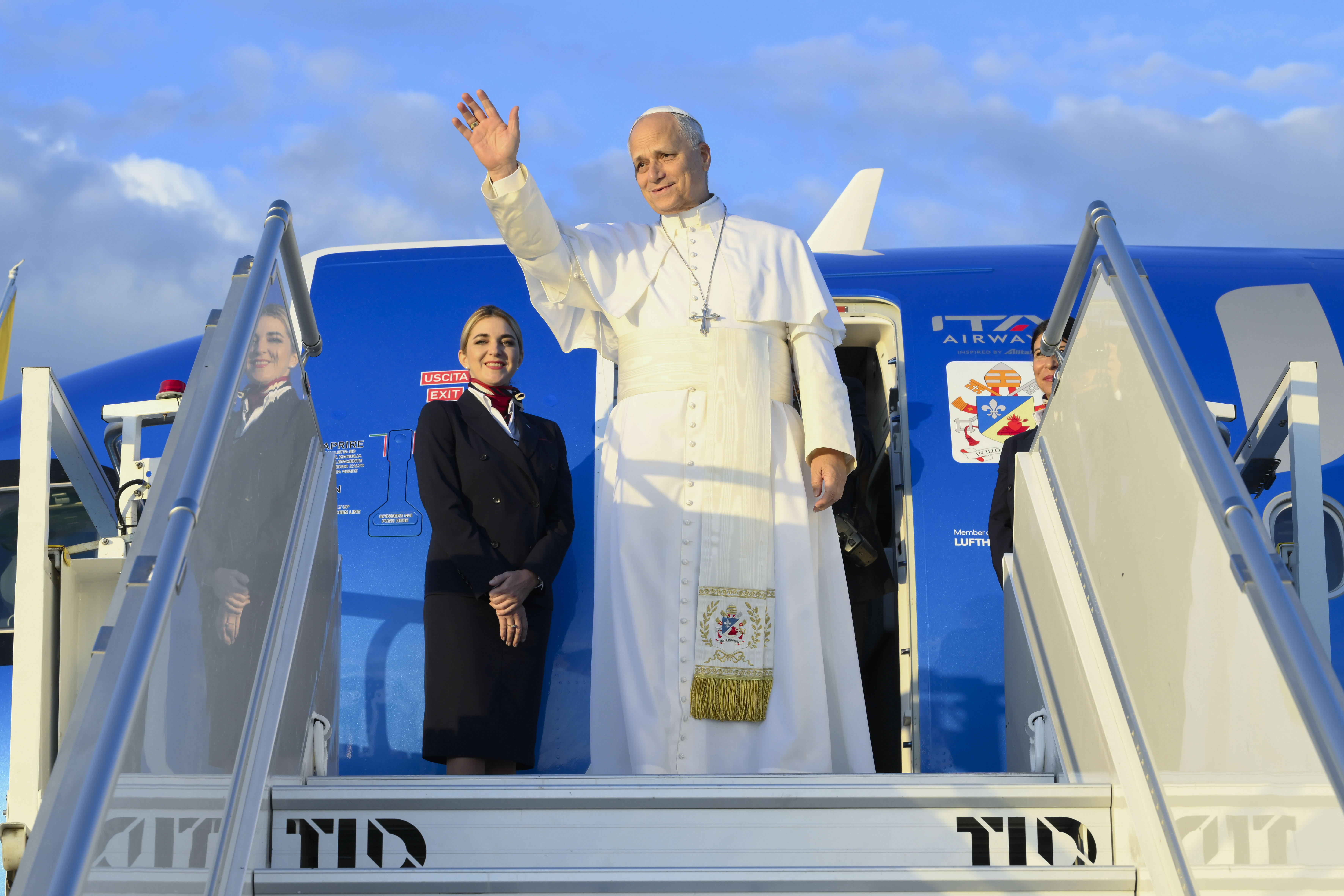
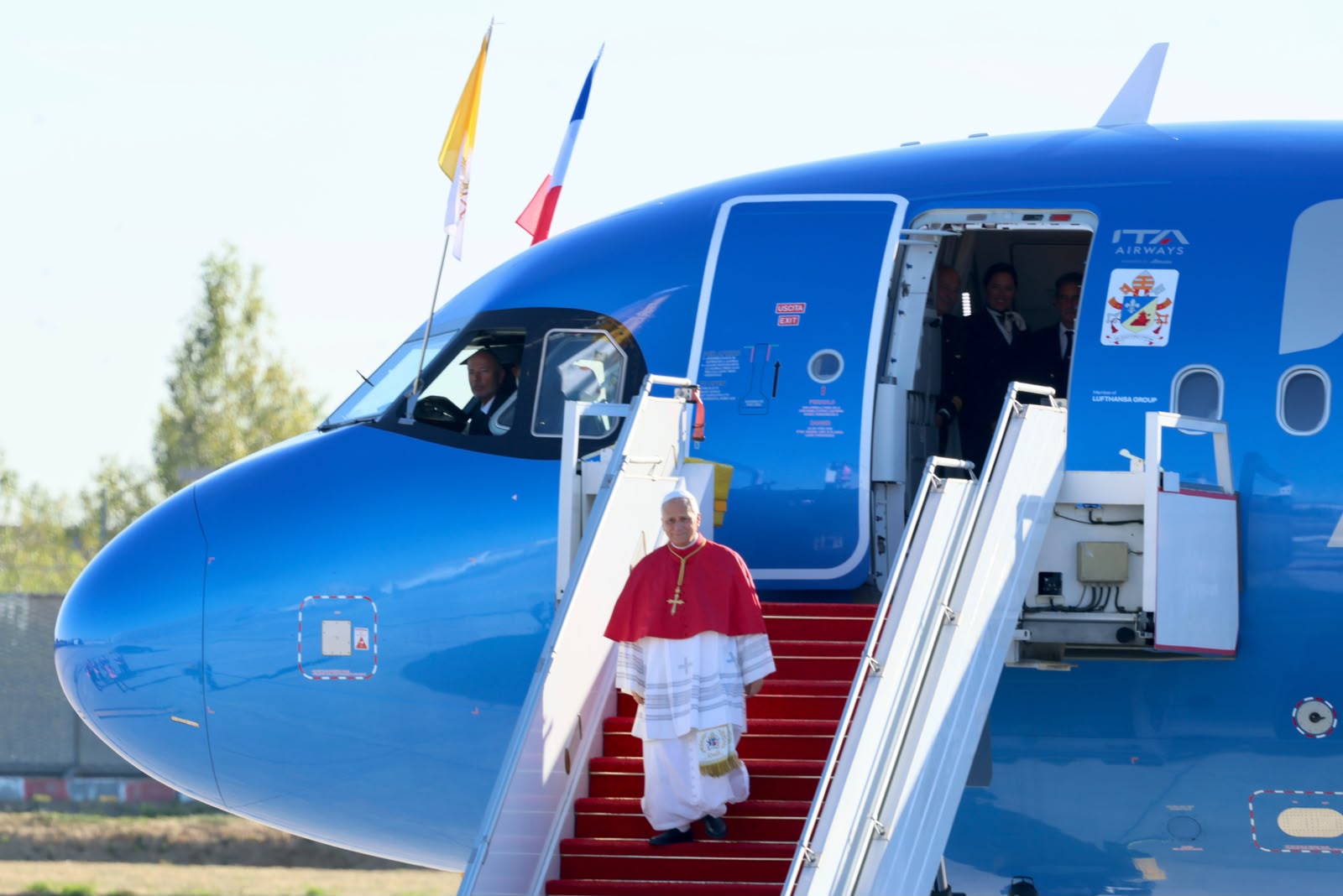
After an exuberant welcome in the Catalan capital, the pope prayed Midday Prayer in Barcelona’s cathedral and urged the faithful to be “witnesses and prophets of unity.”

Read More
Monsignor Vaccari cites rising humanitarian strain as Middle East violence intensifies #Catholic Monsignor Peter Vaccari reported rising humanitarian needs during a recent Middle East visit, describing disrupted daily life as conflicts intensified.Vaccari, president of Catholic Near East Welfare Association (CNEWA), a papal agency that delivers humanitarian aid, described the realities facing those living amid ongoing regional tensions in an interview with “EWTN News Nightly” anchor Veronica Dudo, an excerpt of which was broadcast on June 8. Vaccari said about a visit to Jerusalem: “The day began with the sound of large sirens. Loud sirens going off, letting us know that rockets, drones, and missiles were on their way.” The situation, he said, dramatically altered the day’s plans for residents and aid workers alike.Despite the challenges, Vaccari continued his journey throughout the region, emphasizing the importance of maintaining a visible Church presence among suffering communities.CNEWA maintains offices throughout the Middle East, including in Jerusalem, Amman, and Beirut. According to Vaccari, the organization’s local presence enables it to respond quickly to changing circumstances and coordinate assistance directly with Church leaders on the ground.“The work that we do is on the ground,” Vaccari said, noting that local staff and Church partners remain deeply connected to the communities they serve.Much of CNEWA’s work focuses on humanitarian relief in Gaza, the West Bank, Jordan, and Lebanon. The organization provides assistance ranging from food and clean water to medicine, medical equipment, and emergency relief for families displaced by conflict.Beyond material aid, CNEWA has increasingly emphasized psychosocial and emotional support programs. Vaccari said such healing initiatives have become especially important as communities continue to endure the trauma associated with war and displacement.“To whatever extent we can work to try to provide clean water, medicine, food, medical relief, medical equipment, weʼre trying to do that,” he said. “Psychosocial healing, which as you can well imagine under the circumstances right now, is [also] a very needed entity.”Founded by Pope Pius XI in 1926, CNEWA works on behalf of the Holy See to support Eastern Catholic Churches and provide humanitarian assistance throughout the Middle East, Northeast Africa, India, and Eastern Europe. The organization partners closely with local bishops, religious communities, and lay leaders to deliver aid where it is most needed.“We work with the local Church,” Vaccari said. “We’re working with local bishops, lay leadership, consecrated religious, and the nuncios.”The organization’s work is funded largely through donations from Catholics and other benefactors around the world.“Never, in a typical mission, do we work alone,” Vaccari said. He expressed gratitude for local partners and donors whose support makes the organization’s humanitarian and pastoral outreach possible.

Monsignor Vaccari cites rising humanitarian strain as Middle East violence intensifies #Catholic Monsignor Peter Vaccari reported rising humanitarian needs during a recent Middle East visit, describing disrupted daily life as conflicts intensified.Vaccari, president of Catholic Near East Welfare Association (CNEWA), a papal agency that delivers humanitarian aid, described the realities facing those living amid ongoing regional tensions in an interview with “EWTN News Nightly” anchor Veronica Dudo, an excerpt of which was broadcast on June 8. Vaccari said about a visit to Jerusalem: “The day began with the sound of large sirens. Loud sirens going off, letting us know that rockets, drones, and missiles were on their way.” The situation, he said, dramatically altered the day’s plans for residents and aid workers alike.Despite the challenges, Vaccari continued his journey throughout the region, emphasizing the importance of maintaining a visible Church presence among suffering communities.CNEWA maintains offices throughout the Middle East, including in Jerusalem, Amman, and Beirut. According to Vaccari, the organization’s local presence enables it to respond quickly to changing circumstances and coordinate assistance directly with Church leaders on the ground.“The work that we do is on the ground,” Vaccari said, noting that local staff and Church partners remain deeply connected to the communities they serve.Much of CNEWA’s work focuses on humanitarian relief in Gaza, the West Bank, Jordan, and Lebanon. The organization provides assistance ranging from food and clean water to medicine, medical equipment, and emergency relief for families displaced by conflict.Beyond material aid, CNEWA has increasingly emphasized psychosocial and emotional support programs. Vaccari said such healing initiatives have become especially important as communities continue to endure the trauma associated with war and displacement.“To whatever extent we can work to try to provide clean water, medicine, food, medical relief, medical equipment, weʼre trying to do that,” he said. “Psychosocial healing, which as you can well imagine under the circumstances right now, is [also] a very needed entity.”Founded by Pope Pius XI in 1926, CNEWA works on behalf of the Holy See to support Eastern Catholic Churches and provide humanitarian assistance throughout the Middle East, Northeast Africa, India, and Eastern Europe. The organization partners closely with local bishops, religious communities, and lay leaders to deliver aid where it is most needed.“We work with the local Church,” Vaccari said. “We’re working with local bishops, lay leadership, consecrated religious, and the nuncios.”The organization’s work is funded largely through donations from Catholics and other benefactors around the world.“Never, in a typical mission, do we work alone,” Vaccari said. He expressed gratitude for local partners and donors whose support makes the organization’s humanitarian and pastoral outreach possible.

Monsignor Peter Vaccari, president of Catholic Near East Welfare Association (CNEWA), a papal agency that delivers humanitarian aid, described situation in Jerusalem.

Read More
Pope Leo XIV tells Spain’s parliament every human life must be protected #Catholic MADRID — Pope Leo XIV made history Monday by becoming the first pope to address Spain’s Congress of Deputies, delivering a forceful appeal to the country’s political class to defend human dignity and protect life “from conception to its natural end.”The June 8 address, given before about 700 guests amid tight security, drew a standing ovation that lasted nearly seven minutes, with shouts of “Long live the pope!” echoing through the chamber.In his speech, Pope Leo warned lawmakers not to subordinate human dignity to “shifting social consensus or the whims of the majority at any given moment,” insisting that “every truly just society is built upon the recognition of the inviolable dignity of the human person.”“In this sense, if life ceases to be recognized as a fundamental value, what future can our societies have?” the pope asked. “Can a community that casts into the shadows the unborn child, the elderly, the sick, those who suffer in silence, or those who depend entirely on the care of others be called fully just?”“The defense of human life is neither a partisan issue nor a confessional interest: it is a goal of civilization,” he said.The pope’s remarks came as Spain’s socialist-led government has been advancing efforts to enshrine abortion protections in the country’s Constitution. Such a reform would require broad parliamentary consensus, including support from the center-right People’s Party.“Every human life must be recognized and safeguarded from conception to its natural end, in every circumstance of its existence,” Pope Leo said. “When this certainty is obscured, the most vulnerable are the first victims, and the law loses its deepest meaning: to serve and protect every person.”“For this reason,” he added, “the moral greatness of a nation is manifested, above all, in its capacity to accompany, protect and love those lives that are most fragile.”The pope also defended the family as “the primary human reality and the natural foundation of the community,” saying that “where the family is upheld, the spiritual and social stability of nations is also strengthened.”“The family will always be the first school of humanity, where one learns, before anywhere else, the basic grammar of living together: welcoming life, caring for others, forgiving, serving and belonging,” he said.Pope Leo drew on Spain’s intellectual and Catholic heritage, citing Cervantes, St. Teresa of Ávila, Miguel de Unamuno and the School of Salamanca, especially the 16th-century Dominican friar Francisco de Vitoria.From that tradition, he said, Spain helped shape “a legal and moral consciousness capable of remembering that authority always entails responsibility and that every human being must be recognized as a subject of rights and duties.”The pope said that legacy remains alive whenever lawmakers ask “how to ensure that what is possible is just, that what is legal is truly humane, and that the will of the majority safeguards those goods that belong to all and respects that which no majority can legitimately violate.”He also cited his recent encyclical “Magnifica Humanitas,” published May 25, saying that in an age of artificial intelligence, biotechnology and rapid technological change, political discernment must focus on “the place of the human person in our decision making.”The pope devoted part of his address to migrants and refugees, a major theme of his trip to Spain, which will conclude with visits to Tenerife and Las Palmas in the Canary Islands, a key entry point to Europe for migrants.“The situation of migrants and refugees calls for a response that focuses on people, addresses the root causes that force them to leave, and goes beyond the mere management of migration flows,” he said.He called for “safe and legal pathways, a respectful welcome and real opportunities for integration,” while also promoting “the right to remain in one’s own land,” so that no one is forced to leave home because of war, insecurity, poverty or the effects of the climate crisis.Pope Leo also warned that many migrants remain “prey to traffickers and smugglers who take advantage of their desperation,” calling for stronger prevention, rescue and assistance efforts.“No nation can face a challenge of this magnitude on its own,” he said.Turning to global conflict, Pope Leo said the world is undergoing “a profound spiritual and cultural crisis” marked by violence, polarization and mistrust.“Every war constitutes, ultimately, a painful defeat of the capacity to negotiate and also of that common human consciousness that recognizes bonds of justice among nations,” he said.“Weapons may impose a temporary silence; but they can never build a genuine and lasting peace,” the pope said, warning that “in various parts of the world — and in Europe as well — rearmament is once again being presented as an almost inevitable response to the fragility of the international situation.”The pope also warned against the use of artificial intelligence in warfare, saying new technologies in the military sphere require “rigorous ethical oversight, so that decisions regarding life and death are never left to automated systems nor removed from the moral responsibility of the human person.”Addressing Spain’s polarized political climate, the pope urged lawmakers to resist contempt for political opponents.“Political pluralism should not degenerate into the constant disparagement of one’s adversary,” he said. “In a mature society, even conflict can become a path to peace, when differences are softened by listening and directed toward recognizing the needs, aspirations and capabilities of all.”“Firmness does not require contempt; disagreement does not entail humiliation,” he added.Only two left-wing parties, Podemos and the BNG, which together account for six lawmakers out of more than 600 parliamentarians, chose not to attend the pope’s address.Pope Leo also made a strong appeal for religious freedom, calling freedom of thought, conscience and religion “a fundamental right that protects the most intimate sphere of the person.”“The freedom upon which the contemporary state is built, if it is authentic, recognizes the religious dimension of the human person, respects it and protects it legally,” he said. Authentic freedom, the pope added, “ensures that faith is not a reason for which a person has to forfeit his or her contribution to society.”“Faith does not seek to impose itself through privileges or coercion; yet neither can it be silenced as if it were irrelevant to public life,” he said.The pope also defended the sacramental seal of confession, saying it “holds special importance for the Catholic Church” and forms part of the broader sphere of religious freedom.“To protect it legally, as is done in a similar way in some professions, means preserving a sacred space of inner freedom, where the believer can open his or her soul to God without fear of external pressures,” Pope Leo said.The remarks came shortly after French bishops criticized a June 1 proposal in France’s National Assembly that they said could have endangered the seal of confession. The proposal was later withdrawn.Near the end of his address, the pope invited Spanish lawmakers to “lift your gaze to the world around you,” not to escape reality, but to remember that every public decision “affects real people, especially those who have less power to make their voices heard.”“A law does not attain its true greatness merely by having been formally enacted,” he said. “It attains it when, in addition to being valid in form, it can stand before the dignity of the person and pass that test without shame.”The pope concluded with a blessing for Spain, praying that the nation “never lose sight of its roots nor the courage to look to the future.”“May Spain continue to be a land of encounter, of culture, of solidarity and of hope,” he said. “And may its public life always know how to unite the firmness of convictions with the nobility of dialogue and the greatness of service.”This story was first published by ACI Prensa, the Spanish-language sister service of EWTN News. It has been translated and adapted by EWTN News English.

Pope Leo XIV tells Spain’s parliament every human life must be protected #Catholic MADRID — Pope Leo XIV made history Monday by becoming the first pope to address Spain’s Congress of Deputies, delivering a forceful appeal to the country’s political class to defend human dignity and protect life “from conception to its natural end.”The June 8 address, given before about 700 guests amid tight security, drew a standing ovation that lasted nearly seven minutes, with shouts of “Long live the pope!” echoing through the chamber.In his speech, Pope Leo warned lawmakers not to subordinate human dignity to “shifting social consensus or the whims of the majority at any given moment,” insisting that “every truly just society is built upon the recognition of the inviolable dignity of the human person.”“In this sense, if life ceases to be recognized as a fundamental value, what future can our societies have?” the pope asked. “Can a community that casts into the shadows the unborn child, the elderly, the sick, those who suffer in silence, or those who depend entirely on the care of others be called fully just?”“The defense of human life is neither a partisan issue nor a confessional interest: it is a goal of civilization,” he said.The pope’s remarks came as Spain’s socialist-led government has been advancing efforts to enshrine abortion protections in the country’s Constitution. Such a reform would require broad parliamentary consensus, including support from the center-right People’s Party.“Every human life must be recognized and safeguarded from conception to its natural end, in every circumstance of its existence,” Pope Leo said. “When this certainty is obscured, the most vulnerable are the first victims, and the law loses its deepest meaning: to serve and protect every person.”“For this reason,” he added, “the moral greatness of a nation is manifested, above all, in its capacity to accompany, protect and love those lives that are most fragile.”The pope also defended the family as “the primary human reality and the natural foundation of the community,” saying that “where the family is upheld, the spiritual and social stability of nations is also strengthened.”“The family will always be the first school of humanity, where one learns, before anywhere else, the basic grammar of living together: welcoming life, caring for others, forgiving, serving and belonging,” he said.Pope Leo drew on Spain’s intellectual and Catholic heritage, citing Cervantes, St. Teresa of Ávila, Miguel de Unamuno and the School of Salamanca, especially the 16th-century Dominican friar Francisco de Vitoria.From that tradition, he said, Spain helped shape “a legal and moral consciousness capable of remembering that authority always entails responsibility and that every human being must be recognized as a subject of rights and duties.”The pope said that legacy remains alive whenever lawmakers ask “how to ensure that what is possible is just, that what is legal is truly humane, and that the will of the majority safeguards those goods that belong to all and respects that which no majority can legitimately violate.”He also cited his recent encyclical “Magnifica Humanitas,” published May 25, saying that in an age of artificial intelligence, biotechnology and rapid technological change, political discernment must focus on “the place of the human person in our decision making.”The pope devoted part of his address to migrants and refugees, a major theme of his trip to Spain, which will conclude with visits to Tenerife and Las Palmas in the Canary Islands, a key entry point to Europe for migrants.“The situation of migrants and refugees calls for a response that focuses on people, addresses the root causes that force them to leave, and goes beyond the mere management of migration flows,” he said.He called for “safe and legal pathways, a respectful welcome and real opportunities for integration,” while also promoting “the right to remain in one’s own land,” so that no one is forced to leave home because of war, insecurity, poverty or the effects of the climate crisis.Pope Leo also warned that many migrants remain “prey to traffickers and smugglers who take advantage of their desperation,” calling for stronger prevention, rescue and assistance efforts.“No nation can face a challenge of this magnitude on its own,” he said.Turning to global conflict, Pope Leo said the world is undergoing “a profound spiritual and cultural crisis” marked by violence, polarization and mistrust.“Every war constitutes, ultimately, a painful defeat of the capacity to negotiate and also of that common human consciousness that recognizes bonds of justice among nations,” he said.“Weapons may impose a temporary silence; but they can never build a genuine and lasting peace,” the pope said, warning that “in various parts of the world — and in Europe as well — rearmament is once again being presented as an almost inevitable response to the fragility of the international situation.”The pope also warned against the use of artificial intelligence in warfare, saying new technologies in the military sphere require “rigorous ethical oversight, so that decisions regarding life and death are never left to automated systems nor removed from the moral responsibility of the human person.”Addressing Spain’s polarized political climate, the pope urged lawmakers to resist contempt for political opponents.“Political pluralism should not degenerate into the constant disparagement of one’s adversary,” he said. “In a mature society, even conflict can become a path to peace, when differences are softened by listening and directed toward recognizing the needs, aspirations and capabilities of all.”“Firmness does not require contempt; disagreement does not entail humiliation,” he added.Only two left-wing parties, Podemos and the BNG, which together account for six lawmakers out of more than 600 parliamentarians, chose not to attend the pope’s address.Pope Leo also made a strong appeal for religious freedom, calling freedom of thought, conscience and religion “a fundamental right that protects the most intimate sphere of the person.”“The freedom upon which the contemporary state is built, if it is authentic, recognizes the religious dimension of the human person, respects it and protects it legally,” he said. Authentic freedom, the pope added, “ensures that faith is not a reason for which a person has to forfeit his or her contribution to society.”“Faith does not seek to impose itself through privileges or coercion; yet neither can it be silenced as if it were irrelevant to public life,” he said.The pope also defended the sacramental seal of confession, saying it “holds special importance for the Catholic Church” and forms part of the broader sphere of religious freedom.“To protect it legally, as is done in a similar way in some professions, means preserving a sacred space of inner freedom, where the believer can open his or her soul to God without fear of external pressures,” Pope Leo said.The remarks came shortly after French bishops criticized a June 1 proposal in France’s National Assembly that they said could have endangered the seal of confession. The proposal was later withdrawn.Near the end of his address, the pope invited Spanish lawmakers to “lift your gaze to the world around you,” not to escape reality, but to remember that every public decision “affects real people, especially those who have less power to make their voices heard.”“A law does not attain its true greatness merely by having been formally enacted,” he said. “It attains it when, in addition to being valid in form, it can stand before the dignity of the person and pass that test without shame.”The pope concluded with a blessing for Spain, praying that the nation “never lose sight of its roots nor the courage to look to the future.”“May Spain continue to be a land of encounter, of culture, of solidarity and of hope,” he said. “And may its public life always know how to unite the firmness of convictions with the nobility of dialogue and the greatness of service.”This story was first published by ACI Prensa, the Spanish-language sister service of EWTN News. It has been translated and adapted by EWTN News English.

The pontiff warned against subordinating human dignity to shifting majorities and called for stronger protections for life, migrants, families, peace and religious freedom.

Read More
A quarter of Irish Gen Z will have no children, new report says #Catholic One in 4 members of Ireland’s Gen Z demographic are expected to be childless by age 45, according to a new report from Dublin’s Iona Institute, which promotes marriage, freedom of conscience, and religion in society. Gen Z generally refers to people born between 1997 and 2012.Drawing on cohort-level data from the Human Fertility Database (HFD), as well as using demographic modeling, the instituteʼs "Choice or Circumstance? Rising Childlessness in Ireland" report, released in May, charts a huge increase in the number of Irish women who are childless.Among those born in the late 1950s, only 30.9% were childless by age 30, rising to 63.6% for those born in the early 1990s. This trend suggests 25% of women born in the late 1990s will be childless when they reach age 45.Breda OʼBrien of the Iona Institute told EWTN News that “a huge question is whether this will be by choice or circumstance.""Much will be unplanned and forced by circumstance, such as the cost of living," she said. "It’s worrying and weʼre sliding into it without too much discussion. Before the 1930s, we had similar rates of childlessness in Ireland, but that was because of extreme poverty, late marriage, and low marriage rates. Weʼre supposed to be in an era where women have every possible choice.”She continued: “The choice to have children, which is fundamental, is being taken away from young women. Itʼs being painted as a kind of freedom. I donʼt think young women themselves consider it to be a type of freedom, and I think a lot of them are worried about it."According to Central Statistics Office data, the average man’s age at marriage is now nearing 38 and the average womanʼs age is almost 36. A 2022 Amarach Research poll for Iona showed that 85% of people want to have at least two children and only 2% expressed a wish for no children. Births in Ireland have fallen by almost 18% in the last decade, according to Central Statistics Office.With clear indications that the longer a person delays having children, the less likely he or she will have any, O’Brien said “itʼs part of the whole growth of individualism and this idea for kids, from the time theyʼre tiny, [that] you get your education, you travel, you have your career in order, you have fun, you donʼt tie yourself down, and then sometimes in your 30s, you think about settling down. But a lot of women in their mid-30s realize that it is increasingly difficult to conceive.”She added: “The fertility industry is booming, which does show us that people are willing to go to extraordinary lengths to have children, but the life script theyʼve been presented with is actually working against their best interests. Nature has no knowledge of this life script that young people are being presented with.”“The longer you leave it, the more chances there are of miscarriage, of complications in labor, and of medical intervention during birth, if you get that far. So itʼs not consequence-free,” she said.O’Brien told EWTN News that there needs to be debate about why this is happening as a society. "It is a phenomenon we should discuss far more widely if our aim is to help people achieve their eventual life goals. I think among people of faith, they are still prioritizing children and family, and marriage. The Catholic Church needs to support those young families in every way possible.”She pointed out that having fewer children “has very significant social and economic consequences because of the effects of an aging population and growing loneliness.”The report highlights a series of demographic issues related to childlessness and to Ireland’s already-aging population. Lower fertility rates, combined with rising childlessness, mean that the ratio of working-age adults to elderly dependents is set to worsen. Fewer births today mean fewer workers in 20 to 30 years.O’Brien said: “In Ireland, thereʼs still a degree of respect for older people, but one of the awful possible consequences is that younger people will start to resent older people.” The Iona report highlights the situation where a smaller working-age population will be asked to support a larger elderly population, putting pension sustainability, healthcare, and long-term care provision under growing financial pressure.The instituteʼs findings also highlight the effect on housing and household-formation patterns. A rise in the proportion of adults who never have children increases demand for smaller dwellings and single-person households. Additionally, in recent decades, inward migration to Ireland has been an effective and economically rational response in periods of strong demand. However, it is not a response to childlessness.O’Brien pointed to other countries and the demographic shifts they are facing with an increasing aging population. “Other countries are further along the road than we are. South Korea, or even Japan, where theyʼre repurposing childcare facilities for eldercare facilities, moving from baby formula to fortified drinks from the elderly, and from producing diapers for children, to producing incontinence products for the elderly — this is not a good road that weʼre on,” she said.

A quarter of Irish Gen Z will have no children, new report says #Catholic One in 4 members of Ireland’s Gen Z demographic are expected to be childless by age 45, according to a new report from Dublin’s Iona Institute, which promotes marriage, freedom of conscience, and religion in society. Gen Z generally refers to people born between 1997 and 2012.Drawing on cohort-level data from the Human Fertility Database (HFD), as well as using demographic modeling, the instituteʼs "Choice or Circumstance? Rising Childlessness in Ireland" report, released in May, charts a huge increase in the number of Irish women who are childless.Among those born in the late 1950s, only 30.9% were childless by age 30, rising to 63.6% for those born in the early 1990s. This trend suggests 25% of women born in the late 1990s will be childless when they reach age 45.Breda OʼBrien of the Iona Institute told EWTN News that “a huge question is whether this will be by choice or circumstance.""Much will be unplanned and forced by circumstance, such as the cost of living," she said. "It’s worrying and weʼre sliding into it without too much discussion. Before the 1930s, we had similar rates of childlessness in Ireland, but that was because of extreme poverty, late marriage, and low marriage rates. Weʼre supposed to be in an era where women have every possible choice.”She continued: “The choice to have children, which is fundamental, is being taken away from young women. Itʼs being painted as a kind of freedom. I donʼt think young women themselves consider it to be a type of freedom, and I think a lot of them are worried about it."According to Central Statistics Office data, the average man’s age at marriage is now nearing 38 and the average womanʼs age is almost 36. A 2022 Amarach Research poll for Iona showed that 85% of people want to have at least two children and only 2% expressed a wish for no children. Births in Ireland have fallen by almost 18% in the last decade, according to Central Statistics Office.With clear indications that the longer a person delays having children, the less likely he or she will have any, O’Brien said “itʼs part of the whole growth of individualism and this idea for kids, from the time theyʼre tiny, [that] you get your education, you travel, you have your career in order, you have fun, you donʼt tie yourself down, and then sometimes in your 30s, you think about settling down. But a lot of women in their mid-30s realize that it is increasingly difficult to conceive.”She added: “The fertility industry is booming, which does show us that people are willing to go to extraordinary lengths to have children, but the life script theyʼve been presented with is actually working against their best interests. Nature has no knowledge of this life script that young people are being presented with.”“The longer you leave it, the more chances there are of miscarriage, of complications in labor, and of medical intervention during birth, if you get that far. So itʼs not consequence-free,” she said.O’Brien told EWTN News that there needs to be debate about why this is happening as a society. "It is a phenomenon we should discuss far more widely if our aim is to help people achieve their eventual life goals. I think among people of faith, they are still prioritizing children and family, and marriage. The Catholic Church needs to support those young families in every way possible.”She pointed out that having fewer children “has very significant social and economic consequences because of the effects of an aging population and growing loneliness.”The report highlights a series of demographic issues related to childlessness and to Ireland’s already-aging population. Lower fertility rates, combined with rising childlessness, mean that the ratio of working-age adults to elderly dependents is set to worsen. Fewer births today mean fewer workers in 20 to 30 years.O’Brien said: “In Ireland, thereʼs still a degree of respect for older people, but one of the awful possible consequences is that younger people will start to resent older people.” The Iona report highlights the situation where a smaller working-age population will be asked to support a larger elderly population, putting pension sustainability, healthcare, and long-term care provision under growing financial pressure.The instituteʼs findings also highlight the effect on housing and household-formation patterns. A rise in the proportion of adults who never have children increases demand for smaller dwellings and single-person households. Additionally, in recent decades, inward migration to Ireland has been an effective and economically rational response in periods of strong demand. However, it is not a response to childlessness.O’Brien pointed to other countries and the demographic shifts they are facing with an increasing aging population. “Other countries are further along the road than we are. South Korea, or even Japan, where theyʼre repurposing childcare facilities for eldercare facilities, moving from baby formula to fortified drinks from the elderly, and from producing diapers for children, to producing incontinence products for the elderly — this is not a good road that weʼre on,” she said.

While current trends show that 1 in 4 young women today will remain childless, Iona Institute’s Breda O’Brien said the huge question is “whether this will be by choice or circumstance.”

Read More
Pope Leo XIV in Madrid: Corpus Christi must not become museum of the past #Catholic Madrid, Spain, June 7, 2026 — Pope Leo XIV on Sunday called on Spain to renew its historic Eucharistic faith, warning that the country’s centuries-old religious traditions must not become “a museum of the past to be visited” but remain “a school of faith from which to draw even today.”The pope made the appeal while presiding over Mass, a procession, and Eucharistic blessing for the solemnity of Corpus Christi in Madrid’s Plaza de Cibeles, one of the Spanish capital’s most emblematic sites.“As I begin my visit to Spain, it is with a heart filled with joy that I preside over this celebration on the Solemnity of Corpus Christi,” the pope said in his homily.Corpus Christi has deep roots in Spain and throughout the Catholic world. The feast originated after the efforts of St. Juliana of Cornillon, a Belgian religious sister who promoted a liturgical celebration dedicated to the Blessed Sacrament. Pope Urban IV confirmed the feast for the universal Church in 1264, and within decades it had reached the Iberian Peninsula. King Alfonso X, known as “the Wise,” took part in a Corpus Christi celebration in Toledo in 1280.Over the centuries, the tradition became firmly established in Spain, making the country one of the great centers of Eucharistic devotion. During the period of the Council of Trent, when the real presence of Christ in the Eucharist was contested in parts of Europe, Spanish popular piety continued to exalt it through processions, music, art, and public expressions of faith.In Madrid, Pope Leo said Corpus Christi is “more than just another celebration on the liturgical calendar.”“It is a way of returning to the heart of the faith to renew our love and fidelity to God,” he said.“The solemn processions held on this day have for centuries shaped the piety, art, music, architecture and life of the Spanish people,” the pope continued. “Even today, they still express and manifest the spiritual sentiments of this country through the beauty and elegance of the floral carpets, the altars erected in the streets, the carefully crafted monstrances and stands, the hymns and the liturgical vestments.”The setting itself added a striking backdrop to the celebration. Plaza de Cibeles, crowned by the statue of the Roman goddess in a chariot drawn by lions, is known internationally as the place where Real Madrid celebrates its titles. On Sunday, however, the square’s focus was Christ in the Eucharist.One participant joked that with Pope Leo XIV in Madrid, the Spanish capital had three lions.The pope said the Corpus Christi procession is not “an exhibition, a remnant of folklore or a simple display of beauty.”“It is a profession of faith in the presence of the risen Lord, who is alive and continues to walk among us, who becomes bread to satiate our hunger for life, and visits the recesses of our hearts and history, even those shrouded in darkness,” he said.The procession route, about 600 meters along Calle de Alcalá, one of Madrid’s central thoroughfares, was adorned with 16 floral carpets — eight on each side — made with more than 30,000 carnations. Numerous faithful joined the pope, including many boys and girls who had recently received their first Communion.Pope Leo said the procession reveals that Christ “is not confined to the church, but comes out to meet us.”“Jesus travels the streets, crosses the squares and visits our neighborhoods, dwelling in the settings of our daily lives,” he said. “He is a God who is close to us, who walks with his people, the Lord of history.”The pope also connected Corpus Christi with charity, noting that the Church in Spain has long associated the solemnity with the Day for Charity.“The Christ who processes through the streets in the monstrance is the same one who identifies with the poor, the downtrodden, those who are alone and forsaken,” he said.“It is not merely a matter of bringing out the monstrance,” Pope Leo emphasized, “but of allowing ourselves to be brought out of our selfishness and indifference, of a comfortable, private faith, so as to respond to his invitation to conversion, to change our perspective, and to welcome his presence which transforms us and makes us builders of a new world.”The pope said the historical memory of Spain’s Corpus Christi processions “is not confined to wistful nostalgia.”“Instead, it stands as an invitation in the present moment, in our daily lives, in our relationships, in society, and in the building of the future,” he said.That, he added, is the task facing Spain today and tomorrow: “to ensure that the religiosity which has shaped and defined this country for centuries is not a museum of the past to be visited, but a school of faith from which to draw even today.”The pope described that school of faith as one that “teaches us to kneel before God and before our neighbor, because no one can kneel before the Lord and despise their brother.”It is also, he said, “a school that teaches us of the gratitude of love that becomes a gift, so that it may flow among us and break the chains of all selfishness.”From the Eucharist, he continued, Catholics learn “that God is a real presence and that we too are called to be present in the realities and challenges of society, not shying away, but personally committing ourselves to the building of the common good.”Pope Leo also recalled St. Manuel González García, the Spanish bishop known as “the bishop of the abandoned tabernacle.”“His life reminds us that the Eucharist should be honored not only during great celebrations or on special occasions, but also through the silent fidelity of those who accompany the Lord with a humble and quiet friendship that is nourished day by day,” the pope said.The pope also cited St. John of the Cross, recalling that while imprisoned in harsh conditions in Toledo around the time of Corpus Christi in 1578, the Spanish mystic recognized the hidden presence of the Lord even in darkness.“The Eucharistic Jesus is ‘that eternal spring that is hidden’ — a spring that flows and quenches thirst, yet without blinding, without imposing itself through outward power, without presenting itself in a spectacular way,” the pope said.Pope Leo closed by urging the faithful to return to Christ in the Eucharist with “sincere love.”“Let us open ourselves to the encounter with him, let us allow him to quench the thirst of our hearts, so that we may then go forth into the paths of life and history, bringing to the people this stream of fresh water, a stream of love, peace, justice and joy,” he said.“Let us drink anew from this Eucharistic spring, which does not enclose us in private devotion, but sends us out to refresh our brothers and sisters, our families, the poor, the suffering, and those who have lost hope,” the pope said. “Eucharistic grace transforms us and makes us protagonists of the transformation of history, a sign of hope for those we meet.”“May the Lord Jesus, present in the Eucharist, transform you into bread that is broken, given, and offered,” he concluded, “so that a life of fullness may spring forth for you, for your families, and for your country.”This story was first published by ACI Prensa, the Spanish-language sister service of EWTN News. It has been translated and adapted by EWTN News English.

Pope Leo XIV in Madrid: Corpus Christi must not become museum of the past #Catholic Madrid, Spain, June 7, 2026 — Pope Leo XIV on Sunday called on Spain to renew its historic Eucharistic faith, warning that the country’s centuries-old religious traditions must not become “a museum of the past to be visited” but remain “a school of faith from which to draw even today.”The pope made the appeal while presiding over Mass, a procession, and Eucharistic blessing for the solemnity of Corpus Christi in Madrid’s Plaza de Cibeles, one of the Spanish capital’s most emblematic sites.“As I begin my visit to Spain, it is with a heart filled with joy that I preside over this celebration on the Solemnity of Corpus Christi,” the pope said in his homily.Corpus Christi has deep roots in Spain and throughout the Catholic world. The feast originated after the efforts of St. Juliana of Cornillon, a Belgian religious sister who promoted a liturgical celebration dedicated to the Blessed Sacrament. Pope Urban IV confirmed the feast for the universal Church in 1264, and within decades it had reached the Iberian Peninsula. King Alfonso X, known as “the Wise,” took part in a Corpus Christi celebration in Toledo in 1280.Over the centuries, the tradition became firmly established in Spain, making the country one of the great centers of Eucharistic devotion. During the period of the Council of Trent, when the real presence of Christ in the Eucharist was contested in parts of Europe, Spanish popular piety continued to exalt it through processions, music, art, and public expressions of faith.In Madrid, Pope Leo said Corpus Christi is “more than just another celebration on the liturgical calendar.”“It is a way of returning to the heart of the faith to renew our love and fidelity to God,” he said.“The solemn processions held on this day have for centuries shaped the piety, art, music, architecture and life of the Spanish people,” the pope continued. “Even today, they still express and manifest the spiritual sentiments of this country through the beauty and elegance of the floral carpets, the altars erected in the streets, the carefully crafted monstrances and stands, the hymns and the liturgical vestments.”The setting itself added a striking backdrop to the celebration. Plaza de Cibeles, crowned by the statue of the Roman goddess in a chariot drawn by lions, is known internationally as the place where Real Madrid celebrates its titles. On Sunday, however, the square’s focus was Christ in the Eucharist.One participant joked that with Pope Leo XIV in Madrid, the Spanish capital had three lions.The pope said the Corpus Christi procession is not “an exhibition, a remnant of folklore or a simple display of beauty.”“It is a profession of faith in the presence of the risen Lord, who is alive and continues to walk among us, who becomes bread to satiate our hunger for life, and visits the recesses of our hearts and history, even those shrouded in darkness,” he said.The procession route, about 600 meters along Calle de Alcalá, one of Madrid’s central thoroughfares, was adorned with 16 floral carpets — eight on each side — made with more than 30,000 carnations. Numerous faithful joined the pope, including many boys and girls who had recently received their first Communion.Pope Leo said the procession reveals that Christ “is not confined to the church, but comes out to meet us.”“Jesus travels the streets, crosses the squares and visits our neighborhoods, dwelling in the settings of our daily lives,” he said. “He is a God who is close to us, who walks with his people, the Lord of history.”The pope also connected Corpus Christi with charity, noting that the Church in Spain has long associated the solemnity with the Day for Charity.“The Christ who processes through the streets in the monstrance is the same one who identifies with the poor, the downtrodden, those who are alone and forsaken,” he said.“It is not merely a matter of bringing out the monstrance,” Pope Leo emphasized, “but of allowing ourselves to be brought out of our selfishness and indifference, of a comfortable, private faith, so as to respond to his invitation to conversion, to change our perspective, and to welcome his presence which transforms us and makes us builders of a new world.”The pope said the historical memory of Spain’s Corpus Christi processions “is not confined to wistful nostalgia.”“Instead, it stands as an invitation in the present moment, in our daily lives, in our relationships, in society, and in the building of the future,” he said.That, he added, is the task facing Spain today and tomorrow: “to ensure that the religiosity which has shaped and defined this country for centuries is not a museum of the past to be visited, but a school of faith from which to draw even today.”The pope described that school of faith as one that “teaches us to kneel before God and before our neighbor, because no one can kneel before the Lord and despise their brother.”It is also, he said, “a school that teaches us of the gratitude of love that becomes a gift, so that it may flow among us and break the chains of all selfishness.”From the Eucharist, he continued, Catholics learn “that God is a real presence and that we too are called to be present in the realities and challenges of society, not shying away, but personally committing ourselves to the building of the common good.”Pope Leo also recalled St. Manuel González García, the Spanish bishop known as “the bishop of the abandoned tabernacle.”“His life reminds us that the Eucharist should be honored not only during great celebrations or on special occasions, but also through the silent fidelity of those who accompany the Lord with a humble and quiet friendship that is nourished day by day,” the pope said.The pope also cited St. John of the Cross, recalling that while imprisoned in harsh conditions in Toledo around the time of Corpus Christi in 1578, the Spanish mystic recognized the hidden presence of the Lord even in darkness.“The Eucharistic Jesus is ‘that eternal spring that is hidden’ — a spring that flows and quenches thirst, yet without blinding, without imposing itself through outward power, without presenting itself in a spectacular way,” the pope said.Pope Leo closed by urging the faithful to return to Christ in the Eucharist with “sincere love.”“Let us open ourselves to the encounter with him, let us allow him to quench the thirst of our hearts, so that we may then go forth into the paths of life and history, bringing to the people this stream of fresh water, a stream of love, peace, justice and joy,” he said.“Let us drink anew from this Eucharistic spring, which does not enclose us in private devotion, but sends us out to refresh our brothers and sisters, our families, the poor, the suffering, and those who have lost hope,” the pope said. “Eucharistic grace transforms us and makes us protagonists of the transformation of history, a sign of hope for those we meet.”“May the Lord Jesus, present in the Eucharist, transform you into bread that is broken, given, and offered,” he concluded, “so that a life of fullness may spring forth for you, for your families, and for your country.”This story was first published by ACI Prensa, the Spanish-language sister service of EWTN News. It has been translated and adapted by EWTN News English.

At Mass in Madrid’s Plaza de Cibeles, the pope called Spain’s centuries-old Eucharistic devotion “a school of faith” for the present and future.

Read More
‘You are so loved’: New film reveals enduring power of the Sacred Heart #Catholic A new movie called “Sacred Heart: His Reign Has No End” will be hitting theaters across the United States this month after experiencing tremendous success in France and other countries.Directed and produced by Steven and Sabrina Gunnell of KREA Film-Makers, “Sacred Heart” was released in Europe in October 2025 and became a box office success selling nearly 1 million tickets.The docudrama retells Christ’s apparitions to St. Margaret Mary Alacoque — the 17th-century French nun who received the image of the Sacred Heart of Jesus.Through testimonies, accounts of Eucharistic miracles, historical analysis, and reenactments, the film explores the moment when Christ revealed his heart to the world and its burning love for humanity.The film will be in U.S. theaters June 9–11 and June 14.The Gunnells spoke to EWTN News and shared that the inspiration for the film came from personal testimonies they heard from two Missionaries of the Sacred Heart while at Notre-Dame du Laus (Our Lady of Laus), a Marian sanctuary located in the Hautes-Alpes region of France. That same evening, the married couple, along with their extended families, discovered the consecration to the Sacred Heart of Jesus for the first time and consecrated themselves to the Sacred Heart.The French filmmakers began to think about the possibility of making a documentary about the Sacred Heart. They began seeing the image of the Sacred Heart appear everywhere around them in their daily lives, which they took as a sign from God to make the film.“In the moment where we said yes [to Jesus], in an instant, we had the story of the movie. We knew exactly what we would make for the movie,” Steven said.Steven, 51, had his own powerful conversion story — thanks in part to the Sacred Heart of Jesus — when he was in his 20s.Born in Annecy in southern France, he was raised solely by his mother — his father was in a rock band that toured most of the year. Despite the fact that his mother had been baptized a Catholic, she fell away from the faith and became part of a demonic sect, which she was a part of for roughly 25 years. This caused Steven to have a strained relationship with his mom, and at the age of 21, he left his home and moved to Paris in hopes of becoming an actor.When he arrived in Paris he started to audition for roles, and during one he was asked if he could sing. It was this audition that landed Steven in the popular French boy band Alliage for three years. He soon became wealthy and famous with many fans. But eventually a shift in musical trends left boy bands as an outdated fad and life as he knew it came to an end — no more concerts, no more albums, and he was out of a job.Steven went to London to escape his problems but became depressed, began to drink excessively, and started thinking about suicide.One day, after years of not speaking, he called his mother from a phone booth. He told her he was going to do something bad because he couldn’t handle life anymore. Much to his surprise, his mother told him to go into a church and just take a moment before he did anything else. So he did. He went into the first church he saw, sat down, and ended up falling asleep. About four hours later, he woke up and was no longer suicidal.Looking back on it now, he said he knows this was thanks to “resting in the Holy Spirit.” He recalled waking up and feeling “light, restored, and peaceful.”
 
 Steven and Sabrina Gunnell. | Credit: KREA Film-Makers
 
 Steven went back to this church every day for weeks. He ended up finding a job, and after about five months he called his mother again and asked her if could move back home.“My mom said, ‘Your bedroom is waiting for you,’” he shared.Once he arrived home, his mom took him to a small chapel dedicated to St. Rita, the patron saint of impossible causes. He was shocked to see his mother join about 400 other people in praying a rosary held in the chapel. Steven began to walk around the chapel and came face to face with a statue of the Sacred Heart of Jesus.“I’m kneeling at this moment, and I begin to cry with all my soul, all my blood, all my everything,” he said. “I met Jesus that day.”Moments later a priest walked up to him from behind, put his hand on his shoulder, and asked him if he was Steven Gunnell.“I said, ‘Yes. How do you know me, Father?’”The priest responded: “Your mother has come here for one year now, every single day, because she has been praying for you … She prayed the rosary for you every day at 4 o’clock. And now you’re here — first miracle. Second miracle, you are here in the Chapel of St. Rita, the saint of impossible causes — welcome to the club.”The priest went on to remind Steven of the sacraments he received as a child.“‘You may have forgotten everything, but you are Catholic and God didnʼt forget you,’” the priest told him.At that moment, Steven made his confession with the priest and after the rosary ended, he attended the Mass. The reading for that day? The story of the prodigal son.“This story happened 26 years ago now and itʼs changed my life,” he said.From there, Steven went on to meet his wife and together they began to create films “for the kingdom,” he said.Now, he said he hopes this movie on the Sacred Heart will inspire others to realize how short their lives are and the importance of returning to Christ.“Today we are here; tomorrow weʼre gone. Itʼs ridiculous when you think about it. You have no time to lose ... Go to church and just take a moment to give a few minutes in front of the tabernacle, the presence of the holy Eucharist, and take a few moments with him to say to him you love him and just hear in the silence, inside, the love he has for you.”Sabrina added that she hopes viewers will leave knowing “that the love of God is more powerful than every evil thing in the world.”“We have this heart, this God, who came as a human being and he has a heart of a human being and he can understand all our moods, all our difficulties, and we are so loved. You are so loved,” she said. “Everyone is so loved by God and we just want the people who come out of the cinema to feel full of love, burn about this love, and go out into the world to spread that.”

‘You are so loved’: New film reveals enduring power of the Sacred Heart #Catholic A new movie called “Sacred Heart: His Reign Has No End” will be hitting theaters across the United States this month after experiencing tremendous success in France and other countries.Directed and produced by Steven and Sabrina Gunnell of KREA Film-Makers, “Sacred Heart” was released in Europe in October 2025 and became a box office success selling nearly 1 million tickets.The docudrama retells Christ’s apparitions to St. Margaret Mary Alacoque — the 17th-century French nun who received the image of the Sacred Heart of Jesus.Through testimonies, accounts of Eucharistic miracles, historical analysis, and reenactments, the film explores the moment when Christ revealed his heart to the world and its burning love for humanity.The film will be in U.S. theaters June 9–11 and June 14.The Gunnells spoke to EWTN News and shared that the inspiration for the film came from personal testimonies they heard from two Missionaries of the Sacred Heart while at Notre-Dame du Laus (Our Lady of Laus), a Marian sanctuary located in the Hautes-Alpes region of France. That same evening, the married couple, along with their extended families, discovered the consecration to the Sacred Heart of Jesus for the first time and consecrated themselves to the Sacred Heart.The French filmmakers began to think about the possibility of making a documentary about the Sacred Heart. They began seeing the image of the Sacred Heart appear everywhere around them in their daily lives, which they took as a sign from God to make the film.“In the moment where we said yes [to Jesus], in an instant, we had the story of the movie. We knew exactly what we would make for the movie,” Steven said.Steven, 51, had his own powerful conversion story — thanks in part to the Sacred Heart of Jesus — when he was in his 20s.Born in Annecy in southern France, he was raised solely by his mother — his father was in a rock band that toured most of the year. Despite the fact that his mother had been baptized a Catholic, she fell away from the faith and became part of a demonic sect, which she was a part of for roughly 25 years. This caused Steven to have a strained relationship with his mom, and at the age of 21, he left his home and moved to Paris in hopes of becoming an actor.When he arrived in Paris he started to audition for roles, and during one he was asked if he could sing. It was this audition that landed Steven in the popular French boy band Alliage for three years. He soon became wealthy and famous with many fans. But eventually a shift in musical trends left boy bands as an outdated fad and life as he knew it came to an end — no more concerts, no more albums, and he was out of a job.Steven went to London to escape his problems but became depressed, began to drink excessively, and started thinking about suicide.One day, after years of not speaking, he called his mother from a phone booth. He told her he was going to do something bad because he couldn’t handle life anymore. Much to his surprise, his mother told him to go into a church and just take a moment before he did anything else. So he did. He went into the first church he saw, sat down, and ended up falling asleep. About four hours later, he woke up and was no longer suicidal.Looking back on it now, he said he knows this was thanks to “resting in the Holy Spirit.” He recalled waking up and feeling “light, restored, and peaceful.” Steven and Sabrina Gunnell. | Credit: KREA Film-Makers Steven went back to this church every day for weeks. He ended up finding a job, and after about five months he called his mother again and asked her if could move back home.“My mom said, ‘Your bedroom is waiting for you,’” he shared.Once he arrived home, his mom took him to a small chapel dedicated to St. Rita, the patron saint of impossible causes. He was shocked to see his mother join about 400 other people in praying a rosary held in the chapel. Steven began to walk around the chapel and came face to face with a statue of the Sacred Heart of Jesus.“I’m kneeling at this moment, and I begin to cry with all my soul, all my blood, all my everything,” he said. “I met Jesus that day.”Moments later a priest walked up to him from behind, put his hand on his shoulder, and asked him if he was Steven Gunnell.“I said, ‘Yes. How do you know me, Father?’”The priest responded: “Your mother has come here for one year now, every single day, because she has been praying for you … She prayed the rosary for you every day at 4 o’clock. And now you’re here — first miracle. Second miracle, you are here in the Chapel of St. Rita, the saint of impossible causes — welcome to the club.”The priest went on to remind Steven of the sacraments he received as a child.“‘You may have forgotten everything, but you are Catholic and God didnʼt forget you,’” the priest told him.At that moment, Steven made his confession with the priest and after the rosary ended, he attended the Mass. The reading for that day? The story of the prodigal son.“This story happened 26 years ago now and itʼs changed my life,” he said.From there, Steven went on to meet his wife and together they began to create films “for the kingdom,” he said.Now, he said he hopes this movie on the Sacred Heart will inspire others to realize how short their lives are and the importance of returning to Christ.“Today we are here; tomorrow weʼre gone. Itʼs ridiculous when you think about it. You have no time to lose … Go to church and just take a moment to give a few minutes in front of the tabernacle, the presence of the holy Eucharist, and take a few moments with him to say to him you love him and just hear in the silence, inside, the love he has for you.”Sabrina added that she hopes viewers will leave knowing “that the love of God is more powerful than every evil thing in the world.”“We have this heart, this God, who came as a human being and he has a heart of a human being and he can understand all our moods, all our difficulties, and we are so loved. You are so loved,” she said. “Everyone is so loved by God and we just want the people who come out of the cinema to feel full of love, burn about this love, and go out into the world to spread that.”

“Sacred Heart: His Reign Has No End” will be in theaters June 9–11 and on June 14.

Read More
Students, father killed in southern Lebanon as Tyre’s Christian quarter faces new threat #Catholic A new tragedy struck southern Lebanon after an Israeli strike killed Dr. James George Karam and his two university-aged children, Tony and Theodosia, as they returned from university exams, ACI MENA, the Arabic-language sister service of EWTN News, reported Wednesday. The family, from the Christian town of Qlayaa, were traveling back from Sidon when their car was reportedly targeted, deepening fears among Christians in Lebanon’s border villages. In a statement, Qlayaa’s municipality said the road linking the southern villages to Lebanon’s capital and educational centers has become a place of danger for civilians. The killing has intensified anger among students and families who say safer arrangements are needed for exams in border areas. On the same day, an Israeli warning concerning the Christian quarter of Tyre added to the anxiety, leaving civilians feeling caught between Hezbollah’s presence and Israeli military action.French lawmakers remove bill provision requiring priests to break seal of confessionLawmakers in France voted to removed a controversial provision in a bill that would have required clergy to report information learned while administering the sacrament of confession. According to Zenit, the proposal, which engendered heated debate in French Parliament, was drafted in the aftermath of a sexual abuse scandal involving hundreds of allegations linked to a Catholic school.Canon law dictates that priests may never reveal the contents of a penitentʼs confession under pain of the Church’s most severe penalties. 9 Salesians to be beatified in Poland on June 6Nine Salesians who were killed during World War II by the German Nazis will be beatified on June 6 at the Shrine of St. John Paul II in Kraków, Poland, according to Vatican News. “Despite hunger, humiliation, and torture, they continued to support their fellow prisoners, pray, and bear witness to their faith,” the report said.  Karol Wojtyła, before he became Pope John Paul II, witnessed the arrest of six of the nine men in Krakow. Cardinal Grzegorz Ryś, archbishop of Kraków, said of the connection between the former saint-pope and the soon-to-be new blesseds: "I firmly believe that the priestly vocation of St. John Paul II was also born from their martyrdom.” Kenyan bioethicist-priest issues warning about Ebola facilityA priest and bioethics scholar in Kenya has raised suspicions over a controversial proposal for a U.S.-linked Ebola quarantine and treatment facility in Kenya, arguing that “the initiative raises profound ethical questions that require broader scrutiny beyond political and diplomatic considerations.”According to ACI Africa, the sister service of EWTN News in Africa, Father Pascal Mwakio is concerned that the 50-bed Ebola quarantine and treatment center at the Laikipia Air Base in central Kenya may involve "ethical dumping," a term used when developed nations "unethically conduct research in low-setting resource countries or third-world countries.”  Patriarch Hoyek remembered as ‘pastor who helped shape modern Lebanon’The announcement of the beatification of Maronite Patriarch Elias Hoyek has renewed attention to one of the defining Church figures in Lebanon’s modern history, according to ACI MENA. Hoyek’s legacy is closely tied to the emergence of Greater Lebanon, especially through his advocacy at the Paris Peace Conference after World War I, where he defended the right of his people to a homeland rooted in dignity, freedom, and pluralism.More than a political figure, Hoyek is remembered as a pastor who saw faith as a force for building both the human person and the nation. His life joined ecclesial service with national responsibility, leaving a witness that still speaks to Lebanon’s search for hope amid crisis.First Chaldean synod under new patriarch looks to renewal Patriarch Paul III Nona presided over the first synod of Chaldean bishops since his installation, gathering 14 bishops at the patriarchal residence in Baghdad while travel difficulties prevented the participation of bishops from the United States, ACI MENA reported. Opening the meeting with a reflection on his patriarchal motto, “Do not be afraid; only believe,” Nona called the Chaldean Church to face present challenges with hope, unity, and confidence in God’s care. The bishops discussed pastoral, administrative, and institutional priorities for the coming stage, including clergy formation, the role of the patriarchal seminary, synodal structures, the selection of bishops, and the relationship between the Church in Iraq and its diaspora communities.The synod also announced that Rome will host its next gathering following the Mass of ecclesial communion presided over by Pope Leo on Oct. 14.5 bishops forced to leave dioceses in Myanmar due to violenceA civil war has been raging in Myanmar, previously called Burma, since 2021 and five bishops from the countryʼs 17 dioceses have now had to leave their dioceses to take up residences in safer areas away from the violence. According to Fides news agency, the bishops are from the dioceses ofPekhon, Loikaw, Banmaw, Mindat, and Lashio. Bishop Felice Ba Htoo of Pekhon, in Shan state, told Fides that pastors there have endured hardship as clashes between the army and rebel groups continue to wreak havoc in the country. “We bishops have not been immune to this reality either," Ba Htoo told Fides. "Many of our parishes have been closed because they have been damaged, attacked, or because they have lost their faithful."Syrian Christian villages celebrate return after 14 years The people of Hallouz and Qastal al-Burj in Syria’s Idlib countryside marked a long-awaited return after 14 years of war and displacement, gathering with Greek Orthodox Metropolitan Athanasius Fahd of Latakia for a recent celebration that carried deep symbolic weight.Amid damaged homes and ruined churches, residents sang, danced, prayed, and raised crosses, icons, and the Syrian flag, expressing hope that permanent return will become possible once reconstruction support is available, according to ACI MENA.In his remarks, Fahd said the villages are not merely places of residence but part of a centuries-old history rooted in the land, comparing the people’s attachment to their villages to the olive and oak trees planted by generations before them.

Students, father killed in southern Lebanon as Tyre’s Christian quarter faces new threat #Catholic A new tragedy struck southern Lebanon after an Israeli strike killed Dr. James George Karam and his two university-aged children, Tony and Theodosia, as they returned from university exams, ACI MENA, the Arabic-language sister service of EWTN News, reported Wednesday. The family, from the Christian town of Qlayaa, were traveling back from Sidon when their car was reportedly targeted, deepening fears among Christians in Lebanon’s border villages. In a statement, Qlayaa’s municipality said the road linking the southern villages to Lebanon’s capital and educational centers has become a place of danger for civilians. The killing has intensified anger among students and families who say safer arrangements are needed for exams in border areas. On the same day, an Israeli warning concerning the Christian quarter of Tyre added to the anxiety, leaving civilians feeling caught between Hezbollah’s presence and Israeli military action.French lawmakers remove bill provision requiring priests to break seal of confessionLawmakers in France voted to removed a controversial provision in a bill that would have required clergy to report information learned while administering the sacrament of confession. According to Zenit, the proposal, which engendered heated debate in French Parliament, was drafted in the aftermath of a sexual abuse scandal involving hundreds of allegations linked to a Catholic school.Canon law dictates that priests may never reveal the contents of a penitentʼs confession under pain of the Church’s most severe penalties. 9 Salesians to be beatified in Poland on June 6Nine Salesians who were killed during World War II by the German Nazis will be beatified on June 6 at the Shrine of St. John Paul II in Kraków, Poland, according to Vatican News. “Despite hunger, humiliation, and torture, they continued to support their fellow prisoners, pray, and bear witness to their faith,” the report said.  Karol Wojtyła, before he became Pope John Paul II, witnessed the arrest of six of the nine men in Krakow. Cardinal Grzegorz Ryś, archbishop of Kraków, said of the connection between the former saint-pope and the soon-to-be new blesseds: "I firmly believe that the priestly vocation of St. John Paul II was also born from their martyrdom.” Kenyan bioethicist-priest issues warning about Ebola facilityA priest and bioethics scholar in Kenya has raised suspicions over a controversial proposal for a U.S.-linked Ebola quarantine and treatment facility in Kenya, arguing that “the initiative raises profound ethical questions that require broader scrutiny beyond political and diplomatic considerations.”According to ACI Africa, the sister service of EWTN News in Africa, Father Pascal Mwakio is concerned that the 50-bed Ebola quarantine and treatment center at the Laikipia Air Base in central Kenya may involve "ethical dumping," a term used when developed nations "unethically conduct research in low-setting resource countries or third-world countries.”  Patriarch Hoyek remembered as ‘pastor who helped shape modern Lebanon’The announcement of the beatification of Maronite Patriarch Elias Hoyek has renewed attention to one of the defining Church figures in Lebanon’s modern history, according to ACI MENA. Hoyek’s legacy is closely tied to the emergence of Greater Lebanon, especially through his advocacy at the Paris Peace Conference after World War I, where he defended the right of his people to a homeland rooted in dignity, freedom, and pluralism.More than a political figure, Hoyek is remembered as a pastor who saw faith as a force for building both the human person and the nation. His life joined ecclesial service with national responsibility, leaving a witness that still speaks to Lebanon’s search for hope amid crisis.First Chaldean synod under new patriarch looks to renewal Patriarch Paul III Nona presided over the first synod of Chaldean bishops since his installation, gathering 14 bishops at the patriarchal residence in Baghdad while travel difficulties prevented the participation of bishops from the United States, ACI MENA reported. Opening the meeting with a reflection on his patriarchal motto, “Do not be afraid; only believe,” Nona called the Chaldean Church to face present challenges with hope, unity, and confidence in God’s care. The bishops discussed pastoral, administrative, and institutional priorities for the coming stage, including clergy formation, the role of the patriarchal seminary, synodal structures, the selection of bishops, and the relationship between the Church in Iraq and its diaspora communities.The synod also announced that Rome will host its next gathering following the Mass of ecclesial communion presided over by Pope Leo on Oct. 14.5 bishops forced to leave dioceses in Myanmar due to violenceA civil war has been raging in Myanmar, previously called Burma, since 2021 and five bishops from the countryʼs 17 dioceses have now had to leave their dioceses to take up residences in safer areas away from the violence. According to Fides news agency, the bishops are from the dioceses ofPekhon, Loikaw, Banmaw, Mindat, and Lashio. Bishop Felice Ba Htoo of Pekhon, in Shan state, told Fides that pastors there have endured hardship as clashes between the army and rebel groups continue to wreak havoc in the country. “We bishops have not been immune to this reality either," Ba Htoo told Fides. "Many of our parishes have been closed because they have been damaged, attacked, or because they have lost their faithful."Syrian Christian villages celebrate return after 14 years The people of Hallouz and Qastal al-Burj in Syria’s Idlib countryside marked a long-awaited return after 14 years of war and displacement, gathering with Greek Orthodox Metropolitan Athanasius Fahd of Latakia for a recent celebration that carried deep symbolic weight.Amid damaged homes and ruined churches, residents sang, danced, prayed, and raised crosses, icons, and the Syrian flag, expressing hope that permanent return will become possible once reconstruction support is available, according to ACI MENA.In his remarks, Fahd said the villages are not merely places of residence but part of a centuries-old history rooted in the land, comparing the people’s attachment to their villages to the olive and oak trees planted by generations before them.

Family members killed in southern Lebanon, French lawmakers protect the seal of confession, Salesian martyrs to be beatified in Poland, and more in this week’s roundup of Catholic world news.

Read More
Vatican elevates Philippine Padre Pio shrine to international status #Catholic The Vatican has elevated the National Shrine and Parish of St. Padre Pio in Batangas, Philippines, to the rank of an international shrine, making it only the second shrine in the Philippines to receive the designation from the Holy See.The decree was issued by the Dicastery for Evangelization on May 25, coinciding with the 139th anniversary of the birth of St. Pio of Pietrelcina (also known as Padre Pio), the Capuchin saint whose spirituality continues to attract millions of devotees worldwide.The recognition places the shrine among a select group of Catholic pilgrimage sites acknowledged by the universal Church for their exceptional spiritual significance and their capacity to welcome pilgrims from around the world.Archbishop Gilbert Garcera of Lipa, president of the Catholic Bishops' Conference of the Philippines (CBCP), announced the news in a video message posted on the shrineʼs official social media page.The archbishop said he personally received the official communication from Archbishop Charles John Brown, apostolic nuncio to the Philippines.“This recognition marks a historic milestone not only for the shrine and the Archdiocese of Lipa but also for the Church in the Philippines, as it becomes a place of pilgrimage and devotion with international significance,” Garcera said in a separate statement.The elevation follows the unanimous approval by the CBCP during its plenary assembly in July 2024, when the bishops endorsed the shrineʼs application and recommended it to the Holy See for international recognition.For Father Oscar L. Andal, rector and parish priest of the shrine, the designation represents both an honor and a mission.“This distinguished recognition is both a blessing and a responsibility,” Andal told EWTN News. “As an international shrine, we are called to welcome pilgrims from every corner of the world and continue sharing Padre Pioʼs message of prayer, trust in God, and love for humanity. We receive this honor with gratitude and humility, recognizing that it strengthens our commitment to serve the faithful and bring them closer to Christ,” he said.The priest also noted that the recognition deepens the spiritual bond between the Batangas shrine and the Sanctuary of St. Pio of Pietrelcina in San Giovanni Rotondo, Italy, where the saint spent much of his priestly ministry.A historic moment for the Philippine ChurchFather Reynante Tolentino, president of the Association of Catholic Shrines and Pilgrimages of the Philippines, described the declaration as a historic milestone not only for the Church in the Philippines but also for the entire nation.“The declaration of the National Shrine of St. Padre Pio in Batangas as an international shrine is a historic and tremendous blessing,” Tolentino said.
 
 The interior of the National Shrine and Parish of St. Padre Pio in Santo Tomas, Batangas, Philippines. | Credit: Photo courtesy of Father Oscar Andal, National Shrine of St. Padre Pio
 
 He noted that the shrine becomes the second international shrine in the Philippines and Southeast Asia after the International Shrine of Our Lady of Peace and Good Voyage in Antipolo. Tolentino was the rector of the Cathedral and National Shrine of Our Lady of Peace and Good Voyage in Antipolo, Rizal province, when it became the first national shrine in the Philippines and Southeast Asia to be elevated to international shrine status.For Tolentino, the Holy Seeʼs decision affirms the enduring devotion of Filipinos to the saint known for bearing the stigmata and for his ministry of spiritual and physical healing.“This is a clear affirmation and validation of the strong devotion of Batangueños and Filipinos in general to Padre Pio,” he said.“People continue to come because everyone seeks healing — not only physical healing but spiritual healing as well.”He emphasized that while the shrineʼs administrators and devotees supported the initiative from the beginning, the formal recommendation to Rome came through the collective discernment and approval of the CBCP.Tolentino also expressed hope that all shrines in the country — whether diocesan, national, or international — would continue to serve as centers of evangelization and places of refuge for those in need.From local devotion to international pilgrimage destinationThe history of the shrine is closely linked to the rapid growth of devotion to Padre Pio following his canonization by St. John Paul II in 2002.What began as a small chapel in Santo Tomas in 2003 gradually developed into a major pilgrimage center. It was declared an archdiocesan shrine in 2008 and elevated to national shrine status in 2015.Today, the shrine welcomes hundreds of thousands of pilgrims annually who seek healing, spiritual renewal, and a deeper encounter with Christ through the intercession of Padre Pio.The shrine houses first-class relics of the saint and has become known for its vibrant sacramental life, particularly the celebration of the Eucharist, the sacrament of reconciliation, healing Masses, and devotional activities.Every 23rd day of the month, commemorating the saintʼs death on Sept. 23, thousands gather for healing Masses and pastoral activities.The shrineʼs ministry has also extended beyond Philippine shores through pilgrimages and devotional missions in Thailand, Hong Kong, and Malaysia.According to Andal, the growth of the shrine has been made possible through the dedication of clergy, religious communities, benefactors, volunteers, and countless devotees whose support has enabled the expansion of its ministries while remaining faithful to its spiritual mission.Occupying more than 17 hectares (about 42 acres), the shrine continues to implement a long-term development plan aimed at creating a more prayerful and pilgrim-centered environment.A recognition of universal significanceThe title of international shrine is reserved for a church or other sacred place that possesses particular importance for the life of the universal Church.The designation recognizes the Batangas shrine not only as a center of local devotion but also as a destination capable of serving pilgrims from across Asia and the wider world.Church leaders say the recognition highlights the universal appeal of Padre Pioʼs spirituality — a spirituality rooted in prayer, repentance, trust in divine providence, and devotion to Godʼs mercy.As an international shrine, the sanctuary is expected to strengthen its pilgrim programs, expand opportunities for spiritual formation, and foster greater collaboration with Catholic communities in promoting the life and teachings of the Capuchin saint.“As we celebrate this momentous recognition,” Andal said, “we entrust ourselves to the intercession of St. Padre Pio and renew our commitment to being a beacon of faith, hope, and charity.”“May all who visit this sacred space encounter Godʼs mercy, experience spiritual renewal, and find inspiration in the example of Padre Pioʼs holy life.”The formal declaration and presentation of the Holy Seeʼs decree will take place on Sept. 23, the liturgical memorial of St. Padre Pio, marking a new chapter in the history of one of the Philippines' most beloved pilgrimage destinations.

Vatican elevates Philippine Padre Pio shrine to international status #Catholic The Vatican has elevated the National Shrine and Parish of St. Padre Pio in Batangas, Philippines, to the rank of an international shrine, making it only the second shrine in the Philippines to receive the designation from the Holy See.The decree was issued by the Dicastery for Evangelization on May 25, coinciding with the 139th anniversary of the birth of St. Pio of Pietrelcina (also known as Padre Pio), the Capuchin saint whose spirituality continues to attract millions of devotees worldwide.The recognition places the shrine among a select group of Catholic pilgrimage sites acknowledged by the universal Church for their exceptional spiritual significance and their capacity to welcome pilgrims from around the world.Archbishop Gilbert Garcera of Lipa, president of the Catholic Bishops' Conference of the Philippines (CBCP), announced the news in a video message posted on the shrineʼs official social media page.The archbishop said he personally received the official communication from Archbishop Charles John Brown, apostolic nuncio to the Philippines.“This recognition marks a historic milestone not only for the shrine and the Archdiocese of Lipa but also for the Church in the Philippines, as it becomes a place of pilgrimage and devotion with international significance,” Garcera said in a separate statement.The elevation follows the unanimous approval by the CBCP during its plenary assembly in July 2024, when the bishops endorsed the shrineʼs application and recommended it to the Holy See for international recognition.For Father Oscar L. Andal, rector and parish priest of the shrine, the designation represents both an honor and a mission.“This distinguished recognition is both a blessing and a responsibility,” Andal told EWTN News. “As an international shrine, we are called to welcome pilgrims from every corner of the world and continue sharing Padre Pioʼs message of prayer, trust in God, and love for humanity. We receive this honor with gratitude and humility, recognizing that it strengthens our commitment to serve the faithful and bring them closer to Christ,” he said.The priest also noted that the recognition deepens the spiritual bond between the Batangas shrine and the Sanctuary of St. Pio of Pietrelcina in San Giovanni Rotondo, Italy, where the saint spent much of his priestly ministry.A historic moment for the Philippine ChurchFather Reynante Tolentino, president of the Association of Catholic Shrines and Pilgrimages of the Philippines, described the declaration as a historic milestone not only for the Church in the Philippines but also for the entire nation.“The declaration of the National Shrine of St. Padre Pio in Batangas as an international shrine is a historic and tremendous blessing,” Tolentino said. The interior of the National Shrine and Parish of St. Padre Pio in Santo Tomas, Batangas, Philippines. | Credit: Photo courtesy of Father Oscar Andal, National Shrine of St. Padre Pio He noted that the shrine becomes the second international shrine in the Philippines and Southeast Asia after the International Shrine of Our Lady of Peace and Good Voyage in Antipolo. Tolentino was the rector of the Cathedral and National Shrine of Our Lady of Peace and Good Voyage in Antipolo, Rizal province, when it became the first national shrine in the Philippines and Southeast Asia to be elevated to international shrine status.For Tolentino, the Holy Seeʼs decision affirms the enduring devotion of Filipinos to the saint known for bearing the stigmata and for his ministry of spiritual and physical healing.“This is a clear affirmation and validation of the strong devotion of Batangueños and Filipinos in general to Padre Pio,” he said.“People continue to come because everyone seeks healing — not only physical healing but spiritual healing as well.”He emphasized that while the shrineʼs administrators and devotees supported the initiative from the beginning, the formal recommendation to Rome came through the collective discernment and approval of the CBCP.Tolentino also expressed hope that all shrines in the country — whether diocesan, national, or international — would continue to serve as centers of evangelization and places of refuge for those in need.From local devotion to international pilgrimage destinationThe history of the shrine is closely linked to the rapid growth of devotion to Padre Pio following his canonization by St. John Paul II in 2002.What began as a small chapel in Santo Tomas in 2003 gradually developed into a major pilgrimage center. It was declared an archdiocesan shrine in 2008 and elevated to national shrine status in 2015.Today, the shrine welcomes hundreds of thousands of pilgrims annually who seek healing, spiritual renewal, and a deeper encounter with Christ through the intercession of Padre Pio.The shrine houses first-class relics of the saint and has become known for its vibrant sacramental life, particularly the celebration of the Eucharist, the sacrament of reconciliation, healing Masses, and devotional activities.Every 23rd day of the month, commemorating the saintʼs death on Sept. 23, thousands gather for healing Masses and pastoral activities.The shrineʼs ministry has also extended beyond Philippine shores through pilgrimages and devotional missions in Thailand, Hong Kong, and Malaysia.According to Andal, the growth of the shrine has been made possible through the dedication of clergy, religious communities, benefactors, volunteers, and countless devotees whose support has enabled the expansion of its ministries while remaining faithful to its spiritual mission.Occupying more than 17 hectares (about 42 acres), the shrine continues to implement a long-term development plan aimed at creating a more prayerful and pilgrim-centered environment.A recognition of universal significanceThe title of international shrine is reserved for a church or other sacred place that possesses particular importance for the life of the universal Church.The designation recognizes the Batangas shrine not only as a center of local devotion but also as a destination capable of serving pilgrims from across Asia and the wider world.Church leaders say the recognition highlights the universal appeal of Padre Pioʼs spirituality — a spirituality rooted in prayer, repentance, trust in divine providence, and devotion to Godʼs mercy.As an international shrine, the sanctuary is expected to strengthen its pilgrim programs, expand opportunities for spiritual formation, and foster greater collaboration with Catholic communities in promoting the life and teachings of the Capuchin saint.“As we celebrate this momentous recognition,” Andal said, “we entrust ourselves to the intercession of St. Padre Pio and renew our commitment to being a beacon of faith, hope, and charity.”“May all who visit this sacred space encounter Godʼs mercy, experience spiritual renewal, and find inspiration in the example of Padre Pioʼs holy life.”The formal declaration and presentation of the Holy Seeʼs decree will take place on Sept. 23, the liturgical memorial of St. Padre Pio, marking a new chapter in the history of one of the Philippines' most beloved pilgrimage destinations.

Only the second International Shrine in the Philippines, the Batangas sanctuary will mark its new status with a formal declaration on the saint’s Sept. 23 memorial.

Read More
World’s oldest priest dies at 110 #Catholic In late February, Pope Leo XIV thanked Father Bruno Kant of the Diocese of Fulda in Germany for his “many years of faithful and devoted priestly service.” Kant, the oldest priest in the world at 110 years of age, passed away on the night of Friday, May 29. He had been a priest since 1950.In an article published on his dioceseʼs website, Bishop Michael Gerber of Fulda recalled that "just a few months ago" he had "the privilege of conveying Pope Leo XIVʼs blessing to Father Bruno Kant on the occasion of his 110th birthday.""My encounter with him left a deep impression on me. Even at his advanced age, he radiated the humility, kindness, and spiritual depth that characterized his entire priestly life. The Diocese of Fulda remembers his work and service with great gratitude," he added.Father Guido Pasanow of the parish in Eichenzell-Löschenrod, where Kant lived until his death, said that with the priest’s death, the parish “loses a person who was fundamental to it for many years.”“Even after retiring from active ministry, he remained a confidant, pastor, and spiritual guide deeply cherished by many parishioners. We are grateful for all that he contributed to our community,” he added.As reported by the Catholic news outlet katholisch in November 2025, Kant, born near Danzig in what is now Poland, had aspired to become a priest since the age of 9. He was able to begin his theological studies, but the Nazi regime thwarted his plans by conscripting him for forced labor and making him a soldier.Kant spent four years as a prisoner of war in Russia before reuniting with his family, who had fled to the West.He was finally ordained a priest in 1950. After decades of priestly service, he considerably curtailed his activities. He stopped driving at the age of 102, according to a report published on katholisch.de in November.“Over the last few years, he has refrained from celebrating holy Mass with the congregation on Wednesday evenings. However, he continued visiting the sick for as long as he was able. Now, that is no longer possible for him.”On that occasion, Kant said: “I expect to die every day. I am not far from it.” In his final years, he spent his days solving Sudokus, watching television, reading newspapers, and, of course, praying.“Praying keeps me young,” he said.This story was first published by CNA Deutsch, the German-language sister service of EWTN News. It has been translated and adapted by ACI Prensa/EWTN News English.

World’s oldest priest dies at 110 #Catholic In late February, Pope Leo XIV thanked Father Bruno Kant of the Diocese of Fulda in Germany for his “many years of faithful and devoted priestly service.” Kant, the oldest priest in the world at 110 years of age, passed away on the night of Friday, May 29. He had been a priest since 1950.In an article published on his dioceseʼs website, Bishop Michael Gerber of Fulda recalled that "just a few months ago" he had "the privilege of conveying Pope Leo XIVʼs blessing to Father Bruno Kant on the occasion of his 110th birthday.""My encounter with him left a deep impression on me. Even at his advanced age, he radiated the humility, kindness, and spiritual depth that characterized his entire priestly life. The Diocese of Fulda remembers his work and service with great gratitude," he added.Father Guido Pasanow of the parish in Eichenzell-Löschenrod, where Kant lived until his death, said that with the priest’s death, the parish “loses a person who was fundamental to it for many years.”“Even after retiring from active ministry, he remained a confidant, pastor, and spiritual guide deeply cherished by many parishioners. We are grateful for all that he contributed to our community,” he added.As reported by the Catholic news outlet katholisch in November 2025, Kant, born near Danzig in what is now Poland, had aspired to become a priest since the age of 9. He was able to begin his theological studies, but the Nazi regime thwarted his plans by conscripting him for forced labor and making him a soldier.Kant spent four years as a prisoner of war in Russia before reuniting with his family, who had fled to the West.He was finally ordained a priest in 1950. After decades of priestly service, he considerably curtailed his activities. He stopped driving at the age of 102, according to a report published on katholisch.de in November.“Over the last few years, he has refrained from celebrating holy Mass with the congregation on Wednesday evenings. However, he continued visiting the sick for as long as he was able. Now, that is no longer possible for him.”On that occasion, Kant said: “I expect to die every day. I am not far from it.” In his final years, he spent his days solving Sudokus, watching television, reading newspapers, and, of course, praying.“Praying keeps me young,” he said.This story was first published by CNA Deutsch, the German-language sister service of EWTN News. It has been translated and adapted by ACI Prensa/EWTN News English.

Ordained in 1950, Father Bruno Kant served the Diocese of Fulda in Germany for decades. After retiring from active ministry, he remained a confidant, pastor, and spiritual guide for many parishioners.

Read More
Cardinal Koovakad to lead Sanremo meeting on interreligious dialogue #Catholic Cardinal George Jacob Koovakad, prefect of the Dicastery for Interreligious Dialogue, will lead a meeting in Sanremo on Oct. 9 dedicated to the theme “Interreligious Dialogue Today in the Social and Cultural Context of Our Diocese.”The event is part of a broader diocesan initiative launched by Bishop Antonio Suetta, who published a pastoral letter on Pentecost Sunday outlining guidelines for charity, dialogue, and the proclamation of God’s love to Muslims “who live in our territory,” according to the diocesan website.The pastoral letter, titled “No One Has Greater Love Than This,” takes its inspiration from two significant anniversaries: the special Year of St. Francis, proclaimed by Pope Leo XIV for the 800th anniversary of the saint’s death, and the 60th anniversary of the Second Vatican Council declaration Nostra Aetate.
 
 Bishop Antonio Suetta of Ventimiglia-San Remo, Italy. | Credit: Photo courtesy of Diocese of Ventimiglia-San Remo
 
 In the document, Suetta emphasizes esteem, welcome, and missionary courage. He recalls the example of St. Francis of Assisi and his historic 1219 encounter with the sultan of Egypt, presenting evangelization first as a witness offered through deeds and the coherence of Christian life, and only afterward through words.The letter also stresses dialogue and collaboration, beginning from the teaching of Nostra Aetate and the recognition that Christians and Muslims are creatures of the one God. This shared foundation, the bishop writes, calls believers to work together in defense of human dignity and moral values in an increasingly secularized society.At the same time, Suetta underlines what he describes as the Christian duty of proclamation. Charity and welcome, he writes, must never lead Christians to conceal their spiritual identity. To share the joy of the Gospel and to make known the true face of Jesus Christ — who for Christians is “the way, the truth, and the life” and the revelation of God who is love — is presented in the letter as the highest act of charity Christians can offer.The pastoral initiative includes concrete proposals, such as specific formation programs and opportunities for encounter promoted by the diocesan Office for Catechetical Pastoral Ministry in collaboration with Caritas.“Welcoming others with selfless charity, bearing witness to a coherent Christian life, and proclaiming the love of God in Jesus Christ with freedom and sincere respect are the human means that the Lord asks of us in order to evangelize,” the letter states.The events will take place during the Church’s missionary month of October. In addition to the Oct. 9 meeting in Sanremo with Cardinal Koovakad, the diocese will hold a missionary vigil on Oct. 17 at the Oratory of the Immaculate in Piazza San Siro.The presence of the prefect of the Dicastery for Interreligious Dialogue is seen as a sign of support from the Holy See for the diocesan initiative.

Cardinal Koovakad to lead Sanremo meeting on interreligious dialogue #Catholic Cardinal George Jacob Koovakad, prefect of the Dicastery for Interreligious Dialogue, will lead a meeting in Sanremo on Oct. 9 dedicated to the theme “Interreligious Dialogue Today in the Social and Cultural Context of Our Diocese.”The event is part of a broader diocesan initiative launched by Bishop Antonio Suetta, who published a pastoral letter on Pentecost Sunday outlining guidelines for charity, dialogue, and the proclamation of God’s love to Muslims “who live in our territory,” according to the diocesan website.The pastoral letter, titled “No One Has Greater Love Than This,” takes its inspiration from two significant anniversaries: the special Year of St. Francis, proclaimed by Pope Leo XIV for the 800th anniversary of the saint’s death, and the 60th anniversary of the Second Vatican Council declaration Nostra Aetate. Bishop Antonio Suetta of Ventimiglia-San Remo, Italy. | Credit: Photo courtesy of Diocese of Ventimiglia-San Remo In the document, Suetta emphasizes esteem, welcome, and missionary courage. He recalls the example of St. Francis of Assisi and his historic 1219 encounter with the sultan of Egypt, presenting evangelization first as a witness offered through deeds and the coherence of Christian life, and only afterward through words.The letter also stresses dialogue and collaboration, beginning from the teaching of Nostra Aetate and the recognition that Christians and Muslims are creatures of the one God. This shared foundation, the bishop writes, calls believers to work together in defense of human dignity and moral values in an increasingly secularized society.At the same time, Suetta underlines what he describes as the Christian duty of proclamation. Charity and welcome, he writes, must never lead Christians to conceal their spiritual identity. To share the joy of the Gospel and to make known the true face of Jesus Christ — who for Christians is “the way, the truth, and the life” and the revelation of God who is love — is presented in the letter as the highest act of charity Christians can offer.The pastoral initiative includes concrete proposals, such as specific formation programs and opportunities for encounter promoted by the diocesan Office for Catechetical Pastoral Ministry in collaboration with Caritas.“Welcoming others with selfless charity, bearing witness to a coherent Christian life, and proclaiming the love of God in Jesus Christ with freedom and sincere respect are the human means that the Lord asks of us in order to evangelize,” the letter states.The events will take place during the Church’s missionary month of October. In addition to the Oct. 9 meeting in Sanremo with Cardinal Koovakad, the diocese will hold a missionary vigil on Oct. 17 at the Oratory of the Immaculate in Piazza San Siro.The presence of the prefect of the Dicastery for Interreligious Dialogue is seen as a sign of support from the Holy See for the diocesan initiative.

The October gathering follows a pastoral letter by Bishop Antonio Suetta on charity, Christian witness, and the proclamation of the Gospel to Muslims living in the diocese.

Read More
Miami Catholic schools receive  million in state security funding after ‘months of advocacy’ #Catholic Catholic schools in Miami will receive  million in security funding from the state government after successful petitioning by Floridaʼs Catholic bishops, the Archdiocese of Miami has announced. The archdiocese said the eight-figure security package was part of the newly approved state budget, which was passed by legislators in Tallahassee on May 29. The funding came about after “months of advocacy and budget negotiations,” the archdiocese said. "We prioritize the safety of our students in a day and age that has seen more anti-Catholic violence and generally more violence against schools,” archdiocesan schools Superintendent Jim Rigg said in the announcement. The archdiocese said that a “broader statewide reimbursement program” for Catholic school security failed to pass the Legislature. Rigg said in the archdiocesan announcement that schools have been using money to fund security measures “that could otherwise go toward textbooks, technology, and teacher salaries.”“In some cases, schools are collecting special security fees from parents," he said. Catholic schools have increased security amid shooting fearsNumerous Catholic and other Christian schools around the country have lately adopted enhanced security measures, particularly after the August 2025 shooting at Annunciation Catholic School in Minneapolis. That shooting came after Catholic bishops in Minnesota had petitioned state lawmakers to provide security funding for nonpublic schools; the state government had failed to grant those requests. Some schools have opted to hire security guards, while others have considered the possibility of allowing teachers to be armed while on campus.Still others have turned to technology to increase student safety. Trinity Catholic School in Fort Smith, Arkansas, recently adopted an AI-bolstered security system that can spot school shooters and quickly alert law enforcement ahead of a potential mass shooting. A Catholic school in Ohio has also deployed that system on its own campus.After the Minneapolis shooting, Jason Adkins, the executive director of the Minnesota Catholic Conference, told “EWTN News In Depth” that school security is “a basic public safety issue that should be available to all students, irrespective of where they go to school.”“Looking at school safety programs, nonprofit security grants, all these things — we have to take an all-of-the-above approach to looking at public policy solutions that limit gun violence in our communities,” he said.

Miami Catholic schools receive $15 million in state security funding after ‘months of advocacy’ #Catholic Catholic schools in Miami will receive $15 million in security funding from the state government after successful petitioning by Floridaʼs Catholic bishops, the Archdiocese of Miami has announced. The archdiocese said the eight-figure security package was part of the newly approved state budget, which was passed by legislators in Tallahassee on May 29. The funding came about after “months of advocacy and budget negotiations,” the archdiocese said. "We prioritize the safety of our students in a day and age that has seen more anti-Catholic violence and generally more violence against schools,” archdiocesan schools Superintendent Jim Rigg said in the announcement. The archdiocese said that a “broader statewide reimbursement program” for Catholic school security failed to pass the Legislature. Rigg said in the archdiocesan announcement that schools have been using money to fund security measures “that could otherwise go toward textbooks, technology, and teacher salaries.”“In some cases, schools are collecting special security fees from parents," he said. Catholic schools have increased security amid shooting fearsNumerous Catholic and other Christian schools around the country have lately adopted enhanced security measures, particularly after the August 2025 shooting at Annunciation Catholic School in Minneapolis. That shooting came after Catholic bishops in Minnesota had petitioned state lawmakers to provide security funding for nonpublic schools; the state government had failed to grant those requests. Some schools have opted to hire security guards, while others have considered the possibility of allowing teachers to be armed while on campus.Still others have turned to technology to increase student safety. Trinity Catholic School in Fort Smith, Arkansas, recently adopted an AI-bolstered security system that can spot school shooters and quickly alert law enforcement ahead of a potential mass shooting. A Catholic school in Ohio has also deployed that system on its own campus.After the Minneapolis shooting, Jason Adkins, the executive director of the Minnesota Catholic Conference, told “EWTN News In Depth” that school security is “a basic public safety issue that should be available to all students, irrespective of where they go to school.”“Looking at school safety programs, nonprofit security grants, all these things — we have to take an all-of-the-above approach to looking at public policy solutions that limit gun violence in our communities,” he said.

The Florida bishops had petitioned the state Legislature for the funding, though a broader statewide measure failed to pass.

Read More
Pope calls on Catholic universities to be authentic, instill ‘passion for the truth’ #Catholic Catholic universities should reflect “authenticity as true disciples of Christ” as they guide students’ desire for knowledge into a passion for the truth, Pope Leo XIV told university presidents from the United States on Wednesday.“As young men and women come to your colleges and universities looking to study a specific degree, oftentimes motivated by future job perspectives, yours is the noble task of guiding that desire for knowledge so that they may also ‘learn to seek and love the truth, to reflect on the meaning of life, and to recognize the dignity of every person,’” the pope said June 3, quoting from his encyclical Magnifica Humanitas, published in May.Instilling a love for the truth “is not an easy feat,” he continued. “As you are well aware, seeking the truth requires not only learning and mentorship but also great effort. Unless Catholic education instills in students a true passion for the truth — and not only intellectual truth, but the truth that is Christ himself (cf. John 14:6) — we can hardly expect people to be willing to put forth the effort required to recognize truth and adapt one’s life accordingly.”Leo addressed presidents, senior administrators, and faculty leaders from Catholic institutions of higher education belonging to the Association of Catholic Colleges and Universities. During the Rome Seminar, June 1–5, university leaders are meeting with senior Vatican officials and others to reflect on the opportunities and challenges faced by higher education today.In his speech, the pope acknowledged the challenge of “the increasing fragmentation of knowledge.”“While it is easy to find people who are experts in a particular field of study, many of these individuals ‘struggle to find direction in their lives, partly due to an inability to connect information with deeper knowledge or maintain a sense of purpose,’” he said, quoting from Magnifica Humanitas.Specialized experts “often lack a global vision of reality that is capable of uniting not only the various fields of knowledge but also the multiple aspects of life and the inner longings of the human heart,” he said.He invited Catholic educational institutions to be a “living environment in which the Christian vision permeates every discipline and every interaction,” as Leo wrote in his 2025 apostolic letter Drawing New Maps of Hope.“Your authenticity as true disciples of Christ,” he said, “will certainly assist you in transmitting the living Gospel in such a way that those entrusted to you can truly encounter the Lord and discover in the Catholic faith the unifying vision that truth alone can provide.”On the challenges of technological advances, the pope reflected on the prolific use of artificial intelligence, making it “increasingly difficult to evaluate the work of students, requiring educators to adapt their methods creatively to ensure the integral human formation of those in their care.”“We must be willing to invest generously in the education of future generations,” he said. “It is crucial that young men and women learn to engage positively with new technologies, while at the same time truly developing their God-given skills and capacities to reason, to think critically and commit knowledge to memory, thus preparing them to shape responsibly the world to come.”

Pope calls on Catholic universities to be authentic, instill ‘passion for the truth’ #Catholic Catholic universities should reflect “authenticity as true disciples of Christ” as they guide students’ desire for knowledge into a passion for the truth, Pope Leo XIV told university presidents from the United States on Wednesday.“As young men and women come to your colleges and universities looking to study a specific degree, oftentimes motivated by future job perspectives, yours is the noble task of guiding that desire for knowledge so that they may also ‘learn to seek and love the truth, to reflect on the meaning of life, and to recognize the dignity of every person,’” the pope said June 3, quoting from his encyclical Magnifica Humanitas, published in May.Instilling a love for the truth “is not an easy feat,” he continued. “As you are well aware, seeking the truth requires not only learning and mentorship but also great effort. Unless Catholic education instills in students a true passion for the truth — and not only intellectual truth, but the truth that is Christ himself (cf. John 14:6) — we can hardly expect people to be willing to put forth the effort required to recognize truth and adapt one’s life accordingly.”Leo addressed presidents, senior administrators, and faculty leaders from Catholic institutions of higher education belonging to the Association of Catholic Colleges and Universities. During the Rome Seminar, June 1–5, university leaders are meeting with senior Vatican officials and others to reflect on the opportunities and challenges faced by higher education today.In his speech, the pope acknowledged the challenge of “the increasing fragmentation of knowledge.”“While it is easy to find people who are experts in a particular field of study, many of these individuals ‘struggle to find direction in their lives, partly due to an inability to connect information with deeper knowledge or maintain a sense of purpose,’” he said, quoting from Magnifica Humanitas.Specialized experts “often lack a global vision of reality that is capable of uniting not only the various fields of knowledge but also the multiple aspects of life and the inner longings of the human heart,” he said.He invited Catholic educational institutions to be a “living environment in which the Christian vision permeates every discipline and every interaction,” as Leo wrote in his 2025 apostolic letter Drawing New Maps of Hope.“Your authenticity as true disciples of Christ,” he said, “will certainly assist you in transmitting the living Gospel in such a way that those entrusted to you can truly encounter the Lord and discover in the Catholic faith the unifying vision that truth alone can provide.”On the challenges of technological advances, the pope reflected on the prolific use of artificial intelligence, making it “increasingly difficult to evaluate the work of students, requiring educators to adapt their methods creatively to ensure the integral human formation of those in their care.”“We must be willing to invest generously in the education of future generations,” he said. “It is crucial that young men and women learn to engage positively with new technologies, while at the same time truly developing their God-given skills and capacities to reason, to think critically and commit knowledge to memory, thus preparing them to shape responsibly the world to come.”

Pope Leo XIV on Wednesday addressed presidents and senior administrators from Catholic institutions belonging to the Association of Catholic Colleges and Universities.

Read More
More than 50 children celebrate first Communion amid ongoing missile attacks in southern Lebanon #Catholic Amid a rocket attack launched by Hezbollah on residential homes in the village of Rmeish in southern Lebanon, more than 50 children celebrated their first Communion in a testament to faith, resilience, and hope in the midst of war.In comments to local media, Rmeish Municipality Head Hanna Al-Amil said a missile fell between inhabited homes on Sunday morning and “narrowly avoided causing a major disaster.”Al-Amil stressed that the village contains no military forces, armed groups, or weapons, emphasizing that residents “simply want to live safely on their land, away from confrontation and escalation.”The people of Rmeish remain attached to their land and continue their lives “despite difficult circumstances,” he said, calling for the protection of civilians and for the village and its residents not to be placed at risk. The incident is not an isolated one. It comes amid a series of missile launches affecting Christian villages in the south, increasing fears among local residents. On Friday, several Hezbollah rockets fired toward Israeli forces operating in the town of Dibbin landed in residential and civilian areas of Marjayoun, causing significant property damage. According to local reports, one rocket struck the Greek Orthodox Church of St. George, damaging parts of the church, while another landed within the grounds of the Sacred Hearts Secondary School, leaving extensive destruction to the building and its surroundings.Speaking to ACI MENA, the Arabic-language sister service of EWTN News, Rizkallah Alam, a resident of Rmeish whose daughter received her first Communion, said villagers have effectively been living in a state of war since Oct. 8, 2023. “We have been living the reality of war since then,” he said, adding that the village has not experienced a genuine ceasefire at any point. “The children and their parents live in constant anxiety. We asked to postpone the first Communion to another time, but our parish priest refused and insisted that it take place.”Alam described the daily reality facing children in the village, saying they live without a sense of security or psychological stability. “My children pray and sing hymns all the time, and they live according to the news cycle. Some days schools are open, and other days they are not. Today the situation has become even worse because of the siege.”He said the restrictions affecting the village have impacted even the most basic aspects of daily life. “Everything has become unavailable. We wait for the aid convoy and hope it will be allowed to reach the village.”In previous years, families would hold large celebrations for first Communion. This year, however, circumstances forced them to scale back their plans. “This year the celebration was limited to family homes, with no large festivities,” he said. “The number of children was also lower than in previous years because families are scattered. Some are in Beirut, while others have left the country.”Alam described the immense uncertainty facing both parents and children. “The situation is extremely difficult. We cannot even plan for tomorrow,” he said. “As we speak, rockets have fallen in Rmeish again, one person has been injured, and a car has caught fire.”Between missiles and first Communion, Rmeish embodies one of southern Lebanonʼs most painful paradoxes: a village that wants to live, families determined to remain, and children learning faith in a time of fear. This story was first published by ACI MENA, the Arabic-language sister service of EWTN News, and has been translated for and adapted by EWTN News English.

More than 50 children celebrate first Communion amid ongoing missile attacks in southern Lebanon #Catholic Amid a rocket attack launched by Hezbollah on residential homes in the village of Rmeish in southern Lebanon, more than 50 children celebrated their first Communion in a testament to faith, resilience, and hope in the midst of war.In comments to local media, Rmeish Municipality Head Hanna Al-Amil said a missile fell between inhabited homes on Sunday morning and “narrowly avoided causing a major disaster.”Al-Amil stressed that the village contains no military forces, armed groups, or weapons, emphasizing that residents “simply want to live safely on their land, away from confrontation and escalation.”The people of Rmeish remain attached to their land and continue their lives “despite difficult circumstances,” he said, calling for the protection of civilians and for the village and its residents not to be placed at risk. The incident is not an isolated one. It comes amid a series of missile launches affecting Christian villages in the south, increasing fears among local residents. On Friday, several Hezbollah rockets fired toward Israeli forces operating in the town of Dibbin landed in residential and civilian areas of Marjayoun, causing significant property damage. According to local reports, one rocket struck the Greek Orthodox Church of St. George, damaging parts of the church, while another landed within the grounds of the Sacred Hearts Secondary School, leaving extensive destruction to the building and its surroundings.Speaking to ACI MENA, the Arabic-language sister service of EWTN News, Rizkallah Alam, a resident of Rmeish whose daughter received her first Communion, said villagers have effectively been living in a state of war since Oct. 8, 2023. “We have been living the reality of war since then,” he said, adding that the village has not experienced a genuine ceasefire at any point. “The children and their parents live in constant anxiety. We asked to postpone the first Communion to another time, but our parish priest refused and insisted that it take place.”Alam described the daily reality facing children in the village, saying they live without a sense of security or psychological stability. “My children pray and sing hymns all the time, and they live according to the news cycle. Some days schools are open, and other days they are not. Today the situation has become even worse because of the siege.”He said the restrictions affecting the village have impacted even the most basic aspects of daily life. “Everything has become unavailable. We wait for the aid convoy and hope it will be allowed to reach the village.”In previous years, families would hold large celebrations for first Communion. This year, however, circumstances forced them to scale back their plans. “This year the celebration was limited to family homes, with no large festivities,” he said. “The number of children was also lower than in previous years because families are scattered. Some are in Beirut, while others have left the country.”Alam described the immense uncertainty facing both parents and children. “The situation is extremely difficult. We cannot even plan for tomorrow,” he said. “As we speak, rockets have fallen in Rmeish again, one person has been injured, and a car has caught fire.”Between missiles and first Communion, Rmeish embodies one of southern Lebanonʼs most painful paradoxes: a village that wants to live, families determined to remain, and children learning faith in a time of fear. This story was first published by ACI MENA, the Arabic-language sister service of EWTN News, and has been translated for and adapted by EWTN News English.

A resident of Rmeish whose daughter received her first Communion said villagers there have effectively been living in a state of war since Oct. 8, 2023.

Read More
This is Pope Leo XIV’s prayer intention for the month of June #Catholic Pope Leo XIV’s prayer intention for the month of June is for the value of sports.“In times of war and extreme polarization, sport is one of the few things that bring us closer together,” the pope said in a video released on X on June 2.He added: “Let us pray this June that sport may be an instrument of peace, encounter, and dialogue among cultures and nations, and that it may promote values such as respect, solidarity, and personal growth.”In the full video shared on the Pope’s Worldwide Prayer Network website, Pope Leo recites an original prayer written specifically for this month’s prayer intention:In the name of the Father, and of the Son, and of the Holy Spirit. Amen.Lord of life,we thank you for the gift of sport,for those who glorify God through the exercise of their bodies,for the friendships born on the fieldand the joy of playing as a team.You teach us that in life, as in the game,no one is saved alone.We need others to grow,to learn respect, to overcome our limits,and to celebrate together the victories we achieve.We ask that sport may always bea school of fraternity, not of empty rivalry,a space of encounter, not exclusion,a path of peace, not violence.May those who play, train, or cheerdiscover in sport a universal languagethat brings cultures together, unites peoples,and sows respect, solidarity, and personal growth.Lord Jesus,may every sport become a parable of life lived with you,working with joy and effort,living with humility in defeatand with gratitude in the victory you offer in your resurrection.May your Spirit never be lacking in us,making us one team, united with youto build communion and fraternity in history.Amen.“Pray with the Pope” is accessible on the Pope’s Worldwide Prayer Network website and its digital platforms.

This is Pope Leo XIV’s prayer intention for the month of June #Catholic Pope Leo XIV’s prayer intention for the month of June is for the value of sports.“In times of war and extreme polarization, sport is one of the few things that bring us closer together,” the pope said in a video released on X on June 2.He added: “Let us pray this June that sport may be an instrument of peace, encounter, and dialogue among cultures and nations, and that it may promote values such as respect, solidarity, and personal growth.”In the full video shared on the Pope’s Worldwide Prayer Network website, Pope Leo recites an original prayer written specifically for this month’s prayer intention:In the name of the Father, and of the Son, and of the Holy Spirit. Amen.Lord of life,we thank you for the gift of sport,for those who glorify God through the exercise of their bodies,for the friendships born on the fieldand the joy of playing as a team.You teach us that in life, as in the game,no one is saved alone.We need others to grow,to learn respect, to overcome our limits,and to celebrate together the victories we achieve.We ask that sport may always bea school of fraternity, not of empty rivalry,a space of encounter, not exclusion,a path of peace, not violence.May those who play, train, or cheerdiscover in sport a universal languagethat brings cultures together, unites peoples,and sows respect, solidarity, and personal growth.Lord Jesus,may every sport become a parable of life lived with you,working with joy and effort,living with humility in defeatand with gratitude in the victory you offer in your resurrection.May your Spirit never be lacking in us,making us one team, united with youto build communion and fraternity in history.Amen.“Pray with the Pope” is accessible on the Pope’s Worldwide Prayer Network website and its digital platforms.

“In times of war and extreme polarization, sport is one of the few things that bring us closer together,” the pope said in a video released on X on June 2.

Read More
U.S. bishops unveil prayer service for America’s 250th anniversary centered on migrants #Catholic The U.S. Conference of Catholic Bishops (USCCB) has released a national prayer service for the country’s upcoming 250th anniversary that places immigration, justice, and the dignity of migrants at the center of America’s semiquincentennial observance.Titled “A National Prayer Service Honoring the Many Journeys that Shaped America,” the resource was developed by the Committee on Migration and the Subcommittee for the Promotion of Racial Justice and Reconciliation.Designed as a template for dioceses and parishes across the country, the prayer service invites Catholics to reflect on the nation’s history through the lens of migration, displacement, slavery, and faith while encouraging advocacy for vulnerable migrant populations.“In observance of the United States’ 250th anniversary in 2026, and rooted in the Church’s pastoral mission of welcome, accompaniment, and solidarity,” the instructions state, the service seeks “to acknowledge and honor the many diverse communities that have journeyed to the United States in search of hope, safety, and opportunity.”The document also highlights “the voices, sufferings, and enduring contributions of those who were forcibly brought to this land.”A prayer service rooted in hospitalityThe proposed service combines hymns, Scripture readings, intercessory prayers, testimonies, and guided reflections focused heavily on migrants, refugees, victims of trafficking, and immigrant communities.Organizers are encouraged to adapt the service to local needs and cultures by incorporating music and devotional practices that reflect “the lived experiences of migration, displacement, resilience, and faith.”The service opens with the hymn “All Are Welcome” by Marty Haugen and includes prayers asking Catholics to “walk in deeper solidarity with immigrant communities” and to advocate for “greater protection, justice, and accompaniment for vulnerable and at-risk migrant populations.”A prayer to St. Frances Xavier Cabrini — patroness of immigrants and herself an immigrant to the United States — asks for protection for migrant families separated from one another and for the grace to “welcome every stranger as Christ in our midst.”The document also includes a “call to action” encouraging Catholics to reflect on “concrete and compassionate ways to welcome, protect, promote, and integrate migrants, immigrants, and refugees” while advocating for “just and humane immigration reform that upholds the dignity of every human person created in the image of God.”The service concludes with a “Prayer for Migrants” asking God to help the Church “welcome, protect, promote, and integrate those who knock at our doors.”Scripture and civil rights themes woven throughoutThe Scripture passages selected for the service strongly emphasize hospitality toward foreigners and care for society’s most vulnerable.A reading from Deuteronomy 10:12-22 exhorts believers: “So you too must befriend the alien, for you were once aliens yourselves in the land of Egypt.”  The Gospel reading from Matthew 25:31-46 centers on Christ’s words, “I was thirsty and you gave me drink, a stranger and you welcomed me.”The template also incorporates themes of racial justice and historical memory. Intercessions address slavery and modern human trafficking, praying both for victims of exploitation and for “perpetrators of slavery” to repent.The service further recommends “Lift Every Voice and Sing,” often referred to as the Black national anthem and rooted in Black church worship and civic life in the U.S., as an intermediate hymn. It also includes optional excerpts from Dr. Martin Luther King Jr.’s “I Have a Dream" speech for use in a homily or guided reflection, alongside passages from the bishops’ 2025 special pastoral message on immigration.Dignity of migrantsIn recent years, U.S. bishops have consistently advocated for immigration reform while emphasizing the dignity of migrants, opposition to family separation, and support for refugees and trafficking victims.The prayer service places those concerns within the broader context of the nation’s identity ahead of America’s 250th anniversary observances.“This prayer service seeks to provide a sacred space for reflection, remembrance, lament, and hope,” the document states, inviting participants to encounter one another “as members of the one human family and the one body of Christ.”EWTN News reached out to the USCCB for comment but did not receive a response by publication time.

U.S. bishops unveil prayer service for America’s 250th anniversary centered on migrants #Catholic The U.S. Conference of Catholic Bishops (USCCB) has released a national prayer service for the country’s upcoming 250th anniversary that places immigration, justice, and the dignity of migrants at the center of America’s semiquincentennial observance.Titled “A National Prayer Service Honoring the Many Journeys that Shaped America,” the resource was developed by the Committee on Migration and the Subcommittee for the Promotion of Racial Justice and Reconciliation.Designed as a template for dioceses and parishes across the country, the prayer service invites Catholics to reflect on the nation’s history through the lens of migration, displacement, slavery, and faith while encouraging advocacy for vulnerable migrant populations.“In observance of the United States’ 250th anniversary in 2026, and rooted in the Church’s pastoral mission of welcome, accompaniment, and solidarity,” the instructions state, the service seeks “to acknowledge and honor the many diverse communities that have journeyed to the United States in search of hope, safety, and opportunity.”The document also highlights “the voices, sufferings, and enduring contributions of those who were forcibly brought to this land.”A prayer service rooted in hospitalityThe proposed service combines hymns, Scripture readings, intercessory prayers, testimonies, and guided reflections focused heavily on migrants, refugees, victims of trafficking, and immigrant communities.Organizers are encouraged to adapt the service to local needs and cultures by incorporating music and devotional practices that reflect “the lived experiences of migration, displacement, resilience, and faith.”The service opens with the hymn “All Are Welcome” by Marty Haugen and includes prayers asking Catholics to “walk in deeper solidarity with immigrant communities” and to advocate for “greater protection, justice, and accompaniment for vulnerable and at-risk migrant populations.”A prayer to St. Frances Xavier Cabrini — patroness of immigrants and herself an immigrant to the United States — asks for protection for migrant families separated from one another and for the grace to “welcome every stranger as Christ in our midst.”The document also includes a “call to action” encouraging Catholics to reflect on “concrete and compassionate ways to welcome, protect, promote, and integrate migrants, immigrants, and refugees” while advocating for “just and humane immigration reform that upholds the dignity of every human person created in the image of God.”The service concludes with a “Prayer for Migrants” asking God to help the Church “welcome, protect, promote, and integrate those who knock at our doors.”Scripture and civil rights themes woven throughoutThe Scripture passages selected for the service strongly emphasize hospitality toward foreigners and care for society’s most vulnerable.A reading from Deuteronomy 10:12-22 exhorts believers: “So you too must befriend the alien, for you were once aliens yourselves in the land of Egypt.”  The Gospel reading from Matthew 25:31-46 centers on Christ’s words, “I was thirsty and you gave me drink, a stranger and you welcomed me.”The template also incorporates themes of racial justice and historical memory. Intercessions address slavery and modern human trafficking, praying both for victims of exploitation and for “perpetrators of slavery” to repent.The service further recommends “Lift Every Voice and Sing,” often referred to as the Black national anthem and rooted in Black church worship and civic life in the U.S., as an intermediate hymn. It also includes optional excerpts from Dr. Martin Luther King Jr.’s “I Have a Dream" speech for use in a homily or guided reflection, alongside passages from the bishops’ 2025 special pastoral message on immigration.Dignity of migrantsIn recent years, U.S. bishops have consistently advocated for immigration reform while emphasizing the dignity of migrants, opposition to family separation, and support for refugees and trafficking victims.The prayer service places those concerns within the broader context of the nation’s identity ahead of America’s 250th anniversary observances.“This prayer service seeks to provide a sacred space for reflection, remembrance, lament, and hope,” the document states, inviting participants to encounter one another “as members of the one human family and the one body of Christ.”EWTN News reached out to the USCCB for comment but did not receive a response by publication time.

The prayer service invites Catholics to reflect on the nation’s history through the lens of migration, displacement, slavery, and faith while encouraging advocacy for vulnerable migrant populations.

Read More
Fulton Sheen’s missionary legacy hailed by Pope Leo XIV #Catholic Pope Leo XIV on Monday praised the missionary legacy of Venerable Archbishop Fulton J. Sheen, the famed American evangelist who will be beatified Sept. 24 in St. Louis, calling him “a light of faith, hope, and love.”The pope made his remarks June 1 during an audience with participants in the general assembly of the Pontifical Mission Societies, recalling Sheen’s long service as national director of the societies in the United States.The pope noted that this year marks the 100th anniversary of Pope Pius XI’s establishment of the penultimate Sunday of October as World Mission Sunday, a day devoted to “prayer, reflection, and contributing to the Church’s mission of evangelization.”Leo expressed his gratitude to those who promote the annual observance, which supports the Church’s missionary work throughout the world.“For 100 years, this day has been set apart for prayer, reflection, and contributing to the Church’s mission of evangelization, especially in areas where the proclamation of the Gospel is only just beginning and where the Church is still young,” the pope said.He added that “every Catholic community is invited to pray and offer spiritual and material sacrifices for the missionary efforts in areas of first evangelization and for the support of young Churches.”World Mission Sunday also reminds older and more established Churches “how important it is that they too join in the missionary spirit of the whole Church,” he said.The pope said the funds raised through World Mission Sunday make it possible for the Pontifical Society of the Propagation of the Faith to assist more than 1,130 ecclesiastical jurisdictions that depend on the Dicastery for Evangelization’s section for first evangelization and new particular Churches.Those funds, he said, help establish Church infrastructure, support missionary initiatives, and contribute to the administration of five colleges in Rome for the ongoing formation of priests and consecrated men and women who later return to serve their local Churches.Leo also highlighted the 110th anniversary of the Pontifical Missionary Union, founded by Blessed Paolo Manna, later declared pontifical by Pope Pius XII and described by St. Paul VI as the “soul” of the other Pontifical Mission Societies.“I encourage all to participate in its mission of fostering among all the baptized an ever more fervent missionary spirituality and a deeper commitment to the Church’s universal mission of evangelization in this new missionary age,” he said.The pope then turned again to Sheen, noting that his beatification is scheduled for Sept. 24 in St. Louis.“It is also providential that this year, on 24 September, in St. Louis, Missouri, a renowned national director of the Pontifical Mission Societies in the United States of America, the Venerable Fulton J. Sheen, will be beatified,” Leo said.“Archbishop Sheen was a light of faith, hope, and love that shone through the radio and television media for decades,” the pope continued. “I myself am a witness of his evangelization when I was growing up. His broadcasts touched millions with the hope of the Gospel and his initiatives and efforts resulted in enormous spiritual and material aid to the Churches in areas of first evangelization.”“May our new blessed be an example for all of the national and diocesan directors of the Pontifical Mission Societies throughout the world,” he added.Leo also underscored the importance of the Pontifical Mission Societies in a world “increasingly marked by division, war, and conflict among nations and peoples.”He said the Pontifical Mission Society of the Holy Childhood carries out “a particularly precious mission” by bringing faith and Christian charity to children around the world, especially in places afflicted by hatred and violence. He also praised the Pontifical Mission Society of St. Peter the Apostle for sustaining the formation of Indigenous clergy and consecrated religious in mission territories.The theme for this year’s World Mission Sunday, “One in Christ, United in Mission,” highlights the unity of believers and the 100th anniversary of the global celebration, the pope said.The theme “invites all of the members of the Church to a deeper communion in Christ and to a fuller unity in his divine mission of love,” he said.“I therefore encourage you to keep this teaching in mind, to live an authentic spirituality of missionary unity and communion centered on Christ, and to promote it through your activities among the faithful,” Leo told the assembly.Citing the Second Vatican Council’s decree Ad Gentes, the pope recalled that the “Church on earth is by her very nature missionary since, according to the plan of the Father, it has her origin in the mission of the Son and the Holy Spirit.”He urged participants to recognize “the urgency of embracing an ongoing missionary conversion” and to seek together ways of “being a missionary Church for the healing of our world, so fraught with tensions, conflicts, and wars.”“In all that we do for the work of evangelization, may we always place Jesus Christ at the center,” Leo said, invoking the words of St. John the Baptist: “He must increase, but I must decrease.”This story was first published by ACI Prensa, the Spanish-language sister service of EWTN News. It has been translated and adapted by EWTN News English.

Fulton Sheen’s missionary legacy hailed by Pope Leo XIV #Catholic Pope Leo XIV on Monday praised the missionary legacy of Venerable Archbishop Fulton J. Sheen, the famed American evangelist who will be beatified Sept. 24 in St. Louis, calling him “a light of faith, hope, and love.”The pope made his remarks June 1 during an audience with participants in the general assembly of the Pontifical Mission Societies, recalling Sheen’s long service as national director of the societies in the United States.The pope noted that this year marks the 100th anniversary of Pope Pius XI’s establishment of the penultimate Sunday of October as World Mission Sunday, a day devoted to “prayer, reflection, and contributing to the Church’s mission of evangelization.”Leo expressed his gratitude to those who promote the annual observance, which supports the Church’s missionary work throughout the world.“For 100 years, this day has been set apart for prayer, reflection, and contributing to the Church’s mission of evangelization, especially in areas where the proclamation of the Gospel is only just beginning and where the Church is still young,” the pope said.He added that “every Catholic community is invited to pray and offer spiritual and material sacrifices for the missionary efforts in areas of first evangelization and for the support of young Churches.”World Mission Sunday also reminds older and more established Churches “how important it is that they too join in the missionary spirit of the whole Church,” he said.The pope said the funds raised through World Mission Sunday make it possible for the Pontifical Society of the Propagation of the Faith to assist more than 1,130 ecclesiastical jurisdictions that depend on the Dicastery for Evangelization’s section for first evangelization and new particular Churches.Those funds, he said, help establish Church infrastructure, support missionary initiatives, and contribute to the administration of five colleges in Rome for the ongoing formation of priests and consecrated men and women who later return to serve their local Churches.Leo also highlighted the 110th anniversary of the Pontifical Missionary Union, founded by Blessed Paolo Manna, later declared pontifical by Pope Pius XII and described by St. Paul VI as the “soul” of the other Pontifical Mission Societies.“I encourage all to participate in its mission of fostering among all the baptized an ever more fervent missionary spirituality and a deeper commitment to the Church’s universal mission of evangelization in this new missionary age,” he said.The pope then turned again to Sheen, noting that his beatification is scheduled for Sept. 24 in St. Louis.“It is also providential that this year, on 24 September, in St. Louis, Missouri, a renowned national director of the Pontifical Mission Societies in the United States of America, the Venerable Fulton J. Sheen, will be beatified,” Leo said.“Archbishop Sheen was a light of faith, hope, and love that shone through the radio and television media for decades,” the pope continued. “I myself am a witness of his evangelization when I was growing up. His broadcasts touched millions with the hope of the Gospel and his initiatives and efforts resulted in enormous spiritual and material aid to the Churches in areas of first evangelization.”“May our new blessed be an example for all of the national and diocesan directors of the Pontifical Mission Societies throughout the world,” he added.Leo also underscored the importance of the Pontifical Mission Societies in a world “increasingly marked by division, war, and conflict among nations and peoples.”He said the Pontifical Mission Society of the Holy Childhood carries out “a particularly precious mission” by bringing faith and Christian charity to children around the world, especially in places afflicted by hatred and violence. He also praised the Pontifical Mission Society of St. Peter the Apostle for sustaining the formation of Indigenous clergy and consecrated religious in mission territories.The theme for this year’s World Mission Sunday, “One in Christ, United in Mission,” highlights the unity of believers and the 100th anniversary of the global celebration, the pope said.The theme “invites all of the members of the Church to a deeper communion in Christ and to a fuller unity in his divine mission of love,” he said.“I therefore encourage you to keep this teaching in mind, to live an authentic spirituality of missionary unity and communion centered on Christ, and to promote it through your activities among the faithful,” Leo told the assembly.Citing the Second Vatican Council’s decree Ad Gentes, the pope recalled that the “Church on earth is by her very nature missionary since, according to the plan of the Father, it has her origin in the mission of the Son and the Holy Spirit.”He urged participants to recognize “the urgency of embracing an ongoing missionary conversion” and to seek together ways of “being a missionary Church for the healing of our world, so fraught with tensions, conflicts, and wars.”“In all that we do for the work of evangelization, may we always place Jesus Christ at the center,” Leo said, invoking the words of St. John the Baptist: “He must increase, but I must decrease.”This story was first published by ACI Prensa, the Spanish-language sister service of EWTN News. It has been translated and adapted by EWTN News English.

The pontiff praised Venerable Sheen, who will be beatified Sept. 24, as “a light of faith, hope, and love” whose radio and television broadcasts brought the Gospel to millions.

Read More
Trump suggests pope unaware of Iran nuclear stance despite Leo’s repeated calls for disarmament #Catholic President Donald Trump warned against a nuclear‑armed Iran, reacting to Chicago Mayor Brandon Johnsonʼs May 28 meeting with Pope Leo XIV at the Vatican, where the mayor said they discussed U.S. immigration and the Iran conflict.Trump posted, “Someone should explain to the Pope that the Mayor of Chicago is useless, and that Iran cannot have a Nuclear Weapon.” He also shared screenshots of the mayor’s posts with pictures of him and the Chicago-born pope sharing gifts and praying. Trump made the comments in a May 30 post on Truth Social.The president has repeatedly claimed, without evidence, that Leo wants the Middle Eastern country to develop nuclear armaments.Leo has rejected those allegations. On May 5 at Castel Gandolfo he stated that the Church "has spoken for years against all nuclear weapons." Later, Vatican Secretary of State Cardinal Pietro Parolin stated that the Holy See "has always worked, and will continue to work, on nuclear disarmament."The White House and Chicago mayor’s office did not immediately reply to requests for comment.Trump sharply criticized Pope Leo XIV in April, calling him “weak on crime” and “terrible for foreign policy” and saying he is “not a fan” of the pope.Trump expressed his disapproval of Leoʼs public statements denouncing the U.S.-led war on Iran. The Holy Father has repeatedly called for peace amid the ongoing conflict.The pope has said he is “not afraid of the Trump administration or of speaking out loudly about the message of the Gospel.”

Trump suggests pope unaware of Iran nuclear stance despite Leo’s repeated calls for disarmament #Catholic President Donald Trump warned against a nuclear‑armed Iran, reacting to Chicago Mayor Brandon Johnsonʼs May 28 meeting with Pope Leo XIV at the Vatican, where the mayor said they discussed U.S. immigration and the Iran conflict.Trump posted, “Someone should explain to the Pope that the Mayor of Chicago is useless, and that Iran cannot have a Nuclear Weapon.” He also shared screenshots of the mayor’s posts with pictures of him and the Chicago-born pope sharing gifts and praying. Trump made the comments in a May 30 post on Truth Social.The president has repeatedly claimed, without evidence, that Leo wants the Middle Eastern country to develop nuclear armaments.Leo has rejected those allegations. On May 5 at Castel Gandolfo he stated that the Church "has spoken for years against all nuclear weapons." Later, Vatican Secretary of State Cardinal Pietro Parolin stated that the Holy See "has always worked, and will continue to work, on nuclear disarmament."The White House and Chicago mayor’s office did not immediately reply to requests for comment.Trump sharply criticized Pope Leo XIV in April, calling him “weak on crime” and “terrible for foreign policy” and saying he is “not a fan” of the pope.Trump expressed his disapproval of Leoʼs public statements denouncing the U.S.-led war on Iran. The Holy Father has repeatedly called for peace amid the ongoing conflict.The pope has said he is “not afraid of the Trump administration or of speaking out loudly about the message of the Gospel.”

The president has claimed, without evidence, that Pope Leo XIV wants the Middle Eastern country to develop nuclear armaments.

Read More
Pope Leo XIV: The Trinity teaches that every creature is made for communion #Catholic Pope Leo XIV said Sunday that the mystery of the Holy Trinity teaches Christians to see every creature as made for communion — and warned that division, polarization, and contempt for differences leave the world spiritually barren.Speaking before the Angelus on May 31, the solemnity of the Most Holy Trinity, the pope reflected on Jesus’ encounter with Nicodemus in the Gospel of John, saying the feast reveals that God’s own life is a communion of love into which humanity is invited.“The Trinity helps us to love everyone and everything: we discover that every creature is made for communion, relationship and encounter,” Pope Leo said from the window of the Apostolic Palace overlooking St. Peter’s Square. “On the other hand, we understand why division, polarization and contempt for diversity bring destruction, sadness and barrenness to the world.”The pope said the Church’s Easter journey, which concluded last week with Pentecost, helps believers contemplate the divine life given to humanity in Christ — a communion of love that draws believers in through the Holy Spirit.The Spirit, he said, “unites the Father and the Son” and “has been poured into our hearts.” In this way, he added, “the Church becomes a sacrament of communion, a place of encounter, love and life where heaven and earth already touch.”Turning to Nicodemus, whom the Gospel describes as an important figure in Israel who came to Jesus at night, Leo said Christ “welcomed him and took his search for answers seriously.”Jesus, the pope said, “surprised Nicodemus by suggesting that it was even possible for an adult to be reborn and led him to realize that the life of God could transform his own life.”Leo noted that Nicodemus later defended Jesus before the Sanhedrin, urging others to listen before condemning him.“He had received the Spirit of communion from God through Christ himself, which opens the heart to new truths and to true renewal,” the pope said. “Whoever does not welcome this Spirit grows old quickly, in sorrow, feeling all alone and without joy in their hearts.”By contrast, Leo said, the solemnity of the Trinity is “a day of celebration.”“God’s feast is also ours,” he said, citing St. Paul’s exhortation to the Corinthians: “Rejoice, strive for perfection, encourage one another, live in peace; and the God of love and peace will be with you.”After leading the Angelus, the pope recalled the prayers for peace raised throughout the Church during May, a month traditionally dedicated to the Virgin Mary.“In this month of May, a united chorus of prayers for peace has resounded throughout the Church,” he said. “Above all, through the prayer of the Holy Rosary — like an unbroken chain — the peoples ravaged by war have been entrusted to the intercession of the Virgin Mary.”“May Divine Wisdom enlighten the consciences of those in authority and guide their decisions toward a sincere search for a just and lasting peace,” he said.Leo also marked Italy’s 25th National Day of Relief, expressing closeness to the sick and those who care for them.“I offer my spiritual closeness to the sick and those who care for them; and I thank and encourage all who promote a culture of solidarity and care,” he said.This story was first published by ACI Stampa, the Italian-language sister service of EWTN News. It has been translated and adapted by EWTN News English.

Pope Leo XIV: The Trinity teaches that every creature is made for communion #Catholic Pope Leo XIV said Sunday that the mystery of the Holy Trinity teaches Christians to see every creature as made for communion — and warned that division, polarization, and contempt for differences leave the world spiritually barren.Speaking before the Angelus on May 31, the solemnity of the Most Holy Trinity, the pope reflected on Jesus’ encounter with Nicodemus in the Gospel of John, saying the feast reveals that God’s own life is a communion of love into which humanity is invited.“The Trinity helps us to love everyone and everything: we discover that every creature is made for communion, relationship and encounter,” Pope Leo said from the window of the Apostolic Palace overlooking St. Peter’s Square. “On the other hand, we understand why division, polarization and contempt for diversity bring destruction, sadness and barrenness to the world.”The pope said the Church’s Easter journey, which concluded last week with Pentecost, helps believers contemplate the divine life given to humanity in Christ — a communion of love that draws believers in through the Holy Spirit.The Spirit, he said, “unites the Father and the Son” and “has been poured into our hearts.” In this way, he added, “the Church becomes a sacrament of communion, a place of encounter, love and life where heaven and earth already touch.”Turning to Nicodemus, whom the Gospel describes as an important figure in Israel who came to Jesus at night, Leo said Christ “welcomed him and took his search for answers seriously.”Jesus, the pope said, “surprised Nicodemus by suggesting that it was even possible for an adult to be reborn and led him to realize that the life of God could transform his own life.”Leo noted that Nicodemus later defended Jesus before the Sanhedrin, urging others to listen before condemning him.“He had received the Spirit of communion from God through Christ himself, which opens the heart to new truths and to true renewal,” the pope said. “Whoever does not welcome this Spirit grows old quickly, in sorrow, feeling all alone and without joy in their hearts.”By contrast, Leo said, the solemnity of the Trinity is “a day of celebration.”“God’s feast is also ours,” he said, citing St. Paul’s exhortation to the Corinthians: “Rejoice, strive for perfection, encourage one another, live in peace; and the God of love and peace will be with you.”After leading the Angelus, the pope recalled the prayers for peace raised throughout the Church during May, a month traditionally dedicated to the Virgin Mary.“In this month of May, a united chorus of prayers for peace has resounded throughout the Church,” he said. “Above all, through the prayer of the Holy Rosary — like an unbroken chain — the peoples ravaged by war have been entrusted to the intercession of the Virgin Mary.”“May Divine Wisdom enlighten the consciences of those in authority and guide their decisions toward a sincere search for a just and lasting peace,” he said.Leo also marked Italy’s 25th National Day of Relief, expressing closeness to the sick and those who care for them.“I offer my spiritual closeness to the sick and those who care for them; and I thank and encourage all who promote a culture of solidarity and care,” he said.This story was first published by ACI Stampa, the Italian-language sister service of EWTN News. It has been translated and adapted by EWTN News English.

At the Sunday Angelus, the pope prayed for “a just and lasting peace” as the Church closed a monthlong Marian appeal for countries ravaged by war.

Read More
Human dignity, national security ‘not in conflict,’ U.S. bishops say amid Trump ‘aliens’ campaign #Catholic The U.S. bishops are reiterating their calls for immigrants in the U.S. to be treated with dignity as the Trump administration launched a campaign that likens immigrants living in the country illegally to extraterrestrials.The White House on May 28 launched a government website “Aliens.gov,” a retro sci-fi-styled site that claims the government has “kept a closely guarded secret” about “aliens” and an “invasion” for decades. The site mimics sci‑fi aesthetics, with a bold, geometric sans‑serif typeface in neon green and black, like 1950s movie posters used to advertise Cold‑War‑era sci‑fi films featuring monstrous extraterrestrials.“Aliens have been walking among us, living in our neighborhoods, and interacting with us in our daily lives,” the site claims, alleging that “aliens” have “shopped in the same stores, attended the same classes as our children, and lived seemingly normal human existences.”Promoting an “alien arrest map” of immigrant detentions around the country, the site states bluntly that people without legal status “do not belong here.”The website urges visitors to “report suspicious aliens” to an “ICE tip line.” In U.S. law, the word alien is a formal legal classification meaning a person who is not a U.S. citizen or national, a definition that appears in the Immigration and Nationality Act and is used in statutes, regulations, and court decisions.Dignity, national security ‘not in conflict,’ bishops saysImmigrants have long been portrayed through metaphors in U.S. culture, from 19th‑century political cartoons that depicted Irish, Italian, and Chinese newcomers as monsters or subhuman creatures to modern rhetoric framing migrant groups as “invaders,” “infestations,” or something other than fully human.The U.S. Conference of Catholic Bishops (USCCB) lamented “the state of contemporary debate and the vilification of immigrants” in a special message in November 2025. In February, the bishops condemned a plan from U.S. Immigration and Customs Enforcement to increase the capacity of migrant detention centers around the U.S. The government earlier this year indicated it would spend about $38 billion to bolster detention space. Victoria, Texas Bishop Brendan Cahill, chair of the bishops' immigration committee, called the plans “deeply troubling” at the time.“The thought of holding thousands of families in massive warehouses should challenge the conscience of every American," the bishop said. Asked about the governmentʼs new “aliens” campaign on May 29, USCCB spokeswoman Chieko Noguchi told EWTN News that the bishops have “continuously condemned vilification of immigrants and dehumanizing rhetoric and consistently advocated for a meaningful reform of our nation’s immigration laws and procedures.” “They’ve also repeatedly asserted that human dignity and national security are not in conflict,” she said, pointing to the bishops' special message. The bishops at that time said they “oppose[d] the indiscriminate mass deportation of people,” with the prelates praying “for an end to dehumanizing rhetoric and violence, whether directed at immigrants or at law enforcement.”The bishops in February urged the U.S. Supreme Court to uphold the U.S. constitutional policy of “birthright citizenship” wherein any individual born on U.S. soil is counted as an American citizen. The dispute before the court was launched after Trump in January 2025 signed an order directing that children born to parents in the country illegally were not entitled to U.S. citizenship. Pope Leo XIV — the first pope in history from the United States — has also weighed in, affirming in November 2025 that while nations have “a right to determine who and how and when people enter,” countries “have to look for ways of treating people humanely, treating people with the dignity that they have.”“When people are living good lives — and many of them (in the United States) for 10, 15, 20 years — to treat them in a way that is extremely disrespectful, to say the least,” is not acceptable, the pope said on Nov. 18, 2025.Regarding the bishops' Nov. 12, 2025 message on immigration, the pope remarked: “I appreciate very much what the bishops have said. I think it’s a very important statement. I would invite, especially all Catholics, but people of goodwill to listen carefully to what they said."In a statement to EWTN News, meanwhile, a spokesperson for the U.S. Department of Homeland Security on May 29 argued that news reports “too often” ignore “the victims [of illegal immigration] and their stories.” "These victims and their families are why we work around the clock to arrest and deport illegal aliens from our communities," the department said, describing crimes committed by undocumented immigrants as "completely preventable.”“What makes someone a target of ICE is if they are in the U.S. illegally,” the statement continued, arguing that “nearly 70% of ICE arrests are of criminal illegal aliens who have been convicted or have pending charges.”ICE data shows most people arrested and booked into ICE custody do not have criminal convictions, and some analyses show the 70% figure comes from redefining “criminal” to include pending charges, foreign allegations untested in a U.S. court, and people who have never been found guilty of a crime. Roughly 25–30% of people arrested by ICE have a prior conviction, according to analyses of ICE arrest and detention data, including work by the Cato Institute and the Transactional Records Access Clearinghouse based on ICE data.

Human dignity, national security ‘not in conflict,’ U.S. bishops say amid Trump ‘aliens’ campaign #Catholic The U.S. bishops are reiterating their calls for immigrants in the U.S. to be treated with dignity as the Trump administration launched a campaign that likens immigrants living in the country illegally to extraterrestrials.The White House on May 28 launched a government website “Aliens.gov,” a retro sci-fi-styled site that claims the government has “kept a closely guarded secret” about “aliens” and an “invasion” for decades. The site mimics sci‑fi aesthetics, with a bold, geometric sans‑serif typeface in neon green and black, like 1950s movie posters used to advertise Cold‑War‑era sci‑fi films featuring monstrous extraterrestrials.“Aliens have been walking among us, living in our neighborhoods, and interacting with us in our daily lives,” the site claims, alleging that “aliens” have “shopped in the same stores, attended the same classes as our children, and lived seemingly normal human existences.”Promoting an “alien arrest map” of immigrant detentions around the country, the site states bluntly that people without legal status “do not belong here.”The website urges visitors to “report suspicious aliens” to an “ICE tip line.” In U.S. law, the word alien is a formal legal classification meaning a person who is not a U.S. citizen or national, a definition that appears in the Immigration and Nationality Act and is used in statutes, regulations, and court decisions.Dignity, national security ‘not in conflict,’ bishops saysImmigrants have long been portrayed through metaphors in U.S. culture, from 19th‑century political cartoons that depicted Irish, Italian, and Chinese newcomers as monsters or subhuman creatures to modern rhetoric framing migrant groups as “invaders,” “infestations,” or something other than fully human.The U.S. Conference of Catholic Bishops (USCCB) lamented “the state of contemporary debate and the vilification of immigrants” in a special message in November 2025. In February, the bishops condemned a plan from U.S. Immigration and Customs Enforcement to increase the capacity of migrant detention centers around the U.S. The government earlier this year indicated it would spend about $38 billion to bolster detention space. Victoria, Texas Bishop Brendan Cahill, chair of the bishops' immigration committee, called the plans “deeply troubling” at the time.“The thought of holding thousands of families in massive warehouses should challenge the conscience of every American," the bishop said. Asked about the governmentʼs new “aliens” campaign on May 29, USCCB spokeswoman Chieko Noguchi told EWTN News that the bishops have “continuously condemned vilification of immigrants and dehumanizing rhetoric and consistently advocated for a meaningful reform of our nation’s immigration laws and procedures.” “They’ve also repeatedly asserted that human dignity and national security are not in conflict,” she said, pointing to the bishops' special message. The bishops at that time said they “oppose[d] the indiscriminate mass deportation of people,” with the prelates praying “for an end to dehumanizing rhetoric and violence, whether directed at immigrants or at law enforcement.”The bishops in February urged the U.S. Supreme Court to uphold the U.S. constitutional policy of “birthright citizenship” wherein any individual born on U.S. soil is counted as an American citizen. The dispute before the court was launched after Trump in January 2025 signed an order directing that children born to parents in the country illegally were not entitled to U.S. citizenship. Pope Leo XIV — the first pope in history from the United States — has also weighed in, affirming in November 2025 that while nations have “a right to determine who and how and when people enter,” countries “have to look for ways of treating people humanely, treating people with the dignity that they have.”“When people are living good lives — and many of them (in the United States) for 10, 15, 20 years — to treat them in a way that is extremely disrespectful, to say the least,” is not acceptable, the pope said on Nov. 18, 2025.Regarding the bishops' Nov. 12, 2025 message on immigration, the pope remarked: “I appreciate very much what the bishops have said. I think it’s a very important statement. I would invite, especially all Catholics, but people of goodwill to listen carefully to what they said."In a statement to EWTN News, meanwhile, a spokesperson for the U.S. Department of Homeland Security on May 29 argued that news reports “too often” ignore “the victims [of illegal immigration] and their stories.” "These victims and their families are why we work around the clock to arrest and deport illegal aliens from our communities," the department said, describing crimes committed by undocumented immigrants as "completely preventable.”“What makes someone a target of ICE is if they are in the U.S. illegally,” the statement continued, arguing that “nearly 70% of ICE arrests are of criminal illegal aliens who have been convicted or have pending charges.”ICE data shows most people arrested and booked into ICE custody do not have criminal convictions, and some analyses show the 70% figure comes from redefining “criminal” to include pending charges, foreign allegations untested in a U.S. court, and people who have never been found guilty of a crime. Roughly 25–30% of people arrested by ICE have a prior conviction, according to analyses of ICE arrest and detention data, including work by the Cato Institute and the Transactional Records Access Clearinghouse based on ICE data.

The Trump administration launched an “alien arrest map” with images and rhetoric that likens immigrants living illegally in the country to extraterrestrials.

Read More
Pope Leo XIV: Our world is more divided, but shared humanity unites us #Catholic Pope Leo XIV on May 30 emphasized to Catholic lay leaders that, in a world increasingly divided by war and polarization, shared humanity can help unify it.During a private audience at the Vatican with the members of the Centesimus Annus Pro Pontifice Foundation, Leo in his remarks referenced his recent encyclical Magnifica Humanitas, explaining that current challenges prompt fundamental questions about life."Indeed, it is precisely when faced with adverse circumstances that the human person is called to reconsider the fundamental questions that have gently prodded the heart of countless generations to more serious reflection: 'Where are we going? Toward what goal do we wish to orient ourselves? What direction should we choose as a people and as a human community?'" Leo said.These questions, the pope said, clearly indicate humanityʼs common pursuit of truth.“Such questions are a clear manifestation of humanity’s search for truth, and give rise to a desire for something more, a thirst for God and lasting meaning,” Leo said in his remarks. “They also bear witness to the essential aspects of our humanity: the God-given gifts of reason and freedom by which we may come to know the truth and adhere to what is good.”Also referencing his predecessor, St. John Paul II, who founded the Centesimus Annus Pro Pontifice Foundation in 1993 to promote Catholic social teaching, Leo explained that while the modern concept of freedom “is often understood as the capacity to do what one wants,” true freedom is lived “as a “gift of self and openness to others.”He also referred to Saint Augustine in his address, using Augustineʼs concept of the two cities. “The City of Man, built on pride and love of oneself, is marked by selfish individualism,” Leo said. “The City of God, built on love of God unto selflessness, and the cultivation of relationships, is what makes it truly possible to build a civilization of love.”He also reminded those present not to despair at the current state of the world, but engage in “small and steadfast acts of fidelity that serve as a bulwark against dehumanization”.

Pope Leo XIV: Our world is more divided, but shared humanity unites us #Catholic Pope Leo XIV on May 30 emphasized to Catholic lay leaders that, in a world increasingly divided by war and polarization, shared humanity can help unify it.During a private audience at the Vatican with the members of the Centesimus Annus Pro Pontifice Foundation, Leo in his remarks referenced his recent encyclical Magnifica Humanitas, explaining that current challenges prompt fundamental questions about life."Indeed, it is precisely when faced with adverse circumstances that the human person is called to reconsider the fundamental questions that have gently prodded the heart of countless generations to more serious reflection: 'Where are we going? Toward what goal do we wish to orient ourselves? What direction should we choose as a people and as a human community?'" Leo said.These questions, the pope said, clearly indicate humanityʼs common pursuit of truth.“Such questions are a clear manifestation of humanity’s search for truth, and give rise to a desire for something more, a thirst for God and lasting meaning,” Leo said in his remarks. “They also bear witness to the essential aspects of our humanity: the God-given gifts of reason and freedom by which we may come to know the truth and adhere to what is good.”Also referencing his predecessor, St. John Paul II, who founded the Centesimus Annus Pro Pontifice Foundation in 1993 to promote Catholic social teaching, Leo explained that while the modern concept of freedom “is often understood as the capacity to do what one wants,” true freedom is lived “as a “gift of self and openness to others.”He also referred to Saint Augustine in his address, using Augustineʼs concept of the two cities. “The City of Man, built on pride and love of oneself, is marked by selfish individualism,” Leo said. “The City of God, built on love of God unto selflessness, and the cultivation of relationships, is what makes it truly possible to build a civilization of love.”He also reminded those present not to despair at the current state of the world, but engage in “small and steadfast acts of fidelity that serve as a bulwark against dehumanization”.

The pontiff addressed members of the Centesimus Annus Pro Pontifice Foundation on May 30.

Read More
Defending marriage ‘is not against anyone’s dignity,’ Polish bishops say #Catholic Polandʼs bishops have defended the constitutional meaning of marriage, saying that upholding it is not acting “against anyone or taking away anyoneʼs dignity,” as Polish cities begin registering same-sex couples following an EU court ruling.“Respect for each person does not mean giving up the truth about marriage that the Church has been preaching from the beginning,” the Family Council of the Polish Bishops' Conference (KEP) said in a May 22 statement signed by its chairman, Archbishop Wiesław Śmigiel.Warsaw and Wrocław have begun transcribing same-sex “marriage” certificates into Polandʼs civil registry after Prime Minister Donald Tusk pledged to implement a November 2025 ruling by the Court of Justice of the European Union requiring member states to recognize such unions contracted elsewhere in the bloc.In their reaction, the bishops recall that Article 18 of the Polish Constitution states that “marriage, being a union of a man and a woman, as well as the family, motherhood, and parenthood, shall be placed under the protection and care of the Republic of Poland.”This is not a formality, the bishops say, warning that “expansive interpretations of law may lead to the weakening of the constitutional understanding of marriage.” They contend that “such fundamental issues should not be resolved through interpretations that raise serious social and constitutional concerns,” pointing instead to a deeply rooted reality in “the Polish legal system, cultural tradition, and the Christian understanding of marriage and family, which for centuries have co-shaped European understanding of humanity.”The episcopate stressed that the debate on marriage “should be conducted with responsibility, calm, and genuine concern for the common good.”
 
 Poland to register same-sex ‘marriages’ from EU countries
 
 Meanwhile, Slovak lawmaker Michal Šabo “married” his male partner in Hainburg, Austria, just across the Slovak border, where same-sex marriage is legal. He wants Slovakia to recognize the marriage, but the countryʼs constitution has defined marriage as a union of a man and a woman since 2014, and a September 2025 amendment recognized only two sexes, male and female.Šabo knows Slovakia cannot register the union and would eventually sue the country over it, former minister Milan Krajniak warned. The progressives “do not want tolerance” but want others “to have to accept their idea of the world,” the former minister claimed.In April, after elections in Hungary, the EUʼs top court ruled that the countryʼs 2021 law limiting the promotion of LGBT and gender-related issues to minors, passed under outgoing Prime Minister Viktor Orbán, breached the EUʼs founding values.

Defending marriage ‘is not against anyone’s dignity,’ Polish bishops say #Catholic Polandʼs bishops have defended the constitutional meaning of marriage, saying that upholding it is not acting “against anyone or taking away anyoneʼs dignity,” as Polish cities begin registering same-sex couples following an EU court ruling.“Respect for each person does not mean giving up the truth about marriage that the Church has been preaching from the beginning,” the Family Council of the Polish Bishops' Conference (KEP) said in a May 22 statement signed by its chairman, Archbishop Wiesław Śmigiel.Warsaw and Wrocław have begun transcribing same-sex “marriage” certificates into Polandʼs civil registry after Prime Minister Donald Tusk pledged to implement a November 2025 ruling by the Court of Justice of the European Union requiring member states to recognize such unions contracted elsewhere in the bloc.In their reaction, the bishops recall that Article 18 of the Polish Constitution states that “marriage, being a union of a man and a woman, as well as the family, motherhood, and parenthood, shall be placed under the protection and care of the Republic of Poland.”This is not a formality, the bishops say, warning that “expansive interpretations of law may lead to the weakening of the constitutional understanding of marriage.” They contend that “such fundamental issues should not be resolved through interpretations that raise serious social and constitutional concerns,” pointing instead to a deeply rooted reality in “the Polish legal system, cultural tradition, and the Christian understanding of marriage and family, which for centuries have co-shaped European understanding of humanity.”The episcopate stressed that the debate on marriage “should be conducted with responsibility, calm, and genuine concern for the common good.” Poland to register same-sex ‘marriages’ from EU countries Meanwhile, Slovak lawmaker Michal Šabo “married” his male partner in Hainburg, Austria, just across the Slovak border, where same-sex marriage is legal. He wants Slovakia to recognize the marriage, but the countryʼs constitution has defined marriage as a union of a man and a woman since 2014, and a September 2025 amendment recognized only two sexes, male and female.Šabo knows Slovakia cannot register the union and would eventually sue the country over it, former minister Milan Krajniak warned. The progressives “do not want tolerance” but want others “to have to accept their idea of the world,” the former minister claimed.In April, after elections in Hungary, the EUʼs top court ruled that the countryʼs 2021 law limiting the promotion of LGBT and gender-related issues to minors, passed under outgoing Prime Minister Viktor Orbán, breached the EUʼs founding values.

As an EU court presses member states to recognize same-sex “marriages,” Poland’s bishops insist defending marriage takes nothing from anyone’s dignity.

Read More
Pope Leo XIV meets with Chicago Mayor Brandon Johnson #Catholic Pope Leo met with the mayor of Chicago, Brandon Johnson, at the Vatican on May 28.Johnson, who has served as mayor since 2023, met with the pontiff for the first time since his election. He also used the occasion to formally invite the pontiff to visit his native city, Chicago.In a press briefing to journalists after the audience, Johnson explained that the two discussed the policies of the United States government under President Donald Trump, including immigration and the Iran conflict.Johnson: Trumpʼs actions in Iran are tyrannicalThe Democratic mayor sharply criticized Trump in remarks to journalists, calling him a “tyrant” as well as a “disgrace” for involving the U.S. in the Israel-Iran conflict. He also said he discussed his concerns about the administration with Pope Leo and described his recent encyclical, Magnifica Humanitas, as a “call to action” to work to avoid wars. “I think the popeʼs encyclical is a call to action for the entire planet,” Johnson told journalists at the briefing. “Illegal wars do not leave just a trail of tears and trauma, but it also harms and brutalize our humanity. The economic drive with which [Trump] is moving is selfish.”Leo XIV has regularly criticized the U.S.-Israel war in Iran as unjust. Johnson, reflecting on his discussions with the pope, stated that “his position around Trump was more about disagreement with his approach.”“In the midst of a brutal, horrific, and ignorant tyrant that is currently occupying the White House, it is imperative that we really walk in the true essence of our faith. The impact of his failures on our global economy is quite severe. It is a disgrace to the sensibility of our humanity,” Johnson said.
 
 Mayor of Chicago Brandon Johnson holds a press briefing at The American University of Rome on May 28, 2026. | Credit: Ishmael Adibuah/EWTN News
 
 The Chicago mayor also said the two spoke about the Trump administrationʼs immigration enforcement, specifically raids by the United States Immigration and Customs Enforcement (ICE). “We did discuss ICE. The pope wanted to know how ICE impacted our city and whether there were still examples of ICE raids happening in our city. I talked about how our rapid response team came together to support families. And then I talked about my executive orders, for which he was very gracious and encouraging, especially those I signed to protect the people of Chicago.”Praise for Leoʼs apology for slaveryLeo XIV presented his first encyclical on May 25 at the Vatican, offering moral guidance amid widespread concern about the dangers posed by artificial intelligence.In the text, Leo issued an apology for the Churchʼs role in the trans-Atlantic slave trade. Johnson praised the pope for his courage and explained that he had discussed the legacy of slavery with him.“We talked about the conditions that the long legacy of slavery and disinvestment has had on Black Americans and Black people around the world,” Johnson said. “I engaged in a conversation with him around reparations and why it is important to work to repair the harm caused by the brutal legacy of slavery.”Yusef Jackson, the son of renowned civil rights activist Rev. Jesse Jackson Sr., was also part of the mayorʼs delegation that visited the pope. He praised Leo for his apology on behalf of the Church for slavery.“The pope is a powerful man. The color of his title commands respect around the world. For him to use the color of that title, coming from Chicago, a very segregated and class-divided city, with the bona fides to be a freedom fighter, meant a lot to me. He is a pope that I agree with,” Jackson said.An invitation to come to ChicagoJohnson also presented the pope with an official letter inviting him to visit Chicago and offer Mass at Grant Park. He wrote the letter after being advised by the Catholic archbishop of Chicago, Cardinal Blase Cupich.Speaking about the possibility of a future visit by Leo, he described his feelings and those of the city as hopeful.
 
 Official invitation by the mayor of Chicago, Brandon Johnson, to Pope Leo XIV, at the American University of Rome on May 28, 2026. | Credit: Ishmael Adibuah/EWTN News
 
 “We are going to remain hopeful. We have an open invitation for the pope to come to the city of Chicago. Ultimately, it will be his decision whether his schedule allows him to come. Some of the greatest voices for justice come from the city of Chicago. And that beloved city, of course, birthed Pope Leo XIV.”Along with the official invitation letter, the pontiff was presented with a ceremonial key to the city of Chicago.Correction: An earlier version of this story incorrectly spelled the first name of Cardinal Blase Cupich. (Published May 29, 2026)

Pope Leo XIV meets with Chicago Mayor Brandon Johnson #Catholic Pope Leo met with the mayor of Chicago, Brandon Johnson, at the Vatican on May 28.Johnson, who has served as mayor since 2023, met with the pontiff for the first time since his election. He also used the occasion to formally invite the pontiff to visit his native city, Chicago.In a press briefing to journalists after the audience, Johnson explained that the two discussed the policies of the United States government under President Donald Trump, including immigration and the Iran conflict.Johnson: Trumpʼs actions in Iran are tyrannicalThe Democratic mayor sharply criticized Trump in remarks to journalists, calling him a “tyrant” as well as a “disgrace” for involving the U.S. in the Israel-Iran conflict. He also said he discussed his concerns about the administration with Pope Leo and described his recent encyclical, Magnifica Humanitas, as a “call to action” to work to avoid wars. “I think the popeʼs encyclical is a call to action for the entire planet,” Johnson told journalists at the briefing. “Illegal wars do not leave just a trail of tears and trauma, but it also harms and brutalize our humanity. The economic drive with which [Trump] is moving is selfish.”Leo XIV has regularly criticized the U.S.-Israel war in Iran as unjust. Johnson, reflecting on his discussions with the pope, stated that “his position around Trump was more about disagreement with his approach.”“In the midst of a brutal, horrific, and ignorant tyrant that is currently occupying the White House, it is imperative that we really walk in the true essence of our faith. The impact of his failures on our global economy is quite severe. It is a disgrace to the sensibility of our humanity,” Johnson said. Mayor of Chicago Brandon Johnson holds a press briefing at The American University of Rome on May 28, 2026. | Credit: Ishmael Adibuah/EWTN News The Chicago mayor also said the two spoke about the Trump administrationʼs immigration enforcement, specifically raids by the United States Immigration and Customs Enforcement (ICE). “We did discuss ICE. The pope wanted to know how ICE impacted our city and whether there were still examples of ICE raids happening in our city. I talked about how our rapid response team came together to support families. And then I talked about my executive orders, for which he was very gracious and encouraging, especially those I signed to protect the people of Chicago.”Praise for Leoʼs apology for slaveryLeo XIV presented his first encyclical on May 25 at the Vatican, offering moral guidance amid widespread concern about the dangers posed by artificial intelligence.In the text, Leo issued an apology for the Churchʼs role in the trans-Atlantic slave trade. Johnson praised the pope for his courage and explained that he had discussed the legacy of slavery with him.“We talked about the conditions that the long legacy of slavery and disinvestment has had on Black Americans and Black people around the world,” Johnson said. “I engaged in a conversation with him around reparations and why it is important to work to repair the harm caused by the brutal legacy of slavery.”Yusef Jackson, the son of renowned civil rights activist Rev. Jesse Jackson Sr., was also part of the mayorʼs delegation that visited the pope. He praised Leo for his apology on behalf of the Church for slavery.“The pope is a powerful man. The color of his title commands respect around the world. For him to use the color of that title, coming from Chicago, a very segregated and class-divided city, with the bona fides to be a freedom fighter, meant a lot to me. He is a pope that I agree with,” Jackson said.An invitation to come to ChicagoJohnson also presented the pope with an official letter inviting him to visit Chicago and offer Mass at Grant Park. He wrote the letter after being advised by the Catholic archbishop of Chicago, Cardinal Blase Cupich.Speaking about the possibility of a future visit by Leo, he described his feelings and those of the city as hopeful. Official invitation by the mayor of Chicago, Brandon Johnson, to Pope Leo XIV, at the American University of Rome on May 28, 2026. | Credit: Ishmael Adibuah/EWTN News “We are going to remain hopeful. We have an open invitation for the pope to come to the city of Chicago. Ultimately, it will be his decision whether his schedule allows him to come. Some of the greatest voices for justice come from the city of Chicago. And that beloved city, of course, birthed Pope Leo XIV.”Along with the official invitation letter, the pontiff was presented with a ceremonial key to the city of Chicago.Correction: An earlier version of this story incorrectly spelled the first name of Cardinal Blase Cupich. (Published May 29, 2026)

The pontiff met with Johnson at the Vatican on May 28 and was formally invited to visit his native city next year.

Read More
Former Russian Orthodox ‘foreign minister’ freed after Czech drug probe #Catholic Czech police arrested Metropolitan Hilarion, a prominent clergyman of the Russian Orthodox Church, on suspicion of drug possession during a vehicle stop on May 24. Officers acted “on anonymous information” about the alleged “transportation of narcotics and psychotropic substances.”A few grams of an unidentified substance were found in the vehicle, though the discovery “does not answer the central question: how the items ended up in the vehicle,” Hilarion said, denying “any involvement in the illegal possession or transportation of prohibited substances.”He was released May 26 after protests from the Russian Ministry of Foreign Affairs, which called the detention a “deliberate, orchestrated provocation” and summoned a Czech diplomat in Moscow. The Russian Orthodox Church likewise defended him, saying the incident “looks like a classic farce” since drug smuggling is often used by “unscrupulous police officers around the world.”No charges have been brought, and Hilarion is free without restrictions while the investigation continues, according to a statement on his Telegram account. His team also called the arrest “a provocation,” claiming he had received anonymous death threats demanding he leave the country.Who is Hilarion?Metropolitan Hilarion, whose secular name is Grigory Alfeyev, headed the Moscow Patriarchateʼs Department for External Church Relations from 2009 to 2022, a role often described as the Russian Orthodox Churchʼs “foreign minister.” He was widely regarded as a close ally of Patriarch Kirill and a possible successor.In June 2022, he was removed from the post and appointed to the Budapest diocese, a move widely interpreted as a demotion. During Pope Francis' apostolic trip to Budapest in April 2023, the two held a private meeting at the apostolic nunciature.In July 2024, Hilarion was accused of sexual harassment by George Suzuki, a former personal attendant. Hilarion denied the allegations. The Holy Synod of the Russian Orthodox Church subsequently declared “the inconsistency of the nature of his relations with his immediate environment and his life with the image of a monk and clergyman” and removed him from the Budapest diocese on Dec. 27, 2024. He has since been serving at the Church of Sts. Peter and Paul in Karlovy Vary, a spa town in western Czech Republic.Rising tensions over the Russian Orthodox Church in Czech RepublicSergei Chapnin, a Russian church affairs scholar at Fordham University and former employee of the Moscow Patriarchate, offered two possible explanations for the incident. First, Hilarion may serve “as a high-level courier” who “moves sensitive documents and other items around Western Europe” since “Russian diplomats are closely monitored and constrained in their movements.” Second, Hilarion was operating “inside a very rough political and ecclesiastical game … over assets and influence” involving local Orthodox communities.The Church of Sts. Peter and Paul was recently registered under the Russian Orthodox Church in Hungary to prevent Czech authorities from freezing Russian assets. Patriarch Kirill, the churchʼs head, is personally listed on the Czech national sanctions list for his support of Russiaʼs invasion of Ukraine.Concerns about the churchʼs role in Czech Republic have been escalating. The Czech security agencyʼs annual report said the Russian Orthodox Churchʼs local representatives are loyal to the Moscow leadership and their “support for the Russian official line is evident.”A study titled “Security Risks of the Orthodox Church,” published by the Czech Academy of Sciences in 2025, called for systematic monitoring of the Russian Orthodox Church in the country. The authors recommended investigating “activities with regard to the danger of money laundering, purposeful export of funds and property, smuggling of goods and people, passing information to the enemy, for example the Russian side, [and] influencing the opinions of Czech society through social networks.”The study also noted that the Church of Sts. Peter and Paul in Karlovy Vary allegedly hosted meetings involving Russian military intelligence (GRU) officials.In a related case, a Prague court recently convicted former Orthodox abbess Taťána Hanhur for the unauthorized transfer of a monastery and property worth 73 million Czech crowns (approximately $3.2 million). The property had belonged to the autocephalous Orthodox Church of the Czech Lands and Slovakia.

Former Russian Orthodox ‘foreign minister’ freed after Czech drug probe #Catholic Czech police arrested Metropolitan Hilarion, a prominent clergyman of the Russian Orthodox Church, on suspicion of drug possession during a vehicle stop on May 24. Officers acted “on anonymous information” about the alleged “transportation of narcotics and psychotropic substances.”A few grams of an unidentified substance were found in the vehicle, though the discovery “does not answer the central question: how the items ended up in the vehicle,” Hilarion said, denying “any involvement in the illegal possession or transportation of prohibited substances.”He was released May 26 after protests from the Russian Ministry of Foreign Affairs, which called the detention a “deliberate, orchestrated provocation” and summoned a Czech diplomat in Moscow. The Russian Orthodox Church likewise defended him, saying the incident “looks like a classic farce” since drug smuggling is often used by “unscrupulous police officers around the world.”No charges have been brought, and Hilarion is free without restrictions while the investigation continues, according to a statement on his Telegram account. His team also called the arrest “a provocation,” claiming he had received anonymous death threats demanding he leave the country.Who is Hilarion?Metropolitan Hilarion, whose secular name is Grigory Alfeyev, headed the Moscow Patriarchateʼs Department for External Church Relations from 2009 to 2022, a role often described as the Russian Orthodox Churchʼs “foreign minister.” He was widely regarded as a close ally of Patriarch Kirill and a possible successor.In June 2022, he was removed from the post and appointed to the Budapest diocese, a move widely interpreted as a demotion. During Pope Francis' apostolic trip to Budapest in April 2023, the two held a private meeting at the apostolic nunciature.In July 2024, Hilarion was accused of sexual harassment by George Suzuki, a former personal attendant. Hilarion denied the allegations. The Holy Synod of the Russian Orthodox Church subsequently declared “the inconsistency of the nature of his relations with his immediate environment and his life with the image of a monk and clergyman” and removed him from the Budapest diocese on Dec. 27, 2024. He has since been serving at the Church of Sts. Peter and Paul in Karlovy Vary, a spa town in western Czech Republic.Rising tensions over the Russian Orthodox Church in Czech RepublicSergei Chapnin, a Russian church affairs scholar at Fordham University and former employee of the Moscow Patriarchate, offered two possible explanations for the incident. First, Hilarion may serve “as a high-level courier” who “moves sensitive documents and other items around Western Europe” since “Russian diplomats are closely monitored and constrained in their movements.” Second, Hilarion was operating “inside a very rough political and ecclesiastical game … over assets and influence” involving local Orthodox communities.The Church of Sts. Peter and Paul was recently registered under the Russian Orthodox Church in Hungary to prevent Czech authorities from freezing Russian assets. Patriarch Kirill, the churchʼs head, is personally listed on the Czech national sanctions list for his support of Russiaʼs invasion of Ukraine.Concerns about the churchʼs role in Czech Republic have been escalating. The Czech security agencyʼs annual report said the Russian Orthodox Churchʼs local representatives are loyal to the Moscow leadership and their “support for the Russian official line is evident.”A study titled “Security Risks of the Orthodox Church,” published by the Czech Academy of Sciences in 2025, called for systematic monitoring of the Russian Orthodox Church in the country. The authors recommended investigating “activities with regard to the danger of money laundering, purposeful export of funds and property, smuggling of goods and people, passing information to the enemy, for example the Russian side, [and] influencing the opinions of Czech society through social networks.”The study also noted that the Church of Sts. Peter and Paul in Karlovy Vary allegedly hosted meetings involving Russian military intelligence (GRU) officials.In a related case, a Prague court recently convicted former Orthodox abbess Taťána Hanhur for the unauthorized transfer of a monastery and property worth 73 million Czech crowns (approximately $3.2 million). The property had belonged to the autocephalous Orthodox Church of the Czech Lands and Slovakia.

Metropolitan Hilarion, once tipped as successor to Patriarch Kirill, was released without charges after Czech police found an unidentified substance in his vehicle.

Read More
Leo XIV: Don’t water down Christianity #Catholic Pope Leo XIV warned Thursday against the temptation to make Christianity more attractive by diluting its content or softening its demands, telling Vatican evangelization officials that the faith is transmitted above all through credible Christian witness.“It is certainly not by watering down the content or softening the demands that Christianity can be made attractive but by bearing witness with humility and courage to ‘the way, the truth, and the life’ that has converted and sanctified so many people,” the pope said May 28.The pope made the remarks during a meeting in the Consistory Hall with members of the Dicastery for Evangelization’s Section for Fundamental Questions Regarding Evangelization in the World at the conclusion of its plenary assembly.According to the apostolic constitution Praedicate Evangelium, the section is responsible for studying fundamental questions of evangelization and promoting an effective proclamation of the Gospel, identifying appropriate forms, tools, and language.Leo said the crisis of faith, especially in the West, has contributed to “widespread religious indifference.”“To many, faith no longer appears relevant to their lives,” he said. “The underlying danger, the gravity of which is not always perceived, is that the very essence of what is most human — namely, the search for meaning — may be lost. The great existential questions remain unanswered, whilst a technological culture that is supposed to meet every need is spreading.”The pope said that even in such a context, “the encounter with Christ is able to restore full meaning and value to people’s lives,” adding that the Church’s missionary mandate remains urgent.“No one can take her place in this mission, which is as urgent as it is necessary to ensure a reliable foundation for the future of humanity, so that it may be a future of peace, justice, freedom, and fraternity,” he said.Leo also pointed to the continuing relevance of Pope Francis’ apostolic exhortation Evangelii Gaudium, which he said “continues to be a significant point of reference.”He invited the dicastery to revisit the document in its work “to promote a mission that is ‘Christ-centered and kerygmatic … born of an encounter with Christ that is capable of transforming lives.’”The pope said the Church should pay close attention to a growing demand for spirituality, especially among young people, something he said was “clearly evident during the Youth Jubilee.”“The new generation is not closed to the Gospel; on the contrary, many, when they rediscover it, wish to know it better, because they sense that within it lies the secret to being truly happy,” he said.At the same time, Leo said evangelization must confront changed conditions in the transmission of the faith from one generation to the next.“In some parts of the world, this transmission has all but ceased, and this requires the ability to take on new challenges,” he said.The result, he continued, is “a spiritual ‘poverty’ among the younger generations, a lack of motivation and of the means to develop, in full freedom, that commitment to the faith which gives meaning to life.”The pope said the cultural climate of “media-saturated and consumerist societies” weakens the ability to pursue truth with patience, perseverance, and critical judgment.“Every message risks being perceived as just one opinion among many,” he said.In response, he stressed that transmitting the faith “necessarily involves encountering people and communities who express the joy of the Christian faith and the coherence of a Gospel-inspired way of life.”Quoting Benedict XVI, Leo said: “What we need at this moment in history are men who, through an enlightened and lived faith, make God credible in this world.”“We need people who keep their gaze fixed on God, learning true humanity from him,” the pope continued, quoting Benedict. “We need people whose intellect is enlightened by the light of God and whose hearts God opens, so that their intellect may speak to the intellect of others and their hearts may open the hearts of others. Only through men who are touched by God can God return to men.”Leo also thanked the dicastery for its work during last year’s jubilee, which he said brought more than 33 million pilgrims to Rome.“The world thirsts for hope more than ever,” he said. “It longs to live in peace and in the certainty that the commitment to building a city worthy of God’s children is not only possible but real, because it is imbued with a hope that offers true, not illusory, objectives.”The pope said evangelization must remain “the fundamental motivation behind every action of the universal Church and of local communities.”“The proclamation of the Gospel, which instils hope, is not a utopian proposal: It is a witness that draws people in because it reveals the call to love and truth,” he said.Leo concluded by emphasizing the importance of catechesis, which he said “plays a decisive role in the life of the Church through its commitment to formation and the transmission of the faith.”He called for special attention to catechumens, “who are requesting baptism in ever-increasing numbers,” and said Christian communities must accompany them beyond the celebration of the sacrament.“Similar care must be accorded to the boys and girls who receive the sacrament of confirmation,” he said. “I encourage the many initiatives that accompany them as they continue on their journey of faith for their human and Christian growth.”This story was first published by ACI Prensa, the Spanish-language sister service of EWTN News. It has been translated and adapted by EWTN News English.

Leo XIV: Don’t water down Christianity #Catholic Pope Leo XIV warned Thursday against the temptation to make Christianity more attractive by diluting its content or softening its demands, telling Vatican evangelization officials that the faith is transmitted above all through credible Christian witness.“It is certainly not by watering down the content or softening the demands that Christianity can be made attractive but by bearing witness with humility and courage to ‘the way, the truth, and the life’ that has converted and sanctified so many people,” the pope said May 28.The pope made the remarks during a meeting in the Consistory Hall with members of the Dicastery for Evangelization’s Section for Fundamental Questions Regarding Evangelization in the World at the conclusion of its plenary assembly.According to the apostolic constitution Praedicate Evangelium, the section is responsible for studying fundamental questions of evangelization and promoting an effective proclamation of the Gospel, identifying appropriate forms, tools, and language.Leo said the crisis of faith, especially in the West, has contributed to “widespread religious indifference.”“To many, faith no longer appears relevant to their lives,” he said. “The underlying danger, the gravity of which is not always perceived, is that the very essence of what is most human — namely, the search for meaning — may be lost. The great existential questions remain unanswered, whilst a technological culture that is supposed to meet every need is spreading.”The pope said that even in such a context, “the encounter with Christ is able to restore full meaning and value to people’s lives,” adding that the Church’s missionary mandate remains urgent.“No one can take her place in this mission, which is as urgent as it is necessary to ensure a reliable foundation for the future of humanity, so that it may be a future of peace, justice, freedom, and fraternity,” he said.Leo also pointed to the continuing relevance of Pope Francis’ apostolic exhortation Evangelii Gaudium, which he said “continues to be a significant point of reference.”He invited the dicastery to revisit the document in its work “to promote a mission that is ‘Christ-centered and kerygmatic … born of an encounter with Christ that is capable of transforming lives.’”The pope said the Church should pay close attention to a growing demand for spirituality, especially among young people, something he said was “clearly evident during the Youth Jubilee.”“The new generation is not closed to the Gospel; on the contrary, many, when they rediscover it, wish to know it better, because they sense that within it lies the secret to being truly happy,” he said.At the same time, Leo said evangelization must confront changed conditions in the transmission of the faith from one generation to the next.“In some parts of the world, this transmission has all but ceased, and this requires the ability to take on new challenges,” he said.The result, he continued, is “a spiritual ‘poverty’ among the younger generations, a lack of motivation and of the means to develop, in full freedom, that commitment to the faith which gives meaning to life.”The pope said the cultural climate of “media-saturated and consumerist societies” weakens the ability to pursue truth with patience, perseverance, and critical judgment.“Every message risks being perceived as just one opinion among many,” he said.In response, he stressed that transmitting the faith “necessarily involves encountering people and communities who express the joy of the Christian faith and the coherence of a Gospel-inspired way of life.”Quoting Benedict XVI, Leo said: “What we need at this moment in history are men who, through an enlightened and lived faith, make God credible in this world.”“We need people who keep their gaze fixed on God, learning true humanity from him,” the pope continued, quoting Benedict. “We need people whose intellect is enlightened by the light of God and whose hearts God opens, so that their intellect may speak to the intellect of others and their hearts may open the hearts of others. Only through men who are touched by God can God return to men.”Leo also thanked the dicastery for its work during last year’s jubilee, which he said brought more than 33 million pilgrims to Rome.“The world thirsts for hope more than ever,” he said. “It longs to live in peace and in the certainty that the commitment to building a city worthy of God’s children is not only possible but real, because it is imbued with a hope that offers true, not illusory, objectives.”The pope said evangelization must remain “the fundamental motivation behind every action of the universal Church and of local communities.”“The proclamation of the Gospel, which instils hope, is not a utopian proposal: It is a witness that draws people in because it reveals the call to love and truth,” he said.Leo concluded by emphasizing the importance of catechesis, which he said “plays a decisive role in the life of the Church through its commitment to formation and the transmission of the faith.”He called for special attention to catechumens, “who are requesting baptism in ever-increasing numbers,” and said Christian communities must accompany them beyond the celebration of the sacrament.“Similar care must be accorded to the boys and girls who receive the sacrament of confirmation,” he said. “I encourage the many initiatives that accompany them as they continue on their journey of faith for their human and Christian growth.”This story was first published by ACI Prensa, the Spanish-language sister service of EWTN News. It has been translated and adapted by EWTN News English.

The pontiff said the Church must respond to religious indifference not by softening the Gospel’s demands but by offering credible witness to Christ.

Read More
2 years after Pakistan mob lynching, Christian family still seeks justice #Catholic LAHORE, Pakistan — As Muslims across Pakistan celebrate Eid al-Adha, Sultan Gill is quietly preparing for the death anniversary of his father, who died after a violent mob attack over allegations of blasphemy in 2024.Nearly 2,000 people attacked Gillʼs family in Sargodha, in northern Punjab province, on May 25, 2024, after allegations emerged that his father, Nazir (Lazar) Masih, had desecrated pages of the Quran. EWTN News covered the attack at the time.The mob ransacked the familyʼs home and shoe factory in Mujahid Colony and later set the business on fire after a mosque announcement reportedly amplified the accusations.Police managed to evacuate nine members of the family, but Masih was caught by the crowd and beaten with stones, bricks, and sticks. The 74-year-old succumbed to his injuries on the night of June 2–3, 2024.The killing sparked protests by Christian groups across the country, while politicians and Catholic bishops visited the family and held meetings with police officials.Yet nearly two years later, the family says it is still waiting for justice and compensation for the destruction of their property, which remains abandoned after they fled Sargodha.“Our wounds became fresh during Eid. The cruelty cannot be described in words,” Gill told EWTN News.“The confidence is gone. We cannot move around or talk freely. Two of my children had to discontinue their education and start working to support the family in a new city and help pay house rent,” he said.“The police assured us of 1.2 million rupees [about $4,300] as compensation for damage to the factory, which was actually worth millions. But despite repeated visits to the district administration and Punjabʼs minority affairs minister, we received nothing.”Arrests but no accountabilitySargodha police registered cases against about 450 unidentified suspects under anti-terrorism laws, and 25 people were arrested over the attack on Masih.However, all of the accused were released within weeks, according to Sunil Kaleem, director of the Organization for Legal Aid, which has provided legal support to the family.“We challenged the bails granted to the accused, but without success. The biased judges of lower courts often rely on consistency and benefit-of-doubt principles in such cases,” Kaleem said.“There are no independent eyewitnesses apart from police officials, and there is little interest in pursuing accountability. The chances of punishment in mob attacks linked to blasphemy allegations remain very low.”Church leaders and rights groups have long argued that Pakistanʼs blasphemy laws disproportionately affect religious minorities and often fail to uphold principles of justice, including due process and the presumption of innocence.At least 26 Christians were killed extrajudicially in Pakistan between 1994 and 2024 following blasphemy allegations, according to the Center for Social Justice, a Lahore-based advocacy group.Church responseFather David John, parish priest of St. Francis Xavier Church in Sargodha, said Masihʼs family received financial assistance and shelter from the National Commission for Justice and Peace, the Catholic bishops' rights body, for 20 months.“Psychological support was crucial for frightened Christians in the area, and it was important to stand with them,” he said.“We did what we could. There was a long struggle to restore normalcy in the city with the support of district peace committees and Muslim friends.”“Religious minorities in Pakistan deserve to live in peace and harmony. People of goodwill stand with us. There is tremendous scope for interfaith dialogue, and efforts toward acceptance must continue.”Catholic activist Ashiknaz Khokhar criticized delays in the justice process and warned of wider consequences.“It weakens public trust and leaves vulnerable communities exposed to further harm. When cases remain unresolved, fear and instability increase,” he said, adding that Masihʼs family now plans to sell its two homes after losing its business in Sargodha.He called for stronger preventive measures, including proactive law enforcement to manage crowds before violence escalates.“The state should use digital monitoring systems to address online hate speech, provide administrative and security safeguards to ensure judicial independence, discourage misuse of laws through consistent accountability, and introduce educational reforms promoting religious tolerance and civic responsibility,” he said.

2 years after Pakistan mob lynching, Christian family still seeks justice #Catholic LAHORE, Pakistan — As Muslims across Pakistan celebrate Eid al-Adha, Sultan Gill is quietly preparing for the death anniversary of his father, who died after a violent mob attack over allegations of blasphemy in 2024.Nearly 2,000 people attacked Gillʼs family in Sargodha, in northern Punjab province, on May 25, 2024, after allegations emerged that his father, Nazir (Lazar) Masih, had desecrated pages of the Quran. EWTN News covered the attack at the time.The mob ransacked the familyʼs home and shoe factory in Mujahid Colony and later set the business on fire after a mosque announcement reportedly amplified the accusations.Police managed to evacuate nine members of the family, but Masih was caught by the crowd and beaten with stones, bricks, and sticks. The 74-year-old succumbed to his injuries on the night of June 2–3, 2024.The killing sparked protests by Christian groups across the country, while politicians and Catholic bishops visited the family and held meetings with police officials.Yet nearly two years later, the family says it is still waiting for justice and compensation for the destruction of their property, which remains abandoned after they fled Sargodha.“Our wounds became fresh during Eid. The cruelty cannot be described in words,” Gill told EWTN News.“The confidence is gone. We cannot move around or talk freely. Two of my children had to discontinue their education and start working to support the family in a new city and help pay house rent,” he said.“The police assured us of 1.2 million rupees [about $4,300] as compensation for damage to the factory, which was actually worth millions. But despite repeated visits to the district administration and Punjabʼs minority affairs minister, we received nothing.”Arrests but no accountabilitySargodha police registered cases against about 450 unidentified suspects under anti-terrorism laws, and 25 people were arrested over the attack on Masih.However, all of the accused were released within weeks, according to Sunil Kaleem, director of the Organization for Legal Aid, which has provided legal support to the family.“We challenged the bails granted to the accused, but without success. The biased judges of lower courts often rely on consistency and benefit-of-doubt principles in such cases,” Kaleem said.“There are no independent eyewitnesses apart from police officials, and there is little interest in pursuing accountability. The chances of punishment in mob attacks linked to blasphemy allegations remain very low.”Church leaders and rights groups have long argued that Pakistanʼs blasphemy laws disproportionately affect religious minorities and often fail to uphold principles of justice, including due process and the presumption of innocence.At least 26 Christians were killed extrajudicially in Pakistan between 1994 and 2024 following blasphemy allegations, according to the Center for Social Justice, a Lahore-based advocacy group.Church responseFather David John, parish priest of St. Francis Xavier Church in Sargodha, said Masihʼs family received financial assistance and shelter from the National Commission for Justice and Peace, the Catholic bishops' rights body, for 20 months.“Psychological support was crucial for frightened Christians in the area, and it was important to stand with them,” he said.“We did what we could. There was a long struggle to restore normalcy in the city with the support of district peace committees and Muslim friends.”“Religious minorities in Pakistan deserve to live in peace and harmony. People of goodwill stand with us. There is tremendous scope for interfaith dialogue, and efforts toward acceptance must continue.”Catholic activist Ashiknaz Khokhar criticized delays in the justice process and warned of wider consequences.“It weakens public trust and leaves vulnerable communities exposed to further harm. When cases remain unresolved, fear and instability increase,” he said, adding that Masihʼs family now plans to sell its two homes after losing its business in Sargodha.He called for stronger preventive measures, including proactive law enforcement to manage crowds before violence escalates.“The state should use digital monitoring systems to address online hate speech, provide administrative and security safeguards to ensure judicial independence, discourage misuse of laws through consistent accountability, and introduce educational reforms promoting religious tolerance and civic responsibility,” he said.

As Pakistan marks Eid al-Adha, the son of a Christian man killed by a mob over blasphemy allegations says his family has received no compensation and no one has been punished.

Read More
Pope sets up commission to tackle 0 million debt at Padre Pio’s hospital #Catholic Pope Leo XIV on Wednesday created a commission to identify solutions for long-term sustainability at the Casa Sollievo della Sofferenza, a major hospital complex founded by St. Pio of Pietrelcina and directly overseen by the Vatican Secretariat of State.The Catholic hospital — which is located in the southern Italian region of Puglia — is facing a debt crisis from which “we will emerge together,” Secretary of State Cardinal Pietro Parolin said during a May 5 visit to the facility.The hospital in San Giovanni Rotondo, where the saint known as Padre Pio lived for most of his life, has debts estimated to run between 250 million to 300 million euros (about 0 million to 0 million).The hospital is currently in a dispute with officials from the Puglia region over reimbursements — the regional authority claims it is owed 32 million euros ( million) — and is also involved in a conflict over new labor contracts.The new commission now aims to resolve what is a highly complex situation.The papal chirograph (a kind of decree) establishing the commission states that the pope’s decision arises from the Apostolic See’s love for works of charity and from the awareness that large institutions, in order to remain faithful to their mission, must be capable of facing the challenges of change.“The evolution of the times, technology, law, and economics places the mission of the Church before the challenge of continuous renewal,” particularly in sectors such as healthcare that require vision, investment, and prudent management, the chirograph says.Among these institutions is Casa Sollievo della Sofferenza, founded “with the aim of providing hospitality, assistance, and care to the sick, pilgrims, and their families, inspired by the spirituality and the figure of its saintly founder.”The guidance and oversight commission has the task of analyzing the hospital foundation’s “current situation, identifying the best solutions for ever-greater efficiency, effectiveness, and long-term sustainability of its work and mission, and ensuring the concrete implementation of those solutions.”The commission will operate on all fronts — financial, patrimonial, and operational — with full authority to carry out the necessary acts of both ordinary and extraordinary administration. It will report directly to the pope before any decision of particular significance and before adopting measures of special importance or those that would have a decisive and substantial impact on the foundation’s assets or modify its statutes.The commission represents a combined effort by Vatican economic bodies and the Secretariat of State. Maximino Caballero Ledo, prefect of the Secretariat for the Economy, will serve as president. The coordinator is Fabio Gasperini, secretary-general of the Governorate. Archbishop Giordano Piccinotti, president of the Administration of the Patrimony of the Apostolic See, is a member together with Archbishop Paolo Rudelli, undersecretary for general affairs of the Secretariat of State. The technical committee includes Benjamín Estévez de Cominges, Gino Gumirato, and attorney Alessandro Ela Oyana.Casa Sollievo della Sofferenza was born from Padre Pio’s concrete faith, rooted in the conviction that caring for the body is an integral part of the Christian mission.The decision to establish an ad hoc commission is a sign of Leo’s interest in the hospital but also unusual, given that Pope Francis already established a Vatican commission for Catholic healthcare.This story was first published by ACI Stampa, the Italian-language sister service of EWTN News. It has been translated and adapted by EWTN News English.

Pope sets up commission to tackle $290 million debt at Padre Pio’s hospital #Catholic Pope Leo XIV on Wednesday created a commission to identify solutions for long-term sustainability at the Casa Sollievo della Sofferenza, a major hospital complex founded by St. Pio of Pietrelcina and directly overseen by the Vatican Secretariat of State.The Catholic hospital — which is located in the southern Italian region of Puglia — is facing a debt crisis from which “we will emerge together,” Secretary of State Cardinal Pietro Parolin said during a May 5 visit to the facility.The hospital in San Giovanni Rotondo, where the saint known as Padre Pio lived for most of his life, has debts estimated to run between 250 million to 300 million euros (about $290 million to $350 million).The hospital is currently in a dispute with officials from the Puglia region over reimbursements — the regional authority claims it is owed 32 million euros ($37 million) — and is also involved in a conflict over new labor contracts.The new commission now aims to resolve what is a highly complex situation.The papal chirograph (a kind of decree) establishing the commission states that the pope’s decision arises from the Apostolic See’s love for works of charity and from the awareness that large institutions, in order to remain faithful to their mission, must be capable of facing the challenges of change.“The evolution of the times, technology, law, and economics places the mission of the Church before the challenge of continuous renewal,” particularly in sectors such as healthcare that require vision, investment, and prudent management, the chirograph says.Among these institutions is Casa Sollievo della Sofferenza, founded “with the aim of providing hospitality, assistance, and care to the sick, pilgrims, and their families, inspired by the spirituality and the figure of its saintly founder.”The guidance and oversight commission has the task of analyzing the hospital foundation’s “current situation, identifying the best solutions for ever-greater efficiency, effectiveness, and long-term sustainability of its work and mission, and ensuring the concrete implementation of those solutions.”The commission will operate on all fronts — financial, patrimonial, and operational — with full authority to carry out the necessary acts of both ordinary and extraordinary administration. It will report directly to the pope before any decision of particular significance and before adopting measures of special importance or those that would have a decisive and substantial impact on the foundation’s assets or modify its statutes.The commission represents a combined effort by Vatican economic bodies and the Secretariat of State. Maximino Caballero Ledo, prefect of the Secretariat for the Economy, will serve as president. The coordinator is Fabio Gasperini, secretary-general of the Governorate. Archbishop Giordano Piccinotti, president of the Administration of the Patrimony of the Apostolic See, is a member together with Archbishop Paolo Rudelli, undersecretary for general affairs of the Secretariat of State. The technical committee includes Benjamín Estévez de Cominges, Gino Gumirato, and attorney Alessandro Ela Oyana.Casa Sollievo della Sofferenza was born from Padre Pio’s concrete faith, rooted in the conviction that caring for the body is an integral part of the Christian mission.The decision to establish an ad hoc commission is a sign of Leo’s interest in the hospital but also unusual, given that Pope Francis already established a Vatican commission for Catholic healthcare.This story was first published by ACI Stampa, the Italian-language sister service of EWTN News. It has been translated and adapted by EWTN News English.

The hospital in San Giovanni Rotondo, Italy, where the saint known as Padre Pio lived for most of his life, has debts estimated to run between about $290 million to $350 million.

Read More
Supreme Court declines to intervene in federal lawsuit over Peter’s Pence papal collection #Catholic The U.S. bishops will continue to face a lawsuit over millions of dollars in contested papal donations after the U.S. Supreme Court on May 26 refused to weigh in on the case. The decision represents a blow for the U.S. Conference of Catholic Bishops (USCCB), which was seeking to have the lawsuit dismissed on religious liberty grounds. The high court did not explain its reason for rejecting the petition from the U.S. bishops, issuing the decision as part of a larger order list.Rhode Island resident David OʼConnell filed the class action suit against the bishops in January 2020, alleging that the prelates had misled Catholics about the nature of the annual Peterʼs Pence papal collection.OʼConnell claimed he had been led to believe that the offering — which dates back centuries and which is used to help fund the popeʼs charitable initiatives — was strictly for emergency assistance to victims of war and poverty; OʼConnell said he subsequently found out it was used in part to “defray Vatican administrative expenses.”The U.S. bishops argued in court that the suit should be dismissed on the grounds of the “church autonomy doctrine,” a long-standing principle in U.S. case law that bars the government from exercising control over internal church decisions. Both a federal district court and an appeals court ruled against the bishops. The Supreme Courtʼs refusal to consider the case means it will continue to work its way through the lower courts. In a statement on May 26, Daniel Blomberg — a senior attorney at the Becket Fund for Religious Liberty, which is representing the bishops — said the decision was “disappointing.” But he said the USCCB is “evaluating all of its options moving forward” and “remains committed to protecting the Church from unconstitutional government entanglement.” Multiple religious advocates have come out in favor of the bishops in the dispute. A coalition of organizations including the Thomas More Society, the Lutheran Church — Missouri Synod, and several other groups filed an amicus brief at the Supreme Court in January arguing that their respective religious beliefs involve “matters of internal governance that must be protected from government entwinement.”In their petition to the Supreme Court, meanwhile, the bishops alleged that OʼConnell was "leveraging civil power for religious ends," claiming the plaintiff was “essentially seek[ing] the structural reform of a religious institution."Such disputes “are beyond the ken of civil courts,” the bishops argued, claiming that the suit includes “demands for lists of papal donors, accounting for the pope’s use of Peter’s Pence, and disclosure of the bishops’ internal communications with the Holy See about Peter’s Pence.”The suit threatens to “thrust civil courts into church pulpits and pews … pit millions of parishioners against their Church, and second-guess the meaning of an offering given to the head of a foreign religious sovereign for over 1,000 years,” the bishops said.

Supreme Court declines to intervene in federal lawsuit over Peter’s Pence papal collection #Catholic The U.S. bishops will continue to face a lawsuit over millions of dollars in contested papal donations after the U.S. Supreme Court on May 26 refused to weigh in on the case. The decision represents a blow for the U.S. Conference of Catholic Bishops (USCCB), which was seeking to have the lawsuit dismissed on religious liberty grounds. The high court did not explain its reason for rejecting the petition from the U.S. bishops, issuing the decision as part of a larger order list.Rhode Island resident David OʼConnell filed the class action suit against the bishops in January 2020, alleging that the prelates had misled Catholics about the nature of the annual Peterʼs Pence papal collection.OʼConnell claimed he had been led to believe that the offering — which dates back centuries and which is used to help fund the popeʼs charitable initiatives — was strictly for emergency assistance to victims of war and poverty; OʼConnell said he subsequently found out it was used in part to “defray Vatican administrative expenses.”The U.S. bishops argued in court that the suit should be dismissed on the grounds of the “church autonomy doctrine,” a long-standing principle in U.S. case law that bars the government from exercising control over internal church decisions. Both a federal district court and an appeals court ruled against the bishops. The Supreme Courtʼs refusal to consider the case means it will continue to work its way through the lower courts. In a statement on May 26, Daniel Blomberg — a senior attorney at the Becket Fund for Religious Liberty, which is representing the bishops — said the decision was “disappointing.” But he said the USCCB is “evaluating all of its options moving forward” and “remains committed to protecting the Church from unconstitutional government entanglement.” Multiple religious advocates have come out in favor of the bishops in the dispute. A coalition of organizations including the Thomas More Society, the Lutheran Church — Missouri Synod, and several other groups filed an amicus brief at the Supreme Court in January arguing that their respective religious beliefs involve “matters of internal governance that must be protected from government entwinement.”In their petition to the Supreme Court, meanwhile, the bishops alleged that OʼConnell was "leveraging civil power for religious ends," claiming the plaintiff was “essentially seek[ing] the structural reform of a religious institution."Such disputes “are beyond the ken of civil courts,” the bishops argued, claiming that the suit includes “demands for lists of papal donors, accounting for the pope’s use of Peter’s Pence, and disclosure of the bishops’ internal communications with the Holy See about Peter’s Pence.”The suit threatens to “thrust civil courts into church pulpits and pews … pit millions of parishioners against their Church, and second-guess the meaning of an offering given to the head of a foreign religious sovereign for over 1,000 years,” the bishops said.

The lawsuit will continue in the federal courts after the Supreme Court refused to consider a religious liberty objection by the U.S. bishops.

Read More
Priest charged with theft of $160,000 from Kansas parish #Catholic A priest turned himself in to police after being accused of stealing about $160,000 from a parish, according to officials with the Archdiocese of Kansas City in Kansas. Father Richard Storey “voluntarily surrendered to the Leawood Police Department … on a level 5 felony charge involving theft of funds valued at approximately $160,000,” the archdiocese said in a May 23 statement.The alleged theft occurred at the Curé of Ars Catholic Church in Leawood just outside of Kansas City, Kansas. Storey had resigned from that parish in September 2025 amid “a criminal investigation involving [Storey] concerning another adult,” according to the archdiocese. Kansas City Archbishop Shawn McKnight said on May 23 that the theft allegations were “deeply painful for all of us in the Catholic community, particularly given the nature of the allegations involving resources entrusted to the Church through the sacrifice and generosity of the faithful.”The archdiocese said a recent financial review identified discrepancies in the parishʼs finances that “warranted referral to law enforcement.” The parish will be filing an insurance claim to cover the losses, the archdiocese added. The archbishop urged parishioners at the Leawood parish to "treat one another with greater sensitivity, patience, charity, and respect as we move through this together, trusting that with faith in Christ, our community can emerge stronger and more united.”The prelate further thanked archdiocesan vicar general Father John Riley, the temporary administrator of the Leawood parish, for his “steady leadership and care for this community during this difficult time.”Arrest records show that Storey was booked on May 23 and posted $250,000 bond. The priest could face up to four years in prison on the charges.

Priest charged with theft of $160,000 from Kansas parish #Catholic A priest turned himself in to police after being accused of stealing about $160,000 from a parish, according to officials with the Archdiocese of Kansas City in Kansas. Father Richard Storey “voluntarily surrendered to the Leawood Police Department … on a level 5 felony charge involving theft of funds valued at approximately $160,000,” the archdiocese said in a May 23 statement.The alleged theft occurred at the Curé of Ars Catholic Church in Leawood just outside of Kansas City, Kansas. Storey had resigned from that parish in September 2025 amid “a criminal investigation involving [Storey] concerning another adult,” according to the archdiocese. Kansas City Archbishop Shawn McKnight said on May 23 that the theft allegations were “deeply painful for all of us in the Catholic community, particularly given the nature of the allegations involving resources entrusted to the Church through the sacrifice and generosity of the faithful.”The archdiocese said a recent financial review identified discrepancies in the parishʼs finances that “warranted referral to law enforcement.” The parish will be filing an insurance claim to cover the losses, the archdiocese added. The archbishop urged parishioners at the Leawood parish to "treat one another with greater sensitivity, patience, charity, and respect as we move through this together, trusting that with faith in Christ, our community can emerge stronger and more united.”The prelate further thanked archdiocesan vicar general Father John Riley, the temporary administrator of the Leawood parish, for his “steady leadership and care for this community during this difficult time.”Arrest records show that Storey was booked on May 23 and posted $250,000 bond. The priest could face up to four years in prison on the charges.

Father Richard Storey turned himself in after being charged with theft from a Kansas City, Kansas, parish, according to the Archdiocese of Kansas City.

Read More
Start here: 15 quotes from Pope Leo XIV’s first encyclical Magnifica Humanitas #Catholic Pope Leo XIV just released his first encyclical — and it may be the most important Church document of our lifetime. Called Magnifica Humanitas, it covers artificial intelligence, human dignity, childrenʼs phones, autonomous weapons, doomscrolling, the mystery of the human soul, and why no machine will ever have the final word on what it means to be a person made in the image of God.The full document is available to download here — and worth a read. But for a quick taste of whatʼs inside, here are 15 powerful quotes from the encyclical:“Never has humanity had such power over itself.” (par. 4)"In practice, however, technology is never neutral, because it takes on the characteristics of those who devise, finance, regulate and use it. Therefore, the primary choice is not between a ‘yes’ or ‘no’ to technology, but rather between constructing Babel or rebuilding Jerusalem; between a power that claims to dominate the heavens and a people who work together in the presence of God to rebuild the walls of fraternal coexistence.” (par. 9)“In the era of artificial intelligence, when human dignity is threatened by new forms of dehumanization, ours is the pressing duty to remain profoundly human. We must lovingly safeguard the grandeur of humanity bestowed upon us and revealed in its fullness in Christ, the splendor of which no machine can ever replace.” (par. 15)“Thus, the ‘rejected stones’ — the poor, the sick, the migrants and the least among us — will become the cornerstone, and a solid, welcoming common home will emerge on the earth, where love and faithfulness will finally meet, and righteousness and peace will embrace (cf. Ps 85:10).” (par.16)“Human dignity does not depend on a person’s abilities, wealth, or position in life, nor on the right or wrong choices made; instead, it is a gift that precedes and transcends each person, endowed by God as an expression of his unfailing love.” (par. 50)“Among these ideologies, I consider particularly insidious the one that suggests that every person must earn or justify his or her own worth, to the point of attributing greater value to those who are more efficient or effective.” (par. 51)“No sin, failure, humiliation, or exclusion can diminish the profound value of a human life that God has willed and called into being.” (par. 52)“Solidarity demands that decisions regarding data, algorithms, platforms and artificial intelligence take into account not only the immediate benefit for a few, but also the impact on all peoples and on future generations.” (par. 76)“For an algorithm, an error is a flaw to be corrected; for a person, however, an error can be a catalyst for profound change. A person’s future is not calculable, but depends on one’s freedom — elevated by the inexhaustible grace of God — and on the relationships cultivated.” (par. 128)“Having a personal mobile device at too early an age and using it without adult supervision can exacerbate young people’s vulnerabilities, foster addiction, and expose them to isolation, bullying, and cyberbullying, as well as to pressures to share intimate images or sensitive information.” (par. 141)“Even in the darkest nights, the Lord raises up men and women who refuse to give up, who persevere in doing good, who protect the vulnerable and open pathways to reconciliation. The memory of the saints, righteous people, and the oft-forgotten peacemakers, show us that grace does not magically eliminate conflict, but instead it inspires active resistance to evil and an astonishing creativity in doing good.” (par. 211)“The civilization of love will not arise from a single or spectacular gesture, but from the sum total of small and steadfast acts of fidelity that serve as a bulwark against dehumanization.” (par. 213)“‘Let us disarm words and we will help to disarm the world.’ Words have enormous power, something we experience in our daily interactions; for example, spoken words can change our mood for better or for worse." (par. 214)“No computational system, however sophisticated, can create a heart that gives itself, or a conscience that discerns good from evil. Even when machines excel in efficiency, a human face that asks to be gazed upon remains the center of our history. This human face is the fullness toward which history is moving.” (par. 233)“Let us remain faithful to the truth! Living amid incessant flows of information, opinions and images, we know how easy it can be to influence decisions and preferences through increasingly sophisticated algorithms. In this context, it is imperative to cultivate hearts that love the truth, prefer what is right despite the most appealing content and pursue wisdom rather than immediate results.” (par. 237)

Start here: 15 quotes from Pope Leo XIV’s first encyclical Magnifica Humanitas #Catholic Pope Leo XIV just released his first encyclical — and it may be the most important Church document of our lifetime. Called Magnifica Humanitas, it covers artificial intelligence, human dignity, childrenʼs phones, autonomous weapons, doomscrolling, the mystery of the human soul, and why no machine will ever have the final word on what it means to be a person made in the image of God.The full document is available to download here — and worth a read. But for a quick taste of whatʼs inside, here are 15 powerful quotes from the encyclical:“Never has humanity had such power over itself.” (par. 4)"In practice, however, technology is never neutral, because it takes on the characteristics of those who devise, finance, regulate and use it. Therefore, the primary choice is not between a ‘yes’ or ‘no’ to technology, but rather between constructing Babel or rebuilding Jerusalem; between a power that claims to dominate the heavens and a people who work together in the presence of God to rebuild the walls of fraternal coexistence.” (par. 9)“In the era of artificial intelligence, when human dignity is threatened by new forms of dehumanization, ours is the pressing duty to remain profoundly human. We must lovingly safeguard the grandeur of humanity bestowed upon us and revealed in its fullness in Christ, the splendor of which no machine can ever replace.” (par. 15)“Thus, the ‘rejected stones’ — the poor, the sick, the migrants and the least among us — will become the cornerstone, and a solid, welcoming common home will emerge on the earth, where love and faithfulness will finally meet, and righteousness and peace will embrace (cf. Ps 85:10).” (par.16)“Human dignity does not depend on a person’s abilities, wealth, or position in life, nor on the right or wrong choices made; instead, it is a gift that precedes and transcends each person, endowed by God as an expression of his unfailing love.” (par. 50)“Among these ideologies, I consider particularly insidious the one that suggests that every person must earn or justify his or her own worth, to the point of attributing greater value to those who are more efficient or effective.” (par. 51)“No sin, failure, humiliation, or exclusion can diminish the profound value of a human life that God has willed and called into being.” (par. 52)“Solidarity demands that decisions regarding data, algorithms, platforms and artificial intelligence take into account not only the immediate benefit for a few, but also the impact on all peoples and on future generations.” (par. 76)“For an algorithm, an error is a flaw to be corrected; for a person, however, an error can be a catalyst for profound change. A person’s future is not calculable, but depends on one’s freedom — elevated by the inexhaustible grace of God — and on the relationships cultivated.” (par. 128)“Having a personal mobile device at too early an age and using it without adult supervision can exacerbate young people’s vulnerabilities, foster addiction, and expose them to isolation, bullying, and cyberbullying, as well as to pressures to share intimate images or sensitive information.” (par. 141)“Even in the darkest nights, the Lord raises up men and women who refuse to give up, who persevere in doing good, who protect the vulnerable and open pathways to reconciliation. The memory of the saints, righteous people, and the oft-forgotten peacemakers, show us that grace does not magically eliminate conflict, but instead it inspires active resistance to evil and an astonishing creativity in doing good.” (par. 211)“The civilization of love will not arise from a single or spectacular gesture, but from the sum total of small and steadfast acts of fidelity that serve as a bulwark against dehumanization.” (par. 213)“‘Let us disarm words and we will help to disarm the world.’ Words have enormous power, something we experience in our daily interactions; for example, spoken words can change our mood for better or for worse." (par. 214)“No computational system, however sophisticated, can create a heart that gives itself, or a conscience that discerns good from evil. Even when machines excel in efficiency, a human face that asks to be gazed upon remains the center of our history. This human face is the fullness toward which history is moving.” (par. 233)“Let us remain faithful to the truth! Living amid incessant flows of information, opinions and images, we know how easy it can be to influence decisions and preferences through increasingly sophisticated algorithms. In this context, it is imperative to cultivate hearts that love the truth, prefer what is right despite the most appealing content and pursue wisdom rather than immediate results.” (par. 237)

Pope Leo XIV just released his first encyclical — and it may be the most important Church document of our lifetime.

Read More
Pope Leo unveils his encyclical: AI has ‘even greater consequences’ than Industrial Revolution #Catholic VATICAN CITY — Pope Leo XIV on Monday personally attended the presentation of his first encyclical, Magnifica Humanitas, in an uncustomary gesture. Upon his arrival at the event, held in the Vaticanʼs Synod Hall, he was greeted with sustained applause from an audience made up of members of the Roman Curia, representatives of academia, and the diplomatic corps.Among the speakers was Canadian Christopher Olah, co-founder of Anthropic, one of the leading artificial intelligence (AI) companies. The firm has recently had tensions with the administration of U.S. President Donald Trump after prohibiting the U.S. Department of Defense from using its software for military purposes.Some observers had raised concerns about including a representative of a major tech company like Anthropic in an event of this kind. The Holy Father himself dispelled any hesitation by thanking Olah for his presence: “What a great sign of hope it is that with our differences we can listen to one another,” he said in his remarks.“This interchange clearly bespeaks the gravity of the moment, as well as confidence that together we can discern the major questions of our time, and so the future of humanity,” he added.In his remarks prior to the pope’s address, Olah echoed the same idea: "That is why, if we want this technology to go well, it is enormously important that there be people outside those incentives — people who care about things going well and insist on safety, who are paying close attention, who are willing to say hard things, who are willing to be our earnest, thoughtful, critics. It is through dialogue and mutual effort, through the push and pull, that humanity will achieve great things. That is what I see in Magnifica Humanitas, and it is why I am grateful to His Holiness and the Church for taking up this work of discernment.”
 
 Christopher Olah, co-founder of AI company Anthropic, says he is grateful to Pope Leo XIV and the Church for “taking up this work of discernment” on artificial intelligence, during his address at the presentation of the encyclical Magnifica Humanitas on May 25, 2026, in the Synod Hall of the Vatican. | Credit: Daniel Ibáñez/EWTN News/Vatican Pool
 
 Olah, who is not a believer, also issued a call to various sectors — religious communities, civil society, academics, and governments — to follow the pope’s example with this document: “to take this seriously, to look closely, and to push events in a better direction. We need informed critics who will tell the labs when we are failing. We need moral voices that the incentives cannot bend.”It is no coincidence that Leo XIV signed his first encyclical on May 15, the same date on which his predecessor Leo XIII promulgated Rerum Novarum (“On New Things”) in 1891 in response to the dehumanization brought about by the Industrial Revolution. As the pope explained, the world today faces a transformation of perhaps even greater scope.“Today we find ourselves facing a transformation of similar magnitude, with perhaps even greater consequences. Artificial intelligence already touches many areas of our lives and affects decisions that shape human coexistence,” he said.The pope expressed particular concern about the impact of new technologies on the conduct of war, which, he warned, is changing dramatically.“Like the earlier Leo, I feel entrusted to look upon another huge transformation with eyes of faith, with lucidity of reason, with openness to mystery, and with cries of the poor and the earth resounding in my heart,” he said.The Holy Father also described the method behind the drafting of this magisterial document, which began in July 2025 at the papal residence in Castel Gandolfo. In it, he seeks to reaffirm what makes us human in a society shaped by technology.He emphasized that Magnifica Humanitas was born from listening: “I have listened to scientists and engineers who work with sincere enthusiasm on technologies capable of alleviating immense suffering, to political leaders and public officials who have perseveringly sought just rules, to parents and teachers who are deeply concerned for the future of younger generations,” he said, without naming individuals.At the same time, he acknowledged hearing “Other very troubling voices have also reached me about increasingly autonomous weapons systems practically beyond any human reach to govern them effectively.”“I hear very troubling accounts of algorithms that can block access to healthcare, employment, and security on the basis of data tainted by prejudice and injustice. And Iʼve heard the silence of those who have no voice when decisions are made — decisions likely to generate new forms of exclusion and suffering,” he lamented.In line with the document — which states that artificial intelligence is not morally neutral — the pope called for AI to be “disarmed.”“The word is strong, I know, but deliberately chosen because this moment needs words capable of attracting attention, awakening consciences, and indicating paths forward for humanity,” he warned.“The Church has long been working for nuclear disarmament, aware that every great technical power can affect peopleʼs lives, and so must be accompanied by adequate moral discernment and public control. Nuclear disarmament remains a service to peace and the dignity of the human family,” he added.Also speaking at the presentation were three cardinals of the Roman Curia: Secretary of State Pietro Parolin; Cardinal Víctor Manuel Fernández, prefect of the Dicastery for the Doctrine of the Faith; and Cardinal Michael Czerny, SJ, prefect of the Dicastery for Promoting Integral Human Development.Two theologians also took the floor: Anna Rowlands, a specialist in Catholic social teaching and migration ethics at Durham University, and Leocadie Lushombo, an expert in political theology and Catholic social thought at the Jesuit School of Theology of Santa Clara University in California.This story was originally published by ACI Prensa, EWTN News' Spanish-language news service. It has been translated and adapted by EWTN News English.

Pope Leo unveils his encyclical: AI has ‘even greater consequences’ than Industrial Revolution #Catholic VATICAN CITY — Pope Leo XIV on Monday personally attended the presentation of his first encyclical, Magnifica Humanitas, in an uncustomary gesture. Upon his arrival at the event, held in the Vaticanʼs Synod Hall, he was greeted with sustained applause from an audience made up of members of the Roman Curia, representatives of academia, and the diplomatic corps.Among the speakers was Canadian Christopher Olah, co-founder of Anthropic, one of the leading artificial intelligence (AI) companies. The firm has recently had tensions with the administration of U.S. President Donald Trump after prohibiting the U.S. Department of Defense from using its software for military purposes.Some observers had raised concerns about including a representative of a major tech company like Anthropic in an event of this kind. The Holy Father himself dispelled any hesitation by thanking Olah for his presence: “What a great sign of hope it is that with our differences we can listen to one another,” he said in his remarks.“This interchange clearly bespeaks the gravity of the moment, as well as confidence that together we can discern the major questions of our time, and so the future of humanity,” he added.In his remarks prior to the pope’s address, Olah echoed the same idea: "That is why, if we want this technology to go well, it is enormously important that there be people outside those incentives — people who care about things going well and insist on safety, who are paying close attention, who are willing to say hard things, who are willing to be our earnest, thoughtful, critics. It is through dialogue and mutual effort, through the push and pull, that humanity will achieve great things. That is what I see in Magnifica Humanitas, and it is why I am grateful to His Holiness and the Church for taking up this work of discernment.” Christopher Olah, co-founder of AI company Anthropic, says he is grateful to Pope Leo XIV and the Church for “taking up this work of discernment” on artificial intelligence, during his address at the presentation of the encyclical Magnifica Humanitas on May 25, 2026, in the Synod Hall of the Vatican. | Credit: Daniel Ibáñez/EWTN News/Vatican Pool Olah, who is not a believer, also issued a call to various sectors — religious communities, civil society, academics, and governments — to follow the pope’s example with this document: “to take this seriously, to look closely, and to push events in a better direction. We need informed critics who will tell the labs when we are failing. We need moral voices that the incentives cannot bend.”It is no coincidence that Leo XIV signed his first encyclical on May 15, the same date on which his predecessor Leo XIII promulgated Rerum Novarum (“On New Things”) in 1891 in response to the dehumanization brought about by the Industrial Revolution. As the pope explained, the world today faces a transformation of perhaps even greater scope.“Today we find ourselves facing a transformation of similar magnitude, with perhaps even greater consequences. Artificial intelligence already touches many areas of our lives and affects decisions that shape human coexistence,” he said.The pope expressed particular concern about the impact of new technologies on the conduct of war, which, he warned, is changing dramatically.“Like the earlier Leo, I feel entrusted to look upon another huge transformation with eyes of faith, with lucidity of reason, with openness to mystery, and with cries of the poor and the earth resounding in my heart,” he said.The Holy Father also described the method behind the drafting of this magisterial document, which began in July 2025 at the papal residence in Castel Gandolfo. In it, he seeks to reaffirm what makes us human in a society shaped by technology.He emphasized that Magnifica Humanitas was born from listening: “I have listened to scientists and engineers who work with sincere enthusiasm on technologies capable of alleviating immense suffering, to political leaders and public officials who have perseveringly sought just rules, to parents and teachers who are deeply concerned for the future of younger generations,” he said, without naming individuals.At the same time, he acknowledged hearing “Other very troubling voices have also reached me about increasingly autonomous weapons systems practically beyond any human reach to govern them effectively.”“I hear very troubling accounts of algorithms that can block access to healthcare, employment, and security on the basis of data tainted by prejudice and injustice. And Iʼve heard the silence of those who have no voice when decisions are made — decisions likely to generate new forms of exclusion and suffering,” he lamented.In line with the document — which states that artificial intelligence is not morally neutral — the pope called for AI to be “disarmed.”“The word is strong, I know, but deliberately chosen because this moment needs words capable of attracting attention, awakening consciences, and indicating paths forward for humanity,” he warned.“The Church has long been working for nuclear disarmament, aware that every great technical power can affect peopleʼs lives, and so must be accompanied by adequate moral discernment and public control. Nuclear disarmament remains a service to peace and the dignity of the human family,” he added.Also speaking at the presentation were three cardinals of the Roman Curia: Secretary of State Pietro Parolin; Cardinal Víctor Manuel Fernández, prefect of the Dicastery for the Doctrine of the Faith; and Cardinal Michael Czerny, SJ, prefect of the Dicastery for Promoting Integral Human Development.Two theologians also took the floor: Anna Rowlands, a specialist in Catholic social teaching and migration ethics at Durham University, and Leocadie Lushombo, an expert in political theology and Catholic social thought at the Jesuit School of Theology of Santa Clara University in California.This story was originally published by ACI Prensa, EWTN News' Spanish-language news service. It has been translated and adapted by EWTN News English.

The pope thanked Anthropic co-founder Christopher Olah for his presence at the presentation: “What a great sign of hope it is that with our differences we can listen to one another.”

Read More
Leo XIV at Pentecost: The Spirit overcomes war with the omnipotence of love #Catholic VATICAN CITY — Pope Leo XIV marked Pentecost Sunday with a plea for peace, praying that the Holy Spirit would save the world “from the evil of war” and renew the Church in its mission to transform confusion into communion.Celebrating Mass in St. Peter’s Basilica on May 24, the pope centered his homily on the risen Christ’s appearance to the disciples in the upper room, where Jesus showed them “his hands and his side” and breathed the Holy Spirit upon them.“The Lord reveals his glorious body, specifically his wounds, the marks of the crucifixion,” Pope Leo said. “These signs of the Passion, more eloquent than words, are now transfigured; he who was dead lives forever.”The pope said the same upper room that had been marked by fear and betrayal became, through Christ’s gift of the Spirit, “for the entire Church, the womb of the Resurrection.”“Pentecost is therefore a paschal feast and a feast of the body of Christ, which by grace is all of us,” he said.Leo framed his homily around three aspects of the Holy Spirit: peace, mission, and truth.“First of all, the Spirit of the risen One is the Spirit of peace,” he said. “Indeed, through his paschal mystery, Christ restores peace between God and humanity, and the Holy Spirit pours this peace into our hearts and spreads it throughout the world.”That peace, the pope said, “stems from forgiveness and leads us to forgiveness,” beginning with Christ’s forgiveness of humanity.The pope then described the Holy Spirit as “the Spirit of mission,” citing Christ’s words: “As the Father has sent me, so I send you.”“We are truly co-workers of the Gospel: The whole Church is its protagonist, not merely its guardian,” Leo said. “Through the power of the Spirit, our proclamation is filled with joy and hope, for we — yes, we ourselves — are the newness of the world, the light and the salt of the earth.”The pope warned that some changes “do not bring new life to the world, but make it grow old through error and violence.” By contrast, he said, “the Holy Spirit enlightens minds and instils new vitality in our hearts.”“This is how he transfigures history, opening it to salvation, which is the gift that the Lord offers to everyone,” he said. “The Church’s mission bears witness to this offer, thereby transforming the world’s confusion into communion with God and among ourselves.”Finally, Leo said the Spirit is “the Spirit of truth,” who “always promotes unity in truth” and protects the Church from “partisanship, hypocrisy, and fads that obscure the light of the Gospel.”“The truth that God gives us thus stands as a liberating word for all peoples, a message that transforms every culture from within,” he said.Concluding his homily, the pope offered a prayer for a world wounded by war, poverty, and sin.“Dear friends, with fervent hearts, let us pray today that the Spirit of the risen One may save us from the evil of war, which is overcome not by a superpower, but by the omnipotence of love,” he said. “Let us pray that he free humanity from misery, which is redeemed not by immeasurable wealth, but by an inexhaustible gift. Let us pray that he heal us from the scourge of sin through the salvation proclaimed to all peoples in the name of Jesus.”After the Mass, Pope Leo appeared from his study in the Apostolic Palace to pray the Regina Coeli, returning again to the theme of the Holy Spirit as the one who opens what fear and sin have closed.The pope said the Spirit was poured out abundantly on the newborn Church and is given anew to the faithful today as “light and strength” in every circumstance of life.“The Spirit opens doors,” he said, pointing to the image of Christ opening the doors of the upper room and to the Acts of the Apostles, where the Spirit comes “like a violent wind.”Leo asked: “What doors does the Holy Spirit open?”The first, he said, is “the door of God himself,” opening access to the mystery of God as revealed in Jesus Christ. The Holy Spirit, he said, helps believers encounter God personally in Jesus, recognize him within themselves, and discover the signs of his presence in daily life.The second door is that of the upper room, “that is, of the Church.” Without the fire of the Spirit, the pope said, the Church “remains a prisoner of fear,” timid before the challenges of the world, closed in on itself, and unable to enter into dialogue with changing times.The third door, Leo said, is “the door of our hearts.” The Spirit helps believers overcome resistance, selfishness, mistrust, and prejudice, making them capable of living as children of God and brothers and sisters to one another.“Where the Spirit of the Lord is, fraternity is born among persons, groups, and peoples of the earth,” he said, adding that all are called to speak “the one language of love, which unites and harmonizes differences.”The pope also recalled the day of prayer for the Church in China, observed on the liturgical memorial of the Blessed Virgin Mary, Help of Christians, who is venerated at the Shrine of Our Lady of Sheshan in Shanghai.Leo invited the faithful to join in prayer with Chinese Catholics “as a sign of our affection for them and of their communion with the universal Church and with the successor of Peter.” He prayed that Mary’s intercession would obtain for the Church in China the grace of unity and the strength to witness to the Gospel in daily hardship, becoming a seed of hope and peace.The pope also remembered victims of a recent mining accident in northern China and entrusted to Mary the Christian communities of the Holy Land, Lebanon, and the wider Middle East suffering because of war.This story was first published in two parts by ACI Stampa, the Italian-language sister service of EWTN News. It has been translated and adapted by EWTN News English.

Leo XIV at Pentecost: The Spirit overcomes war with the omnipotence of love #Catholic VATICAN CITY — Pope Leo XIV marked Pentecost Sunday with a plea for peace, praying that the Holy Spirit would save the world “from the evil of war” and renew the Church in its mission to transform confusion into communion.Celebrating Mass in St. Peter’s Basilica on May 24, the pope centered his homily on the risen Christ’s appearance to the disciples in the upper room, where Jesus showed them “his hands and his side” and breathed the Holy Spirit upon them.“The Lord reveals his glorious body, specifically his wounds, the marks of the crucifixion,” Pope Leo said. “These signs of the Passion, more eloquent than words, are now transfigured; he who was dead lives forever.”The pope said the same upper room that had been marked by fear and betrayal became, through Christ’s gift of the Spirit, “for the entire Church, the womb of the Resurrection.”“Pentecost is therefore a paschal feast and a feast of the body of Christ, which by grace is all of us,” he said.Leo framed his homily around three aspects of the Holy Spirit: peace, mission, and truth.“First of all, the Spirit of the risen One is the Spirit of peace,” he said. “Indeed, through his paschal mystery, Christ restores peace between God and humanity, and the Holy Spirit pours this peace into our hearts and spreads it throughout the world.”That peace, the pope said, “stems from forgiveness and leads us to forgiveness,” beginning with Christ’s forgiveness of humanity.The pope then described the Holy Spirit as “the Spirit of mission,” citing Christ’s words: “As the Father has sent me, so I send you.”“We are truly co-workers of the Gospel: The whole Church is its protagonist, not merely its guardian,” Leo said. “Through the power of the Spirit, our proclamation is filled with joy and hope, for we — yes, we ourselves — are the newness of the world, the light and the salt of the earth.”The pope warned that some changes “do not bring new life to the world, but make it grow old through error and violence.” By contrast, he said, “the Holy Spirit enlightens minds and instils new vitality in our hearts.”“This is how he transfigures history, opening it to salvation, which is the gift that the Lord offers to everyone,” he said. “The Church’s mission bears witness to this offer, thereby transforming the world’s confusion into communion with God and among ourselves.”Finally, Leo said the Spirit is “the Spirit of truth,” who “always promotes unity in truth” and protects the Church from “partisanship, hypocrisy, and fads that obscure the light of the Gospel.”“The truth that God gives us thus stands as a liberating word for all peoples, a message that transforms every culture from within,” he said.Concluding his homily, the pope offered a prayer for a world wounded by war, poverty, and sin.“Dear friends, with fervent hearts, let us pray today that the Spirit of the risen One may save us from the evil of war, which is overcome not by a superpower, but by the omnipotence of love,” he said. “Let us pray that he free humanity from misery, which is redeemed not by immeasurable wealth, but by an inexhaustible gift. Let us pray that he heal us from the scourge of sin through the salvation proclaimed to all peoples in the name of Jesus.”After the Mass, Pope Leo appeared from his study in the Apostolic Palace to pray the Regina Coeli, returning again to the theme of the Holy Spirit as the one who opens what fear and sin have closed.The pope said the Spirit was poured out abundantly on the newborn Church and is given anew to the faithful today as “light and strength” in every circumstance of life.“The Spirit opens doors,” he said, pointing to the image of Christ opening the doors of the upper room and to the Acts of the Apostles, where the Spirit comes “like a violent wind.”Leo asked: “What doors does the Holy Spirit open?”The first, he said, is “the door of God himself,” opening access to the mystery of God as revealed in Jesus Christ. The Holy Spirit, he said, helps believers encounter God personally in Jesus, recognize him within themselves, and discover the signs of his presence in daily life.The second door is that of the upper room, “that is, of the Church.” Without the fire of the Spirit, the pope said, the Church “remains a prisoner of fear,” timid before the challenges of the world, closed in on itself, and unable to enter into dialogue with changing times.The third door, Leo said, is “the door of our hearts.” The Spirit helps believers overcome resistance, selfishness, mistrust, and prejudice, making them capable of living as children of God and brothers and sisters to one another.“Where the Spirit of the Lord is, fraternity is born among persons, groups, and peoples of the earth,” he said, adding that all are called to speak “the one language of love, which unites and harmonizes differences.”The pope also recalled the day of prayer for the Church in China, observed on the liturgical memorial of the Blessed Virgin Mary, Help of Christians, who is venerated at the Shrine of Our Lady of Sheshan in Shanghai.Leo invited the faithful to join in prayer with Chinese Catholics “as a sign of our affection for them and of their communion with the universal Church and with the successor of Peter.” He prayed that Mary’s intercession would obtain for the Church in China the grace of unity and the strength to witness to the Gospel in daily hardship, becoming a seed of hope and peace.The pope also remembered victims of a recent mining accident in northern China and entrusted to Mary the Christian communities of the Holy Land, Lebanon, and the wider Middle East suffering because of war.This story was first published in two parts by ACI Stampa, the Italian-language sister service of EWTN News. It has been translated and adapted by EWTN News English.

The pontiff prayed that the Holy Spirit would save humanity from war, misery, and sin.

Read More
How Catholics can receive a plenary indulgence on Pentecost #Catholic On the solemnity of Pentecost, which this year is celebrated on May 24, Catholics have the opportunity to gain a plenary indulgence.An indulgence can be received by praying or singing the hymn "Veni Creator Spiritus" during the solemnity of Pentecost. The prayer is below.What is a plenary indulgence?The following “General Remarks on Indulgences” from “Gift of the Indulgence” summarizes the usual conditions given in the Churchʼs law (cf. Apostolic Penitentiary, Prot. N. 39/05/I): “This is how an indulgence is defined in the Code of Canon Law (can. 992) and in the Catechism of the Catholic Church (n. 1471): ‘An indulgence is a remission before God of the temporal punishment due to sins whose guilt has already been forgiven, which the faithful Christian who is duly disposed gains under certain prescribed conditions through the action of the Church which, as the minister of redemption, dispenses and applies with authority the treasury of the satisfactions of Christ and the saints.’”Conditions in all casesIn order to obtain the plenary indulgence, in addition to praying or signing the hymn mentioned above, the following conditions must be fulfilled:1. Detachment from all sin, even venial.2. Sacramental confession, holy Communion, and prayer for the intentions of the pope. These three conditions can be fulfilled a few days before or after performing the works to gain the indulgence, but it is appropriate that Communion and the prayer take place on the same day that the work is completed.A single sacramental confession is sufficient for several plenary indulgences, but frequent sacramental confession is encouraged in order to obtain the grace of deeper conversion and purity of heart.Prayer: Veni Creator SpiritusCome, Holy Spirit, Creator blest, and in our souls take up thy rest; come with thy grace and heavenly aid to fill the hearts which thou hast made.O comforter, to thee we cry, O heavenly gift of God Most High, O fount of life and fire of love, and sweet anointing from above.Thou in thy sevenfold gifts are known; thou, finger of Godʼs hand we own; thou, promise of the Father, thou who dost the tongue with power imbue.Kindle our sense from above, and make our hearts oʼerflow with love; with patience firm and virtue high the weakness of our flesh supply.Far from us drive the foe we dread, and grant us thy peace instead; so shall we not, with thee for guide, turn from the path of life aside.Oh, may thy grace on us bestow the Father and the Son to know; and thee, through endless times confessed, of both the eternal Spirit blest.Now to the Father and the Son, who rose from death, be glory given, with thou, O Holy Comforter, henceforth by all in earth and heaven. Amen.This story was first published by ACI Prensa, the Spanish-language sister service of EWTN News, and has been translated and adapted by EWTN News English.

How Catholics can receive a plenary indulgence on Pentecost #Catholic On the solemnity of Pentecost, which this year is celebrated on May 24, Catholics have the opportunity to gain a plenary indulgence.An indulgence can be received by praying or singing the hymn "Veni Creator Spiritus" during the solemnity of Pentecost. The prayer is below.What is a plenary indulgence?The following “General Remarks on Indulgences” from “Gift of the Indulgence” summarizes the usual conditions given in the Churchʼs law (cf. Apostolic Penitentiary, Prot. N. 39/05/I): “This is how an indulgence is defined in the Code of Canon Law (can. 992) and in the Catechism of the Catholic Church (n. 1471): ‘An indulgence is a remission before God of the temporal punishment due to sins whose guilt has already been forgiven, which the faithful Christian who is duly disposed gains under certain prescribed conditions through the action of the Church which, as the minister of redemption, dispenses and applies with authority the treasury of the satisfactions of Christ and the saints.’”Conditions in all casesIn order to obtain the plenary indulgence, in addition to praying or signing the hymn mentioned above, the following conditions must be fulfilled:1. Detachment from all sin, even venial.2. Sacramental confession, holy Communion, and prayer for the intentions of the pope. These three conditions can be fulfilled a few days before or after performing the works to gain the indulgence, but it is appropriate that Communion and the prayer take place on the same day that the work is completed.A single sacramental confession is sufficient for several plenary indulgences, but frequent sacramental confession is encouraged in order to obtain the grace of deeper conversion and purity of heart.Prayer: Veni Creator SpiritusCome, Holy Spirit, Creator blest, and in our souls take up thy rest; come with thy grace and heavenly aid to fill the hearts which thou hast made.O comforter, to thee we cry, O heavenly gift of God Most High, O fount of life and fire of love, and sweet anointing from above.Thou in thy sevenfold gifts are known; thou, finger of Godʼs hand we own; thou, promise of the Father, thou who dost the tongue with power imbue.Kindle our sense from above, and make our hearts oʼerflow with love; with patience firm and virtue high the weakness of our flesh supply.Far from us drive the foe we dread, and grant us thy peace instead; so shall we not, with thee for guide, turn from the path of life aside.Oh, may thy grace on us bestow the Father and the Son to know; and thee, through endless times confessed, of both the eternal Spirit blest.Now to the Father and the Son, who rose from death, be glory given, with thou, O Holy Comforter, henceforth by all in earth and heaven. Amen.This story was first published by ACI Prensa, the Spanish-language sister service of EWTN News, and has been translated and adapted by EWTN News English.

On the solemnity of Pentecost, which this year is celebrated on May 24, Catholics have the opportunity to gain a plenary indulgence.

Read More
Madrid archbishop says Catholics feel ‘incredible expectation’ at pope’s upcoming trip to Spain #Catholic Madrid Archbishop Cardinal José Cobo Cano said that the imminent visit of Pope Leo XIV to Spain has generated “incredible expectations” and that the main challenge will not only be organizational, but pastoral.“The challenge is that it is not an event. We are used to concerts, which are prepared, closed and thatʼs it," he said in an interview with EWTN News about the preparations for the trip of Pope Leo XIV, who will visit Madrid, Barcelona and the Canary Islands from June 6 to 12. He expressed hope that the visit will be “a moment of experience and … a moment also that will be slow, that it helps us to look up and take a step forward.”Preparations in record timeCardinal Cobo explained that the visit has been organized in “record time,” with just three months of work, and with a much greater social and ecclesial response than expected.“We have had three scarce months to prepare a trip, during which we have also found that there is a great desire and an incredible expectation. I think we thought it was going to be something [for which] we had to motivate [Catholics] a lot, but nothing was needed,” he said.As he highlighted, the popeʼs program in Madrid has been designed as a “pastoral triptych” with three major components: the celebration of the Eucharist on the feast of Corpus Christi, the great meeting with the Church of Madrid at the Santiago Bernabéu stadium, and a space for dialogue with leaders of culture, economy and sport.“The celebration of the Eucharist, [especially on] Corpus Christi — which is a very important holiday for us — and celebrating it with the successor of Peter, is a gift for the whole Church of Madrid and for the whole Church of Spain, because they will come from all places. This is the most celebratory central moment,” said the cardinal.The pope and “politics with capital letters”In Coboʼs opinion, one of the most delicate moments will be the appearance of the Holy Father in the Cortes, or the Spanish parliament, before a joint session of both the Congress of Deputies and the Senate.Cobo warned that he is concerned that a message about “politics with capital letters” may be reduced to a partisan reading.“In a society where we are used to talking about political parties, that moment is important,” he said. “Of course the intention is that the pope will come, that he will support politicians, that he will support politics and that he will thus be able to reinforce democracy from the experience and tradition of the Church,” he said.Asked if the recent accusation of alleged corruption of the former Spanish Prime Minister José Luis Rodríguez Zapatero could have any impact on the visit, Cobo indicated it was unlikely. “We are used to working with many events in political life. Thatʼs already part of life and the headlines are moving,” he said. “I think the good thing about a papal visit is that … it can help us look up and see that despite the political situation that is painful … there is a higher level.”“There is another level, a level that speaks to us of hope, it is a level that speaks to us of responsibility, that speaks to us of ethics,” he said. “I believe that we are not going to contradict one thing with another, but we are going to get used to being also in another space, which is that of non-confrontation and welcoming wounds and difficulties and putting them in front of the space of meaning that life gives and that faith tells us.”The hope of the young, and not so youngThe cardinal also noted that for young people the visit could represent a response to a climate of “disorientation”, “uprooting” and “hopelessness.” He maintained that many are looking for “anchors” and answers about the meaning of life, something that, in his opinion, explains the renewed interest in the figure of the pope among new generations.“I think it is a response to a longing that young people have … and not only young people, I think it is from a very broad generation, I believe that there is an experience of a certain discomfort, a disorientation … a certain de-rooting. People need anchors that they donʼt have.”A meeting between Pope Leo XIV and Bad Bunny?Regarding the coincidence of the popeʼs presence in Madrid occurring at the same time as the rapper Bad Bunnyʼs concerts, Cobo did not close the door to a possible meeting, although he left it in the hands of both parties. “The pope is never closed to talking to anyone who wants to enter into dialogue with him,” he said.“If at some point that can happen, we wouldnʼt rule it out of course, but that depends on the two of them. What is certain is that indeed Madrid is very big and can have different events on the same day,” he said.

Madrid archbishop says Catholics feel ‘incredible expectation’ at pope’s upcoming trip to Spain #Catholic Madrid Archbishop Cardinal José Cobo Cano said that the imminent visit of Pope Leo XIV to Spain has generated “incredible expectations” and that the main challenge will not only be organizational, but pastoral.“The challenge is that it is not an event. We are used to concerts, which are prepared, closed and thatʼs it," he said in an interview with EWTN News about the preparations for the trip of Pope Leo XIV, who will visit Madrid, Barcelona and the Canary Islands from June 6 to 12. He expressed hope that the visit will be “a moment of experience and … a moment also that will be slow, that it helps us to look up and take a step forward.”Preparations in record timeCardinal Cobo explained that the visit has been organized in “record time,” with just three months of work, and with a much greater social and ecclesial response than expected.“We have had three scarce months to prepare a trip, during which we have also found that there is a great desire and an incredible expectation. I think we thought it was going to be something [for which] we had to motivate [Catholics] a lot, but nothing was needed,” he said.As he highlighted, the popeʼs program in Madrid has been designed as a “pastoral triptych” with three major components: the celebration of the Eucharist on the feast of Corpus Christi, the great meeting with the Church of Madrid at the Santiago Bernabéu stadium, and a space for dialogue with leaders of culture, economy and sport.“The celebration of the Eucharist, [especially on] Corpus Christi — which is a very important holiday for us — and celebrating it with the successor of Peter, is a gift for the whole Church of Madrid and for the whole Church of Spain, because they will come from all places. This is the most celebratory central moment,” said the cardinal.The pope and “politics with capital letters”In Coboʼs opinion, one of the most delicate moments will be the appearance of the Holy Father in the Cortes, or the Spanish parliament, before a joint session of both the Congress of Deputies and the Senate.Cobo warned that he is concerned that a message about “politics with capital letters” may be reduced to a partisan reading.“In a society where we are used to talking about political parties, that moment is important,” he said. “Of course the intention is that the pope will come, that he will support politicians, that he will support politics and that he will thus be able to reinforce democracy from the experience and tradition of the Church,” he said.Asked if the recent accusation of alleged corruption of the former Spanish Prime Minister José Luis Rodríguez Zapatero could have any impact on the visit, Cobo indicated it was unlikely. “We are used to working with many events in political life. Thatʼs already part of life and the headlines are moving,” he said. “I think the good thing about a papal visit is that … it can help us look up and see that despite the political situation that is painful … there is a higher level.”“There is another level, a level that speaks to us of hope, it is a level that speaks to us of responsibility, that speaks to us of ethics,” he said. “I believe that we are not going to contradict one thing with another, but we are going to get used to being also in another space, which is that of non-confrontation and welcoming wounds and difficulties and putting them in front of the space of meaning that life gives and that faith tells us.”The hope of the young, and not so youngThe cardinal also noted that for young people the visit could represent a response to a climate of “disorientation”, “uprooting” and “hopelessness.” He maintained that many are looking for “anchors” and answers about the meaning of life, something that, in his opinion, explains the renewed interest in the figure of the pope among new generations.“I think it is a response to a longing that young people have … and not only young people, I think it is from a very broad generation, I believe that there is an experience of a certain discomfort, a disorientation … a certain de-rooting. People need anchors that they donʼt have.”A meeting between Pope Leo XIV and Bad Bunny?Regarding the coincidence of the popeʼs presence in Madrid occurring at the same time as the rapper Bad Bunnyʼs concerts, Cobo did not close the door to a possible meeting, although he left it in the hands of both parties. “The pope is never closed to talking to anyone who wants to enter into dialogue with him,” he said.“If at some point that can happen, we wouldnʼt rule it out of course, but that depends on the two of them. What is certain is that indeed Madrid is very big and can have different events on the same day,” he said.

Archbishop José Cobo Cano hopes Pope Leo XIV’s visit will help Catholics “look up and take a step forward.”

Read More
In Italy’s ‘Land of Fires,’ Pope Leo XIV laments ‘the cry of creation and the poor’ #Catholic Pope Leo XIV arrived in Italyʼs “Terra dei Fuochi,” or “Land of Fires,” for a one-day visit on May 23, the first pope in history to meet with this population amid a yearslong battle against illegal waste disposal.The pope arrived in Acerra around 8:45 a.m., landing at the Arcoleo sports field, where he was immediately welcomed by Acerra Bishop Antonio Di Donna.Numerous dignitaries were also present, including Tito d’Errico, the mayor of Acerra.Pope Leo XIVʼs visit to the region also marks the 11th anniversary of the publication of the late Pope Francis’ landmark environmental encyclical Laudato Si'.Pope Francis himself was originally scheduled to visit the area for the encyclical’s fifth anniversary, though the visit was canceled due to the COVID-19 pandemic. From the sports field, Pope Leo XIV traveled immediately by car to the Cathedral of St. Mary of the Assumption in Acerra, where he met with bishops, clergy, members of religious orders, and the families of victims of environmental pollution. Approximately 12,000 faithful were present for the occasion.
 
 Pope Leo XIV greets the faithful at the Cathedral of Santa Maria Assunta in Acerra, Italy, May 23, 2026. The pope was visiting the so-called “Land of Fires” near Naples where illegal waste dumping has created a yearslong health crisis. | Credit: Daniel Ibáñez/EWTN News
 
 "Today we wish to fulfill Pope Francis’ desire, recognizing the great gift that the encyclical Laudato Si’ has represented for the Church’s mission in this land," the Holy Father said."Indeed, the cry of creation and of the poor among you has been felt most dramatically due to a deadly concentration of shadowy interests and indifference toward the common good — forces that have poisoned both the natural and social environments," he said, adding: "It is a cry that calls for conversion!” Di Donna himself recounted the history of the region at the cathedral, stating that the “environmental tragedy” began in the 1980s, “when certain industrialists in the north needed to dispose of vast quantities of toxic waste.”“Over the span of roughly 30 years, hundreds of thousands of tons of toxic waste arrived from numerous industries across northern Italy, only to be dumped in a specific part of this territory,” the bishop said. The environmental crisis triggered “a collapse of the agricultural industry,” the bishop said, describing the “Terra dei Fuochi” label as “a mark of infamy for our region.” Pope Leo XIV told the assembly he had come to listen to those in the region who have lost loved ones to the environmental devastation. The pope said he also wished to “thank those who have responded to evil with good.” 
 
 Pope Leo XIV greets crowds in Acerra, Italy, May 23, 2026. The pope was visiting the so-called “Land of Fires” near Naples where illegal waste dumping has created a yearslong health crisis. | Credit: Daniel Ibáñez/EWTN News
 
 “We suffer because of the devastation that has compromised a marvelous ecosystem — places, histories, and memories,” the pope said. “Faced with this reality, there are two possible attitudes: indifference or responsibility,” he continued. “You have chosen responsibility, and — with God’s help — you have embarked upon a path of commitment and the pursuit of justice.”“Can these lands come back to life?” the pope continued. “Be the answer yourselves: a united community, in faith and in commitment. Then life will multiply.”The pope was scheduled to return to Rome after his visit to Acerra, located a little over 130 miles southeast of Rome. The Holy Father also met with civic leaders and local residents of Acerra. This story was first published by ACI Stampa, the Italian-language sister service of EWTN News. It has been translated and adapted by EWTN News English.

In Italy’s ‘Land of Fires,’ Pope Leo XIV laments ‘the cry of creation and the poor’ #Catholic Pope Leo XIV arrived in Italyʼs “Terra dei Fuochi,” or “Land of Fires,” for a one-day visit on May 23, the first pope in history to meet with this population amid a yearslong battle against illegal waste disposal.The pope arrived in Acerra around 8:45 a.m., landing at the Arcoleo sports field, where he was immediately welcomed by Acerra Bishop Antonio Di Donna.Numerous dignitaries were also present, including Tito d’Errico, the mayor of Acerra.Pope Leo XIVʼs visit to the region also marks the 11th anniversary of the publication of the late Pope Francis’ landmark environmental encyclical Laudato Si'.Pope Francis himself was originally scheduled to visit the area for the encyclical’s fifth anniversary, though the visit was canceled due to the COVID-19 pandemic. From the sports field, Pope Leo XIV traveled immediately by car to the Cathedral of St. Mary of the Assumption in Acerra, where he met with bishops, clergy, members of religious orders, and the families of victims of environmental pollution. Approximately 12,000 faithful were present for the occasion. Pope Leo XIV greets the faithful at the Cathedral of Santa Maria Assunta in Acerra, Italy, May 23, 2026. The pope was visiting the so-called “Land of Fires” near Naples where illegal waste dumping has created a yearslong health crisis. | Credit: Daniel Ibáñez/EWTN News "Today we wish to fulfill Pope Francis’ desire, recognizing the great gift that the encyclical Laudato Si’ has represented for the Church’s mission in this land," the Holy Father said."Indeed, the cry of creation and of the poor among you has been felt most dramatically due to a deadly concentration of shadowy interests and indifference toward the common good — forces that have poisoned both the natural and social environments," he said, adding: "It is a cry that calls for conversion!” Di Donna himself recounted the history of the region at the cathedral, stating that the “environmental tragedy” began in the 1980s, “when certain industrialists in the north needed to dispose of vast quantities of toxic waste.”“Over the span of roughly 30 years, hundreds of thousands of tons of toxic waste arrived from numerous industries across northern Italy, only to be dumped in a specific part of this territory,” the bishop said. The environmental crisis triggered “a collapse of the agricultural industry,” the bishop said, describing the “Terra dei Fuochi” label as “a mark of infamy for our region.” Pope Leo XIV told the assembly he had come to listen to those in the region who have lost loved ones to the environmental devastation. The pope said he also wished to “thank those who have responded to evil with good.” Pope Leo XIV greets crowds in Acerra, Italy, May 23, 2026. The pope was visiting the so-called “Land of Fires” near Naples where illegal waste dumping has created a yearslong health crisis. | Credit: Daniel Ibáñez/EWTN News “We suffer because of the devastation that has compromised a marvelous ecosystem — places, histories, and memories,” the pope said. “Faced with this reality, there are two possible attitudes: indifference or responsibility,” he continued. “You have chosen responsibility, and — with God’s help — you have embarked upon a path of commitment and the pursuit of justice.”“Can these lands come back to life?” the pope continued. “Be the answer yourselves: a united community, in faith and in commitment. Then life will multiply.”The pope was scheduled to return to Rome after his visit to Acerra, located a little over 130 miles southeast of Rome. The Holy Father also met with civic leaders and local residents of Acerra. This story was first published by ACI Stampa, the Italian-language sister service of EWTN News. It has been translated and adapted by EWTN News English.

The Holy Father said Pope Francis’ encyclical Laudato Si’ is a framework for addressing the social and environmental crises of the region.

Read More
Bishop Barron speaks on U.S. religious roots ahead of nation’s 250th anniversary #Catholic While there has been a tendency in the United Sates "to hyper-stress separation of church and state," Bishop Robert Barron said "the roots of our country are deeply religious" and "the basic principles of the country are inescapably religious.” On May 17, thousands gathered on the National Mall in Washington, D.C., for the White House event celebrating “one nation under God” and "the connection between religion and our American democracy,”  Barron said.In an interview with EWTN News’ Colm Flynn ahead of the event, Barron discussed the “hugely important” phrase "one nation under God.”“In the written versions of the Gettysburg Address that [Abraham Lincoln] prepared before giving it, the phrase ‘under God’ is not there,” Barron explained.“But then when he was delivering it he added ... ‘under God,’“ Barron said. ”I think it represented a deep intuition that Lincoln had that you canʼt really understand our democracy without it.” The phrase “under God” is “meant to hold off tyranny,” he said. It is clear that “all kings and all rulers are under God, meaning under the judgment and authority of God. Our founders understood that.”“And that little phrase is meant to hold off that tendency to deify any political establishment, political party, political ruler. Weʼre a nation, yes indeed, but weʼre under God. Our laws are determined by God,” he said.“I love the First Amendment to our Constitution, which in its opening lines expresses very eloquently … the right balance,“ he said. ”Namely, ‘Congress shall make no law respecting the establishment of religion.’”“But then thereʼs a second part, the second clause of that: ‘Congress shall make no law limiting the free exercise of religion,’” he said.“Thatʼs an eloquent balance. So thereʼs no officially state-sanctioned religion, but that does not mean that religion has no role in public life. On the contrary, because there should be no law restricting the free exercise of religion,” Barron said. Catholics’ role in public life and public officeCatholics in public office should bring “moral sensibility into their public decisions,” Barron said.“Weʼre not here to impose Catholicism on anybody,” he said. “But I think to bring a moral and spiritual sensibility into the decisions that you make at these high levels is altogether valid.”As a member of the White House Religious Liberty Commission, Barron said he met “lots of Catholics in the present administration” and told them to “bring Thomas Aquinas into your public life.”“By which I mean bring these great moral and spiritual principles that indeed undergird our democracy, but make them a lively presence in the work that you do,” he said.Barron further spoke about his time on the White House commission, where he received both criticism and praise.When asked to be a commissioner, “my first reaction was very positive,” Barron said. “I thought … ‘Theyʼre inviting a Catholic bishop to be a voice around the table in the formulation of this policy. Why would I say no?’”To say no would be “taking a Catholic voice away from that process,” he said.“I’m not implementing the policy. Iʼm making suggestions regarding the formulation of policy,” Barron explained. “The president could take or leave what we say … So Iʼm not implementing the presidentʼs policies. Iʼm helping to shape public policy.”“The commission was great. I spoke my mind in every setting. No one censored me,” said Barron, who was present at a White House Holy Week event when Pentecostal pastor Paula Cain White compared the president’s suffering to Jesus Christ’s.Barron said he was able to address issues within the administration, specifically about Immigration and Customs Enforcement (ICE) “detainees in Chicago having access to sacraments and pastoral care.”The bishop took the matter to Homeland Security and “no one questioned” him. It was “a religious liberty issue,” because “people have a right to their sacraments and pastoral care,” he said.Barron also spoke out in regard to the president’s “critical remarks about the pope.”“I said in an X post that I have deep admiration for the president in regard to religion. Heʼs done wonderful things. But I said I think that was a disrespectful way to talk to the pope,” Barron said.“In regards to prudential judgment,” a president can “disagree with the pope,” Barron said. “But the pope is not ... just an ordinary hack politician that you can sort of talk in that flippant way to.”
 
 Bishop Robert Barron speaks with EWTN News’ Colm Flynn ahead of the May 17, 2026, White House event on “one nation under God” in Washington, D.C. | Credit: EWTN News
 
 “Heʼs the vicar of Christ, successor of Peter. Heʼs our Holy Father. And I just felt that was disrespectful, and I thought it was not a constructive contribution to the conversation,” he said.“Heʼs the Holy Father, so we have a filial relationship to him. Heʼs a father, weʼre like children … we have a family relationship to the pope. So itʼs different than just our relationship to a political leader.”“At the level of principle and the moral values that ought to be informing our life … we abide by what the pope is saying, but I think there can be disagreement at the prudential level,” Barron said.Dividing issues in the nation todayAmid numerous wars right now, Barron said “we should study” the just war tradition.It offers “very useful criteria, and I think the Churchʼs job is to bring these to consciousness and urge political leaders to apply them,” he said.“The Catechism of the Catholic Church says that when it comes to the evaluation and application of the criteria, that belongs to the civil authorities. And I think thereʼs great wisdom there too.”Barron also spoke to the ongoing matters with U.S. immigration enforcement.“A completely open border invites a lot of moral chaos, and a lot of catastrophe happens because of an open border. So the Church recognizes the legitimacy of that,” Barron said. “At the same time, the Church wants us to welcome the stranger and to be open to those who are in great need and those who are seeking refuge.”ICE “is a very legitimate expression of the governmentʼs authority, but … I think ICE is way too blunt a tool to use to solve the general issue of people in the country illegally,” Barron said.“I think a political solution has to be found. I donʼt think ICE is the right instrument to do that,” he said. “Iʼd invite people who are intimately involved in these things to have a good, morally informed conversation about it and come to good prudential judgments.”“Iʼm not an expert in immigration policy, and Iʼm not an expert in the economics that are prevailing on the ground in various situations,” he said. “I think we have to inform all those who are making those decisions, make sure they have a keen moral sensibility, [and] know what the principles are.”“But I think people of goodwill can, and obviously do, disagree about how they are applied … concretely,” he said.

Bishop Barron speaks on U.S. religious roots ahead of nation’s 250th anniversary #Catholic While there has been a tendency in the United Sates "to hyper-stress separation of church and state," Bishop Robert Barron said "the roots of our country are deeply religious" and "the basic principles of the country are inescapably religious.” On May 17, thousands gathered on the National Mall in Washington, D.C., for the White House event celebrating “one nation under God” and "the connection between religion and our American democracy,”  Barron said.In an interview with EWTN News’ Colm Flynn ahead of the event, Barron discussed the “hugely important” phrase "one nation under God.”“In the written versions of the Gettysburg Address that [Abraham Lincoln] prepared before giving it, the phrase ‘under God’ is not there,” Barron explained.“But then when he was delivering it he added … ‘under God,’“ Barron said. ”I think it represented a deep intuition that Lincoln had that you canʼt really understand our democracy without it.” The phrase “under God” is “meant to hold off tyranny,” he said. It is clear that “all kings and all rulers are under God, meaning under the judgment and authority of God. Our founders understood that.”“And that little phrase is meant to hold off that tendency to deify any political establishment, political party, political ruler. Weʼre a nation, yes indeed, but weʼre under God. Our laws are determined by God,” he said.“I love the First Amendment to our Constitution, which in its opening lines expresses very eloquently … the right balance,“ he said. ”Namely, ‘Congress shall make no law respecting the establishment of religion.’”“But then thereʼs a second part, the second clause of that: ‘Congress shall make no law limiting the free exercise of religion,’” he said.“Thatʼs an eloquent balance. So thereʼs no officially state-sanctioned religion, but that does not mean that religion has no role in public life. On the contrary, because there should be no law restricting the free exercise of religion,” Barron said. Catholics’ role in public life and public officeCatholics in public office should bring “moral sensibility into their public decisions,” Barron said.“Weʼre not here to impose Catholicism on anybody,” he said. “But I think to bring a moral and spiritual sensibility into the decisions that you make at these high levels is altogether valid.”As a member of the White House Religious Liberty Commission, Barron said he met “lots of Catholics in the present administration” and told them to “bring Thomas Aquinas into your public life.”“By which I mean bring these great moral and spiritual principles that indeed undergird our democracy, but make them a lively presence in the work that you do,” he said.Barron further spoke about his time on the White House commission, where he received both criticism and praise.When asked to be a commissioner, “my first reaction was very positive,” Barron said. “I thought … ‘Theyʼre inviting a Catholic bishop to be a voice around the table in the formulation of this policy. Why would I say no?’”To say no would be “taking a Catholic voice away from that process,” he said.“I’m not implementing the policy. Iʼm making suggestions regarding the formulation of policy,” Barron explained. “The president could take or leave what we say … So Iʼm not implementing the presidentʼs policies. Iʼm helping to shape public policy.”“The commission was great. I spoke my mind in every setting. No one censored me,” said Barron, who was present at a White House Holy Week event when Pentecostal pastor Paula Cain White compared the president’s suffering to Jesus Christ’s.Barron said he was able to address issues within the administration, specifically about Immigration and Customs Enforcement (ICE) “detainees in Chicago having access to sacraments and pastoral care.”The bishop took the matter to Homeland Security and “no one questioned” him. It was “a religious liberty issue,” because “people have a right to their sacraments and pastoral care,” he said.Barron also spoke out in regard to the president’s “critical remarks about the pope.”“I said in an X post that I have deep admiration for the president in regard to religion. Heʼs done wonderful things. But I said I think that was a disrespectful way to talk to the pope,” Barron said.“In regards to prudential judgment,” a president can “disagree with the pope,” Barron said. “But the pope is not … just an ordinary hack politician that you can sort of talk in that flippant way to.” Bishop Robert Barron speaks with EWTN News’ Colm Flynn ahead of the May 17, 2026, White House event on “one nation under God” in Washington, D.C. | Credit: EWTN News “Heʼs the vicar of Christ, successor of Peter. Heʼs our Holy Father. And I just felt that was disrespectful, and I thought it was not a constructive contribution to the conversation,” he said.“Heʼs the Holy Father, so we have a filial relationship to him. Heʼs a father, weʼre like children … we have a family relationship to the pope. So itʼs different than just our relationship to a political leader.”“At the level of principle and the moral values that ought to be informing our life … we abide by what the pope is saying, but I think there can be disagreement at the prudential level,” Barron said.Dividing issues in the nation todayAmid numerous wars right now, Barron said “we should study” the just war tradition.It offers “very useful criteria, and I think the Churchʼs job is to bring these to consciousness and urge political leaders to apply them,” he said.“The Catechism of the Catholic Church says that when it comes to the evaluation and application of the criteria, that belongs to the civil authorities. And I think thereʼs great wisdom there too.”Barron also spoke to the ongoing matters with U.S. immigration enforcement.“A completely open border invites a lot of moral chaos, and a lot of catastrophe happens because of an open border. So the Church recognizes the legitimacy of that,” Barron said. “At the same time, the Church wants us to welcome the stranger and to be open to those who are in great need and those who are seeking refuge.”ICE “is a very legitimate expression of the governmentʼs authority, but … I think ICE is way too blunt a tool to use to solve the general issue of people in the country illegally,” Barron said.“I think a political solution has to be found. I donʼt think ICE is the right instrument to do that,” he said. “Iʼd invite people who are intimately involved in these things to have a good, morally informed conversation about it and come to good prudential judgments.”“Iʼm not an expert in immigration policy, and Iʼm not an expert in the economics that are prevailing on the ground in various situations,” he said. “I think we have to inform all those who are making those decisions, make sure they have a keen moral sensibility, [and] know what the principles are.”“But I think people of goodwill can, and obviously do, disagree about how they are applied … concretely,” he said.

“There’s no officially state-sanctioned religion, but that does not mean that religion has no role in public life,” Bishop Robert Barron said.

Read More
Malta pro-life campaign challenges 6 parties on abortion, euthanasia #Catholic Maltese Prime Minister Robert Abela called a surprise general election for May 30, announcing the vote nine months before his Labour Partyʼs five-year term was scheduled to end. Citing geopolitical turmoil, particularly the war in Iran and volatile oil prices affecting Maltaʼs energy costs, Abela framed the early election as necessary to provide “stability” at a critical moment.The timing is politically advantageous. Abelaʼs Labour government holds a comfortable parliamentary majority, and opinion polls hint the party is on track to win a record fourth consecutive term.Yet the election has forced an uncomfortable conversation about abortion, a topic observers note that Maltese politicians often keep deliberately vague.A country deeply divided on abortionSince Maltaʼs constitution explicitly names Catholicism as the state religion, the nationʼs legal framework reflects that foundation by having a near-total prohibition on abortion. In line with Church teaching, treatment for ectopic pregnancies is permitted.Critics have often labeled the nation as having the most restrictive abortion laws in Europe and regularly called for more abortion rights. As external pressure for liberalization continues to mount, there is also deep internal division between younger, more urban voters who support some abortion access and a significant portion of the electorate that opposes it on moral or religious grounds.Some note that this tension has made abortion a political minefield. Rather than clearly stating whether they are “pro-life” or “pro-choice,” Maltese politicians allegedly employ careful ambiguity. They frame positions using broader language centered on “womenʼs health,” “medical emergencies,” “human rights,” or “legal clarity.” The use of such technical language allows them to address sensitive cases without explicitly endorsing wider abortion access.Pro-life advocates demand clarityAhead of the May 30 election, one of Maltaʼs largest and most prolific pro-life groups, the Life Network Foundation, issued a direct question to all political parties.It demanded that each of Maltaʼs six major political parties participating in the elections clearly state whether they will support changes to Maltese law that would introduce abortion and voluntary assisted euthanasia in the next legislature. The foundation asked for a simple yes-or-no answer.Notably, the Labour government has already broken ranks on one issue. On May 15, it pledged to hold a referendum on voluntary assisted euthanasia if reelected but remained silent on abortion.As of May 22, four of the six parties had responded to the Life Network Foundationʼs questionnaire. The foundation has pledged to publish all responses or publicly note which parties refused to answer.By asking for a direct answer on pro-life issues, it gives Maltaʼs political factions no room to avoid stating their values directly to voters on these key issues. It also allows for more accountability and transparency in the political arena ahead of elections.Pro-abortion encroachmentGiven Maltaʼs strong anti-abortion history and stance, there has been increased activity by pro-abortion organizations to slowly increase abortion rights in the country. Most notably, Women on Waves, a Dutch pro-abortion organization, announced in mid-April that it had installed approximately 15 abortion lock safes around Malta.Each safe contains one mifepristone pill and four misoprostol pills, collectively making up the chemical abortion pill regimen. Women interested in accessing abortion would email the organization, which would provide the location of the abortion safes and the code to unlock the safe.In response to this, the National Council of Women Malta called for legal action into the placement of these abortion pill safes. “Any initiative which appears to facilitate access to abortion pills in Malta raises serious concerns about respect for the law, public safety, the protection of vulnerable women, and the protection of unborn life,” the council stated, requesting authorities investigate the placement of these safes.Questions were also raised about the verification aspects of obtaining these abortion pills and what medical safeguards were in place to ensure they did not fall into the wrong hands. In response, Rebecca Gomperts, the founder of Women on Waves, noted that her organization was simply fulfilling an “unmet demand.”Women on Waves has operated in Malta since 2007. It gained notoriety and visibility in recent years through high-profile campaigns, including at the Malta Maritime Museum, featuring pro-abortion art. The organization has faced backlash in Spain and Poland from citizens and municipalities alike, but its Malta operation is particularly provocative given the countryʼs near-total prohibition on abortion.

Malta pro-life campaign challenges 6 parties on abortion, euthanasia #Catholic Maltese Prime Minister Robert Abela called a surprise general election for May 30, announcing the vote nine months before his Labour Partyʼs five-year term was scheduled to end. Citing geopolitical turmoil, particularly the war in Iran and volatile oil prices affecting Maltaʼs energy costs, Abela framed the early election as necessary to provide “stability” at a critical moment.The timing is politically advantageous. Abelaʼs Labour government holds a comfortable parliamentary majority, and opinion polls hint the party is on track to win a record fourth consecutive term.Yet the election has forced an uncomfortable conversation about abortion, a topic observers note that Maltese politicians often keep deliberately vague.A country deeply divided on abortionSince Maltaʼs constitution explicitly names Catholicism as the state religion, the nationʼs legal framework reflects that foundation by having a near-total prohibition on abortion. In line with Church teaching, treatment for ectopic pregnancies is permitted.Critics have often labeled the nation as having the most restrictive abortion laws in Europe and regularly called for more abortion rights. As external pressure for liberalization continues to mount, there is also deep internal division between younger, more urban voters who support some abortion access and a significant portion of the electorate that opposes it on moral or religious grounds.Some note that this tension has made abortion a political minefield. Rather than clearly stating whether they are “pro-life” or “pro-choice,” Maltese politicians allegedly employ careful ambiguity. They frame positions using broader language centered on “womenʼs health,” “medical emergencies,” “human rights,” or “legal clarity.” The use of such technical language allows them to address sensitive cases without explicitly endorsing wider abortion access.Pro-life advocates demand clarityAhead of the May 30 election, one of Maltaʼs largest and most prolific pro-life groups, the Life Network Foundation, issued a direct question to all political parties.It demanded that each of Maltaʼs six major political parties participating in the elections clearly state whether they will support changes to Maltese law that would introduce abortion and voluntary assisted euthanasia in the next legislature. The foundation asked for a simple yes-or-no answer.Notably, the Labour government has already broken ranks on one issue. On May 15, it pledged to hold a referendum on voluntary assisted euthanasia if reelected but remained silent on abortion.As of May 22, four of the six parties had responded to the Life Network Foundationʼs questionnaire. The foundation has pledged to publish all responses or publicly note which parties refused to answer.By asking for a direct answer on pro-life issues, it gives Maltaʼs political factions no room to avoid stating their values directly to voters on these key issues. It also allows for more accountability and transparency in the political arena ahead of elections.Pro-abortion encroachmentGiven Maltaʼs strong anti-abortion history and stance, there has been increased activity by pro-abortion organizations to slowly increase abortion rights in the country. Most notably, Women on Waves, a Dutch pro-abortion organization, announced in mid-April that it had installed approximately 15 abortion lock safes around Malta.Each safe contains one mifepristone pill and four misoprostol pills, collectively making up the chemical abortion pill regimen. Women interested in accessing abortion would email the organization, which would provide the location of the abortion safes and the code to unlock the safe.In response to this, the National Council of Women Malta called for legal action into the placement of these abortion pill safes. “Any initiative which appears to facilitate access to abortion pills in Malta raises serious concerns about respect for the law, public safety, the protection of vulnerable women, and the protection of unborn life,” the council stated, requesting authorities investigate the placement of these safes.Questions were also raised about the verification aspects of obtaining these abortion pills and what medical safeguards were in place to ensure they did not fall into the wrong hands. In response, Rebecca Gomperts, the founder of Women on Waves, noted that her organization was simply fulfilling an “unmet demand.”Women on Waves has operated in Malta since 2007. It gained notoriety and visibility in recent years through high-profile campaigns, including at the Malta Maritime Museum, featuring pro-abortion art. The organization has faced backlash in Spain and Poland from citizens and municipalities alike, but its Malta operation is particularly provocative given the countryʼs near-total prohibition on abortion.

A leading pro-life nongovernmental organization is asking Malta’s six political parties to declare publicly — yes or no — whether they would back abortion or euthanasia laws ahead of the May 30 vote.

Read More
Picture of the day


This azulejo from the Igreja de São Bento (Ribeira Brava, Madeira, Portugal) depicts Our Lady of Fátima. Today is the feast of Our Lady of Fátima in the Catholic Church and the 110th anniversary of her first apparition to three shepherd children.
 #ImageOfTheDay
Picture of the day
This azulejo from the Igreja de São Bento (Ribeira Brava, Madeira, Portugal) depicts Our Lady of Fátima. Today is the feast of Our Lady of Fátima in the Catholic Church and the 110th anniversary of her first apparition to three shepherd children.
Read More
Alabama cannot execute convicted murderer with low IQ after Supreme Court ruling #Catholic The Supreme Court on May 21 rejected an attempt by the state of Alabama to execute a convicted murderer whose low IQ may render him intellectually disabled and thus protected from capital punishment by the U.S. Constitution. The court in an unsigned order dismissed an appeal from Alabama after the 11th Circuit Court of Appeals ruled in favor of Joseph Clifton Smith, with the appeals court holding that Smithʼs low-70s IQ put him close enough to the threshold of an intellectually disability to render his death sentence unconstitutional. The court heard oral arguments in the case in December 2025. The case had followed a twisting path through the federal court system; the 11th Circuit first ruled in Smithʼs favor in 2023, after which the Supreme Court in 2024 vacated that decision and ordered the appeals court to consider it again. A second review by the lower court, with another favorable ruling for Smith, again brought the case before the Supreme Court last year; the high courtʼs May 21 ruling brought the case to an end.The latest ruling represents a potential precedent in how the Supreme Court considers certain cases of capital punishment. The court ruled in the 2002 case Atkins v. Virginia that executing people with intellectual disabilities violated the Constitution’s Eighth Amendment, which prohibits “cruel and unusual punishment." The justices did not define “intellectual disability” in that case, though it cited expert opinion that “an IQ between 70 and 75 or lower” is “typically considered the cutoff” in some definitions. Theresa Farnan, philosopher on the Ethics and Public Policy Committee of the National Catholic Partnership on Disability, told EWTN News in April that Smithʼs death sentence was “clearly a borderline case.” Smith was convicted in the brutal 1997 slaying of Durk Van Dam. “It’s obvious to me he could not grasp the gravity of his crimes,“ Farnan said of Smith. ”In cases like these, the burden on us as a society is even more pronounced to be radically pro-life.”The Catholic Church in recent decades has come out increasingly against the death penalty, with multiple popes arguing that modern penal systems have rendered capital punishment inadmissible in many if not most cases.Pope Leo XIV in particular has spoken out several times against the death penalty in just the first year of his pontificate, arguing that “human life is to be respected” and that support for capital punishment is incompatible with a pro-life philosophy.

Alabama cannot execute convicted murderer with low IQ after Supreme Court ruling #Catholic The Supreme Court on May 21 rejected an attempt by the state of Alabama to execute a convicted murderer whose low IQ may render him intellectually disabled and thus protected from capital punishment by the U.S. Constitution. The court in an unsigned order dismissed an appeal from Alabama after the 11th Circuit Court of Appeals ruled in favor of Joseph Clifton Smith, with the appeals court holding that Smithʼs low-70s IQ put him close enough to the threshold of an intellectually disability to render his death sentence unconstitutional. The court heard oral arguments in the case in December 2025. The case had followed a twisting path through the federal court system; the 11th Circuit first ruled in Smithʼs favor in 2023, after which the Supreme Court in 2024 vacated that decision and ordered the appeals court to consider it again. A second review by the lower court, with another favorable ruling for Smith, again brought the case before the Supreme Court last year; the high courtʼs May 21 ruling brought the case to an end.The latest ruling represents a potential precedent in how the Supreme Court considers certain cases of capital punishment. The court ruled in the 2002 case Atkins v. Virginia that executing people with intellectual disabilities violated the Constitution’s Eighth Amendment, which prohibits “cruel and unusual punishment." The justices did not define “intellectual disability” in that case, though it cited expert opinion that “an IQ between 70 and 75 or lower” is “typically considered the cutoff” in some definitions. Theresa Farnan, philosopher on the Ethics and Public Policy Committee of the National Catholic Partnership on Disability, told EWTN News in April that Smithʼs death sentence was “clearly a borderline case.” Smith was convicted in the brutal 1997 slaying of Durk Van Dam. “It’s obvious to me he could not grasp the gravity of his crimes,“ Farnan said of Smith. ”In cases like these, the burden on us as a society is even more pronounced to be radically pro-life.”The Catholic Church in recent decades has come out increasingly against the death penalty, with multiple popes arguing that modern penal systems have rendered capital punishment inadmissible in many if not most cases.Pope Leo XIV in particular has spoken out several times against the death penalty in just the first year of his pontificate, arguing that “human life is to be respected” and that support for capital punishment is incompatible with a pro-life philosophy.

The court has previously held that people with intellectual disabilities may not be executed under the U.S. Constitution.

Read More
Vatican warns that AI ‘deepfakes’ threaten the human experience #Catholic Cardinal Jose Tolentino de Mendonça, prefect of the Dicastery for Culture and Education, on Thursday criticized AI deepfakes as a threat to human encounter.Speaking at a conference on AI in Rome on May 21, Mendonça warned of the dangers of AI, saying that it can “have painful consequences on the destiny of individuals.”“When a deepfake lends a personʼs face to words they have never spoken … it is the very grammar of the human encounter that is altered,” Mendonça said. “Technology that exploits our need for relationship … can not only have painful consequences on the destiny of individuals, but it can also damage the social, cultural, and political fabric of societies.”Preserving humanity in the age of AIComing a few days before of the release of Pope Leo XIVʼs Magnifica Humanitas, which will treat moral and social questions related to AI, the theme of the conference was “Preserving Human Voices and Faces.”Organized by the Dicastery for Communication and held at the Pontifical Urban University, the conference brought together professors, journalists, and engineers who offered insights into the risks AI poses to authentic human experiences.Mendonça, citing the popeʼs message for the 60th World Day of Social Communications, clarified that the goal “lies not in stopping digital innovation but in guiding it.”Paolo Ruffini, prefect of the Dicastery for Communication, added: “The greatest danger consists in passively accepting the idea that knowledge no longer belongs to us.”Magnifica Humanitas: Keeping the human at the centerSome of the conference panelists expressed their hopes for Leoʼs upcoming encyclical on AI.One of those was Bishop Paul Tighe, secretary of the Section of Culture of the Dicastery for Culture and Education. Speaking to EWTN News on the sidelines, Tighe gave his impressions about what the pope intends to contribute with this document.“I think the pope is doing two things: First, he will be offering perspectives that enable people to reflect and think critically about AI and its role in society. Second, he is initiating a dialogue,” Tighe told EWTN News. “He wants to create an environment where all the various people who have a part in the development of AI are attentive to keeping the human at the center.”

Vatican warns that AI ‘deepfakes’ threaten the human experience #Catholic Cardinal Jose Tolentino de Mendonça, prefect of the Dicastery for Culture and Education, on Thursday criticized AI deepfakes as a threat to human encounter.Speaking at a conference on AI in Rome on May 21, Mendonça warned of the dangers of AI, saying that it can “have painful consequences on the destiny of individuals.”“When a deepfake lends a personʼs face to words they have never spoken … it is the very grammar of the human encounter that is altered,” Mendonça said. “Technology that exploits our need for relationship … can not only have painful consequences on the destiny of individuals, but it can also damage the social, cultural, and political fabric of societies.”Preserving humanity in the age of AIComing a few days before of the release of Pope Leo XIVʼs Magnifica Humanitas, which will treat moral and social questions related to AI, the theme of the conference was “Preserving Human Voices and Faces.”Organized by the Dicastery for Communication and held at the Pontifical Urban University, the conference brought together professors, journalists, and engineers who offered insights into the risks AI poses to authentic human experiences.Mendonça, citing the popeʼs message for the 60th World Day of Social Communications, clarified that the goal “lies not in stopping digital innovation but in guiding it.”Paolo Ruffini, prefect of the Dicastery for Communication, added: “The greatest danger consists in passively accepting the idea that knowledge no longer belongs to us.”Magnifica Humanitas: Keeping the human at the centerSome of the conference panelists expressed their hopes for Leoʼs upcoming encyclical on AI.One of those was Bishop Paul Tighe, secretary of the Section of Culture of the Dicastery for Culture and Education. Speaking to EWTN News on the sidelines, Tighe gave his impressions about what the pope intends to contribute with this document.“I think the pope is doing two things: First, he will be offering perspectives that enable people to reflect and think critically about AI and its role in society. Second, he is initiating a dialogue,” Tighe told EWTN News. “He wants to create an environment where all the various people who have a part in the development of AI are attentive to keeping the human at the center.”

A top Vatican official warned of the dangers of AI at a conference ahead of the pope’s upcoming encyclical.

Read More
EWTN News explains: What is a papal encylical? #Catholic With the announcement of Pope Leo XIVʼs first papal encyclical, Magnifica Humanitas: “On the Protection of Human Dignity in the Age of Artificial Intelligence," there is much anticipation as to what guidance the pope will provide on the digital revolution and emerging technologies such as AI.But what are papal encyclicals, and what can they reveal about the popeʼs priorities on the world stage and for the Church?The pope’s pastoral letterA papal encyclical is a pastoral letter written by the pope, primarily addressed to bishops but also to Catholics and all people, typically reflecting on Church teachings and suggesting ways to apply them to modern issues.According to the 1917 edition of the Catholic Encyclopedia, encyclicals were “letters sent to all the bishops of Christendom, or at least to all those in one particular country, and intended to guide them in their relations with their flocks.”Encyclicals are part of the pope’s everyday teaching authority, known as his “ordinary magisterium.” They are among the most common ways he presents Church doctrine and serve as authoritative and valuable sources of Catholic teaching and guidance on contemporary topics, including sexuality, Catholic social teaching, and stewardship of the earth.Since Pope Leo XIII, encyclicals have become one of the most common means by which popes are heard across the globe on the most pressing issues of our time.Are Catholics required to believe them?A pope does not normally use an encyclical to make an "ex cathedra" declaration — a solemn, and rare, statement on faith or morals, normally promulgated in an apostolic constitution. Modern examples of "ex cathedra" proclamations include the popes' definitions of the dogmas of the Immaculate Conception (1854) and the Assumption (1950).Encyclicals, however, are not merely letters or expressions of the popeʼs opinion. They carry significant doctrinal weight and are frequently cited as important sources of Catholic teaching.According to canon law, Catholics are required to give “a religious submission of the intellect and will” to these letters and to “take care to avoid those things which do not agree with it.”Simply put, Catholics are to presume that the pope teaches the truth in these letters and to sincerely respect the teachings they contain.Recent encyclical trendsInitially addressed exclusively to bishops, papal encyclicals began reaching broader audiences in the modern period, beginning with Pope Leo XIII’s groundbreaking 1891 encyclical Rerum Novarum. It marked the first time in many years that the bishop of Rome had written a pastoral letter on matters other than doctrine or internal affairs of the Church, instead addressing workers’ rights, the right to private property, and the dangers of socialism.With St. John XXIII’s Pacem in Terris in 1963, pontiffs increasingly addressed their letters to “all men of goodwill,” shifting from a mainly Catholic audience to the global stage.
 
 Pope Leo XIII in 1898. | Credit: Francesco De Federicis/Wikimedia Commons
 
 Since the Second Vatican Council, papal encyclicals have increasingly focused on threats to the dignity of the human person and authentic human development. St. Paul VI wrote Humanae Vitae in 1968, reiterating and applying Church teaching to the question of artificial birth control. St. John Paul II dedicated four encyclicals to promoting Catholic social teaching, building on Leo XIII’s Rerum Novarum. Pope Francis’ four encyclicals largely addressed the preservation of ecology and universal fraternity.Despite the importance given to these letters in the modern period, the average number of encyclicals per pope is relatively small. Francis wrote only four, while Benedict XVI, his immediate predecessor, wrote just three. John Paul II wrote 14, but the average number of encyclicals per pope since the Second Vatican Council has been just seven.Leo XIII has the most encyclicals of any pope, with 88, 11 of which are dedicated to the rosary.Pope Leo XIVʼs first encyclical builds on othersPope Leo XIV indicated at the beginning of his pontificate that he intended to follow in the footsteps of Pope Leo XIII, his predecessor, by responding to todayʼs industrial revolution: “developments in the field of artificial intelligence.” May 15 marked the 135th anniversary of the publication of Pope Leo XIII’s 1891 encyclical on capital and labor, Rerum Novarum: “Of New Things” — the first in a long line of social encyclicals produced in the modern era of the Catholic Church.Addressing the College of Cardinals on May 10, 2025, Leo said: “In our own day, the Church offers to everyone the treasury of her social teaching in response to another industrial revolution and to developments in the field of artificial intelligence that pose new challenges for the defense of human dignity, justice, and labor.”Magnifica Humanitas is expected to be released on May 25 at 11:30 a.m. Rome time in the Vaticanʼs Synod Hall.

EWTN News explains: What is a papal encylical? #Catholic With the announcement of Pope Leo XIVʼs first papal encyclical, Magnifica Humanitas: “On the Protection of Human Dignity in the Age of Artificial Intelligence," there is much anticipation as to what guidance the pope will provide on the digital revolution and emerging technologies such as AI.But what are papal encyclicals, and what can they reveal about the popeʼs priorities on the world stage and for the Church?The pope’s pastoral letterA papal encyclical is a pastoral letter written by the pope, primarily addressed to bishops but also to Catholics and all people, typically reflecting on Church teachings and suggesting ways to apply them to modern issues.According to the 1917 edition of the Catholic Encyclopedia, encyclicals were “letters sent to all the bishops of Christendom, or at least to all those in one particular country, and intended to guide them in their relations with their flocks.”Encyclicals are part of the pope’s everyday teaching authority, known as his “ordinary magisterium.” They are among the most common ways he presents Church doctrine and serve as authoritative and valuable sources of Catholic teaching and guidance on contemporary topics, including sexuality, Catholic social teaching, and stewardship of the earth.Since Pope Leo XIII, encyclicals have become one of the most common means by which popes are heard across the globe on the most pressing issues of our time.Are Catholics required to believe them?A pope does not normally use an encyclical to make an "ex cathedra" declaration — a solemn, and rare, statement on faith or morals, normally promulgated in an apostolic constitution. Modern examples of "ex cathedra" proclamations include the popes' definitions of the dogmas of the Immaculate Conception (1854) and the Assumption (1950).Encyclicals, however, are not merely letters or expressions of the popeʼs opinion. They carry significant doctrinal weight and are frequently cited as important sources of Catholic teaching.According to canon law, Catholics are required to give “a religious submission of the intellect and will” to these letters and to “take care to avoid those things which do not agree with it.”Simply put, Catholics are to presume that the pope teaches the truth in these letters and to sincerely respect the teachings they contain.Recent encyclical trendsInitially addressed exclusively to bishops, papal encyclicals began reaching broader audiences in the modern period, beginning with Pope Leo XIII’s groundbreaking 1891 encyclical Rerum Novarum. It marked the first time in many years that the bishop of Rome had written a pastoral letter on matters other than doctrine or internal affairs of the Church, instead addressing workers’ rights, the right to private property, and the dangers of socialism.With St. John XXIII’s Pacem in Terris in 1963, pontiffs increasingly addressed their letters to “all men of goodwill,” shifting from a mainly Catholic audience to the global stage. Pope Leo XIII in 1898. | Credit: Francesco De Federicis/Wikimedia Commons Since the Second Vatican Council, papal encyclicals have increasingly focused on threats to the dignity of the human person and authentic human development. St. Paul VI wrote Humanae Vitae in 1968, reiterating and applying Church teaching to the question of artificial birth control. St. John Paul II dedicated four encyclicals to promoting Catholic social teaching, building on Leo XIII’s Rerum Novarum. Pope Francis’ four encyclicals largely addressed the preservation of ecology and universal fraternity.Despite the importance given to these letters in the modern period, the average number of encyclicals per pope is relatively small. Francis wrote only four, while Benedict XVI, his immediate predecessor, wrote just three. John Paul II wrote 14, but the average number of encyclicals per pope since the Second Vatican Council has been just seven.Leo XIII has the most encyclicals of any pope, with 88, 11 of which are dedicated to the rosary.Pope Leo XIVʼs first encyclical builds on othersPope Leo XIV indicated at the beginning of his pontificate that he intended to follow in the footsteps of Pope Leo XIII, his predecessor, by responding to todayʼs industrial revolution: “developments in the field of artificial intelligence.” May 15 marked the 135th anniversary of the publication of Pope Leo XIII’s 1891 encyclical on capital and labor, Rerum Novarum: “Of New Things” — the first in a long line of social encyclicals produced in the modern era of the Catholic Church.Addressing the College of Cardinals on May 10, 2025, Leo said: “In our own day, the Church offers to everyone the treasury of her social teaching in response to another industrial revolution and to developments in the field of artificial intelligence that pose new challenges for the defense of human dignity, justice, and labor.”Magnifica Humanitas is expected to be released on May 25 at 11:30 a.m. Rome time in the Vaticanʼs Synod Hall.

Papal encyclicals are a powerful way the pope shapes global debates and articulates Church doctrine, but how should Catholics understand them?

Read More
New York Diocese of Ogdensburg will pay  million to sex abuse victims #Catholic The Diocese of Ogdensburg, New York, will pay out  million to abuse victims, part of a yearslong bankruptcy process that began after dozens of sex abuse cases were filed against it. The diocese said in a May 19 statement that the diocesan administration, along with “parishes, schools, and other Catholic entities,” would contribute into the settlement, which would be organized as a “survivor trust.” “Once the plan is confirmed by the Bankruptcy Court, the  million contributed to the survivor trust … will be available for distribution to survivors of sexual abuse perpetrated against them by clergy, religious, lay employees, and volunteers,” the diocese said. Ogdensburg Bishop Terry LaValley prayed that the settlement “will bring peace and healing to all survivors and to all the faithful whose hearts were broken by the gravely sinful conduct of Church leaders.”“The great harm that has been caused by this sinful behavior must never be allowed to happen again,“ he said. ”It is my sincere hope that this process has brought the survivors some comfort and peace.”The diocese "is committed to ensuring the safety of all persons entrusted to our care,” the bishop said. The New York-based law firm Jeff Anderson & Associates said in a May 19 press release that the diocese and abuse victims “will continue negotiations regarding significant nonmonetary provisions,” including “enhancements to child protection policies and the public disclosure of information related to clergy and other personnel accused of sexual abuse.”The Ogdensburg Diocese filed for bankruptcy in July 2023, the sixth diocese in New York state to do so. The bankruptcy filing came as the diocese was facing dozens of abuse lawsuits filed under the stateʼs 2019 Child Victims Act, which significantly expanded the window in which abuse victims could file lawsuits against abusers and institutions. At the time of the bankruptcy filing, LaValley said dealing with the lawsuits on a case-by-case basis would be “slow” and “unpredictable.” “Reorganization ensures that each survivor receives just compensation," the bishop said at the time. "It eliminates a race to the courthouse in which the earliest cases settled or brought to judgment could exhaust the resources available to pay claims, leaving nothing for victims whose cases are resolved later."Earlier this month it was announced that the Archdiocese of New York would pay 0 million into an abuse settlement there, with the amount covering around 1,300 victims who also filed under the state Child Victims Act.

New York Diocese of Ogdensburg will pay $45 million to sex abuse victims #Catholic The Diocese of Ogdensburg, New York, will pay out $45 million to abuse victims, part of a yearslong bankruptcy process that began after dozens of sex abuse cases were filed against it. The diocese said in a May 19 statement that the diocesan administration, along with “parishes, schools, and other Catholic entities,” would contribute into the settlement, which would be organized as a “survivor trust.” “Once the plan is confirmed by the Bankruptcy Court, the $45 million contributed to the survivor trust … will be available for distribution to survivors of sexual abuse perpetrated against them by clergy, religious, lay employees, and volunteers,” the diocese said. Ogdensburg Bishop Terry LaValley prayed that the settlement “will bring peace and healing to all survivors and to all the faithful whose hearts were broken by the gravely sinful conduct of Church leaders.”“The great harm that has been caused by this sinful behavior must never be allowed to happen again,“ he said. ”It is my sincere hope that this process has brought the survivors some comfort and peace.”The diocese "is committed to ensuring the safety of all persons entrusted to our care,” the bishop said. The New York-based law firm Jeff Anderson & Associates said in a May 19 press release that the diocese and abuse victims “will continue negotiations regarding significant nonmonetary provisions,” including “enhancements to child protection policies and the public disclosure of information related to clergy and other personnel accused of sexual abuse.”The Ogdensburg Diocese filed for bankruptcy in July 2023, the sixth diocese in New York state to do so. The bankruptcy filing came as the diocese was facing dozens of abuse lawsuits filed under the stateʼs 2019 Child Victims Act, which significantly expanded the window in which abuse victims could file lawsuits against abusers and institutions. At the time of the bankruptcy filing, LaValley said dealing with the lawsuits on a case-by-case basis would be “slow” and “unpredictable.” “Reorganization ensures that each survivor receives just compensation," the bishop said at the time. "It eliminates a race to the courthouse in which the earliest cases settled or brought to judgment could exhaust the resources available to pay claims, leaving nothing for victims whose cases are resolved later."Earlier this month it was announced that the Archdiocese of New York would pay $800 million into an abuse settlement there, with the amount covering around 1,300 victims who also filed under the state Child Victims Act.

The diocese filed for bankruptcy in 2023 after nearly 150 sex abuse lawsuits were filed against it.

Read More
Leo XIV laments that after receiving confirmation, many young people ‘disappear from the parish’ #Catholic Pope Leo XIV lamented that after being confirmed, many young people no longer attend church. He asked those awaiting confirmation to “pay special attention” to one of the gifts of the Holy Spirit, perseverance.The pope met on Saturday, May 16, with those awaiting confirmation from the Archdiocese of Genoa, Italy. In an impromptu message, the Holy Father said that “one of the greatest joys of a bishop is celebrating confirmations, because it is truly a gift of the Holy Spirit.”“It is truly beautiful to receive this sacrament, for the fullness of the Holy Spirit gives us this enthusiasm, this strength, this ability to follow Jesus Christ, to always say ‘yes’ to the Lord, to have no fear of following him with courage, and to live out our faith in a world that so often seeks to draw us away from Jesus,” he told them.After recalling the significance of the solemnity of Pentecost — to be celebrated on Sunday, May 24 — the pope lamented a sad reality: “At times, when the bishop administers confirmation, the gift of the Holy Spirit, the children are never seen again! They disappear from the parish.”“Don’t forget what you have experienced during this time, including the joy of coming to Rome to celebrate together, to pray together. And may this joy live on in your hearts as you continue to be faithful disciples of Jesus Christ,” Pope Leo urged.He also invited young people to “persevere in the faith, to return to the parish — there are so many activities, so many opportunities — but above all in the life of faith, because Jesus Christ wants to walk with you, with each one of you, and with all of you in community, which is so important.”“We do not live out our faith alone; we live it together. And forming these relationships of friendship and community is a way of living with perseverance as disciples of Jesus,” he added.Finally, he called upon those to be confirmed to make a promise to the Lord: “that you truly desire to continue being his friends, his disciples, and his missionaries, and that you desire to persevere in the faith. So, I leave you with these words,” he concluded.This story was first published by ACI Prensa, the Spanish-language sister service of EWTN News. It has been translated and adapted by EWTN News English.

Leo XIV laments that after receiving confirmation, many young people ‘disappear from the parish’ #Catholic Pope Leo XIV lamented that after being confirmed, many young people no longer attend church. He asked those awaiting confirmation to “pay special attention” to one of the gifts of the Holy Spirit, perseverance.The pope met on Saturday, May 16, with those awaiting confirmation from the Archdiocese of Genoa, Italy. In an impromptu message, the Holy Father said that “one of the greatest joys of a bishop is celebrating confirmations, because it is truly a gift of the Holy Spirit.”“It is truly beautiful to receive this sacrament, for the fullness of the Holy Spirit gives us this enthusiasm, this strength, this ability to follow Jesus Christ, to always say ‘yes’ to the Lord, to have no fear of following him with courage, and to live out our faith in a world that so often seeks to draw us away from Jesus,” he told them.After recalling the significance of the solemnity of Pentecost — to be celebrated on Sunday, May 24 — the pope lamented a sad reality: “At times, when the bishop administers confirmation, the gift of the Holy Spirit, the children are never seen again! They disappear from the parish.”“Don’t forget what you have experienced during this time, including the joy of coming to Rome to celebrate together, to pray together. And may this joy live on in your hearts as you continue to be faithful disciples of Jesus Christ,” Pope Leo urged.He also invited young people to “persevere in the faith, to return to the parish — there are so many activities, so many opportunities — but above all in the life of faith, because Jesus Christ wants to walk with you, with each one of you, and with all of you in community, which is so important.”“We do not live out our faith alone; we live it together. And forming these relationships of friendship and community is a way of living with perseverance as disciples of Jesus,” he added.Finally, he called upon those to be confirmed to make a promise to the Lord: “that you truly desire to continue being his friends, his disciples, and his missionaries, and that you desire to persevere in the faith. So, I leave you with these words,” he concluded.This story was first published by ACI Prensa, the Spanish-language sister service of EWTN News. It has been translated and adapted by EWTN News English.

Speaking to a group of young people soon to be confirmed, Pope Leo XIV encouraged perseverance in the faith and emphasized that faith is lived in community, not in isolation.

Read More
Archdiocese of Baltimore proposes nearly 0 million settlement for abuse victims #Catholic The Archdiocese of Baltimore is proposing nearly 0 million in compensation for abuse victims amid its ongoing bankruptcy proceedings there.A May 15 filing in U.S. Bankruptcy Court revealed that the archdiocese would contribute just under  million to an abuse settlement for survivors, while “settling insurers” would pay a total of 5 million into the fund.The insurance amount represents a 25% increase from an earlier proposed contribution of 0 million.In a statement on the filing, the archdiocese said the overall plan “seeks to provide equitable compensation to survivors while sustaining the Church’s mission and ministries.”The proposal “reflects a commitment to transparency and a realistic assessment of available resources,” it said. The archdiocese noted that “no final agreement has yet been achieved.” The proposal would also establish a “Survivor Compensation Trust” to “evaluate claims and distribute compensation to survivors.”The archdiocese “will continue to listen, to learn, and to seek a resolution that honors the dignity of survivors and strengthens the mission of the Church for generations to come,” the statement said. In 2024 the Baltimore Archdiocese sued multiple insurers over what it claimed was a failure to pay abuse claims for which the insurers were contractually obligated.U.S. dioceses in recent years have frequently turned to insurers to help cover major abuse settlements, though insurers have at times challenged claims from dioceses on the grounds that their insurance policies did not cover instances of sex abuse. Marie Reilly, a professor of law at Penn State University and an expert in bankruptcy litigation, including Catholic diocesan bankruptcy proceedings, told EWTN News in 2025 that starting in the 1990s, insurance companies mostly changed how they cover sexual abuse.“Up until about the mid-’90s, a general liability policy used to include coverages for employee liability,” she said. “It would cover sex abuse claims against the diocese stemming from an employee’s abuse.”“After 1996, insurance policies issued under new revised standards just don’t provide that coverage anymore,” she said.

Archdiocese of Baltimore proposes nearly $170 million settlement for abuse victims #Catholic The Archdiocese of Baltimore is proposing nearly $170 million in compensation for abuse victims amid its ongoing bankruptcy proceedings there.A May 15 filing in U.S. Bankruptcy Court revealed that the archdiocese would contribute just under $44 million to an abuse settlement for survivors, while “settling insurers” would pay a total of $125 million into the fund.The insurance amount represents a 25% increase from an earlier proposed contribution of $100 million.In a statement on the filing, the archdiocese said the overall plan “seeks to provide equitable compensation to survivors while sustaining the Church’s mission and ministries.”The proposal “reflects a commitment to transparency and a realistic assessment of available resources,” it said. The archdiocese noted that “no final agreement has yet been achieved.” The proposal would also establish a “Survivor Compensation Trust” to “evaluate claims and distribute compensation to survivors.”The archdiocese “will continue to listen, to learn, and to seek a resolution that honors the dignity of survivors and strengthens the mission of the Church for generations to come,” the statement said. In 2024 the Baltimore Archdiocese sued multiple insurers over what it claimed was a failure to pay abuse claims for which the insurers were contractually obligated.U.S. dioceses in recent years have frequently turned to insurers to help cover major abuse settlements, though insurers have at times challenged claims from dioceses on the grounds that their insurance policies did not cover instances of sex abuse. Marie Reilly, a professor of law at Penn State University and an expert in bankruptcy litigation, including Catholic diocesan bankruptcy proceedings, told EWTN News in 2025 that starting in the 1990s, insurance companies mostly changed how they cover sexual abuse.“Up until about the mid-’90s, a general liability policy used to include coverages for employee liability,” she said. “It would cover sex abuse claims against the diocese stemming from an employee’s abuse.”“After 1996, insurance policies issued under new revised standards just don’t provide that coverage anymore,” she said.

The vast majority of the settlement would come from insurance contributions, according to a filing from the archdiocese.

Read More
Indian Catholics denied bail after confronting mob that disrupted Mass #Catholic UDAIPUR, India — Nine Catholics have been behind bars for more than two weeks after parishioners chased out more than a dozen people who barged into a village church during Mass, shouting accusations of conversion, in a remote village in Indiaʼs desert state of Rajasthan.“We feel frustrated that our people were denied bail a second time today on the false allegation of conversion,” Bishop Devprasad John Ganawa of Udaipur, a Divine Word missionary, told EWTN News on May 12.“When the hooligans disrupted the Mass on May 1 shouting ‘conversion,’ our people forced them out. Instead of registering a criminal case against the intruders, the police have charged our people with ‘conversion and attempt to murder’ and arrested nine Catholics of Bandaria Parish,” Ganawa explained.‘They took out a knife’“I was saying the evening Mass at the substation of my parish at Kalinjara village when the incident happened,” Father Arvind Amliyar recounted to EWTN News.“During the Communion time over a dozen people stormed into the church, shouted ‘conversion,’ and started filming with cameras. When one of them took out a knife, our people snatched it and chased them out,” Amliyar said.“Soon police came and what happened then shocked me. Instead of finding out what had happened, they arrested four Catholics the same night,” the priest said.A Hindu mob then staged a protest outside the police station and demanded action against the parishioners, according to Amliyar. Police turned away Catholics who went to them twice, including at midnight the same day and the next day, refusing to register their complaint.Police came knocking on May 4 at 2:30 a.m. and arrested five more parishioners, including Anil Rawat, 70, a retired headmaster of a government school who now runs a private school in the village.Bail denied twiceThe local magistrate court rejected the parishioners' bail application the next day, as they were charged with “serious crimes”: conversion and attempted murder. Church lawyers then moved the case to the Banswara district court, which denied bail again on May 12.“Now, we have to go to the High Court with senior lawyers,” Amliyar said of the challenging situation facing the village church, which serves about 70 Catholic families. About 70 people were attending Mass when the intruders stormed in.“I cannot understand what is going on. The police bluntly refused to register the complaint of our people and have filed a serious charge of conversion against our people and imprisoned them,” Ganawa said of the first case of alleged conversion in Udaipur Diocese, where he has served as bishop for 13 years.Anti-conversion laws ‘reduced to a tool to harass minorities’“This is another typical case of the widespread abuse of anti-conversion laws against Christians in several states, most of them ruled by the BJP [Bharatiya Janata Party],” A.C. Michael, a Catholic and national coordinator of the United Christian Forum, which monitors atrocities against Christians, told EWTN News from New Delhi.Under the Indian criminal system, the burden of proof lies with the prosecution. However, under recently enacted or amended anti-conversion laws, Michael said, the burden of disproving the charge of conversion is shifted to the accused, making it difficult for defendants to secure bail from trial courts quickly, even in fraudulent cases.Under the Rajasthan Prohibition of Unlawful Conversion of Religion Act, enacted in 2025, the burden of disproving the allegation of conversion falls on the accused.As a result, Michael said, hundreds of Christians are languishing in jails in BJP-ruled states while protracted legal challenges drag on in higher courts.“The shocking reality is that there has been hardly any conviction in so-called conversion cases. That is why the churches and Christian groups have moved the Supreme Court for abolishing the anti-conversion laws that have been reduced to a tool to harass minorities,” Michael said.He noted that the Supreme Court in May 2024 observed that certain provisions in anti-conversion laws may be in violation of Article 25 of the Indian Constitution, which guarantees the right to freely profess, practice, and propagate oneʼs religion.The Feb. 4–10 biennial assembly of more than 200 bishops in India in Bangalore also reiterated this concern in its final statement: “As many innocent individuals are incarcerated based on unfounded allegations of forceful religious conversions, we strongly demand the repealing of legislations which are inconsistent with religious freedom and right to privacy.”

Indian Catholics denied bail after confronting mob that disrupted Mass #Catholic UDAIPUR, India — Nine Catholics have been behind bars for more than two weeks after parishioners chased out more than a dozen people who barged into a village church during Mass, shouting accusations of conversion, in a remote village in Indiaʼs desert state of Rajasthan.“We feel frustrated that our people were denied bail a second time today on the false allegation of conversion,” Bishop Devprasad John Ganawa of Udaipur, a Divine Word missionary, told EWTN News on May 12.“When the hooligans disrupted the Mass on May 1 shouting ‘conversion,’ our people forced them out. Instead of registering a criminal case against the intruders, the police have charged our people with ‘conversion and attempt to murder’ and arrested nine Catholics of Bandaria Parish,” Ganawa explained.‘They took out a knife’“I was saying the evening Mass at the substation of my parish at Kalinjara village when the incident happened,” Father Arvind Amliyar recounted to EWTN News.“During the Communion time over a dozen people stormed into the church, shouted ‘conversion,’ and started filming with cameras. When one of them took out a knife, our people snatched it and chased them out,” Amliyar said.“Soon police came and what happened then shocked me. Instead of finding out what had happened, they arrested four Catholics the same night,” the priest said.A Hindu mob then staged a protest outside the police station and demanded action against the parishioners, according to Amliyar. Police turned away Catholics who went to them twice, including at midnight the same day and the next day, refusing to register their complaint.Police came knocking on May 4 at 2:30 a.m. and arrested five more parishioners, including Anil Rawat, 70, a retired headmaster of a government school who now runs a private school in the village.Bail denied twiceThe local magistrate court rejected the parishioners' bail application the next day, as they were charged with “serious crimes”: conversion and attempted murder. Church lawyers then moved the case to the Banswara district court, which denied bail again on May 12.“Now, we have to go to the High Court with senior lawyers,” Amliyar said of the challenging situation facing the village church, which serves about 70 Catholic families. About 70 people were attending Mass when the intruders stormed in.“I cannot understand what is going on. The police bluntly refused to register the complaint of our people and have filed a serious charge of conversion against our people and imprisoned them,” Ganawa said of the first case of alleged conversion in Udaipur Diocese, where he has served as bishop for 13 years.Anti-conversion laws ‘reduced to a tool to harass minorities’“This is another typical case of the widespread abuse of anti-conversion laws against Christians in several states, most of them ruled by the BJP [Bharatiya Janata Party],” A.C. Michael, a Catholic and national coordinator of the United Christian Forum, which monitors atrocities against Christians, told EWTN News from New Delhi.Under the Indian criminal system, the burden of proof lies with the prosecution. However, under recently enacted or amended anti-conversion laws, Michael said, the burden of disproving the charge of conversion is shifted to the accused, making it difficult for defendants to secure bail from trial courts quickly, even in fraudulent cases.Under the Rajasthan Prohibition of Unlawful Conversion of Religion Act, enacted in 2025, the burden of disproving the allegation of conversion falls on the accused.As a result, Michael said, hundreds of Christians are languishing in jails in BJP-ruled states while protracted legal challenges drag on in higher courts.“The shocking reality is that there has been hardly any conviction in so-called conversion cases. That is why the churches and Christian groups have moved the Supreme Court for abolishing the anti-conversion laws that have been reduced to a tool to harass minorities,” Michael said.He noted that the Supreme Court in May 2024 observed that certain provisions in anti-conversion laws may be in violation of Article 25 of the Indian Constitution, which guarantees the right to freely profess, practice, and propagate oneʼs religion.The Feb. 4–10 biennial assembly of more than 200 bishops in India in Bangalore also reiterated this concern in its final statement: “As many innocent individuals are incarcerated based on unfounded allegations of forceful religious conversions, we strongly demand the repealing of legislations which are inconsistent with religious freedom and right to privacy.”

Nine parishioners face conversion and attempted murder charges after forcing out intruders who stormed a village church during Mass in Rajasthan.

Read More
From Budapest to Princeton, Catholic scholars mobilize to reconnect faith and political life #Catholic Catholic political and social thought, one of the foundational intellectual traditions of Western civilization, is poised for renewal as a new international initiative seeks to bring it back into conversation with new generations and decision-makers of tomorrow.CatholicPOST, the Association for the Renewal of Catholic Political and Social Thought, was born from the conviction — shared by a group of European scholars during the COVID-19 lockdowns — that the health crisis had exposed not only the fragility of modern Western societies but also a deeper anthropological confusion threatening their social foundations.That vision took concrete form at the inaugural conference of the association, titled “The Renaissance of Catholic Social Teaching,” held March 9–10 at the Ludovika University of Public Service in Budapest and attended by international academics and Vatican and Hungarian Catholic Church officials.“COVID was a tragic moment in contemporary history, and it required thinking back again on the basics of social life,” Professor Ferenc Hörcher — a Hungarian professor of political philosophy, historian of ideas, and the association’s president — told EWTN News. “And that is something you can do best on the grounds of the Catholic tradition, pointing back to Aristotle and forward to the social teaching of the Church.”For Hörcher — also director of the Research Institute for Politics and Government at Ludovika — the timing has only gained relevance with the election of Pope Leo XIV, whose choice of name evokes Pope Leo XIII, author of the landmark 1891 encyclical Rerum Novarum, widely regarded as the founding text of modern Catholic social teaching.Neglected intellectual inheritanceOne of CatholicPOST’s most urgent tasks is to restore Catholic social doctrine to its rightful place in intellectual life and academic discussion — a place it has progressively lost over the past century.Secularization, according to the association’s founders, has pushed Catholic intellectual traditions to the margins of public discourse. Even conservative academic circles, in their view, have often drawn more from Anglo-Saxon traditions with Protestant roots than from Catholic social thought.“Catholicism finds itself in the second row,” Hörcher said, “despite the fact that our modern and postmodern civilization is essentially built on it.”The association presents itself as a scholarly, nonpartisan platform, open not only to Catholics but also to thinkers willing to engage seriously with the tradition.“The Church cannot enter directly into political debate — that is not its mission,” Hörcher said. “But we, as Catholic intellectuals and practitioners in our own professions, can take that on.”Deeper stakesThe initiative of the group, consisting of, among others, American, Swedish, Maltese, and Hungarian scholars, emerges at a moment of mounting polarization across Western societies, as clashes over gender identity, family, bioethics, and the very understanding of the human person grow increasingly confrontational — and, at times, violent.For Hörcher, this is precisely why a recovery of serious Catholic political and social thought matters. CatholicPOST, he said, aims to reconnect contemporary debates with an intellectual tradition capable of addressing questions of philosophical anthropology that go far beyond basic politics.That ambition also helps explain the caliber of thinkers already orbiting the initiative, from French political philosopher Pierre Manent, a leading contemporary thinker on natural law and the moral foundations of political life, to scholars at the University of Notre Dame, home to the natural law tradition developed by John Finnis, and Princeton’s James Madison Program, led by natural law theorist Robert George — a circle Hörcher is set to join for a year as a visiting scholar to Princeton’s Department of Politics.The initiative has also attracted attention in Rome. In his keynote speech at the Budapest conference, Father Avelino Chico, head of office at the Dicastery for Promoting Integral Human Development, presented Catholic social teaching as a living intellectual tradition still evolving in response to the “new things” of each age — from industrial modernity in the time of Rerum Novarum to contemporary social challenges such as artificial intelligence, migration, ecological crisis, and widening inequality.Chico portrayed Pope Leo XIV as continuing that trajectory, seeking to integrate the legacy of Leo XIII and Pope Francis through the lens of integral human development — an approach that takes seriously not only economic realities but also the spiritual, cultural, and political dimensions of human life.Supporting new generationsThe association is already planning a second conference in Kraków, a deliberate choice honoring Poland’s enduring Catholic intellectual tradition and the legacy of St. John Paul II.Registration in the U.S. is also underway, as CatholicPOST has roots in American educational institutions like Christendom College, as a result of its aim to strengthen its international footprint and deepen transatlantic academic ties.For Hörcher, however, the deeper hope is not merely institutional growth but helping provide intellectual substance to what he sees as a broader spiritual movement among younger Westerners rediscovering Christianity. “We hope to give munition,” he said, “intellectual support for those young people.”He sees CatholicPOST as part of a recurring pattern in Catholic history. “Each century brought a revival of Catholic political thought,” he said, citing the neo-scholastic revival of 16th- to 17th-century Spain, the Holy Alliance of the post-Napoleonic Age, the social teaching inaugurated by Leo XIII, and the contribution of Catholic thinkers such as Jacques Maritain to the postwar rise of the human rights framework.“These historical precedents help us envision what a new renaissance might look like — and why it is needed now."

From Budapest to Princeton, Catholic scholars mobilize to reconnect faith and political life #Catholic Catholic political and social thought, one of the foundational intellectual traditions of Western civilization, is poised for renewal as a new international initiative seeks to bring it back into conversation with new generations and decision-makers of tomorrow.CatholicPOST, the Association for the Renewal of Catholic Political and Social Thought, was born from the conviction — shared by a group of European scholars during the COVID-19 lockdowns — that the health crisis had exposed not only the fragility of modern Western societies but also a deeper anthropological confusion threatening their social foundations.That vision took concrete form at the inaugural conference of the association, titled “The Renaissance of Catholic Social Teaching,” held March 9–10 at the Ludovika University of Public Service in Budapest and attended by international academics and Vatican and Hungarian Catholic Church officials.“COVID was a tragic moment in contemporary history, and it required thinking back again on the basics of social life,” Professor Ferenc Hörcher — a Hungarian professor of political philosophy, historian of ideas, and the association’s president — told EWTN News. “And that is something you can do best on the grounds of the Catholic tradition, pointing back to Aristotle and forward to the social teaching of the Church.”For Hörcher — also director of the Research Institute for Politics and Government at Ludovika — the timing has only gained relevance with the election of Pope Leo XIV, whose choice of name evokes Pope Leo XIII, author of the landmark 1891 encyclical Rerum Novarum, widely regarded as the founding text of modern Catholic social teaching.Neglected intellectual inheritanceOne of CatholicPOST’s most urgent tasks is to restore Catholic social doctrine to its rightful place in intellectual life and academic discussion — a place it has progressively lost over the past century.Secularization, according to the association’s founders, has pushed Catholic intellectual traditions to the margins of public discourse. Even conservative academic circles, in their view, have often drawn more from Anglo-Saxon traditions with Protestant roots than from Catholic social thought.“Catholicism finds itself in the second row,” Hörcher said, “despite the fact that our modern and postmodern civilization is essentially built on it.”The association presents itself as a scholarly, nonpartisan platform, open not only to Catholics but also to thinkers willing to engage seriously with the tradition.“The Church cannot enter directly into political debate — that is not its mission,” Hörcher said. “But we, as Catholic intellectuals and practitioners in our own professions, can take that on.”Deeper stakesThe initiative of the group, consisting of, among others, American, Swedish, Maltese, and Hungarian scholars, emerges at a moment of mounting polarization across Western societies, as clashes over gender identity, family, bioethics, and the very understanding of the human person grow increasingly confrontational — and, at times, violent.For Hörcher, this is precisely why a recovery of serious Catholic political and social thought matters. CatholicPOST, he said, aims to reconnect contemporary debates with an intellectual tradition capable of addressing questions of philosophical anthropology that go far beyond basic politics.That ambition also helps explain the caliber of thinkers already orbiting the initiative, from French political philosopher Pierre Manent, a leading contemporary thinker on natural law and the moral foundations of political life, to scholars at the University of Notre Dame, home to the natural law tradition developed by John Finnis, and Princeton’s James Madison Program, led by natural law theorist Robert George — a circle Hörcher is set to join for a year as a visiting scholar to Princeton’s Department of Politics.The initiative has also attracted attention in Rome. In his keynote speech at the Budapest conference, Father Avelino Chico, head of office at the Dicastery for Promoting Integral Human Development, presented Catholic social teaching as a living intellectual tradition still evolving in response to the “new things” of each age — from industrial modernity in the time of Rerum Novarum to contemporary social challenges such as artificial intelligence, migration, ecological crisis, and widening inequality.Chico portrayed Pope Leo XIV as continuing that trajectory, seeking to integrate the legacy of Leo XIII and Pope Francis through the lens of integral human development — an approach that takes seriously not only economic realities but also the spiritual, cultural, and political dimensions of human life.Supporting new generationsThe association is already planning a second conference in Kraków, a deliberate choice honoring Poland’s enduring Catholic intellectual tradition and the legacy of St. John Paul II.Registration in the U.S. is also underway, as CatholicPOST has roots in American educational institutions like Christendom College, as a result of its aim to strengthen its international footprint and deepen transatlantic academic ties.For Hörcher, however, the deeper hope is not merely institutional growth but helping provide intellectual substance to what he sees as a broader spiritual movement among younger Westerners rediscovering Christianity. “We hope to give munition,” he said, “intellectual support for those young people.”He sees CatholicPOST as part of a recurring pattern in Catholic history. “Each century brought a revival of Catholic political thought,” he said, citing the neo-scholastic revival of 16th- to 17th-century Spain, the Holy Alliance of the post-Napoleonic Age, the social teaching inaugurated by Leo XIII, and the contribution of Catholic thinkers such as Jacques Maritain to the postwar rise of the human rights framework.“These historical precedents help us envision what a new renaissance might look like — and why it is needed now."

CatholicPOST seeks to restore Catholic social doctrine to its rightful place in intellectual life and academic discussion.

Read More
Pope Leo XIV: AI communication must preserve ‘human voices and faces’ #Catholic VATICAN CITY — Pope Leo XIV on Sunday urged Catholics and communicators to promote forms of communication that respect the truth of the human person in the age of artificial intelligence, while also calling for renewed care for creation and peace as Laudato Si’ Week begins.Speaking after praying the Regina Caeli May 17 from the window of the Apostolic Palace, the pope noted that many countries were marking World Communications Day, whose theme this year, he said, is “Preserving Human Voices and Faces.”“In this era of artificial intelligence, I encourage everyone to commit themselves to promoting forms of communication that always respect the truth of the human person, on which every technological innovation should be focused,” Pope Leo XIV said.The appeal comes as the Vatican is preparing for the pope’s first encyclical, expected to treat extensively the ethical and social questions raised by artificial intelligence through the lens of Catholic social teaching.The pope also marked the start of Laudato Si’ Week, which runs through next Sunday and is dedicated to the care of creation, inspired by Pope Francis’ 2015 encyclical.“In this jubilee year of Saint Francis of Assisi, we recall his message of peace with God, with our brothers and sisters, and with all creatures,” he said. “Sadly, in recent years, due to wars, progress in this direction has been greatly impeded.”Pope Leo encouraged the members of the Laudato Si’ Movement and all those who promote an “integral ecology” to renew their commitment, adding: “Indeed, caring for peace is caring for life!”In his catechesis before the Marian prayer, the pope reflected on the Solemnity of the Ascension of the Lord, celebrated Sunday in many countries.The image of Jesus “lifted up from the earth and ascending toward heaven,” he said, may make the mystery seem like “a distant event from long ago.”“Yet this is not so, for we are united to Jesus as the members of one body united to the head,” Pope Leo said. “By ascending into heaven, then, he draws us with him toward full communion with the Father.”Quoting St. Augustine, the pope said that “the head’s advance is the hope of the members.”Christ’s whole life, he continued, is “a movement of ascent,” through which he embraces the world, redeems humanity from sin, and brings “light, forgiveness and hope where previously there was darkness, injustice and desperation.”“The Ascension, therefore, does not speak to us of a distant promise, but of a living bond, which draws us also toward heavenly glory, already elevating and expanding our horizon in this life and directing our way of thinking, feeling and acting more closely to the measure of God’s heart,” he said.The pope said this path of ascent is found in Christ’s life, example, and teaching, and is also marked out by the Blessed Virgin Mary and the saints.He also recalled Pope Francis’ teaching on the saints “next door” — ordinary fathers, mothers, grandparents, and people of every age and condition who “with joy and commitment, make the effort to live sincerely according to the Gospel.”“With them, with their support and thanks to their prayer, we too can learn to ascend day by day toward heaven,” Pope Leo said.The pope urged Christians, with God’s help, to put into practice all that they have “heard and seen,” so that the divine life received in baptism may grow and “spread the precious fruits of communion and peace in the world.”“May Mary, the Queen of Heaven, who illuminates and guides us in every moment, support us on our path,” he said.At the end of the Regina Caeli, the pope greeted pilgrims from Rome and abroad, including marching bands from Germany, the “Sant’Antonu di u Monti” Confraternity from Ajaccio, students from the University of Montana, young people from Oppido Mamertina, youth leaders from Lorenzaga in the Diocese of Concordia-Pordenone, and confirmation candidates from the Archdiocese of Genoa.This story was first published in two parts by ACI Prensa, the Spanish-language sister service of EWTN News. It has been translated and adapted by EWTN News English.

Pope Leo XIV: AI communication must preserve ‘human voices and faces’ #Catholic VATICAN CITY — Pope Leo XIV on Sunday urged Catholics and communicators to promote forms of communication that respect the truth of the human person in the age of artificial intelligence, while also calling for renewed care for creation and peace as Laudato Si’ Week begins.Speaking after praying the Regina Caeli May 17 from the window of the Apostolic Palace, the pope noted that many countries were marking World Communications Day, whose theme this year, he said, is “Preserving Human Voices and Faces.”“In this era of artificial intelligence, I encourage everyone to commit themselves to promoting forms of communication that always respect the truth of the human person, on which every technological innovation should be focused,” Pope Leo XIV said.The appeal comes as the Vatican is preparing for the pope’s first encyclical, expected to treat extensively the ethical and social questions raised by artificial intelligence through the lens of Catholic social teaching.The pope also marked the start of Laudato Si’ Week, which runs through next Sunday and is dedicated to the care of creation, inspired by Pope Francis’ 2015 encyclical.“In this jubilee year of Saint Francis of Assisi, we recall his message of peace with God, with our brothers and sisters, and with all creatures,” he said. “Sadly, in recent years, due to wars, progress in this direction has been greatly impeded.”Pope Leo encouraged the members of the Laudato Si’ Movement and all those who promote an “integral ecology” to renew their commitment, adding: “Indeed, caring for peace is caring for life!”In his catechesis before the Marian prayer, the pope reflected on the Solemnity of the Ascension of the Lord, celebrated Sunday in many countries.The image of Jesus “lifted up from the earth and ascending toward heaven,” he said, may make the mystery seem like “a distant event from long ago.”“Yet this is not so, for we are united to Jesus as the members of one body united to the head,” Pope Leo said. “By ascending into heaven, then, he draws us with him toward full communion with the Father.”Quoting St. Augustine, the pope said that “the head’s advance is the hope of the members.”Christ’s whole life, he continued, is “a movement of ascent,” through which he embraces the world, redeems humanity from sin, and brings “light, forgiveness and hope where previously there was darkness, injustice and desperation.”“The Ascension, therefore, does not speak to us of a distant promise, but of a living bond, which draws us also toward heavenly glory, already elevating and expanding our horizon in this life and directing our way of thinking, feeling and acting more closely to the measure of God’s heart,” he said.The pope said this path of ascent is found in Christ’s life, example, and teaching, and is also marked out by the Blessed Virgin Mary and the saints.He also recalled Pope Francis’ teaching on the saints “next door” — ordinary fathers, mothers, grandparents, and people of every age and condition who “with joy and commitment, make the effort to live sincerely according to the Gospel.”“With them, with their support and thanks to their prayer, we too can learn to ascend day by day toward heaven,” Pope Leo said.The pope urged Christians, with God’s help, to put into practice all that they have “heard and seen,” so that the divine life received in baptism may grow and “spread the precious fruits of communion and peace in the world.”“May Mary, the Queen of Heaven, who illuminates and guides us in every moment, support us on our path,” he said.At the end of the Regina Caeli, the pope greeted pilgrims from Rome and abroad, including marching bands from Germany, the “Sant’Antonu di u Monti” Confraternity from Ajaccio, students from the University of Montana, young people from Oppido Mamertina, youth leaders from Lorenzaga in the Diocese of Concordia-Pordenone, and confirmation candidates from the Archdiocese of Genoa.This story was first published in two parts by ACI Prensa, the Spanish-language sister service of EWTN News. It has been translated and adapted by EWTN News English.

The pontiff marked World Communications Day by urging technology to remain centered on human dignity.

Read More
Centennial honors historic Michigan church built amid KKK threats and strikes #Catholic A richly diverse Catholic community in southern Michigan is preparing to mark a milestone: the centennial of St. Mary Star of the Sea in Jackson, where the beauty of sacred space, reverent liturgy, and a vibrant musical tradition continue to shape the lives of the faithful. The church has thrived through historic events and turbulent times, even as it was being rebuilt. In 1924, one of the largest Ku Klux Klan (KKK) rallies ever recorded saw 100,000 participants tramp through Jacksonʼs streets, and parish tradition holds that the Knights of Columbus kept vigil at the construction site to protect it from KKK vandalism. 
 
 St. Mary Star of the Sea Parish in Jackson, Michigan. | Credit: Photo courtesy of Father Timothy Nelson
 
 As he prepares to wrap up his 15-year tenure as pastor of the parish, Father Timothy Nelson reflected on the churchʼs enduring vitality: “Our church is not a relic but a dynamic part of the present, enriched by a legacy of faith.”Located west of Detroit, Jackson has long been a railroad hub with ties to the automobile industry. St. Mary’s is one of three current parishes, following a consolidation of several others. Following decades of a strong Polish-American presence, demographic changes have included the growing influx of Hispanic families. Children of the latter now make up about a quarter of the enrollment at St. Mary School.St. Mary’s three spires dominate the skyline, reaching up 180 feet in an imposing Romanesque style. Long regarded as one of the most beautiful churches in Michigan, it features magnificent stained-glass windows fashioned in Innsbruck, Austria, an apse mosaic of Our Lady Star of the Sea, murals of the apostles, and Carrara marble altars and Communion rail. The latter embellishments were donated by George Washington Hill, president of the American Tobacco Co., as a memorial to his young wife, Aquinas Heiler Hill, who died in 1925. The green and red colors in the mosaics around the high altar repeat the original colors used on packs of Lucky Strike cigarettes.
 
 A mosaic of the Crucifixion at St. Mary Star of the Sea Parish in Jackson, Michigan. | Credit: Photo courtesy of Father Timothy Nelson
 
 The present structure replaced an earlier church, with its cornerstone laid on Sept. 23, 1923. Construction faced delays because of a prolonged labor strike at limestone quarries. The era was also marred with social unrest, including the Ku Klux Klan and its virulent anti-Catholicism and racism. Construction was not completed until May 31, 1926, at a cost of 5,000. Then-Auxiliary Bishop Joseph C. Plagens came from Detroit to officiate the dedicatory Mass.Among its treasures is a unique stained-glass rose window memorializing the fallen of the first world war, including nuns who tended the wounded. “The window shows not only the American soldiers and sailors of the war, but even their enemies who reach out to Jesus rising above them,” Nelson said as he gave a tour of the magnificent church. Restoration of the windows cost  million and was made possible through the generosity of parishioners and benefactors, including the Eisele Family Foundation. St. Mary’s is depicted in “Buildings of Michigan” by Kathryn Bishop Eckert as one of the most notable in the Mitten State.
 
 Stained-glass window at St. Mary Star of the Sea Parish in Jackson, Michigan. | Credit: Kathryn Mietelka
 
 Now 74, Nelson will step down as pastor this summer. A former cardiologist, he will continue his ministry as chaplain of the St. Pio Medical Center in nearby Howell, which is part of a Vatican-authorized healthcare network inspired by St. Pio of Pietrelcina (Padre Pio). He will be succeeded by Father John Vinton, who will continue offering Traditional Latin Masses and Spanish-language Masses.St. Mary’s serves about 1,086 families, including the active Sacred Heart of Jesus Hispanic Community.Nelson said: “The school is necessary for parish life” and is the most diverse parochial school in the area.The parish’s liturgical life shows both continuity and renewal. The Traditional Latin Mass, celebrated every Sunday, is accompanied by Gregorian chant and organ led by Aine Schroeder, a student at nearby Hillsdale College. Schroeder said the Gregorian schola will chant the “Ave Maria” and “Salve Regina” at the centennial concert. Dispelling concerns that the Latin liturgy is stuck in the past, Nelson said: “I agree with Pope Benedict XVI that the past continues to be lived in the present. We are bringing it into the future.”
 
 Inside St. Mary Star of the Sea Parish in Jackson, Michigan. | Credit: Photo courtesy of Father Timothy Nelson
 
 For longtime parishioner Mary Belknap, a fourth-generation member who serves on the parish guild, St. Mary’s is a spiritual home and a place of encounter. “It’s one of the hallmark parishes in the state. People come from all over to see us and our beautiful church,” she said. Bridging the gaps between communities came easily to educator Belknap, who said that, having been raised in poverty as a child, she has experienced life on the margins, and “I personally reach out to embrace the goodness of other people.”The parishʼs centennial observance will commence with a concert on May 29 and culminate in a solemn Mass on May 31 — exactly 100 years after its first Mass — to be celebrated by Bishop Earl Boyea. Mary Malewitz, parish music director since 1981, is organizing the opening concert, which will feature adult and school choirs, a Hispanic choir, and a Gregorian schola. Between each performance, parishioners will sing their favorite hymns. “St. Mary’s has brought glory to Michigan for generations,” she told EWTN News.

Centennial honors historic Michigan church built amid KKK threats and strikes #Catholic A richly diverse Catholic community in southern Michigan is preparing to mark a milestone: the centennial of St. Mary Star of the Sea in Jackson, where the beauty of sacred space, reverent liturgy, and a vibrant musical tradition continue to shape the lives of the faithful. The church has thrived through historic events and turbulent times, even as it was being rebuilt. In 1924, one of the largest Ku Klux Klan (KKK) rallies ever recorded saw 100,000 participants tramp through Jacksonʼs streets, and parish tradition holds that the Knights of Columbus kept vigil at the construction site to protect it from KKK vandalism. St. Mary Star of the Sea Parish in Jackson, Michigan. | Credit: Photo courtesy of Father Timothy Nelson As he prepares to wrap up his 15-year tenure as pastor of the parish, Father Timothy Nelson reflected on the churchʼs enduring vitality: “Our church is not a relic but a dynamic part of the present, enriched by a legacy of faith.”Located west of Detroit, Jackson has long been a railroad hub with ties to the automobile industry. St. Mary’s is one of three current parishes, following a consolidation of several others. Following decades of a strong Polish-American presence, demographic changes have included the growing influx of Hispanic families. Children of the latter now make up about a quarter of the enrollment at St. Mary School.St. Mary’s three spires dominate the skyline, reaching up 180 feet in an imposing Romanesque style. Long regarded as one of the most beautiful churches in Michigan, it features magnificent stained-glass windows fashioned in Innsbruck, Austria, an apse mosaic of Our Lady Star of the Sea, murals of the apostles, and Carrara marble altars and Communion rail. The latter embellishments were donated by George Washington Hill, president of the American Tobacco Co., as a memorial to his young wife, Aquinas Heiler Hill, who died in 1925. The green and red colors in the mosaics around the high altar repeat the original colors used on packs of Lucky Strike cigarettes. A mosaic of the Crucifixion at St. Mary Star of the Sea Parish in Jackson, Michigan. | Credit: Photo courtesy of Father Timothy Nelson The present structure replaced an earlier church, with its cornerstone laid on Sept. 23, 1923. Construction faced delays because of a prolonged labor strike at limestone quarries. The era was also marred with social unrest, including the Ku Klux Klan and its virulent anti-Catholicism and racism. Construction was not completed until May 31, 1926, at a cost of $375,000. Then-Auxiliary Bishop Joseph C. Plagens came from Detroit to officiate the dedicatory Mass.Among its treasures is a unique stained-glass rose window memorializing the fallen of the first world war, including nuns who tended the wounded. “The window shows not only the American soldiers and sailors of the war, but even their enemies who reach out to Jesus rising above them,” Nelson said as he gave a tour of the magnificent church. Restoration of the windows cost $1 million and was made possible through the generosity of parishioners and benefactors, including the Eisele Family Foundation. St. Mary’s is depicted in “Buildings of Michigan” by Kathryn Bishop Eckert as one of the most notable in the Mitten State. Stained-glass window at St. Mary Star of the Sea Parish in Jackson, Michigan. | Credit: Kathryn Mietelka Now 74, Nelson will step down as pastor this summer. A former cardiologist, he will continue his ministry as chaplain of the St. Pio Medical Center in nearby Howell, which is part of a Vatican-authorized healthcare network inspired by St. Pio of Pietrelcina (Padre Pio). He will be succeeded by Father John Vinton, who will continue offering Traditional Latin Masses and Spanish-language Masses.St. Mary’s serves about 1,086 families, including the active Sacred Heart of Jesus Hispanic Community.Nelson said: “The school is necessary for parish life” and is the most diverse parochial school in the area.The parish’s liturgical life shows both continuity and renewal. The Traditional Latin Mass, celebrated every Sunday, is accompanied by Gregorian chant and organ led by Aine Schroeder, a student at nearby Hillsdale College. Schroeder said the Gregorian schola will chant the “Ave Maria” and “Salve Regina” at the centennial concert. Dispelling concerns that the Latin liturgy is stuck in the past, Nelson said: “I agree with Pope Benedict XVI that the past continues to be lived in the present. We are bringing it into the future.” Inside St. Mary Star of the Sea Parish in Jackson, Michigan. | Credit: Photo courtesy of Father Timothy Nelson For longtime parishioner Mary Belknap, a fourth-generation member who serves on the parish guild, St. Mary’s is a spiritual home and a place of encounter. “It’s one of the hallmark parishes in the state. People come from all over to see us and our beautiful church,” she said. Bridging the gaps between communities came easily to educator Belknap, who said that, having been raised in poverty as a child, she has experienced life on the margins, and “I personally reach out to embrace the goodness of other people.”The parishʼs centennial observance will commence with a concert on May 29 and culminate in a solemn Mass on May 31 — exactly 100 years after its first Mass — to be celebrated by Bishop Earl Boyea. Mary Malewitz, parish music director since 1981, is organizing the opening concert, which will feature adult and school choirs, a Hispanic choir, and a Gregorian schola. Between each performance, parishioners will sing their favorite hymns. “St. Mary’s has brought glory to Michigan for generations,” she told EWTN News.

Founded amid hardship and change, the centennial of St. Mary Star of the Sea in Jackson, Michigan, brings together generations to honor a diverse parish that continues to thrive.

Read More
Former finance director admits to stealing hundreds of thousands of dollars from New Jersey parish #Catholic The former finance director of a New Jersey parish has pleaded guilty to stealing more than half a million dollars from the church to “fund a lavish lifestyle.”State Attorney General Jennifer Davenportʼs office said in a May 15 press release that Joseph Manzi pleaded guilty to “one count of second-degree theft by unlawful taking and one count of third-degree filing a fraudulent tax return.”The state had charged Manzi in the theft in October 2025 after staffers at St. Leo the Great Parish in Lincroft had discovered “numerous unauthorized charges that were determined to allegedly be for Manzi’s personal benefit.” Manzi had left his position as the parish finance director earlier in the year. In its May 15 release the state said its investigation determined that the 78-year-old Manzi “fraudulently used St. Leo’s credit cards to make unauthorized purchases and payments.” Such purchases included “personal medical and dental payments,” “sports event tickets,” “chartered fishing trips” and a Cadillac SUV. In October 2025 the state had alleged Manzi stole around 0,000, though on May 15 it said its investigation had revealed nearly 5,000 in thefts, while “further investigation identified additional stolen funds.”The state said it was recommending a five-year sentence in New Jersey state prison.Manzi in August 2025 had also been the subject of a separate civil lawsuit by the St. Leo the Great Parish which accused him of stealing more than .5 million from the church. New Jersey said this week that part of Manziʼs plea agreement includes .2 million in restitution to the church.

Former finance director admits to stealing hundreds of thousands of dollars from New Jersey parish #Catholic The former finance director of a New Jersey parish has pleaded guilty to stealing more than half a million dollars from the church to “fund a lavish lifestyle.”State Attorney General Jennifer Davenportʼs office said in a May 15 press release that Joseph Manzi pleaded guilty to “one count of second-degree theft by unlawful taking and one count of third-degree filing a fraudulent tax return.”The state had charged Manzi in the theft in October 2025 after staffers at St. Leo the Great Parish in Lincroft had discovered “numerous unauthorized charges that were determined to allegedly be for Manzi’s personal benefit.” Manzi had left his position as the parish finance director earlier in the year. In its May 15 release the state said its investigation determined that the 78-year-old Manzi “fraudulently used St. Leo’s credit cards to make unauthorized purchases and payments.” Such purchases included “personal medical and dental payments,” “sports event tickets,” “chartered fishing trips” and a Cadillac SUV. In October 2025 the state had alleged Manzi stole around $500,000, though on May 15 it said its investigation had revealed nearly $675,000 in thefts, while “further investigation identified additional stolen funds.”The state said it was recommending a five-year sentence in New Jersey state prison.Manzi in August 2025 had also been the subject of a separate civil lawsuit by the St. Leo the Great Parish which accused him of stealing more than $1.5 million from the church. New Jersey said this week that part of Manziʼs plea agreement includes $1.2 million in restitution to the church.

Prosecutors had charged Joseph Manzi with the theft in October 2025.

Read More