faith

Virginia bishops condemn proposed abortion amendment: ‘We will fight’ #Catholic 
 
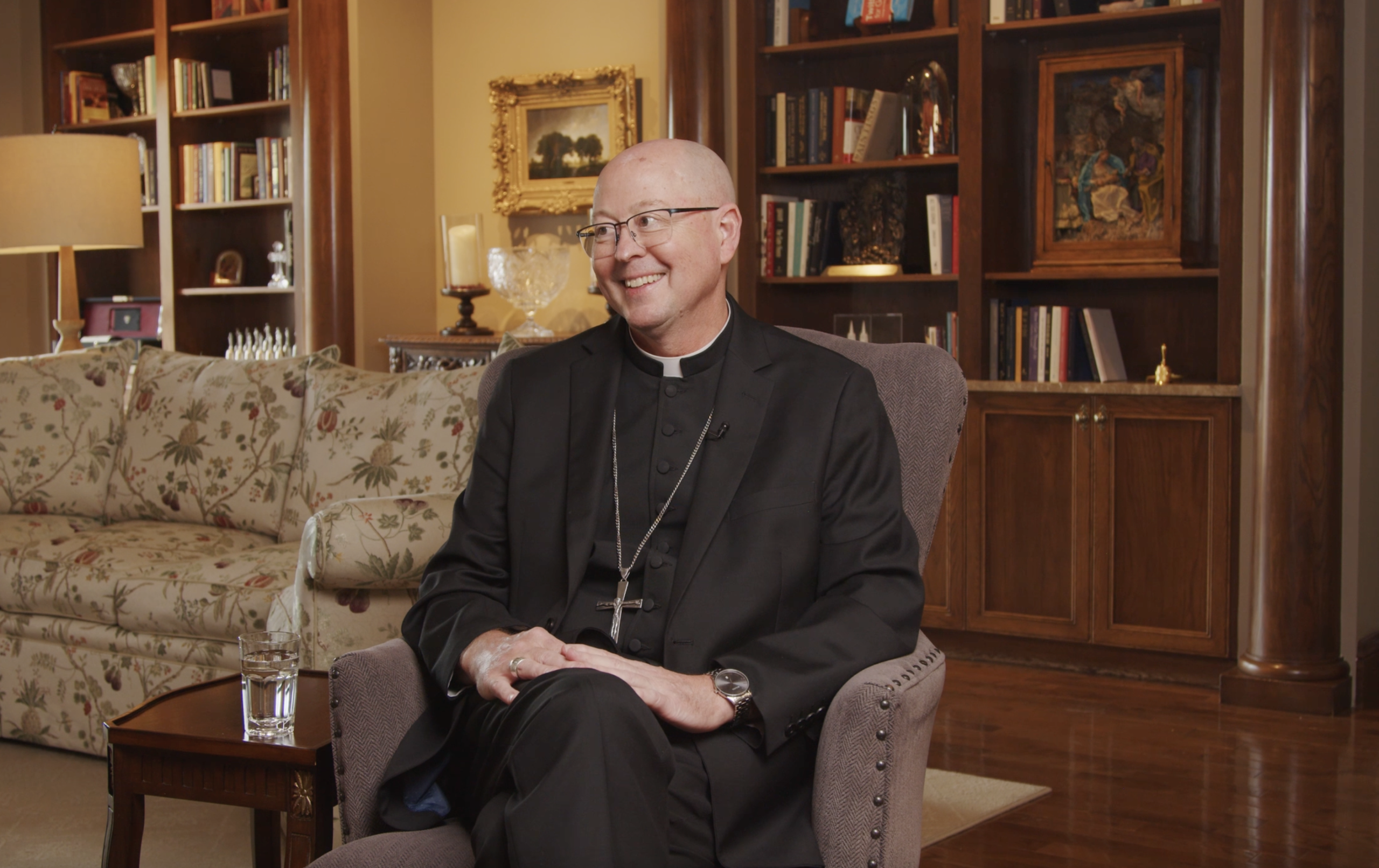
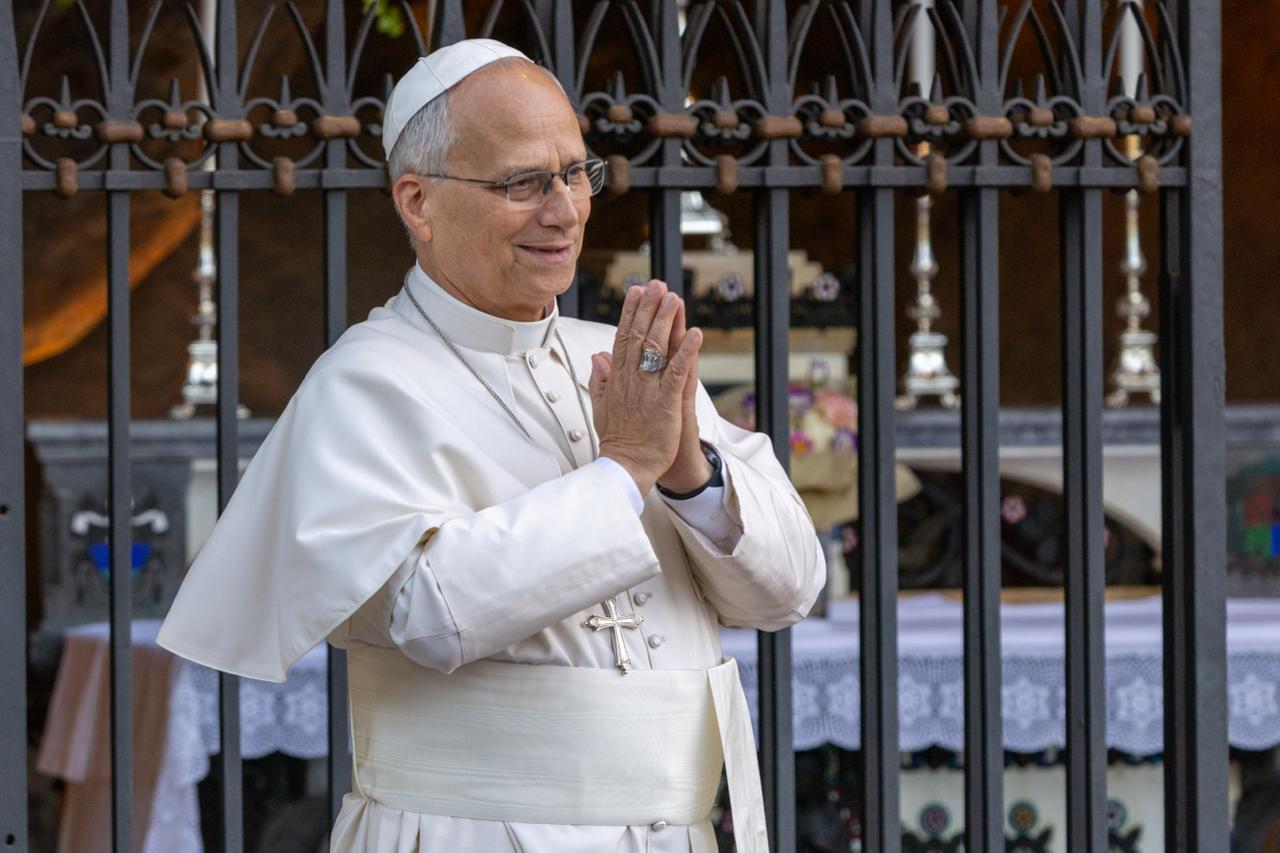
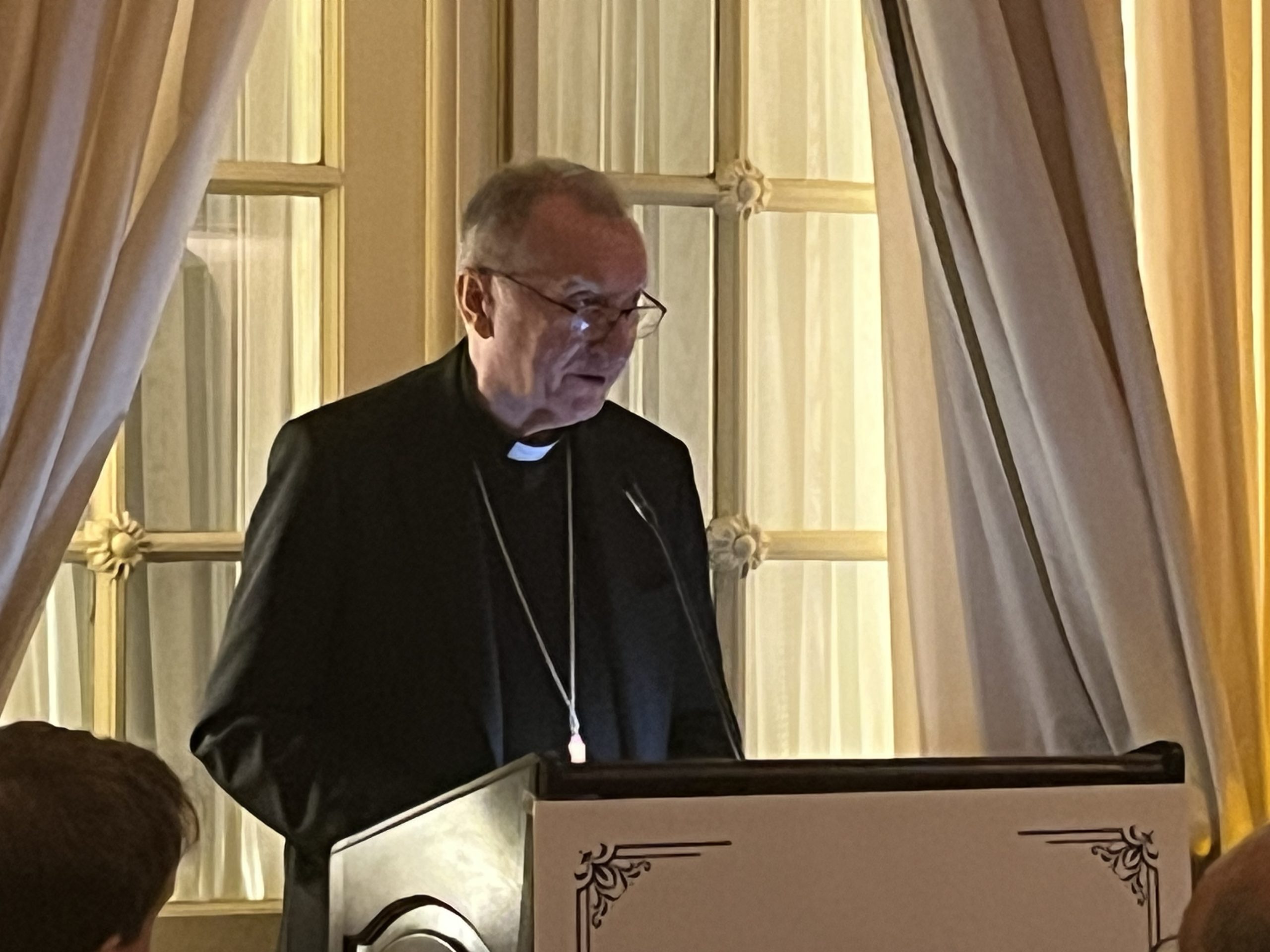
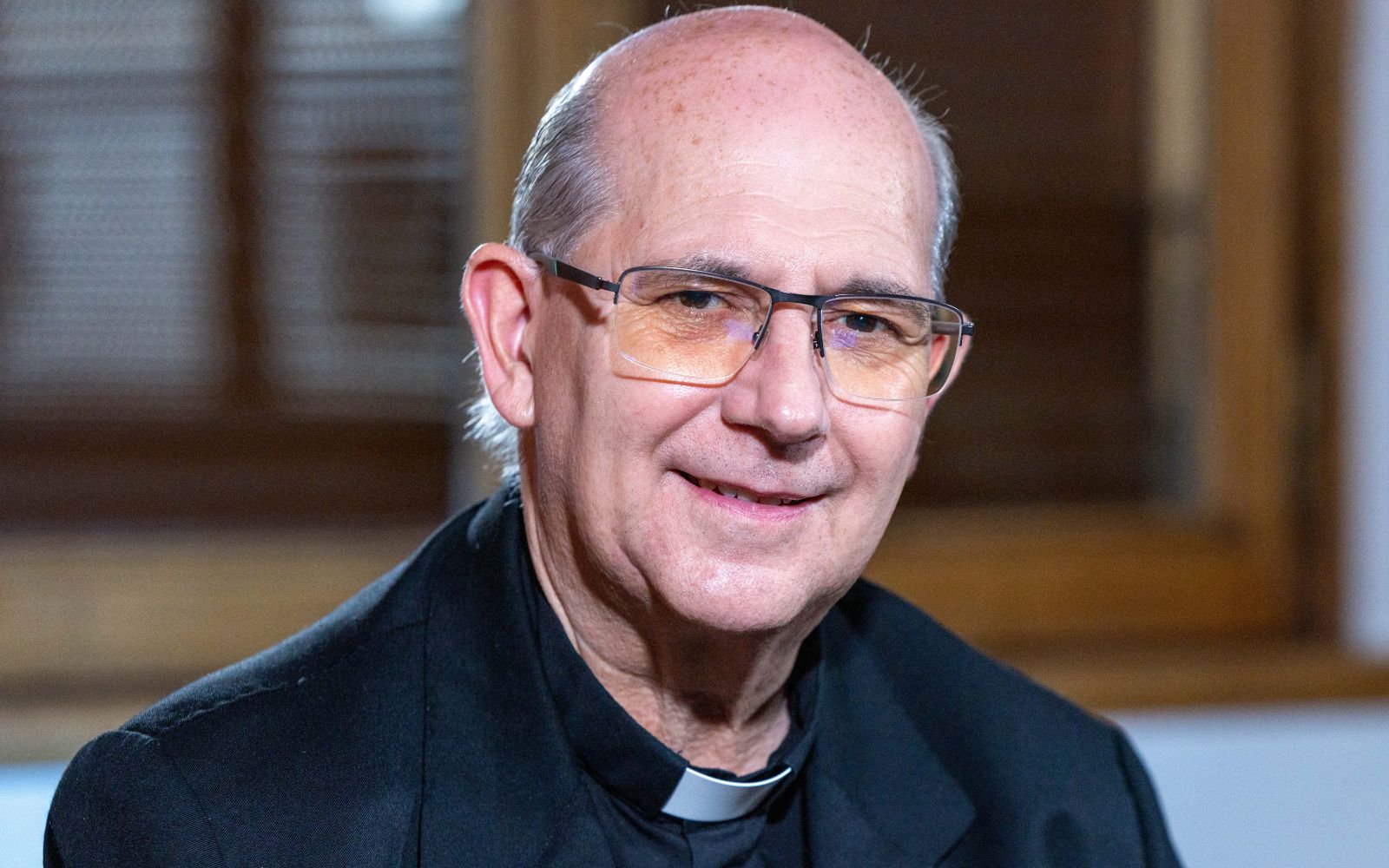
 Bishop Michael Burbidge of Arlington and Bishop Barry Knestout of Richmond. | Credit: Katie Yoder/EWTN News; photo courtesy of the Archdiocese of Washington

Jan 18, 2026 / 08:00 am (CNA).
The Virginia Catholic bishops on Friday spoke out against an abortion amendment that would remove state protections for unborn children, calling the measure “extreme.”The Virginia General Assembly passed a proposed amendment that would add a fundamental right to abortion to Virginia’s constitution, if voters approve it this November.The proposed abortion amendment would establish a “fundamental right to reproductive freedom, including the ability to make and carry out decisions relating to one’s own prenatal care, childbirth, postpartum care, contraception, abortion care, miscarriage management, and fertility care.”Bishops Michael Burbidge of Arlington and Barry Knestout of Richmond called the move “shocking to the conscience,” noting that lawmakers quickly moved the proposed amendment through both chambers in the early days of its 60-day session.“The extreme abortion amendment, which will proceed to a referendum for voters to decide later this year, would go far beyond even what Roe v. Wade previously allowed,” the bishops said in the Jan. 16 statement. “It would enshrine virtually unlimited abortion at any stage of pregnancy, with no age restriction.”The bishops cautioned that the amendment would “severely jeopardize Virginia’s parental consent law, health and safety standards for women, conscience protections for health care providers, and restrictions on taxpayer-funded abortions.”“Most tragically of all, the extreme abortion amendment provides no protections whatsoever for preborn children,” the bishops continued.“Most importantly, human life is sacred,” the bishops said. “The lives of vulnerable mothers and their preborn children must always be welcomed, cared for, and protected.”“Parental rights and the health and well-being of minors must be defended,” the bishops said. “So too must religious liberty. No one should ever be forced to pay for or participate in an abortion. Health and safety should be enhanced, not diminished.”In addition, the bishops urged Virginia voters to oppose a measure that would repeal a 2006 provision defining marriage as between one man and one woman. The bishops also expressed support for a measure that would restore voting rights to those who have completed prison sentences.“We will be deeply engaged in the work of helping to educate voters on these proposed amendments and will fight the extreme abortion amendment with maximum determination,” the bishops concluded.The joint statement followed a statement by Burbidge, who on Jan. 15 urged Catholics to “to pray, fast, and advocate for the cause of life” amid the “looming threat” of the abortion amendment.“Prayer opens our hearts to God’s wisdom and strengthens us to act with courage and charity,” Burbidge wrote. “Fasting makes reparation for sin and reminds us that true freedom is found not in self-indulgence but in self-gift. Advocacy allows us to bring our convictions into the public square with respect, clarity, and perseverance.”“Our response as Catholics — and as citizens committed to justice — must be rooted in faith, truth, and love,” he continued.Burbidge also reminded Catholics of the mercy of the Church. “It is essential to reaffirm a truth that lies at the very center of the Church’s pro-life mission: The Church is a loving mother,” Burbidge continued. “To any man or woman who carries the pain, regret, or sorrow of participation in abortion, know this clearly — you are not alone, and God awaits you with love and mercy. The Church desires to walk with you on a journey of healing and hope.”“May we together pray fervently, act courageously, and serve generously,” Burbidge said. “May our witness help build a culture in Virginia — and beyond — that recognizes every human life as sacred, every person as beloved, and every moment as an opportunity to choose life.”

Virginia bishops condemn proposed abortion amendment: ‘We will fight’ #Catholic Bishop Michael Burbidge of Arlington and Bishop Barry Knestout of Richmond. | Credit: Katie Yoder/EWTN News; photo courtesy of the Archdiocese of Washington Jan 18, 2026 / 08:00 am (CNA). The Virginia Catholic bishops on Friday spoke out against an abortion amendment that would remove state protections for unborn children, calling the measure “extreme.”The Virginia General Assembly passed a proposed amendment that would add a fundamental right to abortion to Virginia’s constitution, if voters approve it this November.The proposed abortion amendment would establish a “fundamental right to reproductive freedom, including the ability to make and carry out decisions relating to one’s own prenatal care, childbirth, postpartum care, contraception, abortion care, miscarriage management, and fertility care.”Bishops Michael Burbidge of Arlington and Barry Knestout of Richmond called the move “shocking to the conscience,” noting that lawmakers quickly moved the proposed amendment through both chambers in the early days of its 60-day session.“The extreme abortion amendment, which will proceed to a referendum for voters to decide later this year, would go far beyond even what Roe v. Wade previously allowed,” the bishops said in the Jan. 16 statement. “It would enshrine virtually unlimited abortion at any stage of pregnancy, with no age restriction.”The bishops cautioned that the amendment would “severely jeopardize Virginia’s parental consent law, health and safety standards for women, conscience protections for health care providers, and restrictions on taxpayer-funded abortions.”“Most tragically of all, the extreme abortion amendment provides no protections whatsoever for preborn children,” the bishops continued.“Most importantly, human life is sacred,” the bishops said. “The lives of vulnerable mothers and their preborn children must always be welcomed, cared for, and protected.”“Parental rights and the health and well-being of minors must be defended,” the bishops said. “So too must religious liberty. No one should ever be forced to pay for or participate in an abortion. Health and safety should be enhanced, not diminished.”In addition, the bishops urged Virginia voters to oppose a measure that would repeal a 2006 provision defining marriage as between one man and one woman. The bishops also expressed support for a measure that would restore voting rights to those who have completed prison sentences.“We will be deeply engaged in the work of helping to educate voters on these proposed amendments and will fight the extreme abortion amendment with maximum determination,” the bishops concluded.The joint statement followed a statement by Burbidge, who on Jan. 15 urged Catholics to “to pray, fast, and advocate for the cause of life” amid the “looming threat” of the abortion amendment.“Prayer opens our hearts to God’s wisdom and strengthens us to act with courage and charity,” Burbidge wrote. “Fasting makes reparation for sin and reminds us that true freedom is found not in self-indulgence but in self-gift. Advocacy allows us to bring our convictions into the public square with respect, clarity, and perseverance.”“Our response as Catholics — and as citizens committed to justice — must be rooted in faith, truth, and love,” he continued.Burbidge also reminded Catholics of the mercy of the Church. “It is essential to reaffirm a truth that lies at the very center of the Church’s pro-life mission: The Church is a loving mother,” Burbidge continued. “To any man or woman who carries the pain, regret, or sorrow of participation in abortion, know this clearly — you are not alone, and God awaits you with love and mercy. The Church desires to walk with you on a journey of healing and hope.”“May we together pray fervently, act courageously, and serve generously,” Burbidge said. “May our witness help build a culture in Virginia — and beyond — that recognizes every human life as sacred, every person as beloved, and every moment as an opportunity to choose life.”


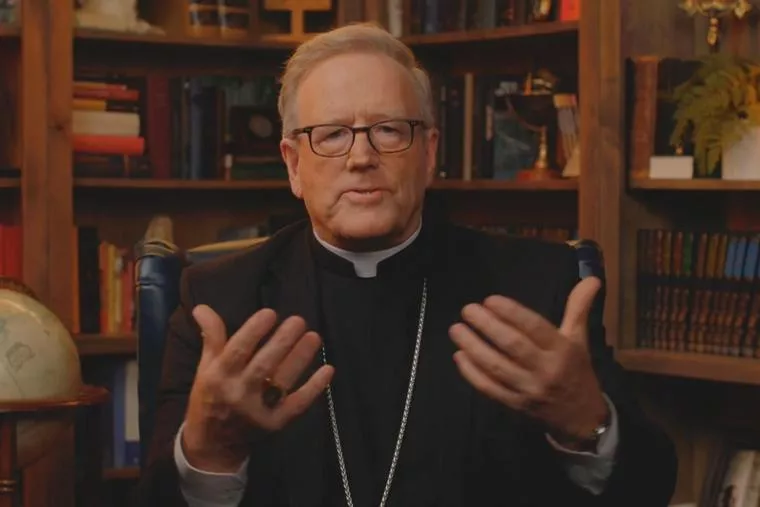
Bishop Michael Burbidge of Arlington and Bishop Barry Knestout of Richmond. | Credit: Katie Yoder/EWTN News; photo courtesy of the Archdiocese of Washington

Jan 18, 2026 / 08:00 am (CNA).

The Virginia Catholic bishops on Friday spoke out against an abortion amendment that would remove state protections for unborn children, calling the measure “extreme.”

The Virginia General Assembly passed a proposed amendment that would add a fundamental right to abortion to Virginia’s constitution, if voters approve it this November.

The proposed abortion amendment would establish a “fundamental right to reproductive freedom, including the ability to make and carry out decisions relating to one’s own prenatal care, childbirth, postpartum care, contraception, abortion care, miscarriage management, and fertility care.”

Bishops Michael Burbidge of Arlington and Barry Knestout of Richmond called the move “shocking to the conscience,” noting that lawmakers quickly moved the proposed amendment through both chambers in the early days of its 60-day session.

“The extreme abortion amendment, which will proceed to a referendum for voters to decide later this year, would go far beyond even what Roe v. Wade previously allowed,” the bishops said in the Jan. 16 statement. “It would enshrine virtually unlimited abortion at any stage of pregnancy, with no age restriction.”

The bishops cautioned that the amendment would “severely jeopardize Virginia’s parental consent law, health and safety standards for women, conscience protections for health care providers, and restrictions on taxpayer-funded abortions.”

“Most tragically of all, the extreme abortion amendment provides no protections whatsoever for preborn children,” the bishops continued.

“Most importantly, human life is sacred,” the bishops said. “The lives of vulnerable mothers and their preborn children must always be welcomed, cared for, and protected.”

“Parental rights and the health and well-being of minors must be defended,” the bishops said. “So too must religious liberty. No one should ever be forced to pay for or participate in an abortion. Health and safety should be enhanced, not diminished.”

In addition, the bishops urged Virginia voters to oppose a measure that would repeal a 2006 provision defining marriage as between one man and one woman. The bishops also expressed support for a measure that would restore voting rights to those who have completed prison sentences.

“We will be deeply engaged in the work of helping to educate voters on these proposed amendments and will fight the extreme abortion amendment with maximum determination,” the bishops concluded.

The joint statement followed a statement by Burbidge, who on Jan. 15 urged Catholics to “to pray, fast, and advocate for the cause of life” amid the “looming threat” of the abortion amendment.

“Prayer opens our hearts to God’s wisdom and strengthens us to act with courage and charity,” Burbidge wrote. “Fasting makes reparation for sin and reminds us that true freedom is found not in self-indulgence but in self-gift. Advocacy allows us to bring our convictions into the public square with respect, clarity, and perseverance.”

“Our response as Catholics — and as citizens committed to justice — must be rooted in faith, truth, and love,” he continued.

Burbidge also reminded Catholics of the mercy of the Church. 

“It is essential to reaffirm a truth that lies at the very center of the Church’s pro-life mission: The Church is a loving mother,” Burbidge continued. “To any man or woman who carries the pain, regret, or sorrow of participation in abortion, know this clearly — you are not alone, and God awaits you with love and mercy. The Church desires to walk with you on a journey of healing and hope.”

“May we together pray fervently, act courageously, and serve generously,” Burbidge said. “May our witness help build a culture in Virginia — and beyond — that recognizes every human life as sacred, every person as beloved, and every moment as an opportunity to choose life.”

Read More
U.S. bishops say multimillion-dollar Eucharistic revival bore spiritual fruit #Catholic 
 
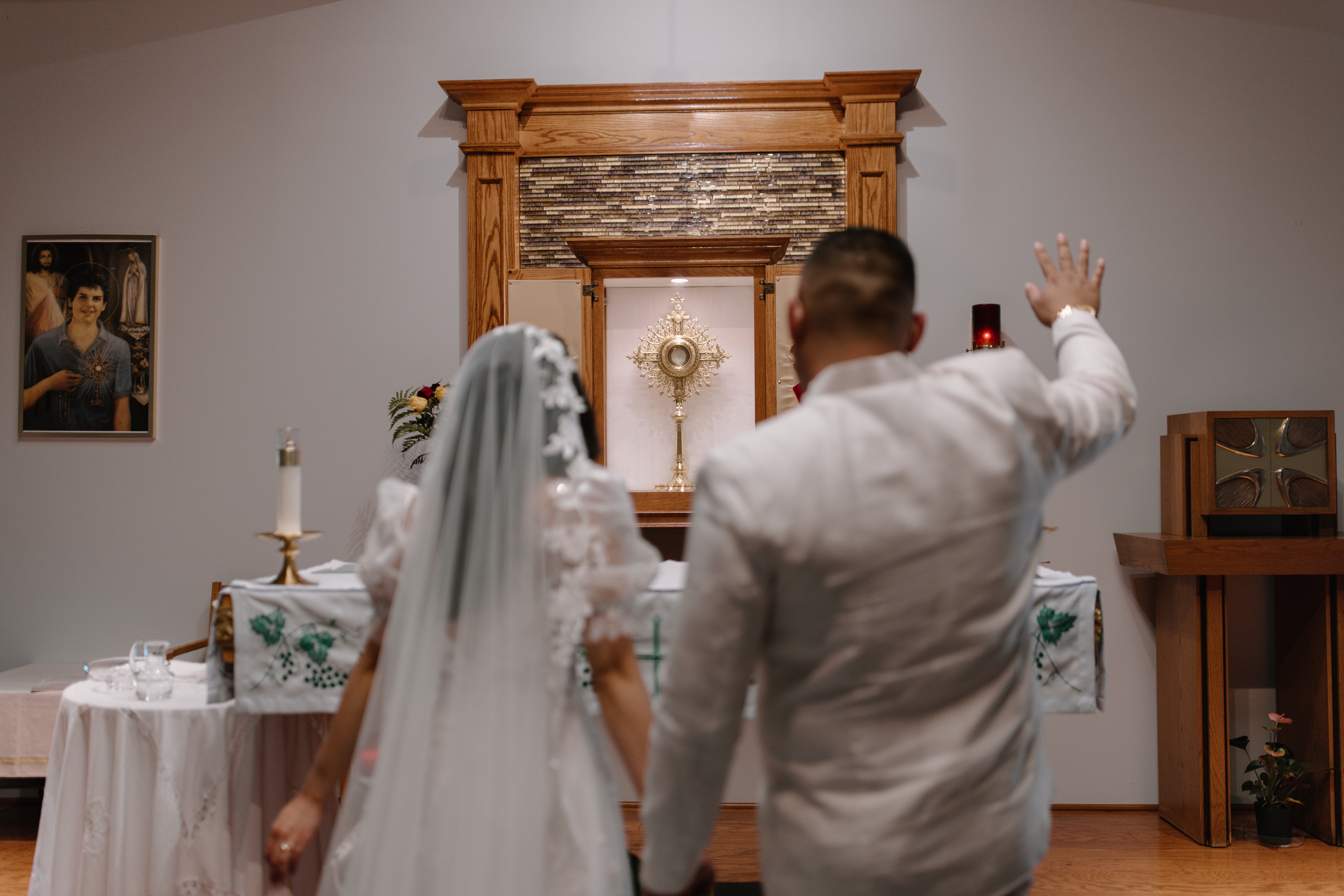
 Scene from the 2024 National Eucharistic Congress in Indianapolis. | Credit: “EWTN News in Depth”/Screenshot

Jan 17, 2026 / 09:00 am (CNA).
Catholic clergy and lay people reported a stronger devotion to the Eucharist after the National Eucharistic Revival.This week, the United States Conference of Catholic Bishops (USCCB) released the report for the National Eucharistic Revival Impact Study. Done in collaboration with  the National Eucharistic Congress corporation and  Vinea Research, the study surveyed nearly 2,500 lay Catholics, clergy, and Church staff during the summer and fall of 2025.The online survey asked questions about revival promotion, participation, and impact one year after the initial National Eucharistic Pilgrimage and Congress. The price tag of the Eucharistic congress was more than $10 million, organizers said.“Never in my tenure of working for the Church have I seen such deep impact,” said Jason Shanks, president of the National Eucharistic Congress, in a press release. “The fruits of the National Eucharistic Revival are real, lasting, and will continue to shape the life of the American Church for years to come.”The revival, sponsored by the USCCB, launched in June 2022 with the mission to “renew the Church by enkindling a living relationship with the Lord Jesus Christ in the holy Eucharist.”The three-year initiative, which concluded in 2025, included the 10th National Eucharistic Congress and the National Eucharistic Pilgrimage in 2024 and 2025.In a Jan. 16 interview on “EWTN News In Depth,” Bishop Andrew Cozzens, chair of the National Eucharistic Congress, said he was “extremely heartened” by the results of the study.“I had a sense that the revival had a big impact on people and especially on our Church,” he said. “But it was great to see that confirmed by the data and to see some of the actual statistics.”Impact on clergy membersOf 249 clergy members of priests and deacons surveyed, 49% reported feeling “more encouraged’ since the revival began. Specifically, 38% said they feel “somewhat more encouraged” and 11% said they feel “significantly more encouraged.”Nearly half, 48%, said they feel “more comfortable encouraging others to share their faith.”The research found the revival “refocused clergy on the Eucharist,” with the majority reporting changes to their pastoral approach since 2021. The report found that 70% of clergy reported a stronger “focus on the Eucharist in teaching [and] ministry,” and 69% said they have a stronger “emphasis on evangelization and outreach.”Clergy also reported personal advancements with their relationship with the Eucharist. More than half (51%) said their “time spent in personal adoration” is stronger now than it was in 2021. “I was so grateful when I saw that priests found it encouraging. They were encouraged by this opportunity to focus on the Eucharist,” Cozzens said. “I know so much more preaching and encouragement about Eucharistic devotion happened in our parishes during this time.”“If our priests are encouraged and they’re drawing closer to Jesus in the Eucharist, that’s going to help our people so much, and it’s going to help our Church so much,” he said.Impact on lay CatholicsAmong 1,758 of the lay Catholics surveyed, 874 were labeled as “national participants” who attended the National Eucharistic Pilgrimage, National Eucharistic Congress, or both. “We wanted Catholics to come together and to experience more deeply a profound love for Jesus in the Eucharist, and then from that, to be sent out on mission,” Cozzens said. The study “showed that anyone who attended one of our National Eucharistic Pilgrimages or National Eucharistic Congress said they were 50% more likely to do outreach, to share their faith, to do some act of service.”“I think the thing that most stood out to me is that we accomplished our goal,” he said. “Our goal was really to bring about a missionary conversion of Catholics.”Another 425 of lay Catholics were “local participants” who took part in local processions, small groups, and revival-specific Holy Hours. Most (83%) of the laypeople surveyed who participated at the national or local level said their “overall level of faith” is stronger now than it was in 2021.The other 459 laypeople surveyed were “nonparticipating contacts” who did not participate in any revival activities. Most came from the USCCB’s newsletter distribution list and they were aware of the revival but not involved. Even though they did not directly participate, 79% reported their “overall level of faith” was stronger following the revival.When asked to compare their faith practices with those in 2021, lay Catholics overwhelmingly reported praying more, attending adoration more frequently, and going to confession more often.The research took a deeper look at how lay Catholics’ faith evolved, examining the changes in the level of “importance” of faith-related activities over the last three years. The greatest growth in importance was observed in volunteering and spending time in Eucharistic adoration.In 2021, 57% of lay national participants reported “spending quiet time in Eucharistic adoration” was “very important” or “extremely important” to them. Following the revival, the number had jumped to 76%. There was also an increase for local participants with a rise from 65% to 82%. Among those who did not directly participate, there was the largest increase from 49% to 69%.Continuing to spread the ‘fire’The bishops have confirmed that the country’s second National Eucharistic Congress of the 21st century will take place in 2029.“As we continue to strengthen the core of our faith and those people who are committed, and they begin to draw closer to Jesus from Eucharist, what the study showed is that they get on fire, and then they start to spread that fire,” he said.“It’s the way Jesus worked himself. Jesus certainly did preach to crowds, but most of the time he spent with his 12 apostles and with those people who were with him. Because if he could convert and strengthen them, then they could go out and convert the world,” he said.“I think that’s really the goal of the whole Eucharistic movement that we have now is strengthening those people so that they can become the witnesses that we’re called to be,” he said.

U.S. bishops say multimillion-dollar Eucharistic revival bore spiritual fruit #Catholic Scene from the 2024 National Eucharistic Congress in Indianapolis. | Credit: “EWTN News in Depth”/Screenshot Jan 17, 2026 / 09:00 am (CNA). Catholic clergy and lay people reported a stronger devotion to the Eucharist after the National Eucharistic Revival.This week, the United States Conference of Catholic Bishops (USCCB) released the report for the National Eucharistic Revival Impact Study. Done in collaboration with the National Eucharistic Congress corporation and Vinea Research, the study surveyed nearly 2,500 lay Catholics, clergy, and Church staff during the summer and fall of 2025.The online survey asked questions about revival promotion, participation, and impact one year after the initial National Eucharistic Pilgrimage and Congress. The price tag of the Eucharistic congress was more than $10 million, organizers said.“Never in my tenure of working for the Church have I seen such deep impact,” said Jason Shanks, president of the National Eucharistic Congress, in a press release. “The fruits of the National Eucharistic Revival are real, lasting, and will continue to shape the life of the American Church for years to come.”The revival, sponsored by the USCCB, launched in June 2022 with the mission to “renew the Church by enkindling a living relationship with the Lord Jesus Christ in the holy Eucharist.”The three-year initiative, which concluded in 2025, included the 10th National Eucharistic Congress and the National Eucharistic Pilgrimage in 2024 and 2025.In a Jan. 16 interview on “EWTN News In Depth,” Bishop Andrew Cozzens, chair of the National Eucharistic Congress, said he was “extremely heartened” by the results of the study.“I had a sense that the revival had a big impact on people and especially on our Church,” he said. “But it was great to see that confirmed by the data and to see some of the actual statistics.”Impact on clergy membersOf 249 clergy members of priests and deacons surveyed, 49% reported feeling “more encouraged’ since the revival began. Specifically, 38% said they feel “somewhat more encouraged” and 11% said they feel “significantly more encouraged.”Nearly half, 48%, said they feel “more comfortable encouraging others to share their faith.”The research found the revival “refocused clergy on the Eucharist,” with the majority reporting changes to their pastoral approach since 2021. The report found that 70% of clergy reported a stronger “focus on the Eucharist in teaching [and] ministry,” and 69% said they have a stronger “emphasis on evangelization and outreach.”Clergy also reported personal advancements with their relationship with the Eucharist. More than half (51%) said their “time spent in personal adoration” is stronger now than it was in 2021. “I was so grateful when I saw that priests found it encouraging. They were encouraged by this opportunity to focus on the Eucharist,” Cozzens said. “I know so much more preaching and encouragement about Eucharistic devotion happened in our parishes during this time.”“If our priests are encouraged and they’re drawing closer to Jesus in the Eucharist, that’s going to help our people so much, and it’s going to help our Church so much,” he said.Impact on lay CatholicsAmong 1,758 of the lay Catholics surveyed, 874 were labeled as “national participants” who attended the National Eucharistic Pilgrimage, National Eucharistic Congress, or both. “We wanted Catholics to come together and to experience more deeply a profound love for Jesus in the Eucharist, and then from that, to be sent out on mission,” Cozzens said. The study “showed that anyone who attended one of our National Eucharistic Pilgrimages or National Eucharistic Congress said they were 50% more likely to do outreach, to share their faith, to do some act of service.”“I think the thing that most stood out to me is that we accomplished our goal,” he said. “Our goal was really to bring about a missionary conversion of Catholics.”Another 425 of lay Catholics were “local participants” who took part in local processions, small groups, and revival-specific Holy Hours. Most (83%) of the laypeople surveyed who participated at the national or local level said their “overall level of faith” is stronger now than it was in 2021.The other 459 laypeople surveyed were “nonparticipating contacts” who did not participate in any revival activities. Most came from the USCCB’s newsletter distribution list and they were aware of the revival but not involved. Even though they did not directly participate, 79% reported their “overall level of faith” was stronger following the revival.When asked to compare their faith practices with those in 2021, lay Catholics overwhelmingly reported praying more, attending adoration more frequently, and going to confession more often.The research took a deeper look at how lay Catholics’ faith evolved, examining the changes in the level of “importance” of faith-related activities over the last three years. The greatest growth in importance was observed in volunteering and spending time in Eucharistic adoration.In 2021, 57% of lay national participants reported “spending quiet time in Eucharistic adoration” was “very important” or “extremely important” to them. Following the revival, the number had jumped to 76%. There was also an increase for local participants with a rise from 65% to 82%. Among those who did not directly participate, there was the largest increase from 49% to 69%.Continuing to spread the ‘fire’The bishops have confirmed that the country’s second National Eucharistic Congress of the 21st century will take place in 2029.“As we continue to strengthen the core of our faith and those people who are committed, and they begin to draw closer to Jesus from Eucharist, what the study showed is that they get on fire, and then they start to spread that fire,” he said.“It’s the way Jesus worked himself. Jesus certainly did preach to crowds, but most of the time he spent with his 12 apostles and with those people who were with him. Because if he could convert and strengthen them, then they could go out and convert the world,” he said.“I think that’s really the goal of the whole Eucharistic movement that we have now is strengthening those people so that they can become the witnesses that we’re called to be,” he said.


Scene from the 2024 National Eucharistic Congress in Indianapolis. | Credit: “EWTN News in Depth”/Screenshot

Jan 17, 2026 / 09:00 am (CNA).

Catholic clergy and lay people reported a stronger devotion to the Eucharist after the National Eucharistic Revival.

This week, the United States Conference of Catholic Bishops (USCCB) released the report for the National Eucharistic Revival Impact Study. Done in collaboration with the National Eucharistic Congress corporation and Vinea Research, the study surveyed nearly 2,500 lay Catholics, clergy, and Church staff during the summer and fall of 2025.

The online survey asked questions about revival promotion, participation, and impact one year after the initial National Eucharistic Pilgrimage and Congress. The price tag of the Eucharistic congress was more than $10 million, organizers said.

“Never in my tenure of working for the Church have I seen such deep impact,” said Jason Shanks, president of the National Eucharistic Congress, in a press release. “The fruits of the National Eucharistic Revival are real, lasting, and will continue to shape the life of the American Church for years to come.”

The revival, sponsored by the USCCB, launched in June 2022 with the mission to “renew the Church by enkindling a living relationship with the Lord Jesus Christ in the holy Eucharist.”

The three-year initiative, which concluded in 2025, included the 10th National Eucharistic Congress and the National Eucharistic Pilgrimage in 2024 and 2025.

In a Jan. 16 interview on “EWTN News In Depth,” Bishop Andrew Cozzens, chair of the National Eucharistic Congress, said he was “extremely heartened” by the results of the study.

“I had a sense that the revival had a big impact on people and especially on our Church,” he said. “But it was great to see that confirmed by the data and to see some of the actual statistics.”

Impact on clergy members

Of 249 clergy members of priests and deacons surveyed, 49% reported feeling “more encouraged’ since the revival began. Specifically, 38% said they feel “somewhat more encouraged” and 11% said they feel “significantly more encouraged.”

Nearly half, 48%, said they feel “more comfortable encouraging others to share their faith.”

The research found the revival “refocused clergy on the Eucharist,” with the majority reporting changes to their pastoral approach since 2021. The report found that 70% of clergy reported a stronger “focus on the Eucharist in teaching [and] ministry,” and 69% said they have a stronger “emphasis on evangelization and outreach.”

Clergy also reported personal advancements with their relationship with the Eucharist. More than half (51%) said their “time spent in personal adoration” is stronger now than it was in 2021.

“I was so grateful when I saw that priests found it encouraging. They were encouraged by this opportunity to focus on the Eucharist,” Cozzens said. “I know so much more preaching and encouragement about Eucharistic devotion happened in our parishes during this time.”

“If our priests are encouraged and they’re drawing closer to Jesus in the Eucharist, that’s going to help our people so much, and it’s going to help our Church so much,” he said.

Impact on lay Catholics

Among 1,758 of the lay Catholics surveyed, 874 were labeled as “national participants” who attended the National Eucharistic Pilgrimage, National Eucharistic Congress, or both.

“We wanted Catholics to come together and to experience more deeply a profound love for Jesus in the Eucharist, and then from that, to be sent out on mission,” Cozzens said. The study “showed that anyone who attended one of our National Eucharistic Pilgrimages or National Eucharistic Congress said they were 50% more likely to do outreach, to share their faith, to do some act of service.”

“I think the thing that most stood out to me is that we accomplished our goal,” he said. “Our goal was really to bring about a missionary conversion of Catholics.”

Another 425 of lay Catholics were “local participants” who took part in local processions, small groups, and revival-specific Holy Hours. Most (83%) of the laypeople surveyed who participated at the national or local level said their “overall level of faith” is stronger now than it was in 2021.

The other 459 laypeople surveyed were “nonparticipating contacts” who did not participate in any revival activities. Most came from the USCCB’s newsletter distribution list and they were aware of the revival but not involved. Even though they did not directly participate, 79% reported their “overall level of faith” was stronger following the revival.

When asked to compare their faith practices with those in 2021, lay Catholics overwhelmingly reported praying more, attending adoration more frequently, and going to confession more often.

The research took a deeper look at how lay Catholics’ faith evolved, examining the changes in the level of “importance” of faith-related activities over the last three years. The greatest growth in importance was observed in volunteering and spending time in Eucharistic adoration.

In 2021, 57% of lay national participants reported “spending quiet time in Eucharistic adoration” was “very important” or “extremely important” to them. Following the revival, the number had jumped to 76%. There was also an increase for local participants with a rise from 65% to 82%. Among those who did not directly participate, there was the largest increase from 49% to 69%.

Continuing to spread the ‘fire’

The bishops have confirmed that the country’s second National Eucharistic Congress of the 21st century will take place in 2029.

“As we continue to strengthen the core of our faith and those people who are committed, and they begin to draw closer to Jesus from Eucharist, what the study showed is that they get on fire, and then they start to spread that fire,” he said.

“It’s the way Jesus worked himself. Jesus certainly did preach to crowds, but most of the time he spent with his 12 apostles and with those people who were with him. Because if he could convert and strengthen them, then they could go out and convert the world,” he said.

“I think that’s really the goal of the whole Eucharistic movement that we have now is strengthening those people so that they can become the witnesses that we’re called to be,” he said.

Read More
Homeland Security Department says rule will address religious worker visa backlog #Catholic 
 
 Credit: Lisa F. Young/Shutterstock

Jan 14, 2026 / 10:25 am (CNA).
The Department of Homeland Security (DHS) said it is addressing a religious worker visa backlog with rules that will reduce wait times and disruptions in ministry for faith-based communities.“Under the leadership of Secretary [Kristi] Noem, DHS is committed to protecting and preserving freedom and expression of religion. We are taking the necessary steps to ensure religious organizations can continue delivering the services that Americans depend on,” a DHS spokesperson said in a press release Wednesday. “Pastors, priests, nuns, and rabbis are essential to the social and moral fabric of this country. We remain committed to finding ways to support and empower these organizations in their critical work.”Under the rule expected to be issued Jan. 14, religious workers in the country on R-1 visas would no longer be required to reside outside of the U.S. for a full year if they reach their statutory five-year maximum period of stay before completing their green card applications. “While R-1 religious workers are still required to depart the U.S., the rule establishes that there is no longer a minimum period of time they must reside and be physically present outside the U.S. before they seek readmission in R-1 status,” DHS said.DHS acknowledged the significant demand for visas within the EB-4 category “has exceeded the supply for many years,” citing 2023 changes implemented by President Joe Biden’s State Department. “By eliminating the one-year foreign residency requirement, USCIS [U.S. Citizenship and Immigration Services] is reducing the time religious organizations are left without their trusted clergy and non-ministerial religious workers,” according to a DHS statement.The rule, expected to be issued at 11 a.m. Jan. 14, is effective immediately, DHS said.Secretary of State Marco Rubio said in a press conference in December 2025 that the government would reveal its plan “early next month” for religious worker visas that would avoid giving preference to one denomination over another. Rubio noted that the plan would not favor one religion over another and that there would be “country-specific requirements depending on the country they’re coming from.” “I think we’re going to get to a good place,” Rubio said at the time. “We don’t have it ready yet. All this takes time to put together, but we’re moving quickly. I think we’ll have something positive about that at some point next month, hopefully in the early part of next month.”Visas for religious workers allow foreign nationals to work for a U.S. religious organization, through the temporary R-1 visa or a Green Card EB-4 visa, which requires at least two years of membership in the same denomination and a job offer from a qualifying nonprofit religious group.Rubio had also said in August the administration was working to create a “standalone process” for religious workers, separate from other competing applicants to the employment-based fourth preference (EB-4) category of visas that became severely backlogged after an unprecedented influx in unaccompanied minor applicants — most of which the USCIS has since alleged were fraudulent — who were added to the already-tight category under the Biden administration.In November 2025, a Catholic diocese in New Jersey dropped a lawsuit filed against the Biden administration’s State Department, Department of Homeland Security, and USCIS, citing knowledge of a solution with national implications.Since the issue of the backlogged visas started, multiple U.S. dioceses have called for a solution. Priests in the Archdiocese of Boston who are in the U.S. on visas were urged to avoid international travel amid the Trump administration’s  immigration policies and deportations.Priests and other Church leaders have expressed fear of having to leave their ministries and return to their home countries, then endure lengthy wait times before coming back. Church officials have warned that a continuing backlog could lead to significant priest shortages in the United States.“We are grateful for the administration’s attention to this important issue for the Church and value the opportunity for ongoing dialogue to address these challenges so the faithful can have access to the sacraments and other essential ministries,” a spokesperson for the USCCB told CNA.

Homeland Security Department says rule will address religious worker visa backlog #Catholic Credit: Lisa F. Young/Shutterstock Jan 14, 2026 / 10:25 am (CNA). The Department of Homeland Security (DHS) said it is addressing a religious worker visa backlog with rules that will reduce wait times and disruptions in ministry for faith-based communities.“Under the leadership of Secretary [Kristi] Noem, DHS is committed to protecting and preserving freedom and expression of religion. We are taking the necessary steps to ensure religious organizations can continue delivering the services that Americans depend on,” a DHS spokesperson said in a press release Wednesday. “Pastors, priests, nuns, and rabbis are essential to the social and moral fabric of this country. We remain committed to finding ways to support and empower these organizations in their critical work.”Under the rule expected to be issued Jan. 14, religious workers in the country on R-1 visas would no longer be required to reside outside of the U.S. for a full year if they reach their statutory five-year maximum period of stay before completing their green card applications. “While R-1 religious workers are still required to depart the U.S., the rule establishes that there is no longer a minimum period of time they must reside and be physically present outside the U.S. before they seek readmission in R-1 status,” DHS said.DHS acknowledged the significant demand for visas within the EB-4 category “has exceeded the supply for many years,” citing 2023 changes implemented by President Joe Biden’s State Department. “By eliminating the one-year foreign residency requirement, USCIS [U.S. Citizenship and Immigration Services] is reducing the time religious organizations are left without their trusted clergy and non-ministerial religious workers,” according to a DHS statement.The rule, expected to be issued at 11 a.m. Jan. 14, is effective immediately, DHS said.Secretary of State Marco Rubio said in a press conference in December 2025 that the government would reveal its plan “early next month” for religious worker visas that would avoid giving preference to one denomination over another. Rubio noted that the plan would not favor one religion over another and that there would be “country-specific requirements depending on the country they’re coming from.” “I think we’re going to get to a good place,” Rubio said at the time. “We don’t have it ready yet. All this takes time to put together, but we’re moving quickly. I think we’ll have something positive about that at some point next month, hopefully in the early part of next month.”Visas for religious workers allow foreign nationals to work for a U.S. religious organization, through the temporary R-1 visa or a Green Card EB-4 visa, which requires at least two years of membership in the same denomination and a job offer from a qualifying nonprofit religious group.Rubio had also said in August the administration was working to create a “standalone process” for religious workers, separate from other competing applicants to the employment-based fourth preference (EB-4) category of visas that became severely backlogged after an unprecedented influx in unaccompanied minor applicants — most of which the USCIS has since alleged were fraudulent — who were added to the already-tight category under the Biden administration.In November 2025, a Catholic diocese in New Jersey dropped a lawsuit filed against the Biden administration’s State Department, Department of Homeland Security, and USCIS, citing knowledge of a solution with national implications.Since the issue of the backlogged visas started, multiple U.S. dioceses have called for a solution. Priests in the Archdiocese of Boston who are in the U.S. on visas were urged to avoid international travel amid the Trump administration’s immigration policies and deportations.Priests and other Church leaders have expressed fear of having to leave their ministries and return to their home countries, then endure lengthy wait times before coming back. Church officials have warned that a continuing backlog could lead to significant priest shortages in the United States.“We are grateful for the administration’s attention to this important issue for the Church and value the opportunity for ongoing dialogue to address these challenges so the faithful can have access to the sacraments and other essential ministries,” a spokesperson for the USCCB told CNA.


Credit: Lisa F. Young/Shutterstock

Jan 14, 2026 / 10:25 am (CNA).

The Department of Homeland Security (DHS) said it is addressing a religious worker visa backlog with rules that will reduce wait times and disruptions in ministry for faith-based communities.

“Under the leadership of Secretary [Kristi] Noem, DHS is committed to protecting and preserving freedom and expression of religion. We are taking the necessary steps to ensure religious organizations can continue delivering the services that Americans depend on,” a DHS spokesperson said in a press release Wednesday. “Pastors, priests, nuns, and rabbis are essential to the social and moral fabric of this country. We remain committed to finding ways to support and empower these organizations in their critical work.”

Under the rule expected to be issued Jan. 14, religious workers in the country on R-1 visas would no longer be required to reside outside of the U.S. for a full year if they reach their statutory five-year maximum period of stay before completing their green card applications.

“While R-1 religious workers are still required to depart the U.S., the rule establishes that there is no longer a minimum period of time they must reside and be physically present outside the U.S. before they seek readmission in R-1 status,” DHS said.

DHS acknowledged the significant demand for visas within the EB-4 category “has exceeded the supply for many years,” citing 2023 changes implemented by President Joe Biden’s State Department. “By eliminating the one-year foreign residency requirement, USCIS [U.S. Citizenship and Immigration Services] is reducing the time religious organizations are left without their trusted clergy and non-ministerial religious workers,” according to a DHS statement.

The rule, expected to be issued at 11 a.m. Jan. 14, is effective immediately, DHS said.

Secretary of State Marco Rubio said in a press conference in December 2025 that the government would reveal its plan “early next month” for religious worker visas that would avoid giving preference to one denomination over another. Rubio noted that the plan would not favor one religion over another and that there would be “country-specific requirements depending on the country they’re coming from.” 

“I think we’re going to get to a good place,” Rubio said at the time. “We don’t have it ready yet. All this takes time to put together, but we’re moving quickly. I think we’ll have something positive about that at some point next month, hopefully in the early part of next month.”

Visas for religious workers allow foreign nationals to work for a U.S. religious organization, through the temporary R-1 visa or a Green Card EB-4 visa, which requires at least two years of membership in the same denomination and a job offer from a qualifying nonprofit religious group.

Rubio had also said in August the administration was working to create a “standalone process” for religious workers, separate from other competing applicants to the employment-based fourth preference (EB-4) category of visas that became severely backlogged after an unprecedented influx in unaccompanied minor applicants — most of which the USCIS has since alleged were fraudulent — who were added to the already-tight category under the Biden administration.

In November 2025, a Catholic diocese in New Jersey dropped a lawsuit filed against the Biden administration’s State Department, Department of Homeland Security, and USCIS, citing knowledge of a solution with national implications.

Since the issue of the backlogged visas started, multiple U.S. dioceses have called for a solution. Priests in the Archdiocese of Boston who are in the U.S. on visas were urged to avoid international travel amid the Trump administration’s immigration policies and deportations.

Priests and other Church leaders have expressed fear of having to leave their ministries and return to their home countries, then endure lengthy wait times before coming back. Church officials have warned that a continuing backlog could lead to significant priest shortages in the United States.

“We are grateful for the administration’s attention to this important issue for the Church and value the opportunity for ongoing dialogue to address these challenges so the faithful can have access to the sacraments and other essential ministries,” a spokesperson for the USCCB told CNA.

Read More
On his dying day, renowned cartoonist’s faith in Christ made public #Catholic 
 
 Scott Adams had previously announced his intention to convert to Christianity. | Credit: Art of Charm, CC BY 3.0, via Wikimedia Commons

Jan 13, 2026 / 15:36 pm (CNA).
Scott Adams, the creator of the long-running “Dilbert” comic strip whose art satirized the typical American workplace, died on Jan. 13 at 68 years old after a battle with cancer.Adams, who became known later in his career for espousing conservative and at times controversial political views, revealed in May 2025 that he was suffering from prostate cancer. The disease spread in the coming months, with Adams passing away after a short stay in hospice. On Jan. 13, shortly after his death, Adams’ X account posted a “final message” from the renowned cartoonist in which he recalled that many of his Christian friends had urged him to convert to Christianity.  
 A Final Message From Scott Adams pic.twitter.com/QKX6b0MFZA— Scott Adams (@ScottAdamsSays) January 13, 2026


 “I accept Jesus Christ as my lord and savior, and I look forward to spending an eternity with him,” Adams declared in the message, adding that he hoped he was “still qualified for entry” into heaven upon his death. “I had an amazing life. I gave it everything I had,” he wrote in the statement. “If you got any benefits from my work, I’m asking you to pay it forward as best you can. That is the legacy I want.” Adams had previously announced his intent to convert on Jan. 1, admitting that “any skepticism I have about reality would certainly be instantly answered if I wake up in heaven.”Born June 8, 1957, in Windham, New York, Adams began drawing from a young age. His work at the Pacific Bell Telephone Company in the 1980s and 1990s inspired many of the humorous office stereotypes portrayed in “Dilbert.”A send-up of many of the tropes that continue to define U.S. office work, “Dilbert” became wildly popular into the 2000s and eventually included a brief television series. Later in his career he launched the video talk series “Real Coffee With Scott Adams,” which he continued until just several days before his death. In his final message released after his death, Adams told his fans: “Be useful.” “And please know,” he added, “I loved you all to the end.”

On his dying day, renowned cartoonist’s faith in Christ made public #Catholic Scott Adams had previously announced his intention to convert to Christianity. | Credit: Art of Charm, CC BY 3.0, via Wikimedia Commons Jan 13, 2026 / 15:36 pm (CNA). Scott Adams, the creator of the long-running “Dilbert” comic strip whose art satirized the typical American workplace, died on Jan. 13 at 68 years old after a battle with cancer.Adams, who became known later in his career for espousing conservative and at times controversial political views, revealed in May 2025 that he was suffering from prostate cancer. The disease spread in the coming months, with Adams passing away after a short stay in hospice. On Jan. 13, shortly after his death, Adams’ X account posted a “final message” from the renowned cartoonist in which he recalled that many of his Christian friends had urged him to convert to Christianity. A Final Message From Scott Adams pic.twitter.com/QKX6b0MFZA— Scott Adams (@ScottAdamsSays) January 13, 2026 “I accept Jesus Christ as my lord and savior, and I look forward to spending an eternity with him,” Adams declared in the message, adding that he hoped he was “still qualified for entry” into heaven upon his death. “I had an amazing life. I gave it everything I had,” he wrote in the statement. “If you got any benefits from my work, I’m asking you to pay it forward as best you can. That is the legacy I want.” Adams had previously announced his intent to convert on Jan. 1, admitting that “any skepticism I have about reality would certainly be instantly answered if I wake up in heaven.”Born June 8, 1957, in Windham, New York, Adams began drawing from a young age. His work at the Pacific Bell Telephone Company in the 1980s and 1990s inspired many of the humorous office stereotypes portrayed in “Dilbert.”A send-up of many of the tropes that continue to define U.S. office work, “Dilbert” became wildly popular into the 2000s and eventually included a brief television series. Later in his career he launched the video talk series “Real Coffee With Scott Adams,” which he continued until just several days before his death. In his final message released after his death, Adams told his fans: “Be useful.” “And please know,” he added, “I loved you all to the end.”


Scott Adams had previously announced his intention to convert to Christianity. | Credit: Art of Charm, CC BY 3.0, via Wikimedia Commons

Jan 13, 2026 / 15:36 pm (CNA).

Scott Adams, the creator of the long-running “Dilbert” comic strip whose art satirized the typical American workplace, died on Jan. 13 at 68 years old after a battle with cancer.

Adams, who became known later in his career for espousing conservative and at times controversial political views, revealed in May 2025 that he was suffering from prostate cancer. The disease spread in the coming months, with Adams passing away after a short stay in hospice.

On Jan. 13, shortly after his death, Adams’ X account posted a “final message” from the renowned cartoonist in which he recalled that many of his Christian friends had urged him to convert to Christianity.

“I accept Jesus Christ as my lord and savior, and I look forward to spending an eternity with him,” Adams declared in the message, adding that he hoped he was “still qualified for entry” into heaven upon his death.

“I had an amazing life. I gave it everything I had,” he wrote in the statement. “If you got any benefits from my work, I’m asking you to pay it forward as best you can. That is the legacy I want.”

Adams had previously announced his intent to convert on Jan. 1, admitting that “any skepticism I have about reality would certainly be instantly answered if I wake up in heaven.”

Born June 8, 1957, in Windham, New York, Adams began drawing from a young age. His work at the Pacific Bell Telephone Company in the 1980s and 1990s inspired many of the humorous office stereotypes portrayed in “Dilbert.”

A send-up of many of the tropes that continue to define U.S. office work, “Dilbert” became wildly popular into the 2000s and eventually included a brief television series.

Later in his career he launched the video talk series “Real Coffee With Scott Adams,” which he continued until just several days before his death.

In his final message released after his death, Adams told his fans: “Be useful.”

“And please know,” he added, “I loved you all to the end.”

Read More
National Catholic Partnership on Disability wins service award from Catholic historians #Catholic 
 
 The National Catholic Partnership on Disability’s Charleen Katra (right) speaks at a panel accompanied by former American Catholic Historical Association President Mary Dunn (left). | Credit: Ken Oliver-Méndez/CNA

Jan 13, 2026 / 10:41 am (CNA).
CHICAGO — A Catholic nonprofit that helps parishes and schools provide faith formation and catechesis for people with disabilities was selected to win the 2026 award for service to Catholic studies from the American Catholic Historical Association (ACHA).The National Catholic Partnership on Disability (NCPD) was presented the award during a panel discussion about the historical and modern interactions between the Church and Catholics with disabilities at the annual ACHA meeting in Chicago on Jan. 8.During the discussion, panelists highlighted the ongoing efforts to make Catholic parish and school life more welcoming to members of the faithful who have disabilities and also spoke about persistent struggles to ensure that inclusivity is comprehensive throughout the Church.“Though this recognition of our mission and ministry was very unexpected, it is both energizing and affirming,” Charleen Katra, executive director of NCPD, told CNA in a statement.Katra said the award helps bring attention to the NCPD’s efforts to ensure Catholics with disabilities receive access to their baptismal rights: “To be educated in the faith; to live a sacramental life; and to respond to God’s call.”“Persons with disabilities have unique gifts that bless the Church,” she said. “Thank you for blessing NCPD with this honor. We gratefully accept it on behalf of Catholics living with disabilities, and their families, who seek meaningful participation in the Church!”Mary Dunn, outgoing ACHA president, said NCPD was selected because of its efforts to “promote real belonging” for those with disabilities and said “the lines between history and practice are always thin.”Katra, who has a background in special education, said in the panel discussion that she first became involved in special religious education when she tutored a child with an intellectual disability named Brandon, who needed catechesis to prepare for the sacraments.She said there are “a lot of different ways” to learn about God. Brandon needed multisensory learning that included a lot of visuals, which was not a learning experience offered at the parish at that time. In her current role, she helps provide training and resources to parishes to make sure Catholics with disabilities have access to a learning experience that fits their needs.Although many parishes have incorporated these options into their catechesis, Katra said she still hears from families whose needs are not met by the Church. In some cases, she warned, families will leave the Catholic Church altogether if those needs are not met: “The Church can’t not look at this.”“What happens?” she said. “They go somewhere else that will meet their needs or their loved one’s needs.”“No one should not feel at home in the house of the Lord,” she added.University of Southern Mississippi English professor Leah Parker, who has expertise in disability studies related to literature, said 15% of children in American public schools receive some form of special education, which highlights the need for greater inclusion.“We’re all made in the image of God,” she said. “… I need my brothers and sisters with disabilities. We are incomplete without each other.”The ACHA gave out two other awards during its 2026 annual meeting.The Excellence in Teaching award was presented to Harvard ecclesiastical history professor Kevin Madigan. The Lifetime of Distinguished Scholarship Award was given to Yale history and religious studies professor Carlos Eire.

National Catholic Partnership on Disability wins service award from Catholic historians #Catholic The National Catholic Partnership on Disability’s Charleen Katra (right) speaks at a panel accompanied by former American Catholic Historical Association President Mary Dunn (left). | Credit: Ken Oliver-Méndez/CNA Jan 13, 2026 / 10:41 am (CNA). CHICAGO — A Catholic nonprofit that helps parishes and schools provide faith formation and catechesis for people with disabilities was selected to win the 2026 award for service to Catholic studies from the American Catholic Historical Association (ACHA).The National Catholic Partnership on Disability (NCPD) was presented the award during a panel discussion about the historical and modern interactions between the Church and Catholics with disabilities at the annual ACHA meeting in Chicago on Jan. 8.During the discussion, panelists highlighted the ongoing efforts to make Catholic parish and school life more welcoming to members of the faithful who have disabilities and also spoke about persistent struggles to ensure that inclusivity is comprehensive throughout the Church.“Though this recognition of our mission and ministry was very unexpected, it is both energizing and affirming,” Charleen Katra, executive director of NCPD, told CNA in a statement.Katra said the award helps bring attention to the NCPD’s efforts to ensure Catholics with disabilities receive access to their baptismal rights: “To be educated in the faith; to live a sacramental life; and to respond to God’s call.”“Persons with disabilities have unique gifts that bless the Church,” she said. “Thank you for blessing NCPD with this honor. We gratefully accept it on behalf of Catholics living with disabilities, and their families, who seek meaningful participation in the Church!”Mary Dunn, outgoing ACHA president, said NCPD was selected because of its efforts to “promote real belonging” for those with disabilities and said “the lines between history and practice are always thin.”Katra, who has a background in special education, said in the panel discussion that she first became involved in special religious education when she tutored a child with an intellectual disability named Brandon, who needed catechesis to prepare for the sacraments.She said there are “a lot of different ways” to learn about God. Brandon needed multisensory learning that included a lot of visuals, which was not a learning experience offered at the parish at that time. In her current role, she helps provide training and resources to parishes to make sure Catholics with disabilities have access to a learning experience that fits their needs.Although many parishes have incorporated these options into their catechesis, Katra said she still hears from families whose needs are not met by the Church. In some cases, she warned, families will leave the Catholic Church altogether if those needs are not met: “The Church can’t not look at this.”“What happens?” she said. “They go somewhere else that will meet their needs or their loved one’s needs.”“No one should not feel at home in the house of the Lord,” she added.University of Southern Mississippi English professor Leah Parker, who has expertise in disability studies related to literature, said 15% of children in American public schools receive some form of special education, which highlights the need for greater inclusion.“We’re all made in the image of God,” she said. “… I need my brothers and sisters with disabilities. We are incomplete without each other.”The ACHA gave out two other awards during its 2026 annual meeting.The Excellence in Teaching award was presented to Harvard ecclesiastical history professor Kevin Madigan. The Lifetime of Distinguished Scholarship Award was given to Yale history and religious studies professor Carlos Eire.


The National Catholic Partnership on Disability’s Charleen Katra (right) speaks at a panel accompanied by former American Catholic Historical Association President Mary Dunn (left). | Credit: Ken Oliver-Méndez/CNA

Jan 13, 2026 / 10:41 am (CNA).

CHICAGO — A Catholic nonprofit that helps parishes and schools provide faith formation and catechesis for people with disabilities was selected to win the 2026 award for service to Catholic studies from the American Catholic Historical Association (ACHA).

The National Catholic Partnership on Disability (NCPD) was presented the award during a panel discussion about the historical and modern interactions between the Church and Catholics with disabilities at the annual ACHA meeting in Chicago on Jan. 8.

During the discussion, panelists highlighted the ongoing efforts to make Catholic parish and school life more welcoming to members of the faithful who have disabilities and also spoke about persistent struggles to ensure that inclusivity is comprehensive throughout the Church.

“Though this recognition of our mission and ministry was very unexpected, it is both energizing and affirming,” Charleen Katra, executive director of NCPD, told CNA in a statement.

Katra said the award helps bring attention to the NCPD’s efforts to ensure Catholics with disabilities receive access to their baptismal rights: “To be educated in the faith; to live a sacramental life; and to respond to God’s call.”

“Persons with disabilities have unique gifts that bless the Church,” she said. “Thank you for blessing NCPD with this honor. We gratefully accept it on behalf of Catholics living with disabilities, and their families, who seek meaningful participation in the Church!”

Mary Dunn, outgoing ACHA president, said NCPD was selected because of its efforts to “promote real belonging” for those with disabilities and said “the lines between history and practice are always thin.”

Katra, who has a background in special education, said in the panel discussion that she first became involved in special religious education when she tutored a child with an intellectual disability named Brandon, who needed catechesis to prepare for the sacraments.

She said there are “a lot of different ways” to learn about God. Brandon needed multisensory learning that included a lot of visuals, which was not a learning experience offered at the parish at that time. In her current role, she helps provide training and resources to parishes to make sure Catholics with disabilities have access to a learning experience that fits their needs.

Although many parishes have incorporated these options into their catechesis, Katra said she still hears from families whose needs are not met by the Church. In some cases, she warned, families will leave the Catholic Church altogether if those needs are not met: “The Church can’t not look at this.”

“What happens?” she said. “They go somewhere else that will meet their needs or their loved one’s needs.”

“No one should not feel at home in the house of the Lord,” she added.

University of Southern Mississippi English professor Leah Parker, who has expertise in disability studies related to literature, said 15% of children in American public schools receive some form of special education, which highlights the need for greater inclusion.

“We’re all made in the image of God,” she said. “… I need my brothers and sisters with disabilities. We are incomplete without each other.”

The ACHA gave out two other awards during its 2026 annual meeting.

The Excellence in Teaching award was presented to Harvard ecclesiastical history professor Kevin Madigan. The Lifetime of Distinguished Scholarship Award was given to Yale history and religious studies professor Carlos Eire.

Read More
‘Adopt a Bishop’ initiative invites faithful to pray for Church leaders #Catholic 
 
 Pope Leo XIV speaks to bishops gathered for the Jubilee of Bishops on June 25, 2025, in St. Peter’s Basilica at the Vatican. | Credit: Vatican Media

Jan 11, 2026 / 06:00 am (CNA).
Soon after the election of Pope Leo XIV, Cardinal Luis Antonio Tagle shared in a press conference that moments before then-Cardinal Robert Prevost was chosen to be pontiff, Tagle noticed the emotion by the soon-to-be-pope as it was becoming more clear he would be elected, so he reached into his pocket and offered Prevost a piece of candy.It was this simple moment that inspired Lauren Winter, founder of the Catholic company Brick House in the City, to start the Adopt a Bishop initiative.“It really reminded me that these are all human beings who made the choice one day to accept a very serious ‘yes,’” Winter told CNA in an interview.The Adopt a Bishop initiative, which has been launched in collaboration with The Dorothea Project, invites the faithful to adopt a bishop for the year and pray for that bishop throughout the year.“I think our bishops carry an enormous and often invisible spiritual weight,” she said. “They carry a responsibility that most of us never see — it’s pastoral and spiritual and it’s deeply personal and they’re holding entire dioceses in their prayer. And I think that kind of weight requires spiritual support.”This is the first year of the initiative and over 1,000 people have already signed up to adopt a bishop in prayer. When an individual signs up on the website that person is randomly assigned a bishop from anywhere in the world.Winter explained that she decided to use a random generator in order to “remove preference.”“I didn’t want anyone to choose a bishop that they already knew and admired and I wanted to leave that room for the Holy Spirit,” she said. “And it may be a bishop you are already familiar with. It may be a bishop that is someone that you have disagreed with. But the call to prayer is still there and I think receiving a bishop instead of choosing one, that felt more like a posture of reception, which I feel like it’s more aligned with how grace works in the Church — just leaving the room there for the Spirit to work.”The Catholic business owner highlighted the importance spiritual adoption plays in the Church in that it reminds us that “we are also being prayed for, it strengthens the bonds within the Church, and then I feel like it helps us to live more intentionally as one body of Christ.”Winter said she hopes that through this initiative “people feel more connected to their bishop, to the Church, to the quiet work of prayer, and how a small faithful commitment can really shape our faith.”“I imagine many people when they meet a bishop, they ask the good bishop to pray for them and I think it’s really beautiful that we can return that — the reciprocity of prayer. I think they need our prayers too.”

‘Adopt a Bishop’ initiative invites faithful to pray for Church leaders #Catholic Pope Leo XIV speaks to bishops gathered for the Jubilee of Bishops on June 25, 2025, in St. Peter’s Basilica at the Vatican. | Credit: Vatican Media Jan 11, 2026 / 06:00 am (CNA). Soon after the election of Pope Leo XIV, Cardinal Luis Antonio Tagle shared in a press conference that moments before then-Cardinal Robert Prevost was chosen to be pontiff, Tagle noticed the emotion by the soon-to-be-pope as it was becoming more clear he would be elected, so he reached into his pocket and offered Prevost a piece of candy.It was this simple moment that inspired Lauren Winter, founder of the Catholic company Brick House in the City, to start the Adopt a Bishop initiative.“It really reminded me that these are all human beings who made the choice one day to accept a very serious ‘yes,’” Winter told CNA in an interview.The Adopt a Bishop initiative, which has been launched in collaboration with The Dorothea Project, invites the faithful to adopt a bishop for the year and pray for that bishop throughout the year.“I think our bishops carry an enormous and often invisible spiritual weight,” she said. “They carry a responsibility that most of us never see — it’s pastoral and spiritual and it’s deeply personal and they’re holding entire dioceses in their prayer. And I think that kind of weight requires spiritual support.”This is the first year of the initiative and over 1,000 people have already signed up to adopt a bishop in prayer. When an individual signs up on the website that person is randomly assigned a bishop from anywhere in the world.Winter explained that she decided to use a random generator in order to “remove preference.”“I didn’t want anyone to choose a bishop that they already knew and admired and I wanted to leave that room for the Holy Spirit,” she said. “And it may be a bishop you are already familiar with. It may be a bishop that is someone that you have disagreed with. But the call to prayer is still there and I think receiving a bishop instead of choosing one, that felt more like a posture of reception, which I feel like it’s more aligned with how grace works in the Church — just leaving the room there for the Spirit to work.”The Catholic business owner highlighted the importance spiritual adoption plays in the Church in that it reminds us that “we are also being prayed for, it strengthens the bonds within the Church, and then I feel like it helps us to live more intentionally as one body of Christ.”Winter said she hopes that through this initiative “people feel more connected to their bishop, to the Church, to the quiet work of prayer, and how a small faithful commitment can really shape our faith.”“I imagine many people when they meet a bishop, they ask the good bishop to pray for them and I think it’s really beautiful that we can return that — the reciprocity of prayer. I think they need our prayers too.”


Pope Leo XIV speaks to bishops gathered for the Jubilee of Bishops on June 25, 2025, in St. Peter’s Basilica at the Vatican. | Credit: Vatican Media

Jan 11, 2026 / 06:00 am (CNA).

Soon after the election of Pope Leo XIV, Cardinal Luis Antonio Tagle shared in a press conference that moments before then-Cardinal Robert Prevost was chosen to be pontiff, Tagle noticed the emotion by the soon-to-be-pope as it was becoming more clear he would be elected, so he reached into his pocket and offered Prevost a piece of candy.

It was this simple moment that inspired Lauren Winter, founder of the Catholic company Brick House in the City, to start the Adopt a Bishop initiative.

“It really reminded me that these are all human beings who made the choice one day to accept a very serious ‘yes,’” Winter told CNA in an interview.

The Adopt a Bishop initiative, which has been launched in collaboration with The Dorothea Project, invites the faithful to adopt a bishop for the year and pray for that bishop throughout the year.

“I think our bishops carry an enormous and often invisible spiritual weight,” she said. “They carry a responsibility that most of us never see — it’s pastoral and spiritual and it’s deeply personal and they’re holding entire dioceses in their prayer. And I think that kind of weight requires spiritual support.”

This is the first year of the initiative and over 1,000 people have already signed up to adopt a bishop in prayer. When an individual signs up on the website that person is randomly assigned a bishop from anywhere in the world.

Winter explained that she decided to use a random generator in order to “remove preference.”

“I didn’t want anyone to choose a bishop that they already knew and admired and I wanted to leave that room for the Holy Spirit,” she said. “And it may be a bishop you are already familiar with. It may be a bishop that is someone that you have disagreed with. But the call to prayer is still there and I think receiving a bishop instead of choosing one, that felt more like a posture of reception, which I feel like it’s more aligned with how grace works in the Church — just leaving the room there for the Spirit to work.”

The Catholic business owner highlighted the importance spiritual adoption plays in the Church in that it reminds us that “we are also being prayed for, it strengthens the bonds within the Church, and then I feel like it helps us to live more intentionally as one body of Christ.”

Winter said she hopes that through this initiative “people feel more connected to their bishop, to the Church, to the quiet work of prayer, and how a small faithful commitment can really shape our faith.”

“I imagine many people when they meet a bishop, they ask the good bishop to pray for them and I think it’s really beautiful that we can return that — the reciprocity of prayer. I think they need our prayers too.”

Read More
Michael Reagan, Catholic son of U.S. President Ronald Reagan, dies at 80 #Catholic 
 
 Republican strategist Michael Reagan speaks at a get-out-the-vote rally for U.S. Republican Senate candidate Sharron Angle featuring U.S. Sen. John McCain at the Orleans, Friday, Oct. 29, 2010, in Las Vegas. | Credit: Ethan Miller/Getty Images

Jan 7, 2026 / 10:07 am (CNA).
Michael Reagan, the adopted son of former U.S. President Ronald Reagan and a longtime conservative activist who spoke publicly about his Catholic faith, died on Jan. 4 at 80 years old.Reagan’s family announced his death on Jan. 6 via Young America’s Foundation, which operates out of the “Reagan Ranch” near Santa Barbara, California. The announcement said Reagan died in Los Angeles “surrounded by his entire family.”“Michael was and will always remain a beloved husband, father, and grandpa,” the statement said, with the family expressing grief over “the loss of a man who meant so much to all who knew and loved him.”He is survived by his wife, Colleen, his son Cameron and his daughter Ashley. Born March 18, 1945, Reagan was adopted by Ronald Reagan and his then-wife Jane Wyman shortly thereafter. He was known throughout the 2000s as the host of “The Michael Reagan Show,” a nationwide radio program. Reagan was a Catholic through Wyman, a legendary movie star who herself was a third order Dominican. In a 2024 interview with EWTN News’ ChurchPOP, he pointed out that “a lot of people don’t know” of Wyman’s Catholic background. Joking when comparing his father’s Protestant beliefs with his mother’s Catholic faith, Reagan said: “When you get [to heaven], if you see my dad, look three floors above him [to see my mother].”Reagan told ChurchPOP Editor Jacqueline Burkepile that a large part of his family is Catholic. “My whole family is [Catholic],” he said. “My wife, Colleen, converted to Catholicism a few years ago. My son Cameron, his wife, Susanna, my daughter Ashley [are all Catholic].” His grandchildren have been baptized in the Church as well, he said.“So we got everybody on the planet,” he joked. In a Jan. 6 reflection, Reagan Ranch Director Andrew Coffin said Reagan “worked alongside Young America’s Foundation to share his father’s legacy and ideas with new generations.”In a separate statement, Young America’s Foundation President Scott Walker said that Reagan “was such a wonderful inspiration to so many of us.” Walker said that though Reagan had been optimistic about overcoming his recent health challenges, “unfortunately for all of us, the Good Lord decided to call him home sooner.” “That said, he and I also discussed his faith and devotion to Jesus,” Walker said. “That should give us all comfort during this difficult time as he is with the Lord.”

Michael Reagan, Catholic son of U.S. President Ronald Reagan, dies at 80 #Catholic Republican strategist Michael Reagan speaks at a get-out-the-vote rally for U.S. Republican Senate candidate Sharron Angle featuring U.S. Sen. John McCain at the Orleans, Friday, Oct. 29, 2010, in Las Vegas. | Credit: Ethan Miller/Getty Images Jan 7, 2026 / 10:07 am (CNA). Michael Reagan, the adopted son of former U.S. President Ronald Reagan and a longtime conservative activist who spoke publicly about his Catholic faith, died on Jan. 4 at 80 years old.Reagan’s family announced his death on Jan. 6 via Young America’s Foundation, which operates out of the “Reagan Ranch” near Santa Barbara, California. The announcement said Reagan died in Los Angeles “surrounded by his entire family.”“Michael was and will always remain a beloved husband, father, and grandpa,” the statement said, with the family expressing grief over “the loss of a man who meant so much to all who knew and loved him.”He is survived by his wife, Colleen, his son Cameron and his daughter Ashley. Born March 18, 1945, Reagan was adopted by Ronald Reagan and his then-wife Jane Wyman shortly thereafter. He was known throughout the 2000s as the host of “The Michael Reagan Show,” a nationwide radio program. Reagan was a Catholic through Wyman, a legendary movie star who herself was a third order Dominican. In a 2024 interview with EWTN News’ ChurchPOP, he pointed out that “a lot of people don’t know” of Wyman’s Catholic background. Joking when comparing his father’s Protestant beliefs with his mother’s Catholic faith, Reagan said: “When you get [to heaven], if you see my dad, look three floors above him [to see my mother].”Reagan told ChurchPOP Editor Jacqueline Burkepile that a large part of his family is Catholic. “My whole family is [Catholic],” he said. “My wife, Colleen, converted to Catholicism a few years ago. My son Cameron, his wife, Susanna, my daughter Ashley [are all Catholic].” His grandchildren have been baptized in the Church as well, he said.“So we got everybody on the planet,” he joked. In a Jan. 6 reflection, Reagan Ranch Director Andrew Coffin said Reagan “worked alongside Young America’s Foundation to share his father’s legacy and ideas with new generations.”In a separate statement, Young America’s Foundation President Scott Walker said that Reagan “was such a wonderful inspiration to so many of us.” Walker said that though Reagan had been optimistic about overcoming his recent health challenges, “unfortunately for all of us, the Good Lord decided to call him home sooner.” “That said, he and I also discussed his faith and devotion to Jesus,” Walker said. “That should give us all comfort during this difficult time as he is with the Lord.”


Republican strategist Michael Reagan speaks at a get-out-the-vote rally for U.S. Republican Senate candidate Sharron Angle featuring U.S. Sen. John McCain at the Orleans, Friday, Oct. 29, 2010, in Las Vegas. | Credit: Ethan Miller/Getty Images

Jan 7, 2026 / 10:07 am (CNA).

Michael Reagan, the adopted son of former U.S. President Ronald Reagan and a longtime conservative activist who spoke publicly about his Catholic faith, died on Jan. 4 at 80 years old.

Reagan’s family announced his death on Jan. 6 via Young America’s Foundation, which operates out of the “Reagan Ranch” near Santa Barbara, California. The announcement said Reagan died in Los Angeles “surrounded by his entire family.”

“Michael was and will always remain a beloved husband, father, and grandpa,” the statement said, with the family expressing grief over “the loss of a man who meant so much to all who knew and loved him.”

He is survived by his wife, Colleen, his son Cameron and his daughter Ashley.

Born March 18, 1945, Reagan was adopted by Ronald Reagan and his then-wife Jane Wyman shortly thereafter. He was known throughout the 2000s as the host of “The Michael Reagan Show,” a nationwide radio program.

Reagan was a Catholic through Wyman, a legendary movie star who herself was a third order Dominican. In a 2024 interview with EWTN NewsChurchPOP, he pointed out that “a lot of people don’t know” of Wyman’s Catholic background.

Joking when comparing his father’s Protestant beliefs with his mother’s Catholic faith, Reagan said: “When you get [to heaven], if you see my dad, look three floors above him [to see my mother].”

Reagan told ChurchPOP Editor Jacqueline Burkepile that a large part of his family is Catholic.

“My whole family is [Catholic],” he said. “My wife, Colleen, converted to Catholicism a few years ago. My son Cameron, his wife, Susanna, my daughter Ashley [are all Catholic].” His grandchildren have been baptized in the Church as well, he said.

“So we got everybody on the planet,” he joked.

In a Jan. 6 reflection, Reagan Ranch Director Andrew Coffin said Reagan “worked alongside Young America’s Foundation to share his father’s legacy and ideas with new generations.”

In a separate statement, Young America’s Foundation President Scott Walker said that Reagan “was such a wonderful inspiration to so many of us.”

Walker said that though Reagan had been optimistic about overcoming his recent health challenges, “unfortunately for all of us, the Good Lord decided to call him home sooner.”

“That said, he and I also discussed his faith and devotion to Jesus,” Walker said. “That should give us all comfort during this difficult time as he is with the Lord.”

Read More
‘As men, you’re called to act!’ speaker says to a packed room of young men at SEEK 2026 #Catholic 
 
 John Bishop, founder of Forge, speaks to hundreds of young men at the SEEK 2026 conference in the Diocese of Fort Worth, Texas, on Jan. 2, 2026. | Credit: Amira Abuzeid/CNA

Jan 6, 2026 / 07:00 am (CNA).
Hundreds of young men at the SEEK 2026 conference in the Fort Worth, Texas, Diocese this weekend filled a cavernous room to learn about what it means to be a man formed by “Jesus Christ and his Church.”John Bishop, founder and executive director of Forge, an organization that supports the family with an emphasis on masculinity, told the young men that “you are much more than your animalistic desires. Live something higher for someone higher.”In his talk titled “God Made Men,” Bishop spoke about how when Adam, the first man, “opened his eyes, he had never seen a woman before. She was completely naked.”“It was a great day for Adam,” Bishop said to waves of laughter. “Adam was the Elon Musk of the garden.”Taking a more serious tone, Bishop asked: “How would Adam see Eve? In his theology of the body, Pope John Paul II said Eve’s body was a manifestation of her soul. Eve had a perfect body, but when Adam saw her naked body, he didn’t lust over her.”“He realized who she was and who he was: made to make a gift of himself to her,” he said.Bishop then turned to what happened next: “What did Adam do as the snake came into the garden?” he asked.“Nothing! The most common, toxic, nauseating sin that runs rampant throughout men in the world is that we don’t do a damn thing.”“When we see our brothers walking into sin, we twiddle our thumbs. When we see our daughters walking out wearing next to nothing, we say nothing. When we’re grandfathers seeing the culture going in a bad way, we watch football,” he said.‘The image of God lives in a man fully alive’“You’re called to act!” Bishop admonished the group. “You might be filled with doubt … but it might be time for you to take the first step.”“The image of God lives in a man fully alive … Study after study shows that when a good man acts and doesn’t hold anything back, when he follows Christ with all [he is], … when he gives himself over [to Christ], the effect of that one man’s life multiplies beyond anything that we can understand,” he said.Hundreds of young men listen to John Bishop’s talk on masculinity on Jan. 2, 2026, at the SEEK conference in Grapevine, Texas. | Credit: Amira Abuzeid/CNAPatricio Parra, a sophomore at Texas A&M University, told CNA that he enjoyed Bishop’s talk because he and his friends have noticed how “society says it’s toxic to be masculine.”Parra said a New York Times journalist asked him and his friends after the talk why his generation of men was so invested in the faith.“There’s a striving for men to want to be men again,” he told her. “As a society, we see male role models on YouTube, but they are deformed. Recently, there aren’t a lot of good masculine models to follow.”Parra said what stood out to him the most after Bishop’s talk was the idea that Adam saw Eve’s physical beauty as the same as her internal beauty and recognized her dignity.“We have to strive to be as masculine as that,” Parra said.He said he took to heart three pieces of advice Bishop gave the men in the audience.First: “There’s no glory without the cross, no sainthood without suffering; so suffer a little bit. Make your body go through hard things,” Parra recalled. “Everything we suffer now will bring fruit for others, including our children someday, who will want to emulate us.”Next, Parra said Bishop advised that young men invest in solid, masculine friendships where they encourage one another toward sainthood.Last, Bishop told his listeners to be like St. Joseph, who, after Adam, was “one of the most manly men in Scripture.”“Joseph never said a word. We just know what he did,” Parra said. “We should do the same: just be quiet and act.”Parra demonstrated a hand motion he and his other friends from Texas A&M invented to go with the words “Zip it and act!” He made a zipper motion across his mouth and then the letter “A” with his fingers.“Don’t just talk about asking a girl out; do it!” he said enthusiastically. “Don’t just think about seminary; go do it!”

‘As men, you’re called to act!’ speaker says to a packed room of young men at SEEK 2026 #Catholic John Bishop, founder of Forge, speaks to hundreds of young men at the SEEK 2026 conference in the Diocese of Fort Worth, Texas, on Jan. 2, 2026. | Credit: Amira Abuzeid/CNA Jan 6, 2026 / 07:00 am (CNA). Hundreds of young men at the SEEK 2026 conference in the Fort Worth, Texas, Diocese this weekend filled a cavernous room to learn about what it means to be a man formed by “Jesus Christ and his Church.”John Bishop, founder and executive director of Forge, an organization that supports the family with an emphasis on masculinity, told the young men that “you are much more than your animalistic desires. Live something higher for someone higher.”In his talk titled “God Made Men,” Bishop spoke about how when Adam, the first man, “opened his eyes, he had never seen a woman before. She was completely naked.”“It was a great day for Adam,” Bishop said to waves of laughter. “Adam was the Elon Musk of the garden.”Taking a more serious tone, Bishop asked: “How would Adam see Eve? In his theology of the body, Pope John Paul II said Eve’s body was a manifestation of her soul. Eve had a perfect body, but when Adam saw her naked body, he didn’t lust over her.”“He realized who she was and who he was: made to make a gift of himself to her,” he said.Bishop then turned to what happened next: “What did Adam do as the snake came into the garden?” he asked.“Nothing! The most common, toxic, nauseating sin that runs rampant throughout men in the world is that we don’t do a damn thing.”“When we see our brothers walking into sin, we twiddle our thumbs. When we see our daughters walking out wearing next to nothing, we say nothing. When we’re grandfathers seeing the culture going in a bad way, we watch football,” he said.‘The image of God lives in a man fully alive’“You’re called to act!” Bishop admonished the group. “You might be filled with doubt … but it might be time for you to take the first step.”“The image of God lives in a man fully alive … Study after study shows that when a good man acts and doesn’t hold anything back, when he follows Christ with all [he is], … when he gives himself over [to Christ], the effect of that one man’s life multiplies beyond anything that we can understand,” he said.Hundreds of young men listen to John Bishop’s talk on masculinity on Jan. 2, 2026, at the SEEK conference in Grapevine, Texas. | Credit: Amira Abuzeid/CNAPatricio Parra, a sophomore at Texas A&M University, told CNA that he enjoyed Bishop’s talk because he and his friends have noticed how “society says it’s toxic to be masculine.”Parra said a New York Times journalist asked him and his friends after the talk why his generation of men was so invested in the faith.“There’s a striving for men to want to be men again,” he told her. “As a society, we see male role models on YouTube, but they are deformed. Recently, there aren’t a lot of good masculine models to follow.”Parra said what stood out to him the most after Bishop’s talk was the idea that Adam saw Eve’s physical beauty as the same as her internal beauty and recognized her dignity.“We have to strive to be as masculine as that,” Parra said.He said he took to heart three pieces of advice Bishop gave the men in the audience.First: “There’s no glory without the cross, no sainthood without suffering; so suffer a little bit. Make your body go through hard things,” Parra recalled. “Everything we suffer now will bring fruit for others, including our children someday, who will want to emulate us.”Next, Parra said Bishop advised that young men invest in solid, masculine friendships where they encourage one another toward sainthood.Last, Bishop told his listeners to be like St. Joseph, who, after Adam, was “one of the most manly men in Scripture.”“Joseph never said a word. We just know what he did,” Parra said. “We should do the same: just be quiet and act.”Parra demonstrated a hand motion he and his other friends from Texas A&M invented to go with the words “Zip it and act!” He made a zipper motion across his mouth and then the letter “A” with his fingers.“Don’t just talk about asking a girl out; do it!” he said enthusiastically. “Don’t just think about seminary; go do it!”


John Bishop, founder of Forge, speaks to hundreds of young men at the SEEK 2026 conference in the Diocese of Fort Worth, Texas, on Jan. 2, 2026. | Credit: Amira Abuzeid/CNA

Jan 6, 2026 / 07:00 am (CNA).

Hundreds of young men at the SEEK 2026 conference in the Fort Worth, Texas, Diocese this weekend filled a cavernous room to learn about what it means to be a man formed by “Jesus Christ and his Church.”

John Bishop, founder and executive director of Forge, an organization that supports the family with an emphasis on masculinity, told the young men that “you are much more than your animalistic desires. Live something higher for someone higher.”

In his talk titled “God Made Men,” Bishop spoke about how when Adam, the first man, “opened his eyes, he had never seen a woman before. She was completely naked.”

“It was a great day for Adam,” Bishop said to waves of laughter. “Adam was the Elon Musk of the garden.”

Taking a more serious tone, Bishop asked: “How would Adam see Eve? In his theology of the body, Pope John Paul II said Eve’s body was a manifestation of her soul. Eve had a perfect body, but when Adam saw her naked body, he didn’t lust over her.”

“He realized who she was and who he was: made to make a gift of himself to her,” he said.

Bishop then turned to what happened next: “What did Adam do as the snake came into the garden?” he asked.

“Nothing! The most common, toxic, nauseating sin that runs rampant throughout men in the world is that we don’t do a damn thing.”

“When we see our brothers walking into sin, we twiddle our thumbs. When we see our daughters walking out wearing next to nothing, we say nothing. When we’re grandfathers seeing the culture going in a bad way, we watch football,” he said.

‘The image of God lives in a man fully alive’

“You’re called to act!” Bishop admonished the group. “You might be filled with doubt … but it might be time for you to take the first step.”

“The image of God lives in a man fully alive … Study after study shows that when a good man acts and doesn’t hold anything back, when he follows Christ with all [he is], … when he gives himself over [to Christ], the effect of that one man’s life multiplies beyond anything that we can understand,” he said.

Hundreds of young men listen to John Bishop’s talk on masculinity on Jan. 2, 2026, at the SEEK conference in Grapevine, Texas. | Credit: Amira Abuzeid/CNA

Patricio Parra, a sophomore at Texas A&M University, told CNA that he enjoyed Bishop’s talk because he and his friends have noticed how “society says it’s toxic to be masculine.”

Parra said a New York Times journalist asked him and his friends after the talk why his generation of men was so invested in the faith.

“There’s a striving for men to want to be men again,” he told her. “As a society, we see male role models on YouTube, but they are deformed. Recently, there aren’t a lot of good masculine models to follow.”

Parra said what stood out to him the most after Bishop’s talk was the idea that Adam saw Eve’s physical beauty as the same as her internal beauty and recognized her dignity.

“We have to strive to be as masculine as that,” Parra said.

He said he took to heart three pieces of advice Bishop gave the men in the audience.

First: “There’s no glory without the cross, no sainthood without suffering; so suffer a little bit. Make your body go through hard things,” Parra recalled. “Everything we suffer now will bring fruit for others, including our children someday, who will want to emulate us.”

Next, Parra said Bishop advised that young men invest in solid, masculine friendships where they encourage one another toward sainthood.

Last, Bishop told his listeners to be like St. Joseph, who, after Adam, was “one of the most manly men in Scripture.”

“Joseph never said a word. We just know what he did,” Parra said. “We should do the same: just be quiet and act.”

Parra demonstrated a hand motion he and his other friends from Texas A&M invented to go with the words “Zip it and act!” He made a zipper motion across his mouth and then the letter “A” with his fingers.

“Don’t just talk about asking a girl out; do it!” he said enthusiastically. “Don’t just think about seminary; go do it!”

Read More
Catholic mom spreads ‘IC2KG’ message to youth, attends first SEEK conference #Catholic 
 
 Lauri Hauser stands in front of her IC2KG booth at the SEEK 2026 conference in Denver on Jan. 2, 2026. | Credit: Francesca Fenton/EWTN News

Jan 5, 2026 / 18:52 pm (CNA).
Twenty years ago, Lauri Hauser, a Catholic mom of two and high school math teacher from Madison, Wisconsin, started a chant with her children — something simple and fun that would keep God and their faith at the forefront of their minds.“I would chant ‘IC’ and they would respond, ‘2KG,’” Hauser told CNA in an interview.“IC2KG,” which stands for “I choose to know God,” would be chanted around the Hauser household as chores would be done, while the kids played, and after flag football games in the backyard.Fast forward 20 years and the family chant is now being shared with children in Catholic schools and, most recently, at the SEEK 2026 conference in Denver, which took place Jan. 1–5.Hauser explained that it was her youngest son, Joe, who inspired his mother to start her IC2KG ministry. While in college, Joe was a part of an Athletes in Action group and asked his mom if she could make IC2KG shirts for the young men in the group.“I said, ‘No. We don’t do T-shirts and this is just kind of a family thing and I’m kind of private with my faith,’” she recalled.After breaking his arm before his senior year of college, Joe took it upon himself to create a T-shirt design with the “IC2KG” phrase printed on the front. One hundred shirts were made and they were a huge hit among the athletes. It was after this that Hauser thought this could become a ministry.Despite attending a Catholic grade school and college, Hauser never felt completely comfortable sharing her faith publicly. After the success of the T-shirts, she began to think that “maybe these are the words, or the saying, that somebody needs to be bold and be brave and stand up and be strong and be courageous to share our faith.”“I thought maybe this could be something that kids could catch on to or kids could keep in their heart — I choose to know God. We need to make that choice every day that we get up,” she added.Using her background in education, Hauser created a program that she now takes to Catholic schools in Wisconsin and neighboring states, as well as through Zoom, in order to speak with schools that are further away.The program aims to teach kids how to know, love, serve, and share God with others. Some of the elements of the program include testimonies from older kids to young children, teaching kids the IC2KG chant, pairing younger kids with an older IC2KG buddy, and playing games such as IC2KG bingo. Many elements of the program vary from school to school.The program also includes a powerful demonstration where a child is asked to stand on a ball. The other kids observe and then share what they see, such as the child on the ball is wobbly, unsure of himself, or is shaky. That child then goes and stands on a prop Bible.“Then the kids will observe and say, ‘Oh yeah, when you’re standing on the Bible, you are steadfast, you’re strong, you’re solid. This is the foundation,’” Hauser said.Hauser has also designed more apparel with the IC2KG message. Her website includes T-shirts, hats, stickers, and wristbands with the hope that people will join her movement to inspire the faithful everywhere to know, love, serve, and share God with others.During the SEEK 2026 conference, Hauser greeted college students from all over the country at the IC2KG booth. She called her first experience at SEEK “beautiful” and that her heart was “booming.”Lauri Hauser and her son, Ben Hauser, stand in front of their “IC2KG” booth at the SEEK 2026 conference in Denver on Jan. 2, 2026. | Credit: Francesca Fenton/EWTN News“The response has been amazing. They’re all excited,” she added. “I’ve had conversations with kids and they’re like, ‘Yeah, I'm not really great at sharing.’ I said, ‘You know, neither am I, but it’s kind of time to take the duct tape off the word share — just take it off like a Band-Aid and let’s just do it because now is the time … It’s just going to be a more beautiful world if we all share our faith.’”She said that as she folds each piece of clothing, she recites a prayer over it: “Bless the person who wears this shirt and help them spread your message.”Hauser said she hopes her ministry will “help people to just take that little step forward” and act as a “little life raft to help us go to the public square and share our faith.”

Catholic mom spreads ‘IC2KG’ message to youth, attends first SEEK conference #Catholic Lauri Hauser stands in front of her IC2KG booth at the SEEK 2026 conference in Denver on Jan. 2, 2026. | Credit: Francesca Fenton/EWTN News Jan 5, 2026 / 18:52 pm (CNA). Twenty years ago, Lauri Hauser, a Catholic mom of two and high school math teacher from Madison, Wisconsin, started a chant with her children — something simple and fun that would keep God and their faith at the forefront of their minds.“I would chant ‘IC’ and they would respond, ‘2KG,’” Hauser told CNA in an interview.“IC2KG,” which stands for “I choose to know God,” would be chanted around the Hauser household as chores would be done, while the kids played, and after flag football games in the backyard.Fast forward 20 years and the family chant is now being shared with children in Catholic schools and, most recently, at the SEEK 2026 conference in Denver, which took place Jan. 1–5.Hauser explained that it was her youngest son, Joe, who inspired his mother to start her IC2KG ministry. While in college, Joe was a part of an Athletes in Action group and asked his mom if she could make IC2KG shirts for the young men in the group.“I said, ‘No. We don’t do T-shirts and this is just kind of a family thing and I’m kind of private with my faith,’” she recalled.After breaking his arm before his senior year of college, Joe took it upon himself to create a T-shirt design with the “IC2KG” phrase printed on the front. One hundred shirts were made and they were a huge hit among the athletes. It was after this that Hauser thought this could become a ministry.Despite attending a Catholic grade school and college, Hauser never felt completely comfortable sharing her faith publicly. After the success of the T-shirts, she began to think that “maybe these are the words, or the saying, that somebody needs to be bold and be brave and stand up and be strong and be courageous to share our faith.”“I thought maybe this could be something that kids could catch on to or kids could keep in their heart — I choose to know God. We need to make that choice every day that we get up,” she added.Using her background in education, Hauser created a program that she now takes to Catholic schools in Wisconsin and neighboring states, as well as through Zoom, in order to speak with schools that are further away.The program aims to teach kids how to know, love, serve, and share God with others. Some of the elements of the program include testimonies from older kids to young children, teaching kids the IC2KG chant, pairing younger kids with an older IC2KG buddy, and playing games such as IC2KG bingo. Many elements of the program vary from school to school.The program also includes a powerful demonstration where a child is asked to stand on a ball. The other kids observe and then share what they see, such as the child on the ball is wobbly, unsure of himself, or is shaky. That child then goes and stands on a prop Bible.“Then the kids will observe and say, ‘Oh yeah, when you’re standing on the Bible, you are steadfast, you’re strong, you’re solid. This is the foundation,’” Hauser said.Hauser has also designed more apparel with the IC2KG message. Her website includes T-shirts, hats, stickers, and wristbands with the hope that people will join her movement to inspire the faithful everywhere to know, love, serve, and share God with others.During the SEEK 2026 conference, Hauser greeted college students from all over the country at the IC2KG booth. She called her first experience at SEEK “beautiful” and that her heart was “booming.”Lauri Hauser and her son, Ben Hauser, stand in front of their “IC2KG” booth at the SEEK 2026 conference in Denver on Jan. 2, 2026. | Credit: Francesca Fenton/EWTN News“The response has been amazing. They’re all excited,” she added. “I’ve had conversations with kids and they’re like, ‘Yeah, I'm not really great at sharing.’ I said, ‘You know, neither am I, but it’s kind of time to take the duct tape off the word share — just take it off like a Band-Aid and let’s just do it because now is the time … It’s just going to be a more beautiful world if we all share our faith.’”She said that as she folds each piece of clothing, she recites a prayer over it: “Bless the person who wears this shirt and help them spread your message.”Hauser said she hopes her ministry will “help people to just take that little step forward” and act as a “little life raft to help us go to the public square and share our faith.”


Lauri Hauser stands in front of her IC2KG booth at the SEEK 2026 conference in Denver on Jan. 2, 2026. | Credit: Francesca Fenton/EWTN News

Jan 5, 2026 / 18:52 pm (CNA).

Twenty years ago, Lauri Hauser, a Catholic mom of two and high school math teacher from Madison, Wisconsin, started a chant with her children — something simple and fun that would keep God and their faith at the forefront of their minds.

“I would chant ‘IC’ and they would respond, ‘2KG,’” Hauser told CNA in an interview.

“IC2KG,” which stands for “I choose to know God,” would be chanted around the Hauser household as chores would be done, while the kids played, and after flag football games in the backyard.

Fast forward 20 years and the family chant is now being shared with children in Catholic schools and, most recently, at the SEEK 2026 conference in Denver, which took place Jan. 1–5.

Hauser explained that it was her youngest son, Joe, who inspired his mother to start her IC2KG ministry. While in college, Joe was a part of an Athletes in Action group and asked his mom if she could make IC2KG shirts for the young men in the group.

“I said, ‘No. We don’t do T-shirts and this is just kind of a family thing and I’m kind of private with my faith,’” she recalled.

After breaking his arm before his senior year of college, Joe took it upon himself to create a T-shirt design with the “IC2KG” phrase printed on the front. One hundred shirts were made and they were a huge hit among the athletes. It was after this that Hauser thought this could become a ministry.

Despite attending a Catholic grade school and college, Hauser never felt completely comfortable sharing her faith publicly. After the success of the T-shirts, she began to think that “maybe these are the words, or the saying, that somebody needs to be bold and be brave and stand up and be strong and be courageous to share our faith.”

“I thought maybe this could be something that kids could catch on to or kids could keep in their heart — I choose to know God. We need to make that choice every day that we get up,” she added.

Using her background in education, Hauser created a program that she now takes to Catholic schools in Wisconsin and neighboring states, as well as through Zoom, in order to speak with schools that are further away.

The program aims to teach kids how to know, love, serve, and share God with others. Some of the elements of the program include testimonies from older kids to young children, teaching kids the IC2KG chant, pairing younger kids with an older IC2KG buddy, and playing games such as IC2KG bingo. Many elements of the program vary from school to school.

The program also includes a powerful demonstration where a child is asked to stand on a ball. The other kids observe and then share what they see, such as the child on the ball is wobbly, unsure of himself, or is shaky. That child then goes and stands on a prop Bible.

“Then the kids will observe and say, ‘Oh yeah, when you’re standing on the Bible, you are steadfast, you’re strong, you’re solid. This is the foundation,’” Hauser said.

Hauser has also designed more apparel with the IC2KG message. Her website includes T-shirts, hats, stickers, and wristbands with the hope that people will join her movement to inspire the faithful everywhere to know, love, serve, and share God with others.

During the SEEK 2026 conference, Hauser greeted college students from all over the country at the IC2KG booth. She called her first experience at SEEK “beautiful” and that her heart was “booming.”

Lauri Hauser and her son, Ben Hauser, stand in front of their “IC2KG” booth at the SEEK 2026 conference in Denver on Jan. 2, 2026. | Credit: Francesca Fenton/EWTN News

“The response has been amazing. They’re all excited,” she added. “I’ve had conversations with kids and they’re like, ‘Yeah, I'm not really great at sharing.’ I said, ‘You know, neither am I, but it’s kind of time to take the duct tape off the word share — just take it off like a Band-Aid and let’s just do it because now is the time … It’s just going to be a more beautiful world if we all share our faith.’”

She said that as she folds each piece of clothing, she recites a prayer over it: “Bless the person who wears this shirt and help them spread your message.”

Hauser said she hopes her ministry will “help people to just take that little step forward” and act as a “little life raft to help us go to the public square and share our faith.”

Read More
Catholic singles seek faithful connections at huge SEEK 2026 speed dating event #Catholic 
 
 Young Catholics gather for a possibly record-breaking large speed dating event in Columbus, Ohio, on Jan. 4, 2026. | Credit: Gigi Duncan/EWTN News / null

Jan 5, 2026 / 16:41 pm (CNA).
“Do you believe in miracles, or should we start with coffee?”Young Catholics gathered for a possibly record-breaking large speed dating event in Columbus, Ohio, on Jan. 4. About 2,500 students participated in speed dating at SEEK 2026, reflecting both a thirst for genuine connection and a willingness to step outside of comfort zones in pursuit of meaningful relationships. At a time when dating culture often seems dominated by casual hookups, social media pressures, and uncertainty, SEEK 2026 participants explored a wide range of topics, from personal faith to vocational discernment. The event broke the world record for the largest speed dating event based on earlier entries in Guinness World Records.About 26,000 people attended the SEEK 2026 conference held simultaneously in Columbus, Denver, and Fort Worth, Texas, organized by  FOCUS, a Catholic group that sends missionaries to college campuses and parishes.In Columbus, which drew about 16,000 attendees, Emily Wilson, a Catholic author and YouTuber, offered students a framework for approaching dating with clarity and purpose ahead of the speed dating event on Jan. 4. 6 principles for intentional Catholic dating Wilson emphasized six key points for navigating dating with freedom, dignity, and an ultimate focus on God.1. Go on one date — and let others do the same.“Dating is the process of discernment,” Wilson said. “You do not need to know if you’re going to marry someone before saying yes to a second date. Jesus wants you to be calm.” The idea is simple: Allow yourself and others to explore relationships without pressure, gossip, or unrealistic expectations. 2. Use the word “date” and be clear and intentional.Clarity matters, especially in an age where sending a “WYD” (what are you doing?) text has become common. “If you want to stand out, be clear. Use the word ‘date,’” Wilson told the audience. “Call her. Say, ‘I’d love to take you on a date.’ Yes, it’s a risk, but many marriages begin with that courage.”3. If God calls you to marriage, college is not the only place to meet your spouse.Wilson encouraged young people to resist the “ring by spring” pressures. “Focus on becoming the most beautiful version of yourself — the person God is calling you to be right now,” she said. God’s timing, she emphasized, is unique for everyone.4. Let go of the idea that your future spouse will perfectly match your type.While attraction is important, deeper qualities matter most. “When life gets hard,” Wilson noted, one will not be so fixated on physical appearance but rather be thanking God that their spouse is so “selfless, giving, kind, loving, virtuous, and holy.”5. Guard your heart.“Peace in dating comes from making hard choices to protect your heart,” she said, quoting Philippians 4:7: “The peace of God, which surpasses all understanding, will guard your hearts and minds in Christ Jesus.” Making intentional decisions is a form of self-respect, not aggression.6. Do not apologize for your standards.Wilson urged students to stand firm in their faith and virtues: “Say it with confidence. ‘I’m looking for a virtuous Catholic who loves the Eucharist, desires the sacraments, and wants a faithful marriage.’ There is nothing to apologize for.”Breaking records, building connectionsThe “Catholic Speed Dating Event with Candid” drew lines stretching across several exhibit halls down the Greater Columbus Convention Center. Students repeatedly noted that such spaces provide rare, faith-aligned opportunities to meet new people without immediate expectation.Participants described the speed dating event as both countercultural and reassuring — a response to frustrations many feel with modern dating. For Clemson University student Jonathan Brinker, the shared Catholic identity immediately changed the tone of conversations. “It was nice to meet people who have similar values,” he said. “That makes the conversation deeper and more meaningful.”That sense of ease stood out for Shippensburg University student Joseph Striggle as well. “Events like this help you realize dating isn’t as intimidating as it’s made out to be,” he said. “It’s just having a normal conversation with another person.”His classmate, Tom Gehman, said the event addressed deeper concerns about today’s dating culture. “A lot of people don’t share the same worldview or end goals, especially when it comes to faith and relationships,” he noted. “People want reassurance that there are other people who share their values.” Expressing a strong dislike of social media, Gehman added that he desires “to meet someone face-to-face and ask them out directly,” calling the event “good practice” for doing so.Students from Western Kentucky University echoed this sentiment as well as an emphasis on lowering pressure while remaining intentional. “Going on a first date doesn’t mean you have to marry that person,” Mary Pikar said. “It’s just about getting to know each other.” Karley Solorzano added that high expectations can sometimes lead to inaction. “We overthink dating, especially as Catholics,” she said. “Events like this can give us a way to take chances and trust that God can surprise us.”For some students, simply being surrounded by others who take faith seriously was encouraging. Seton Hall University student Emily Castillo said observing faithful behavior — even in her male friendships — gave her hope. “Seeing that makes me think what it could be like with someone who genuinely loves and cares for me,” she said. Maria Notario added: “A shared faith allows relationships to go deeper than surface-level connections. Everyone [at the event] is single and Catholic; there’s at least some foundation there.”Short conversations also proved meaningful. Kylee Jackels from Winona State University said having a designated space to meet people — even for a few minutes at a time — mattered. “It’s valuable to have a low-pressure environment where people can actually talk,” she said. “There aren’t many single Christians where I’m from,” Lindsay Moen added. “It was nice to be in this space with similar people without crazy expectations.” The two students did see immediate results, however, as their friend was asked out on a date while waiting in line for the event to begin.Others said the event helped them step outside their comfort zones. Anna Whittenburg of Bowling Green State University referenced Emily Wilson’s earlier point of maintaining standards, sharing that this was something she kept in mind before going into the speed dating event. “Hearing that reaffirmed by someone like Emily Wilson made a difference. I don’t have to apologize for wanting a good, healthy Catholic relationship,” she said. Her twin sister, Elaina, added that the experience was practical as well as affirming: “It was a good way to practice talking to new people.”For University of Alabama student Jay Zito, this event challenged initial hesitation. “We were kind of dragged into it by a friend,” he admitted. “But I’m glad we were. In an age where men can be fearful of approaching women for several reasons, this space gave people permission to try and make meaningful connections.” His friend Landon McClellan added that the in-person nature of the event was crucial. “Hookup culture is everywhere today, and things like social media, filters, and AI mess with expectations and confidence,” he said. “Dating doesn’t have to be scary; it can be a really good thing that will lead to sacramental marriages.”Candid Dating, a platform co-founded by Taylor O’Brien, led the speed dating event. Candid hosts weekly virtual speed dating for Catholic singles, and SEEK provided a chance to create real connections in person. “Success can look different for everyone. For some, it’s gaining experience and confidence in talking to others — men or women,” O’Brien said. “For others, it might be building the courage to ask for someone’s number or feeling secure and confident present themselves as a whole person.”She added that another goal for some could be marriage, reflecting the previous year’s several couples who have since become engaged. Hope for the futureWilson said the weekend confirmed what she has seen in her work with Catholic singles: a deep desire for holy, intentional relationships. “There has been a real breakdown in communication, and a lot of fear has crept in,” she said. That fear, she described, is not from the Lord but rather the enemy who “wants us stuck in panic or overwhelm” so that we don’t “step into what the Lord desires for us.”Drawing on her experience with Sacred Spark, a Catholic dating platform she co-founded, Wilson expressed optimism. “We now have tens of thousands of Catholic singles on the app who are intentionally seeking meaningful relationships, even if it starts digitally — just making that initial connection.”She added that in the coming years, “we’re going to see a revival of beautiful sacramental marriages, with Catholic singles who are intentional, communicative, open, honest, and clear.”“After things have become as complicated as they have, there’s really nowhere to go but up,” she said. “For these young Catholics desiring relationships, I really stand on hope.”

Catholic singles seek faithful connections at huge SEEK 2026 speed dating event #Catholic Young Catholics gather for a possibly record-breaking large speed dating event in Columbus, Ohio, on Jan. 4, 2026. | Credit: Gigi Duncan/EWTN News / null Jan 5, 2026 / 16:41 pm (CNA). “Do you believe in miracles, or should we start with coffee?”Young Catholics gathered for a possibly record-breaking large speed dating event in Columbus, Ohio, on Jan. 4. About 2,500 students participated in speed dating at SEEK 2026, reflecting both a thirst for genuine connection and a willingness to step outside of comfort zones in pursuit of meaningful relationships. At a time when dating culture often seems dominated by casual hookups, social media pressures, and uncertainty, SEEK 2026 participants explored a wide range of topics, from personal faith to vocational discernment. The event broke the world record for the largest speed dating event based on earlier entries in Guinness World Records.About 26,000 people attended the SEEK 2026 conference held simultaneously in Columbus, Denver, and Fort Worth, Texas, organized by  FOCUS, a Catholic group that sends missionaries to college campuses and parishes.In Columbus, which drew about 16,000 attendees, Emily Wilson, a Catholic author and YouTuber, offered students a framework for approaching dating with clarity and purpose ahead of the speed dating event on Jan. 4. 6 principles for intentional Catholic dating Wilson emphasized six key points for navigating dating with freedom, dignity, and an ultimate focus on God.1. Go on one date — and let others do the same.“Dating is the process of discernment,” Wilson said. “You do not need to know if you’re going to marry someone before saying yes to a second date. Jesus wants you to be calm.” The idea is simple: Allow yourself and others to explore relationships without pressure, gossip, or unrealistic expectations. 2. Use the word “date” and be clear and intentional.Clarity matters, especially in an age where sending a “WYD” (what are you doing?) text has become common. “If you want to stand out, be clear. Use the word ‘date,’” Wilson told the audience. “Call her. Say, ‘I’d love to take you on a date.’ Yes, it’s a risk, but many marriages begin with that courage.”3. If God calls you to marriage, college is not the only place to meet your spouse.Wilson encouraged young people to resist the “ring by spring” pressures. “Focus on becoming the most beautiful version of yourself — the person God is calling you to be right now,” she said. God’s timing, she emphasized, is unique for everyone.4. Let go of the idea that your future spouse will perfectly match your type.While attraction is important, deeper qualities matter most. “When life gets hard,” Wilson noted, one will not be so fixated on physical appearance but rather be thanking God that their spouse is so “selfless, giving, kind, loving, virtuous, and holy.”5. Guard your heart.“Peace in dating comes from making hard choices to protect your heart,” she said, quoting Philippians 4:7: “The peace of God, which surpasses all understanding, will guard your hearts and minds in Christ Jesus.” Making intentional decisions is a form of self-respect, not aggression.6. Do not apologize for your standards.Wilson urged students to stand firm in their faith and virtues: “Say it with confidence. ‘I’m looking for a virtuous Catholic who loves the Eucharist, desires the sacraments, and wants a faithful marriage.’ There is nothing to apologize for.”Breaking records, building connectionsThe “Catholic Speed Dating Event with Candid” drew lines stretching across several exhibit halls down the Greater Columbus Convention Center. Students repeatedly noted that such spaces provide rare, faith-aligned opportunities to meet new people without immediate expectation.Participants described the speed dating event as both countercultural and reassuring — a response to frustrations many feel with modern dating. For Clemson University student Jonathan Brinker, the shared Catholic identity immediately changed the tone of conversations. “It was nice to meet people who have similar values,” he said. “That makes the conversation deeper and more meaningful.”That sense of ease stood out for Shippensburg University student Joseph Striggle as well. “Events like this help you realize dating isn’t as intimidating as it’s made out to be,” he said. “It’s just having a normal conversation with another person.”His classmate, Tom Gehman, said the event addressed deeper concerns about today’s dating culture. “A lot of people don’t share the same worldview or end goals, especially when it comes to faith and relationships,” he noted. “People want reassurance that there are other people who share their values.” Expressing a strong dislike of social media, Gehman added that he desires “to meet someone face-to-face and ask them out directly,” calling the event “good practice” for doing so.Students from Western Kentucky University echoed this sentiment as well as an emphasis on lowering pressure while remaining intentional. “Going on a first date doesn’t mean you have to marry that person,” Mary Pikar said. “It’s just about getting to know each other.” Karley Solorzano added that high expectations can sometimes lead to inaction. “We overthink dating, especially as Catholics,” she said. “Events like this can give us a way to take chances and trust that God can surprise us.”For some students, simply being surrounded by others who take faith seriously was encouraging. Seton Hall University student Emily Castillo said observing faithful behavior — even in her male friendships — gave her hope. “Seeing that makes me think what it could be like with someone who genuinely loves and cares for me,” she said. Maria Notario added: “A shared faith allows relationships to go deeper than surface-level connections. Everyone [at the event] is single and Catholic; there’s at least some foundation there.”Short conversations also proved meaningful. Kylee Jackels from Winona State University said having a designated space to meet people — even for a few minutes at a time — mattered. “It’s valuable to have a low-pressure environment where people can actually talk,” she said. “There aren’t many single Christians where I’m from,” Lindsay Moen added. “It was nice to be in this space with similar people without crazy expectations.” The two students did see immediate results, however, as their friend was asked out on a date while waiting in line for the event to begin.Others said the event helped them step outside their comfort zones. Anna Whittenburg of Bowling Green State University referenced Emily Wilson’s earlier point of maintaining standards, sharing that this was something she kept in mind before going into the speed dating event. “Hearing that reaffirmed by someone like Emily Wilson made a difference. I don’t have to apologize for wanting a good, healthy Catholic relationship,” she said. Her twin sister, Elaina, added that the experience was practical as well as affirming: “It was a good way to practice talking to new people.”For University of Alabama student Jay Zito, this event challenged initial hesitation. “We were kind of dragged into it by a friend,” he admitted. “But I’m glad we were. In an age where men can be fearful of approaching women for several reasons, this space gave people permission to try and make meaningful connections.” His friend Landon McClellan added that the in-person nature of the event was crucial. “Hookup culture is everywhere today, and things like social media, filters, and AI mess with expectations and confidence,” he said. “Dating doesn’t have to be scary; it can be a really good thing that will lead to sacramental marriages.”Candid Dating, a platform co-founded by Taylor O’Brien, led the speed dating event. Candid hosts weekly virtual speed dating for Catholic singles, and SEEK provided a chance to create real connections in person. “Success can look different for everyone. For some, it’s gaining experience and confidence in talking to others — men or women,” O’Brien said. “For others, it might be building the courage to ask for someone’s number or feeling secure and confident present themselves as a whole person.”She added that another goal for some could be marriage, reflecting the previous year’s several couples who have since become engaged. Hope for the futureWilson said the weekend confirmed what she has seen in her work with Catholic singles: a deep desire for holy, intentional relationships. “There has been a real breakdown in communication, and a lot of fear has crept in,” she said. That fear, she described, is not from the Lord but rather the enemy who “wants us stuck in panic or overwhelm” so that we don’t “step into what the Lord desires for us.”Drawing on her experience with Sacred Spark, a Catholic dating platform she co-founded, Wilson expressed optimism. “We now have tens of thousands of Catholic singles on the app who are intentionally seeking meaningful relationships, even if it starts digitally — just making that initial connection.”She added that in the coming years, “we’re going to see a revival of beautiful sacramental marriages, with Catholic singles who are intentional, communicative, open, honest, and clear.”“After things have become as complicated as they have, there’s really nowhere to go but up,” she said. “For these young Catholics desiring relationships, I really stand on hope.”


Young Catholics gather for a possibly record-breaking large speed dating event in Columbus, Ohio, on Jan. 4, 2026. | Credit: Gigi Duncan/EWTN News / null

Jan 5, 2026 / 16:41 pm (CNA).

“Do you believe in miracles, or should we start with coffee?”

Young Catholics gathered for a possibly record-breaking large speed dating event in Columbus, Ohio, on Jan. 4. 

About 2,500 students participated in speed dating at SEEK 2026, reflecting both a thirst for genuine connection and a willingness to step outside of comfort zones in pursuit of meaningful relationships. At a time when dating culture often seems dominated by casual hookups, social media pressures, and uncertainty, SEEK 2026 participants explored a wide range of topics, from personal faith to vocational discernment. 

The event broke the world record for the largest speed dating event based on earlier entries in Guinness World Records.

About 26,000 people attended the SEEK 2026 conference held simultaneously in Columbus, Denver, and Fort Worth, Texas, organized by  FOCUS, a Catholic group that sends missionaries to college campuses and parishes.

In Columbus, which drew about 16,000 attendees, Emily Wilson, a Catholic author and YouTuber, offered students a framework for approaching dating with clarity and purpose ahead of the speed dating event on Jan. 4. 

6 principles for intentional Catholic dating

Wilson emphasized six key points for navigating dating with freedom, dignity, and an ultimate focus on God.

1. Go on one date — and let others do the same.

“Dating is the process of discernment,” Wilson said. “You do not need to know if you’re going to marry someone before saying yes to a second date. Jesus wants you to be calm.” The idea is simple: Allow yourself and others to explore relationships without pressure, gossip, or unrealistic expectations. 

2. Use the word “date” and be clear and intentional.

Clarity matters, especially in an age where sending a “WYD” (what are you doing?) text has become common. “If you want to stand out, be clear. Use the word ‘date,’” Wilson told the audience. “Call her. Say, ‘I’d love to take you on a date.’ Yes, it’s a risk, but many marriages begin with that courage.”

3. If God calls you to marriage, college is not the only place to meet your spouse.

Wilson encouraged young people to resist the “ring by spring” pressures. “Focus on becoming the most beautiful version of yourself — the person God is calling you to be right now,” she said. God’s timing, she emphasized, is unique for everyone.

4. Let go of the idea that your future spouse will perfectly match your type.

While attraction is important, deeper qualities matter most. “When life gets hard,” Wilson noted, one will not be so fixated on physical appearance but rather be thanking God that their spouse is so “selfless, giving, kind, loving, virtuous, and holy.”

5. Guard your heart.

“Peace in dating comes from making hard choices to protect your heart,” she said, quoting Philippians 4:7: “The peace of God, which surpasses all understanding, will guard your hearts and minds in Christ Jesus.” Making intentional decisions is a form of self-respect, not aggression.

6. Do not apologize for your standards.

Wilson urged students to stand firm in their faith and virtues: “Say it with confidence. ‘I’m looking for a virtuous Catholic who loves the Eucharist, desires the sacraments, and wants a faithful marriage.’ There is nothing to apologize for.”

Breaking records, building connections

The “Catholic Speed Dating Event with Candid” drew lines stretching across several exhibit halls down the Greater Columbus Convention Center. Students repeatedly noted that such spaces provide rare, faith-aligned opportunities to meet new people without immediate expectation.

Participants described the speed dating event as both countercultural and reassuring — a response to frustrations many feel with modern dating. For Clemson University student Jonathan Brinker, the shared Catholic identity immediately changed the tone of conversations. “It was nice to meet people who have similar values,” he said. “That makes the conversation deeper and more meaningful.”

That sense of ease stood out for Shippensburg University student Joseph Striggle as well. “Events like this help you realize dating isn’t as intimidating as it’s made out to be,” he said. “It’s just having a normal conversation with another person.”

His classmate, Tom Gehman, said the event addressed deeper concerns about today’s dating culture. “A lot of people don’t share the same worldview or end goals, especially when it comes to faith and relationships,” he noted. “People want reassurance that there are other people who share their values.”

Expressing a strong dislike of social media, Gehman added that he desires “to meet someone face-to-face and ask them out directly,” calling the event “good practice” for doing so.

Students from Western Kentucky University echoed this sentiment as well as an emphasis on lowering pressure while remaining intentional. “Going on a first date doesn’t mean you have to marry that person,” Mary Pikar said. “It’s just about getting to know each other.”

Karley Solorzano added that high expectations can sometimes lead to inaction. “We overthink dating, especially as Catholics,” she said. “Events like this can give us a way to take chances and trust that God can surprise us.”

For some students, simply being surrounded by others who take faith seriously was encouraging. Seton Hall University student Emily Castillo said observing faithful behavior — even in her male friendships — gave her hope. “Seeing that makes me think what it could be like with someone who genuinely loves and cares for me,” she said.

Maria Notario added: “A shared faith allows relationships to go deeper than surface-level connections. Everyone [at the event] is single and Catholic; there’s at least some foundation there.”

Short conversations also proved meaningful. Kylee Jackels from Winona State University said having a designated space to meet people — even for a few minutes at a time — mattered. “It’s valuable to have a low-pressure environment where people can actually talk,” she said.

“There aren’t many single Christians where I’m from,” Lindsay Moen added. “It was nice to be in this space with similar people without crazy expectations.” The two students did see immediate results, however, as their friend was asked out on a date while waiting in line for the event to begin.

Others said the event helped them step outside their comfort zones. Anna Whittenburg of Bowling Green State University referenced Emily Wilson’s earlier point of maintaining standards, sharing that this was something she kept in mind before going into the speed dating event.

“Hearing that reaffirmed by someone like Emily Wilson made a difference. I don’t have to apologize for wanting a good, healthy Catholic relationship,” she said. Her twin sister, Elaina, added that the experience was practical as well as affirming: “It was a good way to practice talking to new people.”

For University of Alabama student Jay Zito, this event challenged initial hesitation. “We were kind of dragged into it by a friend,” he admitted. “But I’m glad we were. In an age where men can be fearful of approaching women for several reasons, this space gave people permission to try and make meaningful connections.”

His friend Landon McClellan added that the in-person nature of the event was crucial. “Hookup culture is everywhere today, and things like social media, filters, and AI mess with expectations and confidence,” he said. “Dating doesn’t have to be scary; it can be a really good thing that will lead to sacramental marriages.”

Candid Dating, a platform co-founded by Taylor O’Brien, led the speed dating event. Candid hosts weekly virtual speed dating for Catholic singles, and SEEK provided a chance to create real connections in person. 

“Success can look different for everyone. For some, it’s gaining experience and confidence in talking to others — men or women,” O’Brien said. “For others, it might be building the courage to ask for someone’s number or feeling secure and confident present themselves as a whole person.”

She added that another goal for some could be marriage, reflecting the previous year’s several couples who have since become engaged. 

Hope for the future

Wilson said the weekend confirmed what she has seen in her work with Catholic singles: a deep desire for holy, intentional relationships. 

“There has been a real breakdown in communication, and a lot of fear has crept in,” she said. That fear, she described, is not from the Lord but rather the enemy who “wants us stuck in panic or overwhelm” so that we don’t “step into what the Lord desires for us.”

Drawing on her experience with Sacred Spark, a Catholic dating platform she co-founded, Wilson expressed optimism. “We now have tens of thousands of Catholic singles on the app who are intentionally seeking meaningful relationships, even if it starts digitally — just making that initial connection.”

She added that in the coming years, “we’re going to see a revival of beautiful sacramental marriages, with Catholic singles who are intentional, communicative, open, honest, and clear.”

“After things have become as complicated as they have, there’s really nowhere to go but up,” she said. “For these young Catholics desiring relationships, I really stand on hope.”

Read More
How to bless your home on the feast of Epiphany 2026 #Catholic 
 
 A chalk home blessing from the feast of the Epiphany. | Credit: A.Davey via Flickr (CC BY-NC-ND 2.0)

Jan 4, 2026 / 04:00 am (CNA).
Have you ever walked past a door and seen what appears to be random letters and numbers written at the top? These letters and numbers actually have a great significance.Traditionally on the feast of Epiphany, Catholics bless their homes by writing the letters C, M, and B and the numbers of the year on either side — so this year it would look like “20+C+M+B+26.”The letters stand for the traditional names of the three Magi: Caspar, Melchior, and Balthasar. They also represent the Latin blessing “Christus mansionem benedicat,” which means “May Christ bless this house.”Many Catholic parishes will give their parishioners a piece of chalk, a small bottle of holy water, and the words for the house blessing so that each family can bless its home.Epiphany, which is also known as “Little Christmas,” is the feast that celebrates the arrival of the three Magi who came to worship the child Jesus shortly after his birth. It is traditionally celebrated on Jan. 6. However, the Church in the United States celebrates it on the Sunday between Jan. 2 and Jan. 8. Many around the world celebrate this feast with as much pomp and circumstance as Christmas, including the exchanging of gifts.The blessing, which is popular in Poland and other Slavic countries, has spread around the world and become increasingly popular in the United States.How do you bless your home?Begin by having all family members gather outside the front door. All make the sign of the cross. One person will then read this prayer:Leader: Peace be to this house.All: And to all who dwell herein.Leader: From the east came the Magi to Bethlehem to adore the Lord; and opening their treasures they offered precious gifts: gold for the great King, incense for the true God, and myrrh in symbol of his burial.(Enter your home and read the Magnificat, the hymn of praise sung by the Blessed Virgin Mary in Luke’s Gospel after being greeted by Elizabeth. During this, sprinkle the area you are in with holy water. After that is complete, pray:)All: From the east came the Magi to Bethlehem to adore the Lord; and opening their treasures they offered precious gifts: gold for the great King, incense for the true God, and myrrh in symbol of his burial.Leader: Our Father, who art in heaven, hallowed be thy name. Thy kingdom come, thy will be done on earth as it is in heaven. Give us this day our daily bread, and forgive us our trespasses as we forgive those who trespass against us. And lead us not into temptation,All: But deliver us from evil.Leader: All they from Saba shall comeAll: Bringing gold and frankincense.Leader: O Lord, hear my prayer.All: And let my cry come unto thee.Leader: Let us pray. O God, who by the guidance of a star didst on this day manifest thine only-begotten Son to the Gentiles, mercifully grant that we who know thee by faith may also attain the vision of thy glorious majesty. Through Christ, Our Lord.All: Amen.Leader: Be enlightened, be enlightened, O Jerusalem, for thy light is come, and the glory of the Lord is risen upon thee — Jesus Christ born of the Virgin Mary.All: And the Gentiles shall walk in thy light and kings in the splendor of thy rising, and the glory of the Lord has risen upon thee.Leader: Let us pray. Bless, O Lord God almighty, this home, that in it there may be health, purity, the strength of victory, humility, goodness, and mercy, the fulfillment of thy law, the thanksgiving to God the Father and to the Son and to the Holy Spirit. And may this blessing remain upon this home and upon all who dwell herein. Through Christ, Our Lord.All: Amen.After the prayers are recited, walk throughout your home sprinkling each room with holy water. Then write the initials of the Magi connected with crosses at the top of your front door. Then the numbers of the year. The numbers will be split so that they are on each side of the initials. You will write:20 + C + M + B + 26This is a special tradition at the beginning of each year, a way to invite God into your home and place your family under his protection.This story was first published Jan. 6, 2022, and was updated Jan. 2, 2026.

How to bless your home on the feast of Epiphany 2026 #Catholic A chalk home blessing from the feast of the Epiphany. | Credit: A.Davey via Flickr (CC BY-NC-ND 2.0) Jan 4, 2026 / 04:00 am (CNA). Have you ever walked past a door and seen what appears to be random letters and numbers written at the top? These letters and numbers actually have a great significance.Traditionally on the feast of Epiphany, Catholics bless their homes by writing the letters C, M, and B and the numbers of the year on either side — so this year it would look like “20+C+M+B+26.”The letters stand for the traditional names of the three Magi: Caspar, Melchior, and Balthasar. They also represent the Latin blessing “Christus mansionem benedicat,” which means “May Christ bless this house.”Many Catholic parishes will give their parishioners a piece of chalk, a small bottle of holy water, and the words for the house blessing so that each family can bless its home.Epiphany, which is also known as “Little Christmas,” is the feast that celebrates the arrival of the three Magi who came to worship the child Jesus shortly after his birth. It is traditionally celebrated on Jan. 6. However, the Church in the United States celebrates it on the Sunday between Jan. 2 and Jan. 8. Many around the world celebrate this feast with as much pomp and circumstance as Christmas, including the exchanging of gifts.The blessing, which is popular in Poland and other Slavic countries, has spread around the world and become increasingly popular in the United States.How do you bless your home?Begin by having all family members gather outside the front door. All make the sign of the cross. One person will then read this prayer:Leader: Peace be to this house.All: And to all who dwell herein.Leader: From the east came the Magi to Bethlehem to adore the Lord; and opening their treasures they offered precious gifts: gold for the great King, incense for the true God, and myrrh in symbol of his burial.(Enter your home and read the Magnificat, the hymn of praise sung by the Blessed Virgin Mary in Luke’s Gospel after being greeted by Elizabeth. During this, sprinkle the area you are in with holy water. After that is complete, pray:)All: From the east came the Magi to Bethlehem to adore the Lord; and opening their treasures they offered precious gifts: gold for the great King, incense for the true God, and myrrh in symbol of his burial.Leader: Our Father, who art in heaven, hallowed be thy name. Thy kingdom come, thy will be done on earth as it is in heaven. Give us this day our daily bread, and forgive us our trespasses as we forgive those who trespass against us. And lead us not into temptation,All: But deliver us from evil.Leader: All they from Saba shall comeAll: Bringing gold and frankincense.Leader: O Lord, hear my prayer.All: And let my cry come unto thee.Leader: Let us pray. O God, who by the guidance of a star didst on this day manifest thine only-begotten Son to the Gentiles, mercifully grant that we who know thee by faith may also attain the vision of thy glorious majesty. Through Christ, Our Lord.All: Amen.Leader: Be enlightened, be enlightened, O Jerusalem, for thy light is come, and the glory of the Lord is risen upon thee — Jesus Christ born of the Virgin Mary.All: And the Gentiles shall walk in thy light and kings in the splendor of thy rising, and the glory of the Lord has risen upon thee.Leader: Let us pray. Bless, O Lord God almighty, this home, that in it there may be health, purity, the strength of victory, humility, goodness, and mercy, the fulfillment of thy law, the thanksgiving to God the Father and to the Son and to the Holy Spirit. And may this blessing remain upon this home and upon all who dwell herein. Through Christ, Our Lord.All: Amen.After the prayers are recited, walk throughout your home sprinkling each room with holy water. Then write the initials of the Magi connected with crosses at the top of your front door. Then the numbers of the year. The numbers will be split so that they are on each side of the initials. You will write:20 + C + M + B + 26This is a special tradition at the beginning of each year, a way to invite God into your home and place your family under his protection.This story was first published Jan. 6, 2022, and was updated Jan. 2, 2026.


A chalk home blessing from the feast of the Epiphany. | Credit: A.Davey via Flickr (CC BY-NC-ND 2.0)

Jan 4, 2026 / 04:00 am (CNA).

Have you ever walked past a door and seen what appears to be random letters and numbers written at the top? These letters and numbers actually have a great significance.

Traditionally on the feast of Epiphany, Catholics bless their homes by writing the letters C, M, and B and the numbers of the year on either side — so this year it would look like “20+C+M+B+26.”

The letters stand for the traditional names of the three Magi: Caspar, Melchior, and Balthasar. They also represent the Latin blessing “Christus mansionem benedicat,” which means “May Christ bless this house.”

Many Catholic parishes will give their parishioners a piece of chalk, a small bottle of holy water, and the words for the house blessing so that each family can bless its home.

Epiphany, which is also known as “Little Christmas,” is the feast that celebrates the arrival of the three Magi who came to worship the child Jesus shortly after his birth. It is traditionally celebrated on Jan. 6. However, the Church in the United States celebrates it on the Sunday between Jan. 2 and Jan. 8. Many around the world celebrate this feast with as much pomp and circumstance as Christmas, including the exchanging of gifts.

The blessing, which is popular in Poland and other Slavic countries, has spread around the world and become increasingly popular in the United States.

How do you bless your home?

Begin by having all family members gather outside the front door. All make the sign of the cross. One person will then read this prayer:

Leader: Peace be to this house.

All: And to all who dwell herein.

Leader: From the east came the Magi to Bethlehem to adore the Lord; and opening their treasures they offered precious gifts: gold for the great King, incense for the true God, and myrrh in symbol of his burial.

(Enter your home and read the Magnificat, the hymn of praise sung by the Blessed Virgin Mary in Luke’s Gospel after being greeted by Elizabeth. During this, sprinkle the area you are in with holy water. After that is complete, pray:)

All: From the east came the Magi to Bethlehem to adore the Lord; and opening their treasures they offered precious gifts: gold for the great King, incense for the true God, and myrrh in symbol of his burial.

Leader: Our Father, who art in heaven, hallowed be thy name. Thy kingdom come, thy will be done on earth as it is in heaven. Give us this day our daily bread, and forgive us our trespasses as we forgive those who trespass against us. And lead us not into temptation,

All: But deliver us from evil.

Leader: All they from Saba shall come

All: Bringing gold and frankincense.

Leader: O Lord, hear my prayer.

All: And let my cry come unto thee.

Leader: Let us pray. O God, who by the guidance of a star didst on this day manifest thine only-begotten Son to the Gentiles, mercifully grant that we who know thee by faith may also attain the vision of thy glorious majesty. Through Christ, Our Lord.

All: Amen.

Leader: Be enlightened, be enlightened, O Jerusalem, for thy light is come, and the glory of the Lord is risen upon thee — Jesus Christ born of the Virgin Mary.

All: And the Gentiles shall walk in thy light and kings in the splendor of thy rising, and the glory of the Lord has risen upon thee.

Leader: Let us pray. Bless, O Lord God almighty, this home, that in it there may be health, purity, the strength of victory, humility, goodness, and mercy, the fulfillment of thy law, the thanksgiving to God the Father and to the Son and to the Holy Spirit. And may this blessing remain upon this home and upon all who dwell herein. Through Christ, Our Lord.

All: Amen.

After the prayers are recited, walk throughout your home sprinkling each room with holy water. Then write the initials of the Magi connected with crosses at the top of your front door. Then the numbers of the year. The numbers will be split so that they are on each side of the initials. You will write:

20 + C + M + B + 26

This is a special tradition at the beginning of each year, a way to invite God into your home and place your family under his protection.

This story was first published Jan. 6, 2022, and was updated Jan. 2, 2026.

Read More
FOCUS expands reach into parishes, hoping to revitalize local Church #Catholic 
 
 Left to right: Curtis Martin, founder of FOCUS, and his son, Brock Martin, vice president of parish outreach at FOCUS, sit down for an interview with CNA on Dec. 10, 2025. | Credit: Francesca Fenton/EWTN News

Jan 3, 2026 / 08:00 am (CNA).
For nearly 30 years, FOCUS has been known for its missionary work on college campuses. Earlier this year, the ministry began to expand its reach with a new branch — FOCUS Parish.FOCUS Parish brings FOCUS missionaries into Catholic parishes to help revitalize the parish itself and the parishioners, and to form missionary disciples — laypeople who effectively spread the Gospel message in the local community and diocese.Founder of FOCUS Curtis Martin and his son, Brock Martin, vice president of parish outreach at FOCUS, both agree that FOCUS Parish is a response to the need of sending missionaries to “where the people are.”“If we’re trying to bring the Gospel to every man, woman, and child on the face of the earth, the vast majority of people don’t currently live on U.S. college campuses,” Brock told CNA in an interview. “The Catholic Church has amazingly already done this work — every inch of the globe is already mapped out into a parish structure. So, FOCUS’ move into parishes is really a response to the fact that we want to take this mission seriously. We need to send missionaries to where the people are.”Curtis added: “Everybody lives in a parish, as Brock said, and evangelization takes root when there’s real transformation. It’s going to take place in families and in parishes. That’s where Catholics live. And so we want to be with them to share the Gospel of Jesus Christ with them in the midst, as Brock said, in the midst of friendship.”Parishes who take part in FOCUS’ new ministry will receive two full-time missionaries who become part of the parish’s leadership team, help advise and lead parish ministries, and work to create small communities where the Gospel message is shared and spread to all parishioners.“These missionaries are imbedding into the parish culture,” Brock said.FOCUS Parish is currently in 25 parishes and plans to expand to an additional 25 parishes in 2026.When speaking to the fact that FOCUS Parish has become the fastest-growing part of the apostolate, Brock credited the current “landscape of the parish in the United States.”“Right now there’s about 16,000 parishes [in the U.S.],” Brock said. “I think the number of parishes who are waking up, the number of pastors who recognize that business as usual is not working, we have to, with new ardor and new methodologies, try to figure out how to live the new evangelization. I just think there’s a unique moment where as pastors and finance councils become aware of the opportunity, we’re seeing more and more people start to raise their hand at a faster rate.”Curtis highlighted the retention rate of FOCUS Parish missionaries leading to the success of the ministry.“We’re seeing greater longevity with our missionaries because they’re not walking with 18- to 22-year-olds, they’re walking with people who are of their same age, maybe older, maybe younger,” he explained. “The retention rate for FOCUS missionaries in Parish last year was 100%. Nobody left. By way of comparison, probably 25% of the missionaries left on campus; that’s part of our cycle. And so to be able to recognize, we can grow because of the longevity.”With the growth to 25 more parishes in the new year, FOCUS is looking to hire an additional 50 to 55 missionaries — considering both moving campus missionaries to parishes and hiring individuals who have never been FOCUS missionaries.As for his hopes for the future, Brock said: “My deepest hope in FOCUS Parish is that this would be a simple and repeatable gift that we can offer to the Church.”Curtis said: “My hope for FOCUS in the parish is actually hope. I think a lot of leaders in the Church are good people but they’re discouraged and they’re kind of managing a slow decline. And that’s not the way Christianity works. Christianity has grown in every generation since the time of Christ. We’re living in a very abnormal time, at least in the West. It’s shrinking. That’s not the way it should be.”He added: “There’s a resurgence of faith — articles are being written about this all over the world — FOCUS is just participating in a little way. Millions of people awakening to Christ. We need to welcome them and to be able to recognize the Church ought to be growing. This can work. And when you have hope you start to make decisions based upon that and all of a sudden you see the Church should be a place of growth.”

FOCUS expands reach into parishes, hoping to revitalize local Church #Catholic Left to right: Curtis Martin, founder of FOCUS, and his son, Brock Martin, vice president of parish outreach at FOCUS, sit down for an interview with CNA on Dec. 10, 2025. | Credit: Francesca Fenton/EWTN News Jan 3, 2026 / 08:00 am (CNA). For nearly 30 years, FOCUS has been known for its missionary work on college campuses. Earlier this year, the ministry began to expand its reach with a new branch — FOCUS Parish.FOCUS Parish brings FOCUS missionaries into Catholic parishes to help revitalize the parish itself and the parishioners, and to form missionary disciples — laypeople who effectively spread the Gospel message in the local community and diocese.Founder of FOCUS Curtis Martin and his son, Brock Martin, vice president of parish outreach at FOCUS, both agree that FOCUS Parish is a response to the need of sending missionaries to “where the people are.”“If we’re trying to bring the Gospel to every man, woman, and child on the face of the earth, the vast majority of people don’t currently live on U.S. college campuses,” Brock told CNA in an interview. “The Catholic Church has amazingly already done this work — every inch of the globe is already mapped out into a parish structure. So, FOCUS’ move into parishes is really a response to the fact that we want to take this mission seriously. We need to send missionaries to where the people are.”Curtis added: “Everybody lives in a parish, as Brock said, and evangelization takes root when there’s real transformation. It’s going to take place in families and in parishes. That’s where Catholics live. And so we want to be with them to share the Gospel of Jesus Christ with them in the midst, as Brock said, in the midst of friendship.”Parishes who take part in FOCUS’ new ministry will receive two full-time missionaries who become part of the parish’s leadership team, help advise and lead parish ministries, and work to create small communities where the Gospel message is shared and spread to all parishioners.“These missionaries are imbedding into the parish culture,” Brock said.FOCUS Parish is currently in 25 parishes and plans to expand to an additional 25 parishes in 2026.When speaking to the fact that FOCUS Parish has become the fastest-growing part of the apostolate, Brock credited the current “landscape of the parish in the United States.”“Right now there’s about 16,000 parishes [in the U.S.],” Brock said. “I think the number of parishes who are waking up, the number of pastors who recognize that business as usual is not working, we have to, with new ardor and new methodologies, try to figure out how to live the new evangelization. I just think there’s a unique moment where as pastors and finance councils become aware of the opportunity, we’re seeing more and more people start to raise their hand at a faster rate.”Curtis highlighted the retention rate of FOCUS Parish missionaries leading to the success of the ministry.“We’re seeing greater longevity with our missionaries because they’re not walking with 18- to 22-year-olds, they’re walking with people who are of their same age, maybe older, maybe younger,” he explained. “The retention rate for FOCUS missionaries in Parish last year was 100%. Nobody left. By way of comparison, probably 25% of the missionaries left on campus; that’s part of our cycle. And so to be able to recognize, we can grow because of the longevity.”With the growth to 25 more parishes in the new year, FOCUS is looking to hire an additional 50 to 55 missionaries — considering both moving campus missionaries to parishes and hiring individuals who have never been FOCUS missionaries.As for his hopes for the future, Brock said: “My deepest hope in FOCUS Parish is that this would be a simple and repeatable gift that we can offer to the Church.”Curtis said: “My hope for FOCUS in the parish is actually hope. I think a lot of leaders in the Church are good people but they’re discouraged and they’re kind of managing a slow decline. And that’s not the way Christianity works. Christianity has grown in every generation since the time of Christ. We’re living in a very abnormal time, at least in the West. It’s shrinking. That’s not the way it should be.”He added: “There’s a resurgence of faith — articles are being written about this all over the world — FOCUS is just participating in a little way. Millions of people awakening to Christ. We need to welcome them and to be able to recognize the Church ought to be growing. This can work. And when you have hope you start to make decisions based upon that and all of a sudden you see the Church should be a place of growth.”


Left to right: Curtis Martin, founder of FOCUS, and his son, Brock Martin, vice president of parish outreach at FOCUS, sit down for an interview with CNA on Dec. 10, 2025. | Credit: Francesca Fenton/EWTN News

Jan 3, 2026 / 08:00 am (CNA).

For nearly 30 years, FOCUS has been known for its missionary work on college campuses. Earlier this year, the ministry began to expand its reach with a new branch — FOCUS Parish.

FOCUS Parish brings FOCUS missionaries into Catholic parishes to help revitalize the parish itself and the parishioners, and to form missionary disciples — laypeople who effectively spread the Gospel message in the local community and diocese.

Founder of FOCUS Curtis Martin and his son, Brock Martin, vice president of parish outreach at FOCUS, both agree that FOCUS Parish is a response to the need of sending missionaries to “where the people are.”

“If we’re trying to bring the Gospel to every man, woman, and child on the face of the earth, the vast majority of people don’t currently live on U.S. college campuses,” Brock told CNA in an interview. “The Catholic Church has amazingly already done this work — every inch of the globe is already mapped out into a parish structure. So, FOCUS’ move into parishes is really a response to the fact that we want to take this mission seriously. We need to send missionaries to where the people are.”

Curtis added: “Everybody lives in a parish, as Brock said, and evangelization takes root when there’s real transformation. It’s going to take place in families and in parishes. That’s where Catholics live. And so we want to be with them to share the Gospel of Jesus Christ with them in the midst, as Brock said, in the midst of friendship.”

Parishes who take part in FOCUS’ new ministry will receive two full-time missionaries who become part of the parish’s leadership team, help advise and lead parish ministries, and work to create small communities where the Gospel message is shared and spread to all parishioners.

“These missionaries are imbedding into the parish culture,” Brock said.

FOCUS Parish is currently in 25 parishes and plans to expand to an additional 25 parishes in 2026.

When speaking to the fact that FOCUS Parish has become the fastest-growing part of the apostolate, Brock credited the current “landscape of the parish in the United States.”

“Right now there’s about 16,000 parishes [in the U.S.],” Brock said. “I think the number of parishes who are waking up, the number of pastors who recognize that business as usual is not working, we have to, with new ardor and new methodologies, try to figure out how to live the new evangelization. I just think there’s a unique moment where as pastors and finance councils become aware of the opportunity, we’re seeing more and more people start to raise their hand at a faster rate.”

Curtis highlighted the retention rate of FOCUS Parish missionaries leading to the success of the ministry.

“We’re seeing greater longevity with our missionaries because they’re not walking with 18- to 22-year-olds, they’re walking with people who are of their same age, maybe older, maybe younger,” he explained. “The retention rate for FOCUS missionaries in Parish last year was 100%. Nobody left. By way of comparison, probably 25% of the missionaries left on campus; that’s part of our cycle. And so to be able to recognize, we can grow because of the longevity.”

With the growth to 25 more parishes in the new year, FOCUS is looking to hire an additional 50 to 55 missionaries — considering both moving campus missionaries to parishes and hiring individuals who have never been FOCUS missionaries.

As for his hopes for the future, Brock said: “My deepest hope in FOCUS Parish is that this would be a simple and repeatable gift that we can offer to the Church.”

Curtis said: “My hope for FOCUS in the parish is actually hope. I think a lot of leaders in the Church are good people but they’re discouraged and they’re kind of managing a slow decline. And that’s not the way Christianity works. Christianity has grown in every generation since the time of Christ. We’re living in a very abnormal time, at least in the West. It’s shrinking. That’s not the way it should be.”

He added: “There’s a resurgence of faith — articles are being written about this all over the world — FOCUS is just participating in a little way. Millions of people awakening to Christ. We need to welcome them and to be able to recognize the Church ought to be growing. This can work. And when you have hope you start to make decisions based upon that and all of a sudden you see the Church should be a place of growth.”

Read More
5-year-old son of Catholic speaker Paul Kim passes away #Catholic 
 
 Micah Kim, the 5-year-old son of Catholic speaker and influencer Paul Kim, passed away Dec. 31, 2025. | Credit: Screenshot of Paul Kim’s Facebook page, last visited Jan. 1, 2026

Jan 1, 2026 / 16:24 pm (CNA).
Micah Kim, the 5-year-old son of popular Catholic speaker Paul Kim, has passed away, Kim announced in a tearful social media post Thursday afternoon.Micah died on Wednesday, Dec. 31, 2025, after more than a week on life support following a rare medical emergency brought on by a severe case of the flu.“Micah Joseph is beginning the new year basking in the never-ending glory, love, and peace of God,” Kim wrote in the post, which was accompanied by a two-part video. “Micah has been very busy already, as I see the Lord using him and sending him on missions to bring millions of people closer to God.”Kim asked for privacy for his family as they grieve but said he felt he had to provide an update to the millions of people praying for Micah and his family throughout the ordeal. He shared that over the last week and a half, his social media account has been viewed more than 50 million times by people from all over the world offering prayers for the situation.Micah was rushed to the hospital a week and a half ago after experiencing severe internal bleeding and other complications. Kim, a devoted husband and father of six known for his engaging talks on faith and family at Catholic conferences, first alerted followers via social media on Dec. 22: “My son Micah is having a medical emergency right now and headed to the hospital in an ambulance.”By Dec. 24, Micah underwent emergency chest surgery to address the bleeding, which successfully stabilized his heart function. Kim shared on social media that after the surgery, his son’s heart began beating independently and his vital signs remained steady.Doctors gradually reduced life support, with Micah’s lungs showing slow improvement on a ventilator. However, a subsequent MRI revealed severe brain damage, leading physicians to conclude there is “no medical possibility” of recovery.“I couldn’t be a prouder father,” Kim said in his Jan. 1 post. “This reality gives me great joy and hope in the midst of sorrow. Our hearts are broken; but we trust in the Lord. Please pray for my family and me as we learn how to live by faith and not by sight.”Cardinals, bishops, priests, deacons, and laypeople — including many well-known Catholic media personalities — had messaged Kim and told him they were praying for his son, he said. Kim had prayed the Divine Mercy Chaplet live with followers during the ordeal, and the family had asked for a miracle through the intercession of Venerable Fulton Sheen.In addition to an outpouring of prayer for Micah, a GoFundMe campaign was begun to support the family amid mounting medical costs.“Thank you for all the love, prayers, and compassion that a countless number of you have showed us,” Kim wrote. “May God truly bless you. Your prayers for Micah were answered, but in a different way than what we had all hoped for. God healed and welcomed him into eternal life. He is where we all want to be.”Amira Abuzeid contributed to this story.

5-year-old son of Catholic speaker Paul Kim passes away #Catholic Micah Kim, the 5-year-old son of Catholic speaker and influencer Paul Kim, passed away Dec. 31, 2025. | Credit: Screenshot of Paul Kim’s Facebook page, last visited Jan. 1, 2026 Jan 1, 2026 / 16:24 pm (CNA). Micah Kim, the 5-year-old son of popular Catholic speaker Paul Kim, has passed away, Kim announced in a tearful social media post Thursday afternoon.Micah died on Wednesday, Dec. 31, 2025, after more than a week on life support following a rare medical emergency brought on by a severe case of the flu.“Micah Joseph is beginning the new year basking in the never-ending glory, love, and peace of God,” Kim wrote in the post, which was accompanied by a two-part video. “Micah has been very busy already, as I see the Lord using him and sending him on missions to bring millions of people closer to God.”Kim asked for privacy for his family as they grieve but said he felt he had to provide an update to the millions of people praying for Micah and his family throughout the ordeal. He shared that over the last week and a half, his social media account has been viewed more than 50 million times by people from all over the world offering prayers for the situation.Micah was rushed to the hospital a week and a half ago after experiencing severe internal bleeding and other complications. Kim, a devoted husband and father of six known for his engaging talks on faith and family at Catholic conferences, first alerted followers via social media on Dec. 22: “My son Micah is having a medical emergency right now and headed to the hospital in an ambulance.”By Dec. 24, Micah underwent emergency chest surgery to address the bleeding, which successfully stabilized his heart function. Kim shared on social media that after the surgery, his son’s heart began beating independently and his vital signs remained steady.Doctors gradually reduced life support, with Micah’s lungs showing slow improvement on a ventilator. However, a subsequent MRI revealed severe brain damage, leading physicians to conclude there is “no medical possibility” of recovery.“I couldn’t be a prouder father,” Kim said in his Jan. 1 post. “This reality gives me great joy and hope in the midst of sorrow. Our hearts are broken; but we trust in the Lord. Please pray for my family and me as we learn how to live by faith and not by sight.”Cardinals, bishops, priests, deacons, and laypeople — including many well-known Catholic media personalities — had messaged Kim and told him they were praying for his son, he said. Kim had prayed the Divine Mercy Chaplet live with followers during the ordeal, and the family had asked for a miracle through the intercession of Venerable Fulton Sheen.In addition to an outpouring of prayer for Micah, a GoFundMe campaign was begun to support the family amid mounting medical costs.“Thank you for all the love, prayers, and compassion that a countless number of you have showed us,” Kim wrote. “May God truly bless you. Your prayers for Micah were answered, but in a different way than what we had all hoped for. God healed and welcomed him into eternal life. He is where we all want to be.”Amira Abuzeid contributed to this story.


Micah Kim, the 5-year-old son of Catholic speaker and influencer Paul Kim, passed away Dec. 31, 2025. | Credit: Screenshot of Paul Kim’s Facebook page, last visited Jan. 1, 2026

Jan 1, 2026 / 16:24 pm (CNA).

Micah Kim, the 5-year-old son of popular Catholic speaker Paul Kim, has passed away, Kim announced in a tearful social media post Thursday afternoon.

Micah died on Wednesday, Dec. 31, 2025, after more than a week on life support following a rare medical emergency brought on by a severe case of the flu.

“Micah Joseph is beginning the new year basking in the never-ending glory, love, and peace of God,” Kim wrote in the post, which was accompanied by a two-part video. “Micah has been very busy already, as I see the Lord using him and sending him on missions to bring millions of people closer to God.”

Kim asked for privacy for his family as they grieve but said he felt he had to provide an update to the millions of people praying for Micah and his family throughout the ordeal. He shared that over the last week and a half, his social media account has been viewed more than 50 million times by people from all over the world offering prayers for the situation.

Micah was rushed to the hospital a week and a half ago after experiencing severe internal bleeding and other complications. Kim, a devoted husband and father of six known for his engaging talks on faith and family at Catholic conferences, first alerted followers via social media on Dec. 22: “My son Micah is having a medical emergency right now and headed to the hospital in an ambulance.”

By Dec. 24, Micah underwent emergency chest surgery to address the bleeding, which successfully stabilized his heart function. Kim shared on social media that after the surgery, his son’s heart began beating independently and his vital signs remained steady.

Doctors gradually reduced life support, with Micah’s lungs showing slow improvement on a ventilator. However, a subsequent MRI revealed severe brain damage, leading physicians to conclude there is “no medical possibility” of recovery.

“I couldn’t be a prouder father,” Kim said in his Jan. 1 post. “This reality gives me great joy and hope in the midst of sorrow. Our hearts are broken; but we trust in the Lord. Please pray for my family and me as we learn how to live by faith and not by sight.”

Cardinals, bishops, priests, deacons, and laypeople — including many well-known Catholic media personalities — had messaged Kim and told him they were praying for his son, he said. Kim had prayed the Divine Mercy Chaplet live with followers during the ordeal, and the family had asked for a miracle through the intercession of Venerable Fulton Sheen.

In addition to an outpouring of prayer for Micah, a GoFundMe campaign was begun to support the family amid mounting medical costs.

“Thank you for all the love, prayers, and compassion that a countless number of you have showed us,” Kim wrote. “May God truly bless you. Your prayers for Micah were answered, but in a different way than what we had all hoped for. God healed and welcomed him into eternal life. He is where we all want to be.”

Amira Abuzeid contributed to this story.

Read More
CNA’s top Catholic moments of 2025 #Catholic 
 
 Pope Leo XIV greets a girl in a wheelchair during an audience with members of Italian Catholic Action on Dec. 19, 2025 at the Vatican. Credit: Vatican Media

Dec 31, 2025 / 08:00 am (CNA).
2025 was filled with impactful moments — from the death of Pope Francis to the election of the first American-born pope, Leo XIV, to hundreds of thousands of young people who gathered in Rome for the Jubilee of Youth to the canonization of the Church’s first millennial saint.Here are some of the top Catholic moments of 2025:Death of Pope FrancisThe new year began with Catholics around the world uniting in prayer for Pope Francis’ health as he entered the hospital on Feb. 14. He was admitted to Gemelli Hospital in Rome due to a respiratory infection that progressed to bilateral pneumonia, requiring a prolonged hospitalization that lasted almost six weeks. 
         View this post on Instagram            
 
 On March 23, Pope Francis was discharged from the hospital and gave a blessing from the hospital window to the faithful who were gathered. 
         View this post on Instagram            
 
 Soon after, on March 29, the late pontiff was readmitted to the hospital with difficulty breathing. On April 21, the day after Easter, Pope Francis passed away at the age of 88 from a stroke, coma, and irreversible cardiovascular collapse, according to the death certificate published just over 12 hours after Francis’ death.More than 400,000 people filled St. Peter’s Square for the funeral of Pope Francis on April 26 as the world said goodbye to the first Latin American pope, who led the Catholic Church for 12 years.Conclave and election of Pope Leo XIVOn May 7, 133 cardinal electors gathered in the Sistine Chapel for the start of the conclave. After four ballots, Cardinal Robert Prevost was elected on May 8 as the 267th pope of the Catholic Church and took the name Pope Leo XIV. A Chicago native, he became the first American pope in Church history.Thousands gathered in St. Peter’s Square erupted in cheers as the bells of the basilica began to toll, confirming the election of a new pontiff. The crowds gathered as word spread throughout Rome that a new pope had been chosen. 
         View this post on Instagram            
 
 Jubilee of YouthOne of Pope Leo’s first major events was the Jubilee of Youth, which was held in Rome from July 28 to Aug. 3. Roughly 1 million young adults from around the world filled the streets of Rome as each day was filled with different opportunities and events for the young people to experience the richness of the Catholic faith.On Aug. 2, Pope Leo XIV was greeted by the largest crowd he had addressed during his pontificate thus far for the evening vigil at Tor Vergata, an outdoor venue 10 miles east of Rome. An estimated 1 million people were in attendance. The Holy Father arrived by helicopter and then drove through the grounds on the popemobile, waving to the cheering young people before the prayer service began.Pope Leo XIV approaches Tor Vergata in Rome by helicopter on Saturday, Aug. 2, 2025. | Credit: Vatican MediaMinneapolis school shootingThe Catholic community was shaken when a school shooting took place on Aug. 27 at Annunciation Catholic Church in Minneapolis. Two children were killed and 20 were injured. The shooter was identified as Robin Westman — who was born “Robert” and identified as a transgender woman — who died by suicide shortly after shooting through the windows of the church during a weekday school Mass.The Holy Father sent his condolences and offered prayers for the victims. He described the event as an “extremely difficult” and “terrible” tragedy.People attend a vigil at Lynnhurst Park to mourn the dead and pray for the wounded after a gunman opened fire on students at Annunciation Catholic School on Aug. 27, 2025, in Minneapolis. | Credit: Scott Olson/Getty ImagesCanonization of Carlo Acutis and Pier Giorgio FrassatiOn Sept. 7, two of the Church’s most beloved blesseds became saints: Carlo Acutis and Pier Giorgio Frassati. The canonizations of the two men, promulgated before an estimated 70,000 people in St. Peter’s Square, were the first of Leo XIV’s pontificate.During his homily, the pope said: “Today we look to St. Pier Giorgio Frassati and St. Carlo Acutis: a young man from the early 20th century and a teenager from our own day, both in love with Jesus and ready to give everything for him.”“Dear friends, Sts. Pier Giorgio Frassati and Carlo Acutis are an invitation to all of us, especially young people, not to squander our lives but to direct them upwards and make them masterpieces,” he added. 
         View this post on Instagram            
 
 Newman made doctor of the ChurchThe Catholic Church gained a new doctor of the Church on Nov. 1 , when Pope Leo XIV declared St. John Henry Newman a doctor of the Church, recognizing the English cardinal and theologian — one of the most influential converts from Anglicanism — as a towering figure of faith and intellect in modern Catholicism.“Newman’s impressive spiritual and cultural stature will surely serve as an inspiration to new generations whose hearts thirst for the infinite and who, through research and knowledge, are willing to undertake that journey which, as the ancients said, takes us ‘per aspera ad astra,’ through difficulties to the stars,” the pope said in his homily.On All Saints’ Day 2025, St. John Henry Newman was proclaimed a doctor of the Church by Pope Leo XIV. | Credit: Vatican MediaPope Leo featured at NCYCOn Nov. 21, Pope Leo took part in his first digital encounter with American youth during the National Catholic Youth Conference, which took place Nov. 20–22 in Indianapolis.The conference featured Catholic speakers, daily Mass and adoration, music and worship, breakout groups and workshops, and interactive exhibits with games, vendors, meetups, and live radio shows.The main attraction of the conference was the hourlong live, virtual dialogue the pope had with those in attendance. Five young people were chosen to ask the Holy Father questions, which ranged from prayer to technology to friendships and the future of the Church. Pope Leo gave those gathered invaluable advice regarding the several different topics discussed.First papal trip to Turkey and LebanonPope Leo visited Turkey and Lebanon during his first papal trip from Nov. 27–Dec. 2. The wide-ranging international visit included historic ecumenical encounters, deeply symbolic gestures of prayer, and pastoral visits to Christian communities under pressure. The Holy Father highlighted the importance of unity, peace, and fraternity, and brought encouragement to a region marked by ancient faith and present suffering.Pope Leo XIV visits the Sultan Ahmed Mosque, also known as the “Blue Mosque,” in Istanbul, Turkey, on Nov. 29, 2025. Credit: Vatican Media

CNA’s top Catholic moments of 2025 #Catholic Pope Leo XIV greets a girl in a wheelchair during an audience with members of Italian Catholic Action on Dec. 19, 2025 at the Vatican. Credit: Vatican Media Dec 31, 2025 / 08:00 am (CNA). 2025 was filled with impactful moments — from the death of Pope Francis to the election of the first American-born pope, Leo XIV, to hundreds of thousands of young people who gathered in Rome for the Jubilee of Youth to the canonization of the Church’s first millennial saint.Here are some of the top Catholic moments of 2025:Death of Pope FrancisThe new year began with Catholics around the world uniting in prayer for Pope Francis’ health as he entered the hospital on Feb. 14. He was admitted to Gemelli Hospital in Rome due to a respiratory infection that progressed to bilateral pneumonia, requiring a prolonged hospitalization that lasted almost six weeks. View this post on Instagram On March 23, Pope Francis was discharged from the hospital and gave a blessing from the hospital window to the faithful who were gathered. View this post on Instagram Soon after, on March 29, the late pontiff was readmitted to the hospital with difficulty breathing. On April 21, the day after Easter, Pope Francis passed away at the age of 88 from a stroke, coma, and irreversible cardiovascular collapse, according to the death certificate published just over 12 hours after Francis’ death.More than 400,000 people filled St. Peter’s Square for the funeral of Pope Francis on April 26 as the world said goodbye to the first Latin American pope, who led the Catholic Church for 12 years.Conclave and election of Pope Leo XIVOn May 7, 133 cardinal electors gathered in the Sistine Chapel for the start of the conclave. After four ballots, Cardinal Robert Prevost was elected on May 8 as the 267th pope of the Catholic Church and took the name Pope Leo XIV. A Chicago native, he became the first American pope in Church history.Thousands gathered in St. Peter’s Square erupted in cheers as the bells of the basilica began to toll, confirming the election of a new pontiff. The crowds gathered as word spread throughout Rome that a new pope had been chosen. View this post on Instagram Jubilee of YouthOne of Pope Leo’s first major events was the Jubilee of Youth, which was held in Rome from July 28 to Aug. 3. Roughly 1 million young adults from around the world filled the streets of Rome as each day was filled with different opportunities and events for the young people to experience the richness of the Catholic faith.On Aug. 2, Pope Leo XIV was greeted by the largest crowd he had addressed during his pontificate thus far for the evening vigil at Tor Vergata, an outdoor venue 10 miles east of Rome. An estimated 1 million people were in attendance. The Holy Father arrived by helicopter and then drove through the grounds on the popemobile, waving to the cheering young people before the prayer service began.Pope Leo XIV approaches Tor Vergata in Rome by helicopter on Saturday, Aug. 2, 2025. | Credit: Vatican MediaMinneapolis school shootingThe Catholic community was shaken when a school shooting took place on Aug. 27 at Annunciation Catholic Church in Minneapolis. Two children were killed and 20 were injured. The shooter was identified as Robin Westman — who was born “Robert” and identified as a transgender woman — who died by suicide shortly after shooting through the windows of the church during a weekday school Mass.The Holy Father sent his condolences and offered prayers for the victims. He described the event as an “extremely difficult” and “terrible” tragedy.People attend a vigil at Lynnhurst Park to mourn the dead and pray for the wounded after a gunman opened fire on students at Annunciation Catholic School on Aug. 27, 2025, in Minneapolis. | Credit: Scott Olson/Getty ImagesCanonization of Carlo Acutis and Pier Giorgio FrassatiOn Sept. 7, two of the Church’s most beloved blesseds became saints: Carlo Acutis and Pier Giorgio Frassati. The canonizations of the two men, promulgated before an estimated 70,000 people in St. Peter’s Square, were the first of Leo XIV’s pontificate.During his homily, the pope said: “Today we look to St. Pier Giorgio Frassati and St. Carlo Acutis: a young man from the early 20th century and a teenager from our own day, both in love with Jesus and ready to give everything for him.”“Dear friends, Sts. Pier Giorgio Frassati and Carlo Acutis are an invitation to all of us, especially young people, not to squander our lives but to direct them upwards and make them masterpieces,” he added. View this post on Instagram Newman made doctor of the ChurchThe Catholic Church gained a new doctor of the Church on Nov. 1 , when Pope Leo XIV declared St. John Henry Newman a doctor of the Church, recognizing the English cardinal and theologian — one of the most influential converts from Anglicanism — as a towering figure of faith and intellect in modern Catholicism.“Newman’s impressive spiritual and cultural stature will surely serve as an inspiration to new generations whose hearts thirst for the infinite and who, through research and knowledge, are willing to undertake that journey which, as the ancients said, takes us ‘per aspera ad astra,’ through difficulties to the stars,” the pope said in his homily.On All Saints’ Day 2025, St. John Henry Newman was proclaimed a doctor of the Church by Pope Leo XIV. | Credit: Vatican MediaPope Leo featured at NCYCOn Nov. 21, Pope Leo took part in his first digital encounter with American youth during the National Catholic Youth Conference, which took place Nov. 20–22 in Indianapolis.The conference featured Catholic speakers, daily Mass and adoration, music and worship, breakout groups and workshops, and interactive exhibits with games, vendors, meetups, and live radio shows.The main attraction of the conference was the hourlong live, virtual dialogue the pope had with those in attendance. Five young people were chosen to ask the Holy Father questions, which ranged from prayer to technology to friendships and the future of the Church. Pope Leo gave those gathered invaluable advice regarding the several different topics discussed.First papal trip to Turkey and LebanonPope Leo visited Turkey and Lebanon during his first papal trip from Nov. 27–Dec. 2. The wide-ranging international visit included historic ecumenical encounters, deeply symbolic gestures of prayer, and pastoral visits to Christian communities under pressure. The Holy Father highlighted the importance of unity, peace, and fraternity, and brought encouragement to a region marked by ancient faith and present suffering.Pope Leo XIV visits the Sultan Ahmed Mosque, also known as the “Blue Mosque,” in Istanbul, Turkey, on Nov. 29, 2025. Credit: Vatican Media


Pope Leo XIV greets a girl in a wheelchair during an audience with members of Italian Catholic Action on Dec. 19, 2025 at the Vatican. Credit: Vatican Media

Dec 31, 2025 / 08:00 am (CNA).

2025 was filled with impactful moments — from the death of Pope Francis to the election of the first American-born pope, Leo XIV, to hundreds of thousands of young people who gathered in Rome for the Jubilee of Youth to the canonization of the Church’s first millennial saint.

Here are some of the top Catholic moments of 2025:

Death of Pope Francis

The new year began with Catholics around the world uniting in prayer for Pope Francis’ health as he entered the hospital on Feb. 14. He was admitted to Gemelli Hospital in Rome due to a respiratory infection that progressed to bilateral pneumonia, requiring a prolonged hospitalization that lasted almost six weeks.

On March 23, Pope Francis was discharged from the hospital and gave a blessing from the hospital window to the faithful who were gathered.

Soon after, on March 29, the late pontiff was readmitted to the hospital with difficulty breathing. On April 21, the day after Easter, Pope Francis passed away at the age of 88 from a stroke, coma, and irreversible cardiovascular collapse, according to the death certificate published just over 12 hours after Francis’ death.

More than 400,000 people filled St. Peter’s Square for the funeral of Pope Francis on April 26 as the world said goodbye to the first Latin American pope, who led the Catholic Church for 12 years.

Conclave and election of Pope Leo XIV

On May 7, 133 cardinal electors gathered in the Sistine Chapel for the start of the conclave. After four ballots, Cardinal Robert Prevost was elected on May 8 as the 267th pope of the Catholic Church and took the name Pope Leo XIV. A Chicago native, he became the first American pope in Church history.

Thousands gathered in St. Peter’s Square erupted in cheers as the bells of the basilica began to toll, confirming the election of a new pontiff. The crowds gathered as word spread throughout Rome that a new pope had been chosen.

Jubilee of Youth

One of Pope Leo’s first major events was the Jubilee of Youth, which was held in Rome from July 28 to Aug. 3. Roughly 1 million young adults from around the world filled the streets of Rome as each day was filled with different opportunities and events for the young people to experience the richness of the Catholic faith.

On Aug. 2, Pope Leo XIV was greeted by the largest crowd he had addressed during his pontificate thus far for the evening vigil at Tor Vergata, an outdoor venue 10 miles east of Rome. An estimated 1 million people were in attendance. The Holy Father arrived by helicopter and then drove through the grounds on the popemobile, waving to the cheering young people before the prayer service began.

Pope Leo XIV approaches Tor Vergata in Rome by helicopter on Saturday, Aug. 2, 2025. | Credit: Vatican Media

Minneapolis school shooting

The Catholic community was shaken when a school shooting took place on Aug. 27 at Annunciation Catholic Church in Minneapolis. Two children were killed and 20 were injured. The shooter was identified as Robin Westman — who was born “Robert” and identified as a transgender woman — who died by suicide shortly after shooting through the windows of the church during a weekday school Mass.

The Holy Father sent his condolences and offered prayers for the victims. He described the event as an “extremely difficult” and “terrible” tragedy.

People attend a vigil at Lynnhurst Park to mourn the dead and pray for the wounded after a gunman opened fire on students at Annunciation Catholic School on Aug. 27, 2025, in Minneapolis. | Credit: Scott Olson/Getty Images

Canonization of Carlo Acutis and Pier Giorgio Frassati

On Sept. 7, two of the Church’s most beloved blesseds became saints: Carlo Acutis and Pier Giorgio Frassati. The canonizations of the two men, promulgated before an estimated 70,000 people in St. Peter’s Square, were the first of Leo XIV’s pontificate.

During his homily, the pope said: “Today we look to St. Pier Giorgio Frassati and St. Carlo Acutis: a young man from the early 20th century and a teenager from our own day, both in love with Jesus and ready to give everything for him.”

“Dear friends, Sts. Pier Giorgio Frassati and Carlo Acutis are an invitation to all of us, especially young people, not to squander our lives but to direct them upwards and make them masterpieces,” he added.

Newman made doctor of the Church

The Catholic Church gained a new doctor of the Church on Nov. 1 , when Pope Leo XIV declared St. John Henry Newman a doctor of the Church, recognizing the English cardinal and theologian — one of the most influential converts from Anglicanism — as a towering figure of faith and intellect in modern Catholicism.

“Newman’s impressive spiritual and cultural stature will surely serve as an inspiration to new generations whose hearts thirst for the infinite and who, through research and knowledge, are willing to undertake that journey which, as the ancients said, takes us ‘per aspera ad astra,’ through difficulties to the stars,” the pope said in his homily.

On All Saints’ Day 2025, St. John Henry Newman was proclaimed a doctor of the Church by Pope Leo XIV. | Credit: Vatican Media

Pope Leo featured at NCYC

On Nov. 21, Pope Leo took part in his first digital encounter with American youth during the National Catholic Youth Conference, which took place Nov. 20–22 in Indianapolis.

The conference featured Catholic speakers, daily Mass and adoration, music and worship, breakout groups and workshops, and interactive exhibits with games, vendors, meetups, and live radio shows.

The main attraction of the conference was the hourlong live, virtual dialogue the pope had with those in attendance. Five young people were chosen to ask the Holy Father questions, which ranged from prayer to technology to friendships and the future of the Church. Pope Leo gave those gathered invaluable advice regarding the several different topics discussed.

First papal trip to Turkey and Lebanon

Pope Leo visited Turkey and Lebanon during his first papal trip from Nov. 27–Dec. 2. The wide-ranging international visit included historic ecumenical encounters, deeply symbolic gestures of prayer, and pastoral visits to Christian communities under pressure. The Holy Father highlighted the importance of unity, peace, and fraternity, and brought encouragement to a region marked by ancient faith and present suffering.

Pope Leo XIV visits the Sultan Ahmed Mosque, also known as the “Blue Mosque,” in Istanbul, Turkey, on Nov. 29, 2025. Credit: Vatican Media
Read More
Popular Catholic speaker pleads for a miracle amid son’s medical emergency #Catholic 
 
 Micah Kim, 5, son of popular Catholic speaker Paul Kim, is anointed by a priest on Dec. 26, 2025. Credit: Courtesy of Paul Kim's Facebook page / null

Dec 29, 2025 / 17:51 pm (CNA).
Paul Kim, a highly popular Catholic youth and young adult speaker, continues to share updates on his 5-year-old son, Micah, who remains on life support following a sudden medical emergency just days before Christmas.Entering his ninth day in the hospital, Micah’s condition has sparked an outpouring of prayers across the globe, with the family invoking the intercession of Venerable Fulton Sheen for a miracle amid grim medical prognoses.The ordeal began when Micah was rushed to the hospital last week after experiencing severe internal bleeding and other complications. Kim, a devoted husband and father of six known for his engaging talks on faith and family at Catholic conferences, first alerted followers via social media on Dec. 22: “My son Micah is having a medical emergency right now and headed to the hospital in an ambulance.”By Dec. 24, Micah underwent emergency chest surgery to address the bleeding, which successfully stabilized his heart function. Kim shared on social media that after the surgery, his son’s heart began beating independently and his vital signs remained steady.Doctors gradually reduced life support, with Micah’s lungs showing slow improvement on a ventilator. However, a subsequent MRI revealed severe brain damage, leading physicians to conclude there is “no medical possibility” of recovery.“Micah is fighting for his life,” Kim said in a Dec. 29 update on Instagram. “We’re waiting on the Lord, and we don’t give up trust.”Micah received the sacrament of anointing of the sick on Dec. 23 at 3 p.m., “when divine mercy redeemed us all,” and Kim invited all Catholics to join with his family in praying the Divine Mercy Chaplet, humbly requesting a miracle “through the intercession of Archbishop Fulton Sheen.”In addition to an outpouring of prayer for Micah, a GoFundMe campaign was begun to support the family amid mounting medical costs.“Praying that all is stable and the parents are resting,” one supporter posted on social media platform X, echoing widespread sentiment.As of Dec. 29, Micah’s kidney function remains a concern, but the family is holding fast to hope. “Please keep praying! God has the ultimate say. He is the Divine Physician,” Kim noted on Instagram.

Popular Catholic speaker pleads for a miracle amid son’s medical emergency #Catholic Micah Kim, 5, son of popular Catholic speaker Paul Kim, is anointed by a priest on Dec. 26, 2025. Credit: Courtesy of Paul Kim's Facebook page / null Dec 29, 2025 / 17:51 pm (CNA). Paul Kim, a highly popular Catholic youth and young adult speaker, continues to share updates on his 5-year-old son, Micah, who remains on life support following a sudden medical emergency just days before Christmas.Entering his ninth day in the hospital, Micah’s condition has sparked an outpouring of prayers across the globe, with the family invoking the intercession of Venerable Fulton Sheen for a miracle amid grim medical prognoses.The ordeal began when Micah was rushed to the hospital last week after experiencing severe internal bleeding and other complications. Kim, a devoted husband and father of six known for his engaging talks on faith and family at Catholic conferences, first alerted followers via social media on Dec. 22: “My son Micah is having a medical emergency right now and headed to the hospital in an ambulance.”By Dec. 24, Micah underwent emergency chest surgery to address the bleeding, which successfully stabilized his heart function. Kim shared on social media that after the surgery, his son’s heart began beating independently and his vital signs remained steady.Doctors gradually reduced life support, with Micah’s lungs showing slow improvement on a ventilator. However, a subsequent MRI revealed severe brain damage, leading physicians to conclude there is “no medical possibility” of recovery.“Micah is fighting for his life,” Kim said in a Dec. 29 update on Instagram. “We’re waiting on the Lord, and we don’t give up trust.”Micah received the sacrament of anointing of the sick on Dec. 23 at 3 p.m., “when divine mercy redeemed us all,” and Kim invited all Catholics to join with his family in praying the Divine Mercy Chaplet, humbly requesting a miracle “through the intercession of Archbishop Fulton Sheen.”In addition to an outpouring of prayer for Micah, a GoFundMe campaign was begun to support the family amid mounting medical costs.“Praying that all is stable and the parents are resting,” one supporter posted on social media platform X, echoing widespread sentiment.As of Dec. 29, Micah’s kidney function remains a concern, but the family is holding fast to hope. “Please keep praying! God has the ultimate say. He is the Divine Physician,” Kim noted on Instagram.


Micah Kim, 5, son of popular Catholic speaker Paul Kim, is anointed by a priest on Dec. 26, 2025. Credit: Courtesy of Paul Kim's Facebook page / null

Dec 29, 2025 / 17:51 pm (CNA).

Paul Kim, a highly popular Catholic youth and young adult speaker, continues to share updates on his 5-year-old son, Micah, who remains on life support following a sudden medical emergency just days before Christmas.

Entering his ninth day in the hospital, Micah’s condition has sparked an outpouring of prayers across the globe, with the family invoking the intercession of Venerable Fulton Sheen for a miracle amid grim medical prognoses.

The ordeal began when Micah was rushed to the hospital last week after experiencing severe internal bleeding and other complications. Kim, a devoted husband and father of six known for his engaging talks on faith and family at Catholic conferences, first alerted followers via social media on Dec. 22: “My son Micah is having a medical emergency right now and headed to the hospital in an ambulance.”

By Dec. 24, Micah underwent emergency chest surgery to address the bleeding, which successfully stabilized his heart function. Kim shared on social media that after the surgery, his son’s heart began beating independently and his vital signs remained steady.

Doctors gradually reduced life support, with Micah’s lungs showing slow improvement on a ventilator. However, a subsequent MRI revealed severe brain damage, leading physicians to conclude there is “no medical possibility” of recovery.

“Micah is fighting for his life,” Kim said in a Dec. 29 update on Instagram. “We’re waiting on the Lord, and we don’t give up trust.”

Micah received the sacrament of anointing of the sick on Dec. 23 at 3 p.m., “when divine mercy redeemed us all,” and Kim invited all Catholics to join with his family in praying the Divine Mercy Chaplet, humbly requesting a miracle “through the intercession of Archbishop Fulton Sheen.”

In addition to an outpouring of prayer for Micah, a GoFundMe campaign was begun to support the family amid mounting medical costs.

“Praying that all is stable and the parents are resting,” one supporter posted on social media platform X, echoing widespread sentiment.

As of Dec. 29, Micah’s kidney function remains a concern, but the family is holding fast to hope. “Please keep praying! God has the ultimate say. He is the Divine Physician,” Kim noted on Instagram.

Read More
Bishop of Columbus grants Mass dispensation to immigrants who fear deportation #Catholic 
 
 Bishop Earl Fernandes of Columbus, Ohio, carries the Blessed Sacrament during a procession at Pickaway Correctional Institution on June 28, 2024, at one of the stops on the Seton Route of the National Eucharistic Pilgrimage. Credit: Catholic Times/Ken Snow

Dec 29, 2025 / 14:18 pm (CNA).
The bishop of the Diocese of Columbus, Ohio, has granted a dispensation from Mass for parishioners who fear deportation by immigration enforcement officers, who have increased activity in the area since mid-December.Bishop Earl Fernandes announced in a letter and video last week that those who fear immigration enforcement action are free from the obligation to attend Sunday Mass until Jan. 11, 2026. The bishop said the dispensation was precipitated by increased immigration enforcement activity in Ohio stemming from Operation Buckeye, a U.S. Immigration and Customs Enforcement (ICE) initiative launched Dec. 16 that is allegedly targeting “the worst of the worst criminal illegal aliens in Columbus and throughout Ohio.”Fernandes told EWTN News on Monday that after he began receiving messages from pastors throughout his diocese informing him that Hispanic parishioners were afraid to attend Mass due to the increased enforcement by ICE officers, he asked diocesan personnel in the Office of Catholic Social Doctrine and the Hispanic ministry office to help him get a clearer picture of “what is happening on the ground.”“They told me there were ICE trucks in front of parishes; even in front of schools,” Fernandes said. “All of a sudden, there were half or fewer attendees at the Posadas [traditional pre-Christmas] celebrations.”He said he decided to issue the dispensation “even though I did not want to” because “people need Mass and the sacraments more than ever” and he wanted families to be together without fear for Christmas.During a Mass he celebrated on Saturday, Dec. 20, Fernandes told EWTN News the pastor of the church remained at the front door and saw an ICE truck nearby. Because of this, the Posada [traditional pre-Christmas] procession was moved from outdoors to a hallway inside the building because “the people were too afraid to go outside.”The procession took place inside the building. “We had a meal, there was a piñata and some celebrations,” Fernandes said. “But it was clear there were a lot of people who weren’t there.”The bishop said he began receiving calls from pastors more than two hours from Columbus who were reporting ICE’s presence.Sharp drops in Mass attendance“The atmosphere of fear was keeping people away,” he said. One pastor reported that only one-third of his congregation attended weekend Mass. Another said only one-quarter were present, Fernandes said.Of the increased enforcement against immigrants, Fernandes reflected: “It’s easy to say immigrants should have come to our country legally. But what if your parents came here illegally and you are a U.S. citizen? … What if one spouse is documented and the other is not. What’s in the best interest of their children and society at large?”Of the Mexican population in Columbus, Fernandes said that “many are the grandchildren of the Cristeros,” resistors to the Mexican government’s attempts in the 1920s to suppress Catholicism in the country.He said a large group of Hispanics came to the midnight Mass on Christmas at the cathedral because they did not think ICE would be there. “I think they felt safe at the cathedral.”Fernandes said the Diocese of Columbus also has large numbers of Catholic African migrants who have “tons of children” and make up “young communities full of life and full of faith.”Fernandes said he talked to the pastor of a multiethnic parish made up of Nigerians, Filipinos, and others, and “they’re afraid too.”He is concerned for the Haitian community as well, whose temporary protected status (TPS) is set to expire on Feb. 3, 2026.He said the Mass dispensation expires on Jan. 11, the end of the Christmas season, at which time he will reevaluate the situation.

Bishop of Columbus grants Mass dispensation to immigrants who fear deportation #Catholic Bishop Earl Fernandes of Columbus, Ohio, carries the Blessed Sacrament during a procession at Pickaway Correctional Institution on June 28, 2024, at one of the stops on the Seton Route of the National Eucharistic Pilgrimage. Credit: Catholic Times/Ken Snow Dec 29, 2025 / 14:18 pm (CNA). The bishop of the Diocese of Columbus, Ohio, has granted a dispensation from Mass for parishioners who fear deportation by immigration enforcement officers, who have increased activity in the area since mid-December.Bishop Earl Fernandes announced in a letter and video last week that those who fear immigration enforcement action are free from the obligation to attend Sunday Mass until Jan. 11, 2026. The bishop said the dispensation was precipitated by increased immigration enforcement activity in Ohio stemming from Operation Buckeye, a U.S. Immigration and Customs Enforcement (ICE) initiative launched Dec. 16 that is allegedly targeting “the worst of the worst criminal illegal aliens in Columbus and throughout Ohio.”Fernandes told EWTN News on Monday that after he began receiving messages from pastors throughout his diocese informing him that Hispanic parishioners were afraid to attend Mass due to the increased enforcement by ICE officers, he asked diocesan personnel in the Office of Catholic Social Doctrine and the Hispanic ministry office to help him get a clearer picture of “what is happening on the ground.”“They told me there were ICE trucks in front of parishes; even in front of schools,” Fernandes said. “All of a sudden, there were half or fewer attendees at the Posadas [traditional pre-Christmas] celebrations.”He said he decided to issue the dispensation “even though I did not want to” because “people need Mass and the sacraments more than ever” and he wanted families to be together without fear for Christmas.During a Mass he celebrated on Saturday, Dec. 20, Fernandes told EWTN News the pastor of the church remained at the front door and saw an ICE truck nearby. Because of this, the Posada [traditional pre-Christmas] procession was moved from outdoors to a hallway inside the building because “the people were too afraid to go outside.”The procession took place inside the building. “We had a meal, there was a piñata and some celebrations,” Fernandes said. “But it was clear there were a lot of people who weren’t there.”The bishop said he began receiving calls from pastors more than two hours from Columbus who were reporting ICE’s presence.Sharp drops in Mass attendance“The atmosphere of fear was keeping people away,” he said. One pastor reported that only one-third of his congregation attended weekend Mass. Another said only one-quarter were present, Fernandes said.Of the increased enforcement against immigrants, Fernandes reflected: “It’s easy to say immigrants should have come to our country legally. But what if your parents came here illegally and you are a U.S. citizen? … What if one spouse is documented and the other is not. What’s in the best interest of their children and society at large?”Of the Mexican population in Columbus, Fernandes said that “many are the grandchildren of the Cristeros,” resistors to the Mexican government’s attempts in the 1920s to suppress Catholicism in the country.He said a large group of Hispanics came to the midnight Mass on Christmas at the cathedral because they did not think ICE would be there. “I think they felt safe at the cathedral.”Fernandes said the Diocese of Columbus also has large numbers of Catholic African migrants who have “tons of children” and make up “young communities full of life and full of faith.”Fernandes said he talked to the pastor of a multiethnic parish made up of Nigerians, Filipinos, and others, and “they’re afraid too.”He is concerned for the Haitian community as well, whose temporary protected status (TPS) is set to expire on Feb. 3, 2026.He said the Mass dispensation expires on Jan. 11, the end of the Christmas season, at which time he will reevaluate the situation.


Bishop Earl Fernandes of Columbus, Ohio, carries the Blessed Sacrament during a procession at Pickaway Correctional Institution on June 28, 2024, at one of the stops on the Seton Route of the National Eucharistic Pilgrimage. Credit: Catholic Times/Ken Snow

Dec 29, 2025 / 14:18 pm (CNA).

The bishop of the Diocese of Columbus, Ohio, has granted a dispensation from Mass for parishioners who fear deportation by immigration enforcement officers, who have increased activity in the area since mid-December.

Bishop Earl Fernandes announced in a letter and video last week that those who fear immigration enforcement action are free from the obligation to attend Sunday Mass until Jan. 11, 2026. The bishop said the dispensation was precipitated by increased immigration enforcement activity in Ohio stemming from Operation Buckeye, a U.S. Immigration and Customs Enforcement (ICE) initiative launched Dec. 16 that is allegedly targeting “the worst of the worst criminal illegal aliens in Columbus and throughout Ohio.”

Fernandes told EWTN News on Monday that after he began receiving messages from pastors throughout his diocese informing him that Hispanic parishioners were afraid to attend Mass due to the increased enforcement by ICE officers, he asked diocesan personnel in the Office of Catholic Social Doctrine and the Hispanic ministry office to help him get a clearer picture of “what is happening on the ground.”

“They told me there were ICE trucks in front of parishes; even in front of schools,” Fernandes said. “All of a sudden, there were half or fewer attendees at the Posadas [traditional pre-Christmas] celebrations.”

He said he decided to issue the dispensation “even though I did not want to” because “people need Mass and the sacraments more than ever” and he wanted families to be together without fear for Christmas.

During a Mass he celebrated on Saturday, Dec. 20, Fernandes told EWTN News the pastor of the church remained at the front door and saw an ICE truck nearby. Because of this, the Posada [traditional pre-Christmas] procession was moved from outdoors to a hallway inside the building because “the people were too afraid to go outside.”

The procession took place inside the building. “We had a meal, there was a piñata and some celebrations,” Fernandes said. “But it was clear there were a lot of people who weren’t there.”

The bishop said he began receiving calls from pastors more than two hours from Columbus who were reporting ICE’s presence.

Sharp drops in Mass attendance

“The atmosphere of fear was keeping people away,” he said. One pastor reported that only one-third of his congregation attended weekend Mass. Another said only one-quarter were present, Fernandes said.

Of the increased enforcement against immigrants, Fernandes reflected: “It’s easy to say immigrants should have come to our country legally. But what if your parents came here illegally and you are a U.S. citizen? … What if one spouse is documented and the other is not. What’s in the best interest of their children and society at large?”

Of the Mexican population in Columbus, Fernandes said that “many are the grandchildren of the Cristeros,” resistors to the Mexican government’s attempts in the 1920s to suppress Catholicism in the country.

He said a large group of Hispanics came to the midnight Mass on Christmas at the cathedral because they did not think ICE would be there. “I think they felt safe at the cathedral.”

Fernandes said the Diocese of Columbus also has large numbers of Catholic African migrants who have “tons of children” and make up “young communities full of life and full of faith.”

Fernandes said he talked to the pastor of a multiethnic parish made up of Nigerians, Filipinos, and others, and “they’re afraid too.”

He is concerned for the Haitian community as well, whose temporary protected status (TPS) is set to expire on Feb. 3, 2026.

He said the Mass dispensation expires on Jan. 11, the end of the Christmas season, at which time he will reevaluate the situation.

Read More
Should Catholics use AI to re-create deceased loved ones? Experts weigh in #Catholic 
 
 A child holds a phone with the Replika app open and an image of an AI companion. Apps that promise to help recreate digital versions of deceased family members using AI pose a “spiritual danger” to Catholics and others who may use the technology in place of healthy grief, experts say. / Credit: Generated by an Artificial Intelligence (AI) system on Shutterstock

CNA Staff, Dec 27, 2025 / 07:00 am (CNA).
Apps that promise to help re-create digital versions of deceased family members using AI pose a “spiritual danger” to Catholics and others who may use the technology in place of healthy grief, experts say.The AI company 2wai ignited a controversy on social media in November after it revealed its eponymous app, which will allow users to fabricate digital versions of their loved ones using video and audio footage.App co-founder Calum Worthy said in a viral X post that the tech could permit “loved ones we’ve lost [to] be part of our future.” The accompanying video shows a family continuously interacting with the digital projection of a deceased mother and grandmother even years after she died.What if the loved ones we've lost could be part of our future? pic.twitter.com/oFBGekVo1R— Calum Worthy (@CalumWorthy) November 11, 2025 The reveal of the app brought praise from some tech commentators, though there was also considerable negative reaction. Many critics denounced it as “vile,” “demonic,” and “terrifying,” with others predicting that the app would be used to ghoulish ends such as using dead relatives to promote internet advertisements. Tech ‘could disrupt the grieving process’2wai did not respond to requests for comment on the controversy, though company CEO Mason Geyser told the Independent that the ad was deliberately meant to be “controversial” in order to “spark this kind of online debate.” Geyser himself said he views the app as a tool to be used with his children to help preserve the memories of earlier generations rather than as a means to having a relationship with an AI avatar. “I see it … as a way to just kind of pass on some of those really good memories that I had with my grandparents,” he said. Whether or not such an app is compatible with the Catholic understanding of death — and of more diffuse, esoteric topics like grief — is unclear. Father Michael Baggot, LC, an associate professor of bioethics at the Pontifical Athenaeum Regina Apostolorum, acknowledged that AI avatars “could potentially remind us of certain aspects of our loved ones and help us learn from their examples.”But such digital replicas “cannot capture the full richness of the embodied human being,” he said, and they risk “distorting the dead’s legacy” by fabricating conversations and interactions beyond the dead’s control. Catholic leaders have regularly remarked on both the heavy burden of grief and its redemptive power. Pope Francis in 2020 acknowledged that grief is ”a bitter path,” but it can “serve to open our eyes to life and the sacred and irreplaceable value of each person,” while helping one realize “how short time is.”In October, meanwhile, Pope Leo XIV told a grieving father that those mourning the death of a loved one must “remain connected to the Lord, going through the greatest pain with the help of his grace.” The Resurrection, he said, “knows no discouragement or pain that imprisons us in the extreme difficulty of not finding meaning in our existence.”Brett Robinson, the associate director of the McGrath Institute for Church Life at the University of Notre Dame, warned that there is “spiritual danger” in technology that outwardly appears to bring loved ones back from the dead. Technology is not a neutral product, he said, but one that “has a profound ability to shape our perception of reality, regardless of the content being displayed.”“In the case of re-presenting dead loved ones we meet one such case where prior conceptions about identity, vitality, and presence are being reshaped along technological lines,” he said.  “If someone who no longer exists in human form, body and soul, can be ‘resurrected’ from an archive of the digital traces of their life, who or what are we actually engaging with?” he said. Robinson argued that present modes of technology have echoes of earlier centuries “when the cosmos was filled with presence — the presence of God, of angels, of demons, and of magic.” The problem at hand, he said, is that the “new magic” of modern technology “is divorced from the hierarchical, ordered cosmos of creation and the spiritual realm.”Donna MacLeod has worked in grief ministry for decades. She first became involved in Catholic grief counseling after the death of her youngest daughter in 1988. The funeral ministry evolved into Seasons of Hope, a grief support program for Catholics that “focuses on the spiritual side of grieving the death of a loved one.”MacLeod said the program is one of “hospitality and spirituality” that arises in an intensive community of individuals suffering from grief. “It builds parish communities,” she said. “People discover they’re not alone. That’s a big deal to grieving people — a lot of people feel very alone in their loss.” “And society expects everybody to move on,” she continued. “But grief has its own timetable. Those who are grieving start to understand that the Lord is with them and that he really cares about them. There’s hope and healing at the end of it.” “It’s doing what Christ asks us to do — walking with each other in hard times,” she said. Regarding the AI avatar technology, MacLeod acknowledged that those who have lost a loved one make it a “very high priority” to “seek connection” with the deceased. “People will say, ‘I’m not taking my loved one’s voice off of my answering machine,’” she said. “Or we have people taking out videos of family gatherings so they can see their loved ones again.”“Everyone seeks to still be connected with their loved ones,” she said. “It’s related to our Catholic faith and the communion of saints — people feel this spiritual connection with their loved ones.”MacLeod described herself as “on the fence” about how people could be affected by AI avatar apps. There could be “emotional and psychological risks interacting with AI versions of loved ones,” she admitted, though she said that many users “might look at it, but not get hung up on it,” unless they have underlying mental health issues. But “where the difficulty arises is that some people get stuck in the denial stage,” she said. Those suffering from grief can get desperate in such circumstances, she said, and sometimes resort to means such as mediums or psychics, which MacLeod pointed out the Church explicitly forbids. Whether or not AI avatars fall under that forbidden category is unclear. The Catechism of the Catholic Church expressly outlaws any efforts at “conjuring up the dead.” The use of mediums or clairvoyants “all conceal[s] a desire for power over time, history, and, in the last analysis, other human beings,” the Church says. Baggot said apps like 2wai’s “assemble data about the deceased without preserving the person.” He further argued that AI avatars “could also disrupt the grieving process by sending ambiguous signals about the survival of the departed person.”Robinson, meanwhile, acknowledged that it is “good to want to connect to deceased loved ones,” which he pointed out we do “liturgically through prayer and memorials that honor those souls that are dear to us.” He warned, however, against “technocratic creators of complex computational machines that are becoming indistinguishable from magic.”Such technology, he said, alters “the spiritual order” in ways “that are disordered and disembodied from the ritual forms that sustain religion and our belief that our eternal destiny rests with God in heaven and not in a database.”

Should Catholics use AI to re-create deceased loved ones? Experts weigh in #Catholic A child holds a phone with the Replika app open and an image of an AI companion. Apps that promise to help recreate digital versions of deceased family members using AI pose a “spiritual danger” to Catholics and others who may use the technology in place of healthy grief, experts say. / Credit: Generated by an Artificial Intelligence (AI) system on Shutterstock CNA Staff, Dec 27, 2025 / 07:00 am (CNA). Apps that promise to help re-create digital versions of deceased family members using AI pose a “spiritual danger” to Catholics and others who may use the technology in place of healthy grief, experts say.The AI company 2wai ignited a controversy on social media in November after it revealed its eponymous app, which will allow users to fabricate digital versions of their loved ones using video and audio footage.App co-founder Calum Worthy said in a viral X post that the tech could permit “loved ones we’ve lost [to] be part of our future.” The accompanying video shows a family continuously interacting with the digital projection of a deceased mother and grandmother even years after she died.What if the loved ones we’ve lost could be part of our future? pic.twitter.com/oFBGekVo1R— Calum Worthy (@CalumWorthy) November 11, 2025 The reveal of the app brought praise from some tech commentators, though there was also considerable negative reaction. Many critics denounced it as “vile,” “demonic,” and “terrifying,” with others predicting that the app would be used to ghoulish ends such as using dead relatives to promote internet advertisements. Tech ‘could disrupt the grieving process’2wai did not respond to requests for comment on the controversy, though company CEO Mason Geyser told the Independent that the ad was deliberately meant to be “controversial” in order to “spark this kind of online debate.” Geyser himself said he views the app as a tool to be used with his children to help preserve the memories of earlier generations rather than as a means to having a relationship with an AI avatar. “I see it … as a way to just kind of pass on some of those really good memories that I had with my grandparents,” he said. Whether or not such an app is compatible with the Catholic understanding of death — and of more diffuse, esoteric topics like grief — is unclear. Father Michael Baggot, LC, an associate professor of bioethics at the Pontifical Athenaeum Regina Apostolorum, acknowledged that AI avatars “could potentially remind us of certain aspects of our loved ones and help us learn from their examples.”But such digital replicas “cannot capture the full richness of the embodied human being,” he said, and they risk “distorting the dead’s legacy” by fabricating conversations and interactions beyond the dead’s control. Catholic leaders have regularly remarked on both the heavy burden of grief and its redemptive power. Pope Francis in 2020 acknowledged that grief is ”a bitter path,” but it can “serve to open our eyes to life and the sacred and irreplaceable value of each person,” while helping one realize “how short time is.”In October, meanwhile, Pope Leo XIV told a grieving father that those mourning the death of a loved one must “remain connected to the Lord, going through the greatest pain with the help of his grace.” The Resurrection, he said, “knows no discouragement or pain that imprisons us in the extreme difficulty of not finding meaning in our existence.”Brett Robinson, the associate director of the McGrath Institute for Church Life at the University of Notre Dame, warned that there is “spiritual danger” in technology that outwardly appears to bring loved ones back from the dead. Technology is not a neutral product, he said, but one that “has a profound ability to shape our perception of reality, regardless of the content being displayed.”“In the case of re-presenting dead loved ones we meet one such case where prior conceptions about identity, vitality, and presence are being reshaped along technological lines,” he said.  “If someone who no longer exists in human form, body and soul, can be ‘resurrected’ from an archive of the digital traces of their life, who or what are we actually engaging with?” he said. Robinson argued that present modes of technology have echoes of earlier centuries “when the cosmos was filled with presence — the presence of God, of angels, of demons, and of magic.” The problem at hand, he said, is that the “new magic” of modern technology “is divorced from the hierarchical, ordered cosmos of creation and the spiritual realm.”Donna MacLeod has worked in grief ministry for decades. She first became involved in Catholic grief counseling after the death of her youngest daughter in 1988. The funeral ministry evolved into Seasons of Hope, a grief support program for Catholics that “focuses on the spiritual side of grieving the death of a loved one.”MacLeod said the program is one of “hospitality and spirituality” that arises in an intensive community of individuals suffering from grief. “It builds parish communities,” she said. “People discover they’re not alone. That’s a big deal to grieving people — a lot of people feel very alone in their loss.” “And society expects everybody to move on,” she continued. “But grief has its own timetable. Those who are grieving start to understand that the Lord is with them and that he really cares about them. There’s hope and healing at the end of it.” “It’s doing what Christ asks us to do — walking with each other in hard times,” she said. Regarding the AI avatar technology, MacLeod acknowledged that those who have lost a loved one make it a “very high priority” to “seek connection” with the deceased. “People will say, ‘I’m not taking my loved one’s voice off of my answering machine,’” she said. “Or we have people taking out videos of family gatherings so they can see their loved ones again.”“Everyone seeks to still be connected with their loved ones,” she said. “It’s related to our Catholic faith and the communion of saints — people feel this spiritual connection with their loved ones.”MacLeod described herself as “on the fence” about how people could be affected by AI avatar apps. There could be “emotional and psychological risks interacting with AI versions of loved ones,” she admitted, though she said that many users “might look at it, but not get hung up on it,” unless they have underlying mental health issues. But “where the difficulty arises is that some people get stuck in the denial stage,” she said. Those suffering from grief can get desperate in such circumstances, she said, and sometimes resort to means such as mediums or psychics, which MacLeod pointed out the Church explicitly forbids. Whether or not AI avatars fall under that forbidden category is unclear. The Catechism of the Catholic Church expressly outlaws any efforts at “conjuring up the dead.” The use of mediums or clairvoyants “all conceal[s] a desire for power over time, history, and, in the last analysis, other human beings,” the Church says. Baggot said apps like 2wai’s “assemble data about the deceased without preserving the person.” He further argued that AI avatars “could also disrupt the grieving process by sending ambiguous signals about the survival of the departed person.”Robinson, meanwhile, acknowledged that it is “good to want to connect to deceased loved ones,” which he pointed out we do “liturgically through prayer and memorials that honor those souls that are dear to us.” He warned, however, against “technocratic creators of complex computational machines that are becoming indistinguishable from magic.”Such technology, he said, alters “the spiritual order” in ways “that are disordered and disembodied from the ritual forms that sustain religion and our belief that our eternal destiny rests with God in heaven and not in a database.”


A child holds a phone with the Replika app open and an image of an AI companion. Apps that promise to help recreate digital versions of deceased family members using AI pose a “spiritual danger” to Catholics and others who may use the technology in place of healthy grief, experts say. / Credit: Generated by an Artificial Intelligence (AI) system on Shutterstock

CNA Staff, Dec 27, 2025 / 07:00 am (CNA).

Apps that promise to help re-create digital versions of deceased family members using AI pose a “spiritual danger” to Catholics and others who may use the technology in place of healthy grief, experts say.

The AI company 2wai ignited a controversy on social media in November after it revealed its eponymous app, which will allow users to fabricate digital versions of their loved ones using video and audio footage.

App co-founder Calum Worthy said in a viral X post that the tech could permit “loved ones we’ve lost [to] be part of our future.” The accompanying video shows a family continuously interacting with the digital projection of a deceased mother and grandmother even years after she died.

The reveal of the app brought praise from some tech commentators, though there was also considerable negative reaction. Many critics denounced it as “vile,” “demonic,” and “terrifying,” with others predicting that the app would be used to ghoulish ends such as using dead relatives to promote internet advertisements. 

Tech ‘could disrupt the grieving process’

2wai did not respond to requests for comment on the controversy, though company CEO Mason Geyser told the Independent that the ad was deliberately meant to be “controversial” in order to “spark this kind of online debate.” 

Geyser himself said he views the app as a tool to be used with his children to help preserve the memories of earlier generations rather than as a means to having a relationship with an AI avatar. “I see it … as a way to just kind of pass on some of those really good memories that I had with my grandparents,” he said. 

Whether or not such an app is compatible with the Catholic understanding of death — and of more diffuse, esoteric topics like grief — is unclear. Father Michael Baggot, LC, an associate professor of bioethics at the Pontifical Athenaeum Regina Apostolorum, acknowledged that AI avatars “could potentially remind us of certain aspects of our loved ones and help us learn from their examples.”

But such digital replicas “cannot capture the full richness of the embodied human being,” he said, and they risk “distorting the dead’s legacy” by fabricating conversations and interactions beyond the dead’s control. 

Catholic leaders have regularly remarked on both the heavy burden of grief and its redemptive power. Pope Francis in 2020 acknowledged that grief is ”a bitter path,” but it can “serve to open our eyes to life and the sacred and irreplaceable value of each person,” while helping one realize “how short time is.”

In October, meanwhile, Pope Leo XIV told a grieving father that those mourning the death of a loved one must “remain connected to the Lord, going through the greatest pain with the help of his grace.” 

The Resurrection, he said, “knows no discouragement or pain that imprisons us in the extreme difficulty of not finding meaning in our existence.”

Brett Robinson, the associate director of the McGrath Institute for Church Life at the University of Notre Dame, warned that there is “spiritual danger” in technology that outwardly appears to bring loved ones back from the dead. 

Technology is not a neutral product, he said, but one that “has a profound ability to shape our perception of reality, regardless of the content being displayed.”

“In the case of re-presenting dead loved ones we meet one such case where prior conceptions about identity, vitality, and presence are being reshaped along technological lines,” he said.  

“If someone who no longer exists in human form, body and soul, can be ‘resurrected’ from an archive of the digital traces of their life, who or what are we actually engaging with?” he said. 

Robinson argued that present modes of technology have echoes of earlier centuries “when the cosmos was filled with presence — the presence of God, of angels, of demons, and of magic.” 

The problem at hand, he said, is that the “new magic” of modern technology “is divorced from the hierarchical, ordered cosmos of creation and the spiritual realm.”

Donna MacLeod has worked in grief ministry for decades. She first became involved in Catholic grief counseling after the death of her youngest daughter in 1988. The funeral ministry evolved into Seasons of Hope, a grief support program for Catholics that “focuses on the spiritual side of grieving the death of a loved one.”

MacLeod said the program is one of “hospitality and spirituality” that arises in an intensive community of individuals suffering from grief. 

“It builds parish communities,” she said. “People discover they’re not alone. That’s a big deal to grieving people — a lot of people feel very alone in their loss.” 

“And society expects everybody to move on,” she continued. “But grief has its own timetable. Those who are grieving start to understand that the Lord is with them and that he really cares about them. There’s hope and healing at the end of it.” 

“It’s doing what Christ asks us to do — walking with each other in hard times,” she said. 

Regarding the AI avatar technology, MacLeod acknowledged that those who have lost a loved one make it a “very high priority” to “seek connection” with the deceased. 

“People will say, ‘I’m not taking my loved one’s voice off of my answering machine,’” she said. “Or we have people taking out videos of family gatherings so they can see their loved ones again.”

“Everyone seeks to still be connected with their loved ones,” she said. “It’s related to our Catholic faith and the communion of saints — people feel this spiritual connection with their loved ones.”

MacLeod described herself as “on the fence” about how people could be affected by AI avatar apps. There could be “emotional and psychological risks interacting with AI versions of loved ones,” she admitted, though she said that many users “might look at it, but not get hung up on it,” unless they have underlying mental health issues. 

But “where the difficulty arises is that some people get stuck in the denial stage,” she said. Those suffering from grief can get desperate in such circumstances, she said, and sometimes resort to means such as mediums or psychics, which MacLeod pointed out the Church explicitly forbids. 

Whether or not AI avatars fall under that forbidden category is unclear. The Catechism of the Catholic Church expressly outlaws any efforts at “conjuring up the dead.” The use of mediums or clairvoyants “all conceal[s] a desire for power over time, history, and, in the last analysis, other human beings,” the Church says. 

Baggot said apps like 2wai’s “assemble data about the deceased without preserving the person.” 

He further argued that AI avatars “could also disrupt the grieving process by sending ambiguous signals about the survival of the departed person.”

Robinson, meanwhile, acknowledged that it is “good to want to connect to deceased loved ones,” which he pointed out we do “liturgically through prayer and memorials that honor those souls that are dear to us.” 

He warned, however, against “technocratic creators of complex computational machines that are becoming indistinguishable from magic.”

Such technology, he said, alters “the spiritual order” in ways “that are disordered and disembodied from the ritual forms that sustain religion and our belief that our eternal destiny rests with God in heaven and not in a database.”

Read More
In interview with Bishop Barron, Justice Barrett opens up about her faith  #Catholic 
 
 Judge Amy Coney Barrett. – Rachel Malehorn/wikimedia CC BY SA 3.0

Washington, D.C. Newsroom, Dec 26, 2025 / 10:00 am (CNA).
U.S. Supreme Court Justice Amy Coney Barrett says her Catholic faith “grounds her” and gives her “perspective.”During an interview with Bishop Robert Barron of Winona-Rochester, Minnesota, Barrett tackled a number of topics including free speech, the reversal of Roe v. Wade, and her law career. The U.S. Supreme Court justice also opened up about her Catholic faith, including how she prays and her relationship with the saints.A ‘love for the saints’When asked which spiritual figures have influenced her, Barrett shared about her relationships with the saints, specifically her love for St. Catherine of Siena and St. Thérèse of Lisieux.“My favorite was Thérèse of Lisieux. We have a daughter named Thérèse,” Barrett said. “I was captivated when I was young by how young she was when she just completely gave her life over to the Lord.”“Her Little Way is so accessible to so many,” she said. “I minored in French and I studied in France. It was actually Lisieux, where I was … that’s where I decided to go that summer. So I spent a lot of time in the gardens of the Martin home. I think those examples of faith were important to me.”“One thing that we’ve tried to do with our children is really cultivate in them a love for the saints, because I do think they are great examples that can inspire our love of the faith.”Barrett said she has “prayed in different ways at different phases” of her life. As a law professor, she often prayed a “ lectio divina.” Now as a judge, she said she tends “to do more reading reflections” and will “read the daily ‘ Magnificat.’”A “personal struggle in these last couple of years has been an ability to quiet my mind so that I can pray in a very deep and focused way,” she said. Listening to reflections “helps me, if my mind is wandering, to be able to focus on reading something and the task at hand.”The Constitution and the common goodDespite her faith, Barrett also discussed how it is not what can influence her decisions as a judge. “The Constitution distributes authority in a particular way,” she said. “The authority that I have is circumscribed.”“I believe in natural law, and I certainly believe in the common good,” Barrett said. “I think legislators have the duty to pursue the common good within the confines of the Constitution and respect for religious freedom.”“You have to imagine, ‘What if I didn’t like the composition of the court I was in front of, the court that was making these decisions, and they view the common good quite differently than I do?’ That’s the reason why we have a document like the Constitution, because it’s a point of consensus and common ground.”“And if we start veering away from that and reading into it our own individual ideas of the common good, it’s going to go nowhere good fast.”Roe v. WadeBarrett said both people who agreed with the Dobbs decision and those who did not “may well assume” she cast her vote based on her “faith” and “personal views about abortion.”“But especially given the framework with which I view the Constitution, there are plenty of people who support abortion rights but who recognize that Roe was ill-reasoned and inconsistent with the Constitution itself,” she said.Barrett further discussed “the trouble with Roe.”“There’s nothing in the Constitution … that speaks to abortion, that speaks to medical procedures,” she said. “The best defense of Roe, the commonly thought defense of Roe, was that it was grounded in the word ‘liberty’ and the due process clause, that we protect life, liberty, and property and it can’t be taken away without due process of law.”The “word ‘liberty’ can’t be an open vessel or an empty vessel in which judges can just read into it whatever rights they want, because otherwise, we lose the democracy in our democratic society,” Barrett said.The problem with Roe “is that it was a free-floating, free-wheeling decision that read into the Constitution.”The reason why it’s difficult to amend the Constitution is because “it reflects a super-majority consensus,” she said. “The rights that are protected in the Constitution, as well as the structural guarantees that are made in that Constitution, are not of my making. They are ones that Americans have agreed to.”“Roe told Americans what they should agree to rather than what they have already agreed to in the Constitution.”Free speech and freedom of religion“I think the First Amendment protects, guarantees, forces us to respect one another and to respect disagreement,” Barrett said. “There’s a tolerance of different faiths, a tolerance of different ideas … we can see what would happen if you didn’t have the guarantee to hold that in place.”“Think about what’s happening with respect to free speech rights in the U.K.,” Barrett said. “Contrary opinions or opinions that are not in the mainstream are not being tolerated, and they’re even being criminalized. Because of the First Amendment, that can’t happen here.”If the United States were to have “an established religion, then it would be very difficult to simultaneously guarantee freedom of religion because there would be one voice with which the government was speaking,” Barrett explained.An established religion would “sacrifice the religious liberty,” she said. “But by the same token, the religious liberty, it would become self-defeating if the logical end to it was to force everyone to see things your way.”DiscernmentAt the end of the conversation, Barron asked Barrett what advice she would give young Catholics who want to be involved in public life, law, or the government.“Discern first,” Barrett said. Ask: “What are you called to do?”“If you do feel like this is a vocation and something you’re called to do, I think it can never be the most important thing,” Barrett said. “I think being grounded in your faith and who you are and being right in the Lord, so that you’re not tossed like a ship everywhere because there are enormous pressures.”Faith “grounds me as a person,” Barrett said. “Not because my faith informs the substance of the decisions that I make, it emphatically does not, but I think it grounds me as a person. It’s who I am as a person.”“So it’s what enables me to keep my job in public life in perspective and remain the person who I am and continue to try to be the person I hope to be despite the pressures of public life,” she said.

In interview with Bishop Barron, Justice Barrett opens up about her faith  #Catholic Judge Amy Coney Barrett. – Rachel Malehorn/wikimedia CC BY SA 3.0 Washington, D.C. Newsroom, Dec 26, 2025 / 10:00 am (CNA). U.S. Supreme Court Justice Amy Coney Barrett says her Catholic faith “grounds her” and gives her “perspective.”During an interview with Bishop Robert Barron of Winona-Rochester, Minnesota, Barrett tackled a number of topics including free speech, the reversal of Roe v. Wade, and her law career. The U.S. Supreme Court justice also opened up about her Catholic faith, including how she prays and her relationship with the saints.A ‘love for the saints’When asked which spiritual figures have influenced her, Barrett shared about her relationships with the saints, specifically her love for St. Catherine of Siena and St. Thérèse of Lisieux.“My favorite was Thérèse of Lisieux. We have a daughter named Thérèse,” Barrett said. “I was captivated when I was young by how young she was when she just completely gave her life over to the Lord.”“Her Little Way is so accessible to so many,” she said. “I minored in French and I studied in France. It was actually Lisieux, where I was … that’s where I decided to go that summer. So I spent a lot of time in the gardens of the Martin home. I think those examples of faith were important to me.”“One thing that we’ve tried to do with our children is really cultivate in them a love for the saints, because I do think they are great examples that can inspire our love of the faith.”Barrett said she has “prayed in different ways at different phases” of her life. As a law professor, she often prayed a “ lectio divina.” Now as a judge, she said she tends “to do more reading reflections” and will “read the daily ‘ Magnificat.’”A “personal struggle in these last couple of years has been an ability to quiet my mind so that I can pray in a very deep and focused way,” she said. Listening to reflections “helps me, if my mind is wandering, to be able to focus on reading something and the task at hand.”The Constitution and the common goodDespite her faith, Barrett also discussed how it is not what can influence her decisions as a judge. “The Constitution distributes authority in a particular way,” she said. “The authority that I have is circumscribed.”“I believe in natural law, and I certainly believe in the common good,” Barrett said. “I think legislators have the duty to pursue the common good within the confines of the Constitution and respect for religious freedom.”“You have to imagine, ‘What if I didn’t like the composition of the court I was in front of, the court that was making these decisions, and they view the common good quite differently than I do?’ That’s the reason why we have a document like the Constitution, because it’s a point of consensus and common ground.”“And if we start veering away from that and reading into it our own individual ideas of the common good, it’s going to go nowhere good fast.”Roe v. WadeBarrett said both people who agreed with the Dobbs decision and those who did not “may well assume” she cast her vote based on her “faith” and “personal views about abortion.”“But especially given the framework with which I view the Constitution, there are plenty of people who support abortion rights but who recognize that Roe was ill-reasoned and inconsistent with the Constitution itself,” she said.Barrett further discussed “the trouble with Roe.”“There’s nothing in the Constitution … that speaks to abortion, that speaks to medical procedures,” she said. “The best defense of Roe, the commonly thought defense of Roe, was that it was grounded in the word ‘liberty’ and the due process clause, that we protect life, liberty, and property and it can’t be taken away without due process of law.”The “word ‘liberty’ can’t be an open vessel or an empty vessel in which judges can just read into it whatever rights they want, because otherwise, we lose the democracy in our democratic society,” Barrett said.The problem with Roe “is that it was a free-floating, free-wheeling decision that read into the Constitution.”The reason why it’s difficult to amend the Constitution is because “it reflects a super-majority consensus,” she said. “The rights that are protected in the Constitution, as well as the structural guarantees that are made in that Constitution, are not of my making. They are ones that Americans have agreed to.”“Roe told Americans what they should agree to rather than what they have already agreed to in the Constitution.”Free speech and freedom of religion“I think the First Amendment protects, guarantees, forces us to respect one another and to respect disagreement,” Barrett said. “There’s a tolerance of different faiths, a tolerance of different ideas … we can see what would happen if you didn’t have the guarantee to hold that in place.”“Think about what’s happening with respect to free speech rights in the U.K.,” Barrett said. “Contrary opinions or opinions that are not in the mainstream are not being tolerated, and they’re even being criminalized. Because of the First Amendment, that can’t happen here.”If the United States were to have “an established religion, then it would be very difficult to simultaneously guarantee freedom of religion because there would be one voice with which the government was speaking,” Barrett explained.An established religion would “sacrifice the religious liberty,” she said. “But by the same token, the religious liberty, it would become self-defeating if the logical end to it was to force everyone to see things your way.”DiscernmentAt the end of the conversation, Barron asked Barrett what advice she would give young Catholics who want to be involved in public life, law, or the government.“Discern first,” Barrett said. Ask: “What are you called to do?”“If you do feel like this is a vocation and something you’re called to do, I think it can never be the most important thing,” Barrett said. “I think being grounded in your faith and who you are and being right in the Lord, so that you’re not tossed like a ship everywhere because there are enormous pressures.”Faith “grounds me as a person,” Barrett said. “Not because my faith informs the substance of the decisions that I make, it emphatically does not, but I think it grounds me as a person. It’s who I am as a person.”“So it’s what enables me to keep my job in public life in perspective and remain the person who I am and continue to try to be the person I hope to be despite the pressures of public life,” she said.


Judge Amy Coney Barrett. – Rachel Malehorn/wikimedia CC BY SA 3.0

Washington, D.C. Newsroom, Dec 26, 2025 / 10:00 am (CNA).

U.S. Supreme Court Justice Amy Coney Barrett says her Catholic faith “grounds her” and gives her “perspective.”

During an interview with Bishop Robert Barron of Winona-Rochester, Minnesota, Barrett tackled a number of topics including free speech, the reversal of Roe v. Wade, and her law career. The U.S. Supreme Court justice also opened up about her Catholic faith, including how she prays and her relationship with the saints.

A ‘love for the saints’

When asked which spiritual figures have influenced her, Barrett shared about her relationships with the saints, specifically her love for St. Catherine of Siena and St. Thérèse of Lisieux.

“My favorite was Thérèse of Lisieux. We have a daughter named Thérèse,” Barrett said. “I was captivated when I was young by how young she was when she just completely gave her life over to the Lord.”

“Her Little Way is so accessible to so many,” she said. “I minored in French and I studied in France. It was actually Lisieux, where I was … that’s where I decided to go that summer. So I spent a lot of time in the gardens of the Martin home. I think those examples of faith were important to me.”

“One thing that we’ve tried to do with our children is really cultivate in them a love for the saints, because I do think they are great examples that can inspire our love of the faith.”

Barrett said she has “prayed in different ways at different phases” of her life. As a law professor, she often prayed a “ lectio divina.” Now as a judge, she said she tends “to do more reading reflections” and will “read the daily ‘ Magnificat.’”

A “personal struggle in these last couple of years has been an ability to quiet my mind so that I can pray in a very deep and focused way,” she said. Listening to reflections “helps me, if my mind is wandering, to be able to focus on reading something and the task at hand.”

The Constitution and the common good

Despite her faith, Barrett also discussed how it is not what can influence her decisions as a judge. “The Constitution distributes authority in a particular way,” she said. “The authority that I have is circumscribed.”

“I believe in natural law, and I certainly believe in the common good,” Barrett said. “I think legislators have the duty to pursue the common good within the confines of the Constitution and respect for religious freedom.”

“You have to imagine, ‘What if I didn’t like the composition of the court I was in front of, the court that was making these decisions, and they view the common good quite differently than I do?’ That’s the reason why we have a document like the Constitution, because it’s a point of consensus and common ground.”

“And if we start veering away from that and reading into it our own individual ideas of the common good, it’s going to go nowhere good fast.”

Roe v. Wade

Barrett said both people who agreed with the Dobbs decision and those who did not “may well assume” she cast her vote based on her “faith” and “personal views about abortion.”

“But especially given the framework with which I view the Constitution, there are plenty of people who support abortion rights but who recognize that Roe was ill-reasoned and inconsistent with the Constitution itself,” she said.

Barrett further discussed “the trouble with Roe.”

“There’s nothing in the Constitution … that speaks to abortion, that speaks to medical procedures,” she said. “The best defense of Roe, the commonly thought defense of Roe, was that it was grounded in the word ‘liberty’ and the due process clause, that we protect life, liberty, and property and it can’t be taken away without due process of law.”

The “word ‘liberty’ can’t be an open vessel or an empty vessel in which judges can just read into it whatever rights they want, because otherwise, we lose the democracy in our democratic society,” Barrett said.

The problem with Roe “is that it was a free-floating, free-wheeling decision that read into the Constitution.”

The reason why it’s difficult to amend the Constitution is because “it reflects a super-majority consensus,” she said. “The rights that are protected in the Constitution, as well as the structural guarantees that are made in that Constitution, are not of my making. They are ones that Americans have agreed to.”

“Roe told Americans what they should agree to rather than what they have already agreed to in the Constitution.”

Free speech and freedom of religion

“I think the First Amendment protects, guarantees, forces us to respect one another and to respect disagreement,” Barrett said. “There’s a tolerance of different faiths, a tolerance of different ideas … we can see what would happen if you didn’t have the guarantee to hold that in place.”

“Think about what’s happening with respect to free speech rights in the U.K.,” Barrett said. “Contrary opinions or opinions that are not in the mainstream are not being tolerated, and they’re even being criminalized. Because of the First Amendment, that can’t happen here.”

If the United States were to have “an established religion, then it would be very difficult to simultaneously guarantee freedom of religion because there would be one voice with which the government was speaking,” Barrett explained.

An established religion would “sacrifice the religious liberty,” she said. “But by the same token, the religious liberty, it would become self-defeating if the logical end to it was to force everyone to see things your way.”

Discernment

At the end of the conversation, Barron asked Barrett what advice she would give young Catholics who want to be involved in public life, law, or the government.

“Discern first,” Barrett said. Ask: “What are you called to do?”

“If you do feel like this is a vocation and something you’re called to do, I think it can never be the most important thing,” Barrett said. “I think being grounded in your faith and who you are and being right in the Lord, so that you’re not tossed like a ship everywhere because there are enormous pressures.”

Faith “grounds me as a person,” Barrett said. “Not because my faith informs the substance of the decisions that I make, it emphatically does not, but I think it grounds me as a person. It’s who I am as a person.”

“So it’s what enables me to keep my job in public life in perspective and remain the person who I am and continue to try to be the person I hope to be despite the pressures of public life,” she said.

Read More
Vice President Vance presents a Christian vision of politics #Catholic 
 
 U.S. Vice President JD Vance. / Credit: Gage Skidmore, CC BY-SA 4.0, via Wikimedia Commons

CNA Staff, Dec 23, 2025 / 14:27 pm (CNA).
U.S. Vice President JD Vance, America’s second Catholic vice president, laid out a distinctly Christian vision for American politics in a speech this week, declaring that “the only thing that has truly served as an anchor of the United States of America is that we have been and, by the grace of God, we always will be a Christian nation.”Speaking to more than 30,000 young conservatives at Turning Point USA’s AmFest 2025 some three months after the death of its founder Charlie Kirk, Vance called for a politics rooted in a Christian faith that honors the family, protects the weak, and rejects what he described as a decades-long “war” on Christianity in public life.The Christian faith has provided a “shared moral language” since the nation’s founding, the Yale-trained lawyer argued, which led to “our understanding of natural law and rights, our sense of duty to one’s neighbor, the conviction that the strong must protect the weak, and the belief in individual conscience.”“Christianity is America’s creed,” the vice president said to loud cheers, while acknowledging that not everyone needs to be a Christian and “we must respect each individual’s pathway” to God. Even so, he said, “even our famously American idea of religious liberty is a Christian concept.” Vance described how, over the past several decades, “freedom of religion transformed into freedom from religion” as a result of the cultural assault on Christian faith from those on “the left” who have “labored to push Christianity out of national life. They’ve kicked it out of the schools, out of the workplace, out of the fundamental parts of the public square.”He continued: “And in a public square devoid of God, we got a vacuum. And the ideas that filled that void preyed on the very worst of human nature rather than uplifting it.”Vance said cultural voices opposed to Christian faith “told us not that we were children of God, but children of this or that identity group. They replaced God’s beautiful design for the family that men and women could rely on … with the idea that men could turn into women so long as they bought the right bunch of pills from Big Pharma.” The former U.S. senator and Catholic convert credited President Donald Trump for ending the cultural “war that has been waged on Christians and Christianity in the United States of America,” touting the administration’s policy priorities as the fruit of Christian motivation.“We help older Americans in retirement, including by ending taxes on Social Security, because we believe in honoring your father and mother rather than shipping all of their money off to Ukraine,” he said. “We believe in taking care of the poor, which is why we have Medicaid, so that the least among us can afford their prescriptions or to take their kids to see a doctor.”Speaking of the despair he felt after the assassination of his friend Kirk, he said: “What saved me was realizing that the story of the Christian faith … is one of immense loss followed by even bigger victory. It’s a story of very dark nights followed by very bright dawns. What saved me was remembering the inherent goodness of God and that his grace overflows when we least expect it.”Of masculinity, Vance said: “The fruits of true Christianity are good husbands, patient fathers, builders of great things, and slayers of dragons. And yes, men who are willing to die for a principle if that’s what God asked them to do.”He described how he saw the fruits of Christian men living out their faith during a recent visit to a men’s ministry that aids those who struggle with addiction and homelessness: “They feed them. They clothe them. They give them shelter and financial advice. They live out the very best part of Christ’s commission.”After eating lunch with some of the men who were “all back on their feet” after receiving help, Vance said he saw that the answer to “What saved them?” was not “racial commonality or grievance … a DEI prep course” or “a welfare check.”“It was the fact that a carpenter died 2,000 years ago and changed the world in the process.” “A true Christian politics,” he said, “cannot just be about the protection of the unborn or the promotion of the family. As important as those things absolutely are, it must be at the heart of our full understanding of government.” On immigration policy, Vance has challenged U.S. bishops, popesThe vice president has publicly disagreed with the U.S. bishops on their reaction to the Trump administration’s immigration policies, as well as with Pope Leo XIV and the late Pope Francis, who seemed to criticize Vance in a letter the pontiff penned to the U.S. bishops last winter. In defense of the administration’s approach to immigration, Vance had in a late January interview invoked an “old school … Christian concept” he later identified as the “ordo amoris,” or “rightly ordered love.” He said that according to the concept, one’s “compassion belongs first” to one’s family and fellow citizens, “and then after that” to the rest of the world.After Pope Leo on Nov. 18 asked Americans to listen to U.S. bishops’ message opposing “the indiscriminate mass deportation of people” and urging the humane treatment of migrants, Vance countered: “Border security is not just good for American citizens. It is the humanitarian thing to do for the entire world.”Vance continued: “Open borders” do not promote “[human] dignity, even of the illegal migrants themselves,” citing drug and sex trafficking.“When you empower the cartels and when you empower the human traffickers, whether in the United States or anywhere else, you’re empowering the very worst people in the world,” Vance said.In this week’s AmFest speech, he touted the administration’s successes regarding immigration: “December marks seven months straight of zero releases at the southern border. More than 2.5 million illegal immigrants have left the United States. The first time in over 50 years that we have had negative net migration.”At the end of the speech, Vance told the thousands of young people that while “only God can promise you salvation in heaven” if they have faith in God, “I promise you closed borders and safe communities. I promise you good jobs and a dignified life … together, we can fulfill the promise of the greatest nation in the history of the earth.”

Vice President Vance presents a Christian vision of politics #Catholic U.S. Vice President JD Vance. / Credit: Gage Skidmore, CC BY-SA 4.0, via Wikimedia Commons CNA Staff, Dec 23, 2025 / 14:27 pm (CNA). U.S. Vice President JD Vance, America’s second Catholic vice president, laid out a distinctly Christian vision for American politics in a speech this week, declaring that “the only thing that has truly served as an anchor of the United States of America is that we have been and, by the grace of God, we always will be a Christian nation.”Speaking to more than 30,000 young conservatives at Turning Point USA’s AmFest 2025 some three months after the death of its founder Charlie Kirk, Vance called for a politics rooted in a Christian faith that honors the family, protects the weak, and rejects what he described as a decades-long “war” on Christianity in public life.The Christian faith has provided a “shared moral language” since the nation’s founding, the Yale-trained lawyer argued, which led to “our understanding of natural law and rights, our sense of duty to one’s neighbor, the conviction that the strong must protect the weak, and the belief in individual conscience.”“Christianity is America’s creed,” the vice president said to loud cheers, while acknowledging that not everyone needs to be a Christian and “we must respect each individual’s pathway” to God. Even so, he said, “even our famously American idea of religious liberty is a Christian concept.” Vance described how, over the past several decades, “freedom of religion transformed into freedom from religion” as a result of the cultural assault on Christian faith from those on “the left” who have “labored to push Christianity out of national life. They’ve kicked it out of the schools, out of the workplace, out of the fundamental parts of the public square.”He continued: “And in a public square devoid of God, we got a vacuum. And the ideas that filled that void preyed on the very worst of human nature rather than uplifting it.”Vance said cultural voices opposed to Christian faith “told us not that we were children of God, but children of this or that identity group. They replaced God’s beautiful design for the family that men and women could rely on … with the idea that men could turn into women so long as they bought the right bunch of pills from Big Pharma.” The former U.S. senator and Catholic convert credited President Donald Trump for ending the cultural “war that has been waged on Christians and Christianity in the United States of America,” touting the administration’s policy priorities as the fruit of Christian motivation.“We help older Americans in retirement, including by ending taxes on Social Security, because we believe in honoring your father and mother rather than shipping all of their money off to Ukraine,” he said. “We believe in taking care of the poor, which is why we have Medicaid, so that the least among us can afford their prescriptions or to take their kids to see a doctor.”Speaking of the despair he felt after the assassination of his friend Kirk, he said: “What saved me was realizing that the story of the Christian faith … is one of immense loss followed by even bigger victory. It’s a story of very dark nights followed by very bright dawns. What saved me was remembering the inherent goodness of God and that his grace overflows when we least expect it.”Of masculinity, Vance said: “The fruits of true Christianity are good husbands, patient fathers, builders of great things, and slayers of dragons. And yes, men who are willing to die for a principle if that’s what God asked them to do.”He described how he saw the fruits of Christian men living out their faith during a recent visit to a men’s ministry that aids those who struggle with addiction and homelessness: “They feed them. They clothe them. They give them shelter and financial advice. They live out the very best part of Christ’s commission.”After eating lunch with some of the men who were “all back on their feet” after receiving help, Vance said he saw that the answer to “What saved them?” was not “racial commonality or grievance … a DEI prep course” or “a welfare check.”“It was the fact that a carpenter died 2,000 years ago and changed the world in the process.” “A true Christian politics,” he said, “cannot just be about the protection of the unborn or the promotion of the family. As important as those things absolutely are, it must be at the heart of our full understanding of government.” On immigration policy, Vance has challenged U.S. bishops, popesThe vice president has publicly disagreed with the U.S. bishops on their reaction to the Trump administration’s immigration policies, as well as with Pope Leo XIV and the late Pope Francis, who seemed to criticize Vance in a letter the pontiff penned to the U.S. bishops last winter. In defense of the administration’s approach to immigration, Vance had in a late January interview invoked an “old school … Christian concept” he later identified as the “ordo amoris,” or “rightly ordered love.” He said that according to the concept, one’s “compassion belongs first” to one’s family and fellow citizens, “and then after that” to the rest of the world.After Pope Leo on Nov. 18 asked Americans to listen to U.S. bishops’ message opposing “the indiscriminate mass deportation of people” and urging the humane treatment of migrants, Vance countered: “Border security is not just good for American citizens. It is the humanitarian thing to do for the entire world.”Vance continued: “Open borders” do not promote “[human] dignity, even of the illegal migrants themselves,” citing drug and sex trafficking.“When you empower the cartels and when you empower the human traffickers, whether in the United States or anywhere else, you’re empowering the very worst people in the world,” Vance said.In this week’s AmFest speech, he touted the administration’s successes regarding immigration: “December marks seven months straight of zero releases at the southern border. More than 2.5 million illegal immigrants have left the United States. The first time in over 50 years that we have had negative net migration.”At the end of the speech, Vance told the thousands of young people that while “only God can promise you salvation in heaven” if they have faith in God, “I promise you closed borders and safe communities. I promise you good jobs and a dignified life … together, we can fulfill the promise of the greatest nation in the history of the earth.”


U.S. Vice President JD Vance. / Credit: Gage Skidmore, CC BY-SA 4.0, via Wikimedia Commons

CNA Staff, Dec 23, 2025 / 14:27 pm (CNA).

U.S. Vice President JD Vance, America’s second Catholic vice president, laid out a distinctly Christian vision for American politics in a speech this week, declaring that “the only thing that has truly served as an anchor of the United States of America is that we have been and, by the grace of God, we always will be a Christian nation.”

Speaking to more than 30,000 young conservatives at Turning Point USA’s AmFest 2025 some three months after the death of its founder Charlie Kirk, Vance called for a politics rooted in a Christian faith that honors the family, protects the weak, and rejects what he described as a decades-long “war” on Christianity in public life.

The Christian faith has provided a “shared moral language” since the nation’s founding, the Yale-trained lawyer argued, which led to “our understanding of natural law and rights, our sense of duty to one’s neighbor, the conviction that the strong must protect the weak, and the belief in individual conscience.”

“Christianity is America’s creed,” the vice president said to loud cheers, while acknowledging that not everyone needs to be a Christian and “we must respect each individual’s pathway” to God. Even so, he said, “even our famously American idea of religious liberty is a Christian concept.” 

Vance described how, over the past several decades, “freedom of religion transformed into freedom from religion” as a result of the cultural assault on Christian faith from those on “the left” who have “labored to push Christianity out of national life. They’ve kicked it out of the schools, out of the workplace, out of the fundamental parts of the public square.”

He continued: “And in a public square devoid of God, we got a vacuum. And the ideas that filled that void preyed on the very worst of human nature rather than uplifting it.”

Vance said cultural voices opposed to Christian faith “told us not that we were children of God, but children of this or that identity group. They replaced God’s beautiful design for the family that men and women could rely on … with the idea that men could turn into women so long as they bought the right bunch of pills from Big Pharma.” 

The former U.S. senator and Catholic convert credited President Donald Trump for ending the cultural “war that has been waged on Christians and Christianity in the United States of America,” touting the administration’s policy priorities as the fruit of Christian motivation.

“We help older Americans in retirement, including by ending taxes on Social Security, because we believe in honoring your father and mother rather than shipping all of their money off to Ukraine,” he said. “We believe in taking care of the poor, which is why we have Medicaid, so that the least among us can afford their prescriptions or to take their kids to see a doctor.”

Speaking of the despair he felt after the assassination of his friend Kirk, he said: “What saved me was realizing that the story of the Christian faith … is one of immense loss followed by even bigger victory. It’s a story of very dark nights followed by very bright dawns. What saved me was remembering the inherent goodness of God and that his grace overflows when we least expect it.”

Of masculinity, Vance said: “The fruits of true Christianity are good husbands, patient fathers, builders of great things, and slayers of dragons. And yes, men who are willing to die for a principle if that’s what God asked them to do.”

He described how he saw the fruits of Christian men living out their faith during a recent visit to a men’s ministry that aids those who struggle with addiction and homelessness: “They feed them. They clothe them. They give them shelter and financial advice. They live out the very best part of Christ’s commission.”

After eating lunch with some of the men who were “all back on their feet” after receiving help, Vance said he saw that the answer to “What saved them?” was not “racial commonality or grievance … a DEI prep course” or “a welfare check.”

“It was the fact that a carpenter died 2,000 years ago and changed the world in the process.” 

“A true Christian politics,” he said, “cannot just be about the protection of the unborn or the promotion of the family. As important as those things absolutely are, it must be at the heart of our full understanding of government.” 

On immigration policy, Vance has challenged U.S. bishops, popes

The vice president has publicly disagreed with the U.S. bishops on their reaction to the Trump administration’s immigration policies, as well as with Pope Leo XIV and the late Pope Francis, who seemed to criticize Vance in a letter the pontiff penned to the U.S. bishops last winter. 

In defense of the administration’s approach to immigration, Vance had in a late January interview invoked an “old school … Christian concept” he later identified as the “ordo amoris,” or “rightly ordered love.” 

He said that according to the concept, one’s “compassion belongs first” to one’s family and fellow citizens, “and then after that” to the rest of the world.

After Pope Leo on Nov. 18 asked Americans to listen to U.S. bishops’ message opposing “the indiscriminate mass deportation of people” and urging the humane treatment of migrants, Vance countered: “Border security is not just good for American citizens. It is the humanitarian thing to do for the entire world.”

Vance continued: “Open borders” do not promote “[human] dignity, even of the illegal migrants themselves,” citing drug and sex trafficking.

“When you empower the cartels and when you empower the human traffickers, whether in the United States or anywhere else, you’re empowering the very worst people in the world,” Vance said.

In this week’s AmFest speech, he touted the administration’s successes regarding immigration: “December marks seven months straight of zero releases at the southern border. More than 2.5 million illegal immigrants have left the United States. The first time in over 50 years that we have had negative net migration.”

At the end of the speech, Vance told the thousands of young people that while “only God can promise you salvation in heaven” if they have faith in God, “I promise you closed borders and safe communities. I promise you good jobs and a dignified life … together, we can fulfill the promise of the greatest nation in the history of the earth.”

Read More
How Iskali is helping young Latino Catholics encounter God and find their purpose #Catholic 
 
 Iskali, a ministry that serves young Hispanic Catholics in the United States, seeks to form active missionary disciples. / Credit: Iskali

CNA Staff, Dec 20, 2025 / 06:00 am (CNA).
Fifteen years ago, Vicente Del Real felt called to create a way to reach out to young Hispanic Catholics in the U.S. and provide them with a space to encounter God and use their gifts and talents for the Church. He went on to found Iskali, a nonprofit based in Chicago that promotes the leadership and holistic development of Latino youth, helping them flourish spiritually, personally, academically, and socially. Inspired by Our Lady of Guadalupe’s role in the Americas as “the star of the new evangelization,” Iskali works to form, empower, and equip young Latinos to become transformative leaders and to invigorate the Catholic Church.The name “Iskali” comes from the Nahuatl, or Aztec, language symbolizing growth, resurgence, and new beginnings. This was also the language Our Lady of Guadalupe spoke when she appeared to Juan Diego. Despite Juan Diego being from the Chichimeca people, and not an Aztec, the two groups of people shared the same language. Del Real told CNA in an interview that he felt the need to “respond to the urgent need to walk with young Hispanics as they navigate the questions of life, the struggles of life, and to be able to provide to them what the Church has to say and has to offer.”He added that “at the heart of Iskali is the work of evangelization.” This is done through providing young Latinos with an “adequate formation so they can understand the faith,” which will hopefully lead them to have a “personal encounter with God.”Iskali, a ministry that serves young Hispanic Catholics in the United States, received major grants to help it continue its evangelization efforts. Credit: IskaliIskali is founded on four pillars: faith and community, mentorship and scholarship, sports and wellness, and service to the poor. The pillar of faith and community involves members coming together each week for fellowship. Anywhere from five to 600 young adults gather to spend time getting to know one another and learning more about God and the Catholic faith. Through Iskali’s mentorship program, individuals are matched with a Latino professional who serves as a mentor and helps them with professional development. Iskali also provides scholarships for young people to attend colleges and trade schools, and works with parishes to set up a variety of sports leagues to help young people build relationships, provide another form of faith formation, and stay active. Additionally, once a month, Iskali communities serve those most in need — the homeless, people in hospitals, nursing homes, and immigrant families who have been affected by detentions or deportations.Members of Iskali gather for fellowship. Credit: IskaliSeveral recent studies show that the Latino population is the fastest-growing demographic in the Catholic Church. Del Real said he believes this is because “Latino young people are very attentive to the faith.”“They have seen their faith lived in their families, our home, with their grandmas, with their mothers. Faith is kind of embedded in our culture,” he added.In response to this growth being seen among Latinos in parishes, Iskali is launching a missionary program where a full-time missionary will be assigned to a parish that has a Hispanic population of over 50% to work in Hispanic ministry.“We are very, very excited … this is the first missionary program that helps to serve the Latino Church in the U.S., and we hope that this missionary program will bear the fruits of vocations to marriage, vocation to priesthood in the Hispanic community,” Del Real shared.Del Real said he also hopes that those who are a part of Iskali leave the formation knowing that they “are beloved, know that God is seeking intimacy with you, and know that he wants you to flourish as a person.”“We always say that we hope the people flourish,” he said. “God is a God of love and he wants to see us flourish. If we are a flower in his garden, he wants us to bloom.”

How Iskali is helping young Latino Catholics encounter God and find their purpose #Catholic Iskali, a ministry that serves young Hispanic Catholics in the United States, seeks to form active missionary disciples. / Credit: Iskali CNA Staff, Dec 20, 2025 / 06:00 am (CNA). Fifteen years ago, Vicente Del Real felt called to create a way to reach out to young Hispanic Catholics in the U.S. and provide them with a space to encounter God and use their gifts and talents for the Church. He went on to found Iskali, a nonprofit based in Chicago that promotes the leadership and holistic development of Latino youth, helping them flourish spiritually, personally, academically, and socially. Inspired by Our Lady of Guadalupe’s role in the Americas as “the star of the new evangelization,” Iskali works to form, empower, and equip young Latinos to become transformative leaders and to invigorate the Catholic Church.The name “Iskali” comes from the Nahuatl, or Aztec, language symbolizing growth, resurgence, and new beginnings. This was also the language Our Lady of Guadalupe spoke when she appeared to Juan Diego. Despite Juan Diego being from the Chichimeca people, and not an Aztec, the two groups of people shared the same language. Del Real told CNA in an interview that he felt the need to “respond to the urgent need to walk with young Hispanics as they navigate the questions of life, the struggles of life, and to be able to provide to them what the Church has to say and has to offer.”He added that “at the heart of Iskali is the work of evangelization.” This is done through providing young Latinos with an “adequate formation so they can understand the faith,” which will hopefully lead them to have a “personal encounter with God.”Iskali, a ministry that serves young Hispanic Catholics in the United States, received major grants to help it continue its evangelization efforts. Credit: IskaliIskali is founded on four pillars: faith and community, mentorship and scholarship, sports and wellness, and service to the poor. The pillar of faith and community involves members coming together each week for fellowship. Anywhere from five to 600 young adults gather to spend time getting to know one another and learning more about God and the Catholic faith. Through Iskali’s mentorship program, individuals are matched with a Latino professional who serves as a mentor and helps them with professional development. Iskali also provides scholarships for young people to attend colleges and trade schools, and works with parishes to set up a variety of sports leagues to help young people build relationships, provide another form of faith formation, and stay active. Additionally, once a month, Iskali communities serve those most in need — the homeless, people in hospitals, nursing homes, and immigrant families who have been affected by detentions or deportations.Members of Iskali gather for fellowship. Credit: IskaliSeveral recent studies show that the Latino population is the fastest-growing demographic in the Catholic Church. Del Real said he believes this is because “Latino young people are very attentive to the faith.”“They have seen their faith lived in their families, our home, with their grandmas, with their mothers. Faith is kind of embedded in our culture,” he added.In response to this growth being seen among Latinos in parishes, Iskali is launching a missionary program where a full-time missionary will be assigned to a parish that has a Hispanic population of over 50% to work in Hispanic ministry.“We are very, very excited … this is the first missionary program that helps to serve the Latino Church in the U.S., and we hope that this missionary program will bear the fruits of vocations to marriage, vocation to priesthood in the Hispanic community,” Del Real shared.Del Real said he also hopes that those who are a part of Iskali leave the formation knowing that they “are beloved, know that God is seeking intimacy with you, and know that he wants you to flourish as a person.”“We always say that we hope the people flourish,” he said. “God is a God of love and he wants to see us flourish. If we are a flower in his garden, he wants us to bloom.”


Iskali, a ministry that serves young Hispanic Catholics in the United States, seeks to form active missionary disciples. / Credit: Iskali

CNA Staff, Dec 20, 2025 / 06:00 am (CNA).

Fifteen years ago, Vicente Del Real felt called to create a way to reach out to young Hispanic Catholics in the U.S. and provide them with a space to encounter God and use their gifts and talents for the Church. He went on to found Iskali, a nonprofit based in Chicago that promotes the leadership and holistic development of Latino youth, helping them flourish spiritually, personally, academically, and socially. 

Inspired by Our Lady of Guadalupe’s role in the Americas as “the star of the new evangelization,” Iskali works to form, empower, and equip young Latinos to become transformative leaders and to invigorate the Catholic Church.

The name “Iskali” comes from the Nahuatl, or Aztec, language symbolizing growth, resurgence, and new beginnings. This was also the language Our Lady of Guadalupe spoke when she appeared to Juan Diego. Despite Juan Diego being from the Chichimeca people, and not an Aztec, the two groups of people shared the same language. 

Del Real told CNA in an interview that he felt the need to “respond to the urgent need to walk with young Hispanics as they navigate the questions of life, the struggles of life, and to be able to provide to them what the Church has to say and has to offer.”

He added that “at the heart of Iskali is the work of evangelization.” This is done through providing young Latinos with an “adequate formation so they can understand the faith,” which will hopefully lead them to have a “personal encounter with God.”

Iskali, a ministry that serves young Hispanic Catholics in the United States, received major grants to help it continue its evangelization efforts. Credit: Iskali

Iskali is founded on four pillars: faith and community, mentorship and scholarship, sports and wellness, and service to the poor. 

The pillar of faith and community involves members coming together each week for fellowship. Anywhere from five to 600 young adults gather to spend time getting to know one another and learning more about God and the Catholic faith. 

Through Iskali’s mentorship program, individuals are matched with a Latino professional who serves as a mentor and helps them with professional development. Iskali also provides scholarships for young people to attend colleges and trade schools, and works with parishes to set up a variety of sports leagues to help young people build relationships, provide another form of faith formation, and stay active. 

Additionally, once a month, Iskali communities serve those most in need — the homeless, people in hospitals, nursing homes, and immigrant families who have been affected by detentions or deportations.

Members of Iskali gather for fellowship. Credit: Iskali

Several recent studies show that the Latino population is the fastest-growing demographic in the Catholic Church. Del Real said he believes this is because “Latino young people are very attentive to the faith.”

“They have seen their faith lived in their families, our home, with their grandmas, with their mothers. Faith is kind of embedded in our culture,” he added.

In response to this growth being seen among Latinos in parishes, Iskali is launching a missionary program where a full-time missionary will be assigned to a parish that has a Hispanic population of over 50% to work in Hispanic ministry.

“We are very, very excited … this is the first missionary program that helps to serve the Latino Church in the U.S., and we hope that this missionary program will bear the fruits of vocations to marriage, vocation to priesthood in the Hispanic community,” Del Real shared.

Del Real said he also hopes that those who are a part of Iskali leave the formation knowing that they “are beloved, know that God is seeking intimacy with you, and know that he wants you to flourish as a person.”

“We always say that we hope the people flourish,” he said. “God is a God of love and he wants to see us flourish. If we are a flower in his garden, he wants us to bloom.”

Read More
Albany’s retired bishop files for personal bankruptcy #Catholic 
 
 Bishop Edward Scarfenberger. / Credit: Photo courtesy of the Diocese of Albany

National Catholic Register, Dec 19, 2025 / 12:24 pm (CNA).
A retired New York bishop has filed for personal bankruptcy protection in federal court after a state jury verdict found him, along with other officials, personally liable for the collapse of a Catholic hospital pension fund that left about 1,100 retirees without the lifetime monthly payments they were expecting.It’s not clear whether a Catholic bishop in the United States has ever previously filed for personal bankruptcy protection.Bishop Edward Scharfenberger, 77, who served as bishop of Albany from April 2014 until his retirement in October, is seeking protection from creditors for his assets valued at between $100,001 and $500,000, according to a filing Tuesday in the U.S. Bankruptcy Court for the Northern District of New York.The seven-page filing does not list the bishop’s assets but states that he has between 100 and 199 creditors and debts totaling between $1,000,001 and $10 million.Last week, a jury found Scharfenberger 10% liable in a $54.2 million judgment in a civil lawsuit over the failed pension plan once provided by St. Clare’s Hospital in Schenectady, a Catholic hospital that operated from 1949 until 2008, according to The Evangelist, the diocese’s newspaper.The verdict and judgment, issued Dec. 12, cover compensatory damages — the amount a court finds is owed to plaintiffs for harm they have suffered — but not punitive damages, which may be added in cases of recklessness, malice, or fraud. The bankruptcy filings by the bishop and another defendant in the state lawsuit over the pension plan failure forced a pause in a punitive damages hearing earlier this week, according to WNYT Channel 13 in Albany.The National Catholic Register, CNA’s sister news partner, was unable to reach Scharfenberger before the publication of this story. A lawyer representing the bishop acknowledged a request for comment Dec. 17 but did not immediately provide one.A rare personal bankruptcyIn recent decades, bankruptcies have occurred regularly in the Catholic Church in the United States. Between 2004 and November 2025, 39 of the country’s dioceses have filed for bankruptcy, almost all to protect assets from clergy sex-abuse lawsuits, as the Register reported last month. One of those is the Diocese of Albany, which filed for bankruptcy in March 2023. But those diocesan cases were filed under Chapter 11 of the U.S. Bankruptcy Code, which allows a corporation, partnership, or sole proprietorship to reorganize and continue operating while developing a court-approved plan to repay creditors.Scharfenberger filed under Chapter 13, which allows an individual with regular income who cannot pay debts to keep certain assets while working out a repayment plan. “The rules in Chapter 13 permit a debtor to keep property and confirm a plan with payments to creditors based on the debtor’s ‘disposable income,’” said Marie Reilly, a bankruptcy expert and law professor at Penn State Dickinson Law, in an email. “If the debtor commits his disposable income to paying creditors for the term of a three- to five-year plan, he gets a discharge (forgiveness) of the unpaid balance.”Reilly, who has researched several dozen diocesan bankruptcies for The Catholic Project, a lay initiative of The Catholic University of America in Washington, D.C., told the Register that the bankruptcy filing does not necessarily solve all of the bishop’s money problems.“There are exceptions — some debts don’t get discharged. Creditors can object to the plan if it does not meet the statutory requirements,” Reilly said. “And, it is possible that the pension fund creditor may move to dismiss the bishop’s Chapter 13 case as having been filed ‘in bad faith.’”$50 million shortfall St. Clare’s Hospital was originally run by the Franciscan Sisters of the Poor. The Diocese of Albany maintains that it never owned the hospital and that the bishop of Albany merely provided “canonical oversight” to make sure the hospital met “its mission to serve all in accord with Catholic moral standards,” according to an August 2025 statement from the diocese.Last week, the jury found that the Diocese of Albany has no liability for the pension failure, instead holding the hospital corporation and certain officers and board members accountable. In addition to Scharfenberger, the jury found two deceased employees of the diocese liable, according to The Evangelist: Former Albany Bishop Howard Hubbard (1938–2023), who led the diocese from 1977 to 2014, was found 20% liable; and Father David LeFort, a former vicar general of the diocese who died in August 2023, was found 5% liable. Also found liable were St. Clare’s Corporation (20%), St. Clare’s president Joseph Pofit (25%), and former St. Clare’s president Robert Perry (20%), according to The Evangelist.The judgments stem from a pension plan that operated for about 60 years. In 1959, the hospital began offering employees a defined-benefit plan that provided a lifetime monthly pension after retirement.Church plan exempt from ERISALike most plans operated by Catholic institutions, the pension plan had a religious exemption from the federal Employee Retirement Income Security Act of 1974 (known as ERISA), which sets minimum funding requirements for most nonreligious pension plans and also enables the federal government to step in and make payments to retirees of failed plans, using a fund financed by covered pension plans.When the hospital closed in 2008, the officers of St. Clare’s “determined that the corporation would continue to exist for purposes of administering the pension plan,” according to a complaint filed in state court in Schenectady County by the New York attorney general’s office in May 2022. “They also chose to continue treating the pension plan as a ‘Church plan’ — which it could do only if the corporation’s former employees and pensioners were designated as employees of the Church. This was all in order to avoid the contribution and insurance requirements of ERISA, and the duties imposed by ERISA upon corporation directors and trustees as fiduciaries,” the complaint states.The bishop of Albany was automatically a member of the hospital’s board and served as its honorary chairman, and had authority to appoint most of the directors on the board, according to the state attorney general’s complaint.The attorney general’s office alleged that St. Clare’s Corporation failed to make contributions to the pension fund “for all but three years from 2001 to 2019” and concealed from retirees “the insolvency of the pension plan.”In 2018, the St. Clare’s board terminated the pension plan effective Feb. 1, 2019, because of an approximately $50 million shortfall. More than 1,100 employees lost retirement benefits, including about 650 who lost all pension payments and about 450 who received a lump-sum payment “equal to 70% of the value of their vested pension,” the complaint states. The retired employees include “nurses, lab technicians, social workers, EMTs, orderlies, housekeepers, and other essential workers” who worked at the hospital “between 10 and 50 years,” the complaint states.Testimony and reactionOn Dec. 9 during the civil trial, Scharfenberger testified that during his tenure no boards he sat on ever discussed the hospital’s pension plan, according to The Times-Union of Albany. In a written statement issued in August, when Scharfenberger still led the Diocese of Albany, the diocese said the bishop “has actively sought ways to help the pensioners” while denying that the diocese ever “exercised any control over St. Clare’s Hospital operations or its pension.” “He hosted a listening session with pensioners at Siena College to identify issues and consider ways to help those in need. He also reached out to the Mother Cabrini Foundation to try to secure funding for the pensioners, but that effort was unable to move forward once the pensioners filed the lawsuit,” the statement said. “The diocese is eager to see the case move forward and promptly resolved,” the August statement continued. “Our prayers continue for all who are struggling in any way, and as we stated previously, our offer to connect those in need with services that can help, stands. No one should walk alone.”His successor, Bishop Mark O’Connell, who was installed as bishop of Albany on Dec. 5, told reporters shortly before the verdict was announced last week: “I care deeply about their hurt [and] not having their pensions,” according to The Evangelist.During the Dec. 12 press conference, when a reporter asked O’Connell what the diocese would do if the jury found the diocese liable for the pension fund collapse, the bishop noted that the diocese is already in the midst of a bankruptcy process.“If we are liable, then we’ll do what we can to make amends, given that they are one creditor as a group among many people accusing the Diocese of Albany,” O’Connell said, according to WAMC Northeast Public Radio. “And that’s what bankruptcy process is. We obviously cannot pay a billion dollars. Right? So that’s what Chapter 11 is all about, to figure out what’s fair. And since you have a bankruptcy judge and mediators, it’s not up to us.”Later that day, the jury found the diocese not liable in the pension fund collapse lawsuit. The diocese issued a written statement, according to The Evangelist, that said: “As grateful as we are for the jury’s informed decision, we are still very much aware of the hurt felt by the St. Clare’s pensioners who cared for the sick and the poor throughout the long history of St. Clare’s Hospital. This does not mean that we will turn our backs to the pensioners, for as Bishop O’Connell has noted, they are a part of our flock; they are still in need of healing.”That same day, lead plaintiff Mary Hartshorne, who worked in the hospital’s radiology department for about 28 years, told WNYT Channel 13 in Albany that she and other hospital retirees were pleased with the jury’s verdict but did not feel they would be made whole.“We’ve been playing this game for seven and a half years, and I think my question I ask everybody is: How do you get that back? You don’t,” she said.This story was first published by the National Catholic Register, CNA’s sister news partner, and has been adapted by CNA.

Albany’s retired bishop files for personal bankruptcy #Catholic Bishop Edward Scarfenberger. / Credit: Photo courtesy of the Diocese of Albany National Catholic Register, Dec 19, 2025 / 12:24 pm (CNA). A retired New York bishop has filed for personal bankruptcy protection in federal court after a state jury verdict found him, along with other officials, personally liable for the collapse of a Catholic hospital pension fund that left about 1,100 retirees without the lifetime monthly payments they were expecting.It’s not clear whether a Catholic bishop in the United States has ever previously filed for personal bankruptcy protection.Bishop Edward Scharfenberger, 77, who served as bishop of Albany from April 2014 until his retirement in October, is seeking protection from creditors for his assets valued at between $100,001 and $500,000, according to a filing Tuesday in the U.S. Bankruptcy Court for the Northern District of New York.The seven-page filing does not list the bishop’s assets but states that he has between 100 and 199 creditors and debts totaling between $1,000,001 and $10 million.Last week, a jury found Scharfenberger 10% liable in a $54.2 million judgment in a civil lawsuit over the failed pension plan once provided by St. Clare’s Hospital in Schenectady, a Catholic hospital that operated from 1949 until 2008, according to The Evangelist, the diocese’s newspaper.The verdict and judgment, issued Dec. 12, cover compensatory damages — the amount a court finds is owed to plaintiffs for harm they have suffered — but not punitive damages, which may be added in cases of recklessness, malice, or fraud. The bankruptcy filings by the bishop and another defendant in the state lawsuit over the pension plan failure forced a pause in a punitive damages hearing earlier this week, according to WNYT Channel 13 in Albany.The National Catholic Register, CNA’s sister news partner, was unable to reach Scharfenberger before the publication of this story. A lawyer representing the bishop acknowledged a request for comment Dec. 17 but did not immediately provide one.A rare personal bankruptcyIn recent decades, bankruptcies have occurred regularly in the Catholic Church in the United States. Between 2004 and November 2025, 39 of the country’s dioceses have filed for bankruptcy, almost all to protect assets from clergy sex-abuse lawsuits, as the Register reported last month. One of those is the Diocese of Albany, which filed for bankruptcy in March 2023. But those diocesan cases were filed under Chapter 11 of the U.S. Bankruptcy Code, which allows a corporation, partnership, or sole proprietorship to reorganize and continue operating while developing a court-approved plan to repay creditors.Scharfenberger filed under Chapter 13, which allows an individual with regular income who cannot pay debts to keep certain assets while working out a repayment plan. “The rules in Chapter 13 permit a debtor to keep property and confirm a plan with payments to creditors based on the debtor’s ‘disposable income,’” said Marie Reilly, a bankruptcy expert and law professor at Penn State Dickinson Law, in an email. “If the debtor commits his disposable income to paying creditors for the term of a three- to five-year plan, he gets a discharge (forgiveness) of the unpaid balance.”Reilly, who has researched several dozen diocesan bankruptcies for The Catholic Project, a lay initiative of The Catholic University of America in Washington, D.C., told the Register that the bankruptcy filing does not necessarily solve all of the bishop’s money problems.“There are exceptions — some debts don’t get discharged. Creditors can object to the plan if it does not meet the statutory requirements,” Reilly said. “And, it is possible that the pension fund creditor may move to dismiss the bishop’s Chapter 13 case as having been filed ‘in bad faith.’”$50 million shortfall St. Clare’s Hospital was originally run by the Franciscan Sisters of the Poor. The Diocese of Albany maintains that it never owned the hospital and that the bishop of Albany merely provided “canonical oversight” to make sure the hospital met “its mission to serve all in accord with Catholic moral standards,” according to an August 2025 statement from the diocese.Last week, the jury found that the Diocese of Albany has no liability for the pension failure, instead holding the hospital corporation and certain officers and board members accountable. In addition to Scharfenberger, the jury found two deceased employees of the diocese liable, according to The Evangelist: Former Albany Bishop Howard Hubbard (1938–2023), who led the diocese from 1977 to 2014, was found 20% liable; and Father David LeFort, a former vicar general of the diocese who died in August 2023, was found 5% liable. Also found liable were St. Clare’s Corporation (20%), St. Clare’s president Joseph Pofit (25%), and former St. Clare’s president Robert Perry (20%), according to The Evangelist.The judgments stem from a pension plan that operated for about 60 years. In 1959, the hospital began offering employees a defined-benefit plan that provided a lifetime monthly pension after retirement.Church plan exempt from ERISALike most plans operated by Catholic institutions, the pension plan had a religious exemption from the federal Employee Retirement Income Security Act of 1974 (known as ERISA), which sets minimum funding requirements for most nonreligious pension plans and also enables the federal government to step in and make payments to retirees of failed plans, using a fund financed by covered pension plans.When the hospital closed in 2008, the officers of St. Clare’s “determined that the corporation would continue to exist for purposes of administering the pension plan,” according to a complaint filed in state court in Schenectady County by the New York attorney general’s office in May 2022. “They also chose to continue treating the pension plan as a ‘Church plan’ — which it could do only if the corporation’s former employees and pensioners were designated as employees of the Church. This was all in order to avoid the contribution and insurance requirements of ERISA, and the duties imposed by ERISA upon corporation directors and trustees as fiduciaries,” the complaint states.The bishop of Albany was automatically a member of the hospital’s board and served as its honorary chairman, and had authority to appoint most of the directors on the board, according to the state attorney general’s complaint.The attorney general’s office alleged that St. Clare’s Corporation failed to make contributions to the pension fund “for all but three years from 2001 to 2019” and concealed from retirees “the insolvency of the pension plan.”In 2018, the St. Clare’s board terminated the pension plan effective Feb. 1, 2019, because of an approximately $50 million shortfall. More than 1,100 employees lost retirement benefits, including about 650 who lost all pension payments and about 450 who received a lump-sum payment “equal to 70% of the value of their vested pension,” the complaint states. The retired employees include “nurses, lab technicians, social workers, EMTs, orderlies, housekeepers, and other essential workers” who worked at the hospital “between 10 and 50 years,” the complaint states.Testimony and reactionOn Dec. 9 during the civil trial, Scharfenberger testified that during his tenure no boards he sat on ever discussed the hospital’s pension plan, according to The Times-Union of Albany. In a written statement issued in August, when Scharfenberger still led the Diocese of Albany, the diocese said the bishop “has actively sought ways to help the pensioners” while denying that the diocese ever “exercised any control over St. Clare’s Hospital operations or its pension.” “He hosted a listening session with pensioners at Siena College to identify issues and consider ways to help those in need. He also reached out to the Mother Cabrini Foundation to try to secure funding for the pensioners, but that effort was unable to move forward once the pensioners filed the lawsuit,” the statement said. “The diocese is eager to see the case move forward and promptly resolved,” the August statement continued. “Our prayers continue for all who are struggling in any way, and as we stated previously, our offer to connect those in need with services that can help, stands. No one should walk alone.”His successor, Bishop Mark O’Connell, who was installed as bishop of Albany on Dec. 5, told reporters shortly before the verdict was announced last week: “I care deeply about their hurt [and] not having their pensions,” according to The Evangelist.During the Dec. 12 press conference, when a reporter asked O’Connell what the diocese would do if the jury found the diocese liable for the pension fund collapse, the bishop noted that the diocese is already in the midst of a bankruptcy process.“If we are liable, then we’ll do what we can to make amends, given that they are one creditor as a group among many people accusing the Diocese of Albany,” O’Connell said, according to WAMC Northeast Public Radio. “And that’s what bankruptcy process is. We obviously cannot pay a billion dollars. Right? So that’s what Chapter 11 is all about, to figure out what’s fair. And since you have a bankruptcy judge and mediators, it’s not up to us.”Later that day, the jury found the diocese not liable in the pension fund collapse lawsuit. The diocese issued a written statement, according to The Evangelist, that said: “As grateful as we are for the jury’s informed decision, we are still very much aware of the hurt felt by the St. Clare’s pensioners who cared for the sick and the poor throughout the long history of St. Clare’s Hospital. This does not mean that we will turn our backs to the pensioners, for as Bishop O’Connell has noted, they are a part of our flock; they are still in need of healing.”That same day, lead plaintiff Mary Hartshorne, who worked in the hospital’s radiology department for about 28 years, told WNYT Channel 13 in Albany that she and other hospital retirees were pleased with the jury’s verdict but did not feel they would be made whole.“We’ve been playing this game for seven and a half years, and I think my question I ask everybody is: How do you get that back? You don’t,” she said.This story was first published by the National Catholic Register, CNA’s sister news partner, and has been adapted by CNA.


Bishop Edward Scarfenberger. / Credit: Photo courtesy of the Diocese of Albany

National Catholic Register, Dec 19, 2025 / 12:24 pm (CNA).

A retired New York bishop has filed for personal bankruptcy protection in federal court after a state jury verdict found him, along with other officials, personally liable for the collapse of a Catholic hospital pension fund that left about 1,100 retirees without the lifetime monthly payments they were expecting.

It’s not clear whether a Catholic bishop in the United States has ever previously filed for personal bankruptcy protection.

Bishop Edward Scharfenberger, 77, who served as bishop of Albany from April 2014 until his retirement in October, is seeking protection from creditors for his assets valued at between $100,001 and $500,000, according to a filing Tuesday in the U.S. Bankruptcy Court for the Northern District of New York.

The seven-page filing does not list the bishop’s assets but states that he has between 100 and 199 creditors and debts totaling between $1,000,001 and $10 million.

Last week, a jury found Scharfenberger 10% liable in a $54.2 million judgment in a civil lawsuit over the failed pension plan once provided by St. Clare’s Hospital in Schenectady, a Catholic hospital that operated from 1949 until 2008, according to The Evangelist, the diocese’s newspaper.

The verdict and judgment, issued Dec. 12, cover compensatory damages — the amount a court finds is owed to plaintiffs for harm they have suffered — but not punitive damages, which may be added in cases of recklessness, malice, or fraud. The bankruptcy filings by the bishop and another defendant in the state lawsuit over the pension plan failure forced a pause in a punitive damages hearing earlier this week, according to WNYT Channel 13 in Albany.

The National Catholic Register, CNA’s sister news partner, was unable to reach Scharfenberger before the publication of this story. A lawyer representing the bishop acknowledged a request for comment Dec. 17 but did not immediately provide one.

A rare personal bankruptcy

In recent decades, bankruptcies have occurred regularly in the Catholic Church in the United States. Between 2004 and November 2025, 39 of the country’s dioceses have filed for bankruptcy, almost all to protect assets from clergy sex-abuse lawsuits, as the Register reported last month. One of those is the Diocese of Albany, which filed for bankruptcy in March 2023. 

But those diocesan cases were filed under Chapter 11 of the U.S. Bankruptcy Code, which allows a corporation, partnership, or sole proprietorship to reorganize and continue operating while developing a court-approved plan to repay creditors.

Scharfenberger filed under Chapter 13, which allows an individual with regular income who cannot pay debts to keep certain assets while working out a repayment plan. 

“The rules in Chapter 13 permit a debtor to keep property and confirm a plan with payments to creditors based on the debtor’s ‘disposable income,’” said Marie Reilly, a bankruptcy expert and law professor at Penn State Dickinson Law, in an email. “If the debtor commits his disposable income to paying creditors for the term of a three- to five-year plan, he gets a discharge (forgiveness) of the unpaid balance.”

Reilly, who has researched several dozen diocesan bankruptcies for The Catholic Project, a lay initiative of The Catholic University of America in Washington, D.C., told the Register that the bankruptcy filing does not necessarily solve all of the bishop’s money problems.

“There are exceptions — some debts don’t get discharged. Creditors can object to the plan if it does not meet the statutory requirements,” Reilly said. “And, it is possible that the pension fund creditor may move to dismiss the bishop’s Chapter 13 case as having been filed ‘in bad faith.’”

$50 million shortfall 

St. Clare’s Hospital was originally run by the Franciscan Sisters of the Poor. The Diocese of Albany maintains that it never owned the hospital and that the bishop of Albany merely provided “canonical oversight” to make sure the hospital met “its mission to serve all in accord with Catholic moral standards,” according to an August 2025 statement from the diocese.

Last week, the jury found that the Diocese of Albany has no liability for the pension failure, instead holding the hospital corporation and certain officers and board members accountable. 

In addition to Scharfenberger, the jury found two deceased employees of the diocese liable, according to The Evangelist: Former Albany Bishop Howard Hubbard (1938–2023), who led the diocese from 1977 to 2014, was found 20% liable; and Father David LeFort, a former vicar general of the diocese who died in August 2023, was found 5% liable. 

Also found liable were St. Clare’s Corporation (20%), St. Clare’s president Joseph Pofit (25%), and former St. Clare’s president Robert Perry (20%), according to The Evangelist.

The judgments stem from a pension plan that operated for about 60 years. 

In 1959, the hospital began offering employees a defined-benefit plan that provided a lifetime monthly pension after retirement.

Church plan exempt from ERISA

Like most plans operated by Catholic institutions, the pension plan had a religious exemption from the federal Employee Retirement Income Security Act of 1974 (known as ERISA), which sets minimum funding requirements for most nonreligious pension plans and also enables the federal government to step in and make payments to retirees of failed plans, using a fund financed by covered pension plans.

When the hospital closed in 2008, the officers of St. Clare’s “determined that the corporation would continue to exist for purposes of administering the pension plan,” according to a complaint filed in state court in Schenectady County by the New York attorney general’s office in May 2022. 

“They also chose to continue treating the pension plan as a ‘Church plan’ — which it could do only if the corporation’s former employees and pensioners were designated as employees of the Church. This was all in order to avoid the contribution and insurance requirements of ERISA, and the duties imposed by ERISA upon corporation directors and trustees as fiduciaries,” the complaint states.

The bishop of Albany was automatically a member of the hospital’s board and served as its honorary chairman, and had authority to appoint most of the directors on the board, according to the state attorney general’s complaint.

The attorney general’s office alleged that St. Clare’s Corporation failed to make contributions to the pension fund “for all but three years from 2001 to 2019” and concealed from retirees “the insolvency of the pension plan.”

In 2018, the St. Clare’s board terminated the pension plan effective Feb. 1, 2019, because of an approximately $50 million shortfall. More than 1,100 employees lost retirement benefits, including about 650 who lost all pension payments and about 450 who received a lump-sum payment “equal to 70% of the value of their vested pension,” the complaint states. The retired employees include “nurses, lab technicians, social workers, EMTs, orderlies, housekeepers, and other essential workers” who worked at the hospital “between 10 and 50 years,” the complaint states.

Testimony and reaction

On Dec. 9 during the civil trial, Scharfenberger testified that during his tenure no boards he sat on ever discussed the hospital’s pension plan, according to The Times-Union of Albany. 

In a written statement issued in August, when Scharfenberger still led the Diocese of Albany, the diocese said the bishop “has actively sought ways to help the pensioners” while denying that the diocese ever “exercised any control over St. Clare’s Hospital operations or its pension.” 

“He hosted a listening session with pensioners at Siena College to identify issues and consider ways to help those in need. He also reached out to the Mother Cabrini Foundation to try to secure funding for the pensioners, but that effort was unable to move forward once the pensioners filed the lawsuit,” the statement said. 

“The diocese is eager to see the case move forward and promptly resolved,” the August statement continued. “Our prayers continue for all who are struggling in any way, and as we stated previously, our offer to connect those in need with services that can help, stands. No one should walk alone.”

His successor, Bishop Mark O’Connell, who was installed as bishop of Albany on Dec. 5, told reporters shortly before the verdict was announced last week: “I care deeply about their hurt [and] not having their pensions,” according to The Evangelist.

During the Dec. 12 press conference, when a reporter asked O’Connell what the diocese would do if the jury found the diocese liable for the pension fund collapse, the bishop noted that the diocese is already in the midst of a bankruptcy process.

“If we are liable, then we’ll do what we can to make amends, given that they are one creditor as a group among many people accusing the Diocese of Albany,” O’Connell said, according to WAMC Northeast Public Radio. “And that’s what bankruptcy process is. We obviously cannot pay a billion dollars. Right? So that’s what Chapter 11 is all about, to figure out what’s fair. And since you have a bankruptcy judge and mediators, it’s not up to us.”

Later that day, the jury found the diocese not liable in the pension fund collapse lawsuit. The diocese issued a written statement, according to The Evangelist, that said: “As grateful as we are for the jury’s informed decision, we are still very much aware of the hurt felt by the St. Clare’s pensioners who cared for the sick and the poor throughout the long history of St. Clare’s Hospital. This does not mean that we will turn our backs to the pensioners, for as Bishop O’Connell has noted, they are a part of our flock; they are still in need of healing.”

That same day, lead plaintiff Mary Hartshorne, who worked in the hospital’s radiology department for about 28 years, told WNYT Channel 13 in Albany that she and other hospital retirees were pleased with the jury’s verdict but did not feel they would be made whole.

“We’ve been playing this game for seven and a half years, and I think my question I ask everybody is: How do you get that back? You don’t,” she said.

This story was first published by the National Catholic Register, CNA’s sister news partner, and has been adapted by CNA.

Read More
Catholic bishops, families ask Supreme Court to rule for Catholic schools in Colorado suit #Catholic 
 
 Colorado state capitol in Denver. / Credit: Shutterstock

CNA Staff, Dec 19, 2025 / 11:52 am (CNA).
The U.S. Conference of Catholic Bishops, a coalition of Catholic families, and numerous other advocates are petitioning the U.S. Supreme Court to rule in favor of Catholic schools seeking to be included in Colorado’s universal preschool funding program. The religious liberty law group Becket said in a Dec. 18 release that the Catholic schools’ advocates — including numerous religious groups, legal organizations, and public policy groups — are urging the high court to rule against Colorado’s “discriminatory exclusion” of the faith-based schools. The Archdiocese of Denver and a group of Catholic preschools asked the Supreme Court in November to allow them to access the Colorado program after the U.S. Court of Appeals for the 10th Circuit ruled in September that the state may continue to exclude the preschools from the education fund. The state has barred those schools from the funding pool because they require teachers and families to sign a pledge promising to uphold their religious mission, including teachings on sexuality and gender identity.In an amicus filing this week, the U.S. bishops said the Colorado rule “denies Catholic preschools access to a state-run tuition assistance program solely because those schools adhere to Catholic doctrine about human sexuality.”Allowing the rule to stand will offer a “roadmap” for other governments to violate the First Amendment rights of religious Americans around the country, the bishops argued. Permitting the schools’ exclusion “will impair the ability of Catholic organizations and other faith-based service providers to partner with state and local governments to serve the public,” the prelates said, arguing that the “resulting harm to the nation’s social support infrastructure would be immense.”In another filing, a coalition of Catholic families said it regards Catholic schools as “essential partners” in their mission to impart the Catholic faith to their children. The Colorado rule, however, would force the Catholic schools to operate in a manner “inconsistent with their religious beliefs and mission.” Multiple families in the filing — all of whom have four or more children — testified to the formative role that Catholic preschools have played for them. The families said they “want their children to embrace the Catholic Church’s teachings on the nature of the human person” and that the state rule impedes their ability to do so through Catholic schools. Numerous other amicus filers include the Thomas More Society, the Center for American Liberty, and Concerned Women for America as well as religious groups representing Lutherans, Evangelicals, Jews, and Muslims.Archdiocese of Denver School Superintendent Scott Elmer said via Becket that the archdiocese is “humbled” by the showing of support. “Our preschools aren’t asking for special treatment, just equal treatment,” he said, expressing hope that the Supreme Court “takes this case and upholds the promise of universal preschool for every family in Colorado.” The Supreme Court has not yet ruled on whether it will hear the case. Becket said the high court will likely decide whether or not to hear it “in early 2026.”

Catholic bishops, families ask Supreme Court to rule for Catholic schools in Colorado suit #Catholic Colorado state capitol in Denver. / Credit: Shutterstock CNA Staff, Dec 19, 2025 / 11:52 am (CNA). The U.S. Conference of Catholic Bishops, a coalition of Catholic families, and numerous other advocates are petitioning the U.S. Supreme Court to rule in favor of Catholic schools seeking to be included in Colorado’s universal preschool funding program. The religious liberty law group Becket said in a Dec. 18 release that the Catholic schools’ advocates — including numerous religious groups, legal organizations, and public policy groups — are urging the high court to rule against Colorado’s “discriminatory exclusion” of the faith-based schools. The Archdiocese of Denver and a group of Catholic preschools asked the Supreme Court in November to allow them to access the Colorado program after the U.S. Court of Appeals for the 10th Circuit ruled in September that the state may continue to exclude the preschools from the education fund. The state has barred those schools from the funding pool because they require teachers and families to sign a pledge promising to uphold their religious mission, including teachings on sexuality and gender identity.In an amicus filing this week, the U.S. bishops said the Colorado rule “denies Catholic preschools access to a state-run tuition assistance program solely because those schools adhere to Catholic doctrine about human sexuality.”Allowing the rule to stand will offer a “roadmap” for other governments to violate the First Amendment rights of religious Americans around the country, the bishops argued. Permitting the schools’ exclusion “will impair the ability of Catholic organizations and other faith-based service providers to partner with state and local governments to serve the public,” the prelates said, arguing that the “resulting harm to the nation’s social support infrastructure would be immense.”In another filing, a coalition of Catholic families said it regards Catholic schools as “essential partners” in their mission to impart the Catholic faith to their children. The Colorado rule, however, would force the Catholic schools to operate in a manner “inconsistent with their religious beliefs and mission.” Multiple families in the filing — all of whom have four or more children — testified to the formative role that Catholic preschools have played for them. The families said they “want their children to embrace the Catholic Church’s teachings on the nature of the human person” and that the state rule impedes their ability to do so through Catholic schools. Numerous other amicus filers include the Thomas More Society, the Center for American Liberty, and Concerned Women for America as well as religious groups representing Lutherans, Evangelicals, Jews, and Muslims.Archdiocese of Denver School Superintendent Scott Elmer said via Becket that the archdiocese is “humbled” by the showing of support. “Our preschools aren’t asking for special treatment, just equal treatment,” he said, expressing hope that the Supreme Court “takes this case and upholds the promise of universal preschool for every family in Colorado.” The Supreme Court has not yet ruled on whether it will hear the case. Becket said the high court will likely decide whether or not to hear it “in early 2026.”


Colorado state capitol in Denver. / Credit: Shutterstock

CNA Staff, Dec 19, 2025 / 11:52 am (CNA).

The U.S. Conference of Catholic Bishops, a coalition of Catholic families, and numerous other advocates are petitioning the U.S. Supreme Court to rule in favor of Catholic schools seeking to be included in Colorado’s universal preschool funding program. 

The religious liberty law group Becket said in a Dec. 18 release that the Catholic schools’ advocates — including numerous religious groups, legal organizations, and public policy groups — are urging the high court to rule against Colorado’s “discriminatory exclusion” of the faith-based schools. 

The Archdiocese of Denver and a group of Catholic preschools asked the Supreme Court in November to allow them to access the Colorado program after the U.S. Court of Appeals for the 10th Circuit ruled in September that the state may continue to exclude the preschools from the education fund. 

The state has barred those schools from the funding pool because they require teachers and families to sign a pledge promising to uphold their religious mission, including teachings on sexuality and gender identity.

In an amicus filing this week, the U.S. bishops said the Colorado rule “denies Catholic preschools access to a state-run tuition assistance program solely because those schools adhere to Catholic doctrine about human sexuality.”

Allowing the rule to stand will offer a “roadmap” for other governments to violate the First Amendment rights of religious Americans around the country, the bishops argued. 

Permitting the schools’ exclusion “will impair the ability of Catholic organizations and other faith-based service providers to partner with state and local governments to serve the public,” the prelates said, arguing that the “resulting harm to the nation’s social support infrastructure would be immense.”

In another filing, a coalition of Catholic families said it regards Catholic schools as “essential partners” in their mission to impart the Catholic faith to their children. The Colorado rule, however, would force the Catholic schools to operate in a manner “inconsistent with their religious beliefs and mission.” 

Multiple families in the filing — all of whom have four or more children — testified to the formative role that Catholic preschools have played for them. The families said they “want their children to embrace the Catholic Church’s teachings on the nature of the human person” and that the state rule impedes their ability to do so through Catholic schools. 

Numerous other amicus filers include the Thomas More Society, the Center for American Liberty, and Concerned Women for America as well as religious groups representing Lutherans, Evangelicals, Jews, and Muslims.

Archdiocese of Denver School Superintendent Scott Elmer said via Becket that the archdiocese is “humbled” by the showing of support. 

“Our preschools aren’t asking for special treatment, just equal treatment,” he said, expressing hope that the Supreme Court “takes this case and upholds the promise of universal preschool for every family in Colorado.” 

The Supreme Court has not yet ruled on whether it will hear the case. Becket said the high court will likely decide whether or not to hear it “in early 2026.”

Read More
New animated film ‘David’ tells story of Israel’s famous king for the whole family #Catholic 
 
 A new animated film titled “David” tells the story of King David — from his humble beginnings as a shepherd boy to his battle against Goliath. / Credit: Sunrise Animation Studios

CNA Staff, Dec 19, 2025 / 10:00 am (CNA).
A new animated film called “David” tells the story of King David, from his humble beginnings as a shepherd boy to his battle against Goliath. Created by Sunrise Animation Studios, the film aims to bring the story of David to life for both children and adults. Released in theaters Dec. 19, the film features popular Christian singers including Phil Wickham and Lauren Daigle. Brent Dawes, the writer and director of the film, told CNA in an interview that the inspiration for the film came 30 years ago when the founders of Sunrise Animation Studios first created the studio. “The studio was started by a guy and his wife, Phil and Jacqui Cunningham, and one of the reasons they started a studio was because Phil had a desire to make a movie on David over 30 years ago,” said Dawes, who has been working with the Cunninghams for 25 years. “So it’s been a vision for more than 30 years for him.” A new animated film titled “David” tells the story of King David — from his humble beginnings as a shepherd boy to his battle against Goliath. Credit: Sunrise Animation StudiosOriginally planned to be a live-action film, Cunningham approached Dawes 11 years ago about making the film animated instead. He said he thought making the film this way would “open the audience up hugely because families can watch it, kids can watch it, and it just allows so many more people to access it.”“David, as you might know, is not the most PG-friendly story in the Bible. So if you’re going to do a live-action version it’s going to be pretty R-rated and pretty much for adults,” Dawes explained. “So, making it an animation allowed us to sort of turn it back a little bit, still tell the story authentically, but tell it in a sort of gentler way so it meant it could just reach a much wider audience, which is wonderful.”Dawes pointed out that faith-based media, such as films like this one, are important to make, especially for children, because “Hollywood doesn’t tell stories from the heart anymore, and it tells it from a board room. Also, so many movies are told with an agenda, whether it’s political, whether it’s belief, all sorts of things.”He added: “So telling a story like this, obviously we’re coming from a Christian point of view, but it was important for us that we tell this movie for a world audience. We also don’t want to alienate people who don’t believe. We believe this is a truly accessible story, whether you believe or not.”“We’re not telling the audience, ‘You have to believe what our character believes,’ but our story is based 3,000 years ago, and this is what he believed, and this is how he lived his life. So, let us tell you that story. And however you want to engage with that, that’s up to you.”A new animated film titled “David” tells the story of King David — from his humble beginnings as a shepherd boy to his battle against Goliath. Credit: Sunrise Animation StudiosDawes shared that during all the time working with the story of David, he has learned several things from the famous king, specifically that “when a challenge comes up, it’s something to be faced with confidence, not with nervousness or fear — like David when he faced Goliath … He had a faith and a confidence and a childlike faith at that.”Dawes said he hopes viewers will not only be entertained but also left inspired. He hopes the  film “speaks to each individual where they are in their life.”

New animated film ‘David’ tells story of Israel’s famous king for the whole family #Catholic A new animated film titled “David” tells the story of King David — from his humble beginnings as a shepherd boy to his battle against Goliath. / Credit: Sunrise Animation Studios CNA Staff, Dec 19, 2025 / 10:00 am (CNA). A new animated film called “David” tells the story of King David, from his humble beginnings as a shepherd boy to his battle against Goliath. Created by Sunrise Animation Studios, the film aims to bring the story of David to life for both children and adults. Released in theaters Dec. 19, the film features popular Christian singers including Phil Wickham and Lauren Daigle. Brent Dawes, the writer and director of the film, told CNA in an interview that the inspiration for the film came 30 years ago when the founders of Sunrise Animation Studios first created the studio. “The studio was started by a guy and his wife, Phil and Jacqui Cunningham, and one of the reasons they started a studio was because Phil had a desire to make a movie on David over 30 years ago,” said Dawes, who has been working with the Cunninghams for 25 years. “So it’s been a vision for more than 30 years for him.” A new animated film titled “David” tells the story of King David — from his humble beginnings as a shepherd boy to his battle against Goliath. Credit: Sunrise Animation StudiosOriginally planned to be a live-action film, Cunningham approached Dawes 11 years ago about making the film animated instead. He said he thought making the film this way would “open the audience up hugely because families can watch it, kids can watch it, and it just allows so many more people to access it.”“David, as you might know, is not the most PG-friendly story in the Bible. So if you’re going to do a live-action version it’s going to be pretty R-rated and pretty much for adults,” Dawes explained. “So, making it an animation allowed us to sort of turn it back a little bit, still tell the story authentically, but tell it in a sort of gentler way so it meant it could just reach a much wider audience, which is wonderful.”Dawes pointed out that faith-based media, such as films like this one, are important to make, especially for children, because “Hollywood doesn’t tell stories from the heart anymore, and it tells it from a board room. Also, so many movies are told with an agenda, whether it’s political, whether it’s belief, all sorts of things.”He added: “So telling a story like this, obviously we’re coming from a Christian point of view, but it was important for us that we tell this movie for a world audience. We also don’t want to alienate people who don’t believe. We believe this is a truly accessible story, whether you believe or not.”“We’re not telling the audience, ‘You have to believe what our character believes,’ but our story is based 3,000 years ago, and this is what he believed, and this is how he lived his life. So, let us tell you that story. And however you want to engage with that, that’s up to you.”A new animated film titled “David” tells the story of King David — from his humble beginnings as a shepherd boy to his battle against Goliath. Credit: Sunrise Animation StudiosDawes shared that during all the time working with the story of David, he has learned several things from the famous king, specifically that “when a challenge comes up, it’s something to be faced with confidence, not with nervousness or fear — like David when he faced Goliath … He had a faith and a confidence and a childlike faith at that.”Dawes said he hopes viewers will not only be entertained but also left inspired. He hopes the  film “speaks to each individual where they are in their life.”


A new animated film titled “David” tells the story of King David — from his humble beginnings as a shepherd boy to his battle against Goliath. / Credit: Sunrise Animation Studios

CNA Staff, Dec 19, 2025 / 10:00 am (CNA).

A new animated film called “David” tells the story of King David, from his humble beginnings as a shepherd boy to his battle against Goliath. Created by Sunrise Animation Studios, the film aims to bring the story of David to life for both children and adults. 

Released in theaters Dec. 19, the film features popular Christian singers including Phil Wickham and Lauren Daigle. 

Brent Dawes, the writer and director of the film, told CNA in an interview that the inspiration for the film came 30 years ago when the founders of Sunrise Animation Studios first created the studio. 

“The studio was started by a guy and his wife, Phil and Jacqui Cunningham, and one of the reasons they started a studio was because Phil had a desire to make a movie on David over 30 years ago,” said Dawes, who has been working with the Cunninghams for 25 years. “So it’s been a vision for more than 30 years for him.” 

A new animated film titled “David” tells the story of King David — from his humble beginnings as a shepherd boy to his battle against Goliath. Credit: Sunrise Animation Studios

Originally planned to be a live-action film, Cunningham approached Dawes 11 years ago about making the film animated instead. 

He said he thought making the film this way would “open the audience up hugely because families can watch it, kids can watch it, and it just allows so many more people to access it.”

“David, as you might know, is not the most PG-friendly story in the Bible. So if you’re going to do a live-action version it’s going to be pretty R-rated and pretty much for adults,” Dawes explained. “So, making it an animation allowed us to sort of turn it back a little bit, still tell the story authentically, but tell it in a sort of gentler way so it meant it could just reach a much wider audience, which is wonderful.”

Dawes pointed out that faith-based media, such as films like this one, are important to make, especially for children, because “Hollywood doesn’t tell stories from the heart anymore, and it tells it from a board room. Also, so many movies are told with an agenda, whether it’s political, whether it’s belief, all sorts of things.”

He added: “So telling a story like this, obviously we’re coming from a Christian point of view, but it was important for us that we tell this movie for a world audience. We also don’t want to alienate people who don’t believe. We believe this is a truly accessible story, whether you believe or not.”

“We’re not telling the audience, ‘You have to believe what our character believes,’ but our story is based 3,000 years ago, and this is what he believed, and this is how he lived his life. So, let us tell you that story. And however you want to engage with that, that’s up to you.”

A new animated film titled “David” tells the story of King David — from his humble beginnings as a shepherd boy to his battle against Goliath. Credit: Sunrise Animation Studios

Dawes shared that during all the time working with the story of David, he has learned several things from the famous king, specifically that “when a challenge comes up, it’s something to be faced with confidence, not with nervousness or fear — like David when he faced Goliath … He had a faith and a confidence and a childlike faith at that.”

Dawes said he hopes viewers will not only be entertained but also left inspired. He hopes the  film “speaks to each individual where they are in their life.”

Read More
Top 2025 religious freedom developments included mix of persecution, protection #Catholic 
 
 null / Credit: Joe Belanger/Shutterstock

Washington, D.C. Newsroom, Dec 19, 2025 / 06:00 am (CNA).
Here is an overview of some of the religious freedom developments and news in the United States and abroad in 2025:White House started the Religious Liberty CommissionPresident Donald Trump established the White House Religious Liberty Commission in May to report on threats to religious freedom in the U.S. and seek to advance legal protections. The commission and advisory boards include members of various religions. Catholic members on the commission include Cardinal Timothy Dolan and Bishop Robert Barron. Catholic advisory board members include Archbishop Salvatore J. Cordileone, Bishop Thomas Paprocki, Bishop Kevin Rhoades, and Father Thomas Ferguson.Lawmakers condemned persecution of Christians Rep. Riley Moore, R-West Virginia, and Sen. Josh Hawley, R-Missouri, introduced a joint resolution condemning the persecution of Christians in Muslim-majority countries across the world.The measure called on the Trump administration to leverage trade, security negotiations, and other diplomatic tools to advocate for religious freedom. Court blocked law that would require priests to violate the seal of confessionWashington Gov. Bob Ferguson signed a state law in May that would require priests to report child abuse to authorities even if they hear about it during the sacrament of confession. Catholic bishops brought a lawsuit against the measure. A federal judge blocked the controversial law.Trump announced federal guidelines to protect prayer at public schoolsPresident Donald Trump announced the U.S. Department of Education will issue federal guidelines to protect prayer at public schools during a Sept. 8 Religious Liberty Commission hearing. He said the guidelines will “protect the right to prayer in our public schools and [provide for] its total protection.”The president said he sought the guidelines after hearing about instances of public school students and staff being censored and facing disciplinary action for engaging in prayer, reading the Bible, and publicly expressing their faith.Report found most states fail to safeguard religious liberty About three-fourths of states scored less than 50% on Napa Legal Institute’s religious freedom index, which measures how well states safeguard religious liberty for faith-based organizations. The October report was part of Napa’s Faith & Freedom Index that showed Alabama scored the highest and Michigan scored the lowest.Lawmakers urged federal court to allow Ten Commandments displayFirst Liberty Institute and Heather Gebelin Hacker of Hacker Stephens LLP filed an amicus brief in December on behalf of 46 United States lawmakers urging the federal court to allow the Ten Commandments to be displayed in public schools.Speaker of the U.S. House of Representatives Mike Johnson, R-Louisiana; Rep. Chip Roy, R-Texas; and Sens. Ted Cruz and John Cornyn, R-Texas, were among the lawmakers who supported the cause after federal judges blocked Texas and Louisiana laws requiring the display of the commandments.Supreme Court ruled on religious freedom cases The U.S. Supreme Court ruled in favor of a group of Maryland parents who sued a school district over its refusal to allow families to opt their children out of reading LGBT-themed books. In a 6-3 decision on July 27 in Mahmoud v. Taylor, the court ruled the Catholic, Orthodox, and Muslim parents “are likely to succeed on their claim that the board’s policies unconstitutionally burden their religious exercise.” In July, the Supreme Court ordered the New York Court of Appeals to revisit Diocese of Albany v. Harris, which challenged a 2017 New York state mandate requiring employers to cover abortions in health insurance plans.In October, a Native American group working to stop the destruction of a centuries-old religious ritual site in Arizona lost its appeal to the Supreme Court.Religious liberty abroad: Religious freedom diminished in AfghanistanThe U.S. Commission on International Religious Freedom (USCIRF) said in a report that “religious freedom conditions in Afghanistan continue to decline dramatically under Taliban rule.”The USCIRF wrote in an Aug. 15 report examining the Taliban’s Law on the Propagation of Virtue and Prevention of Vice one year after its enactment: The morality law “impacts all Afghans” but “disproportionately affects religious minorities and women, eradicating their participation in public life and systematically eliminating their right to [freedom of religious belief].”Chinese government banned Catholic priests from evangelizing onlineIn September, the State Administration for Religious Affairs in China banned several forms of online evangelization for religious clergy of all religions, including Catholic priests.The Code of Conduct for Religious Clergy was made up of 18 articles including one that said faith leaders are banned from performing religious rituals through live broadcasts, short videos, or online meetings. U.S. commission said China should be designated as a country of particular concernThe USCIRF reported China tries to exert total control over religion and said the U.S. Department of State should redesignate China as a “country of particular concern” (CPC) regarding religious freedom.USCIRF said in September that China uses surveillance, fines, retribution against family members, imprisonment, enforced disappearance, torture, and other forms of abuse to control the Catholic Church and other religious communities in the nation.In its annual report, USCIRF also recommended Afghanistan, Burma, Cuba, Eritrea, India, Iran, Nicaragua, Nigeria, North Korea, Pakistan, Russia, Saudi Arabia, Tajikistan, Turkmenistan, and Vietnam be designated as CPCs.

Top 2025 religious freedom developments included mix of persecution, protection #Catholic null / Credit: Joe Belanger/Shutterstock Washington, D.C. Newsroom, Dec 19, 2025 / 06:00 am (CNA). Here is an overview of some of the religious freedom developments and news in the United States and abroad in 2025:White House started the Religious Liberty CommissionPresident Donald Trump established the White House Religious Liberty Commission in May to report on threats to religious freedom in the U.S. and seek to advance legal protections. The commission and advisory boards include members of various religions. Catholic members on the commission include Cardinal Timothy Dolan and Bishop Robert Barron. Catholic advisory board members include Archbishop Salvatore J. Cordileone, Bishop Thomas Paprocki, Bishop Kevin Rhoades, and Father Thomas Ferguson.Lawmakers condemned persecution of Christians Rep. Riley Moore, R-West Virginia, and Sen. Josh Hawley, R-Missouri, introduced a joint resolution condemning the persecution of Christians in Muslim-majority countries across the world.The measure called on the Trump administration to leverage trade, security negotiations, and other diplomatic tools to advocate for religious freedom. Court blocked law that would require priests to violate the seal of confessionWashington Gov. Bob Ferguson signed a state law in May that would require priests to report child abuse to authorities even if they hear about it during the sacrament of confession. Catholic bishops brought a lawsuit against the measure. A federal judge blocked the controversial law.Trump announced federal guidelines to protect prayer at public schoolsPresident Donald Trump announced the U.S. Department of Education will issue federal guidelines to protect prayer at public schools during a Sept. 8 Religious Liberty Commission hearing. He said the guidelines will “protect the right to prayer in our public schools and [provide for] its total protection.”The president said he sought the guidelines after hearing about instances of public school students and staff being censored and facing disciplinary action for engaging in prayer, reading the Bible, and publicly expressing their faith.Report found most states fail to safeguard religious liberty About three-fourths of states scored less than 50% on Napa Legal Institute’s religious freedom index, which measures how well states safeguard religious liberty for faith-based organizations. The October report was part of Napa’s Faith & Freedom Index that showed Alabama scored the highest and Michigan scored the lowest.Lawmakers urged federal court to allow Ten Commandments displayFirst Liberty Institute and Heather Gebelin Hacker of Hacker Stephens LLP filed an amicus brief in December on behalf of 46 United States lawmakers urging the federal court to allow the Ten Commandments to be displayed in public schools.Speaker of the U.S. House of Representatives Mike Johnson, R-Louisiana; Rep. Chip Roy, R-Texas; and Sens. Ted Cruz and John Cornyn, R-Texas, were among the lawmakers who supported the cause after federal judges blocked Texas and Louisiana laws requiring the display of the commandments.Supreme Court ruled on religious freedom cases The U.S. Supreme Court ruled in favor of a group of Maryland parents who sued a school district over its refusal to allow families to opt their children out of reading LGBT-themed books. In a 6-3 decision on July 27 in Mahmoud v. Taylor, the court ruled the Catholic, Orthodox, and Muslim parents “are likely to succeed on their claim that the board’s policies unconstitutionally burden their religious exercise.” In July, the Supreme Court ordered the New York Court of Appeals to revisit Diocese of Albany v. Harris, which challenged a 2017 New York state mandate requiring employers to cover abortions in health insurance plans.In October, a Native American group working to stop the destruction of a centuries-old religious ritual site in Arizona lost its appeal to the Supreme Court.Religious liberty abroad: Religious freedom diminished in AfghanistanThe U.S. Commission on International Religious Freedom (USCIRF) said in a report that “religious freedom conditions in Afghanistan continue to decline dramatically under Taliban rule.”The USCIRF wrote in an Aug. 15 report examining the Taliban’s Law on the Propagation of Virtue and Prevention of Vice one year after its enactment: The morality law “impacts all Afghans” but “disproportionately affects religious minorities and women, eradicating their participation in public life and systematically eliminating their right to [freedom of religious belief].”Chinese government banned Catholic priests from evangelizing onlineIn September, the State Administration for Religious Affairs in China banned several forms of online evangelization for religious clergy of all religions, including Catholic priests.The Code of Conduct for Religious Clergy was made up of 18 articles including one that said faith leaders are banned from performing religious rituals through live broadcasts, short videos, or online meetings. U.S. commission said China should be designated as a country of particular concernThe USCIRF reported China tries to exert total control over religion and said the U.S. Department of State should redesignate China as a “country of particular concern” (CPC) regarding religious freedom.USCIRF said in September that China uses surveillance, fines, retribution against family members, imprisonment, enforced disappearance, torture, and other forms of abuse to control the Catholic Church and other religious communities in the nation.In its annual report, USCIRF also recommended Afghanistan, Burma, Cuba, Eritrea, India, Iran, Nicaragua, Nigeria, North Korea, Pakistan, Russia, Saudi Arabia, Tajikistan, Turkmenistan, and Vietnam be designated as CPCs.


null / Credit: Joe Belanger/Shutterstock

Washington, D.C. Newsroom, Dec 19, 2025 / 06:00 am (CNA).

Here is an overview of some of the religious freedom developments and news in the United States and abroad in 2025:

White House started the Religious Liberty Commission

President Donald Trump established the White House Religious Liberty Commission in May to report on threats to religious freedom in the U.S. and seek to advance legal protections. 

The commission and advisory boards include members of various religions. Catholic members on the commission include Cardinal Timothy Dolan and Bishop Robert Barron. Catholic advisory board members include Archbishop Salvatore J. Cordileone, Bishop Thomas Paprocki, Bishop Kevin Rhoades, and Father Thomas Ferguson.

Lawmakers condemned persecution of Christians

Rep. Riley Moore, R-West Virginia, and Sen. Josh Hawley, R-Missouri, introduced a joint resolution condemning the persecution of Christians in Muslim-majority countries across the world.

The measure called on the Trump administration to leverage trade, security negotiations, and other diplomatic tools to advocate for religious freedom. 

Court blocked law that would require priests to violate the seal of confession

Washington Gov. Bob Ferguson signed a state law in May that would require priests to report child abuse to authorities even if they hear about it during the sacrament of confession. Catholic bishops brought a lawsuit against the measure. A federal judge blocked the controversial law.

Trump announced federal guidelines to protect prayer at public schools

President Donald Trump announced the U.S. Department of Education will issue federal guidelines to protect prayer at public schools during a Sept. 8 Religious Liberty Commission hearing. He said the guidelines will “protect the right to prayer in our public schools and [provide for] its total protection.”

The president said he sought the guidelines after hearing about instances of public school students and staff being censored and facing disciplinary action for engaging in prayer, reading the Bible, and publicly expressing their faith.

Report found most states fail to safeguard religious liberty 

About three-fourths of states scored less than 50% on Napa Legal Institute’s religious freedom index, which measures how well states safeguard religious liberty for faith-based organizations. The October report was part of Napa’s Faith & Freedom Index that showed Alabama scored the highest and Michigan scored the lowest.

Lawmakers urged federal court to allow Ten Commandments display

First Liberty Institute and Heather Gebelin Hacker of Hacker Stephens LLP filed an amicus brief in December on behalf of 46 United States lawmakers urging the federal court to allow the Ten Commandments to be displayed in public schools.

Speaker of the U.S. House of Representatives Mike Johnson, R-Louisiana; Rep. Chip Roy, R-Texas; and Sens. Ted Cruz and John Cornyn, R-Texas, were among the lawmakers who supported the cause after federal judges blocked Texas and Louisiana laws requiring the display of the commandments.

Supreme Court ruled on religious freedom cases 

The U.S. Supreme Court ruled in favor of a group of Maryland parents who sued a school district over its refusal to allow families to opt their children out of reading LGBT-themed books. 

In a 6-3 decision on July 27 in Mahmoud v. Taylor, the court ruled the Catholic, Orthodox, and Muslim parents “are likely to succeed on their claim that the board’s policies unconstitutionally burden their religious exercise.” 

In July, the Supreme Court ordered the New York Court of Appeals to revisit Diocese of Albany v. Harris, which challenged a 2017 New York state mandate requiring employers to cover abortions in health insurance plans.

In October, a Native American group working to stop the destruction of a centuries-old religious ritual site in Arizona lost its appeal to the Supreme Court.

Religious liberty abroad: Religious freedom diminished in Afghanistan

The U.S. Commission on International Religious Freedom (USCIRF) said in a report that “religious freedom conditions in Afghanistan continue to decline dramatically under Taliban rule.”

The USCIRF wrote in an Aug. 15 report examining the Taliban’s Law on the Propagation of Virtue and Prevention of Vice one year after its enactment: The morality law “impacts all Afghans” but “disproportionately affects religious minorities and women, eradicating their participation in public life and systematically eliminating their right to [freedom of religious belief].”

Chinese government banned Catholic priests from evangelizing online

In September, the State Administration for Religious Affairs in China banned several forms of online evangelization for religious clergy of all religions, including Catholic priests.

The Code of Conduct for Religious Clergy was made up of 18 articles including one that said faith leaders are banned from performing religious rituals through live broadcasts, short videos, or online meetings. 

U.S. commission said China should be designated as a country of particular concern

The USCIRF reported China tries to exert total control over religion and said the U.S. Department of State should redesignate China as a “country of particular concern” (CPC) regarding religious freedom.

USCIRF said in September that China uses surveillance, fines, retribution against family members, imprisonment, enforced disappearance, torture, and other forms of abuse to control the Catholic Church and other religious communities in the nation.

In its annual report, USCIRF also recommended Afghanistan, Burma, Cuba, Eritrea, India, Iran, Nicaragua, Nigeria, North Korea, Pakistan, Russia, Saudi Arabia, Tajikistan, Turkmenistan, and Vietnam be designated as CPCs.

Read More
Catholic leaders back pregnancy centers, doctors in federal suit over abortion referrals #Catholic 
 
 Illinois state capitol in Springfield. / Credit: Paul Brady Photography/Shutterstock

CNA Staff, Dec 17, 2025 / 12:34 pm (CNA).
Catholic leaders in Illinois are backing a coalition of pro-life pregnancy centers and doctors suing the state government over a law that requires them to refer women to abortion providers even if they object to the procedure on religious grounds. The lawsuit, National Institute of Family and Life Advocates v. Treto, challenges a 2016 Illinois rule that requires health care providers who refuse to perform abortions to nevertheless tout the “benefits” of the procedure and refer women to abortion clinics. In April the U.S. District Court for the Northern District of Illinois partly blocked the law, ruling that it violates freedom of speech in forcing providers to relay the alleged benefits of abortion. The court, however, held that the abortion referral requirement is legal. The case is currently at appeal from both sides in the 7th U.S. Circuit Court of Appeals. On Dec. 16, the Catholic Conference of Illinois and the Illinois Catholic Health Association joined several Orthodox advocates in an amicus brief urging the court to offer the “highest level of protection” to the religious speech of the pro-life plaintiffs. “Providing the highest level of First Amendment protection to religious institutions gives them the predictability they need to pursue their religious missions,” the filing said, arguing that forcing health care providers to refer abortions “could lead people to believe that such conduct is morally acceptable.”First Amendment jurisprudence, the filing argues, leaves “no doubt that the abortion-referral requirement burdens core religious speech without proper justification.”Chicago archbishop Cardinal Blase Cupich said in a press statement that “every life deserves protection and care, no matter how fragile or dependent.” “The Church in Illinois is standing up for that eternal truth against Illinois’ effort to deny it,” the prelate said. Springfield Bishop Thomas Paprocki similarly argued that Catholics “must be free to live according to the 2,000-year-old teachings of our faith without government intrusion.” “Illinois’ mandate threatens that freedom by forcing Catholic ministries and health care professionals to promote a practice we believe is gravely wrong,” he said. “We pray the court will put a swift stop to it.”The amicus brief was filed by the religious liberty law group Becket. Lawyers for the pro-life plaintiffs have argued that the abortion referral requirement violates the U.S. Supreme Court’s 2016 ruling in National Institute of Family and Life Advocates v. Becerra, which was brought by the same organization at the head of the Illinois dispute. The Supreme Court held in that decision that a similar California rule appeared to violate the First Amendment by “requiring [pro-life providers] to inform women how they can obtain state-subsidized abortions.”

Catholic leaders back pregnancy centers, doctors in federal suit over abortion referrals #Catholic Illinois state capitol in Springfield. / Credit: Paul Brady Photography/Shutterstock CNA Staff, Dec 17, 2025 / 12:34 pm (CNA). Catholic leaders in Illinois are backing a coalition of pro-life pregnancy centers and doctors suing the state government over a law that requires them to refer women to abortion providers even if they object to the procedure on religious grounds. The lawsuit, National Institute of Family and Life Advocates v. Treto, challenges a 2016 Illinois rule that requires health care providers who refuse to perform abortions to nevertheless tout the “benefits” of the procedure and refer women to abortion clinics. In April the U.S. District Court for the Northern District of Illinois partly blocked the law, ruling that it violates freedom of speech in forcing providers to relay the alleged benefits of abortion. The court, however, held that the abortion referral requirement is legal. The case is currently at appeal from both sides in the 7th U.S. Circuit Court of Appeals. On Dec. 16, the Catholic Conference of Illinois and the Illinois Catholic Health Association joined several Orthodox advocates in an amicus brief urging the court to offer the “highest level of protection” to the religious speech of the pro-life plaintiffs. “Providing the highest level of First Amendment protection to religious institutions gives them the predictability they need to pursue their religious missions,” the filing said, arguing that forcing health care providers to refer abortions “could lead people to believe that such conduct is morally acceptable.”First Amendment jurisprudence, the filing argues, leaves “no doubt that the abortion-referral requirement burdens core religious speech without proper justification.”Chicago archbishop Cardinal Blase Cupich said in a press statement that “every life deserves protection and care, no matter how fragile or dependent.” “The Church in Illinois is standing up for that eternal truth against Illinois’ effort to deny it,” the prelate said. Springfield Bishop Thomas Paprocki similarly argued that Catholics “must be free to live according to the 2,000-year-old teachings of our faith without government intrusion.” “Illinois’ mandate threatens that freedom by forcing Catholic ministries and health care professionals to promote a practice we believe is gravely wrong,” he said. “We pray the court will put a swift stop to it.”The amicus brief was filed by the religious liberty law group Becket. Lawyers for the pro-life plaintiffs have argued that the abortion referral requirement violates the U.S. Supreme Court’s 2016 ruling in National Institute of Family and Life Advocates v. Becerra, which was brought by the same organization at the head of the Illinois dispute. The Supreme Court held in that decision that a similar California rule appeared to violate the First Amendment by “requiring [pro-life providers] to inform women how they can obtain state-subsidized abortions.”


Illinois state capitol in Springfield. / Credit: Paul Brady Photography/Shutterstock

CNA Staff, Dec 17, 2025 / 12:34 pm (CNA).

Catholic leaders in Illinois are backing a coalition of pro-life pregnancy centers and doctors suing the state government over a law that requires them to refer women to abortion providers even if they object to the procedure on religious grounds. 

The lawsuit, National Institute of Family and Life Advocates v. Treto, challenges a 2016 Illinois rule that requires health care providers who refuse to perform abortions to nevertheless tout the “benefits” of the procedure and refer women to abortion clinics. 

In April the U.S. District Court for the Northern District of Illinois partly blocked the law, ruling that it violates freedom of speech in forcing providers to relay the alleged benefits of abortion. The court, however, held that the abortion referral requirement is legal. 

The case is currently at appeal from both sides in the 7th U.S. Circuit Court of Appeals. On Dec. 16, the Catholic Conference of Illinois and the Illinois Catholic Health Association joined several Orthodox advocates in an amicus brief urging the court to offer the “highest level of protection” to the religious speech of the pro-life plaintiffs. 

“Providing the highest level of First Amendment protection to religious institutions gives them the predictability they need to pursue their religious missions,” the filing said, arguing that forcing health care providers to refer abortions “could lead people to believe that such conduct is morally acceptable.”

First Amendment jurisprudence, the filing argues, leaves “no doubt that the abortion-referral requirement burdens core religious speech without proper justification.”

Chicago archbishop Cardinal Blase Cupich said in a press statement that “every life deserves protection and care, no matter how fragile or dependent.” 

“The Church in Illinois is standing up for that eternal truth against Illinois’ effort to deny it,” the prelate said. 

Springfield Bishop Thomas Paprocki similarly argued that Catholics “must be free to live according to the 2,000-year-old teachings of our faith without government intrusion.” 

“Illinois’ mandate threatens that freedom by forcing Catholic ministries and health care professionals to promote a practice we believe is gravely wrong,” he said. “We pray the court will put a swift stop to it.”

The amicus brief was filed by the religious liberty law group Becket. 

Lawyers for the pro-life plaintiffs have argued that the abortion referral requirement violates the U.S. Supreme Court’s 2016 ruling in National Institute of Family and Life Advocates v. Becerra, which was brought by the same organization at the head of the Illinois dispute. 

The Supreme Court held in that decision that a similar California rule appeared to violate the First Amendment by “requiring [pro-life providers] to inform women how they can obtain state-subsidized abortions.”

Read More
Jimmy Lai’s godfather weighs in on ‘phony’ guilty verdict #Catholic 
 
 Bill McGurn, Wall Street Journal columnist and godfather of Jimmy Lai, speaks with “EWTN News Nightly” anchor Veronica Dudo on Dec. 15, 2025. / Credit: “EWTN News Nightly”/Screenshot

Washington, D.C. Newsroom, Dec 16, 2025 / 07:00 am (CNA).
Catholic human rights and pro-democracy advocate Jimmy Lai was found guilty following his lengthy national security trial. Lai, 78, will be sentenced at a later date but faces up to life in prison.The Dec. 15 verdict “is important, and it’s not important,” Bill McGurn, Wall Street Journal columnist and godfather of Lai, told “EWTN News Nightly.”“It’s important because it’s part of the Hong Kong process, and everyone knew he would always be convicted. So it’s important because we have to get it out of the way,” McGurn said. “Jimmy cannot be released until he was convicted, and that’s why we had to wait all these years for the trial and then his conviction.”“On the other hand, it was always this charade … the world sees it for what it is. And so in Jimmy Lai’s world, it’s not really a big milestone because it’s phony. Everything about it is phony,” McGurn said.‘The real work begins now’While the verdict was guilty, it is still “a step forward because we finally can get to the deal-making now,” McGurn said. “Jimmy’s future will be determined by three men: Xi Jinping of China, President Trump of the United States, and Keir Starmer of Britain.” Trump “is essential to the deal,” McGurn said. “The problem is, Jimmy is a British citizen, and the British aren’t really pushing his release. Keir Starmer, the prime minister, he needs a little prod to get it done.”Trump “has pushed for Jimmy’s release. He’s brought it up. His people are working on it now, but he needs help,” McGurn said. In August, Trump vowed to do “everything” he can to “save” Lai, promising to “see what we can do” to help him. A White House official told EWTN News in October that Trump spoke with Chinese President Xi Jinping about his imprisonment. Following the announcement of the verdict, Trump told reporters he feels “so badly” about it. He added: “I spoke to President Xi about it and I asked to consider his release. He’s not well. He’s an older man and he’s not well, so I did put that request out. We’ll see what happens.”Ultimately the verdict is “a milestone, but it’s a phony one,” McGurn said. “The real work begins now where the U.S. gets ready to pressure the Chinese. President Trump is visiting there next year in April, and Prime Minister Starmer is visiting in January. You would think he’d want to let it be known it’s not open season on British citizens … but so far, they seem pretty reluctant to do that.”Lai’s ‘faith-filled family’ McGurn said he has been cut off from Lai for the past three years.“They don’t let my letters go through anymore. But I used to hear from him pretty regularly and am still in touch with some of the family,” McGurn said.Lai’s family has also called on the U.S. to help aid his release. “We stand by his innocence and condemn this miscarriage of justice,” Lai’s daughter Claire said. She asked the U.S. “continue to exert pressure for my father to be returned to our family so that he can recover in peace.”“They are an extraordinary family,” McGurn said in the interview. Lai’s wife, Teresa Lai, “is a rock. If Jimmy didn’t have Teresa to lean on, he knows it, he wouldn’t be strong. I mean, he has his faith, but she strengthens it. That’s what they have in common,” McGurn said.“The children have all been very eloquent in making appeals for their father’s freedom and so forth. So this is an extraordinary faith-filled family.”Owen Jensen contributed to this story.

Jimmy Lai’s godfather weighs in on ‘phony’ guilty verdict #Catholic Bill McGurn, Wall Street Journal columnist and godfather of Jimmy Lai, speaks with “EWTN News Nightly” anchor Veronica Dudo on Dec. 15, 2025. / Credit: “EWTN News Nightly”/Screenshot Washington, D.C. Newsroom, Dec 16, 2025 / 07:00 am (CNA). Catholic human rights and pro-democracy advocate Jimmy Lai was found guilty following his lengthy national security trial. Lai, 78, will be sentenced at a later date but faces up to life in prison.The Dec. 15 verdict “is important, and it’s not important,” Bill McGurn, Wall Street Journal columnist and godfather of Lai, told “EWTN News Nightly.”“It’s important because it’s part of the Hong Kong process, and everyone knew he would always be convicted. So it’s important because we have to get it out of the way,” McGurn said. “Jimmy cannot be released until he was convicted, and that’s why we had to wait all these years for the trial and then his conviction.”“On the other hand, it was always this charade … the world sees it for what it is. And so in Jimmy Lai’s world, it’s not really a big milestone because it’s phony. Everything about it is phony,” McGurn said.‘The real work begins now’While the verdict was guilty, it is still “a step forward because we finally can get to the deal-making now,” McGurn said. “Jimmy’s future will be determined by three men: Xi Jinping of China, President Trump of the United States, and Keir Starmer of Britain.” Trump “is essential to the deal,” McGurn said. “The problem is, Jimmy is a British citizen, and the British aren’t really pushing his release. Keir Starmer, the prime minister, he needs a little prod to get it done.”Trump “has pushed for Jimmy’s release. He’s brought it up. His people are working on it now, but he needs help,” McGurn said. In August, Trump vowed to do “everything” he can to “save” Lai, promising to “see what we can do” to help him. A White House official told EWTN News in October that Trump spoke with Chinese President Xi Jinping about his imprisonment. Following the announcement of the verdict, Trump told reporters he feels “so badly” about it. He added: “I spoke to President Xi about it and I asked to consider his release. He’s not well. He’s an older man and he’s not well, so I did put that request out. We’ll see what happens.”Ultimately the verdict is “a milestone, but it’s a phony one,” McGurn said. “The real work begins now where the U.S. gets ready to pressure the Chinese. President Trump is visiting there next year in April, and Prime Minister Starmer is visiting in January. You would think he’d want to let it be known it’s not open season on British citizens … but so far, they seem pretty reluctant to do that.”Lai’s ‘faith-filled family’ McGurn said he has been cut off from Lai for the past three years.“They don’t let my letters go through anymore. But I used to hear from him pretty regularly and am still in touch with some of the family,” McGurn said.Lai’s family has also called on the U.S. to help aid his release. “We stand by his innocence and condemn this miscarriage of justice,” Lai’s daughter Claire said. She asked the U.S. “continue to exert pressure for my father to be returned to our family so that he can recover in peace.”“They are an extraordinary family,” McGurn said in the interview. Lai’s wife, Teresa Lai, “is a rock. If Jimmy didn’t have Teresa to lean on, he knows it, he wouldn’t be strong. I mean, he has his faith, but she strengthens it. That’s what they have in common,” McGurn said.“The children have all been very eloquent in making appeals for their father’s freedom and so forth. So this is an extraordinary faith-filled family.”Owen Jensen contributed to this story.


Bill McGurn, Wall Street Journal columnist and godfather of Jimmy Lai, speaks with “EWTN News Nightly” anchor Veronica Dudo on Dec. 15, 2025. / Credit: “EWTN News Nightly”/Screenshot

Washington, D.C. Newsroom, Dec 16, 2025 / 07:00 am (CNA).

Catholic human rights and pro-democracy advocate Jimmy Lai was found guilty following his lengthy national security trial. Lai, 78, will be sentenced at a later date but faces up to life in prison.

The Dec. 15 verdict “is important, and it’s not important,” Bill McGurn, Wall Street Journal columnist and godfather of Lai, told “EWTN News Nightly.”

“It’s important because it’s part of the Hong Kong process, and everyone knew he would always be convicted. So it’s important because we have to get it out of the way,” McGurn said. “Jimmy cannot be released until he was convicted, and that’s why we had to wait all these years for the trial and then his conviction.”

“On the other hand, it was always this charade … the world sees it for what it is. And so in Jimmy Lai’s world, it’s not really a big milestone because it’s phony. Everything about it is phony,” McGurn said.

‘The real work begins now’

While the verdict was guilty, it is still “a step forward because we finally can get to the deal-making now,” McGurn said. “Jimmy’s future will be determined by three men: Xi Jinping of China, President Trump of the United States, and Keir Starmer of Britain.” 

Trump “is essential to the deal,” McGurn said. “The problem is, Jimmy is a British citizen, and the British aren’t really pushing his release. Keir Starmer, the prime minister, he needs a little prod to get it done.”

Trump “has pushed for Jimmy’s release. He’s brought it up. His people are working on it now, but he needs help,” McGurn said. 

In August, Trump vowed to do “everything” he can to “save” Lai, promising to “see what we can do” to help him. A White House official told EWTN News in October that Trump spoke with Chinese President Xi Jinping about his imprisonment. 

Following the announcement of the verdict, Trump told reporters he feels “so badly” about it. He added: “I spoke to President Xi about it and I asked to consider his release. He’s not well. He’s an older man and he’s not well, so I did put that request out. We’ll see what happens.”

Ultimately the verdict is “a milestone, but it’s a phony one,” McGurn said. “The real work begins now where the U.S. gets ready to pressure the Chinese. President Trump is visiting there next year in April, and Prime Minister Starmer is visiting in January. You would think he’d want to let it be known it’s not open season on British citizens … but so far, they seem pretty reluctant to do that.”

Lai’s ‘faith-filled family’ 

McGurn said he has been cut off from Lai for the past three years.

“They don’t let my letters go through anymore. But I used to hear from him pretty regularly and am still in touch with some of the family,” McGurn said.

Lai’s family has also called on the U.S. to help aid his release. “We stand by his innocence and condemn this miscarriage of justice,” Lai’s daughter Claire said. She asked the U.S. “continue to exert pressure for my father to be returned to our family so that he can recover in peace.”

“They are an extraordinary family,” McGurn said in the interview. Lai’s wife, Teresa Lai, “is a rock. If Jimmy didn’t have Teresa to lean on, he knows it, he wouldn’t be strong. I mean, he has his faith, but she strengthens it. That’s what they have in common,” McGurn said.

“The children have all been very eloquent in making appeals for their father’s freedom and so forth. So this is an extraordinary faith-filled family.”

Owen Jensen contributed to this story.

Read More
College campus ministries register remarkable growth in baptisms, confirmations #Catholic 
 
 Mass at Arizona State University’s Newman Center chapel. / Credit: Photo courtesy of Father Bill Clements, director of ASU Newman Center

Ann Arbor, Michigan, Dec 15, 2025 / 07:00 am (CNA).
Several college campuses across the country are witnessing a notable rise in baptisms and confirmations among students. Catholic evangelists tell CNA that this growth reflects a deepening desire among young adults for certainty, stability, and faith amid today’s turbulent cultural landscape.For example, at Arizona State University, the Newman Center is experiencing its largest group of students entering the Church. Ryan Ayala, a former seminarian and campus minister who has served at ASU for three years, oversees the evangelization efforts. “This past semester, we welcomed 52 students into the Church at Christ the King Parish” in Mesa, Ayala said. “And we are expecting 50 more for the Easter Vigil this spring.” According to Ayala, this year marked a record number of students received into the Catholic Church at ASU.Each year, ASU’s campus ministry prepares students for baptism, confirmation, and full communion through a fall vigil held in collaboration with Christ the King Parish. Students enter the Church from a wide range of backgrounds: Some encounter Christianity for the first time, others come from Protestant communities, and still others are baptized Catholics preparing to complete their sacraments. Yailen Cho (at left) was one of 52 Arizona State University students received into the Church last month. Credit: Photo courtesy of Yailen ChoThis year’s group included eight catechumens who were baptized, 26 Christians who made affirmations of faith, and a significant number of Catholics who received confirmation. The ceremony took place on the feast of Christ the King, Nov. 23.Ayala attributes the growth in part to simple, consistent outreach. “No phone call goes unanswered,” he said. Students come from Lutheran, Methodist, Presbyterian, and nondenominational evangelical backgrounds. Those not yet baptized often come from nonreligious homes, and two identified as atheists. One Muslim student is expected to join the program in January. ASU enrolls approximately 200,000 students.Overall, participation in ASU’s OCIA (Order of Christian Initiation of Adults) program has more than doubled. “This is by far the biggest class we’ve had,” Ayala said.Supporting this expansion are missionaries from the Fellowship of Catholic University Students (FOCUS), who lead Bible studies and accompany students in their growing faith. Ayala supervises the missionaries and has completed FOCUS formation himself. The Newman Center offers a focused nine-week OCIA process — shorter than the traditional yearlong program — requiring weekly sessions alongside FOCUS Bible studies.Reflecting on the surge of interest, Ayala sees both cultural and pastoral dynamics at work. “Two things are going on in this surge. There’s a trend in Gen Z. They are asking deeper, philosophical, and theological questions. Some students were shaken up by the shooting of Charlie Kirk. The other thing is simply responding to emails. I ask my staff to be diligent to inquirers. The most important thing is to respond and give them clarity about how to become Catholic.”“Our main strategy is to have an urgency to respond to them,” he added. “It was so moving to see all those students from other faith traditions stand up and make the commitment to become Catholic.” Ayala also noted the role of Catholic media, highlighting one student influenced by Father Mike Schmitz’s online ministry. He further praised the spiritual guidance of Father Bill Clements, who leads the Newman Center. “He does a great job humanizing the priesthood but also removing a lot of the anxieties that newcomers to the faith may have.”Clements, who has directed the Newman Center for 15 years, reports that about 400 students participate in weekly FOCUS Bible studies, and approximately 1,500 attend one of the six weekend Masses. He said he has seen a clear shift in the past two years. “In the last two years, a switch was flipped. I think people are tired of crazy. They’re hungry for some direction, truth, goodness, and beauty. We have one of the most beautiful Newman chapels in the country,” he said, “and that has been a huge attraction.”To meet the growing demand, Clements expanded the OCIA schedule. “I revamped the OCIA process here. When people would hit me up at this time of year, I would have to tell them that we start that in the fall. But I couldn’t stand making people wait. So now I have three sessions: fall, spring, and summer.” He credited FOCUS missionaries for their close accompaniment of students. “They appeal to students. It affords students a chance to connect with other Catholics, and it’s been instrumental in reviving interest in the Church. The missionaries work hard,” he said.One student, Yailen Cho, received baptism and confirmation on Nov. 23 at the ASU Newman Chapel. She told CNA: “I didn’t grow up very religious at all. My dad became Catholic two years ago, but I didn’t have any religious background.” Cho now regularly attends Mass and says the FOCUS program helped deepen her reading of the Gospels. Reflecting on her journey, she shared: “I’d had a prayer relationship with God for a while, and I had prayed that my heart would be softened towards God.” After wrestling with questions of faith, she reached out to the Newman Center, which she said she found “very warm and welcoming.” Directing a message to others considering the Catholic faith, she said: “I want everyone to be happy, and I want to be happy. If you live by the Word, as the Bible says, you can be happy in heaven forever.”Meanwhile, in Michigan and NebraskaSimilar momentum is evident at the University of Michigan in Ann Arbor. Rita Zyber, OCIA coordinator at St. Mary Student Parish, said 50 students are currently preparing to enter the Church. Last Easter, 30 students were received, compared with about 20 in 2024.With daily liturgies and seven weekend Masses, the parish remains consistently full. One Mass was added this year to accommodate greater attendance. “They are packed,” Zyber said.Reflecting on the increase, she noted: “There is so much chaos in the world. They are looking for structure, stability, and some grounding in God.”The parish is staffed by Jesuit priests whose Ignatian spirituality resonates strongly with students, Zyber said. She added that other campus and parish OCIA programs across Michigan are seeing similar growth.In a report last month in the National Catholic Register, CNA’s sister news partner, Father Ryan Kaup, pastor of St. Thomas Aquinas Church and Newman Center at the University of Nebraska-Lincoln, characterized the current situation as “a golden age of campus ministry.” Kaup reported that this past spring, 72 converts entered the Church at the Easter Vigil. So far this semester, they already have 125 students interested in joining the Church, he said.

College campus ministries register remarkable growth in baptisms, confirmations #Catholic Mass at Arizona State University’s Newman Center chapel. / Credit: Photo courtesy of Father Bill Clements, director of ASU Newman Center Ann Arbor, Michigan, Dec 15, 2025 / 07:00 am (CNA). Several college campuses across the country are witnessing a notable rise in baptisms and confirmations among students. Catholic evangelists tell CNA that this growth reflects a deepening desire among young adults for certainty, stability, and faith amid today’s turbulent cultural landscape.For example, at Arizona State University, the Newman Center is experiencing its largest group of students entering the Church. Ryan Ayala, a former seminarian and campus minister who has served at ASU for three years, oversees the evangelization efforts. “This past semester, we welcomed 52 students into the Church at Christ the King Parish” in Mesa, Ayala said. “And we are expecting 50 more for the Easter Vigil this spring.” According to Ayala, this year marked a record number of students received into the Catholic Church at ASU.Each year, ASU’s campus ministry prepares students for baptism, confirmation, and full communion through a fall vigil held in collaboration with Christ the King Parish. Students enter the Church from a wide range of backgrounds: Some encounter Christianity for the first time, others come from Protestant communities, and still others are baptized Catholics preparing to complete their sacraments. Yailen Cho (at left) was one of 52 Arizona State University students received into the Church last month. Credit: Photo courtesy of Yailen ChoThis year’s group included eight catechumens who were baptized, 26 Christians who made affirmations of faith, and a significant number of Catholics who received confirmation. The ceremony took place on the feast of Christ the King, Nov. 23.Ayala attributes the growth in part to simple, consistent outreach. “No phone call goes unanswered,” he said. Students come from Lutheran, Methodist, Presbyterian, and nondenominational evangelical backgrounds. Those not yet baptized often come from nonreligious homes, and two identified as atheists. One Muslim student is expected to join the program in January. ASU enrolls approximately 200,000 students.Overall, participation in ASU’s OCIA (Order of Christian Initiation of Adults) program has more than doubled. “This is by far the biggest class we’ve had,” Ayala said.Supporting this expansion are missionaries from the Fellowship of Catholic University Students (FOCUS), who lead Bible studies and accompany students in their growing faith. Ayala supervises the missionaries and has completed FOCUS formation himself. The Newman Center offers a focused nine-week OCIA process — shorter than the traditional yearlong program — requiring weekly sessions alongside FOCUS Bible studies.Reflecting on the surge of interest, Ayala sees both cultural and pastoral dynamics at work. “Two things are going on in this surge. There’s a trend in Gen Z. They are asking deeper, philosophical, and theological questions. Some students were shaken up by the shooting of Charlie Kirk. The other thing is simply responding to emails. I ask my staff to be diligent to inquirers. The most important thing is to respond and give them clarity about how to become Catholic.”“Our main strategy is to have an urgency to respond to them,” he added. “It was so moving to see all those students from other faith traditions stand up and make the commitment to become Catholic.” Ayala also noted the role of Catholic media, highlighting one student influenced by Father Mike Schmitz’s online ministry. He further praised the spiritual guidance of Father Bill Clements, who leads the Newman Center. “He does a great job humanizing the priesthood but also removing a lot of the anxieties that newcomers to the faith may have.”Clements, who has directed the Newman Center for 15 years, reports that about 400 students participate in weekly FOCUS Bible studies, and approximately 1,500 attend one of the six weekend Masses. He said he has seen a clear shift in the past two years. “In the last two years, a switch was flipped. I think people are tired of crazy. They’re hungry for some direction, truth, goodness, and beauty. We have one of the most beautiful Newman chapels in the country,” he said, “and that has been a huge attraction.”To meet the growing demand, Clements expanded the OCIA schedule. “I revamped the OCIA process here. When people would hit me up at this time of year, I would have to tell them that we start that in the fall. But I couldn’t stand making people wait. So now I have three sessions: fall, spring, and summer.” He credited FOCUS missionaries for their close accompaniment of students. “They appeal to students. It affords students a chance to connect with other Catholics, and it’s been instrumental in reviving interest in the Church. The missionaries work hard,” he said.One student, Yailen Cho, received baptism and confirmation on Nov. 23 at the ASU Newman Chapel. She told CNA: “I didn’t grow up very religious at all. My dad became Catholic two years ago, but I didn’t have any religious background.” Cho now regularly attends Mass and says the FOCUS program helped deepen her reading of the Gospels. Reflecting on her journey, she shared: “I’d had a prayer relationship with God for a while, and I had prayed that my heart would be softened towards God.” After wrestling with questions of faith, she reached out to the Newman Center, which she said she found “very warm and welcoming.” Directing a message to others considering the Catholic faith, she said: “I want everyone to be happy, and I want to be happy. If you live by the Word, as the Bible says, you can be happy in heaven forever.”Meanwhile, in Michigan and NebraskaSimilar momentum is evident at the University of Michigan in Ann Arbor. Rita Zyber, OCIA coordinator at St. Mary Student Parish, said 50 students are currently preparing to enter the Church. Last Easter, 30 students were received, compared with about 20 in 2024.With daily liturgies and seven weekend Masses, the parish remains consistently full. One Mass was added this year to accommodate greater attendance. “They are packed,” Zyber said.Reflecting on the increase, she noted: “There is so much chaos in the world. They are looking for structure, stability, and some grounding in God.”The parish is staffed by Jesuit priests whose Ignatian spirituality resonates strongly with students, Zyber said. She added that other campus and parish OCIA programs across Michigan are seeing similar growth.In a report last month in the National Catholic Register, CNA’s sister news partner, Father Ryan Kaup, pastor of St. Thomas Aquinas Church and Newman Center at the University of Nebraska-Lincoln, characterized the current situation as “a golden age of campus ministry.” Kaup reported that this past spring, 72 converts entered the Church at the Easter Vigil. So far this semester, they already have 125 students interested in joining the Church, he said.


Mass at Arizona State University’s Newman Center chapel. / Credit: Photo courtesy of Father Bill Clements, director of ASU Newman Center

Ann Arbor, Michigan, Dec 15, 2025 / 07:00 am (CNA).

Several college campuses across the country are witnessing a notable rise in baptisms and confirmations among students. Catholic evangelists tell CNA that this growth reflects a deepening desire among young adults for certainty, stability, and faith amid today’s turbulent cultural landscape.

For example, at Arizona State University, the Newman Center is experiencing its largest group of students entering the Church. Ryan Ayala, a former seminarian and campus minister who has served at ASU for three years, oversees the evangelization efforts. 

“This past semester, we welcomed 52 students into the Church at Christ the King Parish” in Mesa, Ayala said. “And we are expecting 50 more for the Easter Vigil this spring.” According to Ayala, this year marked a record number of students received into the Catholic Church at ASU.

Each year, ASU’s campus ministry prepares students for baptism, confirmation, and full communion through a fall vigil held in collaboration with Christ the King Parish. Students enter the Church from a wide range of backgrounds: Some encounter Christianity for the first time, others come from Protestant communities, and still others are baptized Catholics preparing to complete their sacraments. 

Yailen Cho (at left) was one of 52 Arizona State University students received into the Church last month. Credit: Photo courtesy of Yailen Cho

This year’s group included eight catechumens who were baptized, 26 Christians who made affirmations of faith, and a significant number of Catholics who received confirmation. The ceremony took place on the feast of Christ the King, Nov. 23.

Ayala attributes the growth in part to simple, consistent outreach. “No phone call goes unanswered,” he said. Students come from Lutheran, Methodist, Presbyterian, and nondenominational evangelical backgrounds. Those not yet baptized often come from nonreligious homes, and two identified as atheists. One Muslim student is expected to join the program in January. ASU enrolls approximately 200,000 students.

Overall, participation in ASU’s OCIA (Order of Christian Initiation of Adults) program has more than doubled. “This is by far the biggest class we’ve had,” Ayala said.

Supporting this expansion are missionaries from the Fellowship of Catholic University Students (FOCUS), who lead Bible studies and accompany students in their growing faith. Ayala supervises the missionaries and has completed FOCUS formation himself. The Newman Center offers a focused nine-week OCIA process — shorter than the traditional yearlong program — requiring weekly sessions alongside FOCUS Bible studies.

Reflecting on the surge of interest, Ayala sees both cultural and pastoral dynamics at work. “Two things are going on in this surge. There’s a trend in Gen Z. They are asking deeper, philosophical, and theological questions. Some students were shaken up by the shooting of Charlie Kirk. The other thing is simply responding to emails. I ask my staff to be diligent to inquirers. The most important thing is to respond and give them clarity about how to become Catholic.”

“Our main strategy is to have an urgency to respond to them,” he added. “It was so moving to see all those students from other faith traditions stand up and make the commitment to become Catholic.”

Ayala also noted the role of Catholic media, highlighting one student influenced by Father Mike Schmitz’s online ministry. He further praised the spiritual guidance of Father Bill Clements, who leads the Newman Center. “He does a great job humanizing the priesthood but also removing a lot of the anxieties that newcomers to the faith may have.”

Clements, who has directed the Newman Center for 15 years, reports that about 400 students participate in weekly FOCUS Bible studies, and approximately 1,500 attend one of the six weekend Masses. He said he has seen a clear shift in the past two years.

“In the last two years, a switch was flipped. I think people are tired of crazy. They’re hungry for some direction, truth, goodness, and beauty. We have one of the most beautiful Newman chapels in the country,” he said, “and that has been a huge attraction.”

To meet the growing demand, Clements expanded the OCIA schedule. “I revamped the OCIA process here. When people would hit me up at this time of year, I would have to tell them that we start that in the fall. But I couldn’t stand making people wait. So now I have three sessions: fall, spring, and summer.”

He credited FOCUS missionaries for their close accompaniment of students. “They appeal to students. It affords students a chance to connect with other Catholics, and it’s been instrumental in reviving interest in the Church. The missionaries work hard,” he said.

One student, Yailen Cho, received baptism and confirmation on Nov. 23 at the ASU Newman Chapel. She told CNA: “I didn’t grow up very religious at all. My dad became Catholic two years ago, but I didn’t have any religious background.” 

Cho now regularly attends Mass and says the FOCUS program helped deepen her reading of the Gospels. Reflecting on her journey, she shared: “I’d had a prayer relationship with God for a while, and I had prayed that my heart would be softened towards God.”

After wrestling with questions of faith, she reached out to the Newman Center, which she said she found “very warm and welcoming.”

Directing a message to others considering the Catholic faith, she said: “I want everyone to be happy, and I want to be happy. If you live by the Word, as the Bible says, you can be happy in heaven forever.”

Meanwhile, in Michigan and Nebraska

Similar momentum is evident at the University of Michigan in Ann Arbor. Rita Zyber, OCIA coordinator at St. Mary Student Parish, said 50 students are currently preparing to enter the Church. Last Easter, 30 students were received, compared with about 20 in 2024.

With daily liturgies and seven weekend Masses, the parish remains consistently full. One Mass was added this year to accommodate greater attendance. “They are packed,” Zyber said.

Reflecting on the increase, she noted: “There is so much chaos in the world. They are looking for structure, stability, and some grounding in God.”

The parish is staffed by Jesuit priests whose Ignatian spirituality resonates strongly with students, Zyber said. She added that other campus and parish OCIA programs across Michigan are seeing similar growth.

In a report last month in the National Catholic Register, CNA’s sister news partner, Father Ryan Kaup, pastor of St. Thomas Aquinas Church and Newman Center at the University of Nebraska-Lincoln, characterized the current situation as “a golden age of campus ministry.”

Kaup reported that this past spring, 72 converts entered the Church at the Easter Vigil. So far this semester, they already have 125 students interested in joining the Church, he said.

Read More
Some Protestant scholars welcome Vatican document clarifying Marian titles #Catholic 
 
 Pope Leo XIV places a crown on the Madonna of Sinti, Roma, and Walking Peoples during the audience of the Jubilee of the Roma, Sinti, and Traveling Peoples in Paul VI Hall at the Vatican on Oct. 18, 2025. / Credit: Filippo Monteforte/AFP via Getty Images

Washington, D.C. Newsroom, Dec 15, 2025 / 06:00 am (CNA).
Some Protestant scholars who spoke with CNA welcomed a Vatican document that clarified titles for the Blessed Virgin Mary that discouraged the use of Co-Redemptrix/Co-Redeemer and put limits on the use of Mediatrix/Mediator.The Dicastery for the Doctrine of the Faith (DDF) issued the doctrinal note Mater Populi Fidelis on Nov. 4. It was approved by Pope Leo XIV and signed by DDF Prefect Cardinal Víctor Manuel Fernández on Oct. 7.According to the document, using “Co-Redemptrix” to explain Mary’s role in salvation “would not be appropriate.” The document is less harsh about using “Mediatrix” and says “if misunderstood, it could easily obscure or even contradict” Mary’s role in mediation.The document affirms Mary plays a role in both redemption and mediation because she freely cooperates with Jesus Christ. That role, it explains, is always “subordinate” to Christ, and it warned against using titles in a way that could be misconstrued to mitigate Christ as the sole Redeemer and sole Mediator.Catholic reactions have been mixed, with some seeing the clarification as helpful and others defending the titles as consistent with the understanding of Mary’s role as subordinate and asking the Vatican to formally define the doctrines themselves rather than simply issue a note on the titles.Positive reactions from ProtestantsCNA spoke with three Protestant scholars, all of whom welcomed the Vatican’s doctrinal note on titles for Mary.David Luy, theology professor at the North American Lutheran Seminary, told CNA he does not see the document as “Roman Catholics conceding anything to their tradition” but did see it as being written “with an attentiveness” toward certain concerns that Protestants raise.Although Protestant communities vary widely on how they view Mary and what titles are proper, he said concern over the titles in question “sprouts from a desire to uphold the distinctiveness of Christ as the one mediator.”Luy cited the second chapter of First Timothy. The translation of the text approved by the U.S. Catholic bishops states: “For there is one God. There is also one mediator between God and the human race, Christ Jesus, himself human, who gave himself as ransom for all.”He said Protestants often emphasize the need to “uphold the distinctive mediatorship of Christ” and saw the document as expressing a “sensibility to that central Protestant concern” while also being careful “in the way it develops Mary’s role in the economy of salvation.”“Does it relieve potential strain between Protestants and Catholics? The short answer would be yes,” Luy said.However, he said the concept of mediation “is probably where there’d be a need for just ongoing conversation.” He said Lutherans understand the term “mediation” as being “the means through which God acts in the world” and that “most Lutherans are going to be cautious” of language that describes Mary in terms of mediation.Catholic teaching recognizes Christ as “the one mediator,” according to Lumen Gentium, the dogmatic constitution on the Church issued by the Second Vatican Council in 1964. It teaches that humans cooperate with Christ’s mediation in a subordinate way and “the Church does not hesitate to profess this subordinate role of Mary.”The Rev. Cynthia Rigby, a theology professor at Austin Presbyterian Theological Seminary and co-author of “Blessed One: Protestant Perspectives on Mary,” told CNA she thinks the document could mark “a watershed moment” for relations between Catholics and Protestants.Rigby said Mary should be understood as a woman with “great faith,” and, under that framing, “Christians will identify her less as a secondary savior but as an exemplary Christian.” She said “the weight will shift from trying to explain how it is that Mary brokers salvation without rivaling Christ … to what we can learn about the joy of salvation through her example.”The Vatican document, however, goes much further than Rigby on Mary’s role. It states that she freely cooperates “in the work of human salvation through faith and obedience” during the time that Christ walked the earth and throughout the ongoing life of the Church rather than simply viewing her as an example to follow.Tom Krattenmaker, a Lutheran pastor and theology professor at Yale Divinity School, told CNA the document is “very welcome” and called Mariology “one of the major points distinguishing Christian traditions since the Reformation.”He said the guidance on titles and the explanation provided in the document are “extraordinarily helpful for ecumenical dialogue” because they affirm Christ as the sole redeemer and mediator and Pope Leo XIV “makes very clear that we can say so in ecumenical communality.”Krattenmaker said this “is a reason for Protestants to embrace the clear step forward he is making toward Christian unity.”The Vatican document did not expressly state that ecumenism was the intended goal. However, the subject of Catholic Marian devotions is a frequent point of contention. The document did not alter any doctrines in dispute but instead focused on titles the dicastery felt may cause confusion about what the Church actually teaches about Mary.

Some Protestant scholars welcome Vatican document clarifying Marian titles #Catholic Pope Leo XIV places a crown on the Madonna of Sinti, Roma, and Walking Peoples during the audience of the Jubilee of the Roma, Sinti, and Traveling Peoples in Paul VI Hall at the Vatican on Oct. 18, 2025. / Credit: Filippo Monteforte/AFP via Getty Images Washington, D.C. Newsroom, Dec 15, 2025 / 06:00 am (CNA). Some Protestant scholars who spoke with CNA welcomed a Vatican document that clarified titles for the Blessed Virgin Mary that discouraged the use of Co-Redemptrix/Co-Redeemer and put limits on the use of Mediatrix/Mediator.The Dicastery for the Doctrine of the Faith (DDF) issued the doctrinal note Mater Populi Fidelis on Nov. 4. It was approved by Pope Leo XIV and signed by DDF Prefect Cardinal Víctor Manuel Fernández on Oct. 7.According to the document, using “Co-Redemptrix” to explain Mary’s role in salvation “would not be appropriate.” The document is less harsh about using “Mediatrix” and says “if misunderstood, it could easily obscure or even contradict” Mary’s role in mediation.The document affirms Mary plays a role in both redemption and mediation because she freely cooperates with Jesus Christ. That role, it explains, is always “subordinate” to Christ, and it warned against using titles in a way that could be misconstrued to mitigate Christ as the sole Redeemer and sole Mediator.Catholic reactions have been mixed, with some seeing the clarification as helpful and others defending the titles as consistent with the understanding of Mary’s role as subordinate and asking the Vatican to formally define the doctrines themselves rather than simply issue a note on the titles.Positive reactions from ProtestantsCNA spoke with three Protestant scholars, all of whom welcomed the Vatican’s doctrinal note on titles for Mary.David Luy, theology professor at the North American Lutheran Seminary, told CNA he does not see the document as “Roman Catholics conceding anything to their tradition” but did see it as being written “with an attentiveness” toward certain concerns that Protestants raise.Although Protestant communities vary widely on how they view Mary and what titles are proper, he said concern over the titles in question “sprouts from a desire to uphold the distinctiveness of Christ as the one mediator.”Luy cited the second chapter of First Timothy. The translation of the text approved by the U.S. Catholic bishops states: “For there is one God. There is also one mediator between God and the human race, Christ Jesus, himself human, who gave himself as ransom for all.”He said Protestants often emphasize the need to “uphold the distinctive mediatorship of Christ” and saw the document as expressing a “sensibility to that central Protestant concern” while also being careful “in the way it develops Mary’s role in the economy of salvation.”“Does it relieve potential strain between Protestants and Catholics? The short answer would be yes,” Luy said.However, he said the concept of mediation “is probably where there’d be a need for just ongoing conversation.” He said Lutherans understand the term “mediation” as being “the means through which God acts in the world” and that “most Lutherans are going to be cautious” of language that describes Mary in terms of mediation.Catholic teaching recognizes Christ as “the one mediator,” according to Lumen Gentium, the dogmatic constitution on the Church issued by the Second Vatican Council in 1964. It teaches that humans cooperate with Christ’s mediation in a subordinate way and “the Church does not hesitate to profess this subordinate role of Mary.”The Rev. Cynthia Rigby, a theology professor at Austin Presbyterian Theological Seminary and co-author of “Blessed One: Protestant Perspectives on Mary,” told CNA she thinks the document could mark “a watershed moment” for relations between Catholics and Protestants.Rigby said Mary should be understood as a woman with “great faith,” and, under that framing, “Christians will identify her less as a secondary savior but as an exemplary Christian.” She said “the weight will shift from trying to explain how it is that Mary brokers salvation without rivaling Christ … to what we can learn about the joy of salvation through her example.”The Vatican document, however, goes much further than Rigby on Mary’s role. It states that she freely cooperates “in the work of human salvation through faith and obedience” during the time that Christ walked the earth and throughout the ongoing life of the Church rather than simply viewing her as an example to follow.Tom Krattenmaker, a Lutheran pastor and theology professor at Yale Divinity School, told CNA the document is “very welcome” and called Mariology “one of the major points distinguishing Christian traditions since the Reformation.”He said the guidance on titles and the explanation provided in the document are “extraordinarily helpful for ecumenical dialogue” because they affirm Christ as the sole redeemer and mediator and Pope Leo XIV “makes very clear that we can say so in ecumenical communality.”Krattenmaker said this “is a reason for Protestants to embrace the clear step forward he is making toward Christian unity.”The Vatican document did not expressly state that ecumenism was the intended goal. However, the subject of Catholic Marian devotions is a frequent point of contention. The document did not alter any doctrines in dispute but instead focused on titles the dicastery felt may cause confusion about what the Church actually teaches about Mary.


Pope Leo XIV places a crown on the Madonna of Sinti, Roma, and Walking Peoples during the audience of the Jubilee of the Roma, Sinti, and Traveling Peoples in Paul VI Hall at the Vatican on Oct. 18, 2025. / Credit: Filippo Monteforte/AFP via Getty Images

Washington, D.C. Newsroom, Dec 15, 2025 / 06:00 am (CNA).

Some Protestant scholars who spoke with CNA welcomed a Vatican document that clarified titles for the Blessed Virgin Mary that discouraged the use of Co-Redemptrix/Co-Redeemer and put limits on the use of Mediatrix/Mediator.

The Dicastery for the Doctrine of the Faith (DDF) issued the doctrinal note Mater Populi Fidelis on Nov. 4. It was approved by Pope Leo XIV and signed by DDF Prefect Cardinal Víctor Manuel Fernández on Oct. 7.

According to the document, using “Co-Redemptrix” to explain Mary’s role in salvation “would not be appropriate.” The document is less harsh about using “Mediatrix” and says “if misunderstood, it could easily obscure or even contradict” Mary’s role in mediation.

The document affirms Mary plays a role in both redemption and mediation because she freely cooperates with Jesus Christ. That role, it explains, is always “subordinate” to Christ, and it warned against using titles in a way that could be misconstrued to mitigate Christ as the sole Redeemer and sole Mediator.

Catholic reactions have been mixed, with some seeing the clarification as helpful and others defending the titles as consistent with the understanding of Mary’s role as subordinate and asking the Vatican to formally define the doctrines themselves rather than simply issue a note on the titles.

Positive reactions from Protestants

CNA spoke with three Protestant scholars, all of whom welcomed the Vatican’s doctrinal note on titles for Mary.

David Luy, theology professor at the North American Lutheran Seminary, told CNA he does not see the document as “Roman Catholics conceding anything to their tradition” but did see it as being written “with an attentiveness” toward certain concerns that Protestants raise.

Although Protestant communities vary widely on how they view Mary and what titles are proper, he said concern over the titles in question “sprouts from a desire to uphold the distinctiveness of Christ as the one mediator.”

Luy cited the second chapter of First Timothy. The translation of the text approved by the U.S. Catholic bishops states: “For there is one God. There is also one mediator between God and the human race, Christ Jesus, himself human, who gave himself as ransom for all.”

He said Protestants often emphasize the need to “uphold the distinctive mediatorship of Christ” and saw the document as expressing a “sensibility to that central Protestant concern” while also being careful “in the way it develops Mary’s role in the economy of salvation.”

“Does it relieve potential strain between Protestants and Catholics? The short answer would be yes,” Luy said.

However, he said the concept of mediation “is probably where there’d be a need for just ongoing conversation.” He said Lutherans understand the term “mediation” as being “the means through which God acts in the world” and that “most Lutherans are going to be cautious” of language that describes Mary in terms of mediation.

Catholic teaching recognizes Christ as “the one mediator,” according to Lumen Gentium, the dogmatic constitution on the Church issued by the Second Vatican Council in 1964. It teaches that humans cooperate with Christ’s mediation in a subordinate way and “the Church does not hesitate to profess this subordinate role of Mary.”

The Rev. Cynthia Rigby, a theology professor at Austin Presbyterian Theological Seminary and co-author of “Blessed One: Protestant Perspectives on Mary,” told CNA she thinks the document could mark “a watershed moment” for relations between Catholics and Protestants.

Rigby said Mary should be understood as a woman with “great faith,” and, under that framing, “Christians will identify her less as a secondary savior but as an exemplary Christian.” She said “the weight will shift from trying to explain how it is that Mary brokers salvation without rivaling Christ … to what we can learn about the joy of salvation through her example.”

The Vatican document, however, goes much further than Rigby on Mary’s role. It states that she freely cooperates “in the work of human salvation through faith and obedience” during the time that Christ walked the earth and throughout the ongoing life of the Church rather than simply viewing her as an example to follow.

Tom Krattenmaker, a Lutheran pastor and theology professor at Yale Divinity School, told CNA the document is “very welcome” and called Mariology “one of the major points distinguishing Christian traditions since the Reformation.”

He said the guidance on titles and the explanation provided in the document are “extraordinarily helpful for ecumenical dialogue” because they affirm Christ as the sole redeemer and mediator and Pope Leo XIV “makes very clear that we can say so in ecumenical communality.”

Krattenmaker said this “is a reason for Protestants to embrace the clear step forward he is making toward Christian unity.”

The Vatican document did not expressly state that ecumenism was the intended goal. However, the subject of Catholic Marian devotions is a frequent point of contention. The document did not alter any doctrines in dispute but instead focused on titles the dicastery felt may cause confusion about what the Church actually teaches about Mary.

Read More
Cupid goes Catholic: New faith-based dating show brings faith and matchmaking together #Catholic 
 
 “The Catholic Dating Show” recently launched on CatholicMatch, a Catholic dating site, and has quickly become a fan favorite. / Credit: CatholicMatch/Tony Tibbetts

CNA Staff, Dec 13, 2025 / 07:00 am (CNA).
Secular dating shows like “The Bachelor,” “Farmer Wants a Wife,” and “Love Is Blind” are among a plethora of programs that aim to bring singles together. But what would it look like to add faith to matchmaking in a dating show? CatholicMatch, one of the first Catholic dating sites, seeks to do just that with the launch of “The Catholic Dating Show.”Earlier this year, CatholicMatch released a new platform called “Relate.” This platform is meant to bring users together for weekly live, virtual events such as trivia nights, discussions with prominent Catholic speakers, and “The Catholic Dating Show.”The show has quickly become a fan favorite, bringing in over 600 live viewers through the dating site and even more when it is uploaded to CatholicMatch’s YouTube channel the next day for nonmembers to watch.Taking place two Saturdays a month, “The Catholic Dating Show” is an hourlong event that features one single woman and three single men. During the first half of the show, the woman asks her suitors questions to get to know them better. The three men also have their cameras off for this part so the woman cannot see them.Once she is done asking questions, the live audience lets her know, via a live poll, whom they think she should continue with into the second half of the show. She can either take their advice or not. Once she picks one of the three suitors, the two go on to play compatibility games to get to know each other further. The show finishes with another live poll from the audience asking if the two should meet in person for a date. “It’s just been so much fun,” Tony Tibbetts, live events manager at CatholicMatch and the host of the dating show, told CNA in an interview. “We’re having a blast and people love it.”Tibbetts pointed out that through the Relate platform, CatholicMatch is not only trying to address a singleness epidemic but “also a loneliness epidemic.” As someone who works with Catholic singles on a daily basis, Tibbetts shared that he is witnessing that “there’s a great sense of distrust in the world and the feeling of you’re going to get burned” and “that lack of vulnerability has become very rampant in the Catholic community when it comes to Catholic dating.”Tony Tibbetts, live events manager at CatholicMatch, hosts an episode of “The Catholic Dating Show.” Credit: CatholicMatch/Tony TibbettsDue to this, CatholicMatch is working to be more than just a dating app but also to “build something unique in the dating world, especially with this Relate platform — to not only be the name you think of when you think of Catholic online dating, but it will also be something that people desire to be part of.”“So we’re helping people to be able to join in the Catholic community — because we all need community — of singles and who knows, maybe you just might find ‘the one’ while you’re there,” he explained. He added: “Our stated mission is to help facilitate as many holy, Catholic marriages as possible, and so we want to do that for you as quickly as possible, as quickly as we can, but while you’re on it as well, we want you to get the most out of your dating experience. Dating should be fun. Dating shouldn’t be stressful … We want to help facilitate that joy in people and that excitement for community, for possibly finding other people like you, for possibly finding ‘the one.’”Through the live events, Tibbetts said he believes CatholicMatch is enabling users to “go beyond the profile of somebody to be able to get to know them.”One of their newest additions to the Relate platform is the dating hotline, which allows users to call in with questions about dating or ask for advice and have their questions answered live by the male and female hosts. Tibbetts said the primary goal is “trying to facilitate joy among Catholic singles.”“With that, we hope and pray that the Lord will move something within them where we can create marriages, we can create holy, Catholic relationships with it … We’re trying to create joyful lives for Catholics and hopefully create some Catholic marriages along the way.”

Cupid goes Catholic: New faith-based dating show brings faith and matchmaking together #Catholic “The Catholic Dating Show” recently launched on CatholicMatch, a Catholic dating site, and has quickly become a fan favorite. / Credit: CatholicMatch/Tony Tibbetts CNA Staff, Dec 13, 2025 / 07:00 am (CNA). Secular dating shows like “The Bachelor,” “Farmer Wants a Wife,” and “Love Is Blind” are among a plethora of programs that aim to bring singles together. But what would it look like to add faith to matchmaking in a dating show? CatholicMatch, one of the first Catholic dating sites, seeks to do just that with the launch of “The Catholic Dating Show.”Earlier this year, CatholicMatch released a new platform called “Relate.” This platform is meant to bring users together for weekly live, virtual events such as trivia nights, discussions with prominent Catholic speakers, and “The Catholic Dating Show.”The show has quickly become a fan favorite, bringing in over 600 live viewers through the dating site and even more when it is uploaded to CatholicMatch’s YouTube channel the next day for nonmembers to watch.Taking place two Saturdays a month, “The Catholic Dating Show” is an hourlong event that features one single woman and three single men. During the first half of the show, the woman asks her suitors questions to get to know them better. The three men also have their cameras off for this part so the woman cannot see them.Once she is done asking questions, the live audience lets her know, via a live poll, whom they think she should continue with into the second half of the show. She can either take their advice or not. Once she picks one of the three suitors, the two go on to play compatibility games to get to know each other further. The show finishes with another live poll from the audience asking if the two should meet in person for a date. “It’s just been so much fun,” Tony Tibbetts, live events manager at CatholicMatch and the host of the dating show, told CNA in an interview. “We’re having a blast and people love it.”Tibbetts pointed out that through the Relate platform, CatholicMatch is not only trying to address a singleness epidemic but “also a loneliness epidemic.” As someone who works with Catholic singles on a daily basis, Tibbetts shared that he is witnessing that “there’s a great sense of distrust in the world and the feeling of you’re going to get burned” and “that lack of vulnerability has become very rampant in the Catholic community when it comes to Catholic dating.”Tony Tibbetts, live events manager at CatholicMatch, hosts an episode of “The Catholic Dating Show.” Credit: CatholicMatch/Tony TibbettsDue to this, CatholicMatch is working to be more than just a dating app but also to “build something unique in the dating world, especially with this Relate platform — to not only be the name you think of when you think of Catholic online dating, but it will also be something that people desire to be part of.”“So we’re helping people to be able to join in the Catholic community — because we all need community — of singles and who knows, maybe you just might find ‘the one’ while you’re there,” he explained. He added: “Our stated mission is to help facilitate as many holy, Catholic marriages as possible, and so we want to do that for you as quickly as possible, as quickly as we can, but while you’re on it as well, we want you to get the most out of your dating experience. Dating should be fun. Dating shouldn’t be stressful … We want to help facilitate that joy in people and that excitement for community, for possibly finding other people like you, for possibly finding ‘the one.’”Through the live events, Tibbetts said he believes CatholicMatch is enabling users to “go beyond the profile of somebody to be able to get to know them.”One of their newest additions to the Relate platform is the dating hotline, which allows users to call in with questions about dating or ask for advice and have their questions answered live by the male and female hosts. Tibbetts said the primary goal is “trying to facilitate joy among Catholic singles.”“With that, we hope and pray that the Lord will move something within them where we can create marriages, we can create holy, Catholic relationships with it … We’re trying to create joyful lives for Catholics and hopefully create some Catholic marriages along the way.”


“The Catholic Dating Show” recently launched on CatholicMatch, a Catholic dating site, and has quickly become a fan favorite. / Credit: CatholicMatch/Tony Tibbetts

CNA Staff, Dec 13, 2025 / 07:00 am (CNA).

Secular dating shows like “The Bachelor,” “Farmer Wants a Wife,” and “Love Is Blind” are among a plethora of programs that aim to bring singles together. But what would it look like to add faith to matchmaking in a dating show? CatholicMatch, one of the first Catholic dating sites, seeks to do just that with the launch of “The Catholic Dating Show.”

Earlier this year, CatholicMatch released a new platform called “Relate.” This platform is meant to bring users together for weekly live, virtual events such as trivia nights, discussions with prominent Catholic speakers, and “The Catholic Dating Show.”

The show has quickly become a fan favorite, bringing in over 600 live viewers through the dating site and even more when it is uploaded to CatholicMatch’s YouTube channel the next day for nonmembers to watch.

Taking place two Saturdays a month, “The Catholic Dating Show” is an hourlong event that features one single woman and three single men. During the first half of the show, the woman asks her suitors questions to get to know them better. The three men also have their cameras off for this part so the woman cannot see them.

Once she is done asking questions, the live audience lets her know, via a live poll, whom they think she should continue with into the second half of the show. She can either take their advice or not. Once she picks one of the three suitors, the two go on to play compatibility games to get to know each other further. The show finishes with another live poll from the audience asking if the two should meet in person for a date. 

“It’s just been so much fun,” Tony Tibbetts, live events manager at CatholicMatch and the host of the dating show, told CNA in an interview. “We’re having a blast and people love it.”

Tibbetts pointed out that through the Relate platform, CatholicMatch is not only trying to address a singleness epidemic but “also a loneliness epidemic.” 

As someone who works with Catholic singles on a daily basis, Tibbetts shared that he is witnessing that “there’s a great sense of distrust in the world and the feeling of you’re going to get burned” and “that lack of vulnerability has become very rampant in the Catholic community when it comes to Catholic dating.”

Tony Tibbetts, live events manager at CatholicMatch, hosts an episode of "The Catholic Dating Show." Credit: CatholicMatch/Tony Tibbetts
Tony Tibbetts, live events manager at CatholicMatch, hosts an episode of “The Catholic Dating Show.” Credit: CatholicMatch/Tony Tibbetts

Due to this, CatholicMatch is working to be more than just a dating app but also to “build something unique in the dating world, especially with this Relate platform — to not only be the name you think of when you think of Catholic online dating, but it will also be something that people desire to be part of.”

“So we’re helping people to be able to join in the Catholic community — because we all need community — of singles and who knows, maybe you just might find ‘the one’ while you’re there,” he explained. 

He added: “Our stated mission is to help facilitate as many holy, Catholic marriages as possible, and so we want to do that for you as quickly as possible, as quickly as we can, but while you’re on it as well, we want you to get the most out of your dating experience. Dating should be fun. Dating shouldn’t be stressful … We want to help facilitate that joy in people and that excitement for community, for possibly finding other people like you, for possibly finding ‘the one.’”

Through the live events, Tibbetts said he believes CatholicMatch is enabling users to “go beyond the profile of somebody to be able to get to know them.”

One of their newest additions to the Relate platform is the dating hotline, which allows users to call in with questions about dating or ask for advice and have their questions answered live by the male and female hosts. 

Tibbetts said the primary goal is “trying to facilitate joy among Catholic singles.”

“With that, we hope and pray that the Lord will move something within them where we can create marriages, we can create holy, Catholic relationships with it … We’re trying to create joyful lives for Catholics and hopefully create some Catholic marriages along the way.”

Read More
Doug Keck honored with 2025 Mother Angelica Award #Catholic 
 
 Former EWTN president Doug Keck was presented with the Mother Angelica Award on Dec. 12, 2025. / Credit: EWTN News

Washington, D.C. Newsroom, Dec 12, 2025 / 20:02 pm (CNA).
The EWTN Global Catholic Network presented the 2025 Mother Angelica Award to its longtime former president, Doug Keck, in recognition of his decades of service, faithful leadership, and tireless commitment to the mission of evangelization.Following a 29-year career at EWTN, Keck retired from his duties as EWTN president and chief operating officer in June. He subsequently assumed the honorary title of president emeritus and continues to host his signature series “EWTN Bookmark” as well as serve as co-host of “Father Spitzer’s Universe.”The Mother Angelica Award, which was presented to Keck during a special ceremony broadcast globally, is the highest honor bestowed by the network to recognize individuals whose lives reflect the spirit of faith, courage, and evangelistic zeal embodied by EWTN’s foundress, Mother Angelica.“On behalf of the entire EWTN family around the globe, I want to thank Doug for keeping the mission of EWTN our No. 1 priority over the years and never compromising on sharing the truth of the Gospel for views or clicks,” said EWTN Chairman of the Board and CEO Michael Warsaw.“He is more than deserving of this award,” Warsaw added.Keck joined EWTN in 1996 after a highly successful career in cable television in New York City, where he contributed to the growth of networks such as Sports Channel, Bravo, AMC, and CNBC. Over the years at EWTN, Keck helped develop and launch numerous flagship programs, including “Life on the Rock,” “The Journey Home,” “EWTN Bookmark,” and “The World Over with Raymond Arroyo,” playing a central role in the network’s expansion across television, radio, and digital platforms.In 2009, Keck became the network’s executive vice president and chief operating officer, and in 2013 he was named president and chief operating officer. Under his leadership, EWTN grew to become the largest global Catholic media organization, reaching millions of households worldwide and offering content across multiple languages and media channels.“Mother Angelica always said our job is to soak the earth with the truth of the Gospel and the Catholic Church. That’s been EWTN’s No. 1 priority, and I’ve been proud to be a part of it alongside so many other dedicated people,” Keck said.Reflecting on how God called him out of his career in secular media, Keck’s message to any Catholic is to consider how God might be calling him or her to put their talents to the service of the Gospel.  “That’s what we’re called to do, really,” he said. “You don’t bury what you’ve been given. You give your talents over to him.” The full award ceremony, including tributes from those whose lives have been touched by Keck, will be available for viewing on EWTN On Demand at www.ondemand.ewtn.com.Keck now joins previous distinguished recipients of the Mother Angelica Award including Archbishop Emeritus of Philadelphia Charles J. Chaput, OFM Cap; former New Orleans Saints wide receiver and football coach Danny Abramowicz; and co-founders of the Fellowship of Catholic University Students (FOCUS) Curtis and Michaelann Martin.Inaugurated in 2021 on the 40th anniversary of EWTN’s founding, the Mother Angelica Award honors recipients for their extraordinary contribution to the Church and the new evangelization — serving as witnesses to God’s providence through their ministry and leadership.The largest Catholic media organization in the world, EWTN’s 11 global television channels broadcast in multiple languages 24 hours a day. The network also operates radio services via SiriusXM, iHeartRadio, and hundreds of AM/FM affiliates as well as one of the most visited Catholic websites in the U.S., a publishing division, and a robust global news operation.The network’s diverse range of programming includes catechetical series, devotions, news, talk shows, documentaries, and live coverage of major Church events — reaching hundreds of millions of viewers worldwide.

Doug Keck honored with 2025 Mother Angelica Award #Catholic Former EWTN president Doug Keck was presented with the Mother Angelica Award on Dec. 12, 2025. / Credit: EWTN News Washington, D.C. Newsroom, Dec 12, 2025 / 20:02 pm (CNA). The EWTN Global Catholic Network presented the 2025 Mother Angelica Award to its longtime former president, Doug Keck, in recognition of his decades of service, faithful leadership, and tireless commitment to the mission of evangelization.Following a 29-year career at EWTN, Keck retired from his duties as EWTN president and chief operating officer in June. He subsequently assumed the honorary title of president emeritus and continues to host his signature series “EWTN Bookmark” as well as serve as co-host of “Father Spitzer’s Universe.”The Mother Angelica Award, which was presented to Keck during a special ceremony broadcast globally, is the highest honor bestowed by the network to recognize individuals whose lives reflect the spirit of faith, courage, and evangelistic zeal embodied by EWTN’s foundress, Mother Angelica.“On behalf of the entire EWTN family around the globe, I want to thank Doug for keeping the mission of EWTN our No. 1 priority over the years and never compromising on sharing the truth of the Gospel for views or clicks,” said EWTN Chairman of the Board and CEO Michael Warsaw.“He is more than deserving of this award,” Warsaw added.Keck joined EWTN in 1996 after a highly successful career in cable television in New York City, where he contributed to the growth of networks such as Sports Channel, Bravo, AMC, and CNBC. Over the years at EWTN, Keck helped develop and launch numerous flagship programs, including “Life on the Rock,” “The Journey Home,” “EWTN Bookmark,” and “The World Over with Raymond Arroyo,” playing a central role in the network’s expansion across television, radio, and digital platforms.In 2009, Keck became the network’s executive vice president and chief operating officer, and in 2013 he was named president and chief operating officer. Under his leadership, EWTN grew to become the largest global Catholic media organization, reaching millions of households worldwide and offering content across multiple languages and media channels.“Mother Angelica always said our job is to soak the earth with the truth of the Gospel and the Catholic Church. That’s been EWTN’s No. 1 priority, and I’ve been proud to be a part of it alongside so many other dedicated people,” Keck said.Reflecting on how God called him out of his career in secular media, Keck’s message to any Catholic is to consider how God might be calling him or her to put their talents to the service of the Gospel.  “That’s what we’re called to do, really,” he said. “You don’t bury what you’ve been given. You give your talents over to him.” The full award ceremony, including tributes from those whose lives have been touched by Keck, will be available for viewing on EWTN On Demand at www.ondemand.ewtn.com.Keck now joins previous distinguished recipients of the Mother Angelica Award including Archbishop Emeritus of Philadelphia Charles J. Chaput, OFM Cap; former New Orleans Saints wide receiver and football coach Danny Abramowicz; and co-founders of the Fellowship of Catholic University Students (FOCUS) Curtis and Michaelann Martin.Inaugurated in 2021 on the 40th anniversary of EWTN’s founding, the Mother Angelica Award honors recipients for their extraordinary contribution to the Church and the new evangelization — serving as witnesses to God’s providence through their ministry and leadership.The largest Catholic media organization in the world, EWTN’s 11 global television channels broadcast in multiple languages 24 hours a day. The network also operates radio services via SiriusXM, iHeartRadio, and hundreds of AM/FM affiliates as well as one of the most visited Catholic websites in the U.S., a publishing division, and a robust global news operation.The network’s diverse range of programming includes catechetical series, devotions, news, talk shows, documentaries, and live coverage of major Church events — reaching hundreds of millions of viewers worldwide.


Former EWTN president Doug Keck was presented with the Mother Angelica Award on Dec. 12, 2025. / Credit: EWTN News

Washington, D.C. Newsroom, Dec 12, 2025 / 20:02 pm (CNA).

The EWTN Global Catholic Network presented the 2025 Mother Angelica Award to its longtime former president, Doug Keck, in recognition of his decades of service, faithful leadership, and tireless commitment to the mission of evangelization.

Following a 29-year career at EWTN, Keck retired from his duties as EWTN president and chief operating officer in June. He subsequently assumed the honorary title of president emeritus and continues to host his signature series “EWTN Bookmark” as well as serve as co-host of “Father Spitzer’s Universe.”

The Mother Angelica Award, which was presented to Keck during a special ceremony broadcast globally, is the highest honor bestowed by the network to recognize individuals whose lives reflect the spirit of faith, courage, and evangelistic zeal embodied by EWTN’s foundress, Mother Angelica.

“On behalf of the entire EWTN family around the globe, I want to thank Doug for keeping the mission of EWTN our No. 1 priority over the years and never compromising on sharing the truth of the Gospel for views or clicks,” said EWTN Chairman of the Board and CEO Michael Warsaw.

“He is more than deserving of this award,” Warsaw added.

Keck joined EWTN in 1996 after a highly successful career in cable television in New York City, where he contributed to the growth of networks such as Sports Channel, Bravo, AMC, and CNBC.

Over the years at EWTN, Keck helped develop and launch numerous flagship programs, including “Life on the Rock,” “The Journey Home,” “EWTN Bookmark,” and “The World Over with Raymond Arroyo,” playing a central role in the network’s expansion across television, radio, and digital platforms.

In 2009, Keck became the network’s executive vice president and chief operating officer, and in 2013 he was named president and chief operating officer. Under his leadership, EWTN grew to become the largest global Catholic media organization, reaching millions of households worldwide and offering content across multiple languages and media channels.

“Mother Angelica always said our job is to soak the earth with the truth of the Gospel and the Catholic Church. That’s been EWTN’s No. 1 priority, and I’ve been proud to be a part of it alongside so many other dedicated people,” Keck said.

Reflecting on how God called him out of his career in secular media, Keck’s message to any Catholic is to consider how God might be calling him or her to put their talents to the service of the Gospel.  

“That’s what we’re called to do, really,” he said. “You don’t bury what you’ve been given. You give your talents over to him.” 

The full award ceremony, including tributes from those whose lives have been touched by Keck, will be available for viewing on EWTN On Demand at www.ondemand.ewtn.com.

Keck now joins previous distinguished recipients of the Mother Angelica Award including Archbishop Emeritus of Philadelphia Charles J. Chaput, OFM Cap; former New Orleans Saints wide receiver and football coach Danny Abramowicz; and co-founders of the Fellowship of Catholic University Students (FOCUS) Curtis and Michaelann Martin.

Inaugurated in 2021 on the 40th anniversary of EWTN’s founding, the Mother Angelica Award honors recipients for their extraordinary contribution to the Church and the new evangelization — serving as witnesses to God’s providence through their ministry and leadership.

The largest Catholic media organization in the world, EWTN’s 11 global television channels broadcast in multiple languages 24 hours a day. The network also operates radio services via SiriusXM, iHeartRadio, and hundreds of AM/FM affiliates as well as one of the most visited Catholic websites in the U.S., a publishing division, and a robust global news operation.

The network’s diverse range of programming includes catechetical series, devotions, news, talk shows, documentaries, and live coverage of major Church events — reaching hundreds of millions of viewers worldwide.

Read More
Border czar says Catholic leaders should ‘support’ safety #Catholic 
 
 Trump administration Border Czar Tom Homan interviewed on "The World Over with Raymond Arroyo" on Dec. 11, 2025. / Credit: EWTN News "The World Over with Raymond Arroyo"/Screenshot

Washington, D.C. Newsroom, Dec 12, 2025 / 07:00 am (CNA).
U.S. border czar Tom Homan said “the Catholic Church should support keeping the community safe” through a secure border and immigration enforcement. In an interview on “The World Over with Raymond Arroyo” on Thursday, Homan discussed President Donald Trump’s mass deportation policy and immigration enforcement.   “As President Trump promised on day one, we’re going to enforce immigration law,” Homan said. “That’s what he was voted into office to do, and that’s what we’re doing. We’re going to keep this promise to the American people.”“We’re going to prioritize public safety threats and national security threats,” Homan said. “The majority of people we arrest … have a criminal history. But also, like I’ve said from day one, if you’re in the country illegally, you’re not off the table.”Data on detainees’ criminal history is disputed. A Cato Institute report in November said 5% of people detained by ICE have violent convictions, and 73% had no convictions. Other analyses of deportation data also have shown a lower incidence of people arrested with prior criminal convictions.“Many people who’ve lived for years and years and years, never causing problems, have been deeply affected by what’s going on right now,” Pope Leo XIV said Nov. 4.Since President Trump began his second term, there have been about 600,000 deportations, Homan said. He added: The “results have been outstanding.”Family separationDuring the Biden administration, “just about a half a million children were smuggled into the country, separated from their families, put in the hands of criminal cartels,” Homan said. Homan said the administration has located tens of thousands of children during deportation operations.During the first two years of Trump’s first administration, U.S. authorities separated over 5,000 children from their parents at the U.S.-Mexico border, before ending the practice. In 2021, the Biden administration created a family reunification task force, and a federal judge ruled that border officials cannot use family separation as a deterrence tactic through 2031. Under the second Trump administration, enforcement actions have caused family separations through detentions.Homan told Arroyo: “President Trump promised from day one that we’re going to find these children because the last administration, even though half a million came across, they lost track of 300,000. They couldn’t find them. They weren’t responding to inquiries and their check-ins.”As of Dec. 5 there were 62,456 children “the Trump administration already found,” Homan reported.  “Some of these children were safe and with family. They’re just hiding out because they don’t want to be deported. But many of these children, and one is too many, we found were either in forced labor or forced sexual slavery. Some of these children are in really, really bad conditions,” Homan said.“About half that, 300,000, according to records, have already aged out, which means they’re over 18 already. But … we’re still going to try to locate them … We’re going to do everything we can till the last day of this administration to find these kids. Personally, I’ll do everything I can until I take my last breath on this Earth to find these kids,” Homan said.Carrying out deportations as a CatholicThe United States Conference of Catholic Bishops (USCCB) expressed concern “about the conditions in detention centers and the lack of access to pastoral care.” They wrote: “Human dignity and national security are not in conflict.” When asked how he reconciles bishops’ comments on immigration enforcement with his faith and duties, Homan said he is “willing to sit down with anybody in the Catholic Church and talk about it.”When Catholic leaders “talk about why these laws shouldn’t be enforced … they need to understand, if we don’t enforce laws, what message does that send to the world?” Homan said. He says it sends the message: “Cross the border. It’s illegal, but don’t worry about it.”People need to understand “a border wall saves lives,” Homan said. “I would ask the Catholic leadership, go talk to the hundreds of… moms and dads that have buried their children because their children were killed by someone that wasn’t supposed to be here.”During Biden’s presidency, Homan said “a record number of Americans died from fentanyl because that border was wide open … Hundreds of thousands of Americans died from a drug that came across an open border.”He said a “record number of people from terrorist-related countries” entered the country and said there was “historic increase in sex trafficking of women and children because enforcement was removed from the border.”“Over 4,000 aliens died making that journey, because we sent a message that there’s no consequences here,” Homan said. Response to Catholic leadershipThe USCCB through remarks and messages has called for humane treatment of migrants. In response, Homan said: “We treat everybody with dignity.” Bishops also stated their opposition to “the indiscriminate mass deportation of people.”Homan said: “When you come across the border illegally, not only is it a crime, but you’re cheating the system.”“There are millions of people, millions that are standing in line, taking their test, doing the background investigation, paying their fees to be part of the greatest nation on Earth,” Homan said.“The most humane thing you can do is enforce the law, secure the border, because it saves lives. The Catholic Church should support keeping the community safe again. But I’m saying this, if you’re in the country legally, it’s not OK. Illegal migration is not a victimless crime. I wish Catholic leadership would go with me. Take a border trip with me,” Homan said.“Look at some of the investigations I do. Wear my shoes … You may not agree with me 100% in the end, but you will certainly understand the importance of border security,” Homan said.

Border czar says Catholic leaders should ‘support’ safety #Catholic Trump administration Border Czar Tom Homan interviewed on "The World Over with Raymond Arroyo" on Dec. 11, 2025. / Credit: EWTN News "The World Over with Raymond Arroyo"/Screenshot Washington, D.C. Newsroom, Dec 12, 2025 / 07:00 am (CNA). U.S. border czar Tom Homan said “the Catholic Church should support keeping the community safe” through a secure border and immigration enforcement. In an interview on “The World Over with Raymond Arroyo” on Thursday, Homan discussed President Donald Trump’s mass deportation policy and immigration enforcement.   “As President Trump promised on day one, we’re going to enforce immigration law,” Homan said. “That’s what he was voted into office to do, and that’s what we’re doing. We’re going to keep this promise to the American people.”“We’re going to prioritize public safety threats and national security threats,” Homan said. “The majority of people we arrest … have a criminal history. But also, like I’ve said from day one, if you’re in the country illegally, you’re not off the table.”Data on detainees’ criminal history is disputed. A Cato Institute report in November said 5% of people detained by ICE have violent convictions, and 73% had no convictions. Other analyses of deportation data also have shown a lower incidence of people arrested with prior criminal convictions.“Many people who’ve lived for years and years and years, never causing problems, have been deeply affected by what’s going on right now,” Pope Leo XIV said Nov. 4.Since President Trump began his second term, there have been about 600,000 deportations, Homan said. He added: The “results have been outstanding.”Family separationDuring the Biden administration, “just about a half a million children were smuggled into the country, separated from their families, put in the hands of criminal cartels,” Homan said. Homan said the administration has located tens of thousands of children during deportation operations.During the first two years of Trump’s first administration, U.S. authorities separated over 5,000 children from their parents at the U.S.-Mexico border, before ending the practice. In 2021, the Biden administration created a family reunification task force, and a federal judge ruled that border officials cannot use family separation as a deterrence tactic through 2031. Under the second Trump administration, enforcement actions have caused family separations through detentions.Homan told Arroyo: “President Trump promised from day one that we’re going to find these children because the last administration, even though half a million came across, they lost track of 300,000. They couldn’t find them. They weren’t responding to inquiries and their check-ins.”As of Dec. 5 there were 62,456 children “the Trump administration already found,” Homan reported.  “Some of these children were safe and with family. They’re just hiding out because they don’t want to be deported. But many of these children, and one is too many, we found were either in forced labor or forced sexual slavery. Some of these children are in really, really bad conditions,” Homan said.“About half that, 300,000, according to records, have already aged out, which means they’re over 18 already. But … we’re still going to try to locate them … We’re going to do everything we can till the last day of this administration to find these kids. Personally, I’ll do everything I can until I take my last breath on this Earth to find these kids,” Homan said.Carrying out deportations as a CatholicThe United States Conference of Catholic Bishops (USCCB) expressed concern “about the conditions in detention centers and the lack of access to pastoral care.” They wrote: “Human dignity and national security are not in conflict.” When asked how he reconciles bishops’ comments on immigration enforcement with his faith and duties, Homan said he is “willing to sit down with anybody in the Catholic Church and talk about it.”When Catholic leaders “talk about why these laws shouldn’t be enforced … they need to understand, if we don’t enforce laws, what message does that send to the world?” Homan said. He says it sends the message: “Cross the border. It’s illegal, but don’t worry about it.”People need to understand “a border wall saves lives,” Homan said. “I would ask the Catholic leadership, go talk to the hundreds of… moms and dads that have buried their children because their children were killed by someone that wasn’t supposed to be here.”During Biden’s presidency, Homan said “a record number of Americans died from fentanyl because that border was wide open … Hundreds of thousands of Americans died from a drug that came across an open border.”He said a “record number of people from terrorist-related countries” entered the country and said there was “historic increase in sex trafficking of women and children because enforcement was removed from the border.”“Over 4,000 aliens died making that journey, because we sent a message that there’s no consequences here,” Homan said. Response to Catholic leadershipThe USCCB through remarks and messages has called for humane treatment of migrants. In response, Homan said: “We treat everybody with dignity.” Bishops also stated their opposition to “the indiscriminate mass deportation of people.”Homan said: “When you come across the border illegally, not only is it a crime, but you’re cheating the system.”“There are millions of people, millions that are standing in line, taking their test, doing the background investigation, paying their fees to be part of the greatest nation on Earth,” Homan said.“The most humane thing you can do is enforce the law, secure the border, because it saves lives. The Catholic Church should support keeping the community safe again. But I’m saying this, if you’re in the country legally, it’s not OK. Illegal migration is not a victimless crime. I wish Catholic leadership would go with me. Take a border trip with me,” Homan said.“Look at some of the investigations I do. Wear my shoes … You may not agree with me 100% in the end, but you will certainly understand the importance of border security,” Homan said.


Trump administration Border Czar Tom Homan interviewed on "The World Over with Raymond Arroyo" on Dec. 11, 2025. / Credit: EWTN News "The World Over with Raymond Arroyo"/Screenshot

Washington, D.C. Newsroom, Dec 12, 2025 / 07:00 am (CNA).

U.S. border czar Tom Homan said “the Catholic Church should support keeping the community safe” through a secure border and immigration enforcement. 

In an interview on “The World Over with Raymond Arroyo” on Thursday, Homan discussed President Donald Trump’s mass deportation policy and immigration enforcement.   

“As President Trump promised on day one, we’re going to enforce immigration law,” Homan said. “That’s what he was voted into office to do, and that’s what we’re doing. We’re going to keep this promise to the American people.”

“We’re going to prioritize public safety threats and national security threats,” Homan said. “The majority of people we arrest … have a criminal history. But also, like I’ve said from day one, if you’re in the country illegally, you’re not off the table.”

Data on detainees’ criminal history is disputed. A Cato Institute report in November said 5% of people detained by ICE have violent convictions, and 73% had no convictions. Other analyses of deportation data also have shown a lower incidence of people arrested with prior criminal convictions.

“Many people who’ve lived for years and years and years, never causing problems, have been deeply affected by what’s going on right now,” Pope Leo XIV said Nov. 4.

Since President Trump began his second term, there have been about 600,000 deportations, Homan said. He added: The “results have been outstanding.”

Family separation

During the Biden administration, “just about a half a million children were smuggled into the country, separated from their families, put in the hands of criminal cartels,” Homan said. Homan said the administration has located tens of thousands of children during deportation operations.

During the first two years of Trump’s first administration, U.S. authorities separated over 5,000 children from their parents at the U.S.-Mexico border, before ending the practice. In 2021, the Biden administration created a family reunification task force, and a federal judge ruled that border officials cannot use family separation as a deterrence tactic through 2031. 

Under the second Trump administration, enforcement actions have caused family separations through detentions.

Homan told Arroyo: “President Trump promised from day one that we’re going to find these children because the last administration, even though half a million came across, they lost track of 300,000. They couldn’t find them. They weren’t responding to inquiries and their check-ins.”

As of Dec. 5 there were 62,456 children “the Trump administration already found,” Homan reported.  

“Some of these children were safe and with family. They’re just hiding out because they don’t want to be deported. But many of these children, and one is too many, we found were either in forced labor or forced sexual slavery. Some of these children are in really, really bad conditions,” Homan said.

“About half that, 300,000, according to records, have already aged out, which means they’re over 18 already. But … we’re still going to try to locate them … We’re going to do everything we can till the last day of this administration to find these kids. Personally, I’ll do everything I can until I take my last breath on this Earth to find these kids,” Homan said.

Carrying out deportations as a Catholic

The United States Conference of Catholic Bishops (USCCB) expressed concern “about the conditions in detention centers and the lack of access to pastoral care.” They wrote: “Human dignity and national security are not in conflict.” 

When asked how he reconciles bishops’ comments on immigration enforcement with his faith and duties, Homan said he is “willing to sit down with anybody in the Catholic Church and talk about it.”

When Catholic leaders “talk about why these laws shouldn’t be enforced … they need to understand, if we don’t enforce laws, what message does that send to the world?” Homan said. He says it sends the message: “Cross the border. It’s illegal, but don’t worry about it.”

People need to understand “a border wall saves lives,” Homan said. “I would ask the Catholic leadership, go talk to the hundreds of… moms and dads that have buried their children because their children were killed by someone that wasn’t supposed to be here.”

During Biden’s presidency, Homan said “a record number of Americans died from fentanyl because that border was wide open … Hundreds of thousands of Americans died from a drug that came across an open border.”

He said a “record number of people from terrorist-related countries” entered the country and said there was “historic increase in sex trafficking of women and children because enforcement was removed from the border.”

“Over 4,000 aliens died making that journey, because we sent a message that there’s no consequences here,” Homan said. 

Response to Catholic leadership

The USCCB through remarks and messages has called for humane treatment of migrants. In response, Homan said: “We treat everybody with dignity.” 

Bishops also stated their opposition to “the indiscriminate mass deportation of people.”

Homan said: “When you come across the border illegally, not only is it a crime, but you’re cheating the system.”

“There are millions of people, millions that are standing in line, taking their test, doing the background investigation, paying their fees to be part of the greatest nation on Earth,” Homan said.

“The most humane thing you can do is enforce the law, secure the border, because it saves lives. The Catholic Church should support keeping the community safe again. But I’m saying this, if you’re in the country legally, it’s not OK. Illegal migration is not a victimless crime. I wish Catholic leadership would go with me. Take a border trip with me,” Homan said.

“Look at some of the investigations I do. Wear my shoes … You may not agree with me 100% in the end, but you will certainly understand the importance of border security,” Homan said.

Read More
St. Gianna Molla award to go to Catholic father, farmer, potential saint  #Catholic 
 
 Tom Vander Woude with baby Joseph “Josie” Vander Woude. / Credit: Photo courtesy of the Tom Vander Woude Guild

CNA Staff, Dec 11, 2025 / 09:30 am (CNA).
When Virginia father Tom Vander Woude’s 19-year-old son, a boy with Down syndrome, fell into a toxic sewage tank, Tom jumped into the tank with him, pushing him to the surface even as the toxic fumes filled his own lungs.The father of seven, whose sainthood cause is now under investigation, will be posthumously awarded this year’s Walk for Life “Saint Gianna Molla Award for Pro-Life Heroism” on Jan. 24, 2026 at the West Coast Walk for Life in San Francisco. “When we heard Tom’s story years ago, we were touched by the love of a father for his child,” Dolores Meehan, co-chair of the West Coast Walk for Life, told CNA. “The fact that his son has Down syndrome made it all the more important to share his story of love and sacrifice and joy.”Unborn children with Down syndrome often become victims of abortion.The award named for St. Gianna Molla — an Italian doctor who chose to carry her child to term after a cancer diagnosis at the cost of her own life — honors those who show “heroic virtue in the defense of the unborn and their mothers and fathers, usually to the extent of profound sacrifice,” according to Meehan.Chris Vander Woude, who is travelling the U.S. and promoting his father’s cause, told CNA that “Dad was deeply committed to honoring and safeguarding the sanctity of human life.”     “He lived by these values right up to his last breath when he saved my brother Joseph’s life,” said Vander Woude. “Following St. Gianna’s example, Dad selflessly gave his life out of love for his child.” “In a world that often devalues people with Down Syndrome, Dad’s final act of love for my brother serves as a powerful testament to the sanctity and dignity of every human life,” Vander Woude continued. Openness to life “I don’t think Dad ever missed a March for Life,” Chris said. “It didn’t matter if it was snowing or super cold, Dad would take as many family members as possible because he understood the importance of standing up for innocent unborn babies and their right to life.” Tom, who worked as a farmer and a commercial pilot, made time for his family, faith, and pro-life beliefs. Held in late January, the March for Life is the pro-life movement’s annual march in Washington, D.C. to oppose abortion and defend human life.  Tom and his wife also frequently prayed the Rosary outside of an abortion clinic  that has since closed and is now a life-affirming medical clinic that serves women in need, according to Vander Woude. Tom and his wife also taught Natural Family Planning (NFP), a life-affirming fertility-awareness method of family planning, to young couples.  “He and Mom were always open to life in their marriage,” Vander Woude said. “Dad believed in the age-old saying that ‘it takes a village to raise a child,’ and he was quick to do his part in ‘the village’ to help,”“They had many reasons not to have a large family, but they chose the courageous path of faith, hope, and openness to God’s will,” Chris said. When a woman tracks her cycle using an NFP method, NFP works with her fertility rather than against it. Because various NFP methods don’t obstruct conception like contraception does, the Catholic Church accepts it as a form of family planning that is open to life. Bob and Karen Fioramonti still remember going to NFP classes with the Vander Woude’s in the early 1990s as a young married couple. “We learned about NFP, but we learned even more about what it looked like to be a faithful couple who had been open to life,” Karen Fioramonti told CNA. “At that point, neither of us knew any big families and the Vander Woude’s were a joyful couple raising seven sons encouraging us to trust God’s plan for our family,” said Karen Fioramonti. “They shared what a blessing each child is and that a parents’ mission is to raise saints. In short, they shared their faith.”“Years later, we have raised our own seven sons and two daughters, and we are so grateful for that message shared many years ago,” Bob Fioramonti said.  A pro-life hero As Vander Woude has been sharing the story of his father’s self-sacrifice with parishes around the U.S., he has seen how his father’s story moves people of all ages. “I’ve seen the story move people to tears and motivate them to follow Dad’s sacrificial example,” Vander Woude said. Meehan said that she hopes Tom Vander Woude’s story will inspire men to take up the pro-life mantle. “Men are so in need of heroes,” said Meehan. “Our hope is that the men who hear his story will be encouraged, inspired, and motivated to emulate not just his final act of sacrifice, but his life of sacrifice and the joy he derived from his pro-life heart.” “Men need to hear that they, too, can be the pro-life hero to their family — to step up and be present day in and day out,” Meehan said. 

St. Gianna Molla award to go to Catholic father, farmer, potential saint  #Catholic Tom Vander Woude with baby Joseph “Josie” Vander Woude. / Credit: Photo courtesy of the Tom Vander Woude Guild CNA Staff, Dec 11, 2025 / 09:30 am (CNA). When Virginia father Tom Vander Woude’s 19-year-old son, a boy with Down syndrome, fell into a toxic sewage tank, Tom jumped into the tank with him, pushing him to the surface even as the toxic fumes filled his own lungs.The father of seven, whose sainthood cause is now under investigation, will be posthumously awarded this year’s Walk for Life “Saint Gianna Molla Award for Pro-Life Heroism” on Jan. 24, 2026 at the West Coast Walk for Life in San Francisco. “When we heard Tom’s story years ago, we were touched by the love of a father for his child,” Dolores Meehan, co-chair of the West Coast Walk for Life, told CNA. “The fact that his son has Down syndrome made it all the more important to share his story of love and sacrifice and joy.”Unborn children with Down syndrome often become victims of abortion.The award named for St. Gianna Molla — an Italian doctor who chose to carry her child to term after a cancer diagnosis at the cost of her own life — honors those who show “heroic virtue in the defense of the unborn and their mothers and fathers, usually to the extent of profound sacrifice,” according to Meehan.Chris Vander Woude, who is travelling the U.S. and promoting his father’s cause, told CNA that “Dad was deeply committed to honoring and safeguarding the sanctity of human life.”     “He lived by these values right up to his last breath when he saved my brother Joseph’s life,” said Vander Woude. “Following St. Gianna’s example, Dad selflessly gave his life out of love for his child.” “In a world that often devalues people with Down Syndrome, Dad’s final act of love for my brother serves as a powerful testament to the sanctity and dignity of every human life,” Vander Woude continued. Openness to life “I don’t think Dad ever missed a March for Life,” Chris said. “It didn’t matter if it was snowing or super cold, Dad would take as many family members as possible because he understood the importance of standing up for innocent unborn babies and their right to life.” Tom, who worked as a farmer and a commercial pilot, made time for his family, faith, and pro-life beliefs. Held in late January, the March for Life is the pro-life movement’s annual march in Washington, D.C. to oppose abortion and defend human life.  Tom and his wife also frequently prayed the Rosary outside of an abortion clinic  that has since closed and is now a life-affirming medical clinic that serves women in need, according to Vander Woude. Tom and his wife also taught Natural Family Planning (NFP), a life-affirming fertility-awareness method of family planning, to young couples.  “He and Mom were always open to life in their marriage,” Vander Woude said. “Dad believed in the age-old saying that ‘it takes a village to raise a child,’ and he was quick to do his part in ‘the village’ to help,”“They had many reasons not to have a large family, but they chose the courageous path of faith, hope, and openness to God’s will,” Chris said. When a woman tracks her cycle using an NFP method, NFP works with her fertility rather than against it. Because various NFP methods don’t obstruct conception like contraception does, the Catholic Church accepts it as a form of family planning that is open to life. Bob and Karen Fioramonti still remember going to NFP classes with the Vander Woude’s in the early 1990s as a young married couple. “We learned about NFP, but we learned even more about what it looked like to be a faithful couple who had been open to life,” Karen Fioramonti told CNA. “At that point, neither of us knew any big families and the Vander Woude’s were a joyful couple raising seven sons encouraging us to trust God’s plan for our family,” said Karen Fioramonti. “They shared what a blessing each child is and that a parents’ mission is to raise saints. In short, they shared their faith.”“Years later, we have raised our own seven sons and two daughters, and we are so grateful for that message shared many years ago,” Bob Fioramonti said.  A pro-life hero As Vander Woude has been sharing the story of his father’s self-sacrifice with parishes around the U.S., he has seen how his father’s story moves people of all ages. “I’ve seen the story move people to tears and motivate them to follow Dad’s sacrificial example,” Vander Woude said. Meehan said that she hopes Tom Vander Woude’s story will inspire men to take up the pro-life mantle. “Men are so in need of heroes,” said Meehan. “Our hope is that the men who hear his story will be encouraged, inspired, and motivated to emulate not just his final act of sacrifice, but his life of sacrifice and the joy he derived from his pro-life heart.” “Men need to hear that they, too, can be the pro-life hero to their family — to step up and be present day in and day out,” Meehan said. 


Tom Vander Woude with baby Joseph “Josie” Vander Woude. / Credit: Photo courtesy of the Tom Vander Woude Guild

CNA Staff, Dec 11, 2025 / 09:30 am (CNA).

When Virginia father Tom Vander Woude’s 19-year-old son, a boy with Down syndrome, fell into a toxic sewage tank, Tom jumped into the tank with him, pushing him to the surface even as the toxic fumes filled his own lungs.

The father of seven, whose sainthood cause is now under investigation, will be posthumously awarded this year’s Walk for Life “Saint Gianna Molla Award for Pro-Life Heroism” on Jan. 24, 2026 at the West Coast Walk for Life in San Francisco. 

“When we heard Tom’s story years ago, we were touched by the love of a father for his child,” Dolores Meehan, co-chair of the West Coast Walk for Life, told CNA. “The fact that his son has Down syndrome made it all the more important to share his story of love and sacrifice and joy.”

Unborn children with Down syndrome often become victims of abortion.

The award named for St. Gianna Molla — an Italian doctor who chose to carry her child to term after a cancer diagnosis at the cost of her own life — honors those who show “heroic virtue in the defense of the unborn and their mothers and fathers, usually to the extent of profound sacrifice,” according to Meehan.

Chris Vander Woude, who is travelling the U.S. and promoting his father’s cause, told CNA that “Dad was deeply committed to honoring and safeguarding the sanctity of human life.”     

“He lived by these values right up to his last breath when he saved my brother Joseph’s life,” said Vander Woude. “Following St. Gianna’s example, Dad selflessly gave his life out of love for his child.” 

“In a world that often devalues people with Down Syndrome, Dad’s final act of love for my brother serves as a powerful testament to the sanctity and dignity of every human life,” Vander Woude continued. 

Openness to life 

“I don’t think Dad ever missed a March for Life,” Chris said. “It didn’t matter if it was snowing or super cold, Dad would take as many family members as possible because he understood the importance of standing up for innocent unborn babies and their right to life.” 

Tom, who worked as a farmer and a commercial pilot, made time for his family, faith, and pro-life beliefs. 

Held in late January, the March for Life is the pro-life movement’s annual march in Washington, D.C. to oppose abortion and defend human life.  

Tom and his wife also frequently prayed the Rosary outside of an abortion clinic  that has since closed and is now a life-affirming medical clinic that serves women in need, according to Vander Woude. 

Tom and his wife also taught Natural Family Planning (NFP), a life-affirming fertility-awareness method of family planning, to young couples.  

“He and Mom were always open to life in their marriage,” Vander Woude said. “Dad believed in the age-old saying that ‘it takes a village to raise a child,’ and he was quick to do his part in ‘the village’ to help,”

“They had many reasons not to have a large family, but they chose the courageous path of faith, hope, and openness to God’s will,” Chris said. 

When a woman tracks her cycle using an NFP method, NFP works with her fertility rather than against it. Because various NFP methods don’t obstruct conception like contraception does, the Catholic Church accepts it as a form of family planning that is open to life. 

Bob and Karen Fioramonti still remember going to NFP classes with the Vander Woude’s in the early 1990s as a young married couple. 

“We learned about NFP, but we learned even more about what it looked like to be a faithful couple who had been open to life,” Karen Fioramonti told CNA. 

“At that point, neither of us knew any big families and the Vander Woude’s were a joyful couple raising seven sons encouraging us to trust God’s plan for our family,” said Karen Fioramonti. “They shared what a blessing each child is and that a parents’ mission is to raise saints. In short, they shared their faith.”

“Years later, we have raised our own seven sons and two daughters, and we are so grateful for that message shared many years ago,” Bob Fioramonti said.  

A pro-life hero 

As Vander Woude has been sharing the story of his father’s self-sacrifice with parishes around the U.S., he has seen how his father’s story moves people of all ages. 

“I’ve seen the story move people to tears and motivate them to follow Dad’s sacrificial example,” Vander Woude said. 

Meehan said that she hopes Tom Vander Woude’s story will inspire men to take up the pro-life mantle. 

“Men are so in need of heroes,” said Meehan. “Our hope is that the men who hear his story will be encouraged, inspired, and motivated to emulate not just his final act of sacrifice, but his life of sacrifice and the joy he derived from his pro-life heart.” 

“Men need to hear that they, too, can be the pro-life hero to their family — to step up and be present day in and day out,” Meehan said. 

Read More
Senate to vote on health care plans as subsidies near expiration #Catholic 
 
 Congress is set to vote on two plans regarding the Affordable Care Act (ACA) premium tax credits that are scheduled to expire Dec. 31, 2025.  / Credit: usarmyband, CC BY 4.0, via Wikimedia Commons

Washington, D.C. Newsroom, Dec 11, 2025 / 06:30 am (CNA).
Congress is set to vote on two plans regarding the Affordable Care Act (ACA) premium tax credits that are scheduled to expire Dec. 31, 2025. The Senate is expected to vote Dec. 11 on a Democratic proposal to extend existing ACA tax credits for three years, as 24 million Americans use ACA marketplaces for health insurance. Senate Majority Leader John Thune, R-South Dakota, told reporters Tuesday after a Senate Republican meeting that lawmakers also will vote on a Republican alternative measure. Sen. Bill Cassidy, R-Louisiana, chair of the Health, Education, Labor, and Pensions Committee, and Sen. Mike Crapo, R-Idaho, who leads the Finance panel, announced the legislation on Monday. The measure (S. 3386) would set requirements for Health Savings Account (HSA) contributions and direct that the money cannot be used for abortion or “gender transitions.” It would require states to verify citizenship and immigration status before coverage.Catholic bishops weigh inThe U.S. Conference of Catholic Bishops have said they favor extending the taxpayer subsidies that lower health insurance costs under the ACA, but said lawmakers must ensure that the tax credits are not used for abortions or other procedures that violate Catholic teaching on the sanctity of life. The enhanced premium tax credits “should be extended but must not continue to fund plans that cover the destruction of human life, which is antithetical to authentic health care,”  the bishops wrote in an Oct. 10 letter to members of Congress. There needs to be a policy that serves “all vulnerable people – born and preborn” and applies full Hyde Amendment protections to them, ensuring not only that government funding does not directly pay for the procuring of an abortion, but also that plans offered by health insurance companies on ACA exchanges cannot cover elective abortion,” they wrote. The Hyde Amendment, passed by Congress in 1977, prohibits the use of federal funds for abortions except in cases of rape, incest, or when the mother’s life is at risk.Activists respondA coalition of more than 300 faith leaders including NETWORK Lobby for Catholic Social Justice, Church Of God In Christ Social Justice Ministry, Faith in Action Network, and  Franciscan Action Network, delivered a joint letter to Congress Dec. 8 urging legislators to pass a bipartisan bill that protects and expands the ACA premium tax credits.“Each life is sacred, therefore, there is a moral imperative to provide care for the sick and alleviate suffering particularly for those who lack resources to pay,” the letter wrote. There must be action to ensure everyone has “the health care they need to live and thrive, as people are currently making choices about coverage for 2026.”“The letter notes that renewing the tax credits will keep healthcare premiums under the ACA from spiking by an average of 114 percent in 2026,” NETWORK reported. “This would cause an estimated 4.8 million people to lose their health coverage because they cannot afford it. Subsequently, some 50,000 people could lose their lives without their health coverage.”Other pro-life organizations have warned against expanding the subsidies. “As Congress continues to face pressure to extend Obamacare’s abortion-funding premium subsidies, Susan B. Anthony Pro-Life America (SBA) is making the facts clear on how Obamacare does not include the Hyde amendment and forces Americans to pay for abortions,” Marjorie Dannenfelser, president of SBA Pro-Life America, said in a statement.“The enactment of Obamacare ruptured the bipartisan legacy of the Hyde amendment and resulted in the largest expansion of abortion funding since the 1970s,” she said. “Obama and the Democratic leadership at the time intentionally drafted the program to avoid annual appropriations bills, bypassing the Hyde amendment.”“Instead of stopping funding for health insurance plans that cover elective abortion, Section 1303 of Obamacare expressly permits subsidies for Obamacare plans that cover abortion using elaborate accounting requirements and an abortion surcharge to justify the funding,” she said.SBA and more than 100 other pro-life organizations are demanding that any extensions to Obamacare include a complete application of the Hyde policy. The groups sent a September letter and an October letter to lawmakers calling on Congress to ensure pro-life provisions. “Preventing taxpayer funding of abortion is a minimum requirement for any new Obamacare spending advanced by a Republican Congress and Administration,” Dannenfelser said.

Senate to vote on health care plans as subsidies near expiration #Catholic Congress is set to vote on two plans regarding the Affordable Care Act (ACA) premium tax credits that are scheduled to expire Dec. 31, 2025.  / Credit: usarmyband, CC BY 4.0, via Wikimedia Commons Washington, D.C. Newsroom, Dec 11, 2025 / 06:30 am (CNA). Congress is set to vote on two plans regarding the Affordable Care Act (ACA) premium tax credits that are scheduled to expire Dec. 31, 2025. The Senate is expected to vote Dec. 11 on a Democratic proposal to extend existing ACA tax credits for three years, as 24 million Americans use ACA marketplaces for health insurance. Senate Majority Leader John Thune, R-South Dakota, told reporters Tuesday after a Senate Republican meeting that lawmakers also will vote on a Republican alternative measure. Sen. Bill Cassidy, R-Louisiana, chair of the Health, Education, Labor, and Pensions Committee, and Sen. Mike Crapo, R-Idaho, who leads the Finance panel, announced the legislation on Monday. The measure (S. 3386) would set requirements for Health Savings Account (HSA) contributions and direct that the money cannot be used for abortion or “gender transitions.” It would require states to verify citizenship and immigration status before coverage.Catholic bishops weigh inThe U.S. Conference of Catholic Bishops have said they favor extending the taxpayer subsidies that lower health insurance costs under the ACA, but said lawmakers must ensure that the tax credits are not used for abortions or other procedures that violate Catholic teaching on the sanctity of life. The enhanced premium tax credits “should be extended but must not continue to fund plans that cover the destruction of human life, which is antithetical to authentic health care,”  the bishops wrote in an Oct. 10 letter to members of Congress. There needs to be a policy that serves “all vulnerable people – born and preborn” and applies full Hyde Amendment protections to them, ensuring not only that government funding does not directly pay for the procuring of an abortion, but also that plans offered by health insurance companies on ACA exchanges cannot cover elective abortion,” they wrote. The Hyde Amendment, passed by Congress in 1977, prohibits the use of federal funds for abortions except in cases of rape, incest, or when the mother’s life is at risk.Activists respondA coalition of more than 300 faith leaders including NETWORK Lobby for Catholic Social Justice, Church Of God In Christ Social Justice Ministry, Faith in Action Network, and  Franciscan Action Network, delivered a joint letter to Congress Dec. 8 urging legislators to pass a bipartisan bill that protects and expands the ACA premium tax credits.“Each life is sacred, therefore, there is a moral imperative to provide care for the sick and alleviate suffering particularly for those who lack resources to pay,” the letter wrote. There must be action to ensure everyone has “the health care they need to live and thrive, as people are currently making choices about coverage for 2026.”“The letter notes that renewing the tax credits will keep healthcare premiums under the ACA from spiking by an average of 114 percent in 2026,” NETWORK reported. “This would cause an estimated 4.8 million people to lose their health coverage because they cannot afford it. Subsequently, some 50,000 people could lose their lives without their health coverage.”Other pro-life organizations have warned against expanding the subsidies. “As Congress continues to face pressure to extend Obamacare’s abortion-funding premium subsidies, Susan B. Anthony Pro-Life America (SBA) is making the facts clear on how Obamacare does not include the Hyde amendment and forces Americans to pay for abortions,” Marjorie Dannenfelser, president of SBA Pro-Life America, said in a statement.“The enactment of Obamacare ruptured the bipartisan legacy of the Hyde amendment and resulted in the largest expansion of abortion funding since the 1970s,” she said. “Obama and the Democratic leadership at the time intentionally drafted the program to avoid annual appropriations bills, bypassing the Hyde amendment.”“Instead of stopping funding for health insurance plans that cover elective abortion, Section 1303 of Obamacare expressly permits subsidies for Obamacare plans that cover abortion using elaborate accounting requirements and an abortion surcharge to justify the funding,” she said.SBA and more than 100 other pro-life organizations are demanding that any extensions to Obamacare include a complete application of the Hyde policy. The groups sent a September letter and an October letter to lawmakers calling on Congress to ensure pro-life provisions. “Preventing taxpayer funding of abortion is a minimum requirement for any new Obamacare spending advanced by a Republican Congress and Administration,” Dannenfelser said.


Congress is set to vote on two plans regarding the Affordable Care Act (ACA) premium tax credits that are scheduled to expire Dec. 31, 2025.  / Credit: usarmyband, CC BY 4.0, via Wikimedia Commons

Washington, D.C. Newsroom, Dec 11, 2025 / 06:30 am (CNA).

Congress is set to vote on two plans regarding the Affordable Care Act (ACA) premium tax credits that are scheduled to expire Dec. 31, 2025. 

The Senate is expected to vote Dec. 11 on a Democratic proposal to extend existing ACA tax credits for three years, as 24 million Americans use ACA marketplaces for health insurance. 

Senate Majority Leader John Thune, R-South Dakota, told reporters Tuesday after a Senate Republican meeting that lawmakers also will vote on a Republican alternative measure

Sen. Bill Cassidy, R-Louisiana, chair of the Health, Education, Labor, and Pensions Committee, and Sen. Mike Crapo, R-Idaho, who leads the Finance panel, announced the legislation on Monday. 

The measure (S. 3386) would set requirements for Health Savings Account (HSA) contributions and direct that the money cannot be used for abortion or “gender transitions.” It would require states to verify citizenship and immigration status before coverage.

Catholic bishops weigh in

The U.S. Conference of Catholic Bishops have said they favor extending the taxpayer subsidies that lower health insurance costs under the ACA, but said lawmakers must ensure that the tax credits are not used for abortions or other procedures that violate Catholic teaching on the sanctity of life. 

The enhanced premium tax credits “should be extended but must not continue to fund plans that cover the destruction of human life, which is antithetical to authentic health care,”  the bishops wrote in an Oct. 10 letter to members of Congress. 

There needs to be a policy that serves “all vulnerable people – born and preborn” and applies full Hyde Amendment protections to them, ensuring not only that government funding does not directly pay for the procuring of an abortion, but also that plans offered by health insurance companies on ACA exchanges cannot cover elective abortion,” they wrote. 

The Hyde Amendment, passed by Congress in 1977, prohibits the use of federal funds for abortions except in cases of rape, incest, or when the mother’s life is at risk.

Activists respond

A coalition of more than 300 faith leaders including NETWORK Lobby for Catholic Social Justice, Church Of God In Christ Social Justice Ministry, Faith in Action Network, and  Franciscan Action Network, delivered a joint letter to Congress Dec. 8 urging legislators to pass a bipartisan bill that protects and expands the ACA premium tax credits.

“Each life is sacred, therefore, there is a moral imperative to provide care for the sick and alleviate suffering particularly for those who lack resources to pay,” the letter wrote. There must be action to ensure everyone has “the health care they need to live and thrive, as people are currently making choices about coverage for 2026.”

“The letter notes that renewing the tax credits will keep healthcare premiums under the ACA from spiking by an average of 114 percent in 2026,” NETWORK reported. “This would cause an estimated 4.8 million people to lose their health coverage because they cannot afford it. Subsequently, some 50,000 people could lose their lives without their health coverage.”

Other pro-life organizations have warned against expanding the subsidies. 

“As Congress continues to face pressure to extend Obamacare’s abortion-funding premium subsidies, Susan B. Anthony Pro-Life America (SBA) is making the facts clear on how Obamacare does not include the Hyde amendment and forces Americans to pay for abortions,” Marjorie Dannenfelser, president of SBA Pro-Life America, said in a statement.

“The enactment of Obamacare ruptured the bipartisan legacy of the Hyde amendment and resulted in the largest expansion of abortion funding since the 1970s,” she said. “Obama and the Democratic leadership at the time intentionally drafted the program to avoid annual appropriations bills, bypassing the Hyde amendment.”

“Instead of stopping funding for health insurance plans that cover elective abortion, Section 1303 of Obamacare expressly permits subsidies for Obamacare plans that cover abortion using elaborate accounting requirements and an abortion surcharge to justify the funding,” she said.

SBA and more than 100 other pro-life organizations are demanding that any extensions to Obamacare include a complete application of the Hyde policy. The groups sent a September letter and an October letter to lawmakers calling on Congress to ensure pro-life provisions. 

“Preventing taxpayer funding of abortion is a minimum requirement for any new Obamacare spending advanced by a Republican Congress and Administration,” Dannenfelser said.

Read More
Daughter of political prisoner Jimmy Lai speaks out for the first time #Catholic 
 
 Claire Lai, daughter of imprisoned Hong Kong activist and Catholic Jimmy Lai, speaks with EWTN News President Montse Alvarado on “EWTN News Nightly” on Dec. 8, 2025. / Credit: “EWTN News Nightly”/Screenshot

Washington, D.C. Newsroom, Dec 9, 2025 / 06:00 am (CNA).
Daughter of imprisoned Catholic activist Jimmy Lai spoke out for the first time ahead of her father’s 78th birthday. “As a daughter, every day I wake up and I hope that today is the day we get my dad home … the day we get to go to Mass together, or to eat dinner around the table, things that years ago I almost took for granted,” Claire Lai said in an interview with EWTN News.Jimmy Lai, the pro-democracy entrepreneur and human rights activist, was arrested in 2020 in Hong Kong. He underwent a trial that lasted nearly two years for allegations of colluding with foreign forces under a national security law put in effect by the communist-controlled Chinese government.The trial ended in August, and Lai continues to wait for the verdict in prison where he faces inhumane living conditions, deteriorating health, and is denied the Eucharist, his daughter said. In an interview with Montse Alvarado, president and COO of EWTN News, Lai’s daughter Claire said: “We’re still waiting for a verdict, five years after he was charged. He is turning 78. We have waited a very, very long time for his cases to be resolved. We do not believe that they will be through the domestic system. Our only hope is outside, and that’s why I’m here now.”Dec. 8 was Jimmy Lai’s 78th birthday, which falls on the feast of the Immaculate Conception. His daughter highlighted Lai’s deep devotion to the Blessed Mother. She said her family has tried to send him a rosary in prison, but “each attempt failed.” She said he fell down once in the shower, and “because of his waist pain he wasn’t able to get up.”“Even some of the guards came over and tried to help him … but he couldn’t get up. So he pretended as though he had a rosary in his hand and prayed to the Blessed Mother. Then he was able to get up without pain,” Claire Lai said.“When you’re a daughter … and you hear stories like that, you wish you could yourself physically pull him up when he is in pain like that. But you find such great comfort in the fact that Our Lady is protecting him,” she said.Conversion to the faithLai said her father’s conversion to Catholicism has been a stable presence during his time in prison. “My father had quite an unconventional childhood. He came to Hong Kong when he was 12. He had nothing to his name, nothing in his pockets. But he was full of optimism and he had a yearning for freedom,” she said.“It was only later on that he understood that there was something, a higher force, guiding him all along, which was why he was able to go from child laborer to a successful entrepreneur and do so almost without fear. It was later on that he understood that to be God,” she said.Jimmy Lai converted the year of the handover of Hong Kong from the United Kingdom to China when “people were filled with doubt and with a certain amount of fear,” his daughter said. “As Our Lady has taught us, there is nothing that conquers doubt and fear except for the love of God. And that was a time when he was ready to receive it.”“My father converted one year after I was born. Really, the only memories I have are of growing up in a very loving Catholic family,” she said.Legal sagaClaire Lai studied law and has been involved with her father’s case and lengthy trial. “There’s an equal amount of outrage, but also it’s a privilege to be able to be there and witness it as closely as I have,” she said. “As someone who grew up admiring the Hong Kong legal system … it has been heartbreaking to see the rule of law break down, but even more so to see my father and his case is at the helm of it.”The bench was “not neutral in any sense of the word,” she said. “They just grilled him repeatedly. There were gag orders that were imposed when the evidence just did not suit the narrative … it was just so deeply unfair.”The trial had unexplained delays that were “clearly meant so that people would forget about my father and so that it would crush his spirit,” she said. But “with the good Lord as his guide, his spirit remained just as strong.”Prison conditions Lai has been in prison for five years, but “his incarceration has just deepened his faith,” his daughter said. “I think there isn’t anything quite as much as suffering that opens your heart to God’s love. We are so grateful that Our Lord has accompanied my father. He wakes up around midnight every night to pray,” she said.“Before the crack of dawn, he would read the Gospel,” Lai said. “At first, he would ask the guards if they could turn on the light so that he could read … For about the first six months, they said ‘yes.’ Afterwards, they always said ‘no.’”“The conditions he’s kept in have just gotten worse over time. They aren’t a natural byproduct of prison. In the prison cell, there is a window that leads outside that should give access to sunlight. His is deliberately blocked so that he doesn’t have access,” she said.“He’s been denied holy Communion for over two years and got it only very, very intermittently this year,” she said. “It’s something that costs them nothing … for him to get. It costs them nothing for him to get the rosary, and it costs them nothing to turn on the light so that he can read the Gospel.”Kept in solitary confinement, he faces extreme heat conditions in his small cell. “In summer, the heat can get up to … 111 degrees Fahrenheit,” she said. “To say that it’s sweltering is a massive understatement.”“He gets heat rushes all over his body, and they last until the middle of autumn. It is outrageous, and it is torturous,” she said.“We have typhoon seasons in Hong Kong … and the cells get wet. Almost everything in there gets wet. Once that happened, the first thing he checked was his Bible, and it was the one thing that remained dry. We’re very grateful that Our Lord and Our Lady continue to watch over him,” she said.Lai’s health has declined rapidly while behind bars. “In less than a year, he lost 10 kilos … after already having lost a significant amount of weight the last few years. His nails are rotting … He has infections that last for months in spite of antibiotics. And his limbs get swollen, very red, and they’re agonizingly painful,” she said.“My dad is not someone who complains. He doesn’t even make faces. You know that when he does, it’s very painful,” she said. “There are times when even from a distance, you can tell that he’s pale and he’s shivering.”“Then there’s the less visible signs,” she said. “He’s diabetic, and he’s had heart issues. He had a perfectly healthy heart before he went to prison.” He has said “that every few days he would have heart palpitations and they would be disabling,” his daughter said.Call for international involvement Jimmy Lai is a British citizen and his daughter said that any communication between Britain and the Chinese government should include discussion of her father. “He is in prison for basically standing in defense for the freedoms he first came to know as a child in Hong Kong when it was still a British embassy and for hoping that they would keep the promise made during the sign of the British Joint Declaration,” she said.U.S. President Donald Trump has vowed to do “everything” possible to “save” Lai. A White House official told EWTN News in October that Trump spoke with Chinese President Xi Jinping about his imprisonment. “We are so extremely grateful to President Trump and his administration,” Claire Lai said. “They have a long, proven record of freeing the unjustly detained, and we hope that my father will follow soon.”“We are also very, very grateful for members of the public. My father is sustained by your prayers,” she said.She shared that Pope Leo XIV is also praying for her father during this time. In October, Lai’s wife, Teresa Lai, and his daughter met Pope Leo after a general audience. “It was such a privilege and a blessing to have an audience with our Holy Father,” Claire Lai said. Hope for a release “The government has no case,” she said. “All they’ve proven is that my father is a good man, a man who loves God, a man who loves freedom, who loves truth, and loves his family.”If she could speak with the Chinese government, Lai said she would say to “do the only just and … only honorable thing, which is to release a 78-year-old man, my father, Jimmy Lai, against whom no case has been made.”“Don’t let him die a martyr in these conditions, in this health. It is a stain on your history that you will never be able to wipe off,” she said.She said she does “worry” that her father could die in prison, but she is “hopeful.”When her father “reflected on his earlier years, he said that even before he converted and before he opened his heart to the love of God, he was always guided by him — even before he knew it,” she said. “I think that’s how he wants to be remembered, as a faithful servant of Our Lord.”

Daughter of political prisoner Jimmy Lai speaks out for the first time #Catholic Claire Lai, daughter of imprisoned Hong Kong activist and Catholic Jimmy Lai, speaks with EWTN News President Montse Alvarado on “EWTN News Nightly” on Dec. 8, 2025. / Credit: “EWTN News Nightly”/Screenshot Washington, D.C. Newsroom, Dec 9, 2025 / 06:00 am (CNA). Daughter of imprisoned Catholic activist Jimmy Lai spoke out for the first time ahead of her father’s 78th birthday. “As a daughter, every day I wake up and I hope that today is the day we get my dad home … the day we get to go to Mass together, or to eat dinner around the table, things that years ago I almost took for granted,” Claire Lai said in an interview with EWTN News.Jimmy Lai, the pro-democracy entrepreneur and human rights activist, was arrested in 2020 in Hong Kong. He underwent a trial that lasted nearly two years for allegations of colluding with foreign forces under a national security law put in effect by the communist-controlled Chinese government.The trial ended in August, and Lai continues to wait for the verdict in prison where he faces inhumane living conditions, deteriorating health, and is denied the Eucharist, his daughter said. In an interview with Montse Alvarado, president and COO of EWTN News, Lai’s daughter Claire said: “We’re still waiting for a verdict, five years after he was charged. He is turning 78. We have waited a very, very long time for his cases to be resolved. We do not believe that they will be through the domestic system. Our only hope is outside, and that’s why I’m here now.”Dec. 8 was Jimmy Lai’s 78th birthday, which falls on the feast of the Immaculate Conception. His daughter highlighted Lai’s deep devotion to the Blessed Mother. She said her family has tried to send him a rosary in prison, but “each attempt failed.” She said he fell down once in the shower, and “because of his waist pain he wasn’t able to get up.”“Even some of the guards came over and tried to help him … but he couldn’t get up. So he pretended as though he had a rosary in his hand and prayed to the Blessed Mother. Then he was able to get up without pain,” Claire Lai said.“When you’re a daughter … and you hear stories like that, you wish you could yourself physically pull him up when he is in pain like that. But you find such great comfort in the fact that Our Lady is protecting him,” she said.Conversion to the faithLai said her father’s conversion to Catholicism has been a stable presence during his time in prison. “My father had quite an unconventional childhood. He came to Hong Kong when he was 12. He had nothing to his name, nothing in his pockets. But he was full of optimism and he had a yearning for freedom,” she said.“It was only later on that he understood that there was something, a higher force, guiding him all along, which was why he was able to go from child laborer to a successful entrepreneur and do so almost without fear. It was later on that he understood that to be God,” she said.Jimmy Lai converted the year of the handover of Hong Kong from the United Kingdom to China when “people were filled with doubt and with a certain amount of fear,” his daughter said. “As Our Lady has taught us, there is nothing that conquers doubt and fear except for the love of God. And that was a time when he was ready to receive it.”“My father converted one year after I was born. Really, the only memories I have are of growing up in a very loving Catholic family,” she said.Legal sagaClaire Lai studied law and has been involved with her father’s case and lengthy trial. “There’s an equal amount of outrage, but also it’s a privilege to be able to be there and witness it as closely as I have,” she said. “As someone who grew up admiring the Hong Kong legal system … it has been heartbreaking to see the rule of law break down, but even more so to see my father and his case is at the helm of it.”The bench was “not neutral in any sense of the word,” she said. “They just grilled him repeatedly. There were gag orders that were imposed when the evidence just did not suit the narrative … it was just so deeply unfair.”The trial had unexplained delays that were “clearly meant so that people would forget about my father and so that it would crush his spirit,” she said. But “with the good Lord as his guide, his spirit remained just as strong.”Prison conditions Lai has been in prison for five years, but “his incarceration has just deepened his faith,” his daughter said. “I think there isn’t anything quite as much as suffering that opens your heart to God’s love. We are so grateful that Our Lord has accompanied my father. He wakes up around midnight every night to pray,” she said.“Before the crack of dawn, he would read the Gospel,” Lai said. “At first, he would ask the guards if they could turn on the light so that he could read … For about the first six months, they said ‘yes.’ Afterwards, they always said ‘no.’”“The conditions he’s kept in have just gotten worse over time. They aren’t a natural byproduct of prison. In the prison cell, there is a window that leads outside that should give access to sunlight. His is deliberately blocked so that he doesn’t have access,” she said.“He’s been denied holy Communion for over two years and got it only very, very intermittently this year,” she said. “It’s something that costs them nothing … for him to get. It costs them nothing for him to get the rosary, and it costs them nothing to turn on the light so that he can read the Gospel.”Kept in solitary confinement, he faces extreme heat conditions in his small cell. “In summer, the heat can get up to … 111 degrees Fahrenheit,” she said. “To say that it’s sweltering is a massive understatement.”“He gets heat rushes all over his body, and they last until the middle of autumn. It is outrageous, and it is torturous,” she said.“We have typhoon seasons in Hong Kong … and the cells get wet. Almost everything in there gets wet. Once that happened, the first thing he checked was his Bible, and it was the one thing that remained dry. We’re very grateful that Our Lord and Our Lady continue to watch over him,” she said.Lai’s health has declined rapidly while behind bars. “In less than a year, he lost 10 kilos … after already having lost a significant amount of weight the last few years. His nails are rotting … He has infections that last for months in spite of antibiotics. And his limbs get swollen, very red, and they’re agonizingly painful,” she said.“My dad is not someone who complains. He doesn’t even make faces. You know that when he does, it’s very painful,” she said. “There are times when even from a distance, you can tell that he’s pale and he’s shivering.”“Then there’s the less visible signs,” she said. “He’s diabetic, and he’s had heart issues. He had a perfectly healthy heart before he went to prison.” He has said “that every few days he would have heart palpitations and they would be disabling,” his daughter said.Call for international involvement Jimmy Lai is a British citizen and his daughter said that any communication between Britain and the Chinese government should include discussion of her father. “He is in prison for basically standing in defense for the freedoms he first came to know as a child in Hong Kong when it was still a British embassy and for hoping that they would keep the promise made during the sign of the British Joint Declaration,” she said.U.S. President Donald Trump has vowed to do “everything” possible to “save” Lai. A White House official told EWTN News in October that Trump spoke with Chinese President Xi Jinping about his imprisonment. “We are so extremely grateful to President Trump and his administration,” Claire Lai said. “They have a long, proven record of freeing the unjustly detained, and we hope that my father will follow soon.”“We are also very, very grateful for members of the public. My father is sustained by your prayers,” she said.She shared that Pope Leo XIV is also praying for her father during this time. In October, Lai’s wife, Teresa Lai, and his daughter met Pope Leo after a general audience. “It was such a privilege and a blessing to have an audience with our Holy Father,” Claire Lai said. Hope for a release “The government has no case,” she said. “All they’ve proven is that my father is a good man, a man who loves God, a man who loves freedom, who loves truth, and loves his family.”If she could speak with the Chinese government, Lai said she would say to “do the only just and … only honorable thing, which is to release a 78-year-old man, my father, Jimmy Lai, against whom no case has been made.”“Don’t let him die a martyr in these conditions, in this health. It is a stain on your history that you will never be able to wipe off,” she said.She said she does “worry” that her father could die in prison, but she is “hopeful.”When her father “reflected on his earlier years, he said that even before he converted and before he opened his heart to the love of God, he was always guided by him — even before he knew it,” she said. “I think that’s how he wants to be remembered, as a faithful servant of Our Lord.”


Claire Lai, daughter of imprisoned Hong Kong activist and Catholic Jimmy Lai, speaks with EWTN News President Montse Alvarado on “EWTN News Nightly” on Dec. 8, 2025. / Credit: “EWTN News Nightly”/Screenshot

Washington, D.C. Newsroom, Dec 9, 2025 / 06:00 am (CNA).

Daughter of imprisoned Catholic activist Jimmy Lai spoke out for the first time ahead of her father’s 78th birthday. 

“As a daughter, every day I wake up and I hope that today is the day we get my dad home … the day we get to go to Mass together, or to eat dinner around the table, things that years ago I almost took for granted,” Claire Lai said in an interview with EWTN News.

Jimmy Lai, the pro-democracy entrepreneur and human rights activist, was arrested in 2020 in Hong Kong. He underwent a trial that lasted nearly two years for allegations of colluding with foreign forces under a national security law put in effect by the communist-controlled Chinese government.

The trial ended in August, and Lai continues to wait for the verdict in prison where he faces inhumane living conditions, deteriorating health, and is denied the Eucharist, his daughter said. 

In an interview with Montse Alvarado, president and COO of EWTN News, Lai’s daughter Claire said: “We’re still waiting for a verdict, five years after he was charged. He is turning 78. We have waited a very, very long time for his cases to be resolved. We do not believe that they will be through the domestic system. Our only hope is outside, and that’s why I’m here now.”

Dec. 8 was Jimmy Lai’s 78th birthday, which falls on the feast of the Immaculate Conception. His daughter highlighted Lai’s deep devotion to the Blessed Mother. 

She said her family has tried to send him a rosary in prison, but “each attempt failed.” She said he fell down once in the shower, and “because of his waist pain he wasn’t able to get up.”

“Even some of the guards came over and tried to help him … but he couldn’t get up. So he pretended as though he had a rosary in his hand and prayed to the Blessed Mother. Then he was able to get up without pain,” Claire Lai said.

“When you’re a daughter … and you hear stories like that, you wish you could yourself physically pull him up when he is in pain like that. But you find such great comfort in the fact that Our Lady is protecting him,” she said.

Conversion to the faith

Lai said her father’s conversion to Catholicism has been a stable presence during his time in prison. 

“My father had quite an unconventional childhood. He came to Hong Kong when he was 12. He had nothing to his name, nothing in his pockets. But he was full of optimism and he had a yearning for freedom,” she said.

“It was only later on that he understood that there was something, a higher force, guiding him all along, which was why he was able to go from child laborer to a successful entrepreneur and do so almost without fear. It was later on that he understood that to be God,” she said.

Jimmy Lai converted the year of the handover of Hong Kong from the United Kingdom to China when “people were filled with doubt and with a certain amount of fear,” his daughter said. “As Our Lady has taught us, there is nothing that conquers doubt and fear except for the love of God. And that was a time when he was ready to receive it.”

“My father converted one year after I was born. Really, the only memories I have are of growing up in a very loving Catholic family,” she said.

Legal saga

Claire Lai studied law and has been involved with her father’s case and lengthy trial. “There’s an equal amount of outrage, but also it’s a privilege to be able to be there and witness it as closely as I have,” she said. 

“As someone who grew up admiring the Hong Kong legal system … it has been heartbreaking to see the rule of law break down, but even more so to see my father and his case is at the helm of it.”

The bench was “not neutral in any sense of the word,” she said. “They just grilled him repeatedly. There were gag orders that were imposed when the evidence just did not suit the narrative … it was just so deeply unfair.”

The trial had unexplained delays that were “clearly meant so that people would forget about my father and so that it would crush his spirit,” she said. But “with the good Lord as his guide, his spirit remained just as strong.”

Prison conditions 

Lai has been in prison for five years, but “his incarceration has just deepened his faith,” his daughter said. 

“I think there isn’t anything quite as much as suffering that opens your heart to God’s love. We are so grateful that Our Lord has accompanied my father. He wakes up around midnight every night to pray,” she said.

“Before the crack of dawn, he would read the Gospel,” Lai said. “At first, he would ask the guards if they could turn on the light so that he could read … For about the first six months, they said ‘yes.’ Afterwards, they always said ‘no.’”

“The conditions he’s kept in have just gotten worse over time. They aren’t a natural byproduct of prison. In the prison cell, there is a window that leads outside that should give access to sunlight. His is deliberately blocked so that he doesn’t have access,” she said.

“He’s been denied holy Communion for over two years and got it only very, very intermittently this year,” she said. “It’s something that costs them nothing … for him to get. It costs them nothing for him to get the rosary, and it costs them nothing to turn on the light so that he can read the Gospel.”

Kept in solitary confinement, he faces extreme heat conditions in his small cell. “In summer, the heat can get up to … 111 degrees Fahrenheit,” she said. “To say that it’s sweltering is a massive understatement.”

“He gets heat rushes all over his body, and they last until the middle of autumn. It is outrageous, and it is torturous,” she said.

“We have typhoon seasons in Hong Kong … and the cells get wet. Almost everything in there gets wet. Once that happened, the first thing he checked was his Bible, and it was the one thing that remained dry. We’re very grateful that Our Lord and Our Lady continue to watch over him,” she said.

Lai’s health has declined rapidly while behind bars. 

“In less than a year, he lost 10 kilos … after already having lost a significant amount of weight the last few years. His nails are rotting … He has infections that last for months in spite of antibiotics. And his limbs get swollen, very red, and they’re agonizingly painful,” she said.

“My dad is not someone who complains. He doesn’t even make faces. You know that when he does, it’s very painful,” she said. “There are times when even from a distance, you can tell that he’s pale and he’s shivering.”

“Then there’s the less visible signs,” she said. “He’s diabetic, and he’s had heart issues. He had a perfectly healthy heart before he went to prison.” He has said “that every few days he would have heart palpitations and they would be disabling,” his daughter said.

Call for international involvement 

Jimmy Lai is a British citizen and his daughter said that any communication between Britain and the Chinese government should include discussion of her father. 

“He is in prison for basically standing in defense for the freedoms he first came to know as a child in Hong Kong when it was still a British embassy and for hoping that they would keep the promise made during the sign of the British Joint Declaration,” she said.

U.S. President Donald Trump has vowed to do “everything” possible to “save” Lai. A White House official told EWTN News in October that Trump spoke with Chinese President Xi Jinping about his imprisonment. 

“We are so extremely grateful to President Trump and his administration,” Claire Lai said. “They have a long, proven record of freeing the unjustly detained, and we hope that my father will follow soon.”

“We are also very, very grateful for members of the public. My father is sustained by your prayers,” she said.

She shared that Pope Leo XIV is also praying for her father during this time. In October, Lai’s wife, Teresa Lai, and his daughter met Pope Leo after a general audience. “It was such a privilege and a blessing to have an audience with our Holy Father,” Claire Lai said. 

Hope for a release 

“The government has no case,” she said. “All they’ve proven is that my father is a good man, a man who loves God, a man who loves freedom, who loves truth, and loves his family.”

If she could speak with the Chinese government, Lai said she would say to “do the only just and … only honorable thing, which is to release a 78-year-old man, my father, Jimmy Lai, against whom no case has been made.”

“Don’t let him die a martyr in these conditions, in this health. It is a stain on your history that you will never be able to wipe off,” she said.

She said she does “worry” that her father could die in prison, but she is “hopeful.”

When her father “reflected on his earlier years, he said that even before he converted and before he opened his heart to the love of God, he was always guided by him — even before he knew it,” she said. “I think that’s how he wants to be remembered, as a faithful servant of Our Lord.”

Read More
Trump honors Mary’s ‘freedom from original sin’ in Immaculate Conception message #Catholic 
 
 U.S. President Donald Trump delivers remarks on Dec. 6, 2025, in Washington, D.C. / Credit: Aaron Schwartz/Getty Images

Washington, D.C. Newsroom, Dec 8, 2025 / 18:09 pm (CNA).
President Donald Trump honored the feast of the Immaculate Conception on Dec. 8, which appears to be the first time an American president formally recognized the Catholic holy day.The presidential statement recognized the role Mary played in the salvation of humanity and the importance she has in American history. The statement does, however, contain one theological error about the Incarnation. It says God became man when Christ was born, although Catholic doctrine recognizes God becoming man at the Incarnation: when Mary conceived him.“Today, I recognize every American celebrating Dec. 8 as a holy day honoring the faith, humility, and love of Mary, mother of Jesus and one of the greatest figures in the Bible,” the statement said. Trump, who is not Catholic and describes himself as a “non-denominational Christian,” has cultivated strong bonds with a broad range of Christians and frequently referenced religious holidays and symbols in ways that resonate with supporters.CNA could not find similar proclamations on the Immaculate Conception from other presidents, including none from the only two Catholic presidents: John F. Kennedy and Joe Biden. Other presidents have spoken about Mary and the Immaculate Conception, sometimes in messages relating to Christmas or other topics, but not in a formal recognition of this feast.“On the feast of the Immaculate Conception, Catholics celebrate what they believe to be Mary’s freedom from original sin as the mother of God,” the statement read.The feast day celebrates the miracle in which Mary was conceived without the stain of original sin. Every person — with the exception of Mary and Jesus Christ — receives the hereditary stain of original sin, which was brought onto humanity through the first sin of Adam and Eve when they disobeyed God by eating fruit from the tree of knowledge of good and evil.Mary’s importance to humanity and the United StatesThe presidential statement said Mary’s agreement at the Annunciation to conceive and bear the child Christ was “one of the most profound and consequential acts of history,” and Mary “heroically accepted God’s will with trust and humility.” It cites Luke 1:38: “Behold, I am the handmaid of the Lord. May it be done to me according to your word.” “Mary’s decision forever altered the course of humanity,” the statement read, adding that Christ “would go on to offer his life on the Cross for the redemption of sins and the salvation of the world.”President Trump’s statement also describes the annunciation by the archangel Gabriel, who calls the Blessed Mother “favored one” and tells her “you will conceive in your womb and bear a son, and you shall name him Jesus.”Later in the document, the presidential message says “we remember the sacred words that have brought aid, comfort, and support to generations of American believers in times of need,” and includes the text of the Hail Mary.Trump’s statement also acknowledges the “distinct role” Mary has played “in our great American story.”The president’s statement also specifically references Bishop John Carroll’s consecration of the United States to the Blessed Mother. Carroll was the only Catholic to sign the Declaration of Independence. In addition, the statement references the annual Mass of Thanksgiving in New Orleans on Jan. 8, in which Catholics celebrate Mary’s perceived assistance to U.S. troops under the command of General Andrew Jackson in winning the Battle of New Orleans.The message notes that “American legends” including St. Elizabeth Ann Seton, St. Frances Xavier Cabrini, and Venerable Fulton Sheen “held a deep devotion to Mary” and that many American churches, hospitals, universities, and schools bear her name. It adds that many Americans will also celebrate Our Lady of Guadalupe on Dec. 12.“As we approach 250 years of glorious American independence, we acknowledge and give thanks, with total gratitude, for Mary’s role in advancing peace, hope, and love in America and beyond our shores,” the presidential message reads.The presidential message also recognizes Pope Benedict XV dedicating a statue of Mary, Queen of Peace, to encourage Christians “to look to her example of peace by praying for a stop to the horrific slaughter” occurring in World War I, which then ended just a few months later.“Today, we look to Mary once again for inspiration and encouragement as we pray for an end to war and for a new and lasting era of peace, prosperity, and harmony in Europe and throughout the world,” Trump’s statement added.Catholics react to Trump’s messageChad Pecknold, a political science professor at The Catholic University of America, said he welcomed the president’s recognition of the feast day.“The more America publicly honors Christian feast days such as Christmas, Good Friday, and Easter, and the more we remember our greatest saints, as well as our national heroes, the better oriented our nation will be to God,” he said. “This is the spiritual key to raising up the Res Americana for the next 250 years.”Susan Hanssen, a history professor at the University of Dallas (a Catholic institution), called the presidential message “a jaw-droppingly historic event.” For a president to celebrate Mary as “full of grace” and celebrate “the centrality of the Incarnation,” she said “goes beyond anything that Americans have ever heard in presidential public speeches.”“This pronouncement, along with the first American pope in world history, marks a watershed moment in American cultural history,” Hanssen said. Caleb Henry, a political science professor at Franciscan University, told CNA Trump’s message appears to be an extension of the president’s America Prays campaign, which asks Americans to pray for the country ahead of the 250th anniversary of the Declaration of Independence next year.Henry said the initiative seeks to “reconnect America’s people of faith with … the signing of the Declaration of Independence.” He said the Immaculate Conception statement appears to be “a message to America’s Catholic faithful,” that the country’s history “while complicated, is rooted in these truths of natural law, laws of nature, and of nature’s God.”“We have a Marian tradition here in our country as well,” he said. The statement comes as the nation’s Catholic bishops have welcomed some of Trump’s policies, such as regarding gender ideology. Bishops also have expressed dismay about indiscriminate immigration enforcement and a plan to expand in vitro fertilization (IVF).The United States Conference of Catholic Bishops issued a unified special pastoral message against “indiscriminate mass deportations” on Nov. 12.Henry said a message like the one issued on the Immaculate Conception is “a typical Trump move” by “ignoring all existing hierarchies and going straight to the people.”Theological error in the messageThe statement contains a theological error. After discussing the Annunciation, the message states “nine months later, God became man when Mary gave birth to a son, Jesus.”Christ became man at the moment of the Incarnation, when Mary conceived him, not when he was born. Father Aquinas Guilbeau, OP, told CNA that although early councils clarified this teaching, the misunderstanding “endures today.” He said: “Even among Christians, sadly. It remains a favorite of poets.” He noted that even in “Silent Night,” the verse that says “Jesus, Lord, at thy birth” falls into this error because: “Jesus is Lord before his birth. He is Lord at his conception.”“Wherever it appears, the error may be pious and well-intentioned but it remains theologically inaccurate,” Guilbeau said.

Trump honors Mary’s ‘freedom from original sin’ in Immaculate Conception message #Catholic U.S. President Donald Trump delivers remarks on Dec. 6, 2025, in Washington, D.C. / Credit: Aaron Schwartz/Getty Images Washington, D.C. Newsroom, Dec 8, 2025 / 18:09 pm (CNA). President Donald Trump honored the feast of the Immaculate Conception on Dec. 8, which appears to be the first time an American president formally recognized the Catholic holy day.The presidential statement recognized the role Mary played in the salvation of humanity and the importance she has in American history. The statement does, however, contain one theological error about the Incarnation. It says God became man when Christ was born, although Catholic doctrine recognizes God becoming man at the Incarnation: when Mary conceived him.“Today, I recognize every American celebrating Dec. 8 as a holy day honoring the faith, humility, and love of Mary, mother of Jesus and one of the greatest figures in the Bible,” the statement said. Trump, who is not Catholic and describes himself as a “non-denominational Christian,” has cultivated strong bonds with a broad range of Christians and frequently referenced religious holidays and symbols in ways that resonate with supporters.CNA could not find similar proclamations on the Immaculate Conception from other presidents, including none from the only two Catholic presidents: John F. Kennedy and Joe Biden. Other presidents have spoken about Mary and the Immaculate Conception, sometimes in messages relating to Christmas or other topics, but not in a formal recognition of this feast.“On the feast of the Immaculate Conception, Catholics celebrate what they believe to be Mary’s freedom from original sin as the mother of God,” the statement read.The feast day celebrates the miracle in which Mary was conceived without the stain of original sin. Every person — with the exception of Mary and Jesus Christ — receives the hereditary stain of original sin, which was brought onto humanity through the first sin of Adam and Eve when they disobeyed God by eating fruit from the tree of knowledge of good and evil.Mary’s importance to humanity and the United StatesThe presidential statement said Mary’s agreement at the Annunciation to conceive and bear the child Christ was “one of the most profound and consequential acts of history,” and Mary “heroically accepted God’s will with trust and humility.” It cites Luke 1:38: “Behold, I am the handmaid of the Lord. May it be done to me according to your word.” “Mary’s decision forever altered the course of humanity,” the statement read, adding that Christ “would go on to offer his life on the Cross for the redemption of sins and the salvation of the world.”President Trump’s statement also describes the annunciation by the archangel Gabriel, who calls the Blessed Mother “favored one” and tells her “you will conceive in your womb and bear a son, and you shall name him Jesus.”Later in the document, the presidential message says “we remember the sacred words that have brought aid, comfort, and support to generations of American believers in times of need,” and includes the text of the Hail Mary.Trump’s statement also acknowledges the “distinct role” Mary has played “in our great American story.”The president’s statement also specifically references Bishop John Carroll’s consecration of the United States to the Blessed Mother. Carroll was the only Catholic to sign the Declaration of Independence. In addition, the statement references the annual Mass of Thanksgiving in New Orleans on Jan. 8, in which Catholics celebrate Mary’s perceived assistance to U.S. troops under the command of General Andrew Jackson in winning the Battle of New Orleans.The message notes that “American legends” including St. Elizabeth Ann Seton, St. Frances Xavier Cabrini, and Venerable Fulton Sheen “held a deep devotion to Mary” and that many American churches, hospitals, universities, and schools bear her name. It adds that many Americans will also celebrate Our Lady of Guadalupe on Dec. 12.“As we approach 250 years of glorious American independence, we acknowledge and give thanks, with total gratitude, for Mary’s role in advancing peace, hope, and love in America and beyond our shores,” the presidential message reads.The presidential message also recognizes Pope Benedict XV dedicating a statue of Mary, Queen of Peace, to encourage Christians “to look to her example of peace by praying for a stop to the horrific slaughter” occurring in World War I, which then ended just a few months later.“Today, we look to Mary once again for inspiration and encouragement as we pray for an end to war and for a new and lasting era of peace, prosperity, and harmony in Europe and throughout the world,” Trump’s statement added.Catholics react to Trump’s messageChad Pecknold, a political science professor at The Catholic University of America, said he welcomed the president’s recognition of the feast day.“The more America publicly honors Christian feast days such as Christmas, Good Friday, and Easter, and the more we remember our greatest saints, as well as our national heroes, the better oriented our nation will be to God,” he said. “This is the spiritual key to raising up the Res Americana for the next 250 years.”Susan Hanssen, a history professor at the University of Dallas (a Catholic institution), called the presidential message “a jaw-droppingly historic event.” For a president to celebrate Mary as “full of grace” and celebrate “the centrality of the Incarnation,” she said “goes beyond anything that Americans have ever heard in presidential public speeches.”“This pronouncement, along with the first American pope in world history, marks a watershed moment in American cultural history,” Hanssen said. Caleb Henry, a political science professor at Franciscan University, told CNA Trump’s message appears to be an extension of the president’s America Prays campaign, which asks Americans to pray for the country ahead of the 250th anniversary of the Declaration of Independence next year.Henry said the initiative seeks to “reconnect America’s people of faith with … the signing of the Declaration of Independence.” He said the Immaculate Conception statement appears to be “a message to America’s Catholic faithful,” that the country’s history “while complicated, is rooted in these truths of natural law, laws of nature, and of nature’s God.”“We have a Marian tradition here in our country as well,” he said. The statement comes as the nation’s Catholic bishops have welcomed some of Trump’s policies, such as regarding gender ideology. Bishops also have expressed dismay about indiscriminate immigration enforcement and a plan to expand in vitro fertilization (IVF).The United States Conference of Catholic Bishops issued a unified special pastoral message against “indiscriminate mass deportations” on Nov. 12.Henry said a message like the one issued on the Immaculate Conception is “a typical Trump move” by “ignoring all existing hierarchies and going straight to the people.”Theological error in the messageThe statement contains a theological error. After discussing the Annunciation, the message states “nine months later, God became man when Mary gave birth to a son, Jesus.”Christ became man at the moment of the Incarnation, when Mary conceived him, not when he was born. Father Aquinas Guilbeau, OP, told CNA that although early councils clarified this teaching, the misunderstanding “endures today.” He said: “Even among Christians, sadly. It remains a favorite of poets.” He noted that even in “Silent Night,” the verse that says “Jesus, Lord, at thy birth” falls into this error because: “Jesus is Lord before his birth. He is Lord at his conception.”“Wherever it appears, the error may be pious and well-intentioned but it remains theologically inaccurate,” Guilbeau said.


U.S. President Donald Trump delivers remarks on Dec. 6, 2025, in Washington, D.C. / Credit: Aaron Schwartz/Getty Images

Washington, D.C. Newsroom, Dec 8, 2025 / 18:09 pm (CNA).

President Donald Trump honored the feast of the Immaculate Conception on Dec. 8, which appears to be the first time an American president formally recognized the Catholic holy day.

The presidential statement recognized the role Mary played in the salvation of humanity and the importance she has in American history. The statement does, however, contain one theological error about the Incarnation. It says God became man when Christ was born, although Catholic doctrine recognizes God becoming man at the Incarnation: when Mary conceived him.

“Today, I recognize every American celebrating Dec. 8 as a holy day honoring the faith, humility, and love of Mary, mother of Jesus and one of the greatest figures in the Bible,” the statement said. Trump, who is not Catholic and describes himself as a “non-denominational Christian,” has cultivated strong bonds with a broad range of Christians and frequently referenced religious holidays and symbols in ways that resonate with supporters.

CNA could not find similar proclamations on the Immaculate Conception from other presidents, including none from the only two Catholic presidents: John F. Kennedy and Joe Biden. Other presidents have spoken about Mary and the Immaculate Conception, sometimes in messages relating to Christmas or other topics, but not in a formal recognition of this feast.

“On the feast of the Immaculate Conception, Catholics celebrate what they believe to be Mary’s freedom from original sin as the mother of God,” the statement read.

The feast day celebrates the miracle in which Mary was conceived without the stain of original sin. Every person — with the exception of Mary and Jesus Christ — receives the hereditary stain of original sin, which was brought onto humanity through the first sin of Adam and Eve when they disobeyed God by eating fruit from the tree of knowledge of good and evil.

Mary’s importance to humanity and the United States

The presidential statement said Mary’s agreement at the Annunciation to conceive and bear the child Christ was “one of the most profound and consequential acts of history,” and Mary “heroically accepted God’s will with trust and humility.” 

It cites Luke 1:38: “Behold, I am the handmaid of the Lord. May it be done to me according to your word.” 

“Mary’s decision forever altered the course of humanity,” the statement read, adding that Christ “would go on to offer his life on the Cross for the redemption of sins and the salvation of the world.”

President Trump’s statement also describes the annunciation by the archangel Gabriel, who calls the Blessed Mother “favored one” and tells her “you will conceive in your womb and bear a son, and you shall name him Jesus.”

Later in the document, the presidential message says “we remember the sacred words that have brought aid, comfort, and support to generations of American believers in times of need,” and includes the text of the Hail Mary.

Trump’s statement also acknowledges the “distinct role” Mary has played “in our great American story.”

The president’s statement also specifically references Bishop John Carroll’s consecration of the United States to the Blessed Mother. Carroll was the only Catholic to sign the Declaration of Independence. In addition, the statement references the annual Mass of Thanksgiving in New Orleans on Jan. 8, in which Catholics celebrate Mary’s perceived assistance to U.S. troops under the command of General Andrew Jackson in winning the Battle of New Orleans.

The message notes that “American legends” including St. Elizabeth Ann Seton, St. Frances Xavier Cabrini, and Venerable Fulton Sheen “held a deep devotion to Mary” and that many American churches, hospitals, universities, and schools bear her name. It adds that many Americans will also celebrate Our Lady of Guadalupe on Dec. 12.

“As we approach 250 years of glorious American independence, we acknowledge and give thanks, with total gratitude, for Mary’s role in advancing peace, hope, and love in America and beyond our shores,” the presidential message reads.

The presidential message also recognizes Pope Benedict XV dedicating a statue of Mary, Queen of Peace, to encourage Christians “to look to her example of peace by praying for a stop to the horrific slaughter” occurring in World War I, which then ended just a few months later.

“Today, we look to Mary once again for inspiration and encouragement as we pray for an end to war and for a new and lasting era of peace, prosperity, and harmony in Europe and throughout the world,” Trump’s statement added.

Catholics react to Trump’s message

Chad Pecknold, a political science professor at The Catholic University of America, said he welcomed the president’s recognition of the feast day.

“The more America publicly honors Christian feast days such as Christmas, Good Friday, and Easter, and the more we remember our greatest saints, as well as our national heroes, the better oriented our nation will be to God,” he said. “This is the spiritual key to raising up the Res Americana for the next 250 years.”

Susan Hanssen, a history professor at the University of Dallas (a Catholic institution), called the presidential message “a jaw-droppingly historic event.” For a president to celebrate Mary as “full of grace” and celebrate “the centrality of the Incarnation,” she said “goes beyond anything that Americans have ever heard in presidential public speeches.”

“This pronouncement, along with the first American pope in world history, marks a watershed moment in American cultural history,” Hanssen said. 

Caleb Henry, a political science professor at Franciscan University, told CNA Trump’s message appears to be an extension of the president’s America Prays campaign, which asks Americans to pray for the country ahead of the 250th anniversary of the Declaration of Independence next year.

Henry said the initiative seeks to “reconnect America’s people of faith with … the signing of the Declaration of Independence.” He said the Immaculate Conception statement appears to be “a message to America’s Catholic faithful,” that the country’s history “while complicated, is rooted in these truths of natural law, laws of nature, and of nature’s God.”

“We have a Marian tradition here in our country as well,” he said. 

The statement comes as the nation’s Catholic bishops have welcomed some of Trump’s policies, such as regarding gender ideology. Bishops also have expressed dismay about indiscriminate immigration enforcement and a plan to expand in vitro fertilization (IVF).

The United States Conference of Catholic Bishops issued a unified special pastoral message against “indiscriminate mass deportations” on Nov. 12.

Henry said a message like the one issued on the Immaculate Conception is “a typical Trump move” by “ignoring all existing hierarchies and going straight to the people.”

Theological error in the message

The statement contains a theological error. After discussing the Annunciation, the message states “nine months later, God became man when Mary gave birth to a son, Jesus.”

Christ became man at the moment of the Incarnation, when Mary conceived him, not when he was born. 

Father Aquinas Guilbeau, OP, told CNA that although early councils clarified this teaching, the misunderstanding “endures today.” He said: “Even among Christians, sadly. It remains a favorite of poets.” 

He noted that even in “Silent Night,” the verse that says “Jesus, Lord, at thy birth” falls into this error because: “Jesus is Lord before his birth. He is Lord at his conception.”

“Wherever it appears, the error may be pious and well-intentioned but it remains theologically inaccurate,” Guilbeau said.

Read More
What is ‘papal infallibility?’ CNA explains an often-misunderstood Church teaching #Catholic 
 
 When Pope Pius IX declared the doctrine of the Immaculate Conception of the Virgin Mary on Dec. 8, 1854, he had a golden crown added to the mosaic of Mary, Virgin Immaculate, in the Chapel of the Choir in St. Peter’s Basilica. / Credit: Daniel Ibañez/CNA

CNA Staff, Dec 8, 2025 / 06:00 am (CNA).
On Dec. 8 the Catholic Church celebrates the solemnity of the Immaculate Conception — a paramount feast in the Church’s liturgical calendar and one that indirectly touches on a regularly misunderstood but important piece of Church dogma.The solemnity is the patronal feast of the United States and marks the recognition of the Blessed Mother’s freedom from original sin, which the Church teaches she was granted from the moment of conception.The Catechism of the Catholic Church states that Mary was “redeemed from the moment of her conception” (No. 491) in order “to be able to give the free assent of her faith to the announcement of her vocation” (No. 490). The dogma was disputed and challenged by Protestants over the centuries, leading Pope Pius IX to affirm it in his 1854 encyclical Ineffabilis Deus, stating unequivocally that Mary “was endowed with the grace of the Holy Spirit and preserved from original sin” upon her conception. Ineffabilis Deus is among the papal pronouncements that theologians have long considered to be “infallible.” But what does papal infallibility mean in the context and history of the Church?Defined by First Vatican Council in 1870Though Church historians argue that numerous papal statements down through the centuries can potentially be regarded as infallible under this teaching, the concept itself was not fully defined by the Church until the mid-19th century.In its first dogmatic constitution on the Church of Christ, Pastor Aeternus, the First Vatican Council held that the pope, when speaking “in the exercise of his office as shepherd and teacher of all Christians, in virtue of his supreme apostolic authority,” and while defining “a doctrine concerning faith or morals to be held by the whole Church,” possesses the infallibility that Jesus “willed his Church to enjoy in defining doctrine concerning faith or morals.”Father Patrick Flanagan, an associate professor of theology at St. John’s University, told CNA that the doctrine of papal infallibility “does not concern the pope’s character.”“The pope is human,” Flanagan said. “In other words, he is fallible. He can sin and err in what he says about everyday matters.”Yet in “rare historical, narrowly defined moments” when the pope “exercises his authority as the supreme teacher of the Church of the Petrine office” and speaks “ex cathedra,” he is guided by the Holy Spirit to speak “indisputable truth” about faith and morals, Flanagan said. Flanagan underscored the four specific criteria that a papal statement must make to be considered infallible. For one, the pope must speak “in his official capacity as supreme pontiff,” not off-the-cuff or informally. The doctrine, meanwhile, must concern a matter of faith or morals. “No pope would speak ex cathedra on scientific, economic, or other nonreligious subjects,” Flanagan said. The statement must also be “explicitly straightforward and definitive,” he said, and it “must be intended to bind the whole Church as a matter of divine and Roman Catholic faith.” John P. Joy, a professor of theology and the dean of faculty at St. Ambrose Academy in Madison, Wisconsin, told CNA that the doctrine can be identified in part by the reading of Matthew 16:19.In that passage, Christ tells Peter, the first pope: “I will give you the keys to the kingdom of heaven. Whatever you bind on earth shall be bound in heaven, and whatever you loose on earth shall be loosed in heaven.”“Part of what Jesus is promising here is that he will endorse and ratify in heaven all of the judgments that Peter makes on earth,” Joy said. “So when Peter (or one of his successors) turns the key, so to speak, that is, when he explicitly declares that all Catholics are bound to believe something on earth, then we have the words of Jesus assuring us that God himself will hold us bound to believe the same thing in heaven,” he said. Though the concept of papal infallibility is well known and has become something of a pop culture reference, the number of times a pope has declared something infallibly appears to be relatively small. Theologians and historians do not always agree on what papal statements through the centuries can be deemed infallible. Joy pointed to the Immaculate Conception, as well as Pope Pius XII’s declaration on the Assumption of the Blessed Virgin in 1950, as two of the most well known.He pointed to numerous other statements, such as Pope Benedict XII’s Benedictus Deus from 1336 and Pope Leo X’s Exsurge Domine in 1520, as infallible statements. Flanagan pointed out that there is “no official list” of papally infallible statements. Such declarations are “rare,” he said. “A pope invokes his extraordinary magisterial powers sparingly.” When Catholics trust a papally infallible statement, Joy stressed, they “are not putting [their] faith in the pope as if he were an oracle of truth or a source of divine revelation.” “We are rather putting our faith in God, whom we firmly believe will intervene in order to stop any pope who might be tempted to proclaim a false doctrine in a definitive way,” he said. 

What is ‘papal infallibility?’ CNA explains an often-misunderstood Church teaching #Catholic When Pope Pius IX declared the doctrine of the Immaculate Conception of the Virgin Mary on Dec. 8, 1854, he had a golden crown added to the mosaic of Mary, Virgin Immaculate, in the Chapel of the Choir in St. Peter’s Basilica. / Credit: Daniel Ibañez/CNA CNA Staff, Dec 8, 2025 / 06:00 am (CNA). On Dec. 8 the Catholic Church celebrates the solemnity of the Immaculate Conception — a paramount feast in the Church’s liturgical calendar and one that indirectly touches on a regularly misunderstood but important piece of Church dogma.The solemnity is the patronal feast of the United States and marks the recognition of the Blessed Mother’s freedom from original sin, which the Church teaches she was granted from the moment of conception.The Catechism of the Catholic Church states that Mary was “redeemed from the moment of her conception” (No. 491) in order “to be able to give the free assent of her faith to the announcement of her vocation” (No. 490). The dogma was disputed and challenged by Protestants over the centuries, leading Pope Pius IX to affirm it in his 1854 encyclical Ineffabilis Deus, stating unequivocally that Mary “was endowed with the grace of the Holy Spirit and preserved from original sin” upon her conception. Ineffabilis Deus is among the papal pronouncements that theologians have long considered to be “infallible.” But what does papal infallibility mean in the context and history of the Church?Defined by First Vatican Council in 1870Though Church historians argue that numerous papal statements down through the centuries can potentially be regarded as infallible under this teaching, the concept itself was not fully defined by the Church until the mid-19th century.In its first dogmatic constitution on the Church of Christ, Pastor Aeternus, the First Vatican Council held that the pope, when speaking “in the exercise of his office as shepherd and teacher of all Christians, in virtue of his supreme apostolic authority,” and while defining “a doctrine concerning faith or morals to be held by the whole Church,” possesses the infallibility that Jesus “willed his Church to enjoy in defining doctrine concerning faith or morals.”Father Patrick Flanagan, an associate professor of theology at St. John’s University, told CNA that the doctrine of papal infallibility “does not concern the pope’s character.”“The pope is human,” Flanagan said. “In other words, he is fallible. He can sin and err in what he says about everyday matters.”Yet in “rare historical, narrowly defined moments” when the pope “exercises his authority as the supreme teacher of the Church of the Petrine office” and speaks “ex cathedra,” he is guided by the Holy Spirit to speak “indisputable truth” about faith and morals, Flanagan said. Flanagan underscored the four specific criteria that a papal statement must make to be considered infallible. For one, the pope must speak “in his official capacity as supreme pontiff,” not off-the-cuff or informally. The doctrine, meanwhile, must concern a matter of faith or morals. “No pope would speak ex cathedra on scientific, economic, or other nonreligious subjects,” Flanagan said. The statement must also be “explicitly straightforward and definitive,” he said, and it “must be intended to bind the whole Church as a matter of divine and Roman Catholic faith.” John P. Joy, a professor of theology and the dean of faculty at St. Ambrose Academy in Madison, Wisconsin, told CNA that the doctrine can be identified in part by the reading of Matthew 16:19.In that passage, Christ tells Peter, the first pope: “I will give you the keys to the kingdom of heaven. Whatever you bind on earth shall be bound in heaven, and whatever you loose on earth shall be loosed in heaven.”“Part of what Jesus is promising here is that he will endorse and ratify in heaven all of the judgments that Peter makes on earth,” Joy said. “So when Peter (or one of his successors) turns the key, so to speak, that is, when he explicitly declares that all Catholics are bound to believe something on earth, then we have the words of Jesus assuring us that God himself will hold us bound to believe the same thing in heaven,” he said. Though the concept of papal infallibility is well known and has become something of a pop culture reference, the number of times a pope has declared something infallibly appears to be relatively small. Theologians and historians do not always agree on what papal statements through the centuries can be deemed infallible. Joy pointed to the Immaculate Conception, as well as Pope Pius XII’s declaration on the Assumption of the Blessed Virgin in 1950, as two of the most well known.He pointed to numerous other statements, such as Pope Benedict XII’s Benedictus Deus from 1336 and Pope Leo X’s Exsurge Domine in 1520, as infallible statements. Flanagan pointed out that there is “no official list” of papally infallible statements. Such declarations are “rare,” he said. “A pope invokes his extraordinary magisterial powers sparingly.” When Catholics trust a papally infallible statement, Joy stressed, they “are not putting [their] faith in the pope as if he were an oracle of truth or a source of divine revelation.” “We are rather putting our faith in God, whom we firmly believe will intervene in order to stop any pope who might be tempted to proclaim a false doctrine in a definitive way,” he said. 


When Pope Pius IX declared the doctrine of the Immaculate Conception of the Virgin Mary on Dec. 8, 1854, he had a golden crown added to the mosaic of Mary, Virgin Immaculate, in the Chapel of the Choir in St. Peter’s Basilica. / Credit: Daniel Ibañez/CNA

CNA Staff, Dec 8, 2025 / 06:00 am (CNA).

On Dec. 8 the Catholic Church celebrates the solemnity of the Immaculate Conception — a paramount feast in the Church’s liturgical calendar and one that indirectly touches on a regularly misunderstood but important piece of Church dogma.

The solemnity is the patronal feast of the United States and marks the recognition of the Blessed Mother’s freedom from original sin, which the Church teaches she was granted from the moment of conception.

The Catechism of the Catholic Church states that Mary was “redeemed from the moment of her conception” (No. 491) in order “to be able to give the free assent of her faith to the announcement of her vocation” (No. 490). 

The dogma was disputed and challenged by Protestants over the centuries, leading Pope Pius IX to affirm it in his 1854 encyclical Ineffabilis Deus, stating unequivocally that Mary “was endowed with the grace of the Holy Spirit and preserved from original sin” upon her conception. 

Ineffabilis Deus is among the papal pronouncements that theologians have long considered to be “infallible.” But what does papal infallibility mean in the context and history of the Church?

Defined by First Vatican Council in 1870

Though Church historians argue that numerous papal statements down through the centuries can potentially be regarded as infallible under this teaching, the concept itself was not fully defined by the Church until the mid-19th century.

In its first dogmatic constitution on the Church of Christ, Pastor Aeternus, the First Vatican Council held that the pope, when speaking “in the exercise of his office as shepherd and teacher of all Christians, in virtue of his supreme apostolic authority,” and while defining “a doctrine concerning faith or morals to be held by the whole Church,” possesses the infallibility that Jesus “willed his Church to enjoy in defining doctrine concerning faith or morals.”

Father Patrick Flanagan, an associate professor of theology at St. John’s University, told CNA that the doctrine of papal infallibility “does not concern the pope’s character.”

“The pope is human,” Flanagan said. “In other words, he is fallible. He can sin and err in what he says about everyday matters.”

Yet in “rare historical, narrowly defined moments” when the pope “exercises his authority as the supreme teacher of the Church of the Petrine office” and speaks “ex cathedra,” he is guided by the Holy Spirit to speak “indisputable truth” about faith and morals, Flanagan said. 

Flanagan underscored the four specific criteria that a papal statement must make to be considered infallible. For one, the pope must speak “in his official capacity as supreme pontiff,” not off-the-cuff or informally. 

The doctrine, meanwhile, must concern a matter of faith or morals. “No pope would speak ex cathedra on scientific, economic, or other nonreligious subjects,” Flanagan said. 

The statement must also be “explicitly straightforward and definitive,” he said, and it “must be intended to bind the whole Church as a matter of divine and Roman Catholic faith.” 

John P. Joy, a professor of theology and the dean of faculty at St. Ambrose Academy in Madison, Wisconsin, told CNA that the doctrine can be identified in part by the reading of Matthew 16:19.

In that passage, Christ tells Peter, the first pope: “I will give you the keys to the kingdom of heaven. Whatever you bind on earth shall be bound in heaven, and whatever you loose on earth shall be loosed in heaven.”

“Part of what Jesus is promising here is that he will endorse and ratify in heaven all of the judgments that Peter makes on earth,” Joy said. 

“So when Peter (or one of his successors) turns the key, so to speak, that is, when he explicitly declares that all Catholics are bound to believe something on earth, then we have the words of Jesus assuring us that God himself will hold us bound to believe the same thing in heaven,” he said. 

Though the concept of papal infallibility is well known and has become something of a pop culture reference, the number of times a pope has declared something infallibly appears to be relatively small. 

Theologians and historians do not always agree on what papal statements through the centuries can be deemed infallible. Joy pointed to the Immaculate Conception, as well as Pope Pius XII’s declaration on the Assumption of the Blessed Virgin in 1950, as two of the most well known.

He pointed to numerous other statements, such as Pope Benedict XII’s Benedictus Deus from 1336 and Pope Leo X’s Exsurge Domine in 1520, as infallible statements. 

Flanagan pointed out that there is “no official list” of papally infallible statements. Such declarations are “rare,” he said. “A pope invokes his extraordinary magisterial powers sparingly.” 

When Catholics trust a papally infallible statement, Joy stressed, they “are not putting [their] faith in the pope as if he were an oracle of truth or a source of divine revelation.” 

“We are rather putting our faith in God, whom we firmly believe will intervene in order to stop any pope who might be tempted to proclaim a false doctrine in a definitive way,” he said. 

Read More
New print journal for ‘intellectual Catholic women’ to be released in April #Catholic 
 
 Promo photo for the The Better Part Journal of shadows of Madonna lilies for the Blessed Virgin Mary. / Credit: Photo courtesy of Heidi Bollich-Erne

Washington, D.C. Newsroom, Dec 7, 2025 / 09:00 am (CNA).
While teaching an ethics and culture course, Heidi Bollich-Erne was looking for a journal featuring the work of Catholic women for her students to read. After being told that it simply didn’t exist, she decided to create one herself.With the help of a team of women, Bollich-Erne has founded what she calls the “first intellectual Catholic women’s journal.” Its purpose is to not only define the feminine genius but also to show how faithful women can embody its beauty in their daily lives. “I want women to find a home, a place that values their work. The journal itself is edited, written, and published solely by Catholic women,” Bollich-Erne told CNA. “The way that women write, the way that we express ourselves is very different. That’s just who we are. That’s part of the genius of women.”The Better Part Journal is intended to give women of the Church “hope” by discussing issues that are relevant to them. The first edition of the journal will be released in April 2026. Before starting the journal, Bollich-Erne studied theology at the University of St. Thomas, where she “fell in love with philosophy.” She went to the Center for Thomistic Studies for her master’s degree in Thomistic philosophy but took a break from her doctorate and started teaching. She is now based in Texas where she has taught high school, college preparation, college, and adults. While teaching, she tried to find content to help guide discussion on gender complementarity but couldn’t find much written by Catholic women.“I thought, ‘I want to read more intellectual women,’ but it was a struggle… So I found a friend who works at a university and I said: ‘Can you recommend … an intellectual Catholic women’s magazine? She got back to me a few days later and said, ‘It doesn’t exist.’”Bollich-Erne started The Better Part Journal by first launching a company called JBG Publishings as “a home” for the journal. She wanted to ensure the publication would not be independently published but be part of a company that would help it to grow.Bollich-Erne named the company with the initials of her father, who passed away a few years prior. His passing “was a realization that ‘life is too short,’”  Bollich-Erne said. “I need to love what I do; I need to really work to find meaning.’”Heidi Bollich-Erne is the founding editor and editor-in-chief of The Better Part Journal, the first intellectual Catholic women’s journal. She holds an undergraduate degree in theology from the University of St. Thomas and a master’s in Thomistic Philosophy from the Center for Thomistic Studies. Credit: Photo courtesy of Heidi Bollich-ErneThe Better Part Journal’s mission“The purpose of the journal is to bring together the voices of intellectual Catholic women who are faithful to the magisterium,” Bollich-Erne said. “I want voices of all backgrounds. I want women of all areas of discipline. I want academics. I want nonacademics. I want all women contributing to this conversation.”“We all throw around the ‘feminine genius,’ but when you ask someone to stop and give an actual definition, most people can’t,” Bollich-Erne said. Most people define it with a quote by St. John Paul II who coined the term in his apostolic letter Mulieris Dignitatem to describe the unique gifts and qualities women possess, but, she said, “that’s a quote, not a definition.” “There’s a lot of work that needs to be done in this area, and I know there’s room for it to be done on a theological, philosophical level. So the idea was that we would … define the feminine genius and then show it. Live it. It’s not a theology journal and it’s not a philosophy journal. It’s truly interdisciplinary.”The first issue of the journal is called “Uncharted” and will tackle a number of topics.“As soon as women realized that I was serious about truly hearing their voices and not editing them out or telling them what they can and can’t write about, they gave us some really amazing work. I’ve just been blown away. I’m only so creative, but I have a great team.”The journal will feature articles covering neuroscience and theology and apply it to Mary and the Incarnation. It will have columns by doctors and scientists to look at “faith in the formula” and “applying science to religion.”There will be discussion of issues women face including body image, infertility, and violence. Articles will explore “the psychology of fairy tales and what that does to young girls growing up, whether that be positive or negative,” Bollich-Erne said. It will look into “what we are exposed to …from the media and what it does to us.”“The beauty behind the journal has been the women that have come forth to lend their voices,” Bollich-Erne said. “It’s been really amazing to see how excited they are about freedom of voice. It’s been something I wasn’t expecting.”A print journal in a digital eraDespite a shift in media from print to online formats, The Better Part Journal will only be released in print copies because, Bollich-Erne said, “I want it to be lasting.”“I am a tactile person. I like to hold a book. I wanted it to be something that is kept. So obviously that’s print,” Bollich-Erne said. “But then if you want to keep it has to be high quality.”The journal will use original photographs and crafted artwork to accompany the written works. “It is stunning. It looks like a book,” Bollich-Erne said. “The idea is that you read it, you keep it, and you put it on your bookshelf and you never get rid of it because the topics are lasting.”For an article to be included, it has to be “something that I think women will find valuable, whether you’re an academic or a high school student,” Bollich-Erne said. “It has to be something that all women find valuable, or we cannot print it.”“Many women have said they’re excited to hold their work and see it in print as opposed to scrolling past the work. There’s nothing wrong with online formats; it gives voices to a lot of people, but this is just different.”“I had an author tell me, ‘I don’t write anymore for anyone,’ because, she said, ‘I am so tired of my work just disappearing. It’s online for a week. I spent all this work, all this time, and it was something substantial that I really cared about, and it’s just gone.’” “She signed up with us for a column specifically because we are in print. The idea is that this work is kept forever.”The print journals will be published twice a year only, because “I want it to be something that takes a while to digest,” Bollich-Erne said. “Beautiful things take time.”Looking to the futureJGB Publishings has “goals to expand substantially over the next five to 10 years,” Bollich-Erne said. The company will “take care of” the journal to ensure its message can “grow and expand.”“To be able, as women in the Church, to truly have a serious conversation about all of these things … we are going to forge our future,” Bollich-Erne said. “We’re going to step forward in hope and show the world this is what an intelligent Catholic woman looks like.”“We’re not stifled. We’re not sad. We’re not miserable people. We are happy. We are excited about life, and we are treated with respect. We are loved and we love who we are,” Bollich-Erne said. “I want people, especially women, of all ages to see that and to understand that.”

New print journal for ‘intellectual Catholic women’ to be released in April #Catholic Promo photo for the The Better Part Journal of shadows of Madonna lilies for the Blessed Virgin Mary. / Credit: Photo courtesy of Heidi Bollich-Erne Washington, D.C. Newsroom, Dec 7, 2025 / 09:00 am (CNA). While teaching an ethics and culture course, Heidi Bollich-Erne was looking for a journal featuring the work of Catholic women for her students to read. After being told that it simply didn’t exist, she decided to create one herself.With the help of a team of women, Bollich-Erne has founded what she calls the “first intellectual Catholic women’s journal.” Its purpose is to not only define the feminine genius but also to show how faithful women can embody its beauty in their daily lives. “I want women to find a home, a place that values their work. The journal itself is edited, written, and published solely by Catholic women,” Bollich-Erne told CNA. “The way that women write, the way that we express ourselves is very different. That’s just who we are. That’s part of the genius of women.”The Better Part Journal is intended to give women of the Church “hope” by discussing issues that are relevant to them. The first edition of the journal will be released in April 2026. Before starting the journal, Bollich-Erne studied theology at the University of St. Thomas, where she “fell in love with philosophy.” She went to the Center for Thomistic Studies for her master’s degree in Thomistic philosophy but took a break from her doctorate and started teaching. She is now based in Texas where she has taught high school, college preparation, college, and adults. While teaching, she tried to find content to help guide discussion on gender complementarity but couldn’t find much written by Catholic women.“I thought, ‘I want to read more intellectual women,’ but it was a struggle… So I found a friend who works at a university and I said: ‘Can you recommend … an intellectual Catholic women’s magazine? She got back to me a few days later and said, ‘It doesn’t exist.’”Bollich-Erne started The Better Part Journal by first launching a company called JBG Publishings as “a home” for the journal. She wanted to ensure the publication would not be independently published but be part of a company that would help it to grow.Bollich-Erne named the company with the initials of her father, who passed away a few years prior. His passing “was a realization that ‘life is too short,’”  Bollich-Erne said. “I need to love what I do; I need to really work to find meaning.’”Heidi Bollich-Erne is the founding editor and editor-in-chief of The Better Part Journal, the first intellectual Catholic women’s journal. She holds an undergraduate degree in theology from the University of St. Thomas and a master’s in Thomistic Philosophy from the Center for Thomistic Studies. Credit: Photo courtesy of Heidi Bollich-ErneThe Better Part Journal’s mission“The purpose of the journal is to bring together the voices of intellectual Catholic women who are faithful to the magisterium,” Bollich-Erne said. “I want voices of all backgrounds. I want women of all areas of discipline. I want academics. I want nonacademics. I want all women contributing to this conversation.”“We all throw around the ‘feminine genius,’ but when you ask someone to stop and give an actual definition, most people can’t,” Bollich-Erne said. Most people define it with a quote by St. John Paul II who coined the term in his apostolic letter Mulieris Dignitatem to describe the unique gifts and qualities women possess, but, she said, “that’s a quote, not a definition.” “There’s a lot of work that needs to be done in this area, and I know there’s room for it to be done on a theological, philosophical level. So the idea was that we would … define the feminine genius and then show it. Live it. It’s not a theology journal and it’s not a philosophy journal. It’s truly interdisciplinary.”The first issue of the journal is called “Uncharted” and will tackle a number of topics.“As soon as women realized that I was serious about truly hearing their voices and not editing them out or telling them what they can and can’t write about, they gave us some really amazing work. I’ve just been blown away. I’m only so creative, but I have a great team.”The journal will feature articles covering neuroscience and theology and apply it to Mary and the Incarnation. It will have columns by doctors and scientists to look at “faith in the formula” and “applying science to religion.”There will be discussion of issues women face including body image, infertility, and violence. Articles will explore “the psychology of fairy tales and what that does to young girls growing up, whether that be positive or negative,” Bollich-Erne said. It will look into “what we are exposed to …from the media and what it does to us.”“The beauty behind the journal has been the women that have come forth to lend their voices,” Bollich-Erne said. “It’s been really amazing to see how excited they are about freedom of voice. It’s been something I wasn’t expecting.”A print journal in a digital eraDespite a shift in media from print to online formats, The Better Part Journal will only be released in print copies because, Bollich-Erne said, “I want it to be lasting.”“I am a tactile person. I like to hold a book. I wanted it to be something that is kept. So obviously that’s print,” Bollich-Erne said. “But then if you want to keep it has to be high quality.”The journal will use original photographs and crafted artwork to accompany the written works. “It is stunning. It looks like a book,” Bollich-Erne said. “The idea is that you read it, you keep it, and you put it on your bookshelf and you never get rid of it because the topics are lasting.”For an article to be included, it has to be “something that I think women will find valuable, whether you’re an academic or a high school student,” Bollich-Erne said. “It has to be something that all women find valuable, or we cannot print it.”“Many women have said they’re excited to hold their work and see it in print as opposed to scrolling past the work. There’s nothing wrong with online formats; it gives voices to a lot of people, but this is just different.”“I had an author tell me, ‘I don’t write anymore for anyone,’ because, she said, ‘I am so tired of my work just disappearing. It’s online for a week. I spent all this work, all this time, and it was something substantial that I really cared about, and it’s just gone.’” “She signed up with us for a column specifically because we are in print. The idea is that this work is kept forever.”The print journals will be published twice a year only, because “I want it to be something that takes a while to digest,” Bollich-Erne said. “Beautiful things take time.”Looking to the futureJGB Publishings has “goals to expand substantially over the next five to 10 years,” Bollich-Erne said. The company will “take care of” the journal to ensure its message can “grow and expand.”“To be able, as women in the Church, to truly have a serious conversation about all of these things … we are going to forge our future,” Bollich-Erne said. “We’re going to step forward in hope and show the world this is what an intelligent Catholic woman looks like.”“We’re not stifled. We’re not sad. We’re not miserable people. We are happy. We are excited about life, and we are treated with respect. We are loved and we love who we are,” Bollich-Erne said. “I want people, especially women, of all ages to see that and to understand that.”


Promo photo for the The Better Part Journal of shadows of Madonna lilies for the Blessed Virgin Mary. / Credit: Photo courtesy of Heidi Bollich-Erne

Washington, D.C. Newsroom, Dec 7, 2025 / 09:00 am (CNA).

While teaching an ethics and culture course, Heidi Bollich-Erne was looking for a journal featuring the work of Catholic women for her students to read. After being told that it simply didn’t exist, she decided to create one herself.

With the help of a team of women, Bollich-Erne has founded what she calls the “first intellectual Catholic women’s journal.” Its purpose is to not only define the feminine genius but also to show how faithful women can embody its beauty in their daily lives. 

“I want women to find a home, a place that values their work. The journal itself is edited, written, and published solely by Catholic women,” Bollich-Erne told CNA. “The way that women write, the way that we express ourselves is very different. That’s just who we are. That’s part of the genius of women.”

The Better Part Journal is intended to give women of the Church “hope” by discussing issues that are relevant to them. The first edition of the journal will be released in April 2026. 

Before starting the journal, Bollich-Erne studied theology at the University of St. Thomas, where she “fell in love with philosophy.” She went to the Center for Thomistic Studies for her master’s degree in Thomistic philosophy but took a break from her doctorate and started teaching. 

She is now based in Texas where she has taught high school, college preparation, college, and adults. While teaching, she tried to find content to help guide discussion on gender complementarity but couldn’t find much written by Catholic women.

“I thought, ‘I want to read more intellectual women,’ but it was a struggle… So I found a friend who works at a university and I said: ‘Can you recommend … an intellectual Catholic women’s magazine? She got back to me a few days later and said, ‘It doesn’t exist.’”

Bollich-Erne started The Better Part Journal by first launching a company called JBG Publishings as “a home” for the journal. She wanted to ensure the publication would not be independently published but be part of a company that would help it to grow.

Bollich-Erne named the company with the initials of her father, who passed away a few years prior. His passing “was a realization that ‘life is too short,’”  Bollich-Erne said. “I need to love what I do; I need to really work to find meaning.’”

Heidi Bollich-Erne is the founding editor and editor-in-chief of The Better Part Journal, the first intellectual Catholic women’s journal. She holds an undergraduate degree in theology from the University of St. Thomas and a master's in Thomistic Philosophy from the Center for Thomistic Studies. Credit: Photo courtesy of  Heidi Bollich-Erne
Heidi Bollich-Erne is the founding editor and editor-in-chief of The Better Part Journal, the first intellectual Catholic women’s journal. She holds an undergraduate degree in theology from the University of St. Thomas and a master’s in Thomistic Philosophy from the Center for Thomistic Studies. Credit: Photo courtesy of Heidi Bollich-Erne

The Better Part Journal’s mission

“The purpose of the journal is to bring together the voices of intellectual Catholic women who are faithful to the magisterium,” Bollich-Erne said. “I want voices of all backgrounds. I want women of all areas of discipline. I want academics. I want nonacademics. I want all women contributing to this conversation.”

“We all throw around the ‘feminine genius,’ but when you ask someone to stop and give an actual definition, most people can’t,” Bollich-Erne said. Most people define it with a quote by St. John Paul II who coined the term in his apostolic letter Mulieris Dignitatem to describe the unique gifts and qualities women possess, but, she said, “that’s a quote, not a definition.” 

“There’s a lot of work that needs to be done in this area, and I know there’s room for it to be done on a theological, philosophical level. So the idea was that we would … define the feminine genius and then show it. Live it. It’s not a theology journal and it’s not a philosophy journal. It’s truly interdisciplinary.”

The first issue of the journal is called “Uncharted” and will tackle a number of topics.

“As soon as women realized that I was serious about truly hearing their voices and not editing them out or telling them what they can and can’t write about, they gave us some really amazing work. I’ve just been blown away. I’m only so creative, but I have a great team.”

The journal will feature articles covering neuroscience and theology and apply it to Mary and the Incarnation. It will have columns by doctors and scientists to look at “faith in the formula” and “applying science to religion.”

There will be discussion of issues women face including body image, infertility, and violence. Articles will explore “the psychology of fairy tales and what that does to young girls growing up, whether that be positive or negative,” Bollich-Erne said. It will look into “what we are exposed to …from the media and what it does to us.”

“The beauty behind the journal has been the women that have come forth to lend their voices,” Bollich-Erne said. “It’s been really amazing to see how excited they are about freedom of voice. It’s been something I wasn’t expecting.”

A print journal in a digital era

Despite a shift in media from print to online formats, The Better Part Journal will only be released in print copies because, Bollich-Erne said, “I want it to be lasting.”

“I am a tactile person. I like to hold a book. I wanted it to be something that is kept. So obviously that’s print,” Bollich-Erne said. “But then if you want to keep it has to be high quality.”

The journal will use original photographs and crafted artwork to accompany the written works. 

“It is stunning. It looks like a book,” Bollich-Erne said. “The idea is that you read it, you keep it, and you put it on your bookshelf and you never get rid of it because the topics are lasting.”

For an article to be included, it has to be “something that I think women will find valuable, whether you’re an academic or a high school student,” Bollich-Erne said. “It has to be something that all women find valuable, or we cannot print it.”

“Many women have said they’re excited to hold their work and see it in print as opposed to scrolling past the work. There’s nothing wrong with online formats; it gives voices to a lot of people, but this is just different.”

“I had an author tell me, ‘I don’t write anymore for anyone,’ because, she said, ‘I am so tired of my work just disappearing. It’s online for a week. I spent all this work, all this time, and it was something substantial that I really cared about, and it’s just gone.’” 

“She signed up with us for a column specifically because we are in print. The idea is that this work is kept forever.”

The print journals will be published twice a year only, because “I want it to be something that takes a while to digest,” Bollich-Erne said. “Beautiful things take time.”

Looking to the future

JGB Publishings has “goals to expand substantially over the next five to 10 years,” Bollich-Erne said. The company will “take care of” the journal to ensure its message can “grow and expand.”

“To be able, as women in the Church, to truly have a serious conversation about all of these things … we are going to forge our future,” Bollich-Erne said. “We’re going to step forward in hope and show the world this is what an intelligent Catholic woman looks like.”

“We’re not stifled. We’re not sad. We’re not miserable people. We are happy. We are excited about life, and we are treated with respect. We are loved and we love who we are,” Bollich-Erne said. “I want people, especially women, of all ages to see that and to understand that.”

Read More
Hidden Catholic histories come alive in new Black and Native American films #Catholic 
 
 A still from “Trailblazers of Faith: The Legacy of African American Catholics,” which tells the inspiring story of how African Americans found a home in Catholicism without abandoning their identity or culture. Those pictured are the African Americans currently on the path to sainthood: Venerable Henriette DeLille, Julia Greeley, Father Augustus Tolton, Mother Mary Lange, Pierre Toussaint, and Sister Thea Bowman. / Credit: Black and Indian Mission Office

CNA Staff, Dec 7, 2025 / 07:00 am (CNA).
The Black and Indian Mission Office in Washington, D.C., recently released two documentaries — one highlighting African American Catholics on the path to sainthood and the focusing on Native American Catholic communities in the United States. “Trailblazers of Faith: The Legacy of African American Catholics” tells the inspiring story of how African Americans found a home in Catholicism without abandoning their identity or culture. From the pioneering Oblate Sisters of Providence and St. Frances Academy to the lives of Venerable Henriette DeLille, Julia Greeley, Father Augustus Tolton, and Sister Thea Bowman, the documentary celebrates a legacy of leadership and faith.The second film, “Walking the Sacred Path: The Story of the Black and Indian Mission Office,” uncovers the often-hidden story of Native American Catholics in the United States. The film explores the powerful intersection of faith and culture — where the beauty of Native traditions and the universality of Catholicism meet — and highlights more than 140 years of the Black and Indian Mission Office’s mission to walk alongside Native American communities. Father Maurice Henry Sands is the executive director of the Black and Indian Mission Office. He told CNA in an interview that these documentaries were created “to educate people about these two groups of people that a lot of people don’t know much about,” as well as “to educate people about the work that our office is doing with these two groups of people.”The Black and Indian Mission Collection was the first national collection established at the Third Plenary Council of Baltimore in 1884 and is still taken up yearly funding the Black and Indian Mission Office.The United States bishops recognized the need to support missionary work among African American and Native American Catholics and since its creation the collection has allowed for grants to be given to dioceses across the country to operate schools, parishes, and other missionary services that build the body of Christ in Native American, Alaska Native, and Black Catholic communities.Sands shared that it is important for Catholics to walk alongside these communities because “we are all part of the human race that the Lord directs his work of salvation towards.”“It’s important that we learn how to live together and walk together because as human beings we do put up walls and barriers and we see differences among ourselves,” he said, adding that racism “has caused a lot of difficulties for the two groups of people.” “So, we have a fundamental call as disciples of Christ, as Catholics, as Christians, to help the Lord and his work of salvation to love one another and to have a special concern for those of our brothers and sisters who are disadvantaged and in need,” he said.Speaking specifically to the documentary on the African American Catholics on their way to sainthood, Sands explained that the six individuals included all serve as great role models for the faithful because “each of them had very challenging beginnings but went on to be great lovers of Our Lord and were a great witness to others and helped people in need as they saw the needs of people around them and were very effective in doing that.”He added that the early Church missionaries who served Native Americans also serve as role models in how to “help people where they are to come to know Christ, to love him, and to have a relationship with him.”Sands said he hopes viewers will feel moved to “learn more about how they can support the ministry to these two groups of people and to learn more about how they can support the work that we are doing in our office.”Both documentaries can be viewed on Formed.

Hidden Catholic histories come alive in new Black and Native American films #Catholic A still from “Trailblazers of Faith: The Legacy of African American Catholics,” which tells the inspiring story of how African Americans found a home in Catholicism without abandoning their identity or culture. Those pictured are the African Americans currently on the path to sainthood: Venerable Henriette DeLille, Julia Greeley, Father Augustus Tolton, Mother Mary Lange, Pierre Toussaint, and Sister Thea Bowman. / Credit: Black and Indian Mission Office CNA Staff, Dec 7, 2025 / 07:00 am (CNA). The Black and Indian Mission Office in Washington, D.C., recently released two documentaries — one highlighting African American Catholics on the path to sainthood and the focusing on Native American Catholic communities in the United States. “Trailblazers of Faith: The Legacy of African American Catholics” tells the inspiring story of how African Americans found a home in Catholicism without abandoning their identity or culture. From the pioneering Oblate Sisters of Providence and St. Frances Academy to the lives of Venerable Henriette DeLille, Julia Greeley, Father Augustus Tolton, and Sister Thea Bowman, the documentary celebrates a legacy of leadership and faith.The second film, “Walking the Sacred Path: The Story of the Black and Indian Mission Office,” uncovers the often-hidden story of Native American Catholics in the United States. The film explores the powerful intersection of faith and culture — where the beauty of Native traditions and the universality of Catholicism meet — and highlights more than 140 years of the Black and Indian Mission Office’s mission to walk alongside Native American communities. Father Maurice Henry Sands is the executive director of the Black and Indian Mission Office. He told CNA in an interview that these documentaries were created “to educate people about these two groups of people that a lot of people don’t know much about,” as well as “to educate people about the work that our office is doing with these two groups of people.”The Black and Indian Mission Collection was the first national collection established at the Third Plenary Council of Baltimore in 1884 and is still taken up yearly funding the Black and Indian Mission Office.The United States bishops recognized the need to support missionary work among African American and Native American Catholics and since its creation the collection has allowed for grants to be given to dioceses across the country to operate schools, parishes, and other missionary services that build the body of Christ in Native American, Alaska Native, and Black Catholic communities.Sands shared that it is important for Catholics to walk alongside these communities because “we are all part of the human race that the Lord directs his work of salvation towards.”“It’s important that we learn how to live together and walk together because as human beings we do put up walls and barriers and we see differences among ourselves,” he said, adding that racism “has caused a lot of difficulties for the two groups of people.” “So, we have a fundamental call as disciples of Christ, as Catholics, as Christians, to help the Lord and his work of salvation to love one another and to have a special concern for those of our brothers and sisters who are disadvantaged and in need,” he said.Speaking specifically to the documentary on the African American Catholics on their way to sainthood, Sands explained that the six individuals included all serve as great role models for the faithful because “each of them had very challenging beginnings but went on to be great lovers of Our Lord and were a great witness to others and helped people in need as they saw the needs of people around them and were very effective in doing that.”He added that the early Church missionaries who served Native Americans also serve as role models in how to “help people where they are to come to know Christ, to love him, and to have a relationship with him.”Sands said he hopes viewers will feel moved to “learn more about how they can support the ministry to these two groups of people and to learn more about how they can support the work that we are doing in our office.”Both documentaries can be viewed on Formed.


A still from “Trailblazers of Faith: The Legacy of African American Catholics,” which tells the inspiring story of how African Americans found a home in Catholicism without abandoning their identity or culture. Those pictured are the African Americans currently on the path to sainthood: Venerable Henriette DeLille, Julia Greeley, Father Augustus Tolton, Mother Mary Lange, Pierre Toussaint, and Sister Thea Bowman. / Credit: Black and Indian Mission Office

CNA Staff, Dec 7, 2025 / 07:00 am (CNA).

The Black and Indian Mission Office in Washington, D.C., recently released two documentaries — one highlighting African American Catholics on the path to sainthood and the focusing on Native American Catholic communities in the United States. 

“Trailblazers of Faith: The Legacy of African American Catholics” tells the inspiring story of how African Americans found a home in Catholicism without abandoning their identity or culture. 

From the pioneering Oblate Sisters of Providence and St. Frances Academy to the lives of Venerable Henriette DeLille, Julia Greeley, Father Augustus Tolton, and Sister Thea Bowman, the documentary celebrates a legacy of leadership and faith.

The second film, “Walking the Sacred Path: The Story of the Black and Indian Mission Office,” uncovers the often-hidden story of Native American Catholics in the United States. The film explores the powerful intersection of faith and culture — where the beauty of Native traditions and the universality of Catholicism meet — and highlights more than 140 years of the Black and Indian Mission Office’s mission to walk alongside Native American communities. 

Father Maurice Henry Sands is the executive director of the Black and Indian Mission Office. He told CNA in an interview that these documentaries were created “to educate people about these two groups of people that a lot of people don’t know much about,” as well as “to educate people about the work that our office is doing with these two groups of people.”

The Black and Indian Mission Collection was the first national collection established at the Third Plenary Council of Baltimore in 1884 and is still taken up yearly funding the Black and Indian Mission Office.

The United States bishops recognized the need to support missionary work among African American and Native American Catholics and since its creation the collection has allowed for grants to be given to dioceses across the country to operate schools, parishes, and other missionary services that build the body of Christ in Native American, Alaska Native, and Black Catholic communities.

Sands shared that it is important for Catholics to walk alongside these communities because “we are all part of the human race that the Lord directs his work of salvation towards.”

“It’s important that we learn how to live together and walk together because as human beings we do put up walls and barriers and we see differences among ourselves,” he said, adding that racism “has caused a lot of difficulties for the two groups of people.” 

“So, we have a fundamental call as disciples of Christ, as Catholics, as Christians, to help the Lord and his work of salvation to love one another and to have a special concern for those of our brothers and sisters who are disadvantaged and in need,” he said.

Speaking specifically to the documentary on the African American Catholics on their way to sainthood, Sands explained that the six individuals included all serve as great role models for the faithful because “each of them had very challenging beginnings but went on to be great lovers of Our Lord and were a great witness to others and helped people in need as they saw the needs of people around them and were very effective in doing that.”

He added that the early Church missionaries who served Native Americans also serve as role models in how to “help people where they are to come to know Christ, to love him, and to have a relationship with him.”

Sands said he hopes viewers will feel moved to “learn more about how they can support the ministry to these two groups of people and to learn more about how they can support the work that we are doing in our office.”

Both documentaries can be viewed on Formed.

Read More
Leader of schismatic Colorado Springs group disregards excommunication #Catholic 
 
 null / Credit: Paul Gueu/Shutterstock

Denver, Colorado, Dec 5, 2025 / 18:18 pm (CNA).
After receiving a letter of excommunication from the Vatican, the leader of a schismatic group in Colorado Springs told congregants he would ignore it — furthering the divide between the small splinter group and the Catholic Church.Anthony Ward heads the Servants of the Holy Family, a group that labels itself as Catholic in spite of the Diocese of Colorado Springs’ declaration that the group is schismatic.  In a 40-minute speech to his congregation in which he called Church authorities “a kangaroo court” of “heretics” and “freemasons,” Ward went public on Nov. 16 about his excommunication and his plans to continue ignoring the Catholic Church’s directives. During a secret ceremony in 2024, a bishop whose name was withheld at the time consecrated Ward as a bishop without papal permission.In the Catholic Church, only the pope can appoint bishops. Consecrating a bishop without papal mandate is considered illicit and incurs an automatic “latae sententiae” excommunication for both parties.During the meeting at the Servants’ chapel on Nov. 16, Ward told his congregation that the Catholic Church had made a declaration of excommunication against him due to what he described as “persistent, rebellious disobedience.”Though excommunication is a “medicinal penalty” designed to urge an individual to repent, Ward has said he is “ignoring” the letter and will not be responding within the 30-day window given to him. Embracing the claims of the letter, Ward said he will continue to disobey, instead putting his loyalty toward what he called “the true Catholic faith.” “I have not and will not obey commands from the kangaroo court composed of heretics, schismatics, Freemasons, representatives of the most vile sinful perversions, enemies of the cross of Christ,” Ward told the congregation, “of whom the majority of bishops — particularly in this country — no longer believe in the real presence of Our Lord and Savior, Jesus, Christ in the Eucharist.”The U.S. Catholic bishops recently led a yearslong Eucharistic Revival that centered on the Catholic belief that the Eucharist is the body, blood, soul, and divinity of Jesus Christ.Despite the local Catholic diocese’s denouncement of the Servants, the group continues to hold Eucharistic celebrations and is recruiting minors as well as adult men to be trained as priests.The Servants’ website advertises the group as “faithful to the Latin Mass” as well as to “Catholic doctrine and morals” and claims it is “endorsed by Catholic bishops worldwide.” Ward named Archbishop Telesphore George Mpundu Lusaka, the African archbishop emeritus of Zambia, as the bishop who illicitly consecrated him, but the other bishops are not specified readily on the website. When asked to comment, a spokesperson for the Diocese of Colorado Springs referred to the most recent public statement by Bishop James Golka in April 2024. Since 2013, the Diocese of Colorado Springs has publicly held that the Servants are “not in good standing” with the Church.   Pointing to continued “obstinate ill will” by the Servants, Golka declared last year that Ward and other priests affiliated with the Servants “are not in good standing with the diocesan or the universal Catholic Church” and declared it “a schismatic group.” Pointing to canon law, Golka declared that its Eucharistic celebration “is illicit and a grave moral offense” and that its celebration of baptism “is illicit.” The bishop also declared celebrations of penance, the sacrament of matrimony, confirmation, and holy orders by this group to be invalid. Golka said it would be “an act of spiritual danger” for Catholics to attend celebrations led by the Servants and encouraged the faithful to pray for reconciliation. The Servants did not respond to a request for comment in time for publication.

Leader of schismatic Colorado Springs group disregards excommunication #Catholic null / Credit: Paul Gueu/Shutterstock Denver, Colorado, Dec 5, 2025 / 18:18 pm (CNA). After receiving a letter of excommunication from the Vatican, the leader of a schismatic group in Colorado Springs told congregants he would ignore it — furthering the divide between the small splinter group and the Catholic Church.Anthony Ward heads the Servants of the Holy Family, a group that labels itself as Catholic in spite of the Diocese of Colorado Springs’ declaration that the group is schismatic.  In a 40-minute speech to his congregation in which he called Church authorities “a kangaroo court” of “heretics” and “freemasons,” Ward went public on Nov. 16 about his excommunication and his plans to continue ignoring the Catholic Church’s directives. During a secret ceremony in 2024, a bishop whose name was withheld at the time consecrated Ward as a bishop without papal permission.In the Catholic Church, only the pope can appoint bishops. Consecrating a bishop without papal mandate is considered illicit and incurs an automatic “latae sententiae” excommunication for both parties.During the meeting at the Servants’ chapel on Nov. 16, Ward told his congregation that the Catholic Church had made a declaration of excommunication against him due to what he described as “persistent, rebellious disobedience.”Though excommunication is a “medicinal penalty” designed to urge an individual to repent, Ward has said he is “ignoring” the letter and will not be responding within the 30-day window given to him. Embracing the claims of the letter, Ward said he will continue to disobey, instead putting his loyalty toward what he called “the true Catholic faith.” “I have not and will not obey commands from the kangaroo court composed of heretics, schismatics, Freemasons, representatives of the most vile sinful perversions, enemies of the cross of Christ,” Ward told the congregation, “of whom the majority of bishops — particularly in this country — no longer believe in the real presence of Our Lord and Savior, Jesus, Christ in the Eucharist.”The U.S. Catholic bishops recently led a yearslong Eucharistic Revival that centered on the Catholic belief that the Eucharist is the body, blood, soul, and divinity of Jesus Christ.Despite the local Catholic diocese’s denouncement of the Servants, the group continues to hold Eucharistic celebrations and is recruiting minors as well as adult men to be trained as priests.The Servants’ website advertises the group as “faithful to the Latin Mass” as well as to “Catholic doctrine and morals” and claims it is “endorsed by Catholic bishops worldwide.” Ward named Archbishop Telesphore George Mpundu Lusaka, the African archbishop emeritus of Zambia, as the bishop who illicitly consecrated him, but the other bishops are not specified readily on the website. When asked to comment, a spokesperson for the Diocese of Colorado Springs referred to the most recent public statement by Bishop James Golka in April 2024. Since 2013, the Diocese of Colorado Springs has publicly held that the Servants are “not in good standing” with the Church.   Pointing to continued “obstinate ill will” by the Servants, Golka declared last year that Ward and other priests affiliated with the Servants “are not in good standing with the diocesan or the universal Catholic Church” and declared it “a schismatic group.” Pointing to canon law, Golka declared that its Eucharistic celebration “is illicit and a grave moral offense” and that its celebration of baptism “is illicit.” The bishop also declared celebrations of penance, the sacrament of matrimony, confirmation, and holy orders by this group to be invalid. Golka said it would be “an act of spiritual danger” for Catholics to attend celebrations led by the Servants and encouraged the faithful to pray for reconciliation. The Servants did not respond to a request for comment in time for publication.


null / Credit: Paul Gueu/Shutterstock

Denver, Colorado, Dec 5, 2025 / 18:18 pm (CNA).

After receiving a letter of excommunication from the Vatican, the leader of a schismatic group in Colorado Springs told congregants he would ignore it — furthering the divide between the small splinter group and the Catholic Church.

Anthony Ward heads the Servants of the Holy Family, a group that labels itself as Catholic in spite of the Diocese of Colorado Springs’ declaration that the group is schismatic.  

In a 40-minute speech to his congregation in which he called Church authorities “a kangaroo court” of “heretics” and “freemasons,” Ward went public on Nov. 16 about his excommunication and his plans to continue ignoring the Catholic Church’s directives. 

During a secret ceremony in 2024, a bishop whose name was withheld at the time consecrated Ward as a bishop without papal permission.

In the Catholic Church, only the pope can appoint bishops. Consecrating a bishop without papal mandate is considered illicit and incurs an automatic “latae sententiae” excommunication for both parties.

During the meeting at the Servants’ chapel on Nov. 16, Ward told his congregation that the Catholic Church had made a declaration of excommunication against him due to what he described as “persistent, rebellious disobedience.”

Though excommunication is a “medicinal penalty” designed to urge an individual to repent, Ward has said he is “ignoring” the letter and will not be responding within the 30-day window given to him. 

Embracing the claims of the letter, Ward said he will continue to disobey, instead putting his loyalty toward what he called “the true Catholic faith.” 

“I have not and will not obey commands from the kangaroo court composed of heretics, schismatics, Freemasons, representatives of the most vile sinful perversions, enemies of the cross of Christ,” Ward told the congregation, “of whom the majority of bishops — particularly in this country — no longer believe in the real presence of Our Lord and Savior, Jesus, Christ in the Eucharist.”

The U.S. Catholic bishops recently led a yearslong Eucharistic Revival that centered on the Catholic belief that the Eucharist is the body, blood, soul, and divinity of Jesus Christ.

Despite the local Catholic diocese’s denouncement of the Servants, the group continues to hold Eucharistic celebrations and is recruiting minors as well as adult men to be trained as priests.

The Servants’ website advertises the group as “faithful to the Latin Mass” as well as to “Catholic doctrine and morals” and claims it is “endorsed by Catholic bishops worldwide.” 

Ward named Archbishop Telesphore George Mpundu Lusaka, the African archbishop emeritus of Zambia, as the bishop who illicitly consecrated him, but the other bishops are not specified readily on the website. 

When asked to comment, a spokesperson for the Diocese of Colorado Springs referred to the most recent public statement by Bishop James Golka in April 2024. 

Since 2013, the Diocese of Colorado Springs has publicly held that the Servants are “not in good standing” with the Church.   

Pointing to continued “obstinate ill will” by the Servants, Golka declared last year that Ward and other priests affiliated with the Servants “are not in good standing with the diocesan or the universal Catholic Church” and declared it “a schismatic group.” 

Pointing to canon law, Golka declared that its Eucharistic celebration “is illicit and a grave moral offense” and that its celebration of baptism “is illicit.” The bishop also declared celebrations of penance, the sacrament of matrimony, confirmation, and holy orders by this group to be invalid. 

Golka said it would be “an act of spiritual danger” for Catholics to attend celebrations led by the Servants and encouraged the faithful to pray for reconciliation. 

The Servants did not respond to a request for comment in time for publication.

Read More