![Pope Leo XIV to UN: To combat hunger, focus on humanity #Catholic Pope Leo XIV called on the United Nations (U.N.) to prioritize people in combating world hunger and said feeding the hungry is an essential part of peacemaking.The pontiff visited the headquarters of the U.N. Food and Agriculture Organization in Rome on Monday. In his remarks, Leo emphasized the seriousness of world hunger, explaining that it often fuels other social challenges, particularly migration.“More than merely a humanitarian concern, hunger erodes social cohesion, heightens the risk of conflict, and fuels forced migration,” Leo said. “In effect, conflicts are ‘fed’ more readily than people are nourished. This reality reflects not only operational shortcomings but also a fundamental imbalance in political and moral priorities.”The pope also stressed the importance of multilateral collaboration, stating that each state shares co-responsibility to “recognize the inherent God-given dignity of every person.” He also encouraged secular governments to be open to collaborating with the Catholic Church to assist the most vulnerable, recognizing their fundamental human right to adequate food.“Access to adequate food is a fundamental human right grounded in the dignity of every person,” Leo remarked.“The Catholic Church — through parishes, dioceses, Caritas agencies, and other faith-based initiatives — often reaches vulnerable populations in areas inaccessible to international actors. I therefore encourage the World Food Programme and its partners to continue supporting these efforts.”The U.N. Food and Agriculture Organization was established in 1945 in response to widespread hunger and food insecurity worldwide following World War II. In his address, Leo XIV praised the progress of the organization’s mission while warning the U.N. about the dangers of a bureaucracy that slows the delivery of food assistance to disadvantaged populations.“Implementing this appeal [to fight hunger] effectively requires reducing unnecessary bureaucracy so that transparency and accountability serve people rather than impede assistance,” the pope said.](https://unitedyam.com/wp-content/uploads/2026/06/pope-leo-xiv-to-un-to-combat-hunger-focus-on-humanity-catholic-pope-leo-xiv-called-on-the-united-nations-u-n-to-prioritize-people-in-combating-world-hunger-and-said-feeding-the-hungry-is-an-esse.jpg "Pope Leo XIV to UN: To combat hunger, focus on humanity #Catholic Pope Leo XIV called on the United Nations (U.N.) to prioritize people in combating world hunger and said feeding the hungry is an essential part of peacemaking.The pontiff visited the headquarters of the U.N. Food and Agriculture Organization in Rome on Monday. In his remarks, Leo emphasized the seriousness of world hunger, explaining that it often fuels other social challenges, particularly migration.“More than merely a humanitarian concern, hunger erodes social cohesion, heightens the risk of conflict, and fuels forced migration,” Leo said. “In effect, conflicts are ‘fed’ more readily than people are nourished. This reality reflects not only operational shortcomings but also a fundamental imbalance in political and moral priorities.”The pope also stressed the importance of multilateral collaboration, stating that each state shares co-responsibility to “recognize the inherent God-given dignity of every person.” He also encouraged secular governments to be open to collaborating with the Catholic Church to assist the most vulnerable, recognizing their fundamental human right to adequate food.“Access to adequate food is a fundamental human right grounded in the dignity of every person,” Leo remarked.“The Catholic Church — through parishes, dioceses, Caritas agencies, and other faith-based initiatives — often reaches vulnerable populations in areas inaccessible to international actors. I therefore encourage the World Food Programme and its partners to continue supporting these efforts.”The U.N. Food and Agriculture Organization was established in 1945 in response to widespread hunger and food insecurity worldwide following World War II. In his address, Leo XIV praised the progress of the organization’s mission while warning the U.N. about the dangers of a bureaucracy that slows the delivery of food assistance to disadvantaged populations.“Implementing this appeal [to fight hunger] effectively requires reducing unnecessary bureaucracy so that transparency and accountability serve people rather than impede assistance,” the pope said.")
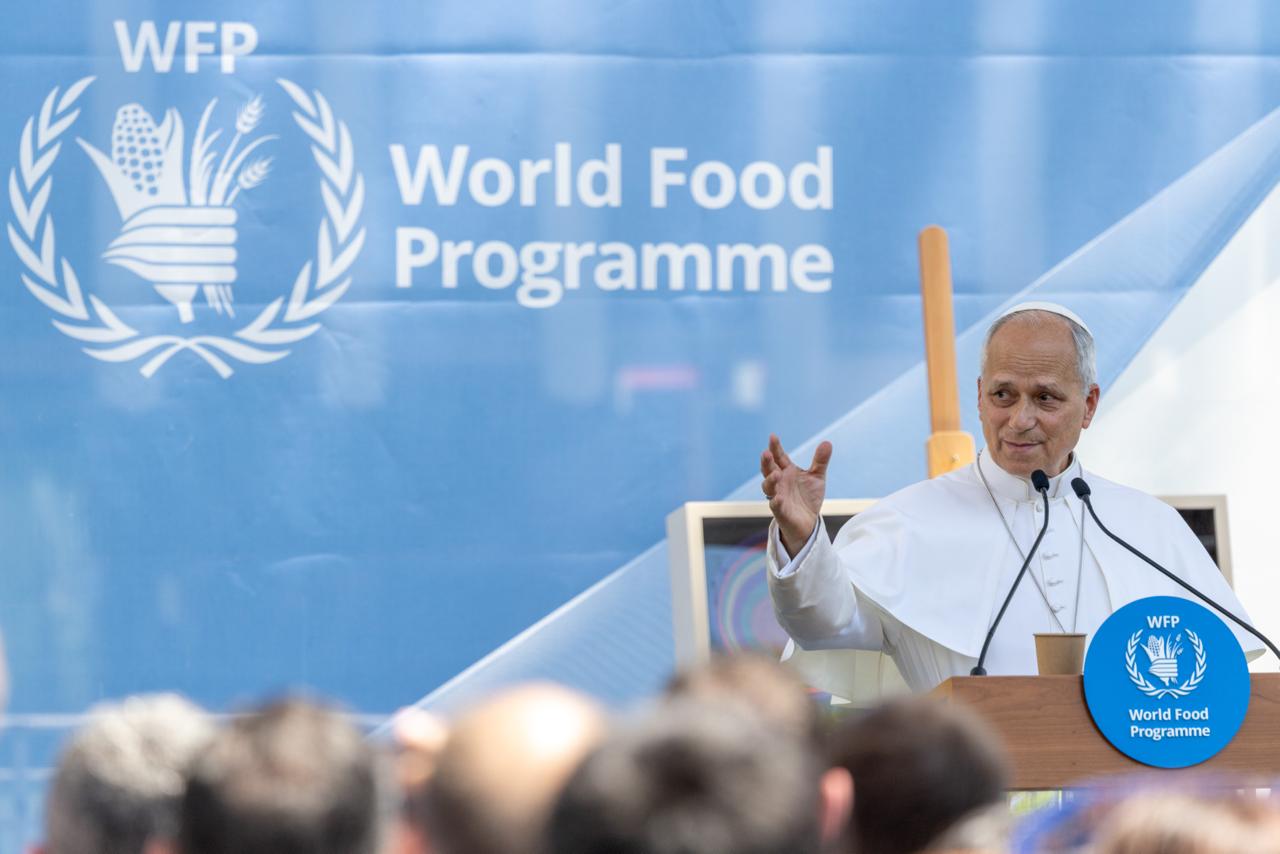
Pope Leo XIV called on the United Nations (U.N.) to prioritize people in combating world hunger and said feeding the hungry is an essential part of peacemaking.
The pontiff visited the headquarters of the U.N. Food and Agriculture Organization in Rome on Monday. In his remarks, Leo emphasized the seriousness of world hunger, explaining that it often fuels other social challenges, particularly migration.
“More than merely a humanitarian concern, hunger erodes social cohesion, heightens the risk of conflict, and fuels forced migration,” Leo said. “In effect, conflicts are ‘fed’ more readily than people are nourished. This reality reflects not only operational shortcomings but also a fundamental imbalance in political and moral priorities.”
The pope also stressed the importance of multilateral collaboration, stating that each state shares co-responsibility to “recognize the inherent God-given dignity of every person.” He also encouraged secular governments to be open to collaborating with the Catholic Church to assist the most vulnerable, recognizing their fundamental human right to adequate food.
“Access to adequate food is a fundamental human right grounded in the dignity of every person,” Leo remarked.
“The Catholic Church — through parishes, dioceses, Caritas agencies, and other faith-based initiatives — often reaches vulnerable populations in areas inaccessible to international actors. I therefore encourage the World Food Programme and its partners to continue supporting these efforts.”
The U.N. Food and Agriculture Organization was established in 1945 in response to widespread hunger and food insecurity worldwide following World War II. In his address, Leo XIV praised the progress of the organization’s mission while warning the U.N. about the dangers of a bureaucracy that slows the delivery of food assistance to disadvantaged populations.
“Implementing this appeal [to fight hunger] effectively requires reducing unnecessary bureaucracy so that transparency and accountability serve people rather than impede assistance,” the pope said.
Pope Leo XIV to UN: To combat hunger, focus on humanity #Catholic
Pope Leo XIV called on the United Nations (U.N.) to prioritize people in combating world hunger and said feeding the hungry is an essential part of peacemaking.
The pontiff visited the headquarters of the U.N. Food and Agriculture Organization in Rome on Monday. In his remarks, Leo emphasized the seriousness of world hunger, explaining that it often fuels other social challenges, particularly migration.
“More than merely a humanitarian concern, hunger erodes social cohesion, heightens the risk of conflict, and fuels forced migration,” Leo said. “In effect, conflicts are ‘fed’ more readily than people are nourished. This reality reflects not only operational shortcomings but also a fundamental imbalance in political and moral priorities.”
The pope also stressed the importance of multilateral collaboration, stating that each state shares co-responsibility to “recognize the inherent God-given dignity of every person.” He also encouraged secular governments to be open to collaborating with the Catholic Church to assist the most vulnerable, recognizing their fundamental human right to adequate food.
“Access to adequate food is a fundamental human right grounded in the dignity of every person,” Leo remarked.
“The Catholic Church — through parishes, dioceses, Caritas agencies, and other faith-based initiatives — often reaches vulnerable populations in areas inaccessible to international actors. I therefore encourage the World Food Programme and its partners to continue supporting these efforts.”
The U.N. Food and Agriculture Organization was established in 1945 in response to widespread hunger and food insecurity worldwide following World War II. In his address, Leo XIV praised the progress of the organization’s mission while warning the U.N. about the dangers of a bureaucracy that slows the delivery of food assistance to disadvantaged populations.
“Implementing this appeal [to fight hunger] effectively requires reducing unnecessary bureaucracy so that transparency and accountability serve people rather than impede assistance,” the pope said.