Country

Seminarians medal at Cincinnati’s Flying Pig Marathon #Catholic On Sunday, May 5, 21 men in formation for the priesthood at Mount St. Mary’s Seminary and School of Theology in Cincinnati participated in the 28th annual Flying Pig Marathon. The men of the Mount held their own among the approximately 45,000 other racers. Emerson Wells, studying for the Archdiocese of Louisville, placed second overall with a personal best marathon time of 2:23:52, averaging 5 minutes, 30 seconds per mile for the entire 26.2 mile race. It’s a time that would have won him first place nine out of the last 10 years of the race. The seminarian-led Verso l’Alto Track Club team won first place in the 4-person relay, clocking a finish time of 2:30:39 and outstripping the second place relay team by nearly 20 minutes. Seminarian Chatham Anderson, studying for the Diocese of Columbus, started the team off, followed by Nick Merk, then Kevin Bonfield, and finally Cincinnati seminarian David Adamitis brought the team over the finish line. These five men each donned the Verso l’Alto Track Club jersey, signalling to all who passed by that they ran for a reason. St. Pier Giorgio Frassati, canonized by Pope Leo XIV on Sept. 7, 2025, made the Italian phrase Verso l’Alto known around the world. It translates to “To the heights.” The Verso l’Alto Track Club, open to all local Catholic men (with a qualifying 5k time of 18 minutes) combines the pursuit of excellence in running and virtuous brotherhood — all ordered toward the glorification of GodWells, a lifelong runner, said this was the most systematic training he’s used to prepare for a marathon thus far.“I had a few weeks where I got up to 80 miles a week, which was workable, but it was definitely tough with the schedule and I had to use my breaks to take advantage of that,” he said.
 
 The seminarian-led Verso l’Alto Track Club team won 1st place in the Marathon 4-man Relay with a time of 2:30:39 on May 5, 2026 in Cincinnati. | Photo courtesy of Chatham Anderson, Nick Merk, Kevin Bonfield and David Adamitis
 
 The seminarians stick to a strict schedule of prayer, worship, instruction, and study each day. Wells trained with a goal of running the race in 2 hours, 25 minutes or less. “I knew I had to really focus on the hills if I was going to be successful.”In conjunction with his rigorous training, Wells had a few other tools to keep him going toward his goal.“There was a group of sisters from the Children of Mary that came down to my home parish in Louisville. One of them — Sister Imelda Joy — told me that she and two of her other sisters were going to be making perpetual vows soon.”On May 3, to be exact, the same day as the Flying Pig Marathon.“When she told me that, I was like, full stop. Thatʼs what Iʼm going to be offering this race for.”At moments when the race became tough, Wells remembered those sisters and asked for our Lady’s intercession for them.Wells’ devotion to Mary is made visible by the brown scapular he wore during the race. “I wear the scapular every day; itʼs part of my devotional life.” The scapular didn’t stay in place as he ran through the streets of Cincinnati and Northern Kentucky. “I actually like having it on during runs because you can kind of see itʼll fly around quite a bit, and I’m reminded that Mary is the way and sheʼs the perfect exemplar of what it means to be truly devoted to God and contemplation,” Wells said.The men of the Verso l’Alto Track Club share a common goal: physical excellence ordered toward spiritual growth.“You can be excellent in a given activity and excellent in your faith. Theyʼre not exclusive to each other, but actually mutually affirming,” Adamitis said. “I think that thereʼs a real good among Christians to have ambitious goals according to their talents and to ask the Lord for enlightenment about what their abilities are and how they can use those abilities to glorify His name to bring others into His kingdom.”The message as these men ran “to the heights” was clear: the pursuit of excellence is the pursuit of God.“When we strive to have perfection in those areas of physical health and strength, it should really encourage us to have greater care for what matters the most, and thatʼs our soul and our union with God,” said Adamitis.Both Wells and Adamitis plan to continue running. Through the Verso l’Alto Track Club, they aim to amplify their mission throughout Cincinnati, Northern Kentucky, and the Archdiocese at large.Catholic high school students and adults are invited to compete in the club’s summer cross country challenge on Aug. 7, 2026. Adamitis explained the main motivation is to bring Catholic high school students together so that they can have a sense of a greater community. “So that these high school students can see, ‘As I get older and I eventually graduate high school, I can still pursue running at a high level and stay Catholic.’ Thereʼs an element of excellence to both of those things that continue beyond high school.” “Our athletic pursuits are ultimately ordered for the glorification of God,” Adamitis said. “Cincinnati is a wonderful running city, and we can shift the idea to where itʼs not just running, but itʼs running for the glorification of God.”This article was originally published by The Catholic Telegraph, of the Archdiocese of Cincinnati, and is reprinted here, with adaptations, with permission.

Seminarians medal at Cincinnati’s Flying Pig Marathon #Catholic On Sunday, May 5, 21 men in formation for the priesthood at Mount St. Mary’s Seminary and School of Theology in Cincinnati participated in the 28th annual Flying Pig Marathon. The men of the Mount held their own among the approximately 45,000 other racers. Emerson Wells, studying for the Archdiocese of Louisville, placed second overall with a personal best marathon time of 2:23:52, averaging 5 minutes, 30 seconds per mile for the entire 26.2 mile race. It’s a time that would have won him first place nine out of the last 10 years of the race. The seminarian-led Verso l’Alto Track Club team won first place in the 4-person relay, clocking a finish time of 2:30:39 and outstripping the second place relay team by nearly 20 minutes. Seminarian Chatham Anderson, studying for the Diocese of Columbus, started the team off, followed by Nick Merk, then Kevin Bonfield, and finally Cincinnati seminarian David Adamitis brought the team over the finish line. These five men each donned the Verso l’Alto Track Club jersey, signalling to all who passed by that they ran for a reason. St. Pier Giorgio Frassati, canonized by Pope Leo XIV on Sept. 7, 2025, made the Italian phrase Verso l’Alto known around the world. It translates to “To the heights.” The Verso l’Alto Track Club, open to all local Catholic men (with a qualifying 5k time of 18 minutes) combines the pursuit of excellence in running and virtuous brotherhood — all ordered toward the glorification of GodWells, a lifelong runner, said this was the most systematic training he’s used to prepare for a marathon thus far.“I had a few weeks where I got up to 80 miles a week, which was workable, but it was definitely tough with the schedule and I had to use my breaks to take advantage of that,” he said. The seminarian-led Verso l’Alto Track Club team won 1st place in the Marathon 4-man Relay with a time of 2:30:39 on May 5, 2026 in Cincinnati. | Photo courtesy of Chatham Anderson, Nick Merk, Kevin Bonfield and David Adamitis The seminarians stick to a strict schedule of prayer, worship, instruction, and study each day. Wells trained with a goal of running the race in 2 hours, 25 minutes or less. “I knew I had to really focus on the hills if I was going to be successful.”In conjunction with his rigorous training, Wells had a few other tools to keep him going toward his goal.“There was a group of sisters from the Children of Mary that came down to my home parish in Louisville. One of them — Sister Imelda Joy — told me that she and two of her other sisters were going to be making perpetual vows soon.”On May 3, to be exact, the same day as the Flying Pig Marathon.“When she told me that, I was like, full stop. Thatʼs what Iʼm going to be offering this race for.”At moments when the race became tough, Wells remembered those sisters and asked for our Lady’s intercession for them.Wells’ devotion to Mary is made visible by the brown scapular he wore during the race. “I wear the scapular every day; itʼs part of my devotional life.” The scapular didn’t stay in place as he ran through the streets of Cincinnati and Northern Kentucky. “I actually like having it on during runs because you can kind of see itʼll fly around quite a bit, and I’m reminded that Mary is the way and sheʼs the perfect exemplar of what it means to be truly devoted to God and contemplation,” Wells said.The men of the Verso l’Alto Track Club share a common goal: physical excellence ordered toward spiritual growth.“You can be excellent in a given activity and excellent in your faith. Theyʼre not exclusive to each other, but actually mutually affirming,” Adamitis said. “I think that thereʼs a real good among Christians to have ambitious goals according to their talents and to ask the Lord for enlightenment about what their abilities are and how they can use those abilities to glorify His name to bring others into His kingdom.”The message as these men ran “to the heights” was clear: the pursuit of excellence is the pursuit of God.“When we strive to have perfection in those areas of physical health and strength, it should really encourage us to have greater care for what matters the most, and thatʼs our soul and our union with God,” said Adamitis.Both Wells and Adamitis plan to continue running. Through the Verso l’Alto Track Club, they aim to amplify their mission throughout Cincinnati, Northern Kentucky, and the Archdiocese at large.Catholic high school students and adults are invited to compete in the club’s summer cross country challenge on Aug. 7, 2026. Adamitis explained the main motivation is to bring Catholic high school students together so that they can have a sense of a greater community. “So that these high school students can see, ‘As I get older and I eventually graduate high school, I can still pursue running at a high level and stay Catholic.’ Thereʼs an element of excellence to both of those things that continue beyond high school.” “Our athletic pursuits are ultimately ordered for the glorification of God,” Adamitis said. “Cincinnati is a wonderful running city, and we can shift the idea to where itʼs not just running, but itʼs running for the glorification of God.”This article was originally published by The Catholic Telegraph, of the Archdiocese of Cincinnati, and is reprinted here, with adaptations, with permission.

On May 5, 21 men in formation for the priesthood at Mount St. Mary’s Seminary and School of Theology in Cincinnati participated in the 28th annual Flying Pig Marathon.

Read More
Newman Guide schools honor Catholic leaders at 2026 commencements #Catholic Here are some of the distinguished individuals receiving honorary degrees at many of the Catholic institutions the Cardinal Newman Society recommends for their commitment to a faithful Catholic education. The Catholic University of AmericaThe Catholic University of America (CUA) will confer honorary degrees on three “notable individuals” at its May 16 commencement ceremony, including Lisa Brenninkmeyer, Dr. John Bruchalski, and Iqbal Z. Quadir.Brenninkmeyer is the founder and CEO of Walking with Purpose, a Catholic Bible study group for women and girls, while Bruchalski is the founder of Tepeyac OB-GYN and Quadir is a distinguished fellow at the CUA’s Busch School of Business “who has pioneered technology-based and for-profit entrepreneurship for the economic empowerment of low-income people,” according to a press release from the university.Monsignor James Patrick Shea, president of the University of Mary, will serve as commencement speaker.Thomas More College of Liberal ArtsThomas More College of Liberal Arts in New Hampshire will award former Wyoming Catholic College President Glenn Arbery, PhD, and his wife, Virginia, with honorary doctorates at its commencement ceremony May 16.“Thomas More College is glad to have old friends and teachers — Glenn and Virginia Arbery — returning,” Thomas More College President William Fahey said. “A community is healthy when it remembers and honors important moments and people of its history. The Arberys are well known and influential teachers and scholars at several institutions of higher learning, but our college was profoundly shaped and ennobled by their learning and generous hearts. We are glad to have them return for this most solemn and joyful of occasions.”University of MaryCatholic businessman and lawyer Timothy Busch received an honorary degree from the University of Mary in Bismarck, North Dakota, in addition to delivering the commencement address during the university’s April 25 commencement.The university also honored Dan Butler, chairman of the board of trustees at the University of Mary, as well as his wife, Heather Butler, who co-chaired the university’s 2030 Capital Campaign with U.S. Sen. Kevin Cramer, R-North Dakota, raising over 0 million for the university’s advancement, according to the university.Franciscan University of SteubenvilleBusch also served as commencement speaker for graduates of science and professional programs at Franciscan University in Steubenville, Ohio, and received an honorary doctorate in humane letters during its May 9 commencement.Busch’s NAPA Institute co-founder, Father Robert Spitzer, SJ, also delivered a commencement address for graduates from the arts, humanities, and social scientists at the university. Spitzer received an honorary doctorate in catechetics and evangelization.University of DallasIn addition to delivering the school’s commencement address, Cardinal Timothy Dolan, archbishop emeritus of New York, will receive an honorary degree of doctor of humane letters from the University of Dallas.“Cardinal Dolan is one of the Church’s most joyful and widely respected shepherds, and we are honored to welcome him to the University of Dallas,” said President Jonathan J. Sanford said in a press release. The university’s commencement ceremony will take place May 16.Benedictine CollegePeter Cancro, the founder and chairman of the popular sandwich chain Jersey Mike’s, will receive an honorary doctor of humane letters at Benedictine College’s May 16 commencement.Cancro, who is renowned for his charitable contributions to faith-based organizations, including a  million gift to Ave Maria School of Law, will also deliver the commencement address.Ave Maria UniversityFlorida Gov. Ron DeSantis received an honorary degree from Ave Maria University during its May 9 commencement ceremony. “The faith does not depend on what is fashionable or who holds power. It is, in fact, the truth that ultimately will set you free,” DeSantis said during his speech, urging Ave Maria’s class of 2026 to put on “the full armor of God” as they go out into the world.Walsh UniversityEWTN “Real Life Catholic” host Chris Stefanick received an honorary doctorate of applied theology at Walsh University’s May 2 commencement ceremonies.“Your formation as men and women of character is the primary end of Catholic education,” Stefanik told graduates during his speech at the Ohio Catholic school. “The secondary end is the formation of useful citizens. Your greatest achievement will forever be marked not by what you do, but by what you do for others.” Walsh University also conferred an honorary doctorate of applied engineering upon Michael White, former principal director for hypersonics in the Office of the Under Secretary of Defense for Research and Engineering.

Newman Guide schools honor Catholic leaders at 2026 commencements #Catholic Here are some of the distinguished individuals receiving honorary degrees at many of the Catholic institutions the Cardinal Newman Society recommends for their commitment to a faithful Catholic education. The Catholic University of AmericaThe Catholic University of America (CUA) will confer honorary degrees on three “notable individuals” at its May 16 commencement ceremony, including Lisa Brenninkmeyer, Dr. John Bruchalski, and Iqbal Z. Quadir.Brenninkmeyer is the founder and CEO of Walking with Purpose, a Catholic Bible study group for women and girls, while Bruchalski is the founder of Tepeyac OB-GYN and Quadir is a distinguished fellow at the CUA’s Busch School of Business “who has pioneered technology-based and for-profit entrepreneurship for the economic empowerment of low-income people,” according to a press release from the university.Monsignor James Patrick Shea, president of the University of Mary, will serve as commencement speaker.Thomas More College of Liberal ArtsThomas More College of Liberal Arts in New Hampshire will award former Wyoming Catholic College President Glenn Arbery, PhD, and his wife, Virginia, with honorary doctorates at its commencement ceremony May 16.“Thomas More College is glad to have old friends and teachers — Glenn and Virginia Arbery — returning,” Thomas More College President William Fahey said. “A community is healthy when it remembers and honors important moments and people of its history. The Arberys are well known and influential teachers and scholars at several institutions of higher learning, but our college was profoundly shaped and ennobled by their learning and generous hearts. We are glad to have them return for this most solemn and joyful of occasions.”University of MaryCatholic businessman and lawyer Timothy Busch received an honorary degree from the University of Mary in Bismarck, North Dakota, in addition to delivering the commencement address during the university’s April 25 commencement.The university also honored Dan Butler, chairman of the board of trustees at the University of Mary, as well as his wife, Heather Butler, who co-chaired the university’s 2030 Capital Campaign with U.S. Sen. Kevin Cramer, R-North Dakota, raising over $100 million for the university’s advancement, according to the university.Franciscan University of SteubenvilleBusch also served as commencement speaker for graduates of science and professional programs at Franciscan University in Steubenville, Ohio, and received an honorary doctorate in humane letters during its May 9 commencement.Busch’s NAPA Institute co-founder, Father Robert Spitzer, SJ, also delivered a commencement address for graduates from the arts, humanities, and social scientists at the university. Spitzer received an honorary doctorate in catechetics and evangelization.University of DallasIn addition to delivering the school’s commencement address, Cardinal Timothy Dolan, archbishop emeritus of New York, will receive an honorary degree of doctor of humane letters from the University of Dallas.“Cardinal Dolan is one of the Church’s most joyful and widely respected shepherds, and we are honored to welcome him to the University of Dallas,” said President Jonathan J. Sanford said in a press release. The university’s commencement ceremony will take place May 16.Benedictine CollegePeter Cancro, the founder and chairman of the popular sandwich chain Jersey Mike’s, will receive an honorary doctor of humane letters at Benedictine College’s May 16 commencement.Cancro, who is renowned for his charitable contributions to faith-based organizations, including a $5 million gift to Ave Maria School of Law, will also deliver the commencement address.Ave Maria UniversityFlorida Gov. Ron DeSantis received an honorary degree from Ave Maria University during its May 9 commencement ceremony. “The faith does not depend on what is fashionable or who holds power. It is, in fact, the truth that ultimately will set you free,” DeSantis said during his speech, urging Ave Maria’s class of 2026 to put on “the full armor of God” as they go out into the world.Walsh UniversityEWTN “Real Life Catholic” host Chris Stefanick received an honorary doctorate of applied theology at Walsh University’s May 2 commencement ceremonies.“Your formation as men and women of character is the primary end of Catholic education,” Stefanik told graduates during his speech at the Ohio Catholic school. “The secondary end is the formation of useful citizens. Your greatest achievement will forever be marked not by what you do, but by what you do for others.” Walsh University also conferred an honorary doctorate of applied engineering upon Michael White, former principal director for hypersonics in the Office of the Under Secretary of Defense for Research and Engineering.

With graduation season underway, here is a roundup of individuals who will receive honorary degrees from Catholic colleges at commencement ceremonies across the country.

Read More
Catholic film star becomes first Christian chief minister of major Indian state #Catholic CHENNAI, India — The Catholic Church in the Indian state of Tamil Nadu is celebrating after Joseph Vijay, an actor-turned-politician raised in the Catholic faith, was sworn in as the stateʼs chief minister on May 10.“This is a historic development. We hope it will lead to positive changes as the chief minister has already promised,” Archbishop George Antonysamy of Madras and Mylapore told EWTN News on May 13.Vijayʼs new political party, Tamilaga Vettri Kazhagam (TVK), which translates to Victory Party of Tamil Nadu, was founded in 2024. In its electoral debut, the party stunned the Dravidian parties that had held power for nearly six decades between them, winning 107 seats in the 234-member state assembly.Acknowledging the mandate, five smaller parties withdrew their support from the ousted DMK and opposition AIADMK coalitions to back TVK, pushing it past the 118-seat majority mark and prompting the state governor to invite Vijay to form the government on May 9.The Vijay government won a crucial vote of confidence on May 13 with 144 votes, with a section of the AIADMK also voting in his favor.‘I wonʼt touch public money’“I wonʼt touch public money,” Vijay declared soon after his swearing-in on May 10, promising a “corruption-free” administration. Within hours, the new chief minister signed three orders subsidizing electricity for the poor, establishing a task force for womenʼs safety, and setting up anti-narcotics units to curb the drug menace.Welcoming “the steps the CM has promised,” Antonysamy said, “We cannot judge a person in a few days. Everything will depend on the performance. Vijay himself is new to government administration, and his legislators too, as most of them hail from his fan base.”Catholic identity in the spotlight“We are really rejoicing that we have a Catholic chief minister,” Father Vincent Chinnadurai, spokesperson of the Tamil Nadu Catholic Bishops' Council, told EWTN News.“Vijay is known as a popular actor. But his Catholic background came into public attention after the Hindu nationalists tried to polarize the voters, saying that Vijay is a Christian with the first name Joseph,” explained Chinnadurai, who is also the rector of the Santhome Basilica in Chennai, adjacent to the archbishopʼs residence.The Santhome Basilica is built over the traditional site of the tomb of St. Thomas the Apostle, who according to tradition was martyred at Mylapore in present-day Chennai in A.D. 72. It is one of three basilicas in the world built over tombs traditionally associated with apostles, along with St. Peterʼs Basilica at the Vatican and the Cathedral of Santiago de Compostela in Spain.“The people here are very happy, as we are privileged to be the first big state in India to have a Catholic chief minister, and at a time when Christians are facing troubles in different parts of the country,” Chinnadurai added. He is a former chairman of the Minorities Commission of Tamil Nadu.With approximately 77 million people, Tamil Nadu is the seventh most populous of Indiaʼs 28 states.The archbishop also acknowledged that “Vijay is not known much as a Catholic. But during the election time, it came out in a big way.”Hindu nationalists and the ‘Joseph’ factorThe name “Joseph” stood out prominently on the large stage at the Nehru Indoor Stadium during the swearing-in ceremony, which was broadcast live by major national television channels.When Hindu nationalists tried to brand Vijay as a Christian in the run-up to the election held on April 19, Chinnadurai pointed out that “he did not back off.”Instead, Vijay publicized a Christmas program in which he made a speech linking himself to the Old Testament figure of Joseph, who looked after his brothers even after they had thrown him into a well, while he was the ruler of Egypt. In the speech, Vijay also asserted that “Tamil Nadu is a mother; all children are equal,” promising to care for all, including those who opposed him.In the state, where popular film actors have massive fan followings with organized clubs, The Hindu, a national daily based in Chennai, noted in its May 10 edition that although Vijay set up TVK only two years ago, the party was built on more than 80,000 fan clubs established from 2009 across the state, carrying out social work and social campaigns.Faithful throng Marian shrineThousands of Vijayʼs fans thronged the Marian shrine of Vailankanni, known as the Lourdes of the East, about 200 miles south of Chennai, from the night of May 1, expecting him to visit the shrine on the morning of May 2 in thanksgiving after voting.The fans waited through the night and loudly chanted “TVK, TVK” inside the church premises before church authorities asked them to calm down. Vijay canceled the visit after hearing about the commotion at the shrine.“Vijay is an alumnus of our college, and his mother used to come to our college for Mass regularly,” Professor Gladstone Xavier of Chennaiʼs Loyola College told EWTN News.With Vijayʼs Catholic identity now public, Xavier hopes that “Vijayʼs performance as the chief minister should make the community proud.”

Catholic film star becomes first Christian chief minister of major Indian state #Catholic CHENNAI, India — The Catholic Church in the Indian state of Tamil Nadu is celebrating after Joseph Vijay, an actor-turned-politician raised in the Catholic faith, was sworn in as the stateʼs chief minister on May 10.“This is a historic development. We hope it will lead to positive changes as the chief minister has already promised,” Archbishop George Antonysamy of Madras and Mylapore told EWTN News on May 13.Vijayʼs new political party, Tamilaga Vettri Kazhagam (TVK), which translates to Victory Party of Tamil Nadu, was founded in 2024. In its electoral debut, the party stunned the Dravidian parties that had held power for nearly six decades between them, winning 107 seats in the 234-member state assembly.Acknowledging the mandate, five smaller parties withdrew their support from the ousted DMK and opposition AIADMK coalitions to back TVK, pushing it past the 118-seat majority mark and prompting the state governor to invite Vijay to form the government on May 9.The Vijay government won a crucial vote of confidence on May 13 with 144 votes, with a section of the AIADMK also voting in his favor.‘I wonʼt touch public money’“I wonʼt touch public money,” Vijay declared soon after his swearing-in on May 10, promising a “corruption-free” administration. Within hours, the new chief minister signed three orders subsidizing electricity for the poor, establishing a task force for womenʼs safety, and setting up anti-narcotics units to curb the drug menace.Welcoming “the steps the CM has promised,” Antonysamy said, “We cannot judge a person in a few days. Everything will depend on the performance. Vijay himself is new to government administration, and his legislators too, as most of them hail from his fan base.”Catholic identity in the spotlight“We are really rejoicing that we have a Catholic chief minister,” Father Vincent Chinnadurai, spokesperson of the Tamil Nadu Catholic Bishops' Council, told EWTN News.“Vijay is known as a popular actor. But his Catholic background came into public attention after the Hindu nationalists tried to polarize the voters, saying that Vijay is a Christian with the first name Joseph,” explained Chinnadurai, who is also the rector of the Santhome Basilica in Chennai, adjacent to the archbishopʼs residence.The Santhome Basilica is built over the traditional site of the tomb of St. Thomas the Apostle, who according to tradition was martyred at Mylapore in present-day Chennai in A.D. 72. It is one of three basilicas in the world built over tombs traditionally associated with apostles, along with St. Peterʼs Basilica at the Vatican and the Cathedral of Santiago de Compostela in Spain.“The people here are very happy, as we are privileged to be the first big state in India to have a Catholic chief minister, and at a time when Christians are facing troubles in different parts of the country,” Chinnadurai added. He is a former chairman of the Minorities Commission of Tamil Nadu.With approximately 77 million people, Tamil Nadu is the seventh most populous of Indiaʼs 28 states.The archbishop also acknowledged that “Vijay is not known much as a Catholic. But during the election time, it came out in a big way.”Hindu nationalists and the ‘Joseph’ factorThe name “Joseph” stood out prominently on the large stage at the Nehru Indoor Stadium during the swearing-in ceremony, which was broadcast live by major national television channels.When Hindu nationalists tried to brand Vijay as a Christian in the run-up to the election held on April 19, Chinnadurai pointed out that “he did not back off.”Instead, Vijay publicized a Christmas program in which he made a speech linking himself to the Old Testament figure of Joseph, who looked after his brothers even after they had thrown him into a well, while he was the ruler of Egypt. In the speech, Vijay also asserted that “Tamil Nadu is a mother; all children are equal,” promising to care for all, including those who opposed him.In the state, where popular film actors have massive fan followings with organized clubs, The Hindu, a national daily based in Chennai, noted in its May 10 edition that although Vijay set up TVK only two years ago, the party was built on more than 80,000 fan clubs established from 2009 across the state, carrying out social work and social campaigns.Faithful throng Marian shrineThousands of Vijayʼs fans thronged the Marian shrine of Vailankanni, known as the Lourdes of the East, about 200 miles south of Chennai, from the night of May 1, expecting him to visit the shrine on the morning of May 2 in thanksgiving after voting.The fans waited through the night and loudly chanted “TVK, TVK” inside the church premises before church authorities asked them to calm down. Vijay canceled the visit after hearing about the commotion at the shrine.“Vijay is an alumnus of our college, and his mother used to come to our college for Mass regularly,” Professor Gladstone Xavier of Chennaiʼs Loyola College told EWTN News.With Vijayʼs Catholic identity now public, Xavier hopes that “Vijayʼs performance as the chief minister should make the community proud.”

Church leaders in the southern Indian state of Tamil Nadu call the election of actor-turned-politician Joseph Vijay a source of pride in a country where Christians face growing persecution.

Read More
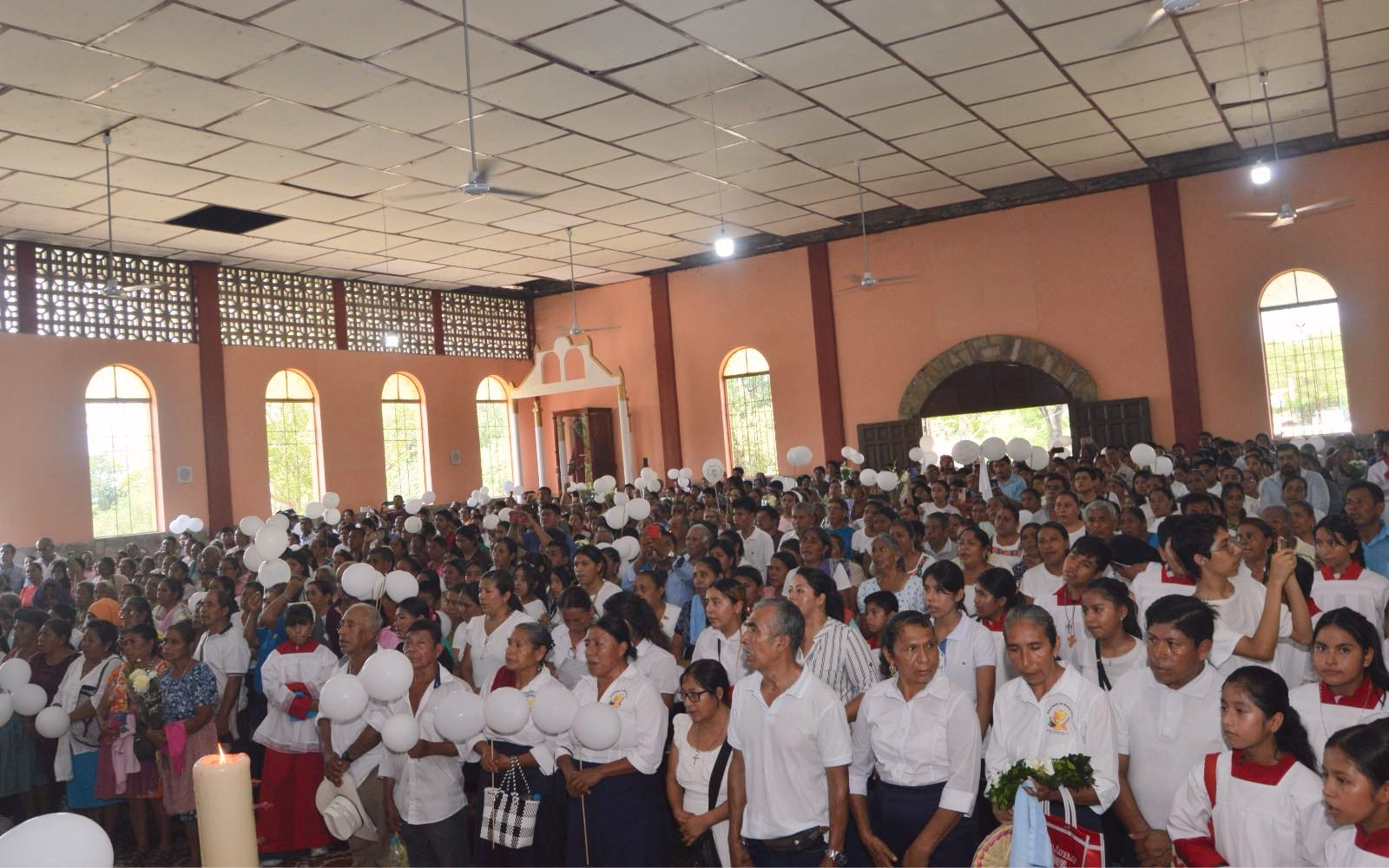
From seminarian in Nicaragua to priest in Miami: ‘I carry my people and my homeland in my heart’ #Catholic As a seminarian, Cristhian David Mendieta Hernández had to flee Nicaragua, persecuted by the very dictatorship that had recently exiled his bishop. The regime of President Daniel Ortega and his wife and vice president, Rosario Murillo, ramped up its persecution of the Catholic Church in 2018.After the dictatorship exiled Silvio Báez, the auxiliary bishop of Managua, from Nicaragua in April 2019, Mendieta, who as a seminarian often accompanied the bishop, was forced to flee the country as well, traveling first to Guatemala and then to Costa Rica. His journey concluded in Miami in January 2022, where, with the assistance of Báez and Father Marco Somarriba, pastor of St. Agatha Parish in Miami, he was able to continue his priestly formation.On May 9 at St. Mary’s Cathedral, he knelt before Archbishop Thomas Wenski and received the priestly ordination that the Nicaraguan dictatorship had attempted to deny him.“I carry my people and my homeland in my heart, and I will offer my first Mass for them,” the newly ordained Nicaraguan priest, who will serve as parochial vicar at St. Thomas the Apostle in Miami, told ACI Prensa, the Spanish-language sister service of EWTN News, on May 10.“This priesthood is a blessing for me, for my family, for the Church, and for the people of Nicaragua,” added Mendieta, who was born in La Concepción township in the Masaya district of Nicaragua. He celebrated his first Mass on May 10 at St. Agatha, accompanied by Báez and other Nicaraguan priests who attended the ordination.“I am grateful to the Archdiocese of Miami for welcoming me and giving me the opportunity to serve the people of God. Here we have a broader perspective that our ministry is for all of God’s people and that our people, especially those from Latin America, share the same aspirations for freedom, peace, and stability,” he emphasized. Father Edwing Román, parochial vicar at St. Agatha, told ACI Prensa that “it’s a source of great joy to have Father Cristhian as another brother in the priesthood. He is a young man of many virtues and a dedicated scholar.”“I admire his piety and humility as well as his ease in forming friendships with the faithful. May God bless him abundantly, and may he be a shepherd modeled after Jesus Christ, the eternal high priest,” Román said.In a video posted by the Archdiocese of Miami on May 6, Mendieta recalled that when he was 6 years old and attending a concert, he announced that he was thinking of becoming a priest, which surprised his family.Years later, while involved in his parishʼs youth ministry, the example of his hardworking parish priest, Father José Antonio, who strove to reach every community, no matter how remote, encouraged him to pursue his vocation and change his plans to become a doctor.The young priest also shared that he enjoys classical music and Frank Sinatra, and that when he is driving, he entertains himself by listening to the British band Queen.Along with Mendieta, the following men were ordained: Adam Cahill, Henry Cárdenas Afanador, Tomasz Kaziel, Arístides Lima, Carlos Luzardo, Saint-Clos Papouloute, Pietro Pironato, and Michele Sega.In his homily, Wenski highlighted the diverse origins of the new priests — Nicaragua, Italy, Poland, Haiti, Venezuela, Colombia, etc. — and noted that “in an increasingly secularized world, where many have lost the sense of the transcendent, the priest is an enigma, a symbol of great contradiction.”"Nowadays, many view religious faith with hostility or at best, with indifference. In such a world, the Church will always appear out of step and irrelevant. Often, such a Church will be viewed if not with contempt and mockery, with total incomprehension. As Jesus said: ‘If the world hates you, know that it hated me first,’” the archbishop said.“Face the challenges of your ministry without anxiety or mediocrity, and do not allow yourselves to be intimidated or influenced by those who make power, wealth, or pleasure the primary criteria of their lives,” he exhorted.After encouraging the new priests to lay down their lives for their faithful, Wenski urged them to be “generous with their time and available to hear the confessions of the faithful.”This story was first published by ACI Prensa, the Spanish-language sister service of EWTN News. It has been translated and adapted by EWTN News English.

From seminarian in Nicaragua to priest in Miami: ‘I carry my people and my homeland in my heart’ #Catholic As a seminarian, Cristhian David Mendieta Hernández had to flee Nicaragua, persecuted by the very dictatorship that had recently exiled his bishop. The regime of President Daniel Ortega and his wife and vice president, Rosario Murillo, ramped up its persecution of the Catholic Church in 2018.After the dictatorship exiled Silvio Báez, the auxiliary bishop of Managua, from Nicaragua in April 2019, Mendieta, who as a seminarian often accompanied the bishop, was forced to flee the country as well, traveling first to Guatemala and then to Costa Rica. His journey concluded in Miami in January 2022, where, with the assistance of Báez and Father Marco Somarriba, pastor of St. Agatha Parish in Miami, he was able to continue his priestly formation.On May 9 at St. Mary’s Cathedral, he knelt before Archbishop Thomas Wenski and received the priestly ordination that the Nicaraguan dictatorship had attempted to deny him.“I carry my people and my homeland in my heart, and I will offer my first Mass for them,” the newly ordained Nicaraguan priest, who will serve as parochial vicar at St. Thomas the Apostle in Miami, told ACI Prensa, the Spanish-language sister service of EWTN News, on May 10.“This priesthood is a blessing for me, for my family, for the Church, and for the people of Nicaragua,” added Mendieta, who was born in La Concepción township in the Masaya district of Nicaragua. He celebrated his first Mass on May 10 at St. Agatha, accompanied by Báez and other Nicaraguan priests who attended the ordination.“I am grateful to the Archdiocese of Miami for welcoming me and giving me the opportunity to serve the people of God. Here we have a broader perspective that our ministry is for all of God’s people and that our people, especially those from Latin America, share the same aspirations for freedom, peace, and stability,” he emphasized. Father Edwing Román, parochial vicar at St. Agatha, told ACI Prensa that “it’s a source of great joy to have Father Cristhian as another brother in the priesthood. He is a young man of many virtues and a dedicated scholar.”“I admire his piety and humility as well as his ease in forming friendships with the faithful. May God bless him abundantly, and may he be a shepherd modeled after Jesus Christ, the eternal high priest,” Román said.In a video posted by the Archdiocese of Miami on May 6, Mendieta recalled that when he was 6 years old and attending a concert, he announced that he was thinking of becoming a priest, which surprised his family.Years later, while involved in his parishʼs youth ministry, the example of his hardworking parish priest, Father José Antonio, who strove to reach every community, no matter how remote, encouraged him to pursue his vocation and change his plans to become a doctor.The young priest also shared that he enjoys classical music and Frank Sinatra, and that when he is driving, he entertains himself by listening to the British band Queen.Along with Mendieta, the following men were ordained: Adam Cahill, Henry Cárdenas Afanador, Tomasz Kaziel, Arístides Lima, Carlos Luzardo, Saint-Clos Papouloute, Pietro Pironato, and Michele Sega.In his homily, Wenski highlighted the diverse origins of the new priests — Nicaragua, Italy, Poland, Haiti, Venezuela, Colombia, etc. — and noted that “in an increasingly secularized world, where many have lost the sense of the transcendent, the priest is an enigma, a symbol of great contradiction.”"Nowadays, many view religious faith with hostility or at best, with indifference. In such a world, the Church will always appear out of step and irrelevant. Often, such a Church will be viewed if not with contempt and mockery, with total incomprehension. As Jesus said: ‘If the world hates you, know that it hated me first,’” the archbishop said.“Face the challenges of your ministry without anxiety or mediocrity, and do not allow yourselves to be intimidated or influenced by those who make power, wealth, or pleasure the primary criteria of their lives,” he exhorted.After encouraging the new priests to lay down their lives for their faithful, Wenski urged them to be “generous with their time and available to hear the confessions of the faithful.”This story was first published by ACI Prensa, the Spanish-language sister service of EWTN News. It has been translated and adapted by EWTN News English.

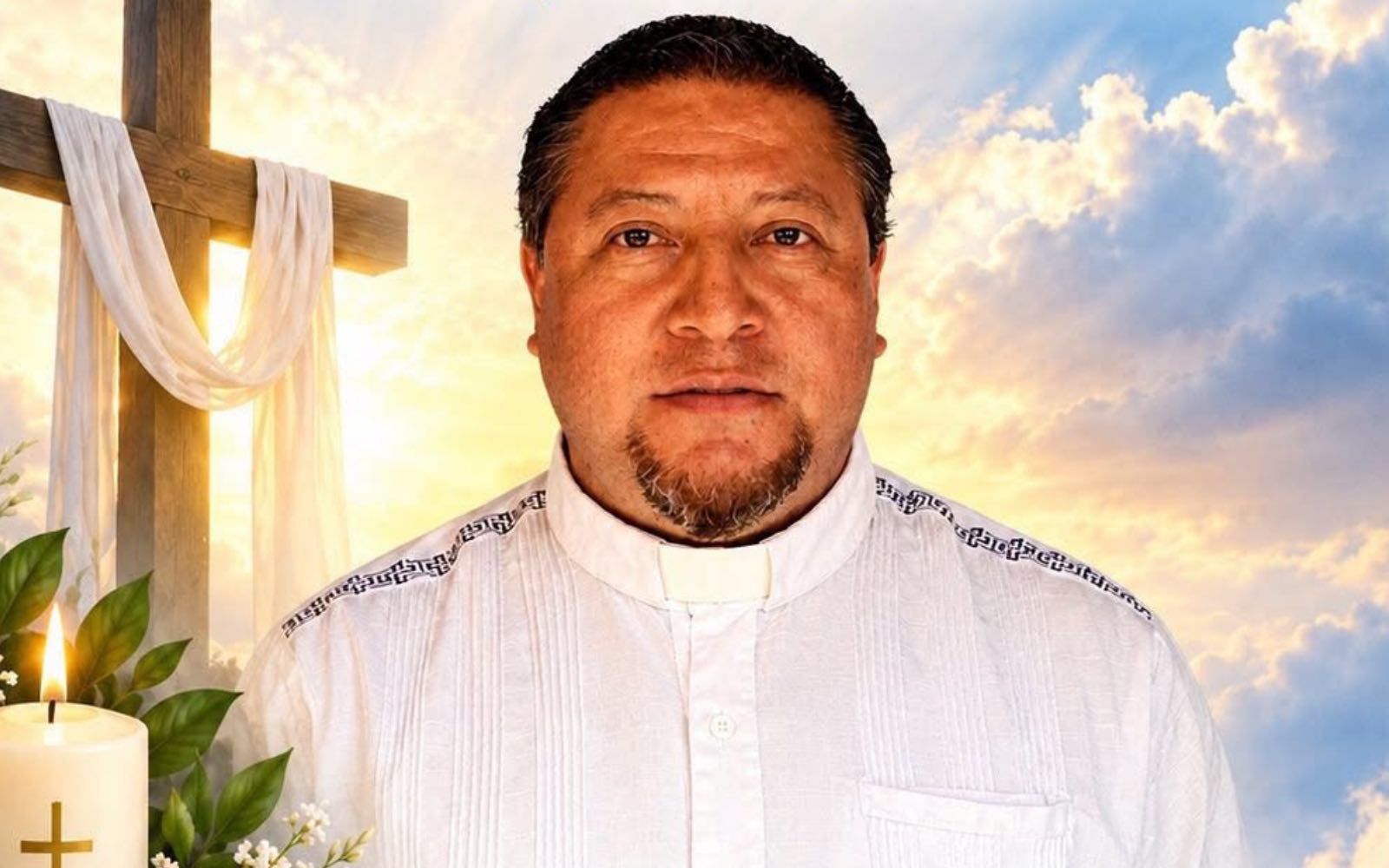
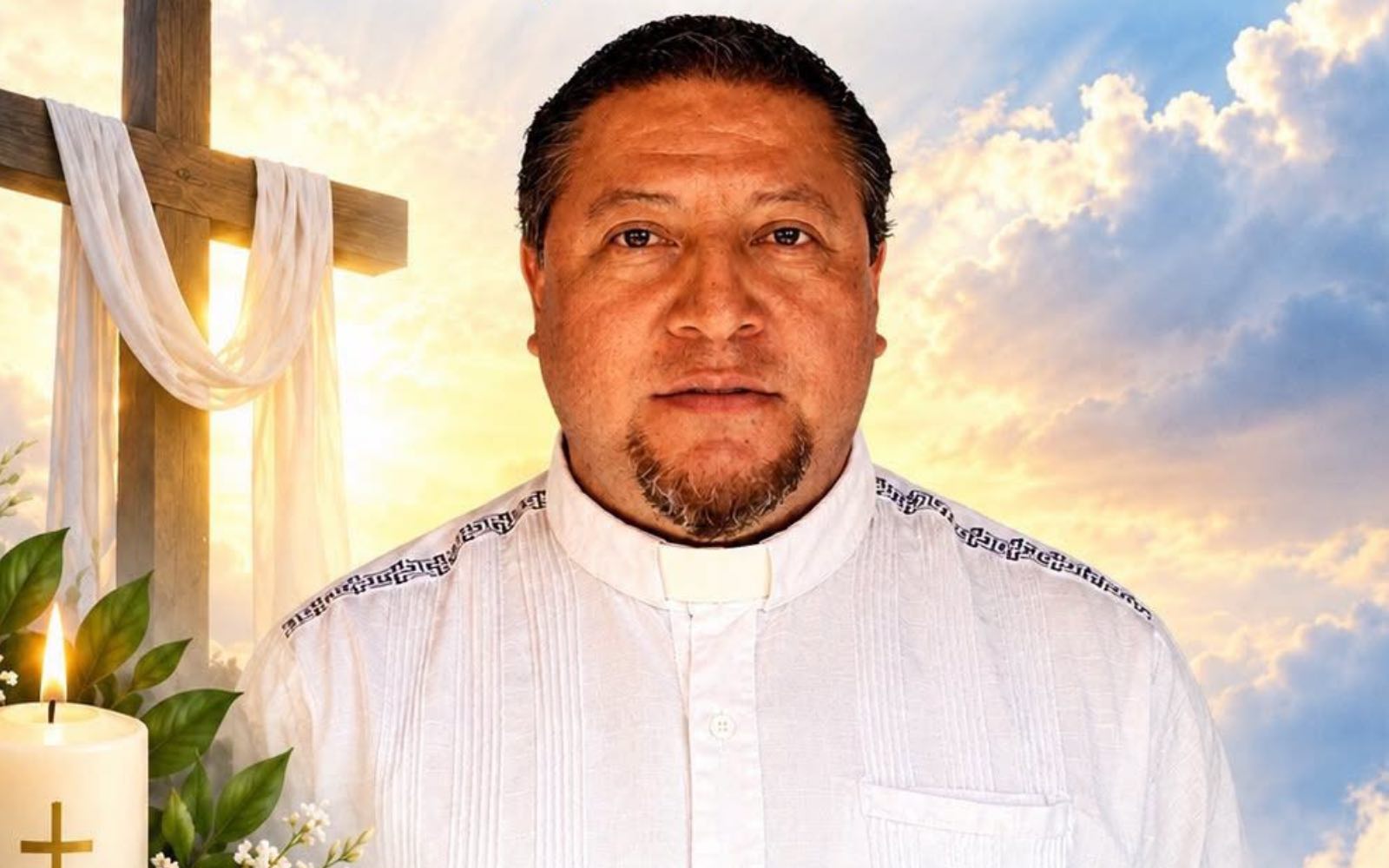
The Ortega regime’s repression of the Catholic Church could not silence God’s call to Cristhian Mendieta. Having fled Nicaragua as a seminarian, the young man was ordained to the priesthood in Miami.

Read More
Haitian prime minister meets Pope Leo, inaugurates new Vatican embassy #Catholic Haitian Prime Minister Alix Didier Fils-Aimé discussed peace and strengthening relations with the Holy See in Rome over the weekend. The head of the transitional government was received by Pope Leo XIV on Saturday and then spoke with Vatican Secretary of State Cardinal Pietro Parolin and Archbishop Paul Richard Gallagher, secretary for Relations with States and International Organizations.In a brief conversation with EWTN News, Parolin revealed that “we also talked about concrete initiatives regarding peace” with the prime minister, such as a conference on peace in Haiti, but “there is nothing in particular at the moment.” The secretary of state acknowledged that the local Church “is certainly active, helps, and contributes” on the ground.
 
 Cardinal Pietro Parolin, Vatican secretary of state (center); Haitian Prime Minister Alix Didier Fils-Aimé (right); and Cypriot Ambassador to the Holy See Georges Poulides, dean of the Diplomatic Corps (left), after the Mass for peace in Haiti at the Basilica of St. Mary Major in Rome on Saturday, May 9, 2026. | Credit: Bohumil Petrík/EWTN News
 
 “During the cordial talks,” the Holy See Press Office said in a release, both sides appreciated “good relations,” stressing the “valuable contribution that the Church offers to the country at this particular time.”They touched upon “the socio-political situation and problems in the humanitarian field, migration, and security fields” while mentioning “the necessary contribution of the international community to face current difficulties,” the communiqué concluded.Haiti is experiencing a multidimensional crisis. The country was struck by a devastating earthquake in 2010 and a subsequent cholera outbreak. In 2021, President Jovenel Moïse was assassinated, and the security and political situation deteriorated. Armed gangs control large parts of the capital, Port-au-Prince, and there have not been general elections for a decade. The next general elections are scheduled for Aug. 30.“We want to organize elections, ensure security, and move from receiving humanitarian aid to entering the commerce and market,” the prime minister said after the Mass for peace in Haiti, presided over by Parolin in the Basilica of St. Mary Major following the audience at the Vatican.Fils-Aimé added that the audience with Pope Leo “was very emotional.” He appreciated “the exceptional relation with the Holy See,” highlighting that “the morale of the Catholic Church” is a “positive” factor in Haitian society.“Looking at the current international situation,” Parolin said in his homily, “we can all recognize how much our world needs Godʼs presence and, therefore, the gift of peace.”
 
 Cardinal Pietro Parolin gives the homily at the Mass for peace in Haiti at the Basilica of St. Mary Major in Rome on Saturday, May 9, 2026. | Credit: Bohumil Petrík/EWTN News
 
 The Vaticanʼs secretary of state said that “peace is the first gift of the Resurrected” and so “we are called to bring Christʼs peace to the world.” Quoting St. Augustine, the prelate underscored that “peace is not a mere absence of war, as it has a profound significance and challenges all of us.”He ended his homily with the hope that “peace may reign in Haiti forever.”New embassy inaugurated near the Vatican wallsOn Sunday, May 10, the prime minister and Foreign Affairs and Religious Affairs Minister Raina Forbin inaugurated the new seat of the embassy of Haiti to the Holy See, located just off the Vatican walls.“It is not just a simple change of address,” said the embassyʼs chargé dʼaffaires, Marie Guerline Janvier, adding that it shows “a political will to strengthen traditional and privileged relations with the Holy See.”In this way, Haiti hopes to increase its visibility at the Holy See and to facilitate dialogue and collaboration.

Haitian prime minister meets Pope Leo, inaugurates new Vatican embassy #Catholic Haitian Prime Minister Alix Didier Fils-Aimé discussed peace and strengthening relations with the Holy See in Rome over the weekend. The head of the transitional government was received by Pope Leo XIV on Saturday and then spoke with Vatican Secretary of State Cardinal Pietro Parolin and Archbishop Paul Richard Gallagher, secretary for Relations with States and International Organizations.In a brief conversation with EWTN News, Parolin revealed that “we also talked about concrete initiatives regarding peace” with the prime minister, such as a conference on peace in Haiti, but “there is nothing in particular at the moment.” The secretary of state acknowledged that the local Church “is certainly active, helps, and contributes” on the ground. Cardinal Pietro Parolin, Vatican secretary of state (center); Haitian Prime Minister Alix Didier Fils-Aimé (right); and Cypriot Ambassador to the Holy See Georges Poulides, dean of the Diplomatic Corps (left), after the Mass for peace in Haiti at the Basilica of St. Mary Major in Rome on Saturday, May 9, 2026. | Credit: Bohumil Petrík/EWTN News “During the cordial talks,” the Holy See Press Office said in a release, both sides appreciated “good relations,” stressing the “valuable contribution that the Church offers to the country at this particular time.”They touched upon “the socio-political situation and problems in the humanitarian field, migration, and security fields” while mentioning “the necessary contribution of the international community to face current difficulties,” the communiqué concluded.Haiti is experiencing a multidimensional crisis. The country was struck by a devastating earthquake in 2010 and a subsequent cholera outbreak. In 2021, President Jovenel Moïse was assassinated, and the security and political situation deteriorated. Armed gangs control large parts of the capital, Port-au-Prince, and there have not been general elections for a decade. The next general elections are scheduled for Aug. 30.“We want to organize elections, ensure security, and move from receiving humanitarian aid to entering the commerce and market,” the prime minister said after the Mass for peace in Haiti, presided over by Parolin in the Basilica of St. Mary Major following the audience at the Vatican.Fils-Aimé added that the audience with Pope Leo “was very emotional.” He appreciated “the exceptional relation with the Holy See,” highlighting that “the morale of the Catholic Church” is a “positive” factor in Haitian society.“Looking at the current international situation,” Parolin said in his homily, “we can all recognize how much our world needs Godʼs presence and, therefore, the gift of peace.” Cardinal Pietro Parolin gives the homily at the Mass for peace in Haiti at the Basilica of St. Mary Major in Rome on Saturday, May 9, 2026. | Credit: Bohumil Petrík/EWTN News The Vaticanʼs secretary of state said that “peace is the first gift of the Resurrected” and so “we are called to bring Christʼs peace to the world.” Quoting St. Augustine, the prelate underscored that “peace is not a mere absence of war, as it has a profound significance and challenges all of us.”He ended his homily with the hope that “peace may reign in Haiti forever.”New embassy inaugurated near the Vatican wallsOn Sunday, May 10, the prime minister and Foreign Affairs and Religious Affairs Minister Raina Forbin inaugurated the new seat of the embassy of Haiti to the Holy See, located just off the Vatican walls.“It is not just a simple change of address,” said the embassyʼs chargé dʼaffaires, Marie Guerline Janvier, adding that it shows “a political will to strengthen traditional and privileged relations with the Holy See.”In this way, Haiti hopes to increase its visibility at the Holy See and to facilitate dialogue and collaboration.

The new embassy of Haiti to the Holy See, inaugurated Sunday near the Vatican walls, marks a deepening of diplomatic ties amid ongoing political crisis in the Caribbean nation.

Read More
Hezbollah supporters allegedly launch digital campaign targeting Maronite patriarch #Catholic Hezbollah supporters have reportedly used AI-generated manipulated images to target Cardinal Bechara Boutros al-Rai, the Maronite patriarch of Antioch and All the East. The patriarch described the digital attack on him as “a war of words, not freedom of opinion, but a worrying decline in the standards of language and values, and a violation of human dignity that no one has the right to infringe upon, regardless of its source or form.”The digital attack involved the circulation of altered images portraying the patriarch in mocking and degrading ways.Jowelle M. Howayeck, a Lebanese civic activist and 2022 parliamentary candidate, argued that the campaign is neither spontaneous nor ambiguous in its intent. “It is both intimidation and sectarian provocation, and it is deliberate,” she said.
 
 Jowelle M. Howayeck, a Lebanese civic activist and 2022 parliamentary candidate. | Credit: Photo courtesy of Jowelle M. Howayeck
 
 For Howayeck, the timing is not accidental. She links the campaign to a broader political context in which Hezbollah is “losing political ground,” prompting what she describes as a predictable shift in strategy: “Divert attention from the core issue and construct a new confrontation that can be framed as a symbolic victory.”In her view, “this is not political engagement. It is crisis management through fear, distraction, and division.”The campaign, she added, also reflects a deepening rupture between Hezbollah and the Christian community.Digital confrontations of this kind are not new in Lebanon’s political landscape, but they carry particular risks in a country built on a fragile and strained social contract. The patriarch himself has been targeted before "because the patriarch represents a form of authority that cannot be coerced or absorbed: moral legitimacy anchored in national identity," Howayeck said. "Whenever his positions align with state sovereignty, they expose a structural contradiction within the opposing project.”

Hezbollah supporters allegedly launch digital campaign targeting Maronite patriarch #Catholic Hezbollah supporters have reportedly used AI-generated manipulated images to target Cardinal Bechara Boutros al-Rai, the Maronite patriarch of Antioch and All the East. The patriarch described the digital attack on him as “a war of words, not freedom of opinion, but a worrying decline in the standards of language and values, and a violation of human dignity that no one has the right to infringe upon, regardless of its source or form.”The digital attack involved the circulation of altered images portraying the patriarch in mocking and degrading ways.Jowelle M. Howayeck, a Lebanese civic activist and 2022 parliamentary candidate, argued that the campaign is neither spontaneous nor ambiguous in its intent. “It is both intimidation and sectarian provocation, and it is deliberate,” she said. Jowelle M. Howayeck, a Lebanese civic activist and 2022 parliamentary candidate. | Credit: Photo courtesy of Jowelle M. Howayeck For Howayeck, the timing is not accidental. She links the campaign to a broader political context in which Hezbollah is “losing political ground,” prompting what she describes as a predictable shift in strategy: “Divert attention from the core issue and construct a new confrontation that can be framed as a symbolic victory.”In her view, “this is not political engagement. It is crisis management through fear, distraction, and division.”The campaign, she added, also reflects a deepening rupture between Hezbollah and the Christian community.Digital confrontations of this kind are not new in Lebanon’s political landscape, but they carry particular risks in a country built on a fragile and strained social contract. The patriarch himself has been targeted before "because the patriarch represents a form of authority that cannot be coerced or absorbed: moral legitimacy anchored in national identity," Howayeck said. "Whenever his positions align with state sovereignty, they expose a structural contradiction within the opposing project.”

Hezbollah supporters have reportedly used AI-generated manipulated images to attack Cardinal Bechara Boutros al-Rai, the Maronite Patriarch of Antioch and All the East.

Read More
‘Truthful, respectful’: Czech bishop backs Sudeten German gathering in Brno #Catholic For the first time, the Sudeten German Association, uniting descendants of those expelled from Czechoslovakia after World War II, will gather in Brno, the second-largest city in modern-day Czech Republic. They were invited by the cultural festival Meeting Brno for part of its multiday program in late May. Both entities will discuss reconciliation and commemorate the victims of the Shoah.German Interior Minister Alexander Dobrindt is expected to come, too. The gathering is titled “All Life Is Meeting.”A reconciliation Mass will be celebrated at the Brno Exhibition Centre as part of the gathering.Ulrike Scharf, Bavarian state minister for family, labor, and social affairs, told EWTN News that the event “shows that we are reconciled, that we have become friends.”Scharf, whose agenda includes Sudeten Germans in Bavaria, stressed that reconciliation is “the essence of Europe.” In this “wonderful” European community, “it is crucial that we meet in friendship,” the politician explained.
 
 Pope Leo names reconciliation champion as new archbishop of Prague
 
 Yet the decision created a polemic in Czechia, with public figures weighing in and a series of protests, one of which was attended by the speaker of the Chamber of Deputies, Tomio Okamura. Rather than reconciliation, they see the gathering as a provocation and relativization of history.The critique came also from Miloš Zeman and Václav Klaus, who served as presidents as well as prime ministers of Czechia. “We have nothing to reconcile with the Germans,” Klaus said, clarifying that he does “not feel not reconciled” with them.“We did not trigger two world wars” and “are not the cause of tens of millions of victims” of World War II, Klaus explained, arguing that as prime minister in 1997, he signed, together with German Chancellor Helmut Kohl, the Czech-German Declaration on Mutual Relations and Their Future Development.Wounds that remainHowever, the bishop of Brno, Pavel Konzbul, welcomed “every initiative that leads to the meeting of people, to dialogue, and to overcoming historical injustices,” he underscored for EWTN News."Reconciliation between nations and individuals," the prelate continued, "does not happen by denying or simplifying the past but by "talking about it truthfully and with respect."Thus, he sees “the presence of the descendants of the Sudeten Germans” in his diocese “primarily as an opportunity for such a meeting,” provided “it takes place in a spirit of respect, without mutual accusations or spreading false slander, and with openness to the other.”The local bishop appealed to participants, residents, and critics to act with “calm, respect, and to a willingness to look for what can unite us.”Only “such attitudes are the basis of true and lasting peace,” the bishop underlined.When the new archbishop of Prague, Stanislav Přibyl, was the bishop of Litoměřice a few months ago, he proclaimed 2026 a Year of Reconciliation to address wounds that remain from World War II and its aftermath.Nazi Germany annexed the Sudetenland, the majority-German region in Czechoslovakia, in 1938 and later established the Protectorate of Bohemia and Moravia in the country. Following Germanyʼs defeat, Czechoslovakia expelled approximately 3 million ethnic Germans.

‘Truthful, respectful’: Czech bishop backs Sudeten German gathering in Brno #Catholic For the first time, the Sudeten German Association, uniting descendants of those expelled from Czechoslovakia after World War II, will gather in Brno, the second-largest city in modern-day Czech Republic. They were invited by the cultural festival Meeting Brno for part of its multiday program in late May. Both entities will discuss reconciliation and commemorate the victims of the Shoah.German Interior Minister Alexander Dobrindt is expected to come, too. The gathering is titled “All Life Is Meeting.”A reconciliation Mass will be celebrated at the Brno Exhibition Centre as part of the gathering.Ulrike Scharf, Bavarian state minister for family, labor, and social affairs, told EWTN News that the event “shows that we are reconciled, that we have become friends.”Scharf, whose agenda includes Sudeten Germans in Bavaria, stressed that reconciliation is “the essence of Europe.” In this “wonderful” European community, “it is crucial that we meet in friendship,” the politician explained. Pope Leo names reconciliation champion as new archbishop of Prague Yet the decision created a polemic in Czechia, with public figures weighing in and a series of protests, one of which was attended by the speaker of the Chamber of Deputies, Tomio Okamura. Rather than reconciliation, they see the gathering as a provocation and relativization of history.The critique came also from Miloš Zeman and Václav Klaus, who served as presidents as well as prime ministers of Czechia. “We have nothing to reconcile with the Germans,” Klaus said, clarifying that he does “not feel not reconciled” with them.“We did not trigger two world wars” and “are not the cause of tens of millions of victims” of World War II, Klaus explained, arguing that as prime minister in 1997, he signed, together with German Chancellor Helmut Kohl, the Czech-German Declaration on Mutual Relations and Their Future Development.Wounds that remainHowever, the bishop of Brno, Pavel Konzbul, welcomed “every initiative that leads to the meeting of people, to dialogue, and to overcoming historical injustices,” he underscored for EWTN News."Reconciliation between nations and individuals," the prelate continued, "does not happen by denying or simplifying the past but by "talking about it truthfully and with respect."Thus, he sees “the presence of the descendants of the Sudeten Germans” in his diocese “primarily as an opportunity for such a meeting,” provided “it takes place in a spirit of respect, without mutual accusations or spreading false slander, and with openness to the other.”The local bishop appealed to participants, residents, and critics to act with “calm, respect, and to a willingness to look for what can unite us.”Only “such attitudes are the basis of true and lasting peace,” the bishop underlined.When the new archbishop of Prague, Stanislav Přibyl, was the bishop of Litoměřice a few months ago, he proclaimed 2026 a Year of Reconciliation to address wounds that remain from World War II and its aftermath.Nazi Germany annexed the Sudetenland, the majority-German region in Czechoslovakia, in 1938 and later established the Protectorate of Bohemia and Moravia in the country. Following Germanyʼs defeat, Czechoslovakia expelled approximately 3 million ethnic Germans.

Bishop Pavel Konzbul of Brno, Czech Republic, is backing the late-May gathering despite a public backlash led by former Czech presidents Václav Klaus and Miloš Zeman.

Read More
Hotline operator named Catholic Charities USA 2026 volunteer of the year #Catholic Catholic Charities USA (CCUSA) has named Julie Abbott its 2026 volunteer of the year for her work as “a good and faithful servant.”Abbott has spent more than 15 years and nearly 5,000 hours answering the Relief & Hope emergency services hotline and accompanying callers, many of whom are at their lowest and most vulnerable points.The Catholic Charities Maine hotline provides immediate support for individuals and families experiencing crises. Abbott helps with a number of challenges related to finances, mental health, job loss, car repairs, housing, hunger, or any other situation callers may find themselves in.“When my years of home schooling my children ended, I searched for places where I could feel useful and talk freely about Jesus,” Abbot said in a press release. “I often came home feeling depressed about the need around me and how little I was able to help.”“Callers thank me for just being willing to listen and empathize. I really feel good after those calls. And I appreciate working with people who put their faith into action every day at work," she said."Catholic Charities is such a nice, friendly, godly place to work. I don’t feel I do enough to have earned this award. I am flabbergasted to have received it,” she said.The award also acknowledges Abbott’s work in developing a large database of resources covering Maine’s 16 counties. Due to its success, the state’s 2-1-1 operators, who provide residents with local health and human services information, have even been known to call her for guidance on how to refer their own callers to the appropriate services.“Julie Abbott’s service to Catholic Charities Maine shows that sometimes, the quietest contributions can make the greatest impact,” said Kerry Alys Robinson, CCUSA president and CEO.“Julie’s gift of presence and attention allow struggling neighbors to retain their dignity even in their most distressing and vulnerable moments. She is truly a good and faithful servant to those in need,” Robinson said.The award has been given annually since 1998 and is bestowed on an individual “who embodies the mission of CCUSA to provide critical services to those in need, advocate for justice in social structures, and call the entire Church and other people of goodwill to do the same,” according to CCUSA.More than 200,000 people volunteer at Catholic Charities agencies around the country each year, and agencies nominate their most deserving volunteers for the honor. Abbott was also a 2021 Volunteer of the Year finalist for her work.Abbott will receive the award at CCUSA’s 2026 annual gathering in Richmond, Virginia, later this year.

Hotline operator named Catholic Charities USA 2026 volunteer of the year #Catholic Catholic Charities USA (CCUSA) has named Julie Abbott its 2026 volunteer of the year for her work as “a good and faithful servant.”Abbott has spent more than 15 years and nearly 5,000 hours answering the Relief & Hope emergency services hotline and accompanying callers, many of whom are at their lowest and most vulnerable points.The Catholic Charities Maine hotline provides immediate support for individuals and families experiencing crises. Abbott helps with a number of challenges related to finances, mental health, job loss, car repairs, housing, hunger, or any other situation callers may find themselves in.“When my years of home schooling my children ended, I searched for places where I could feel useful and talk freely about Jesus,” Abbot said in a press release. “I often came home feeling depressed about the need around me and how little I was able to help.”“Callers thank me for just being willing to listen and empathize. I really feel good after those calls. And I appreciate working with people who put their faith into action every day at work," she said."Catholic Charities is such a nice, friendly, godly place to work. I don’t feel I do enough to have earned this award. I am flabbergasted to have received it,” she said.The award also acknowledges Abbott’s work in developing a large database of resources covering Maine’s 16 counties. Due to its success, the state’s 2-1-1 operators, who provide residents with local health and human services information, have even been known to call her for guidance on how to refer their own callers to the appropriate services.“Julie Abbott’s service to Catholic Charities Maine shows that sometimes, the quietest contributions can make the greatest impact,” said Kerry Alys Robinson, CCUSA president and CEO.“Julie’s gift of presence and attention allow struggling neighbors to retain their dignity even in their most distressing and vulnerable moments. She is truly a good and faithful servant to those in need,” Robinson said.The award has been given annually since 1998 and is bestowed on an individual “who embodies the mission of CCUSA to provide critical services to those in need, advocate for justice in social structures, and call the entire Church and other people of goodwill to do the same,” according to CCUSA.More than 200,000 people volunteer at Catholic Charities agencies around the country each year, and agencies nominate their most deserving volunteers for the honor. Abbott was also a 2021 Volunteer of the Year finalist for her work.Abbott will receive the award at CCUSA’s 2026 annual gathering in Richmond, Virginia, later this year.

“Callers thank me for just being willing to listen and empathize. I really feel good after those calls,” Julie Abbott said.

Read More
Israeli, Polish foreign ministers spar on X about destroyed Jesus statue #Catholic Israeli Foreign Minister Gideon Sa’ar and his Polish counterpart, Radosław Sikorski, sparred on X over an incident involving an Israel Defense Forces (IDF) soldier who was caught on video destroying a statue of Jesus in southern Lebanon.The online confrontation began after Sikorski responded to Sa’ar’s post apologizing for the destruction of the statue, which he called “grave and disgraceful.” Sikorski wrote that the IDF soldier “should be punished” and that “IDF soldiers themselves admit to war crimes. They killed not only civilian Palestinians but even their own hostages.” Sa’ar condemned the response, describing the IDF as “a professional and ethical army” adding: “One should be cautious about making irresponsible statements that can ultimately lead to dangerous consequences.”Catholic Church in South Korea surpasses major population milestoneSouth Korea’s Catholic population has surpassed 6 million people for the first time, according to statistics released by the Catholic Bishops’ Conference of Korea.The numbers released on Tuesday indicated that while the total population of Catholics in the country did not change from the previous year at 11.4%, the total number of Catholics rose by 9,178 from the year prior to 6,006,832, according to a Seoul Economic Daily Report Thursday.Jesus mosaic created by refugee fleeing Nazis to be preserved A mosaic of Jesus created by a refugee of Nazi persecution will be preserved, along with the historic Catholic church it is housed in, according to The Tablet.The mural depicting Jesus on the cross created by Jewish Hungarian emigre artist George Mayer-Marton in 1955 will remain at Holy Rosary Church in Manchester, England, after the Oldham Mural & Cultural Heritage Trust launched a plan to turn the church into an arts and culture center.Report alleges violations during Syria cost-of-living protestA report on the April 17 protest in Damascus, Syria, says a peaceful civic demonstration calling for better living conditions, anti-corruption measures, justice, and accountability was met by intimidation, incitement, and multiple violations, ACI MENA, the Arabic-language sister service of EWTN News, reported Sunday.The “Justice for All” report said five people were injured, journalists were targeted in attacks, and a car attempted to drive into the protest, where between 900 and 1,200 Syrians staged a sit-in in Yusuf al-Azma Square. The report also noted verbal threats against the protesters, who remained peaceful and carried only the Syrian flag, while some opponents used inflammatory slogans, filmed demonstrators, and challenged them over their political history. It urged independent investigations, prosecution of those responsible for incitement and abuse, stronger protections for journalists, and better safeguards for the right to peaceful assembly.Beloved Italian missionary in Indonesia dies after five decades of ministryFather Natalino Belingheri, the last surviving member of the first group of Italian missionaries assigned to Indonesia’s North Kalimantan province, has died.“Thousands” of Indigenous Dayak in North Kalimantan attended Belingheri’s funeral, according to a Licas News report on Monday. Belingheri, who was known locally by his Dayak name, “Wan Abung,” died April 10. He had been serving in remote areas across the northern province of Indonesia since 1977 and played a significant part in the establishment of the Diocese of Tanjung Selor in 2001, according to the report.Catholic Nobel laureate urges Church not to ignore political prisoners in BelarusAles Bialiatski, a Catholic and Nobel laureate, is calling on Church leaders to intervene on behalf of political prisoners in Belarus in the wake of recent crackdowns on religious freedom.“Western Church leaders and Vatican diplomats should be helping more against current restrictions,” Bialiatski told OSV News Thursday. Bialiatski’s remarks come after the March 16 arrest of Father Anatoly Parakhnevich, a Catholic priest in the Archdiocese of Minsk-Mohilev, by KGB agents and the closure of his church. Bialiatski has been detained multiple times, including in 2021 amid government crackdowns on nationwide protests following President Alexander Lukashenko’s contested election. “I know from my own experience how good it is to be free, with time to recover and rebuild oneself — and if I get to meet the pope, Iʼll inform him of our Churchʼs needs,” Bialiatski said.Thailand Catholics mourn seminarians killed in car accidentA funeral for four teenaged boys, including two seminarians, in Thailand drew hundreds of attendees, according to a report from Licas News on Monday.“With their character and faith, they were the hope of their families and of the Thabom community, who longed to see them become priests,” said Father Nicholas Sarawut Sahaikaen, rector of the Prince of Peace Seminary in Udon Thani, in his eulogy for the two seminarians. He noted that one of the boys had also applied to seminary but was unable to attend due to family circumstances.

Israeli, Polish foreign ministers spar on X about destroyed Jesus statue #Catholic Israeli Foreign Minister Gideon Sa’ar and his Polish counterpart, Radosław Sikorski, sparred on X over an incident involving an Israel Defense Forces (IDF) soldier who was caught on video destroying a statue of Jesus in southern Lebanon.The online confrontation began after Sikorski responded to Sa’ar’s post apologizing for the destruction of the statue, which he called “grave and disgraceful.” Sikorski wrote that the IDF soldier “should be punished” and that “IDF soldiers themselves admit to war crimes. They killed not only civilian Palestinians but even their own hostages.” Sa’ar condemned the response, describing the IDF as “a professional and ethical army” adding: “One should be cautious about making irresponsible statements that can ultimately lead to dangerous consequences.”Catholic Church in South Korea surpasses major population milestoneSouth Korea’s Catholic population has surpassed 6 million people for the first time, according to statistics released by the Catholic Bishops’ Conference of Korea.The numbers released on Tuesday indicated that while the total population of Catholics in the country did not change from the previous year at 11.4%, the total number of Catholics rose by 9,178 from the year prior to 6,006,832, according to a Seoul Economic Daily Report Thursday.Jesus mosaic created by refugee fleeing Nazis to be preserved A mosaic of Jesus created by a refugee of Nazi persecution will be preserved, along with the historic Catholic church it is housed in, according to The Tablet.The mural depicting Jesus on the cross created by Jewish Hungarian emigre artist George Mayer-Marton in 1955 will remain at Holy Rosary Church in Manchester, England, after the Oldham Mural & Cultural Heritage Trust launched a plan to turn the church into an arts and culture center.Report alleges violations during Syria cost-of-living protestA report on the April 17 protest in Damascus, Syria, says a peaceful civic demonstration calling for better living conditions, anti-corruption measures, justice, and accountability was met by intimidation, incitement, and multiple violations, ACI MENA, the Arabic-language sister service of EWTN News, reported Sunday.The “Justice for All” report said five people were injured, journalists were targeted in attacks, and a car attempted to drive into the protest, where between 900 and 1,200 Syrians staged a sit-in in Yusuf al-Azma Square. The report also noted verbal threats against the protesters, who remained peaceful and carried only the Syrian flag, while some opponents used inflammatory slogans, filmed demonstrators, and challenged them over their political history. It urged independent investigations, prosecution of those responsible for incitement and abuse, stronger protections for journalists, and better safeguards for the right to peaceful assembly.Beloved Italian missionary in Indonesia dies after five decades of ministryFather Natalino Belingheri, the last surviving member of the first group of Italian missionaries assigned to Indonesia’s North Kalimantan province, has died.“Thousands” of Indigenous Dayak in North Kalimantan attended Belingheri’s funeral, according to a Licas News report on Monday. Belingheri, who was known locally by his Dayak name, “Wan Abung,” died April 10. He had been serving in remote areas across the northern province of Indonesia since 1977 and played a significant part in the establishment of the Diocese of Tanjung Selor in 2001, according to the report.Catholic Nobel laureate urges Church not to ignore political prisoners in BelarusAles Bialiatski, a Catholic and Nobel laureate, is calling on Church leaders to intervene on behalf of political prisoners in Belarus in the wake of recent crackdowns on religious freedom.“Western Church leaders and Vatican diplomats should be helping more against current restrictions,” Bialiatski told OSV News Thursday. Bialiatski’s remarks come after the March 16 arrest of Father Anatoly Parakhnevich, a Catholic priest in the Archdiocese of Minsk-Mohilev, by KGB agents and the closure of his church. Bialiatski has been detained multiple times, including in 2021 amid government crackdowns on nationwide protests following President Alexander Lukashenko’s contested election. “I know from my own experience how good it is to be free, with time to recover and rebuild oneself — and if I get to meet the pope, Iʼll inform him of our Churchʼs needs,” Bialiatski said.Thailand Catholics mourn seminarians killed in car accidentA funeral for four teenaged boys, including two seminarians, in Thailand drew hundreds of attendees, according to a report from Licas News on Monday.“With their character and faith, they were the hope of their families and of the Thabom community, who longed to see them become priests,” said Father Nicholas Sarawut Sahaikaen, rector of the Prince of Peace Seminary in Udon Thani, in his eulogy for the two seminarians. He noted that one of the boys had also applied to seminary but was unable to attend due to family circumstances.

Israel and Poland’s foreign ministers argue on X, a mosaic of Jesus by a survivor of Nazism will be saved, South Korea’s Catholic population grows, and more in this week’s world news roundup.
Read More
More adults quit Catholic Church than enter it in most countries Pew surveyed #Catholic A Pew Research Center study found that more adults leave the Catholic Church than enter it in most countries, but Catholics still make up the majority of the population in a number of countries analyzed.The research released April 23 found that Christianity has experienced some of the largest losses of followers due to religious switching, when people identify with a different religion in adulthood than they were raised in as a child, compared with other faith groups around the world.The U.S. data in the report, “Catholicism Has Lost People to Religious Switching in Many Countries, While Protestantism Has Gained in Some,” comes from the Center’s 2023-24 U.S. Religious Landscape Study (RLS). The international data comes from surveys conducted by Pew in spring 2024.
 
 Percent of adults in each country survey who reported they were raised Catholic. | Credit: Photo courtesy of Pew Research Center
 
 The global data that analyzed 24 countries was from Pew’s international surveys conducted via telephone or face-to-face interviews. Pew has conducted more than 800,000 interviews in over 110 countries. The margin of sampling error is based on individual countries’ research.Religious switching impact on CatholicismReligious switching has affected Catholicism and Protestantism, two of the largest Christian subgroups, in differing ways. Catholicism has lost more people than it has gained in almost all the countries surveyed, whereas Protestantism has seen a net gain from religious switching.Despite losses from religious switching, Catholics still make up the majority of the population in eight of the 24 nations Pew surveyed, including Poland (92%), the Philippines (80%), Italy (69%), Mexico (67%), Peru (67%), Hungary (63%), Colombia (60%), and Argentina (58%).In 12 of the 24 surveyed countries, most of the population was raised Catholic and many adults still identify with the faith today. For example, 96% of Polish adults were raised Catholics. Of the group, 92% still identify with the religion, with 4% reporting they have left Catholicism.Hungary also experienced a slight loss with 57% of the population identifying as lifelong Catholics and only 2% reporting that they left the Church.But overall, more people left Catholicism than joined it in 21 of the countries. People who leave Catholicism tend to join Protestantism or disaffiliate from religion altogether, the report said.Disaffiliation was found to be especially common in parts of Europe and Latin America, including Chile, where 19% of all adults who are former Catholics identify as atheist, agnostic, or “nothing in particular.”In comparison, in Kenya, Brazil, Ghana, Nigeria, and the Philippines, former Catholics are more likely to have joined Protestantism than to have become religious “nones,” the report said.Other adults have left the Church, with former Catholics making up 10% or more of the total population in 15 countries.In Italy, 22% of adults said they were raised Catholic but no longer identify as such, and an additional 1% were not raised Catholic but entered the Church. The nationʼs Catholic population experienced a net loss of 21% due to religious switching.In the United States, 30% of adults surveyed reported they were raised Catholic and only 17% remain Catholic. An additional 2% who were not raised Catholic reported they entered the Church, for a total of 19% of U.S. adults who are Catholic.Impact on other religionsSimilar to Catholics, former Protestants also make up a large share of the population in many countries. In nine of the 24 countries analyzed, the group was found to make up 10% or more of the population.In several countries, more people have joined Protestantism than have left it, with the religion having a net gain from switching in almost as many places as it has seen a net loss. Adults who leave Protestantism tend to become religiously unaffiliated, the report said.Most of the countries where Protestantism has had net gains are in Latin America, including in Brazil where 15% have joined Protestantism and 6% have left. Most Brazilians who reported switching into Protestantism were former Catholics.

More adults quit Catholic Church than enter it in most countries Pew surveyed #Catholic A Pew Research Center study found that more adults leave the Catholic Church than enter it in most countries, but Catholics still make up the majority of the population in a number of countries analyzed.The research released April 23 found that Christianity has experienced some of the largest losses of followers due to religious switching, when people identify with a different religion in adulthood than they were raised in as a child, compared with other faith groups around the world.The U.S. data in the report, “Catholicism Has Lost People to Religious Switching in Many Countries, While Protestantism Has Gained in Some,” comes from the Center’s 2023-24 U.S. Religious Landscape Study (RLS). The international data comes from surveys conducted by Pew in spring 2024. Percent of adults in each country survey who reported they were raised Catholic. | Credit: Photo courtesy of Pew Research Center The global data that analyzed 24 countries was from Pew’s international surveys conducted via telephone or face-to-face interviews. Pew has conducted more than 800,000 interviews in over 110 countries. The margin of sampling error is based on individual countries’ research.Religious switching impact on CatholicismReligious switching has affected Catholicism and Protestantism, two of the largest Christian subgroups, in differing ways. Catholicism has lost more people than it has gained in almost all the countries surveyed, whereas Protestantism has seen a net gain from religious switching.Despite losses from religious switching, Catholics still make up the majority of the population in eight of the 24 nations Pew surveyed, including Poland (92%), the Philippines (80%), Italy (69%), Mexico (67%), Peru (67%), Hungary (63%), Colombia (60%), and Argentina (58%).In 12 of the 24 surveyed countries, most of the population was raised Catholic and many adults still identify with the faith today. For example, 96% of Polish adults were raised Catholics. Of the group, 92% still identify with the religion, with 4% reporting they have left Catholicism.Hungary also experienced a slight loss with 57% of the population identifying as lifelong Catholics and only 2% reporting that they left the Church.But overall, more people left Catholicism than joined it in 21 of the countries. People who leave Catholicism tend to join Protestantism or disaffiliate from religion altogether, the report said.Disaffiliation was found to be especially common in parts of Europe and Latin America, including Chile, where 19% of all adults who are former Catholics identify as atheist, agnostic, or “nothing in particular.”In comparison, in Kenya, Brazil, Ghana, Nigeria, and the Philippines, former Catholics are more likely to have joined Protestantism than to have become religious “nones,” the report said.Other adults have left the Church, with former Catholics making up 10% or more of the total population in 15 countries.In Italy, 22% of adults said they were raised Catholic but no longer identify as such, and an additional 1% were not raised Catholic but entered the Church. The nationʼs Catholic population experienced a net loss of 21% due to religious switching.In the United States, 30% of adults surveyed reported they were raised Catholic and only 17% remain Catholic. An additional 2% who were not raised Catholic reported they entered the Church, for a total of 19% of U.S. adults who are Catholic.Impact on other religionsSimilar to Catholics, former Protestants also make up a large share of the population in many countries. In nine of the 24 countries analyzed, the group was found to make up 10% or more of the population.In several countries, more people have joined Protestantism than have left it, with the religion having a net gain from switching in almost as many places as it has seen a net loss. Adults who leave Protestantism tend to become religiously unaffiliated, the report said.Most of the countries where Protestantism has had net gains are in Latin America, including in Brazil where 15% have joined Protestantism and 6% have left. Most Brazilians who reported switching into Protestantism were former Catholics.

Despite losses from religious switching, Catholics still make up the majority of the population in a number of countries Pew Research Center analyzed across the globe.

Read More
Pope Leo XIV: Universities must seek truth and form the whole person #Catholic MALABO, Equatorial Guinea — Pope Leo XIV on Tuesday said the inauguration of a new university campus in Equatorial Guinea is “an act of trust in human beings,” praising investment in the education of young people during the final stop of his Africa trip.Speaking at the opening of the Pope Leo XIV University Campus in Basupú, part of the National University of Equatorial Guinea (UNGE), the pontiff said the new institution represents more than new buildings.“This inauguration is an act of trust in human beings, an affirmation of the fact that it is worth the effort to continue wagering on the formation of new generations and on the task, so demanding and yet so noble, of seeking the truth and putting knowledge at the service of the common good,” Leo said.The new campus, in the northern part of Bioko Island, is the country’s largest academic facility. The government chose to dedicate it to the pope in conjunction with his visit. Founded in 1995, the National University of Equatorial Guinea was established to help form national leaders and align academic and professional training with the country’s development needs.Leo was welcomed by Rector Filiberto Ntutumu Nguema Nchama and the archbishop of Malabo, Archbishop Juan Nsue Edjang May. A bust of the pope was unveiled before he met with students and professors gathered in the square outside the main entrance.Students appealed to the pope for encouragement in becoming “a generation characterized by discipline, respect, responsibility, and commitment to the common good,” one aimed not only at personal success but also at contributing to the development of Equatorial Guinea.Faculty members, for their part, pledged themselves to academic excellence, innovation, and the integral formation of students. University officials also stressed that science and technology are powerful tools whose value depends on how they are used and that Christian moral tradition offers essential guidance in that task.In his address, Leo turned to an image deeply resonant in Equatorial Guinea: the ceiba, the country’s national tree.“For the people of Equatorial Guinea, the ceiba, the national tree, has a great symbolic meaning,” he said. “A tree puts forth deep roots and ascends slowly with patience and strength to the heights, embodying in itself a fruitfulness that does not exist for itself.”The pope said the tree offers “a parable of that which a university is called to be”: an institution rooted in serious study, living memory, and the persevering search for truth.Leo then drew on biblical imagery to reflect on the relationship between faith, reason, and knowledge. Referring to the tree of the knowledge of good and evil in Genesis, he said the biblical account is not a rejection of human intelligence.“It should be emphasized that this story is not about a condemnation of knowledge as such, as if faith was afraid of intelligence or looked with suspicion upon the desire for knowledge,” he said.Instead, he warned against knowledge detached from truth and goodness and reduced to self-interest or domination.“The problem, therefore, does not rest with knowledge but in its deviation towards an intelligence that no longer seeks to correspond to reality but rather to twist it for its own purposes,” he said.Leo said Christian tradition points to another tree — the cross — as the redemption, not the negation, of human intelligence.“Christian tradition contemplates another tree, that of the cross, not as a denial of human intelligence but as a sign of its redemption,” he said.“At the cross, human beings are invited to allow their desire for knowledge to be healed: to rediscover that truth is not fabricated, not manipulated nor possessed like a trophy but welcomed, sought with humility, and served with responsibility.”For that reason, he said, Christ is not an escape from intellectual effort.“From a Christian perspective, Christ does not appear as a religious escape in the face of intellectual endeavors, as if faith began where reason ended,” Leo said. “On the contrary, in him the profound harmony between truth, reason, and freedom are manifested.”The pope said the Church’s concern in education is that young people be formed integrally, “rather than giving the mere appearance of success.”He added that the university should be judged less by its size or number of graduates than by the quality of the people it forms for society.“Here on this campus, the ceiba of Equatorial Guinea is called to bear fruits of progress rooted in solidarity and of a knowledge that ennobles and develops the human being in an integral way,” he said. “It is called to offer the fruits of intelligence and uprightness, of competence and wisdom, of excellence and service.”“If generations of men and women are profoundly shaped in this place by truth and are capable of transforming their own existence into a gift for others, then the ceiba will remain an eloquent symbol rooted in the best things of this land, elevated by wisdom and abounding in fruits that pay tribute to Equatorial Guinea and enrich the entire human family.”Before the university event, the pope also made a brief visit to St. Elizabeth of Hungary Cathedral in Malabo, built in 1897.This story was first published by ACI Stampa, the Italian-language sister service of EWTN News. It has been translated and adapted by EWTN News English.

Pope Leo XIV: Universities must seek truth and form the whole person #Catholic MALABO, Equatorial Guinea — Pope Leo XIV on Tuesday said the inauguration of a new university campus in Equatorial Guinea is “an act of trust in human beings,” praising investment in the education of young people during the final stop of his Africa trip.Speaking at the opening of the Pope Leo XIV University Campus in Basupú, part of the National University of Equatorial Guinea (UNGE), the pontiff said the new institution represents more than new buildings.“This inauguration is an act of trust in human beings, an affirmation of the fact that it is worth the effort to continue wagering on the formation of new generations and on the task, so demanding and yet so noble, of seeking the truth and putting knowledge at the service of the common good,” Leo said.The new campus, in the northern part of Bioko Island, is the country’s largest academic facility. The government chose to dedicate it to the pope in conjunction with his visit. Founded in 1995, the National University of Equatorial Guinea was established to help form national leaders and align academic and professional training with the country’s development needs.Leo was welcomed by Rector Filiberto Ntutumu Nguema Nchama and the archbishop of Malabo, Archbishop Juan Nsue Edjang May. A bust of the pope was unveiled before he met with students and professors gathered in the square outside the main entrance.Students appealed to the pope for encouragement in becoming “a generation characterized by discipline, respect, responsibility, and commitment to the common good,” one aimed not only at personal success but also at contributing to the development of Equatorial Guinea.Faculty members, for their part, pledged themselves to academic excellence, innovation, and the integral formation of students. University officials also stressed that science and technology are powerful tools whose value depends on how they are used and that Christian moral tradition offers essential guidance in that task.In his address, Leo turned to an image deeply resonant in Equatorial Guinea: the ceiba, the country’s national tree.“For the people of Equatorial Guinea, the ceiba, the national tree, has a great symbolic meaning,” he said. “A tree puts forth deep roots and ascends slowly with patience and strength to the heights, embodying in itself a fruitfulness that does not exist for itself.”The pope said the tree offers “a parable of that which a university is called to be”: an institution rooted in serious study, living memory, and the persevering search for truth.Leo then drew on biblical imagery to reflect on the relationship between faith, reason, and knowledge. Referring to the tree of the knowledge of good and evil in Genesis, he said the biblical account is not a rejection of human intelligence.“It should be emphasized that this story is not about a condemnation of knowledge as such, as if faith was afraid of intelligence or looked with suspicion upon the desire for knowledge,” he said.Instead, he warned against knowledge detached from truth and goodness and reduced to self-interest or domination.“The problem, therefore, does not rest with knowledge but in its deviation towards an intelligence that no longer seeks to correspond to reality but rather to twist it for its own purposes,” he said.Leo said Christian tradition points to another tree — the cross — as the redemption, not the negation, of human intelligence.“Christian tradition contemplates another tree, that of the cross, not as a denial of human intelligence but as a sign of its redemption,” he said.“At the cross, human beings are invited to allow their desire for knowledge to be healed: to rediscover that truth is not fabricated, not manipulated nor possessed like a trophy but welcomed, sought with humility, and served with responsibility.”For that reason, he said, Christ is not an escape from intellectual effort.“From a Christian perspective, Christ does not appear as a religious escape in the face of intellectual endeavors, as if faith began where reason ended,” Leo said. “On the contrary, in him the profound harmony between truth, reason, and freedom are manifested.”The pope said the Church’s concern in education is that young people be formed integrally, “rather than giving the mere appearance of success.”He added that the university should be judged less by its size or number of graduates than by the quality of the people it forms for society.“Here on this campus, the ceiba of Equatorial Guinea is called to bear fruits of progress rooted in solidarity and of a knowledge that ennobles and develops the human being in an integral way,” he said. “It is called to offer the fruits of intelligence and uprightness, of competence and wisdom, of excellence and service.”“If generations of men and women are profoundly shaped in this place by truth and are capable of transforming their own existence into a gift for others, then the ceiba will remain an eloquent symbol rooted in the best things of this land, elevated by wisdom and abounding in fruits that pay tribute to Equatorial Guinea and enrich the entire human family.”Before the university event, the pope also made a brief visit to St. Elizabeth of Hungary Cathedral in Malabo, built in 1897.This story was first published by ACI Stampa, the Italian-language sister service of EWTN News. It has been translated and adapted by EWTN News English.

At the inauguration of a new campus named in his honor in Equatorial Guinea, the pope urged the education of young people in truth, responsibility, and service to the common good.

Read More
Pope Leo XIV urges Angola to ‘remove the obstacles to integral human development’ #Catholic LUANDA, Angola — Pope Leo XIV on April 18 called on Angola’s leaders and people to “remove the obstacles to integral human development,” urging them to choose the path of the common good, resist exploitative interests, and preserve the hope and joy that, he said, remain among Africa’s greatest treasures.The pope spoke at the presidential palace in Luanda during his meeting with authorities, civil society, and the diplomatic corps, the first public event of the Angola leg of his broader trip to Africa.Arriving in Luanda earlier in the day, Leo traveled by popemobile through jubilant crowds lining the route to the palace. He also held a private meeting with Angolan President João Lourenço before delivering his address.At the outset of his speech, the pope expressed solidarity with those affected by recent flooding in the country.“Before continuing, I would like to offer the assurance of my prayers for the victims of the heavy rains and floods that have struck the province of Benguela, and to express my closeness to the families who have lost their homes,” he said. “I also know that you, the people of Angola, are united in a great chain of solidarity with those affected.”His remarks came against the backdrop of mounting social strains in Angola, including protests last year over fuel price increases, repeated criticism by the country’s bishops over entrenched corruption, and deadly flooding in early April.Leo framed his address around themes that have marked earlier stops on his Africa trip, including peace, reconciliation, the common good, and criticism of those who exploit the continent for personal gain.Speaking in Portuguese, the pope praised the Angolan people for possessing “treasures that cannot be bought or taken away.”“In particular, there dwells within you a joy that not even the most adverse circumstances have been able to extinguish,” he said. This joy, he added, “is no stranger to sorrow, indignation, disappointment and defeat,” yet continues to be reborn in those who have resisted “the seductions of wealth.”The pope sharply criticized patterns of exploitation directed at Africa.“You know well that all too often people have looked — and continue to look — to your lands in order to give, or, more commonly, in order to take,” he said. “It is necessary to break this cycle of interests, which reduces reality, and even life itself, to mere commodities.”Leo described Africa’s joy and hope as “virtues that I would not hesitate to call ‘political,’” because “her young people and her poor continue to dream and to hope.” He said they “are not content with what already exists; they strive to rise above, to prepare themselves for great responsibilities, and to take an active part in shaping their own future.”He also emphasized that authentic social transformation cannot be imposed ideologically.“Indeed, the wisdom of a people cannot be stifled by any ideology, and the longing for the infinite that dwells in the human heart is a principle of social transformation far deeper than any political or cultural program,” he said.The pope said he had come to “listen to and encourage all those who have already chosen the paths of goodness, justice, peace, tolerance and reconciliation,” while also praying “for the conversion of those who choose contrary paths and hinder its harmonious and fraternal development.”Turning to Angola’s natural wealth, Leo warned against what he called a destructive extractive logic.“How much suffering, how many deaths, how many social and environmental disasters are brought about by this logic of extractivism!” he said. At every level, he added, it supports “a model of development that discriminates and excludes, while still presuming to impose itself as the only viable option.”He said Africa “urgently needs to overcome situations and dynamics of conflict and enmity that tear apart the social and political fabric of many countries, fostering poverty and exclusion.”Only encounter allows life to flourish, the pope said, and dialogue must come first, even when disagreements emerge.“Angola can experience great growth if, first of all, those who hold authority in the country believe in the manifold nature of its riches,” he said. “Do not be afraid of disagreement; do not suppress the ideas of the young or the dreams of the elderly; and know how to manage conflicts by transforming them into paths of renewal. Place the common good before every particular interest, never confusing your own part with the whole. History will then vindicate you, even if in the near term some may oppose you.”Leo then returned to the themes of joy and hope, describing them not as merely private sentiments but as forces with public and political consequences.“Despots and tyrants of both body and spirit seek to render souls passive and passions gloomy; they prefer a populace prone to inertia, docile and subservient to power,” he said.Sadness, he argued, leaves people vulnerable to fear, fanaticism, manipulation, and isolation from public life. By contrast, “true joy frees us from such alienation,” he said, calling joy “a gift of the Holy Spirit.”“Joy intensifies life and leads to the creation of community,” the pope said. “Joy knows how to carve paths even in the darkest zones of stagnation and hardship.”He concluded with an appeal for moral and social renewal.“Let us therefore examine our own hearts, dear friends, because without joy there is no renewal; without interiority there is no liberation; without encounter there is no politics; without the other there is no justice.”Leo said the Catholic Church wants to help Angola become “a project of hope” by fostering a just model of coexistence, especially in poor urban neighborhoods and remote rural areas.“Let us remove the obstacles to integral human development, working and hoping together alongside those whom the world has discarded but whom God has chosen,” he said.This story was first published by ACI Stampa, the Italian-language sister service of EWTN News. It has been translated and adapted by EWTN News English.

Pope Leo XIV urges Angola to ‘remove the obstacles to integral human development’ #Catholic LUANDA, Angola — Pope Leo XIV on April 18 called on Angola’s leaders and people to “remove the obstacles to integral human development,” urging them to choose the path of the common good, resist exploitative interests, and preserve the hope and joy that, he said, remain among Africa’s greatest treasures.The pope spoke at the presidential palace in Luanda during his meeting with authorities, civil society, and the diplomatic corps, the first public event of the Angola leg of his broader trip to Africa.Arriving in Luanda earlier in the day, Leo traveled by popemobile through jubilant crowds lining the route to the palace. He also held a private meeting with Angolan President João Lourenço before delivering his address.At the outset of his speech, the pope expressed solidarity with those affected by recent flooding in the country.“Before continuing, I would like to offer the assurance of my prayers for the victims of the heavy rains and floods that have struck the province of Benguela, and to express my closeness to the families who have lost their homes,” he said. “I also know that you, the people of Angola, are united in a great chain of solidarity with those affected.”His remarks came against the backdrop of mounting social strains in Angola, including protests last year over fuel price increases, repeated criticism by the country’s bishops over entrenched corruption, and deadly flooding in early April.Leo framed his address around themes that have marked earlier stops on his Africa trip, including peace, reconciliation, the common good, and criticism of those who exploit the continent for personal gain.Speaking in Portuguese, the pope praised the Angolan people for possessing “treasures that cannot be bought or taken away.”“In particular, there dwells within you a joy that not even the most adverse circumstances have been able to extinguish,” he said. This joy, he added, “is no stranger to sorrow, indignation, disappointment and defeat,” yet continues to be reborn in those who have resisted “the seductions of wealth.”The pope sharply criticized patterns of exploitation directed at Africa.“You know well that all too often people have looked — and continue to look — to your lands in order to give, or, more commonly, in order to take,” he said. “It is necessary to break this cycle of interests, which reduces reality, and even life itself, to mere commodities.”Leo described Africa’s joy and hope as “virtues that I would not hesitate to call ‘political,’” because “her young people and her poor continue to dream and to hope.” He said they “are not content with what already exists; they strive to rise above, to prepare themselves for great responsibilities, and to take an active part in shaping their own future.”He also emphasized that authentic social transformation cannot be imposed ideologically.“Indeed, the wisdom of a people cannot be stifled by any ideology, and the longing for the infinite that dwells in the human heart is a principle of social transformation far deeper than any political or cultural program,” he said.The pope said he had come to “listen to and encourage all those who have already chosen the paths of goodness, justice, peace, tolerance and reconciliation,” while also praying “for the conversion of those who choose contrary paths and hinder its harmonious and fraternal development.”Turning to Angola’s natural wealth, Leo warned against what he called a destructive extractive logic.“How much suffering, how many deaths, how many social and environmental disasters are brought about by this logic of extractivism!” he said. At every level, he added, it supports “a model of development that discriminates and excludes, while still presuming to impose itself as the only viable option.”He said Africa “urgently needs to overcome situations and dynamics of conflict and enmity that tear apart the social and political fabric of many countries, fostering poverty and exclusion.”Only encounter allows life to flourish, the pope said, and dialogue must come first, even when disagreements emerge.“Angola can experience great growth if, first of all, those who hold authority in the country believe in the manifold nature of its riches,” he said. “Do not be afraid of disagreement; do not suppress the ideas of the young or the dreams of the elderly; and know how to manage conflicts by transforming them into paths of renewal. Place the common good before every particular interest, never confusing your own part with the whole. History will then vindicate you, even if in the near term some may oppose you.”Leo then returned to the themes of joy and hope, describing them not as merely private sentiments but as forces with public and political consequences.“Despots and tyrants of both body and spirit seek to render souls passive and passions gloomy; they prefer a populace prone to inertia, docile and subservient to power,” he said.Sadness, he argued, leaves people vulnerable to fear, fanaticism, manipulation, and isolation from public life. By contrast, “true joy frees us from such alienation,” he said, calling joy “a gift of the Holy Spirit.”“Joy intensifies life and leads to the creation of community,” the pope said. “Joy knows how to carve paths even in the darkest zones of stagnation and hardship.”He concluded with an appeal for moral and social renewal.“Let us therefore examine our own hearts, dear friends, because without joy there is no renewal; without interiority there is no liberation; without encounter there is no politics; without the other there is no justice.”Leo said the Catholic Church wants to help Angola become “a project of hope” by fostering a just model of coexistence, especially in poor urban neighborhoods and remote rural areas.“Let us remove the obstacles to integral human development, working and hoping together alongside those whom the world has discarded but whom God has chosen,” he said.This story was first published by ACI Stampa, the Italian-language sister service of EWTN News. It has been translated and adapted by EWTN News English.

The pontiff urged the country to reject exploitative models of development and place the common good above particular interests.

Read More
U.S. Embassy to the Vatican: Nigerian Christians are being targeted #Catholic ROME — It is “intolerable” that Christians are being targeted for persecution in Nigeria, said U.S. Ambassador to the Holy See Brian Burch during an event in Rome on Friday.The group Solidarity with the Persecuted Church (SPC) and the Embassy of the United States to the Holy See organized the April 17 conference at the embassy on threats to religious freedom in Nigeria.Burch spoke to EWTN News on the sidelines about the stance of the U.S. on religious violence in Nigeria. He described the current situation as a “conflict between radical Islamic groups and Christians because of their faith.”“The United States is the greatest friend of religious liberty,” Burch said. “The purpose of this event is to call attention to the plight of Christians who are being targeted and killed in Nigeria. Unfortunately, there are extremist Islamic groups that have been targeting Christians specifically in their churches and their homes, and the scale and size of the persecution of Christians there is intolerable.”Asked about the denial by some Nigerian government officials that Christians specifically are being targeted, Burch insisted that the current violence against Christians is alarming, citing U.S. President Donald Trump, who designated Nigeria as a country of particular concern in 2025.“The president has said that Christians face an existential crisis in Nigeria, and thanks to his leadership, he is now acting to bring an end to this. We have called on the Nigerian government to take necessary steps to protect Christians, and the United States government is now working in partnership with the Nigerian government to assist them in doing just that,” he said.Steven Wagner, president of SPC, underscored the importance of Nigeria for Christianity in Africa and the need for the Holy See to be involved in raising awareness.“As Nigeria goes, so goes Africa. More Christians are martyred for their faith in Nigeria than in any other country on earth. There is a huge crisis of internally displaced persons. We are calling on the Vatican to increase public awareness of the problem and to continue to encourage the government of Nigeria to make progress in protecting its people,” Wagner said.Burch responds to Trump’s comments on the popeIn his opening remarks at the conference, Burch commented for the first time on the recent tensions between Trump and Pope Leo XIV. He emphasized their difference in approach to armed conflicts and their shared goal of eliminating evil.“In recent days, President Trump and Pope Leo have exchanged, shall we say, sharp words. We must not pretend there is no disagreement. But both men are driven by an unshakable belief in protecting the innocent. One leads with the sword and shield of American power, the other with the cross of sacrificial love. But both are saying in their own languages, ‘Evil must not triumph and innocence must not be abandoned,’” Burch said.Papal trip in AfricaThe pontiff is currently on his first apostolic journey to Africa — visiting Algeria, Cameroon, Angola, and Equatorial Guinea.Archbishop Fortunatus Nwachukwu, secretary of the Dicastery for Evangelization and a presenter at the conference, described the trip as a moment of profound unity for all Africans.“This is Africa, and much of the divisions, according to countries in Africa, are artificial divisions that were imposed on the continent,” Nwachukwu told EWTN News. “Africans quite often feel united even beyond the boundaries. So the popeʼs message to these churches and these populations will also be a message to the population in Nigeria and to the Church in Nigeria.”Many of the issues the pope is addressing on his trip “are shared in common in Nigeria,” Burch added. The Holy See and the United States “certainly share this deep, fundamental commitment to religious liberty.”

U.S. Embassy to the Vatican: Nigerian Christians are being targeted #Catholic ROME — It is “intolerable” that Christians are being targeted for persecution in Nigeria, said U.S. Ambassador to the Holy See Brian Burch during an event in Rome on Friday.The group Solidarity with the Persecuted Church (SPC) and the Embassy of the United States to the Holy See organized the April 17 conference at the embassy on threats to religious freedom in Nigeria.Burch spoke to EWTN News on the sidelines about the stance of the U.S. on religious violence in Nigeria. He described the current situation as a “conflict between radical Islamic groups and Christians because of their faith.”“The United States is the greatest friend of religious liberty,” Burch said. “The purpose of this event is to call attention to the plight of Christians who are being targeted and killed in Nigeria. Unfortunately, there are extremist Islamic groups that have been targeting Christians specifically in their churches and their homes, and the scale and size of the persecution of Christians there is intolerable.”Asked about the denial by some Nigerian government officials that Christians specifically are being targeted, Burch insisted that the current violence against Christians is alarming, citing U.S. President Donald Trump, who designated Nigeria as a country of particular concern in 2025.“The president has said that Christians face an existential crisis in Nigeria, and thanks to his leadership, he is now acting to bring an end to this. We have called on the Nigerian government to take necessary steps to protect Christians, and the United States government is now working in partnership with the Nigerian government to assist them in doing just that,” he said.Steven Wagner, president of SPC, underscored the importance of Nigeria for Christianity in Africa and the need for the Holy See to be involved in raising awareness.“As Nigeria goes, so goes Africa. More Christians are martyred for their faith in Nigeria than in any other country on earth. There is a huge crisis of internally displaced persons. We are calling on the Vatican to increase public awareness of the problem and to continue to encourage the government of Nigeria to make progress in protecting its people,” Wagner said.Burch responds to Trump’s comments on the popeIn his opening remarks at the conference, Burch commented for the first time on the recent tensions between Trump and Pope Leo XIV. He emphasized their difference in approach to armed conflicts and their shared goal of eliminating evil.“In recent days, President Trump and Pope Leo have exchanged, shall we say, sharp words. We must not pretend there is no disagreement. But both men are driven by an unshakable belief in protecting the innocent. One leads with the sword and shield of American power, the other with the cross of sacrificial love. But both are saying in their own languages, ‘Evil must not triumph and innocence must not be abandoned,’” Burch said.Papal trip in AfricaThe pontiff is currently on his first apostolic journey to Africa — visiting Algeria, Cameroon, Angola, and Equatorial Guinea.Archbishop Fortunatus Nwachukwu, secretary of the Dicastery for Evangelization and a presenter at the conference, described the trip as a moment of profound unity for all Africans.“This is Africa, and much of the divisions, according to countries in Africa, are artificial divisions that were imposed on the continent,” Nwachukwu told EWTN News. “Africans quite often feel united even beyond the boundaries. So the popeʼs message to these churches and these populations will also be a message to the population in Nigeria and to the Church in Nigeria.”Many of the issues the pope is addressing on his trip “are shared in common in Nigeria,” Burch added. The Holy See and the United States “certainly share this deep, fundamental commitment to religious liberty.”

Ambassador Brian Burch described the situation in Nigeria as a “conflict between radical Islamic groups and Christians because of their faith.”

Read More
Pope Leo XIV arrives in Cameroon for second leg of Africa trip #Catholic YAOUNDE, Cameroon — Pope Leo XIV arrived Wednesday in Yaoundé, the capital of Cameroon, after a five-hour flight. While meeting with journalists aboard the papal plane, he delivered a brief address, thanking the Algerian authorities and reflecting on the first leg of the journey.Leo, speaking in English, expressed his “gratitude to all the authorities in Algeria, who made this visit possible. As youʼve seen, theyʼve even granted us the full honor of an escort as we fly over Algerian airspace.”This, the pope said, is “a sign of the goodness, of the generosity, of the respect that the Algerian people and the Algerian government have wished to show to the Holy See, to myself. And so I want to say a word of thanks to them, as well as a word of thanks to the very small but very significant presence of the Catholic Church in Algeria.”The pontiff then reflected on the journey.“We had, as you know,” he said, “some very special visits both in the Basilica Notre Dame dʼAfrique as well as in Annaba yesterday, in the Basilica of St. Augustine on the hill overlooking both the modern city of Annaba and the ruins of the ancient Roman city of Ippona. And that in itself, I would say, is also symbolically significant, because St. Augustine, who was bishop, as you know, of Hippo for more than 30 years, actually is a figure which is very much from the past and speaks to us of tradition, speaks to us of the life, the Church, as the Church grew in the early centuries.”Continuing to speak about St. Augustine, Leo said that he is “a very important figure today as his writings, his teaching, his spirituality, his invitation to search for God and to search for truth is something that is very much needed today — a message that is very real for all of us today, as believers in Jesus Christ, but for all people. And as youʼve seen, even the people of Algeria, the vast majority of whom are not Christian, they very much honor and respect the memory of St. Augustine as one of the great sons of their land.""So it was a special blessing for me personally to return once again to Annaba yesterday," he said, "but also to offer to the Church and the world a vision that St. Augustine offers us in terms of the search for God and the struggle to build community, to seek for unity among all peoples and respect for all peoples in spite of the differences.”The pope concluded: “In two days in Algeria I think weʼve really had a wonderful opportunity to, if you will, continue to build bridges, to promote dialogue. I think the visit to the mosque was significant and to say that it showed that although we have different beliefs, we have different ways of worshipping, we have different ways of living, we can live together in peace. And so I think that promoting that kind of image is something which the world needs to hear today, and that together we can continue to offer in our witness through as we continue on this apostolic voyage.”Pope Leo XIV is the third pope to visit Cameroon.Leo will first meet with 92-year-old President Biya, elected to an eighth term and in power for 40 years. After his address to the diplomatic corps — a standard stop at the beginning of every trip — the pope will visit the Ngul Zamba orphanage, a historic point of reference for the care and education of orphaned children and minors in situations of serious social vulnerability.In addition to Yaoundé, Leo XIV will also visit the city of Bamenda, around 230 miles from the capital, at the center of the Anglophone crisis — a complex situation in which English-speaking separatists have also called for the formation of their own state.The pope will also visit Douala, Cameroon’s economic capital, thus touching all the major realities of the country before departing for Angola on April 18.

Pope Leo XIV arrives in Cameroon for second leg of Africa trip #Catholic YAOUNDE, Cameroon — Pope Leo XIV arrived Wednesday in Yaoundé, the capital of Cameroon, after a five-hour flight. While meeting with journalists aboard the papal plane, he delivered a brief address, thanking the Algerian authorities and reflecting on the first leg of the journey.Leo, speaking in English, expressed his “gratitude to all the authorities in Algeria, who made this visit possible. As youʼve seen, theyʼve even granted us the full honor of an escort as we fly over Algerian airspace.”This, the pope said, is “a sign of the goodness, of the generosity, of the respect that the Algerian people and the Algerian government have wished to show to the Holy See, to myself. And so I want to say a word of thanks to them, as well as a word of thanks to the very small but very significant presence of the Catholic Church in Algeria.”The pontiff then reflected on the journey.“We had, as you know,” he said, “some very special visits both in the Basilica Notre Dame dʼAfrique as well as in Annaba yesterday, in the Basilica of St. Augustine on the hill overlooking both the modern city of Annaba and the ruins of the ancient Roman city of Ippona. And that in itself, I would say, is also symbolically significant, because St. Augustine, who was bishop, as you know, of Hippo for more than 30 years, actually is a figure which is very much from the past and speaks to us of tradition, speaks to us of the life, the Church, as the Church grew in the early centuries.”Continuing to speak about St. Augustine, Leo said that he is “a very important figure today as his writings, his teaching, his spirituality, his invitation to search for God and to search for truth is something that is very much needed today — a message that is very real for all of us today, as believers in Jesus Christ, but for all people. And as youʼve seen, even the people of Algeria, the vast majority of whom are not Christian, they very much honor and respect the memory of St. Augustine as one of the great sons of their land.""So it was a special blessing for me personally to return once again to Annaba yesterday," he said, "but also to offer to the Church and the world a vision that St. Augustine offers us in terms of the search for God and the struggle to build community, to seek for unity among all peoples and respect for all peoples in spite of the differences.”The pope concluded: “In two days in Algeria I think weʼve really had a wonderful opportunity to, if you will, continue to build bridges, to promote dialogue. I think the visit to the mosque was significant and to say that it showed that although we have different beliefs, we have different ways of worshipping, we have different ways of living, we can live together in peace. And so I think that promoting that kind of image is something which the world needs to hear today, and that together we can continue to offer in our witness through as we continue on this apostolic voyage.”Pope Leo XIV is the third pope to visit Cameroon.Leo will first meet with 92-year-old President Biya, elected to an eighth term and in power for 40 years. After his address to the diplomatic corps — a standard stop at the beginning of every trip — the pope will visit the Ngul Zamba orphanage, a historic point of reference for the care and education of orphaned children and minors in situations of serious social vulnerability.In addition to Yaoundé, Leo XIV will also visit the city of Bamenda, around 230 miles from the capital, at the center of the Anglophone crisis — a complex situation in which English-speaking separatists have also called for the formation of their own state.The pope will also visit Douala, Cameroon’s economic capital, thus touching all the major realities of the country before departing for Angola on April 18.

Reflecting on the visit to Algeria, the pope described it as “a wonderful opportunity to continue building bridges and promoting dialogue.”

Read More
Pope Leo XIV in Algeria: ‘I am here among you as a pilgrim of peace’ #Catholic ALGIERS, Algeria — Pope Leo XIV on Monday presented himself to Algeria’s diplomatic corps and civil society as “a pilgrim of peace,” urging a more just international order, warning against exclusion and inequality, and praising those who refuse to be “blinded by power or wealth.”Peace remained the central theme of the pope’s first day in Algeria, following his earlier stop at the Martyrs’ Memorial, where he delivered an appeal for peace and reconciliation.Speaking in French at the Djamaa el Djazair Conference Center, Leo recalled his previous visits to Algeria in 2001 and 2013 to Annaba, the ancient see of St. Augustine, whose spiritual legacy has long shaped the Augustinian order to which the pope belongs.“I am here among you as a pilgrim of peace, eager to meet the noble Algerian people,” the pope said. “We are brothers and sisters, for we have the same Father in heaven.”Leo said the “profound religious sense of the Algerian people” fosters “a culture of encounter and reconciliation,” adding that his visit also seeks to be a sign of that spirit.“In a world full of conflicts and misunderstandings, let us meet and strive for mutual understanding, recognizing that we are one family!” he said. “Today, the simplicity of this awareness is the key to opening many doors that are closed.”Addressing an audience of about 1,400 people from civil society and the diplomatic corps, the pope praised the resilience of the Algerian people, saying they had never been defeated by their trials because of their spirit of solidarity, hospitality, and community.“They are the truly strong ones, to whom the future belongs: those who do not allow themselves to be blinded by power or wealth, and those who refuse to sacrifice the dignity of their fellow citizens for the sake of personal or collective gain,” he said.Leo also highlighted the Algerian understanding of hospitality and almsgiving, reflected in the word “sadaka,” which he noted can also mean justice.“The one who accumulates wealth and remains indifferent to others is unjust,” the pope said, calling this vision of justice both “simple and radical” because it recognizes the image of God in others. “Indeed, a religion without mercy and a society without solidarity are a scandal in God’s eyes.”At the same time, he warned that many societies that consider themselves advanced are falling ever deeper into inequality and exclusion, while “people and organizations that dominate others destroy the world.” He said Africa knows this reality well and suggested that Algeria’s historical experience gives it a critical perspective on global power balances.“If you are able to engage in dialogue regarding the concerns of all and show solidarity with the sufferings of so many countries near and far, then you will be able to contribute to both envisioning and bringing about greater justice among peoples,” Leo said.He added that this task is especially urgent “in the face of continuous violations of international law and neocolonial tendencies.”Drawing on the teaching of Benedict XVI and Pope Francis, Leo called on Algeria’s authorities not to fear a broader social participation by those on the margins.“I therefore urge those of you who hold positions of authority in this country not to fear this outlook but to promote a vibrant, dynamic, and free civil society, in which young people in particular are recognized as capable of helping to broaden the horizon of hope for all,” he said.“The true strength of a nation lies in the cooperation of everyone in pursuing the common good,” he continued. “Authorities are called not to dominate but to serve the people and foster their development.”The pope also pointed to Algeria’s unique role as “a bridge between North and South, and between East and West,” describing the Mediterranean and the Sahara as geographical and spiritual crossroads rich with human and cultural meaning.“Woe to us if we turn them into graveyards where hope also dies!” he said. “Let us multiply oases of peace; let us denounce and remove the causes of despair; and let us oppose those who profit from the misfortune of others!”“For illicit are the gains of those who exploit human life, whose dignity is inviolable,” he added.Leo then broadened his reflection to the place of religion in modern society, noting that Algeria, like much of the world, experiences tensions between religious sensibility and modern life. He warned against both fundamentalism and secularization when they distort the true sense of God and human dignity.“Religious symbols and words can become, on the one hand, blasphemous languages of violence and oppression, or on the other, empty signs in the immense marketplace of consumption that does not satisfy us,” he said.Still, the pope insisted that such polarization should not lead to despair.“We must educate people in critical thinking and freedom, in listening and dialogue, and in the trust that leads us to recognize in those who are different fellow travelers and not threats,” he said. “We must work toward the healing of memory and reconciliation among former adversaries.”In his introduction, Algerian President Abdelmadjid Tebboune called Leo’s presence the first visit of a pope to Algeria and said it gave the occasion “a unique resonance.” He invoked both St. Augustine and Emir Abdelkader as enduring models at a time of accelerating change and weakening moral values.Tebboune also praised the pope’s moral authority and his support for social justice while reaffirming Algeria’s commitment to working with the Holy Father to promote dialogue, coexistence, and cooperation over division and conflict.This story was first published by ACI Stampa, the Italian-language sister service of EWTN News. It has been translated and adapted by EWTN News English.

Pope Leo XIV in Algeria: ‘I am here among you as a pilgrim of peace’ #Catholic ALGIERS, Algeria — Pope Leo XIV on Monday presented himself to Algeria’s diplomatic corps and civil society as “a pilgrim of peace,” urging a more just international order, warning against exclusion and inequality, and praising those who refuse to be “blinded by power or wealth.”Peace remained the central theme of the pope’s first day in Algeria, following his earlier stop at the Martyrs’ Memorial, where he delivered an appeal for peace and reconciliation.Speaking in French at the Djamaa el Djazair Conference Center, Leo recalled his previous visits to Algeria in 2001 and 2013 to Annaba, the ancient see of St. Augustine, whose spiritual legacy has long shaped the Augustinian order to which the pope belongs.“I am here among you as a pilgrim of peace, eager to meet the noble Algerian people,” the pope said. “We are brothers and sisters, for we have the same Father in heaven.”Leo said the “profound religious sense of the Algerian people” fosters “a culture of encounter and reconciliation,” adding that his visit also seeks to be a sign of that spirit.“In a world full of conflicts and misunderstandings, let us meet and strive for mutual understanding, recognizing that we are one family!” he said. “Today, the simplicity of this awareness is the key to opening many doors that are closed.”Addressing an audience of about 1,400 people from civil society and the diplomatic corps, the pope praised the resilience of the Algerian people, saying they had never been defeated by their trials because of their spirit of solidarity, hospitality, and community.“They are the truly strong ones, to whom the future belongs: those who do not allow themselves to be blinded by power or wealth, and those who refuse to sacrifice the dignity of their fellow citizens for the sake of personal or collective gain,” he said.Leo also highlighted the Algerian understanding of hospitality and almsgiving, reflected in the word “sadaka,” which he noted can also mean justice.“The one who accumulates wealth and remains indifferent to others is unjust,” the pope said, calling this vision of justice both “simple and radical” because it recognizes the image of God in others. “Indeed, a religion without mercy and a society without solidarity are a scandal in God’s eyes.”At the same time, he warned that many societies that consider themselves advanced are falling ever deeper into inequality and exclusion, while “people and organizations that dominate others destroy the world.” He said Africa knows this reality well and suggested that Algeria’s historical experience gives it a critical perspective on global power balances.“If you are able to engage in dialogue regarding the concerns of all and show solidarity with the sufferings of so many countries near and far, then you will be able to contribute to both envisioning and bringing about greater justice among peoples,” Leo said.He added that this task is especially urgent “in the face of continuous violations of international law and neocolonial tendencies.”Drawing on the teaching of Benedict XVI and Pope Francis, Leo called on Algeria’s authorities not to fear a broader social participation by those on the margins.“I therefore urge those of you who hold positions of authority in this country not to fear this outlook but to promote a vibrant, dynamic, and free civil society, in which young people in particular are recognized as capable of helping to broaden the horizon of hope for all,” he said.“The true strength of a nation lies in the cooperation of everyone in pursuing the common good,” he continued. “Authorities are called not to dominate but to serve the people and foster their development.”The pope also pointed to Algeria’s unique role as “a bridge between North and South, and between East and West,” describing the Mediterranean and the Sahara as geographical and spiritual crossroads rich with human and cultural meaning.“Woe to us if we turn them into graveyards where hope also dies!” he said. “Let us multiply oases of peace; let us denounce and remove the causes of despair; and let us oppose those who profit from the misfortune of others!”“For illicit are the gains of those who exploit human life, whose dignity is inviolable,” he added.Leo then broadened his reflection to the place of religion in modern society, noting that Algeria, like much of the world, experiences tensions between religious sensibility and modern life. He warned against both fundamentalism and secularization when they distort the true sense of God and human dignity.“Religious symbols and words can become, on the one hand, blasphemous languages of violence and oppression, or on the other, empty signs in the immense marketplace of consumption that does not satisfy us,” he said.Still, the pope insisted that such polarization should not lead to despair.“We must educate people in critical thinking and freedom, in listening and dialogue, and in the trust that leads us to recognize in those who are different fellow travelers and not threats,” he said. “We must work toward the healing of memory and reconciliation among former adversaries.”In his introduction, Algerian President Abdelmadjid Tebboune called Leo’s presence the first visit of a pope to Algeria and said it gave the occasion “a unique resonance.” He invoked both St. Augustine and Emir Abdelkader as enduring models at a time of accelerating change and weakening moral values.Tebboune also praised the pope’s moral authority and his support for social justice while reaffirming Algeria’s commitment to working with the Holy Father to promote dialogue, coexistence, and cooperation over division and conflict.This story was first published by ACI Stampa, the Italian-language sister service of EWTN News. It has been translated and adapted by EWTN News English.

The pontiff called for a world order that does not exclude the vulnerable and urged leaders to serve the common good.

Read More
8,645 candles light Finland’s Parliament in pro-life vigil for unborn #Catholic HELSINKI — Thousands of candles illuminated the steps of Finlandʼs Parliament in Helsinki on March 21 as pro-life advocates held a public vigil commemorating children lost to abortion.Organized by the Finnish pro-life group Oikeus elämään ry, the “Muistamme” (“In remembrance”) event featured 8,645 candles, one for each abortion performed in Finland in 2024. Johannes Laitinen, one of the eventʼs organizers, said approximately 100 preselected participants were invited to light the candles, chosen because of their personal connection to the loss of children through abortion. Members of the public were also given the opportunity to take part in the candle lighting during the vigil.
 
 Johannes Laitinen, one of the organizers of the “Muistamme” pro-life vigil held outside Finland’s Parliament in Helsinki on March 21, 2026. | Credit: Miika Soininen
 
 After the candles were lit, participants observed a minute of silence, while volunteers remained through the night as the display continued glowing in central Helsinki.A public witness in the heart of HelsinkiSpeaking to EWTN News, Kirsi Morgan-MacKay, chairman of Finlandʼs Right to Life Association, said the vigil sought both to honor the unborn and to confront the public with the scale of abortion in the country. “The event created a visual that touched peopleʼs hearts and perhaps made them stop and think about how many children are actually lost every year through abortion,” she said.Morgan-MacKay added that the vigil also aimed to acknowledge the often-unspoken grief experienced by women and families affected by abortion.
 
 The full display of 8,645 candles glows on the steps of Finland’s Parliament in Helsinki on the night of March 21, 2026. | Credit: Jaakko Haapanen
 
 She noted that leaders from multiple Christian denominations attended the event, which organizers viewed as an encouraging sign of broader ecclesial engagement. “We have always hoped that churches would come together to defend the lives of unborn children,” she said, explaining that abortion is not merely political but “a spiritual, ethical, and moral issue.”A prayer gathering was also held in connection with the vigil at Luther Church in Helsinki, where clergy from Lutheran, Presbyterian, and Catholic communities offered prayers. Representing the Catholic Church, Jean Claude Kabeza, vicar general of the Diocese of Helsinki, conveyed greetings from Bishop Raimo Goyarrola.Finlandʼs welfare state and the limits of social supportWhile happy about Finlandʼs reputation for its strong social welfare system, Morgan-MacKay noted that many women facing crisis pregnancies still experience profound isolation. “Many women and families are still left alone in the midst of a crisis,” she said, adding that loneliness and lack of support often persist even within families.She also observed that in Finland, the lives of unborn children often go unvalued when a pregnancy is unwanted. She pointed out that women confronted with an unplanned pregnancy, sometimes in shock, may see abortion as an “easy” way out, particularly since medical abortion is frequently presented as a simple “procedure.”
 
 Pro-life advocates carry the “Muistamme” banner through central Helsinki during the candlelit vigil on March 21, 2026. | Credit: Miika Soininen
 
 Morgan-MacKay also drew attention to Finlandʼs liberalized abortion framework, particularly the increased accessibility of medical abortion, arguing that women may be pressured into rushed decisions without adequate counseling.“Sometimes the health care system offers abortion as the only option,” she said. “Many times, these women need space to pause, think everything through, and receive real support.”She added that while Finlandʼs pro-life movement remains relatively small, it is gradually growing, with increased awareness of abortionʼs broader social and personal consequences. She expressed particular encouragement at the involvement of younger supporters, especially young men, saying she believes “God is raising up a new generation of pro-lifers” as more Finns begin speaking openly about the issue.A bishopʼs medical perspective on abortionEWTN News also spoke with Goyarrola, who said he remains hopeful that Finland can become more receptive to pro-life values, despite abortion remaining a sensitive and often taboo topic in public life.Goyarrolaʼs comments carry added weight in Finlandʼs abortion debates because of his medical background. Before entering the priesthood, he trained as a physician, graduating with a degree in medicine and surgery from the University of Navarra in Spain in 1992, and has pursued doctoral research in palliative care at the University of Eastern Finland since 2022.
 
 Spanish Opus Dei priest announced as new Helsinki bishop
 
 Drawing on his medical knowledge, he has also written extensively on social issues for general audiences, authoring “Ihmiselämää äidin kohdussa” (“Human Life in the Womb”), on abortion, and “Arvokas kuolema” (“A Dignified Death”), on euthanasia. Both books were widely praised for making complex bioethical questions accessible to ordinary readers.Reflecting on his experience, Goyarrola said that with regard to discussing abortion, conversations require clarity and compassion rather than confrontation.“I believe that positive language is what truly reaches people and opens hearts to reflection,” he said. “The Church speaks in defense of life by offering real solutions to real problems and proposing ways to prevent abortion.”“No one celebrates abortion as a joyful experience,” he added.Signs of change among younger FinnsAssessing the broader cultural climate, Goyarrola said abortion has historically remained difficult to discuss openly in Finnish society. “Abortion has long been a taboo subject in Finland, and to a large extent it still is,” he said, noting that public discourse is often narrowly framed around “the womanʼs right to her own body.”Yet the bishop said younger generations appear increasingly willing to engage the issue more thoughtfully. “Among young people, the topic is beginning to be discussed more openly, and with many serious questions,” he noted.
 
 Participants light some of the 8,645 candles on the steps of Finlandʼs Parliament in Helsinki on March 21, 2026, one for each abortion performed in Finland in 2024. | Credit: Jaakko Haapanen
 
 Goyarrola explained that because over 90% of abortions in Finland are carried out for social rather than medical reasons, the underlying causes must be addressed socially as well. He called for “better education, access to information, healthier lifestyles, and more personal responsibility and support for marriage and family life.”He added that the Church must continue promoting a concrete vision of family and human dignity, saying: “We aim to promote a culture that values life, family, and hope.” He also noted that the Catholic Church in Finland tries to speak about the “need for more children in society,” not for economic or labor-related reasons but rather for the future of Finnish society itself.“I hope that we can speak about abortion and about life in the motherʼs womb without prejudice, in a rational and thoughtful way,” Goyarrola added. “Only through open and respectful conversation can we better understand the complexity of the issue and seek humane and responsible solutions.”

8,645 candles light Finland’s Parliament in pro-life vigil for unborn #Catholic HELSINKI — Thousands of candles illuminated the steps of Finlandʼs Parliament in Helsinki on March 21 as pro-life advocates held a public vigil commemorating children lost to abortion.Organized by the Finnish pro-life group Oikeus elämään ry, the “Muistamme” (“In remembrance”) event featured 8,645 candles, one for each abortion performed in Finland in 2024. Johannes Laitinen, one of the eventʼs organizers, said approximately 100 preselected participants were invited to light the candles, chosen because of their personal connection to the loss of children through abortion. Members of the public were also given the opportunity to take part in the candle lighting during the vigil. Johannes Laitinen, one of the organizers of the “Muistamme” pro-life vigil held outside Finland’s Parliament in Helsinki on March 21, 2026. | Credit: Miika Soininen After the candles were lit, participants observed a minute of silence, while volunteers remained through the night as the display continued glowing in central Helsinki.A public witness in the heart of HelsinkiSpeaking to EWTN News, Kirsi Morgan-MacKay, chairman of Finlandʼs Right to Life Association, said the vigil sought both to honor the unborn and to confront the public with the scale of abortion in the country. “The event created a visual that touched peopleʼs hearts and perhaps made them stop and think about how many children are actually lost every year through abortion,” she said.Morgan-MacKay added that the vigil also aimed to acknowledge the often-unspoken grief experienced by women and families affected by abortion. The full display of 8,645 candles glows on the steps of Finland’s Parliament in Helsinki on the night of March 21, 2026. | Credit: Jaakko Haapanen She noted that leaders from multiple Christian denominations attended the event, which organizers viewed as an encouraging sign of broader ecclesial engagement. “We have always hoped that churches would come together to defend the lives of unborn children,” she said, explaining that abortion is not merely political but “a spiritual, ethical, and moral issue.”A prayer gathering was also held in connection with the vigil at Luther Church in Helsinki, where clergy from Lutheran, Presbyterian, and Catholic communities offered prayers. Representing the Catholic Church, Jean Claude Kabeza, vicar general of the Diocese of Helsinki, conveyed greetings from Bishop Raimo Goyarrola.Finlandʼs welfare state and the limits of social supportWhile happy about Finlandʼs reputation for its strong social welfare system, Morgan-MacKay noted that many women facing crisis pregnancies still experience profound isolation. “Many women and families are still left alone in the midst of a crisis,” she said, adding that loneliness and lack of support often persist even within families.She also observed that in Finland, the lives of unborn children often go unvalued when a pregnancy is unwanted. She pointed out that women confronted with an unplanned pregnancy, sometimes in shock, may see abortion as an “easy” way out, particularly since medical abortion is frequently presented as a simple “procedure.” Pro-life advocates carry the “Muistamme” banner through central Helsinki during the candlelit vigil on March 21, 2026. | Credit: Miika Soininen Morgan-MacKay also drew attention to Finlandʼs liberalized abortion framework, particularly the increased accessibility of medical abortion, arguing that women may be pressured into rushed decisions without adequate counseling.“Sometimes the health care system offers abortion as the only option,” she said. “Many times, these women need space to pause, think everything through, and receive real support.”She added that while Finlandʼs pro-life movement remains relatively small, it is gradually growing, with increased awareness of abortionʼs broader social and personal consequences. She expressed particular encouragement at the involvement of younger supporters, especially young men, saying she believes “God is raising up a new generation of pro-lifers” as more Finns begin speaking openly about the issue.A bishopʼs medical perspective on abortionEWTN News also spoke with Goyarrola, who said he remains hopeful that Finland can become more receptive to pro-life values, despite abortion remaining a sensitive and often taboo topic in public life.Goyarrolaʼs comments carry added weight in Finlandʼs abortion debates because of his medical background. Before entering the priesthood, he trained as a physician, graduating with a degree in medicine and surgery from the University of Navarra in Spain in 1992, and has pursued doctoral research in palliative care at the University of Eastern Finland since 2022. Spanish Opus Dei priest announced as new Helsinki bishop Drawing on his medical knowledge, he has also written extensively on social issues for general audiences, authoring “Ihmiselämää äidin kohdussa” (“Human Life in the Womb”), on abortion, and “Arvokas kuolema” (“A Dignified Death”), on euthanasia. Both books were widely praised for making complex bioethical questions accessible to ordinary readers.Reflecting on his experience, Goyarrola said that with regard to discussing abortion, conversations require clarity and compassion rather than confrontation.“I believe that positive language is what truly reaches people and opens hearts to reflection,” he said. “The Church speaks in defense of life by offering real solutions to real problems and proposing ways to prevent abortion.”“No one celebrates abortion as a joyful experience,” he added.Signs of change among younger FinnsAssessing the broader cultural climate, Goyarrola said abortion has historically remained difficult to discuss openly in Finnish society. “Abortion has long been a taboo subject in Finland, and to a large extent it still is,” he said, noting that public discourse is often narrowly framed around “the womanʼs right to her own body.”Yet the bishop said younger generations appear increasingly willing to engage the issue more thoughtfully. “Among young people, the topic is beginning to be discussed more openly, and with many serious questions,” he noted. Participants light some of the 8,645 candles on the steps of Finlandʼs Parliament in Helsinki on March 21, 2026, one for each abortion performed in Finland in 2024. | Credit: Jaakko Haapanen Goyarrola explained that because over 90% of abortions in Finland are carried out for social rather than medical reasons, the underlying causes must be addressed socially as well. He called for “better education, access to information, healthier lifestyles, and more personal responsibility and support for marriage and family life.”He added that the Church must continue promoting a concrete vision of family and human dignity, saying: “We aim to promote a culture that values life, family, and hope.” He also noted that the Catholic Church in Finland tries to speak about the “need for more children in society,” not for economic or labor-related reasons but rather for the future of Finnish society itself.“I hope that we can speak about abortion and about life in the motherʼs womb without prejudice, in a rational and thoughtful way,” Goyarrola added. “Only through open and respectful conversation can we better understand the complexity of the issue and seek humane and responsible solutions.”

Organizers of the “Muistamme” vigil lit one candle for each of the 8,645 abortions performed in Finland in 2024, drawing Catholic, Lutheran, and Presbyterian clergy together in central Helsinki.

Read More
Vatican aid convoy in Lebanon caught in crossfire as Church relief effort is forced back #Catholic A Vatican humanitarian convoy carrying the apostolic nuncio to Lebanon, Archbishop Paolo Borgia, was forced to turn back Tuesday, April 7, after becoming trapped in heavy crossfire between Israeli forces and Hezbollah fighters in southern Lebanon.“The fighting between Hezbollah and Israel was intense. We waited a long time three kilometers from the village while hearing gunfire and explosions, but we could not continue and had to suspend the mission,” Monsignor Hugues de Woillemont, general director of l’Oeuvre d’Orient, told ACI Prensa, the Spanish-language sister service of EWTN News.De Woillemont traveled to Lebanon as a representative of the French Catholic aid organization and of the Church in France “to celebrate Easter, to show support and friendship, and also to thank Christians for their witness.”Although the convoy was under the protection of soldiers from the U.N. peacekeeping mission in Lebanon, UNIFIL, he said “security conditions were not sufficient for us to carry out our visit or deliver the aid, which was a great disappointment for the Christians we wanted to visit.”The aid was headed to Debel, a village just over a mile from the southern border with Israel in the Maronite Diocese of Tyre, where nearly 10,000 Christians live in about 20 parishes.Residents there remain under an evacuation order issued by the Israeli army, but many Lebanese Christians have chosen to stay in their homes.“That is why we wanted to bring a truck of humanitarian aid and, above all, to show our friendship and closeness to the Christians there,” De Woillemont said.The region south of the Litani River makes up about 15% of Lebanese territory. Christian communities there are trying to remain in their villages despite the threat of Israeli annexation, and their situation reflects the long-standing vulnerability of Lebanon’s Maronite Christians, who often bear some of the conflict’s heaviest consequences.L’Oeuvre d’Orient has distributed tons of humanitarian aid throughout Lebanon, but De Woillemont said the group, like other humanitarian and religious organizations, is reaching its limits.“The situation is untenable,” he said.The convoy he joined was the seventh sent to villages in southern Lebanon.“We are determined to return as soon as conditions allow,” he said, while praising the courage and resilience of Christians in the land once walked by Christ.On Wednesday, De Woillemont was able to visit three other villages with Maronite Patriarch Cardinal Bechara Boutros al-Rai, where they delivered 30 tons of humanitarian assistance — mainly food and hygiene kits — without incident.“We were able to show our support and admiration for those who remain in their homes,” he said.“For us it was a moment to measure up close the restrictions and dangers they — the living stones — experience every day,” he added after spending another night listening to the sound of detonations.He said that in recent hours, the fall of about 100 Israeli projectiles in just 10 minutes overwhelmed hospitals and makeshift shelters.“Recent Israeli bombings have affected more than 100 cities, causing more than 100 deaths and 800 injuries, including in Beirut. The situation is terrible and requires urgent help,” De Woillemont said, lamenting that the ceasefire with Iran does not apply to Lebanon.Lebanon is also facing a severe humanitarian crisis, with 1.2 million internally displaced persons — about 20% of the country’s population of 5.5 million.This story was first published by ACI Prensa, the Spanish-language sister service of EWTN News. It has been translated and adapted by EWTN News English.

Vatican aid convoy in Lebanon caught in crossfire as Church relief effort is forced back #Catholic A Vatican humanitarian convoy carrying the apostolic nuncio to Lebanon, Archbishop Paolo Borgia, was forced to turn back Tuesday, April 7, after becoming trapped in heavy crossfire between Israeli forces and Hezbollah fighters in southern Lebanon.“The fighting between Hezbollah and Israel was intense. We waited a long time three kilometers from the village while hearing gunfire and explosions, but we could not continue and had to suspend the mission,” Monsignor Hugues de Woillemont, general director of l’Oeuvre d’Orient, told ACI Prensa, the Spanish-language sister service of EWTN News.De Woillemont traveled to Lebanon as a representative of the French Catholic aid organization and of the Church in France “to celebrate Easter, to show support and friendship, and also to thank Christians for their witness.”Although the convoy was under the protection of soldiers from the U.N. peacekeeping mission in Lebanon, UNIFIL, he said “security conditions were not sufficient for us to carry out our visit or deliver the aid, which was a great disappointment for the Christians we wanted to visit.”The aid was headed to Debel, a village just over a mile from the southern border with Israel in the Maronite Diocese of Tyre, where nearly 10,000 Christians live in about 20 parishes.Residents there remain under an evacuation order issued by the Israeli army, but many Lebanese Christians have chosen to stay in their homes.“That is why we wanted to bring a truck of humanitarian aid and, above all, to show our friendship and closeness to the Christians there,” De Woillemont said.The region south of the Litani River makes up about 15% of Lebanese territory. Christian communities there are trying to remain in their villages despite the threat of Israeli annexation, and their situation reflects the long-standing vulnerability of Lebanon’s Maronite Christians, who often bear some of the conflict’s heaviest consequences.L’Oeuvre d’Orient has distributed tons of humanitarian aid throughout Lebanon, but De Woillemont said the group, like other humanitarian and religious organizations, is reaching its limits.“The situation is untenable,” he said.The convoy he joined was the seventh sent to villages in southern Lebanon.“We are determined to return as soon as conditions allow,” he said, while praising the courage and resilience of Christians in the land once walked by Christ.On Wednesday, De Woillemont was able to visit three other villages with Maronite Patriarch Cardinal Bechara Boutros al-Rai, where they delivered 30 tons of humanitarian assistance — mainly food and hygiene kits — without incident.“We were able to show our support and admiration for those who remain in their homes,” he said.“For us it was a moment to measure up close the restrictions and dangers they — the living stones — experience every day,” he added after spending another night listening to the sound of detonations.He said that in recent hours, the fall of about 100 Israeli projectiles in just 10 minutes overwhelmed hospitals and makeshift shelters.“Recent Israeli bombings have affected more than 100 cities, causing more than 100 deaths and 800 injuries, including in Beirut. The situation is terrible and requires urgent help,” De Woillemont said, lamenting that the ceasefire with Iran does not apply to Lebanon.Lebanon is also facing a severe humanitarian crisis, with 1.2 million internally displaced persons — about 20% of the country’s population of 5.5 million.This story was first published by ACI Prensa, the Spanish-language sister service of EWTN News. It has been translated and adapted by EWTN News English.

A French Catholic aid leader said conditions in southern Lebanon have become untenable.

Read More
Why Pakistan’s bishops doubt government will act on minor’s forced marriage #Catholic LAHORE, Pakistan — The head of the Catholic Church in Pakistan has expressed a guarded response to government committees formed to review a recent ruling by the country’s top constitutional court that upheld the marriage and conversion of a Christian minor.Federal Minister for Information and Broadcasting Attaullah Tarar announced on Easter Sunday, April 5, that the government had constituted a committee to examine the March 25 judgment of the Federal Constitutional Court validating the marriage of 13-year-old Maria Shahbaz to 30-year-old Shaheryar Ahmad.
 
 A protest for Maria Shahbaz outside Hyderabad Press Club, organized by the Catholic Bishops’ National Commission for Justice and Peace, on April 4, 2026, in Pakistan. | Credit: Bishop Samson Shukardin
 
 Bishop Samson Shukardin of Hyderabad, president of the Pakistan Catholic Bishops’ Conference (PCBC), voiced skepticism about the initiative.“These issues often subside by the time such committees make their reports public. The process is deliberately delayed so that people forget,” he told EWTN News.“This is fundamentally a religious freedom issue. Consent is often coerced from minors. We await a genuine response from the government. Many Muslim clerics support us but have avoided joining public protests,” he added.A father’s accountAccording to Maria’s father, Shehbaz Masih, his daughter was abducted, forcibly converted to Islam, and married without consent.A certificate issued by the National Database and Registration Authority (NADRA) submitted by the family states that Maria was 13 at the time of the marriage — below the legal minimum age of 18. The family has since taken refuge in a shelter and was unavailable for comment.The case dates back to July 2025, when Masih, a resident of Lahore, reported that his daughter had been abducted by a Muslim man after stepping out to a nearby shop.Dismissing a petition filed by the father seeking custody, the court ruled that the marriage was valid under “Muhammadan law” and that the husband held lawful guardianship.Protests and backlashThe judgment triggered widespread reaction on social media, along with protests, press conferences, and conventions across the country. At least three Catholic bishops, along with the PCBC, issued statements urging authorities to review the ruling.The backlash prompted government engagement with the concerns of the country’s Christian minority, estimated at 1.37% (3.28 million people).Addressing an interfaith Easter gathering in Lahore, Tarar assured Christian leaders of his support, saying the committee’s recommendations would be submitted to the Ministry of Law and Justice within a week.
 
 Archbishop Azad Marshall, moderator/president bishop of the Church of Pakistan, a united Protestant denomination, meets with ecumenical leaders and Christian politicians following an April 6, 2026, consultation on the Maria Shahbaz case at Waris Road, Lahore. | Credit: Church of Pakistan
 
 Legal dimensionsMeanwhile, Punjab Minister for Minorities Affairs Ramesh Singh Arora said his department was forming a parallel committee to examine the legal dimensions of the case.Mary James Gill, a Christian lawyer, former lawmaker, and executive director of the Center for Law and Justice who serves on the committee, welcomed the move as a “genuine concern to find a way forward.”“It is highly encouraging that a state representative personally took up the issue. However, we are still in a consultative process,” she told EWTN News, noting shortcomings in both the lower courts and within the affected community.“The petition was filed under Section 491 of the Criminal Procedure Code, which pertains to habeas corpus, and not to determining the exact age of the girl — a question that remains disputed,” Gill said.“Regrettably, no such verification was carried out in the lower courts. In cases where documentation is ambiguous, magistrates and sessions judges tend to rely on in-person statements, consent, and their own observations.”She noted that the Christian Marriage Act of 1872 governs the solemnization of marriages involving one or more Christians.“Similarly, the personal laws of both Christianity and Islam in Pakistan remain silent on the age of conversion. Church leaders need to revisit and update these frameworks. At the same time, parents must place greater emphasis on the ideological and moral formation of their children,” she added.In an April 6 letter to the law ministry, Anthony Naveed, deputy speaker of the Sindh Assembly, urged the federal government to address “serious legal gaps” exposed by the ruling and called for uniform amendments aligning provincial laws with Balochistan’s legislation, which explicitly invalidates child marriages.A pattern of abuseFor decades, rights advocates have called for stronger legal and administrative measures to prevent the abduction and forced religious conversion of girls from minority communities.At least 515 cases of abduction and forced conversion of minority girls and women were reported between 2021 and 2025, according to the Center for Social Justice. Hindu girls accounted for 69% (353 cases), followed by Christian girls at 31% (160 cases). Most victims were under 18, with cases concentrated in Sindh and Punjab.Shukardin said courts in the Muslim-majority country are not consistently applying laws prohibiting marriage under 18.“The Church is not in favor of marriages involving conversion under such circumstances. We demand safety for our daughters and will continue to raise our voice for underage brides of any religion,” he said.

Why Pakistan’s bishops doubt government will act on minor’s forced marriage #Catholic LAHORE, Pakistan — The head of the Catholic Church in Pakistan has expressed a guarded response to government committees formed to review a recent ruling by the country’s top constitutional court that upheld the marriage and conversion of a Christian minor.Federal Minister for Information and Broadcasting Attaullah Tarar announced on Easter Sunday, April 5, that the government had constituted a committee to examine the March 25 judgment of the Federal Constitutional Court validating the marriage of 13-year-old Maria Shahbaz to 30-year-old Shaheryar Ahmad. A protest for Maria Shahbaz outside Hyderabad Press Club, organized by the Catholic Bishops’ National Commission for Justice and Peace, on April 4, 2026, in Pakistan. | Credit: Bishop Samson Shukardin Bishop Samson Shukardin of Hyderabad, president of the Pakistan Catholic Bishops’ Conference (PCBC), voiced skepticism about the initiative.“These issues often subside by the time such committees make their reports public. The process is deliberately delayed so that people forget,” he told EWTN News.“This is fundamentally a religious freedom issue. Consent is often coerced from minors. We await a genuine response from the government. Many Muslim clerics support us but have avoided joining public protests,” he added.A father’s accountAccording to Maria’s father, Shehbaz Masih, his daughter was abducted, forcibly converted to Islam, and married without consent.A certificate issued by the National Database and Registration Authority (NADRA) submitted by the family states that Maria was 13 at the time of the marriage — below the legal minimum age of 18. The family has since taken refuge in a shelter and was unavailable for comment.The case dates back to July 2025, when Masih, a resident of Lahore, reported that his daughter had been abducted by a Muslim man after stepping out to a nearby shop.Dismissing a petition filed by the father seeking custody, the court ruled that the marriage was valid under “Muhammadan law” and that the husband held lawful guardianship.Protests and backlashThe judgment triggered widespread reaction on social media, along with protests, press conferences, and conventions across the country. At least three Catholic bishops, along with the PCBC, issued statements urging authorities to review the ruling.The backlash prompted government engagement with the concerns of the country’s Christian minority, estimated at 1.37% (3.28 million people).Addressing an interfaith Easter gathering in Lahore, Tarar assured Christian leaders of his support, saying the committee’s recommendations would be submitted to the Ministry of Law and Justice within a week. Archbishop Azad Marshall, moderator/president bishop of the Church of Pakistan, a united Protestant denomination, meets with ecumenical leaders and Christian politicians following an April 6, 2026, consultation on the Maria Shahbaz case at Waris Road, Lahore. | Credit: Church of Pakistan Legal dimensionsMeanwhile, Punjab Minister for Minorities Affairs Ramesh Singh Arora said his department was forming a parallel committee to examine the legal dimensions of the case.Mary James Gill, a Christian lawyer, former lawmaker, and executive director of the Center for Law and Justice who serves on the committee, welcomed the move as a “genuine concern to find a way forward.”“It is highly encouraging that a state representative personally took up the issue. However, we are still in a consultative process,” she told EWTN News, noting shortcomings in both the lower courts and within the affected community.“The petition was filed under Section 491 of the Criminal Procedure Code, which pertains to habeas corpus, and not to determining the exact age of the girl — a question that remains disputed,” Gill said.“Regrettably, no such verification was carried out in the lower courts. In cases where documentation is ambiguous, magistrates and sessions judges tend to rely on in-person statements, consent, and their own observations.”She noted that the Christian Marriage Act of 1872 governs the solemnization of marriages involving one or more Christians.“Similarly, the personal laws of both Christianity and Islam in Pakistan remain silent on the age of conversion. Church leaders need to revisit and update these frameworks. At the same time, parents must place greater emphasis on the ideological and moral formation of their children,” she added.In an April 6 letter to the law ministry, Anthony Naveed, deputy speaker of the Sindh Assembly, urged the federal government to address “serious legal gaps” exposed by the ruling and called for uniform amendments aligning provincial laws with Balochistan’s legislation, which explicitly invalidates child marriages.A pattern of abuseFor decades, rights advocates have called for stronger legal and administrative measures to prevent the abduction and forced religious conversion of girls from minority communities.At least 515 cases of abduction and forced conversion of minority girls and women were reported between 2021 and 2025, according to the Center for Social Justice. Hindu girls accounted for 69% (353 cases), followed by Christian girls at 31% (160 cases). Most victims were under 18, with cases concentrated in Sindh and Punjab.Shukardin said courts in the Muslim-majority country are not consistently applying laws prohibiting marriage under 18.“The Church is not in favor of marriages involving conversion under such circumstances. We demand safety for our daughters and will continue to raise our voice for underage brides of any religion,” he said.

Bishop Samson Shukardin said government committees are often delayed so people forget, as protests continue over the marriage of 13-year-old Maria Shahbaz.

Read More
Vatican urges Catholics not to leave Pope Leo XIV alone in opposing war #Catholic VATICAN CITY — Vatican Secretary of State Cardinal Pietro Parolin warned that the “logic of the strongest” risks prevailing on the international stage and called on Christians to become “voices of peace” who do not leave Pope Leo XIV standing alone in his opposition to war.In an interview with Dialoghi, a cultural magazine linked to Italian Catholic Action, Parolin said the voice of the pope is “prophetic” but risks becoming “a voice crying in the wilderness if it is not supported and helped concretely.”His remarks also offer a key to understanding the peace prayer vigil Leo XIV has called for April 11 in St. Peter’s Basilica.Parolin recalled the 2003 Iraq war, when St. John Paul II pleaded for the conflict to be avoided but “was left alone.” He therefore stressed the need to support the current pontiff’s appeal for a peace that is “unarmed and disarming” and to reject “the false propaganda of rearmament.”“There is a need for more voices of peace, more voices against the madness of the rush toward rearmament, more voices raised in favor of our poorest brothers and sisters, more voices and more proposals — I am thinking, for example, of the world of Catholic universities — for new economic models inspired by justice and care for the weakest instead of the idolatry of money,” Parolin said.The cardinal described an alarming international climate in which military action appears to impose itself too easily.“I am struck by how much determination — I was about to say ease — with which the military option is presented as decisive, almost inevitable,” he said.According to the Vatican secretary of state, this trend has left diplomacy practically “mute,” unable to activate alternative tools, while awareness of the tragedy of war and the value of shared rules is being lost.Parolin said the root of the problem is a “multi-polarism inspired by the primacy of power,” in which states place greater trust in force than in international law. That, he said, has produced “double standards,” visible in the differing reactions to attacks on civilians in Ukraine and the destruction in Gaza.“Many governments,” Parolin said, “have expressed indignation over attacks against Ukrainian civilians by Russian missiles and drones, imposing sanctions on the aggressors.”“I do not think the same has happened with the tragedy of the destruction of Gaza,” he added.For the cardinal, this is a case of “double standards” tied to the “primacy of power” — the dominance of one’s own country over others — with international law invoked “only when convenient” and ignored in many other cases.“It seems there has been a lack of awareness of the value of peace, awareness of the tragic reality of war, awareness of the importance of shared rules and of respecting them,” he said.Parolin also lamented the weakening of the global diplomatic architecture and said it is “utopian” to think peace can be guaranteed “by weapons and by balances imposed by the strongest rather than by international agreements.”“We cannot surrender to the logic of the strongest,” the cardinal insisted, because that logic “bends international law to its own interests” and weakens multilateral institutions.In that context, he also expressed regret that Europe has been unable to speak with one voice. He said it is necessary “to rekindle in peoples the sense of European belonging and, in leadership, the awareness of the need for common actions without ever failing the principles that are at the foundation of the European Union itself.”Regarding the United Nations, Parolin said the Holy See “continues to believe in its importance,” considering international organizations essential for restraining the logic of the strongest. At the same time, he acknowledged that the use of the veto has limited the U.N.’s ability to act.“We cannot move from the force of law to the law of force,” he warned.Parolin also highlighted the role believers can play, including defending life and human dignity, protecting religious freedom, promoting reforms to the economic and financial system in line with the Church’s social doctrine, and caring for creation.Finally, the cardinal addressed the cultural impact of new technologies, saying hyper-connectivity and the spread of fake news help fuel fear and build new walls.“As Christians, we must oppose this drift with our daily lives,” he concluded.This story was first published by ACI Prensa, the Spanish-language sister service of EWTN News. It has been translated and adapted by EWTN News English.

Vatican urges Catholics not to leave Pope Leo XIV alone in opposing war #Catholic VATICAN CITY — Vatican Secretary of State Cardinal Pietro Parolin warned that the “logic of the strongest” risks prevailing on the international stage and called on Christians to become “voices of peace” who do not leave Pope Leo XIV standing alone in his opposition to war.In an interview with Dialoghi, a cultural magazine linked to Italian Catholic Action, Parolin said the voice of the pope is “prophetic” but risks becoming “a voice crying in the wilderness if it is not supported and helped concretely.”His remarks also offer a key to understanding the peace prayer vigil Leo XIV has called for April 11 in St. Peter’s Basilica.Parolin recalled the 2003 Iraq war, when St. John Paul II pleaded for the conflict to be avoided but “was left alone.” He therefore stressed the need to support the current pontiff’s appeal for a peace that is “unarmed and disarming” and to reject “the false propaganda of rearmament.”“There is a need for more voices of peace, more voices against the madness of the rush toward rearmament, more voices raised in favor of our poorest brothers and sisters, more voices and more proposals — I am thinking, for example, of the world of Catholic universities — for new economic models inspired by justice and care for the weakest instead of the idolatry of money,” Parolin said.The cardinal described an alarming international climate in which military action appears to impose itself too easily.“I am struck by how much determination — I was about to say ease — with which the military option is presented as decisive, almost inevitable,” he said.According to the Vatican secretary of state, this trend has left diplomacy practically “mute,” unable to activate alternative tools, while awareness of the tragedy of war and the value of shared rules is being lost.Parolin said the root of the problem is a “multi-polarism inspired by the primacy of power,” in which states place greater trust in force than in international law. That, he said, has produced “double standards,” visible in the differing reactions to attacks on civilians in Ukraine and the destruction in Gaza.“Many governments,” Parolin said, “have expressed indignation over attacks against Ukrainian civilians by Russian missiles and drones, imposing sanctions on the aggressors.”“I do not think the same has happened with the tragedy of the destruction of Gaza,” he added.For the cardinal, this is a case of “double standards” tied to the “primacy of power” — the dominance of one’s own country over others — with international law invoked “only when convenient” and ignored in many other cases.“It seems there has been a lack of awareness of the value of peace, awareness of the tragic reality of war, awareness of the importance of shared rules and of respecting them,” he said.Parolin also lamented the weakening of the global diplomatic architecture and said it is “utopian” to think peace can be guaranteed “by weapons and by balances imposed by the strongest rather than by international agreements.”“We cannot surrender to the logic of the strongest,” the cardinal insisted, because that logic “bends international law to its own interests” and weakens multilateral institutions.In that context, he also expressed regret that Europe has been unable to speak with one voice. He said it is necessary “to rekindle in peoples the sense of European belonging and, in leadership, the awareness of the need for common actions without ever failing the principles that are at the foundation of the European Union itself.”Regarding the United Nations, Parolin said the Holy See “continues to believe in its importance,” considering international organizations essential for restraining the logic of the strongest. At the same time, he acknowledged that the use of the veto has limited the U.N.’s ability to act.“We cannot move from the force of law to the law of force,” he warned.Parolin also highlighted the role believers can play, including defending life and human dignity, protecting religious freedom, promoting reforms to the economic and financial system in line with the Church’s social doctrine, and caring for creation.Finally, the cardinal addressed the cultural impact of new technologies, saying hyper-connectivity and the spread of fake news help fuel fear and build new walls.“As Christians, we must oppose this drift with our daily lives,” he concluded.This story was first published by ACI Prensa, the Spanish-language sister service of EWTN News. It has been translated and adapted by EWTN News English.

The Vatican Secretary of State said the pope’s appeals for peace need concrete support.

Read More
New record in France: More than 20,000 adults and teens baptized at Easter #Catholic This Easter, France recorded more than 20,000 adult and adolescent baptisms, a 20% increase compared with the previous year. A new report published by the French Bishops’ Conference presents the latest statistical data from Easter 2026, during which approximately 8,200 adolescents and 13,200 adults embraced the Catholic faith.The report indicates that the majority of converts are young adults between the ages of 18 and 25, closely followed by the 26-to-40 age group. Women constitute the largest segment, accounting for approximately 62% of the total.In general, the new catechumens have no prior religious tradition, driven primarily by difficult life experiences, a profound search for meaning, or spiritual encounters that left a lasting mark on their lives, according to the report.The ecclesiastical provinces with the highest number of baptisms were Paris, with 3,184, followed by Marseille with 1,437 and Lyon with 1,200. The report highlights a notable increase in the military diocese, headquartered in the French capital, particularly during the military pilgrimage to Lourdes.The ‘magnitude of the thirst for God’Olivier de Germay, archbishop of Lyon and the official responsible for the catechumenate in the country, reflected on this new reality, one that “never ceases to surprise and challenge us.”Although society has long been aware of the world’s failure to provide answers to “the deep aspirations of the human being,” the French prelate expressed his surprise at the “rapidity and magnitude of the thirst for God manifesting itself today.”This phenomenon opens up a new horizon and presents a “major challenge” for the Church, he said, which must offer appropriate guidance for initiation into the Christian life.For De Germay, the situation also calls upon the “seasoned veterans of the Christian life,” who are invited “to once again become aware of how God can break into [a person’s life] and transform it.”Among some new initiatives to address the increasing numbers, the regional council launched by the eight dioceses of the Île-de-France region stands out. Titled “Catechumens and Neophytes: New Perspectives for the Life of Our Church in Our Dioceses,” the council will run until May 2027. After gathering feedback from Catholics, including the newly baptized, the council aims to develop an appropriate response to the growing number of converts and to establish common guidelines at the provincial level.The provincial council is encouraging the other dioceses outside the Île-de-France region to launch other initiatives focused on specific proposals to increase the participation of the newly baptized in the liturgy.This story was first published by ACI Prensa, the Spanish-language sister service of EWTN News. It has been translated and adapted by EWTN News English.

New record in France: More than 20,000 adults and teens baptized at Easter #Catholic This Easter, France recorded more than 20,000 adult and adolescent baptisms, a 20% increase compared with the previous year. A new report published by the French Bishops’ Conference presents the latest statistical data from Easter 2026, during which approximately 8,200 adolescents and 13,200 adults embraced the Catholic faith.The report indicates that the majority of converts are young adults between the ages of 18 and 25, closely followed by the 26-to-40 age group. Women constitute the largest segment, accounting for approximately 62% of the total.In general, the new catechumens have no prior religious tradition, driven primarily by difficult life experiences, a profound search for meaning, or spiritual encounters that left a lasting mark on their lives, according to the report.The ecclesiastical provinces with the highest number of baptisms were Paris, with 3,184, followed by Marseille with 1,437 and Lyon with 1,200. The report highlights a notable increase in the military diocese, headquartered in the French capital, particularly during the military pilgrimage to Lourdes.The ‘magnitude of the thirst for God’Olivier de Germay, archbishop of Lyon and the official responsible for the catechumenate in the country, reflected on this new reality, one that “never ceases to surprise and challenge us.”Although society has long been aware of the world’s failure to provide answers to “the deep aspirations of the human being,” the French prelate expressed his surprise at the “rapidity and magnitude of the thirst for God manifesting itself today.”This phenomenon opens up a new horizon and presents a “major challenge” for the Church, he said, which must offer appropriate guidance for initiation into the Christian life.For De Germay, the situation also calls upon the “seasoned veterans of the Christian life,” who are invited “to once again become aware of how God can break into [a person’s life] and transform it.”Among some new initiatives to address the increasing numbers, the regional council launched by the eight dioceses of the Île-de-France region stands out. Titled “Catechumens and Neophytes: New Perspectives for the Life of Our Church in Our Dioceses,” the council will run until May 2027. After gathering feedback from Catholics, including the newly baptized, the council aims to develop an appropriate response to the growing number of converts and to establish common guidelines at the provincial level.The provincial council is encouraging the other dioceses outside the Île-de-France region to launch other initiatives focused on specific proposals to increase the participation of the newly baptized in the liturgy.This story was first published by ACI Prensa, the Spanish-language sister service of EWTN News. It has been translated and adapted by EWTN News English.

The surge in baptisms of young persons continues in France in 2026, a 20% increase over the already previous record-high number in 2025. The influx represents a major challenge for the French Church.

Read More