News

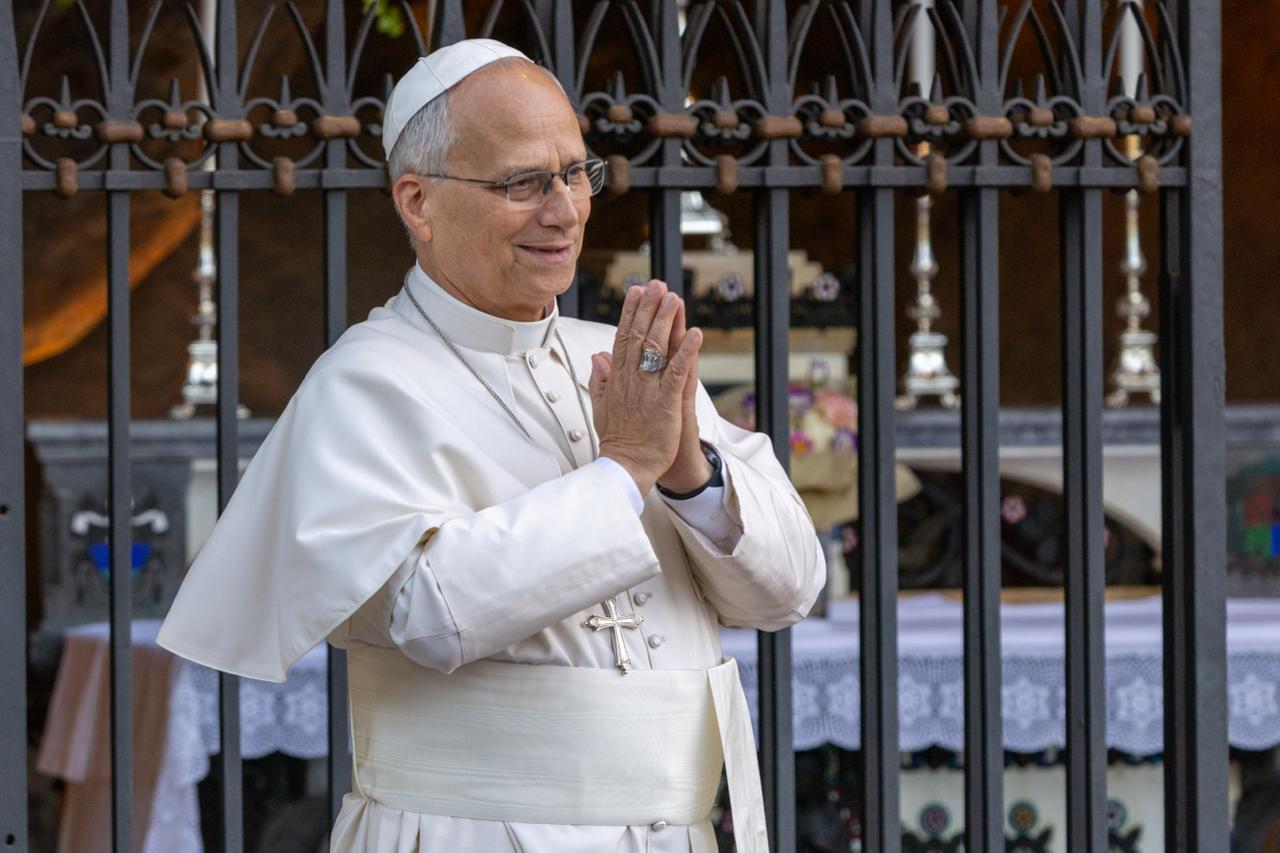
Pope Leo XIV appoints new bishop of London, Ontario #Catholic Pope Leo XIV has appointed Daniel J. Miehm as the new bishop of the Diocese of London, Ontario, Canada. Until now, the prelate served as the bishop of Peterborough, Ontario.The prelate succeeds Bishop Peter Fabbro in leading the Diocese of London. Fabbro’s resignation was accepted upon reaching the age of 75, the mandatory retirement age for bishops.After expressing his gratitude for the trust placed in him by the Holy Father for the new role, Miehm stated: “In this Easter season, as the Church celebrates the resurrection of Christ, we are invited to deep faith, trust in God, and hope in the promise of new life. It is in such a spirit that I embrace this new chapter in my continued service to the Church.”“I ask your prayers for me, for all those I have served in Peterborough and for those whom I will meet and serve in my episcopal ministry in the Diocese of London,” the prelate added in a statement from the Diocese of London.Fabbro, who served at the helm of the London Diocese for 24 years, said that Miehm “is a strong, compassionate leader with outstanding pastoral instincts and the wisdom to guide our diocese into the future. Under his episcopal leadership, the Diocese of London will be in very capable hands.”Miehm will be installed as the new bishop of London on June 29, the solemnity of Sts. Peter and Paul, at St. Peter’s Cathedral Basilica in London.Who is the new bishop of London?Miehm was born on Aug. 27, 1960, in Kitchener, Ontario. He studied philosophy at St. Jeromeʼs University in Waterloo, Ontario, and theology at St. Augustineʼs Seminary in Toronto. He earned a licentiate in canon law from the Pontifical University of St. Thomas in Rome, according to the Vatican Press Office.He was ordained a priest on May 6, 1989, for the Diocese of Hamilton, Ontario.He has held the following positions, among others: vicar of the Cathedral of Christ the King; defender of the bond at the ecclesiastical tribunal of Hamilton; pastor of Our Lady of Lourdes in Hamilton (1998–2004) and of St. Ann in Ancaster (2004–2012); and pastor of St. Benedict in Milton, as well as spiritual assistant to the St. Thomas More Lawyers' Guild (2012).He was appointed auxiliary bishop of Hamilton on Feb. 20, 2013, receiving episcopal consecration on May 7 of that year. On March 10, 2017, he was appointed bishop of Peterborough, where he served until now.This story was first published by ACI Prensa, the Spanish-language sister service of EWTN News. It has been translated and adapted by EWTN News English.

Pope Leo XIV appoints new bishop of London, Ontario #Catholic Pope Leo XIV has appointed Daniel J. Miehm as the new bishop of the Diocese of London, Ontario, Canada. Until now, the prelate served as the bishop of Peterborough, Ontario.The prelate succeeds Bishop Peter Fabbro in leading the Diocese of London. Fabbro’s resignation was accepted upon reaching the age of 75, the mandatory retirement age for bishops.After expressing his gratitude for the trust placed in him by the Holy Father for the new role, Miehm stated: “In this Easter season, as the Church celebrates the resurrection of Christ, we are invited to deep faith, trust in God, and hope in the promise of new life. It is in such a spirit that I embrace this new chapter in my continued service to the Church.”“I ask your prayers for me, for all those I have served in Peterborough and for those whom I will meet and serve in my episcopal ministry in the Diocese of London,” the prelate added in a statement from the Diocese of London.Fabbro, who served at the helm of the London Diocese for 24 years, said that Miehm “is a strong, compassionate leader with outstanding pastoral instincts and the wisdom to guide our diocese into the future. Under his episcopal leadership, the Diocese of London will be in very capable hands.”Miehm will be installed as the new bishop of London on June 29, the solemnity of Sts. Peter and Paul, at St. Peter’s Cathedral Basilica in London.Who is the new bishop of London?Miehm was born on Aug. 27, 1960, in Kitchener, Ontario. He studied philosophy at St. Jeromeʼs University in Waterloo, Ontario, and theology at St. Augustineʼs Seminary in Toronto. He earned a licentiate in canon law from the Pontifical University of St. Thomas in Rome, according to the Vatican Press Office.He was ordained a priest on May 6, 1989, for the Diocese of Hamilton, Ontario.He has held the following positions, among others: vicar of the Cathedral of Christ the King; defender of the bond at the ecclesiastical tribunal of Hamilton; pastor of Our Lady of Lourdes in Hamilton (1998–2004) and of St. Ann in Ancaster (2004–2012); and pastor of St. Benedict in Milton, as well as spiritual assistant to the St. Thomas More Lawyers' Guild (2012).He was appointed auxiliary bishop of Hamilton on Feb. 20, 2013, receiving episcopal consecration on May 7 of that year. On March 10, 2017, he was appointed bishop of Peterborough, where he served until now.This story was first published by ACI Prensa, the Spanish-language sister service of EWTN News. It has been translated and adapted by EWTN News English.

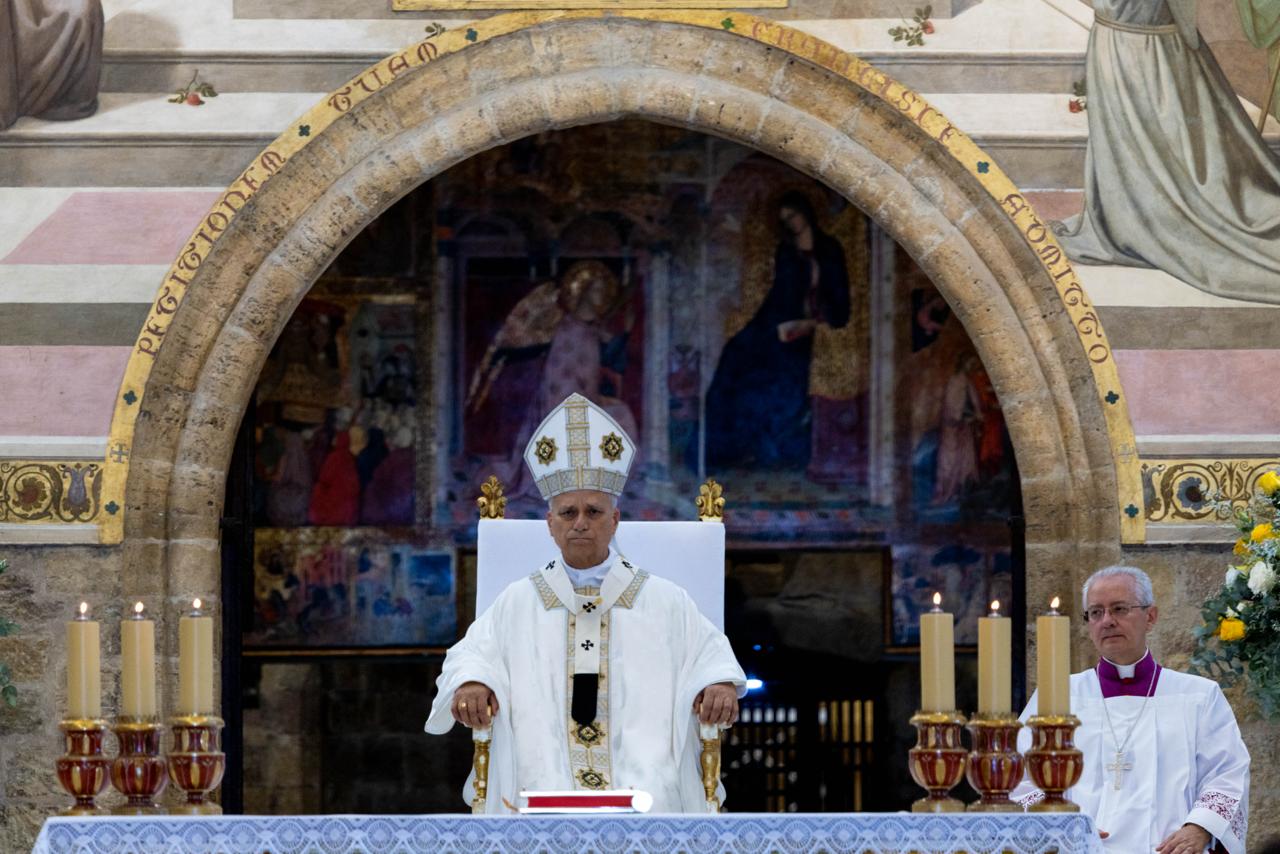
With the retirement of Bishop Peter Fabbro, Bishop Daniel J. Miehm of the Diocese of Peterborough has been appointed the new bishop of London, Ontario, Canada. He will be installed on June 29.

Read More
Cardinals in Rome remember Pope Francis as missionary to all 1 year after death #Catholic Rome remembered Pope Francis' legacy one year after his death with a Mass on Tuesday at the Basilica of St. Mary Major, where the late pontiff is buried.The same day, while en route to Equatorial Guinea to wrap up his trip to Africa, Pope Leo XIV remembered Pope Francis on the first anniversary of his death, highlighting his predecessorʼs “solidarity with the poorest, the most vulnerable, the sick, children, and the elderly.”
 
 Cardinal Rolandas Makrickas, archpriest of the Basilica of St. Mary Major, sprinkles holy water on the tomb of Pope Francis at the aforementioned basilica in Rome on April 21, 2026. | Credit: Daniel Ibanez/EWTN News
 
 Cardinal Giovanni Battista Re, dean of the College of Cardinals, celebrated the Mass with other cardinals and clergy resident in Rome. He read Leoʼs message at the Mass, in which the pope recalled Francis' missionary zeal.“He was also a missionary, proclaiming the Gospel of mercy ‘to everyone, everyone, everyone,’” Leo wrote. “In harmony with his predecessors, he took up the legacy of the Second Vatican Council and urged the Church to be open to mission, a guardian of the world’s hope, passionate about proclaiming that Gospel which is capable of giving every life fulfillment and happiness.”
 
 Cardinal Giovanni Battista Re, dean of the College of Cardinals, preaches at Mass for the first anniversary of the death of Pope Francis at the Basilica of St. Mary Major in Rome on April 21, 2026. | Credit: Daniel Ibanez/EWTN News
 
 Re described Leoʼs message as an invitation to preserve the legacy of Pope Francis, rooted in his “exhortation to build bridges and not walls.”“The heart of this message seems to me a vibrant invitation to preserve the spiritual legacy of the late Pope Francis. A legacy summarized, as we have heard, through several of his key phrases: ‘the joy of the Gospel,’ ‘the mercy of God,’ ‘the smell of the sheep,’” Re said.
 
 A special plaque commemorating the visits of Pope Francis to the Marian icon “Salus Populi Romani” is displayed at the Basilica of St. Mary Major in Rome on April 21, 2026. | Credit: Daniel Ibanez/EWTN News
 
 Before the Mass, a special plaque was blessed and unveiled to commemorate Francis' many visits to the Basilica of St. Mary Major. During his life, Francis frequently visited the basilica to venerate the Marian icon “Salus Populi Romani” and expressed his wish to be buried in the church near the icon.The Mass was also attended by several ambassadors accredited to the Holy See, including Irish Ambassador Frances Collins and U.S. Ambassador Brian Burch.After the Mass, all the cardinals processed to Francis' tomb for the final prayer, delivered by Cardinal Rolandas Makrickas, archpriest of the basilica. Commending the late pontiff to the mercy of God, Makrickas recalled that “hope does not disappoint,” a tribute to the papal bull with which Francis inaugurated the Jubilee Year 2025, which drew over 20 million people to St. Mary Major and his tomb.

Cardinals in Rome remember Pope Francis as missionary to all 1 year after death #Catholic Rome remembered Pope Francis' legacy one year after his death with a Mass on Tuesday at the Basilica of St. Mary Major, where the late pontiff is buried.The same day, while en route to Equatorial Guinea to wrap up his trip to Africa, Pope Leo XIV remembered Pope Francis on the first anniversary of his death, highlighting his predecessorʼs “solidarity with the poorest, the most vulnerable, the sick, children, and the elderly.” Cardinal Rolandas Makrickas, archpriest of the Basilica of St. Mary Major, sprinkles holy water on the tomb of Pope Francis at the aforementioned basilica in Rome on April 21, 2026. | Credit: Daniel Ibanez/EWTN News Cardinal Giovanni Battista Re, dean of the College of Cardinals, celebrated the Mass with other cardinals and clergy resident in Rome. He read Leoʼs message at the Mass, in which the pope recalled Francis' missionary zeal.“He was also a missionary, proclaiming the Gospel of mercy ‘to everyone, everyone, everyone,’” Leo wrote. “In harmony with his predecessors, he took up the legacy of the Second Vatican Council and urged the Church to be open to mission, a guardian of the world’s hope, passionate about proclaiming that Gospel which is capable of giving every life fulfillment and happiness.” Cardinal Giovanni Battista Re, dean of the College of Cardinals, preaches at Mass for the first anniversary of the death of Pope Francis at the Basilica of St. Mary Major in Rome on April 21, 2026. | Credit: Daniel Ibanez/EWTN News Re described Leoʼs message as an invitation to preserve the legacy of Pope Francis, rooted in his “exhortation to build bridges and not walls.”“The heart of this message seems to me a vibrant invitation to preserve the spiritual legacy of the late Pope Francis. A legacy summarized, as we have heard, through several of his key phrases: ‘the joy of the Gospel,’ ‘the mercy of God,’ ‘the smell of the sheep,’” Re said. A special plaque commemorating the visits of Pope Francis to the Marian icon “Salus Populi Romani” is displayed at the Basilica of St. Mary Major in Rome on April 21, 2026. | Credit: Daniel Ibanez/EWTN News Before the Mass, a special plaque was blessed and unveiled to commemorate Francis' many visits to the Basilica of St. Mary Major. During his life, Francis frequently visited the basilica to venerate the Marian icon “Salus Populi Romani” and expressed his wish to be buried in the church near the icon.The Mass was also attended by several ambassadors accredited to the Holy See, including Irish Ambassador Frances Collins and U.S. Ambassador Brian Burch.After the Mass, all the cardinals processed to Francis' tomb for the final prayer, delivered by Cardinal Rolandas Makrickas, archpriest of the basilica. Commending the late pontiff to the mercy of God, Makrickas recalled that “hope does not disappoint,” a tribute to the papal bull with which Francis inaugurated the Jubilee Year 2025, which drew over 20 million people to St. Mary Major and his tomb.

Pope Leo XIV, who is traveling in Africa, sent a message to be read at the Mass commemorating the first anniversary of Pope Francis’ death.

Read More
March for Life in Warsaw commemorates 1,060 years of Christianity in Poland #Catholic Thousands of people gathered in Poland’s capital on April 19 for the National March for Life, a large public demonstration organized under the slogan “Faith and Fidelity 1966–2026,” commemorating the 1,060th anniversary of the Christianization of Poland. The event combined religious observance, civic participation, and pro-life advocacy, drawing families, clergy, activists, and public figures to central Warsaw. The day began with Mass celebrated in two of the cityʼs major churches. 
 
 Mass is celebrated at the Archcathedral Basilica of the Martyrdom of St. John the Baptist in Warsaw, Poland, on April 19, 2026. | Credit: Tomasz Daniluk/Ordo Iuris
 
 In the Archcathedral Basilica of St. John the Baptist, Bishop Piotr Jarecki presided over the liturgy, while Bishop Tomasz Sztajerwald celebrated Mass at the Cathedral of St. Michael the Archangel and St. Florian in Warsaw-Praga.Participants later gathered at Castle Square, where the march officially began. Organizers described the event as a public expression of support for life and family, rooted in Poland’s Christian tradition. Metropolitan Archbishop Adrian Galbas of Warsaw encouraged participation ahead of the event, framing it as a testimony to human dignity. “We want to testify that we are lovers of life. Bring your family along! Life triumphs over every death,” he declared.
 
 Church leaders join Poland’s President Karol Nawrocki and other dignitaries at the March for Life in Warsaw on April 19, 2026. | Credit: Tomasz Daniluk/Ordo lures
 
 March through Warsaw highlights pro-life messageThe procession moved through central Warsaw streets under the historic slogan marking Poland’s Christian heritage. As participants approached the Presidential Palace, Polish President Karol Nawrocki spoke, linking the march to broader social concerns.“I support initiatives that serve Poland, and this initiative certainly serves Poland,” he said. “It is also a response to the deep demographic crisis. Today, the answer to many Polish problems lies precisely in Polish families, in our identity, in remembering where we come from and where we are going.”Organizers said the march was intended not only as a demonstration of pro-life conviction but also as a broader reflection on national identity and social cohesion.A prominent symbol carried during the march was a copy of the icon of Our Lady of Częstochowa, which has been traveling internationally for 14 years as part of the From Ocean to Ocean pilgrimage in defense of life. The icon has traveled more than 220,000 kilometers (almost 137,000 miles) and visited 32 countries across five continents.
 
 Participants carry an icon of Our Lady of Częstochowa. | Credit: Tomasz Daniluk/Ordo Iuris
 
 Shifting abortion attitudes among younger PolesThe National March for Life is organized by the St. Benedict Foundation alongside dozens of pro-life groups from across Poland and takes place under the honorary patronage of the Polish Episcopal Conference.Patrycja Michońska-Dynek, director of the Press Center of the Archdiocese of Warsaw, told EWTN News that there are shifting public attitudes toward abortion in Poland, including growing societal acceptance and increased calls for liberalization, attributing these changes to secularization, cultural pressures, and differing interpretations of freedom.Michońska-Dynek also observed that while pro-life values remain important in Polish society, younger generations often approach the issue with more nuanced perspectives, particularly in complex or exceptional situations. Fostering a “culture of life” must include practical support for families, such as assistance for single mothers and couples in crisis, Michońska-Dynek said.
 
 Lidia, a participant at the National March for Life. | Credit: Tomasz Daniluk/Ordo Iuris
 
 Not a single-issue agendaLidia Sankowska-Grabczuk, one of the organizers of the National March for Life, told EWTN News that the pro-life movement in Poland extends beyond a single-issue focus on abortion.“In a nutshell, the pro-life movement is [often] the anti-abortion movement. In our view… it’s a bit different. We don’t reduce it to a single-issue agenda,” she said, warning that such a narrow framing “strips it of its true meaning.” While protecting unborn life remains central, she described it as part of a broader vision rooted in what she called “the public voice of Polish Christianity.”She outlined three core pillars underpinning the movement. The first is “respect for life,” encompassing not only the unborn but also solidarity with the elderly, families, and those in need. The second is the family as society’s foundation, grounded in the traditional understanding of marriage and its role in Poland’s social stability. The third pillar is “a state serving the common good,” reflecting a view of politics as service and a call for greater social solidarity.
 
 March for Life in Warsaw commemorates 1,060 years of Christianity in Poland. | Credit: Tomasz Daniluk/Ordo Iuris
 
 Sankowska-Grabczuk also discussed the importance of Poland’s historical and Christian identity in shaping the movement. She noted that recent marches have intentionally marked major national milestones, including the 1,000th anniversary of Poland’s first royal coronation in 2025.These commemorations, she said, highlight how the movement sees its mission as inseparable from Poland’s historical development, where Christianity has long informed both national identity and social values.Pro-life voices and public participationAmong international participants was Tonio Borg, president of the European Federation One of Us. He urged participants to remain steadfast in their convictions despite criticism or public pressure. “Do not be afraid of being slandered and ridiculed because you seek to protect life from the moment of conception,” he said, encouraging continued public engagement and advocacy. He also called on supporters to make their voices heard in the public sphere, stressing the importance of influencing lawmakers and demonstrating that “the unborn child is one of us.”
 
 Paula, a participant at the National March for Life in Poland. | Credit: Tomasz Daniluk/Ordo Iuris
 
 Marcin Perłowski, director of the Centre for Life and Family, said participants gathered at the march out of a shared conviction that “human life begins at conception” and must be defended. He stated that the National March for Life serves as a public demonstration of that belief, describing it as a stand “against all those who raise a hand against unborn children.”Pro-life activist Emilia Mędrzecka told EWTN News that her position is grounded in a belief in universal human dignity. “Children in the womb are as human as we are… they are more dependent and need time to grow,” she said while adding that the march reflected a strong presence of families, young people, and older generations united in support of life.
 
 Polish president Karol Nawrocki walks among participants at the National March for Life in Poland. | Credit: Tomasz Daniluk/Ordo Iuris
 
 While official attendance figures have not been released, estimates provided to EWTN News suggested more than 10,000 people participated, with organizers placing peak attendance between 25,000 and 30,000.

March for Life in Warsaw commemorates 1,060 years of Christianity in Poland #Catholic Thousands of people gathered in Poland’s capital on April 19 for the National March for Life, a large public demonstration organized under the slogan “Faith and Fidelity 1966–2026,” commemorating the 1,060th anniversary of the Christianization of Poland. The event combined religious observance, civic participation, and pro-life advocacy, drawing families, clergy, activists, and public figures to central Warsaw. The day began with Mass celebrated in two of the cityʼs major churches. Mass is celebrated at the Archcathedral Basilica of the Martyrdom of St. John the Baptist in Warsaw, Poland, on April 19, 2026. | Credit: Tomasz Daniluk/Ordo Iuris In the Archcathedral Basilica of St. John the Baptist, Bishop Piotr Jarecki presided over the liturgy, while Bishop Tomasz Sztajerwald celebrated Mass at the Cathedral of St. Michael the Archangel and St. Florian in Warsaw-Praga.Participants later gathered at Castle Square, where the march officially began. Organizers described the event as a public expression of support for life and family, rooted in Poland’s Christian tradition. Metropolitan Archbishop Adrian Galbas of Warsaw encouraged participation ahead of the event, framing it as a testimony to human dignity. “We want to testify that we are lovers of life. Bring your family along! Life triumphs over every death,” he declared. Church leaders join Poland’s President Karol Nawrocki and other dignitaries at the March for Life in Warsaw on April 19, 2026. | Credit: Tomasz Daniluk/Ordo lures March through Warsaw highlights pro-life messageThe procession moved through central Warsaw streets under the historic slogan marking Poland’s Christian heritage. As participants approached the Presidential Palace, Polish President Karol Nawrocki spoke, linking the march to broader social concerns.“I support initiatives that serve Poland, and this initiative certainly serves Poland,” he said. “It is also a response to the deep demographic crisis. Today, the answer to many Polish problems lies precisely in Polish families, in our identity, in remembering where we come from and where we are going.”Organizers said the march was intended not only as a demonstration of pro-life conviction but also as a broader reflection on national identity and social cohesion.A prominent symbol carried during the march was a copy of the icon of Our Lady of Częstochowa, which has been traveling internationally for 14 years as part of the From Ocean to Ocean pilgrimage in defense of life. The icon has traveled more than 220,000 kilometers (almost 137,000 miles) and visited 32 countries across five continents. Participants carry an icon of Our Lady of Częstochowa. | Credit: Tomasz Daniluk/Ordo Iuris Shifting abortion attitudes among younger PolesThe National March for Life is organized by the St. Benedict Foundation alongside dozens of pro-life groups from across Poland and takes place under the honorary patronage of the Polish Episcopal Conference.Patrycja Michońska-Dynek, director of the Press Center of the Archdiocese of Warsaw, told EWTN News that there are shifting public attitudes toward abortion in Poland, including growing societal acceptance and increased calls for liberalization, attributing these changes to secularization, cultural pressures, and differing interpretations of freedom.Michońska-Dynek also observed that while pro-life values remain important in Polish society, younger generations often approach the issue with more nuanced perspectives, particularly in complex or exceptional situations. Fostering a “culture of life” must include practical support for families, such as assistance for single mothers and couples in crisis, Michońska-Dynek said. Lidia, a participant at the National March for Life. | Credit: Tomasz Daniluk/Ordo Iuris Not a single-issue agendaLidia Sankowska-Grabczuk, one of the organizers of the National March for Life, told EWTN News that the pro-life movement in Poland extends beyond a single-issue focus on abortion.“In a nutshell, the pro-life movement is [often] the anti-abortion movement. In our view… it’s a bit different. We don’t reduce it to a single-issue agenda,” she said, warning that such a narrow framing “strips it of its true meaning.” While protecting unborn life remains central, she described it as part of a broader vision rooted in what she called “the public voice of Polish Christianity.”She outlined three core pillars underpinning the movement. The first is “respect for life,” encompassing not only the unborn but also solidarity with the elderly, families, and those in need. The second is the family as society’s foundation, grounded in the traditional understanding of marriage and its role in Poland’s social stability. The third pillar is “a state serving the common good,” reflecting a view of politics as service and a call for greater social solidarity. March for Life in Warsaw commemorates 1,060 years of Christianity in Poland. | Credit: Tomasz Daniluk/Ordo Iuris Sankowska-Grabczuk also discussed the importance of Poland’s historical and Christian identity in shaping the movement. She noted that recent marches have intentionally marked major national milestones, including the 1,000th anniversary of Poland’s first royal coronation in 2025.These commemorations, she said, highlight how the movement sees its mission as inseparable from Poland’s historical development, where Christianity has long informed both national identity and social values.Pro-life voices and public participationAmong international participants was Tonio Borg, president of the European Federation One of Us. He urged participants to remain steadfast in their convictions despite criticism or public pressure. “Do not be afraid of being slandered and ridiculed because you seek to protect life from the moment of conception,” he said, encouraging continued public engagement and advocacy. He also called on supporters to make their voices heard in the public sphere, stressing the importance of influencing lawmakers and demonstrating that “the unborn child is one of us.” Paula, a participant at the National March for Life in Poland. | Credit: Tomasz Daniluk/Ordo Iuris Marcin Perłowski, director of the Centre for Life and Family, said participants gathered at the march out of a shared conviction that “human life begins at conception” and must be defended. He stated that the National March for Life serves as a public demonstration of that belief, describing it as a stand “against all those who raise a hand against unborn children.”Pro-life activist Emilia Mędrzecka told EWTN News that her position is grounded in a belief in universal human dignity. “Children in the womb are as human as we are… they are more dependent and need time to grow,” she said while adding that the march reflected a strong presence of families, young people, and older generations united in support of life. Polish president Karol Nawrocki walks among participants at the National March for Life in Poland. | Credit: Tomasz Daniluk/Ordo Iuris While official attendance figures have not been released, estimates provided to EWTN News suggested more than 10,000 people participated, with organizers placing peak attendance between 25,000 and 30,000.

Recent marches in Poland have intentionally marked major national milestones, including the 1,000th anniversary of Poland’s first royal coronation in 2025.

Read More
Pope Leo XIV: Universities must seek truth and form the whole person #Catholic MALABO, Equatorial Guinea — Pope Leo XIV on Tuesday said the inauguration of a new university campus in Equatorial Guinea is “an act of trust in human beings,” praising investment in the education of young people during the final stop of his Africa trip.Speaking at the opening of the Pope Leo XIV University Campus in Basupú, part of the National University of Equatorial Guinea (UNGE), the pontiff said the new institution represents more than new buildings.“This inauguration is an act of trust in human beings, an affirmation of the fact that it is worth the effort to continue wagering on the formation of new generations and on the task, so demanding and yet so noble, of seeking the truth and putting knowledge at the service of the common good,” Leo said.The new campus, in the northern part of Bioko Island, is the country’s largest academic facility. The government chose to dedicate it to the pope in conjunction with his visit. Founded in 1995, the National University of Equatorial Guinea was established to help form national leaders and align academic and professional training with the country’s development needs.Leo was welcomed by Rector Filiberto Ntutumu Nguema Nchama and the archbishop of Malabo, Archbishop Juan Nsue Edjang May. A bust of the pope was unveiled before he met with students and professors gathered in the square outside the main entrance.Students appealed to the pope for encouragement in becoming “a generation characterized by discipline, respect, responsibility, and commitment to the common good,” one aimed not only at personal success but also at contributing to the development of Equatorial Guinea.Faculty members, for their part, pledged themselves to academic excellence, innovation, and the integral formation of students. University officials also stressed that science and technology are powerful tools whose value depends on how they are used and that Christian moral tradition offers essential guidance in that task.In his address, Leo turned to an image deeply resonant in Equatorial Guinea: the ceiba, the country’s national tree.“For the people of Equatorial Guinea, the ceiba, the national tree, has a great symbolic meaning,” he said. “A tree puts forth deep roots and ascends slowly with patience and strength to the heights, embodying in itself a fruitfulness that does not exist for itself.”The pope said the tree offers “a parable of that which a university is called to be”: an institution rooted in serious study, living memory, and the persevering search for truth.Leo then drew on biblical imagery to reflect on the relationship between faith, reason, and knowledge. Referring to the tree of the knowledge of good and evil in Genesis, he said the biblical account is not a rejection of human intelligence.“It should be emphasized that this story is not about a condemnation of knowledge as such, as if faith was afraid of intelligence or looked with suspicion upon the desire for knowledge,” he said.Instead, he warned against knowledge detached from truth and goodness and reduced to self-interest or domination.“The problem, therefore, does not rest with knowledge but in its deviation towards an intelligence that no longer seeks to correspond to reality but rather to twist it for its own purposes,” he said.Leo said Christian tradition points to another tree — the cross — as the redemption, not the negation, of human intelligence.“Christian tradition contemplates another tree, that of the cross, not as a denial of human intelligence but as a sign of its redemption,” he said.“At the cross, human beings are invited to allow their desire for knowledge to be healed: to rediscover that truth is not fabricated, not manipulated nor possessed like a trophy but welcomed, sought with humility, and served with responsibility.”For that reason, he said, Christ is not an escape from intellectual effort.“From a Christian perspective, Christ does not appear as a religious escape in the face of intellectual endeavors, as if faith began where reason ended,” Leo said. “On the contrary, in him the profound harmony between truth, reason, and freedom are manifested.”The pope said the Church’s concern in education is that young people be formed integrally, “rather than giving the mere appearance of success.”He added that the university should be judged less by its size or number of graduates than by the quality of the people it forms for society.“Here on this campus, the ceiba of Equatorial Guinea is called to bear fruits of progress rooted in solidarity and of a knowledge that ennobles and develops the human being in an integral way,” he said. “It is called to offer the fruits of intelligence and uprightness, of competence and wisdom, of excellence and service.”“If generations of men and women are profoundly shaped in this place by truth and are capable of transforming their own existence into a gift for others, then the ceiba will remain an eloquent symbol rooted in the best things of this land, elevated by wisdom and abounding in fruits that pay tribute to Equatorial Guinea and enrich the entire human family.”Before the university event, the pope also made a brief visit to St. Elizabeth of Hungary Cathedral in Malabo, built in 1897.This story was first published by ACI Stampa, the Italian-language sister service of EWTN News. It has been translated and adapted by EWTN News English.

Pope Leo XIV: Universities must seek truth and form the whole person #Catholic MALABO, Equatorial Guinea — Pope Leo XIV on Tuesday said the inauguration of a new university campus in Equatorial Guinea is “an act of trust in human beings,” praising investment in the education of young people during the final stop of his Africa trip.Speaking at the opening of the Pope Leo XIV University Campus in Basupú, part of the National University of Equatorial Guinea (UNGE), the pontiff said the new institution represents more than new buildings.“This inauguration is an act of trust in human beings, an affirmation of the fact that it is worth the effort to continue wagering on the formation of new generations and on the task, so demanding and yet so noble, of seeking the truth and putting knowledge at the service of the common good,” Leo said.The new campus, in the northern part of Bioko Island, is the country’s largest academic facility. The government chose to dedicate it to the pope in conjunction with his visit. Founded in 1995, the National University of Equatorial Guinea was established to help form national leaders and align academic and professional training with the country’s development needs.Leo was welcomed by Rector Filiberto Ntutumu Nguema Nchama and the archbishop of Malabo, Archbishop Juan Nsue Edjang May. A bust of the pope was unveiled before he met with students and professors gathered in the square outside the main entrance.Students appealed to the pope for encouragement in becoming “a generation characterized by discipline, respect, responsibility, and commitment to the common good,” one aimed not only at personal success but also at contributing to the development of Equatorial Guinea.Faculty members, for their part, pledged themselves to academic excellence, innovation, and the integral formation of students. University officials also stressed that science and technology are powerful tools whose value depends on how they are used and that Christian moral tradition offers essential guidance in that task.In his address, Leo turned to an image deeply resonant in Equatorial Guinea: the ceiba, the country’s national tree.“For the people of Equatorial Guinea, the ceiba, the national tree, has a great symbolic meaning,” he said. “A tree puts forth deep roots and ascends slowly with patience and strength to the heights, embodying in itself a fruitfulness that does not exist for itself.”The pope said the tree offers “a parable of that which a university is called to be”: an institution rooted in serious study, living memory, and the persevering search for truth.Leo then drew on biblical imagery to reflect on the relationship between faith, reason, and knowledge. Referring to the tree of the knowledge of good and evil in Genesis, he said the biblical account is not a rejection of human intelligence.“It should be emphasized that this story is not about a condemnation of knowledge as such, as if faith was afraid of intelligence or looked with suspicion upon the desire for knowledge,” he said.Instead, he warned against knowledge detached from truth and goodness and reduced to self-interest or domination.“The problem, therefore, does not rest with knowledge but in its deviation towards an intelligence that no longer seeks to correspond to reality but rather to twist it for its own purposes,” he said.Leo said Christian tradition points to another tree — the cross — as the redemption, not the negation, of human intelligence.“Christian tradition contemplates another tree, that of the cross, not as a denial of human intelligence but as a sign of its redemption,” he said.“At the cross, human beings are invited to allow their desire for knowledge to be healed: to rediscover that truth is not fabricated, not manipulated nor possessed like a trophy but welcomed, sought with humility, and served with responsibility.”For that reason, he said, Christ is not an escape from intellectual effort.“From a Christian perspective, Christ does not appear as a religious escape in the face of intellectual endeavors, as if faith began where reason ended,” Leo said. “On the contrary, in him the profound harmony between truth, reason, and freedom are manifested.”The pope said the Church’s concern in education is that young people be formed integrally, “rather than giving the mere appearance of success.”He added that the university should be judged less by its size or number of graduates than by the quality of the people it forms for society.“Here on this campus, the ceiba of Equatorial Guinea is called to bear fruits of progress rooted in solidarity and of a knowledge that ennobles and develops the human being in an integral way,” he said. “It is called to offer the fruits of intelligence and uprightness, of competence and wisdom, of excellence and service.”“If generations of men and women are profoundly shaped in this place by truth and are capable of transforming their own existence into a gift for others, then the ceiba will remain an eloquent symbol rooted in the best things of this land, elevated by wisdom and abounding in fruits that pay tribute to Equatorial Guinea and enrich the entire human family.”Before the university event, the pope also made a brief visit to St. Elizabeth of Hungary Cathedral in Malabo, built in 1897.This story was first published by ACI Stampa, the Italian-language sister service of EWTN News. It has been translated and adapted by EWTN News English.

At the inauguration of a new campus named in his honor in Equatorial Guinea, the pope urged the education of young people in truth, responsibility, and service to the common good.

Read More
Christ is not ‘a guru or a good luck charm,’ pope says at Mass in Angola #Catholic SAURIMO, Angola — Pope Leo XIV warned at Mass in Saurimo, Angola, on Monday of making God into an idol that is sought only when advantageous — “when genuine faith is replaced with superstitious practices.”“There are erroneous motives for seeking Christ, particularly when he is considered to be a guru or a good luck charm,” the pope said on April 20, referring to how the crowds in the Gospel reading reacted after Jesus performed the miracle of the loaves and the fishes.“They were not seeking a teacher whom they love but a leader to applaud for their own advantage,” he said.Joyful faith in Saurimo
 
 Pope Leo XIV celebrates Mass in Saurimo, Angola, on April 20, 2026. | Credit: Vatican Media
 
 From the start of his arrival in Sub-Saharan Africa — first in Cameroon and then in Angola — Pope Leo has been welcomed by the warmth of the faithful. In Saurimo, a city in northeastern Angola, the atmosphere greeting the pope on Monday was marked by joyful faith. Everyone welcomed the successor of Peter with songs, dances, and applause.Despite the intense heat, upon reaching the esplanade before Mass, Leo XIV greeted the roughly 60,000 faithful of all ages — who had come from across the region and neighboring dioceses — by making a circuit in the popemobile.“This is the first time a pope has gone beyond Angola’s coastal belt and come — using Pope Francis’ language — to the peripheries,“ the director of the communications office of the Archdiocese of Saurimo said. ”This is a region rich in diamonds, but there is also great poverty, and he comes here to show our reality. For us, having the Holy Father in our region is a great joy.”“This is a unique and unforgettable moment in my life and in the lives of the many pilgrims here today,” Filomena Vunda, who works in the pastoral secretariat of the Archdiocese of Malanje, told ACI Africa, the sister service of EWTN News in Africa, at the Mass.Vunda encouraged non-Catholics in Angola to “keep in mind our African word ‘Ubuntu’: The happiness of others depends on me; my happiness depends solely on the happiness of others.”Ubuntu is an African philosophy about human interconnectedness. It can be translated as “I am because we are.”‘Disciples of Christ’In his homily at Mass, concelebrated by Angolan bishops, Pope Leo said: “In every part of the world, the Church lives as a people who walk as disciples of Christ, our brother and redeemer.”"He, the Risen One, illumines for us the path to the Father and with the strength of the Spirit he sanctifies us so that we may transform our way of life in conformity with his love," the pope said. "This is the good news, the Gospel that courses through our veins like blood, sustaining us on the journey. A journey that has brought me here with you today!”
 
 Pope Leo XIV celebrates Mass in Saurimo, Angola, on April 20, 2026. | Credit: Vatican Media
 
 Commenting on the Gospel of the day, Leo reflected: “Indeed, when the Son of God became man, he performed striking miracles in order to manifest the will of the Father: He made light shine in the darkness by giving sight to the blind, he gave a voice to the oppressed by loosening the tongues of the mute, he slaked our thirst for justice by multiplying bread for the poor and weak. Anyone who heard about these works set out in search of Jesus. At the same time, the Lord looks into our heart and asks us whether we seek him out of gratitude or for our own self-interest, with calculation or with love.”“The Lord himself says,” the pope continued, “‘you are looking for me, not because you saw signs, but because you ate your fill of the loaves’ (Jn 6:26). His words reveal the designs of those who do not want to encounter a person but want to consume things. The crowd sees Jesus as means to an end, a provider of services. If he had not given them something to eat, his actions and teachings would not have interested them.”“This happens,” Leo XIV explained, “when genuine faith is replaced with superstitious practices, in which God becomes an idol that is sought only when it is advantageous to us and only for as long as it is. Even the most beautiful gifts of the Lord, which are always for the care of his people, become a pretext, a prize or a bargaining chip, and are misinterpreted by those who receive them.”“How different is Jesus’ attitude toward us,” the pontiff continued. “Yet, he does not reject this insincere search, but encourages its conversion ... Christ calls us to freedom: He does not want servants or clients, rather he seeks brothers and sisters to whom he can totally dedicate himself.”“Therefore,” Leo XIV said, “the admonition that the Lord directs to the crowd is transformed into an invitation: ‘Do not work for the food that perishes, but for the food that endures for eternal life’ (Jn 6:27)."“His gift sheds light on our current situation,” the pope went on. “We can see today how the hope of many people is frustrated by violence, exploited by the powerful, and defrauded by the rich. Consequently, when injustice corrupts hearts, the bread of all becomes the possession of a few."“In the face of these evils, Christ hears the cry of the people and renews our history by lifting us up from every fall, comforting us in every suffering, and encouraging us in our mission," he said. 
 
 Crowds of people brave the heat and sun to attend Mass with Pope Leo XIV in Saurimo, Angola, on April 20, 2026. | Credit: Raúl Kangombe Sapiti/ACI Africa
 
 “All this,” the pope exhorted, “means that, in light of our discipleship, the ecclesial journey is a ‘synod of resurrection and hope,’ as St. John Paul II affirmed in his apostolic exhortation Ecclesia in Africa. Let us proceed in this wise direction! Christ himself guides and strengthens our journey, a journey that we want to learn to live more and more as it should be, that is, in a synodal manner.”The pope concluded by recalling the importance of the martyrs and saints, whose witness “encourages us and pushes us onto a path of hope, reconciliation, and peace, along which the gift of God becomes the responsibility of the head of the household, in the Christian community, in civil society.”"The vitality of the vocations that you experience [in Angola]," he said, "is a sign that you are responding to the Lord’s gift, which is always abundant for those who welcome it with pure hearts.”ACI Africa reporter Raúl Kangombe Sapiti contributed to this report.This story was first published by ACI Stampa, the Italian-language sister service of EWTN News. It has been translated and adapted by EWTN News English.

Christ is not ‘a guru or a good luck charm,’ pope says at Mass in Angola #Catholic SAURIMO, Angola — Pope Leo XIV warned at Mass in Saurimo, Angola, on Monday of making God into an idol that is sought only when advantageous — “when genuine faith is replaced with superstitious practices.”“There are erroneous motives for seeking Christ, particularly when he is considered to be a guru or a good luck charm,” the pope said on April 20, referring to how the crowds in the Gospel reading reacted after Jesus performed the miracle of the loaves and the fishes.“They were not seeking a teacher whom they love but a leader to applaud for their own advantage,” he said.Joyful faith in Saurimo Pope Leo XIV celebrates Mass in Saurimo, Angola, on April 20, 2026. | Credit: Vatican Media From the start of his arrival in Sub-Saharan Africa — first in Cameroon and then in Angola — Pope Leo has been welcomed by the warmth of the faithful. In Saurimo, a city in northeastern Angola, the atmosphere greeting the pope on Monday was marked by joyful faith. Everyone welcomed the successor of Peter with songs, dances, and applause.Despite the intense heat, upon reaching the esplanade before Mass, Leo XIV greeted the roughly 60,000 faithful of all ages — who had come from across the region and neighboring dioceses — by making a circuit in the popemobile.“This is the first time a pope has gone beyond Angola’s coastal belt and come — using Pope Francis’ language — to the peripheries,“ the director of the communications office of the Archdiocese of Saurimo said. ”This is a region rich in diamonds, but there is also great poverty, and he comes here to show our reality. For us, having the Holy Father in our region is a great joy.”“This is a unique and unforgettable moment in my life and in the lives of the many pilgrims here today,” Filomena Vunda, who works in the pastoral secretariat of the Archdiocese of Malanje, told ACI Africa, the sister service of EWTN News in Africa, at the Mass.Vunda encouraged non-Catholics in Angola to “keep in mind our African word ‘Ubuntu’: The happiness of others depends on me; my happiness depends solely on the happiness of others.”Ubuntu is an African philosophy about human interconnectedness. It can be translated as “I am because we are.”‘Disciples of Christ’In his homily at Mass, concelebrated by Angolan bishops, Pope Leo said: “In every part of the world, the Church lives as a people who walk as disciples of Christ, our brother and redeemer.”"He, the Risen One, illumines for us the path to the Father and with the strength of the Spirit he sanctifies us so that we may transform our way of life in conformity with his love," the pope said. "This is the good news, the Gospel that courses through our veins like blood, sustaining us on the journey. A journey that has brought me here with you today!” Pope Leo XIV celebrates Mass in Saurimo, Angola, on April 20, 2026. | Credit: Vatican Media Commenting on the Gospel of the day, Leo reflected: “Indeed, when the Son of God became man, he performed striking miracles in order to manifest the will of the Father: He made light shine in the darkness by giving sight to the blind, he gave a voice to the oppressed by loosening the tongues of the mute, he slaked our thirst for justice by multiplying bread for the poor and weak. Anyone who heard about these works set out in search of Jesus. At the same time, the Lord looks into our heart and asks us whether we seek him out of gratitude or for our own self-interest, with calculation or with love.”“The Lord himself says,” the pope continued, “‘you are looking for me, not because you saw signs, but because you ate your fill of the loaves’ (Jn 6:26). His words reveal the designs of those who do not want to encounter a person but want to consume things. The crowd sees Jesus as means to an end, a provider of services. If he had not given them something to eat, his actions and teachings would not have interested them.”“This happens,” Leo XIV explained, “when genuine faith is replaced with superstitious practices, in which God becomes an idol that is sought only when it is advantageous to us and only for as long as it is. Even the most beautiful gifts of the Lord, which are always for the care of his people, become a pretext, a prize or a bargaining chip, and are misinterpreted by those who receive them.”“How different is Jesus’ attitude toward us,” the pontiff continued. “Yet, he does not reject this insincere search, but encourages its conversion … Christ calls us to freedom: He does not want servants or clients, rather he seeks brothers and sisters to whom he can totally dedicate himself.”“Therefore,” Leo XIV said, “the admonition that the Lord directs to the crowd is transformed into an invitation: ‘Do not work for the food that perishes, but for the food that endures for eternal life’ (Jn 6:27)."“His gift sheds light on our current situation,” the pope went on. “We can see today how the hope of many people is frustrated by violence, exploited by the powerful, and defrauded by the rich. Consequently, when injustice corrupts hearts, the bread of all becomes the possession of a few."“In the face of these evils, Christ hears the cry of the people and renews our history by lifting us up from every fall, comforting us in every suffering, and encouraging us in our mission," he said. Crowds of people brave the heat and sun to attend Mass with Pope Leo XIV in Saurimo, Angola, on April 20, 2026. | Credit: Raúl Kangombe Sapiti/ACI Africa “All this,” the pope exhorted, “means that, in light of our discipleship, the ecclesial journey is a ‘synod of resurrection and hope,’ as St. John Paul II affirmed in his apostolic exhortation Ecclesia in Africa. Let us proceed in this wise direction! Christ himself guides and strengthens our journey, a journey that we want to learn to live more and more as it should be, that is, in a synodal manner.”The pope concluded by recalling the importance of the martyrs and saints, whose witness “encourages us and pushes us onto a path of hope, reconciliation, and peace, along which the gift of God becomes the responsibility of the head of the household, in the Christian community, in civil society.”"The vitality of the vocations that you experience [in Angola]," he said, "is a sign that you are responding to the Lord’s gift, which is always abundant for those who welcome it with pure hearts.”ACI Africa reporter Raúl Kangombe Sapiti contributed to this report.This story was first published by ACI Stampa, the Italian-language sister service of EWTN News. It has been translated and adapted by EWTN News English.

After praying at the Cathedral of Our Lady of the Assumption in Saurimo, Pope Leo XIV proceeded to the site of the Mass, attended by an estimated 60,000 people.

Read More
Beloved Catholic kids book series ‘Chime Travelers’ becomes animated TV show #Catholic The beloved children’s book series “Chime Travelers” has now made an exciting leap from page to screen with its development into an animated TV series, bringing its imaginative world to life in a whole new way. Known for its blend of adventure, time travel, and meaningful life lessons, the Catholic series has captivated young readers with its charming characters and heartfelt storytelling for over 10 years.“Chime Travelers,” written by Catholic author Lisa Hendey, follows twins Patrick and Katie as they travel to different places and time periods — all thanks to some magical church bells — to learn valuable life lessons from the saints.Developed by Family Theater Productions and Herald Entertainment, the new animated series depicts the same stories from the book series and includes episodes on St. Patrick, St. Francis of Assisi, St. Clare of Assisi, St. Kateri Tekakwitha, and the Holy Family.In an interview with EWTN News, Hendey said she’s “absolutely thrilled with the outcome” of the animated series.She shared that she had been in conversations with Family Theater Productions — a Catholic production studio in Hollywood — since 2017 about adapting the books for television.“They really saw at an early point the potential for the books to become a very dynamic [series], something even bigger than what they were as books, and itʼs been a long path enough to get to where we are now,” Hendey said.
 
 Katie meets St. Kateri Tekakwitha in an episode of “Chime Travelers.” | Credit: Family Theater Productions
 
 Father David Guffey, executive producer of “Chime Travelers” and the national director of Family Theater Productions, told EWTN News that he believed this series needed to be made because there aren’t many options in terms of Catholic media for children.“If you look at all the media thatʼs out there, thereʼs not much for Catholic children,” he said. “Thereʼs a lot for Catholic teens. Thereʼs a lot for Catholic adults. Thereʼs not a lot of Catholic childrenʼs programming. And we decided just to take a risk on this animated series so that thereʼd be another option for parents that wanted something solid to show their children.”While the book series only included five stories, the animated series will have more saint stories made into episodes for future seasons. For these additional stories, Hendey is serving as a consultant.“Iʼm so delighted that they continue to involve my voice and to give me the chance to say, ‘Well, I donʼt think my character would say that, or have we tried this, or have we thought about this?’ But the new stories are — theyʼre so exciting because theyʼre brand-new. I didnʼt write books about them,” she said. “And now the question will be, do we adapt books from those or what happens next?”Guffey, who is also a biblical consultant on the hit series “The Chosen," said he believes the rise in popularity in faith-based movies and shows being created has “been a long time in coming.”“For a long time, executives in Hollywood didnʼt believe that Christians were an audience,” he explained. “They didnʼt believe there was a faith-based audience and so they were very reluctant to fund or distribute projects. Weʼve had some big signs that there is an audience. Christians have proved themselves.”He highlighted “The Passion of the Christ” as the faith-based movie that opened the doors for other faith-based films to be created and “The Chosen” for doing the same for faith-based television series.“Christians and Catholics are showing they will seek out the kind of content that suits their families and their faith. And thatʼs going to change Hollywood — the business side of Hollywood especially,” Guffey added.The Catholic priest also emphasized the importance of creating faith-based media specifically for children.“With an adult show, adults will watch it once and theyʼre done. But with childrenʼs shows, if theyʼre of any quality at all, children will watch them over and over and over again. So, these shows and these stories really form young people in a really significant way,” he said.Hendey added that she’s grateful “we have now programming thatʼs not only faithful — because we always wanted to be faithful and we always wanted to really speak to the truth and the beauty and the goodness of our Church — but also thatʼs fun, thatʼs compelling, that kids want to watch over and over again.”As for her hopes for the series, Hendey said: “I hope that the kids who watch this, in particular, understand the agency that they have in their own lives to learn valuable lessons from the community of saints and to be a force for good in our world. We need them. We need their hearts and their purity and the love that they have, and so I hope they feel emboldened to realize that they really can make change in their world and in our world.”Guffey added: “When youʼre a kid, you think the problem youʼre going through, youʼre the only one that ever had it and you think you can be a very lonely place. I hope the series shows that first of all, Katie and Patrick go through some of the things they go through at school or at home, but also that the saints and the people whoʼve gone before us have gone through the same thing. And we can draw on the wisdom and the experience of others to gracefully move through the problems, the troubles that we encounter in our lives today.”“The lives of the saints are the lives of the Gospel in action. And I think itʼs important that children see how faith is put into practice,” Guffey shared. “And when we tell the stories of the saints, we are really telling the story of people who put their faith into practice in the good times and in the more difficult times.”“Chime Travelers” can be watched on Formed and on Hallow.

Beloved Catholic kids book series ‘Chime Travelers’ becomes animated TV show #Catholic The beloved children’s book series “Chime Travelers” has now made an exciting leap from page to screen with its development into an animated TV series, bringing its imaginative world to life in a whole new way. Known for its blend of adventure, time travel, and meaningful life lessons, the Catholic series has captivated young readers with its charming characters and heartfelt storytelling for over 10 years.“Chime Travelers,” written by Catholic author Lisa Hendey, follows twins Patrick and Katie as they travel to different places and time periods — all thanks to some magical church bells — to learn valuable life lessons from the saints.Developed by Family Theater Productions and Herald Entertainment, the new animated series depicts the same stories from the book series and includes episodes on St. Patrick, St. Francis of Assisi, St. Clare of Assisi, St. Kateri Tekakwitha, and the Holy Family.In an interview with EWTN News, Hendey said she’s “absolutely thrilled with the outcome” of the animated series.She shared that she had been in conversations with Family Theater Productions — a Catholic production studio in Hollywood — since 2017 about adapting the books for television.“They really saw at an early point the potential for the books to become a very dynamic [series], something even bigger than what they were as books, and itʼs been a long path enough to get to where we are now,” Hendey said. Katie meets St. Kateri Tekakwitha in an episode of “Chime Travelers.” | Credit: Family Theater Productions Father David Guffey, executive producer of “Chime Travelers” and the national director of Family Theater Productions, told EWTN News that he believed this series needed to be made because there aren’t many options in terms of Catholic media for children.“If you look at all the media thatʼs out there, thereʼs not much for Catholic children,” he said. “Thereʼs a lot for Catholic teens. Thereʼs a lot for Catholic adults. Thereʼs not a lot of Catholic childrenʼs programming. And we decided just to take a risk on this animated series so that thereʼd be another option for parents that wanted something solid to show their children.”While the book series only included five stories, the animated series will have more saint stories made into episodes for future seasons. For these additional stories, Hendey is serving as a consultant.“Iʼm so delighted that they continue to involve my voice and to give me the chance to say, ‘Well, I donʼt think my character would say that, or have we tried this, or have we thought about this?’ But the new stories are — theyʼre so exciting because theyʼre brand-new. I didnʼt write books about them,” she said. “And now the question will be, do we adapt books from those or what happens next?”Guffey, who is also a biblical consultant on the hit series “The Chosen," said he believes the rise in popularity in faith-based movies and shows being created has “been a long time in coming.”“For a long time, executives in Hollywood didnʼt believe that Christians were an audience,” he explained. “They didnʼt believe there was a faith-based audience and so they were very reluctant to fund or distribute projects. Weʼve had some big signs that there is an audience. Christians have proved themselves.”He highlighted “The Passion of the Christ” as the faith-based movie that opened the doors for other faith-based films to be created and “The Chosen” for doing the same for faith-based television series.“Christians and Catholics are showing they will seek out the kind of content that suits their families and their faith. And thatʼs going to change Hollywood — the business side of Hollywood especially,” Guffey added.The Catholic priest also emphasized the importance of creating faith-based media specifically for children.“With an adult show, adults will watch it once and theyʼre done. But with childrenʼs shows, if theyʼre of any quality at all, children will watch them over and over and over again. So, these shows and these stories really form young people in a really significant way,” he said.Hendey added that she’s grateful “we have now programming thatʼs not only faithful — because we always wanted to be faithful and we always wanted to really speak to the truth and the beauty and the goodness of our Church — but also thatʼs fun, thatʼs compelling, that kids want to watch over and over again.”As for her hopes for the series, Hendey said: “I hope that the kids who watch this, in particular, understand the agency that they have in their own lives to learn valuable lessons from the community of saints and to be a force for good in our world. We need them. We need their hearts and their purity and the love that they have, and so I hope they feel emboldened to realize that they really can make change in their world and in our world.”Guffey added: “When youʼre a kid, you think the problem youʼre going through, youʼre the only one that ever had it and you think you can be a very lonely place. I hope the series shows that first of all, Katie and Patrick go through some of the things they go through at school or at home, but also that the saints and the people whoʼve gone before us have gone through the same thing. And we can draw on the wisdom and the experience of others to gracefully move through the problems, the troubles that we encounter in our lives today.”“The lives of the saints are the lives of the Gospel in action. And I think itʼs important that children see how faith is put into practice,” Guffey shared. “And when we tell the stories of the saints, we are really telling the story of people who put their faith into practice in the good times and in the more difficult times.”“Chime Travelers” can be watched on Formed and on Hallow.

The new animated series depicts the same stories from the books, including episodes on St. Patrick, St. Francis of Assisi, St. Clare of Assisi, St. Kateri Tekakwitha, and the Holy Family.

Read More
Pope Leo XIV urges Angola to ‘remove the obstacles to integral human development’ #Catholic LUANDA, Angola — Pope Leo XIV on April 18 called on Angola’s leaders and people to “remove the obstacles to integral human development,” urging them to choose the path of the common good, resist exploitative interests, and preserve the hope and joy that, he said, remain among Africa’s greatest treasures.The pope spoke at the presidential palace in Luanda during his meeting with authorities, civil society, and the diplomatic corps, the first public event of the Angola leg of his broader trip to Africa.Arriving in Luanda earlier in the day, Leo traveled by popemobile through jubilant crowds lining the route to the palace. He also held a private meeting with Angolan President João Lourenço before delivering his address.At the outset of his speech, the pope expressed solidarity with those affected by recent flooding in the country.“Before continuing, I would like to offer the assurance of my prayers for the victims of the heavy rains and floods that have struck the province of Benguela, and to express my closeness to the families who have lost their homes,” he said. “I also know that you, the people of Angola, are united in a great chain of solidarity with those affected.”His remarks came against the backdrop of mounting social strains in Angola, including protests last year over fuel price increases, repeated criticism by the country’s bishops over entrenched corruption, and deadly flooding in early April.Leo framed his address around themes that have marked earlier stops on his Africa trip, including peace, reconciliation, the common good, and criticism of those who exploit the continent for personal gain.Speaking in Portuguese, the pope praised the Angolan people for possessing “treasures that cannot be bought or taken away.”“In particular, there dwells within you a joy that not even the most adverse circumstances have been able to extinguish,” he said. This joy, he added, “is no stranger to sorrow, indignation, disappointment and defeat,” yet continues to be reborn in those who have resisted “the seductions of wealth.”The pope sharply criticized patterns of exploitation directed at Africa.“You know well that all too often people have looked — and continue to look — to your lands in order to give, or, more commonly, in order to take,” he said. “It is necessary to break this cycle of interests, which reduces reality, and even life itself, to mere commodities.”Leo described Africa’s joy and hope as “virtues that I would not hesitate to call ‘political,’” because “her young people and her poor continue to dream and to hope.” He said they “are not content with what already exists; they strive to rise above, to prepare themselves for great responsibilities, and to take an active part in shaping their own future.”He also emphasized that authentic social transformation cannot be imposed ideologically.“Indeed, the wisdom of a people cannot be stifled by any ideology, and the longing for the infinite that dwells in the human heart is a principle of social transformation far deeper than any political or cultural program,” he said.The pope said he had come to “listen to and encourage all those who have already chosen the paths of goodness, justice, peace, tolerance and reconciliation,” while also praying “for the conversion of those who choose contrary paths and hinder its harmonious and fraternal development.”Turning to Angola’s natural wealth, Leo warned against what he called a destructive extractive logic.“How much suffering, how many deaths, how many social and environmental disasters are brought about by this logic of extractivism!” he said. At every level, he added, it supports “a model of development that discriminates and excludes, while still presuming to impose itself as the only viable option.”He said Africa “urgently needs to overcome situations and dynamics of conflict and enmity that tear apart the social and political fabric of many countries, fostering poverty and exclusion.”Only encounter allows life to flourish, the pope said, and dialogue must come first, even when disagreements emerge.“Angola can experience great growth if, first of all, those who hold authority in the country believe in the manifold nature of its riches,” he said. “Do not be afraid of disagreement; do not suppress the ideas of the young or the dreams of the elderly; and know how to manage conflicts by transforming them into paths of renewal. Place the common good before every particular interest, never confusing your own part with the whole. History will then vindicate you, even if in the near term some may oppose you.”Leo then returned to the themes of joy and hope, describing them not as merely private sentiments but as forces with public and political consequences.“Despots and tyrants of both body and spirit seek to render souls passive and passions gloomy; they prefer a populace prone to inertia, docile and subservient to power,” he said.Sadness, he argued, leaves people vulnerable to fear, fanaticism, manipulation, and isolation from public life. By contrast, “true joy frees us from such alienation,” he said, calling joy “a gift of the Holy Spirit.”“Joy intensifies life and leads to the creation of community,” the pope said. “Joy knows how to carve paths even in the darkest zones of stagnation and hardship.”He concluded with an appeal for moral and social renewal.“Let us therefore examine our own hearts, dear friends, because without joy there is no renewal; without interiority there is no liberation; without encounter there is no politics; without the other there is no justice.”Leo said the Catholic Church wants to help Angola become “a project of hope” by fostering a just model of coexistence, especially in poor urban neighborhoods and remote rural areas.“Let us remove the obstacles to integral human development, working and hoping together alongside those whom the world has discarded but whom God has chosen,” he said.This story was first published by ACI Stampa, the Italian-language sister service of EWTN News. It has been translated and adapted by EWTN News English.

Pope Leo XIV urges Angola to ‘remove the obstacles to integral human development’ #Catholic LUANDA, Angola — Pope Leo XIV on April 18 called on Angola’s leaders and people to “remove the obstacles to integral human development,” urging them to choose the path of the common good, resist exploitative interests, and preserve the hope and joy that, he said, remain among Africa’s greatest treasures.The pope spoke at the presidential palace in Luanda during his meeting with authorities, civil society, and the diplomatic corps, the first public event of the Angola leg of his broader trip to Africa.Arriving in Luanda earlier in the day, Leo traveled by popemobile through jubilant crowds lining the route to the palace. He also held a private meeting with Angolan President João Lourenço before delivering his address.At the outset of his speech, the pope expressed solidarity with those affected by recent flooding in the country.“Before continuing, I would like to offer the assurance of my prayers for the victims of the heavy rains and floods that have struck the province of Benguela, and to express my closeness to the families who have lost their homes,” he said. “I also know that you, the people of Angola, are united in a great chain of solidarity with those affected.”His remarks came against the backdrop of mounting social strains in Angola, including protests last year over fuel price increases, repeated criticism by the country’s bishops over entrenched corruption, and deadly flooding in early April.Leo framed his address around themes that have marked earlier stops on his Africa trip, including peace, reconciliation, the common good, and criticism of those who exploit the continent for personal gain.Speaking in Portuguese, the pope praised the Angolan people for possessing “treasures that cannot be bought or taken away.”“In particular, there dwells within you a joy that not even the most adverse circumstances have been able to extinguish,” he said. This joy, he added, “is no stranger to sorrow, indignation, disappointment and defeat,” yet continues to be reborn in those who have resisted “the seductions of wealth.”The pope sharply criticized patterns of exploitation directed at Africa.“You know well that all too often people have looked — and continue to look — to your lands in order to give, or, more commonly, in order to take,” he said. “It is necessary to break this cycle of interests, which reduces reality, and even life itself, to mere commodities.”Leo described Africa’s joy and hope as “virtues that I would not hesitate to call ‘political,’” because “her young people and her poor continue to dream and to hope.” He said they “are not content with what already exists; they strive to rise above, to prepare themselves for great responsibilities, and to take an active part in shaping their own future.”He also emphasized that authentic social transformation cannot be imposed ideologically.“Indeed, the wisdom of a people cannot be stifled by any ideology, and the longing for the infinite that dwells in the human heart is a principle of social transformation far deeper than any political or cultural program,” he said.The pope said he had come to “listen to and encourage all those who have already chosen the paths of goodness, justice, peace, tolerance and reconciliation,” while also praying “for the conversion of those who choose contrary paths and hinder its harmonious and fraternal development.”Turning to Angola’s natural wealth, Leo warned against what he called a destructive extractive logic.“How much suffering, how many deaths, how many social and environmental disasters are brought about by this logic of extractivism!” he said. At every level, he added, it supports “a model of development that discriminates and excludes, while still presuming to impose itself as the only viable option.”He said Africa “urgently needs to overcome situations and dynamics of conflict and enmity that tear apart the social and political fabric of many countries, fostering poverty and exclusion.”Only encounter allows life to flourish, the pope said, and dialogue must come first, even when disagreements emerge.“Angola can experience great growth if, first of all, those who hold authority in the country believe in the manifold nature of its riches,” he said. “Do not be afraid of disagreement; do not suppress the ideas of the young or the dreams of the elderly; and know how to manage conflicts by transforming them into paths of renewal. Place the common good before every particular interest, never confusing your own part with the whole. History will then vindicate you, even if in the near term some may oppose you.”Leo then returned to the themes of joy and hope, describing them not as merely private sentiments but as forces with public and political consequences.“Despots and tyrants of both body and spirit seek to render souls passive and passions gloomy; they prefer a populace prone to inertia, docile and subservient to power,” he said.Sadness, he argued, leaves people vulnerable to fear, fanaticism, manipulation, and isolation from public life. By contrast, “true joy frees us from such alienation,” he said, calling joy “a gift of the Holy Spirit.”“Joy intensifies life and leads to the creation of community,” the pope said. “Joy knows how to carve paths even in the darkest zones of stagnation and hardship.”He concluded with an appeal for moral and social renewal.“Let us therefore examine our own hearts, dear friends, because without joy there is no renewal; without interiority there is no liberation; without encounter there is no politics; without the other there is no justice.”Leo said the Catholic Church wants to help Angola become “a project of hope” by fostering a just model of coexistence, especially in poor urban neighborhoods and remote rural areas.“Let us remove the obstacles to integral human development, working and hoping together alongside those whom the world has discarded but whom God has chosen,” he said.This story was first published by ACI Stampa, the Italian-language sister service of EWTN News. It has been translated and adapted by EWTN News English.

The pontiff urged the country to reject exploitative models of development and place the common good above particular interests.

Read More
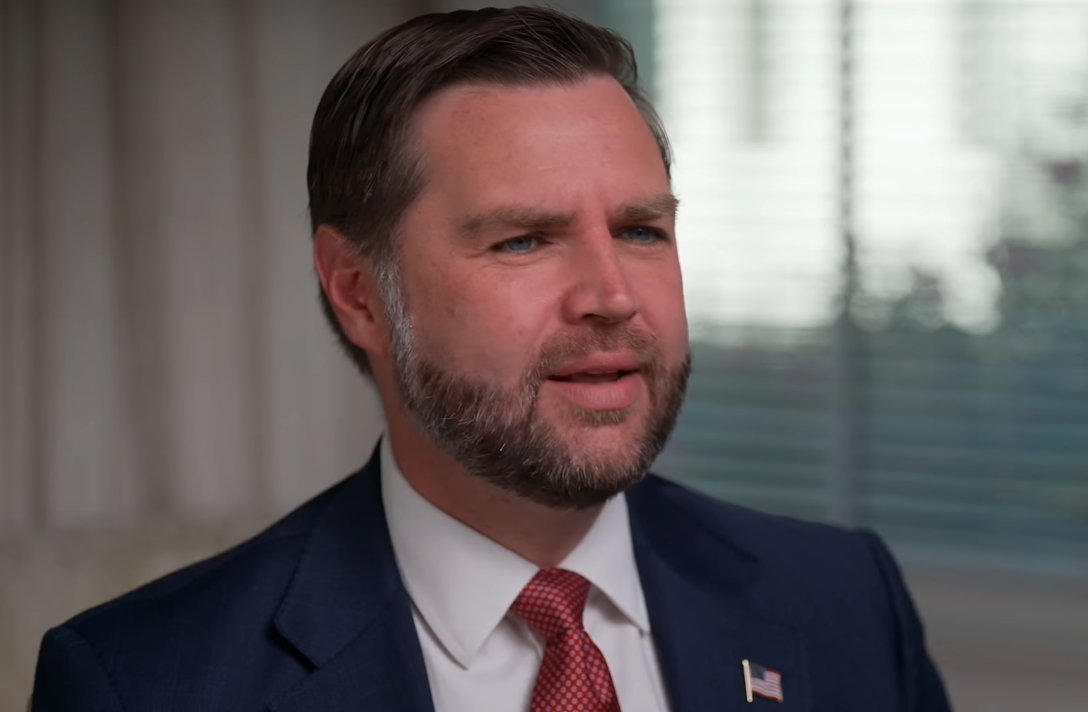
Pope Leo XIV says debate with Trump is ‘not in my interest at all’ #Catholic ABOARD THE PAPAL PLANE — Pope Leo XIV arrived in Angola after a two-and-a-half-hour flight from Cameroon on April 18, using the short journey to reject suggestions that his recent remarks about war were aimed at U.S. President Donald Trump while reflecting on the pastoral focus of his African trip.In a brief in-flight press conference with journalists, the pope addressed the interpretation of some of his recent speeches as a response to criticism from Trump, who had accused him of weakness in foreign policy.“[T]hereʼs been a certain narrative that has not been accurate in all of its aspects, but because of the political situation created when on the first day of the trip, the President of the United States made some comments about myself,” the pope said.“Much of what has been written since then has been more commentary on commentary, trying to interpret what has been said.”He pointed in particular to his address at the April 16 prayer meeting for peace in Cameroon.“Just one little example, the talk that I gave at the prayer meeting for peace a couple days ago was prepared two weeks ago, well before the president ever commented on myself and on the message of peace that I am promoting,” he said.“And yet, as it happens, it was looked at as if I was trying to debate again the president, which is not in my interest at all.”Leo XIV said he intends instead to continue proclaiming the Gospel and promoting peace.“So we go on the journey, we continue proclaiming the Gospel message,” he said.He added that the liturgies during the trip have highlighted what it means to follow Christ, promote fraternity, and seek justice and peace.The pope also said the broader African journey has been shaped by themes that emerged at the start of the trip in Algeria, especially the figure of St. Augustine.“I was personally very pleased, as you know, we began the trip in Algeria with the theme of Saint Augustine, and yesterday at the Catholic University, we had the blessing of that beautiful monument that they had prepared with a map of Africa and Saint Augustine at the center,” he said.“And so in one sense, it expresses part of what this trip is about.”Leo XIV emphasized that his primary purpose in Africa is to accompany Catholics.“And I primarily come to Africa as pastor, as the head of the Catholic Church, to be with, to celebrate with, to encourage and accompany all of the Catholics throughout Africa.”He also referred to a meeting with imams in Cameroon, describing it in general terms as part of the Church’s continuing commitment to interreligious dialogue, understanding, and peace-building.He concluded his main remarks by thanking journalists for their work and expressing hope that God would continue to bless the journey.Responding later to a French journalist, Leo XIV expressed gratitude for the reception he received in Cameroon.“I would just like to thank everyone in Cameroon for the wonderful welcome, the great enthusiasm, the joy of the people,” he said.“It was absolutely fantastic, the experience … how wonderful it is to experience what it means to be a follower of Jesus Christ and to celebrate our faith together.”The pope’s flight took him from Yaoundé to Luanda, crossing over Cameroon, Equatorial Guinea, Gabon, the Democratic Republic of Congo, and Angola. Angola is the third and penultimate stop of his African journey.The Catholic Church has longstanding ties with Angola. Formal relations date back centuries, including the 1608 appointment of Antonio Manuel Nyunda as the first ambassador to Rome from the then-Kingdom of Kongo. More recently, in 2019, the Holy See and Angola signed an agreement recognizing the legal personality of the Catholic Church and defining its property rights.This story was first published by ACI Stampa, the Italian-language sister service of EWTN News. It has been translated and adapted by EWTN News English.

Pope Leo XIV says debate with Trump is ‘not in my interest at all’ #Catholic ABOARD THE PAPAL PLANE — Pope Leo XIV arrived in Angola after a two-and-a-half-hour flight from Cameroon on April 18, using the short journey to reject suggestions that his recent remarks about war were aimed at U.S. President Donald Trump while reflecting on the pastoral focus of his African trip.In a brief in-flight press conference with journalists, the pope addressed the interpretation of some of his recent speeches as a response to criticism from Trump, who had accused him of weakness in foreign policy.“[T]hereʼs been a certain narrative that has not been accurate in all of its aspects, but because of the political situation created when on the first day of the trip, the President of the United States made some comments about myself,” the pope said.“Much of what has been written since then has been more commentary on commentary, trying to interpret what has been said.”He pointed in particular to his address at the April 16 prayer meeting for peace in Cameroon.“Just one little example, the talk that I gave at the prayer meeting for peace a couple days ago was prepared two weeks ago, well before the president ever commented on myself and on the message of peace that I am promoting,” he said.“And yet, as it happens, it was looked at as if I was trying to debate again the president, which is not in my interest at all.”Leo XIV said he intends instead to continue proclaiming the Gospel and promoting peace.“So we go on the journey, we continue proclaiming the Gospel message,” he said.He added that the liturgies during the trip have highlighted what it means to follow Christ, promote fraternity, and seek justice and peace.The pope also said the broader African journey has been shaped by themes that emerged at the start of the trip in Algeria, especially the figure of St. Augustine.“I was personally very pleased, as you know, we began the trip in Algeria with the theme of Saint Augustine, and yesterday at the Catholic University, we had the blessing of that beautiful monument that they had prepared with a map of Africa and Saint Augustine at the center,” he said.“And so in one sense, it expresses part of what this trip is about.”Leo XIV emphasized that his primary purpose in Africa is to accompany Catholics.“And I primarily come to Africa as pastor, as the head of the Catholic Church, to be with, to celebrate with, to encourage and accompany all of the Catholics throughout Africa.”He also referred to a meeting with imams in Cameroon, describing it in general terms as part of the Church’s continuing commitment to interreligious dialogue, understanding, and peace-building.He concluded his main remarks by thanking journalists for their work and expressing hope that God would continue to bless the journey.Responding later to a French journalist, Leo XIV expressed gratitude for the reception he received in Cameroon.“I would just like to thank everyone in Cameroon for the wonderful welcome, the great enthusiasm, the joy of the people,” he said.“It was absolutely fantastic, the experience … how wonderful it is to experience what it means to be a follower of Jesus Christ and to celebrate our faith together.”The pope’s flight took him from Yaoundé to Luanda, crossing over Cameroon, Equatorial Guinea, Gabon, the Democratic Republic of Congo, and Angola. Angola is the third and penultimate stop of his African journey.The Catholic Church has longstanding ties with Angola. Formal relations date back centuries, including the 1608 appointment of Antonio Manuel Nyunda as the first ambassador to Rome from the then-Kingdom of Kongo. More recently, in 2019, the Holy See and Angola signed an agreement recognizing the legal personality of the Catholic Church and defining its property rights.This story was first published by ACI Stampa, the Italian-language sister service of EWTN News. It has been translated and adapted by EWTN News English.

En route from Cameroon to Angola, the pope said his mission in Africa is pastoral and rejected suggestions that his recent remarks were aimed at President Donald Trump.

Read More
U.S. Embassy to the Vatican: Nigerian Christians are being targeted #Catholic ROME — It is “intolerable” that Christians are being targeted for persecution in Nigeria, said U.S. Ambassador to the Holy See Brian Burch during an event in Rome on Friday.The group Solidarity with the Persecuted Church (SPC) and the Embassy of the United States to the Holy See organized the April 17 conference at the embassy on threats to religious freedom in Nigeria.Burch spoke to EWTN News on the sidelines about the stance of the U.S. on religious violence in Nigeria. He described the current situation as a “conflict between radical Islamic groups and Christians because of their faith.”“The United States is the greatest friend of religious liberty,” Burch said. “The purpose of this event is to call attention to the plight of Christians who are being targeted and killed in Nigeria. Unfortunately, there are extremist Islamic groups that have been targeting Christians specifically in their churches and their homes, and the scale and size of the persecution of Christians there is intolerable.”Asked about the denial by some Nigerian government officials that Christians specifically are being targeted, Burch insisted that the current violence against Christians is alarming, citing U.S. President Donald Trump, who designated Nigeria as a country of particular concern in 2025.“The president has said that Christians face an existential crisis in Nigeria, and thanks to his leadership, he is now acting to bring an end to this. We have called on the Nigerian government to take necessary steps to protect Christians, and the United States government is now working in partnership with the Nigerian government to assist them in doing just that,” he said.Steven Wagner, president of SPC, underscored the importance of Nigeria for Christianity in Africa and the need for the Holy See to be involved in raising awareness.“As Nigeria goes, so goes Africa. More Christians are martyred for their faith in Nigeria than in any other country on earth. There is a huge crisis of internally displaced persons. We are calling on the Vatican to increase public awareness of the problem and to continue to encourage the government of Nigeria to make progress in protecting its people,” Wagner said.Burch responds to Trump’s comments on the popeIn his opening remarks at the conference, Burch commented for the first time on the recent tensions between Trump and Pope Leo XIV. He emphasized their difference in approach to armed conflicts and their shared goal of eliminating evil.“In recent days, President Trump and Pope Leo have exchanged, shall we say, sharp words. We must not pretend there is no disagreement. But both men are driven by an unshakable belief in protecting the innocent. One leads with the sword and shield of American power, the other with the cross of sacrificial love. But both are saying in their own languages, ‘Evil must not triumph and innocence must not be abandoned,’” Burch said.Papal trip in AfricaThe pontiff is currently on his first apostolic journey to Africa — visiting Algeria, Cameroon, Angola, and Equatorial Guinea.Archbishop Fortunatus Nwachukwu, secretary of the Dicastery for Evangelization and a presenter at the conference, described the trip as a moment of profound unity for all Africans.“This is Africa, and much of the divisions, according to countries in Africa, are artificial divisions that were imposed on the continent,” Nwachukwu told EWTN News. “Africans quite often feel united even beyond the boundaries. So the popeʼs message to these churches and these populations will also be a message to the population in Nigeria and to the Church in Nigeria.”Many of the issues the pope is addressing on his trip “are shared in common in Nigeria,” Burch added. The Holy See and the United States “certainly share this deep, fundamental commitment to religious liberty.”

U.S. Embassy to the Vatican: Nigerian Christians are being targeted #Catholic ROME — It is “intolerable” that Christians are being targeted for persecution in Nigeria, said U.S. Ambassador to the Holy See Brian Burch during an event in Rome on Friday.The group Solidarity with the Persecuted Church (SPC) and the Embassy of the United States to the Holy See organized the April 17 conference at the embassy on threats to religious freedom in Nigeria.Burch spoke to EWTN News on the sidelines about the stance of the U.S. on religious violence in Nigeria. He described the current situation as a “conflict between radical Islamic groups and Christians because of their faith.”“The United States is the greatest friend of religious liberty,” Burch said. “The purpose of this event is to call attention to the plight of Christians who are being targeted and killed in Nigeria. Unfortunately, there are extremist Islamic groups that have been targeting Christians specifically in their churches and their homes, and the scale and size of the persecution of Christians there is intolerable.”Asked about the denial by some Nigerian government officials that Christians specifically are being targeted, Burch insisted that the current violence against Christians is alarming, citing U.S. President Donald Trump, who designated Nigeria as a country of particular concern in 2025.“The president has said that Christians face an existential crisis in Nigeria, and thanks to his leadership, he is now acting to bring an end to this. We have called on the Nigerian government to take necessary steps to protect Christians, and the United States government is now working in partnership with the Nigerian government to assist them in doing just that,” he said.Steven Wagner, president of SPC, underscored the importance of Nigeria for Christianity in Africa and the need for the Holy See to be involved in raising awareness.“As Nigeria goes, so goes Africa. More Christians are martyred for their faith in Nigeria than in any other country on earth. There is a huge crisis of internally displaced persons. We are calling on the Vatican to increase public awareness of the problem and to continue to encourage the government of Nigeria to make progress in protecting its people,” Wagner said.Burch responds to Trump’s comments on the popeIn his opening remarks at the conference, Burch commented for the first time on the recent tensions between Trump and Pope Leo XIV. He emphasized their difference in approach to armed conflicts and their shared goal of eliminating evil.“In recent days, President Trump and Pope Leo have exchanged, shall we say, sharp words. We must not pretend there is no disagreement. But both men are driven by an unshakable belief in protecting the innocent. One leads with the sword and shield of American power, the other with the cross of sacrificial love. But both are saying in their own languages, ‘Evil must not triumph and innocence must not be abandoned,’” Burch said.Papal trip in AfricaThe pontiff is currently on his first apostolic journey to Africa — visiting Algeria, Cameroon, Angola, and Equatorial Guinea.Archbishop Fortunatus Nwachukwu, secretary of the Dicastery for Evangelization and a presenter at the conference, described the trip as a moment of profound unity for all Africans.“This is Africa, and much of the divisions, according to countries in Africa, are artificial divisions that were imposed on the continent,” Nwachukwu told EWTN News. “Africans quite often feel united even beyond the boundaries. So the popeʼs message to these churches and these populations will also be a message to the population in Nigeria and to the Church in Nigeria.”Many of the issues the pope is addressing on his trip “are shared in common in Nigeria,” Burch added. The Holy See and the United States “certainly share this deep, fundamental commitment to religious liberty.”

Ambassador Brian Burch described the situation in Nigeria as a “conflict between radical Islamic groups and Christians because of their faith.”

Read More
EWTN News explains: Why does the pope visit mosques on papal trips? #Catholic For more than a quarter-century, popes have periodically visited Islamic mosques as part of official voyages and papal visits. The tradition began with Pope John Paul II, who in 2001 became the first pope in history known to have entered a mosque when he visited the Great Mosque of Damascus in the capital of Syria. The subsequent Popes Benedict XVI, Francis, and Leo XIV have all paid visits to mosques to hold ecumenical dialogues and host diplomatic meetings. Yet the practice is not without some controversy. Indeed, Leo XIVʼs visit to the Great Mosque of Algiers on April 13 drew some backlash on social media by critics incredulous over the leader of the Catholic Church visiting a major Islamic holy site. (This was Leoʼs second visit to a mosque; he also visited the famed “Blue Mosque” in Istanbul in late 2025.) 
 
 Pope Leo XIV stands with Rector Mohamed Mamoun Al Qasimi at the Great Mosque in Algiers, Monday, April 13, 2026. | Credit: Vatican Media
 
 So why do popes make visits to mosques, courting controversy and criticism for making a point to go to holy sites of another religion? ‘We can live together in peace’Pope Leo XIV himself addressed criticism directed toward him on April 15 on board the papal plane after leaving Algiers bound for Cameroon. “I think the visit to the mosque was significant [and showed] that although we have different beliefs, we have different ways of worshipping, we have different ways of living, we can [still] live together in peace,” the Holy Father said.  “I think that to promote that kind of image is something which the world needs to hear today,” he said, arguing that such visits show that “together we can continue to offer in our witness as we continue on this apostolic voyage.”Gabriel Said Reynolds, a theology professor at the University of Notre Dame who has written multiple works on the Quran and its relationship to Christianity, told EWTN News that interpreting papal visits to mosques should include an understanding of “the Churchʼs vision of God in the world.” “What is God’s relationship to the world? That’s been important to all of the recent popes,” he said.Reynolds pointed out that an Islamic mosque is “fundamentally different from a church.” “A Catholic church is a sort of temple in which God is present in the tabernacle — body, blood, soul, and divinity,” he said. “It’s a sacred space in the deepest sense of the word.”“What Muslims would say of a mosque is fundamentally different,” he said. “A mosque is for communal prayer, but the communal prayer that takes place in a mosque is no different than the ritual prayer that’s more often done at home.” He likened a mosque to a “gathering place” with just a few features that set it apart as a distinct site — such as a pulpit for occasional sermons and an alcove that denotes the direction of Mecca to which Muslims orient themselves during prayer. Reynolds said popes visit mosques in no small part as a “pastoral concern” for Christians living in majority-Muslim countries, such as Algeria. “Algerian society is thoroughly Islamic,” he said. “It’s not generally marked by notions of rights and responsibilities and citizenship in the same way the U.S. is. Cultivating positive relationships with Muslim leaders is absolutely essential for Christians.”Reynolds said the Churchʼs view about human dignity has “fundamental implications with its relationship toward non-Christians.” He pointed out, for instance, that the pope “could show up at an atheist convention and meet the people there and have dialogue with them.”“John 3:16 says God loves the world,” he said. “It’s not that God loves believers and doesn’t love the unbelievers. All people are children of God, according to Catholic teaching.”The declaration Nostra Aetate, meanwhile — issued by the Second Vatican Council in 1965 to address Catholicismʼs relationship with non-Christians — affirmed that the Church “regards [Muslims] with esteem.”The document points out that although Muslims “do not acknowledge Jesus as God,” they still “adore the one God” and “revere [Jesus] as a prophet” while giving honor to the Virgin Mother as well. The Second Vatican Council acknowledged that “in the course of centuries not a few quarrels and hostilities have arisen” between Christians and Muslims, but the document “urge[d] all to forget the past and to work sincerely for mutual understanding.”It further called on religious adherents to “preserve as well as to promote together for the benefit of all mankind social justice and moral welfare, as well as peace and freedom.”

EWTN News explains: Why does the pope visit mosques on papal trips? #Catholic For more than a quarter-century, popes have periodically visited Islamic mosques as part of official voyages and papal visits. The tradition began with Pope John Paul II, who in 2001 became the first pope in history known to have entered a mosque when he visited the Great Mosque of Damascus in the capital of Syria. The subsequent Popes Benedict XVI, Francis, and Leo XIV have all paid visits to mosques to hold ecumenical dialogues and host diplomatic meetings. Yet the practice is not without some controversy. Indeed, Leo XIVʼs visit to the Great Mosque of Algiers on April 13 drew some backlash on social media by critics incredulous over the leader of the Catholic Church visiting a major Islamic holy site. (This was Leoʼs second visit to a mosque; he also visited the famed “Blue Mosque” in Istanbul in late 2025.) Pope Leo XIV stands with Rector Mohamed Mamoun Al Qasimi at the Great Mosque in Algiers, Monday, April 13, 2026. | Credit: Vatican Media So why do popes make visits to mosques, courting controversy and criticism for making a point to go to holy sites of another religion? ‘We can live together in peace’Pope Leo XIV himself addressed criticism directed toward him on April 15 on board the papal plane after leaving Algiers bound for Cameroon. “I think the visit to the mosque was significant [and showed] that although we have different beliefs, we have different ways of worshipping, we have different ways of living, we can [still] live together in peace,” the Holy Father said.  “I think that to promote that kind of image is something which the world needs to hear today,” he said, arguing that such visits show that “together we can continue to offer in our witness as we continue on this apostolic voyage.”Gabriel Said Reynolds, a theology professor at the University of Notre Dame who has written multiple works on the Quran and its relationship to Christianity, told EWTN News that interpreting papal visits to mosques should include an understanding of “the Churchʼs vision of God in the world.” “What is God’s relationship to the world? That’s been important to all of the recent popes,” he said.Reynolds pointed out that an Islamic mosque is “fundamentally different from a church.” “A Catholic church is a sort of temple in which God is present in the tabernacle — body, blood, soul, and divinity,” he said. “It’s a sacred space in the deepest sense of the word.”“What Muslims would say of a mosque is fundamentally different,” he said. “A mosque is for communal prayer, but the communal prayer that takes place in a mosque is no different than the ritual prayer that’s more often done at home.” He likened a mosque to a “gathering place” with just a few features that set it apart as a distinct site — such as a pulpit for occasional sermons and an alcove that denotes the direction of Mecca to which Muslims orient themselves during prayer. Reynolds said popes visit mosques in no small part as a “pastoral concern” for Christians living in majority-Muslim countries, such as Algeria. “Algerian society is thoroughly Islamic,” he said. “It’s not generally marked by notions of rights and responsibilities and citizenship in the same way the U.S. is. Cultivating positive relationships with Muslim leaders is absolutely essential for Christians.”Reynolds said the Churchʼs view about human dignity has “fundamental implications with its relationship toward non-Christians.” He pointed out, for instance, that the pope “could show up at an atheist convention and meet the people there and have dialogue with them.”“John 3:16 says God loves the world,” he said. “It’s not that God loves believers and doesn’t love the unbelievers. All people are children of God, according to Catholic teaching.”The declaration Nostra Aetate, meanwhile — issued by the Second Vatican Council in 1965 to address Catholicismʼs relationship with non-Christians — affirmed that the Church “regards [Muslims] with esteem.”The document points out that although Muslims “do not acknowledge Jesus as God,” they still “adore the one God” and “revere [Jesus] as a prophet” while giving honor to the Virgin Mother as well. The Second Vatican Council acknowledged that “in the course of centuries not a few quarrels and hostilities have arisen” between Christians and Muslims, but the document “urge[d] all to forget the past and to work sincerely for mutual understanding.”It further called on religious adherents to “preserve as well as to promote together for the benefit of all mankind social justice and moral welfare, as well as peace and freedom.”

Why do popes make visits to Islamic mosques, courting controversy and criticism by taking part in events at holy sites of another religion?

Read More
Punk legend Patti Smith, Mexican architect Tatiana Bilbao to represent Vatican at Venice Biennale #Catholic For the fourth consecutive year, the Holy See will have its own pavilion at the 61st International Art Exhibition of La Biennale di Venezia in Italy.The Dicastery for Culture and Education announced the participation of several influential figures in contemporary art and culture — including American singer Patti Smith and Mexican architect Tatiana Bilbao — in the Holy See Pavilion at the 61st International Art Exhibition of the Venice Biennale, which will be held May 9 through Nov. 22.This edition of the Italian cultural event, titled “In Minor Keys,” is a sensory and meditative experience that seeks to reconnect participants with the emotional and affective roles of art in society.In a press release, the Dicastery for Culture and Education announced the 24 artists who will form part of the Holy See’s selection this year, reflecting the eventʼs concept for 2026, which invites visitors to slow down the pace of life and open up spaces for reflection and silence.This edition is marked by the unexpected death in May 2025 in Basel, Switzerland, of its curator, Koyo Kouoh, a Cameroonian-Swiss artist globally recognized as one of the most powerful voices in the promotion of contemporary African art.Patti Smith is popularly known as the “Godmother of Punk.” Her 1975 debut album “Horses” marked a turning point in New York punk by fusing rock and poetry.The prestigious Mexican architect Tatiana Bilbao, internationally renowned for her humanist and social approach to architecture, will also participate in the project. She designed the pavilion for the 2025 Venice Biennale, a project titled “Opera Aperta” (“Open Work”), which received a special mention from the jury.Inspired by a medieval saintInspired by the life and spiritual legacy of St. Hildegard of Bingen, the Holy See’s pavilion as explained by the Vatican is conceived as a space for contemplation and deep listening. Titled “L’orecchio è l’occhio dell’anima” (“The Ear Is the Eye of the Soul”), the pavilion will be hosted across two historic venues in the city: Cannaregio and Castello.
 
 St. Hildegard of Bingen. | Credit: Haffitt (CC BY-SA 4.0)
 
 It has been curated by Hans Ulrich Obrist and Ben Vickers in collaboration with the Soundwalk Collective and draws upon the life and spiritual legacy of St. Hildegard, a 12th-century Benedictine nun, mystic, composer, and thinker who was proclaimed a saint and doctor of the Church in 2012 by Pope Benedict XVI.The works commissioned from the participating artists are conceived as a “sonic prayer”: an art form that unites music, spoken word, film, and silence, and invites the visitor to an experience of contemplative listening.As explained by the Vatican, the proposal reflects a curatorial vision that conceives of sound as a path to inner knowledge and spiritual experience, reviving a central insight of the thought of Hildegard of Bingen.The project is curated by Cardinal José Tolentino de Mendonça, prefect of the Dicastery for Culture and Education.This story was first published by ACI Prensa, the Spanish-language sister service of EWTN News. It has been translated and adapted by EWTN News English.

Punk legend Patti Smith, Mexican architect Tatiana Bilbao to represent Vatican at Venice Biennale #Catholic For the fourth consecutive year, the Holy See will have its own pavilion at the 61st International Art Exhibition of La Biennale di Venezia in Italy.The Dicastery for Culture and Education announced the participation of several influential figures in contemporary art and culture — including American singer Patti Smith and Mexican architect Tatiana Bilbao — in the Holy See Pavilion at the 61st International Art Exhibition of the Venice Biennale, which will be held May 9 through Nov. 22.This edition of the Italian cultural event, titled “In Minor Keys,” is a sensory and meditative experience that seeks to reconnect participants with the emotional and affective roles of art in society.In a press release, the Dicastery for Culture and Education announced the 24 artists who will form part of the Holy See’s selection this year, reflecting the eventʼs concept for 2026, which invites visitors to slow down the pace of life and open up spaces for reflection and silence.This edition is marked by the unexpected death in May 2025 in Basel, Switzerland, of its curator, Koyo Kouoh, a Cameroonian-Swiss artist globally recognized as one of the most powerful voices in the promotion of contemporary African art.Patti Smith is popularly known as the “Godmother of Punk.” Her 1975 debut album “Horses” marked a turning point in New York punk by fusing rock and poetry.The prestigious Mexican architect Tatiana Bilbao, internationally renowned for her humanist and social approach to architecture, will also participate in the project. She designed the pavilion for the 2025 Venice Biennale, a project titled “Opera Aperta” (“Open Work”), which received a special mention from the jury.Inspired by a medieval saintInspired by the life and spiritual legacy of St. Hildegard of Bingen, the Holy See’s pavilion as explained by the Vatican is conceived as a space for contemplation and deep listening. Titled “L’orecchio è l’occhio dell’anima” (“The Ear Is the Eye of the Soul”), the pavilion will be hosted across two historic venues in the city: Cannaregio and Castello. St. Hildegard of Bingen. | Credit: Haffitt (CC BY-SA 4.0) It has been curated by Hans Ulrich Obrist and Ben Vickers in collaboration with the Soundwalk Collective and draws upon the life and spiritual legacy of St. Hildegard, a 12th-century Benedictine nun, mystic, composer, and thinker who was proclaimed a saint and doctor of the Church in 2012 by Pope Benedict XVI.The works commissioned from the participating artists are conceived as a “sonic prayer”: an art form that unites music, spoken word, film, and silence, and invites the visitor to an experience of contemplative listening.As explained by the Vatican, the proposal reflects a curatorial vision that conceives of sound as a path to inner knowledge and spiritual experience, reviving a central insight of the thought of Hildegard of Bingen.The project is curated by Cardinal José Tolentino de Mendonça, prefect of the Dicastery for Culture and Education.This story was first published by ACI Prensa, the Spanish-language sister service of EWTN News. It has been translated and adapted by EWTN News English.

The exhibition by the Dicastery for Culture and Education features the work of contemporary artists in various fields, inspired by the life and spiritual legacy of St. Hildegard of Bingen.

Read More
Police reveal bomb threat at Chicago-area home of Pope Leo XIV’s brother #Catholic The brother of Pope Leo XIV was reportedly the victim of a hoax bomb threat in a suburb outside of Chicago, according to police and media reports. The New Lenox, Illinois, Police Department said in a Facebook post on April 15 that it had responded to a “reported bomb threat at a private residence” in the Chicago suburb about 40 miles outside of the city center. The statement did not identify the home as belonging to Leoʼs brother John Prevost, but local media reports said the target of the threat was Prevostʼs home. Public records indicate that Prevost lives on the street to which police responded. Police evacuated nearby homes during their investigation and called in explosive-detection K9 units. “After careful examination, investigators determined that the threat was unsubstantiated and that no explosive devices or hazardous materials were present,” New Lenox police said. The police noted that no injuries were reported but that the false bomb threat was “a serious offense and may result in criminal charges.”New Lenox Police Chief Micah Nuesse told EWTN News via email on April 16 that the matter was an “active and ongoing investigation” and that the police department had “no new updates to share” about the crime or any suspects. The hoax threat came just several days after President Donald Trump praised Pope Leo XIVʼs other brother, Louis, in a rambling Truth Social post in which he derided Pope Leo XIV as “weak on crime” and “terrible for foreign policy” after Leo repeatedly criticized the ongoing U.S.-led war in Iran. “I like [Leoʼs] brother Louis much better than I like him, because Louis is all MAGA. He gets it, and Leo doesn’t!” Trump said. Louis Prevost currently lives in Florida. On April 11 at a Vatican peace vigil, the pope criticized the “madness of war” and urged world leaders: “Stop! Itʼs time for peace!” On March 29, meanwhile, he said that God “does not listen to the prayers of those who wage war.”In Trumpʼs Truth Social post, he suggested that Leo — the first American-born pontiff — was only elected to the papacy as part of a diplomatic strategy to “deal with” Trump himself, due to Leoʼs U.S. background. “If I wasn’t in the White House, Leo wouldn’t be in the Vatican,” Trump claimed in the post. Responding to a question about Trumpʼs post on April 13, Leo told media that “people who read it will be able to draw their own conclusions.” "I am not a politician, and I have no intention of entering into a debate with him,” the pope said, adding that he had "no fear neither of the Trump administration nor of speaking out loudly about the message of the Gospel."

Police reveal bomb threat at Chicago-area home of Pope Leo XIV’s brother #Catholic The brother of Pope Leo XIV was reportedly the victim of a hoax bomb threat in a suburb outside of Chicago, according to police and media reports. The New Lenox, Illinois, Police Department said in a Facebook post on April 15 that it had responded to a “reported bomb threat at a private residence” in the Chicago suburb about 40 miles outside of the city center. The statement did not identify the home as belonging to Leoʼs brother John Prevost, but local media reports said the target of the threat was Prevostʼs home. Public records indicate that Prevost lives on the street to which police responded. Police evacuated nearby homes during their investigation and called in explosive-detection K9 units. “After careful examination, investigators determined that the threat was unsubstantiated and that no explosive devices or hazardous materials were present,” New Lenox police said. The police noted that no injuries were reported but that the false bomb threat was “a serious offense and may result in criminal charges.”New Lenox Police Chief Micah Nuesse told EWTN News via email on April 16 that the matter was an “active and ongoing investigation” and that the police department had “no new updates to share” about the crime or any suspects. The hoax threat came just several days after President Donald Trump praised Pope Leo XIVʼs other brother, Louis, in a rambling Truth Social post in which he derided Pope Leo XIV as “weak on crime” and “terrible for foreign policy” after Leo repeatedly criticized the ongoing U.S.-led war in Iran. “I like [Leoʼs] brother Louis much better than I like him, because Louis is all MAGA. He gets it, and Leo doesn’t!” Trump said. Louis Prevost currently lives in Florida. On April 11 at a Vatican peace vigil, the pope criticized the “madness of war” and urged world leaders: “Stop! Itʼs time for peace!” On March 29, meanwhile, he said that God “does not listen to the prayers of those who wage war.”In Trumpʼs Truth Social post, he suggested that Leo — the first American-born pontiff — was only elected to the papacy as part of a diplomatic strategy to “deal with” Trump himself, due to Leoʼs U.S. background. “If I wasn’t in the White House, Leo wouldn’t be in the Vatican,” Trump claimed in the post. Responding to a question about Trumpʼs post on April 13, Leo told media that “people who read it will be able to draw their own conclusions.” "I am not a politician, and I have no intention of entering into a debate with him,” the pope said, adding that he had "no fear neither of the Trump administration nor of speaking out loudly about the message of the Gospel."

The bomb threat was determined to be “unsubstantiated,” according to law enforcement.

Read More
Pope Leo XIV in Algeria: Where there is conflict the Church brings reconciliation #Catholic ANNABA, Algeria — Pope Leo XIV concluded his visit to the land of St. Augustine by celebrating Mass at the Basilica of St. Augustine in Annaba, where he said the Church is continually reborn when it brings hope to the despairing, dignity to the poor, and reconciliation where there is conflict.The basilica, dedicated to the bishop of ancient Hippo, was built between 1881 and 1907 at the initiative of Algiers Archbishop Charles-Martial-Allemand Lavigerie and was elevated to the rank of minor basilica on April 24, 1914, by Pope Pius X. Restoration work was completed in 2013, with support that included a personal donation from Pope Benedict XVI.In his homily, the pope reflected on the Gospel account of Jesus’ nighttime encounter with Nicodemus, presenting it as a summons to renewal for the whole Church and especially for Algeria’s Christian community.“Today we listen to the Gospel, the good news for all time, in this basilica in Annaba dedicated to St. Augustine, bishop of the ancient city of Hippo,” the pope said. “Over the centuries, the names of the places that welcome us have changed, but the saints continue to serve as our patrons and faithful witnesses of a connection to the land that comes from heaven.”Leo said Jesus’ words to Nicodemus — “You must be born from above” — are not a burden but an invitation to freedom and new life in God.“Such is the invitation for every man and woman who seeks salvation!” he said. “Jesus’ invitation gives rise to the mission of the whole Church, and consequently to the Christian community in Algeria: to be born again from above, that is, from God. In this perspective, faith overcomes earthly hardships and the Lord’s grace makes the desert blossom.”The pope acknowledged that Christ’s command can sound impossible at first but said it reveals God’s power to renew human life.“On the contrary, the obligation expressed by Jesus is a gift of freedom for us, because it reveals an unexpected possibility: We can be born anew from above thanks to God,” Leo said. “We should do so, then, according to his loving will, which desires to renew humanity by calling us to a communion of life that begins with faith. While Christ invites us to renew our lives completely, he also gives us the strength to do so.”He then asked whether life can truly begin again and answered with hope rooted in the cross and Resurrection.“Yes! The Lord’s response, so full of love, fills our hearts with hope,” the pope said. “No matter how weighed down we are by pain or sin: The crucified One carries all these burdens with us and for us. No matter how discouraged we are by our own weaknesses: It is precisely then that God manifests his strength, the God who has raised Christ from the dead in order to give life to the world.”“Each one of us can experience the freedom of new life that comes from faith in the Redeemer,” he added. “Once again, St. Augustine offers us an example of this: We revere him for his conversion even more than for his wisdom.”Turning to the Acts of the Apostles, Leo said the life of the early Church remains the model for genuine ecclesial reform.“Even today, we must embrace this apostolic rule and put it into practice, meditating on it as an authentic criterion for ecclesial reform: a reform that must begin in the heart, if it is to be genuine, and must encompass everyone if it is to be effective,” he said.The pope said the first Christian community was not founded on a merely human agreement but on communion in Christ.“The early Church, therefore, was not based on a social contract but rather on the harmony of faith, affections, ideas, and life decisions centered on the love of God who became man to save all the peoples of the earth,” he said.That unity, he said, must bear fruit in charity, especially amid poverty and oppression.“Therefore, in the face of poverty and oppression, the guiding principle above all for Christians is charity: Let us do to those around us, as we would have them do to us,” Leo said. “Inspired by this law, inscribed in our hearts by God, the Church is continually reborn, for where there is despair she kindles hope, where there is misery she brings dignity, and where there is conflict she brings reconciliation.”Addressing bishops and priests, the pope said pastors are called above all to bear witness to God without fear or compromise.“The primary task of pastors as ministers of the Gospel is therefore to bear witness to God before the world with one heart and one soul, not permitting our concerns to lead us astray through fear, nor trends to undermine us through compromise,” he said.“Together with you, brothers in the episcopate and the priesthood, let us constantly renew this mission for the sake of those entrusted to us, so that through her service, the whole Church may be a message of new life for those we encounter,” he added.In his closing appeal, Leo addressed Algeria’s Christians directly, praising their fidelity and urging them to continue witnessing to the Gospel in ordinary life.“Dearest Christians of Algeria, you remain a humble and faithful sign of Christ’s love in this land,” he said. “Bear witness to the Gospel through simple gestures, genuine relationships, and a dialogue lived out day by day: In this way, you bring flavor and light to the places where you live.”He also praised their perseverance through hardship and invoked the example of the martyrs and of St. Augustine.“Your history is one of generous hospitality and resilience in times of trial,” the pope said. “Here the martyrs prayed; here St. Augustine loved his flock, fervently seeking the truth and serving Christ with ardent faith. Be heirs to this tradition, bearing witness through fraternal charity to the freedom of those born from above as a hope of salvation for the world.”Several cardinals concelebrated the Mass with the pope, including Cardinal Jean-Paul Vesco, archbishop of Algiers; Cardinal Cristóbal López Romero, archbishop of Rabat; and curial cardinals Pietro Parolin, George Koovakad, Luis Antonio Tagle, Peter Turkson, and Robert Sarah. Also among the concelebrants were Archbishop Paul Gallagher and Father Joseph Farrell, prior general of the Augustinians.Before the Mass, the pope visited the Augustinian community house and later had lunch with his confreres.At the end of the celebration, Bishop Michel Jean-Paul Guillaud of Constantine offered words of thanks to the pope.“Holy Father, your visit to this place, a source of your Augustinian roots, was brief, but it was an encouragement for us,” Guillaud said. “First of all, it strengthened our Christian community in its faith and in its trust in the goodwill and respect of the Algerian people. We could not have welcomed you without the support and active collaboration of the authorities and the joyful hospitality of our Algerian brothers and sisters.”The exchange of gifts followed: The pope received a ceramic work made by an Algerian artist, and he in turn gave a chalice.Leo then offered brief words of thanks of his own.“This journey has been for me a particular gift of God’s providence, a gift that the Lord has wished to make to the whole Church,” the pope said. “And it seems to me that I can sum it up this way: God is love; he is the Father of all men and women. Let us return to God with humility…”He continued: “We acknowledge that the current situation of the world is caught in a negative spiral that ultimately depends on our pride. We need him, we need his mercy, because only in him is the peace of the human heart found, and with him we will all be able to live together.”This story was first published by ACI Stampa, the Italian-language sister service of EWTN News. It has been translated and adapted by EWTN News English.

Pope Leo XIV in Algeria: Where there is conflict the Church brings reconciliation #Catholic ANNABA, Algeria — Pope Leo XIV concluded his visit to the land of St. Augustine by celebrating Mass at the Basilica of St. Augustine in Annaba, where he said the Church is continually reborn when it brings hope to the despairing, dignity to the poor, and reconciliation where there is conflict.The basilica, dedicated to the bishop of ancient Hippo, was built between 1881 and 1907 at the initiative of Algiers Archbishop Charles-Martial-Allemand Lavigerie and was elevated to the rank of minor basilica on April 24, 1914, by Pope Pius X. Restoration work was completed in 2013, with support that included a personal donation from Pope Benedict XVI.In his homily, the pope reflected on the Gospel account of Jesus’ nighttime encounter with Nicodemus, presenting it as a summons to renewal for the whole Church and especially for Algeria’s Christian community.“Today we listen to the Gospel, the good news for all time, in this basilica in Annaba dedicated to St. Augustine, bishop of the ancient city of Hippo,” the pope said. “Over the centuries, the names of the places that welcome us have changed, but the saints continue to serve as our patrons and faithful witnesses of a connection to the land that comes from heaven.”Leo said Jesus’ words to Nicodemus — “You must be born from above” — are not a burden but an invitation to freedom and new life in God.“Such is the invitation for every man and woman who seeks salvation!” he said. “Jesus’ invitation gives rise to the mission of the whole Church, and consequently to the Christian community in Algeria: to be born again from above, that is, from God. In this perspective, faith overcomes earthly hardships and the Lord’s grace makes the desert blossom.”The pope acknowledged that Christ’s command can sound impossible at first but said it reveals God’s power to renew human life.“On the contrary, the obligation expressed by Jesus is a gift of freedom for us, because it reveals an unexpected possibility: We can be born anew from above thanks to God,” Leo said. “We should do so, then, according to his loving will, which desires to renew humanity by calling us to a communion of life that begins with faith. While Christ invites us to renew our lives completely, he also gives us the strength to do so.”He then asked whether life can truly begin again and answered with hope rooted in the cross and Resurrection.“Yes! The Lord’s response, so full of love, fills our hearts with hope,” the pope said. “No matter how weighed down we are by pain or sin: The crucified One carries all these burdens with us and for us. No matter how discouraged we are by our own weaknesses: It is precisely then that God manifests his strength, the God who has raised Christ from the dead in order to give life to the world.”“Each one of us can experience the freedom of new life that comes from faith in the Redeemer,” he added. “Once again, St. Augustine offers us an example of this: We revere him for his conversion even more than for his wisdom.”Turning to the Acts of the Apostles, Leo said the life of the early Church remains the model for genuine ecclesial reform.“Even today, we must embrace this apostolic rule and put it into practice, meditating on it as an authentic criterion for ecclesial reform: a reform that must begin in the heart, if it is to be genuine, and must encompass everyone if it is to be effective,” he said.The pope said the first Christian community was not founded on a merely human agreement but on communion in Christ.“The early Church, therefore, was not based on a social contract but rather on the harmony of faith, affections, ideas, and life decisions centered on the love of God who became man to save all the peoples of the earth,” he said.That unity, he said, must bear fruit in charity, especially amid poverty and oppression.“Therefore, in the face of poverty and oppression, the guiding principle above all for Christians is charity: Let us do to those around us, as we would have them do to us,” Leo said. “Inspired by this law, inscribed in our hearts by God, the Church is continually reborn, for where there is despair she kindles hope, where there is misery she brings dignity, and where there is conflict she brings reconciliation.”Addressing bishops and priests, the pope said pastors are called above all to bear witness to God without fear or compromise.“The primary task of pastors as ministers of the Gospel is therefore to bear witness to God before the world with one heart and one soul, not permitting our concerns to lead us astray through fear, nor trends to undermine us through compromise,” he said.“Together with you, brothers in the episcopate and the priesthood, let us constantly renew this mission for the sake of those entrusted to us, so that through her service, the whole Church may be a message of new life for those we encounter,” he added.In his closing appeal, Leo addressed Algeria’s Christians directly, praising their fidelity and urging them to continue witnessing to the Gospel in ordinary life.“Dearest Christians of Algeria, you remain a humble and faithful sign of Christ’s love in this land,” he said. “Bear witness to the Gospel through simple gestures, genuine relationships, and a dialogue lived out day by day: In this way, you bring flavor and light to the places where you live.”He also praised their perseverance through hardship and invoked the example of the martyrs and of St. Augustine.“Your history is one of generous hospitality and resilience in times of trial,” the pope said. “Here the martyrs prayed; here St. Augustine loved his flock, fervently seeking the truth and serving Christ with ardent faith. Be heirs to this tradition, bearing witness through fraternal charity to the freedom of those born from above as a hope of salvation for the world.”Several cardinals concelebrated the Mass with the pope, including Cardinal Jean-Paul Vesco, archbishop of Algiers; Cardinal Cristóbal López Romero, archbishop of Rabat; and curial cardinals Pietro Parolin, George Koovakad, Luis Antonio Tagle, Peter Turkson, and Robert Sarah. Also among the concelebrants were Archbishop Paul Gallagher and Father Joseph Farrell, prior general of the Augustinians.Before the Mass, the pope visited the Augustinian community house and later had lunch with his confreres.At the end of the celebration, Bishop Michel Jean-Paul Guillaud of Constantine offered words of thanks to the pope.“Holy Father, your visit to this place, a source of your Augustinian roots, was brief, but it was an encouragement for us,” Guillaud said. “First of all, it strengthened our Christian community in its faith and in its trust in the goodwill and respect of the Algerian people. We could not have welcomed you without the support and active collaboration of the authorities and the joyful hospitality of our Algerian brothers and sisters.”The exchange of gifts followed: The pope received a ceramic work made by an Algerian artist, and he in turn gave a chalice.Leo then offered brief words of thanks of his own.“This journey has been for me a particular gift of God’s providence, a gift that the Lord has wished to make to the whole Church,” the pope said. “And it seems to me that I can sum it up this way: God is love; he is the Father of all men and women. Let us return to God with humility…”He continued: “We acknowledge that the current situation of the world is caught in a negative spiral that ultimately depends on our pride. We need him, we need his mercy, because only in him is the peace of the human heart found, and with him we will all be able to live together.”This story was first published by ACI Stampa, the Italian-language sister service of EWTN News. It has been translated and adapted by EWTN News English.

At the Basilica of St. Augustine, the pontiff urged Christians to bear witness through “simple gestures, genuine relationships and a dialogue lived out day by day.”

Read More
Pope Leo XIV in Algeria: ‘I am here among you as a pilgrim of peace’ #Catholic ALGIERS, Algeria — Pope Leo XIV on Monday presented himself to Algeria’s diplomatic corps and civil society as “a pilgrim of peace,” urging a more just international order, warning against exclusion and inequality, and praising those who refuse to be “blinded by power or wealth.”Peace remained the central theme of the pope’s first day in Algeria, following his earlier stop at the Martyrs’ Memorial, where he delivered an appeal for peace and reconciliation.Speaking in French at the Djamaa el Djazair Conference Center, Leo recalled his previous visits to Algeria in 2001 and 2013 to Annaba, the ancient see of St. Augustine, whose spiritual legacy has long shaped the Augustinian order to which the pope belongs.“I am here among you as a pilgrim of peace, eager to meet the noble Algerian people,” the pope said. “We are brothers and sisters, for we have the same Father in heaven.”Leo said the “profound religious sense of the Algerian people” fosters “a culture of encounter and reconciliation,” adding that his visit also seeks to be a sign of that spirit.“In a world full of conflicts and misunderstandings, let us meet and strive for mutual understanding, recognizing that we are one family!” he said. “Today, the simplicity of this awareness is the key to opening many doors that are closed.”Addressing an audience of about 1,400 people from civil society and the diplomatic corps, the pope praised the resilience of the Algerian people, saying they had never been defeated by their trials because of their spirit of solidarity, hospitality, and community.“They are the truly strong ones, to whom the future belongs: those who do not allow themselves to be blinded by power or wealth, and those who refuse to sacrifice the dignity of their fellow citizens for the sake of personal or collective gain,” he said.Leo also highlighted the Algerian understanding of hospitality and almsgiving, reflected in the word “sadaka,” which he noted can also mean justice.“The one who accumulates wealth and remains indifferent to others is unjust,” the pope said, calling this vision of justice both “simple and radical” because it recognizes the image of God in others. “Indeed, a religion without mercy and a society without solidarity are a scandal in God’s eyes.”At the same time, he warned that many societies that consider themselves advanced are falling ever deeper into inequality and exclusion, while “people and organizations that dominate others destroy the world.” He said Africa knows this reality well and suggested that Algeria’s historical experience gives it a critical perspective on global power balances.“If you are able to engage in dialogue regarding the concerns of all and show solidarity with the sufferings of so many countries near and far, then you will be able to contribute to both envisioning and bringing about greater justice among peoples,” Leo said.He added that this task is especially urgent “in the face of continuous violations of international law and neocolonial tendencies.”Drawing on the teaching of Benedict XVI and Pope Francis, Leo called on Algeria’s authorities not to fear a broader social participation by those on the margins.“I therefore urge those of you who hold positions of authority in this country not to fear this outlook but to promote a vibrant, dynamic, and free civil society, in which young people in particular are recognized as capable of helping to broaden the horizon of hope for all,” he said.“The true strength of a nation lies in the cooperation of everyone in pursuing the common good,” he continued. “Authorities are called not to dominate but to serve the people and foster their development.”The pope also pointed to Algeria’s unique role as “a bridge between North and South, and between East and West,” describing the Mediterranean and the Sahara as geographical and spiritual crossroads rich with human and cultural meaning.“Woe to us if we turn them into graveyards where hope also dies!” he said. “Let us multiply oases of peace; let us denounce and remove the causes of despair; and let us oppose those who profit from the misfortune of others!”“For illicit are the gains of those who exploit human life, whose dignity is inviolable,” he added.Leo then broadened his reflection to the place of religion in modern society, noting that Algeria, like much of the world, experiences tensions between religious sensibility and modern life. He warned against both fundamentalism and secularization when they distort the true sense of God and human dignity.“Religious symbols and words can become, on the one hand, blasphemous languages of violence and oppression, or on the other, empty signs in the immense marketplace of consumption that does not satisfy us,” he said.Still, the pope insisted that such polarization should not lead to despair.“We must educate people in critical thinking and freedom, in listening and dialogue, and in the trust that leads us to recognize in those who are different fellow travelers and not threats,” he said. “We must work toward the healing of memory and reconciliation among former adversaries.”In his introduction, Algerian President Abdelmadjid Tebboune called Leo’s presence the first visit of a pope to Algeria and said it gave the occasion “a unique resonance.” He invoked both St. Augustine and Emir Abdelkader as enduring models at a time of accelerating change and weakening moral values.Tebboune also praised the pope’s moral authority and his support for social justice while reaffirming Algeria’s commitment to working with the Holy Father to promote dialogue, coexistence, and cooperation over division and conflict.This story was first published by ACI Stampa, the Italian-language sister service of EWTN News. It has been translated and adapted by EWTN News English.

Pope Leo XIV in Algeria: ‘I am here among you as a pilgrim of peace’ #Catholic ALGIERS, Algeria — Pope Leo XIV on Monday presented himself to Algeria’s diplomatic corps and civil society as “a pilgrim of peace,” urging a more just international order, warning against exclusion and inequality, and praising those who refuse to be “blinded by power or wealth.”Peace remained the central theme of the pope’s first day in Algeria, following his earlier stop at the Martyrs’ Memorial, where he delivered an appeal for peace and reconciliation.Speaking in French at the Djamaa el Djazair Conference Center, Leo recalled his previous visits to Algeria in 2001 and 2013 to Annaba, the ancient see of St. Augustine, whose spiritual legacy has long shaped the Augustinian order to which the pope belongs.“I am here among you as a pilgrim of peace, eager to meet the noble Algerian people,” the pope said. “We are brothers and sisters, for we have the same Father in heaven.”Leo said the “profound religious sense of the Algerian people” fosters “a culture of encounter and reconciliation,” adding that his visit also seeks to be a sign of that spirit.“In a world full of conflicts and misunderstandings, let us meet and strive for mutual understanding, recognizing that we are one family!” he said. “Today, the simplicity of this awareness is the key to opening many doors that are closed.”Addressing an audience of about 1,400 people from civil society and the diplomatic corps, the pope praised the resilience of the Algerian people, saying they had never been defeated by their trials because of their spirit of solidarity, hospitality, and community.“They are the truly strong ones, to whom the future belongs: those who do not allow themselves to be blinded by power or wealth, and those who refuse to sacrifice the dignity of their fellow citizens for the sake of personal or collective gain,” he said.Leo also highlighted the Algerian understanding of hospitality and almsgiving, reflected in the word “sadaka,” which he noted can also mean justice.“The one who accumulates wealth and remains indifferent to others is unjust,” the pope said, calling this vision of justice both “simple and radical” because it recognizes the image of God in others. “Indeed, a religion without mercy and a society without solidarity are a scandal in God’s eyes.”At the same time, he warned that many societies that consider themselves advanced are falling ever deeper into inequality and exclusion, while “people and organizations that dominate others destroy the world.” He said Africa knows this reality well and suggested that Algeria’s historical experience gives it a critical perspective on global power balances.“If you are able to engage in dialogue regarding the concerns of all and show solidarity with the sufferings of so many countries near and far, then you will be able to contribute to both envisioning and bringing about greater justice among peoples,” Leo said.He added that this task is especially urgent “in the face of continuous violations of international law and neocolonial tendencies.”Drawing on the teaching of Benedict XVI and Pope Francis, Leo called on Algeria’s authorities not to fear a broader social participation by those on the margins.“I therefore urge those of you who hold positions of authority in this country not to fear this outlook but to promote a vibrant, dynamic, and free civil society, in which young people in particular are recognized as capable of helping to broaden the horizon of hope for all,” he said.“The true strength of a nation lies in the cooperation of everyone in pursuing the common good,” he continued. “Authorities are called not to dominate but to serve the people and foster their development.”The pope also pointed to Algeria’s unique role as “a bridge between North and South, and between East and West,” describing the Mediterranean and the Sahara as geographical and spiritual crossroads rich with human and cultural meaning.“Woe to us if we turn them into graveyards where hope also dies!” he said. “Let us multiply oases of peace; let us denounce and remove the causes of despair; and let us oppose those who profit from the misfortune of others!”“For illicit are the gains of those who exploit human life, whose dignity is inviolable,” he added.Leo then broadened his reflection to the place of religion in modern society, noting that Algeria, like much of the world, experiences tensions between religious sensibility and modern life. He warned against both fundamentalism and secularization when they distort the true sense of God and human dignity.“Religious symbols and words can become, on the one hand, blasphemous languages of violence and oppression, or on the other, empty signs in the immense marketplace of consumption that does not satisfy us,” he said.Still, the pope insisted that such polarization should not lead to despair.“We must educate people in critical thinking and freedom, in listening and dialogue, and in the trust that leads us to recognize in those who are different fellow travelers and not threats,” he said. “We must work toward the healing of memory and reconciliation among former adversaries.”In his introduction, Algerian President Abdelmadjid Tebboune called Leo’s presence the first visit of a pope to Algeria and said it gave the occasion “a unique resonance.” He invoked both St. Augustine and Emir Abdelkader as enduring models at a time of accelerating change and weakening moral values.Tebboune also praised the pope’s moral authority and his support for social justice while reaffirming Algeria’s commitment to working with the Holy Father to promote dialogue, coexistence, and cooperation over division and conflict.This story was first published by ACI Stampa, the Italian-language sister service of EWTN News. It has been translated and adapted by EWTN News English.

The pontiff called for a world order that does not exclude the vulnerable and urged leaders to serve the common good.

Read More
Pope Leo XIV: Eucharist is ‘indispensable for Christian life’ #Catholic “The Sunday Eucharist is indispensable for Christian life,” said Pope Leo XIV before reciting the Marian prayer of the Regina Caeli on April 12 in St. Peterʼs Square. Speaking to crowds gathered in the square, the pope noted his upcoming departure for Africa, where “some martyrs of the early African Church, the Martyrs of Abitene, have left us a beautiful testimony in this regard." "Faced with the offer to save their lives on the condition that they renounce celebrating the Eucharist, they replied that they could not live without celebrating the Lord’s Day. It is there that our faith is nourished and grows,” the Holy Father said. “Because it is through the Eucharist that even our hands become ‘hands of the Risen One,’ witnesses of his presence, of his mercy, and of his peace, in the signs of work, of sacrifices, of illness, and of the passing of the years, which are often engraved upon them — just as in the tenderness of a caress, a handshake, or a gesture of charity," he said. In his commentary on the April 12 Gospel for the second Sunday of Easter — dedicated by Pope John Paul II to Divine Mercy — the pope spoke about the faithfulʼs encounter with Jesus: “Where can we find him? How can we recognize him? How can we believe?”“Certainly, it is not always easy to believe. It was not easy for Thomas, and it is not easy for us either. Faith needs to be nourished and supported. For this reason, on the ‘eighth day,’ that is, every Sunday, the Church invites us to do as the first disciples did: to gather together and celebrate the Eucharist as one," he said.The pope concluded: “In a world that is in such great need of peace, this commits us more than ever to be assiduous and faithful in our Eucharistic encounter with the Risen Lord, so that we may depart from it as witnesses of charity and bearers of reconciliation." “May the Virgin Mary help us to do this — she who is blessed because she was the first to believe without seeing,” he said. After the prayer, Pope Leo XIV returned to the theme of peace. Recalling the Easter celebration of the Orthodox Churches, he said: “I accompany those communities with even more intense prayer for all those who suffer because of the war, in particular for the dear people of Ukraine.”“May the light of Christ bring comfort to afflicted hearts and strengthen the hope of peace. May the attention of the international community toward the drama of this war not diminish. I am also more than ever close to the beloved people of Lebanon in these days of sorrow, fear, and invincible hope in God.”“The principle of humanity, inscribed in the conscience of every person and recognized in international law, entails the moral obligation to protect the civilian population from the atrocious effects of war. I appeal to the conflicting parties to cease fire and to urgently seek a peaceful solution," he said. Next Wednesday marks three years since the beginning of the bloody conflict in Sudan. “How much the Sudanese people are suffering — innocent victims of this inhuman tragedy!“ the pope said. ”I renew my heartfelt appeal to the warring parties to silence the weapons and to begin, without preconditions, a sincere dialogue aimed at ending as soon as possible this fratricidal war.”The pope then greeted everyone: “I extend a warm welcome to all of you, Romans and pilgrims, especially to the faithful who have celebrated Divine Mercy Sunday at the Shrine of Santo Spirito in Sassia.”This story was first published by ACI Stampa, the Italian-language sister service of EWTN News. It has been translated and adapted by EWTN News English.

Pope Leo XIV: Eucharist is ‘indispensable for Christian life’ #Catholic “The Sunday Eucharist is indispensable for Christian life,” said Pope Leo XIV before reciting the Marian prayer of the Regina Caeli on April 12 in St. Peterʼs Square. Speaking to crowds gathered in the square, the pope noted his upcoming departure for Africa, where “some martyrs of the early African Church, the Martyrs of Abitene, have left us a beautiful testimony in this regard." "Faced with the offer to save their lives on the condition that they renounce celebrating the Eucharist, they replied that they could not live without celebrating the Lord’s Day. It is there that our faith is nourished and grows,” the Holy Father said. “Because it is through the Eucharist that even our hands become ‘hands of the Risen One,’ witnesses of his presence, of his mercy, and of his peace, in the signs of work, of sacrifices, of illness, and of the passing of the years, which are often engraved upon them — just as in the tenderness of a caress, a handshake, or a gesture of charity," he said. In his commentary on the April 12 Gospel for the second Sunday of Easter — dedicated by Pope John Paul II to Divine Mercy — the pope spoke about the faithfulʼs encounter with Jesus: “Where can we find him? How can we recognize him? How can we believe?”“Certainly, it is not always easy to believe. It was not easy for Thomas, and it is not easy for us either. Faith needs to be nourished and supported. For this reason, on the ‘eighth day,’ that is, every Sunday, the Church invites us to do as the first disciples did: to gather together and celebrate the Eucharist as one," he said.The pope concluded: “In a world that is in such great need of peace, this commits us more than ever to be assiduous and faithful in our Eucharistic encounter with the Risen Lord, so that we may depart from it as witnesses of charity and bearers of reconciliation." “May the Virgin Mary help us to do this — she who is blessed because she was the first to believe without seeing,” he said. After the prayer, Pope Leo XIV returned to the theme of peace. Recalling the Easter celebration of the Orthodox Churches, he said: “I accompany those communities with even more intense prayer for all those who suffer because of the war, in particular for the dear people of Ukraine.”“May the light of Christ bring comfort to afflicted hearts and strengthen the hope of peace. May the attention of the international community toward the drama of this war not diminish. I am also more than ever close to the beloved people of Lebanon in these days of sorrow, fear, and invincible hope in God.”“The principle of humanity, inscribed in the conscience of every person and recognized in international law, entails the moral obligation to protect the civilian population from the atrocious effects of war. I appeal to the conflicting parties to cease fire and to urgently seek a peaceful solution," he said. Next Wednesday marks three years since the beginning of the bloody conflict in Sudan. “How much the Sudanese people are suffering — innocent victims of this inhuman tragedy!“ the pope said. ”I renew my heartfelt appeal to the warring parties to silence the weapons and to begin, without preconditions, a sincere dialogue aimed at ending as soon as possible this fratricidal war.”The pope then greeted everyone: “I extend a warm welcome to all of you, Romans and pilgrims, especially to the faithful who have celebrated Divine Mercy Sunday at the Shrine of Santo Spirito in Sassia.”This story was first published by ACI Stampa, the Italian-language sister service of EWTN News. It has been translated and adapted by EWTN News English.

“It is through the Eucharist that even our hands become ‘hands of the Risen One’,” the pope said.

Read More
Chaldean Church chooses Archbishop Amel Nona as patriarch, succeeding Cardinal Sako #Catholic The Chaldean Synod has elected Archbishop Amel Shamon Nona as the new Patriarch of the Chaldean Catholic Church, succeeding Cardinal Louis Raphael Sako, who submitted his resignation to Pope Leo XIV on March 9 amid a financial and legal scandal concerning a former Chaldean bishop in San Diego.The election took place during the synod’s meetings held in Rome since April 9.This election comes at a critical time for both the Chaldean Church and the wider region, amid ongoing political challenges in Iraq and the Middle East, as well as internal ecclesial issues related to unity and the organization of Church life both locally and in the diaspora.Following the election, the Chaldean bishops issued a statement saying:“After deep spiritual and fraternal deliberations, conducted in a spirit of prayer and ecclesial discernment, and mindful of the apostolic responsibility entrusted to them, the Fathers of the Synod elected the Patriarch of the Chaldean Church according to the established canonical procedures. After completing the required ballots, and in accordance with the will expressed by the Synod, His Excellency Archbishop Amel Shamon Nona was elected Patriarch of the Chaldean Church and chose for himself the name His Beatitude Patriarch Mar Paul III Nona.”The statement continued: “His Beatitude accepted the election in accordance with canonical norms, expressing his reliance on God’s grace and his commitment to exercise his patriarchal ministry with fidelity and responsibility, in full communion with the Fathers of the Synod, in service of the unity of the Chaldean Church and its mission in the homeland and the diaspora.”“The Fathers of the Synod raise their prayers to the Lord Jesus Christ, the Good Shepherd, asking that He grant the elected Patriarch wisdom and strength,“ the statement continued. ”They affirm their confidence that this ministry will contribute to strengthening the faithful in their faith, enhancing their unity, and revitalizing the Church’s mission in bearing witness to the Gospel.”The Synod also called on all members of the Chaldean Church — clergy and faithful alike — to unite around the new Patriarch and support him through prayer and shared responsibility for the good of the Church and the growth of its mission.Archbishop Nona was born in Alqosh in northern Iraq in 1967. He was ordained a priest in 1991 after completing his studies at the Patriarchal Seminary in Baghdad. He later pursued higher studies in Rome, earning a doctorate in theological anthropology from the Pontifical Lateran University.He served in the parishes of Alqosh before being appointed Archbishop of Mosul in 2009, during a period marked by escalating violence against Christians in Iraq.During the events of 2014, he left Mosul along with his faithful following the takeover of the city by the terrorist group ISIS, marking a pivotal moment in the modern history of the Chaldean Church.In 2015, the Holy See appointed him head of the Chaldean Eparchy of St. Thomas the Apostle in Australia and New Zealand, where he continued his pastoral ministry among the Chaldean diaspora.His appointment comes following the resignation of Cardinal Raphael Sako, who announced that he submitted his resignation to Pope Leo XIV of his own free will on the morning of March 9 so he could “dedicate himself quietly to prayer, writing, and simple service.”The timing sparked controversy within the Chaldean community. Pope Leo XIV on March 10 accepted the resignation of Bishop Emanuel Shaleta, a Chaldean Catholic bishop arrested in San Diego in March on charges of embezzling Church funds.Sako had allegedly attempted to support or transfer the embattled bishop to a higher position, leading many to question whether the financial scandal played a role in the patriarch’s decision.This story was first published by ACI MENA, the Arabic-language sister service of EWTN News. It has been translated and adapted by EWTN News English.

Chaldean Church chooses Archbishop Amel Nona as patriarch, succeeding Cardinal Sako #Catholic The Chaldean Synod has elected Archbishop Amel Shamon Nona as the new Patriarch of the Chaldean Catholic Church, succeeding Cardinal Louis Raphael Sako, who submitted his resignation to Pope Leo XIV on March 9 amid a financial and legal scandal concerning a former Chaldean bishop in San Diego.The election took place during the synod’s meetings held in Rome since April 9.This election comes at a critical time for both the Chaldean Church and the wider region, amid ongoing political challenges in Iraq and the Middle East, as well as internal ecclesial issues related to unity and the organization of Church life both locally and in the diaspora.Following the election, the Chaldean bishops issued a statement saying:“After deep spiritual and fraternal deliberations, conducted in a spirit of prayer and ecclesial discernment, and mindful of the apostolic responsibility entrusted to them, the Fathers of the Synod elected the Patriarch of the Chaldean Church according to the established canonical procedures. After completing the required ballots, and in accordance with the will expressed by the Synod, His Excellency Archbishop Amel Shamon Nona was elected Patriarch of the Chaldean Church and chose for himself the name His Beatitude Patriarch Mar Paul III Nona.”The statement continued: “His Beatitude accepted the election in accordance with canonical norms, expressing his reliance on God’s grace and his commitment to exercise his patriarchal ministry with fidelity and responsibility, in full communion with the Fathers of the Synod, in service of the unity of the Chaldean Church and its mission in the homeland and the diaspora.”“The Fathers of the Synod raise their prayers to the Lord Jesus Christ, the Good Shepherd, asking that He grant the elected Patriarch wisdom and strength,“ the statement continued. ”They affirm their confidence that this ministry will contribute to strengthening the faithful in their faith, enhancing their unity, and revitalizing the Church’s mission in bearing witness to the Gospel.”The Synod also called on all members of the Chaldean Church — clergy and faithful alike — to unite around the new Patriarch and support him through prayer and shared responsibility for the good of the Church and the growth of its mission.Archbishop Nona was born in Alqosh in northern Iraq in 1967. He was ordained a priest in 1991 after completing his studies at the Patriarchal Seminary in Baghdad. He later pursued higher studies in Rome, earning a doctorate in theological anthropology from the Pontifical Lateran University.He served in the parishes of Alqosh before being appointed Archbishop of Mosul in 2009, during a period marked by escalating violence against Christians in Iraq.During the events of 2014, he left Mosul along with his faithful following the takeover of the city by the terrorist group ISIS, marking a pivotal moment in the modern history of the Chaldean Church.In 2015, the Holy See appointed him head of the Chaldean Eparchy of St. Thomas the Apostle in Australia and New Zealand, where he continued his pastoral ministry among the Chaldean diaspora.His appointment comes following the resignation of Cardinal Raphael Sako, who announced that he submitted his resignation to Pope Leo XIV of his own free will on the morning of March 9 so he could “dedicate himself quietly to prayer, writing, and simple service.”The timing sparked controversy within the Chaldean community. Pope Leo XIV on March 10 accepted the resignation of Bishop Emanuel Shaleta, a Chaldean Catholic bishop arrested in San Diego in March on charges of embezzling Church funds.Sako had allegedly attempted to support or transfer the embattled bishop to a higher position, leading many to question whether the financial scandal played a role in the patriarch’s decision.This story was first published by ACI MENA, the Arabic-language sister service of EWTN News. It has been translated and adapted by EWTN News English.

His appointment comes following the resignation of Cardinal Raphael Sako, who submitted his resignation to Pope Leo XIV on March 9 amid a legal and financial scandal surrounding a former bishop.

Read More
Minnesota bishop: Singer Gracie Abrams helps young people confront ‘gaping wounds in their hearts’ #Catholic Hereʼs a roundup of the latest Catholic education news in the U.S.Minnesota bishop cites Gracie Abrams in speech on educators’ role in healing woundsBishop Andrew Cozzens of Crookston shared a video performance of pop singer Gracie Abrams during his keynote speech at the National Catholic Educational Association convention.While discussing the role of educators in helping young people to heal from their wounds, Cozzens played a video of Abrams performing her song “Camden."“The poetry that she sings about expresses the depth of pain that she carries in her heart, and whatʼs even more clear is that it resonates with tens of thousands of people in the stadium all her same age,” Cozzens said during his April 7 keynote, according to UCA News. "Many people in the stadium also feel like singing.”In the song, an extended reflection on insecurity and personal struggles, Abrams sings, in part, “All of me, a wound to close / But I leave the whole thing open / I just wanted you to know / I was never good at coping.”“This is the height of popular culture,” he said. “This is what our young people are singing about, the gaping wounds in their hearts." Catholic educators must invite young people to encounter Christ in their wounds, rather than seeking value from social media, artificial intelligence, popular culture, or politics, he said.The National Catholic Educational Association convention took place April 7-9. Other highlights at the event included a live butter sculpture of Pope Leo XIV, and “Puppy Love” sessions sponsored by Safe Hands Rescue and Healing Hearts Rescue, according to the event schedule.Chicago Archdiocese says public school system abruptly cut off funding for students with disabilitiesMore than 800 students with disabilities attending Chicago Catholic schools will be affected after the city’s public school system suddenly suspended funding to social services before the end of the school year.The Chicago Archdiocese said in an April 10 statement that Chicago Public Schools (CPS) targeted only Catholic schools in terminating services for individuals with special needs under the Individuals with Disabilities Education Act (IDEA). The statement noted students with learning differences will lose access to math, reading, and writing tutoring, which will create “severe hardship for hundreds of students” who were relying on the services through the end of the year.“We are not aware of any other non-public school system or individual school, religious or secular, whose IDEA services have been terminated,” the archdiocese said. “It is not clear why Catholic schools are being treated differently, but Catholic school students have the right to be treated equally under the law.”Chicago Archbishop Cardinal Blase Cupich said the archdiocese "cannot allow this shocking and possibly discriminatory action by CPS to stand, not only given its affront to Catholics, but even more so since this injustice would disenfranchise the students we serve.” The archdiocese said efforts to reach CPS Superintendent Macquline King “have not yielded a response.”The archdiocese said the Chicago school system had verbally confirmed funding for the services would continue through the end of the school year “as recently as March 25" before informing the archdiocese during Holy Week that the services would be suspended. “While federal funding for these services was provided to CPS for the full school year, we were informed that the last day of services would be [April 10],” the archdiocese said.Georgia archdiocese launches virtual Catholic high schoolThe Archdiocese of Atlanta is starting a fully online Catholic high school program this fall in partnership with Catholic Education Services.The launch of Sacred Heart Virtual Academy comes amid increased demand among homeschooling families, according to an April 8 report from the Georgia Bulletin. Curriculum will be provided by Catholic Education Services, whose mission “is to partner with Catholic school leaders and provide services that extend the reach and impact of your school’s mission through a faith-centered, rigorously academic education with a flexible learning platform,” according to its website.“We knew that we were not filling the needs of a group of kids that were in our parishes,” Kim Shields, the archdiocesan associate superintendent of schools, said in the report. “This allows a child that doesn’t want to go to a brick-and-mortar school to have that opportunity.” The school will serve grades 9-12, according to its website, and is open to students outside of the archdiocese.“My hope is that it serves what we’re about — to provide programs for students to help them develop in all areas of their life,” Shields said. “The premise is that everything is centered around the mission of the Catholic Church.”

Minnesota bishop: Singer Gracie Abrams helps young people confront ‘gaping wounds in their hearts’ #Catholic Hereʼs a roundup of the latest Catholic education news in the U.S.Minnesota bishop cites Gracie Abrams in speech on educators’ role in healing woundsBishop Andrew Cozzens of Crookston shared a video performance of pop singer Gracie Abrams during his keynote speech at the National Catholic Educational Association convention.While discussing the role of educators in helping young people to heal from their wounds, Cozzens played a video of Abrams performing her song “Camden."“The poetry that she sings about expresses the depth of pain that she carries in her heart, and whatʼs even more clear is that it resonates with tens of thousands of people in the stadium all her same age,” Cozzens said during his April 7 keynote, according to UCA News. "Many people in the stadium also feel like singing.”In the song, an extended reflection on insecurity and personal struggles, Abrams sings, in part, “All of me, a wound to close / But I leave the whole thing open / I just wanted you to know / I was never good at coping.”“This is the height of popular culture,” he said. “This is what our young people are singing about, the gaping wounds in their hearts." Catholic educators must invite young people to encounter Christ in their wounds, rather than seeking value from social media, artificial intelligence, popular culture, or politics, he said.The National Catholic Educational Association convention took place April 7-9. Other highlights at the event included a live butter sculpture of Pope Leo XIV, and “Puppy Love” sessions sponsored by Safe Hands Rescue and Healing Hearts Rescue, according to the event schedule.Chicago Archdiocese says public school system abruptly cut off funding for students with disabilitiesMore than 800 students with disabilities attending Chicago Catholic schools will be affected after the city’s public school system suddenly suspended funding to social services before the end of the school year.The Chicago Archdiocese said in an April 10 statement that Chicago Public Schools (CPS) targeted only Catholic schools in terminating services for individuals with special needs under the Individuals with Disabilities Education Act (IDEA). The statement noted students with learning differences will lose access to math, reading, and writing tutoring, which will create “severe hardship for hundreds of students” who were relying on the services through the end of the year.“We are not aware of any other non-public school system or individual school, religious or secular, whose IDEA services have been terminated,” the archdiocese said. “It is not clear why Catholic schools are being treated differently, but Catholic school students have the right to be treated equally under the law.”Chicago Archbishop Cardinal Blase Cupich said the archdiocese "cannot allow this shocking and possibly discriminatory action by CPS to stand, not only given its affront to Catholics, but even more so since this injustice would disenfranchise the students we serve.” The archdiocese said efforts to reach CPS Superintendent Macquline King “have not yielded a response.”The archdiocese said the Chicago school system had verbally confirmed funding for the services would continue through the end of the school year “as recently as March 25" before informing the archdiocese during Holy Week that the services would be suspended. “While federal funding for these services was provided to CPS for the full school year, we were informed that the last day of services would be [April 10],” the archdiocese said.Georgia archdiocese launches virtual Catholic high schoolThe Archdiocese of Atlanta is starting a fully online Catholic high school program this fall in partnership with Catholic Education Services.The launch of Sacred Heart Virtual Academy comes amid increased demand among homeschooling families, according to an April 8 report from the Georgia Bulletin. Curriculum will be provided by Catholic Education Services, whose mission “is to partner with Catholic school leaders and provide services that extend the reach and impact of your school’s mission through a faith-centered, rigorously academic education with a flexible learning platform,” according to its website.“We knew that we were not filling the needs of a group of kids that were in our parishes,” Kim Shields, the archdiocesan associate superintendent of schools, said in the report. “This allows a child that doesn’t want to go to a brick-and-mortar school to have that opportunity.” The school will serve grades 9-12, according to its website, and is open to students outside of the archdiocese.“My hope is that it serves what we’re about — to provide programs for students to help them develop in all areas of their life,” Shields said. “The premise is that everything is centered around the mission of the Catholic Church.”

A roundup of the latest Catholic education news in the U.S.

Read More
Federal judge pauses Louisiana telehealth abortion suit pending FDA review #Catholic After the Trump administration appealed, a federal judge put on pause a lawsuit filed by the state of Louisiana that challenges the federal policy of allowing mail-order abortion pills.U.S. District Judge David Joseph in Lafayette, Louisiana, ruled that the challenge be paused pending the U.S. Food and Drug Administration (FDA)’s review of the safety of the drug but noted that the state could continue the challenge after the review was completed.Louisiana Attorney General Liz Murrill filed a lawsuit in late 2025 to challenge the 2023 deregulation of mifepristone, which is used in chemical abortions. The 2023 rule changes, initiated during former president Joe Biden’s administration, allowed the drugs to be delivered through the mail and prescribed without any visits to a doctor.In January of this year, President Donald Trump’s Department of Justice (DOJ) filed a motion with a federal district court to pause the suit, pending a review by the FDA of the chemical abortion drug.Louisiana had filed the lawsuit after residents — including Rosalie Markezich, who is named in the lawsuit — said they were coerced into taking abortion pills that were obtained through the mail. In Markezich’s case, she said her boyfriend forced her to take it.Study: Maternal mortality decreased in states that protect unborn lifeA recent study published by JAMA Network Open found a decrease in maternal mortality in states that protect unborn children from abortions as well as in states with permissive abortion laws.The study considered 22 million births and more than 12,000 pregnancy-related deaths from 2018 to 2023, with 14 states with abortion bans and 37 control jurisdictions.“This cohort study found that abortion bans were not associated with statistically significant overall or state-specific increases in pregnancy-associated mortality,” the study read.In states with strong pro-life laws, on average, maternal mortality rates declined slightly faster than pro-abortion states.Illinois pregnancy centers continue to appeal for conscience rightsA court heard arguments on Friday from Illinois pregnancy centers that are appealing an Illinois district court decision that affirmed a law requiring pregnancy centers to refer women for abortions.The National Institute of Family and Life Advocates and three Illinois pregnancy centers appealed after an April 2025 court ruling found that requiring pregnancy centers to refer pregnant women for an abortion was not a violation of speech and conscience rights.“No one should be forced to express a message that violates their convictions, and compelling people to refer others for abortions does that,” said Alliance Defending Freedom Counsel Erin Hawley. “The U.S. Supreme Court held in NIFLA v. Becerra that forcing people to promote abortion is unconstitutional.”Maryland bill to force hospitals to offer abortions goes to governor’s deskA Maryland bill that would force hospitals to offer abortions, even against their conscience, in some circumstances, heads to the stateʼs governor after the state Legislature passed it this week.The bill would require “a hospital to allow the termination of a pregnancy in certain circumstances” under the federal 1986 Emergency Medical Treatment and Labor Act (EMTALA), which ensures that emergency care is offered regardless of a patient’s ability to pay.The bill would also require a hospital to screen patients for “emergency pregnancy-related medical condition[s]” and to provide “transfer of a patient who has an emergency pregnancy-related medical condition.”“This bill will result in a new government-created loss of valuable highly trained and experienced emergency department physicians, nurses, providers, and staff,” said Dr. James Kelly, representing the Association of American Physicians and Surgeons. “The legislation will increase the already existing severe shortages of qualified medical staff and will decrease access to emergency medical care, and endanger the health and safety of patients seeking emergency medical care.”

Federal judge pauses Louisiana telehealth abortion suit pending FDA review #Catholic After the Trump administration appealed, a federal judge put on pause a lawsuit filed by the state of Louisiana that challenges the federal policy of allowing mail-order abortion pills.U.S. District Judge David Joseph in Lafayette, Louisiana, ruled that the challenge be paused pending the U.S. Food and Drug Administration (FDA)’s review of the safety of the drug but noted that the state could continue the challenge after the review was completed.Louisiana Attorney General Liz Murrill filed a lawsuit in late 2025 to challenge the 2023 deregulation of mifepristone, which is used in chemical abortions. The 2023 rule changes, initiated during former president Joe Biden’s administration, allowed the drugs to be delivered through the mail and prescribed without any visits to a doctor.In January of this year, President Donald Trump’s Department of Justice (DOJ) filed a motion with a federal district court to pause the suit, pending a review by the FDA of the chemical abortion drug.Louisiana had filed the lawsuit after residents — including Rosalie Markezich, who is named in the lawsuit — said they were coerced into taking abortion pills that were obtained through the mail. In Markezich’s case, she said her boyfriend forced her to take it.Study: Maternal mortality decreased in states that protect unborn lifeA recent study published by JAMA Network Open found a decrease in maternal mortality in states that protect unborn children from abortions as well as in states with permissive abortion laws.The study considered 22 million births and more than 12,000 pregnancy-related deaths from 2018 to 2023, with 14 states with abortion bans and 37 control jurisdictions.“This cohort study found that abortion bans were not associated with statistically significant overall or state-specific increases in pregnancy-associated mortality,” the study read.In states with strong pro-life laws, on average, maternal mortality rates declined slightly faster than pro-abortion states.Illinois pregnancy centers continue to appeal for conscience rightsA court heard arguments on Friday from Illinois pregnancy centers that are appealing an Illinois district court decision that affirmed a law requiring pregnancy centers to refer women for abortions.The National Institute of Family and Life Advocates and three Illinois pregnancy centers appealed after an April 2025 court ruling found that requiring pregnancy centers to refer pregnant women for an abortion was not a violation of speech and conscience rights.“No one should be forced to express a message that violates their convictions, and compelling people to refer others for abortions does that,” said Alliance Defending Freedom Counsel Erin Hawley. “The U.S. Supreme Court held in NIFLA v. Becerra that forcing people to promote abortion is unconstitutional.”Maryland bill to force hospitals to offer abortions goes to governor’s deskA Maryland bill that would force hospitals to offer abortions, even against their conscience, in some circumstances, heads to the stateʼs governor after the state Legislature passed it this week.The bill would require “a hospital to allow the termination of a pregnancy in certain circumstances” under the federal 1986 Emergency Medical Treatment and Labor Act (EMTALA), which ensures that emergency care is offered regardless of a patient’s ability to pay.The bill would also require a hospital to screen patients for “emergency pregnancy-related medical condition[s]” and to provide “transfer of a patient who has an emergency pregnancy-related medical condition.”“This bill will result in a new government-created loss of valuable highly trained and experienced emergency department physicians, nurses, providers, and staff,” said Dr. James Kelly, representing the Association of American Physicians and Surgeons. “The legislation will increase the already existing severe shortages of qualified medical staff and will decrease access to emergency medical care, and endanger the health and safety of patients seeking emergency medical care.”

A roundup of recent pro-life and abortion-related news.

Read More
8,645 candles light Finland’s Parliament in pro-life vigil for unborn #Catholic HELSINKI — Thousands of candles illuminated the steps of Finlandʼs Parliament in Helsinki on March 21 as pro-life advocates held a public vigil commemorating children lost to abortion.Organized by the Finnish pro-life group Oikeus elämään ry, the “Muistamme” (“In remembrance”) event featured 8,645 candles, one for each abortion performed in Finland in 2024. Johannes Laitinen, one of the eventʼs organizers, said approximately 100 preselected participants were invited to light the candles, chosen because of their personal connection to the loss of children through abortion. Members of the public were also given the opportunity to take part in the candle lighting during the vigil.
 
 Johannes Laitinen, one of the organizers of the “Muistamme” pro-life vigil held outside Finland’s Parliament in Helsinki on March 21, 2026. | Credit: Miika Soininen
 
 After the candles were lit, participants observed a minute of silence, while volunteers remained through the night as the display continued glowing in central Helsinki.A public witness in the heart of HelsinkiSpeaking to EWTN News, Kirsi Morgan-MacKay, chairman of Finlandʼs Right to Life Association, said the vigil sought both to honor the unborn and to confront the public with the scale of abortion in the country. “The event created a visual that touched peopleʼs hearts and perhaps made them stop and think about how many children are actually lost every year through abortion,” she said.Morgan-MacKay added that the vigil also aimed to acknowledge the often-unspoken grief experienced by women and families affected by abortion.
 
 The full display of 8,645 candles glows on the steps of Finland’s Parliament in Helsinki on the night of March 21, 2026. | Credit: Jaakko Haapanen
 
 She noted that leaders from multiple Christian denominations attended the event, which organizers viewed as an encouraging sign of broader ecclesial engagement. “We have always hoped that churches would come together to defend the lives of unborn children,” she said, explaining that abortion is not merely political but “a spiritual, ethical, and moral issue.”A prayer gathering was also held in connection with the vigil at Luther Church in Helsinki, where clergy from Lutheran, Presbyterian, and Catholic communities offered prayers. Representing the Catholic Church, Jean Claude Kabeza, vicar general of the Diocese of Helsinki, conveyed greetings from Bishop Raimo Goyarrola.Finlandʼs welfare state and the limits of social supportWhile happy about Finlandʼs reputation for its strong social welfare system, Morgan-MacKay noted that many women facing crisis pregnancies still experience profound isolation. “Many women and families are still left alone in the midst of a crisis,” she said, adding that loneliness and lack of support often persist even within families.She also observed that in Finland, the lives of unborn children often go unvalued when a pregnancy is unwanted. She pointed out that women confronted with an unplanned pregnancy, sometimes in shock, may see abortion as an “easy” way out, particularly since medical abortion is frequently presented as a simple “procedure.”
 
 Pro-life advocates carry the “Muistamme” banner through central Helsinki during the candlelit vigil on March 21, 2026. | Credit: Miika Soininen
 
 Morgan-MacKay also drew attention to Finlandʼs liberalized abortion framework, particularly the increased accessibility of medical abortion, arguing that women may be pressured into rushed decisions without adequate counseling.“Sometimes the health care system offers abortion as the only option,” she said. “Many times, these women need space to pause, think everything through, and receive real support.”She added that while Finlandʼs pro-life movement remains relatively small, it is gradually growing, with increased awareness of abortionʼs broader social and personal consequences. She expressed particular encouragement at the involvement of younger supporters, especially young men, saying she believes “God is raising up a new generation of pro-lifers” as more Finns begin speaking openly about the issue.A bishopʼs medical perspective on abortionEWTN News also spoke with Goyarrola, who said he remains hopeful that Finland can become more receptive to pro-life values, despite abortion remaining a sensitive and often taboo topic in public life.Goyarrolaʼs comments carry added weight in Finlandʼs abortion debates because of his medical background. Before entering the priesthood, he trained as a physician, graduating with a degree in medicine and surgery from the University of Navarra in Spain in 1992, and has pursued doctoral research in palliative care at the University of Eastern Finland since 2022.
 
 Spanish Opus Dei priest announced as new Helsinki bishop
 
 Drawing on his medical knowledge, he has also written extensively on social issues for general audiences, authoring “Ihmiselämää äidin kohdussa” (“Human Life in the Womb”), on abortion, and “Arvokas kuolema” (“A Dignified Death”), on euthanasia. Both books were widely praised for making complex bioethical questions accessible to ordinary readers.Reflecting on his experience, Goyarrola said that with regard to discussing abortion, conversations require clarity and compassion rather than confrontation.“I believe that positive language is what truly reaches people and opens hearts to reflection,” he said. “The Church speaks in defense of life by offering real solutions to real problems and proposing ways to prevent abortion.”“No one celebrates abortion as a joyful experience,” he added.Signs of change among younger FinnsAssessing the broader cultural climate, Goyarrola said abortion has historically remained difficult to discuss openly in Finnish society. “Abortion has long been a taboo subject in Finland, and to a large extent it still is,” he said, noting that public discourse is often narrowly framed around “the womanʼs right to her own body.”Yet the bishop said younger generations appear increasingly willing to engage the issue more thoughtfully. “Among young people, the topic is beginning to be discussed more openly, and with many serious questions,” he noted.
 
 Participants light some of the 8,645 candles on the steps of Finlandʼs Parliament in Helsinki on March 21, 2026, one for each abortion performed in Finland in 2024. | Credit: Jaakko Haapanen
 
 Goyarrola explained that because over 90% of abortions in Finland are carried out for social rather than medical reasons, the underlying causes must be addressed socially as well. He called for “better education, access to information, healthier lifestyles, and more personal responsibility and support for marriage and family life.”He added that the Church must continue promoting a concrete vision of family and human dignity, saying: “We aim to promote a culture that values life, family, and hope.” He also noted that the Catholic Church in Finland tries to speak about the “need for more children in society,” not for economic or labor-related reasons but rather for the future of Finnish society itself.“I hope that we can speak about abortion and about life in the motherʼs womb without prejudice, in a rational and thoughtful way,” Goyarrola added. “Only through open and respectful conversation can we better understand the complexity of the issue and seek humane and responsible solutions.”

8,645 candles light Finland’s Parliament in pro-life vigil for unborn #Catholic HELSINKI — Thousands of candles illuminated the steps of Finlandʼs Parliament in Helsinki on March 21 as pro-life advocates held a public vigil commemorating children lost to abortion.Organized by the Finnish pro-life group Oikeus elämään ry, the “Muistamme” (“In remembrance”) event featured 8,645 candles, one for each abortion performed in Finland in 2024. Johannes Laitinen, one of the eventʼs organizers, said approximately 100 preselected participants were invited to light the candles, chosen because of their personal connection to the loss of children through abortion. Members of the public were also given the opportunity to take part in the candle lighting during the vigil. Johannes Laitinen, one of the organizers of the “Muistamme” pro-life vigil held outside Finland’s Parliament in Helsinki on March 21, 2026. | Credit: Miika Soininen After the candles were lit, participants observed a minute of silence, while volunteers remained through the night as the display continued glowing in central Helsinki.A public witness in the heart of HelsinkiSpeaking to EWTN News, Kirsi Morgan-MacKay, chairman of Finlandʼs Right to Life Association, said the vigil sought both to honor the unborn and to confront the public with the scale of abortion in the country. “The event created a visual that touched peopleʼs hearts and perhaps made them stop and think about how many children are actually lost every year through abortion,” she said.Morgan-MacKay added that the vigil also aimed to acknowledge the often-unspoken grief experienced by women and families affected by abortion. The full display of 8,645 candles glows on the steps of Finland’s Parliament in Helsinki on the night of March 21, 2026. | Credit: Jaakko Haapanen She noted that leaders from multiple Christian denominations attended the event, which organizers viewed as an encouraging sign of broader ecclesial engagement. “We have always hoped that churches would come together to defend the lives of unborn children,” she said, explaining that abortion is not merely political but “a spiritual, ethical, and moral issue.”A prayer gathering was also held in connection with the vigil at Luther Church in Helsinki, where clergy from Lutheran, Presbyterian, and Catholic communities offered prayers. Representing the Catholic Church, Jean Claude Kabeza, vicar general of the Diocese of Helsinki, conveyed greetings from Bishop Raimo Goyarrola.Finlandʼs welfare state and the limits of social supportWhile happy about Finlandʼs reputation for its strong social welfare system, Morgan-MacKay noted that many women facing crisis pregnancies still experience profound isolation. “Many women and families are still left alone in the midst of a crisis,” she said, adding that loneliness and lack of support often persist even within families.She also observed that in Finland, the lives of unborn children often go unvalued when a pregnancy is unwanted. She pointed out that women confronted with an unplanned pregnancy, sometimes in shock, may see abortion as an “easy” way out, particularly since medical abortion is frequently presented as a simple “procedure.” Pro-life advocates carry the “Muistamme” banner through central Helsinki during the candlelit vigil on March 21, 2026. | Credit: Miika Soininen Morgan-MacKay also drew attention to Finlandʼs liberalized abortion framework, particularly the increased accessibility of medical abortion, arguing that women may be pressured into rushed decisions without adequate counseling.“Sometimes the health care system offers abortion as the only option,” she said. “Many times, these women need space to pause, think everything through, and receive real support.”She added that while Finlandʼs pro-life movement remains relatively small, it is gradually growing, with increased awareness of abortionʼs broader social and personal consequences. She expressed particular encouragement at the involvement of younger supporters, especially young men, saying she believes “God is raising up a new generation of pro-lifers” as more Finns begin speaking openly about the issue.A bishopʼs medical perspective on abortionEWTN News also spoke with Goyarrola, who said he remains hopeful that Finland can become more receptive to pro-life values, despite abortion remaining a sensitive and often taboo topic in public life.Goyarrolaʼs comments carry added weight in Finlandʼs abortion debates because of his medical background. Before entering the priesthood, he trained as a physician, graduating with a degree in medicine and surgery from the University of Navarra in Spain in 1992, and has pursued doctoral research in palliative care at the University of Eastern Finland since 2022. Spanish Opus Dei priest announced as new Helsinki bishop Drawing on his medical knowledge, he has also written extensively on social issues for general audiences, authoring “Ihmiselämää äidin kohdussa” (“Human Life in the Womb”), on abortion, and “Arvokas kuolema” (“A Dignified Death”), on euthanasia. Both books were widely praised for making complex bioethical questions accessible to ordinary readers.Reflecting on his experience, Goyarrola said that with regard to discussing abortion, conversations require clarity and compassion rather than confrontation.“I believe that positive language is what truly reaches people and opens hearts to reflection,” he said. “The Church speaks in defense of life by offering real solutions to real problems and proposing ways to prevent abortion.”“No one celebrates abortion as a joyful experience,” he added.Signs of change among younger FinnsAssessing the broader cultural climate, Goyarrola said abortion has historically remained difficult to discuss openly in Finnish society. “Abortion has long been a taboo subject in Finland, and to a large extent it still is,” he said, noting that public discourse is often narrowly framed around “the womanʼs right to her own body.”Yet the bishop said younger generations appear increasingly willing to engage the issue more thoughtfully. “Among young people, the topic is beginning to be discussed more openly, and with many serious questions,” he noted. Participants light some of the 8,645 candles on the steps of Finlandʼs Parliament in Helsinki on March 21, 2026, one for each abortion performed in Finland in 2024. | Credit: Jaakko Haapanen Goyarrola explained that because over 90% of abortions in Finland are carried out for social rather than medical reasons, the underlying causes must be addressed socially as well. He called for “better education, access to information, healthier lifestyles, and more personal responsibility and support for marriage and family life.”He added that the Church must continue promoting a concrete vision of family and human dignity, saying: “We aim to promote a culture that values life, family, and hope.” He also noted that the Catholic Church in Finland tries to speak about the “need for more children in society,” not for economic or labor-related reasons but rather for the future of Finnish society itself.“I hope that we can speak about abortion and about life in the motherʼs womb without prejudice, in a rational and thoughtful way,” Goyarrola added. “Only through open and respectful conversation can we better understand the complexity of the issue and seek humane and responsible solutions.”

Organizers of the “Muistamme” vigil lit one candle for each of the 8,645 abortions performed in Finland in 2024, drawing Catholic, Lutheran, and Presbyterian clergy together in central Helsinki.

Read More
Vatican aid convoy in Lebanon caught in crossfire as Church relief effort is forced back #Catholic A Vatican humanitarian convoy carrying the apostolic nuncio to Lebanon, Archbishop Paolo Borgia, was forced to turn back Tuesday, April 7, after becoming trapped in heavy crossfire between Israeli forces and Hezbollah fighters in southern Lebanon.“The fighting between Hezbollah and Israel was intense. We waited a long time three kilometers from the village while hearing gunfire and explosions, but we could not continue and had to suspend the mission,” Monsignor Hugues de Woillemont, general director of l’Oeuvre d’Orient, told ACI Prensa, the Spanish-language sister service of EWTN News.De Woillemont traveled to Lebanon as a representative of the French Catholic aid organization and of the Church in France “to celebrate Easter, to show support and friendship, and also to thank Christians for their witness.”Although the convoy was under the protection of soldiers from the U.N. peacekeeping mission in Lebanon, UNIFIL, he said “security conditions were not sufficient for us to carry out our visit or deliver the aid, which was a great disappointment for the Christians we wanted to visit.”The aid was headed to Debel, a village just over a mile from the southern border with Israel in the Maronite Diocese of Tyre, where nearly 10,000 Christians live in about 20 parishes.Residents there remain under an evacuation order issued by the Israeli army, but many Lebanese Christians have chosen to stay in their homes.“That is why we wanted to bring a truck of humanitarian aid and, above all, to show our friendship and closeness to the Christians there,” De Woillemont said.The region south of the Litani River makes up about 15% of Lebanese territory. Christian communities there are trying to remain in their villages despite the threat of Israeli annexation, and their situation reflects the long-standing vulnerability of Lebanon’s Maronite Christians, who often bear some of the conflict’s heaviest consequences.L’Oeuvre d’Orient has distributed tons of humanitarian aid throughout Lebanon, but De Woillemont said the group, like other humanitarian and religious organizations, is reaching its limits.“The situation is untenable,” he said.The convoy he joined was the seventh sent to villages in southern Lebanon.“We are determined to return as soon as conditions allow,” he said, while praising the courage and resilience of Christians in the land once walked by Christ.On Wednesday, De Woillemont was able to visit three other villages with Maronite Patriarch Cardinal Bechara Boutros al-Rai, where they delivered 30 tons of humanitarian assistance — mainly food and hygiene kits — without incident.“We were able to show our support and admiration for those who remain in their homes,” he said.“For us it was a moment to measure up close the restrictions and dangers they — the living stones — experience every day,” he added after spending another night listening to the sound of detonations.He said that in recent hours, the fall of about 100 Israeli projectiles in just 10 minutes overwhelmed hospitals and makeshift shelters.“Recent Israeli bombings have affected more than 100 cities, causing more than 100 deaths and 800 injuries, including in Beirut. The situation is terrible and requires urgent help,” De Woillemont said, lamenting that the ceasefire with Iran does not apply to Lebanon.Lebanon is also facing a severe humanitarian crisis, with 1.2 million internally displaced persons — about 20% of the country’s population of 5.5 million.This story was first published by ACI Prensa, the Spanish-language sister service of EWTN News. It has been translated and adapted by EWTN News English.

Vatican aid convoy in Lebanon caught in crossfire as Church relief effort is forced back #Catholic A Vatican humanitarian convoy carrying the apostolic nuncio to Lebanon, Archbishop Paolo Borgia, was forced to turn back Tuesday, April 7, after becoming trapped in heavy crossfire between Israeli forces and Hezbollah fighters in southern Lebanon.“The fighting between Hezbollah and Israel was intense. We waited a long time three kilometers from the village while hearing gunfire and explosions, but we could not continue and had to suspend the mission,” Monsignor Hugues de Woillemont, general director of l’Oeuvre d’Orient, told ACI Prensa, the Spanish-language sister service of EWTN News.De Woillemont traveled to Lebanon as a representative of the French Catholic aid organization and of the Church in France “to celebrate Easter, to show support and friendship, and also to thank Christians for their witness.”Although the convoy was under the protection of soldiers from the U.N. peacekeeping mission in Lebanon, UNIFIL, he said “security conditions were not sufficient for us to carry out our visit or deliver the aid, which was a great disappointment for the Christians we wanted to visit.”The aid was headed to Debel, a village just over a mile from the southern border with Israel in the Maronite Diocese of Tyre, where nearly 10,000 Christians live in about 20 parishes.Residents there remain under an evacuation order issued by the Israeli army, but many Lebanese Christians have chosen to stay in their homes.“That is why we wanted to bring a truck of humanitarian aid and, above all, to show our friendship and closeness to the Christians there,” De Woillemont said.The region south of the Litani River makes up about 15% of Lebanese territory. Christian communities there are trying to remain in their villages despite the threat of Israeli annexation, and their situation reflects the long-standing vulnerability of Lebanon’s Maronite Christians, who often bear some of the conflict’s heaviest consequences.L’Oeuvre d’Orient has distributed tons of humanitarian aid throughout Lebanon, but De Woillemont said the group, like other humanitarian and religious organizations, is reaching its limits.“The situation is untenable,” he said.The convoy he joined was the seventh sent to villages in southern Lebanon.“We are determined to return as soon as conditions allow,” he said, while praising the courage and resilience of Christians in the land once walked by Christ.On Wednesday, De Woillemont was able to visit three other villages with Maronite Patriarch Cardinal Bechara Boutros al-Rai, where they delivered 30 tons of humanitarian assistance — mainly food and hygiene kits — without incident.“We were able to show our support and admiration for those who remain in their homes,” he said.“For us it was a moment to measure up close the restrictions and dangers they — the living stones — experience every day,” he added after spending another night listening to the sound of detonations.He said that in recent hours, the fall of about 100 Israeli projectiles in just 10 minutes overwhelmed hospitals and makeshift shelters.“Recent Israeli bombings have affected more than 100 cities, causing more than 100 deaths and 800 injuries, including in Beirut. The situation is terrible and requires urgent help,” De Woillemont said, lamenting that the ceasefire with Iran does not apply to Lebanon.Lebanon is also facing a severe humanitarian crisis, with 1.2 million internally displaced persons — about 20% of the country’s population of 5.5 million.This story was first published by ACI Prensa, the Spanish-language sister service of EWTN News. It has been translated and adapted by EWTN News English.

A French Catholic aid leader said conditions in southern Lebanon have become untenable.

Read More
Pope Leo XIV: Sport must be a ‘space for encounter’ #Catholic VATICAN CITY — Pope Leo XIV on Thursday praised athletes from the Milan-Cortina 2026 Olympic and Paralympic Games, saying sport “can and must truly become a space for encounter” in a world marked by “polarization, rivalry, and conflicts that escalate into devastating wars.”Speaking in the Clementine Hall at the Vatican on April 9, the Holy Father welcomed the athletes “with joy” shortly after the conclusion of the Winter Games and thanked them for their witness.“Thank you for what you have shown,” the pope said. “Truly, sport, when lived authentically, is not merely a performance: It is a form of language, a narrative made up of gestures, of effort, of anticipation, of falls, and of new beginnings.”Leo XIV said the games revealed not only athletic achievement but also “stories of sacrifice, of discipline, of tenacity.”“In particular, in Paralympic competitions we have seen how a limitation can become a source of revelation: not something that holds a person back but something that can be transformed, even transfigured into newfound qualities,” he said. “You athletes have become life stories that inspire a great number of people.”The pope also emphasized the communal dimension of athletic success, saying: “No one wins alone.”“Your team spirit reminds us that no one wins alone, because behind every victory there are many people involved — from family to teams — as well as many days of training, pressure, and solitude,” he said.Quoting Psalm 18, he added: “It is often precisely in these moments that God reveals himself, as the psalmist sings: ‘Thou didst give a wide place for my steps under me, and my feet did not slip.’”Leo XIV said sport helps mature the human person by fostering discipline, humility, and right relationships.“Sport contributes to the maturing of our character, requires a steadfast spirituality, and is a fruitful form of education,” he said. “By training the mind, along with the limbs, sport is authentic when it remains humane — that is, when it remains faithful to its first vocation: to be a school of life and talent.”“A school in which one learns that true success is measured by the quality of relationships: not by the amount of prizes but by mutual respect, by shared joy in the game,” he continued.Referring to his Feb. 6 apostolic letter “Life in Abundance,” written for the occasion of the Olympics and Paralympics, the pope said the Gospel’s vision of abundant life points to harmony between the physical and interior dimensions of the person.Turning to the present global situation, Leo XIV said the athletes’ witness carries special importance.“At the present time, so marked by polarization, rivalry, and conflicts that escalate into devastating wars, your commitment takes on an even greater value: Sport can and must truly become a space for encounter!” he said. “Not a show of strength but an exercise in relationship.”Recalling the value of the Olympic truce, he thanked the athletes for making visible “this possibility of peace as a prophecy that is by no means rhetorical: breaking the logic of violence to promote that of encounter.”The pope also warned against distortions in sport, including doping, commercialism, and the reduction of athletes to mere spectacle.“We are well aware that sport also brings with it certain temptations: that of performance at any cost, which can lead to doping; that of profit, which transforms the game into a market and the athlete into a star; that of spectacle, which reduces the athlete to an image or a number,” he said. “Against these excesses, your witness is essential.”Leo XIV concluded by thanking the athletes for showing “an honest and beautiful way of inhabiting the world” and urged them to keep the human person at the center of sport in all its forms.Following the audience, several of the athletes spoke to journalists about their experience of the audience and competing in the Winter Games, including speed skater Francesca Lollobrigida, who won two gold medals at Milan-Cortina this year.
 
 Francesca Lollobrigida responds to journalists after a papal audience at the Apostolic Palace in Vatican City on April 9, 2026. | Credit: Ishmael Adibuah/EWTN News
 
 “My goal was just to show that in my sport; I was able to combine, you know, being a mother and a top athlete,“ Lollobrigida told EWTN News. ”Iʼm just doing this for the other women, you know, that maybe at some points during their career they want to stop to focus on the family and then to come back.”Nikko Landeros, an American-born Catholic who lost both his legs in 2007, represented Italy in ice hockey at the latest Paralympic games. He described to EWTN News the role of Catholicism in his athletic journey.“At home, I started pretty much Catholic. You know, I went to Catholic school in the U.S. Weʼve been going to church now… not as much as I should, but, you know, I still pray every day, and Iʼm thankful to be here. You know, if it werenʼt for God, I wouldnʼt be alive. So, you know, Iʼm super thankful,” Landeros said.This story was first published by ACI Stampa, the Italian-language sister service of EWTN News. It has been translated and adapted by EWTN News English.

Pope Leo XIV: Sport must be a ‘space for encounter’ #Catholic VATICAN CITY — Pope Leo XIV on Thursday praised athletes from the Milan-Cortina 2026 Olympic and Paralympic Games, saying sport “can and must truly become a space for encounter” in a world marked by “polarization, rivalry, and conflicts that escalate into devastating wars.”Speaking in the Clementine Hall at the Vatican on April 9, the Holy Father welcomed the athletes “with joy” shortly after the conclusion of the Winter Games and thanked them for their witness.“Thank you for what you have shown,” the pope said. “Truly, sport, when lived authentically, is not merely a performance: It is a form of language, a narrative made up of gestures, of effort, of anticipation, of falls, and of new beginnings.”Leo XIV said the games revealed not only athletic achievement but also “stories of sacrifice, of discipline, of tenacity.”“In particular, in Paralympic competitions we have seen how a limitation can become a source of revelation: not something that holds a person back but something that can be transformed, even transfigured into newfound qualities,” he said. “You athletes have become life stories that inspire a great number of people.”The pope also emphasized the communal dimension of athletic success, saying: “No one wins alone.”“Your team spirit reminds us that no one wins alone, because behind every victory there are many people involved — from family to teams — as well as many days of training, pressure, and solitude,” he said.Quoting Psalm 18, he added: “It is often precisely in these moments that God reveals himself, as the psalmist sings: ‘Thou didst give a wide place for my steps under me, and my feet did not slip.’”Leo XIV said sport helps mature the human person by fostering discipline, humility, and right relationships.“Sport contributes to the maturing of our character, requires a steadfast spirituality, and is a fruitful form of education,” he said. “By training the mind, along with the limbs, sport is authentic when it remains humane — that is, when it remains faithful to its first vocation: to be a school of life and talent.”“A school in which one learns that true success is measured by the quality of relationships: not by the amount of prizes but by mutual respect, by shared joy in the game,” he continued.Referring to his Feb. 6 apostolic letter “Life in Abundance,” written for the occasion of the Olympics and Paralympics, the pope said the Gospel’s vision of abundant life points to harmony between the physical and interior dimensions of the person.Turning to the present global situation, Leo XIV said the athletes’ witness carries special importance.“At the present time, so marked by polarization, rivalry, and conflicts that escalate into devastating wars, your commitment takes on an even greater value: Sport can and must truly become a space for encounter!” he said. “Not a show of strength but an exercise in relationship.”Recalling the value of the Olympic truce, he thanked the athletes for making visible “this possibility of peace as a prophecy that is by no means rhetorical: breaking the logic of violence to promote that of encounter.”The pope also warned against distortions in sport, including doping, commercialism, and the reduction of athletes to mere spectacle.“We are well aware that sport also brings with it certain temptations: that of performance at any cost, which can lead to doping; that of profit, which transforms the game into a market and the athlete into a star; that of spectacle, which reduces the athlete to an image or a number,” he said. “Against these excesses, your witness is essential.”Leo XIV concluded by thanking the athletes for showing “an honest and beautiful way of inhabiting the world” and urged them to keep the human person at the center of sport in all its forms.Following the audience, several of the athletes spoke to journalists about their experience of the audience and competing in the Winter Games, including speed skater Francesca Lollobrigida, who won two gold medals at Milan-Cortina this year. Francesca Lollobrigida responds to journalists after a papal audience at the Apostolic Palace in Vatican City on April 9, 2026. | Credit: Ishmael Adibuah/EWTN News “My goal was just to show that in my sport; I was able to combine, you know, being a mother and a top athlete,“ Lollobrigida told EWTN News. ”Iʼm just doing this for the other women, you know, that maybe at some points during their career they want to stop to focus on the family and then to come back.”Nikko Landeros, an American-born Catholic who lost both his legs in 2007, represented Italy in ice hockey at the latest Paralympic games. He described to EWTN News the role of Catholicism in his athletic journey.“At home, I started pretty much Catholic. You know, I went to Catholic school in the U.S. Weʼve been going to church now… not as much as I should, but, you know, I still pray every day, and Iʼm thankful to be here. You know, if it werenʼt for God, I wouldnʼt be alive. So, you know, Iʼm super thankful,” Landeros said.This story was first published by ACI Stampa, the Italian-language sister service of EWTN News. It has been translated and adapted by EWTN News English.

The pontiff addressed athletes from the Milan-Cortina 2026 Olympic and Paralympic Games.

Read More
Why Pakistan’s bishops doubt government will act on minor’s forced marriage #Catholic LAHORE, Pakistan — The head of the Catholic Church in Pakistan has expressed a guarded response to government committees formed to review a recent ruling by the country’s top constitutional court that upheld the marriage and conversion of a Christian minor.Federal Minister for Information and Broadcasting Attaullah Tarar announced on Easter Sunday, April 5, that the government had constituted a committee to examine the March 25 judgment of the Federal Constitutional Court validating the marriage of 13-year-old Maria Shahbaz to 30-year-old Shaheryar Ahmad.
 
 A protest for Maria Shahbaz outside Hyderabad Press Club, organized by the Catholic Bishops’ National Commission for Justice and Peace, on April 4, 2026, in Pakistan. | Credit: Bishop Samson Shukardin
 
 Bishop Samson Shukardin of Hyderabad, president of the Pakistan Catholic Bishops’ Conference (PCBC), voiced skepticism about the initiative.“These issues often subside by the time such committees make their reports public. The process is deliberately delayed so that people forget,” he told EWTN News.“This is fundamentally a religious freedom issue. Consent is often coerced from minors. We await a genuine response from the government. Many Muslim clerics support us but have avoided joining public protests,” he added.A father’s accountAccording to Maria’s father, Shehbaz Masih, his daughter was abducted, forcibly converted to Islam, and married without consent.A certificate issued by the National Database and Registration Authority (NADRA) submitted by the family states that Maria was 13 at the time of the marriage — below the legal minimum age of 18. The family has since taken refuge in a shelter and was unavailable for comment.The case dates back to July 2025, when Masih, a resident of Lahore, reported that his daughter had been abducted by a Muslim man after stepping out to a nearby shop.Dismissing a petition filed by the father seeking custody, the court ruled that the marriage was valid under “Muhammadan law” and that the husband held lawful guardianship.Protests and backlashThe judgment triggered widespread reaction on social media, along with protests, press conferences, and conventions across the country. At least three Catholic bishops, along with the PCBC, issued statements urging authorities to review the ruling.The backlash prompted government engagement with the concerns of the country’s Christian minority, estimated at 1.37% (3.28 million people).Addressing an interfaith Easter gathering in Lahore, Tarar assured Christian leaders of his support, saying the committee’s recommendations would be submitted to the Ministry of Law and Justice within a week.
 
 Archbishop Azad Marshall, moderator/president bishop of the Church of Pakistan, a united Protestant denomination, meets with ecumenical leaders and Christian politicians following an April 6, 2026, consultation on the Maria Shahbaz case at Waris Road, Lahore. | Credit: Church of Pakistan
 
 Legal dimensionsMeanwhile, Punjab Minister for Minorities Affairs Ramesh Singh Arora said his department was forming a parallel committee to examine the legal dimensions of the case.Mary James Gill, a Christian lawyer, former lawmaker, and executive director of the Center for Law and Justice who serves on the committee, welcomed the move as a “genuine concern to find a way forward.”“It is highly encouraging that a state representative personally took up the issue. However, we are still in a consultative process,” she told EWTN News, noting shortcomings in both the lower courts and within the affected community.“The petition was filed under Section 491 of the Criminal Procedure Code, which pertains to habeas corpus, and not to determining the exact age of the girl — a question that remains disputed,” Gill said.“Regrettably, no such verification was carried out in the lower courts. In cases where documentation is ambiguous, magistrates and sessions judges tend to rely on in-person statements, consent, and their own observations.”She noted that the Christian Marriage Act of 1872 governs the solemnization of marriages involving one or more Christians.“Similarly, the personal laws of both Christianity and Islam in Pakistan remain silent on the age of conversion. Church leaders need to revisit and update these frameworks. At the same time, parents must place greater emphasis on the ideological and moral formation of their children,” she added.In an April 6 letter to the law ministry, Anthony Naveed, deputy speaker of the Sindh Assembly, urged the federal government to address “serious legal gaps” exposed by the ruling and called for uniform amendments aligning provincial laws with Balochistan’s legislation, which explicitly invalidates child marriages.A pattern of abuseFor decades, rights advocates have called for stronger legal and administrative measures to prevent the abduction and forced religious conversion of girls from minority communities.At least 515 cases of abduction and forced conversion of minority girls and women were reported between 2021 and 2025, according to the Center for Social Justice. Hindu girls accounted for 69% (353 cases), followed by Christian girls at 31% (160 cases). Most victims were under 18, with cases concentrated in Sindh and Punjab.Shukardin said courts in the Muslim-majority country are not consistently applying laws prohibiting marriage under 18.“The Church is not in favor of marriages involving conversion under such circumstances. We demand safety for our daughters and will continue to raise our voice for underage brides of any religion,” he said.

Why Pakistan’s bishops doubt government will act on minor’s forced marriage #Catholic LAHORE, Pakistan — The head of the Catholic Church in Pakistan has expressed a guarded response to government committees formed to review a recent ruling by the country’s top constitutional court that upheld the marriage and conversion of a Christian minor.Federal Minister for Information and Broadcasting Attaullah Tarar announced on Easter Sunday, April 5, that the government had constituted a committee to examine the March 25 judgment of the Federal Constitutional Court validating the marriage of 13-year-old Maria Shahbaz to 30-year-old Shaheryar Ahmad. A protest for Maria Shahbaz outside Hyderabad Press Club, organized by the Catholic Bishops’ National Commission for Justice and Peace, on April 4, 2026, in Pakistan. | Credit: Bishop Samson Shukardin Bishop Samson Shukardin of Hyderabad, president of the Pakistan Catholic Bishops’ Conference (PCBC), voiced skepticism about the initiative.“These issues often subside by the time such committees make their reports public. The process is deliberately delayed so that people forget,” he told EWTN News.“This is fundamentally a religious freedom issue. Consent is often coerced from minors. We await a genuine response from the government. Many Muslim clerics support us but have avoided joining public protests,” he added.A father’s accountAccording to Maria’s father, Shehbaz Masih, his daughter was abducted, forcibly converted to Islam, and married without consent.A certificate issued by the National Database and Registration Authority (NADRA) submitted by the family states that Maria was 13 at the time of the marriage — below the legal minimum age of 18. The family has since taken refuge in a shelter and was unavailable for comment.The case dates back to July 2025, when Masih, a resident of Lahore, reported that his daughter had been abducted by a Muslim man after stepping out to a nearby shop.Dismissing a petition filed by the father seeking custody, the court ruled that the marriage was valid under “Muhammadan law” and that the husband held lawful guardianship.Protests and backlashThe judgment triggered widespread reaction on social media, along with protests, press conferences, and conventions across the country. At least three Catholic bishops, along with the PCBC, issued statements urging authorities to review the ruling.The backlash prompted government engagement with the concerns of the country’s Christian minority, estimated at 1.37% (3.28 million people).Addressing an interfaith Easter gathering in Lahore, Tarar assured Christian leaders of his support, saying the committee’s recommendations would be submitted to the Ministry of Law and Justice within a week. Archbishop Azad Marshall, moderator/president bishop of the Church of Pakistan, a united Protestant denomination, meets with ecumenical leaders and Christian politicians following an April 6, 2026, consultation on the Maria Shahbaz case at Waris Road, Lahore. | Credit: Church of Pakistan Legal dimensionsMeanwhile, Punjab Minister for Minorities Affairs Ramesh Singh Arora said his department was forming a parallel committee to examine the legal dimensions of the case.Mary James Gill, a Christian lawyer, former lawmaker, and executive director of the Center for Law and Justice who serves on the committee, welcomed the move as a “genuine concern to find a way forward.”“It is highly encouraging that a state representative personally took up the issue. However, we are still in a consultative process,” she told EWTN News, noting shortcomings in both the lower courts and within the affected community.“The petition was filed under Section 491 of the Criminal Procedure Code, which pertains to habeas corpus, and not to determining the exact age of the girl — a question that remains disputed,” Gill said.“Regrettably, no such verification was carried out in the lower courts. In cases where documentation is ambiguous, magistrates and sessions judges tend to rely on in-person statements, consent, and their own observations.”She noted that the Christian Marriage Act of 1872 governs the solemnization of marriages involving one or more Christians.“Similarly, the personal laws of both Christianity and Islam in Pakistan remain silent on the age of conversion. Church leaders need to revisit and update these frameworks. At the same time, parents must place greater emphasis on the ideological and moral formation of their children,” she added.In an April 6 letter to the law ministry, Anthony Naveed, deputy speaker of the Sindh Assembly, urged the federal government to address “serious legal gaps” exposed by the ruling and called for uniform amendments aligning provincial laws with Balochistan’s legislation, which explicitly invalidates child marriages.A pattern of abuseFor decades, rights advocates have called for stronger legal and administrative measures to prevent the abduction and forced religious conversion of girls from minority communities.At least 515 cases of abduction and forced conversion of minority girls and women were reported between 2021 and 2025, according to the Center for Social Justice. Hindu girls accounted for 69% (353 cases), followed by Christian girls at 31% (160 cases). Most victims were under 18, with cases concentrated in Sindh and Punjab.Shukardin said courts in the Muslim-majority country are not consistently applying laws prohibiting marriage under 18.“The Church is not in favor of marriages involving conversion under such circumstances. We demand safety for our daughters and will continue to raise our voice for underage brides of any religion,” he said.

Bishop Samson Shukardin said government committees are often delayed so people forget, as protests continue over the marriage of 13-year-old Maria Shahbaz.

Read More
Vatican urges Catholics not to leave Pope Leo XIV alone in opposing war #Catholic VATICAN CITY — Vatican Secretary of State Cardinal Pietro Parolin warned that the “logic of the strongest” risks prevailing on the international stage and called on Christians to become “voices of peace” who do not leave Pope Leo XIV standing alone in his opposition to war.In an interview with Dialoghi, a cultural magazine linked to Italian Catholic Action, Parolin said the voice of the pope is “prophetic” but risks becoming “a voice crying in the wilderness if it is not supported and helped concretely.”His remarks also offer a key to understanding the peace prayer vigil Leo XIV has called for April 11 in St. Peter’s Basilica.Parolin recalled the 2003 Iraq war, when St. John Paul II pleaded for the conflict to be avoided but “was left alone.” He therefore stressed the need to support the current pontiff’s appeal for a peace that is “unarmed and disarming” and to reject “the false propaganda of rearmament.”“There is a need for more voices of peace, more voices against the madness of the rush toward rearmament, more voices raised in favor of our poorest brothers and sisters, more voices and more proposals — I am thinking, for example, of the world of Catholic universities — for new economic models inspired by justice and care for the weakest instead of the idolatry of money,” Parolin said.The cardinal described an alarming international climate in which military action appears to impose itself too easily.“I am struck by how much determination — I was about to say ease — with which the military option is presented as decisive, almost inevitable,” he said.According to the Vatican secretary of state, this trend has left diplomacy practically “mute,” unable to activate alternative tools, while awareness of the tragedy of war and the value of shared rules is being lost.Parolin said the root of the problem is a “multi-polarism inspired by the primacy of power,” in which states place greater trust in force than in international law. That, he said, has produced “double standards,” visible in the differing reactions to attacks on civilians in Ukraine and the destruction in Gaza.“Many governments,” Parolin said, “have expressed indignation over attacks against Ukrainian civilians by Russian missiles and drones, imposing sanctions on the aggressors.”“I do not think the same has happened with the tragedy of the destruction of Gaza,” he added.For the cardinal, this is a case of “double standards” tied to the “primacy of power” — the dominance of one’s own country over others — with international law invoked “only when convenient” and ignored in many other cases.“It seems there has been a lack of awareness of the value of peace, awareness of the tragic reality of war, awareness of the importance of shared rules and of respecting them,” he said.Parolin also lamented the weakening of the global diplomatic architecture and said it is “utopian” to think peace can be guaranteed “by weapons and by balances imposed by the strongest rather than by international agreements.”“We cannot surrender to the logic of the strongest,” the cardinal insisted, because that logic “bends international law to its own interests” and weakens multilateral institutions.In that context, he also expressed regret that Europe has been unable to speak with one voice. He said it is necessary “to rekindle in peoples the sense of European belonging and, in leadership, the awareness of the need for common actions without ever failing the principles that are at the foundation of the European Union itself.”Regarding the United Nations, Parolin said the Holy See “continues to believe in its importance,” considering international organizations essential for restraining the logic of the strongest. At the same time, he acknowledged that the use of the veto has limited the U.N.’s ability to act.“We cannot move from the force of law to the law of force,” he warned.Parolin also highlighted the role believers can play, including defending life and human dignity, protecting religious freedom, promoting reforms to the economic and financial system in line with the Church’s social doctrine, and caring for creation.Finally, the cardinal addressed the cultural impact of new technologies, saying hyper-connectivity and the spread of fake news help fuel fear and build new walls.“As Christians, we must oppose this drift with our daily lives,” he concluded.This story was first published by ACI Prensa, the Spanish-language sister service of EWTN News. It has been translated and adapted by EWTN News English.

Vatican urges Catholics not to leave Pope Leo XIV alone in opposing war #Catholic VATICAN CITY — Vatican Secretary of State Cardinal Pietro Parolin warned that the “logic of the strongest” risks prevailing on the international stage and called on Christians to become “voices of peace” who do not leave Pope Leo XIV standing alone in his opposition to war.In an interview with Dialoghi, a cultural magazine linked to Italian Catholic Action, Parolin said the voice of the pope is “prophetic” but risks becoming “a voice crying in the wilderness if it is not supported and helped concretely.”His remarks also offer a key to understanding the peace prayer vigil Leo XIV has called for April 11 in St. Peter’s Basilica.Parolin recalled the 2003 Iraq war, when St. John Paul II pleaded for the conflict to be avoided but “was left alone.” He therefore stressed the need to support the current pontiff’s appeal for a peace that is “unarmed and disarming” and to reject “the false propaganda of rearmament.”“There is a need for more voices of peace, more voices against the madness of the rush toward rearmament, more voices raised in favor of our poorest brothers and sisters, more voices and more proposals — I am thinking, for example, of the world of Catholic universities — for new economic models inspired by justice and care for the weakest instead of the idolatry of money,” Parolin said.The cardinal described an alarming international climate in which military action appears to impose itself too easily.“I am struck by how much determination — I was about to say ease — with which the military option is presented as decisive, almost inevitable,” he said.According to the Vatican secretary of state, this trend has left diplomacy practically “mute,” unable to activate alternative tools, while awareness of the tragedy of war and the value of shared rules is being lost.Parolin said the root of the problem is a “multi-polarism inspired by the primacy of power,” in which states place greater trust in force than in international law. That, he said, has produced “double standards,” visible in the differing reactions to attacks on civilians in Ukraine and the destruction in Gaza.“Many governments,” Parolin said, “have expressed indignation over attacks against Ukrainian civilians by Russian missiles and drones, imposing sanctions on the aggressors.”“I do not think the same has happened with the tragedy of the destruction of Gaza,” he added.For the cardinal, this is a case of “double standards” tied to the “primacy of power” — the dominance of one’s own country over others — with international law invoked “only when convenient” and ignored in many other cases.“It seems there has been a lack of awareness of the value of peace, awareness of the tragic reality of war, awareness of the importance of shared rules and of respecting them,” he said.Parolin also lamented the weakening of the global diplomatic architecture and said it is “utopian” to think peace can be guaranteed “by weapons and by balances imposed by the strongest rather than by international agreements.”“We cannot surrender to the logic of the strongest,” the cardinal insisted, because that logic “bends international law to its own interests” and weakens multilateral institutions.In that context, he also expressed regret that Europe has been unable to speak with one voice. He said it is necessary “to rekindle in peoples the sense of European belonging and, in leadership, the awareness of the need for common actions without ever failing the principles that are at the foundation of the European Union itself.”Regarding the United Nations, Parolin said the Holy See “continues to believe in its importance,” considering international organizations essential for restraining the logic of the strongest. At the same time, he acknowledged that the use of the veto has limited the U.N.’s ability to act.“We cannot move from the force of law to the law of force,” he warned.Parolin also highlighted the role believers can play, including defending life and human dignity, protecting religious freedom, promoting reforms to the economic and financial system in line with the Church’s social doctrine, and caring for creation.Finally, the cardinal addressed the cultural impact of new technologies, saying hyper-connectivity and the spread of fake news help fuel fear and build new walls.“As Christians, we must oppose this drift with our daily lives,” he concluded.This story was first published by ACI Prensa, the Spanish-language sister service of EWTN News. It has been translated and adapted by EWTN News English.

The Vatican Secretary of State said the pope’s appeals for peace need concrete support.

Read More
New record in France: More than 20,000 adults and teens baptized at Easter #Catholic This Easter, France recorded more than 20,000 adult and adolescent baptisms, a 20% increase compared with the previous year. A new report published by the French Bishops’ Conference presents the latest statistical data from Easter 2026, during which approximately 8,200 adolescents and 13,200 adults embraced the Catholic faith.The report indicates that the majority of converts are young adults between the ages of 18 and 25, closely followed by the 26-to-40 age group. Women constitute the largest segment, accounting for approximately 62% of the total.In general, the new catechumens have no prior religious tradition, driven primarily by difficult life experiences, a profound search for meaning, or spiritual encounters that left a lasting mark on their lives, according to the report.The ecclesiastical provinces with the highest number of baptisms were Paris, with 3,184, followed by Marseille with 1,437 and Lyon with 1,200. The report highlights a notable increase in the military diocese, headquartered in the French capital, particularly during the military pilgrimage to Lourdes.The ‘magnitude of the thirst for God’Olivier de Germay, archbishop of Lyon and the official responsible for the catechumenate in the country, reflected on this new reality, one that “never ceases to surprise and challenge us.”Although society has long been aware of the world’s failure to provide answers to “the deep aspirations of the human being,” the French prelate expressed his surprise at the “rapidity and magnitude of the thirst for God manifesting itself today.”This phenomenon opens up a new horizon and presents a “major challenge” for the Church, he said, which must offer appropriate guidance for initiation into the Christian life.For De Germay, the situation also calls upon the “seasoned veterans of the Christian life,” who are invited “to once again become aware of how God can break into [a person’s life] and transform it.”Among some new initiatives to address the increasing numbers, the regional council launched by the eight dioceses of the Île-de-France region stands out. Titled “Catechumens and Neophytes: New Perspectives for the Life of Our Church in Our Dioceses,” the council will run until May 2027. After gathering feedback from Catholics, including the newly baptized, the council aims to develop an appropriate response to the growing number of converts and to establish common guidelines at the provincial level.The provincial council is encouraging the other dioceses outside the Île-de-France region to launch other initiatives focused on specific proposals to increase the participation of the newly baptized in the liturgy.This story was first published by ACI Prensa, the Spanish-language sister service of EWTN News. It has been translated and adapted by EWTN News English.

New record in France: More than 20,000 adults and teens baptized at Easter #Catholic This Easter, France recorded more than 20,000 adult and adolescent baptisms, a 20% increase compared with the previous year. A new report published by the French Bishops’ Conference presents the latest statistical data from Easter 2026, during which approximately 8,200 adolescents and 13,200 adults embraced the Catholic faith.The report indicates that the majority of converts are young adults between the ages of 18 and 25, closely followed by the 26-to-40 age group. Women constitute the largest segment, accounting for approximately 62% of the total.In general, the new catechumens have no prior religious tradition, driven primarily by difficult life experiences, a profound search for meaning, or spiritual encounters that left a lasting mark on their lives, according to the report.The ecclesiastical provinces with the highest number of baptisms were Paris, with 3,184, followed by Marseille with 1,437 and Lyon with 1,200. The report highlights a notable increase in the military diocese, headquartered in the French capital, particularly during the military pilgrimage to Lourdes.The ‘magnitude of the thirst for God’Olivier de Germay, archbishop of Lyon and the official responsible for the catechumenate in the country, reflected on this new reality, one that “never ceases to surprise and challenge us.”Although society has long been aware of the world’s failure to provide answers to “the deep aspirations of the human being,” the French prelate expressed his surprise at the “rapidity and magnitude of the thirst for God manifesting itself today.”This phenomenon opens up a new horizon and presents a “major challenge” for the Church, he said, which must offer appropriate guidance for initiation into the Christian life.For De Germay, the situation also calls upon the “seasoned veterans of the Christian life,” who are invited “to once again become aware of how God can break into [a person’s life] and transform it.”Among some new initiatives to address the increasing numbers, the regional council launched by the eight dioceses of the Île-de-France region stands out. Titled “Catechumens and Neophytes: New Perspectives for the Life of Our Church in Our Dioceses,” the council will run until May 2027. After gathering feedback from Catholics, including the newly baptized, the council aims to develop an appropriate response to the growing number of converts and to establish common guidelines at the provincial level.The provincial council is encouraging the other dioceses outside the Île-de-France region to launch other initiatives focused on specific proposals to increase the participation of the newly baptized in the liturgy.This story was first published by ACI Prensa, the Spanish-language sister service of EWTN News. It has been translated and adapted by EWTN News English.

The surge in baptisms of young persons continues in France in 2026, a 20% increase over the already previous record-high number in 2025. The influx represents a major challenge for the French Church.

Read More
Government favors natural family planning over contraception in key health funding #Catholic New 2027 guidelines by the U.S. Department of Health and Human Services (HHS) will ban key federal abortion funding while favoring fertility education and natural family planning.The April 3 “2027 Notice of Funding Opportunity” for Title X, the federal family planning grant program, bans funds from being used “in programs where abortion is a method of family planning.”The move came days after the Trump administration released the fifth and final year of grant funding to Planned Parenthood under Title X, a decision that garnered criticism throughout the pro-life movement. The White House cited legal challenges for the controversial decision to continue the funding.“The administration has issued the fifth and final year of Title X grants that were locked in place during the Biden presidency,” the White House told EWTN News in a statement. “The administration faced significant legal challenges in stopping any of these dollars from going out.”Previous Republican administrations, including that of Trump’s first term, also banned abortion funding via Title X. What makes this year’s criteria unique is that it encourages fertility education in place of contraception.The notice highlighted “fertility-awareness-based methods” or “natural family planning,” a method encouraged by the Catholic Church that involves tracking a woman’s biological markers to determine when ovulation occurs.The administration also teased a new pro-family grant that will be announced soon.“HHS will soon be releasing a new Title X funding opportunity for the next five-year funding cycle that prioritizes life and promotes the pro-family agenda,” the White House statement read.The notice also promoted “body literacy” on fertility-related conditions, such as “education on menstrual cycle physiology, hormonal health, male and female fertility awareness, and early indicators of reproductive disorders such as endometriosis, polycystic ovary syndrome (PCOS), thyroid dysfunction, metabolic disorders, and other conditions that often first emerge in adolescence.”An estimated 1 in 10 women have endometriosis; 1 in 8 women develop a thyroid disorder; and roughly 1 in 10 have PCOS — all conditions that can negatively affect fertility and overall health.“For example, endometriosis often goes undiagnosed for years because symptoms such as severe menstrual pain or irregular bleeding are frequently normalized or minimized,” the HHS notice read.“Body literacy counseling helps patients recognize that these experiences are not ‘normal’ features” but instead “potential indicators of an underlying condition, prompting earlier discussion with providers, timely diagnosis, appropriate treatment, and improved long-term reproductive and overall health outcomes,” the notice continued.The 2027 plan is not prioritizing contraception funding; instead the government said that contraception is part of an overreliance on “pharmaceutical and surgical treatments.” The health department noted that fewer women than in previous years are using contraception (54% of reproductive-age women) and that “the most common reason women reported discontinuing use related to dissatisfaction was side effects.” For instance, hormonal contraception can cause depression in some patients, among other negative side effects.“This approach has failed to adequately address the root causes of the nation’s chronic disease burden, resulting in ongoing health challenges that affect fertility, pregnancy outcomes, and long-term health outcomes,” the notice read.HHS said it will focus instead on “underlying behavioral and lifestyle factors of health — such as nutrition, sleep, physical activity, stress management, and environmental factors.”The White House told EWTN News that “the administration remains committed to realigning the Title X program with the president’s pro-life and pro-family agenda going forward.”Michael New, an assistant professor of practice at the Busch School of Business at The Catholic University of America as well as a Charlotte Lozier Institute senior associate scholar, called the decrease in Planned Parenthood funding “a win for the pro-life movement,” though with a caveat.“Cutting funding to Planned Parenthood may not have a large impact on the incidence of abortion in the short term due the increasing prevalence of telehealth abortions,” New said.The professor also noted that “defunding contraception programs and supporting natural family planning is a win for pro-lifers.”“Since the Title X program started in 1970, the federal government has spent hundreds of millions of dollars, if not billions of dollars, into promoting contraception,” New said. “This money has been poorly spent. Many places that distribute contraception also perform abortions, so some of this money indirectly funds abortion.”“Many Catholics do not want their tax dollars spent on programs, such as contraception programs, they find morally objectionable,” New continued. “Even though many Americans support contraceptive use, pro-life Catholics would like the government to stay out of the issue: no funding, no mandates, no distribution. As such, defunding contraception programs has been a longtime policy goal for many pro-life Catholics.”“​​Natural family planning, when done correctly, has a strong track record of success,” New said. “However, it has been marginalized in many secular public health circles. The fact that HHS is promoting natural family planning will give NFP more visibility and credibility.”

Government favors natural family planning over contraception in key health funding #Catholic New 2027 guidelines by the U.S. Department of Health and Human Services (HHS) will ban key federal abortion funding while favoring fertility education and natural family planning.The April 3 “2027 Notice of Funding Opportunity” for Title X, the federal family planning grant program, bans funds from being used “in programs where abortion is a method of family planning.”The move came days after the Trump administration released the fifth and final year of grant funding to Planned Parenthood under Title X, a decision that garnered criticism throughout the pro-life movement. The White House cited legal challenges for the controversial decision to continue the funding.“The administration has issued the fifth and final year of Title X grants that were locked in place during the Biden presidency,” the White House told EWTN News in a statement. “The administration faced significant legal challenges in stopping any of these dollars from going out.”Previous Republican administrations, including that of Trump’s first term, also banned abortion funding via Title X. What makes this year’s criteria unique is that it encourages fertility education in place of contraception.The notice highlighted “fertility-awareness-based methods” or “natural family planning,” a method encouraged by the Catholic Church that involves tracking a woman’s biological markers to determine when ovulation occurs.The administration also teased a new pro-family grant that will be announced soon.“HHS will soon be releasing a new Title X funding opportunity for the next five-year funding cycle that prioritizes life and promotes the pro-family agenda,” the White House statement read.The notice also promoted “body literacy” on fertility-related conditions, such as “education on menstrual cycle physiology, hormonal health, male and female fertility awareness, and early indicators of reproductive disorders such as endometriosis, polycystic ovary syndrome (PCOS), thyroid dysfunction, metabolic disorders, and other conditions that often first emerge in adolescence.”An estimated 1 in 10 women have endometriosis; 1 in 8 women develop a thyroid disorder; and roughly 1 in 10 have PCOS — all conditions that can negatively affect fertility and overall health.“For example, endometriosis often goes undiagnosed for years because symptoms such as severe menstrual pain or irregular bleeding are frequently normalized or minimized,” the HHS notice read.“Body literacy counseling helps patients recognize that these experiences are not ‘normal’ features” but instead “potential indicators of an underlying condition, prompting earlier discussion with providers, timely diagnosis, appropriate treatment, and improved long-term reproductive and overall health outcomes,” the notice continued.The 2027 plan is not prioritizing contraception funding; instead the government said that contraception is part of an overreliance on “pharmaceutical and surgical treatments.” The health department noted that fewer women than in previous years are using contraception (54% of reproductive-age women) and that “the most common reason women reported discontinuing use related to dissatisfaction was side effects.” For instance, hormonal contraception can cause depression in some patients, among other negative side effects.“This approach has failed to adequately address the root causes of the nation’s chronic disease burden, resulting in ongoing health challenges that affect fertility, pregnancy outcomes, and long-term health outcomes,” the notice read.HHS said it will focus instead on “underlying behavioral and lifestyle factors of health — such as nutrition, sleep, physical activity, stress management, and environmental factors.”The White House told EWTN News that “the administration remains committed to realigning the Title X program with the president’s pro-life and pro-family agenda going forward.”Michael New, an assistant professor of practice at the Busch School of Business at The Catholic University of America as well as a Charlotte Lozier Institute senior associate scholar, called the decrease in Planned Parenthood funding “a win for the pro-life movement,” though with a caveat.“Cutting funding to Planned Parenthood may not have a large impact on the incidence of abortion in the short term due the increasing prevalence of telehealth abortions,” New said.The professor also noted that “defunding contraception programs and supporting natural family planning is a win for pro-lifers.”“Since the Title X program started in 1970, the federal government has spent hundreds of millions of dollars, if not billions of dollars, into promoting contraception,” New said. “This money has been poorly spent. Many places that distribute contraception also perform abortions, so some of this money indirectly funds abortion.”“Many Catholics do not want their tax dollars spent on programs, such as contraception programs, they find morally objectionable,” New continued. “Even though many Americans support contraceptive use, pro-life Catholics would like the government to stay out of the issue: no funding, no mandates, no distribution. As such, defunding contraception programs has been a longtime policy goal for many pro-life Catholics.”“​​Natural family planning, when done correctly, has a strong track record of success,” New said. “However, it has been marginalized in many secular public health circles. The fact that HHS is promoting natural family planning will give NFP more visibility and credibility.”

New directives by the U.S. Department of Health and Human Services ban Title X abortion funding while favoring fertility education and “body literacy.”

Read More
French priest Henri Caffarel, founder of Teams of Our Lady, declared venerable by Pope Leo XIV #Catholic Father Henri Caffarel, a French priest whose apostolate centered on accompanying and guiding married couples on the path to holiness, is one step closer to being canonized.On March 23, Pope Leo XIV recognized the heroic virtues of the newly declared venerable, who maintained that couples are made for happiness and that marriage is a path toward it.With this deep conviction, and conscious of the challenges faced by couples, Caffarel, who was born in Lyon, France, in 1903, founded the movement for marital spirituality known as “Teams of Our Lady” in Paris in 1939.The beginning of a living legacySpaniards Alberto Pérez Bueno and Mercedes Gómez-Ferrer Lozano, the couple in charge of the Teams of Our Lady internationally, have been married for 35 years and have three children. In an interview with ACI Prensa, the Spanish-language sister service of EWTN News, they said the ministry started “with four couples who approached Father Caffarel to ask him how they could live out their faith as a couple.”“He didn’t have an answer at that moment, so he proposed that they embark on a journey of discovery together rooted in the sacrament of holy orders and the sacrament of matrimony. And that‘s how it all began,” Alberto explained.Following World War II, the movement, which is primarily lay-led, grew rapidly; today, it is present in 92 countries and is comprised of more than 15,000 teams.
 
 Father Henri Caffarel. | Credit: Photo courtesy of Alberto Pérez Bueno
 
 Marital communication and prayerMercedes emphasized that from the very beginning, Caffarel saw the need to foster the essentials of marital communication and prayer, convinced that by sharing their problems with one another, many couples could avoid estrangement that sometimes occurs in marriage.The priest, Alberto recalled, said that “the sacrament of matrimony is an image of God” and “probably the most perfect one there is.” The priest said married couples are called to holiness through a life of “work, personal growth, love, patience, and building a life together.”“It‘s not an overnight process but rather a journey undertaken over the course of a lifetime. Father Caffarel invited couples to embark on this path and to attain holiness through their work and their life together,” Alberto emphasized.Mercedes said the priest thought of marriage as a sign “that reflects the love of God” because the relationship of communion that exists between spouses is analogous to the relationship existing among the three Divine Persons: Christ, the Father, and the Holy Spirit.In the priest’s view, the image of marriage allowed for a clearer expression of the idea of ​​a God who is love “and who communicates and expands within his own nature.” From this perspective, “holiness ceases to be understood as a matter of individual effort or moral perfection and is situated instead within the dynamic of love that transforms and animates life,” Mercedes explained.A continuous path of spiritual growthThe organization of the Teams of Our Lady is based on a specific methodology “that goes beyond monthly meetings,” encompassing prayer, dialogue, and personal commitment. Each team consists of five or six married couples, fostering “listening to the word, personal prayer, prayer as a couple and family prayer, and a profound dialogue in the presence of the Lord that we also have every month,” Mercedes explained.Ultimately, it is a matter of “having a rule of life, a set of elements through which you strive to improve your Christian life,” she said. There is also a yearly retreat and a specific study theme each month.Alberto emphasized that the Teams of Our Lady are, in a sense, “precursors of the synodality” promoted by Pope Francis. “It’s a movement that is very nonclerical — though, it must be said, the accompaniment of married couples by priests is essential.”He also noted that “married couples place their time, their skills, their charisms, and their gifts at the service of others in order to build community.” Mercedes, who had the opportunity to meet the now-venerable, recalled that in 1973 he stepped aside after founding the teams, convinced that “if it was a work of the Holy Spirit and possessed a charism for the Church, there was no need for him to stay on.”Leaving the ministry in the laity’s hands, he retired to a house of prayer on the outskirts of Paris, where he began his other “great work”: teaching people how to pray. Mercedes noted that “one of the things he desired most was to teach people how to draw closer to Christ and to serve as an intermediary so that every person could have a personal encounter with God.”
 
 Alberto Pérez Bueno and Mercedes Gómez-Ferrer Lozano, international organizers of Teams of Our Lady. | Credit: Photo courtesy of Alberto Pérez Bueno
 
 The challenges facing married couples todayAlberto and Mercedes explained how married couples today confront new challenges stemming from the pace of life, particularly the “massive entry of women into the workforce,” which has brought different challenges, such as “finding time to be together and talk.”They highlighted Caffarel’s enduring counsel: “Seek out these moments; don’t let them slip away,” for life “sweeps us along like a fast-moving river.They also highlighted the movement’s impact in countries such as Lithuania, with a past marked by communist repression, or in African nations where the teams foster equality, participation, and changes such as abandoning polygamy. This is also true in Europe, where the Teams of Our Lady help strengthen families within increasingly secularized societies.Both highlight the universal impact of the movement: Couples from diverse cultures agree on the benefits received, particularly the “opportunity to pray together” and the realization of “how difficult it would have been without the presence of Christ in their married life.” Ultimately, this is a way of life that responds to a profound desire: Even as sacramental marriages decline, “there is no diminishing of people’s desire to live as a couple.”Mercedes also warned of a growing way of dealing with problems: “At the slightest setback, people are right off tempted to give up,” and the couple is not taught how to “persevere and forgive.” Added to this is “a great fear of commitment” and a tendency to avoid lasting bonds or communities despite the fact that, deep down, people “want to be happy and want to stay together.”For this reason, she emphasized the importance of mutual support and community life: “It‘s fundamental to allow oneself to be helped,” since in her view navigating married life in isolation “is extremely complex.”The teams offer precisely the necessary tools and support: a setting where married couples share their problems and solutions. Drawing upon their own experiences, they particularly encourage young couples to embark on this path of holiness.Both expressed their joy that Caffarel has been declared venerable, a long-awaited recognition following nearly 20 years of going through the beatification process, which continues, awaiting a miracle wrought through his intercession.This story was first published by ACI Prensa, the Spanish-language sister service of EWTN News. It has been translated and adapted by EWTN News English.

French priest Henri Caffarel, founder of Teams of Our Lady, declared venerable by Pope Leo XIV #Catholic Father Henri Caffarel, a French priest whose apostolate centered on accompanying and guiding married couples on the path to holiness, is one step closer to being canonized.On March 23, Pope Leo XIV recognized the heroic virtues of the newly declared venerable, who maintained that couples are made for happiness and that marriage is a path toward it.With this deep conviction, and conscious of the challenges faced by couples, Caffarel, who was born in Lyon, France, in 1903, founded the movement for marital spirituality known as “Teams of Our Lady” in Paris in 1939.The beginning of a living legacySpaniards Alberto Pérez Bueno and Mercedes Gómez-Ferrer Lozano, the couple in charge of the Teams of Our Lady internationally, have been married for 35 years and have three children. In an interview with ACI Prensa, the Spanish-language sister service of EWTN News, they said the ministry started “with four couples who approached Father Caffarel to ask him how they could live out their faith as a couple.”“He didn’t have an answer at that moment, so he proposed that they embark on a journey of discovery together rooted in the sacrament of holy orders and the sacrament of matrimony. And that‘s how it all began,” Alberto explained.Following World War II, the movement, which is primarily lay-led, grew rapidly; today, it is present in 92 countries and is comprised of more than 15,000 teams. Father Henri Caffarel. | Credit: Photo courtesy of Alberto Pérez Bueno Marital communication and prayerMercedes emphasized that from the very beginning, Caffarel saw the need to foster the essentials of marital communication and prayer, convinced that by sharing their problems with one another, many couples could avoid estrangement that sometimes occurs in marriage.The priest, Alberto recalled, said that “the sacrament of matrimony is an image of God” and “probably the most perfect one there is.” The priest said married couples are called to holiness through a life of “work, personal growth, love, patience, and building a life together.”“It‘s not an overnight process but rather a journey undertaken over the course of a lifetime. Father Caffarel invited couples to embark on this path and to attain holiness through their work and their life together,” Alberto emphasized.Mercedes said the priest thought of marriage as a sign “that reflects the love of God” because the relationship of communion that exists between spouses is analogous to the relationship existing among the three Divine Persons: Christ, the Father, and the Holy Spirit.In the priest’s view, the image of marriage allowed for a clearer expression of the idea of ​​a God who is love “and who communicates and expands within his own nature.” From this perspective, “holiness ceases to be understood as a matter of individual effort or moral perfection and is situated instead within the dynamic of love that transforms and animates life,” Mercedes explained.A continuous path of spiritual growthThe organization of the Teams of Our Lady is based on a specific methodology “that goes beyond monthly meetings,” encompassing prayer, dialogue, and personal commitment. Each team consists of five or six married couples, fostering “listening to the word, personal prayer, prayer as a couple and family prayer, and a profound dialogue in the presence of the Lord that we also have every month,” Mercedes explained.Ultimately, it is a matter of “having a rule of life, a set of elements through which you strive to improve your Christian life,” she said. There is also a yearly retreat and a specific study theme each month.Alberto emphasized that the Teams of Our Lady are, in a sense, “precursors of the synodality” promoted by Pope Francis. “It’s a movement that is very nonclerical — though, it must be said, the accompaniment of married couples by priests is essential.”He also noted that “married couples place their time, their skills, their charisms, and their gifts at the service of others in order to build community.” Mercedes, who had the opportunity to meet the now-venerable, recalled that in 1973 he stepped aside after founding the teams, convinced that “if it was a work of the Holy Spirit and possessed a charism for the Church, there was no need for him to stay on.”Leaving the ministry in the laity’s hands, he retired to a house of prayer on the outskirts of Paris, where he began his other “great work”: teaching people how to pray. Mercedes noted that “one of the things he desired most was to teach people how to draw closer to Christ and to serve as an intermediary so that every person could have a personal encounter with God.” Alberto Pérez Bueno and Mercedes Gómez-Ferrer Lozano, international organizers of Teams of Our Lady. | Credit: Photo courtesy of Alberto Pérez Bueno The challenges facing married couples todayAlberto and Mercedes explained how married couples today confront new challenges stemming from the pace of life, particularly the “massive entry of women into the workforce,” which has brought different challenges, such as “finding time to be together and talk.”They highlighted Caffarel’s enduring counsel: “Seek out these moments; don’t let them slip away,” for life “sweeps us along like a fast-moving river.They also highlighted the movement’s impact in countries such as Lithuania, with a past marked by communist repression, or in African nations where the teams foster equality, participation, and changes such as abandoning polygamy. This is also true in Europe, where the Teams of Our Lady help strengthen families within increasingly secularized societies.Both highlight the universal impact of the movement: Couples from diverse cultures agree on the benefits received, particularly the “opportunity to pray together” and the realization of “how difficult it would have been without the presence of Christ in their married life.” Ultimately, this is a way of life that responds to a profound desire: Even as sacramental marriages decline, “there is no diminishing of people’s desire to live as a couple.”Mercedes also warned of a growing way of dealing with problems: “At the slightest setback, people are right off tempted to give up,” and the couple is not taught how to “persevere and forgive.” Added to this is “a great fear of commitment” and a tendency to avoid lasting bonds or communities despite the fact that, deep down, people “want to be happy and want to stay together.”For this reason, she emphasized the importance of mutual support and community life: “It‘s fundamental to allow oneself to be helped,” since in her view navigating married life in isolation “is extremely complex.”The teams offer precisely the necessary tools and support: a setting where married couples share their problems and solutions. Drawing upon their own experiences, they particularly encourage young couples to embark on this path of holiness.Both expressed their joy that Caffarel has been declared venerable, a long-awaited recognition following nearly 20 years of going through the beatification process, which continues, awaiting a miracle wrought through his intercession.This story was first published by ACI Prensa, the Spanish-language sister service of EWTN News. It has been translated and adapted by EWTN News English.

A married couple that leads the Teams of Our Lady, founded by newly-declared Venerable Father Henri Caffarel, explains how this lay apostolate helps couples grow together in holiness.

Read More
On Easter Monday, Pope Leo XIV remembers those ‘tormented’ by war: ‘The truth does not remain hidden’ #Catholic On his first Easter Monday as pope, Leo XIV appeared at the window of the Apostolic Palace under bright sunshine and clear skies to lead the Regina Caeli with thousands of pilgrims gathered in St. Peter’s Square.“Dear brothers and sisters, Christ is risen! Happy Easter!“ he exclaimed. “This greeting, full of wonder and joy, will accompany us throughout the week. As we celebrate this new day that the Lord has made for us, the liturgy celebrates the entrance of all creation into the time of salvation: The despair of death has been banished forever, in the name of Jesus.”He continued: “Today’s Gospel asks us to choose between two accounts: that of the women, who encountered the Risen One, or that of the guards, who were bribed by the leaders of the Sanhedrin.” The women proclaim “the victory of Christ over death,” while the guards “proclaim that death always wins, no matter what,” the pope said, illustrating two opposing versions of the same event. In the guards’ version, Christ did not rise, “but his body was stolen,” the pope recalled. From this comes the fact that “from the same event — the empty tomb — two interpretations spring forth: One is a source of new and eternal life, the other of certain and definitive death,” he explained.This contrast “makes us reflect on the value of Christian witness and the honesty of human communication. Often, in fact, the telling of the truth is obscured by what we today call fake news — that is, lies, insinuations, and baseless accusations. Yet in the face of such obstacles, the truth does not remain hidden; on the contrary, it comes to meet us, alive and radiant, illuminating even the densest darkness,” he continued.Christ is the good news to be proclaimed to the world, he said: “The Lord’s passover is our passover, the passover of humanity, because this man, who died for us, is the Son of God, who gave his life for us.”Leo then turned his thoughts to “peoples tormented by war, to Christians persecuted for their faith, and to children deprived of education. To announce the passover of Christ in words and deeds means giving new voice to hope, otherwise stifled by the hands of the violent.”Finally, he remembered Pope Francis, “who exactly one year ago, on Easter Monday, entrusted his life to the Lord. As we recall his great witness of faith and love, let us pray together to the Virgin Mary, Seat of Wisdom, so that we may become ever brighter heralds of the truth.”After reciting the Marian prayer, Pope Leo XIV added a few more words: “I thank the initiatives promoted for the International Day of Sport for Development and Peace, and I renew the appeal that sport, with its universal language of fraternity, may be a place of inclusion and peace. I thank all those who in these days have sent me Easter greetings. I am especially grateful for the prayers. Through the intercession of the Virgin Mary, may God reward each one with his gifts.” He concluded: “I wish you a joyful and faithful celebration of this Easter Monday and these days of the Octave of Easter, during which the celebration of Christ’s resurrection continues. Let us persevere in invoking the gift of peace for the whole world.”This story was first published by ACI Stampa, the Italian-language sister service of EWTN News. It has been translated and adapted by EWTN News English.

On Easter Monday, Pope Leo XIV remembers those ‘tormented’ by war: ‘The truth does not remain hidden’ #Catholic On his first Easter Monday as pope, Leo XIV appeared at the window of the Apostolic Palace under bright sunshine and clear skies to lead the Regina Caeli with thousands of pilgrims gathered in St. Peter’s Square.“Dear brothers and sisters, Christ is risen! Happy Easter!“ he exclaimed. “This greeting, full of wonder and joy, will accompany us throughout the week. As we celebrate this new day that the Lord has made for us, the liturgy celebrates the entrance of all creation into the time of salvation: The despair of death has been banished forever, in the name of Jesus.”He continued: “Today’s Gospel asks us to choose between two accounts: that of the women, who encountered the Risen One, or that of the guards, who were bribed by the leaders of the Sanhedrin.” The women proclaim “the victory of Christ over death,” while the guards “proclaim that death always wins, no matter what,” the pope said, illustrating two opposing versions of the same event. In the guards’ version, Christ did not rise, “but his body was stolen,” the pope recalled. From this comes the fact that “from the same event — the empty tomb — two interpretations spring forth: One is a source of new and eternal life, the other of certain and definitive death,” he explained.This contrast “makes us reflect on the value of Christian witness and the honesty of human communication. Often, in fact, the telling of the truth is obscured by what we today call fake news — that is, lies, insinuations, and baseless accusations. Yet in the face of such obstacles, the truth does not remain hidden; on the contrary, it comes to meet us, alive and radiant, illuminating even the densest darkness,” he continued.Christ is the good news to be proclaimed to the world, he said: “The Lord’s passover is our passover, the passover of humanity, because this man, who died for us, is the Son of God, who gave his life for us.”Leo then turned his thoughts to “peoples tormented by war, to Christians persecuted for their faith, and to children deprived of education. To announce the passover of Christ in words and deeds means giving new voice to hope, otherwise stifled by the hands of the violent.”Finally, he remembered Pope Francis, “who exactly one year ago, on Easter Monday, entrusted his life to the Lord. As we recall his great witness of faith and love, let us pray together to the Virgin Mary, Seat of Wisdom, so that we may become ever brighter heralds of the truth.”After reciting the Marian prayer, Pope Leo XIV added a few more words: “I thank the initiatives promoted for the International Day of Sport for Development and Peace, and I renew the appeal that sport, with its universal language of fraternity, may be a place of inclusion and peace. I thank all those who in these days have sent me Easter greetings. I am especially grateful for the prayers. Through the intercession of the Virgin Mary, may God reward each one with his gifts.” He concluded: “I wish you a joyful and faithful celebration of this Easter Monday and these days of the Octave of Easter, during which the celebration of Christ’s resurrection continues. Let us persevere in invoking the gift of peace for the whole world.”This story was first published by ACI Stampa, the Italian-language sister service of EWTN News. It has been translated and adapted by EWTN News English.

Upon the recitation of the Regina Caeli, the pope also remembered Pope Francis, who died a year ago on Easter Monday.

Read More
Official delegation announced for Pope Leo XIV’s upcoming visit to Equatorial Guinea #Catholic EBEBIYÍN, Equatorial Guinea — Preparations for the planned apostolic visit of Pope Leo XIV to Equatorial Guinea have gained momentum, with Church authorities unveiling details of the high-level delegation expected to accompany the Holy Father during his visit scheduled for April 21–23.The announcement was made by Father Cristino Ela Engonga, secretary-general of the Episcopal Conference of Equatorial Guinea (CEGE) and general coordinator of the Church commission for the papal visit, during a strategic meeting that was held on March 28 at the bishop’s house in Bata Diocese.The meeting brought together members of various subcommissions from the dioceses of Bata, Ebibeyín, Evinayong, and Mongomo to assess ongoing preparations and receive updates from the Holy See regarding the historic visit, which will mark Pope Leo XIV’s first trip to Africa.According to Engonga, nearly 50 Vatican officials are expected to accompany the pontiff, including five cardinals. Among them is Cardinal Robert Sarah, prefect emeritus of the Dicastery for Divine Worship and the Discipline of the Sacraments.The pope is expected to visit key cities, including Malabo, Mongomo, and Bata, accompanied by senior Vatican officials such as Secretary of State Cardinal Pietro Parolin and Cardinal Luis Antonio Tagle, pro-prefect of the Dicastery for Evangelization.Other prominent members of the papal entourage include Cardinal George Jacob Koovakad, prefect of the Dicastery for Interreligious Dialogue, and Cardinal Peter Kodwo Appiah Turkson, chancellor of the Pontifical Academy of Social Sciences.They will be joined by 42 additional Vatican officials, including Monsignor José Nahúm Jairo Salas, who is responsible for coordinating papal international travels, as well as leading Vatican communicators such as Paolo Ruffini and Matteo Bruni.Beyond the papal entourage, the meeting also highlighted the participation of special guests, including Cardinal Fridolin Ambongo, president of the Symposium of Episcopal Conferences of Africa and Madagascar (SECAM), as well as Archbishop Luis Javier Argüello García, president of the Spanish Episcopal Conference (CEE).Engonga further said that more than 40 Catholic bishops from six central African countries have expressed their intention to attend the event.During the meeting, participants also received a report from the masters of ceremonies of CEGE, Fathers Julio Enrique Meheme and Diosdado Márquez Sabadell, who recently traveled to Rome to prepare the liturgical celebrations the pope will preside over.The Holy Father is expected to arrive in Malabo on Tuesday, April 21, the final leg of his four-nation African trip. Following the official welcome ceremony, he will meet the president of Equatorial Guinea and address political leaders, civil society representatives, and the diplomatic corps.In the afternoon, the pope will engage with academics and artists during a meeting with representatives of the world of culture at the León XIV Campus of the National University. A pastoral visit to patients and staff at the Jean Pierre Olie Psychiatric Hospital is also scheduled for this day.On Wednesday, April 22, the pope will travel to Mongomo to celebrate Mass at the Basilica of the Immaculate Conception before visiting the Pope Francis Technology School.Later in the day, the Holy Father will continue to Bata, where he is scheduled to visit a prison; pray at a memorial dedicated to victims of the March 7, 2021, explosion; and meet young people and families at Bata Stadium.The apostolic journey to Africa is to conclude on Thursday, April 23, with a final Mass celebrated by the pope at Malabo Stadium.Following the farewell ceremony at Malabo International Airport, the Holy Father will depart for Rome, arriving later that evening at Rome’s Fiumicino International Airport.This story was first published by ACI Africa, the sister service of EWTN News in Africa, and has been adapted by EWTN News.

Official delegation announced for Pope Leo XIV’s upcoming visit to Equatorial Guinea #Catholic EBEBIYÍN, Equatorial Guinea — Preparations for the planned apostolic visit of Pope Leo XIV to Equatorial Guinea have gained momentum, with Church authorities unveiling details of the high-level delegation expected to accompany the Holy Father during his visit scheduled for April 21–23.The announcement was made by Father Cristino Ela Engonga, secretary-general of the Episcopal Conference of Equatorial Guinea (CEGE) and general coordinator of the Church commission for the papal visit, during a strategic meeting that was held on March 28 at the bishop’s house in Bata Diocese.The meeting brought together members of various subcommissions from the dioceses of Bata, Ebibeyín, Evinayong, and Mongomo to assess ongoing preparations and receive updates from the Holy See regarding the historic visit, which will mark Pope Leo XIV’s first trip to Africa.According to Engonga, nearly 50 Vatican officials are expected to accompany the pontiff, including five cardinals. Among them is Cardinal Robert Sarah, prefect emeritus of the Dicastery for Divine Worship and the Discipline of the Sacraments.The pope is expected to visit key cities, including Malabo, Mongomo, and Bata, accompanied by senior Vatican officials such as Secretary of State Cardinal Pietro Parolin and Cardinal Luis Antonio Tagle, pro-prefect of the Dicastery for Evangelization.Other prominent members of the papal entourage include Cardinal George Jacob Koovakad, prefect of the Dicastery for Interreligious Dialogue, and Cardinal Peter Kodwo Appiah Turkson, chancellor of the Pontifical Academy of Social Sciences.They will be joined by 42 additional Vatican officials, including Monsignor José Nahúm Jairo Salas, who is responsible for coordinating papal international travels, as well as leading Vatican communicators such as Paolo Ruffini and Matteo Bruni.Beyond the papal entourage, the meeting also highlighted the participation of special guests, including Cardinal Fridolin Ambongo, president of the Symposium of Episcopal Conferences of Africa and Madagascar (SECAM), as well as Archbishop Luis Javier Argüello García, president of the Spanish Episcopal Conference (CEE).Engonga further said that more than 40 Catholic bishops from six central African countries have expressed their intention to attend the event.During the meeting, participants also received a report from the masters of ceremonies of CEGE, Fathers Julio Enrique Meheme and Diosdado Márquez Sabadell, who recently traveled to Rome to prepare the liturgical celebrations the pope will preside over.The Holy Father is expected to arrive in Malabo on Tuesday, April 21, the final leg of his four-nation African trip. Following the official welcome ceremony, he will meet the president of Equatorial Guinea and address political leaders, civil society representatives, and the diplomatic corps.In the afternoon, the pope will engage with academics and artists during a meeting with representatives of the world of culture at the León XIV Campus of the National University. A pastoral visit to patients and staff at the Jean Pierre Olie Psychiatric Hospital is also scheduled for this day.On Wednesday, April 22, the pope will travel to Mongomo to celebrate Mass at the Basilica of the Immaculate Conception before visiting the Pope Francis Technology School.Later in the day, the Holy Father will continue to Bata, where he is scheduled to visit a prison; pray at a memorial dedicated to victims of the March 7, 2021, explosion; and meet young people and families at Bata Stadium.The apostolic journey to Africa is to conclude on Thursday, April 23, with a final Mass celebrated by the pope at Malabo Stadium.Following the farewell ceremony at Malabo International Airport, the Holy Father will depart for Rome, arriving later that evening at Rome’s Fiumicino International Airport.This story was first published by ACI Africa, the sister service of EWTN News in Africa, and has been adapted by EWTN News.

Church authorities unveiled details of the official delegation expected to accompany the Holy Father during his visit scheduled for April 21–23.

Read More
U.S., Canadian seminarians prepare in Mexico to serve Hispanic community #Catholic In response to the growing Hispanic Catholic community in the United States and Canada, seminarians from both countries are being sent to study in Mexico at the Hispanic Seminary of Our Lady of Guadalupe, a multicultural formation center for future priests.The seminary was founded on Aug. 31, 1999, by the then-primate archbishop of Mexico, Cardinal Norberto Rivera, after the Catholic Church recognized the need to form priests capable of understanding the cultural richness of Hispanics in North America.
 
 Study group at the Hispanic seminary in Mexico. | Credit: EWTN Noticias
 
 Rivera was inspired by the call issued by St. John Paul II in the January 1999 apostolic exhortation Ecclesia in America, which called the American Church to a new evangelization.The seminary opened in August 2000 with the arrival of five seminarians from the archdioceses of Los Angeles and Milwaukee. Since then, more than 200 graduates from at least 55 dioceses across the U.S. have passed through the formation center.‘A Church without borders’In an interview with ACI Prensa, the Spanish-language sister service of EWTN News, Father Juan Antonio Vértiz Gutiérrez, the seminary’s rector, explained that the learning experience goes beyond language. The seminarians gain firsthand insight into what the Church in Mexico is like as well as its ecclesial and cultural traditions, particularly through apostolates.
 
 Seminarians visit the Isabel the Catholic Monarch nursing home in Mexico City. | Credit: Hispanic Seminary of Our Lady of Guadalupe
 
 According to the priest, this enables them to “better serve our fellow countrymen and our brothers and sisters of Hispanic origin” in their home dioceses in the U.S. He emphasized that this formation helps these young men understand two distinct cultural realities that, while united in faith, have different cultural expressions.For Vértiz, one of the greatest beauties of Catholicism is that it “doesn’t have any borders.” In a time marked by tensions stemming from immigration policies, he noted that the experience of the Hispanic seminary demonstrates that for the Catholic Church, regardless of one’s background, every person “already belongs to the family of the children of God.”The programLife at the seminary follows the rhythm of any house of priestly formation but with a particular emphasis on cultural encounter. Mornings are dedicated to philosophical and theological studies at Lumen Gentium Catholic University, while in the afternoons, seminarians delve deeper into language learning and spiritual formation.During Holy Week, seminarians are often sent to communities outside Mexico City.The admissions process is typically conducted through diocesan vocations offices in the U.S. “We do not accept young men who do not belong to a diocese,” the rector explained. Currently, the seminary hosts 16 young men hailing from California, Nevada, Washington, Texas, Illinois, Alabama, and Georgia.
 
 A map marks the seminarians’ states of origin. | Credit: EWTN Noticias
 
 Diverse testimonies of faithRamsés Yates, originally from the Diocese of Yakima, Washington, arrived at the seminary a year and a half ago to complete his theological formation and learn Spanish.In an interview with ACI Prensa, he said his experience in Mexican communities has filled him with “much hope and much joy.” In them, he said, it’s possible to witness what it means to “be a community that lives out Catholicism to the fullest.”He noted that he is eagerly preparing to return to Yakima, knowing that he will now be able to speak “with many more people in my diocese, people with whom I previously could not communicate effectively. That fills me with great enthusiasm.”Ramón Pérez, originally from Guanajuato, Mexico, migrated to Fresno, California, at the age of 17. There, his life was defined by work until he felt “the call to the priesthood, to a more complete dedication to the service of the Church.”
 
 A seminarian prays at the Hispanic Seminary of Our Lady of Guadalupe. | Credit: EWTN Noticias
 
 He told ACI Prensa that following a lengthy process of discernment, he requested admission to the seminary. His diocese decided to send him to Mexico “to continue nurturing my culture and to support the various people entering the United States” from Spanish-speaking countries.The seminarian said the experience has enabled him “to know and become conscious of my origins, my roots, and my culture, of where I was born and where I come from.” Growing up in two different cultures, he acknowledged, can be challenging, but it has also “profoundly shaped this aspect of my vocation.”This story was first published by ACI Prensa, the Spanish-language sister service of EWTN News. It has been translated and adapted by EWTN News English.

U.S., Canadian seminarians prepare in Mexico to serve Hispanic community #Catholic In response to the growing Hispanic Catholic community in the United States and Canada, seminarians from both countries are being sent to study in Mexico at the Hispanic Seminary of Our Lady of Guadalupe, a multicultural formation center for future priests.The seminary was founded on Aug. 31, 1999, by the then-primate archbishop of Mexico, Cardinal Norberto Rivera, after the Catholic Church recognized the need to form priests capable of understanding the cultural richness of Hispanics in North America. Study group at the Hispanic seminary in Mexico. | Credit: EWTN Noticias Rivera was inspired by the call issued by St. John Paul II in the January 1999 apostolic exhortation Ecclesia in America, which called the American Church to a new evangelization.The seminary opened in August 2000 with the arrival of five seminarians from the archdioceses of Los Angeles and Milwaukee. Since then, more than 200 graduates from at least 55 dioceses across the U.S. have passed through the formation center.‘A Church without borders’In an interview with ACI Prensa, the Spanish-language sister service of EWTN News, Father Juan Antonio Vértiz Gutiérrez, the seminary’s rector, explained that the learning experience goes beyond language. The seminarians gain firsthand insight into what the Church in Mexico is like as well as its ecclesial and cultural traditions, particularly through apostolates. Seminarians visit the Isabel the Catholic Monarch nursing home in Mexico City. | Credit: Hispanic Seminary of Our Lady of Guadalupe According to the priest, this enables them to “better serve our fellow countrymen and our brothers and sisters of Hispanic origin” in their home dioceses in the U.S. He emphasized that this formation helps these young men understand two distinct cultural realities that, while united in faith, have different cultural expressions.For Vértiz, one of the greatest beauties of Catholicism is that it “doesn’t have any borders.” In a time marked by tensions stemming from immigration policies, he noted that the experience of the Hispanic seminary demonstrates that for the Catholic Church, regardless of one’s background, every person “already belongs to the family of the children of God.”The programLife at the seminary follows the rhythm of any house of priestly formation but with a particular emphasis on cultural encounter. Mornings are dedicated to philosophical and theological studies at Lumen Gentium Catholic University, while in the afternoons, seminarians delve deeper into language learning and spiritual formation.During Holy Week, seminarians are often sent to communities outside Mexico City.The admissions process is typically conducted through diocesan vocations offices in the U.S. “We do not accept young men who do not belong to a diocese,” the rector explained. Currently, the seminary hosts 16 young men hailing from California, Nevada, Washington, Texas, Illinois, Alabama, and Georgia. A map marks the seminarians’ states of origin. | Credit: EWTN Noticias Diverse testimonies of faithRamsés Yates, originally from the Diocese of Yakima, Washington, arrived at the seminary a year and a half ago to complete his theological formation and learn Spanish.In an interview with ACI Prensa, he said his experience in Mexican communities has filled him with “much hope and much joy.” In them, he said, it’s possible to witness what it means to “be a community that lives out Catholicism to the fullest.”He noted that he is eagerly preparing to return to Yakima, knowing that he will now be able to speak “with many more people in my diocese, people with whom I previously could not communicate effectively. That fills me with great enthusiasm.”Ramón Pérez, originally from Guanajuato, Mexico, migrated to Fresno, California, at the age of 17. There, his life was defined by work until he felt “the call to the priesthood, to a more complete dedication to the service of the Church.” A seminarian prays at the Hispanic Seminary of Our Lady of Guadalupe. | Credit: EWTN Noticias He told ACI Prensa that following a lengthy process of discernment, he requested admission to the seminary. His diocese decided to send him to Mexico “to continue nurturing my culture and to support the various people entering the United States” from Spanish-speaking countries.The seminarian said the experience has enabled him “to know and become conscious of my origins, my roots, and my culture, of where I was born and where I come from.” Growing up in two different cultures, he acknowledged, can be challenging, but it has also “profoundly shaped this aspect of my vocation.”This story was first published by ACI Prensa, the Spanish-language sister service of EWTN News. It has been translated and adapted by EWTN News English.

A seminary was established in Mexico in 1999 to serve the growing Hispanic community in North America, forming future priests who learn Spanish as well as ecclesial and cultural traditions.

Read More
Government of Cuba announces release of more than 2,000 prisoners for Easter #Catholic The Cuban government announced the release of 2,010 prisoners for Easter on April 2 — the highest number in recent years — amid pressure from the administration of U.S. President Donald Trump.This measure was granted after a “pardon approved by the Government of Cuba” and after the analysis of a series of circumstances of the prisoners, such as “good behavior maintained in prison, having extinguished an important part of their sanction and state of health,” according to a note from the Cuban Ministry of Foreign Affairs.Among the released prisoners are young people, women, and people over 60 years old. Excluded from the release were those who have committed crimes such as sexual assault, pedophilia with violence, murder, robbery with violence or force with weapons, and “crimes against authority.”Specifying that it was the “second release” of 2026, the ministry said that the pardons were announced “in the context of the religious celebrations of Holy Week.”The statement pointed out that this is the governmentʼs “fifth pardon” since 2011, by which a total of “more than 11,000 people have been released.”In March of this year, the Cuban government announced that it would release 51 prisoners “in the spirit of good will, of close and fluid relations between the Cuban State and the Vatican.”The release comes as the United States has been cutting off the oil supply in Cuba as a way to pressure the regime to make various political and economic reforms. Much of the Cuban population has also been experiencing a serious humanitarian emergency due to a lack of food, medicine and health, among other shortcomings.Palm Beach, Florida Bishop Manuel de Jesús Rodríguez, himself a native of the Dominican Republican, recently wrote in a March 27 column that he found in Cuba "a deep and increasing humanitarian crisis: raw, visible and deeply human."The prelate said that “prayer must lead to action.” To that end, the Diocese of Palm Beach is collaborating with the Cuban bishops to find “all possible ways to provide concrete assistance, especially in urgent areas of food and medical care.” “This job is not optional. It is a moral imperative,” he said.This report was originally published by ACI Prensa, the Spanish-language sister service of EWTN News. It has been translated and adapted by EWTN News English.

Government of Cuba announces release of more than 2,000 prisoners for Easter #Catholic The Cuban government announced the release of 2,010 prisoners for Easter on April 2 — the highest number in recent years — amid pressure from the administration of U.S. President Donald Trump.This measure was granted after a “pardon approved by the Government of Cuba” and after the analysis of a series of circumstances of the prisoners, such as “good behavior maintained in prison, having extinguished an important part of their sanction and state of health,” according to a note from the Cuban Ministry of Foreign Affairs.Among the released prisoners are young people, women, and people over 60 years old. Excluded from the release were those who have committed crimes such as sexual assault, pedophilia with violence, murder, robbery with violence or force with weapons, and “crimes against authority.”Specifying that it was the “second release” of 2026, the ministry said that the pardons were announced “in the context of the religious celebrations of Holy Week.”The statement pointed out that this is the governmentʼs “fifth pardon” since 2011, by which a total of “more than 11,000 people have been released.”In March of this year, the Cuban government announced that it would release 51 prisoners “in the spirit of good will, of close and fluid relations between the Cuban State and the Vatican.”The release comes as the United States has been cutting off the oil supply in Cuba as a way to pressure the regime to make various political and economic reforms. Much of the Cuban population has also been experiencing a serious humanitarian emergency due to a lack of food, medicine and health, among other shortcomings.Palm Beach, Florida Bishop Manuel de Jesús Rodríguez, himself a native of the Dominican Republican, recently wrote in a March 27 column that he found in Cuba "a deep and increasing humanitarian crisis: raw, visible and deeply human."The prelate said that “prayer must lead to action.” To that end, the Diocese of Palm Beach is collaborating with the Cuban bishops to find “all possible ways to provide concrete assistance, especially in urgent areas of food and medical care.” “This job is not optional. It is a moral imperative,” he said.This report was originally published by ACI Prensa, the Spanish-language sister service of EWTN News. It has been translated and adapted by EWTN News English.

The government said it was making the release “in the context of the religious celebrations of Holy Week.”

Read More
Hundreds of adults to be baptized in Paris at Easter as part of national surge #Catholic The Catholic revival that Paris has been experiencing over the past five years continues unabated, even amid the city’s long-running status as a symbol of European secularization.On the night of the Easter Vigil, April 4, more than 700 adults across the French capital will be received into the Catholic Church as part of a sudden nationwide surge.Across France, more than 13,000 adults will be baptized this Easter, according to data released by the French Bishops’ Conference — an increase of 28% compared with 2025.The “boom” in adult baptisms in France is a relatively recent phenomenon. It has intensified over the past decade, with a marked acceleration following the COVID-19 pandemic, reaching record levels since 2024.Within this national picture, Paris stands out as a beating heart of such renewal. According to figures provided by the archdiocese, 788 adult catechumens will be baptized in the city during the Easter Vigil, a 17% increase from the previous year.These baptisms will take place across 94 parishes and several communities, mobilizing more than 1,000 accompanying members, mostly laypeople. The age distribution is characterized by a predominance of younger people, with nearly one-third under the age of 25, about half between the ages of 26 and 40, and 1 in 5 over the age of 40, with candidates ranging in age from 18 to 73.Women remain the majority among catechumens, accounting for 58% in Paris, a proportion consistent with national patterns.The list of Parisian parishes with particularly high numbers of catechumens reveals a landscape that cuts across ecclesial sensibilities and social geographies. Parishes where the Traditional Latin Mass is regularly celebrated such as Saint-Roch in the 1st arrondissement or Saint-Eugène Sainte-Cécile (9th) stand alongside parishes in more working-class or mixed neighborhoods, including Notre-Dame de Clignancourt (18th), Notre-Dame de la Gare (13th), or Saint-Ambroise (11th). Many of these communities, often led by young and dynamic clergy, have become vibrant centers of parish life.Robin, a 30-year-old catechumen preparing to be baptized at Saint-Ambroise this Saturday, embodies this trend. Raised in a nonbelieving family with no religious background, he began his spiritual journey through a gradual process of questioning the purpose of life. “In a world where everything moves so fast, where we lose sight of what matters, the Church has done me a world of good,” he told EWTN News. “It has helped me put the ‘why’ back at the center of everything.”His path has been shaped by a growing desire for silence and contemplation as well as a yearning for beauty. “I would go to churches to find a moment of calm, where time would stop,” he explained. “I was looking for a place where you can listen to yourself and reflect on what you want to do with your life.” “What moves me deeply,” he added, “is the beauty that surrounds my church — its architecture, its music… that’s where I feel something powerful.”Like many catechumens, Robin described an experience of welcome that proved decisive. At an early stage in his journey, he met a young parish priest who, despite a busy schedule, took the time to speak with him. “We talked for an hour. It was incredibly reassuring,” he recalled. He was then introduced to a group of parishioners who accompanied him throughout his catechumenate, forming what he describes as a “deep bond of humanity.”This communal dimension appears to be a key factor in the current surge. While the French model of catechumenate has traditionally been more individual, the growing number of candidates is prompting parishes to rethink their approach, often favoring group dynamics that foster a sense of belonging from the outset.Many catechumens come from families with little or no Christian background, reflecting a broader shift from cultural Catholicism toward a more deliberate, conviction-based faith. On a national level, the number of catechumens identifying as having no religious tradition now represent a proportion comparable with those from Christian backgrounds.The scale of the phenomenon is now prompting serious reflection among French Church leaders. In response to the steady increase in adult baptisms, the eight dioceses of the Île-de-France region, together with the Diocese for the Armed Forces, have convened a provincial council set to open on May 31 at Notre-Dame Cathedral.Under the theme “Catechumens and Neophytes: New Perspectives for the Life of Our Church,” the council will seek to discern how local structures and pastoral practices should adapt to this unexpected growth.

Hundreds of adults to be baptized in Paris at Easter as part of national surge #Catholic The Catholic revival that Paris has been experiencing over the past five years continues unabated, even amid the city’s long-running status as a symbol of European secularization.On the night of the Easter Vigil, April 4, more than 700 adults across the French capital will be received into the Catholic Church as part of a sudden nationwide surge.Across France, more than 13,000 adults will be baptized this Easter, according to data released by the French Bishops’ Conference — an increase of 28% compared with 2025.The “boom” in adult baptisms in France is a relatively recent phenomenon. It has intensified over the past decade, with a marked acceleration following the COVID-19 pandemic, reaching record levels since 2024.Within this national picture, Paris stands out as a beating heart of such renewal. According to figures provided by the archdiocese, 788 adult catechumens will be baptized in the city during the Easter Vigil, a 17% increase from the previous year.These baptisms will take place across 94 parishes and several communities, mobilizing more than 1,000 accompanying members, mostly laypeople. The age distribution is characterized by a predominance of younger people, with nearly one-third under the age of 25, about half between the ages of 26 and 40, and 1 in 5 over the age of 40, with candidates ranging in age from 18 to 73.Women remain the majority among catechumens, accounting for 58% in Paris, a proportion consistent with national patterns.The list of Parisian parishes with particularly high numbers of catechumens reveals a landscape that cuts across ecclesial sensibilities and social geographies. Parishes where the Traditional Latin Mass is regularly celebrated such as Saint-Roch in the 1st arrondissement or Saint-Eugène Sainte-Cécile (9th) stand alongside parishes in more working-class or mixed neighborhoods, including Notre-Dame de Clignancourt (18th), Notre-Dame de la Gare (13th), or Saint-Ambroise (11th). Many of these communities, often led by young and dynamic clergy, have become vibrant centers of parish life.Robin, a 30-year-old catechumen preparing to be baptized at Saint-Ambroise this Saturday, embodies this trend. Raised in a nonbelieving family with no religious background, he began his spiritual journey through a gradual process of questioning the purpose of life. “In a world where everything moves so fast, where we lose sight of what matters, the Church has done me a world of good,” he told EWTN News. “It has helped me put the ‘why’ back at the center of everything.”His path has been shaped by a growing desire for silence and contemplation as well as a yearning for beauty. “I would go to churches to find a moment of calm, where time would stop,” he explained. “I was looking for a place where you can listen to yourself and reflect on what you want to do with your life.” “What moves me deeply,” he added, “is the beauty that surrounds my church — its architecture, its music… that’s where I feel something powerful.”Like many catechumens, Robin described an experience of welcome that proved decisive. At an early stage in his journey, he met a young parish priest who, despite a busy schedule, took the time to speak with him. “We talked for an hour. It was incredibly reassuring,” he recalled. He was then introduced to a group of parishioners who accompanied him throughout his catechumenate, forming what he describes as a “deep bond of humanity.”This communal dimension appears to be a key factor in the current surge. While the French model of catechumenate has traditionally been more individual, the growing number of candidates is prompting parishes to rethink their approach, often favoring group dynamics that foster a sense of belonging from the outset.Many catechumens come from families with little or no Christian background, reflecting a broader shift from cultural Catholicism toward a more deliberate, conviction-based faith. On a national level, the number of catechumens identifying as having no religious tradition now represent a proportion comparable with those from Christian backgrounds.The scale of the phenomenon is now prompting serious reflection among French Church leaders. In response to the steady increase in adult baptisms, the eight dioceses of the Île-de-France region, together with the Diocese for the Armed Forces, have convened a provincial council set to open on May 31 at Notre-Dame Cathedral.Under the theme “Catechumens and Neophytes: New Perspectives for the Life of Our Church,” the council will seek to discern how local structures and pastoral practices should adapt to this unexpected growth.

Across France, more than 13,000 adults will be baptized this Easter, according to data released by the French Bishops’ Conference — an increase of 28% compared with 2025. 

Read More
Release date for Season 6 of ‘The Chosen’ announced #Catholic Prime Video and 5&2 Studios announced April 3 that the sixth season of “The Chosen” will be released in the U.S. and internationally exclusively on Prime Video on Nov. 15.Season 6 of “The Chosen” will include six episodes, the first three of which will debut on Nov. 15, followed by the release of a weekly episode through Dec. 6.The season finale will be a stand-alone theatrical release in spring 2027.The highly anticipated sixth season will portray the 24 hours of Good Friday — culminating in Christ’s crucifixion.“Everyone knows the basics of this part of the story, but not everyone knows the ‘why’ of the crucifixion and the extraordinary events of these 24 hours,” Dallas Jenkins, creator, writer, and director of “The Chosen,” said in a press release. “We realized this not only deserved a season of television but a stand-alone full-length theatrical event as well. We wrote and filmed all of it with this in mind.”The show’s star, actor Jonathan Roumie, has spoken about his experience portraying Jesus’ passion and crucifixion.“For the first few months afterwards going to Mass — and even thinking about it now — I just get weepy. I get emotional. It’s hard. It’s left an indelible impression on me — mentally and emotionally sharing even just a percentage, a micron of a percentage, of the Lord’s passion; playing it and reenacting it has left me absolutely humbled and moved,” he told EWTN News at ChosenCon on Feb. 20.The show’s cast spent three weeks filming the crucifixion in Matera, Italy, in June 2025. In a press conference held at the Vatican at the end of that time, Jenkins called the three weeks “the most challenging and difficult we had in filming,” requiring him to surrender everything to Christ.Abe Bueno-Jallad, the actor who portrays Big James, or James the Great, told EWTN News that during filming, he had “never seen the cast so focused.”He added that the actors were “all there for each other … Everybody is carrying such a heavy burden this season as an actor.”“There’s just been incredible stuff happening on set. I’ve come back to set on days that I don’t work just to watch and I’ve seen stuff that gives me goosebumps,” he shared.In 2025, Amazon MGM Studios and 5&2 Studios signed a deal that made Prime Video the exclusive U.S. streaming partner for “The Chosen.” The deal also provides streaming rights to 5&2 Studios’ future projects including “The Chosen in the Wild with Bear Grylls,” “The Chosen Adventures,” and “Joseph of Egypt.”

Release date for Season 6 of ‘The Chosen’ announced #Catholic Prime Video and 5&2 Studios announced April 3 that the sixth season of “The Chosen” will be released in the U.S. and internationally exclusively on Prime Video on Nov. 15.Season 6 of “The Chosen” will include six episodes, the first three of which will debut on Nov. 15, followed by the release of a weekly episode through Dec. 6.The season finale will be a stand-alone theatrical release in spring 2027.The highly anticipated sixth season will portray the 24 hours of Good Friday — culminating in Christ’s crucifixion.“Everyone knows the basics of this part of the story, but not everyone knows the ‘why’ of the crucifixion and the extraordinary events of these 24 hours,” Dallas Jenkins, creator, writer, and director of “The Chosen,” said in a press release. “We realized this not only deserved a season of television but a stand-alone full-length theatrical event as well. We wrote and filmed all of it with this in mind.”The show’s star, actor Jonathan Roumie, has spoken about his experience portraying Jesus’ passion and crucifixion.“For the first few months afterwards going to Mass — and even thinking about it now — I just get weepy. I get emotional. It’s hard. It’s left an indelible impression on me — mentally and emotionally sharing even just a percentage, a micron of a percentage, of the Lord’s passion; playing it and reenacting it has left me absolutely humbled and moved,” he told EWTN News at ChosenCon on Feb. 20.The show’s cast spent three weeks filming the crucifixion in Matera, Italy, in June 2025. In a press conference held at the Vatican at the end of that time, Jenkins called the three weeks “the most challenging and difficult we had in filming,” requiring him to surrender everything to Christ.Abe Bueno-Jallad, the actor who portrays Big James, or James the Great, told EWTN News that during filming, he had “never seen the cast so focused.”He added that the actors were “all there for each other … Everybody is carrying such a heavy burden this season as an actor.”“There’s just been incredible stuff happening on set. I’ve come back to set on days that I don’t work just to watch and I’ve seen stuff that gives me goosebumps,” he shared.In 2025, Amazon MGM Studios and 5&2 Studios signed a deal that made Prime Video the exclusive U.S. streaming partner for “The Chosen.” The deal also provides streaming rights to 5&2 Studios’ future projects including “The Chosen in the Wild with Bear Grylls,” “The Chosen Adventures,” and “Joseph of Egypt.”

The highly anticipated sixth season will portray the 24 hours of Good Friday — culminating in Christ’s crucifixion.

Read More
Pope Leo XIV: ‘Kneel down as brothers and sisters alongside the oppressed’ #Catholic Pope Leo XIV on Holy Thursday returned the Mass of the Lord’s Supper to the Basilica of St. John Lateran, reviving a papal practice last observed there in 2012 under Benedict XVI.Departing from Pope Francis’ custom of celebrating the liturgy in prisons or migrant centers, Leo celebrated the rite in the cathedral of Rome and washed the feet of 12 priests of the Diocese of Rome.In his homily, the pope framed the liturgy as the solemn entrance into the Easter Triduum and said Christ’s love, shown in both the Eucharist and the washing of the feet, reveals the justice of God in a world wounded by evil.“This evening’s solemn liturgy marks our entry into the holy Triduum of the Lord’s passion, death, and resurrection,” Leo said. “We cross this threshold not as mere spectators, nor out of habit, but as those personally invited by Jesus himself as guests at the Supper in which bread and wine become for us the sacrament of salvation.”“His love becomes both gesture and nourishment for all, revealing the justice of God,” the pope said. “In this world, and particularly in those places where evil abounds, Jesus loves definitively — forever, and with his whole being.”Reflecting on the washing of the feet, Leo said the gesture is not simply a moral lesson but a revelation of God’s own way of loving.“What the Lord shows us — taking the water, the basin, and the towel — is far more than a moral example,” he said. “He entrusts to us his very way of life. The washing of the feet is a gesture that encapsulates the revelation of God.”The pope also cited Benedict XVI, recalling that Christians must repeatedly learn that God’s greatness is unlike worldly greatness. “We too must ‘learn repeatedly that God’s greatness is different from our idea of greatness… because we systematically desire a God of success and not of the Passion,’” Leo said.He warned that human beings are tempted to seek a God who grants success, victory, or usefulness like wealth and power rather than recognizing the divine power revealed in humble service.“Yet we fail to perceive that God does indeed serve us through the gratuitous and humble gesture of washing feet,” Leo said. “This is the true omnipotence of God.”The pope said Jesus’ action purifies both humanity’s false image of God and its false image of man.“For we tend to consider ourselves powerful when we dominate, victorious when we destroy our equals, great when we are feared,” he said. “In contrast, as true God and true man, Christ offers us the example of self-giving, service, and love.”Leo stressed that Christ gave this example not in a moment of acclaim but “on the night he was betrayed, in the darkness of incomprehension and violence.”“In this way, it becomes clear that the Lord’s love precedes our own goodness or purity; he loves us first, and in that love, he forgives and restores us,” the pope said.Quoting St. John’s Gospel, Leo urged Christians to live out mutual service in imitation of Christ: “He does not ask us to repay him but to share his gift among ourselves: ‘You also ought to wash one another’s feet.’”The pope also referred to Pope Francis’ 2013 Holy Thursday homily, noting that Christian service cannot be reduced to abstraction or empty obligation but must spring from charity.Allowing oneself to be served by the Lord, Leo said, is a precondition for serving others. “By washing our bodies, Jesus purifies our souls,” he said. “In him, God has given us an example — not of how to dominate, but of how to liberate; not of how to destroy life, but of how to give it.”In one of the homily’s strongest appeals, the pope turned to the suffering of those crushed by violence and oppression.“As humanity is brought to its knees by so many acts of brutality, let us too kneel down as brothers and sisters alongside the oppressed,” he said.Leo said the liturgy of Holy Thursday draws together the institution of the Eucharist and holy orders, revealing “the perfect self-gift of Jesus, the High Priest and living, eternal Eucharist.”Addressing priests directly, he said: “Beloved brothers in the priesthood, we are called to serve the people of God with our whole lives.”He concluded by inviting Catholics to spend time in Eucharistic adoration and to ask for the grace to imitate Christ’s love.“Holy Thursday is therefore a day of fervent gratitude and authentic fraternity,” the pope said. “May this evening’s Eucharistic adoration, in every parish and community, be a time to contemplate Jesus’ gesture, kneeling as he did, and to ask for the strength to imitate his service with the same love.”This story was first published by ACI Stampa, the Italian-language sister service of EWTN News. It has been translated and adapted by EWTN News English.

Pope Leo XIV: ‘Kneel down as brothers and sisters alongside the oppressed’ #Catholic Pope Leo XIV on Holy Thursday returned the Mass of the Lord’s Supper to the Basilica of St. John Lateran, reviving a papal practice last observed there in 2012 under Benedict XVI.Departing from Pope Francis’ custom of celebrating the liturgy in prisons or migrant centers, Leo celebrated the rite in the cathedral of Rome and washed the feet of 12 priests of the Diocese of Rome.In his homily, the pope framed the liturgy as the solemn entrance into the Easter Triduum and said Christ’s love, shown in both the Eucharist and the washing of the feet, reveals the justice of God in a world wounded by evil.“This evening’s solemn liturgy marks our entry into the holy Triduum of the Lord’s passion, death, and resurrection,” Leo said. “We cross this threshold not as mere spectators, nor out of habit, but as those personally invited by Jesus himself as guests at the Supper in which bread and wine become for us the sacrament of salvation.”“His love becomes both gesture and nourishment for all, revealing the justice of God,” the pope said. “In this world, and particularly in those places where evil abounds, Jesus loves definitively — forever, and with his whole being.”Reflecting on the washing of the feet, Leo said the gesture is not simply a moral lesson but a revelation of God’s own way of loving.“What the Lord shows us — taking the water, the basin, and the towel — is far more than a moral example,” he said. “He entrusts to us his very way of life. The washing of the feet is a gesture that encapsulates the revelation of God.”The pope also cited Benedict XVI, recalling that Christians must repeatedly learn that God’s greatness is unlike worldly greatness. “We too must ‘learn repeatedly that God’s greatness is different from our idea of greatness… because we systematically desire a God of success and not of the Passion,’” Leo said.He warned that human beings are tempted to seek a God who grants success, victory, or usefulness like wealth and power rather than recognizing the divine power revealed in humble service.“Yet we fail to perceive that God does indeed serve us through the gratuitous and humble gesture of washing feet,” Leo said. “This is the true omnipotence of God.”The pope said Jesus’ action purifies both humanity’s false image of God and its false image of man.“For we tend to consider ourselves powerful when we dominate, victorious when we destroy our equals, great when we are feared,” he said. “In contrast, as true God and true man, Christ offers us the example of self-giving, service, and love.”Leo stressed that Christ gave this example not in a moment of acclaim but “on the night he was betrayed, in the darkness of incomprehension and violence.”“In this way, it becomes clear that the Lord’s love precedes our own goodness or purity; he loves us first, and in that love, he forgives and restores us,” the pope said.Quoting St. John’s Gospel, Leo urged Christians to live out mutual service in imitation of Christ: “He does not ask us to repay him but to share his gift among ourselves: ‘You also ought to wash one another’s feet.’”The pope also referred to Pope Francis’ 2013 Holy Thursday homily, noting that Christian service cannot be reduced to abstraction or empty obligation but must spring from charity.Allowing oneself to be served by the Lord, Leo said, is a precondition for serving others. “By washing our bodies, Jesus purifies our souls,” he said. “In him, God has given us an example — not of how to dominate, but of how to liberate; not of how to destroy life, but of how to give it.”In one of the homily’s strongest appeals, the pope turned to the suffering of those crushed by violence and oppression.“As humanity is brought to its knees by so many acts of brutality, let us too kneel down as brothers and sisters alongside the oppressed,” he said.Leo said the liturgy of Holy Thursday draws together the institution of the Eucharist and holy orders, revealing “the perfect self-gift of Jesus, the High Priest and living, eternal Eucharist.”Addressing priests directly, he said: “Beloved brothers in the priesthood, we are called to serve the people of God with our whole lives.”He concluded by inviting Catholics to spend time in Eucharistic adoration and to ask for the grace to imitate Christ’s love.“Holy Thursday is therefore a day of fervent gratitude and authentic fraternity,” the pope said. “May this evening’s Eucharistic adoration, in every parish and community, be a time to contemplate Jesus’ gesture, kneeling as he did, and to ask for the strength to imitate his service with the same love.”This story was first published by ACI Stampa, the Italian-language sister service of EWTN News. It has been translated and adapted by EWTN News English.

On Holy Thursday, the pontiff urged Catholics to imitate Christ’s service in a world marked by brutality.

Read More
Bangladesh Christians form human chain demanding Easter public holiday #Catholic DHAKA, Bangladesh — Christians in Bangladesh formed a human chain and rally in the capital March 31 demanding that the government declare Easter Sunday a public holiday.The Bangladesh Christian Association organized the demonstration in front of the National Press Club in Dhaka, calling on Prime Minister Tarique Rahman to add Easter to the government’s official holiday calendar.Easter Sunday falls on April 5 this year. Bangladesh’s roughly 600,000 Christians — less than 1% of the country’s approximately 170 million people — currently receive only one public holiday for a Christian feast: Christmas Day.Catholic bishops support the demandThe Catholic Church in Bangladesh has also voiced support for the campaign.Archbishop Bejoy N. D’Cruze, OMI, of Dhaka, president of the Catholic Bishops’ Conference of Bangladesh, expressed his solidarity with the demand for a holiday on Easter in an interview with EWTN News on March 30.“Since we do not have a government holiday on Easter Sunday, we cannot all celebrate this day together. Many cannot go to the villages, and we cannot all observe the religious customs that are in place before Easter,” D’Cruze told EWTN News.“I also demand from the government to declare a public holiday on Easter so that we Christians can celebrate the resurrection of Jesus Christ together in family, social, and religious ways,” the archbishop added.‘A heavy heart’Bangladesh Christian Association President Nirmal Rozario said the demand for the holiday is long-standing.“We have come here with a heavy heart and are standing in front of the Press Club. Easter Sunday is very important to us after Christmas. Jesus is the only person in the history of the world who has risen after death. We are demanding a public holiday on this important and significant day, Easter Sunday,” Rozario said.He added that the Christian community “has made considerable contributions to the formation of Bangladesh” in the areas of education, health services, and development, and questioned why the government has not granted the holiday.Rozario called on Rahman to add Easter Sunday to the government holiday calendar beginning next year and to grant a holiday for this year through an executive order.Unequal holiday allocationsMuslims, who make up roughly 91% of the population according to the 2022 census, receive multiple public holidays for their major religious celebrations, including several days for Eid al-Fitr and Eid al-Adha. Hindus, who constitute about 8% of the population, have two days off for their main religious festival, Durga Puja.Christians, however, have only one public holiday — Christmas Day.Manju Maria Palma, secretary of The Christian Cooperative Credit Union Ltd. in Dhaka, a 48,000-member organization, was present at the human chain.“Christ was resurrected on this day. This day is very important. If this public holiday is given, not only the Christian community will benefit but also our brothers and sisters of other religions will understand the significance of this day,” Palma said.Lawmaker expresses hopeEWTN News contacted at least three members of Parliament, including Abdul Aziz, a member of Parliament from the Natore-4 constituency, which includes a historic Christian settlement.Aziz told EWTN News: “Since we respect all religious ceremonies, including Christian activities, and since Christians have expressed their demands, our government will definitely consider the matter.”He also expressed hope that the government will soon discuss the issue of a holiday on Easter Sunday.

Bangladesh Christians form human chain demanding Easter public holiday #Catholic DHAKA, Bangladesh — Christians in Bangladesh formed a human chain and rally in the capital March 31 demanding that the government declare Easter Sunday a public holiday.The Bangladesh Christian Association organized the demonstration in front of the National Press Club in Dhaka, calling on Prime Minister Tarique Rahman to add Easter to the government’s official holiday calendar.Easter Sunday falls on April 5 this year. Bangladesh’s roughly 600,000 Christians — less than 1% of the country’s approximately 170 million people — currently receive only one public holiday for a Christian feast: Christmas Day.Catholic bishops support the demandThe Catholic Church in Bangladesh has also voiced support for the campaign.Archbishop Bejoy N. D’Cruze, OMI, of Dhaka, president of the Catholic Bishops’ Conference of Bangladesh, expressed his solidarity with the demand for a holiday on Easter in an interview with EWTN News on March 30.“Since we do not have a government holiday on Easter Sunday, we cannot all celebrate this day together. Many cannot go to the villages, and we cannot all observe the religious customs that are in place before Easter,” D’Cruze told EWTN News.“I also demand from the government to declare a public holiday on Easter so that we Christians can celebrate the resurrection of Jesus Christ together in family, social, and religious ways,” the archbishop added.‘A heavy heart’Bangladesh Christian Association President Nirmal Rozario said the demand for the holiday is long-standing.“We have come here with a heavy heart and are standing in front of the Press Club. Easter Sunday is very important to us after Christmas. Jesus is the only person in the history of the world who has risen after death. We are demanding a public holiday on this important and significant day, Easter Sunday,” Rozario said.He added that the Christian community “has made considerable contributions to the formation of Bangladesh” in the areas of education, health services, and development, and questioned why the government has not granted the holiday.Rozario called on Rahman to add Easter Sunday to the government holiday calendar beginning next year and to grant a holiday for this year through an executive order.Unequal holiday allocationsMuslims, who make up roughly 91% of the population according to the 2022 census, receive multiple public holidays for their major religious celebrations, including several days for Eid al-Fitr and Eid al-Adha. Hindus, who constitute about 8% of the population, have two days off for their main religious festival, Durga Puja.Christians, however, have only one public holiday — Christmas Day.Manju Maria Palma, secretary of The Christian Cooperative Credit Union Ltd. in Dhaka, a 48,000-member organization, was present at the human chain.“Christ was resurrected on this day. This day is very important. If this public holiday is given, not only the Christian community will benefit but also our brothers and sisters of other religions will understand the significance of this day,” Palma said.Lawmaker expresses hopeEWTN News contacted at least three members of Parliament, including Abdul Aziz, a member of Parliament from the Natore-4 constituency, which includes a historic Christian settlement.Aziz told EWTN News: “Since we respect all religious ceremonies, including Christian activities, and since Christians have expressed their demands, our government will definitely consider the matter.”He also expressed hope that the government will soon discuss the issue of a holiday on Easter Sunday.

Christian leaders and Catholic clergy in the Muslim-majority South Asian nation are urging Prime Minister Tarique Rahman to add Easter Sunday to the government holiday calendar.

Read More
European soccer body says Red Star fine was for profanity, not Orthodox icon #Catholic BRUSSELS, Belgium — The Union of European Football Associations (UEFA) told EWTN News that a 40,000-euro (about ,000) fine on Serbian soccer club Red Star Belgrade was for a banner containing offensive language directed at the organization, not for a massive display featuring an Orthodox Christian icon, which drew international attention.The case follows a Europa League match between Red Star Belgrade and LOSC Lille (Lille Olympique Sporting Club) on Feb. 26, when UEFA’s Control, Ethics, and Disciplinary Body imposed multiple fines on the Serbian club totaling 95,500 euros (about 0,000). These included a 40,000-euro penalty for transmitting a message deemed not fit for a sports event and bringing the sport of football, and UEFA in particular, into disrepute.The sanction drew political attention after reports suggested it may have been connected to a stadium display featuring an Orthodox Christian icon alongside a religious message invoking faith and victory.In response to an inquiry from EWTN News, UEFA said the fine was linked to a banner containing the phrase “F*** UEFA” and not to the religious display. It added that there is no sanction related to the choreography itself.MEP raises concernsGreek member of European Parliament (MEP) Emmanouil Fragkos said the case raised broader concerns about the application of rules governing religious expression in European football.“UEFA and all UEFAs must learn to be accountable to the football fans and all the real people,” Fragkos told EWTN News, adding that he supports religion, tradition, and the right of people to speak freely. He also emphasized the need for greater awareness among supporters of their “collective power” in shaping how such decisions are received.In a letter to Glenn Micallef, the European commissioner for intergenerational fairness, youth, culture, and sport, Fragkos said the case “raises serious concerns” about UEFA’s approach, questioning how “a peaceful expression of faith and identity” could be deemed inappropriate and calling for “consistent and transparent application” of the rules governing messages displayed at matches.Christian symbolism debateReports had also pointed to a separate sanction involving LOSC Lille following its Europa League match against Aston Villa on March 12, where a banner depicting St. Joan of Arc was displayed. UEFA told EWTN News those claims were inaccurate, stating that any sanction in that case was related to insulting chants directed at an opposing goalkeeper and not to the imagery.The episode comes amid ongoing debates in Europe over the place of religious symbols in public life, including a case before the European Court of Human Rights, Union of Atheists v. Greece, concerning the display of Orthodox Christian icons in Greek courtrooms. The applicants argue that such imagery may affect perceptions of judicial neutrality and religious freedom.

European soccer body says Red Star fine was for profanity, not Orthodox icon #Catholic BRUSSELS, Belgium — The Union of European Football Associations (UEFA) told EWTN News that a 40,000-euro (about $46,000) fine on Serbian soccer club Red Star Belgrade was for a banner containing offensive language directed at the organization, not for a massive display featuring an Orthodox Christian icon, which drew international attention.The case follows a Europa League match between Red Star Belgrade and LOSC Lille (Lille Olympique Sporting Club) on Feb. 26, when UEFA’s Control, Ethics, and Disciplinary Body imposed multiple fines on the Serbian club totaling 95,500 euros (about $110,000). These included a 40,000-euro penalty for transmitting a message deemed not fit for a sports event and bringing the sport of football, and UEFA in particular, into disrepute.The sanction drew political attention after reports suggested it may have been connected to a stadium display featuring an Orthodox Christian icon alongside a religious message invoking faith and victory.In response to an inquiry from EWTN News, UEFA said the fine was linked to a banner containing the phrase “F*** UEFA” and not to the religious display. It added that there is no sanction related to the choreography itself.MEP raises concernsGreek member of European Parliament (MEP) Emmanouil Fragkos said the case raised broader concerns about the application of rules governing religious expression in European football.“UEFA and all UEFAs must learn to be accountable to the football fans and all the real people,” Fragkos told EWTN News, adding that he supports religion, tradition, and the right of people to speak freely. He also emphasized the need for greater awareness among supporters of their “collective power” in shaping how such decisions are received.In a letter to Glenn Micallef, the European commissioner for intergenerational fairness, youth, culture, and sport, Fragkos said the case “raises serious concerns” about UEFA’s approach, questioning how “a peaceful expression of faith and identity” could be deemed inappropriate and calling for “consistent and transparent application” of the rules governing messages displayed at matches.Christian symbolism debateReports had also pointed to a separate sanction involving LOSC Lille following its Europa League match against Aston Villa on March 12, where a banner depicting St. Joan of Arc was displayed. UEFA told EWTN News those claims were inaccurate, stating that any sanction in that case was related to insulting chants directed at an opposing goalkeeper and not to the imagery.The episode comes amid ongoing debates in Europe over the place of religious symbols in public life, including a case before the European Court of Human Rights, Union of Atheists v. Greece, concerning the display of Orthodox Christian icons in Greek courtrooms. The applicants argue that such imagery may affect perceptions of judicial neutrality and religious freedom.

UEFA told EWTN News its fine on a Serbian soccer club was for offensive language, not a massive Orthodox Christian display — contradicting widespread reports the sanction targeted religious imagery.

Read More
Vatican official warns of ‘Christianophobia’ in Muslim world and secular West #Catholic Archbishop Fortunatus Nwachukwu is alarmed about rising hostility toward Christians, both in parts of the Islamic world and in Europe’s increasingly post‑Christian culture.Nwachukwu, who serves as secretary of the Section of First Evangelization at the Vatican’s Dicastery for Evangelization, told EWTN News that any serious conversation about peace and coexistence must begin with clear condemnation of anti‑Christian violence, particularly from Muslim leaders in places where Christians lack full religious freedom.The Nigerian prelate also warned of a growing cultural aversion to Christianity in the West, where Christian expression is often treated with suspicion even as societies insist on defending the religious symbols of others.Pope Leo XIV is scheduled to visit four countries in Africa, including the Muslim-majority Algeria, on his first apostolic journey to the continent April 13–23.A diplomat urges Muslims to confront anti‑Christian violenceDrawing on decades of diplomatic service in Ghana, Paraguay, Algeria, and Switzerland, Nwachukwu described the anti‑Christian discrimination he witnessed firsthand — experiences he believes continue to be overlooked.“I do not criticize Islam; I criticize the way some people practice their Islam,” he said. “People just shout about Islamophobia, but its main cause is not to be sought in the West. It is to be sought in the way some Muslims practice their religion. We are calling our Muslim friends to condemn the wrong use of their religion as a religion of violence.”He recalled that during his service in Algeria, Christians were openly labeled “enemies of Islam.” In one incident, a shopkeeper refused to serve him because he was wearing a Roman collar.“Christians still do not have full liberty to practice their religion,” he said.A West increasingly uncomfortable with its Christian rootsBut Nwachukwu also directed sharp criticism toward Europe, where he sees a growing reluctance to defend Christianity even as Western societies emphasize religious tolerance.“Everybody denounces Islamophobia, but nobody denounces Christianophobia,” he said. “We are in a post‑Christian Europe and a post‑Christian West.”He noted that Christian symbols face discrimination not applied to other religions: “You enter a hall and see a symbol of Buddhism — nobody touches it. You see a Muslim in a hijab — nobody says to remove it. But you see a cross, and they say, ‘Remove it.’ Why?”This, he argued, reflects a cultural embarrassment about Europe’s Christian heritage:“It is like feeling guilty for having a mother who is ugly and then forgetting that she also has rights. The Christianity that gave them their education, culture, and society — they now feel uncomfortable with it.”Reverse missionaries and a hopeful response to Europe’s secular driftNwachukwu said this situation makes the growing presence of African and Asian missionaries in Europe all the more significant, as a hopeful sign that the global Church can help rekindle the continent’s Christian identity.“The West often forgets that we are the result of sacrifices made by their own brothers and sisters who became missionaries,” he said. “But the sheaves — the children of those missionaries — are now returning.”Nwachukwu described this movement as a gift that can strengthen Western Christianity in places where secularism has taken deep root.“We want to see the mother Churches in Europe accept and be proud of their missionary children from the global south.”Encouragement for persecuted ChristiansTo Christians facing persecution — whether under hostile regimes, extremist movements, or secular cultural pressures — Nwachukwu offered a message of strength: “If you are encountering persecution, it means that the message you have is important. If your message were not important, people wouldn’t even think of you. So, the message is: Do not feel you are alone. Know what you are worth.”

Vatican official warns of ‘Christianophobia’ in Muslim world and secular West #Catholic Archbishop Fortunatus Nwachukwu is alarmed about rising hostility toward Christians, both in parts of the Islamic world and in Europe’s increasingly post‑Christian culture.Nwachukwu, who serves as secretary of the Section of First Evangelization at the Vatican’s Dicastery for Evangelization, told EWTN News that any serious conversation about peace and coexistence must begin with clear condemnation of anti‑Christian violence, particularly from Muslim leaders in places where Christians lack full religious freedom.The Nigerian prelate also warned of a growing cultural aversion to Christianity in the West, where Christian expression is often treated with suspicion even as societies insist on defending the religious symbols of others.Pope Leo XIV is scheduled to visit four countries in Africa, including the Muslim-majority Algeria, on his first apostolic journey to the continent April 13–23.A diplomat urges Muslims to confront anti‑Christian violenceDrawing on decades of diplomatic service in Ghana, Paraguay, Algeria, and Switzerland, Nwachukwu described the anti‑Christian discrimination he witnessed firsthand — experiences he believes continue to be overlooked.“I do not criticize Islam; I criticize the way some people practice their Islam,” he said. “People just shout about Islamophobia, but its main cause is not to be sought in the West. It is to be sought in the way some Muslims practice their religion. We are calling our Muslim friends to condemn the wrong use of their religion as a religion of violence.”He recalled that during his service in Algeria, Christians were openly labeled “enemies of Islam.” In one incident, a shopkeeper refused to serve him because he was wearing a Roman collar.“Christians still do not have full liberty to practice their religion,” he said.A West increasingly uncomfortable with its Christian rootsBut Nwachukwu also directed sharp criticism toward Europe, where he sees a growing reluctance to defend Christianity even as Western societies emphasize religious tolerance.“Everybody denounces Islamophobia, but nobody denounces Christianophobia,” he said. “We are in a post‑Christian Europe and a post‑Christian West.”He noted that Christian symbols face discrimination not applied to other religions: “You enter a hall and see a symbol of Buddhism — nobody touches it. You see a Muslim in a hijab — nobody says to remove it. But you see a cross, and they say, ‘Remove it.’ Why?”This, he argued, reflects a cultural embarrassment about Europe’s Christian heritage:“It is like feeling guilty for having a mother who is ugly and then forgetting that she also has rights. The Christianity that gave them their education, culture, and society — they now feel uncomfortable with it.”Reverse missionaries and a hopeful response to Europe’s secular driftNwachukwu said this situation makes the growing presence of African and Asian missionaries in Europe all the more significant, as a hopeful sign that the global Church can help rekindle the continent’s Christian identity.“The West often forgets that we are the result of sacrifices made by their own brothers and sisters who became missionaries,” he said. “But the sheaves — the children of those missionaries — are now returning.”Nwachukwu described this movement as a gift that can strengthen Western Christianity in places where secularism has taken deep root.“We want to see the mother Churches in Europe accept and be proud of their missionary children from the global south.”Encouragement for persecuted ChristiansTo Christians facing persecution — whether under hostile regimes, extremist movements, or secular cultural pressures — Nwachukwu offered a message of strength: “If you are encountering persecution, it means that the message you have is important. If your message were not important, people wouldn’t even think of you. So, the message is: Do not feel you are alone. Know what you are worth.”

A Nigerian archbishop said African missionaries can evangelize a Europe uneasy with its Christian past.

Read More
Adult conversions soar in dioceses across U.S. #Catholic Many U.S. dioceses are expecting heavy increases in people joining the Catholic Church at Easter 2026, including some with record highs, a survey by the National Catholic Register, the sister partner of EWTN News, found.“Something’s happening,” said John Helsey, director of communications for the Archdiocese of Oklahoma City, which is expecting a 57% increase in unbaptized people becoming Catholics at Easter — from 635 in 2025 to nearly 1,000 in 2026.In most places, this year’s increases aren’t a one-off but follow significant increases in recent years.One example is the Archdiocese of Newark, New Jersey, which had record highs attending liturgies several weeks ago that were meant to welcome would-be converts who have been preparing to enter the Church in recent months and to formalize their status.Newark is expecting a 30% jump in converts in 2026 (at 1,701) over 2025 (at 1,305). The 2026 figure is 60% higher than the 1,064 converts in 2019, the year before the COVID-19 pandemic.In the Archdiocese of Mobile, Alabama, the number of converts in 2025 (447) was the highest since at least 2014, and the number in 2026 (603) is 35% higher than in 2025.The Register recently contacted all 175 Latin-rite territorial dioceses in the United States, seeking numbers of people planning to join the Catholic Church at Easter 2026.Seventy-one, or 40% of U.S. dioceses, responded. In some cases, the Register used published sources to supplement the data it used in its analysis. In all cases, the Register attempted to make apples-to-apples comparisons, with the caveat that 2026 numbers aren’t set yet.Just five of the 71 dioceses expected a drop in converts this year, most of them slight. The remaining 66 are expecting increases — in many cases, significant ones.This year’s expected increases in converts in the United States include regions where the Church has been growing rapidly in recent decades, such as Florida, where the Diocese of St. Petersburg is expecting an 84% jump, and Texas, where the Diocese of Austin is expecting a 53% jump.But it also includes highly secularized New England, where the Archdiocese of Boston has 55% more catechumens (unbaptized) this year than last year. The Diocese of Manchester, New Hampshire, reported a 54% increase (including already-baptized and unbaptized); the Diocese of Providence has 76% more converts; and the Diocese of Norwich, Connecticut, is recording a 112% spike.In Pennsylvania, the dioceses of Harrisburg (77%) and Altoona-Johnstown (84%) are seeing big increases. Across the country, the Diocese of Pueblo, Colorado, is expecting a 105% increase.In the Archdiocese of Philadelphia, which is expecting a 60% increase in converts in 2026 over last year, a priest who oversees conversion programs said people seeking to join the Catholic Church tend to come to Mass and have an active prayer life before they ever attend formal sessions with catechists and that they tend to accept Church teachings earlier in the process than their predecessors did.“I have noticed over the last several years that there is a greater commitment to conversion, a greater commitment to the Church, when they arrive,” said Father Dennis Gill, director of the Office for Divine Worship for the Archdiocese of Philadelphia and rector of the Cathedral Basilica of Sts. Peter and Paul.Other factorsAs for why it’s happening, diocesan officials offered various theories.Immigration, particularly from the surge during the Biden administration, is a factor in some places. Some suggest the election in May 2025 of Pope Leo XIV, the first American pope, who describes Church teachings with a native accent unfiltered by translation, might also be a draw for some non-Catholics. Some diocesan officials shared a new emphasis on outreach to non-Catholics.Bishop Frank Dewane, who leads the Diocese of Venice, Florida, which is expecting a 94% increase in converts, noted that some places outside the United States are also seeing big increases this year, including England and France.He told the Register the Church is enjoying what he called “a golden age of Catholic resources,” including podcasts and other online sources that get information about the Church to people who would ordinarily never set foot in it and yet come to find Catholicism unexpectedly attractive.“Our modern culture has not borne good fruits, and I think people see that. They recognize that. They know that,” Dewane said.But ultimately, he and other Church officials the Register spoke with attributed the bountiful harvest to God.“It’s the Holy Spirit,” Dewane emphasized. “Yes, we follow promptings, also. But I think it’s the work of the Holy Spirit right now in society and in the Church.”This story was first published by the National Catholic Register, the sister partner of EWTN News, and has been adapted by EWTN News.

Adult conversions soar in dioceses across U.S. #Catholic Many U.S. dioceses are expecting heavy increases in people joining the Catholic Church at Easter 2026, including some with record highs, a survey by the National Catholic Register, the sister partner of EWTN News, found.“Something’s happening,” said John Helsey, director of communications for the Archdiocese of Oklahoma City, which is expecting a 57% increase in unbaptized people becoming Catholics at Easter — from 635 in 2025 to nearly 1,000 in 2026.In most places, this year’s increases aren’t a one-off but follow significant increases in recent years.One example is the Archdiocese of Newark, New Jersey, which had record highs attending liturgies several weeks ago that were meant to welcome would-be converts who have been preparing to enter the Church in recent months and to formalize their status.Newark is expecting a 30% jump in converts in 2026 (at 1,701) over 2025 (at 1,305). The 2026 figure is 60% higher than the 1,064 converts in 2019, the year before the COVID-19 pandemic.In the Archdiocese of Mobile, Alabama, the number of converts in 2025 (447) was the highest since at least 2014, and the number in 2026 (603) is 35% higher than in 2025.The Register recently contacted all 175 Latin-rite territorial dioceses in the United States, seeking numbers of people planning to join the Catholic Church at Easter 2026.Seventy-one, or 40% of U.S. dioceses, responded. In some cases, the Register used published sources to supplement the data it used in its analysis. In all cases, the Register attempted to make apples-to-apples comparisons, with the caveat that 2026 numbers aren’t set yet.Just five of the 71 dioceses expected a drop in converts this year, most of them slight. The remaining 66 are expecting increases — in many cases, significant ones.This year’s expected increases in converts in the United States include regions where the Church has been growing rapidly in recent decades, such as Florida, where the Diocese of St. Petersburg is expecting an 84% jump, and Texas, where the Diocese of Austin is expecting a 53% jump.But it also includes highly secularized New England, where the Archdiocese of Boston has 55% more catechumens (unbaptized) this year than last year. The Diocese of Manchester, New Hampshire, reported a 54% increase (including already-baptized and unbaptized); the Diocese of Providence has 76% more converts; and the Diocese of Norwich, Connecticut, is recording a 112% spike.In Pennsylvania, the dioceses of Harrisburg (77%) and Altoona-Johnstown (84%) are seeing big increases. Across the country, the Diocese of Pueblo, Colorado, is expecting a 105% increase.In the Archdiocese of Philadelphia, which is expecting a 60% increase in converts in 2026 over last year, a priest who oversees conversion programs said people seeking to join the Catholic Church tend to come to Mass and have an active prayer life before they ever attend formal sessions with catechists and that they tend to accept Church teachings earlier in the process than their predecessors did.“I have noticed over the last several years that there is a greater commitment to conversion, a greater commitment to the Church, when they arrive,” said Father Dennis Gill, director of the Office for Divine Worship for the Archdiocese of Philadelphia and rector of the Cathedral Basilica of Sts. Peter and Paul.Other factorsAs for why it’s happening, diocesan officials offered various theories.Immigration, particularly from the surge during the Biden administration, is a factor in some places. Some suggest the election in May 2025 of Pope Leo XIV, the first American pope, who describes Church teachings with a native accent unfiltered by translation, might also be a draw for some non-Catholics. Some diocesan officials shared a new emphasis on outreach to non-Catholics.Bishop Frank Dewane, who leads the Diocese of Venice, Florida, which is expecting a 94% increase in converts, noted that some places outside the United States are also seeing big increases this year, including England and France.He told the Register the Church is enjoying what he called “a golden age of Catholic resources,” including podcasts and other online sources that get information about the Church to people who would ordinarily never set foot in it and yet come to find Catholicism unexpectedly attractive.“Our modern culture has not borne good fruits, and I think people see that. They recognize that. They know that,” Dewane said.But ultimately, he and other Church officials the Register spoke with attributed the bountiful harvest to God.“It’s the Holy Spirit,” Dewane emphasized. “Yes, we follow promptings, also. But I think it’s the work of the Holy Spirit right now in society and in the Church.”This story was first published by the National Catholic Register, the sister partner of EWTN News, and has been adapted by EWTN News.

The National Catholic Register contacted all 175 Latin-rite territorial dioceses in the United States, seeking numbers of people planning to join the Catholic Church at Easter 2026.

Read More
Bishops’ commission considers social, cultural, and pastoral factors behind polygamy in Africa #Catholic NAIROBI, Kenya — In addition to theological reflections on marriage and the sacraments, the final report addressing the pastoral challenge of polygamy in Africa, which members of the Symposium of Episcopal Conferences of Africa and Madagascar (SECAM) issued on March 24, draws attention to a wide range of social, cultural, and pastoral realities shaping the practice across the continent.While reaffirming the Christian ideal of monogamous marriage, the 25-page report compiled by the SECAM commission — made up of selected theologians and professionals from relevant ecclesiastical disciplines — emphasizes that understanding the persistence of polygamy requires careful analysis of social change, legal frameworks, gender relations, and pastoral strategies within African societies.
 
 SECAM president Cardinal Fridolin Ambongo. | Credit: ACI Africa
 
 The report is a direct response to the mandate that the multiyear XVI Ordinary General Assembly of the Synod of Bishops — known as the Synod on Synodality — gave Catholic bishops in Africa: “to promote theological and pastoral discernment on the issue of polygamy.”Polygamy in a changing African social landscapeIn the report, the SECAM commission members note that polygamy cannot be understood solely through the lens of traditional culture. African societies have undergone profound transformation in recent decades.“The traditional environment has crumbled,” they said, leading to a climate in which many long-standing institutions and values are increasingly questioned. This transformation has also affected the dynamics of marriage and family life. Sociological studies cited in the report identify infertility as one of the principal motivations behind contemporary polygamy, though the report emphasizes that the reasons are complex.Despite modernization and evangelization, it notes that the practice of polygamy has not disappeared. Instead, “it remains alive and well” and, in some contexts, has even regained popularity.One notable development the SECAM commission members highlight in the report is the changing role of women in African societies. They observe that women increasingly occupy key economic roles, particularly within the informal sector.Legal frameworks across AfricaIn the report, commission members also highlight the legal status of polygamy across the continent.They note that roughly 30 African countries have legal frameworks that permit polygamy — either through civil law, customary law, or religious legislation. The list includes countries such as Kenya, Nigeria, Senegal, Tanzania, Morocco, and South Africa.However, the report points out that legal recognition of polygamy does not necessarily indicate broad societal consensus. In many countries, women’s movements have increasingly challenged these laws.“More and more women are speaking out against legislation in favor of polygamy, which is considered unfair and disrespectful of gender equality,” the report says.
 
 Members of the Symposium of Episcopal Conference of Africa and Madagascar (SECAM) meet at the 20th Plenary Assembly held in Kigali, Rwanda, from July 30 to Aug. 4, 2025, under the theme “Christ, Source of Hope, Reconciliation, and Peace.” | Credit: ACI Africa
 
 This tension between cultural tradition, legal frameworks, and evolving social values forms a significant part of the pastoral context in which the Catholic bishops in Africa must address the issue of polygamy, the SECAM commission says in the report.The question of women’s dignityA central theme in the report is the dignity of women within both cultural and ecclesial contexts.Pastoral responses to polygamy must explicitly seek “to enhance the dignity of women,” the report says. The report acknowledges that women sometimes choose polygamous arrangements for practical or cultural reasons — however, it raises theological questions about whether such choices correspond to God’s plan for human relationships.From a biblical perspective, polygamy “does not promote the development of women as intended by God,” according to the report. Therefore, pastoral strategies that help Christian communities reflect critically on cultural assumptions about gender roles and marriage are important.Economic vulnerability and the practice of polygamyThe report also links polygamy to economic vulnerability, particularly among widows.One example the SECAM commission members highlight is the traditional practice of levirate marriage, in which a widow marries a relative of her deceased husband in order to secure protection and support for herself and her children.While acknowledging the social security function of this practice, the report questions whether it can also lead to forms of exploitation and whether such arrangements risk reducing women to objects of exchange within family structures.For this reason, the commission members highlight the importance of pastoral care directed specifically toward widows. Ensuring their “material and moral security” can help prevent situations in which women feel compelled to enter polygamous relationships for survival, the report states.Hidden or ‘veiled’ forms of polygamyAnother issue raised in the report is what the SECAM commission members call “veiled polygamy.”This term refers to situations in which individuals maintain multiple sexual relationships outside formal marriage, resulting in families in which children are born to parents who are not married to one another.Although such situations do not present the same doctrinal challenges as formal polygamy, the commission members say they consider this harmful both to society and to the Church.One difficulty, they note, is that social stigma often falls disproportionately on women raising children outside marriage. The absence of fathers also raises concerns about the well-being of children.In response, the report calls for stronger pastoral formation within Christian communities so that believers can accompany families facing these realities with maturity and responsibility.
 
 Members of the SECAM in 2025 | Credit: ACI Africa
 
 Preparing couples for Christian marriageThe commission members in the report repeatedly emphasize that prevention is as important as pastoral accompaniment.Many cases of polygamy among baptized Christians arise from cultural expectations about fertility. In many African contexts, the inability to bear children can place intense pressure on a marriage, the report notes.Therefore, the report calls for rigorous marriage preparation programs that help couples understand the Christian meaning of marriage. While the desire for children is recognized as a legitimate cultural value, the reports stresses that biological fertility is not essential to the sacramental reality of marriage.Christian marriage, the SECAM commission members state, must be understood primarily as a covenant of love and fidelity rather than simply a means of producing offspring.A broader question of inculturationThroughout the report, commission members frame the issue of polygamy as part of a broader challenge of inculturation — the process of expressing Christian faith within diverse cultural contexts.They acknowledge that the Church’s engagement with African cultures has evolved significantly since the missionary era.While earlier pastoral approaches often treated polygamy primarily as a moral problem to be eliminated, today the Church must combine fidelity to the Gospel with attentive listening to cultural realities.In their concluding reflections, SECAM commission members call for continued dialogue among Catholic bishops in Africa, theologians, and pastoral workers to evaluate existing pastoral models and, where necessary, “propose other paths, with the aim of offering to all the possibility of an encounter with Christ and his Gospel.”In this way, the issue of polygamy is not simply a disciplinary question but part of the broader task of shaping an authentically African expression of Christian family life.This story was first published by ACI Africa, the sister service of EWTN News in Africa, and has been adapted by EWTN News.

Bishops’ commission considers social, cultural, and pastoral factors behind polygamy in Africa #Catholic NAIROBI, Kenya — In addition to theological reflections on marriage and the sacraments, the final report addressing the pastoral challenge of polygamy in Africa, which members of the Symposium of Episcopal Conferences of Africa and Madagascar (SECAM) issued on March 24, draws attention to a wide range of social, cultural, and pastoral realities shaping the practice across the continent.While reaffirming the Christian ideal of monogamous marriage, the 25-page report compiled by the SECAM commission — made up of selected theologians and professionals from relevant ecclesiastical disciplines — emphasizes that understanding the persistence of polygamy requires careful analysis of social change, legal frameworks, gender relations, and pastoral strategies within African societies. SECAM president Cardinal Fridolin Ambongo. | Credit: ACI Africa The report is a direct response to the mandate that the multiyear XVI Ordinary General Assembly of the Synod of Bishops — known as the Synod on Synodality — gave Catholic bishops in Africa: “to promote theological and pastoral discernment on the issue of polygamy.”Polygamy in a changing African social landscapeIn the report, the SECAM commission members note that polygamy cannot be understood solely through the lens of traditional culture. African societies have undergone profound transformation in recent decades.“The traditional environment has crumbled,” they said, leading to a climate in which many long-standing institutions and values are increasingly questioned. This transformation has also affected the dynamics of marriage and family life. Sociological studies cited in the report identify infertility as one of the principal motivations behind contemporary polygamy, though the report emphasizes that the reasons are complex.Despite modernization and evangelization, it notes that the practice of polygamy has not disappeared. Instead, “it remains alive and well” and, in some contexts, has even regained popularity.One notable development the SECAM commission members highlight in the report is the changing role of women in African societies. They observe that women increasingly occupy key economic roles, particularly within the informal sector.Legal frameworks across AfricaIn the report, commission members also highlight the legal status of polygamy across the continent.They note that roughly 30 African countries have legal frameworks that permit polygamy — either through civil law, customary law, or religious legislation. The list includes countries such as Kenya, Nigeria, Senegal, Tanzania, Morocco, and South Africa.However, the report points out that legal recognition of polygamy does not necessarily indicate broad societal consensus. In many countries, women’s movements have increasingly challenged these laws.“More and more women are speaking out against legislation in favor of polygamy, which is considered unfair and disrespectful of gender equality,” the report says. Members of the Symposium of Episcopal Conference of Africa and Madagascar (SECAM) meet at the 20th Plenary Assembly held in Kigali, Rwanda, from July 30 to Aug. 4, 2025, under the theme “Christ, Source of Hope, Reconciliation, and Peace.” | Credit: ACI Africa This tension between cultural tradition, legal frameworks, and evolving social values forms a significant part of the pastoral context in which the Catholic bishops in Africa must address the issue of polygamy, the SECAM commission says in the report.The question of women’s dignityA central theme in the report is the dignity of women within both cultural and ecclesial contexts.Pastoral responses to polygamy must explicitly seek “to enhance the dignity of women,” the report says. The report acknowledges that women sometimes choose polygamous arrangements for practical or cultural reasons — however, it raises theological questions about whether such choices correspond to God’s plan for human relationships.From a biblical perspective, polygamy “does not promote the development of women as intended by God,” according to the report. Therefore, pastoral strategies that help Christian communities reflect critically on cultural assumptions about gender roles and marriage are important.Economic vulnerability and the practice of polygamyThe report also links polygamy to economic vulnerability, particularly among widows.One example the SECAM commission members highlight is the traditional practice of levirate marriage, in which a widow marries a relative of her deceased husband in order to secure protection and support for herself and her children.While acknowledging the social security function of this practice, the report questions whether it can also lead to forms of exploitation and whether such arrangements risk reducing women to objects of exchange within family structures.For this reason, the commission members highlight the importance of pastoral care directed specifically toward widows. Ensuring their “material and moral security” can help prevent situations in which women feel compelled to enter polygamous relationships for survival, the report states.Hidden or ‘veiled’ forms of polygamyAnother issue raised in the report is what the SECAM commission members call “veiled polygamy.”This term refers to situations in which individuals maintain multiple sexual relationships outside formal marriage, resulting in families in which children are born to parents who are not married to one another.Although such situations do not present the same doctrinal challenges as formal polygamy, the commission members say they consider this harmful both to society and to the Church.One difficulty, they note, is that social stigma often falls disproportionately on women raising children outside marriage. The absence of fathers also raises concerns about the well-being of children.In response, the report calls for stronger pastoral formation within Christian communities so that believers can accompany families facing these realities with maturity and responsibility. Members of the SECAM in 2025 | Credit: ACI Africa Preparing couples for Christian marriageThe commission members in the report repeatedly emphasize that prevention is as important as pastoral accompaniment.Many cases of polygamy among baptized Christians arise from cultural expectations about fertility. In many African contexts, the inability to bear children can place intense pressure on a marriage, the report notes.Therefore, the report calls for rigorous marriage preparation programs that help couples understand the Christian meaning of marriage. While the desire for children is recognized as a legitimate cultural value, the reports stresses that biological fertility is not essential to the sacramental reality of marriage.Christian marriage, the SECAM commission members state, must be understood primarily as a covenant of love and fidelity rather than simply a means of producing offspring.A broader question of inculturationThroughout the report, commission members frame the issue of polygamy as part of a broader challenge of inculturation — the process of expressing Christian faith within diverse cultural contexts.They acknowledge that the Church’s engagement with African cultures has evolved significantly since the missionary era.While earlier pastoral approaches often treated polygamy primarily as a moral problem to be eliminated, today the Church must combine fidelity to the Gospel with attentive listening to cultural realities.In their concluding reflections, SECAM commission members call for continued dialogue among Catholic bishops in Africa, theologians, and pastoral workers to evaluate existing pastoral models and, where necessary, “propose other paths, with the aim of offering to all the possibility of an encounter with Christ and his Gospel.”In this way, the issue of polygamy is not simply a disciplinary question but part of the broader task of shaping an authentically African expression of Christian family life.This story was first published by ACI Africa, the sister service of EWTN News in Africa, and has been adapted by EWTN News.

The final report addressing the pastoral challenge of polygamy in Africa draws attention to a wide range of social, cultural, and pastoral realities shaping the practice across the continent.

Read More
Pope Leo XIV says God ‘does not listen’ to prayers of those who wage war #Catholic Pope Leo XIV on Palm Sunday sharply condemned war and the use of religion to justify violence, saying during Mass in St. Peter’s Square that God “does not listen to the prayers of those who wage war.”At the start of Holy Week, the pope tied the Church’s contemplation of Christ’s Passion to the suffering of people caught in today’s conflicts, especially Christians in the Middle East.In his Palm Sunday homily, Leo repeatedly presented Christ as the “King of Peace,” contrasting Jesus’ meekness with the violence surrounding him as he entered into his Passion.“We turn our gaze to Jesus, who reveals himself as King of Peace, even as war looms abounds him,” the pope said. “He remains steadfast in meekness, while others are stirring up violence.”Leo said Christ “did not arm himself, or defend himself, or fight any war” but instead “revealed the gentle face of God, who always rejects violence.”“Rather than saving himself, he allowed himself to be nailed to the cross, embracing every cross borne in every time and place throughout human history,” the pope said.The pope then issued one of the strongest lines of his homily, rejecting any attempt to invoke God in support of armed conflict.“Brothers and sisters, this is our God: Jesus, King of Peace, who rejects war, whom no one can use to justify war,” Leo said. “He does not listen to the prayers of those who wage war, but rejects them, saying: ‘Even though you make many prayers, I will not listen: your hands are full of blood.’”The Palm Sunday liturgy, which opened Holy Week, began with the traditional procession in St. Peter’s Square with cardinals, bishops, priests, religious, and thousands of faithful carrying palms and olive branches.In his homily, Leo reflected on Jesus’ entry into Jerusalem on a donkey rather than a war horse, saying the moment fulfilled the prophecy of a king who would “command peace to the nations.”Recalling the Gospel account of Peter drawing a sword to defend Jesus, Leo cited Christ’s rebuke: “Put your sword back into its place, for all who take the sword will perish by the sword.”The pope said that in the crucified Christ “we can see a crucified humanity.”“In his wounds, we see the hurts of so many women and men today,” he said. “Above all, we hear the painful groans of all those who are oppressed by violence and are victims of war.”“Christ, King of Peace, cries out again from his cross: God is love! Have mercy! Lay down your weapons! Remember that you are brothers and sisters!”Following the Mass, Leo returned to the theme of war during the Angelus, praying in particular for Christians in the Middle East who have been prevented in some places from fully taking part in Holy Week rites.“At the beginning of Holy Week, our prayers are more than ever with the Christians of the Middle East, who are suffering the consequences of a brutal conflict and, in many cases, are unable to observe fully the liturgies of these holy days,” he said.“Just as the Church contemplates the mystery of the Lord’s Passion, we cannot forget those who today are truly sharing in his suffering. Their ordeal challenges all our consciences.”The pope added: “Let us raise our prayer to the Prince of Peace that he may sustain the peoples wounded by war and open concrete paths to reconciliation and peace.”Leo also remembered “the maritime workers who have fallen victim to the conflict,” adding: “I pray for the deceased, the wounded and their families. Land, sky and sea were all created for life and peace!”He further called attention to migrants who died in the Mediterranean, saying: “Let us also pray for all the migrants who have died at sea, especially those who lost their lives in recent days off the coast of Crete.”Near the end of his homily, the pope entrusted his plea for peace to the intercession of Mary, quoting the Servant of God Bishop Tonino Bello and praying that “the tears of all the victims of violence and pain will soon be dried up.”He concluded the Angelus by asking the Virgin Mary to accompany the faithful through the days ahead.“May she guide us during these holy days, so that we may follow Jesus, our Savior, with faith and love,” he said.This story was first published in two parts by ACI Prensa, EWTN News’ Spanish-language news partner. It has been translated and adapted by EWTN News English.

Pope Leo XIV says God ‘does not listen’ to prayers of those who wage war #Catholic Pope Leo XIV on Palm Sunday sharply condemned war and the use of religion to justify violence, saying during Mass in St. Peter’s Square that God “does not listen to the prayers of those who wage war.”At the start of Holy Week, the pope tied the Church’s contemplation of Christ’s Passion to the suffering of people caught in today’s conflicts, especially Christians in the Middle East.In his Palm Sunday homily, Leo repeatedly presented Christ as the “King of Peace,” contrasting Jesus’ meekness with the violence surrounding him as he entered into his Passion.“We turn our gaze to Jesus, who reveals himself as King of Peace, even as war looms abounds him,” the pope said. “He remains steadfast in meekness, while others are stirring up violence.”Leo said Christ “did not arm himself, or defend himself, or fight any war” but instead “revealed the gentle face of God, who always rejects violence.”“Rather than saving himself, he allowed himself to be nailed to the cross, embracing every cross borne in every time and place throughout human history,” the pope said.The pope then issued one of the strongest lines of his homily, rejecting any attempt to invoke God in support of armed conflict.“Brothers and sisters, this is our God: Jesus, King of Peace, who rejects war, whom no one can use to justify war,” Leo said. “He does not listen to the prayers of those who wage war, but rejects them, saying: ‘Even though you make many prayers, I will not listen: your hands are full of blood.’”The Palm Sunday liturgy, which opened Holy Week, began with the traditional procession in St. Peter’s Square with cardinals, bishops, priests, religious, and thousands of faithful carrying palms and olive branches.In his homily, Leo reflected on Jesus’ entry into Jerusalem on a donkey rather than a war horse, saying the moment fulfilled the prophecy of a king who would “command peace to the nations.”Recalling the Gospel account of Peter drawing a sword to defend Jesus, Leo cited Christ’s rebuke: “Put your sword back into its place, for all who take the sword will perish by the sword.”The pope said that in the crucified Christ “we can see a crucified humanity.”“In his wounds, we see the hurts of so many women and men today,” he said. “Above all, we hear the painful groans of all those who are oppressed by violence and are victims of war.”“Christ, King of Peace, cries out again from his cross: God is love! Have mercy! Lay down your weapons! Remember that you are brothers and sisters!”Following the Mass, Leo returned to the theme of war during the Angelus, praying in particular for Christians in the Middle East who have been prevented in some places from fully taking part in Holy Week rites.“At the beginning of Holy Week, our prayers are more than ever with the Christians of the Middle East, who are suffering the consequences of a brutal conflict and, in many cases, are unable to observe fully the liturgies of these holy days,” he said.“Just as the Church contemplates the mystery of the Lord’s Passion, we cannot forget those who today are truly sharing in his suffering. Their ordeal challenges all our consciences.”The pope added: “Let us raise our prayer to the Prince of Peace that he may sustain the peoples wounded by war and open concrete paths to reconciliation and peace.”Leo also remembered “the maritime workers who have fallen victim to the conflict,” adding: “I pray for the deceased, the wounded and their families. Land, sky and sea were all created for life and peace!”He further called attention to migrants who died in the Mediterranean, saying: “Let us also pray for all the migrants who have died at sea, especially those who lost their lives in recent days off the coast of Crete.”Near the end of his homily, the pope entrusted his plea for peace to the intercession of Mary, quoting the Servant of God Bishop Tonino Bello and praying that “the tears of all the victims of violence and pain will soon be dried up.”He concluded the Angelus by asking the Virgin Mary to accompany the faithful through the days ahead.“May she guide us during these holy days, so that we may follow Jesus, our Savior, with faith and love,” he said.This story was first published in two parts by ACI Prensa, EWTN News’ Spanish-language news partner. It has been translated and adapted by EWTN News English.

At Palm Sunday Mass and the Angelus following it, the pope prayed for Middle East Christians, victims of war, and migrants who died at sea off Crete.

Read More
Pope Leo XIV at Monaco stadium Mass: Wars are ‘the result of the idolatry of power and money’ #Catholic Pope Leo XIV on March 28 condemned all military conflicts, which he argued are the result of the “idolatry of power and money” and which “bloody” Godʼs gift of grace to men.Godʼs grace “illuminates our present, because the wars that bloody it are the result of the idolatry of power and money,” said Leo in the homily he delivered during the Mass at the Louis II Stadium in Monaco.Four months after his first apostolic trip to Turkey and Lebanon, the pontiff ended his lightning visit to the Principality of Monaco with the Mass in the stadium dedicated to Prince Louis II, who reigned between 1922 and 1949.The stadium has a capacity for more than 18,000 spectators, which makes it a prominent place for sporting and entertainment events, in addition to being an ideal place for the papal Mass.Upon his arrival, Leo toured the venue in a golf cart, from which he greeted and blessed the cheering faithful who were waiting for him while waving flags of the Vatican City and of Monaco.The logic of power versus innocenceIn his homily, the pope highlighted the biblical account in which the members of the Sanhedrin decide to kill Jesus. From this passage, he explained that the face of God is revealed alongside those who, moved by power interests, are willing to eliminate the innocent.As he pointed out, Caiphas' verdict is born from a political calculation based on fear: “Forgetting Godʼs promise to his people, they want to kill the innocent, because behind their fear is the attachment to power.”“Isnʼt that what happens today?” the pope asked. “Even today, how many calculations are made in the world to kill innocent people; how many false reasons are used to get them out of the way!”Not getting used to warThe pontiff called for the purification of the “idolatry” that feeds wars and turns men into slaves of other men, while urging the faithful to not get used to violence.“Every truncated life is a wound to the body of Christ. Letʼs not get used to the rumble of weapons or the images of war!” he exclaimed.In this sense, he stressed that peace cannot be reduced to a balance of power: “It is not a mere balance of forces, but the work of purified hearts, of those who see in the other a brother to take care of, not an enemy to bring down.”Mercy, response to evilFaced with the persistence of evil, the pope recalled that Godʼs justice acts as a source of hope and renewal: “The Lord frees from pain by infusing hope, he converts the hardness of the heart by transforming power into service, precisely while manifesting the true name of his omnipotence: mercy.”In this way, he assured that it is “mercy that saves the world” because it takes charge of all human existence, “in each of its weaknesses, from the moment it is conceived in the womb until it ages,” he added.A message on the eve of EasterThe popeʼs visit to Monaco, just eight hours long, was made at the invitation of Albert II of Monaco. It took place on the eve of Holy Week, a context to which the pope referred during his homily. “The Lord changes the history of the world by calling us from idolatry to true faith, from death to life,” he said.In this context, he also evoked the prophet Jeremiah: “In the face of the numerous injustices that destroy the peoples and the war that plagues the nations, the voice of the prophet Jeremiah is constantly raised: I will change their mourning into joy, I will make them happy and I will console them with their affliction” (Jer 31,13).The joy that is born of charityFinally, the pontiff called the faithful to be witnesses of hope, making “many happy with their faith” and sharing a joy that is not acquired as a prize, but is born of charity.“The source of this joy is the love of God: love for the nascent and fragile life, which must always be welcomed and cared for; love for young and old life, which must be encouraged in the trials of each stage; love for healthy and sick life, sometimes alone, always in need of being accompanied with care,” he concluded.At the end of the celebration, the Archbishop of Monaco, Monsignor Dominique-Marie David, thanked Pope Leo XIV for his visit, emphasizing that God is “the source of all good” and that the pontiff, as the successor of Peter, has come to remind the local Church of this.In this sense, he stressed that the pope has encouraged the faithful to face “fearlessly” the current challenges, aware that they have “a treasure capable of sustaining hope, ours and that of the world.”On the eve of Holy Week, David said that the popeʼs visit has served to “confirm the faith of his brothers,” reinforcing the commitment of the Christian community.Pope Leo XIV gave the Archdiocese of Monaco a contemporary sculpture by St. Francis of Assisi. The work represents the Italian saint, one of the most beloved figures of the Christian tradition and universally recognized as a messenger of peace, fraternity and reconciliation.Francis in the sculpture appears dressed in the simple Franciscan habit, a symbol of evangelical poverty and inner freedom, girded by the characteristic cord with three knots.In the sculpture the saint holds a white dove in his left hand, while the right hand opens in a gesture of welcome and donation.This story was first published by ACI Prensa, the Spanish-language sister service of EWTN News. It has been translated and adapted by EWTN News English.

Pope Leo XIV at Monaco stadium Mass: Wars are ‘the result of the idolatry of power and money’ #Catholic Pope Leo XIV on March 28 condemned all military conflicts, which he argued are the result of the “idolatry of power and money” and which “bloody” Godʼs gift of grace to men.Godʼs grace “illuminates our present, because the wars that bloody it are the result of the idolatry of power and money,” said Leo in the homily he delivered during the Mass at the Louis II Stadium in Monaco.Four months after his first apostolic trip to Turkey and Lebanon, the pontiff ended his lightning visit to the Principality of Monaco with the Mass in the stadium dedicated to Prince Louis II, who reigned between 1922 and 1949.The stadium has a capacity for more than 18,000 spectators, which makes it a prominent place for sporting and entertainment events, in addition to being an ideal place for the papal Mass.Upon his arrival, Leo toured the venue in a golf cart, from which he greeted and blessed the cheering faithful who were waiting for him while waving flags of the Vatican City and of Monaco.The logic of power versus innocenceIn his homily, the pope highlighted the biblical account in which the members of the Sanhedrin decide to kill Jesus. From this passage, he explained that the face of God is revealed alongside those who, moved by power interests, are willing to eliminate the innocent.As he pointed out, Caiphas' verdict is born from a political calculation based on fear: “Forgetting Godʼs promise to his people, they want to kill the innocent, because behind their fear is the attachment to power.”“Isnʼt that what happens today?” the pope asked. “Even today, how many calculations are made in the world to kill innocent people; how many false reasons are used to get them out of the way!”Not getting used to warThe pontiff called for the purification of the “idolatry” that feeds wars and turns men into slaves of other men, while urging the faithful to not get used to violence.“Every truncated life is a wound to the body of Christ. Letʼs not get used to the rumble of weapons or the images of war!” he exclaimed.In this sense, he stressed that peace cannot be reduced to a balance of power: “It is not a mere balance of forces, but the work of purified hearts, of those who see in the other a brother to take care of, not an enemy to bring down.”Mercy, response to evilFaced with the persistence of evil, the pope recalled that Godʼs justice acts as a source of hope and renewal: “The Lord frees from pain by infusing hope, he converts the hardness of the heart by transforming power into service, precisely while manifesting the true name of his omnipotence: mercy.”In this way, he assured that it is “mercy that saves the world” because it takes charge of all human existence, “in each of its weaknesses, from the moment it is conceived in the womb until it ages,” he added.A message on the eve of EasterThe popeʼs visit to Monaco, just eight hours long, was made at the invitation of Albert II of Monaco. It took place on the eve of Holy Week, a context to which the pope referred during his homily. “The Lord changes the history of the world by calling us from idolatry to true faith, from death to life,” he said.In this context, he also evoked the prophet Jeremiah: “In the face of the numerous injustices that destroy the peoples and the war that plagues the nations, the voice of the prophet Jeremiah is constantly raised: I will change their mourning into joy, I will make them happy and I will console them with their affliction” (Jer 31,13).The joy that is born of charityFinally, the pontiff called the faithful to be witnesses of hope, making “many happy with their faith” and sharing a joy that is not acquired as a prize, but is born of charity.“The source of this joy is the love of God: love for the nascent and fragile life, which must always be welcomed and cared for; love for young and old life, which must be encouraged in the trials of each stage; love for healthy and sick life, sometimes alone, always in need of being accompanied with care,” he concluded.At the end of the celebration, the Archbishop of Monaco, Monsignor Dominique-Marie David, thanked Pope Leo XIV for his visit, emphasizing that God is “the source of all good” and that the pontiff, as the successor of Peter, has come to remind the local Church of this.In this sense, he stressed that the pope has encouraged the faithful to face “fearlessly” the current challenges, aware that they have “a treasure capable of sustaining hope, ours and that of the world.”On the eve of Holy Week, David said that the popeʼs visit has served to “confirm the faith of his brothers,” reinforcing the commitment of the Christian community.Pope Leo XIV gave the Archdiocese of Monaco a contemporary sculpture by St. Francis of Assisi. The work represents the Italian saint, one of the most beloved figures of the Christian tradition and universally recognized as a messenger of peace, fraternity and reconciliation.Francis in the sculpture appears dressed in the simple Franciscan habit, a symbol of evangelical poverty and inner freedom, girded by the characteristic cord with three knots.In the sculpture the saint holds a white dove in his left hand, while the right hand opens in a gesture of welcome and donation.This story was first published by ACI Prensa, the Spanish-language sister service of EWTN News. It has been translated and adapted by EWTN News English.

The Holy Father during his homily at Monaco’s Louis II Stadium urged the faithful to “not get used to the rumble of weapons or the images of war.”

Read More
Bangladesh gets ninth diocese as Pope Leo XIV appoints first bishop #Catholic DHAKA — Pope Leo XIV has erected a new diocese in northern Bangladesh, naming a veteran seminary rector as its first bishop in what local Catholics are calling an Easter gift to the region’s predominantly Indigenous faithful.The Diocese of Joypurhat was established March 25, carved out of territories belonging to the dioceses of Rajshahi and Dinajpur and made a suffragan of the Archdiocese of Dhaka. The announcement was made by Archbishop Kevin Randall, apostolic nuncio to Bangladesh.Father Paul Gomes, 63, a priest of the Diocese of Rajshahi and rector of the Holy Spirit Major Seminary in Banani, Dhaka, has been appointed the diocese’s first bishop.Gomes was born in the Diocese of Rajshahi on Sept. 3, 1962. He studied philosophy and theology at the Holy Spirit Major Seminary and earned a bachelor of arts degree from Notre Dame College in Dhaka. He later completed a master’s degree and licentiate in dogmatic theology at the University of Santo Tomas in Manila, Philippines. He was ordained a priest on Dec. 29, 1992, and has served in pastoral and academic roles across the Rajshahi Diocese ever since, including as vicar general and rector of the Good Shepherd Cathedral in Rajshahi before returning to seminary leadership.Speaking to Radio Veritas after the announcement, Gomes said he would work to strengthen the faith, education, moral and social values, and overall development of the faithful in the new diocese.“There is no infrastructure here except for the parishes. I have to build a new bishop’s house and other infrastructure, and I hope to complete it with everyone’s cooperation,” Gomes said.‘An Easter gift from Pope Leo XIV’The new Joypurhat Diocese has 10 parishes and two quasi-parishes, serving approximately 23,000 Catholics, the majority of whom belong to Indigenous communities.“I think the new bishop and the diocese are an Easter gift from Pope Leo XIV to us. I hope the new bishop will carry out his pastoral work properly with our laypeople,” said Hilarius Mardy, a father of two.Mardy told EWTN News that lay Catholics would provide every kind of support within their means to the new bishop, but he added that the development of the diocese would require cooperation from Catholics across Bangladesh, not only within the new diocese.Questions over Indigenous representationWith the erection of Joypurhat, Bangladesh now has nine Catholic dioceses. Less than 1% of Bangladesh’s approximately 180 million people are Christian; the country’s roughly 400,000 Catholics include a large proportion from Indigenous communities.However, the appointment has prompted some differences of opinion. A 55-year-old Catholic who asked not to be named said an Indigenous bishop would have encouraged more Indigenous people to enter religious life.“I think the bishop who has been appointed is qualified, but was there no qualified Indigenous priest? If not, then it is a failure of the Church,” the Catholic said.Although Gomes has been formally appointed, his episcopal consecration is scheduled for June 5 in Joypurhat, Chancellor Father Premu T. Rozario of the Diocese of Rajshahi told EWTN News. Since no bishop’s house yet exists, the installation will take place at a local parish church near the city of Joypurhat.

Bangladesh gets ninth diocese as Pope Leo XIV appoints first bishop #Catholic DHAKA — Pope Leo XIV has erected a new diocese in northern Bangladesh, naming a veteran seminary rector as its first bishop in what local Catholics are calling an Easter gift to the region’s predominantly Indigenous faithful.The Diocese of Joypurhat was established March 25, carved out of territories belonging to the dioceses of Rajshahi and Dinajpur and made a suffragan of the Archdiocese of Dhaka. The announcement was made by Archbishop Kevin Randall, apostolic nuncio to Bangladesh.Father Paul Gomes, 63, a priest of the Diocese of Rajshahi and rector of the Holy Spirit Major Seminary in Banani, Dhaka, has been appointed the diocese’s first bishop.Gomes was born in the Diocese of Rajshahi on Sept. 3, 1962. He studied philosophy and theology at the Holy Spirit Major Seminary and earned a bachelor of arts degree from Notre Dame College in Dhaka. He later completed a master’s degree and licentiate in dogmatic theology at the University of Santo Tomas in Manila, Philippines. He was ordained a priest on Dec. 29, 1992, and has served in pastoral and academic roles across the Rajshahi Diocese ever since, including as vicar general and rector of the Good Shepherd Cathedral in Rajshahi before returning to seminary leadership.Speaking to Radio Veritas after the announcement, Gomes said he would work to strengthen the faith, education, moral and social values, and overall development of the faithful in the new diocese.“There is no infrastructure here except for the parishes. I have to build a new bishop’s house and other infrastructure, and I hope to complete it with everyone’s cooperation,” Gomes said.‘An Easter gift from Pope Leo XIV’The new Joypurhat Diocese has 10 parishes and two quasi-parishes, serving approximately 23,000 Catholics, the majority of whom belong to Indigenous communities.“I think the new bishop and the diocese are an Easter gift from Pope Leo XIV to us. I hope the new bishop will carry out his pastoral work properly with our laypeople,” said Hilarius Mardy, a father of two.Mardy told EWTN News that lay Catholics would provide every kind of support within their means to the new bishop, but he added that the development of the diocese would require cooperation from Catholics across Bangladesh, not only within the new diocese.Questions over Indigenous representationWith the erection of Joypurhat, Bangladesh now has nine Catholic dioceses. Less than 1% of Bangladesh’s approximately 180 million people are Christian; the country’s roughly 400,000 Catholics include a large proportion from Indigenous communities.However, the appointment has prompted some differences of opinion. A 55-year-old Catholic who asked not to be named said an Indigenous bishop would have encouraged more Indigenous people to enter religious life.“I think the bishop who has been appointed is qualified, but was there no qualified Indigenous priest? If not, then it is a failure of the Church,” the Catholic said.Although Gomes has been formally appointed, his episcopal consecration is scheduled for June 5 in Joypurhat, Chancellor Father Premu T. Rozario of the Diocese of Rajshahi told EWTN News. Since no bishop’s house yet exists, the installation will take place at a local parish church near the city of Joypurhat.

Pope Leo XIV erected the Diocese of Joypurhat on March 25, appointing Father Paul Gomes as first bishop of a region whose Catholics are largely Indigenous.

Read More
Vatican bank names new president #Catholic The Institute for the Works of Religion (IOR), often referred to as the Vatican bank, has announced that Luxembourg banker François Pauly will succeed Jean-Baptiste Douville de Franssu as president of its Board of Superintendence.According to a March 25 press release, Pauly “has been elected as the next president of the Board of Superintendence” and will formally take office following the board meeting scheduled for April 28, when the institute’s 2025 financial statements are approved.De Franssu, who has led the IOR since July 9, 2014, will remain in office until that date, concluding a tenure marked by significant internal reform and efforts to rebuild the institution’s international credibility.The need for reform stemmed from years of scrutiny over the Vatican bank’s management, transparency, and anti-money-laundering controls. In the past, the institute faced damaged credibility amid concerns about oversight and compliance, prompting a long push to strengthen governance, tighten internal procedures, and bring its operations into line with international financial standards.The transition “follows a carefully managed succession process conducted over the past 12 months in close collaboration between the Board of Superintendence and the Commission of Cardinals, ensuring continuity in the governance of the Institute,” the IOR said.Pauly, a Luxembourg national, has served on the board since 2024. His appointment was approved Jan. 28 by the Commission of Cardinals following a proposal by the board in December 2025, in accordance with the institute’s statutes.He brings decades of experience in the financial sector, having begun his banking career in the late 1980s. He previously served as deputy chief executive officer of Dexia Crediop in Italy and later as CEO and chairman of Banque Internationale à Luxembourg from 2011 to 2016. He also served on the board of the Vatican Pension Fund from 2017 to 2021.Currently, Pauly is chairman of La Luxembourgeoise Group and a member of the Commission for Economic Affairs of the Archdiocese of Luxembourg, while also serving on the boards of several financial firms across Europe.In a statement, de Franssu reflected on his tenure, saying the institute had undergone “a profound structural transformation” that restored credibility and strengthened financial performance.“This process has enabled the institute to achieve strong international credibility and to deliver solid financial results,” he said, noting that reforms improved governance, transparency, and compliance with international anti-money laundering standards.Cardinal Giuseppe Petrocchi, president of the IOR’s Commission of Cardinals, expressed “deep gratitude” for de Franssu’s service and praised his “essential contribution” to the institute’s renewal.He also welcomed Pauly’s appointment, highlighting his “extensive professional experience” as key to consolidating recent progress and strengthening the institute’s ties with the global financial sector.“We hope that, under his leadership, the Board of Superintendence continues to effectively support the mission of the IOR in service of the universal Church,” Petrocchi said.The Commission of Cardinals will now appoint a new member of the Board of Superintendence to replace de Franssu, subject to regulatory approval.This story was first published by ACI Prensa, the Spanish-language sister service of EWTN News. It has been translated and adapted by EWTN News English.

Vatican bank names new president #Catholic The Institute for the Works of Religion (IOR), often referred to as the Vatican bank, has announced that Luxembourg banker François Pauly will succeed Jean-Baptiste Douville de Franssu as president of its Board of Superintendence.According to a March 25 press release, Pauly “has been elected as the next president of the Board of Superintendence” and will formally take office following the board meeting scheduled for April 28, when the institute’s 2025 financial statements are approved.De Franssu, who has led the IOR since July 9, 2014, will remain in office until that date, concluding a tenure marked by significant internal reform and efforts to rebuild the institution’s international credibility.The need for reform stemmed from years of scrutiny over the Vatican bank’s management, transparency, and anti-money-laundering controls. In the past, the institute faced damaged credibility amid concerns about oversight and compliance, prompting a long push to strengthen governance, tighten internal procedures, and bring its operations into line with international financial standards.The transition “follows a carefully managed succession process conducted over the past 12 months in close collaboration between the Board of Superintendence and the Commission of Cardinals, ensuring continuity in the governance of the Institute,” the IOR said.Pauly, a Luxembourg national, has served on the board since 2024. His appointment was approved Jan. 28 by the Commission of Cardinals following a proposal by the board in December 2025, in accordance with the institute’s statutes.He brings decades of experience in the financial sector, having begun his banking career in the late 1980s. He previously served as deputy chief executive officer of Dexia Crediop in Italy and later as CEO and chairman of Banque Internationale à Luxembourg from 2011 to 2016. He also served on the board of the Vatican Pension Fund from 2017 to 2021.Currently, Pauly is chairman of La Luxembourgeoise Group and a member of the Commission for Economic Affairs of the Archdiocese of Luxembourg, while also serving on the boards of several financial firms across Europe.In a statement, de Franssu reflected on his tenure, saying the institute had undergone “a profound structural transformation” that restored credibility and strengthened financial performance.“This process has enabled the institute to achieve strong international credibility and to deliver solid financial results,” he said, noting that reforms improved governance, transparency, and compliance with international anti-money laundering standards.Cardinal Giuseppe Petrocchi, president of the IOR’s Commission of Cardinals, expressed “deep gratitude” for de Franssu’s service and praised his “essential contribution” to the institute’s renewal.He also welcomed Pauly’s appointment, highlighting his “extensive professional experience” as key to consolidating recent progress and strengthening the institute’s ties with the global financial sector.“We hope that, under his leadership, the Board of Superintendence continues to effectively support the mission of the IOR in service of the universal Church,” Petrocchi said.The Commission of Cardinals will now appoint a new member of the Board of Superintendence to replace de Franssu, subject to regulatory approval.This story was first published by ACI Prensa, the Spanish-language sister service of EWTN News. It has been translated and adapted by EWTN News English.

François Pauly will succeed Jean-Baptiste de Franssu at helm of Institute for the Works of Religion.

Read More
U.S. bishops hold ecumenical meeting with evangelicals for joint migration initiative #Catholic The U.S. Conference of Catholic Bishops (USCCB) took part in an ecumenical meeting with the National Association of Evangelicals (NAE) to engage in dialogue and collaborate on pastoral solutions to heightened immigration enforcement.The meeting was held on March 24 to launch the Evangelical-Catholic Dialogue on Immigration (ECDI) — a joint initiative focused on the subject.It builds on previous collaborations, particularly a report on how President Donald Trump’s mass deportation plans could affect Christian families. According to a USCCB news release, Catholic and evangelical leaders continue to grapple with pastoral challenges related to the policy, such as an increase in fear and anxiety among members.“I view the ECDI as a means of growing in Christian unity with our evangelical brothers and sisters, while also furthering our shared goal of bringing the message of the Gospel to bear on one of the most pressing issues of our time,” Bishop Brendan Cahill, chair of the USCCB’s Committee on Migration, said in a statement.Cahill co-chairs the ECDI with the Rev. Walter Kim, president of the NAE. It also includes five other Catholic and five other evangelical members and organizational observers.“Whatever theological differences exist between us, Catholics and evangelicals across our country are navigating many of the same complex realities — political and social — and the issue of immigration is an important example,” Cahill said. “Together, we place our hope in Jesus Christ, and we seek to live out his teaching in relation to this challenging topic.”Cahill cited Pope Leo XIV’s emphasis on dialogue being necessary for “peace, understanding, and fraternity, especially between different faith traditions.” He expressed gratitude for Kim’s leadership and “willingness to collaborate in this way and for the commitment of all those participating.”In November, the USCCB voted 216-5 to oppose “the indiscriminate mass deportation of people.” The bishops have expressed concerns that the Department of Homeland Security rescinded guidelines that had previously limited immigration enforcement at “sensitive locations,” including churches.

U.S. bishops hold ecumenical meeting with evangelicals for joint migration initiative #Catholic The U.S. Conference of Catholic Bishops (USCCB) took part in an ecumenical meeting with the National Association of Evangelicals (NAE) to engage in dialogue and collaborate on pastoral solutions to heightened immigration enforcement.The meeting was held on March 24 to launch the Evangelical-Catholic Dialogue on Immigration (ECDI) — a joint initiative focused on the subject.It builds on previous collaborations, particularly a report on how President Donald Trump’s mass deportation plans could affect Christian families. According to a USCCB news release, Catholic and evangelical leaders continue to grapple with pastoral challenges related to the policy, such as an increase in fear and anxiety among members.“I view the ECDI as a means of growing in Christian unity with our evangelical brothers and sisters, while also furthering our shared goal of bringing the message of the Gospel to bear on one of the most pressing issues of our time,” Bishop Brendan Cahill, chair of the USCCB’s Committee on Migration, said in a statement.Cahill co-chairs the ECDI with the Rev. Walter Kim, president of the NAE. It also includes five other Catholic and five other evangelical members and organizational observers.“Whatever theological differences exist between us, Catholics and evangelicals across our country are navigating many of the same complex realities — political and social — and the issue of immigration is an important example,” Cahill said. “Together, we place our hope in Jesus Christ, and we seek to live out his teaching in relation to this challenging topic.”Cahill cited Pope Leo XIV’s emphasis on dialogue being necessary for “peace, understanding, and fraternity, especially between different faith traditions.” He expressed gratitude for Kim’s leadership and “willingness to collaborate in this way and for the commitment of all those participating.”In November, the USCCB voted 216-5 to oppose “the indiscriminate mass deportation of people.” The bishops have expressed concerns that the Department of Homeland Security rescinded guidelines that had previously limited immigration enforcement at “sensitive locations,” including churches.

Bishop Brendan Cahill noted the importance of ecumenical approaches to “one of the most pressing issues of our time.”

Read More
Catholic bishops in Africa release final report addressing pastoral challenge of polygamy #Catholic NAIROBI, Kenya — Catholic bishops in Africa have released a final report addressing the pastoral challenge of polygamy across Africa. The 25-page document responds directly to the mandate that the multiyear XVI Ordinary General Assembly of the Synod of Bishops, the Synod on Synodality, gave to members of the Symposium of Episcopal Conferences of Africa and Madagascar (SECAM) “to promote theological and pastoral discernment on the issue of polygamy.”Compiled by a SECAM commission made up of selected theologians and professionals from relevant ecclesiastical disciplines, the report presents a structured reflection on the phenomenon through what it describes as a process of “quadruple listening”: attentive engagement with African cultural realities, sacred Scripture, Church teaching on Christian marriage, and pastoral practices already operative within ecclesial communities across the continent.Polygamy within the context of the African familyThe report begins by situating polygamy within the broader cultural and religious context of the African family. According to the SECAM commission: “The African family is built on the covenant: an alliance between human groups, an alliance with ancestors, and an alliance with God.”Within this worldview, the birth of children is central. The commission members explained that “at the heart of this family, the child represents an inestimable treasure, a divine blessing. He perpetuates the name of the lineage while helping to consolidate the present life.”It is within this framework that members of the SECAM commission situated polygamy, defined as “a marital regime in which an individual is linked at the same time to several spouses.” They clarified that although the term technically includes both polyandry and polygyny, the latter — a man married to multiple women — remains by far the most common form in Africa.Historically, the practice emerged from specific social needs. In early agrarian and nomadic societies, large families provided economic stability and security, they noted, recalling: “Polygamous marriages were practiced not only for the sake of large families, but also for reasons of solidarity, alliances, and political objectives.”Marriage in traditional African societies also carried communal and spiritual dimensions that made divorce rare, they further noted, recalling that marriage ceremonies involved not only the spouses but entire families and even calling upon ancestors, reflecting a deeply communal understanding of family life.
 
 SECAM president Cardinal Fridolin Ambongo (left) and secretary-general Father Rafael Simbine Junior (right). | Credit: ACI Africa
 
 Biblical discernmentTurning to Scripture, the SECAM commission members noted that the Bible itself reflects diverse marital practices. In the Old Testament world, “forms of marriage varied, from polygamy to monogamy,” and several biblical figures lived in polygamous unions.Nevertheless, the commission members stressed in the report that monogamy gradually emerged as the biblical ideal. They pointed to the Book of Tobit as a text that strongly “exalts monogamy,” describing families that are “strictly monogamous” and characterized by fidelity and religious devotion.The commission members interpreted this development as part of what they call a “divine pedagogy.” According to their report, God allowed polygamy historically but ultimately revealed the ideal of monogamous marriage through Christ.“In his Son, he shows that polygamy is not the ideal couple desired by God,” they said, emphasizing Jesus’ teaching that marriage is a union between “one man and one woman.”This biblical reflection also addressed one of the most common cultural motivations for polygamy — infertility. The commission insisted that biological impediments to fertility do not justify polygamy.They explained that biblical tradition broadens the understanding of motherhood and fatherhood beyond biological reproduction. True fruitfulness, the commission members wrote, can consist in fidelity to God and virtuous life rather than biological offspring alone.Ethical questions raised by polygamyThe report on the pastoral challenges of polygamy raised ethical questions about whether the core meaning of Christian marriage can be reconciled with polygamous unions. The commission highlighted the Christian understanding of marriage as a total mutual gift between two persons.“If marriage translates into ‘the gift of oneself to another,’ one might wonder how a man or woman can experience this ‘gift of self’ by giving themselves to several wives or husbands at the same time,” they observed.Commission members also raised questions about emotional and psychological dimensions, asking whether shared marital relationships risk undermining authentic communion between spouses.The Christian understanding of marriage, they noted, is further illuminated by the apostle Paul’s comparison of marriage with the relationship between Christ and the Church — a singular and exclusive covenant of love.Pastoral challenges: Baptism and sacramental lifeThe commission acknowledged that polygamy has long posed pastoral challenges for the Church in Africa, especially when individuals living in polygamous unions seek baptism or integration into Catholic communities.Historically, missionaries often approached the issue by requiring monogamy as a condition for baptism, they recalled, adding that “monogamous marriage was therefore a requirement for being or becoming a Christian.”Today, however, pastoral practice has evolved in many African dioceses, they said, identifying several pastoral approaches currently used within local churches.One approach requires a man seeking full sacramental participation to choose one spouse while continuing to provide for the other women and their children.Another response is the “permanent catechumenate,” in which a polygamous individual participates in catechetical formation and community life without receiving baptism or the other sacraments due to the continuing marital situation.A third practice involves baptizing the first wife when she has been placed in a polygamous relationship without her consent. In such cases, she may be fully integrated into the Christian community while remaining within her family environment.Position on baptism for polygamistsOne of the clearest conclusions of the SECAM commission concerned the sacrament of baptism. The commission argued that baptizing someone who intends to remain in a polygamous union risks undermining the theological meaning of baptism itself.“Baptizing a polygamist who will continue to remain so would give every appearance of legitimizing this irregularity and could distort or even devalue baptism of its substance,” they stated.For this reason, the commission recommended that baptism should normally follow a clear commitment to monogamous marriage.According to their report, polygamous catechumens should undergo thorough preparation and be ready to “accept the Gospel message, adhere to the Christian ideal, and commit to monogamous marriage before receiving baptism.”Implications for Catholics living in polygamous familiesAt the pastoral level, the members of the commission stressed accompaniment rather than exclusion. The Church, the report says, must practice “a pastoral approach of proximity, listening, and accompaniment.”This approach acknowledges that many polygamous families cannot easily dissolve existing marital bonds. In such cases, pastoral accompaniment may maintain the family structure while gradually introducing the Christian vision of marriage.The commission noted that some members of polygamous families — particularly the first wife and children — may meet the conditions for full sacramental participation, while others may live their faith “in a penitent manner and in the hope of full integration into the community of Jesus’ disciples.”Ultimately, the commission members framed the issue as part of a broader process of inculturation. The challenge for the Church in Africa, they concluded, is to present the Gospel within cultural realities while remaining faithful to the Christian understanding of marriage.This story was first published by ACI Africa, the sister service of EWTN News in Africa, and has been adapted by EWTN News.

Catholic bishops in Africa release final report addressing pastoral challenge of polygamy #Catholic NAIROBI, Kenya — Catholic bishops in Africa have released a final report addressing the pastoral challenge of polygamy across Africa. The 25-page document responds directly to the mandate that the multiyear XVI Ordinary General Assembly of the Synod of Bishops, the Synod on Synodality, gave to members of the Symposium of Episcopal Conferences of Africa and Madagascar (SECAM) “to promote theological and pastoral discernment on the issue of polygamy.”Compiled by a SECAM commission made up of selected theologians and professionals from relevant ecclesiastical disciplines, the report presents a structured reflection on the phenomenon through what it describes as a process of “quadruple listening”: attentive engagement with African cultural realities, sacred Scripture, Church teaching on Christian marriage, and pastoral practices already operative within ecclesial communities across the continent.Polygamy within the context of the African familyThe report begins by situating polygamy within the broader cultural and religious context of the African family. According to the SECAM commission: “The African family is built on the covenant: an alliance between human groups, an alliance with ancestors, and an alliance with God.”Within this worldview, the birth of children is central. The commission members explained that “at the heart of this family, the child represents an inestimable treasure, a divine blessing. He perpetuates the name of the lineage while helping to consolidate the present life.”It is within this framework that members of the SECAM commission situated polygamy, defined as “a marital regime in which an individual is linked at the same time to several spouses.” They clarified that although the term technically includes both polyandry and polygyny, the latter — a man married to multiple women — remains by far the most common form in Africa.Historically, the practice emerged from specific social needs. In early agrarian and nomadic societies, large families provided economic stability and security, they noted, recalling: “Polygamous marriages were practiced not only for the sake of large families, but also for reasons of solidarity, alliances, and political objectives.”Marriage in traditional African societies also carried communal and spiritual dimensions that made divorce rare, they further noted, recalling that marriage ceremonies involved not only the spouses but entire families and even calling upon ancestors, reflecting a deeply communal understanding of family life. SECAM president Cardinal Fridolin Ambongo (left) and secretary-general Father Rafael Simbine Junior (right). | Credit: ACI Africa Biblical discernmentTurning to Scripture, the SECAM commission members noted that the Bible itself reflects diverse marital practices. In the Old Testament world, “forms of marriage varied, from polygamy to monogamy,” and several biblical figures lived in polygamous unions.Nevertheless, the commission members stressed in the report that monogamy gradually emerged as the biblical ideal. They pointed to the Book of Tobit as a text that strongly “exalts monogamy,” describing families that are “strictly monogamous” and characterized by fidelity and religious devotion.The commission members interpreted this development as part of what they call a “divine pedagogy.” According to their report, God allowed polygamy historically but ultimately revealed the ideal of monogamous marriage through Christ.“In his Son, he shows that polygamy is not the ideal couple desired by God,” they said, emphasizing Jesus’ teaching that marriage is a union between “one man and one woman.”This biblical reflection also addressed one of the most common cultural motivations for polygamy — infertility. The commission insisted that biological impediments to fertility do not justify polygamy.They explained that biblical tradition broadens the understanding of motherhood and fatherhood beyond biological reproduction. True fruitfulness, the commission members wrote, can consist in fidelity to God and virtuous life rather than biological offspring alone.Ethical questions raised by polygamyThe report on the pastoral challenges of polygamy raised ethical questions about whether the core meaning of Christian marriage can be reconciled with polygamous unions. The commission highlighted the Christian understanding of marriage as a total mutual gift between two persons.“If marriage translates into ‘the gift of oneself to another,’ one might wonder how a man or woman can experience this ‘gift of self’ by giving themselves to several wives or husbands at the same time,” they observed.Commission members also raised questions about emotional and psychological dimensions, asking whether shared marital relationships risk undermining authentic communion between spouses.The Christian understanding of marriage, they noted, is further illuminated by the apostle Paul’s comparison of marriage with the relationship between Christ and the Church — a singular and exclusive covenant of love.Pastoral challenges: Baptism and sacramental lifeThe commission acknowledged that polygamy has long posed pastoral challenges for the Church in Africa, especially when individuals living in polygamous unions seek baptism or integration into Catholic communities.Historically, missionaries often approached the issue by requiring monogamy as a condition for baptism, they recalled, adding that “monogamous marriage was therefore a requirement for being or becoming a Christian.”Today, however, pastoral practice has evolved in many African dioceses, they said, identifying several pastoral approaches currently used within local churches.One approach requires a man seeking full sacramental participation to choose one spouse while continuing to provide for the other women and their children.Another response is the “permanent catechumenate,” in which a polygamous individual participates in catechetical formation and community life without receiving baptism or the other sacraments due to the continuing marital situation.A third practice involves baptizing the first wife when she has been placed in a polygamous relationship without her consent. In such cases, she may be fully integrated into the Christian community while remaining within her family environment.Position on baptism for polygamistsOne of the clearest conclusions of the SECAM commission concerned the sacrament of baptism. The commission argued that baptizing someone who intends to remain in a polygamous union risks undermining the theological meaning of baptism itself.“Baptizing a polygamist who will continue to remain so would give every appearance of legitimizing this irregularity and could distort or even devalue baptism of its substance,” they stated.For this reason, the commission recommended that baptism should normally follow a clear commitment to monogamous marriage.According to their report, polygamous catechumens should undergo thorough preparation and be ready to “accept the Gospel message, adhere to the Christian ideal, and commit to monogamous marriage before receiving baptism.”Implications for Catholics living in polygamous familiesAt the pastoral level, the members of the commission stressed accompaniment rather than exclusion. The Church, the report says, must practice “a pastoral approach of proximity, listening, and accompaniment.”This approach acknowledges that many polygamous families cannot easily dissolve existing marital bonds. In such cases, pastoral accompaniment may maintain the family structure while gradually introducing the Christian vision of marriage.The commission noted that some members of polygamous families — particularly the first wife and children — may meet the conditions for full sacramental participation, while others may live their faith “in a penitent manner and in the hope of full integration into the community of Jesus’ disciples.”Ultimately, the commission members framed the issue as part of a broader process of inculturation. The challenge for the Church in Africa, they concluded, is to present the Gospel within cultural realities while remaining faithful to the Christian understanding of marriage.This story was first published by ACI Africa, the sister service of EWTN News in Africa, and has been adapted by EWTN News.

SECAM has issued a 25-page final report addressing the pastoral challenge of polygamy across Africa, a direct response to a mandate given at the Synod on Synodality.

Read More
Pakistan Christian prisoners rebuild lives after church bombings #Catholic LAHORE, Pakistan — Every year during Lent, Sunil Masih remembers his elder brother as churches in Youhanabad — Lahore’s largest squatter settlement for poor Christians — mark the anniversary of the 2015 church bombings.The four Catholic brothers were among more than 150 Christians arrested by police days after twin suicide attacks on St. John’s Catholic Church and Christ Church on March 15, 2015, which killed at least 19 people and injured hundreds. The attacks were claimed by Jamaat-ul-Ahrar, an offshoot of Tehreek-e-Taliban Pakistan.The bombings sparked mob violence that mistakenly killed two Muslim men, who were later identified and detained through raids and video evidence.
 
 Sunil Masih stands beside his vegetable cart in front of his family’s former
milk shop in Youhanabad, Lahore, Pakistan, on March 15, 2025. | Credit:
Kamran Chaudhry
 
 Masih, now 28, said the trauma of prison changed him forever.“They hurled abuses at us, beat us with strips cut from vehicle tires, and in jail we were given old dried roti [flat bread],” he told EWTN News. “Water from the greasy toilet taps was served for drinking. Family meetings were allowed only after a month. It was a hellhole on earth.”He and his brother Sadaqat Perwaiz — popularly known as Monty — were released after six months in Central Jail Lahore. One brother, however, remained among 42 Christians and one Muslim charged in the lynching case.Devastation beyond prisonThe protracted court proceedings devastated the family’s four-decade-old milk business, saddled them with mounting debts, and forced the sale of their 680-square-foot home.Their worries deepened after two Christian inmates, Inderyas Masih, 36, and Usman Shaukat, 29, died in custody under suspicious circumstances during the trial. Police claimed tuberculosis and a heart attack, respectively, while families and the British Pakistani Christian Association reported bruises and unexplained injuries.
 
 Pakistani police stand guard outside St. John’s Catholic Church in
Youhanabad, Lahore, on March 15, 2025. Posters of Servant of God Akash Bashir flank the entrance gate on the 10th anniversary of twin suicide bombings that struck the neighborhood. | Credit: Kamran Chaudhry
 
 In January 2020, an anti-terrorism court acquitted the remaining 39 accused after blood money (Diyat) of 25 million rupees ($89,800) was paid to the victims’ families by Pastor Anwar Fazal, a prominent Christian televangelist.Under the Qisas and Diyat Ordinance 1990, introduced during Gen. Ziaul Haq’s Islamization process, courts calculate compensation based on the financial capacity of the convict and the victim’s heirs, with a minimum value linked to 30,630 grams of silver.Monty died of a heart attack in 2022, leaving behind two children aged 10 and 14. His faded poster still hangs in front of the family’s closed milk shop.“He was a stout man, known for his strong community ties and friendly nature in our neighborhood. Prison left him very lean and weakened by an infection that caused his legs to swell beneath the knees and bleed,” Masih said.Today, Sunil Masih sells vegetables from a wooden cart in front of the same shop, now leased to a real estate dealer. He hopes to marry once his new business stabilizes.‘The gift of a hero’On March 15, police guarded churches in Youhanabad, which houses more than 150,000 Christians, as the community observed the 11th bombing anniversary.At St. John’s, parishioners lit candles and placed flowers beneath a banner honoring Akash Bashir, the 20-year-old security volunteer who died preventing a suicide bomber from entering the church during that Sunday Mass.“Salute and gratitude to the martyrs of Youhanabad,” read the banner near the Marian grotto. In January 2022, the Vatican recognized Bashir as a servant of God, making him the first Pakistani Catholic on the path to canonization.
 
 Father Akram Javed (fifth from right), parish priest of St. John’s Catholic Church, lights a memorial candle for Servant of God Akash Bashir at a commemoration in Youhanabad, Lahore, Pakistan, on March 15, 2025. |
Credit: Kamran Chaudhry
 
 Father Akram Javed, parish priest of St. John’s, thanked police for security.“A group of 30 local volunteers carry on Akash’s mission, protecting the church and worshippers. The bombings were a terrible tragedy, but in that darkness, we received the gift of a hero,” he told EWTN News.‘The bombing was a national tragedy’Pentecostal politician Aslam Pervaiz Sahotra, who spent five years in prison, sees the anniversary as a moment of reflection for Pakistan’s 3.3 million Christians, many of whom continue to face discrimination, economic hardship, and lingering trauma.
 
 A man prays outside a church in Youhanabad, Lahore, Pakistan, on March 15, 2025, during commemorations marking the anniversary of the twin suicide bombings. Banners honoring Akash Bashir are visible in the background. | Credit: Kamran Chaudhry
 
 “The bombing was a national tragedy from which the authorities learnt nothing. We continue to suffer losses due to terrorism, with sporadic attacks targeting minority communities and security forces,” said the 65-year-old head of the Massiha Millat Party (Christian Nation Party).He alleged prison authorities tried to manipulate him, introducing Muslim prisoners to persuade him to stay passive.“Despite back pain from four displaced vertebrae, my time in prison strengthened my faith and resolve for activism. The trend of arresting Christians for alleged blasphemy to appease angry crowds will continue unless investigations are conducted on merit,” he added.
 
 Pakistani bishops demand probe into death of Christian farmworker
 
 The United States Commission on International Religious Freedom, in its 2025 annual report, said religious freedom in Pakistan continued to deteriorate, recommending it be designated a “country of particular concern,” citing blasphemy-related prosecutions, mob violence, and forced conversions targeting Christians and other minorities, and a growing climate of fear and impunity.

Pakistan Christian prisoners rebuild lives after church bombings #Catholic LAHORE, Pakistan — Every year during Lent, Sunil Masih remembers his elder brother as churches in Youhanabad — Lahore’s largest squatter settlement for poor Christians — mark the anniversary of the 2015 church bombings.The four Catholic brothers were among more than 150 Christians arrested by police days after twin suicide attacks on St. John’s Catholic Church and Christ Church on March 15, 2015, which killed at least 19 people and injured hundreds. The attacks were claimed by Jamaat-ul-Ahrar, an offshoot of Tehreek-e-Taliban Pakistan.The bombings sparked mob violence that mistakenly killed two Muslim men, who were later identified and detained through raids and video evidence. Sunil Masih stands beside his vegetable cart in front of his family’s former milk shop in Youhanabad, Lahore, Pakistan, on March 15, 2025. | Credit: Kamran Chaudhry Masih, now 28, said the trauma of prison changed him forever.“They hurled abuses at us, beat us with strips cut from vehicle tires, and in jail we were given old dried roti [flat bread],” he told EWTN News. “Water from the greasy toilet taps was served for drinking. Family meetings were allowed only after a month. It was a hellhole on earth.”He and his brother Sadaqat Perwaiz — popularly known as Monty — were released after six months in Central Jail Lahore. One brother, however, remained among 42 Christians and one Muslim charged in the lynching case.Devastation beyond prisonThe protracted court proceedings devastated the family’s four-decade-old milk business, saddled them with mounting debts, and forced the sale of their 680-square-foot home.Their worries deepened after two Christian inmates, Inderyas Masih, 36, and Usman Shaukat, 29, died in custody under suspicious circumstances during the trial. Police claimed tuberculosis and a heart attack, respectively, while families and the British Pakistani Christian Association reported bruises and unexplained injuries. Pakistani police stand guard outside St. John’s Catholic Church in Youhanabad, Lahore, on March 15, 2025. Posters of Servant of God Akash Bashir flank the entrance gate on the 10th anniversary of twin suicide bombings that struck the neighborhood. | Credit: Kamran Chaudhry In January 2020, an anti-terrorism court acquitted the remaining 39 accused after blood money (Diyat) of 25 million rupees ($89,800) was paid to the victims’ families by Pastor Anwar Fazal, a prominent Christian televangelist.Under the Qisas and Diyat Ordinance 1990, introduced during Gen. Ziaul Haq’s Islamization process, courts calculate compensation based on the financial capacity of the convict and the victim’s heirs, with a minimum value linked to 30,630 grams of silver.Monty died of a heart attack in 2022, leaving behind two children aged 10 and 14. His faded poster still hangs in front of the family’s closed milk shop.“He was a stout man, known for his strong community ties and friendly nature in our neighborhood. Prison left him very lean and weakened by an infection that caused his legs to swell beneath the knees and bleed,” Masih said.Today, Sunil Masih sells vegetables from a wooden cart in front of the same shop, now leased to a real estate dealer. He hopes to marry once his new business stabilizes.‘The gift of a hero’On March 15, police guarded churches in Youhanabad, which houses more than 150,000 Christians, as the community observed the 11th bombing anniversary.At St. John’s, parishioners lit candles and placed flowers beneath a banner honoring Akash Bashir, the 20-year-old security volunteer who died preventing a suicide bomber from entering the church during that Sunday Mass.“Salute and gratitude to the martyrs of Youhanabad,” read the banner near the Marian grotto. In January 2022, the Vatican recognized Bashir as a servant of God, making him the first Pakistani Catholic on the path to canonization. Father Akram Javed (fifth from right), parish priest of St. John’s Catholic Church, lights a memorial candle for Servant of God Akash Bashir at a commemoration in Youhanabad, Lahore, Pakistan, on March 15, 2025. | Credit: Kamran Chaudhry Father Akram Javed, parish priest of St. John’s, thanked police for security.“A group of 30 local volunteers carry on Akash’s mission, protecting the church and worshippers. The bombings were a terrible tragedy, but in that darkness, we received the gift of a hero,” he told EWTN News.‘The bombing was a national tragedy’Pentecostal politician Aslam Pervaiz Sahotra, who spent five years in prison, sees the anniversary as a moment of reflection for Pakistan’s 3.3 million Christians, many of whom continue to face discrimination, economic hardship, and lingering trauma. A man prays outside a church in Youhanabad, Lahore, Pakistan, on March 15, 2025, during commemorations marking the anniversary of the twin suicide bombings. Banners honoring Akash Bashir are visible in the background. | Credit: Kamran Chaudhry “The bombing was a national tragedy from which the authorities learnt nothing. We continue to suffer losses due to terrorism, with sporadic attacks targeting minority communities and security forces,” said the 65-year-old head of the Massiha Millat Party (Christian Nation Party).He alleged prison authorities tried to manipulate him, introducing Muslim prisoners to persuade him to stay passive.“Despite back pain from four displaced vertebrae, my time in prison strengthened my faith and resolve for activism. The trend of arresting Christians for alleged blasphemy to appease angry crowds will continue unless investigations are conducted on merit,” he added. Pakistani bishops demand probe into death of Christian farmworker The United States Commission on International Religious Freedom, in its 2025 annual report, said religious freedom in Pakistan continued to deteriorate, recommending it be designated a “country of particular concern,” citing blasphemy-related prosecutions, mob violence, and forced conversions targeting Christians and other minorities, and a growing climate of fear and impunity.

Eleven years after twin suicide bombings struck two Pakistan churches, survivors of mass arrests still bear the scars as a young martyr who died stopping the attack moves toward sainthood.

Read More
Yad Vashem chief: Holocaust memory is key to fighting antisemitism #Catholic Dani Dayan, chairman of Yad Vashem, said that remembering and honoring the Holocaust is essential to combating rising antisemitism worldwide.Dayan, who met with Pope Leo XIV on March 23 together with Israel’s ambassador to the Holy See, Yaron Sideman, said their conversation focused on “two issues: the historical remembrance, the need to remember, to know about the Holocaust — but not just for the sake of history, also for the sake of the present and the sake of the future.”We have to make sure that an “atrocity like this cannot happen again — not to the Jewish people, not to any other people,” he said.He added that antisemitism is “raising its ugly head again all over the world” and that the two issues are closely linked.“I think that knowing about the Holocaust, learning about the Holocaust, remembering, honoring the Holocaust is one of the tools to combat antisemitism,” Dayan said.‘Antisemitism is bigotry’Asked whether Israeli policy risks fueling antisemitism, Dayan rejected the premise.“I think antisemitism should not have palliative reasons. Antisemitism is bigotry, antisemitism is racism, and it’s completely independent of anything that Israel does or does not,” he said.He described antisemitism as a unifying force among otherwise opposed extremist groups.“In many sectors in the world, antisemitism has become the common denominator, the lingua franca of all the extremists in the world — left-wing extremists, right-wing extremists, religious extremists, Islamist extremists, and many others,” he said.“They hate each other on any other issue… [but] they don’t only agree, they even collaborate.”“Antisemitism should not be understood. It should be combated without any reservation,” he added, noting he found “full agreement” with Pope Leo XIV on the point.Memory, politics, and responsibilityDayan emphasized the distinction between Holocaust remembrance and contemporary political debates.“The policy and Holocaust remembrance are two completely different things,” he said, while noting that the Holocaust remains “omnipresent in the back of our minds” for many Jews and continues to shape collective identity.He said the obligation to remember the Holocaust is “threefold”: for the future, to build a world free of bigotry and genocide; for the present, amid resurging antisemitism; and as a moral duty to the victims.“Six million victims that were massacred by Nazi Germany and its collaborators during the Shoah deserve to be remembered,” he said. “It’s a debt that we have to maintain.”A shared history and a future visit?Reflecting on relations between the Catholic Church and the Jewish people, Dayan pointed to the significance of papal visits to Yad Vashem.He presented Pope Leo XIV with a painting by Jewish artist Carol Deutsch, created during the Shoah, depicting the biblical question “Adam, where are you?”He linked the image to Pope Francis’ address at Yad Vashem, in which the late pope asked: “Where was humanity?”Dayan expressed hope that Pope Leo XIV would visit Yad Vashem in the future, “when circumstances allow it.”‘Peace is an imperative’Asked about the role of believers in promoting peace, Dayan said the memory of the Holocaust underscores the urgency of that mission.“To yearn for it and to act for it,” he said. “Learning about the Holocaust… is one of the greatest motivations a person can have to understand that peace is an imperative.”He acknowledged that he once believed the devastation of World War II and the Holocaust would end war and antisemitism.“Unfortunately… I was very naive in that respect. We have to work harder, all of us, in order to make that a reality in the future,” he said.This story was first published by ACI Stampa, the Italian-language sister service of EWTN News. It has been translated and adapted by EWTN News English.

Yad Vashem chief: Holocaust memory is key to fighting antisemitism #Catholic Dani Dayan, chairman of Yad Vashem, said that remembering and honoring the Holocaust is essential to combating rising antisemitism worldwide.Dayan, who met with Pope Leo XIV on March 23 together with Israel’s ambassador to the Holy See, Yaron Sideman, said their conversation focused on “two issues: the historical remembrance, the need to remember, to know about the Holocaust — but not just for the sake of history, also for the sake of the present and the sake of the future.”We have to make sure that an “atrocity like this cannot happen again — not to the Jewish people, not to any other people,” he said.He added that antisemitism is “raising its ugly head again all over the world” and that the two issues are closely linked.“I think that knowing about the Holocaust, learning about the Holocaust, remembering, honoring the Holocaust is one of the tools to combat antisemitism,” Dayan said.‘Antisemitism is bigotry’Asked whether Israeli policy risks fueling antisemitism, Dayan rejected the premise.“I think antisemitism should not have palliative reasons. Antisemitism is bigotry, antisemitism is racism, and it’s completely independent of anything that Israel does or does not,” he said.He described antisemitism as a unifying force among otherwise opposed extremist groups.“In many sectors in the world, antisemitism has become the common denominator, the lingua franca of all the extremists in the world — left-wing extremists, right-wing extremists, religious extremists, Islamist extremists, and many others,” he said.“They hate each other on any other issue… [but] they don’t only agree, they even collaborate.”“Antisemitism should not be understood. It should be combated without any reservation,” he added, noting he found “full agreement” with Pope Leo XIV on the point.Memory, politics, and responsibilityDayan emphasized the distinction between Holocaust remembrance and contemporary political debates.“The policy and Holocaust remembrance are two completely different things,” he said, while noting that the Holocaust remains “omnipresent in the back of our minds” for many Jews and continues to shape collective identity.He said the obligation to remember the Holocaust is “threefold”: for the future, to build a world free of bigotry and genocide; for the present, amid resurging antisemitism; and as a moral duty to the victims.“Six million victims that were massacred by Nazi Germany and its collaborators during the Shoah deserve to be remembered,” he said. “It’s a debt that we have to maintain.”A shared history and a future visit?Reflecting on relations between the Catholic Church and the Jewish people, Dayan pointed to the significance of papal visits to Yad Vashem.He presented Pope Leo XIV with a painting by Jewish artist Carol Deutsch, created during the Shoah, depicting the biblical question “Adam, where are you?”He linked the image to Pope Francis’ address at Yad Vashem, in which the late pope asked: “Where was humanity?”Dayan expressed hope that Pope Leo XIV would visit Yad Vashem in the future, “when circumstances allow it.”‘Peace is an imperative’Asked about the role of believers in promoting peace, Dayan said the memory of the Holocaust underscores the urgency of that mission.“To yearn for it and to act for it,” he said. “Learning about the Holocaust… is one of the greatest motivations a person can have to understand that peace is an imperative.”He acknowledged that he once believed the devastation of World War II and the Holocaust would end war and antisemitism.“Unfortunately… I was very naive in that respect. We have to work harder, all of us, in order to make that a reality in the future,” he said.This story was first published by ACI Stampa, the Italian-language sister service of EWTN News. It has been translated and adapted by EWTN News English.

Dani Dayan speaks after meeting Pope Leo XIV, says antisemitism is “bigotry” independent of Israeli policy.

Read More
Pope Leo XIV reunites with his eighth grade classmates #Catholic On the steps of St. Peter’s Basilica in Rome, Pope Leo XIV met last week with some of his eighth grade classmates from St. Mary of the Assumption lower school in south Chicago, where he grew up.Of the 82 eighth graders with whom he attended St. Mary’s in 1969, 10 greeted him after the general audience on March 18, exchanging laughs, gifts, and warm handshakes.During the meeting, his former classmates gave him a photograph of the class of 1969, which he held up as he posed for another group shot more than 50 years later.Jerome Clemens pointed out the young Robert Prevost standing among his classmates to the L’Osservatore Romano, the Vatican newspaper: “Here he is, our friend, the pope,” showing the back of the photo with Prevost’s old autograph and his new one, which he signed, “Leo XIV.”Another former classmate, Sherry Stone (née Blue), dropped a sign she held that read “God bless you Pope Leo” when the pope approached her.“Sorry! I’m nervous!” she said, laughing, as he shook her hand.Instagram postLast spring, Stone told the Lansing Journal: “When he was in the conclave, I thought, ‘Could it be him? Could Bob be the new pope? No, probably not.’ When I saw that it was him, I was just amazed. I was crying tears of joy.”“He was a super nice guy, but not nerdy,” she said.After finishing eighth grade at St. Mary’s, Prevost attended boarding school at St. Augustine Seminary High School in Michigan, graduating in 1973. He then attended another Augustinian school, Villanova University, where he earned a bachelor’s degree in mathematics in 1977 before entering the Augustinian novitiate that September. He was ordained a priest in 1982, earning a master of divinity degree from the Catholic Theological Union in Chicago that same year. He earned a licentiate in canon law (JCL) in 1984 and completed a doctorate in canon law (JCD) in 1987, both from the Pontifical University of St. Thomas Aquinas in Rome.St. Mary’s church and school on Chicago’s ‘most endangered list’St. Mary of the Assumption Church and School, where a young Prevost served as an altar boy and his mother, Mildred Prevost, worked as a librarian, was at the center of a vibrant Catholic community in the Riverdale neighborhood on Chicago’s South Side in the 1960s.The property, which has been vacant since 2011 and is now privately owned, is located just a few blocks from the pope’s childhood home in Dolton, Illinois, but within Chicago city limits.The neighborhood has seen significant decline since then. Ward Miller of Preservation Chicago told EWTN News that St. Mary’s, which has a hole in the roof of the church building, broken windows, graffiti, and many other issues, was listed on Preservation Chicago’s 2026 “7 Most Endangered List" as of March 4.
 
 Broken windows and graffiti on St. Mary of the Assumption School, where Robert Prevost, now Pope Leo XIV, the first American pope, attended eighth grade in 1969. | Credit: Matthew Kaplan
 
 “We at Preservation Chicago are of the opinion that the church and school buildings of St. Mary’s are in need of immediate attention in order to secure temporary repairs, with a long-term goal of a full restoration of the campus of buildings, before everything is lost to deterioration,” Miller said.The property’s current owner, Joel Hall, said last year he is open to a landmark designation by the city, according to Miller. Preservation Chicago, a nonprofit advocacy organization dedicated to preserving historic sites in Chicago and encouraging landmark designations in the city, presented its case to designate it as such at a meeting in May 2025 of the Commission of Chicago Landmarks.No decision has been made yet regarding the landmark designation, but Preservation Chicago has created an online petition to the city of Chicago to “Save the Pope’s Church!”“This complex should become a visitors site, an oratory or shrine, as this is our first American pope — a world leader, and from Chicago!” Miller told EWTN News.
 
 The interior of the dilapidated St. Mary of the Assumption Church, showing water damage to the floor and graffiti behind where the altar once stood. Pope Leo XIV served as an altar boy there during his childhood. | Credit: Ward Miller/Preservation Chicago
 
 “We would very much like to see a partnership form to save these buildings and tell the story of this world leader,” reads an article on Preservation Chicago’s website. “An initial step in this process would be to consider a Chicago landmark designation of the buildings of this campus, with a plan to methodically restore and repurpose each of the buildings.”
 
 Close-up of St. Mary of the Assumption Church in Riverdale, Chicago, Pope Leo XIV’s childhood parish, which was recently added to Preservation Chicagoʼs “7 Most Endangered” list of historic structures in the city. | Credit: Cristen Brown
 
 Miller told EWTN News he would like to see the property “prepared [in time] for the pope’s return visits to Chicago!”The pope does not yet have plans to visit the United States.

Pope Leo XIV reunites with his eighth grade classmates #Catholic On the steps of St. Peter’s Basilica in Rome, Pope Leo XIV met last week with some of his eighth grade classmates from St. Mary of the Assumption lower school in south Chicago, where he grew up.Of the 82 eighth graders with whom he attended St. Mary’s in 1969, 10 greeted him after the general audience on March 18, exchanging laughs, gifts, and warm handshakes.During the meeting, his former classmates gave him a photograph of the class of 1969, which he held up as he posed for another group shot more than 50 years later.Jerome Clemens pointed out the young Robert Prevost standing among his classmates to the L’Osservatore Romano, the Vatican newspaper: “Here he is, our friend, the pope,” showing the back of the photo with Prevost’s old autograph and his new one, which he signed, “Leo XIV.”Another former classmate, Sherry Stone (née Blue), dropped a sign she held that read “God bless you Pope Leo” when the pope approached her.“Sorry! I’m nervous!” she said, laughing, as he shook her hand.Instagram postLast spring, Stone told the Lansing Journal: “When he was in the conclave, I thought, ‘Could it be him? Could Bob be the new pope? No, probably not.’ When I saw that it was him, I was just amazed. I was crying tears of joy.”“He was a super nice guy, but not nerdy,” she said.After finishing eighth grade at St. Mary’s, Prevost attended boarding school at St. Augustine Seminary High School in Michigan, graduating in 1973. He then attended another Augustinian school, Villanova University, where he earned a bachelor’s degree in mathematics in 1977 before entering the Augustinian novitiate that September. He was ordained a priest in 1982, earning a master of divinity degree from the Catholic Theological Union in Chicago that same year. He earned a licentiate in canon law (JCL) in 1984 and completed a doctorate in canon law (JCD) in 1987, both from the Pontifical University of St. Thomas Aquinas in Rome.St. Mary’s church and school on Chicago’s ‘most endangered list’St. Mary of the Assumption Church and School, where a young Prevost served as an altar boy and his mother, Mildred Prevost, worked as a librarian, was at the center of a vibrant Catholic community in the Riverdale neighborhood on Chicago’s South Side in the 1960s.The property, which has been vacant since 2011 and is now privately owned, is located just a few blocks from the pope’s childhood home in Dolton, Illinois, but within Chicago city limits.The neighborhood has seen significant decline since then. Ward Miller of Preservation Chicago told EWTN News that St. Mary’s, which has a hole in the roof of the church building, broken windows, graffiti, and many other issues, was listed on Preservation Chicago’s 2026 “7 Most Endangered List" as of March 4. Broken windows and graffiti on St. Mary of the Assumption School, where Robert Prevost, now Pope Leo XIV, the first American pope, attended eighth grade in 1969. | Credit: Matthew Kaplan “We at Preservation Chicago are of the opinion that the church and school buildings of St. Mary’s are in need of immediate attention in order to secure temporary repairs, with a long-term goal of a full restoration of the campus of buildings, before everything is lost to deterioration,” Miller said.The property’s current owner, Joel Hall, said last year he is open to a landmark designation by the city, according to Miller. Preservation Chicago, a nonprofit advocacy organization dedicated to preserving historic sites in Chicago and encouraging landmark designations in the city, presented its case to designate it as such at a meeting in May 2025 of the Commission of Chicago Landmarks.No decision has been made yet regarding the landmark designation, but Preservation Chicago has created an online petition to the city of Chicago to “Save the Pope’s Church!”“This complex should become a visitors site, an oratory or shrine, as this is our first American pope — a world leader, and from Chicago!” Miller told EWTN News. The interior of the dilapidated St. Mary of the Assumption Church, showing water damage to the floor and graffiti behind where the altar once stood. Pope Leo XIV served as an altar boy there during his childhood. | Credit: Ward Miller/Preservation Chicago “We would very much like to see a partnership form to save these buildings and tell the story of this world leader,” reads an article on Preservation Chicago’s website. “An initial step in this process would be to consider a Chicago landmark designation of the buildings of this campus, with a plan to methodically restore and repurpose each of the buildings.” Close-up of St. Mary of the Assumption Church in Riverdale, Chicago, Pope Leo XIV’s childhood parish, which was recently added to Preservation Chicagoʼs “7 Most Endangered” list of historic structures in the city. | Credit: Cristen Brown Miller told EWTN News he would like to see the property “prepared [in time] for the pope’s return visits to Chicago!”The pope does not yet have plans to visit the United States.

Pope Leo XIV met with 10 of his eighth grade classmates in St. Peter’s Square at a recent general audience.

Read More
War forces Latin Patriarchate of Jerusalem to cancel Palm Sunday procession #Catholic Amid the continuing war and restrictions on access to the holy sites, the Latin Patriarchate of Jerusalem has canceled the traditional Palm Sunday procession from the Mount of Olives to Jerusalem, announcing “exceptional measures” regarding this year’s Holy Week and Easter celebrations.The Palm Sunday procession will instead be replaced by a time of prayer for the city in a location yet to be announced.The patriarchate also announced the postponement of the chrism Mass until circumstances allow — most likely during the Easter season after necessary ecclesiastical approvals are obtained.At the same time, it affirmed that the churches of the diocese will remain open and that priests and pastors will work, within the limits of what is possible, to ensure the participation of the faithful in prayers and liturgical celebrations.The patriarchate explained that this year it has not been possible to hold the traditional Lenten pilgrimage in Jerusalem, with its celebrations at the Church of the Holy Sepulchre and the sites associated with Christ’s passion. It noted that, although the faithful have been able to prepare individually, they have felt the absence of the communal journey toward Easter, which is an essential element of the Church’s spiritual life.Continuing restrictionsThe patriarchate said the security conditions linked to the conflict do not suggest any improvement in the near future. It stressed that, in coordination with the other Churches and the relevant authorities, it is continuing to assess possible ways to hold the celebrations within the available framework.Decisions, it said, will be made on a day-by-day basis according to developments on the ground. According to the statement, it has become clear that it will not be possible to organize normal celebrations open to all the faithful, prompting the patriarchate to adopt a set of organizational measures.The patriarchate said this reality constitutes “another wound added to the many wounds caused by the conflict.” The pain, it said, is not limited to the consequences of war but also includes the inability to celebrate Easter together “in a fitting way.” Yet it stressed the need not to surrender to despair and called for perseverance in prayer.In this context, the patriarchate called on the faithful to unite in prayer on Saturday, March 28, by reciting the rosary for peace and reassurance, especially for those suffering because of the conflict. It concluded by affirming that Easter remains, despite every circumstance, a sign of hope, recalling that “no darkness, not even the darkness of war, can have the last word” and that the empty tomb remains a witness to the victory of life over hatred and mercy over sin.This story was first published by ACI MENA, the Arabic-language sister service of EWTN News. It has been translated and adapted by EWTN News English.

War forces Latin Patriarchate of Jerusalem to cancel Palm Sunday procession #Catholic Amid the continuing war and restrictions on access to the holy sites, the Latin Patriarchate of Jerusalem has canceled the traditional Palm Sunday procession from the Mount of Olives to Jerusalem, announcing “exceptional measures” regarding this year’s Holy Week and Easter celebrations.The Palm Sunday procession will instead be replaced by a time of prayer for the city in a location yet to be announced.The patriarchate also announced the postponement of the chrism Mass until circumstances allow — most likely during the Easter season after necessary ecclesiastical approvals are obtained.At the same time, it affirmed that the churches of the diocese will remain open and that priests and pastors will work, within the limits of what is possible, to ensure the participation of the faithful in prayers and liturgical celebrations.The patriarchate explained that this year it has not been possible to hold the traditional Lenten pilgrimage in Jerusalem, with its celebrations at the Church of the Holy Sepulchre and the sites associated with Christ’s passion. It noted that, although the faithful have been able to prepare individually, they have felt the absence of the communal journey toward Easter, which is an essential element of the Church’s spiritual life.Continuing restrictionsThe patriarchate said the security conditions linked to the conflict do not suggest any improvement in the near future. It stressed that, in coordination with the other Churches and the relevant authorities, it is continuing to assess possible ways to hold the celebrations within the available framework.Decisions, it said, will be made on a day-by-day basis according to developments on the ground. According to the statement, it has become clear that it will not be possible to organize normal celebrations open to all the faithful, prompting the patriarchate to adopt a set of organizational measures.The patriarchate said this reality constitutes “another wound added to the many wounds caused by the conflict.” The pain, it said, is not limited to the consequences of war but also includes the inability to celebrate Easter together “in a fitting way.” Yet it stressed the need not to surrender to despair and called for perseverance in prayer.In this context, the patriarchate called on the faithful to unite in prayer on Saturday, March 28, by reciting the rosary for peace and reassurance, especially for those suffering because of the conflict. It concluded by affirming that Easter remains, despite every circumstance, a sign of hope, recalling that “no darkness, not even the darkness of war, can have the last word” and that the empty tomb remains a witness to the victory of life over hatred and mercy over sin.This story was first published by ACI MENA, the Arabic-language sister service of EWTN News. It has been translated and adapted by EWTN News English.

Holy Week observances and events in the Holy Land have been canceled or significantly revised in the face of closures in Jerusalem due to the war with Iran.

Read More
Pope decries war’s toll #Catholic Pope Leo XIV on Sunday voiced dismay over ongoing conflicts around the world, saying the suffering of innocent victims “hurts all of humanity” and urging an end to hostilities grounded in dialogue and respect for human dignity.“We cannot remain silent in the face of the suffering of so many defenseless people who are victims of these conflicts. What hurts them hurts all of humanity,” the pope said after praying the Angelus on March 22.“The death and pain caused by these wars is a scandal for the entire human family and a cry that rises to God,” he continued. “I strongly renew my appeal to persevere in prayer, so that hostilities may cease and paths to peace may finally open up, based on sincere dialogue and respect for the dignity of every human person.”Earlier, in his reflection before the Angelus, the pope focused on the Gospel account of the raising of Lazarus, describing it as a sign of Christ’s victory over death and the promise of eternal life received through baptism.“The account of the resurrection of Lazarus, then, invites us to listen to this profound need and, with the power of the Holy Spirit, to free our hearts from habits, conditioning, and ways of thinking which, like boulders, shut us away in the tomb of selfishness, materialism, violence, and superficiality,” he said.“In these places there is no life but only confusion, dissatisfaction, and loneliness.”Quoting Jesus’ command in the Gospel — “Come out!” — the pope said Christ calls believers to emerge from such “cramped spaces,” renewed by his grace, and to “walk in the light of love, as new women and men, capable of hoping and loving, without calculation and without measure, according to the model of his infinite charity.”He also warned that the world seems “to constantly search for novelty and change, even at the cost of sacrificing important things — time, energy, values, affections,” as though “fame, material goods, entertainment, and fleeting relationships could fill our hearts or make us immortal.”“It is a symptom of a longing for the infinite that each of us carries within us, a need that cannot be satisfied by passing things,” he said. “Nothing finite can quench our inner thirst, for we are made for God, and we find no peace until we rest in him.”The pope concluded by entrusting the faithful to the Virgin Mary, praying that the experience of encountering the risen Christ may be renewed in them each day.This story was first published by ACI Stampa, the Italian-language sister service of EWTN News. It has been translated and adapted by EWTN News English.

Pope decries war’s toll #Catholic Pope Leo XIV on Sunday voiced dismay over ongoing conflicts around the world, saying the suffering of innocent victims “hurts all of humanity” and urging an end to hostilities grounded in dialogue and respect for human dignity.“We cannot remain silent in the face of the suffering of so many defenseless people who are victims of these conflicts. What hurts them hurts all of humanity,” the pope said after praying the Angelus on March 22.“The death and pain caused by these wars is a scandal for the entire human family and a cry that rises to God,” he continued. “I strongly renew my appeal to persevere in prayer, so that hostilities may cease and paths to peace may finally open up, based on sincere dialogue and respect for the dignity of every human person.”Earlier, in his reflection before the Angelus, the pope focused on the Gospel account of the raising of Lazarus, describing it as a sign of Christ’s victory over death and the promise of eternal life received through baptism.“The account of the resurrection of Lazarus, then, invites us to listen to this profound need and, with the power of the Holy Spirit, to free our hearts from habits, conditioning, and ways of thinking which, like boulders, shut us away in the tomb of selfishness, materialism, violence, and superficiality,” he said.“In these places there is no life but only confusion, dissatisfaction, and loneliness.”Quoting Jesus’ command in the Gospel — “Come out!” — the pope said Christ calls believers to emerge from such “cramped spaces,” renewed by his grace, and to “walk in the light of love, as new women and men, capable of hoping and loving, without calculation and without measure, according to the model of his infinite charity.”He also warned that the world seems “to constantly search for novelty and change, even at the cost of sacrificing important things — time, energy, values, affections,” as though “fame, material goods, entertainment, and fleeting relationships could fill our hearts or make us immortal.”“It is a symptom of a longing for the infinite that each of us carries within us, a need that cannot be satisfied by passing things,” he said. “Nothing finite can quench our inner thirst, for we are made for God, and we find no peace until we rest in him.”The pope concluded by entrusting the faithful to the Virgin Mary, praying that the experience of encountering the risen Christ may be renewed in them each day.This story was first published by ACI Stampa, the Italian-language sister service of EWTN News. It has been translated and adapted by EWTN News English.

Pope Leo XIV says suffering of innocent victims “hurts all of humanity” as he calls for end to hostilities and renewed paths to peace.

Read More
Ireland sees modest revival in faith, especially among youth and young adults #Catholic An increase in spirituality and religious practice among young adults in Ireland aged 18 to 30 and confirmation that Ireland is in the “middle range” of religious countries in Europe are among the trends identified in a new report published by the Irish Catholic bishops titled “Turning the Tide.”Archbishop Eamon Martin of Armagh, primate of all Ireland, told EWTN News: “There has been a lot of talk recently about the so-called quiet revival in religious practice in recent years. The [report] looks at some of the research studies that have been carried out north and south of the island of Ireland into religious practice, religious awareness and spirituality, and interest in religion, and asks a question by comparing this with European social studies: Is there actually any uptake [in] religious practice and awareness and interest in Ireland?”Drawing on research from the European Social Survey, the Iona Institute’s two recent surveys conducted by Amárach Research, and a variety of relevant academic studies, the report seeks to provide an integrated, relevant, and current look at religious practice in Ireland.“The report very interestingly points to some type of uptick, as they call it, particularly among young people around the ages of 16 to 30 and the fact that they are taking a new interest in religion and in spirituality.”Encouraged by the positive trends emerging across different studies, Martin sounded a note of caution, highlighting the challenges that these findings pose for the Catholic Church in Ireland.“I don’t think we should get ourselves too enthusiastic thinking this is a complete reversal of the very obvious decline and religious practice over the last 10 or 20 years,” he said. “However, it is saying something on the turning tide.”The archbishop pointed to the implications for the Irish Church: “It’s asking us to reflect on this phenomenon in the light of research, and for instance what does this mean for us as Church, as parishes, as dioceses? How are we responding to this growing body of young people who want to know more more about God, about church, and about religion?”The report, co-authored by Stephen Bullivant, professor of theology and the sociology of religion at St. Mary’s University, Twickenham, and Emily Nelson, a doctoral student of sociology at Queen’s University Belfast, examined the overall religious profile of the island of Ireland, including areas of convergence and divergence between Northern Ireland and the Republic of Ireland.The authors drew together research studies on patterns in belief, practice, and religious identification between generations, with particular attention to differences within young adult cohorts. The work also provided insight on  dimensions of religiosity, religious transmission, and attitudes toward Church teaching and institutions among both men and women.Ireland remains among the more religious countries in Europe, on measures of religious affiliation, religious service attendance, and frequency of prayer. Among western European countries, it is one of few outliers with a relatively high level of overall religiosity. It also ranks toward the higher end of (especially western) European countries on measures of weekly Mass attendance and daily prayer.While key measures of Irish religiosity have declined significantly since the European Social Survey began in 2002-2003, the most recent round in 2023-2024 shows a strong uptick in religious affiliation and religious practice.This effect is most strongly evident among those aged 16–29 years, across both Catholics and Protestants.Northern Ireland is both the most religious region of the United Kingdom, by a large margin, and the most religious part of the island of Ireland, in terms of both affiliation and religious practice.Although women in the Republic of Ireland are equally as likely as men to be religious, they continue to play an influential role in transmitting faith, even as they express higher levels of moral dissent and institutional dissatisfaction. The report revealed that 74% of Irish Catholic women were found to believe that the Church did not treat them with “a lot of respect.”According to the report, 51% of Irish adults — and 27% of Irish young adults —pray at least once a week, and 31% say they attend Mass at least once a week, placing them fourth overall, alongside Italy (32%) but well behind Poland (49%) and Slovakia (46%).There is a significant drop-off among young adults, whose reported religious practice is roughly half that of older adults. Irish 16- to 29-year-olds rank sixth overall compared with other countries, at 17%, though that is at least double the rates of the same age group in Switzerland, Germany, and Belgium, at 5%, and in Austria with less than 1%.The Irish report also pointed to a 2023 Barna study that found in certain respects, Irish teens are more religious than their global peers. Just over 3 in 5 (62%) Irish teens identify as Christian with nearly a third identify as atheist, agnostic, or of no faith.On average, 18- to 24-year-olds in the Republic of Ireland aren’t particularly positive about both Christianity and the Catholic Church in Ireland, but they are more positive than those in the 25–34 age range, and fewer have a negative attitude toward priests and nuns.In 2023, EWTN News’ Colm Flynn traveled to Ireland with the question “Is Ireland still Catholic?” He explored the various reasons for the decline of the faith in Ireland and the challenges the Church faces there today. In the three years since, and after many emails and messages pointing to signs of a “quiet revival” of faith in Ireland, Flynn recently returned to the country to explore those signs of renewal. In his report, he refers to the “Turning the Tide” report:

Ireland sees modest revival in faith, especially among youth and young adults #Catholic An increase in spirituality and religious practice among young adults in Ireland aged 18 to 30 and confirmation that Ireland is in the “middle range” of religious countries in Europe are among the trends identified in a new report published by the Irish Catholic bishops titled “Turning the Tide.”Archbishop Eamon Martin of Armagh, primate of all Ireland, told EWTN News: “There has been a lot of talk recently about the so-called quiet revival in religious practice in recent years. The [report] looks at some of the research studies that have been carried out north and south of the island of Ireland into religious practice, religious awareness and spirituality, and interest in religion, and asks a question by comparing this with European social studies: Is there actually any uptake [in] religious practice and awareness and interest in Ireland?”Drawing on research from the European Social Survey, the Iona Institute’s two recent surveys conducted by Amárach Research, and a variety of relevant academic studies, the report seeks to provide an integrated, relevant, and current look at religious practice in Ireland.“The report very interestingly points to some type of uptick, as they call it, particularly among young people around the ages of 16 to 30 and the fact that they are taking a new interest in religion and in spirituality.”Encouraged by the positive trends emerging across different studies, Martin sounded a note of caution, highlighting the challenges that these findings pose for the Catholic Church in Ireland.“I don’t think we should get ourselves too enthusiastic thinking this is a complete reversal of the very obvious decline and religious practice over the last 10 or 20 years,” he said. “However, it is saying something on the turning tide.”The archbishop pointed to the implications for the Irish Church: “It’s asking us to reflect on this phenomenon in the light of research, and for instance what does this mean for us as Church, as parishes, as dioceses? How are we responding to this growing body of young people who want to know more more about God, about church, and about religion?”The report, co-authored by Stephen Bullivant, professor of theology and the sociology of religion at St. Mary’s University, Twickenham, and Emily Nelson, a doctoral student of sociology at Queen’s University Belfast, examined the overall religious profile of the island of Ireland, including areas of convergence and divergence between Northern Ireland and the Republic of Ireland.The authors drew together research studies on patterns in belief, practice, and religious identification between generations, with particular attention to differences within young adult cohorts. The work also provided insight on  dimensions of religiosity, religious transmission, and attitudes toward Church teaching and institutions among both men and women.Ireland remains among the more religious countries in Europe, on measures of religious affiliation, religious service attendance, and frequency of prayer. Among western European countries, it is one of few outliers with a relatively high level of overall religiosity. It also ranks toward the higher end of (especially western) European countries on measures of weekly Mass attendance and daily prayer.While key measures of Irish religiosity have declined significantly since the European Social Survey began in 2002-2003, the most recent round in 2023-2024 shows a strong uptick in religious affiliation and religious practice.This effect is most strongly evident among those aged 16–29 years, across both Catholics and Protestants.Northern Ireland is both the most religious region of the United Kingdom, by a large margin, and the most religious part of the island of Ireland, in terms of both affiliation and religious practice.Although women in the Republic of Ireland are equally as likely as men to be religious, they continue to play an influential role in transmitting faith, even as they express higher levels of moral dissent and institutional dissatisfaction. The report revealed that 74% of Irish Catholic women were found to believe that the Church did not treat them with “a lot of respect.”According to the report, 51% of Irish adults — and 27% of Irish young adults —pray at least once a week, and 31% say they attend Mass at least once a week, placing them fourth overall, alongside Italy (32%) but well behind Poland (49%) and Slovakia (46%).There is a significant drop-off among young adults, whose reported religious practice is roughly half that of older adults. Irish 16- to 29-year-olds rank sixth overall compared with other countries, at 17%, though that is at least double the rates of the same age group in Switzerland, Germany, and Belgium, at 5%, and in Austria with less than 1%.The Irish report also pointed to a 2023 Barna study that found in certain respects, Irish teens are more religious than their global peers. Just over 3 in 5 (62%) Irish teens identify as Christian with nearly a third identify as atheist, agnostic, or of no faith.On average, 18- to 24-year-olds in the Republic of Ireland aren’t particularly positive about both Christianity and the Catholic Church in Ireland, but they are more positive than those in the 25–34 age range, and fewer have a negative attitude toward priests and nuns.In 2023, EWTN News’ Colm Flynn traveled to Ireland with the question “Is Ireland still Catholic?” He explored the various reasons for the decline of the faith in Ireland and the challenges the Church faces there today. In the three years since, and after many emails and messages pointing to signs of a “quiet revival” of faith in Ireland, Flynn recently returned to the country to explore those signs of renewal. In his report, he refers to the “Turning the Tide” report:

A new report examining surveys and research on the practice of the Catholic faith in Ireland shows an uptick in religious practice and spirituality among younger people.

Read More