
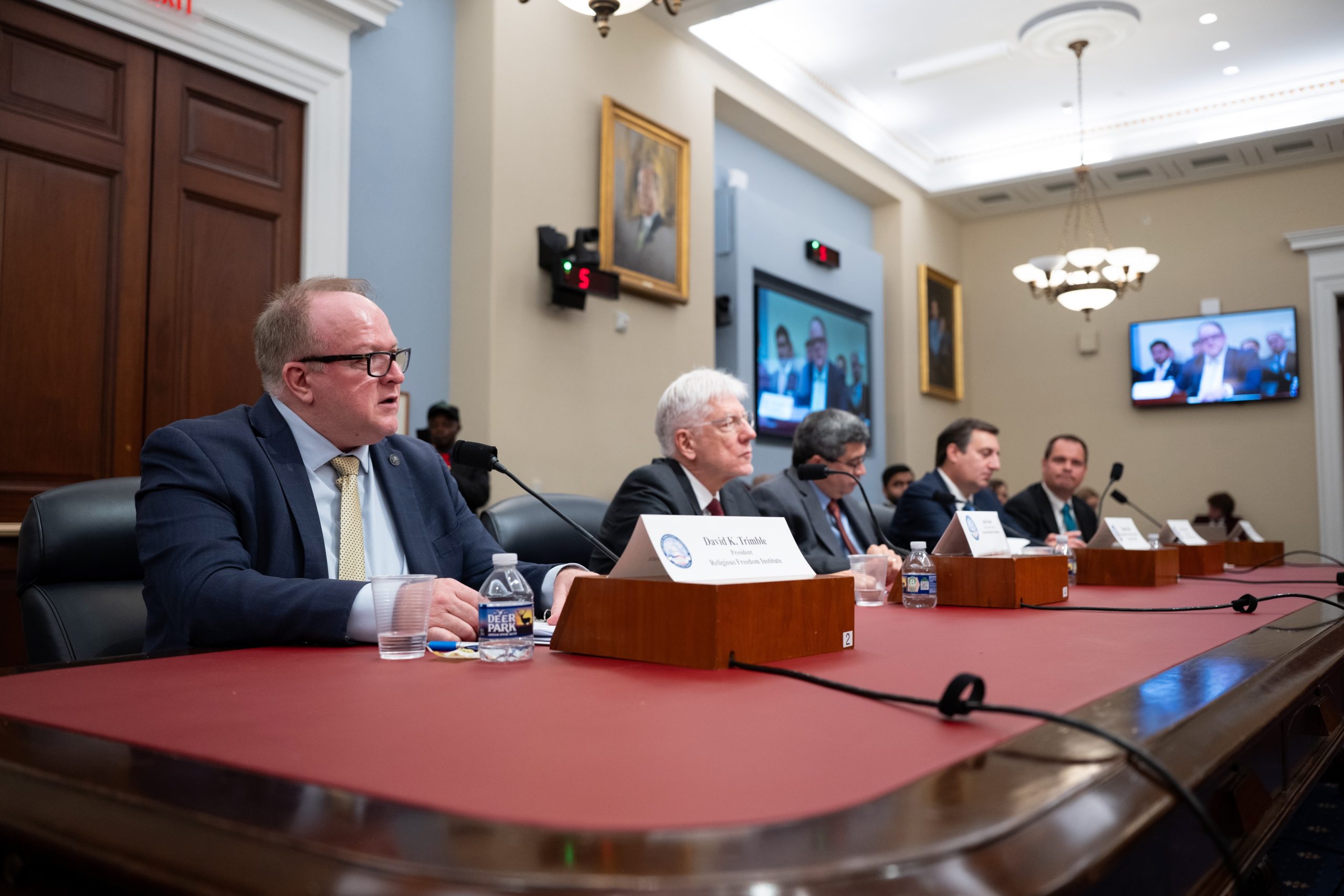
Lawmakers on Capitol Hill this week examined the continued persecution of Christians around the world, focusing on emerging threats and what can be done to protect vulnerable communities.
At the Nov. 18 Tom Lantos Human Rights Commission hearing on the worldwide persecution of Christians, co-chaired by Rep. Chris Smith, R-New Jersey, and Rep. James P. McGovern, D-Massachusetts, lawmakers and experts examined how areas with political and social unrest are seeing increases in religious-freedom violations, including rising persecution and violence against Christians.
The commission cited the Open Doors’ World Watch List, which estimates that in the 50 countries on its list, more than 388 million Christians live with high levels of discrimination and persecution.
Violations take many forms, according to a memo released by the commission, and can range from a denial of rights, repression, and discrimination by the state itself to attacks by armed groups and international criminal networks. The growth of such groups as well as oppressive political regimes has made the problem worse, the commission said.
Nigeria ‘deadliest country’ in the world to be a Christian’
David Trimble, president of the Religious Freedom Institute, told the commission that “nowhere in the world today do Christians face a more severe threat of persecution than in Nigeria.”
Trimble said the number of violent extremists in Nigeria is growing, and each group is affiliated either with Al-Qaeda or the broader Islamic State, such as Boko Haram, who, along with other bands of militants and criminal bandits, are the biggest perpetrators of violence against Christians in the country. He said the groups act with impunity and often with the government’s assistance.
Christians make up nearly half of Nigeria’s population, according to the U.S. State Department. Despite this, according to Open Doors International, more than 3,100 Christians were killed in 2025, and so far in 2026, nearly 3,500 Christians have been killed, making the country “one of the deadliest countries in the world to be a Christian,” Trimble said. In addition, almost 2,300 Christians have been kidnapped so far this year.
Among several recommendations, Trimble called for prioritizing religious freedom education in offending countries, calling education “a deterrent to violence and a significant factor in preventing genocide.”
Situation in Syria
After the fall of the Bashar Al-Assad regime in Syria, Trimble said, Christians and other religious minorities continue to face violence and other religious freedom violations, including the threat of genocide.
He also called for an Atrocity Prevention Commission with statutory authority made up of “experts who oversee analysis of geopolitical contexts of persecution and recommend methods of crisis response to avoid escalating violence and genocide.”
John Eibner, president of Christian Solidarity International, said that Christians are “the most persecuted religious community in the world.” He cited Vatican estimates that state that in 2025, 5,000 people were killed for their Christian faith and 400 million faced violence or persecution.
He said there are a variety of emerging challenges regarding Christian persecution but focused on the influence of Turkey.
Eibner pointed to the U.S. Commission on International Religious Freedom’s finding that “Turkey’s religious freedom violations remain systematic and ongoing,” arguing that as Turkey’s geopolitical influence continues to rise, Christians in Azerbaijan, Armenia, Syria, and surrounding countries will continue to suffer.
As Eibner sees it, the U.S. and other Western nations have essentially turned a “blind eye” to the plight of Christians in the region, calling on U.S. policymakers to prioritize “the survival of beleaguered Christians and religious minorities.”
“If present trends and policies remain in place, even more Christian communities in the immense Turkish-Azerbaijani sphere of influence will be destroyed or wither away,” he said. “Needless to say, this outcome would be a world-historical tragedy for Christianity and for international religious freedom.”
Other witnesses who testified at the hearing included Timothy Shah, a research scholar at the University of Dallas; Jeremy Tedesco, an attorney at Alliance Defending Freedom; and Matthew Soerens, vice president of advocacy and policy at World Relief.
Christians are world’s ‘most persecuted religious community,’ expert says at congressional hearing #Catholic
Lawmakers on Capitol Hill this week examined the continued persecution of Christians around the world, focusing on emerging threats and what can be done to protect vulnerable communities.
At the Nov. 18 Tom Lantos Human Rights Commission hearing on the worldwide persecution of Christians, co-chaired by Rep. Chris Smith, R-New Jersey, and Rep. James P. McGovern, D-Massachusetts, lawmakers and experts examined how areas with political and social unrest are seeing increases in religious-freedom violations, including rising persecution and violence against Christians.
The commission cited the Open Doors’ World Watch List, which estimates that in the 50 countries on its list, more than 388 million Christians live with high levels of discrimination and persecution.
Violations take many forms, according to a memo released by the commission, and can range from a denial of rights, repression, and discrimination by the state itself to attacks by armed groups and international criminal networks. The growth of such groups as well as oppressive political regimes has made the problem worse, the commission said.
Nigeria ‘deadliest country’ in the world to be a Christian’
David Trimble, president of the Religious Freedom Institute, told the commission that “nowhere in the world today do Christians face a more severe threat of persecution than in Nigeria.”
Trimble said the number of violent extremists in Nigeria is growing, and each group is affiliated either with Al-Qaeda or the broader Islamic State, such as Boko Haram, who, along with other bands of militants and criminal bandits, are the biggest perpetrators of violence against Christians in the country. He said the groups act with impunity and often with the government’s assistance.
Christians make up nearly half of Nigeria’s population, according to the U.S. State Department. Despite this, according to Open Doors International, more than 3,100 Christians were killed in 2025, and so far in 2026, nearly 3,500 Christians have been killed, making the country “one of the deadliest countries in the world to be a Christian,” Trimble said. In addition, almost 2,300 Christians have been kidnapped so far this year.
Among several recommendations, Trimble called for prioritizing religious freedom education in offending countries, calling education “a deterrent to violence and a significant factor in preventing genocide.”
Situation in Syria
After the fall of the Bashar Al-Assad regime in Syria, Trimble said, Christians and other religious minorities continue to face violence and other religious freedom violations, including the threat of genocide.
He also called for an Atrocity Prevention Commission with statutory authority made up of “experts who oversee analysis of geopolitical contexts of persecution and recommend methods of crisis response to avoid escalating violence and genocide.”
John Eibner, president of Christian Solidarity International, said that Christians are “the most persecuted religious community in the world.” He cited Vatican estimates that state that in 2025, 5,000 people were killed for their Christian faith and 400 million faced violence or persecution.
He said there are a variety of emerging challenges regarding Christian persecution but focused on the influence of Turkey.
Eibner pointed to the U.S. Commission on International Religious Freedom’s finding that “Turkey’s religious freedom violations remain systematic and ongoing,” arguing that as Turkey’s geopolitical influence continues to rise, Christians in Azerbaijan, Armenia, Syria, and surrounding countries will continue to suffer.
As Eibner sees it, the U.S. and other Western nations have essentially turned a “blind eye” to the plight of Christians in the region, calling on U.S. policymakers to prioritize “the survival of beleaguered Christians and religious minorities.”
“If present trends and policies remain in place, even more Christian communities in the immense Turkish-Azerbaijani sphere of influence will be destroyed or wither away,” he said. “Needless to say, this outcome would be a world-historical tragedy for Christianity and for international religious freedom.”
Other witnesses who testified at the hearing included Timothy Shah, a research scholar at the University of Dallas; Jeremy Tedesco, an attorney at Alliance Defending Freedom; and Matthew Soerens, vice president of advocacy and policy at World Relief.
