Jesse Jackson, whose decades of activism included work in the Civil Rights Movement, two runs for the White House, and multiple meetings with Pope John Paul II, died on Feb. 17. He was 84 years old.
His family announced his passing in a statement on social media. They described him as a “servant leader” with an “unwavering belief in justice, equality, and love.” Jackson had suffered health issues for several years, including a diagnosis of Parkinson’s disease in 2017.
Born Jesse Burns in Greenville, South Carolina, on Oct. 8, 1941, Jackson was adopted by his mother Helen’s subsequent husband Charles Jackson, though he maintained a close relationship with his birth father, Noah Robinson.
Taunts from local children about his out-of-wedlock birth reportedly instilled in Jackson a motive to succeed; he further cited his biological father’s example of a “strong healthy ego” and “sense of dignity” that led him to push for civil rights in what was then the heavily segregated Southern U.S.
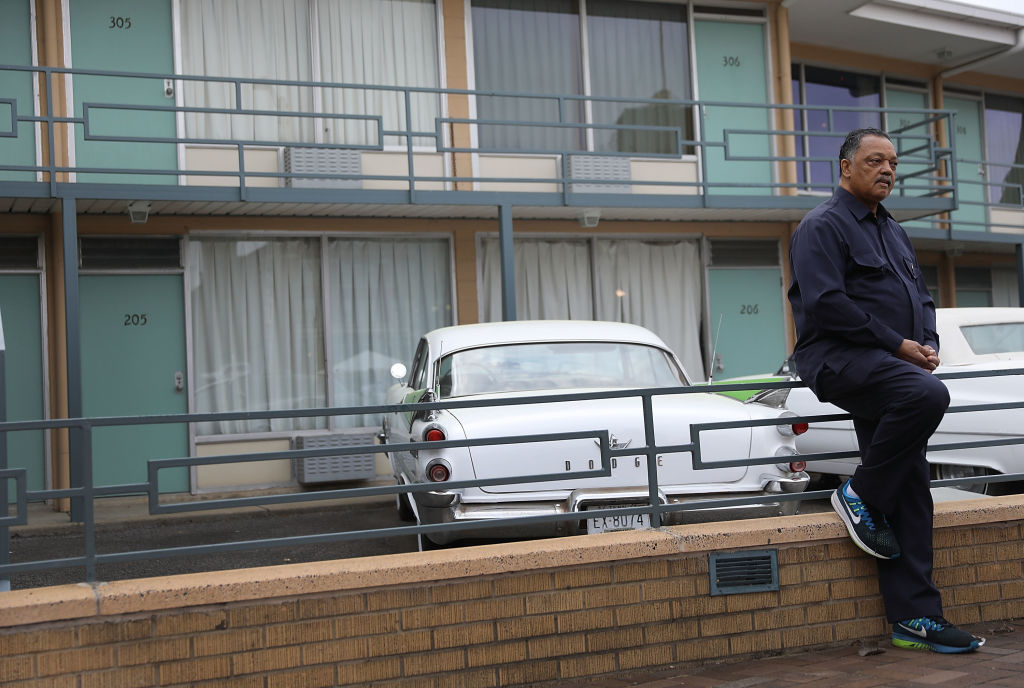
He was a member of the “Greenville Eight” who protested the city’s segregated library system in 1960. A protege of Martin Luther King Jr., he participated in the Selma-to-Montgomery marches and played early roles in the Southern Christian Leadership Conference. Jackson was present at King’s assassination at the Lorraine Motel in Memphis on April 4, 1968.
He founded the social justice organization Operation PUSH — now Rainbow/PUSH — in 1971. He would eventually mount two campaigns for U.S. president, one in 1984 and one in 1988, both of which he lost.
Earlier in his career Jackson had been an outspoken pro-life advocate, at one point even endorsing amending the U.S. Constitution to ban abortion, though in later decades he would pivot to aggressive support of abortion.
He met with Pope John Paul II on three separate occasions in the 1980s and 1990s. In 1982 he urged the pontiff to advocate on behalf of Haitian refugees in the U.S., describing John Paul II as “the dominant force and moral authority in the world” at the time.
He met with the pope again in 1985 and reportedly asked him to visit South Africa to protest apartheid, and again a third time in 1999 to urge the pontiff to advocate on behalf of three imprisoned CARE humanitarian workers in a Belgrade prison.
Jackson is survived by his wife of 64 years, Jacqueline Lavinia Brown, and their five children. He is also survived by a daughter, Ashley, born to one of his former staffers in 1999.
In a famed speech at the 1984 Democratic National Convention in San Francisco, Jackson reflected on his political career and acknowledged that he was “not a perfect servant” but “a public servant doing my best against the odds.” He told the crowd: “As I develop and serve, be patient: God is not finished with me yet.”
“For leaders, the pain is often intense,” he said at the time. “But you must smile through your tears and keep moving with the faith that there is a brighter side somewhere.”
Jesse Jackson, civil rights activist who urged Vatican to address humanitarian crises, dies at 84 #Catholic
Jesse Jackson, whose decades of activism included work in the Civil Rights Movement, two runs for the White House, and multiple meetings with Pope John Paul II, died on Feb. 17. He was 84 years old.
His family announced his passing in a statement on social media. They described him as a “servant leader” with an “unwavering belief in justice, equality, and love.” Jackson had suffered health issues for several years, including a diagnosis of Parkinson’s disease in 2017.
Born Jesse Burns in Greenville, South Carolina, on Oct. 8, 1941, Jackson was adopted by his mother Helen’s subsequent husband Charles Jackson, though he maintained a close relationship with his birth father, Noah Robinson.
Taunts from local children about his out-of-wedlock birth reportedly instilled in Jackson a motive to succeed; he further cited his biological father’s example of a “strong healthy ego” and “sense of dignity” that led him to push for civil rights in what was then the heavily segregated Southern U.S.
He was a member of the “Greenville Eight” who protested the city’s segregated library system in 1960. A protege of Martin Luther King Jr., he participated in the Selma-to-Montgomery marches and played early roles in the Southern Christian Leadership Conference. Jackson was present at King’s assassination at the Lorraine Motel in Memphis on April 4, 1968.
He founded the social justice organization Operation PUSH — now Rainbow/PUSH — in 1971. He would eventually mount two campaigns for U.S. president, one in 1984 and one in 1988, both of which he lost.
Earlier in his career Jackson had been an outspoken pro-life advocate, at one point even endorsing amending the U.S. Constitution to ban abortion, though in later decades he would pivot to aggressive support of abortion.
He met with Pope John Paul II on three separate occasions in the 1980s and 1990s. In 1982 he urged the pontiff to advocate on behalf of Haitian refugees in the U.S., describing John Paul II as “the dominant force and moral authority in the world” at the time.
He met with the pope again in 1985 and reportedly asked him to visit South Africa to protest apartheid, and again a third time in 1999 to urge the pontiff to advocate on behalf of three imprisoned CARE humanitarian workers in a Belgrade prison.
Jackson is survived by his wife of 64 years, Jacqueline Lavinia Brown, and their five children. He is also survived by a daughter, Ashley, born to one of his former staffers in 1999.
In a famed speech at the 1984 Democratic National Convention in San Francisco, Jackson reflected on his political career and acknowledged that he was “not a perfect servant” but “a public servant doing my best against the odds.” He told the crowd: “As I develop and serve, be patient: God is not finished with me yet.”
“For leaders, the pain is often intense,” he said at the time. “But you must smile through your tears and keep moving with the faith that there is a brighter side somewhere.”